23 Black Kitchen Ideas That Work in Any Home Style
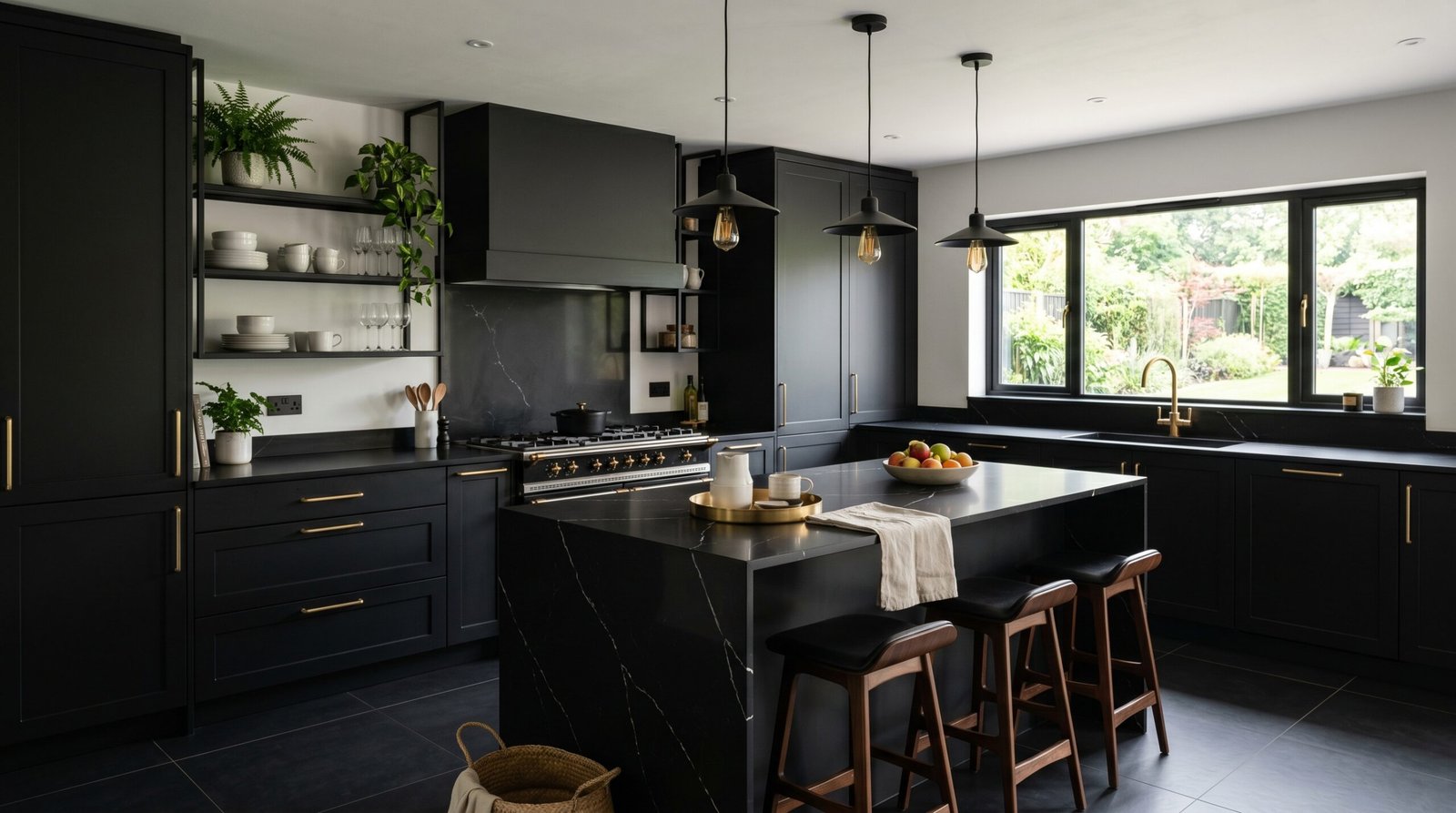
Black kitchens intimidate people. I get it. You picture a cave. You picture a space that feels heavy, dark, and impossible to keep clean. But here’s the thing: a well-executed black kitchen doesn’t feel dark. It feels intentional, confident, and genuinely impressive.
I’ve spent a lot of time studying kitchen design, and black is the one color that consistently elevates a space when you use it correctly. The problem isn’t black. The problem is using it without a plan.
These 23 ideas give you the plan.
1. Go All-Black on the Cabinets
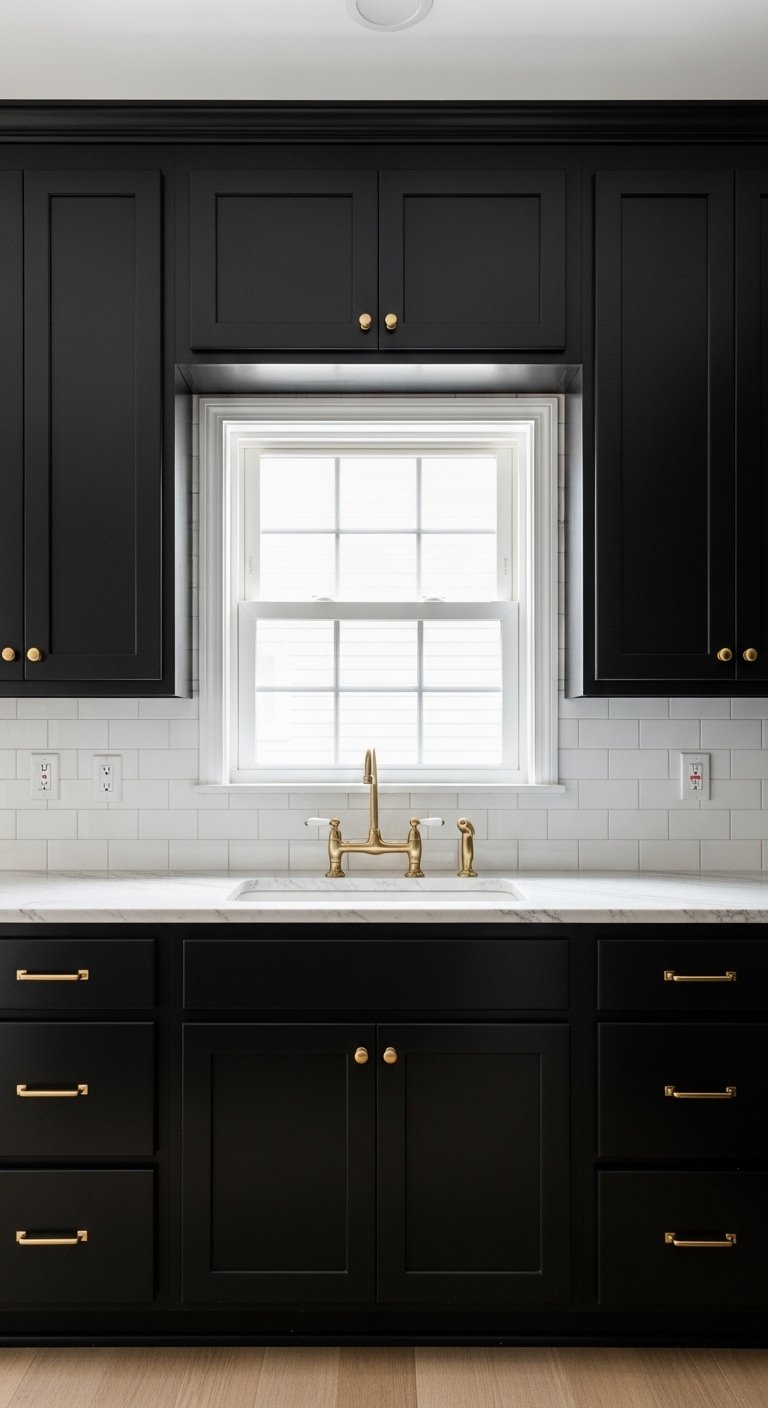
Start with the biggest surface in your kitchen: the cabinets.
Matte black cabinet fronts set the tone for everything else. They create a strong, unified base that makes the entire kitchen feel designed rather than assembled.
You don’t have to do every cabinet in black. Upper cabinets in white or cream with black lowers is a classic split that keeps the room from feeling heavy while still making a bold statement.
The key is consistency. Pick one finish, matte or satin, and stick with it across every cabinet door.
2. Use Black Shaker Cabinets for a Timeless Look
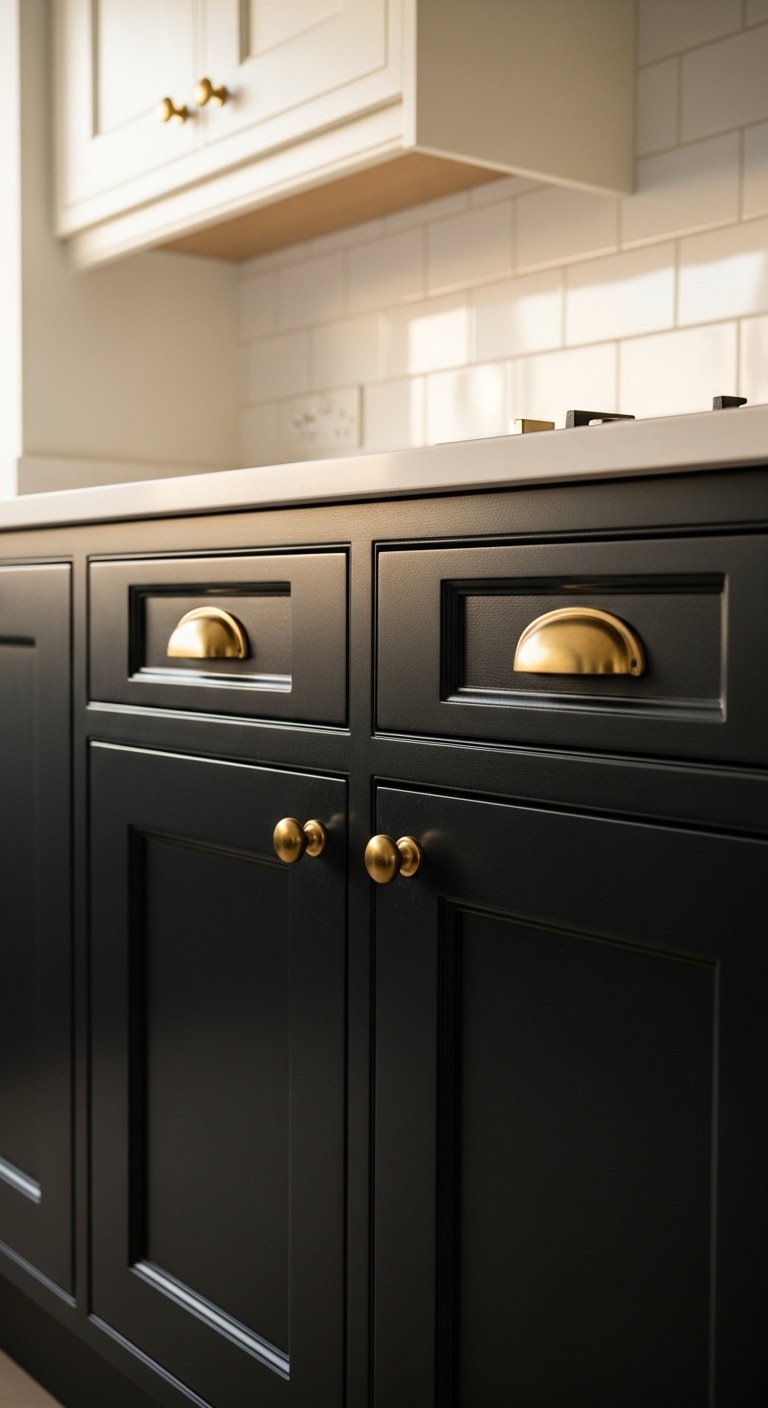
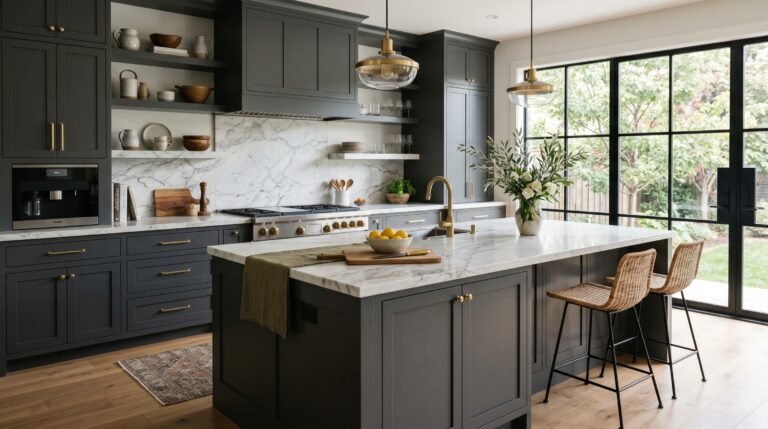
Shaker cabinets work in almost every kitchen style. In black, they become something else entirely.
Black shaker cabinets combine the clean, recessed panel detail of traditional shaker design with the drama of a dark palette. The result reads as both classic and contemporary at the same time.
This combination works particularly well in farmhouse kitchens, transitional spaces, and modern homes that want warmth without going ultra-minimal.
Pair them with unlacquered brass hardware. The warm metal against the flat black is one of the most reliable combinations in kitchen design.
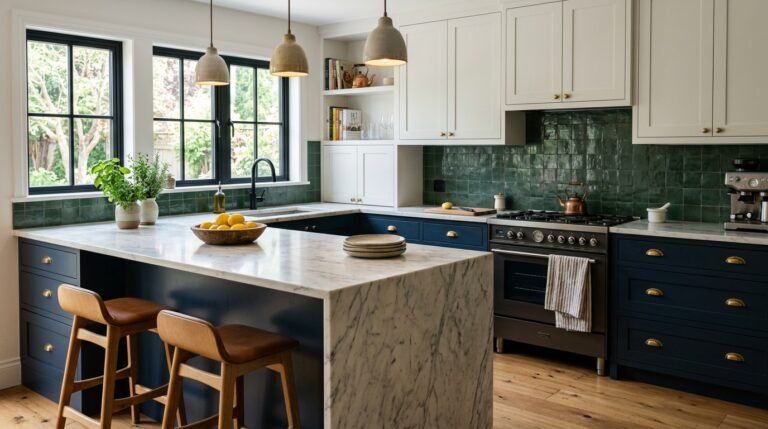
3. Install a Black Kitchen Island
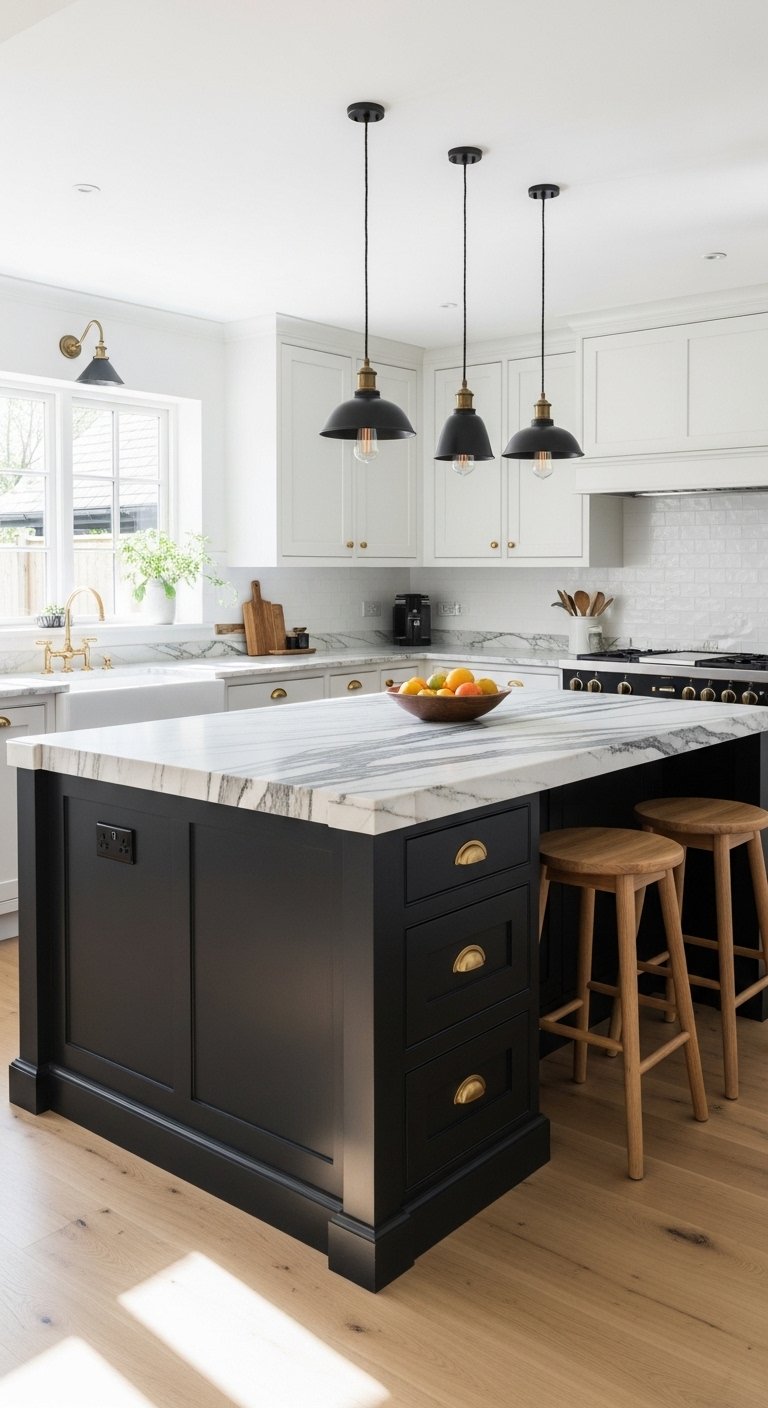
If committing to full black cabinets feels like too much, start with the island.
A black kitchen island in an otherwise light kitchen creates a focal point that grounds the entire room. It adds visual weight exactly where you need it, at the center of the space.
Choose a contrasting countertop for the island: white marble, light quartz, or butcher block all work well against black cabinetry.
This approach lets you test how you feel about black in a kitchen before committing your entire room to it.
4. Try Matte Black Hardware Throughout
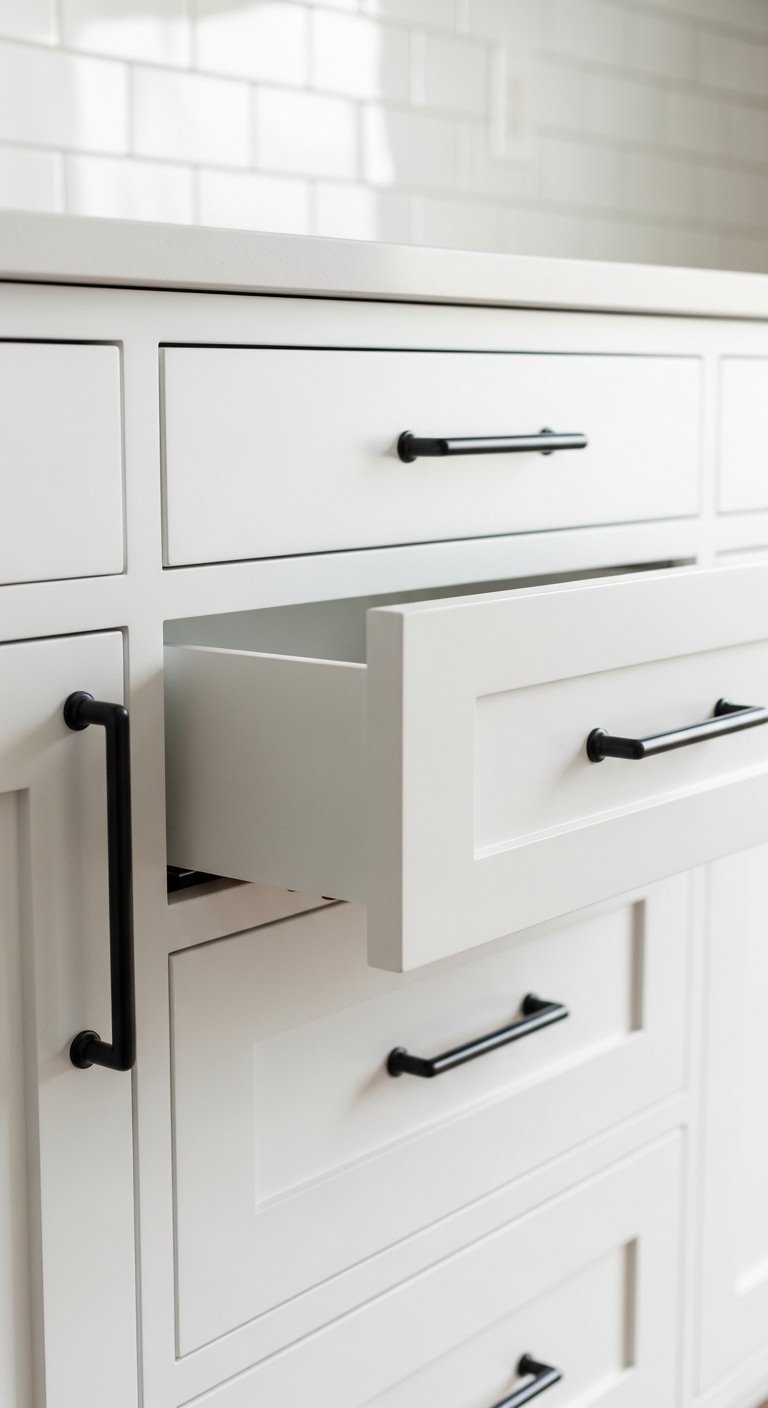
You don’t need black cabinets to bring black into your kitchen. Hardware does the work quietly.
Matte black handles, knobs, and pulls on white or wood cabinets modernize the entire room with minimal investment. This is the lowest-commitment black kitchen idea on this list.
The finish matters. Matte black reads as modern and intentional. Glossy black reads as dated.
Replace every hardware piece in the room at once. Mixing black hardware with chrome or brass in the same kitchen almost always looks like an accident rather than a choice.
5. Choose a Black Countertop
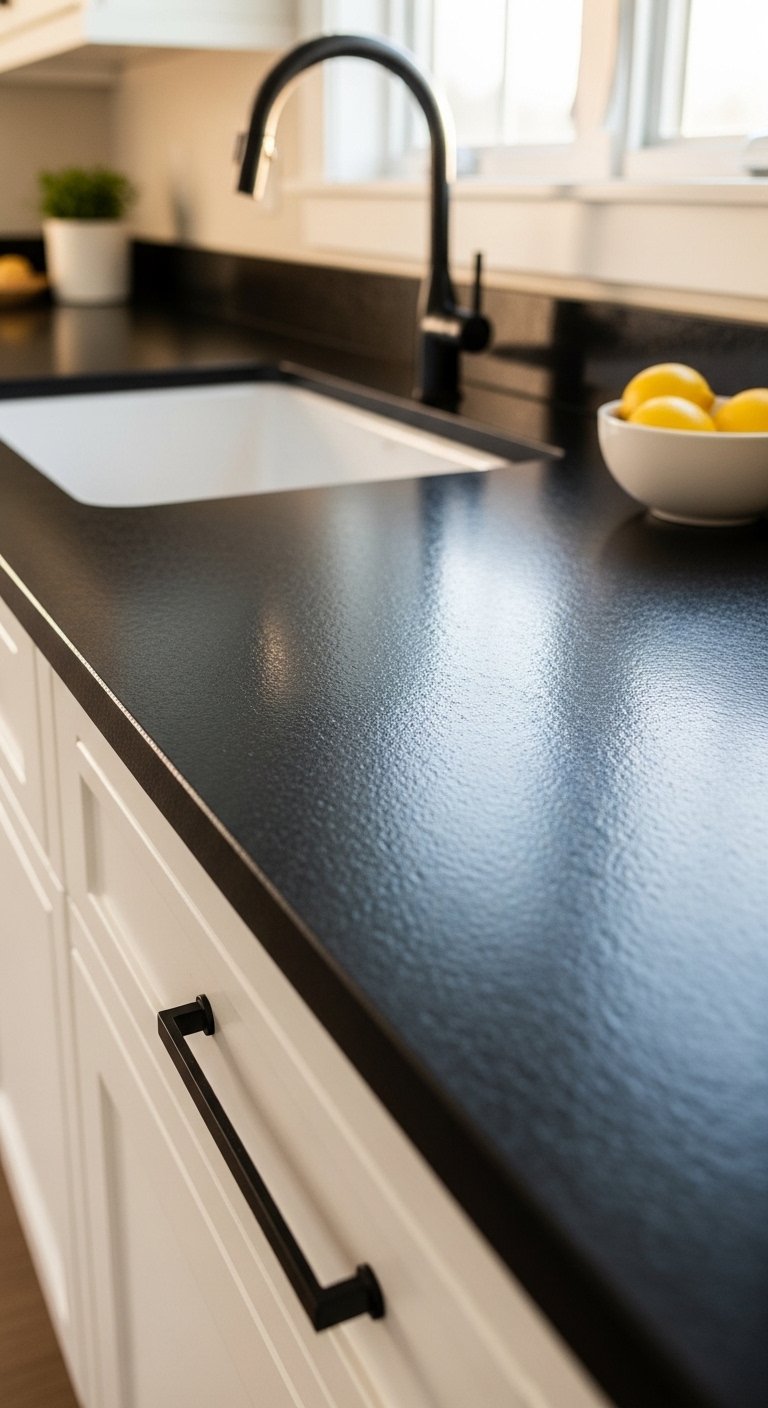
Black countertops are underused. Most people default to white marble or grey quartz and miss what a dark surface does for a kitchen.
A black granite, black quartz, or black soapstone countertop adds depth and makes lighter cabinet colors pop. The contrast works both ways: black counters on white cabinets, and black counters on black cabinets for a tone-on-tone look.
Soapstone is worth considering specifically. It develops a natural patina over time and has a softer, more organic appearance than polished granite.
FYI, black countertops do show water spots and fingerprints. Matte or honed finishes hide these far better than polished surfaces.
6. Install Black Open Shelving
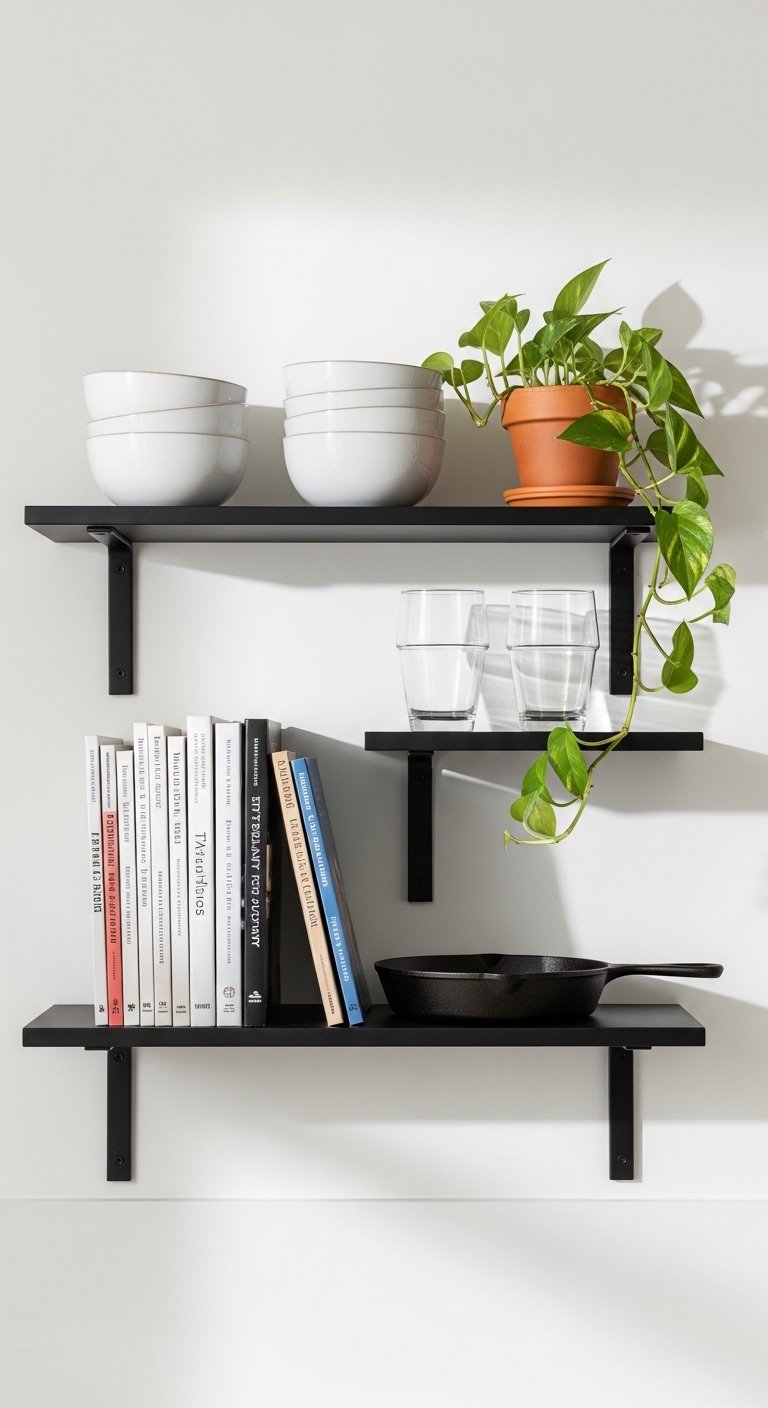
Open shelving in black steel or powder-coated metal gives a kitchen an industrial edge without a full renovation.
Black metal open shelves mounted on a white or light-colored wall create strong visual contrast. They display your ceramics, glassware, and plants while adding structure to the room.
The shelf bracket style matters. Simple flat brackets read as modern. Angled industrial brackets read as more raw and utilitarian. Pick the one that fits your kitchen’s existing style.
Style your shelves with intention. White ceramics, clear glass, and green plants all photograph well against black metal and look good in person.
7. Go For a Black Backsplash
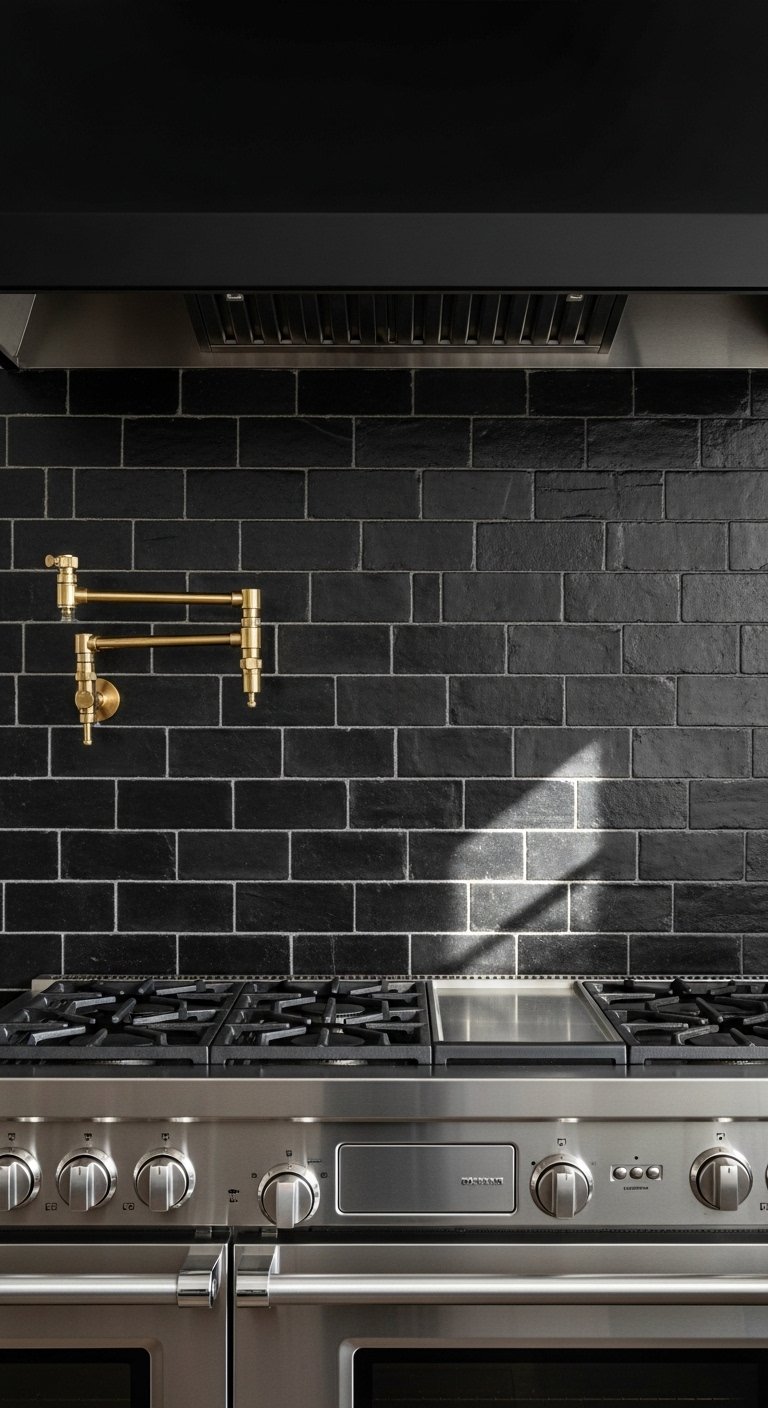
A black backsplash is one of the boldest moves in kitchen design. It’s also one of the most rewarding.
Black subway tile, black zellige, or black hexagon mosaic tile behind the stove or across the full back wall creates a dramatic backdrop that makes everything in front of it stand out.
Black zellige tile in particular has become a consistent choice among interior designers for good reason. The slightly irregular surface and handmade variation in each tile give it texture and life that flat tiles lack.
Grout color matters here. Dark grout on black tile reads as seamless. Light grout on black tile emphasizes each tile shape. Both work, but they create very different visual results.
8. Use Black Appliances Instead of Stainless
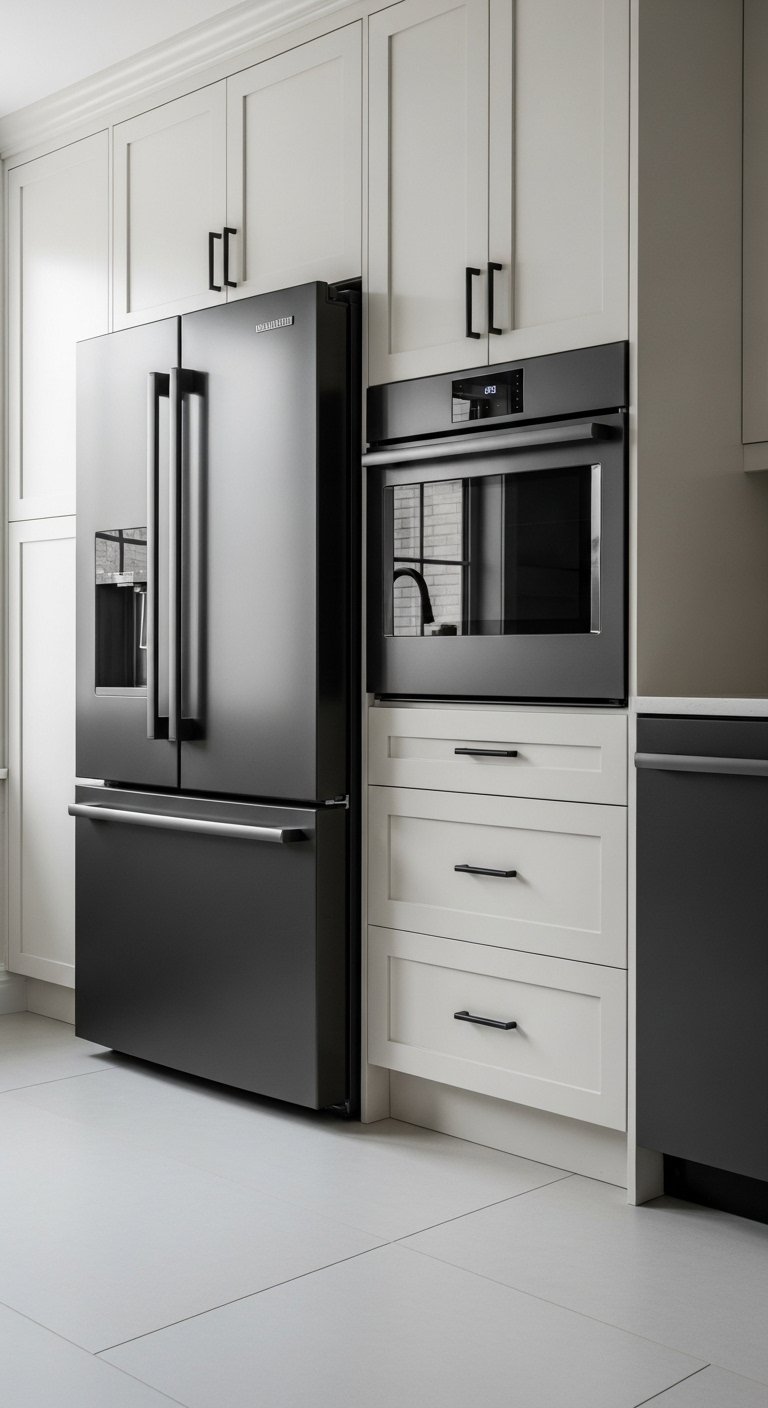
Stainless steel appliances have dominated kitchens for two decades. Black appliances are a direct challenge to that default.
Matte black appliances, including refrigerators, ovens, and dishwashers, create a more cohesive look in a black kitchen than stainless ever does. They don’t reflect light the way stainless does, which keeps the visual calm.
The practical upside: matte black appliances hide fingerprints far better than stainless. If you have children or cook frequently, this matters more than you’d think.
Major appliance brands now offer black stainless and matte black finishes across their full ranges. You no longer have to compromise on appliance quality to get the finish you want.
9. Paint Your Kitchen Ceiling Black
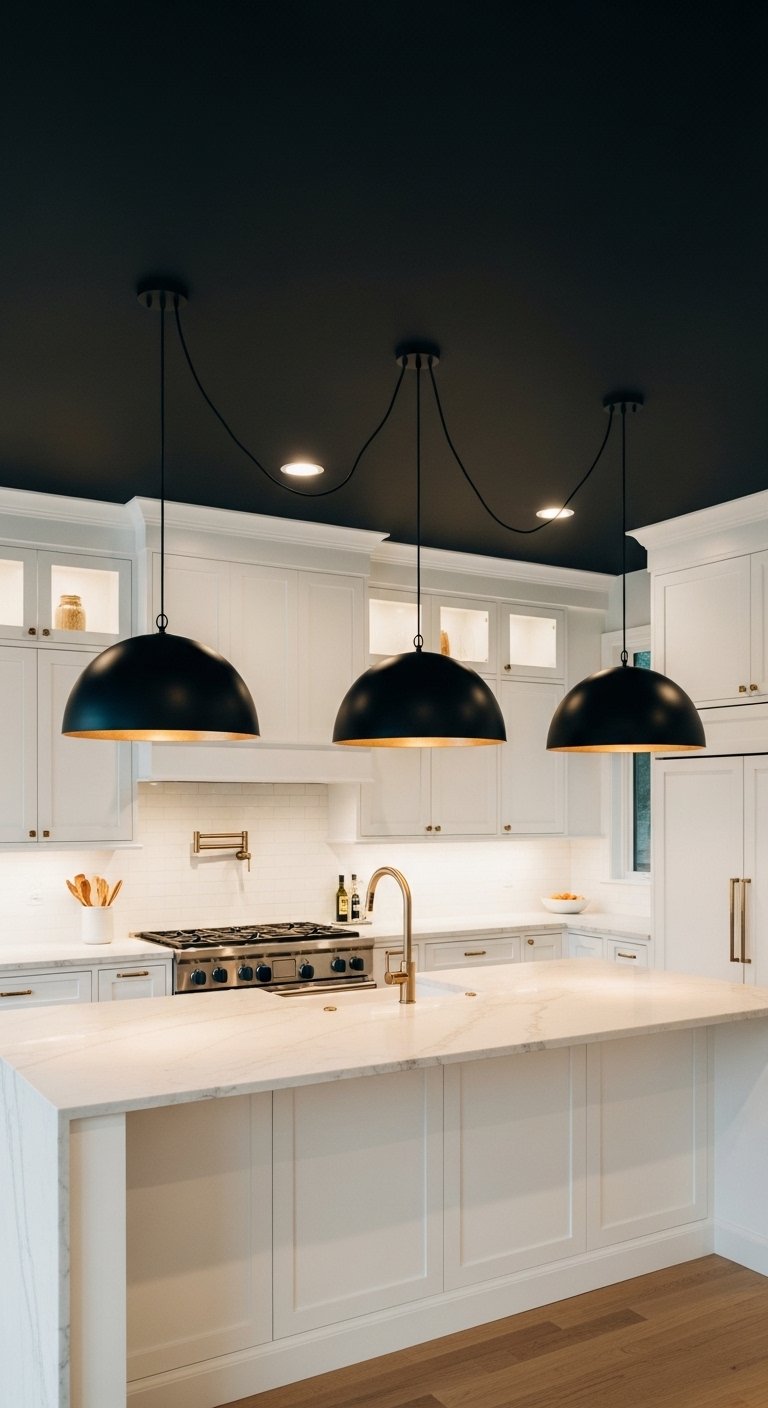
This one surprises people. It shouldn’t.
A black ceiling in a kitchen with white or light walls creates a cocooning effect that feels warm and architectural rather than oppressive. The ceiling recedes visually, which paradoxically makes the room feel more intimate and considered.
This works best in kitchens with good pendant lighting. The pendants become more dramatic against a black ceiling, and the light pools on surfaces below feel warmer by contrast.
If a full black ceiling feels like too much, paint only the area above the island. This defines the cooking zone and adds drama without committing the entire ceiling.
10. Install Black Pendant Lights
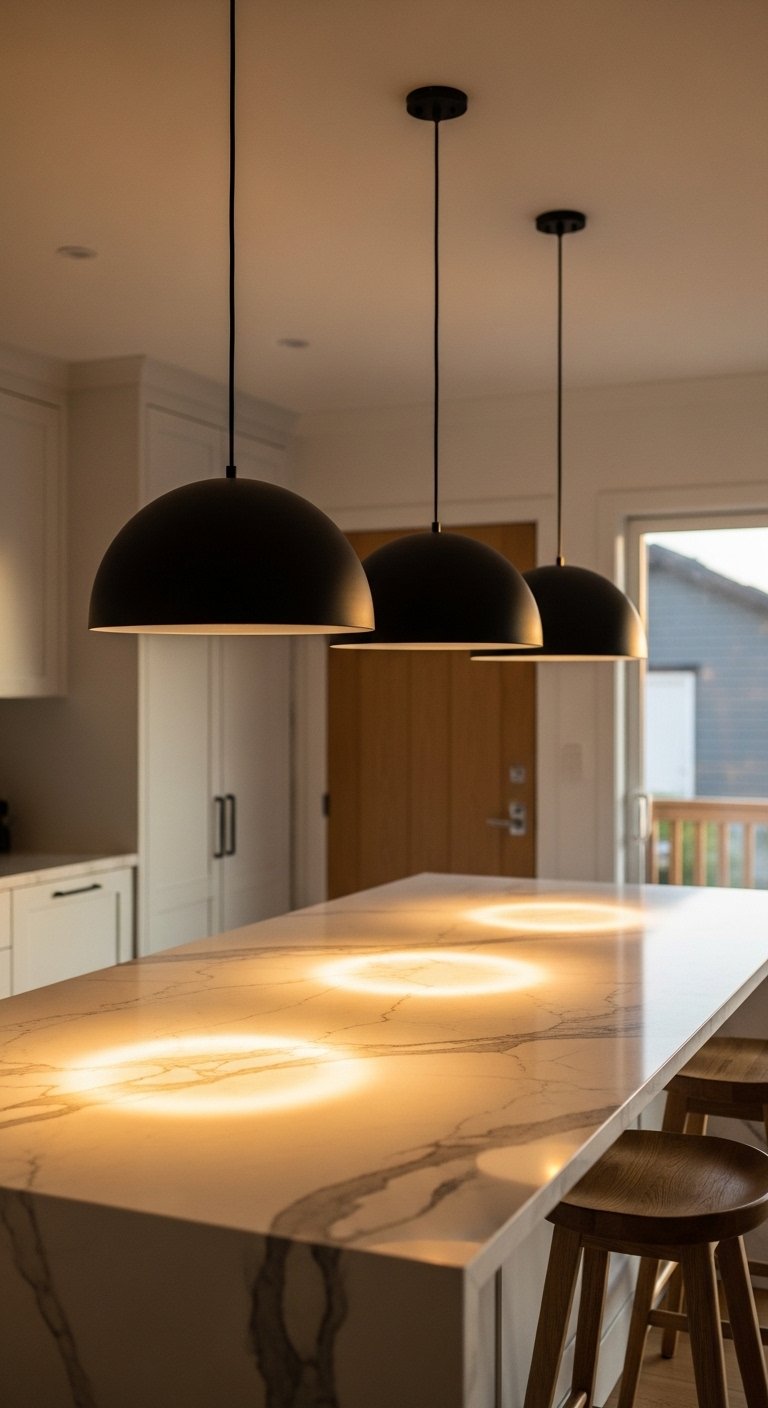
Lighting choices define the character of a kitchen as much as any surface finish.
Matte black pendant lights over an island or dining table anchor the space and add a design element that reinforces any black elements in the room. They work even in kitchens with no other black surfaces.
Cluster pendants in odd numbers, three or five over a long island. Single pendants work over smaller dining tables or breakfast bars.
The shade shape matters. Dome pendants spread light broadly. Cylinder pendants direct it downward. Bell pendants balance both. Match the shade shape to how you use the surface below.
11. Use Black Grout With White Tile
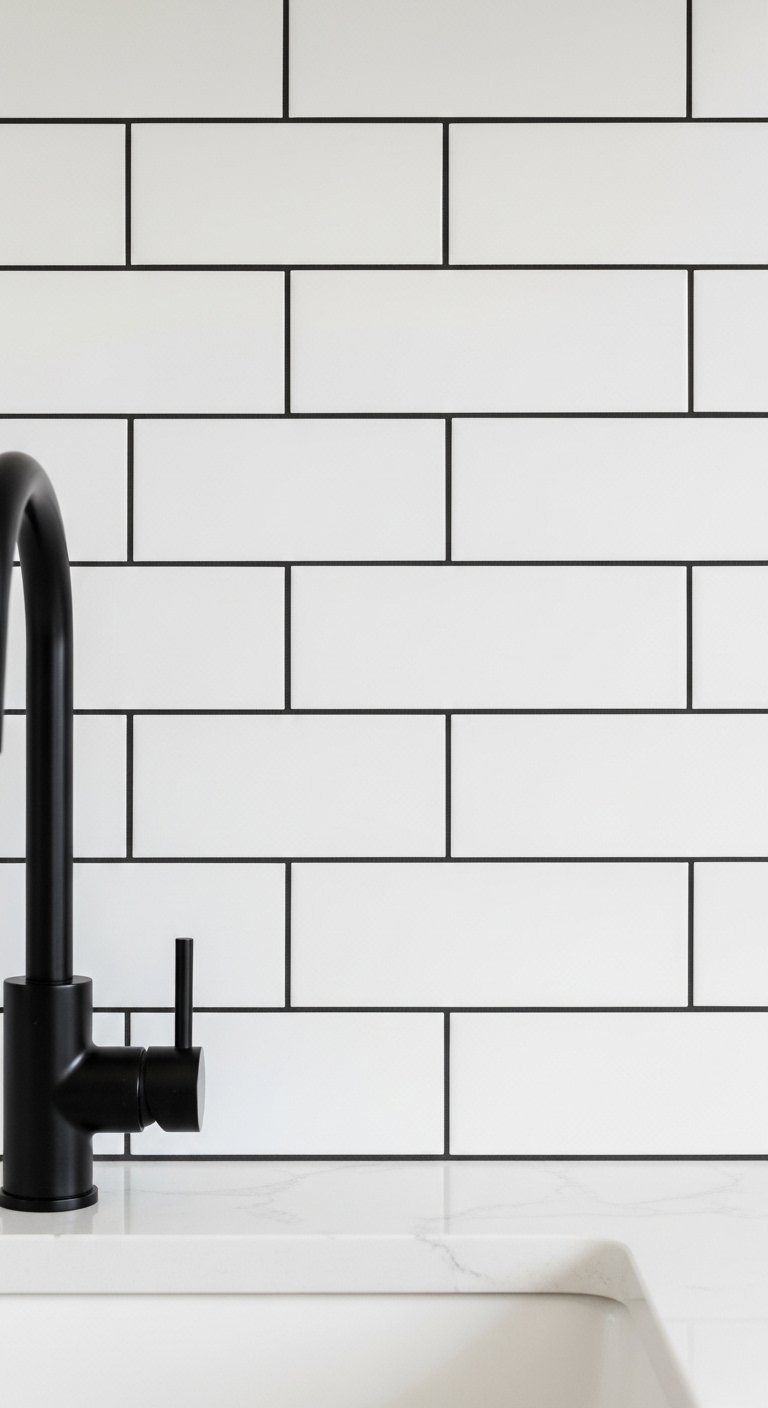
This idea costs almost nothing extra but changes everything.
White subway tile with black grout is a classic combination that looks far more considered than white tile with white grout. The black grout lines create a grid pattern that adds visual texture and structure.
This works across backsplashes, floors, and feature walls. It also hides dirt more effectively than white grout, which is a practical bonus most people don’t think about until they’re on their knees scrubbing.
The tile format affects the result. Large format tiles with black grout create bold, graphic lines. Small mosaic tiles with black grout create a dense, textured surface. Both are valid choices depending on your kitchen’s scale.
12. Try Black Floating Shelves in Wood
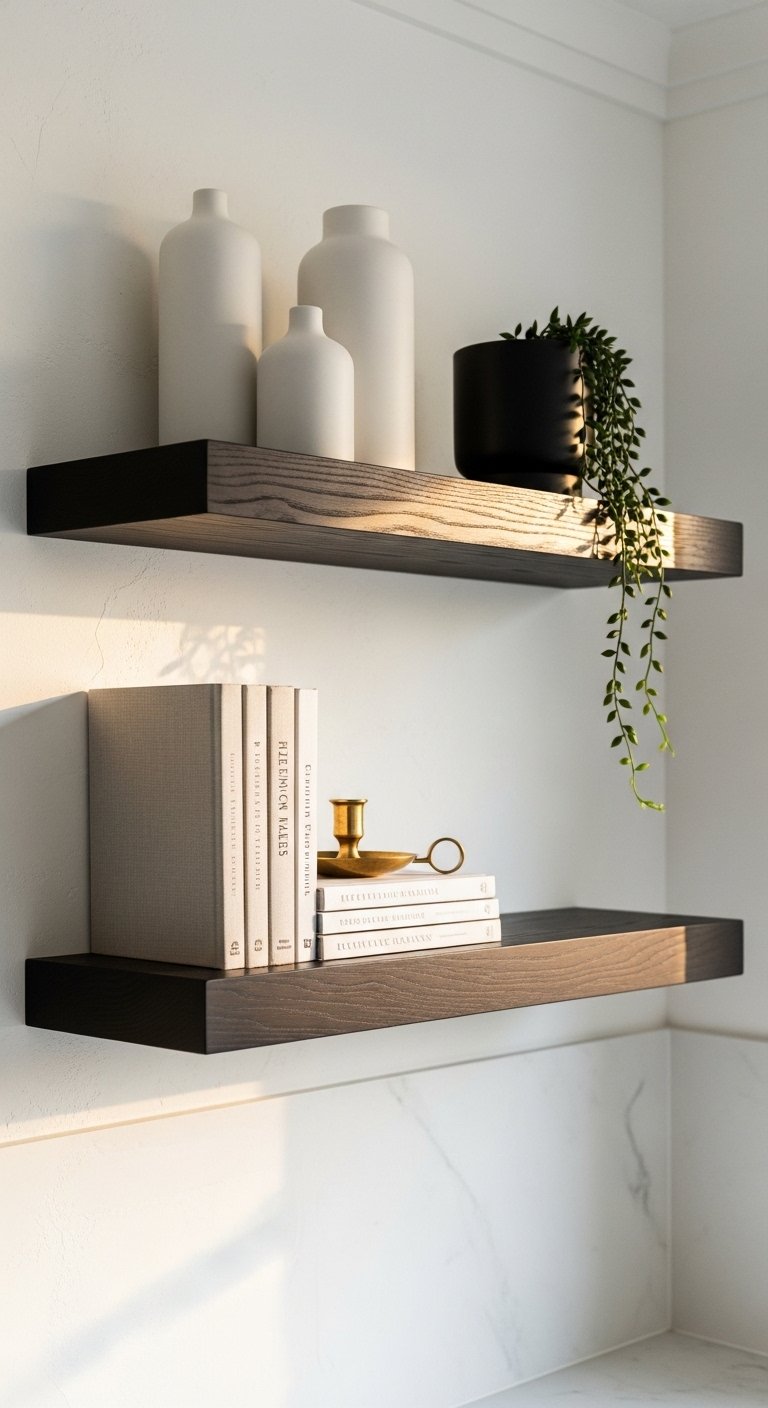
Not every black element in a kitchen needs to be metal or painted. Dark wood gives you a softer, warmer version of the same idea.
Blackened or dark-stained wood floating shelves add warmth that painted black elements don’t. The grain of the wood remains visible, which makes the shelf feel natural rather than industrial.
Walnut with a dark stain, or smoked oak, both work well. Mount them against a white or light wall for maximum contrast.
Style them the same way as any open shelving: restraint matters more than abundance. Too many objects on a shelf makes the kitchen feel cluttered. Fewer, better objects make it feel curated.
13. Install a Black Kitchen Faucet
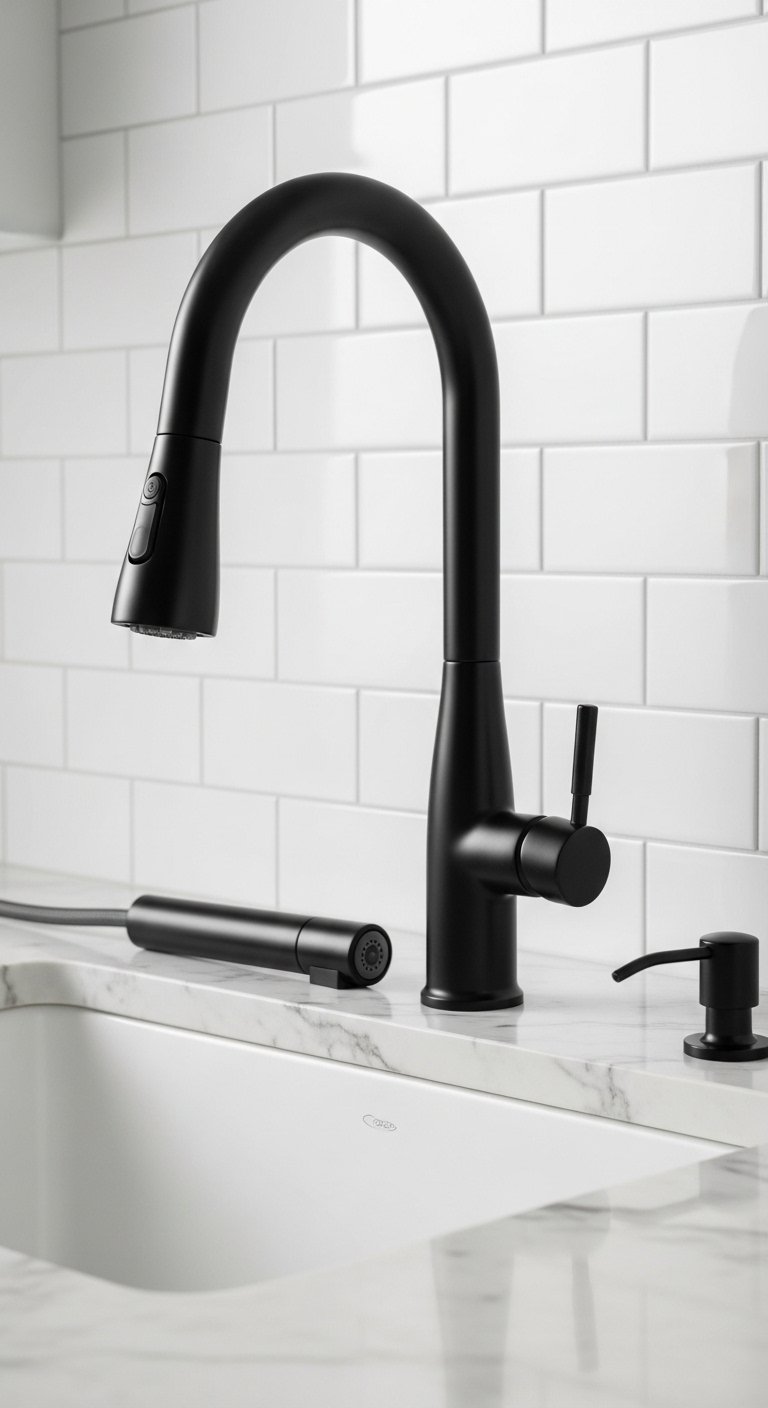
The faucet is a small thing that people spend a lot of time looking at. Make it count.
A matte black kitchen faucet is one of the most impactful small upgrades in a kitchen. It coordinates with black hardware, black pendant lights, and any other black accents in the room.
Pull-down spray faucets in matte black are the most functional choice. They handle daily tasks well and look sharp doing it.
One thing to note: matte black faucet finishes from lower-end manufacturers wear unevenly over time. Invest in a quality brand. The finish difference between a $150 faucet and a $400 faucet becomes visible within two years of daily use.
14. Use Black and Wood Together
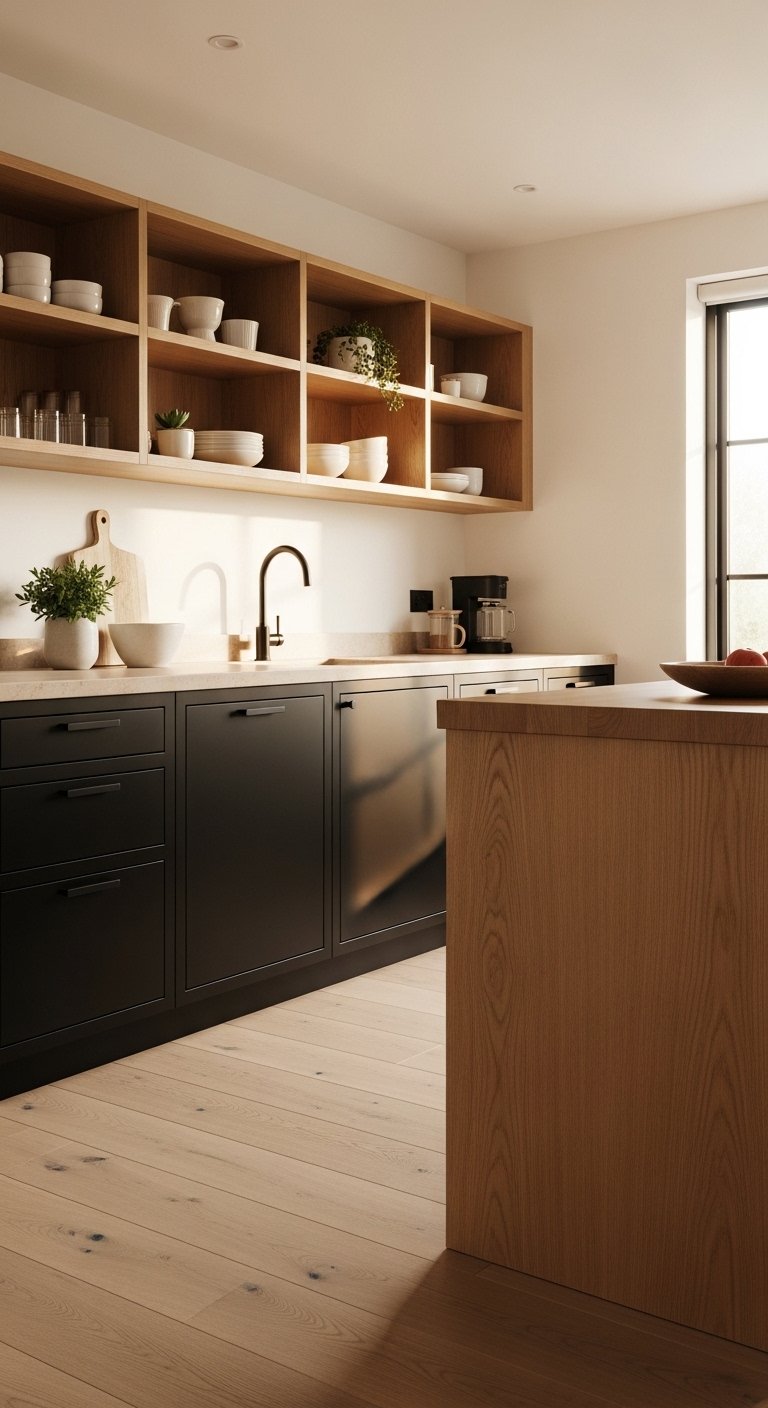
Black alone reads as stark. Black with wood reads as warm and considered. This combination is one of the most reliable in kitchen design.
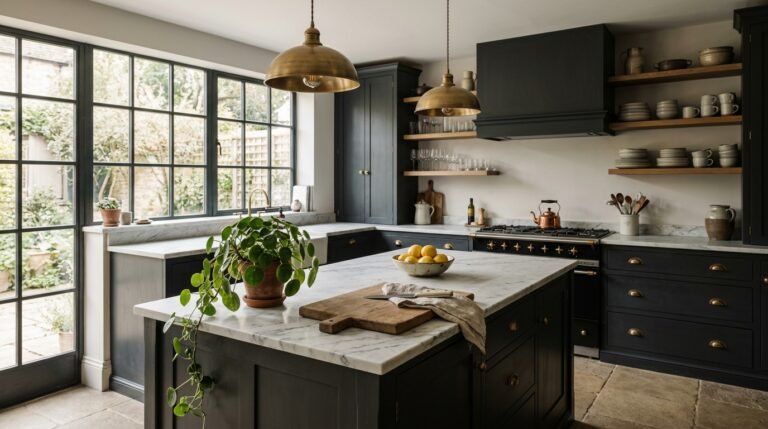
Black cabinets paired with natural wood accents, whether on open shelves, a kitchen island, floating shelves, or a ceiling beam, soften the darkness and add organic texture.
Light oak, pine, and ash work best against black. Dark wood against dark cabinets loses the contrast you need. Keep the wood tone lighter than the black elements.
This combination photographs exceptionally well, which is why you see it constantly in design publications and on Pinterest. It’s popular for a reason.
15. Add Black Windows or Steel-Frame Doors
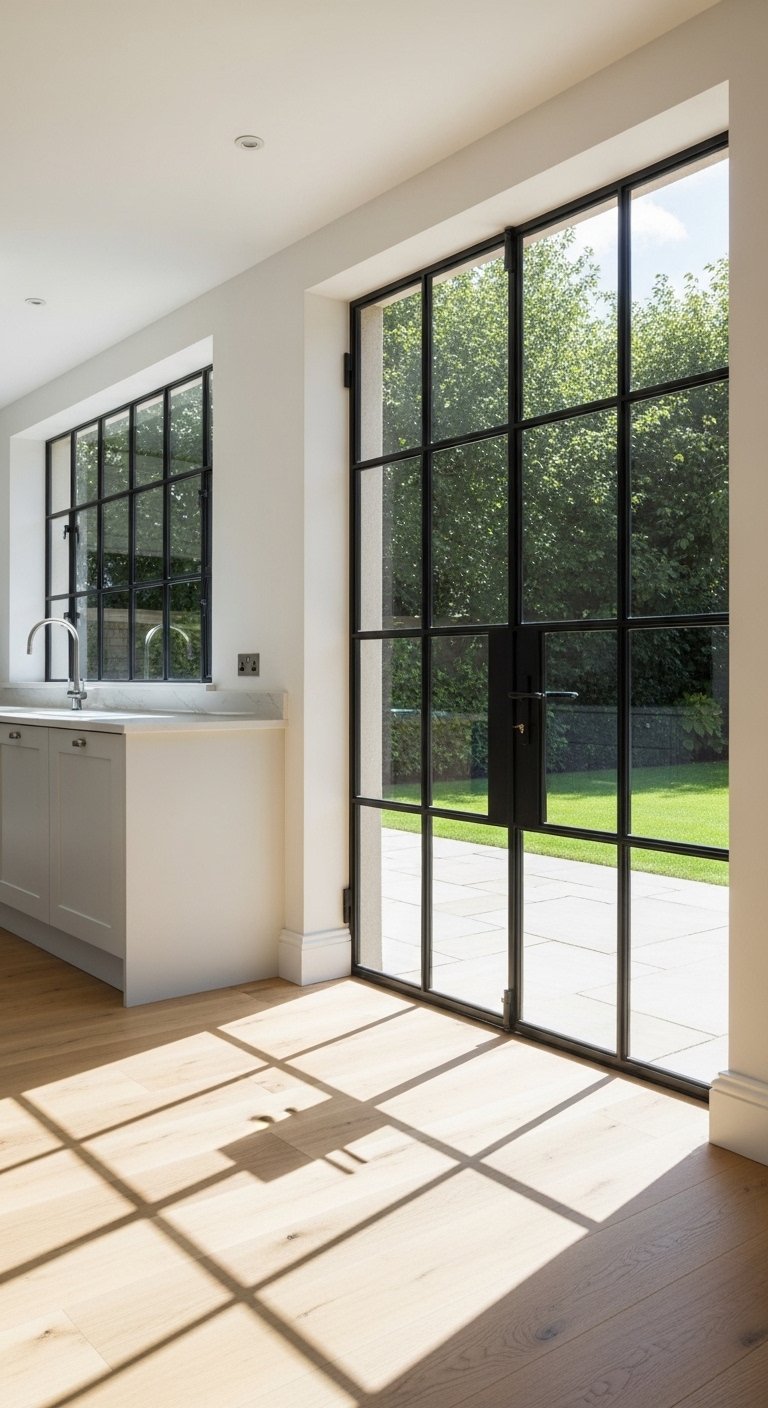
If your kitchen connects to a dining area, garden, or open plan space, black-framed windows or doors become a design feature in themselves.
Black steel or aluminum window frames and internal glazed doors bring an industrial, loft-like quality to a kitchen. The dark frames create a strong graphic grid that adds structure without adding weight to the walls.
Crittall-style internal doors and windows have become a defining feature of modern kitchen-dining spaces. They define zones in open plan homes without closing them off entirely.
The investment is significant. Custom steel glazing is expensive. But the visual return lasts the entire life of the room.
16. Choose Black Flooring
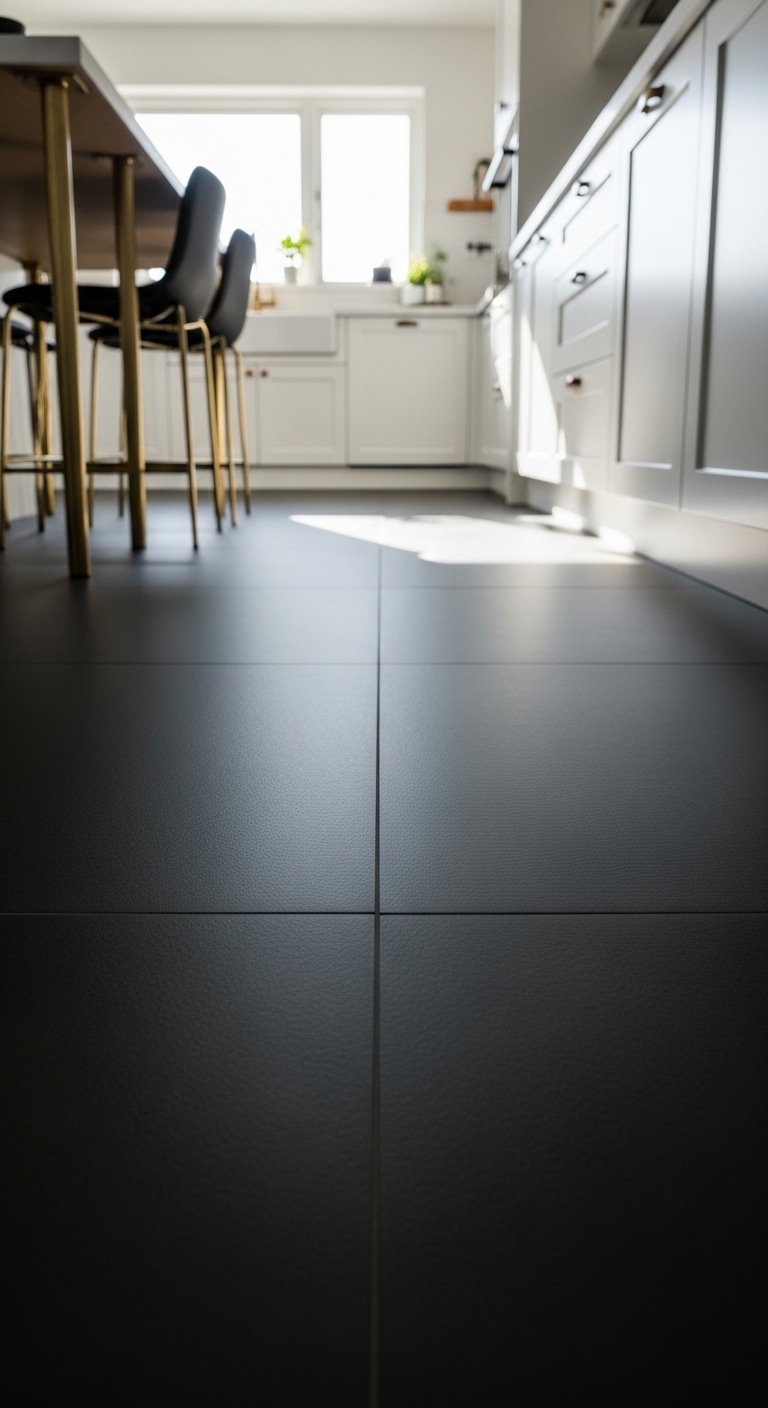
Most people play it safe with kitchen floors. Light tile, light wood, light concrete. Black flooring challenges that default.
Matte black porcelain tile or dark slate flooring creates a dramatic base that makes the entire kitchen feel more grounded and intentional.
Polished black floors show every footprint and water mark. Matte or textured black floors are far more practical in a working kitchen. This is not a small distinction. Make the right choice.
Large format black tiles with minimal grout lines read as more modern. Smaller format tiles with more grout lines read as more traditional. Both work, but in different kitchen styles.
17. Paint the Walls Black
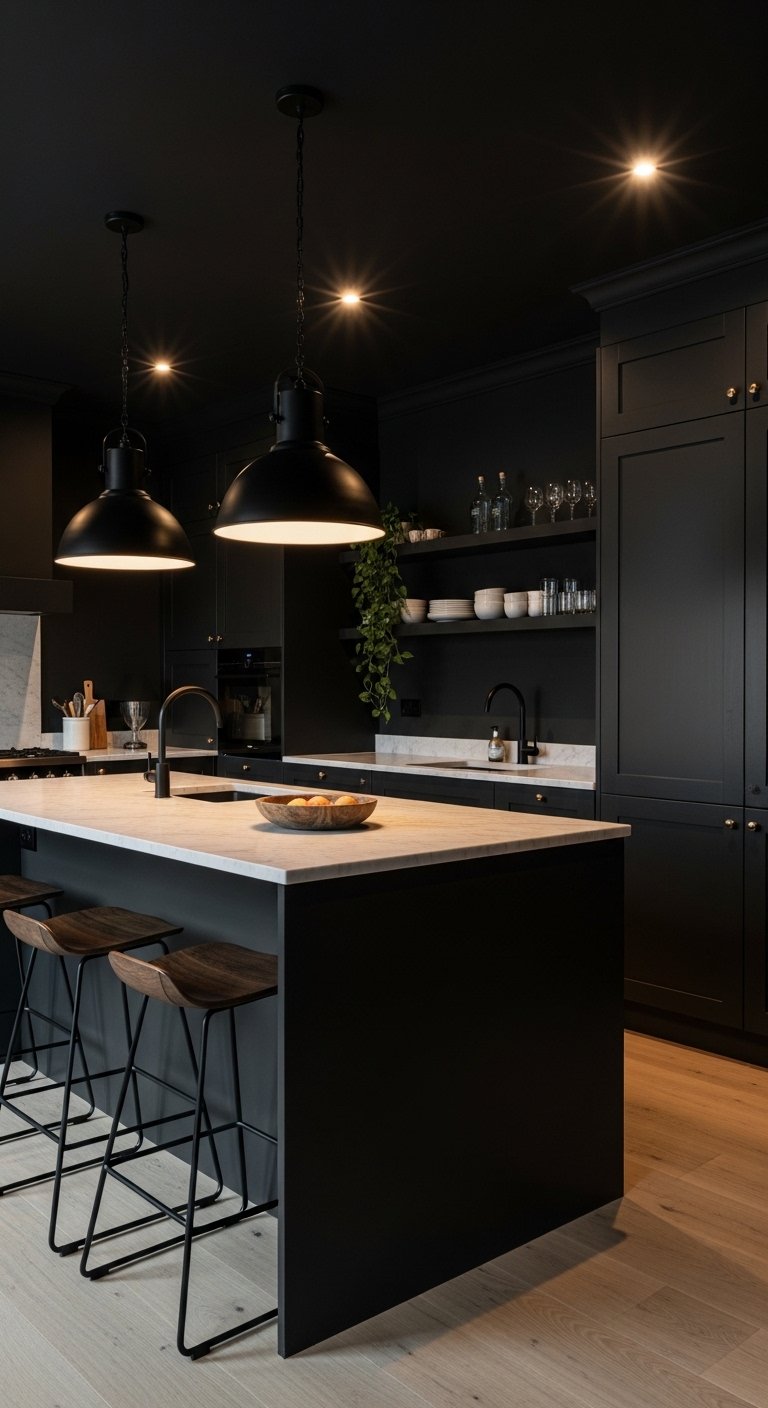
This is the most committed black kitchen idea on the list, and IMO it’s also the most rewarding when executed well.
All four walls painted in a deep matte black create a kitchen that feels completely different from anything else. The room becomes enveloping. Light sources become dramatic. Every object inside the room, whether light-colored dishes, brass hardware, or wooden shelves, pops against the dark backdrop.
This works best in kitchens with good natural light and strong artificial lighting. A dark-walled kitchen with inadequate lighting feels oppressive. A dark-walled kitchen with well-placed lighting feels extraordinary.
Commit fully. Half-measures on this idea, like painting only one wall black, often look unresolved. If you do this, do all four walls and the ceiling.
18. Use Black Stools at a Kitchen Island
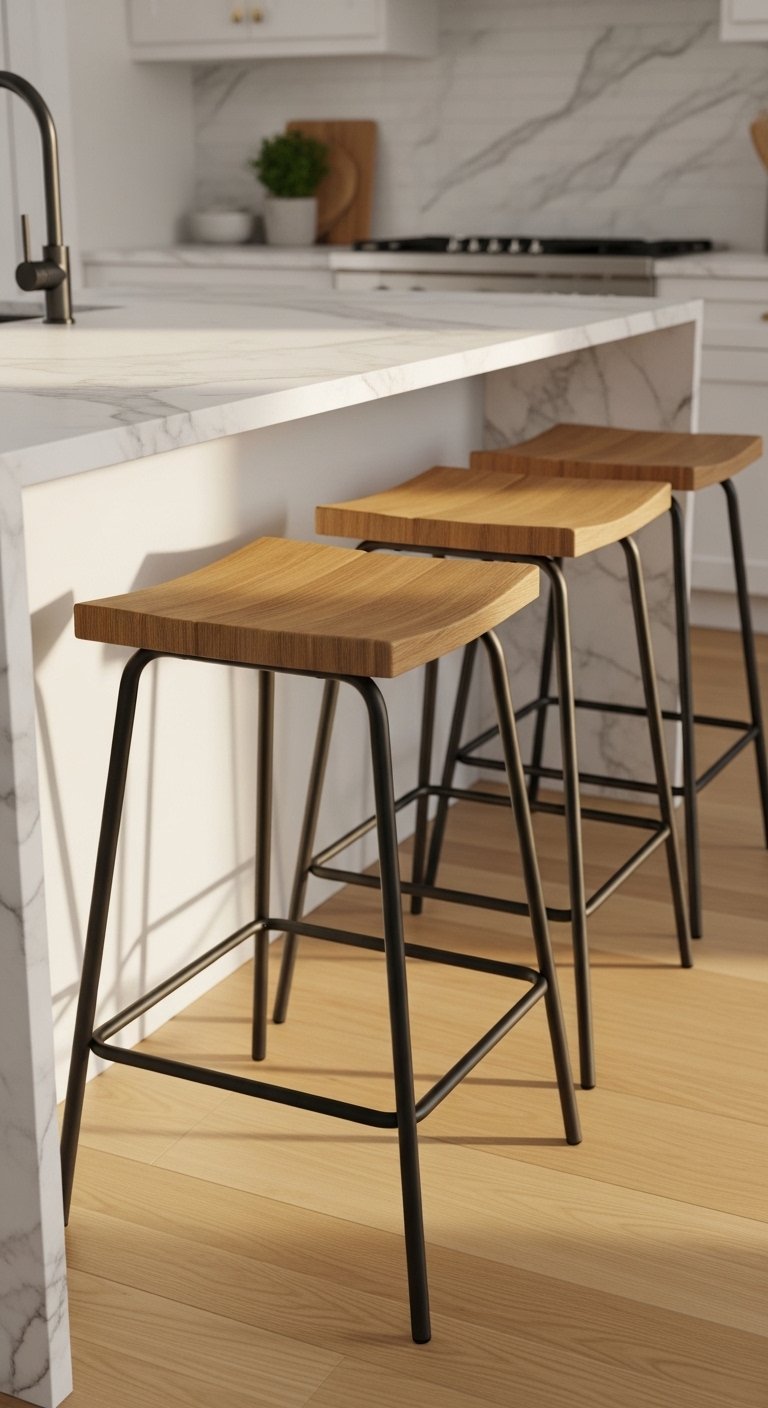
Bar stools are often an afterthought in kitchen design. They shouldn’t be.
Matte black metal bar stools at a kitchen island reinforce the black palette without adding cost or complexity. They’re one of the easiest and most affordable ways to add black to a kitchen that already exists.
The seat material matters. All-metal black stools read as industrial. Black metal frames with a wood seat read as warmer. Black metal with an upholstered leather seat read as more sophisticated.
Match the stool height to your island or counter height before ordering. Standard counter height is 90cm; bar height is 105cm. Get this wrong and the stools are useless.
19. Install a Black Range Hood
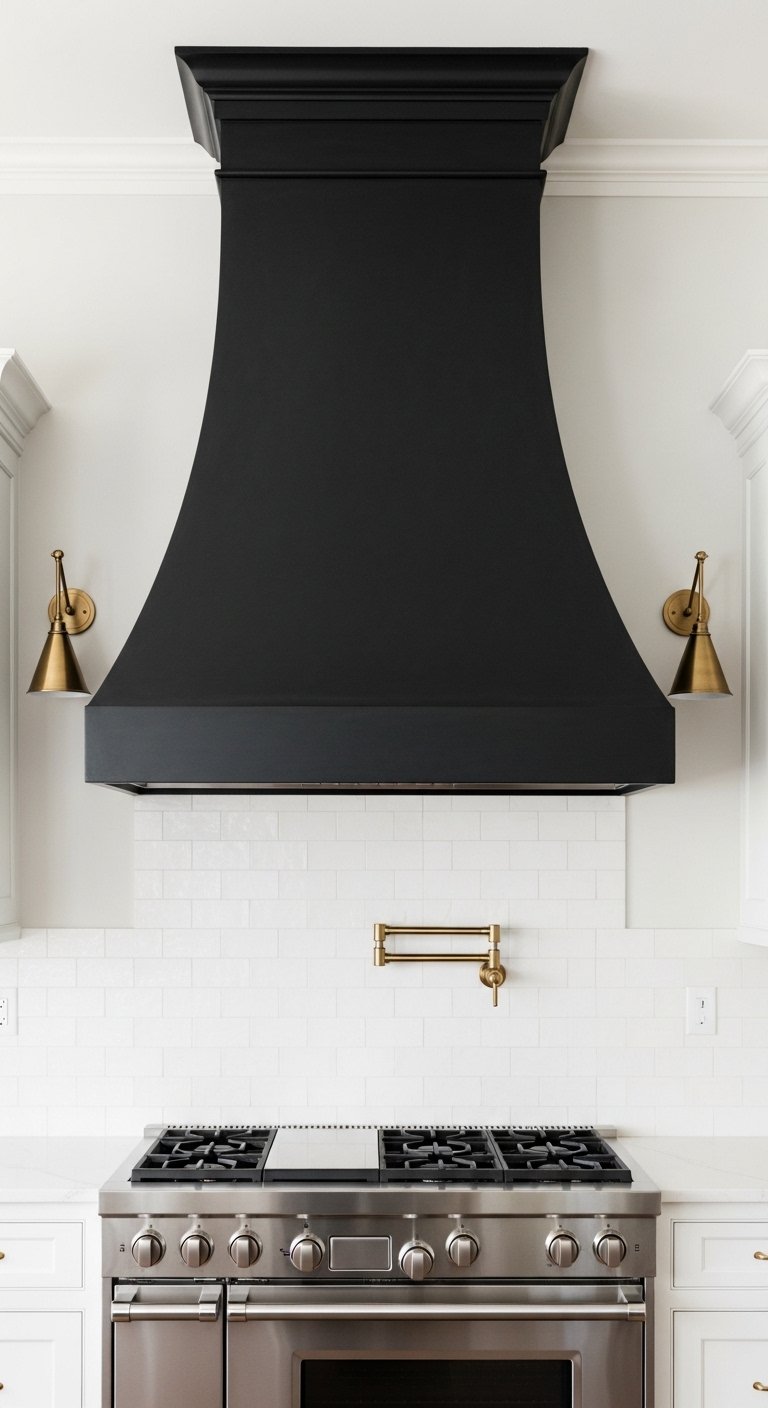
The range hood sits at eye level and at the visual center of most kitchen walls. It commands attention whether you want it to or not.
A matte black range hood, whether a custom plastered chimney style or a sleek stainless-black finish, makes a design statement exactly where you want one.
Custom plaster hoods painted black are the most dramatic option. They feel architectural rather than functional, even though they perform the same job.
Pair a black range hood with black cabinet hardware and a black faucet to create a cohesive thread of dark accents through the room without overwhelming it.
20. Try a Black and White Kitchen
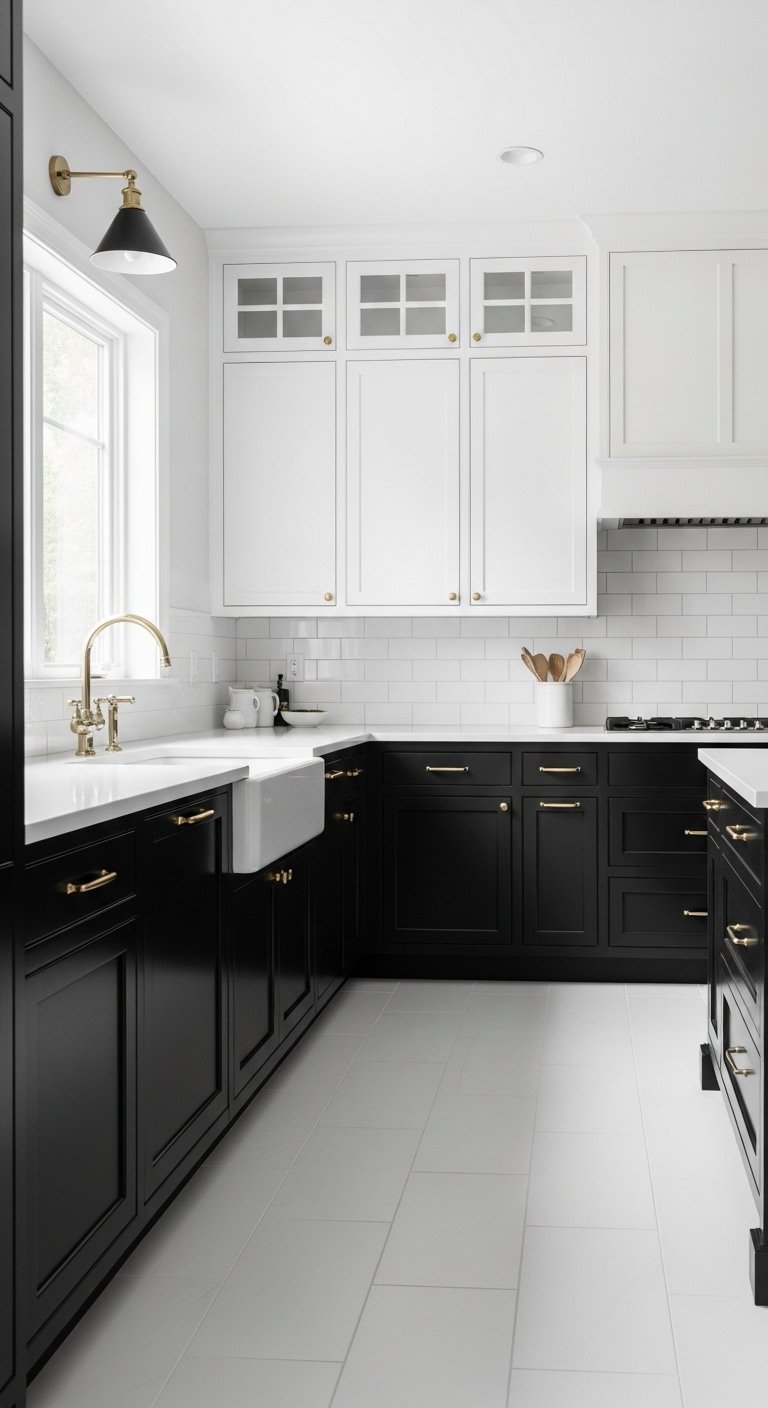
The most reliable black kitchen approach for people who aren’t ready to go all-in: the two-tone.
A black and white kitchen uses high contrast as its design principle. White walls, white upper cabinets, and black lower cabinets. Or white walls, black cabinets, and white countertops. The exact distribution varies, but the principle stays the same.
This combination never dates. Black and white together is as timeless as kitchen design gets. You won’t open a design magazine in 15 years and think it looks wrong.
The ratio of black to white determines the room’s feeling. More white feels lighter and airier. More black feels more dramatic and bold. Adjust the ratio to the light levels and size of your kitchen.
21. Use Black Limewash or Textured Paint
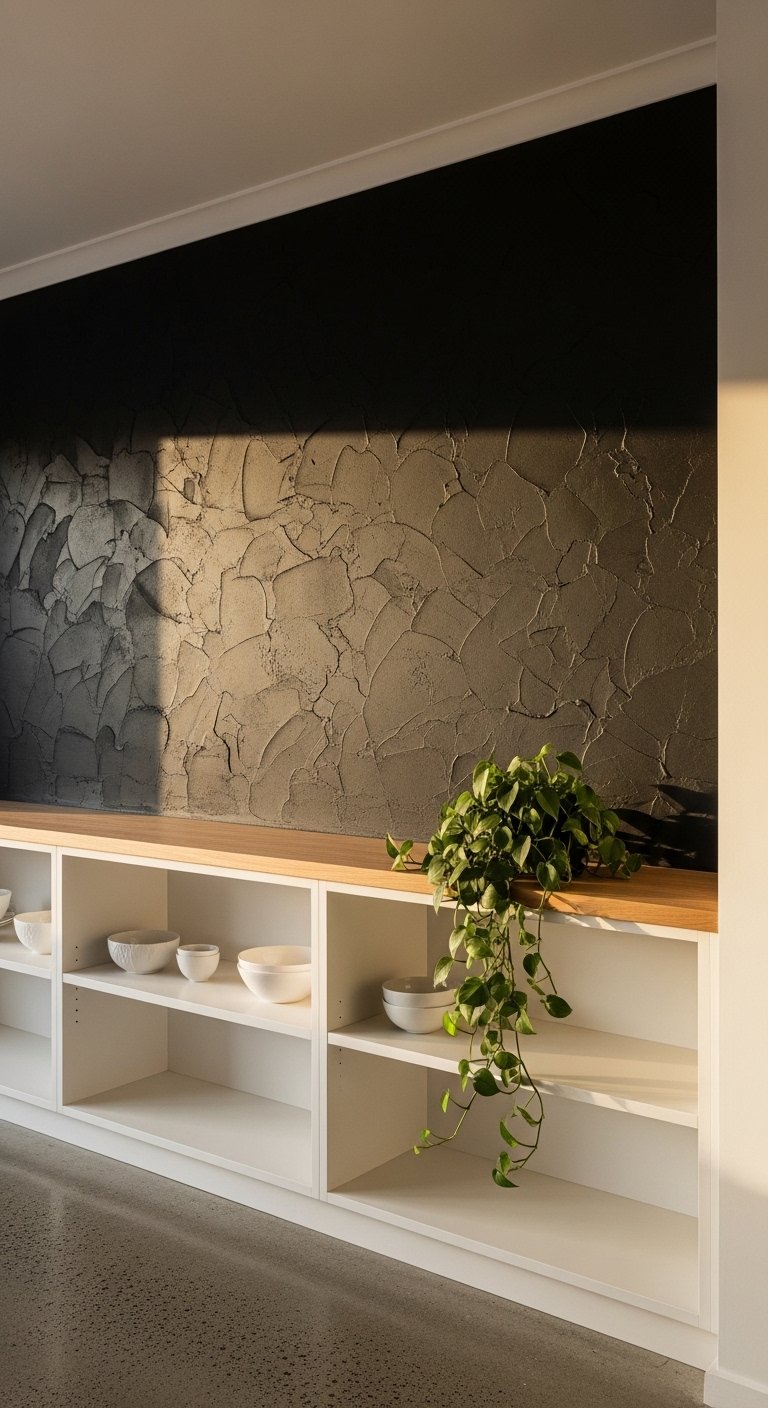
Flat black paint is one option. Textured black is a more interesting one.
Black limewash paint or textured mineral paint on kitchen walls or a feature wall adds depth that flat paint doesn’t. The slightly uneven finish absorbs and reflects light differently across the surface, making the wall feel alive rather than static.
This works particularly well in kitchens aiming for a Mediterranean, rustic, or artisanal aesthetic. It softens what would otherwise be a stark, graphic space.
Apply it to one wall only, ideally the wall behind open shelving or the cooking area, as a feature rather than across the whole room. This restraint makes the texture a focal point rather than a backdrop.
22. Combine Black With Brass
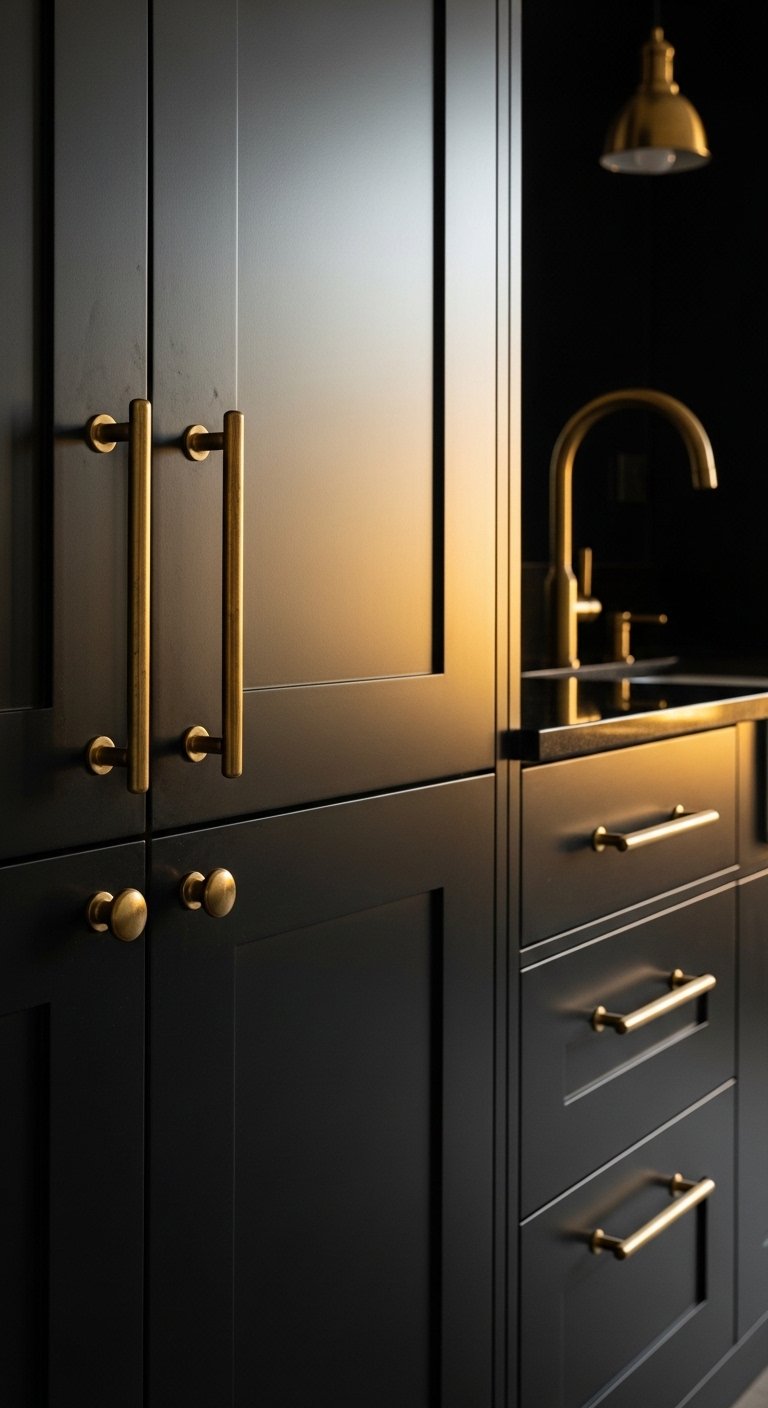
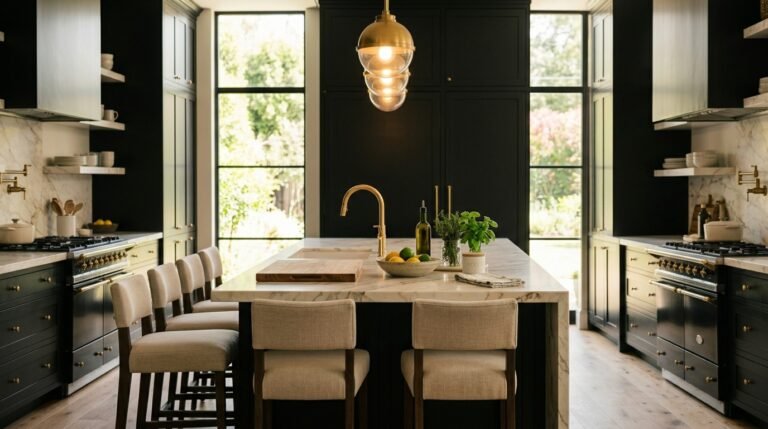
If black on its own feels cold, brass warms it up. This is one of the most consistently successful material combinations in interior design.
Black cabinets or surfaces paired with brushed or unlacquered brass hardware, faucets, and light fittings create a combination that feels luxurious without trying too hard.
Unlacquered brass develops a natural patina over time. It darkens and gains character in the spots you touch most. Some people love this. Some people find it annoying. Know which camp you’re in before choosing it over brushed brass, which stays consistent.
This combination works across kitchen styles: modern, traditional, and transitional. It’s one of the rare pairings that doesn’t belong exclusively to one aesthetic.
23. Use Black as an Accent, Not a Commitment
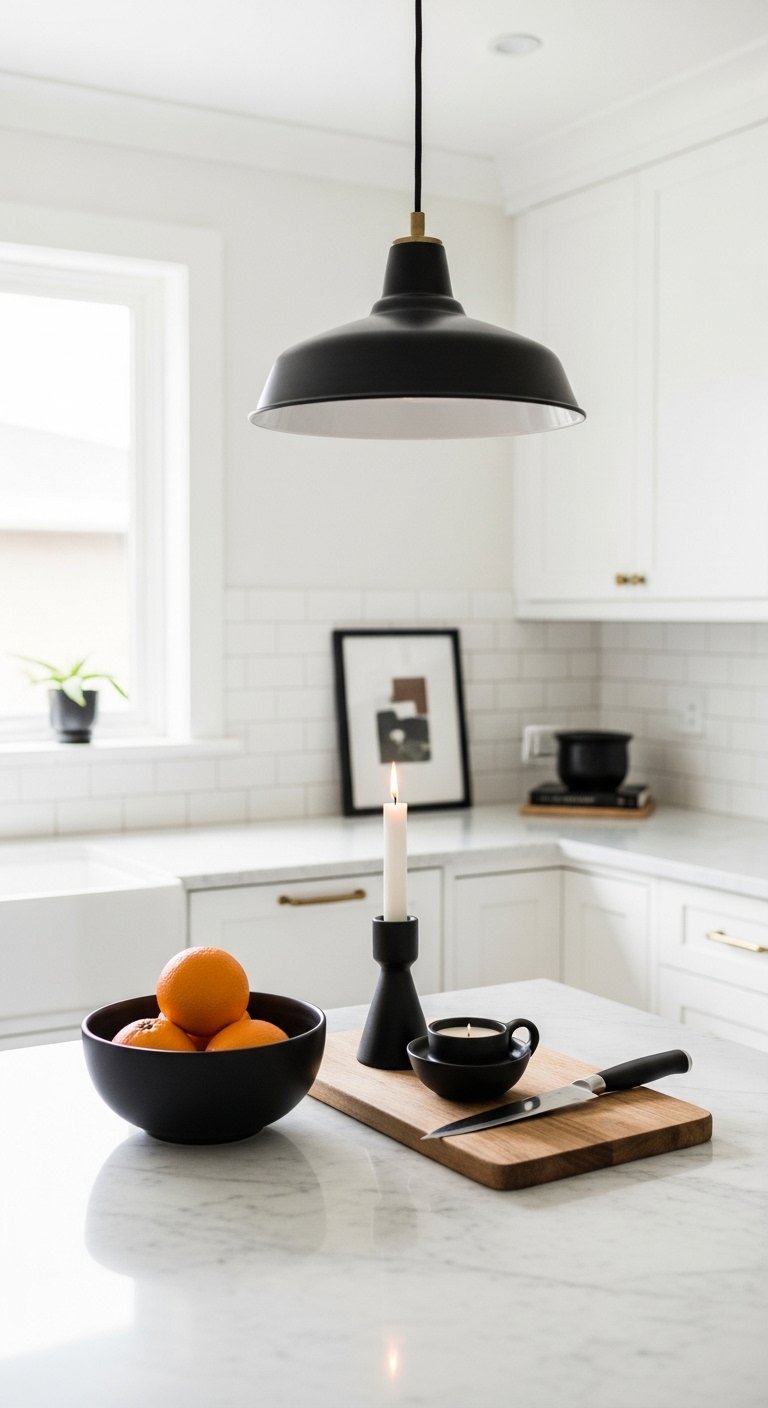
You don’t have to redesign your entire kitchen to bring black into it. Sometimes a few targeted accents do more than a full renovation.
Black picture frames on a kitchen wall, a black fruit bowl on the counter, black candle holders, black pendant cords, a black chalkboard wall panel: any one of these introduces black into your kitchen without a single structural change.
This is the right starting point if you’re genuinely unsure whether black works in your space. Add one or two black accents. Live with them. See how the room responds to the color before committing further.
The accents approach also works as a finishing layer in a kitchen that already has black elements. Small black objects tie the larger black surfaces together and make the palette feel intentional throughout the room.
Final Thoughts
Black kitchens work. They work in small spaces and large ones, in modern homes and traditional ones, in kitchens with lots of natural light and kitchens with very little. The variable isn’t the color. The variable is how deliberately you use it.
Start with what feels manageable. Hardware if you’re cautious. An island if you want a focal point. Full cabinetry if you’re ready to commit. Each step on that spectrum produces a result worth having.
The kitchens that fail with black are the ones that treat it as a trend. The kitchens that succeed treat it as a decision. Make it a decision, support it with the right materials and lighting, and your black kitchen will look good for decades.