25 Luxury Living Room Ideas That Look Effortlessly Rich
Luxury is not about spending more. It’s about choosing better. Most people get this backwards and end up with expensive rooms that still don’t feel luxurious.
I’ve spent a lot of time studying what separates a room that looks expensive from one that simply costs a lot. The difference is almost always in the details, the materials, and the deliberate restraint of knowing when to stop adding things.
These 25 luxury living room ideas give you both the big moves and the finishing details. Apply them with intention and your living room will feel genuinely elevated.
1. Invest in One Exceptional Sofa
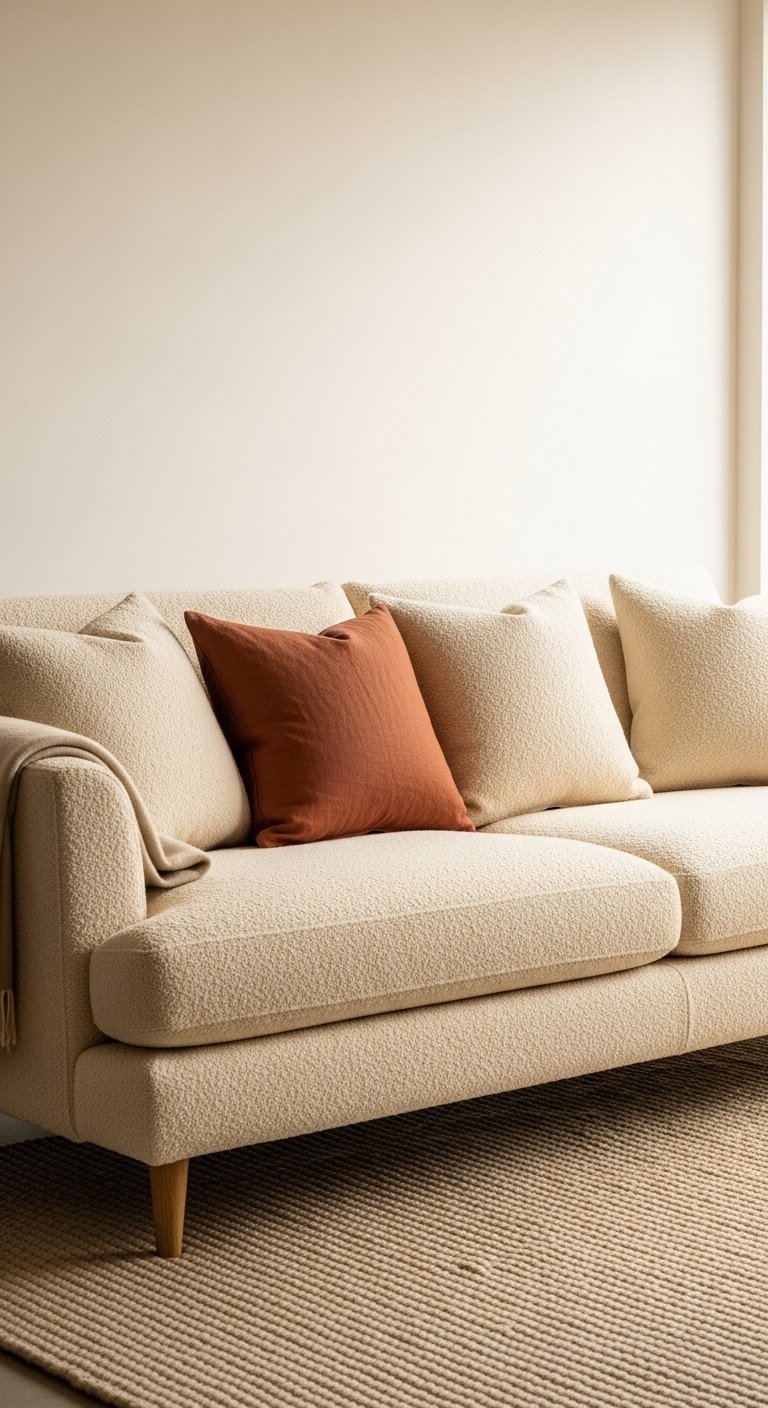
Everything in a luxury living room orbits the sofa. Get this wrong and nothing else you do will rescue the room.
A high-quality sofa in a natural fabric, deep linen, bouclé, or velvet, signals luxury before anything else in the room does. The silhouette, the cushion fill, the arm profile, and the leg material all communicate quality within seconds of entering a room.
Down-wrapped cushion inserts feel different from foam inserts. A sofa with a hardwood frame feels different from one with a softwood frame. These differences are not visible in a product photograph. They are felt when you sit down.
Buy once. A sofa you replace in three years because the cushions have collapsed is not a luxury investment. A sofa that holds its form for fifteen years is.
2. Layer Your Lighting Across Three Levels
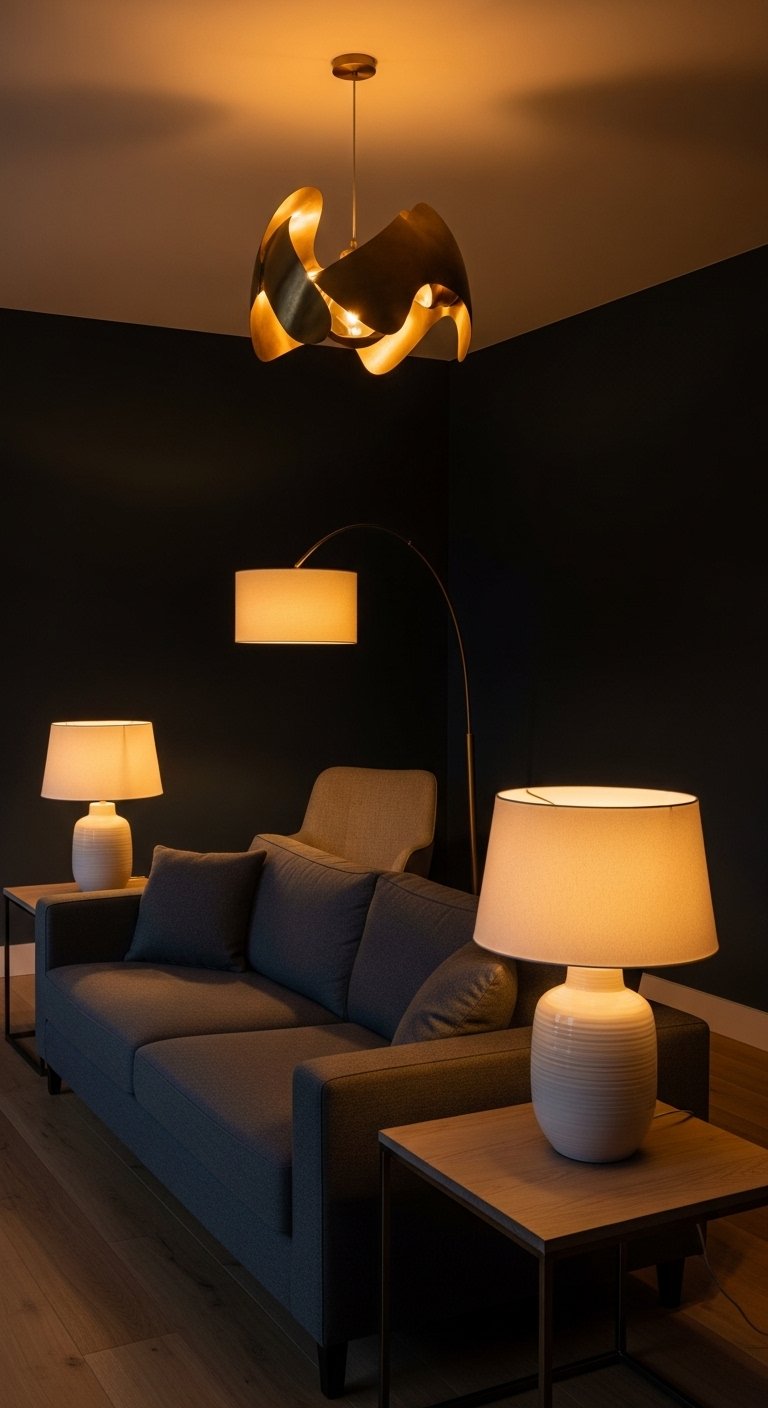
Single-source overhead lighting is the fastest way to make a room feel functional rather than considered. Luxury living rooms use multiple light sources at multiple heights.
Ceiling lighting, floor lamps, and table lamps working together create a layered light environment where you control the mood by selecting which combination of sources to use at any given time.
The ceiling light handles ambient illumination. Floor lamps add warmth at eye level. Table lamps create intimate pools of light on surfaces. Each layer serves a different purpose and the combination of all three produces a room that looks photographed at any hour.
Install dimmers on every circuit where possible. The ability to reduce ceiling lighting to 20% while floor lamps provide the primary light transforms a living room from functional to atmospheric.
3. Use a Large Format Area Rug
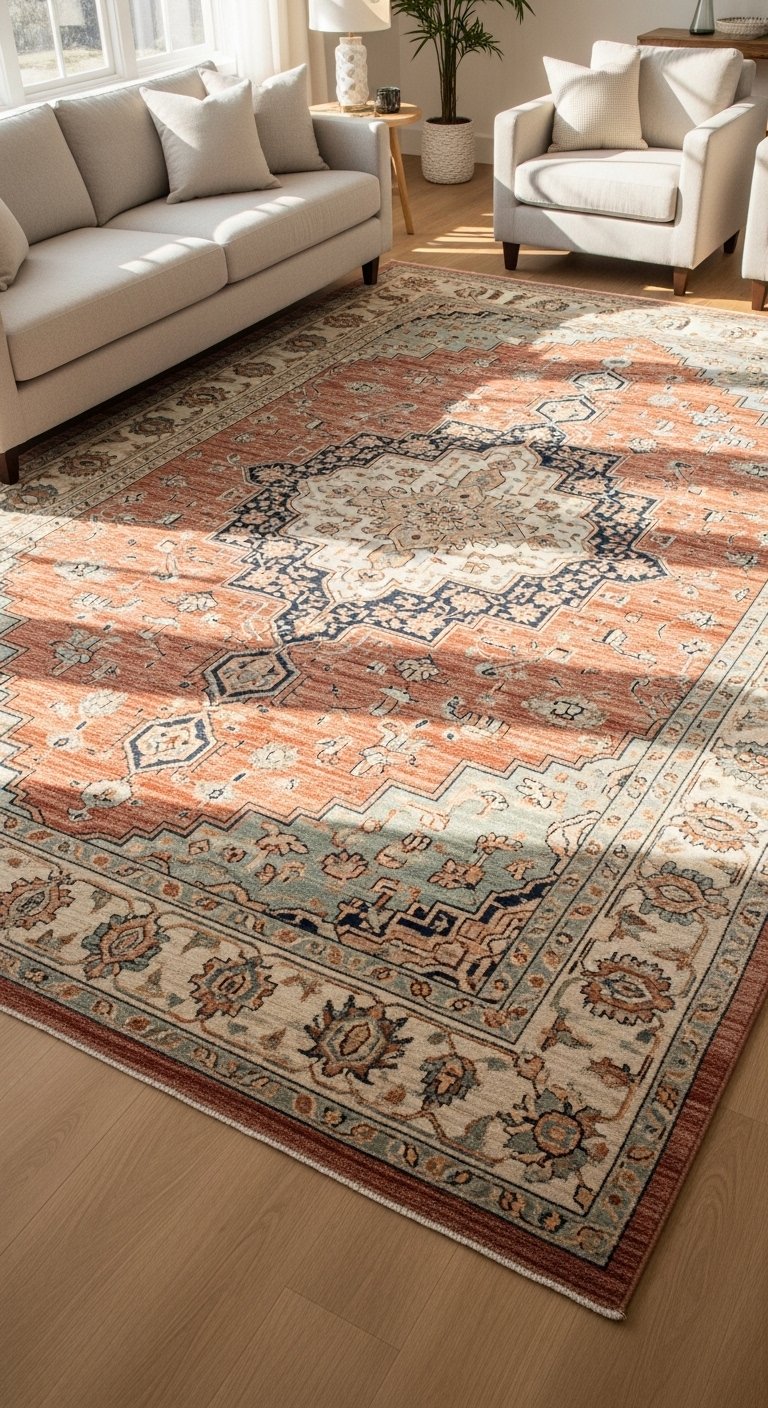
The floor is one of the largest surfaces in a living room. Most people cover a fraction of it with a rug that’s too small.
A large area rug that sits under the front legs of all seating furniture unifies the seating arrangement into one composed zone. The rug should be large enough that no piece of seating looks isolated from it.
Natural fiber rugs, wool, silk, or jute, age better and look better than synthetic alternatives. The pile density, knot count in hand-knotted rugs, and fiber quality are all visible in how the rug reflects light and how it feels underfoot.
A rug that’s too small in a luxury living room is one of the most common and most visible mistakes. Measure the full seating arrangement and size the rug to contain it.
4. Install Floor-to-Ceiling Curtains
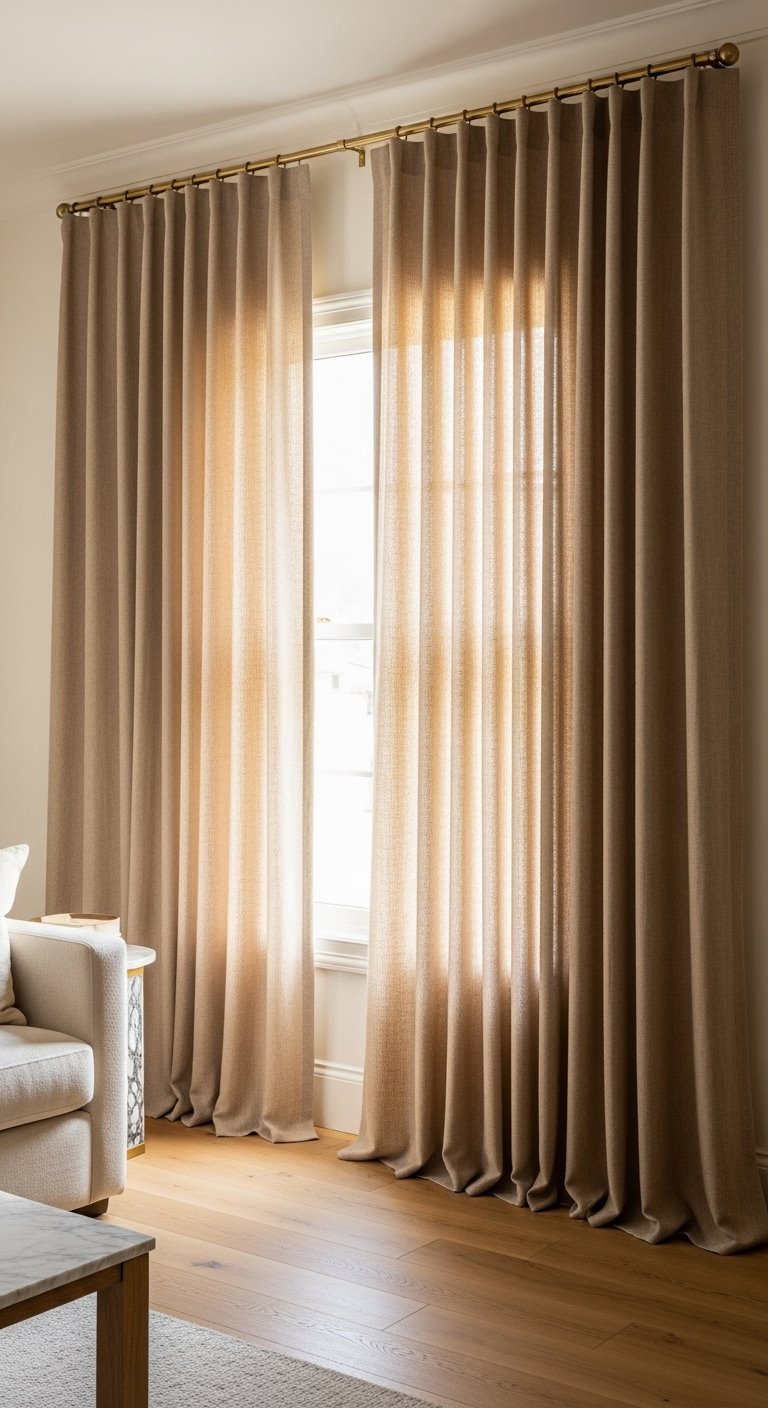
Curtains hung at window height make windows look small. Curtains hung at ceiling height make rooms look tall.
Floor-to-ceiling curtains in natural linen, velvet, or heavyweight cotton add drama, softness, and acoustic warmth to a living room simultaneously. The fabric pools slightly on the floor at the base for a deliberately luxurious finish.
Hang the curtain rod as close to the ceiling as possible. Extend it at least 30cm beyond the window frame on each side. This maximizes the window’s apparent width and keeps the full curtain panel clear of the glass when open.
Linen curtains that have been washed before hanging develop a soft, natural crumple that synthetic fabrics never replicate. This lived-in quality is not a flaw. It’s exactly what makes them look expensive.
5. Choose a Marble or Stone Coffee Table
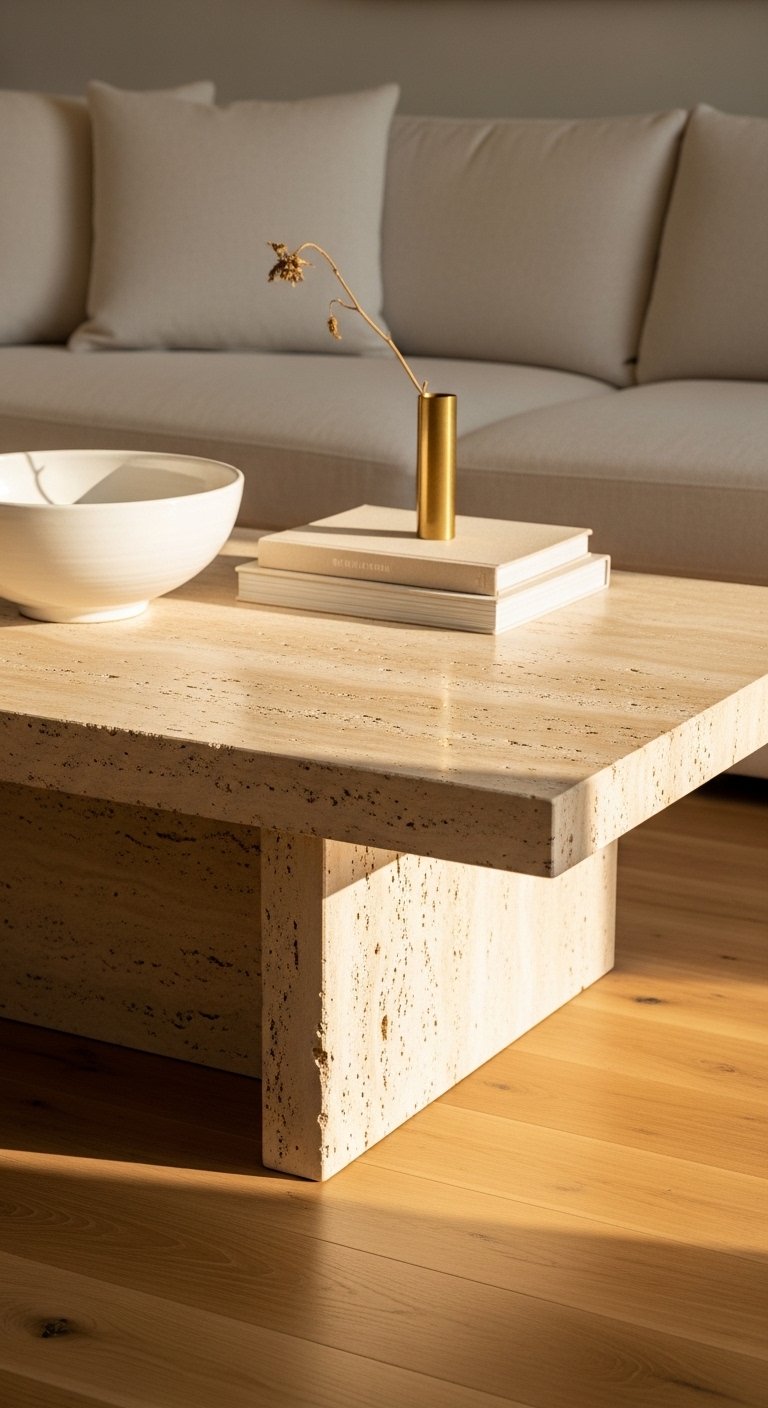
The coffee table sits at the center of every living room arrangement. In a luxury space, it needs to hold its own as a design object.
A marble, travertine, or stone coffee table brings material weight and visual presence that glass or timber alternatives rarely match in a luxury context. The natural veining in marble and the texture of travertine make each piece genuinely unique.
Travertine in particular has become a dominant material in luxury living room design. Its warm, porous surface, earthy tones, and slightly irregular texture feel organic and considered rather than cold and polished.
A stone coffee table is heavy. It stays where you put it. It doesn’t shift when someone sits on the edge or puts their feet on it. This permanence is part of its luxury quality.
6. Add a Grand Fireplace or Fire Feature
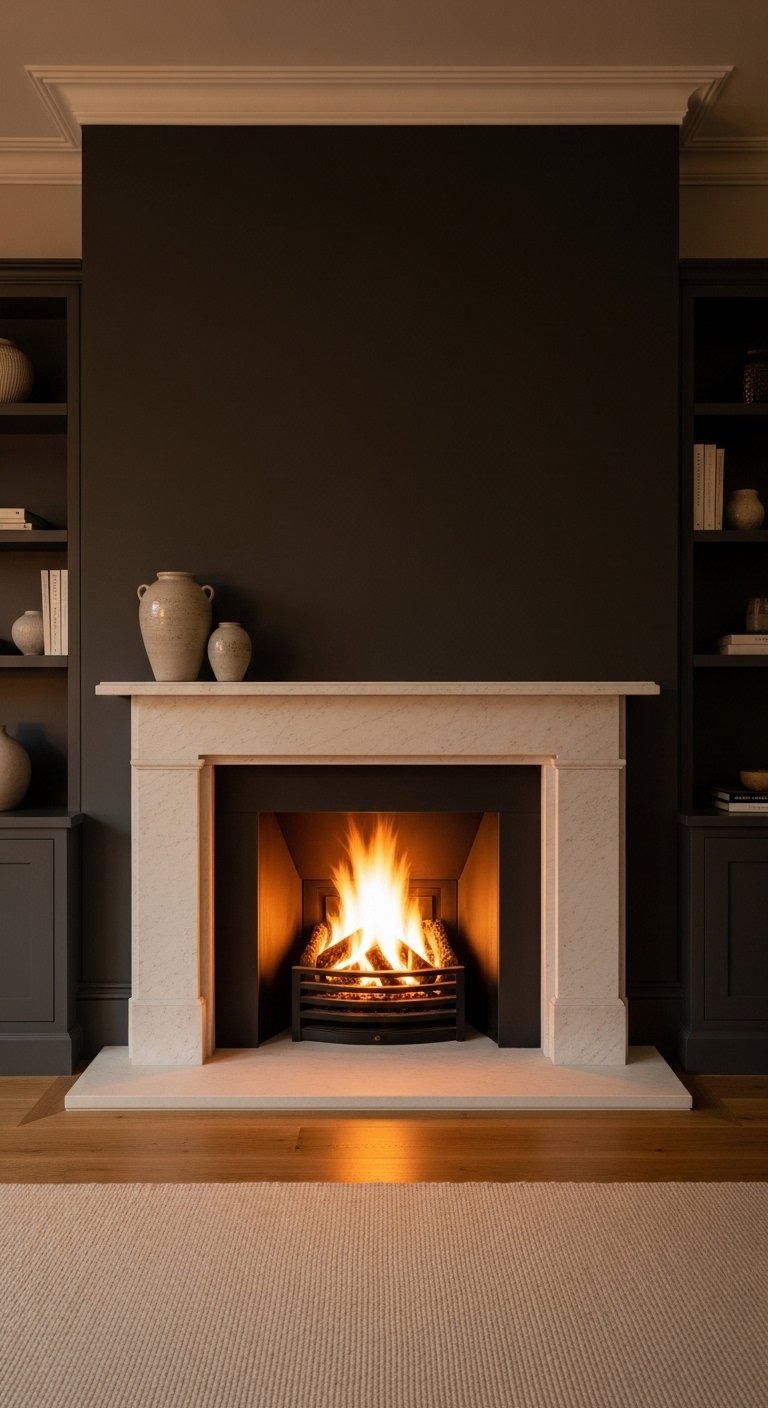
Nothing transforms the atmosphere of a living room the way a fire does. The warmth, the movement, the sound: a fireplace makes a room feel alive.
A statement fireplace with a marble surround, a plastered chimney breast, or a sleek wall-inset bioethanol fire becomes the architectural focal point that every luxury living room needs.
If structural work isn’t possible, a bioethanol fire insert in a custom-built surround creates the visual and atmospheric effect of a real fire without requiring a flue. The flame is real. The warmth is real. The installation is far simpler.
Style the mantel shelf with deliberate restraint. One large object, or two asymmetrically placed objects, performs better than a mantel crowded with decorative items. The fireplace should remain the focal point, not its accessories.
7. Invest in Custom Built-In Shelving
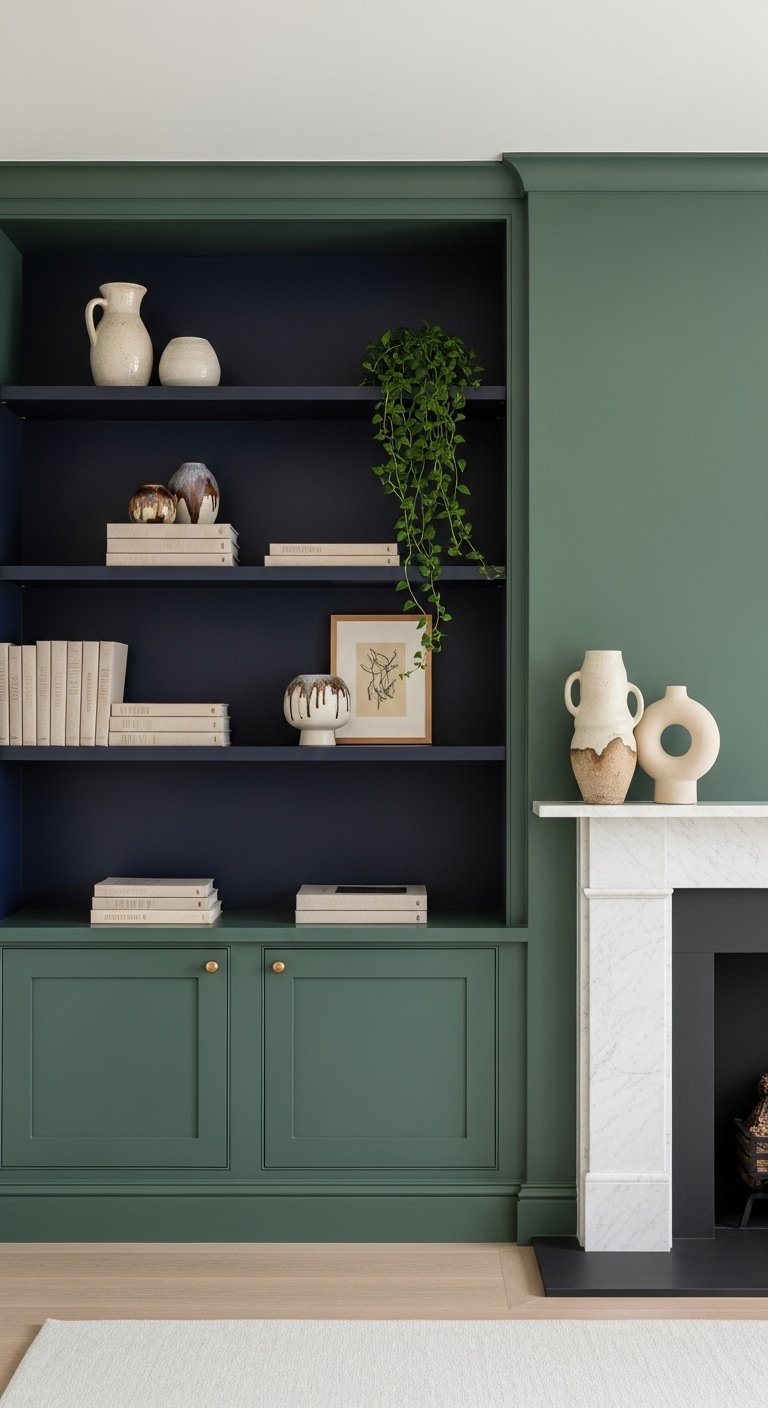
Built-in shelving signals permanence and investment in a way that freestanding furniture never does.
Custom floor-to-ceiling built-in shelving flanking a fireplace or television gives a living room an architectural quality that transforms the entire wall. The room looks designed from the structural level rather than decorated after the fact.
Paint the built-ins the same color as the wall for a seamless, tonal look that reads as highly sophisticated. Paint the interior back panels a contrasting deep color to add depth and make displayed objects pop.
Style with discipline. Luxury built-ins hold books, art objects, and a few carefully chosen accessories. They do not hold everything you own plus the wifi router.
8. Use Velvet as an Accent Fabric
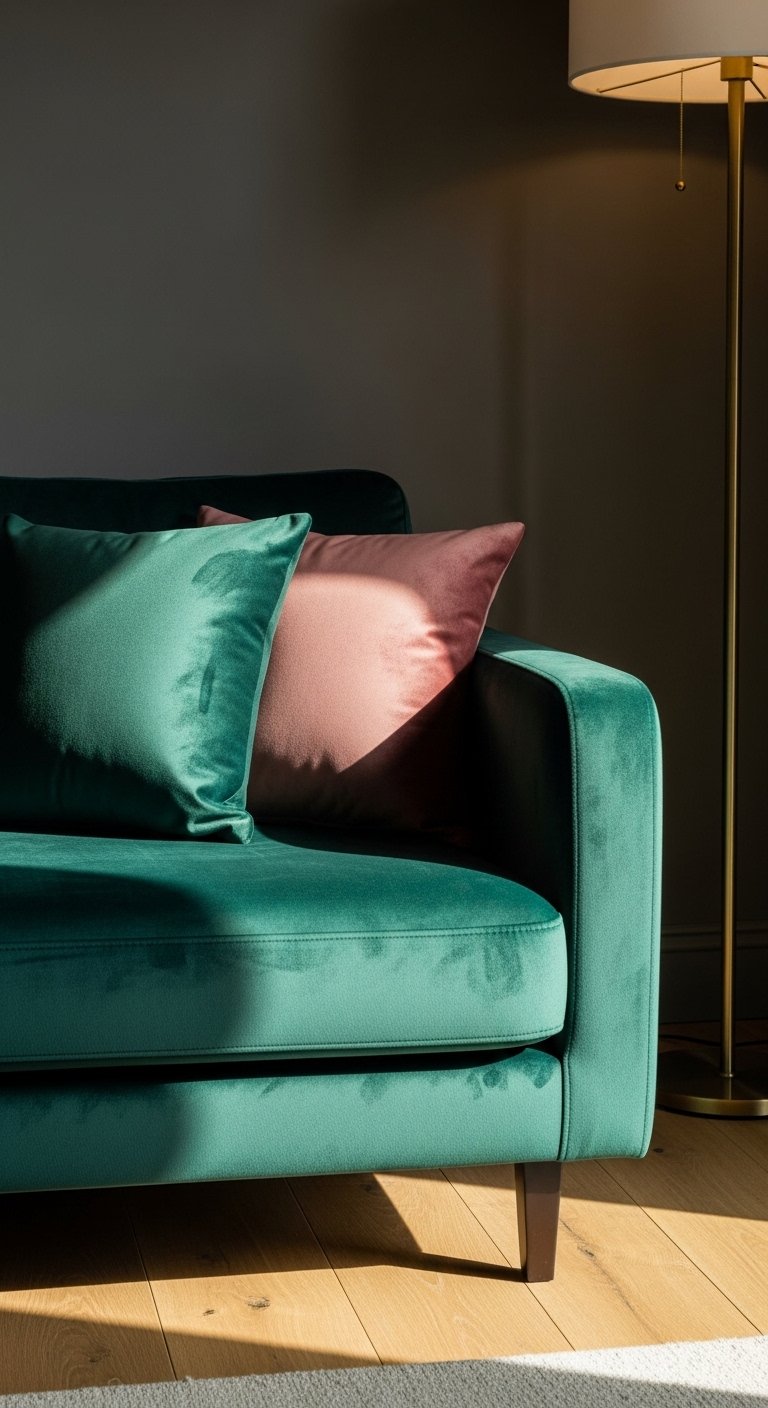
Velvet communicates luxury more efficiently than almost any other fabric. The way it absorbs and reflects light changes with viewing angle, giving it a depth that flat fabrics lack.
Velvet cushions, a velvet accent chair, or velvet curtains in deep jewel tones, emerald, sapphire, burgundy, or in more muted tones like dusty rose or sage, add richness to a neutral living room base.
Use velvet as an accent rather than covering every surface in it. A velvet sofa works in the right room. Velvet sofa plus velvet curtains plus velvet cushions in the same room starts to feel like the inside of a jewelry box. IMO one major velvet piece supported by velvet cushions is the right balance.
Quality velvet has a tight, dense pile and a weight that cheaper versions lack. Run your hand across it and the pile direction changes. That responsiveness is the mark of real velvet.
9. Install Decorative Wall Panelling
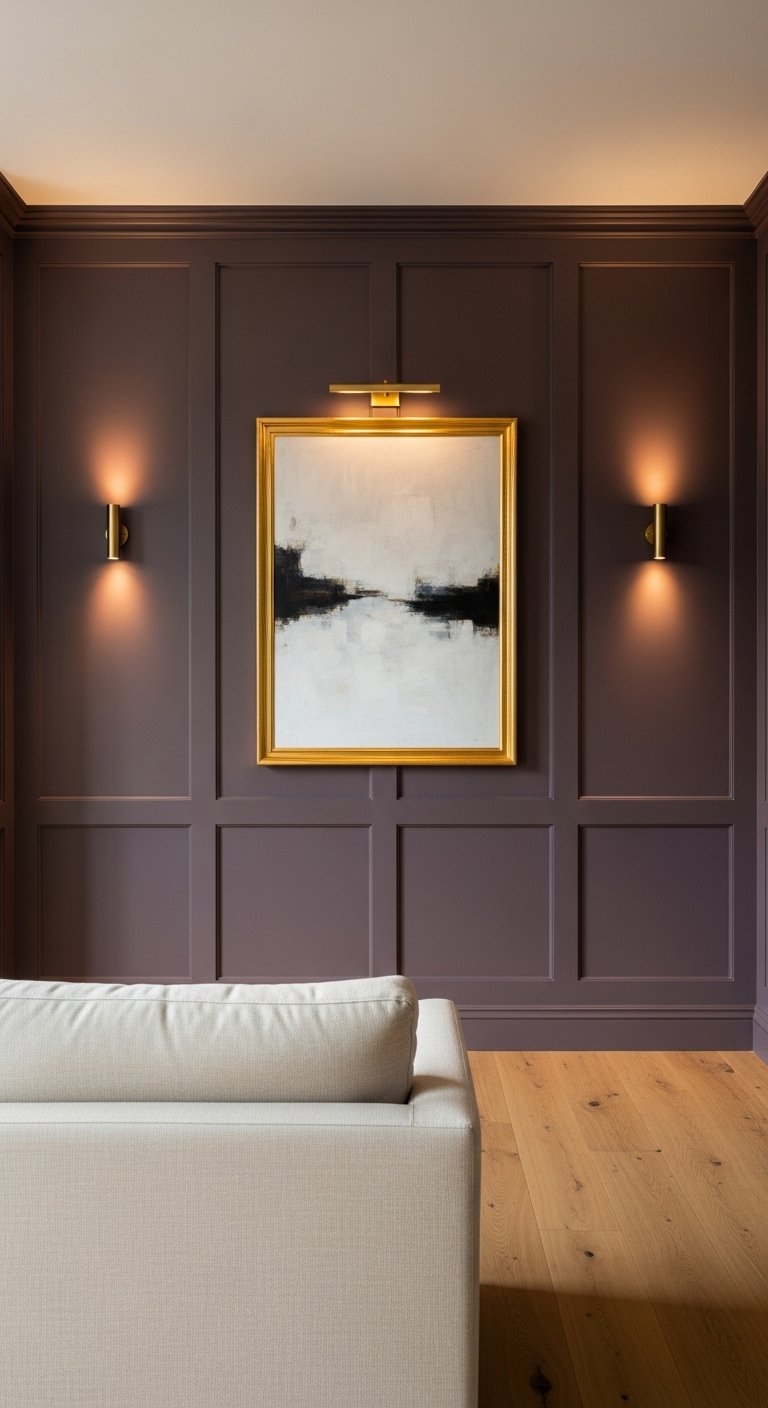
Architectural wall detail separates a designed room from a decorated one. Wall panelling adds dimensional character that paint and art alone cannot provide.
Painted panel moulding, full-height fluted panels, or bespoke joinery panelling applied to a living room wall transforms it from a flat surface into an architectural feature.
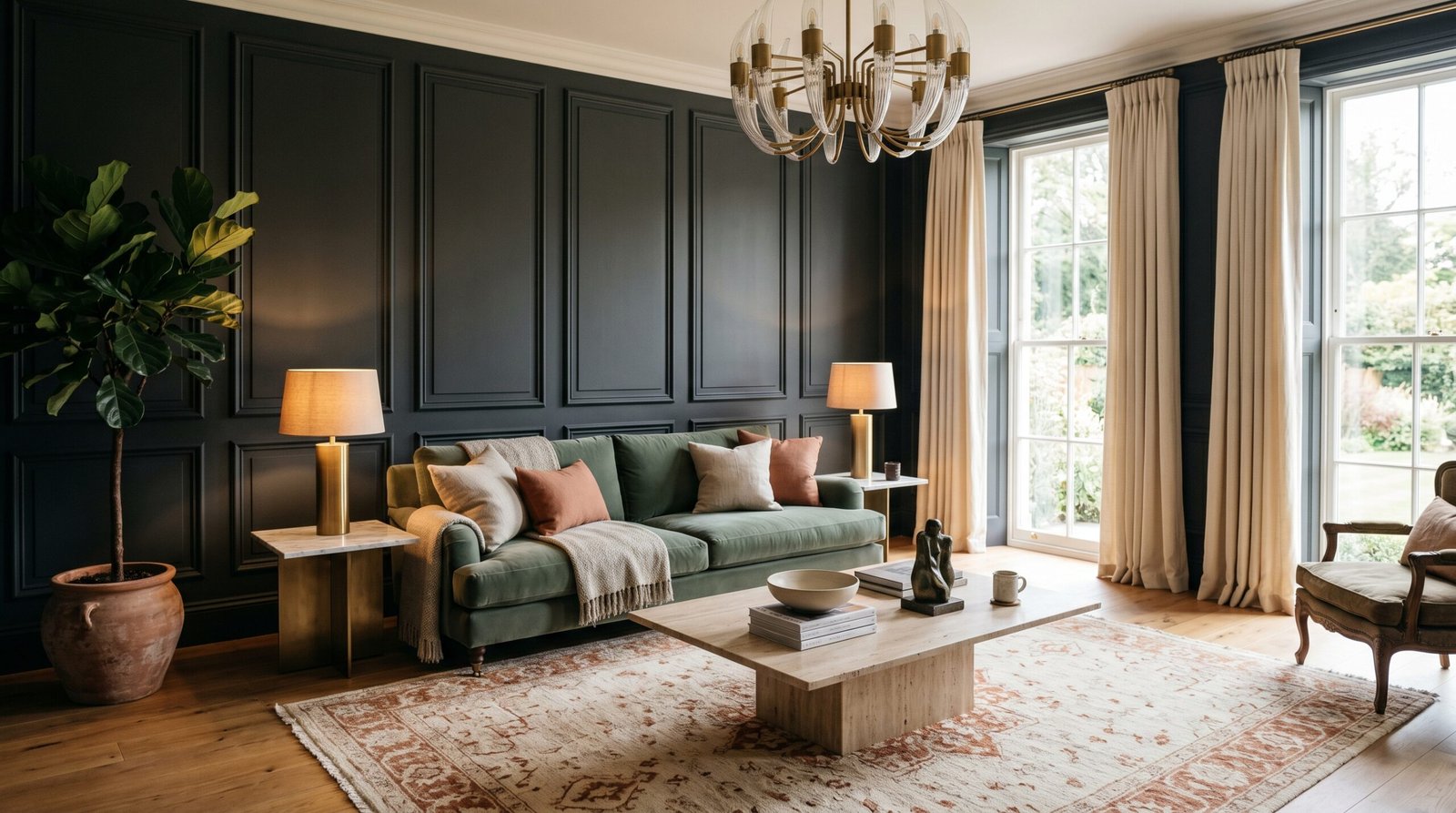
The most effective luxury panelling treatment: full-height panels painted in the same deep color as the wall, with the shadow lines of the panel profiles creating the visual interest. No color contrast needed. The depth does the work.
This approach pairs particularly well with brass or gold hardware on adjacent furniture and fixtures. The combination of rich wall color, dimensional panelling, and warm metal is one of the most reliable luxury combinations in interior design.
10. Choose Statement Lighting as Sculpture
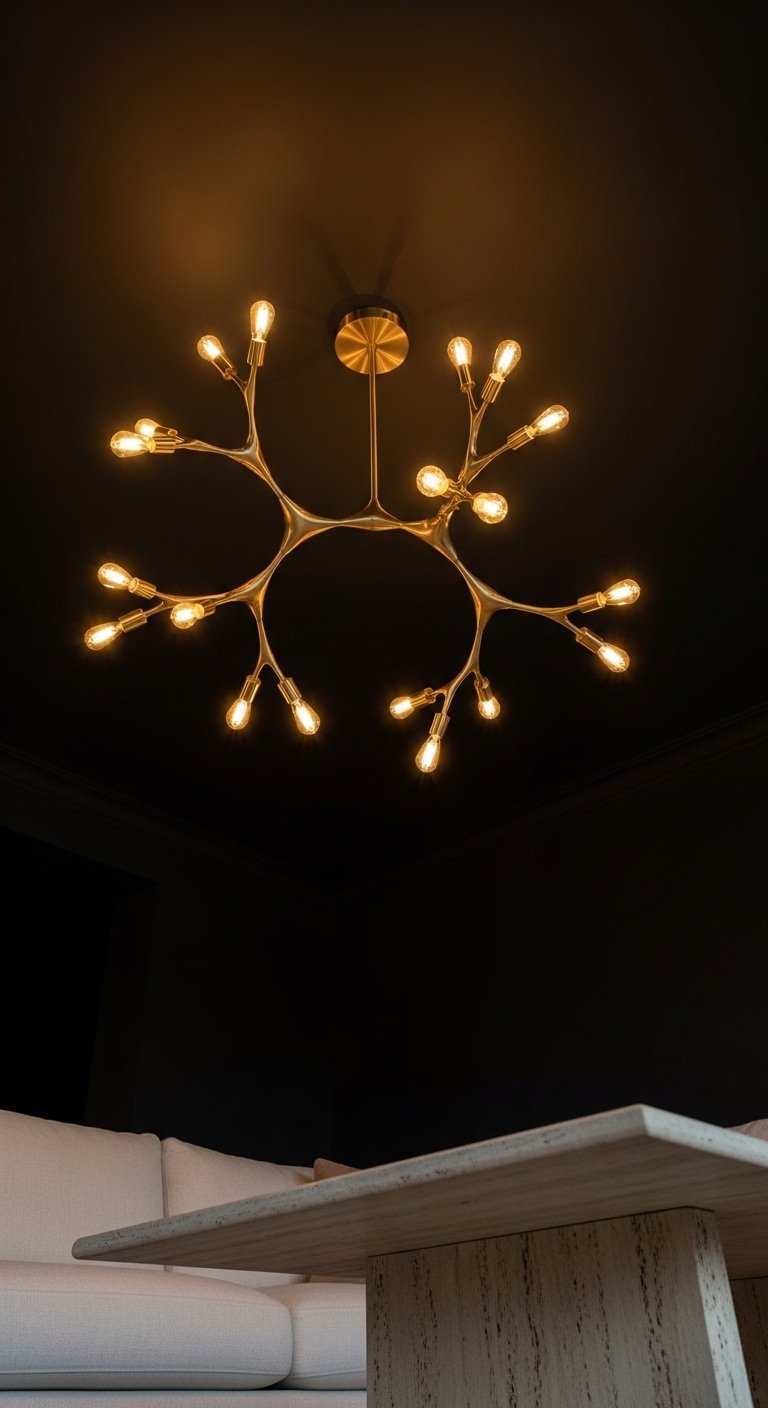
A ceiling light in a luxury living room is not a functional fitting. It’s a sculpture that happens to produce light.
A large decorative pendant, a sculptural chandelier, or an oversized rattan or paper light fixture above the seating area becomes a design element that defines the room’s character from the ceiling down.
Scale this up significantly from what feels comfortable. A pendant that looks large in a showroom often disappears in an actual living room. Go larger than your instinct suggests.
The fixture material and finish should coordinate with other metal and material choices in the room. A brass chandelier in a room with brushed brass hardware and marble surfaces creates material cohesion. The same chandelier in a room with chrome fixtures and glass surfaces creates material conflict.
11. Incorporate Natural Stone on One Surface
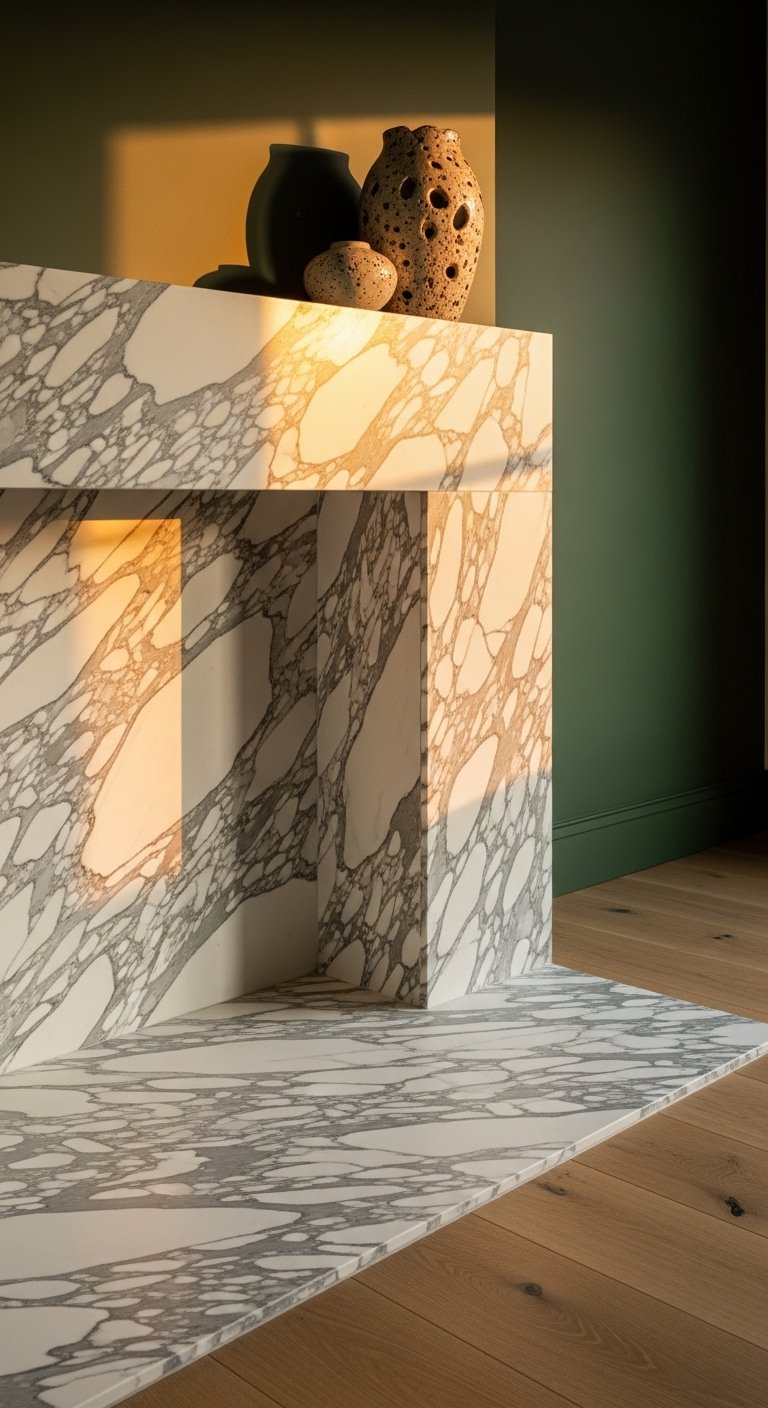
Stone used architecturally in a living room, rather than just in a coffee table, elevates the entire room’s material register.
A stone feature wall, a stone-clad fireplace surround, a stone hearth, or a stone-topped console brings geological permanence and natural variation to a room dominated by manufactured materials.
Marble, limestone, travertine, and quartzite all work in living room applications. The finish matters: polished marble reads as formal and glamorous, honed marble reads as more relaxed and contemporary, brushed limestone reads as organic and warm.
Even a single stone-topped surface in an otherwise non-stone room lifts the material quality of everything around it. One excellent material choice influences the perception of every other material in the room.
12. Edit Your Accessories Ruthlessly
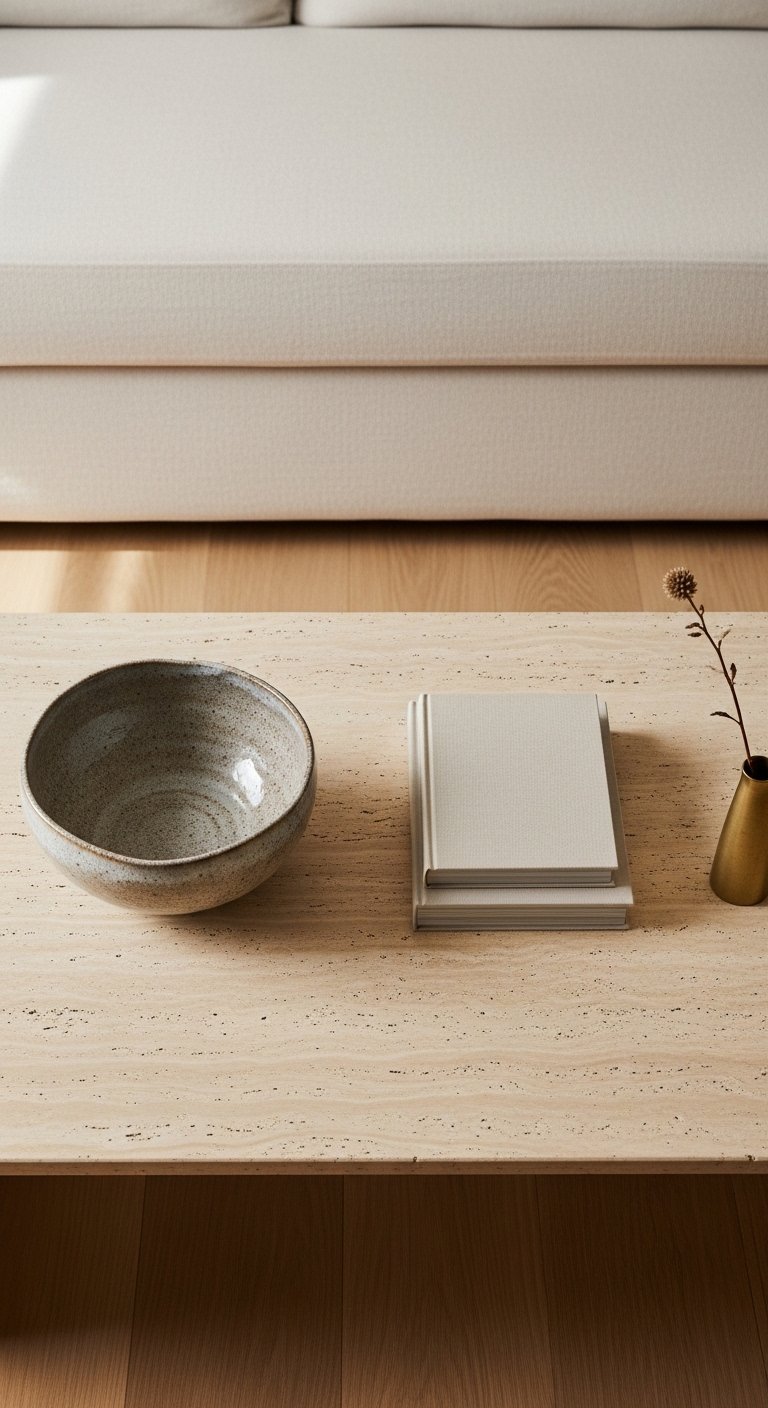
Luxury living rooms contain fewer objects than average living rooms. This is not accidental.
Three to five carefully chosen decorative objects on a coffee table, console, or shelf perform better than fifteen objects of mixed quality. The space between objects is part of the composition.
Choose objects that reward close attention: a ceramic with an interesting glaze, a stone object with natural texture variation, a brass object that changes in the light. These are objects people pick up and examine. They communicate connoisseurship.
Remove anything from your living room surfaces that you cannot give a specific reason for keeping. If the reason is “I’ve always had it there,” that’s not a reason. Edit until only the objects with genuine visual purpose remain.
13. Use a Consistent Metal Finish Throughout
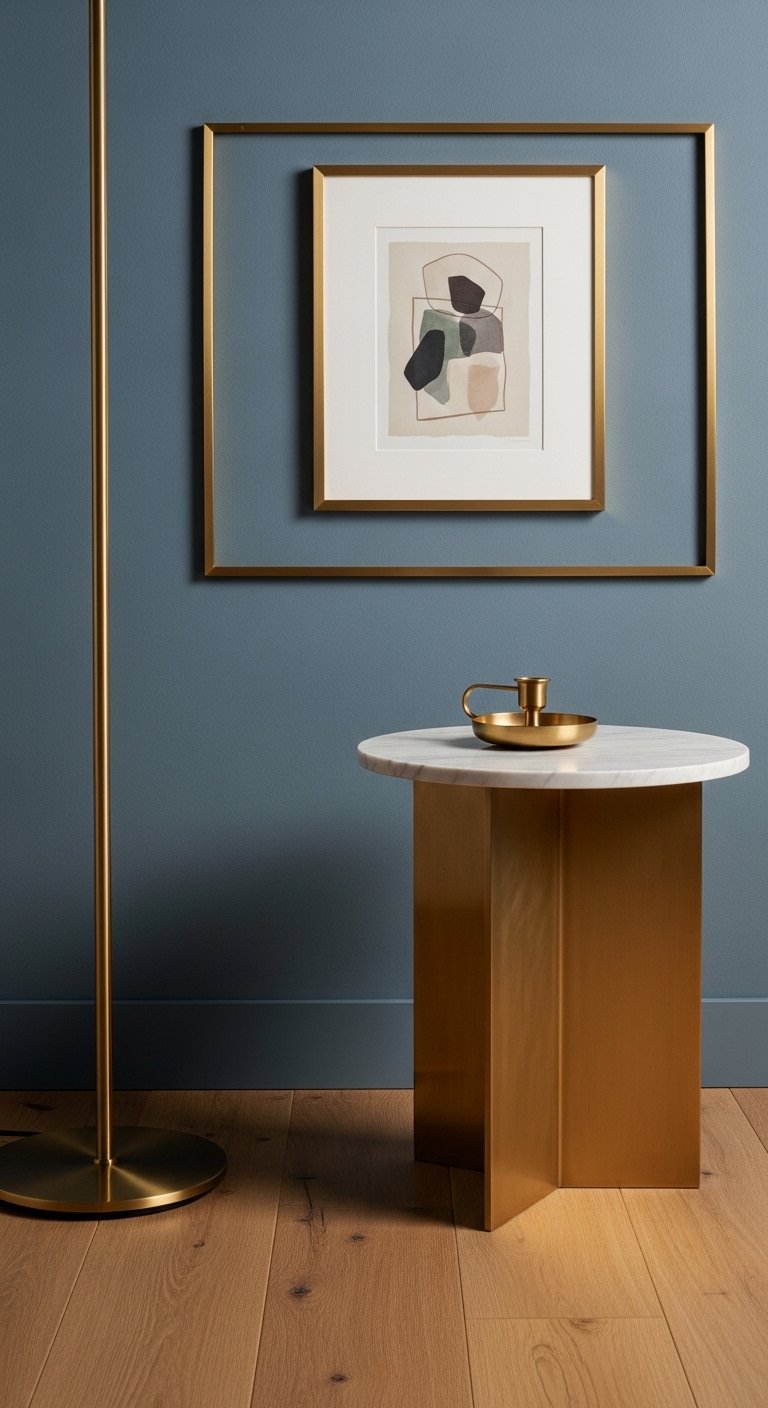
Mixed metal finishes throughout a room communicate indecision. A single consistent metal finish communicates intention.
Choose one metal finish, brushed brass, polished nickel, matte black, or aged bronze, and apply it consistently across lamp bases, hardware, picture frames, decorative objects, and fixtures throughout the living room.
Brushed brass is the most versatile luxury metal finish currently. It works against dark walls and light ones, with warm wood tones and cool stone surfaces. It ages gracefully rather than showing wear badly.
This doesn’t mean every metal surface must be identical. A brushed brass lamp base, a thin brass picture frame, a brass-footed coffee table, and brass cabinet handles all share the same finish language while varying in application.
14. Invest in Original Art
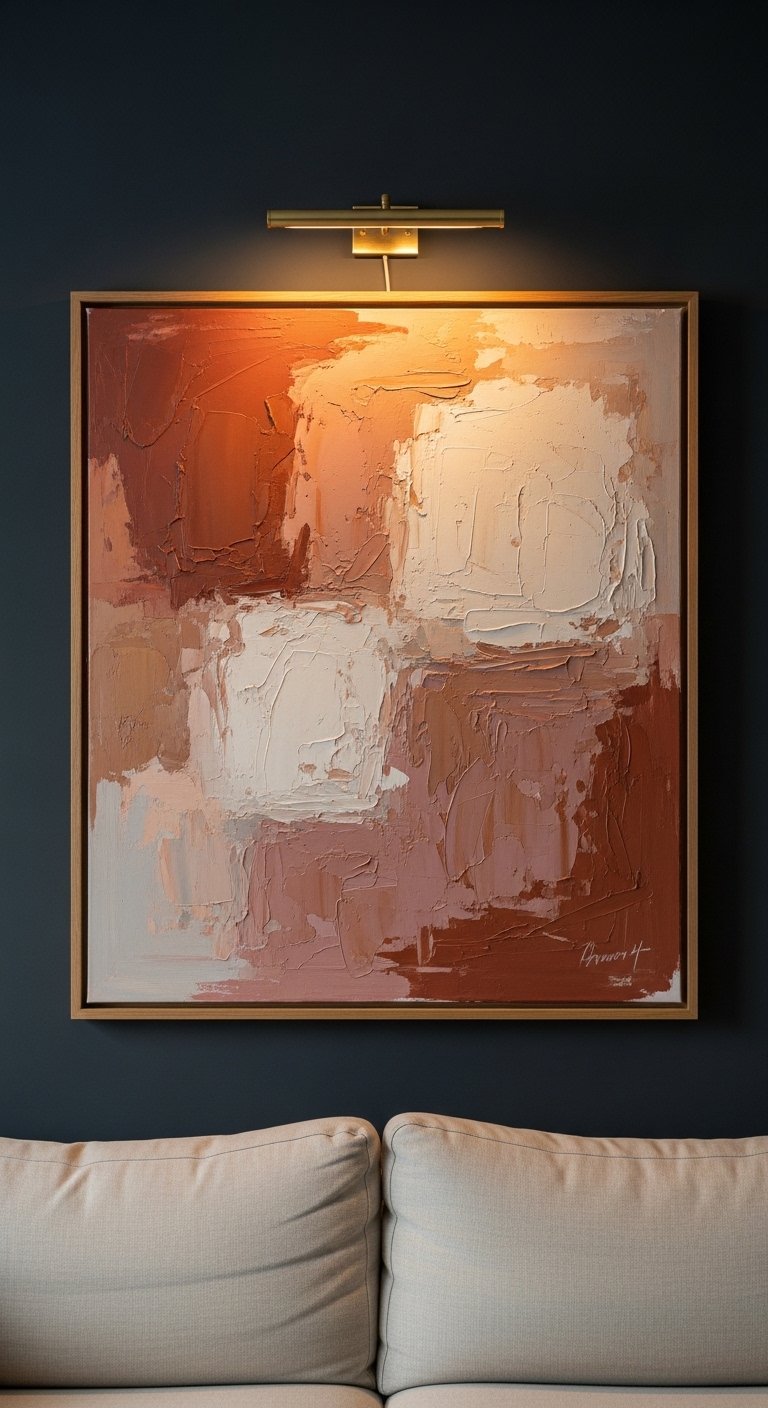
Printed reproductions have their place. A luxury living room benefits from at least one piece of original art.
An original painting, drawing, or photograph by an artist whose work you genuinely respond to adds a cultural and personal dimension to a living room that no reproduction, however good, replicates.
Original art does not need to be expensive. Many working artists sell original pieces at accessible price points through studio open days, local galleries, and online platforms. The originals are often more affordable than large high-quality reproductions in premium frames.
The test of good art in a room is whether you still want to look at it after six months. If the answer is yes, it belongs there. If the answer is no, move it and find something better.
15. Add Indoor Trees or Statement Plants
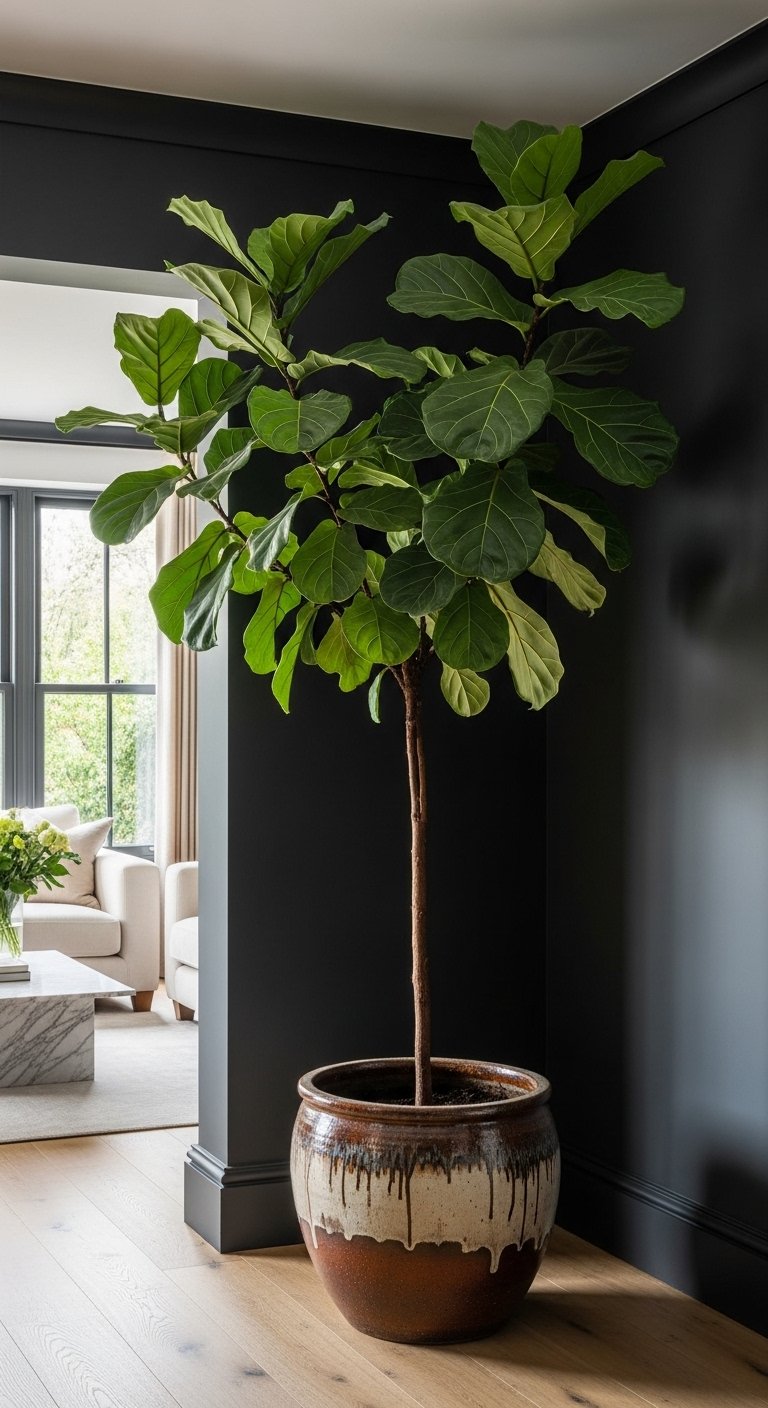
A large indoor plant in a luxury living room does what no other object does: it introduces genuine living, growing organic material into a space dominated by manufactured things.
A fiddle leaf fig, olive tree, large monstera, or tall snake plant in a quality ceramic or stone pot becomes a vertical design element that adds height, color, and organic presence simultaneously.
The pot matters as much as the plant. A beautiful plant in a cheap nursery pot undermines itself. A quality ceramic pot, raku-fired, speckled glaze, or a simple terracotta, elevates both the plant and the surface it sits on.
One large tree-like plant makes a stronger statement than three small plants. Scale in plants, as in art, creates presence.
16. Install Wide-Plank Hardwood Floors
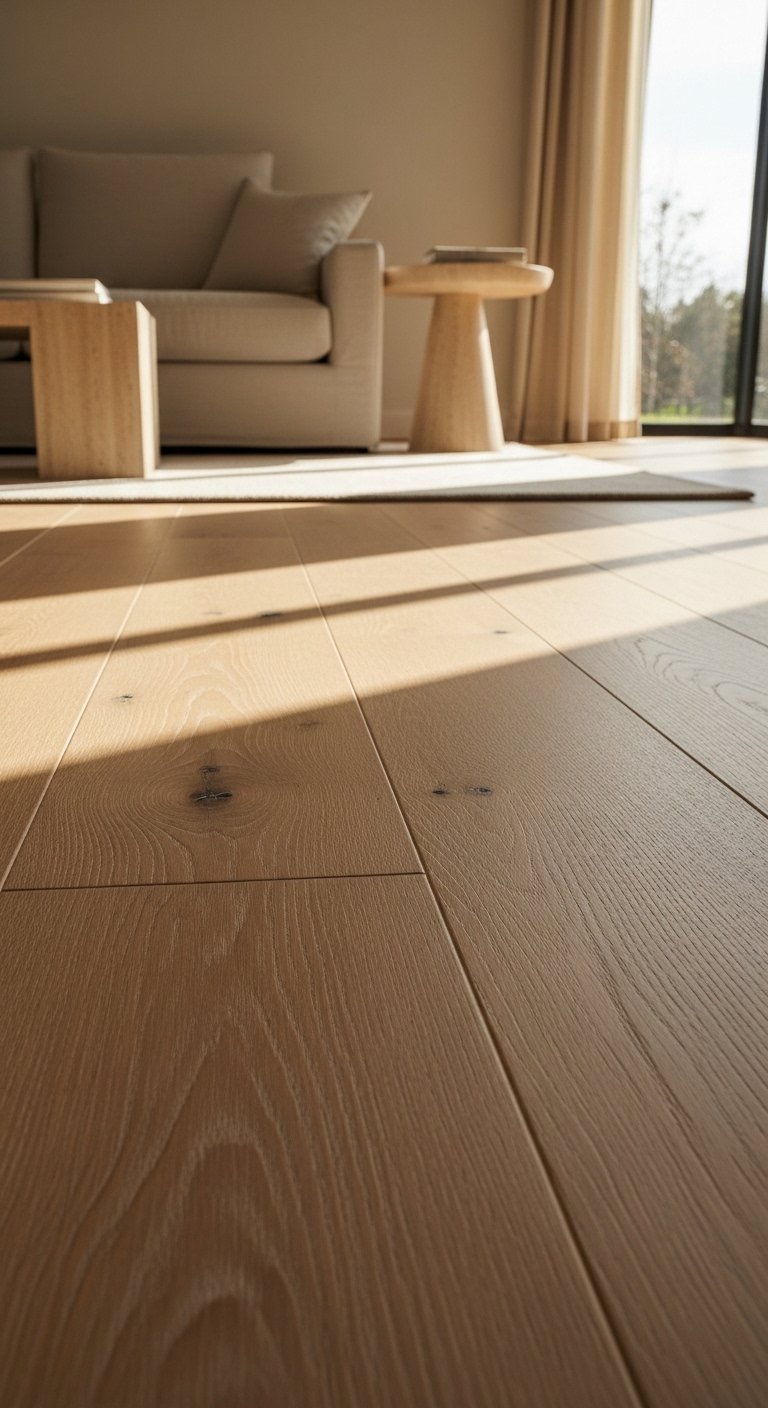
The floor is the largest single surface in any room. In a luxury living room, it deserves the same level of material consideration as every other surface.
Wide-plank hardwood floors in oak, walnut, or ash with a natural oil or matte lacquer finish add warmth, texture, and genuine material quality underfoot that no engineered or laminate alternative fully replicates.
Plank width signals quality. Standard strip floors use narrow planks because narrower cuts waste less material. Wide planks require larger trees and more careful sawing. The width itself communicates value.
A natural oil finish on hardwood floors allows the wood to breathe and age naturally. It develops character over time rather than wearing through a surface coating. This aging process is part of the luxury quality of real hardwood.
17. Use a Dark, Rich Wall Color
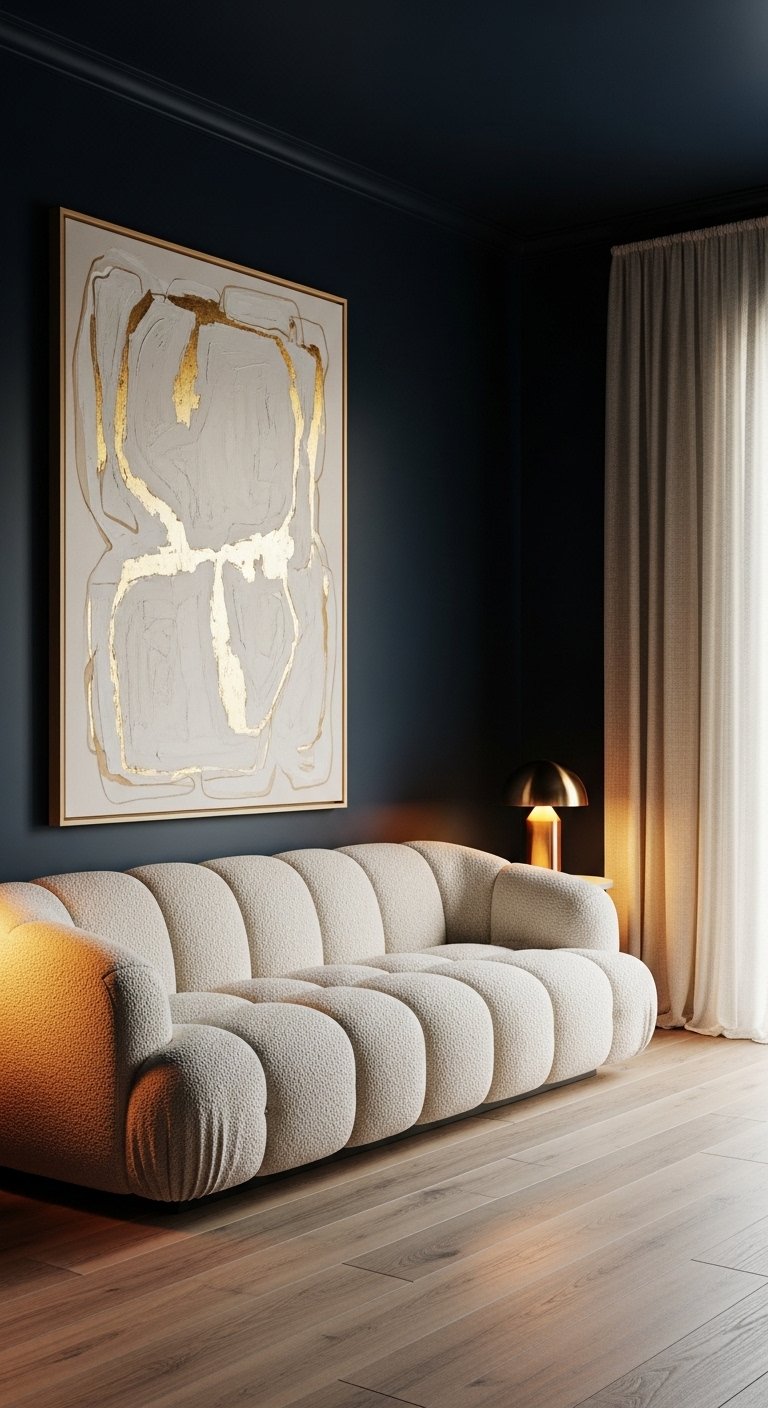
White walls are safe. Deep, rich wall colors are confident. Luxury living rooms are not safe.
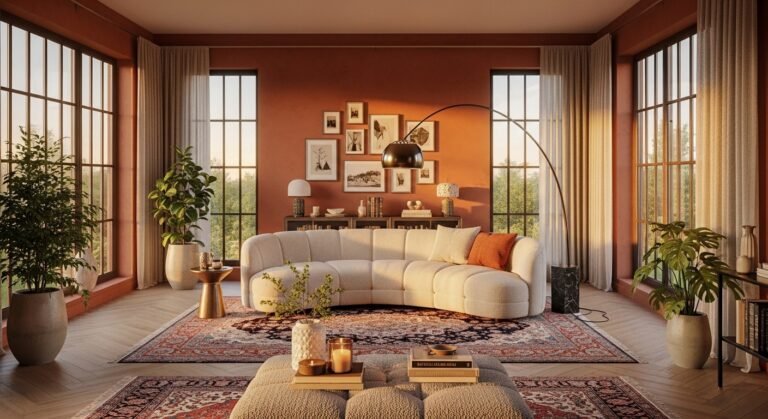
Deep charcoal, forest green, inky navy, warm terracotta, or dusty plum on living room walls create a room that feels enveloping and considered rather than bright and open.
Dark walls make furniture, art, and accessories advance toward the viewer. Everything you place against a dark wall appears more vivid, more three-dimensional, and more intentional than the same object against a white wall.
The practical concern about dark walls making rooms feel small is real but overstated. A small room with four dark walls, excellent lighting, and carefully chosen furniture feels intimate and luxurious. The same room with four white walls feels like a waiting room.
18. Add a Chaise Longue or Daybed
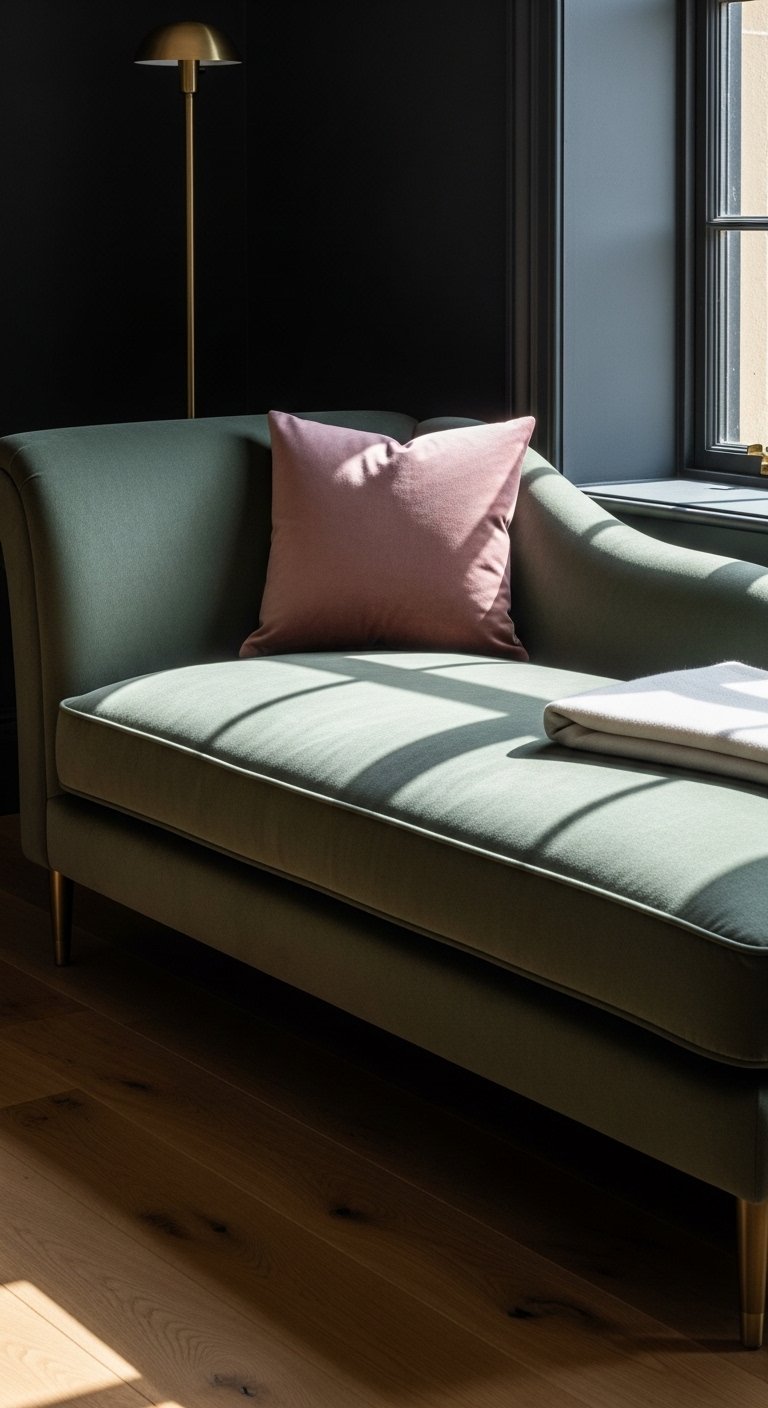
A chaise longue or daybed in a living room communicates leisure in a way that standard seating does not.
A velvet or linen chaise longue positioned at the end of a sofa arrangement or at an angle in a reading corner adds both visual interest and genuine comfort that a standard armchair doesn’t replicate.
The silhouette of a chaise longue is inherently sculptural. It reads as an art object as much as a piece of furniture. Choose one with a profile that works as a design element when unoccupied.
Position it where it receives the best natural light in the room. A chaise longue beside a window with afternoon light streaming across it is one of the most inviting things in interior design 🙂
19. Incorporate Bespoke or Custom Furniture
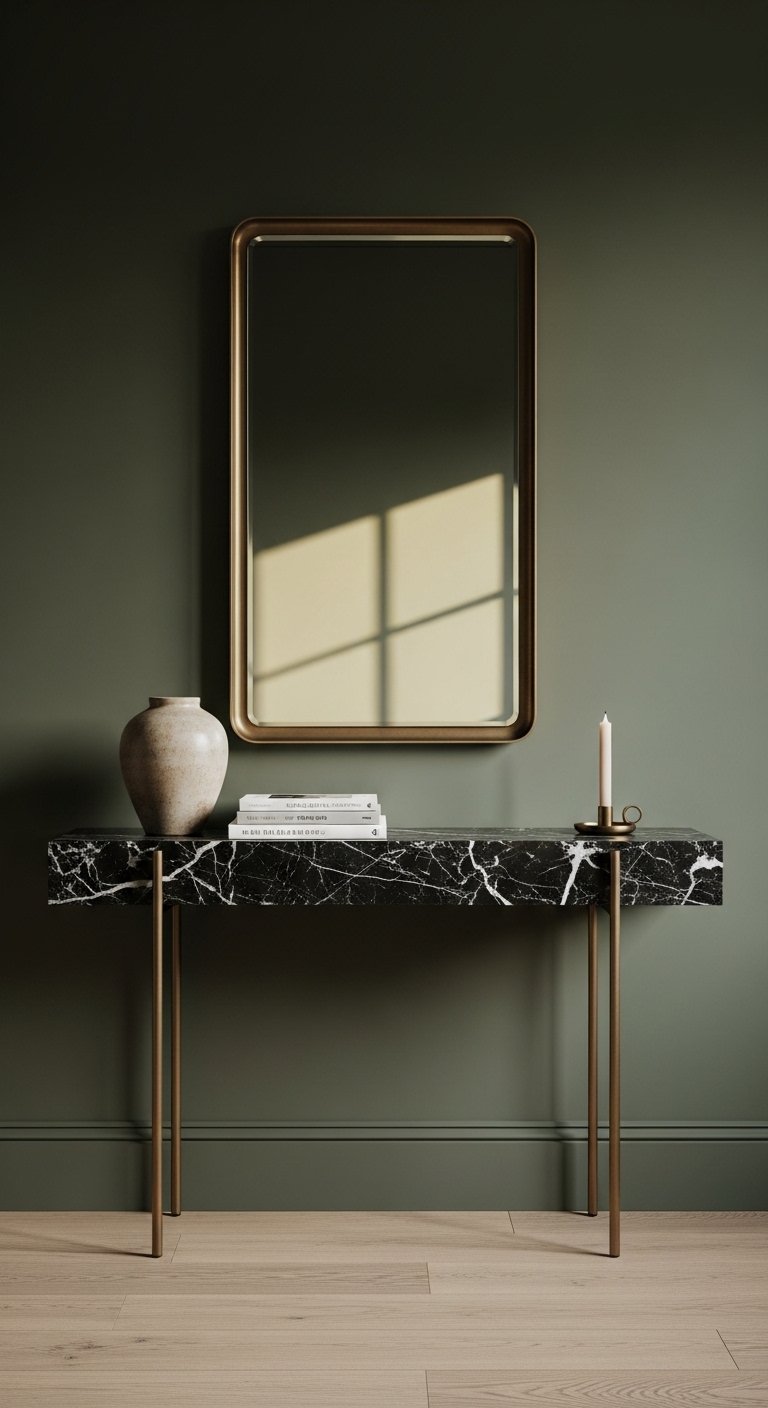
Mass-produced furniture, however well designed, is mass-produced. Custom furniture is made for one room, one person, one specific context.
A bespoke sofa in a specific dimension, a custom console table in a specific material, or a one-off coffee table commissioned from a maker fits the room in a way that catalogue furniture never does.
Custom furniture does not always cost significantly more than premium off-the-shelf alternatives. Many furniture makers offer custom dimensions and fabric choices at prices comparable to designer showroom pieces.
The dimension benefit alone is worth the investment. A sofa made 30cm longer than standard because your room needs it, a coffee table made 10cm lower because your seating sits lower than standard: these specifics make a room feel resolved rather than compromised.
20. Use Scent as a Luxury Layer
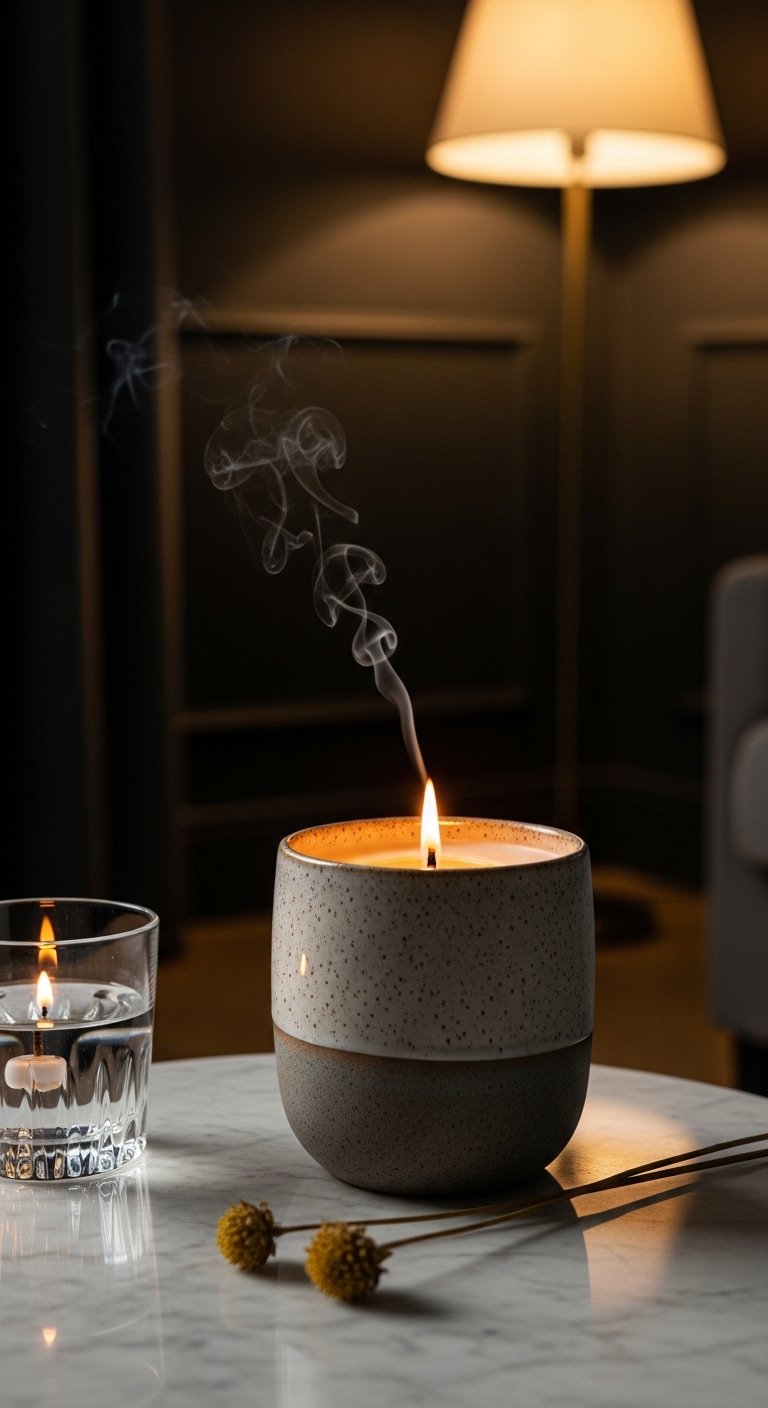
Luxury is multisensory. A room that looks beautiful but smells of nothing has missed an entire dimension of the experience.
A high-quality room diffuser, a large luxury candle, or fresh flowers introduces scent that makes entering the room a complete sensory experience rather than a purely visual one.
Choose a single consistent scent for the living room rather than multiple competing ones. Sandalwood, cedar, neroli, fig, and white tea all work well as primary living room scents without being aggressive.
The vessel matters. A luxury candle in a poor-quality jar undermines the experience. A quality candle in a beautiful ceramic vessel adds to the room’s visual quality even when unlit.
21. Layer Textiles for Depth and Warmth
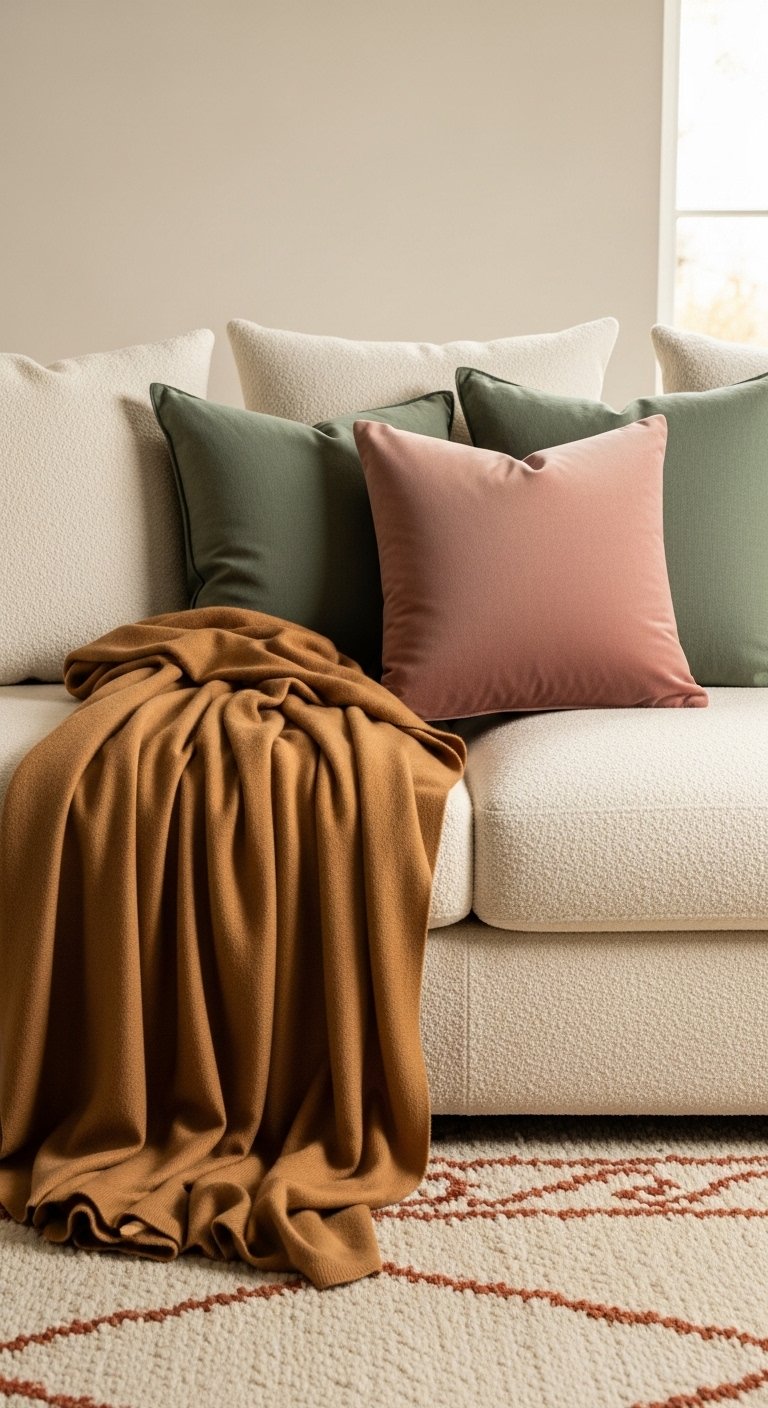
A luxury living room feels warm and tactile, not hard and visual. Layered textiles create this quality.
Multiple cushions in different fabrics and scales, a throw draped naturally over sofa arm or back, and a large area rug underfoot create a room that invites physical engagement rather than just visual appreciation.
Mix fabric textures deliberately: linen against velvet, bouclé against smooth cotton, wool against silk. The contrast between textures creates visual and tactile richness that single-fabric rooms lack.
Cushion inserts matter as much as covers. Feather-filled cushions hold their shape differently from polyester ones. They plump differently, compress differently, and fall into more natural positions when used. The difference is visible.
22. Install a Statement Ceiling Treatment
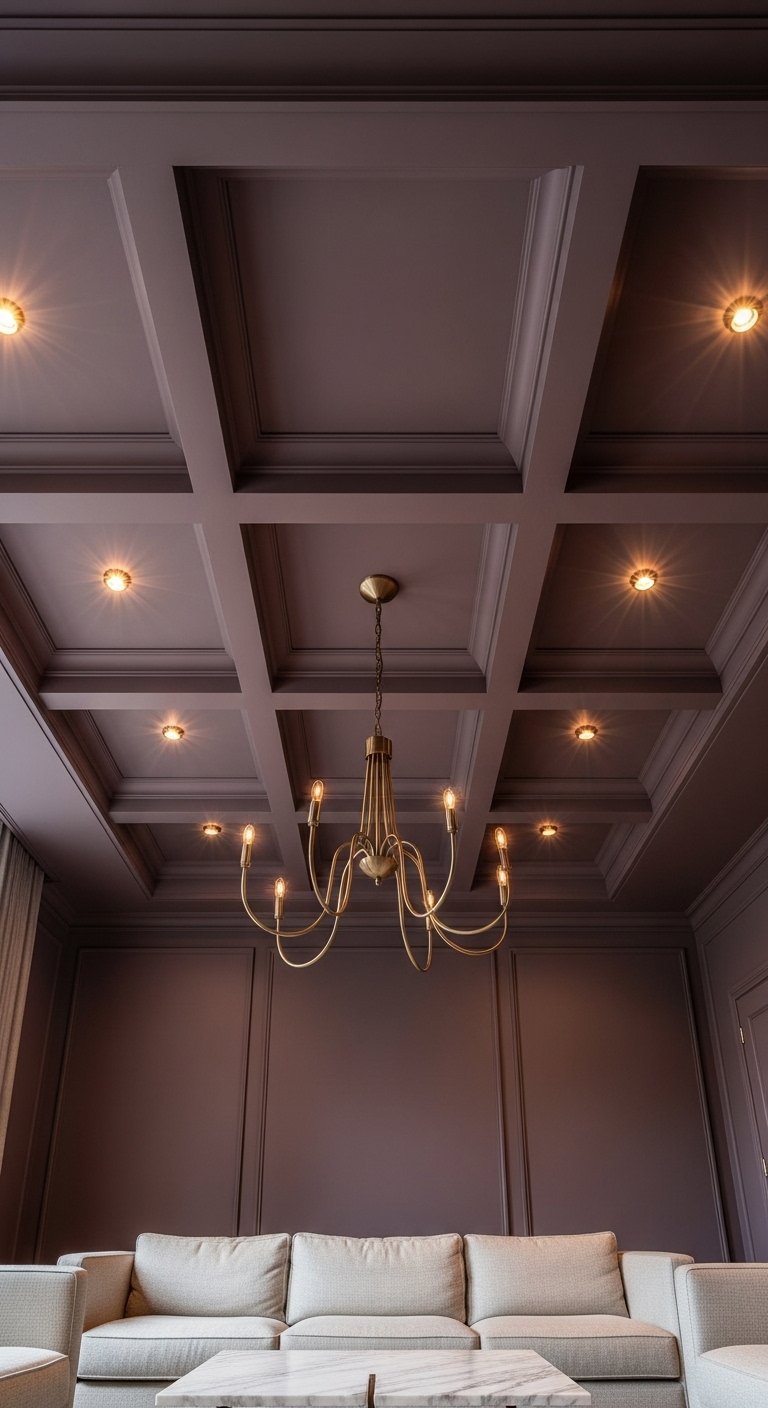
Most living room ceilings are flat, white, and ignored. A luxury living room treats the ceiling as a fifth wall.
Coffered ceilings, painted ceilings in a deep contrasting color, ceiling moulding detail, or a ceiling covered in a beautiful wallpaper transforms the room’s entire spatial quality.
A ceiling painted the same deep color as the walls creates an enveloping, cocooning effect that makes the room feel like a completely designed environment rather than a room with four walls and a lid.
Ceiling moulding, whether a simple cornice or an elaborate coffered grid, adds architectural detail that increases the perceived value and age of the room. It communicates permanence and investment instantly.
23. Choose Hardware and Fixings Carefully
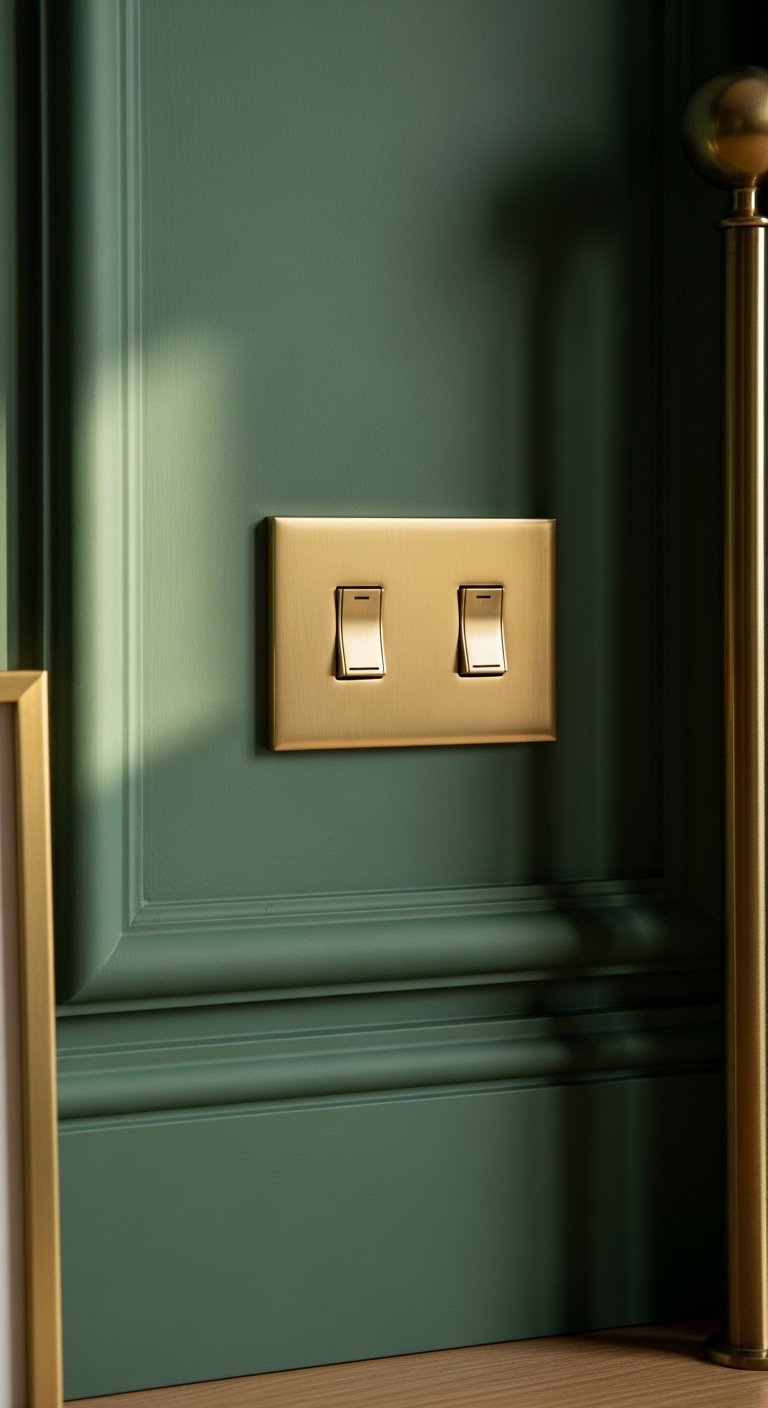
Door handles, light switch plates, socket covers, curtain pole finials: these small items appear frequently throughout a room. In a luxury space, they coordinate.
Replacing standard white plastic switch plates and socket covers with brushed brass, aged bronze, or black metal alternatives removes one of the most common luxury-killers in a well-decorated room.
The cost of upgrading switch plates and socket covers across a room is modest. The visual improvement is disproportionate to the cost. White plastic next to a dark panelled wall with brass hardware is a visible inconsistency that interrupts the room’s material narrative.
Apply the same logic to door handles, curtain pole finials, and any other fixed fittings. Each one should speak the same material language as the rest of the room.
24. Create a Dedicated Reading or Conversation Corner
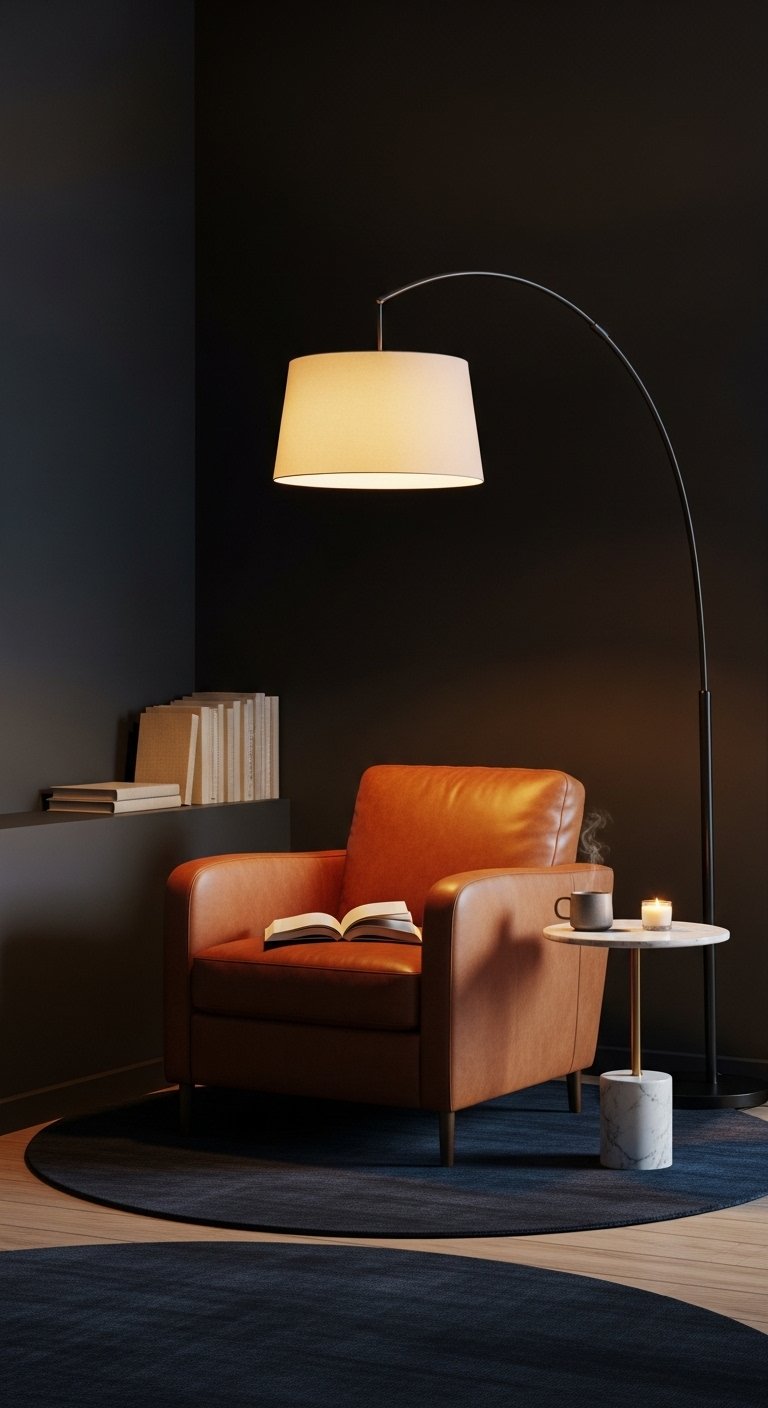
A luxury living room contains zones within it. A single undifferentiated seating arrangement feels like a hotel lobby. Defined zones feel like a curated home.
A reading corner with a quality armchair, a floor lamp, a small side table, and a low bookshelf creates a destination within the living room that has its own character and purpose.
The corner treatment matters. A large plant behind the chair, a small rug beneath it, or a different wall treatment behind it differentiates the corner from the main seating arrangement and gives it identity.
This zone serves both functional and visual purposes. Functionally it creates a retreat within the room. Visually it adds layered depth that a single seating arrangement never achieves.
25. Get the Proportions Right Before Everything Else
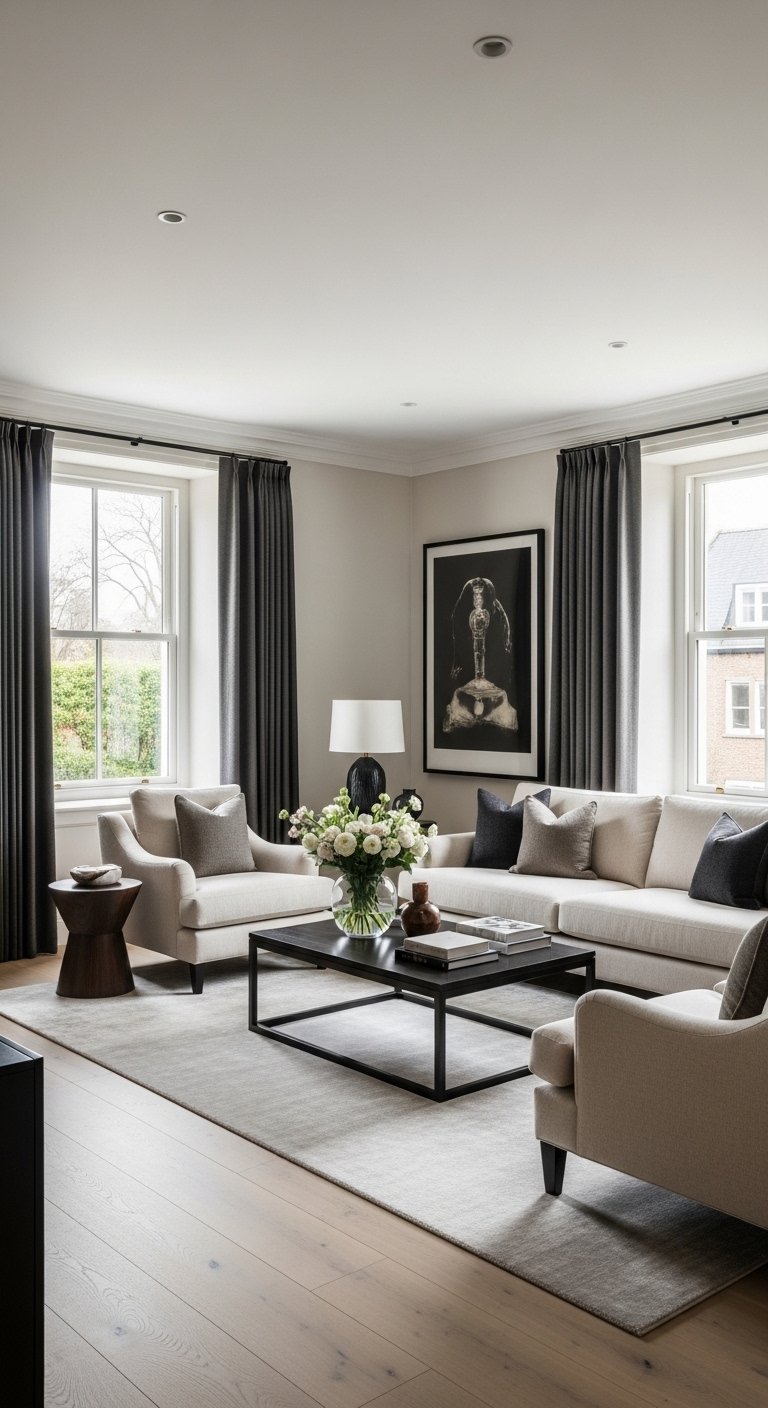
Every idea on this list fails if the proportions are wrong. Proportion is the foundation of luxury design and the element most people neglect.
Furniture scaled to the room, rugs sized to the seating arrangement, art sized to the wall, and curtains proportioned to the ceiling height create a room where everything feels like it belongs rather than a room where pieces coexist uncomfortably.
Measure everything before you buy anything. A sofa that’s 10cm too small for a wall looks like a mistake. The same sofa sized correctly for that wall looks intentional. The furniture hasn’t changed. The proportion has.
Luxury is, at its core, things in their correct proportion. Get this right and even modest materials look considered. Get it wrong and expensive materials look random. This is the principle that underlies every other idea on this list.
Final Thoughts
A luxury living room is not a budget. It’s a set of decisions made with care, consistency, and a clear understanding of what the room needs.
Start with proportion and material quality. These are the foundations. Layer in lighting, textiles, and accessories once the foundations are correct.
Edit continuously. Remove what doesn’t serve the room. Keep only what does. The restraint required to stop adding things is the hardest skill in luxury design and the most important one.
The room you want is closer than you think. Most of it comes from making fewer, better decisions rather than more, bigger ones.