21 Teen Bedroom Ideas to Create the Ultimate Hangout Space
A teenager’s bedroom needs to do a lot. Sleep, study, hang out, decompress, and somehow reflect a personality that changes every six months.
That is a tall order for one room. And the pressure is real, from both sides. Teens want a space that feels like theirs. Parents want a space that functions, stores things, and does not require a full remodel every two years.
These 21 teen bedroom ideas solve both problems. Every idea here balances genuine style with real practicality. Because a bedroom that looks good in photos but fails at homework time or has nowhere to put anything is just a very expensive disappointment.
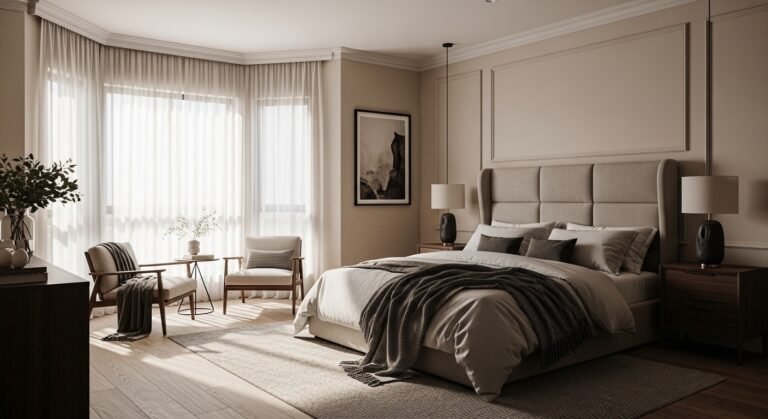
1. Start With a Neutral Base and Let Personality Come Through in Layers
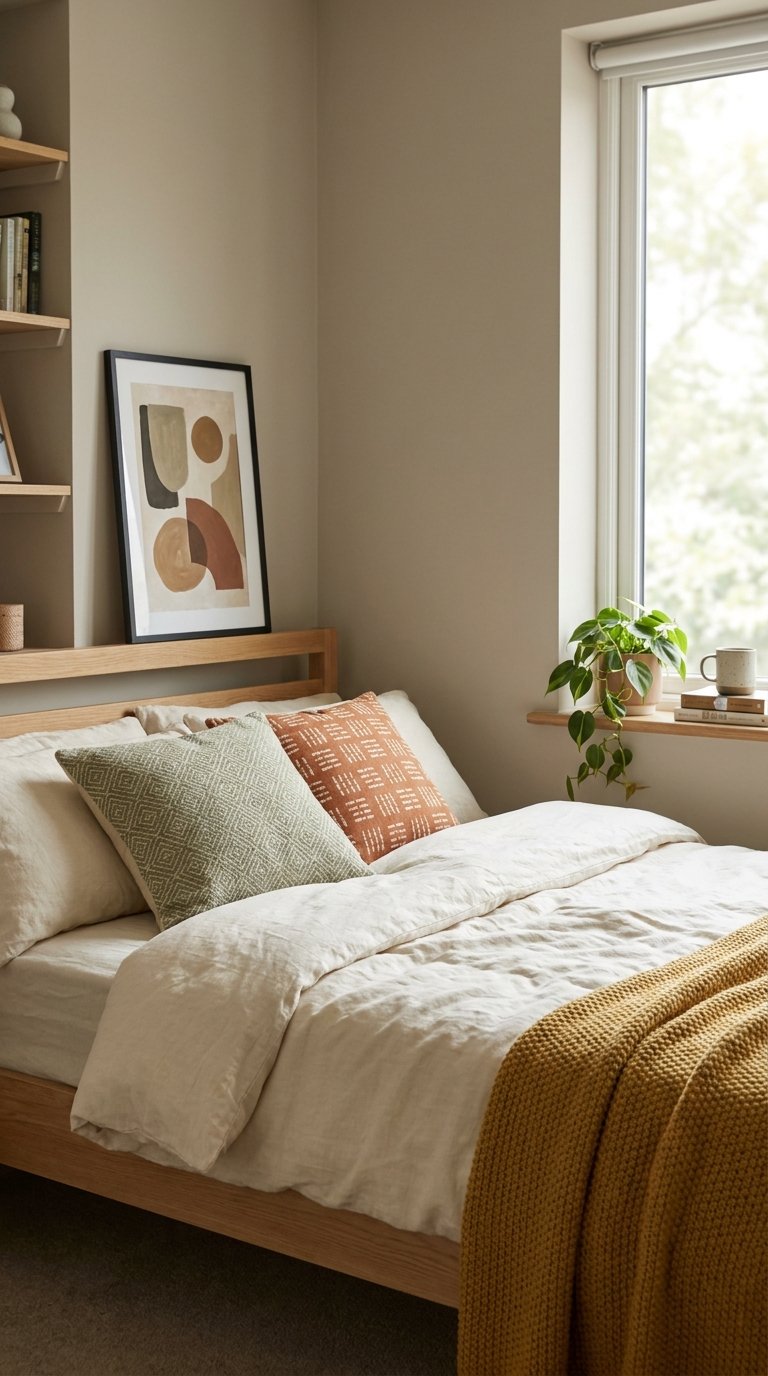
The biggest mistake in a teen bedroom: committing the walls to a trend that expires in twelve months.
Paint the walls in a warm neutral. Soft white, warm greige, dusty oat. These give the room a calm foundation that works with any direction the teen’s taste moves in next season. The personality of the room lives in the bedding, the posters, the lights, and the accessories.
This approach also makes redecorating dramatically cheaper. Swapping a duvet cover and a few posters costs $100. Repainting a room costs time, money, and at least one weekend of everyone being mildly miserable.
Think of the walls as the canvas. Let your teen decide what goes on.
2. Invest in a Quality Bed Frame
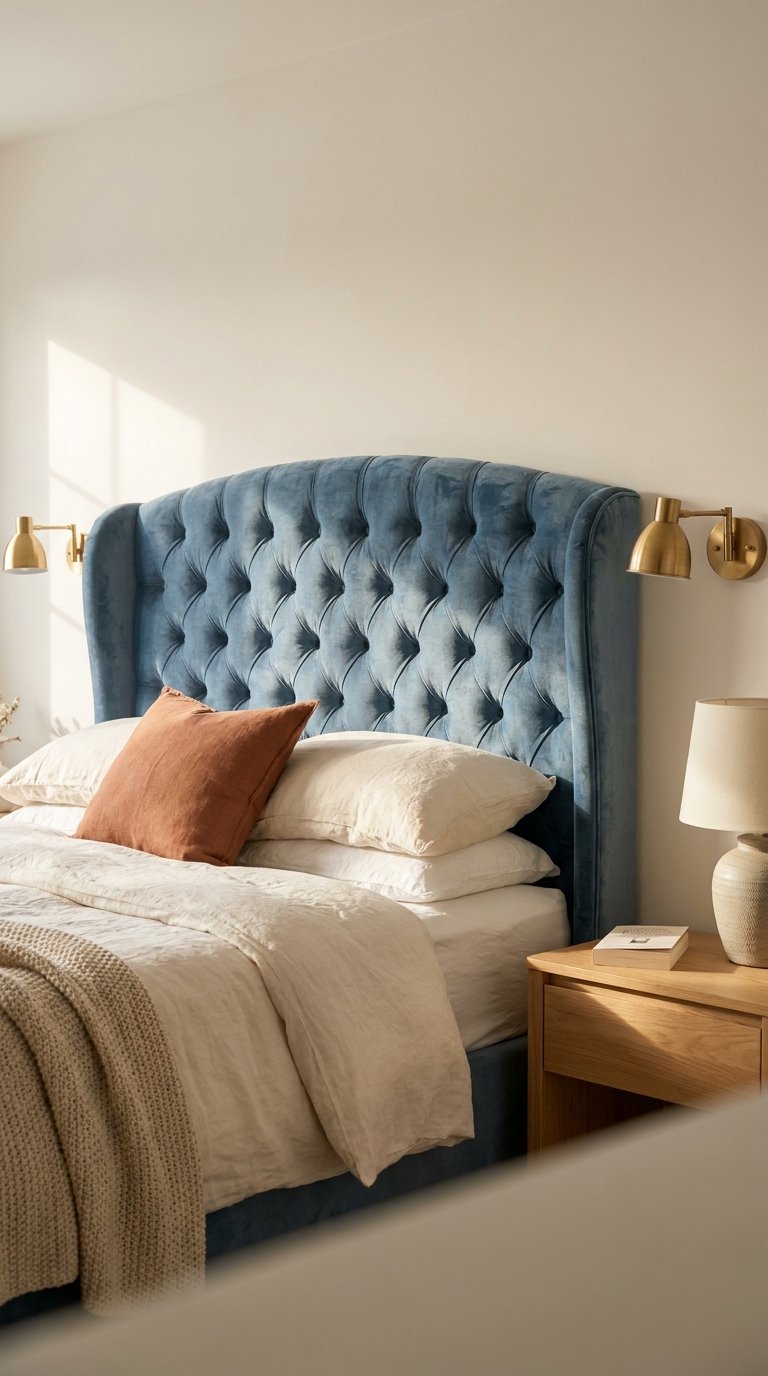
The bed takes up more visual space in a teen bedroom than any other piece of furniture. It deserves proper investment.
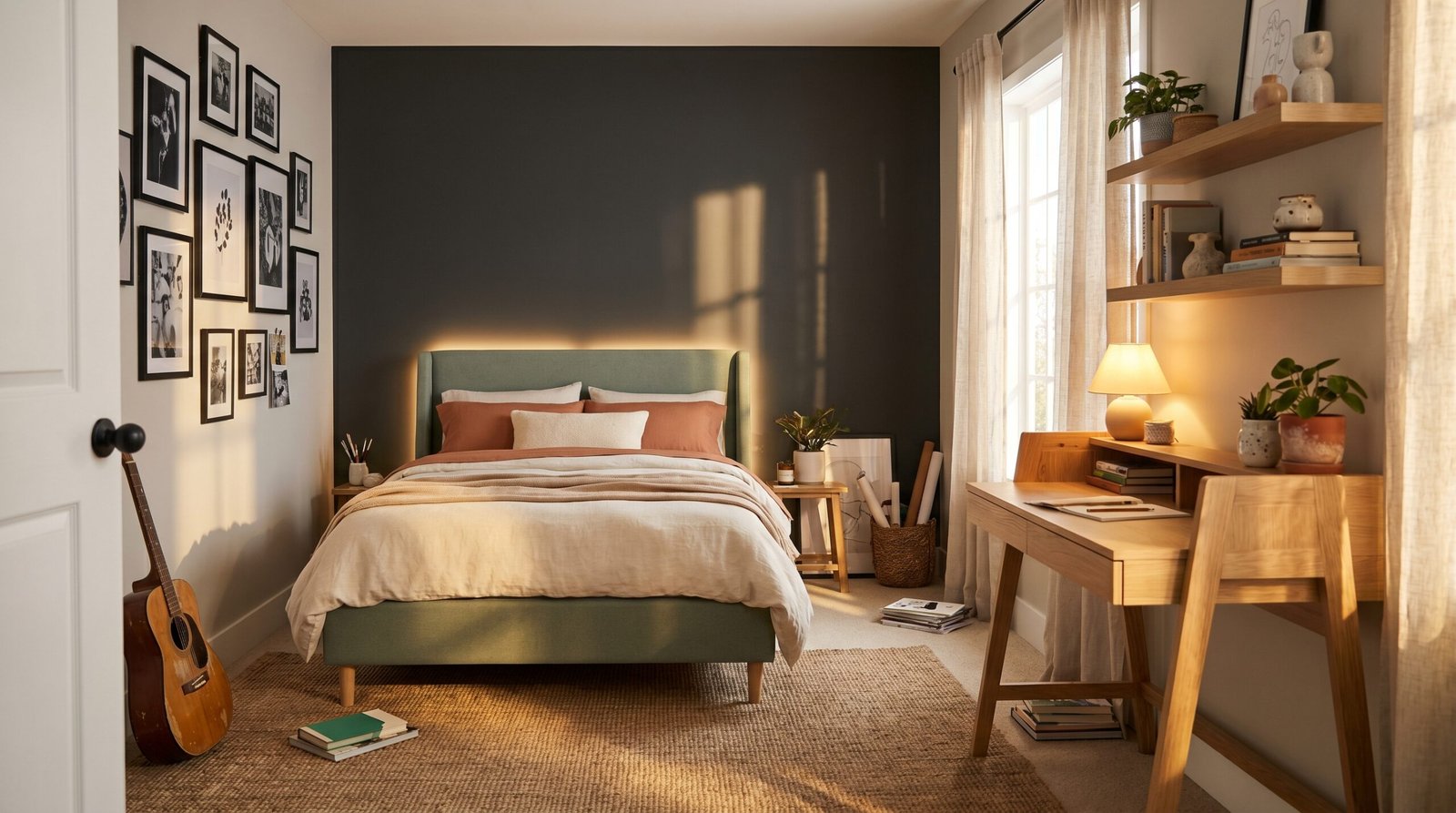
A quality bed frame in a style that works for the teen years and beyond saves money over the long run and makes the room feel more considered from day one. Upholstered frames in linen or velvet, wooden frames in natural oak or walnut, and metal frames in black or brass all have real longevity.
Avoid novelty bed frames. A car-shaped bed or a princess canopy frame serves a ten-year-old. A fifteen-year-old needs something they will not be embarrassed about when friends come over.
Size up if the room allows it. A full or queen bed gives a teenager room to spread out and makes the room feel more adult and considered than a twin bed pushed against the wall.
3. Create a Dedicated Study Zone
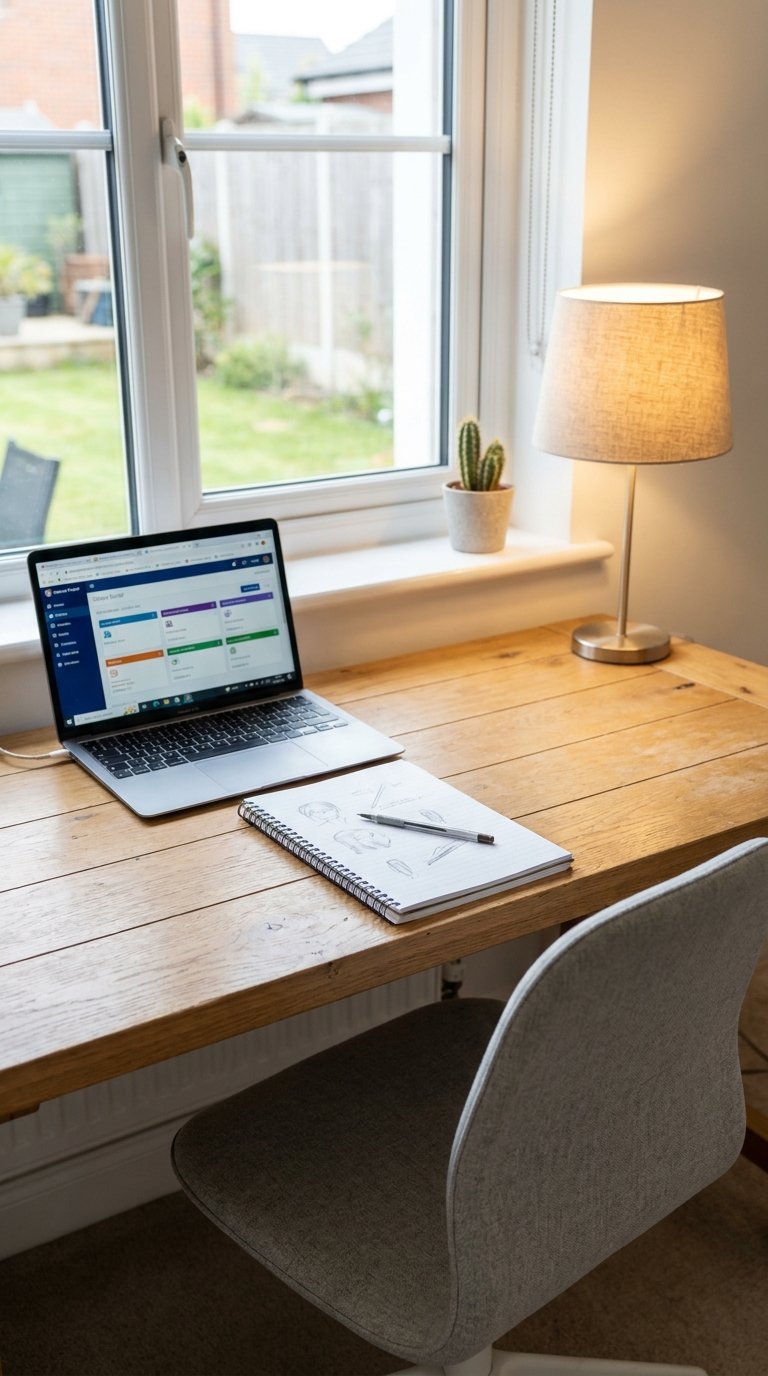
A bedroom without a proper study setup creates a teenager who does homework on the bed. Which creates bad posture, poor focus, and a lot of late nights going nowhere.
A dedicated desk, an ergonomic chair, and proper task lighting form the foundation of a functional study zone. The desk should be wide enough to hold a laptop, an open notebook, and still have clear space on one side. Minimum 120cm wide.
Position the desk near a window for natural daytime light. Add a warm-toned desk lamp for evening work. Overhead ceiling lights are almost never positioned correctly for desk work and should not be relied on as the primary study light source.
Keep the study zone visually separate from the sleep zone. Even in a small room, a rug under the desk area or a different wall treatment behind the desk creates a psychological boundary between work mode and rest mode.
4. Use a Loft Bed to Maximize Floor Space
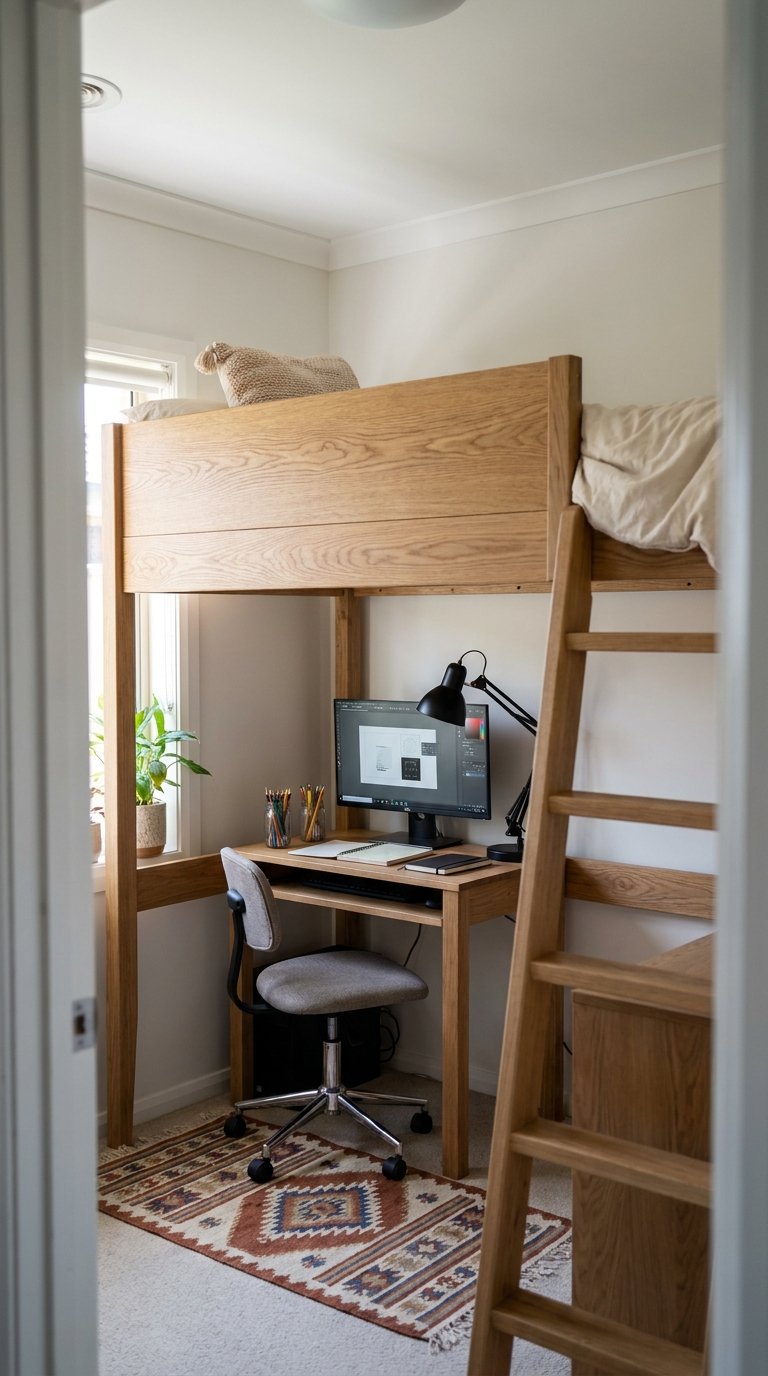
In a small teen bedroom, a loft bed is one of the most effective space-creating decisions you make.
A loft bed raises the sleeping surface to ceiling height and frees the floor area beneath for a desk, a reading nook, a wardrobe, or a seating area. The same footprint that a standard bed occupies now holds the bed plus a functional zone underneath it.
Quality matters significantly with loft beds. A poorly built loft bed wobbles, creaks, and feels unstable at height. Look for solid timber or metal frame construction with proper ladder attachment and guardrails on all sides of the sleeping platform.
The space under the loft should be planned before purchase, not after. Decide whether it holds a desk, a wardrobe, or a sofa and choose a loft bed with the appropriate clearance height for that specific use.
5. Add a Gallery Wall of Personal Prints and Posters
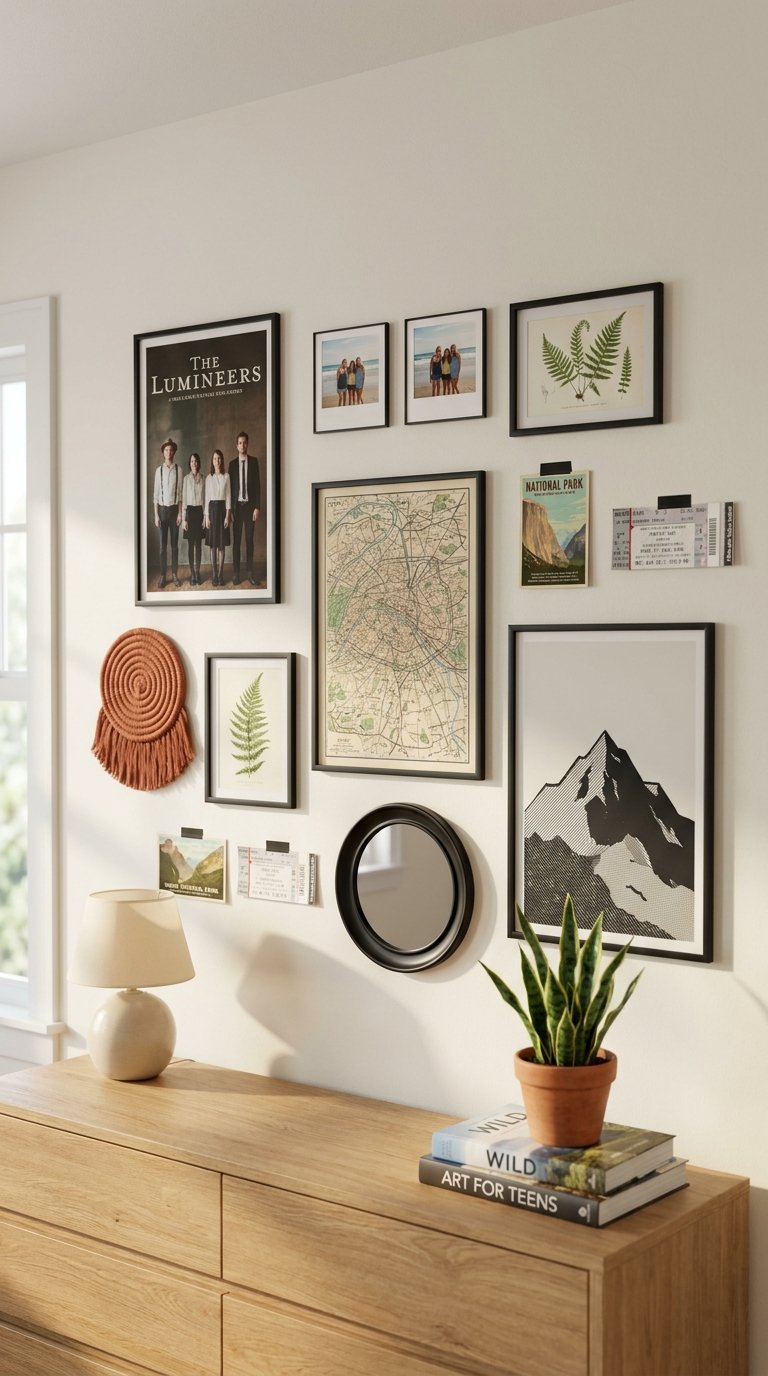
A gallery wall in a teen bedroom gives the space genuine personality without permanent commitment.
Command strips and poster frames allow a teen to build, rearrange, and update a gallery wall without damaging the painted surface underneath. The gallery grows and changes as the teen’s taste develops. Nothing is permanent. Nothing requires a painter.
Mix poster prints, photographs, postcards, and small framed art in a loose cluster rather than a rigid grid. A grid gallery wall looks like a corporate office. A loose organic cluster looks like a person lives there.
One practical rule: choose a dominant frame finish and stick to it. All black frames, all natural wood, or all white. Mixing frame finishes makes the gallery look accidental. One consistent frame finish makes it look edited.
6. Install LED Strip Lights for Ambient Atmosphere
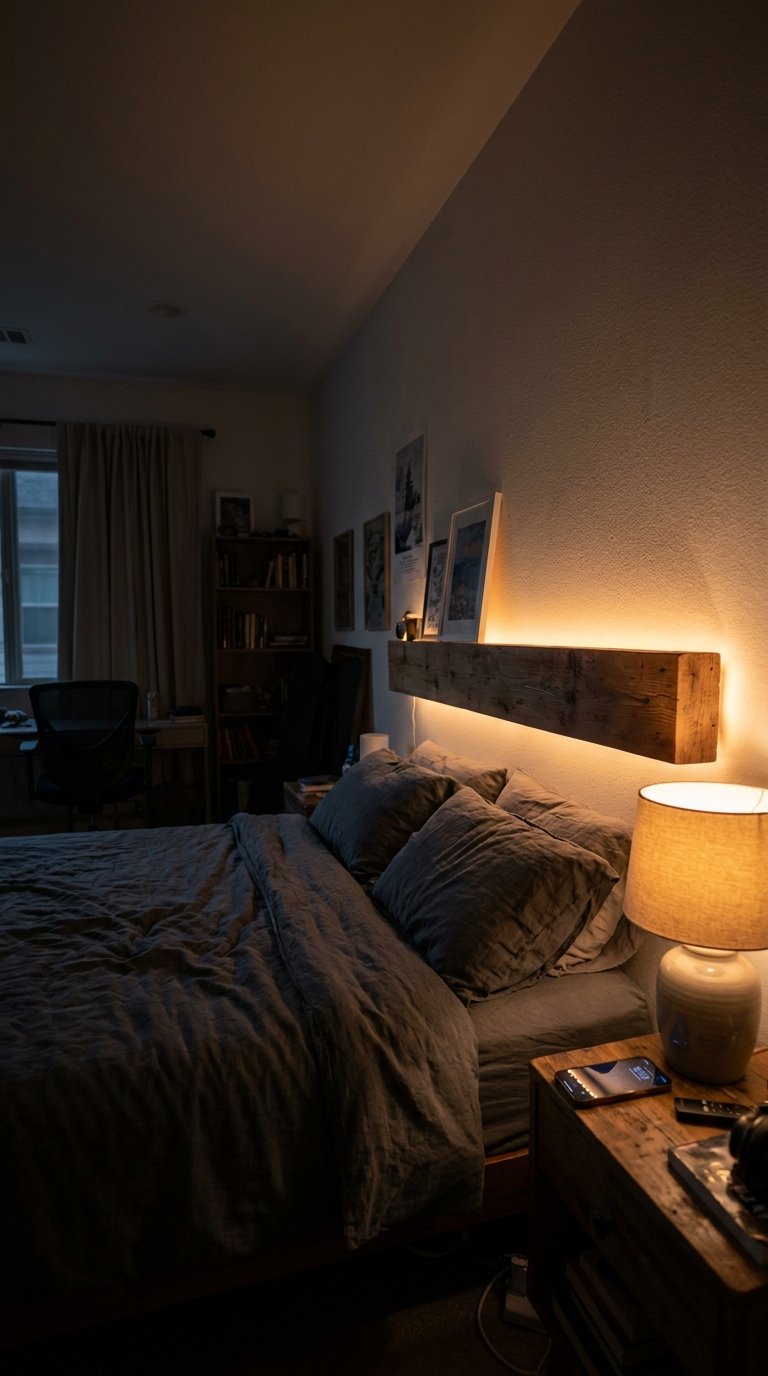
Every teen bedroom eventually gets LED strip lights. The question is whether they look good or look like a gaming setup from 2015.
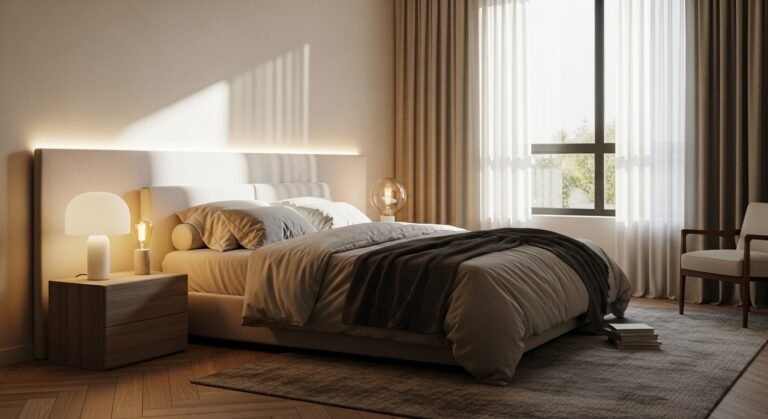
Warm white or soft amber LED strips mounted behind a bed headboard, along a shelf edge, or behind a desk monitor add ambient lighting that makes the room feel designed rather than lit by a single overhead bulb.
Avoid RGB color-changing LED strips unless your teen specifically wants a gaming aesthetic. The multi-color option looks fun for about two weeks and then mostly just sits on purple because no one ever changes it. 🙂
Smart LED strips controlled by a phone app or a voice assistant give the teen full control over brightness and warmth. This also means the overhead light stays off more often, which is better for evening wind-down and sleep quality.
7. Choose a Bold Feature Wall
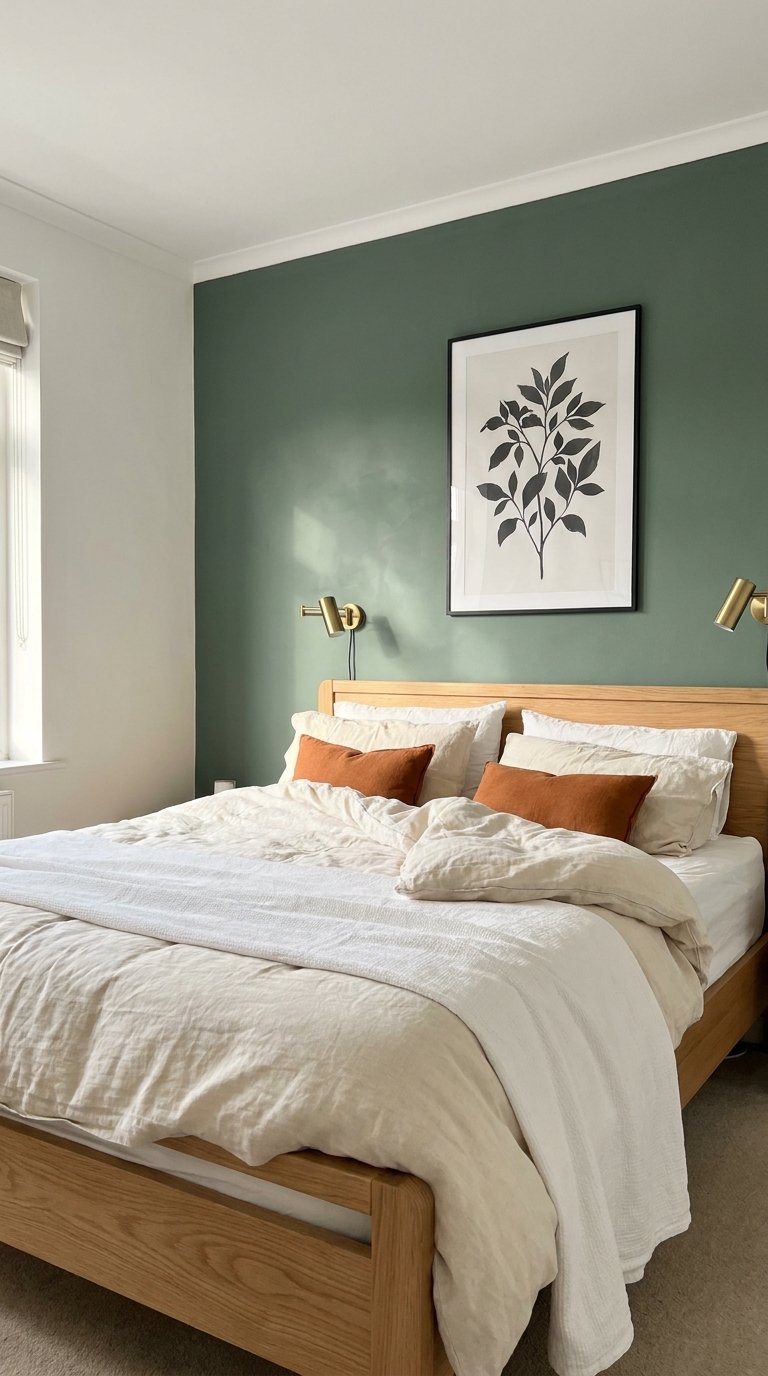
A teen bedroom is one of the rooms in the house where a bold feature wall makes complete sense.
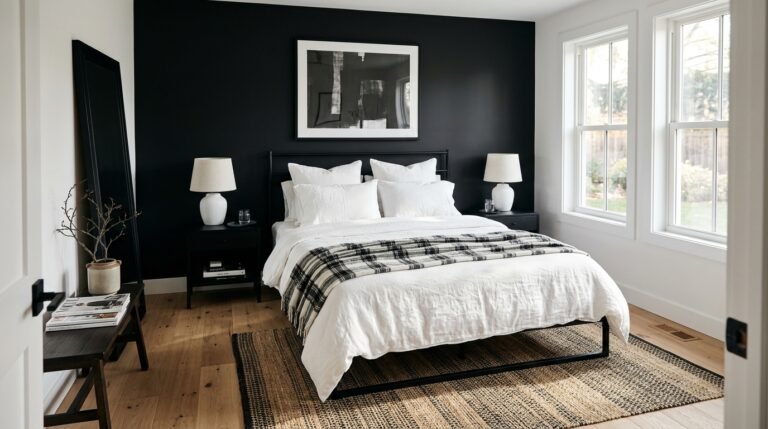
Deep sage green, dusty blue, warm terracotta, or matte charcoal on the wall behind the bed creates a backdrop that makes the whole room feel intentional without requiring all four walls to commit to the color.
Let the teen choose the color. This is their room. An adult veto on the color choice creates resentment and a teen who does not feel ownership over their space. Guide the decision toward colors that work with the existing furniture, but give the final call to the person who sleeps there.
A removable wallpaper on the feature wall is a good compromise if permanence is a concern. Quality peel-and-stick wallpaper now looks indistinguishable from traditional wallpaper at normal viewing distance and removes cleanly when the teen is ready for a change.
8. Build a Reading Nook or Cozy Corner
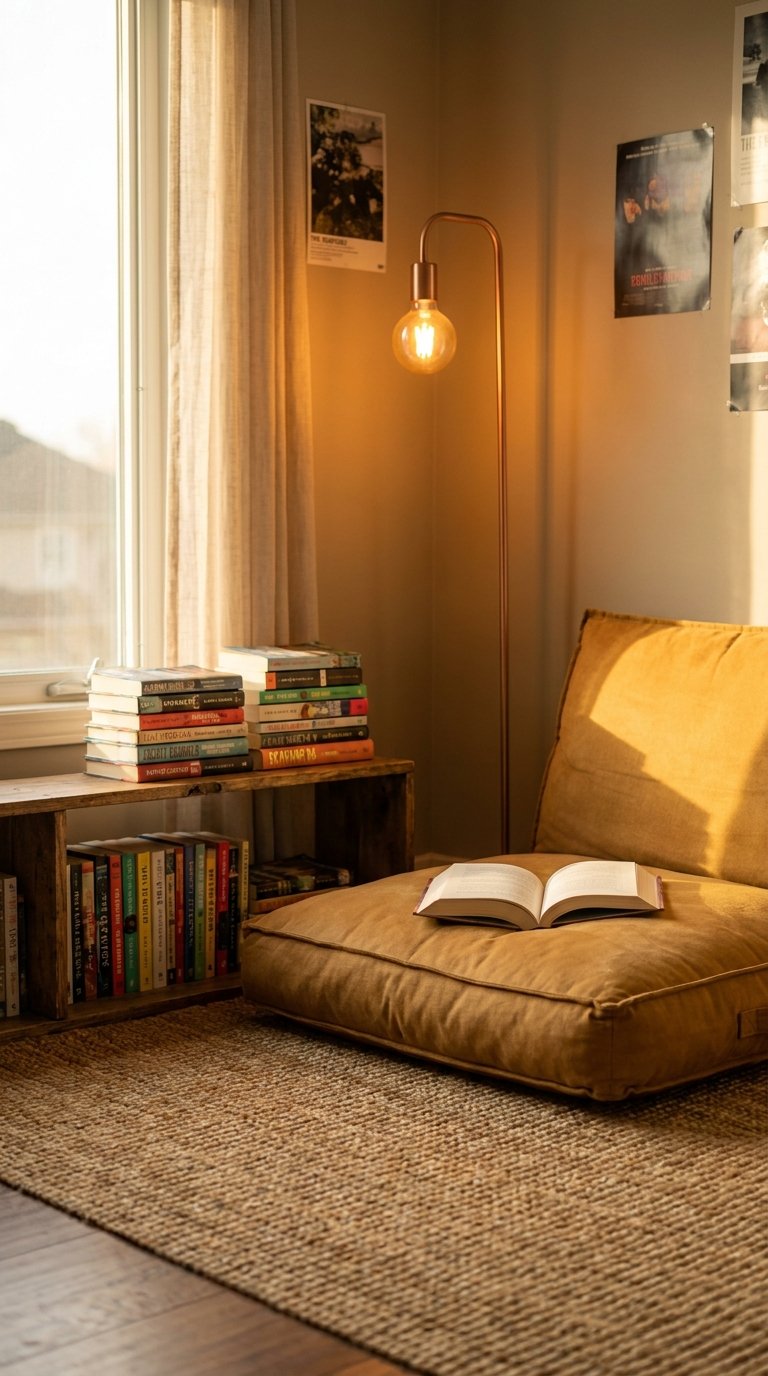
A teen bedroom with a dedicated cozy corner gets used differently from one without. It becomes a destination within the room, a place to decompress that is distinct from both the bed and the desk.
A floor cushion or bean bag in a corner, a small bookshelf beside it, and a warm floor lamp above it creates a reading nook that costs under $200 and transforms how the room feels and functions.
A window seat with built-in storage underneath is the more permanent version of this idea. If the room has a window with enough sill depth or a bay, a window seat with a cushion top and drawer storage underneath is one of the most used features in any teen bedroom.
The cozy corner works best when it has its own light source. A corner with only overhead lighting never feels as inviting as a corner with its own warm lamp.
9. Use Under-Bed Storage Aggressively
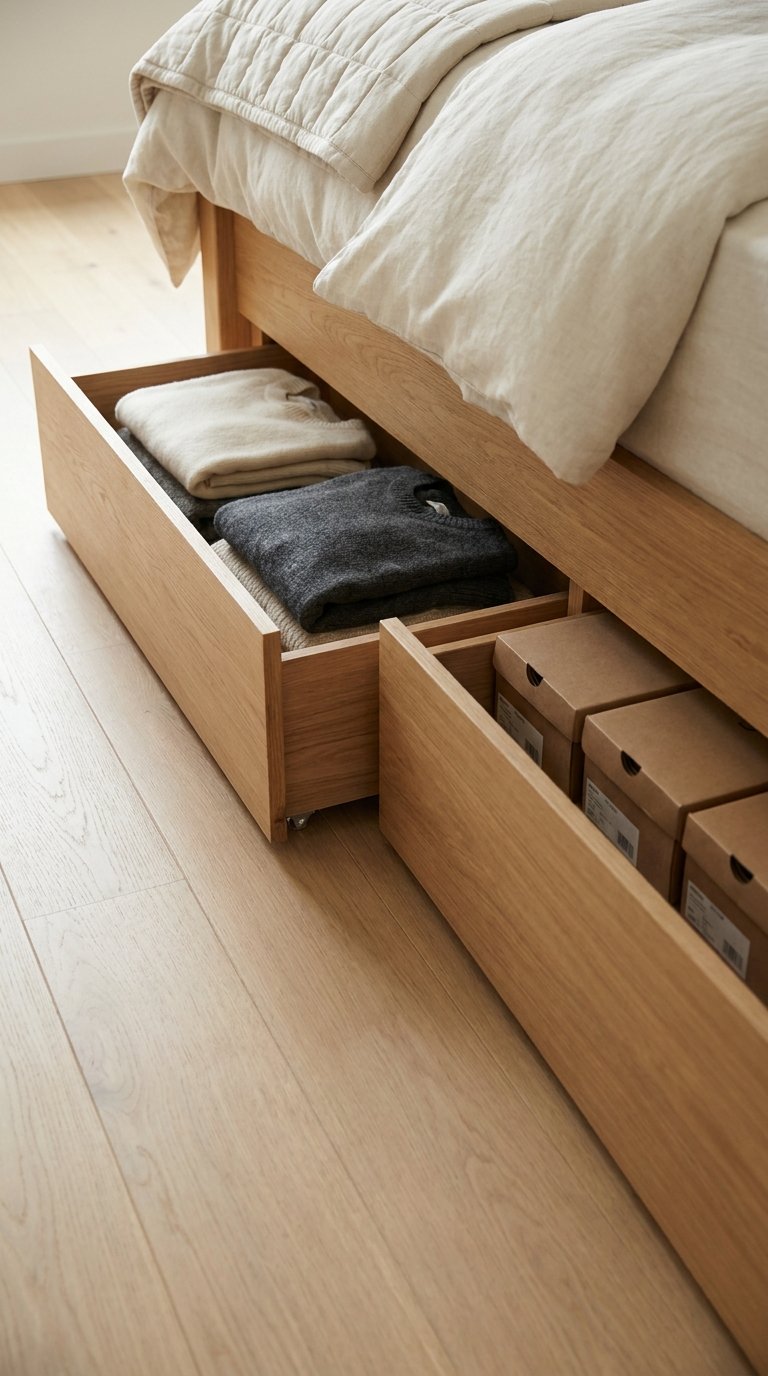
Teen bedrooms accumulate stuff at a rate that defies logic. Under-bed storage is the most underused solution to this problem.
A bed with built-in drawers underneath or a bed frame with sufficient clearance for rolling storage boxes recovers what is typically dead floor space and turns it into organized, accessible storage for seasonal clothing, spare bedding, shoes, and anything else that does not need to be visible.
Low-profile rolling storage boxes with lids work under most standard bed frames. Measure the clearance before buying. A box that is 1cm too tall to slide under the bed is completely useless.
Otto beds with hydraulic lift storage are the premium version of this idea. The entire mattress platform lifts to reveal a full storage cavity underneath. The storage capacity is significant and the contents stay clean and organized without visible clutter.
10. Add a Full-Length Mirror
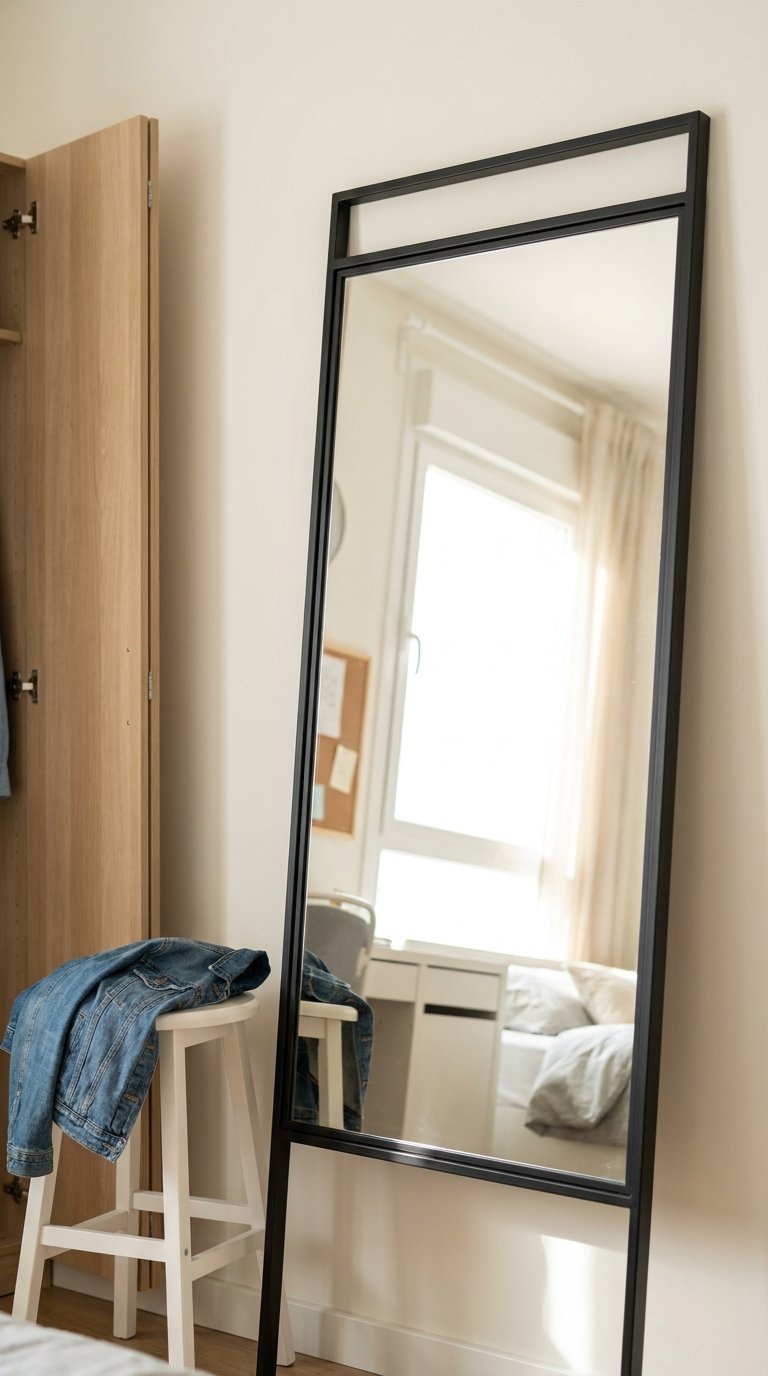
Every teen needs a full-length mirror. This is not a design suggestion. It is a practical necessity that most bedroom layouts forget to include.
A full-length mirror mounted on the back of a wardrobe door, on a wall beside the wardrobe, or leaned against a wall adds a functional element that gets used multiple times daily and also bounces light around the room.
A well-positioned full-length mirror opposite or adjacent to a window doubles the perceived natural light in the room. In a small or north-facing bedroom, this light multiplication is a significant practical benefit beyond the functional use of the mirror itself.
Choose a frame that suits the room’s style. A thin black metal frame suits a modern or minimalist room. A natural wood frame suits a warmer, more organic aesthetic. An ornate vintage frame suits an eclectic or maximalist room.
11. Install Floating Shelves for Display and Storage
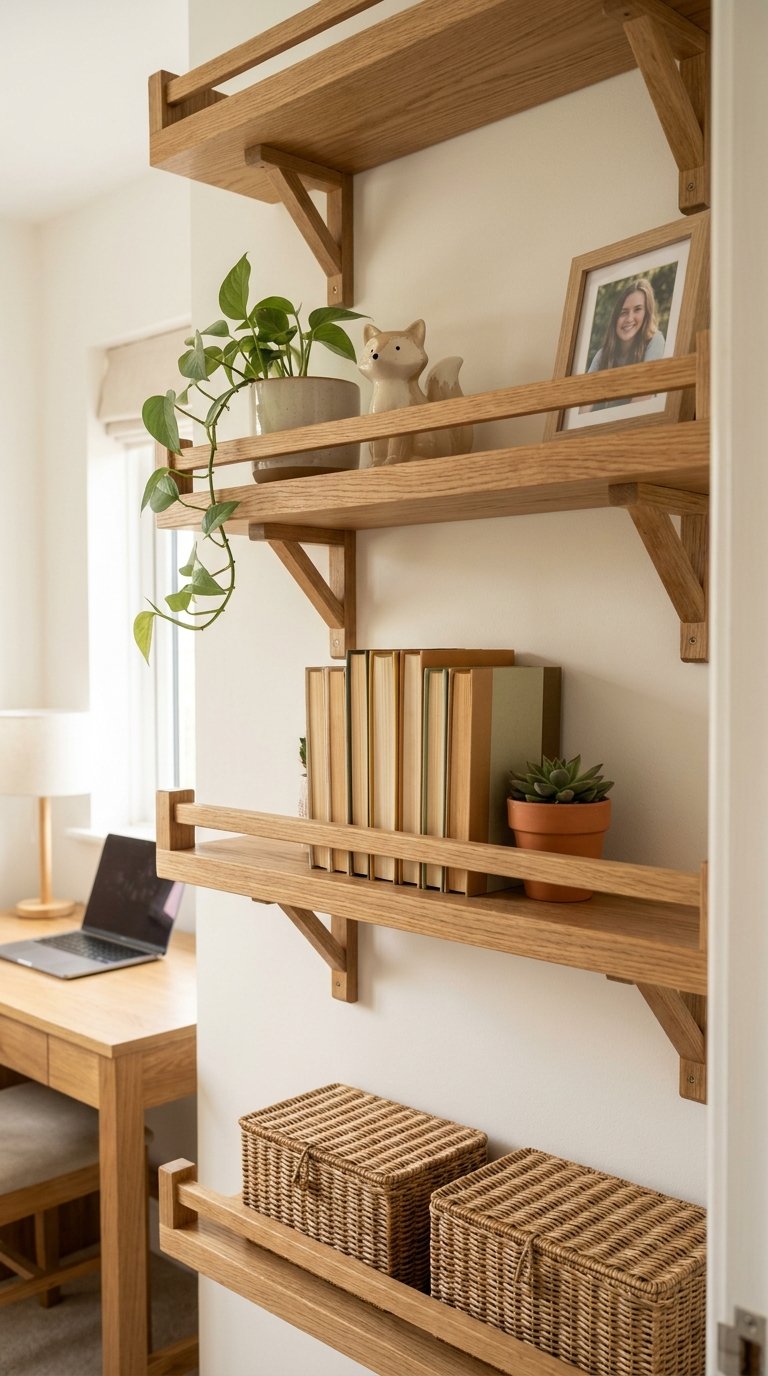
Floor space in a teen bedroom disappears fast. Walls are the backup storage system.
Floating shelves at desk height or above the bed store books, small collectibles, plants, and decorative objects without consuming floor space. They also give the teen a place to display the things that matter to them without those things ending up on every horizontal surface in the room.
Mount shelves with a front lip or rail to stop items falling during general teenage-level chaos. A shelf lip costs nothing extra and prevents a lot of breakage.
Style the shelves with a front row of decorative items and a back row of practical storage. This creates a display that looks considered from across the room while also functioning as real storage for the items used regularly.
12. Choose Multi-Functional Furniture
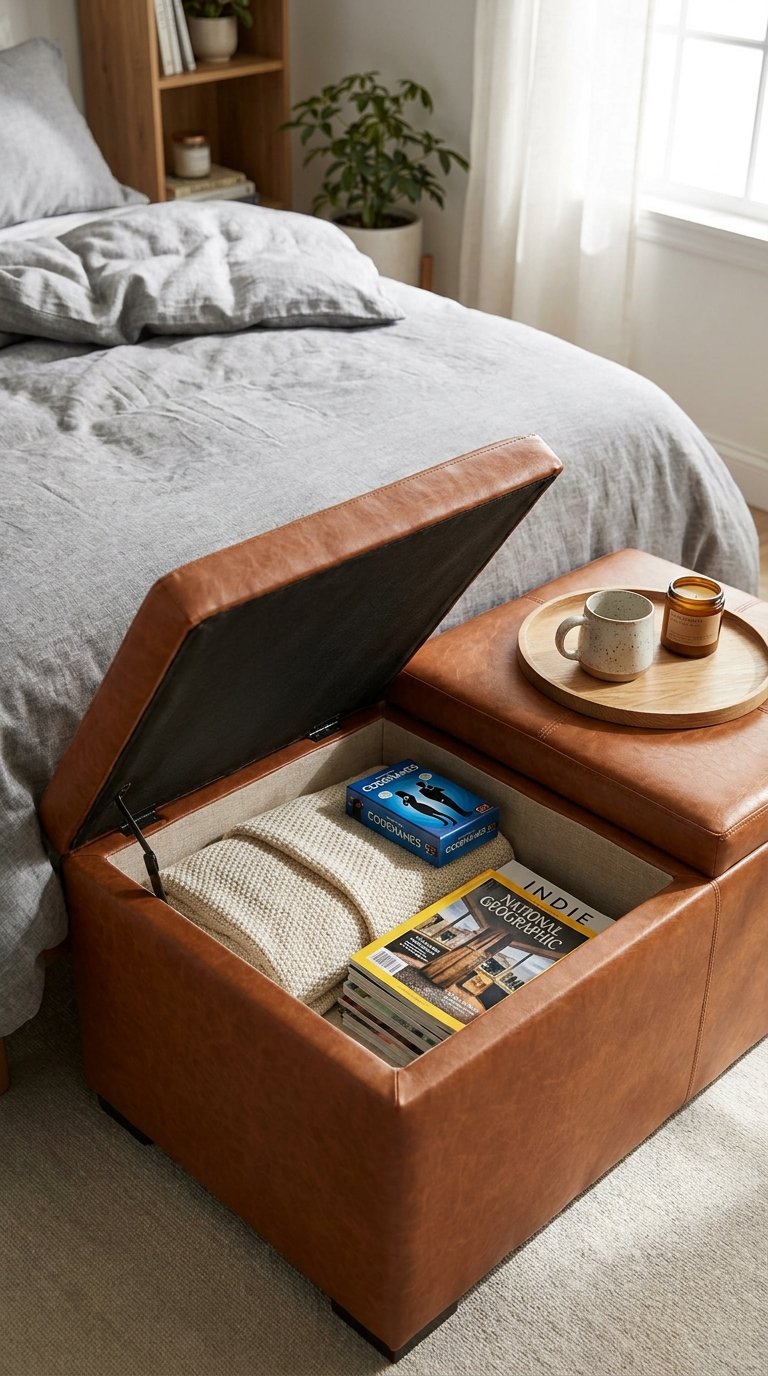
Every piece of furniture in a teen bedroom should earn its floor space by doing more than one job.
An ottoman that opens for storage. A desk that folds flat against the wall when not in use. A daybed that functions as a sofa during the day and a bed at night. Multi-functional furniture in a small teen bedroom recovers significant floor space without sacrificing any function.
The storage ottoman is IMO the single most useful multi-functional piece in a teen bedroom. It functions as a seat for friends, a footrest at the desk, and storage for everything that otherwise ends up on the floor.
Apply the same logic to every major purchase. Before buying any furniture piece, ask whether a version exists that does two things instead of one. In most categories, it does.
13. Create a Vanity or Getting-Ready Station
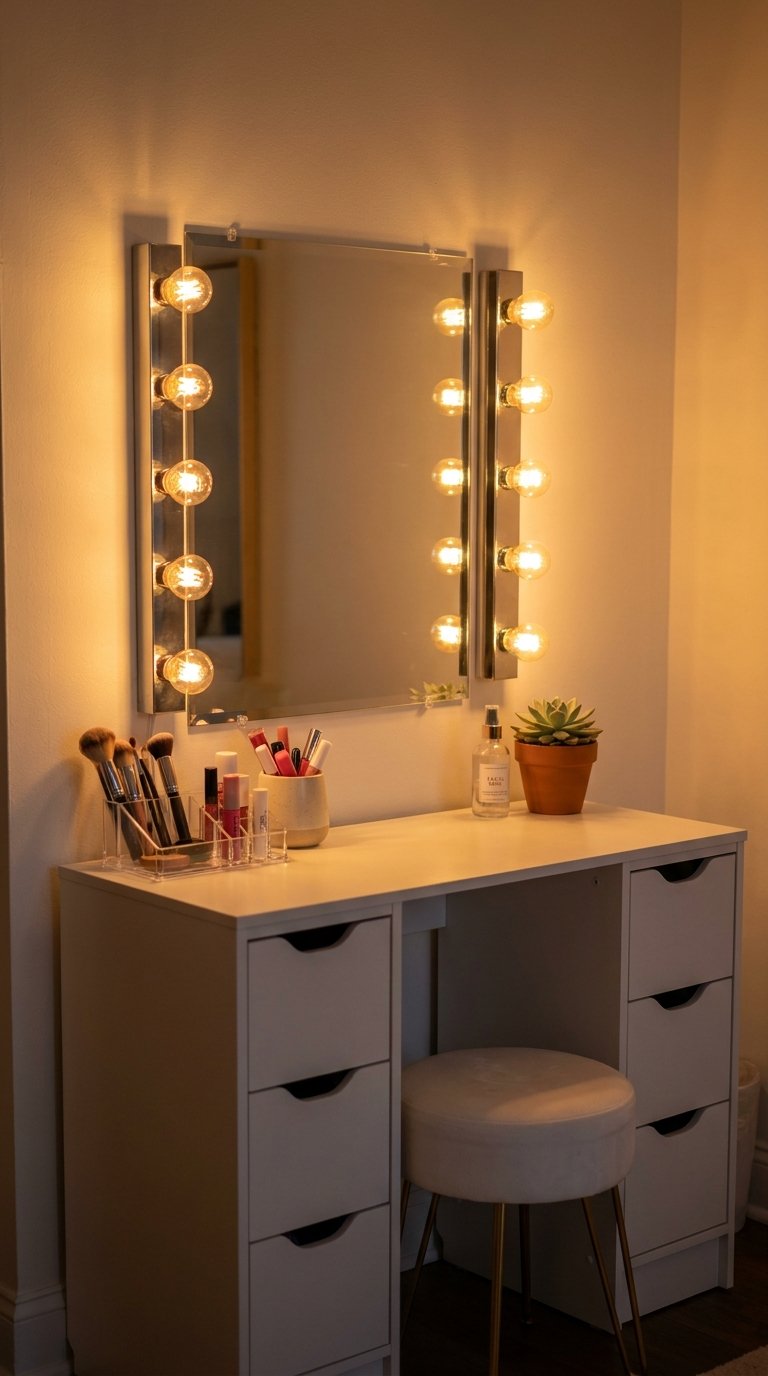
For teens who spend meaningful time getting ready, a dedicated vanity area makes the bedroom significantly more functional and reduces the bathroom traffic that drives the rest of the household quietly insane.
A small desk with a large mirror above it, good lighting on both sides of the mirror, and drawer storage below creates a functional getting-ready station that keeps makeup, skincare, and accessories organized and out of the main desk workspace.
Lighting is the critical element of a vanity area. Overhead lighting creates shadows. Side lighting at face level creates even illumination. Hollywood-style bulb strips on both sides of the mirror are the most effective solution at any budget level.
Keep the vanity storage organized with small drawer dividers and labeled containers. A beautiful vanity that descends into chaos within two weeks of setup serves no one.
14. Use Curtains That Go From Floor to Ceiling
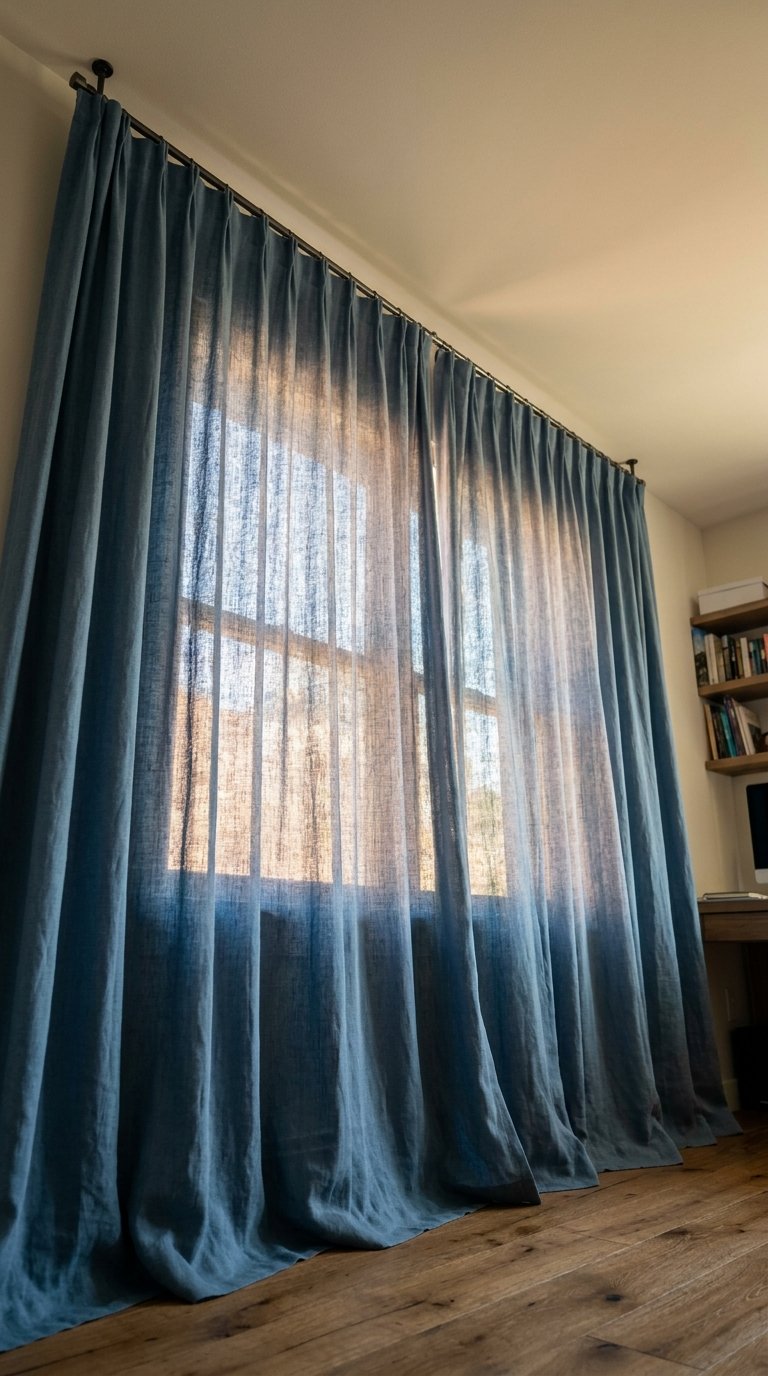
Most teen bedrooms have curtains that hang just below the window frame. Hanging them from ceiling height to floor level changes the entire scale of the room.
Floor-to-ceiling curtains make the room feel taller, more considered, and significantly more grown-up than window-length curtains at the same price point. The rod mounts at ceiling height. The fabric falls to the floor. The visual effect is immediate and significant.
Choose blackout fabric for a teen bedroom. Teenagers stay up late and sleep late. A room that blocks morning light serves their sleep patterns better than a room that wakes them at 6am with summer sunrise.
Lined curtains in linen, velvet, or a heavy cotton look substantially more premium than unlined lightweight panels. The weight of the fabric determines the quality of the drape and the overall visual impression from across the room.
15. Personalize With a Neon Sign or LED Word Light
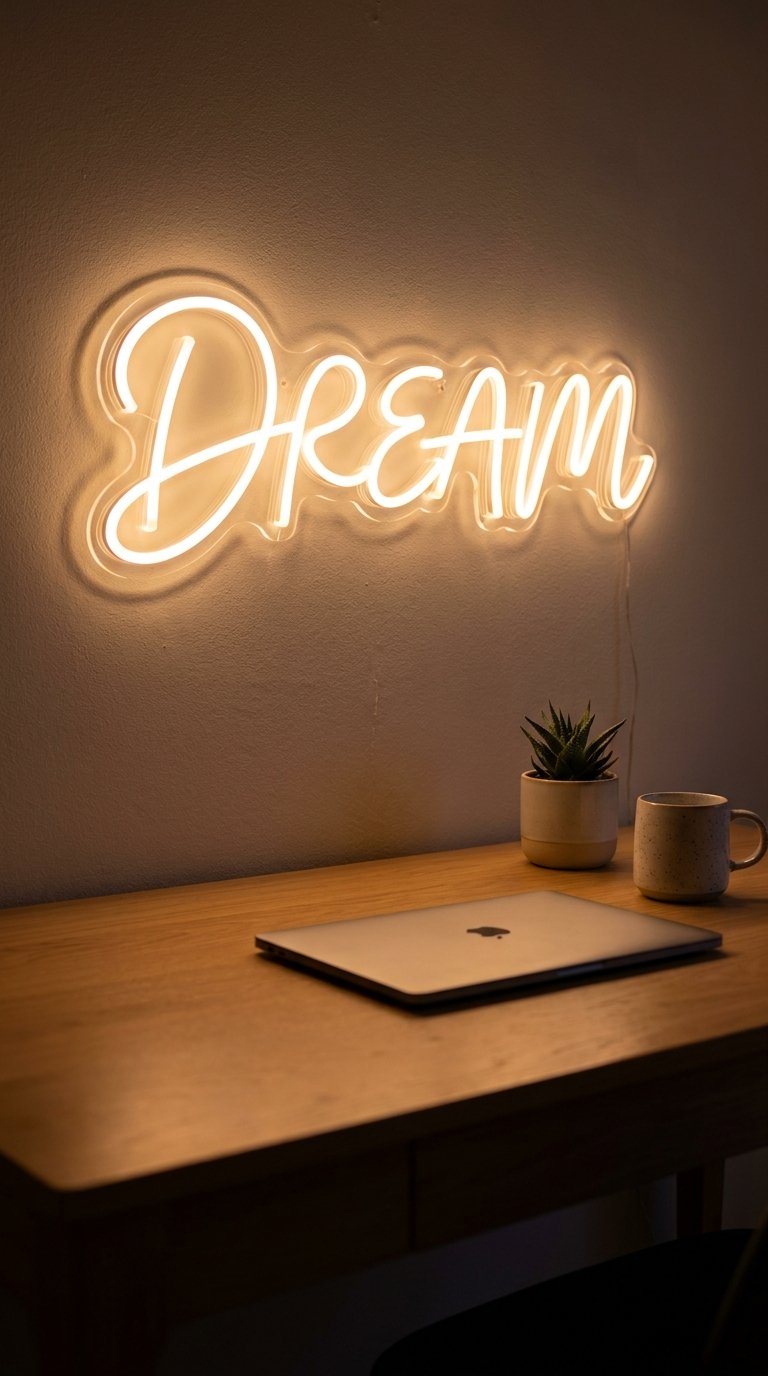
A neon sign or LED word light is one of the most consistently popular teen bedroom additions and for good reason. It adds personality, ambient light, and a sense of ownership over the space.
Custom neon signs spelling out a name, a phrase, or a single word cost between $60 and $200 depending on size and complexity. They mount easily to a wall, plug into a standard outlet, and become the most photographed feature in the room within about twenty minutes of installation.
LED neon flex signs are the safer and more affordable alternative to traditional glass neon. They produce the same warm glow, bend into the same letter shapes, and do not carry the fragility or heat risks of glass neon tubes.
Position the sign above the desk or beside the bed where it adds ambient light to a zone that benefits from it. A neon sign floating in the middle of a wall with no relationship to the furniture arrangement below it looks random rather than placed.
16. Add a Pegboard Above the Desk
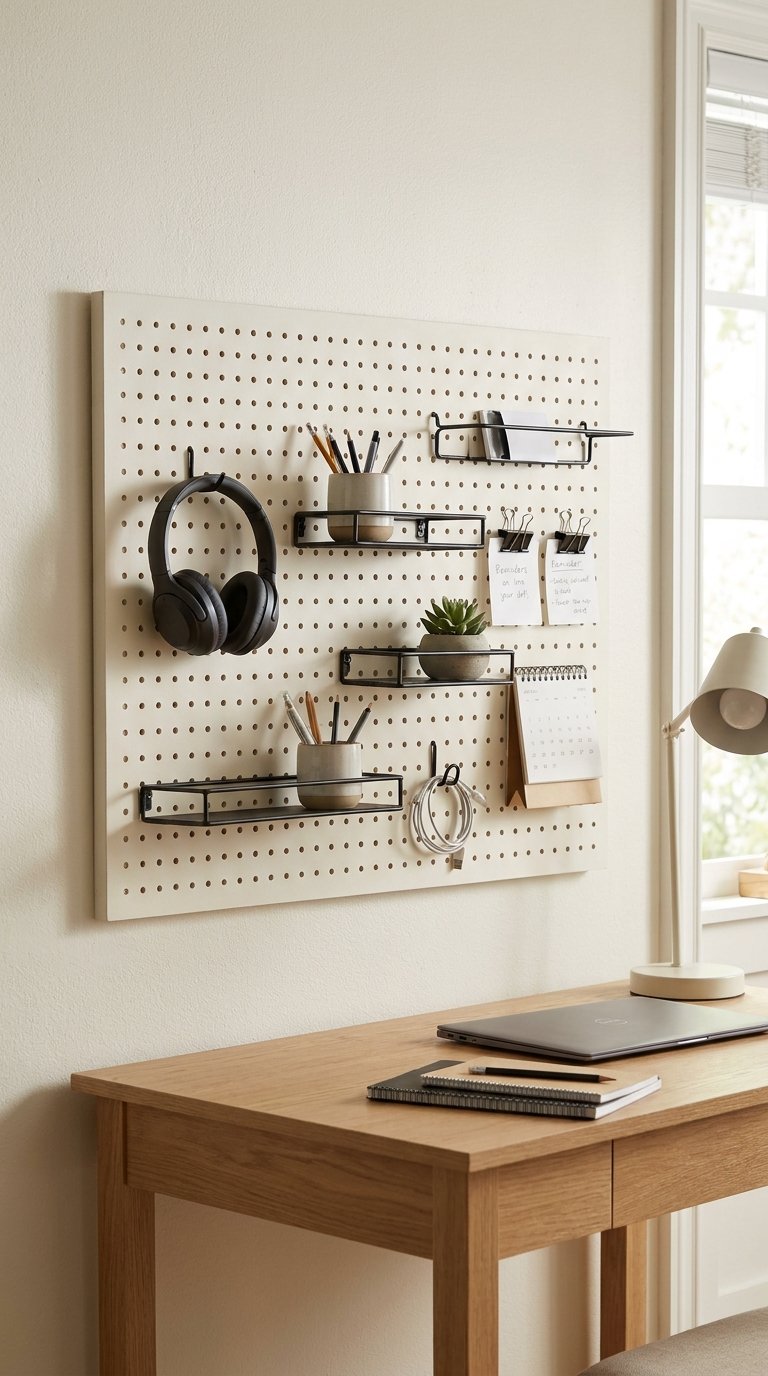
A pegboard above a teen’s desk is one of the most practical organizational tools in any bedroom and one of the most underused.
A pegboard panel mounted to the wall above the desk holds hooks, shelves, containers, and clips that keep frequently used items within reach without consuming desk surface space. Headphones, chargers, stationery, small plants, and reminders all find a home on the pegboard.
Pegboards are also completely reconfigurable. The hook and shelf positions change as the teen’s needs change. This flexibility matters in a space used for different activities at different ages.
Paint the pegboard the same color as the wall behind it for a subtle, integrated look. Or paint it in a contrasting color to make it a deliberate design feature. Both approaches work. The choice depends on whether you want it to blend or stand out.
17. Use a Canopy or Bed Curtain
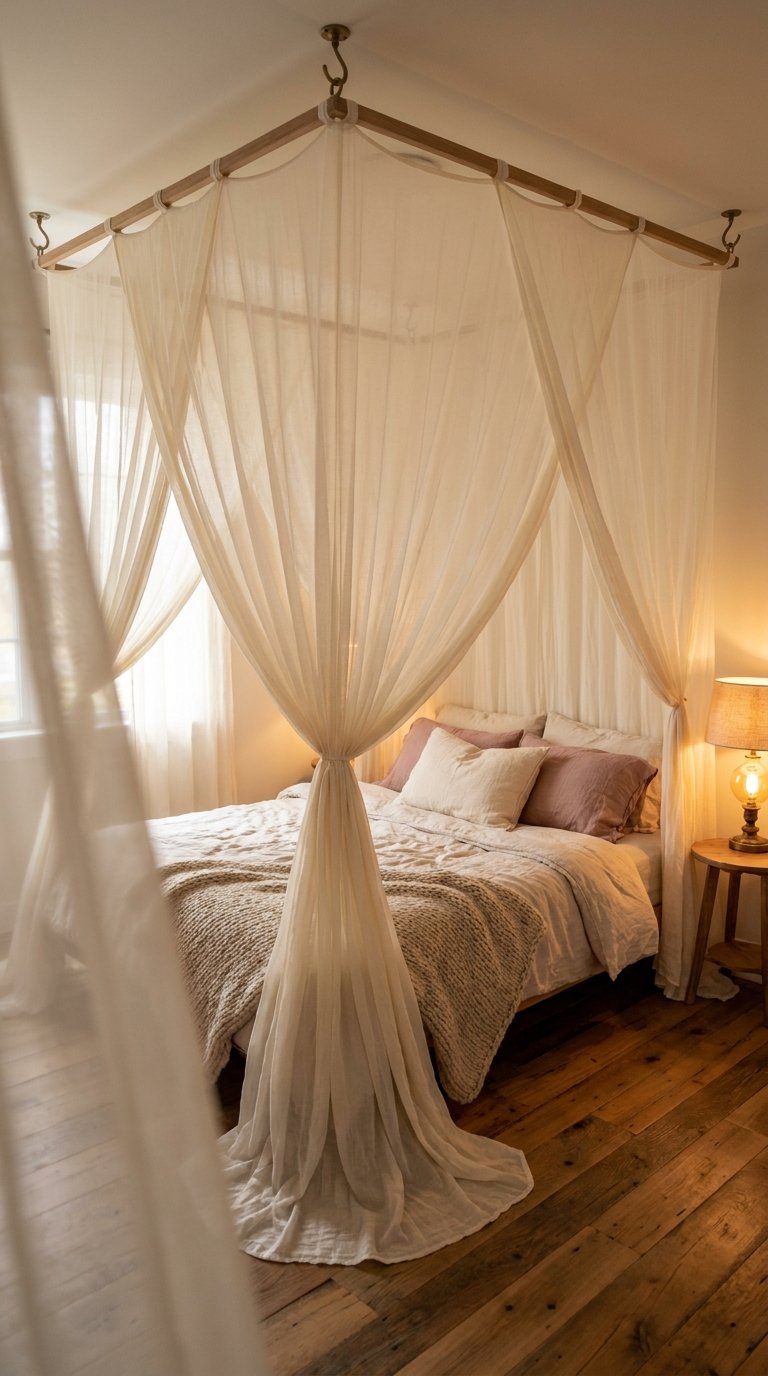
A bed canopy transforms a standard bed into a distinct, defined sleeping zone within the room.
A fabric canopy mounted to the ceiling above the bed, or a four-poster style curtain rail around the bed perimeter, creates a sense of enclosure that makes the sleeping area feel separate and private even in a small room shared with study and social zones.
Sheer white or cream fabric works in almost every teen bedroom style. For a more dramatic effect, use a dark fabric canopy against a light wall. For a boho aesthetic, use layered lightweight fabrics in warm tones.
Keep the canopy well clear of any lamp or light source. Fabric near heat sources is a safety issue, not a design feature. Mount any lighting outside the canopy perimeter rather than inside it.
18. Install a Corkboard or Magnetic Wall Panel
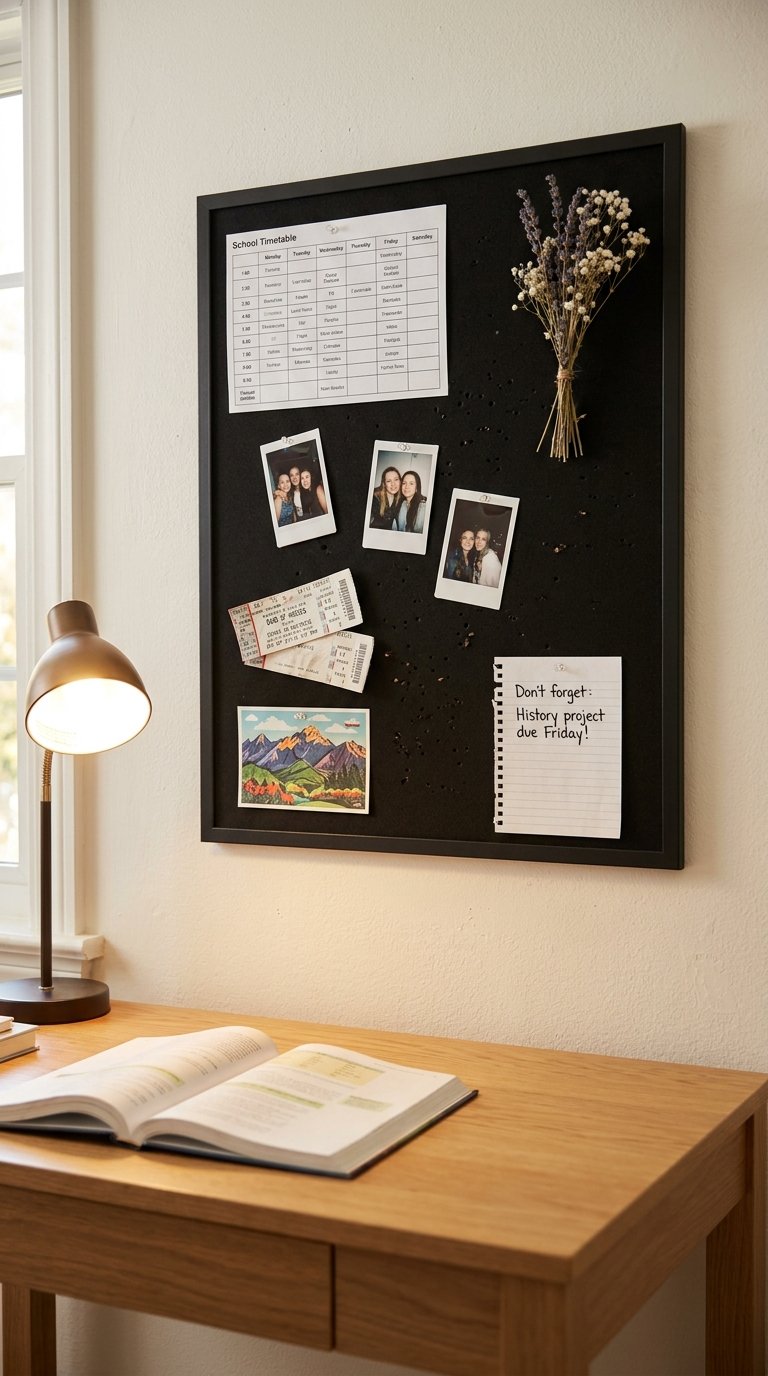
A corkboard or magnetic wall panel gives a teen a dedicated place to pin, display, and organize the things that matter to them without those things ending up taped directly to the painted wall.
A large corkboard in a frame above the desk or beside the bed holds timetables, photos, ticket stubs, notes, and inspiration without any damage to the wall behind it. When the teen leaves for university or the room changes function, the board removes cleanly.
Oversized corkboards in simple frames look considered rather than utilitarian. A 90 by 60cm corkboard in a thin black frame looks like a design decision. A small supermarket corkboard looks like a reminder system.
Magnetic panels painted in chalkboard paint serve triple duty: magnetic surface, writing surface, and design feature. These work particularly well above a teen’s desk as a combined planning and display surface.
19. Create a Small Seating Area for Friends
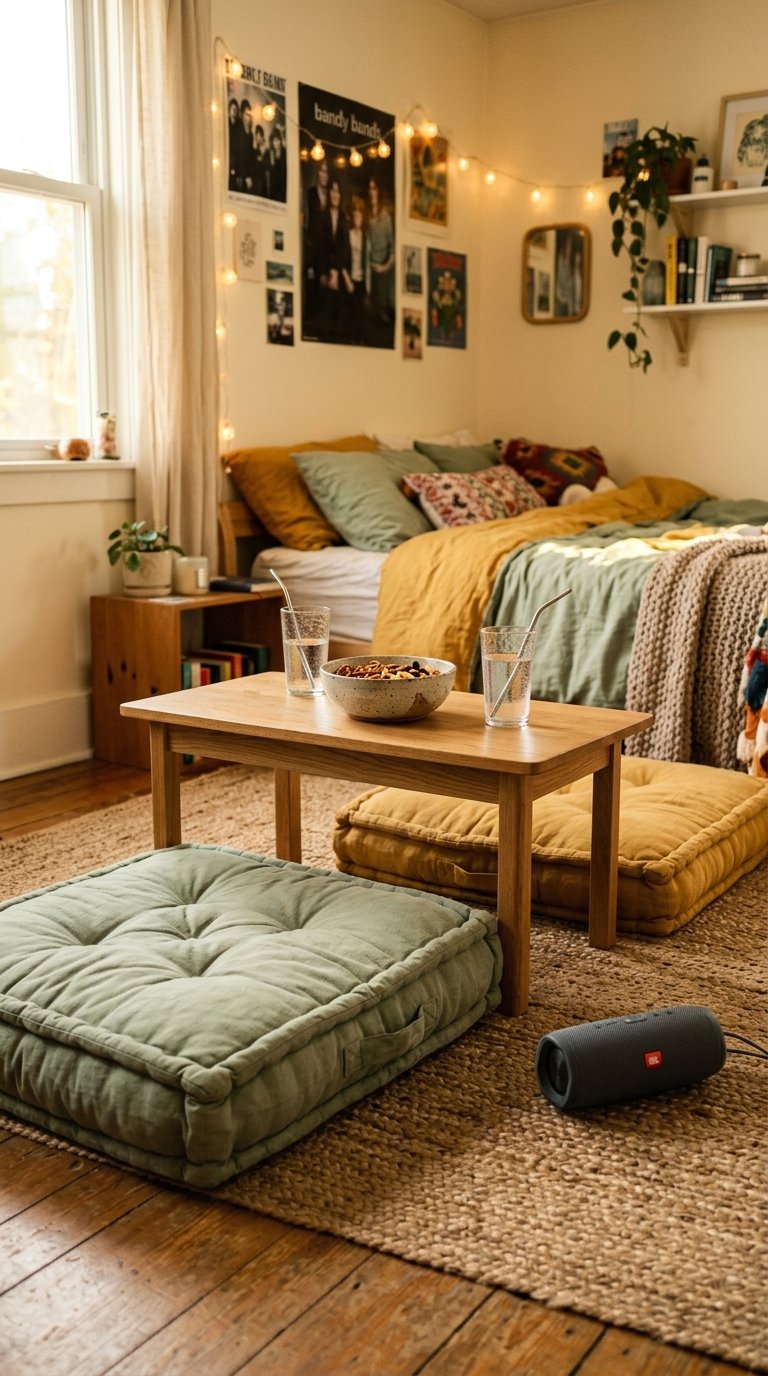
A teen bedroom that has nowhere for friends to sit other than the bed gets used differently from one with a small social area.
A small loveseat, two floor cushions, or a bean bag and a low coffee table creates a social zone within the bedroom that gives visiting friends somewhere to sit without the awkwardness of everyone crowding onto the bed.
This only works if the room has sufficient floor space to accommodate the seating without blocking movement through the room. In a small bedroom, a single large floor cushion or a compact two-seat bench at the foot of the bed serves the same purpose with less floor space commitment.
Position the seating area near the entertainment setup if the teen has a TV or monitor in the room. The seating faces the screen and the arrangement makes practical sense rather than just filling a corner.
20. Use Smart Storage Solutions in the Wardrobe
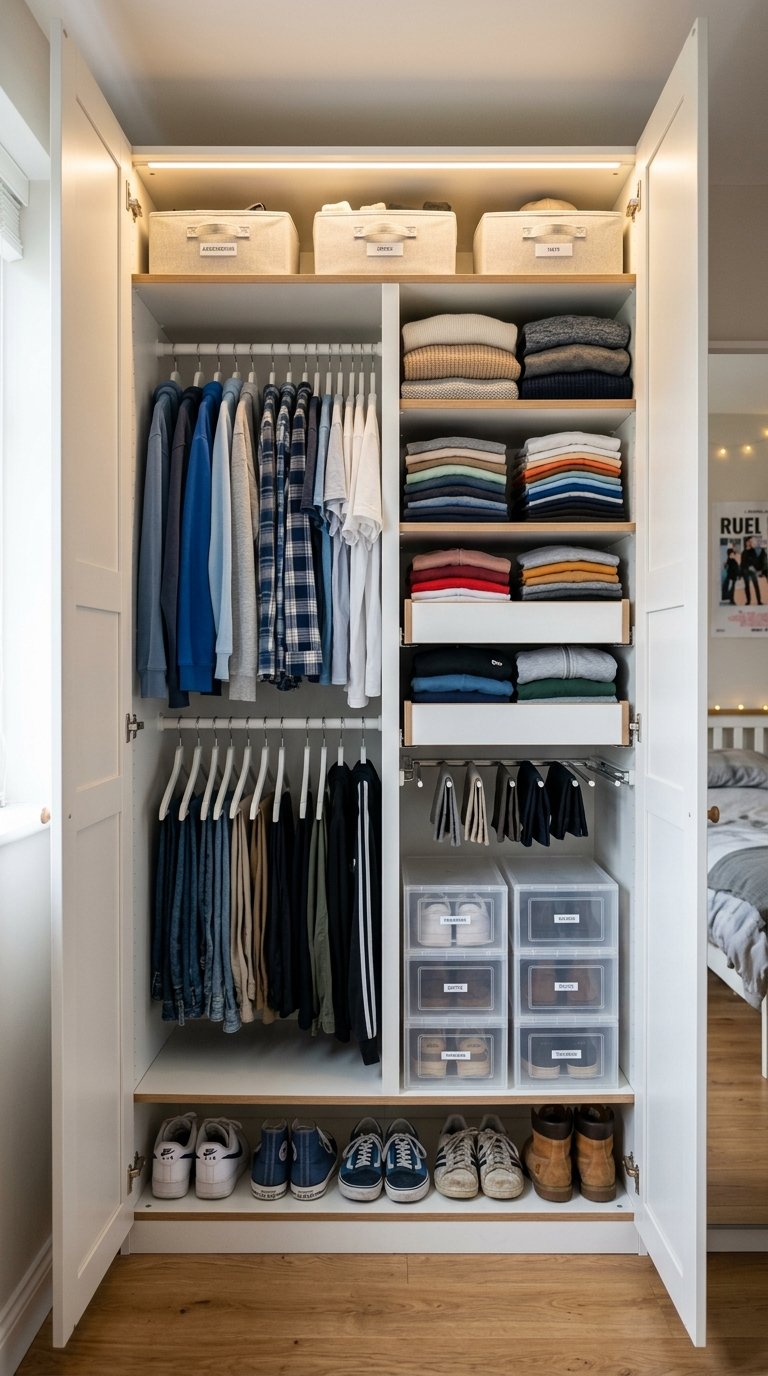
A teen’s wardrobe is almost always a disaster. The solution is not more storage. It is better organized storage.
Wardrobe organizer systems with adjustable shelving, hanging rails at two heights, drawer units, and shoe storage transform a standard wardrobe interior from a single hanging rail and a shelf into a fully organized system that holds twice as much in the same space.
Pull-out trouser racks, accessory drawers, and clear shoe boxes make finding specific items fast and keep the wardrobe interior from collapsing into a pile within days of tidying.
The investment in a wardrobe organizer system pays back immediately in reduced daily stress and in the longevity of the clothing stored in it. Clothes that hang properly last longer than clothes that live in a heap.
21. Keep One Wall Completely Clear
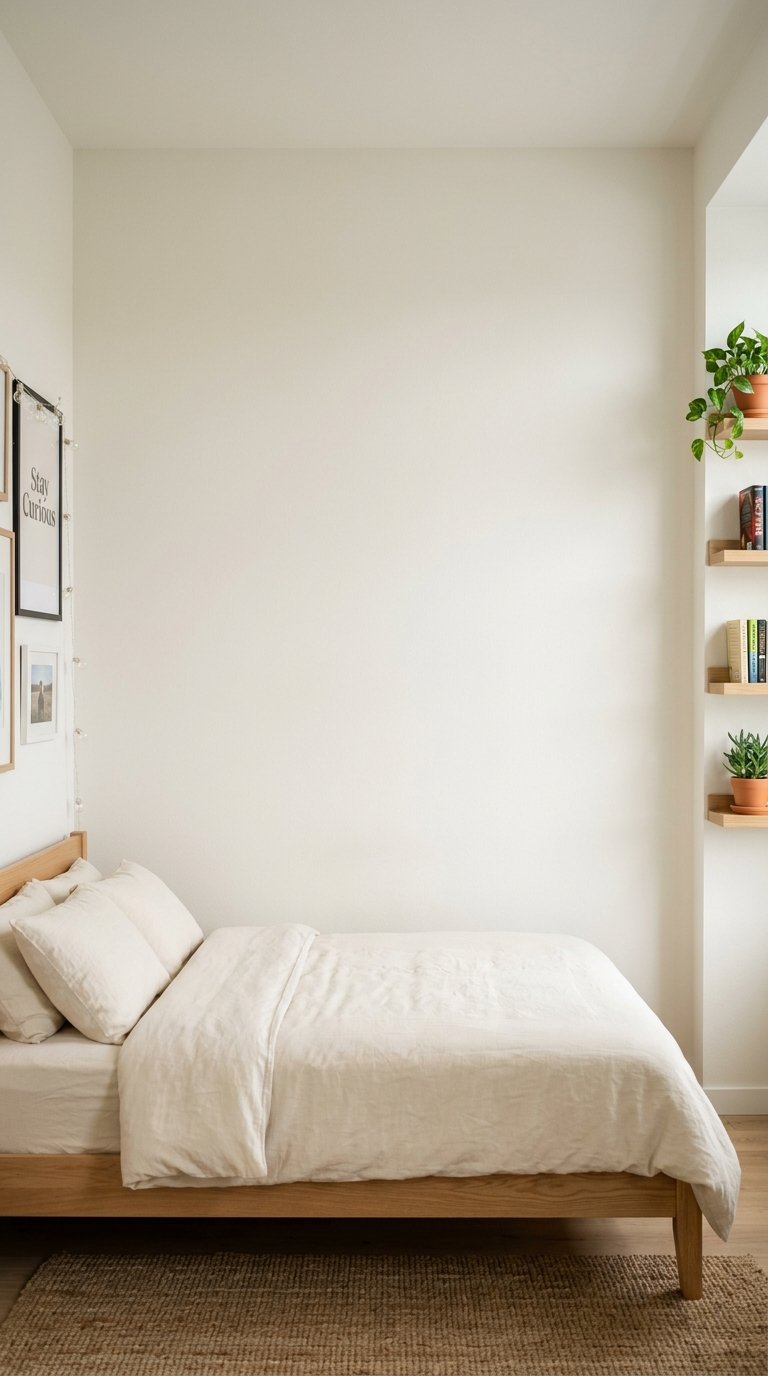
This list has told you to add things to a teen bedroom. This final idea tells you to stop.
One completely clear wall in a teen bedroom gives the room visual breathing space and provides a canvas for whatever direction the teen’s taste moves in next. A blank wall today is a future mural, a future gallery wall, or a future projector screen depending on who this teenager becomes.
Small rooms benefit from this restraint most. A teen bedroom where every wall is decorated feels chaotic and overwhelming. A room where three walls are thoughtfully used and one wall remains clear feels considered and calm.
This is the hardest idea to execute because it requires saying no to things that seem like good additions. But a room that breathes is a room that works. And a room that works is a room a teenager actually wants to spend time in.
Final Thoughts
A teen bedroom works when it balances the teen’s need for personal expression with the practical requirements of sleep, study, and storage.
Start with the decisions that are hardest to change: bed size and position, desk location, wardrobe storage system. Get those right and every subsequent decision sits on a solid foundation.
Then build the personality of the room through bedding, lighting, art, and accessories that update easily as taste changes. Keep the major furniture neutral and let the small things carry the personality.
Pick eight to ten ideas from this list that fit your specific room, your specific budget, and your specific teenager. Execute them without cutting corners on the details that matter most to the person who sleeps there every night.
The room does not need to be perfect. It needs to feel like theirs. That is the whole point.