21 Pink Room Decor Ideas That Look Chic and Modern
Pink gets dismissed more than any other color in interior design. People assume it reads as childish, overwhelming, or too committed to a single aesthetic. Those people have not seen pink used well. The right shade of pink in the right application transforms a room in a way that almost no other color achieves.
These 21 ideas show you exactly how to use pink in any room without regret.
1. Paint One Accent Wall in Dusty Rose
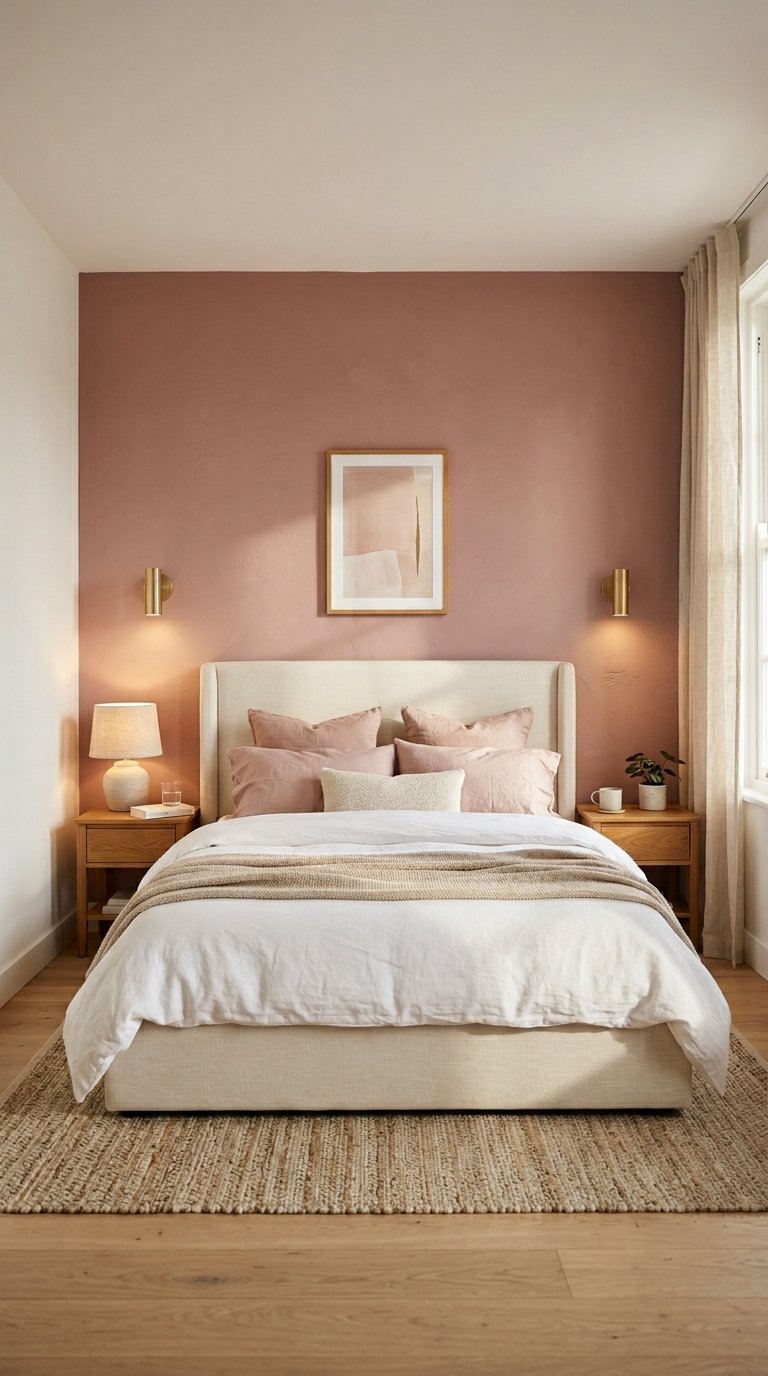
Dusty rose is the most versatile pink in interior design. It sits between pink and mauve with enough grey in it to read as a sophisticated neutral in most lighting conditions. Paint one wall in dusty rose and leave the remaining three walls in soft white or warm greige.
The accent wall works best behind the bed in a bedroom, behind the sofa in a living room, or on the fireplace wall in any room. One wall of dusty rose changes the entire color temperature of the space without overwhelming it.
Best dusty rose paint shades:
- Farrow and Ball Peignoir
- Benjamin Moore Mellow Rose
- Sherwin-Williams Brandied Melon
- Behr Vintage Blush
2. Use Blush Pink Linen Curtains
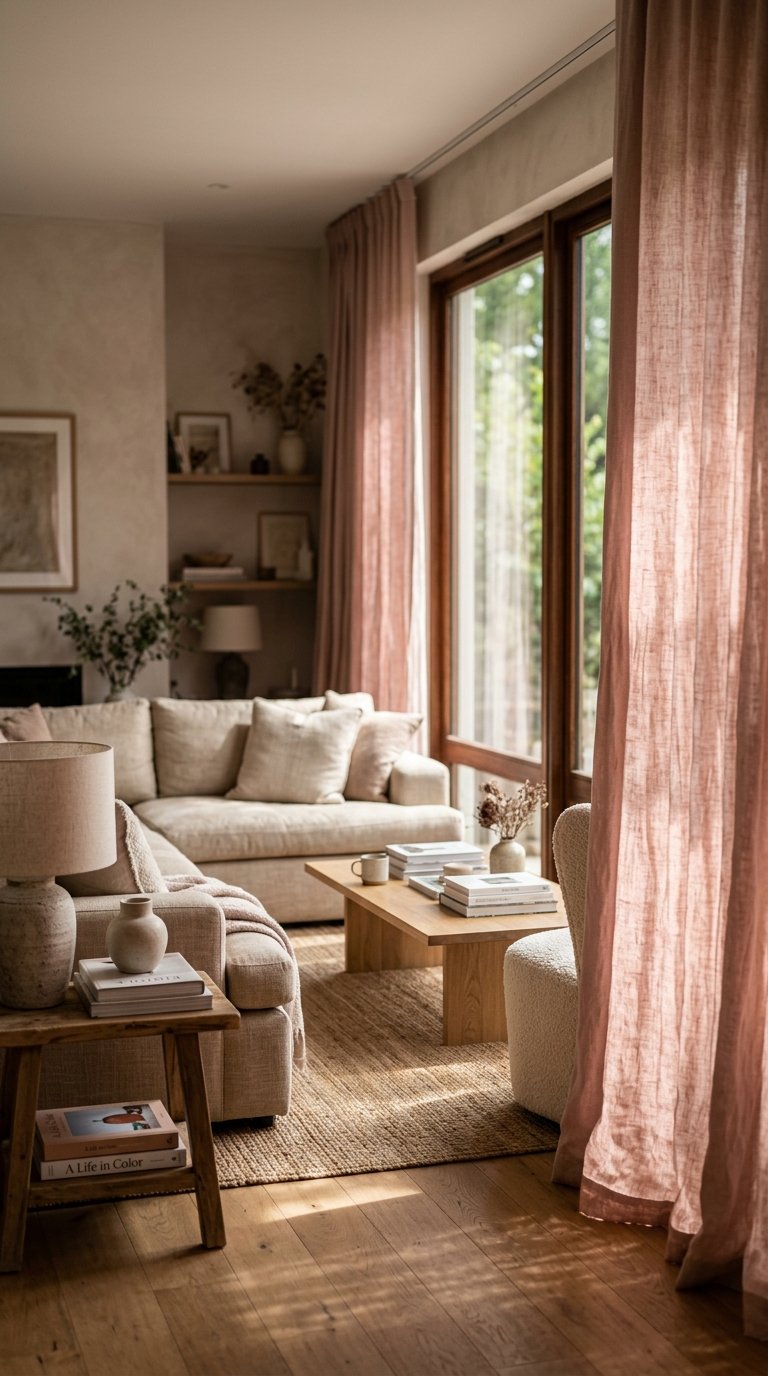
Blush pink linen curtains filter natural daylight into a warm, flattering tone that changes the mood of an entire room. When daylight passes through blush linen, it casts a soft warm glow across walls and floors that no paint color replicates.
Hang the curtains from ceiling height to the floor. Use a rod positioned 4 to 6 inches above the window frame at minimum. The ceiling-height installation makes the window appear taller and gives the curtains the visual weight they need to anchor the room.
Best for: Bedrooms, living rooms, and any room with strong natural daylight.
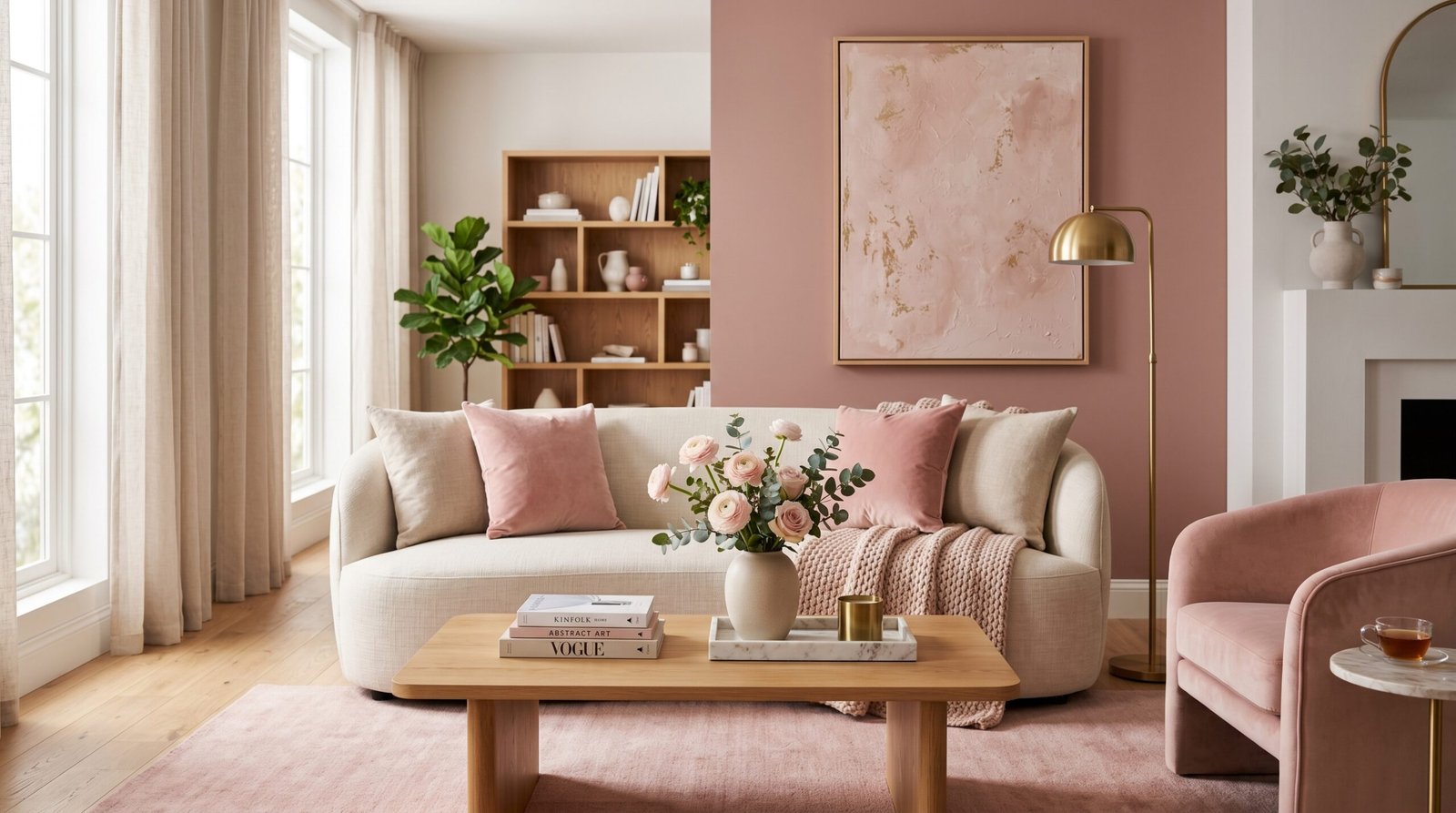
3. Add a Pink Velvet Sofa
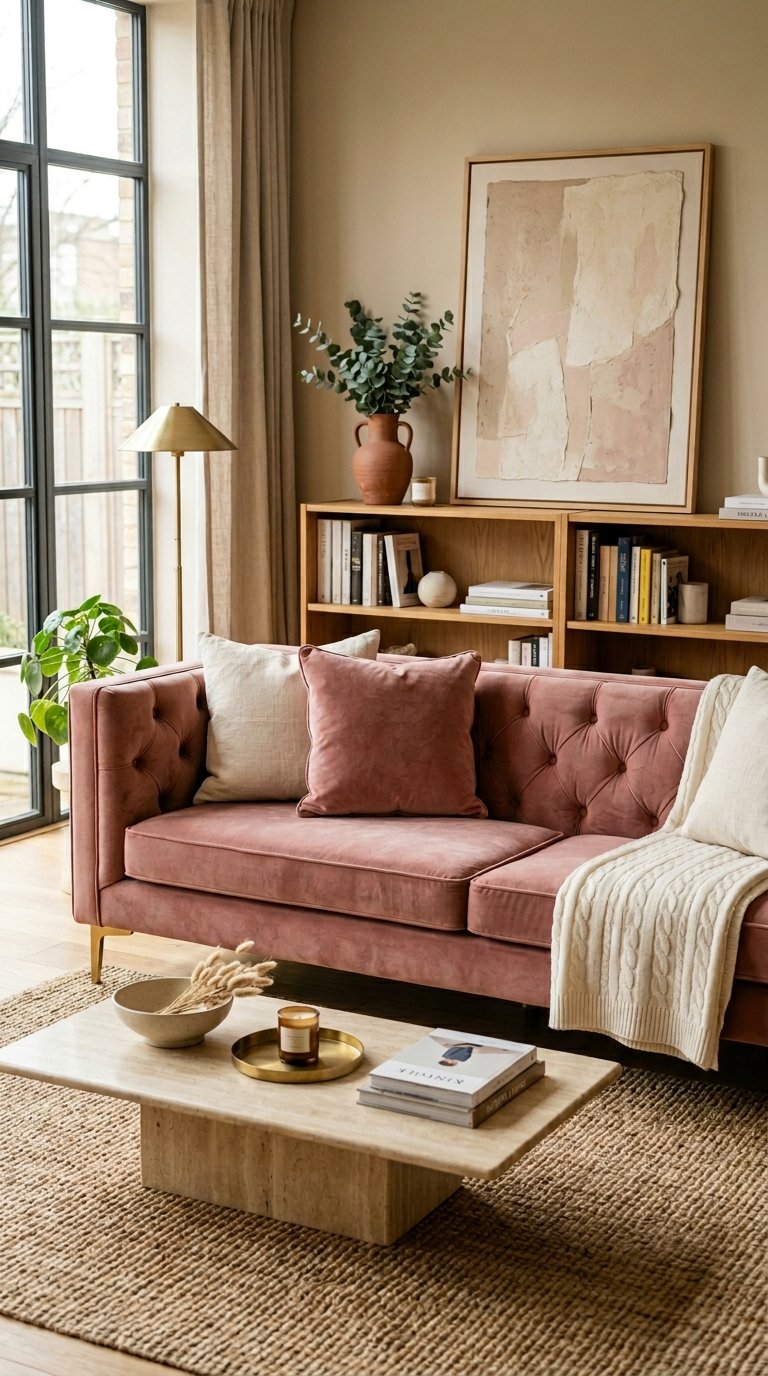
A pink velvet sofa makes an immediate statement in a living room. Velvet amplifies color depth and shifts tone depending on the light direction, giving a single pink sofa multiple visual personalities throughout the day.
Choose a dusty pink or antique rose velvet rather than a bright bubble gum tone. Muted velvet ages better, suits more color combinations, and reads as considered rather than impulsive. Pair it with warm brass legs, cream cushions, and a natural jute rug to ground the look.
Pink sofa color combinations that work:
- Dusty pink sofa with cream, camel, and warm brass
- Blush pink sofa with white, sage green, and natural wood
- Antique rose sofa with grey, black, and gold
4. Decorate with Pink Throw Pillows
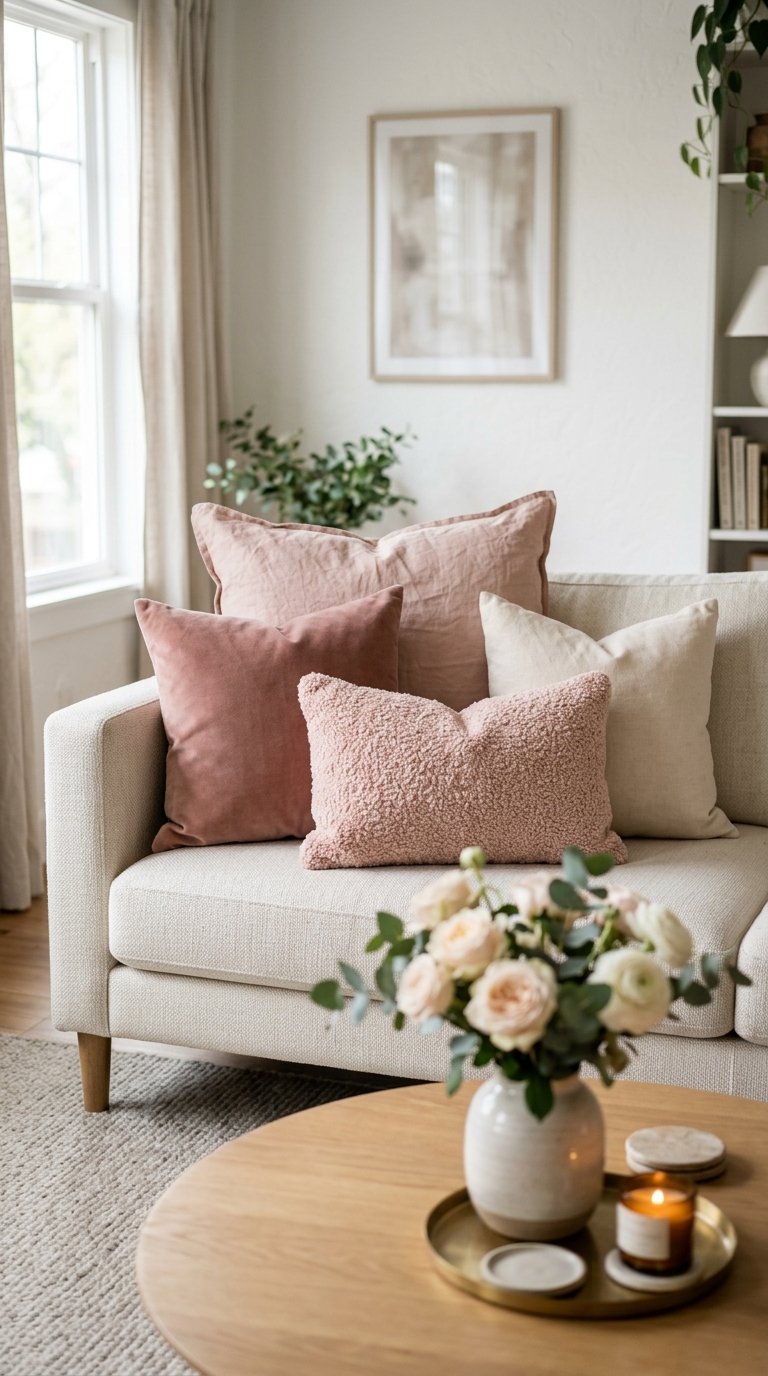
Pink throw pillows on a neutral sofa introduce pink into a room without any permanent commitment. It costs very little and reverses in five minutes if you change your mind. IMO, this is the lowest-risk, highest-reward way to test pink in any room.
Mix pillow sizes and textures within the same pink tone family. A large blush linen cushion beside a smaller dusty rose velvet cushion beside a textured blush boucle creates depth without visual chaos. Keep the pink tones close to each other in saturation and warmth.
Pillow combinations:
- 60cm blush linen square plus 45cm dusty rose velvet square plus 30cm blush boucle lumbar
- All in the same pink tone family, mixed textures only
- Add one cream or white pillow to balance the group
5. Paint the Ceiling Pink
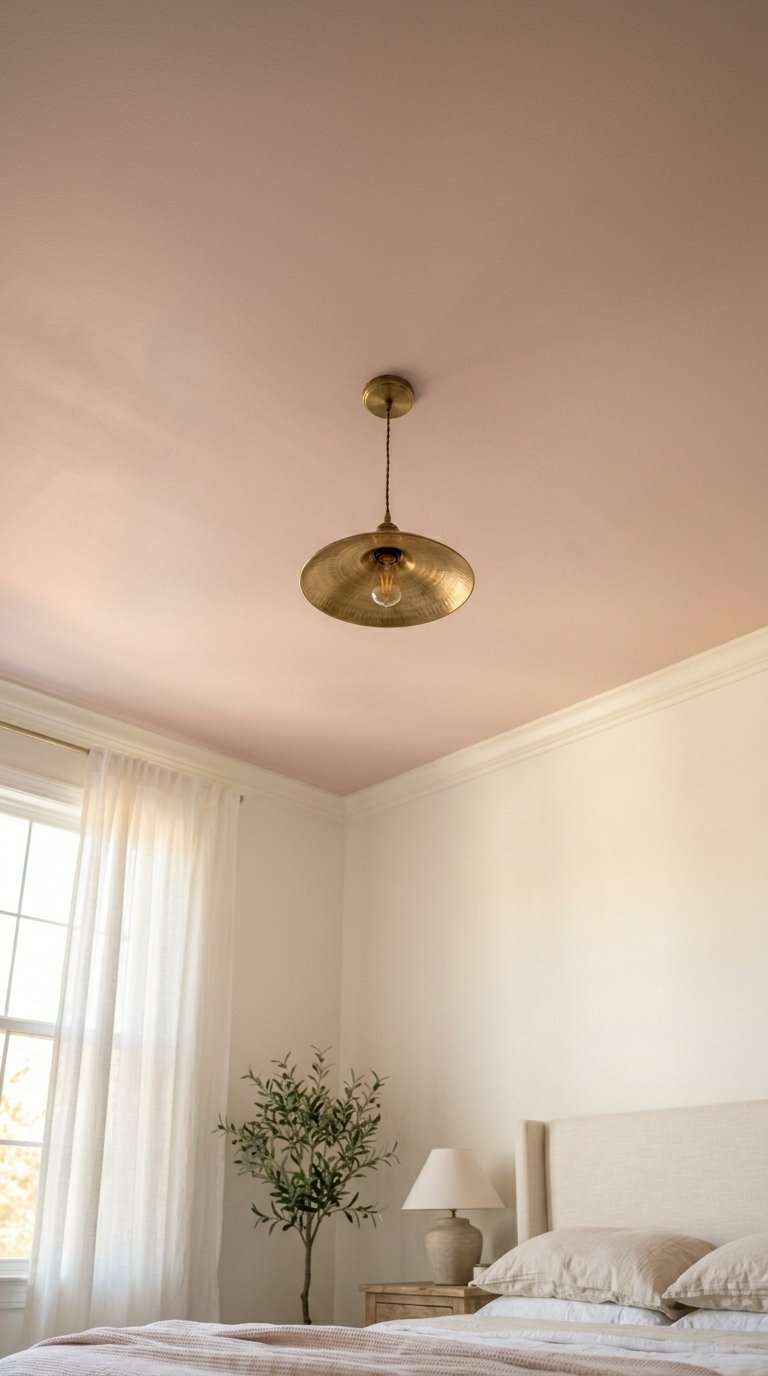
A pink ceiling transforms a room in a way that a pink wall alone never achieves. It wraps the upper portion of the room in color and creates an enveloping warmth that draws the eye upward. In a bedroom, a blush or pale pink ceiling makes the room feel intimate and restful.
Use a pale pink, one to two shades lighter than you think you need. Ceilings read darker than walls because they sit in shadow for most of the day. A pale blush on the ceiling reads as a warm white in some lighting conditions, which is exactly the effect you want.
Best ceiling pink shades: Pale blush, baby pink in a matte finish, soft petal pink. Avoid saturated or bright pinks on the ceiling in any room smaller than 150 square feet.
6. Use Pink in the Kitchen with Painted Cabinet Doors
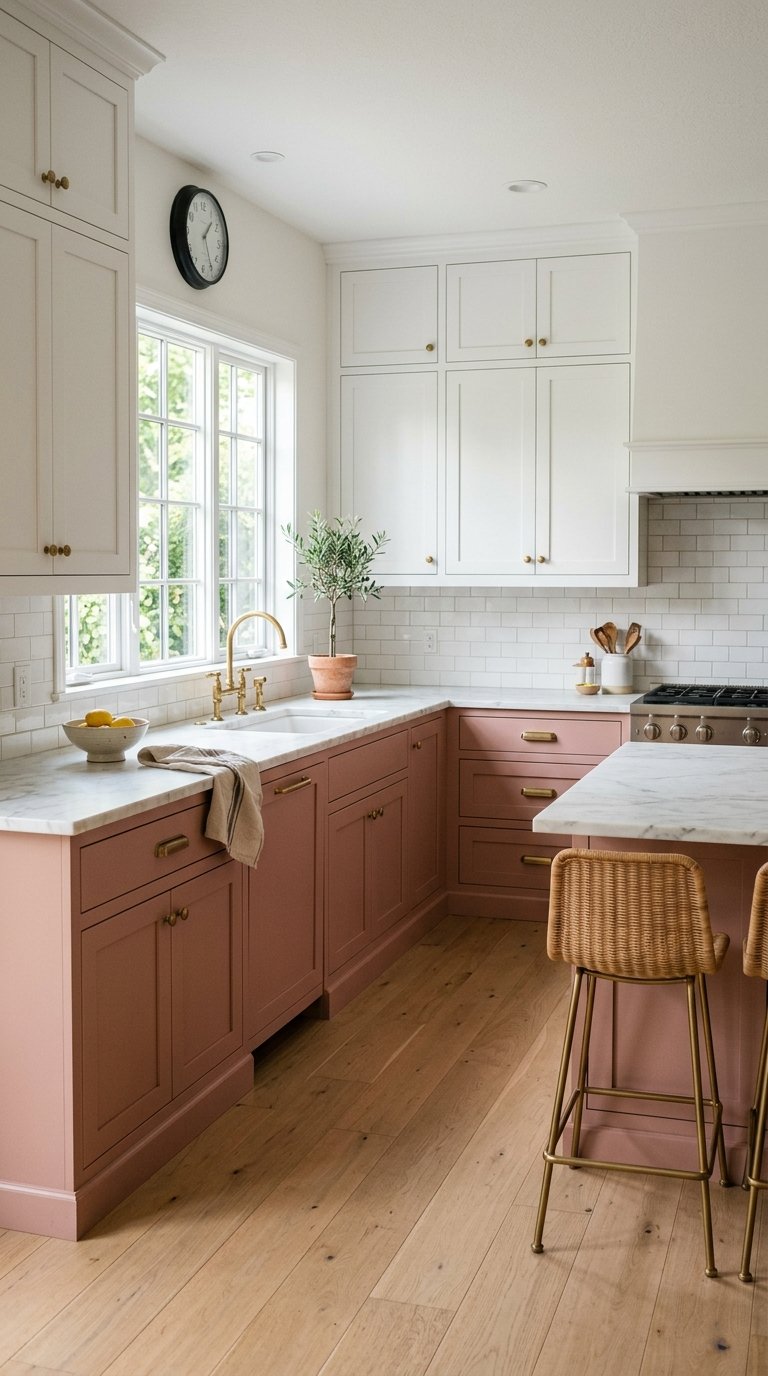
Pink kitchen cabinets work when you choose the right shade. Dusty rose, terracotta pink, or warm blush on lower cabinet doors with white upper cabinets creates a two-tone kitchen that reads as bold and considered rather than themed.
Pair pink lower cabinets with brass hardware, a white marble or quartz countertop, and white upper cabinets. The combination sits in the same warm palette and avoids the clash that pink creates when paired with cold chrome or grey stone.
Pink kitchen cabinet shades that work:
- Farrow and Ball Calamine: soft warm pink, suits traditional kitchens
- Little Greene Carmine: deeper terracotta pink, suits contemporary spaces
- Benjamin Moore Pale Blush: lightest option, suits small kitchens
7. Add a Pink Area Rug
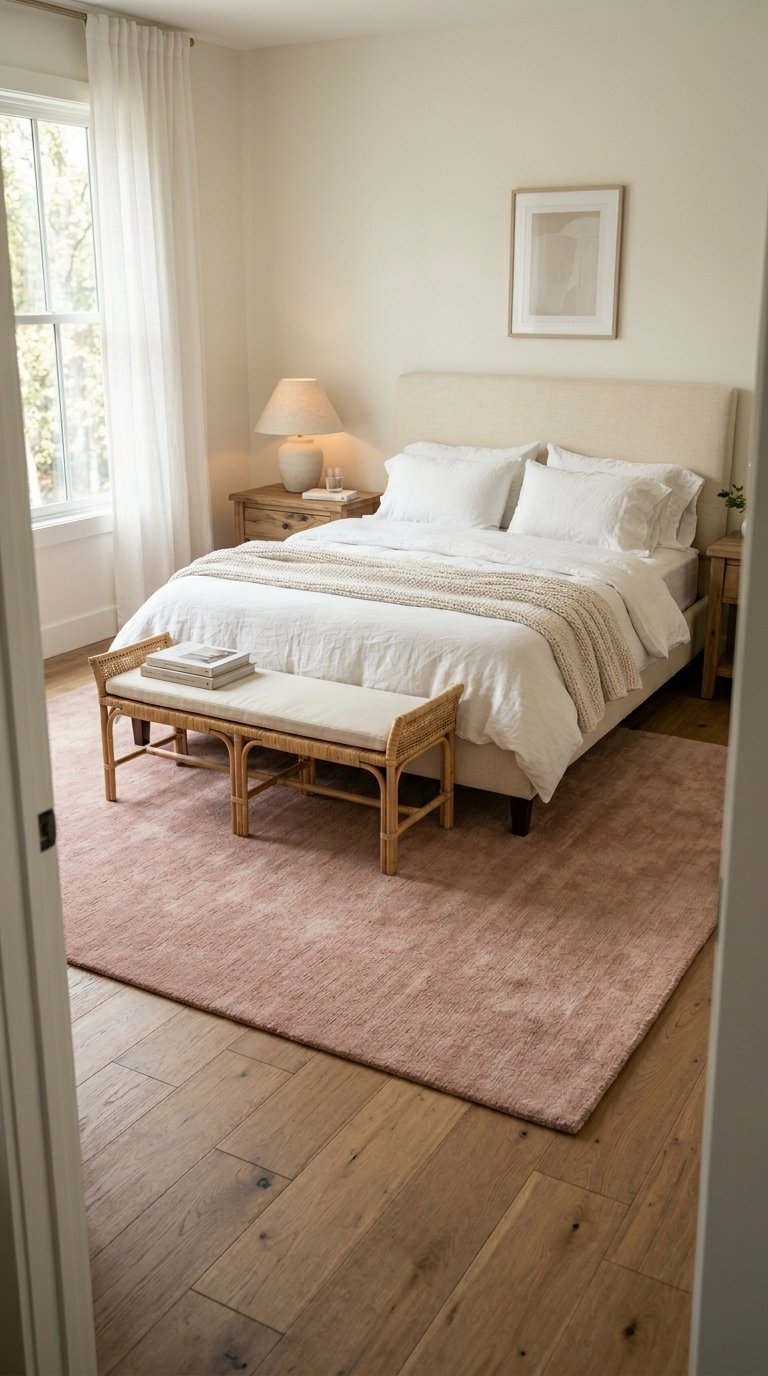
A pink area rug grounds a seating zone and introduces the color at floor level where it reads as warm and grounding rather than overwhelming. A large pink rug in a living room or bedroom works even when every other element in the room stays neutral.
Choose a low pile rug for living rooms and bedrooms with heavy furniture. High pile pink rugs look beautiful but flatten under furniture legs and show traffic patterns within months. A flatweave or low pile pink rug in a muted dusty or blush tone handles daily use and maintains its appearance far longer.
Best rug materials in pink:
- Wool flatweave: durable, holds color well, suits most rooms
- Cotton kilim: lightweight, washable, suits casual spaces
- Viscose blend: soft sheen, suits bedrooms, less durable under heavy use
8. Install Pink Tiles in the Bathroom
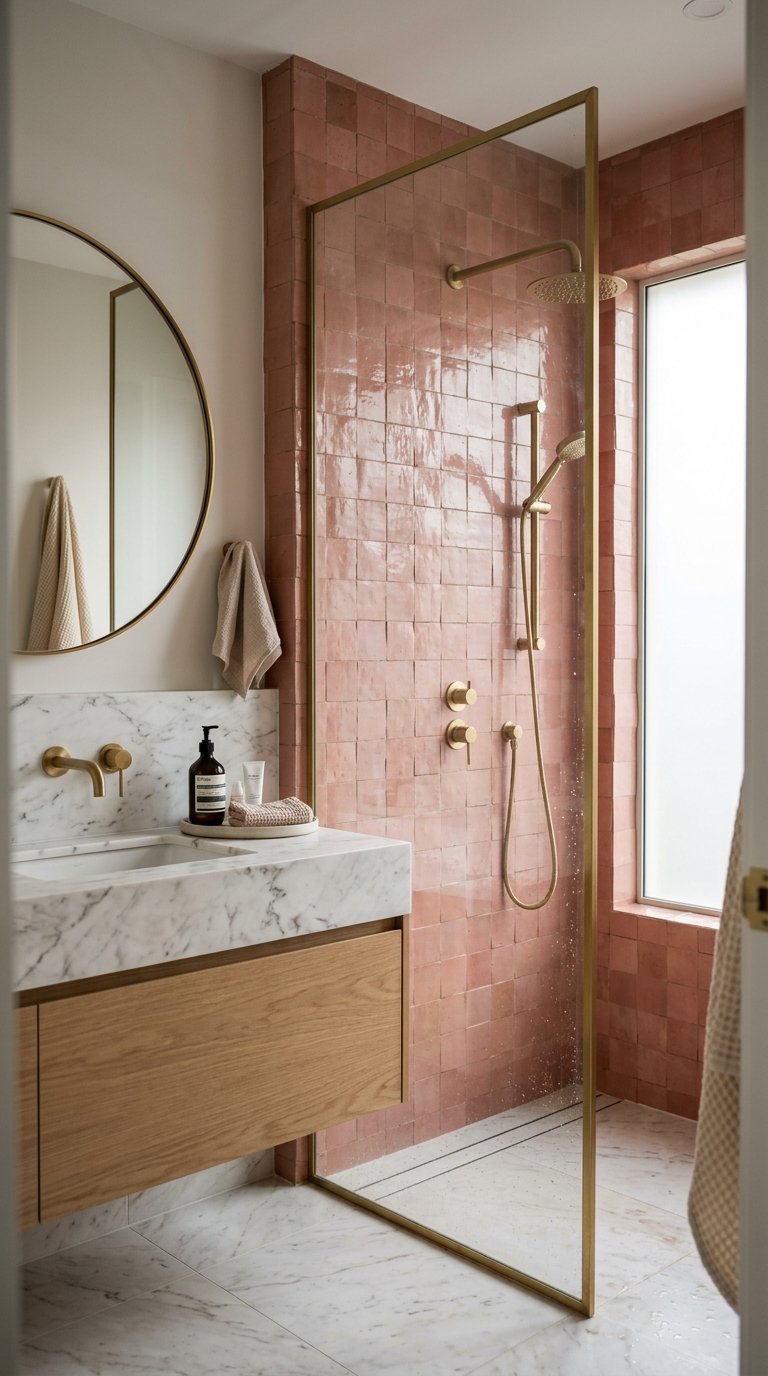
Pink tiles in a bathroom create one of the most striking color applications in any home. Terracotta pink zellige tiles on one shower wall, blush pink penny round tiles on the bathroom floor, or dusty rose large format tiles as a feature wall all deliver a result worth the investment.
Pair pink tiles with warm brass fixtures and white grout. Black grout on pink tile creates too much contrast and draws attention to the grout lines rather than the tile surface. White grout lets the tile color read cleanly across the full surface.
Pink tile options:
- Terracotta pink zellige: textured, irregular, warm, suits maximalist spaces
- Blush pink penny round: classic format, soft color, suits transitional bathrooms
- Dusty rose large format porcelain: smooth, modern, suits contemporary bathrooms
- Pink marble: natural variation, luxurious, highest cost option
9. Use Pink Bedding as the Room’s Color Anchor
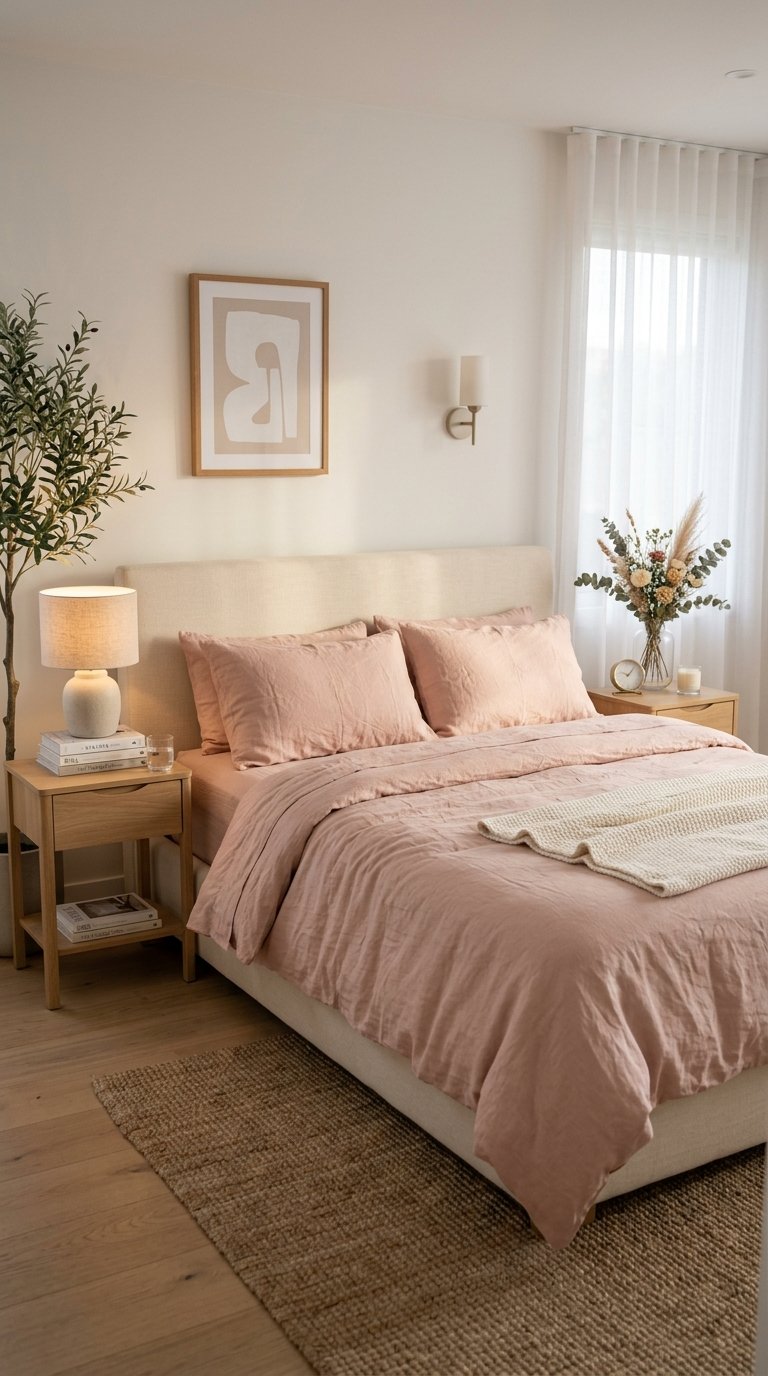
Pink bedding anchors the bedroom color scheme without requiring any paint or permanent change. A blush pink duvet cover with matching shams sets the entire color direction of the room. Every other element, curtains, rug, furniture, works in relation to that central pink anchor.
Choose a duvet cover in a natural fiber. Linen and cotton both hold pink tones well and soften with each wash in a way that improves the look over time. Avoid synthetic duvet covers in pink. They hold static pills quickly, and the color looks flat rather than warm.
Best pink bedding materials:
- Washed linen: relaxed, breathable, improves with age
- Percale cotton: crisp, cool, holds color well
- Sateen cotton: soft sheen, warmer feel, suits cooler climates
10. Bring in Pink Through Indoor Plants and Pots
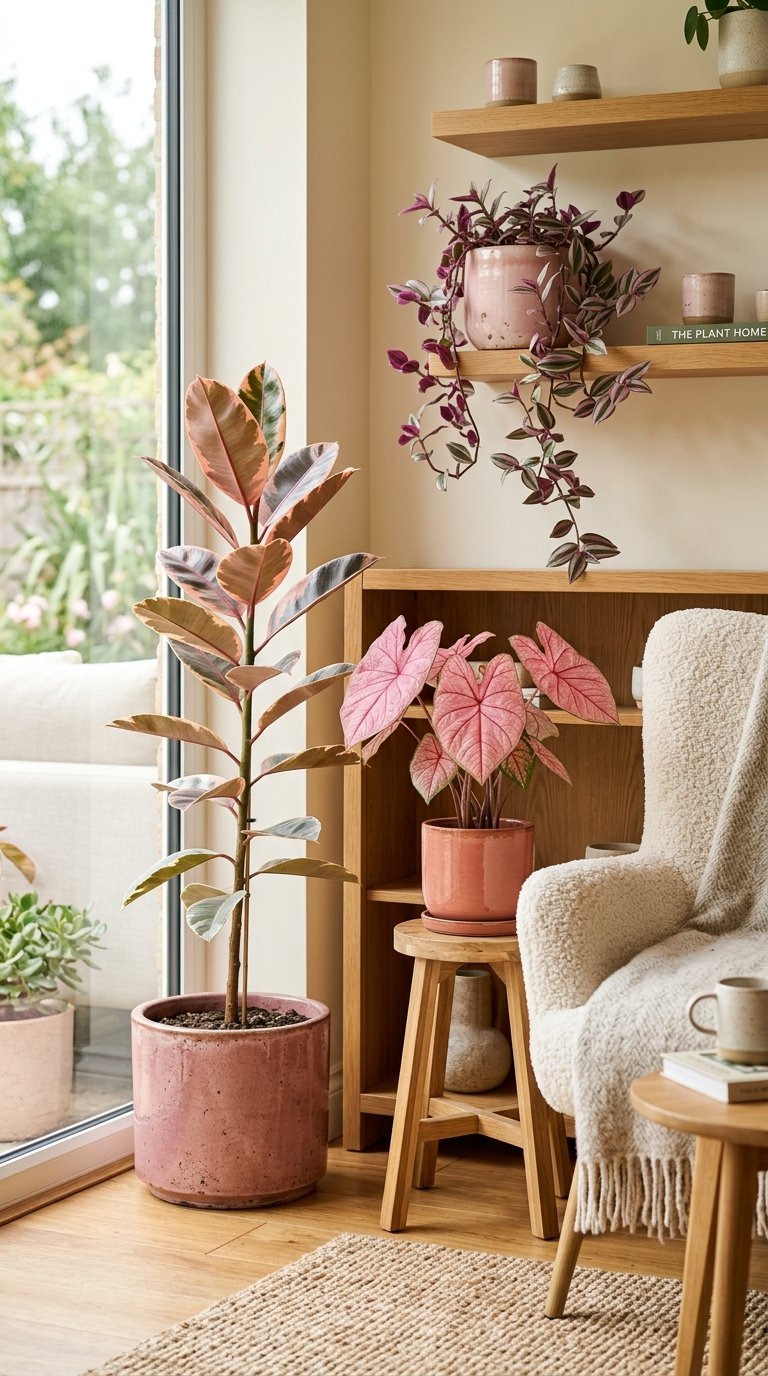
Pink indoor plants and terracotta pink plant pots add the color at a small scale that works in rooms where a larger pink commitment feels too much. A pink caladium, a pink anthurium, or a fiddle leaf fig in a dusty rose ceramic pot introduces pink as a natural accent rather than a design decision.
Group three plants at different heights in one corner. A tall floor plant in a terracotta pink pot, a medium trailing plant on a shelf in a blush ceramic, and a small succulent on a table in a pink glazed pot creates three layers of pink without any of them competing.
Pink-toned plant options:
- Pink caladium: dramatic pink leaf variation, suits bright indirect light
- Pink anthurium: waxy pink flowers, long-lasting, easy to maintain
- Pink rubber tree: deep burgundy-pink leaves, strong architectural shape
11. Paint Interior Door and Window Trim in Pink
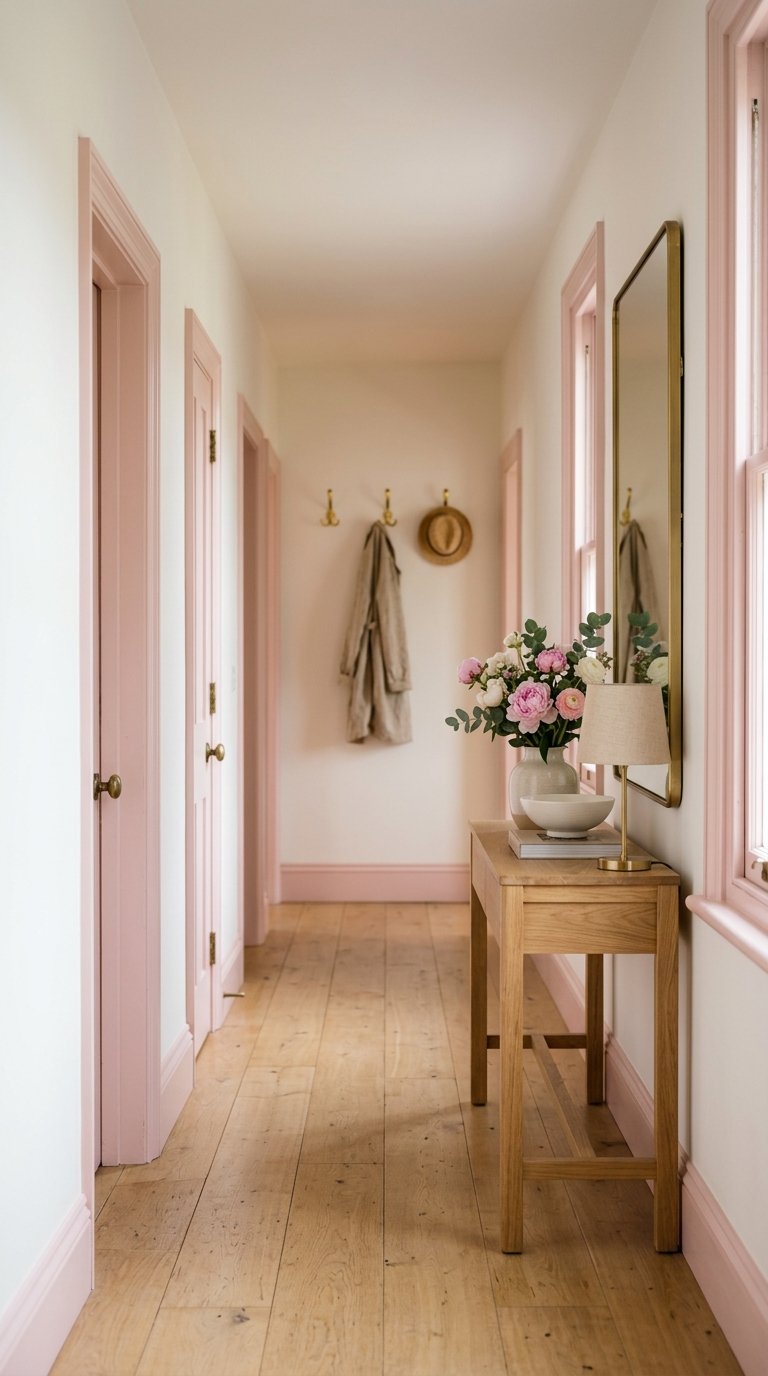
Painting door frames, window frames, and skirting boards in a soft pink while keeping walls white creates a subtle color detail that most people notice without being able to identify exactly what makes the room feel different. It works in both modern and traditional rooms.
Use a satin or semi-gloss finish on trim in pink. The sheen catches light and makes the trim detail visible. Matte pink trim disappears against white walls. The slight sheen is what makes the detail readable.
Best trim pink shades: Pale petal pink in semi-gloss, barely-there blush in satin, soft powder pink in semi-gloss.
12. Add a Pink Armchair as a Statement Piece
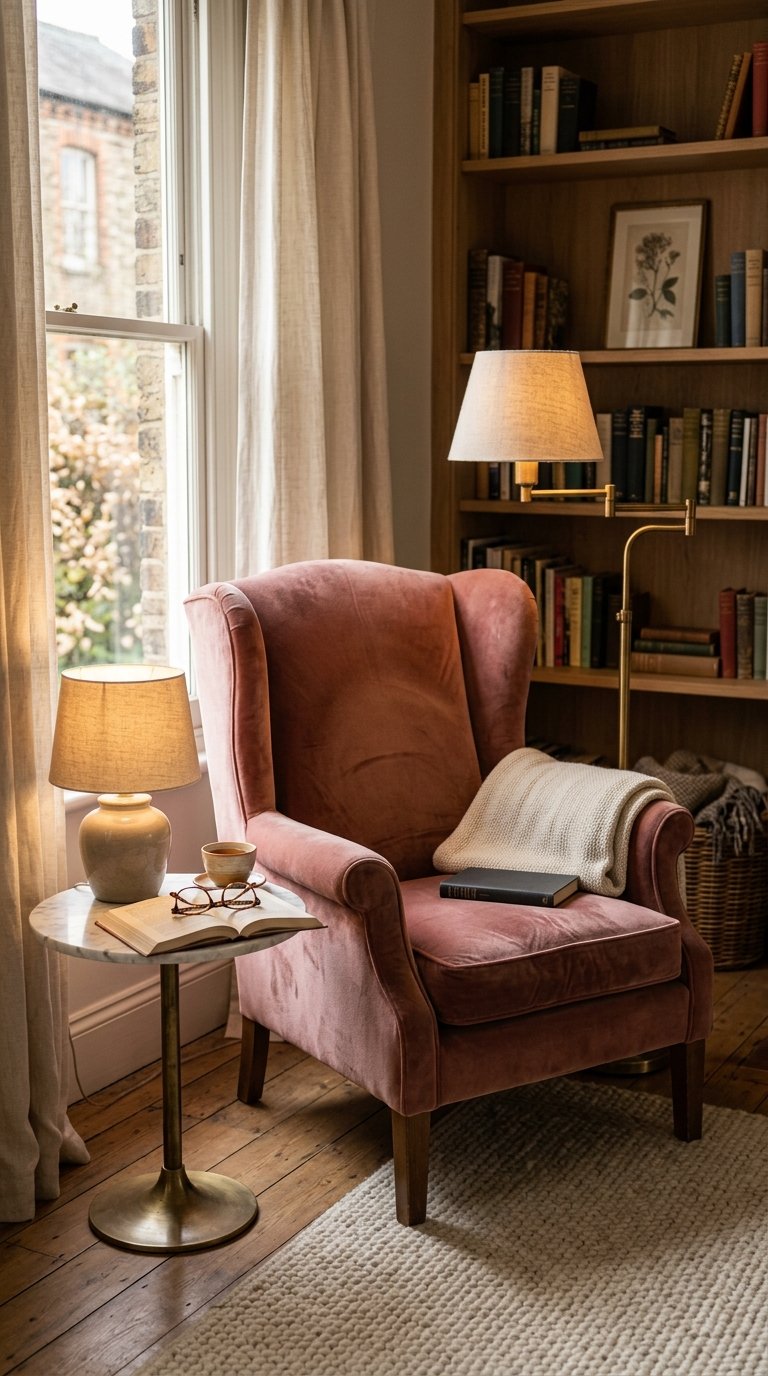
A single pink armchair in an otherwise neutral room creates an immediate focal point without committing the entire space to a pink color scheme. It works in living rooms, bedrooms, home offices, and reading nooks.
Choose a chair with strong architectural lines. A wingback, a barrel chair, or a structured accent chair in pink reads as deliberate. A loose, shapeless chair in pink reads as an afterthought. The structure of the chair is what gives the pink color its authority in the room.
Pink armchair styles that work:
- Wingback in dusty rose velvet: traditional, bold, strong presence
- Barrel chair in blush boucle: modern, soft, suits minimalist rooms
- Structured accent chair in antique rose linen: transitional, versatile
13. Use Pink Wallpaper on One Wall
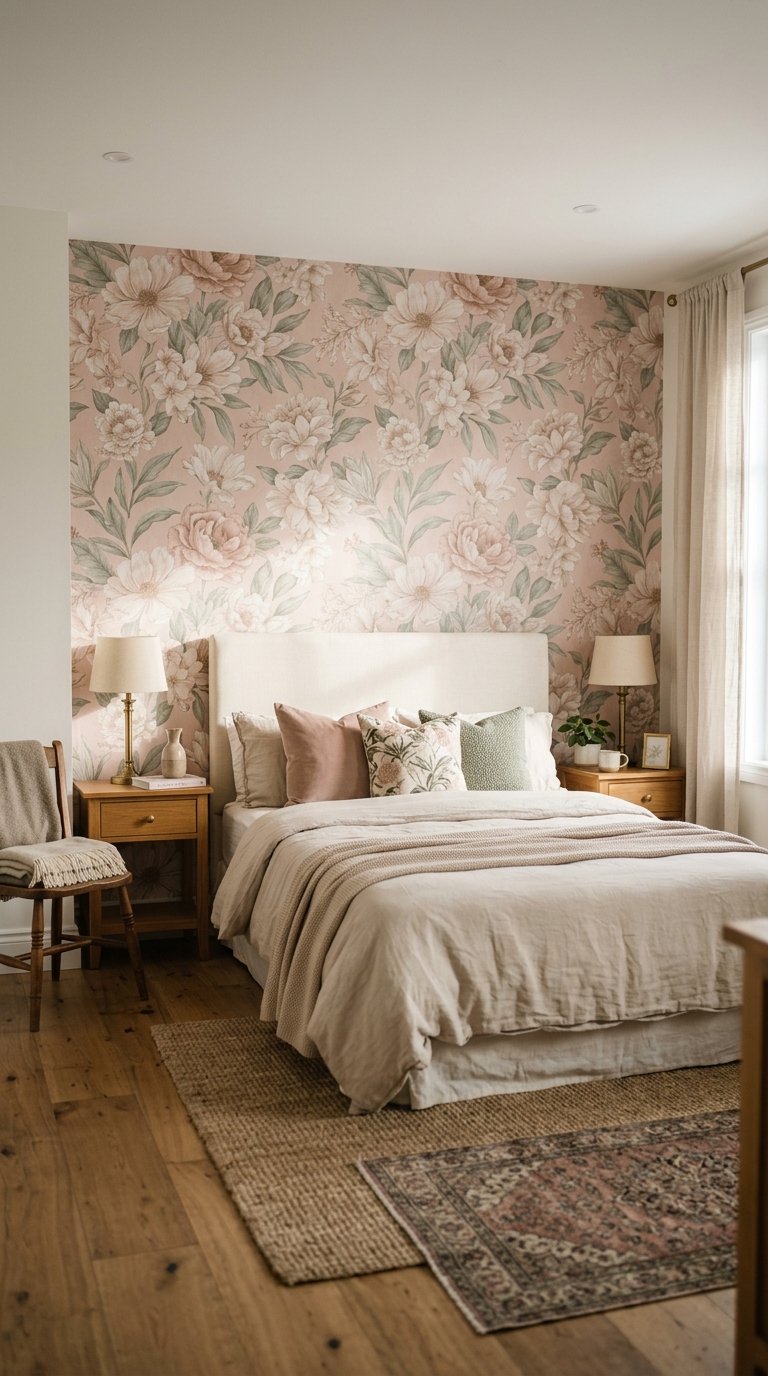
Pink wallpaper on one wall adds pattern, texture, and color simultaneously in a way that paint alone cannot. A large-scale floral in blush and cream, a geometric pattern in dusty rose and white, or a textured grasscloth in pale pink all create a feature wall that anchors the room.
Peel-and-stick pink wallpaper removes cleanly and suits renters or anyone uncertain about committing to wallpaper permanently. Traditional paste wallpaper delivers a more premium finish that lasts longer and looks better in high-humidity or high-traffic rooms.
Pink wallpaper patterns that age well:
- Large-scale botanical in blush and sage green
- Geometric repeat in dusty rose and cream
- Textured grasscloth in pale warm pink
- Abstract watercolor pattern in blush and white
14. Decorate with Pink Candles and Holders
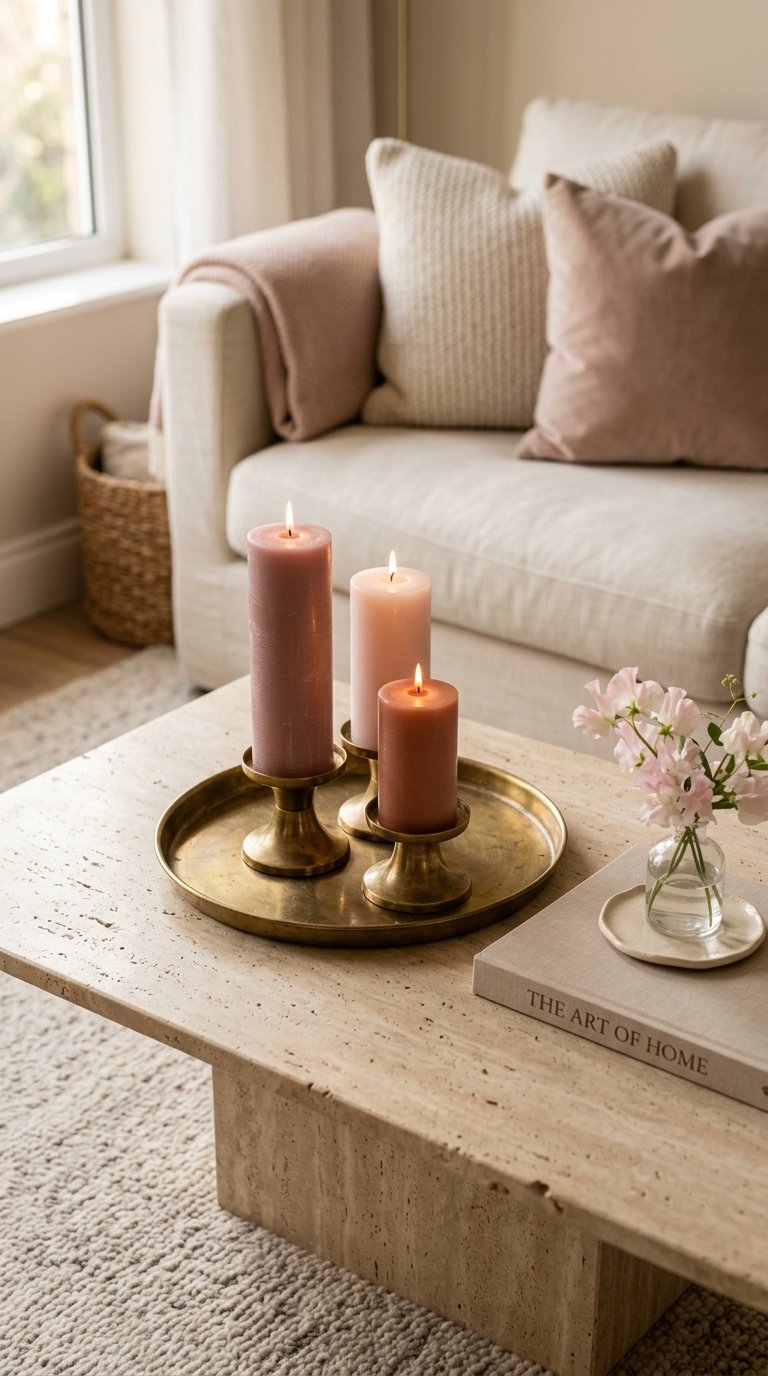
Pink candles on a coffee table, dining table, or shelf add the color at a scale so small it carries no design risk at all. A group of three pillar candles in varying heights in dusty rose, blush, and terracotta pink creates a warm, cohesive color moment on any surface.
Use brass, gold, or terracotta candle holders to complement the pink tones. Chrome or silver holders pull the palette cold and work against the warmth that pink creates. Keep the holder finish consistent across the group.
Pink candle grouping formula: Three candles in varying heights, two shades of pink maximum, one consistent holder finish across the group.
15. Add Pink Artwork to the Walls
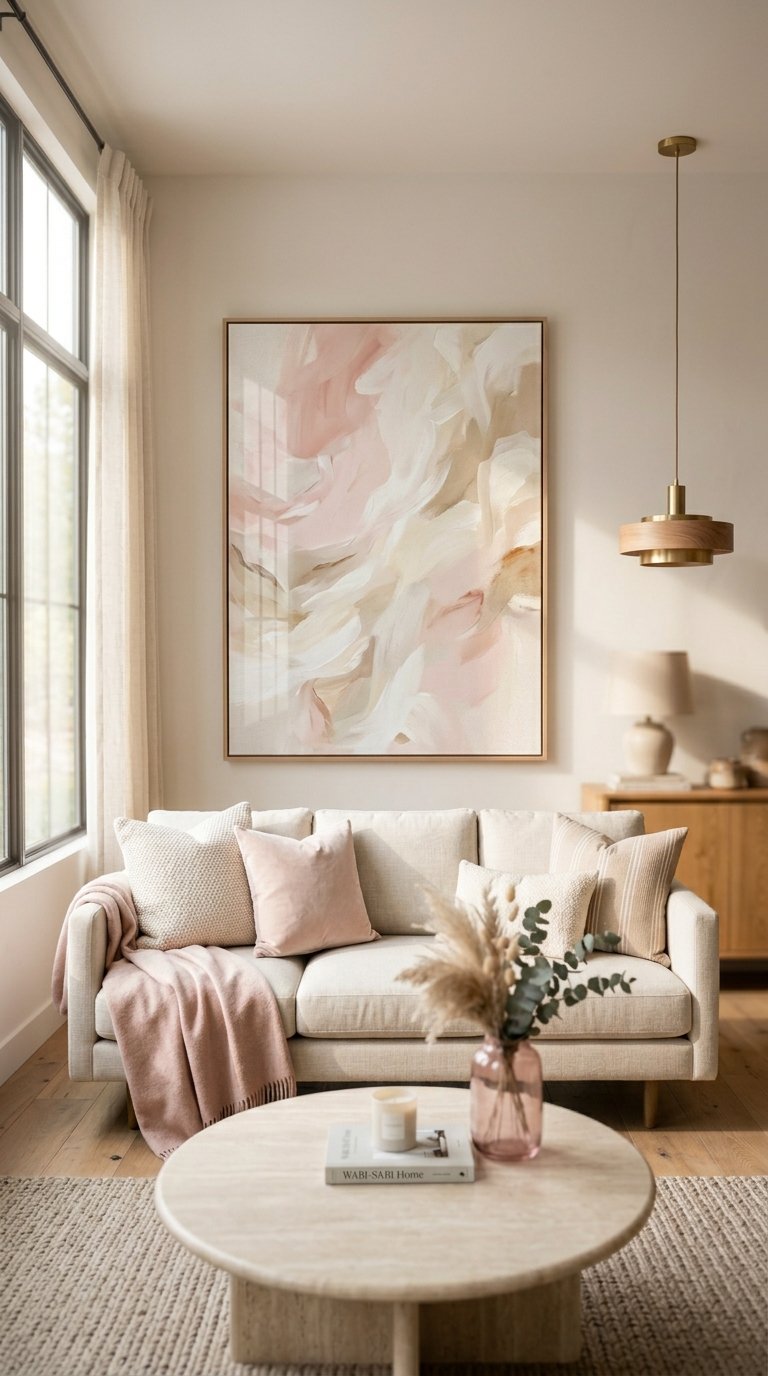
Pink artwork introduces the color at wall level without any paint commitment. A large abstract print with blush and cream tones, a botanical print with pink flowers, or a framed vintage poster with pink typography all deliver pink to the wall in a removable format.
Size matters more than subject matter. A small pink print on a large wall looks accidental. Choose artwork that fills at least one third of the wall width it hangs on. A large blush abstract print above a sofa or bed anchors the room and reads as intentional.
Pink artwork styles that suit most rooms:
- Large abstract blush and cream canvas: suits modern and transitional rooms
- Botanical print with pink flowers in a white frame: suits traditional spaces
- Vintage travel poster with pink tones: suits eclectic and maximalist rooms
16. Use Pink in a Home Office
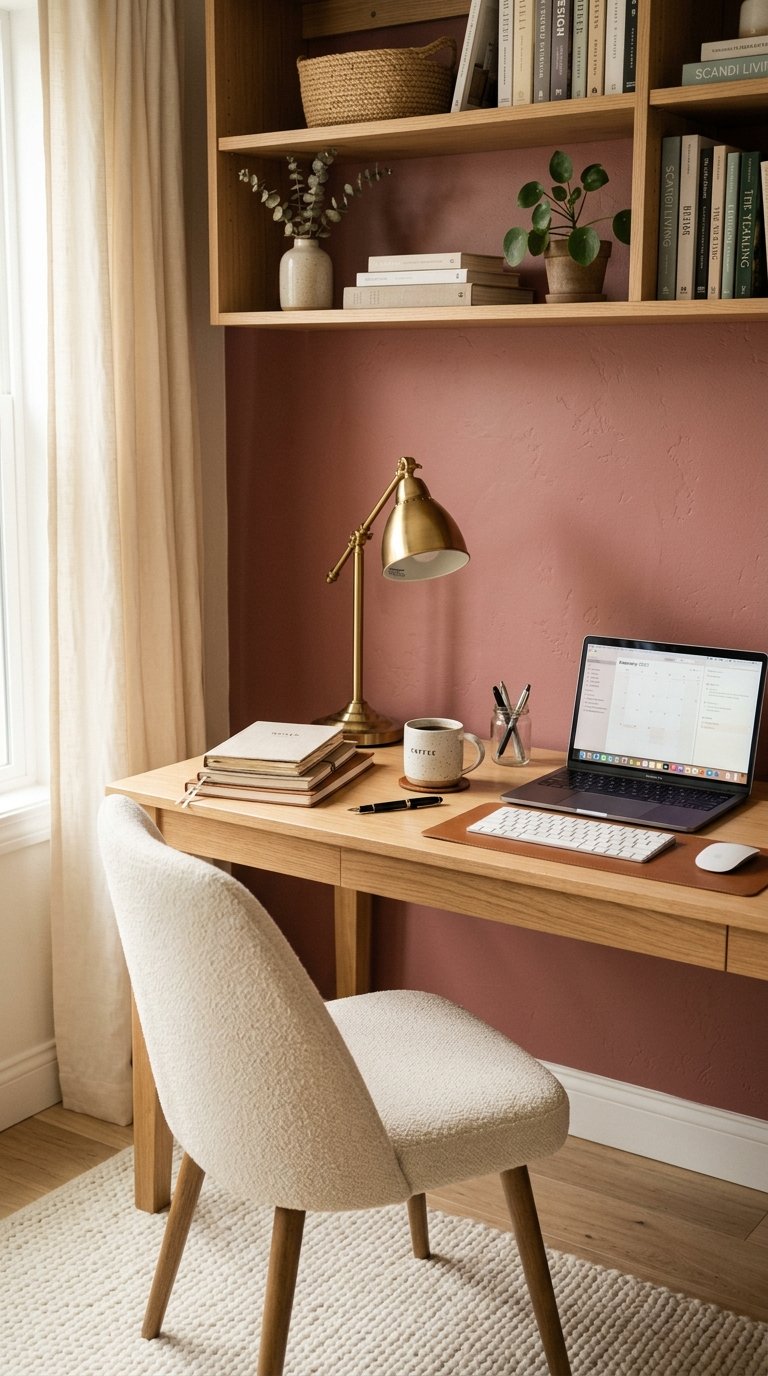
Pink in a home office sounds counterintuitive. It works. A dusty rose or warm blush accent wall behind a desk creates a flattering background for video calls and a color environment that promotes focus without the cold clinical feeling of grey or white.
Pair a pink office wall with warm wood desk furniture, brass desk accessories, and a cream or white chair. Avoid pairing pink office walls with black furniture. The contrast reads as jarring rather than bold in a room where you spend hours working daily.
Pink home office color combinations:
- Dusty rose wall with warm white oak desk and brass accessories
- Blush pink wall with cream linen chair and natural rattan storage
- Terracotta pink wall with tan leather chair and warm wood shelving
17. Add a Pink Lamp or Light Fixture
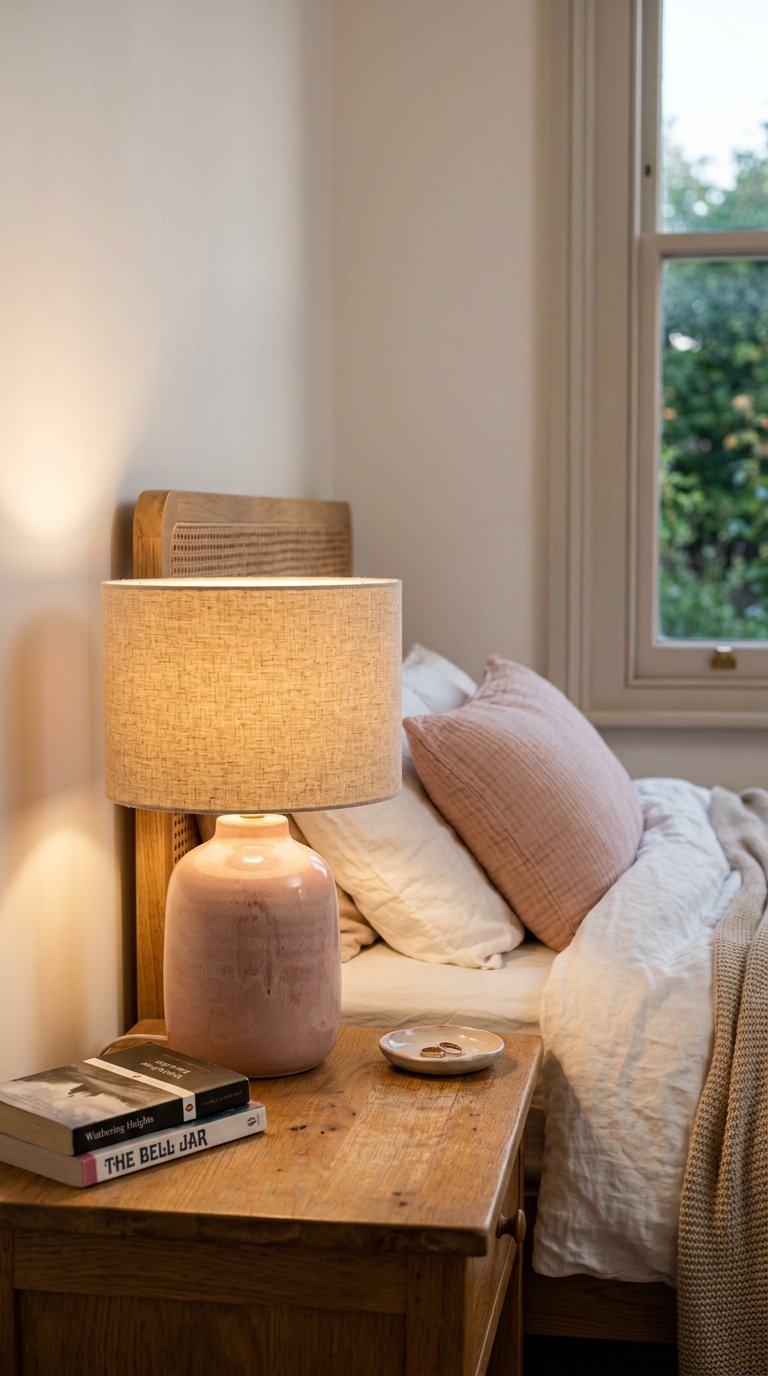
A pink table lamp or pendant light introduces the color through both the fixture itself and the light it casts. A blush pink ceramic lamp base casts a warm pink-tinted light onto surrounding surfaces when lit. A pink glass pendant creates the same effect at ceiling height.
Pink lampshades work even on neutral lamp bases. A blush linen drum shade on a natural ceramic base reads as warm and considered. The shade color influences the entire light quality in the room during evening hours when artificial light dominates.
Pink lighting options:
- Blush ceramic table lamp base with linen shade
- Pink glass pendant with warm Edison bulb inside
- Dusty rose linen drum shade on a brass or ceramic base
- Pink glass chandelier above a dining table or bathtub
18. Paint Furniture in Pink
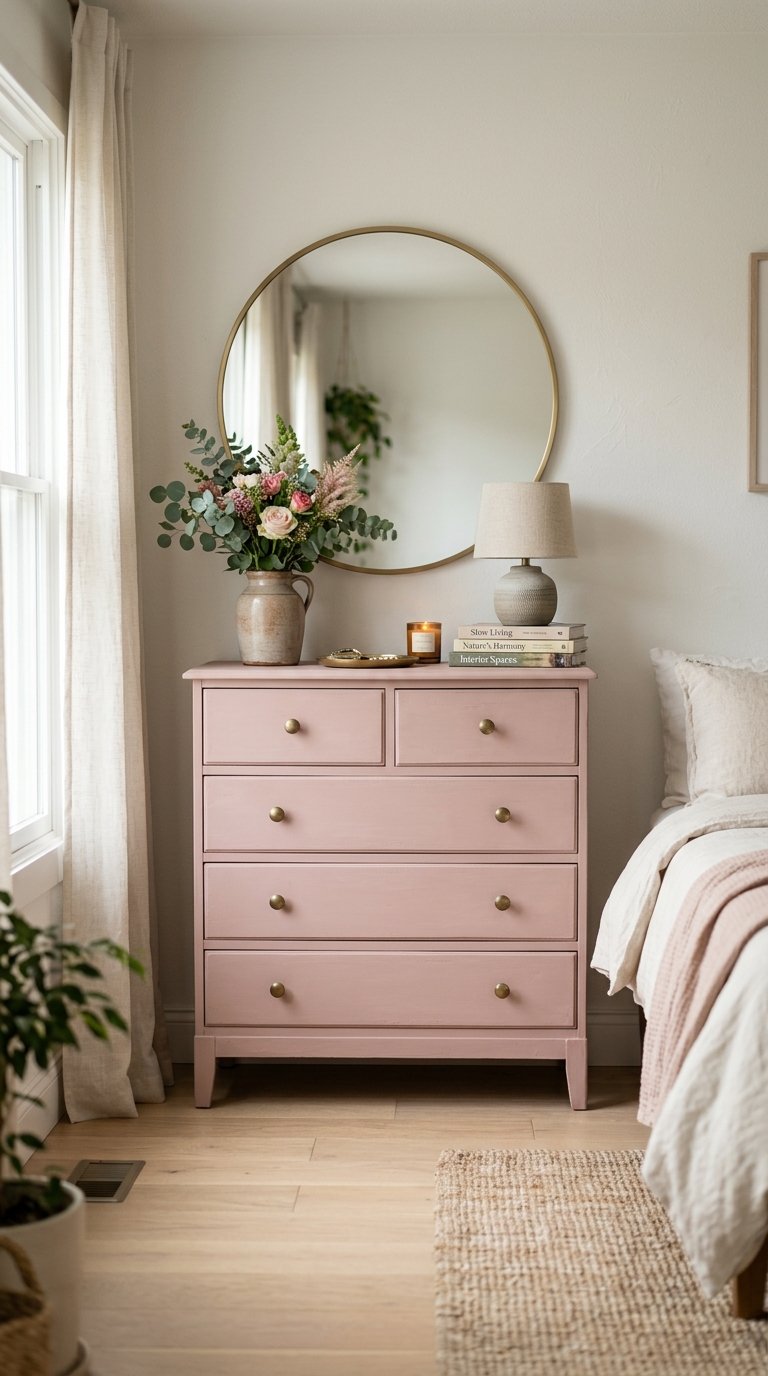
Painting an existing piece of furniture in pink, a chest of drawers, a side table, a bookshelf, or a bedside table, transforms a neutral room without touching the walls. The painted furniture piece becomes the color anchor that every other element relates to.
Use chalk paint or mineral paint in a dusty or muted pink for furniture. These finishes adhere without priming on most surfaces and create a soft, slightly matte finish that suits pink tones better than high-gloss alternatives. Seal with a clear wax or matte varnish for durability.
Furniture pieces that suit pink paint:
- Chest of drawers in a bedroom: strong surface area for color impact
- Bedside table: small commitment, high visual return
- Bookshelf: the pink shelf color frames the objects displayed on it
- Side table in a living room: accent color at a manageable scale
19. Use Pink in a Kid’s Room Without Going Overboard
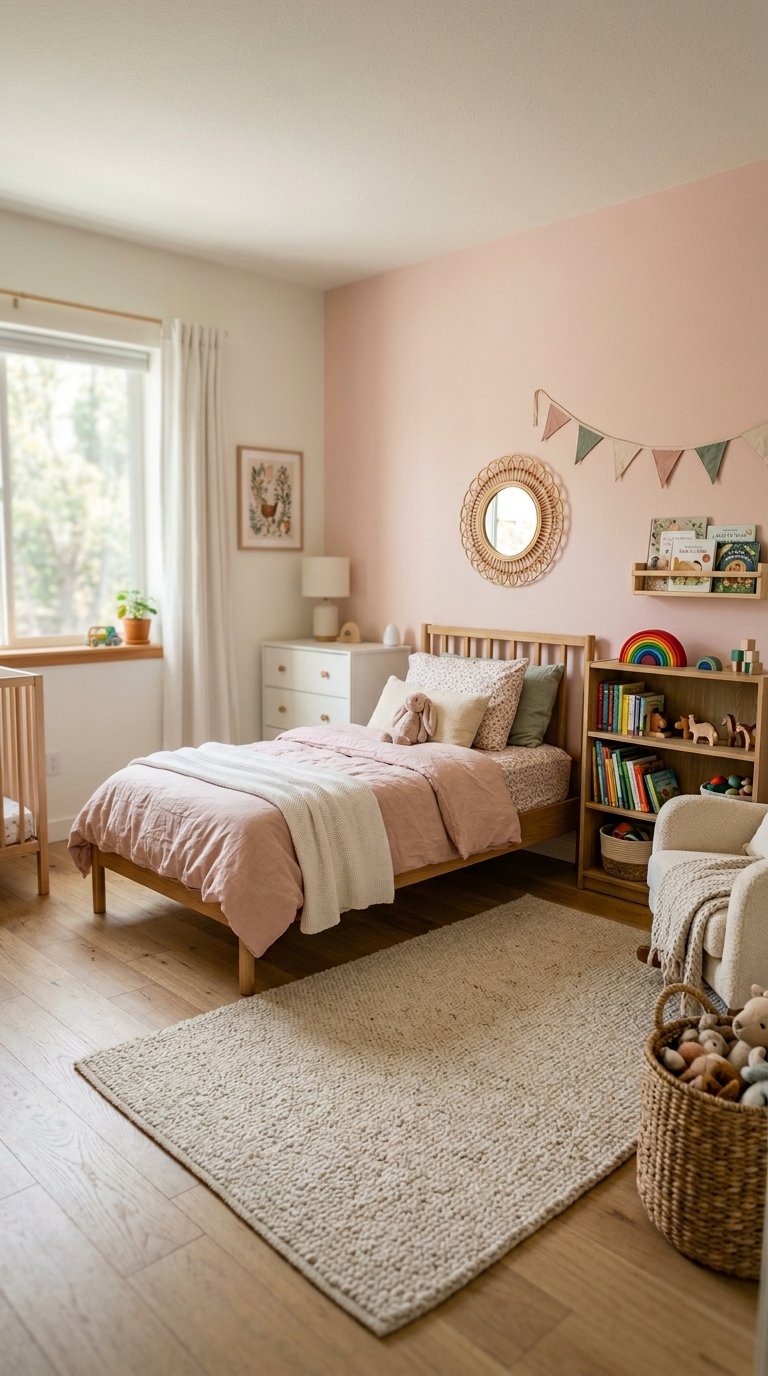
A kid’s room with pink works best when you avoid making pink the only color in the space. FYI, a room where everything is pink reads as one-dimensional within six months and the child grows out of it faster than any other color scheme.
Use pink as the dominant color on one surface only. A pink accent wall, a pink rug, or pink bedding. Keep furniture in white or natural wood. Add accents in sage green, cream, or warm yellow to balance the pink and give the room longevity as the child develops their own tastes.
Pink kid’s room formula:
- One pink surface: wall, rug, or bedding
- White or natural wood furniture
- Two neutral accent colors: cream and sage green work well
- Avoid pink on more than one major surface simultaneously
20. Create a Pink Gallery Wall
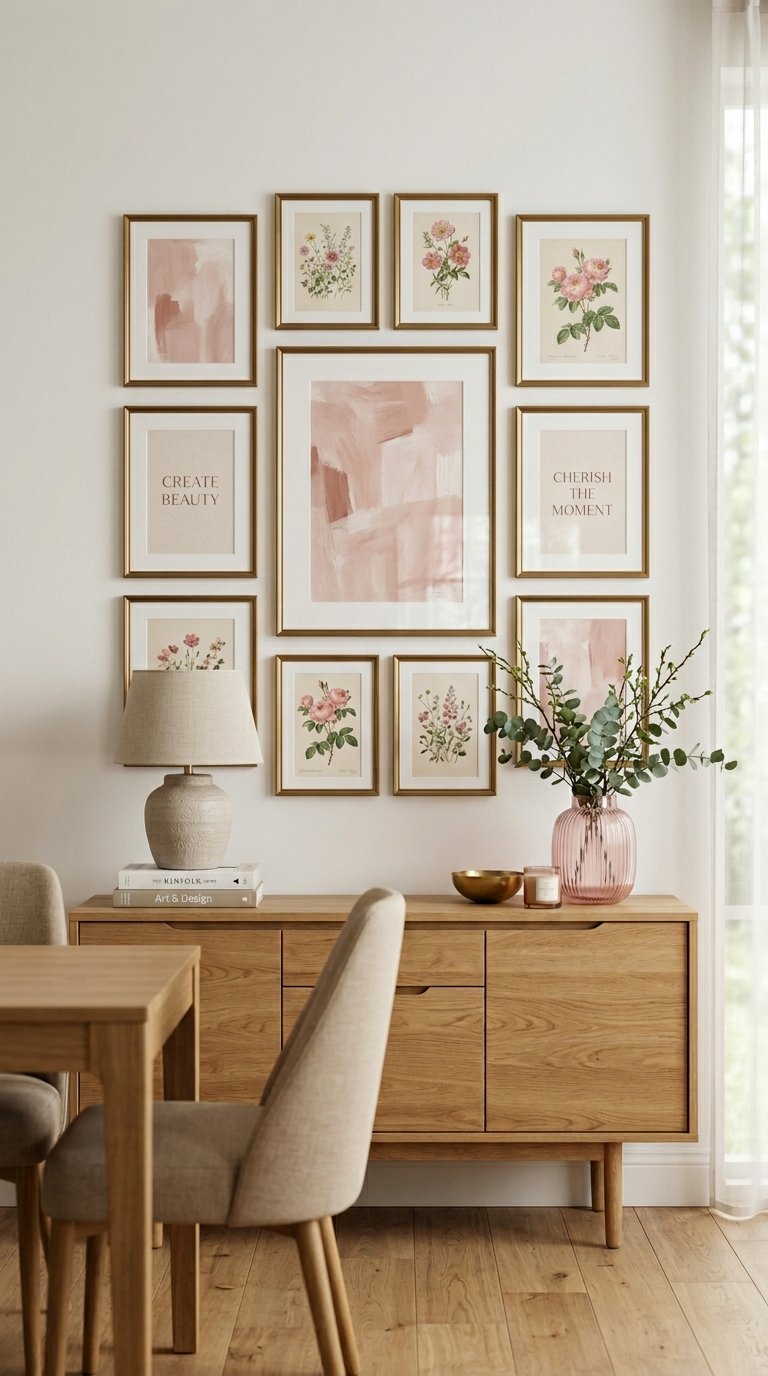
A gallery wall using pink-toned artwork, pink frames, or a mix of both creates a strong color statement on one wall without requiring paint or wallpaper. The collection of pieces reads as a single color moment even when each individual piece has a different subject.
Use a consistent frame finish across all pieces for cohesion. All pink frames, all white frames, or all brass frames. Mixed frame finishes in a gallery wall create visual noise that competes with the artwork itself. Keep the frame choice simple and let the pink tones in the artwork carry the color.
Gallery wall formula for a pink theme:
- 8 to 12 pieces in varying sizes
- Consistent frame finish: all white or all brass
- Pink tones appear in the artwork, not necessarily the frames
- Arrange on the floor first before committing to wall holes
21. Use Pink in Small Doses Through Accessories
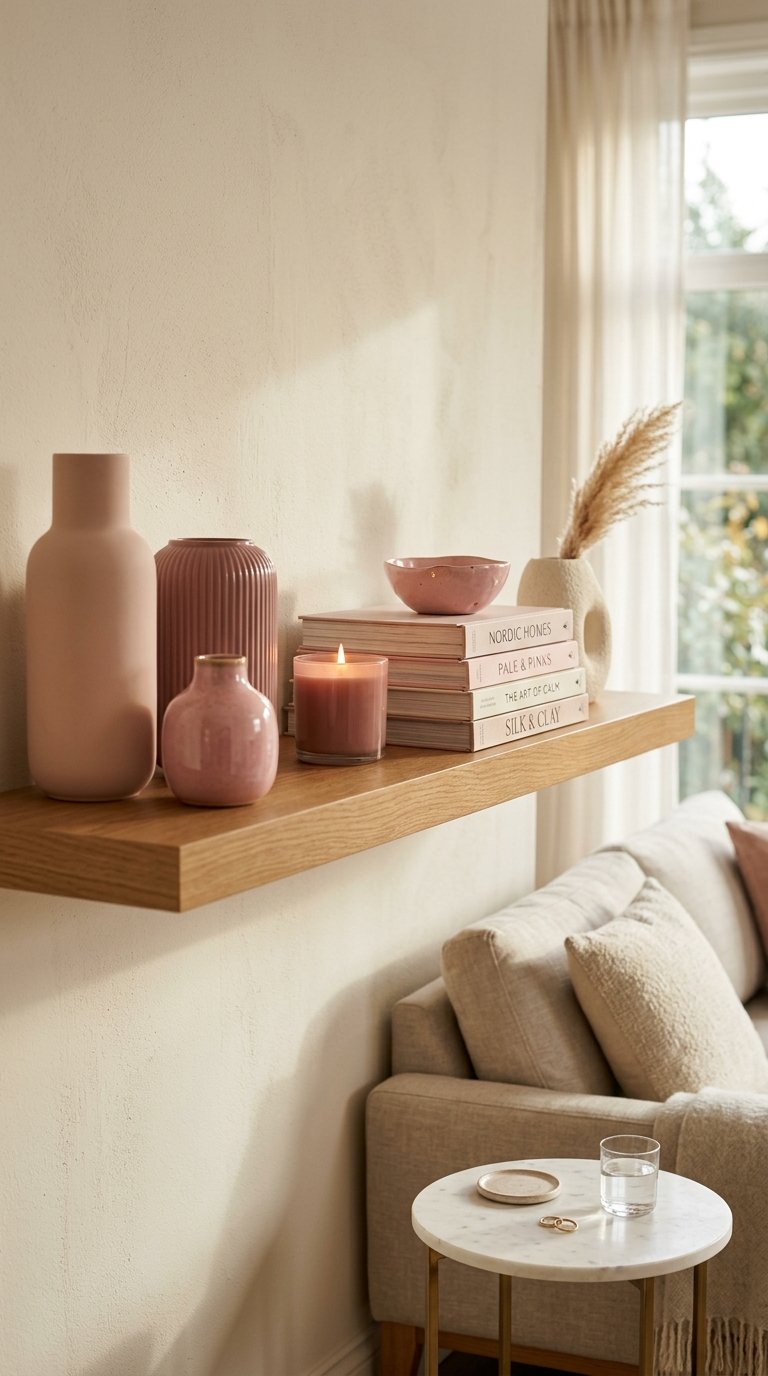
Pink through accessories, vases, bowls, books, trays, and decorative objects, works in rooms where a larger pink commitment feels too strong. A cluster of pink objects on a shelf or coffee table introduces the color at a scale where it reads as warm and personal rather than overwhelming.
Group pink accessories in odd numbers. Three objects read as a deliberate arrangement. Two read as accidental. Five read as a collection. Keep the pink tones consistent across the group and vary the heights, shapes, and materials instead.
Pink accessory grouping ideas:
- Three pink ceramic vases in varying heights on a shelf
- A pink tray holding two pink candles and a small pink book stack on a coffee table
- Five pink objects at varying scales on a bookshelf mixed with neutral items
- A pink bowl, a pink candle, and a pink plant pot grouped on a dining sideboard
Final Thoughts
Pink works in every room when you approach it with the same logic you apply to any other color. Choose the right shade for your light conditions, apply it at the right scale for your confidence level, and pair it with colors that sit in the same warm palette.
You do not need to commit to a full pink room to get the benefit of the color. One dusty rose accent wall, one blush velvet sofa, or one set of pink linen curtains delivers more impact than most people expect from a single design decision.
Start with one idea from this list. See how it feels in your space. Pink has a way of making you wonder why you waited so long to use it.