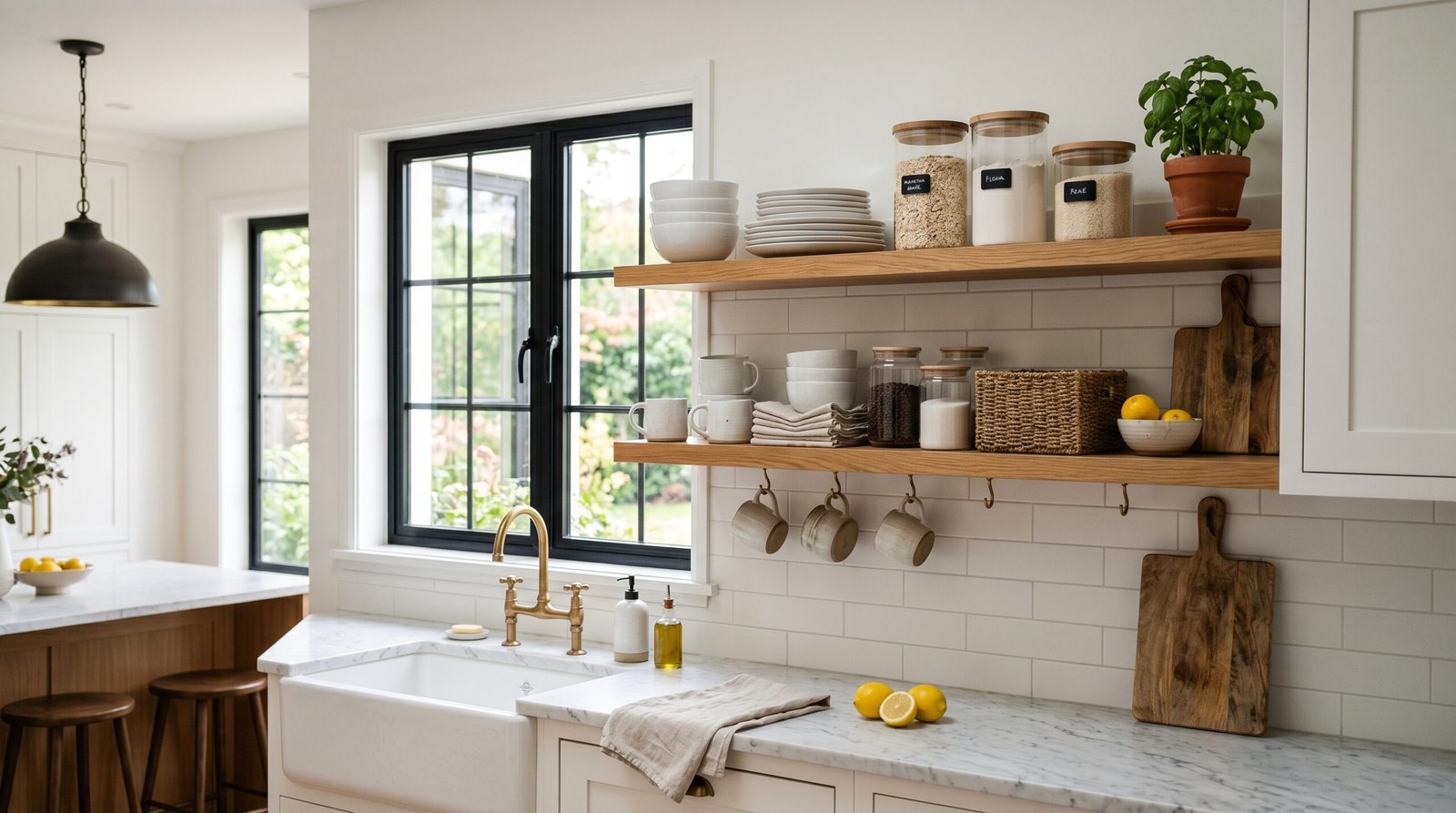
25 Modern Farmhouse Kitchen Shelf Decor Ideas That Wow
Open kitchen shelves are unforgiving. Style them well and they become the best feature in your kitchen. Style them poorly and they look like a garage sale display that somehow ended up above your stove. The modern farmhouse aesthetic gets this balance right more consistently than any other style because it combines function with warmth in a way that feels deliberate without looking overthought.
These 25 ideas give you a precise playbook for styling your kitchen shelves the farmhouse way.
1. Stack White Ceramic Dishes as the Foundation
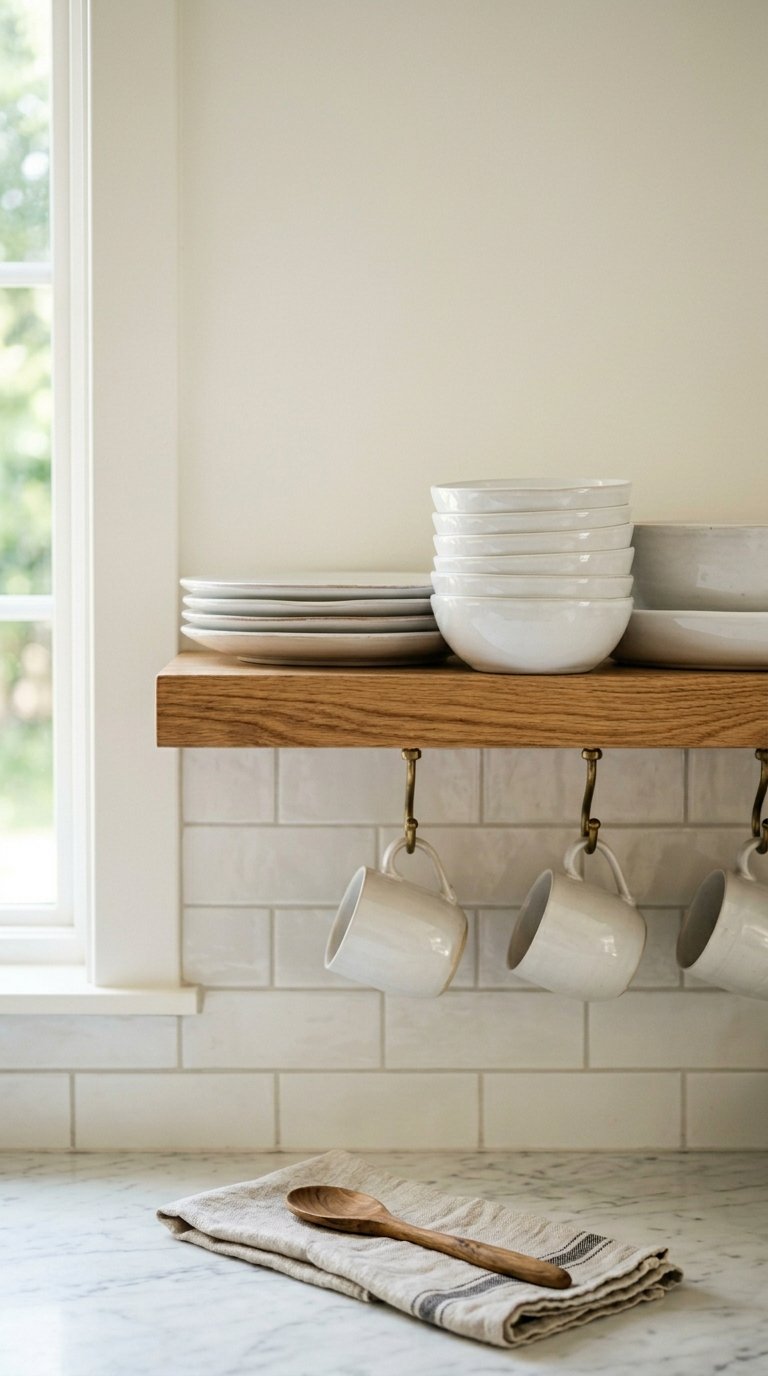
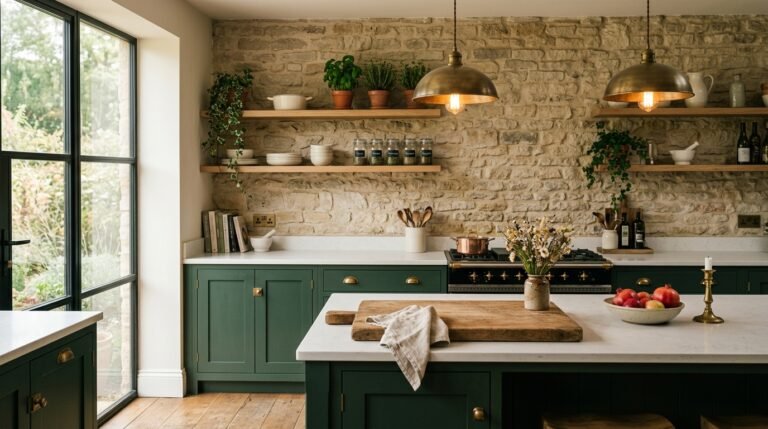
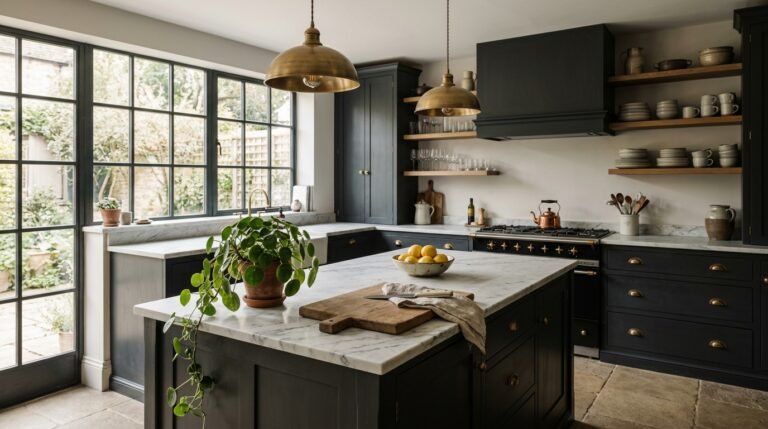
White ceramic dishes form the backbone of every well-styled modern farmhouse kitchen shelf. A stack of four to six white dinner plates, a stack of bowls beside them, and two to three mugs hung on hooks below the shelf creates an instantly recognizable farmhouse look that also functions as actual storage.
The key is using genuinely good white ceramics, not mismatched pieces from different sets. Choose one ceramic style and stack only that. Farmhouse Pottery, Staub, and Le Creuset all produce white ceramics that look intentional on open shelving.
What to stack:
- Four to six dinner plates in matching white ceramic
- Three to four bowls in the same ceramic style
- Two to three mugs on hooks below the shelf edge
- One or two serving bowls as accent pieces at shelf ends
2. Add a Wooden Cutting Board as a Vertical Element
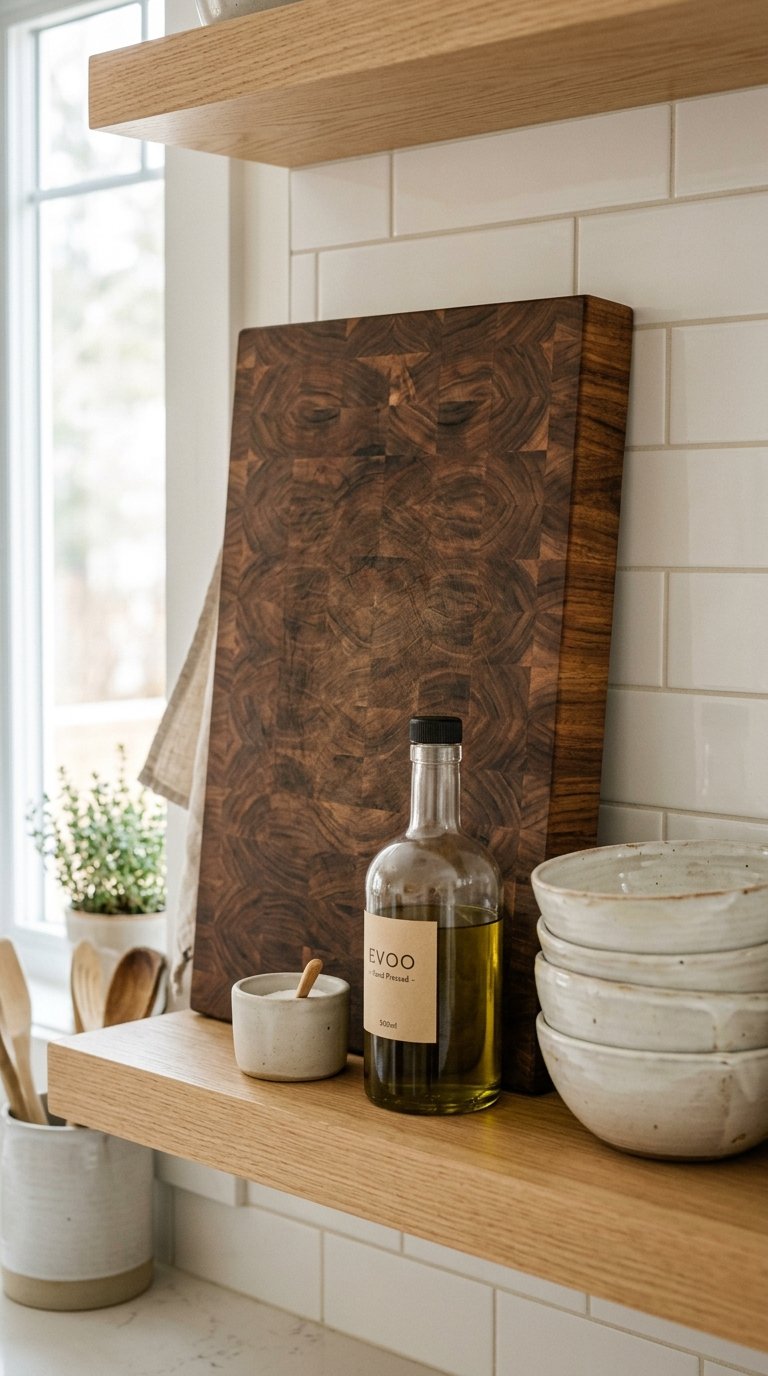
A large wooden cutting board standing upright on a kitchen shelf adds a vertical element that breaks the horizontal line created by stacked dishes and flat objects. It introduces natural wood grain texture and a warm tone that white ceramics alone cannot deliver.
Choose a thick end-grain or edge-grain board in walnut or white oak. Thin boards fall over on shelves. A board at least 1.5 inches thick stands reliably and looks substantial. Lean it against the wall at the back of the shelf with other objects arranged in front.
Best cutting board wood tones for farmhouse shelves: Walnut for warmth and depth, white oak for a lighter natural tone, maple for a clean pale look.
3. Use Mason Jars for Dry Good Storage
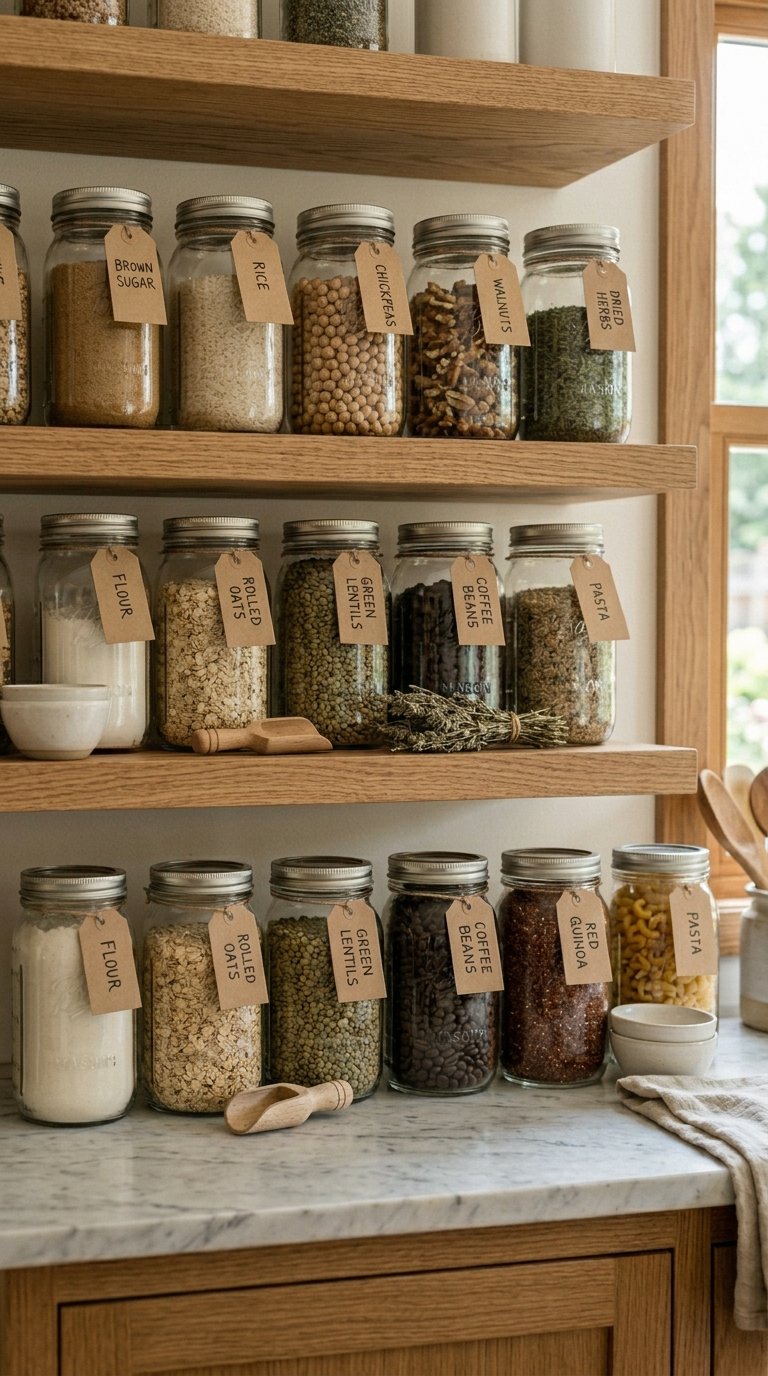
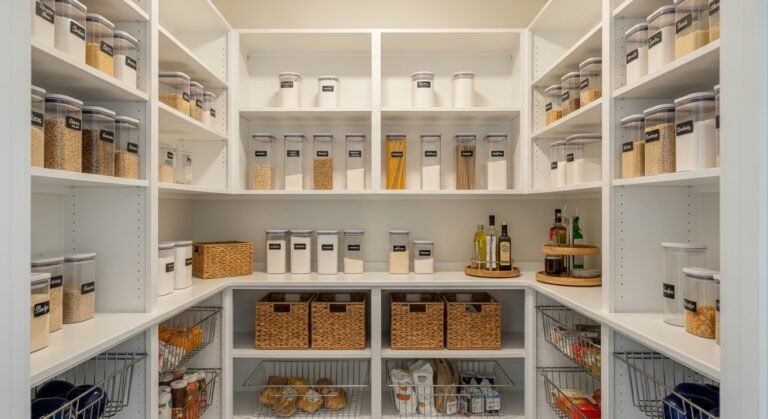
Mason jars filled with dry goods, flour, oats, pasta, rice, coffee beans, and lentils, are the single most recognizable element of modern farmhouse kitchen shelf decor. They organize dry goods, display them attractively, and cost almost nothing.
Use wide-mouth mason jars in a consistent size across the shelf. Ball Mason jars in quart and half-gallon sizes hold most dry goods comfortably. Add a chalk label or kraft paper tag to each jar identifying the contents. Consistent labeling keeps the shelf looking organized rather than cluttered.
Mason jar labeling options:
- Chalk labels: reusable, changeable, suits the farmhouse aesthetic
- Kraft paper tags tied with twine: warm, natural, non-reusable
- Printed white labels in a simple font: clean, modern farmhouse look
4. Incorporate a Small Potted Herb Plant
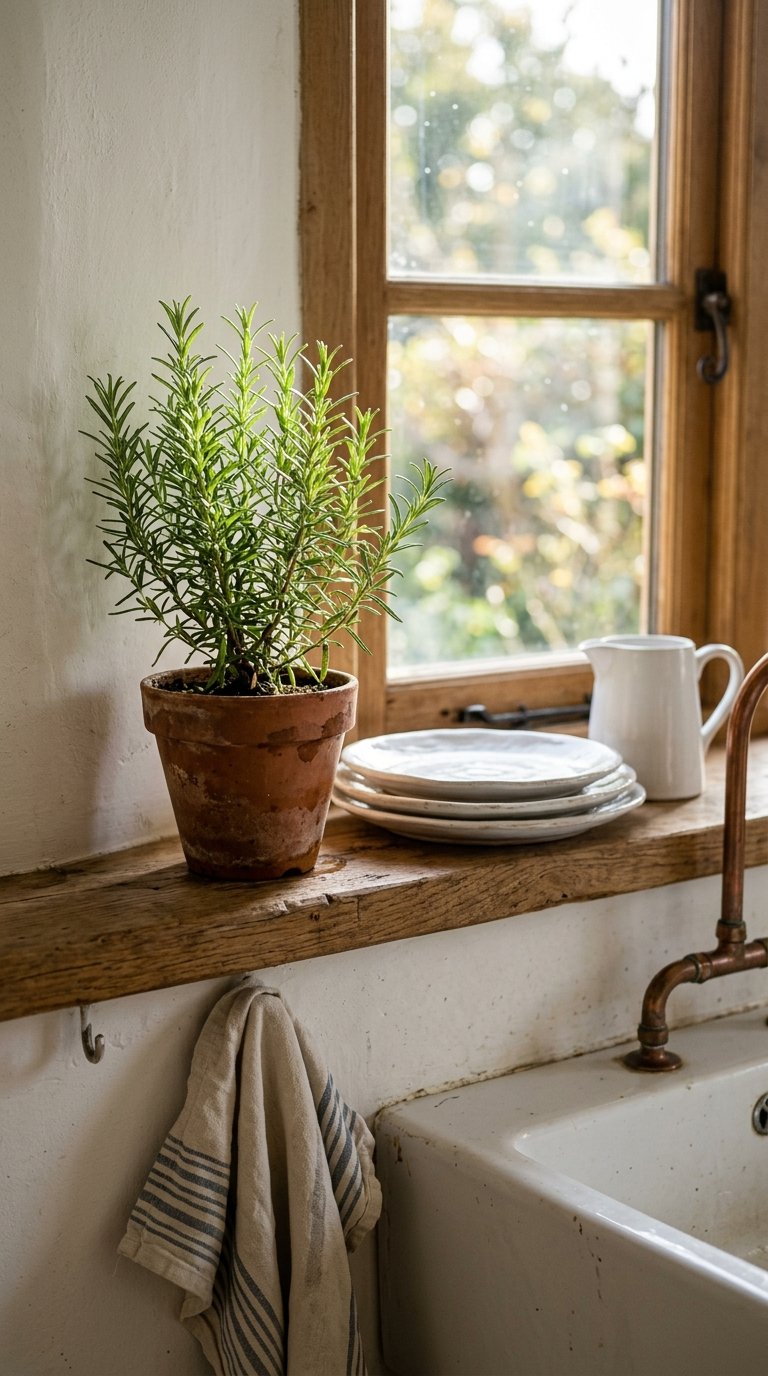
A small potted herb plant on a kitchen shelf adds living green that photographs well, smells good, and provides fresh herbs for cooking. Rosemary, thyme, basil, and mint all suit a kitchen shelf position with reasonable light access.
Use a terracotta pot for the most farmhouse-appropriate container. A simple unglazed terracotta pot beside white ceramics and natural wood objects creates a warm, cohesive palette. Replace the pot saucer with a small piece of cork or a white ceramic dish to protect the shelf surface from moisture.
Best kitchen shelf herbs:
- Rosemary: low water needs, strong scent, suits bright shelves
- Thyme: compact, hardy, suits most light conditions
- Mint: fast-growing, suits indirect light, needs frequent trimming
- Basil: needs bright light, short lifespan, replace regularly
5. Display a Vintage Scale or Clock
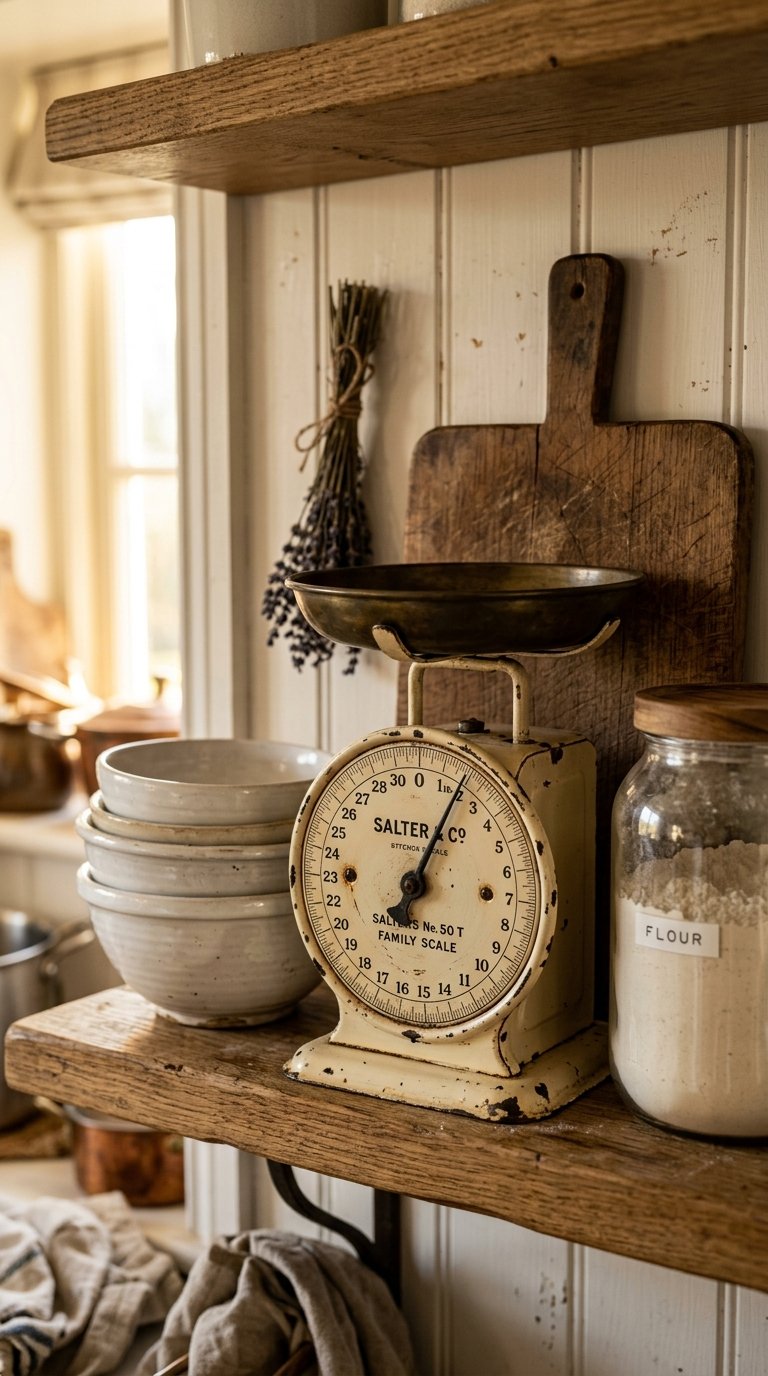
A vintage scale or an antique-style clock on a kitchen shelf adds historical character to a modern farmhouse space. These objects suggest that the kitchen has a history, which is exactly the feeling the farmhouse aesthetic aims for.
A vintage kitchen scale in cream or black enamel sits naturally among white ceramics and wooden objects. An antique-style round clock with a simple face and a metal or wood frame works at the end of a shelf where it can be seen from across the kitchen.
Where to position: Place the vintage scale or clock at one end of the shelf as an anchor object. Keep it away from the center where it competes with the functional items around it.
6. Hang Mugs on Hooks Below the Shelf
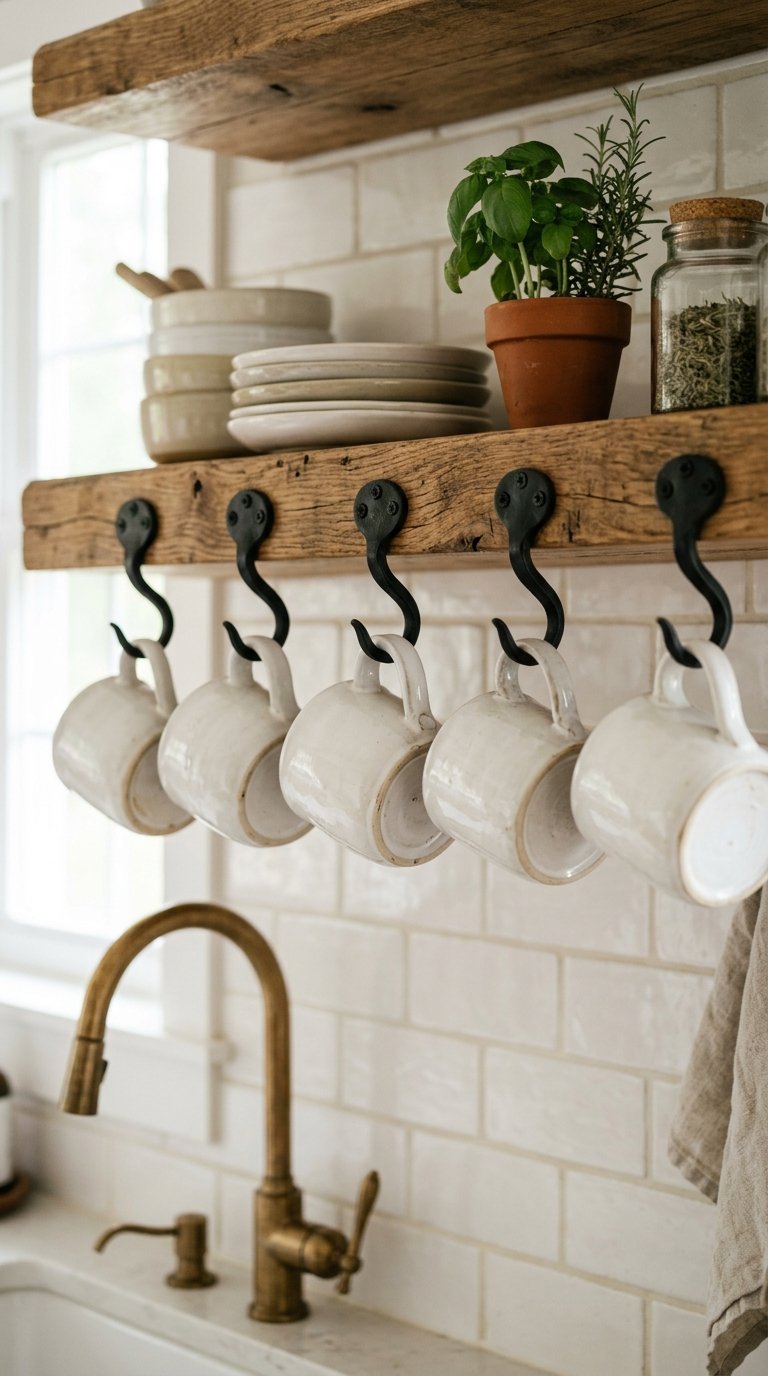
Mug hooks mounted on the underside of a shelf hold mugs in a way that frees up shelf surface space and adds a visual layer below the shelf line. A row of five or six mismatched white mugs hanging from small brass or black iron hooks creates one of the most quintessential farmhouse kitchen shelf images.
Space the hooks 4 to 5 inches apart. Closer and the mugs touch and chip. Further apart and the row looks sparse. Use consistent hook hardware across all positions. All brass or all matte black, not a mix of both.
Hook options:
- Brass cup hooks: warm, traditional, suits classic farmhouse
- Matte black cup hooks: modern, graphic, suits contemporary farmhouse
- White ceramic hooks: subtle, suits all-white shelf systems
7. Add a Woven Basket for Texture
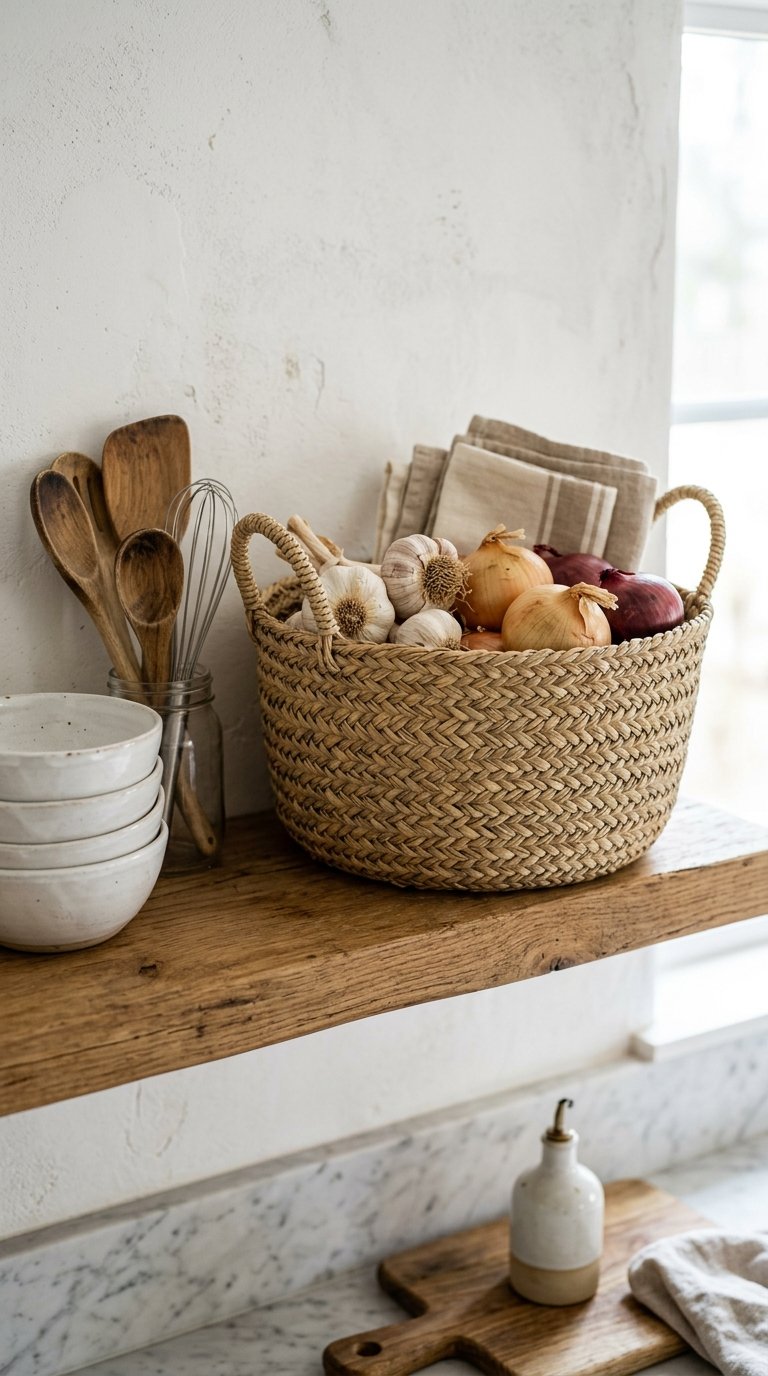
A woven basket on a kitchen shelf adds texture that ceramic, glass, and wood objects alone cannot provide. It also provides practical storage for items that do not photograph well: garlic bulbs, onions, loose packets, and small kitchen tools.
Choose a basket with a tight, even weave in a natural fiber. Seagrass, rattan, and water hyacinth all suit the farmhouse aesthetic. Avoid synthetic wicker. It looks plasticky and cheapens everything around it.
Basket sizing for shelves: Choose a basket that occupies one quarter to one third of the shelf width. A basket that is too large dominates the shelf and leaves no room for other objects.
8. Style with a Cookbook or Two
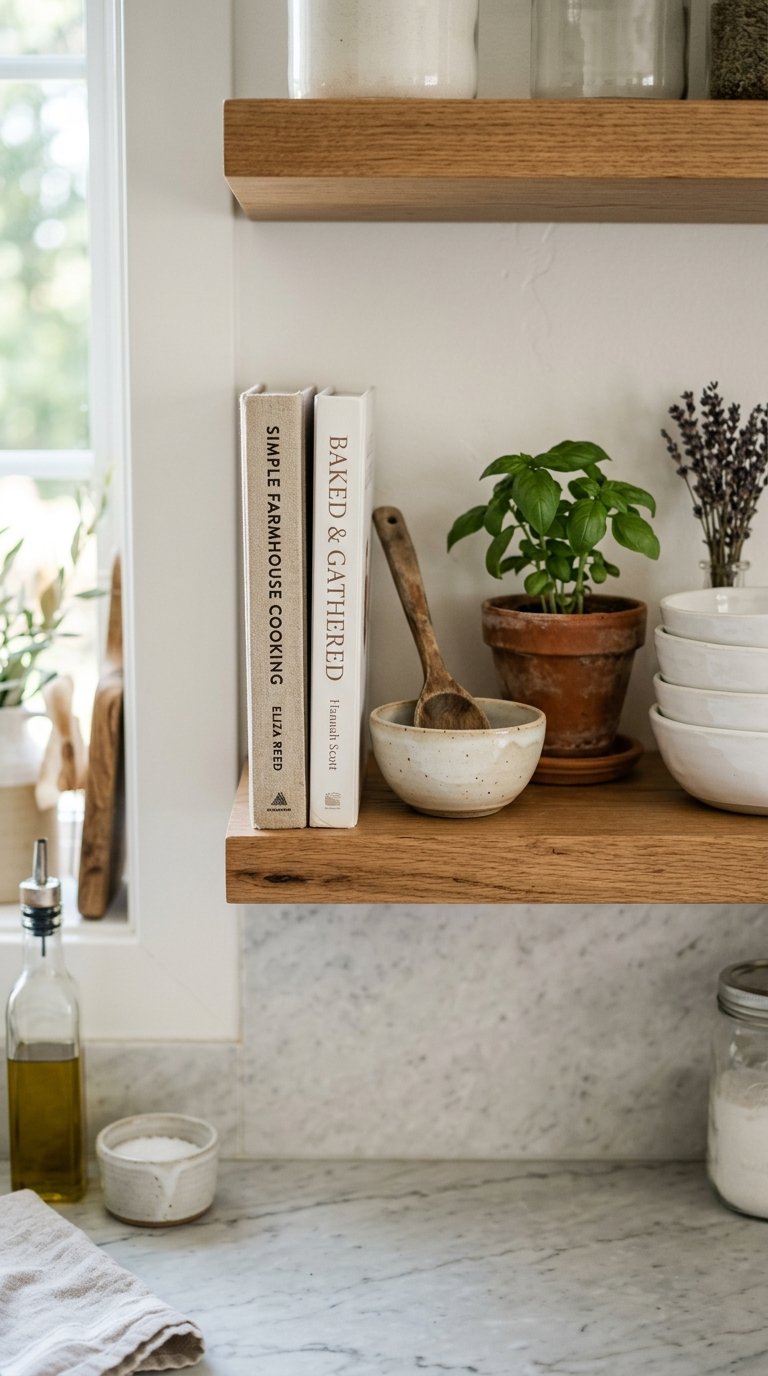
One or two cookbooks standing upright on a kitchen shelf add color, typography, and personal character to the display. Choose cookbooks with attractive spines in neutral or warm tones. A worn linen-covered cookbook beside a new hardcover with a clean white spine creates a natural pairing.
Do not overcrowd the shelf with books. One or two standing upright with a small object leaning against them is the correct amount. More than three cookbooks in a row tips the shelf from styled to cluttered.
Best cookbooks for shelf display: Choose books with linen, kraft, or neutral-toned spines. Avoid books with bright neon covers that conflict with the warm farmhouse palette.
9. Use Ironstone or Transferware as Accent Pieces
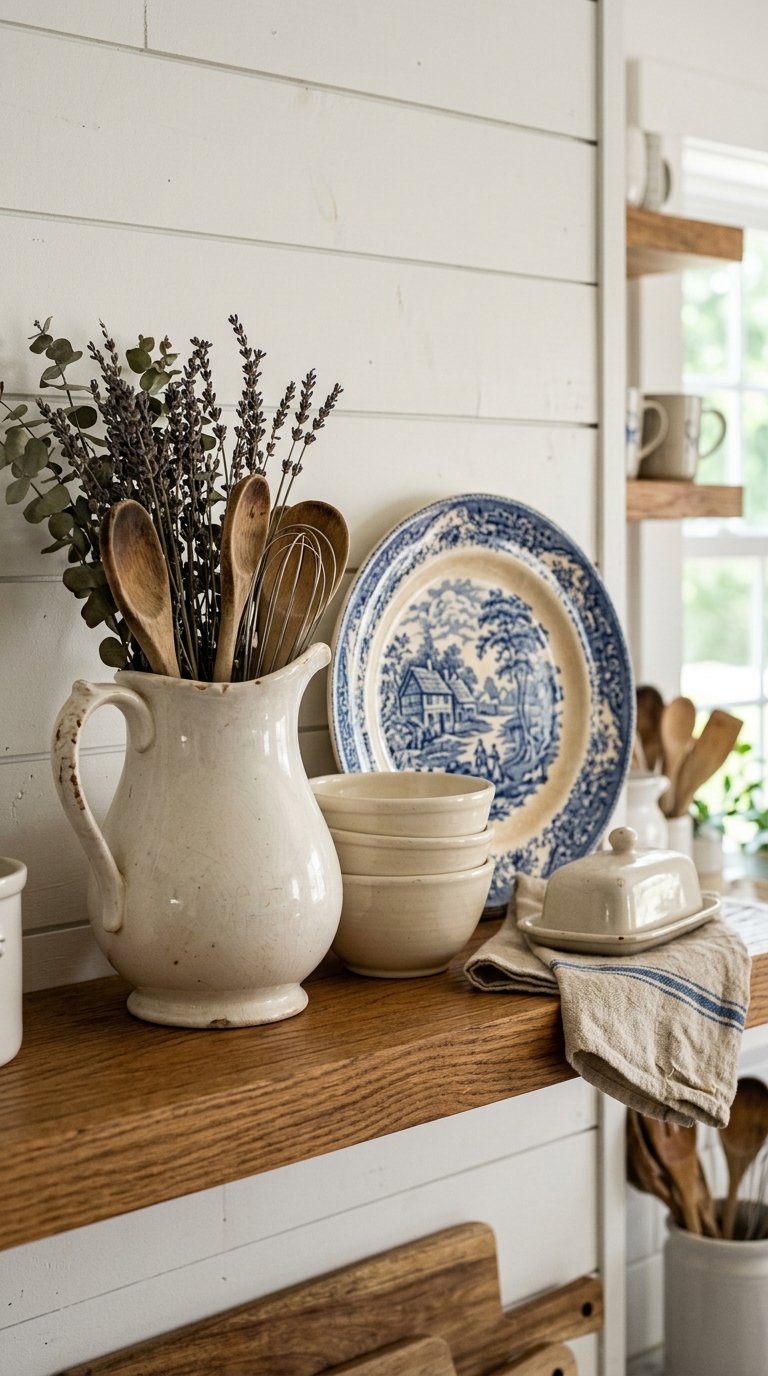
Vintage ironstone pitchers, transferware plates, and antique serving dishes add genuine age and character to a modern farmhouse kitchen shelf. These pieces look like they belong in the kitchen because they were designed to be used there.
A large ironstone pitcher at the end of a shelf holds wooden utensils or dried lavender stems. A transferware plate propped against the wall at the back of the shelf adds pattern and scale. Both options bring a sense of history that modern reproductions rarely achieve.
Where to find ironstone and transferware: Estate sales, antique markets, eBay, and Etsy all carry genuine vintage ironstone at reasonable prices. Avoid reproductions. The patina and weight of real ironstone is what makes it work on a farmhouse shelf.
10. Add a Small Chalkboard Sign
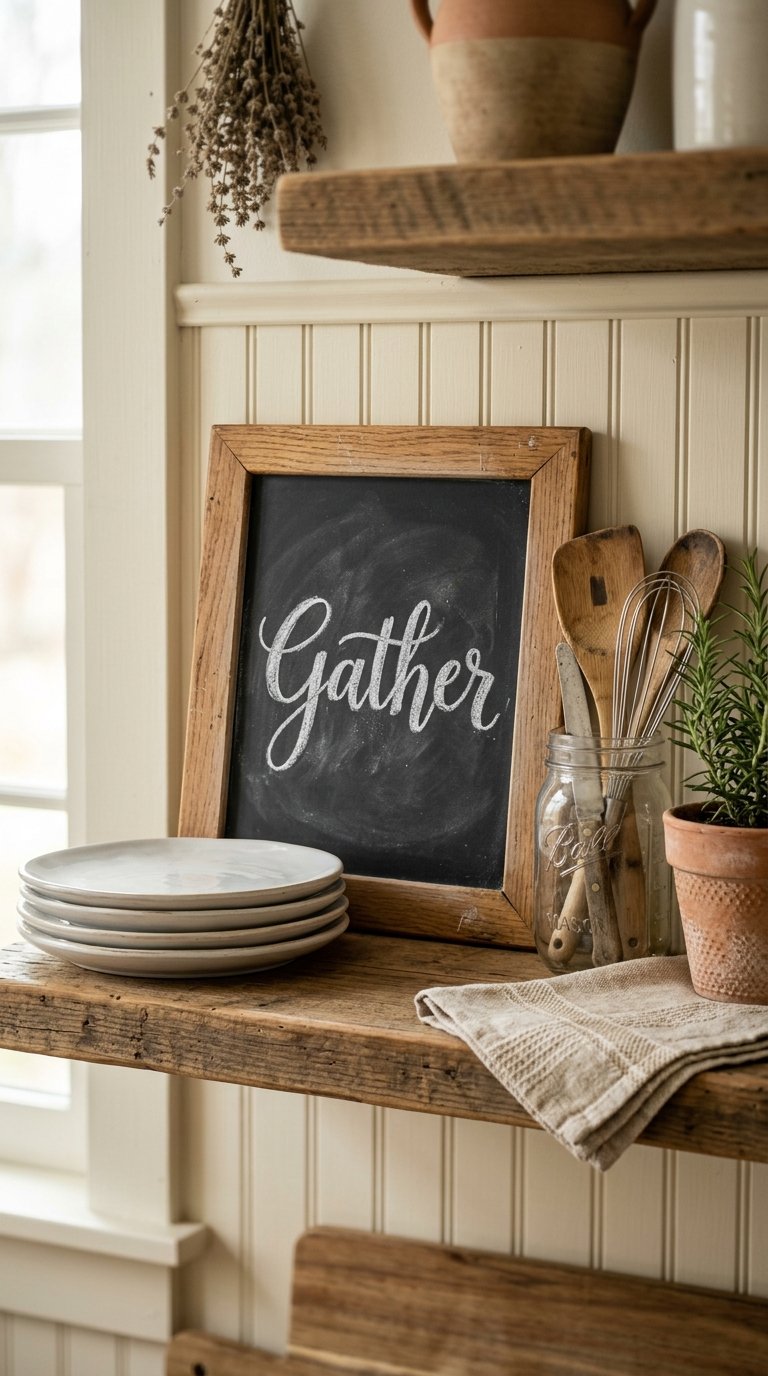
A small chalkboard sign on a kitchen shelf with a handwritten word, a short quote, or a seasonal message adds a personal, handmade quality to the display. It reinforces the farmhouse aesthetic and gives you a surface to update regularly without changing the shelf arrangement.
Keep the chalkboard small. A sign no larger than 15×20 centimeters works on most kitchen shelves without overpowering the objects around it. Prop it against the wall at the back of the shelf or lean it against a stack of plates.
Chalkboard message ideas: The current season, a simple word like Gather or Nourish, a handwritten ingredient list, or a short quote about food or home.
11. Display Glass Canisters Alongside Ceramics
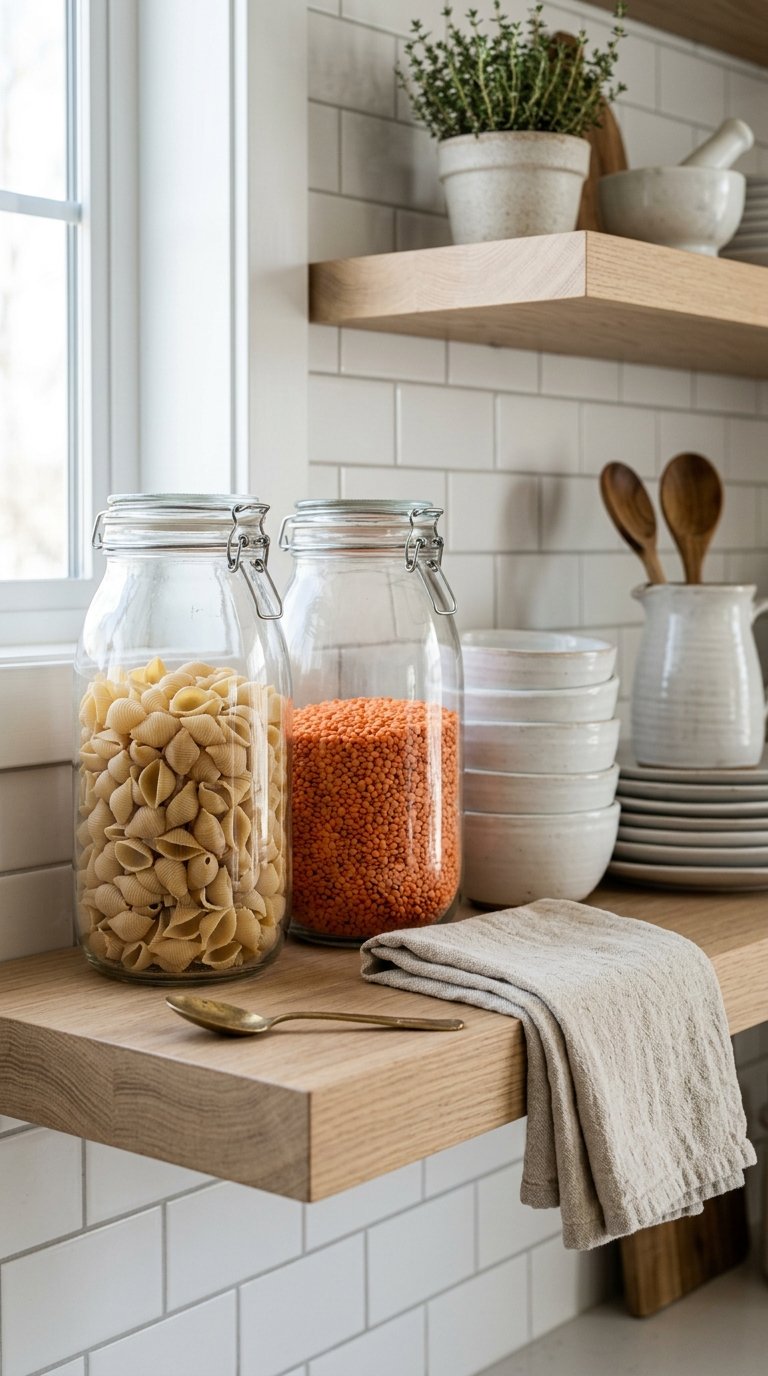
Glass canisters filled with dry goods sit alongside white ceramics and create visual transparency on the shelf. The visible contents, pasta shapes, colorful lentils, whole spices, add color and texture that opaque containers cannot deliver.
Choose glass canisters with simple shapes and minimal hardware. Clip-top glass jars with metal closures suit the farmhouse aesthetic. Avoid overly decorative or embossed glass that competes with the objects around it.
What to fill glass canisters with:
- Dried pasta in interesting shapes
- Whole spices like cinnamon sticks and star anise
- Colorful lentils or dried beans
- Coffee beans or loose leaf tea
12. Include a Wooden Utensil Holder
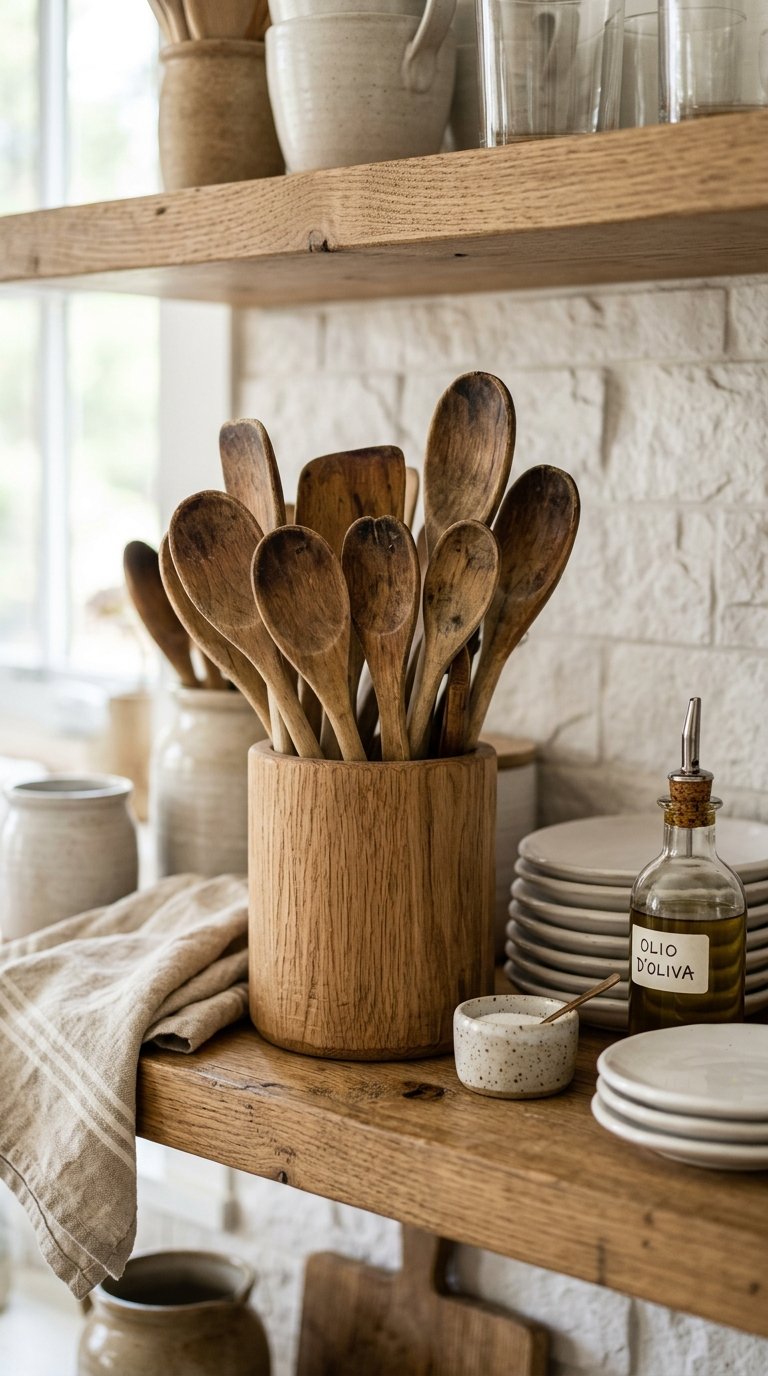
A wooden utensil holder, a simple cylindrical vessel in raw or stained wood, holds cooking spoons, spatulas, and whisks on the shelf while adding both function and natural material. It works as a transitional object between the purely decorative and purely functional items on the shelf.
Choose a holder that suits the depth of your shelf. A holder that extends past the front shelf edge looks precarious and tips easily when you pull a utensil out. Keep 2 to 3 inches of space between the holder front and the shelf edge.
Utensil holder materials that suit farmhouse shelves: Raw pine, white oak, turned walnut, and simple terracotta cylinder pots all work well.
13. Use Dried Botanicals for a Natural Accent
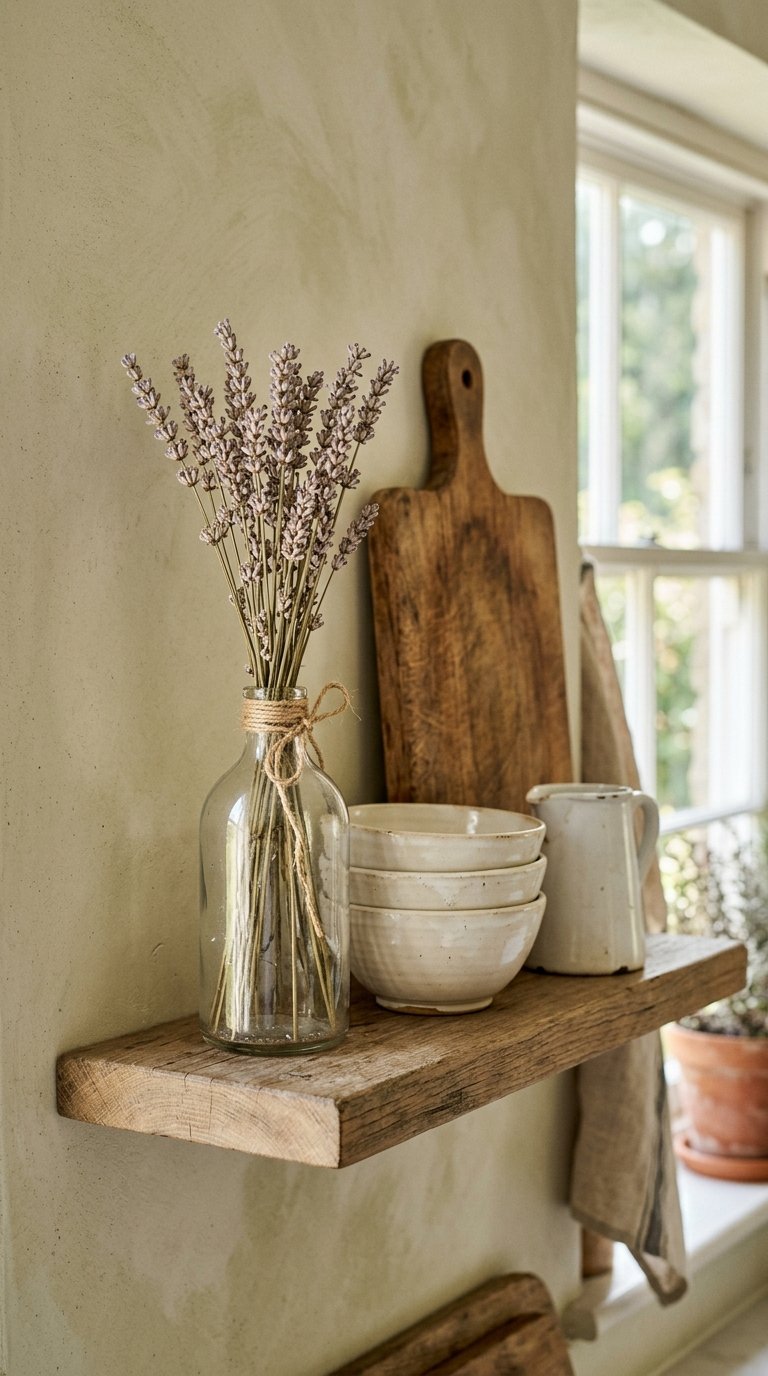
Dried botanicals, lavender bunches, dried cotton stems, wheat stalks, pampas grass, and eucalyptus, add an organic natural element to kitchen shelf decor that fresh flowers cannot sustain long-term. Dried stems last months without any maintenance.
Stand a small bunch of dried lavender in a simple glass bottle or terracotta vase at one end of the shelf. A single cotton stem in a white ceramic bud vase adds a soft, textural accent without taking up much space. Keep the dried botanical arrangement small and contained.
Best dried botanicals for kitchen shelves:
- Dried lavender: purple tone, strong scent, long-lasting
- Cotton stems: white, soft texture, very long-lasting
- Dried wheat: warm golden tone, very inexpensive
- Pampas grass: feathery texture, use sparingly, one stem maximum
14. Add a Small Framed Print
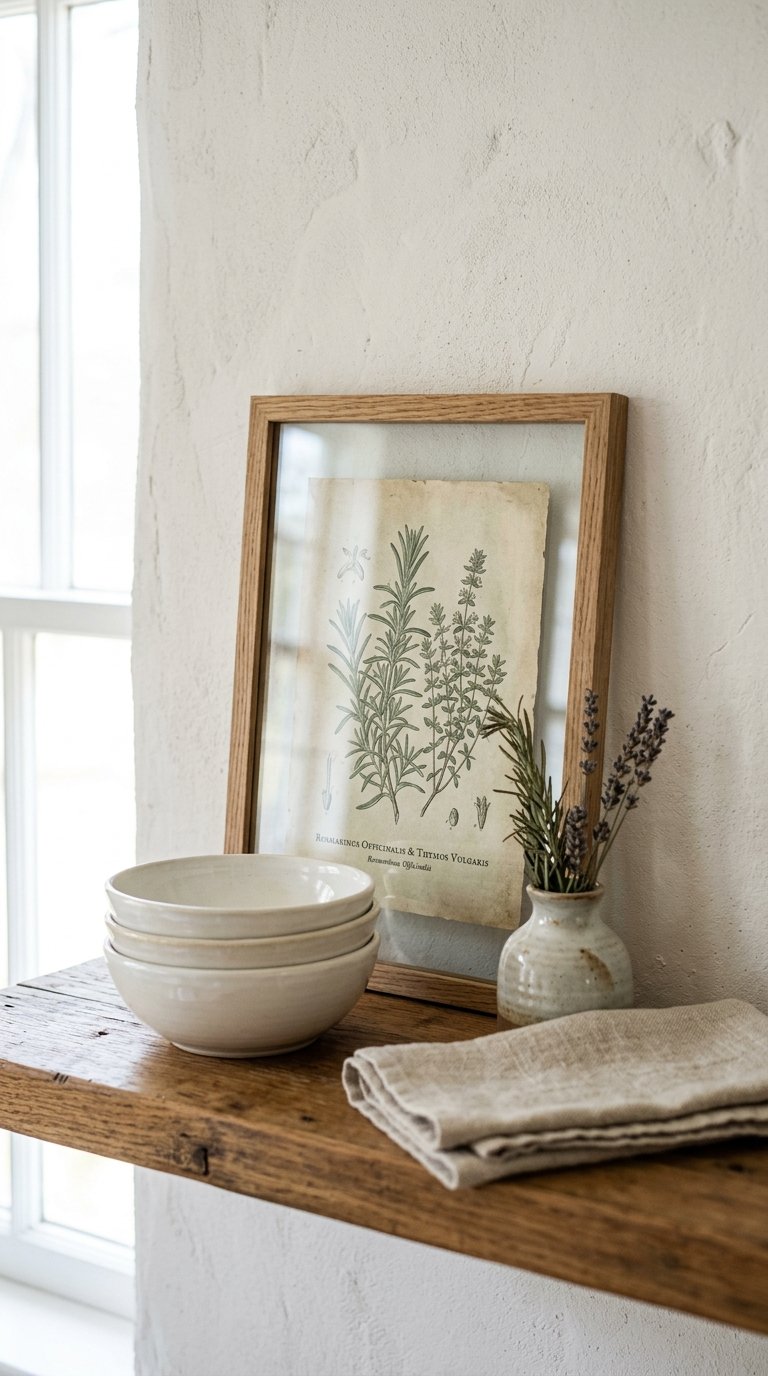
A small framed print propped against the wall at the back of a kitchen shelf adds art to a functional space without requiring wall holes. Choose a print with a botanical subject, a simple food illustration, or a typographic design in warm neutral tones.
Frame the print in a simple natural wood or black metal frame. Keep the frame thin. A thick ornate frame overwhelms a shelf display and pulls the eye away from the surrounding objects. The print should complement the shelf, not dominate it.
Print subjects that suit farmhouse kitchen shelves:
- Botanical illustrations of herbs or vegetables
- Simple black line drawings of kitchen objects
- Vintage seed packet illustrations
- Typographic prints with food or kitchen words
15. Layer Objects at Different Heights
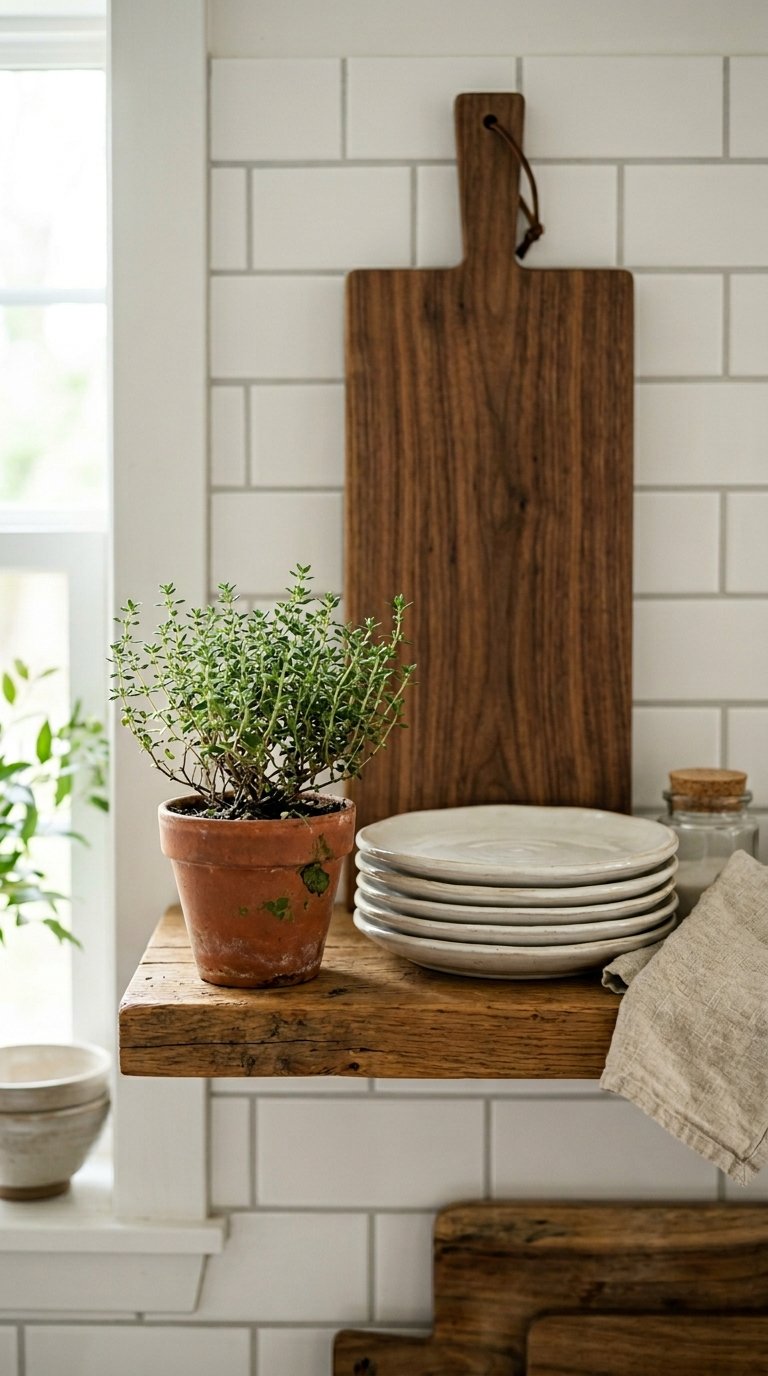
The most common mistake on a kitchen shelf is placing all objects at the same height. A flat row of similarly-sized items reads as monotonous and uninviting. Layer objects at three distinct heights: tall at the back, medium in the middle, small at the front.
A tall glass canister or wooden board at the back, a stack of plates or medium vase in the middle, and a small plant pot or candle at the front creates a layered arrangement that draws the eye naturally across the shelf depth.
Height layering rule: Back objects should be at least 30 percent taller than middle objects. Middle objects should be at least 20 percent taller than front objects.
16. Add a Lantern or Candle Holder
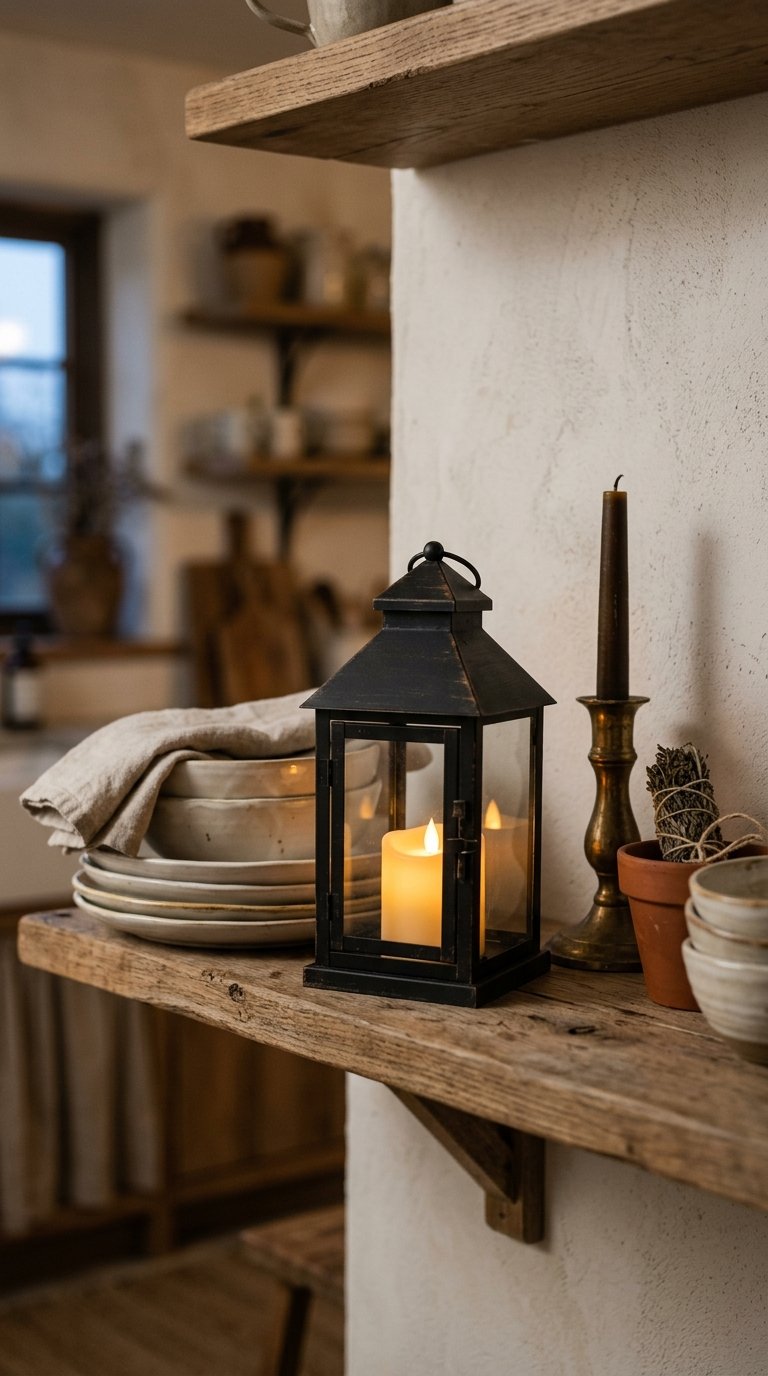
A small lantern or a group of two to three candle holders on a kitchen shelf adds warm light and a cozy atmosphere during evening hours. Choose lanterns in black metal, aged brass, or raw wood for the most farmhouse-appropriate result.
A single black metal lantern with a LED candle inside sits safely on a kitchen shelf without fire risk. Group two different-height candlesticks in aged brass beside a small object for a more layered candle arrangement.
Candle holder options for farmhouse kitchen shelves:
- Black metal lantern with LED candle inside
- Aged brass candlesticks in two different heights
- Terracotta candle holders in a small grouping
- Wooden taper candle holders in natural or whitewashed finish
17. Display a Collection of White Pitchers
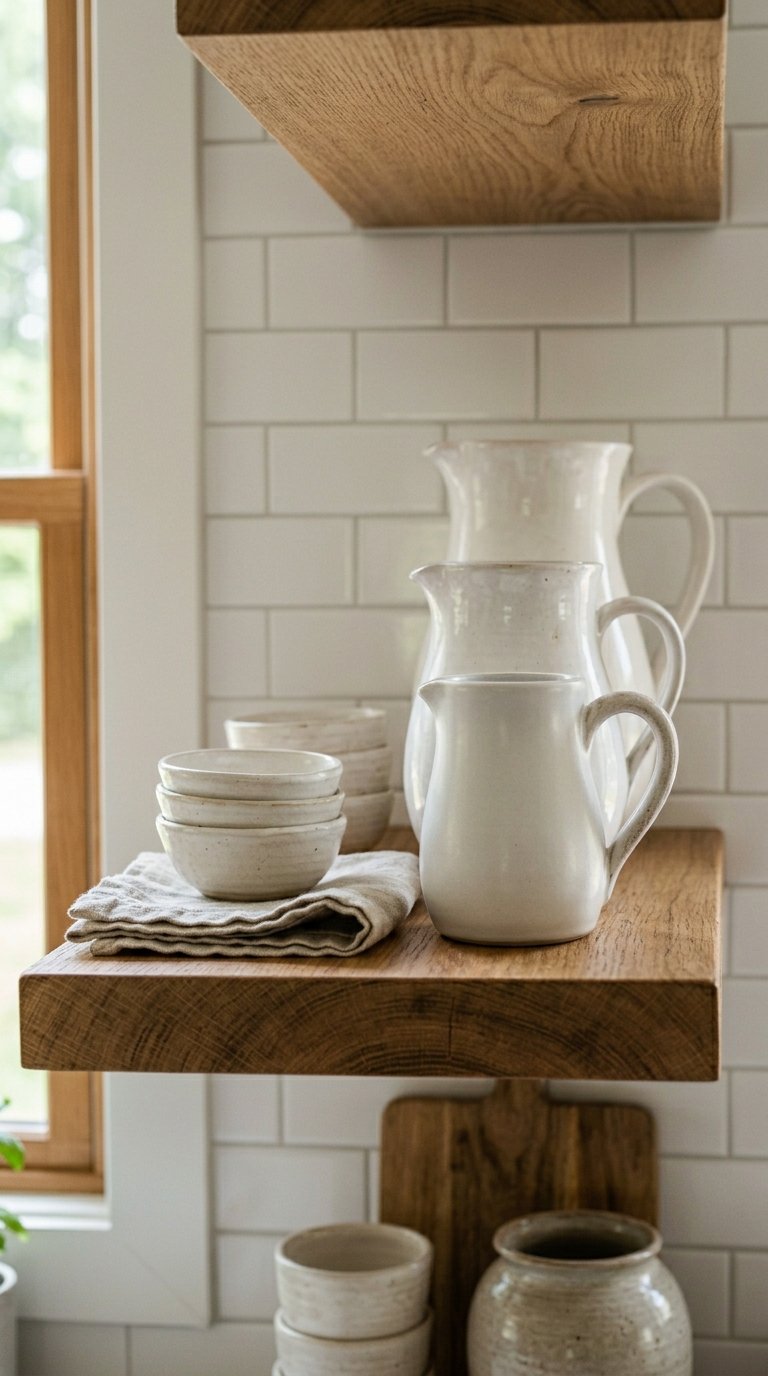
A collection of white pitchers in varying shapes and sizes grouped together on one section of a kitchen shelf creates one of the most classic farmhouse shelf displays. Three pitchers of different heights and proportions read as a deliberate collection rather than random objects.
Choose pitchers with simple forms. Farmhouse pitcher shapes are typically wide at the base, narrow at the neck, with a simple curved handle. Avoid overly ornate or embossed pitchers that compete with each other when grouped.
Pitcher grouping formula: Three pitchers minimum. Tallest at the back, medium in the middle, shortest at the front or side. All white or cream tones within the same neutral palette.
18. Use Black Accents to Ground the Display
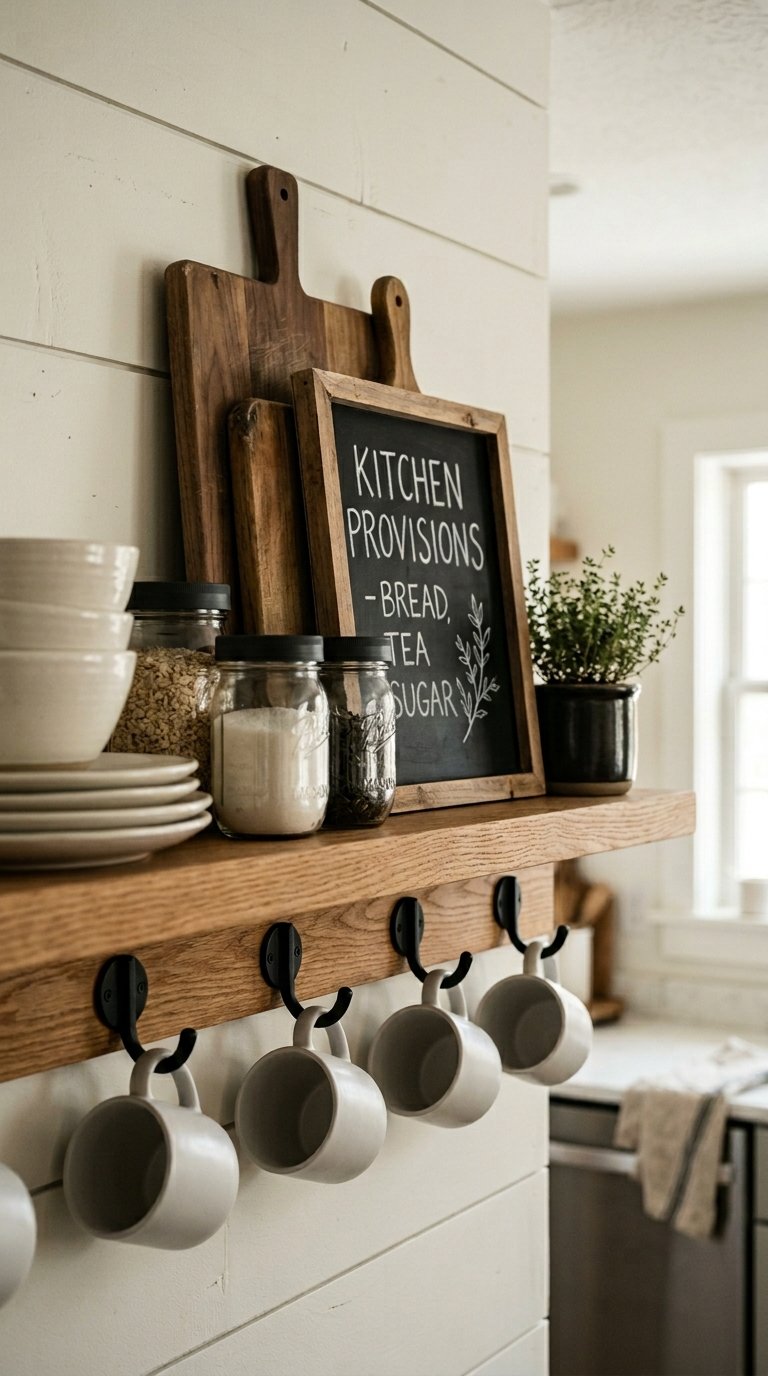
A modern farmhouse shelf display without any dark elements risks looking too soft and washed out. Black accents, a black canister lid, a black label on a mason jar, a black-framed print, or a black hook, ground the display and give it visual definition.
Use black sparingly. Two to three black accent points across the full shelf length is sufficient. More than that and the shelf starts to feel heavy and loses the light, airy quality that makes farmhouse shelf styling appealing.
Black accent objects for farmhouse kitchen shelves:
- Black chalkboard sign
- Black metal canister lids
- Black-framed botanical print
- Matte black cup hooks below the shelf
19. Add a Small Succulent or Air Plant
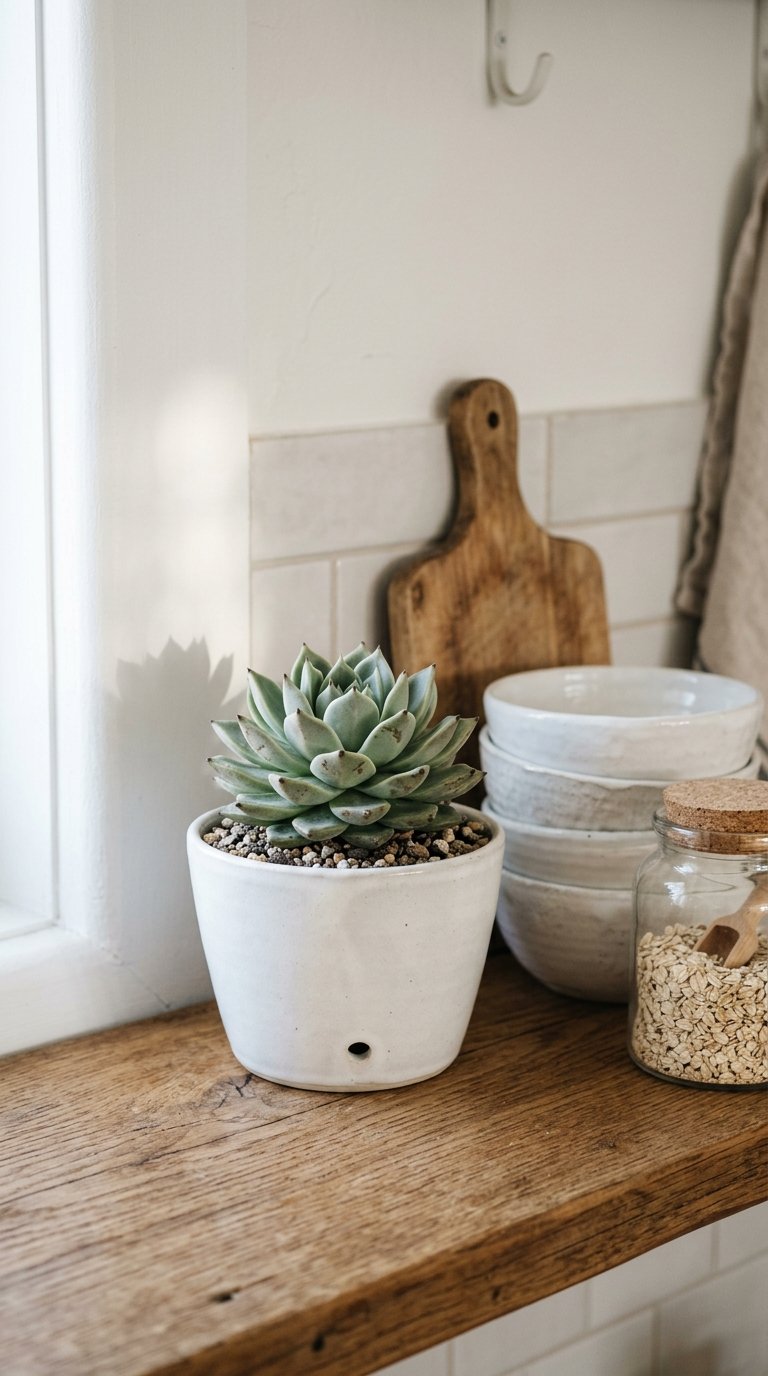
A small succulent or air plant in a simple pot or holder adds living green to the shelf without requiring the regular watering and care that herbs demand. Succulents thrive in the dry, warm conditions of most kitchens and need watering only once every one to two weeks.
Choose a pot that fits the succulent’s scale. A tiny echeveria in a small white ceramic pot, a jade plant in a terracotta pot, or a tillandsia air plant resting on a piece of driftwood all suit farmhouse shelf styling without demanding much attention. FYI, air plants require no soil and no pot, just a damp mist once a week.
Best low-maintenance plants for kitchen shelves:
- Echeveria succulent: rosette shape, minimal water needs
- Jade plant: woody stems, long-lived, tolerates low light
- Tillandsia air plant: no soil, minimal water, sculptural shape
- Aloe vera: practical, medicinal, suits sunny shelf positions
20. Style with a Farmhouse Tray
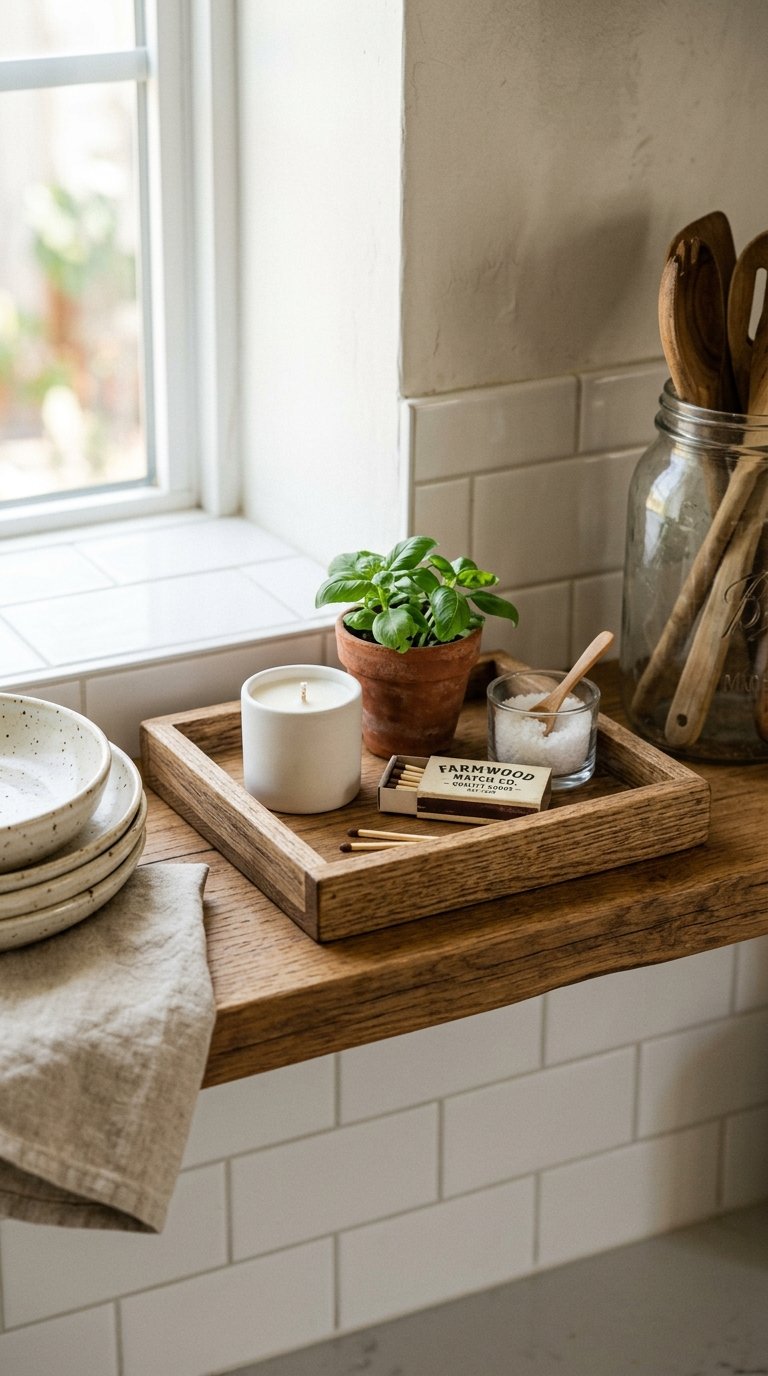
A wooden or enamel tray on a kitchen shelf corrals a group of small objects into a defined zone that reads as a deliberate arrangement rather than scattered items. Everything inside the tray belongs together. Everything outside the tray has its own defined position.
Use the tray to hold the smallest objects on the shelf: a small candle, a tiny plant pot, a salt cellar, and a matchbox. The tray creates a visual boundary that makes the small objects read as a group rather than individual loose items competing for attention.
Best farmhouse tray materials: Raw wood, whitewashed wood, black enamel, and galvanized metal all suit the modern farmhouse kitchen aesthetic.
21. Incorporate a Vintage Milk Bottle or Jug
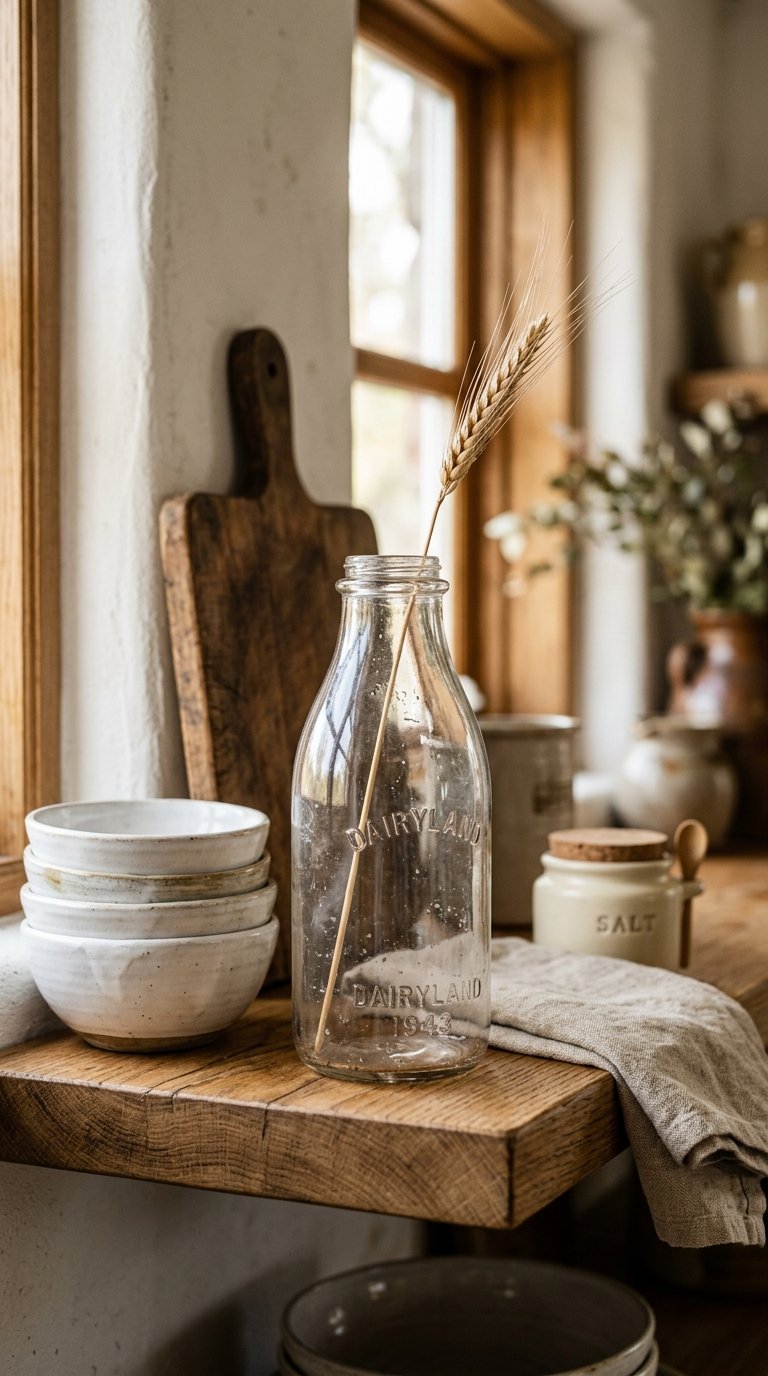
A vintage milk bottle or cream jug on a kitchen shelf adds the kind of nostalgic kitchen character that modern reproductions rarely replicate convincingly. Real vintage glass milk bottles from dairy farms cost almost nothing at antique markets and flea sales.
Fill the bottle with a single dried stem, a small bunch of dried herbs, or leave it empty. An empty vintage milk bottle with a simple label still reads as a deliberate farmhouse accent. The shape and glass quality of a genuine vintage bottle does the work without needing anything inside it.
Where to find genuine vintage milk bottles: Estate sales, antique fairs, Etsy vintage sellers, and eBay. Expect to pay between $3 and $15 per bottle depending on condition and rarity.
22. Add a Linen Dish Towel Draped Over the Shelf Edge
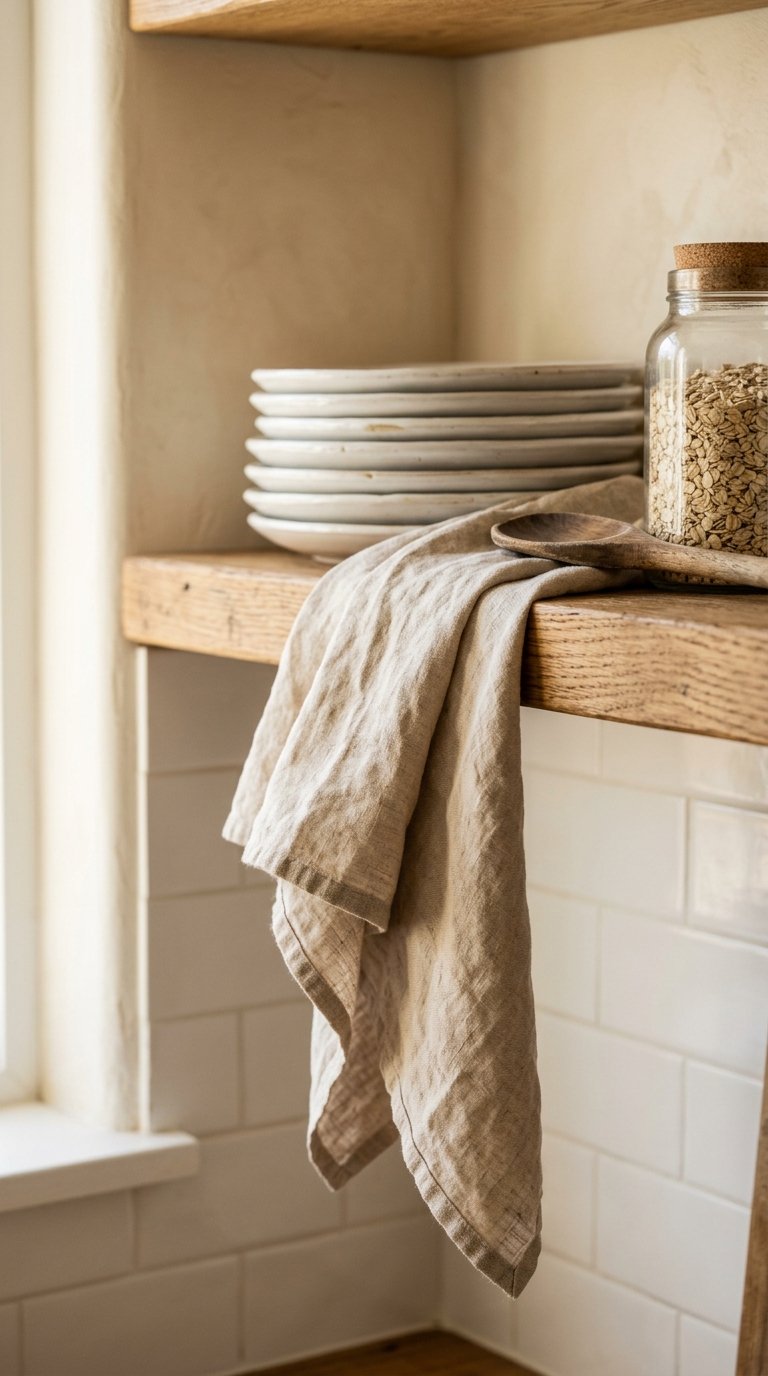
A folded or loosely draped linen dish towel hanging over the front edge of a kitchen shelf adds a soft textile element to what is otherwise a hard-surfaced display. It breaks the rigid shelf line and introduces fabric texture that ceramic and glass cannot provide.
Choose a natural linen dish towel in a neutral tone: undyed linen, soft cream, or a simple stripe in grey and white. Avoid bright patterned towels that compete with the objects on the shelf. The towel should read as a soft accent, not a dominant feature.
Best linen towel styles for farmhouse shelf display:
- Undyed natural linen: warmest, most organic look
- Simple grey and white stripe: classic farmhouse pattern
- White with a subtle woven texture: clean, minimal
- Cream with a thin red or blue stripe: vintage kitchen reference
23. Use Numbered or Labeled Canisters
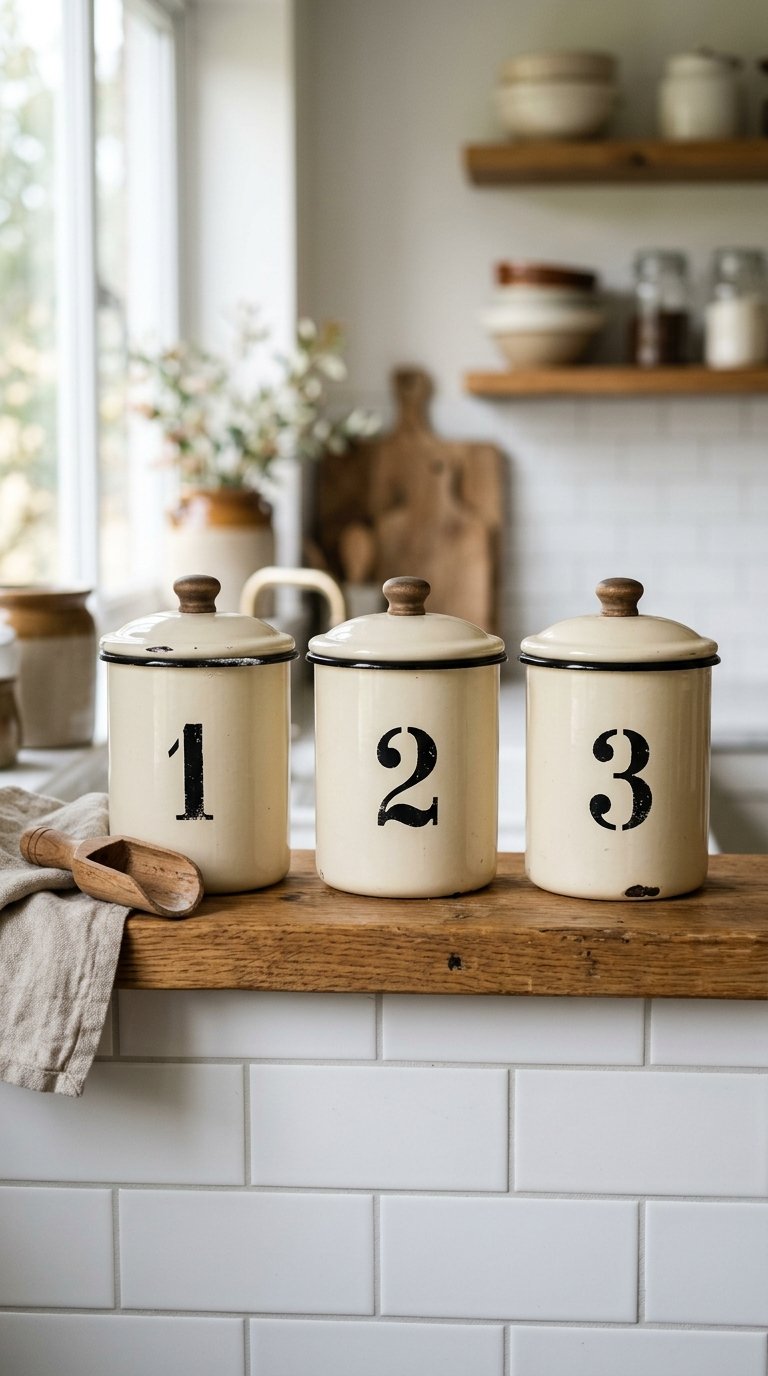
Numbered enamel canisters or labeled ceramic storage jars bring a sense of order and vintage organisation to a kitchen shelf. A set of three enamel canisters numbered 1, 2, and 3 in cream with black lettering look both functional and styled simultaneously.
Keep the canister set consistent. All enamel or all ceramic, all the same background color, all the same label style. Mixing canister types and finishes creates a shelf that looks unresolved rather than curated.
Canister sets that suit modern farmhouse shelves:
- Cream enamel with black numbered labels
- White ceramic with hand-stamped labels
- Natural stoneware with simple black lettering
- Kraft and cream labeled glass jars in a matching set
24. Display a Small Wooden Sign or Plaque
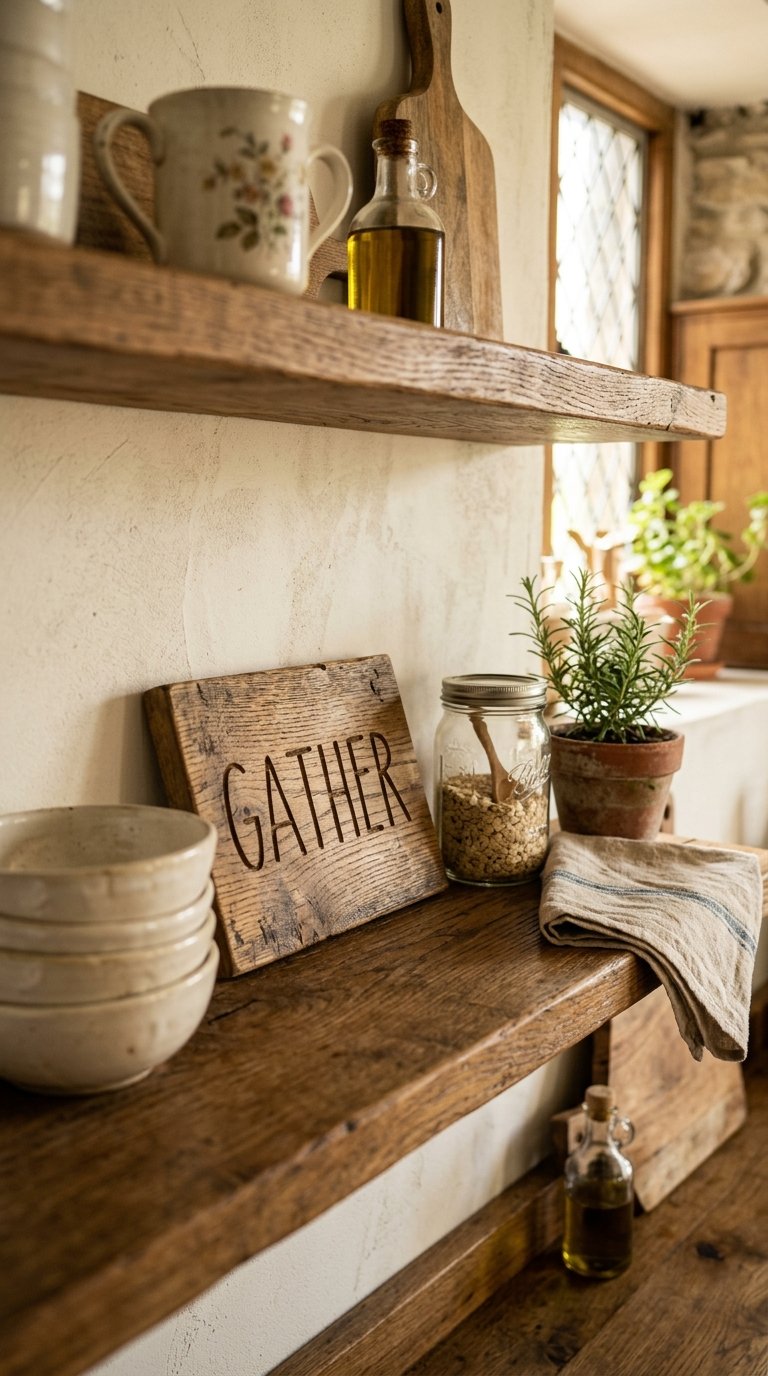
A wooden sign or plaque with a simple word or short phrase adds a personal, handmade quality to a farmhouse kitchen shelf. Words like Gather, Farm Fresh, or Simply Home work in this context. Keep the sign small and the typography simple.
Avoid laser-cut ornate signs with complex scripts and decorative flourishes. A simple routed or hand-painted word on a raw or whitewashed wood plank reads as more authentic than a highly decorated commercial sign. The less finished it looks, the better it suits the farmhouse aesthetic.
Sign placement: Lean the sign against the wall at the back of the shelf between two taller objects. Do not hang it on the wall above the shelf where it competes with the shelf display itself.
25. Rotate Seasonal Accents Regularly
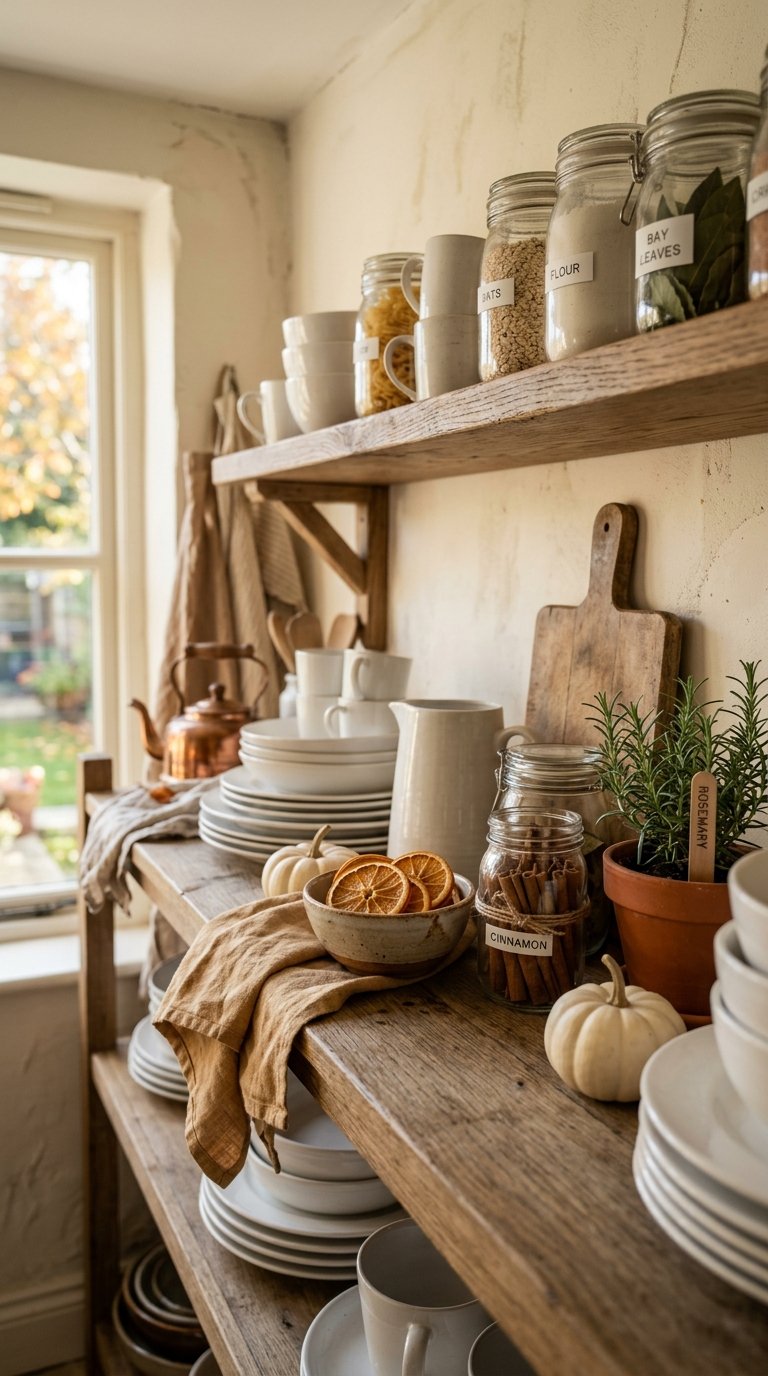
A modern farmhouse kitchen shelf stays fresh and relevant when you rotate small seasonal accents throughout the year. The core display, white ceramics, mason jars, wooden objects, stays consistent. The seasonal accent layer changes four times a year.
Spring brings fresh herb pots and small floral stems. Summer adds dried citrus slices and warm-toned linens. Autumn introduces small gourds, dried corn, and copper accents. Winter adds pine cones, cinnamon sticks in a glass jar, and a small lantern. The core objects anchor the shelf. The seasonal layer makes it feel current.
Seasonal accent rotation guide:
- Spring: fresh herb pot, dried wildflower stems, light linen cloth
- Summer: dried citrus slices in a glass jar, warm yellow linen, small terracotta pot
- Autumn: mini gourd, dried corn stem, copper canister, orange-toned linen
- Winter: pine cones in a bowl, cinnamon sticks in a jar, small lantern, cream knit cloth
Final Thoughts
Modern farmhouse kitchen shelf decor works because it combines genuine function with deliberate styling. Every object on a well-styled farmhouse shelf either does something useful or earns its place visually. Nothing sits there by accident.
The 25 ideas above give you every element you need. Start with the foundation, white ceramics, a wooden board, and mason jars. Add texture through a basket and a linen towel. Bring in life with a small plant. Then layer in character with vintage objects, dried botanicals, and seasonal accents.
Your kitchen shelf should tell people something true about the way you cook and live. Style it that way and it will look right every time you walk into the room.