21 Space-Saving Bunk Bed Ideas for Stylish Bedrooms
Bunk beds have a reputation problem. Most people picture the wobbly metal frames from summer camp that creaked every time someone turned over. The person on top worried about the ceiling. The person on the bottom worried about the ceiling collapsing onto them.
Modern bunk bed design has moved significantly past that starting point. Today’s bunk beds handle two sleeping surfaces, built-in storage, study areas, and in some cases an entire bedroom’s worth of function within a footprint smaller than a standard queen bed. That’s a genuinely useful piece of furniture.
These 21 bunk bed ideas cover every configuration, material, style, and room type. Whether you’re fitting two kids into one bedroom, setting up a vacation home, or maximizing a studio apartment, there’s a solution here that works for your specific situation.
1. The Classic Twin Over Twin Bunk Bed
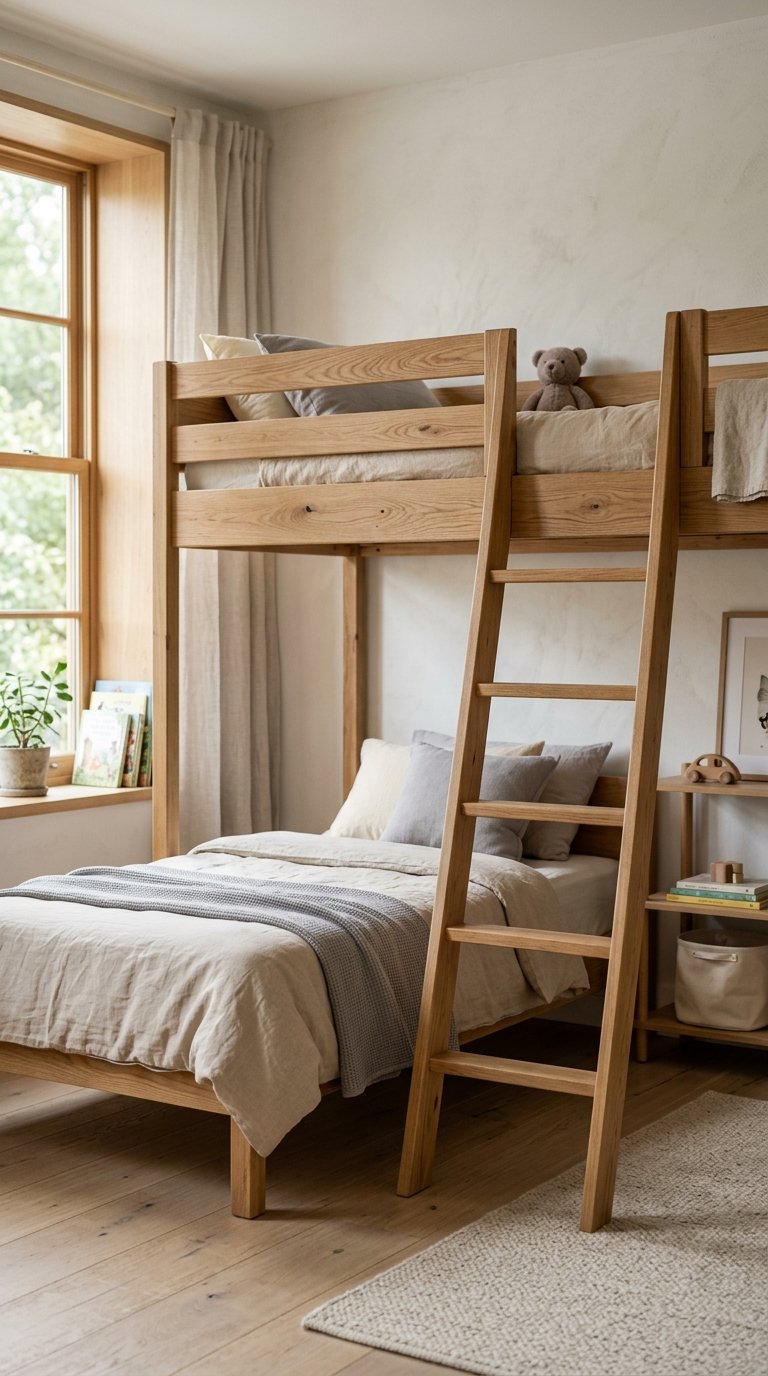
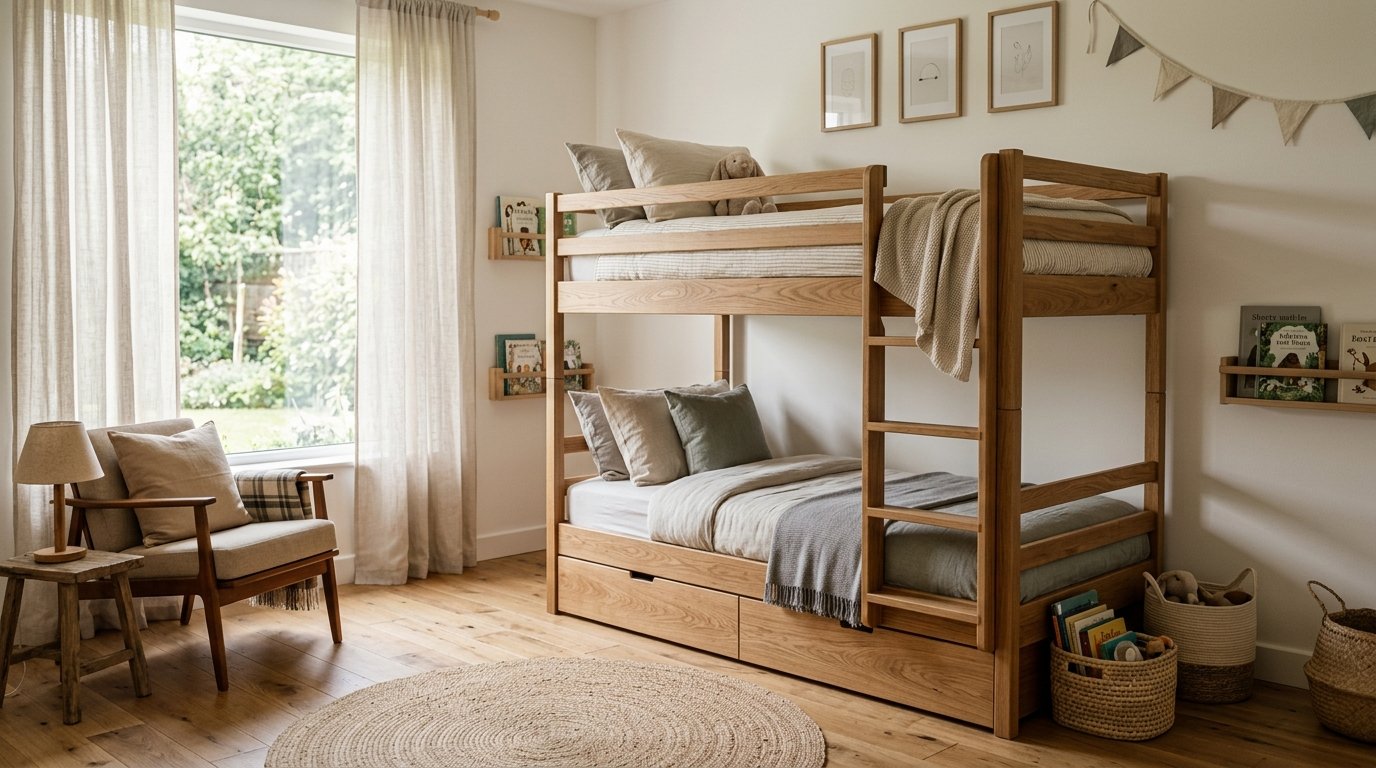
The twin over twin configuration is the standard bunk bed format for good reason. Two twin mattresses stacked vertically fit comfortably in most children’s bedrooms without overwhelming the floor space, and the twin size works for children from age 5 through the teenage years.
What separates a good twin over twin from a mediocre one:
- Frame material: Solid hardwood (oak, maple, pine) outlasts MDF or particleboard by a decade or more
- Guard rail height: Upper bunk guard rails should extend at least 5 inches above the mattress surface on all exposed sides
- Ladder design: Straight ladders save space; angled ladders are significantly safer and more comfortable for daily use
- Weight capacity: Solid wood frames typically handle 200 to 250 pounds per bunk; check manufacturer specifications before purchasing
A solid wood twin over twin bunk bed in a child’s room functions as a piece of furniture they keep well into their teenage years. The investment pays across 10 to 15 years of use rather than requiring replacement every few years as a cheaper frame deteriorates.
2. The Twin Over Full Bunk Bed
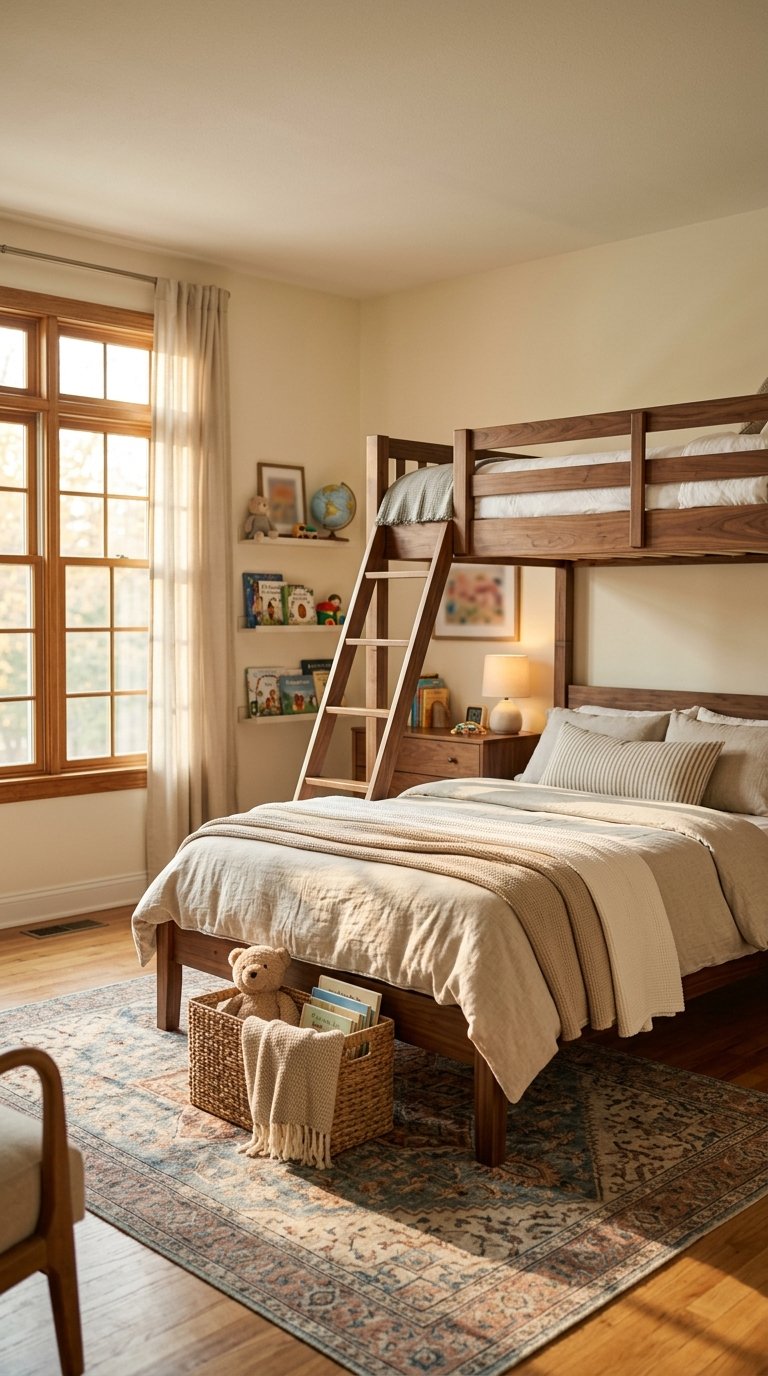
A twin over full configuration puts a twin mattress on the upper bunk and a full (double) mattress on the lower. The larger lower bunk creates a more spacious sleeping surface for an older child, a teenager, or even an adult who needs to share the room.
Why twin over full works in specific situations:
- Age gap between siblings: An older child sleeps more comfortably on the full lower bunk while the younger child uses the twin upper
- Guest room functionality: The full lower bunk accommodates two adults sleeping in the same bed when needed
- The lower bunk feels less like a bunk bed: At full width, the lower sleeping surface reads more like a regular bed
The footprint of a twin over full frame is wider than a standard twin over twin because the full mattress requires additional frame width. Measure the room carefully before purchasing.
3. The L-Shaped Bunk Bed
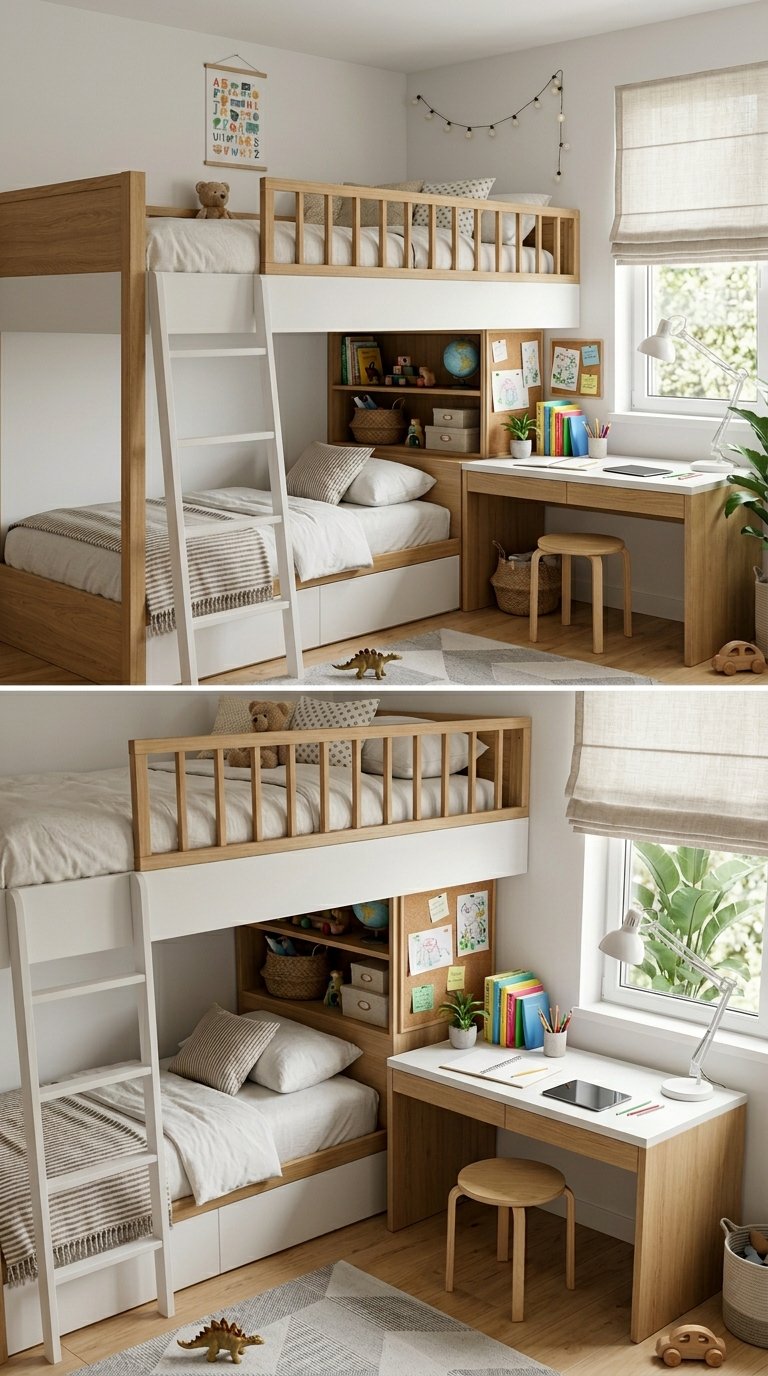
An L-shaped bunk bed positions the upper bunk perpendicular to the lower bunk, creating an L-shaped footprint when viewed from above. This configuration creates usable space beneath one end of the upper bunk that a standard stacked configuration doesn’t provide.
L-shaped bunk bed advantages:
- The space under the upper bunk end works as a desk area, a reading nook, or additional storage
- The perpendicular configuration allows two children to sleep without one directly above the other, which some children prefer
- The ladder placement on the side wall feels more secure than a ladder at the end of the frame
L-shaped bunk beds require more floor space than straight stacked configurations. They work well in square rooms but can feel awkward in narrow rectangular rooms where the L-shape fights the room’s proportions.
4. The Loft Bed With Desk Underneath
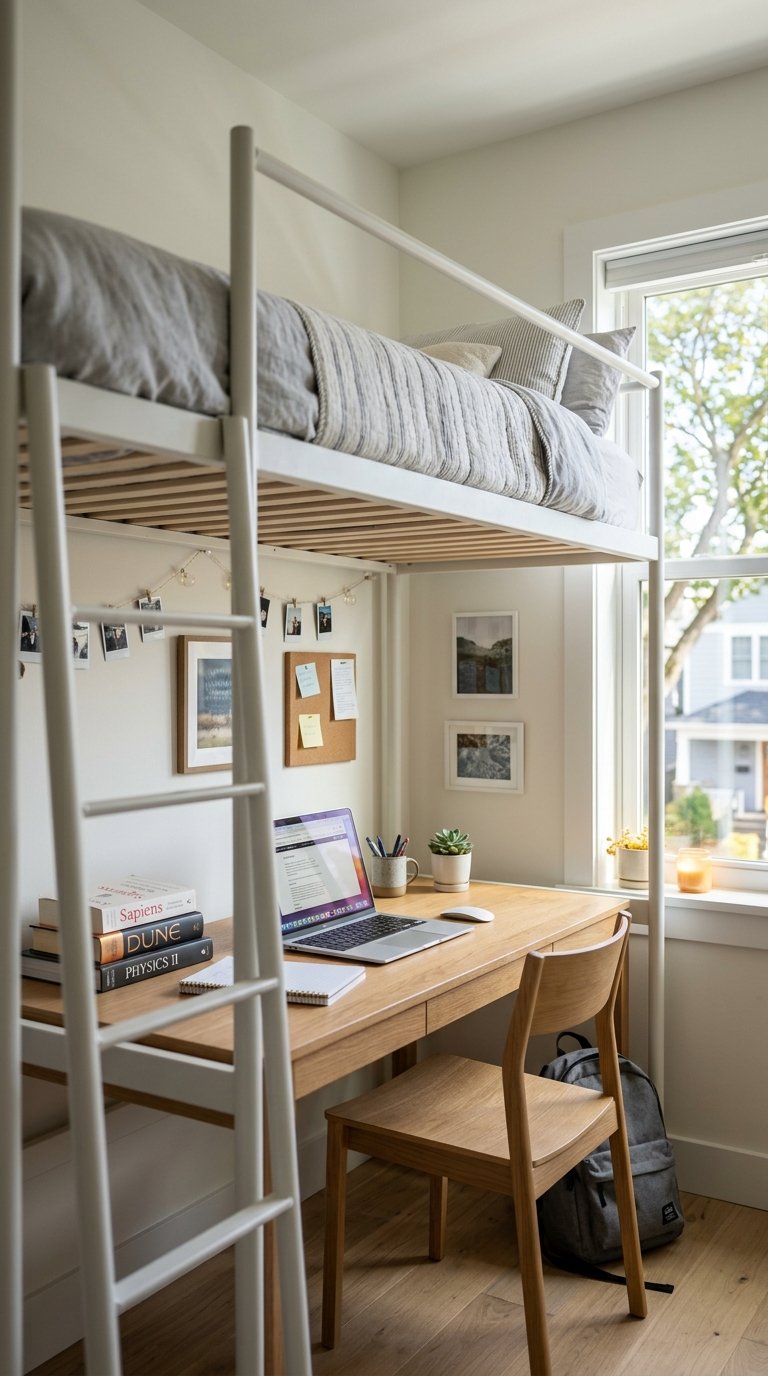
A loft bed is a single elevated sleeping surface with open space below rather than a second bed. In a child’s or teenager’s room, the space below the loft typically holds a desk and study area, creating a compact homework and sleep zone in a single footprint.
Loft bed with desk configurations:
- Full-width desk below: The desk spans the full length of the loft, providing generous study surface
- Partial desk with storage: A narrower desk alongside vertical storage shelving
- L-shaped desk system: Uses the corner space below the loft for maximum surface area
- Convertible desk: A fold-down desk surface that creates floor space when not in use
The loft bed with desk is the most space-efficient bedroom furniture configuration available for a single occupant. It stacks the two primary functions of a bedroom: sleeping and studying, into one vertical footprint.
5. The Bunk Bed With Built-In Storage Stairs
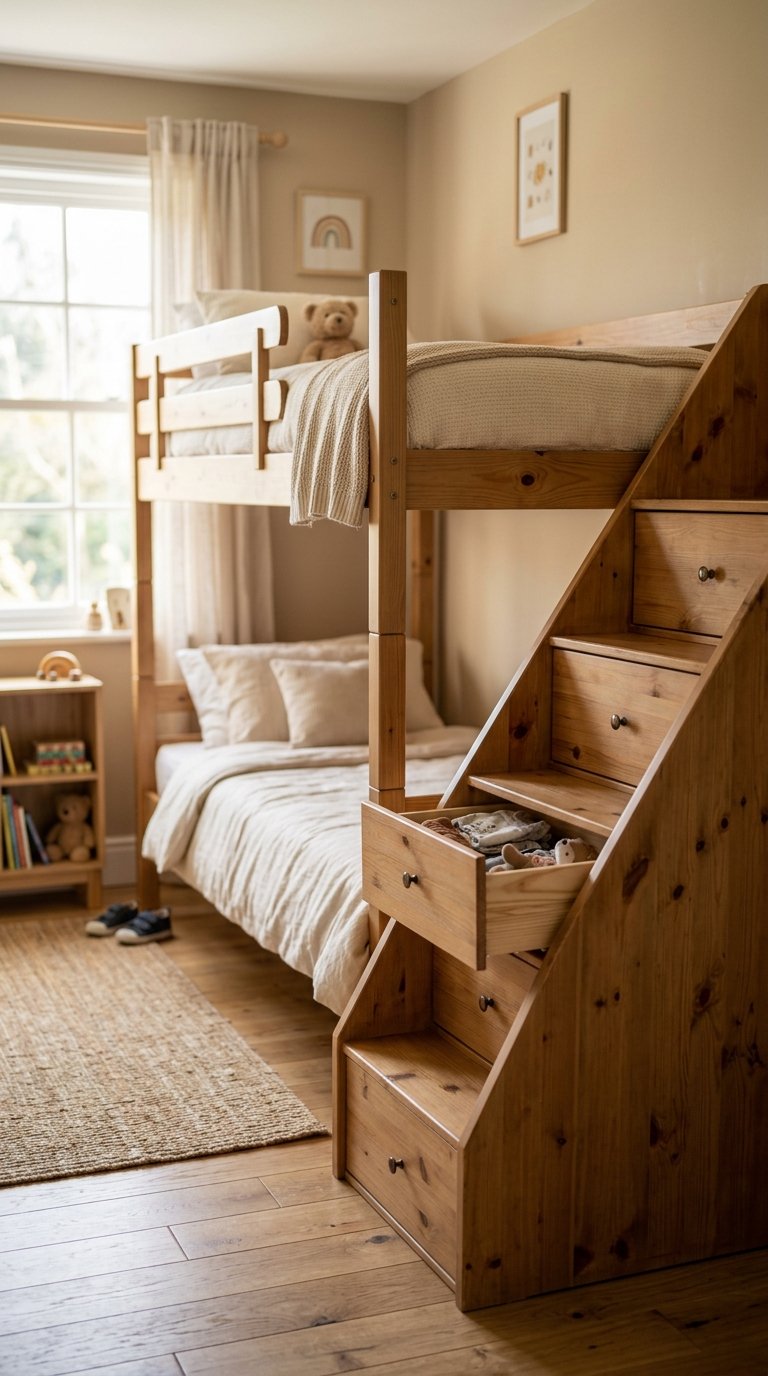
Stairs instead of a ladder on a bunk bed change how the upper bunk feels to use and how the overall furniture piece functions in the room. Each stair tread typically incorporates a pull-out drawer, creating significant additional storage within the stair structure itself.
Storage stair bunk bed benefits:
- Safer access to the upper bunk: Stairs are significantly easier to climb than a vertical ladder, particularly for younger children and in the dark
- Built-in drawer storage: Three to five stair drawers add meaningful storage for clothes, toys, or bedding
- The stair unit reads as furniture: Storage stairs look more like a built-in piece than a utilitarian ladder
Storage stair bunk beds require more floor space than ladder versions because the stair unit extends into the room. Budget an additional 18 to 24 inches of floor depth for the stair footprint.
6. The Triple Bunk Bed
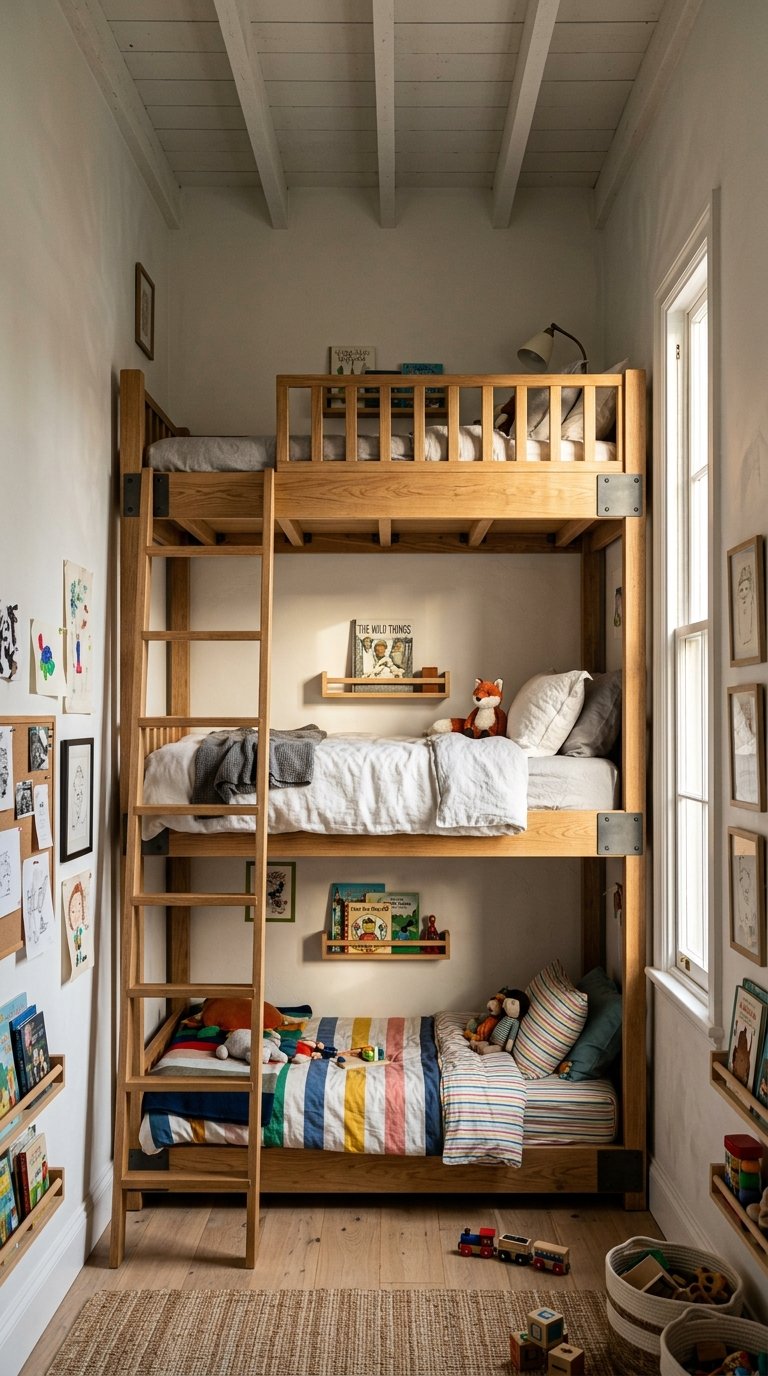
A triple bunk bed stacks three sleeping surfaces vertically. It’s the furniture equivalent of going up instead of out, and in a small bedroom housing three children, it changes the entire equation of what’s possible.
Triple bunk bed configurations:
- Three horizontal bunks: Standard vertical stack of three twin beds
- Twin over twin over full: Full on the bottom, two twins above, works for different-aged siblings
- L-shaped triple: Two bunks stacked on one side, a third bunk perpendicular at the bottom
Ceiling height is the primary constraint for triple bunk beds. You need at minimum 9 feet of ceiling clearance to accommodate a triple stack comfortably, with adequate sitting headroom on each level. Measure before purchasing.
A solid hardwood triple bunk bed is the most cost-effective per-sleeping-surface furniture investment in a multi-child household. The math is straightforward: three beds in one footprint at roughly the cost of one and a half standard beds.
7. The Cabin or House Bunk Bed
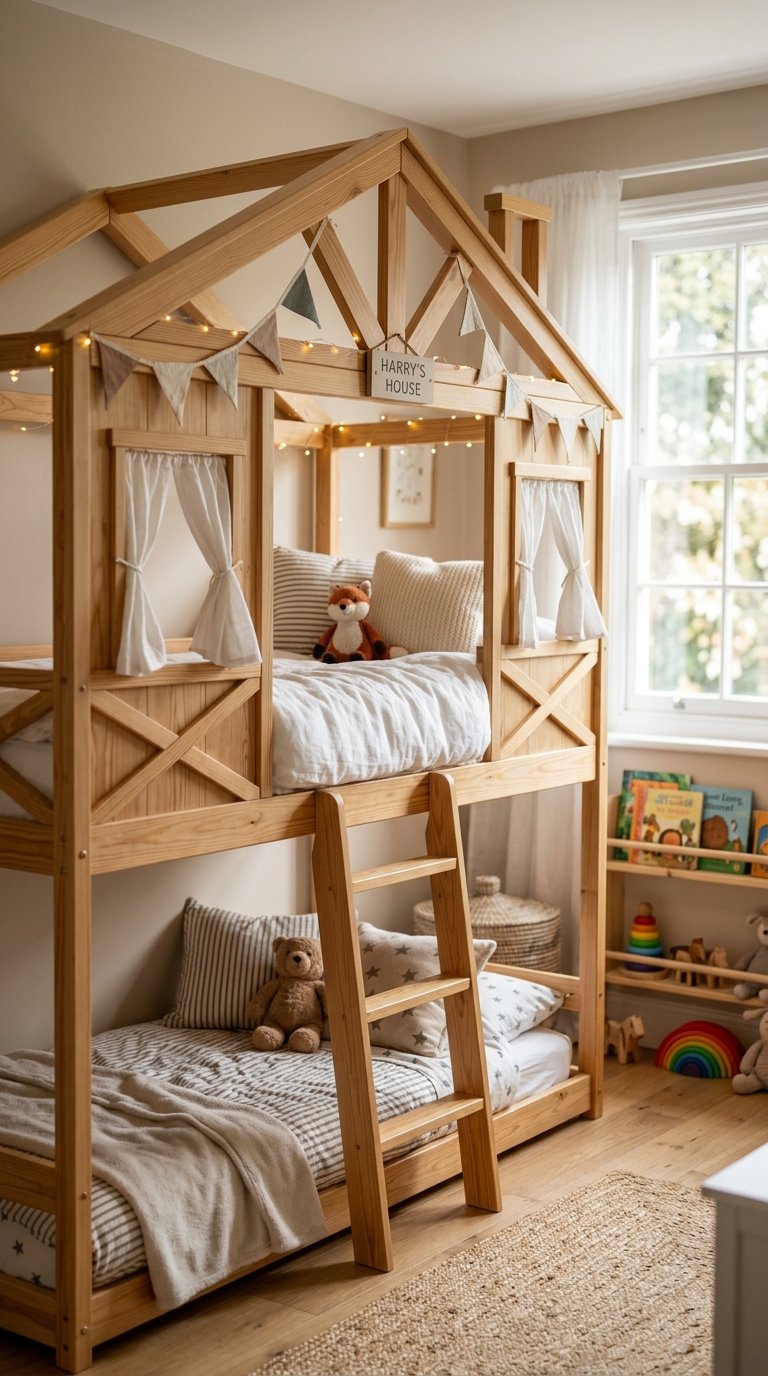
A cabin or house-style bunk bed adds architectural detail to the basic bunk bed format: a pitched roof line above the upper bunk, windows cut into the side panels, and sometimes a slide instead of a ladder. It turns the bunk bed into a piece of play furniture as much as a sleeping surface.
House bunk bed appeal:
- Children treat the enclosed upper bunk as a fort or hideaway rather than just a sleeping space
- The architectural detail photographs well for parents who want the children’s room to look considered
- Side panel windows can include curtains for added privacy and cozy enclosure
House bunk beds work best in rooms where they become the dominant design element. They’re large, visually bold pieces that require a room designed around them rather than added into a room with other furniture competing for attention.
8. The Murphy Bunk Bed
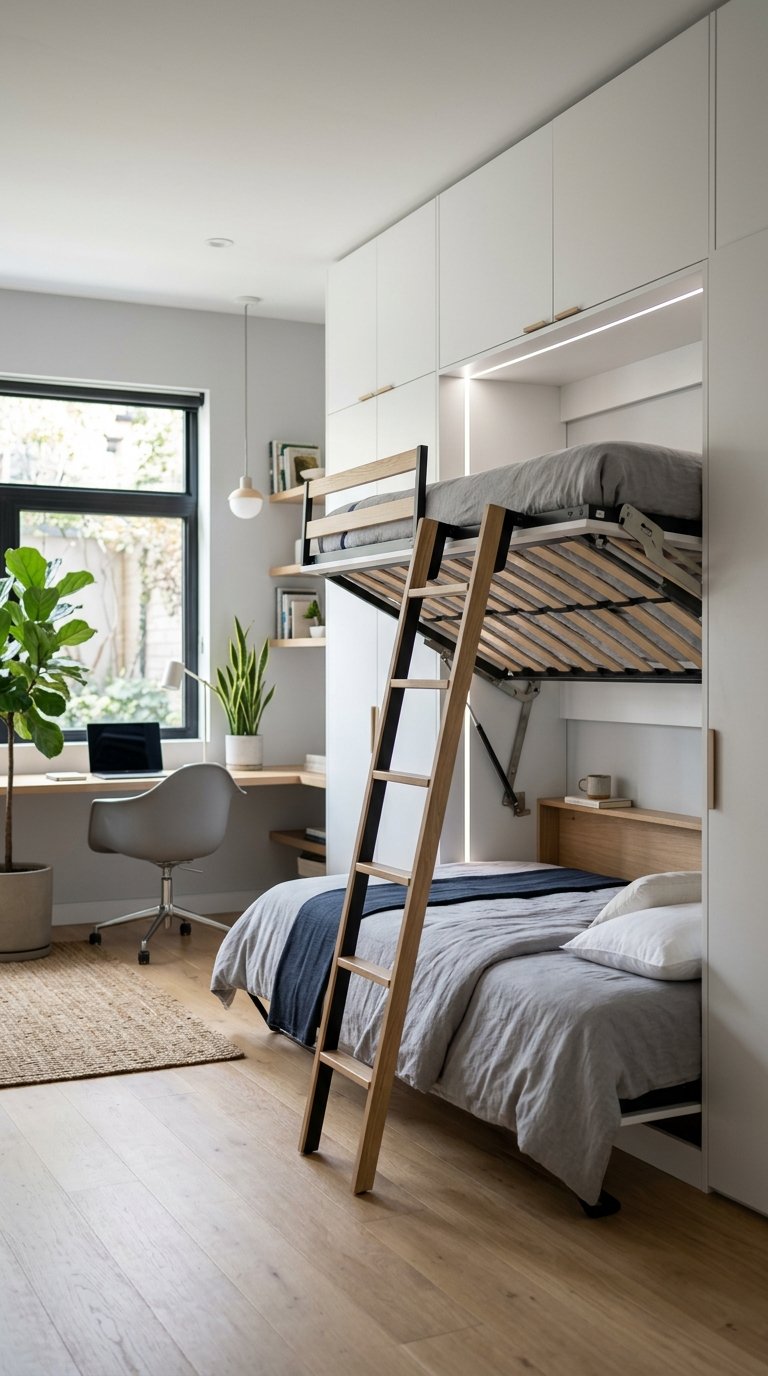
A Murphy bunk bed folds into a wall cabinet when not in use. Both sleeping surfaces fold flat against the wall, and the cabinet face looks like a piece of built-in furniture during the day.
Murphy bunk bed applications:
- Guest rooms that need day-use functionality: The room works as a home office, playroom, or yoga space during the day and sleeps two guests at night
- Studio apartments: Vertical sleeping surfaces fold away to maximize daytime living space
- Vacation rental properties: Maximum sleeping capacity without dedicating permanent floor space to beds
Murphy bunk beds cost significantly more than standard bunk beds due to the mechanism and cabinetry. Budget $2,000 to $6,000 for quality systems. The space return justifies the cost in rooms where floor space is genuinely at a premium.
9. The Bunk Bed With Trundle
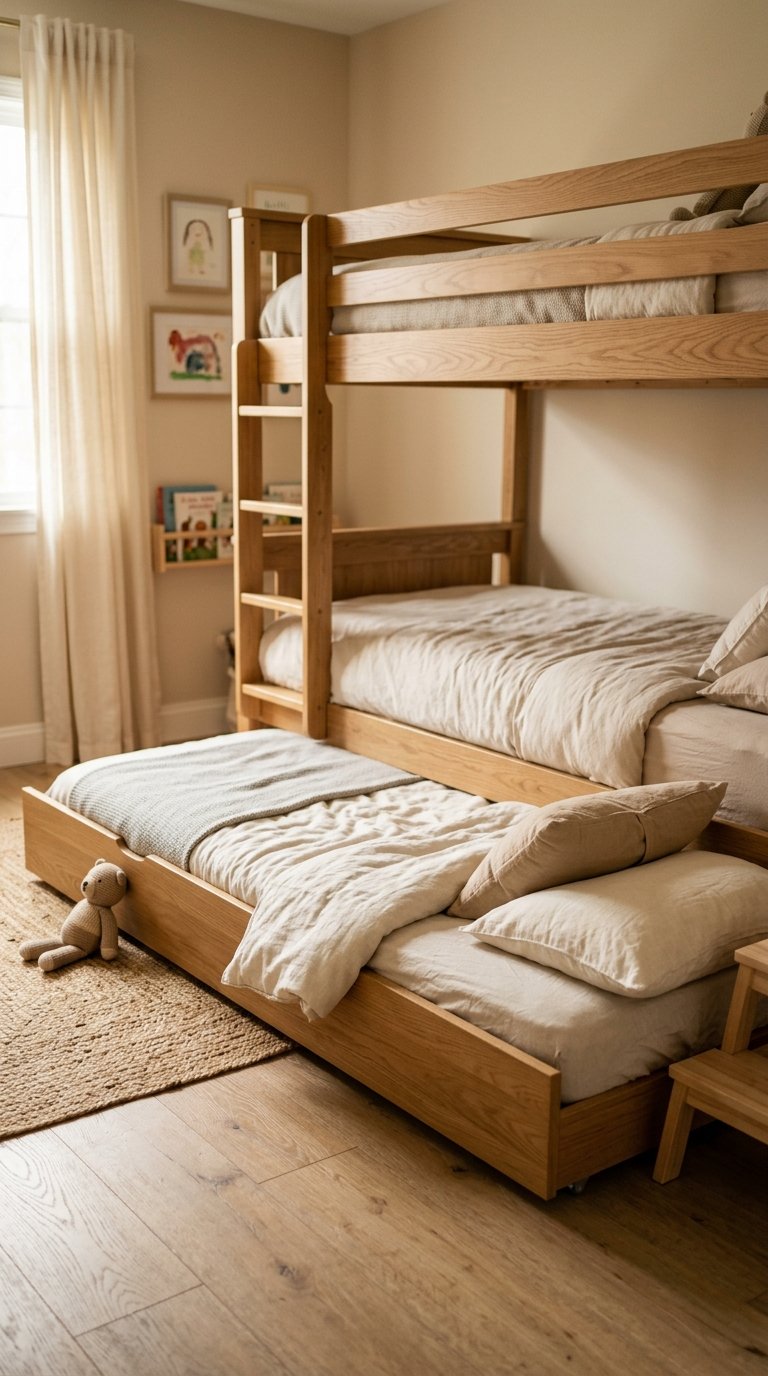
A bunk bed with a trundle adds a third sleeping surface on a wheeled frame that slides beneath the lower bunk when not in use. It creates a three-person sleep configuration from a standard twin over twin footprint.
Trundle bunk bed details:
- Pop-up trundle: The trundle frame raises to the same height as the lower bunk, creating a side-by-side sleeping surface
- Standard trundle: Rolls out at floor level, works as a lower sleeping option for children
- Storage trundle: The trundle frame holds drawers rather than a mattress, providing under-bed storage instead of a third sleeping surface
The pop-up trundle is the most versatile option because it creates a full-height sleeping surface when deployed and disappears completely when stowed. The floor-level trundle works well for children but less comfortably for adults.
10. The Bunk Bed With Play Area Below
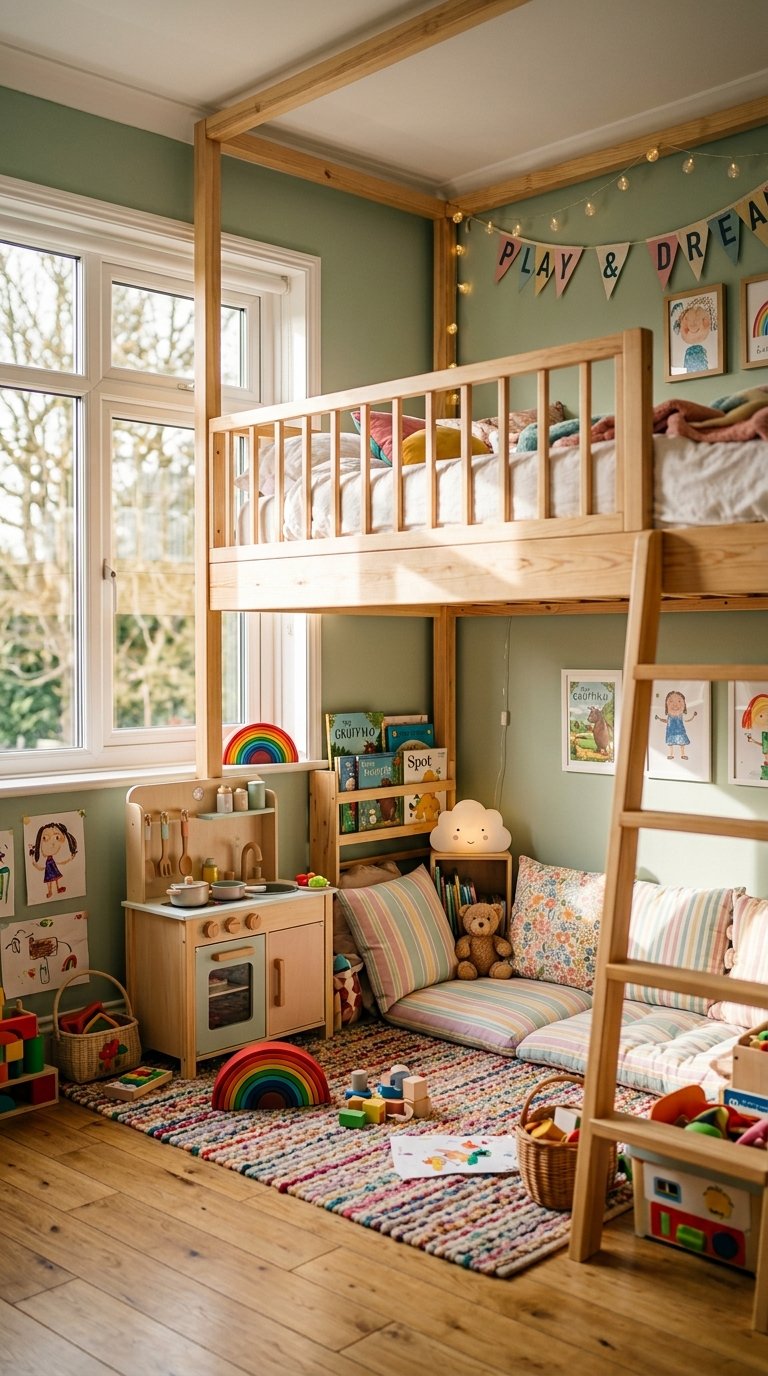
Instead of a second bed or a desk below the upper bunk, a play area configuration creates open floor space for a play kitchen, a reading corner, a small tent, or any other activity area that children use during the day.
Play area bunk bed configuration ideas:
- A curtain hanging from the upper bunk frame: Creates an enclosed playhouse feeling below
- A chalkboard panel on one side: Built into the lower bunk structure for drawing and play
- A small slide from the upper bunk: Exits to a play mat on the floor, an enormous hit with younger children
- A reading nook with cushions and a small light: A quiet zone below the sleeping area above
This configuration works best for single children who want both a creative play space and a proper sleeping area without the room feeling entirely consumed by beds. FYI, the play zone naturally evolves into a study zone as the child grows, which extends the furniture’s useful life significantly.
11. The Bunk Bed With Curtains for Privacy
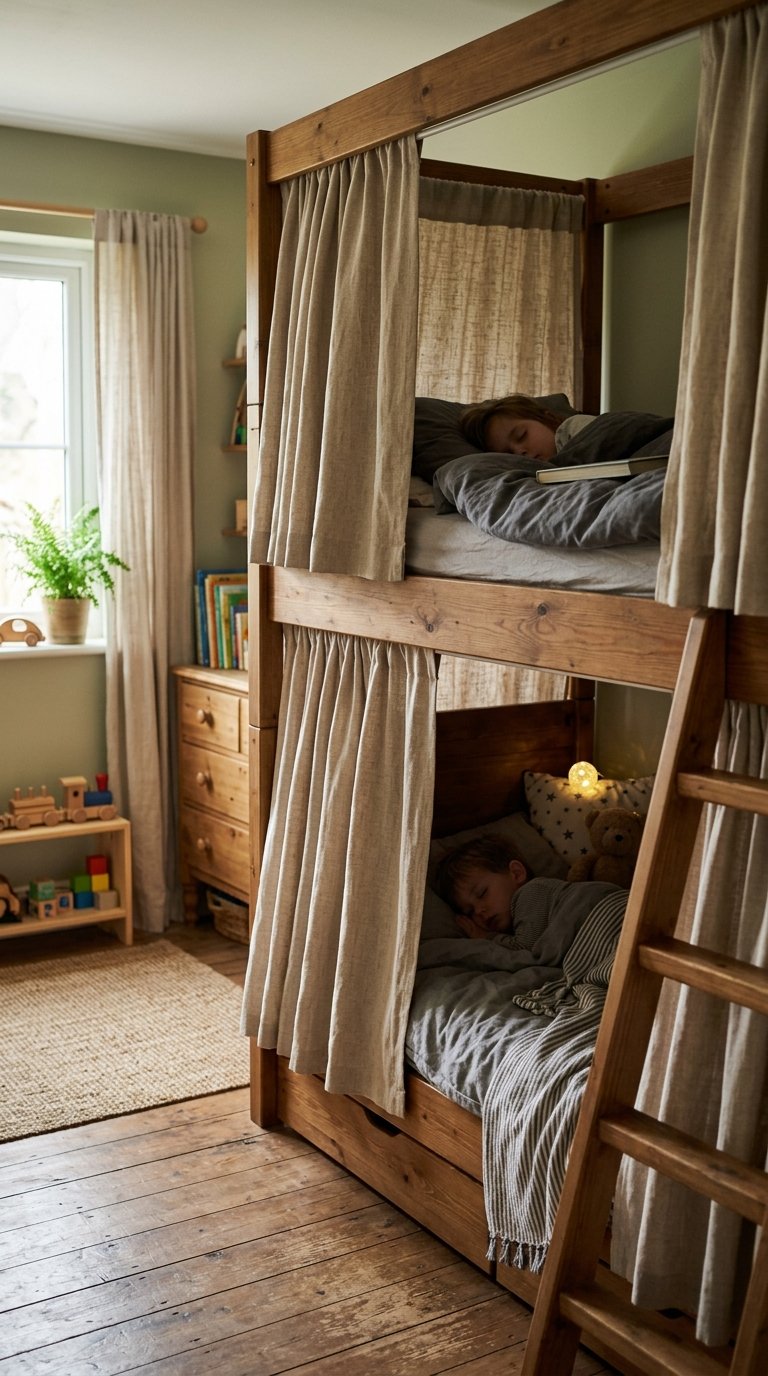
Adding curtains to individual bunk levels gives each sleeper a sense of enclosed personal space that open bunk beds don’t provide. The curtains can close for sleep and open during the day, creating a semi-private zone within a shared room.
Curtain bunk bed options:
- Curtain rod mounted on the bunk frame: Fabric panels slide on a rod attached to the frame’s front edge
- Canopy-style curtains: Fabric draped from the top of the bunk to the sides and front
- Blackout curtains: Particularly valuable for different-schedule roommates or light-sensitive sleepers
- Sheer curtains: Lighter and less enclosing, adds visual softness without full privacy
Installing curtains on an existing bunk bed costs between $30 and $100 depending on fabric choice and rod type. It’s one of the fastest upgrades to an existing bunk bed setup and makes a significant difference in how comfortable each bunk feels.
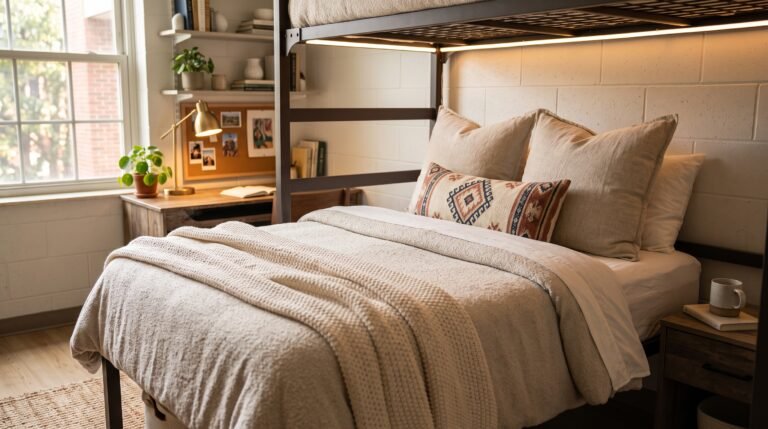
12. The Industrial Metal Bunk Bed
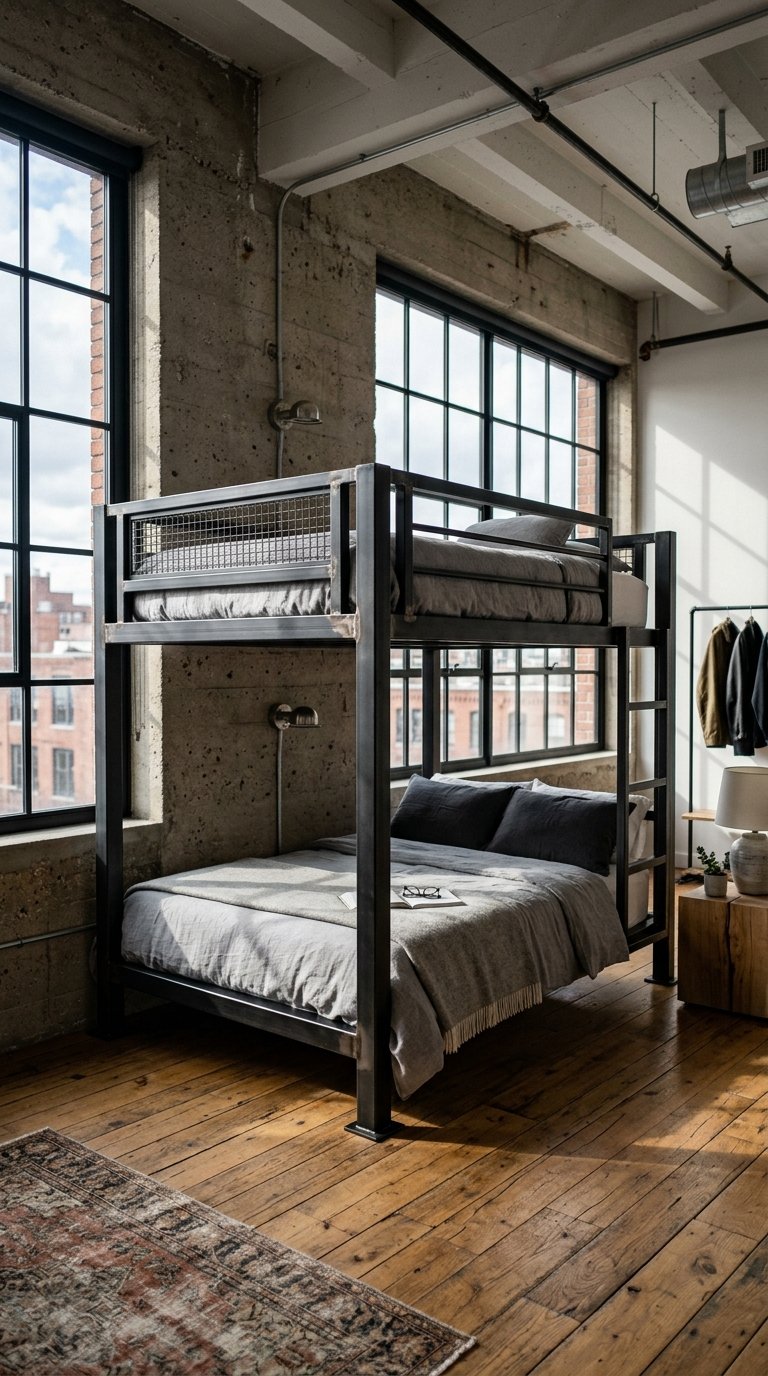
Metal bunk beds have a reputation for the cheap, wobbly camp variety. Industrial-style metal bunk beds in powder-coated steel are a different category entirely: heavy, structural, and distinctively modern in character.
What separates quality metal bunk beds from cheap ones:
- Wall thickness of the steel tubing: Thicker walls equal more rigidity and stability
- Welded joints versus bolted assembly: Welded frames are significantly more rigid
- Powder coat finish quality: A quality powder coat doesn’t chip or scratch easily
- Weight: A quality metal bunk bed feels heavy and solid; a cheap one feels light and flexible
Matte black powder-coated steel bunk beds work in industrial, modern, and Scandinavian bedroom styles and photograph exceptionally well for design-focused households. They cost $400 to $1,200 for quality versions and last indefinitely with minimal maintenance.
13. The Bunk Bed Room Divider
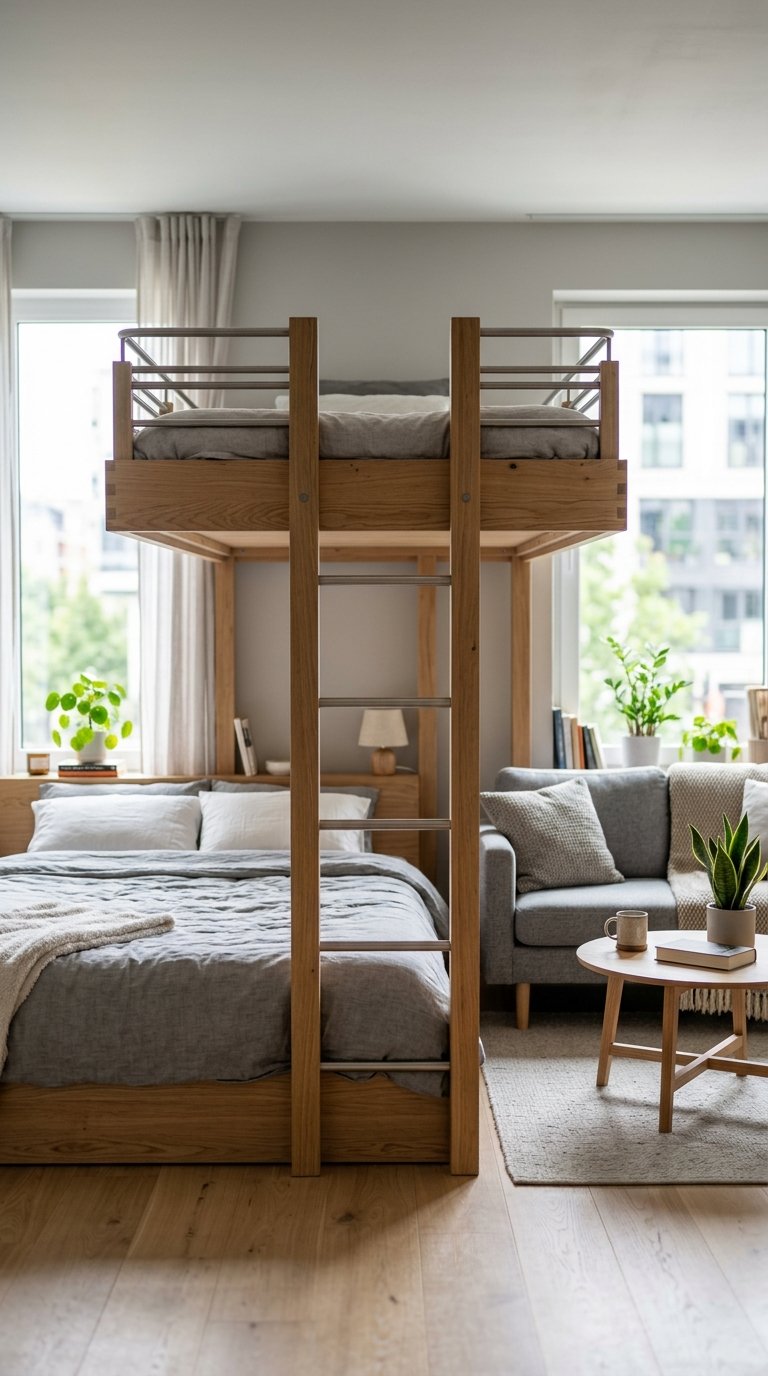
In studio apartments, open-plan lofts, or rooms shared by children who want some visual separation, a bunk bed configured as a room divider creates a functional partition within the space.
Room divider bunk bed configurations:
- Perpendicular to the room: The long axis of the bunk runs across the room width, dividing it into two zones
- Back panel added: An enclosed back panel on the bunk frame creates a solid wall-like division
- Open frame division: The open frame structure allows light to pass through while creating spatial separation
- Bookcase integration on the dividing side: The room-facing back of the bunk frame holds shelving accessible from the other side
This configuration requires careful planning of electrical outlets, lighting, and HVAC circulation on both sides of the division. A bunk bed room divider that creates a perfect sleeping zone on one side and a dark, poorly ventilated zone on the other defeats the purpose of the division.
14. The Bunk Bed With Reading Nooks
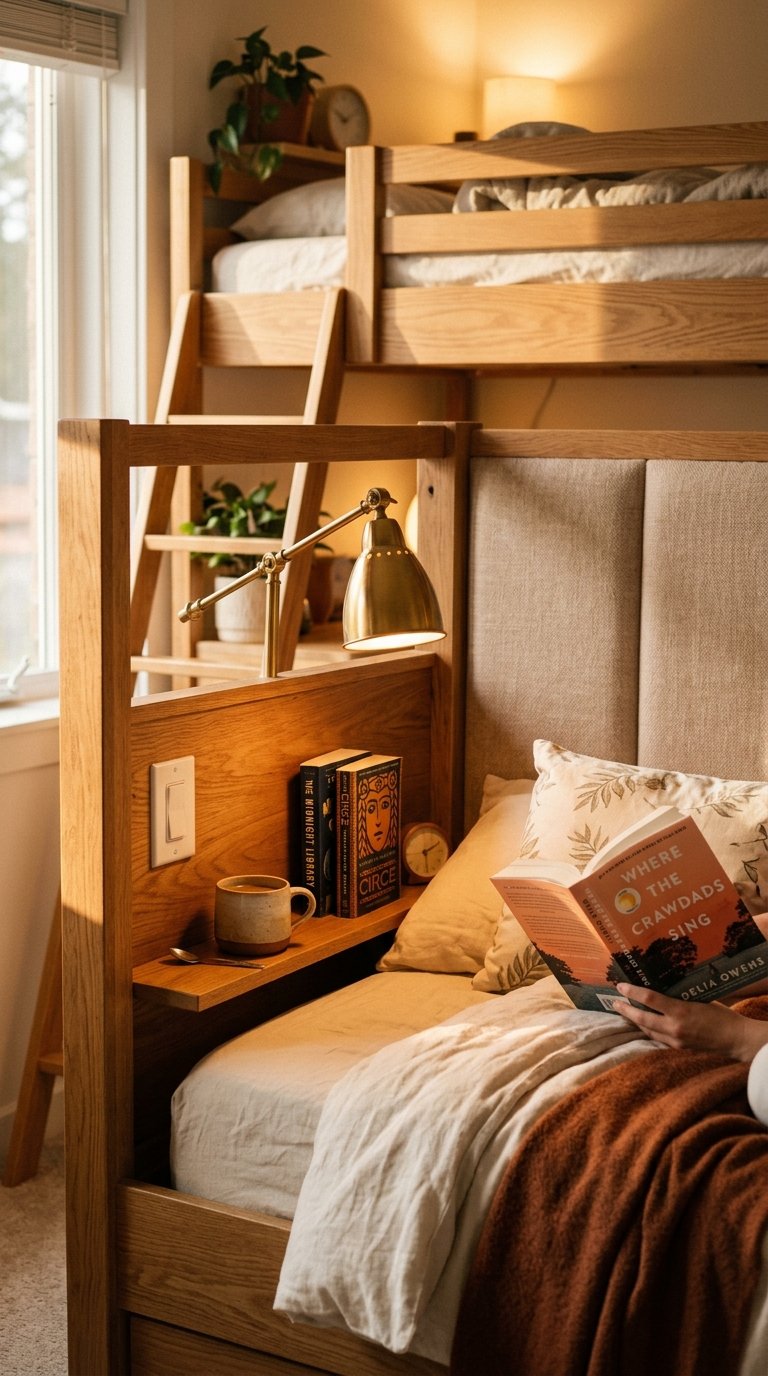
Individual reading nooks built into each bunk level create a personalized retreat within the shared sleeping furniture. A small light, a shelf for books, and a padded back panel transform each bunk from a bare sleeping surface into a cozy personal zone.
Reading nook bunk bed features:
- A small clip-on or mounted LED reading light at each level
- A narrow shelf at pillow height for books, glasses, and small personal items
- A padded back panel or headboard detail at each bunk for comfortable sitting up in bed
- Small curtains for additional enclosure of each reading zone
A reading nook bunk bed encourages independent reading habits in children by making the bed a comfortable place to be while awake, not just while sleeping. The investment in a well-designed bunk with reading nook features pays in behavioral dividends beyond just the furniture itself.
15. The Outdoor Bunk Bed for a Covered Porch or Cabin
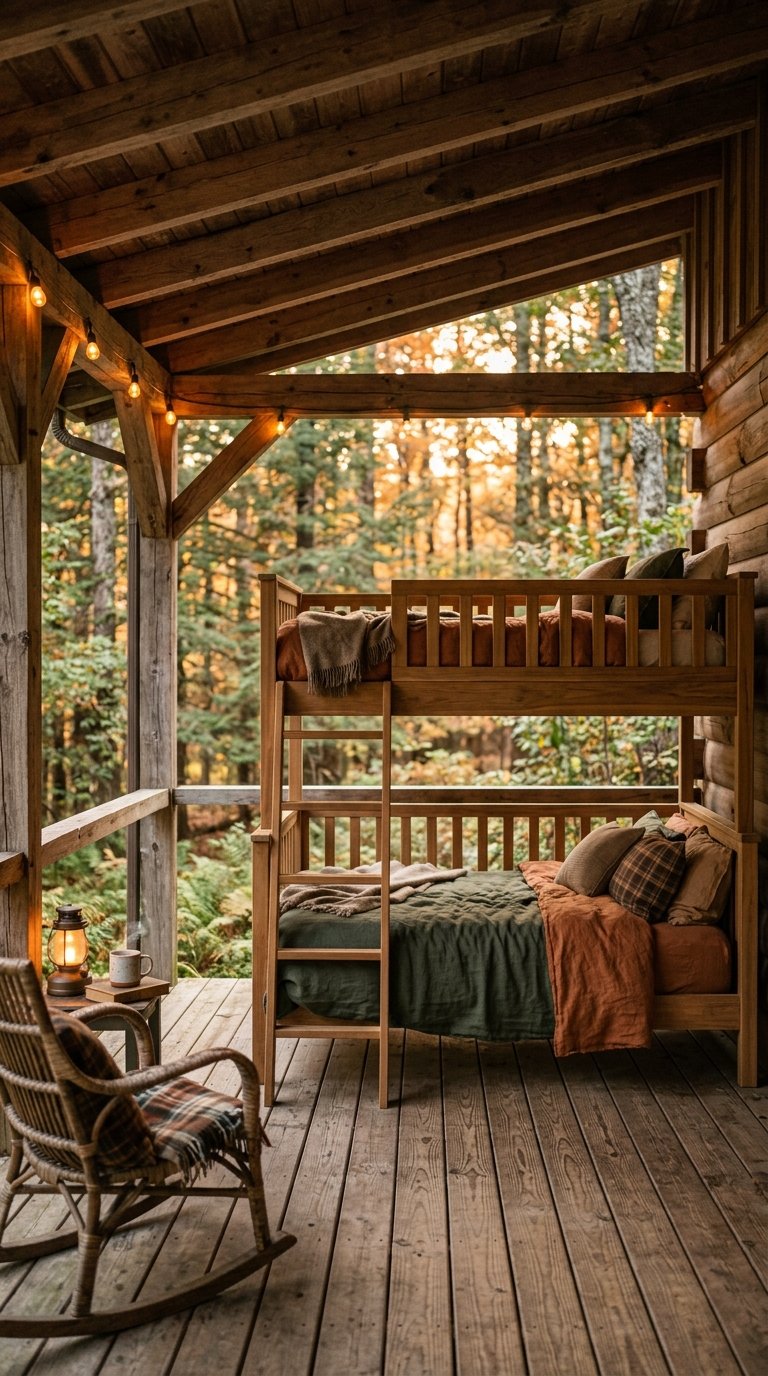
Outdoor bunk beds for covered porches, screened sleeping porches, and cabin settings extend the sleeping capacity of vacation properties without adding indoor square footage. Made from weather-resistant materials, they handle outdoor conditions appropriately.
Outdoor bunk bed material requirements:
- Teak: Naturally oil-resistant, handles outdoor humidity and temperature changes well
- Cedar: Natural oils resist moisture and insects, lighter than teak
- Powder-coated steel: Requires rust-resistant coating for outdoor use
- Powder-coated aluminum: Lightest metal option, naturally rust-resistant
Outdoor sleeping surfaces on a covered porch are one of the most popular features of vacation rental properties. Guests remember sleeping outdoors in a comfortable, sheltered environment. The investment in a quality outdoor bunk bed pays in rental income and reviews. 🙂
16. The Bunk Bed With Integrated Lighting
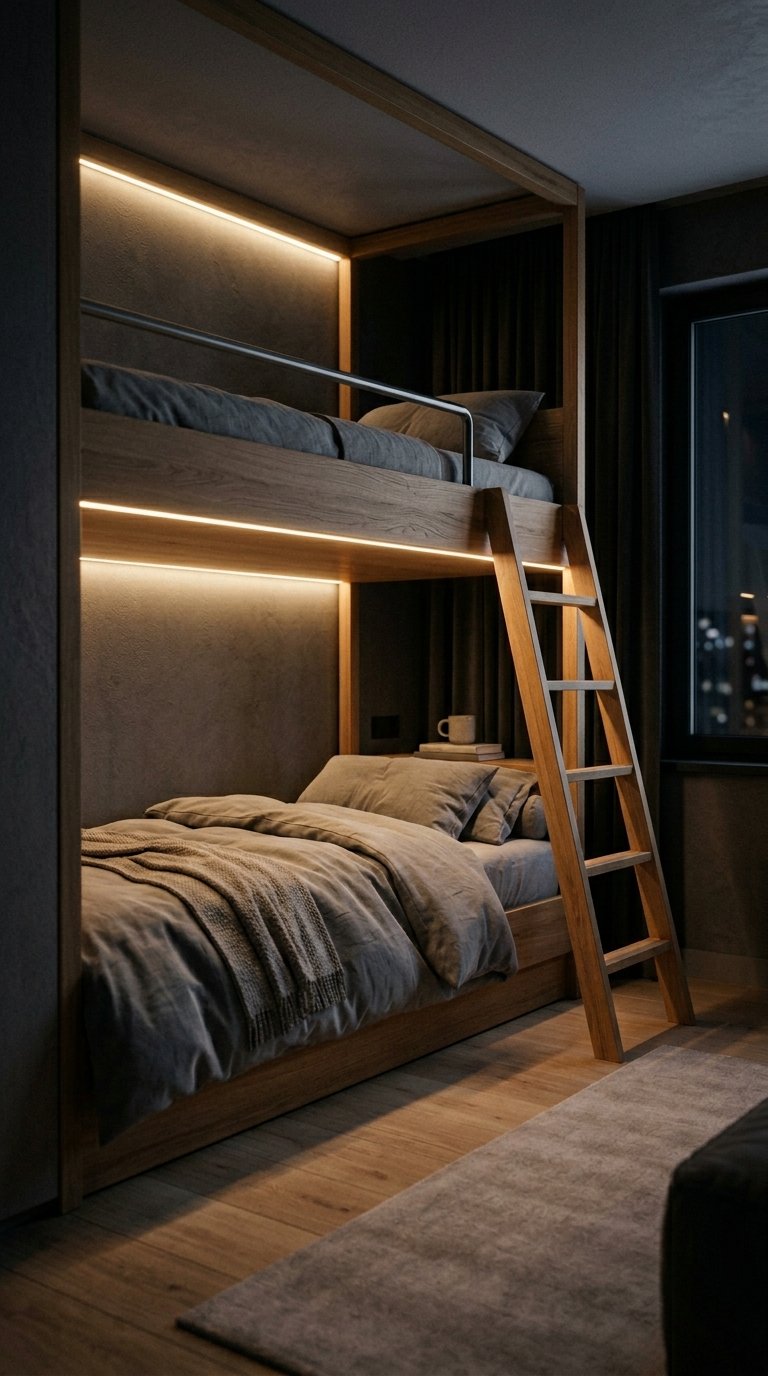
Built-in lighting at each bunk level changes how the bunk bed functions as a sleep environment. Rather than relying on overhead room lighting or handheld devices, integrated lighting gives each occupant independent light control at their level.
Integrated lighting options for bunk beds:
- LED strip lighting along the bunk frame interior: Warm ambient light at each level
- Recessed puck lights in the upper bunk base: Illuminate the lower bunk without protruding hardware
- Clip-on reading lights on the frame: More flexible, adjustable direction
- Battery-operated touch lights: No wiring required, simplest installation
Warm white LED strip lighting (2700K) at each bunk level creates the most comfortable sleep environment. Cool white lighting at bedtime actively works against melatonin production. Lighting color temperature matters in a sleeping space more than in any other room.
17. The Bunk Bed for Adults
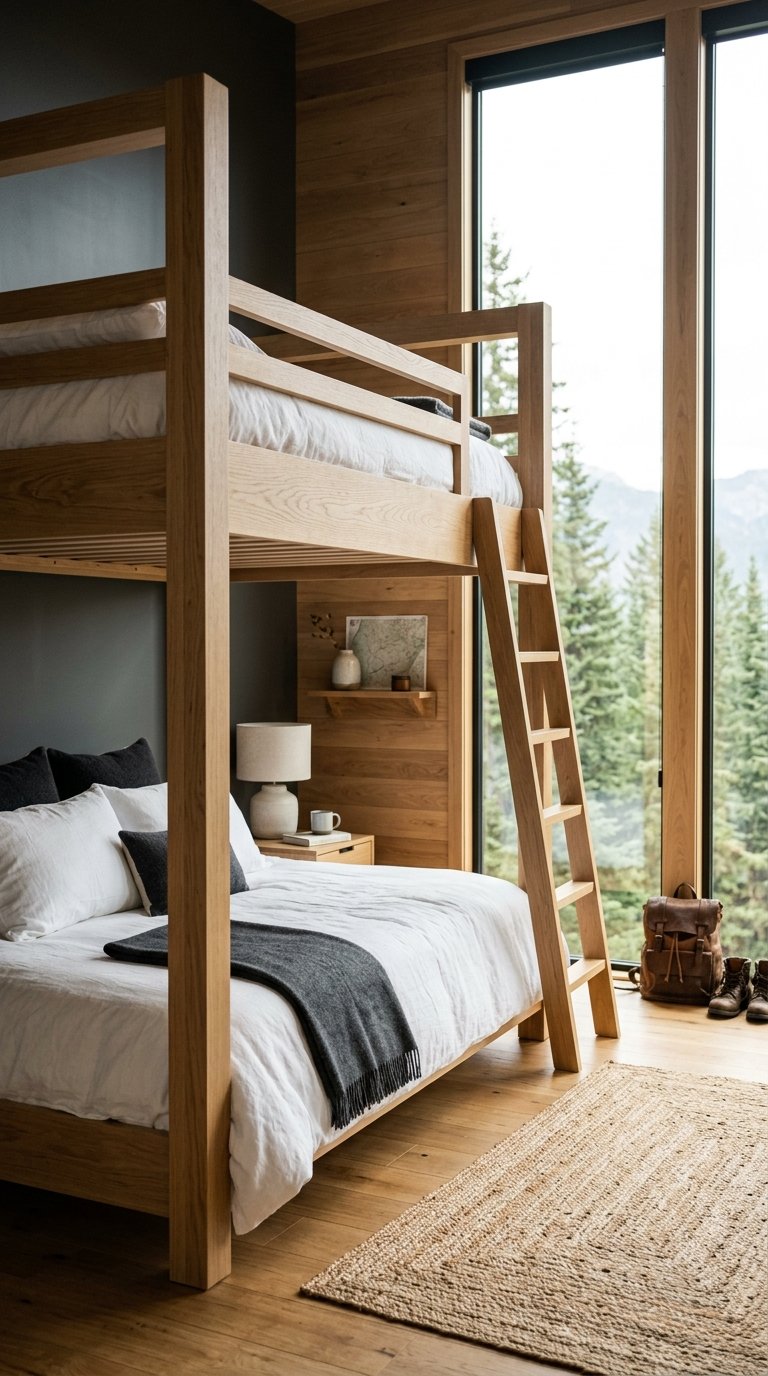
Adult bunk beds are not an oxymoron. They exist, they make sense in specific situations, and they’re a significantly better investment than air mattresses or sleeping bags for regular adult guests.
Adult bunk bed requirements:
- Full or queen mattress size: Twin mattresses don’t work comfortably for most adults
- Weight capacity: Adult bunk frames need ratings of at least 400 pounds per bunk
- Headroom at each level: Adults need more clearance between bunks than children; 36 to 40 inches between levels minimum
- Sturdy ladder: Adults need a wide, stable ladder with proper grip surface
Adult bunk beds work particularly well in vacation cabins, beach houses, and ski properties where sleeping capacity matters more than bedroom elegance. A well-built adult bunk bed accommodates four guests in one room without the awkwardness of shared beds or floor sleeping.
18. The Bunk Bed With Slide
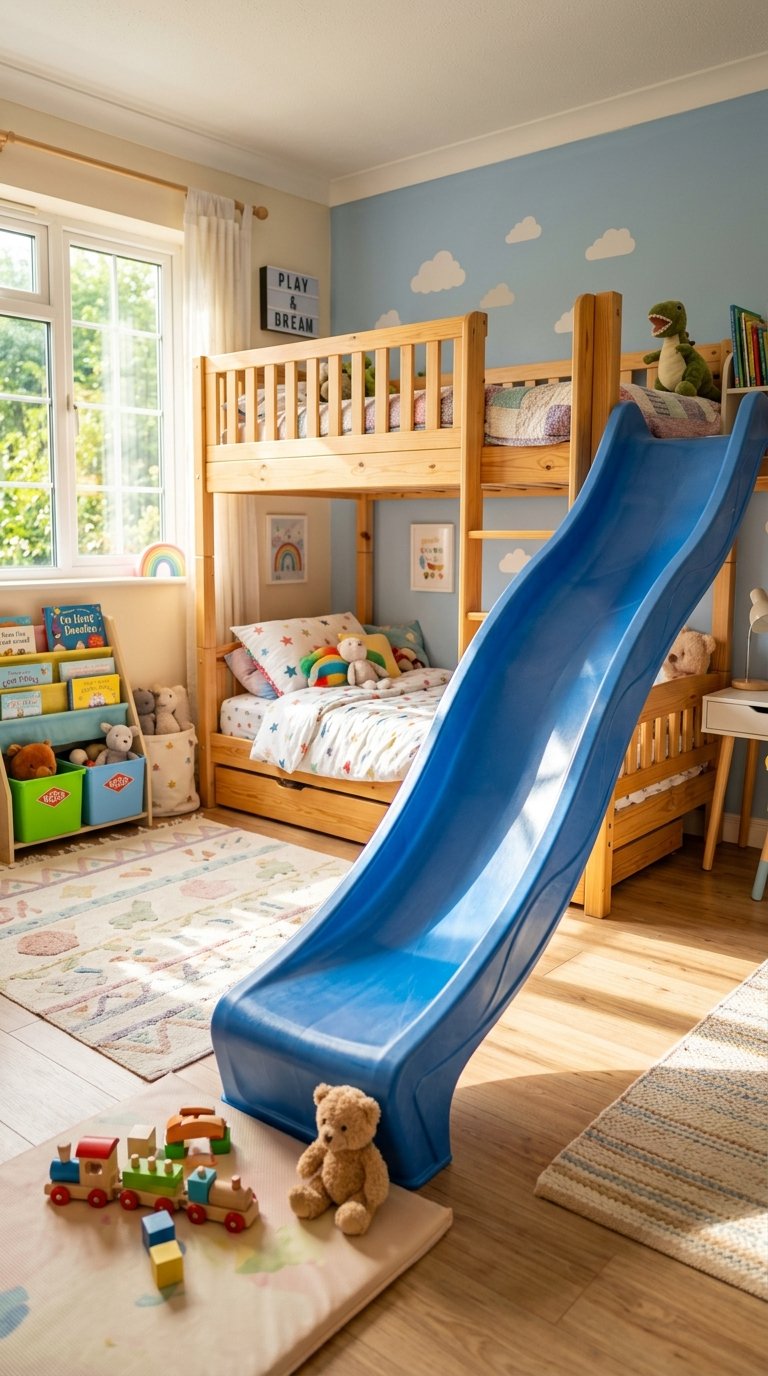
A bunk bed with a slide exits the upper level via a slide rather than a ladder. For children between approximately 3 and 10 years old, the slide makes the upper bunk genuinely exciting rather than just convenient.
Bunk bed slide practical details:
- Slide length: The slide needs to be long enough to create a gentle angle; too steep is unsafe
- Slide material: Plastic slides are most common; some wooden models use a polished wood slide
- Landing area: The slide should land onto a soft mat or an area clear of furniture and sharp edges
- The ladder still exists: Every slide bunk bed also includes a ladder for standard access and for climbing up
The slide remains popular through approximately age 8 to 10 before children start using the ladder exclusively. The design works best in larger rooms where the slide can exit at a safe angle without putting the landing zone in a traffic path.
19. The Floating Bunk Bed
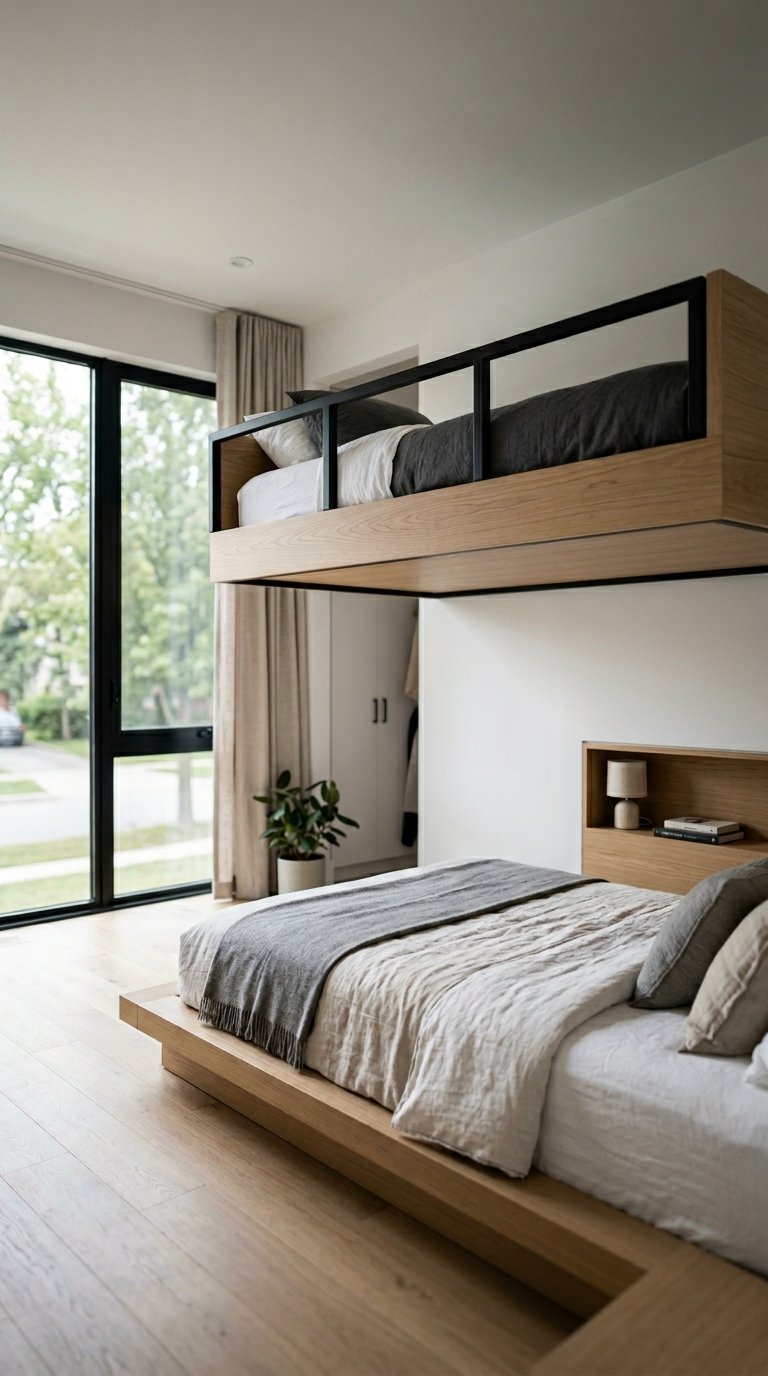
A floating bunk bed mounts the upper bunk to the wall rather than supporting it with standard floor-contact posts. The visual effect is a sleeping surface that appears to hover in mid-air, with significantly less visual bulk than a standard frame.
Floating bunk bed construction requirements:
- Wall anchoring is structural and non-negotiable. Floating bunk beds attach to wall studs with heavy-duty hardware. The wall connection carries the full weight of the upper bunk, mattress, and occupant.
- Professional installation is strongly recommended for floating bunk configurations
- The lower bed typically sits on a standard platform base with the upper bunk mounted to the wall above it
Floating bunk beds create the most visually minimal bunk configuration available and work well in modern, Scandinavian, and minimalist bedroom styles where standard bunk frames feel visually heavy. IMO, the aesthetic payoff is worth the more complex installation for design-focused households.
20. The Bunk Bed in a Nautical or Cabin Theme
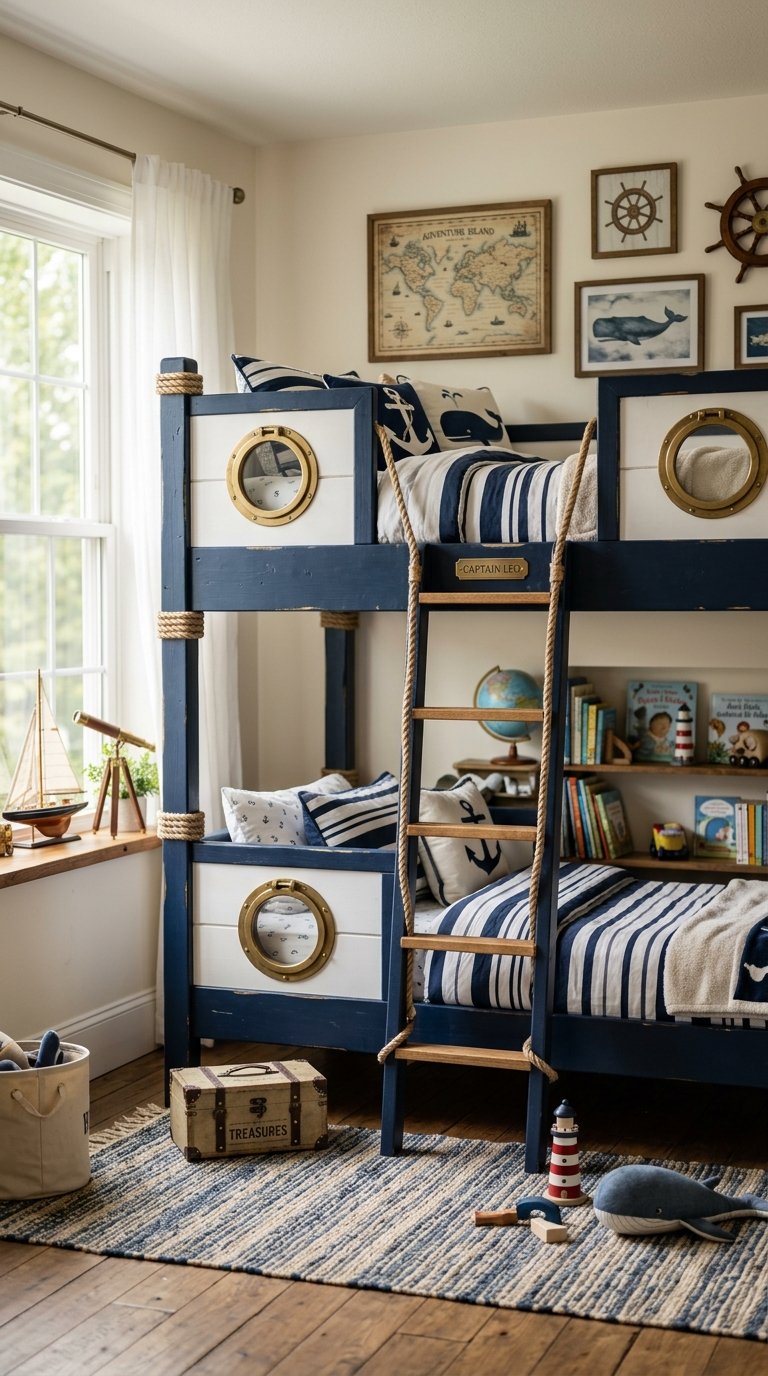
Themed bunk beds design the entire sleeping structure around a specific aesthetic. A nautical bunk references sailing and maritime design: rope ladders, porthole windows cut into the side panels, navy and white color schemes. A cabin-theme bunk uses log-style posts, natural bark textures, and rustic finishes.
Themed bunk bed aesthetic elements:
- Nautical: Rope ladder, porthole cutouts, painted navy or white, rope accent details
- Cabin/rustic: Peeled log posts, natural knot details, pine construction, bark texture accents
- Space: Integrated LED constellation lighting, grey and silver color scheme, tech-panel headboard details
- Castle/fort: Turret-style upper bunk surround, drawbridge ladder, flag mounting point at the top
Themed bunk beds have a functional lifespan tied to how long the child maintains interest in the theme. A nautical bunk purchased for a 6-year-old may feel less relevant by age 12. Choose themes with some longevity or opt for a design that transitions naturally as the child’s interests evolve.
21. The Custom Built-In Bunk Bed
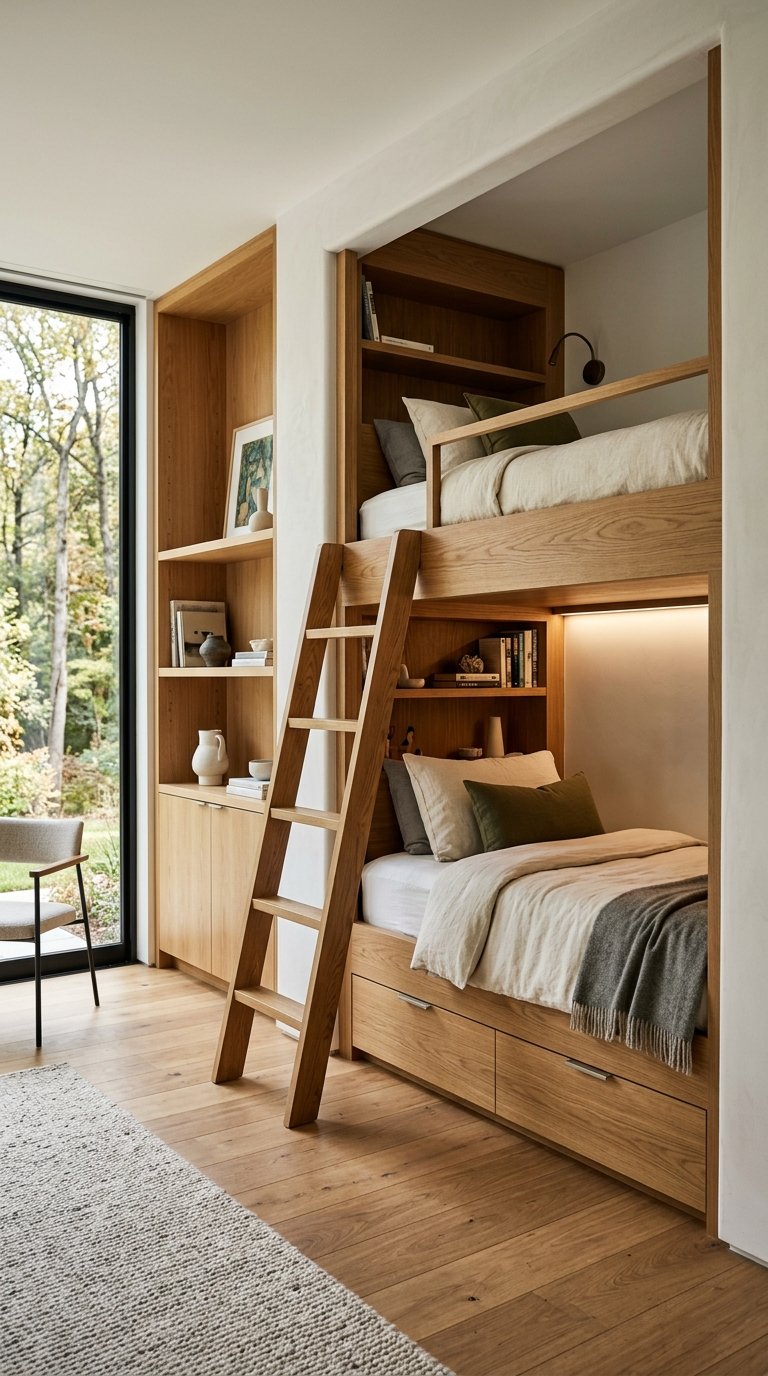
A custom built-in bunk bed integrates the sleeping structure into the room’s architecture rather than placing a freestanding piece of furniture against the wall. Built-in bunks look like they belong to the house rather than to the furniture store.
Custom built-in bunk bed advantages:
- Uses every inch of available space including ceiling height, wall length, and awkward alcoves
- Integrates storage seamlessly: Drawers, shelving, and cubbies built into the same structure
- Looks significantly more finished than any freestanding bunk bed
- Increases perceived home value as a built-in architectural feature
Custom built-in bunk beds cost more than freestanding options but the investment is more permanent and delivers better long-term value. Budget $3,000 to $10,000 for a full built-in bunk system with integrated storage depending on materials and complexity.
The custom option also lets you specify exact dimensions for your ceiling height, mattress sizes, ladder position, and storage configuration. No compromises.
Final Thoughts
Bunk beds solve a specific problem: fitting multiple sleeping surfaces into a space that would otherwise accommodate only one. They do this better than any other furniture category when they’re chosen thoughtfully and built well.
The 21 ideas on this list cover every configuration from the simplest twin over twin to fully custom built-in systems that transform a room’s entire function. The right choice depends on your ceiling height, your occupants’ ages and weights, your room’s floor space, and honestly, how long you expect to use the configuration before the household’s needs change.
Buy solid wood or quality metal. Check the safety specifications. Measure the ceiling. The bunk bed you choose carefully on the front end is the one that earns its keep every night for the next fifteen years.
The wobbly metal camp bunk exists in the past. Leave it there.