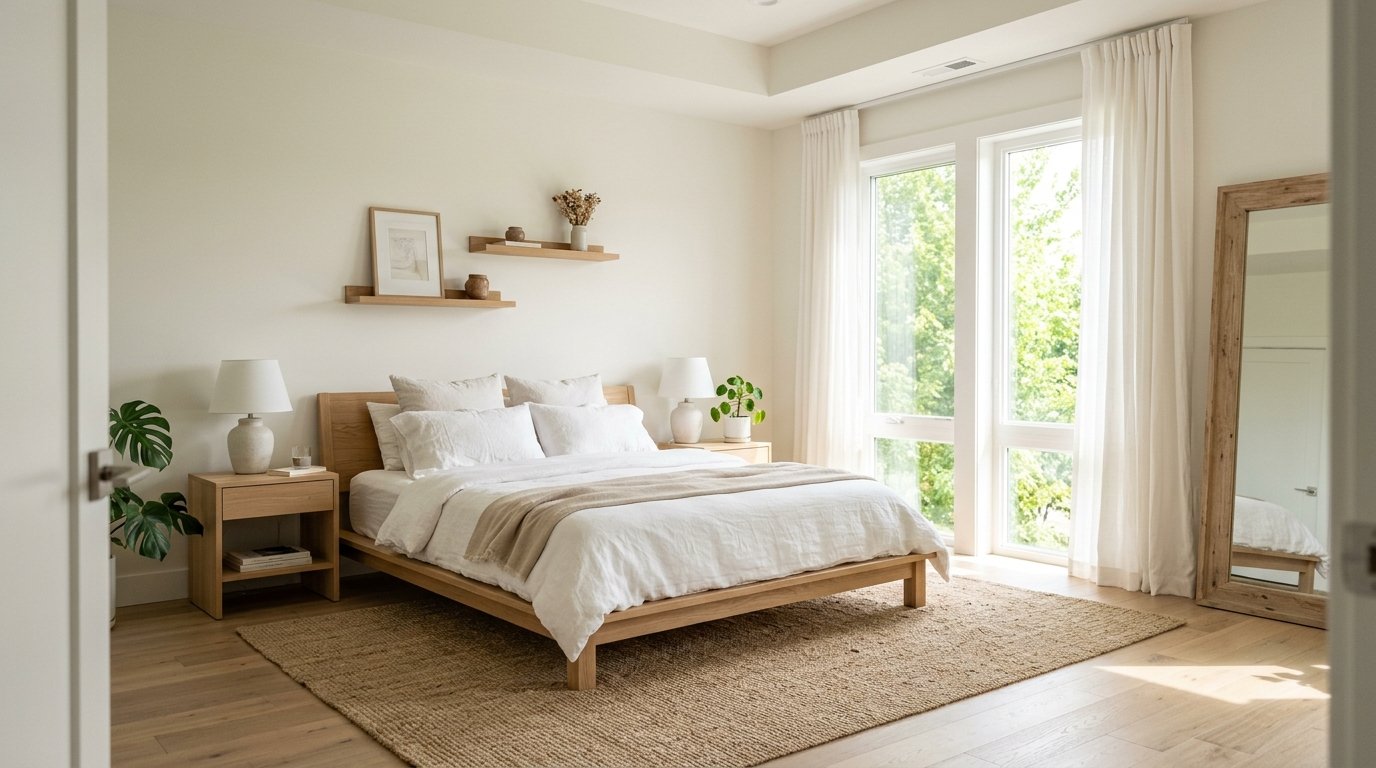
25 Light and Airy Bedroom Ideas That Instantly Open Up Any Space
A dark, heavy bedroom does not just look small. It feels small, and you notice it every morning before you are fully awake. A light and airy bedroom costs less to achieve than most people expect, and the difference it makes to how you start and end every day is measurable. These 25 ideas work in real bedrooms: small apartments, rentals, older homes with limited natural light, and spaces where a full renovation is not on the table.
1. Paint Every Wall and Ceiling the Same Soft White
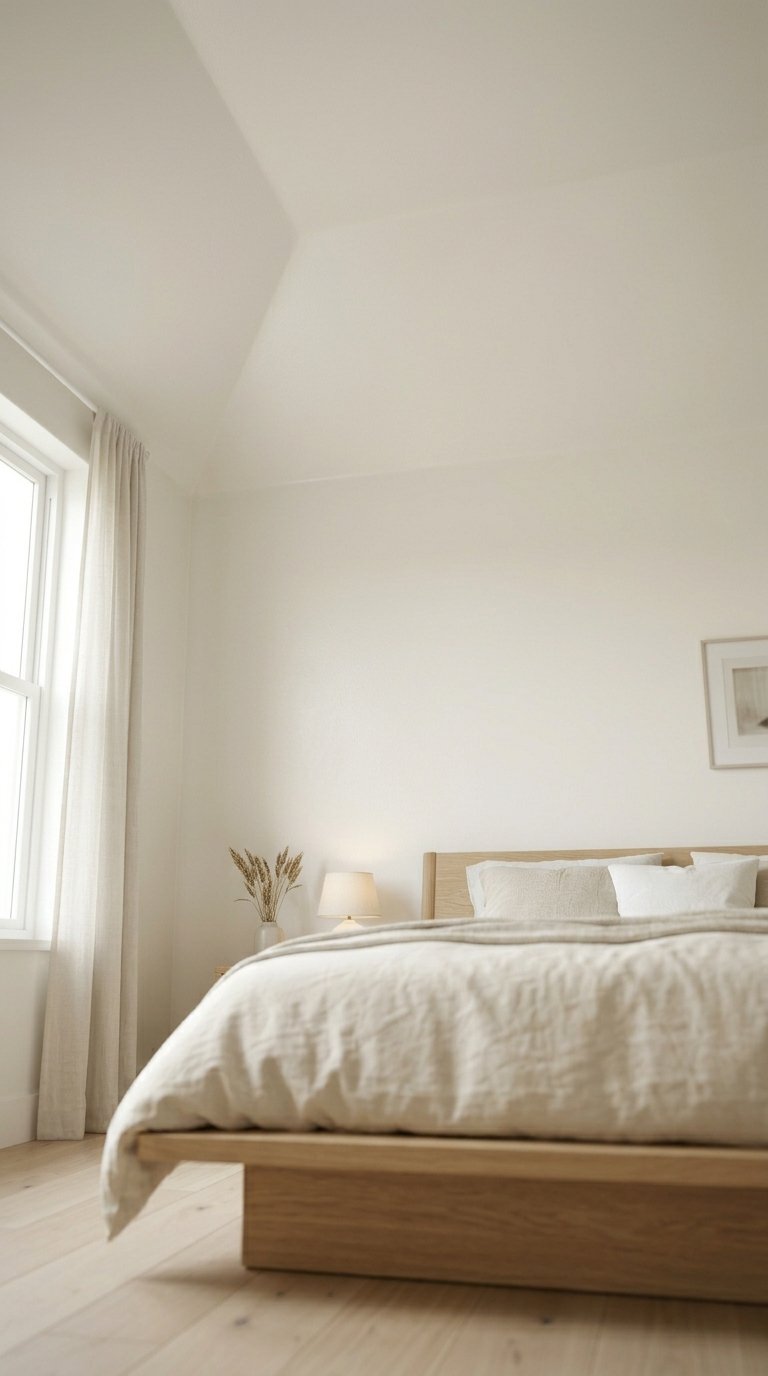
Painting the ceiling the same color as the walls removes the visual boundary between the two surfaces and makes the room feel significantly taller. Most people paint ceilings bright white regardless of wall color, which creates a hard horizontal line that caps the room visually. Matching the ceiling to a soft warm white wall color like Benjamin Moore Chantilly Lace or Sherwin-Williams Alabaster dissolves that boundary completely.
Use the same finish on both surfaces: eggshell on walls and flat on the ceiling works well. The slight sheen difference reads naturally without creating contrast. This single change costs one extra quart of paint and delivers one of the largest perceived space increases on this list.
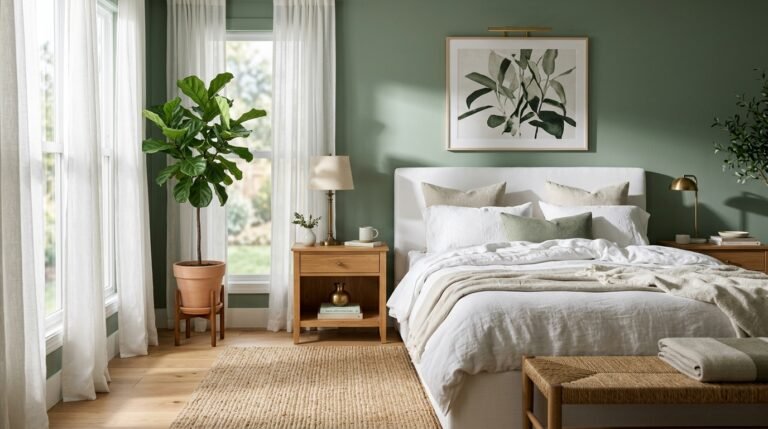
2. Hang Sheer White Curtains at Ceiling Height
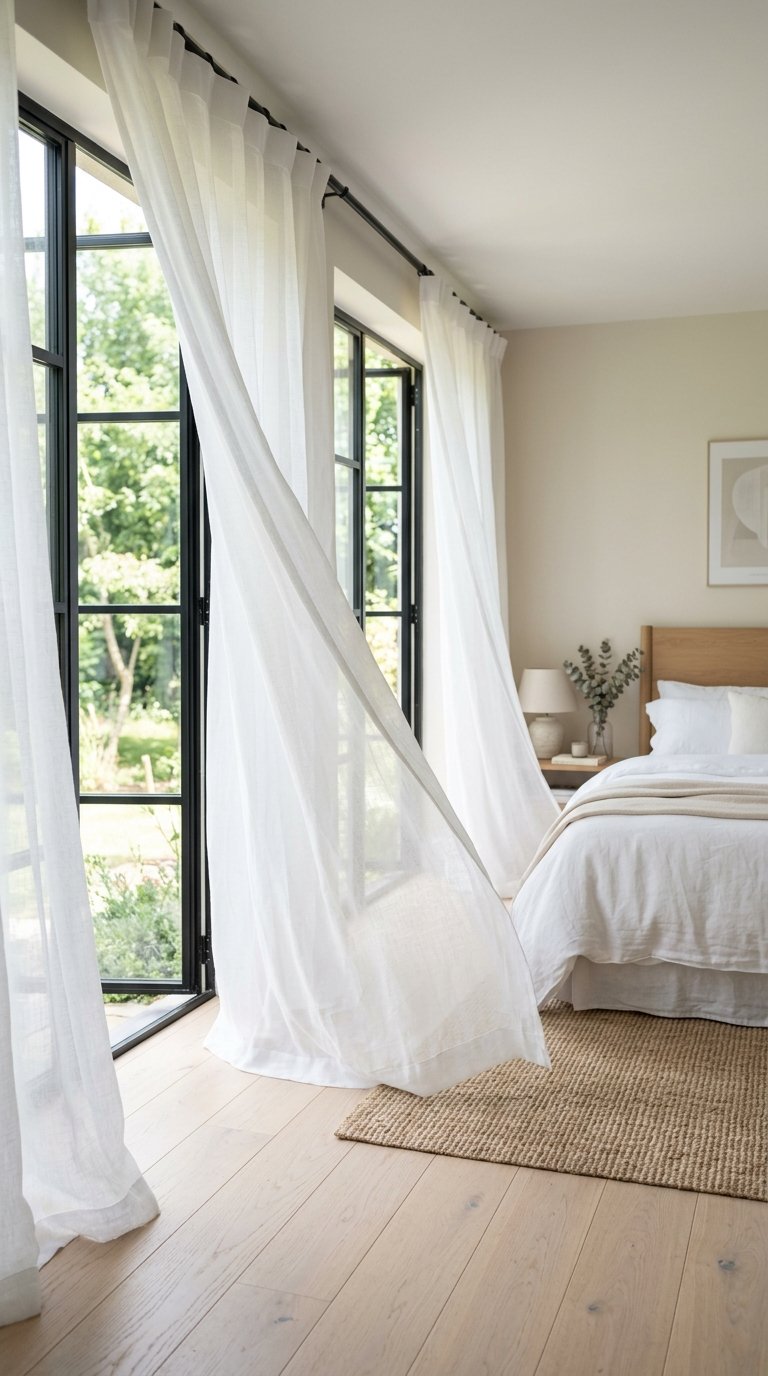
Sheer curtains mounted at ceiling height and extending to the floor make windows look significantly taller than they are and flood the room with soft diffused light throughout the day. Mount the rod 4 to 6 inches above the window frame and extend it 6 to 8 inches beyond each side of the window. That installation method frames the window as an architectural feature rather than a functional opening.
A set of two sheer linen or cotton voile panels for a standard window runs $20 to $60 at most home goods retailers. Choose panels at least 84 inches long for standard 8-foot ceilings. Shorter panels create a visual chop in the room that undermines the height effect you are working toward.
3. Choose White or Cream Linen Bedding
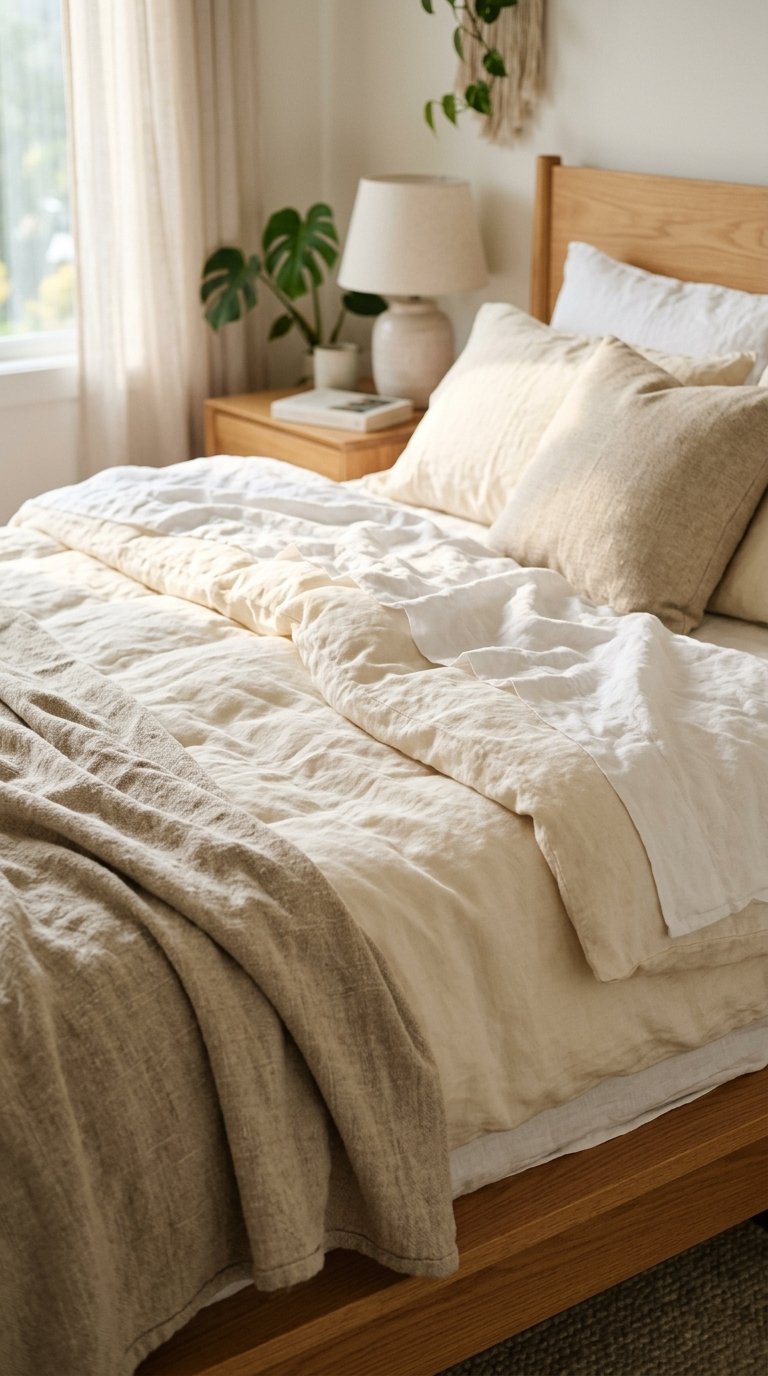
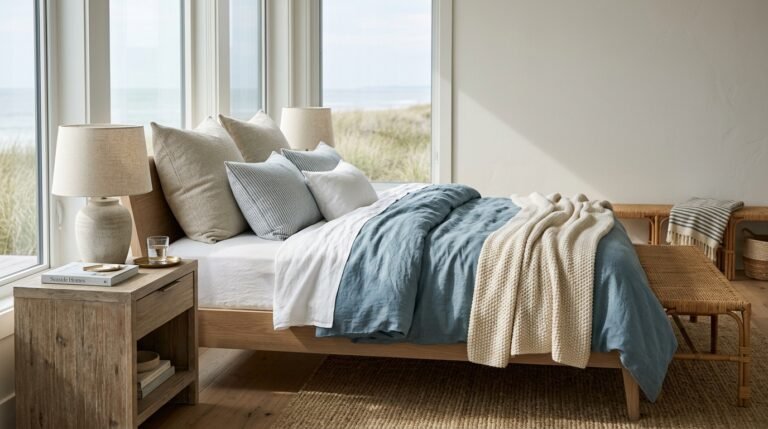
White or cream linen bedding reflects more light than any other bedding color and creates the visual center of a light and airy bedroom. Linen’s natural texture prevents the bed from looking sterile or hotel-flat. The slight wrinkle and organic weave adds warmth and depth without adding visual weight.
IKEA’s PUDERVIVA linen duvet cover in white retails at $69 and performs comparably to options costing three times as much. Layer a white linen duvet with a slightly off-white or warm cream flat sheet visible at the fold. That tone variation adds dimension without introducing a contrasting color that would pull the eye away from the room’s airy quality.
4. Use a Low-Profile Bed Frame
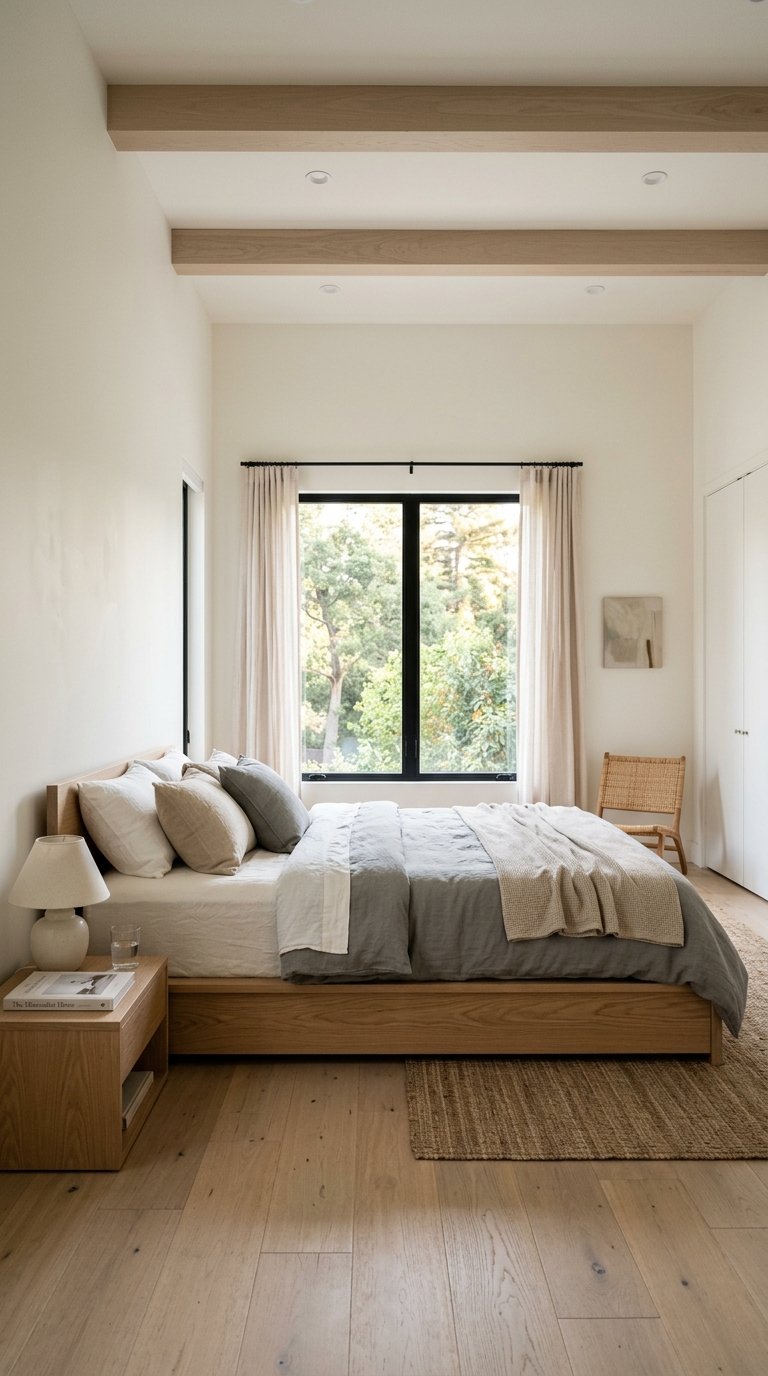
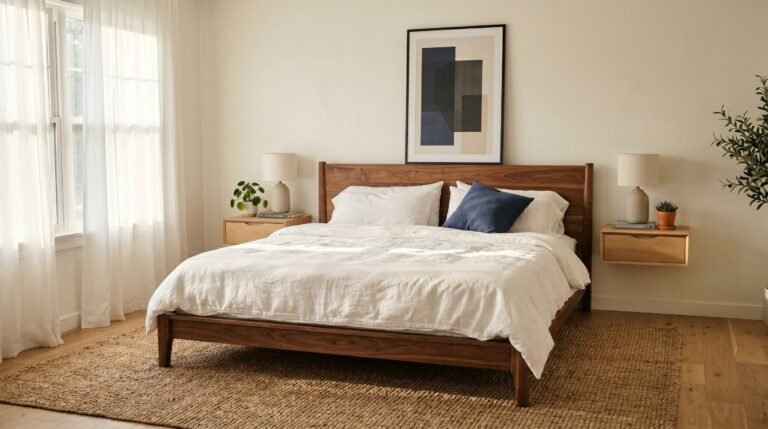
A low bed frame keeps the visual weight of the largest piece of furniture in the room close to the floor, which opens up the wall space above the headboard and makes the ceiling feel higher. Platform beds and low-slung frames with simple clean lines work best. Ornate headboards with tall carved details fight against the light and airy quality you are building.
A platform bed frame between 12 and 16 inches high creates the most balanced proportion for standard 8-foot ceilings. Go lower than 12 inches and the bed looks like a floor mattress. Go higher and you lose the ceiling-height benefit the low frame provides.
5. Add a Large Mirror Opposite the Window
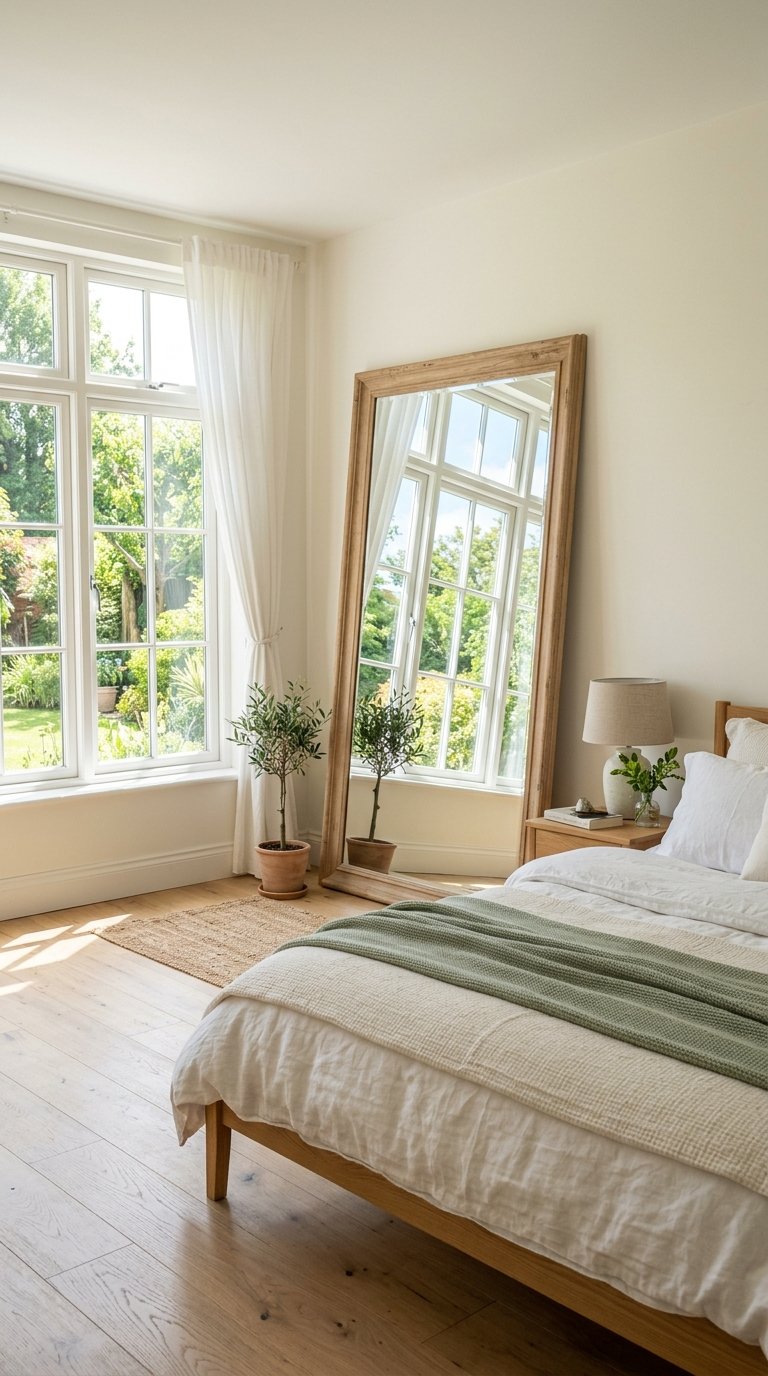
Placing a large mirror on the wall directly opposite your bedroom window doubles the amount of natural light the room receives by reflecting it back into the space. A mirror measuring 24×36 inches or larger makes a significant difference. The reflection also creates the perception of a second window, which doubles the room’s apparent depth.
Lean a large mirror against the wall rather than mounting it if you rent or want flexibility. A leaned mirror in a simple natural wood or thin metal frame looks intentional and styled. A 36×48 inch leaned mirror from IKEA’s HOVET range retails at $199 and delivers the light-amplifying effect without a single wall anchor.
6. Replace Heavy Drapes With Bamboo Blinds
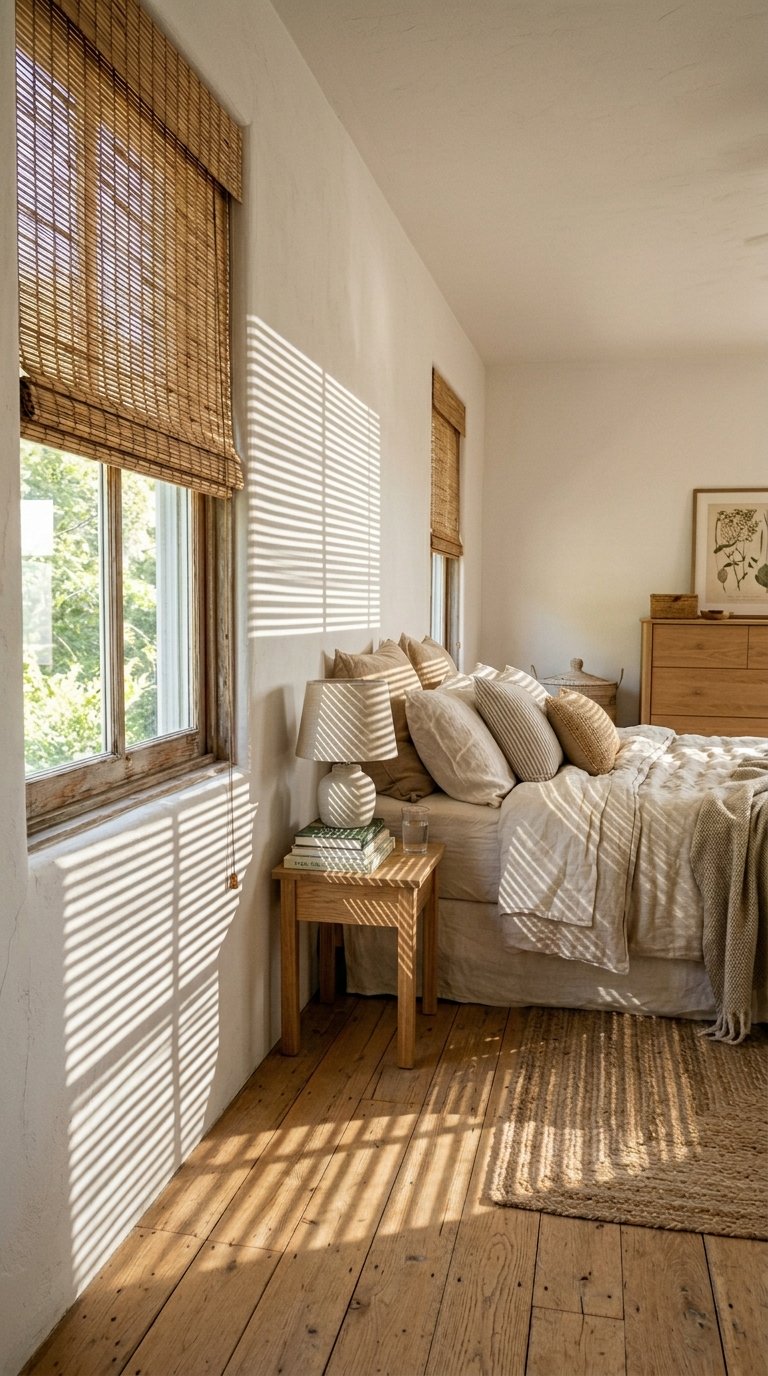
Bamboo or woven wood blinds filter natural light into a warm, dappled glow that fabric drapes block entirely when closed. They also frame the window with natural organic texture that adds warmth without visual heaviness. A standard bamboo blind costs $25 to $60 per window and installs in 20 minutes.
The warm honey tones of natural bamboo complement white walls and light bedding without competing with either. Pair bamboo blinds with sheer panel curtains on the same window for a layered treatment that handles both light control and softness simultaneously.
7. Keep the Floor Light and Uncluttered
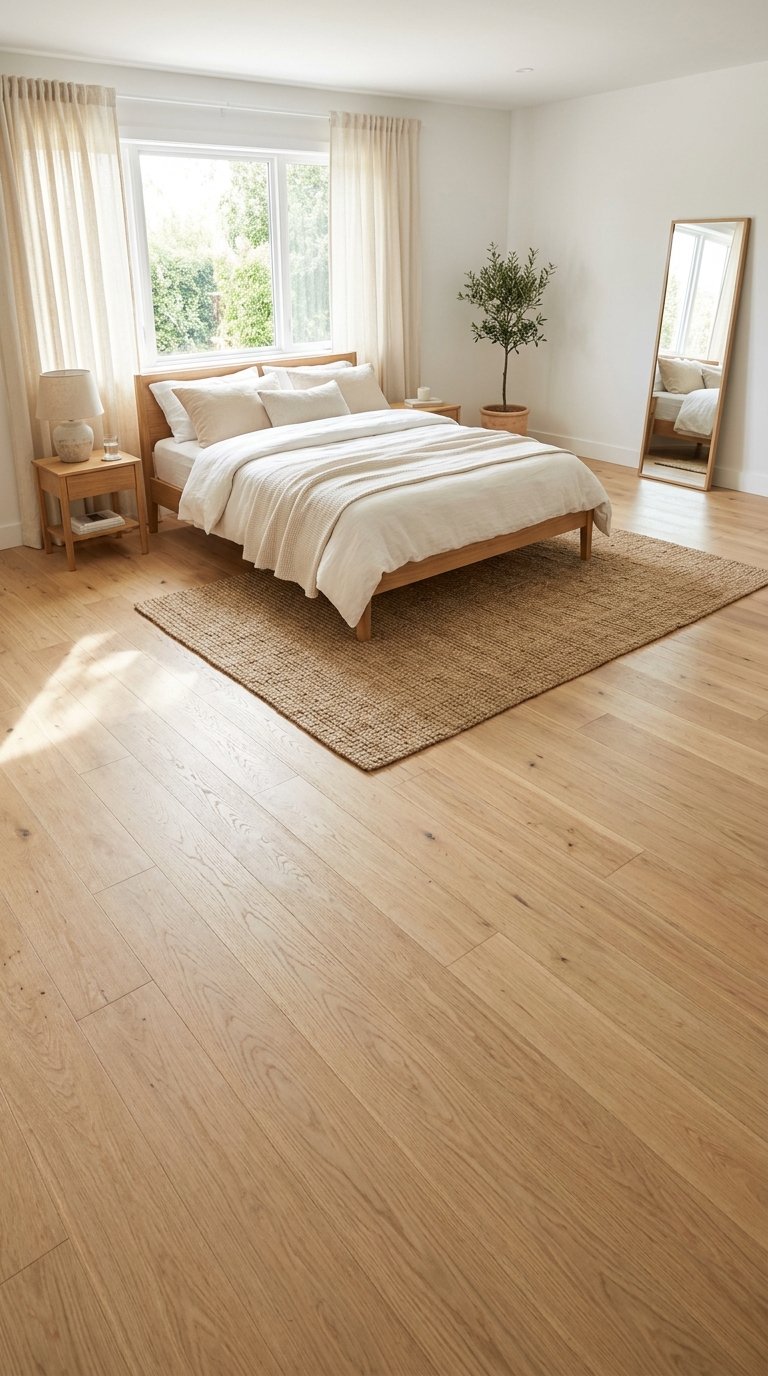
Light hardwood floors, white-painted floors, or light grey tile reflect more ambient light than dark flooring and make a bedroom feel significantly more spacious. If you rent or own a home with dark floors, a large light-colored area rug covering the majority of the floor creates a similar visual effect.
A natural jute or sisal rug in warm honey tones costs $40 to $120 for a standard 5×8 and adds organic texture without darkening the room’s floor plane. Keep the floor beyond the rug as clear as possible. Clutter on the floor, including shoes, bags, and extra furniture, visually shrinks the room faster than any wall color or window treatment can compensate for.
8. Install a Rattan or Woven Pendant Light
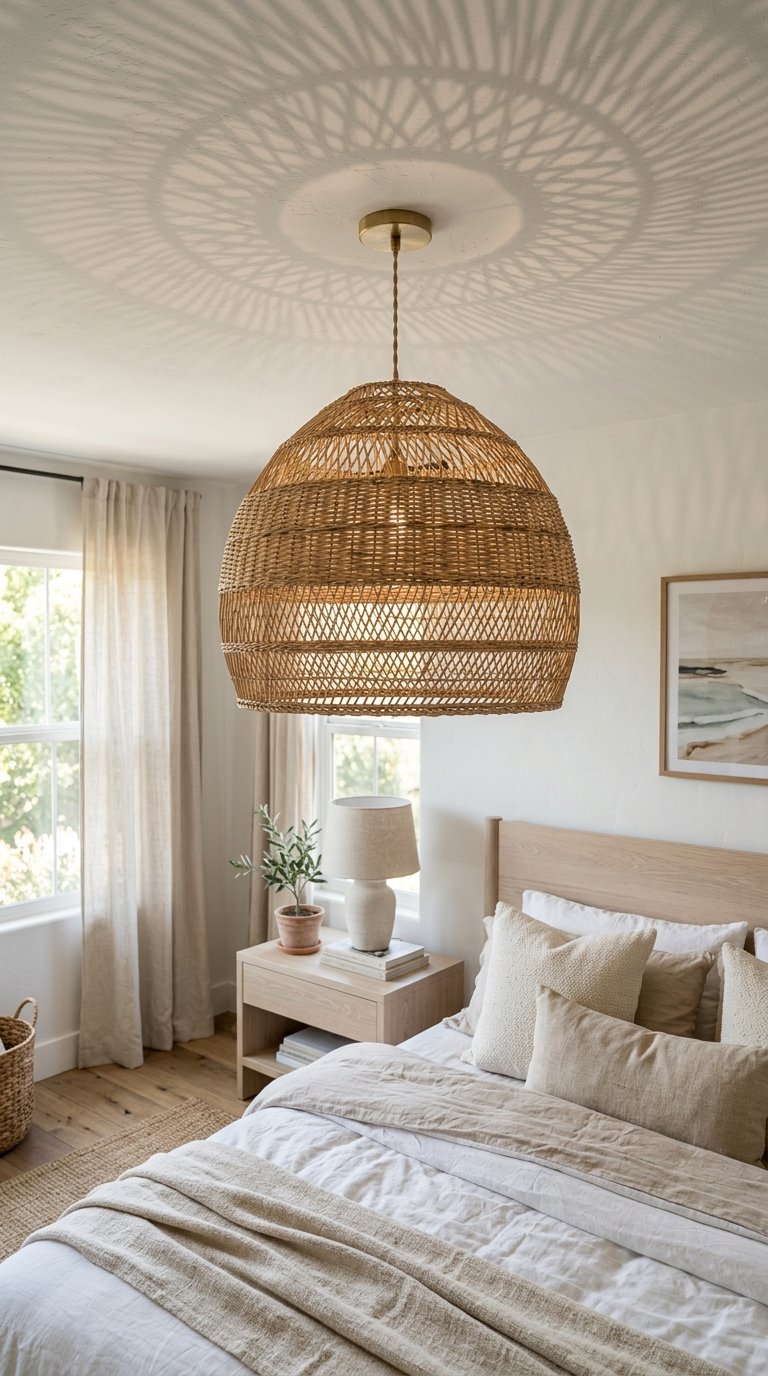
An overhead pendant light in rattan or woven seagrass replaces a standard ceiling fixture with something that adds texture, warmth, and diffused light simultaneously. The woven material filters light softly and casts a gentle pattern on the ceiling around it. A rattan pendant retails from $60 to $180 on Amazon and Wayfair.
Use a warm white bulb at 2700K inside any woven pendant. The warm tone amplifies the airy, sun-washed quality of a light bedroom. A cool daylight bulb at 5000K turns a beautiful rattan pendant into something that looks like office lighting, and nobody wants that.
9. Choose Furniture With Exposed Legs
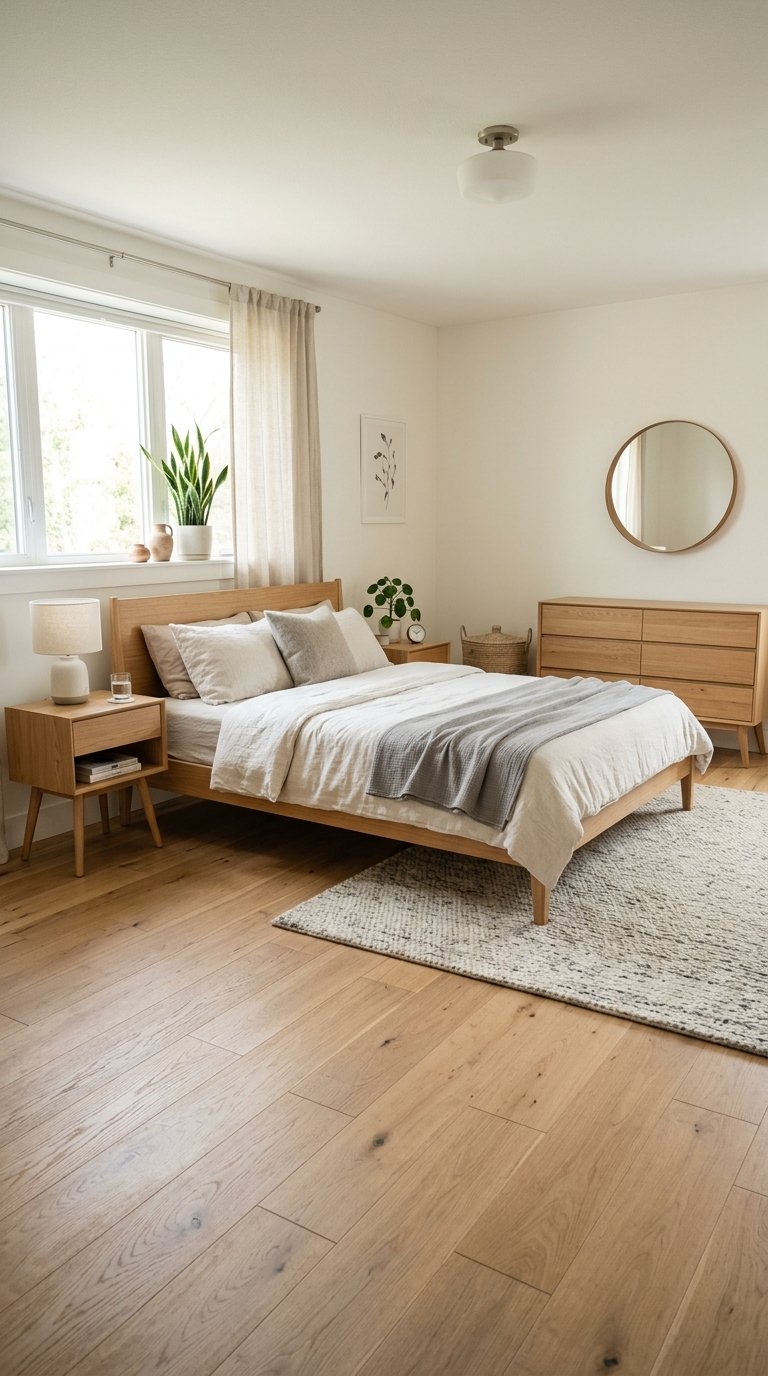
Furniture with visible legs creates the impression of more floor space because you see the floor continuing beneath each piece. A bed frame, nightstands, a dresser, and an accent chair all feel lighter visually when their legs are exposed rather than hidden behind a platform or flush base. This applies at every price point.
Tapered wood legs in natural or light oak finish contribute the most light and airy quality across furniture styles. Avoid furniture with solid panel bases that sit flush to the floor: they anchor the room visually in a way that makes the space feel heavier and smaller than it is.
10. Use a White or Natural Wood Headboard
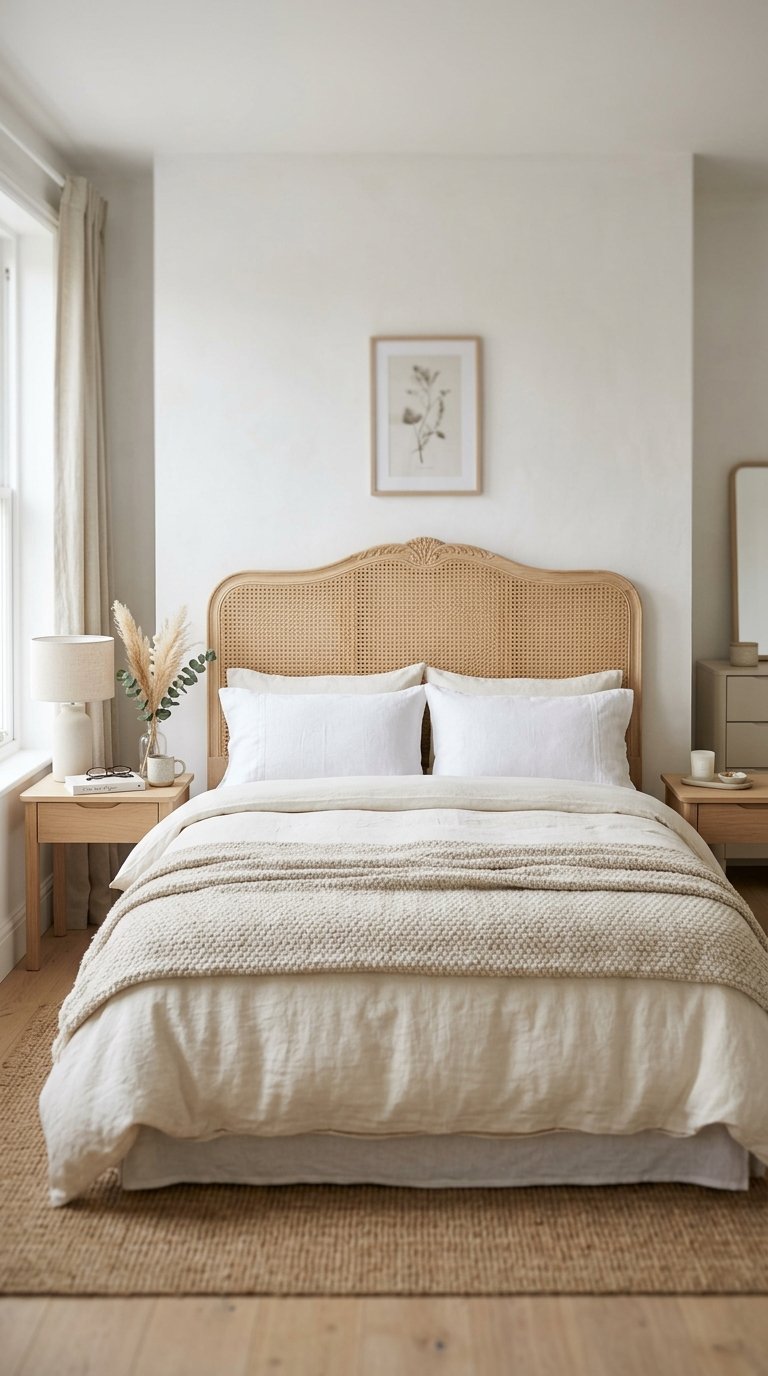
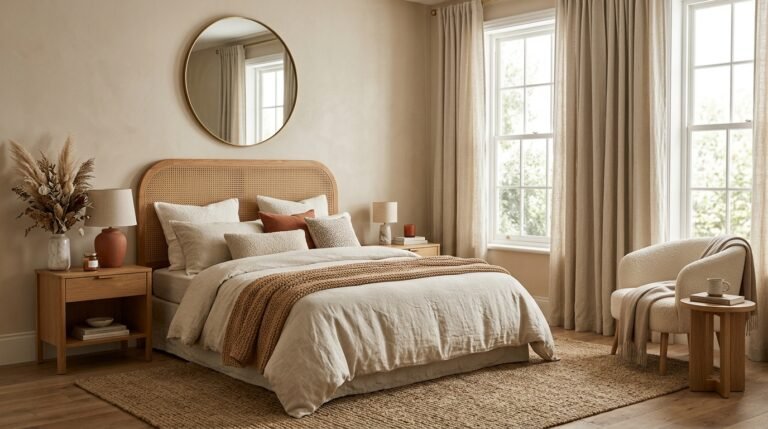
The headboard sits at the visual center of the bedroom and sets the room’s tonal register. A white upholstered headboard, a natural cane-back headboard, or a light wood slatted headboard all contribute to the light and airy quality. Dark upholstered or dark wood headboards pull the room’s tone toward heaviness regardless of how light everything else is.
A rattan or cane headboard for a queen bed runs $120 to $300 and works across multiple decor styles including Scandinavian, coastal, bohemian, and minimalist. The open weave of a cane headboard adds texture without adding visual mass, which is the headboard’s most useful quality in a room you are trying to keep light and open.
11. Maximize Natural Light With Clean Windows
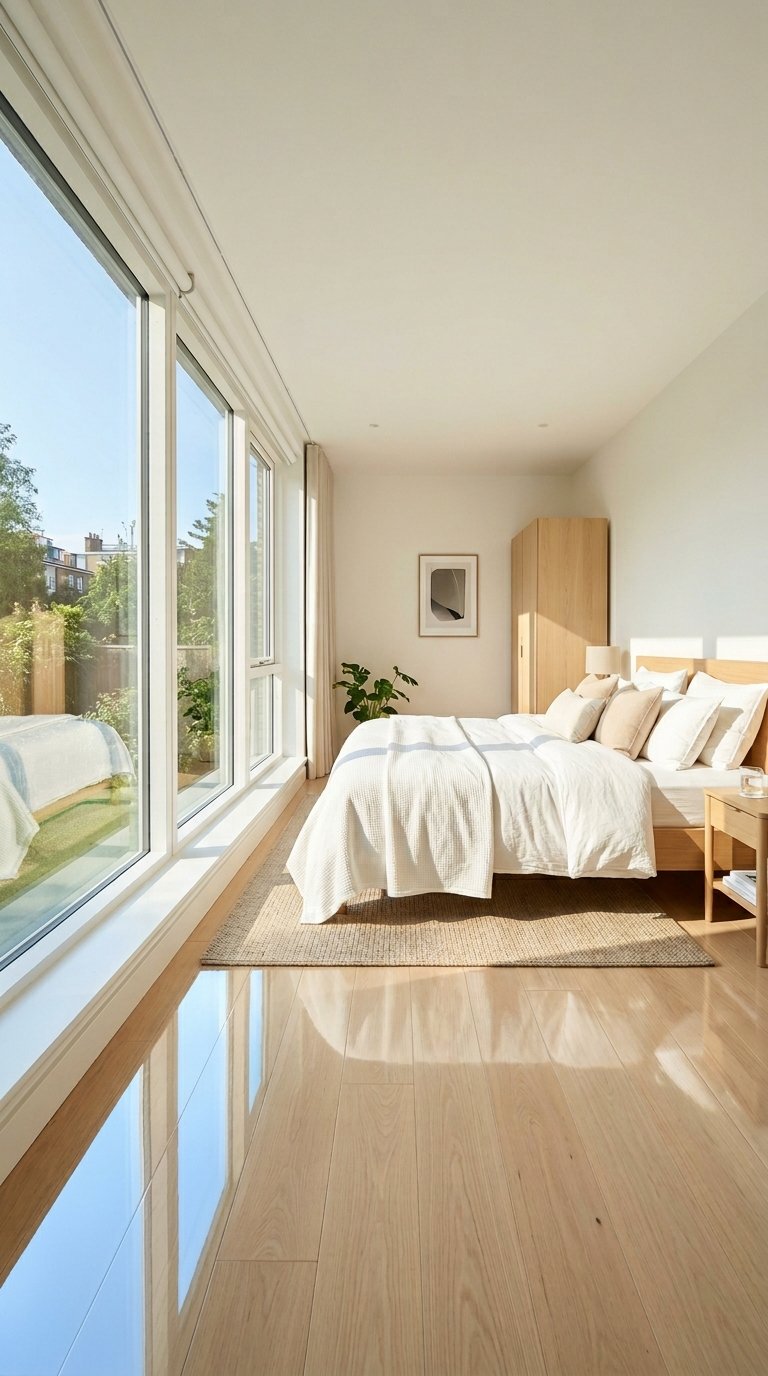
Dirty windows reduce natural light transmission measurably. A single clean window in a small bedroom delivers more usable light than two grimy ones. Clean your windows inside and out at the start of each season. Remove window screens during winter months when insects are not an issue, since screens reduce light transmission by 15 to 30%.
Keep window sills clear of objects that block light from entering the lower portion of the window. A wide windowsill packed with plants and candles looks lovely in photographs but blocks a significant percentage of incoming light in a room where every lumen matters. FYI, this is the most overlooked light and airy bedroom tip on the entire list.
12. Add a Potted Plant in a White Ceramic Pot
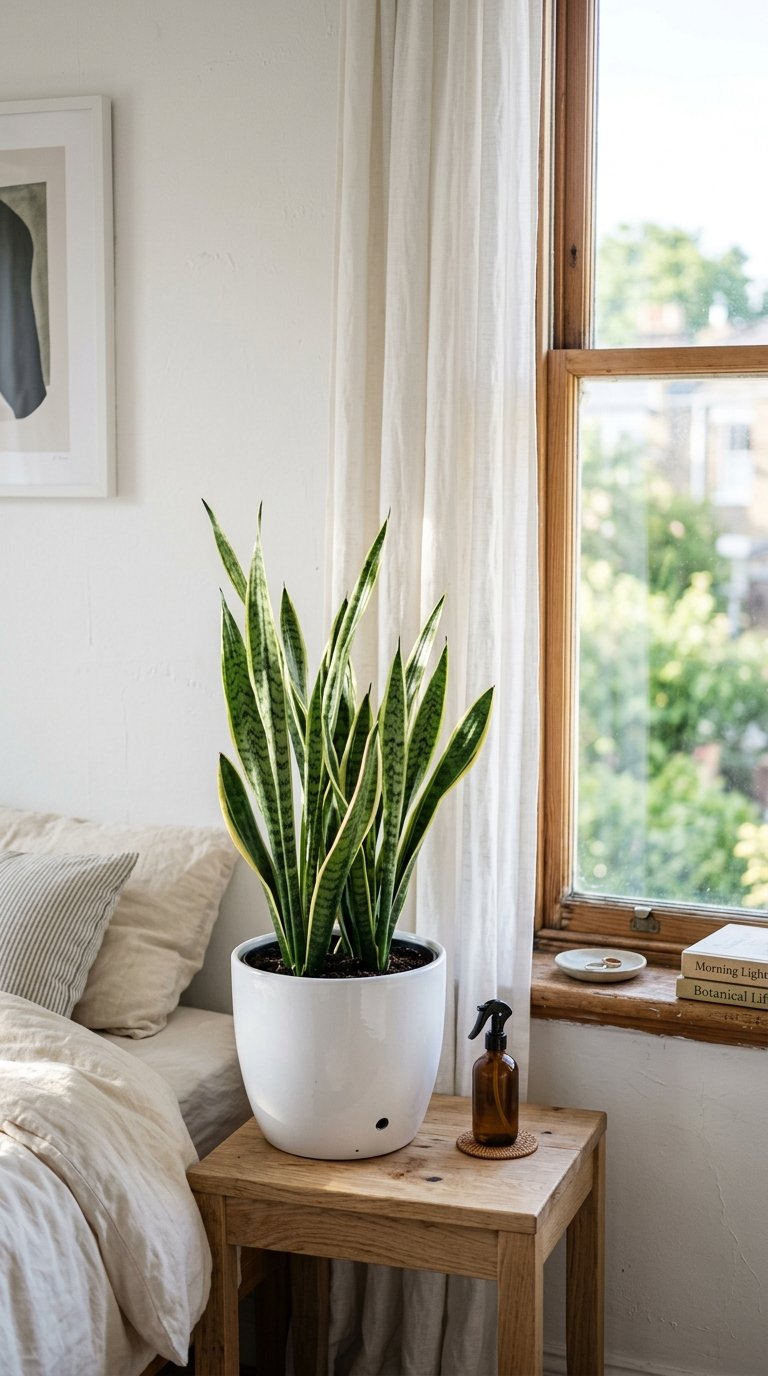
A single indoor plant in a clean white ceramic pot adds living color and organic life without introducing visual weight. A snake plant, pothos, or trailing string of pearls in a white pot beside the window or on a nightstand adds the organic quality that a purely white bedroom sometimes lacks.
White ceramic pots reflect light rather than absorbing it, which is why they outperform terracotta, dark ceramic, or woven baskets in a room where light maximization is the primary goal. Reserve terracotta pots for rooms where warmth and earthiness are the objective, not brightness.
13. Use Mirrors as Functional Decor Throughout
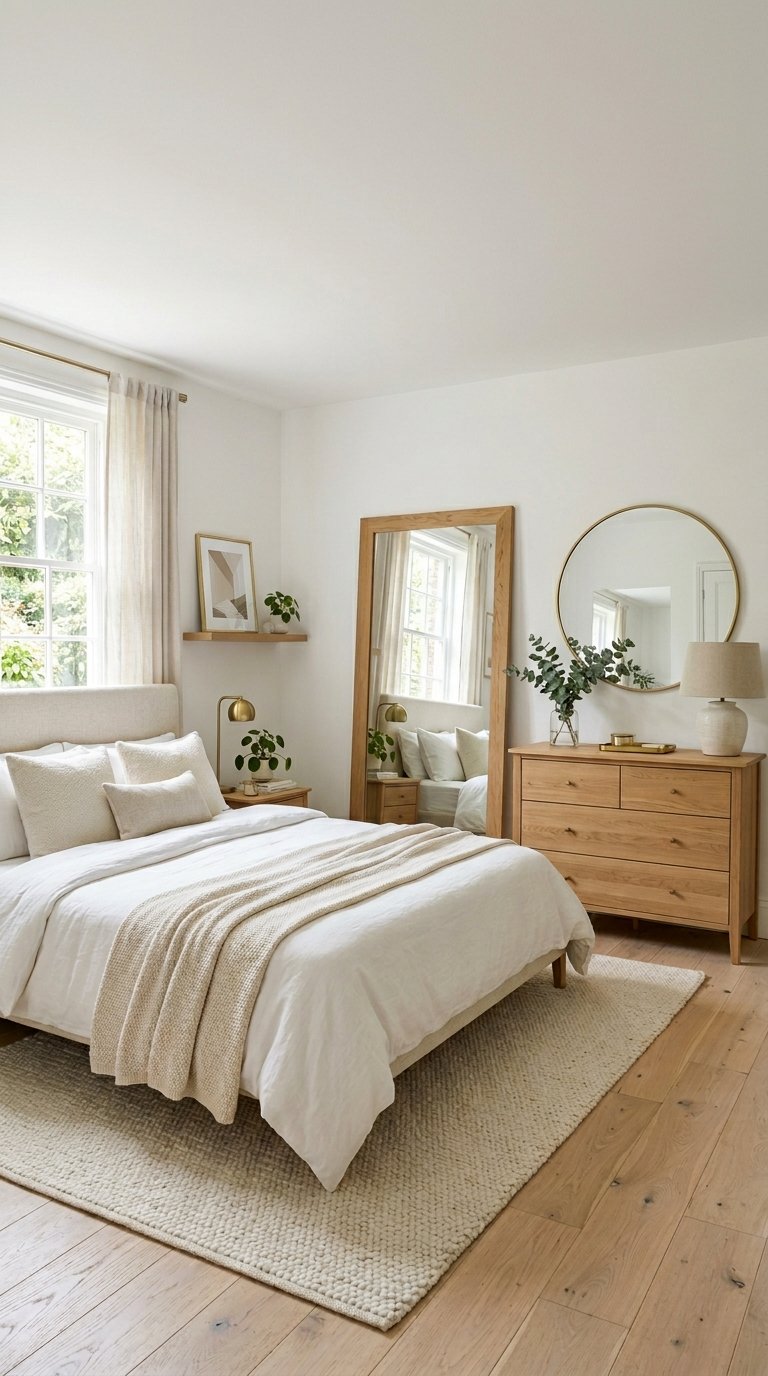
Multiple mirrors in a light and airy bedroom compound the light-amplifying effect of a single large mirror. A round mirror on the nightstand, a full-length mirror leaned against the wall, and a small mirror on the dresser top all contribute. Each mirror bounces light to a different part of the room and adds a reflective surface that breaks up flat wall space.
Choose thin, simple frames in natural wood, brushed brass, or thin metal for all mirrors in a light bedroom. Heavy ornate mirror frames add visual weight that partially cancels the light-amplifying benefit of the reflective surface. The frame should disappear into the room; the reflection should do all the work.
14. Declutter Every Surface
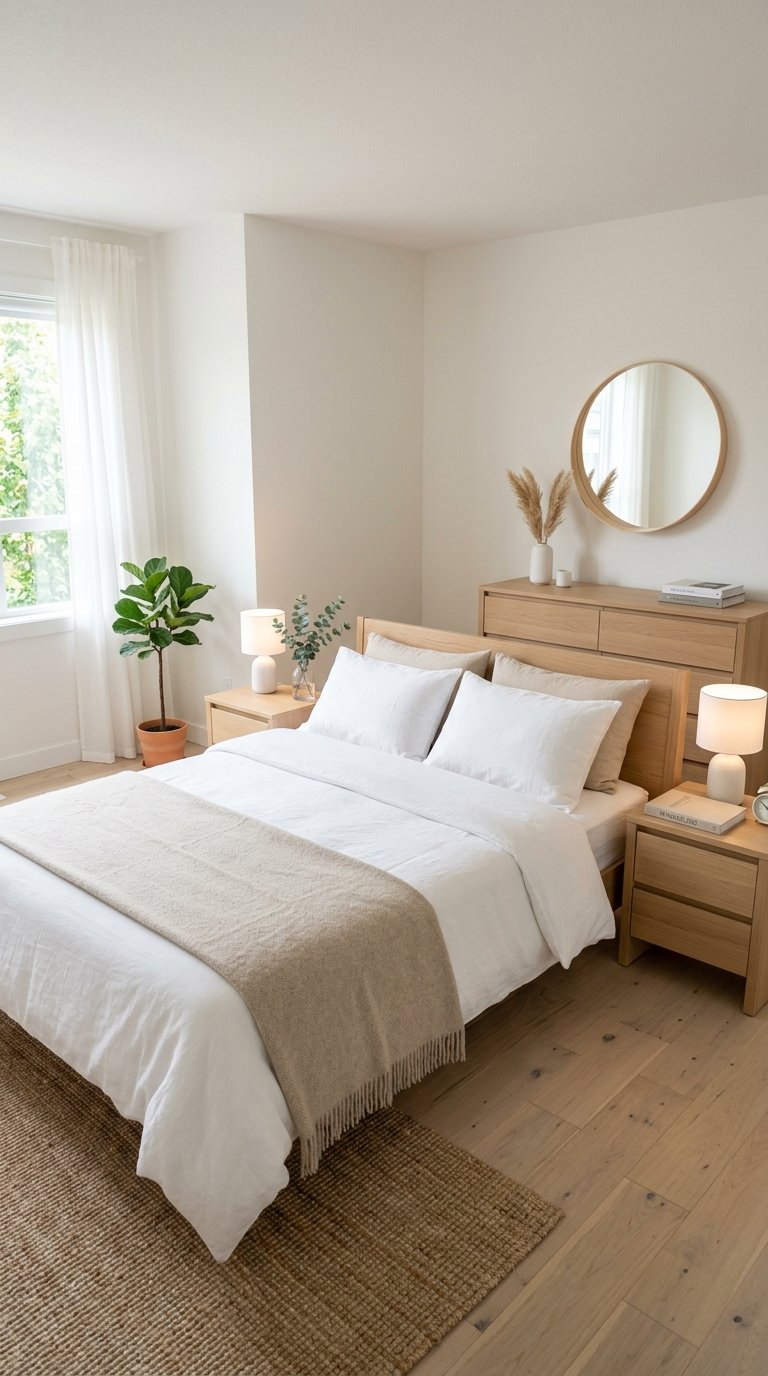
A light and airy bedroom with cluttered surfaces feels smaller and heavier than a slightly darker room that is completely clear. Surface clutter is the single most effective sabotage of a light bedroom, and it costs nothing to fix. Clear every horizontal surface down to three objects maximum: a lamp, a plant, and one personal item.
Store everything else in drawers, baskets, or closed storage. The visual rest that a clear surface provides signals spaciousness in a way that no paint color or curtain treatment replicates. A cleared nightstand makes the room feel 20% larger to the eye without moving a single piece of furniture.
15. Hang Artwork in Light Tones
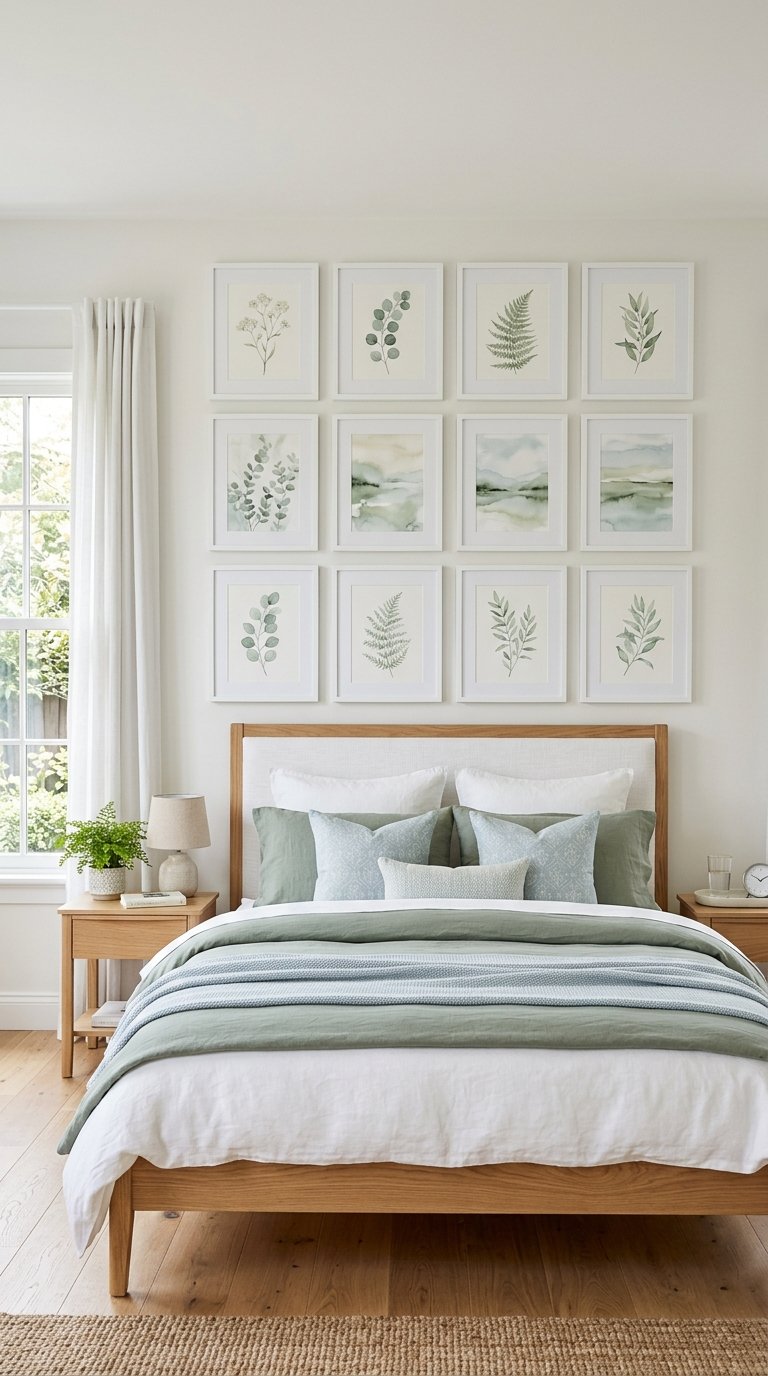
Artwork on a light and airy bedroom wall should extend the room’s palette rather than interrupt it. Botanical illustrations in soft sage and cream, abstract watercolors in pale blue and warm white, and simple line drawings in black on white all work. Dark oil paintings, heavily saturated prints, and large blocks of deep color pull the eye and add visual weight.
Frame artwork in white, natural wood, or thin brass to keep the wall composition consistent with the room’s light quality. A gallery wall of six to eight light-toned prints in matching white frames above the headboard fills the wall with personality without disrupting the room’s brightness.
16. Use Under-Bed Storage to Clear the Floor
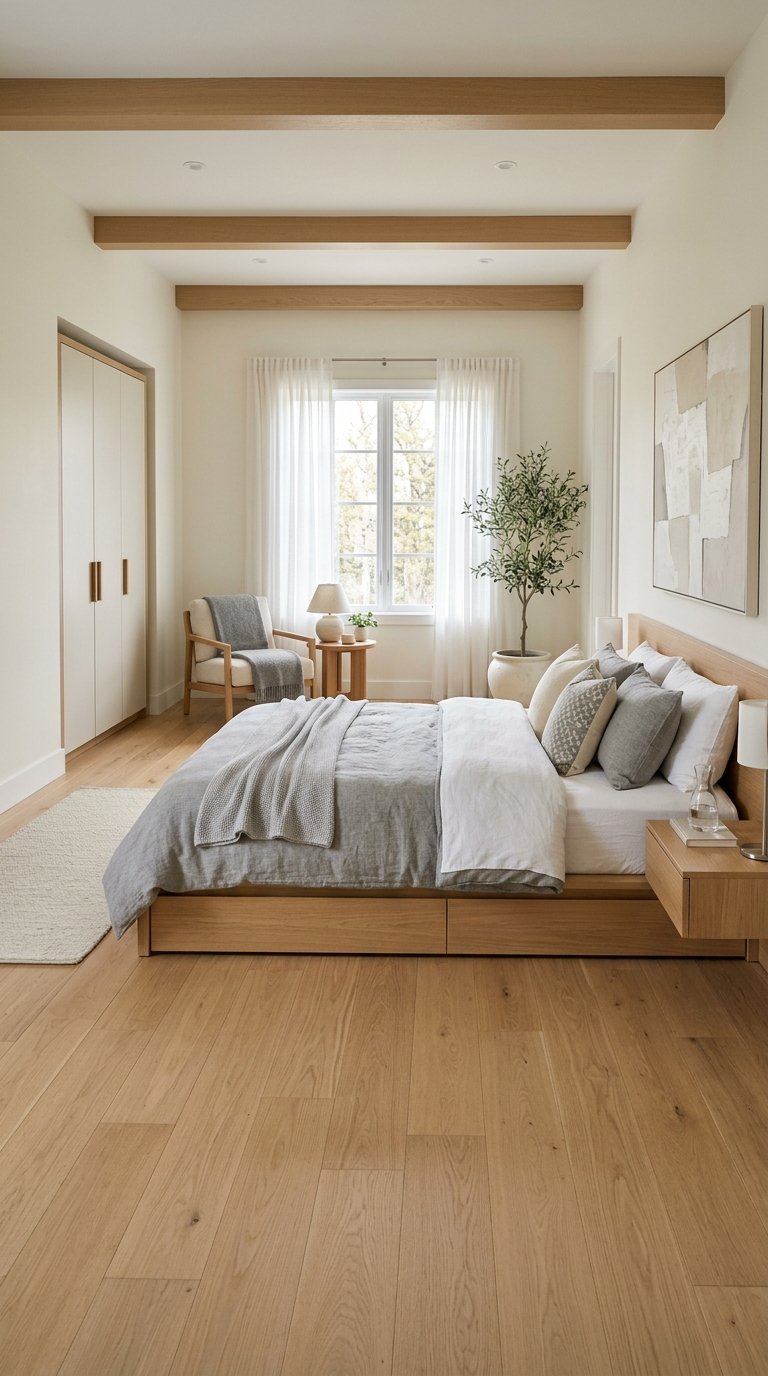
Storing items under the bed in flat bins or vacuum bags raises the practical storage capacity of the room without adding any furniture. That freed-up floor space keeps the room visually clear and reinforces the light and airy quality you are building. A set of four flat storage bins from The Container Store runs $20 to $40.
Bed skirts hide under-bed storage but add visual weight to the bed’s base. If you use under-bed storage, choose a bed frame where the gap beneath the frame is minimal or use matching storage containers that are not visible from normal standing height. Visible bin edges from a distance disrupt the clean floor plane.
17. Install Sconces Instead of Table Lamps
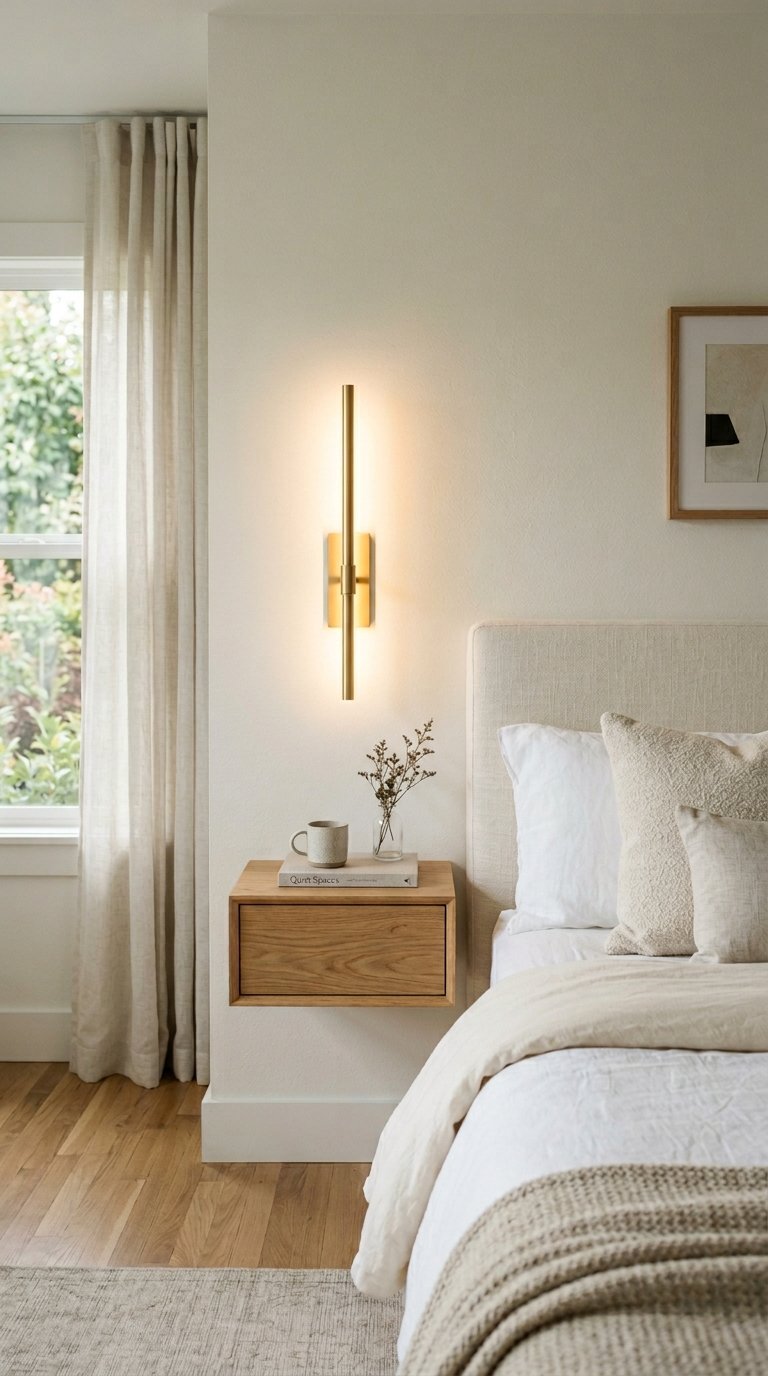
Wall-mounted sconces replace table lamps on nightstands and free up the entire nightstand surface, which makes both the surface and the room feel more open. Hardwired sconces require an electrician, but plug-in sconces mount with two screws and run a cord along the wall for $40 to $100 per fixture.
Swing-arm sconces allow directional reading light without requiring a separate reading lamp. That functionality consolidates two lighting needs into one fixture per side of the bed, which removes two table lamps and their cords from the room entirely. The nightstand surface opens up, the floor loses two lamp bases, and the room immediately feels cleaner.
18. Add a Canopy for Height Illusion
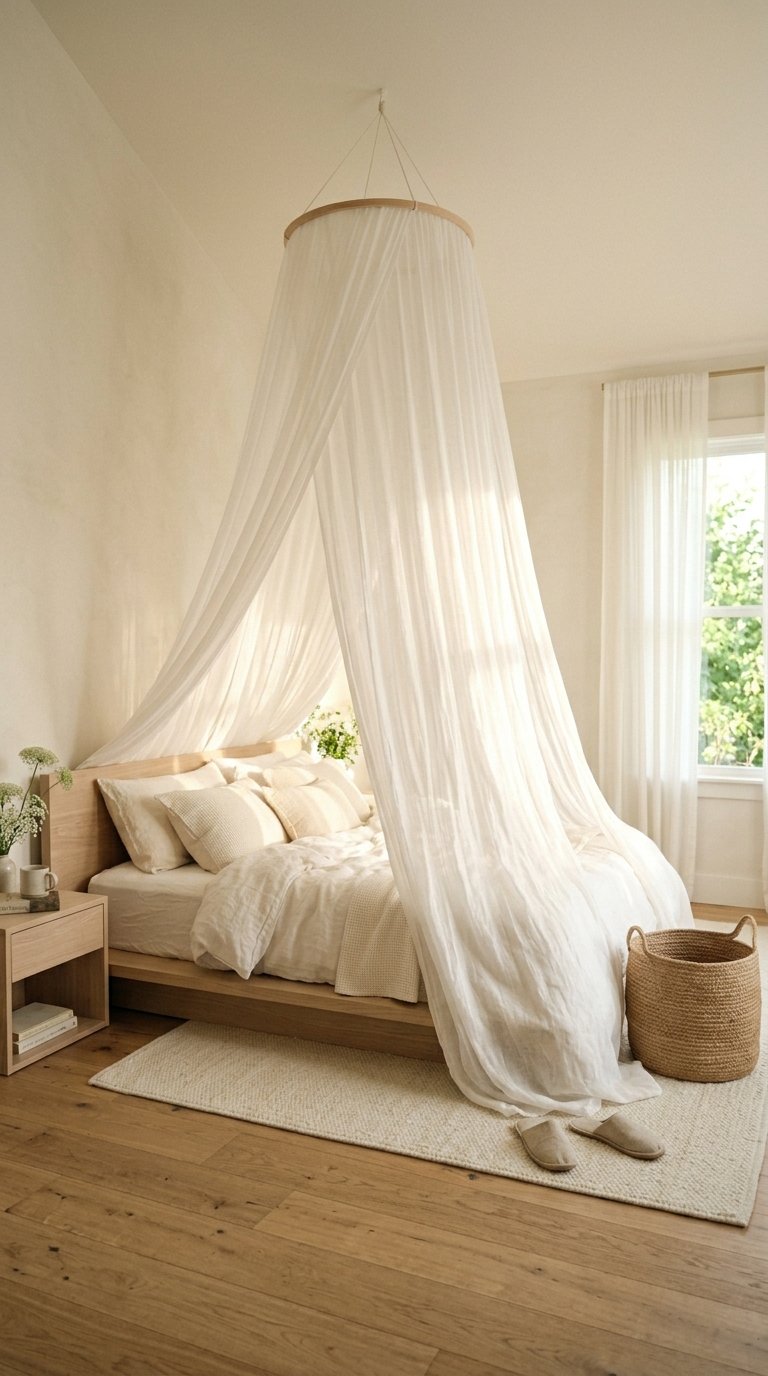
A sheer white canopy hung from the ceiling above the bed draws the eye upward and creates the perception of greater ceiling height through vertical emphasis. Canopy installation requires two ceiling hooks and a circular canopy ring, costing $15 to $30 in hardware. The sheer panels hang to the floor on all four sides.
Choose canopy panels at least 7 feet long for standard ceilings. The full-length panel reaching the floor creates a column of vertical fabric that emphasizes height. Shorter canopy panels that stop at mattress height look like a mosquito net rather than a design choice, and that is not the association you want .
19. Choose a Pale Accent Color
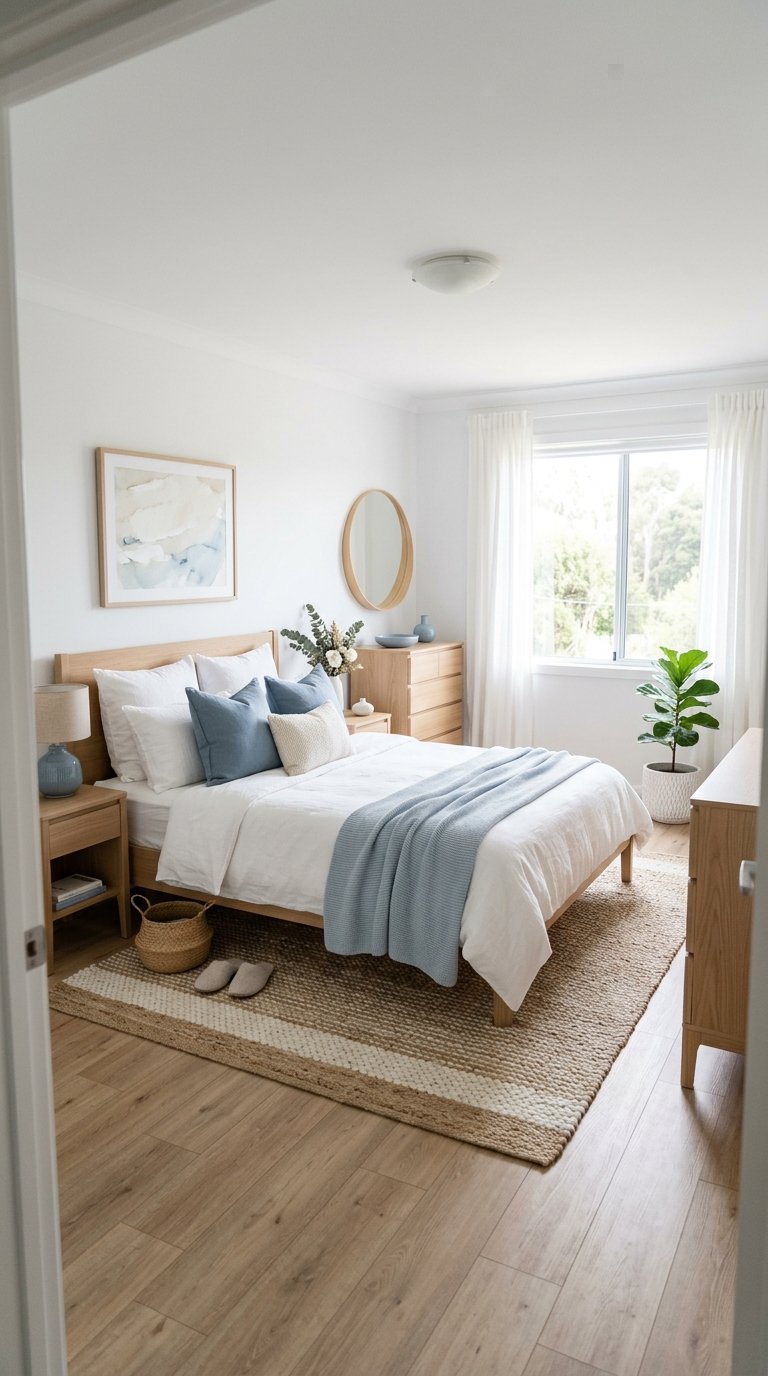
A light and airy bedroom does not require an all-white palette. A pale accent color, soft sage green, dusty blue, warm blush, or pale lavender, adds personality without introducing visual weight. The key is choosing a color with significant white mixed in, bringing it well into the pastel range.
Introduce the accent through one throw pillow, one ceramic object, and one piece of artwork. Three instances of the same accent color create a cohesive palette without overwhelming the room’s lightness. One isolated accent object looks accidental. Three coordinated ones look considered.
20. Remove the Television From the Bedroom
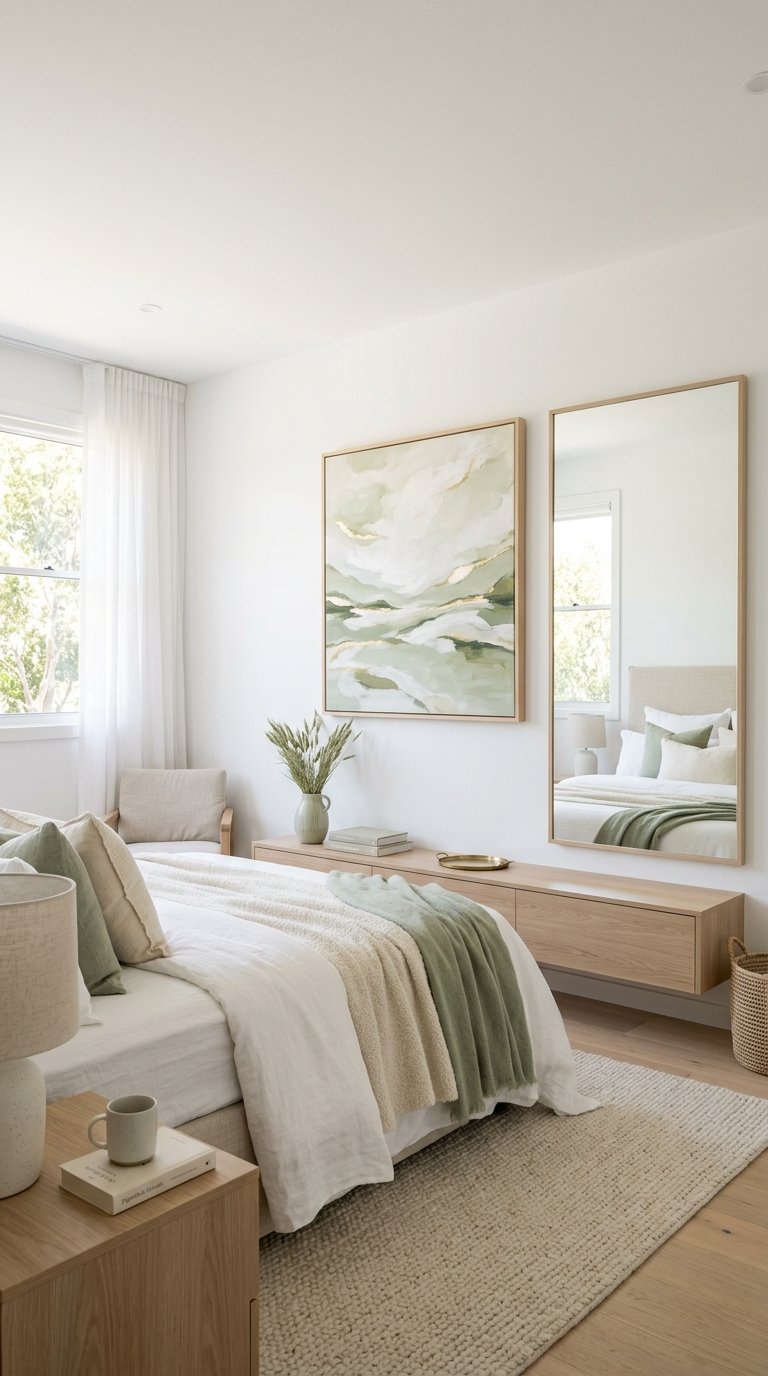
A television on the bedroom wall or dresser introduces a large dark reflective rectangle that dominates the room visually when off and fills it with blue light when on. Removing the television from a light and airy bedroom frees the wall it occupied, removes the furniture piece it sat on, and eliminates the cord management issue around it.
The wall space a television occupies becomes available for a large mirror or a single piece of artwork, both of which contribute more to a light and airy bedroom than a screen. Sleep quality research from Harvard Medical School also links television removal from bedrooms to improved sleep onset and depth. The functional argument and the design argument point in the same direction.
21. Use Vertical Stripes to Increase Perceived Height
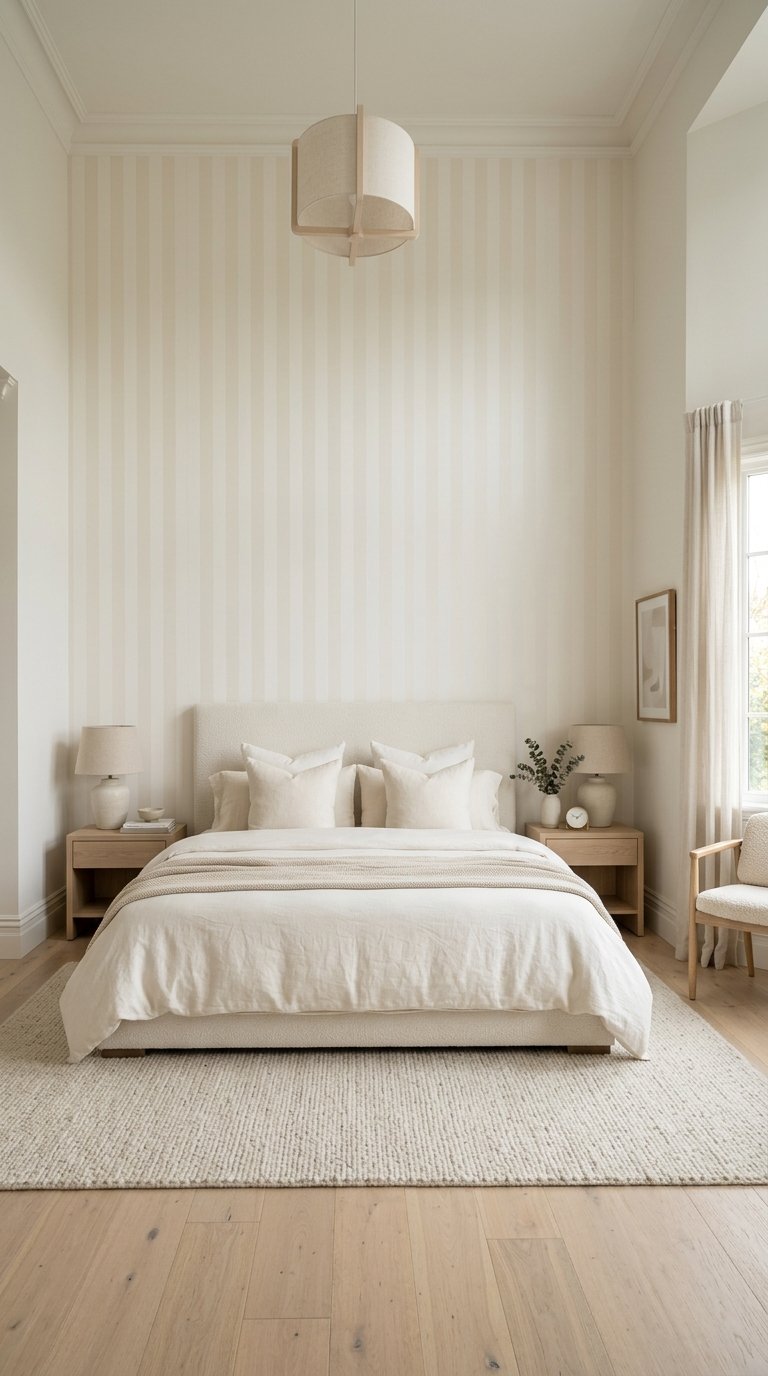
Vertical stripes on one wall or in a wallpaper pattern draw the eye upward and make a room feel taller. A vertically striped wallpaper on the headboard wall or a subtle tone-on-tone stripe in the same soft white palette adds height perception without introducing a bold color.
Thin stripes in a tone-on-tone or near-neutral palette add height without overwhelming the room’s light quality. Wide bold stripes in contrasting colors add pattern energy that conflicts with the calm, airy quality a light bedroom requires. Subtle is always the correct direction here.
22. Style Your Windowsill Minimally
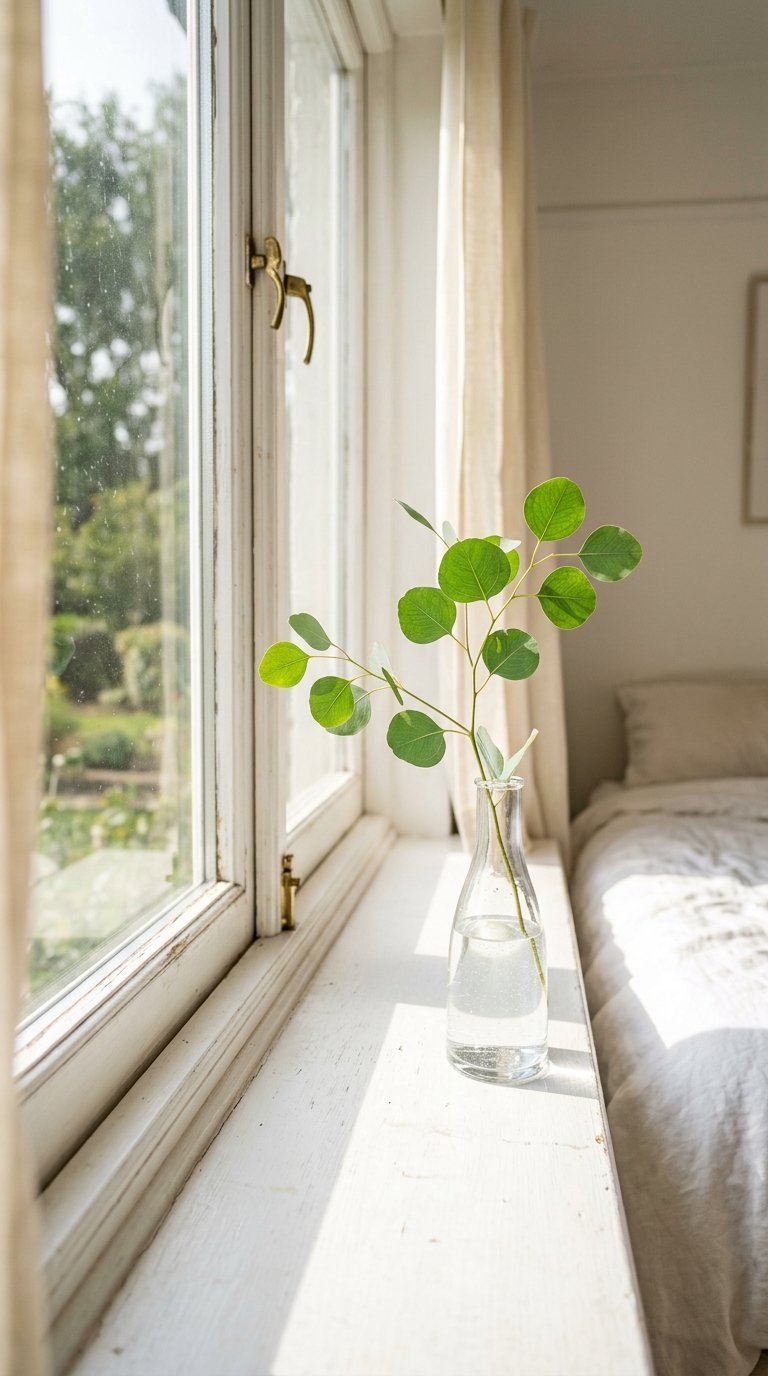
A windowsill with one small plant and clear space beside it allows light to enter the room at the lowest possible point of the window, which contributes to even light distribution across the floor and lower walls. A single small succulent or a clear glass bud vase with one stem on a windowsill looks intentional and allows maximum light entry.
Remove candles, multiple plants, books, and collected objects from windowsills in a light-priority bedroom. Those items look charming in rooms with abundant natural light. In a room where you are working to maximize every available lumen, they represent a direct trade of light for decoration. In a light and airy bedroom, light always wins that trade.
23. Add Warmth With Natural Wood Accents
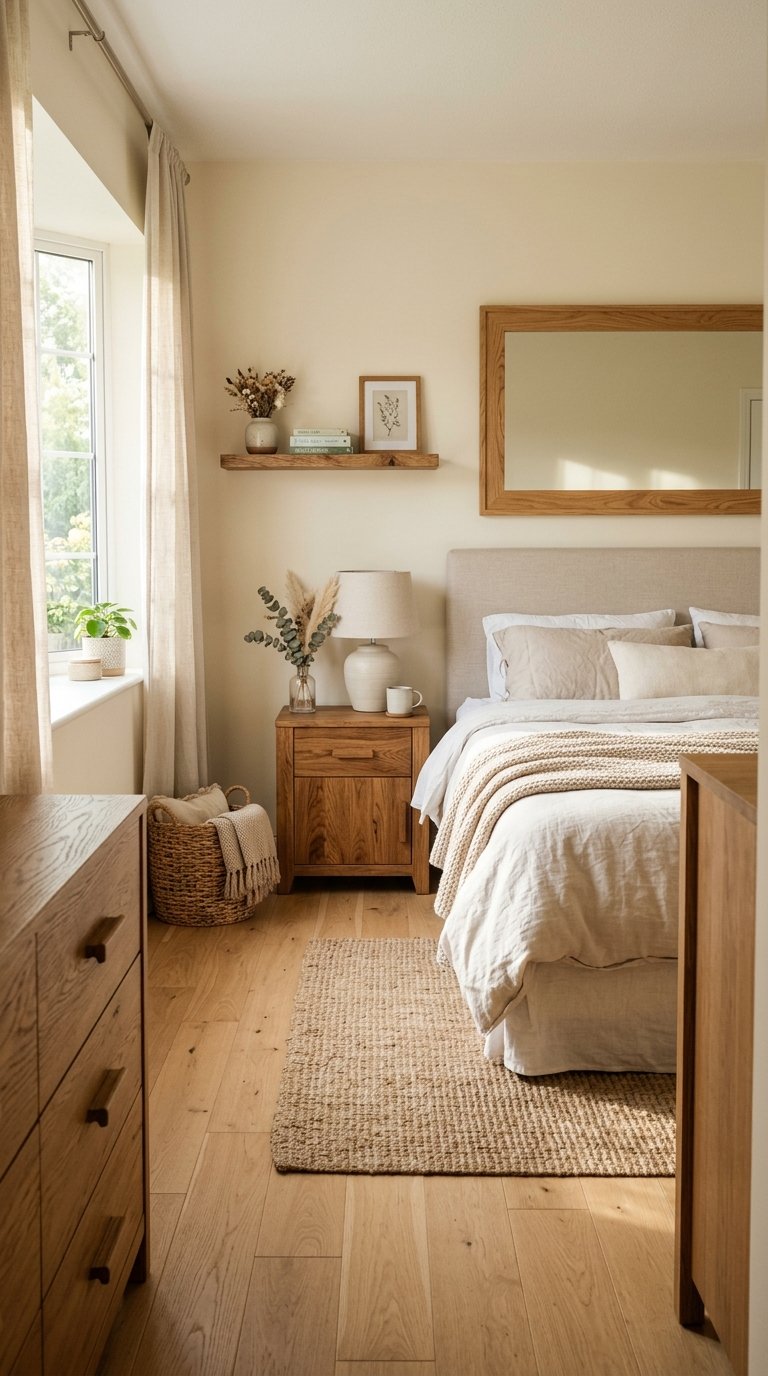
An all-white light and airy bedroom without any warm tones risks feeling cold and clinical rather than calm and inviting. Natural wood accents, a light oak nightstand, a pine shelf, a rattan mirror frame, a wooden tray on the dresser, introduce warmth and organic texture without adding visual weight or darkening the room.
Choose light to medium wood tones: natural oak, ash, pine, and bamboo. Dark walnut or espresso wood finishes darken a light bedroom’s tone measurably, even in small doses. One dark wood piece can undermine the cumulative lightness that ten other decisions created together.
24. Use Floating Shelves Instead of Bulky Furniture
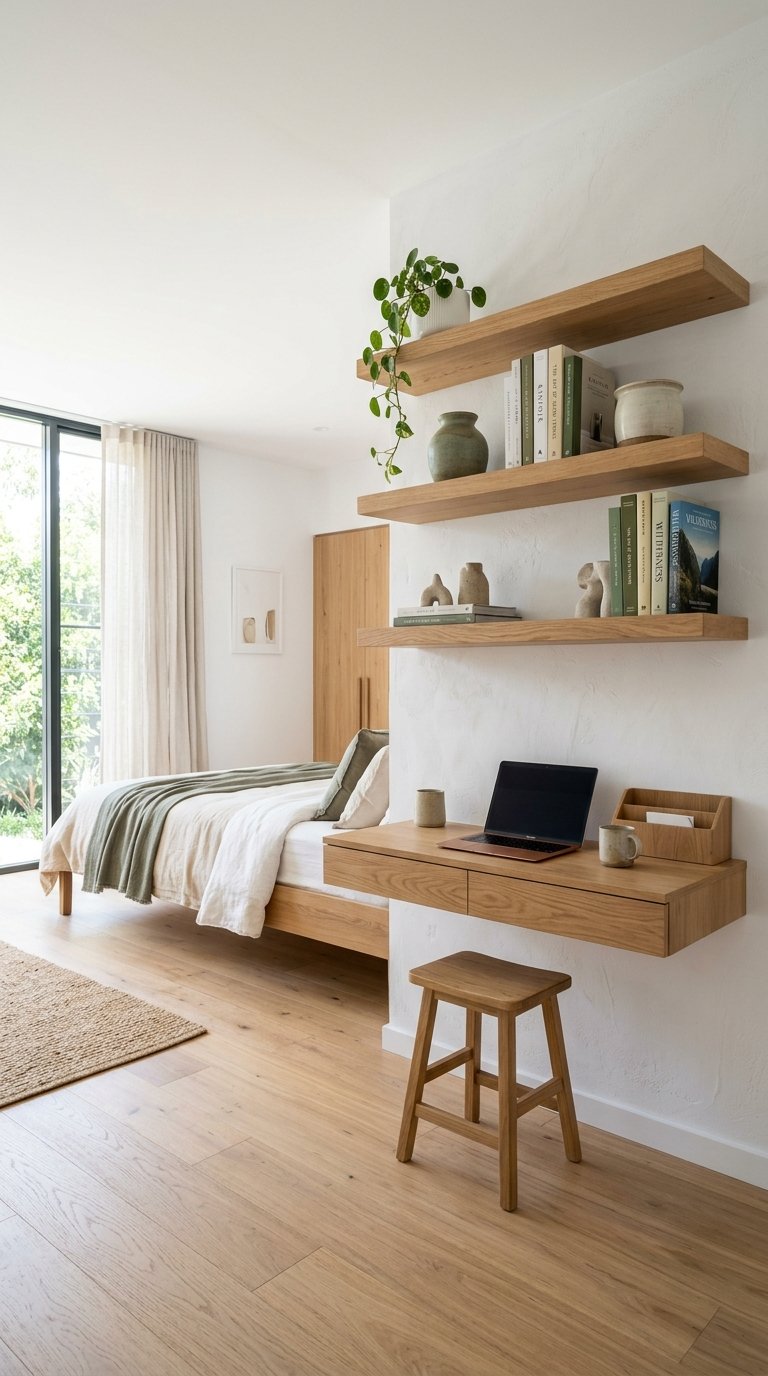
A floating shelf on the bedroom wall holds books, plants, and decorative objects while keeping the floor beneath it completely clear. That floor clearance maintains the visual openness that bulky freestanding furniture disrupts. Two floating shelves in natural wood cost $25 to $50 total at IKEA and install in under an hour.
Style each floating shelf with a maximum of three objects and include empty space in every arrangement. A shelf packed to both edges looks heavy regardless of how light the individual objects are. The empty shelf space reads as breathing room, and breathing room is the entire goal of a light and airy bedroom. IMO, floating shelves are the most underused storage solution in bedroom design.
25. Layer Lighting at Three Heights
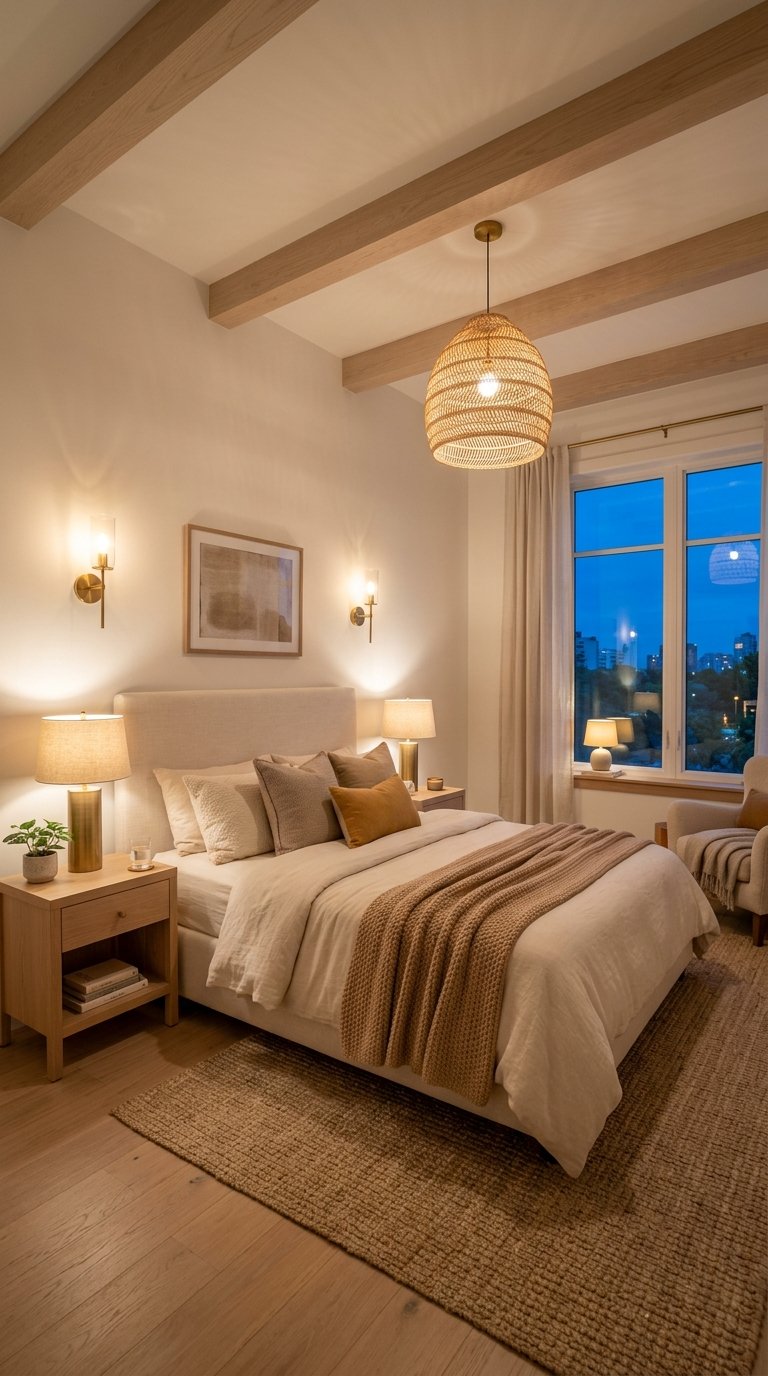
A light and airy bedroom needs layered lighting at ceiling, mid-height, and floor or surface level. Overhead lighting alone creates flat, shadowless illumination that makes the room feel institutional. A ceiling pendant plus two wall sconces plus two surface lamps creates five light sources at three different heights.
Warm white bulbs at 2700K across all fixtures create a consistent warm glow that amplifies the airy quality during evening hours. The layered approach mimics natural light’s gradual fall from above, which your visual system reads as comfortable and spacious. A single overhead light source at night collapses all that layered depth into one flat plane.
Final Thoughts
A light and airy bedroom is within reach of every budget and every room size. Start with the paint, the curtains, and the bedding. Those three changes shift the room’s entire character in a single weekend. Add the mirror, the low-profile furniture, and the decluttered surfaces over the following week. The room compounds its own lightness as each decision reinforces the ones before it. Give your bedroom the brightness it deserves, and it rewards you every single morning you open your eyes in it.