16 Farmhouse Ideas to Create a Warm and Timeless Home
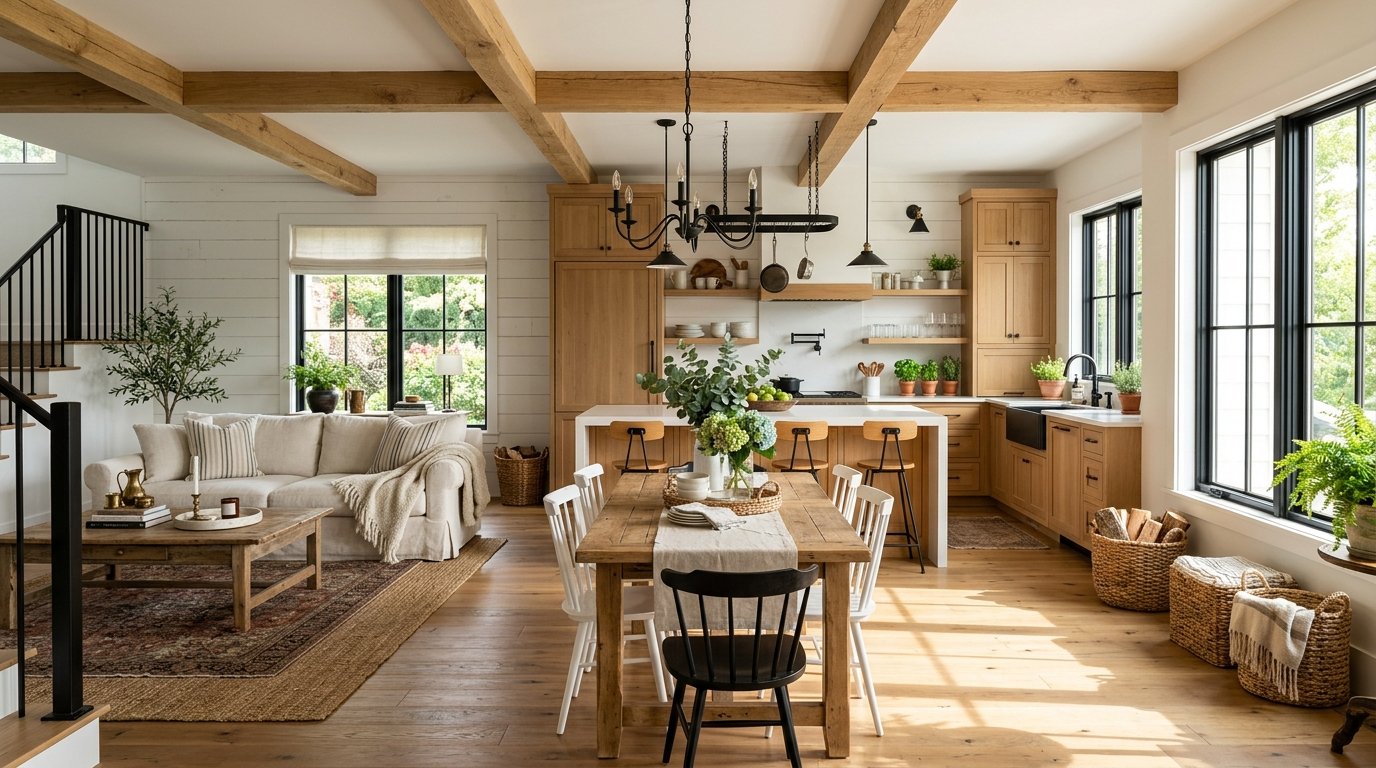
Farmhouse style gets a bad reputation for being every beige shiplap wall and “gather” sign from 2016, and honestly, that reputation is not entirely undeserved. But real farmhouse design, the kind that works in actual homes rather than staged model units, focuses on warmth, natural materials, and functional beauty rather than matching sets from a single collection. I renovated a farmhouse-style kitchen two years ago using mostly reclaimed materials and a few key new pieces, and the result looks nothing like a showroom and everything like a home someone actually cooks in. These 16 farmhouse ideas work for real houses, real budgets, and real people who want warmth without the matching-everything trap.
1. Install Shiplap on One Wall, Not All Four
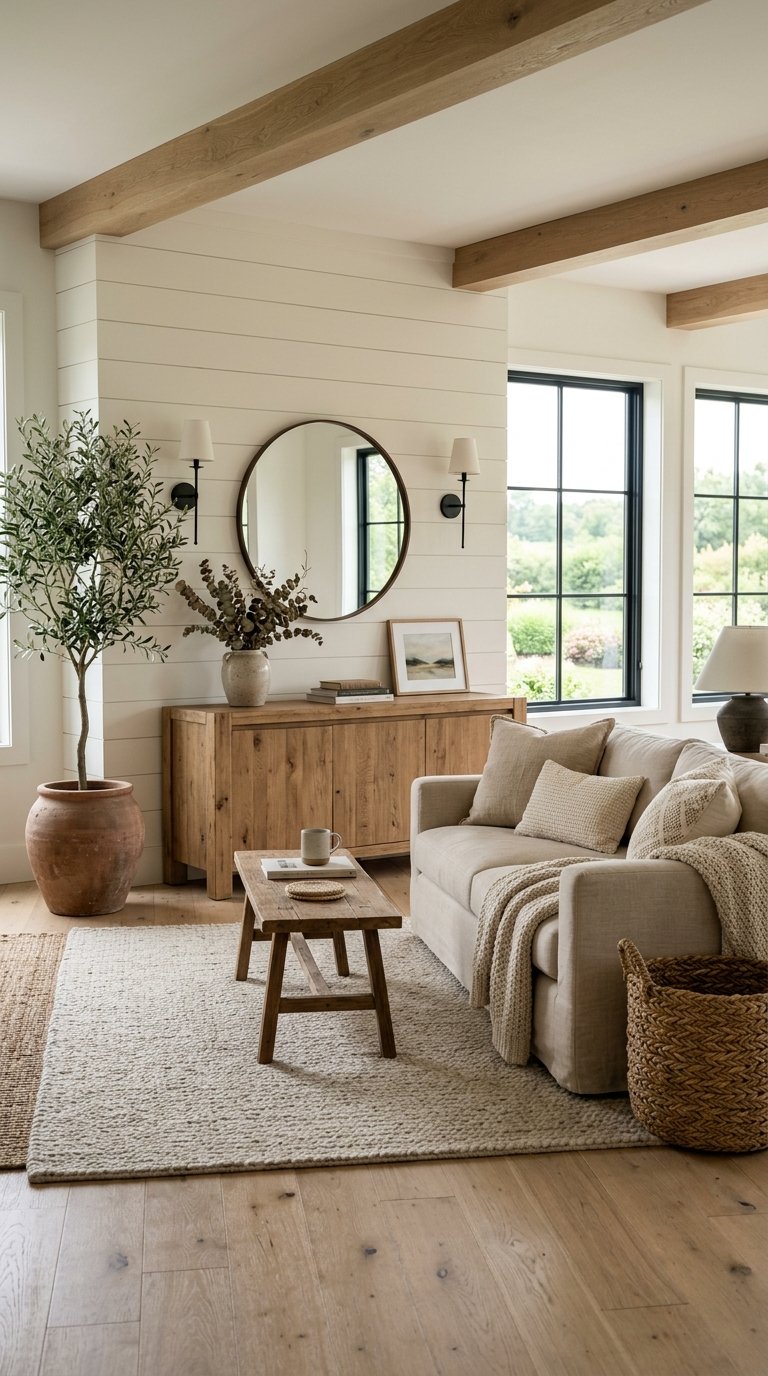
Shiplap on a single accent wall delivers maximum farmhouse impact without turning your home into a Pinterest board from 2017. The texture and horizontal line pattern of shiplap adds architectural depth that flat drywall simply doesn’t have, and one wall delivers this effect while keeping the room balanced rather than overwhelmed.
Real shiplap from a lumber yard costs $1 to $3 per linear foot, while tongue-and-groove pine boards achieve the same look for $1.50 to $4 per square foot. Install with a nickel gap (the thickness of a nickel between each board) for the most authentic farmhouse look rather than tight-butted boards, which read as paneling rather than shiplap. Paint the shiplap in a warm white rather than a stark white to avoid the cold, modern effect the wrong white creates.
2. Replace Cabinet Hardware With Black Matte Pulls
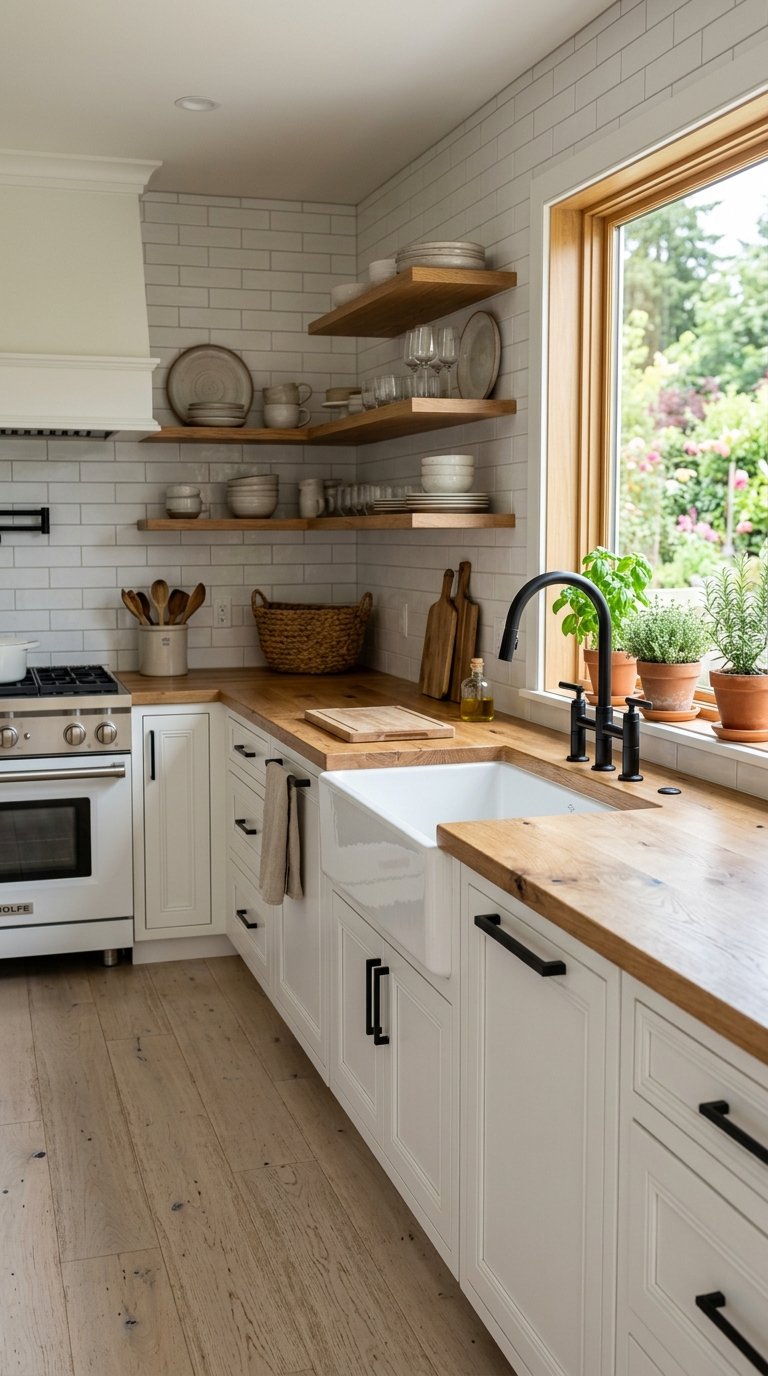
Black matte hardware on kitchen or bathroom cabinets is the fastest farmhouse upgrade that doesn’t require touching a single structure. The contrast between black hardware and painted white or natural wood cabinet faces creates the graphic, clean detail that farmhouse kitchens depend on as much as any other single element.
Cabinet pulls in matte black run $5 to $15 each from Amazon, Wayfair, or local hardware stores, and swapping 20 pulls on a full kitchen costs $100 to $300 depending on the style. Choose bar pulls for a cleaner, slightly industrial farmhouse look, or round knobs for a more traditional cottage version of the same aesthetic. The swap takes one afternoon with a screwdriver and immediately changes the visual story of the cabinet faces without painting a single door.
3. Add Open Shelving in the Kitchen
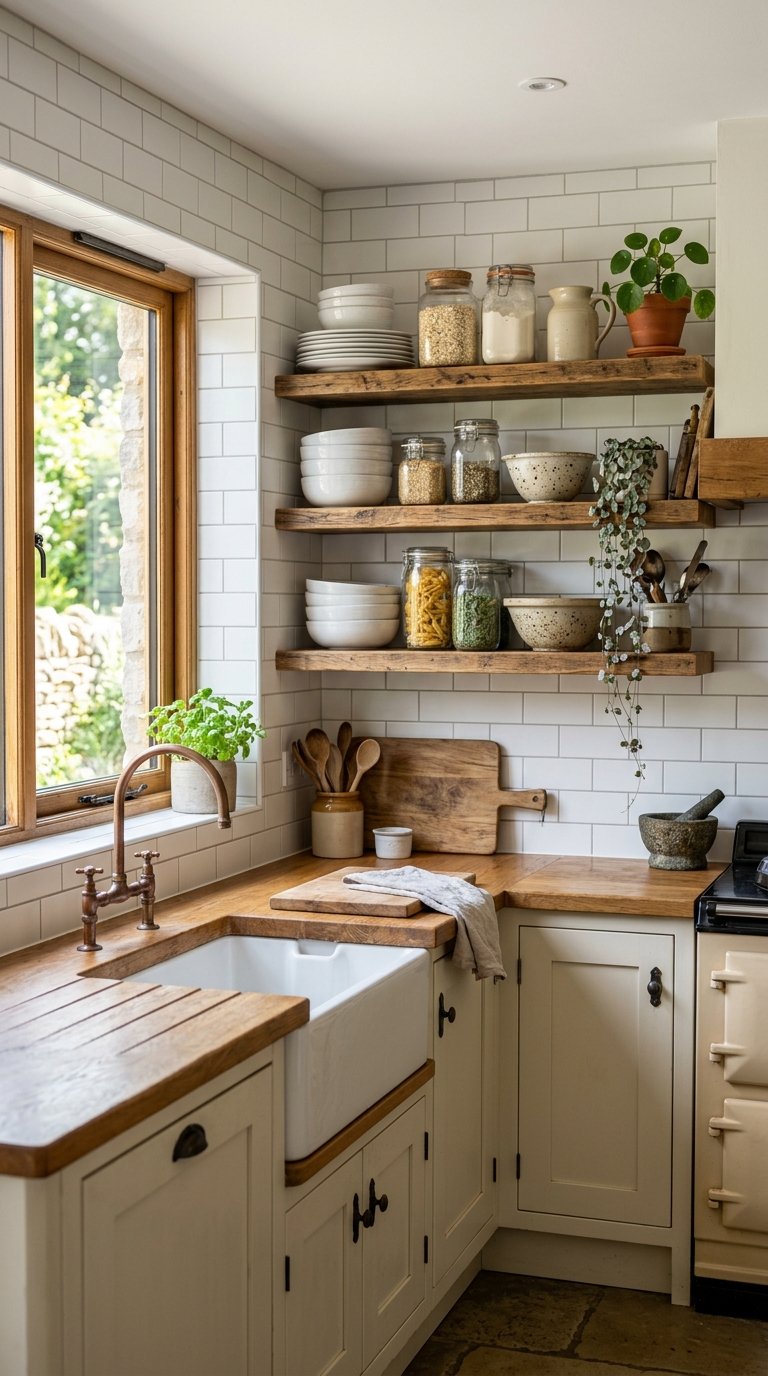
Open shelving in a farmhouse kitchen replaces upper cabinet doors with floating wood shelves that display dishes, jars, and everyday items as decor rather than hiding them behind closed doors. The open arrangement signals the “everything has a place and a purpose” philosophy that defines authentic farmhouse design.
Floating shelf brackets in black steel with solid wood shelves cost $30 to $60 per bracket pair plus $20 to $50 for a 6-foot plank depending on wood species. White oak, walnut, and reclaimed pine all deliver different versions of the farmhouse aesthetic, from modern to rustic respectively. Style the shelves with dishes stacked in sets of three, a few mason jars of dry goods, and one or two plants to create the visual density that makes open shelving look curated rather than cluttered.
4. Use a Farmhouse Sink in the Kitchen
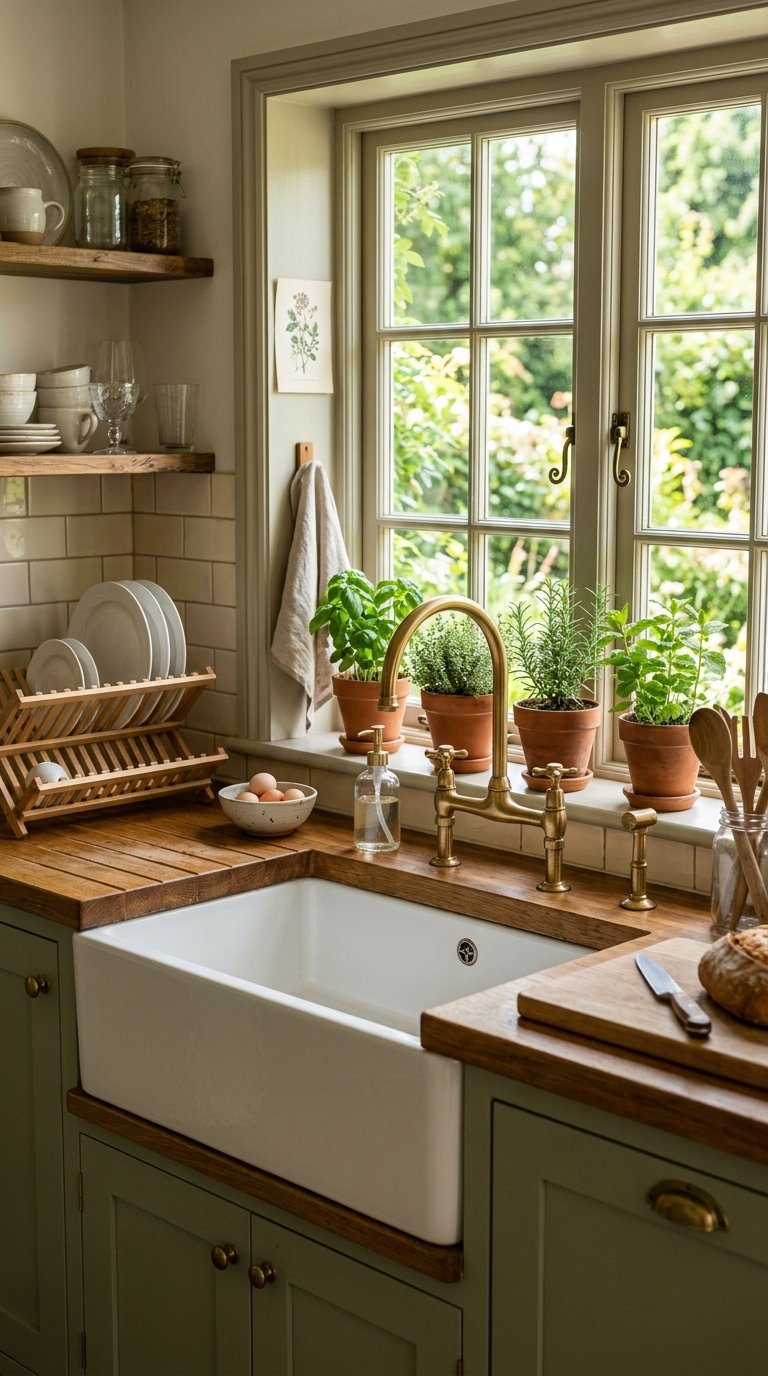
A farmhouse apron-front sink is the single most recognizable farmhouse kitchen feature, and it earns that recognition because it genuinely looks unlike any other sink style while being deeply functional at the same time. The large, single-basin format handles full sheet pan washing, large pots, and everything in between without the cramped double-basin compromise.
White fireclay farmhouse sinks from brands like Rohl and Kohler run $400 to $900 depending on size, while cast iron versions offer similar durability for $600 to $1,200. The fireclay option chips less easily than cast iron under impact and requires less maintenance long-term, which IMO makes it the better choice for a kitchen that actually gets used rather than photographed. Pair the sink with an unlacquered brass or brushed nickel bridge faucet for the most authentic period-appropriate combination.
5. Add Exposed Wood Ceiling Beams
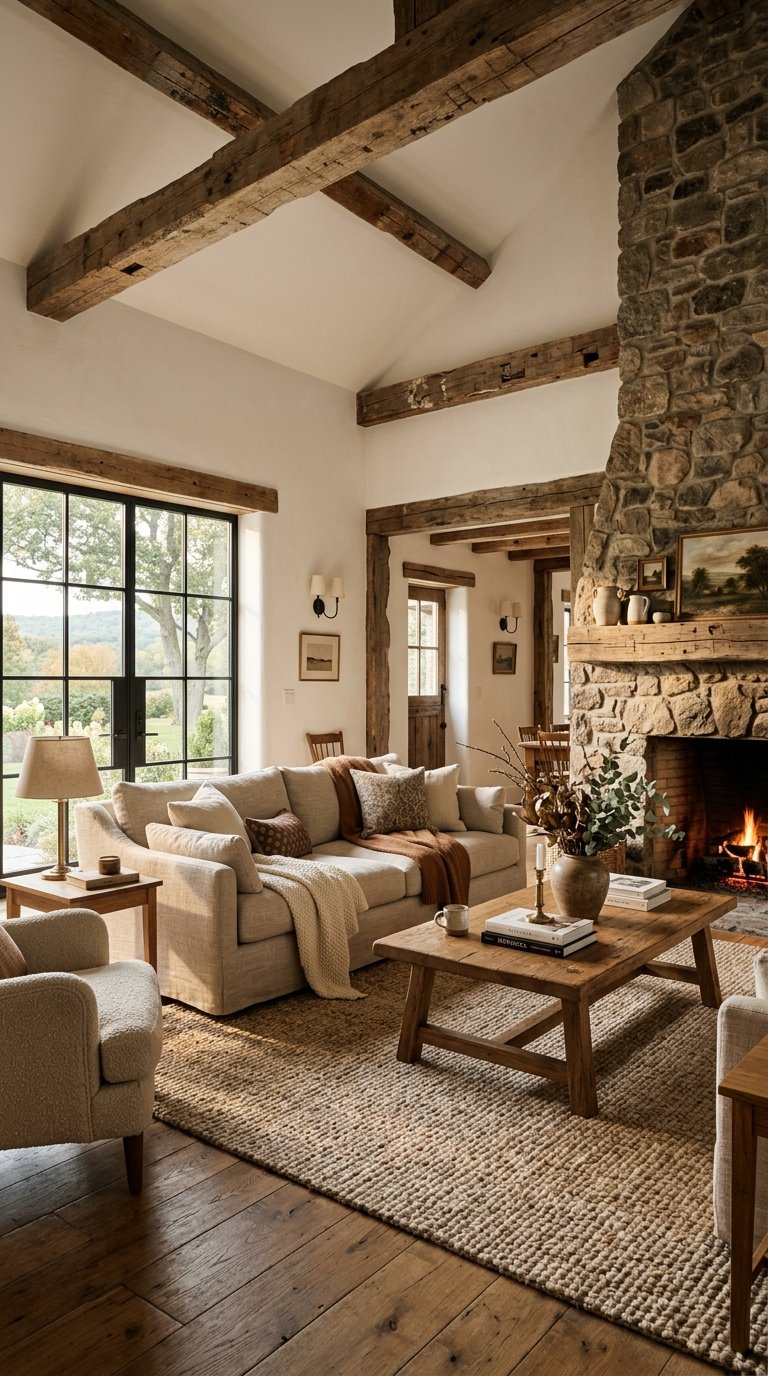
Exposed wood ceiling beams add the structural warmth and visual height cues that farmhouse rooms achieve in their most atmospheric examples, and they work in living rooms, kitchens, and bedrooms with equal effectiveness. The horizontal beam element brings the eye to the ceiling and makes the room feel taller rather than lower, which is counterintuitive but consistent.
Faux wood beams in polyurethane run $30 to $80 each and install with construction adhesive without structural requirements, since they’re hollow and lightweight. Real solid beam additions require structural assessment, cost $100 to $300 per beam for material, and need professional installation. For most residential farmhouse projects, faux beams in a dark walnut or weathered grey finish achieve the visual result at a fraction of the cost and timeline. Space beams 24 to 36 inches apart for the most natural structural look.
6. Install a Barn Door on an Interior Opening
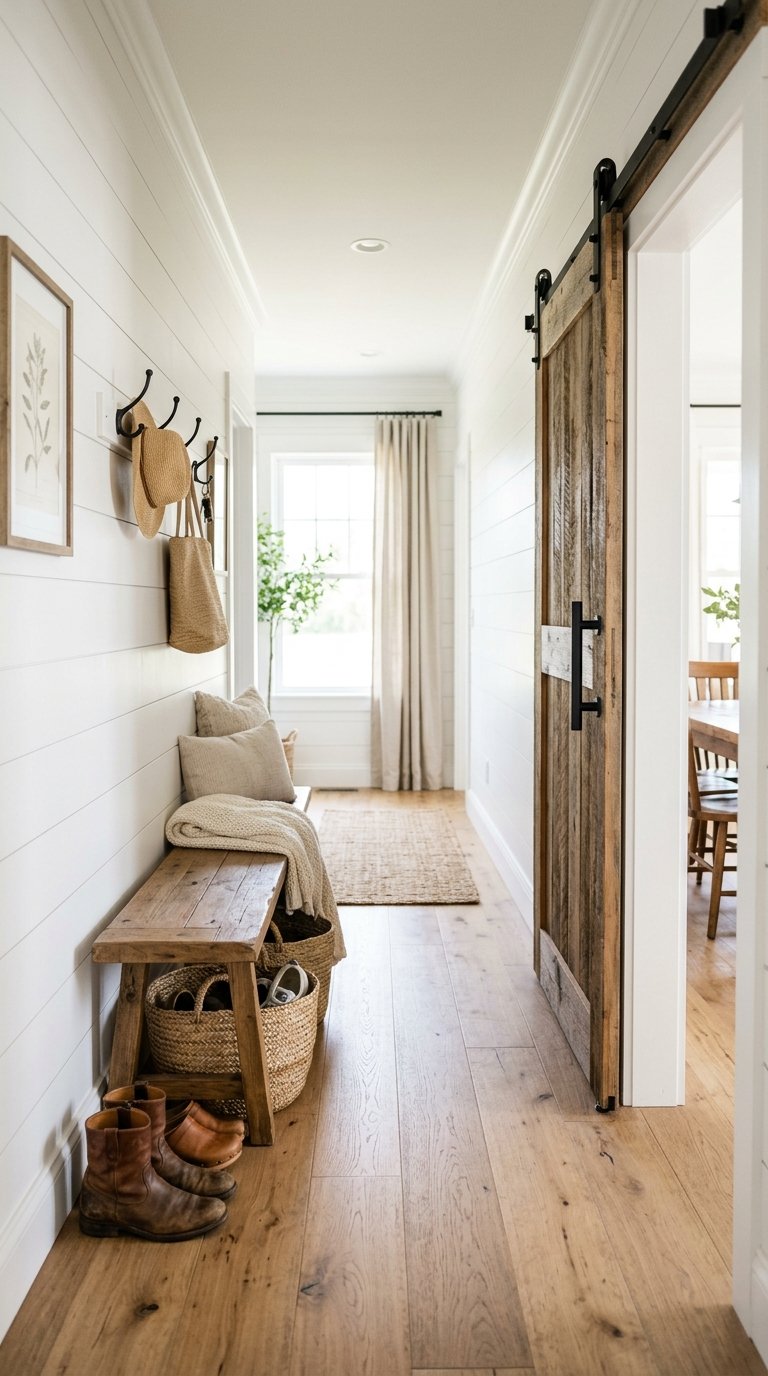
A sliding barn door on an interior doorway, closet, or pantry opening adds strong farmhouse character while solving the practical problem of a door that swings into a tight space. The hardware sits above the door frame and rolls on a track, which means no floor clearance requirement and no collision with furniture arranged near the opening.
A barn door kit including track hardware and a solid wood door runs $200 to $600 depending on wood species, door size, and hardware finish. Black powder-coated hardware with a knotty pine or reclaimed wood door reads as the most authentic farmhouse version. FYI, measure the wall space beside the opening before ordering because the door needs clear wall width equal to its own width to slide fully open.
7. Use Mason Jars Throughout the Home
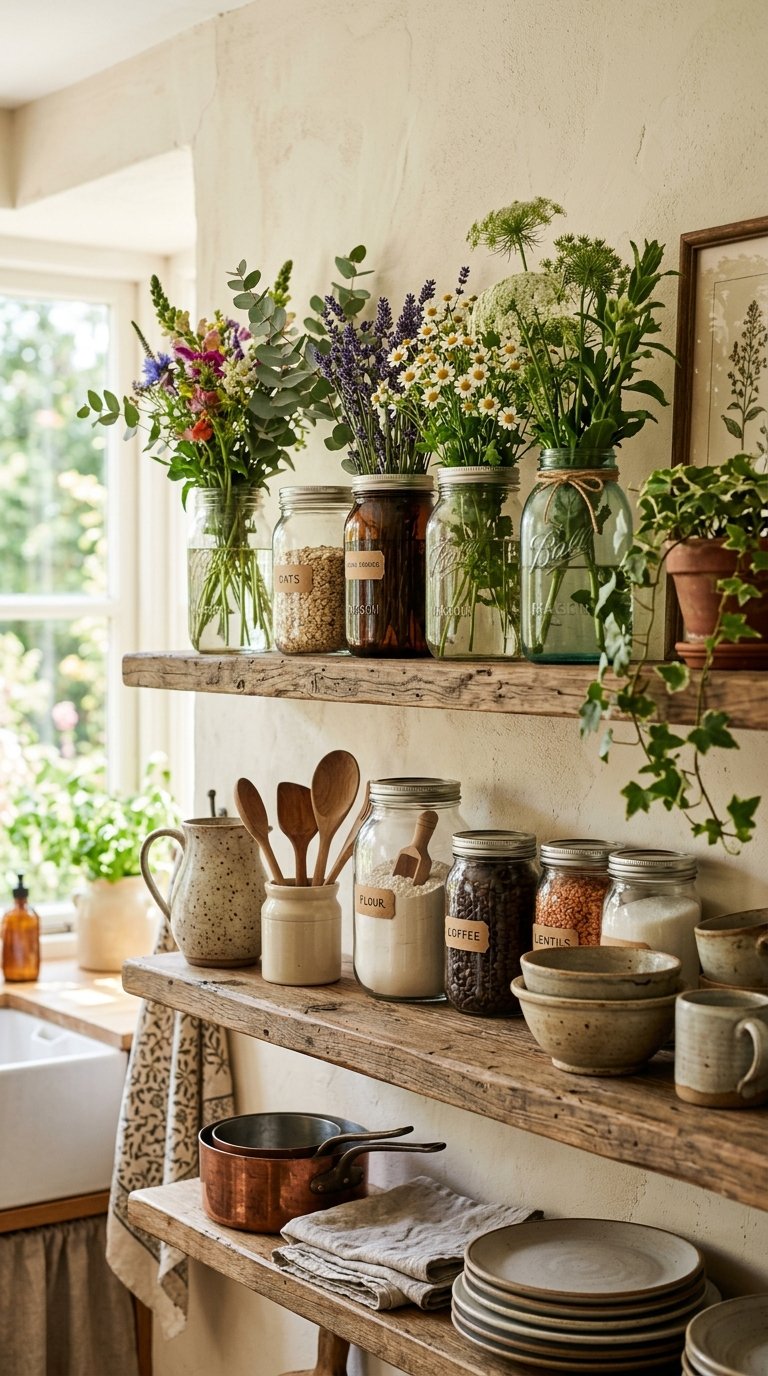
Mason jars serve a dozen different roles in farmhouse design, from flower vases to pantry storage to pendant lights, and their versatility per dollar is unmatched by any other single decor item. A dozen wide-mouth quart mason jars costs $12 to $15 at any grocery or hardware store.
Use them as drinking glasses at a farmhouse table, as vases for wildflower bunches on a windowsill, and as dry goods storage on open kitchen shelves. Mason jar pendant light conversions (a kit with a socket and hanging hardware costs $15 to $25 per jar) create the most recognized farmhouse lighting detail in any kitchen or dining room. The key is using them in groups of three or more rather than a single isolated jar, since one mason jar looks accidental while three looks like a design decision.
8. Choose a Farmhouse Dining Table in Natural Wood
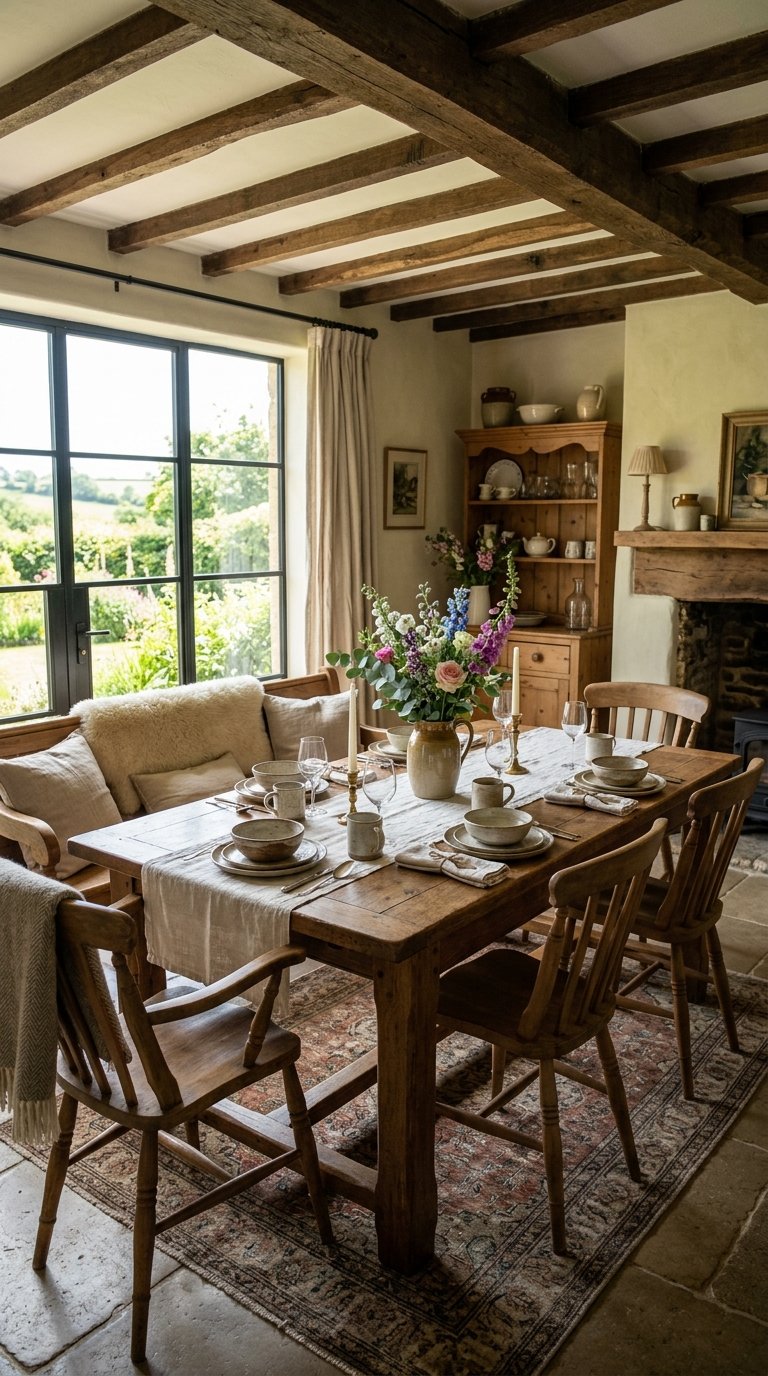
A long, solid wood farmhouse dining table with turned or tapered legs anchors the dining room in a way no glass, metal, or manufactured board table achieves. The natural wood grain, visible knots, and slight surface variation from hand finishing or age all communicate authenticity that manufactured surfaces specifically try to eliminate.
A solid pine or oak farmhouse table in the 72 to 84-inch length runs $400 to $900 new, while an antique version found at an estate sale or antique mall costs $200 to $600 depending on condition. The antique option adds genuine age and character that new furniture only approximates, and the weight and heft of old solid wood construction outlasts most new furniture by decades. Pair it with a mix of bench seating on one side and chairs on the other for the most versatile, casually elegant farmhouse dining arrangement.
9. Add Vintage or Antique Lighting Fixtures
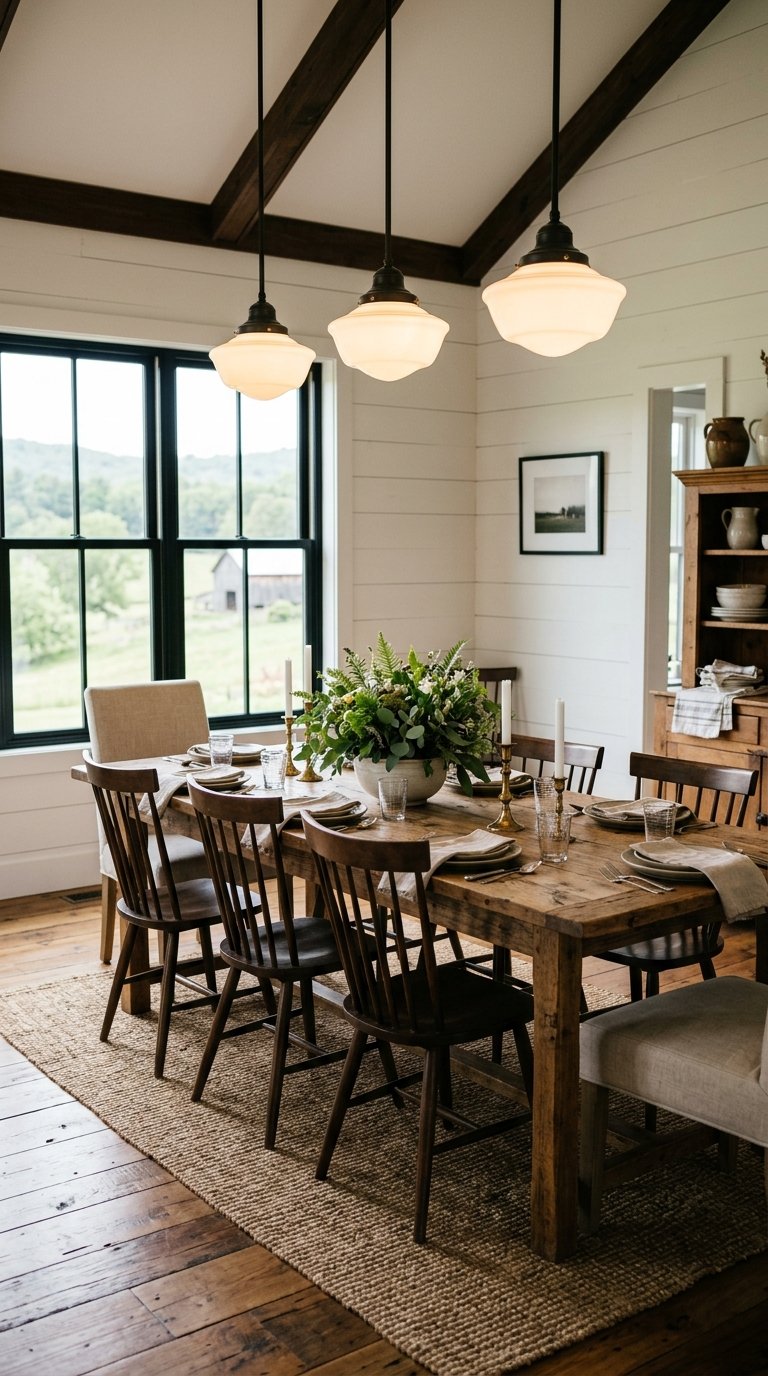
Vintage-style or genuine antique lighting fixtures, cage-style pendants, enamel shades, and schoolhouse globes, shift a room’s character in a way new modern fixtures cannot, since older designs carry a visual story that contemporary lighting specifically avoids. This is the one farmhouse investment that genuinely rewards sourcing secondhand over buying reproduction.
Vintage schoolhouse pendant lights from architectural salvage shops cost $30 to $80 each, while reproduction versions from brands like Barn Light Electric run $60 to $150. Either option beats a standard builder-grade flush mount in visual impact at the same or lower price point. Wire them on a dimmer switch for full control over the room’s mood from bright task lighting to warm ambient evening glow.
10. Bring in Galvanized Metal Accents
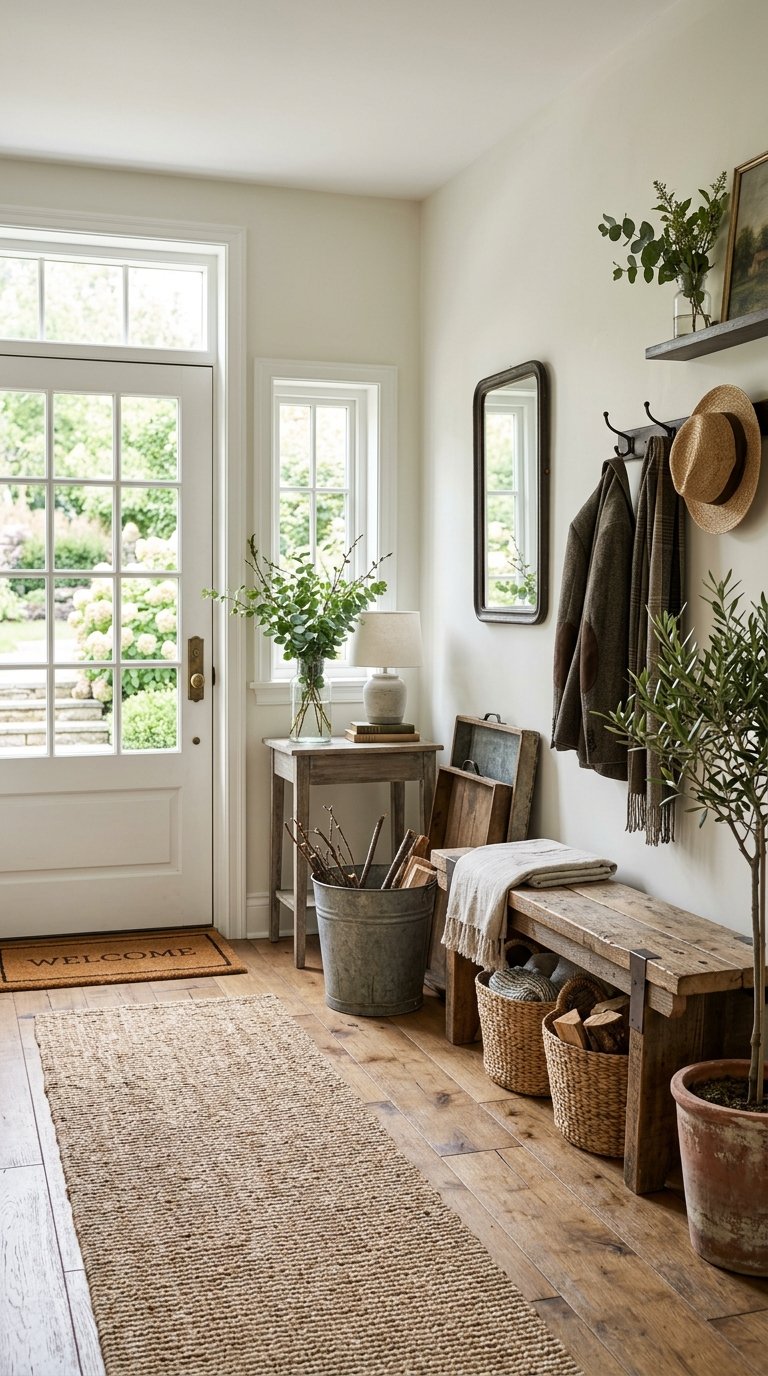
Galvanized metal bins, buckets, trays, and planters add the agricultural character that farmhouse design borrows directly from actual farm utility, and the worn silver tone pairs naturally with wood, white paint, and natural fiber textiles without competing for visual attention. The material improves with age and develops a patina that looks better at five years than it did on purchase day.
Galvanized metal planters cost $15 to $40 depending on size, while storage bins run $10 to $30. Use them as indoor planters, bathroom storage, magazine holders, or firewood containers. Group three sizes together for a layered display that costs under $80 total and adds the utilitarian-beautiful quality that defines the farmhouse approach to home objects.
11. Use Cotton and Linen Textiles Throughout
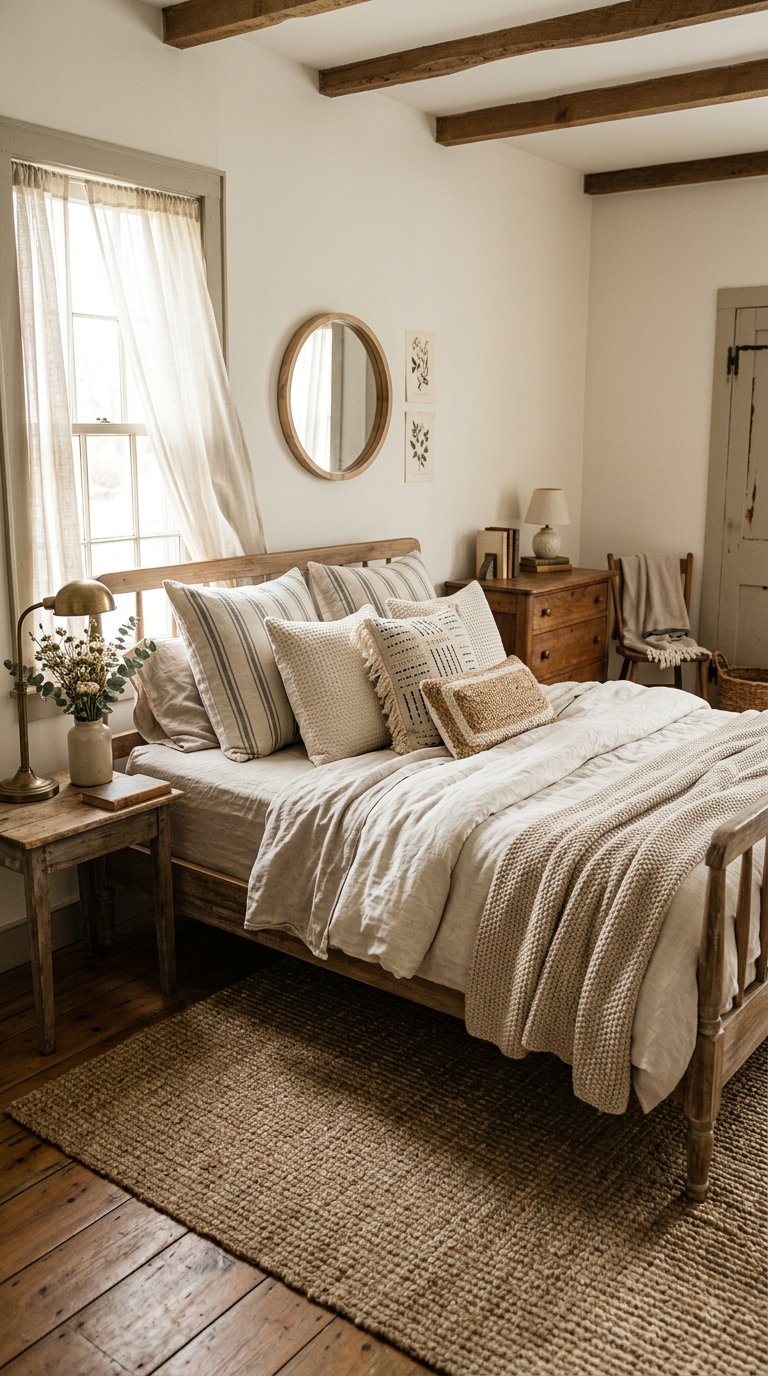
Cotton and linen fabrics in natural, undyed or low-saturation tones feel more authentically farmhouse than synthetic fabrics in the same colors because the natural fiber weave texture is visible and changes in quality with handling in a way polyester never does. Linen softens with every wash while polyester just pills.
Linen throw pillow covers cost $15 to $30 each, linen curtain panels run $30 to $60 per panel, and cotton waffle-weave throws cost $25 to $50. Use these in the same natural white, oatmeal, and warm cream family throughout a room rather than mixing multiple warm neutrals that pull in different directions. The textile consistency across a room is what creates cohesion, and cohesion is what separates farmhouse design from “a room full of brown things.”
12. Add a Chalkboard Wall or Panel
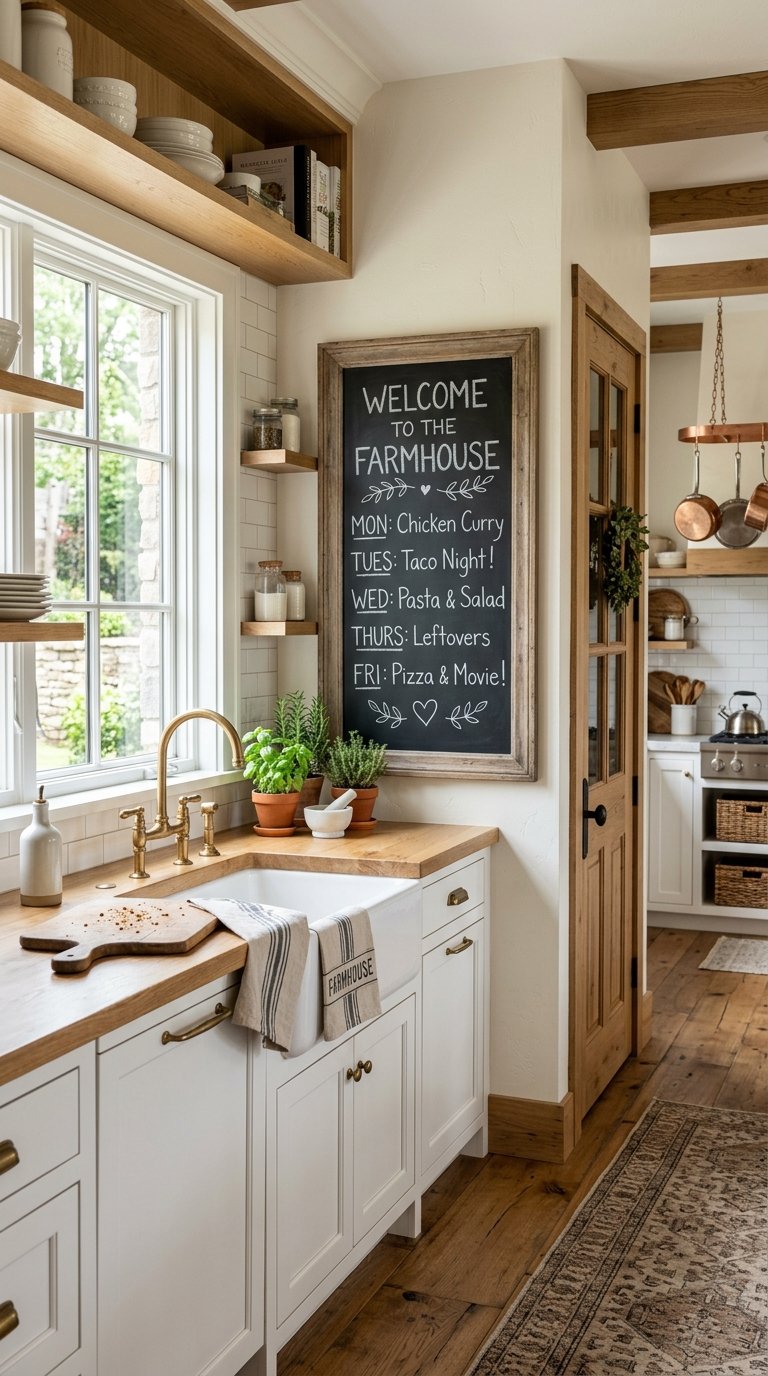
A chalkboard wall in a kitchen or mudroom serves as a menu board, grocery list, and message center while adding the low-tech, handcrafted quality that farmhouse style values over digital convenience. Chalkboard paint costs $15 to $25 per quart and applies directly over existing paint in two coats.
Apply it to the inside of a pantry door, a small section of kitchen wall beside the refrigerator, or a mudroom wall beside the entry. A chalkboard framed with a wood molding border looks more intentional than a painted rectangle on a plain wall, and the frame costs $20 to $40 in basic trim molding from any home improvement store. Season a new chalkboard surface by rubbing it with the side of a chalk piece and erasing before first use, which prevents ghosting from the initial writes.
13. Display a Collection of Vintage Ironstone or White Pottery
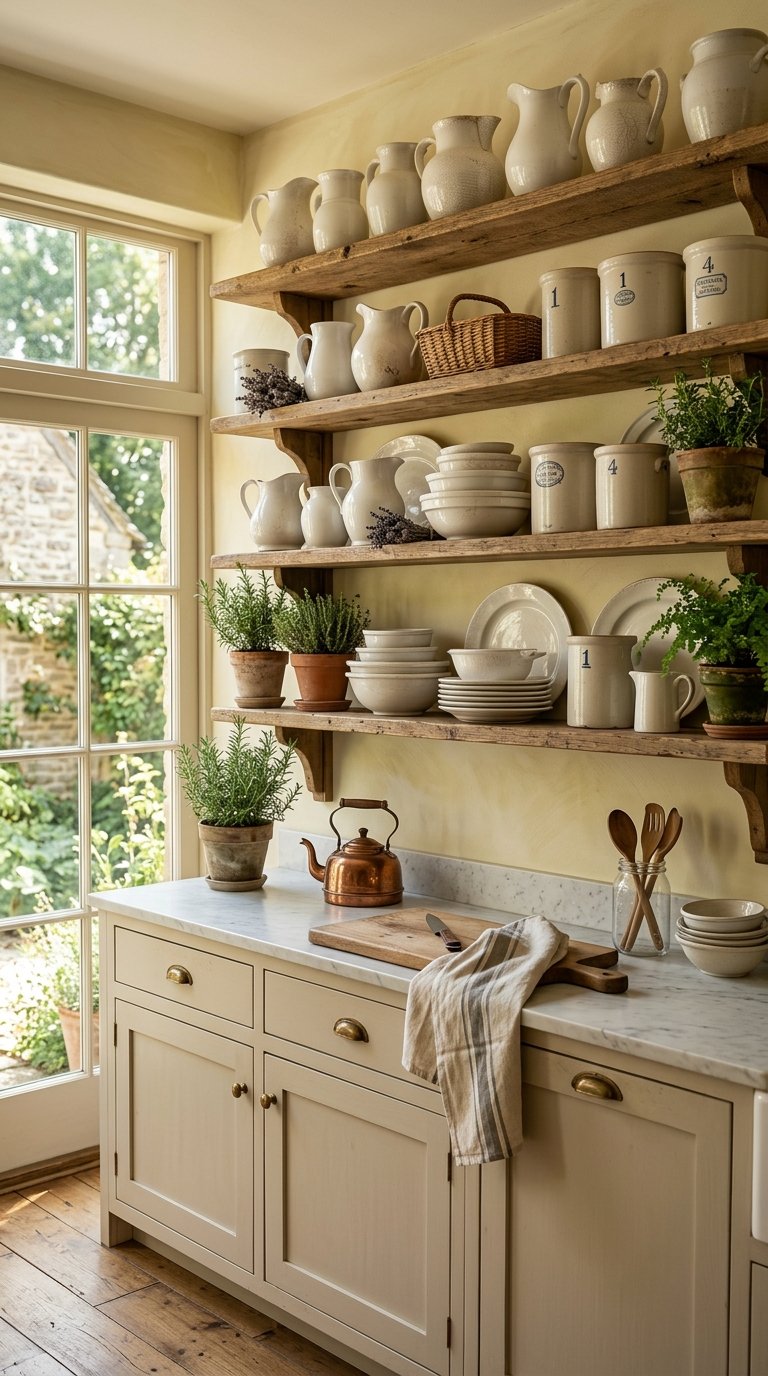
A collection of vintage ironstone dishes, crocks, and pitchers displayed on open shelves or a hutch adds the collected-over-decades quality that farmhouse design achieves at its most authentic. Ironstone has a warm, off-white tone that’s distinctly different from the cool white of modern ceramic and reads as genuinely old even when it’s clean and presentable.
Vintage ironstone pieces cost $5 to $40 each at antique markets depending on size and condition, and a display of 8 to 12 pieces in varying forms, plates stacked vertically, crocks grouped by size, and pitchers arranged by height, fills a shelf section for under $150. The collecting nature of this approach means you add to it gradually over time, which is how the best farmhouse displays develop rather than being purchased complete from a single source.
14. Install Butcher Block Countertops or a Section of One
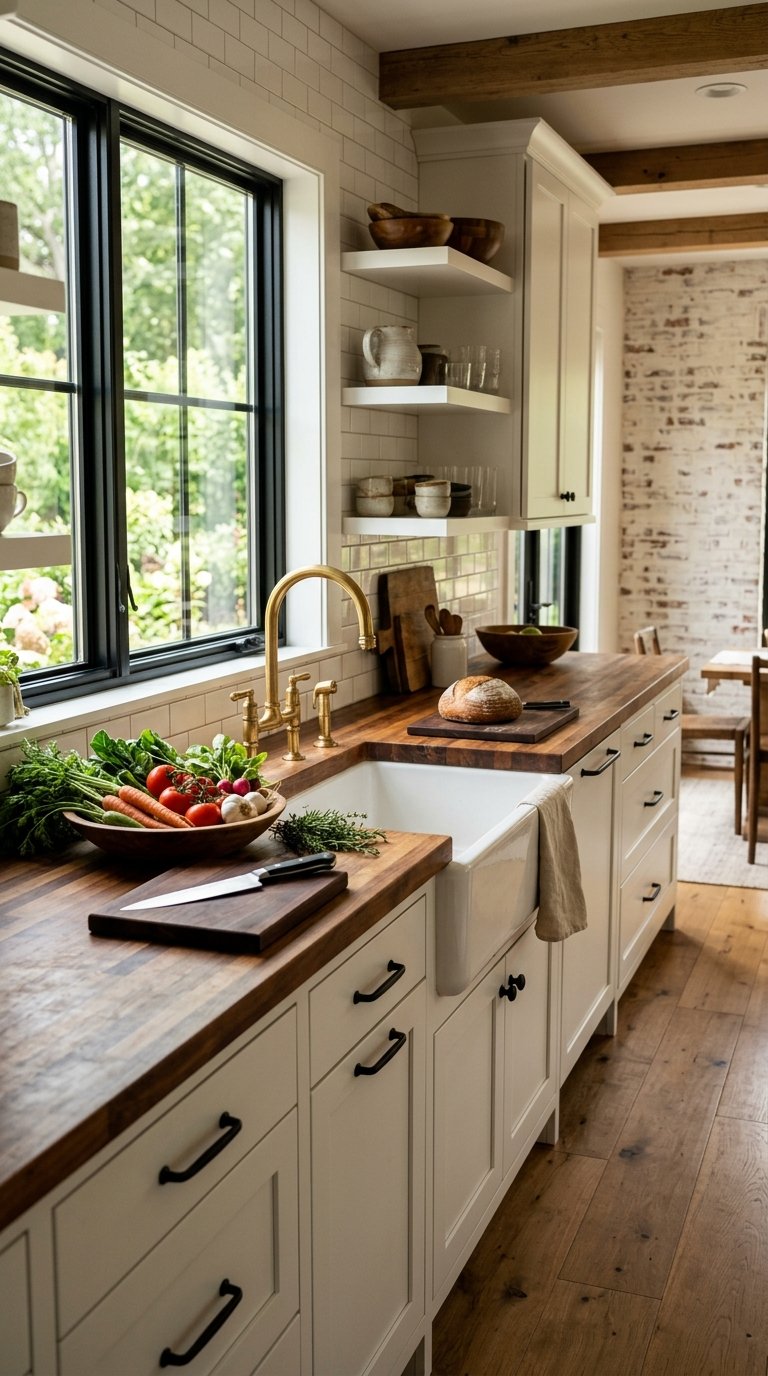
Butcher block countertops add warmth, texture, and genuine function to a kitchen that granite, quartz, and laminate alternatives approach only through visual approximation. The wood surface develops character with use, accepts the marks of a working kitchen, and refinishes with 120-grit sandpaper and mineral oil when it needs restoration.
A full butcher block counter in maple or walnut runs $35 to $80 per square foot installed, while a single section (an island top or a small prep area beside the sink) in the 24 to 30-inch depth range costs $200 to $500 in material. The smaller single-section approach lets you introduce the material in a lower-commitment format, which works as both a style decision and a practical one. Oil the surface monthly for the first year with food-grade mineral oil, then annually after the wood is seasoned.
15. Use Woven Baskets for Visible Storage
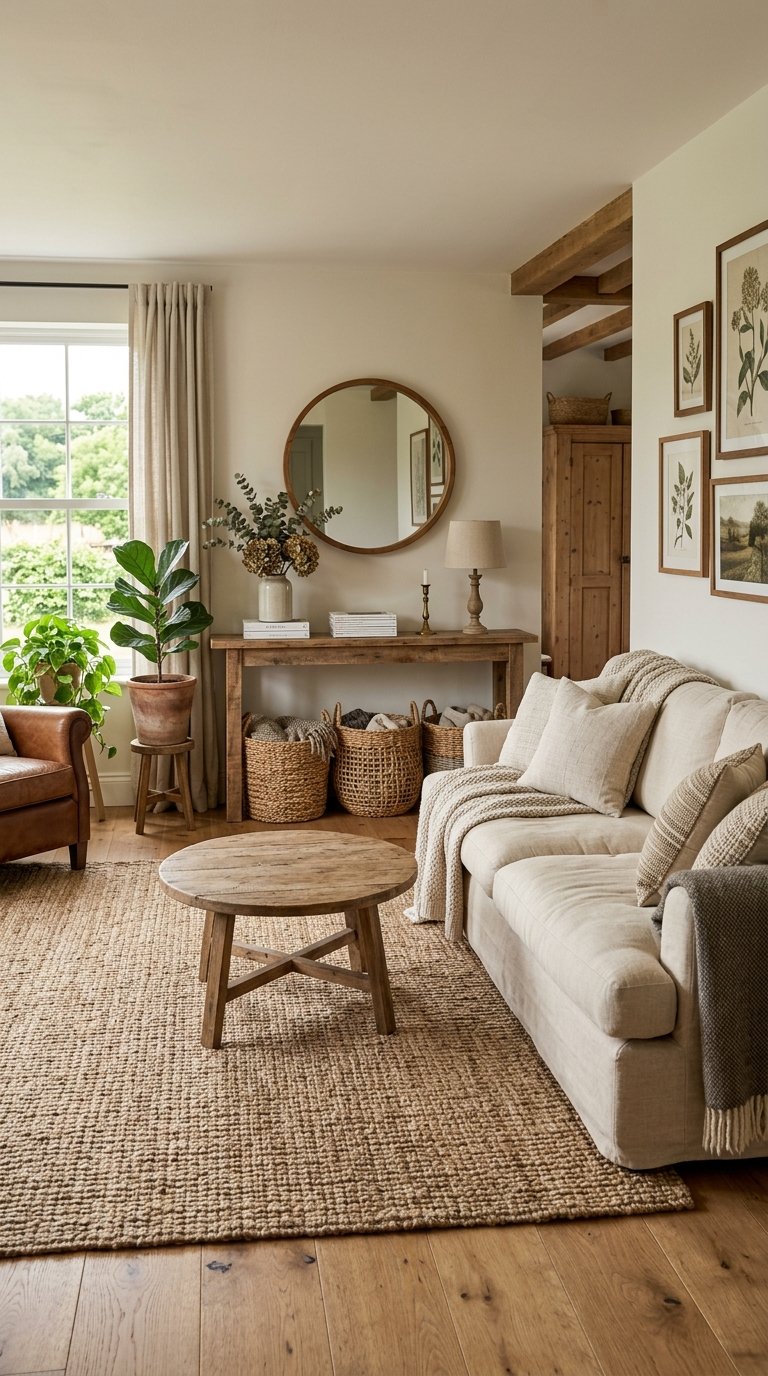
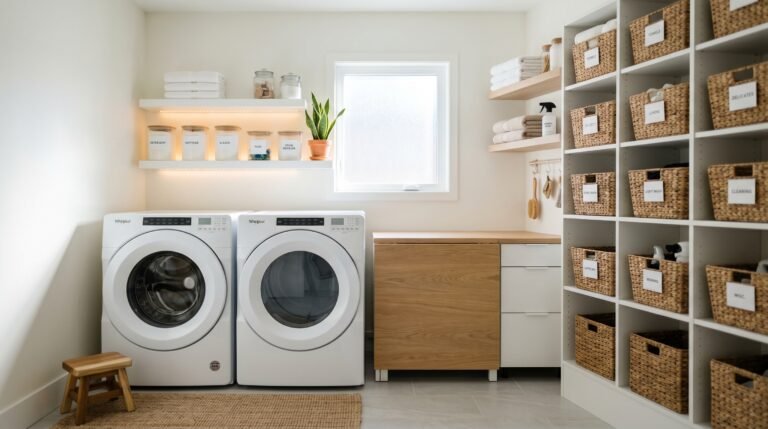
Woven baskets on open shelves, under benches, and in living room corners solve storage problems while adding natural texture that hard-sided storage containers categorically lack. The basket material, whether seagrass, rattan, or willow, brings an organic warmth to stored items that no plastic bin achieves regardless of color.
Large woven storage baskets cost $20 to $50 each at World Market, HomeGoods, or Target, and a pair of matching baskets on an open shelf creates a coordinated storage moment for under $100. Label baskets on the inside back edge rather than the front for a cleaner exterior look, and fill each one with one category of items rather than a general overflow mix. Categorized baskets function; random-fill baskets just contain clutter in a prettier way.
16. Create a Mudroom With Hooks, a Bench, and Baskets
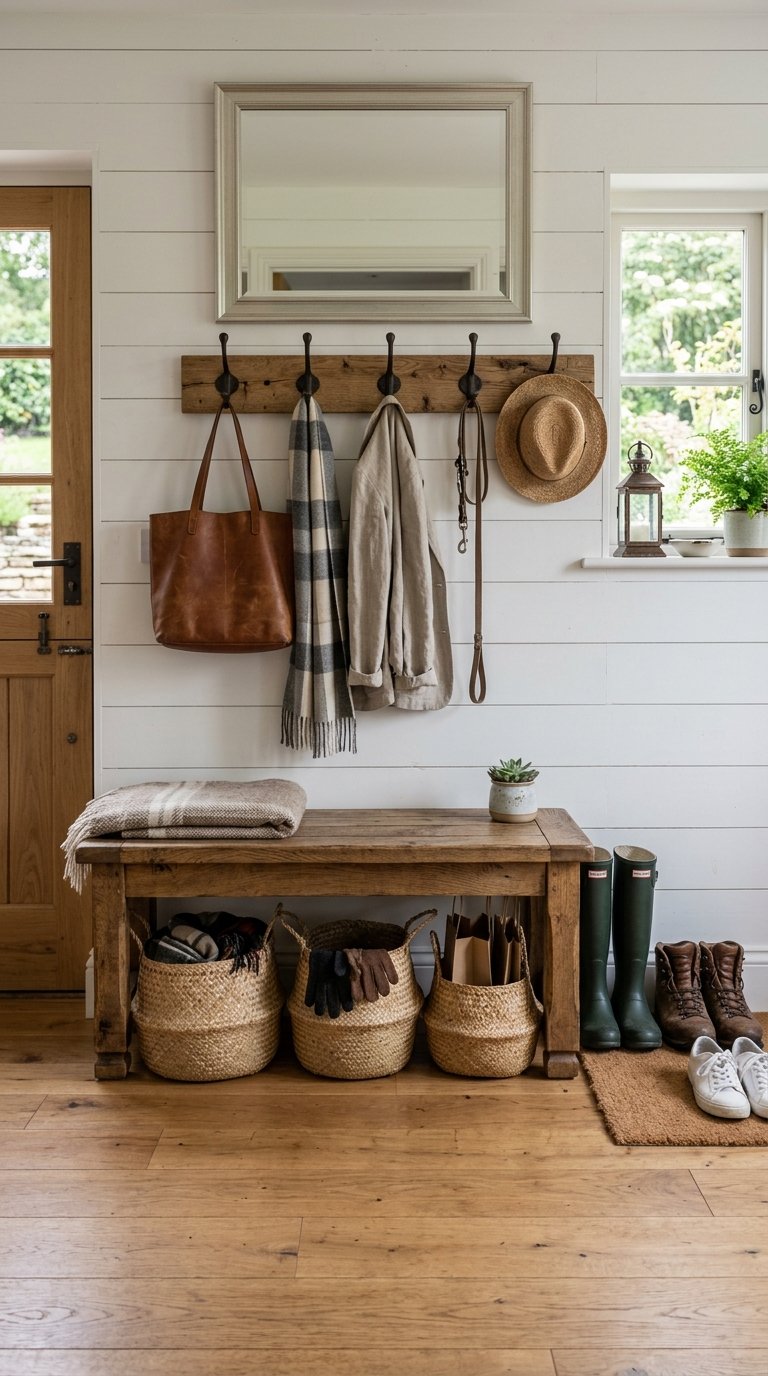
A mudroom entry, whether a dedicated room or a 4-foot section of hallway wall, combines hooks, a bench, and basket storage into the most functional farmhouse feature in the entire house. This isn’t decorative, it’s operational, and it prevents the entry pile-up of shoes, bags, and coats that happens without a designated system.
A board-and-hook panel with five hooks costs $30 to $60 installed on a standard wall, a simple wood bench runs $80 to $200, and two or three baskets beneath the bench add $40 to $80 in storage. The full setup costs $150 to $350 and eliminates the daily functional frustration of a home without a landing zone. Paint the board behind the hooks in a dark contrast color, forest green or navy against white walls, for the visual anchor that makes the mudroom section feel intentional rather than improvised 🙂
Final Thoughts
Farmhouse design works when it solves real problems with real materials rather than reproducing a look from a catalog. Every idea on this list either adds genuine warmth through natural material, solves a functional problem with a farmhouse-appropriate solution, or both simultaneously. Start with hardware, open shelving, and textile upgrades since those three changes cost the least and deliver the most immediate visual shift. Work toward the larger structural ideas like shiplap, beams, or a farmhouse sink as budget allows. Your home gets more farmhouse character every time you choose a material with texture and history over one that’s smooth, new, and deliberately characterless.