26 Chic Room Decor Ideas to Upgrade Your Home Instantly
Chic doesn’t mean expensive. It means intentional. The rooms that stop people mid-scroll on Instagram aren’t filled with designer furniture. They’re filled with specific, deliberate choices made at every price point, where nothing sits in a room without earning its space. I’ve spent years helping people transform forgettable rooms into spaces worth photographing, and the common thread is never budget. It’s knowing which moves to make first. These 26 chic room decor ideas give you the exact playbook.
1. Hang a Statement Mirror to Double Your Perceived Space
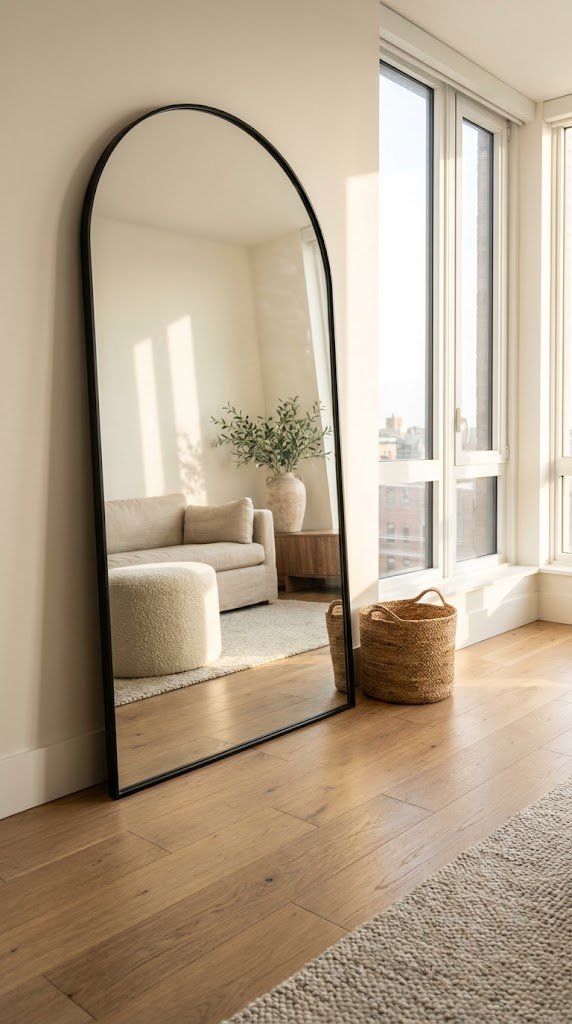
A large mirror placed opposite your main window reflects natural light back across the room, which the American Lighting Association confirms increases perceived brightness by up to 30% without touching a single light fixture. Position it leaning against the wall rather than mounted flush for the relaxed, editorial look that interior designers charge $200 an hour to recommend.
Your mirror should be at least 36 inches tall to read as a statement piece rather than an afterthought. An arched floor mirror from Amazon in the $60 to $90 range delivers the same visual impact as a $400 boutique version because the shape does the work, not the price tag.
2. Swap Cabinet Hardware for Brushed Brass Pulls
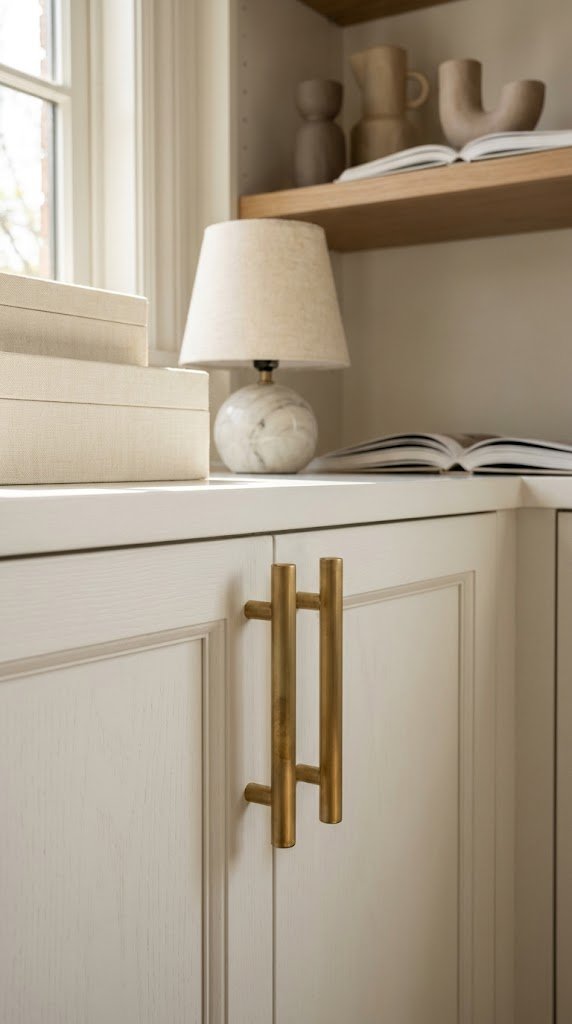
Hardware is the jewelry of your room, and builder-grade chrome pulls communicate “recently moved in” rather than “deliberately designed.” A 2023 Houzz renovation report found that hardware updates rank among the top five highest-perceived-value kitchen and bathroom improvements relative to cost, with most homeowners spending under $80 for a full room transformation.
Buy 10 to 12 brushed brass pulls at $3 to $6 each from Rejuvenation, Amazon, or Anthropologie’s sale section. The warmth of brass coordinates with wood tones, white cabinetry, and dark painted furniture simultaneously, which is why it appears in nearly every high-end interior photography spread regardless of the overall room style.
3. Use Linen Curtains Hung at Ceiling Height
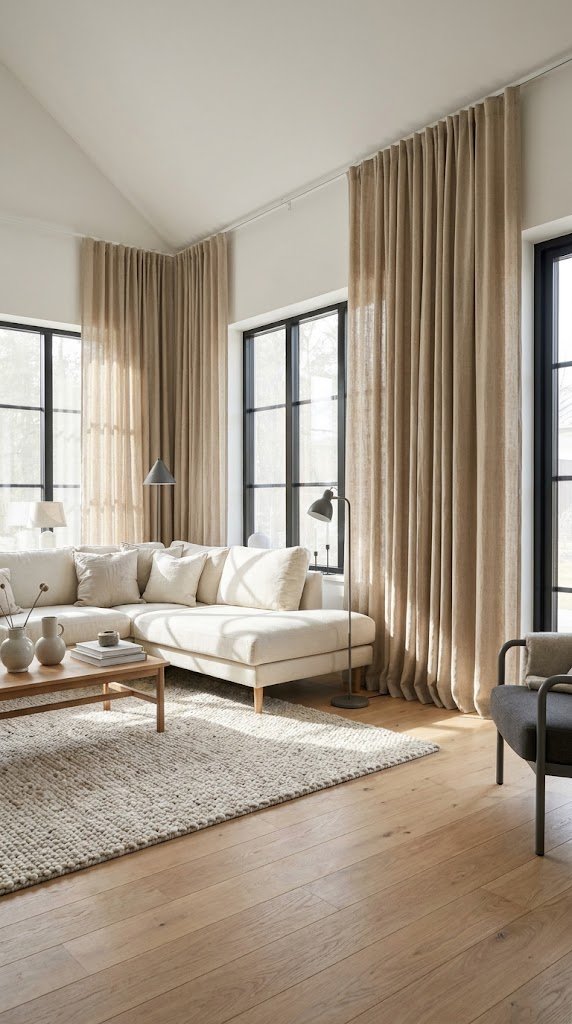
Standard curtains hung at window-frame height make your ceilings look lower and your windows look smaller, both of which work against a chic room aesthetic. Architectural Digest’s style team consistently recommends mounting curtain rods 4 to 6 inches below the ceiling and extending the rod 6 inches past each window edge, which makes windows appear 40% larger without structural changes.
IKEA’s DYTAG linen curtains at $39.99 per panel hit the floor at a natural 98-inch drop, and their loose weave filters light into the warm, diffused quality that photographers chase in natural light shots. Hang them with simple iron rings on a matte black rod, and the window wall becomes your room’s best feature for under $100.
4. Build a Gallery Wall With Mixed Frame Sizes and Finishes
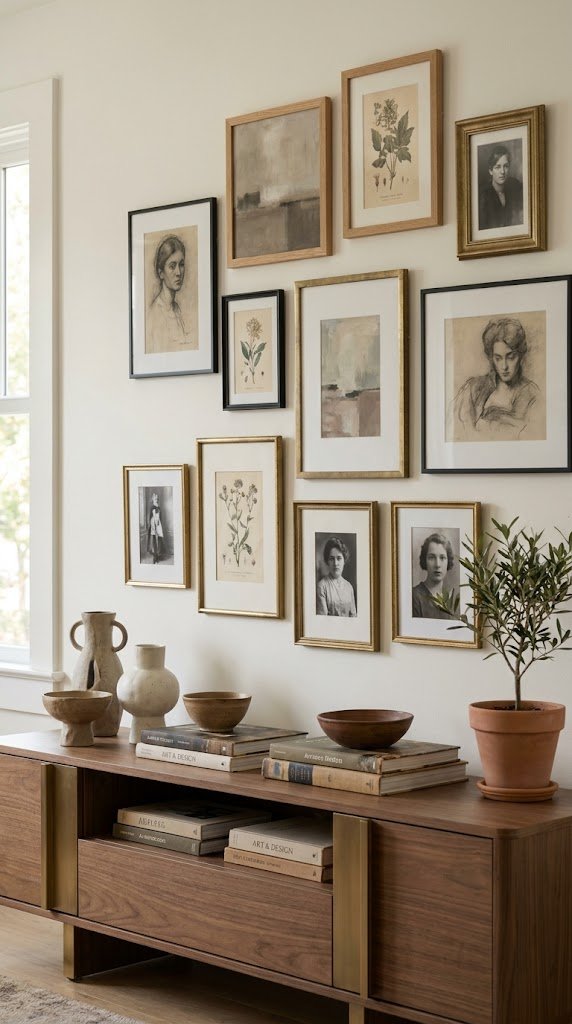
A gallery wall built from identical frames looks like a furniture store display. A gallery wall mixing black, brass, and natural wood frames in sizes ranging from 5×7 to 16×20 looks like a room where someone with genuine taste actually lives. The key variable isn’t the art itself but the spacing: a consistent 2-inch gap between every frame creates visual order within the intentional variety.
Lay your arrangement on the floor first and photograph it before touching a single nail. This saves you from the patch-and-repaint cycle that plagues most first-attempt gallery walls and lets you refine the composition without commitment. Free downloadable prints from the Smithsonian Open Access archive or Unsplash fill your frames at $2 to $4 per print at a local print shop. FYI, mismatched frames from thrift stores at $1 to $3 each outperform matching sets from a retailer every time because the variation adds authenticity no box set replicates.
5. Add a Velvet Accent Chair in a Jewel Tone
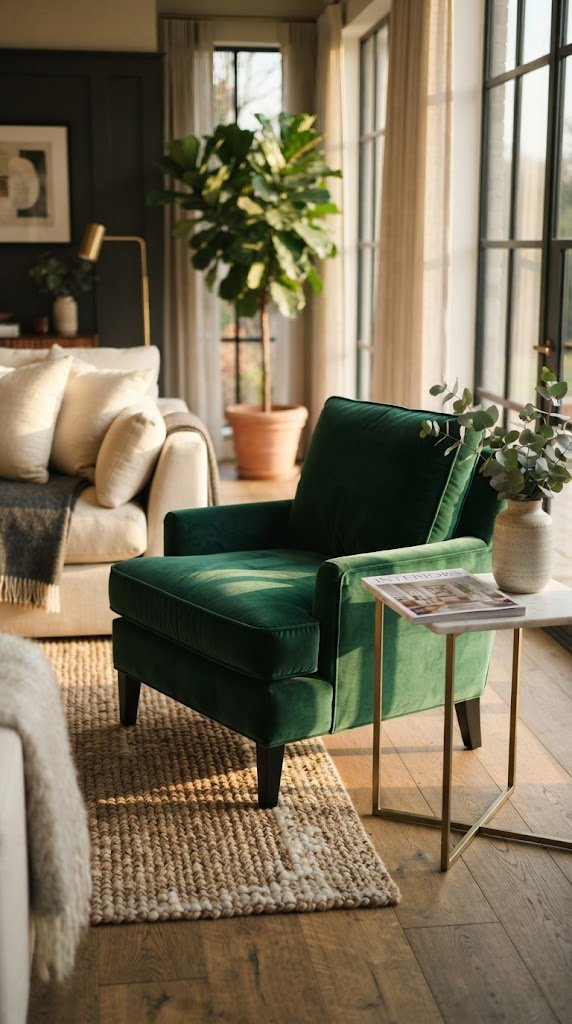
A velvet accent chair in emerald, sapphire, or dusty rose does what a neutral chair never accomplishes: it gives your room a color identity without requiring you to paint a wall or replace your sofa. Velvet’s pile structure catches light differently at each angle, which is why a single $350 chair in a jewel tone changes the visual energy of a whole room in a way a $600 neutral linen chair in the same spot doesn’t.
Position your accent chair at a 30-degree angle to the sofa rather than parallel to it, which interior stylist Emily Henderson has demonstrated in multiple before-and-after projects creates a more dynamic, conversational room arrangement. West Elm’s Eddy chair and Article’s Sven chair both deliver genuine velvet quality in the $300 to $500 range, while Amazon’s Christopher Knight collection offers comparable aesthetics at $180 to $250 for budget-focused rooms.
6. Layer Two Rugs for Depth and Visual Interest
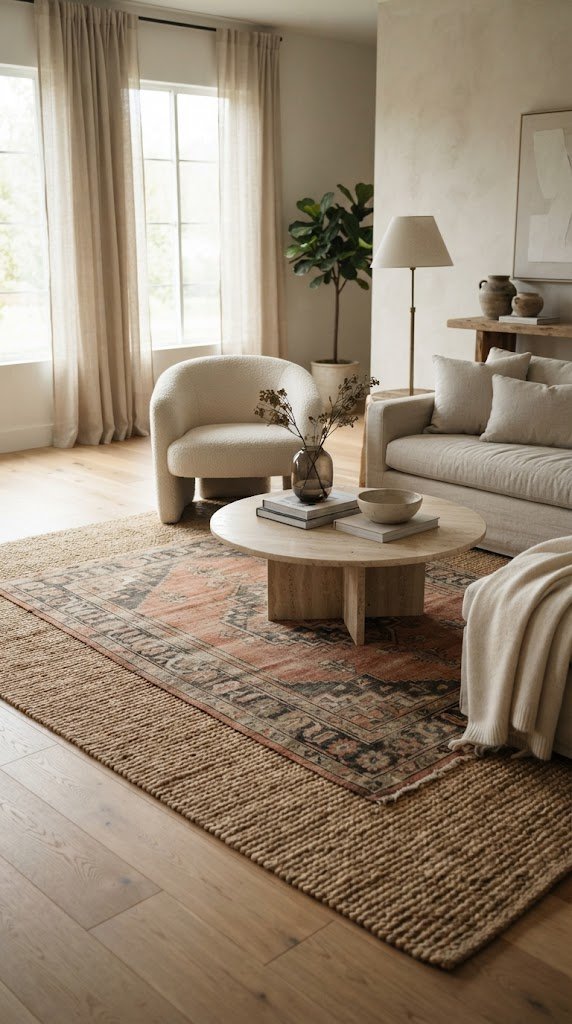
One rug on a hardwood floor looks functional. Two rugs layered at a slight angle look like a room styled by someone who reads design books on weekends. A 2021 study published in the Journal of Interior Design found that layered floor treatments consistently ranked as the top visual element distinguishing “designed” from “furnished” spaces among survey respondents.
Start with an 8×10 jute base rug at $60 to $90 from Rugs USA, then layer a smaller 4×6 patterned or cowhide rug offset to one side. The jute handles the neutral foundation while the top rug carries the personality. This approach also solves the specific renter problem of ugly apartment flooring without replacing it, since the double layer covers more surface area and stays put better than a single rug on laminate.
7. Style Open Shelves With the Rule of Three
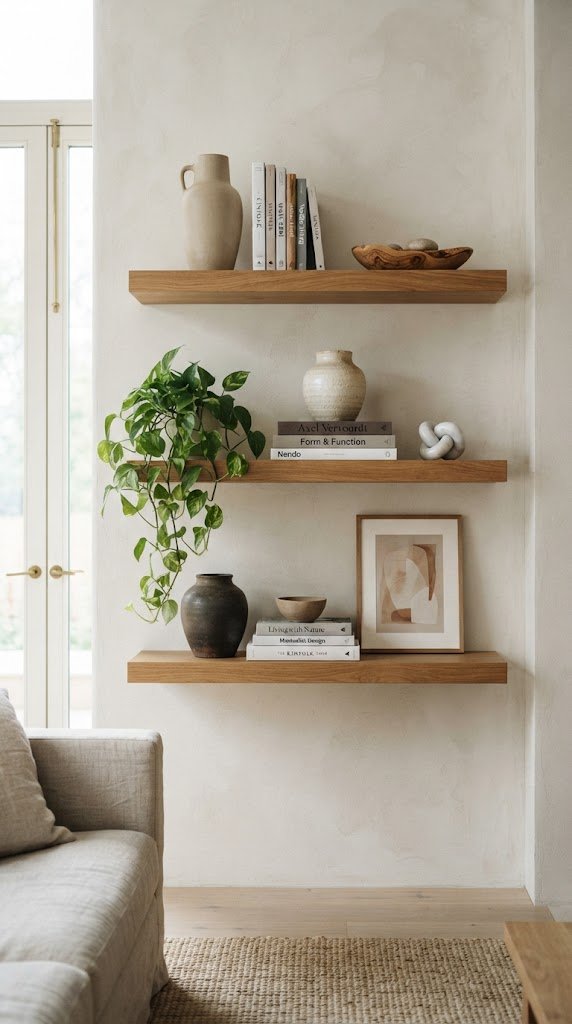
Open shelving styled without intention looks like a storage wall. Styled with the rule of three, grouping objects in sets of three at varying heights, it looks like a curated installation. Every interior stylist from Amber Lewis to Studio McGee uses this principle because odd numbers create visual tension that pulls the eye through the arrangement rather than stopping it.
Per shelf, place one tall object, one medium, and one low with at least 20% of the shelf left empty. That negative space is not wasted; it’s what makes the objects beside it read as intentional selections rather than overflow storage. Rotate one item per shelf seasonally to keep the display fresh without buying new pieces. IMO, a bookshelf styled this way does more for a room’s perceived sophistication than any single furniture purchase.
8. Add a Bouclé Throw Blanket to Any Seating Surface
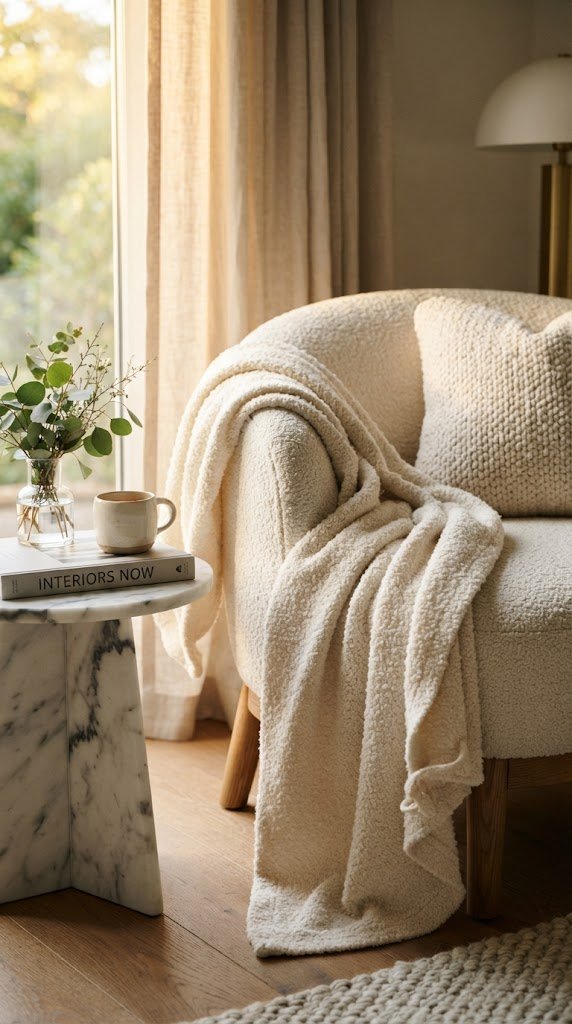
Bouclé’s looped texture catches light in a way that smooth cotton and fleece don’t, which is why it appears in nearly every high-end interior styled for editorial photography. A single bouclé throw draped asymmetrically over a sofa arm or accent chair adds the textile layer that makes a room feel finished rather than furnished.
An 18×18 inch bouclé pillow cover from H&M Home runs $20 to $30, and a coordinating throw runs $35 to $55, making the full investment under $85 for the textile moment that appears in every aspirational living room image. Stick to cream, oatmeal, or warm grey for maximum versatility because these tones integrate with every existing color palette without requiring you to change anything else in the room.
9. Swap Overhead Lighting for Layered Lamp Sources
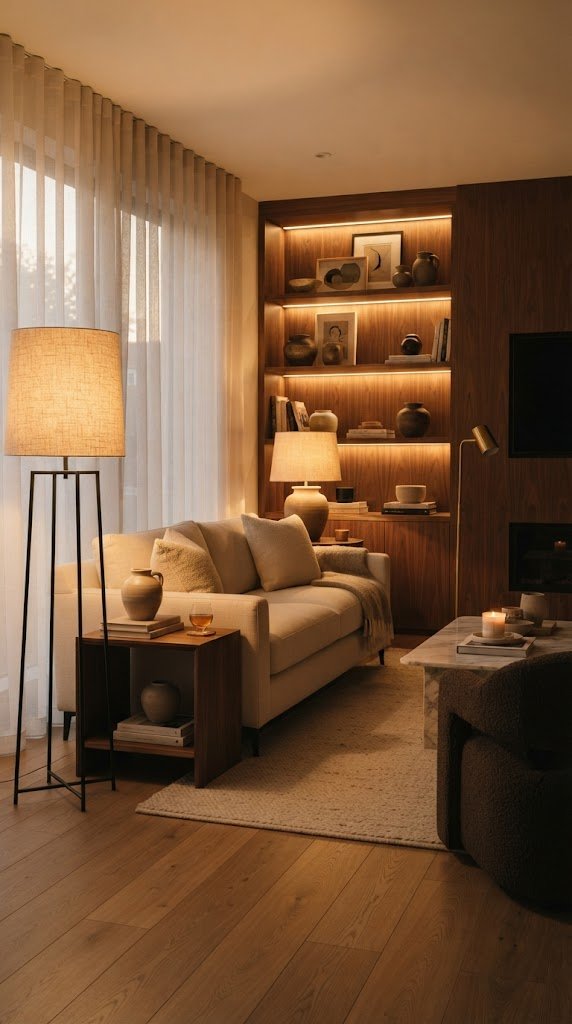
Rooms lit exclusively by overhead fixtures cast flat, shadowless light that flattens every texture and makes every surface look equally unremarkable. The American Lighting Association recommends a minimum of three light sources at different heights for a living room, specifically a floor lamp, a table lamp, and an accent light, to create the depth that rooms in design magazines consistently exhibit.
Warm bulbs at 2700K in all three sources produce the golden, inviting light that makes rooms photograph well and feel comfortable at the same time. A floor lamp from Target in the $35 to $60 range, a table lamp at $25 to $45, and a small LED accent light at $12 to $18 transform your room’s evening atmosphere for under $120 total, which costs less than a single overhead fixture replacement.
10. Use a Decorative Tray to Anchor Surface Styling
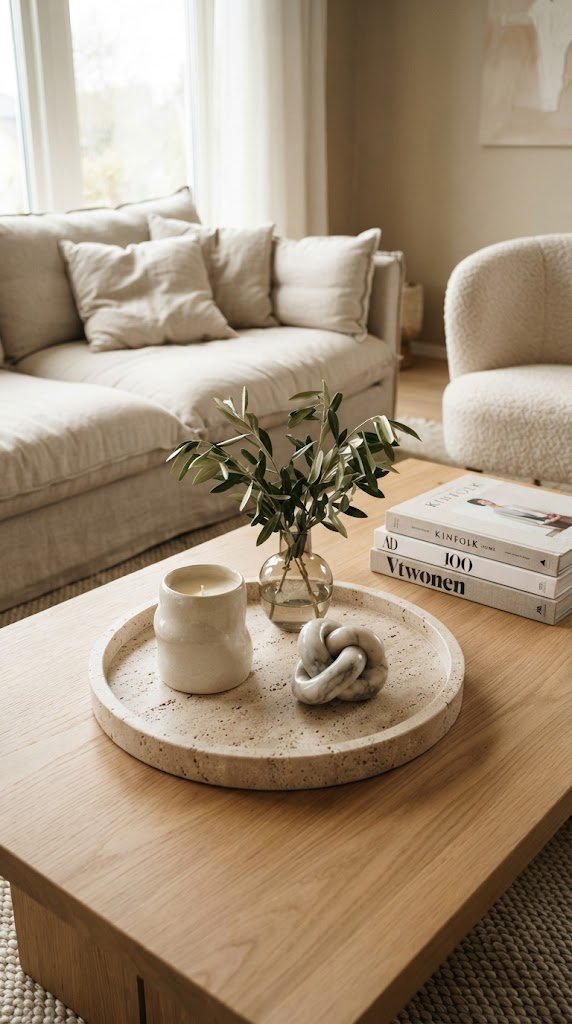
A decorative tray on your coffee table, console, or ottoman groups loose objects into one composed vignette that reads as styled rather than scattered. Professional home stagers use trays on every horizontal surface specifically because they create a visual container that makes three to five objects look like a deliberate arrangement rather than items without a home.
Choose a round tray in marble, brass, or lacquered wood at $20 to $40 and place your candle, a small plant or vase, and one decorative object inside it. Keep the tray contents to three items maximum, because four or more objects inside a tray starts reading as clutter contained rather than decor composed. A 2020 Zillow listing analysis found that professionally staged homes with styled surface trays sold for an average of 6% more than comparably priced homes without staging.
11. Hang Woven Wall Art for Texture Without Pattern
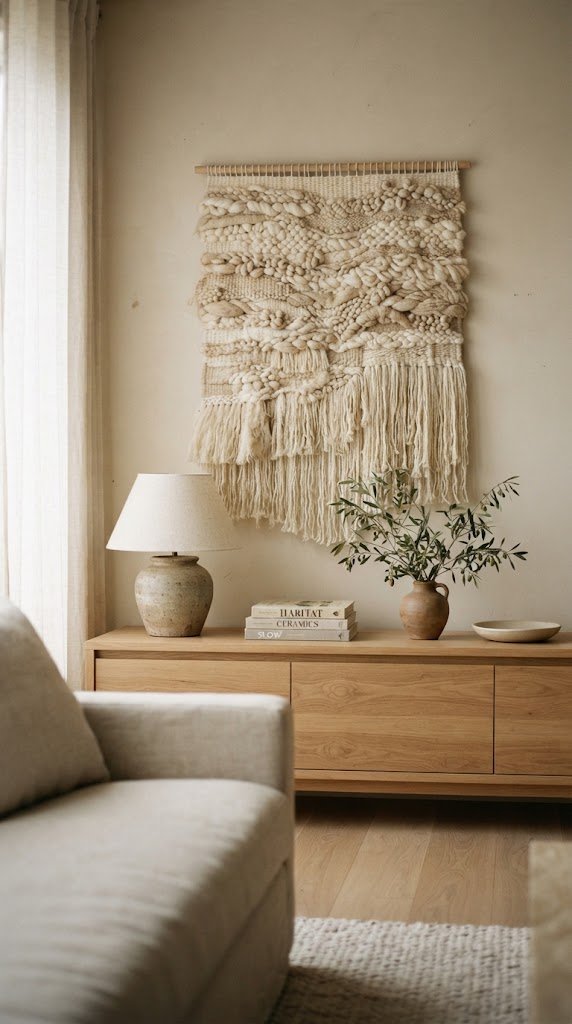
Woven wall hangings solve the problem that flat art can’t: they add three-dimensional texture to a vertical surface, which changes the room’s acoustic quality slightly and its visual quality significantly. An 8×10 oil print on a white background sits in a room. A 24-inch woven piece in natural fiber tones becomes part of the room’s material conversation alongside wood, linen, and ceramic.
Source woven pieces from Etsy sellers in the $45 to $90 range for handmade quality that mass-market retailers don’t replicate. Hang it on a thick wooden dowel rather than a standard picture hook, which is the hanging method that reads as most intentional and integrates best with the natural fiber aesthetic the piece carries. Position it at eye level on a wall that gets some natural light, since the fiber texture comes alive most under directional daylight.
12. Create a Vignette on Your Nightstand
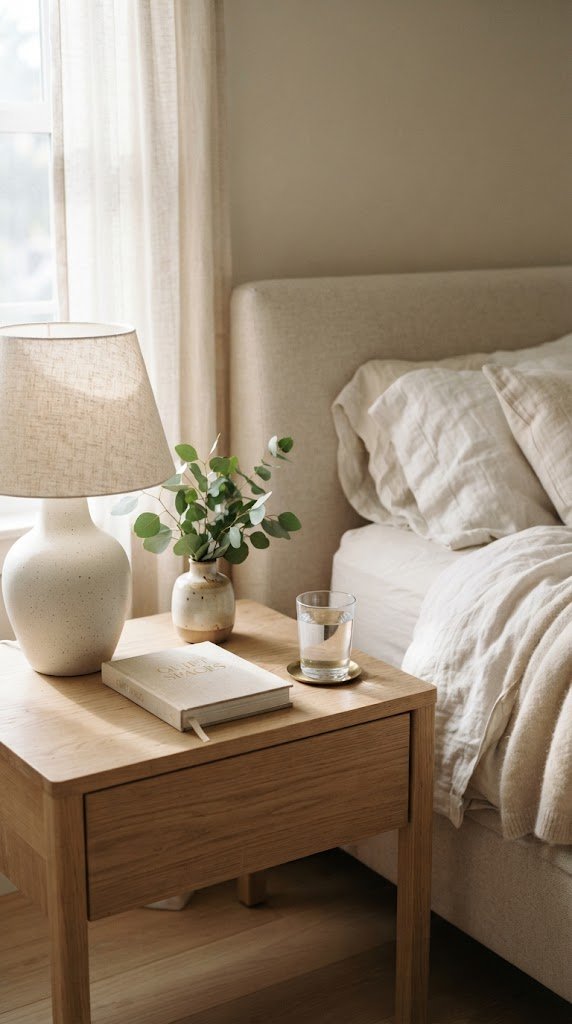
A nightstand with a lamp, a water glass, and charging cables reads as a surface where things accumulate. The same nightstand with a lamp, one ceramic object, a small plant, and a single book reads as a styled moment. The difference is editing, not spending, and the editing takes four minutes.
Remove everything from your nightstand surface, place your lamp at the back corner, your plant or vase at the opposite corner, and your current book flat in the center. Everything else goes in the drawer. A Harvard Business School study on visual organization found that edited surfaces increased participants’ reported sense of calm by 27% compared to cluttered equivalents. Your nightstand is the first surface you see in the morning and the last you see at night, which makes it the highest-emotional-impact surface in your bedroom per square foot.
13. Install Peel-and-Stick Wallpaper on One Accent Wall
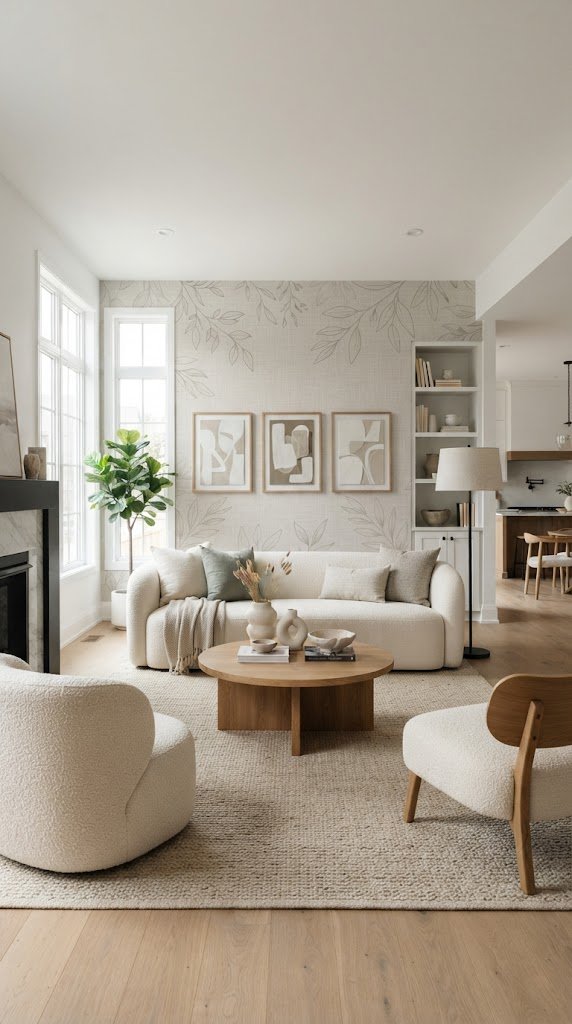
Renters and homeowners both benefit from peel-and-stick wallpaper because it delivers the visual impact of wallpaper at 30% of the cost and removes without wall damage when applied correctly. A single accent wall behind your bed or sofa in a geometric, botanical, or linen-texture pattern transforms your room’s entire visual identity without touching the other three walls.
Budget two rolls for a standard 10-foot wall, which runs $35 to $60 in total materials from brands like RoomMates or Chasing Paper. Apply from the top down using a credit card to smooth sections as you work, and align your first strip to a plumb line rather than the wall’s corner, which is almost never perfectly vertical. This one wall produces the most dramatic room transformation per dollar on this entire list.
14. Add a Tall Indoor Plant in a Statement Pot
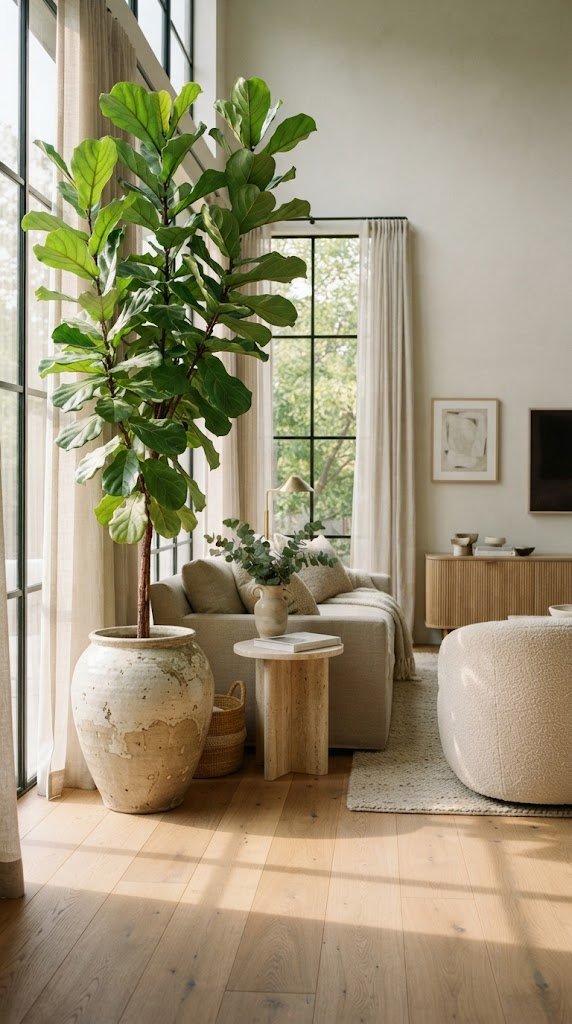
A tall indoor plant, fiddle-leaf fig, bird of paradise, or olive tree, fills vertical space that furniture can’t occupy and adds the organic, living element that distinguishes a genuinely styled room from one that looks like a floor display. Plants reduce cortisol levels by up to 15% according to a 2015 study in the Journal of Physiological Anthropology, which means your room’s calming quality is measurable rather than subjective.
A 6-foot fiddle-leaf fig runs $40 to $80 at most garden centers, and a large ceramic or woven basket planter at $25 to $45 elevates it from a plant to a room feature. Place it in a corner where it receives indirect natural light and where its height fills the awkward vertical space above your furniture line, which is the specific zone that most rooms leave visually empty and that a tall plant addresses better than any shelf or artwork.
15. Use Black as an Accent Tone Throughout Your Room
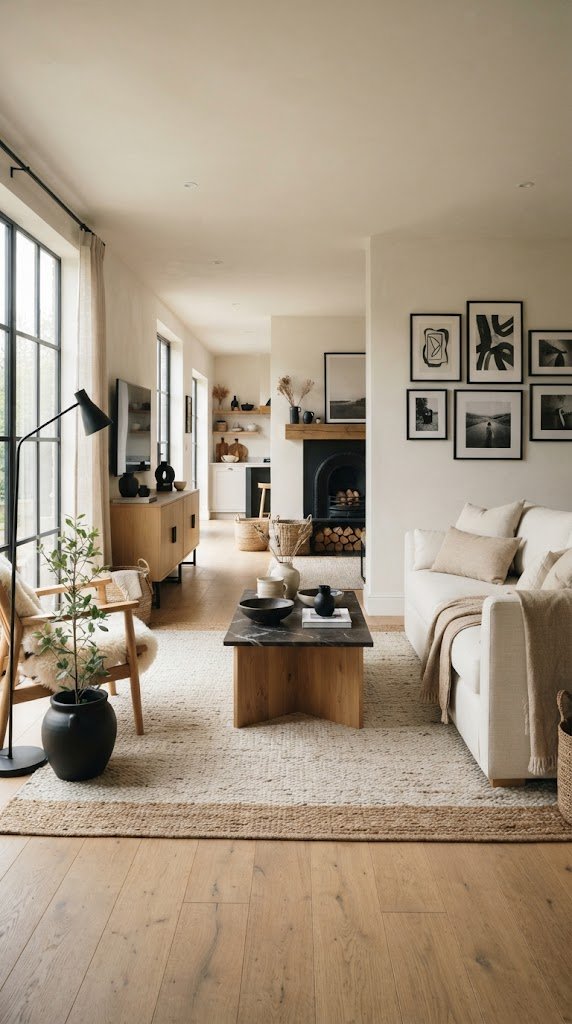
Black used consistently as an accent tone, in your picture frames, your lamp bases, your plant pot, and your curtain rod, creates visual cohesion across an otherwise varied room without requiring a complete redesign. Interior designer Nate Berkus has described this technique as “threading black through a room,” and its effect is that every object with a black element appears connected to every other object with one.
Start with your frames and your curtain rod since these are the highest-visibility black elements in most rooms. Then add a single matte black lamp or two black ceramic pots to extend the thread further. The total cost of introducing this accent thread is usually under $60 if you swap existing frames for black versions and paint an existing lamp base with $8 worth of matte black spray paint. The result reads as a room where someone made real decisions rather than one where things accumulated.
16. Style Your Coffee Table in Three Distinct Layers
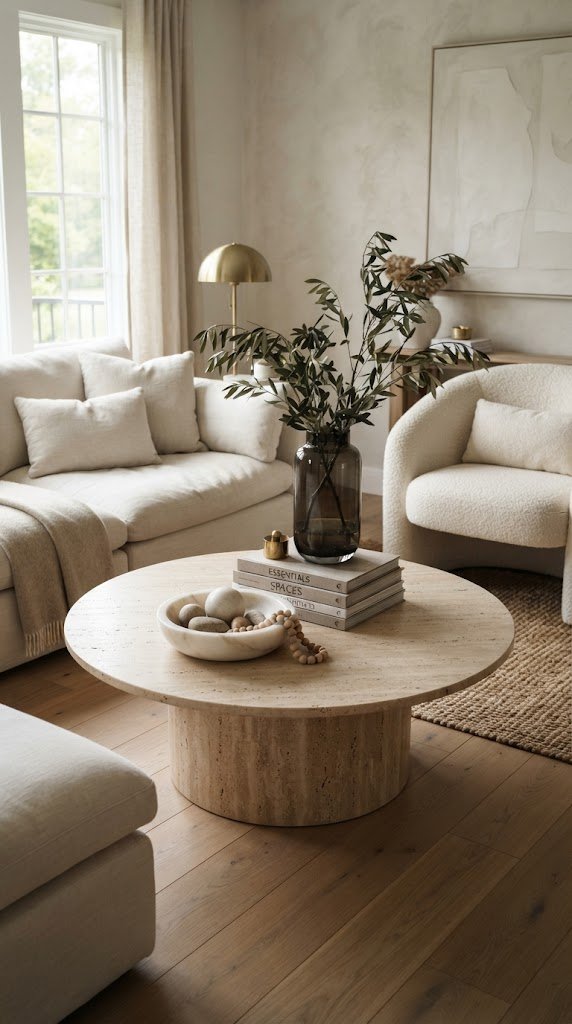
A coffee table styled with objects at one height looks flat. Styled with objects at three heights, a tall vase or candlestick, a medium-height stack of books, and a low flat object like a bowl or tray, it creates the same visual rhythm that a well-designed shelf or mantel achieves. This is the specific technique that makes the coffee tables in styled home tours look editorial rather than functional.
Your three-layer formula: a 14 to 18-inch tall vase or sculptural object, a stack of two to three coffee table books at 4 to 6 inches high, and a low decorative bowl or tray at 2 to 3 inches. Total cost for a complete restyle using objects you already own: zero dollars. Total cost buying new objects for each layer at Target or H&M Home: $35 to $65. Either approach produces a result that photographs better than any amount of expensive furniture in the same spot.
17. Hang Curtains With Rings for an Elevated Look
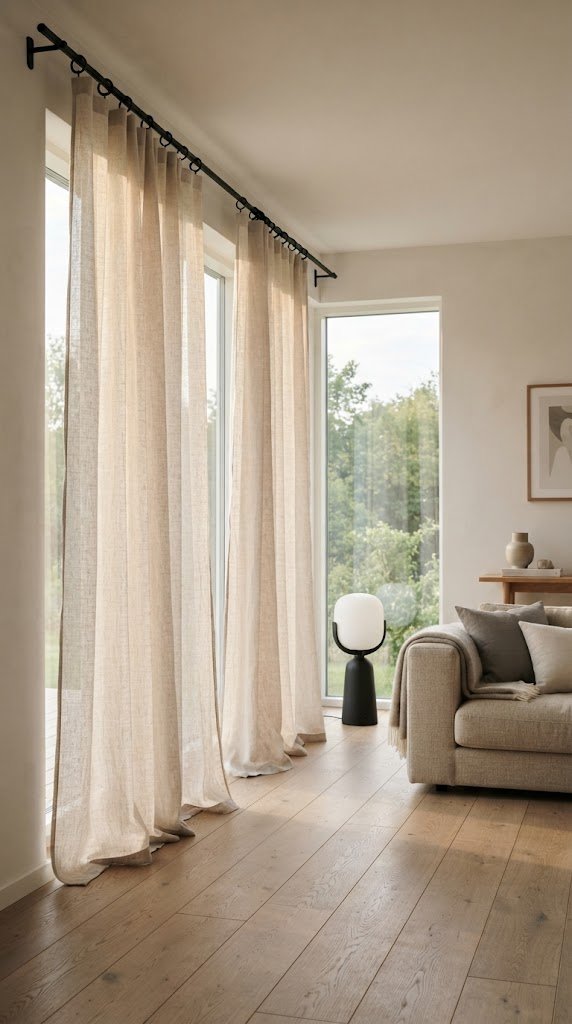
Curtains with rings instead of rod pockets hang with a natural, even drape that looks more intentional than bunched fabric threading directly onto a rod. The ring system also allows curtains to open and close without bunching or resisting, which matters for windows you actually use daily rather than ones purely for decoration.
Buy clip rings at $8 to $12 for a pack of ten and clip them directly onto any curtain panel regardless of whether it has a rod pocket. Space them every 6 to 8 inches for an even drape with no fabric bunching between clips. This converts a $20 flat panel curtain into a window treatment that reads as deliberately hung rather than functionally positioned, which is a meaningful distinction in a room where everything else is carefully considered.
18. Choose Artwork Sized Correctly for Your Wall
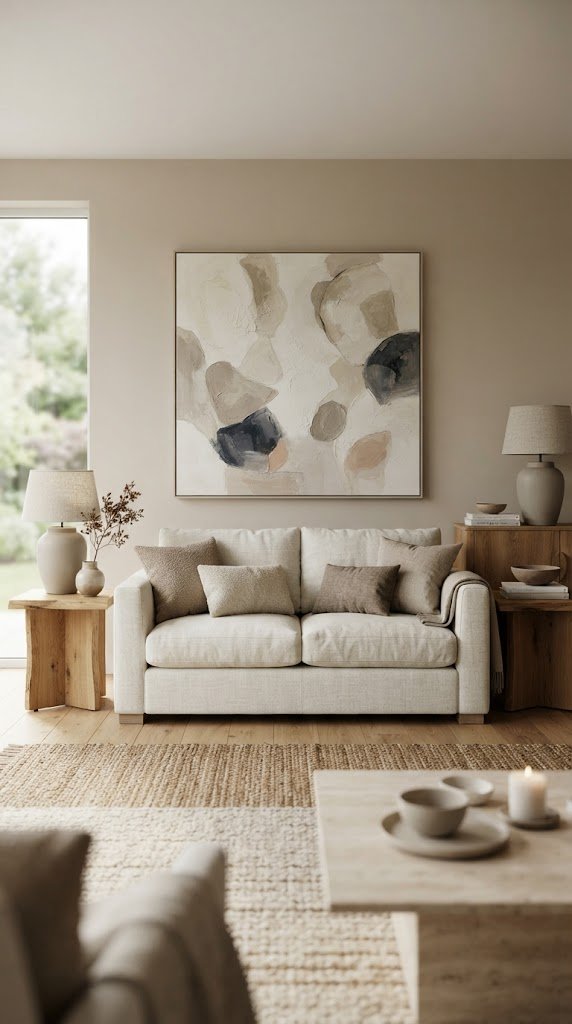
Small artwork on a large wall is the single most common decorating mistake in real homes, and it makes rooms look like the occupants haven’t finished moving in. The general rule interior designers follow is that artwork should cover 57% to 75% of the wall space above a piece of furniture, which for a standard 72-inch sofa means your art or art grouping needs to span at least 40 inches wide.
A single large canvas print from Desenio or Society6 in the 24×36 or 30×40 inch range runs $40 to $80 and solves the undersized-art problem immediately. If you prefer a gallery arrangement, cluster multiple pieces close enough that the grouping as a whole meets the 57% width guideline. Every design publication from Architectural Digest to Apartment Therapy cites correct art sizing as the most impactful single correction in a room’s visual organization.
19. Add Ceramic Vases as Your Primary Decorative Object
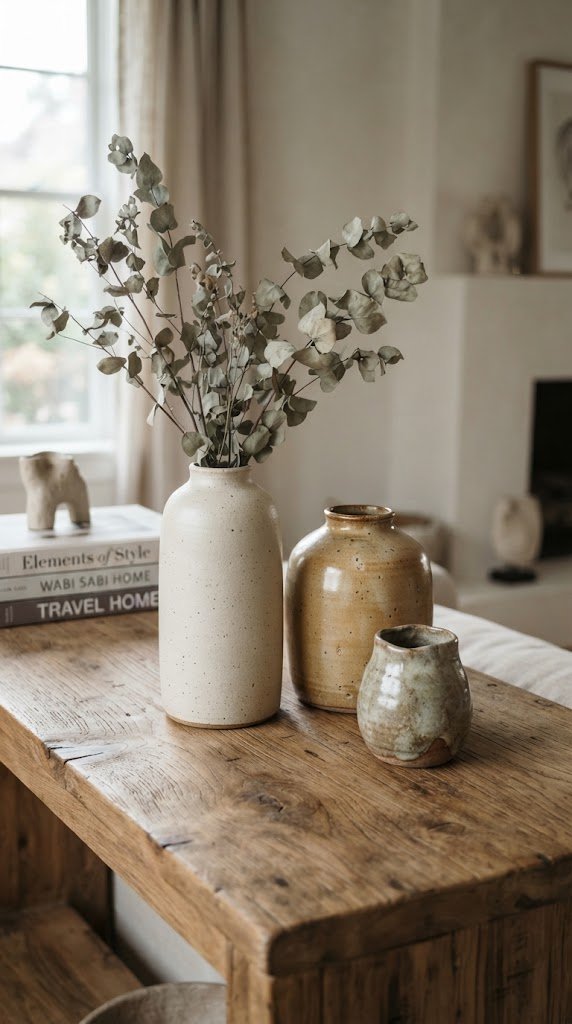
A ceramic vase serves as decor whether it’s holding stems or empty, which gives it a year-round usefulness that seasonal decor doesn’t match. Three ceramic vases in varying heights and complementary glazes grouped on a shelf, console, or bookcase create the kind of composed still-life arrangement that appears in editorial home photography specifically because the shapes and glaze variations do interesting visual things together.
Group your vases in a loose triangle formation rather than a straight line, with the tallest at the back and the two shorter ones staggered in front. Thrift stores carry ceramic vases at $2 to $6 per piece, and the glaze variations you find secondhand often outperform what you’d buy new at the same price. A single stem of dried pampas or eucalyptus in the tallest vase at $5 to $8 from a craft store completes the arrangement at a total cost of under $25.
20. Use a Console Table Behind Your Sofa
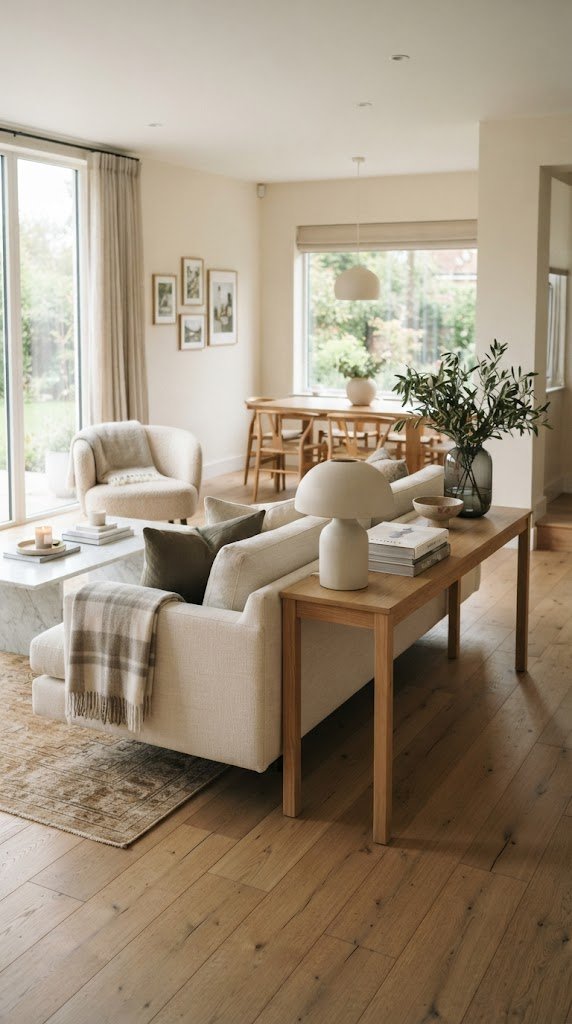
A console table positioned directly behind your sofa in a floating furniture arrangement creates a purposeful architectural boundary that separates your seating zone from the rest of an open-plan space, which is the specific problem open-plan living poses that most homeowners don’t address effectively. It also gives you a surface for lamps, books, and objects at a height that reads from standing level rather than being obscured by the sofa back.
A 48 to 60-inch console at 28 to 30 inches tall fits neatly behind most standard sofas with 4 to 6 inches of clearance. Amazon’s Threshold collection and Wayfair’s private label both carry slim console tables at $80 to $150 in wood, metal, and mixed materials. Style the console with a lamp at one end, a stack of books in the middle, and a small plant at the other, and your sofa zone transforms from a floating island into a defined, designed room moment.
21. Frame Your Bed With Matching Bedside Lamps
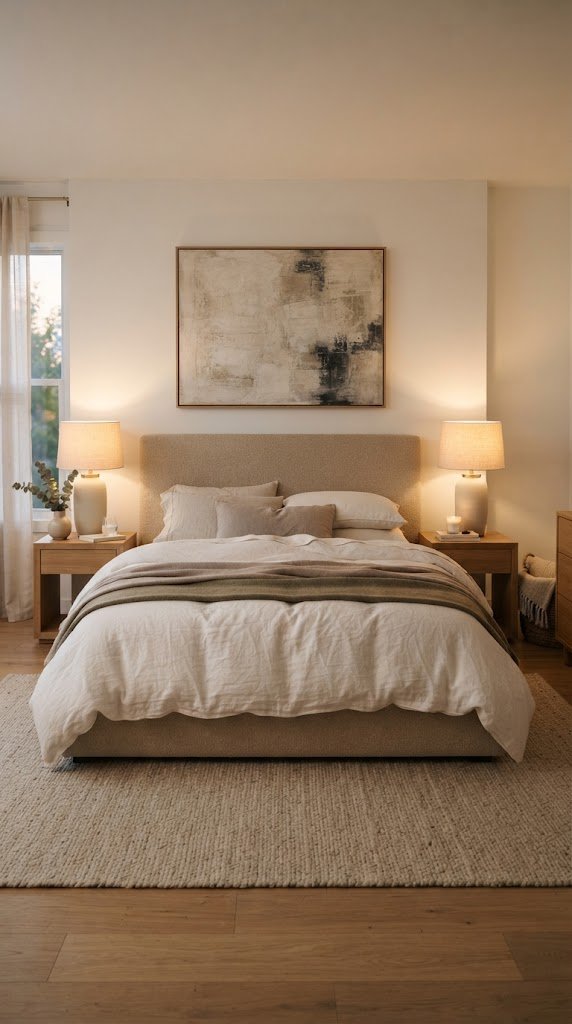
Mismatched bedside lamps send a visual signal that the room’s layout was decided by default rather than intention. Two matching lamps of the same height on either side of your bed create bilateral symmetry that the human brain processes as organized and complete, which is the same reason hotel rooms always use matching pairs.
Buy two identical lamps at $25 to $45 each from Target or Amazon’s basic lighting section and swap their shades for a coordinating linen or drum shade at $15 to $20 each for an elevated result. The total investment runs $80 to $130 for the pair, and the visual impact, two columns of warm light flanking your bed headboard, delivers results that appear in bedroom photography across every major design publication.
22. Paint Your Ceiling the Same Color as Your Walls
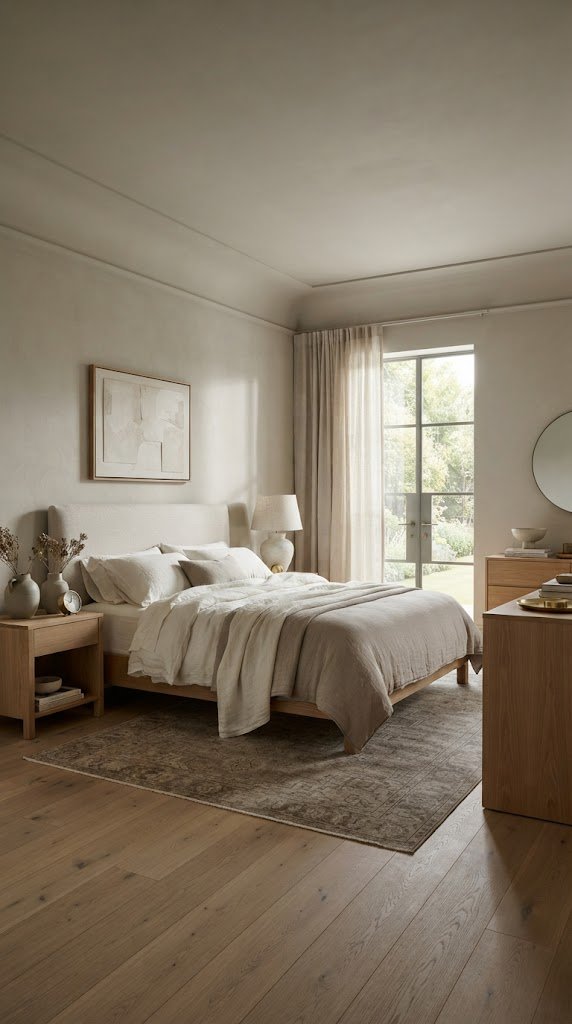
Painting your ceiling the same tone as your walls is the architectural trick that makes rooms feel like designed spaces rather than rooms with a white lid dropped on top. Architect Greg Sherrill’s research on residential color psychology found that monochromatic ceiling-to-wall color treatment increases perceived room height by up to 12% compared to white ceilings in the same space.
Use the same paint as your walls but at 50% strength for the ceiling if you want the enveloped effect without the heaviness of a fully saturated ceiling. At full strength, a deep color on all five surfaces creates the cozy, purposeful feeling that dark-painted rooms achieve in design magazines. A single gallon of ceiling paint runs $28 to $45 and covers 350 square feet, making this the largest-scale room transformation on this list at the lowest material cost.
23. Introduce Texture Through a Woven or Boucle Headboard
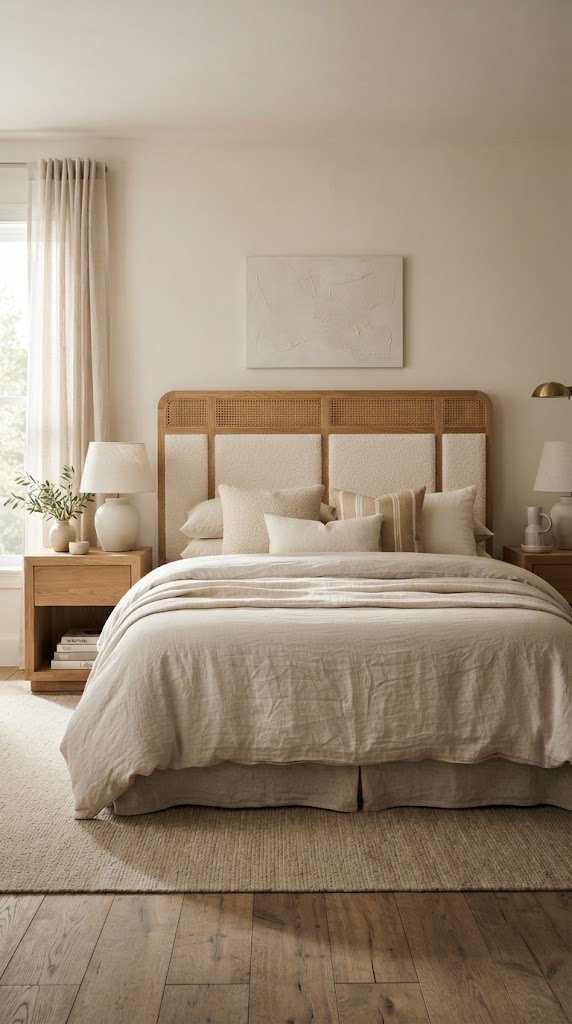
A headboard in woven cane, bouclé fabric, or linen upholstery adds the material variety your bedroom wall needs to read as designed rather than furnished. The headboard is the largest single object in most bedrooms, and its material choice communicates your room’s aesthetic faster than any smaller decorative decision. A rattan or cane headboard in particular adds warmth and natural texture that wood and fabric furniture elsewhere in the room responds to naturally.
A standalone cane headboard panel mounts to your existing bed frame’s headboard bolts and runs $150 to $300 at retailers like Urban Outfitters, West Elm, or Amazon. This converts whatever bed frame you already own into a different aesthetic without purchasing a new frame. Pair it with linen bedding in oatmeal or warm white, and your bedroom shifts from generically furnished to genuinely styled within one afternoon.
24. Use Books as Decor Objects Throughout Your Room
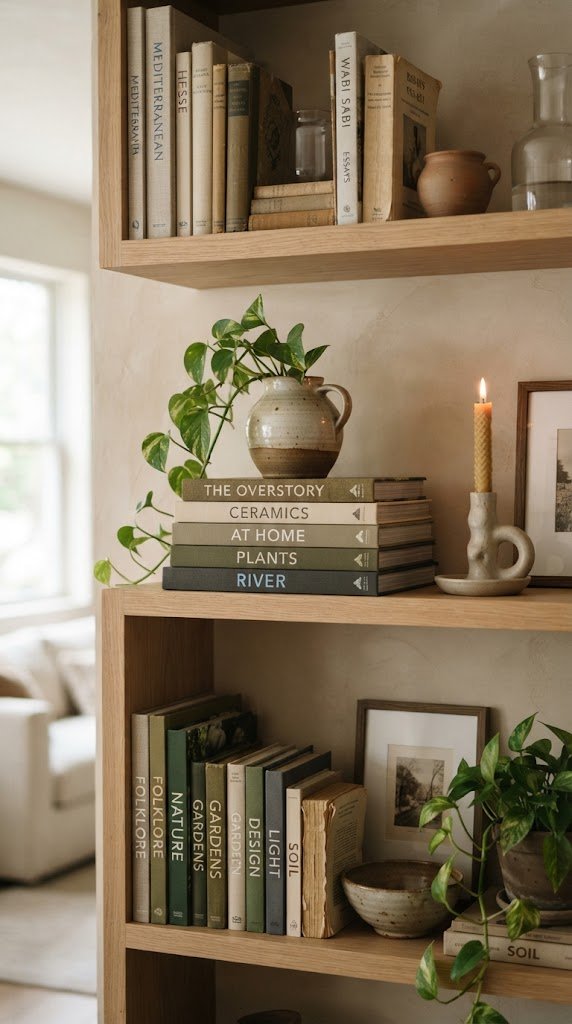
Books styled horizontally and used as risers or grouped by color on shelves serve a double function that purely decorative objects don’t: they communicate the personality of the person who lives in the room while doing organizational work at the same time. Interior stylists consistently place stacks of two to three books beneath vases, candles, and ceramic objects on shelves because the horizontal orientation adds height variation and shows covers that contribute to the room’s color story.
Remove dust jackets from hardcover books to reveal the cloth binding, which often has a more interesting color and texture than the printed paper jacket and ages more attractively over time. Group books by spine color in one shelf zone and by horizontal stack in another to create visual variety across a full bookcase. The entire project costs nothing if you use books you already own, and produces a result that high-end interior stylists from Kelly Wearstler to Amber Lewis use in their professional work.
25. Use One Bold Color in Your Room’s Smallest Objects
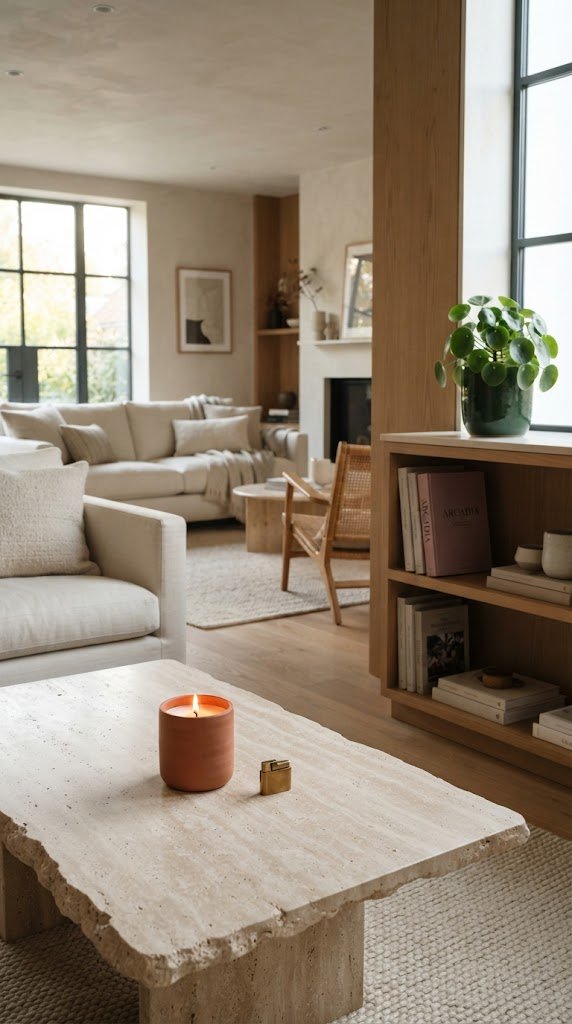
Introducing a bold color through your room’s smallest objects, a vase, a throw pillow, a stack of books, a candle holder, gives you color commitment without the permanence of paint or new furniture. Design strategist Joanna Gaines has noted in multiple interviews that rooms without a single unexpected color accent read as too safe regardless of how well-executed the neutral palette is.
Choose one color that appears nowhere else in your room and introduce it through three small objects at different heights. A terracotta candle on your coffee table, a dusty rose book on your shelf, and a deep green ceramic pot on your windowsill create a color thread that reads as intentional curation rather than random accumulation. The entire investment runs $15 to $30 and does the visual work of a complete room refresh without changing a single piece of furniture.
26. Rearrange Before You Buy Anything New
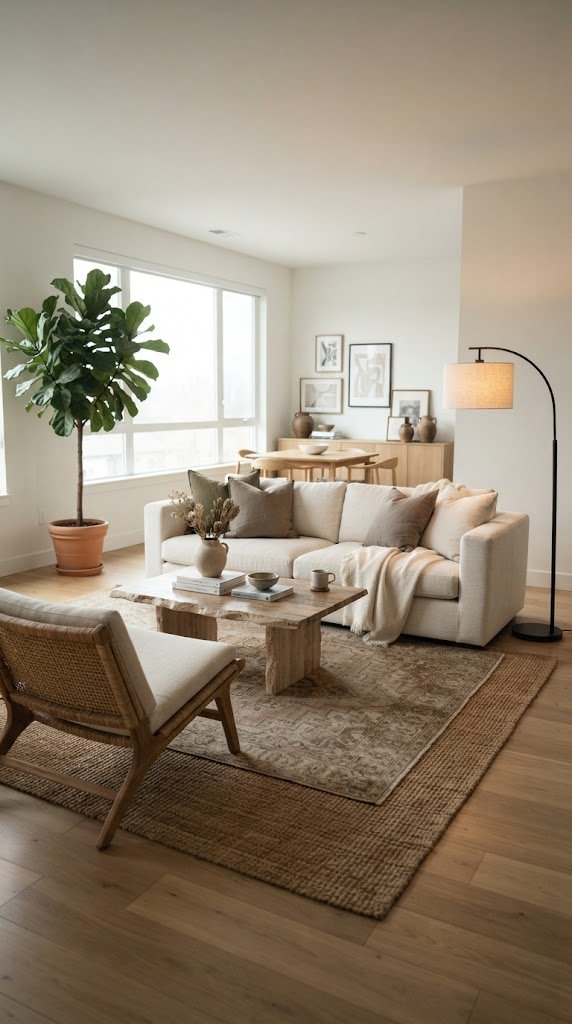
Before spending a dollar on new decor, rearrange what you own to float furniture away from walls, create conversational groupings, and establish clear zones for different activities. The National Association of Realtors found that professional stagers who rearranged existing furniture without adding a single new object increased listing appeal scores by an average of 22%, demonstrating that arrangement matters more than acquisition.
Pull your sofa 18 inches away from the wall and angle your accent chairs toward it rather than parallel to it. Move your largest lamp to the corner with the least natural light. Bring your tallest plant to the position that fills the most visually empty vertical space in the room. Every object you already own performs better in a room arranged around focal points and conversational zones than in one where everything presses against a wall hoping not to be noticed.
Final Thoughts
The most chic rooms aren’t the most expensive ones. They’re the ones where every object was placed with a specific reason, where textures speak to each other across the room, and where the lighting makes everything else look better. Start with ideas 9, 18, and 26 from this list because lighting, correctly sized art, and a rearranged furniture layout cost you the least and deliver the most visible change. Your room doesn’t need more stuff. It needs better decisions about the stuff already in it, and now you have 26 of them.