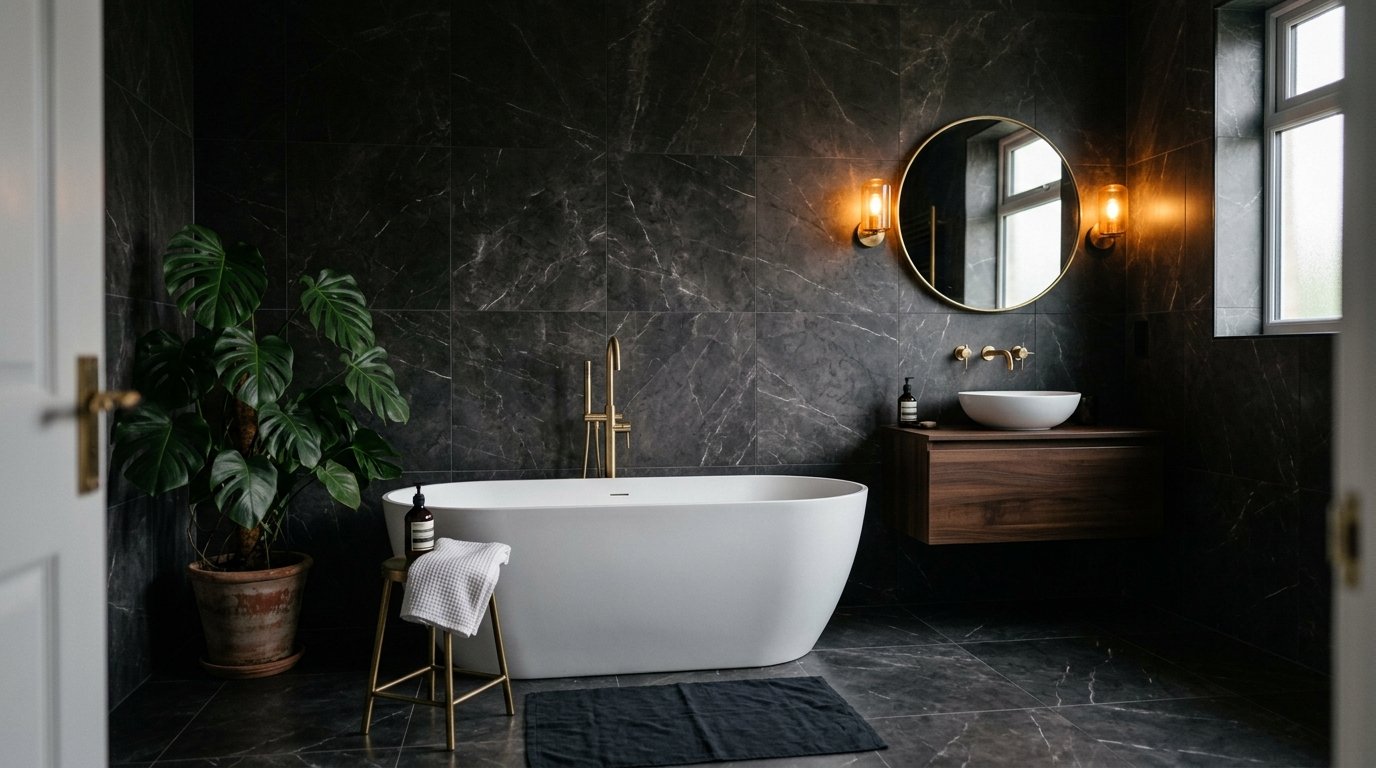
21 Dark Bathroom Ideas to Create a Moody Luxury Bathroom
Everyone designs their bathroom to be bright and white. And then they walk into a dark, moody bathroom at a boutique hotel and immediately want to rip out everything they just installed.
Dark bathrooms feel different. They feel intentional, atmospheric, and genuinely luxurious in a way that white tile and chrome taps rarely achieve. The darkness wraps the space and makes every element inside it feel more considered.
These 21 dark bathroom ideas cover walls, tiles, fixtures, lighting, and the finishing details that make a dark bathroom work rather than just look dramatic in a photo. Every idea here functions in a real bathroom, not just a hotel shoot.
1. Use Dark Marble or Marble-Effect Tiles Throughout
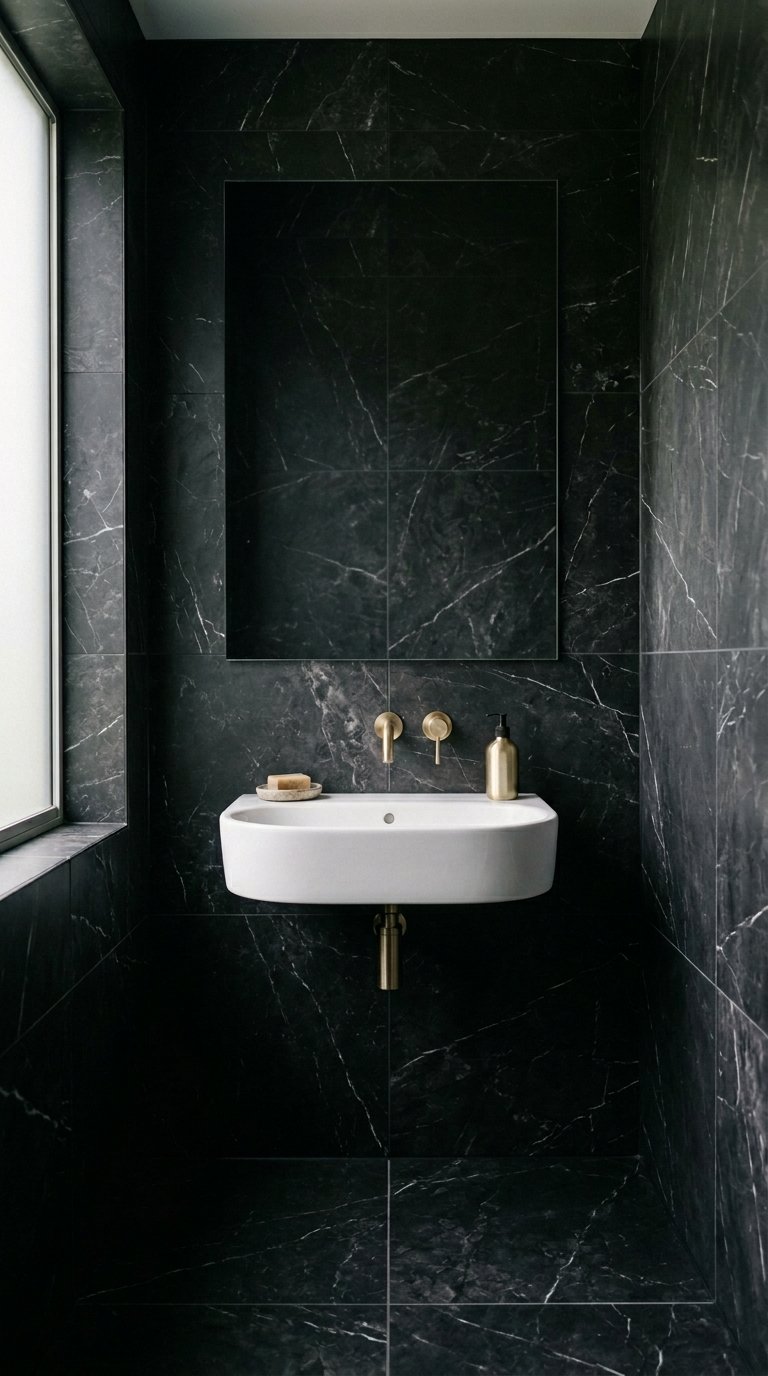
Dark marble in a bathroom is one of those combinations that looks expensive regardless of the actual budget behind it.
Nero Marquina marble, with its deep black base and white veining, creates a bathroom surface that photographs beautifully and reads as premium from every angle. The natural variation in the veining means no two installations look identical, which adds an authentic quality that plain dark tiles do not have.
Full marble is expensive and requires regular sealing to prevent staining. Marble-effect porcelain tiles deliver the visual quality of marble at a fraction of the material cost and with significantly better durability and moisture resistance. For a bathroom, porcelain is the more practical choice in most cases.
Use large format marble-effect tiles to reduce grout lines and create a more seamless, luxurious surface. A 60x120cm tile format on both walls and floor with matching grout creates an almost continuous dark marble surface that looks genuinely high-end.
2. Paint All Four Walls in Matte Black
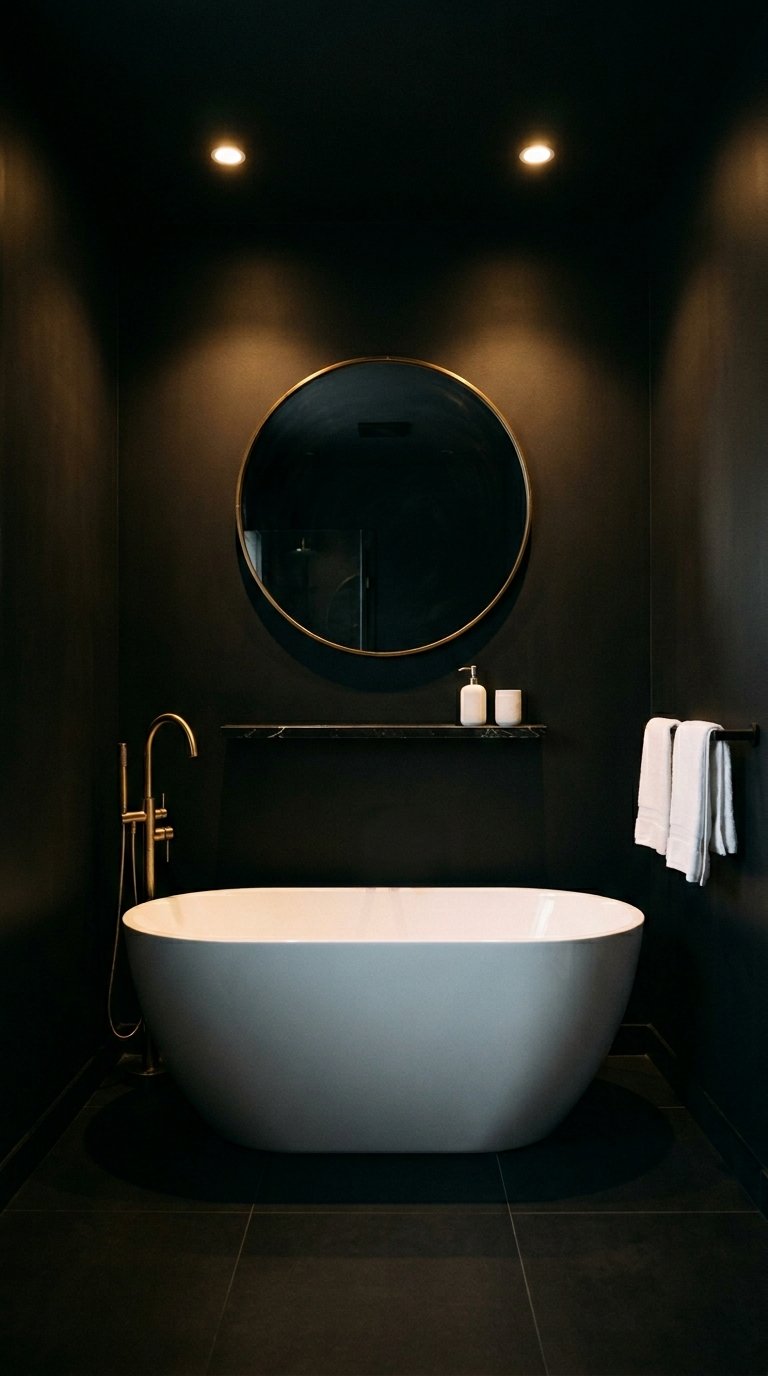
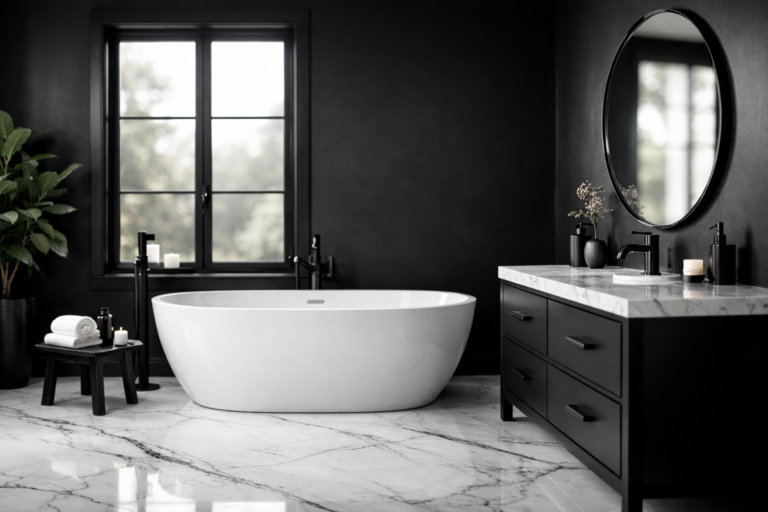
A matte black bathroom is the boldest decision on this list. It is also one of the most consistently impressive when executed with the right fixtures and lighting.
Matte black paint on all four walls creates an immersive, dramatic space that feels completely different from any other room in the house. Every chrome, brass, or white fixture pops against the flat dark surface with a clarity and impact that light walls never create.
Use a bathroom-specific paint with moisture resistance rather than standard interior matte. A standard matte paint in a wet room environment develops mould, peels, and looks terrible within months. Bathroom-grade matte finishes handle the humidity properly.
The fixtures become the design features in a matte black bathroom. A freestanding white bath, brushed brass taps, and a large round mirror become sculptural objects against the black walls rather than functional items in a neutral space.
3. Install Dark Zellige or Handmade Tiles
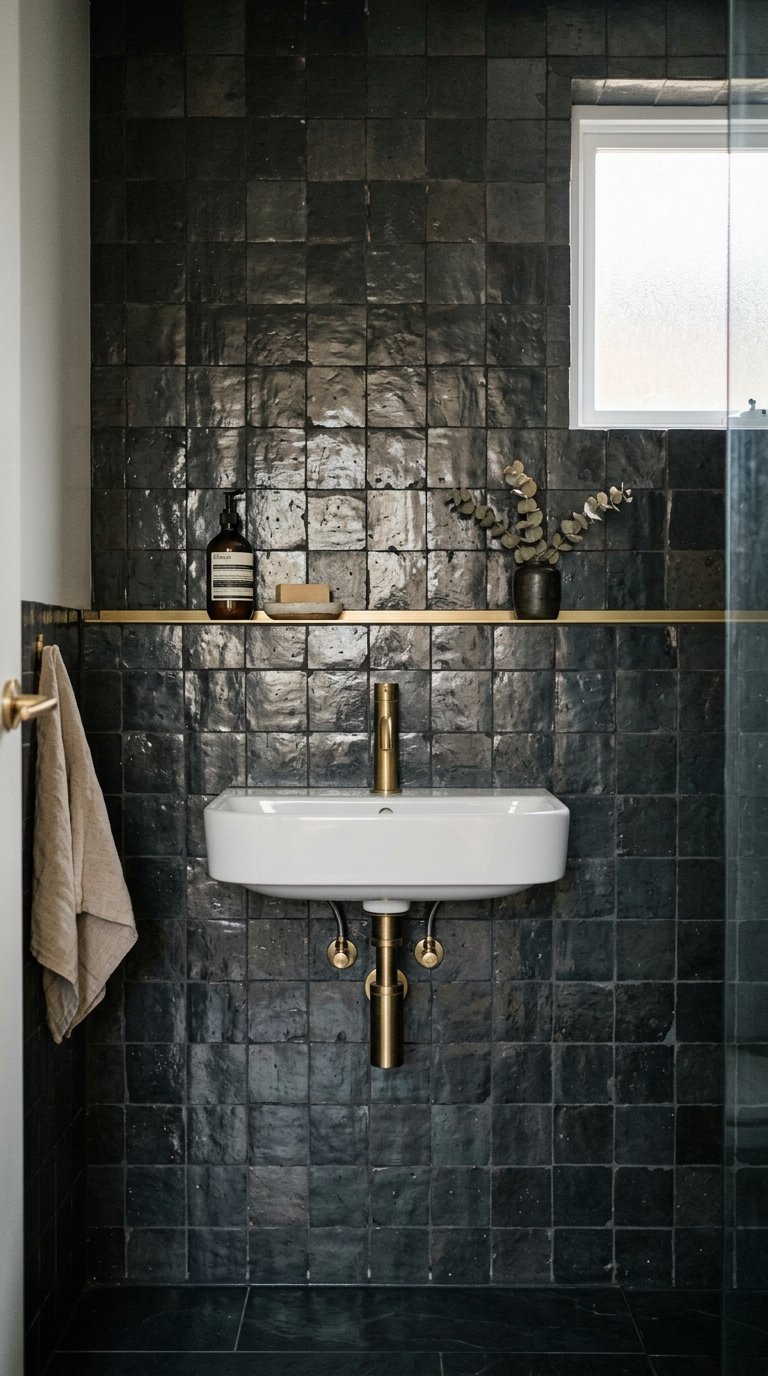
Dark zellige tiles bring something to a bathroom wall that smooth, machine-made tiles cannot: genuine texture, depth, and handmade character.
Zellige tiles in deep charcoal, midnight teal, or dark olive green create a bathroom surface that catches light differently at different times of day, shifting in tone and depth as the light source changes. This optical quality makes the room feel alive in a way that flat tiles do not.
The irregular surface of zellige tiles means grout lines become part of the design rather than a necessary evil. Dark grout in a tone close to the tile colour creates a continuous textured surface. Light grout between dark zellige tiles creates a more graphic, contrasting effect.
Zellige tiles work best on one feature wall or in a wet room shower area rather than across every surface. The texture and handmade quality deserve to be a focal point rather than a background.
4. Choose a Dark Freestanding Bath as the Focal Point
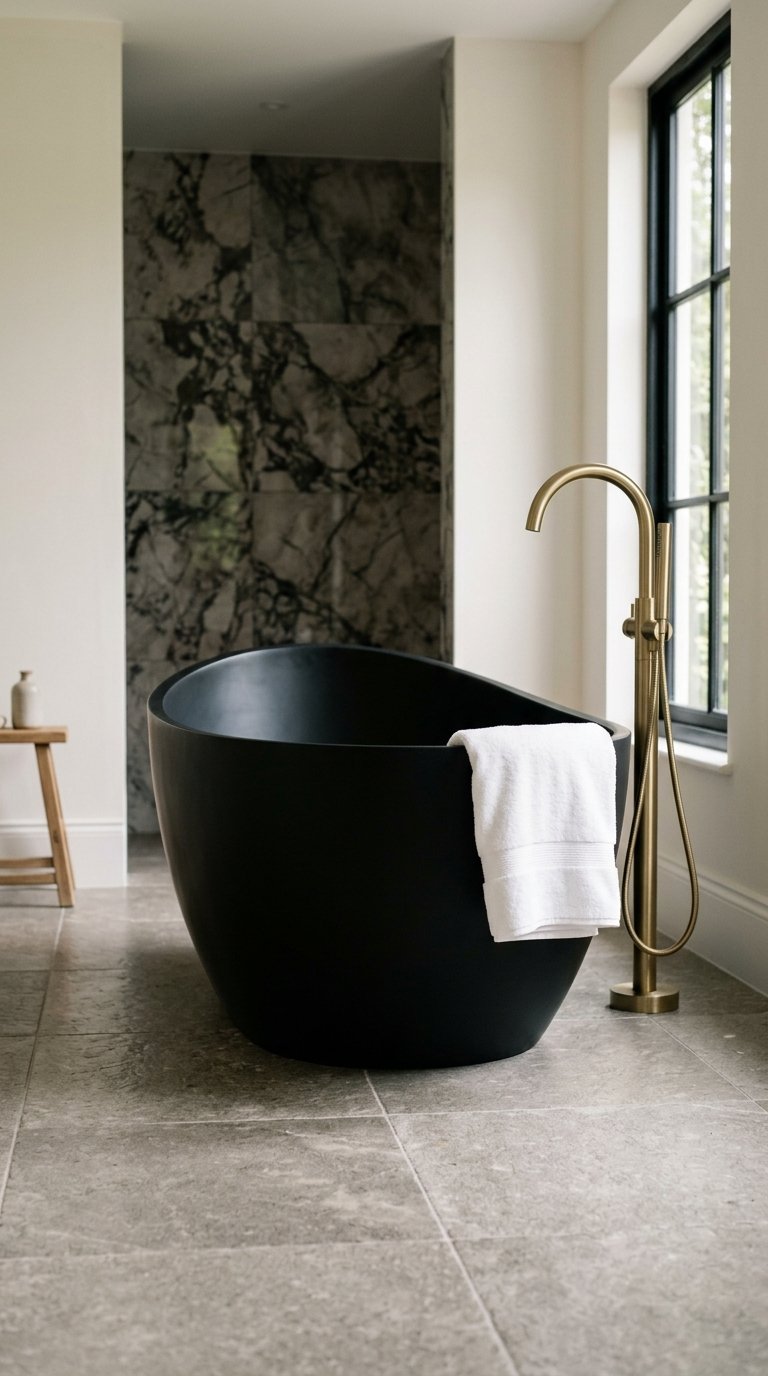
A dark freestanding bath is the single most impactful fixture decision in any dark bathroom design.
A freestanding bath in matte black, deep charcoal, or dark forest green reads as a sculptural object in the center of the bathroom rather than just a functional vessel. Positioned against a lighter wall or a dark tiled wall, it anchors the room and becomes the first thing every visitor notices.
Matte black freestanding baths have become more widely available across different budget levels. Entry-level options start around $800. Premium cast iron versions run significantly higher but deliver a weight and surface quality that acrylic versions do not match.
The floor area around the bath needs to be generous. A freestanding bath in a cramped space loses the sculptural quality that makes it worth the investment. The bath needs breathing room on at least three sides to read properly as a design feature.
5. Use Dark Grout With Light Tiles for a Graphic Effect
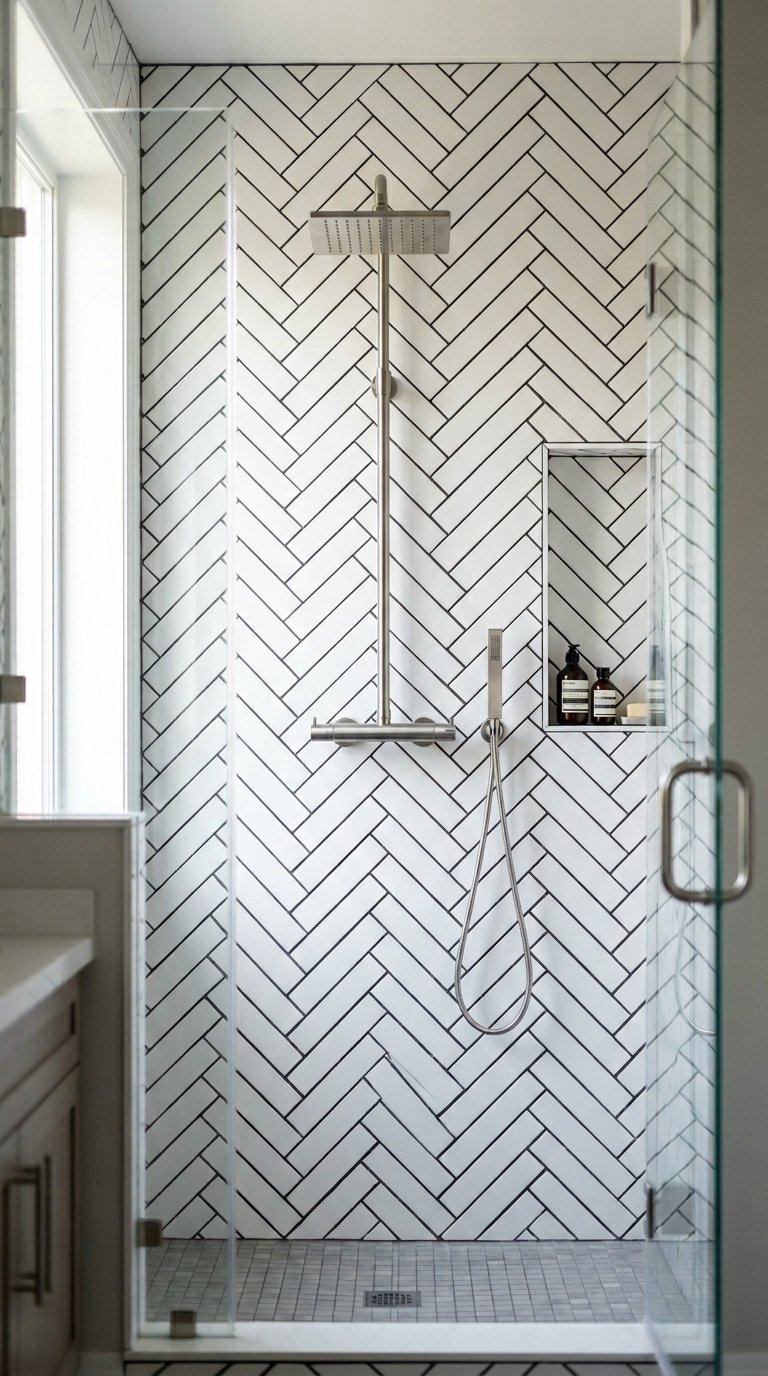
Dark bathrooms do not always require dark tiles. Dark grout with lighter tiles creates a graphic, high-contrast effect that adds darkness and definition without a fully dark surface.
Charcoal or near-black grout between white, cream, or light grey tiles creates a grid pattern that reads as bold and considered from across the room. The tile pattern becomes visible and intentional rather than something you notice only when you are looking for it.
This approach works particularly well with subway tiles in a herringbone or stacked pattern. Dark grout in a herringbone subway tile installation creates one of the most reliably good tile finishes in bathroom design across multiple interior styles.
Dark grout requires more frequent cleaning in high-use areas to maintain its appearance. In a shower or around a basin, lighter grout is more practical. On floor tiles or feature walls with less direct water exposure, dark grout stays manageable.
6. Install a Dramatic Dark Feature Wall Behind the Bath
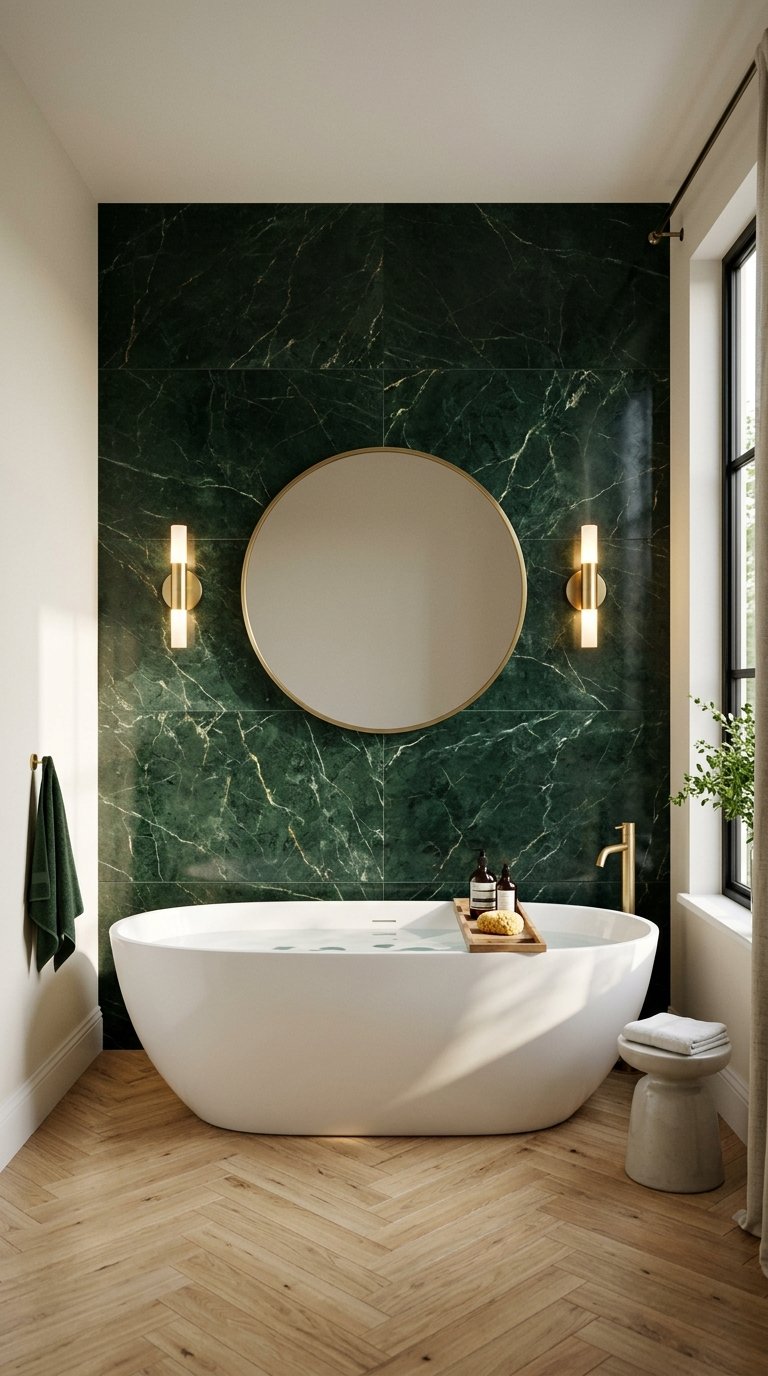
A single dark feature wall behind the freestanding bath or behind the bath panel creates maximum impact with minimum commitment.
One wall of large-format dark tile, dark paint, or dark textured wall covering transforms the focal end of the bathroom without requiring every surface to commit to the dark palette. The remaining walls stay lighter, which keeps the room feeling spacious while the feature wall creates atmosphere.
This is the most accessible dark bathroom idea for anyone hesitant about going fully dark. One wall. One decision. The rest of the room stays comfortable and manageable.
Choose a dark feature wall material that contrasts with the bath fixture in front of it. A dark veined marble tile behind a white freestanding bath creates a beautiful contrast. A dark painted wall behind a black freestanding bath creates a tone-on-tone effect that feels even more intentional.
7. Use Dark Wood Vanity Units
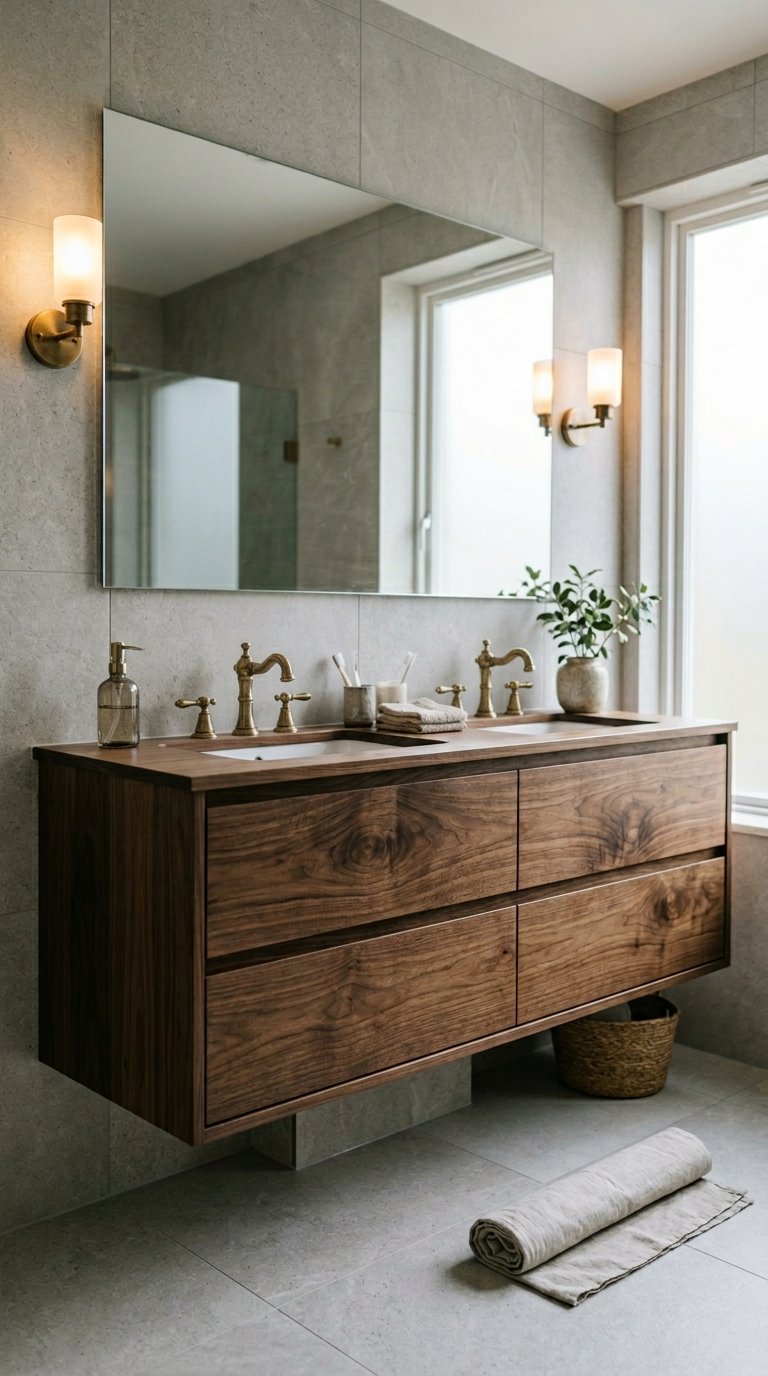
Dark wood brings warmth to a dark bathroom in a way that painted surfaces and tiles alone do not achieve.
A vanity unit in dark walnut, smoked oak, or dark wenge creates a warm, organic quality that contrasts beautifully with stone or tile surfaces around it. The wood grain adds texture and natural variation that makes the vanity read as a piece of furniture rather than a built-in cabinet.
Dark wood vanities work in both floor-mounted and wall-hung configurations. Wall-hung dark wood vanities with exposed floor beneath create a floating, contemporary effect that makes the floor plan feel larger than it is. Floor-mounted dark wood vanities feel more substantial and traditional.
Protect dark wood vanity units with a proper water-resistant finish. Untreated or inadequately finished wood in a bathroom environment warps, darkens unevenly, and deteriorates quickly. A properly sealed dark wood vanity lasts as long as any other material in the room.
8. Choose Matte Black Fixtures and Hardware Throughout
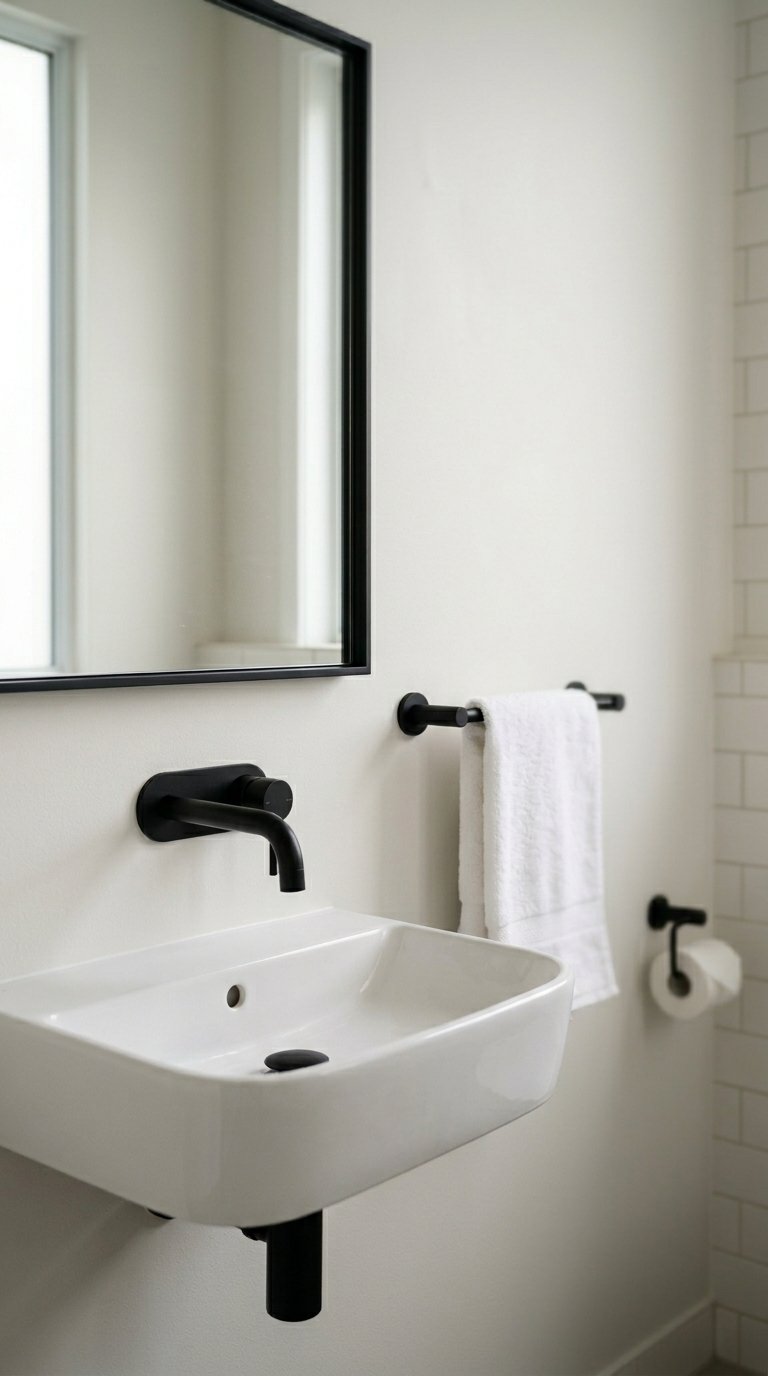
Matte black fixtures, taps, showerheads, towel rails, and cabinet hardware create a consistent, considered material palette that unifies a dark bathroom design.
Matte black hardware reads as premium and contemporary in a way that chrome no longer does in most bathroom styles. It also hides water marks and fingerprints significantly better than polished chrome or polished nickel, which is a practical benefit that matters in a room used daily.
The key with matte black hardware is consistency. Mixing matte black taps with chrome towel rails and polished nickel cabinet handles creates visual noise rather than coherence. Choose one finish and apply it to every piece of hardware in the room.
Matte black fixtures are now widely available across all budget levels. Quality varies significantly. Look for solid brass or solid stainless steel construction beneath the matte black coating rather than zinc alloy, which corrodes faster and holds the coating less reliably over time.
9. Install a Dark Ceiling for a Fully Immersive Effect
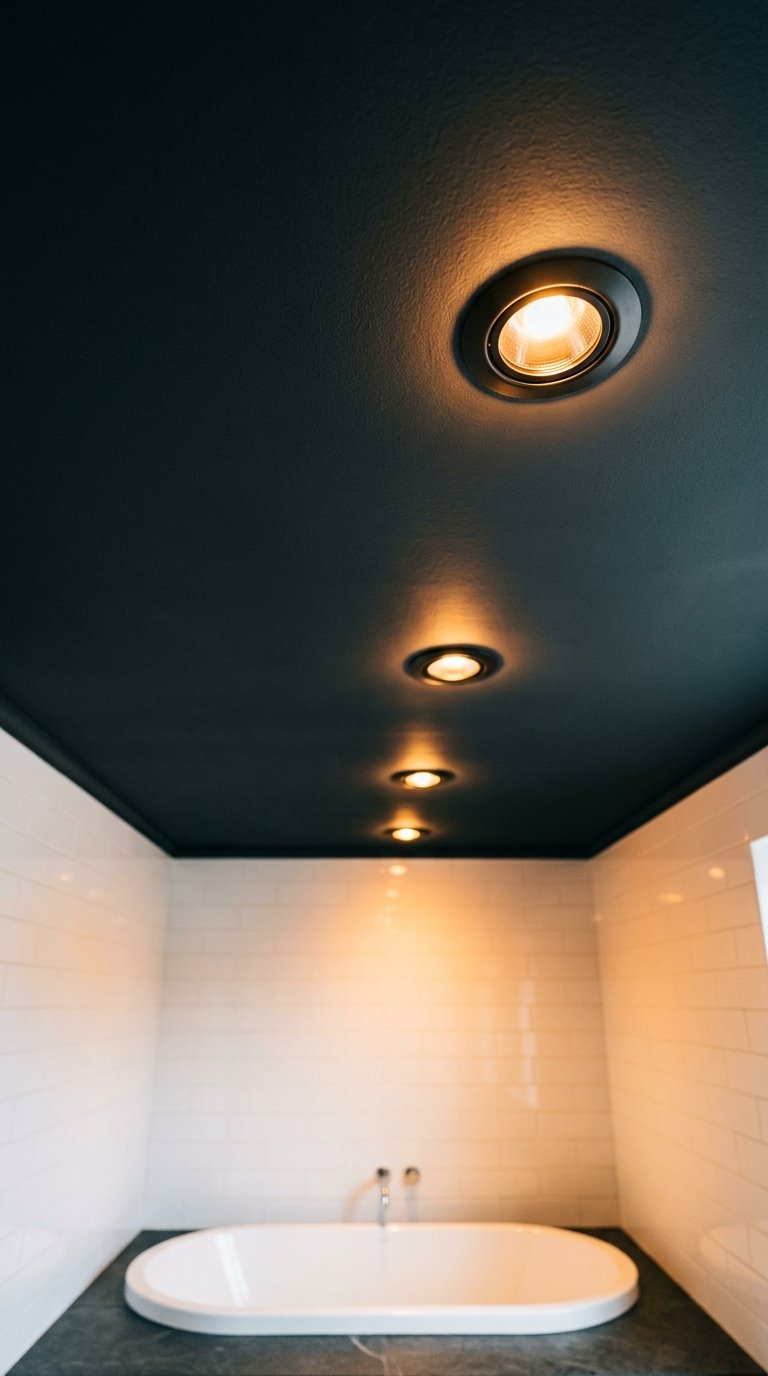
Most dark bathroom designs focus on walls and floors while leaving the ceiling white. Painting the ceiling the same dark tone as the walls creates a genuinely immersive atmosphere that changes the character of the room completely.
A dark ceiling, walls, and floor creates a bathroom that feels like it exists outside the normal logic of domestic space, in the best possible way. The darkness wraps every surface and makes the white fixtures, the warm lighting, and the reflective hardware glow with an intensity they never achieve in a lighter room.
This approach requires excellent lighting. Recessed downlights at regular intervals ensure the work surfaces, mirror zone, and bath area all receive adequate task lighting despite the dark surrounding surfaces.
A dark ceiling in a bathroom with a low ceiling can feel oppressive. This technique works best in bathrooms with at least 2.4 metre ceiling height where the darkness reads as intentional rather than confining.
10. Use a Dark Concrete or Stone Effect Floor
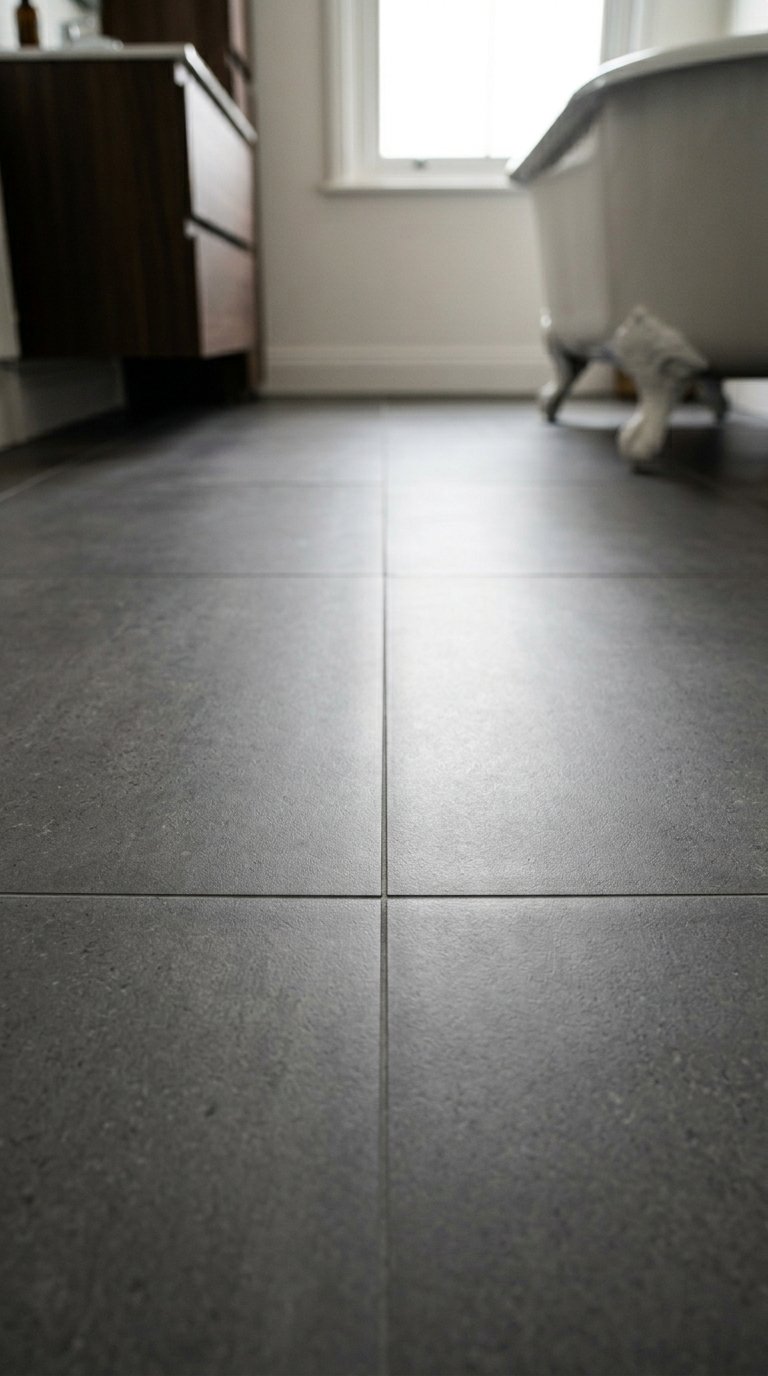
A dark floor grounds a bathroom in a way that lighter floors do not. It creates visual weight at the base of the room and makes everything above it feel more deliberate.
Dark concrete effect tiles or dark natural stone floors create a surface that reads as industrial luxury, combining the raw material quality of concrete or stone with the practical benefits of a sealed tile surface.
Large format dark floor tiles with minimal grout lines create the most seamless and premium-looking result. A 60x60cm or larger tile format in a charcoal or dark grey concrete effect reads as a continuous dark surface rather than a tiled floor.
Anti-slip rating matters significantly for bathroom floors. Any dark floor tile specification should include a confirmed R10 or R11 anti-slip rating for wet areas. A beautiful floor that becomes dangerous when wet serves no one well.
11. Combine Dark Tiles With Warm Brass Accents
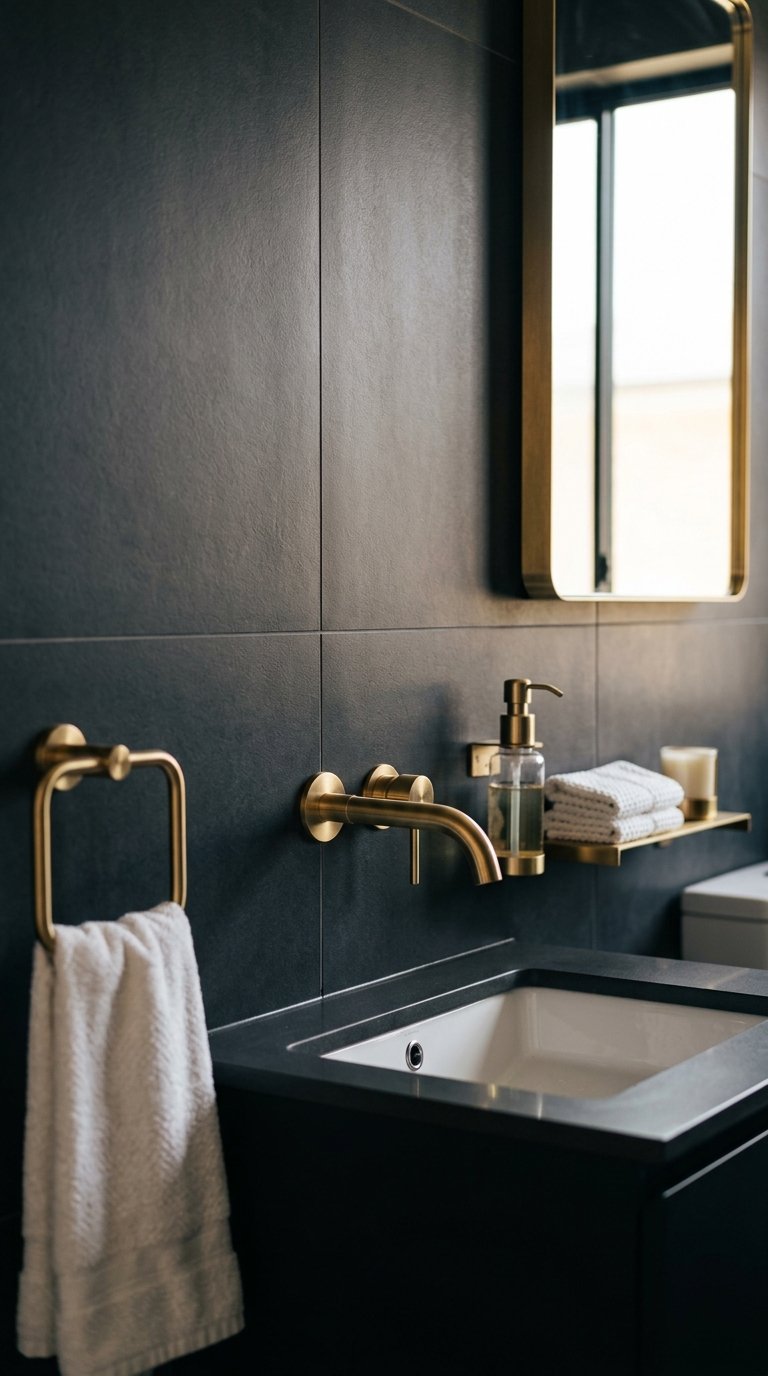
Dark tiles and warm brass are one of the most reliably successful combinations in bathroom design. The contrast between the cool dark surface and the warm metal creates a tension that reads as intentional and high-end.
Brushed brass taps, shower fixtures, towel rails, and mirror frames against dark tiled walls create a combination that references luxury hotel bathrooms without requiring the same budget.
The warmth of brass prevents a dark bathroom from reading as cold or clinical. It introduces a human, warm quality that contrasts with the drama of the dark surfaces and balances the overall atmosphere of the room.
Choose unlacquered or PVD-coated brass rather than standard lacquered brass. Standard lacquered brass wears through in high-contact areas like tap handles and shower controls, revealing the base metal beneath and looking worn quickly. PVD-coated and unlacquered brass handle daily use significantly better.
12. Install a Dramatic Oversized Mirror
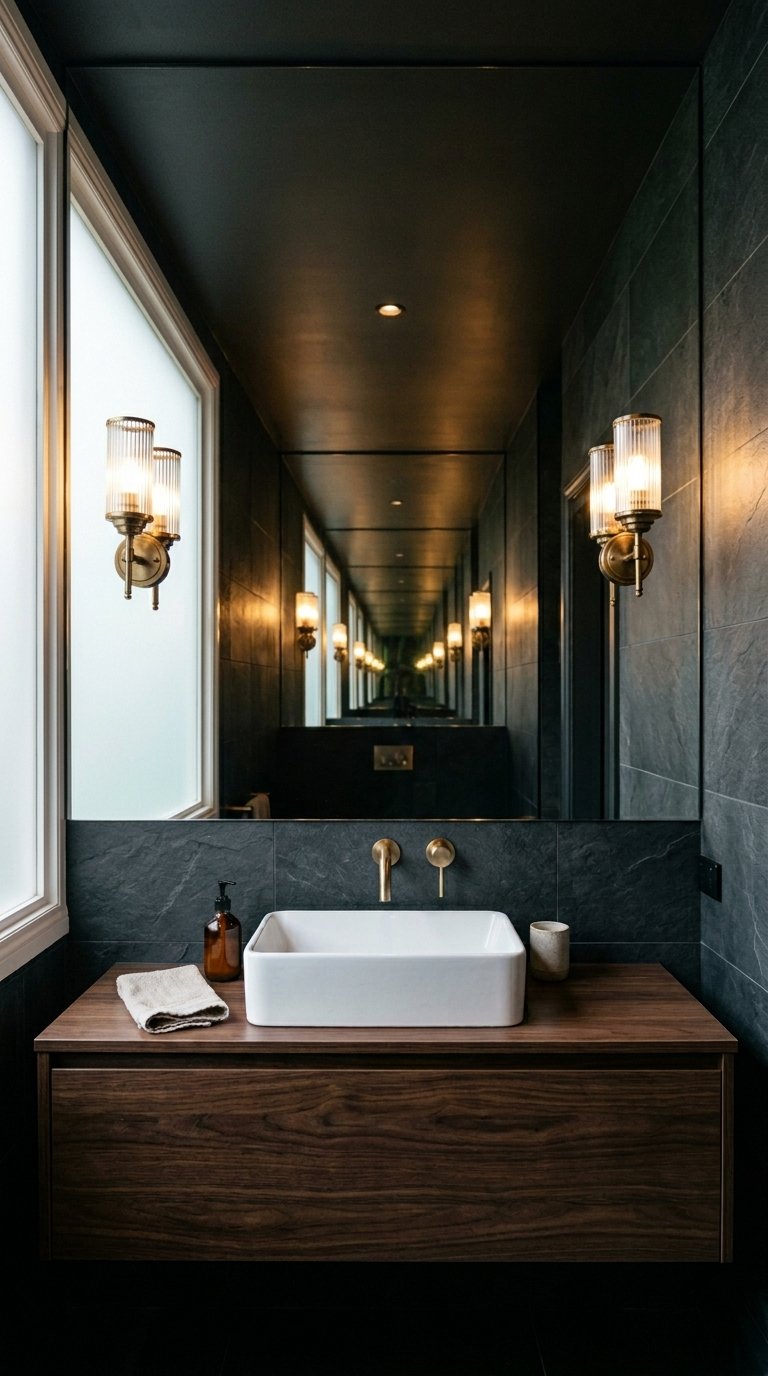
A large mirror in a dark bathroom does two critical jobs. It reflects light and it creates the illusion of additional space.
An oversized mirror, one that runs from vanity height to ceiling height or spans the full width of the vanity wall, maximizes light reflection and creates a doubling effect that makes the dark bathroom feel significantly larger than its actual dimensions.
In a dark bathroom, the mirror becomes a light source in its own right. The reflected image of the window, the lit pendant, or the lit vanity sconces bounces additional light back into the room from the mirror surface.
Frame the mirror in a material that suits the room’s palette. Aged brass, blackened steel, or dark wood all work in a dark bathroom. An unframed mirror also works well where the clean edge of the glass suits the minimal quality of the design.
13. Use Dark Paint in a Small Bathroom
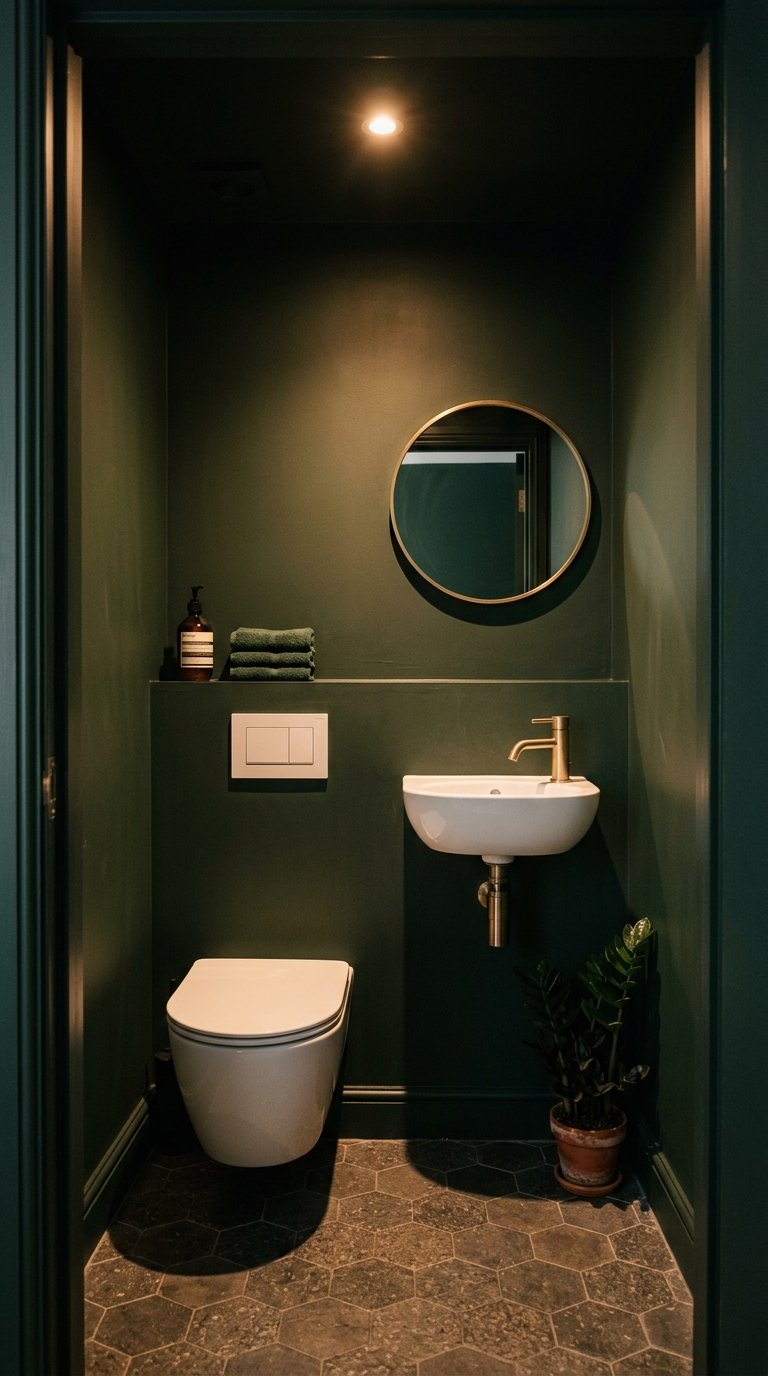
Here is the counterintuitive idea that most people resist: small dark bathrooms feel better than small light bathrooms in most cases.
A small bathroom painted in dark charcoal, deep navy, or forest green feels intimate and considered rather than small and cramped. The darkness removes the hard edges of the walls from visual perception and makes the room feel like a contained, intentional space.
A small white bathroom with standard fixtures looks like a small white bathroom. A small dark bathroom with warm lighting and quality fixtures looks like a boutique hotel bathroom. The darkness does the design work that the square footage cannot.
IMO, this is the dark bathroom idea with the highest impact-to-cost ratio on the entire list. A tin of dark bathroom paint, properly applied, transforms a small bathroom at minimal cost.
14. Add Warm Ambient Lighting to Offset the Darkness
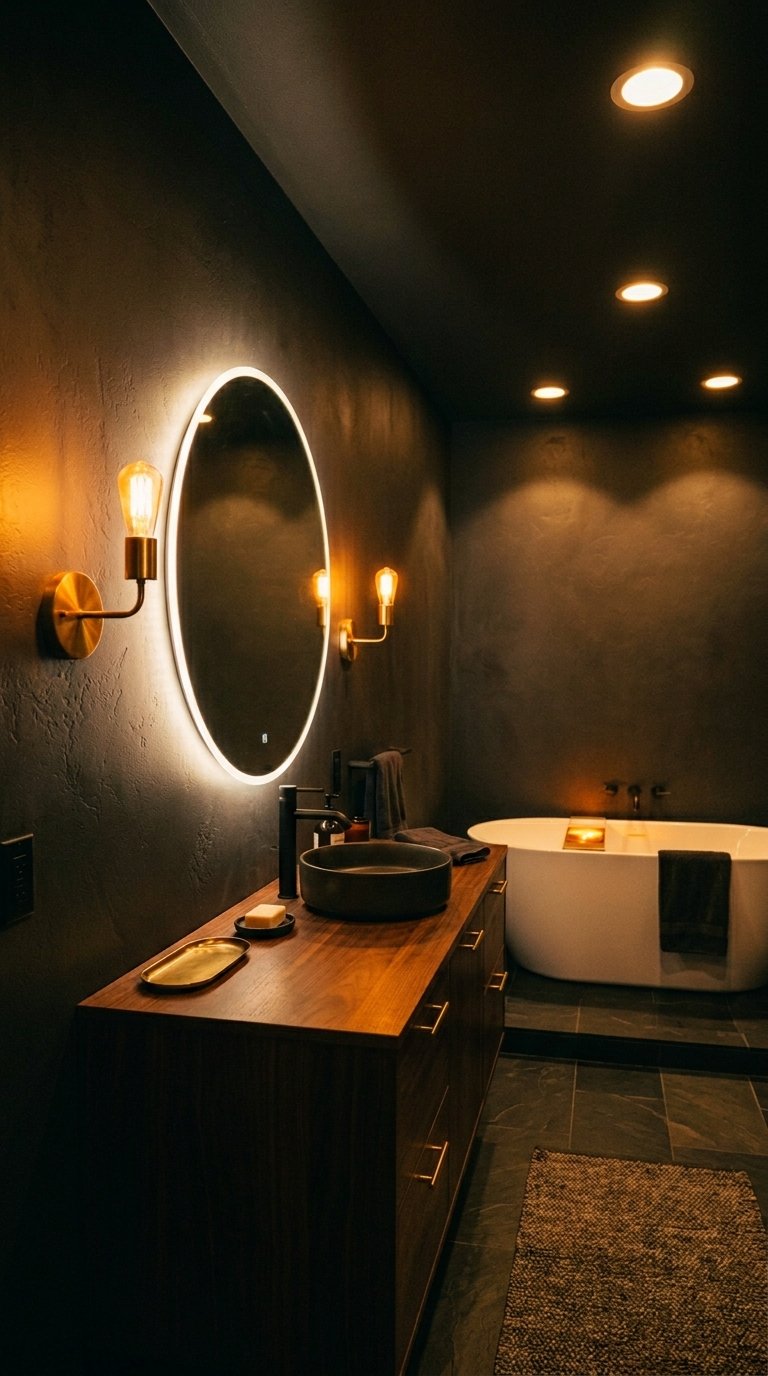
Dark bathrooms live or die by their lighting. Get the lighting right and the room feels atmospheric and warm. Get it wrong and it feels like a dungeon.
Warm amber lighting at 2700K or lower is the only appropriate choice for a dark bathroom. Cool white or daylight-spectrum lighting in a dark room creates a cold, clinical atmosphere that fights the warmth and luxury the dark surfaces are trying to create.
Layer the lighting across multiple sources. Recessed downlights for task lighting. Backlit mirror or mirror-mounted sconces for vanity lighting. A pendant light above the bath for ambient atmosphere. Each source contributes to a lighting environment that feels warm and considered at every hour.
Dimmer switches on every circuit give you full control over the atmosphere. A dark bathroom at full brightness functions as a practical grooming space. The same room at 30% brightness on warm dimmed lighting functions as a genuinely relaxing retreat.
15. Install a Walk-In Dark Shower Enclosure
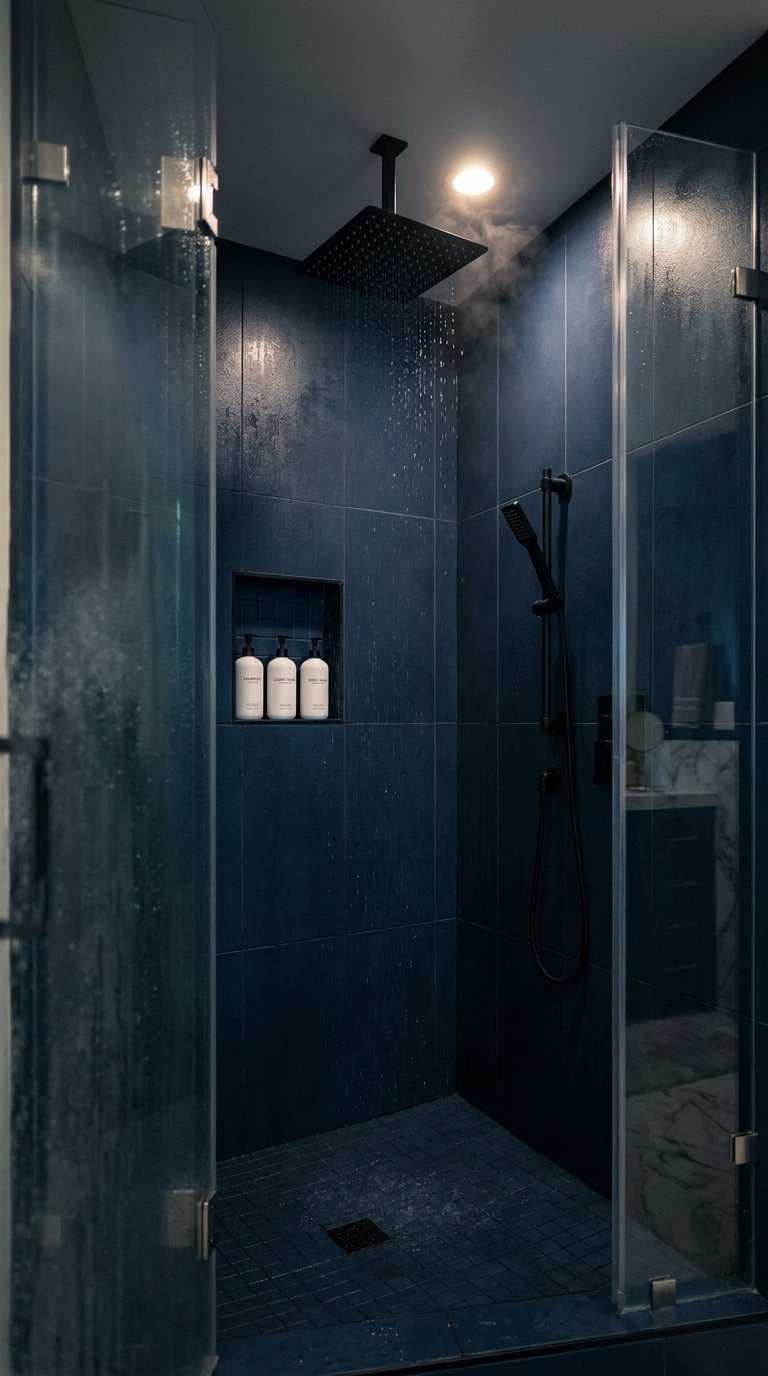
A fully dark walk-in shower enclosure creates a shower experience that feels completely removed from the standard domestic bathroom.
Dark tiles on all three shower walls and the shower floor, combined with a matte black shower system and dark grout, create a shower space that feels immersive and spa-like. The darkness of the enclosure makes the warm water, the steam, and the shower experience feel more intense and sensory.
Frameless glass panels rather than framed enclosures keep the visual connection between the shower space and the rest of the bathroom open. A framed dark shower enclosure can feel boxed-in. Frameless glass maintains the spatial flow while defining the wet area.
Lighting inside the shower enclosure is critical. A recessed waterproof downlight directly above the shower head position ensures the shower interior stays adequately lit despite the dark surfaces surrounding it.
16. Use a Dark Painted Tongue-and-Groove Wall
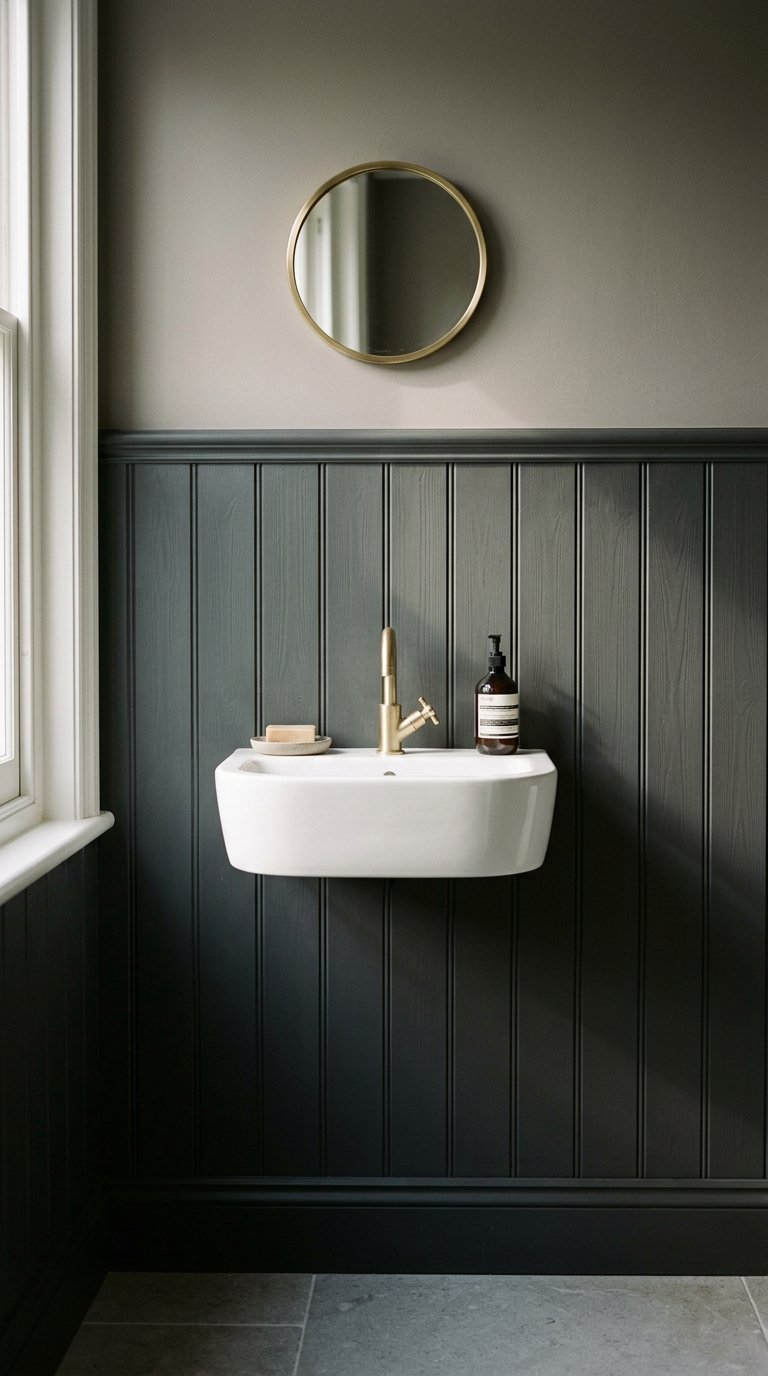
Tongue-and-groove paneling in a dark paint finish brings texture and architectural character to a bathroom wall in a way that flat paint and tiles do not.
Dark painted tongue-and-groove on the lower half of the bathroom walls, from floor to dado height, creates a traditional paneled effect that suits period homes and contemporary spaces equally well in its darker tones.
The vertical lines of the tongue-and-groove paneling draw the eye upward and create a sense of height in the room. In a dark colour, the paneling also adds genuine texture and shadow depth that flat surfaces cannot replicate.
Use a moisture-resistant MDF tongue-and-groove or actual timber with a proper bathroom-grade paint finish. Standard MDF in an unventilated bathroom absorbs moisture, swells, and deteriorates quickly. Specification matters.
17. Choose a Dark Terrazzo Floor
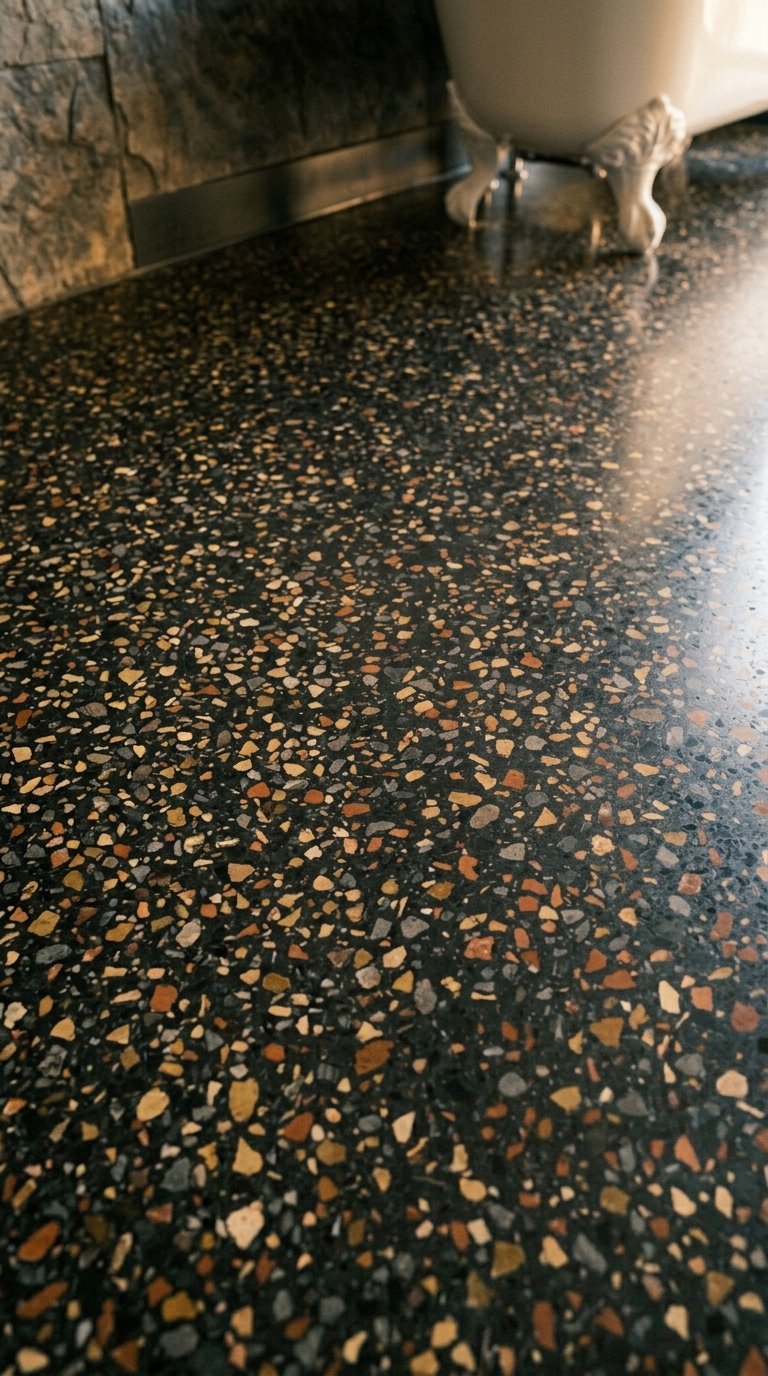
Terrazzo flooring with a dark base colour creates one of the most distinctive and visually interesting bathroom floors available.
Dark terrazzo with warm-toned aggregate, brass, terracotta, or warm grey chips in a charcoal or black base, creates a floor surface that reads as both premium and playful simultaneously. No two terrazzo floors look identical, which adds an artisan quality to the bathroom.
Terrazzo is available as a poured-in-place installation or as tile format. Poured terrazzo creates a seamless continuous surface with no grout lines. Terrazzo tiles in a large format create a similar effect at lower installation cost.
Seal terrazzo properly and maintain it regularly. An unsealed terrazzo floor in a wet environment stains from mineral deposits and soap residue and loses its surface quality quickly. Properly maintained terrazzo lasts decades and improves with age.
18. Use Deep Navy Blue Throughout
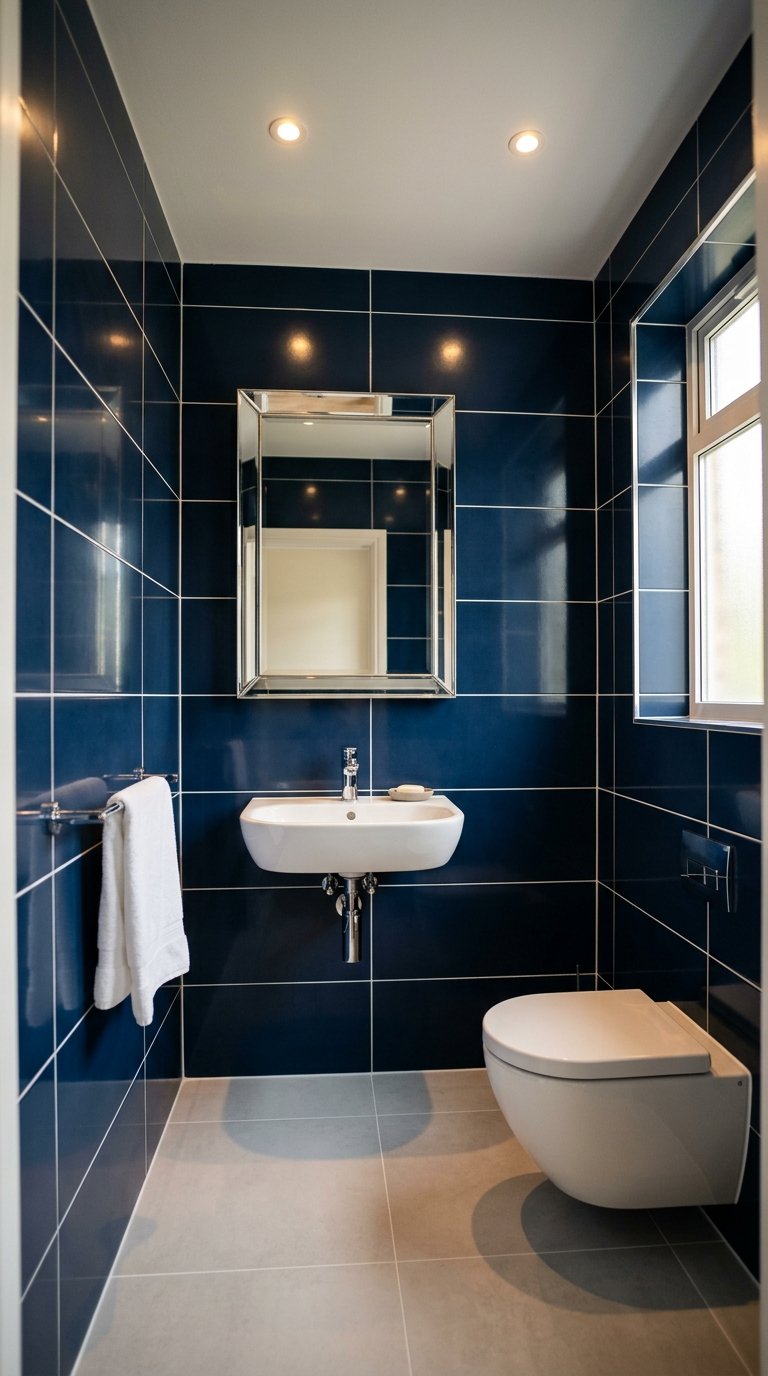
Navy blue creates a dark bathroom that feels warm and residential rather than stark and industrial. It is the most liveable of the dark bathroom colour options.
Full navy blue bathrooms, tiles, paint, or a combination of both, feel rich and considered without the severity of black or charcoal. The blue quality adds a water-adjacent, spa-like atmosphere that suits the function of the room perfectly.
Navy blue works with brass, chrome, and white fixtures equally well. Brass against navy feels warm and luxurious. Chrome against navy feels clean and contemporary. White fixtures against navy feel crisp and classic.
The tone of the navy matters. A warm navy with a slight purple undertone reads differently to a cool navy with a grey undertone. In warm artificial lighting, a warm navy glows. In cool lighting, cool navy reads more accurately. Choose based on the dominant light source in your specific bathroom.
19. Add Plants to a Dark Bathroom for Organic Contrast
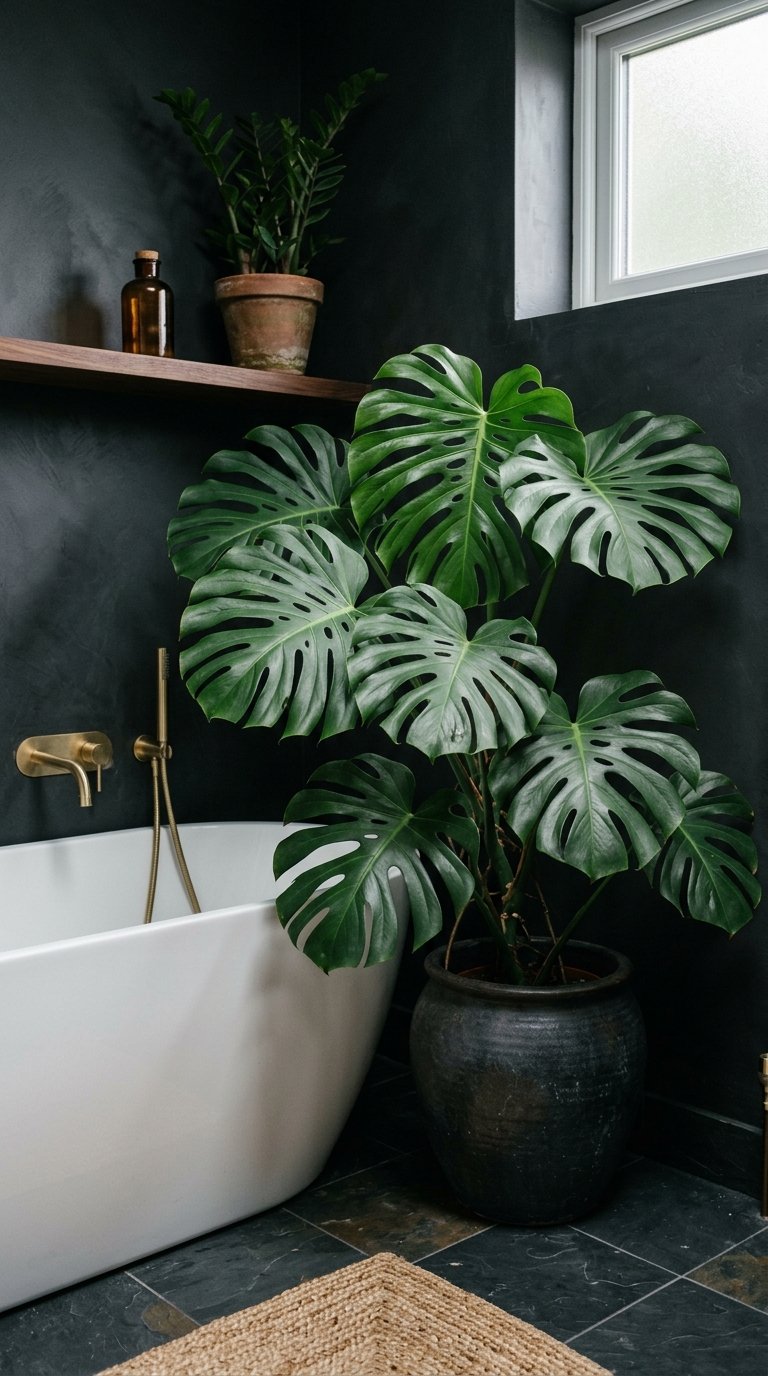
A dark bathroom with no organic elements risks feeling sterile rather than atmospheric. Plants solve this problem immediately.
A large dark-leafed plant, a Monstera, a ZZ plant, or a cast iron plant, positioned in a dark bathroom corner or beside the bath adds a living element that contrasts beautifully with the dark hard surfaces surrounding it.
Dark bathrooms actually suit certain plants very well. Cast iron plants, ZZ plants, and snake plants handle low light conditions and high humidity better than most. They do not require the direct sunlight that would be difficult to provide in a bathroom with limited or frosted windows.
Choose planters in materials that suit the bathroom’s palette. Aged terracotta, brushed brass, dark ceramic, and natural stone planters all work in a dark bathroom. Bright white or primary-coloured planters fight the atmosphere rather than supporting it.
20. Install Recessed Wall Niches in Dark Tile
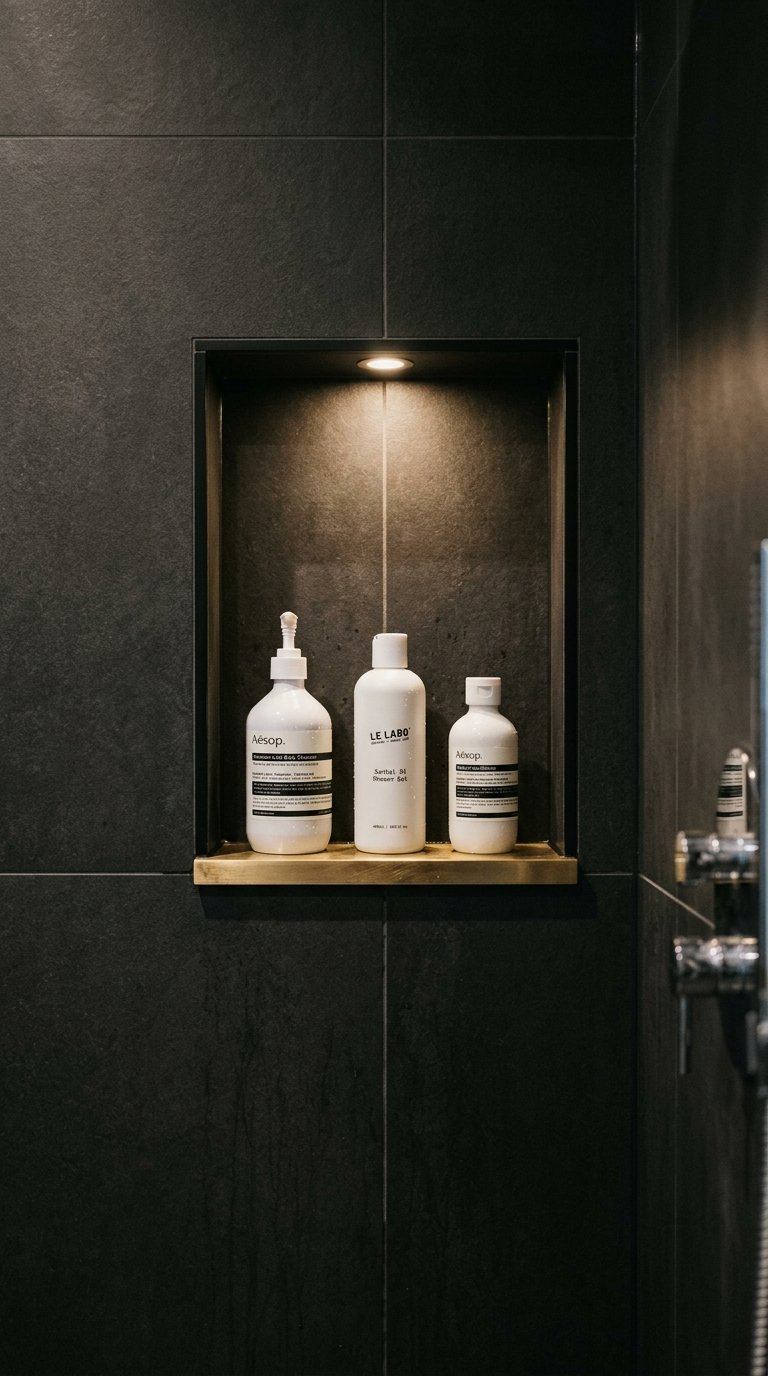
A recessed wall niche tiled in a dark material creates a functional storage element that doubles as an architectural feature.
A shower niche or bath-side niche tiled in the same dark tile as the surrounding wall, or in a contrasting dark accent tile, becomes a shadow box effect that adds depth and dimension to an otherwise flat wall surface.
Line the niche interior in a different material to the surrounding wall for additional visual interest. Dark wall tiles surrounding a niche lined in dark brass sheet, dark wood, or a contrasting dark tile creates a material contrast within the recessed space.
Size the niche generously. A niche that is too small to hold a standard shampoo bottle serves no practical purpose. A niche at 30cm wide by 20cm tall by 10cm deep accommodates full-size bottles and toiletries without overcrowding.
21. Keep One Element White for Maximum Contrast
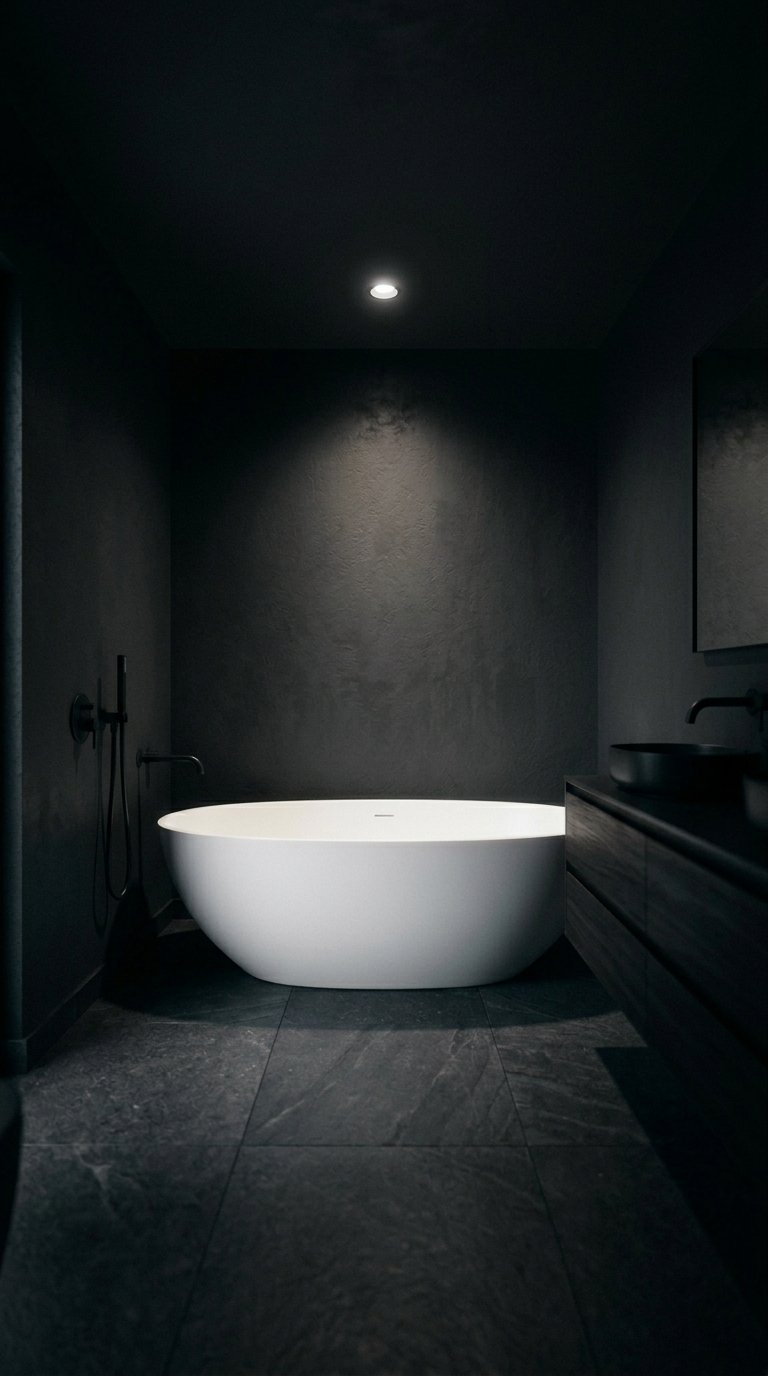
Every idea on this list has focused on adding darkness. This final idea does the opposite.
One deliberately white element in a dark bathroom creates a contrast that makes both the darkness and the white element more powerful. A freestanding white bath against dark walls. A white ceiling above dark tiled walls. White towels against dark wood shelving. A white vessel basin on a dark vanity.
The white element does not dilute the dark bathroom. It amplifies it. The eye uses the white reference point to read the darkness of the surrounding surfaces more intensely. Without any contrast, a fully dark bathroom reads as uniformly dark. With one white element, the darkness reads as deliberate and considered. 🙂
Choose the white element that suits the room’s layout and function. In most bathrooms, the freestanding bath or the wall-hung basin provides the natural white focal point. Let that fixture be the white anchor and keep everything else in the dark palette.
Final Thoughts
A dark bathroom works when every decision supports the overall atmosphere rather than fighting it. Dark surfaces, warm lighting, quality fixtures, and considered material choices all pull in the same direction.
Start with the surface decisions. Walls, floor, and ceiling colour or tile specification set the foundation for every subsequent choice. Get those right and the fixtures, hardware, and lighting decisions become easier.
Then work through lighting, fixtures, and finishing details. Warm lighting, consistent hardware finish, and one or two organic elements like plants or wood create the warmth that stops a dark bathroom feeling cold or oppressive.
Pick the five or six ideas from this list that suit your specific bathroom, your specific budget, and how you use the room daily. Execute them without compromising on the details that matter most.
A dark bathroom done well is one of the most impressive rooms in any home. And once you have experienced getting ready in one, going back to white tiles and chrome taps feels like a genuine step backward.