23 Outdoor Lounge Area Ideas to Create a Cozy Outdoor Space
The best outdoor lounge areas don’t feel like outdoor furniture catalogs. They feel like rooms. They have defined zones, layered lighting, comfortable seating at the right height, and enough personality that you’d rather sit there than on your sofa. If your current outdoor setup doesn’t pass that test, these 23 ideas will fix it with specific, actionable solutions across every budget.
1. Define the Zone With an Outdoor Area Rug
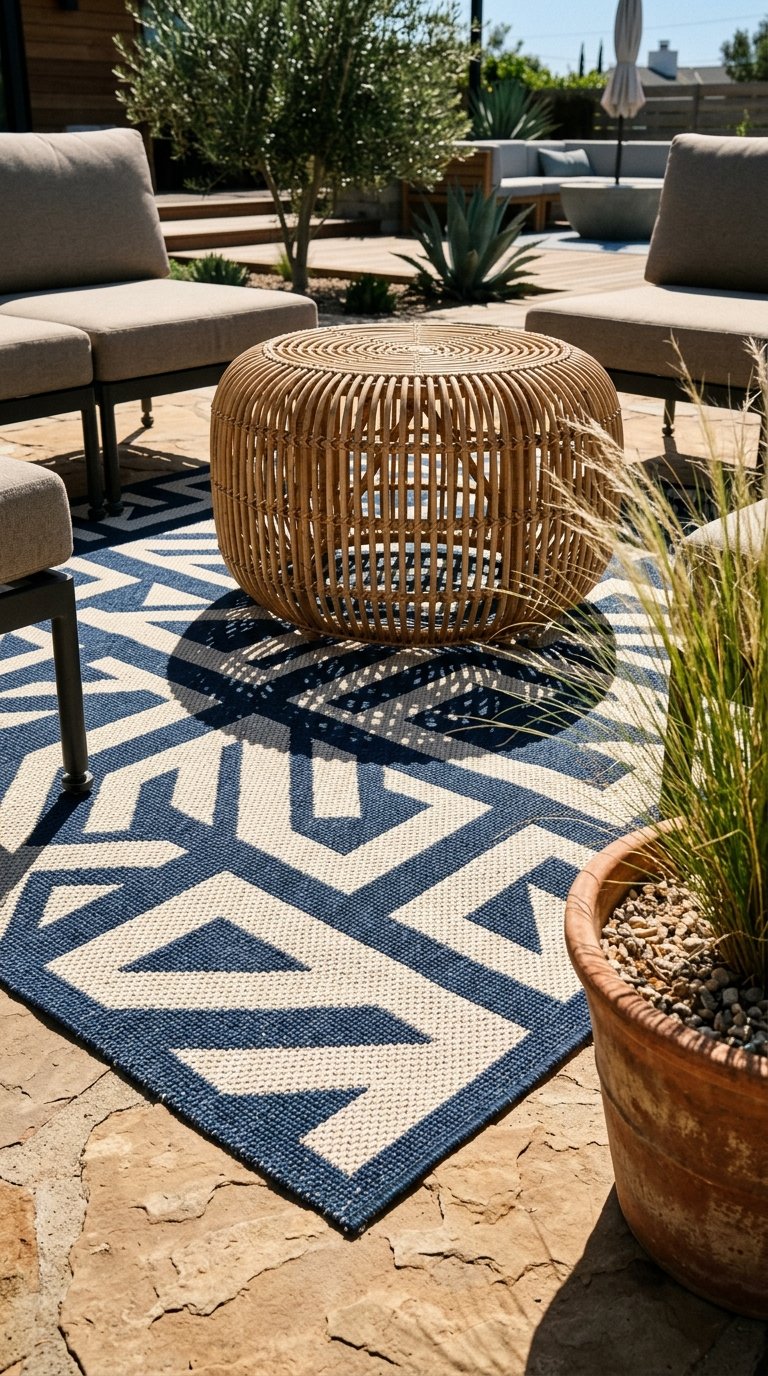
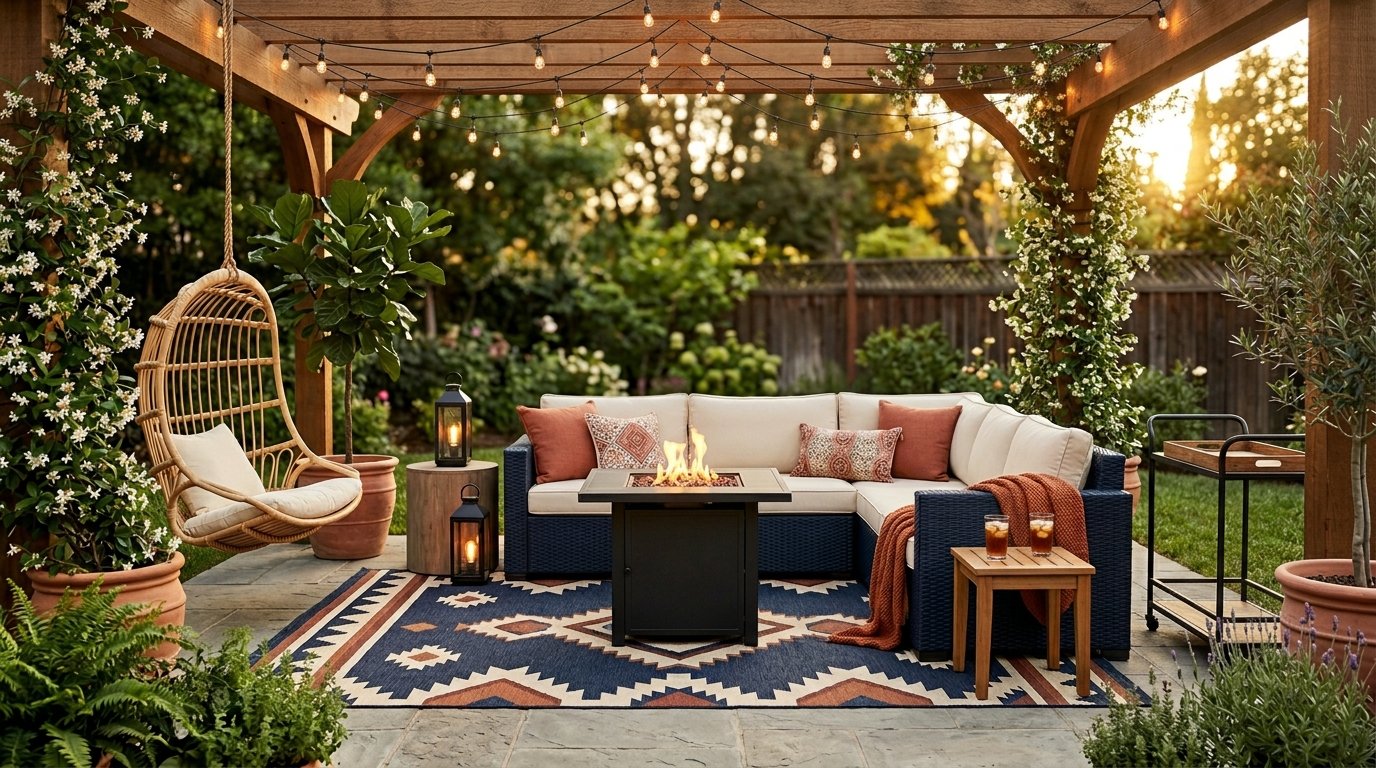
An undefined outdoor lounge area feels like furniture floating in open space. An outdoor rug underneath your seating arrangement pulls every piece together into one coherent zone and signals clearly where the lounge begins and ends. This single addition does more organizational work than any furniture rearrangement.
Polypropylene outdoor rugs resist UV fading, moisture, and mildew better than any other fiber. An 8×10-foot rug at Rugs USA or Home Depot runs $45 to $95. Choose a pattern bold enough to read from standing height: stripes, geometric prints, and medallion patterns all work. Solid rugs disappear under furniture and lose their visual impact.
2. Anchor the Space With a Deep Sectional Sofa
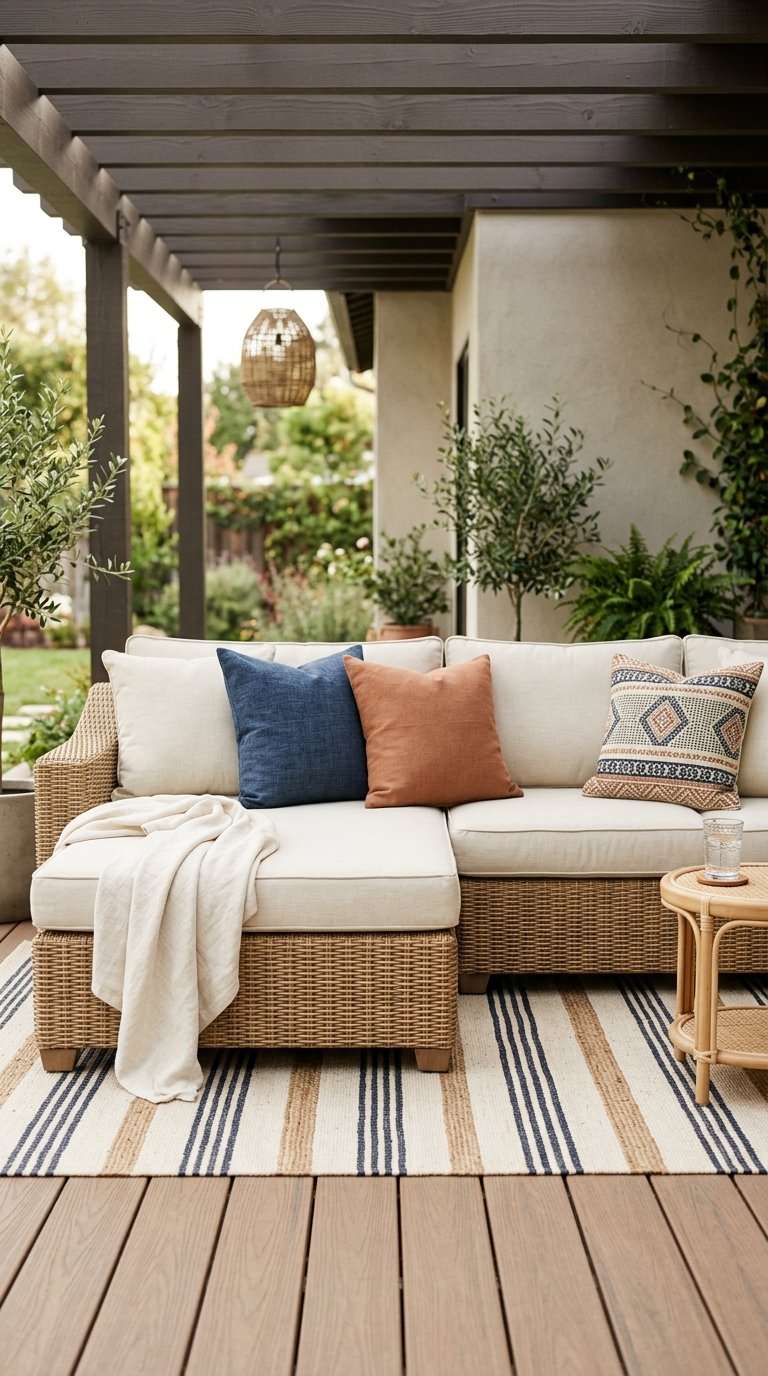
A deep-seat outdoor sectional sofa with cushions at least 24 inches deep creates the sitting experience your outdoor lounge needs to compete with an indoor sofa. Shallow-seat outdoor furniture, where you perch rather than sink, discourages long stays. Deep cushions encourage them.
All-weather wicker sectionals with aluminum frames at Costco, Target, or Wayfair run $400 to $1,200 for a full L-shape configuration. Look for cushion covers in solution-dyed acrylic fabric, which resists fading three times longer than solution-printed alternatives. A sectional positioned at the center of your outdoor rug with one end touching a wall or fence anchors the zone architecturally.
3. Add a Hanging Egg Chair as Your Statement Piece
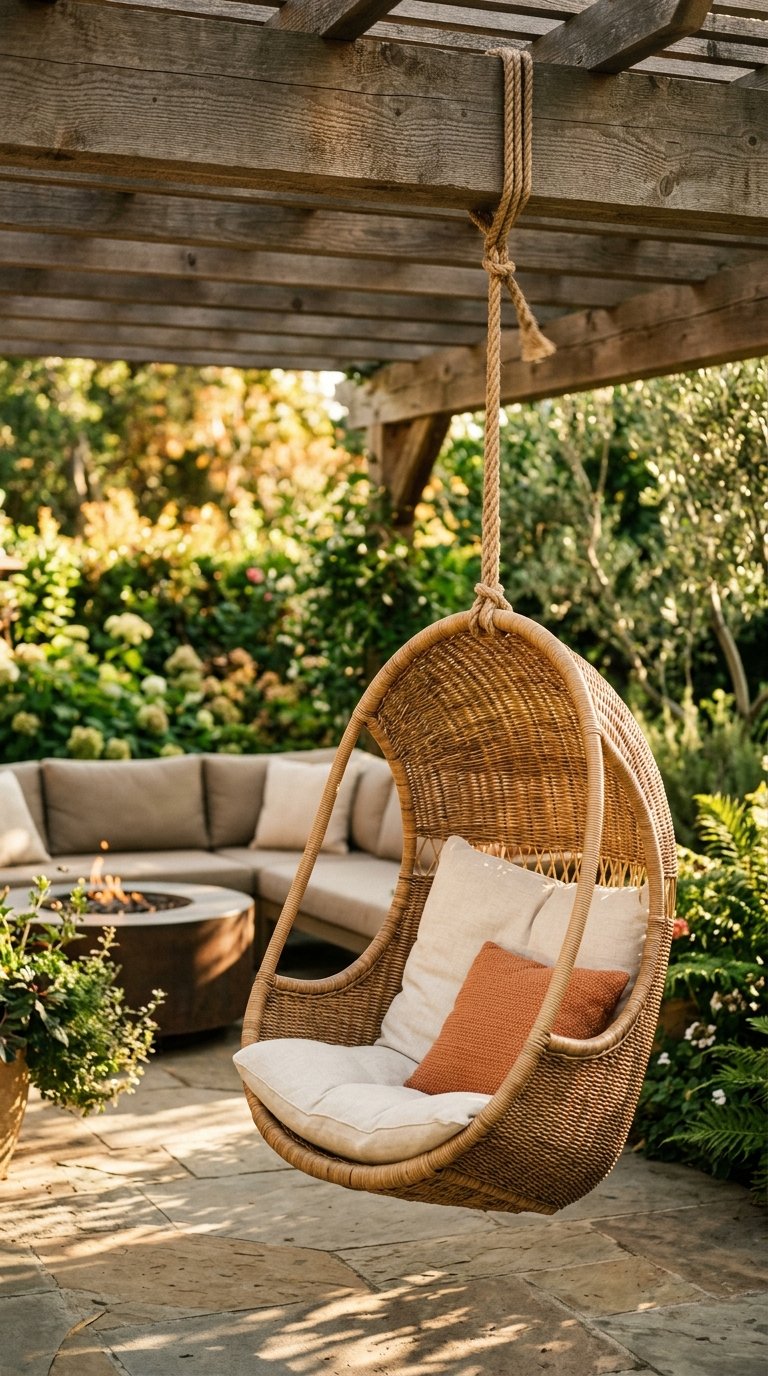
Every outdoor lounge area needs one piece of furniture that people want to sit in the moment they see it. A hanging egg chair fills that role better than any other outdoor seating option. It adds vertical interest, a sense of enclosure within the open outdoor space, and a swinging motion that no standard chair delivers.
A rattan or powder-coated steel hanging egg chair runs $180 to $400 at World Market, Wayfair, or Amazon. Mount it from a pergola beam, a freestanding stand, or a sturdy tree branch rated for 400 pounds. Position it slightly off to one side of the main seating zone so it reads as an accent piece rather than the main seating. FYI, a hanging egg chair has never once sat empty at a gathering in my experience. Not once.
4. Layer String Lights at Ceiling Height
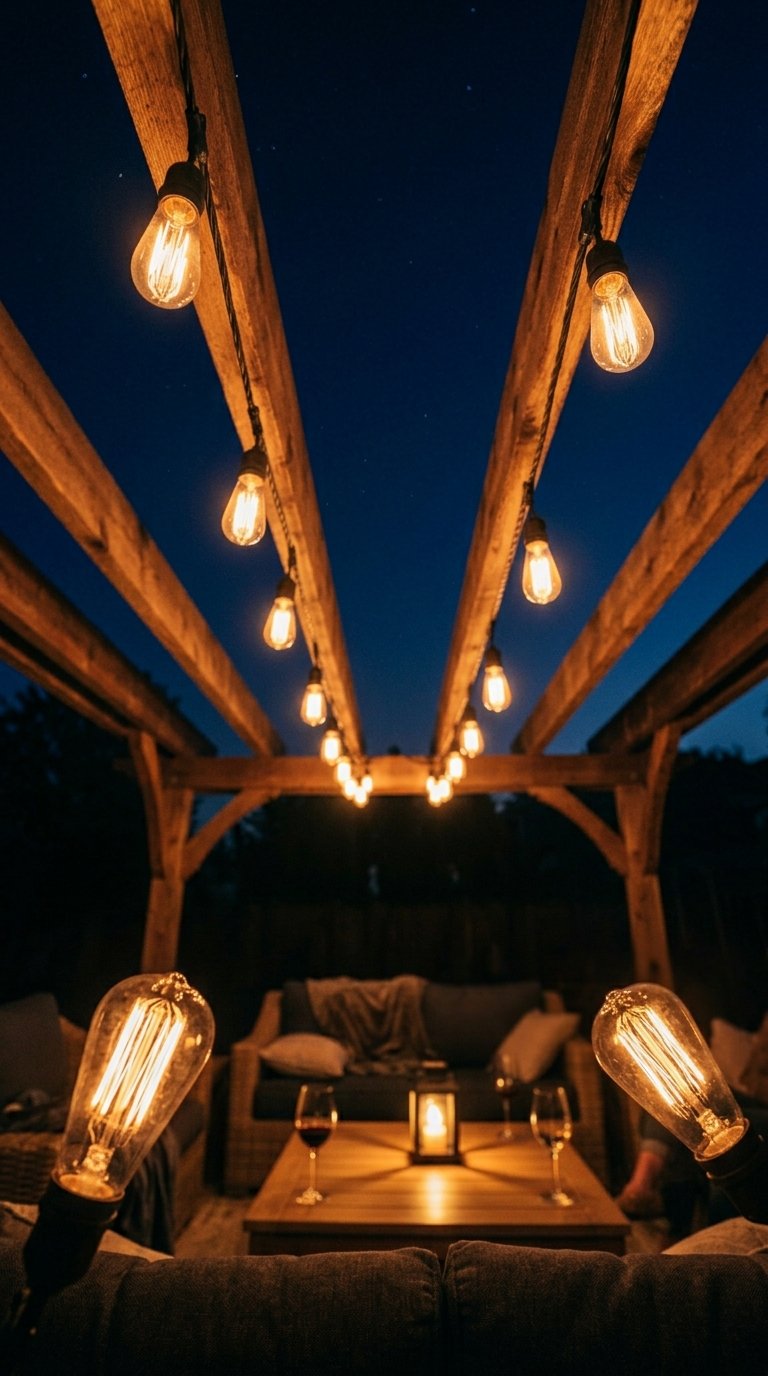
An outdoor lounge area in open daylight looks like a patio. The same space at night with string lights at ceiling height looks like a destination. The transformation that string lights create at dusk is disproportionate to their cost, which makes them the highest-impact-per-dollar evening investment on this entire list.
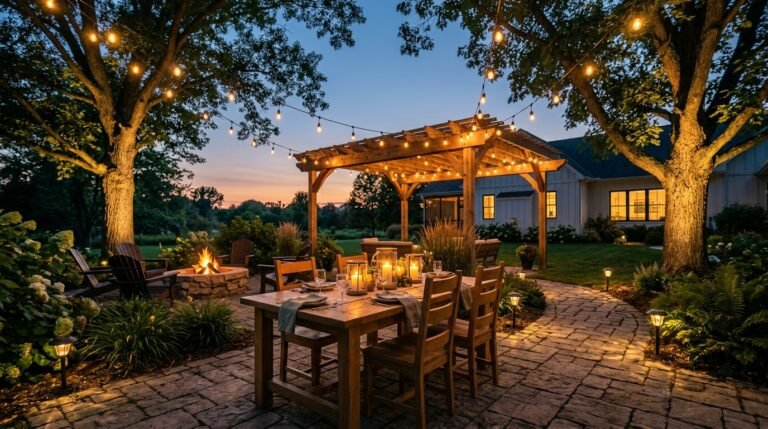
Hang warm white Edison bulb strands at 2200K in parallel lines or a crisscross pattern from a pergola, fence line, or between two installed screw hooks. Space lines 24 inches apart. A 48-foot strand costs $25 at Home Depot and covers a 12×12-foot lounge area with one strand. Use two for full coverage and plug both into an outdoor timer set to activate at dusk automatically.
5. Install a Pergola as Your Overhead Structure
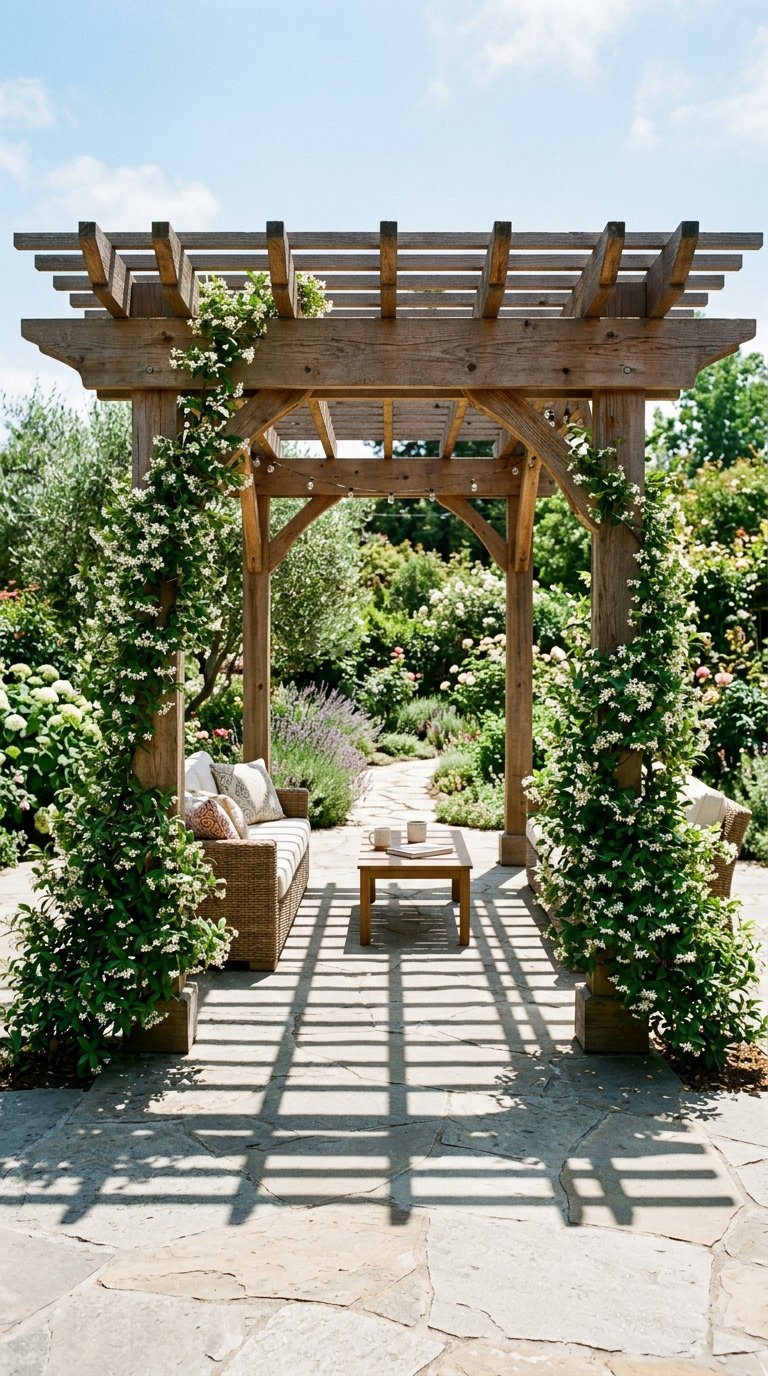
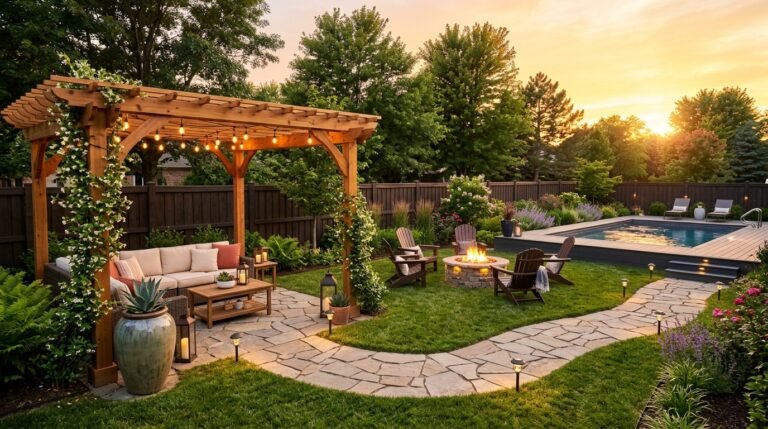
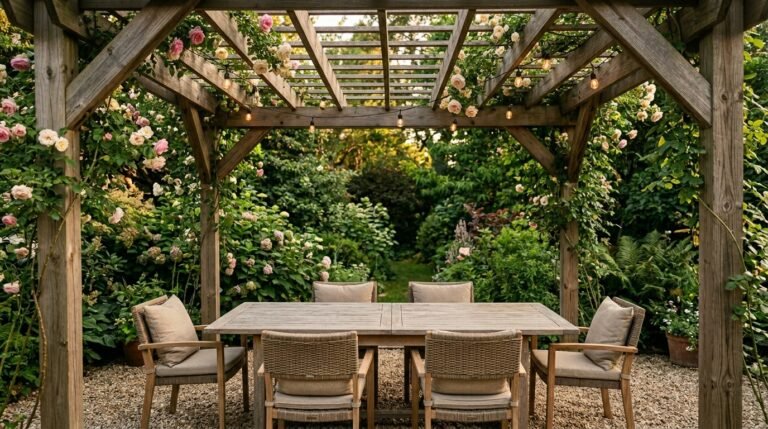
An outdoor lounge area without overhead structure feels permanently temporary, no matter how good the furniture is. A pergola adds the architectural weight that transforms a patio setup into a room. It gives you a framework for lights, curtains, ceiling fans, and climbing plants that no other overhead option provides at the same cost.
A freestanding cedar or aluminum pergola kit in a 10×12-foot size runs $900 to $2,500 installed over a single weekend. Aluminum requires zero maintenance and outlasts cedar by decades in humid climates. Cedar costs less and looks warmer initially but needs annual sealing to prevent weathering. For most climates outside the Pacific Northwest or Deep South, cedar is the better starting value.
6. Use a Fire Pit Table as Your Lounge Focal Point
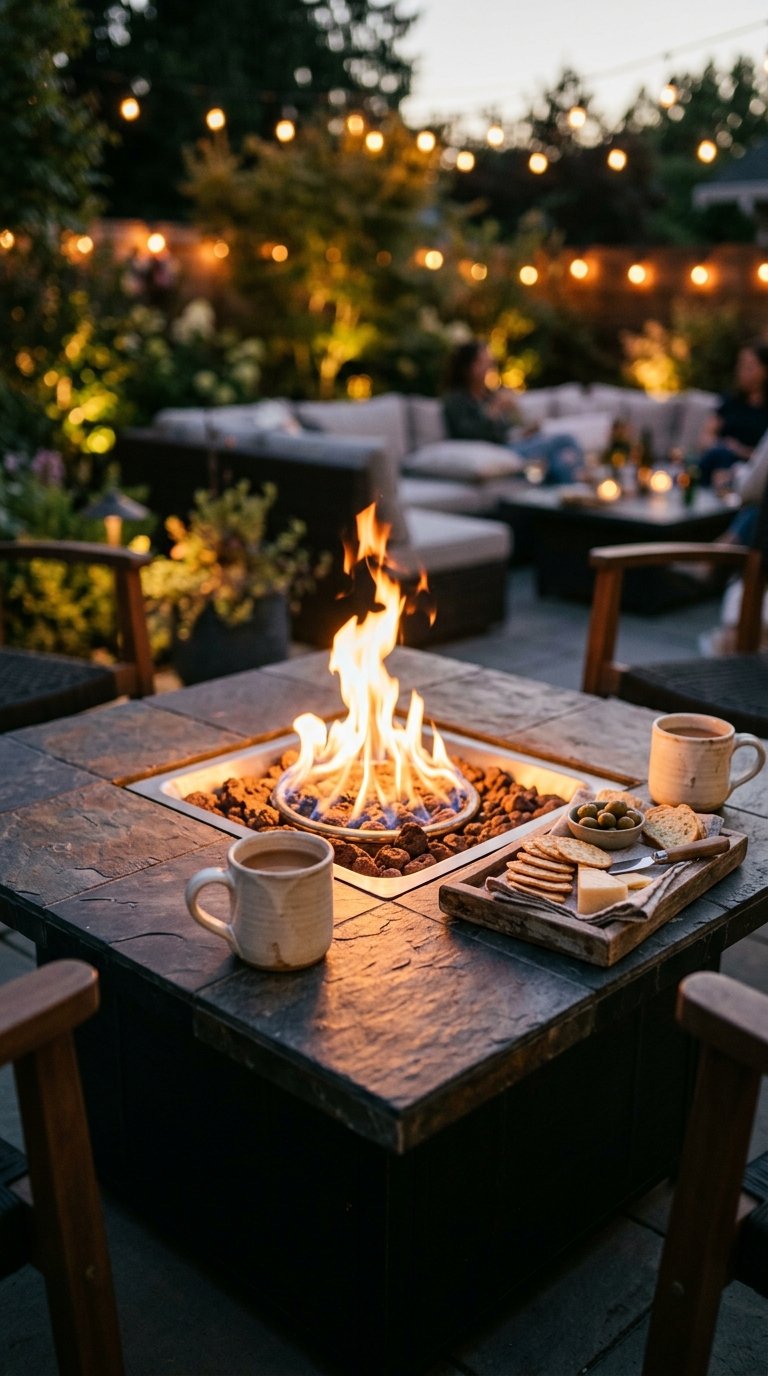
A fire pit table at the center of your outdoor lounge area gives every seat a reason to orient toward the middle and creates the campfire gathering effect that makes people stay for hours without checking their phones. The table surface around the fire bowl also provides drink and snack space that a standalone fire pit never offers.
A propane fire pit table in a 40×40-inch square or rectangular format runs $200 to $600 at Wayfair, Home Depot, or Target. The propane connection eliminates ash cleanup, smoke direction problems, and the fire-starting ritual that delays the start of every gathering by 20 minutes. A 20-pound propane tank provides approximately 8 to 10 hours of burn time at medium heat output.
7. Place Outdoor Side Tables at Every Seat
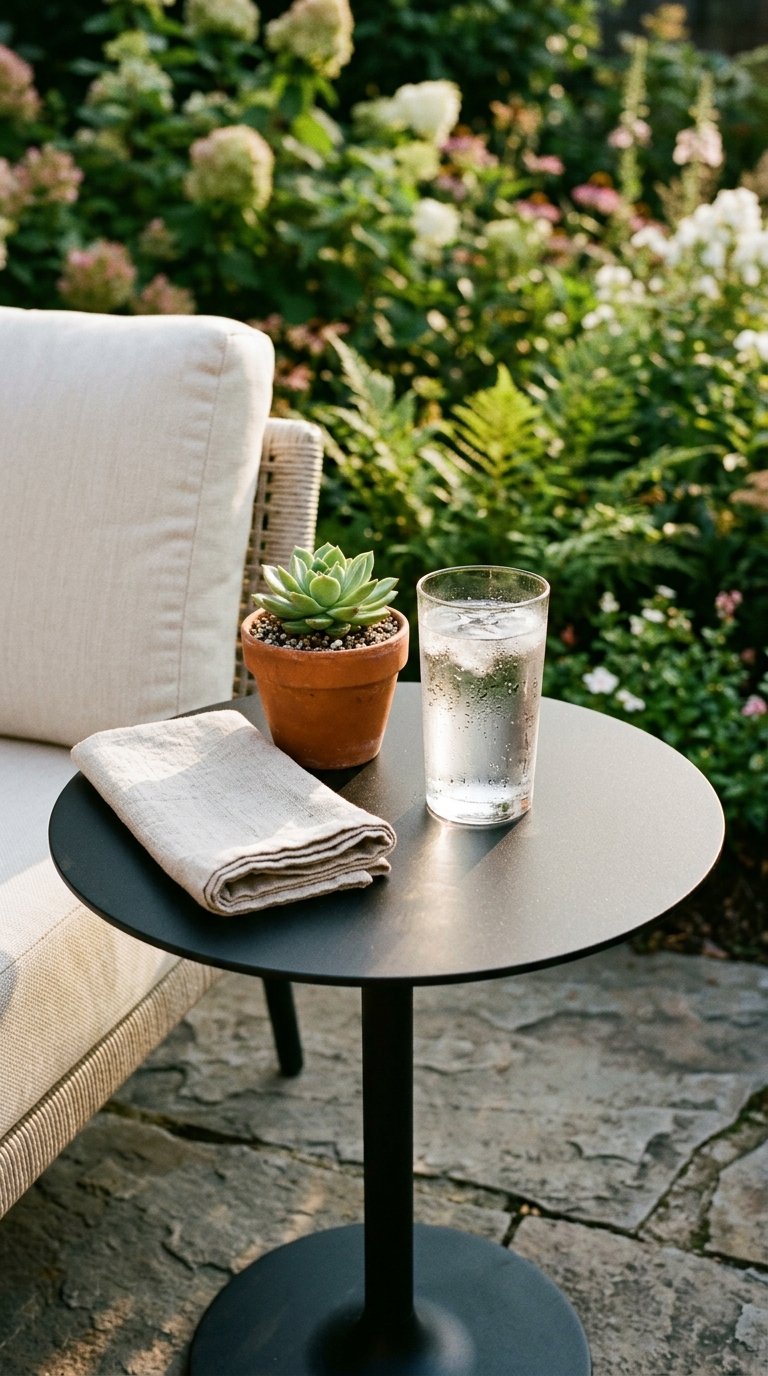
An outdoor lounge area where guests balance drinks on their knees or search for a surface to put things down is an outdoor lounge area people leave early. Every seat needs a surface within arm’s reach. This sounds obvious until you look at most patio setups and count how many seats actually have one.
Small round side tables in powder-coated steel, teak, or resin wicker run $25 to $80 each. Place one at each end of a sofa and one beside each chair. A complete lounge area with six seats needs four to five side tables. Budget $100 to $300 for the full set and treat it as non-negotiable infrastructure rather than optional accessory spending.
8. Add an Outdoor Coffee Table With Storage
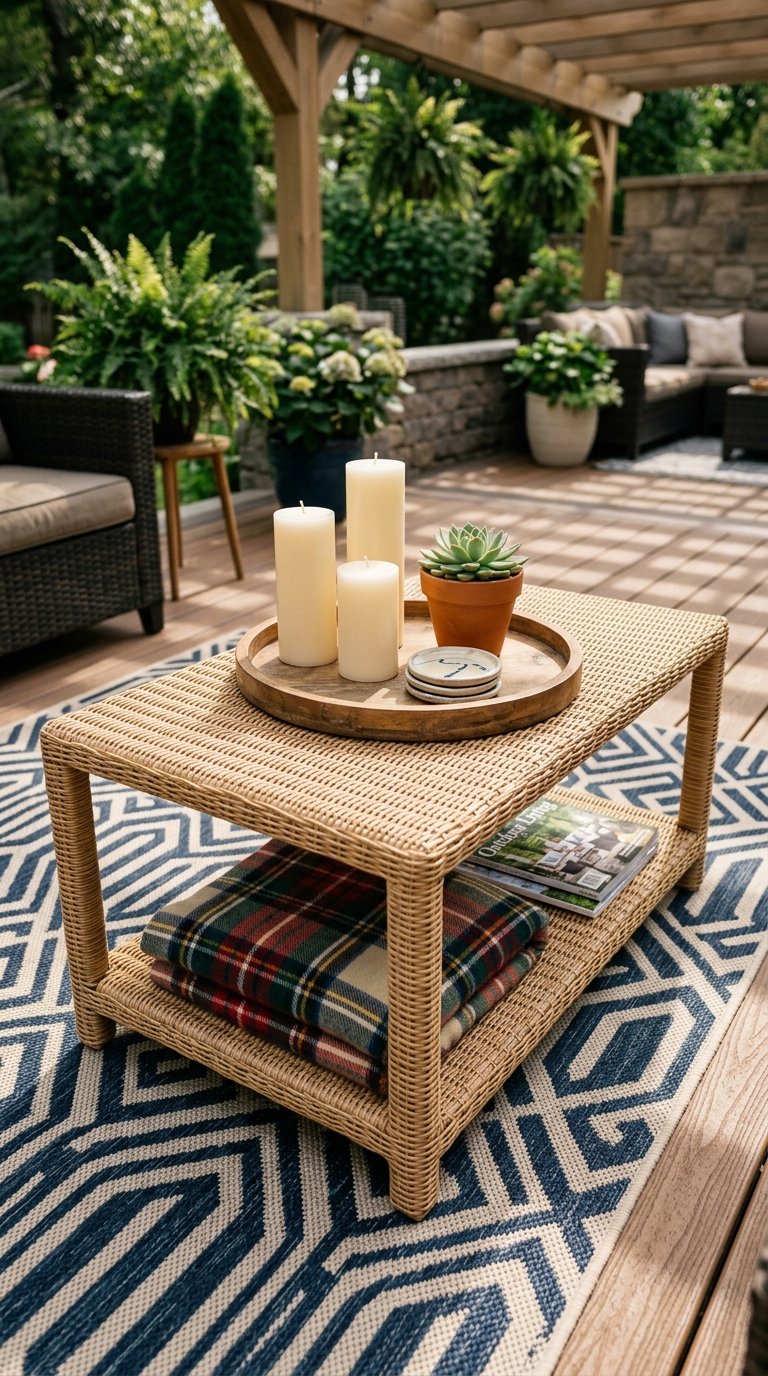
An outdoor coffee table with a lift-top or lower shelf adds storage for outdoor cushions, blankets, and accessories that otherwise sit out and weather unnecessarily. A table that functions as both a surface and storage earns its floor space twice in a lounge area where every square foot counts.
A resin wicker coffee table with a lower shelf runs $120 to $300. An aluminum table with a lift-top mechanism costs $200 to $450. The lower shelf version handles bulky items like a folded throw or a stack of outdoor magazines. The lift-top version works best for lounge areas where you sometimes eat from the coffee table, raising the surface to a comfortable eating height.
9. Hang Outdoor Curtains for Privacy and Wind Buffering
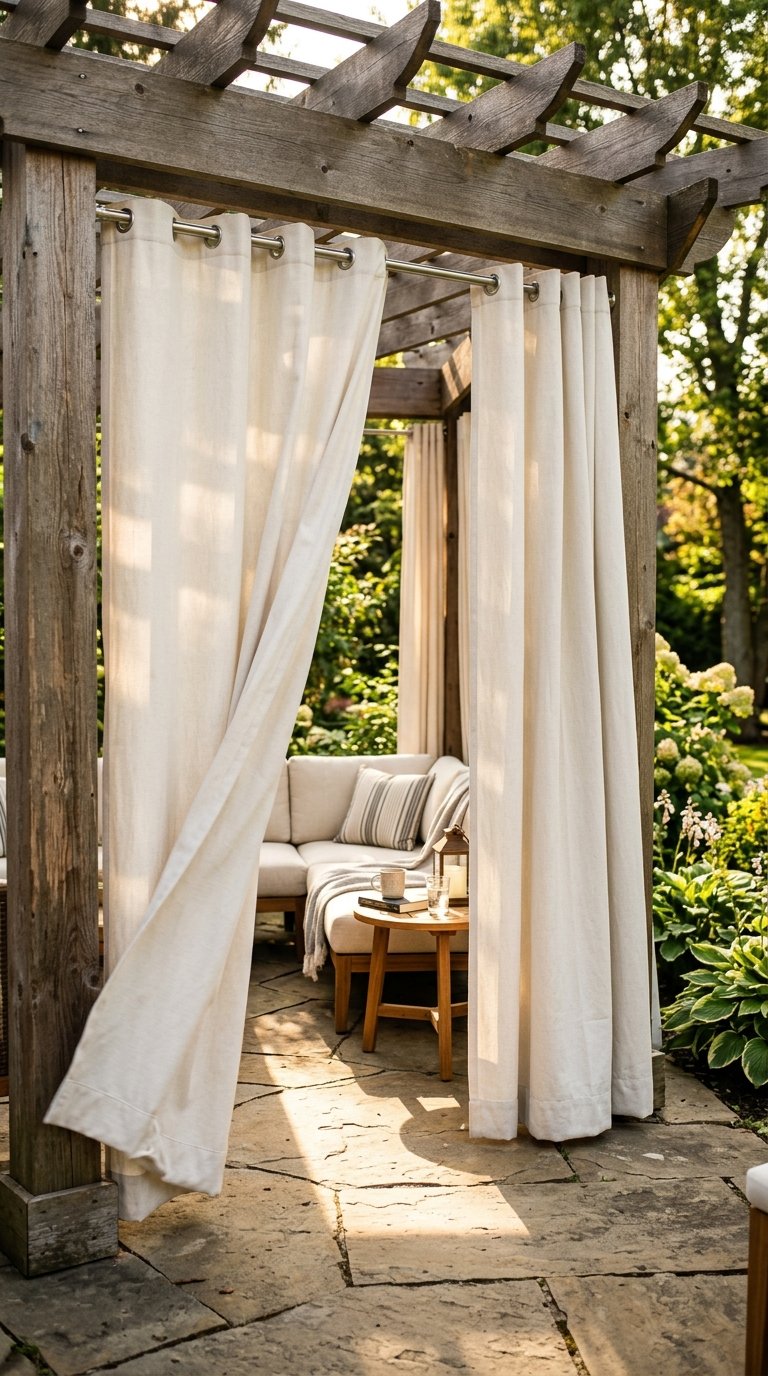
Outdoor curtains on a pergola or freestanding frame add three things to an outdoor lounge simultaneously: privacy from neighbors, wind buffering on gusty afternoons, and visual softness that hard surfaces like concrete, metal, and wood never provide. An outdoor lounge with curtains on two sides feels enclosed and intimate in a way that open-air setups never achieve.
Outdoor curtain panels in solution-dyed acrylic or Sunbrella canvas run $30 to $80 per panel in 96-inch lengths. Mount them on stainless steel tension rods between pergola posts or on freestanding curtain rod frames. Leave them open on pleasant days and draw them closed when wind or sun or privacy requires it. The flexibility makes them more valuable than any fixed privacy screen.
10. Create a Conversation Circle With Chairs Facing Inward
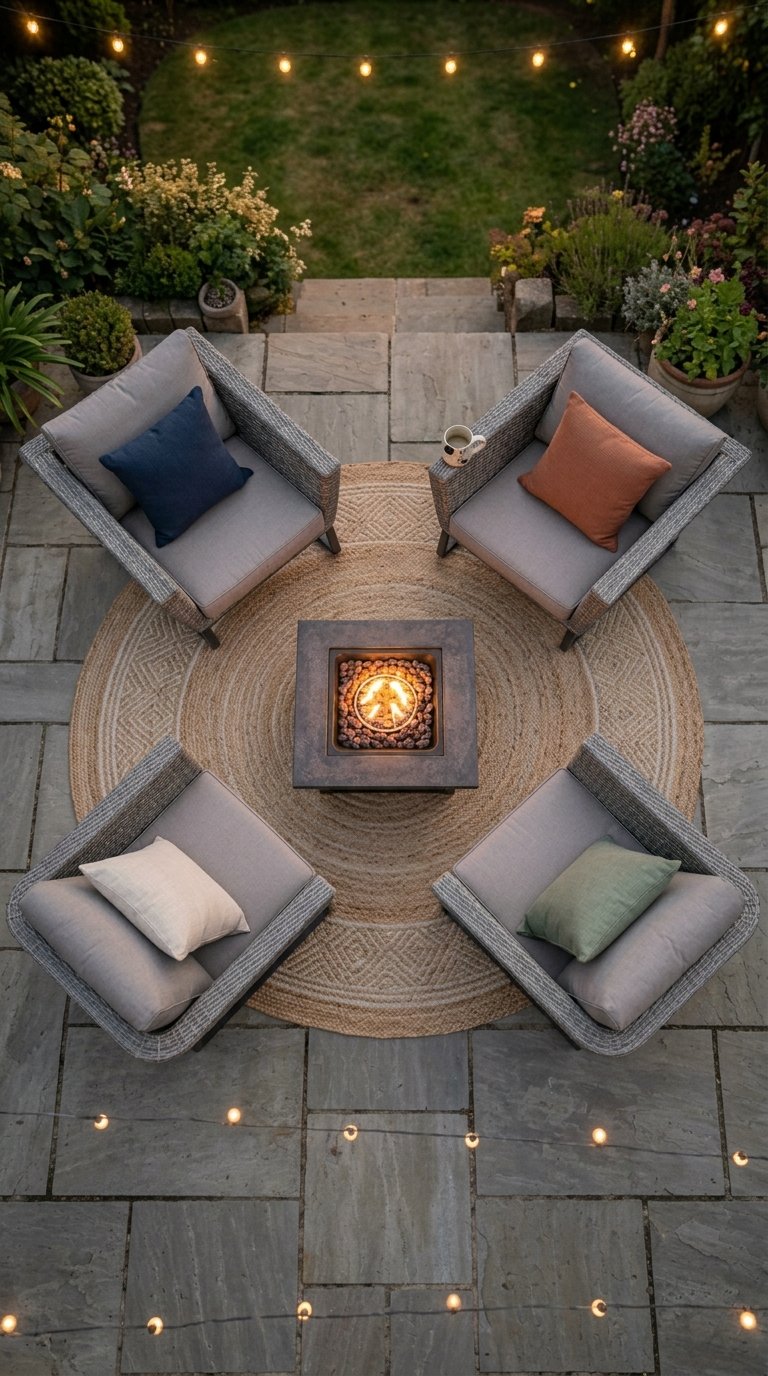
Most outdoor lounge furniture arrangements face chairs and sofas toward a view or parallel to a wall, which creates a linear setup that works better for watching something than for talking to each other. A conversation circle, where four to six chairs angle inward toward a central point occupied by a fire pit or low table, creates a gathering dynamic that linear arrangements never produce.
Angle each chair 10 to 15 degrees inward from a purely outward-facing position. The adjustment seems minor until you watch how differently guests interact in a circular arrangement versus a linear one. A circular arrangement says “we’re here to talk to each other.” A linear arrangement says “we’re here to look at something.” Choose the arrangement that matches what you want your outdoor lounge to do.
11. Build a Low Daybed or Sun Lounger Zone
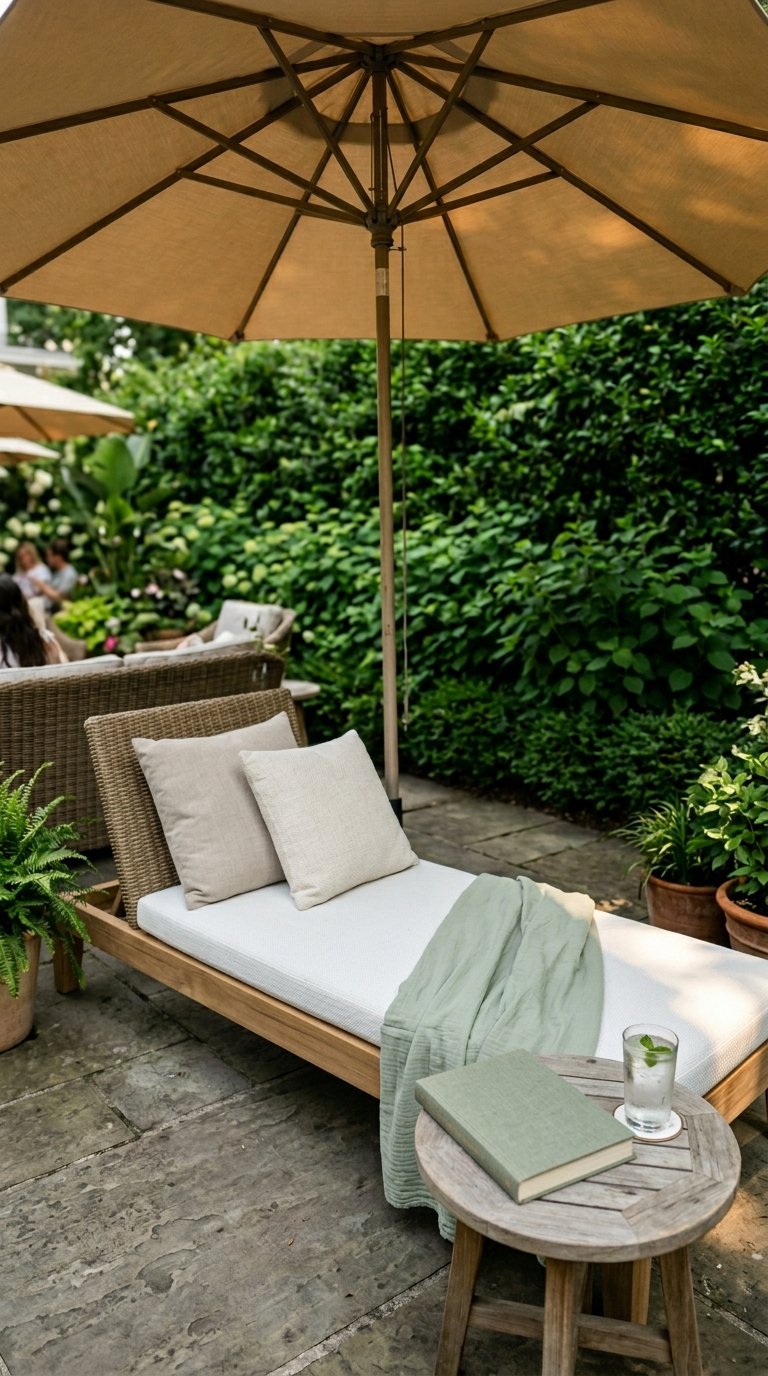
A dedicated daybed or sun lounger zone within your outdoor lounge area creates a separate relaxation space for reading, napping, or simply lying down that chair and sofa seating never fully delivers. The distinction between sitting and lying down in an outdoor space is the difference between an outdoor lounge area and an outdoor living destination.
An outdoor daybed with a weather-resistant cushion runs $300 to $800 at most furniture retailers. A sun lounger with an adjustable back costs $80 to $250. Position the daybed or lounger zone at a slight angle to the main seating group, partly shaded by a pergola, umbrella, or shade sail. The slight separation and shade make it feel like a retreat within the larger lounge.
12. Use Outdoor Lanterns to Create Ambient Light Layers
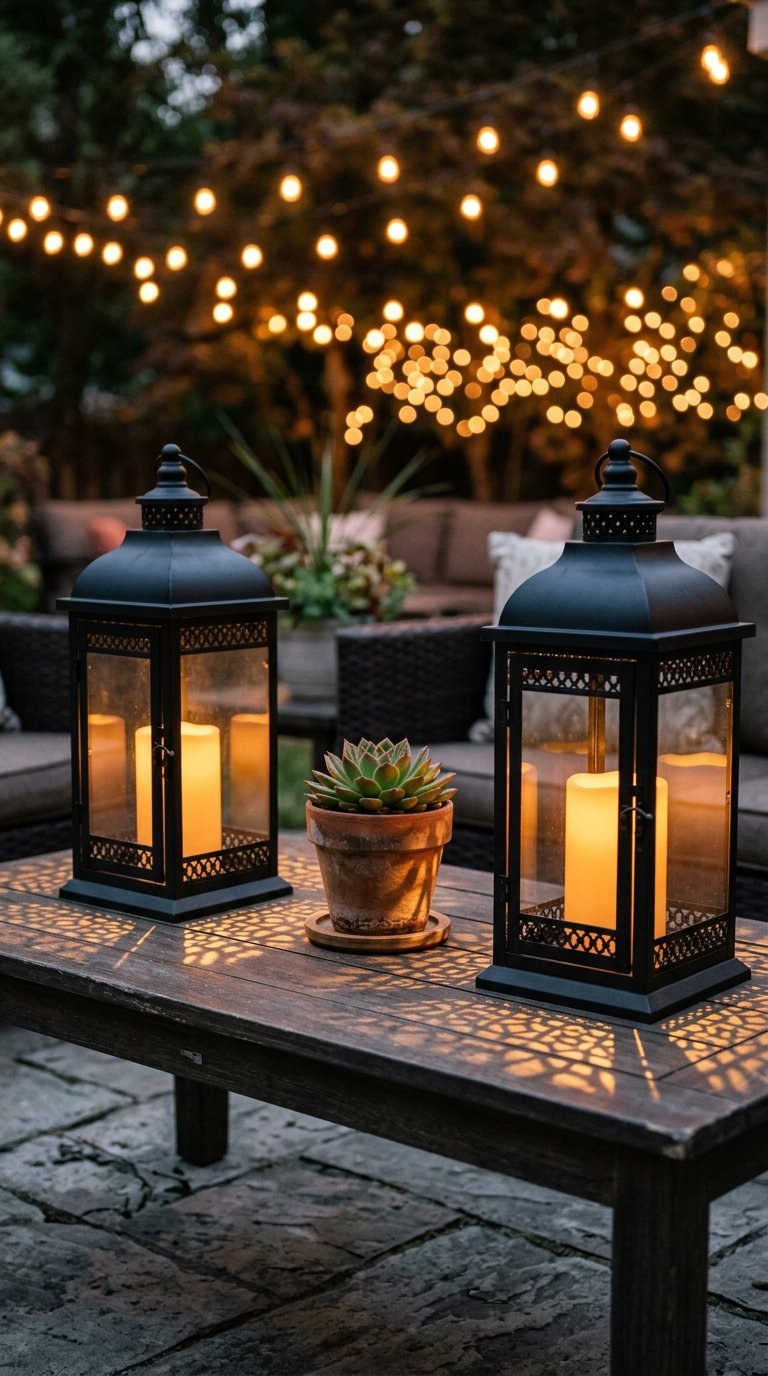
Overhead string lights handle ambient coverage but leave the lower half of an outdoor lounge in relative darkness that makes the space feel incomplete after dark. Outdoor lanterns at table height and floor height fill the lower light layer and make every surface in the lounge visible and warm at eye level.
Place two large black metal lanterns with LED candle inserts at the ends of your coffee table or at the base of the sectional. Add a medium lantern on each side table. Use the same LED candle temperature across all lanterns for visual consistency. A complete lantern setup for a six-seat lounge costs $60 to $120 and makes your string lights work twice as hard by filling in the gaps they leave below knee height.
13. Plant Container Gardens Around the Perimeter
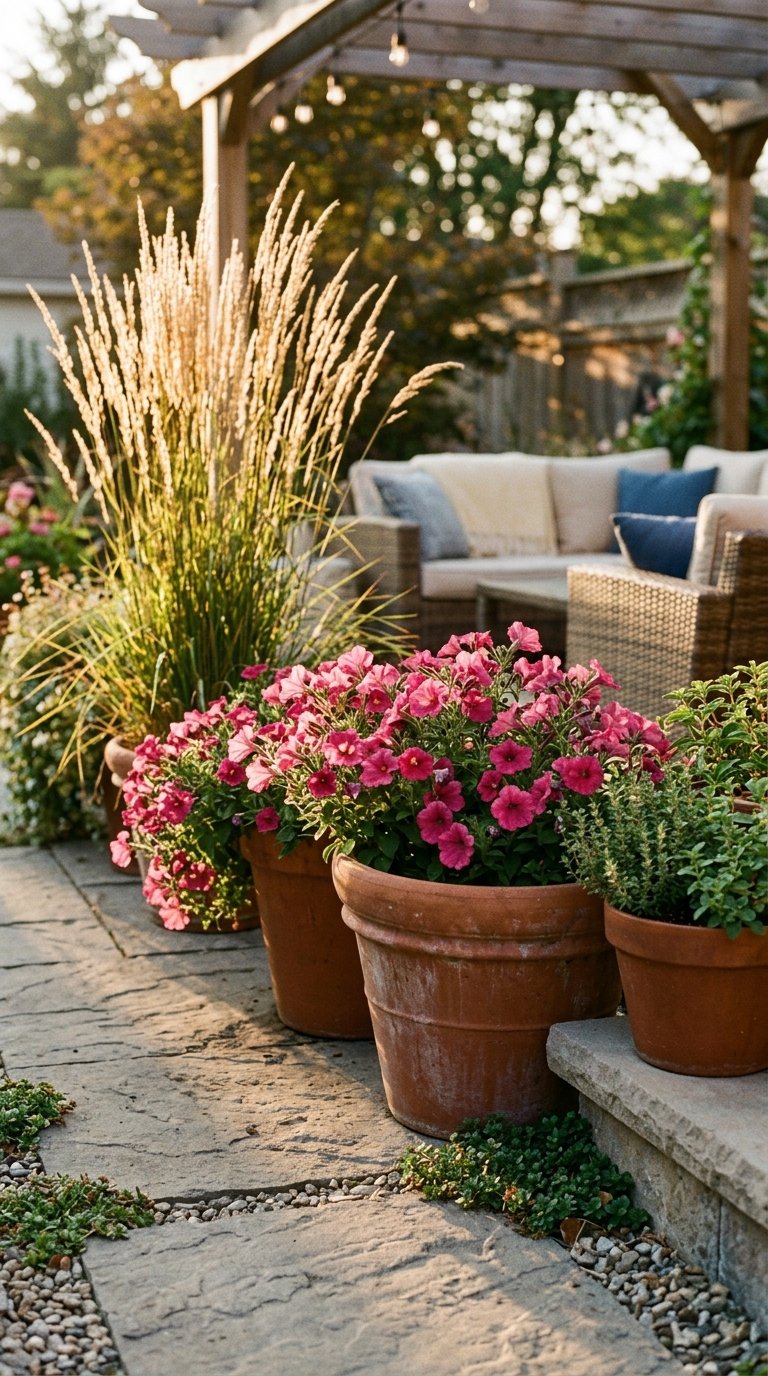
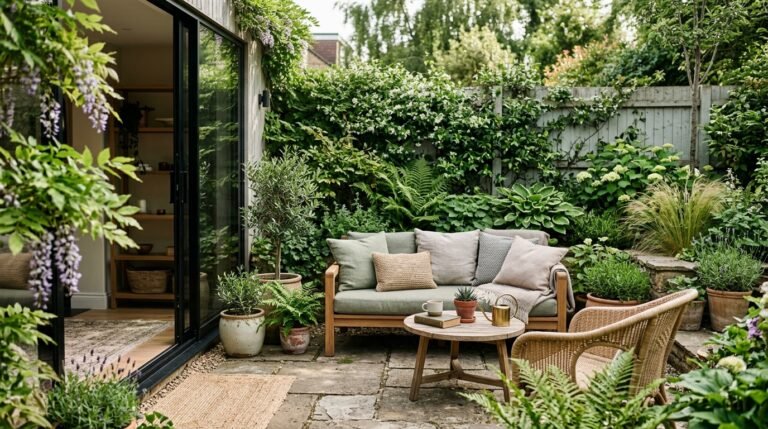
Container gardens around the perimeter of an outdoor lounge area define its edges with living material, add fragrance and color, and create a sense of enclosure that makes the space feel more intimate without physical walls. The difference between a lounge area with plant borders and one without is the difference between a room and an open space.
Use three container sizes for visual variety:
- Large 18-inch pots with tall ornamental grasses or dwarf shrubs at the corners
- Medium 12-inch pots with flowering annuals along the sides
- Small 8-inch pots with herbs or succulents on tables and ledges
Ten containers around a standard lounge area perimeter cost $80 to $200 including plants and soil and deliver ongoing seasonal color from spring through fall.
14. Add a Ceiling Fan to Your Covered Outdoor Lounge
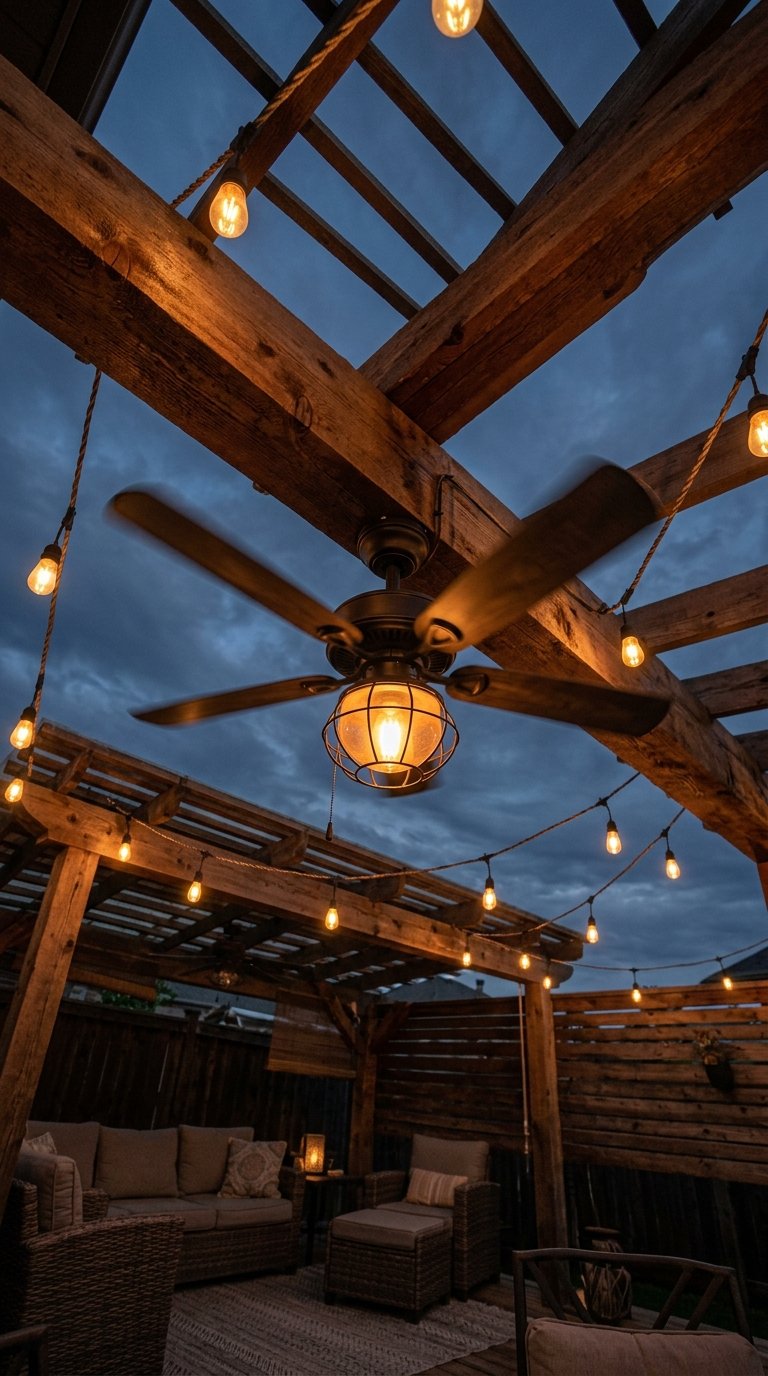
A covered outdoor lounge without a ceiling fan sits empty on warm, still evenings when the temperature and humidity make sitting outside without airflow genuinely unpleasant. A ceiling fan mounted to a pergola beam or covered patio ceiling adds 8 to 10 degrees of perceived cooling through air movement alone, extending your comfortable outdoor hours significantly.
Outdoor-rated ceiling fans with wet-rated motors run $80 to $250 for quality units at Home Depot or Lowe’s. They require a hardwired electrical connection, which costs $150 to $300 for an electrician to install on a nearby circuit. The total investment of $230 to $550 extends your outdoor lounge season from spring through fall in most climates, which pays back every cent within one summer of regular use.
15. Install a Shade Sail for Sun Control
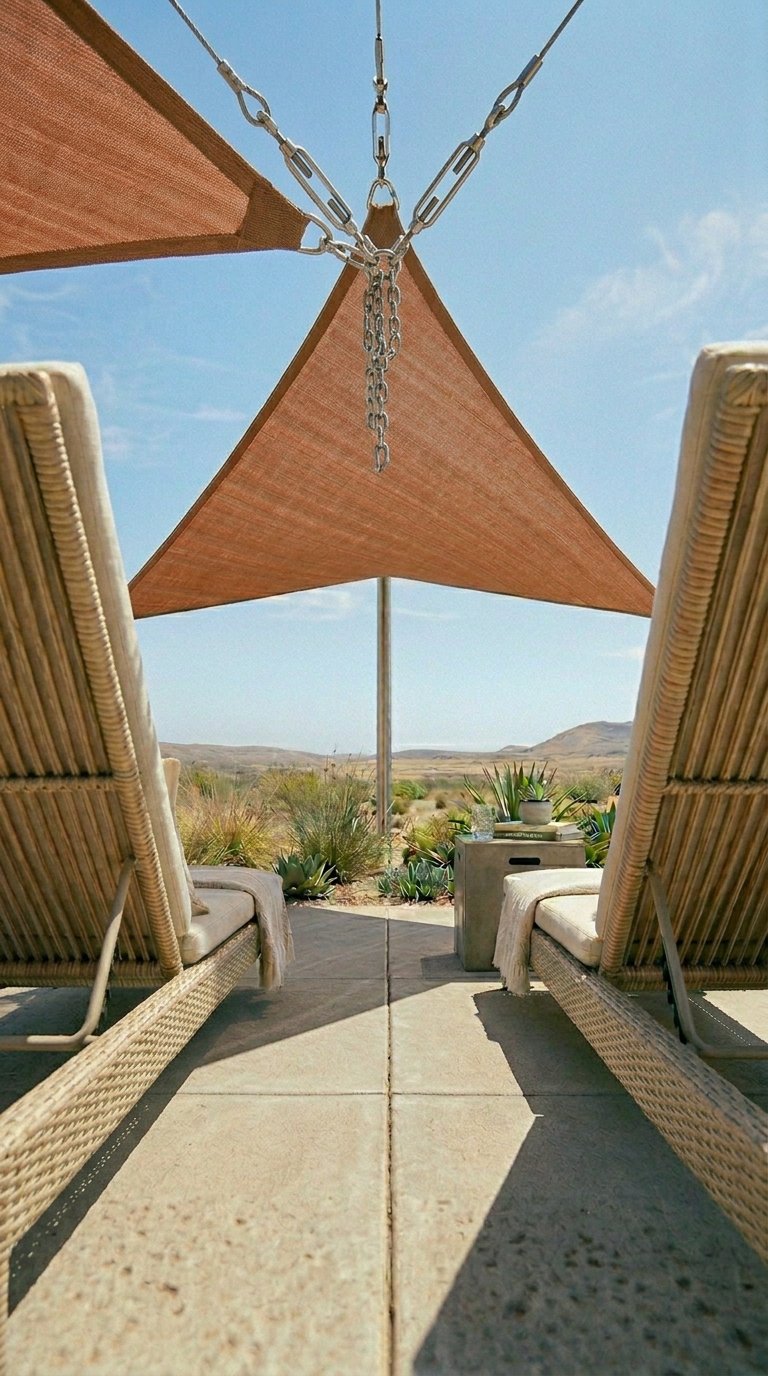
Direct afternoon sun on an uncovered outdoor lounge area stops people from using it between 11 AM and 4 PM in summer. A shade sail positioned to intercept your specific sun angle solves this without the cost or permanence of a full pergola or roof structure.
Install the shade sail at an angle with one high attachment point and two lower points. The angled position sheds rainwater rather than pooling it and blocks the low-angle afternoon sun more effectively than a flat horizontal installation. A 12×12-foot HDPE shade sail costs $40 to $80 and reduces the temperature beneath it by 10 to 15 degrees at ground level. That temperature drop determines whether your outdoor lounge gets used all day or only in the morning.
16. Create a Reading Nook Corner With a Chaise Lounge and Umbrella
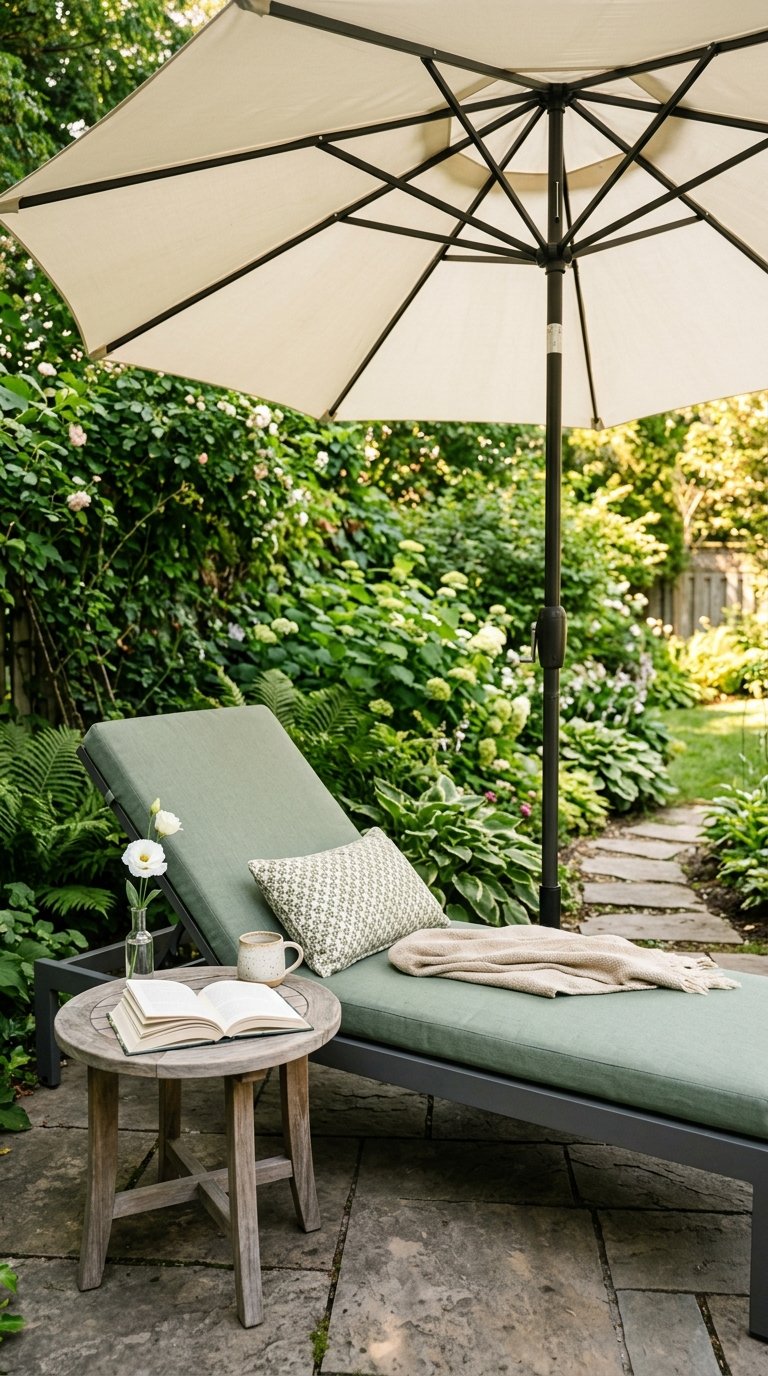
A dedicated reading nook within your outdoor lounge area, formed by a single chaise lounge, a side table, and a tilting patio umbrella for shade, creates a private retreat zone that the main seating group doesn’t provide. Individual quiet zones within a larger lounge make the space serve multiple purposes rather than one.
An all-weather chaise lounge in powder-coated aluminum with a quick-dry cushion runs $150 to $350. A 9-foot tilting patio umbrella costs $80 to $200. Position both in the corner of your lounge zone at a slight angle to the main seating area. The angle and the umbrella shade create a visual separation that makes the nook feel intentionally distinct.
17. Add a Bluetooth Speaker for Ambient Music
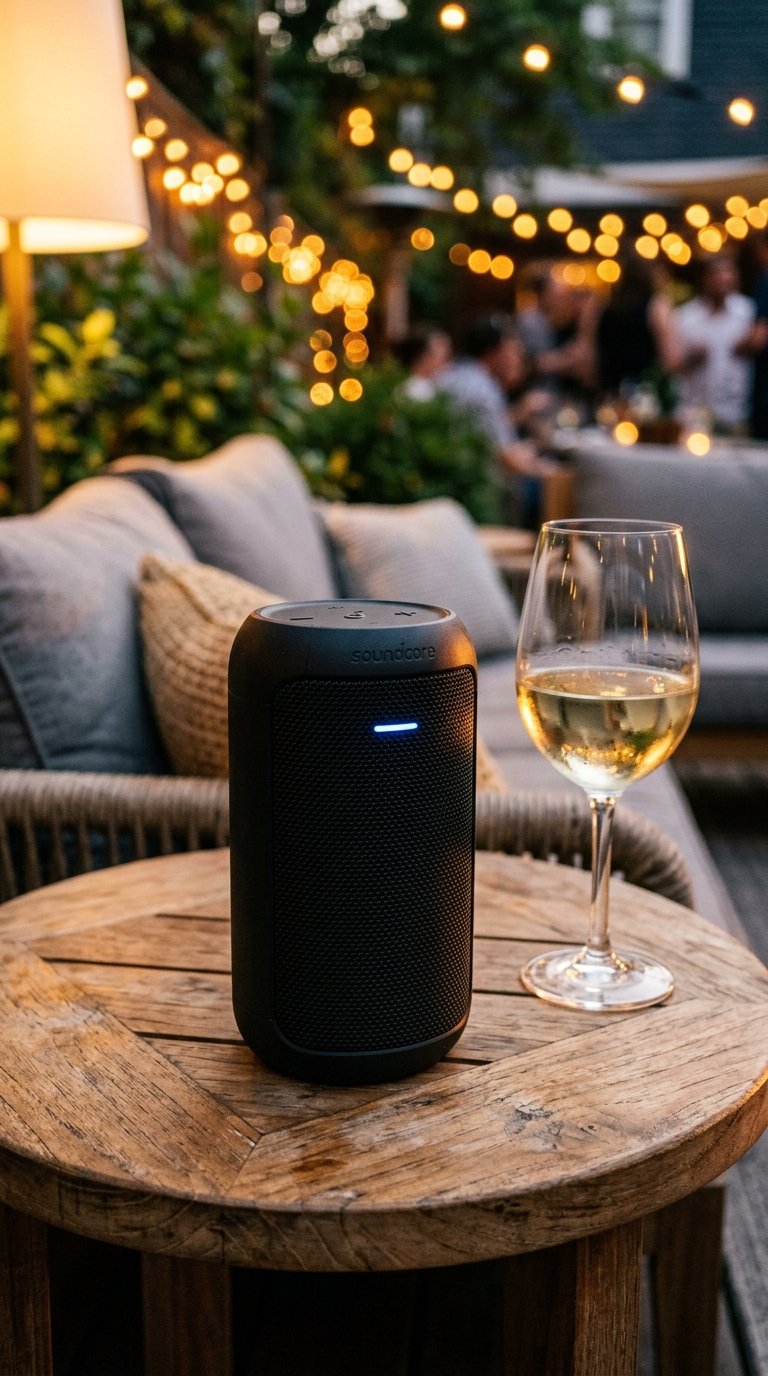
An outdoor lounge area without music during gatherings relies entirely on conversation to fill the atmospheric space, which works well for small groups but creates silence gaps in larger ones. A quality outdoor Bluetooth speaker provides the ambient sound layer that transforms a comfortable outdoor space into an atmosphere.
The JBL Xtreme 3 or Bose SoundLink Flex handle outdoor environments with IP67 waterproofing and 12 to 20 hours of battery life respectively. The Bose produces better balanced sound at lower volumes, which is what an ambient outdoor lounge needs. The JBL produces more volume for larger spaces. Both run $130 to $200 and outperform any outdoor speaker at the same price point from non-audio brands. Place the speaker at one end of the space rather than the center so music comes from a direction rather than from everywhere.
18. Use Raised Decking to Elevate the Lounge Zone
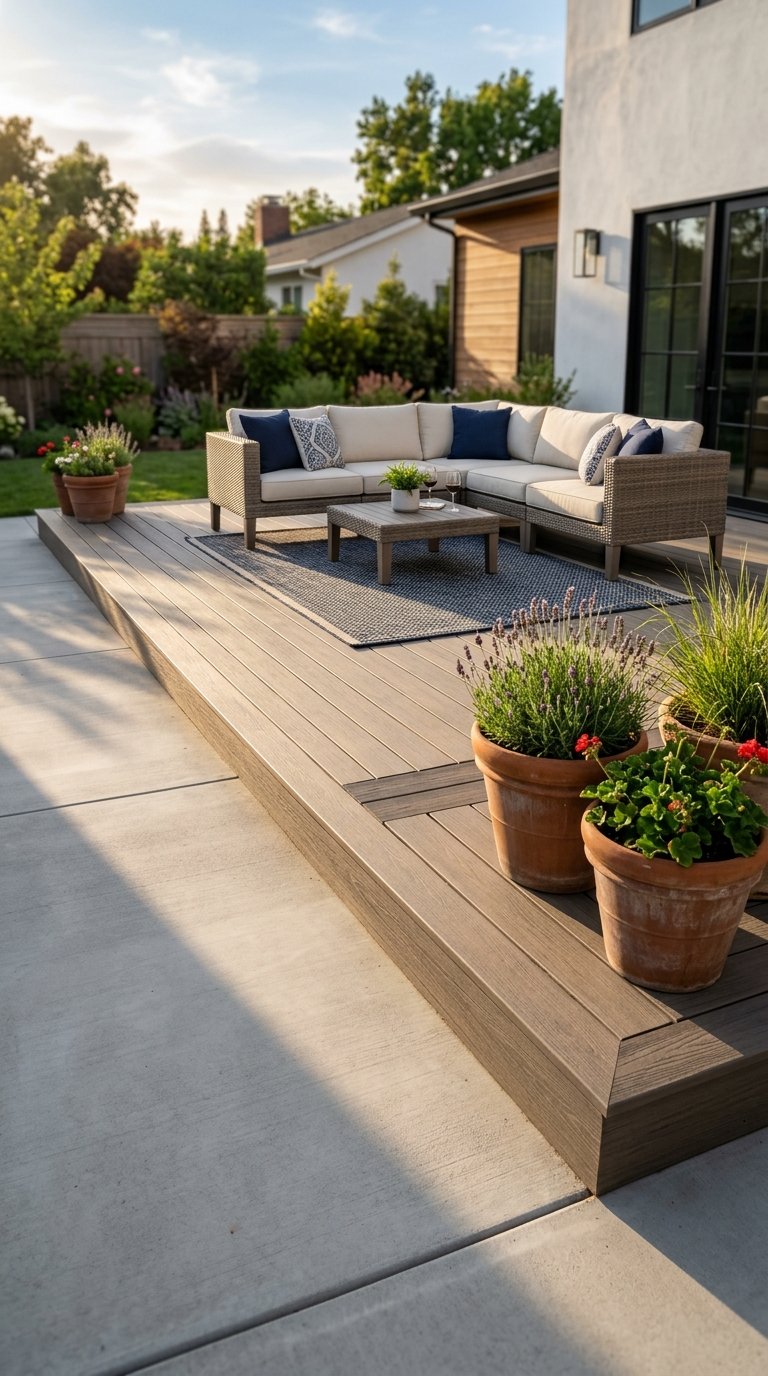
A raised deck platform under your outdoor lounge furniture creates a visual level change that defines the zone architecturally and elevates it above the surrounding lawn or patio grade. Level changes communicate spatial hierarchy: the raised zone is the destination, and the surrounding area is the approach.
Composite deck tiles that snap together without adhesive or screws run $5 to $8 per square foot at IKEA or online retailers. A 12×14-foot platform costs $840 to $1,344 in materials with zero labor cost and zero permanent installation. They lift off completely when you move. Composite outperforms wood for outdoor lounge platforms because it requires zero staining, zero sealing, and resists moisture without warping or splintering over time.
19. Incorporate a Water Feature for Ambient Sound
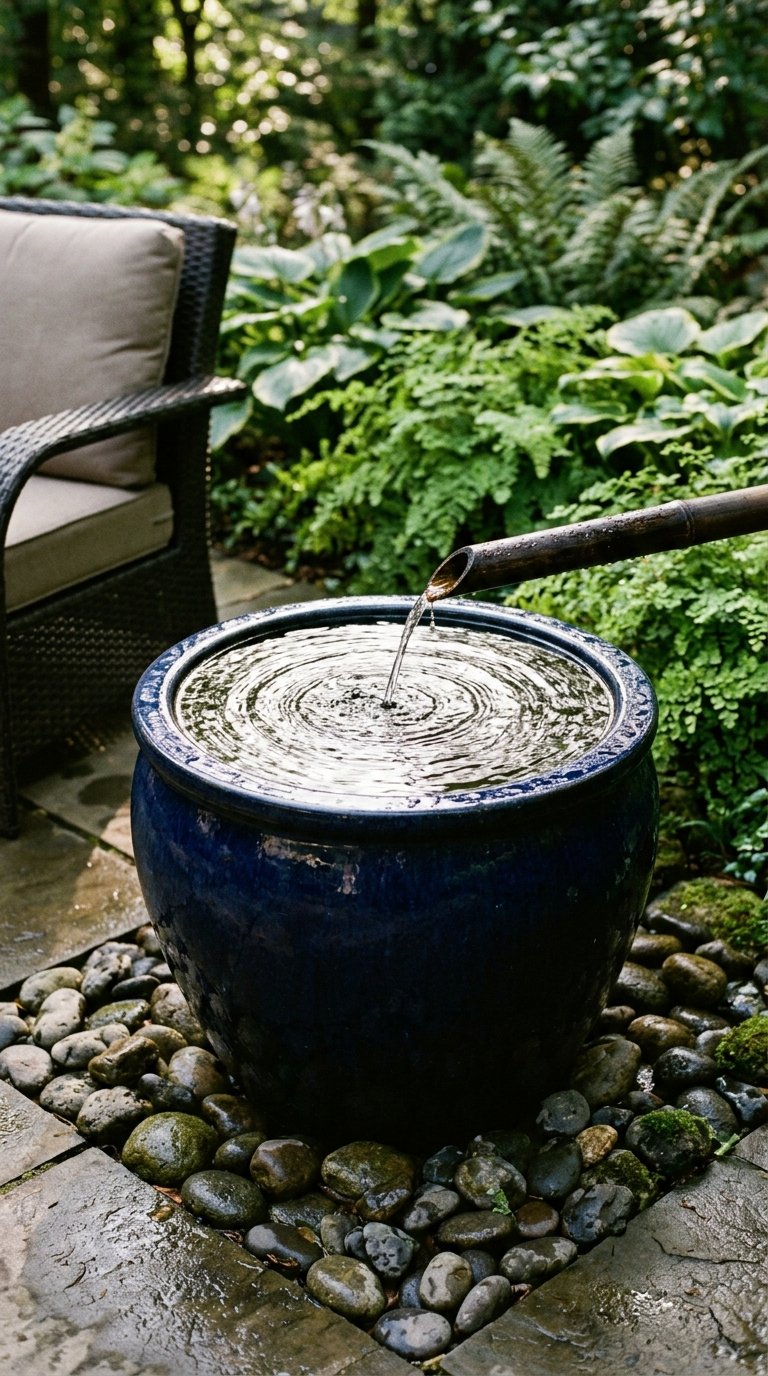
Street noise, neighborhood activity, and ambient urban sound make outdoor relaxation difficult in high-density residential areas. A recirculating water feature within or beside your outdoor lounge area masks those sounds with white-noise water movement that environmental psychology research consistently links to reduced stress and improved mood.
A stacked stone pondless waterfall running on a submersible pump costs $200 to $600 in materials and installs in a weekend without professional help. A large glazed ceramic pot fountain costs $60 to $120 complete. Position either within 6 feet of your primary seating so the sound reaches you at conversational volume without requiring a flow rate loud enough to interrupt the conversation it’s meant to complement.
20. Add a Hammock Between Two Posts or Trees
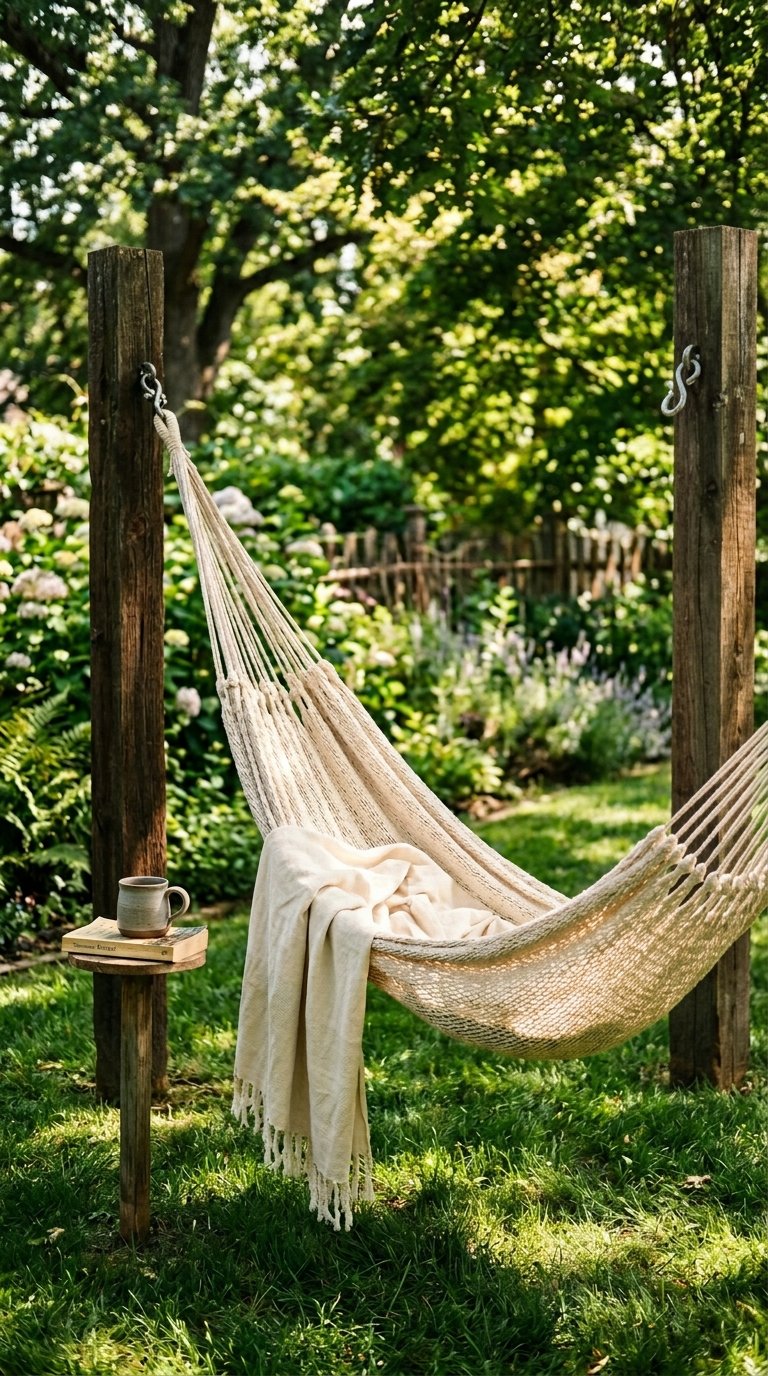
A hammock in or adjacent to your outdoor lounge area costs less than any piece of lounge furniture that delivers equivalent relaxation and generates more actual use per dollar than anything else on this list. Every guest gravitates toward it. Every child claims it immediately. Every adult pretends they don’t want it and then spends 45 minutes in it.
A Brazilian cotton rope hammock runs $40 to $80 and supports 400 to 500 pounds. If you lack trees at the right spacing, a freestanding hammock stand in powder-coated steel costs $80 to $150 and positions anywhere in your lounge zone. Hang the hammock at a 30-degree angle from horizontal so it forms a comfortable curved lay rather than a taut, back-straining straight line.
21. Style an Outdoor Bar Cart Within the Lounge Zone
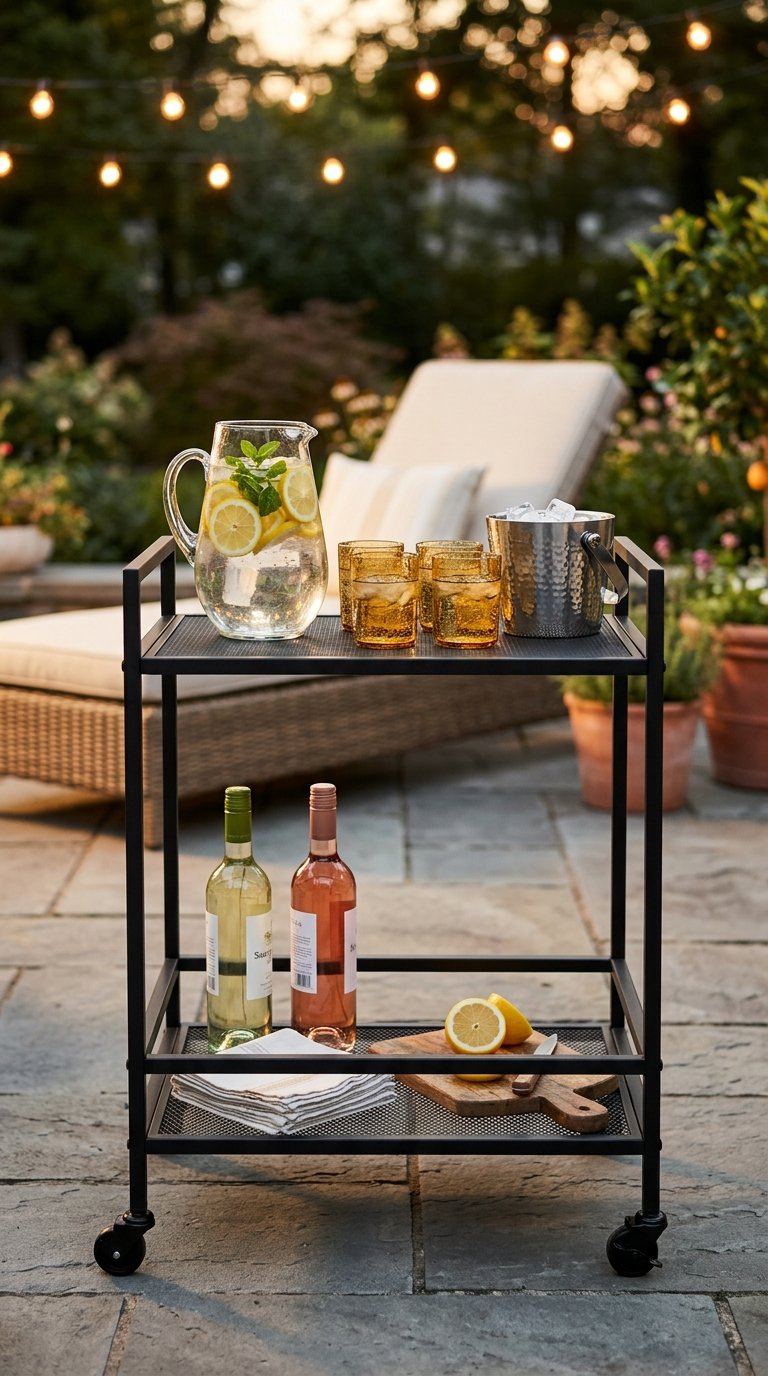
An outdoor bar cart within your lounge zone keeps drinks, glasses, and accessories within the gathering space rather than requiring anyone to leave the area for refills. Bar carts solve the social continuity problem of gatherings that fragment every time someone walks away to get a drink.
A powder-coated steel bar cart with two shelves and lockable wheels runs $80 to $150 at most furniture retailers. Style the top shelf with a glass pitcher of infused water, a small ice bucket, and four to six glasses. Use the lower shelf for bottles, napkins, and a small cutting board. Roll it inside when it rains and back out when the weather clears. IMO, a bar cart within the lounge zone doubles the amount of time guests stay outside compared to a setup where drinks require an indoor trip.
22. Install Landscape Uplights at Tree Bases and Garden Beds
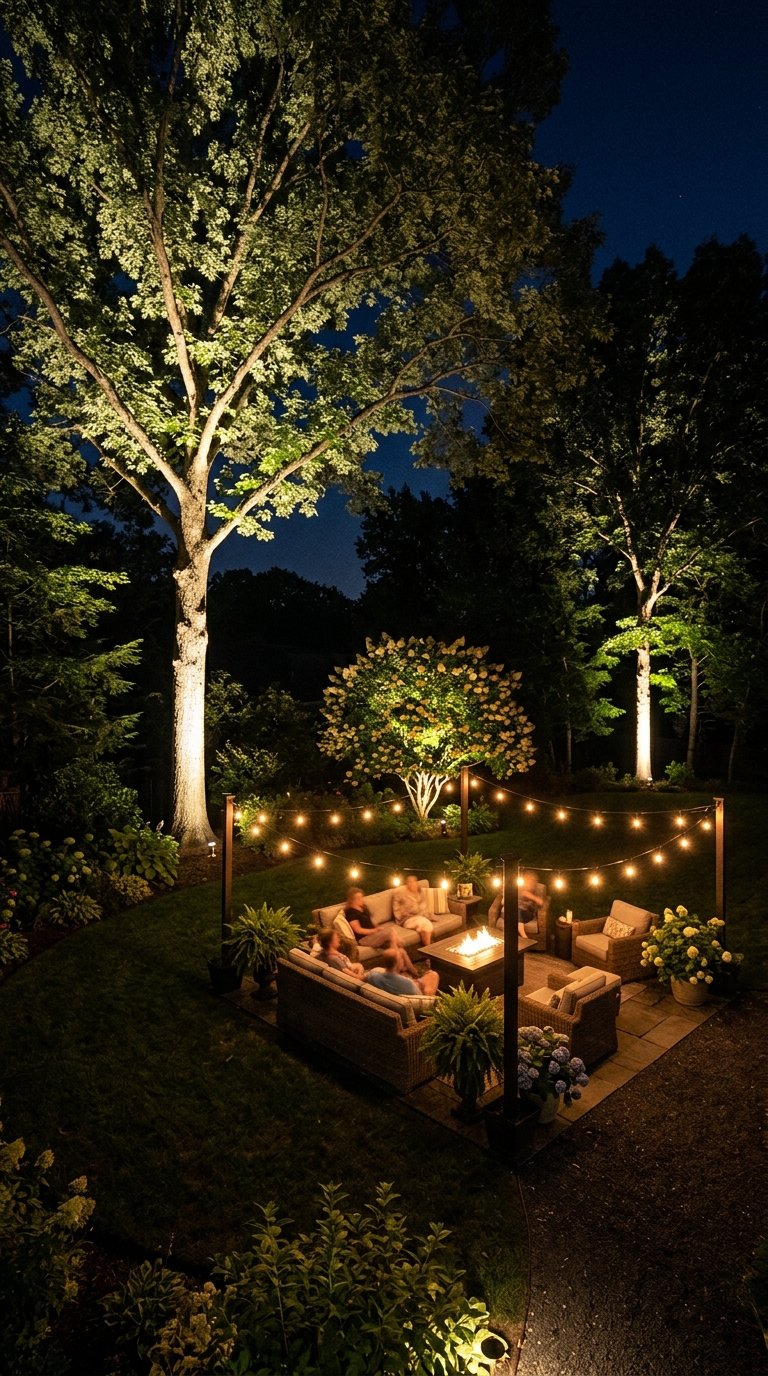
String lights cover the ambient upper zone of an outdoor lounge. Lanterns cover the lower surface zone. Landscape uplights at tree bases and garden bed edges cover the perimeter zone, illuminating plants and creating vertical light columns that make the lounge area feel larger and more theatrically lit after dark.
Low-voltage LED landscape uplights run $8 to $20 each and connect to a transformer wired to a standard outdoor outlet. Six to eight uplights positioned at tree bases and large shrubs around your lounge perimeter cost $50 to $160 and transform the garden boundary from a dark edge into a dramatic backlit backdrop. Use warm white at 2700K to match your string lights for visual consistency across the full lighting system.
23. Create an Outdoor Lounge With a Distinct Seasonal Identity
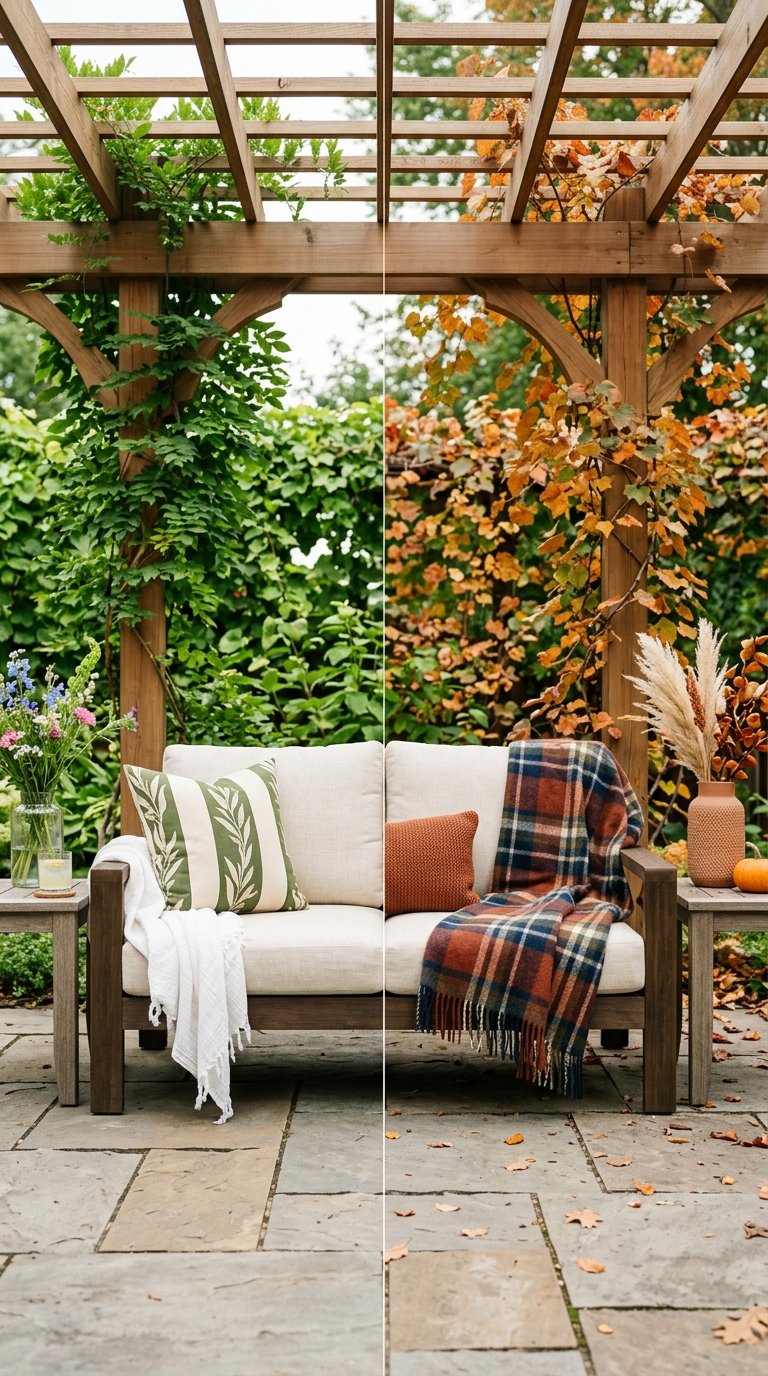
An outdoor lounge area that looks identical in June and October misses the opportunity to feel seasonally alive, which is part of what makes outdoor spaces more compelling than indoor ones. Swapping two or three elements seasonally keeps the space feeling fresh and gives you a reason to restyle it and spend time in it throughout the year.
Seasonal swap strategy by element:
- Cushion covers: spring/summer in stripe or botanical print, fall in plaid or solid warm tone
- Throw blankets: lightweight cotton for summer, wool or fleece for fall evenings
- Centerpiece: fresh wildflowers in summer, dried pampas grass and gourds in fall
- Candle scent: citrus and linen for summer, cedar and clove for fall
Each seasonal swap costs $30 to $80 depending on how many elements you change and keeps your outdoor lounge looking and feeling like a place someone actively maintains rather than furniture left outside to fade.
Final Thoughts
A great outdoor lounge area needs a defined ground surface, overhead structure, deep comfortable seating, layered lighting at three heights, and at least one piece that makes people want to sit down the moment they see it. Start with ideas 1, 2, 4, and 6 for your foundation. Those four elements alone build the core of an outdoor lounge that competes with your indoor living room for daily use. Add the egg chair, the perimeter containers, and the water feature as your budget allows. Your outdoor space should feel like somewhere you choose to be, not somewhere you end up when the weather is perfect. Build it right and you’ll choose it even when it isn’t.