23 Small Apartment Living Room Ideas That Actually Work
Small apartment living rooms have a reputation problem. Everyone assumes tiny means uncomfortable, cramped, and style-challenged. I lived in a 380-square-foot apartment for two years and I am here to tell you that reputation is completely wrong but only if you approach the space with the right ideas.
The difference between a small living room that feels suffocating and one that feels intentional and genuinely comfortable comes down entirely to smart decisions. Furniture choices, color strategy, lighting, storage every single element either works for your space or against it.
Here are 23 small apartment living room ideas for 2026 that actually work in the real world, no tricks, no illusions, just genuinely smart design decisions that make small spaces live large.
1. Choose a Sofa With Exposed Legs
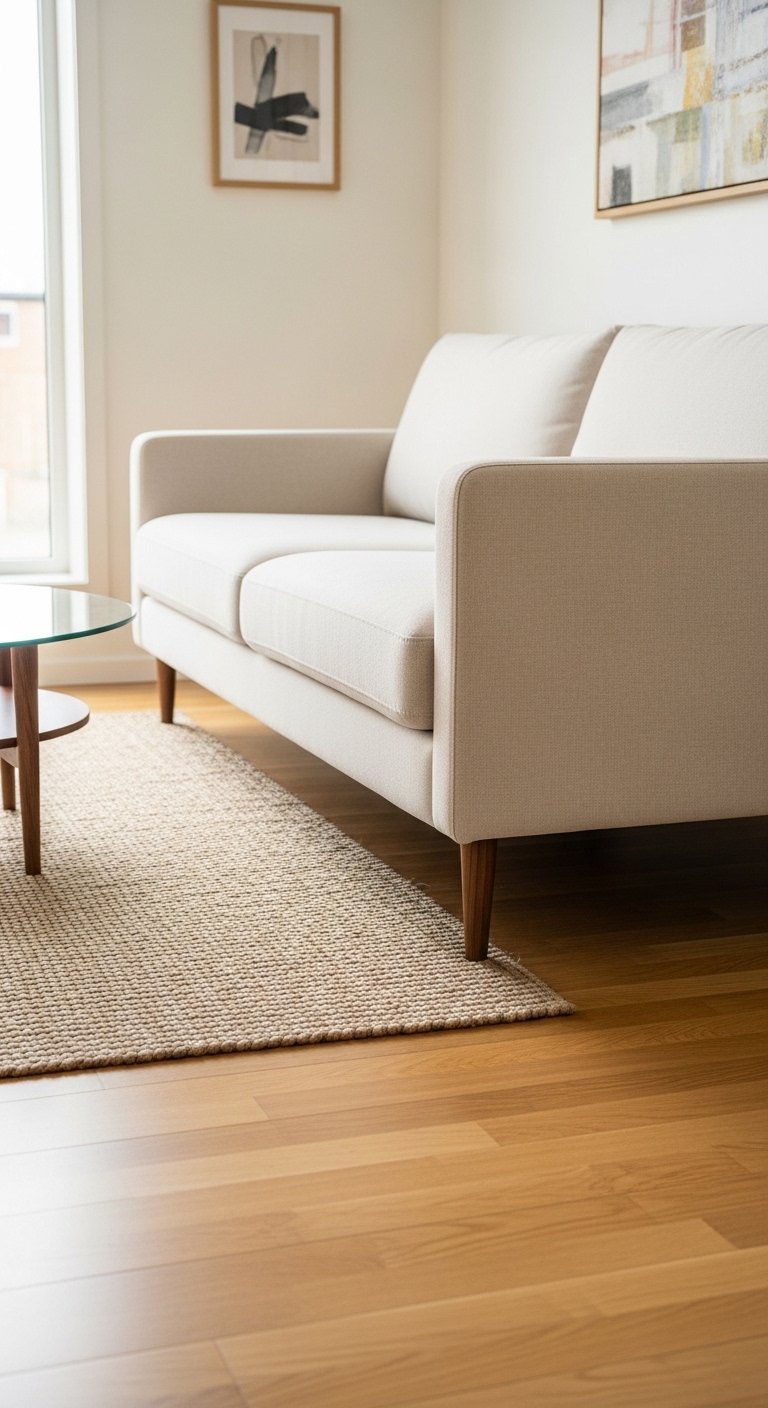
This is the single most impactful furniture decision you can make in a small living room. A sofa with visible legs rather than a skirted or floor-hugging frame — creates visual breathing room underneath the piece that makes the entire room feel less heavy and more open.
The exposed floor beneath a legged sofa tricks the eye into reading the room as larger than it actually is. Four inches of visible floor space beneath your sofa makes a genuinely measurable difference in how spacious the room feels.
Best sofa leg styles for small spaces:
- Tapered mid-century modern wood legs in walnut or teak
- Slim metal hairpin legs in matte black or brass
- Angled Scandinavian-style legs in light oak
- Simple turned wood legs in painted white
Pair this with a sofa in a light neutral cream, warm white, or light gray and you have the foundation of a small living room that breathes.
2. Mount Your TV on the Wall
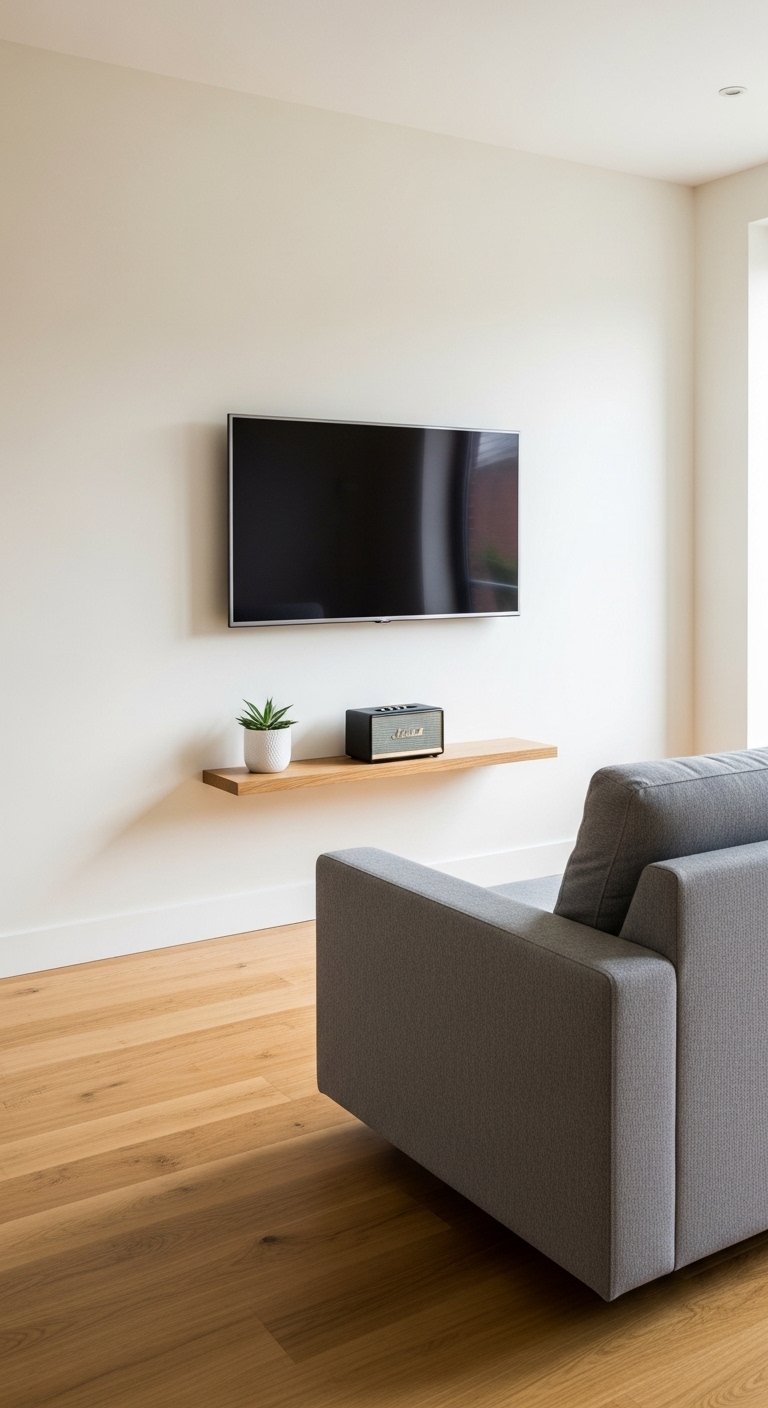
If your TV sits on a media console, you are sacrificing precious floor space to a piece of furniture whose only job is holding a screen. Wall-mounting your TV eliminates the media console entirely and reclaims that floor space for breathing room.
A wall-mounted TV also pulls the eye upward, making the ceiling feel higher and the room feel more expansive. Mount it at the correct viewing height center of screen at seated eye level, typically 42 to 48 inches from floor to screen center.
Use the wall space below the mounted TV for a single floating shelf rather than a full media console. One slim floating shelf handles remotes, a small speaker, and a decorative object while maintaining the open floor space a console would consume.
3. Use Mirrors Strategically
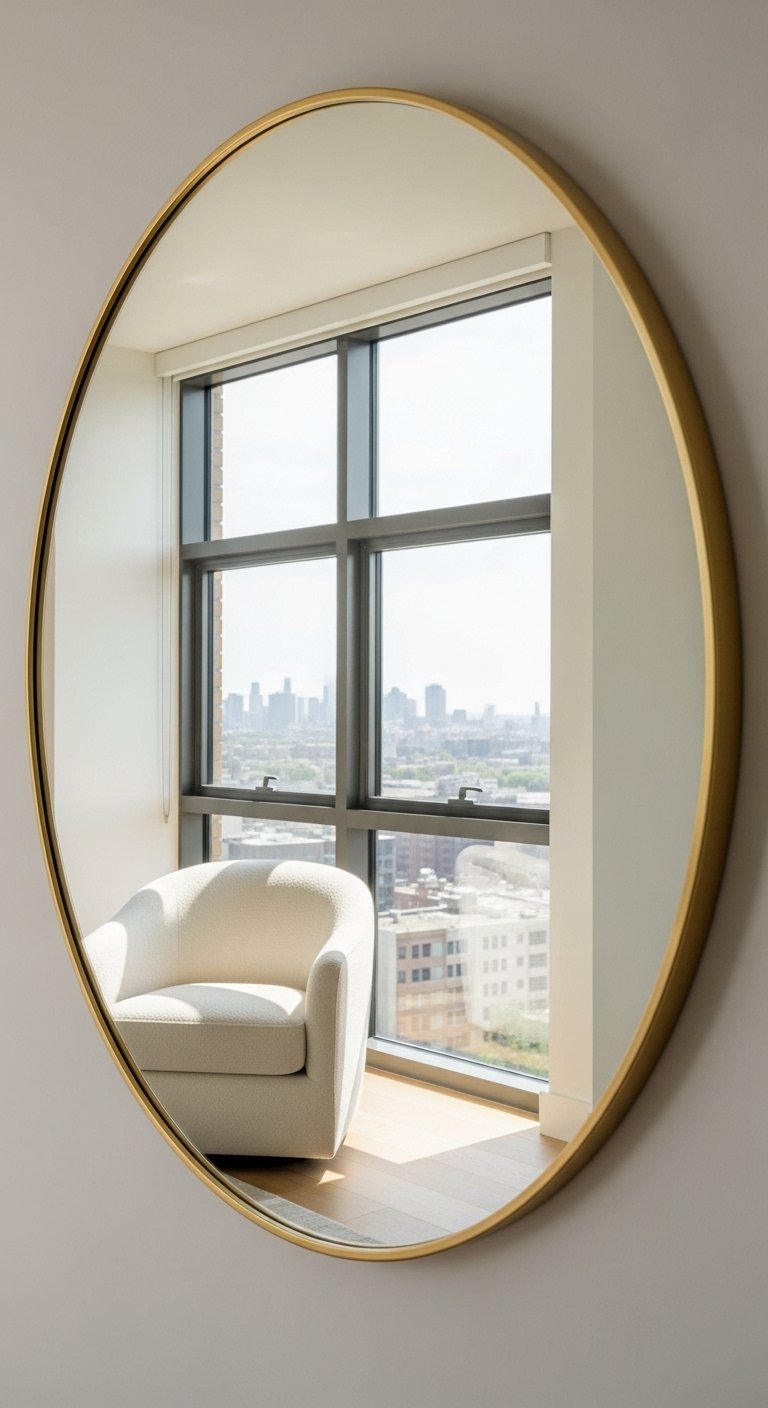
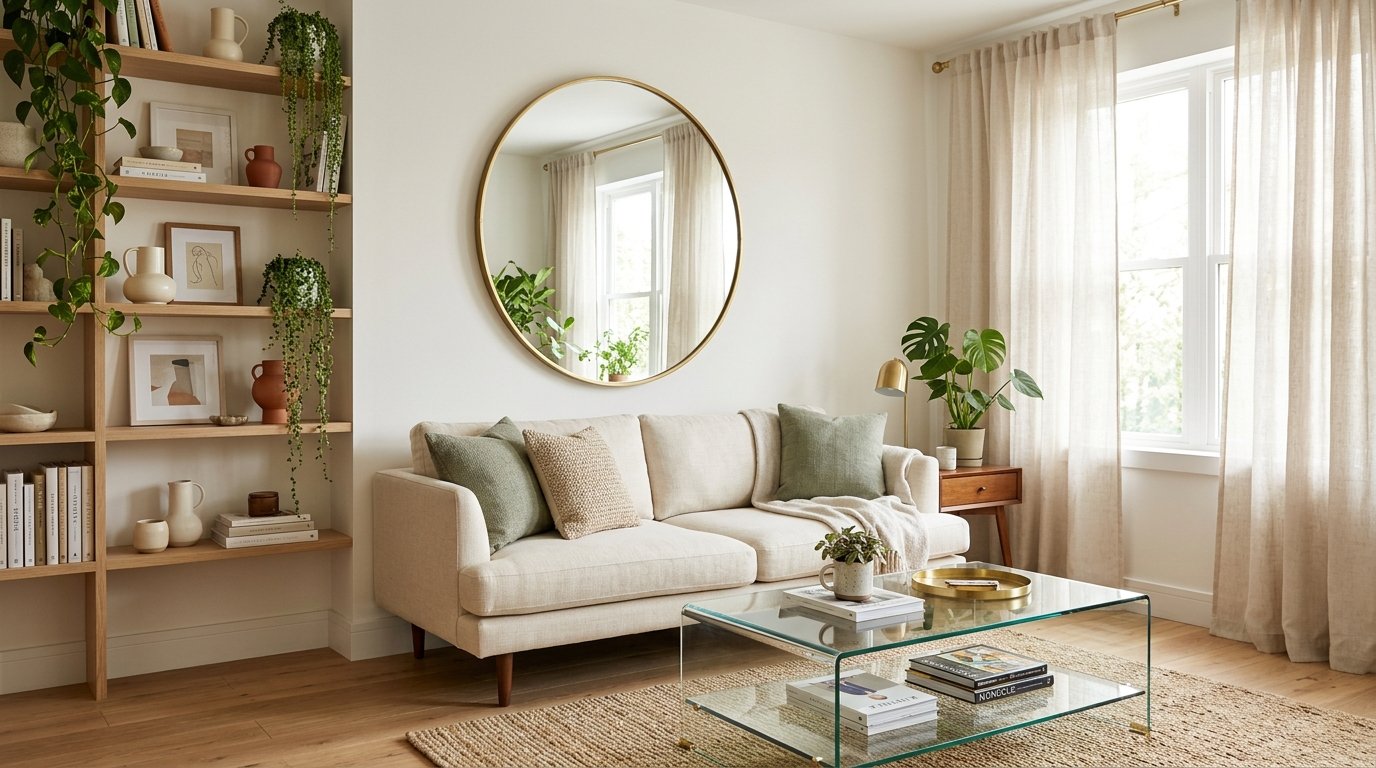
Mirrors are the oldest trick in the small space design book and they remain the most effective. A large mirror on the wall opposite your main window literally doubles the visible natural light in the room and creates the illusion of a second room beyond the glass.
Choose a mirror that fills at least two-thirds of the wall height for genuine impact. A small decorative mirror does almost nothing for spatial perception you need scale. An oversized leaning floor mirror in a corner is an equally effective approach that avoids wall mounting.
IMO, a single well-placed large mirror outperforms three smaller decorative mirrors every single time in a small apartment living room. Go big or the effect simply does not register.
4. Embrace a Light and Neutral Color Palette
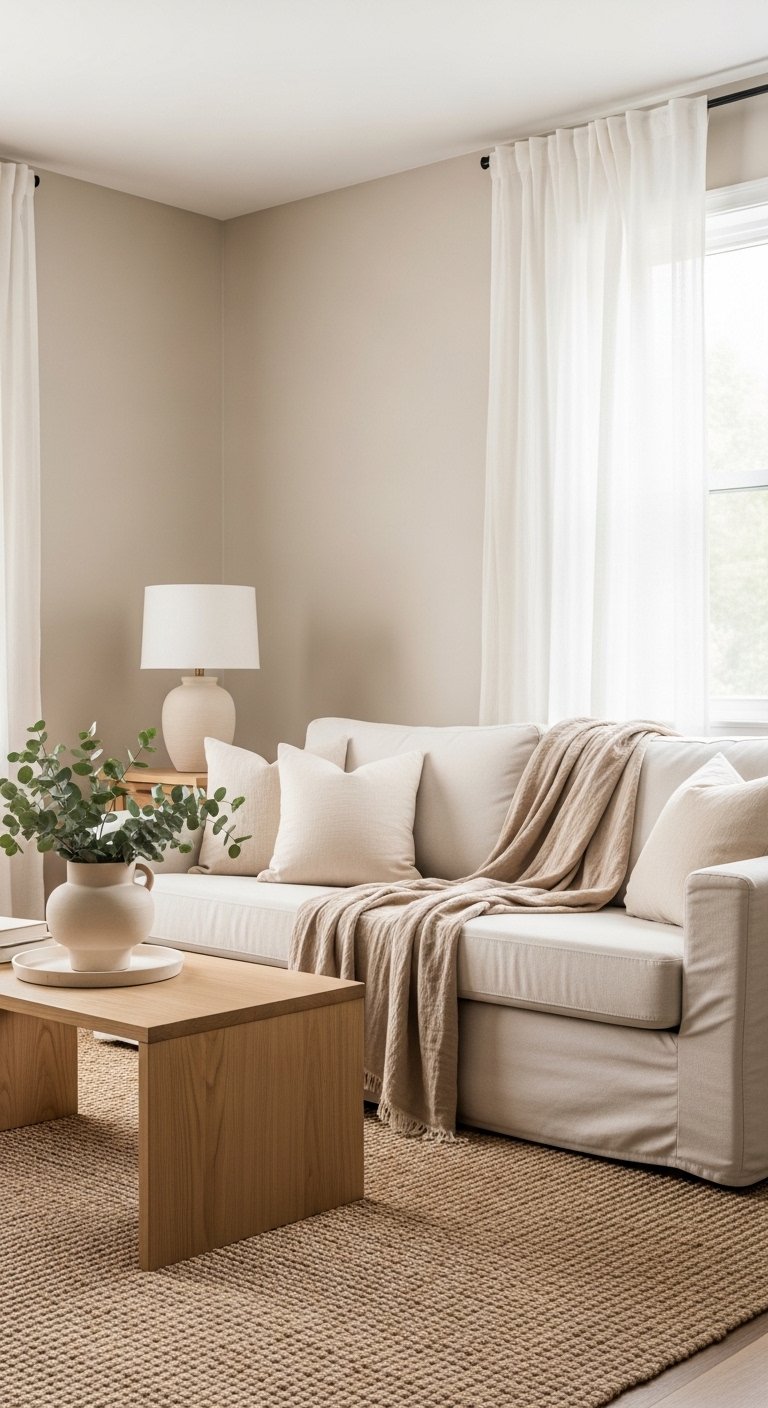
Dark walls absorb light and compress space visually. Light, warm neutral walls think warm white, soft cream, pale warm gray, or the ever-popular sage green reflect natural light back into the room and make it feel significantly larger and airier.
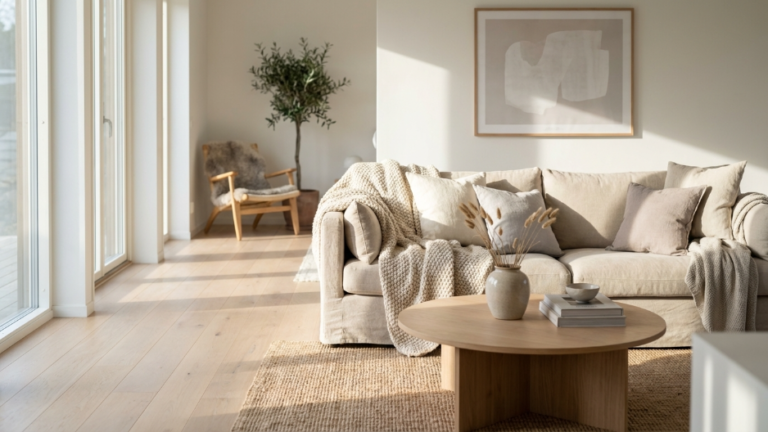
This does not mean your small living room has to be boring or all-white. Layer textures and tones within a neutral palette: a cream sofa, warm white walls, natural jute rug, oatmeal throw for a room that feels rich and considered without feeling dark or heavy.
Best wall colors for small apartment living rooms in 2026:
- Warm white with yellow undertones
- Soft sage green
- Pale warm greige
- Cream with pink undertones
- Light warm gray
5. Invest in a Sectional That Fits
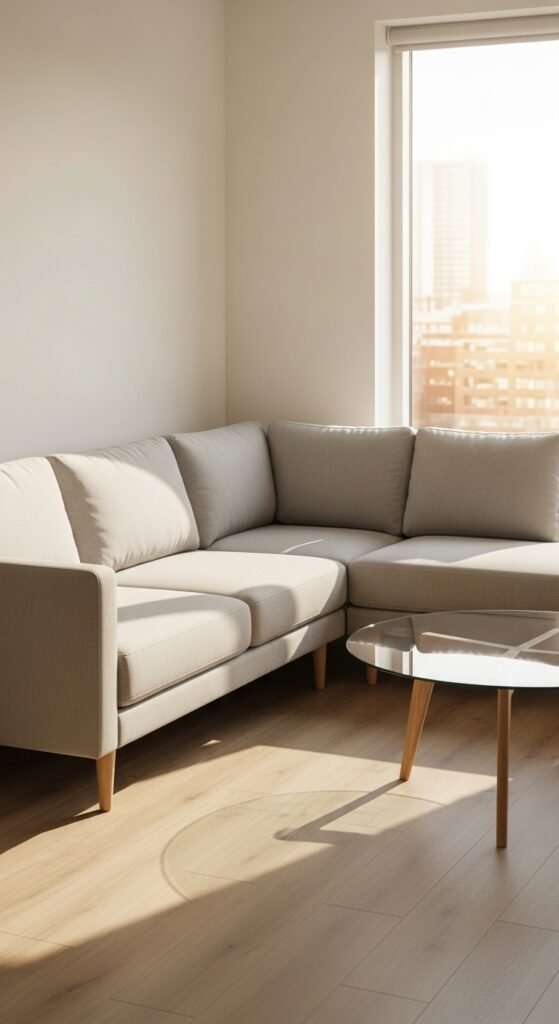
Most people avoid sectionals in small living rooms assuming they are too large. The opposite is often true a correctly sized sectional that fits your specific space actually uses the room’s square footage more efficiently than a sofa-plus-chairs arrangement.
A small L-shaped sectional tucked into a corner uses corner space that typically goes to waste, provides more seating than a standard sofa, and defines the living area clearly without requiring additional chairs that crowd the room further.
Measure obsessively before buying. The key dimensions are the total length of each section and the depth of the seat anything deeper than 36 inches starts feeling too bulky for tight spaces.
6. Add Vertical Storage With Floor-to-Ceiling Shelving
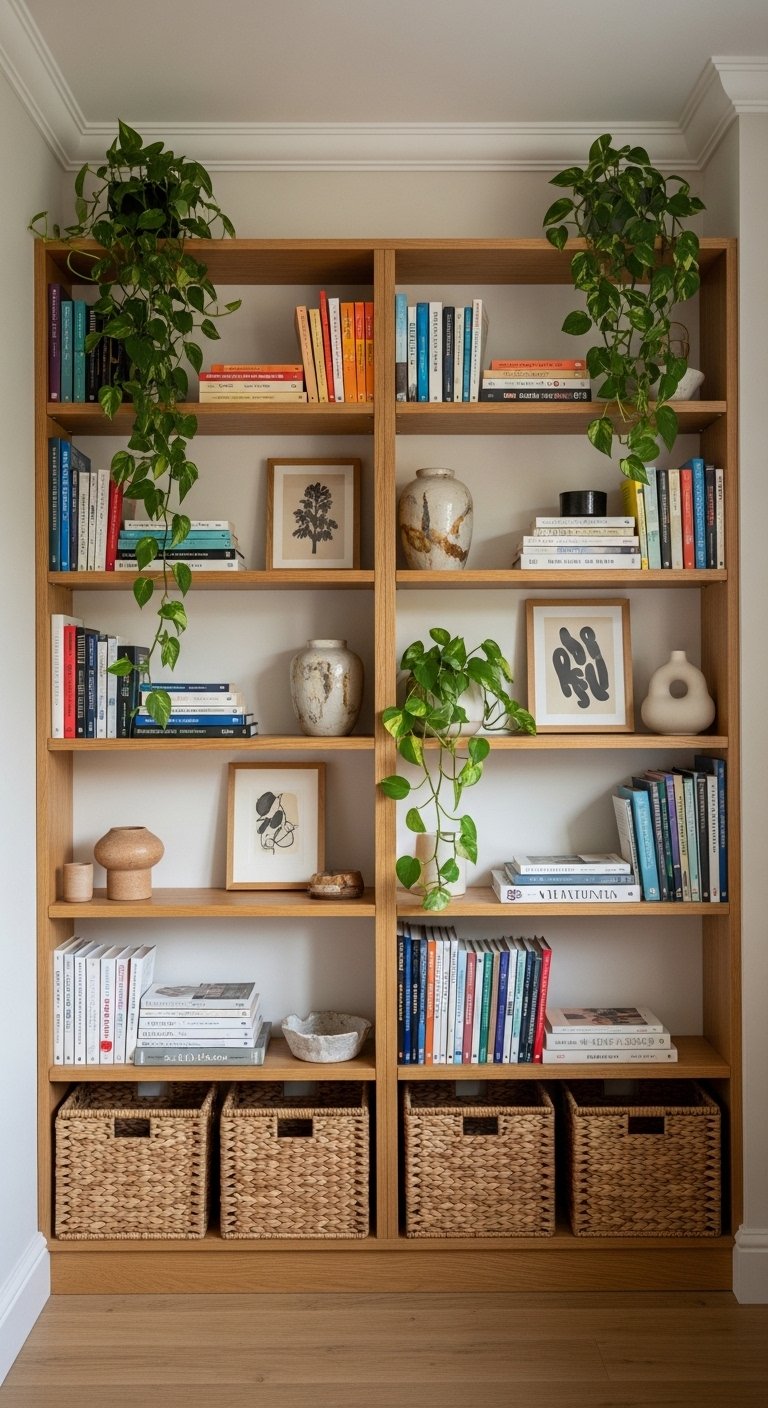
When floor space is limited, go vertical. Floor-to-ceiling shelving draws the eye upward, makes ceilings feel dramatically higher, and provides enormous storage and display capacity without consuming significant floor space.
A single floor-to-ceiling bookshelf unit on one wall transforms a small living room into a space that feels curated, intellectual, and genuinely designed. Style it with books, plants, ceramics, and framed art prints for a layered, collected look that adds personality without clutter.
Styling Floor-to-Ceiling Shelves in Small Spaces
- Keep 30 percent of shelf space empty to prevent a cramped feeling
- Group objects in odd numbers for visual rhythm
- Place larger objects at lower heights and smaller at upper heights
- Use matching baskets or boxes on lower shelves to hide practical storage
7. Choose a Glass or Lucite Coffee Table
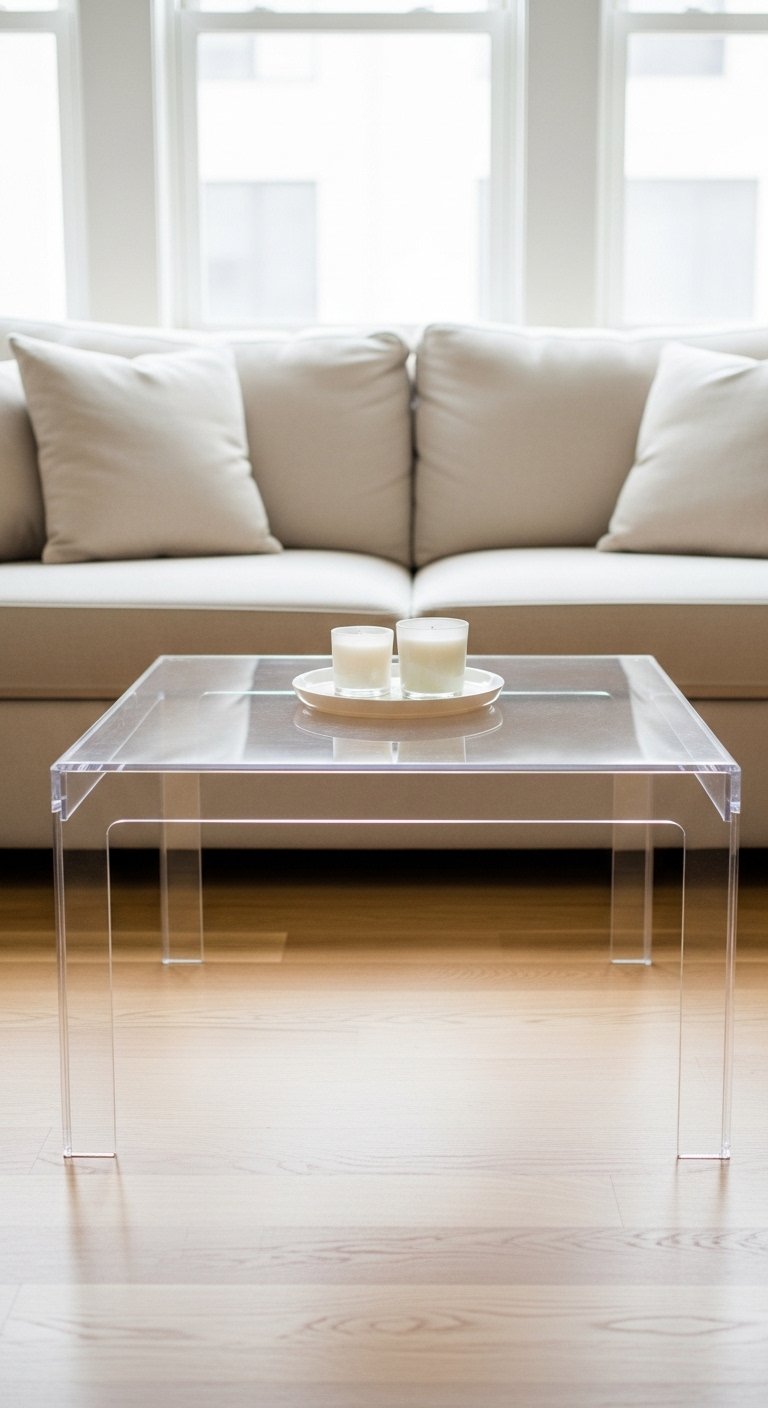
A glass top or clear acrylic coffee table is genuinely one of the most space-enhancing furniture choices available for small living rooms. Because the eye passes straight through the transparent surface, the table occupies zero visual weight in the room; it is functionally invisible while still providing full coffee table functionality.
Clear acrylic Lucite tables work particularly well in contemporary and eclectic living rooms. Glass top tables with slim metal bases suit modern and transitional styles. Both options make the living room floor visible beneath the table, which reads as significantly more open space.
The practical trade-off is fingerprints and smudging but a microfiber cloth takes care of that in thirty seconds 🙂
8. Use Multi-Functional Furniture
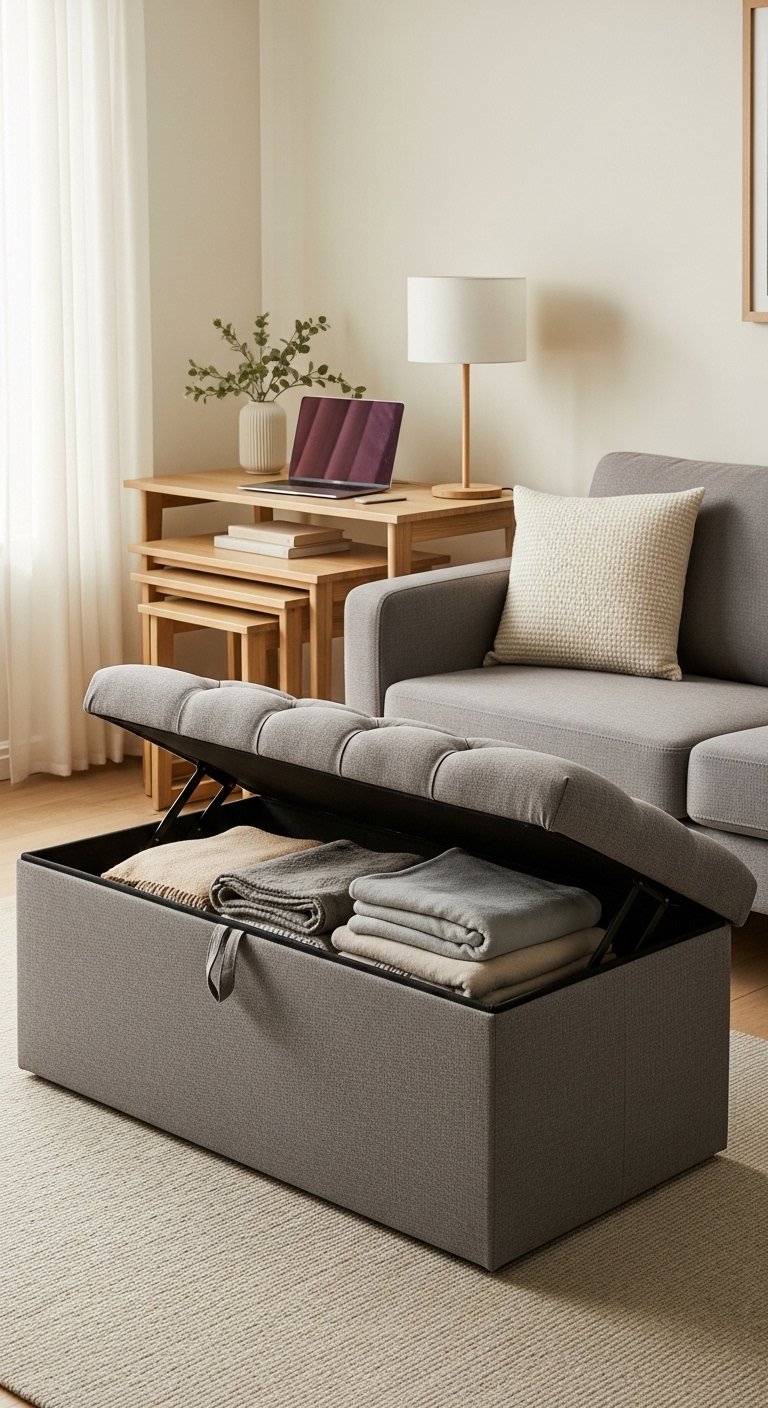
In a small apartment living room, every piece of furniture should justify its presence by serving at least two purposes. Single-function furniture is a luxury that small spaces simply cannot afford.
The best multi-functional pieces for small living rooms in 2026:
- Ottoman with storage: Seating, coffee table surface, and hidden storage in one
- Sofa bed: Living room seating and guest sleeping solution
- Nesting tables: Three tables that stack into one footprint when not in use
- Storage bench: Seating at room perimeter and internal storage
- Lift-top coffee table: Coffee table and impromptu work surface
Every piece you choose should make you think “what else does this do?” before you buy it.
9. Define Zones With an Area Rug
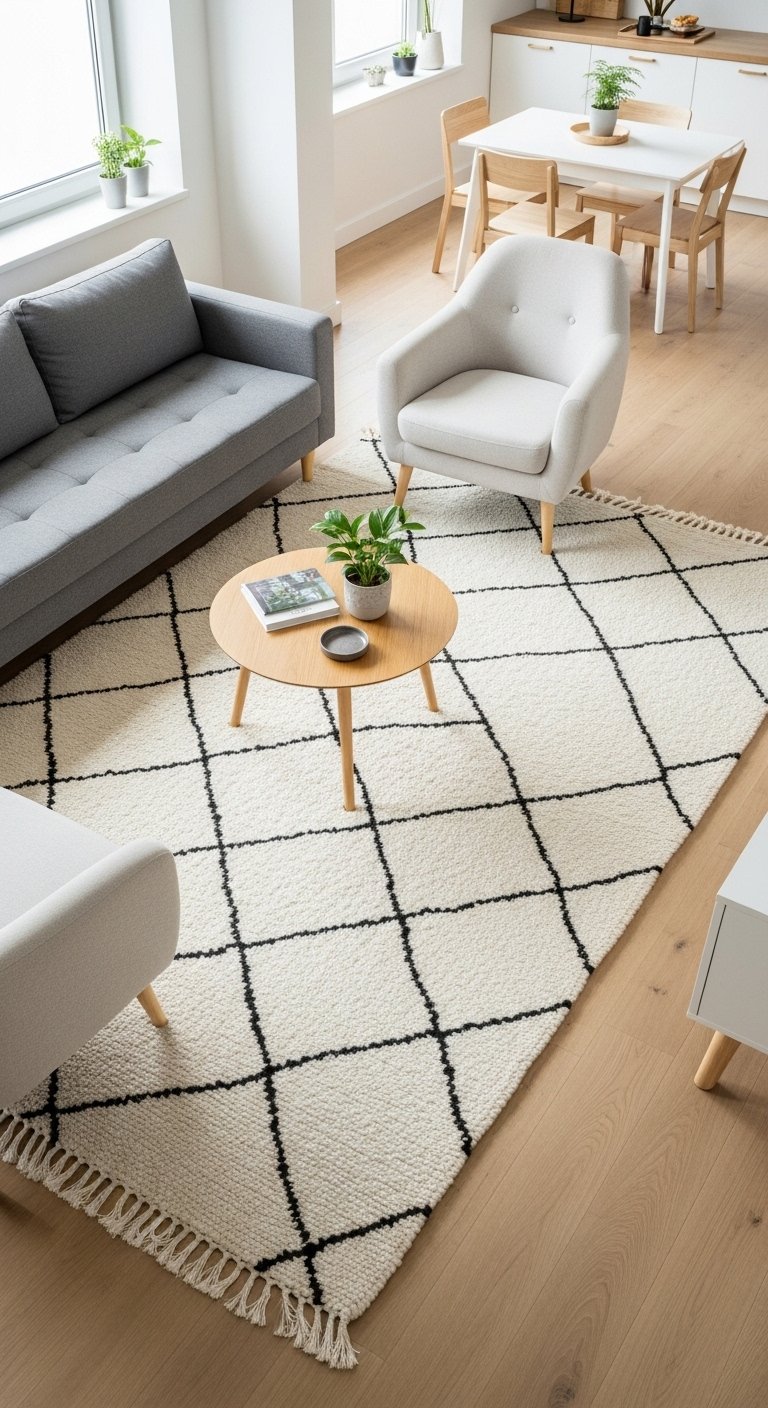
An area rug anchors your seating arrangement and visually defines the living room zone within an open-plan small apartment separating it clearly from the dining or kitchen area without walls or dividers.
Choose a rug that is large enough to fit at least the front legs of every sofa and chair in the seating arrangement. The most common small living room rug mistake is choosing one that is too small; a rug that only fits under the coffee table looks like a bath mat in the wrong room.
Ideal rug sizes for small apartment living rooms:
- Studio or very small living room: 5×8 feet minimum
- Small living room: 6×9 feet
- Medium small living room: 8×10 feet
- The rug should anchor ALL seating, not just the sofa
10. Maximize Natural Light With Sheer Curtains
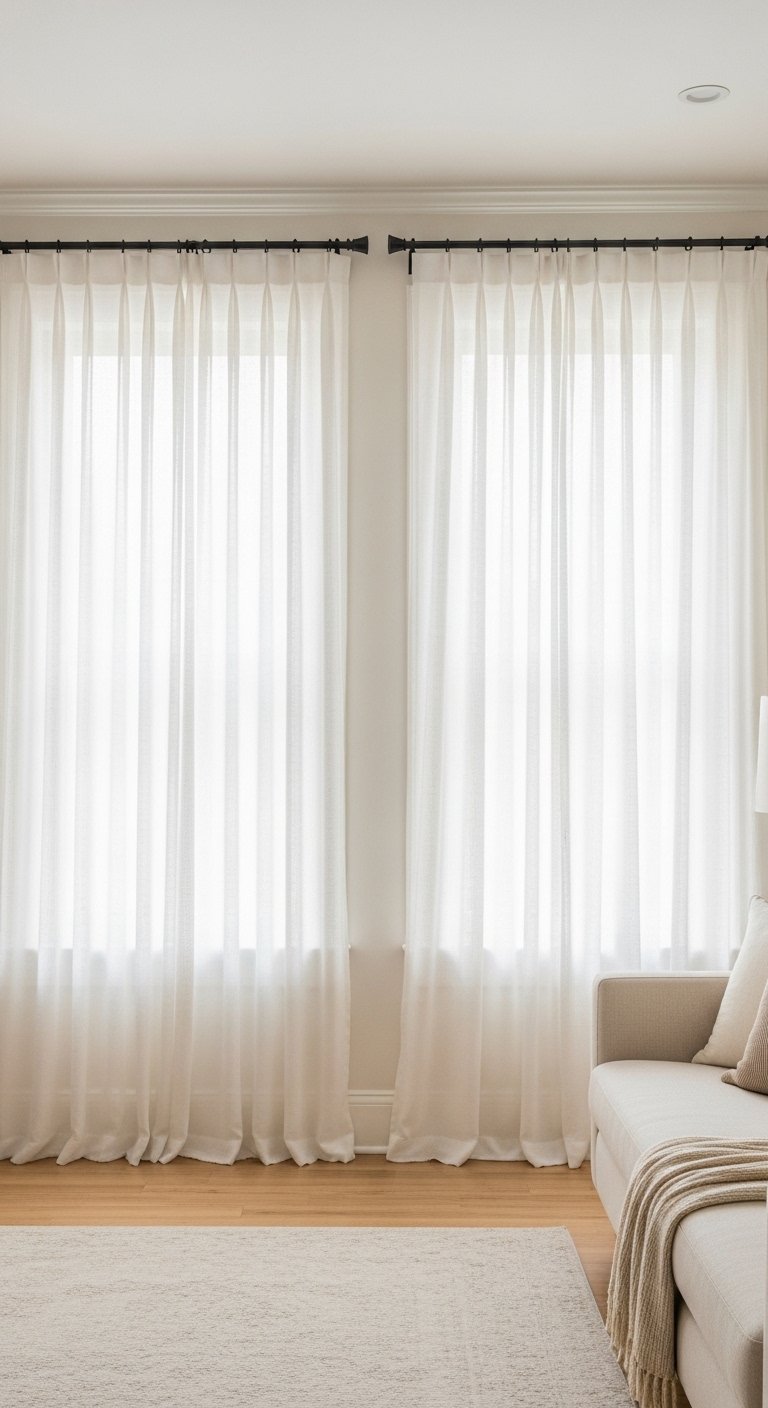
Heavy, light-blocking curtains in a small apartment living room work against you in every possible way. Sheer linen or cotton curtains that allow natural light to filter through while maintaining privacy keep the room feeling bright, airy, and open throughout the day.
Hang curtain rods at ceiling height not at window height and extend them six to twelve inches beyond the window frame on each side. This approach makes the window look significantly larger than it actually is and the ceiling feels dramatically higher.
The combination of ceiling-height curtain rods, sheer fabric, and extended rod width is the single most effective window treatment approach for making a small apartment living room feel larger and brighter.
11. Pick Furniture With Double Duty Storage
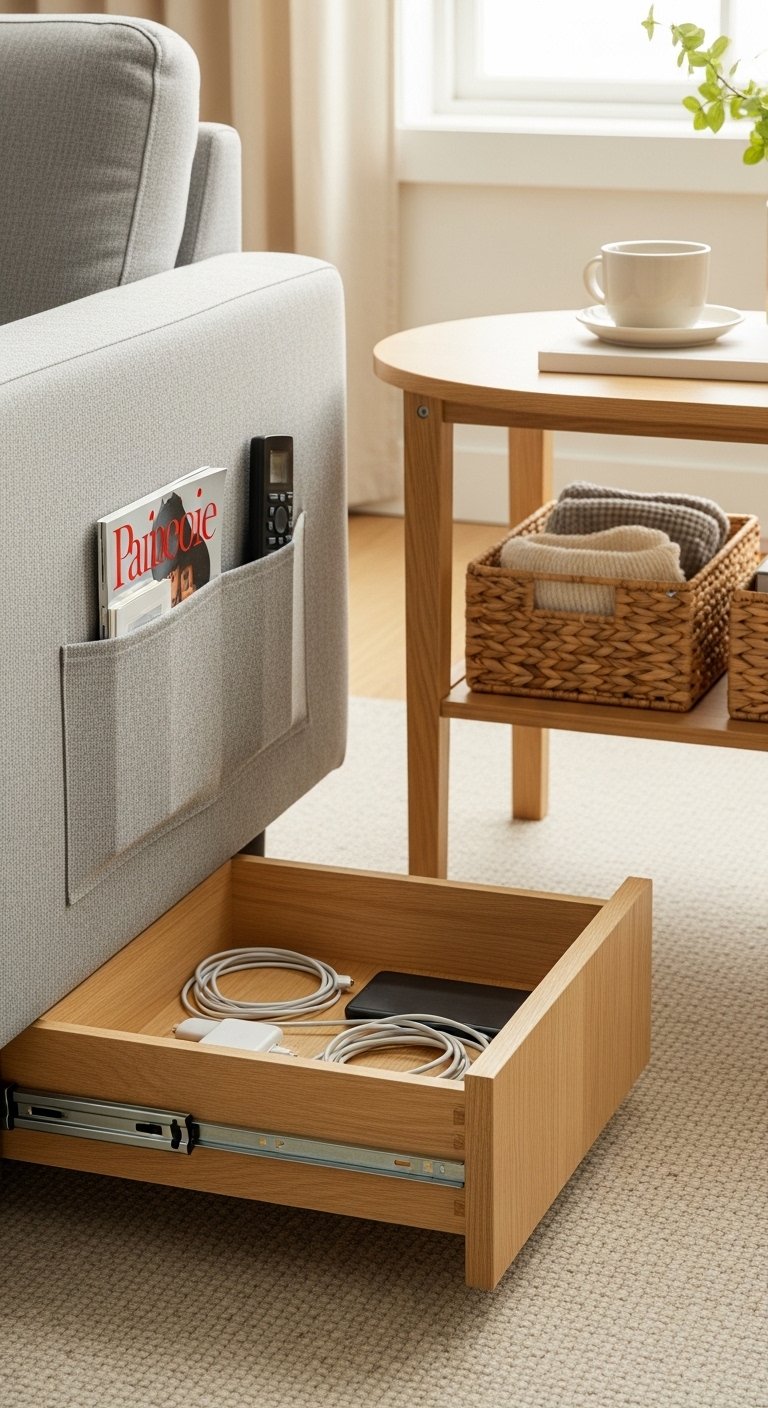
Beyond multi-functional furniture, specifically storage-integrated furniture addresses the reality that small apartment living rooms rarely have enough closet or cabinet space nearby.
Look for:
- Sofas with built-in side storage pockets
- TV stands with enclosed cabinet storage below mounted TVs
- Side tables with small drawers
- Coffee tables with lower shelves for basket storage
- Ottomans with removable lids and internal storage compartments
The goal is to reduce visual clutter in the room by giving every object a home that keeps it out of sight when not in use.
12. Create an Accent Wall With Wallpaper or Paint
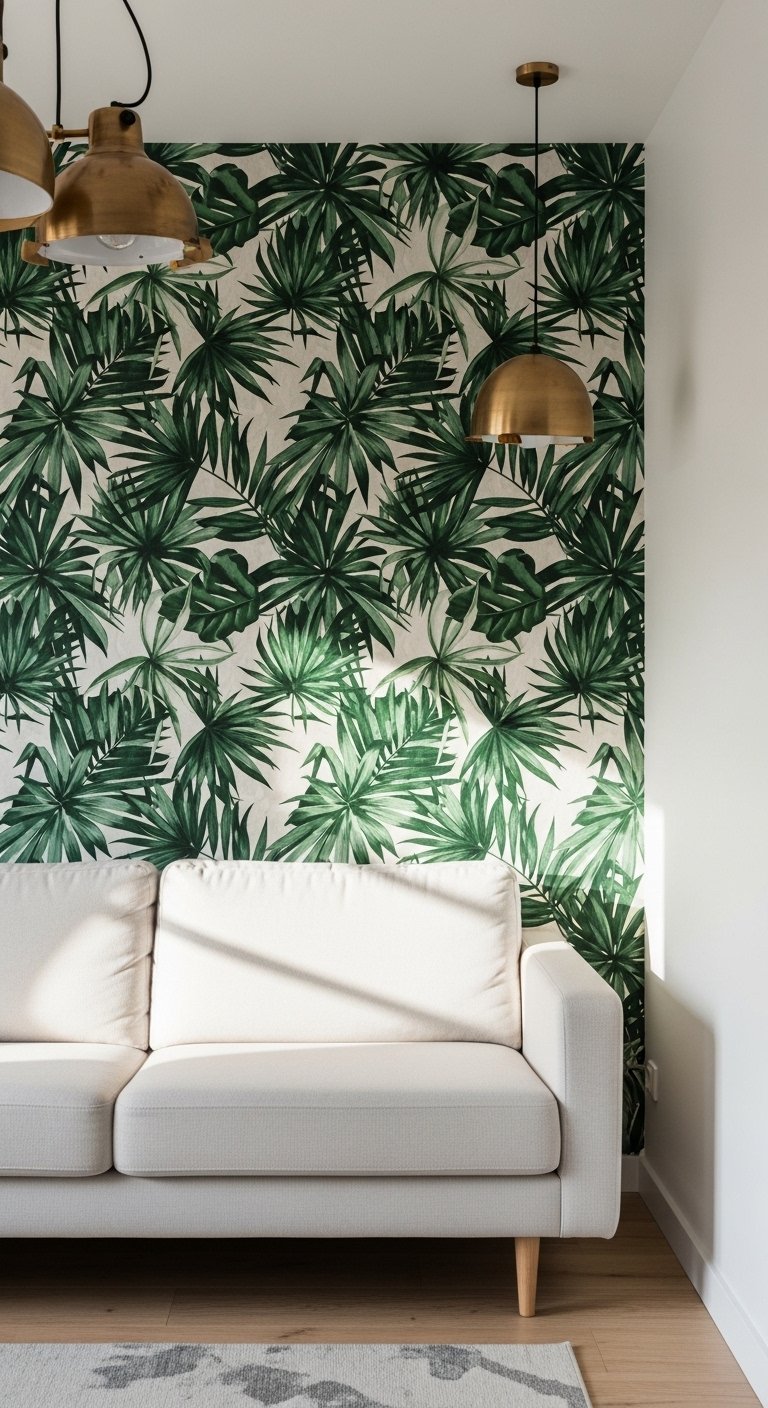
A single accent wall in a small apartment living room adds enormous personality and depth without the visual weight of four colored walls. In 2026, the most impactful accent wall choices include bold wallpaper, dramatic paint colors, limewash texture, or panel molding.
Choose the wall that your sofa sits against or the wall that faces you when you enter the room for maximum impact. Keep the remaining three walls in a light neutral to balance the bold accent and prevent the room from feeling closed-in.
A dark accent wall in a small room counterintuitively can actually make the space feel deeper and more intentional rather than smaller, when the remaining walls stay light and the lighting is warm and layered.
13. Hang Art at the Right Height
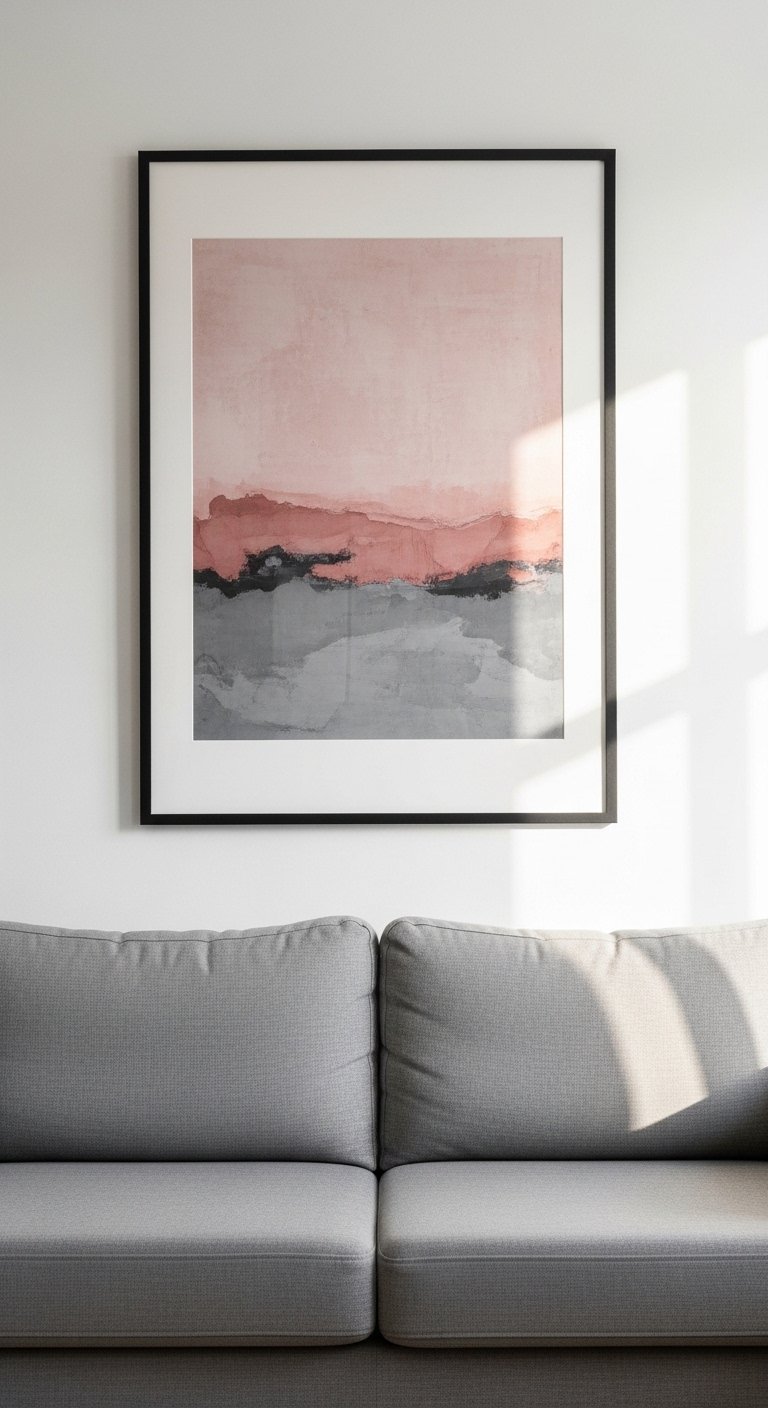
Most people hang wall art too high in small living rooms and it completely undermines the space. Art should hang at eye level, with the center of the piece approximately 57 to 60 inches from the floor regardless of ceiling height.
In a small living room, properly hung art makes the room feel proportioned and considered. Art hung too high creates a disconnected gap between furniture and wall decor that makes the room feel awkward and unresolved.
For art above a sofa, the bottom edge of the frame should sit six to eight inches above the sofa back. The art width should span approximately two-thirds to three-quarters of the sofa width for ideal visual proportion.
14. Add Plants for Life and Color
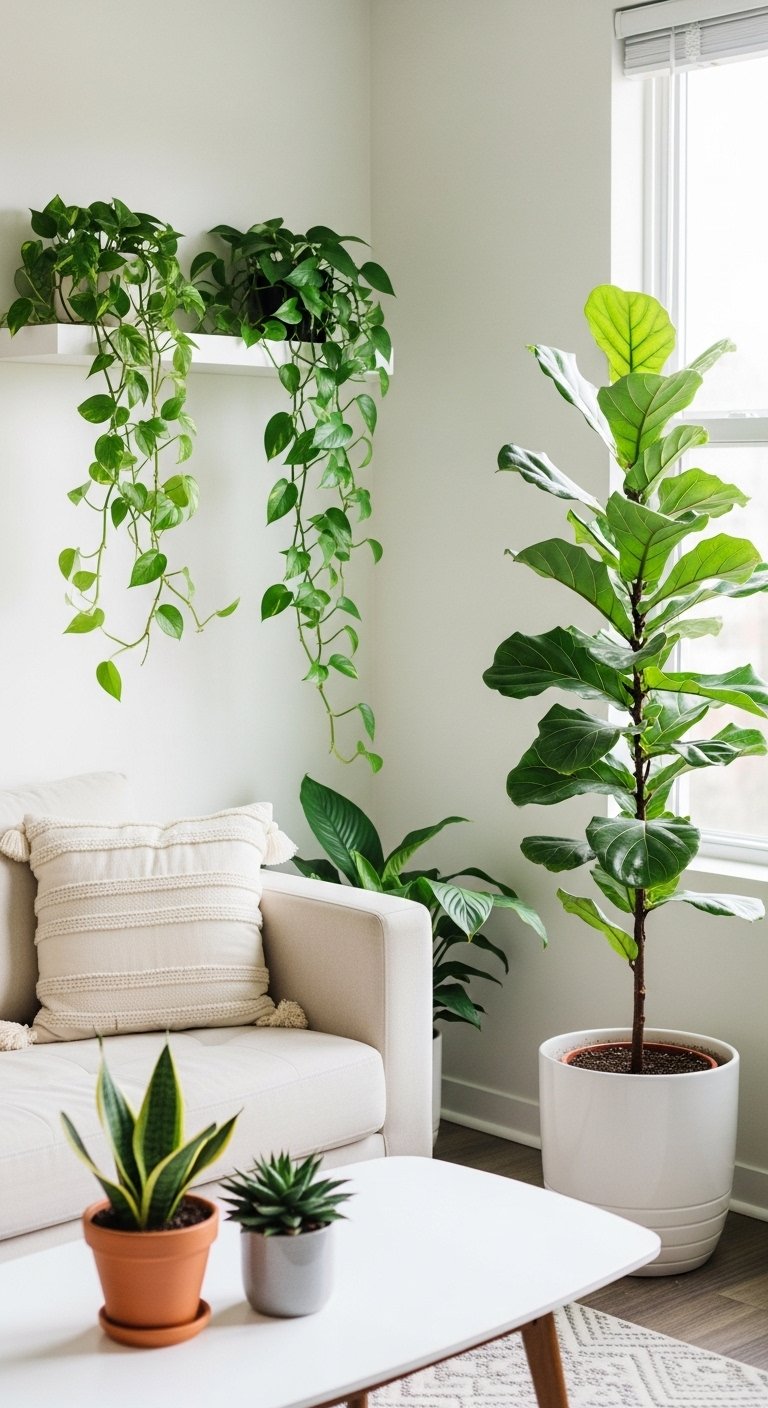
Indoor plants in a small apartment living room add color, life, organic texture, and a sense of abundance that no decorative object can replicate and they do it without consuming significant visual space.
Tall architectural plants fiddle leaf fig, snake plant, or a large monster placed in corners effectively fill dead space and draw the eye upward. Trailing plants on shelves or in hanging planters add green without using floor space at all.
Plants also genuinely improve air quality and create a psychological sense of calm that makes small spaces feel more comfortable and livable. The fact that they look incredible is almost secondary to how much better they make a small room feel.
15. Use Lighting Layers for Depth and Warmth
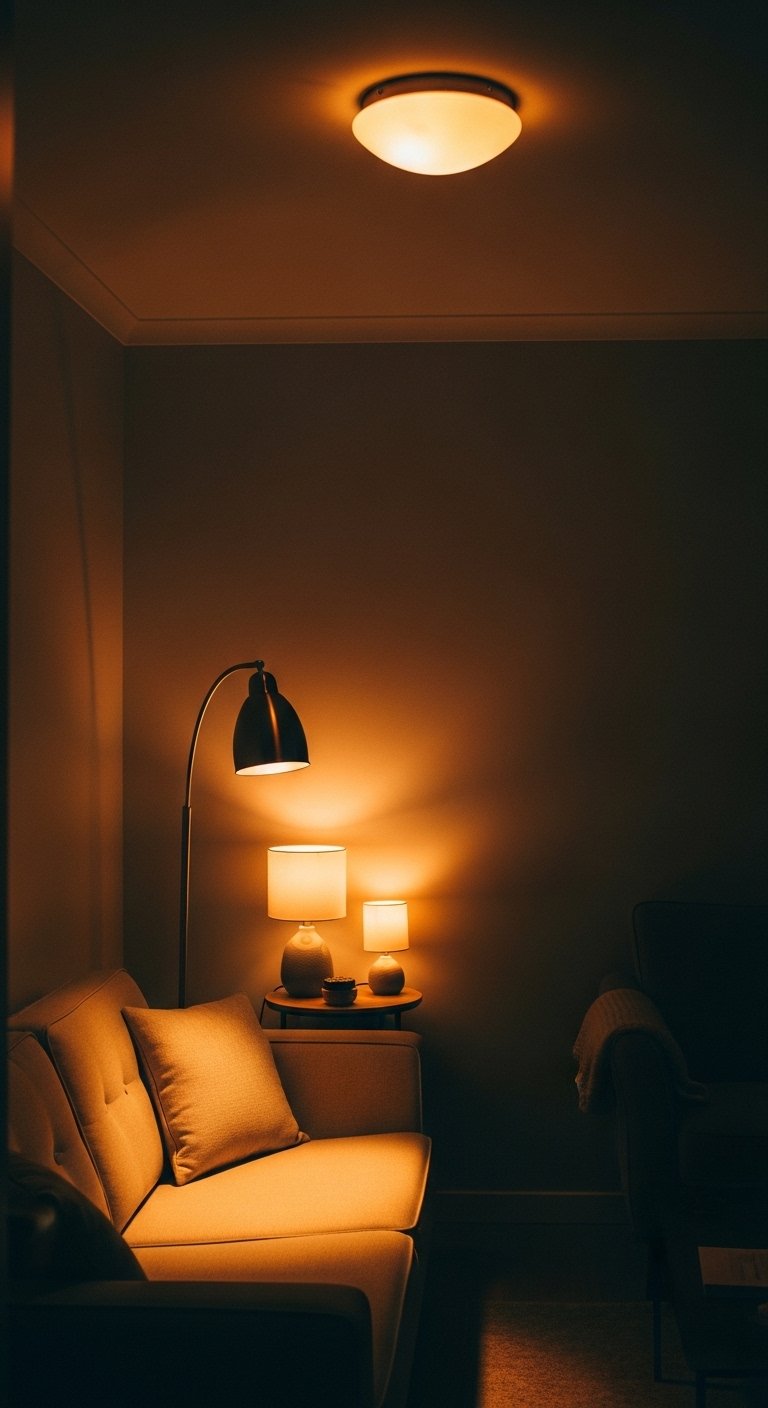
A single overhead light in a small apartment living room creates flat, unflattering illumination that makes the space feel institutional rather than cozy. Layered lighting a combination of ambient, task, and accent light sources creates depth, warmth, and atmosphere.
The three lighting layers every small living room needs:
- Ambient: Overhead fixture or flush mount for general illumination
- Task: Floor lamp beside the sofa for reading and focused light
- Accent: Table lamps, LED strip lights, or candles for warmth and atmosphere
Warm bulb temperature 2700K to 3000K makes a small room feel significantly warmer and more inviting than cool white light, which tends to feel clinical regardless of the space size.
16. Opt for Slim-Profile Furniture
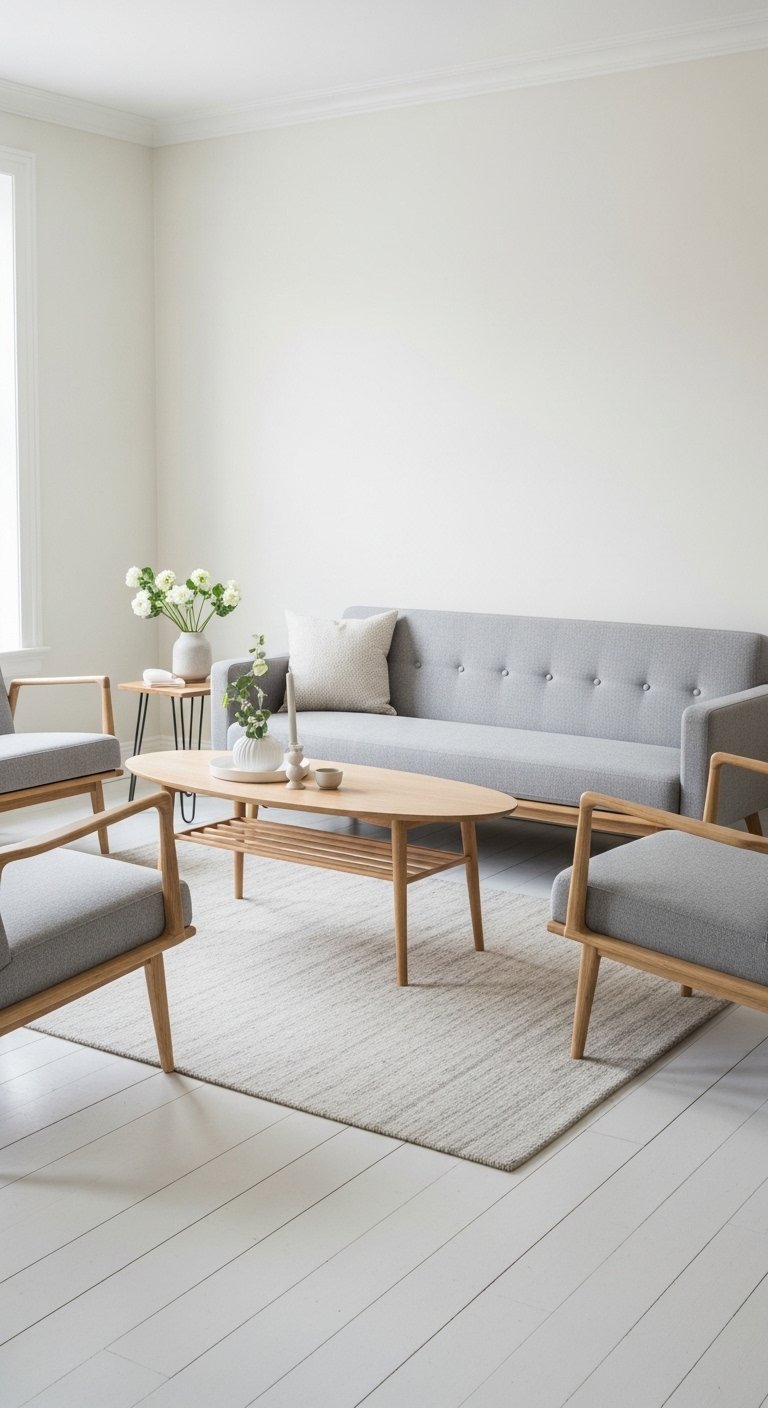
Furniture depth and profile matter enormously in small apartment living rooms. A sofa that is 40 inches deep versus one that is 32 inches deep represents eight inches of walking space you either have or do not have in a tight room.
Prioritize slim-profile furniture throughout the space: narrow arm widths on sofas, slender legs on chairs, shallow depth on coffee tables and side tables. The overall visual lightness of slim furniture keeps the room feeling open even when it is reasonably fully furnished.
Scandinavian furniture design executes this principle better than almost any other aesthetic. If your small living room feels too heavy, replacing one bulky piece with a slim Scandinavian-inspired alternative often transforms the entire spatial feel.
17. Float Your Furniture Away From Walls
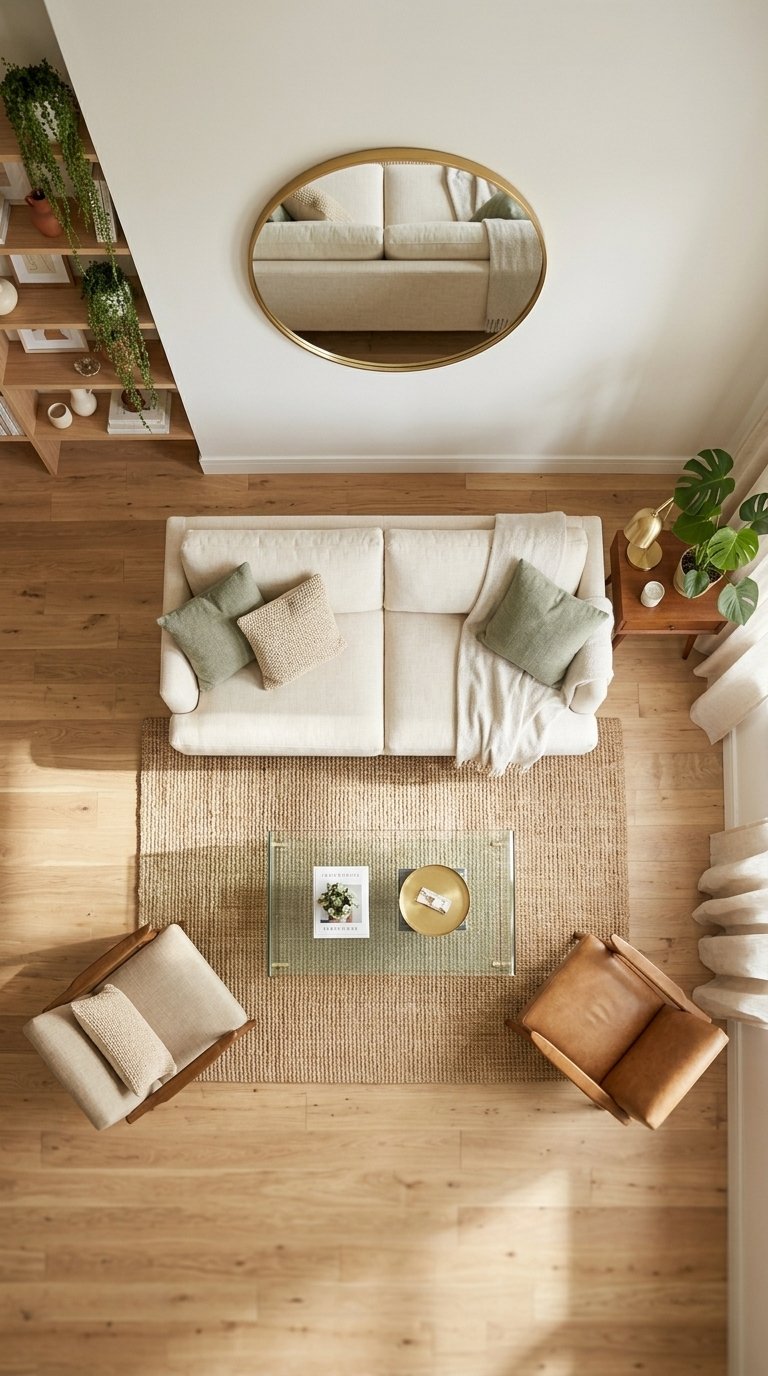
This advice surprises most people but it genuinely works to pull your sofa and chairs slightly away from the walls rather than pushing everything to the perimeter. Even four to six inches of space between the sofa back and the wall makes the room feel more spacious.
Furniture pushed against walls in a small room creates a perimeter-hugging arrangement that actually emphasizes how tight the space is. Floating furniture toward the center of the room even slightly creates circulation space around the pieces and makes the room feel more intentionally designed.
The visual effect is counterintuitive but consistent. Try it before dismissing it.
18. Incorporate Built-In or Custom Storage Solutions
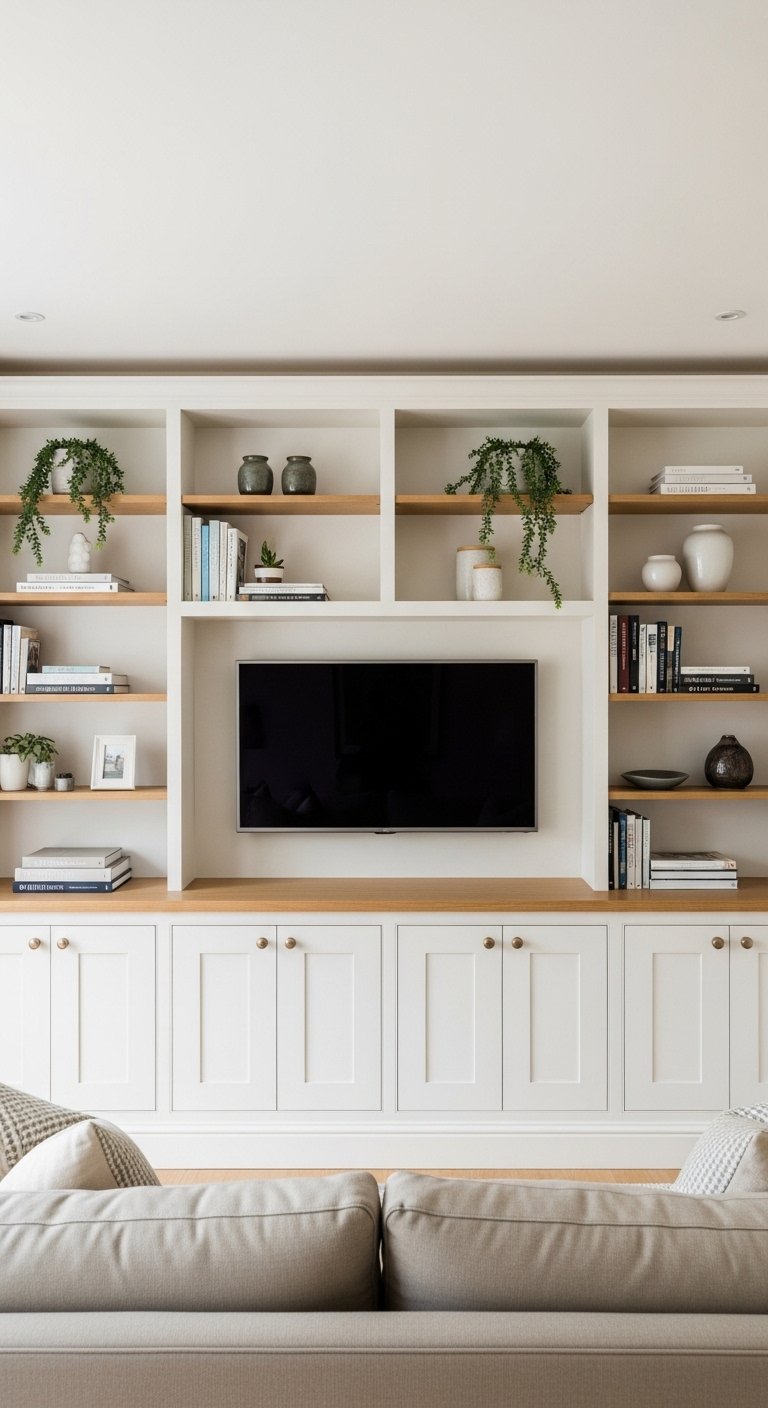
If you plan to stay in your apartment long-term, built-in storage solutions represent the highest return on investment in a small living room. Built-in shelving flanking a fireplace, a custom entertainment wall unit, or a built-in window seat with storage beneath maximizes every inch of available space.
Custom built-ins also make a small apartment look significantly more expensive and permanent than freestanding furniture, which tends to look temporary and improvised in a compact space.
For renters who cannot permanently modify walls, freestanding units that reach ceiling height and span full wall widths achieve a similar visual effect of intentional, built-in design.
19. Choose Low-Profile Seating
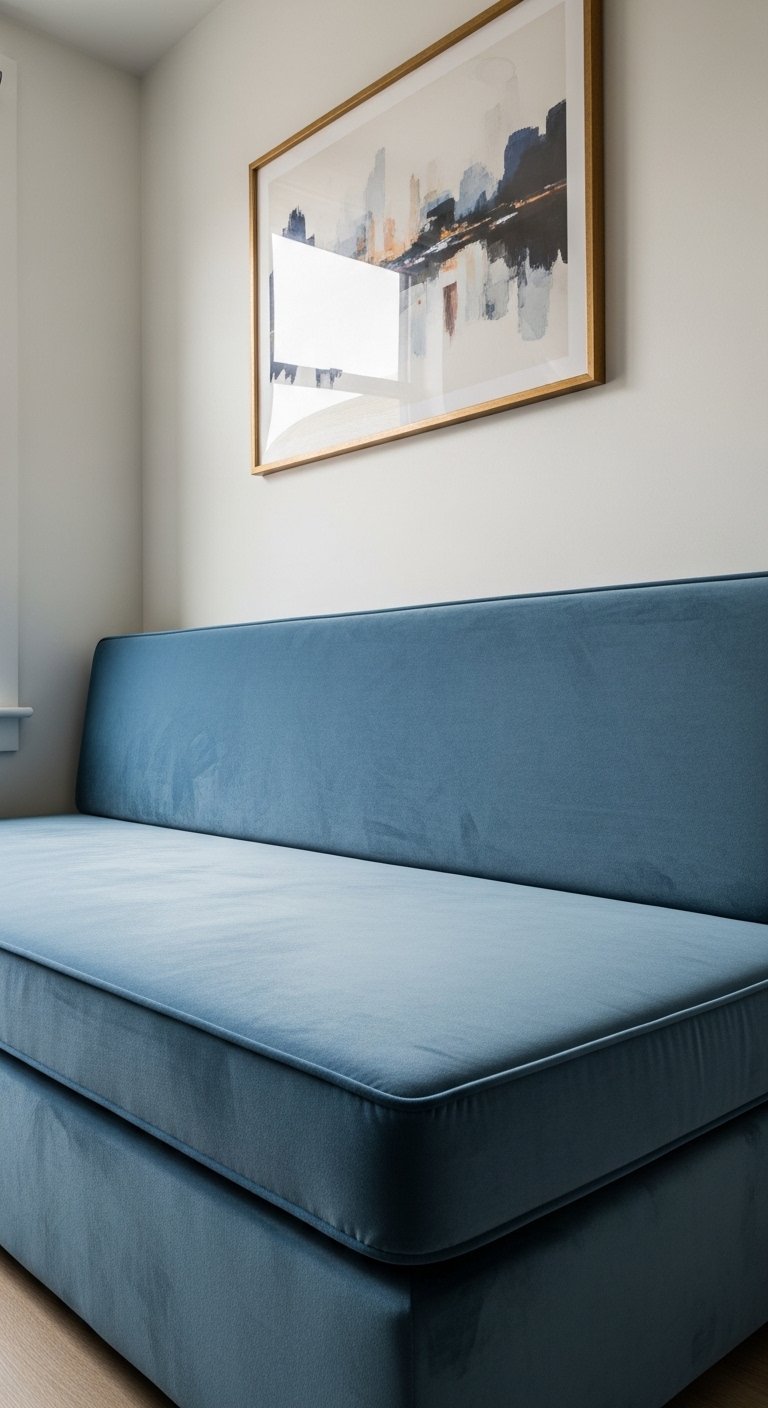
Low-profile sofas and chairs with seat heights of 15 to 17 inches rather than standard 18 to 20 inch heights create more visible wall space above the furniture line making the room feel taller and more open.
Low seating works particularly well in small living rooms with lower ceilings rather than fighting the ceiling height, the low furniture embraces it and creates a deliberately intimate, cozy atmosphere rather than a cramped one.
Pair low-profile seating with large-scale art hung at standard eye level above it to maintain correct visual proportions while keeping the furniture line below the room’s midpoint.
20. Use Curtains as Room Dividers
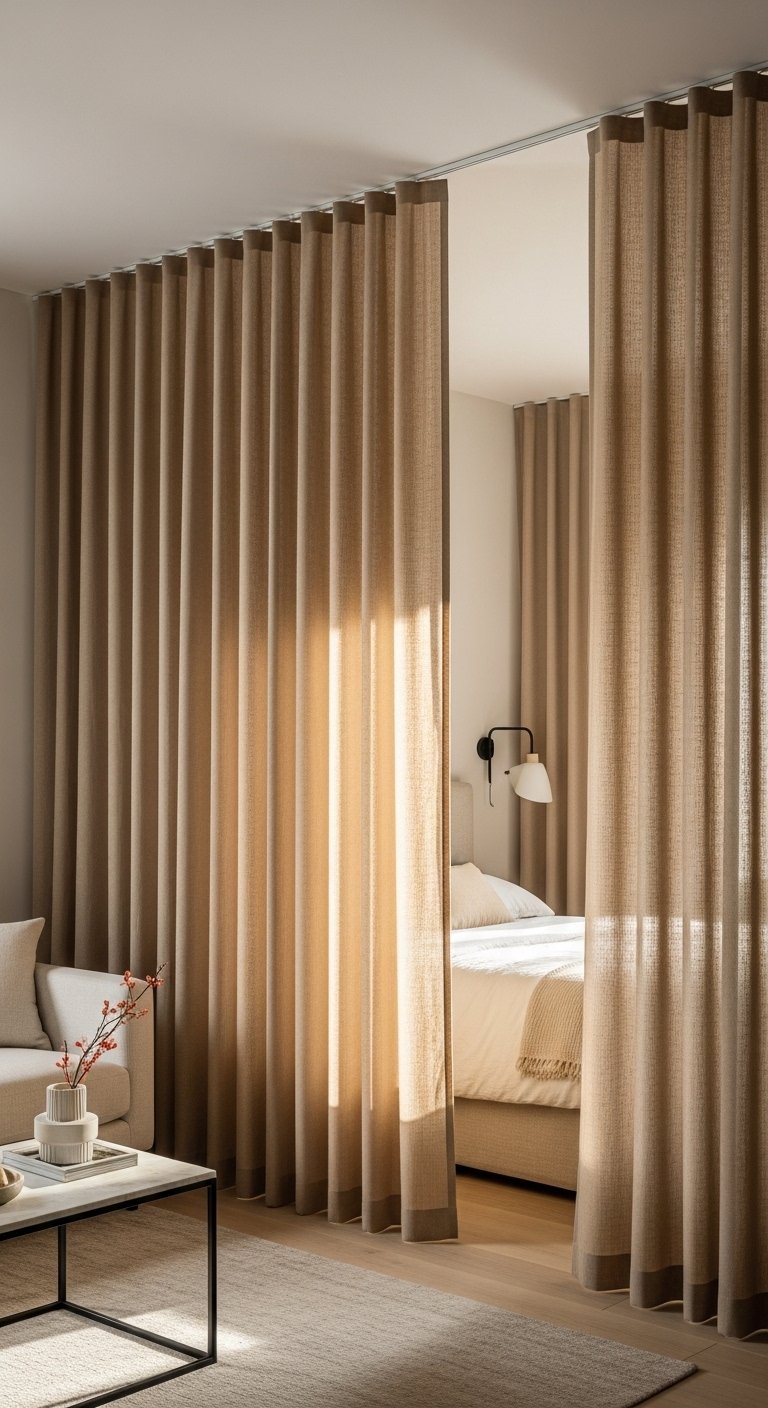
In an open-plan small apartment where the living room flows directly into the kitchen or sleeping area, floor-to-ceiling curtains on ceiling-mounted tracks create flexible, beautiful room dividers that define the living room zone without permanent walls.
Sheer curtains allow light to pass through while suggesting a boundary. Heavier linen or velvet curtains provide genuine visual and acoustic separation. Both approaches cost a fraction of any structural solution and can be reconfigured whenever your needs change.
This approach works especially well in studio apartments where the living room, bedroom, and sometimes kitchen share a single open space. FYI IKEA’s ceiling curtain track system is remarkably affordable and genuinely effective for this application.
21. Style With Fewer, Better Objects
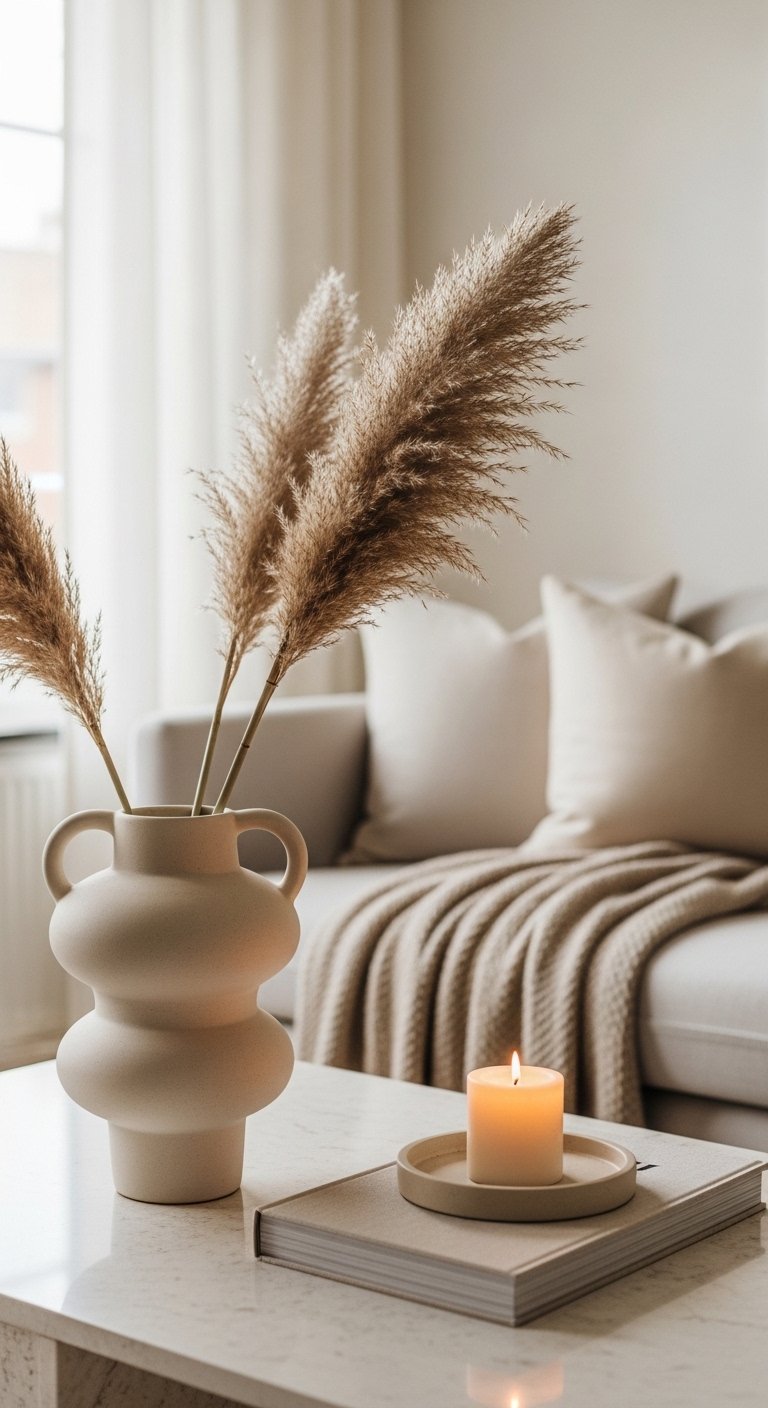
Clutter is the enemy of every small apartment living room but the solution is not minimalism for its own sake. The solution is choosing fewer objects of genuinely better quality and meaning.
Five well-chosen decorative objects on a coffee table look considered and intentional. Fifteen objects look like a yard sale. Edit ruthlessly. Keep what genuinely contributes to the room’s visual story and remove everything that does not earn its place.
A single large ceramic vase beats six small ones. One quality throw blanket beats three cheap ones folded awkwardly. Quality over quantity applies nowhere more powerfully than in small apartment living rooms.
22. Maximize Corner Space
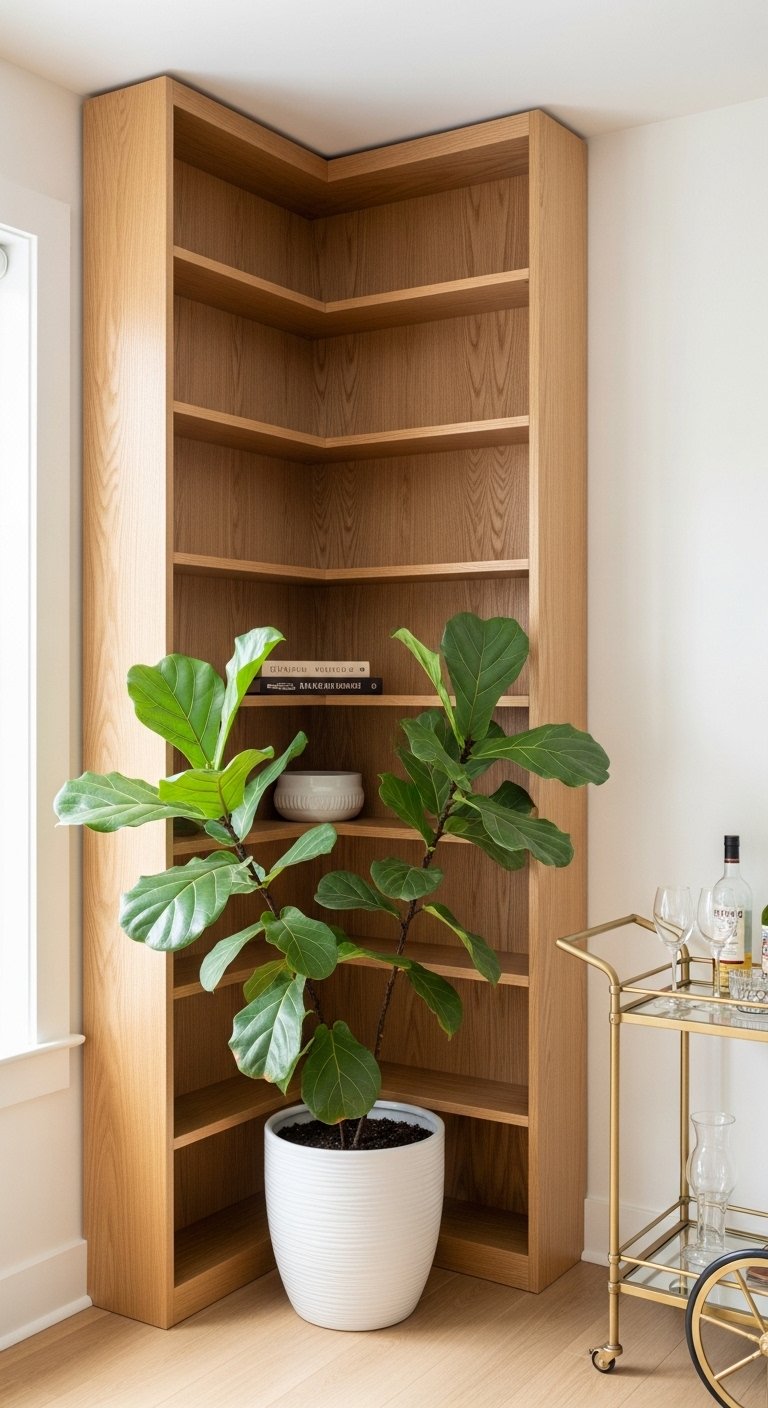
Corners in small apartment living rooms are chronically underused they typically collect floor lamps and nothing else. In 2026, smart small-space design treats corners as premium real estate rather than dead zones.
Corner uses that genuinely work:
- Corner shelving unit: Provides vertical storage using a typically wasted area
- Large floor plant: A tall fiddle leaf fig or snake plant fills the corner beautifully
- Corner reading nook: A small accent chair with a floor lamp creates a defined zone
- Corner bar cart: A styled bar cart uses minimal floor space productively
- Corner floating shelves: Angled corner shelves provide display space at multiple heights
23. Commit to a Consistent Design Aesthetic
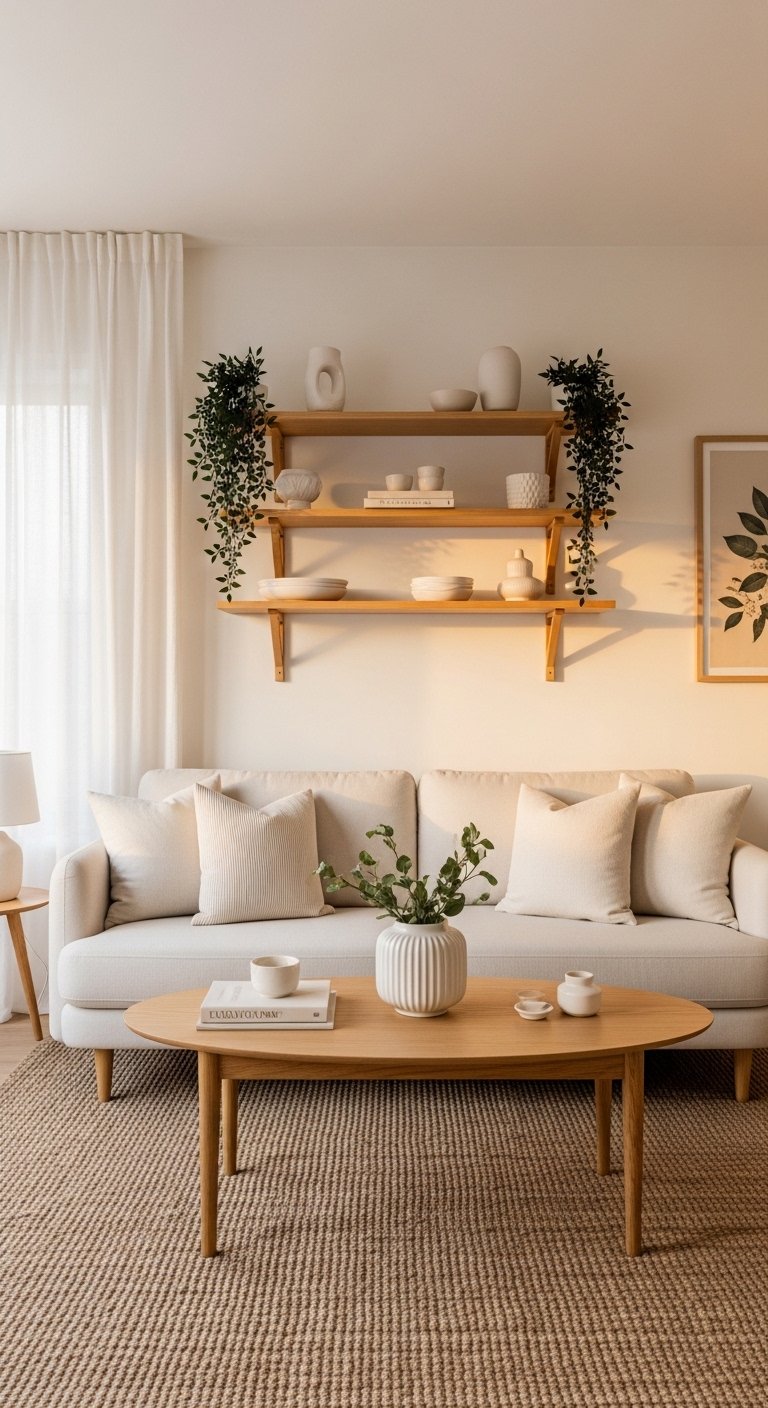
The final and possibly most important idea on this list is not about a specific piece of furniture or design trick it is about commitment to a consistent visual direction. Small apartment living rooms that feel chaotic and overwhelming almost always suffer from too many competing styles, colors, and ideas fighting for attention.
Choose one aesthetic direction Scandinavian minimalism, warm bohemian, contemporary glam, coastal casual, or whatever genuinely reflects your personality and commit to it completely. Every purchase, every object, every color decision should align with that direction.
A small room with a clear, consistent aesthetic always feels more spacious and intentional than a larger room decorated without direction. Consistency creates calm. Calm creates the feeling of space.
Final Thoughts
Small apartment living rooms are not a design problem they are a design challenge, and there is a meaningful difference between the two. Problems do not have good solutions. There are many.
The 23 ideas in this guide work individually, but they work best when you combine them thoughtfully. Mount the TV, float the sofa, add a large mirror, layer the lighting, choose multi-functional furniture, commit to a consistent palette, and edit your objects ruthlessly. Do all of that and your small living room will not just feel livable it will feel genuinely great.
Stop apologizing for your apartment’s size and start designing it with intention. The square footage you have right now is enough. You just need to use it smarter 🙂