23 Small Courtyard Decor Ideas to Maximize Your Space
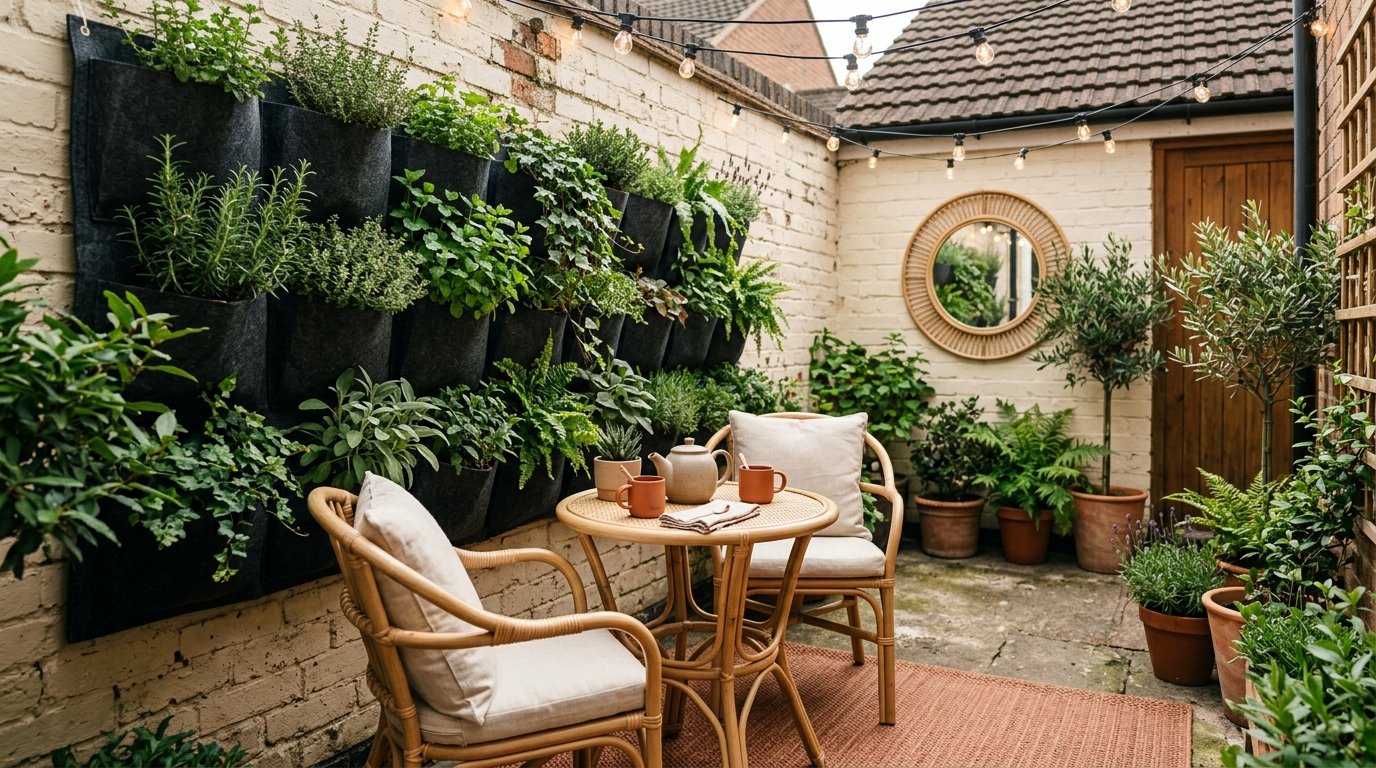
You stare at your small courtyard and wonder if it’s even worth decorating. Trust me, it is. Small courtyards are some of the most rewarding spaces to style because every single change makes a visible impact, unlike a giant backyard where one new chair barely registers. I turned a 6×8-foot concrete courtyard into the spot I actually want to drink my coffee every morning, and it cost less than I spent on my last grocery run. Whether you’re working with a rental restriction, a tiny footprint, or just an awkward leftover space, these 23 ideas prove small courtyards have massive potential.
1. Use Vertical Space With Wall-Mounted Planters
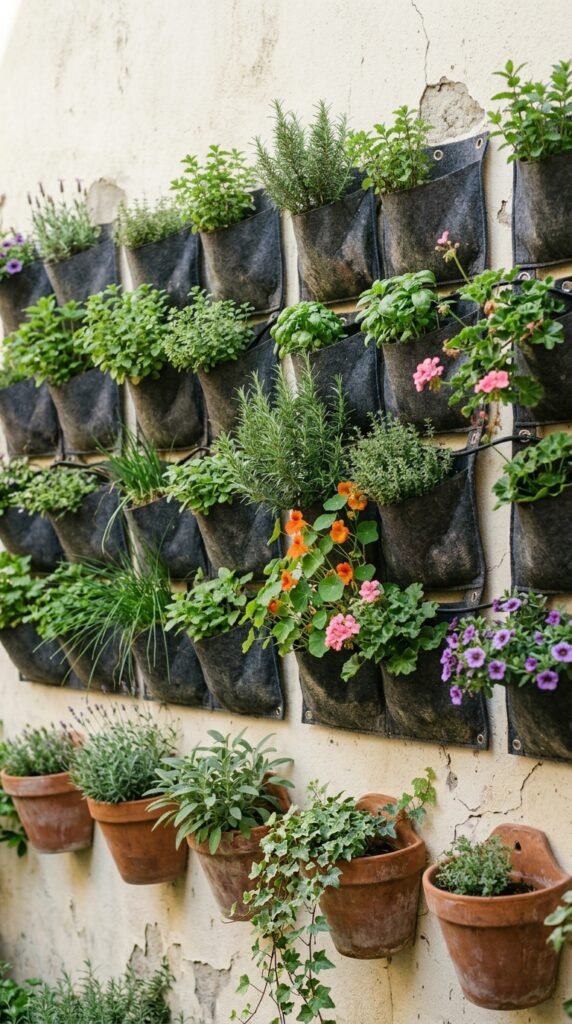
Wall-mounted planters give you growing space without sacrificing a single inch of floor area, which matters enormously in a small courtyard where every square foot counts. Hang them at varying heights to create a green wall effect that draws the eye upward instead of cramping the ground level.
Best Wall Planter Options
- Felt pocket planters: $15 to $30 for a multi-pocket panel, great for herbs and small flowers
- Terracotta wall planters: $8 to $15 each, classic look that ages beautifully
- Modular vertical garden systems: $40 to $80, expandable as your plant collection grows
A wall of felt pocket planters filled with herbs gives you both decor and a kitchen garden in a space that would otherwise sit empty. That’s a two-for-one most courtyards desperately need.
2. Add a Mirror to Create the Illusion of Space
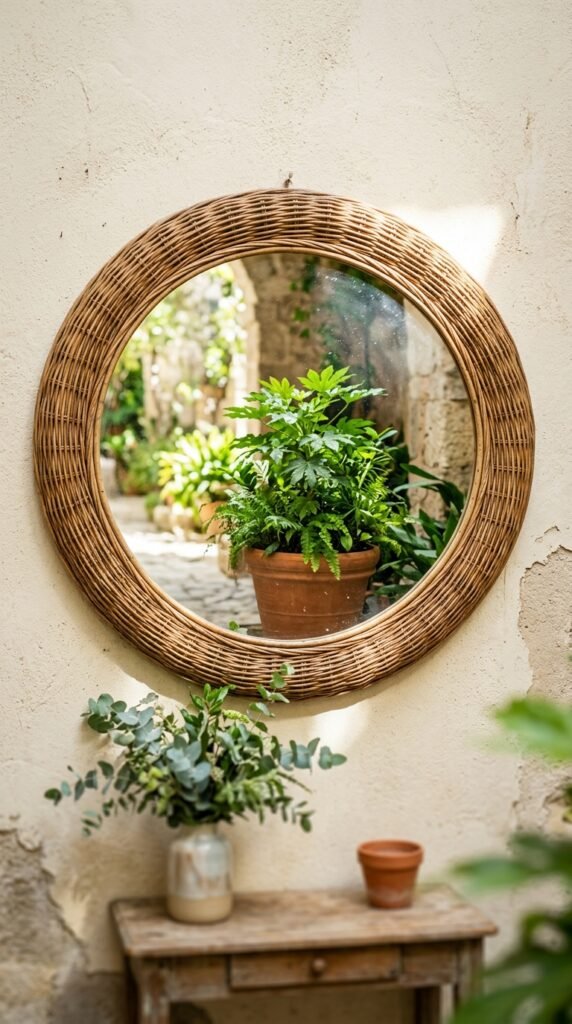
A weatherproof outdoor mirror makes a small courtyard look nearly twice its actual size, and this isn’t just decorating folklore, it’s basic optics. Mirrors reflect light and greenery, which tricks the eye into perceiving more depth than actually exists.
Outdoor-rated mirrors run $30 to $80 depending on size and frame material. Position the mirror to reflect a plant, a piece of art, or a light source rather than a blank wall, since reflecting something interesting doubles its visual impact. I added a round rattan-framed mirror to my courtyard wall and genuinely had a friend ask if I’d knocked down a fence. I had not .
3. Choose Multi-Functional Furniture
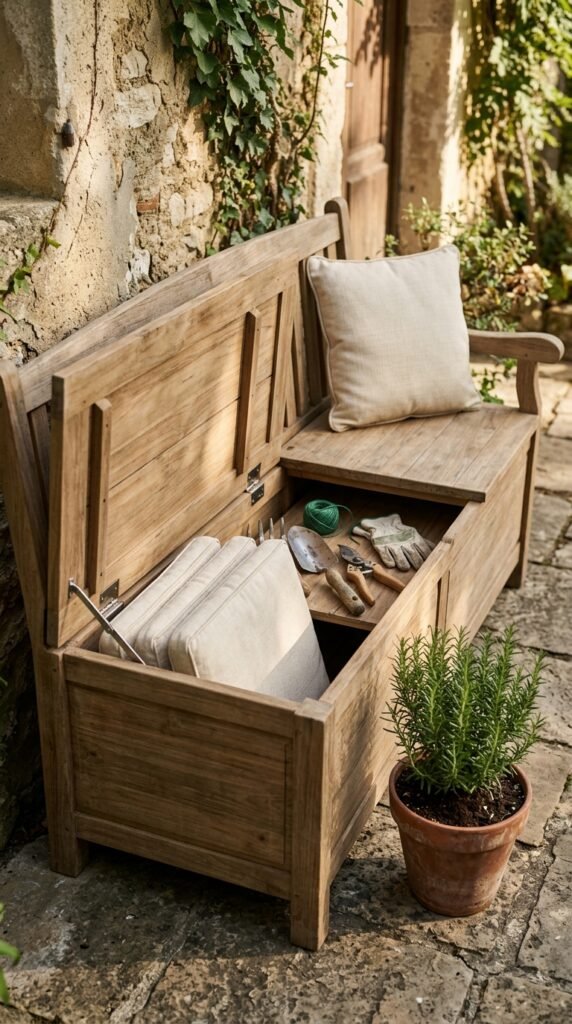
Furniture that does double duty is non-negotiable in small courtyards. A storage bench seats two people and hides cushions, garden tools, or extra plant pots. A side table with a lower shelf holds drinks on top and books or blankets below.
Multi-Functional Pieces Worth the Investment
- Storage benches: $60 to $150, seating plus hidden storage
- Nesting side tables: $40 to $90, stack away when not needed
- Ottomans with removable trays: $30 to $70, footrest, extra seating, or side table in one
Every piece in a small space needs to earn its footprint twice over. If a chair only does one job, ask yourself if a bench that does three jobs fits the same spot instead.
4. Use Light Colors to Open Up the Space
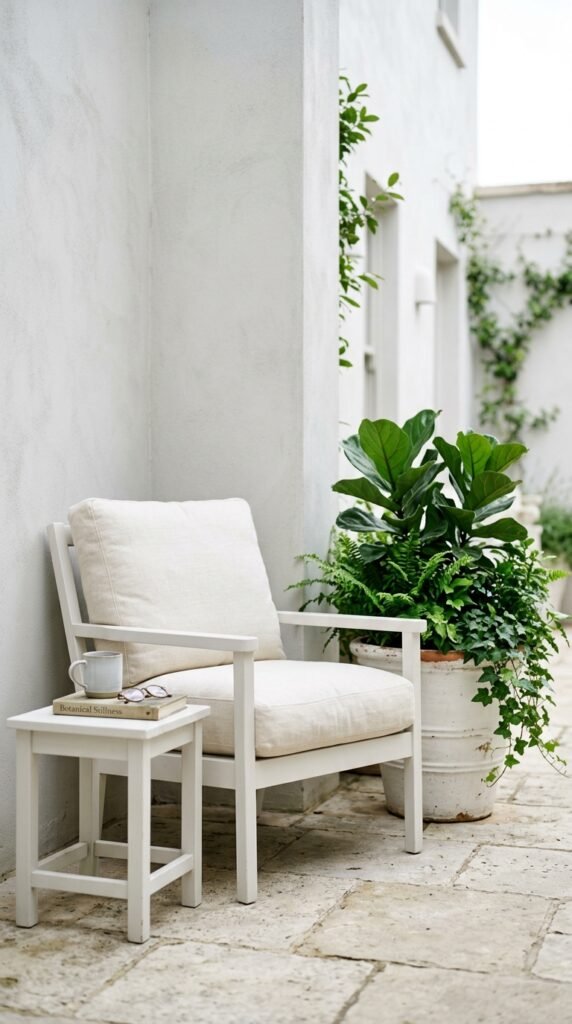
Light-colored furniture, planters, and accessories make a small courtyard feel airier because light tones reflect available light rather than absorbing it. Dark colors have their place, but in a space already working with limited square footage, they tend to close things in visually.
White, cream, and pale grey furniture pairs beautifully with green plants and natural wood tones. Even a simple swap, repainting a dark planter white or replacing a navy cushion with a cream one, changes the entire feel of the space. This is one of those ideas that costs almost nothing if you already own the pieces and just need a can of spray paint.
5. Hang String Lights for Evening Ambiance
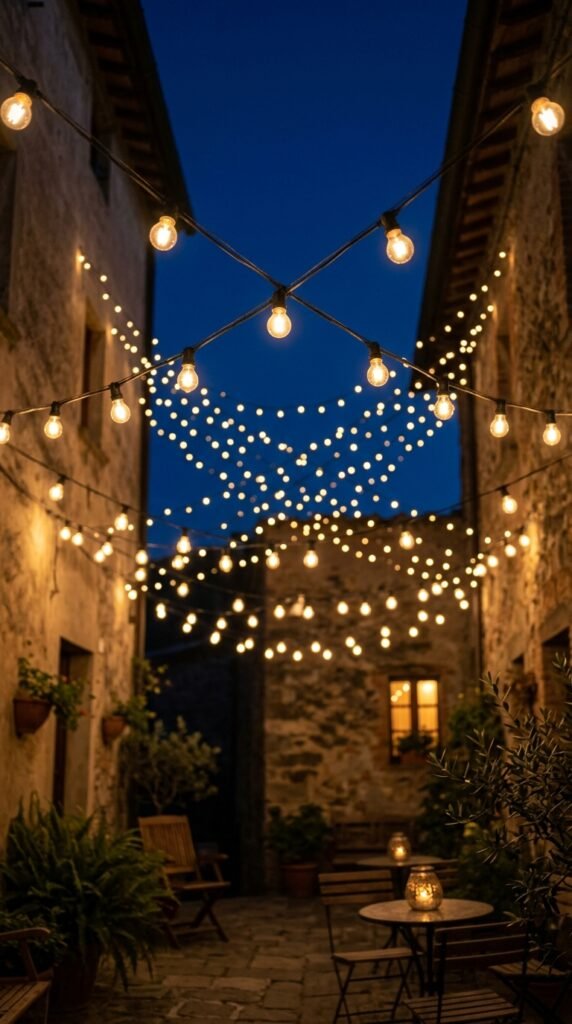
String lights transform a small courtyard from “forgotten corner” to “favorite spot” the moment the sun goes down, and the small footprint means you need way less length than a full backyard setup. A single 20 to 25-foot strand often covers an entire small courtyard perimeter.
Run the lights along the top of surrounding walls or fence lines, or criss-cross them overhead if you have anchor points on both sides. A 25-foot warm white LED string light set costs $15 to $25 and creates enough ambient glow for evening drinks or reading. FYI, warm white reads cozier than cool white in small spaces, where the light bounces off close walls more noticeably.
6. Create a Vertical Garden Wall
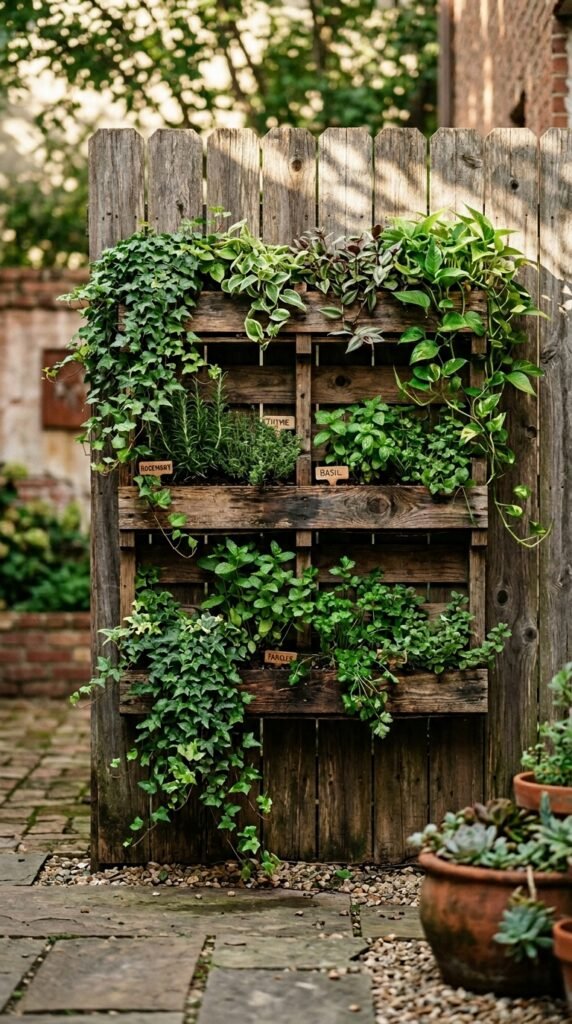
A vertical garden wall turns a blank fence or wall into the courtyard’s main feature without taking up any floor space at all. Modular planting systems, pallet planters, or simple hanging pots arranged in a grid all achieve this look at different price points.
A DIY pallet vertical garden costs $20 to $40 if you source the pallet free and add landscape fabric, soil, and plants. Fill it with a mix of trailing plants (for movement) and upright herbs or flowers (for structure). Ever notice how a wall of plants makes a small space feel more like an intentional garden room and less like “the area behind the house”?
7. Add a Small Water Feature for Sound and Calm
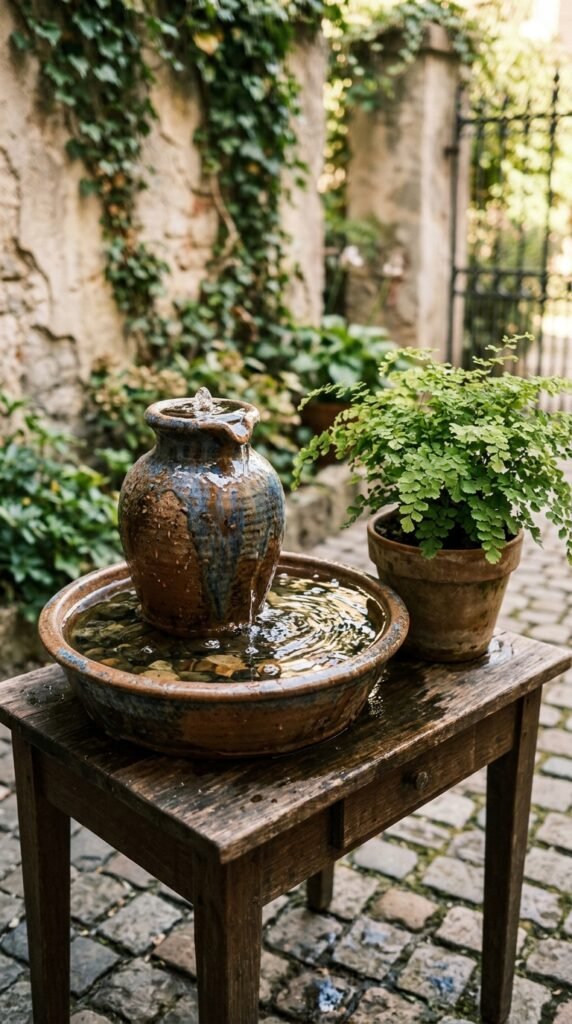
A small water feature adds sound, movement, and a sense of calm that static decor simply can’t replicate, and it works as a focal point even in courtyards as small as 5×5 feet. The sound of trickling water also helps mask street noise or neighbor conversations, which is a real bonus in tight urban spaces.
Compact Water Feature Options
- Tabletop fountains: $30 to $60, plug-in or battery-powered, sit on any flat surface
- Wall-mounted water features: $80 to $150, mount directly to a fence or wall
- Ceramic pot fountains: $50 to $100, double as a planter and a fountain
A small tabletop fountain on a side table costs less than a single dinner out and adds an atmosphere that guests notice immediately. IMO, this is one of the most underrated upgrades for tiny outdoor spaces.
8. Use Outdoor Rugs to Soften Hard Surfaces
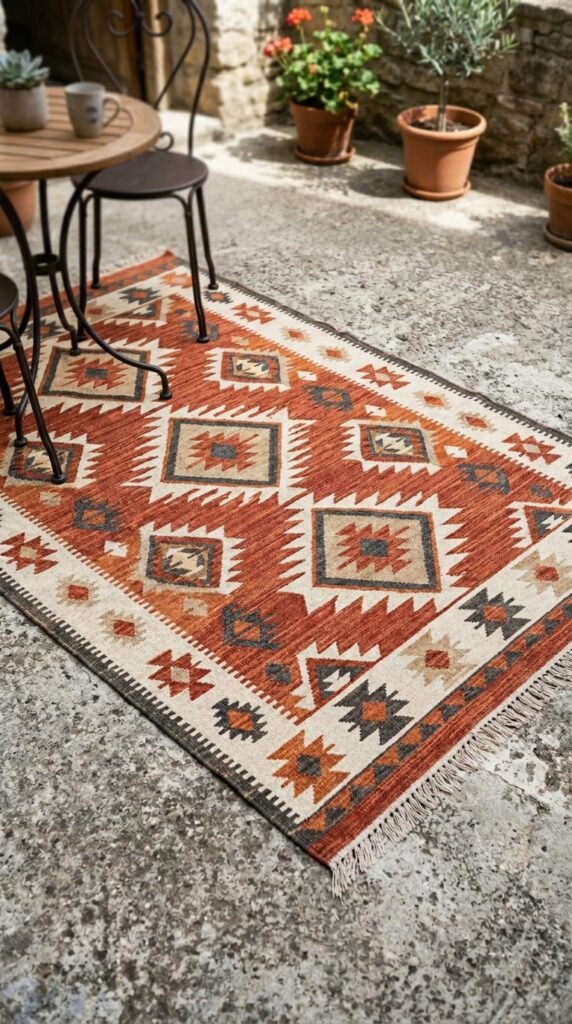
An outdoor rug softens the hard edges of a concrete or paver courtyard and adds color, pattern, and warmth underfoot. Small courtyards almost always have hard flooring, and a rug breaks up that visual monotony immediately.
A 4×6 outdoor rug costs $25 to $50 and fits most small courtyard footprints without overwhelming the space. Choose a pattern or color that contrasts with your flooring (light rug on dark pavers, or vice versa) so the rug actually registers as a design choice rather than disappearing into the background. Polypropylene rugs handle spills, rain, and dirt better than natural fiber options in a space this exposed.
9. Add a Bistro Set for Function and Style
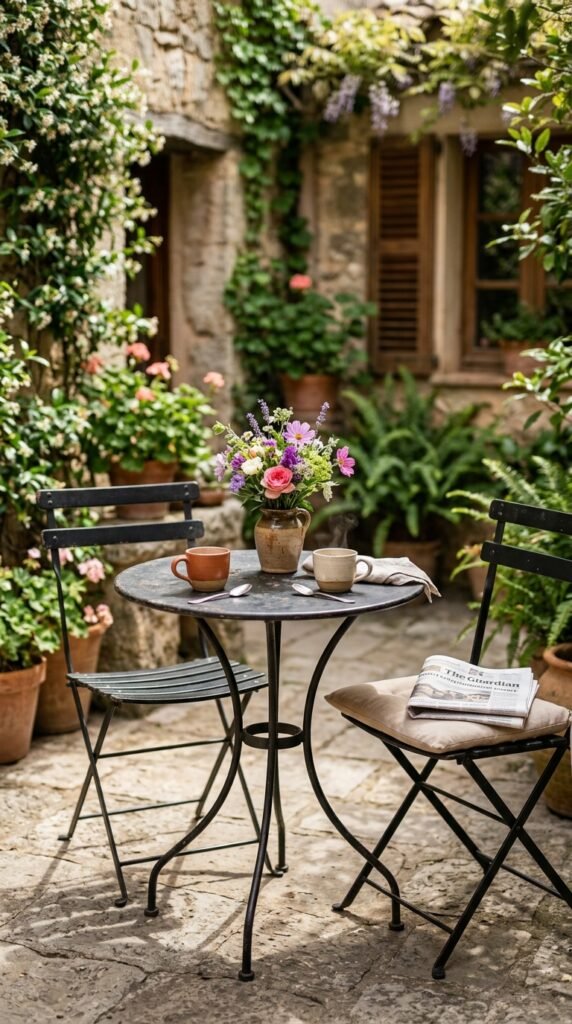
A two-person bistro set fits in courtyards as small as 4×4 feet and gives you a functional spot for coffee, meals, or a laptop without overwhelming the space. Folding bistro sets stack away when you need the floor space for other activities.
Basic metal bistro sets cost $60 to $120, while wood versions run $100 to $200. Choose a round table over a square one in tight spaces, since rounded edges make it easier to move around the set without bumping corners. A bistro set with two chairs and a small table is often the only furniture a small courtyard needs.
10. Incorporate Potted Trees for Height and Privacy
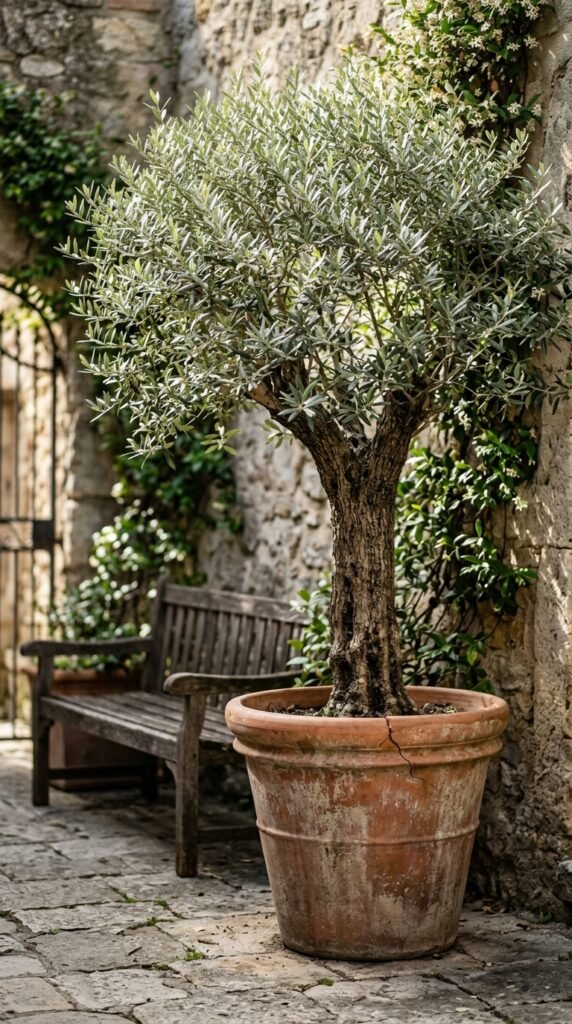
A potted tree adds vertical interest and privacy that low plants and furniture can’t provide, and it does this without requiring you to plant anything directly in the ground, which matters a lot for renters or paved courtyards. Olive trees, dwarf citrus, and bamboo all work well in containers.
Potted trees in the 4 to 6-foot range cost $50 to $150 depending on species and container size. Position one or two trees strategically to block a sightline from a neighboring window or balcony. A single well-placed potted tree does more for privacy than a fence extension that costs five times as much.
11. Use Wall Art Designed for Outdoor Spaces
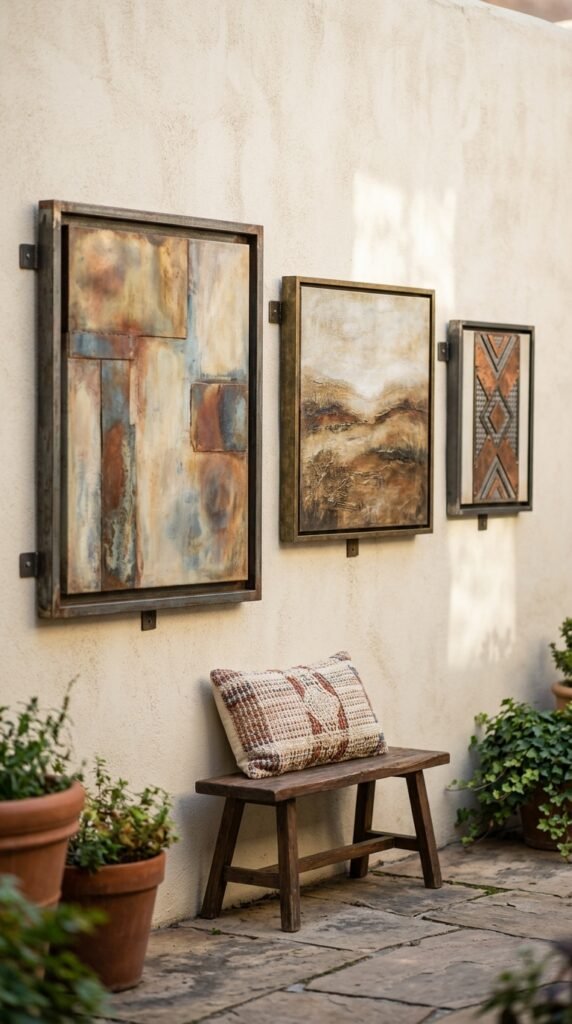
Outdoor-rated wall art turns a blank courtyard wall into a gallery wall without worrying about rain or sun damage ruining your decor within a season. Metal art, weatherproof canvas prints, and ceramic tile art all hold up outdoors.
Outdoor metal wall art pieces cost $25 to $70 depending on size, while weatherproof canvas prints run $20 to $50. Group two or three pieces in varying sizes for a gallery effect, or go with one large statement piece if your wall space is limited. A courtyard wall with art on it instantly feels designed rather than leftover.
12. Add a Pergola or Shade Structure
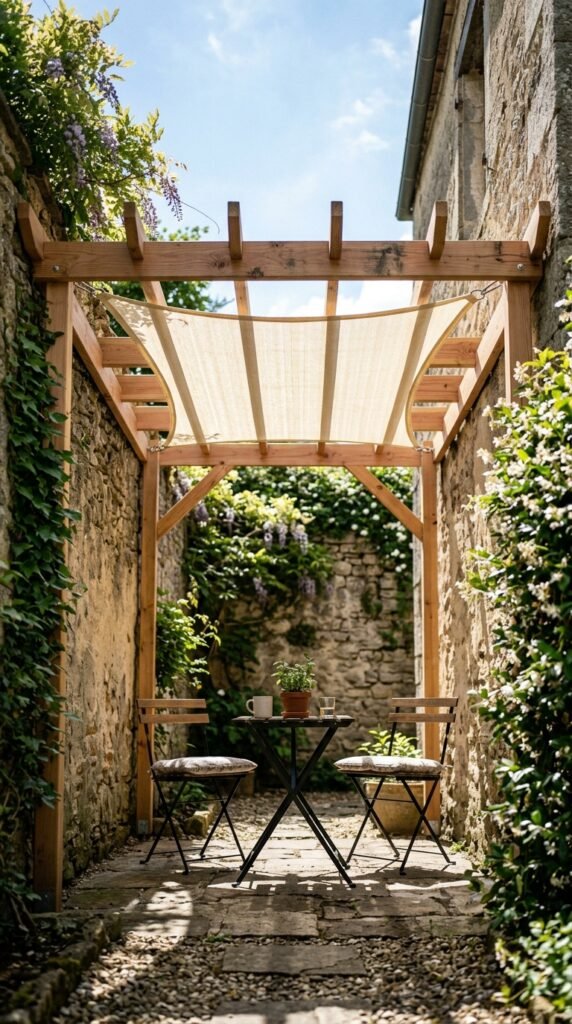
Even a small pergola or shade sail makes a courtyard feel like a defined room rather than an exposed patch of concrete. The overhead structure creates a “ceiling,” which is the single biggest factor in making any outdoor space feel like an actual room.
A small 6×8 pergola kit costs $200 to $400, while a simple shade sail with mounting hardware runs $30 to $60. If a full pergola feels like overkill for your space, a shade sail stretched between two walls or a wall and a post achieves a similar room-defining effect for a fraction of the cost and effort.
13. Use Vertical Stacked Planters
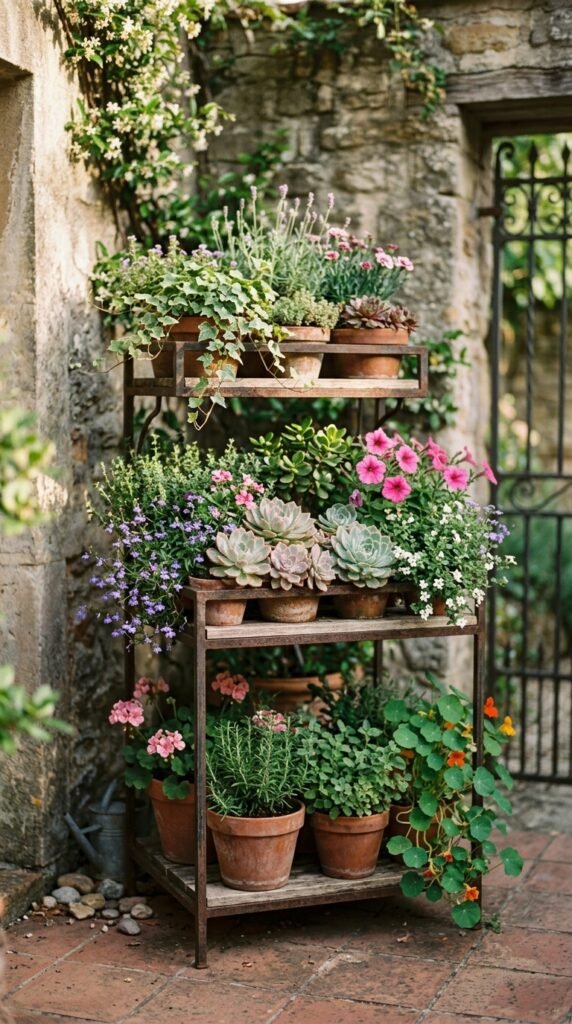
Stacked tiered planters fit more plants into less floor space than any other planting method, and they create visual height that draws the eye up and makes the courtyard feel taller. A three-tier stacked planter holds 6 to 9 plants in the footprint of a single large pot.
Stacked planter stands cost $25 to $50 and work well for herbs, succulents, or flowering annuals. Place one in a corner that would otherwise sit empty, since corners are usually the most underused space in any small courtyard. This is a classic case of working smarter, not harder, with the space you’ve got.
14. Add a Small Bench Along a Wall
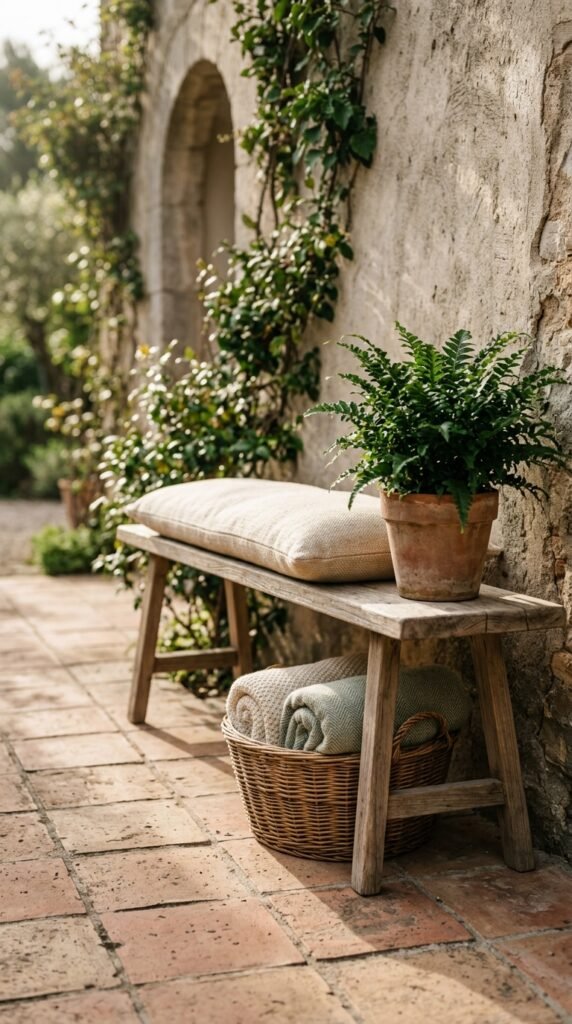
A built-in or freestanding bench along one wall maximizes seating without the footprint of individual chairs, which take up more floor space per person than a shared bench does. Benches also work as plant display surfaces when seating isn’t needed.
A simple wood bench costs $50 to $120 depending on size and material, while a DIY pallet bench costs under $30. Add an outdoor cushion in a weather-resistant fabric for comfort, and use the space underneath for shoe storage, plant pots, or a small basket. One bench against a wall often seats as many people as two chairs in half the space.
15. Create a Hanging Chair Nook
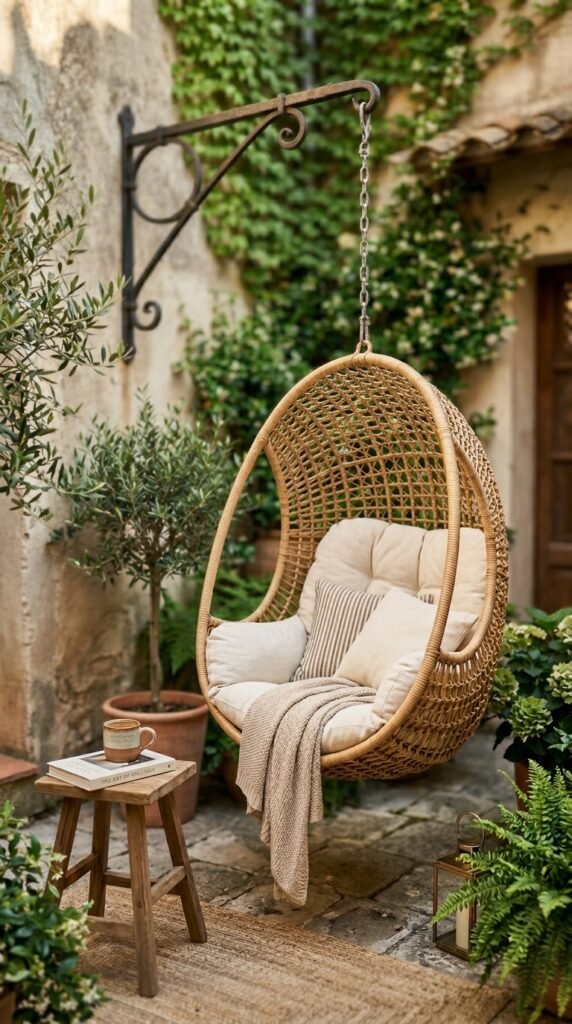
A hanging chair adds a cozy focal point that takes up minimal floor space compared to a traditional armchair, since the chair occupies vertical space rather than spreading out horizontally. Hanging egg chairs, macrame swings, and hammock chairs all work for this.
Hanging chairs with stands cost $100 to $250, while a hanging chair that mounts to an existing beam or pergola costs less since you skip the stand entirely. Position it in a corner with a small side table within reach for a drink or book. Ever notice how a hanging chair makes a tiny space feel more like a retreat and less like “the area where the trash cans used to be”?
16. Use Layered Lighting for Depth
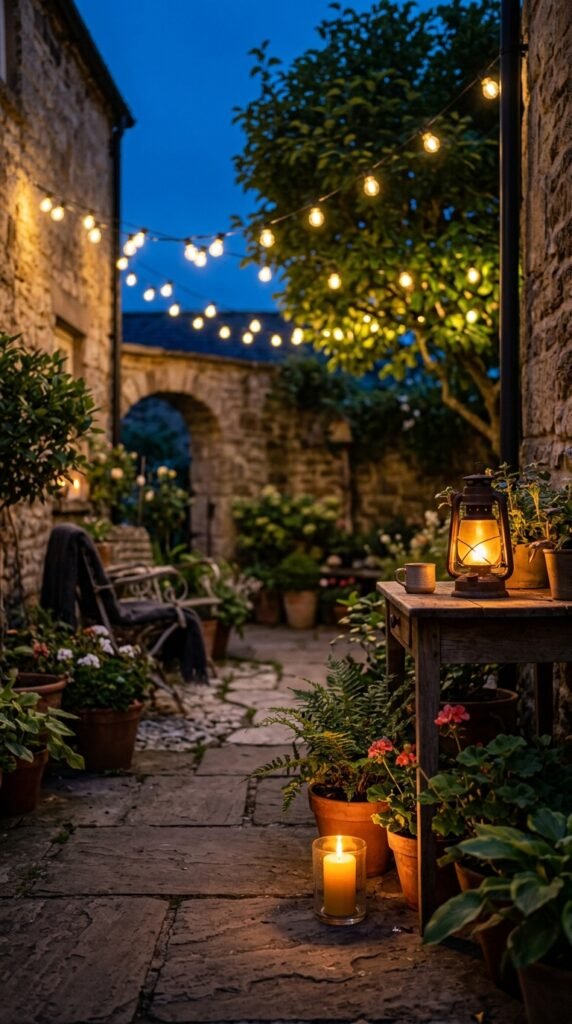
Layering different light sources, string lights, lanterns, and candles, creates depth that a single overhead light source can’t achieve, even in a courtyard as small as 6×6 feet. Different light heights and intensities make the space feel larger because your eye travels between multiple points instead of focusing on one flat area.
A Simple Layered Lighting Setup
- String lights overhead: ambient base layer
- Lanterns at table height: task lighting for dining or reading
- Candles at ground level: soft accent lighting near plants or seating
This three-layer approach costs under $50 total if you’re working with budget options at each level, and the visual impact is dramatically more than any single light source alone.
17. Add Climbing Plants on a Trellis
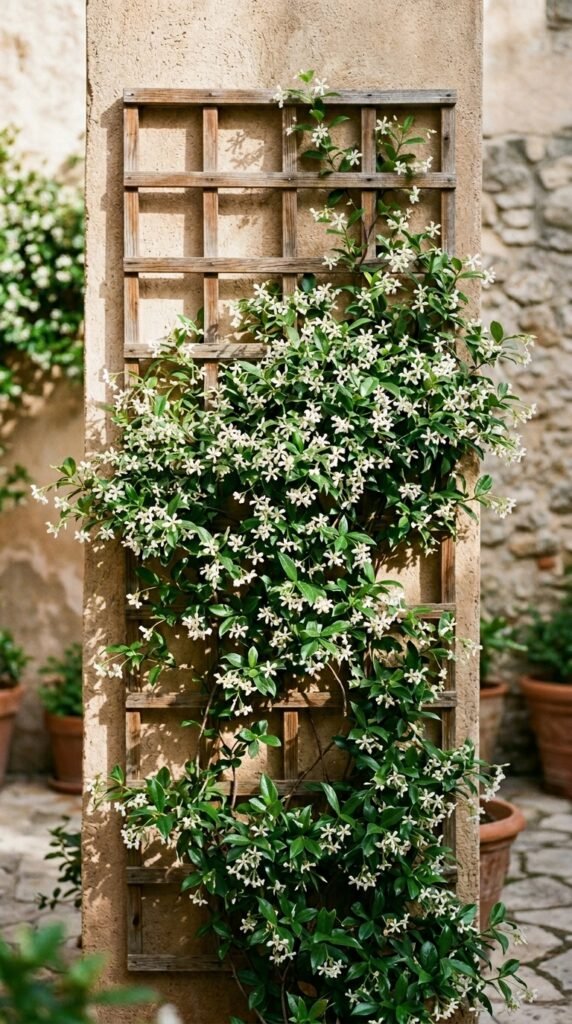
A trellis with climbing plants adds greenery and privacy without consuming floor space, since the plant grows vertically along a structure mounted flat against a wall or fence. Jasmine, climbing hydrangea, and clematis all work well in courtyard conditions with partial sun.
A simple wood or metal trellis costs $15 to $40, and climbing plants in starter pots run $10 to $25 each. Within one to two growing seasons, a trellis with established climbers becomes a living wall that costs almost nothing to maintain beyond occasional watering and pruning. This is the kind of upgrade that looks better every single year, which is rare in home decor.
18. Use a Folding or Wall-Mounted Table
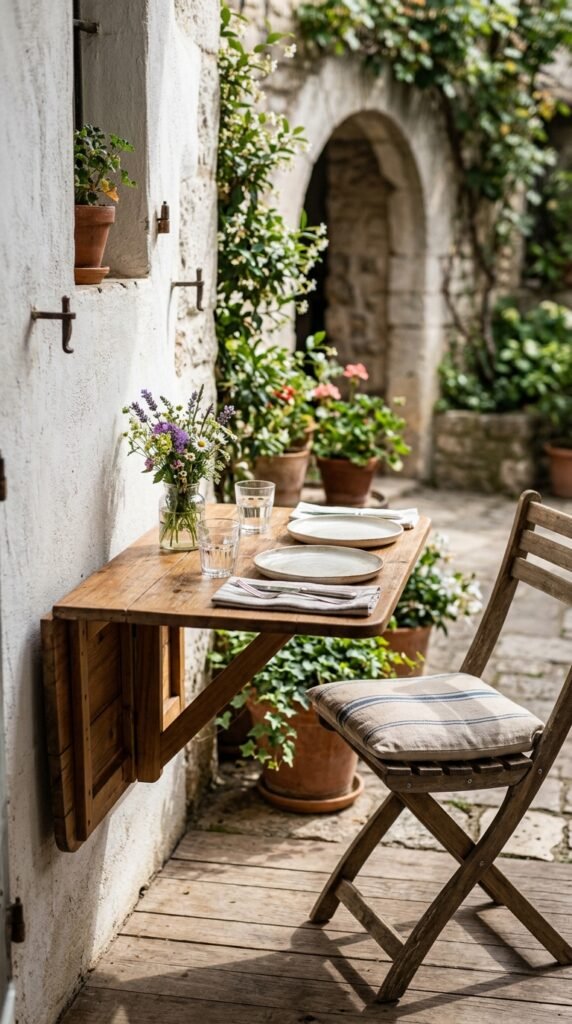
A folding or wall-mounted table gives you a full work surface when needed and disappears when it’s not, which matters enormously in courtyards under 50 square feet. Wall-mounted drop-leaf tables fold flat against the wall and unfold into a full dining or work surface in seconds.
Wall-mounted folding tables cost $40 to $90 depending on size and material. This works especially well for courtyards that need to double as a dining spot some days and an open floor space (for yoga, kids’ play, or just walking through) on others. One piece of furniture, two completely different uses.
19. Add Color With Outdoor Cushions and Textiles
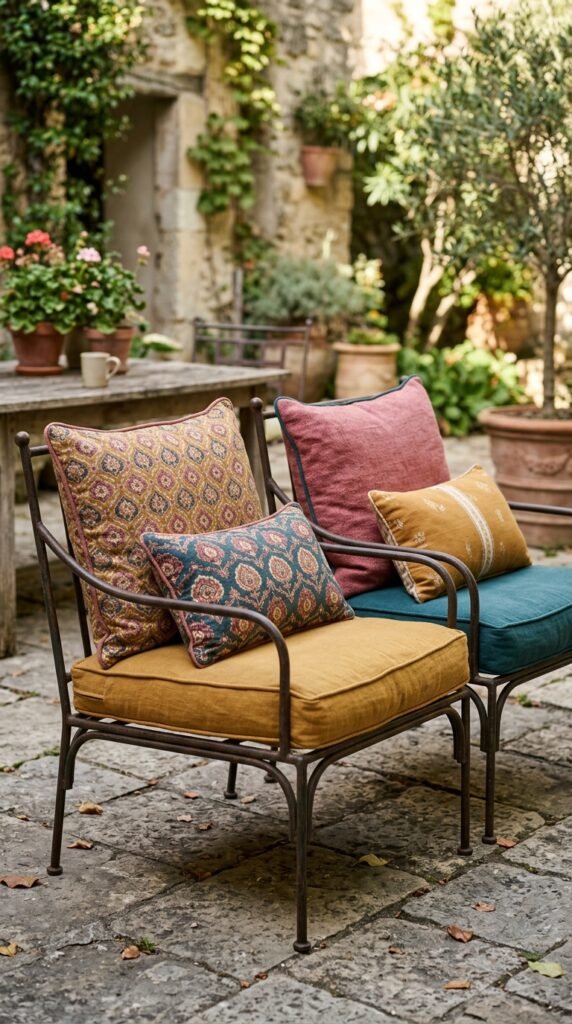
Outdoor cushions and textiles are the cheapest way to change a courtyard’s entire color scheme without buying new furniture. Swap cushion covers seasonally, and the same chairs feel completely different from spring to fall.
Outdoor cushion covers cost $10 to $20 each, while full cushions with inserts run $20 to $40. Choose 2 to 3 colors that complement your plants and hard surfaces rather than matching everything exactly. A courtyard with mismatched but coordinated textiles looks more collected than one where everything came from the same boxed set.
20. Create a Privacy Screen With Bamboo or Reed Fencing
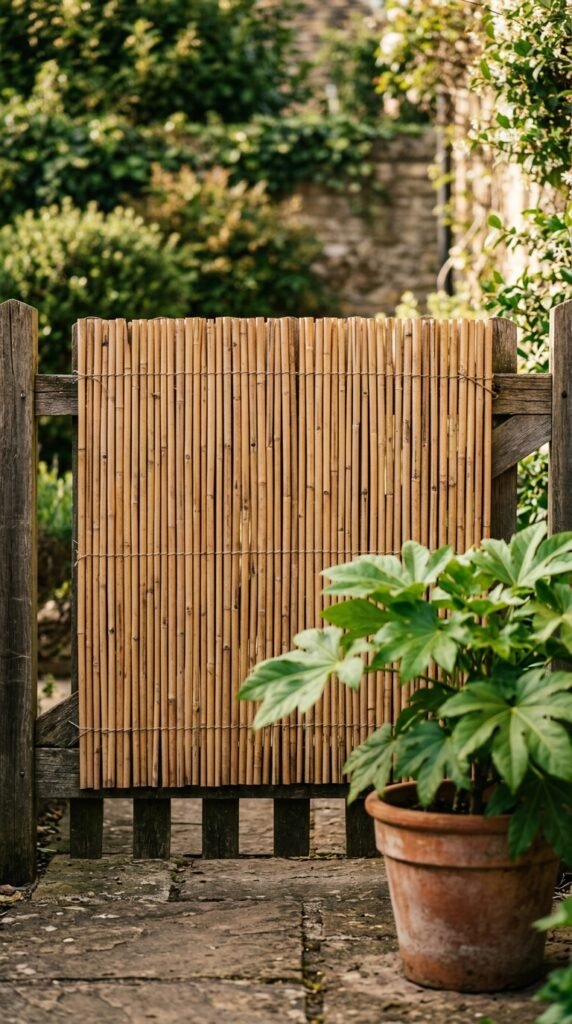
Bamboo or reed fencing rolls attach to existing fences or railings and add privacy and texture in one move, which is huge for courtyards that back onto neighbors or busy walkways. These rolls install with zip ties or staples in under an hour for most standard courtyard perimeters.
Bamboo or reed fencing rolls cost $20 to $40 for a 6×16-foot roll, which covers most small courtyard perimeters with material left over. This option works especially well for renters since it attaches without permanent modification and removes cleanly when you move. The natural texture also softens chain-link or plain wood fences that otherwise look utilitarian.
21. Use a Vertical Herb Garden Near the Kitchen Door
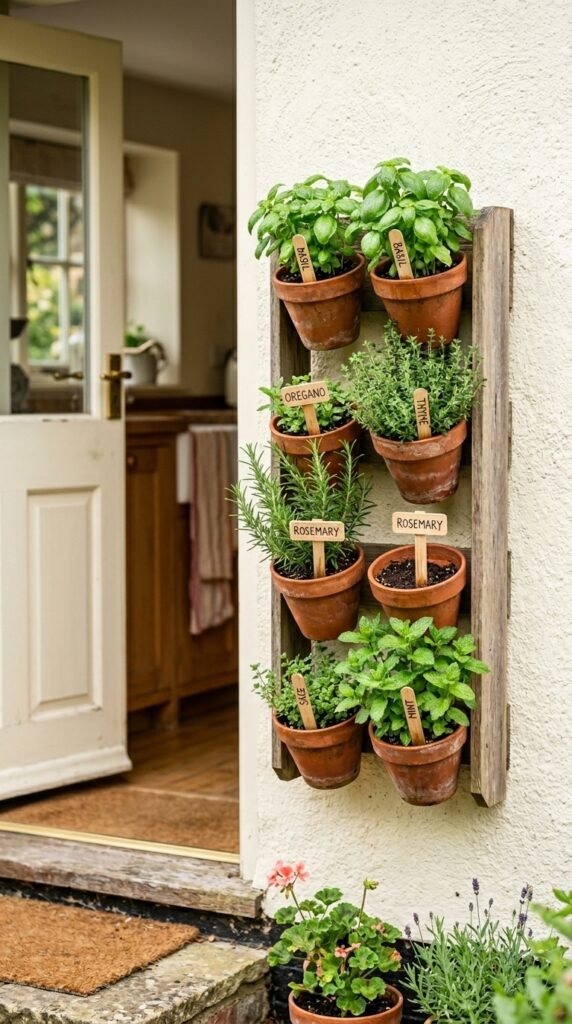
A vertical herb garden positioned near your kitchen door puts fresh herbs within arm’s reach while you cook, which is both decor and genuinely useful. Wall-mounted planters, a tiered stand, or even repurposed cans on a pallet all work for this.
Basic herb starter plants cost $3 to $5 each, and a vertical system for 6 to 8 herbs costs $30 to $60 total including planters. Basil, thyme, rosemary, and mint all do well in courtyard conditions with a few hours of direct sun. This is one of those ideas that pays for itself in grocery savings within a season or two.
22. Add a Small Fire Bowl for Warmth and Ambiance
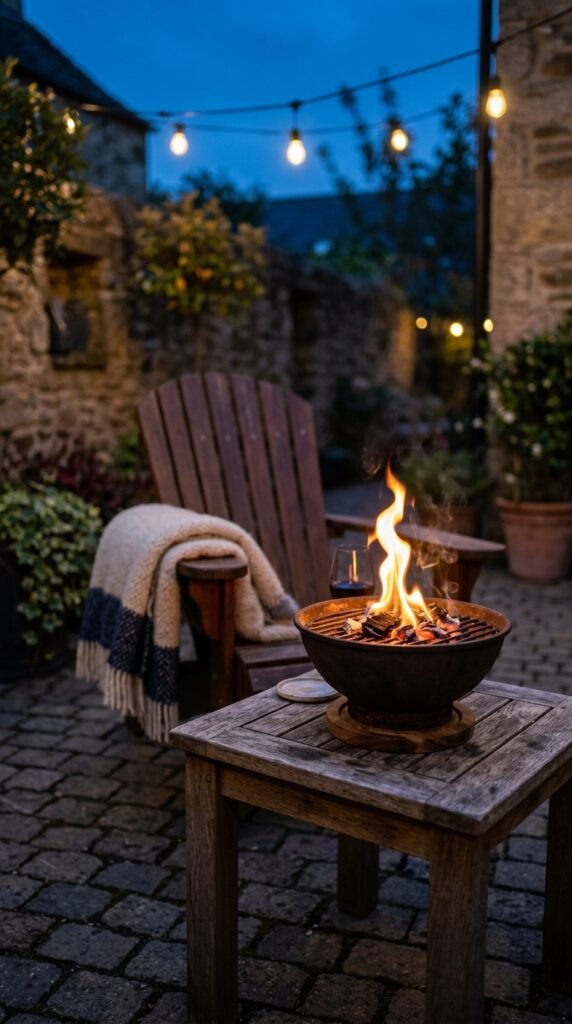
A small fire bowl extends the usable season of your courtyard by adding warmth on cool evenings, and compact tabletop versions fit spaces where a full fire pit would be impossible. Tabletop fire bowls using gel fuel or bioethanol work safely on most surfaces, including wood decking, with proper heat-resistant bases.
Tabletop fire bowls cost $30 to $80, while slightly larger freestanding versions for small courtyards run $80 to $150. Always check your local regulations on open flames in small or shared courtyard spaces before buying, since some apartment complexes restrict this. When it’s allowed though, a small fire bowl turns a 10-minute evening sit into a 45-minute one, easily.
23. Define Zones With Different Flooring Textures
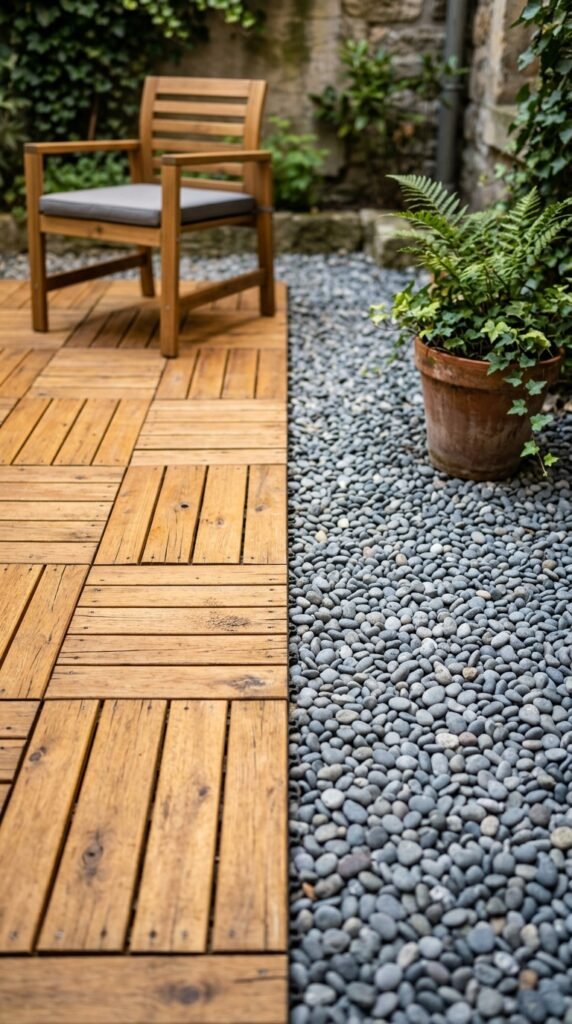
Mixing flooring textures, like pavers next to gravel, or a deck tile section next to grass, defines different zones within a small courtyard without walls or furniture doing the work. This trick is borrowed directly from larger landscape design but scales down beautifully.
Interlocking deck tiles cost $3 to $6 per square foot and click together over existing concrete without adhesive, making them fully removable for renters. Use deck tiles for a “seating zone” and leave the surrounding gravel or concrete as is for a “walking zone.” The texture change alone signals to your brain that you’re in a different part of the space, even if that space is only 8 feet across.
Final Thoughts
Small courtyards punch above their weight when you decorate with intention instead of trying to cram in everything that worked for a friend’s giant backyard. Every idea on this list works specifically because it respects limited space, whether that’s through vertical thinking, multi-functional furniture, or tricks that make the eye perceive more room than physically exists. Start with lighting and one piece of multi-functional furniture, since those two changes affect how the entire space feels and functions. Your courtyard doesn’t need to be big to be the best seat in the house. It just needs a plan.