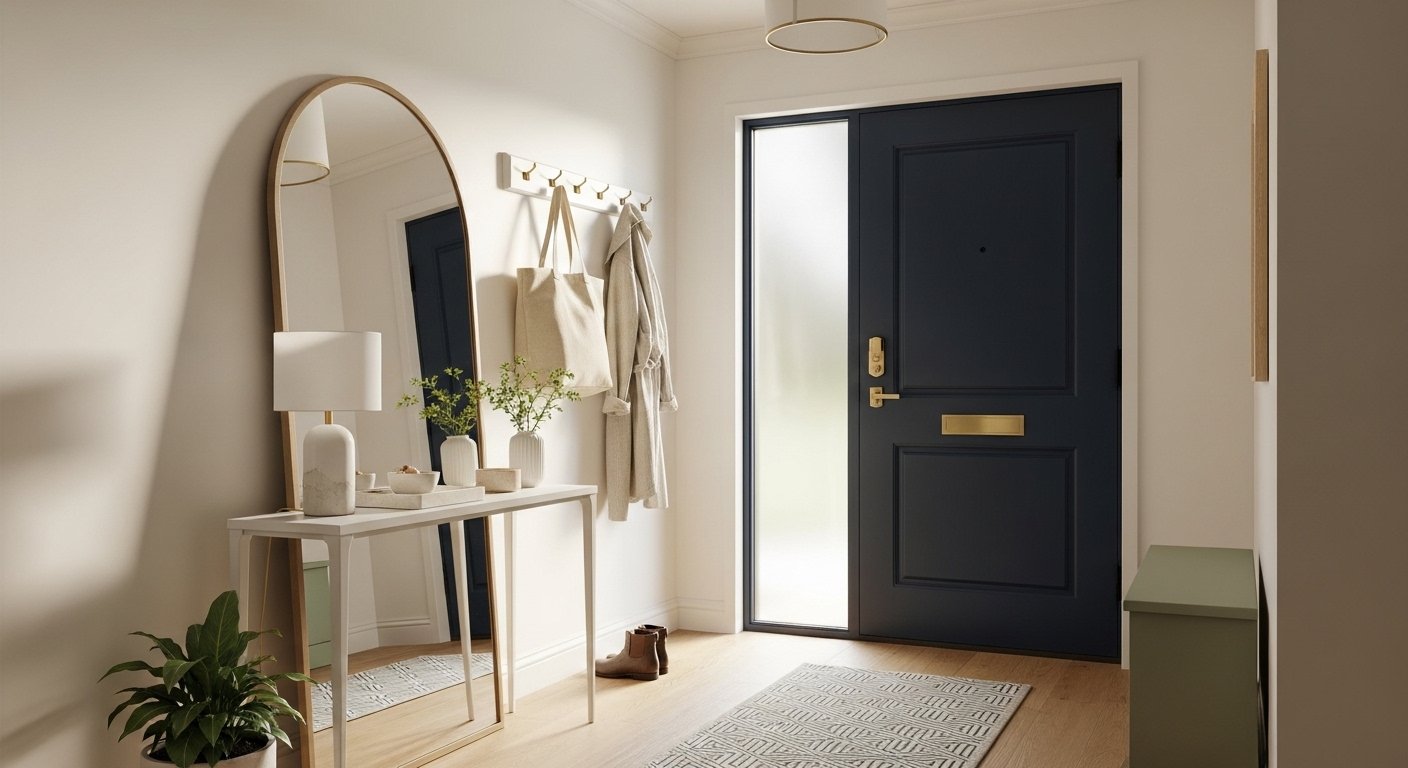
25 Small Entryway Ideas That Actually Maximize Your Space
Your entryway is the first thing people see when they walk into your home. It’s also the last thing you interact with before you leave every morning. If it’s a cluttered, chaotic mess, that sets the tone for everything. A small entryway is not an excuse for a bad one. It’s just a design challenge, and a very solvable one.
I’ve lived in apartments where the “entryway” was basically a doormat and a prayer. Here’s everything I wish I’d known sooner.
1. Add a Narrow Console Table
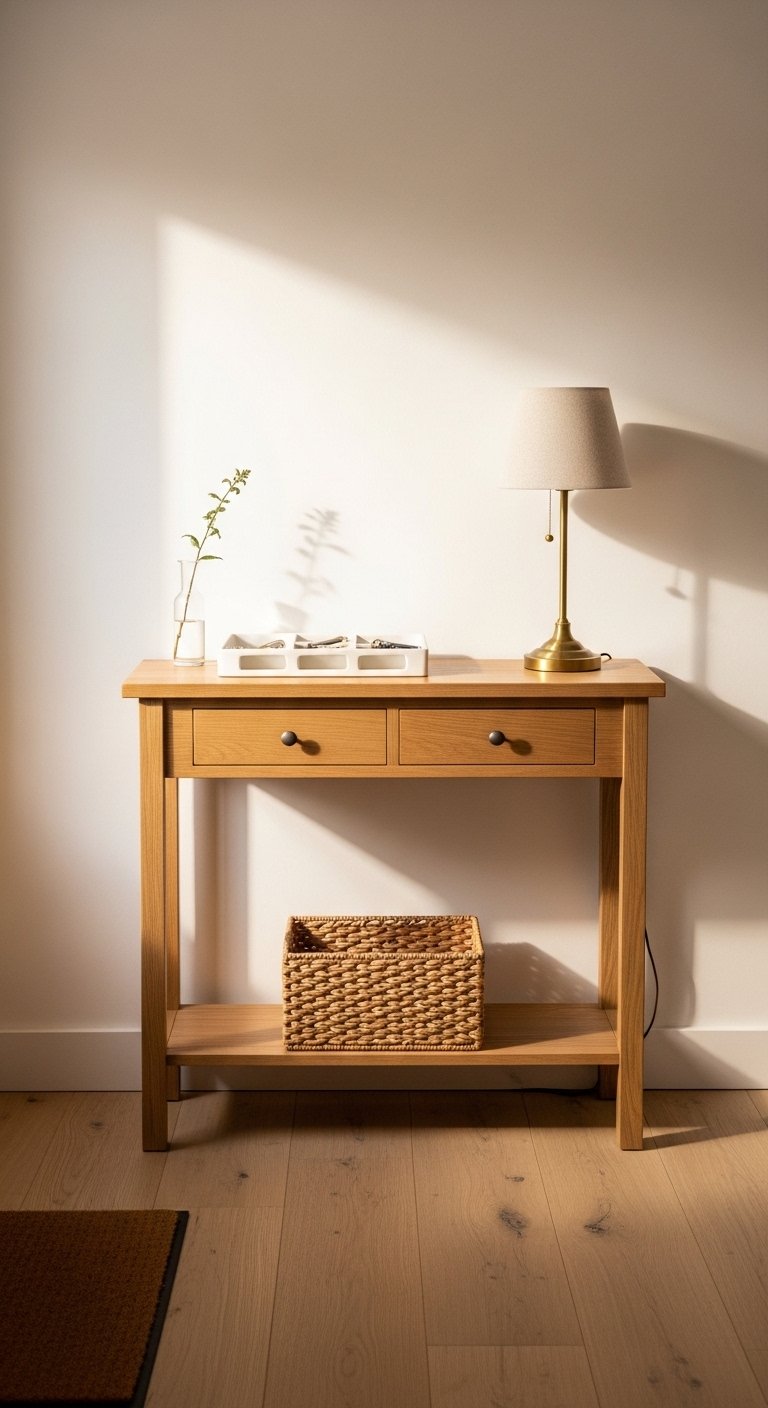
A narrow console table is the single most useful piece of furniture you can put in a small entryway. It gives you a surface to drop keys, mail, and bags without taking up significant floor space.
Look for tables no deeper than 25 to 30cm. Anything deeper starts eating into walkable space. Style it with a small lamp, a tray for keys, and one small plant. That’s all you need.
Best for: Entryways wider than 90cm with a straight wall opposite the door.
2. Install a Wall-Mounted Hook Rail
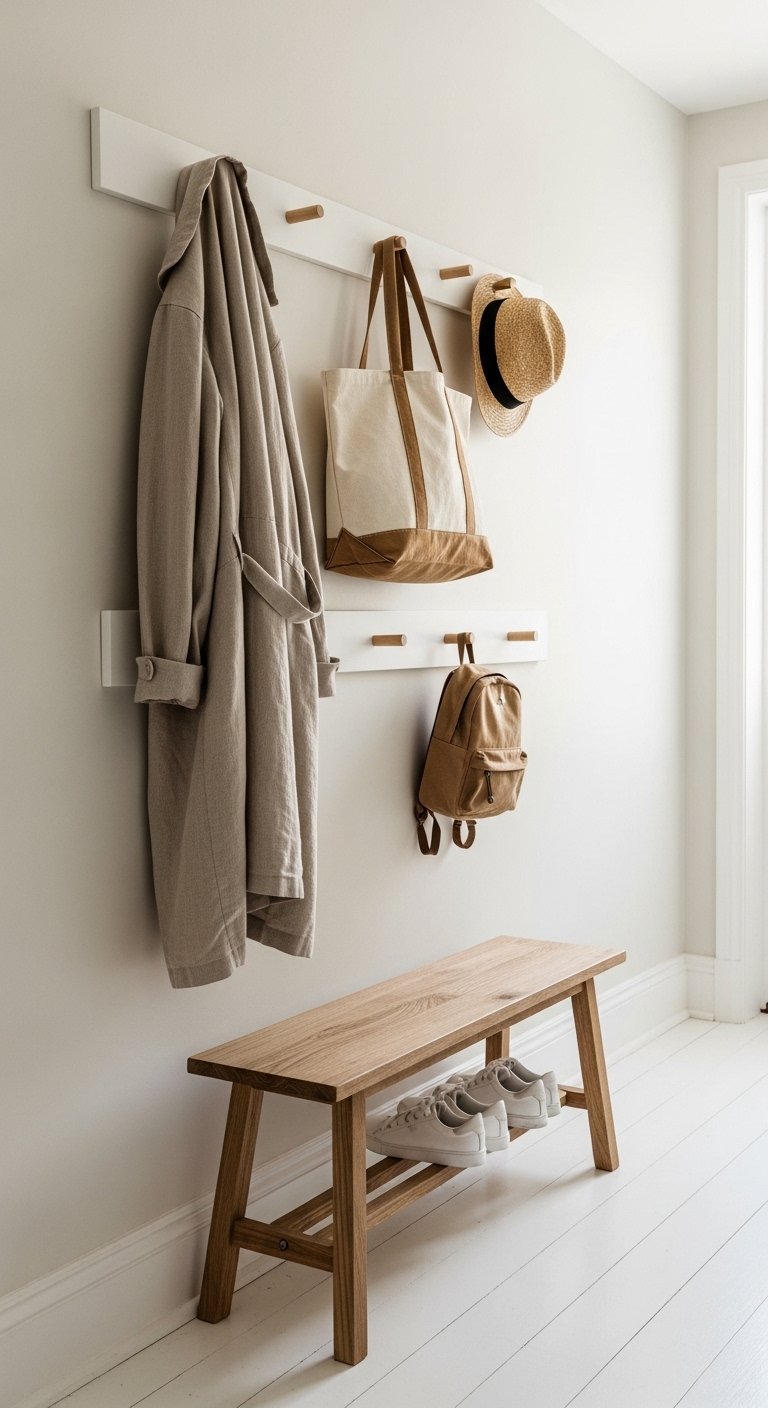
Stop piling coats on a chair. A wall-mounted hook rail keeps coats, bags, scarves, and umbrellas off the floor and organized on the wall.
Wooden shaker-style peg rails work in almost every interior style. Mount them at 170cm from the floor for adults. Add a second lower rail at 110cm if you have children. Problem solved on two levels. Literally.
- Shaker peg rail: suits traditional and farmhouse styles
- Black metal rail with hooks: suits industrial and modern styles
- Brass individual hooks: suits transitional and classic styles
3. Use a Mirror to Open Up the Space
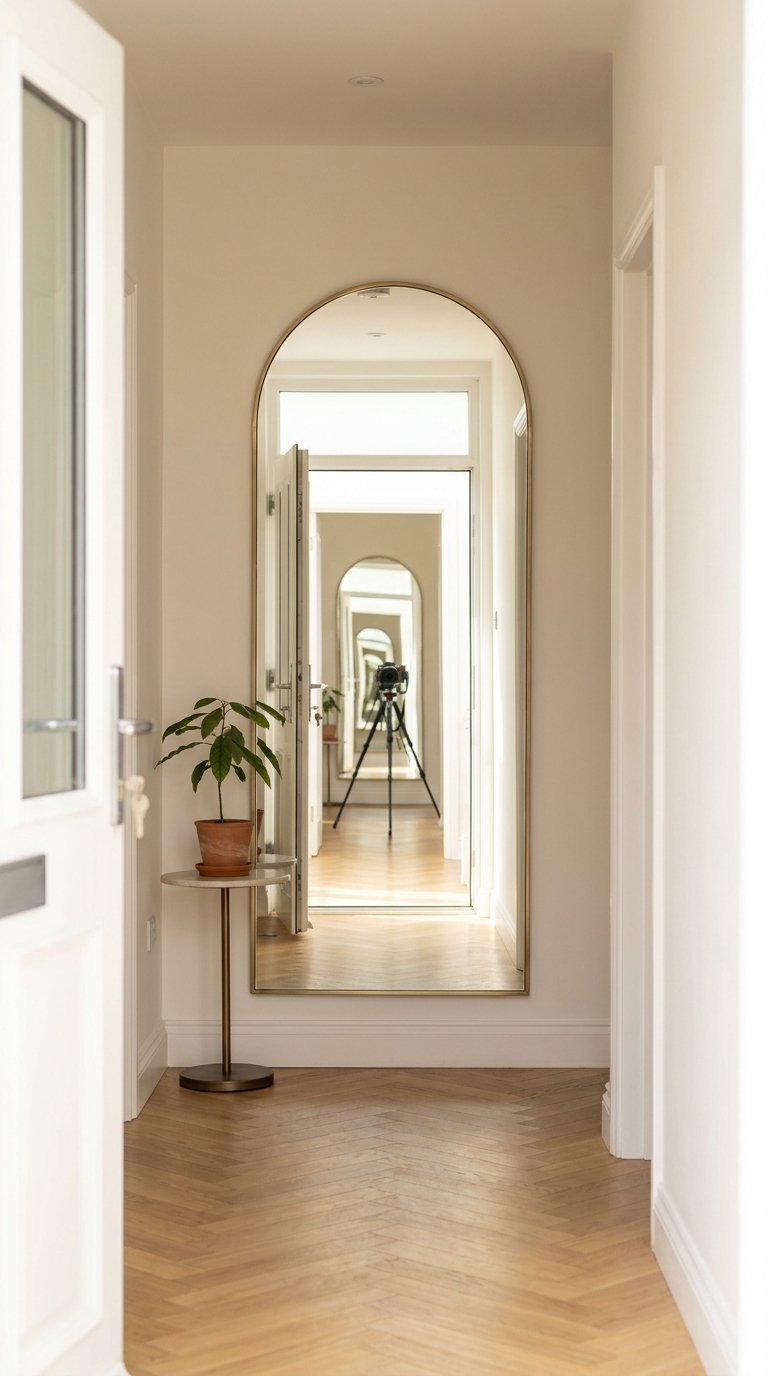
A large mirror in a small entryway does something almost magical. It reflects light and creates the illusion of depth, making a narrow corridor feel twice as wide.
Mount it on the wall opposite or beside the door. Go as large as the wall allows. A full-length mirror also gives you a final outfit check before leaving, which is genuinely useful every single day.
Best shape: Arch-top or full-length rectangular for maximum visual impact.
4. Choose a Slim Entryway Bench
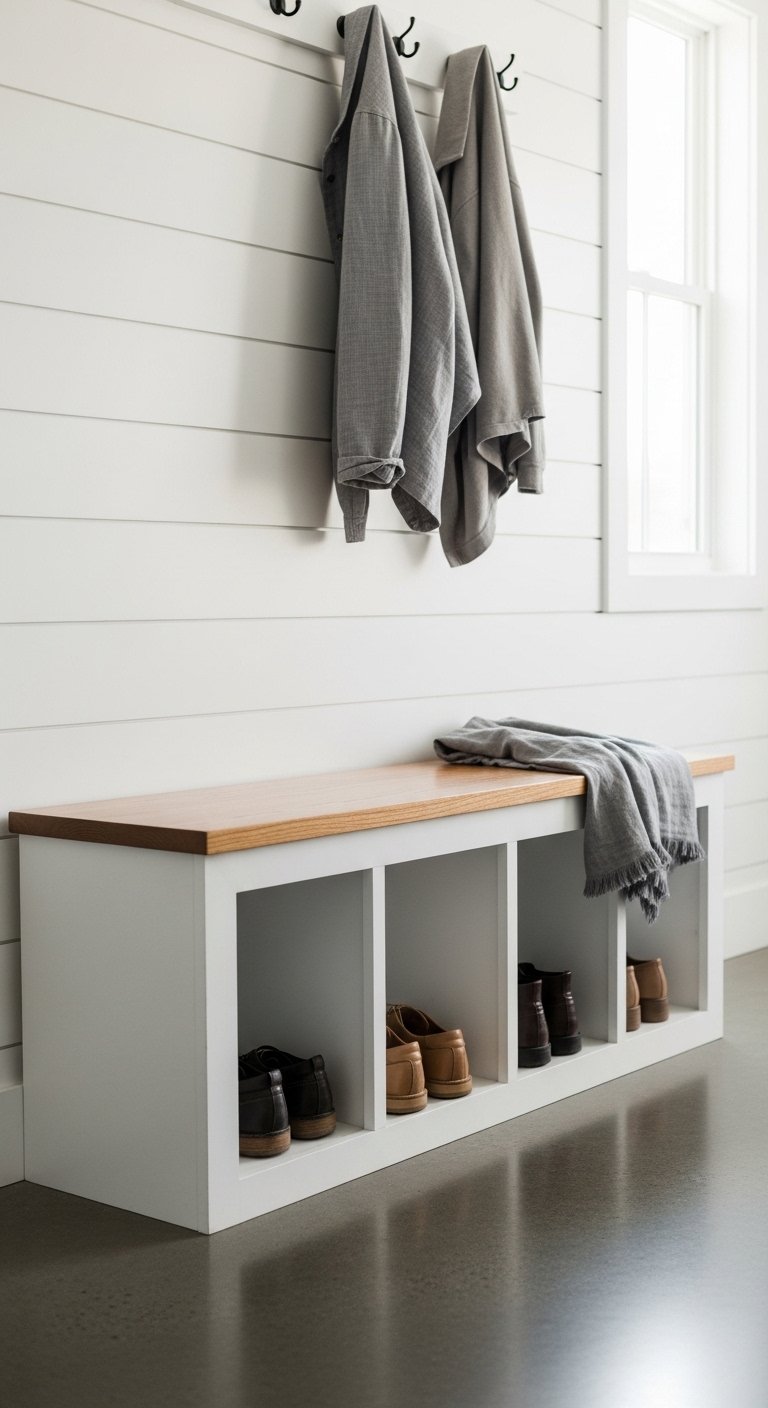
An entryway bench gives you somewhere to sit while putting on shoes. In a small space, choose a slim, backless bench with clean lines.
Better yet, choose one with built-in storage underneath, either open cubbies for shoes or a lift-top compartment. A bench that serves two functions earns its floor space. One that only provides seating probably doesn’t.
5. Mount Floating Shelves
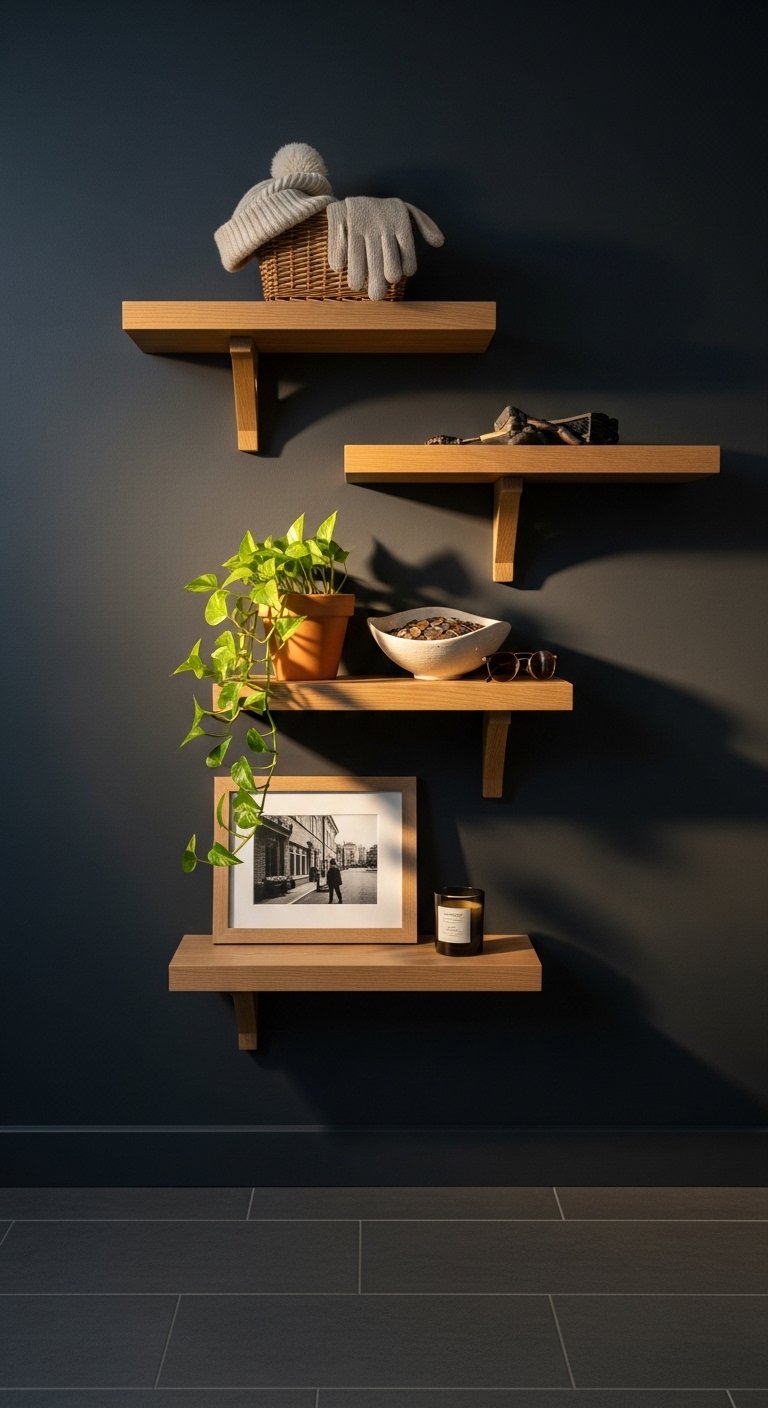
Floating shelves use vertical wall space instead of floor space. In a small entryway this is the right instinct. Mount two or three shelves above eye level for storing items you don’t need daily.
Lower shelves hold decorative items, a small plant, or a basket for sunglasses. Upper shelves hold seasonal items like gloves and hats. The wall does the storage work. Your floor stays clear.
6. Add a Shoe Cabinet
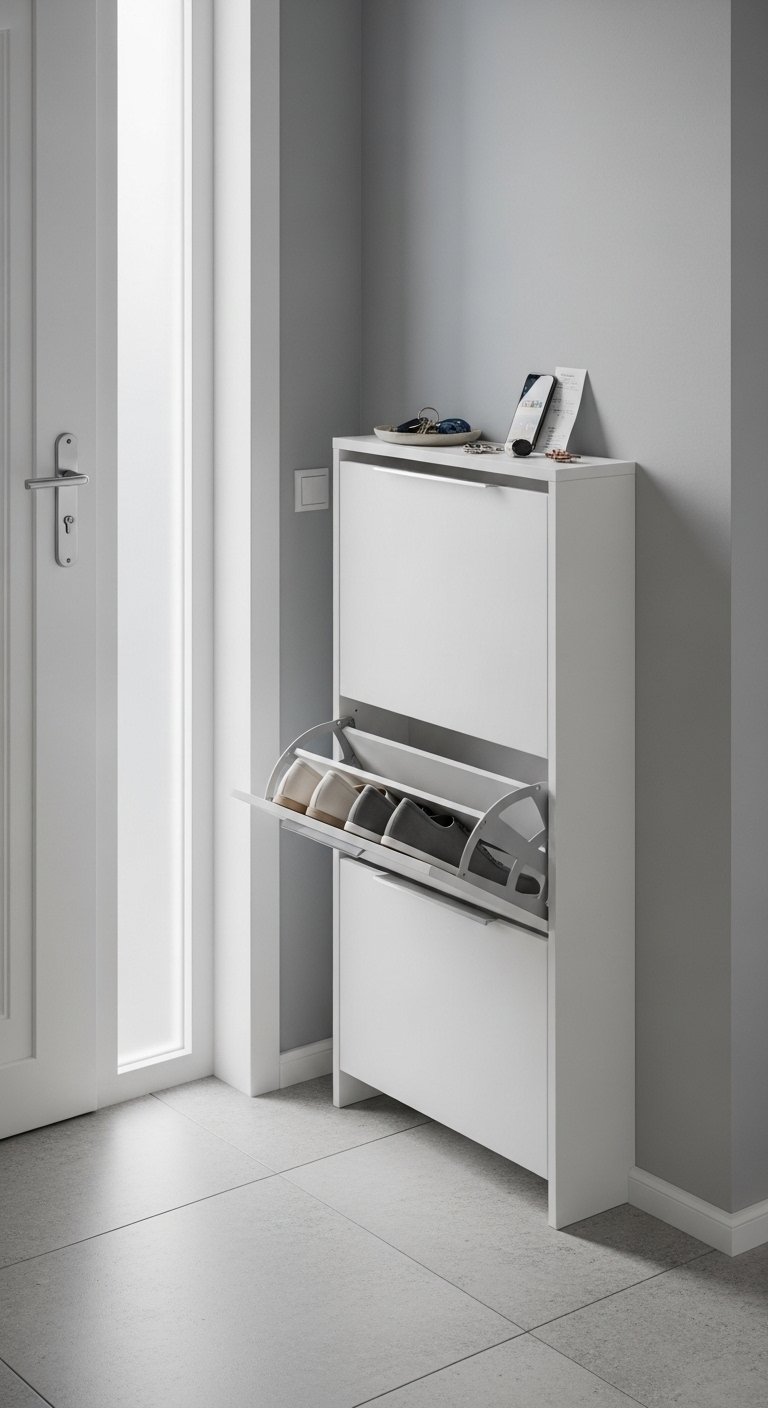
Shoes on the floor are the fastest way to make a small entryway feel chaotic. A slim shoe cabinet with doors keeps footwear hidden and the space looking clean.
Look for cabinets no deeper than 30cm. Some models feature a flip-top or tilt-out door design that takes up zero clearance space when opening. IMO, a closed shoe cabinet beats an open shoe rack in a small entryway every time.
Capacity guide:
- 60cm wide cabinet: stores approximately 6 to 9 pairs
- 90cm wide cabinet: stores approximately 12 to 15 pairs
- Stackable units: scale to your exact wall height
7. Use Vertical Space with a Tall Coat Stand
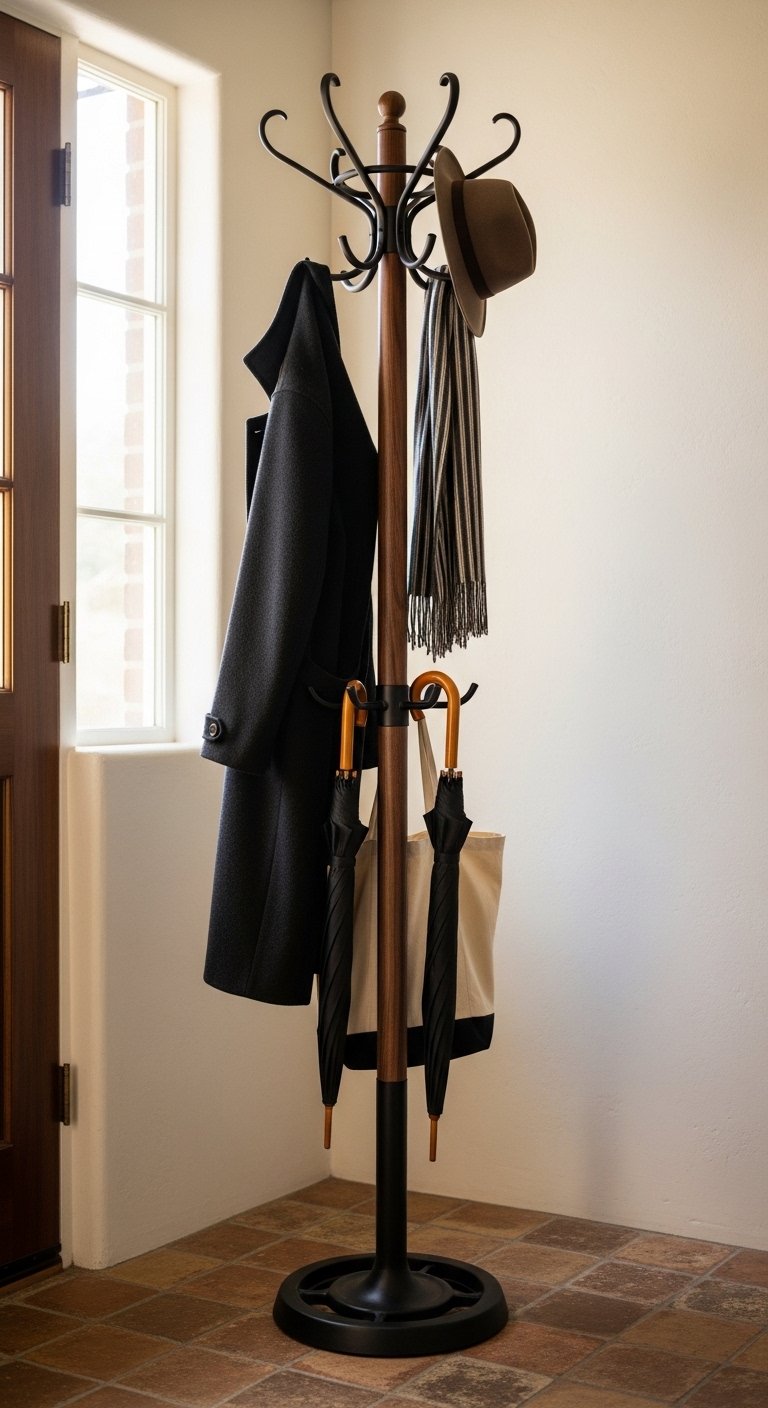
If wall mounting isn’t an option, a tall freestanding coat stand works well in corners. It takes up minimal floor space and holds coats, bags, hats, and umbrellas on a single vertical structure.
Choose a weighted base for stability. Lightweight coat stands tip over constantly, which gets old fast. A solid cast iron or heavy wood base stays put even when fully loaded.
8. Paint the Walls a Bold Color
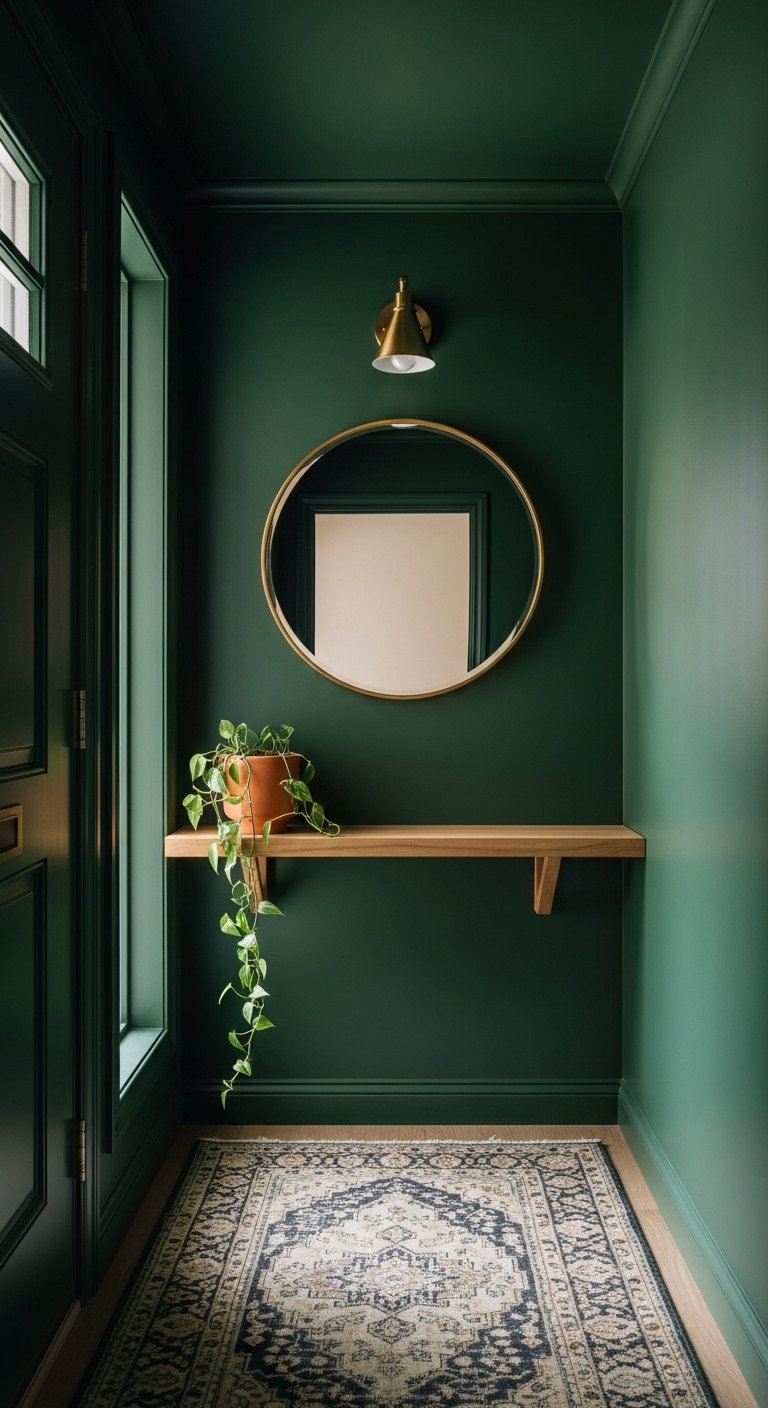
Here’s something counterintuitive. A bold, dark wall color in a small entryway often makes the space feel more intentional and designed rather than smaller.
Deep navy, forest green, charcoal, or terracotta create a strong first impression. The entryway becomes a deliberate design statement rather than a neglected transition space. Paint is the cheapest transformation available. Use it boldly.
9. Lay a Durable Runner Rug
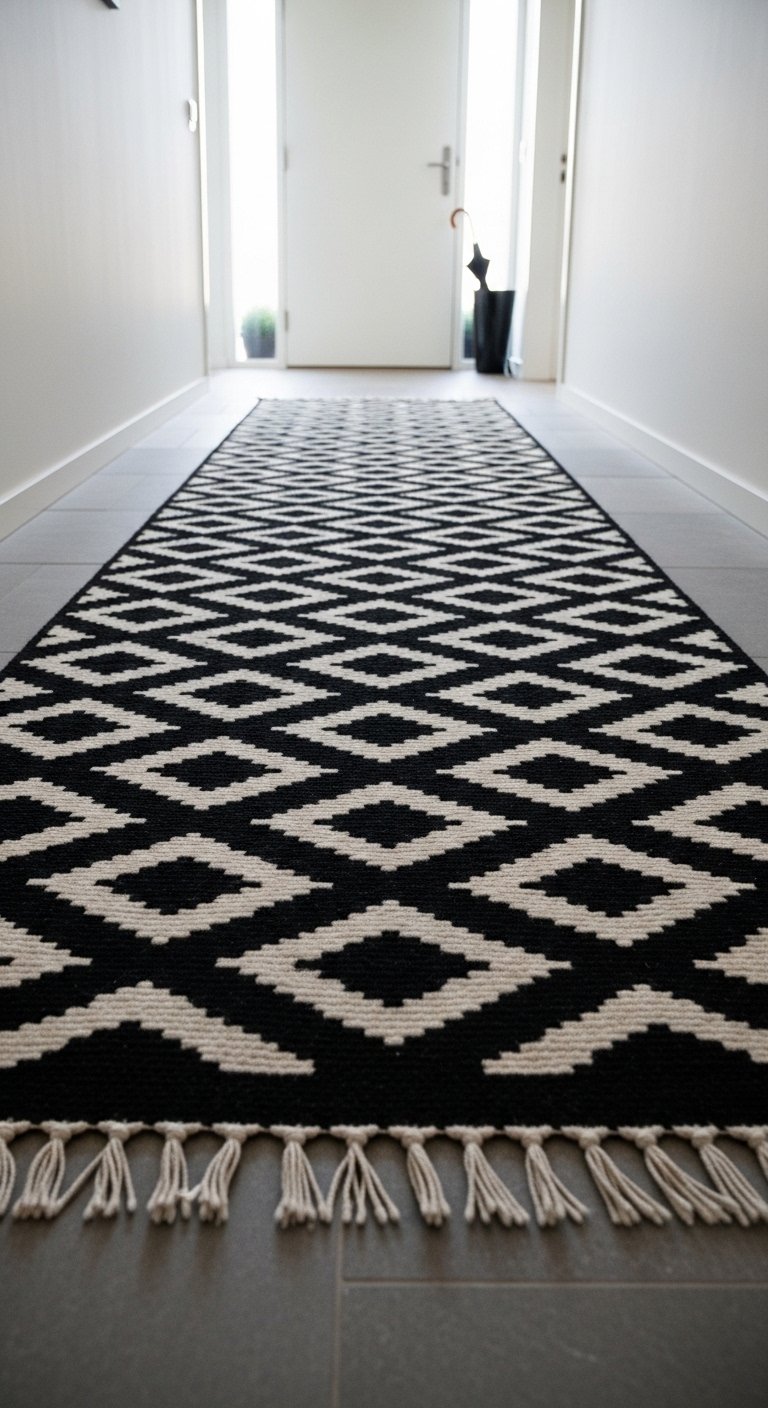
A runner rug defines the entryway zone, adds warmth, and protects your floor from daily foot traffic. In a narrow space, a long thin runner makes the corridor feel longer and more purposeful.
Choose a low-pile rug in a pattern that hides dirt. Geometric patterns in dark tones are the most forgiving. Natural fiber rugs like jute look beautiful but stain easily near doors. Wool or polypropylene withstands heavy use better.
10. Build a DIY Mudroom Locker System
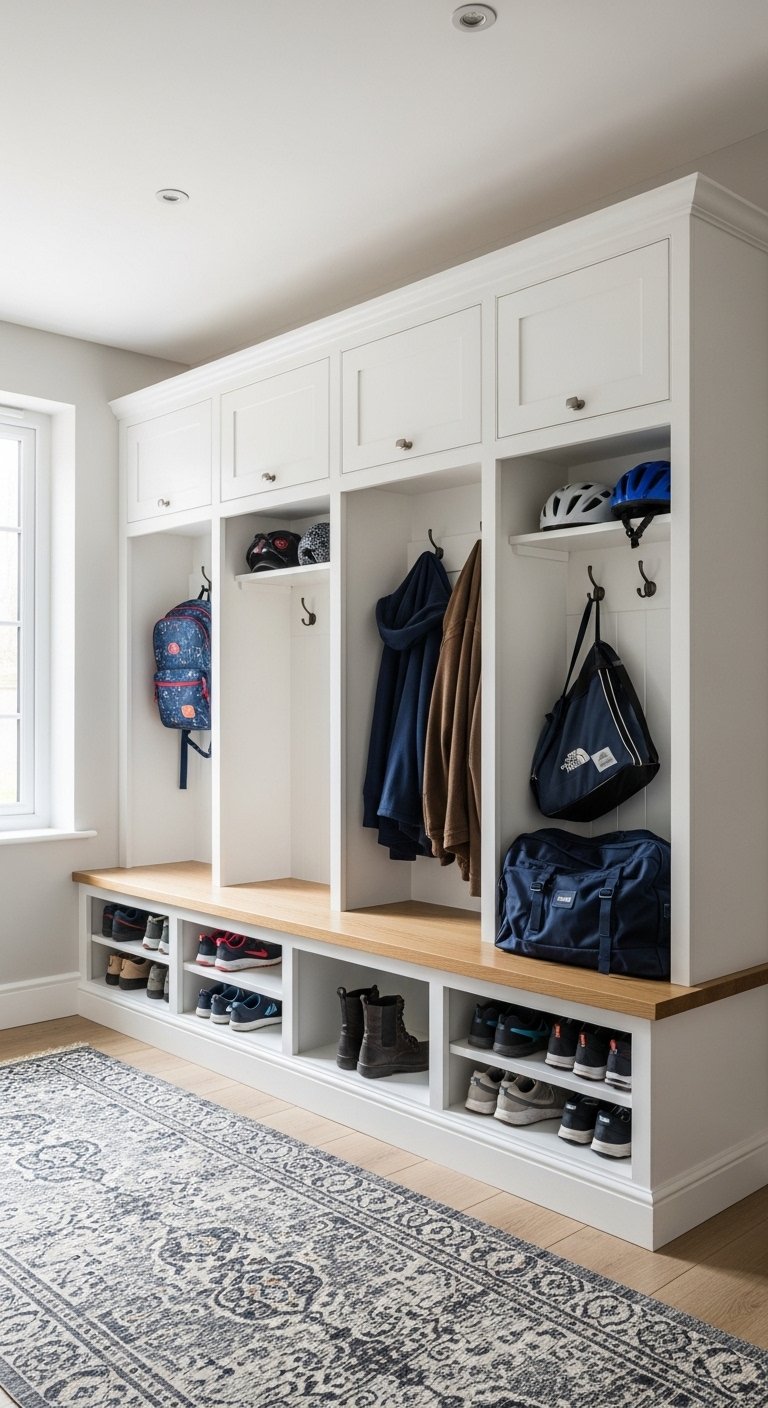
A locker-style mudroom unit combines hooks, shelving, and a bench into one organized system. You can buy modular versions flat-packed or build a simple version from basic MDF panels.
This works particularly well in entryways that open directly into a kitchen or living area. The locker system creates a visual and functional barrier between the entry zone and the main living space.
Basic locker unit includes:
- Upper hook section with 3 to 4 hooks per bay
- Middle open shelf for bags and helmets
- Lower bench with shoe storage underneath
11. Use a Pegboard for Flexible Storage
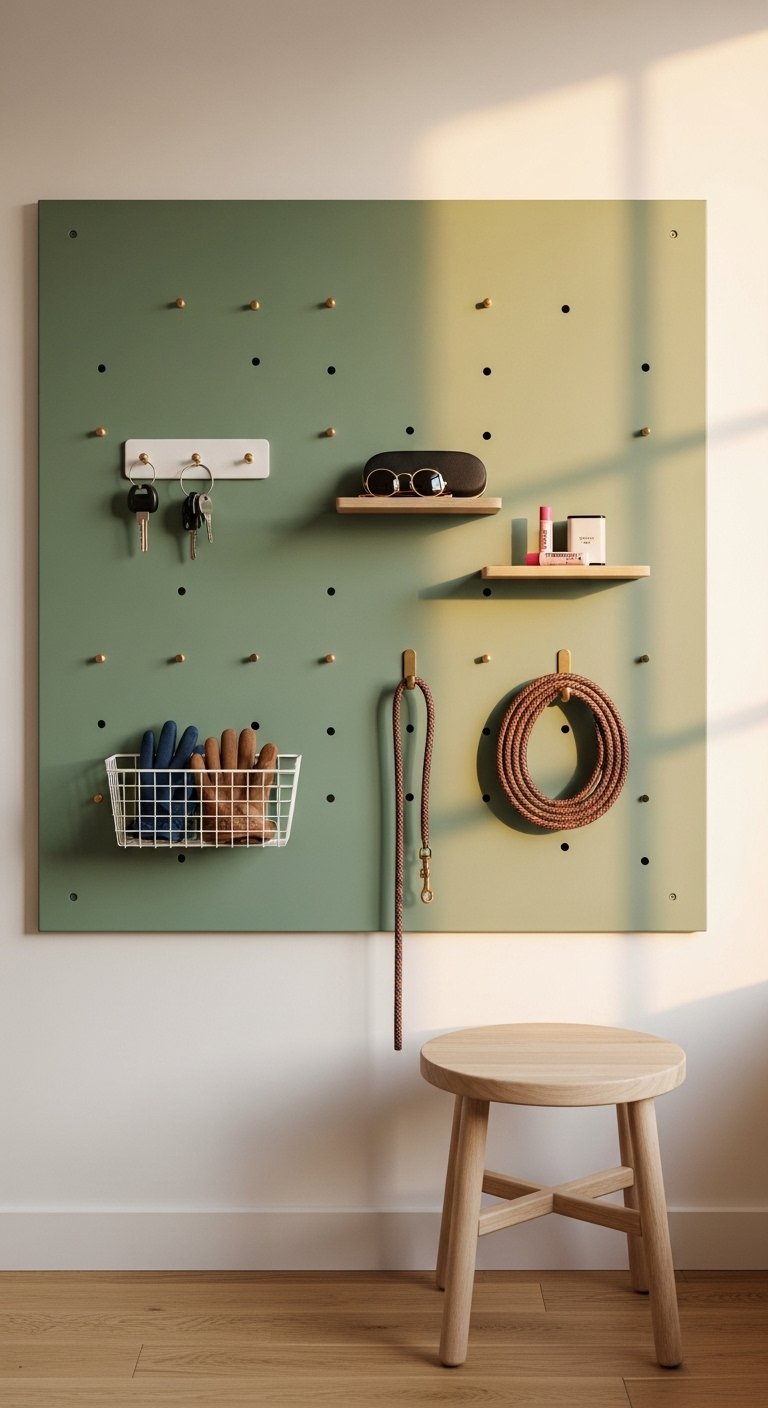
A pegboard wall panel lets you configure hooks, shelves, and holders in any arrangement you need. Unlike fixed hook rails, pegboards adapt as your storage needs change.
Paint the pegboard the same color as the wall behind it for a seamless look. Or paint it a contrasting color and let it become a feature. Add small shelves for keys, a hook for the dog lead, a holder for sunglasses. It costs very little and organizes a lot.
12. Add Under-Stair Storage
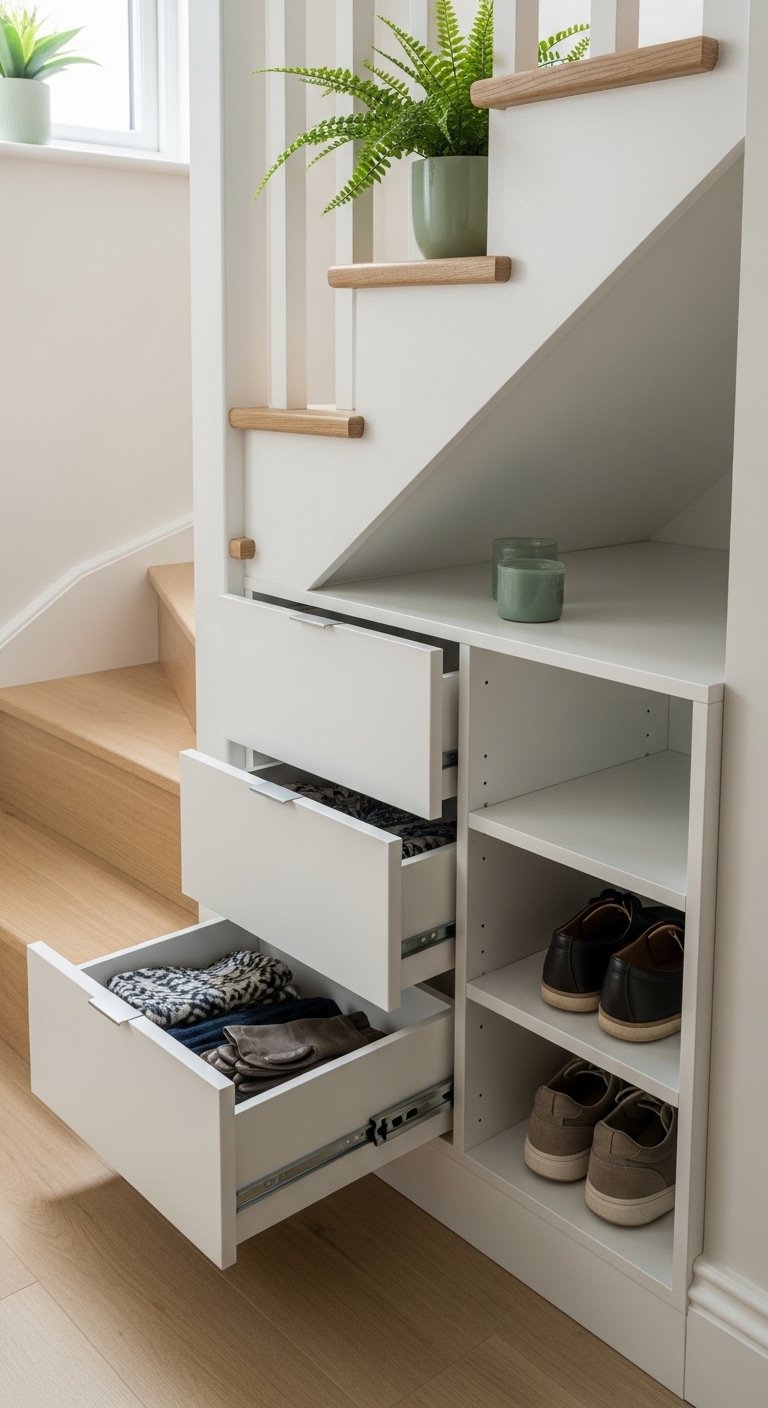
If your small entryway sits at the base of a staircase, under-stair space is storage you’re probably wasting. Built-in drawers, pull-out shoe racks, or simple open cubbies turn dead space into organized storage.
Even a curtain hung across the under-stair opening hides clutter instantly. A proper built-in under-stair unit is one of the best investments in a small home.
13. Hang Artwork or a Gallery Wall
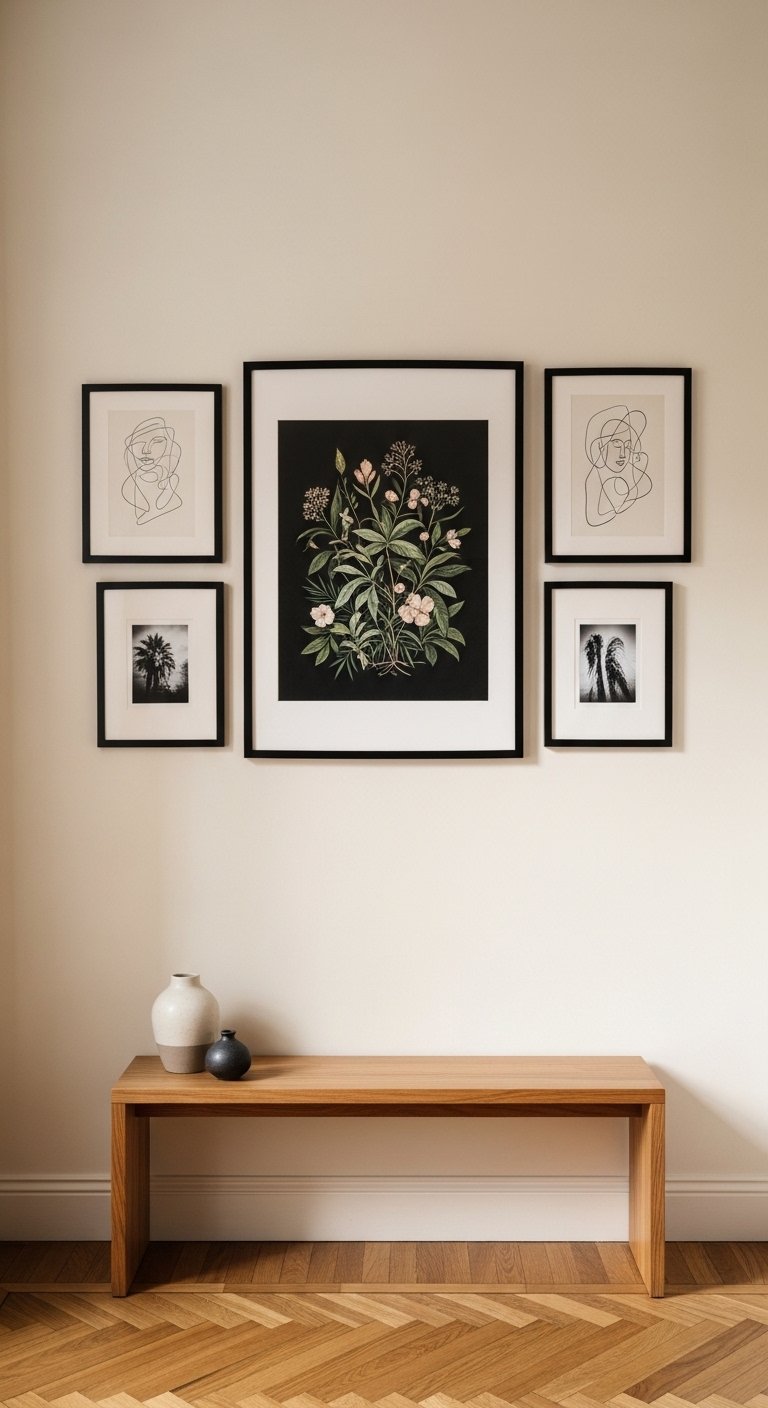
A small entryway without art looks unfinished. A single large artwork or a small gallery wall of three to five framed pieces transforms the space from a functional corridor into a room with personality.
Keep frames in consistent finishes for cohesion. Black frames on a white wall, or natural wood frames on a warm-toned wall, both work well. Art does not need to be expensive. A well-framed print creates the same visual impact as an original painting.
14. Install Wainscoting or Wall Paneling
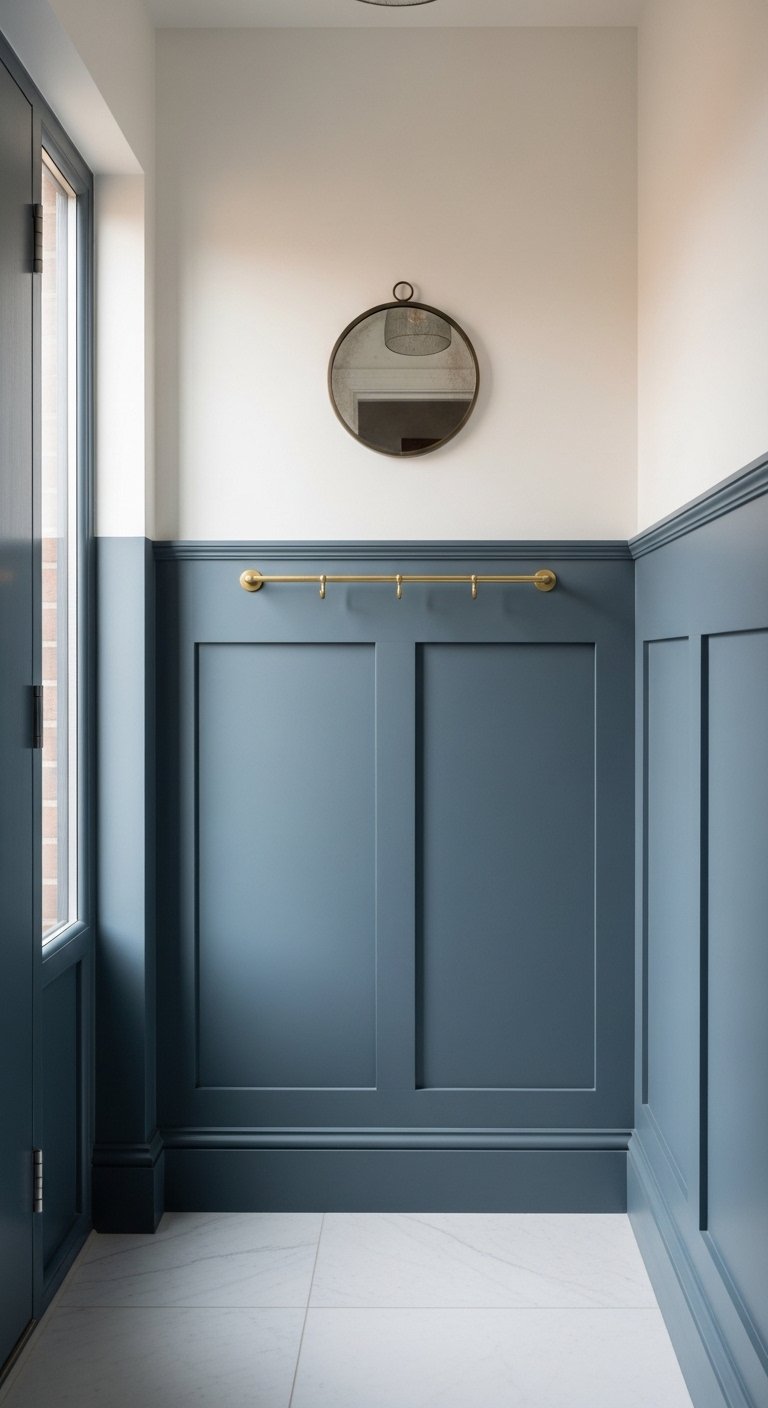
Wall paneling adds architectural detail to a plain entryway wall. Shaker-style paneling, tongue and groove boards, or simple rectangular panel molding all work well.
Paint the paneling in a contrasting color to the upper wall for a classic two-tone effect. Or paint everything the same color for a more modern, seamless look. Paneling elevates a basic entryway into a space that looks genuinely designed.
15. Use a Basket System for Organization
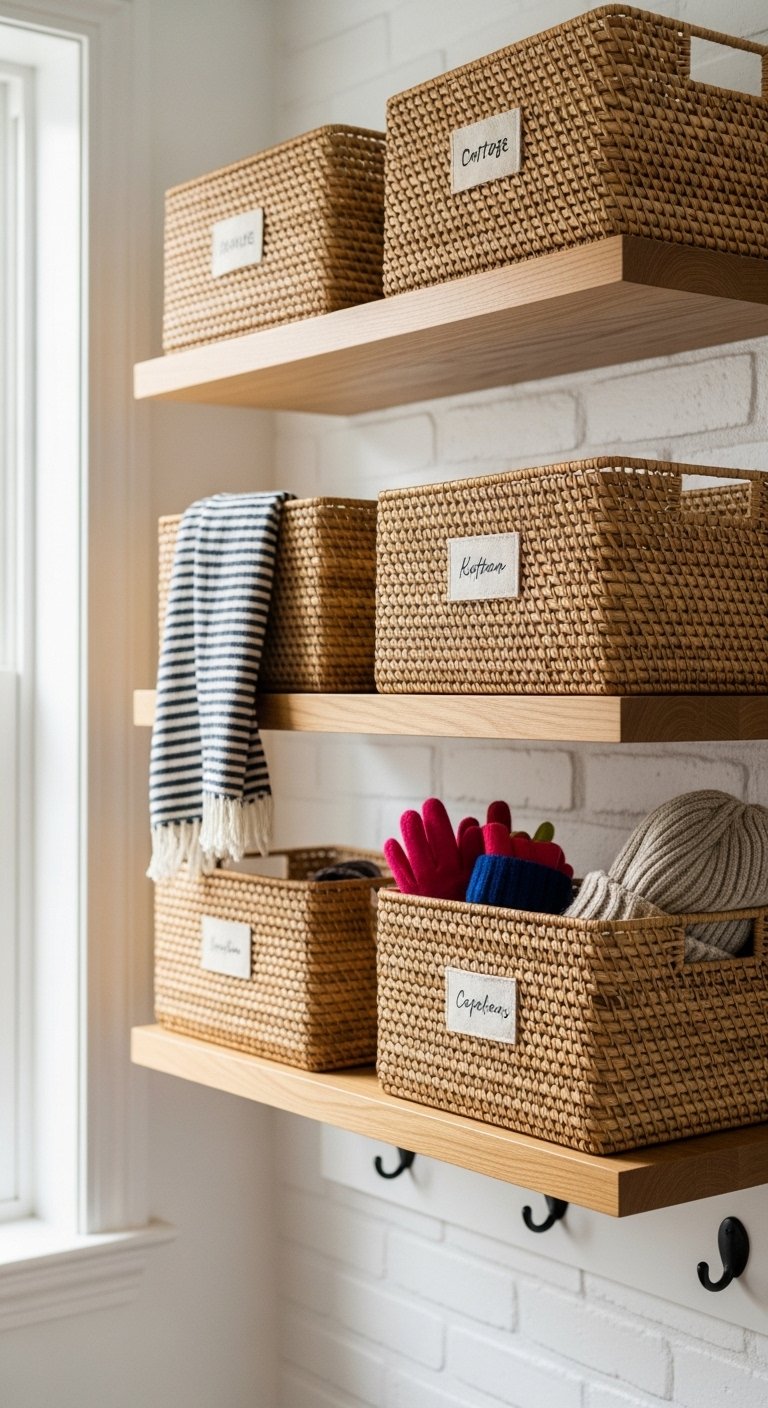
Wicker or rattan baskets on shelves or in cubbies organize without adding visual weight. Assign one basket per household member for gloves, scarves, and small accessories.
Label baskets if you have children. Unlabeled baskets in a family home become one communal dumping ground within three days. Speaking from experience here. 🙂
16. Add a Pendant Light or Statement Fixture
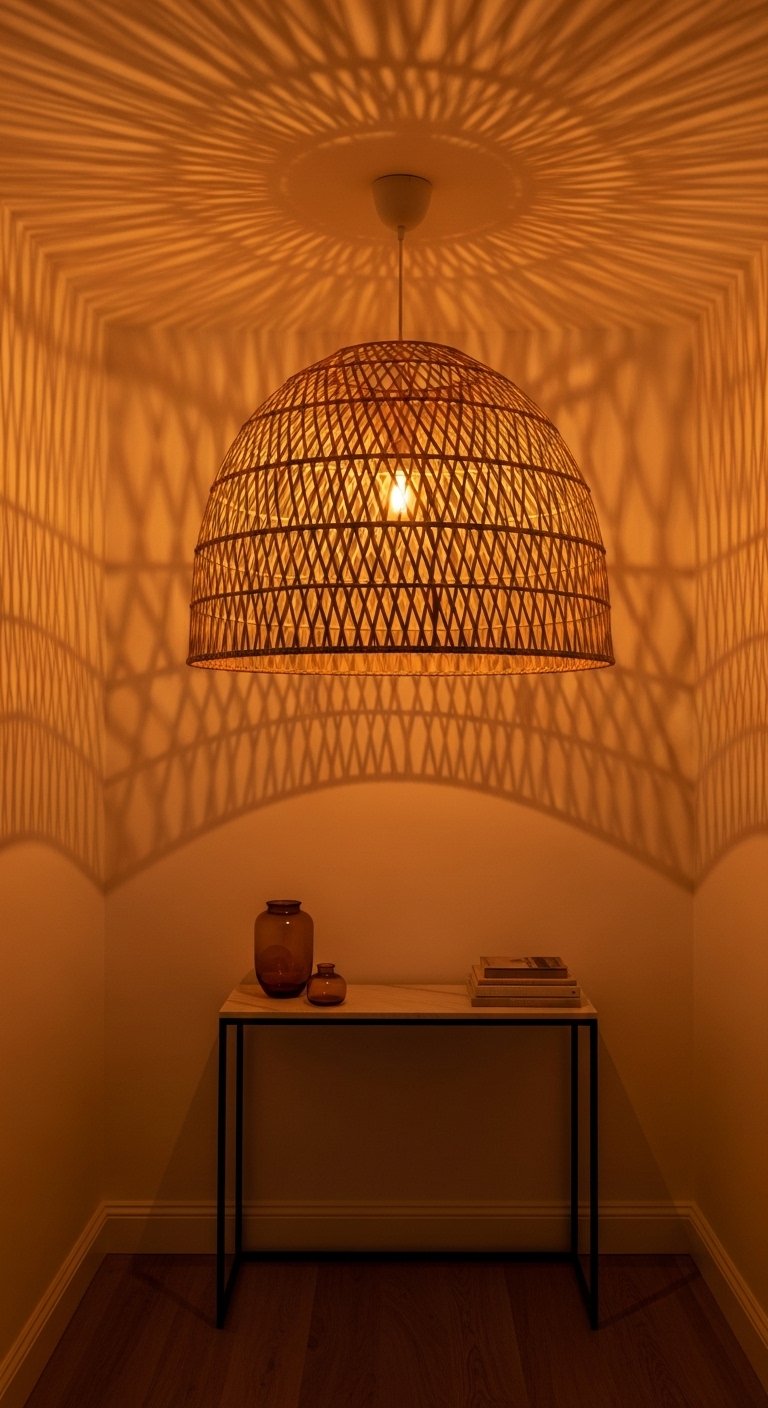
Most entryways suffer from a single flat ceiling light that provides poor illumination and zero personality. Replacing it with a pendant light or statement fixture immediately improves both.
Choose a fixture proportional to the ceiling height. Low ceilings need flush or semi-flush fittings. Higher ceilings suit a proper pendant. A well-chosen light fixture is the quickest way to add character to an entryway without touching the walls or floor.
17. Create a Key and Mail Station
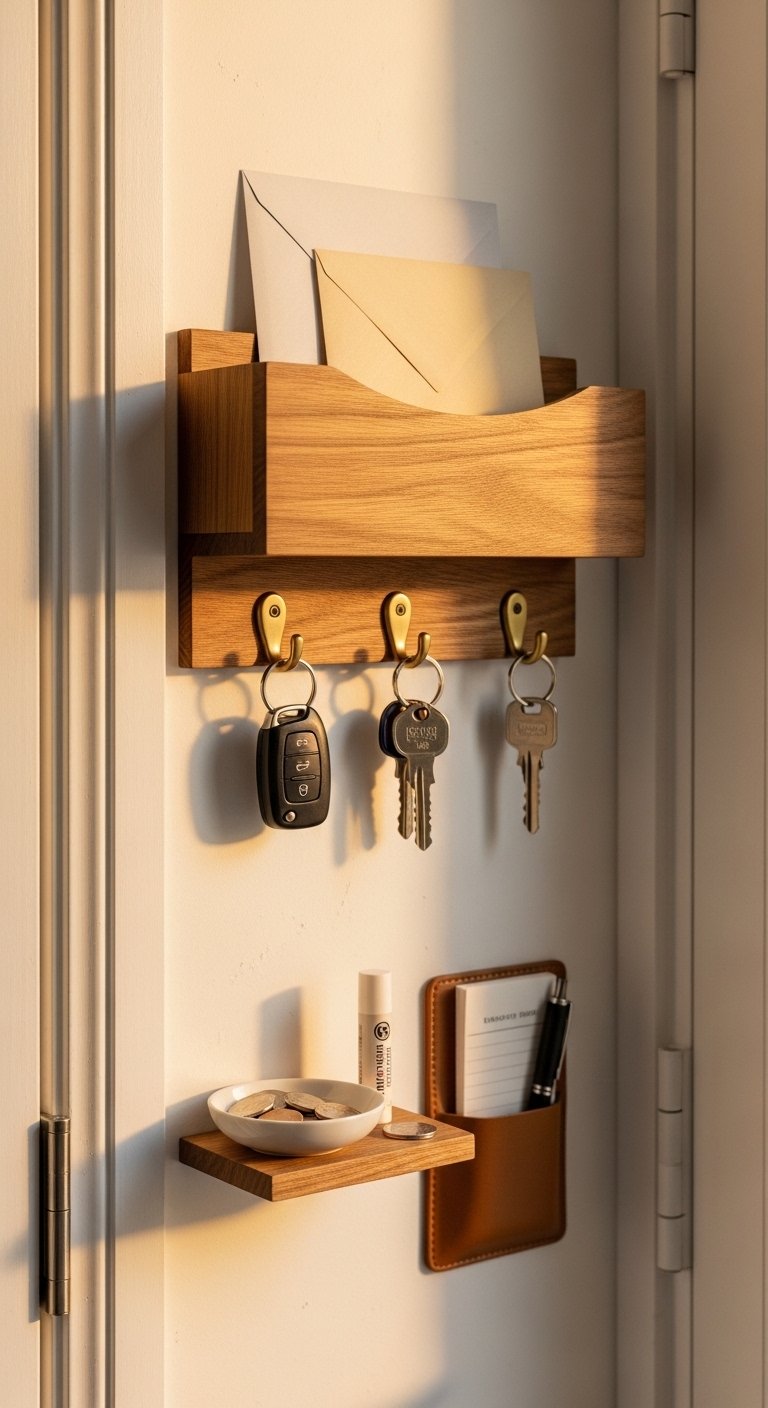
Keys thrown anywhere, mail piled everywhere. Sound familiar? A dedicated key and mail station solves both problems in one small wall installation.
Mount a small letter holder, a key hook, and a small shelf at a convenient height near the door. Everything has a home. You stop losing your keys. It’s genuinely life-improving.
What a good key station includes:
- 2 to 4 key hooks at arm-reach height
- A narrow letter tray or slot for incoming mail
- A small dish or tray for coins and small items
- Optional: a small notepad and pen holder
18. Use Light Colors to Maximize Brightness
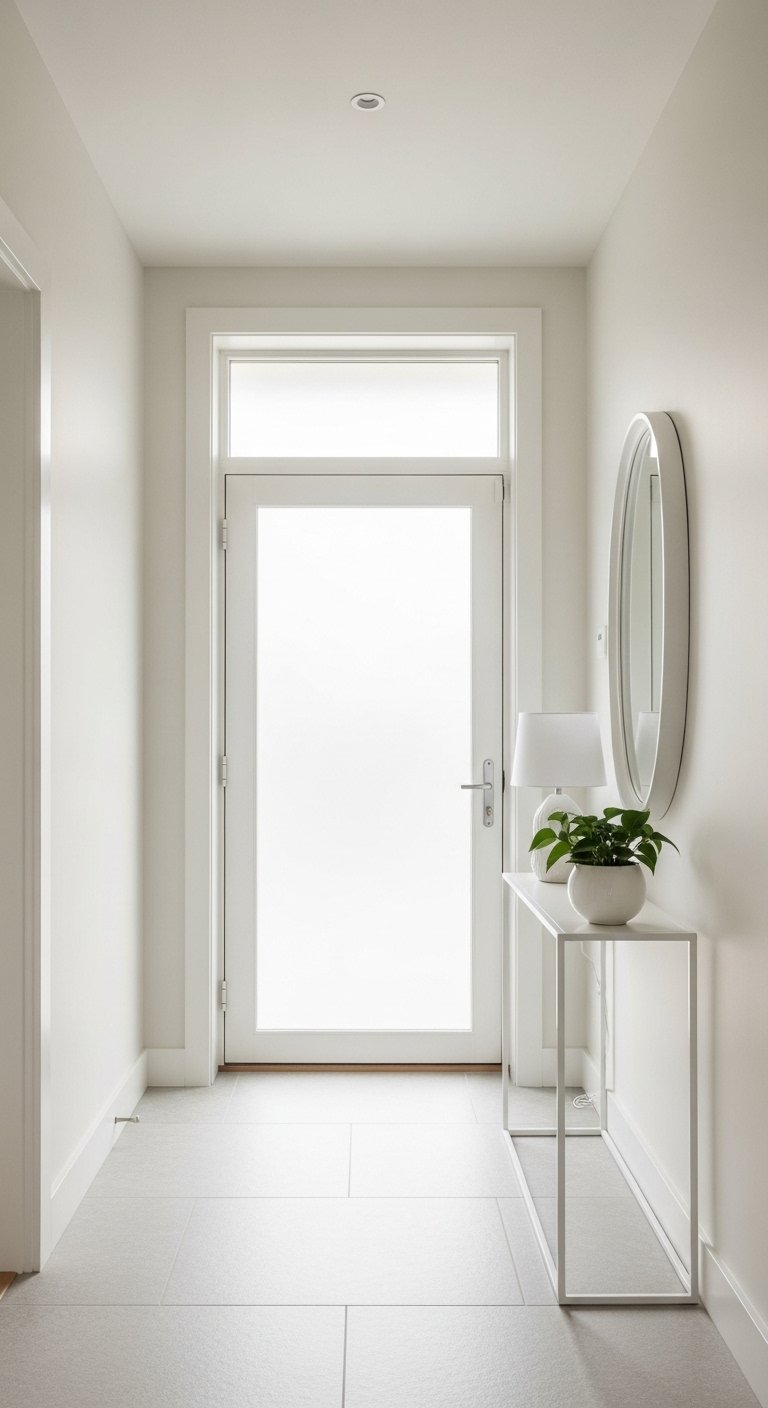
If bold colors feel too risky, light colors maximize the feeling of space and brightness in a small entryway. Soft white, warm cream, pale grey, and light sage all work well.
Pair light walls with a light ceiling. Dark ceilings compress a small space. Light ceilings lift it. Add warm-toned lighting to prevent a light-colored entryway from feeling clinical.
19. Mount a Fold-Down Bench
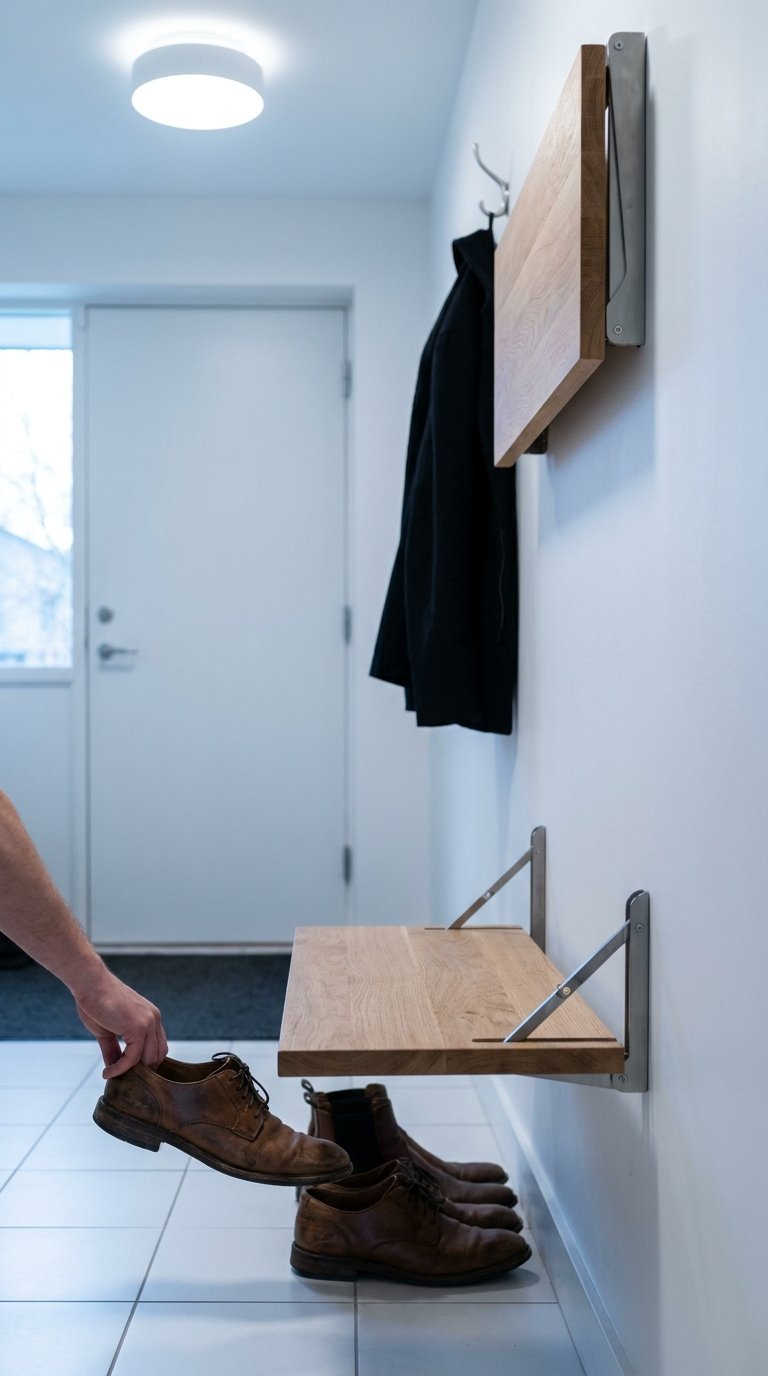
A fold-down wall bench mounts flat against the wall when not in use and folds down to create a seat when needed. It takes up zero floor space in its folded position.
This is the ideal solution for entryways so narrow that a permanent bench blocks traffic flow. Fold it down to put shoes on, fold it back up, done. Simple, functional, space-efficient.
20. Add Plants for Life and Color
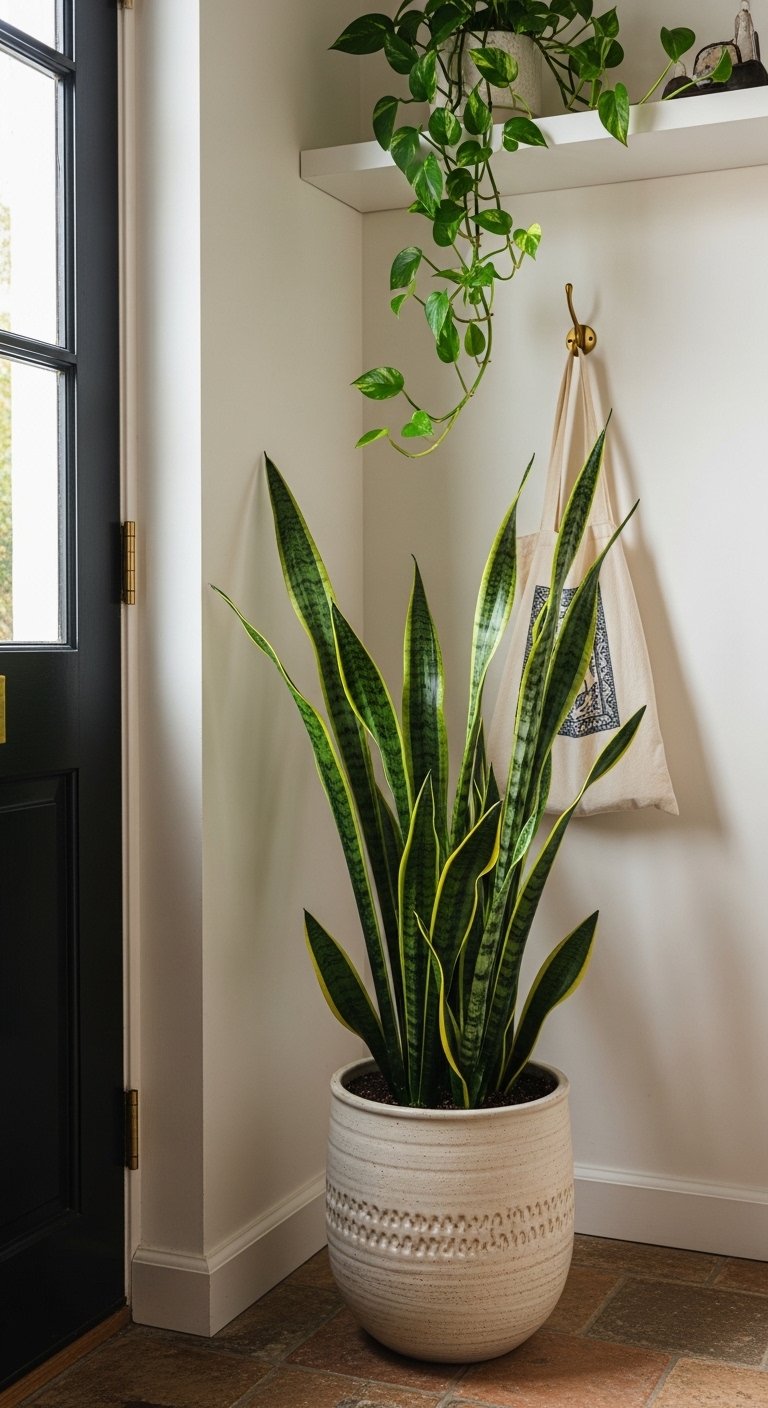
Plants in an entryway signal that the home is cared for. They add color, texture, and life to a space that often has none of the three.
Choose plants that tolerate low light since entryways rarely get strong natural light. Pothos, snake plants, ZZ plants, and cast iron plants all handle low-light conditions well. One medium plant makes more impact than three small ones.
21. Use Mirrored Furniture
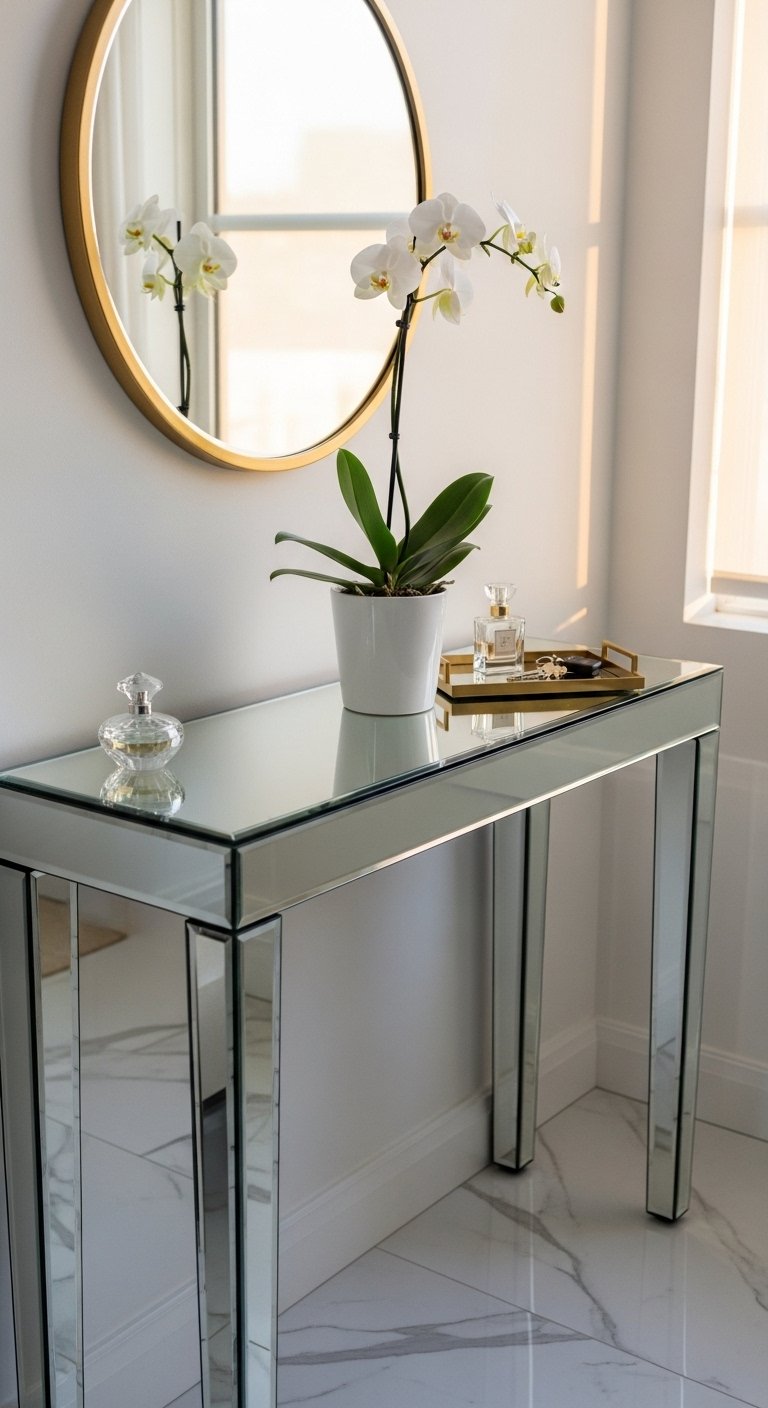
Mirrored furniture such as a mirrored console table or mirrored cabinet reflects light and visually expands a small entryway in the same way a wall mirror does.
The reflective surface also makes the space feel more glamorous and considered. It suits transitional and glam interior styles particularly well. In a very small entryway, a mirrored cabinet front does double duty as both storage and visual expansion.
22. Install a Built-In Closet
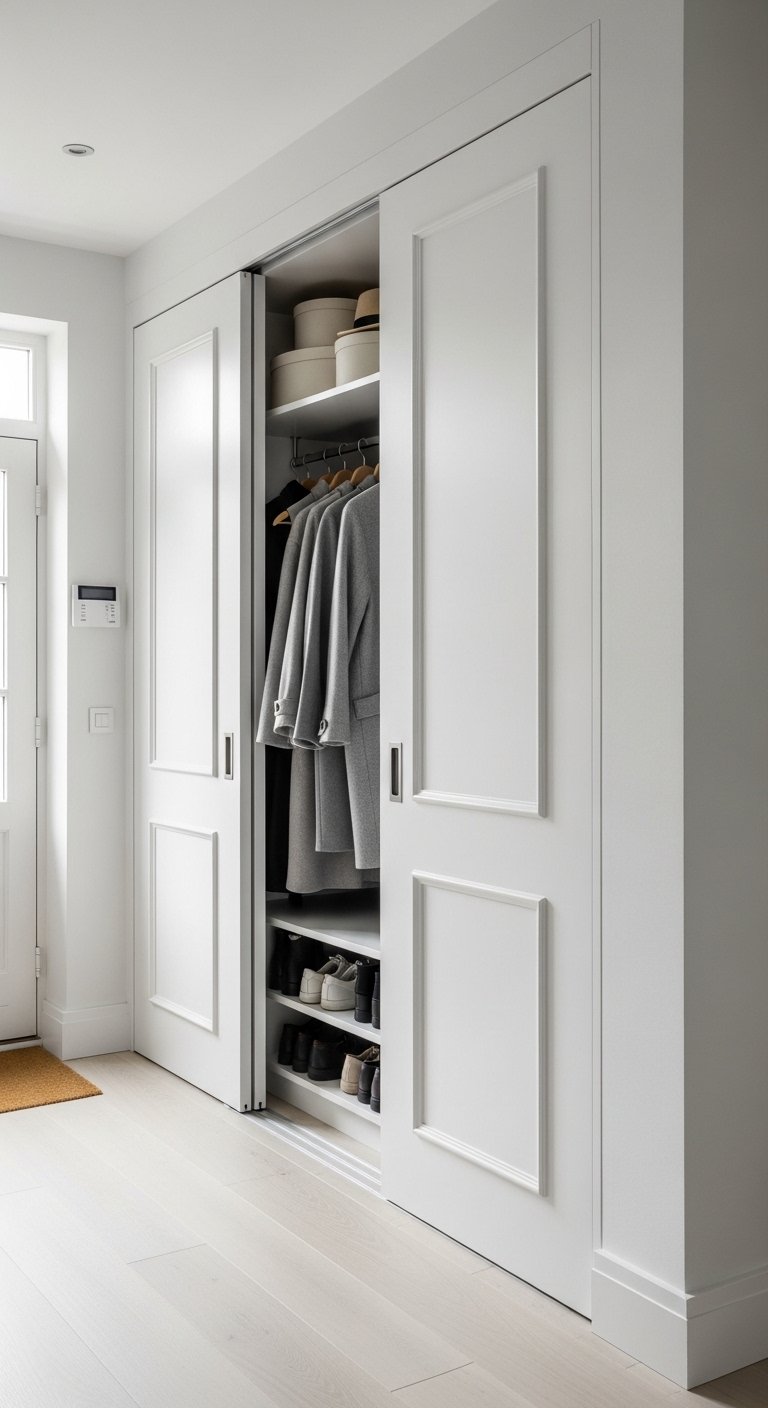
If your budget allows, a built-in closet with doors in the entryway hides everything. Coats, shoes, bags, sports equipment, all of it disappears behind closed doors.
The entryway looks clean at all times regardless of what’s inside. Sliding doors work better than hinged doors in tight spaces since they require no swing clearance. This is the most complete storage solution on this list.
23. Add a Chalkboard or Whiteboard Wall
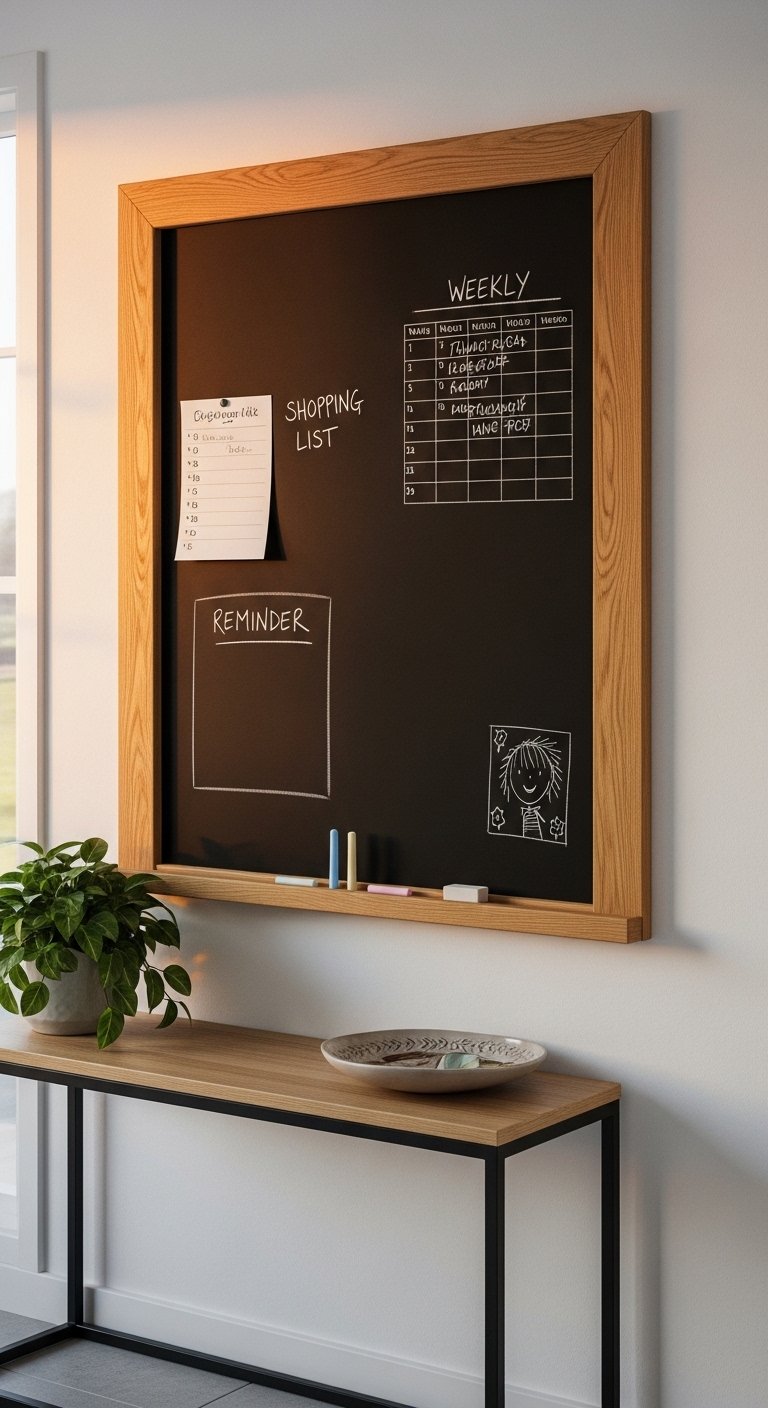
A chalkboard or whiteboard panel mounted near the door keeps the household organized. Shopping lists, reminders, school notes, and appointment reminders all live in one visible place.
Use a framed chalkboard panel rather than painting an entire wall. It’s easier to remove and looks more intentional. A framed chalkboard also doubles as a design element rather than just a functional board.
24. Use Transparent or Lucite Furniture
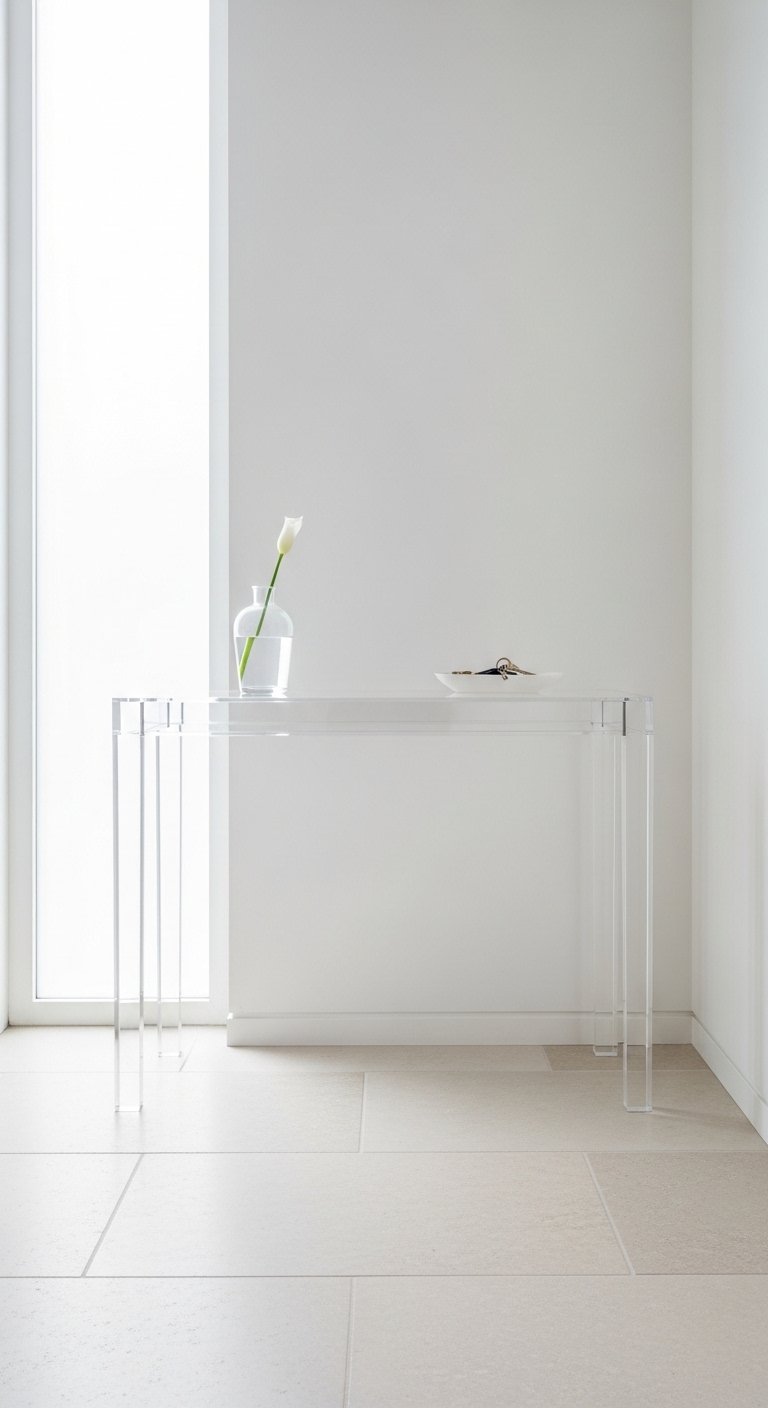
Transparent acrylic or lucite furniture takes up visual space without taking up actual space. A lucite console table or acrylic stool creates function without adding visual weight to a small entryway.
The eye passes straight through transparent furniture, which keeps the space feeling open. This works particularly well in very narrow entryways where any visual mass feels oppressive.
25. Layer Your Lighting
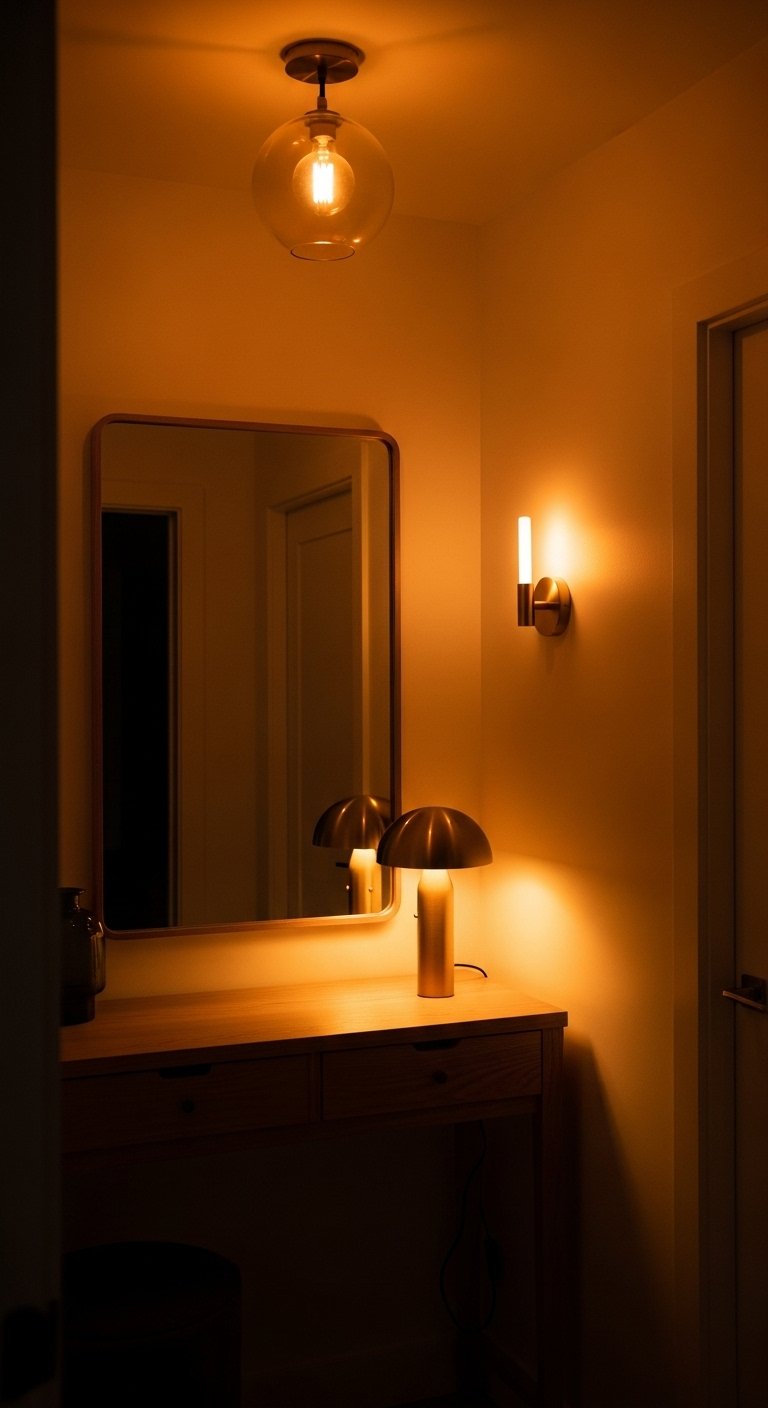
One light source is never enough. Layered lighting in a small entryway uses a combination of overhead light, a table lamp on the console, and possibly a wall sconce to create a warm, welcoming atmosphere.
FYI, lighting is the most overlooked element in entryway design and the one that makes the fastest difference when corrected. A warm, well-lit entryway feels welcoming. A dim, single-bulb entryway does not, regardless of how well everything else is styled.
Entryway lighting layers:
- Overhead: ceiling fixture or pendant for general illumination
- Table: small lamp on console for warmth
- Accent: wall sconce or picture light for depth
How to Plan a Small Entryway
Before buying anything, apply these three filters to every decision:
Does it serve two functions? Every piece in a small entryway should do at least two things. A bench with storage. A mirror with hooks. A console table with drawers. Single-function furniture wastes precious space.
Does it clear the floor? Wall-mounted, floating, and fold-down solutions always beat freestanding options in small spaces. Clear floors make small spaces feel larger. Cluttered floors make them feel smaller.
Does it belong near a door? Only store what you actually use daily near the door. Seasonal items, spare equipment, and infrequently used bags belong in a closet elsewhere. The entryway holds daily use items only.
Common Small Entryway Mistakes
- Overcrowding with furniture. Two well-chosen pieces beat five poorly chosen ones.
- Ignoring vertical space. The wall above eye level is usable storage space most people never touch.
- Using the wrong size rug. A rug too small for the space looks like a postage stamp. Size up.
- Poor lighting. A single overhead bulb is never enough. Add warmth with layered sources.
- No designated spot for keys. If keys don’t have a home, they’ll live everywhere else.
Final Thoughts
A small entryway forces good design decisions. Every item must earn its place. Every wall, corner, and vertical surface is an opportunity. The 25 ideas above cover storage, style, lighting, and layout for every budget and space size.
Pick two or three ideas that solve your biggest problems first. Get those right before adding anything else. A functional entryway makes every day slightly easier. That compounds over time in ways that genuinely matter.
Your home deserves a proper entrance. Start there. :/