21 Basement Remodeling Ideas to Stop Wasting Square Footage
Your basement is probably one of the most underused spaces in your home. Most people treat it like a storage unit with a ceiling. But here’s the thing: it’s square footage you’re already paying for. Let’s fix that.
Whether you want more living space, a place to make money, or just somewhere to escape the chaos upstairs, these 21 ideas cover the full range. No fluff, no filler just real options with real value.
1. Turn It Into a Home Theater
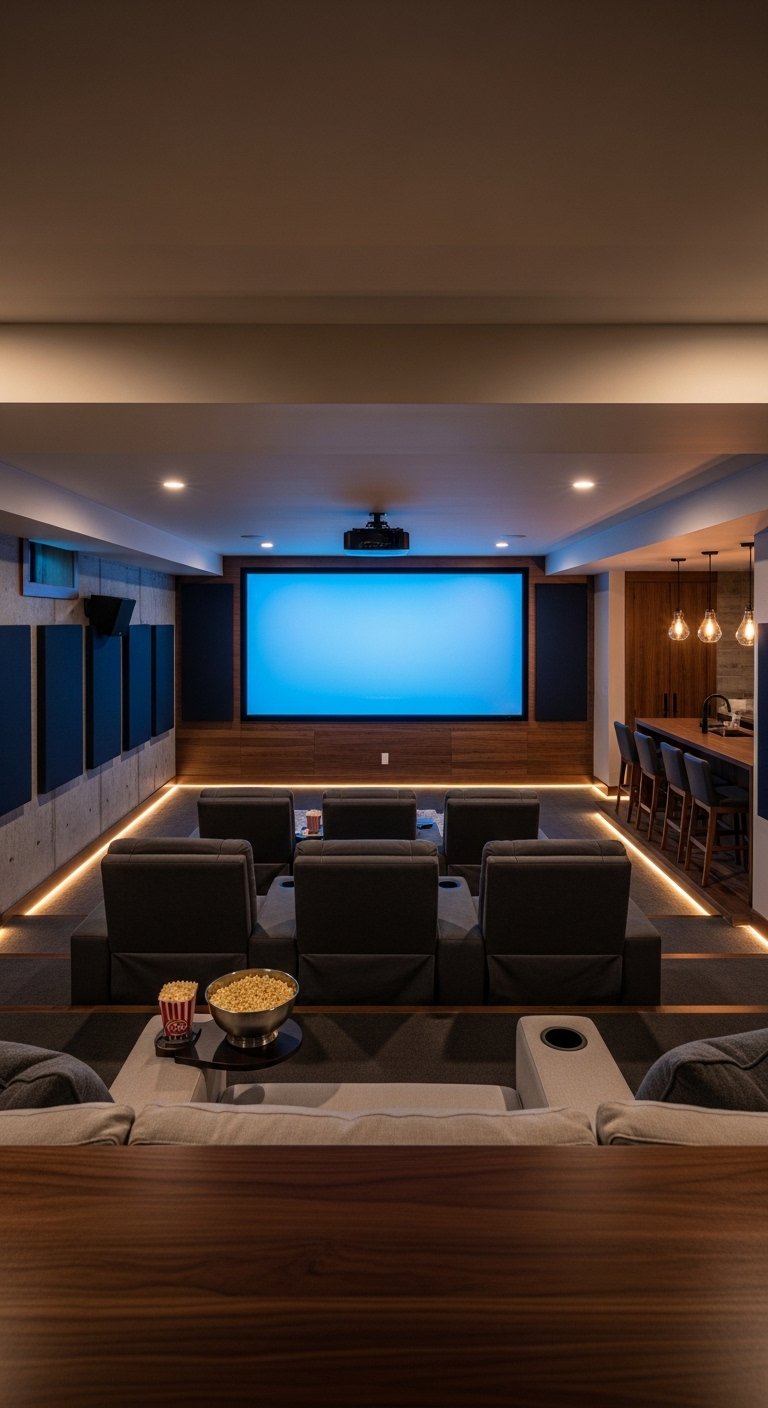
A basement is already dark and enclosed. That makes it the best room in your house for a home theater setup.
You need a few things to do this right:
- A projector or large-screen TV (100+ inches gives you the real experience)
- Acoustic panels on walls to kill the echo
- Tiered seating if you have the ceiling height
- Blackout curtains or no windows at all (most basements already win here)
The key investment is sound. A bad picture is annoying. Bad sound ruins the whole thing. Budget accordingly.
2. Build a Home Gym
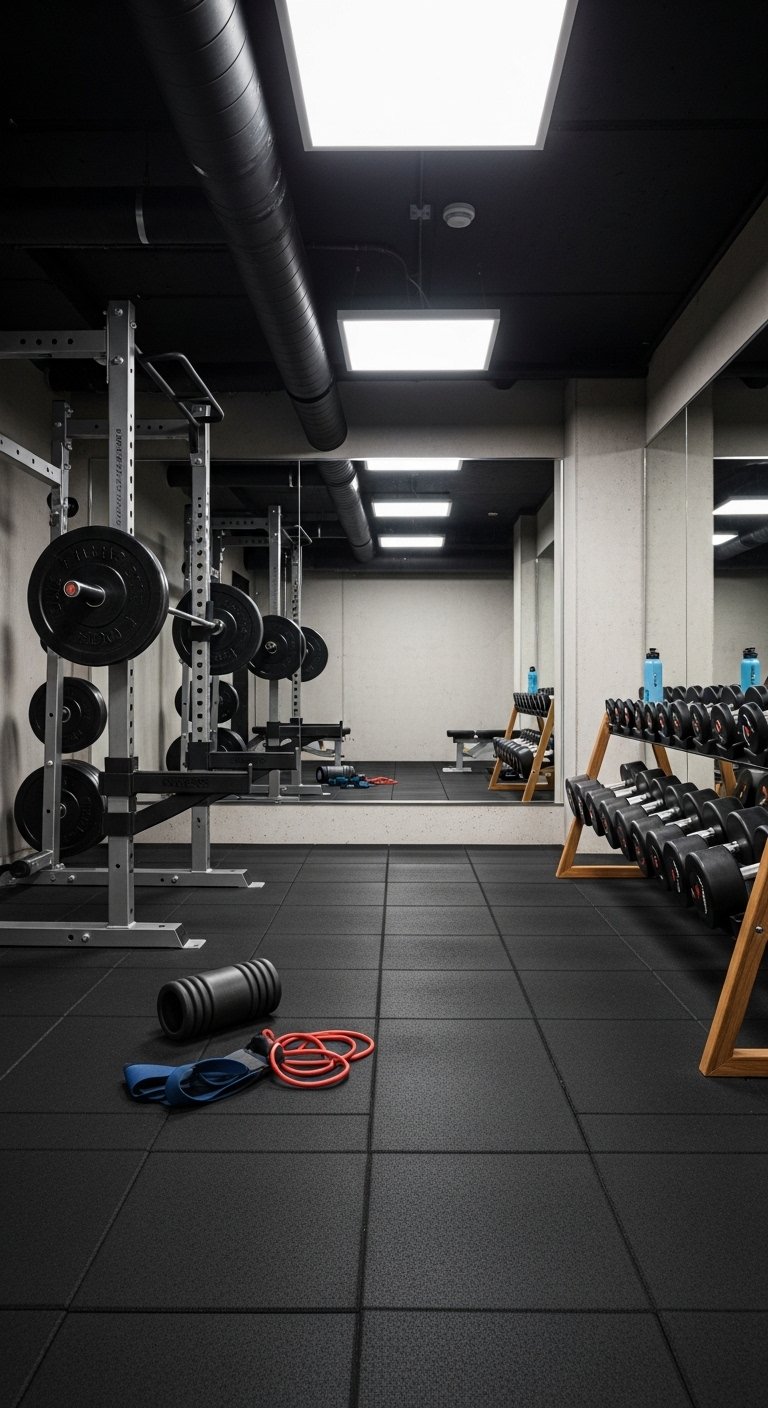
Gym memberships cost money every month, forever. A home gym costs money once. The math is obvious.
Basements work well for gyms because:
- Concrete floors handle heavy equipment
- You don’t disturb people upstairs (as much)
- Temperature stays cooler, which helps during intense workouts
- You don’t need to impress anyone with the decor
Add rubber flooring mats, a mirror wall, and decent ventilation. That’s the baseline. The equipment you add depends on your goals.
3. Create a Rental Unit
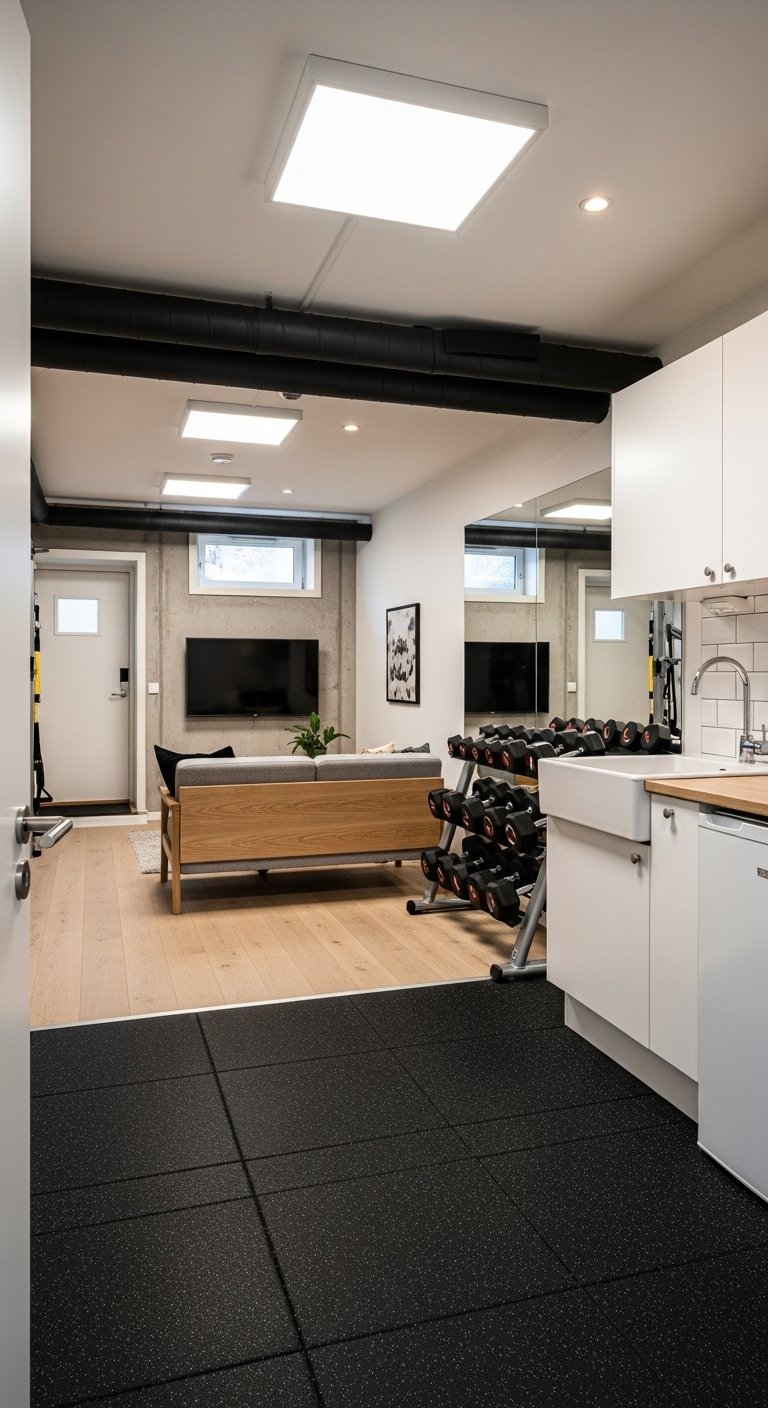
If your basement has a separate entrance, this is the highest-ROI move on this list. A legal basement apartment generates income every single month.
Before you start, check:
- Local zoning laws ____not every area allows basement rentals
- Egress window requirements — most codes require proper emergency exits
- Ceiling height minimums — usually 7 feet for a legal unit
- Separate utility metering — optional but makes billing cleaner
The upfront cost is high. The long-term return is higher.
4. Design a Kids’ Playroom
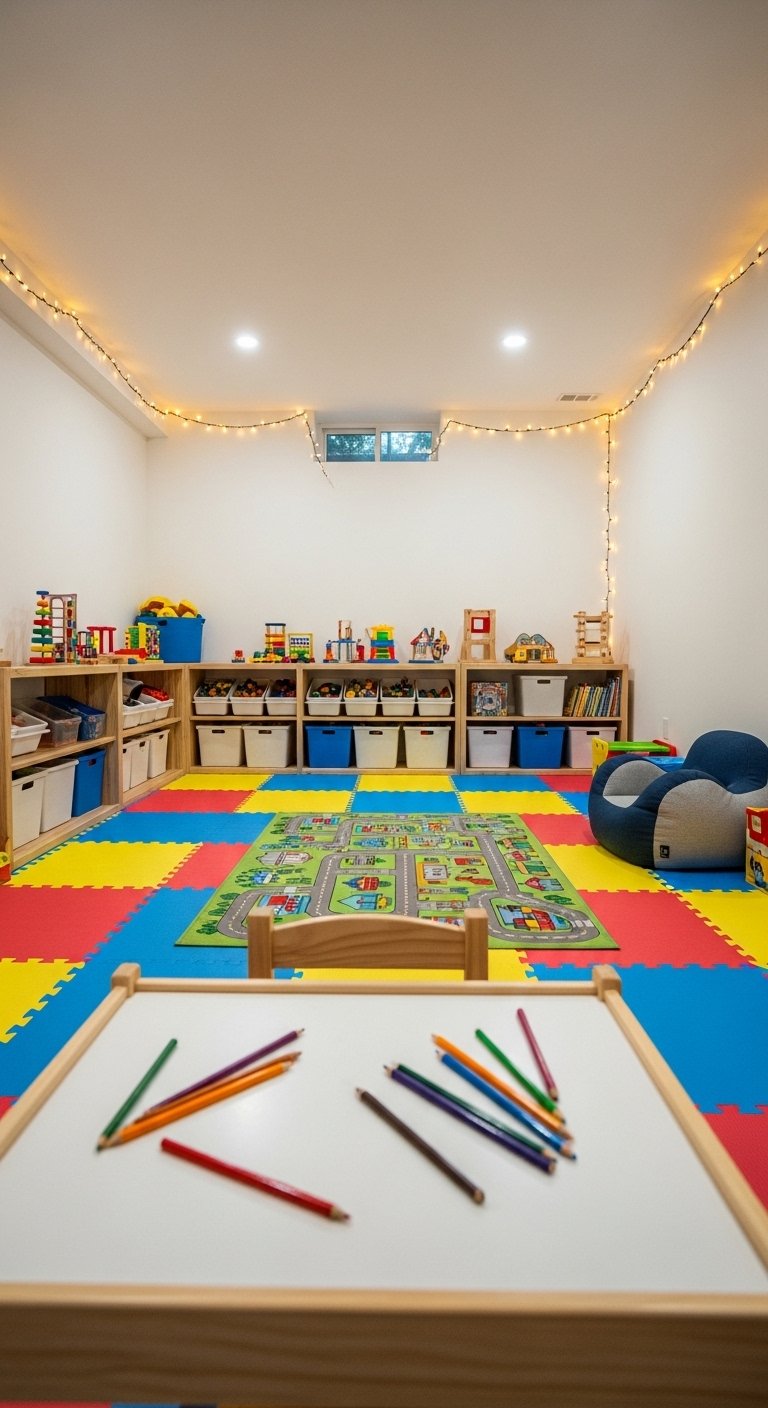
If you have kids, you already know the living room situation. Toys everywhere. Constant noise. Zero peace. A basement playroom solves all of that.
The setup is forgiving. You don’t need expensive finishes. You need:
- Durable, easy-to-clean flooring (foam tiles or vinyl work great)
- Bright lighting
- Plenty of storage for toys
- A TV or projector for movie nights and gaming
Bonus: It keeps the chaos contained. Your living room stays an actual living room. FYI, this one change alone improves daily quality of life more than most renovations.
5. Add a Guest Suite
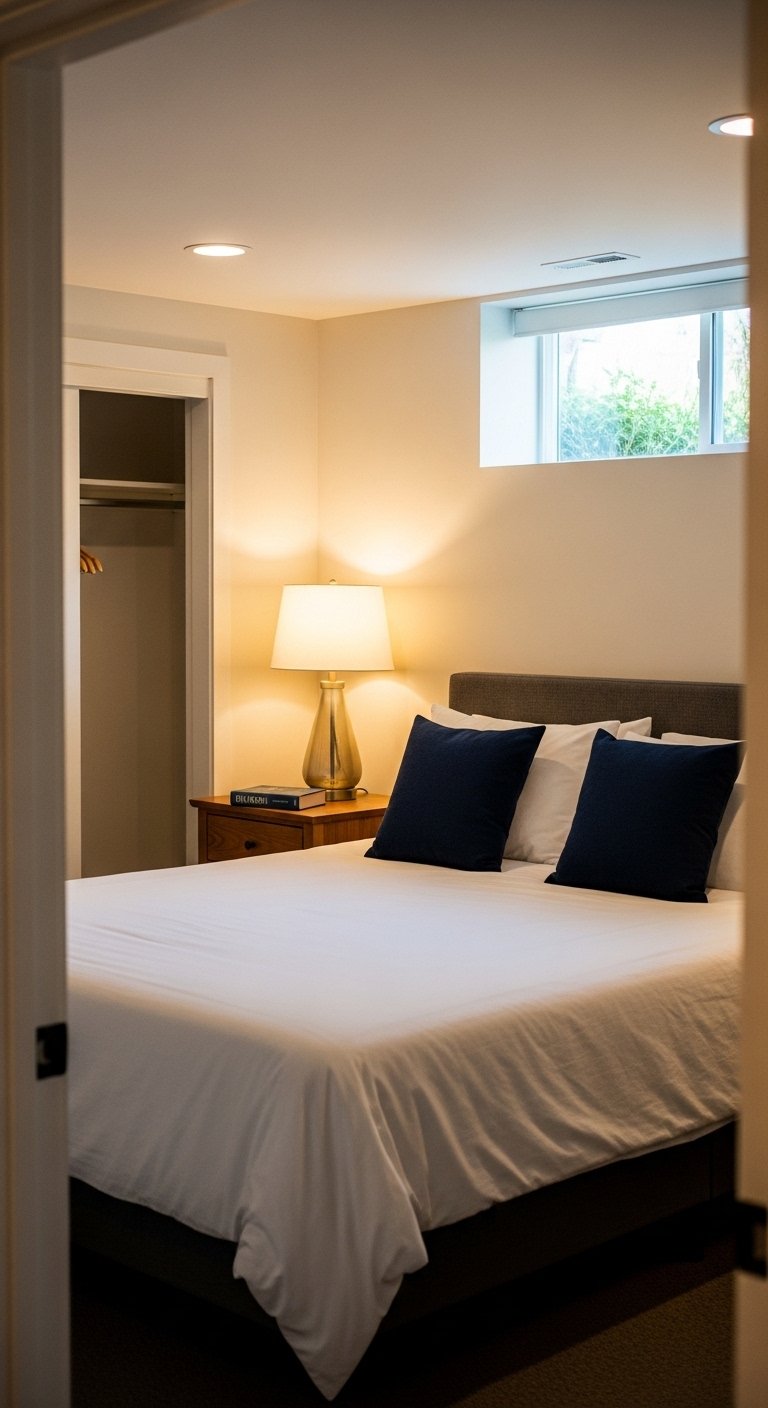
Not everyone needs a rental unit, but a proper guest bedroom changes how you host. Your guests get privacy. You get your upstairs back.
A functional guest suite needs:
- An egress window (required by code in most places and essential for safety)
- A closet or built-in storage
- An attached or nearby bathroom
- Good insulation for temperature and sound
This also adds measurable value to your home when you sell.
6. Build a Home Office
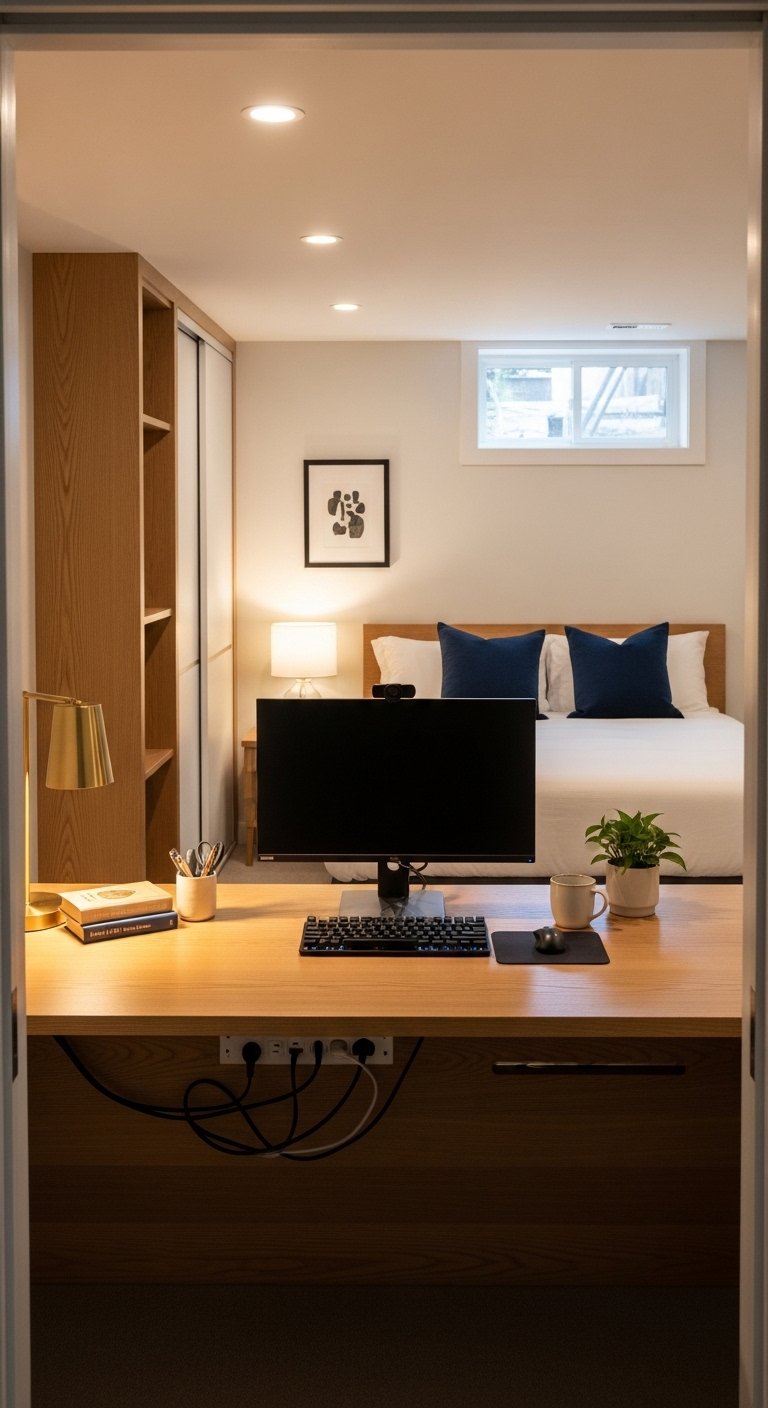
Remote work is not going away. If you work from home, your basement office separates work life from home life in a way no other room does.
The natural quiet of a basement is a real advantage. Add:
- Proper lighting (natural light is limited, so invest in good artificial lighting)
- A built-in desk if space allows
- Cable management from day one (fix this now, not later)
- Soundproofing if you take video calls
The basement office also signals to your brain that when you go downstairs, it’s work time. That psychological separation matters more than people admit.
7. Build a Bar and Entertainment Space
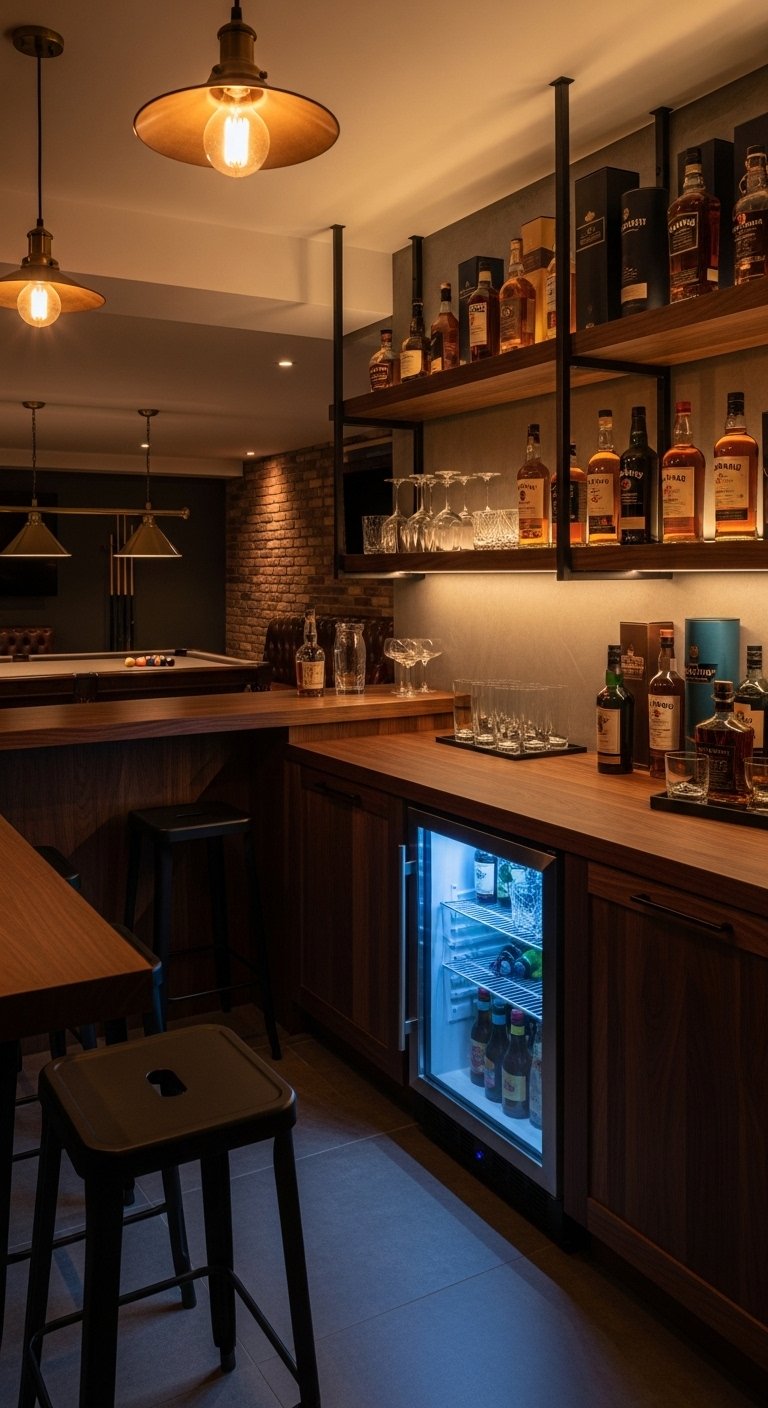
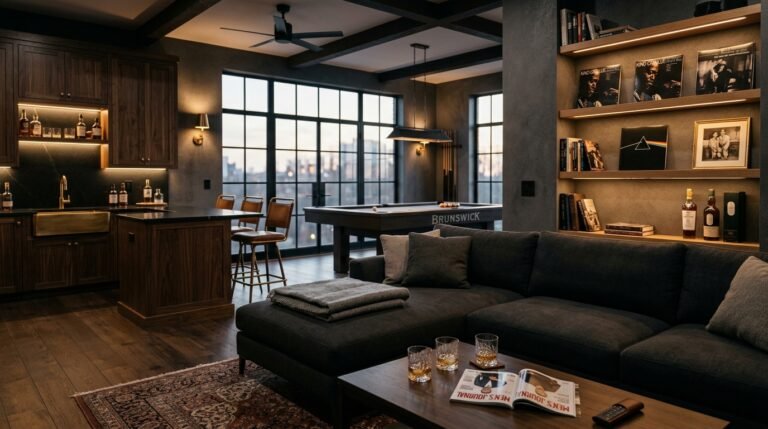
Not every basement needs to be practical in a work-or-sleep way. Some basements exist to have a good time. A wet bar with seating, a pool table, a dart board, and a TV covers most of what you need for a social space.
Key elements:
- Wet bar with a mini fridge — non-negotiable for the setup
- Bar stools and counter seating
- Good lighting (dimmable is ideal)
- Durable flooring that handles spills
This is the basement people actually want to hang out in. 🙂
8. Create a Music Studio or Rehearsal Space
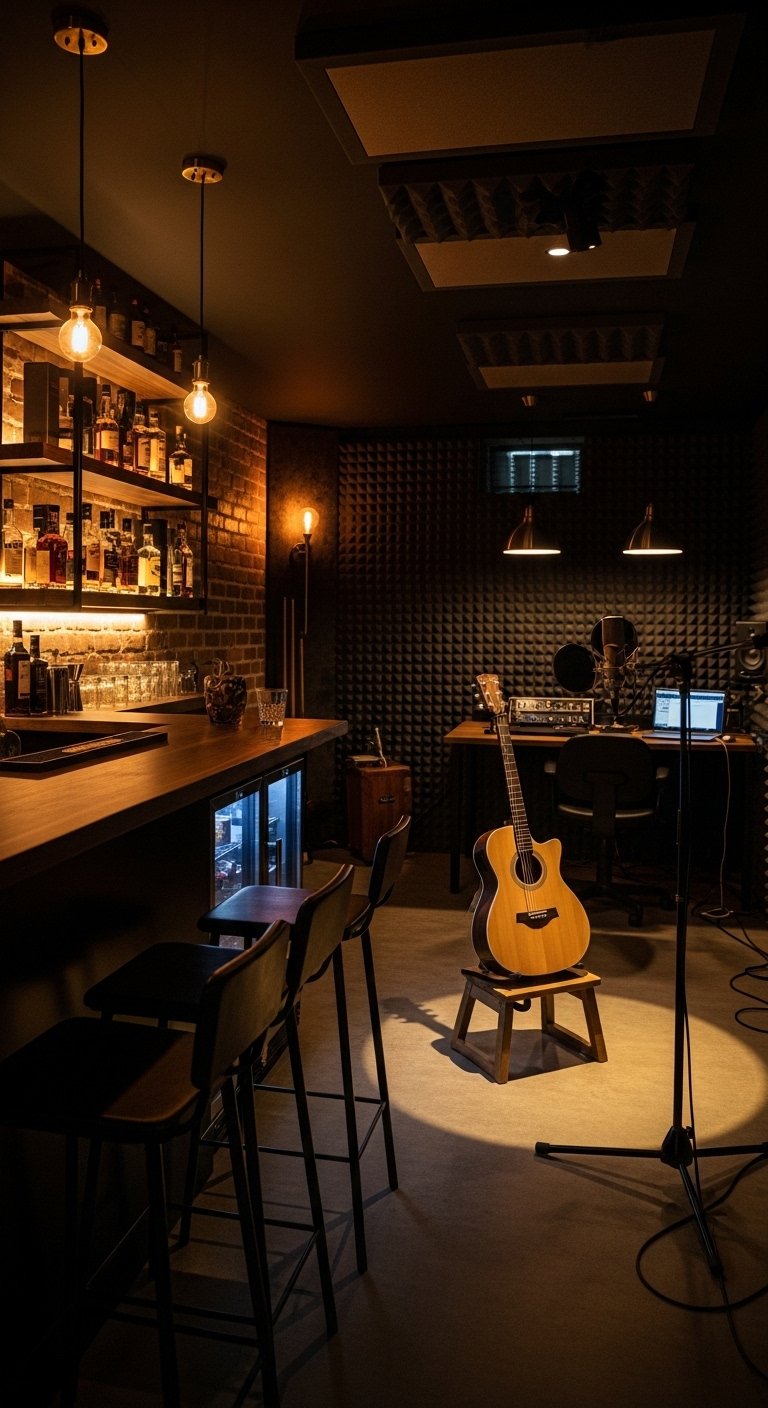
If you play instruments or record music, basements are a natural fit. The underground location already reduces outside noise bleed.
To actually make it functional:
- Add acoustic foam panels on walls and ceiling
- Use a floating floor to reduce vibration transfer
- Install proper ventilation (musicians and equipment both need it)
- Run dedicated electrical circuits if you use amplifiers
You don’t need to build Abbey Road. A basic treated room makes a significant difference in recording quality.
9. Add a Laundry Room
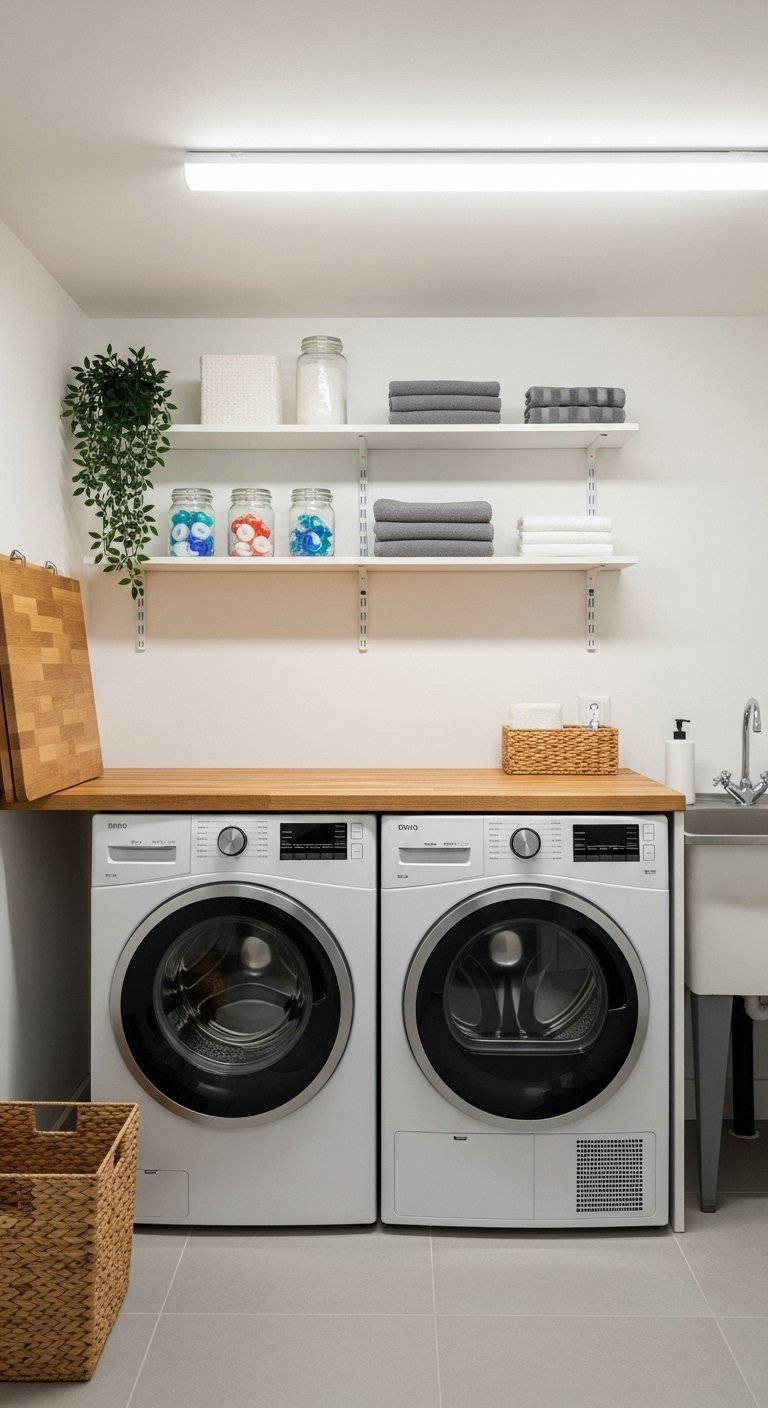
Most basements already have the plumbing rough-in for this. If your laundry setup is cramped elsewhere in the house, moving it to the basement and expanding the space is a practical win.
A proper laundry room includes:
- Side-by-side or stacked washer and dryer
- Utility sink
- Folding counter
- Storage for detergent and supplies
- Good lighting (laundry rooms are always under-lit)
It’s not glamorous. It’s useful every single week.
10. Design a Craft or Hobby Room
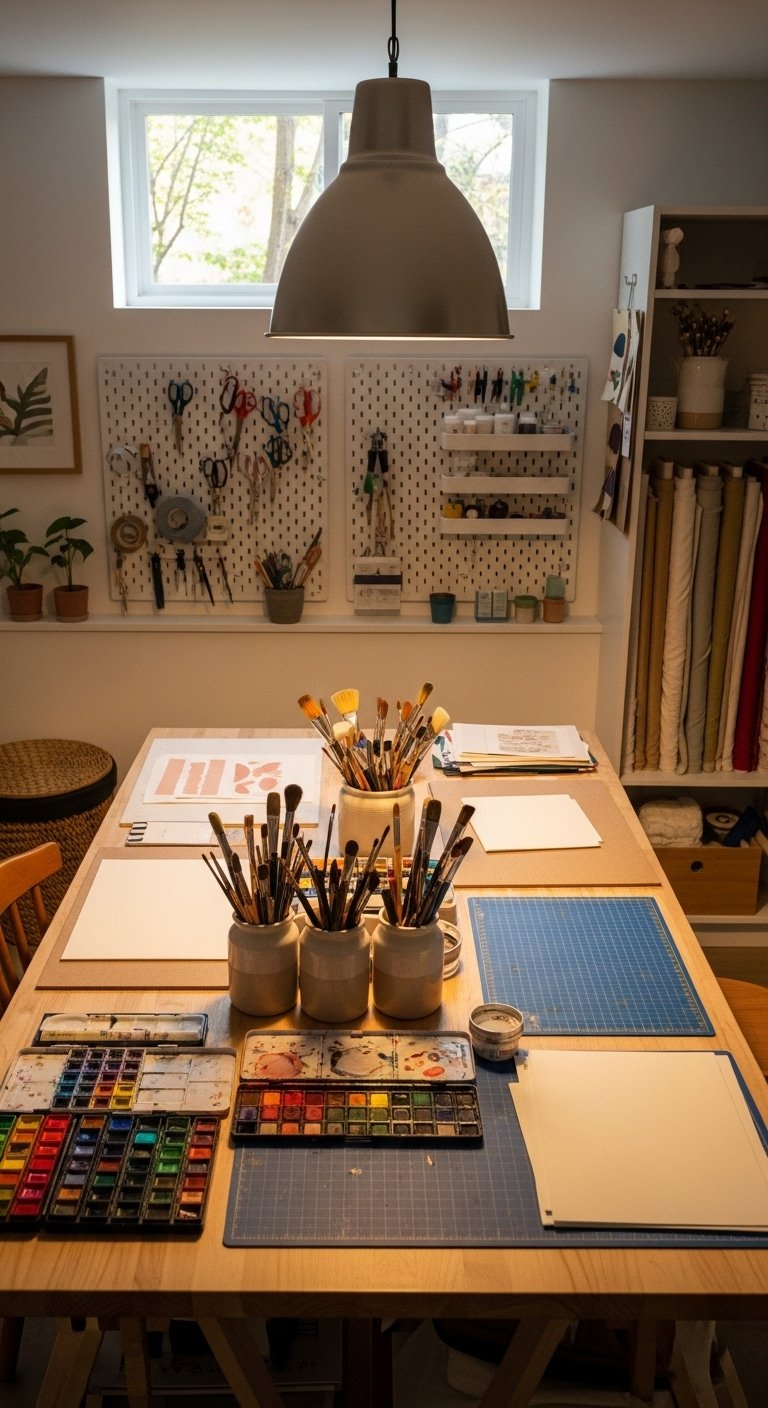
Whether you paint, build models, do woodworking, or make anything with your hands, having a dedicated space changes how much you actually do it. A hobby room removes the setup-and-teardown barrier that kills momentum.
Set it up around your specific activity:
- Large work tables with good overhead lighting
- Pegboards and shelving for tools and supplies
- Easy-clean flooring
- A sink if your hobby involves water or paint cleanup
The basement is ideal because you’re not worried about making a mess on nice floors.
11. Install a Wine Cellar
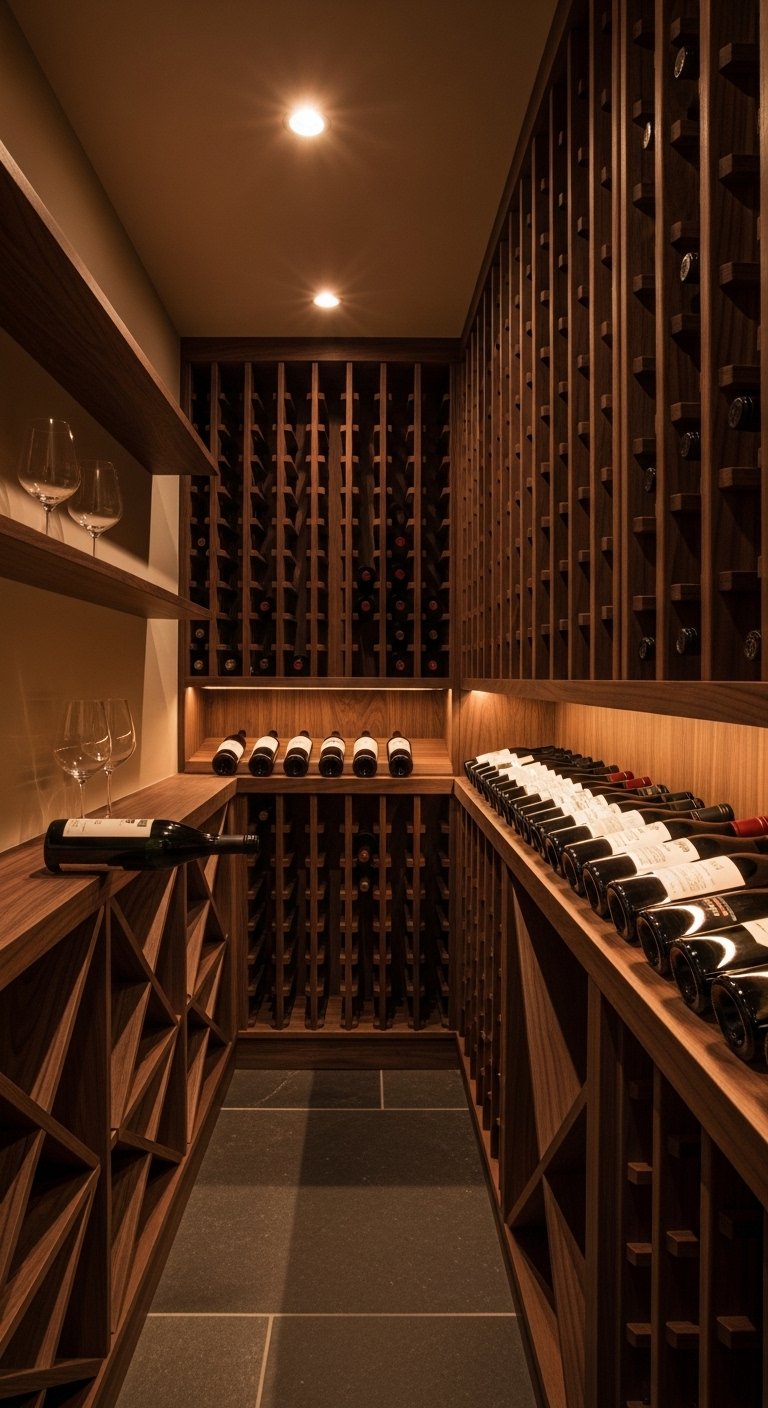
Basements maintain relatively stable temperatures, which makes them naturally suited for wine storage. A dedicated wine cellar doesn’t need to be large to be effective.
For a functional cellar:
- Temperature should stay between 55 and 65 degrees Fahrenheit
- Humidity between 60 and 70 percent prevents cork drying
- A dedicated cooling unit handles this if your basement runs too warm
- Wood racking looks good and works well
Even a small 200-bottle cellar adds a feature that genuinely impresses buyers if you sell.
12. Build a Home Library or Reading Room
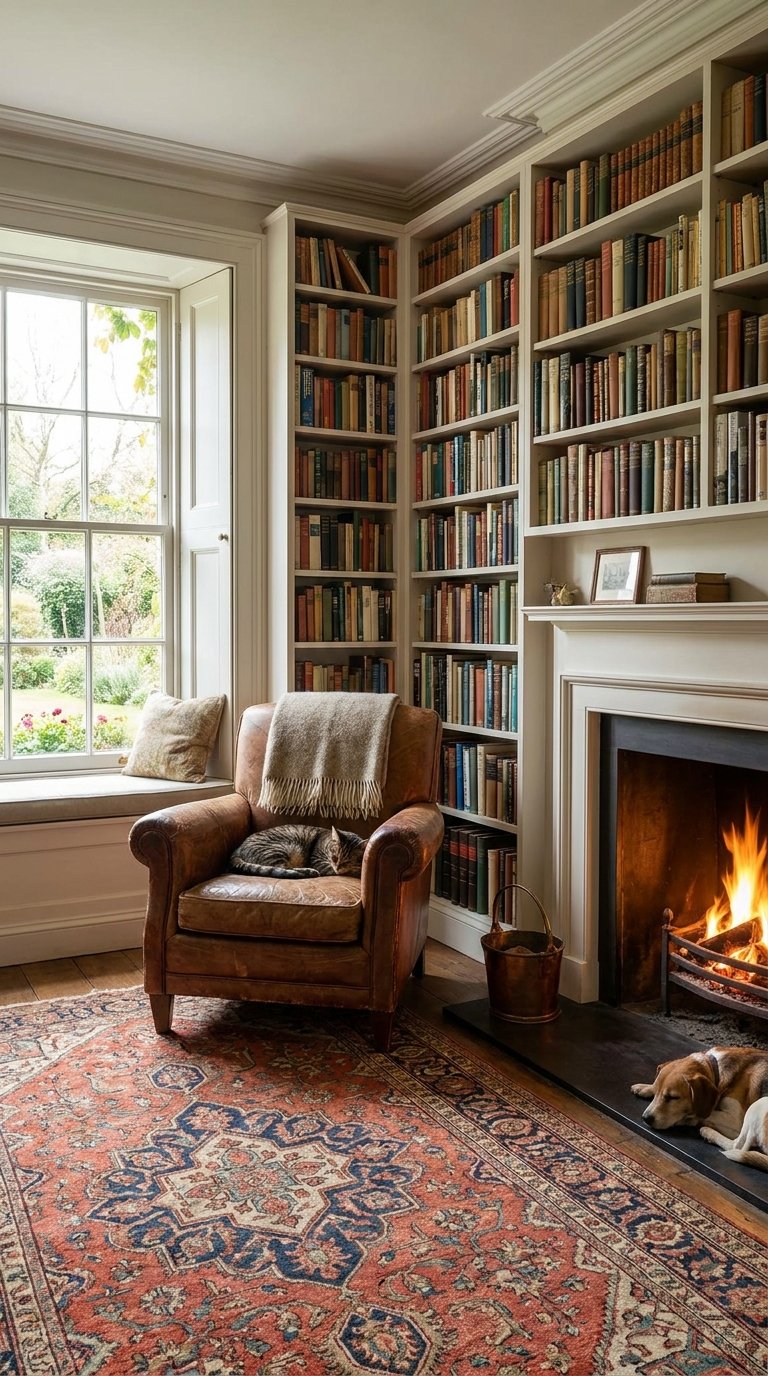
If you have books and nowhere good to put them, a basement library solves the problem with style. Floor-to-ceiling built-in shelving, a reading chair, and good lighting create a room that gets used constantly.
The details that make it work:
- Built-in shelving uses every inch of wall space
- A comfortable chair with good task lighting
- Soundproofing keeps it quiet
- A small rug defines the reading area
This one costs less than most options on this list and delivers a high-quality daily use space.
13. Create a Teen Hangout Space
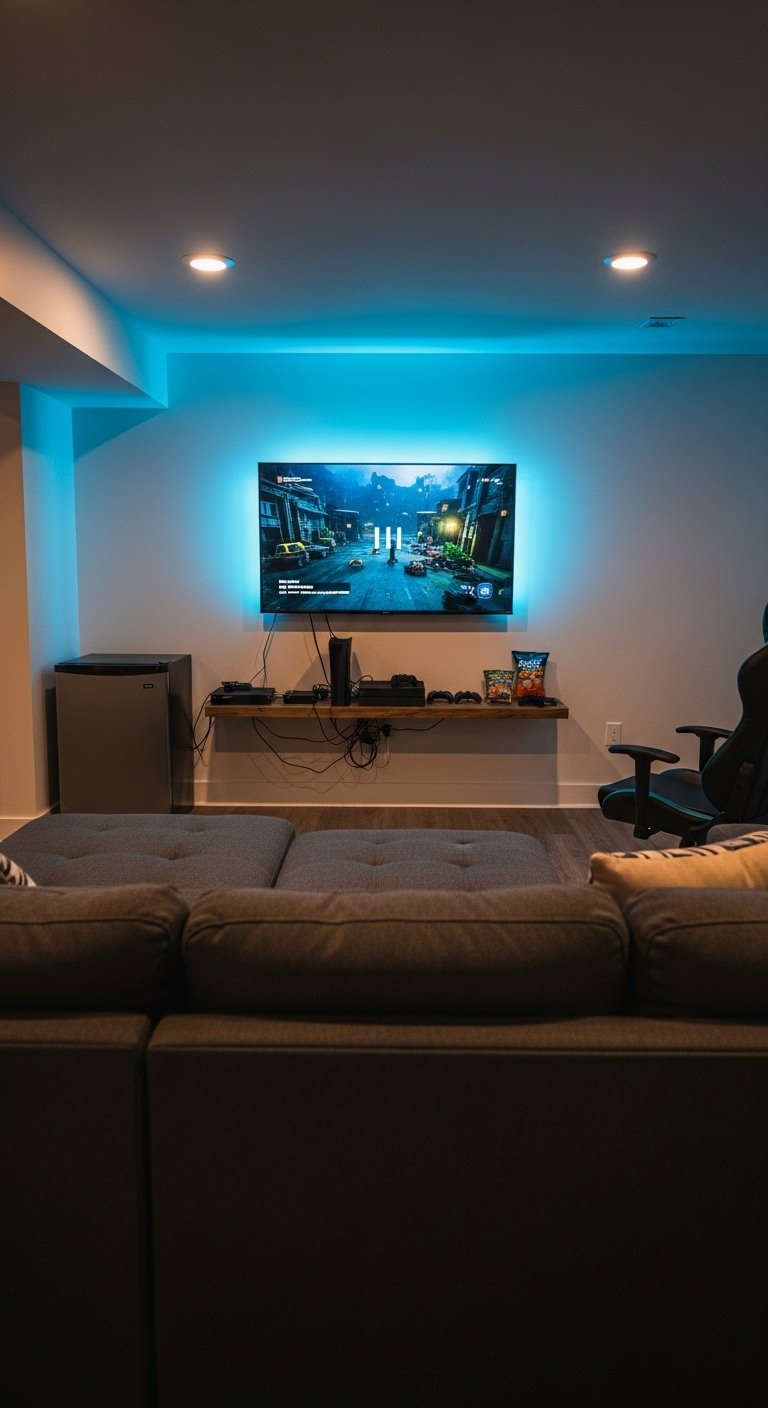
Teenagers need somewhere to be. If that somewhere is your basement, you know where they are. That’s the pitch.
Keep it relevant to what they actually use:
- Gaming setup with comfortable seating
- Mini fridge for snacks
- Good Wi-Fi (run an ethernet line down, don’t rely on wireless)
- Space for friends to sit or sleep over
IMO, this is one of the smartest investments you make during the teenage years. It keeps the social activity at your house, where you have some visibility.
14. Add a Bathroom
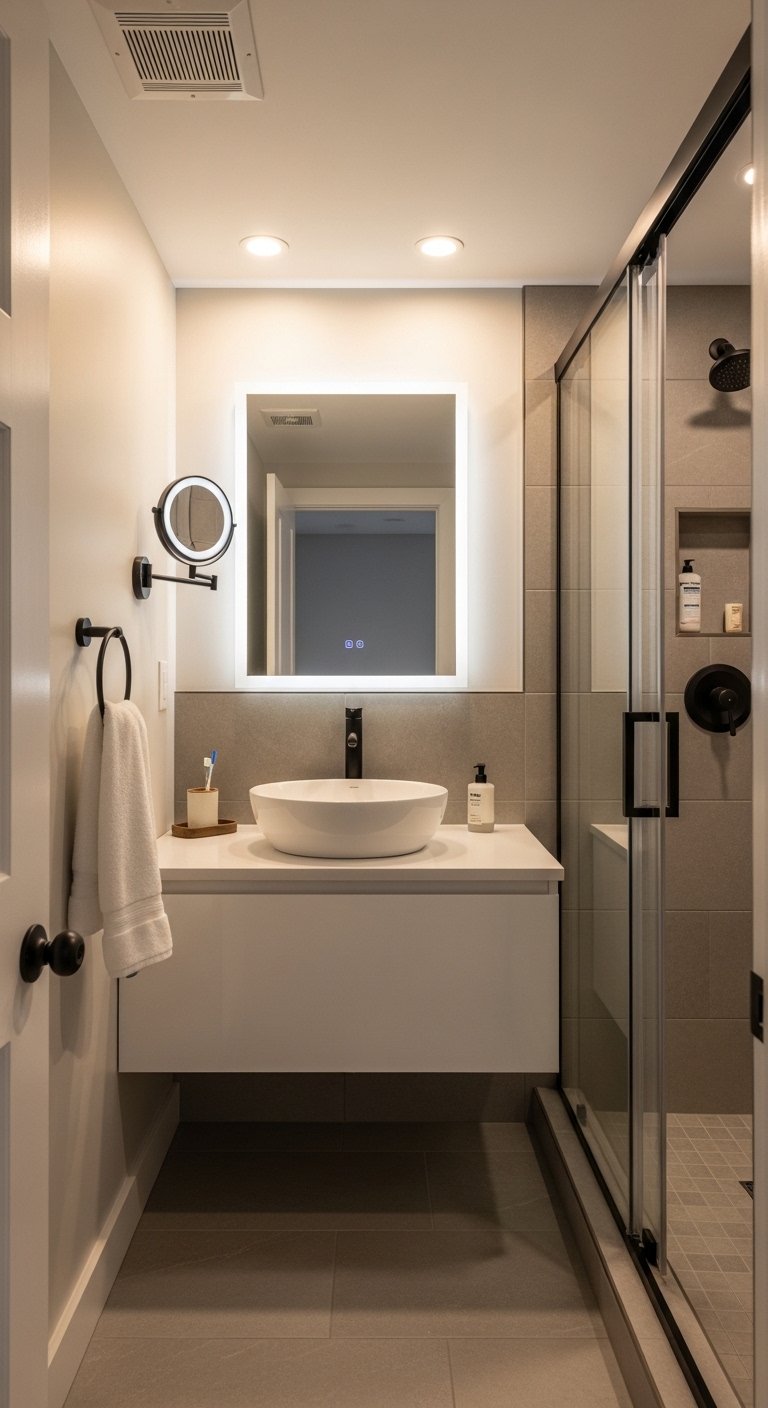
If your basement lacks a bathroom, every other renovation on this list is less convenient. A basement bathroom is a foundational upgrade.
Options range from:
- A simple half bath (toilet and sink)
- A full bath with a shower
- A spa-style bath if you’re building a master suite
The cost depends on whether the rough-in plumbing already exists. If it does, the cost drops significantly. Check before you plan.
15. Design a Meditation or Yoga Studio
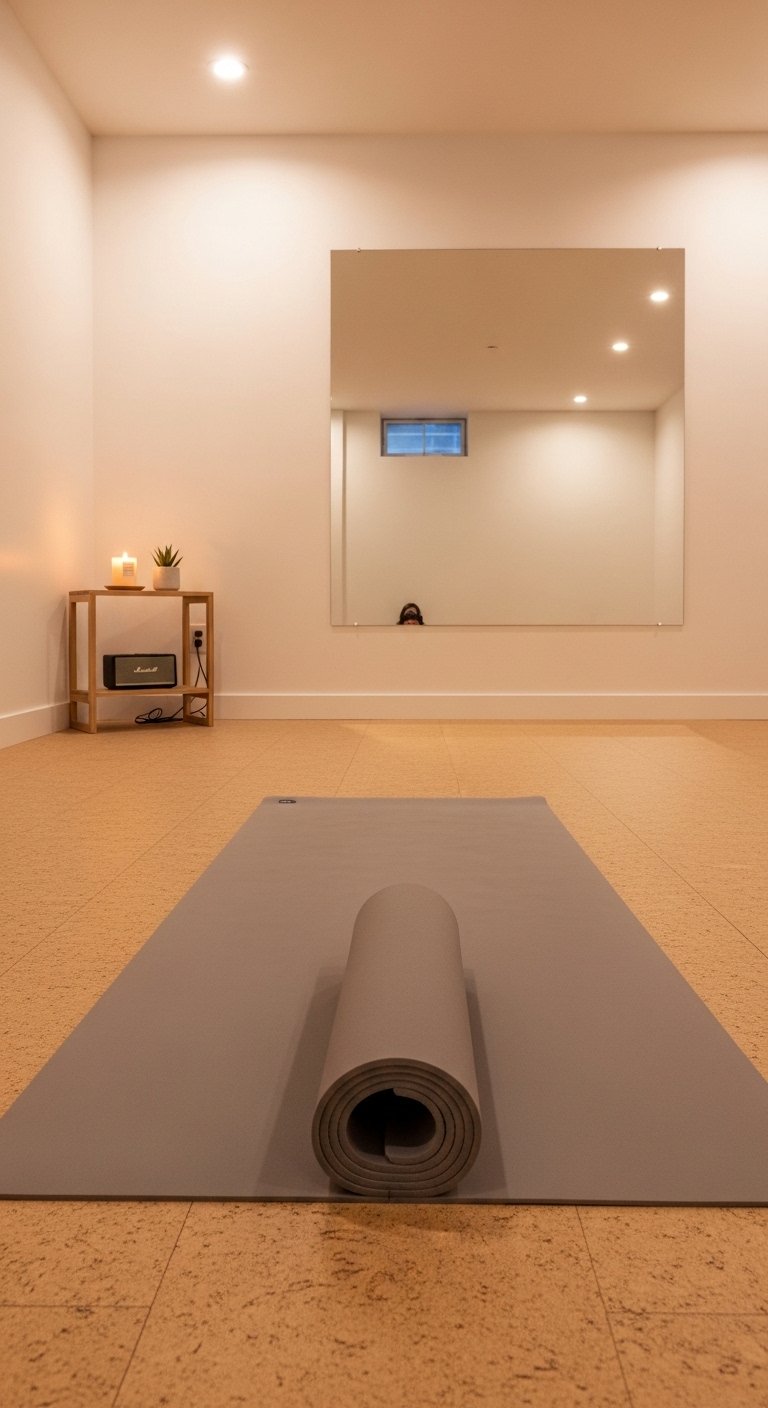
The quiet and separation of a basement makes it ideal for a wellness space. You don’t need much square footage for yoga or meditation.
The setup is minimal:
- Cork or bamboo flooring (comfortable and durable)
- Mirrors on one wall
- Dimmable lighting
- A small sound system for ambient audio
- Minimal clutter by design
The value here is behavioral. When the space exists, you use it. When it doesn’t, you skip it.
16. Install a Sauna
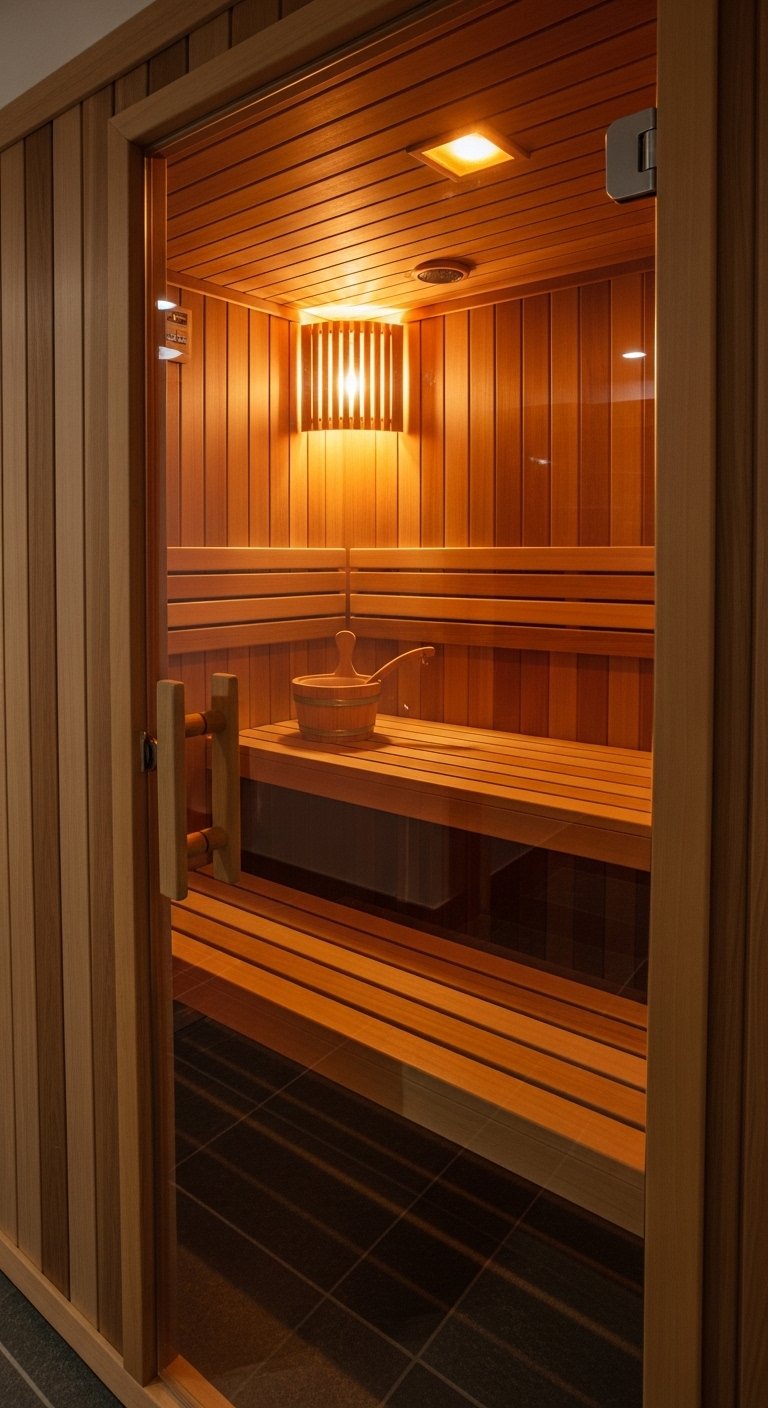
This one sounds extreme. It’s less expensive than most people think, and the daily use value is high if you’re someone who would actually use a sauna regularly.
Options:
- Traditional Finnish sauna: Uses dry heat, requires proper ventilation
- Infrared sauna: Lower temperature, easier installation, smaller footprint
- Prefab kits: Available for both types, significantly reduce installation complexity
A 2-person infrared sauna costs between $2,000 and $5,000 installed. For daily use, that cost spreads out quickly.
17. Build a Safe Room or Storm Shelter
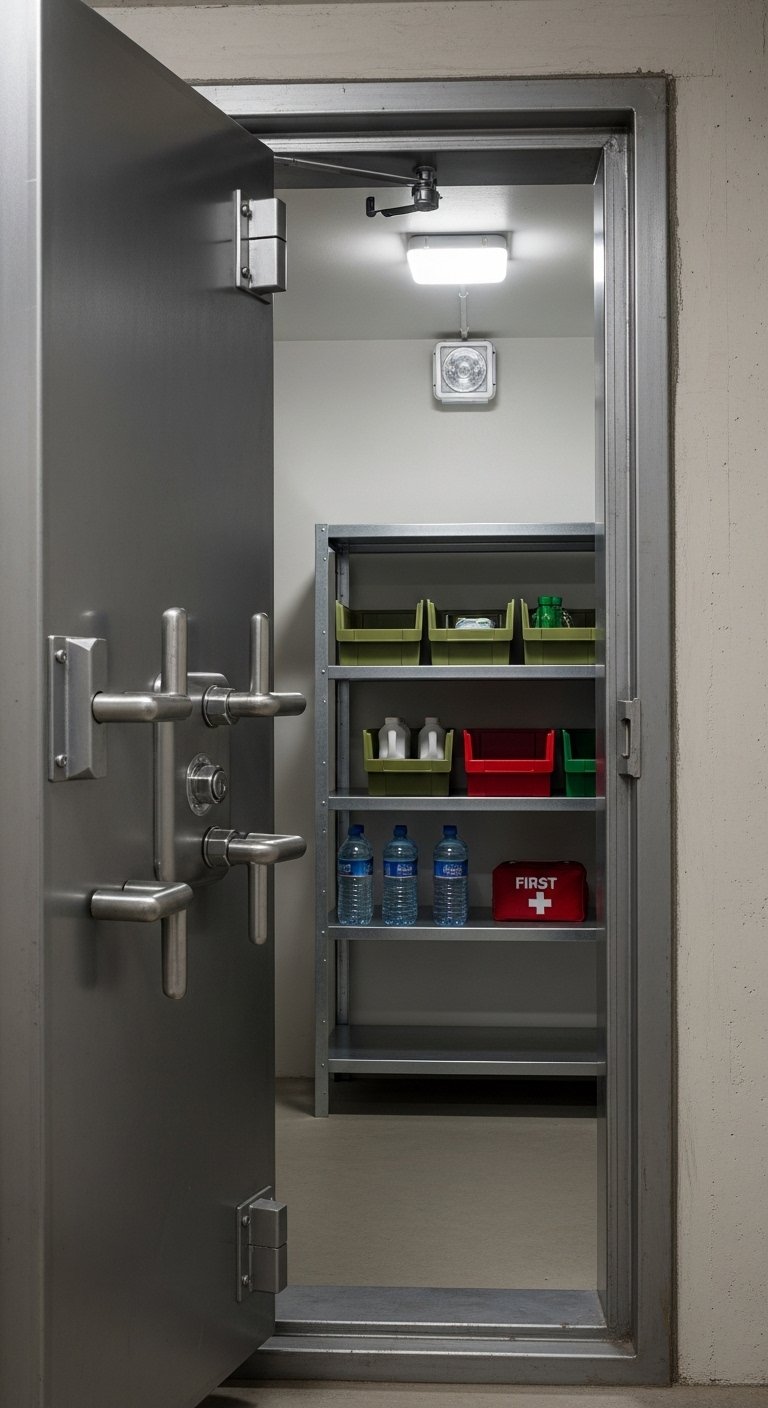
If you live in an area prone to severe weather, a basement safe room is a legitimate safety investment. Modern safe rooms are reinforced spaces that protect against tornadoes, hurricanes, and home intrusion.
The requirements:
- Reinforced concrete or steel construction
- A solid-core steel door with multiple locks
- Emergency supplies storage
- Ventilation that works when the power goes out
FEMA publishes free guidelines for safe room construction. Use them.
18. Add a Second Kitchen or Prep Kitchen
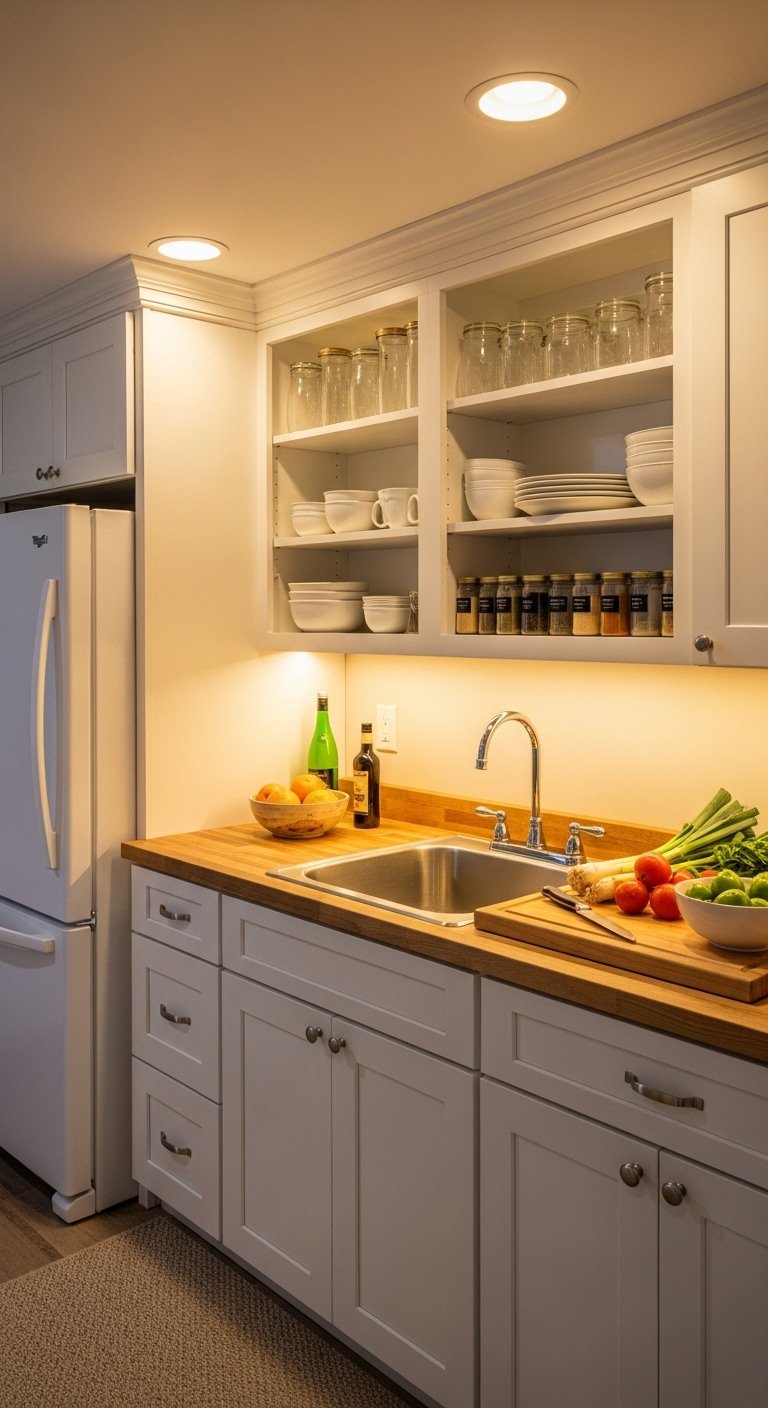
If you cook frequently, entertain often, or have a large household, a second prep kitchen in the basement removes bottlenecks. It’s also a smart addition if you’re building a rental unit or in-law suite.
Basic setup:
- A second refrigerator
- A single or double sink
- Counter space for prep work
- A small range or at minimum a microwave
It doesn’t need to be a full kitchen to be useful. Even a partial setup helps on high-volume cooking days.
19. Create an In-Law Suite
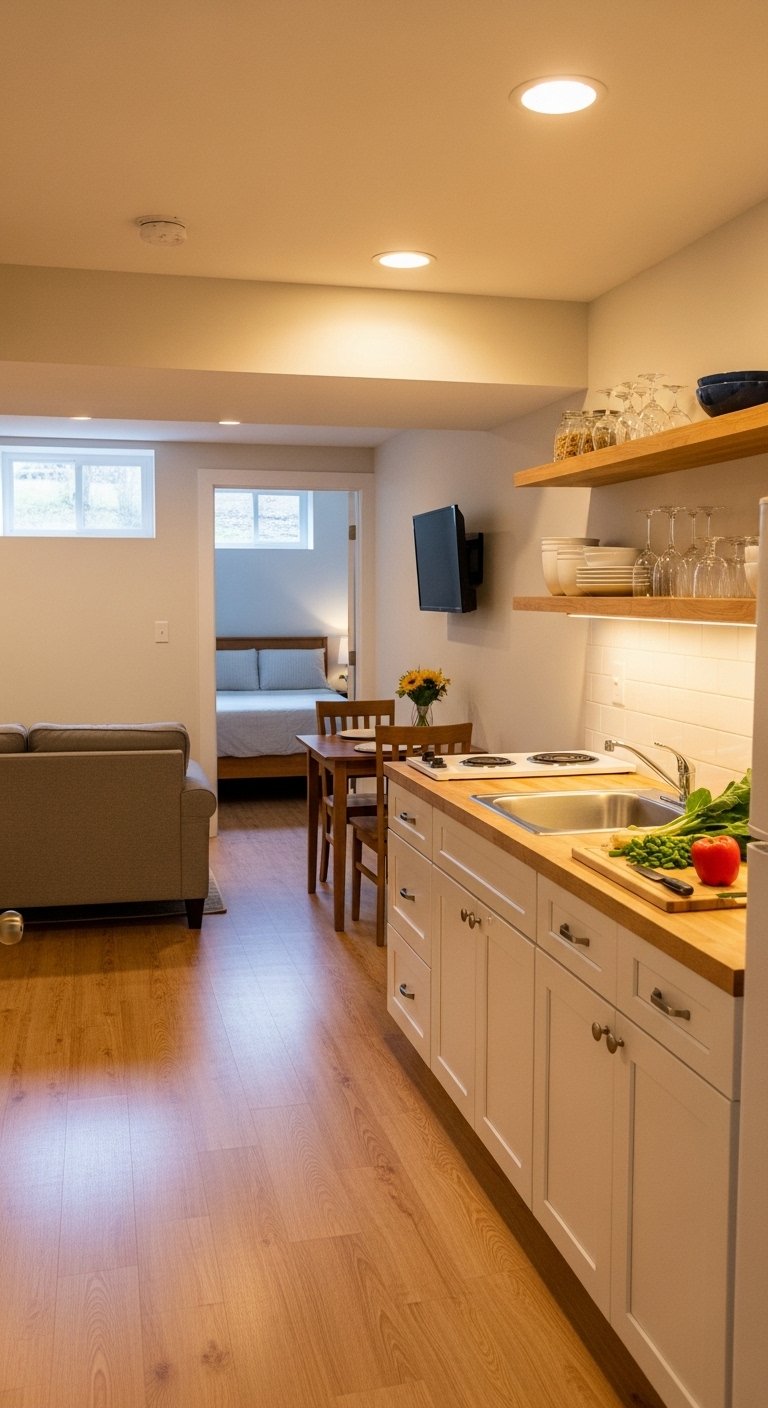
Multi-generational living is growing. If you have aging parents or adult children who need temporary housing, a basement in-law suite provides privacy for everyone.
A complete in-law suite includes:
- Bedroom with proper egress
- Full bathroom
- A small kitchenette
- Separate entrance if possible
- Its own heating and cooling zone
This is a significant renovation. It’s also one of the highest-value additions you add to a home in terms of both livability and resale.
20. Design a Dedicated Storage System
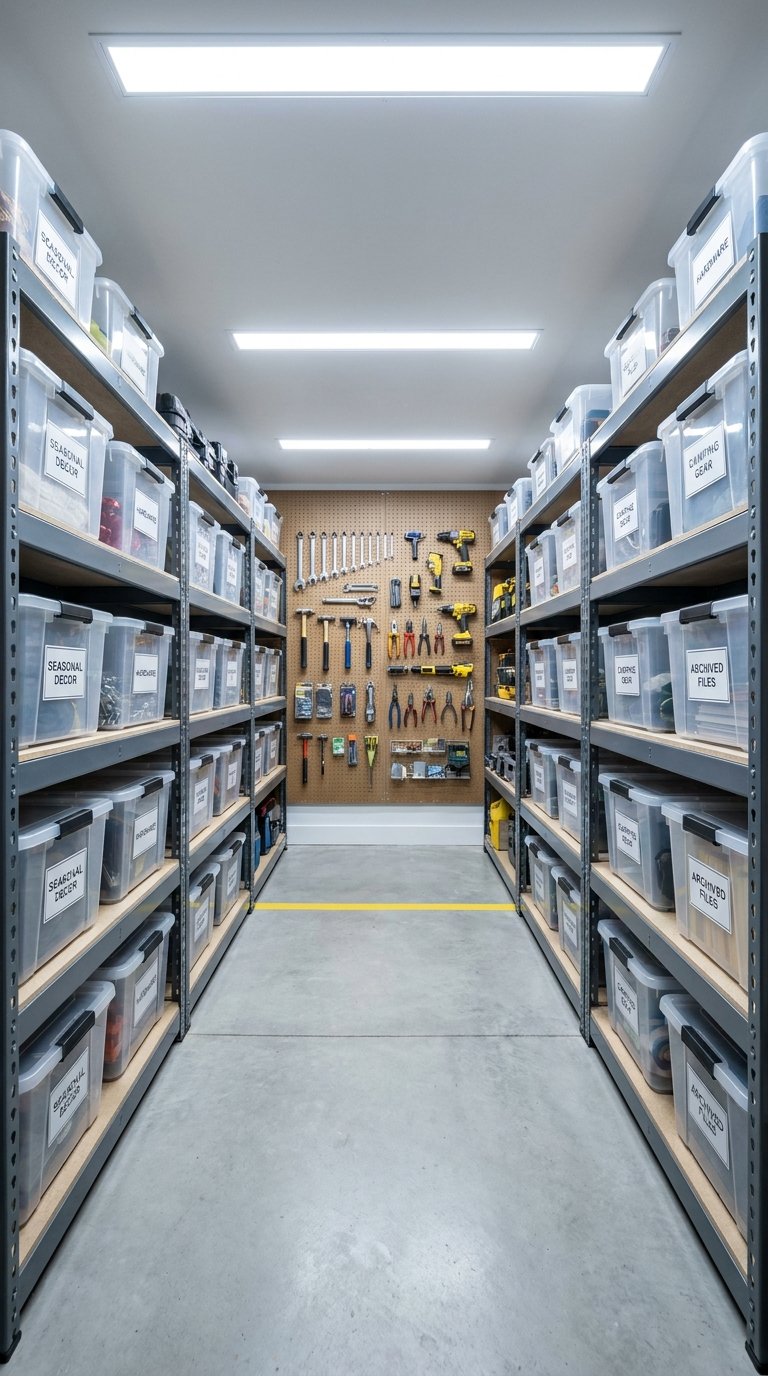
Most people use their basement as disorganized storage. That’s fine. But an organized storage system turns wasted space into a functional asset.
A proper storage buildout includes:
- Heavy-duty shelving units along the perimeter
- A labeled bin system for seasonal items
- A dedicated area for tools and hardware
- Climate-controlled section for sensitive items (photos, documents, electronics)
This is the least exciting option on this list. It’s also one of the most used after you build it.
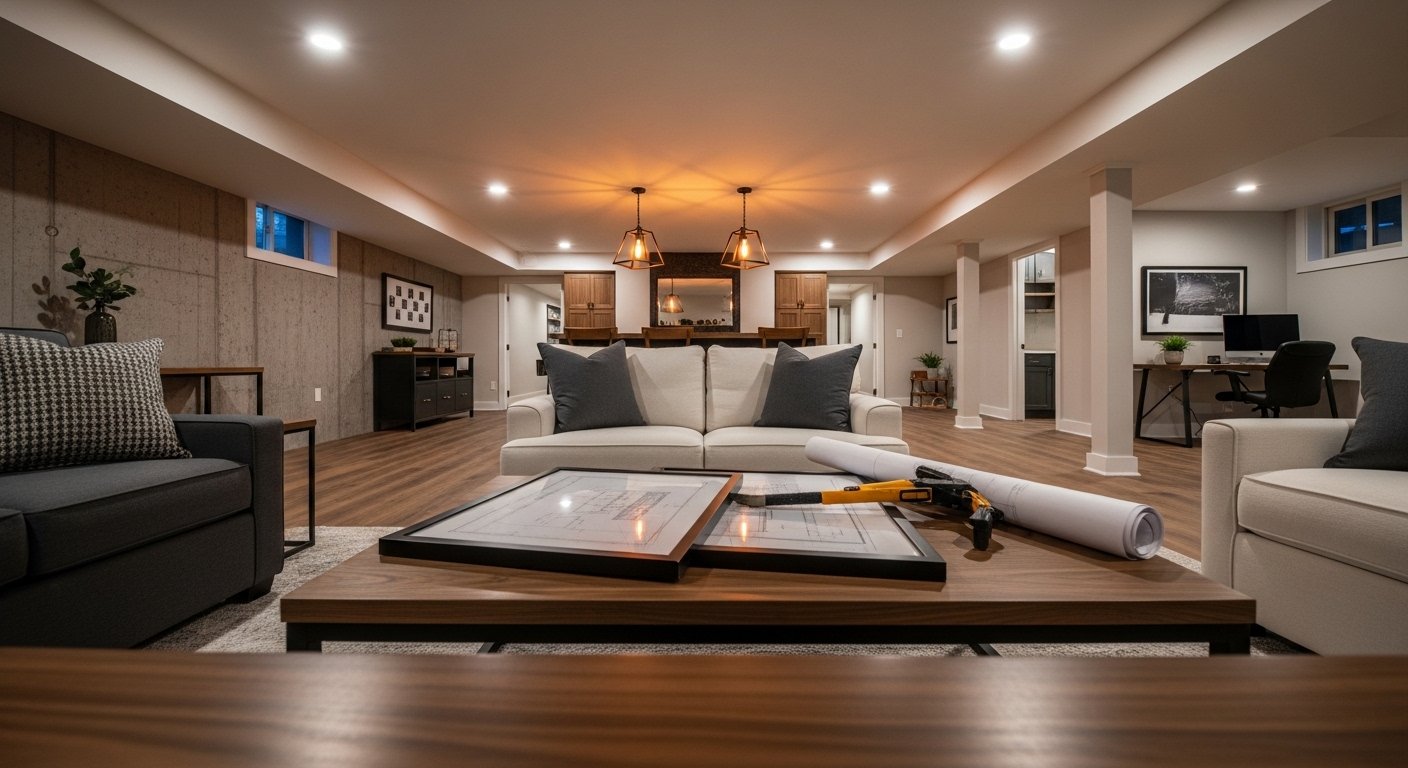
21. Build a Multipurpose Room
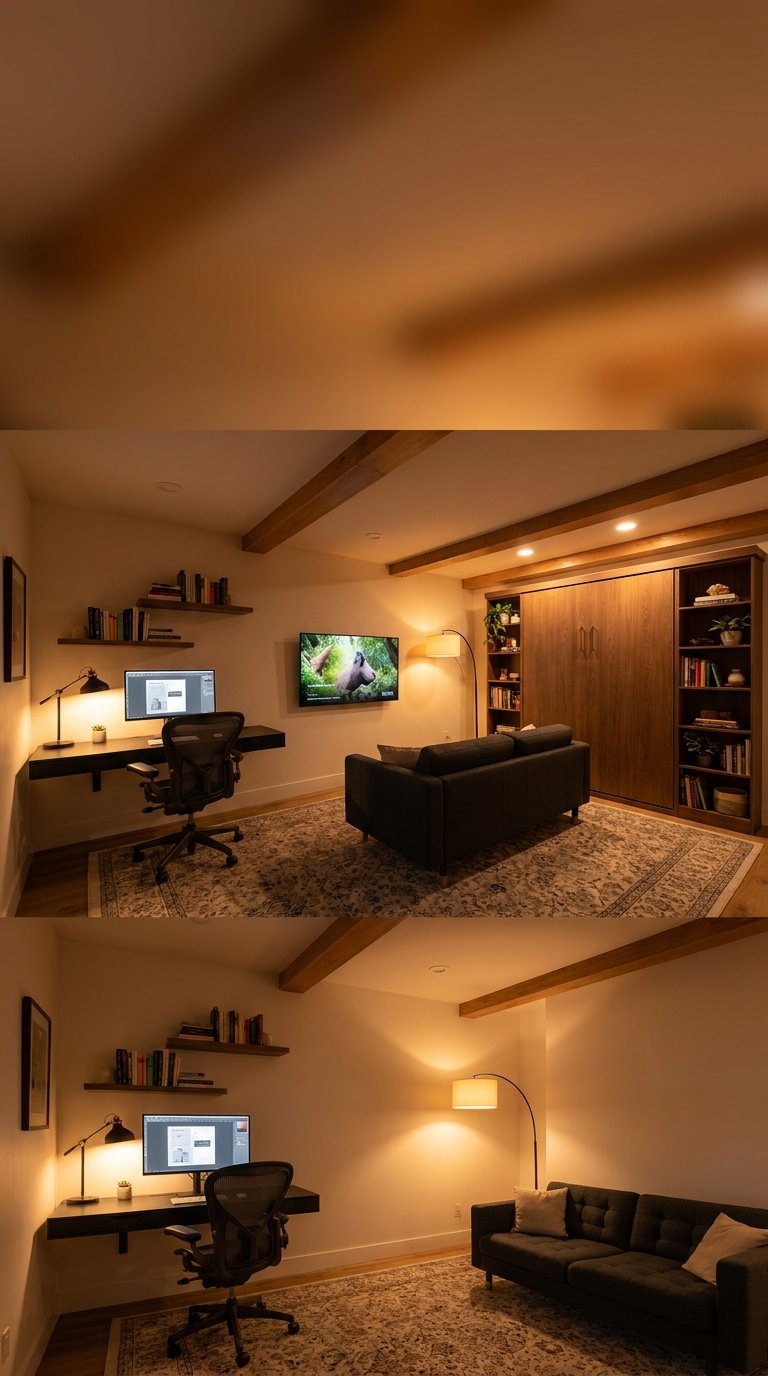
You don’t always need to commit to a single use. A well-designed multipurpose room handles several functions without feeling like it does none of them well.
The key to making this work:
- Zoning: Use rugs, furniture arrangement, or partial walls to define areas
- Flexible furniture: A sleeper sofa handles both lounging and guest sleeping
- Built-in storage: Keeps clutter from one zone from bleeding into another
- Good lighting per zone: Dimmable overhead lights and task lamps give each area its own feel
The risk with multipurpose rooms is that they become cluttered and purposeless. Design with intention from the start.
Before You Start Any of These
A few things apply across every single renovation on this list:
- Moisture first. A wet basement ruins everything you put in it. Fix any water intrusion before you spend a dollar on anything else.
- Check permits. Most structural, electrical, and plumbing work requires permits. Skipping them creates problems when you sell.
- Ceiling height matters. Most ideas on this list need at least 7 feet of clearance. Measure before you plan.
- Egress windows are non-negotiable for any sleeping space. It’s both a code requirement and a basic safety issue.
- Budget 10 to 15 percent extra. Basements hide surprises. Old wiring, unexpected plumbing, moisture issues. Plan for overruns.
Final Thoughts
Your basement is a blank slate with real potential. The right renovation depends on what your household actually needs, not what looks good in a design magazine.
Start with one question: what would you use every single day? That answer usually points to the right project. Everything else is secondary.
Pick one idea. Get a contractor assessment. Check your local codes. Then move. A finished basement that serves a real purpose adds value to your home and to your daily life. An unfinished one just collects boxes.