21 Wooden Bed Design Ideas That Upgrade Your Bedroom
Your bed is the largest piece of furniture in your bedroom. It sets the style tone for every other element in the room. If it’s wrong, nothing else can fully compensate for it.
Wood is the most versatile bed material available. It works in rustic, modern, traditional, Scandinavian, industrial, and bohemian spaces. It ages well, it’s durable, and when chosen correctly, it looks better with time rather than worse.
Here are 21 wooden bed design ideas that cover every style, budget, and bedroom size.
1. The Platform Bed With a Solid Wood Base
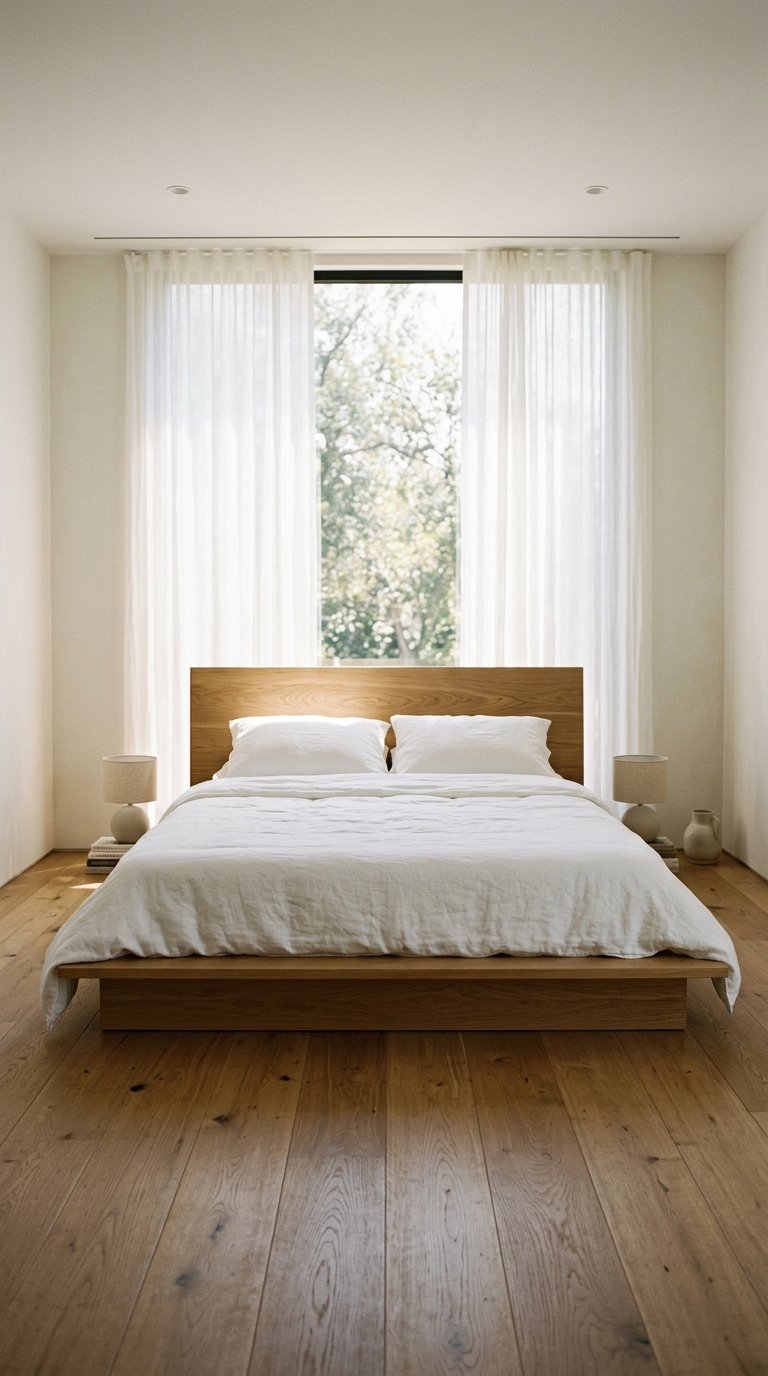
A platform bed sits low to the ground with a solid wooden base instead of a traditional frame and box spring. The result is clean, architectural, and unmistakably modern.
What makes platform beds work:
- Low profile: Creates a sense of calm and openness in the bedroom
- No box spring required: The solid base or slat system supports the mattress directly
- Clean sightlines: The low height keeps the bed from dominating smaller rooms
- Wood species options: Walnut gives a rich, dark look; oak gives warmth; maple gives a lighter, cleaner finish
Platform beds work best in rooms with higher ceilings. The low bed against a tall ceiling creates a proportional contrast that looks intentional and architectural.
2. The Reclaimed Wood Bed Frame
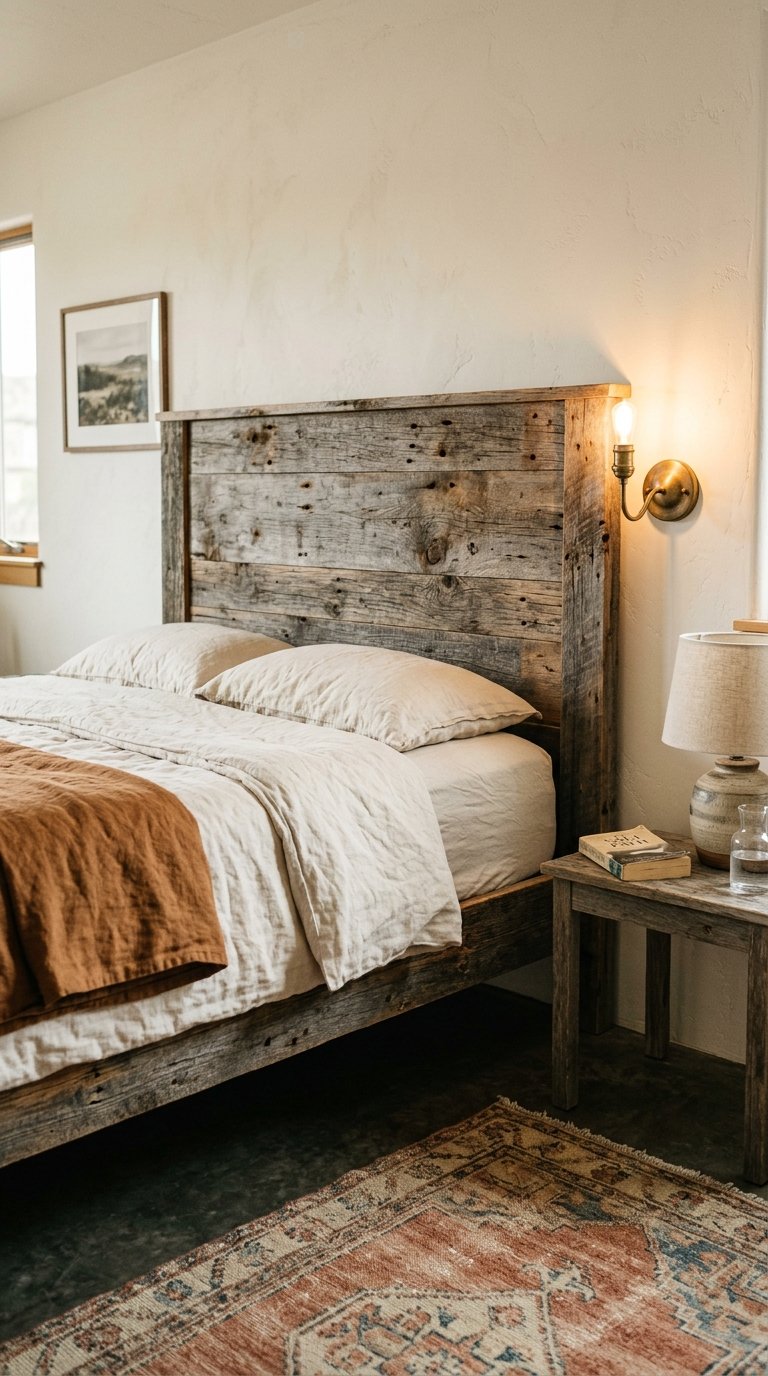
Reclaimed wood comes from old barns, factories, warehouses, and demolished structures. The material carries visual history: nail holes, weathering, color variation, and texture that no new wood replicates.
A reclaimed wood bed frame brings character that manufactured furniture cannot fake. Each piece is genuinely unique.
What to look for in reclaimed wood frames:
- Source disclosure: Reputable sellers identify where the wood originated
- Kiln drying: Reclaimed wood should be kiln-dried to eliminate pests and moisture before use
- Structural integrity: Check for cracks, soft spots, or compromised wood before purchasing
- Finish options: Sealed clear finish preserves the weathered look; light stain unifies varied tones
Reclaimed wood beds pair naturally with linen bedding, leather accents, and aged metal hardware. The combination creates a layered, time-worn aesthetic that feels genuinely collected rather than decorated.
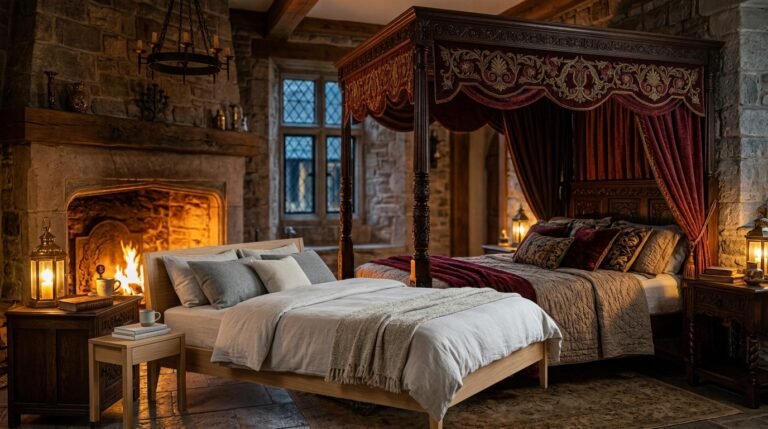
3. The Four-Poster Wooden Bed
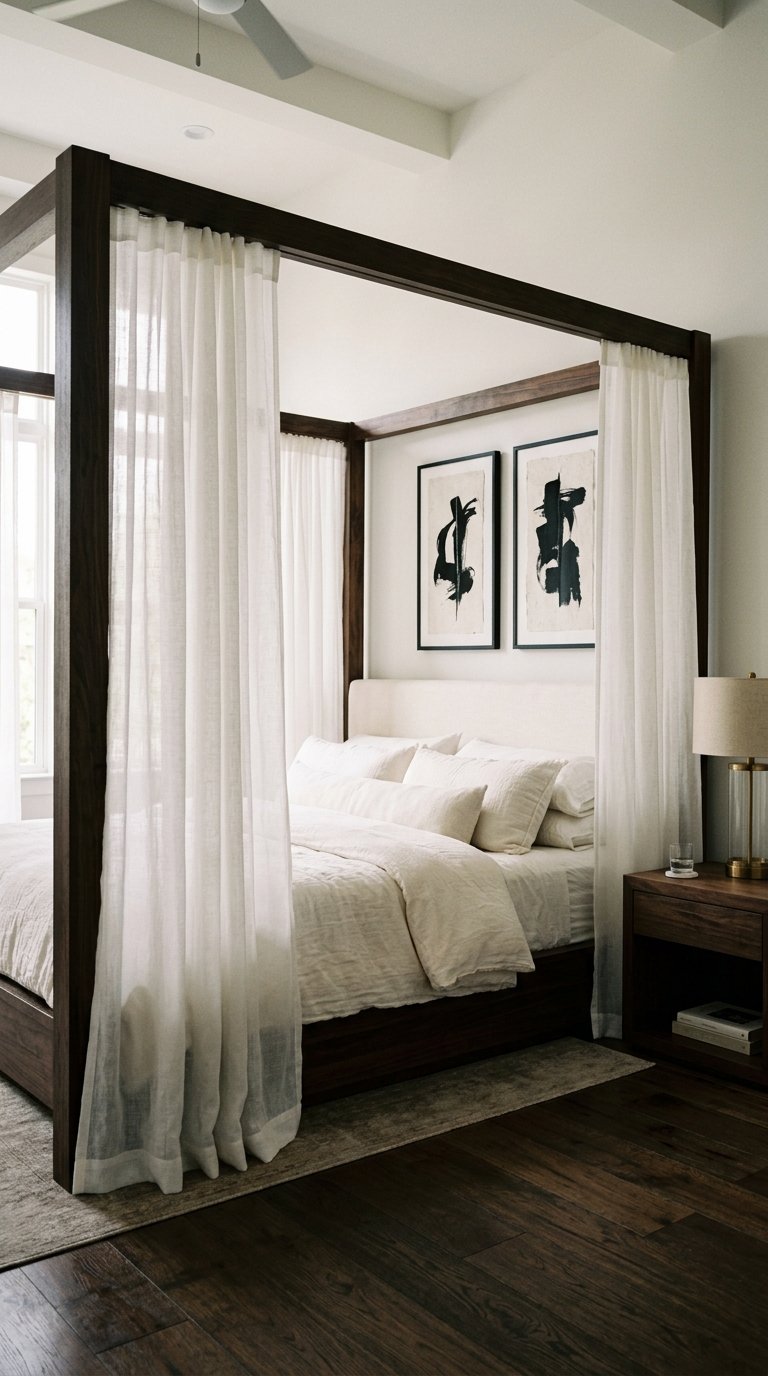
Four-poster beds have existed for centuries for practical reasons: they supported curtains that provided warmth and privacy before central heating. Today the curtains are optional but the drama is not.
A wooden four-poster bed creates vertical presence in a bedroom that no other design achieves. The four posts draw the eye upward and make the ceiling feel higher.
Four-poster styles by wood and finish:
- Dark walnut with clean lines: Contemporary and refined
- Turned oak posts: Traditional and formal
- Rough-hewn reclaimed posts: Rustic and bold
- Whitewashed pine: Coastal and light-filled
The four-poster works best in larger bedrooms. In a small room, the posts can feel overwhelming. The proportions need space to breathe.
4. The Japanese-Inspired Low Wooden Bed
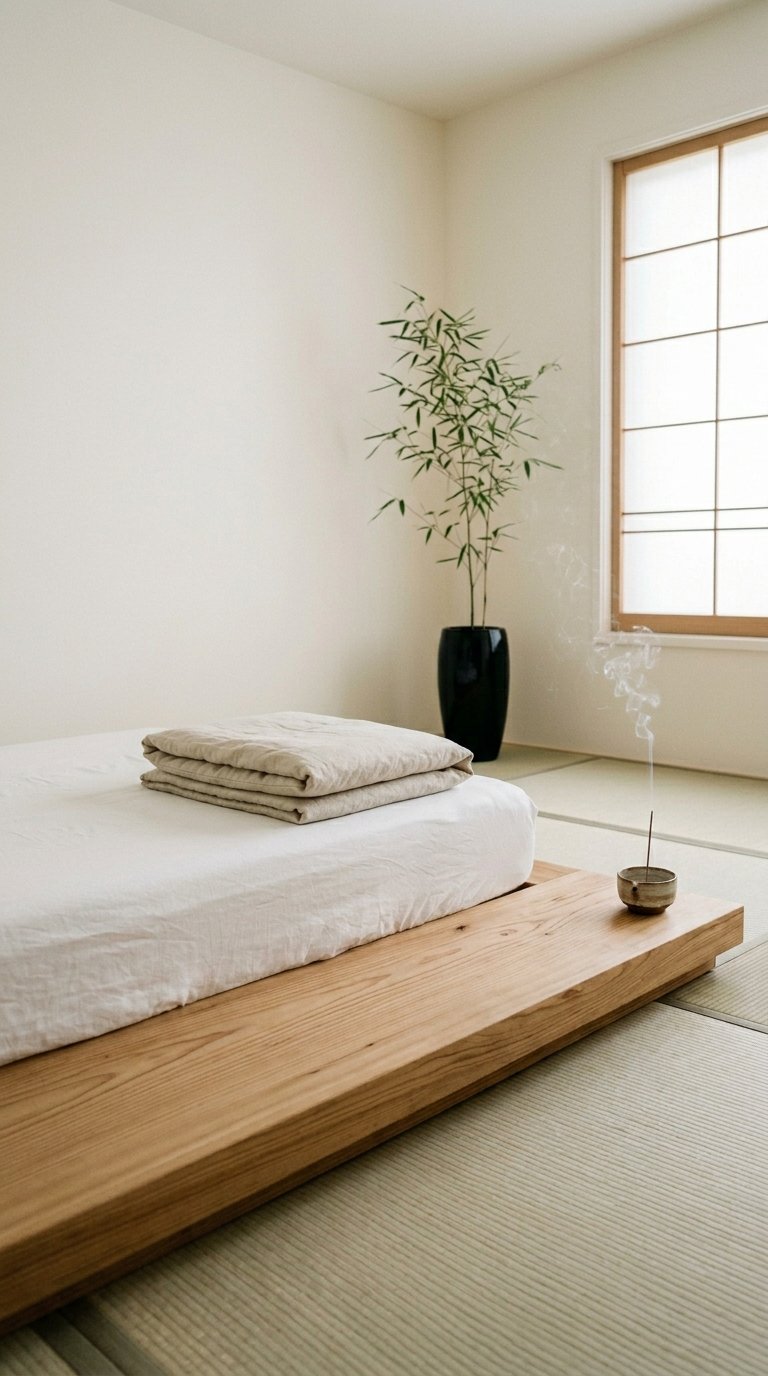
Japanese bedroom design places the sleeping surface as close to the floor as possible. The philosophy connects to mindfulness, simplicity, and the idea that less visual complexity creates better rest.
A Japanese-inspired wooden bed features:
- A very low platform, sometimes just a few inches from the floor
- Clean, unornamented wood with a natural or lightly oiled finish
- No headboard, or a very low, simple one
- Natural wood species: cypress, cedar, and oak are traditional
This style requires commitment to the whole room aesthetic. A Japanese-inspired bed surrounded by Western bedroom furniture looks disconnected. The minimalism needs to extend to the bedside tables, flooring, and lighting for the design to read clearly.
5. The Shiplap Headboard Bed
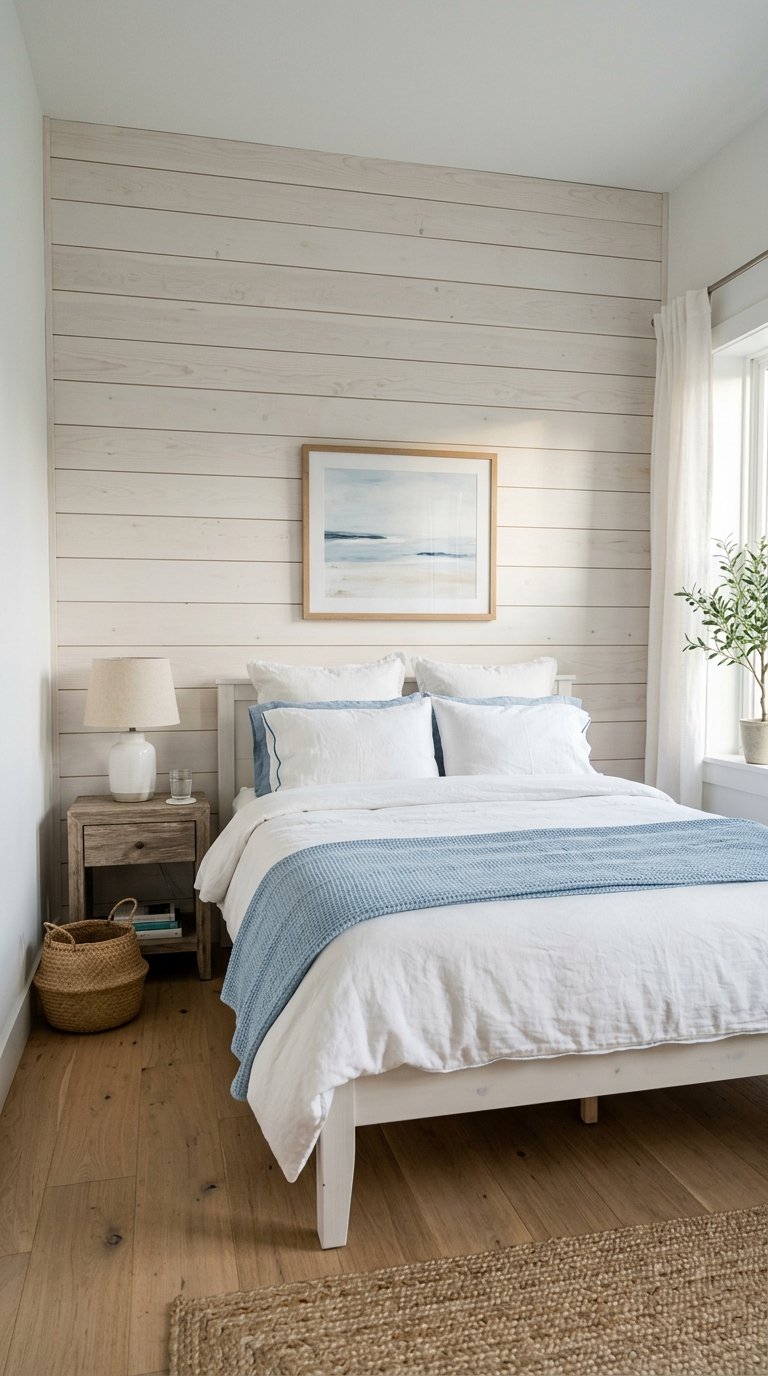
Shiplap is a horizontal planking style with a distinctive reveal line between each board. Originally a construction material, it became a design feature in interior spaces and works exceptionally well as a wooden headboard.
A shiplap headboard on a simple wooden bed frame gives a bedroom a relaxed, casual, slightly coastal character without full rustic commitment.
Build or buy considerations:
- DIY shiplap headboard: Attach horizontal planks to a plywood backing mounted to the wall behind the bed
- Purchased shiplap bed: Several furniture brands offer beds with shiplap-style headboards built into the frame
- Paint options: White shiplap is classic; natural wood-toned shiplap is warmer and less expected
- Width: Extend the shiplap headboard wider than the bed frame itself for a more architecturally significant effect
6. The Canopy Bed With Wooden Frame
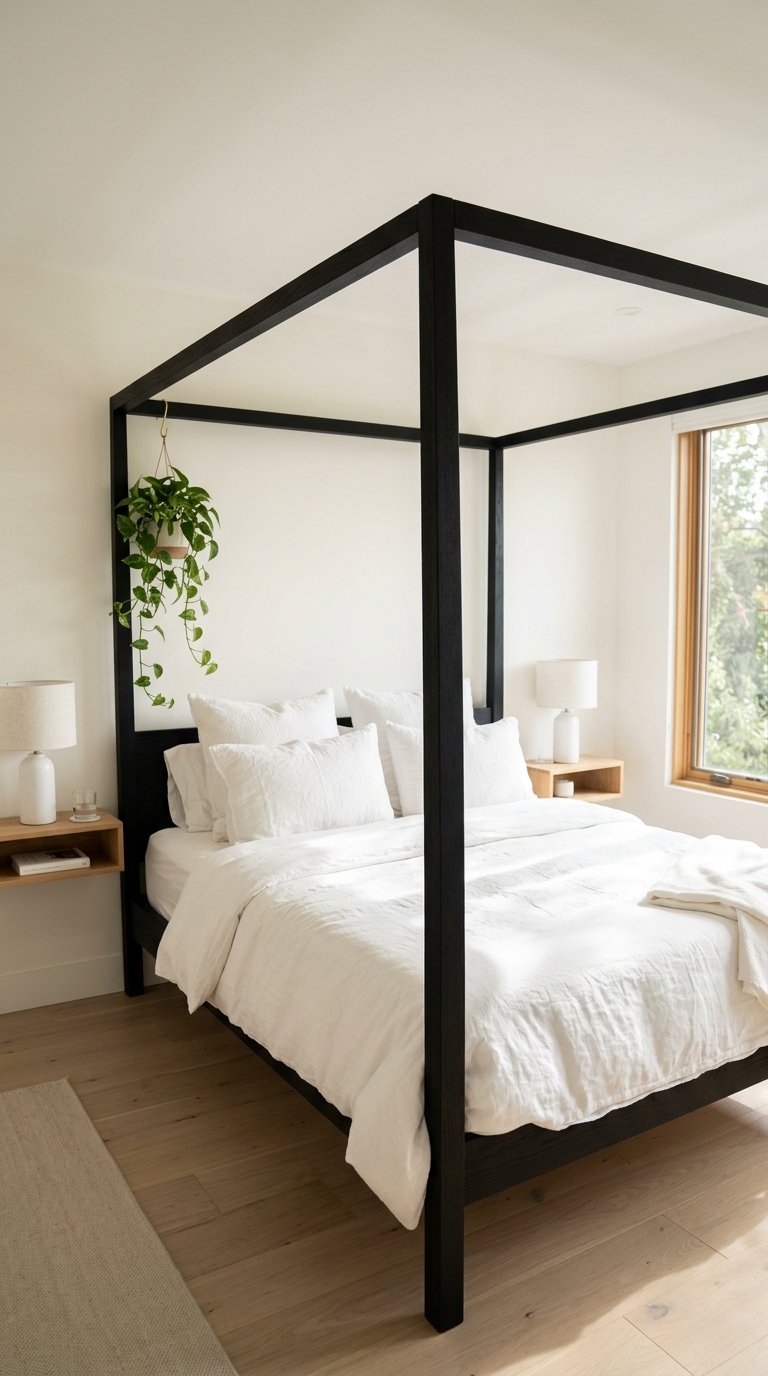
A wooden canopy bed has four posts and a top frame connecting them. The top frame holds fabric, provides a structure for hanging plants, or stands bare as a geometric frame above the sleeping area.
The bare wooden canopy frame with no fabric is a very current design choice. It adds architectural height and visual interest without the heaviness of draped fabric.
Canopy frame materials and their character:
- Solid oak: Warm, traditional, pairs with linen and cotton drapes
- Bamboo: Light, organic, works in bohemian and coastal spaces
- Black-stained wood: Modern and graphic, strong contrast against white bedding
- Unfinished pine: Rustic and raw, works in cabin and farmhouse interiors
Hang sheer linen panels from the canopy frame if you want the enclosed feeling without blocking light or airflow. Sheer fabric gives privacy without weight.
7. The Storage Bed With Wooden Drawers
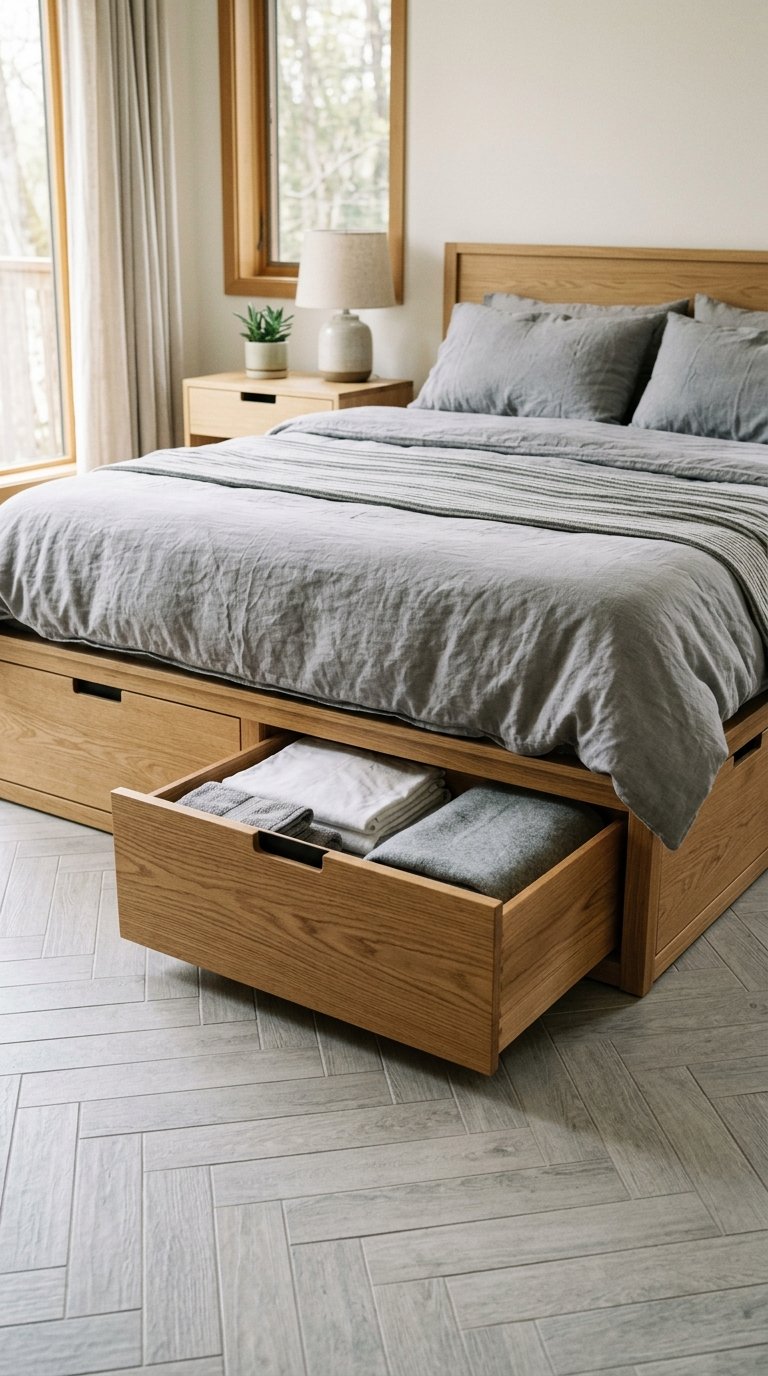
A wooden storage bed combines the bed frame with built-in drawer storage beneath the mattress platform. In apartments and smaller bedrooms, this is one of the most practical furniture decisions available.
Storage bed configurations:
- Two large drawers on one side: Most common, deepest storage capacity
- Four drawers split two per side: More accessible from both sides of the bed
- Hydraulic lift platform: The entire mattress surface lifts to reveal full under-bed storage
- Combination of drawers and open shelving: Works in platform bed designs
Wooden storage beds in oak or walnut look significantly more elevated than the fabric or upholstered versions. The wood drawer fronts read as furniture, not just a utilitarian storage hack.
8. The Solid Walnut Bed Frame
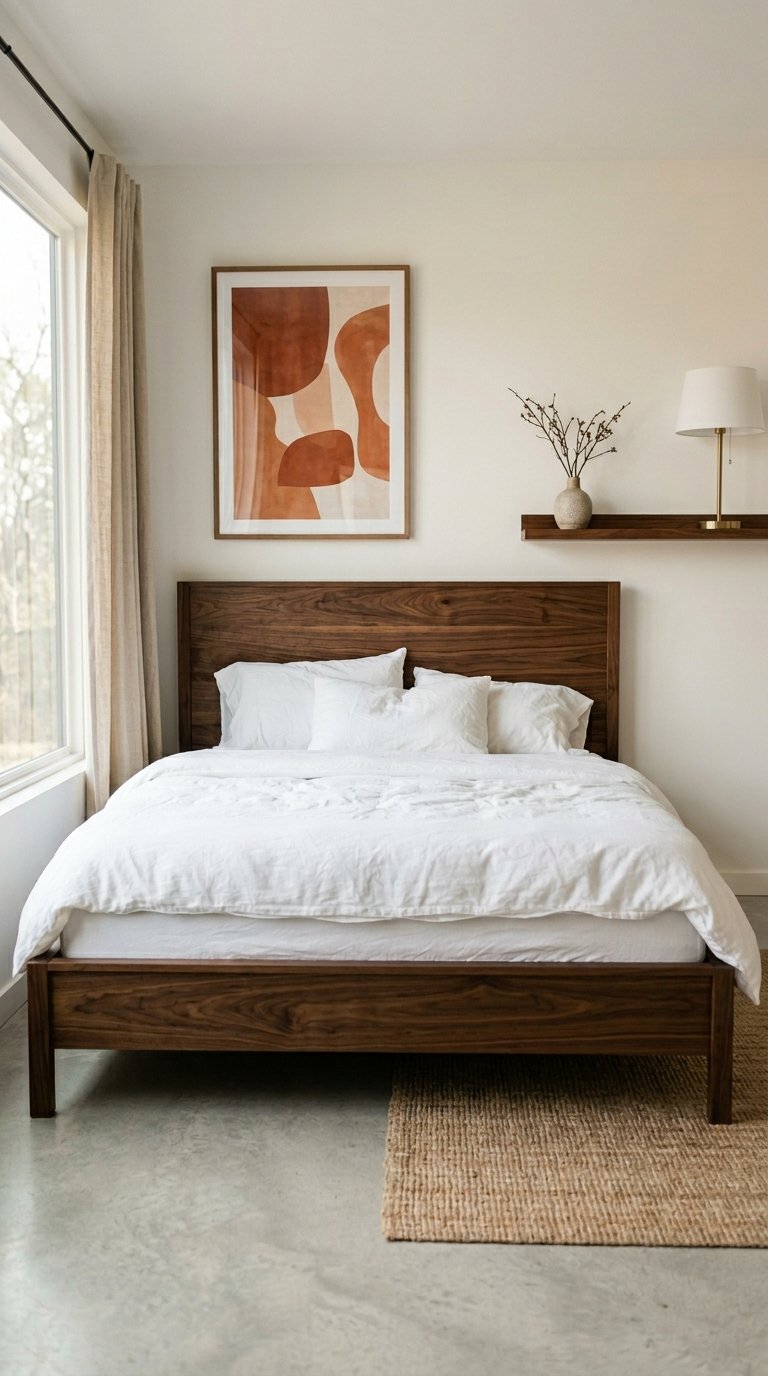
Walnut is the premium choice in wooden bed frames. The grain is fine and consistent. The color ranges from pale brown to deep chocolate with a natural luster that most other woods don’t match.
A solid walnut bed frame costs more than most other wood options. It also lasts significantly longer and maintains its appearance better over decades of use.
Walnut bed characteristics:
- Color: Warm medium to dark brown, darkens slightly with age and light exposure
- Grain: Fine, straight, with occasional figuring that creates visual interest
- Hardness: Hard enough for furniture durability, softer than oak so easier to work
- Finish options: Oil finish preserves the natural warmth; lacquer adds protection and sheen
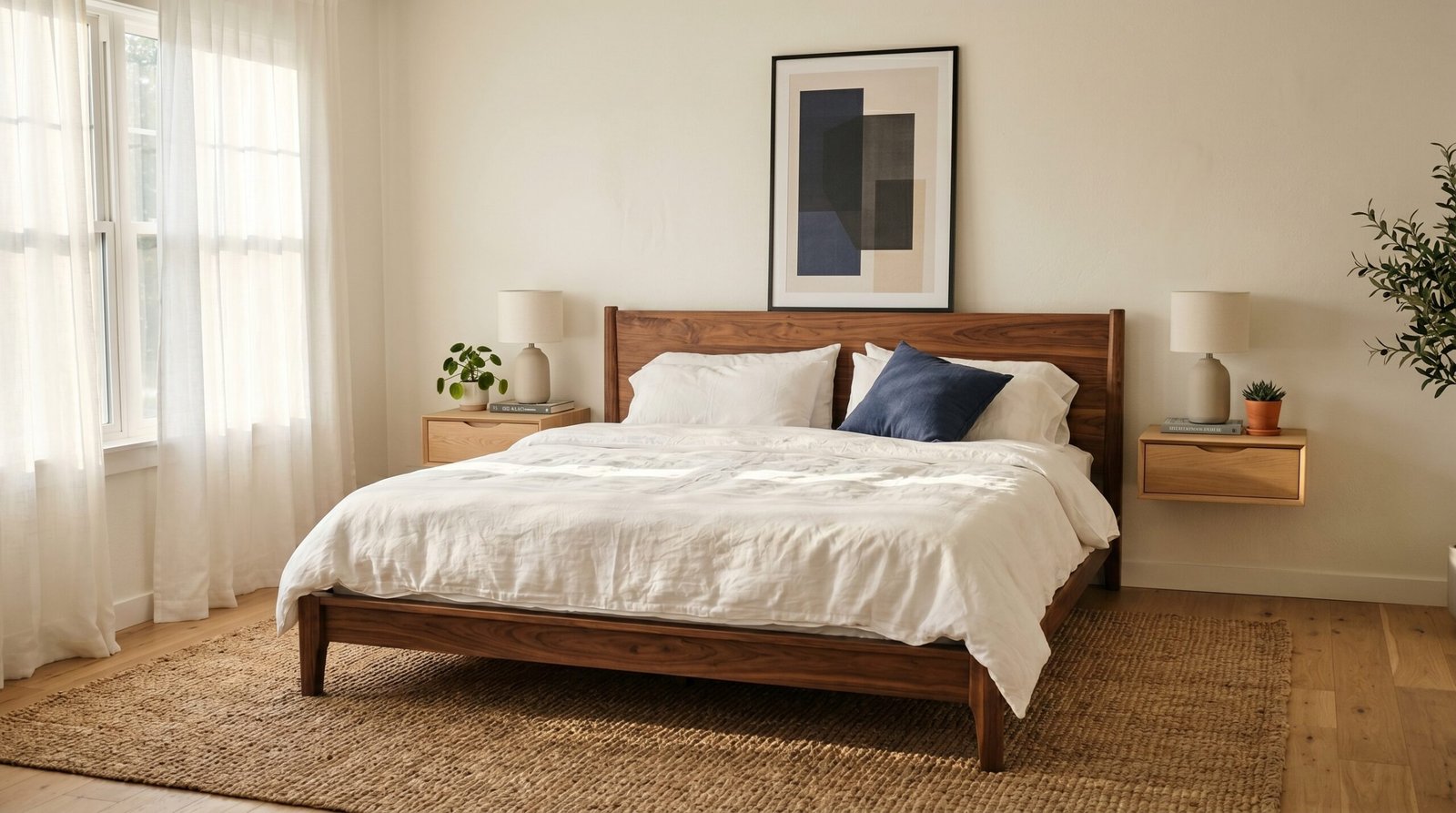
A solid walnut bed frame with white or cream bedding is one of the strongest bedroom combinations available. The contrast between the dark wood and light bedding is immediately striking and perpetually current. FYI, walnut frames hold their value better than almost any other furniture investment.
9. The Scandinavian Wooden Bed
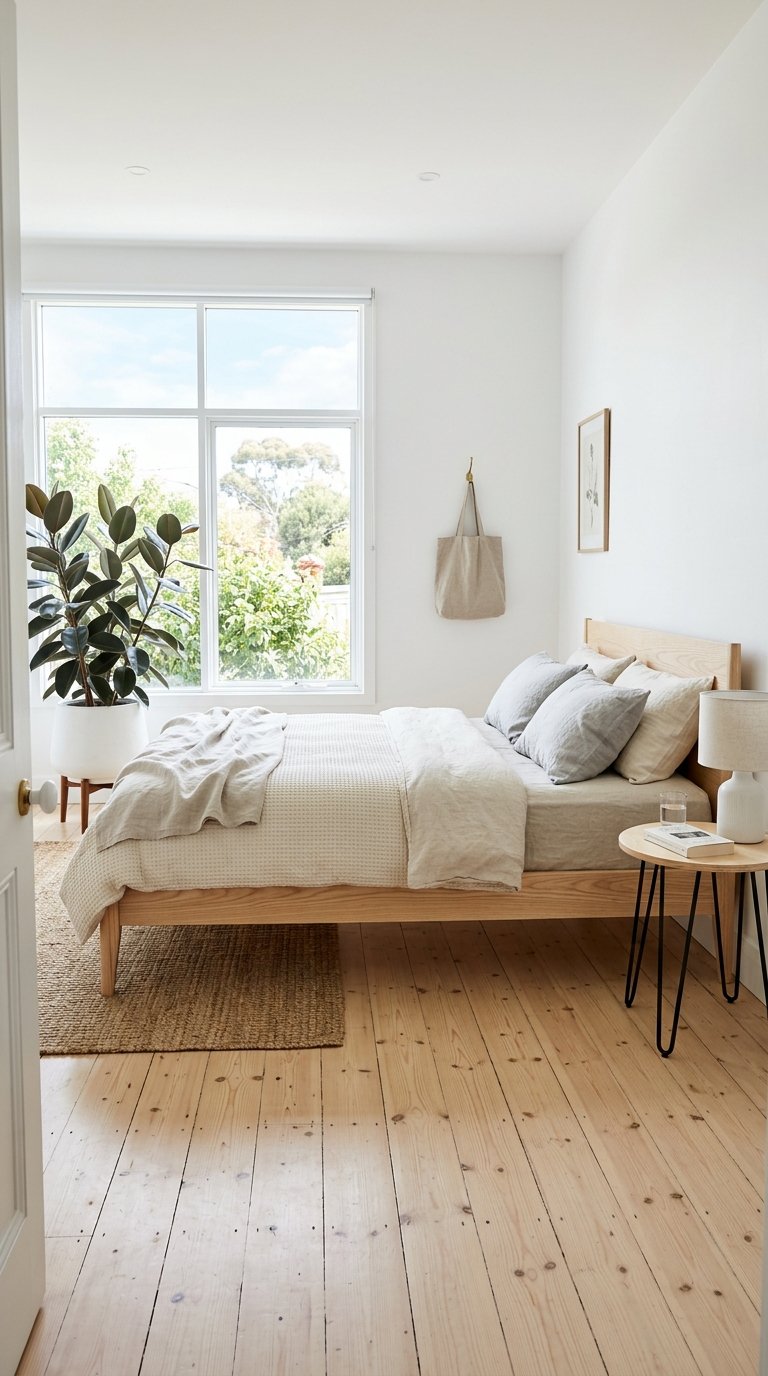
Scandinavian design applies a clear set of principles to wooden furniture: clean lines, functional form, natural materials, and restraint in decoration. A Scandinavian wooden bed looks simple. It takes significant craft skill to achieve that apparent simplicity.
Key characteristics of Scandinavian wooden beds:
- Light wood species: Birch, ash, and light oak dominate
- Tapered legs: A signature detail that lifts the frame visually
- Low, simple headboard: Functional rather than decorative
- Natural or lightly oiled finish: No staining, no dark tones, wood in its natural color
- Slat base: Visible slat construction rather than a solid platform
Scandinavian wooden beds work in almost any bedroom size because the light wood and elevated legs create a sense of openness. This is the style I’d recommend for anyone who isn’t sure where their design preferences land.
10. The Rustic Log Bed Frame
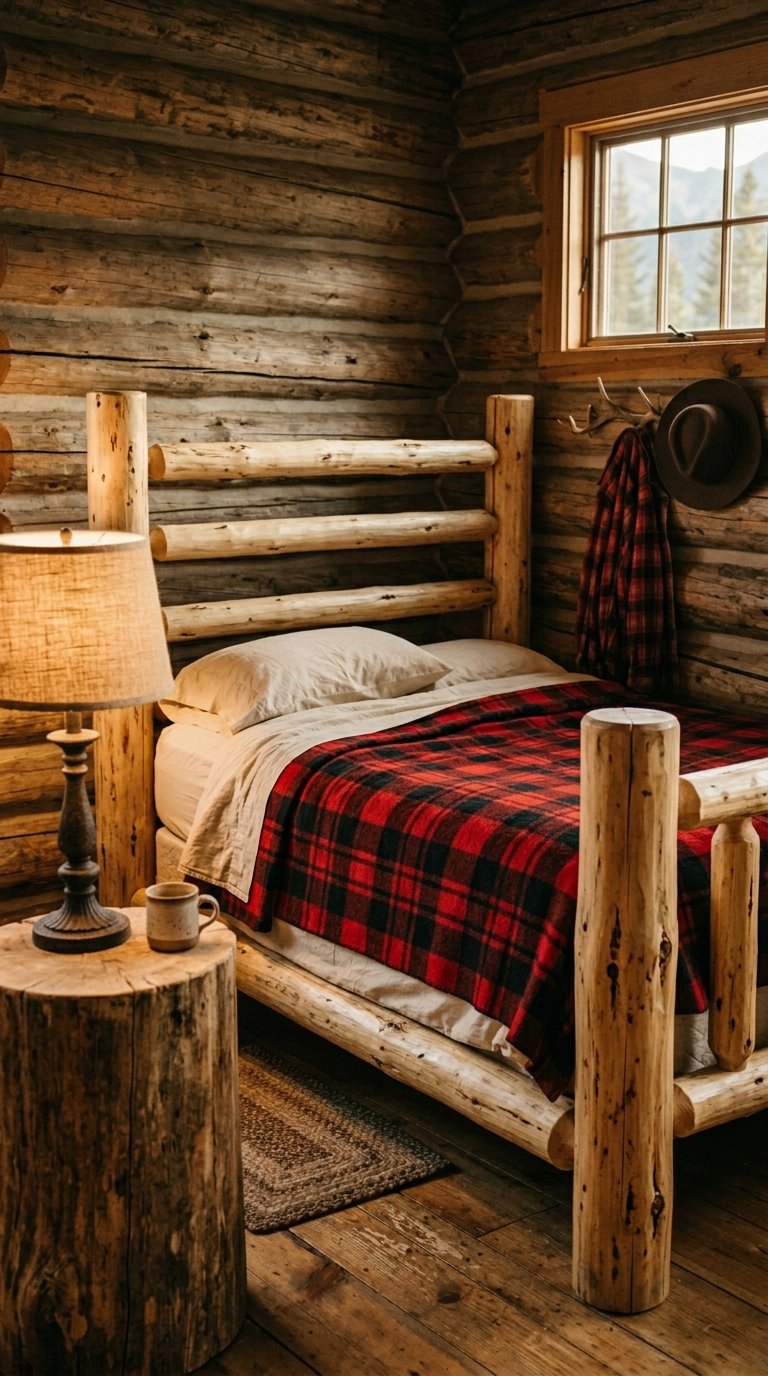
A log bed frame uses whole or half logs as the structural elements. Posts, rails, and headboard all use natural log forms with bark sometimes left intact. The result is unmistakably natural and works specifically in cabin, mountain, and rustic interior settings.
Log bed details worth knowing:
- Peeled log: Bark removed, smooth surface, lighter color
- Bark-on log: Bark left intact for full rustic character, requires more maintenance
- Bent branch detail: Some log beds use naturally curved branches in the headboard design
- Wood species: Pine, cedar, and aspen are most common for log bed construction
A log bed frame demands a specific interior context. It looks perfect in a mountain cabin with plank floors and wool throws. It looks entirely out of place in a minimalist urban apartment. Know your room before committing.
11. The Floating Platform Bed
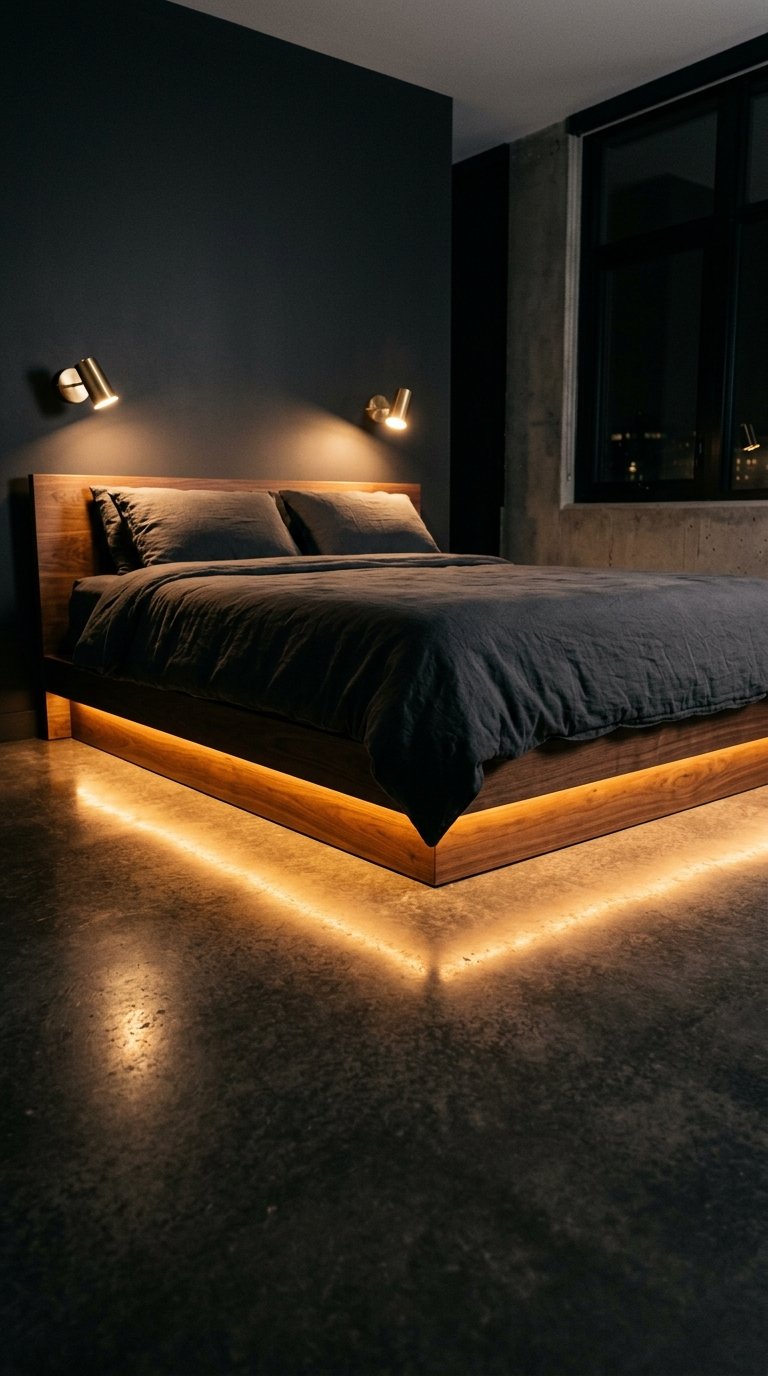
A floating platform bed creates the visual illusion that the mattress hovers above the floor. The base uses a recessed support structure that hides the legs, creating a shadow gap between the bed and the floor surface.
The floating effect comes from:
- A recessed wooden base that sits inside the outer frame dimensions
- An LED strip light running along the base perimeter that illuminates the floor below
- A cantilevered frame design that keeps supports away from the visible edges
The LED underlight is optional but dramatically effective at night. A soft warm glow from beneath the bed changes the entire bedroom atmosphere after dark without requiring any additional lighting fixture. 🙂
12. The Farmhouse Wooden Bed
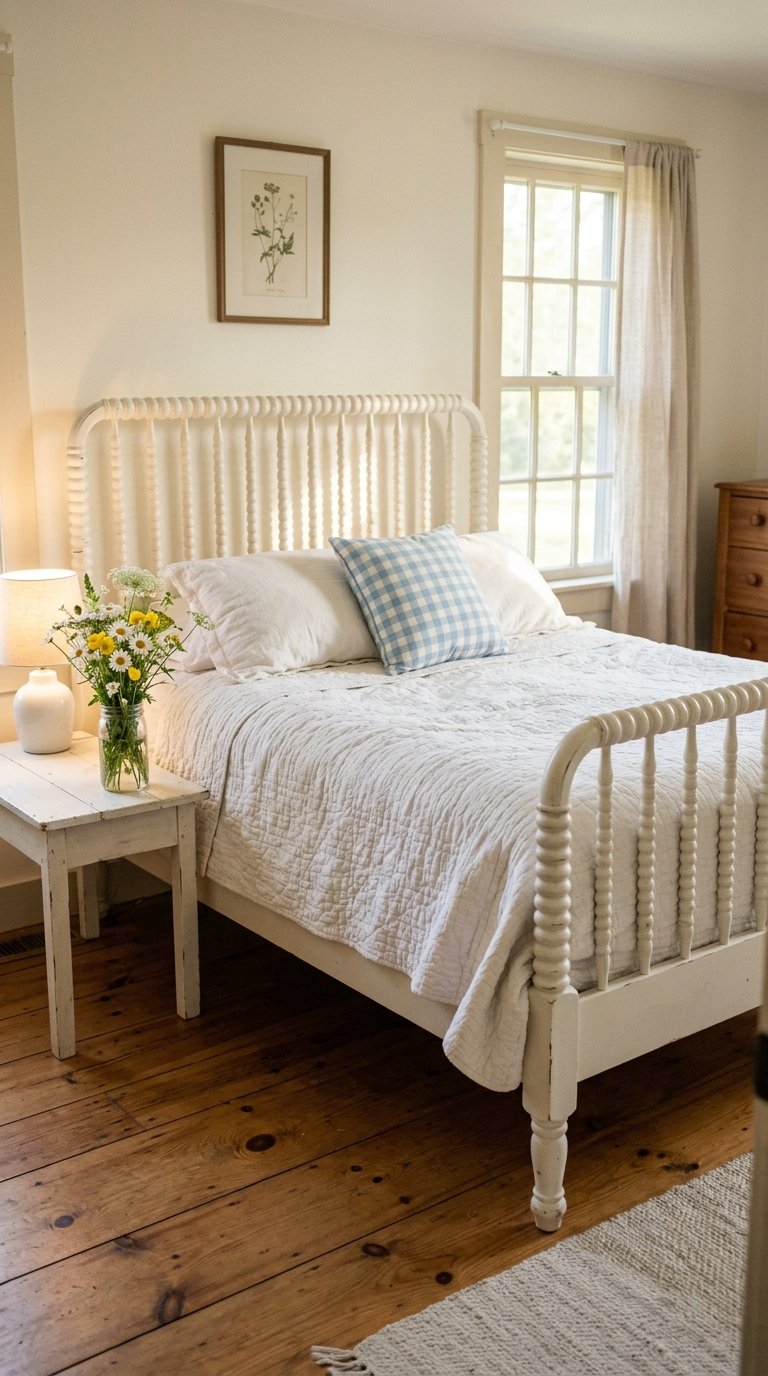
A farmhouse wooden bed combines sturdy construction, simple lines, and unpretentious materials into a design that feels grounded and comfortable. It avoids both the austerity of minimalism and the heaviness of traditional furniture.
Farmhouse bed characteristics:
- Thick, turned spindles in the headboard: A signature farmhouse detail
- White or whitewashed paint finish: The most common farmhouse treatment on wood
- Pine or poplar construction: Affordable softwoods that take paint well
- Tall headboard, lower footboard: Classic farmhouse proportions
Farmhouse beds work best with natural textiles. Linen, cotton, and quilted coverlets all pair well with the unpretentious character of farmhouse wood design.
13. The Mid-Century Modern Wooden Bed
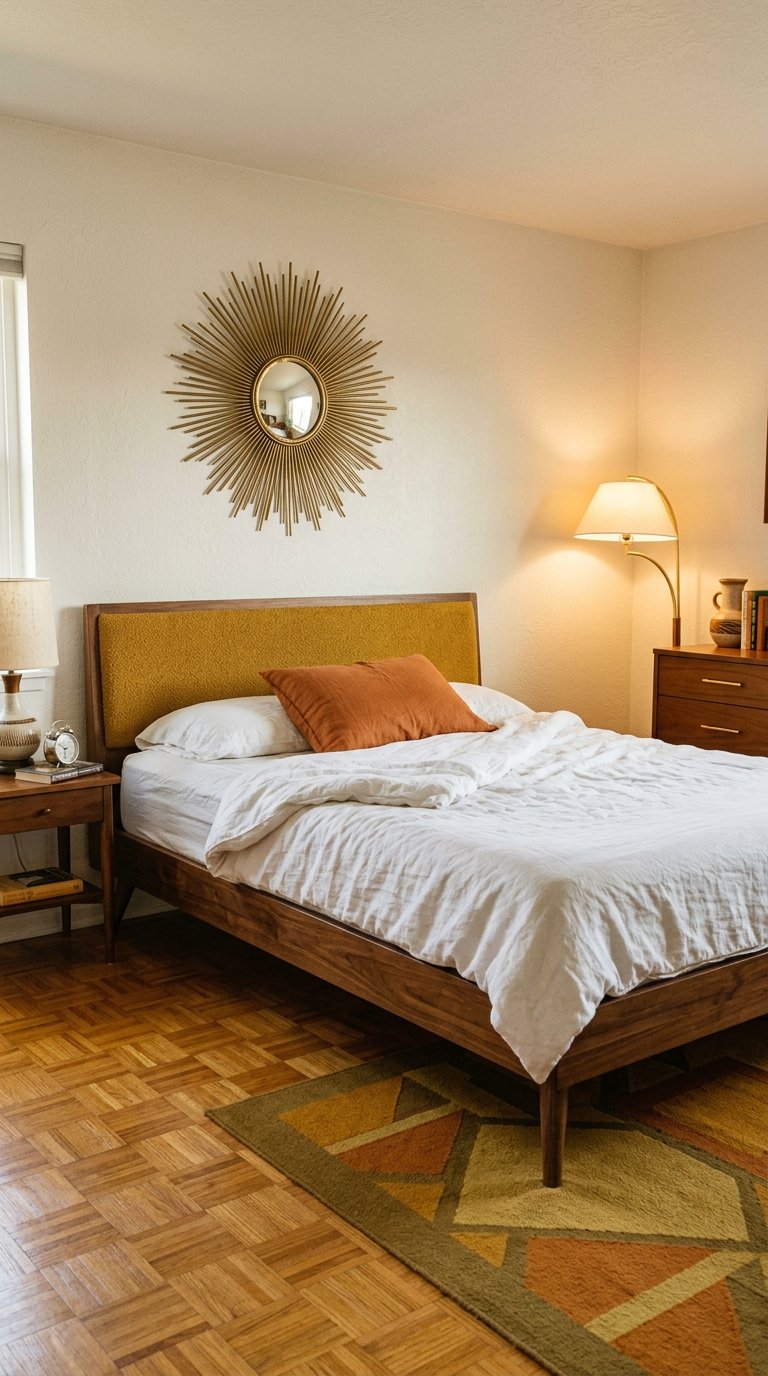
Mid-century modern design emerged in the 1950s and 60s and has never fully gone out of style. Its principles: organic forms, tapered legs, warm wood tones, and the integration of natural materials with functional design.
A mid-century modern wooden bed features:
- Walnut or teak construction: Both were standard mid-century materials
- Tapered legs in a splayed stance: The most identifiable detail of the style
- Low, streamlined headboard: Often with a simple upholstered panel in a warm neutral
- No ornamentation: Clean surfaces, no carved detail, no decorative excess
Mid-century modern wooden beds pair well with statement lighting. A sculptural pendant or a ceramic arc floor lamp beside the bed completes the period reference without requiring anything else.
14. The Coastal Driftwood Bed Frame
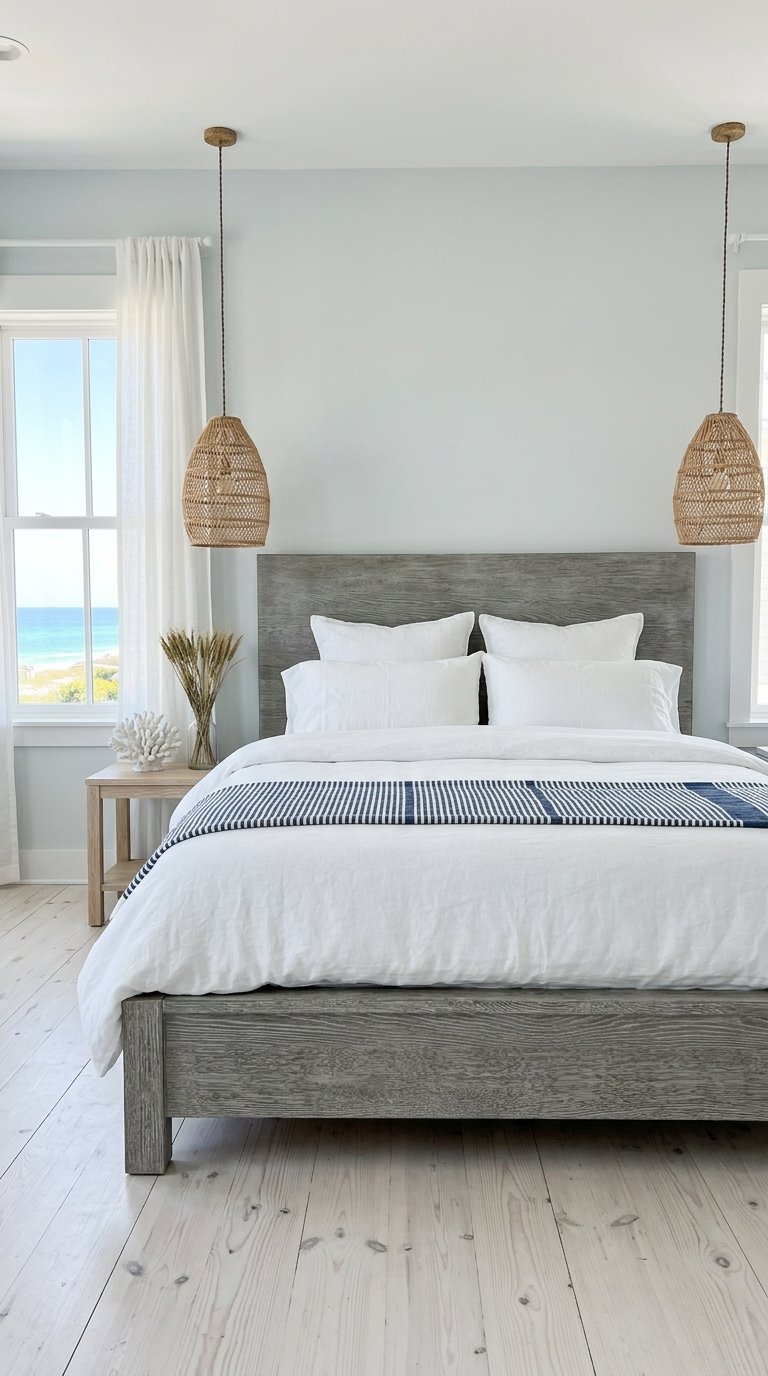
A coastal wooden bed takes its visual cues from natural beach materials: pale, weathered wood, light tones, and textures that suggest water and salt air. The driftwood aesthetic captures this without requiring actual driftwood construction.
Achieving the coastal driftwood look:
- Whitewash or grey wash finish: Applies a diluted white or grey paint that lets grain show through
- Wire-brushed texture: A surface treatment that opens the wood grain for a weathered effect
- Light wood species: Pine, paulownia, and acacia all take the coastal finish well
- Rope or rattan accents: Headboard weaving or rope-wrapped post details reinforce the coastal character
This bed style works in rooms with significant natural light. The pale wood and weathered finish look best in bright, airy spaces. In a dark room, the coastal driftwood palette loses its character.
15. The Industrial Wood and Metal Bed
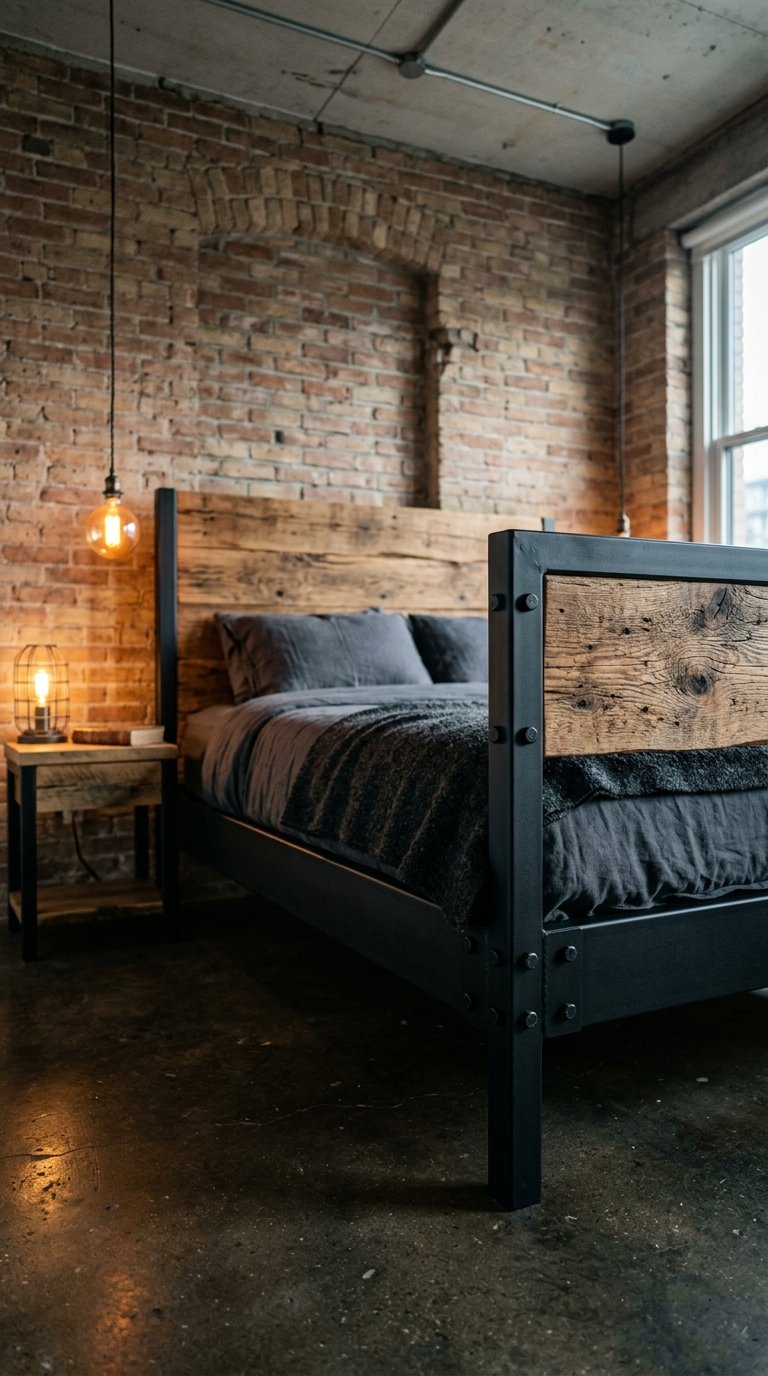
Industrial design pairs raw wood with black metal in combinations that feel workshop-inspired and urban. The wood warms what the metal would otherwise make cold. The metal grounds what the wood would otherwise make too rustic.
Industrial bed elements:
- Reclaimed or rough-sawn wood headboard: Visible grain, knots, and character marks
- Black powder-coated steel frame: The most common industrial metal choice
- Exposed bolt or pipe joinery: Hardware as a visible design element rather than hidden
- Mixed finish options: Matte black with dark walnut; raw steel with light oak
The industrial bed works in urban loft and warehouse-style interiors. High ceilings, exposed brick, and concrete floors all complement the industrial bed’s character. In a suburban bedroom with carpet, the same bed loses its context.
16. The Bamboo Bed Frame
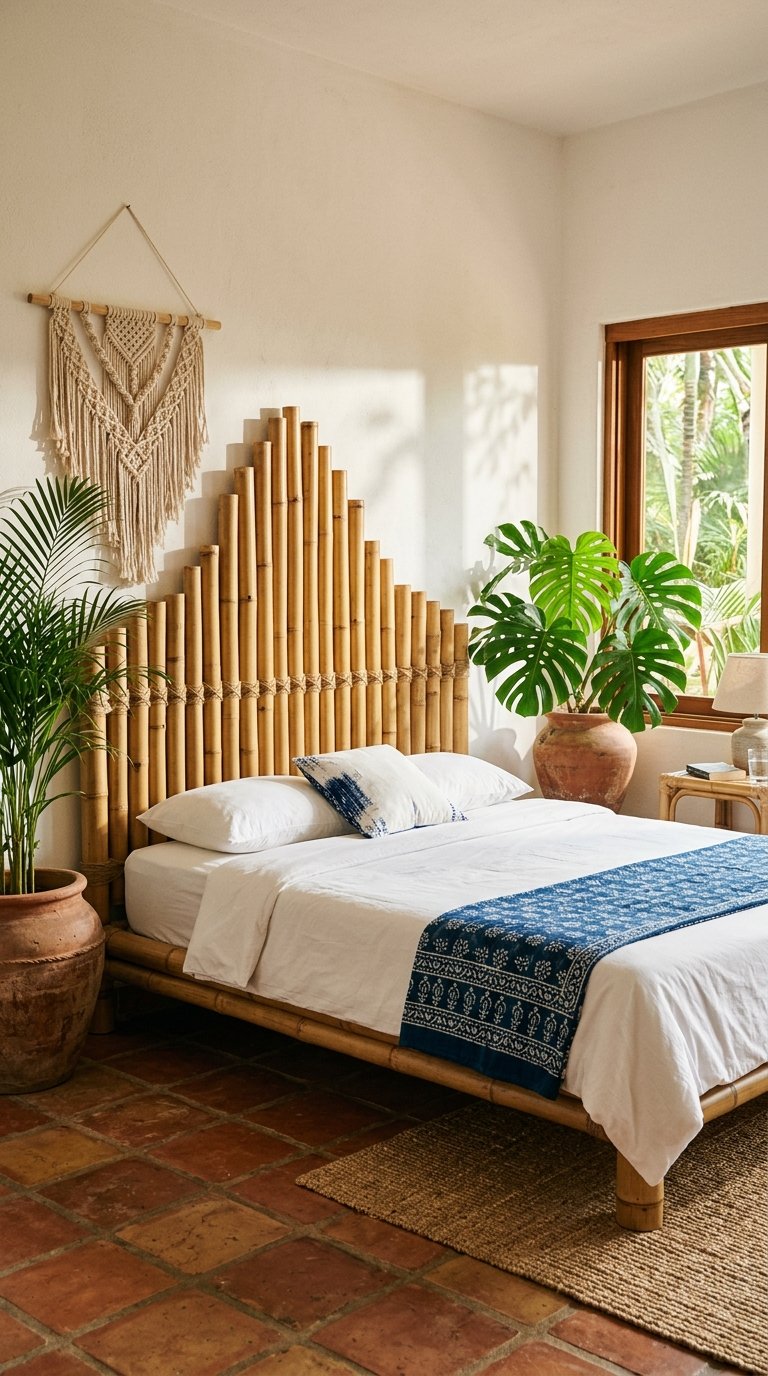
Bamboo is technically a grass, not a wood. It earns a place on this list because it behaves like wood structurally and visually, and it grows faster than any conventional wood species, making it one of the most sustainable bed frame materials available.
Bamboo bed characteristics:
- Natural color: Pale golden yellow that warms naturally with age
- Carbonized bamboo: A heat-treated version with a deeper, darker caramel tone
- Strength: Comparable to hardwood despite its light appearance
- Tropical aesthetic: Works in coastal, bohemian, and Asian-inspired interiors
Bamboo bed frames cost significantly less than solid hardwood frames while delivering genuine durability and a distinctive natural look. For a bedroom that leans coastal or bohemian, bamboo is hard to beat at its price point.
17. The Sleigh Bed in Cherry Wood
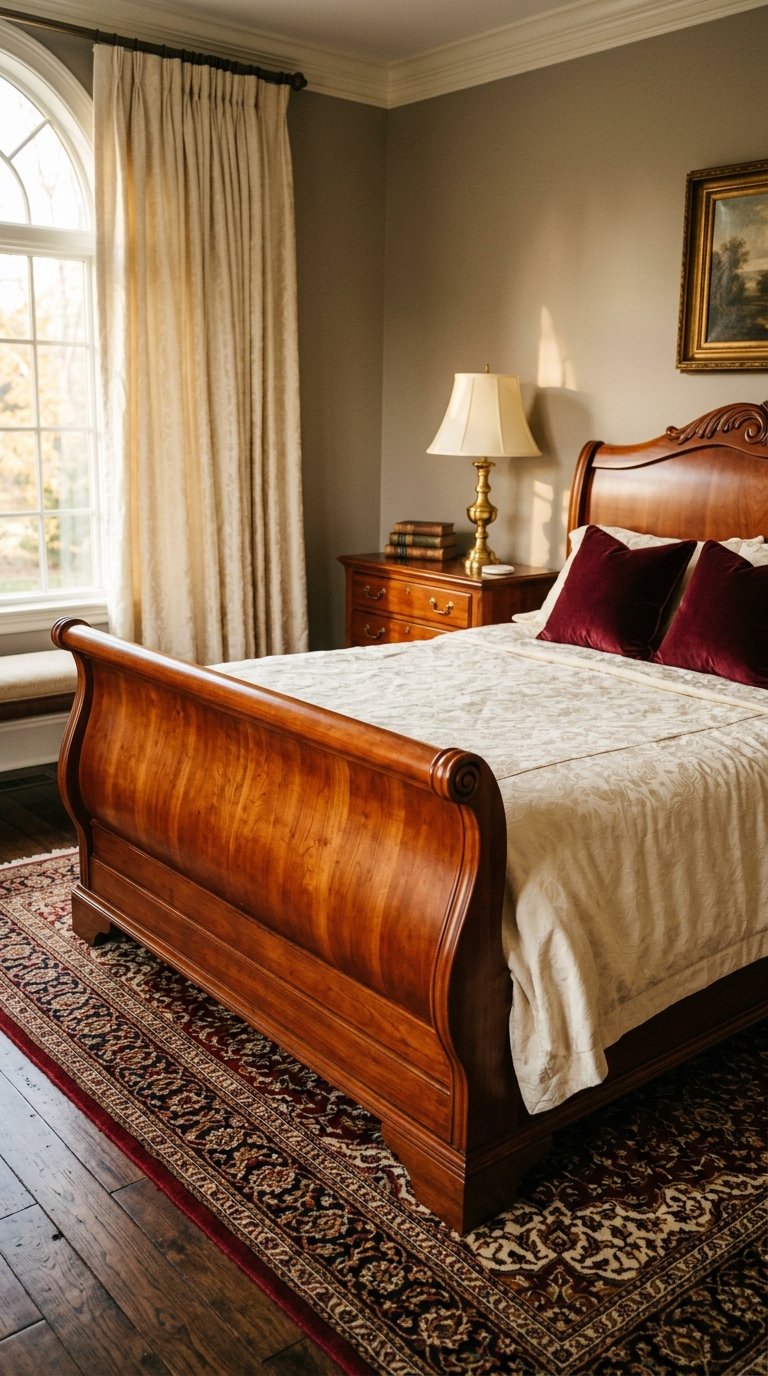
A sleigh bed has a curved, scrolled headboard and matching footboard that together suggest the shape of a vintage sleigh. In cherry wood, this design reaches its most elegant expression.
Cherry wood characteristics:
- Color: Light pinkish-brown when new, deepens to a rich reddish-brown with light exposure over years
- Grain: Fine and consistent with occasional small burls
- Surface: Takes a high-polish finish beautifully
- Aging: Cherry is one of the few woods that genuinely improves in appearance with age and light
A cherry wood sleigh bed is a long-term investment piece. It gets better looking over decades of use as the wood color deepens and the finish develops character. IMO this is the most heirloom-quality option on this list.
18. The Bunk Bed in Solid Wood
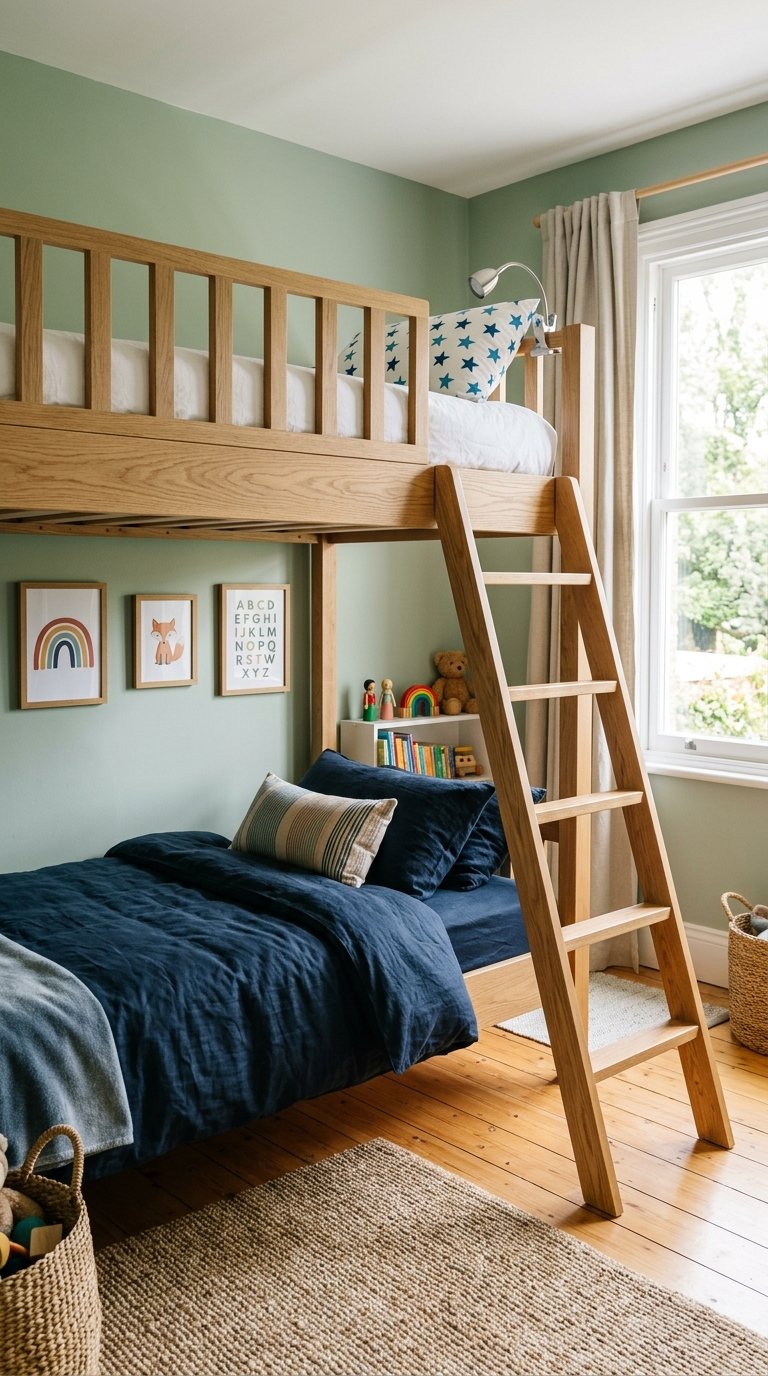
Solid wood bunk beds for children’s rooms or guest rooms deserve more design attention than the market typically gives them. A well-designed solid wood bunk bed outlasts cheaply made alternatives by decades and looks better doing it.
Solid wood bunk bed considerations:
- Weight capacity: Solid hardwood frames handle significantly more weight than MDF or particleboard
- Ladder style: Straight ladders save space; angled ladders are safer and more comfortable to climb
- Guard rail height: Upper bunk guard rails should extend at least 5 inches above the mattress surface
- Wood species: Pine is affordable and takes paint well; oak and maple are more expensive but more durable
A solid oak bunk bed in a child’s room functions as a piece of furniture they keep well into adulthood. The investment pays over 15 to 20 years of use rather than requiring replacement every five.
19. The Bookcase Headboard Bed
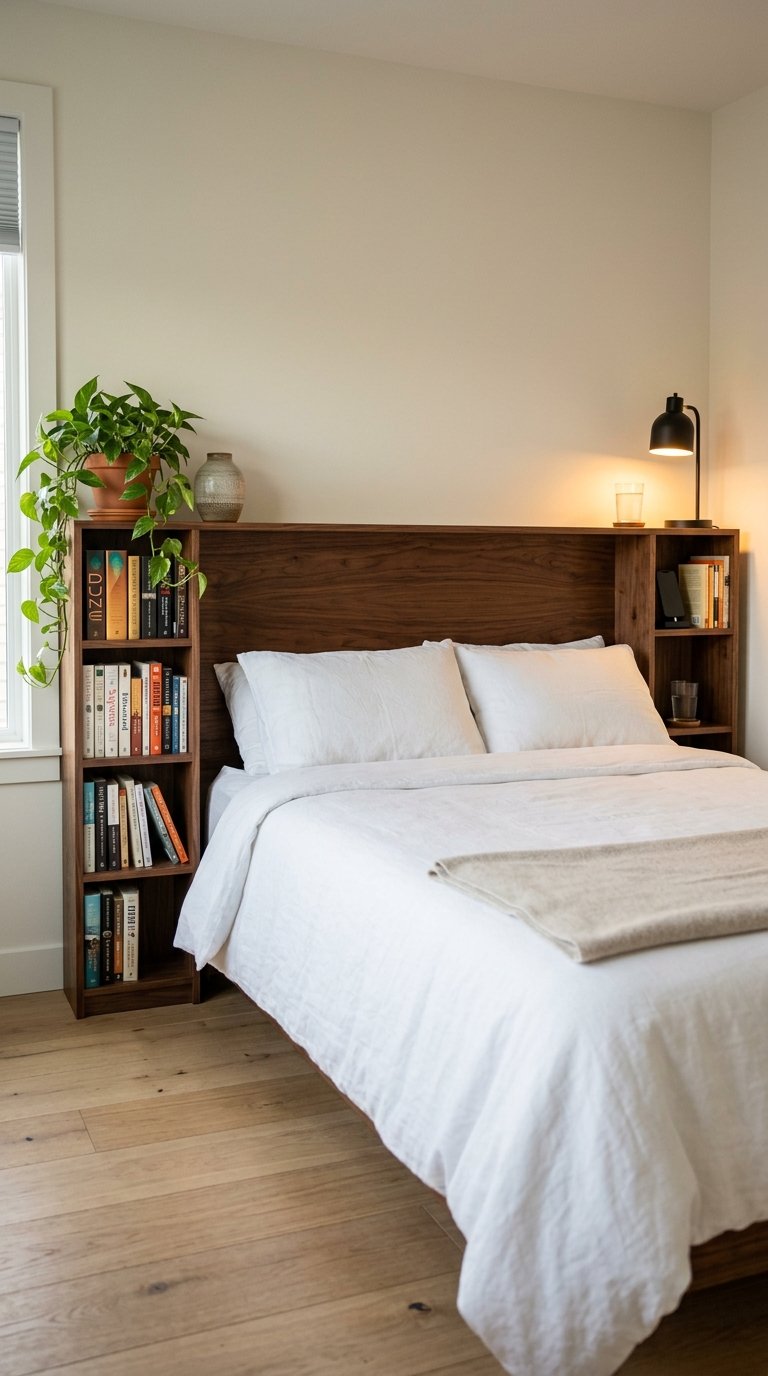
A bookcase headboard integrates shelving directly into the headboard structure. The shelves hold books, a lamp, a glass of water, a phone, and whatever else you reach for at night without requiring a separate nightstand.
Bookcase headboard configurations:
- Centered storage with symmetrical shelves on either side: Works for shared beds
- Full-width upper shelving with a lower panel: Maximum storage, more visually complex
- Single side tower with shelving: Works for one-person beds or asymmetric room layouts
- Integrated USB and outlet charging: Modern bookcase headboards include charging points in the shelf structure
In a bedroom without space for nightstands, the bookcase headboard solves the problem completely. Every function of a nightstand moves into the headboard without adding floor footprint.
20. The Live Edge Wooden Bed
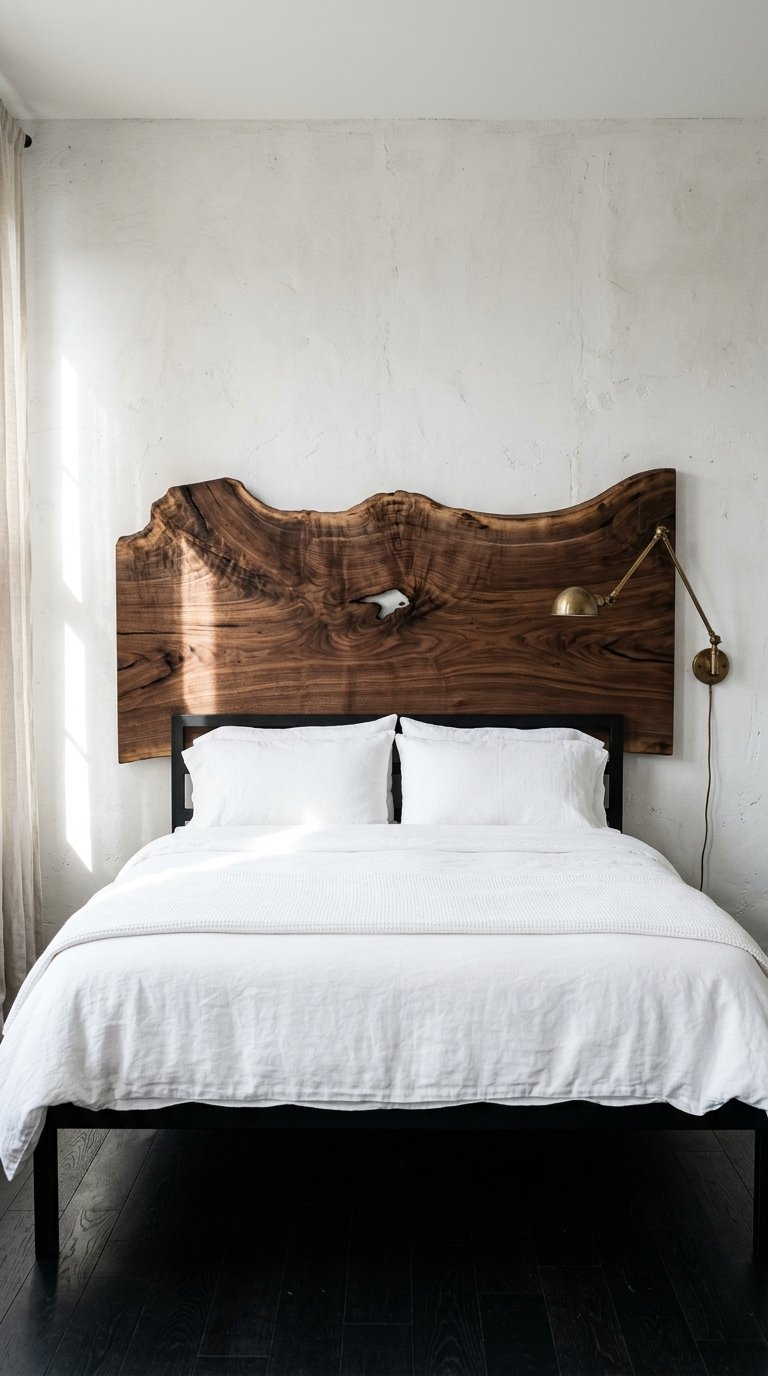
A live edge piece of furniture retains the natural outer edge of the tree slab rather than cutting it into a straight line. In a live edge bed frame, the headboard features the tree’s natural profile: curves, dips, and organic irregularity that no two pieces share.
Live edge headboard considerations:
- Slab species: Black walnut produces the most dramatic live edge with the strongest grain pattern
- Epoxy fill: Some live edge slabs use colored or clear epoxy resin to fill voids and cracks in the slab surface
- Thickness: A headboard slab should be at least 2 inches thick for structural stability and visual presence
- Finish: A natural oil or wax finish preserves the organic character better than lacquer
A live edge headboard is a piece of functional art. No other wooden bed design carries the same level of individuality. Every live edge headboard is genuinely one of a kind.
21. The Murphy Bed With Wooden Cabinet
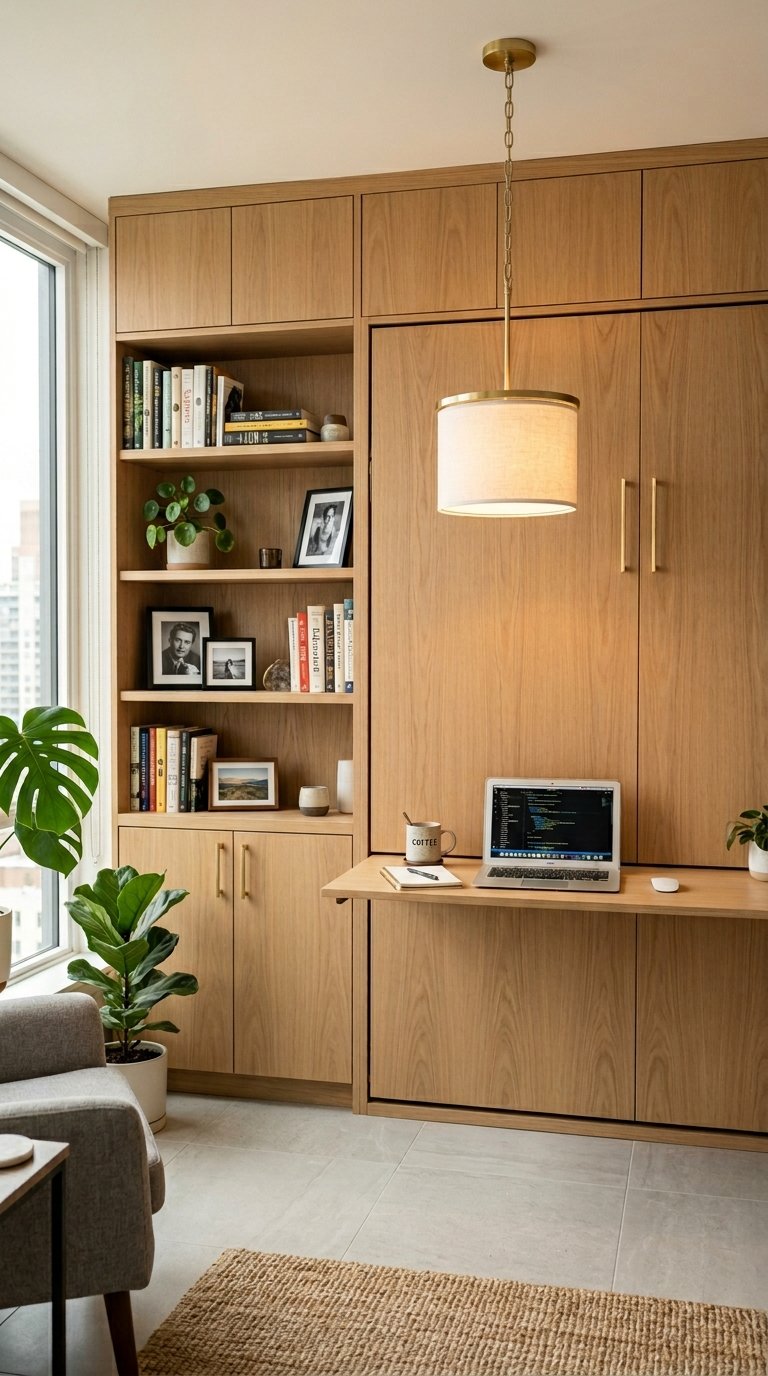
A Murphy bed folds into a wall cabinet when not in use. The cabinet face, when the bed is closed, looks like a piece of wooden furniture rather than a sleeping space. In studios and guest rooms, this is the most space-efficient sleeping solution available.
Modern Murphy bed cabinet options:
- Full-width wardrobe integration: The bed folds into a wardrobe with hanging space on either side
- Desk integration: The bed folds up to reveal a built-in desk surface below
- Bookcase front panel: The closed Murphy bed face functions as a bookcase
- Sofa integration: Some systems pair a sofa directly below the Murphy bed fold
A high-quality wooden Murphy bed cabinet looks indistinguishable from built-in furniture when closed. The wood species and finish choices determine whether it reads as a design feature or a practical compromise.
Final Thoughts
Wood is the right material for a bed frame. It’s warm, it’s durable, it ages well, and it works across more interior styles than any other material. The 21 designs on this list cover the full range from the most minimal Japanese platform to the most dramatic four-poster canopy.
The best wooden bed for your bedroom is the one that matches your room’s proportions, your interior’s style, and your honest assessment of how much maintenance you’re willing to do on the finish over time.
Pick the design that you’d still want in the room ten years from now. Wooden beds are not impulse purchases. Choose accordingly.