21 Oak Kitchen Ideas That Look Expensive and Feel Timeless
Oak kitchens have been declared dead at least three times in the last twenty years. Somehow they keep coming back, looking better than ever. There’s a reason for that.
Oak is warm, durable, characterful, and genuinely improves with age. It works in traditional kitchens, contemporary ones, Scandinavian spaces, and farmhouse settings. It’s one of the few materials that doesn’t lock you into a single aesthetic decade.
I’ve spent a lot of time studying oak kitchens specifically because the difference between an oak kitchen that looks dated and one that looks exceptional is almost always in how the oak is used, not in the oak itself. These 21 ideas show you how to use it correctly.
1. Go With Light Oak Shaker Cabinets
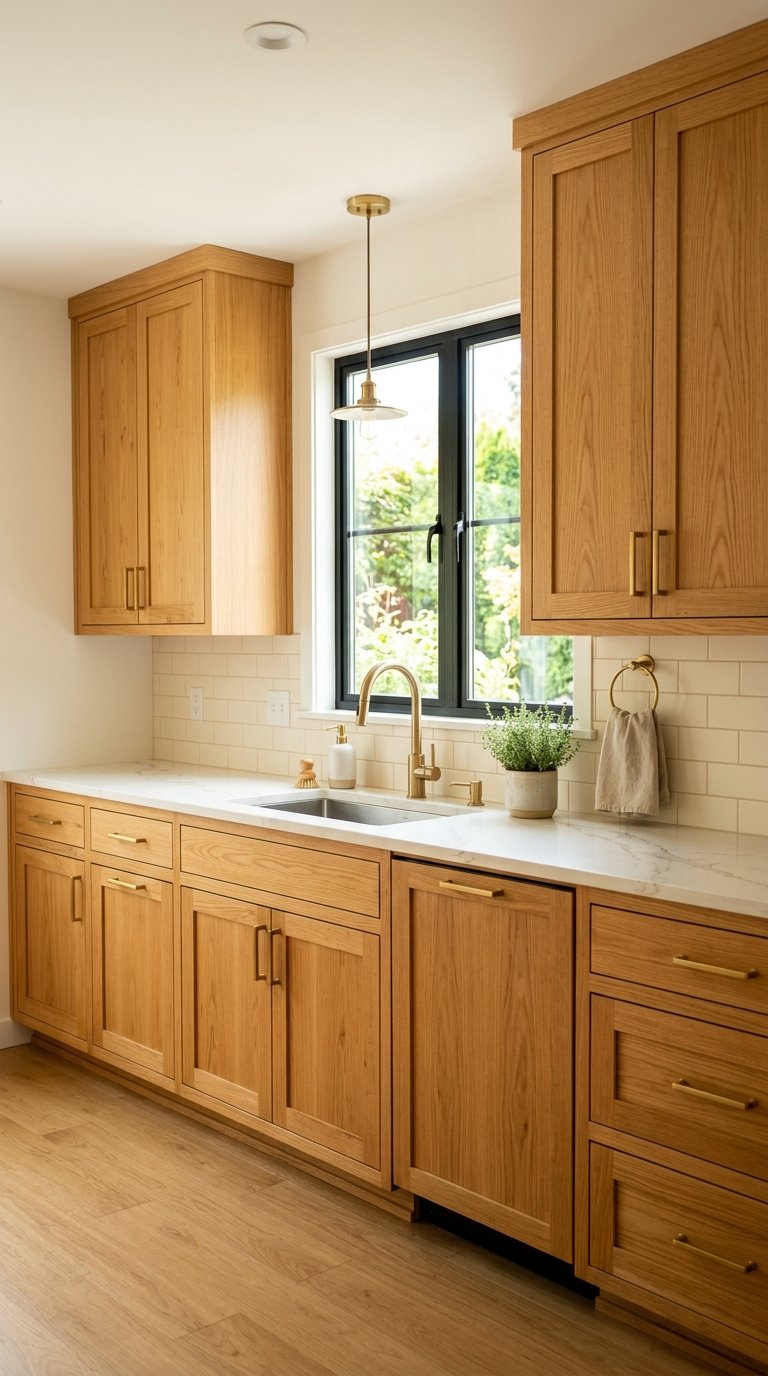
Light oak shaker cabinets are the most versatile starting point in oak kitchen design. They work in almost every home style and almost every room size.
Light oak shaker doors with their characteristic recessed panel detail and clean lines avoid the heavy, dated look that darker stained oak carries. The natural wood tone is warm without being oppressive.
The shaker profile suits the material well. Oak grain shows through the flat panel sections while the frame structure of the shaker design adds geometric interest.
Pair with white or cream walls, stone countertops, and simple hardware in brushed brass or matte black. This combination has worked for decades and shows no sign of stopping.
2. Pair Oak With Sage Green for a Two-Tone Kitchen
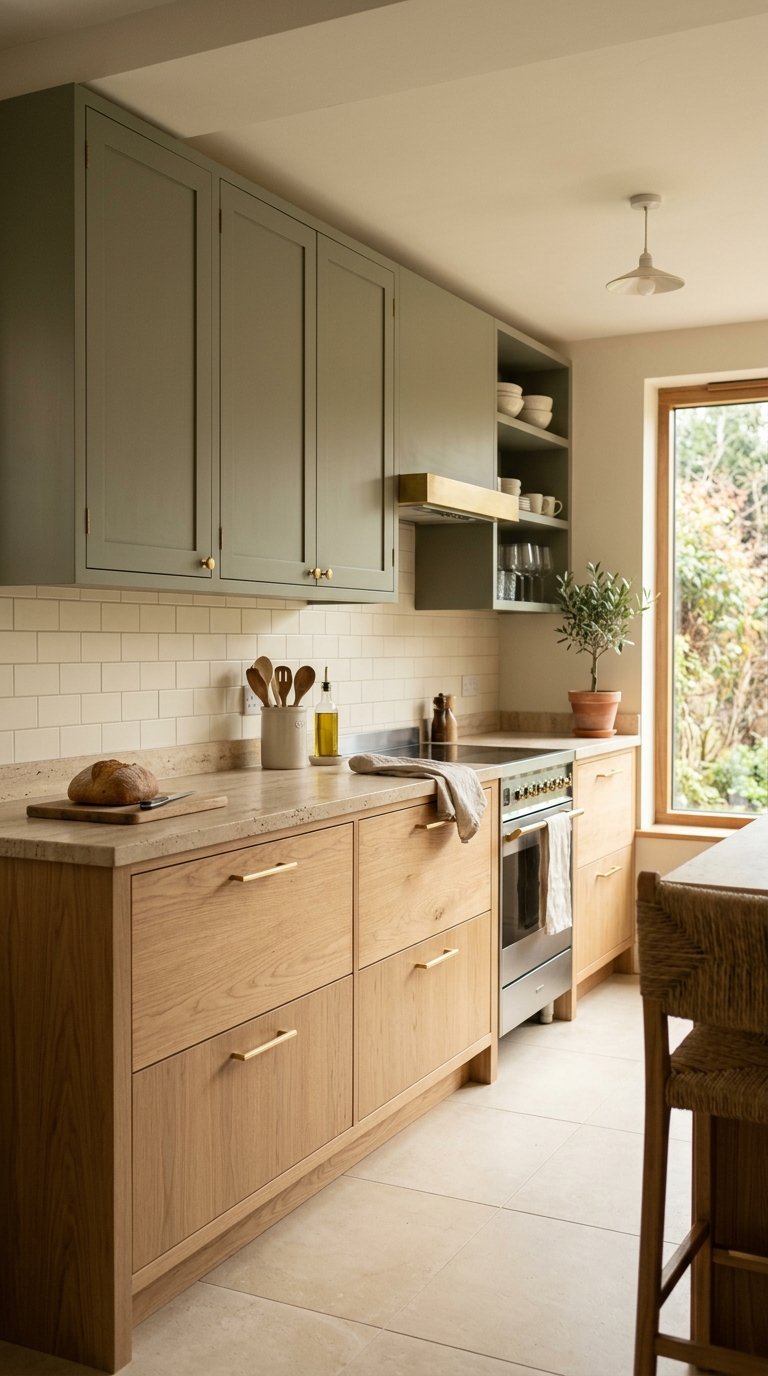
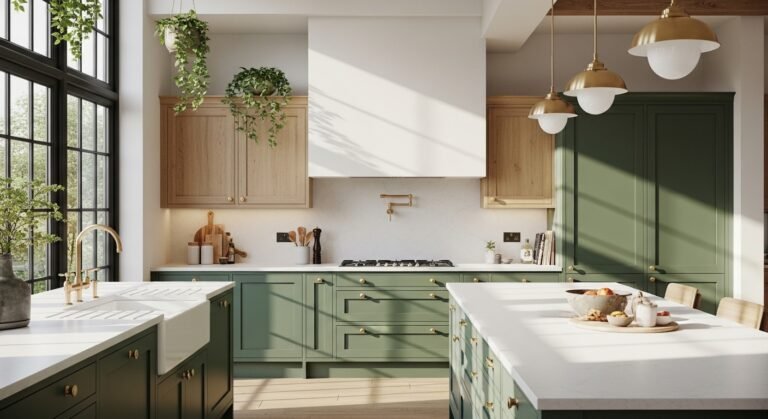
Two-tone kitchens split upper and lower cabinets between two different finishes. Oak and sage green is one of the most considered combinations available.
Natural oak lower cabinets paired with sage green upper cabinets creates a kitchen that feels both warm and fresh simultaneously. The earthy green coordinates with the natural wood tone in a way that feels botanical and organic.
The visual weight of each zone matters. Oak lowers keep the heavier, warmer tone closer to the floor where weight feels natural. The sage green uppers feel lighter against the wall and ceiling, keeping the kitchen feeling open.
This combination works particularly well with a cream or off-white ceiling, stone tile flooring, and unlacquered brass hardware throughout.
3. Use Oak Open Shelving Instead of Upper Cabinets
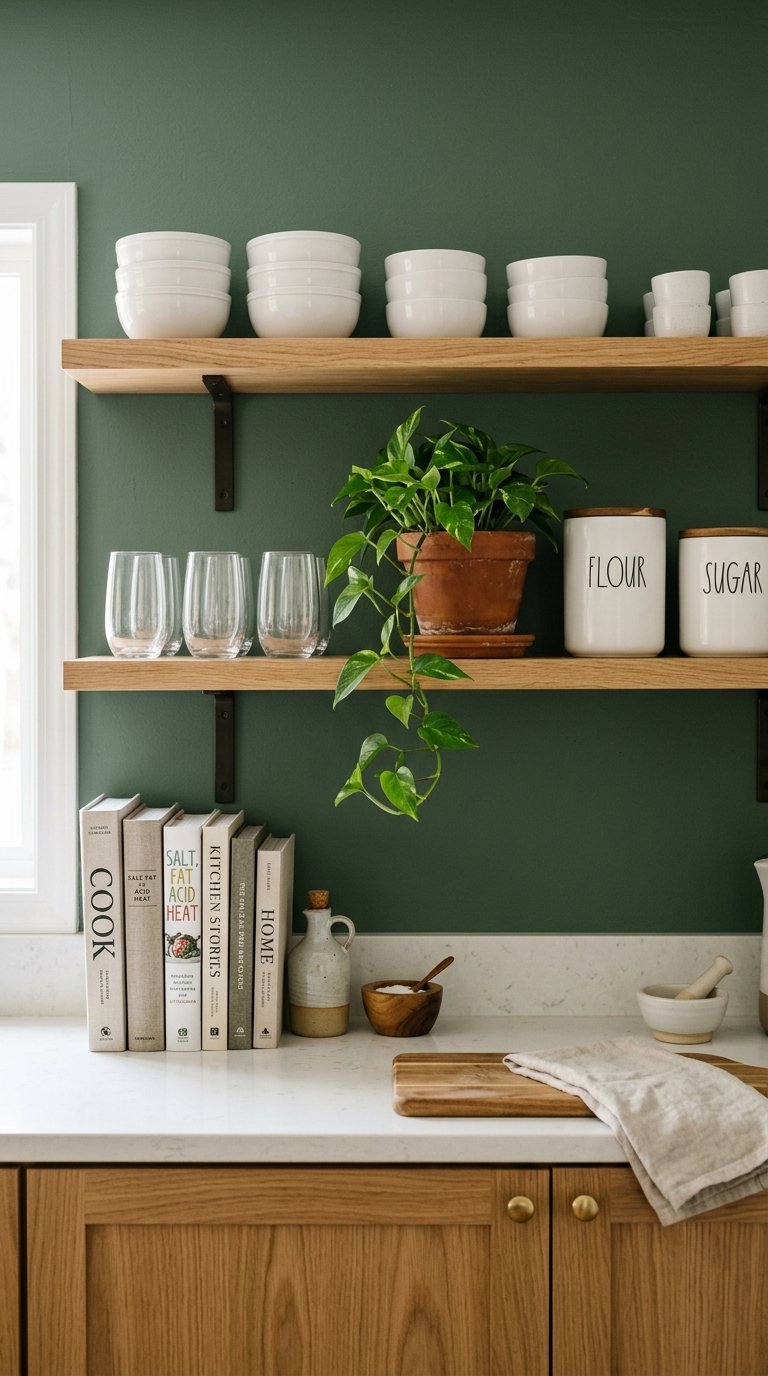
Upper cabinets close off a kitchen visually. Open oak shelving does the opposite.
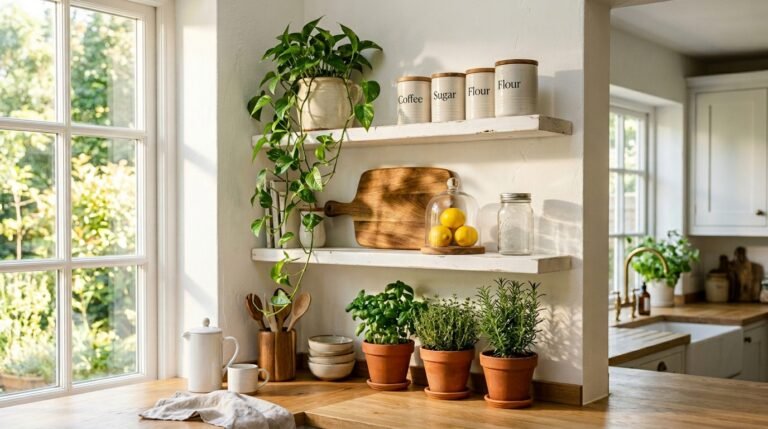
Natural oak floating shelves replacing some or all upper cabinets open the kitchen wall, show the wood grain beautifully, and give you a display surface that adds character rather than just storage.
Style them with intention: white ceramics, clear glass, one trailing plant, and a small number of attractive everyday items. An open shelf displaying your best objects looks designed. An open shelf holding everything you own looks chaotic.
The practical consideration: open shelves collect dust and grease more readily than closed cabinets. Position them away from the direct cooking zone and wipe them down regularly. The aesthetic payoff is worth the maintenance.
4. Try Smoked or Fumed Oak Cabinets
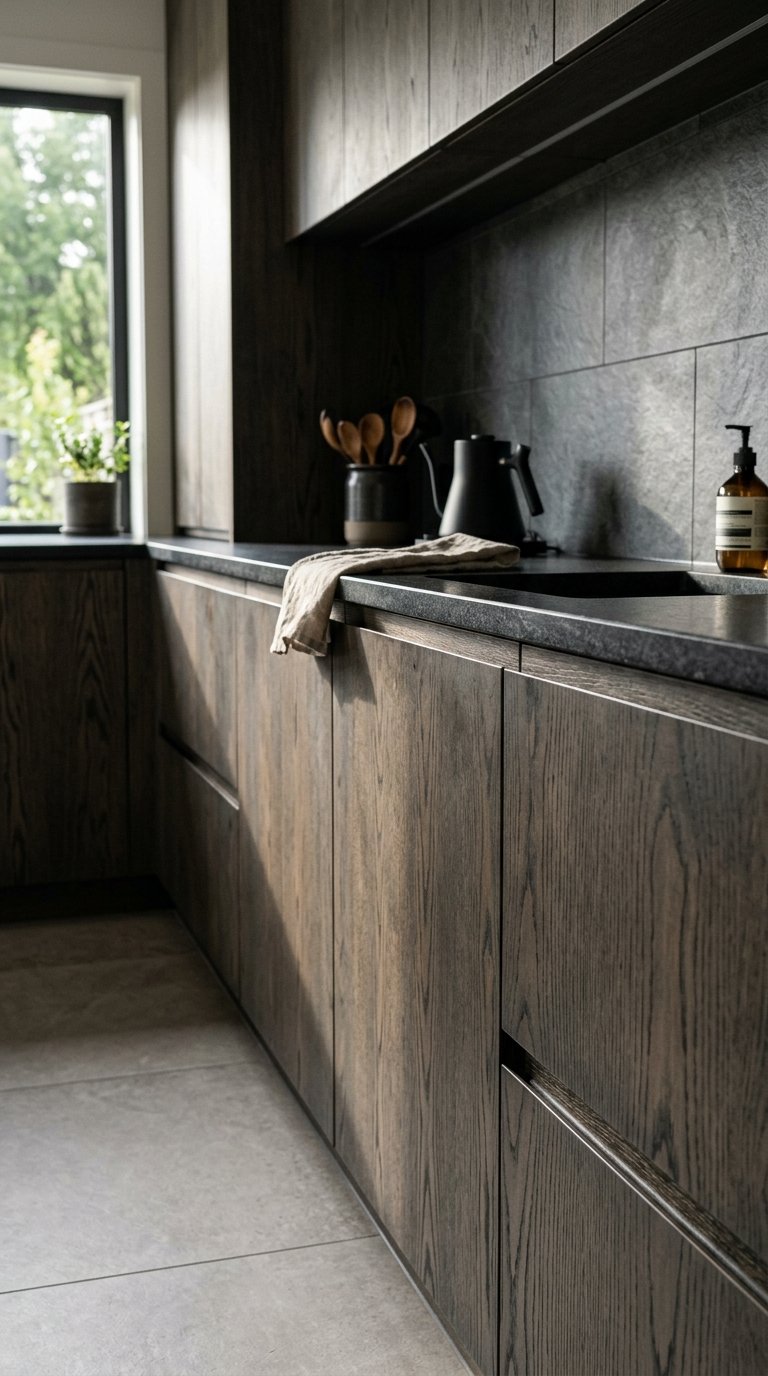
Natural oak is warm and golden. Smoked or fumed oak is something else entirely.
Smoked oak cabinets have been treated with ammonia or heat to darken the wood’s tannins, producing a deeper, grey-brown tone that retains all the grain character of natural oak while looking more contemporary and sophisticated.
This finish sits between natural oak and dark wood, hitting a tone that feels neither too blonde nor too dark. It works particularly well with stone countertops in charcoal or grey tones and matte black hardware.
Smoked oak ages well. Unlike paint, the color penetrates the wood rather than sitting on its surface. It doesn’t chip, peel, or scratch through to a different color beneath.
5. Add an Oak Kitchen Island in a White Kitchen
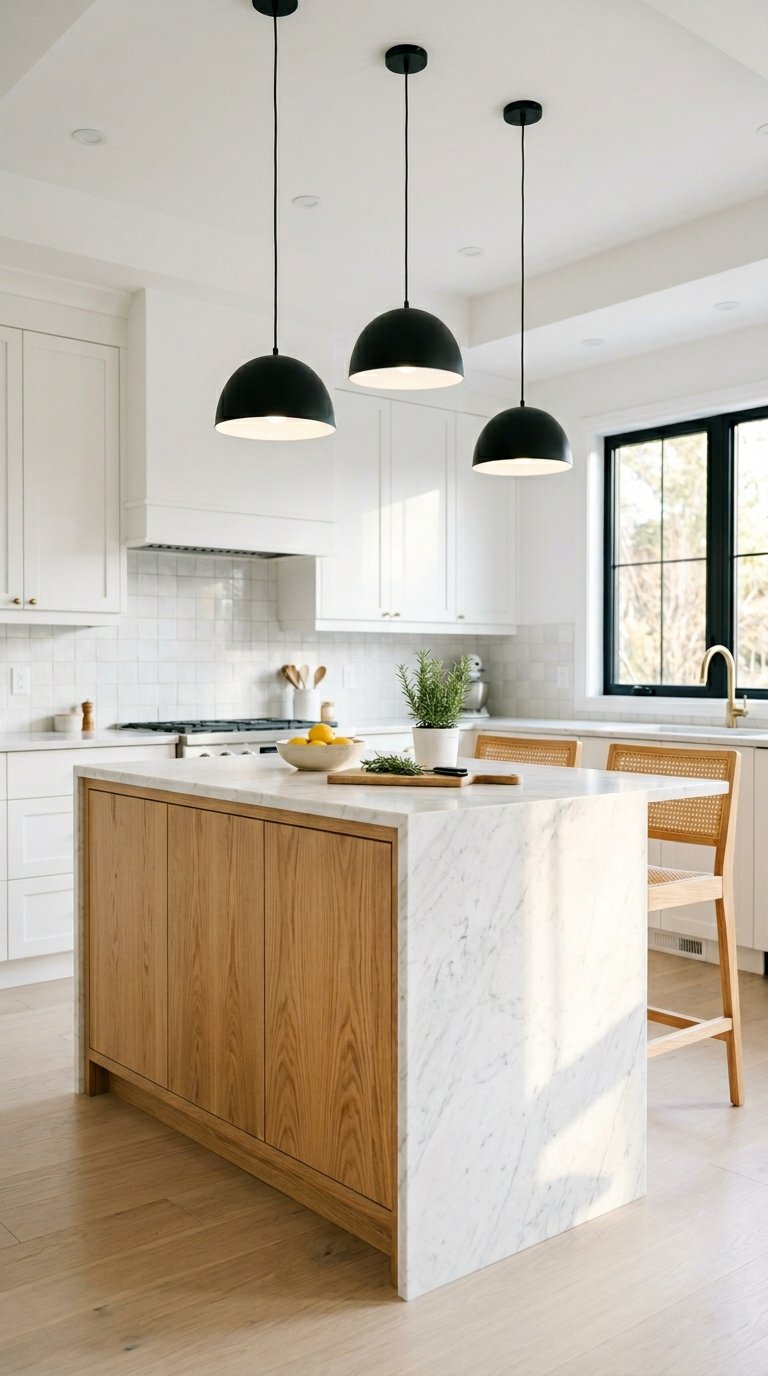
A white kitchen is the most popular kitchen in the world. The problem is that many white kitchens feel cold, clinical, and impersonal.
A natural oak kitchen island in a predominantly white kitchen solves this immediately. The warm wood tone at the center of the room creates a focal point that grounds the kitchen and adds the organic warmth that white paint alone cannot deliver.
The island can be a different design profile from the surrounding white cabinets too. Shaker white cabinets with a plain-fronted oak island, or white handleless cabinets with an oak island that has visible bar handles, both create a deliberate two-material story.
Choose a contrasting countertop for the island if the surrounding cabinets have a different countertop. White quartz on the white perimeter with a butcher block or warm stone top on the oak island differentiates the zones further.
6. Use Oak With White Marble Countertops
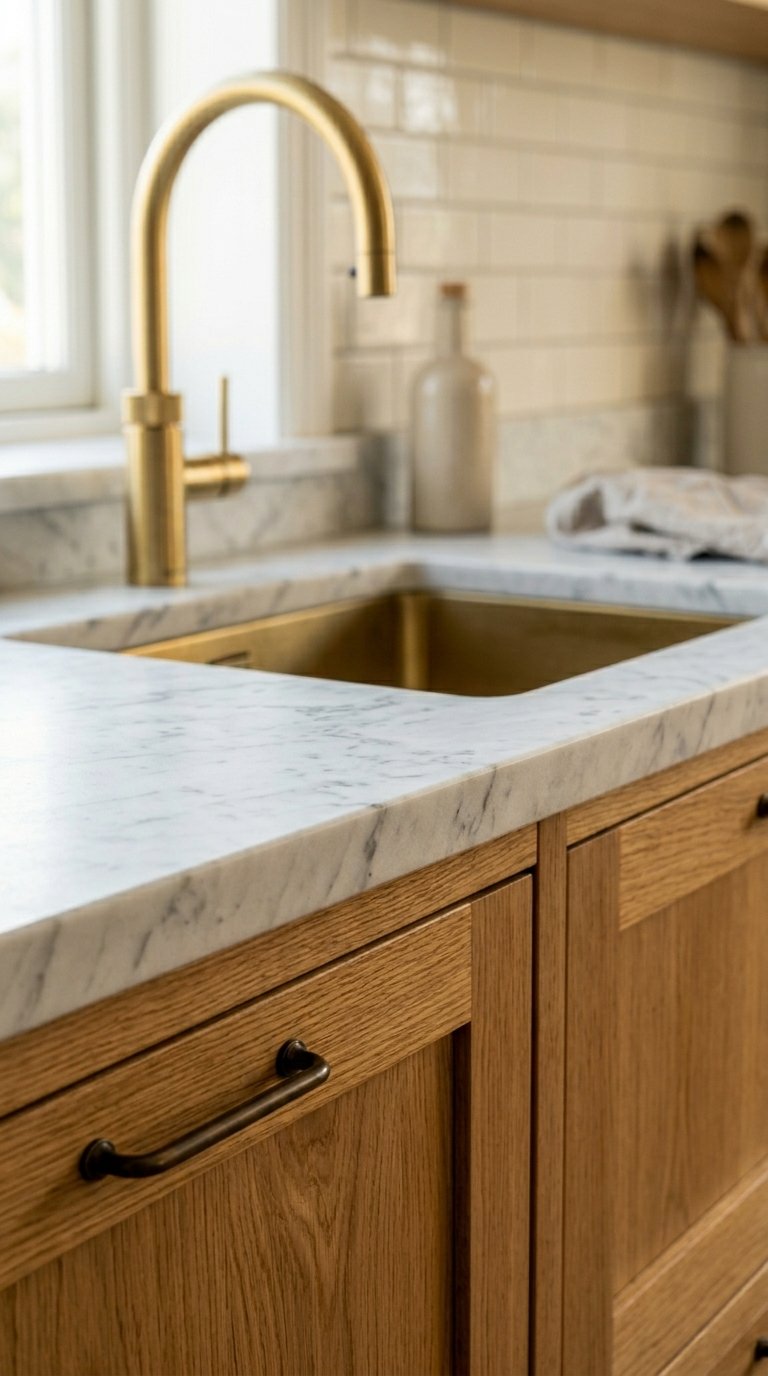
Oak and white marble have a natural relationship. Both are organic materials with inherent pattern variation. They work together without competing.
White Carrara marble or white quartz with grey veining on oak cabinets creates a kitchen that reads as warm and luxurious simultaneously. The cool white stone prevents the oak from making the kitchen feel too heavy or golden.
This combination works best with light to medium oak tones. Very dark or heavily stained oak against white marble can create too much contrast and make the kitchen feel dramatic rather than resolved.
Honed marble rather than polished works better against oak. The matte surface of honed stone shares the natural, slightly textured quality of the wood and the two materials feel like they belong together.
7. Install Oak Handleless Cabinets
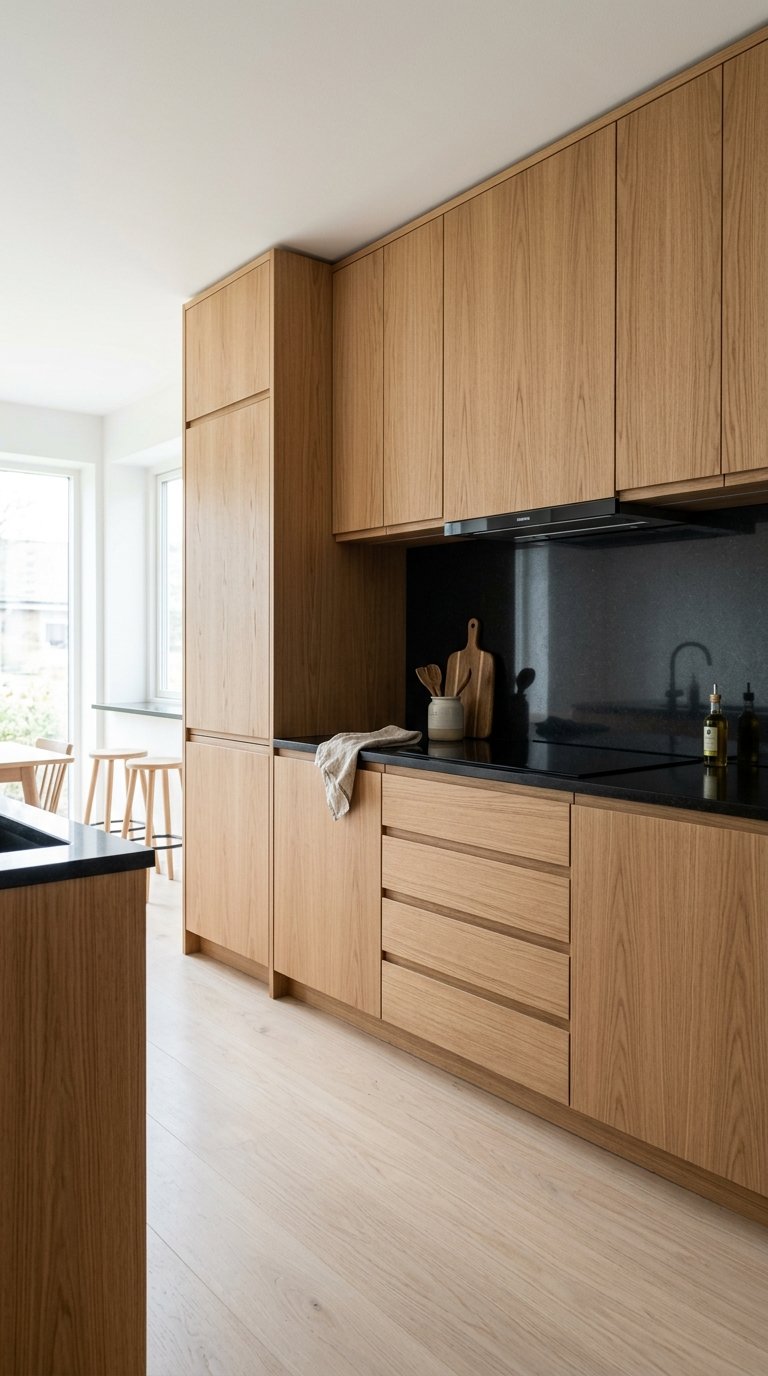
Shaker oak kitchens look traditional. Oak handleless cabinets look entirely different.
Handleless oak cabinet fronts with integrated push-to-open or J-pull mechanisms keep the oak grain as the only visual element on the cabinet face. No hardware interrupts the wood surface. The result is contemporary, clean, and material-focused.
This design works best with straight-grain oak rather than heavily figured oak. The clean lines of a handleless design suit a more regular, calm grain pattern.
J-pull profiles, the horizontal recessed groove cut into the top of each door and drawer, are the most common handleless mechanism in oak kitchens. They’re durable, easy to use, and add a slim shadow line detail that enhances rather than distracts.
8. Combine Oak With Black for a Modern Contrast
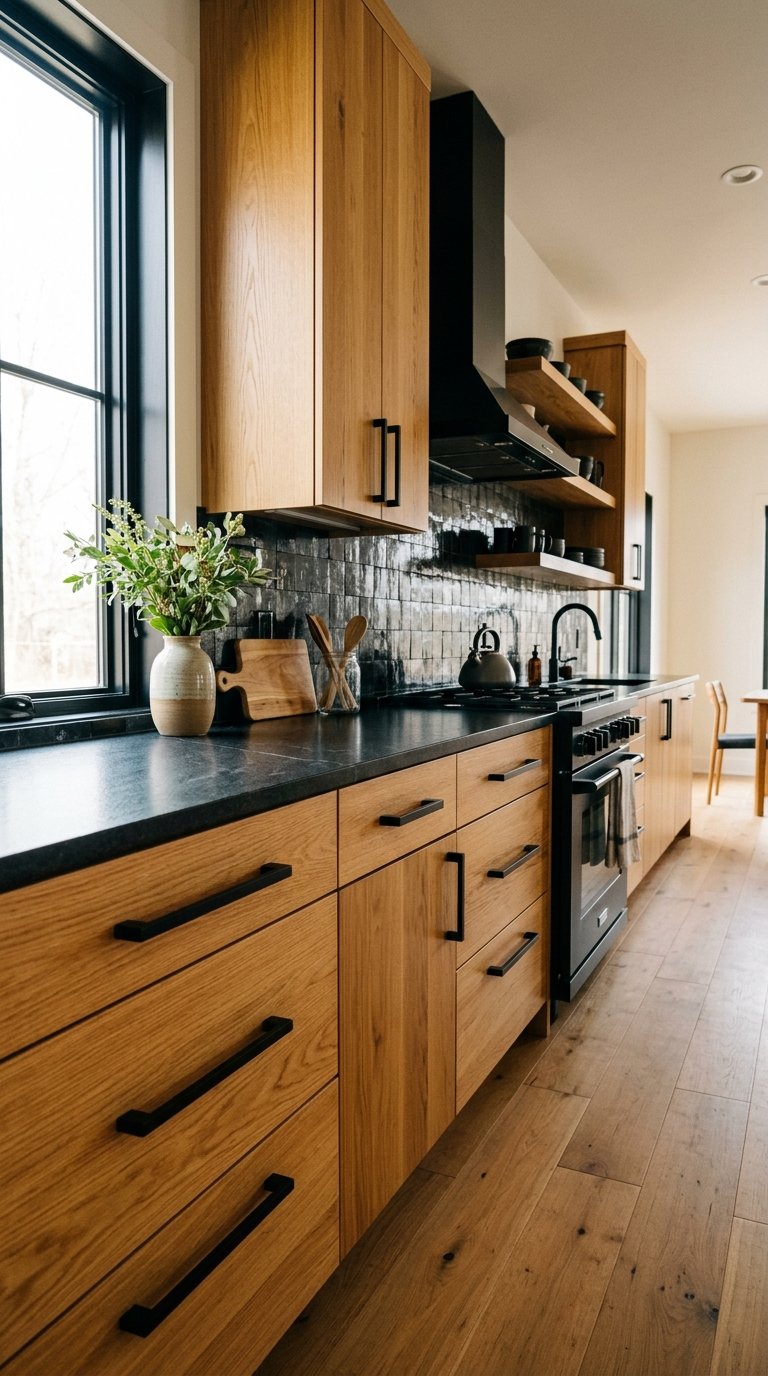
Oak and black is one of the most striking material combinations in contemporary kitchen design.
Black stone countertops, black hardware, a black range hood, or black-framed windows against natural oak cabinets create high contrast that makes both materials read more vividly. The warm wood tone advances against the black. The black recedes and creates depth.
This combination particularly suits kitchens with good natural light. In a darker kitchen, oak and black together absorb too much light and the room feels heavy.
Matte black hardware on oak cabinets is the lowest-commitment version of this combination and the highest return on investment. A set of matte black bar handles on natural oak doors costs almost nothing and changes the kitchen’s character significantly.
9. Use Oak Flooring to Connect Kitchen and Living Space
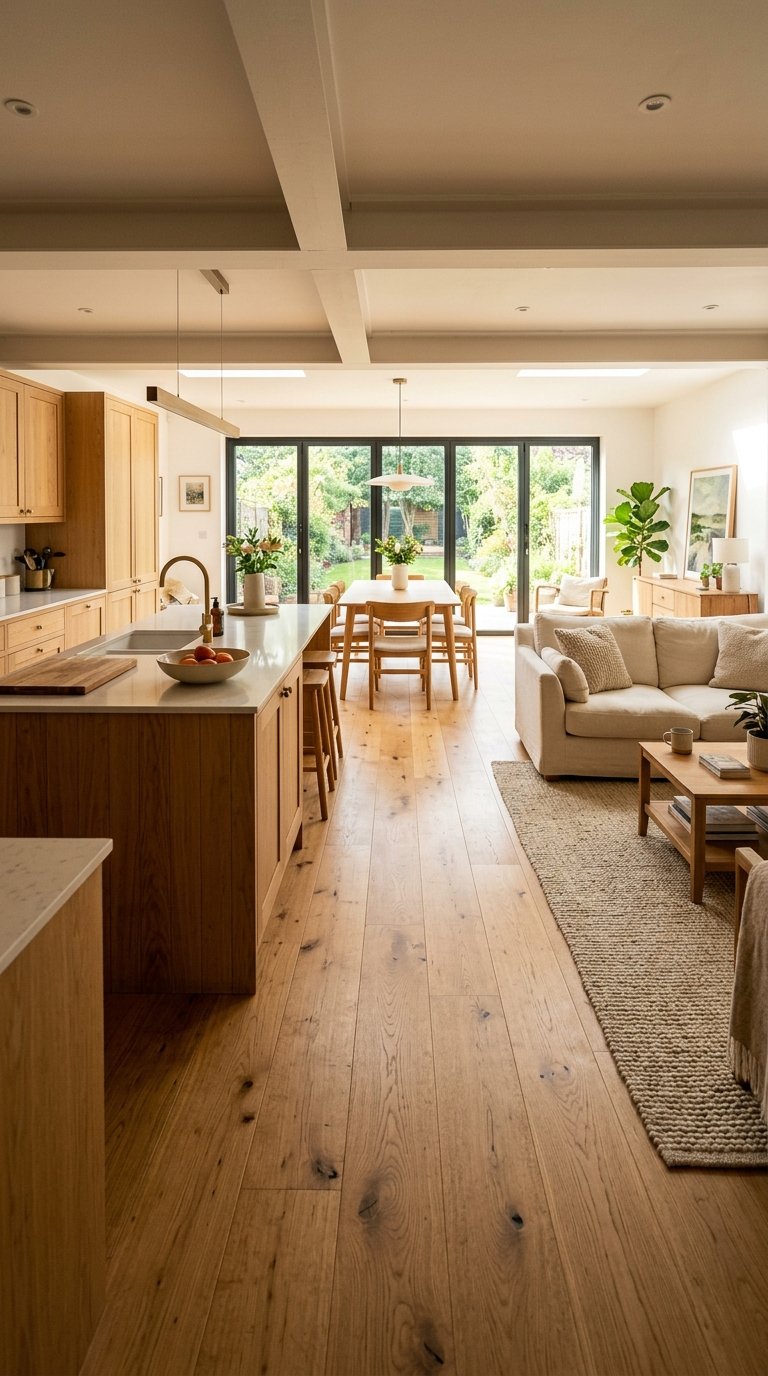
In open-plan homes, the flooring choice connects all spaces into one visual narrative. Oak flooring does this better than almost any other material.
Wide-plank oak flooring running continuously from kitchen through dining area and into the living room unifies the open-plan space and prevents the visual fragmentation that different flooring materials in adjacent zones creates.
The kitchen flooring and the cabinet material sharing the same oak tone creates a warm, cohesive environment where the floor and cabinetry feel designed together rather than selected separately.
Use a matte or satin finish on kitchen floor oak rather than a high-gloss finish. High gloss shows every footprint, water mark, and scratch in a kitchen environment. Matte finishes are far more practical.
10. Try Oak Veneer Cabinets for a Budget Alternative
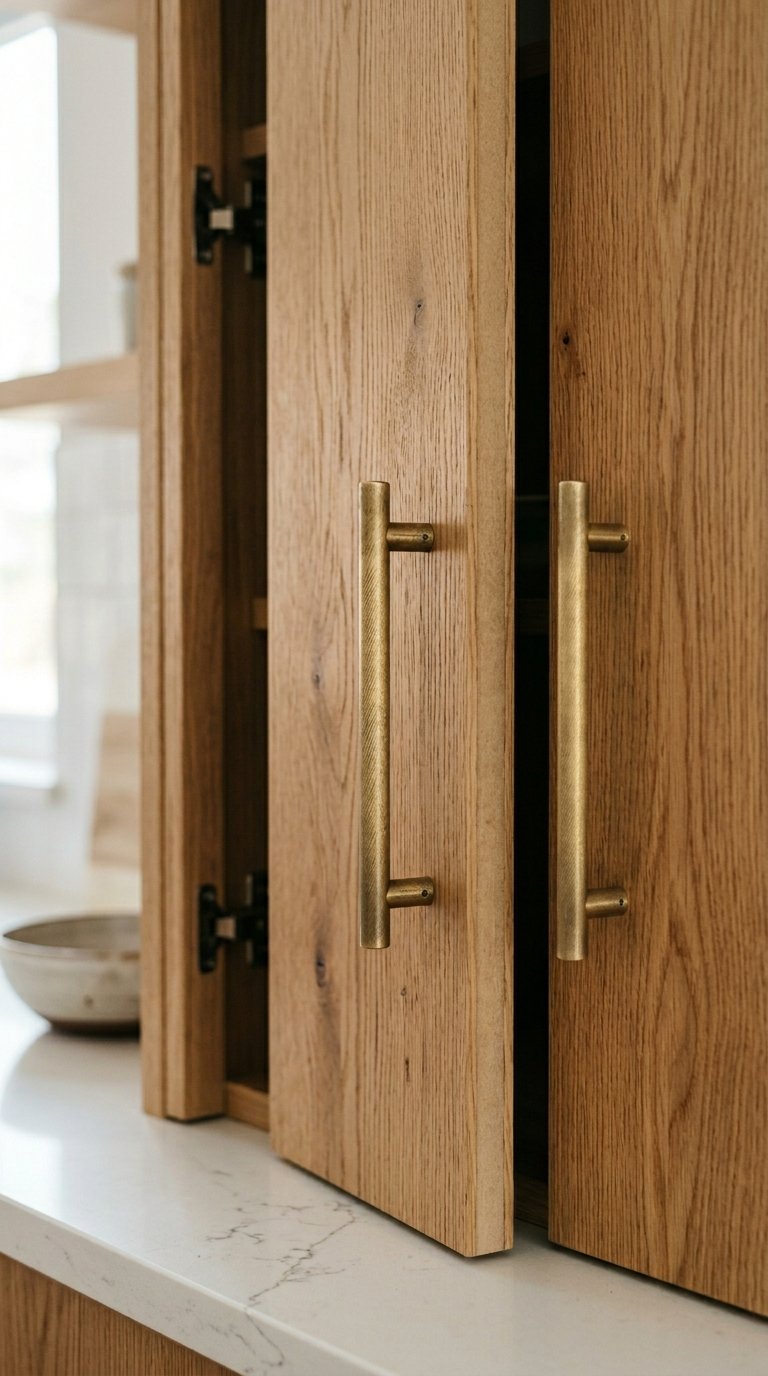
Solid oak cabinet doors are beautiful and expensive. Oak veneer cabinet doors are beautiful and significantly more affordable.
High-quality oak veneer applies a real wood surface to an MDF or plywood substrate, giving the authentic appearance of solid oak at a lower price point. The grain is real. The warmth is real. The price is lower.
The quality of oak veneer varies enormously. Thin, low-grade veneer looks flat and uniform. Thick, high-grade veneer with careful grain matching looks almost indistinguishable from solid wood.
Ask suppliers for samples and look at the grain carefully before ordering. Natural oak veneer should show variation between panels rather than a perfectly uniform repeated pattern, which signals low-quality printing rather than real wood.
11. Pair Oak With Sage Green Tiles
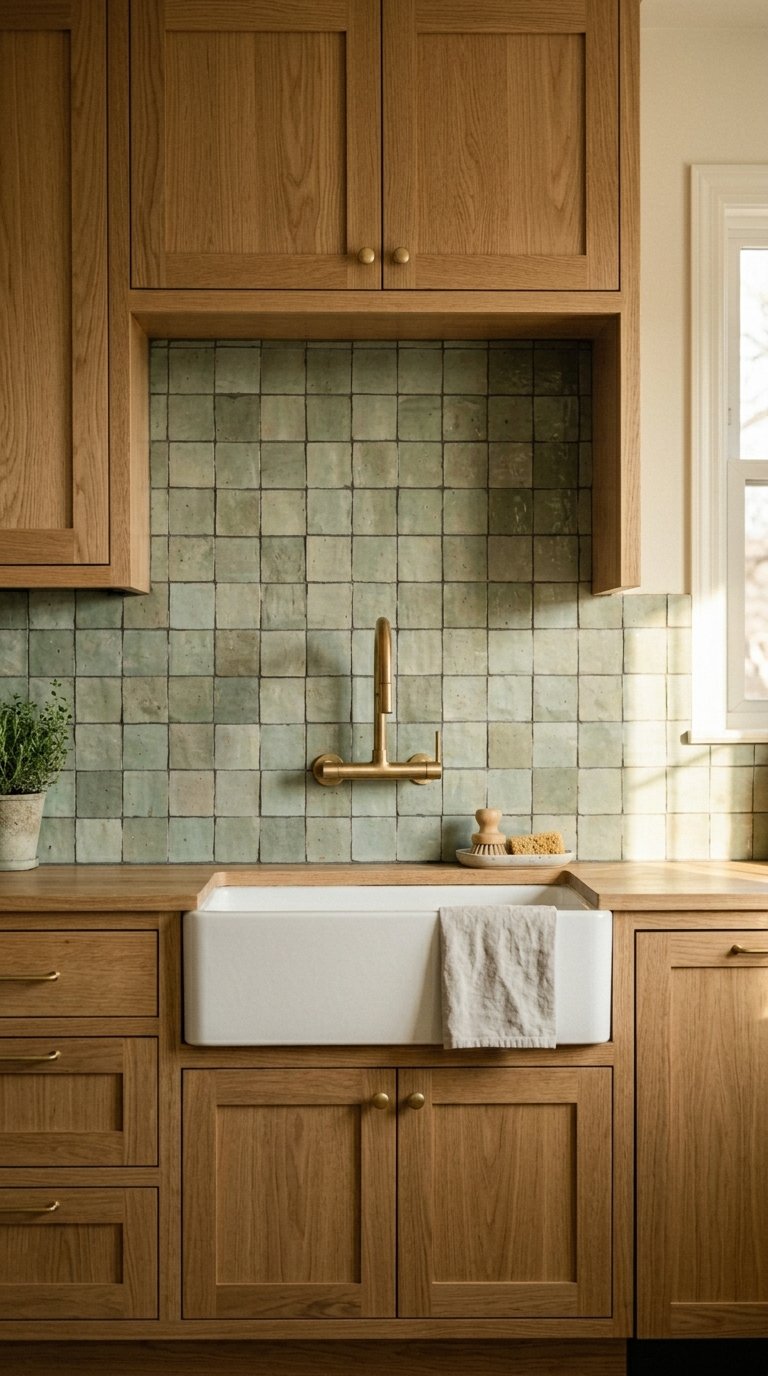
The backsplash is the wall surface that gets the most attention during cooking. In an oak kitchen, the right tile choice makes or breaks the material combination.
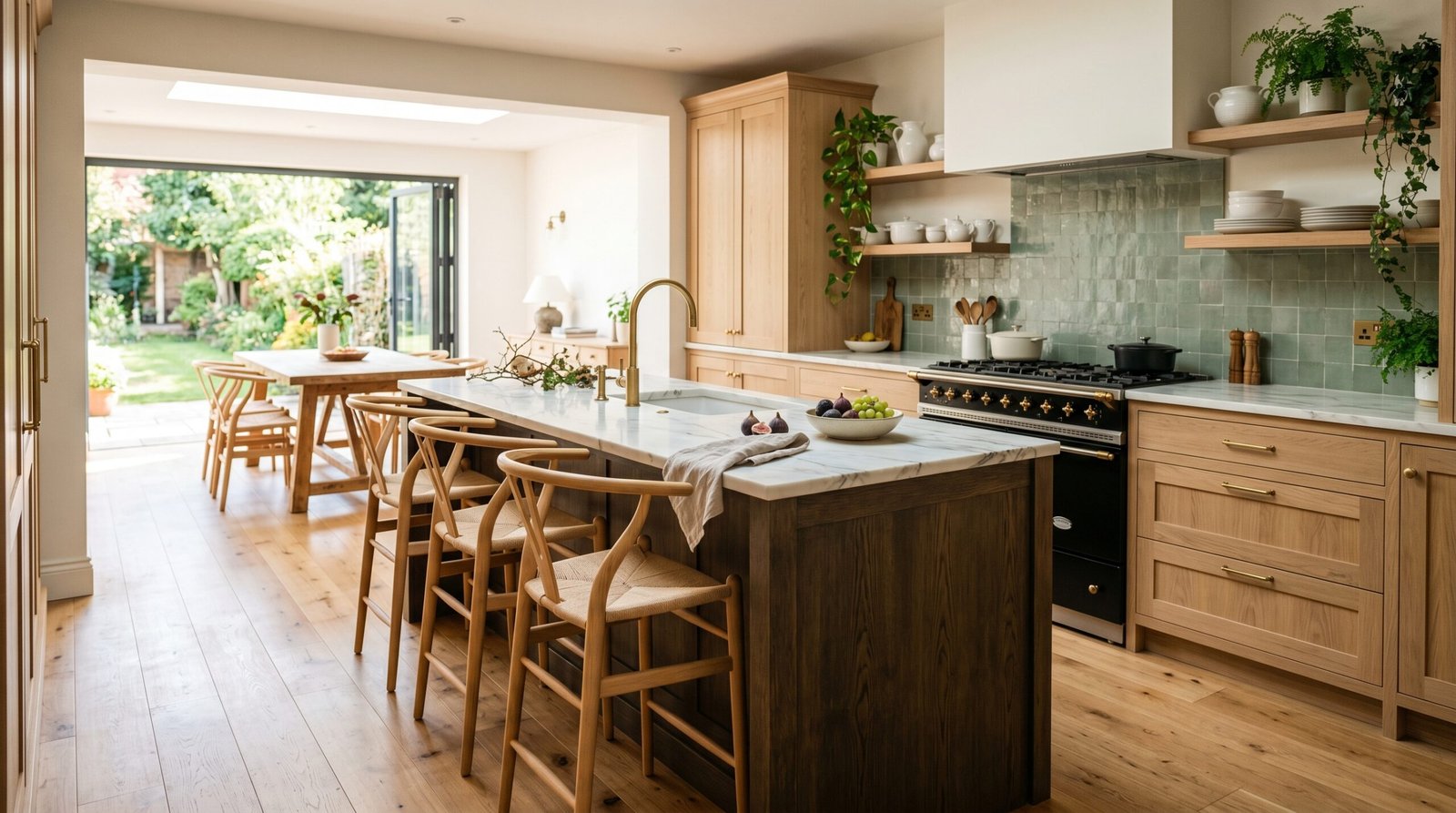
Sage green handmade tiles, sage green subway tiles, or sage green zellige tiles on the backsplash of an oak kitchen create a natural, botanical combination that feels considered and warm.
The green tone in sage coordinates with the natural tannin tones within oak itself. The two colors share an earthy, organic quality that makes them feel genuinely related rather than randomly combined.
This tile choice pairs equally well with light natural oak and with smoked or darker oak tones. The sage green reads differently against each oak tone, creating two distinct kitchen aesthetics from the same tile choice.
12. Use an Oak Breakfast Bar
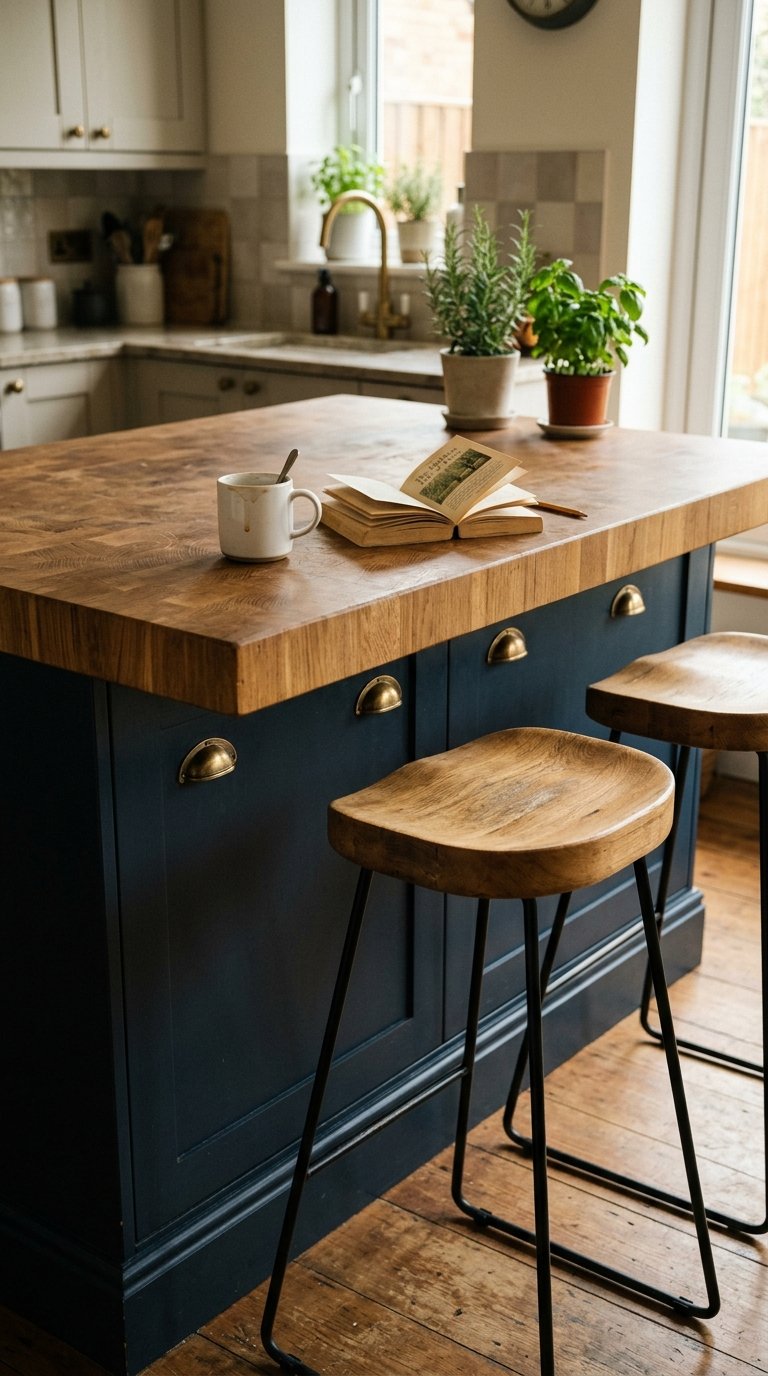
A breakfast bar made from solid oak provides one of the most tactile, warm surfaces to eat and work at in a kitchen.
A solid oak butcher block breakfast bar extending from the kitchen island or from a peninsula creates an eating surface with genuine material character. The wood grain, the weight, and the warmth underhand make it a far more pleasant surface than stone or laminate alternatives.
Solid oak butcher block requires oiling annually to maintain its surface and prevent drying. This is a five-minute maintenance task. The payoff is a surface that develops character and patina over years of use rather than simply wearing out.
IMO a solid oak butcher block overhang at the kitchen island is one of the most sensible investments in a kitchen renovation. It’s warm, durable, repairable if scratched, and it ages beautifully.
13. Install a Painted Island With Oak Countertop
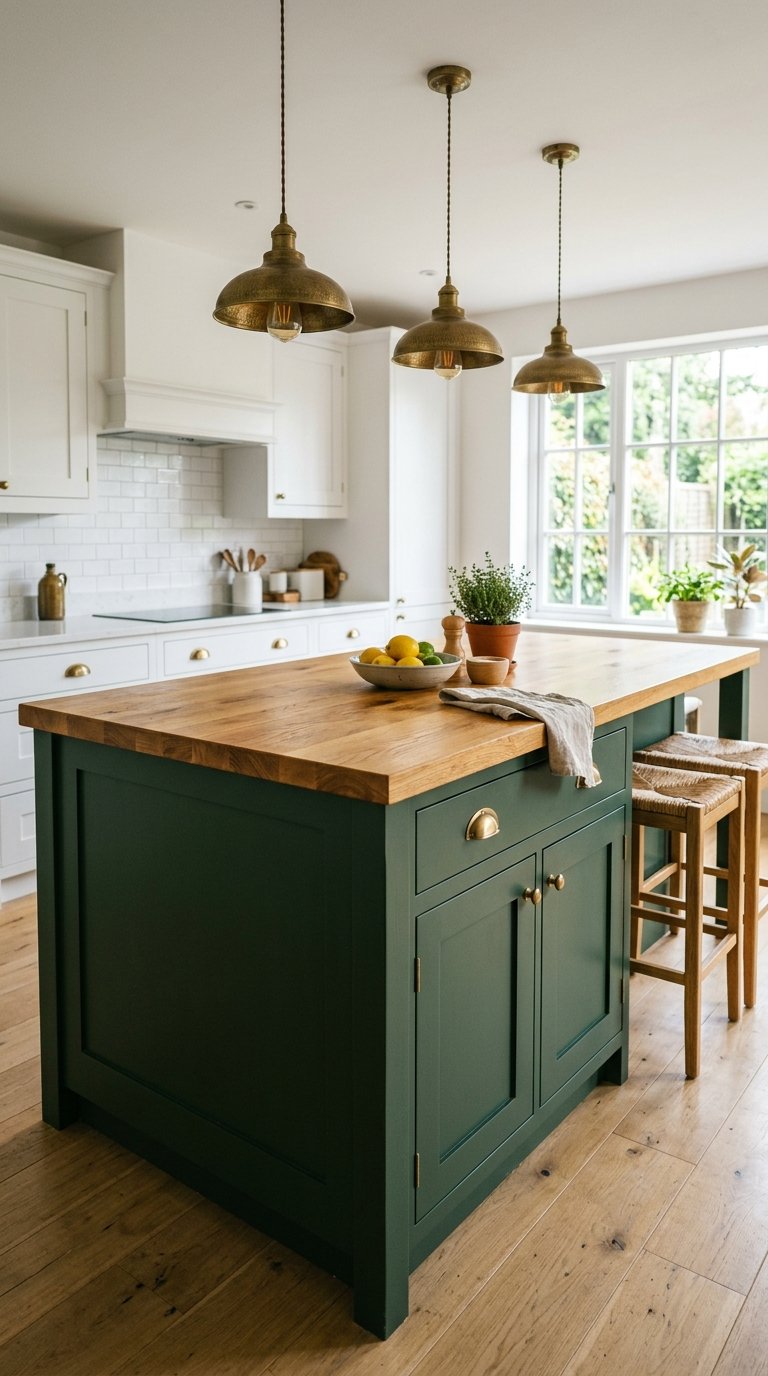
This is the opposite approach to idea five, and it works equally well.
A painted island in navy, forest green, or charcoal with a solid oak butcher block countertop creates a kitchen island that combines the richness of a dark painted base with the warmth and organic quality of real wood above.
The oak countertop on a painted island brings natural material into a kitchen that might otherwise be entirely painted and stone-surfaced. It prevents the kitchen from feeling too hard or manufactured.
The painted base protects against the one practical challenge of an all-oak island: the oak requires maintenance that painted MDF does not. With only the countertop in oak, the maintenance area is contained and manageable.
14. Choose Light Oak for a Scandinavian Kitchen
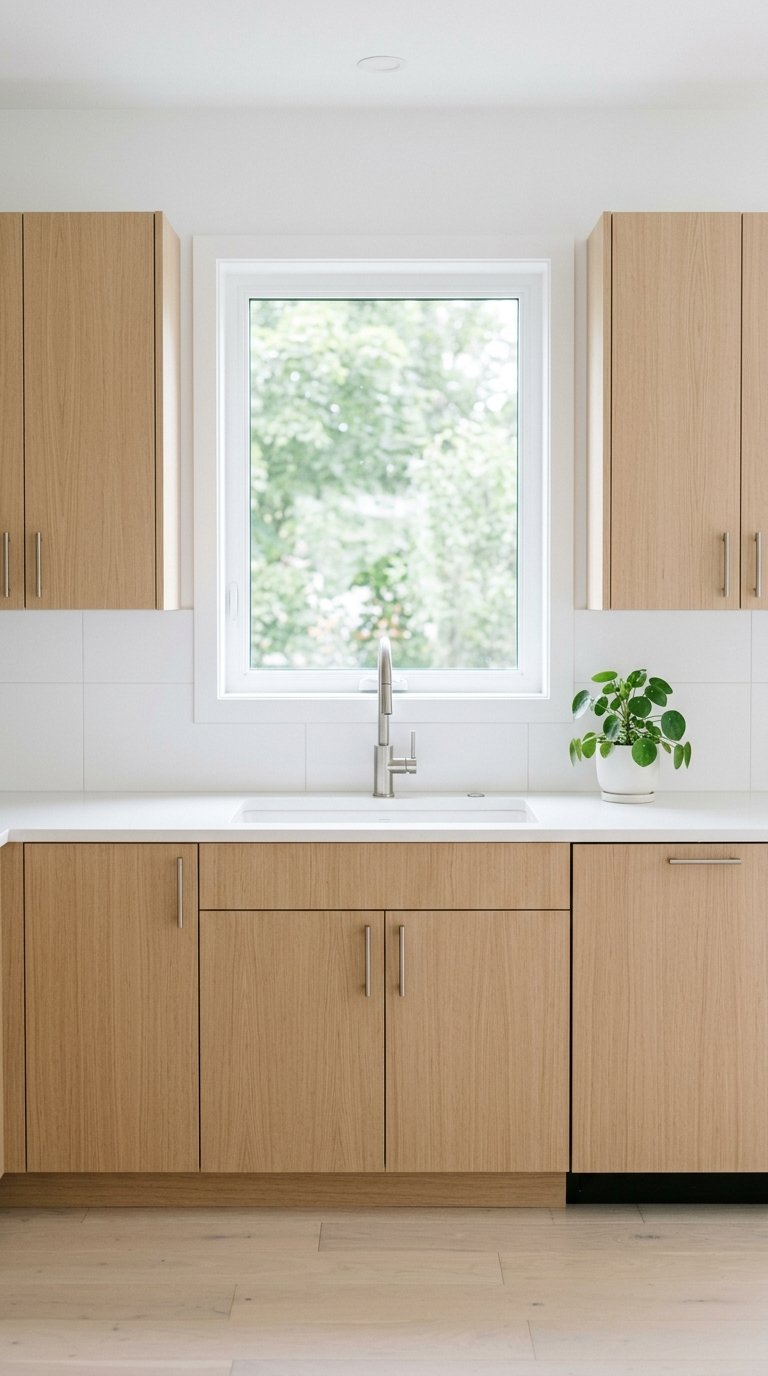
Scandinavian kitchen design uses light, natural materials, clean lines, and functional simplicity to create spaces that feel calm and well-considered.
Light ash-blonde oak cabinets with white walls, white or light stone countertops, simple bar handles in brushed nickel, and minimal decorative elements create a Scandinavian kitchen aesthetic that feels genuinely serene.
The Scandinavian approach to oak avoids heavy staining or dark treatments. The wood tone stays close to its natural state, allowing the grain and natural color variation to provide the visual interest without additional decoration.
This style suits open-plan kitchen-dining spaces particularly well. The lightness of the palette keeps a large open room from feeling heavy, and the natural wood adds warmth to what could otherwise feel minimal to the point of coldness.
15. Add Oak Ceiling Beams
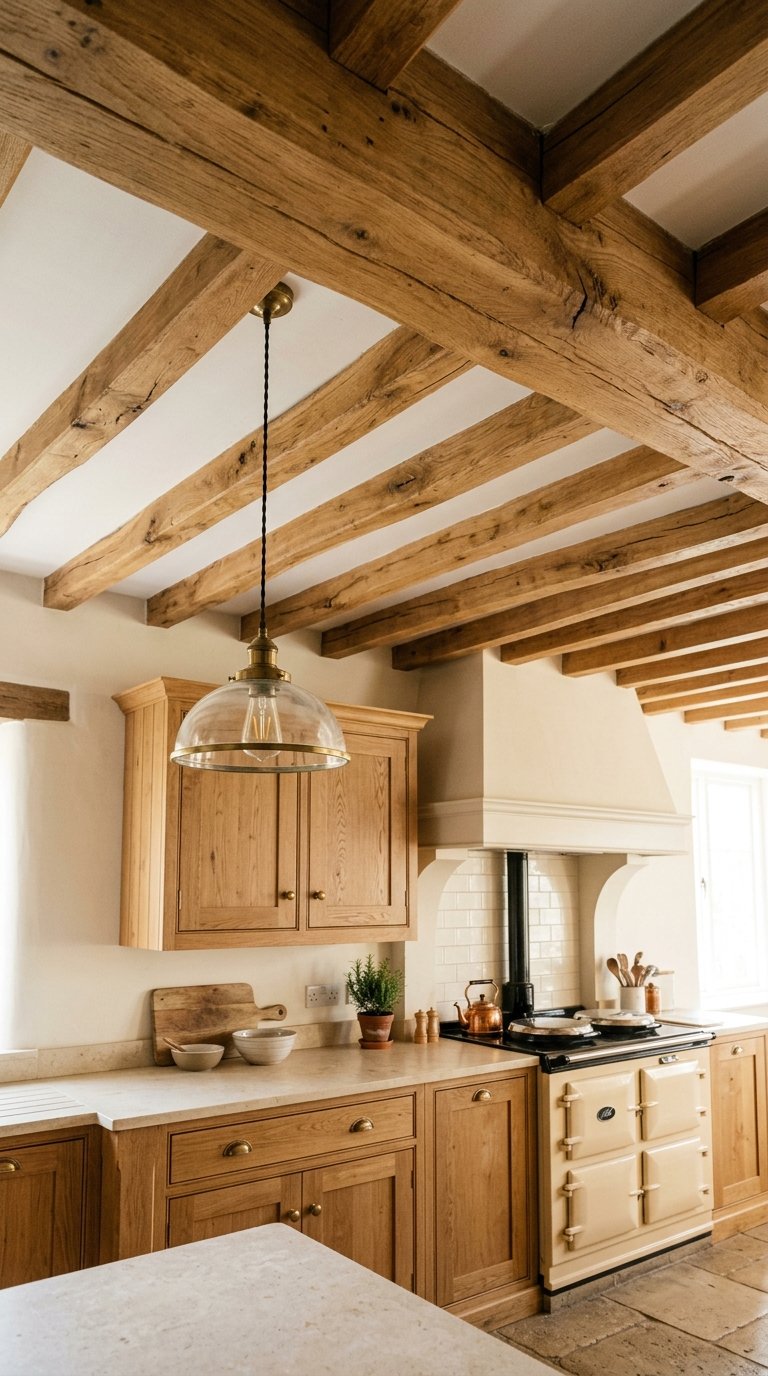
If your kitchen has ceiling height to spare, oak ceiling beams are one of the most character-adding additions available.
Exposed oak ceiling beams, whether original structural beams or new decorative beams applied to the ceiling, add warmth, texture, and architectural history to a kitchen that flat ceilings lack.
New oak beams can be applied directly to an existing ceiling using specialist beam casings that wrap a plain timber carrier. The result looks authentic from normal viewing distances.
This feature works best in kitchens with traditional or farmhouse character. An ultra-modern kitchen with handleless cabinets and a flush ceiling is not the natural home for exposed oak beams. Match the architectural language of the beam treatment to the kitchen’s overall direction.
16. Use Oak With Terracotta Floor Tiles
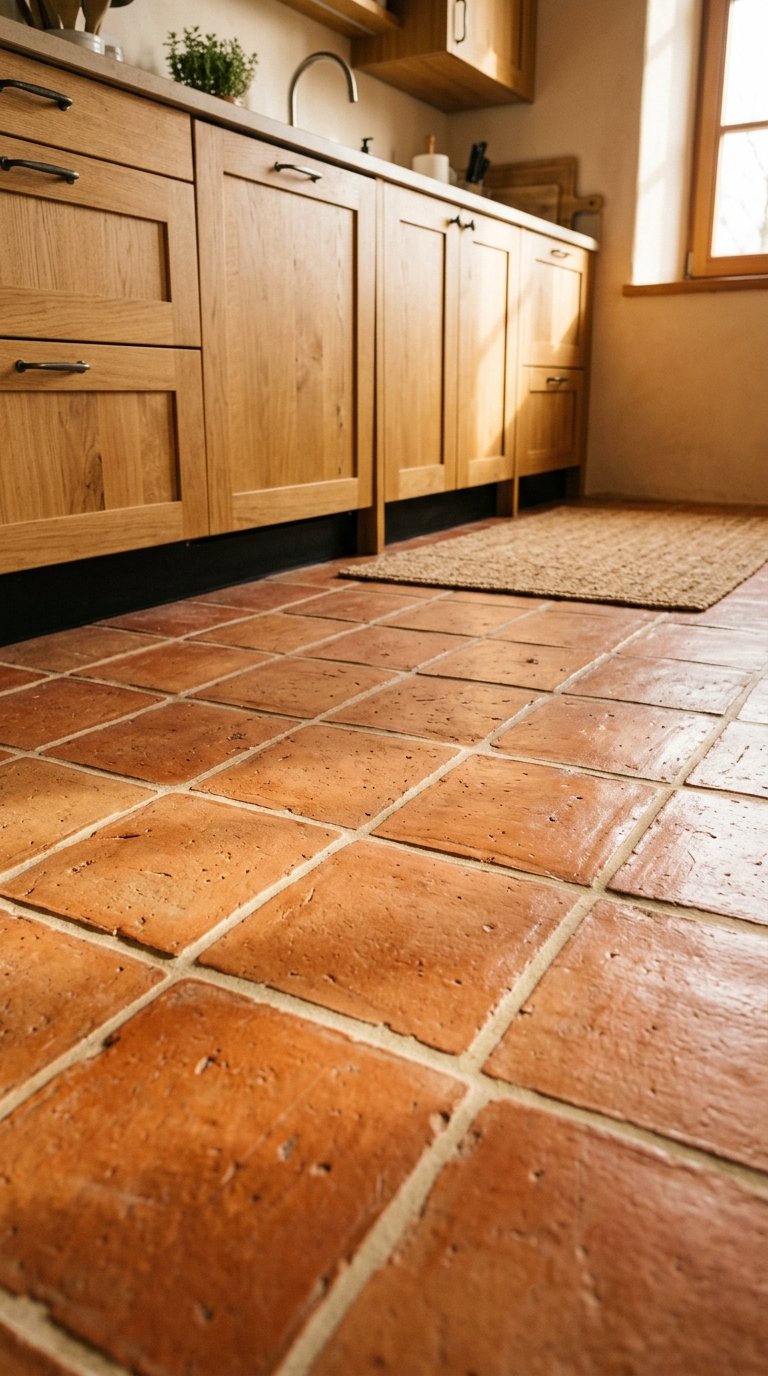
Oak and terracotta share an earthy, warm material relationship that produces a kitchen with genuine organic character.
Handmade terracotta floor tiles beneath oak cabinets create a kitchen that feels grounded, warm, and slightly Mediterranean in character. Both materials are natural, slightly imperfect, and improve with age.
New terracotta tiles need sealing before use in a kitchen environment. Unsealed terracotta absorbs oil and liquids readily. A quality penetrating sealer protects the tile while preserving its natural appearance and slight porosity.
This combination suits farmhouse, Mediterranean, and rustic kitchen aesthetics strongly. It works less well in contemporary or Scandi-minimal kitchens where the organic irregularity of both materials conflicts with the clean-line design direction.
17. Try a Full-Height Oak Larder Cabinet
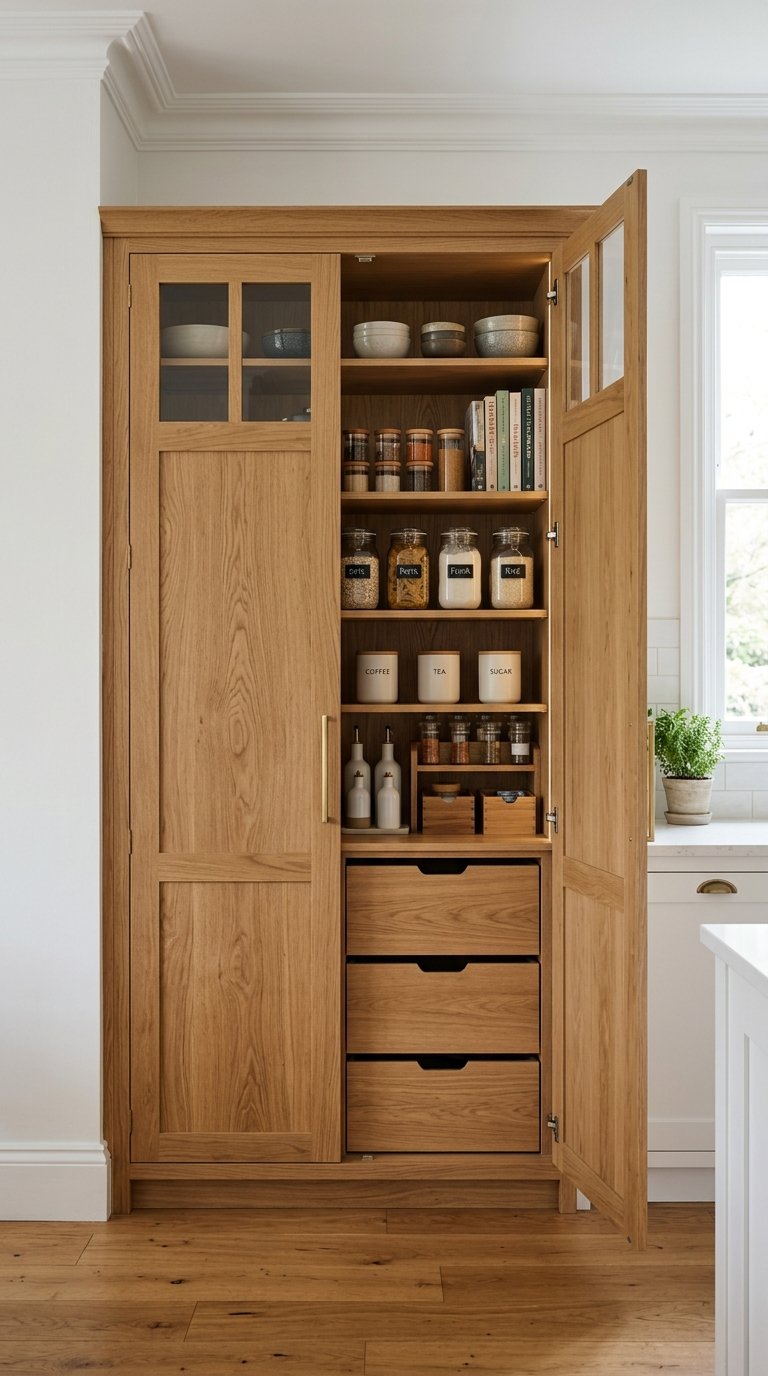
A full-height larder cabinet or pantry cabinet in oak makes a design statement that standard base and wall cabinet combinations don’t.
A floor-to-ceiling oak larder cabinet with internal shelving, pull-out drawers, and integrated storage systems creates a kitchen feature that serves enormous practical purpose while adding a strong vertical design element.
In a kitchen where upper cabinets have been removed in favor of open shelving, a larder cabinet provides the closed storage that the open shelves cannot. You get the visual openness of a shelf-only kitchen without sacrificing the hidden storage a functional kitchen requires.
Position the larder at the end of a run or as a standalone feature adjacent to the main cabinet run. Either position makes it a deliberate feature rather than an afterthought.
18. Pair Oak With Brass Hardware and Fixtures
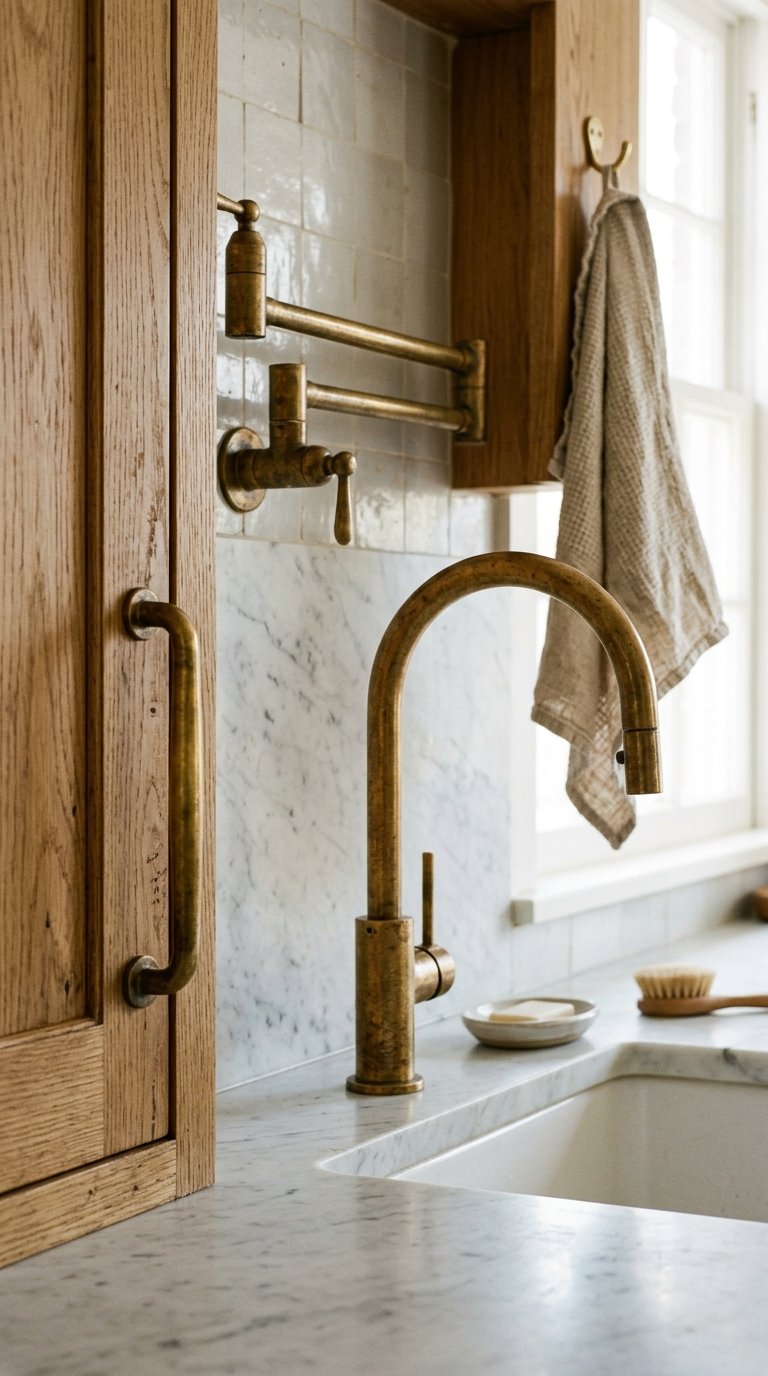
The hardware you choose for an oak kitchen changes its entire character. Brass is the most successful hardware choice across all oak tones.
Unlacquered brass or brushed brass bar handles, knobs, tap fittings, and light fixtures in an oak kitchen add a warm metallic tone that coordinates naturally with the wood’s inherent golden tones.
Unlacquered brass develops a patina over time. It darkens in the areas you touch most and develops character that new brass lacks. Some people love this. Others prefer the consistency of brushed brass, which maintains its tone without significant change.
Both brass types work well with oak. Unlacquered brass suits kitchens with a more traditional, aged character. Brushed brass suits contemporary and Scandinavian kitchen styles where a cleaner, more consistent finish is appropriate.
19. Install an Oak Kitchen in a Dark Color Kitchen
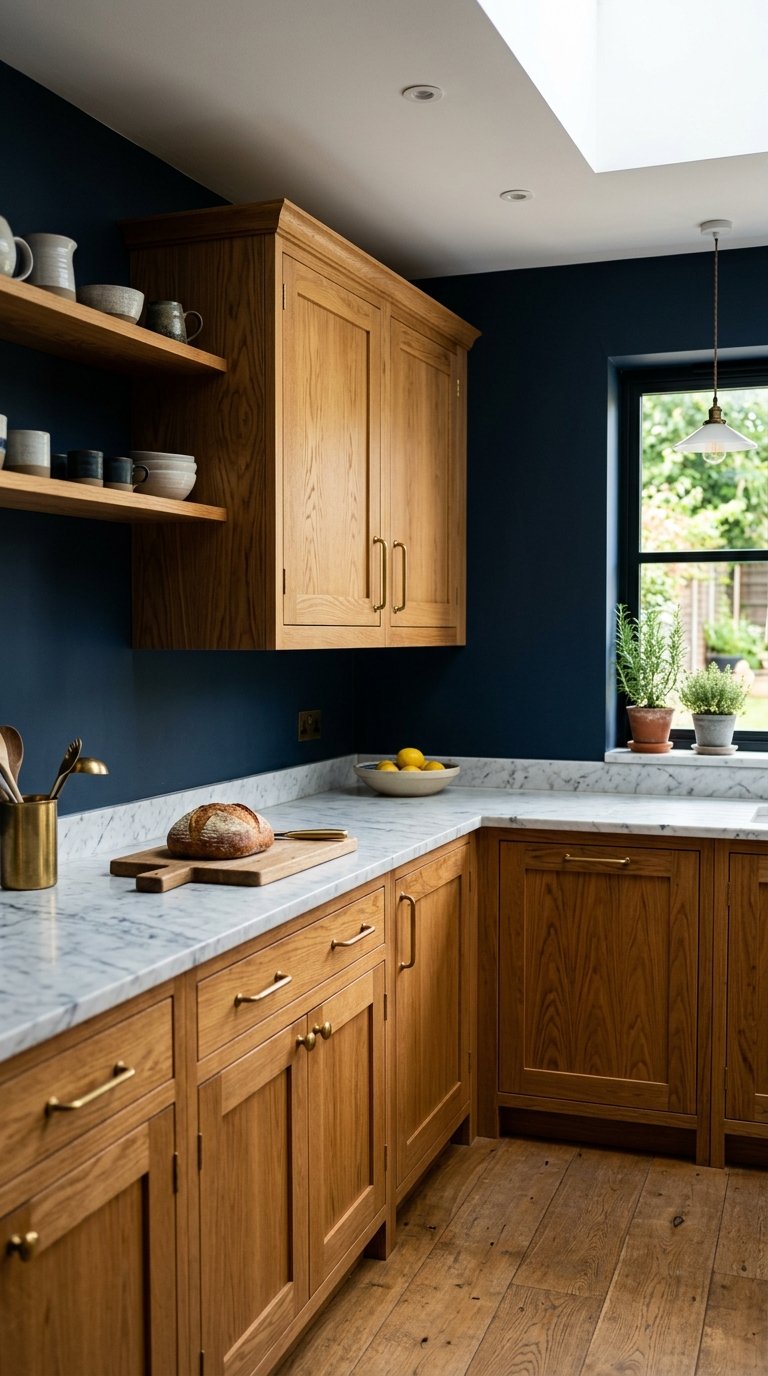
Most oak kitchens use light or neutral walls. A dark wall color behind oak cabinets creates a completely different and more dramatic result.
Deep navy, charcoal, or forest green walls behind natural oak cabinets make the wood tone advance powerfully from the dark background. The oak appears warmer and more vivid against dark paint than it does against white or cream walls.
This approach works particularly well when the ceiling is kept white or a significantly lighter tone than the walls. The dark walls with light ceiling maintains a sense of openness while the wall color creates drama at the height where the cabinets and countertops sit.
The combination of oak cabinets, dark walls, brass hardware, and stone countertops is one of the most consistently impressive kitchen combinations in contemporary design.
20. Use Oak in a Kitchen Extension or Garden Room
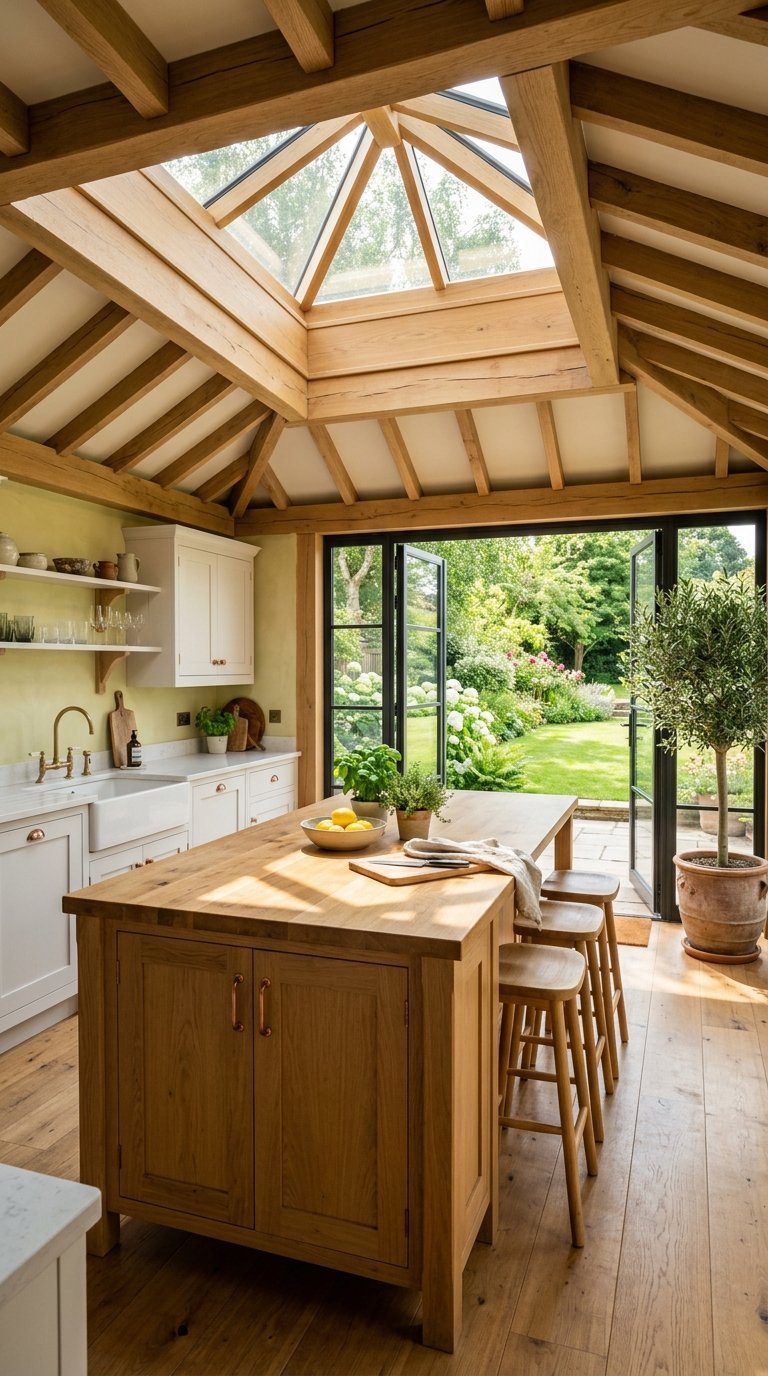
A kitchen extension or garden room connects the cooking space to the outdoors. Oak is the natural material choice for this transition.
Oak cabinets, oak flooring, and oak ceiling elements in a garden room kitchen extension create visual continuity between the interior space and the timber, stone, and planting materials of the garden beyond.
Large glazed doors or roof lanterns in a garden room extension flood the oak kitchen with natural light that makes the wood glow. Oak in strong natural light is a completely different experience from oak in artificial light alone.
This is the kitchen style that most benefits from wide-plank oak flooring running continuously from interior to exterior decking where possible, blurring the boundary between kitchen and garden.
21. Keep Oak Natural and Let It Age
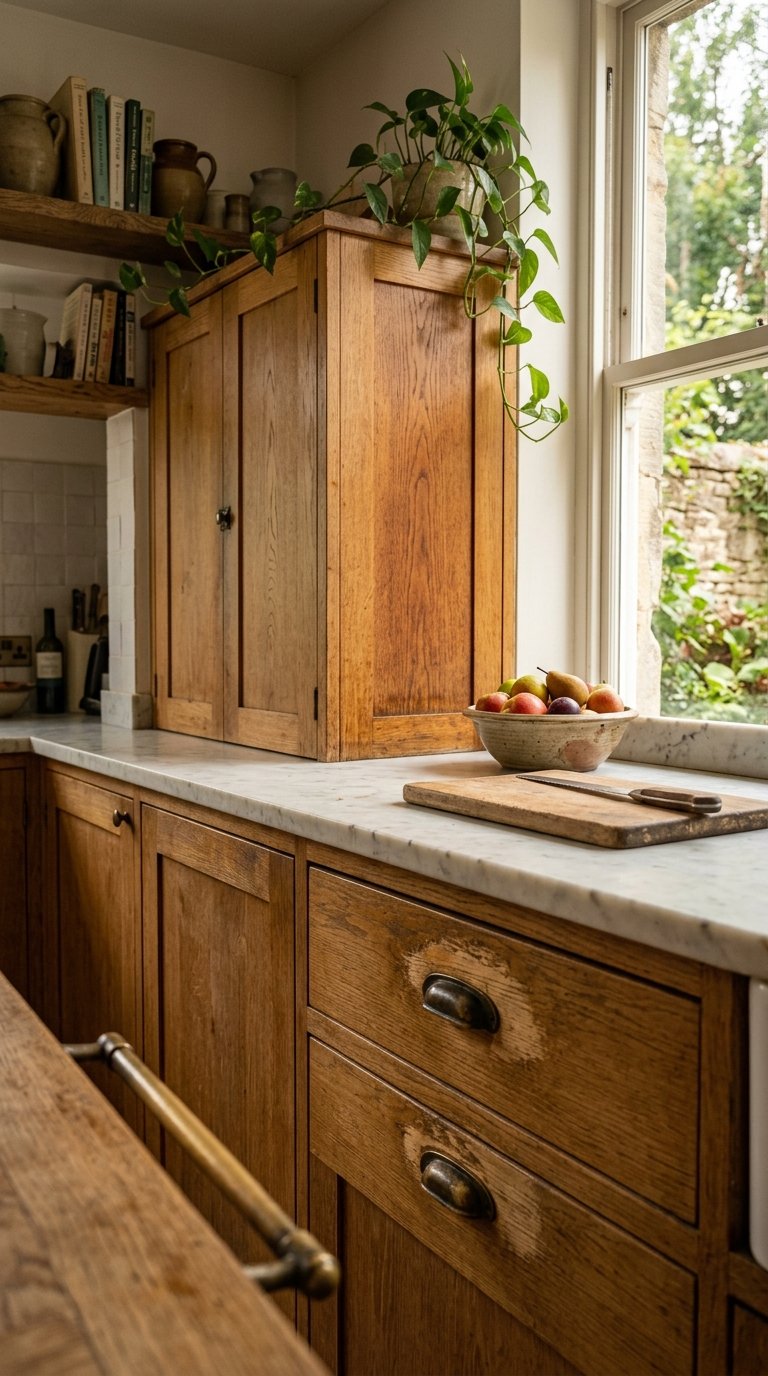
This is the most underused oak kitchen idea: don’t overthink it.
Natural oak with minimal treatment, a clear oil or hardwax oil finish that protects without significantly changing the wood’s natural color, ages into a richer, deeper tone over years of use that no stain or paint replicates.
Oak darkens slightly with light exposure and develops a honey-amber tone over time. The grain becomes more defined. The character of the wood increases rather than fading. This is oak doing what oak does.
Many oak kitchens that look dated did so not because of the oak itself but because of the heavy orange stain applied over it in the 1990s. Natural, lightly treated oak from that era still looks good today. The lesson is clear: trust the material and let it do its work 🙂
Final Thoughts
Oak kitchens work when the wood is treated as a material with its own inherent quality rather than as a surface to be stained, painted over, or disguised.
Start with the oak tone that suits your home’s light and your personal palette. Light natural oak for bright, Scandinavian-influenced spaces. Smoked oak for contemporary drama. Natural untreated oak for character and longevity.
Then build the supporting choices around the wood: countertop material, hardware finish, wall color, and tile selection. Each supporting choice should enhance the oak rather than compete with it.
An oak kitchen done well is one of the most timeless rooms in a home. An oak kitchen done without thought is the thing people rip out fifteen years later. The difference between the two is always in the decisions, not the material.