23 Dining Room Remodel Ideas That Make Guests Stay Longer
Your dining room works harder than you give it credit for. It hosts dinner parties, homework sessions, holiday gatherings, and the occasional heated family debate. Yet most dining rooms sit in a state of neglect, the same table from 2009, a light fixture that came with the house, and walls painted a color nobody actually chose on purpose.
I remodeled my dining room two years ago and the difference it made to how often we actually used the space was immediate. Here are 23 ideas worth your serious consideration.
1. Replace the Light Fixture First
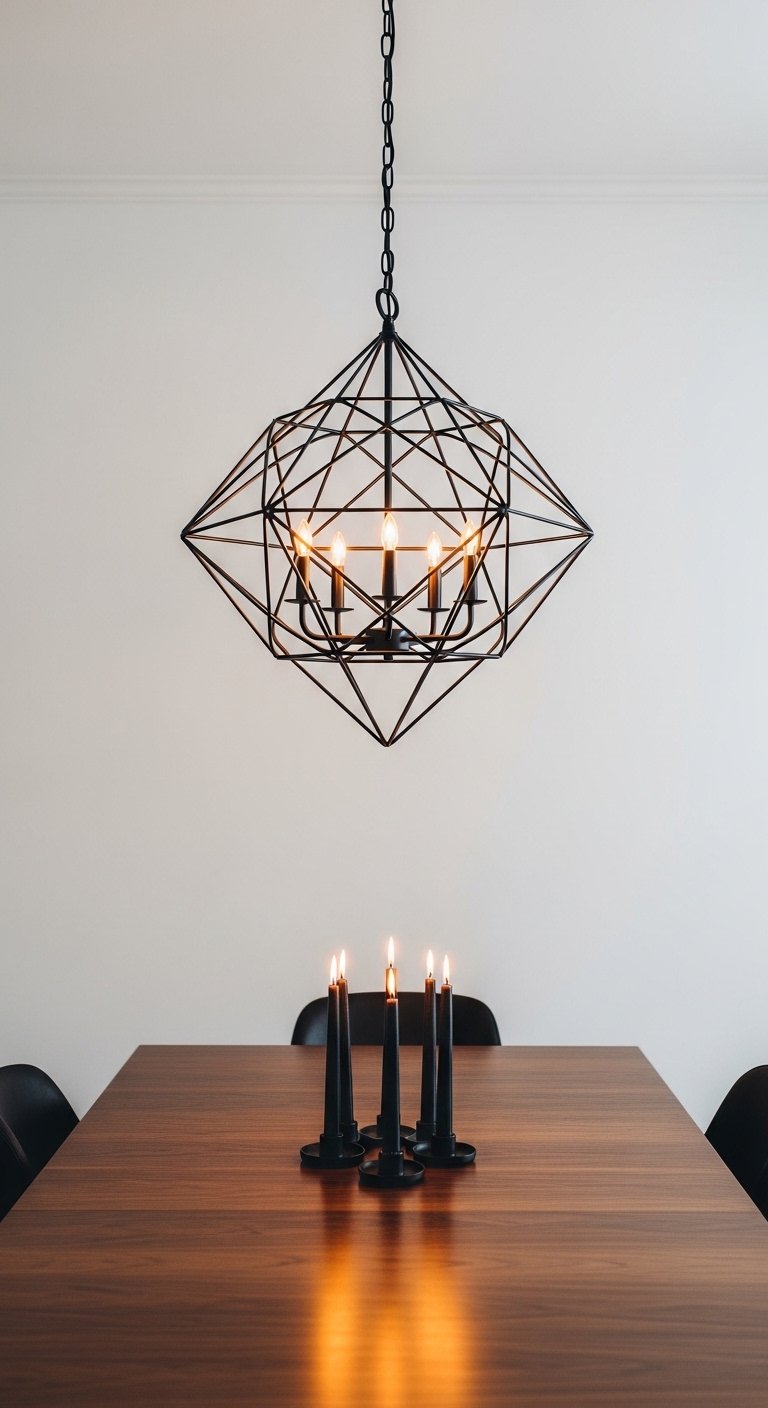
If you do nothing else in your dining room remodel, change the light fixture. The fixture above your dining table sets the entire tone of the room. A dated brass chandelier or a basic flush mount communicates neglect regardless of how good everything else looks.
A statement pendant or chandelier hung at the right height, 30 to 36 inches above the table surface, transforms the room instantly. It creates a focal point, defines the dining zone, and adds personality that no amount of cushions or accessories achieves as efficiently.
Fixture styles by room aesthetic:
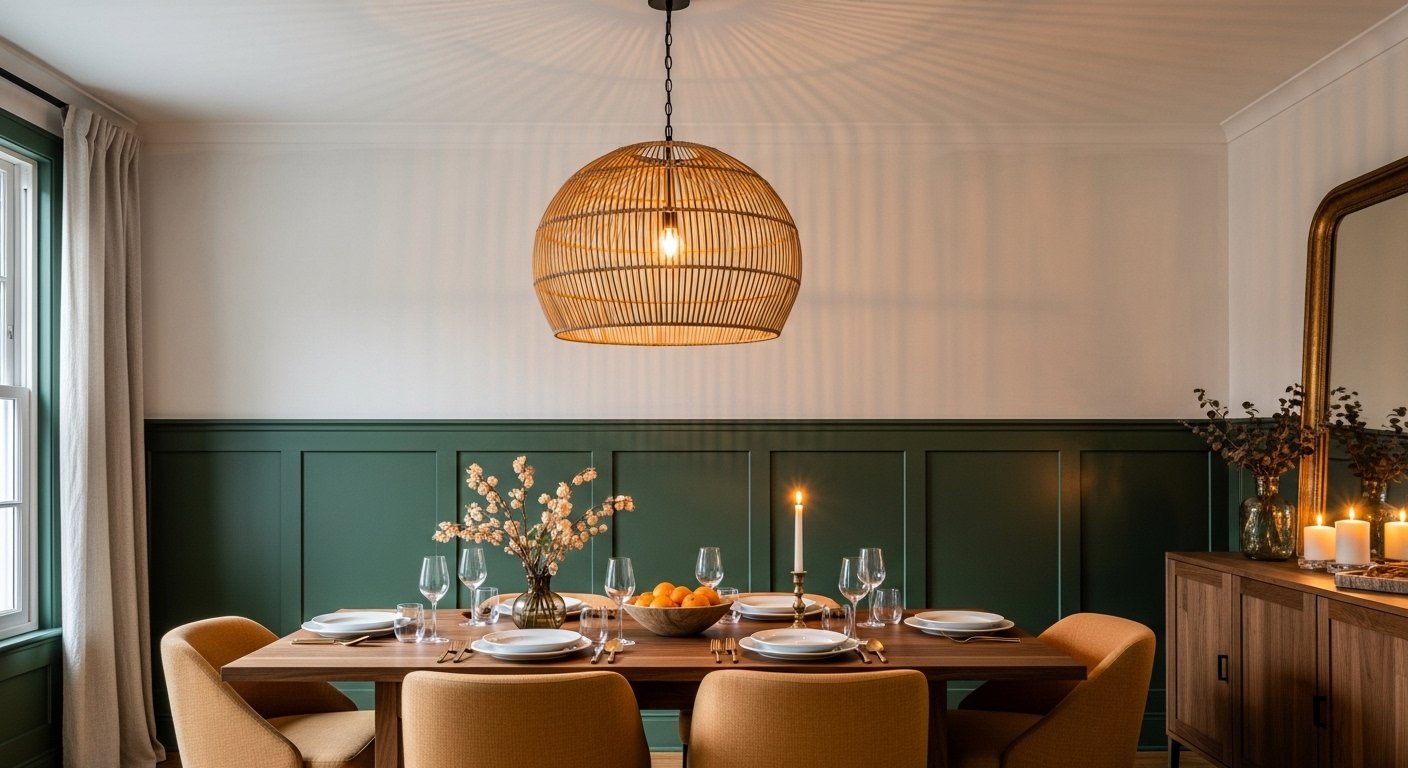
- Modern organic: rattan or woven pendant in natural tones
- Contemporary: geometric black metal chandelier
- Traditional: brass or bronze multi-arm chandelier
- Industrial: exposed bulb cluster pendant on black pipe fitting
- Transitional: drum shade pendant in linen or velvet
Size matters. The fixture diameter should be roughly half the table width. A 36-inch wide table needs an 18-inch minimum fixture diameter.
2. Install Wainscoting or Wall Paneling
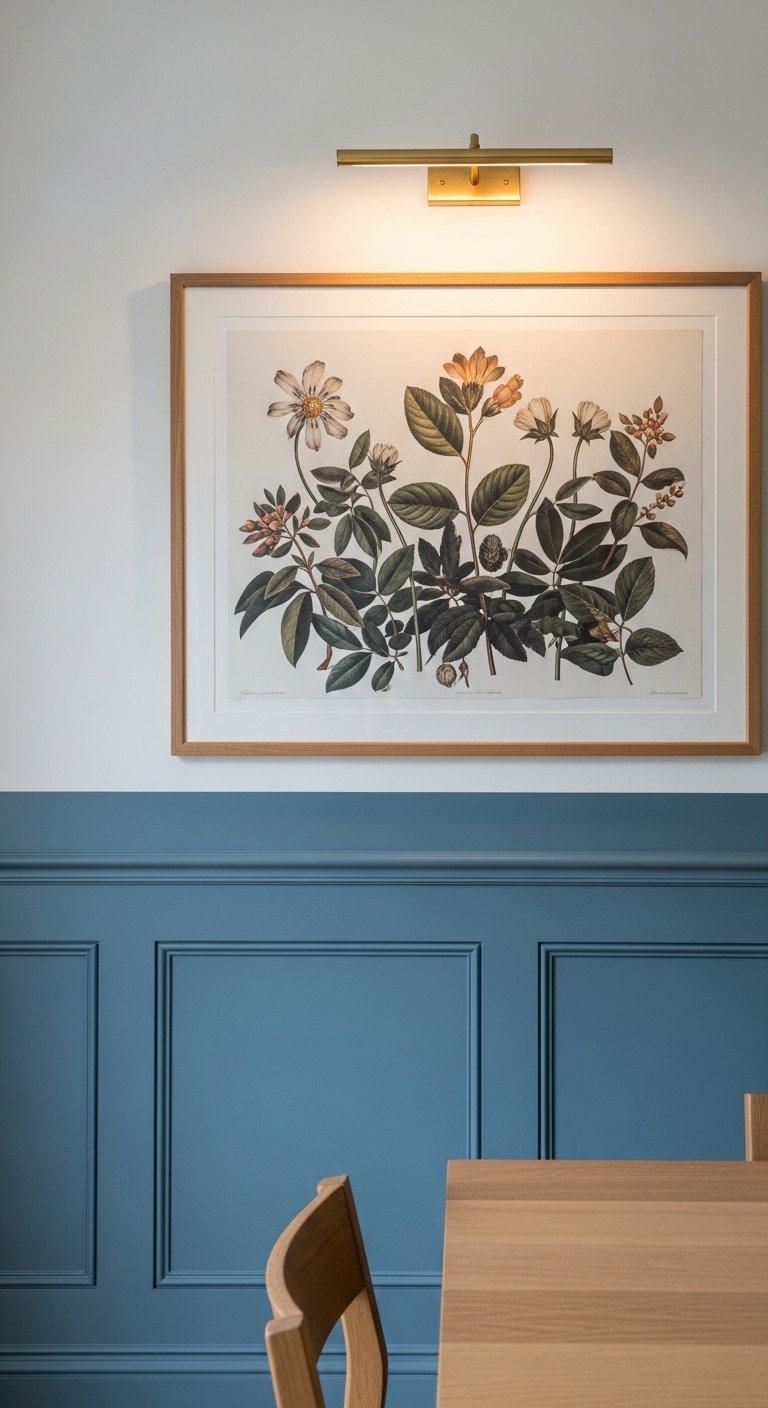
Wall paneling transforms a plain dining room wall into an architectural feature. Shaker-style wainscoting on the lower half of the wall with paint above creates a classic two-tone effect that suits everything from traditional to contemporary dining rooms.
The panel detail adds shadow, depth, and perceived quality to a room that plain drywall simply cannot achieve. Paint the paneling in a contrasting color to the upper wall for maximum impact, or paint everything the same color for a more seamless, modern look.
Paneling options by budget:
- Budget: MDF flat panel molding applied to existing wall
- Mid-range: shaker-style tongue and groove boards
- Premium: solid wood paneling with detailed molding profiles
Wainscoting height typically runs to 36 inches for a traditional look or 48 to 54 inches for a more dramatic effect. Higher paneling makes ceilings feel taller. Go higher if your ceilings allow it.
3. Paint the Ceiling a Bold Color
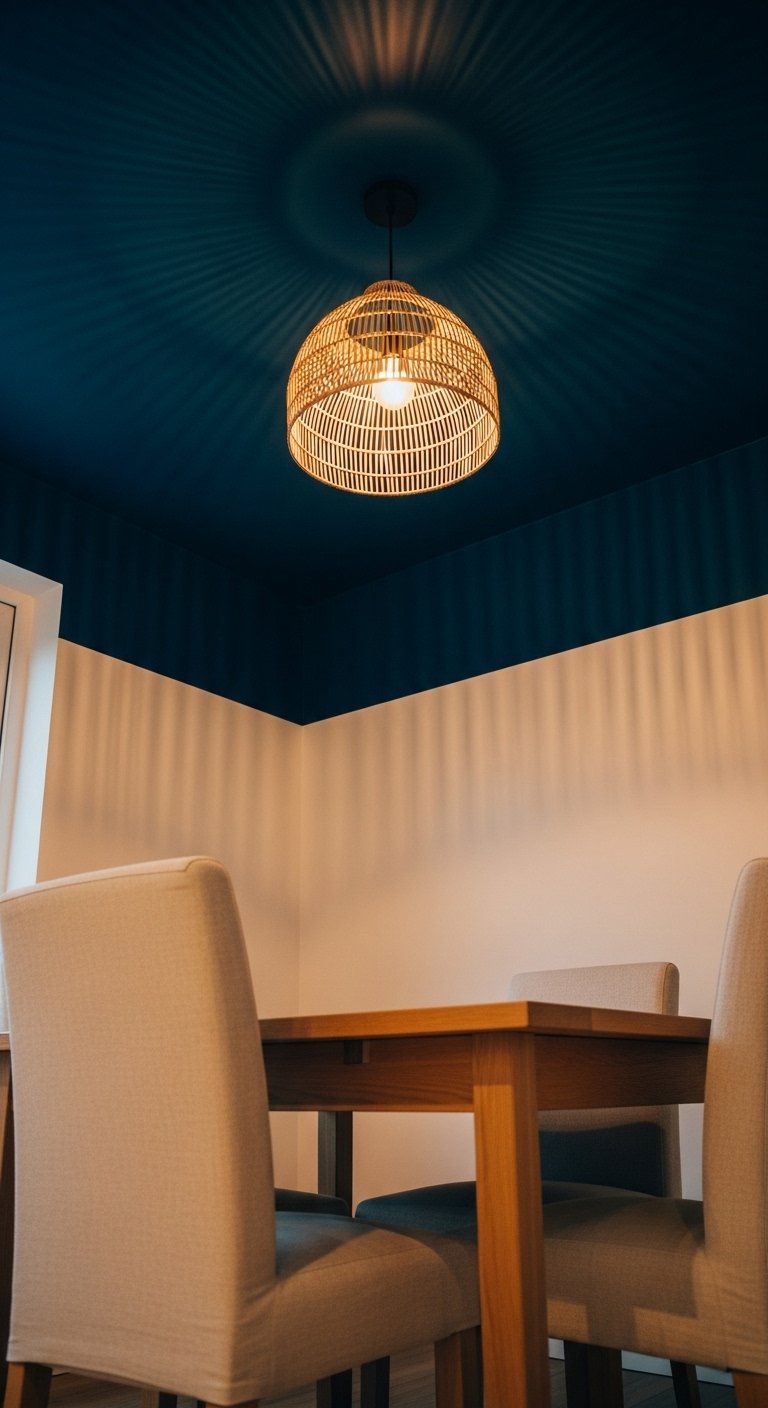
Most people paint four walls and ignore the fifth one completely. The ceiling accounts for a significant portion of your visual field when seated at a dining table. A bold ceiling color creates an enveloping, intimate atmosphere that transforms how the room feels during a meal.
Deep navy, forest green, terracotta, or even matte black ceilings work beautifully in dining rooms. The walls stay neutral. The ceiling becomes the design statement. IMO, a painted ceiling is the highest-impact, lowest-cost change in any dining room remodel.
The key detail: paint the ceiling color 6 to 8 inches down the wall before transitioning to the wall color. This makes the ceiling appear lower and more intimate, which is exactly what you want in a dining room.
4. Replace the Dining Table
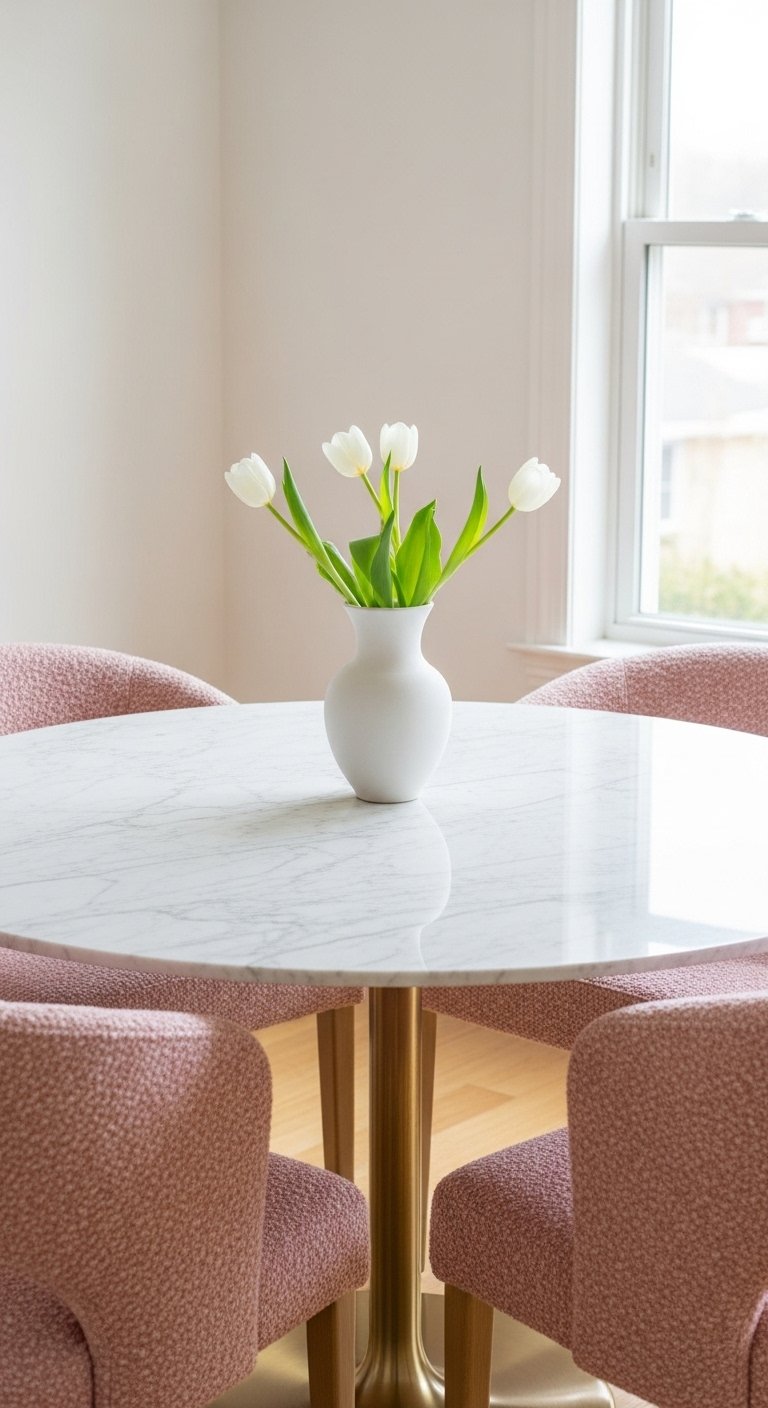
The dining table is the functional centerpiece of the room. If it doesn’t work, nothing else in the room compensates for it. A table that fits the room proportionally with a surface material that suits your lifestyle makes every meal and every gathering better.
Round tables suit small dining rooms because they allow more people to sit comfortably and eliminate corners that obstruct traffic flow. Rectangular tables suit longer rooms. Oval tables split the difference, with the seating capacity of a rectangle and the traffic flow of a round.
Table materials and their trade-offs:
- Solid wood: Beautiful, durable, shows scratches over time, ages with character
- Marble or stone: Stunning, heavy, requires sealing and careful maintenance
- Concrete: Industrial, unique, very heavy, needs sealing
- Glass: Visually light, shows every fingerprint, not ideal for families
- Engineered wood with veneer: Budget-friendly, consistent finish, less durable than solid
5. Add a Dramatic Accent Wall
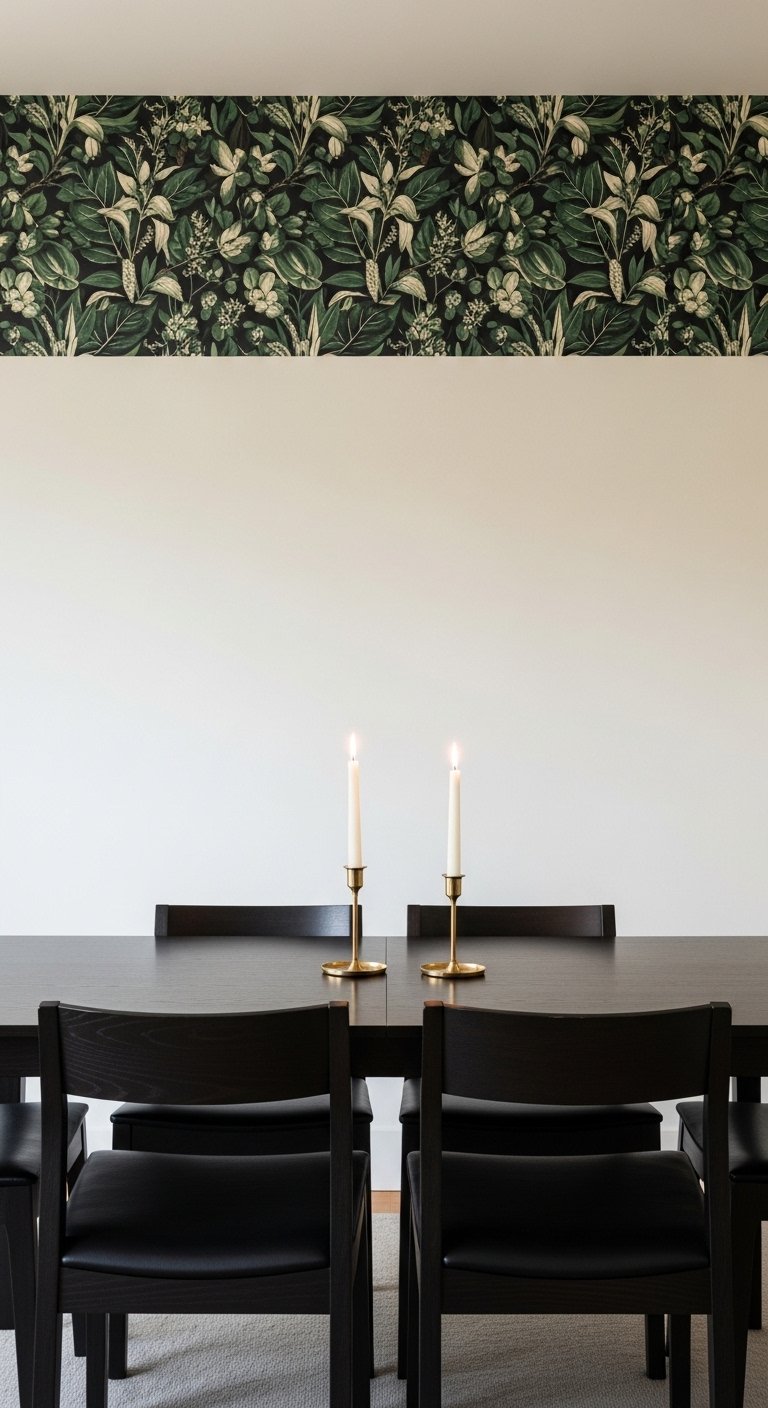
One bold accent wall in a dining room creates depth and frames the table as the focal point. The wall behind the head of the table or the wall most visible from the entrance both work well as the accent surface.
Options include paint in a deep saturated color, wallpaper with a large-scale botanical or geometric pattern, or a textured wall treatment like limewash plaster or venetian plaster. Each approach creates a completely different atmosphere at roughly similar cost points.
Best accent wall approaches for dining rooms:
- Deep saturated paint: highest impact at lowest cost
- Large-scale botanical wallpaper: adds pattern and life
- Limewash plaster: textured, organic, increasingly popular
- Vertical shiplap: adds architectural texture, suits farmhouse and transitional styles
- Gallery wall: personal, curated, suits eclectic and maximalist spaces
6. Upgrade to Upholstered Dining Chairs
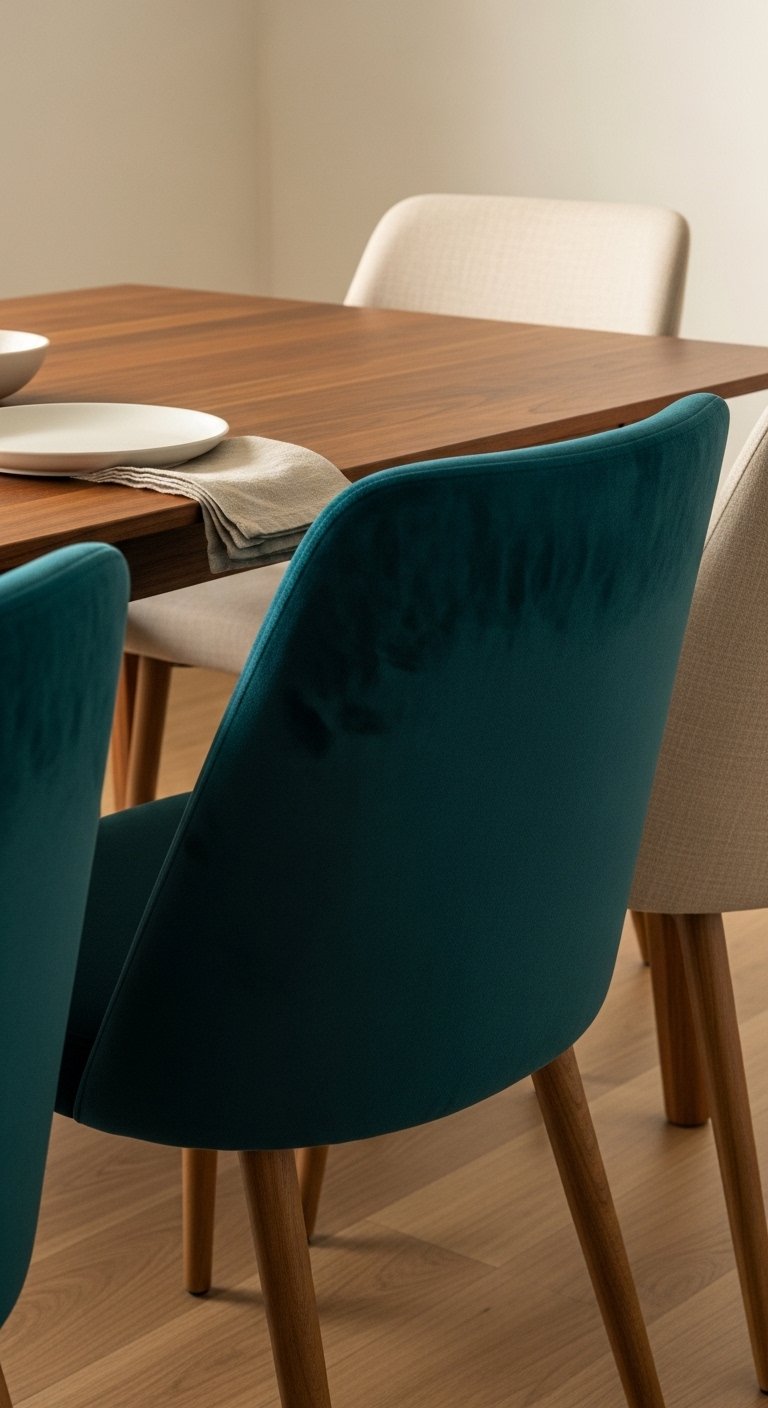
Wooden dining chairs look clean and are easy to maintain. They’re also genuinely uncomfortable after about forty minutes, which matters at dinner parties where people actually want to linger.
Upholstered dining chairs with padded seats and backs extend comfortable seating time significantly. They also add fabric texture to a room that often runs heavy on hard surfaces: table, floor, walls.
Upholstery fabric considerations:
- Linen and cotton: beautiful, not highly stain-resistant, better for low-traffic dining rooms
- Performance velvet: luxurious look, significantly more durable than standard velvet
- Faux leather or boucle: easy to wipe clean, very durable, suits contemporary rooms
- Leather: extremely durable, ages beautifully, higher cost entry point
Mix chair styles for visual interest. Four upholstered side chairs with two contrasting host chairs at the heads of the table creates a collected, curated look that a matching set of six identical chairs never achieves.
7. Install Picture Rail Molding
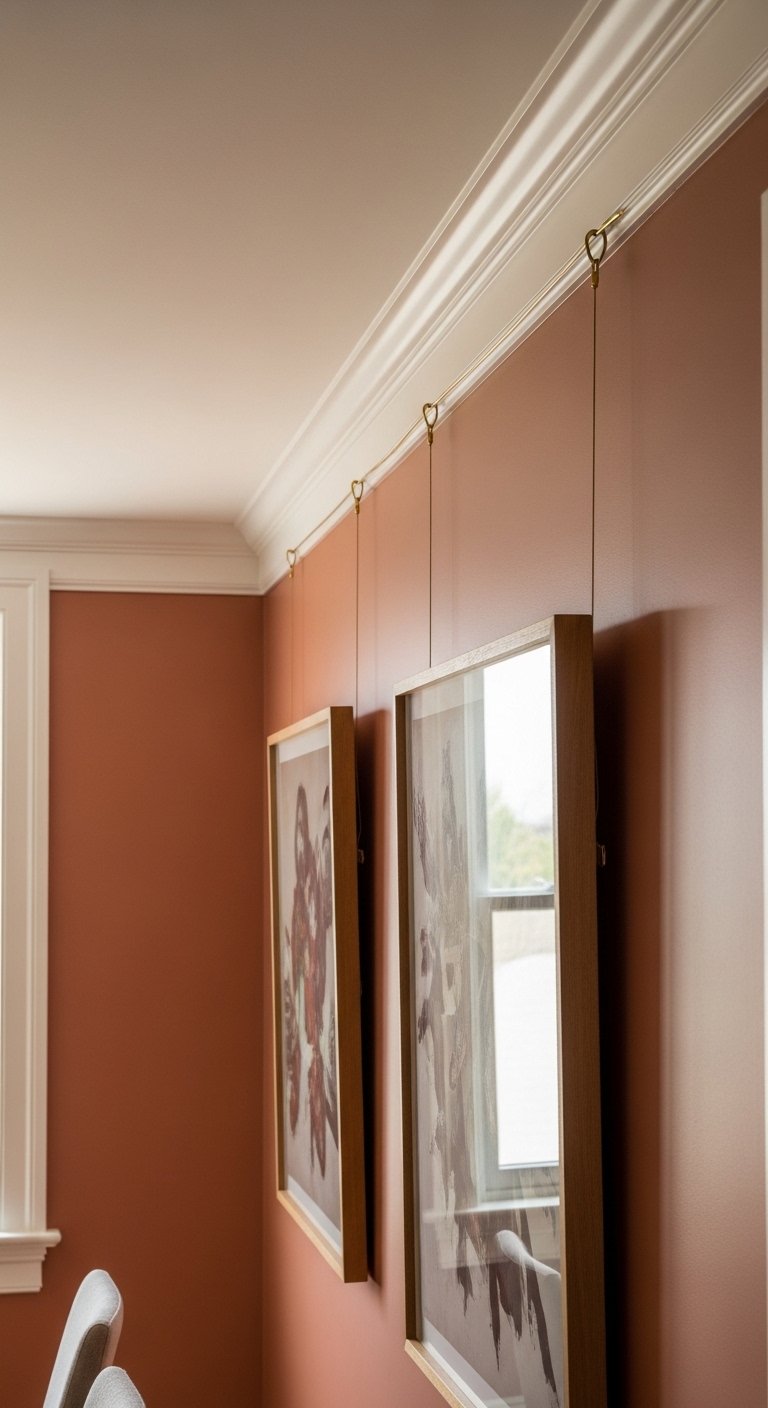
Picture rail molding runs near the ceiling perimeter and allows artwork to hang from hooks and cords without putting a single hole in the wall. In a dining room where you change art seasonally or want to hang large, heavy pieces without wall damage, picture rails solve a real problem.
The molding itself adds architectural detail to the upper wall. Paint it in the same color as the ceiling for a seamless look, or in a contrasting trim color to define the upper wall boundary clearly.
8. Lay New Flooring or Refinish Existing Floors
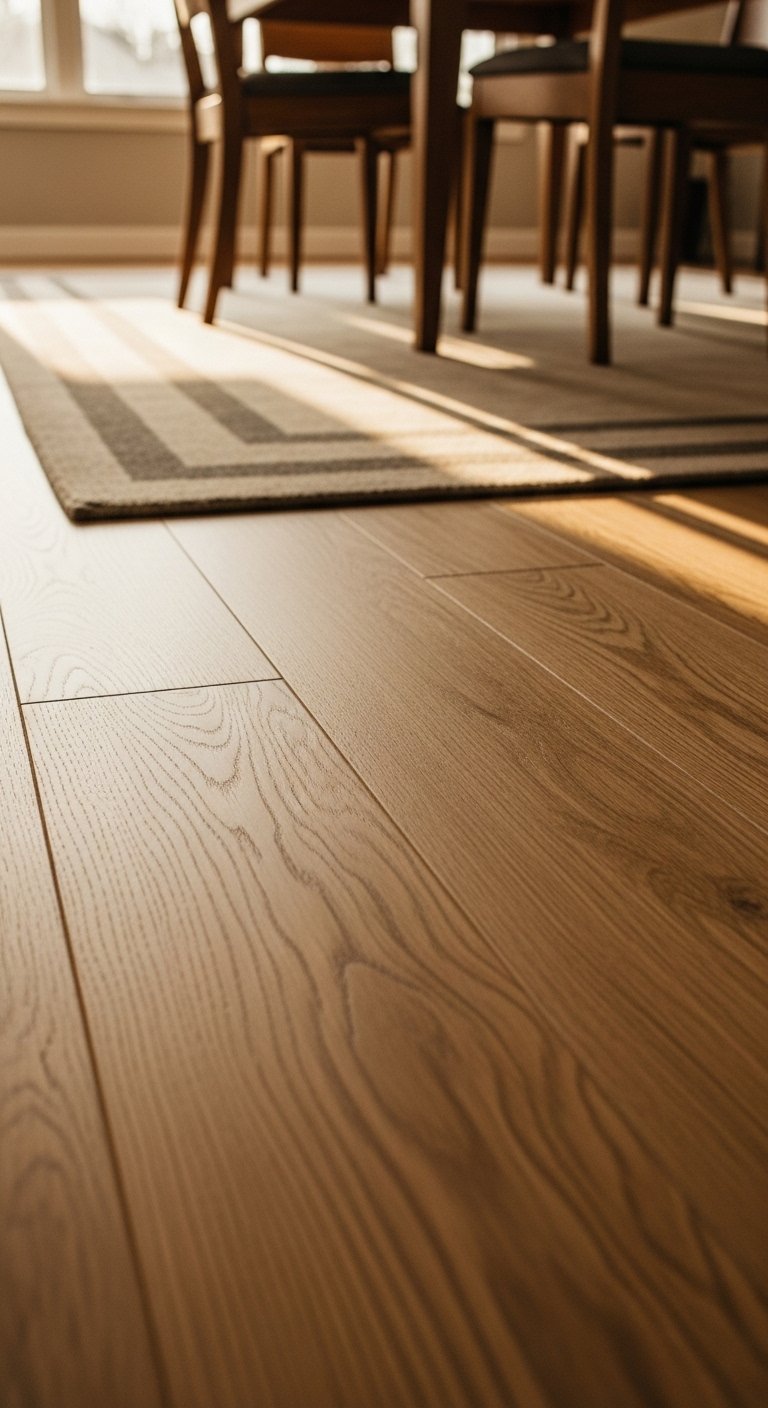
The floor in a dining room takes significant wear. Chair legs scrape it daily. Food and drink drop on it regularly. If your existing floor looks tired, refinishing hardwood floors costs a fraction of replacement and delivers a genuinely dramatic result.
If you’re replacing flooring entirely, consider the acoustic properties of your choice. Hard floors in a dining room create significant noise during meals, chairs scraping, cutlery dropping, conversation bouncing off hard surfaces. A large area rug under the dining table helps regardless of floor material.
Flooring options for dining rooms:
- Refinished hardwood: highest return on existing floors, classic result
- Engineered hardwood: stable, suitable for all climates, wide plank options look premium
- Large format porcelain tile: durable, easy to clean, suits contemporary rooms
- Herringbone parquet: traditional, adds pattern without wallpaper or paint
- Polished concrete: industrial, seamless, requires sealing and periodic maintenance
9. Add a Sideboard or Buffet
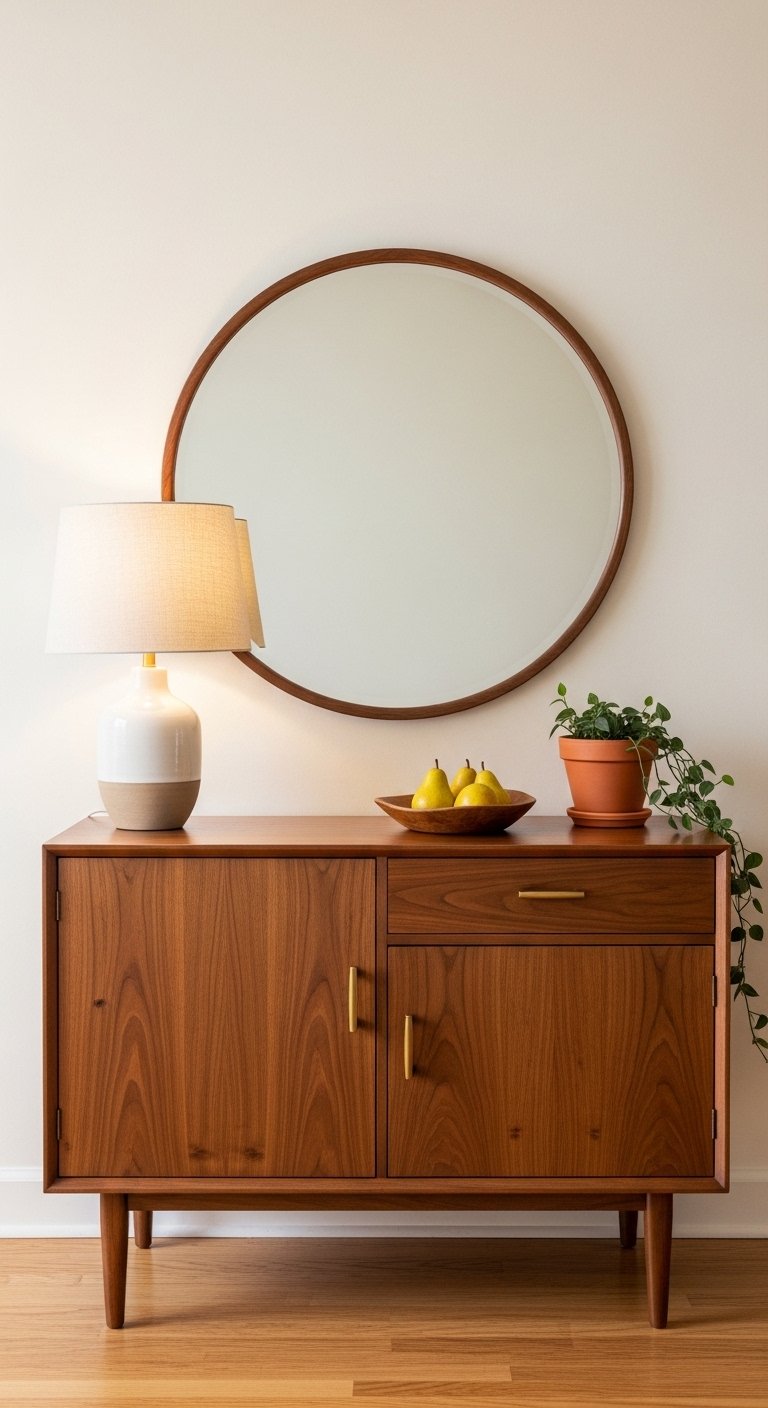
A sideboard or buffet against one wall of the dining room solves the storage problem that most dining rooms ignore entirely. Where do the serving dishes live? The good tablecloths? The extra glassware that only comes out for guests?
A sideboard answers all of those questions and adds a surface for styling, seasonal decor, and serving food during gatherings. A low sideboard with a large artwork or mirror above it creates the strongest visual composition on a dining room wall.
Sideboard styles by room aesthetic:
- Mid-century modern: tapered legs, walnut or teak veneer, simple hardware
- Traditional: raised panel doors, carved detail, dark stain
- Contemporary: flat front, handleless, light wood or painted finish
- Industrial: metal frame, reclaimed wood shelves, open lower section
10. Install a Built-In China Cabinet or Shelving
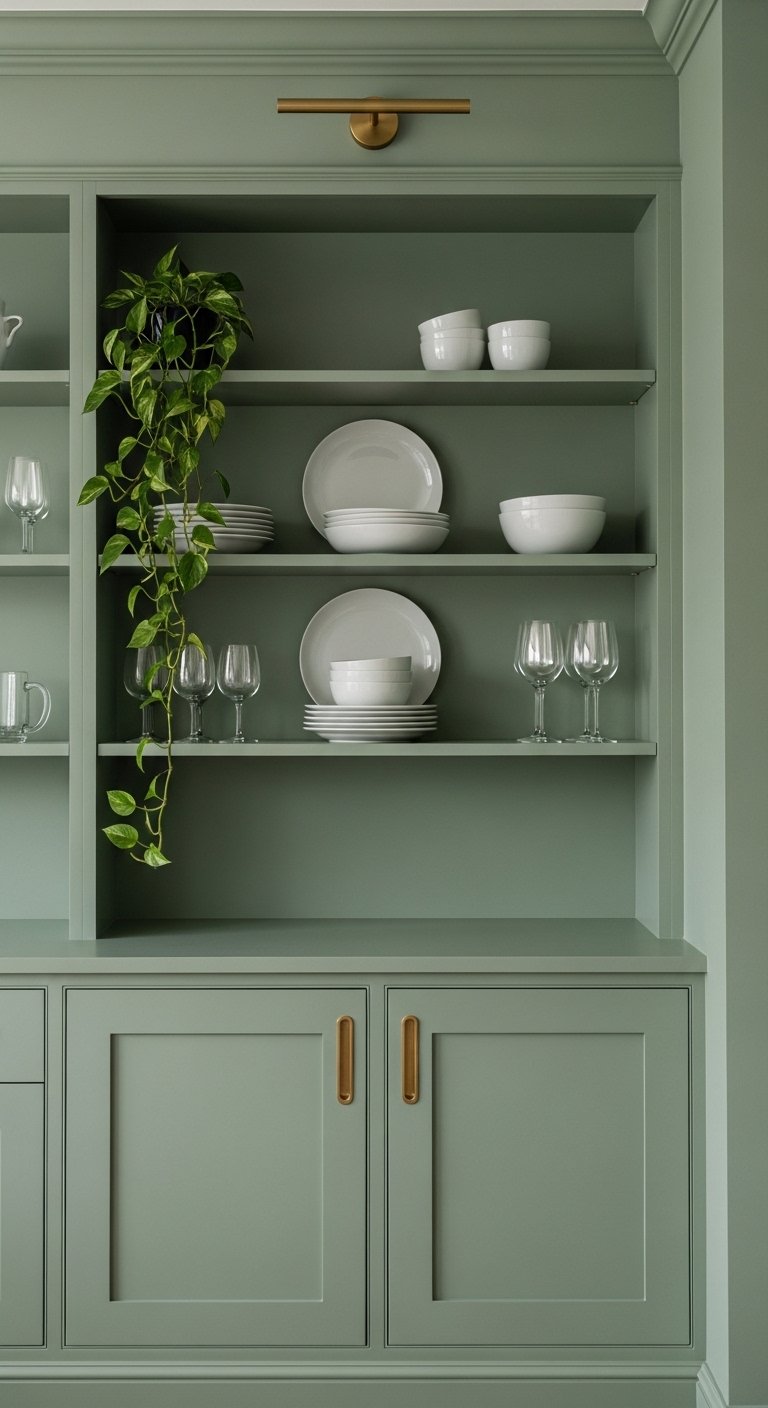
Built-in shelving or a china cabinet along one dining room wall turns dead wall space into functional display and storage. Open shelving displays your best glassware, ceramics, and table linens. Closed cabinetry below hides everyday storage.
A built-in looks more intentional and permanent than freestanding furniture. Paint it the same color as the walls for a seamless, architectural feel. Or paint it in a contrasting color to make it a feature in its own right.
Built-ins add measurable resale value to a home in a way that freestanding furniture never does. Plan them carefully and they pay back every dollar spent.
11. Add a Statement Mirror
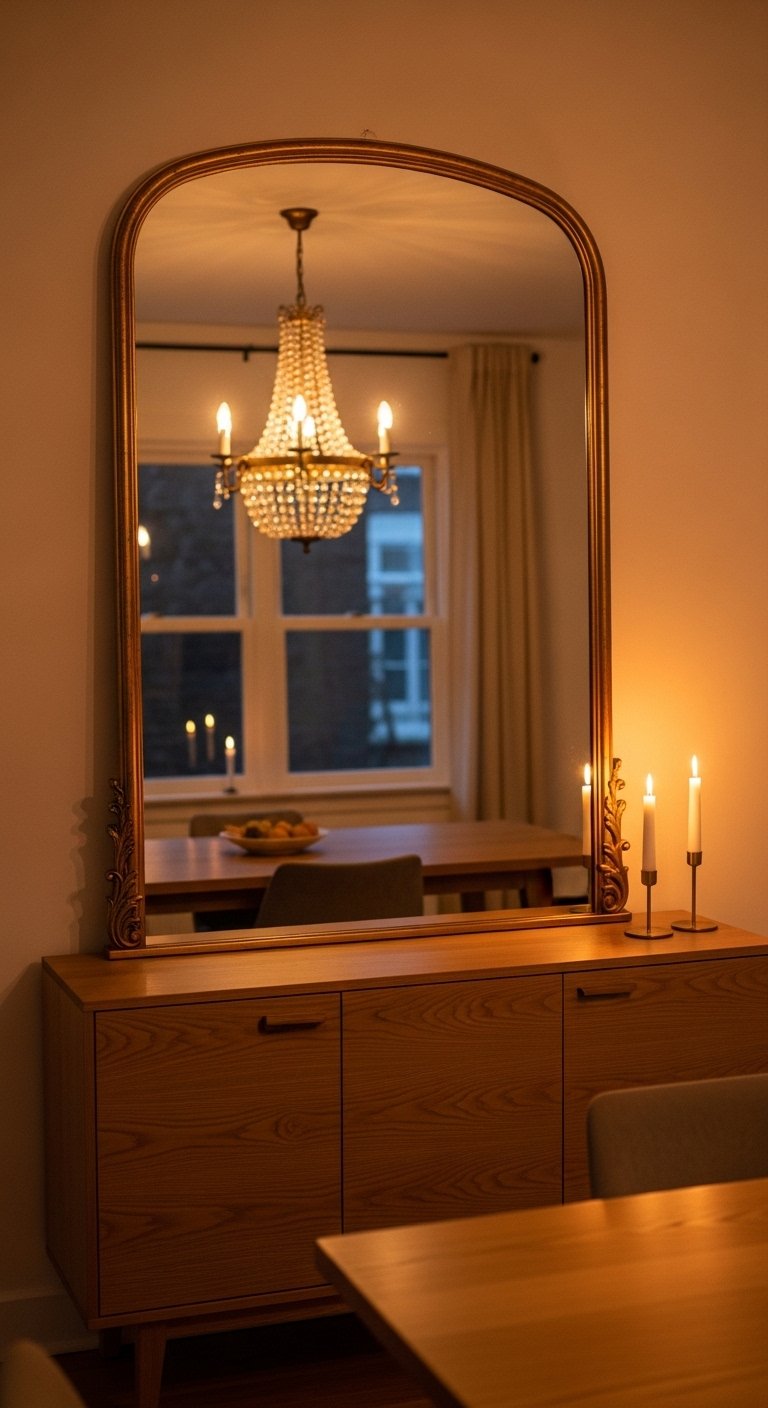
A large mirror on the dining room wall reflects candlelight, the pendant fixture, and the people at the table. It makes the room feel larger, more luminous, and more festive during evening meals.
Position the mirror on the wall opposite the largest window for maximum light reflection during daytime. Position it behind the sideboard for a classic, composed look. A round or arch-top mirror in an ornate or aged frame suits traditional dining rooms. An oversized rectangular frameless mirror suits contemporary spaces.
12. Install Dimmer Switches on All Lighting
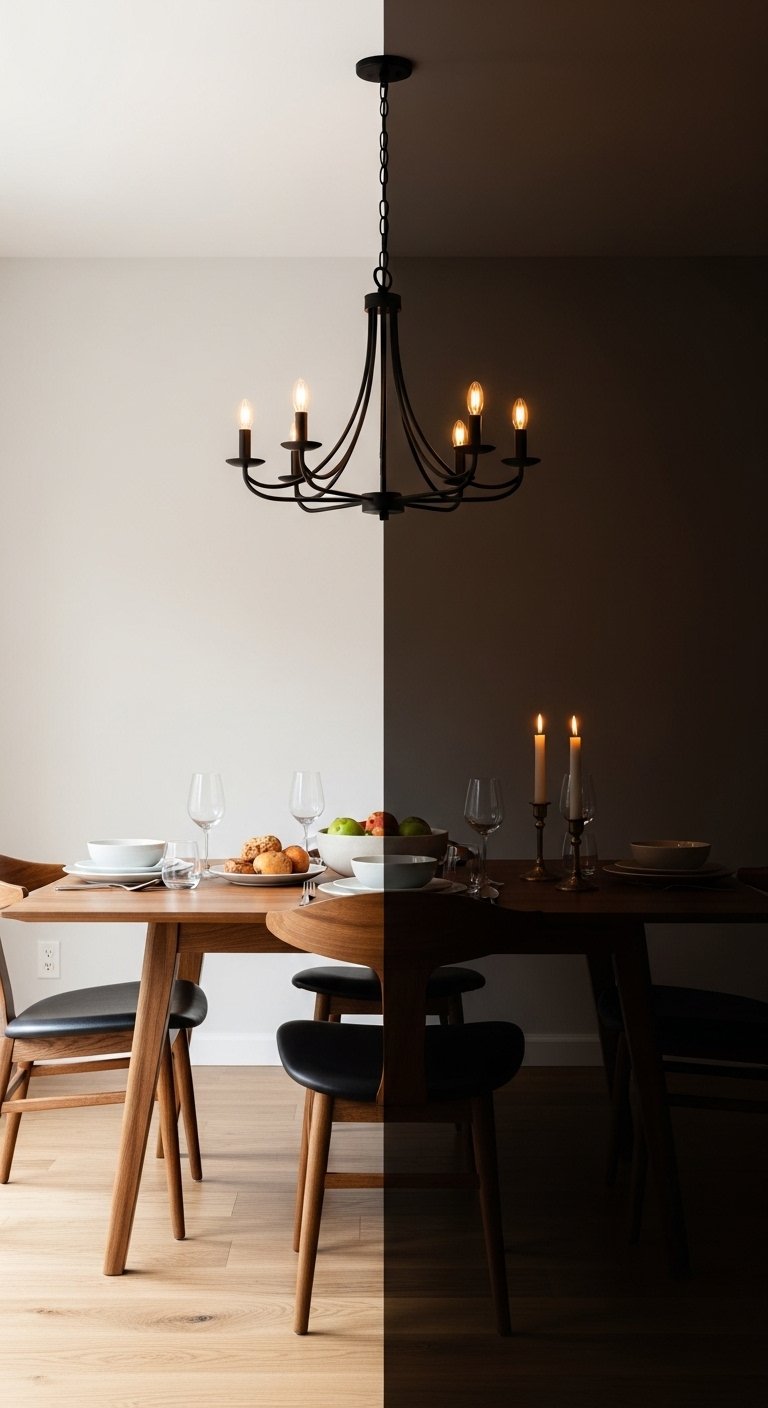
Here is something that costs almost nothing relative to the impact it delivers. Dimmer switches on every lighting circuit in the dining room, the chandelier, any recessed lights, and any wall sconces, give you complete control over the room’s atmosphere.
A dining room at full brightness works for breakfast and homework. The same room at 30 percent creates a completely different atmosphere for dinner. Without dimmers, you choose between one setting and none. With dimmers, you set the mood for every occasion.
Hire an electrician for the hour it takes. The cost is minimal. The daily benefit runs for the life of the home.
13. Create an Arched Doorway
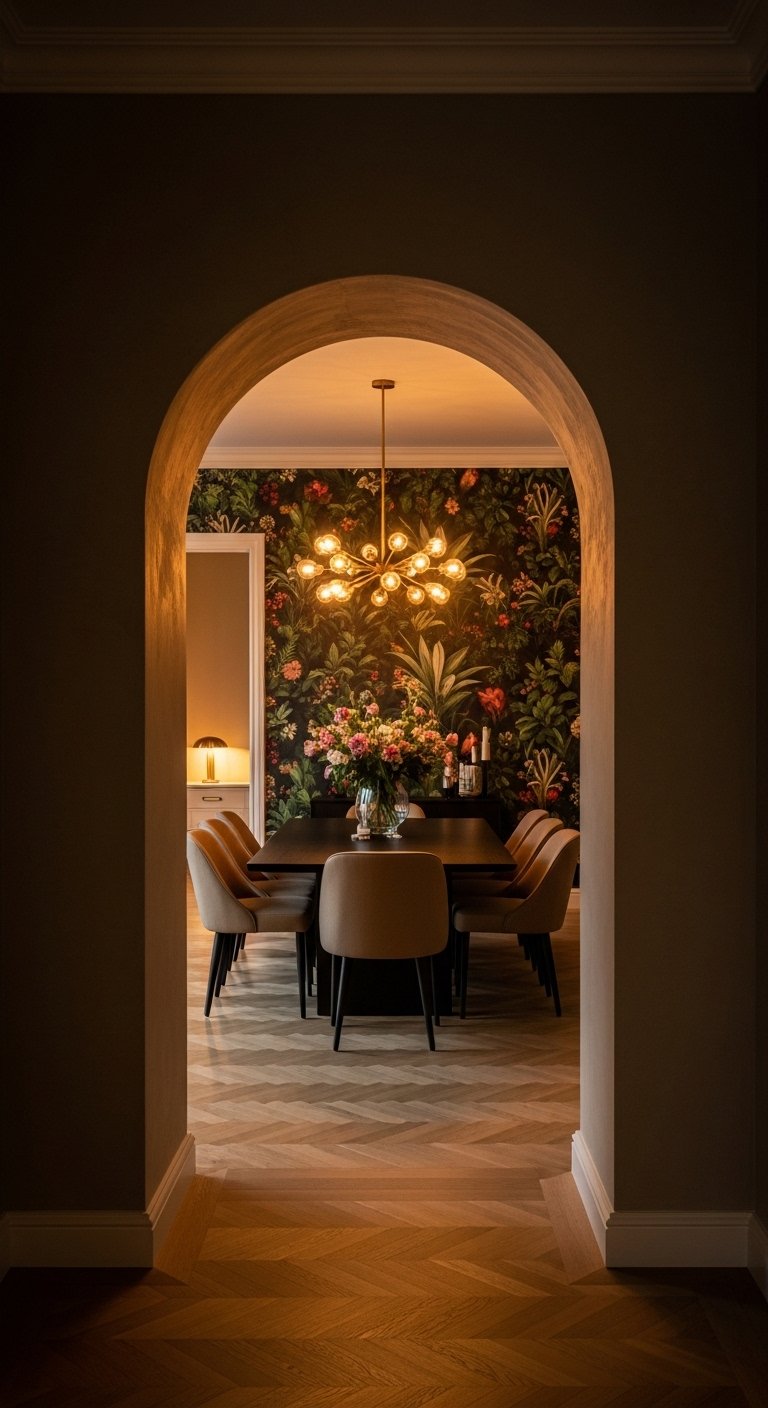
If your dining room connects to a hallway or living room through a standard rectangular doorway, converting it to an arched opening adds architectural character that no amount of furniture or decor achieves.
An arched doorway frames the view into the dining room from the adjacent space. It creates a moment of arrival, a visual signal that you’re moving from one room to another. In open-plan homes where the dining area connects directly to the living zone, a partial archway defines the transition without a full wall.
This is a structural change that requires professional execution. The visual payoff is permanent and significant.
14. Hang Wallpaper on All Four Walls
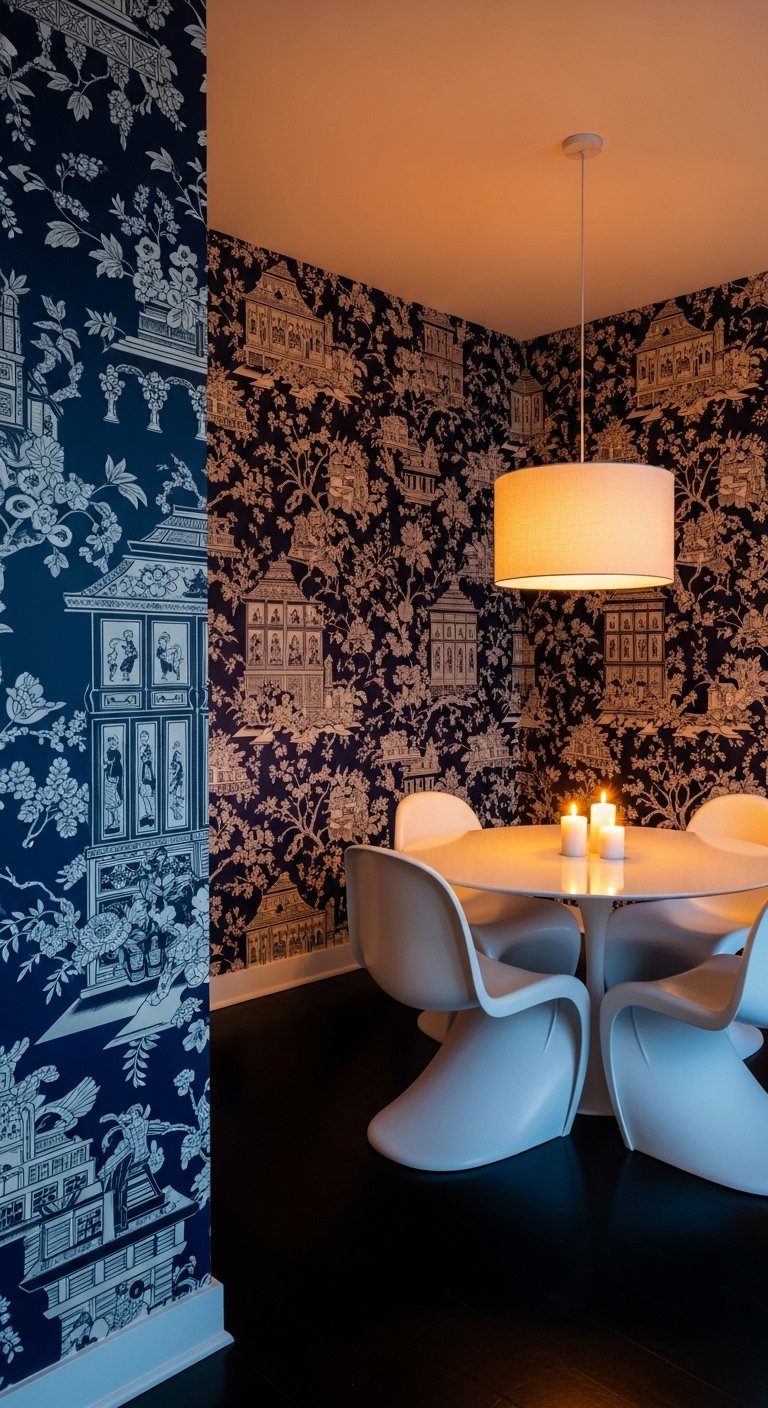
Full-room wallpaper in a dining room creates an immersive, theatrical atmosphere that no paint color fully replicates. Dining rooms are one of the few spaces in a home where full-room wallpaper works without feeling overwhelming, because the room is used for specific, often celebratory occasions rather than all-day everyday living.
Large-scale botanical prints, bold geometric patterns, maximalist floral designs, and classic toile all work in dining room wallpaper. The key is choosing a pattern you’ll still love in five years, not just the one that looks best in the store.
Wallpaper considerations:
- Paste-the-wall papers are easier to hang and remove than paste-the-paper
- Vinyl-coated wallpaper suits dining rooms better than delicate paper-only options
- Match the pattern repeat carefully at every seam; a professional hanger pays for itself here
- Test a large sample panel in the actual room lighting before ordering full quantities
15. Replace Standard Recessed Lights with Directional Fixtures
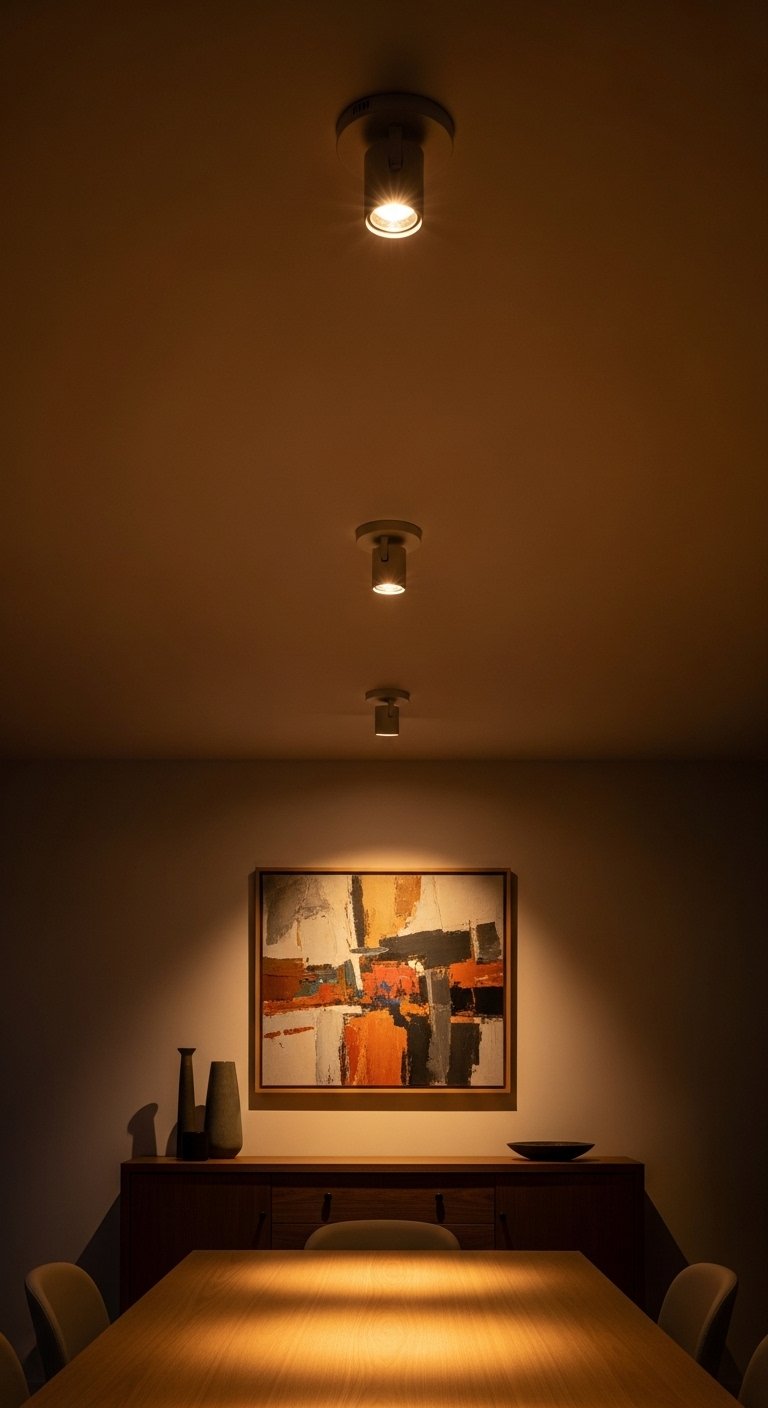
Standard recessed can lights point straight down and create flat, unflattering light in a dining room. Directional recessed fixtures or adjustable gimbal lights allow you to aim the light beam at specific surfaces: the table, the artwork, the sideboard.
Directing light at surfaces rather than directly down creates a more layered, atmospheric result. The table surface glows. The artwork is highlighted. The perimeter of the room softly fades into shadow. This is how restaurants create their atmosphere and you can replicate it exactly with the right fixtures and a dimmer switch.
16. Add a Window Seat or Banquette
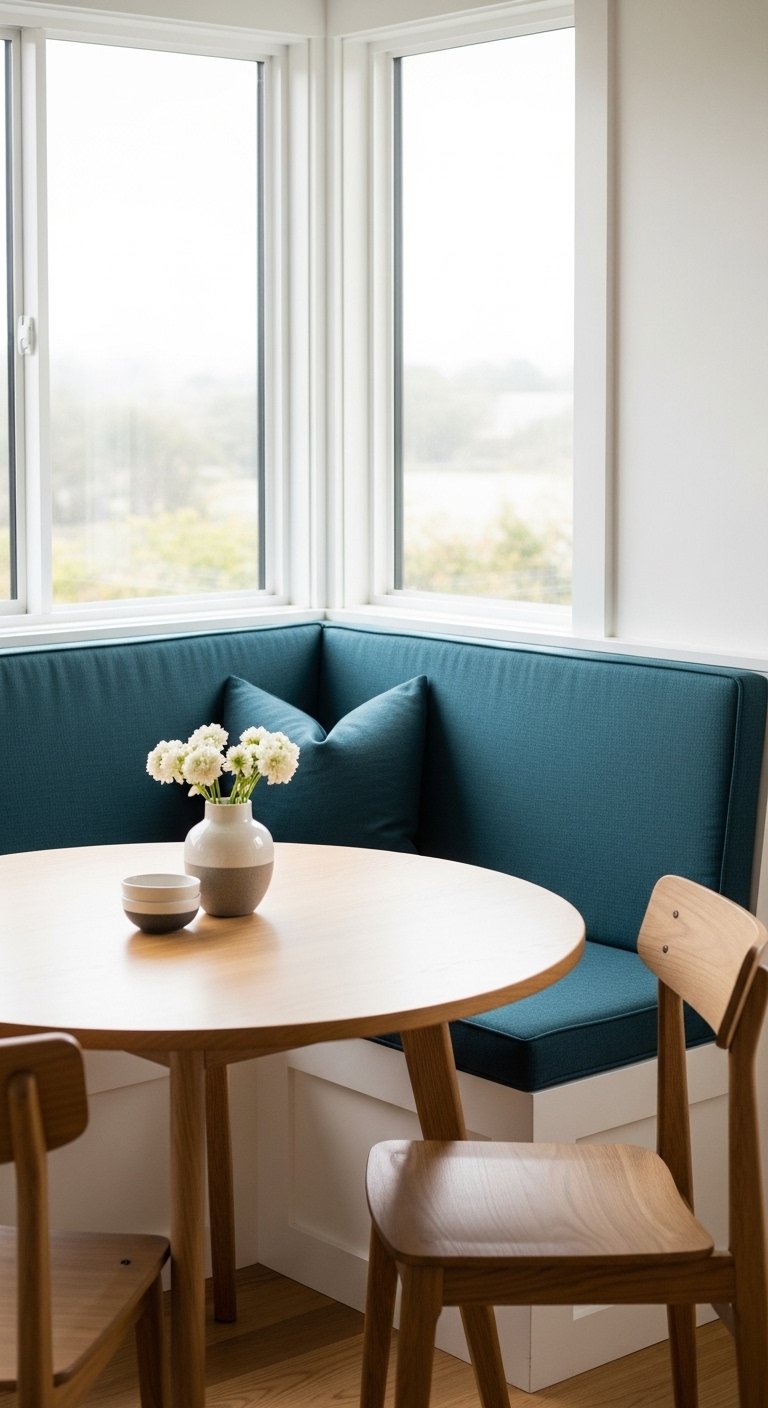
A built-in banquette along one wall of the dining room converts what is often a dead wall into a permanent seating feature. Banquette seating is more space-efficient than chairs because it fits more people into a given footprint.
A corner banquette with a round or square table turns a corner of the dining room into an intimate dining nook that works for everyday breakfasts and casual dinners alike. The banquette seat cushion adds upholstered texture to the room. Built-in storage underneath the banquette seat solves additional storage needs simultaneously.
Banquette construction considerations:
- Frame from MDF or plywood for a painted finish
- Build the seat at 18 inches height to match standard chair seat height
- Depth of 18 to 20 inches for comfortable seated depth
- Include lift-top or drawer access to the storage below the seat
17. Use Grasscloth or Textured Wallcovering
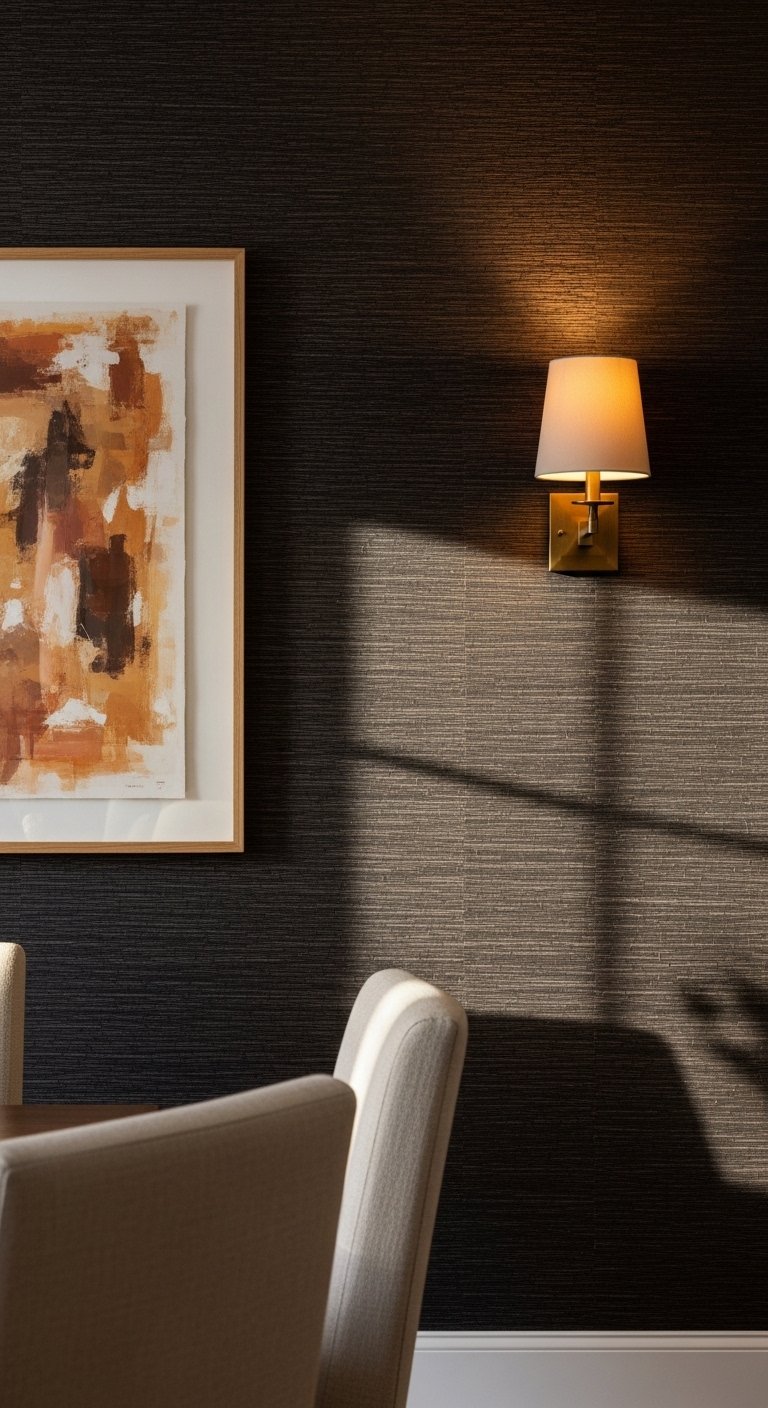
Grasscloth wallcovering is a woven natural fiber wallcovering that adds genuine texture and warmth to a dining room wall in a way that paint and standard wallpaper cannot match. The natural variation in the weave means no two panels look exactly alike.
It photographs beautifully and creates depth on the wall surface that flat paint never achieves. Grasscloth is not washable, which makes it less suitable for kitchens. In a dining room it works well because wall contact is limited compared to a kitchen or bathroom.
Available in a wide range of tones from pale natural straw to deep charcoal. The natural fiber texture suits transitional, organic, and maximalist dining rooms particularly well.
18. Install Sconce Lighting on the Walls
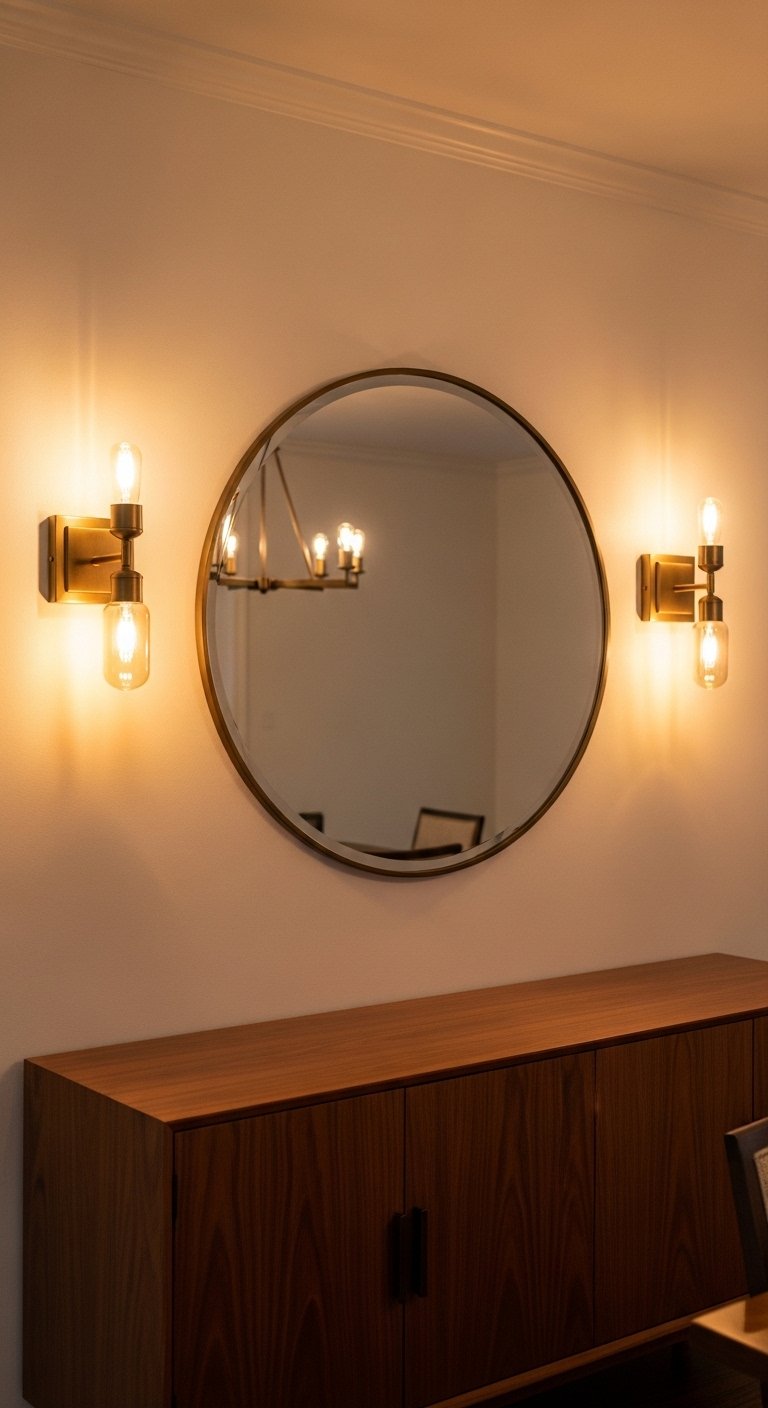
Wall sconces on either side of a mirror, artwork, or sideboard add a layer of warm ambient light at a height that pendant fixtures and recessed lights don’t reach. They make the room feel complete in the evening in a way that ceiling-only lighting never achieves.
Hardwired sconces look cleaner than plug-in versions. If hardwiring isn’t feasible, plug-in sconces with a cord cover painted to match the wall work acceptably. Put them on dimmers. Always put them on dimmers. 🙂
Sconce placement guidelines:
- Mount at approximately 60 to 65 inches from the floor
- Space symmetrically on either side of a mirror or artwork
- Keep at least 6 inches between the sconce and the object beside it
- Match the finish to the chandelier or pendant above
19. Create a Bar Cart or Drinks Station
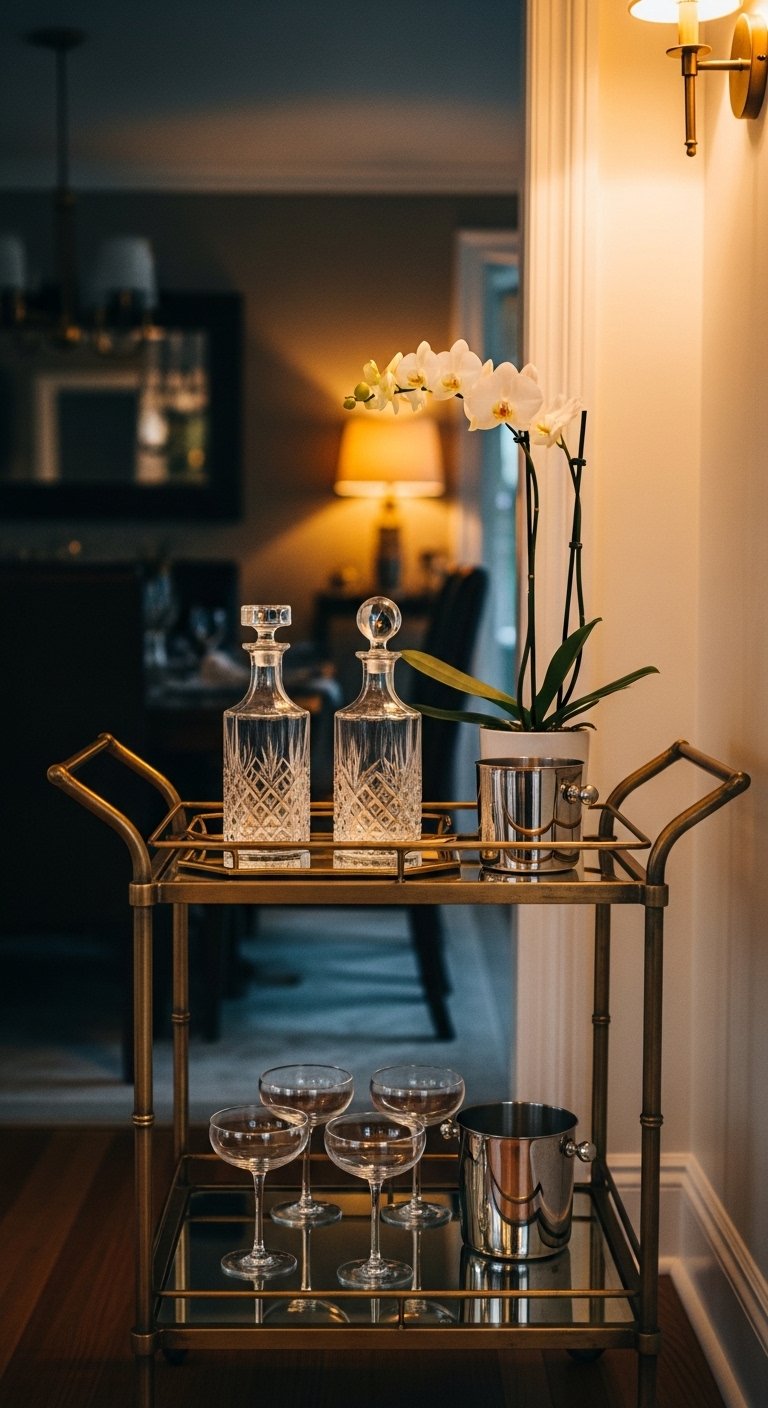
A dedicated drinks station or bar area in the dining room elevates every gathering from a dinner to an event. A bar cart with a tray, a few bottles, glasses, and a small ice bucket is the lowest-commitment version. A built-in bar cabinet with a wine fridge is the most committed version.
Even a simple bar cart staged well in a corner of the dining room creates a focal point and a gathering spot before people sit down to eat. It signals that this room is designed for entertaining, which changes how guests experience the space.
Bar station essentials:
- A tray to corral bottles and glassware
- A few quality glasses visible on display
- One or two decorative decanters
- A small plant or floral arrangement
- A cocktail napkin holder for practical use
20. Replace Hollow Core Doors with Solid Wood
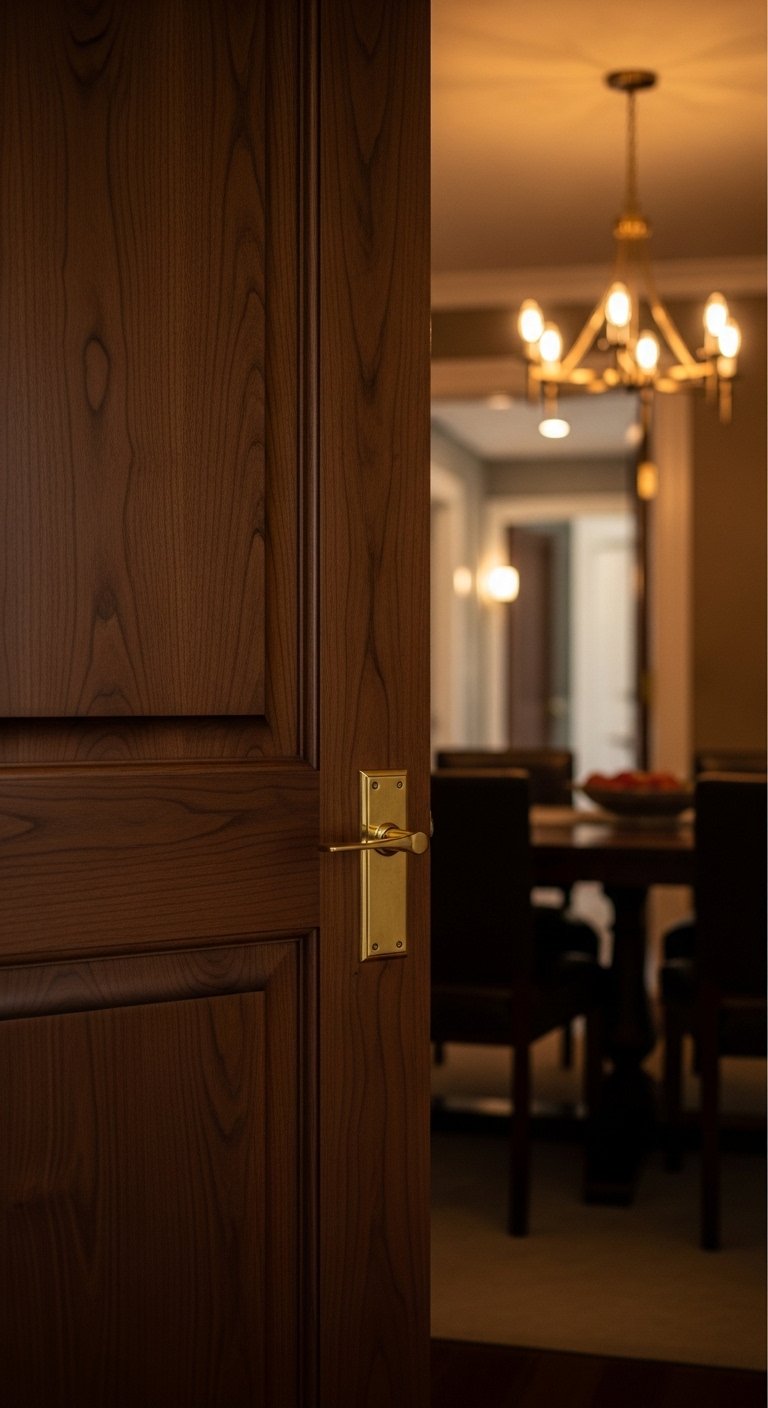
The dining room door, if your dining room has one, tells visitors something about the quality of the home before they even sit down. A hollow core door flexes slightly when you push it, makes a hollow sound when knocked, and contributes nothing to the acoustic separation between rooms.
A solid wood or solid core door feels substantial, closes with a satisfying weight, and reduces noise transmission between the dining room and adjacent spaces. This matters when dinner conversations run late and others in the house have gone to bed.
The cost difference between hollow and solid core is modest. The quality difference is significant and immediate.
21. Add Crown Molding
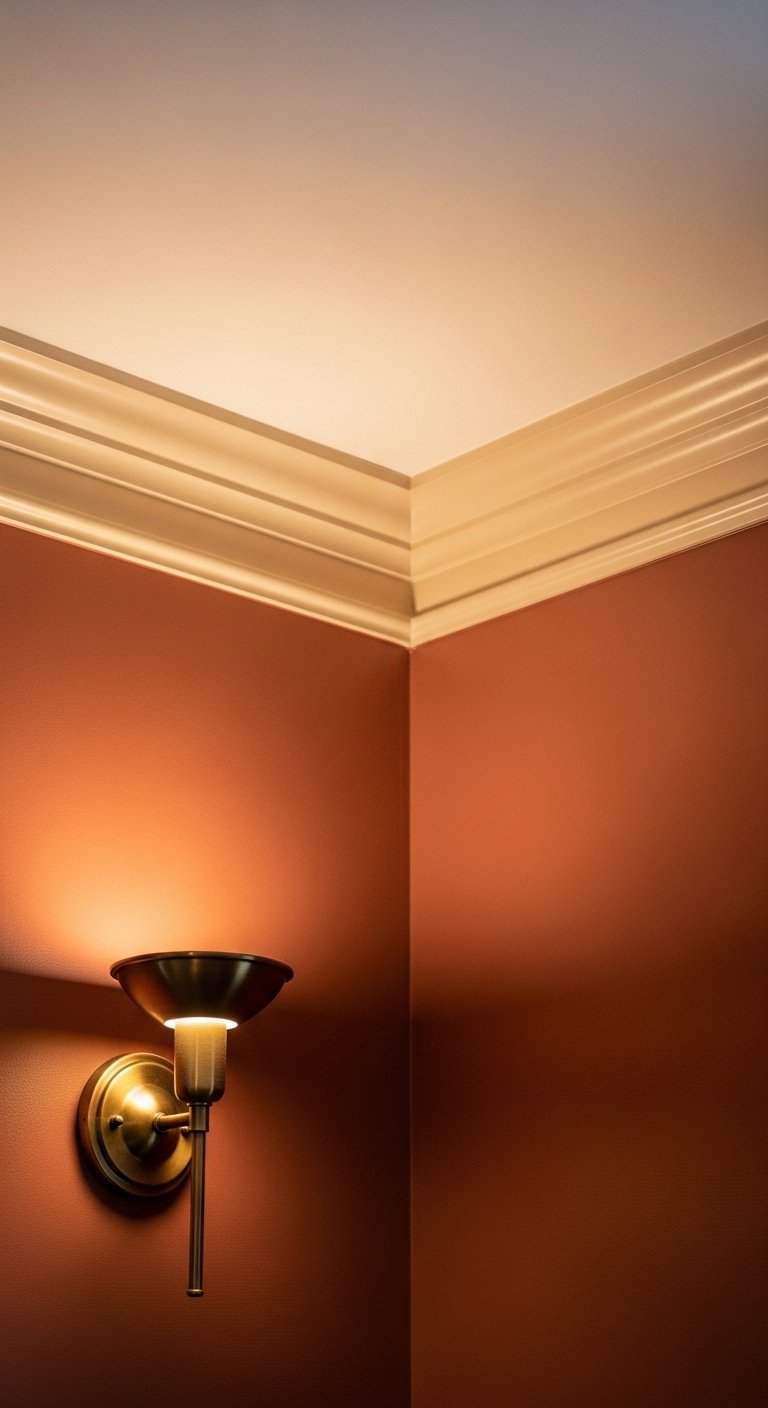
Crown molding at the ceiling-wall junction adds finished, architectural detail to a dining room that plain walls and a plain ceiling cannot achieve. It visually raises the ceiling and frames the room as a complete, considered space.
The profile depth should relate to ceiling height. Low ceilings suit shallow profiles, 2 to 3 inches. Higher ceilings carry deeper, more detailed profiles, 4 to 6 inches, without looking out of proportion.
Paint crown molding the same color as the ceiling to visually raise the room. Paint it the same as the walls to emphasize the wall height. Paint it in a contrasting trim color for a traditional, formal result.
22. Bring in a Large Area Rug
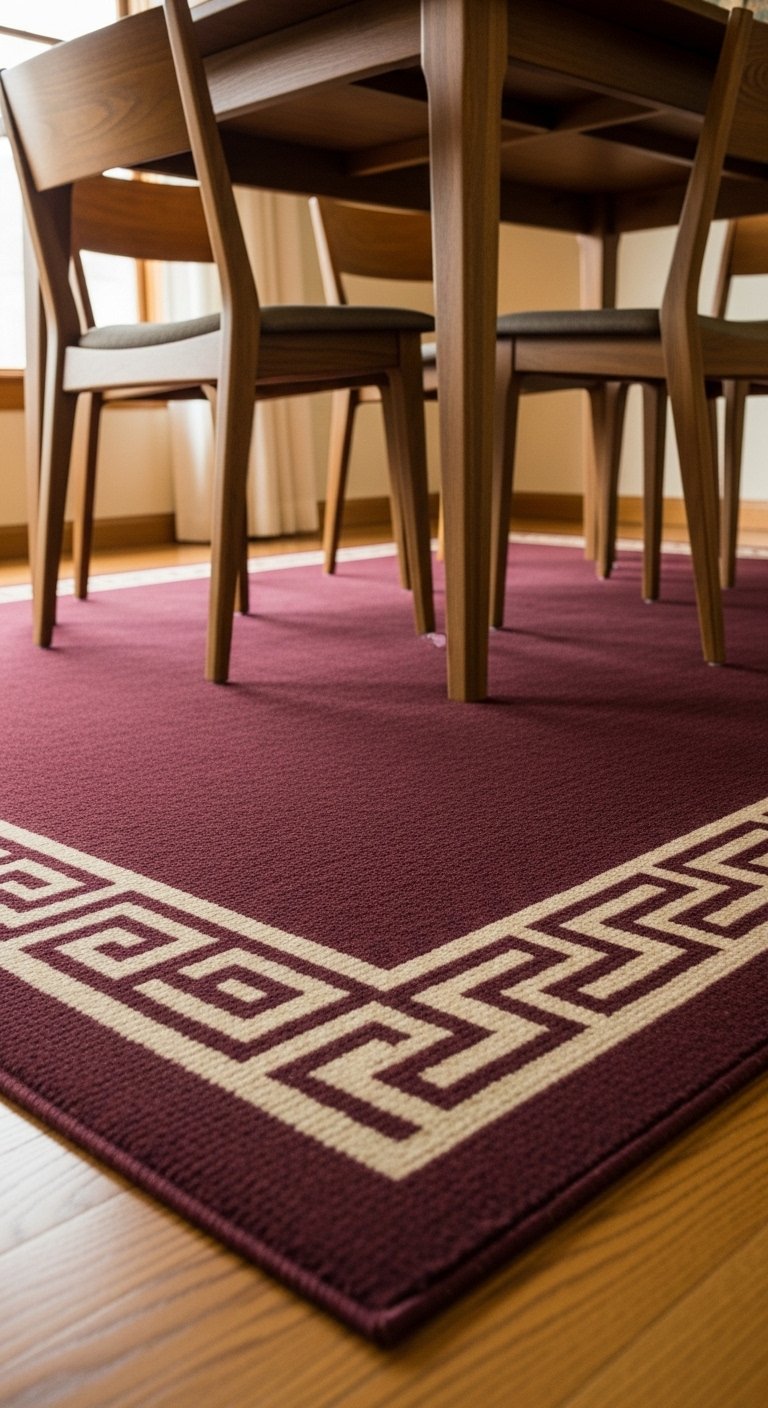
A large area rug under the dining table defines the dining zone, adds warmth and acoustic dampening, and protects the floor from chair leg damage. The rug must be large enough that chair legs remain on the rug when chairs are pulled out for seating.
Add 24 inches to each side of the table when choosing rug size. A 36×72 inch table needs a minimum 84×120 inch rug. Most people choose a rug too small for their table. The result looks wrong and the chair legs catch on the rug edge constantly. Size up without hesitation.
Dining room rug materials:
- Wool: durable, naturally stain-resistant, best long-term choice
- Polypropylene: highly durable, easy to clean, budget-friendly
- Natural fiber (jute, sisal): beautiful, not stain-resistant, better for low-spill households
- Cotton flatweave: easy to clean, thin profile suits chair movement
23. Refresh With New Table Styling and Accessories
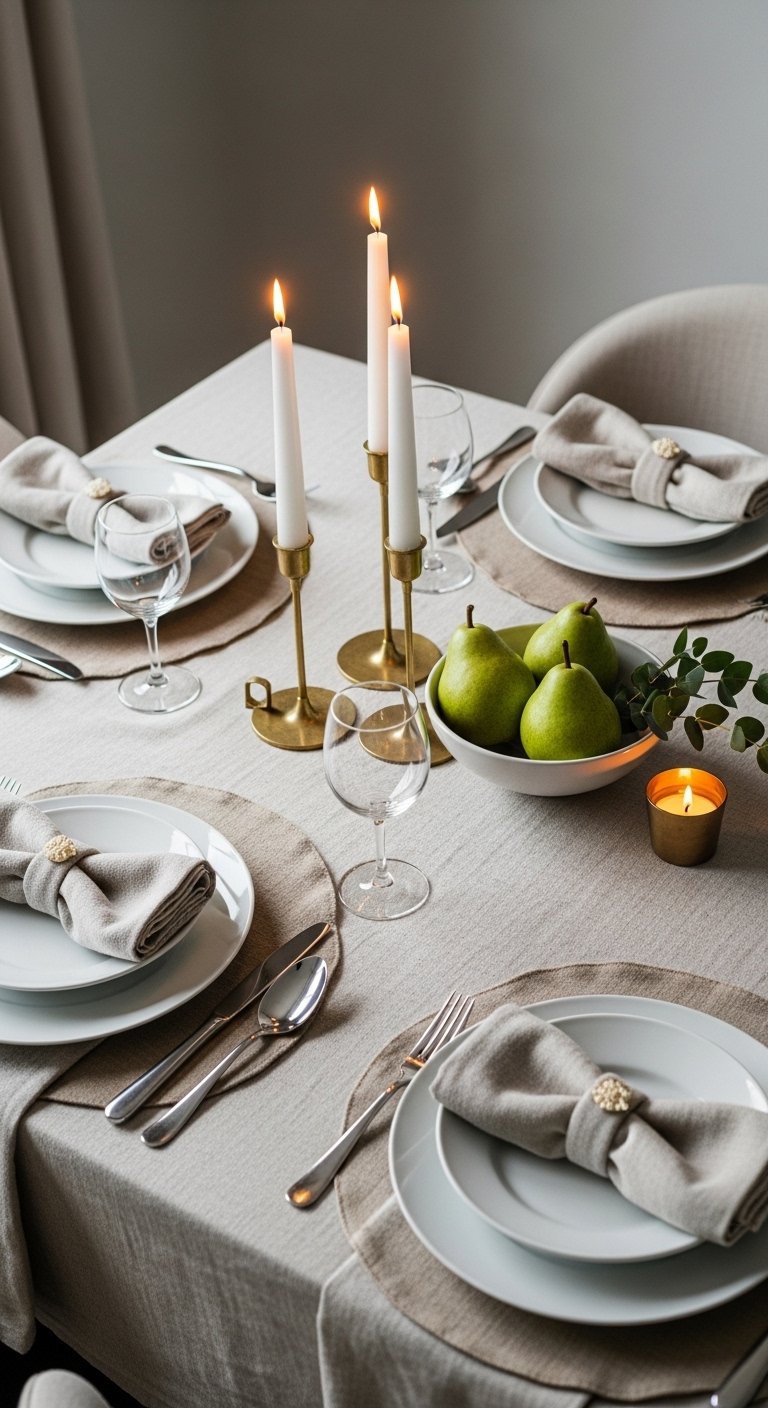
Not every remodel requires demolition or construction. Sometimes a complete restying of the table and surfaces with new placemats, a centerpiece, updated candleholders, and fresh table linens transforms the dining room’s atmosphere at a fraction of the cost of structural changes.
A well-styled dining table communicates that the room is used and valued. A bare table with nothing on it communicates the opposite. FYI, the dining room is one of the spaces where accessory investment delivers the highest visual return relative to cost.
Dining table styling essentials:
- A centerpiece: floral arrangement, sculptural object, or grouped candles
- Consistent placemats in a natural material: linen, rattan, or leather
- Matching napkins, folded simply rather than elaborately
- Two or three taper candles in simple holders at different heights
- One textural object: a wooden bowl, a ceramic vase, a stone object
How to Plan Your Dining Room Remodel
Before buying anything, answer these questions honestly:
How do you actually use the room? Daily family meals need durability and easy cleaning above all else. Occasional entertaining needs atmosphere and flexibility. The answer changes every material and furniture choice.
What is your realistic budget? Divide it into three categories: structural changes, furniture and fixtures, and accessories. Structural changes, flooring, paneling, lighting circuits, and built-ins, should take the largest share because they last longest and add the most value.
What stays and what goes? Identify which existing elements you keep, the table, the chairs, the floor, and build around them. Trying to change everything simultaneously creates both budget pressure and design incoherence.
Common Dining Room Remodel Mistakes
- Wrong size rug. Too small is the most common mistake. Size up always.
- Light fixture hung too high. 30 to 36 inches above the table surface is the correct range. Higher than that and the fixture loses its connection to the table.
- No dimmer switches. A dining room without dimmers has one atmosphere setting. That’s not enough.
- Chairs that don’t fit under the table. Measure arm height against table underside clearance before buying upholstered chairs with arms.
- Ignoring acoustics. Hard floors, bare walls, and no soft furnishings create a noisy dining room. A rug, curtains, and upholstered chairs solve this without visible effort.
- Over-matching everything. A perfectly matched dining set looks like a furniture showroom floor. Mix materials, finishes, and chair styles for a room that looks collected and lived-in.
Final Thoughts
A dining room remodel works best when it starts with how you use the space and builds outward from there. The 23 ideas above range from a single afternoon restying to a full structural renovation. Every budget has a meaningful entry point.
Start with the light fixture and the dimmer switches. Those two changes alone shift the atmosphere of any dining room immediately and cost less than a new chair. Get those right and every subsequent decision becomes clearer.
Your dining room should make people want to sit down and stay. That’s the only brief that matters. :/