25 Earthy Bathroom Ideas That Bring Nature Indoors
White bathrooms had a good run. Clean, bright, inoffensive. Also completely forgettable and impossible to keep looking pristine past day three of actual use.
Earthy bathrooms work differently. They pull from the natural world: stone, wood, clay, terracotta, warm sand, deep forest green, and the kind of browns that look intentional rather than just dingy. The result is a bathroom that feels grounded, warm, and genuinely restful rather than clinical.
These 25 earthy bathroom ideas cover materials, colors, textures, and styling decisions that create that natural, organic character. Some require renovation. Some require only a trip to a home goods store. All of them move your bathroom closer to a space that actually feels good to be in.
1. Use Terracotta Tile on the Floor
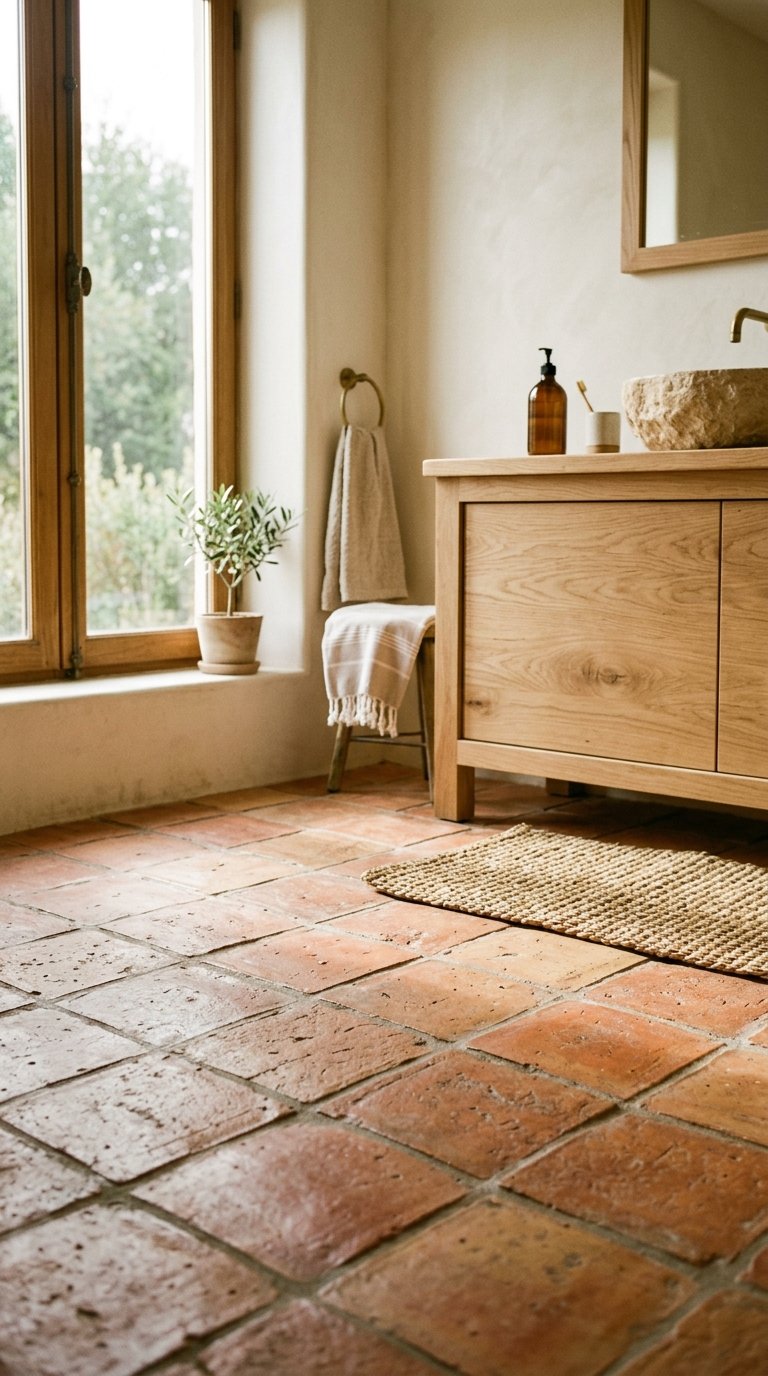
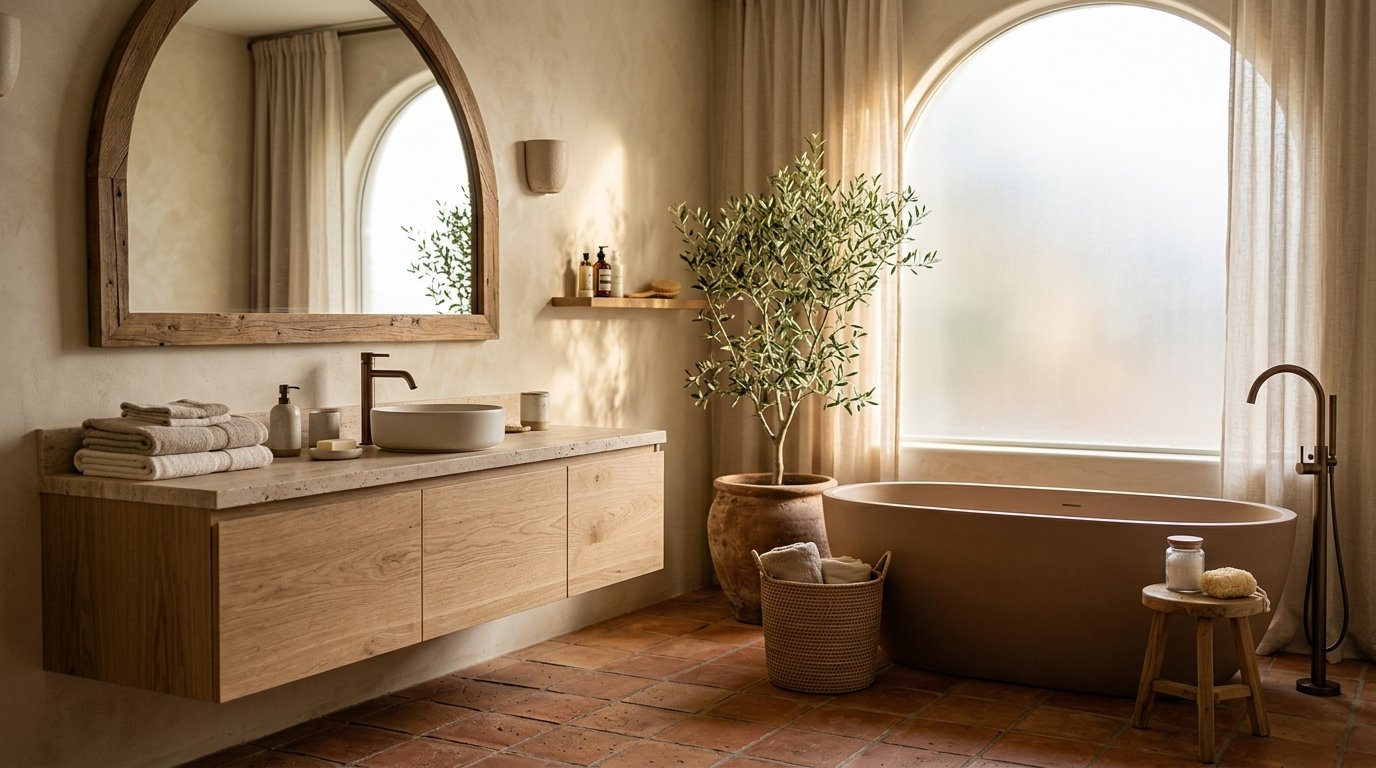
Terracotta tile is one of the most distinctively earthy materials available for a bathroom floor. The warm orange-red clay tone grounds the entire room and connects it to a centuries-old tradition of natural building material.
Terracotta tile considerations:
- Sealing: Terracotta is porous and requires sealing before use and periodic resealing to prevent staining and moisture damage
- Finish options: Matte unsealed terracotta has the most authentic look; sealed terracotta has a slight sheen
- Shape options: Classic square, hexagonal, and elongated formats all work in bathroom settings
- Grout color: Warm beige or cream grout maintains the earthy palette; white grout creates a contrast that works but lightens the effect
Terracotta pairs exceptionally well with white walls and natural wood vanities. The combination creates a warm Mediterranean or Southwestern character without requiring any other significant investment.
2. Install Travertine or Limestone Tile
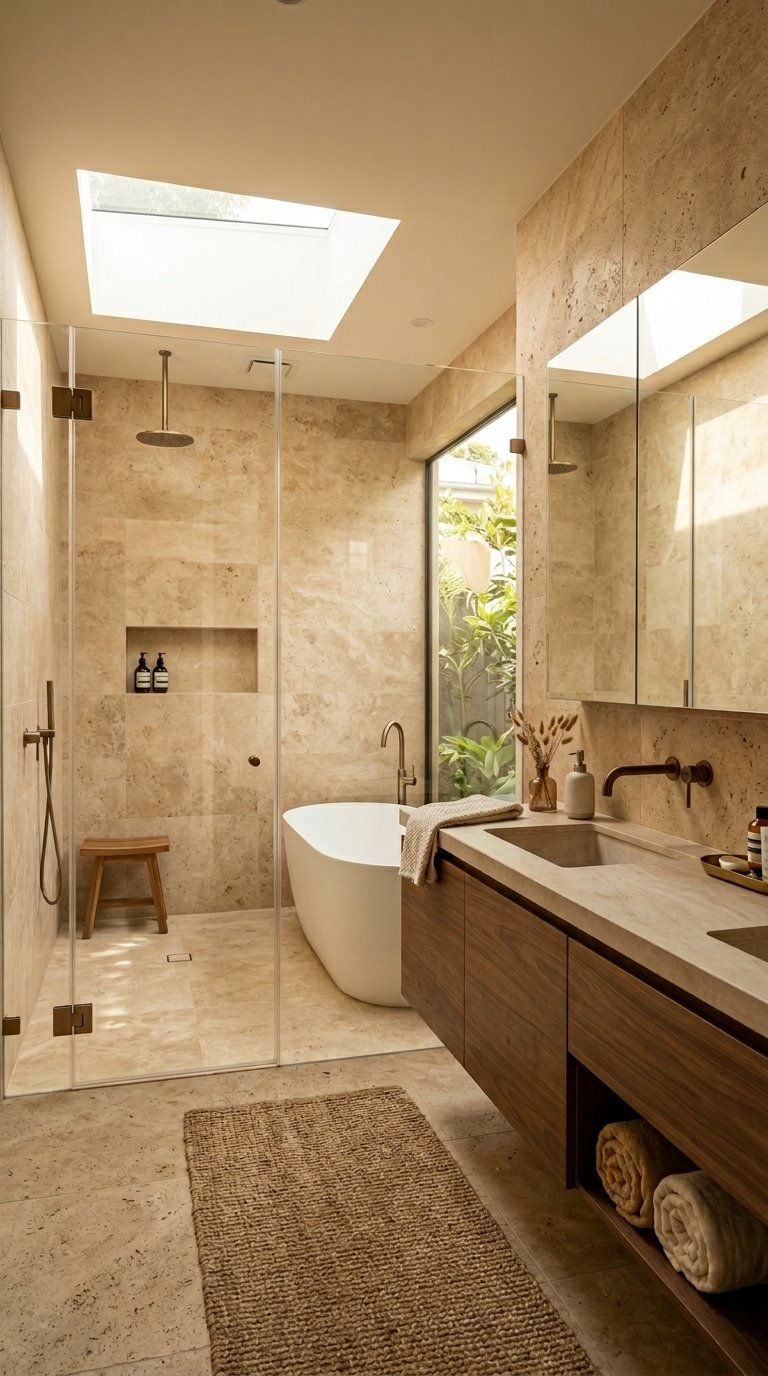
Travertine and limestone are sedimentary stones formed over thousands of years. They bring genuine geological character to a bathroom: natural pitting, tonal variation, and warm beige to honey-brown coloring that no manufactured tile replicates.
Travertine versus limestone compared:
- Travertine: Has characteristic holes and channels from gas bubbles during formation; these can be filled or left open for a more rustic look; warmer tones
- Limestone: Smoother surface, fewer dramatic variations, slightly cooler in tone, very refined look
- Both require sealing: Neither handles moisture without proper sealing treatment
- Both improve with age: The natural surface develops character over years of use
Use travertine on the floor and walls for a cohesive, fully wrapped stone bathroom. The immersive effect of natural stone on multiple surfaces creates an atmosphere that tile on one surface alone never achieves.
3. Choose a Warm Clay or Sand Color Palette
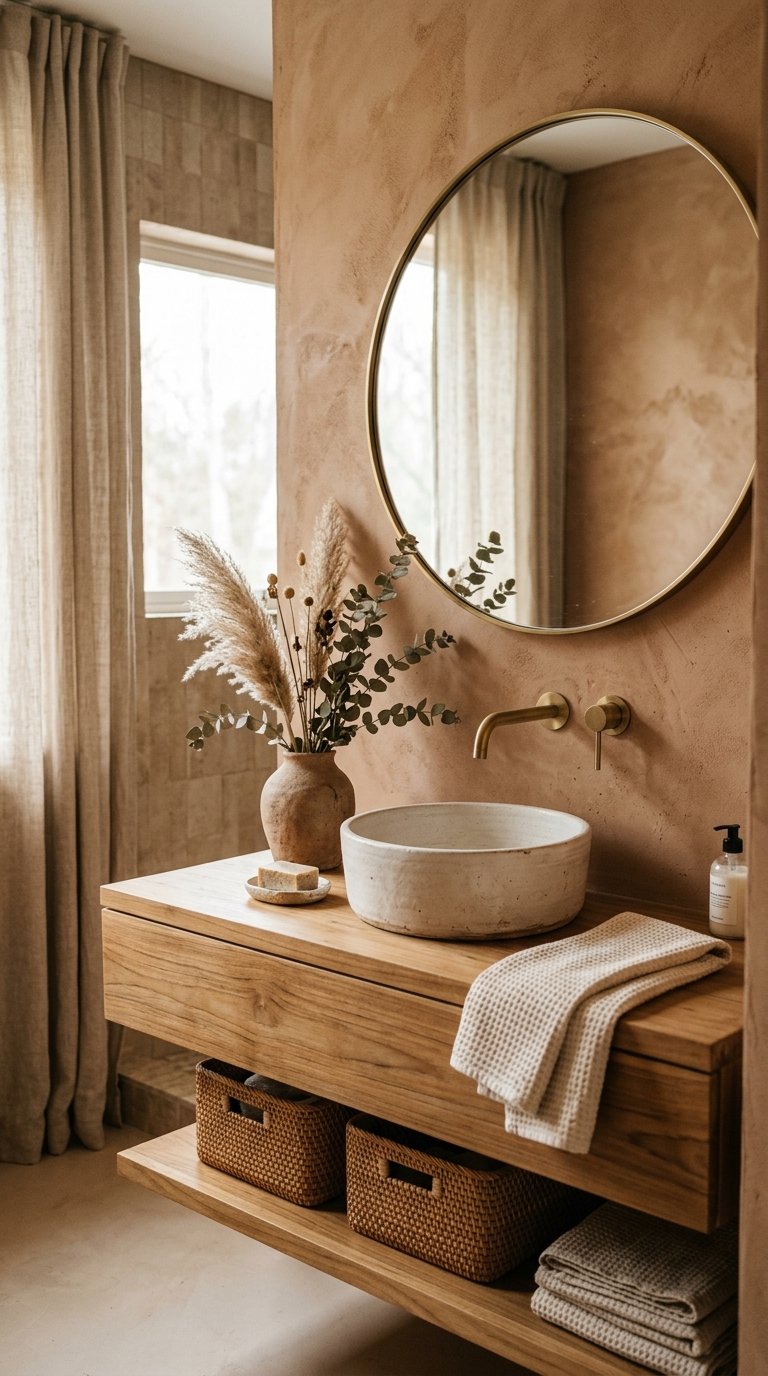
The color palette you choose sets the earthy character of the bathroom before any material is selected. Warm clay, sand, terracotta, and ochre tones create the foundation of an earthy bathroom even in a space with standard white fixtures and basic tile.
Earthy color palette options:
- Warm sand: The most versatile base, works with almost every earthy material
- Terracotta orange: Bold and warm, pairs with cream and white fixtures
- Clay brown: Rich and grounding, works as an accent or full wall color
- Warm ochre: Yellow-orange earth tone, works in smaller doses as an accent
- Desert rose: Dusty pink with brown undertones, soft and warm
Paint one wall in a deep clay tone if you’re not ready to commit to a full room color change. The single accent wall establishes the earthy palette while the other walls stay neutral.
4. Bring in a Wood Vanity
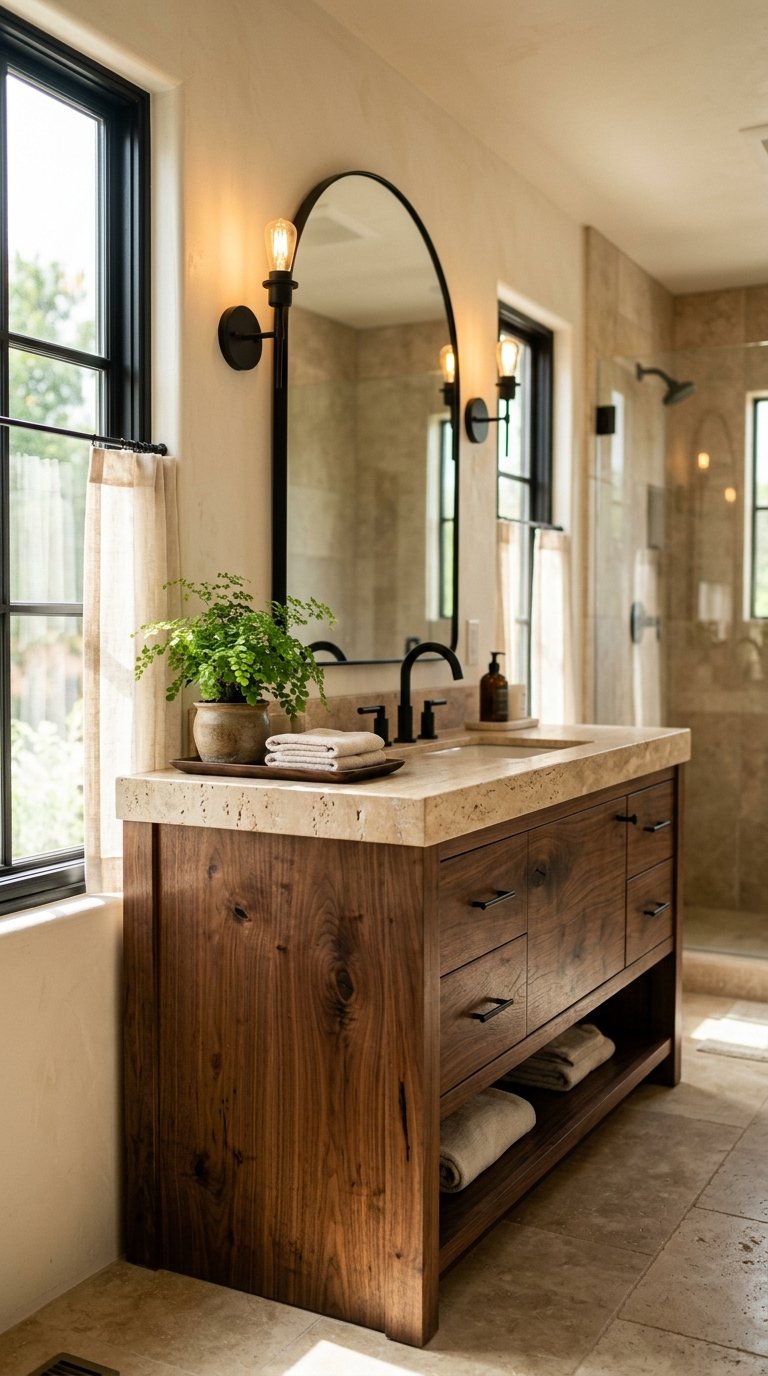
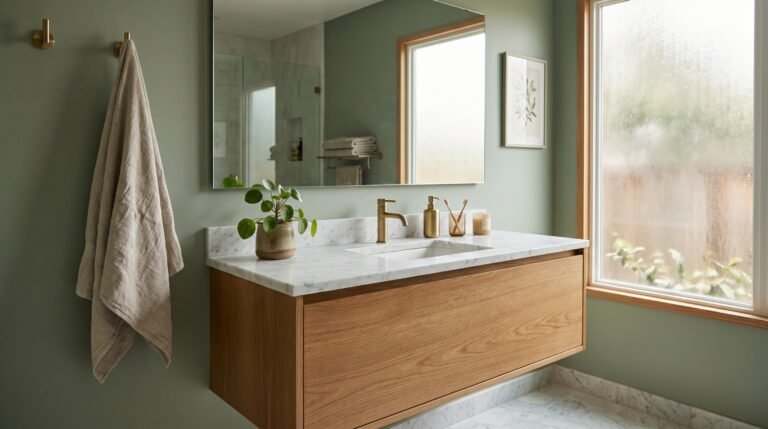
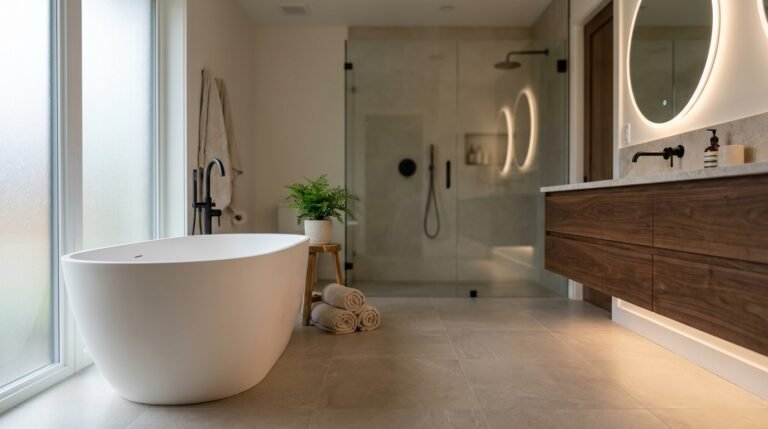
A wood vanity is the fastest single material swap that creates an earthy bathroom character. White lacquered or grey laminate vanities read as modern and clean. A wood vanity in walnut, oak, teak, or reclaimed timber reads as natural, warm, and grounded.
Wood vanity options by species:
- Walnut: Rich chocolate brown, fine grain, premium appearance, requires sealing in bathroom environments
- White oak: Warm tan with distinctive grain pattern, very current, takes finish well
- Teak: Natural oil resistance makes it the most moisture-tolerant option, warm honey tone
- Reclaimed wood: Unique character marks, nail holes, weathered tones, genuinely individual
Pair a wood vanity with a stone countertop for a material combination that reads as completely natural and cohesive. Wood and stone belong together in the same way that wood and marble feel slightly more curated and intentional.
5. Use a Concrete Sink or Countertop
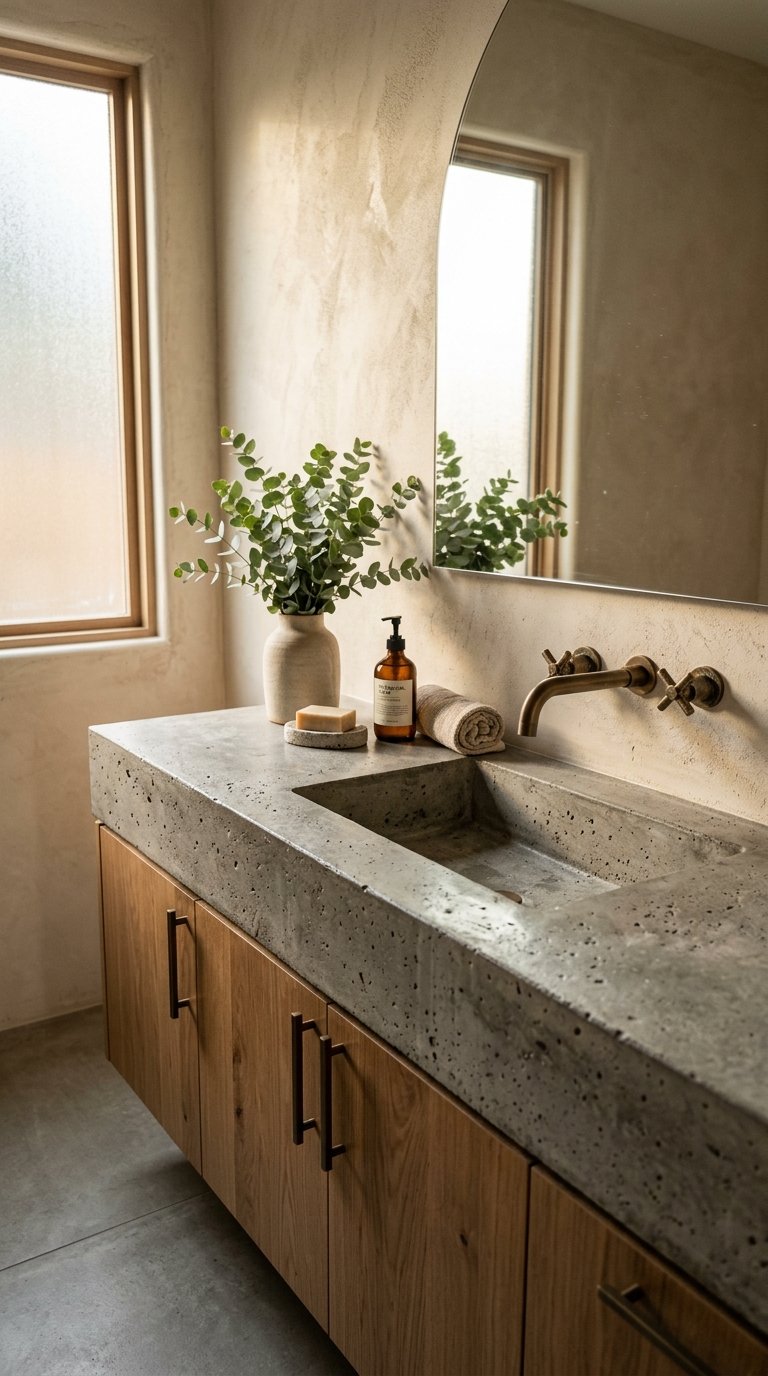
Concrete brings industrial earthiness to a bathroom: a material made from natural aggregate and mineral binders that has a raw, tactile quality no ceramic or stone fully replicate.
Concrete bathroom applications:
- Cast concrete countertop: Custom formed to your vanity dimensions, poured with integrated sink if desired
- Concrete vessel sink: Sits on top of the counter, available in multiple shapes and finishes
- Concrete wall panel: Used as an accent surface behind the vanity or in the shower
- Micro-cement overlay: Applied over existing tile or walls, creates a concrete look without replacement
Concrete requires proper sealing to handle bathroom moisture. Unsealed concrete stains within weeks in a bathroom environment. A quality penetrating sealer applied before use and refreshed annually keeps it looking exactly as intended.
6. Install a River Rock Shower Floor
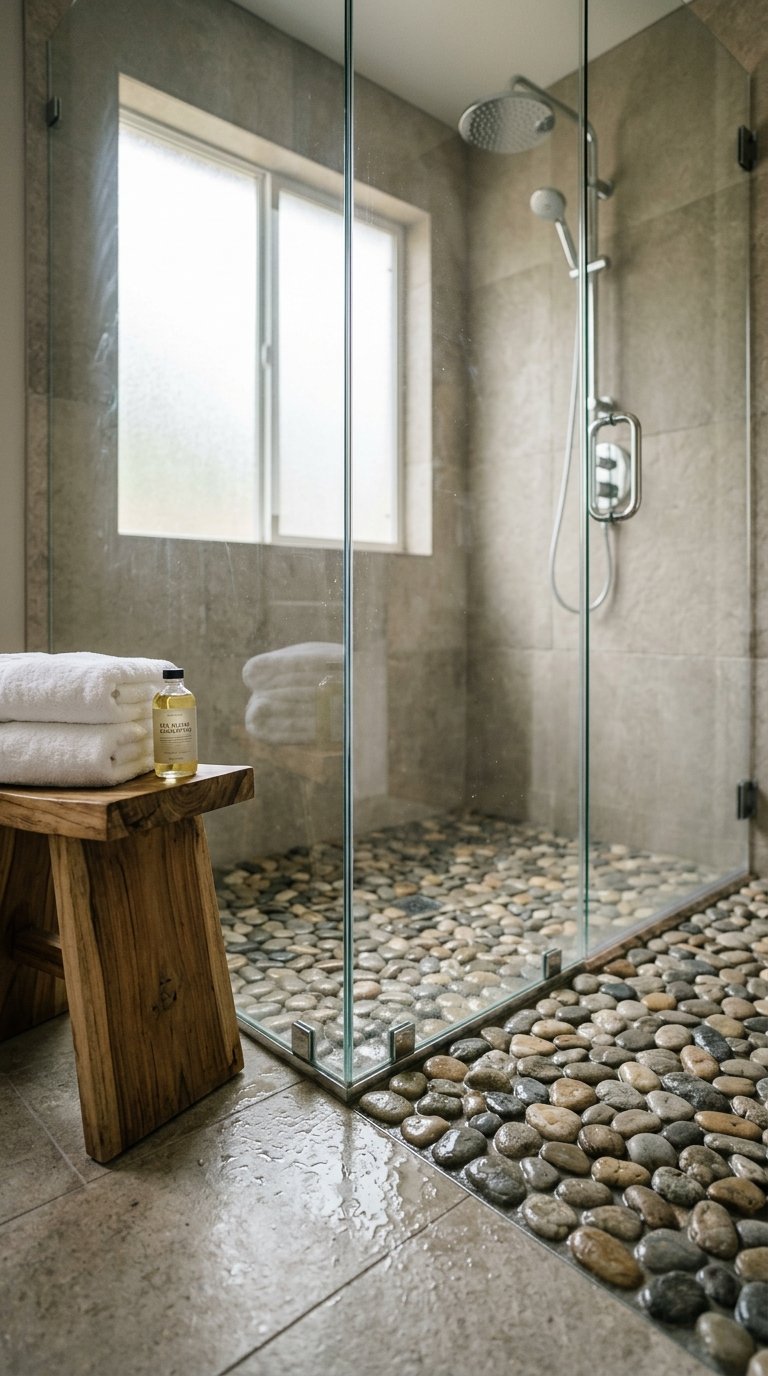
A river rock shower floor uses smooth rounded stones grouted together to create a textural floor surface that feels like standing in a natural stream bed. The sensation underfoot adds a sensory dimension to showering that tile never delivers.
River rock shower floor details:
- Pre-mounted mesh sheets: Available at tile suppliers, simplify installation significantly
- Stone size: Smaller stones (1 to 2 inches) are more comfortable underfoot than larger ones
- Sealing: River rock requires sealing after installation and periodic resealing
- Grout choice: Unsanded grout works for the tight spaces between river stones
A river rock floor needs more attention during cleaning than smooth tile because the grout surface area is larger. Budget for periodic deep cleaning or a suitable stone-safe grout cleaner to keep the floor looking its best. FYI, a squeegee after every shower dramatically reduces buildup between cleanings.
7. Add a Woven Rattan or Seagrass Bath Mat
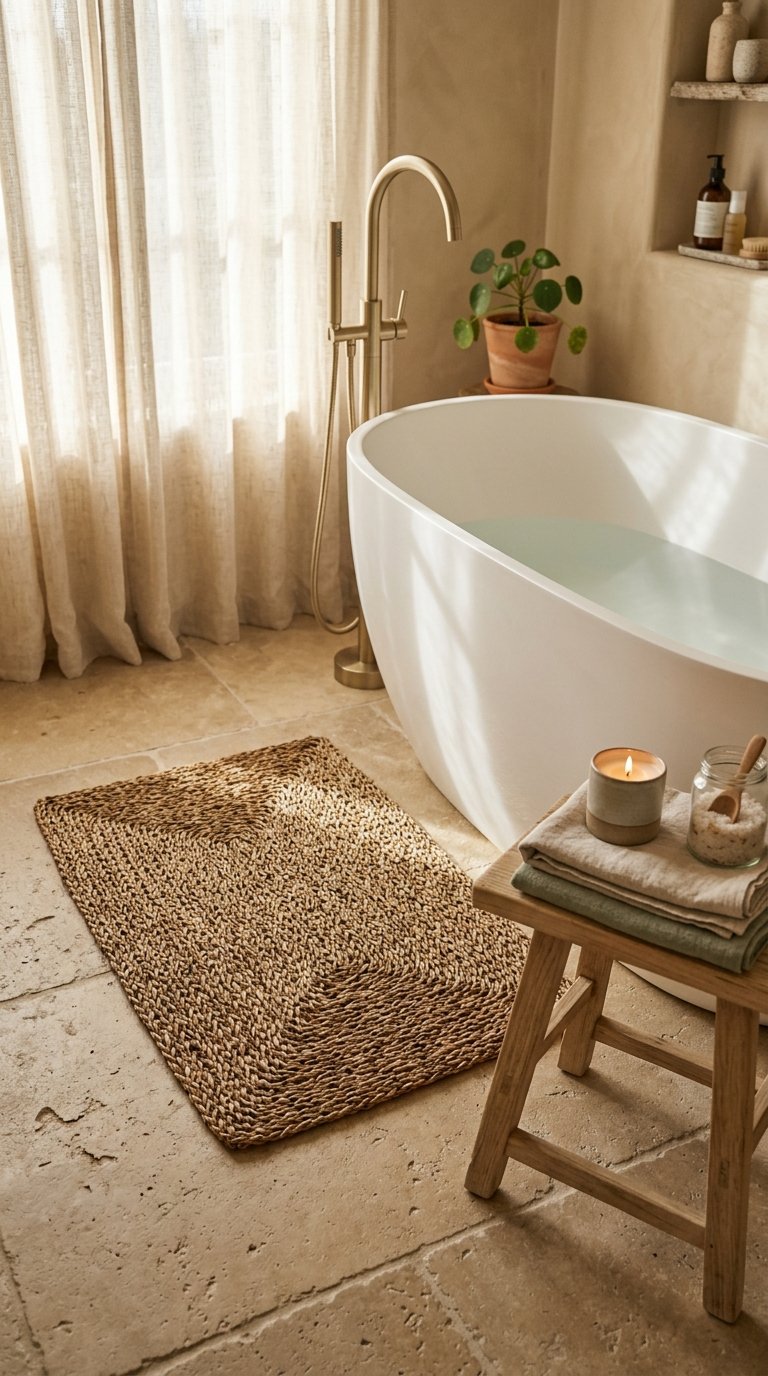
A woven rattan or seagrass bath mat replaces the standard cotton bath mat with a natural fiber alternative that adds texture and organic warmth to the bathroom floor. The material connects to the natural world in a way that cotton simply doesn’t.
Natural fiber bath mat options:
- Seagrass: Firm underfoot, very durable, handles light moisture well, neutral green-brown tone
- Jute: Softer than seagrass, warmer brown tone, slightly less moisture-tolerant
- Rattan: Most structured of the natural options, adds a distinct visual texture
- Teak wood slat mat: Not fiber but equally natural, spa-like, handles moisture better than any woven option
Natural fiber mats need to dry completely between uses. In a bathroom with good ventilation, this isn’t a problem. In a poorly ventilated bathroom, moisture retention leads to mildew growth in natural fiber mats more quickly than in synthetic alternatives.
8. Use Exposed Stone or Brick as an Accent Wall
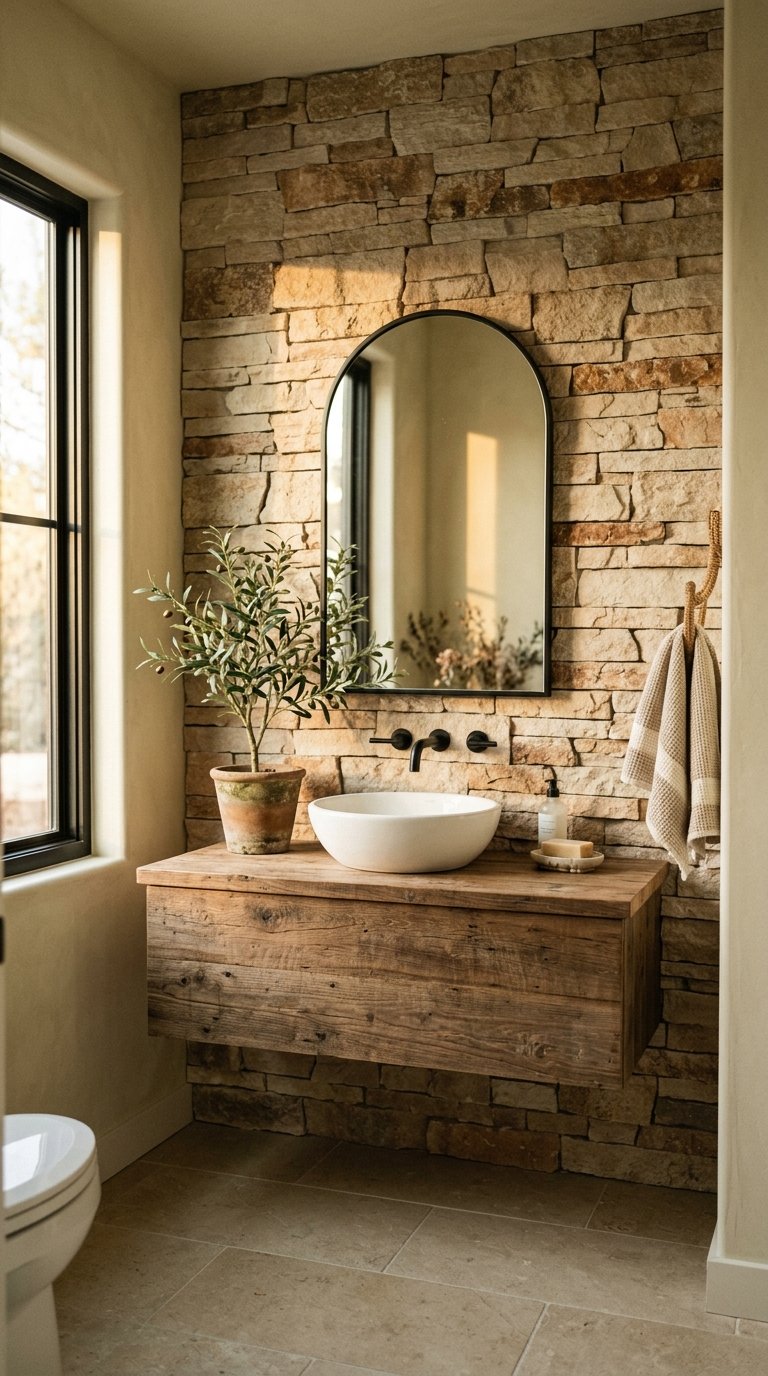
An exposed stone or brick accent wall in the bathroom adds a raw, geological texture that brings the outdoor world inside in a direct and undeniable way. Even a single wall of natural stone behind the vanity or beside the bath changes the room’s character completely.
Exposed stone options for bathroom use:
- Stacked ledger stone: Thin flat stones layered horizontally, very clean installation
- Field stone: Irregular shapes, more rustic and natural, requires skilled installation
- Exposed brick: Warm and industrial, requires sealing to handle moisture
- Manufactured stone veneer: Lighter and easier to install than real stone, convincing appearance
Seal any exposed stone or brick thoroughly before it encounters bathroom moisture. Unsealed porous surfaces in bathroom environments develop mold and mineral staining quickly.
9. Choose Matte Black Hardware in Bronze or Gunmetal
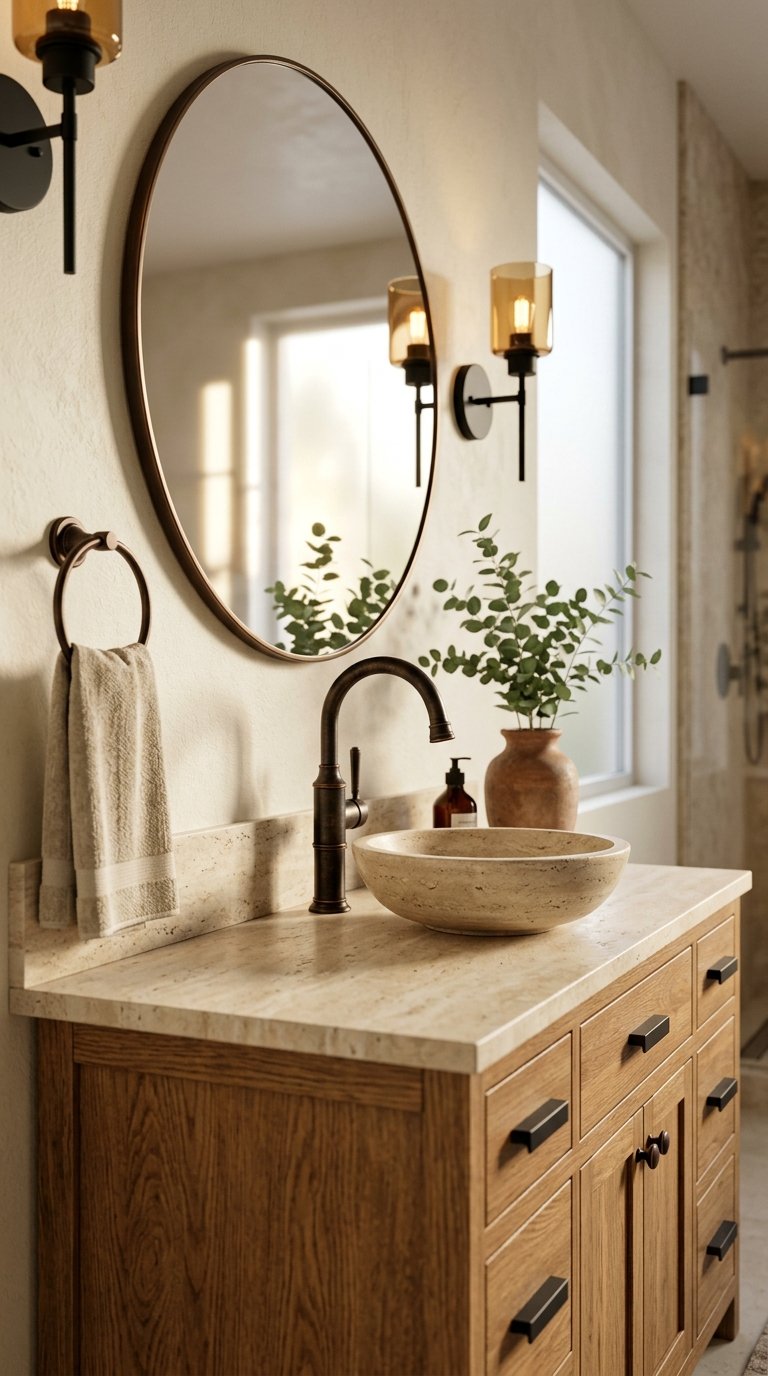
Standard chrome hardware reads as cold and clinical. Matte black, oil-rubbed bronze, and gunmetal hardware all have an earthier, more mineral quality that connects to natural pigments rather than polished industrial metal.
Earthy hardware finishes compared:
- Oil-rubbed bronze: Warm, dark brown with copper undertones, very traditional and earthy
- Matte black: Modern, works in any earthy palette, shows water spots less than chrome
- Gunmetal: Dark grey with blue undertones, industrial and earthy simultaneously
- Antique brass: Yellow-gold with age patina, warm and distinctive
Replace faucets, towel bars, toilet paper holders, and cabinet pulls all in the same finish for a cohesive result. Mixing hardware finishes in one bathroom reads as indecision rather than eclecticism in most cases.
10. Install a Clawfoot or Cast Iron Tub
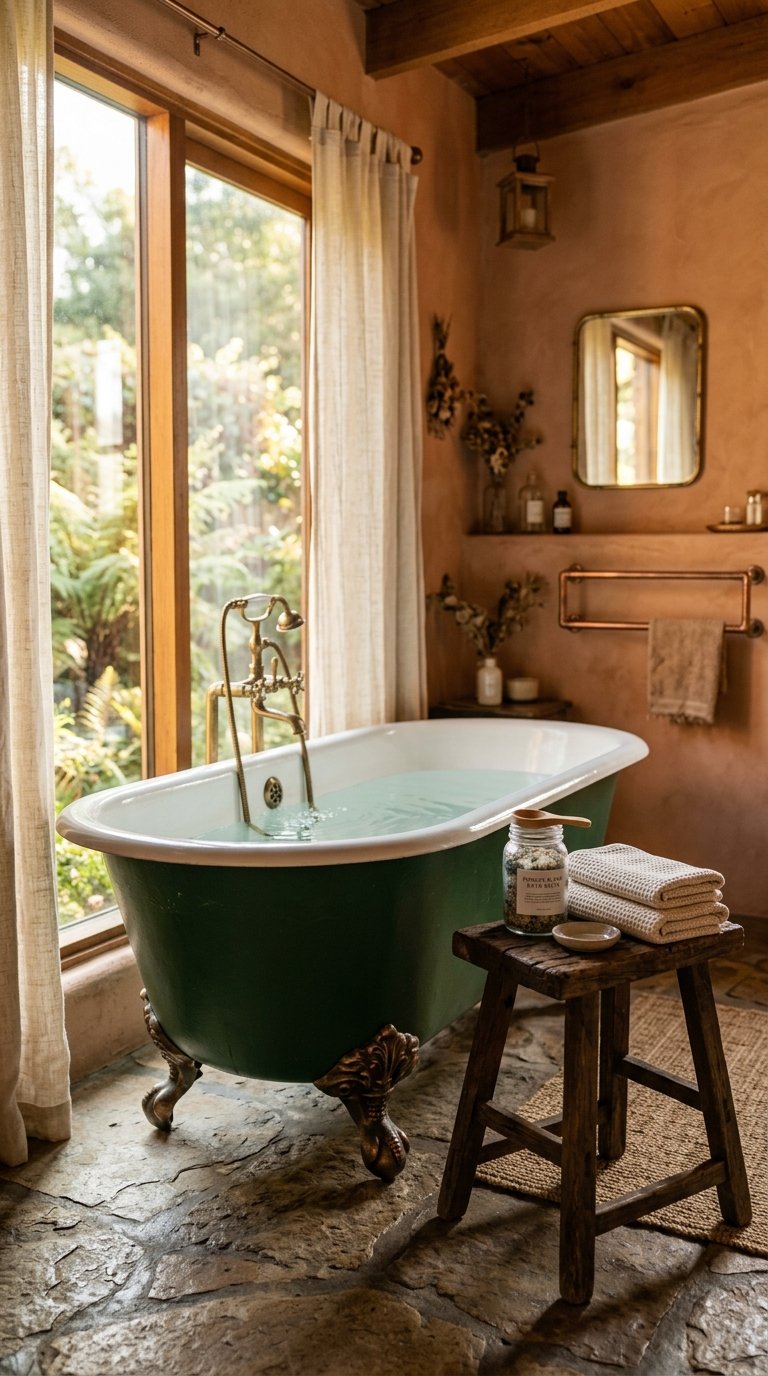
A cast iron clawfoot tub adds Victorian-era weight and gravitas to an earthy bathroom. The material itself is grounded and mineral in character. Paired with earth tones and natural materials, it creates a bathroom that feels genuinely timeless.
Cast iron clawfoot tub considerations:
- Weight: Cast iron tubs weigh 200 to 400 pounds. Confirm your floor structure handles the load before purchasing.
- Heat retention: Cast iron retains bath water temperature better than any other tub material
- Finish: Exterior paint options include standard white, deep black, terracotta, and forest green for an earthy statement
- Feet finish: Match the feet finish to your hardware for a cohesive look
A forest green or deep black exterior clawfoot tub in a room with warm terracotta walls and wood accents creates one of the strongest earthy bathroom statements available at any budget level.
11. Use Wabi-Sabi Inspired Ceramics
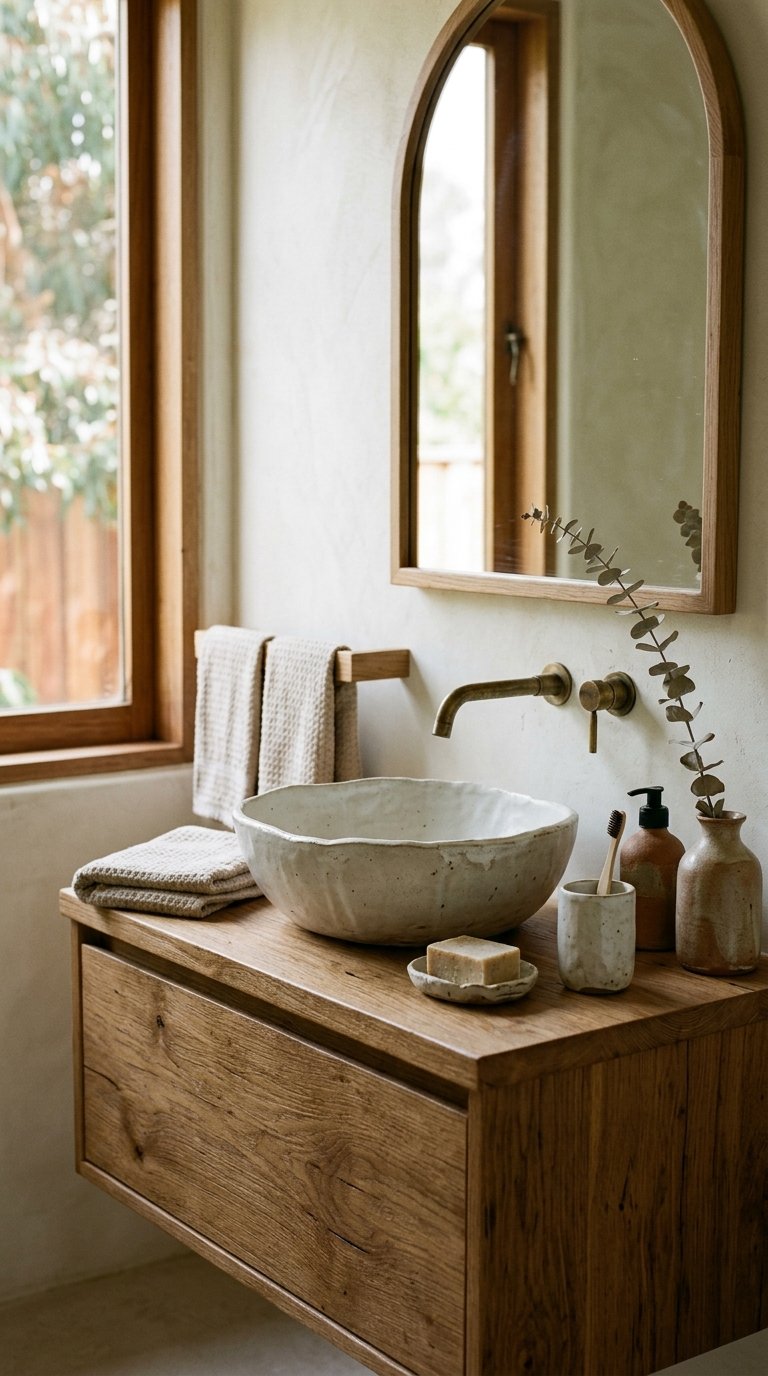
Wabi-sabi is the Japanese philosophy of finding beauty in imperfection and impermanence. In a bathroom context, it translates to handmade ceramics with visible irregularities: uneven glazing, slight asymmetry, organic form.
Wabi-sabi ceramic applications in an earthy bathroom:
- Handmade ceramic soap dish: Small and affordable, immediate visual impact
- Ceramic vessel sink: Handmade sinks with organic form and artisan glaze finishes
- Ceramic toothbrush holder and dispenser set: Matched artisan ceramics replace standard plastic
- Ceramic tile: Handmade tiles with slight variation between pieces add life to uniform surfaces
The deliberate imperfection of handmade ceramics adds humanity to a bathroom that manufactured products can’t replicate. Two seemingly identical handmade ceramic pieces always differ slightly, which makes the room feel genuinely individual.
12. Add Live Plants Throughout
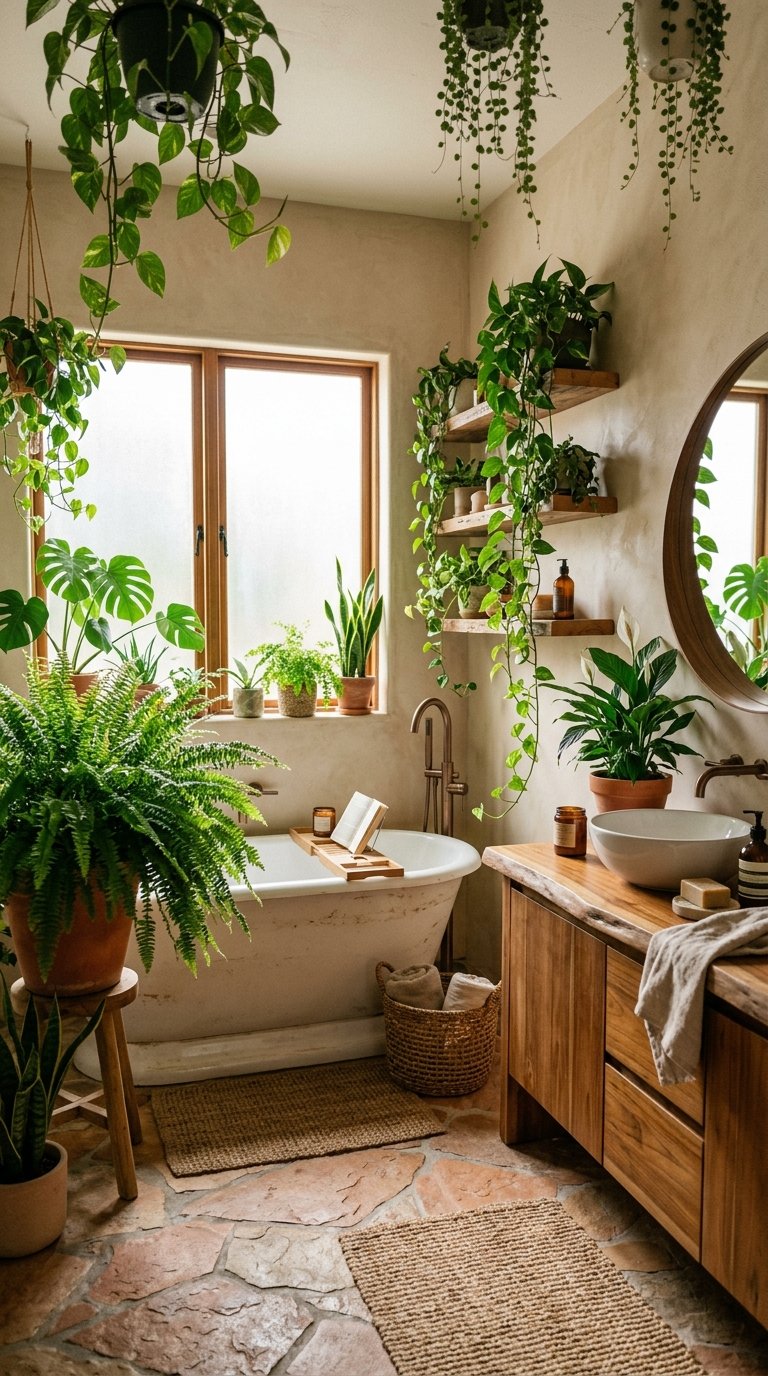
Plants in an earthy bathroom reinforce the connection to the natural world that every other material choice is working toward. The living presence of plants does something no stone or wood achieves: it brings genuine biological life into the space.
Best plants for an earthy bathroom environment:
- Boston fern: Lush and green, loves humidity, looks genuinely forest-like
- Peace lily: White flowers, handles low light, loves bathroom humidity
- Snake plant: Architectural form, tolerates low light and neglect equally well
- Monstera deliciosa: Large dramatic leaves, needs bright indirect light
- Hanging pothos: Trails from high shelves, tolerates low light, grows quickly
Use terracotta pots for bathroom plants to reinforce the earthy palette. A black-leafed plant in a terracotta pot on a wood shelf creates a complete vignette that photographs beautifully and costs very little to assemble.
13. Install Zellige or Handmade Moroccan Tile
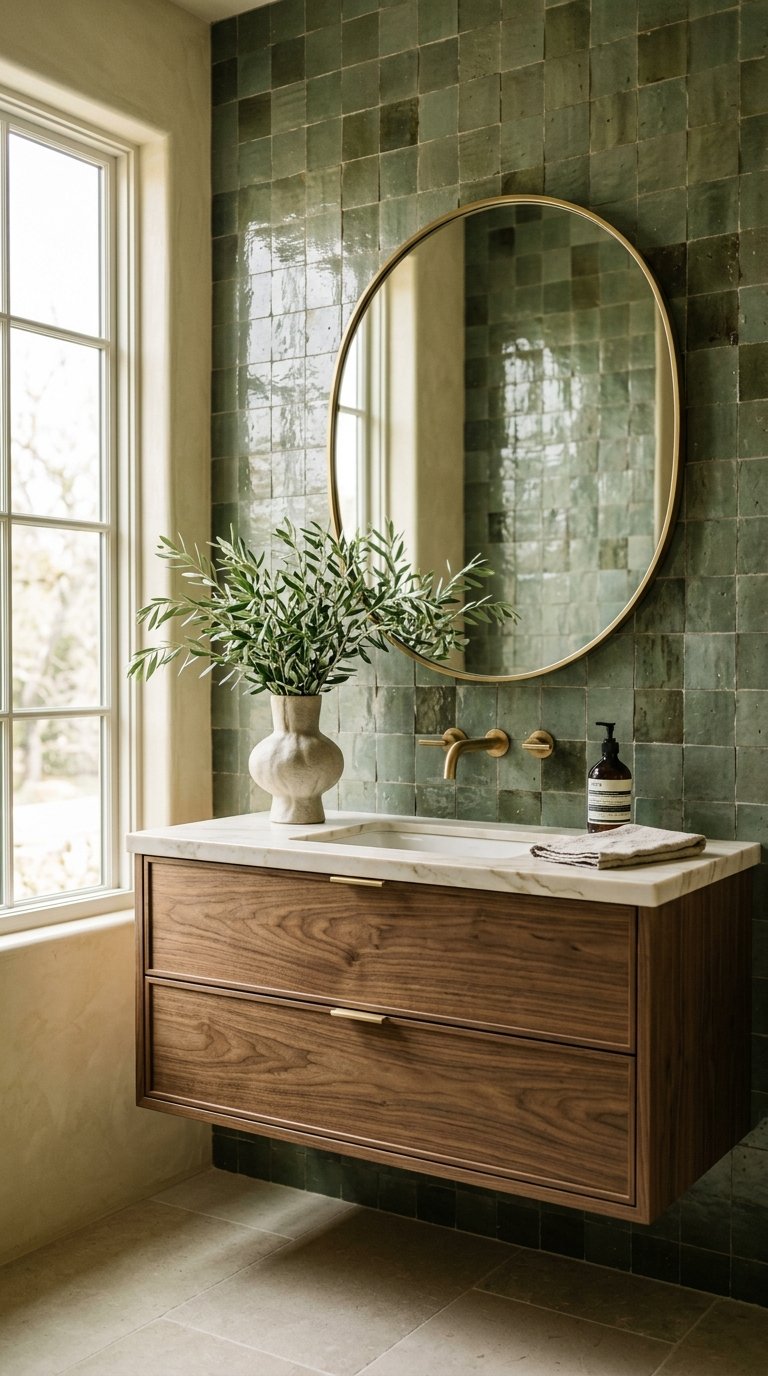
Zellige tile is a North African ceramic tradition producing handmade tiles with irregular surfaces, varied glaze depth, and slight color variation between pieces. The effect is deeply earthy, warm, and unmistakably artisan in character.
Zellige tile characteristics:
- Irregular surface: Each tile is hand-cut and hand-glazed with slight variations
- Color range: Available in terracotta, sage, olive, ochre, cream, and deep teal for earthy bathrooms
- Installation: Requires a skilled tile setter; the irregular surface needs adjustment during installation
- Cost: $15 to $40 per square foot, more expensive than standard ceramic but significantly more impactful
Use zellige on one surface only in a bathroom: the shower wall, the backsplash behind the vanity, or the floor. One surface of zellige in a room with quieter materials on the other surfaces is enough. Full room zellige requires exceptional confidence and a very specific aesthetic commitment.
14. Choose Linen Window Treatments
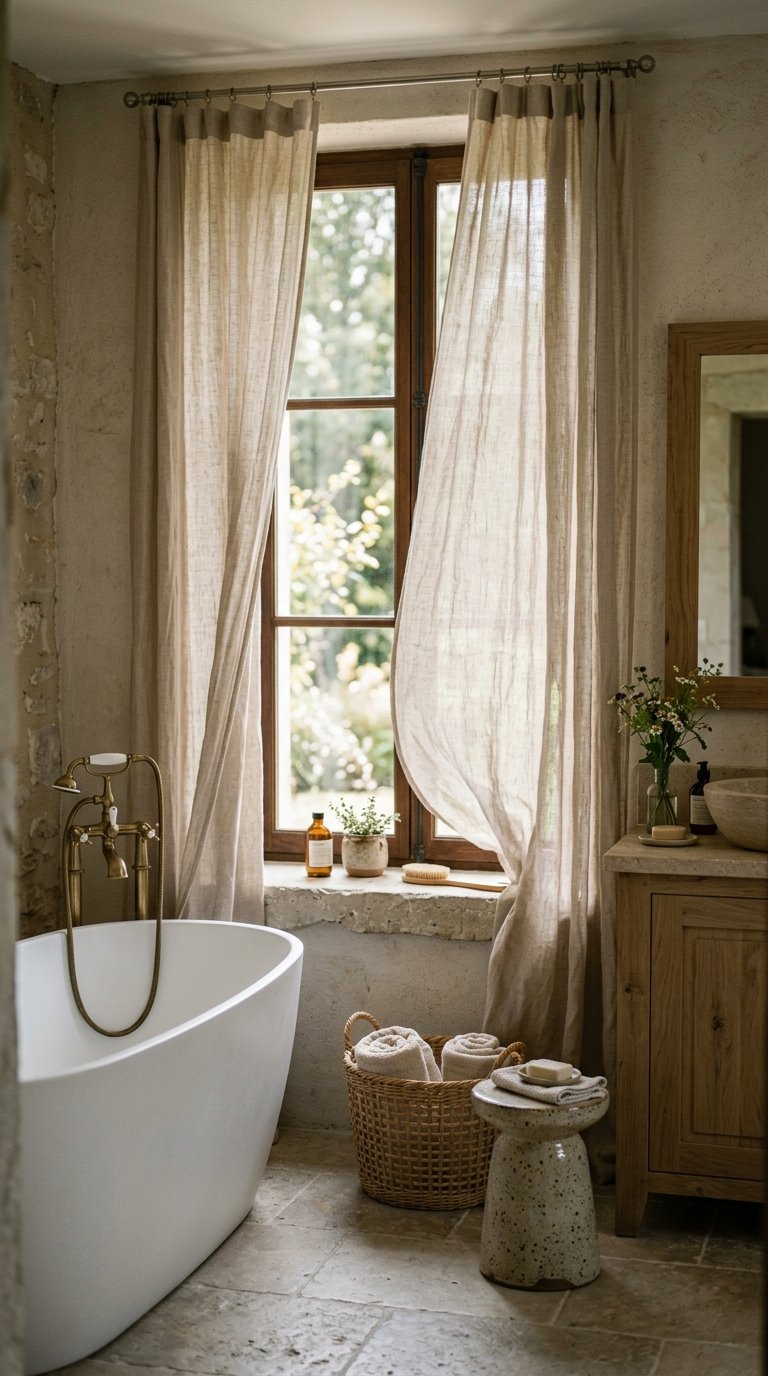
Linen curtains or roman shades in a bathroom window add the soft, natural textile element that hard surfaces alone can’t provide. Natural linen in undyed or warm-toned colors connects to the earthy material palette without competing with stone and wood.
Linen window treatment options for bathrooms:
- Linen roman shade: Structured and clean, filters light softly
- Loose linen panel: More casual, puddles slightly at the floor for a relaxed effect
- Woven bamboo blind: Natural alternative to linen, adds different texture, very organic
- Natural jute roman shade: Warmer and more rustic than linen
Use moisture-resistant linen or linen blend fabrics in bathroom applications. Natural linen in direct shower splash zones will eventually develop mildew. Position window treatments away from direct water contact.
15. Install a Wooden Ceiling
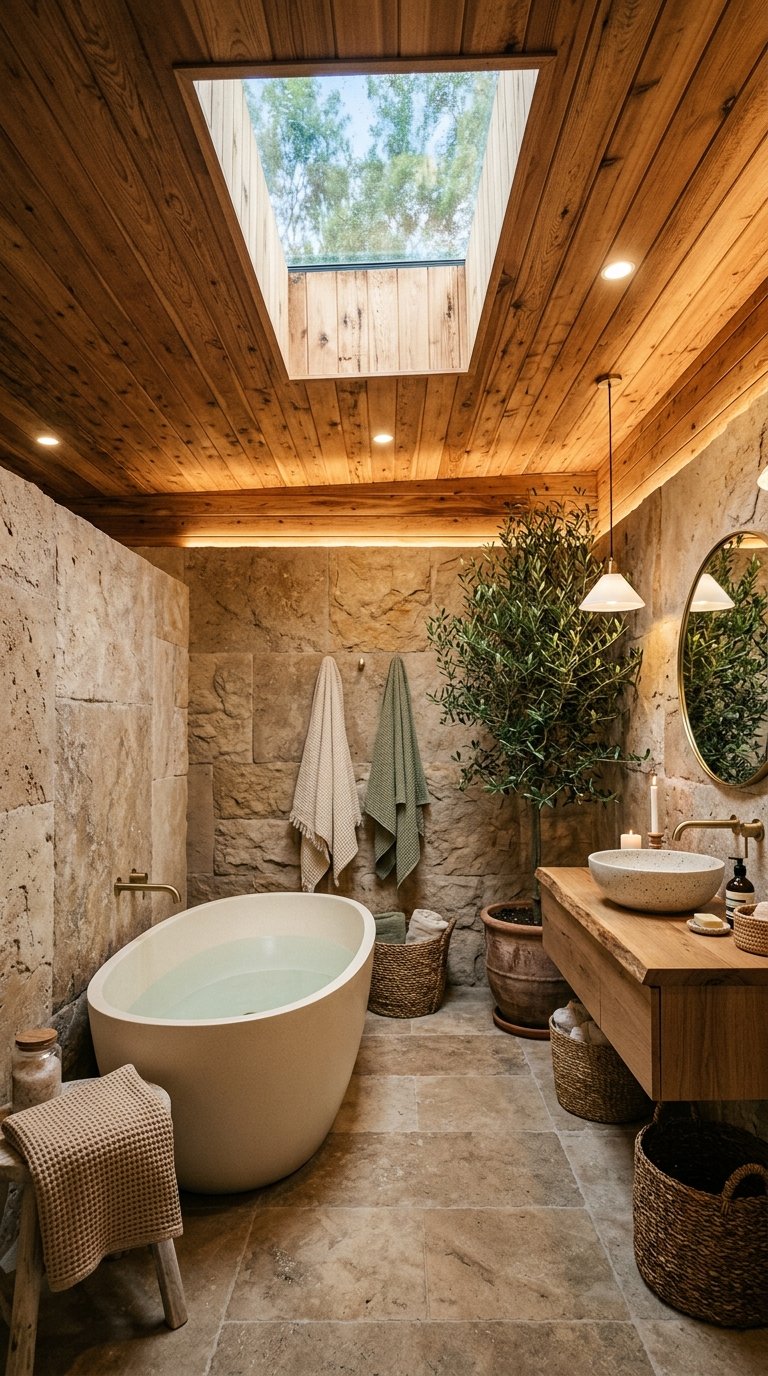
A wood-paneled ceiling in a bathroom adds warmth from above that completely changes the room’s proportion and character. Most bathrooms have plain white ceilings that feel institutional. A wood ceiling creates an enveloping quality that makes the room feel intentionally designed at every surface.
Wood ceiling options for bathrooms:
- Tongue and groove pine: Classic and affordable, works in rustic and coastal earthy styles
- Cedar planks: Natural oils resist moisture better than most woods, aromatic
- Reclaimed barn wood: Maximum character, requires proper sealing for bathroom use
- White-washed wood: Lighter option that adds wood texture without darkening the ceiling
Proper sealing is essential for any wood used on a bathroom ceiling where steam and moisture rise and accumulate. Unsealed wood on a bathroom ceiling warps and molds within months regardless of species.
16. Use Earthy Grout Colors
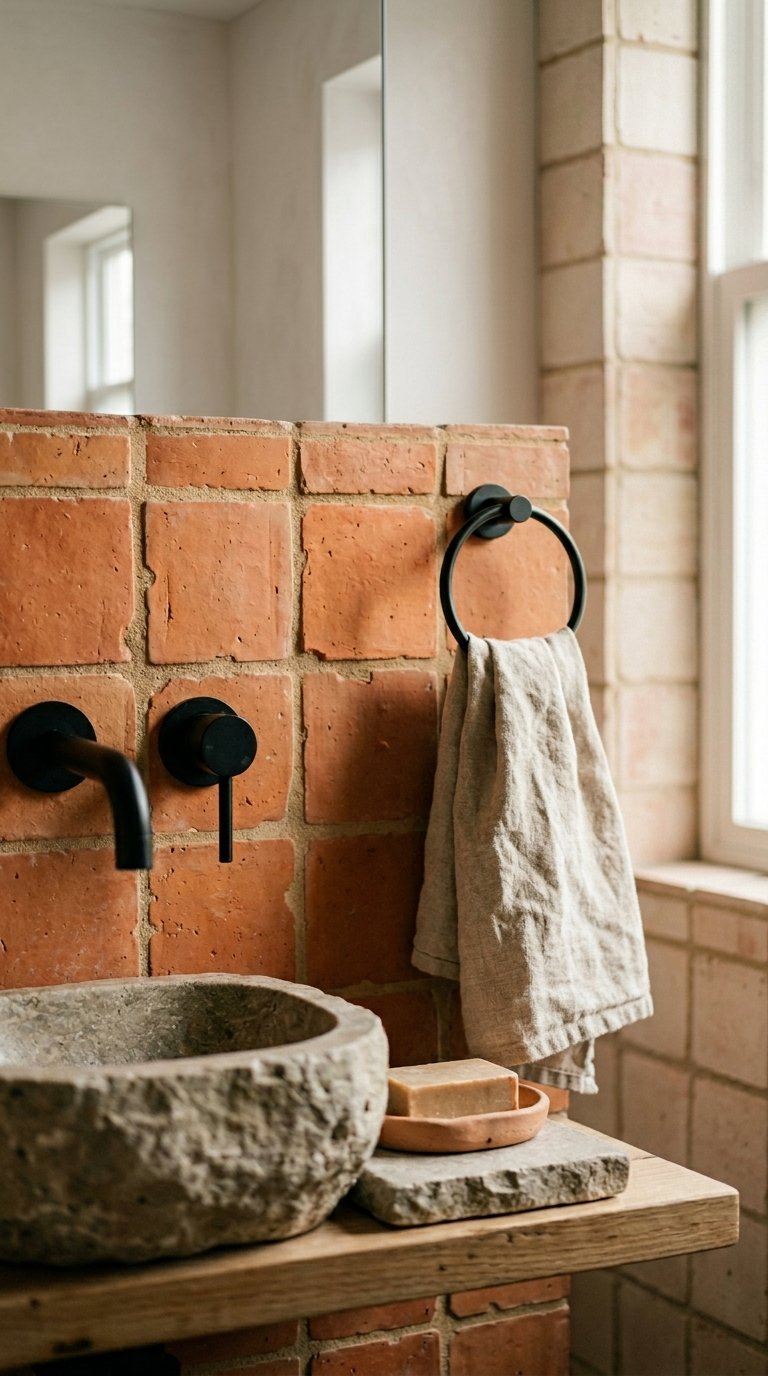
Most people choose white grout by default. White grout in an earthy bathroom fights every other material choice you make. Earthy grout in warm beige, sand, brown, or charcoal integrates with the tile and stone rather than creating a grid pattern that divides the surface visually.
Earthy grout options by tile type:
- Terracotta tile: Warm beige or cream grout maintains continuity
- Natural stone: Sand or buff grout complements stone tones naturally
- Dark stone or slate: Charcoal or dark brown grout reads as a design choice rather than a default
- Handmade ceramic: Match grout to the dominant tile tone for the most seamless result
Grout color changes the entire character of a tiled surface. The same terracotta tile with white grout looks very different than with warm beige grout. Request a physical grout sample from your tile supplier and hold it against the tile before committing.
17. Add a Reclaimed Wood Shelf
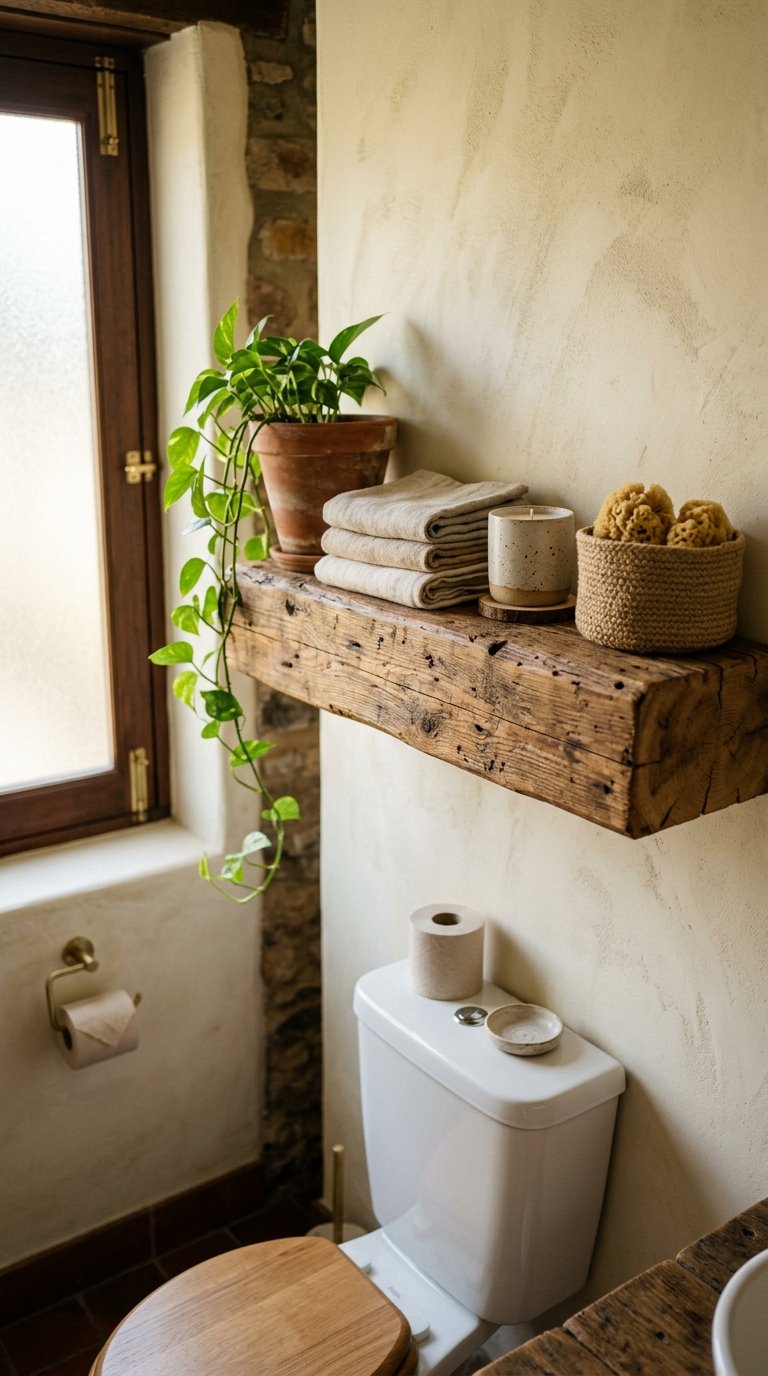
A reclaimed wood shelf in the bathroom adds storage while introducing genuinely aged natural material with character marks that new wood lacks. Nail holes, weathered surfaces, and varied tones all tell a story that manufactured shelving never does.
Reclaimed wood shelf applications:
- Above the toilet: Storage for towels, plants, and accessories in a zone that’s otherwise wasted
- Beside the vanity mirror: Display shelf for small objects and daily-use items
- In the shower niche: A reclaimed wood shelf in the shower niche adds warmth to a typically cold tile zone (requires proper sealing)
- Full-width vanity shelf: Replaces a standard vanity if plumbing is wall-mounted
Source reclaimed wood from local salvage yards rather than buying “reclaimed-look” manufactured alternatives. The price difference is often smaller than expected and the authenticity is incomparable.
18. Install an Arched Mirror
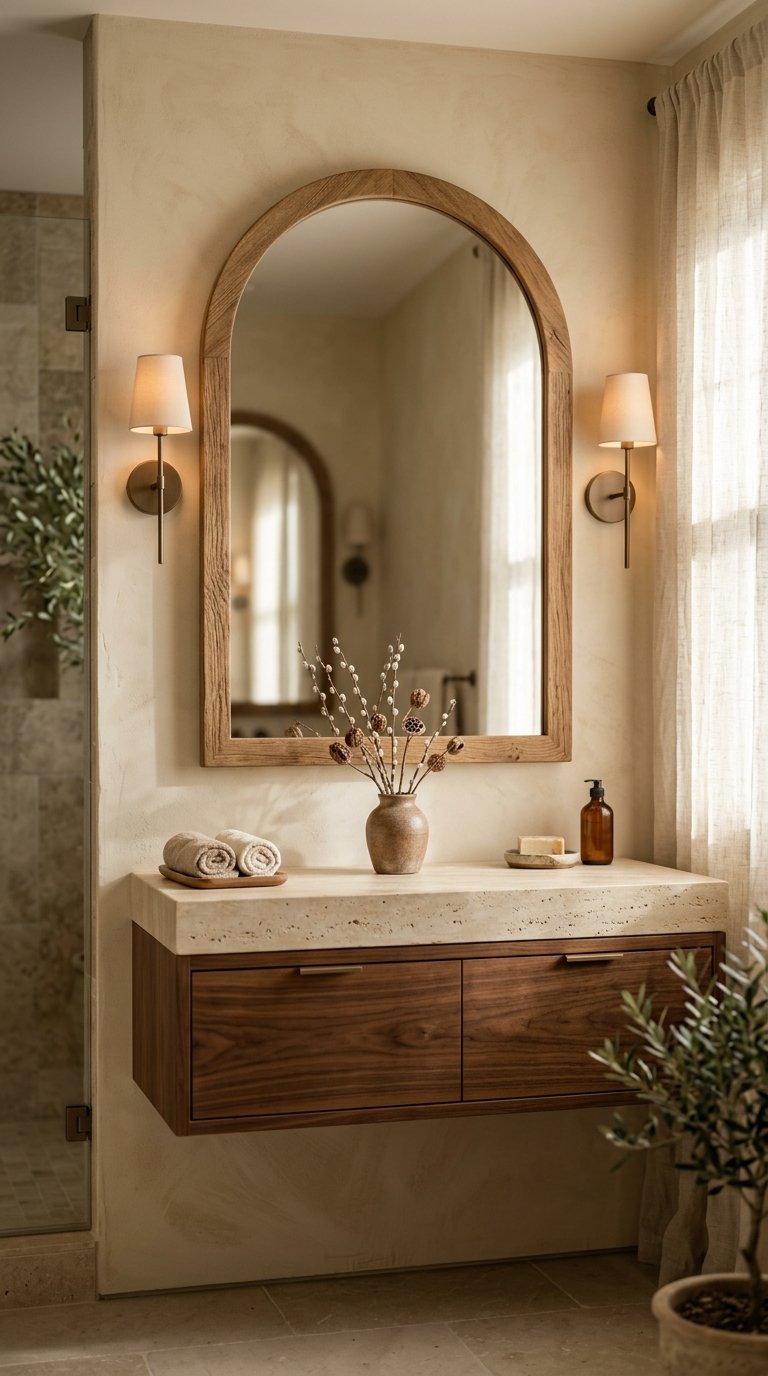
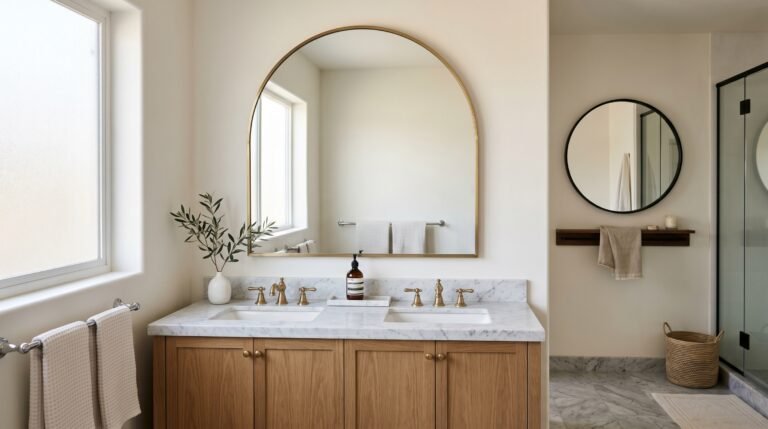
An arched mirror adds soft architectural geometry to an earthy bathroom. The curve references natural forms and organic shapes in a way that rectangular mirrors don’t. In an earthy bathroom full of linear tile and angular fixtures, an arched mirror provides visual relief.
Arched mirror frame options for earthy bathrooms:
- Rattan or woven frame: Maximum earthy character, very organic
- Reclaimed wood frame: Warm and textural, matches wood vanity or shelf
- Terracotta-toned ceramic frame: Reinforces the earthy color palette
- Unlacquered brass frame: Warm metal that develops patina over time, very earthy in aged form
- Unfinished oak frame: Light and natural, very Scandinavian-earthy in character
Size the mirror to approximately the width of the vanity below it for the most balanced proportion. A mirror significantly narrower than the vanity looks timid. A mirror wider than the vanity can work but requires the right wall space.
19. Use Warm Ambient Lighting
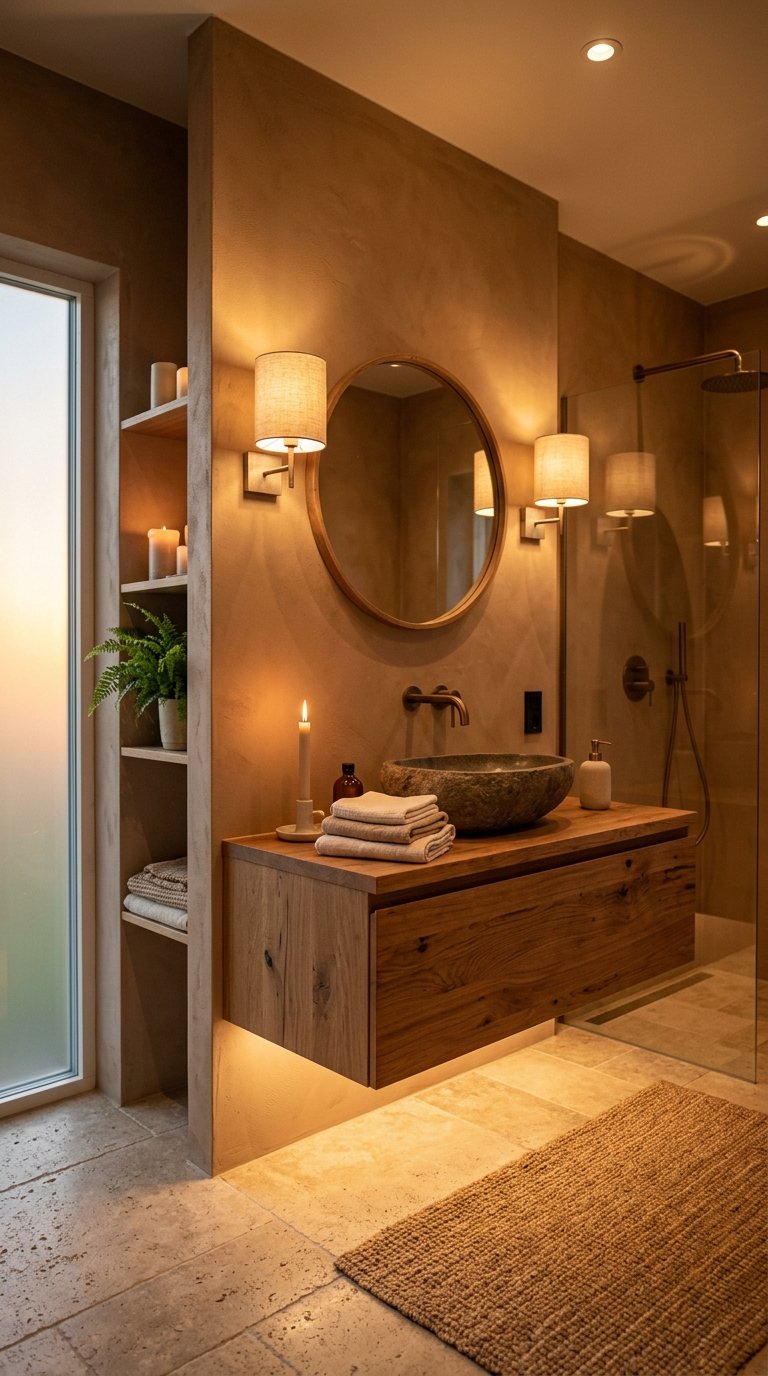
Lighting temperature affects the earthy palette more than most people account for. Cool white light (4000K and above) turns terracotta orange into a muddy brown, washes out warm wood tones, and makes natural stone look grey rather than warm. Warm white light (2700K) does the opposite.
Warm lighting setup for an earthy bathroom:
- All bulbs at 2700K: The single most important lighting decision in an earthy bathroom
- Sconces flanking the mirror: Most flattering light for a face, side-mounted rather than overhead
- Dimmer switches: Adjust from bright grooming light to low ambient for bathing
- Warm metal fixtures: Oil-rubbed bronze, aged brass, or matte black in warm tones
Replace every bulb in the bathroom with 2700K warm white before making any other change. The shift in how every earthy material looks in that light is immediate and dramatic. IMO this is the cheapest highest-impact change in any earthy bathroom.
20. Install a Vessel Sink in Stone or Clay
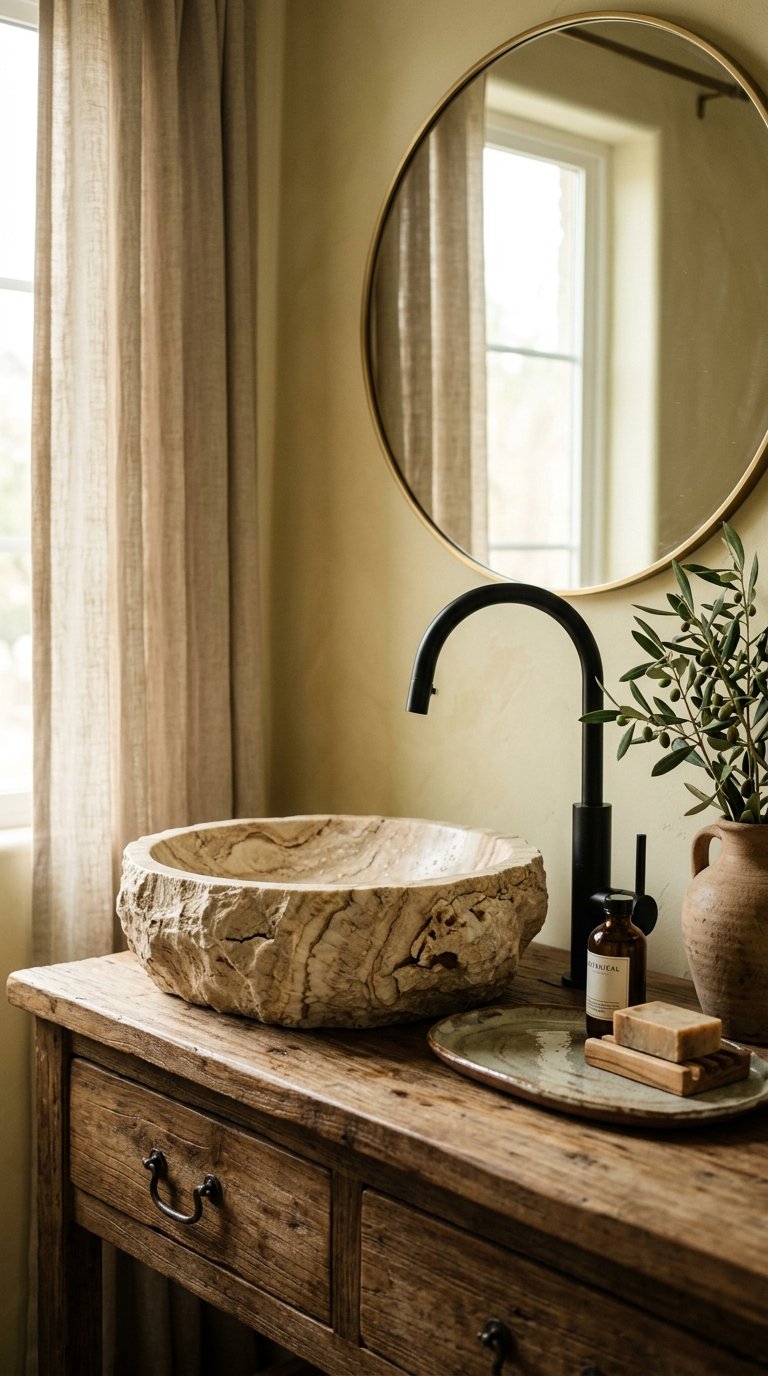
A vessel sink sits on top of the counter rather than inside it. In natural stone, hand-thrown ceramic, or concrete, a vessel sink becomes a sculptural object that carries significant visual weight in the bathroom.
Vessel sink materials for an earthy bathroom:
- Travertine stone: Carved from a single block, warm and geological
- Hand-thrown ceramic: Artisan quality, organic form, glaze variation adds life
- Concrete: Raw and industrial-earthy, very current aesthetic
- River stone: Single large smooth stone carved into a basin, most natural option
- Hammered copper: Develops rich patina over time, very warm and distinctive
A vessel sink requires a taller faucet than a standard undermount sink to clear the vessel’s height. Confirm faucet height compatibility before ordering both components separately.
21. Decorate With Woven Baskets for Storage
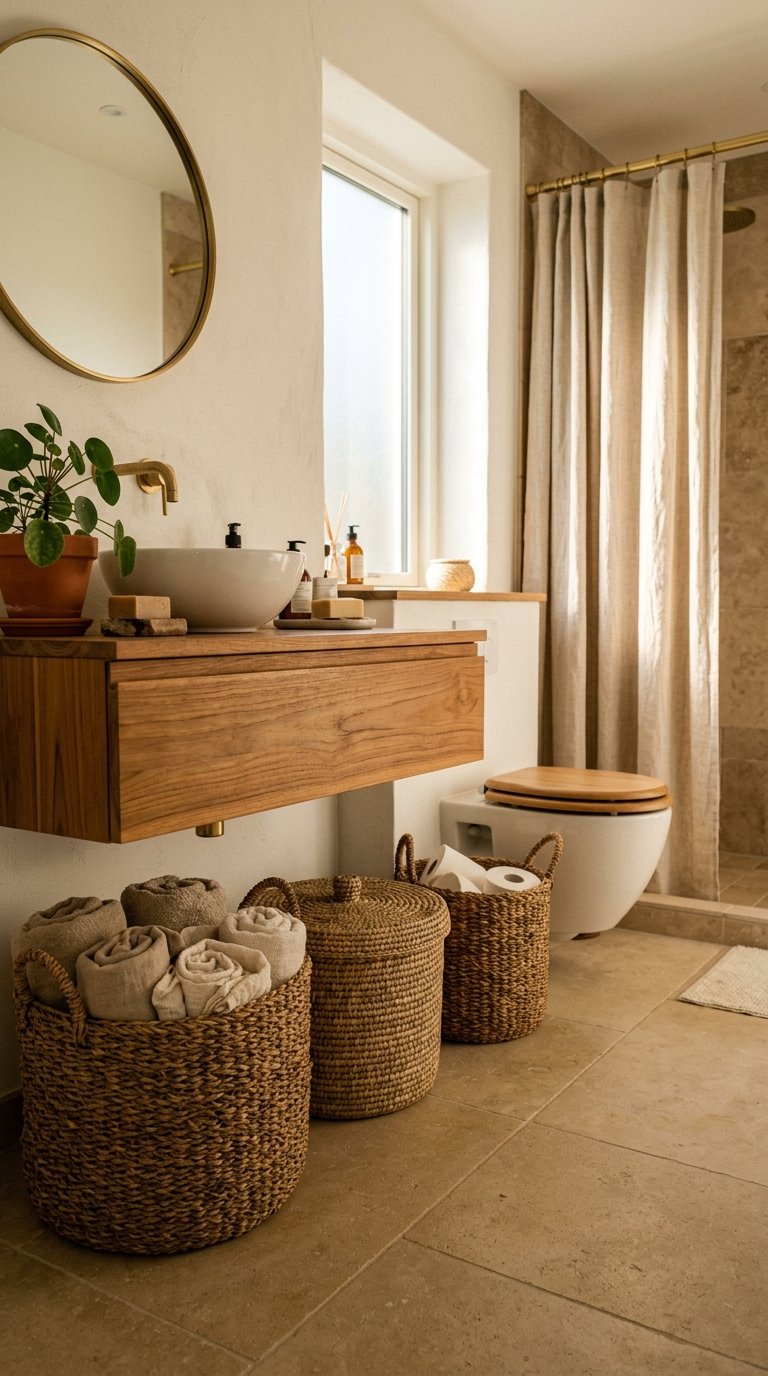
Woven baskets in a bathroom serve storage needs while reinforcing the natural material palette. A stack of woven seagrass baskets holds extra towels, toilet paper, and bathroom supplies in a format that looks considered rather than utilitarian.
Woven basket storage placement:
- Beside the toilet: Stack of three graduated sizes for toilet paper and supplies
- Under a floating vanity: Open storage that shows the basket texture directly
- On open shelving: Display and storage combined in an earthy material
- Hanging from wall hooks: Woven wall baskets for small item storage
Choose baskets in one material family (all seagrass, all rattan, all water hyacinth) for visual cohesion. Mixed basket materials in one bathroom look like a craft market display rather than a designed storage solution.
22. Use Unsanded or Limewash Paint
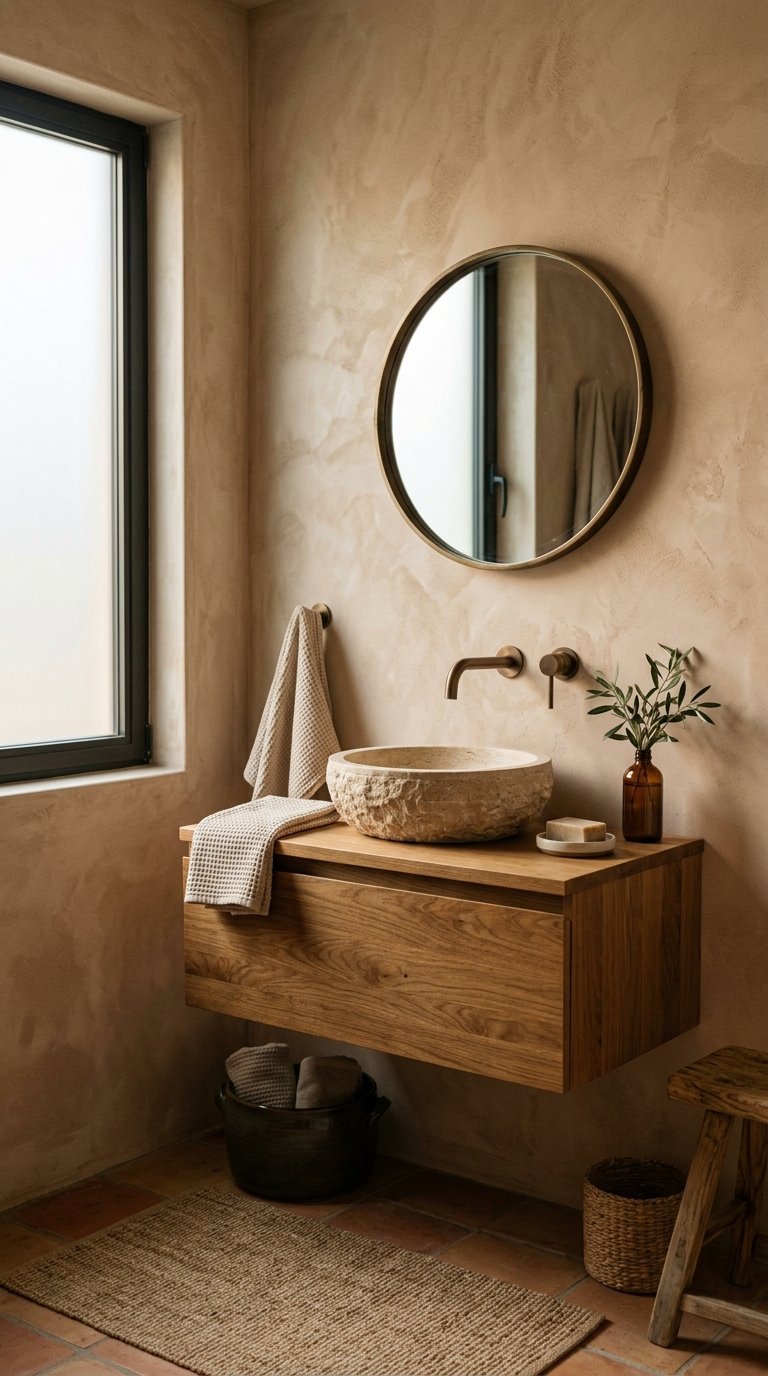
Unsanded paint and limewash finishes add texture and depth to bathroom walls that standard smooth paint never delivers. The organic, slightly uneven surface references natural plaster and aged walls in a way that reads as intentionally earthy.
Textured paint options for earthy bathrooms:
- Limewash paint: Translucent layers create depth and variation, very Mediterranean and ancient in character
- Venetian plaster: Polished plaster finish with a slightly reflective depth, more refined than limewash
- Mineral paint: Chalky, matte, very flat finish with a natural pigment quality
- Clay paint: Literally made from clay pigments, genuinely earthy material on the wall
Apply limewash in overlapping layers with a wide brush using a cross-hatch technique. The variation in coverage creates the depth that makes limewash distinctive. Uniform single-coat application flattens the effect entirely.
23. Add a Copper or Bronze Freestanding Tub
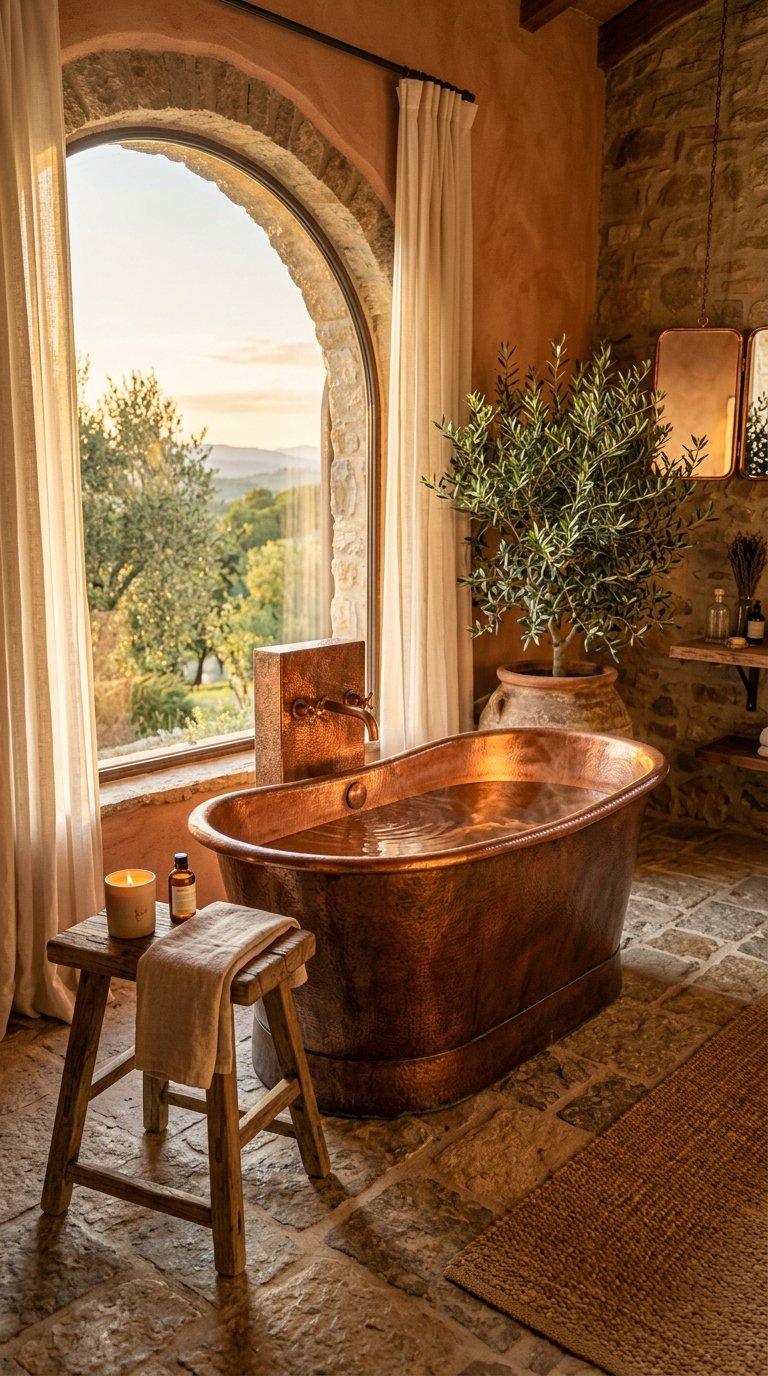
A copper or bronze freestanding tub is the most committed earthy bathroom statement available. The material is genuinely natural, develops a living patina over time, and retains heat better than almost any other tub material.
Copper tub ownership realities:
- Patina development: Copper changes color over years of use, developing a distinctive aged appearance
- Maintenance: Periodic cleaning with a copper-specific cleaner prevents excessive oxidation
- Heat retention: Copper heats up quickly from hot water and retains temperature very well
- Cost: $2,000 to $8,000 for quality copper tubs, significant investment
A copper tub in an earthy bathroom with warm terracotta walls and wood accents creates the most cohesive and distinctive material combination on this list. The investment requires serious commitment but delivers a bathroom that no other combination of materials produces.
24. Install Pebble or Slate Tile in the Shower
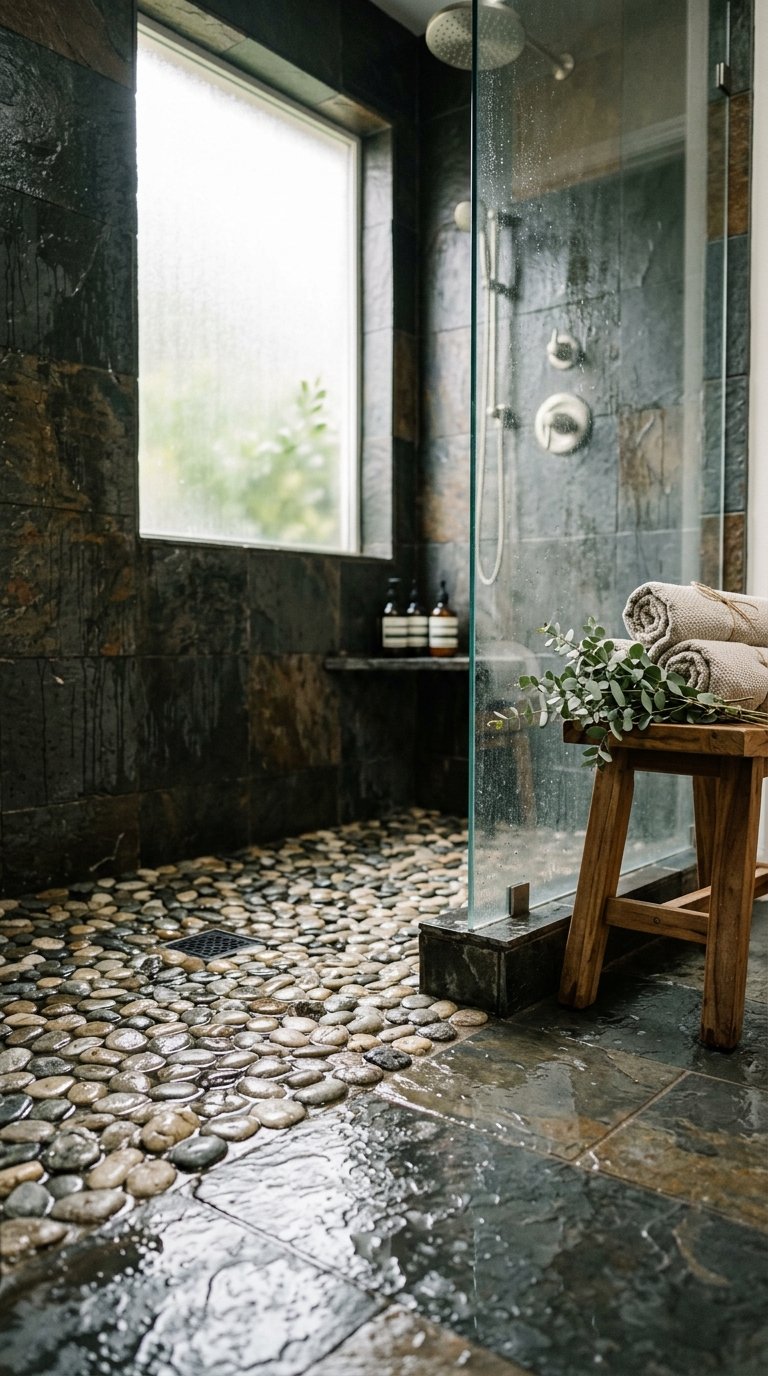
Pebble and slate tile in the shower creates a surface that references natural geological formations directly. Walking on a pebble shower floor with bare feet creates a sensory experience that connects to standing in a natural stream.
Pebble and slate shower options:
- Pebble mosaic sheets: Pre-mounted smooth river pebbles, available in natural and black tones
- Slate wall tile: Natural cleft surface with earthy grey, green, and rust tones
- Stacked ledger slate: Dramatic linear texture, works on shower feature walls
- Flagstone-cut slate: Irregular shapes cut to flat format, more rustic installation
Seal pebble and slate before use and reseal annually. Natural stone surfaces in shower environments need sealing protection against soap scum buildup and mineral deposits that become very difficult to remove from textured surfaces.
25. Keep One Wall Completely Bare
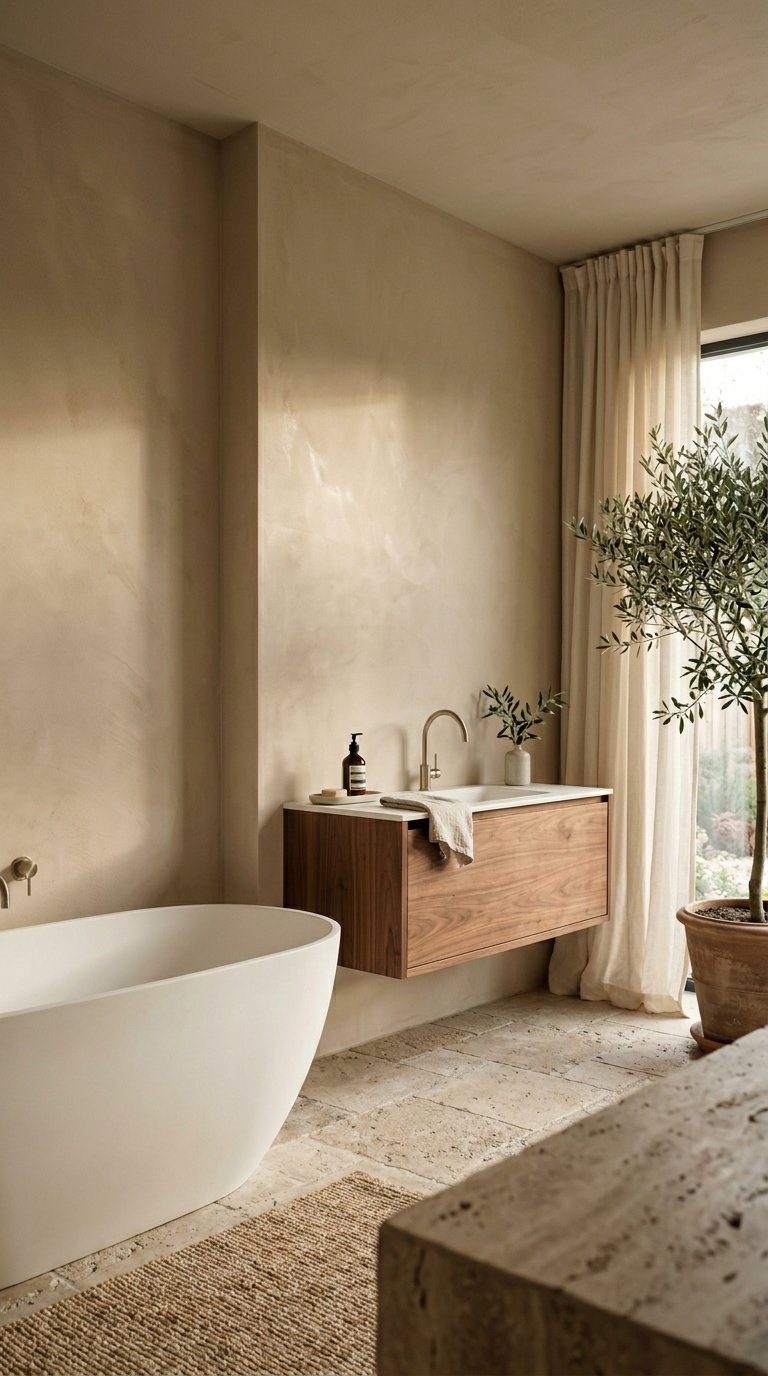
The final earthy bathroom idea is not a material, a product, or an installation. It’s a restraint decision. Earthy bathrooms work because they communicate calm. Calm requires space. Space requires at least one wall in the bathroom that holds nothing: no art, no shelf, no accessory, no decoration.
Why the empty wall matters:
- It gives your eye somewhere to rest among multiple rich materials and textures
- It amplifies the materials on the other surfaces by providing contrast
- It creates the breathing room that separates a considered earthy bathroom from one that simply has a lot of natural materials crowded together
- It photographs better than a fully decorated room because negative space is as important as positive space in composition
Choose the wall with the least natural light as your empty wall. The darkest wall in the room benefits most from the visual simplicity. Keeping it clear also prevents the bathroom from feeling cramped in its lower-light areas.
Final Thoughts
An earthy bathroom is not a trend. It’s a design direction that responds to something genuinely human: the instinct to surround ourselves with materials from the natural world. Stone, wood, clay, and water have been the materials of human bathing spaces for thousands of years. There’s a reason that combination feels right.
The 25 ideas on this list range from a $15 basket swap to a $5,000 copper tub investment. The earthy bathroom character doesn’t require the expensive end of that range. It requires honest material choices, warm light, and the discipline to leave some space empty.
Pick five ideas that fit your budget and your bathroom’s existing bones. Start there. The character builds quickly once the palette is established.
Your bathroom should feel like somewhere the earth made.