25 living room partition ideas for stylish modern homes
Your living room does too much. It’s a lounge, a dining room, a home office, and sometimes a guest bedroom all at once. Open-plan living sounds great in theory, but without some structure, it turns into one big, chaotic room where nothing feels intentional.
Partitions solve that. Not walls, not renovations. Smart dividers that create zones, add storage, and make your space feel designed instead of dumped together. Here are 25 ideas that work in real homes, not staged showrooms.
1. Use a Bookshelf as a Room Divider
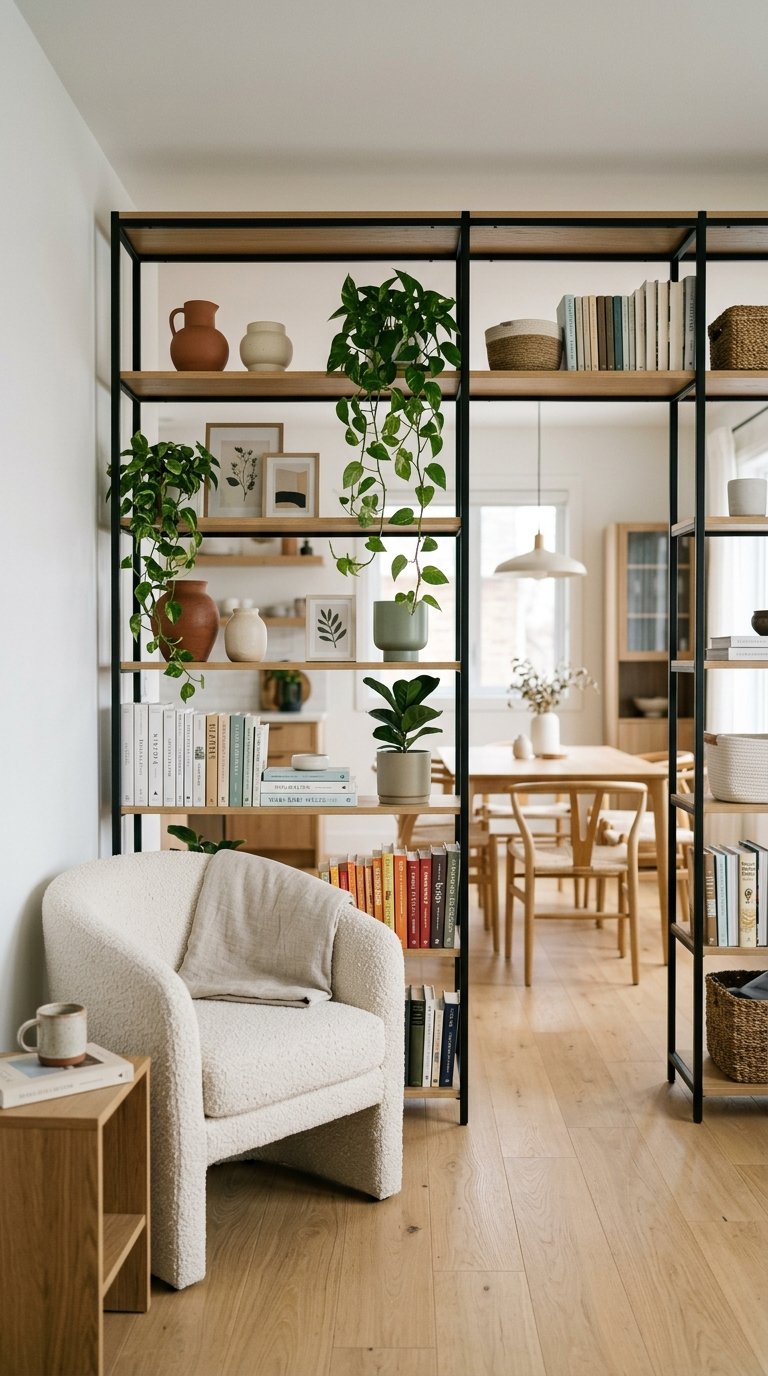
A floor-to-ceiling bookshelf placed perpendicular to the wall creates a defined zone without blocking light. IKEA’s KALLAX and BILLY systems cost $150 to $400 and come in widths up to 63 inches, giving you a solid visual barrier with built-in storage.
The open shelving keeps the room breathing while the structure does the separating. Style one side for your living room display and use the back side for office or dining storage.
2. Hang Curtains from a Ceiling Track
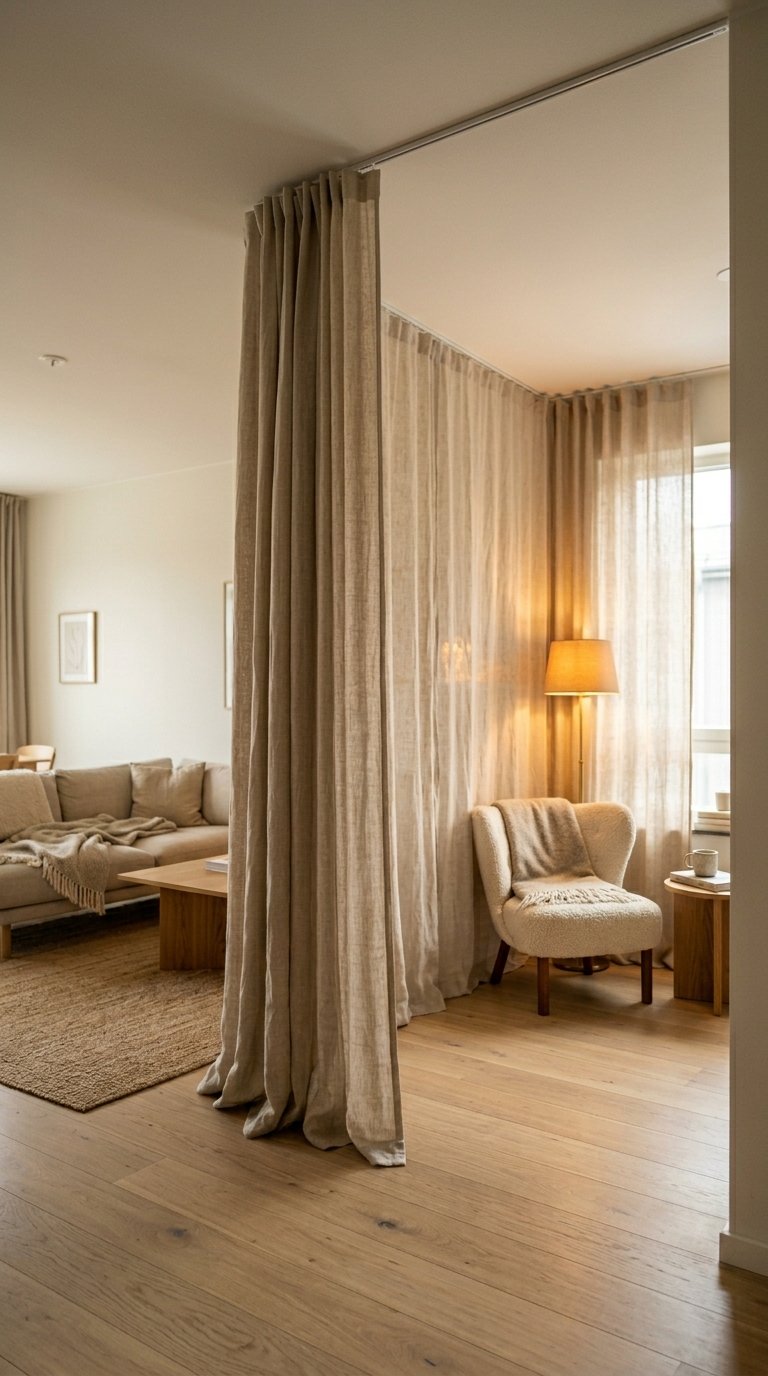
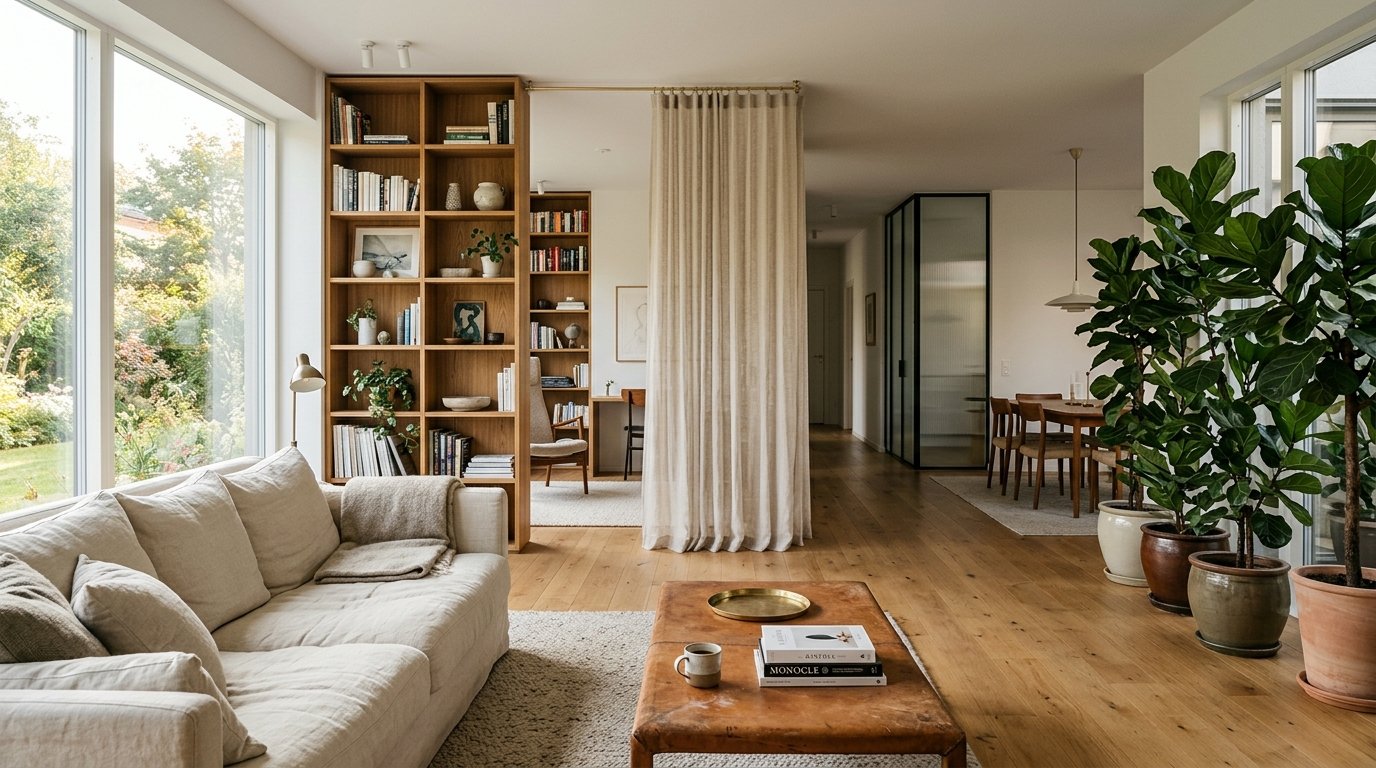
A ceiling-mounted curtain track costs $50 to $150 and lets you draw a soft partition across any section of the room. When open, the curtain stacks neatly to one side and disappears completely.
This is the top solution for renters who need flexibility without drilling permanent structures. Linen or sheer curtains maintain airflow while still creating a visual boundary.
3. Install a Sliding Barn Door Panel
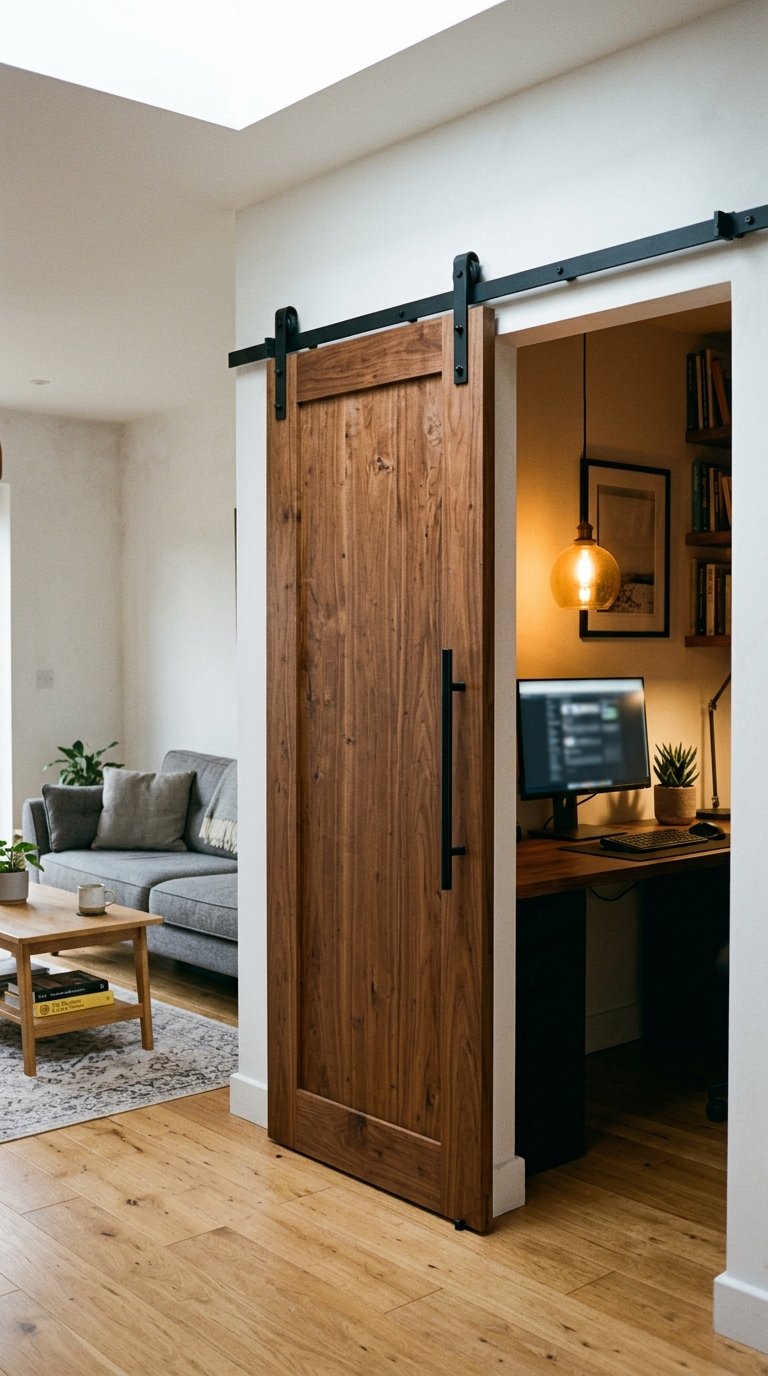
A sliding barn door on a wall-mounted track divides a space without swinging into either zone. Standard barn door kits run $200 to $600 and cover openings up to 72 inches wide.
The door stays open when you want an open plan and closes when you need privacy. It works especially well between a living room and a home office or guest sleeping area.
4. Build a Half-Wall with a Countertop
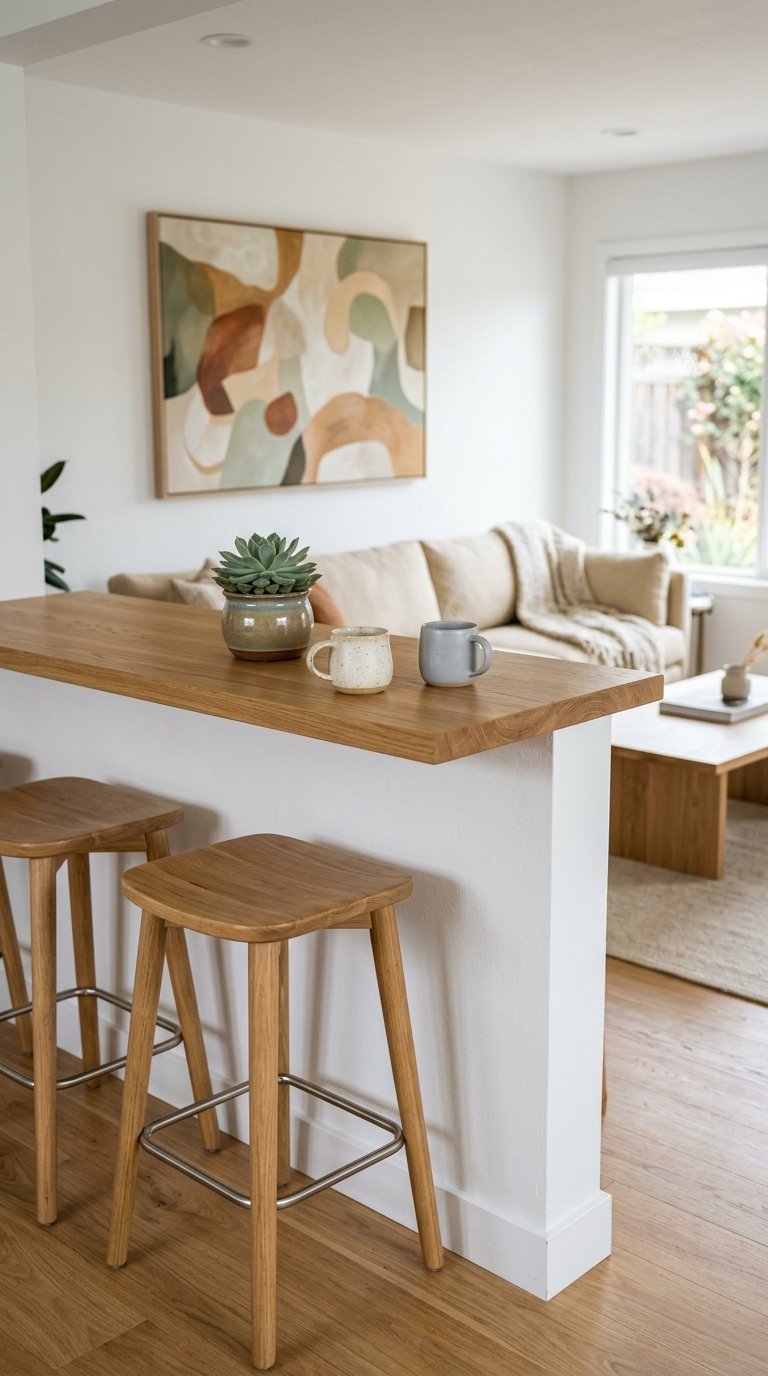
A half-wall (also called a pony wall) at 36 to 42 inches high separates spaces without cutting off sightlines. Add a wooden countertop along the top and it doubles as a breakfast bar or workspace surface.
This is a permanent solution that adds property value. Construction costs range from $500 to $2,000 depending on length and finish, which is far less than a full wall build-out.
5. Place a Sofa Back-to-Back Against a Console Table
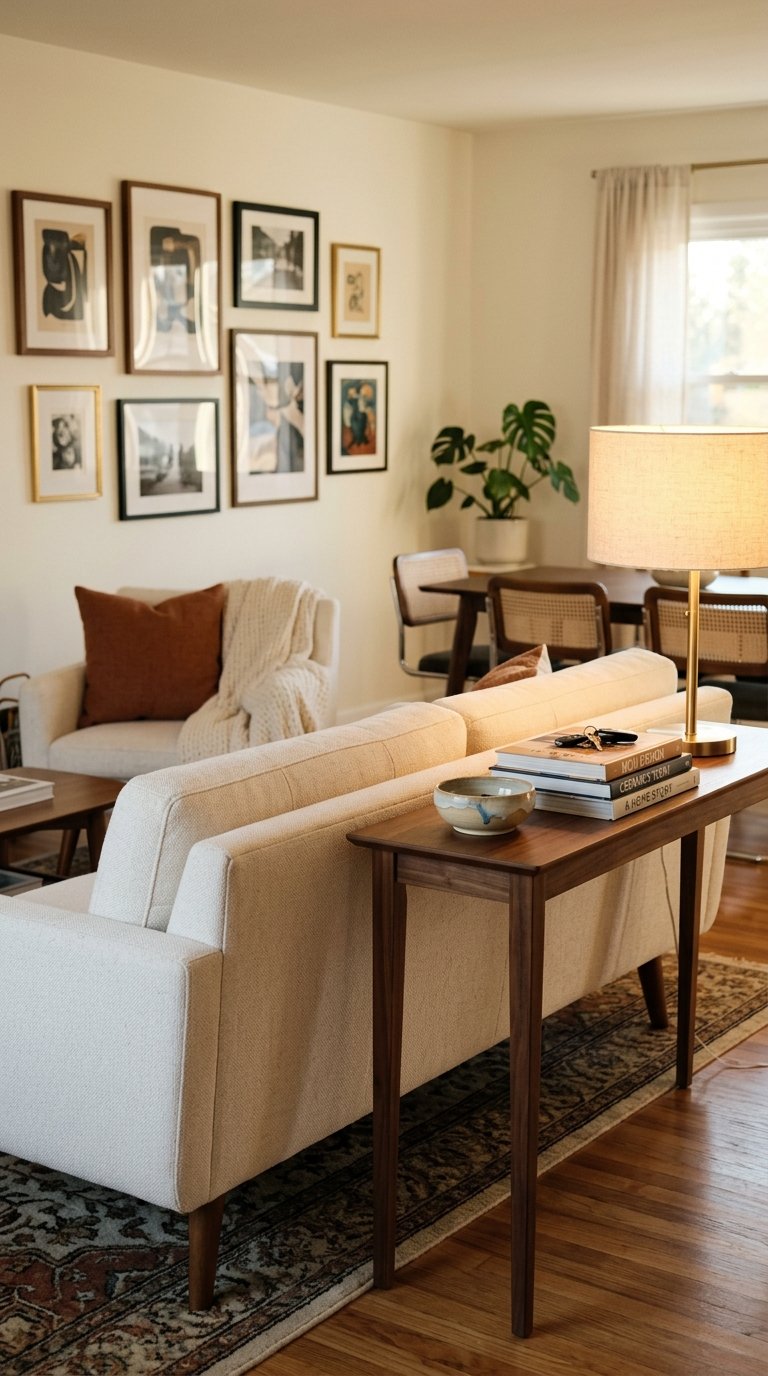
This non-structural trick requires no installation at all. Position your sofa with its back facing the area you want to separate, then place a narrow console table (12 to 14 inches deep) directly behind it.
The console defines the boundary while giving you a surface for lamps, plants, or display objects. It’s a fully reversible partition that costs nothing if you already own the furniture.
6. Use a Rattan or Woven Screen Panel
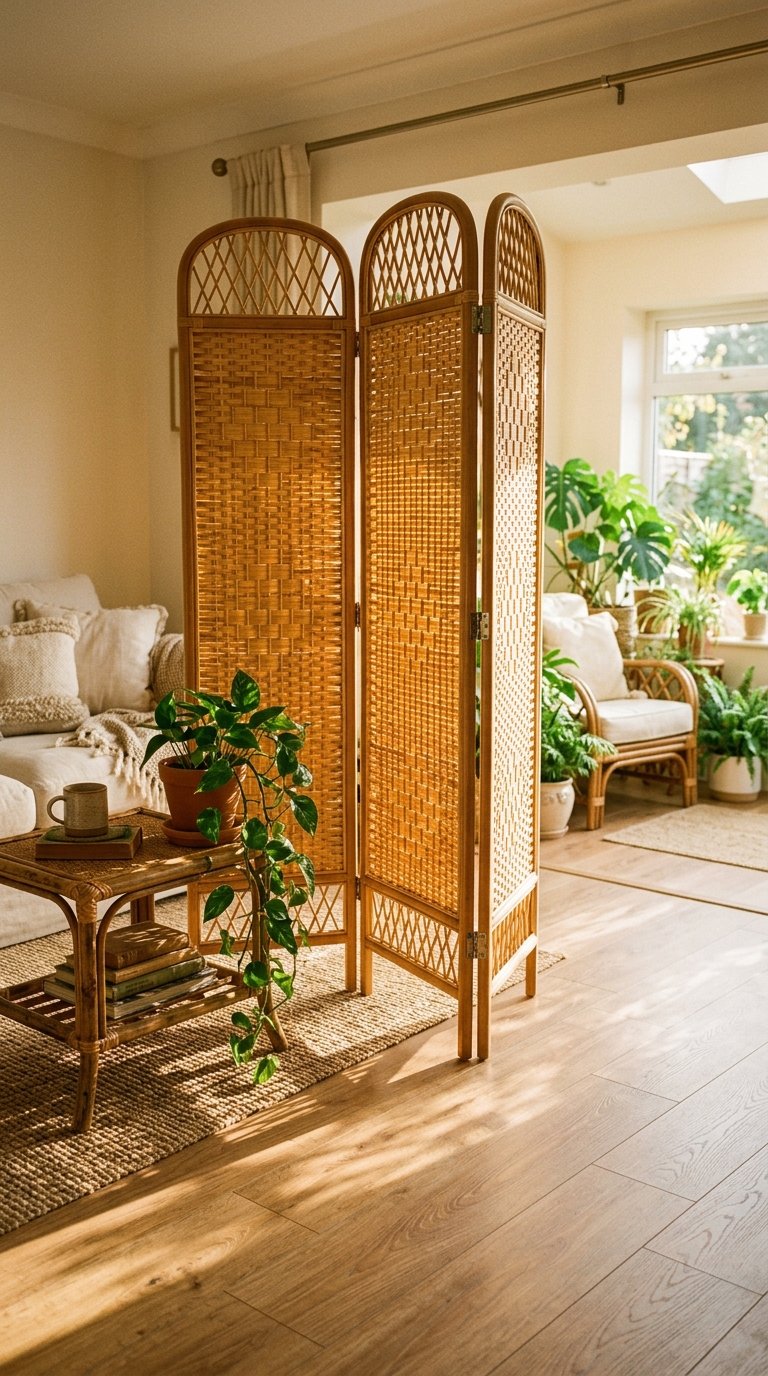
Rattan folding screens cost $80 to $300 and add texture to a room while creating a soft visual divide. They work particularly well in bohemian, coastal, or organic modern interiors.
The woven material filters light instead of blocking it, which keeps smaller rooms from feeling closed in. Three-panel screens fold flat for storage when you need the room fully open.
7. Hang Macramé or Rope Panels from the Ceiling
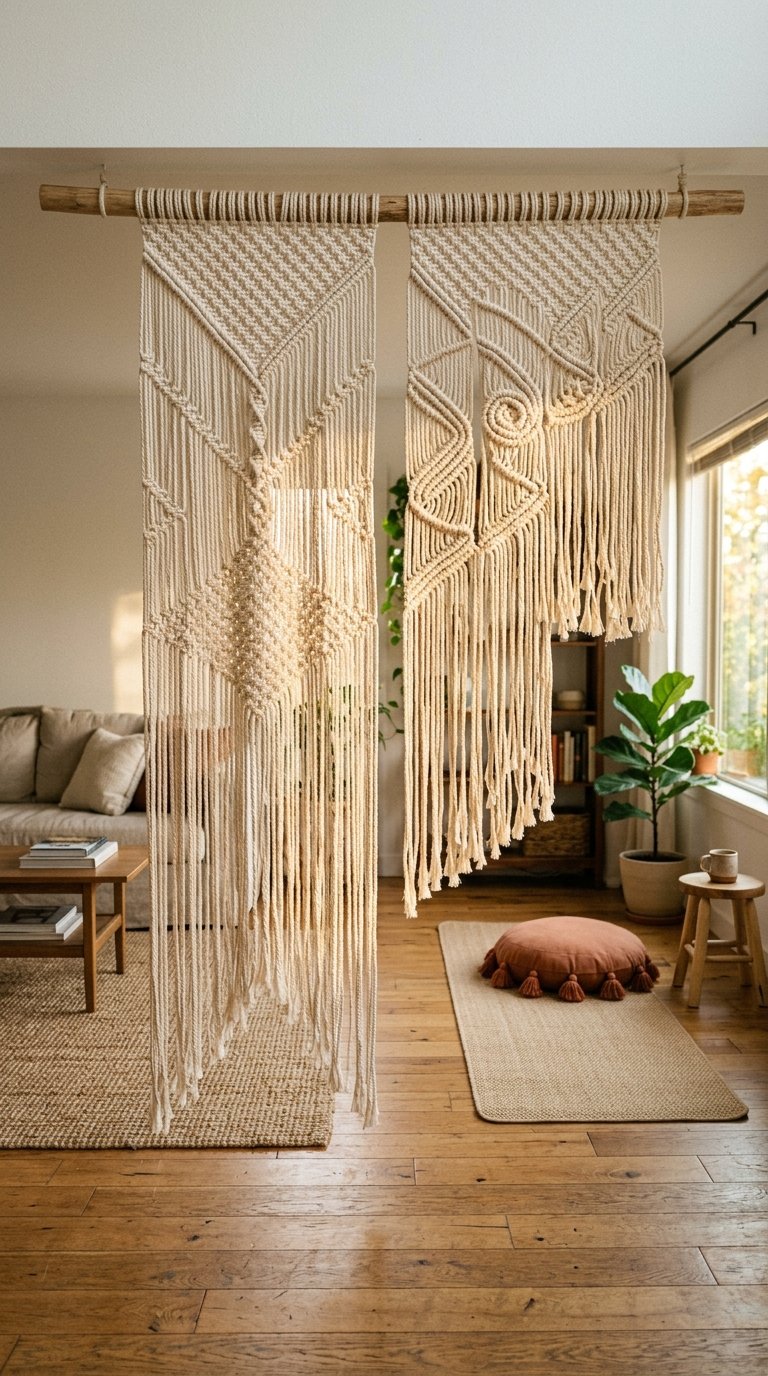
Ceiling-hung macramé panels create a partition you see through, which keeps the room feeling spacious while still establishing zones. They work especially well in high-ceiling living rooms where a low furniture partition wouldn’t reach.
A standard macramé panel from Etsy or Urban Outfitters runs $60 to $200. Mount a simple wooden dowel to the ceiling with two hooks and hang the panel in minutes.
8. Stack Large Plants as a Living Partition
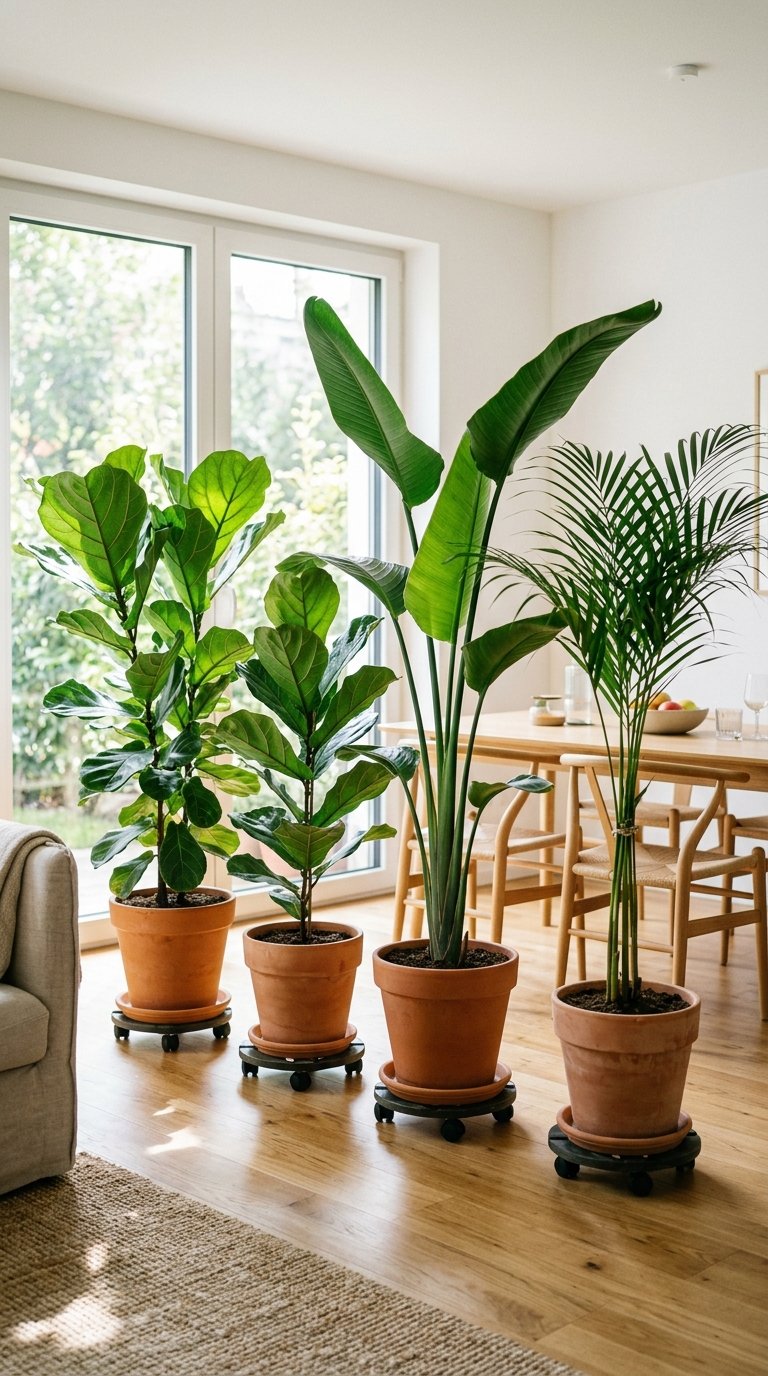
A row of tall plants, specifically fiddle leaf figs, bamboo palms, or bird of paradise plants in large pots, creates a soft natural divide at 5 to 6 feet tall. Three to four pots placed in a line work as well as any screen panel.
Plants improve indoor air quality and add life to a room in a way no furniture piece does. Place them on wheeled pot stands so you can rearrange the layout whenever your needs change.
9. Install Glass Partition Panels
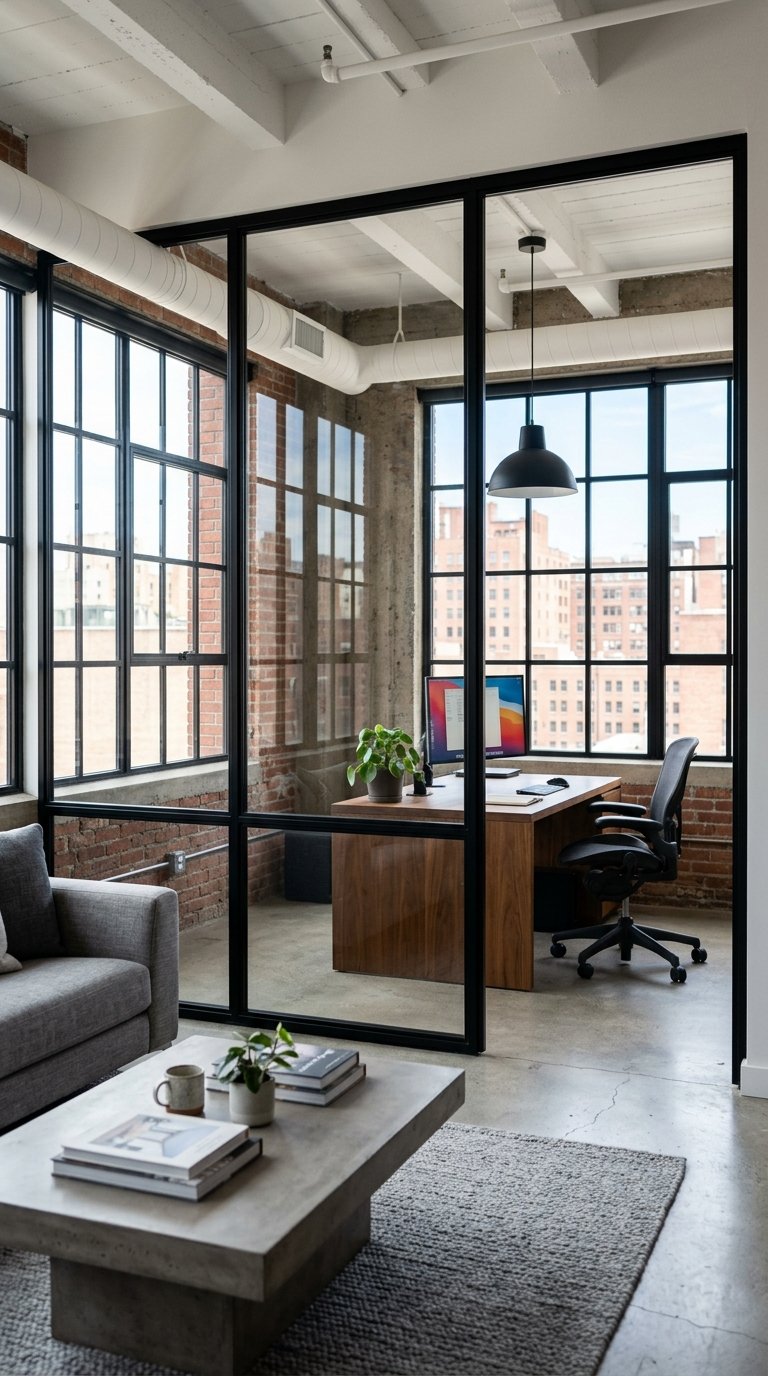
Framed glass panels let light pass through while creating a clear physical boundary between zones. Steel-framed glass partitions with an industrial look cost $300 to $800 per panel and suit loft-style or modern interiors.
The transparency keeps the room feeling open while the frame creates definition. This works particularly well in city apartments where natural light is a priority and you don’t want to block a single window.
10. Use a TV Unit as a Two-Sided Divider
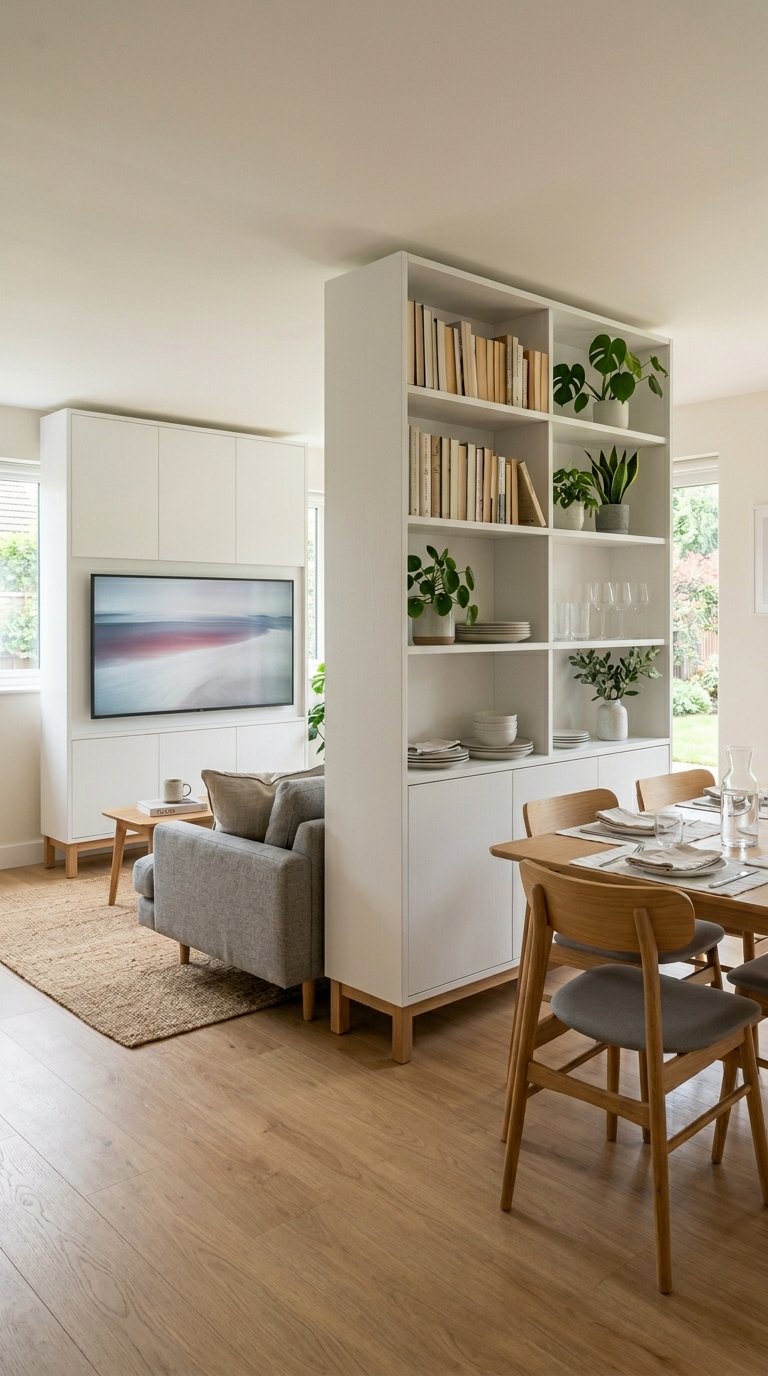
A double-sided media unit sits in the centre of the room and serves both zones simultaneously. One side holds the TV for the living area, and the other faces the dining or office zone with shelving.
IKEA’s BESTÅ system builds into a double-sided configuration for $400 to $800. The unit anchors both spaces and eliminates the need for separate storage furniture in each zone.
11. Create a Built-In Window Seat with Storage Below
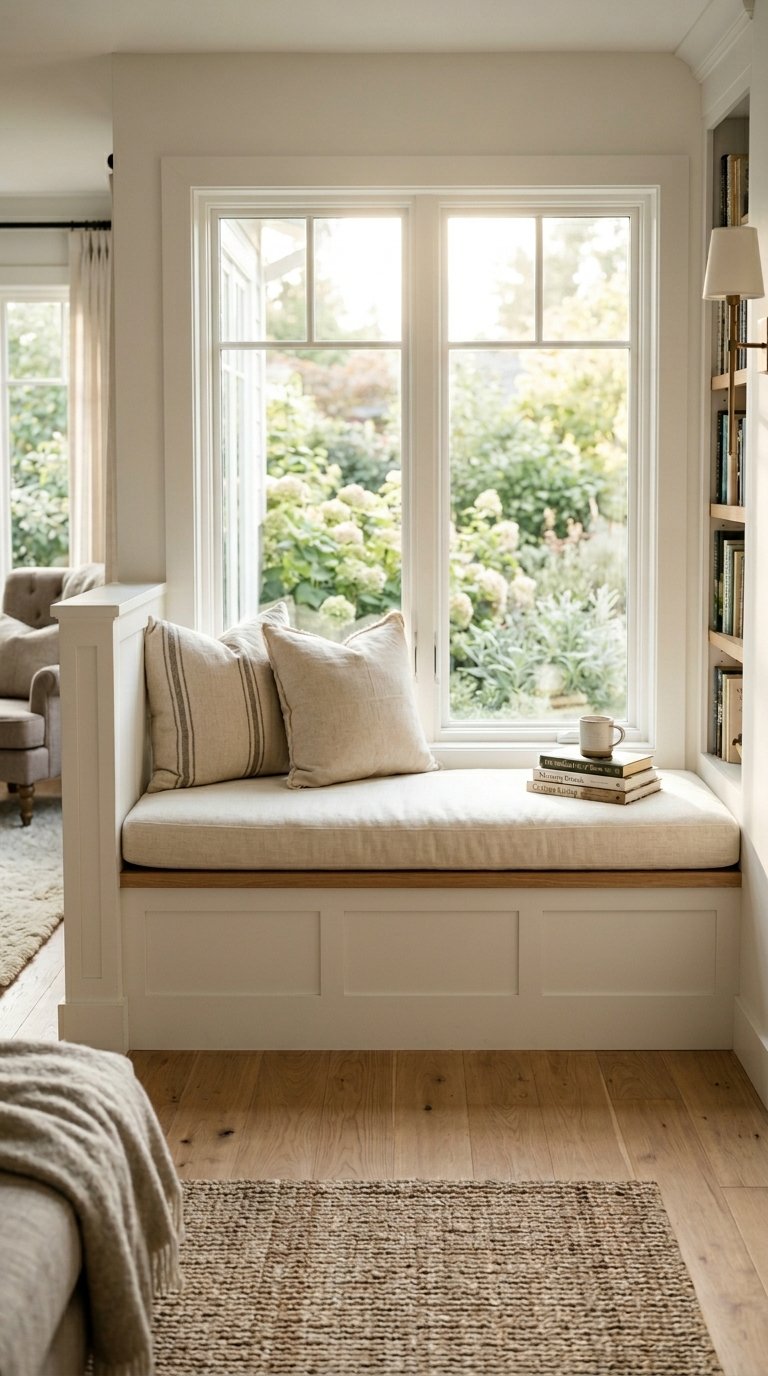
A built-in bench seat along a partial wall creates both a partition and a seating solution. The bench top lifts to reveal storage for blankets, books, or seasonal items underneath.
This approach works perfectly in a living room that flows into a reading nook or sunroom. Built-in benches cost $800 to $2,500 but add more functional square footage than almost any other partition method.
12. Hang Wooden Slat Panels Vertically
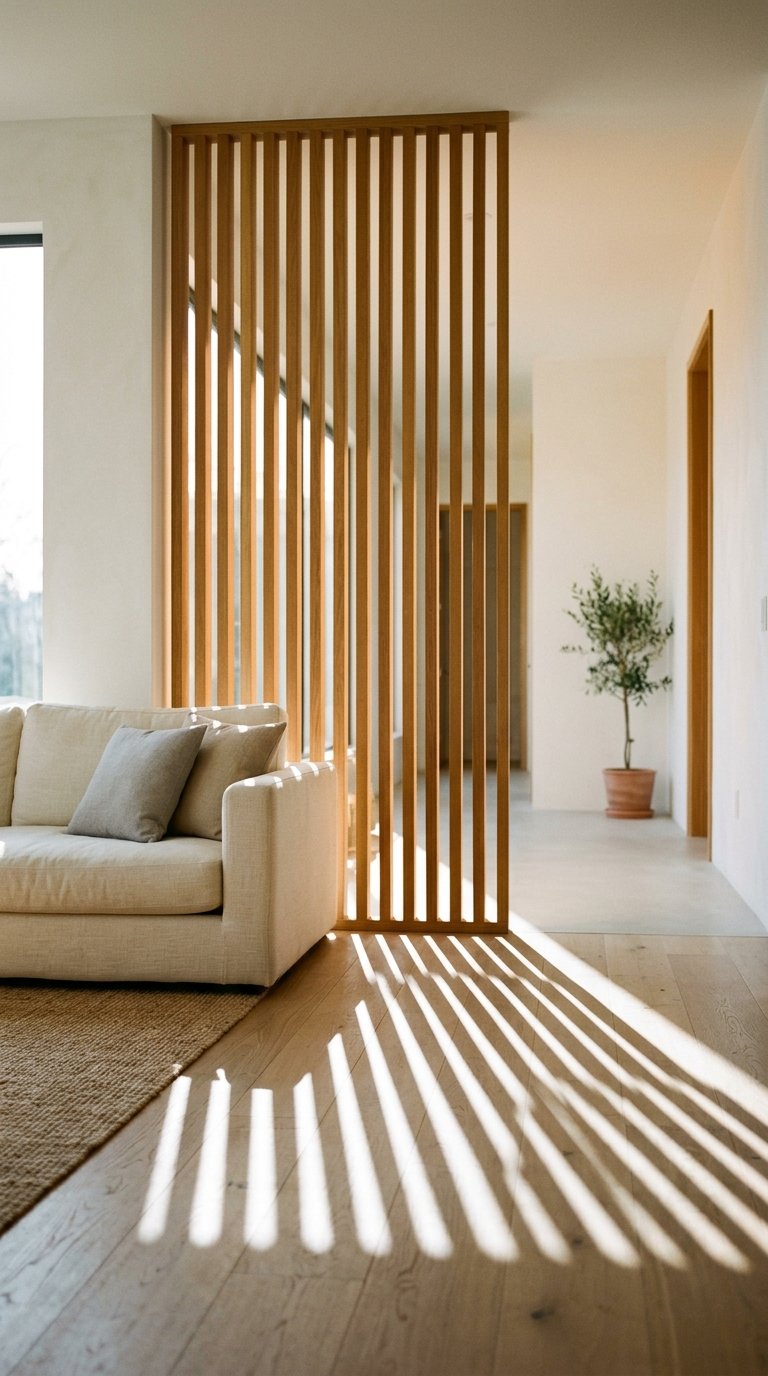
Vertical wooden slat panels create a screen that gives privacy while maintaining airflow and light. A standard 4 x 8 foot slat panel costs $100 to $300 and mounts to the ceiling with minimal hardware.
The gaps between slats let you see movement and light on the other side, which prevents the partition from feeling like a wall. In Scandinavian or Japandi interiors, this is the defining design detail. IMO, it’s one of the most stylish partition solutions on this list.
13. Use a Ladder Shelf as a Divider
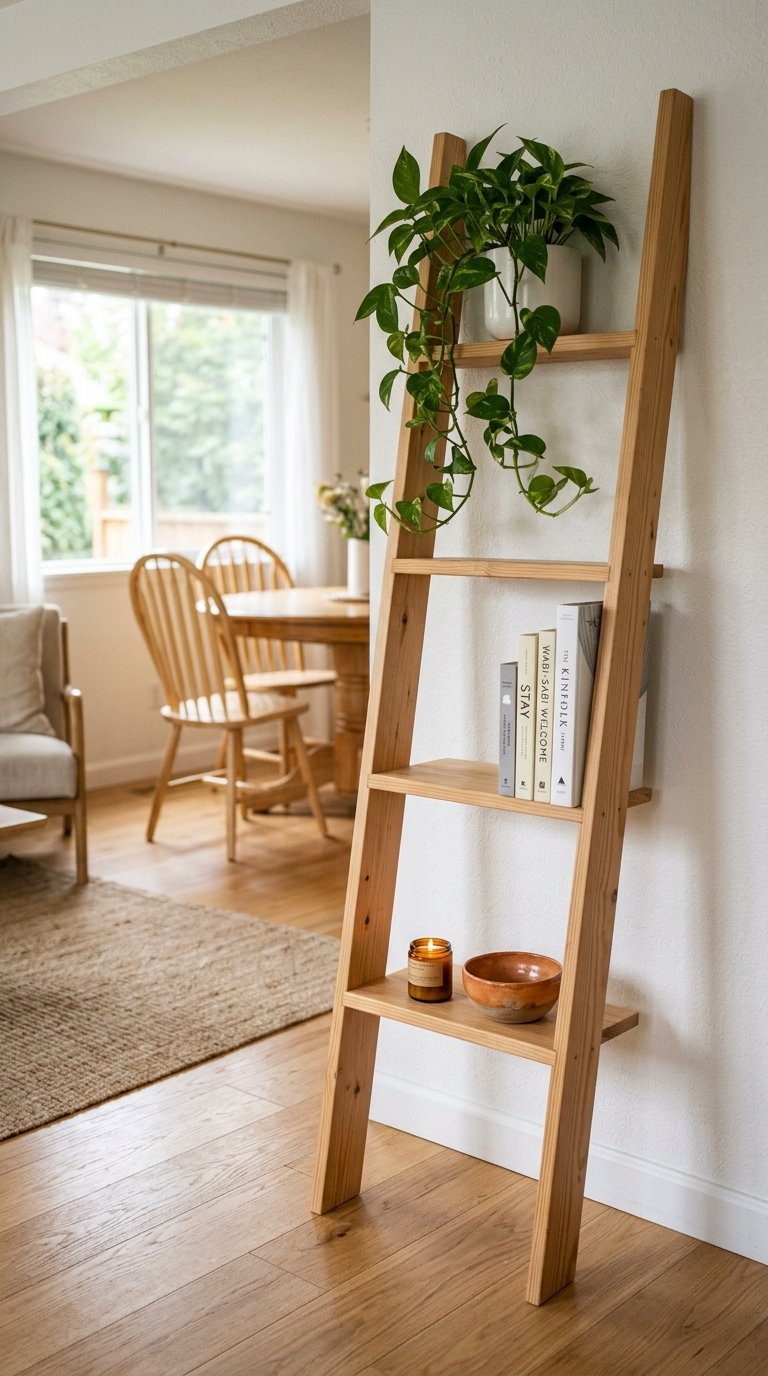
A leaning ladder shelf costs $60 to $200 and creates a tiered display partition without any installation. The open frame reads as furniture, not a barrier, which makes it ideal for small living rooms where visual weight matters.
Style it with books, plants, and small objects on alternating shelves to add personality on both sides. The leaning design means you move it in seconds when you need the space fully open.
14. Install a Pegboard Wall Panel
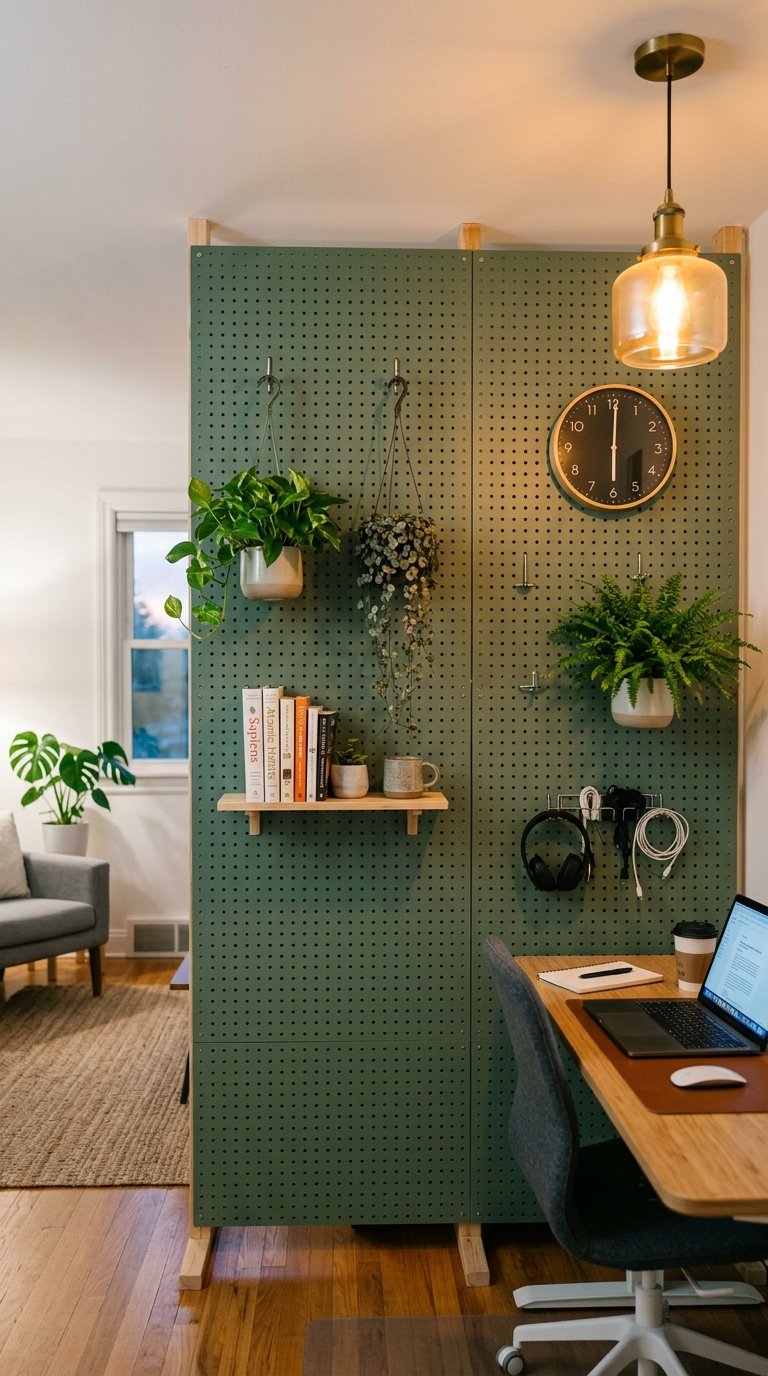
A floor-to-ceiling pegboard panel works as a partition and a functional storage wall simultaneously. Paint it to match your wall colour and it disappears as a design element while still doing the structural work of dividing zones.
Pegboard sheets cost $20 to $50 each and come in 4 x 8 foot sections. Two panels side by side create an 8-foot-wide divider with infinite storage configurations.
15. Use Frosted Acrylic Panels
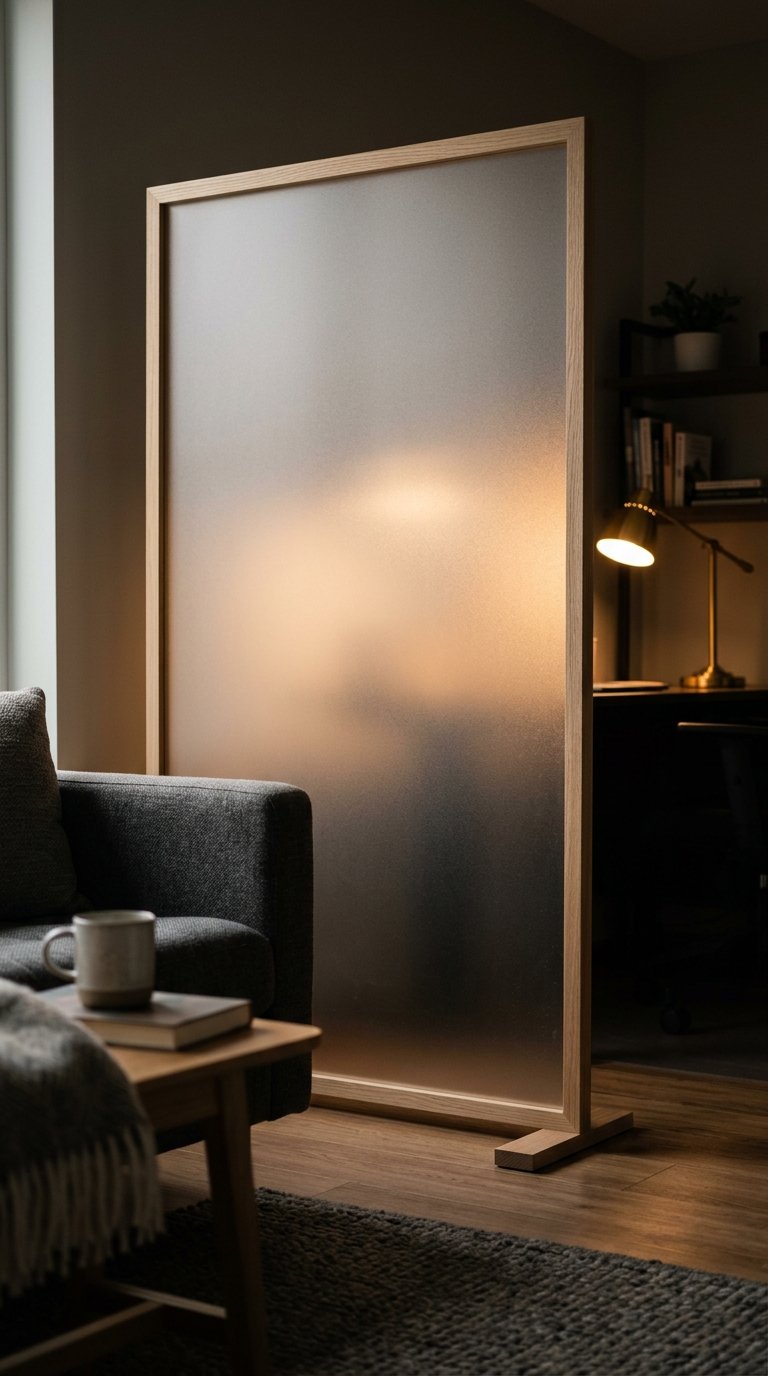
Frosted acrylic panels diffuse light while blocking direct sightlines between zones. A 4 x 8 foot acrylic sheet costs $40 to $120, and you mount it in a simple wooden or metal frame for a clean, modern finish.
The material is lighter than glass, doesn’t shatter, and cuts with standard woodworking tools. For a home office partition in a shared living space, frosted acrylic is the practical choice.
16. Create a Floating Ceiling Canopy to Define a Zone
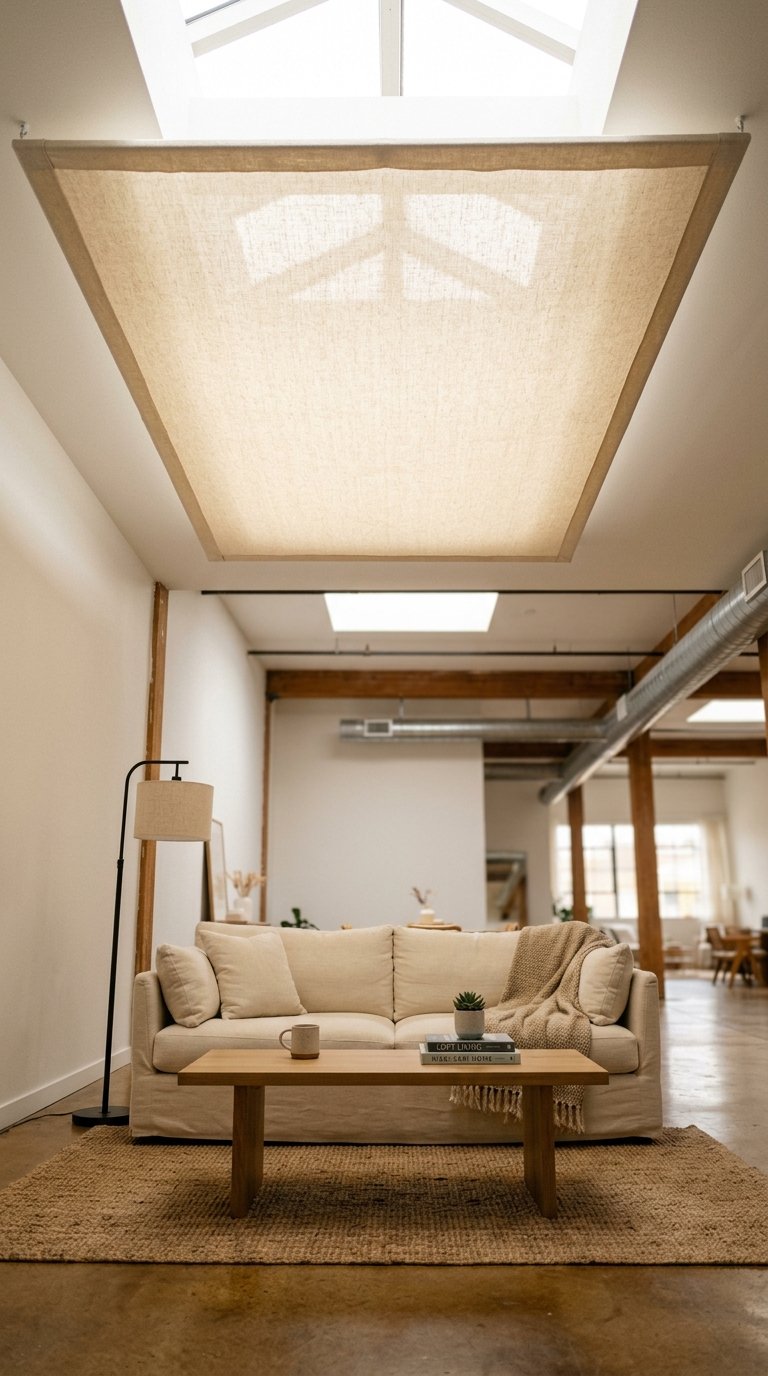
A ceiling canopy or baldachin (a fabric panel mounted to the ceiling above a specific zone) defines space from above rather than from the sides. Hang a large piece of linen or canvas fabric in a rectangular frame above your seating area to signal that this is a distinct zone.
This works in open-plan lofts where floor-level partitions feel lost in a large space. The canopy creates an overhead boundary that draws people into the zone without physically confining them.
17. Use a Kitchen Island to Anchor the Living Room Boundary
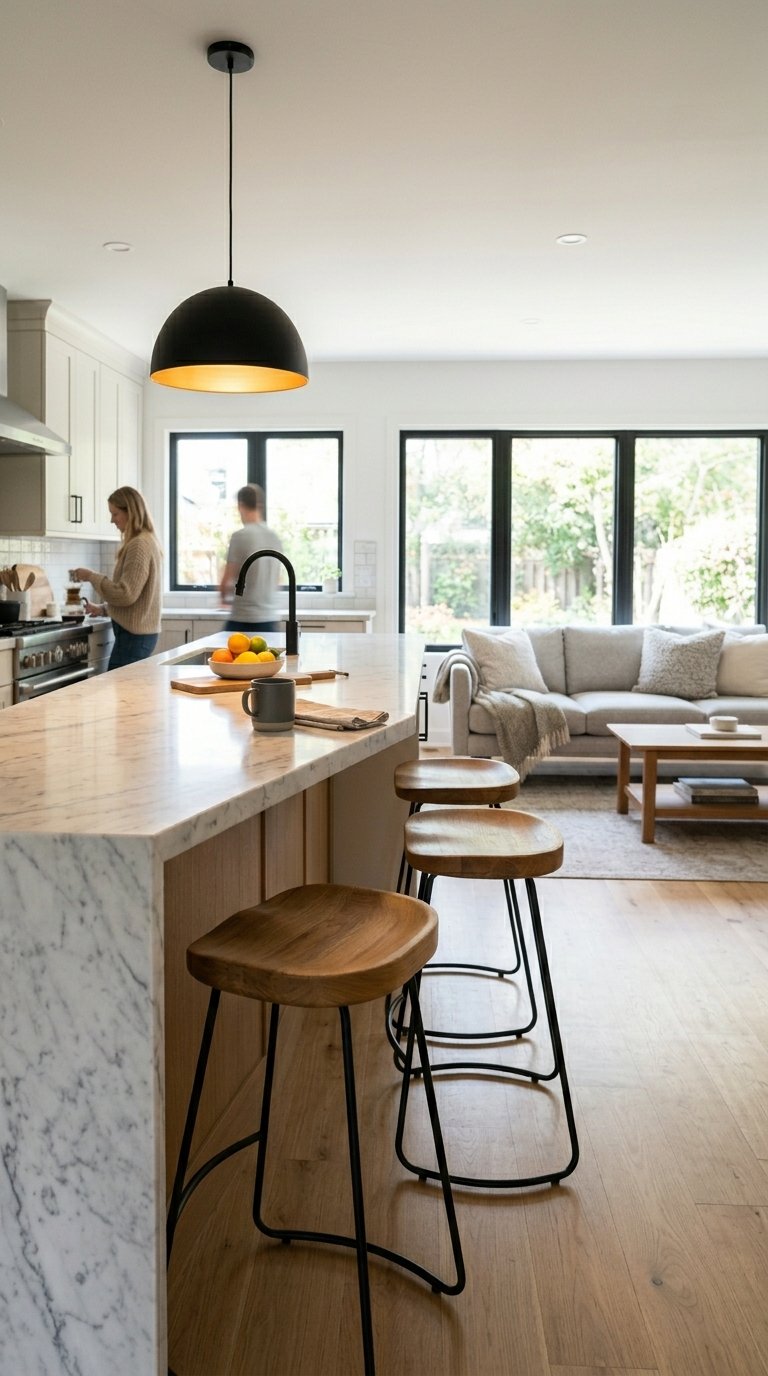
In open-plan homes where the kitchen flows into the living room, a kitchen island positioned at the boundary point acts as the partition. A waterfall-edge island with bar stools on the living room side costs $1,000 to $4,000 installed.
It’s the most functional partition on this list because it adds prep space, seating, and storage while doing the dividing work. The island anchors both zones and makes the open plan feel purposeful rather than accidental.
18. Hang a Gallery Wall Grid as a Room Divider
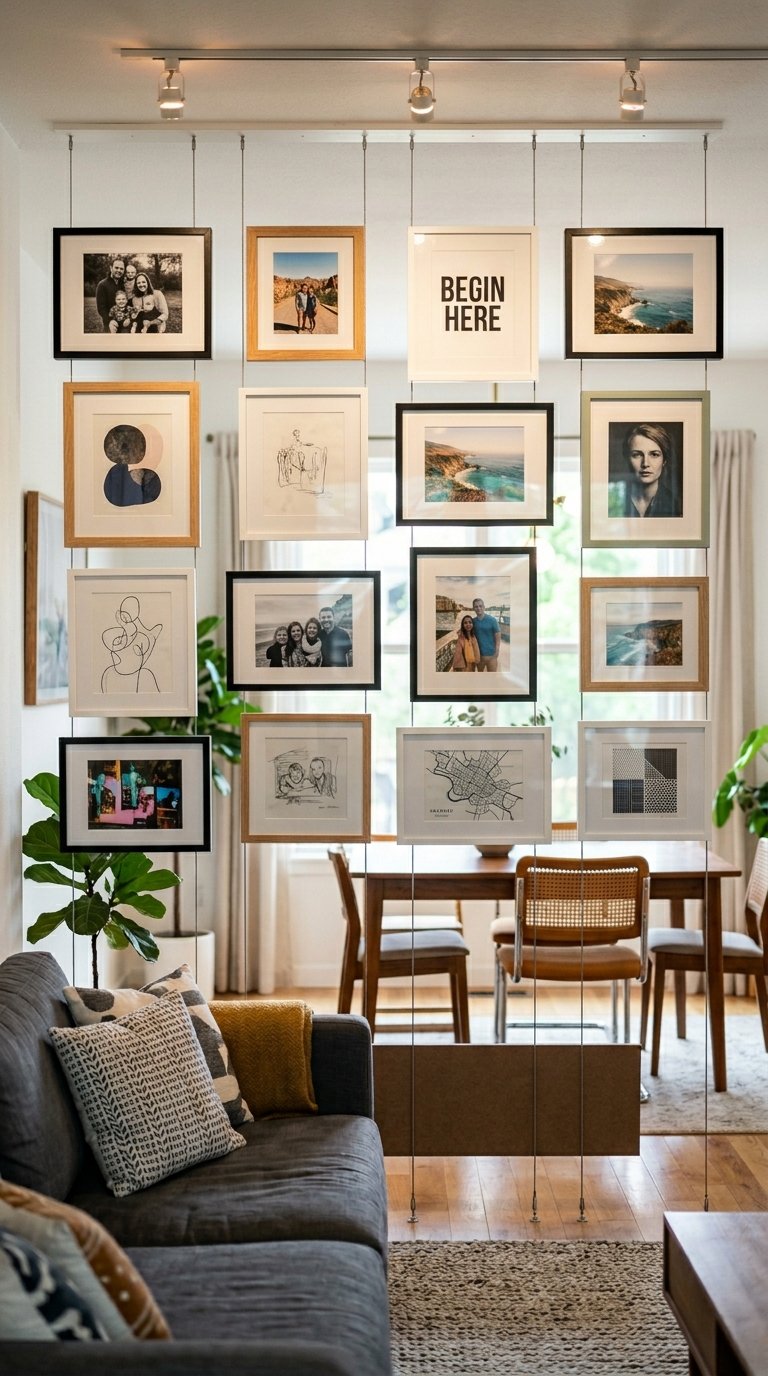
A grid of framed artwork hung in a tight cluster on one section of ceiling-track wire creates a vertical art installation that doubles as a soft partition. Space the frames close together (2 to 3 inches apart) to build visual density.
This works in high-ceiling rooms where a low partition gets lost in the vertical space. The art hangs at eye level and draws the boundary without touching the floor or ceiling structure.
19. Use a Folding Shoji Screen
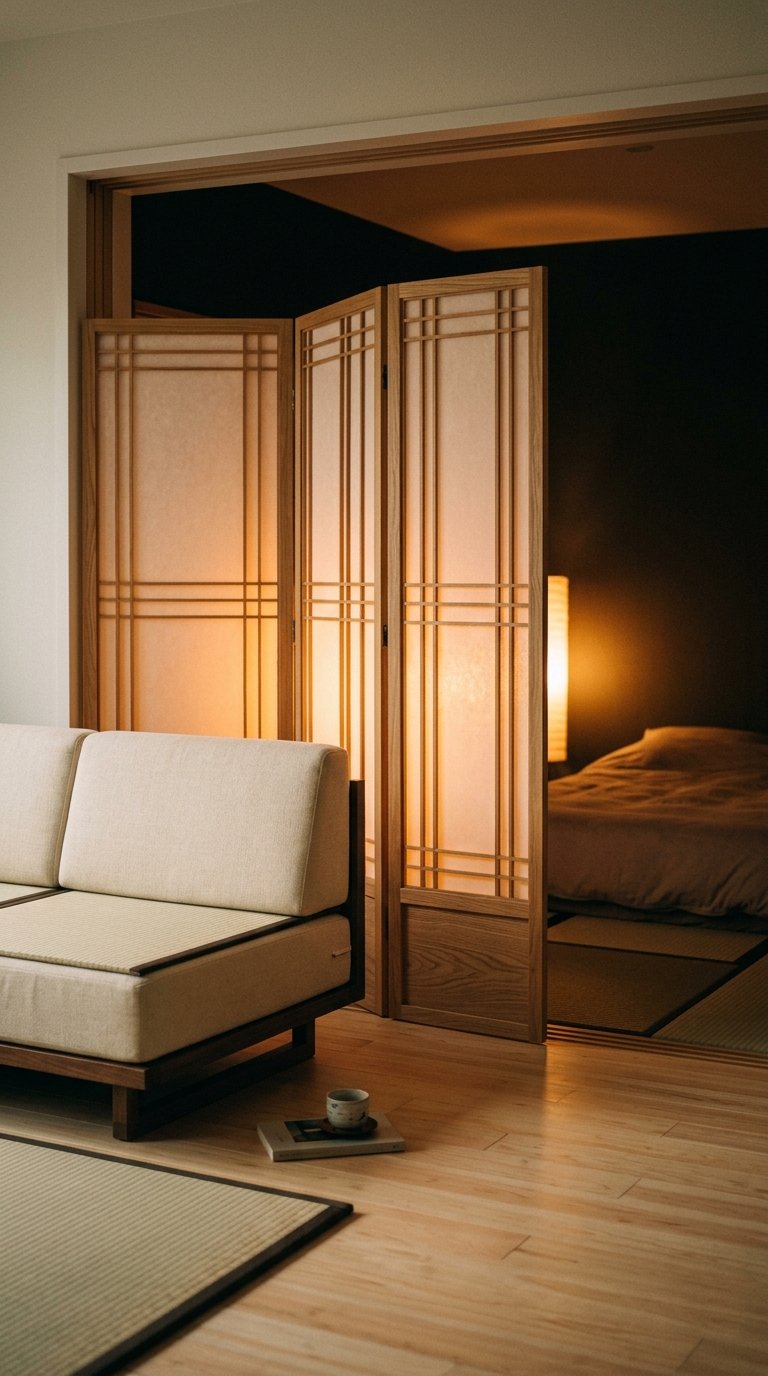
Shoji screens use a wooden grid frame with translucent rice paper panels. They filter light beautifully and create a soft, warm partition that suits minimal, Japanese-inspired, or natural interiors.
A quality four-panel shoji screen costs $150 to $500. The translucent panels glow warmly when backlit, which makes them a design feature as much as a functional divider. :/ Yes, they require some care with moisture, but the look pays for that trade-off.
20. Install a Steel Cable Railing System as a Partition
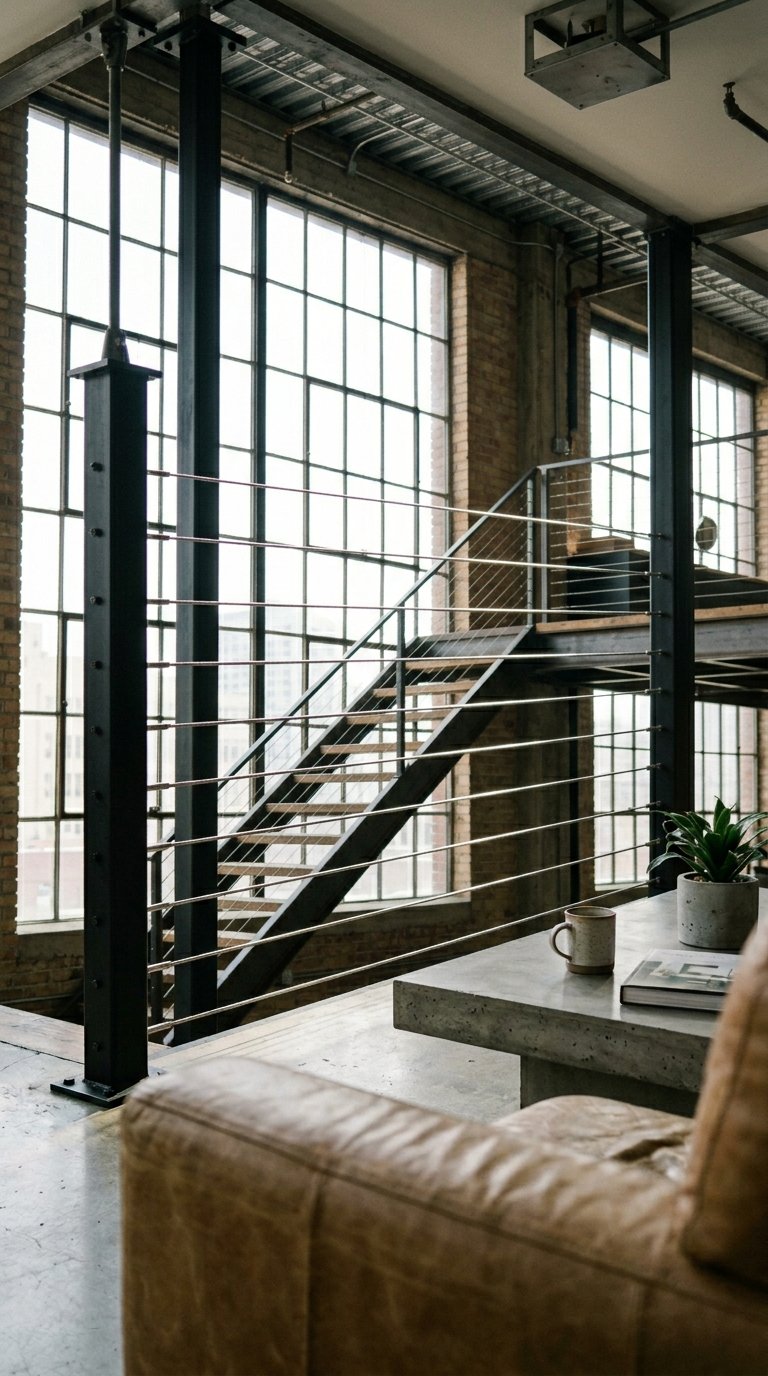
Horizontal steel cables strung between two floor-to-ceiling posts create a partition that suggests a boundary without blocking anything. This is the partition style you see in converted loft apartments and modern townhouses.
A DIY cable rail kit costs $300 to $700 for a 6-foot span. The cables define the zone clearly while keeping full sightlines across the room, which makes small living rooms feel larger than they are.
21. Use Tall Mirrors as a Zone Divider
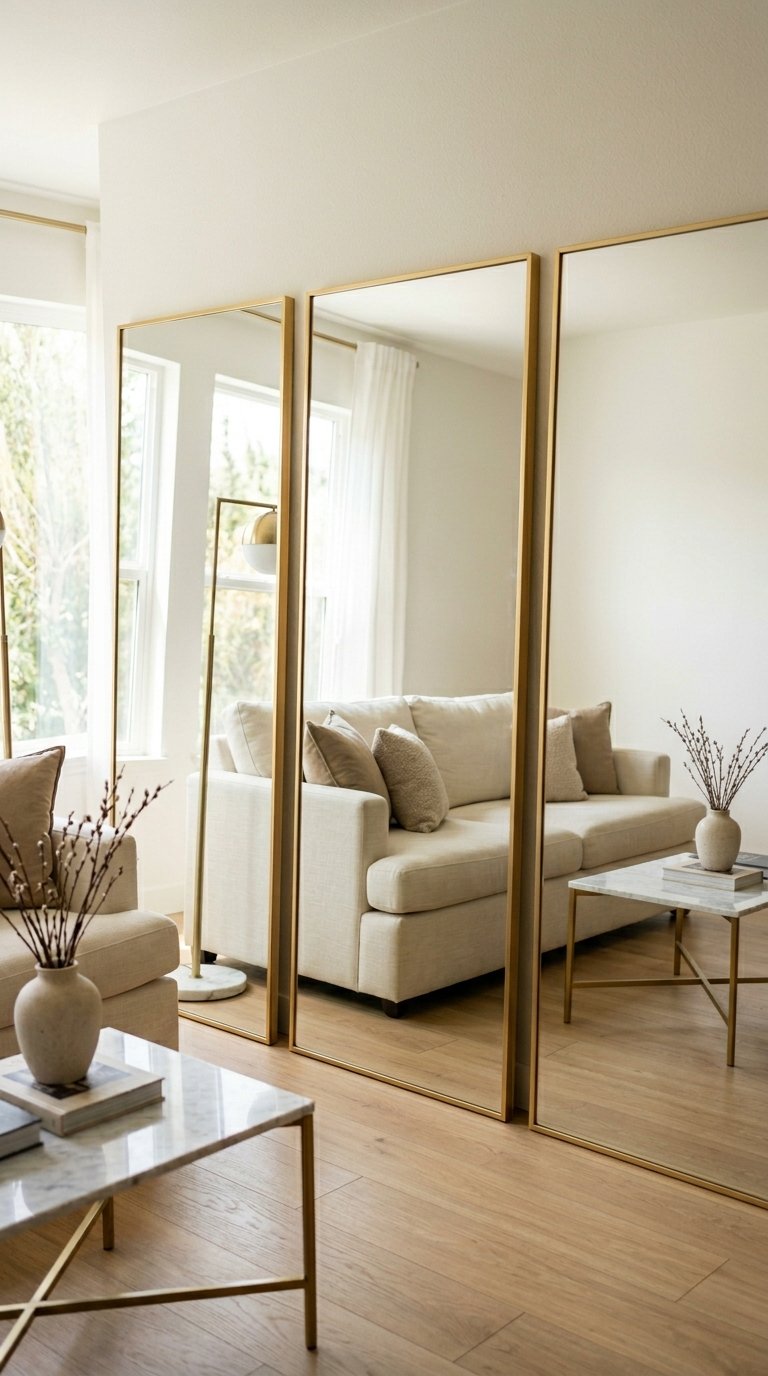
A row of three or four floor mirrors placed side by side creates a partition and reflects light back into the room simultaneously. The reflection visually doubles the space on the living room side, which is a practical benefit in smaller homes.
Full-length mirrors cost $50 to $200 each at stores like Wayfair or Target. Place them on the boundary line between your living and dining zones, angled slightly inward to maximize the light-bouncing effect.
22. Build a Raised Platform to Define the Living Zone
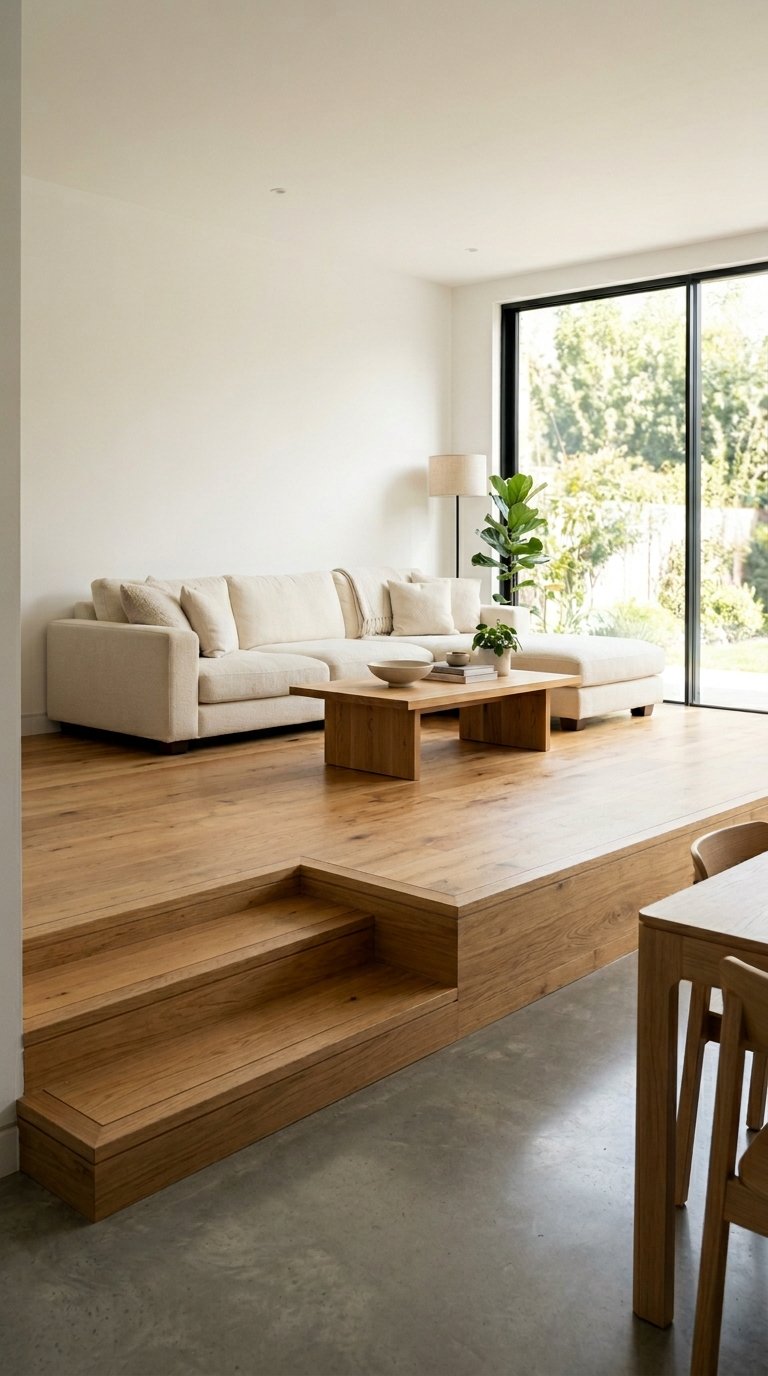
A raised timber platform (4 to 6 inches high) under the living room seating area physically defines the zone without any vertical structure. The level change alone signals to anyone entering the room that this is a separate space.
Platform builds cost $500 to $3,000 depending on size and material. The raised floor also creates storage opportunities underneath if you build in lift-up panels or drawers along the platform edge.
23. Use a Wine Rack as a Functional Partition
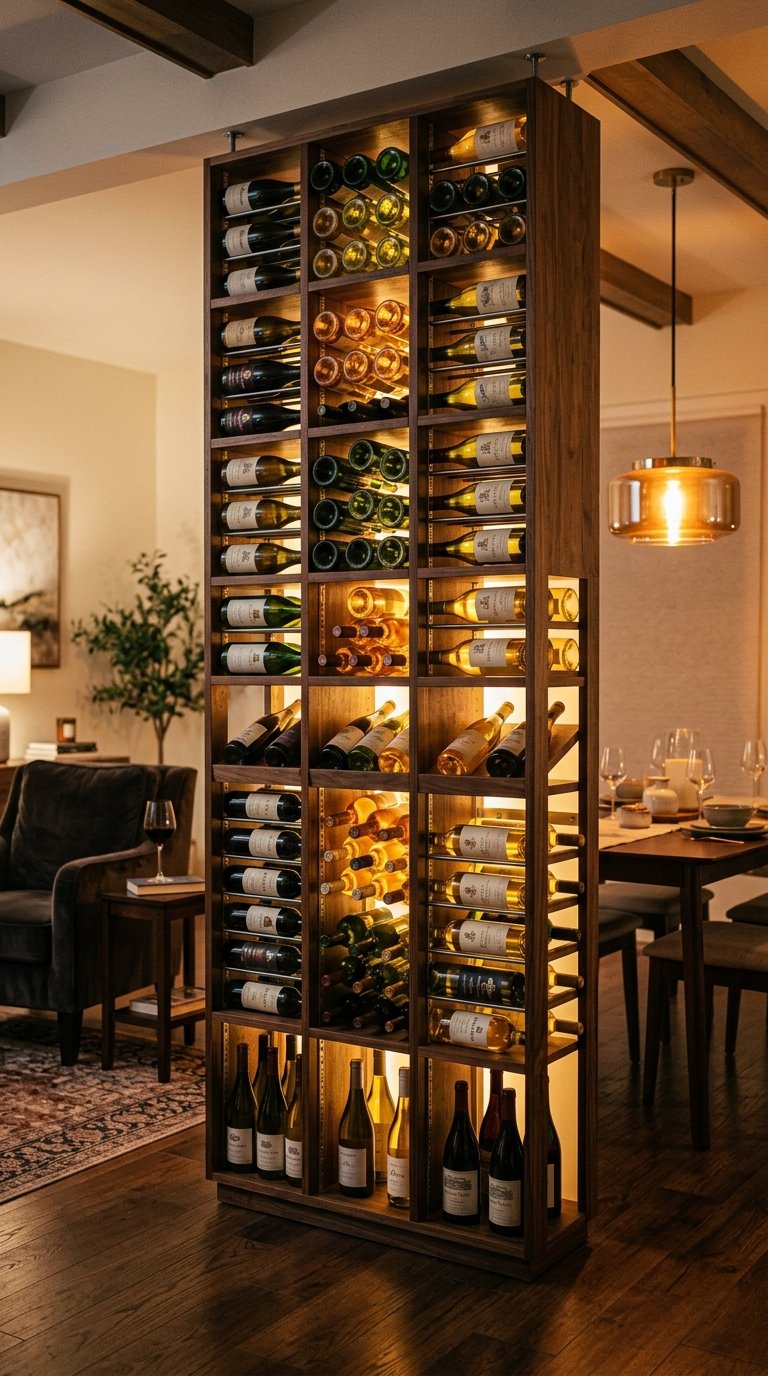
A floor-to-ceiling modular wine rack between a living room and dining area is one of the most personality-rich partition ideas on this list. It signals that whoever lives there knows how to host, which is a perfectly valid design statement.
Modular wine rack systems from Wine Enthusiast or Vinotemp cost $200 to $800 for a 6-foot-tall configuration. The bottles add colour and visual texture to both sides of the partition.
24. Create a Neon or LED Light Curtain Partition
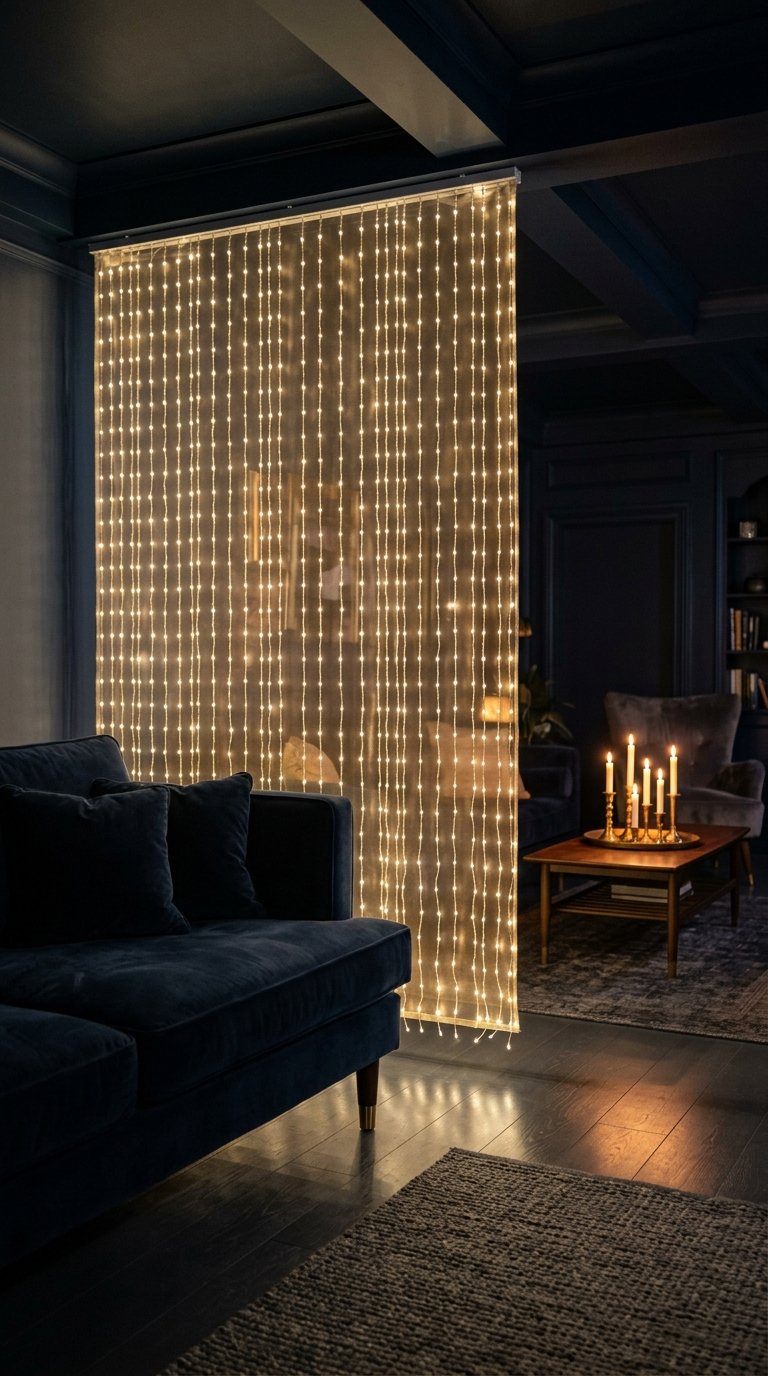
LED curtain panels (a grid of LED strips or string lights mounted in a frame) create a glowing partition that works as a statement piece in modern or maximalist interiors. They define zones at night and recede visually during the day.
LED light curtain panels cost $50 to $200 and plug into a standard outlet. This is the partition for someone who wants the room to feel different after dark, and it does exactly that.
25. Use a Fireplace as the Central Partition
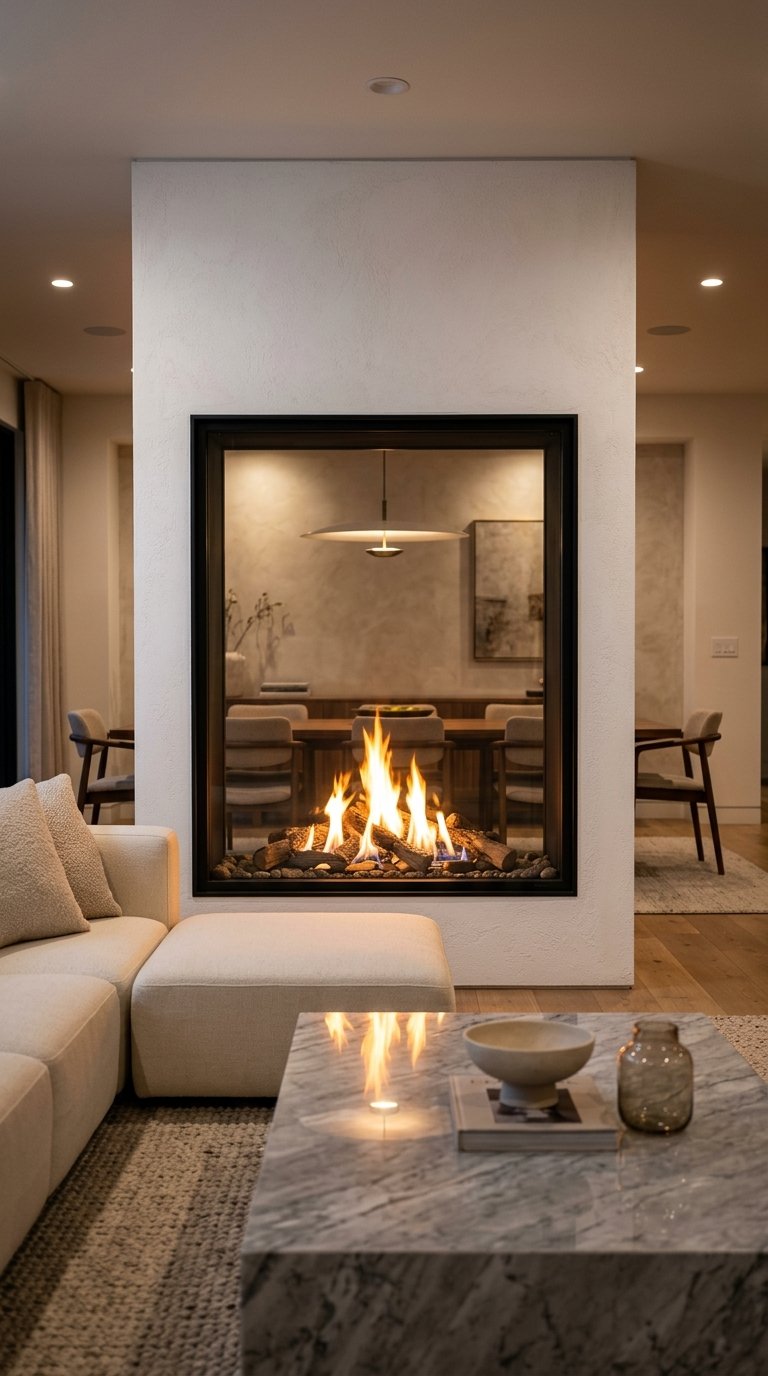
In larger living rooms, a double-sided fireplace placed at the room’s centre divides the space into two distinct zones while serving both simultaneously. Gas fireplaces with two open faces run $3,000 to $8,000 installed.
This is the most architectural partition on the list, and it returns value in both function and property appeal. A two-sided fireplace anchors a room the way nothing else does, and it solves the partition problem permanently. FYI, this one also increases your home’s resale value more than any other idea here.
Final Thoughts
The best partition for your living room solves a specific problem. A small room? Go with glass panels or cable rails that keep sightlines open. Renter with no drilling allowed? Ceiling curtain tracks and folding screens are your answer. Need storage and separation at the same time? A bookshelf or double-sided TV unit handles both.
Pick the idea that matches your actual constraint, not the one that looks best on Pinterest. A partition that works in your space on your budget will always beat a showroom idea you never execute. Start with one zone, get the boundary right, and the rest of the room follows naturally.