21 Bedroom Window Ideas That Fix Light, Privacy and Style
Your bedroom window is doing the least. It lets in light, sure, but most windows sit there looking forgettable while the rest of the room gets all the attention. That’s a missed opportunity, because window treatments and styling account for a huge chunk of how spacious, polished, or cozy a room feels.
Here are 21 ideas that solve real problems from blocking street noise to making a tiny room feel twice its size.
1. Layer Sheer Curtains Behind Blackout Panels
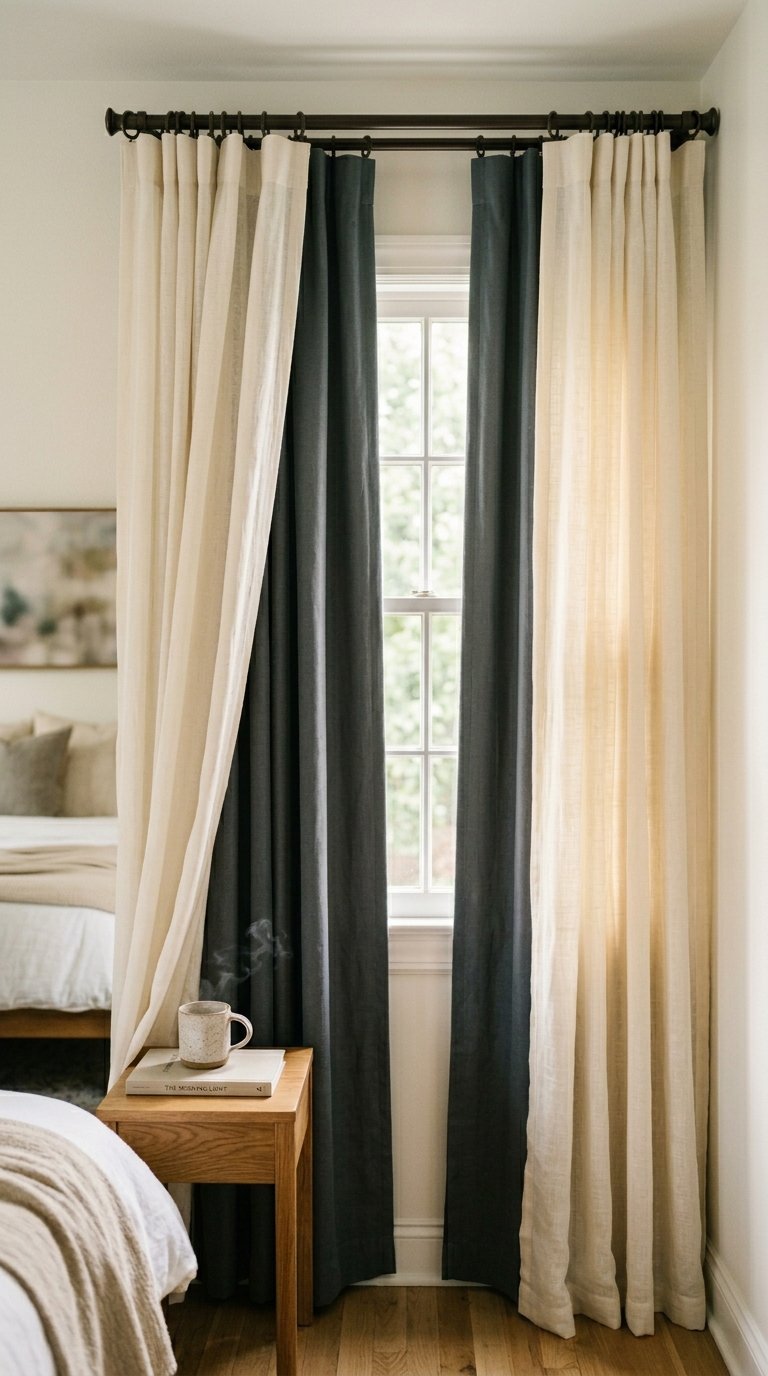
Sheer curtains alone give you privacy problems. Blackout curtains alone make your room feel like a cave at noon. Layering both on a double rod gives you full control sheers for daytime softness, blackouts when you need sleep.
This setup works especially well in east-facing bedrooms where morning sun hits hard. The sheer layer diffuses light beautifully instead of killing it completely.
2. Hang Curtains High and Wide
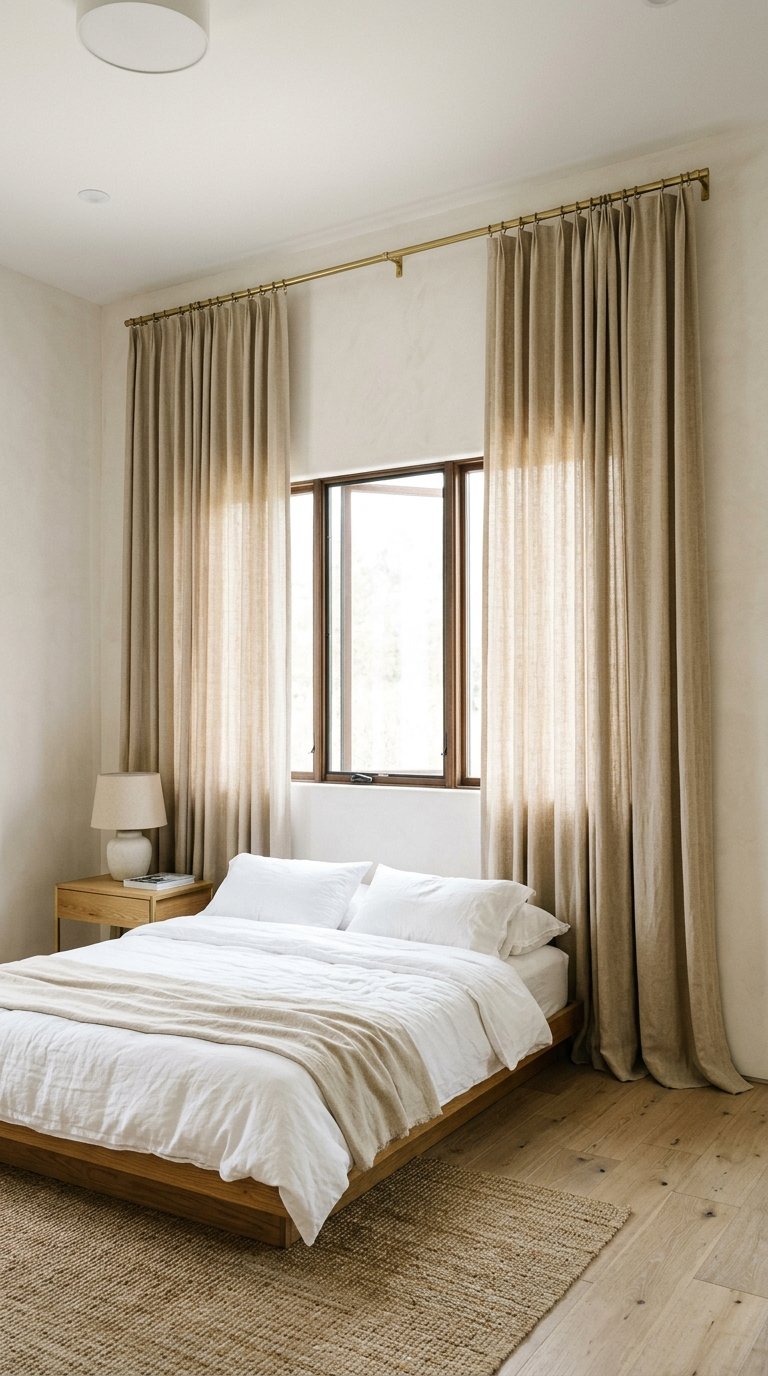
Mount your curtain rod 4 to 6 inches above the window frame, and extend it 6 to 10 inches on each side. This makes a standard 36-inch window look dramatically larger without touching the walls.
Interior designers use this trick in every project because it visually raises ceiling height. It costs nothing extra if you’re already buying curtains.
3. Use Roman Shades for Small Windows
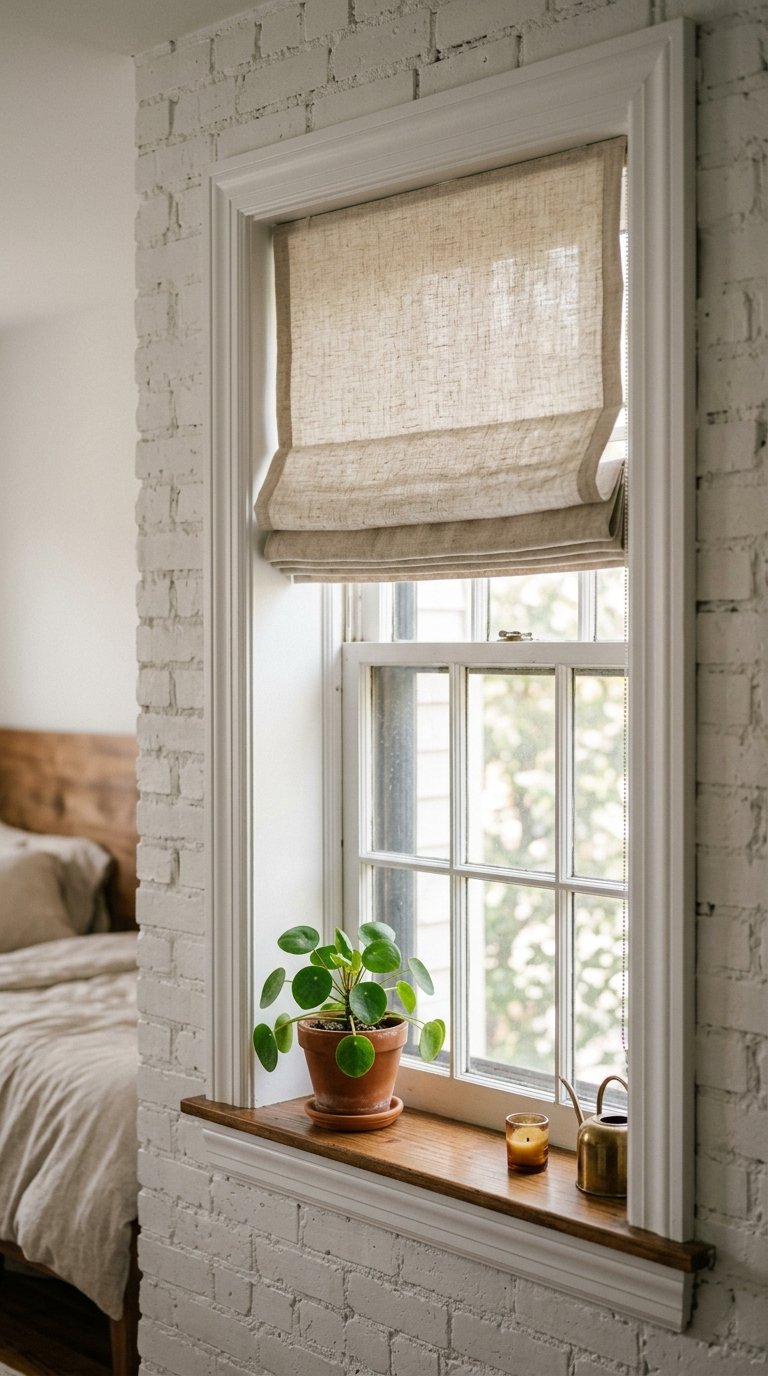
Small, awkward windows look worse with bulky curtains. A flat Roman shade fits cleanly inside the frame, keeps the lines clean, and doesn’t eat floor space with fabric puddles.
Linen Roman shades in a neutral tone work particularly well in rentals because they feel elevated without being permanent. They’re also easier to clean than pleated curtains.
4. Install Plantation Shutters for Long-Term Value
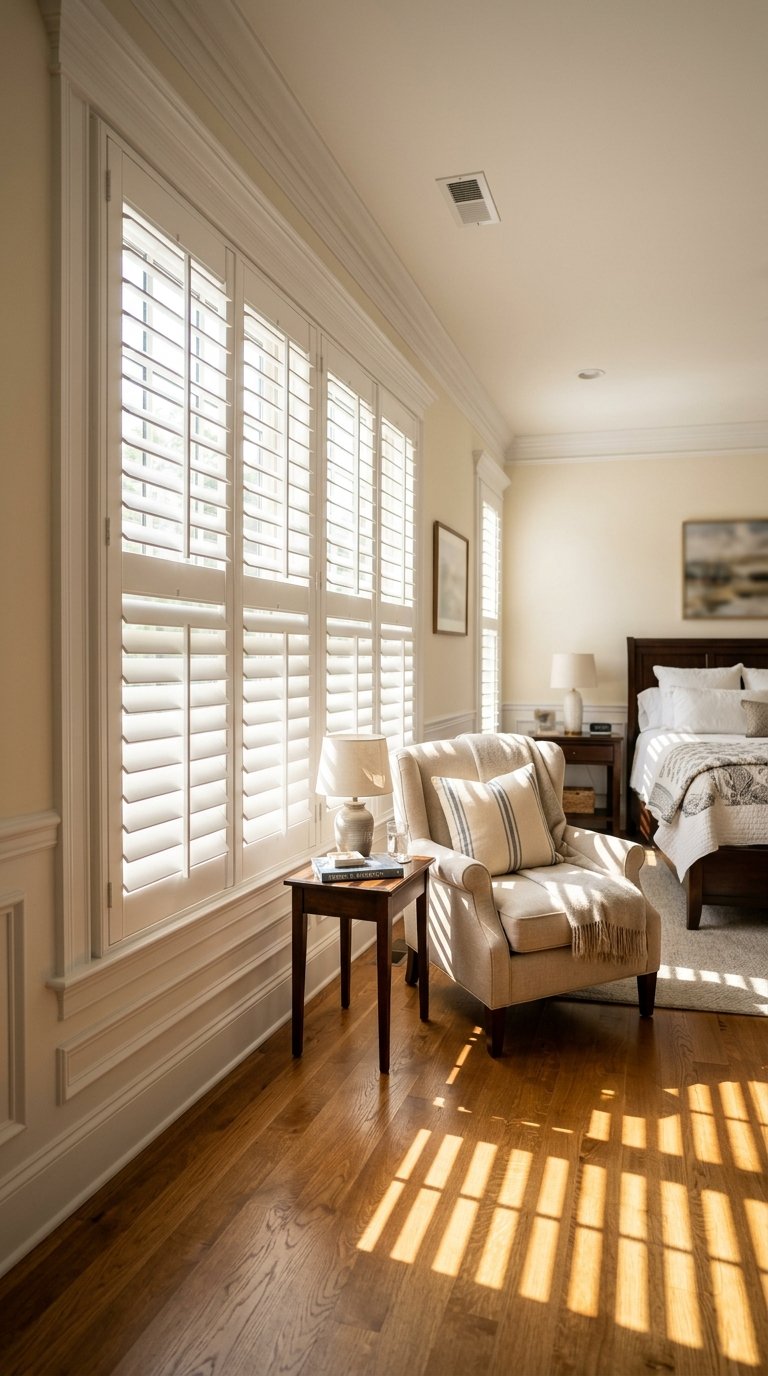
Plantation shutters cost more upfront typically $200 to $350 per window installed but they add measurable resale value and never go out of style. Real estate agents consistently flag them as a selling point.
They also give you precise light control without any fabric. If you have allergies, this matters more than you’d think.
5. Try a Curtain Canopy Over a Bed Centered Under a Window
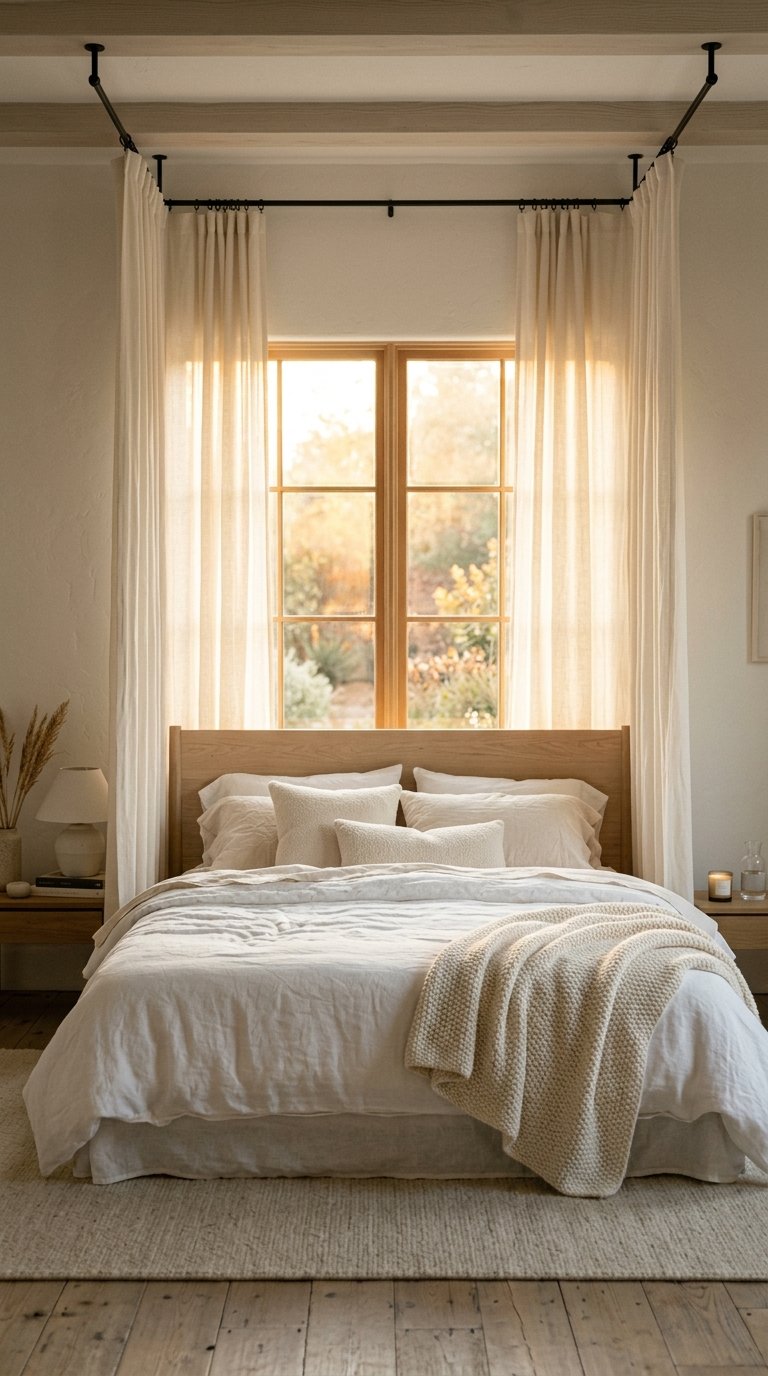
If your only option is a bed pushed against a window wall, lean into it. Mount a curtain rod on the ceiling above the bed, hang panels on either side of the window, and you create a canopy effect that frames the window instead of fighting it.
This works brilliantly in small bedrooms where furniture placement options are limited. It also adds a boutique hotel feel without spending boutique hotel money.
6. Add a Window Seat for Dead Corner Space
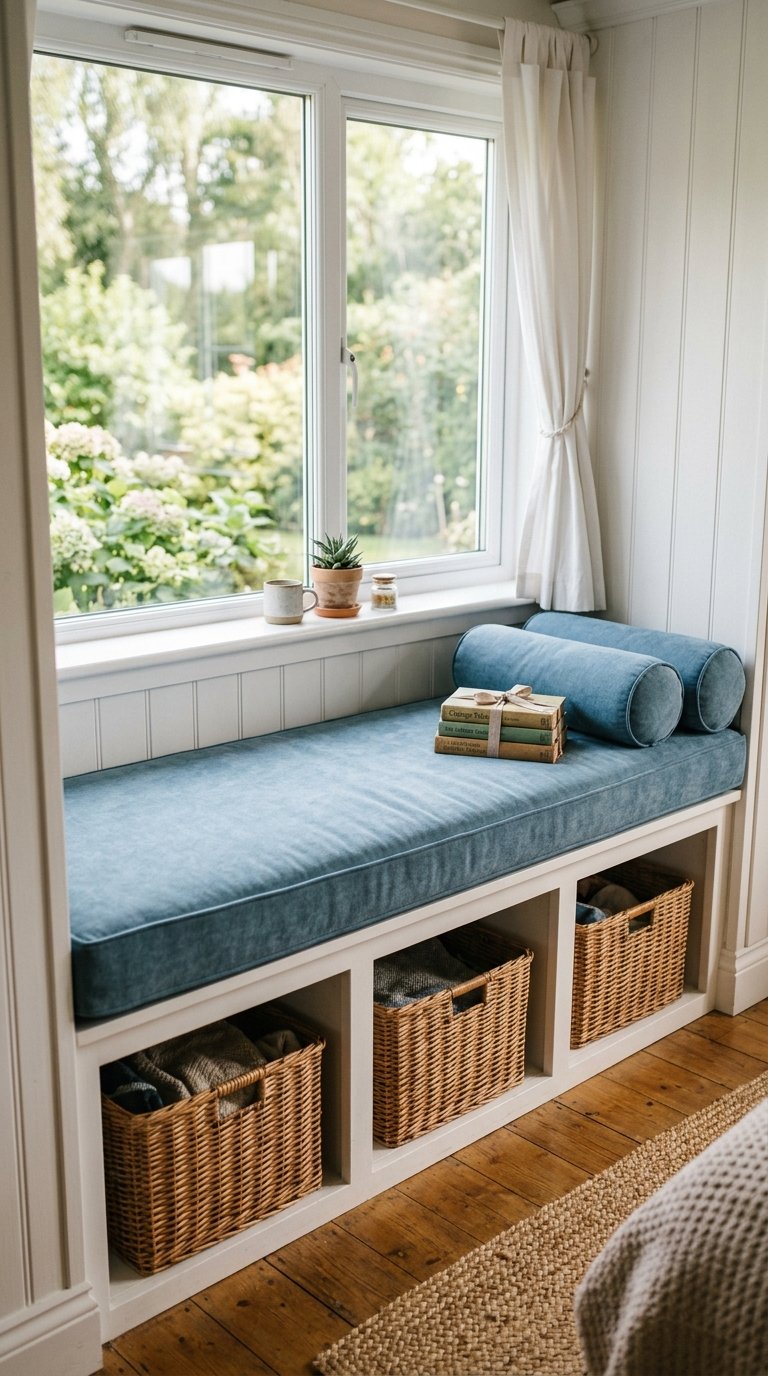
A window seat turns the awkward area below a low sill into functional storage and a reading nook. Built-in versions cost $1,000 and up, but an IKEA Kallax unit laid on its side and fitted with a cushion runs under $200.
The key is sizing the cushion to overhang slightly so it reads as intentional furniture rather than a hack. Add two bolster pillows and it looks custom.
7. Use Woven Wood Shades for Warmth and Texture
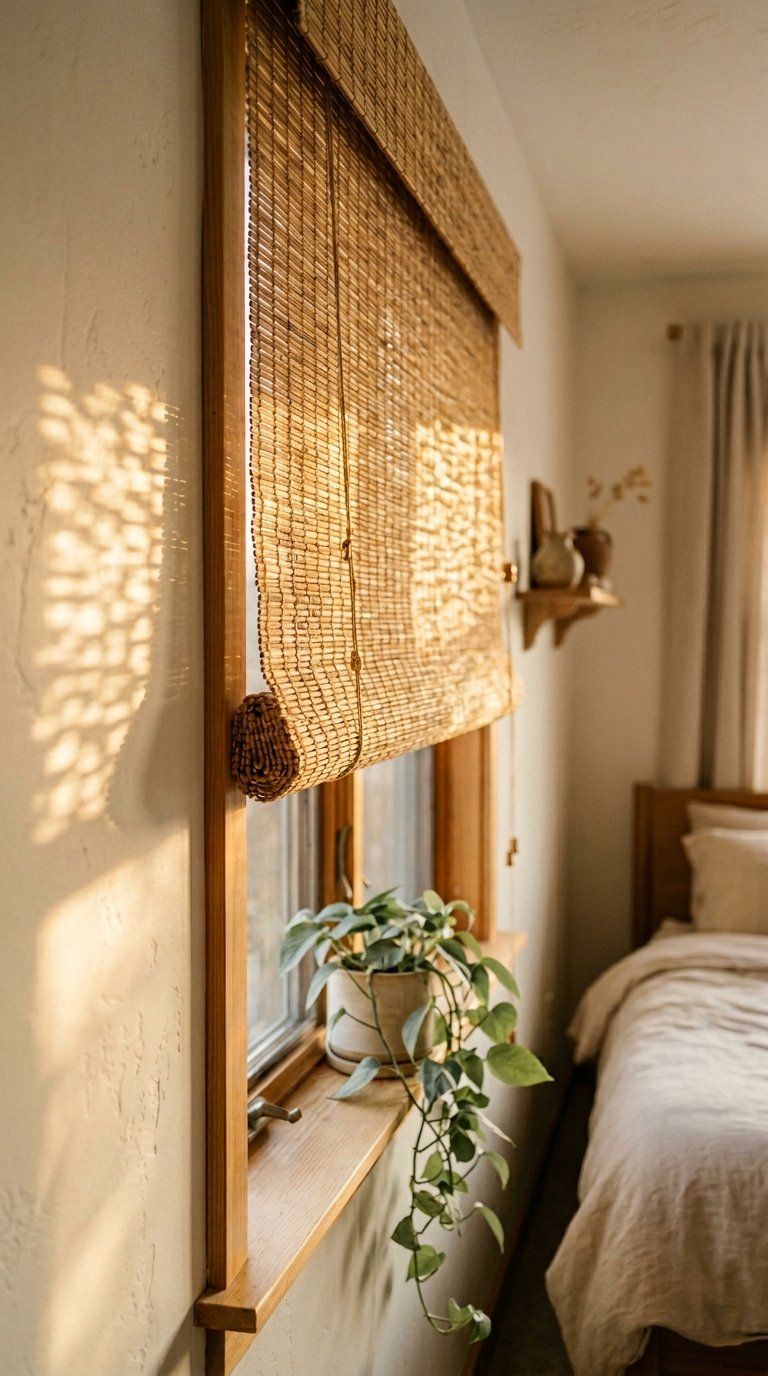
Flat white blinds make bedrooms feel like offices. Woven wood shades made from bamboo, jute, or reeds bring in organic texture that softens the whole room immediately.
They filter light warmly rather than blocking it, which creates a golden glow in the afternoon. Prices start around $40 per shade online, which makes them one of the highest-impact, lowest-cost upgrades available.
8. Go Floor-to-Ceiling With Curtains in Low-Ceiling Rooms
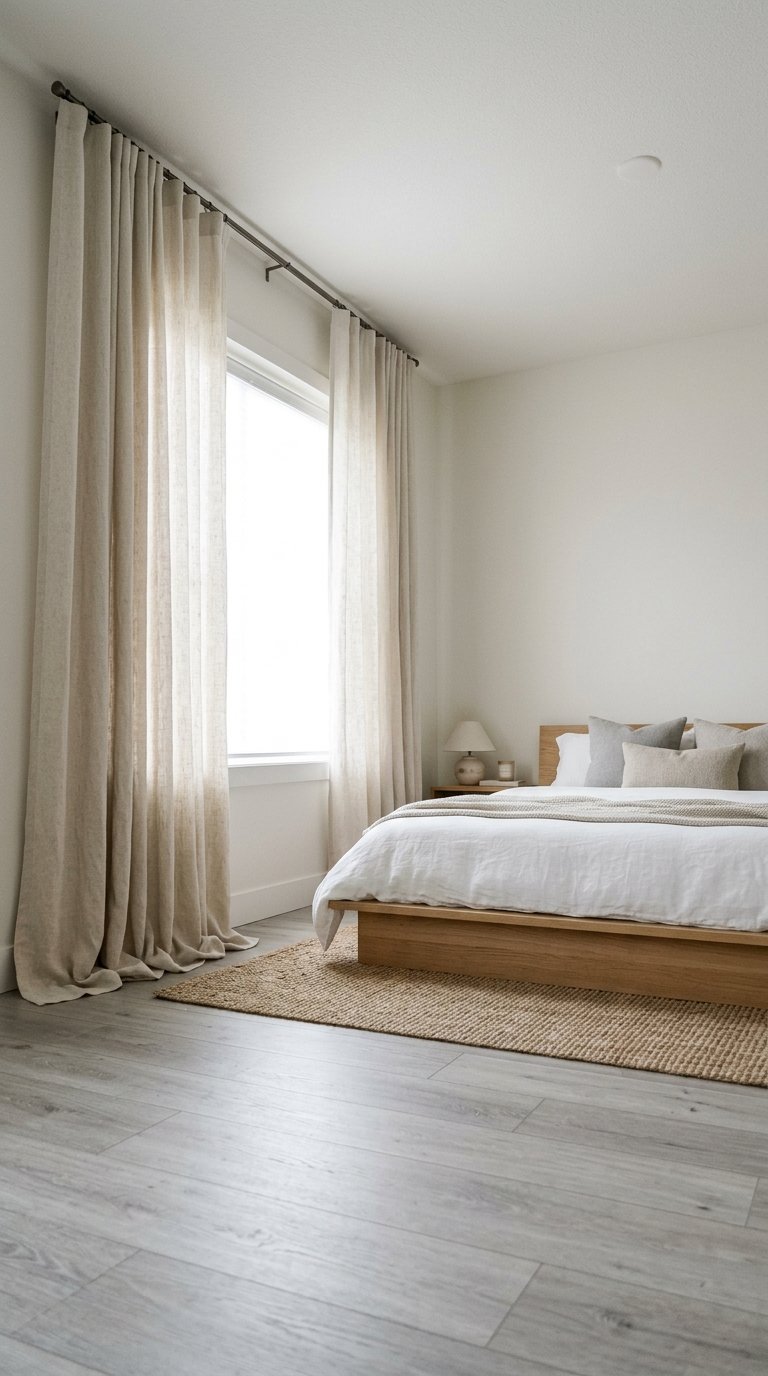
In rooms with 8-foot ceilings (which is most homes), standard curtain lengths make the ceiling feel lower. Floor-to-ceiling panels that just graze the floor pull the eye upward and add perceived height.
The trick is buying 96-inch or 108-inch panels rather than the standard 84-inch, which look stubbornly short. This single change is one of the most common fixes in staging homes for sale.
9. Mount Blinds Inside the Frame for a Clean Look
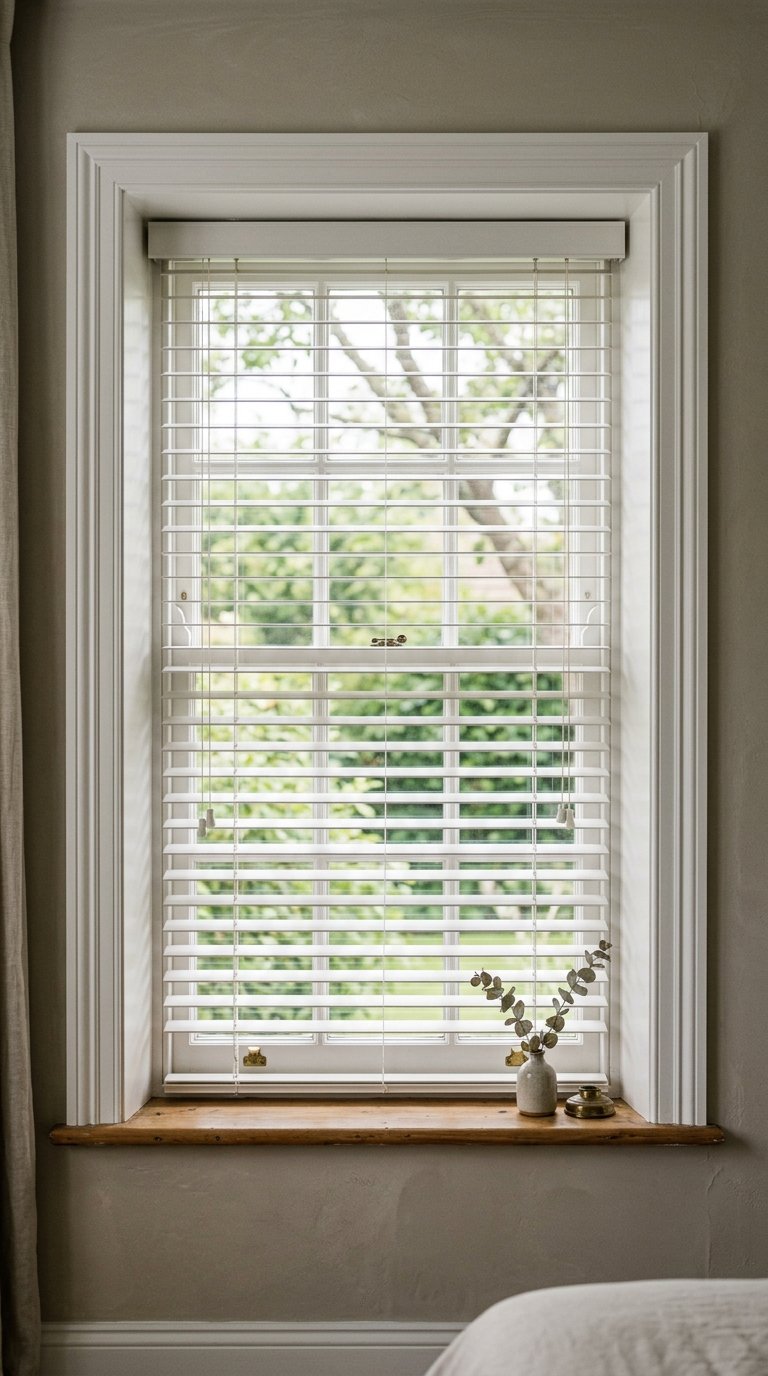
Inside-mount blinds sit flush with the window frame and expose the trim around it. If you have original wood trim or painted millwork, this shows it off instead of covering it.
Outside-mount blinds are better for covering damaged frames or making windows appear larger. Knowing which to choose based on your specific window condition saves you from a mediocre result.
10. Use Dark Curtains to Anchor a Light Room
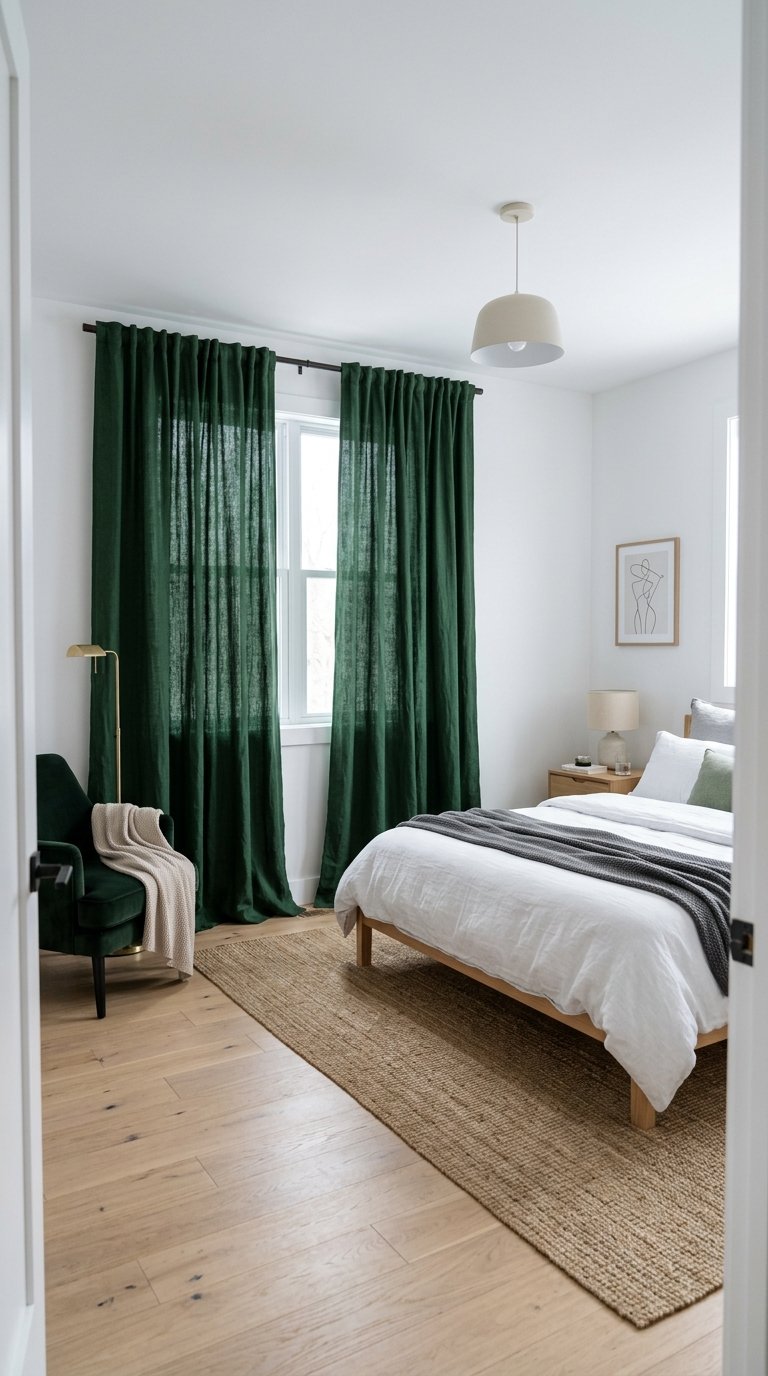
People avoid dark curtains in small rooms out of fear, but a deep navy or forest green panel in a white room creates visual weight that makes the space feel more intentional. Without anchor points, all-white rooms feel unfinished.
A single pair of dark linen curtains costs less than most throw pillows and has a far bigger visual impact. The color also absorbs light in a way that reads as cozy rather than heavy.
11. Add Trim to Plain Curtains
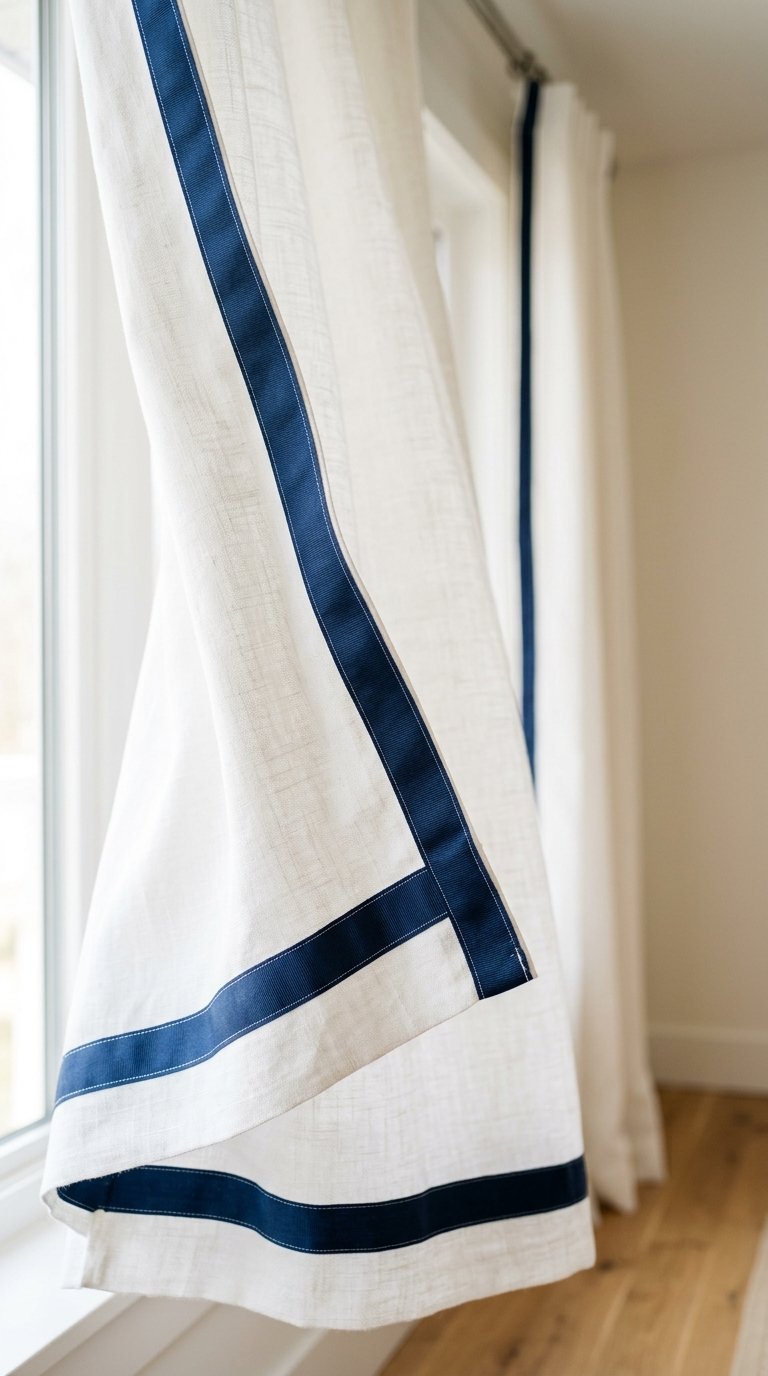
Off-the-shelf curtains look, well, off-the-shelf. Sewing or ironing grosgrain ribbon along the edges inner edge, bottom hem, or both makes them look custom-made.
This works on IKEA RITVA curtains better than almost any others because the fabric is thick enough to hold the trim without puckering. Total cost with trim: under $40 per panel.
12. Install Cafe Curtains for Street-Level Bedrooms
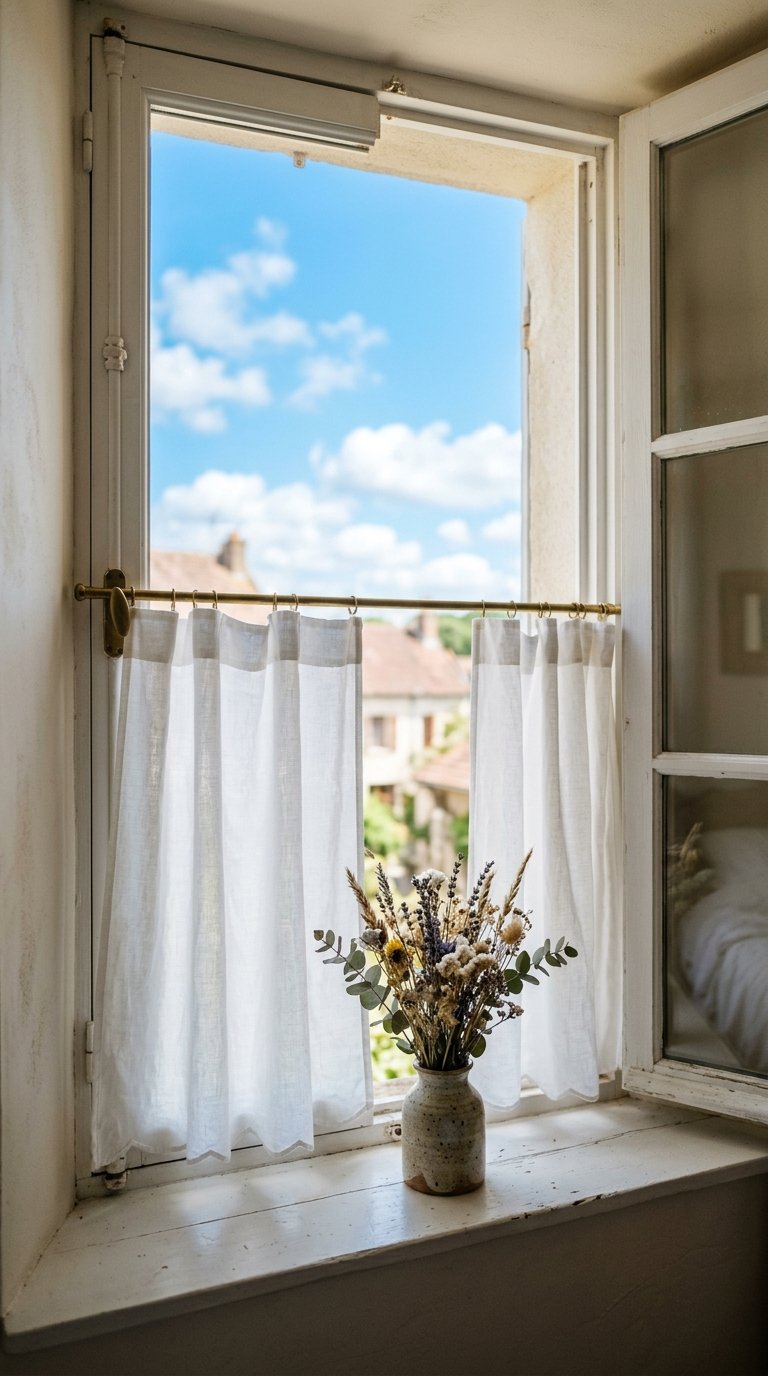
If your bedroom window sits low and faces a street or neighbor, cafe curtains cover only the bottom half. You get privacy where you need it without losing the top portion of natural light.
This is a popular solution in older homes and apartments where windows sit unusually low. It also reads as charming rather than defensive, which makes it a better visual choice than frosted window film.
13. Use a Tension Rod for Renters Who Can’t Drill
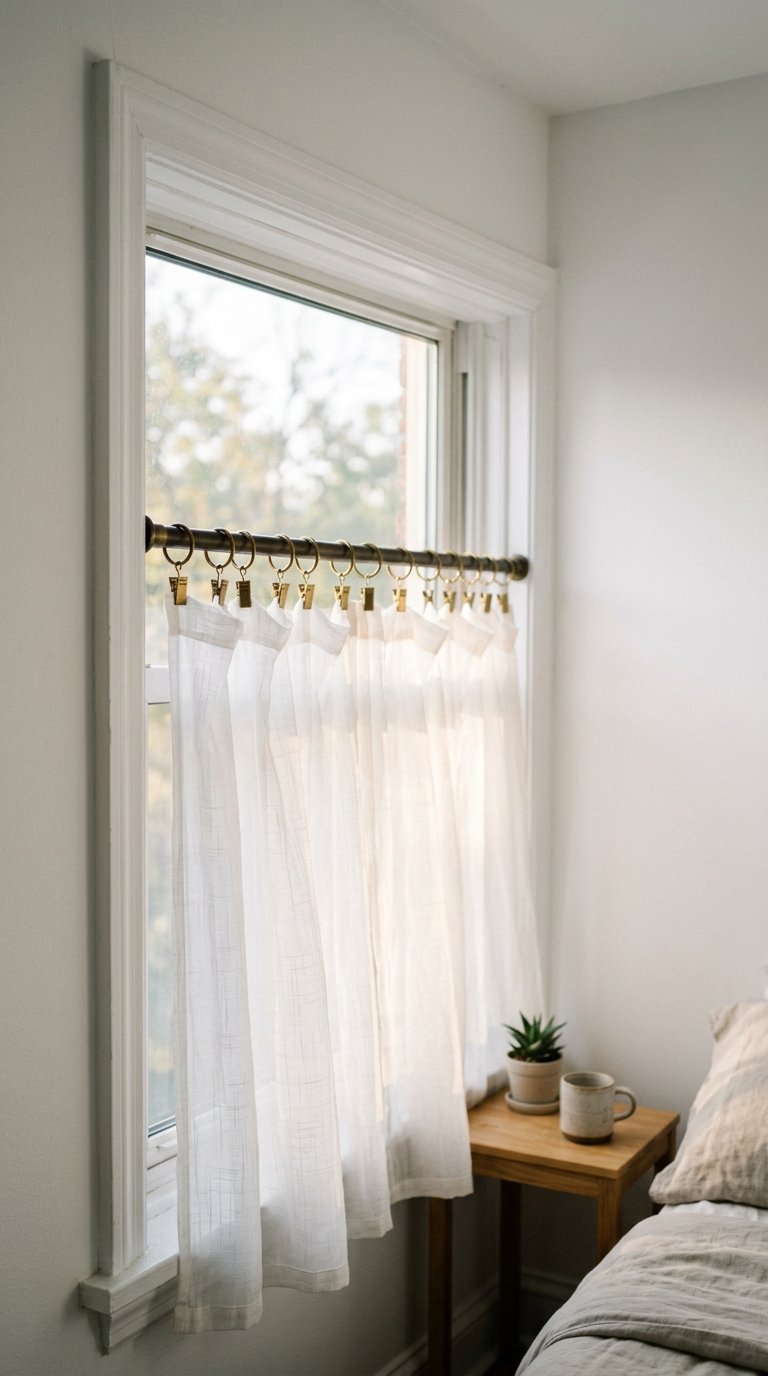
Tension rods have improved significantly and now hold substantial curtain weight without wall damage. They fit between window frames without hardware, which makes them a genuine option for renters not a reluctant workaround.
Use them with lighter-weight curtains like linen or cotton voile to avoid sagging. Pairing them with curtain clips instead of rod pockets also distributes the weight more evenly.
14. Frame the View With Minimal Drapery Panels
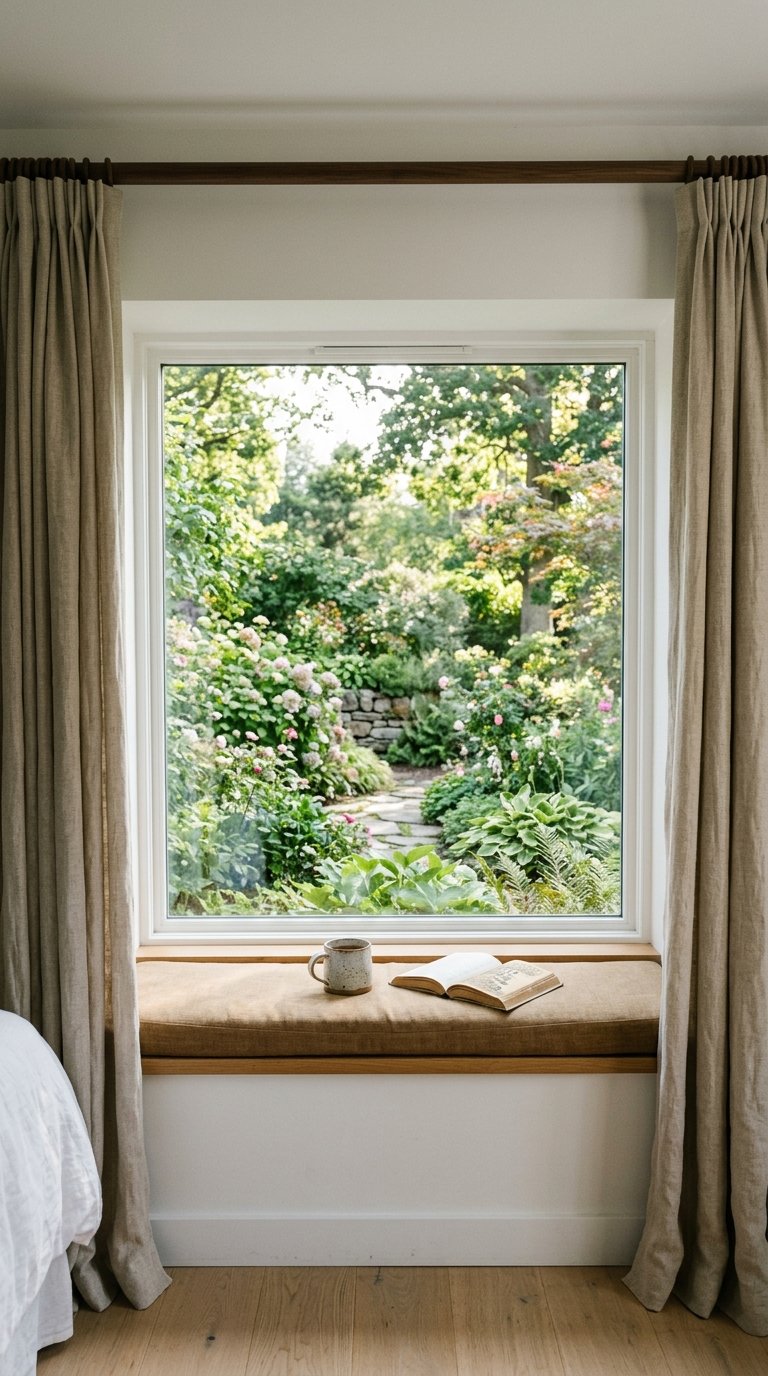
If your window faces a garden, courtyard, or any appealing outdoor view, heavy treatments fight the view rather than frame it. Two simple panels pushed to the outer edges of a wide rod are enough they frame without blocking.
This approach works best when the panels extend well beyond the window width, making the window feel panoramic. It’s the same principle architects use with picture windows in high-end homes.
15. Try Motorized Blinds for Hard-to-Reach Windows
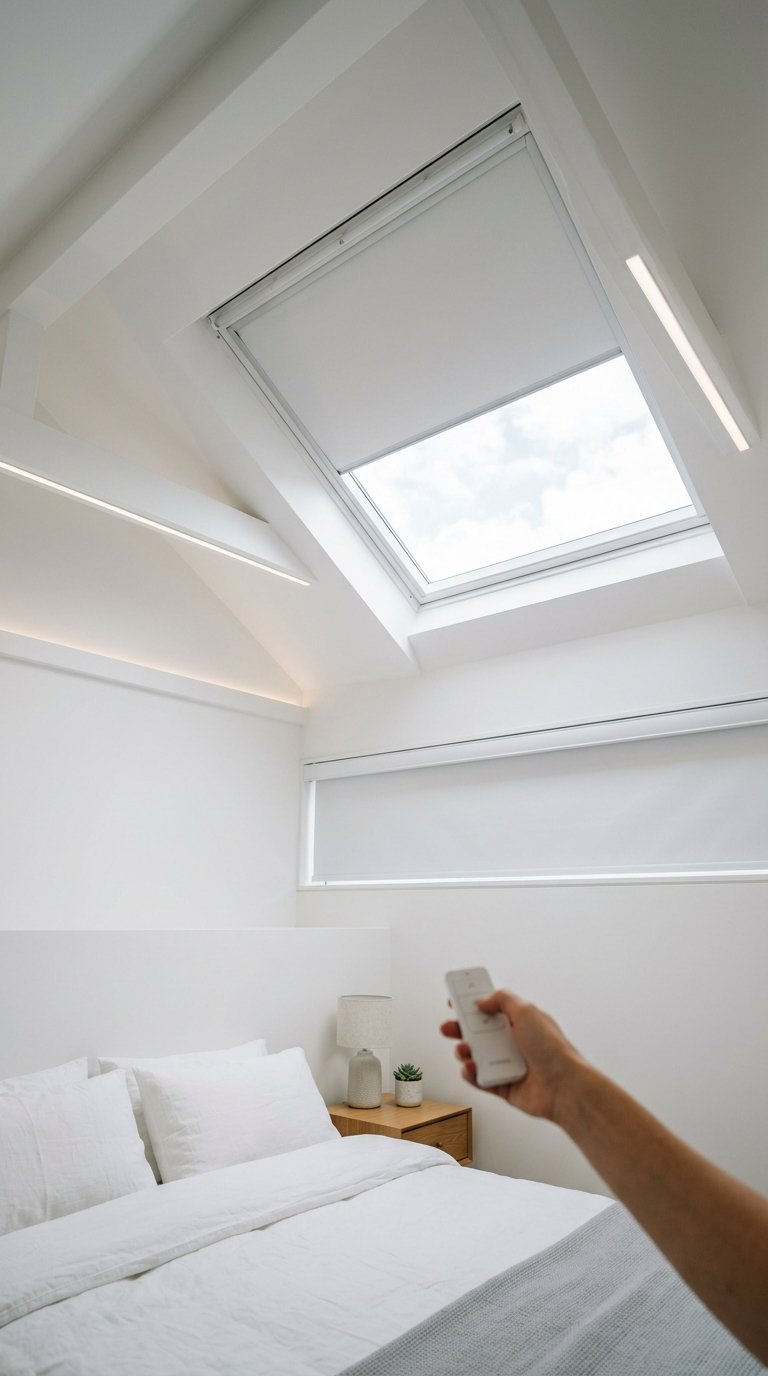
Skylights and high transom windows above beds are notoriously annoying to manage manually. Motorized roller shades controlled by remote or phone solve this without any structural changes.
IKEA’s FYRTUR range offers motorized blackout roller blinds starting around $130, which is a fraction of what custom motorized shades cost. For a skylight bedroom, this isn’t a luxury it’s a sleep quality investment.
16. Create a Focal Point With a Bold Curtain Color
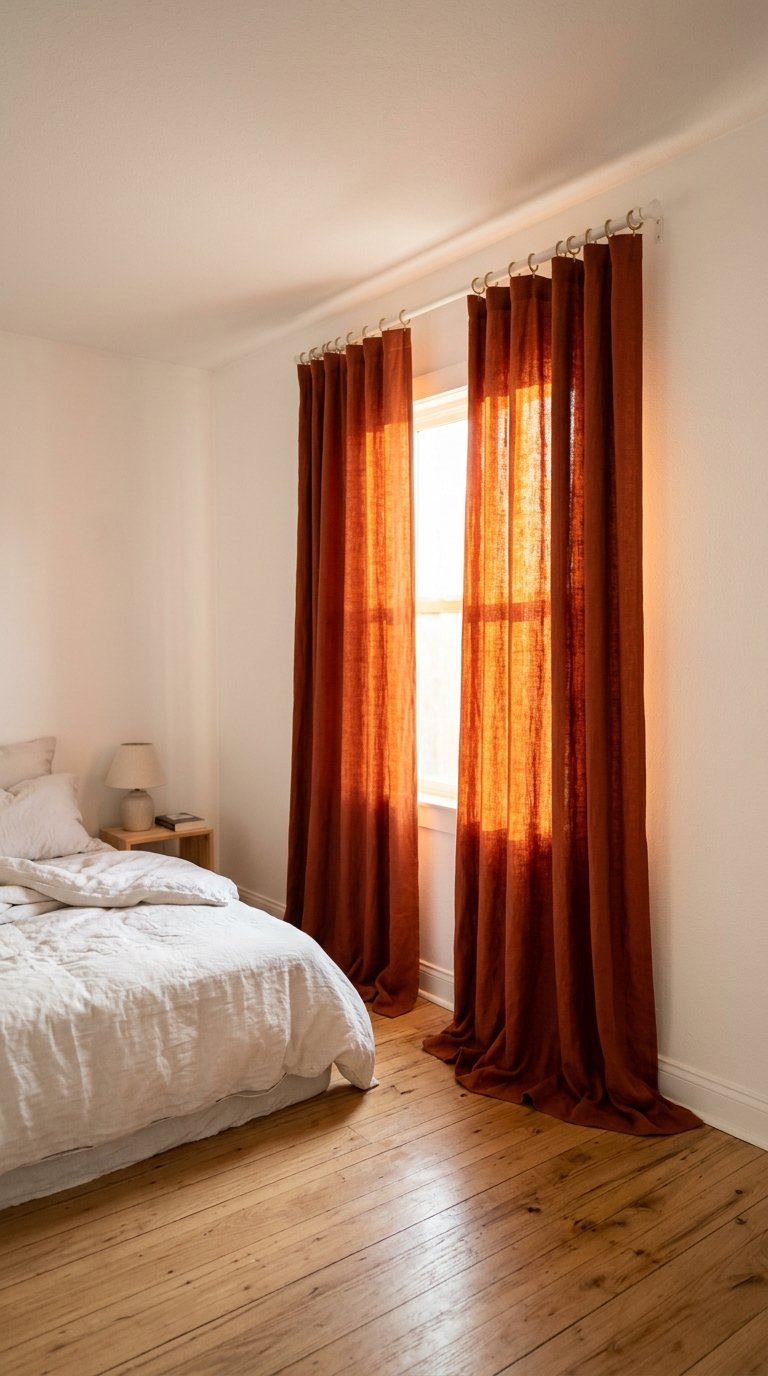
Most bedrooms have neutral walls and neutral curtains, which means nothing draws the eye. One set of curtains in a saturated color terracotta, cobalt, or emerald, immediately gives the room a focal point without committing to paint.
Curtains are also easier to swap than wall paint if you change your mind. FYI, warm terracotta curtains specifically read as sophisticated in bedrooms because they complement a wide range of skin tones in mirror reflections.
17. Use Blackout Liner Clips Instead of Buying New Curtains
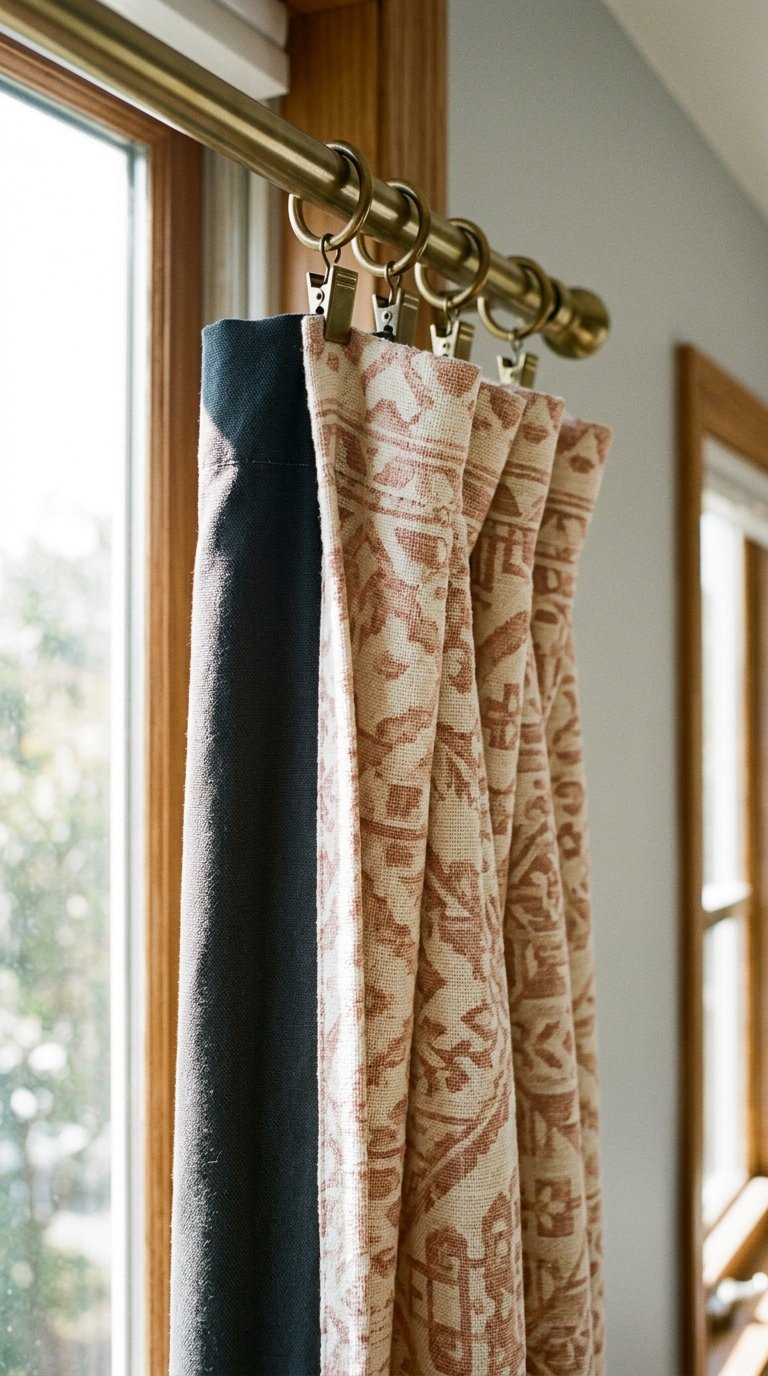
If you already have curtains you like but they don’t block light, blackout liner panels that clip directly to existing curtain rings cost around $20 to $30. You keep the look, add the function.
This is the fastest solution for shift workers, parents of young children, or anyone in a sun-drenched room. No sewing, no new rods, no measuring.
18. Add a Pelmet or Cornice Box Above the Window
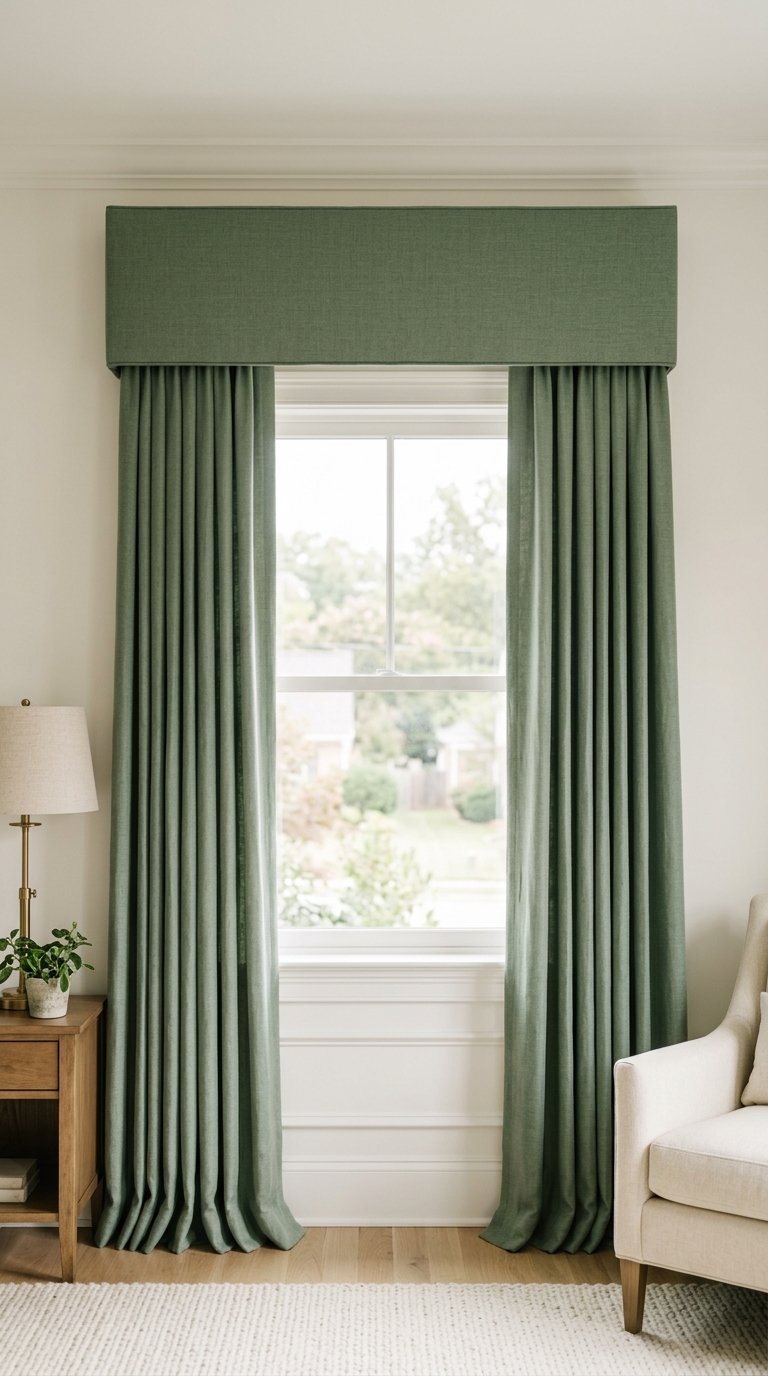
A pelmet is a fabric-covered box mounted above the window that hides the curtain rod and creates a tailored, finished look. Hotels use them constantly because they make windows look architecturally significant even when they’re not.
You build a basic wooden box, wrap it in fabric, and mount it above the rod. Total materials run $50 to $80, and the visual payoff is enormous, it looks like a $500 custom addition.
19. Layer Multiple Textures in Neutral Tones
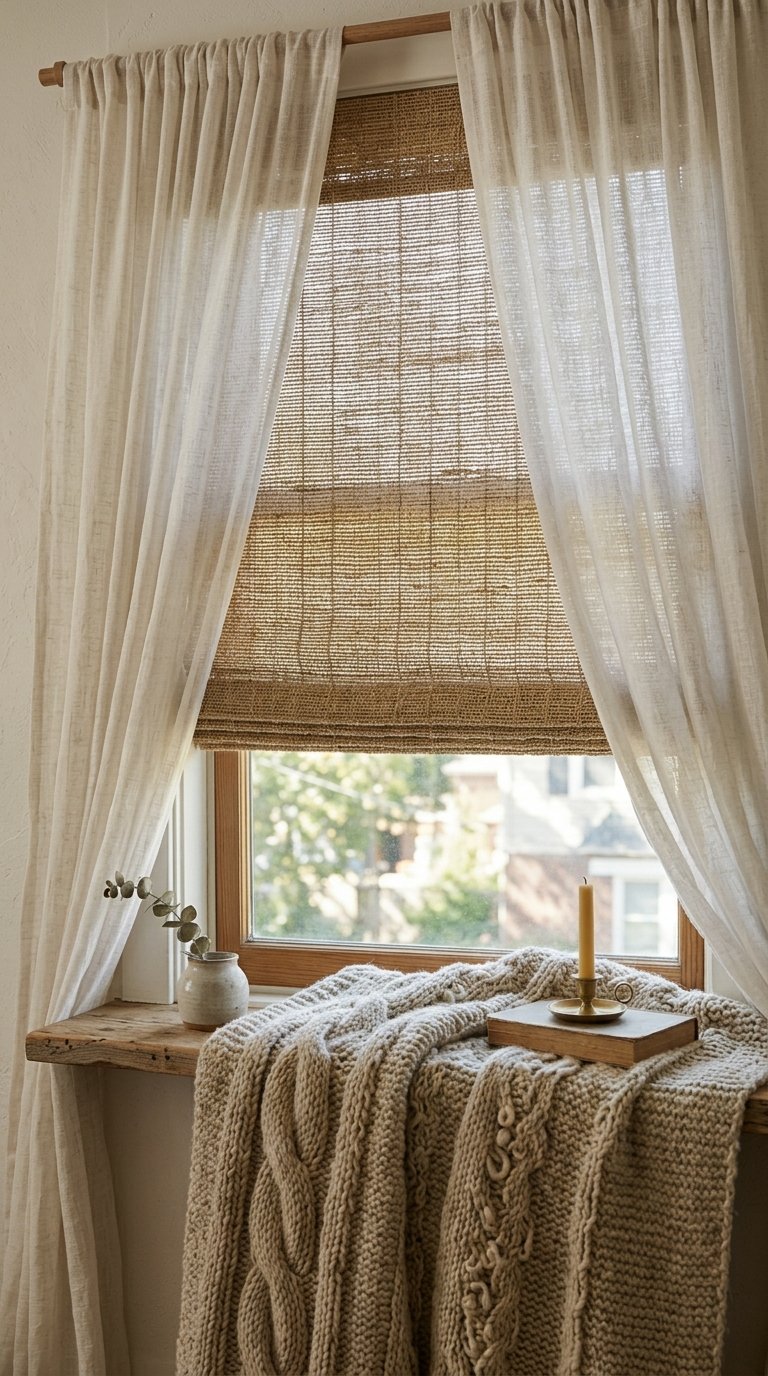
A window treatment that combines sheer linen, a woven blind, and a chunky knit throw draped on the sill creates depth through texture rather than color. This works particularly well in Scandinavian or organic modern bedrooms.
The layering also serves a practical purpose, sheer for diffused daytime light, blind for privacy, throw to soften the hard sill edge. Each element solves something while adding to the overall look.
20. Use Mirror Film on Lower Window Panes
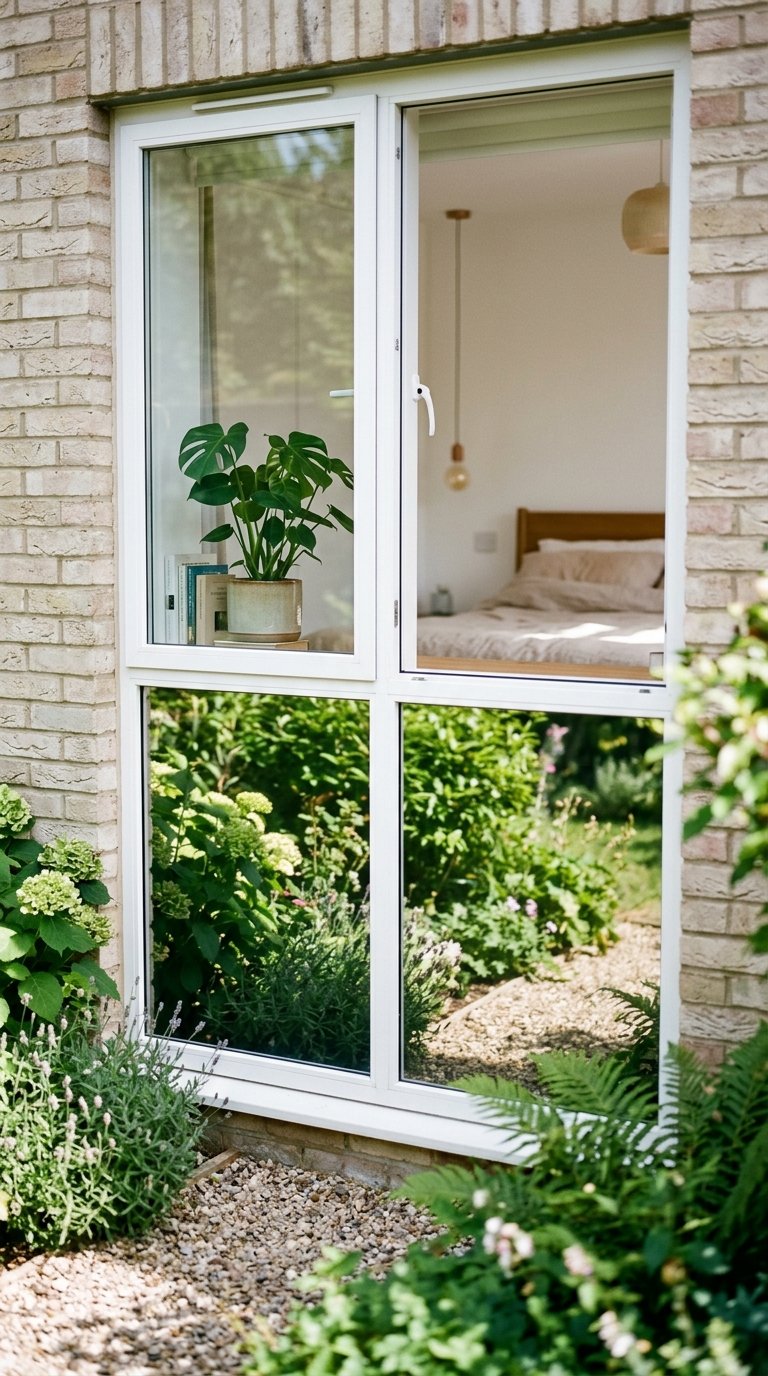
One-way mirror film applied to the lower half of a bedroom window gives you daytime privacy without blocking light or requiring any window treatments at all. It costs around $15 to $25 for a standard window.
It does not work at night, when your interior is brighter than outside, visibility reverses. For daytime-specific privacy needs in ground-floor bedrooms, it’s one of the most practical and invisible solutions available.
21. Style the Windowsill as a Functional Shelf
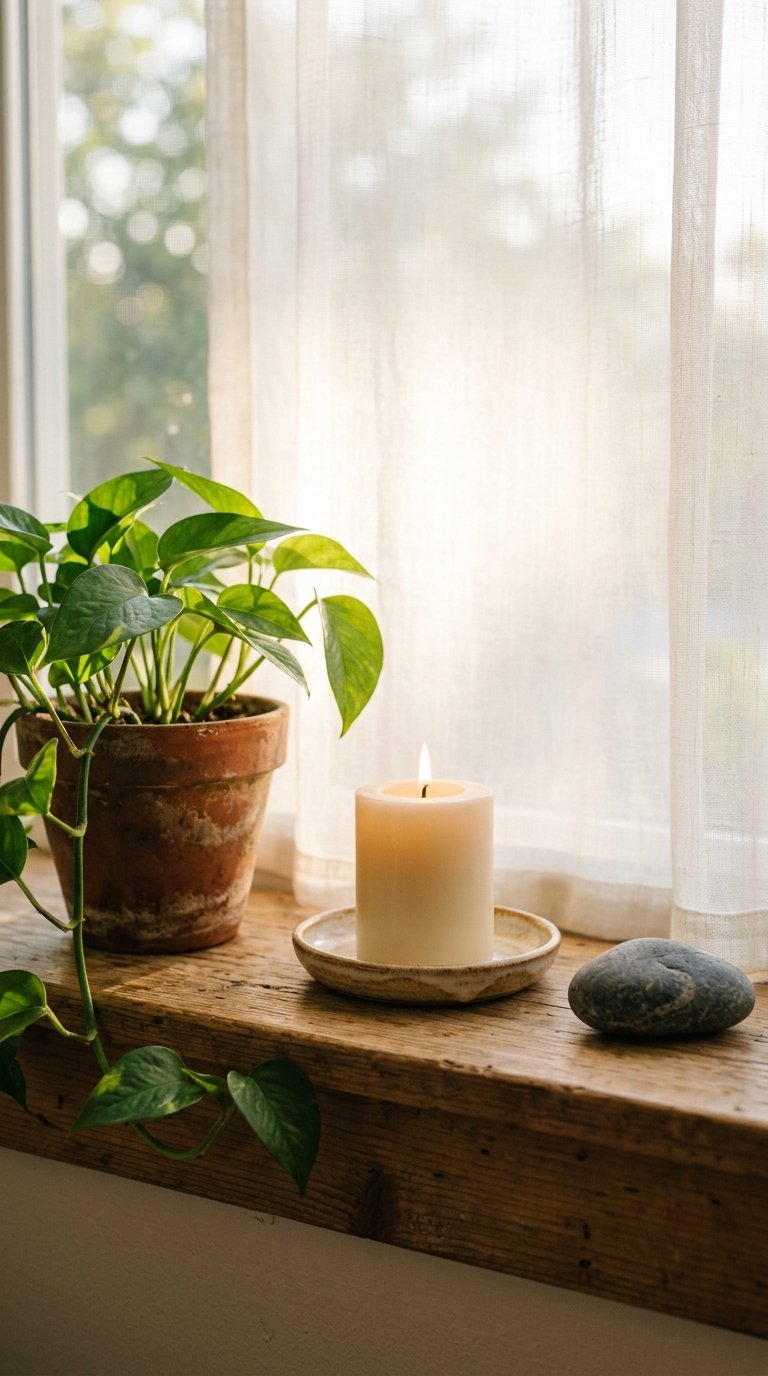
An empty sill is wasted space. A small trailing plant like pothos, a scented candle, and one object of visual interest: a ceramic piece, a stone, a small book turns the sill into a composition that frames every look out the window.
Keep it to three objects maximum. The rule of odd numbers applies here because two items look accidental and four look cluttered. Three reads as curated.
Final Thoughts
Your bedroom window shapes how light moves through the room, how private you feel, and how finished the whole space looks. None of these 21 ideas require structural work, and most cost under $100 to execute.
Pick the one that solves your most immediate problem, whether that’s too much morning light, too little privacy, or curtains that look like they came with the apartment. IMO, starting with the high-and-wide hanging trick (Idea 2) gives you the biggest visual return for zero additional cost if you’re already buying curtains. Start there, then layer in the rest.