23 Japanese Kitchen Ideas for a Calm, Zen Makeover
Japanese kitchens don’t look calm by accident. Every material, every storage decision, and every surface choice follows a deliberate philosophy: remove what you don’t need, honour what you keep, and let function drive form.
The result is a kitchen that feels like a breath of fresh air the moment you walk in. No cluttered counters, no mismatched appliances fighting for attention, no cabinet full of things you haven’t used since 2019. These 23 Japanese kitchen ideas give you the specific moves to get there, whether you’re renovating from scratch or upgrading what you already have.
1. Commit to a Neutral, Nature-Inspired Colour Palette
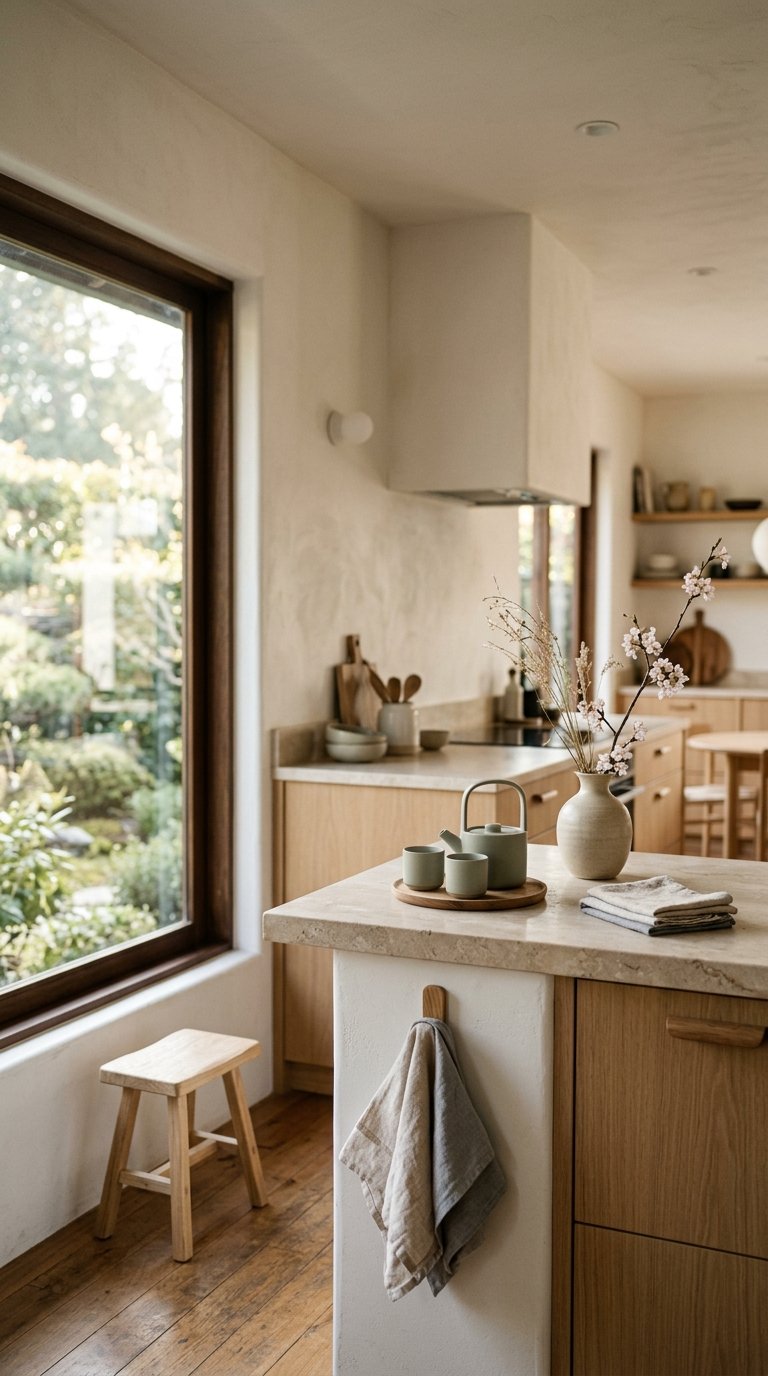
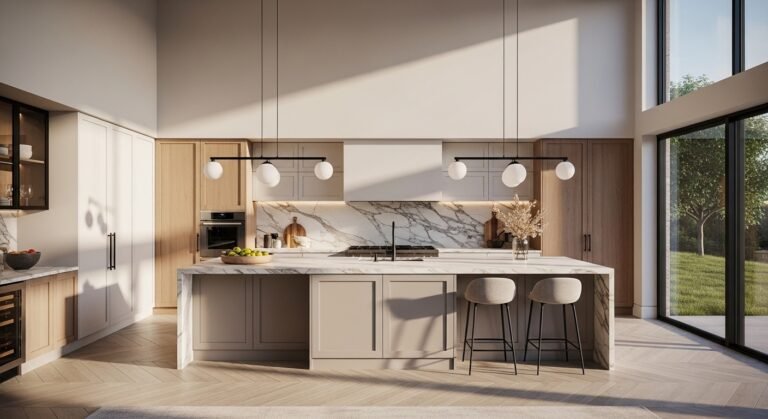
Japanese kitchen design draws its colour palette directly from the natural world: warm whites, soft greys, earthy beiges, muted sage, and the warm brown of natural wood. These colours don’t compete with each other, which is exactly the point.
A neutral palette also makes the kitchen feel larger because the eye moves across surfaces without stopping in contrast. Paint walls in warm white or off-white (Benjamin Moore’s White Dove or Farrow and Ball’s Pointing work perfectly), and let the material textures do the visual work instead of colour contrast.
2. Use Natural Wood for Cabinet Fronts and Shelving
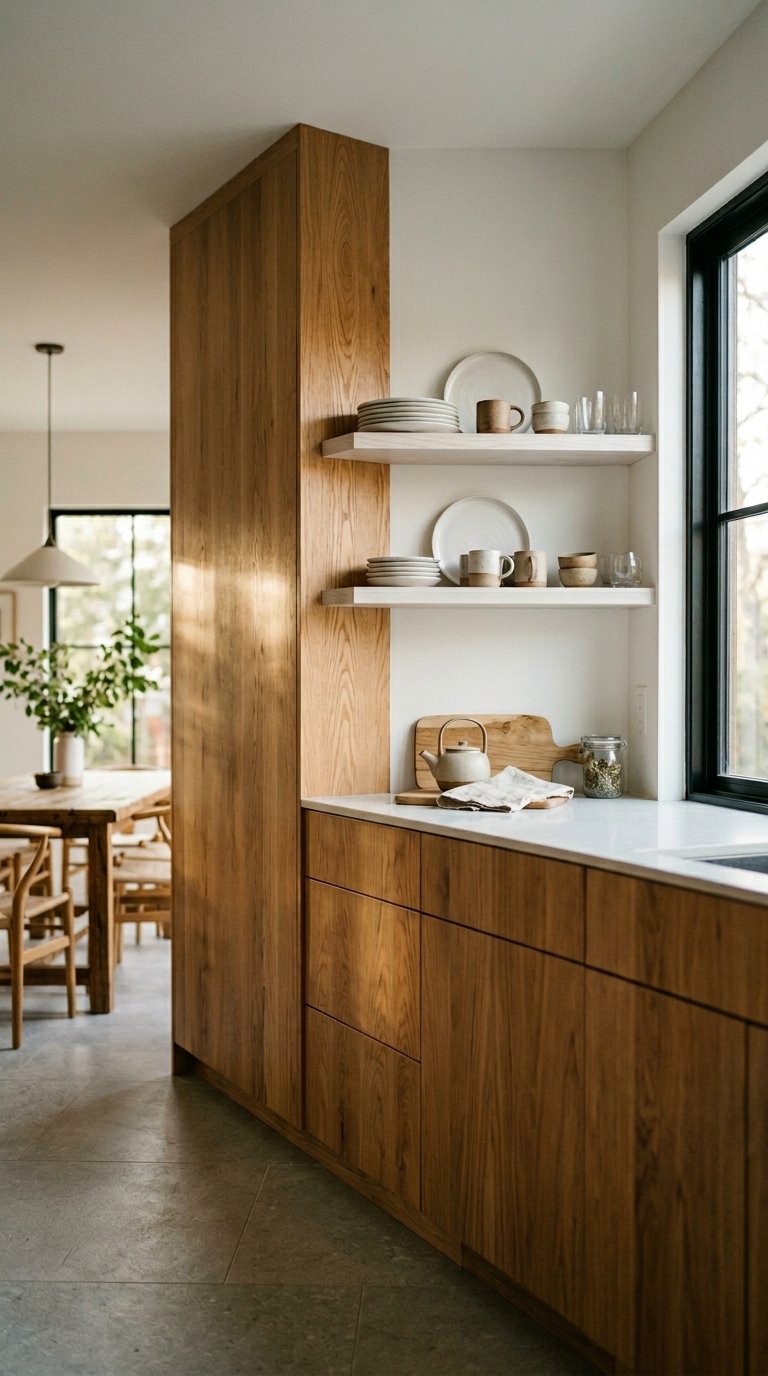
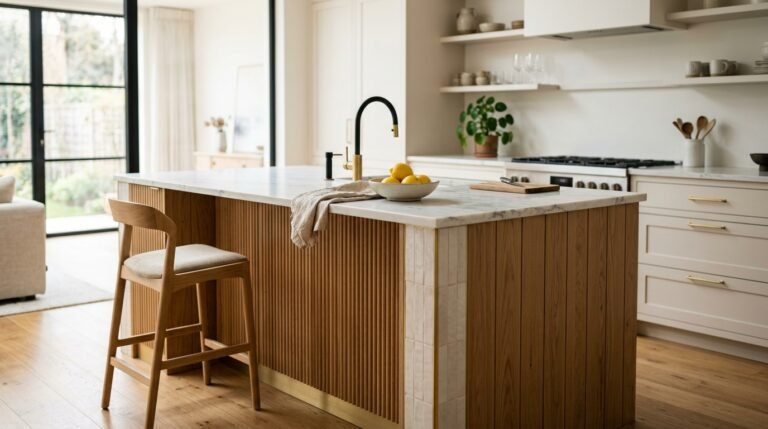
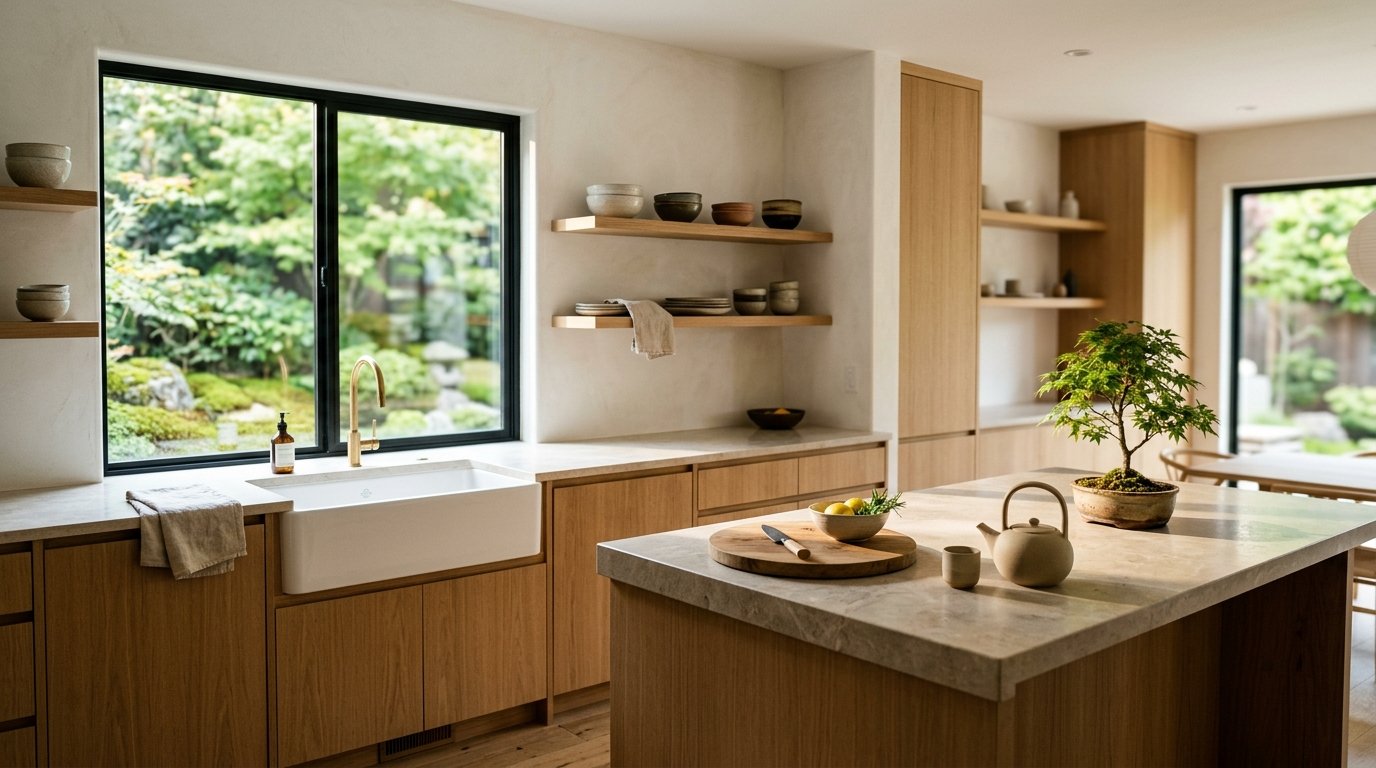
Natural wood is the defining material of Japanese kitchen design. Light oak, hinoki cypress, and white ash are the most common choices, all used in their natural finish rather than painted or heavily stained.
Flat-panel cabinet fronts in natural wood grain cost the same as painted options at most cabinet suppliers and immediately shift the kitchen’s aesthetic from standard to considered. The wood grain provides visual texture without pattern, which keeps the room calm while still being visually interesting.
3. Install Open Shelving for Everyday Dishware Display
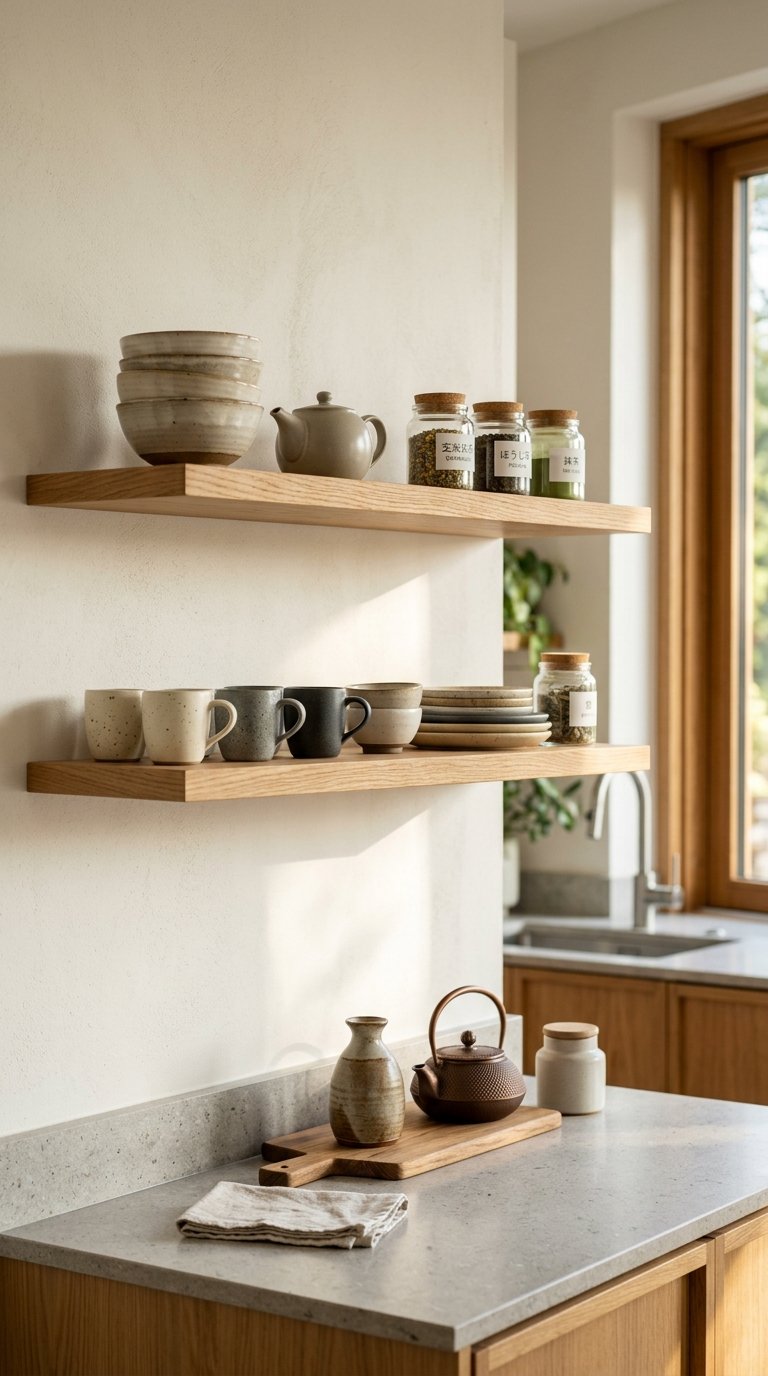
Japanese kitchen philosophy treats everyday objects as worthy of display. Open shelving at eye level holds bowls, cups, and plates that you use daily and that look good enough to show.
Floating timber shelves cost $30 to $150 per shelf installed and replace upper cabinets with a lighter, more open visual. The key is editing ruthlessly: only display pieces you use regularly and that share a cohesive colour story (earth tones, white, or natural clay colours work best).
4. Choose a Deep, Single-Basin Farmhouse Sink
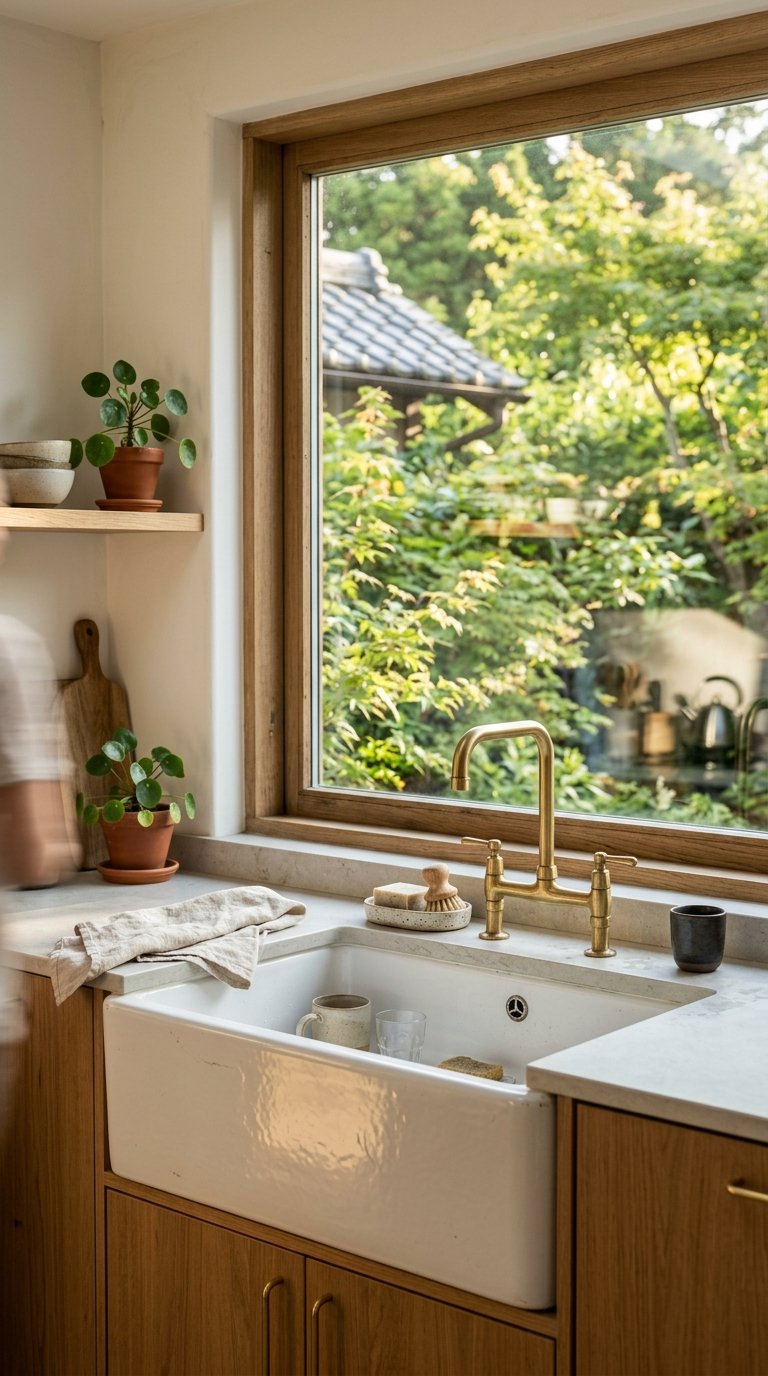
A deep single-basin sink suits the Japanese kitchen approach to dishwashing, which treats the task as a focused, mindful activity rather than a chore to rush through. Deep sinks (10 to 12 inches) accommodate large pots and cutting boards without splashing.
Fireclay farmhouse sinks cost $400 to $1,200 and come in white, biscuit, and matte grey. The apron-front profile adds a clean architectural line to the counter run that standard undermount sinks never achieve.
5. Keep Countertops Almost Completely Clear
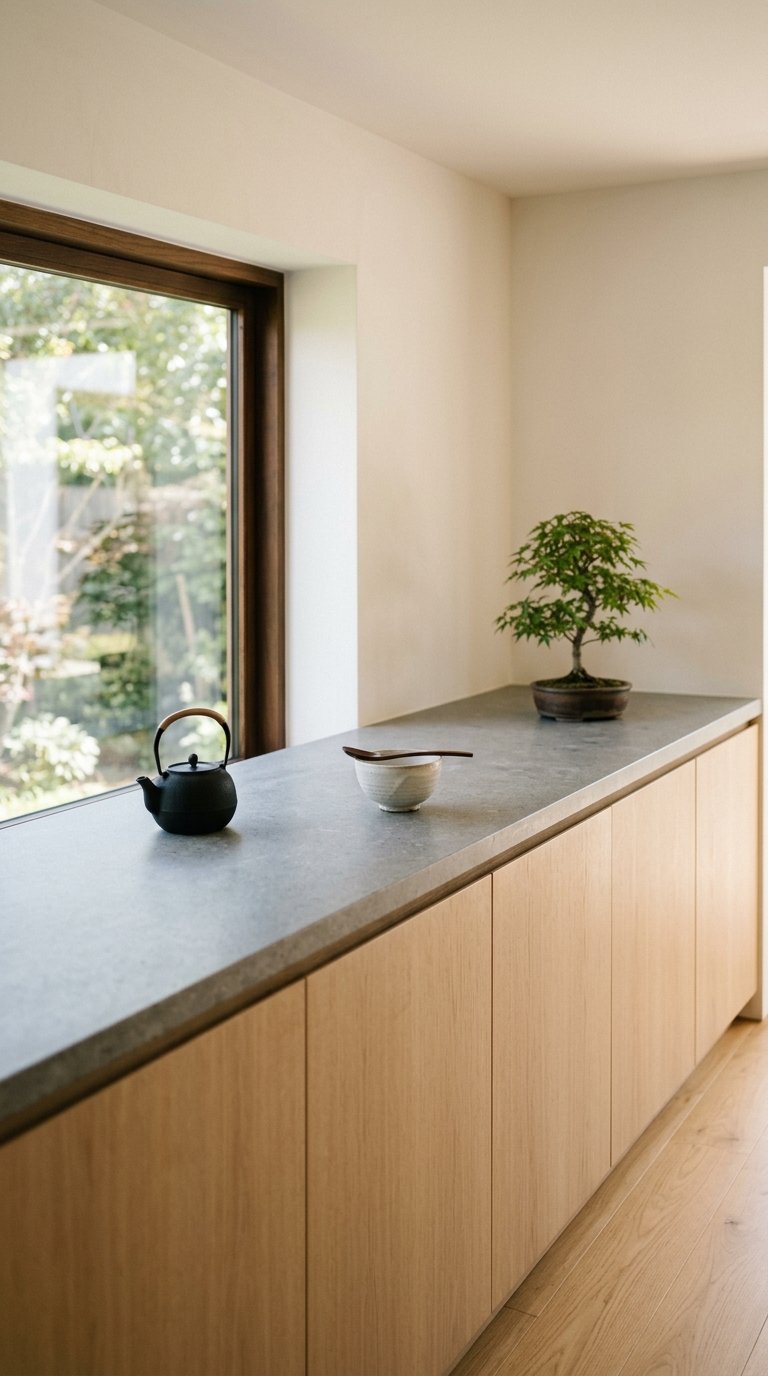
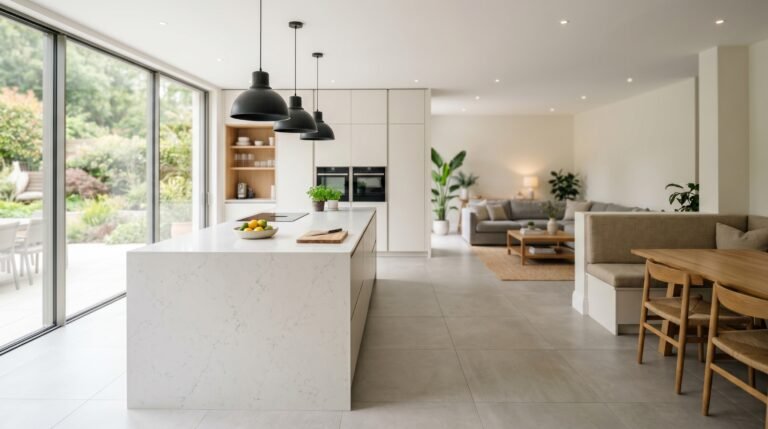
The Japanese concept of ma (negative space) applies directly to counter surfaces. A clear counter isn’t an empty counter. It’s a functional surface that communicates calm and readiness.
Store everything in cabinets or drawers except the two or three items you use every single day (a kettle, a knife block, a small plant). The discipline of keeping counters clear is the single change that most transforms a standard kitchen into one that feels Japanese in its sensibility. IMO, this one idea alone is worth more than any renovation.
6. Install a Magnetic Knife Strip Instead of a Knife Block
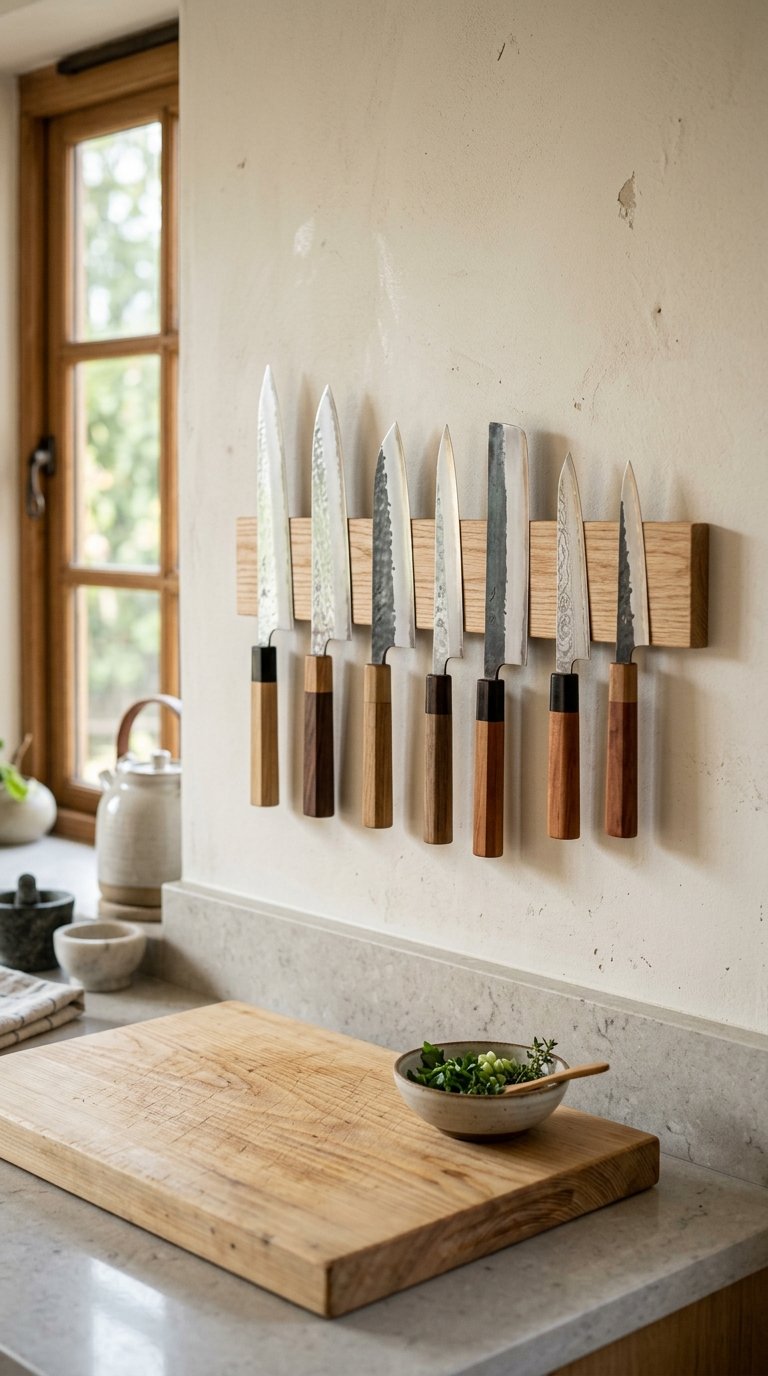
A wall-mounted magnetic knife strip holds knives at eye level, keeps blades accessible, and frees up an entire section of counter space. Stainless steel or timber magnetic strips cost $20 to $80 and mount with two screws.
Japanese kitchen culture treats knives as precision instruments deserving of proper display and care. A magnetic strip also keeps blades sharper longer than drawer storage because the edges don’t contact other utensils. Mount it at a comfortable reach height, typically 54 to 60 inches from the floor.
7. Use Shoji-Inspired Cabinet Door Panels
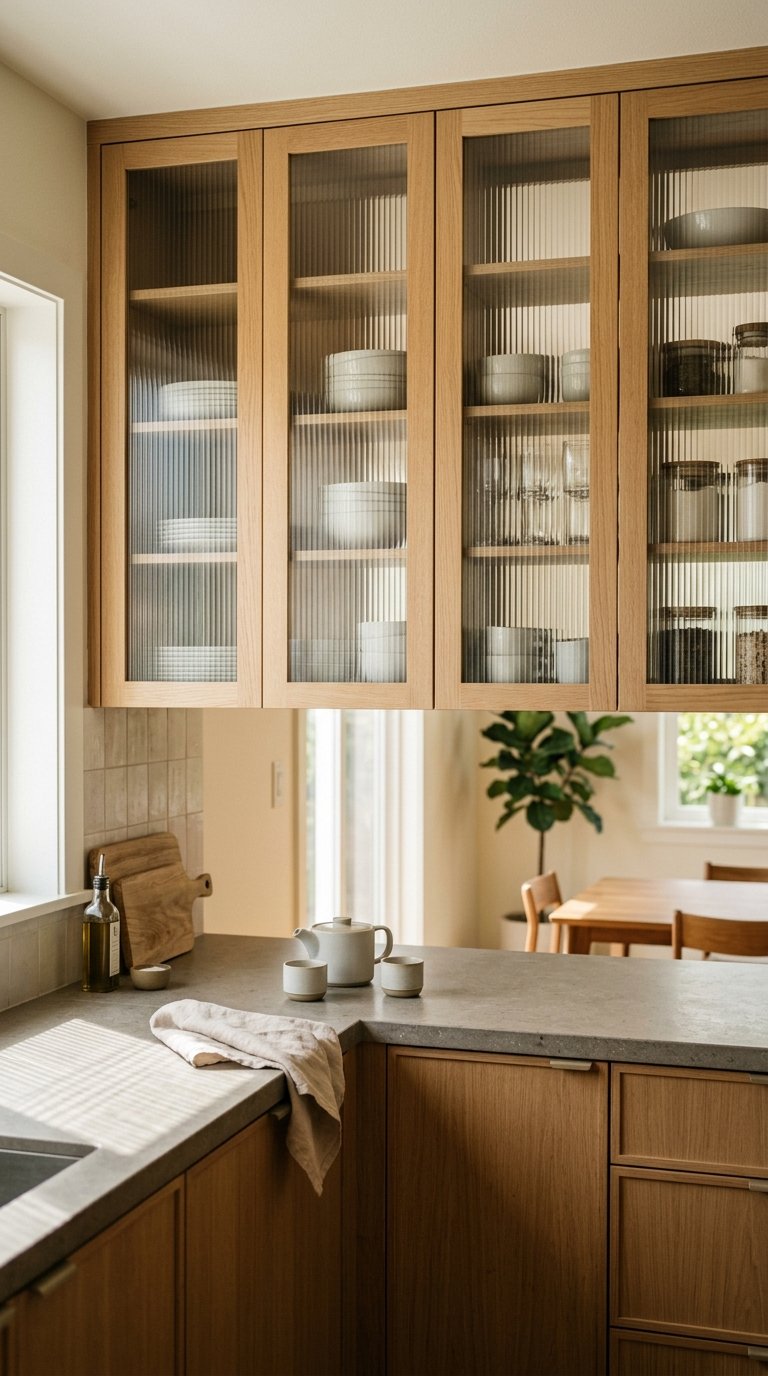
Shoji screens, the traditional Japanese sliding panels made from a wooden grid and translucent paper, translate beautifully into kitchen cabinet doors. Frosted or reeded glass inserts in a thin timber frame replicate the shoji aesthetic in a kitchen-appropriate material.
Reeded glass cabinet door inserts cost $50 to $150 per door panel and diffuse the contents behind them, showing the presence of objects without revealing every detail. The result is a cabinet run that looks intentional and architectural rather than standard box construction.
8. Add a Donabe or Ceramic Cookware Display
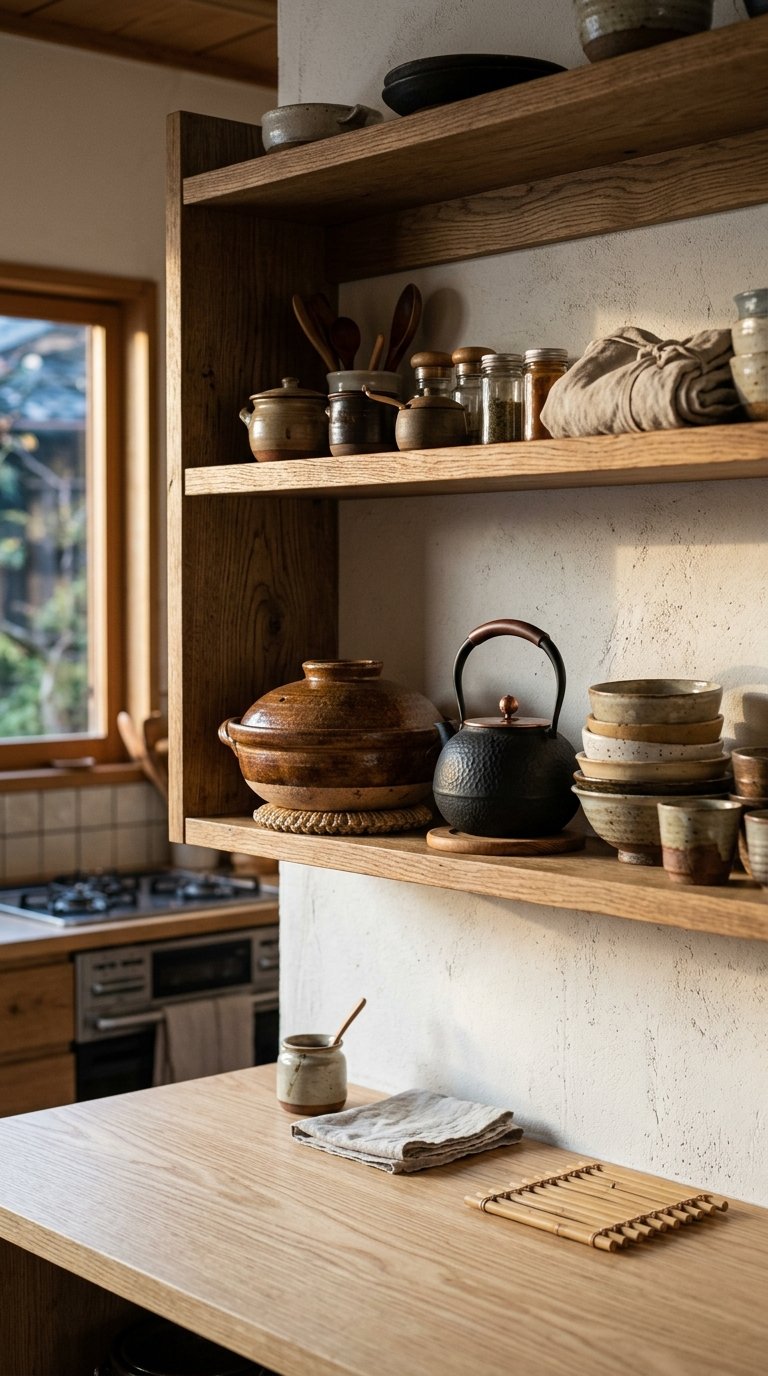
In Japanese kitchens, beautiful cookware earns a place on display. A donabe (traditional Japanese clay pot), a cast iron tetsubin kettle, or a collection of hand-thrown ceramic bowls arranged on an open shelf becomes the kitchen’s art installation.
Display cookware on a dedicated shelf at eye level or hang cast iron pots from a ceiling-mounted rail. The functional objects become decorative ones, which is a core principle of wabi-sabi aesthetics: beauty found in everyday use. This approach also keeps your most-used pieces the most accessible.
9. Install an Induction Cooktop for a Clean, Flush Surface
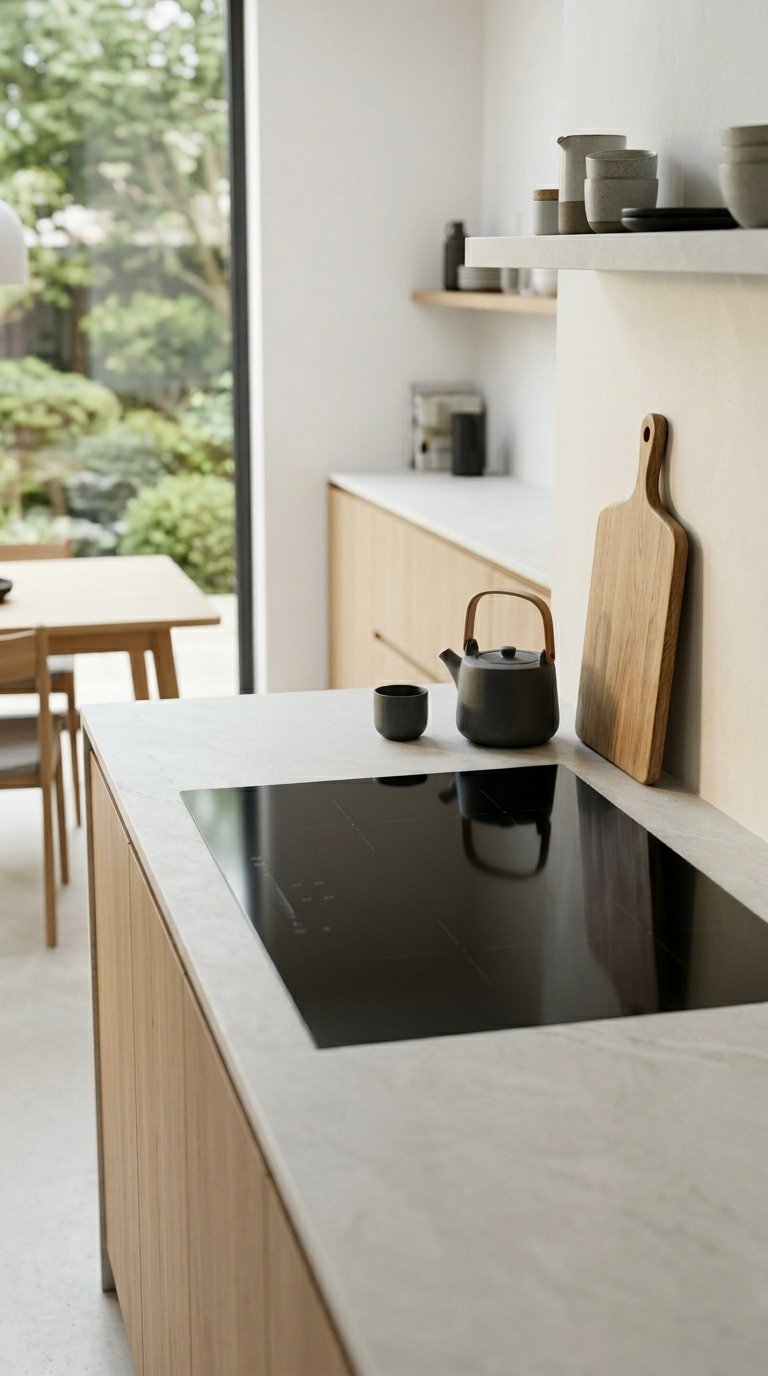
Japanese kitchens favour induction cooking for practical reasons: the cooktop surface stays cool between burners, cleans in seconds, and sits flush with the counter when not in use. A quality induction cooktop costs $300 to $1,500 and installs into the counter with no gas line or special ventilation required.
The flush installation makes the counter appear continuous and uninterrupted, which reinforces the clean horizontal lines Japanese kitchen design relies on. Portable induction cooktops cost $50 to $200 for those who want the cooking style without the installation.
10. Use a Timber Cutting Board as a Counter Feature
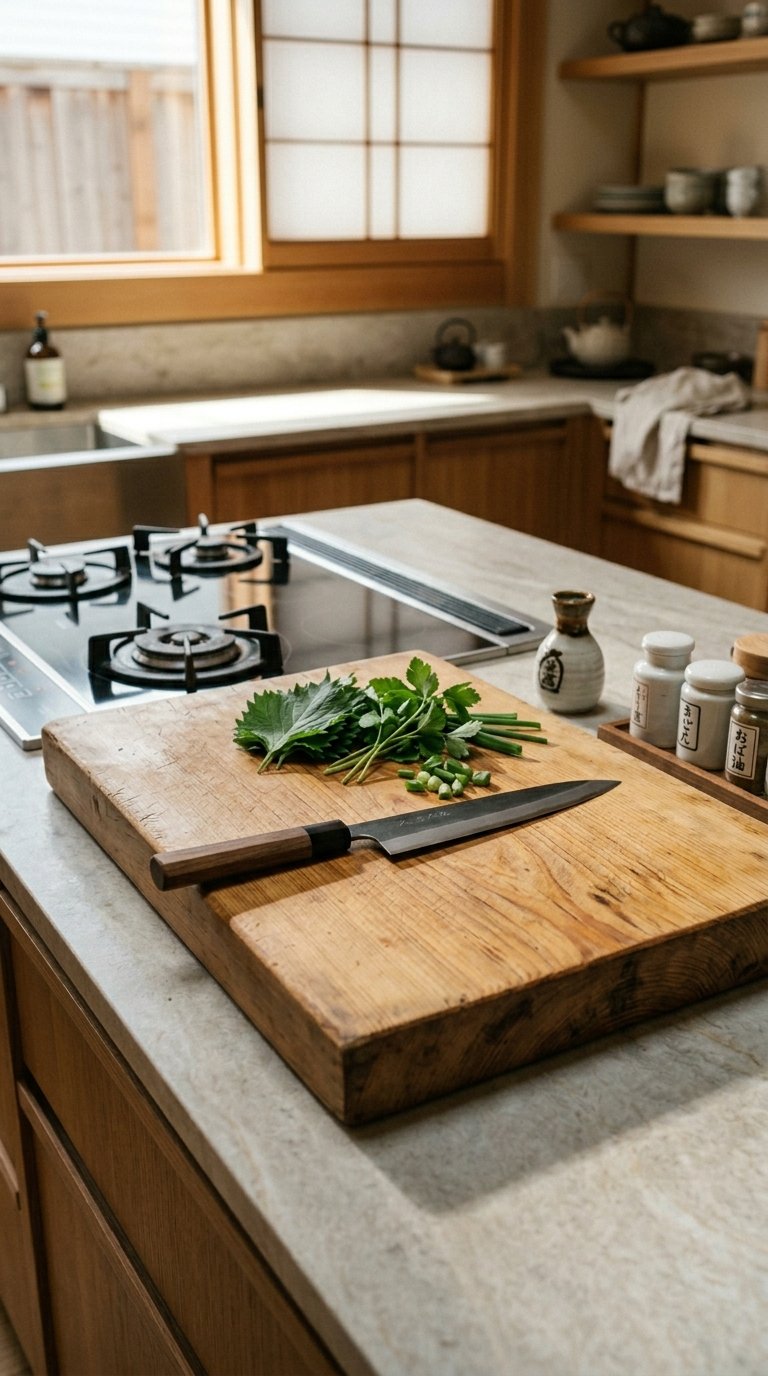
A large end-grain or edge-grain timber cutting board in hinoki or maple serves as a dedicated prep surface and a warm material accent on an otherwise minimal counter. Hinoki cypress cutting boards carry a natural antibacterial property and a subtle wood fragrance that Japanese cooks prize.
A quality timber cutting board costs $80 to $300 and lasts decades with proper oiling. Place it permanently on the counter beside the cooktop as the kitchen’s primary prep zone rather than pulling it from a drawer when needed.
11. Design a Dedicated Tea Station
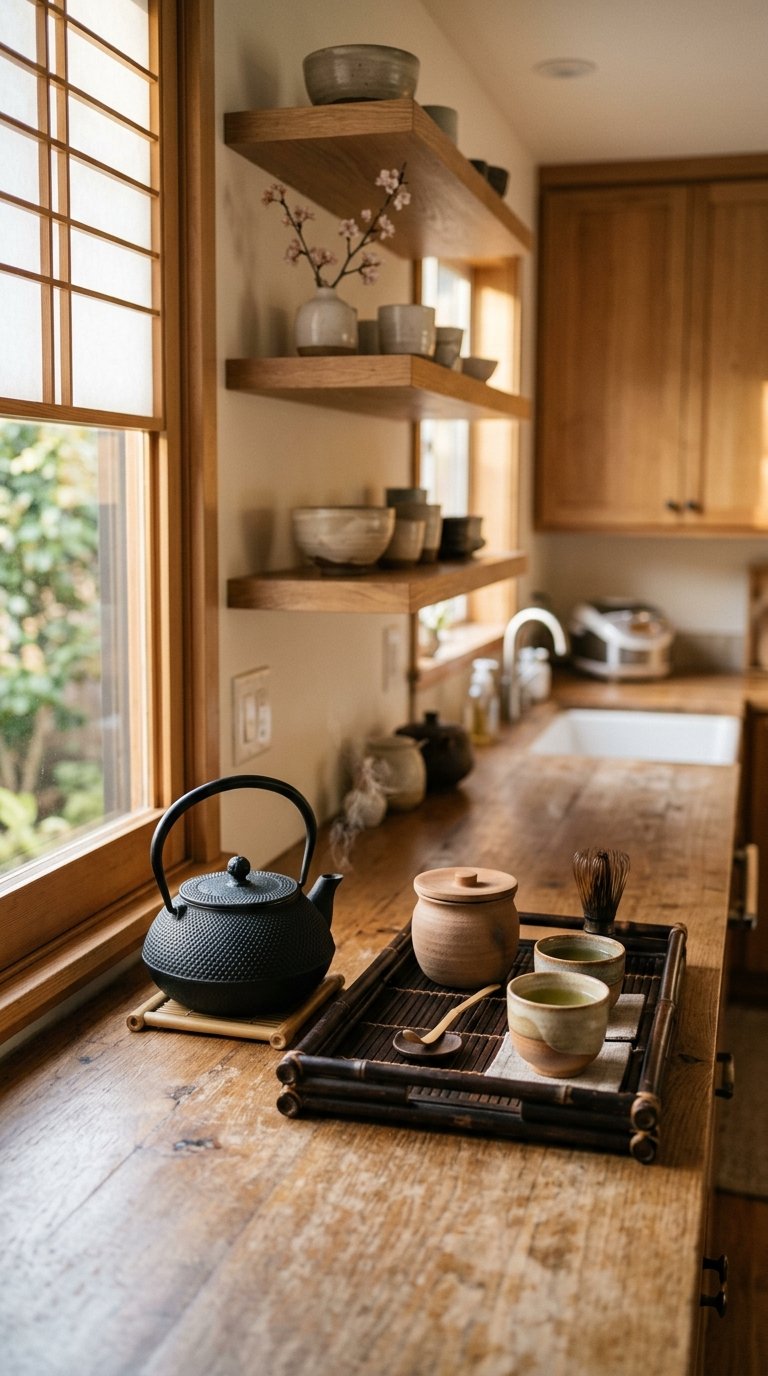
Tea occupies a different cultural status in Japanese households than in most Western kitchens, and a dedicated tea station acknowledges that. A 24-inch section of counter or a small open shelf holds a tetsubin kettle, a ceramic tea caddy, a bamboo tray, and two or three teacups.
The station keeps tea preparation separate from food prep and creates a ritual zone in the kitchen with a specific purpose and aesthetic. A bamboo tray ($20 to $50) corrals the tea objects and makes the station read as a designed vignette rather than a random collection of objects.
12. Choose Hardware-Free Cabinet Doors
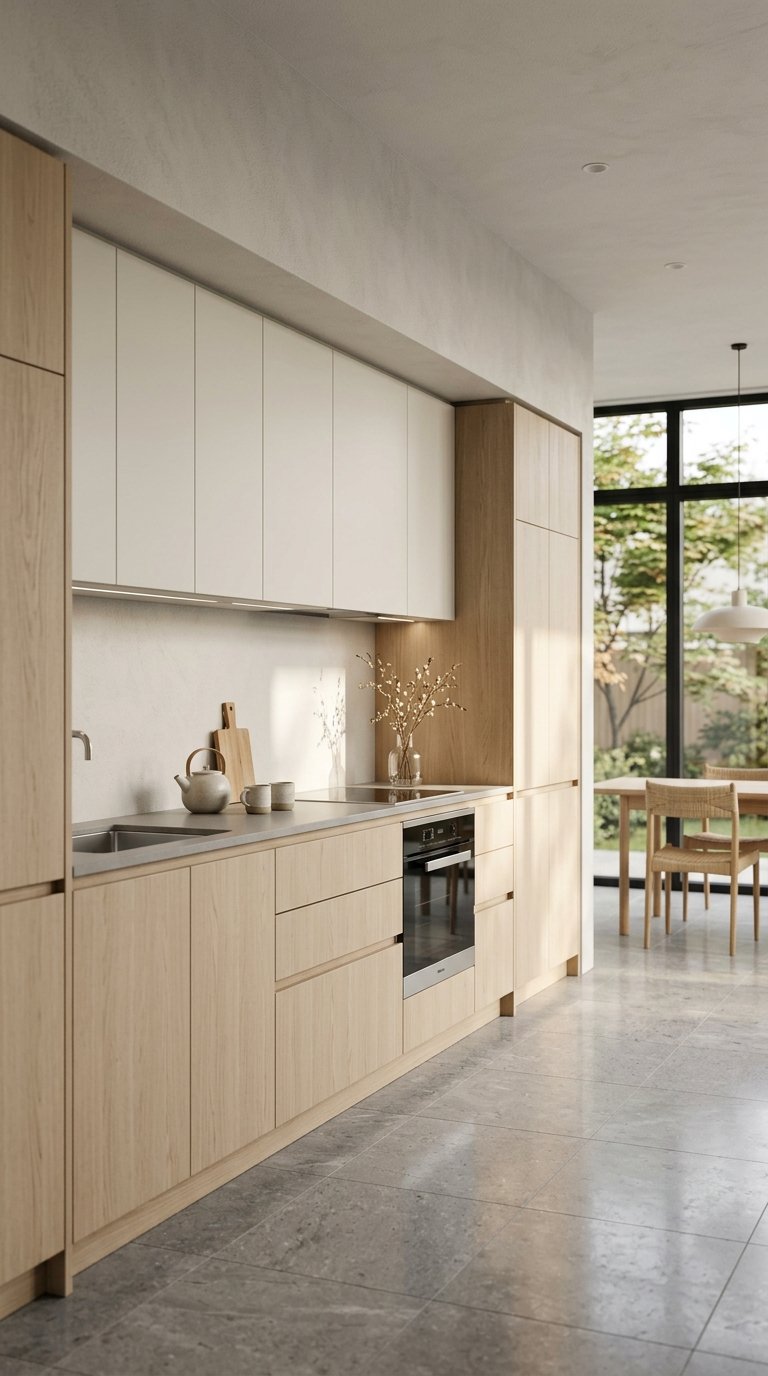
Handleless kitchen cabinets are a design staple in Japanese kitchen design because they eliminate visual interruption across the cabinet run. Push-to-open mechanisms (J-pull, touch-latch, or integrated finger-pull channels) cost $10 to $30 per cabinet to add during a build or retrofit.
The uninterrupted cabinet face reads as calm and resolved. In natural wood or matte white, a handleless cabinet run looks significantly more considered than the same cabinets with standard bar pulls. This is the detail that makes a kitchen photograph well and feel better in person.
13. Incorporate Bamboo as a Material Accent
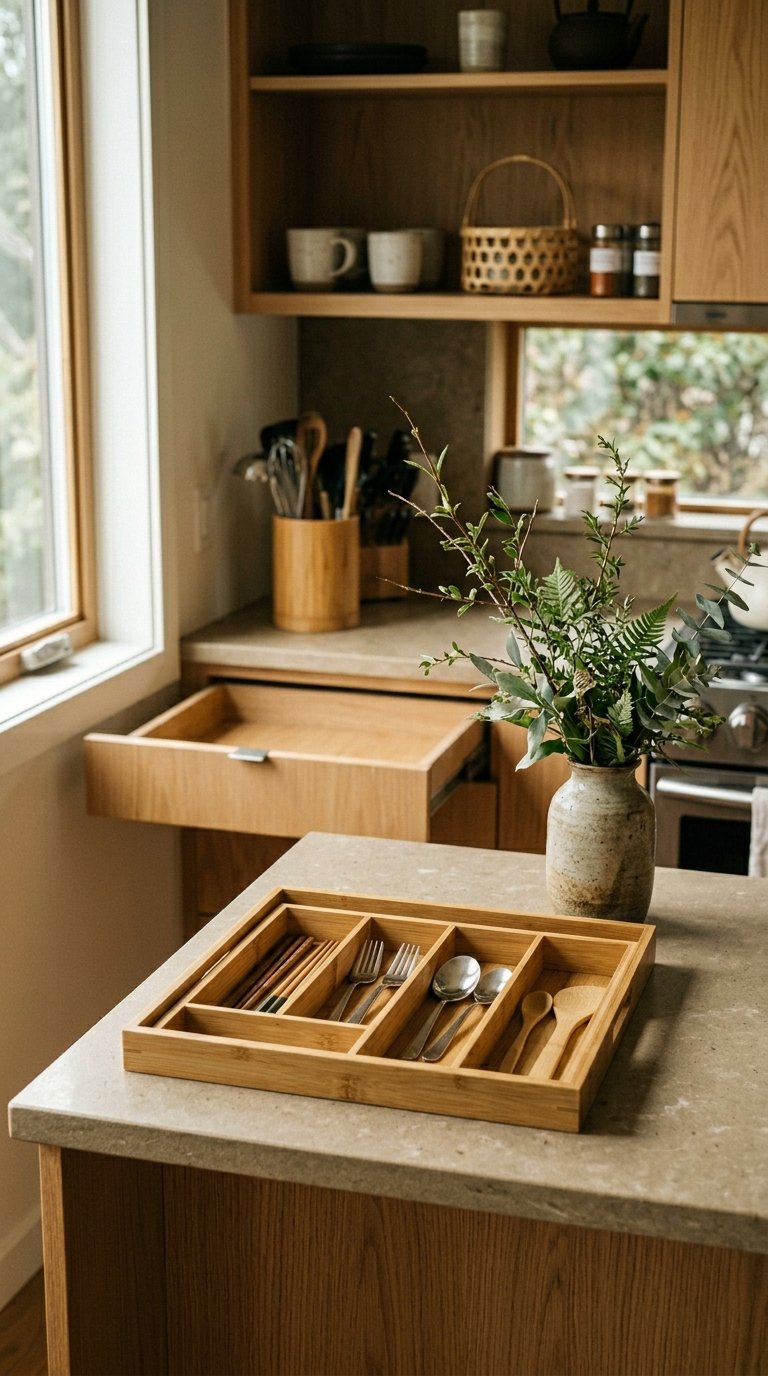
Bamboo is a fast-growing, renewable material that appears throughout Japanese interior design in cutting boards, storage containers, drawer organisers, and shelf liners. A bamboo drawer organiser set costs $15 to $40 and immediately upgrades the interior organisation of any kitchen drawer.
Bamboo shelf liners, serving trays, and utensil holders create a cohesive material story within the kitchen without requiring any structural change. The warm yellow-green tone of natural bamboo adds subtle colour to an otherwise neutral Japanese kitchen palette.
14. Install Under-Cabinet LED Lighting
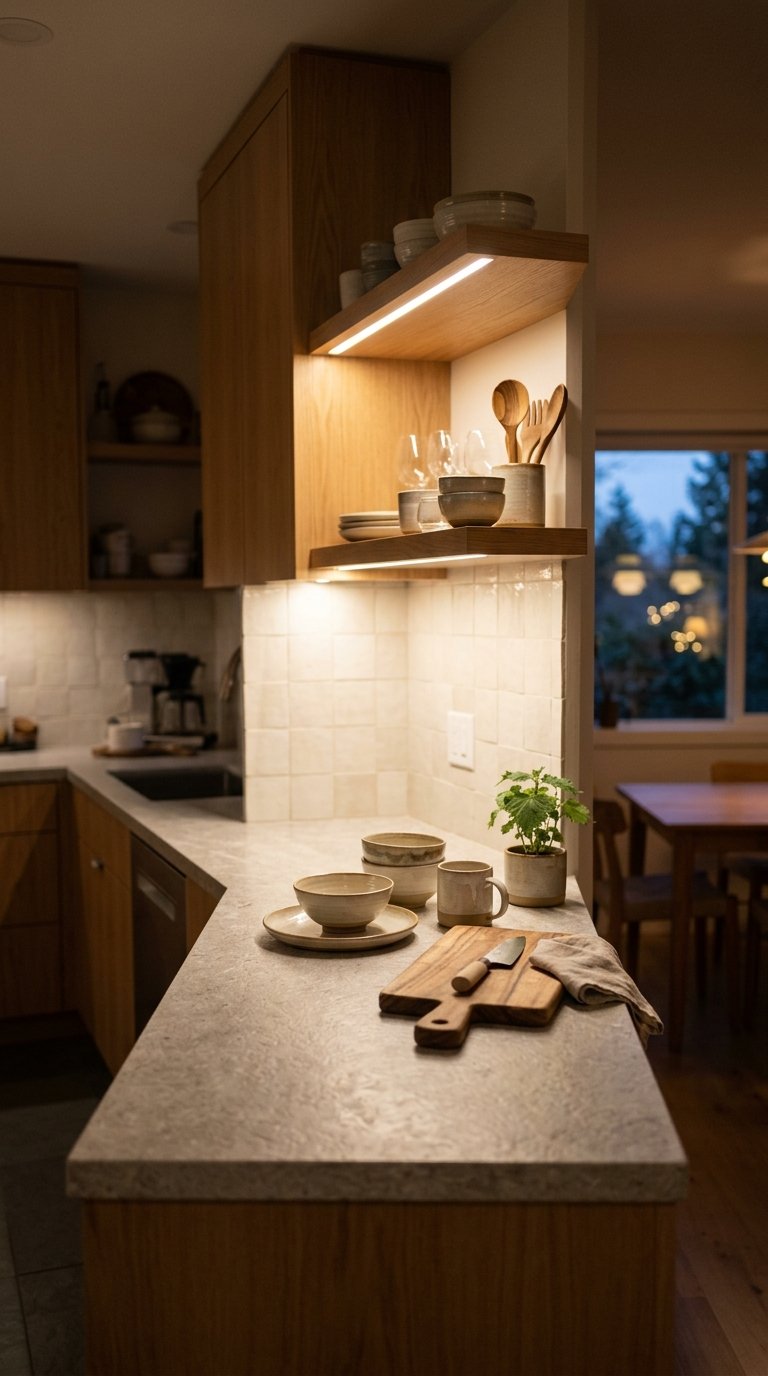
Under-cabinet lighting illuminates the counter work surface and creates a warm ambient glow that Japanese kitchen design uses to establish atmosphere during evening hours. LED strip lights cost $20 to $80 for a standard kitchen run and install with adhesive backing or mounting clips.
Warm white LED strips (2700K to 3000K colour temperature) suit Japanese kitchen aesthetics better than cool white options. The warm light emphasises natural wood tones and makes ceramic and stone surfaces glow rather than look flat under overhead lighting alone.
15. Use a Noren Fabric Panel at the Kitchen Entrance
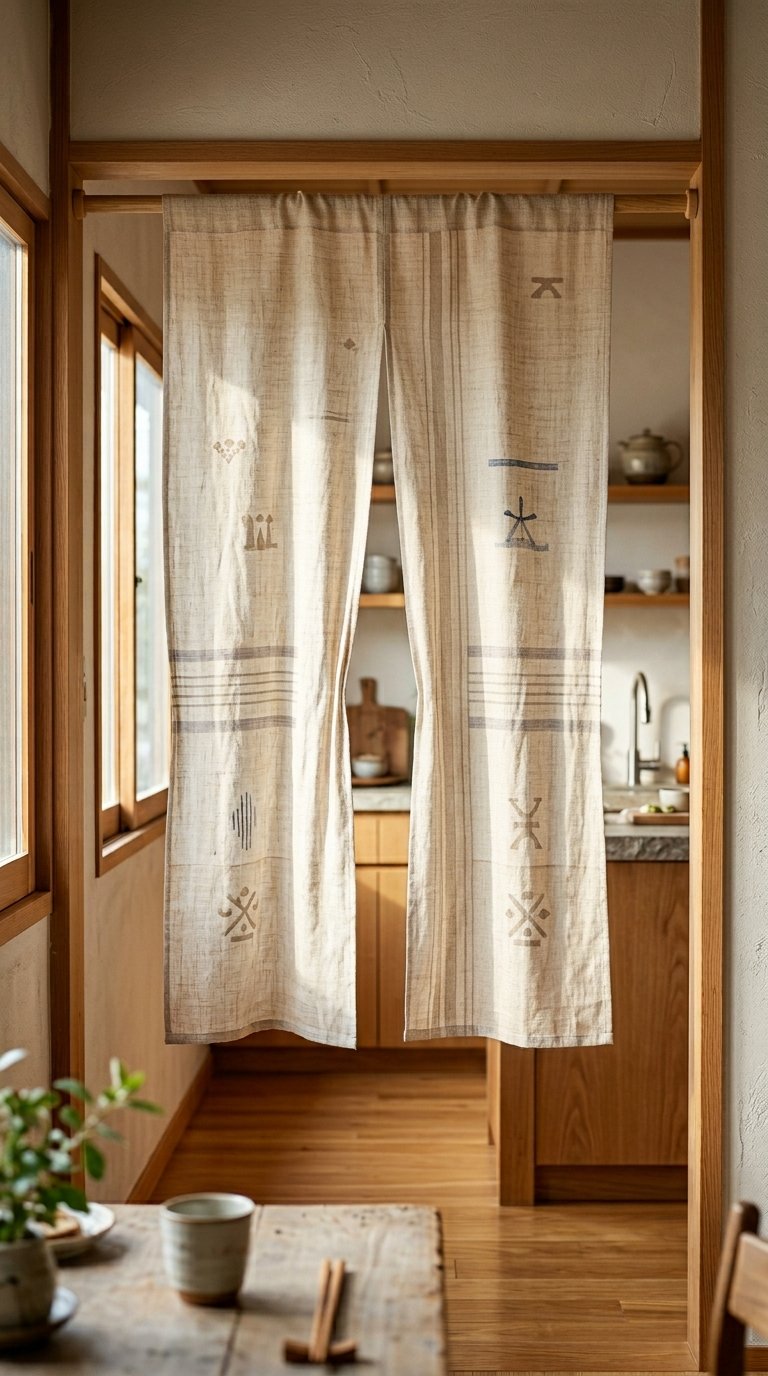
A noren is a traditional Japanese split curtain that hangs at doorways and transitions between spaces. Hanging a noren at the kitchen entrance instead of a standard door creates a soft, textural boundary between the kitchen and adjacent rooms.
Noren panels cost $20 to $100 and come in cotton, linen, and hemp in indigo blue, natural, and earth tone patterns. They allow airflow, soften hard architectural transitions, and add the most distinctly Japanese visual element to the space at the lowest possible cost.
16. Organise with Matching Containers in Neutral Tones
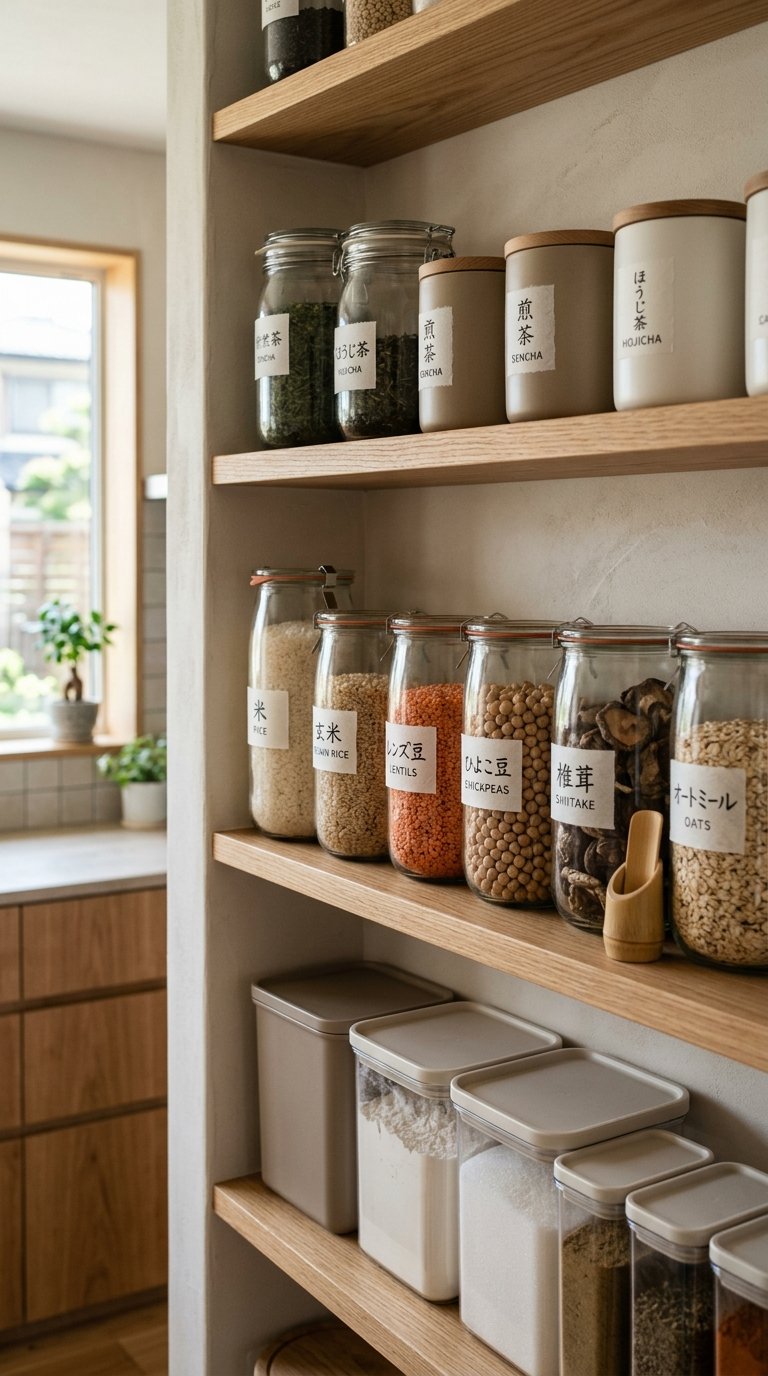
Japanese pantry organisation relies on matching containers in consistent materials and colours: glass jars, ceramic canisters, and washi paper label sets that transform a pantry shelf into a calm, ordered display. A set of six matching glass storage jars costs $20 to $60 and holds grains, pulses, tea, and dry goods.
The matching container approach applies the principle of visual rhythm: when objects share material, colour, and scale, they read as a system rather than a collection of random items. This works on open pantry shelves, on counters, and inside cabinets that you open frequently.
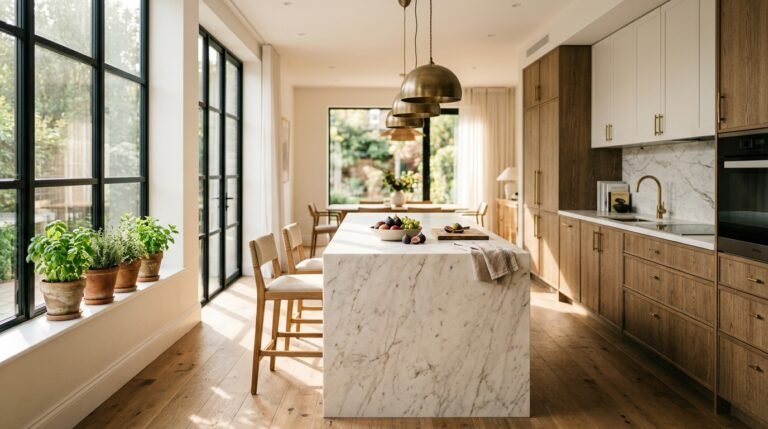
17. Add a Small Indoor Herb Garden on the Windowsill
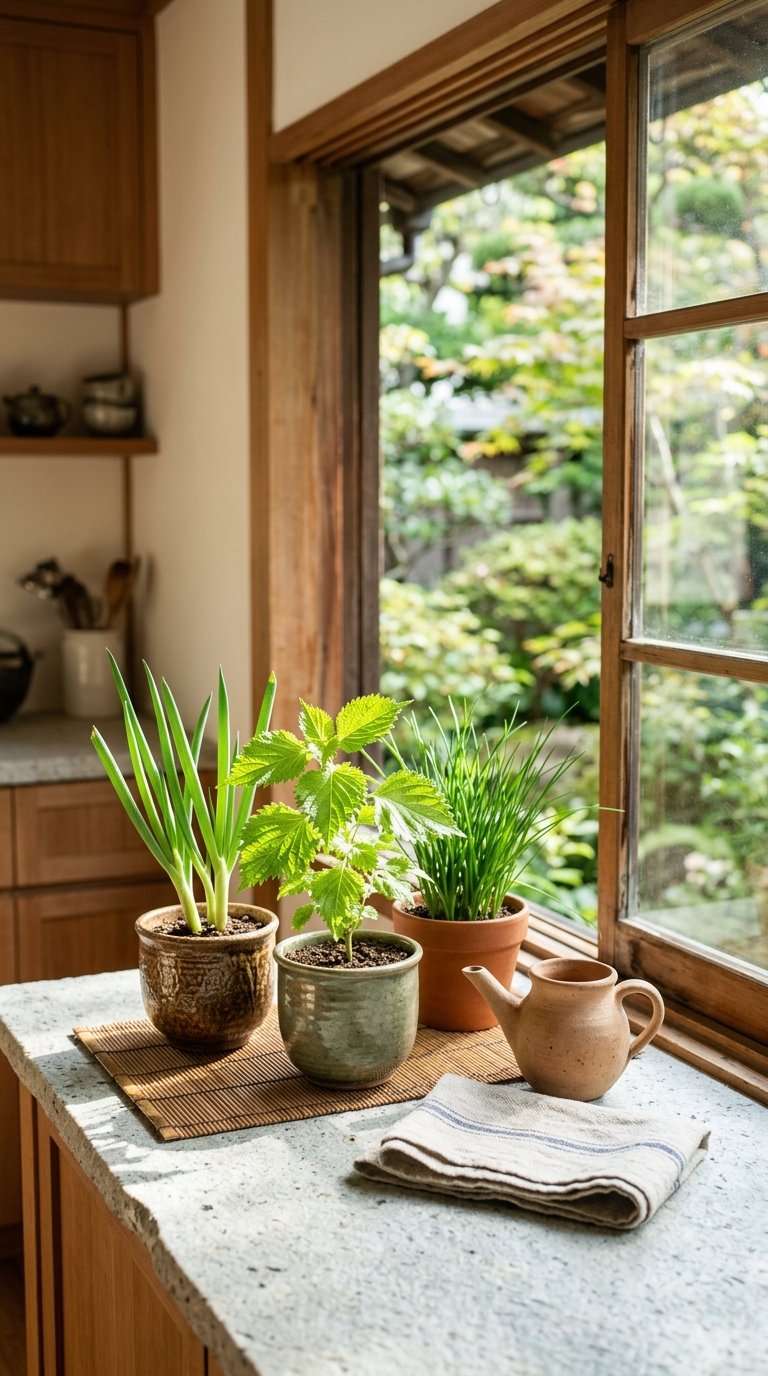
A Japanese kitchen windowsill holds a small collection of culinary herbs in simple ceramic or terracotta pots: shiso, mitsuba, green onions, and chives. The herbs sit in direct sunlight, stay within arm’s reach during cooking, and add living green to the room.
Three small herb pots in matching ceramic planters cost $15 to $40 total and provide fresh flavour year-round. The windowsill garden follows the Japanese design principle of bringing the natural world inside and treating growing things as objects of daily beauty, not just utility.
18. Choose a Stone or Concrete Countertop
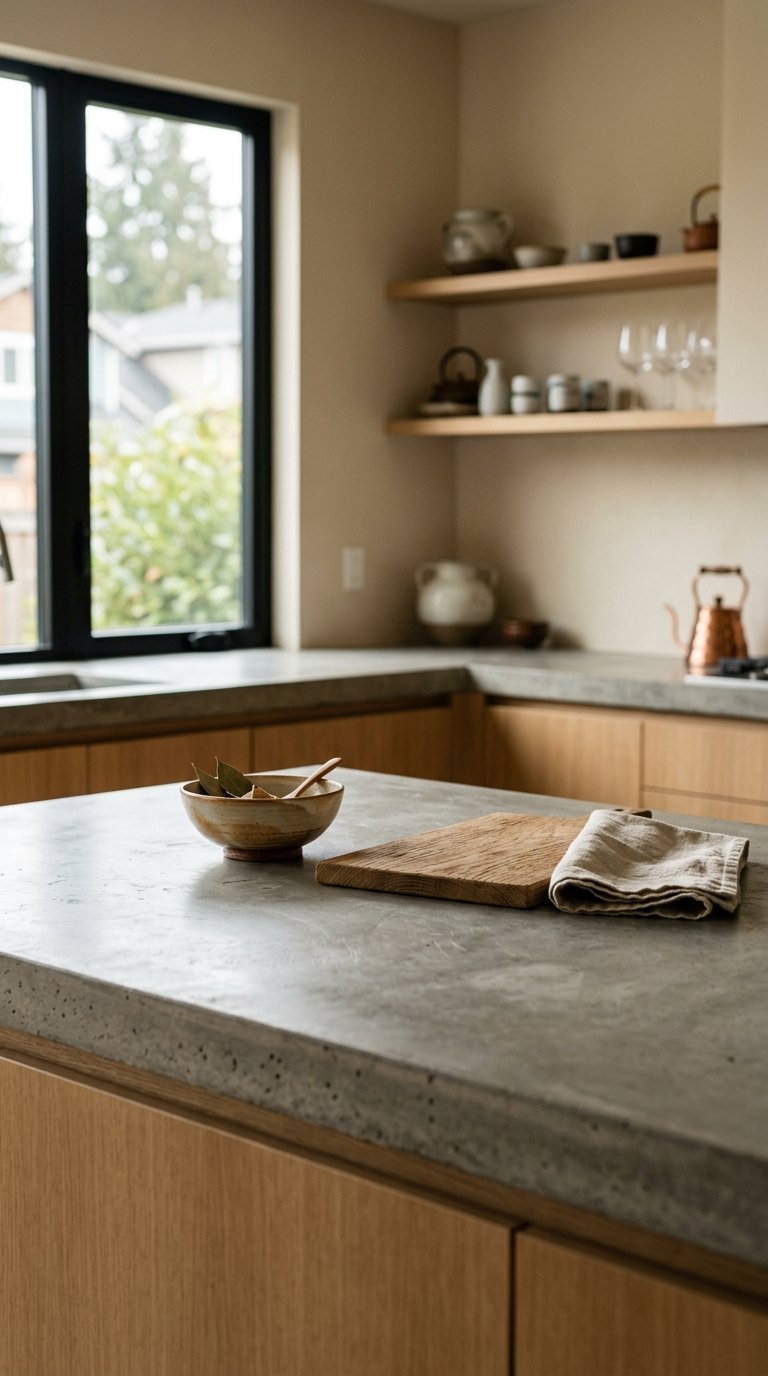
Honed granite, soapstone, and concrete countertops suit Japanese kitchen design because their matte, natural surfaces absorb light rather than reflecting it. The non-reflective finish creates a calmer visual environment than polished stone or glossy laminate.
Honed granite costs $40 to $80 per square foot installed. Concrete countertops run $70 to $150 per square foot. Both materials develop a patina over time that improves with use, which aligns with the wabi-sabi appreciation for objects that show their history.
19. Install a Window Above the Sink Facing a Garden or Green View
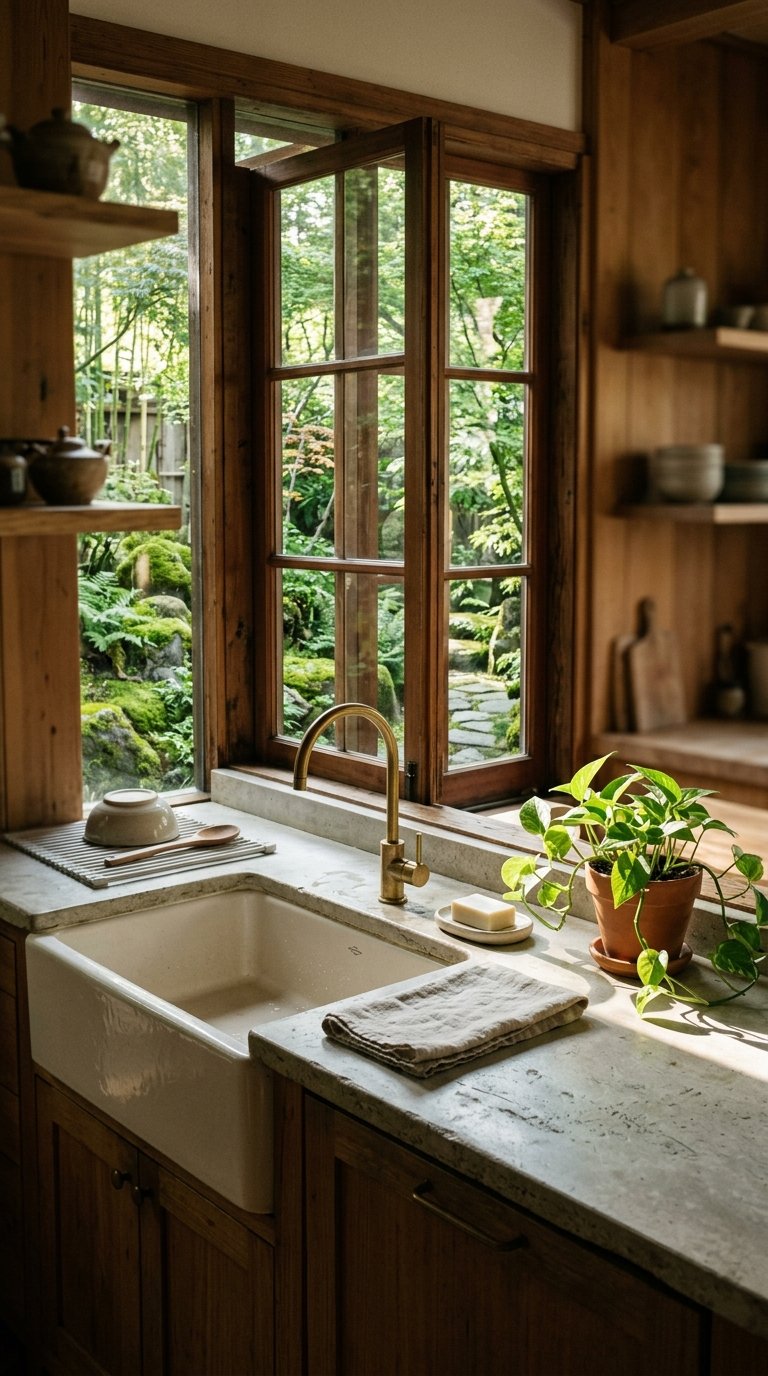
Japanese kitchen design connects the interior to the natural world wherever possible. A window directly above the sink facing a garden, courtyard, or even a container plant collection transforms dishwashing into a moment of engagement with the outdoors.
If your sink placement doesn’t allow a garden view, mount a small shelf of plants in the window space above the sink instead. Three trailing pothos or ferns in simple ceramic pots achieve the same effect: green, living, growing things in the cook’s sightline during daily tasks.
20. Use a Ceramic Tile Backsplash in Muted, Natural Tones
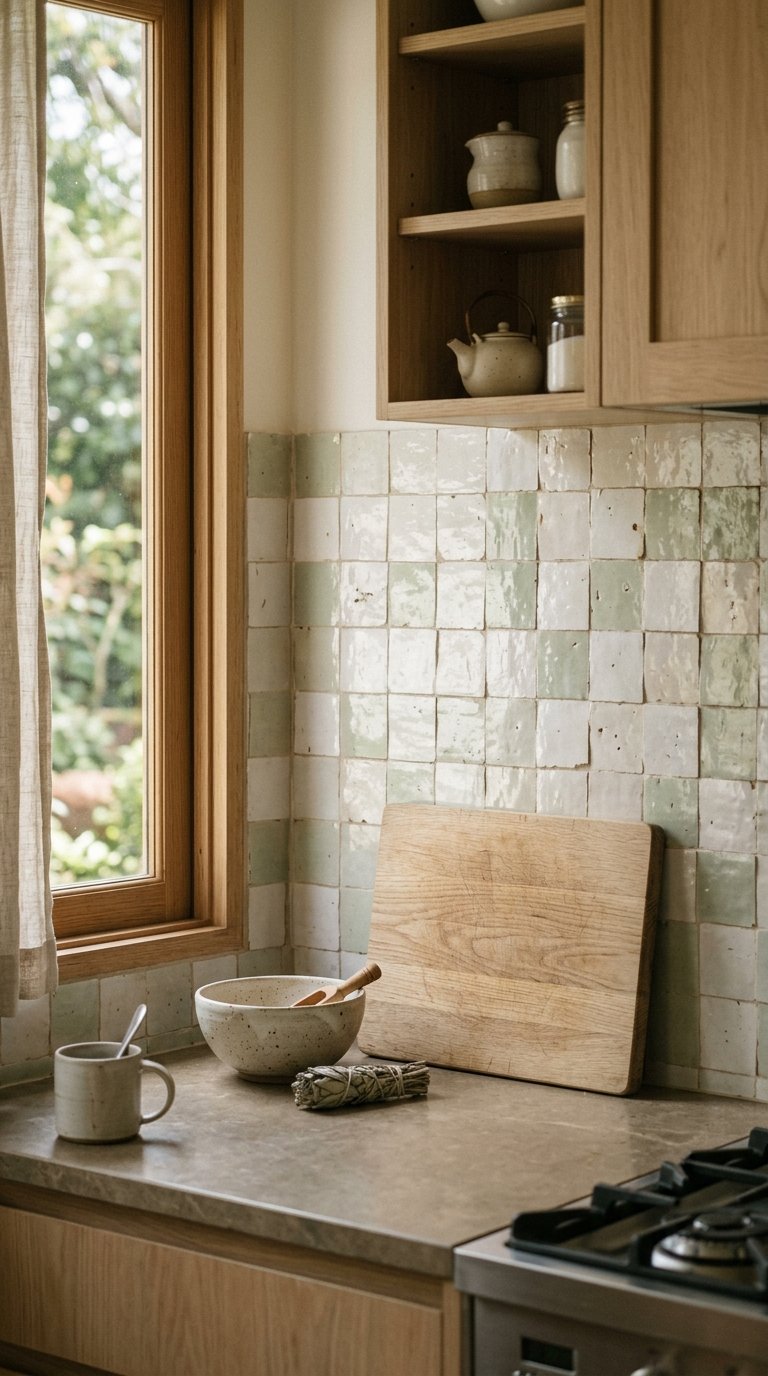
A handmade ceramic tile backsplash in warm white, soft grey, or pale sage adds texture and craft to the kitchen wall without introducing strong colour or pattern. Japanese ceramics have a distinctive quality: slight variations in glaze colour, minor surface irregularities, and visible maker’s marks that machine-made tiles never replicate.
Handmade ceramic tile costs $15 to $50 per square foot and typically covers a standard backsplash area of 15 to 20 square feet. The investment in handmade tile pays back in a surface that becomes more beautiful with age and close inspection.
21. Mount a Simple Floating Shelf for a Kitchen Altar
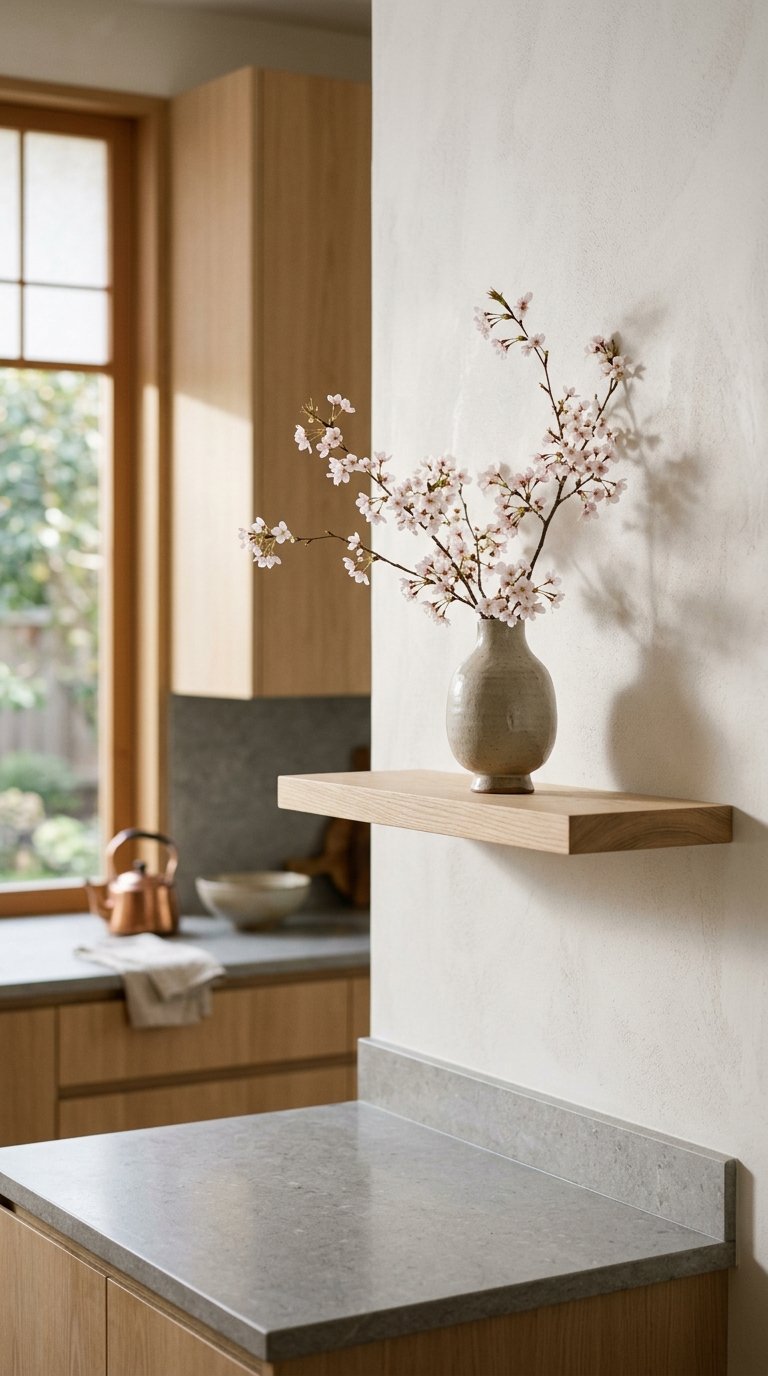
Japanese homes often feature a small shelf dedicated to a single beautiful object: a ceramic piece, a small plant, a seasonal flower arrangement, or a meaningful object. Translating this into the kitchen means mounting one floating shelf in a prominent spot (above the counter, beside the window, or at the kitchen entrance) and placing a single object on it.
The object changes seasonally. A branch of cherry blossoms in spring, a small gourd in autumn, a ceramic bowl of persimmons in winter. The shelf costs $20 to $60 and transforms a blank wall section into the kitchen’s most intentional design moment. FYI, this idea costs almost nothing and has more visual impact than a cabinet replacement.
22. Design a Hidden Appliance Zone Behind Sliding Panels
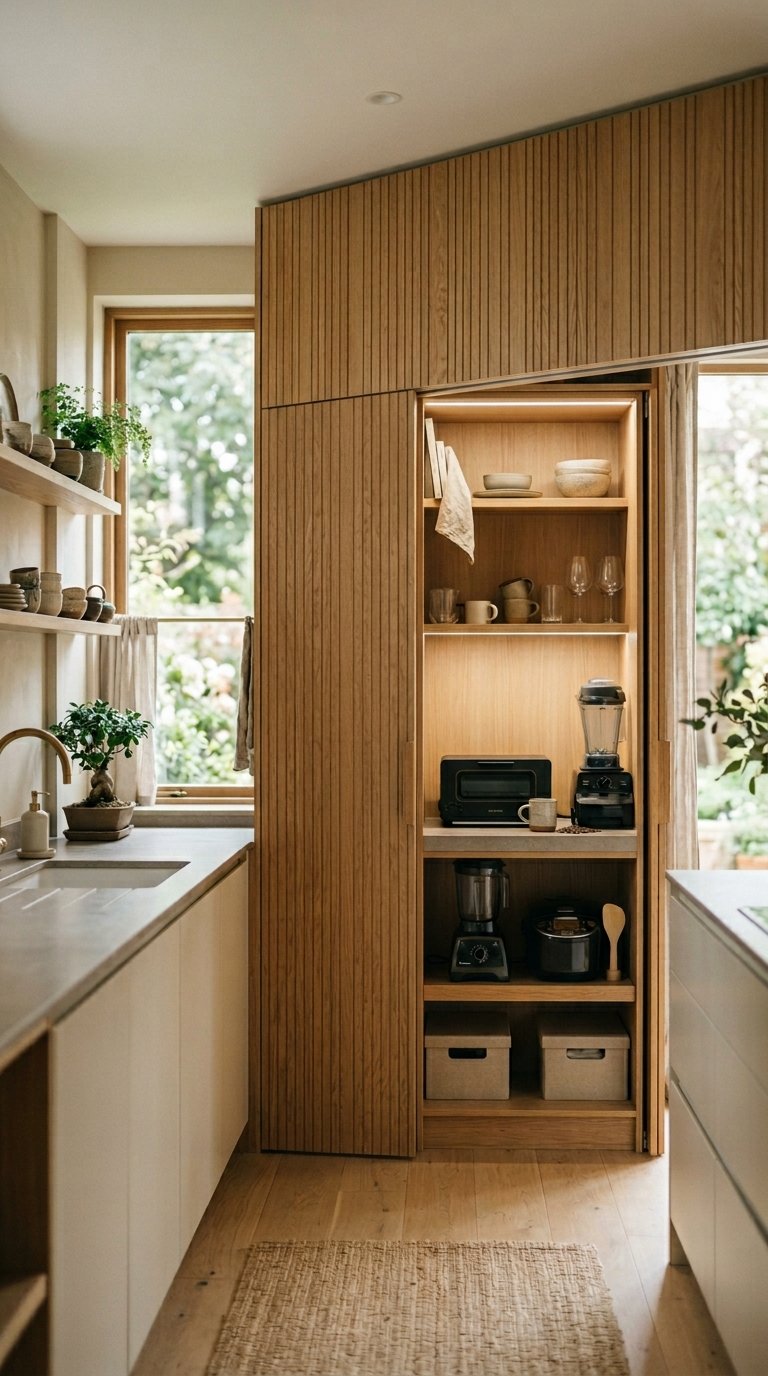
A dedicated appliance zone behind a run of sliding timber panels keeps toasters, rice cookers, blenders, and small appliances completely hidden when not in use. Sliding panels on a top-mounted track cost $200 to $600 to build and maintain the clean counter aesthetic that Japanese kitchen design requires.
The sliding panel approach acknowledges that appliances are necessary but treats their visibility as a choice rather than a default. When the panels close, the kitchen returns to its calm, ordered baseline. When they open, the work zone activates fully.
23. Bring in Wabi-Sabi Through Imperfect, Handmade Objects
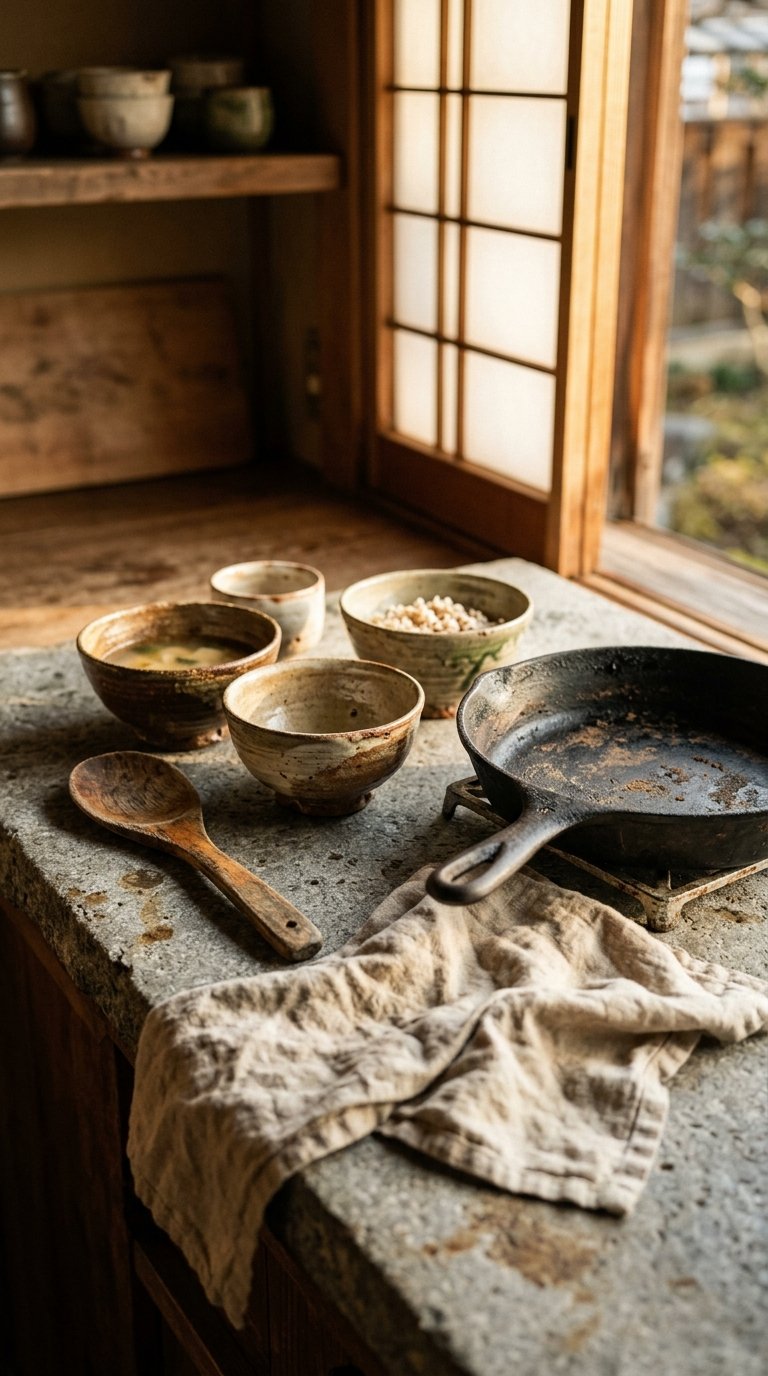
Wabi-sabi is the Japanese aesthetic philosophy that finds beauty in imperfection, age, and natural irregularity. In the kitchen, it means choosing handmade ceramic bowls with uneven glazes, a wooden spoon with visible grain variation, a cast iron pan with a seasoned patina, and a linen tea towel with natural weave irregularities.
These objects cost the same as or less than mass-produced alternatives and build a kitchen that feels genuinely human rather than showroom-perfect. A set of four hand-thrown ceramic bowls from an independent maker costs $60 to $200 and makes every meal feel more considered. 🙂 The goal isn’t a perfect kitchen. It’s an honest one.
Final Thoughts
A Japanese kitchen isn’t an aesthetic you buy. It’s a set of decisions you make consistently: fewer objects, better materials, surfaces kept clear, and everyday tools treated with care.
Start with the changes that cost the least but deliver the most: clear your counters, add a magnetic knife strip, swap your storage containers for matching glass jars, and hang a noren at the entrance. Those four moves cost under $150 combined and shift the kitchen’s entire sensibility. Build from there, and the room will keep getting calmer as you go.