21 Bedroom Bench Ideas That Add Style and Smart Storage
The foot of your bed is wasted space. Most people pile clothes there, dump bags, or leave it completely empty while the rest of the bedroom does all the decorative work.
A bedroom bench fixes that. It gives the room a finished, hotel-quality look, adds seating you actually use, and solves the where-do-I-put-things problem that every bedroom faces daily. These 21 ideas cover every style, budget, and space constraint so you find the one that works for your specific room.
1. Choose a Tufted Upholstered Bench for a Classic Look
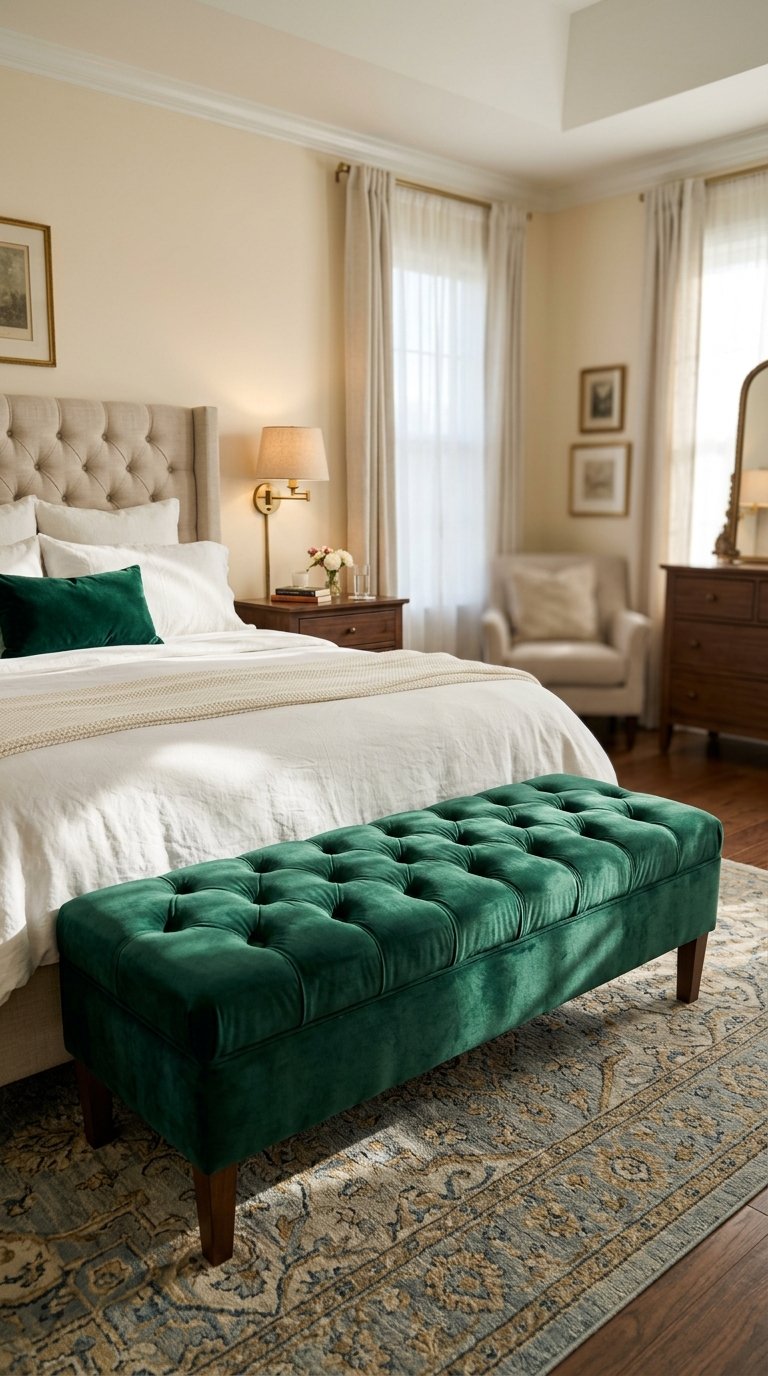
A tufted upholstered bench at the foot of the bed is the bedroom bench that interior designers reach for first because it adds softness, height, and visual weight to the room’s most important wall. Velvet tufted benches cost $150 to $600 at retailers like Wayfair, CB2, and West Elm.
The tufted surface catches light differently across the day, which means the bench looks slightly different in morning and evening light. Velvet in deep jewel tones (emerald, navy, dusty rose) reads as a deliberate design choice rather than a practical addition.
2. Use a Storage Ottoman Bench to Solve the Blanket Problem
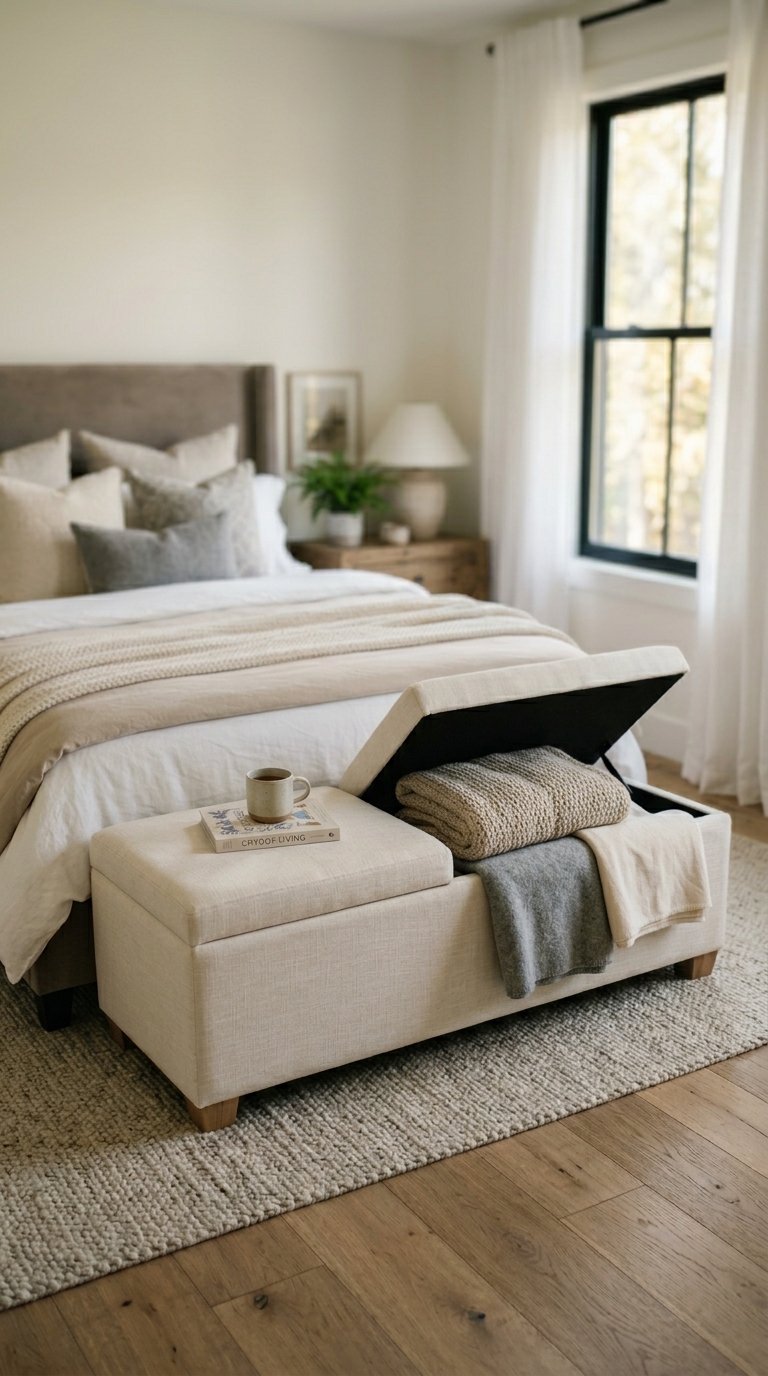
A storage ottoman bench with a lift-up lid holds extra blankets, pillows, and seasonal bedding inside while functioning as seating on top. Rectangular storage ottomans cost $100 to $400 and come in sizes from 36 to 60 inches wide, fitting most standard bed widths.
The internal storage eliminates the need for a separate blanket box or under-bed storage bags. For small bedrooms where every piece of furniture needs to earn its place, this is the most practical bedroom bench on the list. FYI, the best ones have a hinge limiter on the lid so it stays open while you reach inside, which sounds minor until you’ve dropped a lid on your wrist once.
3. Place a Wooden Bench with Natural Finish for Warmth
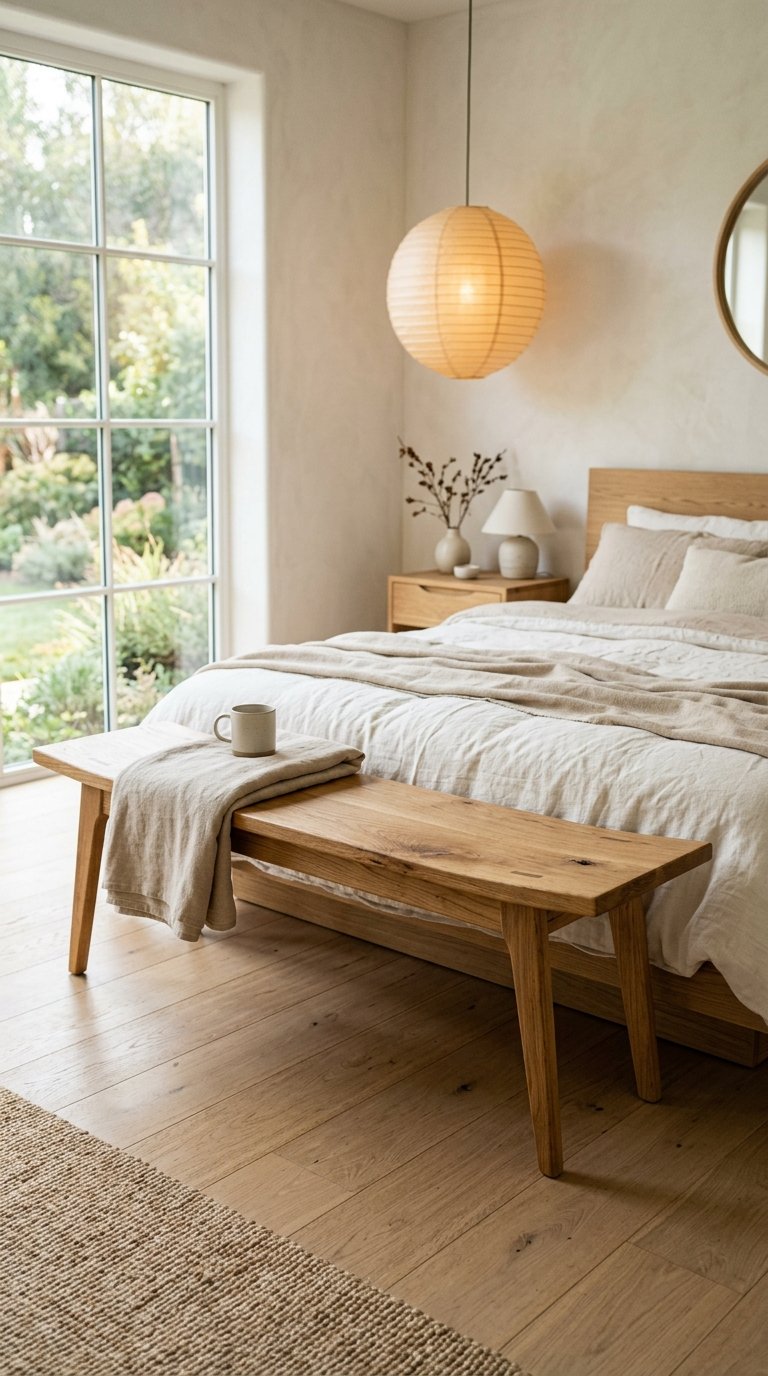
A solid wood bench in oak, walnut, or pine brings warmth and organic texture to a bedroom that risks feeling too soft or too upholstered. Wooden benches cost $80 to $500 depending on species and construction quality, and they work in every interior style from Japandi to farmhouse to coastal.
The hard surface provides a different seating experience from upholstered options, which suits the functional use case of sitting to put on shoes. A wood bench with slightly tapered legs reads as mid-century modern; a chunky rectangular bench with square legs reads as Japandi or Shaker.
4. Add a Leather Bench for an Elevated, Timeless Feel
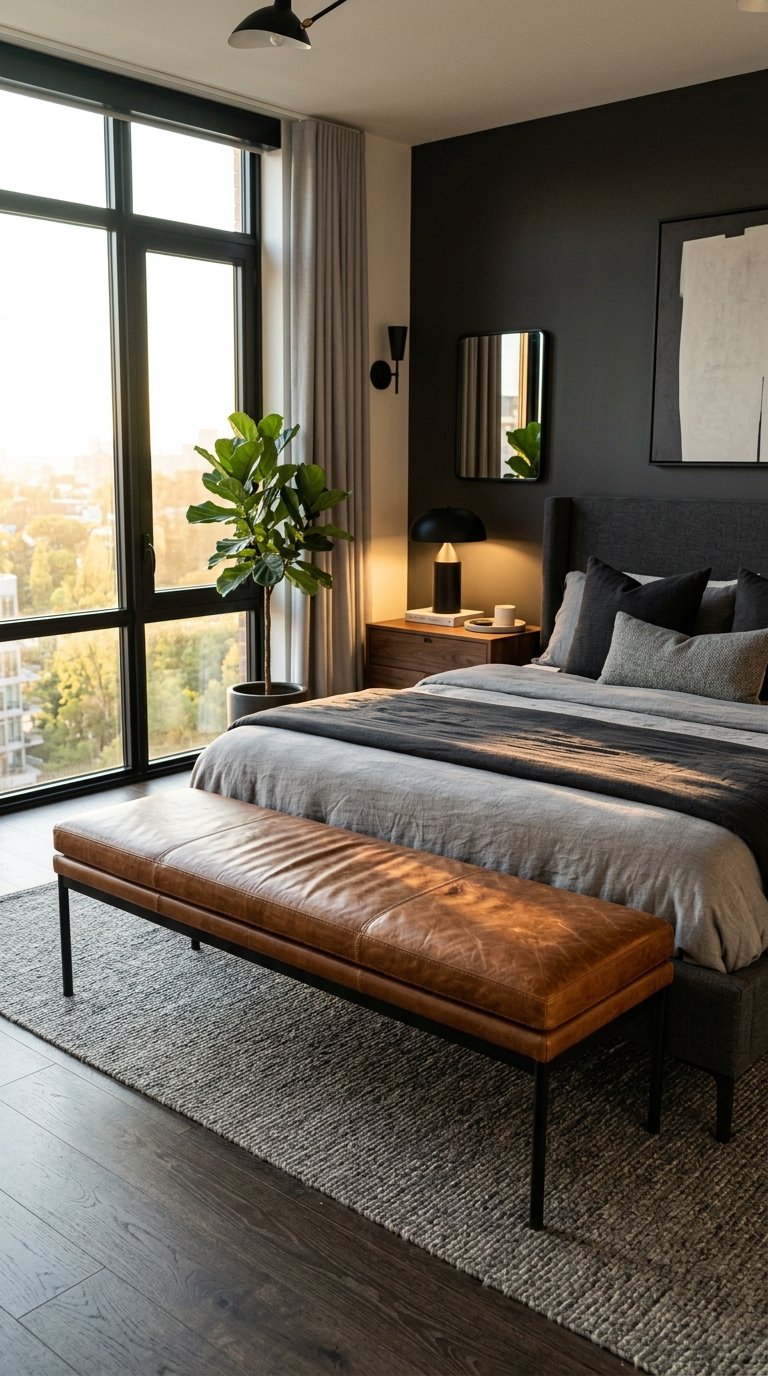
A leather or faux leather bench at the foot of the bed adds a material that ages better than fabric and wipes clean in seconds. Full-grain leather benches cost $300 to $1,200, and high-quality faux leather options from brands like Article or IKEA run $100 to $400 with a similar visual result.
Leather in cognac, tan, or black works in modern, industrial, and transitional bedrooms without fighting the surrounding decor. The bench develops a patina over years of use that makes it look more expensive over time, which is the opposite of what happens to most bedroom furniture.
5. Build a DIY Upholstered Bench from a Wooden Crate
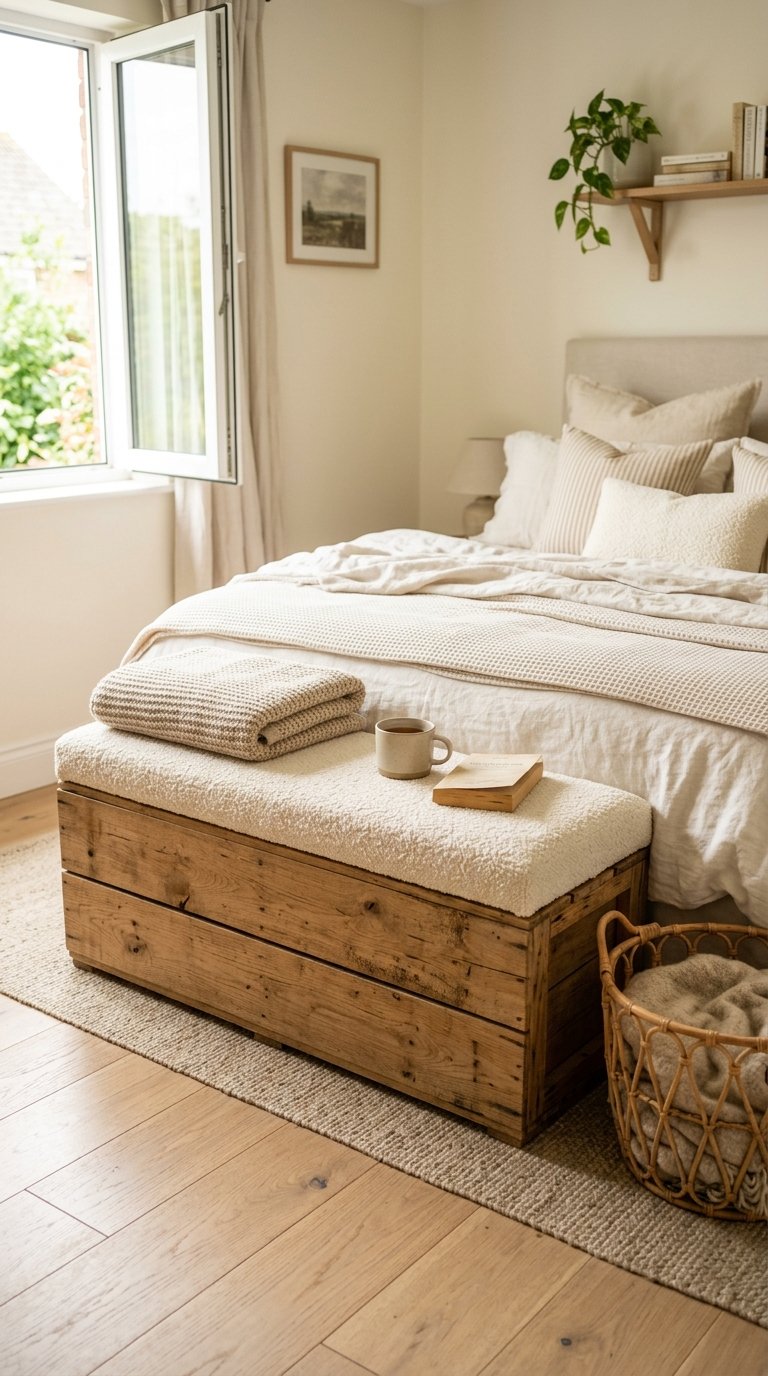
A wooden storage crate from a hardware or home goods store, topped with a cut foam pad and wrapped in fabric, builds a custom upholstered bench for $40 to $80 total. The crate provides internal storage, and the fabric choice fully customises the finish.
This is the budget solution that looks better than most retail options because you choose the exact fabric, foam density, and crate finish. Bouclé, linen, and velvet all work as top fabrics, and a staple gun is the only tool the project requires. :/ Yes, it takes an afternoon, but the result doesn’t look like a $60 bench.
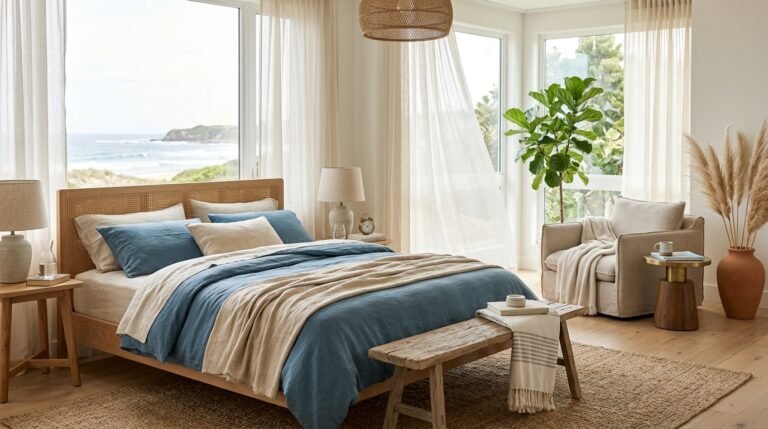
6. Use a Cane or Rattan Bench for a Coastal or Boho Aesthetic
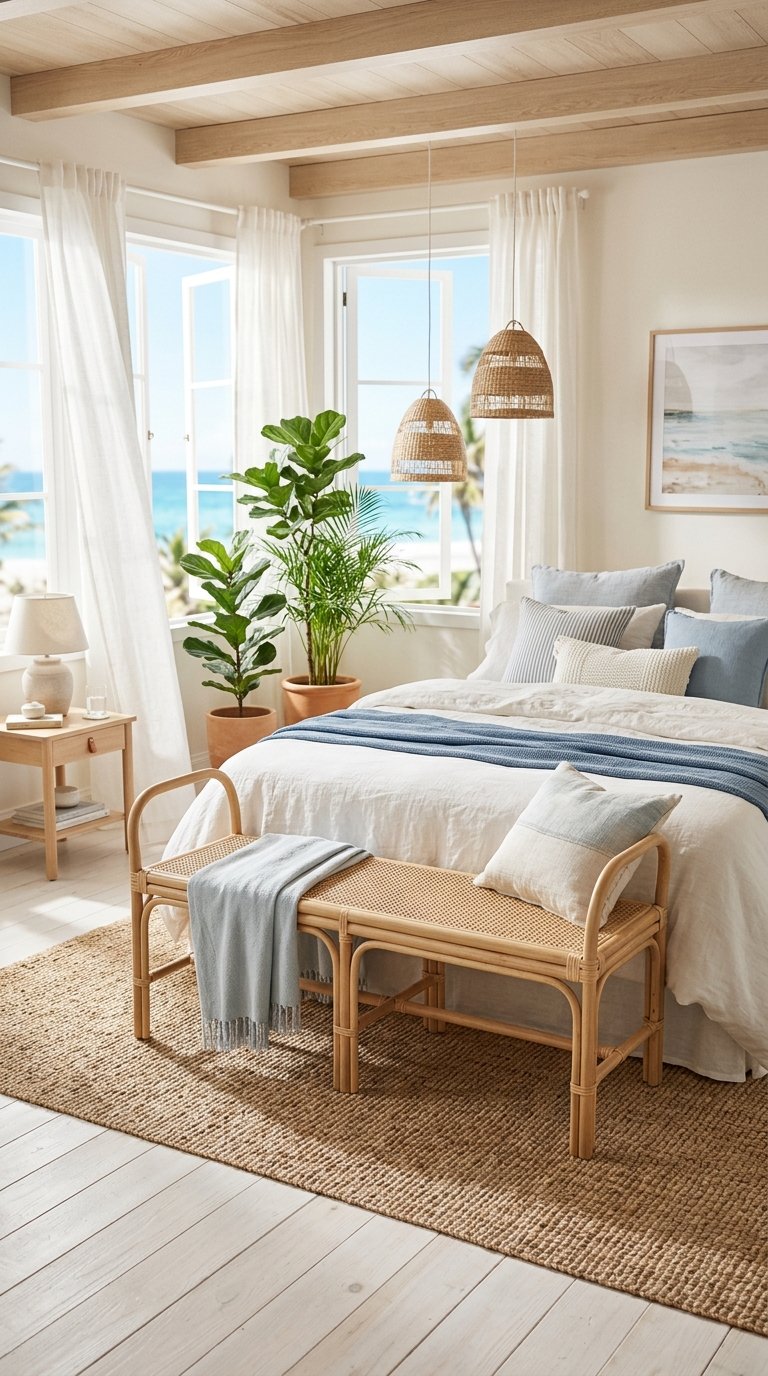
A cane or rattan bench brings natural texture and visual lightness to a bedroom that risks feeling heavy with upholstered furniture. Rattan benches cost $100 to $350 and suit coastal, bohemian, organic modern, and tropical interior styles.
The open weave of cane and rattan makes a bench appear lighter than its actual footprint, which helps in smaller bedrooms where visual weight matters. Add a loose linen or sheepskin throw draped across the seat to soften the hard surface without a permanent upholstered cushion.
7. Place a Backless Upholstered Bench in a Neutral Fabric
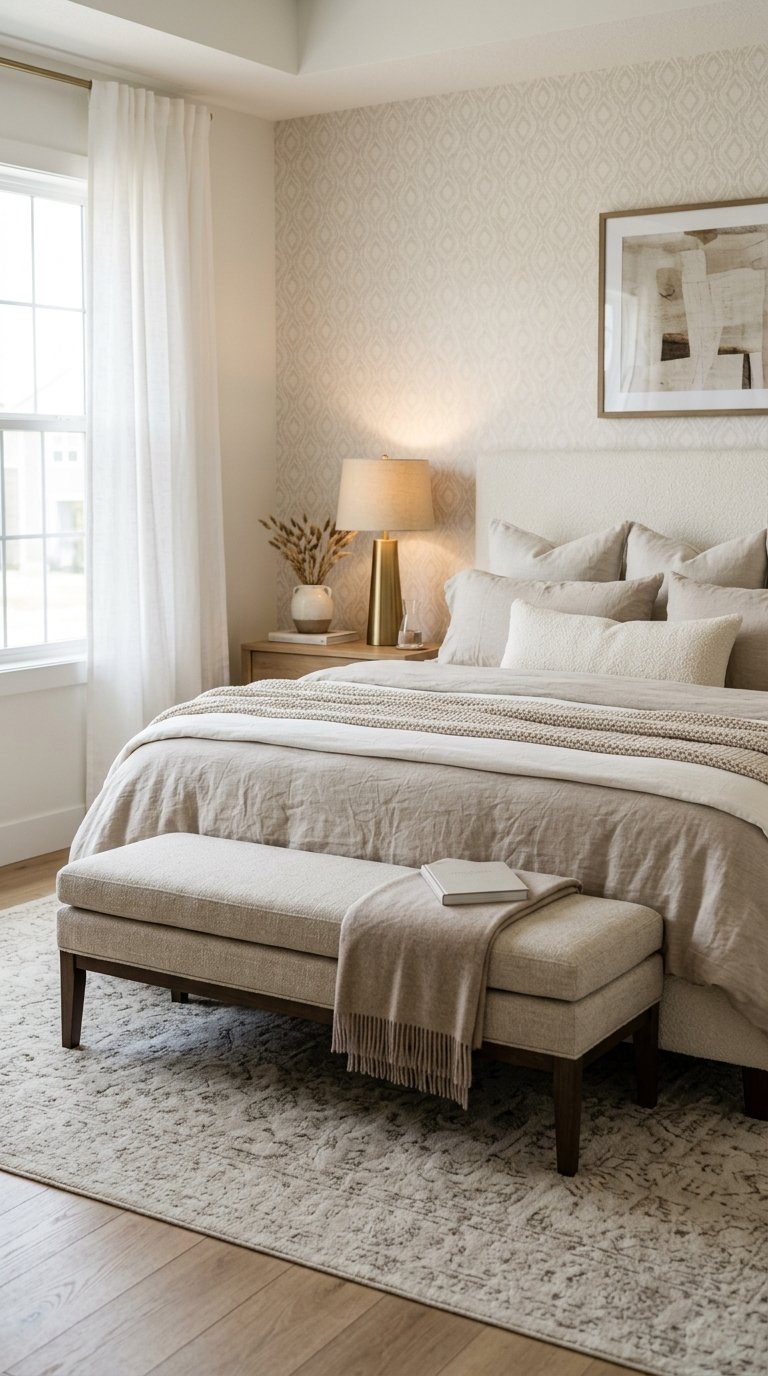
A backless upholstered bench in a neutral fabric (oatmeal linen, cream bouclé, warm grey) works as a supporting player in the bedroom rather than a statement piece. It extends the room’s colour palette rather than interrupting it.
This approach suits bedrooms with strong pattern elsewhere (wallpaper, bold bedding, a patterned rug) where adding another statement object creates visual noise. The neutral bench grounds the room without competing. Sizes run from 36 to 72 inches; choose a bench within 12 inches of your mattress width for the best visual proportion.
8. Install a Built-In Window Seat Bench at the Bedroom Bay
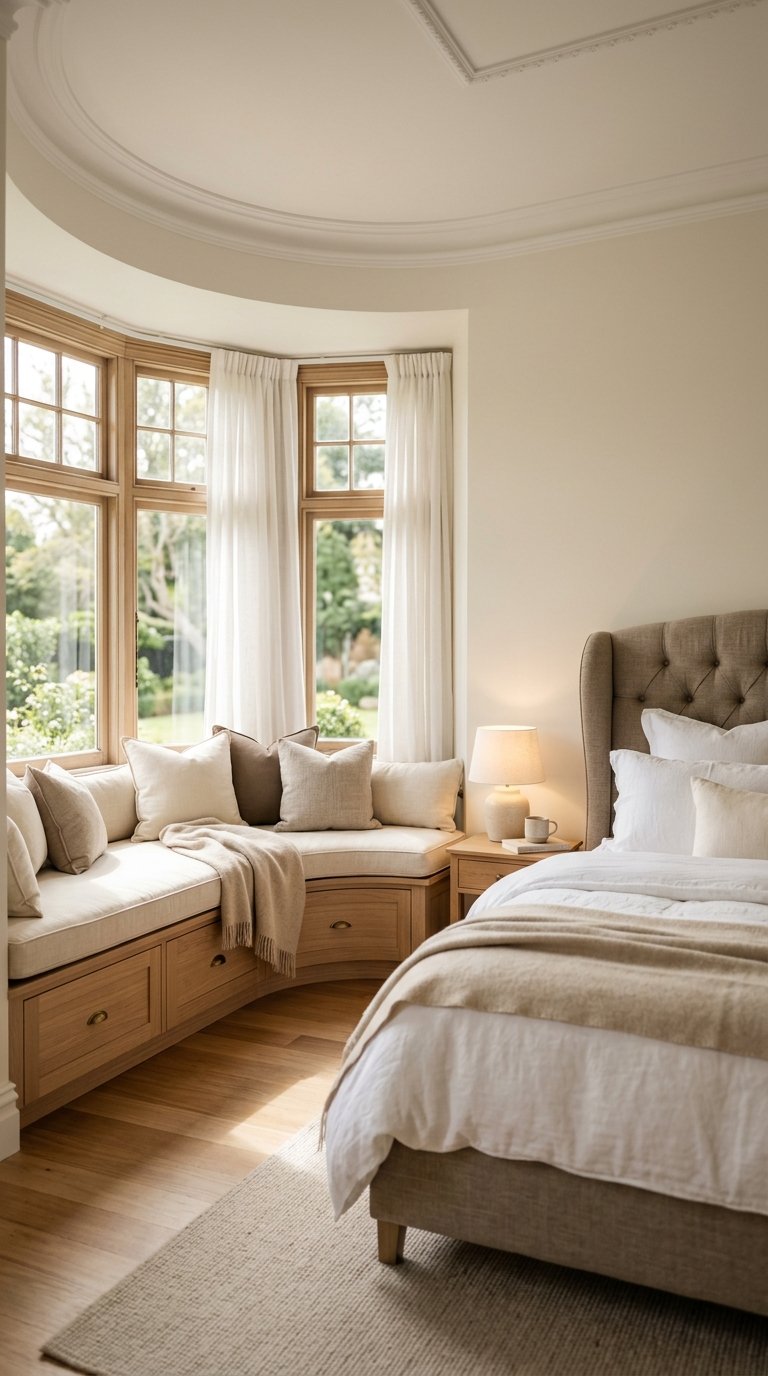
A bay window or alcove at the bedroom end wall becomes a built-in bench seat with the addition of a cushioned platform and storage below. The built-in approach costs $500 to $2,500 depending on size and finish but adds permanent square footage to the room’s functional area.
The window bench creates a reading nook and seating zone that a freestanding bench never achieves because it fully occupies the architectural space. Pair it with two wall-mounted reading lights above and a bolster cushion on each side for a finished look that requires no additional styling.
9. Choose a Bench with Metal Legs for a Modern Edge
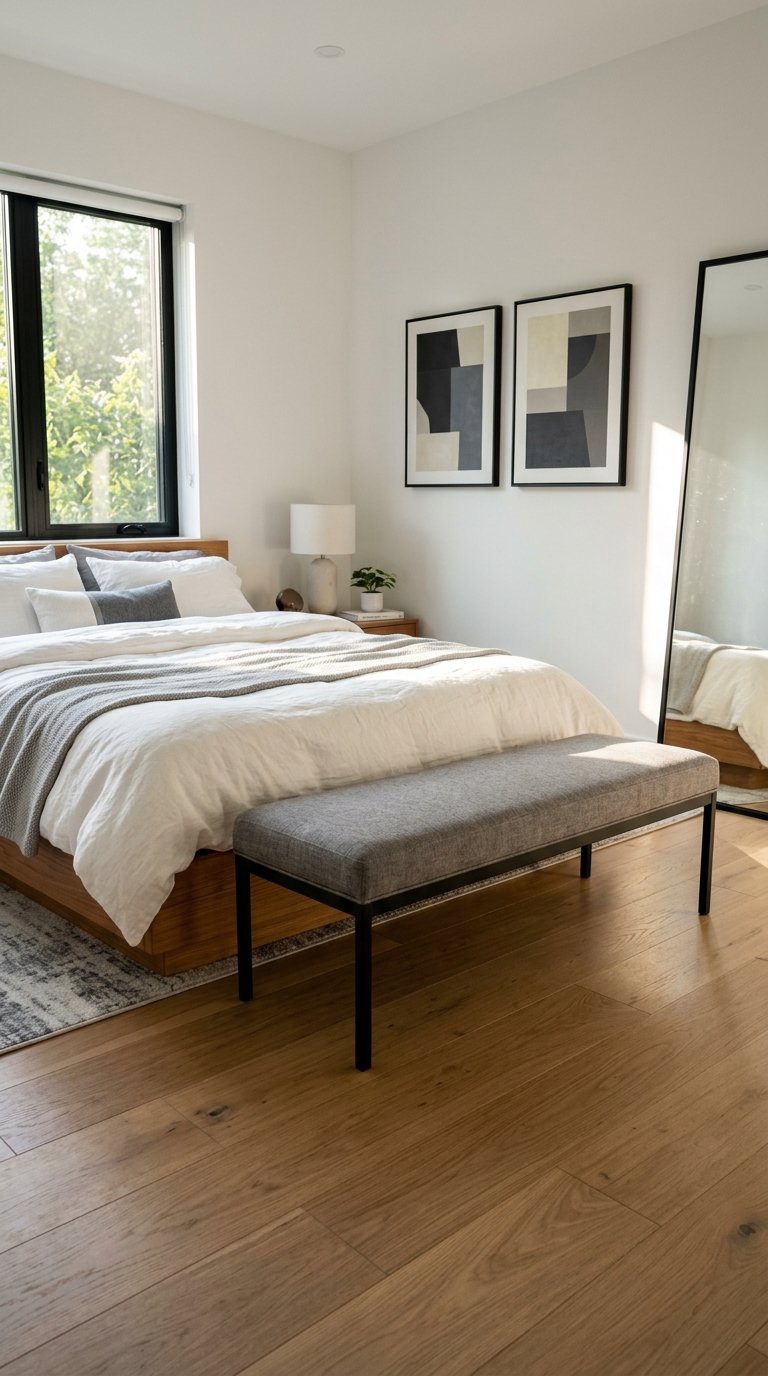
A upholstered bench seat on thin matte black or brushed brass metal legs reads as contemporary and light rather than heavy and traditional. The contrast between a soft upholstered top and hard metal legs creates a material tension that makes the bench look designed.
Metal-legged benches cost $120 to $500 and suit modern, industrial, and transitional bedrooms. Matte black legs suit cooler, more contemporary schemes; brushed brass legs work in warmer, more layered interiors where gold accents appear elsewhere in the room.
10. Use a Vintage Trunk as a Bedroom Bench
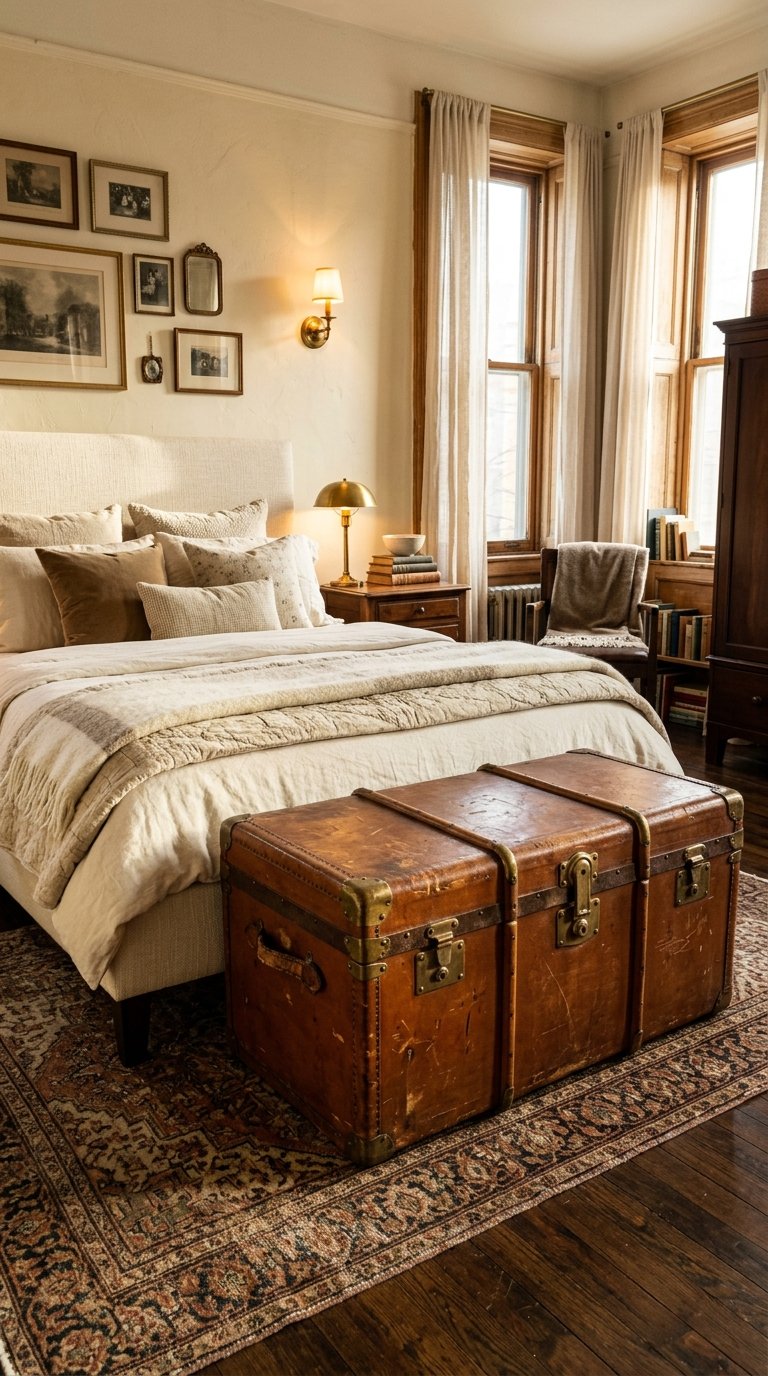
A vintage leather or wooden trunk at the foot of the bed functions as a bench, storage unit, and character piece simultaneously. Vintage trunks cost $50 to $400 at estate sales, antique markets, and eBay depending on condition and material.
The trunk adds history and texture that no new piece replicates. Place a folded throw or a flat cushion on top to soften the lid surface for seating. The storage inside holds seasonal items, spare bedding, or items you access infrequently.
11. Add a Bench with Shelf Below for Shoe and Bag Storage
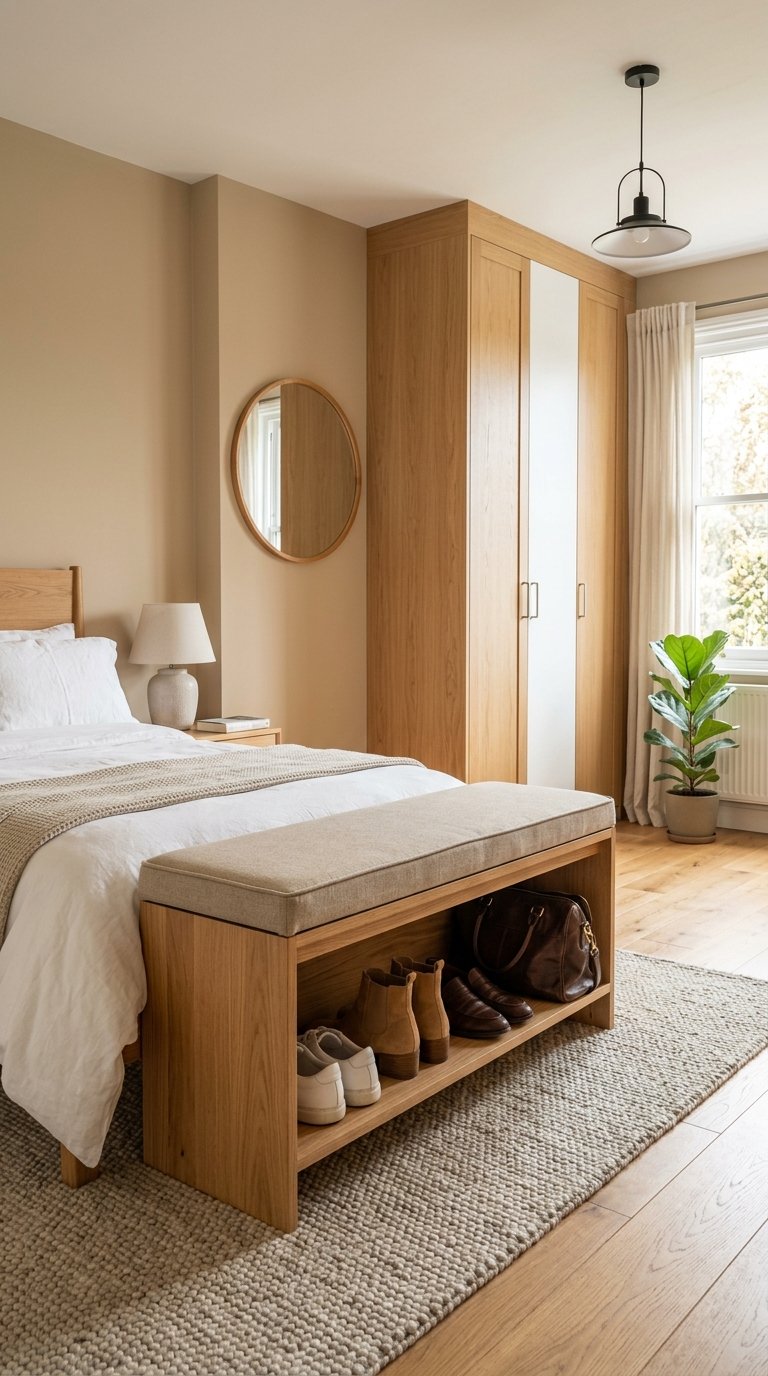
A bedroom bench with an open shelf or rack below the seat holds shoes, bags, and everyday items that would otherwise pile on the floor or chair. Benches with lower shelves cost $80 to $350 and solve the bedroom floor clutter problem that upholstered ottomans without storage don’t address.
Position the bench near the bedroom door or dressing area rather than at the foot of the bed for maximum functionality. Three pairs of shoes on the lower shelf and a bag on the bench seat means the bedroom stays clear without any extra storage furniture.
12. Place a Skirted Bench for a Soft, Romantic Look
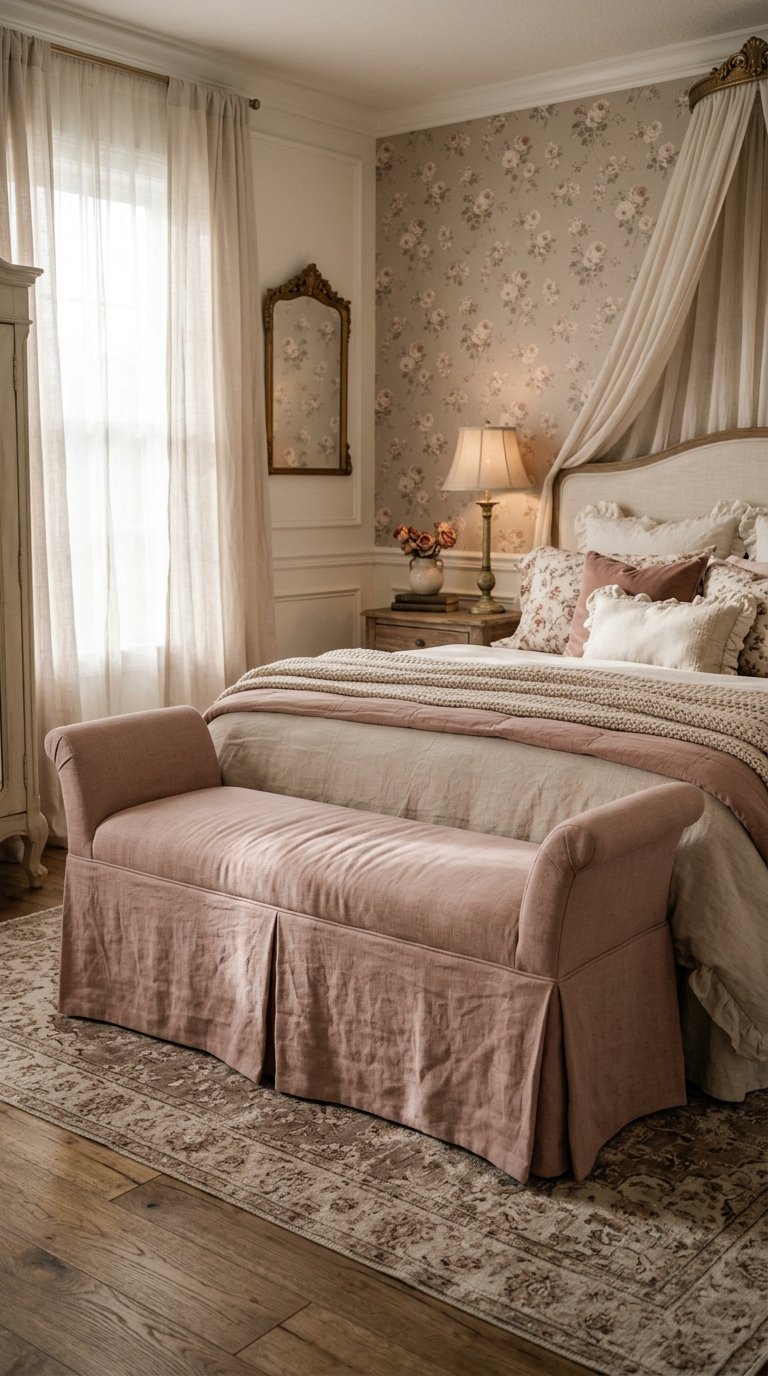
A bench with a floor-length upholstered skirt creates a soft, romantic bedroom look that works particularly well in traditional, French country, or maximalist interiors. The skirted silhouette hides the bench frame and legs entirely, creating a single upholstered mass that reads as generous and luxurious.
Skirted benches cost $200 to $800 and typically come in linen, chintz, or cotton fabric. The skirt fabric choice determines the room’s personality more than almost any other single upholstery decision in the bedroom.
13. Use a Bench with a Curved Silhouette for a Contemporary Look
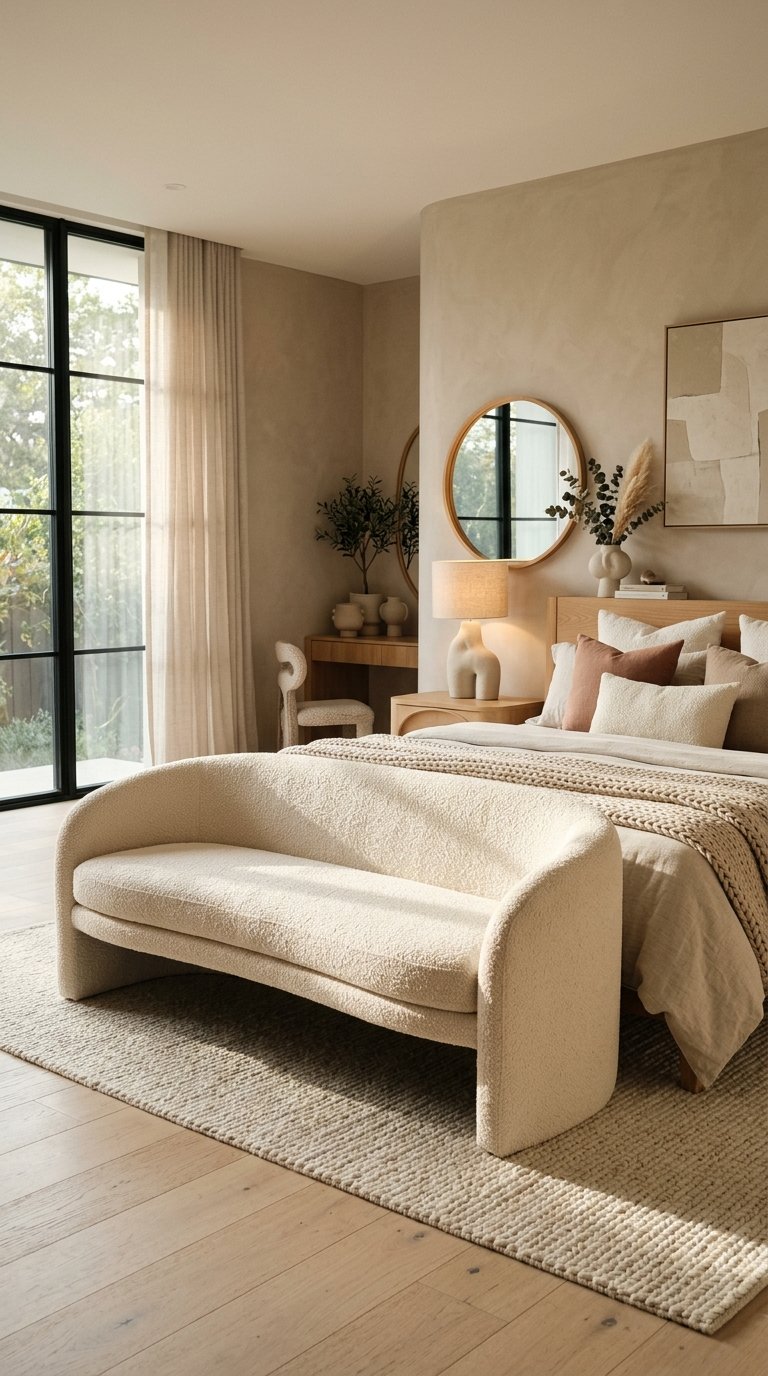
Curved furniture is the defining shape of contemporary interior design in 2024 and 2025, and a curved bedroom bench at the foot of the bed signals that the room’s style is current without requiring any other changes. Curved upholstered benches cost $200 to $700 at retailers like CB2, Anthropologie Home, and West Elm.
The curved front edge of the bench also makes the piece feel less rigid in the room, which suits bedrooms with softer, more organic aesthetics. Pair a curved bench with organic-shaped objects elsewhere (a round mirror, a curved lamp base) to reinforce the design language consistently.
14. Place a Long Bench Behind a Floating Bed Platform
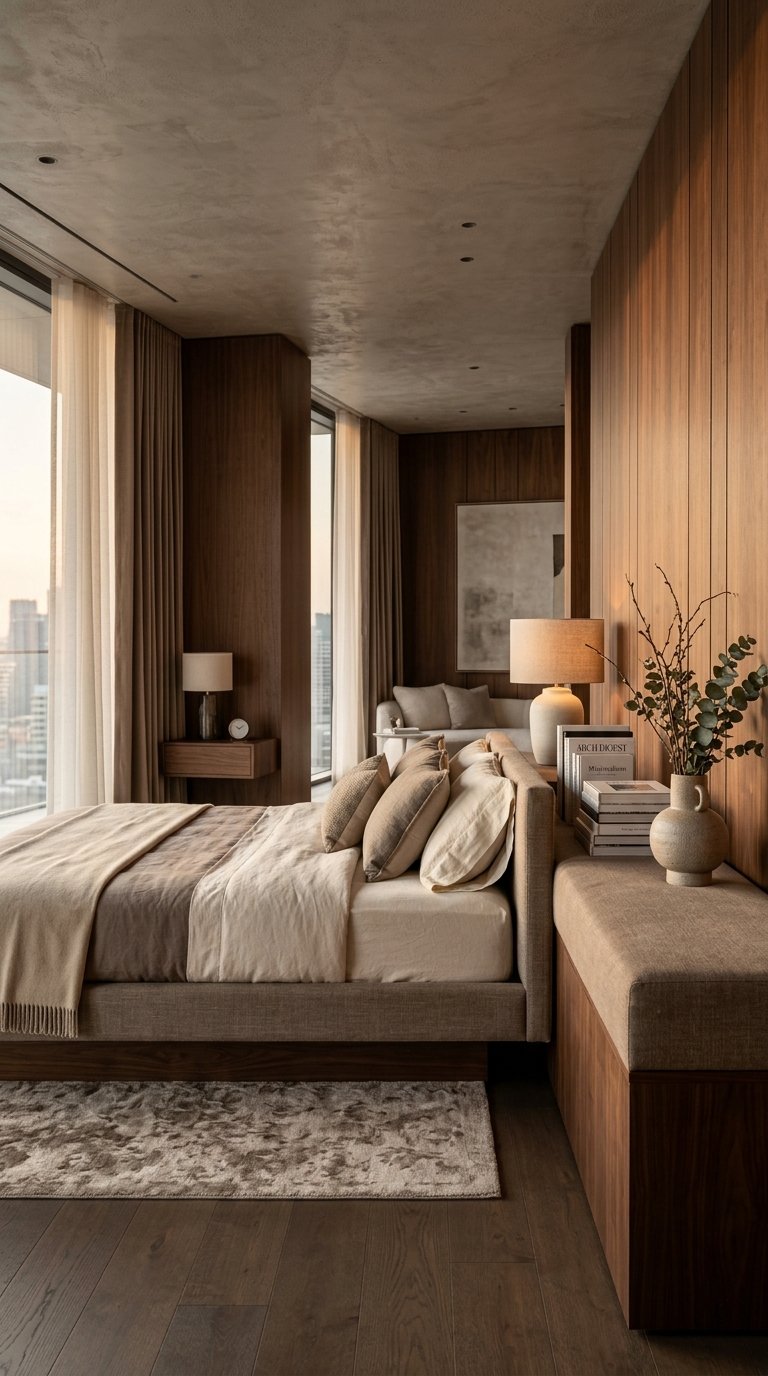
In a bedroom with a floating platform bed or a bed positioned away from walls, a long bench behind the headboard creates a surface for books, a lamp, and small objects while adding structure to the floating arrangement. A 60 to 72 inch bench at 18 inches tall pairs well with most platform bed heights.
This configuration suits master bedrooms with enough floor space to position the bed away from walls. The bench behind the headboard replaces a bedside table on the back side and gives the room a hotel suite quality that standard bedroom layouts never achieve.
15. Choose a Bench in a Bold Accent Colour
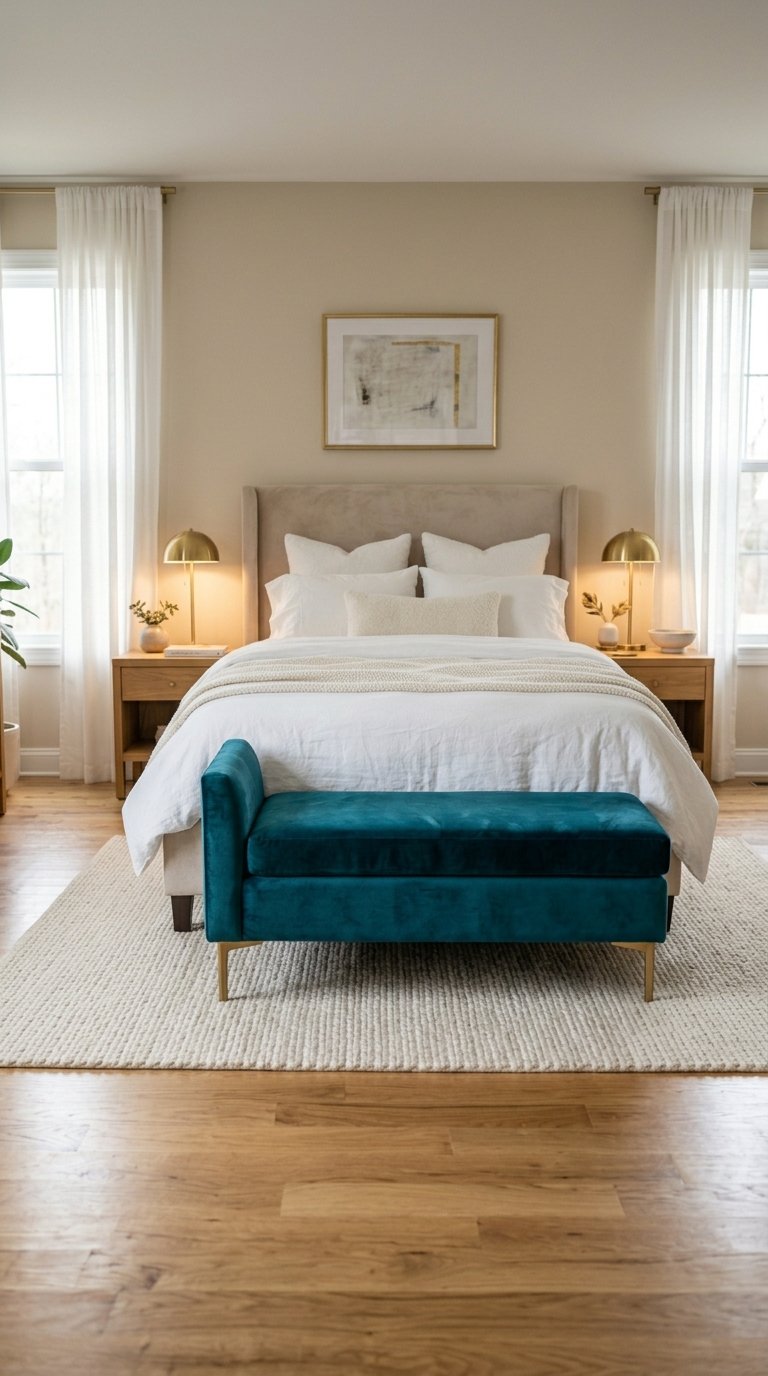
A bedroom bench in a bold accent colour (burnt orange, deep teal, mustard yellow, raspberry) introduces the room’s accent colour at the most prominent horizontal surface in the space. Bold colour benches cost the same as neutral ones ($150 to $600) and do significantly more visual work.
The foot-of-bed position makes the bench the first thing you see when you walk into the bedroom. A bold colour there anchors the room’s colour story from the entry point and sets the tone for every other decision. IMO, this is the single most underused opportunity in bedroom design.
16. Use a Bench as a Bedside Table Alternative
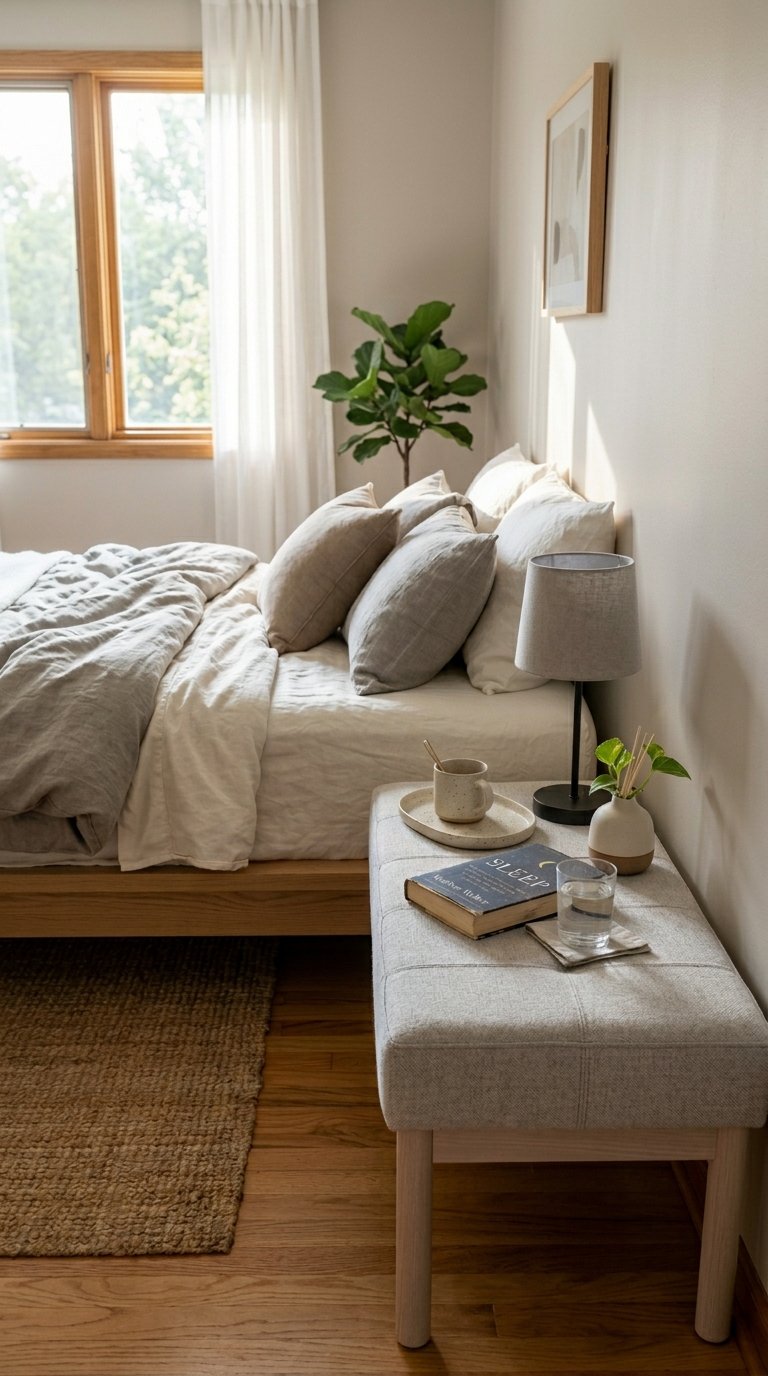
In a bedroom too small for a standard bench at the foot of the bed, position a narrow bench (12 to 14 inches deep) along the side of the bed as an extended bedside surface. It holds a lamp, book, glass of water, and phone at the same time, which a standard nightstand rarely achieves.
A narrow bench costs $60 to $250 and works especially well beside low platform beds where the proportions of a standard tall nightstand look wrong. The bench surface at mattress height or slightly below creates a clean horizontal line that makes the room feel more considered.
17. Place a Sherpa or Sheepskin Bench for Winter Warmth
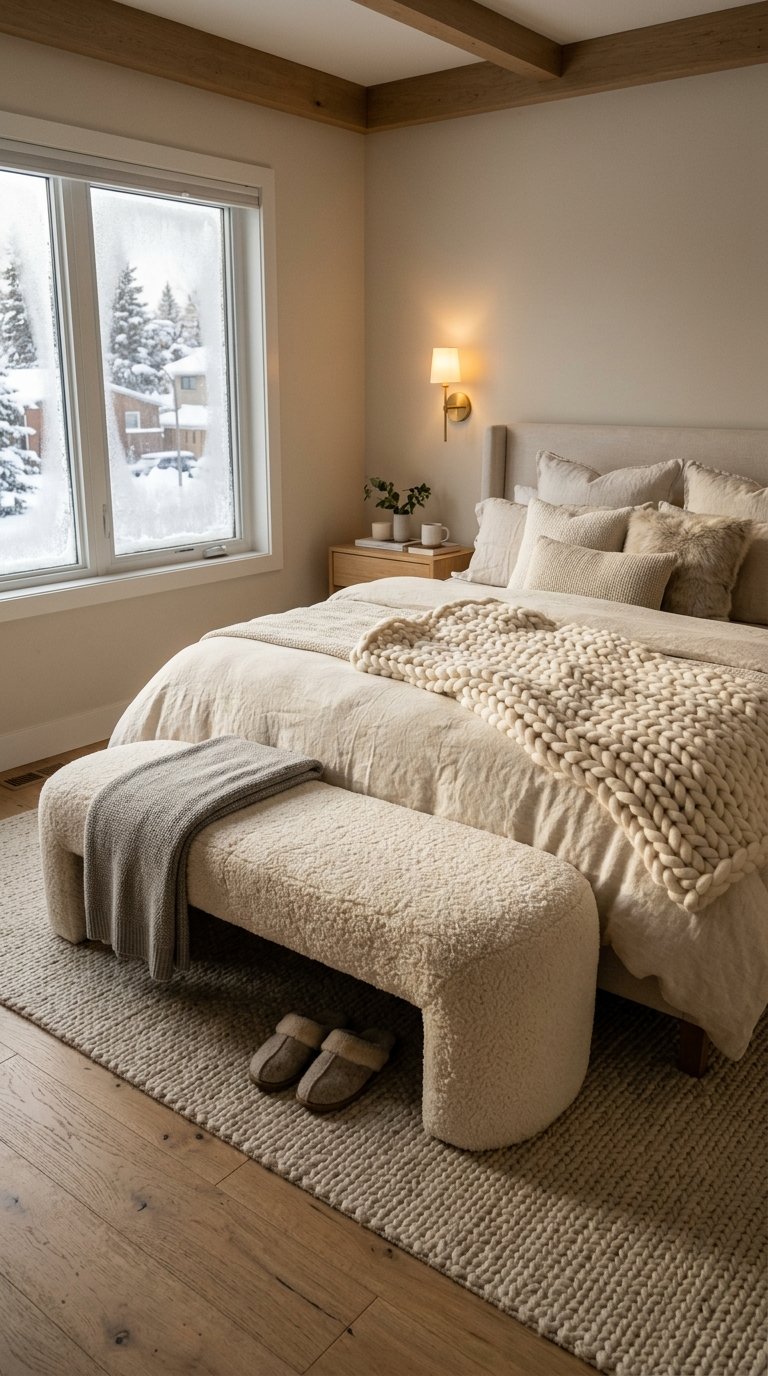
A bench upholstered in sherpa, shearling, or genuine sheepskin adds textural warmth to a bedroom that other upholstery materials never match. Sherpa benches cost $150 to $400 and suit Scandinavian, mountain chalet, and hygge-inspired bedroom aesthetics.
The tactile quality of the sherpa surface makes the bench an object you want to touch, which adds a sensory layer to the room beyond what you see. Drape a chunky knit throw over one end of the sherpa bench for a layered winter bedroom look that photographs as well as it feels in person.
18. Build a Floating Wall-Mounted Bench for Small Bedrooms
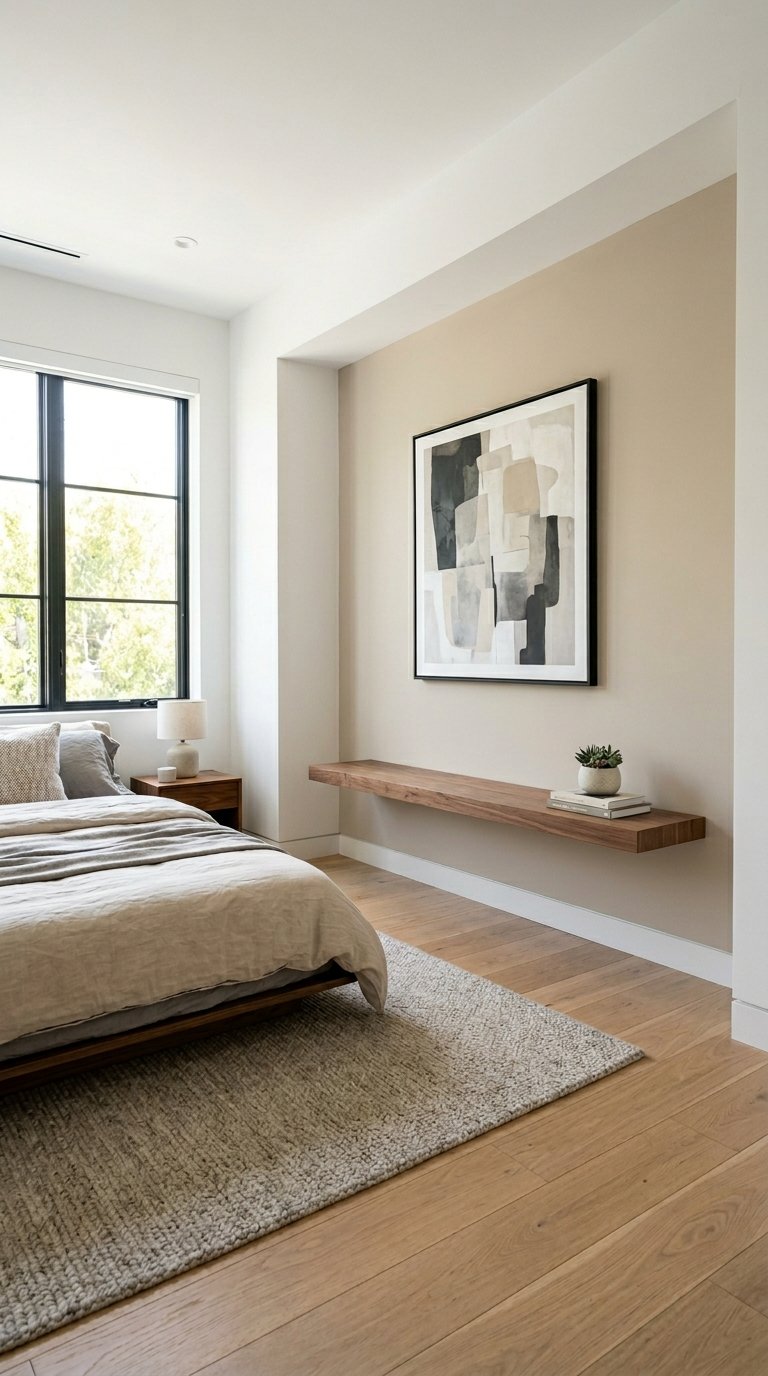
A wall-mounted floating bench takes up zero floor space below the seat and keeps the floor fully visible, which makes small bedrooms read as larger. Floating bench systems consist of wall-mounted brackets and a timber or upholstered seat panel, costing $80 to $300 to build or buy as a kit.
The floating installation requires locating wall studs and using appropriate fixings rated for seating weight. A 48-inch floating bench along one bedroom wall serves as seating, a display surface, and a visual ledge that adds horizontal structure to a plain wall.
19. Use a Bench with Decorative Nail Head Trim for Detail
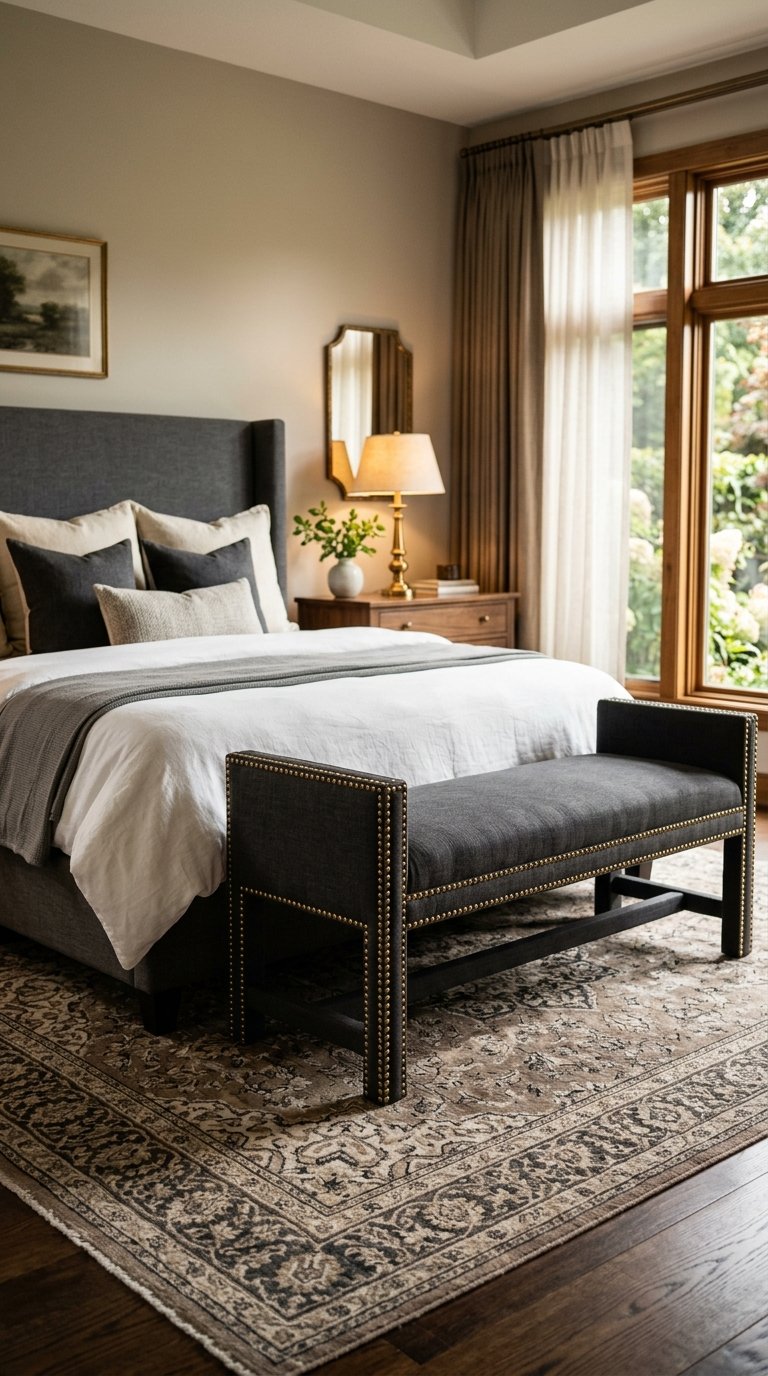
Nail head trim (a row of brass or chrome dome studs along the bench frame edge) adds a formal, tailored detail that elevates a simple upholstered bench into a piece that reads as more expensive and considered. Benches with nail head trim cost $180 to $500 and suit traditional, transitional, and glam interior styles.
The nail head detail works best on a bench in a solid, medium-toned fabric (charcoal, navy, camel) where the metallic studs show clearly. Avoid nail head trim on patterned fabrics where the detail gets lost in the print competition.
20. Layer a Bench with Textiles for a Styled Look
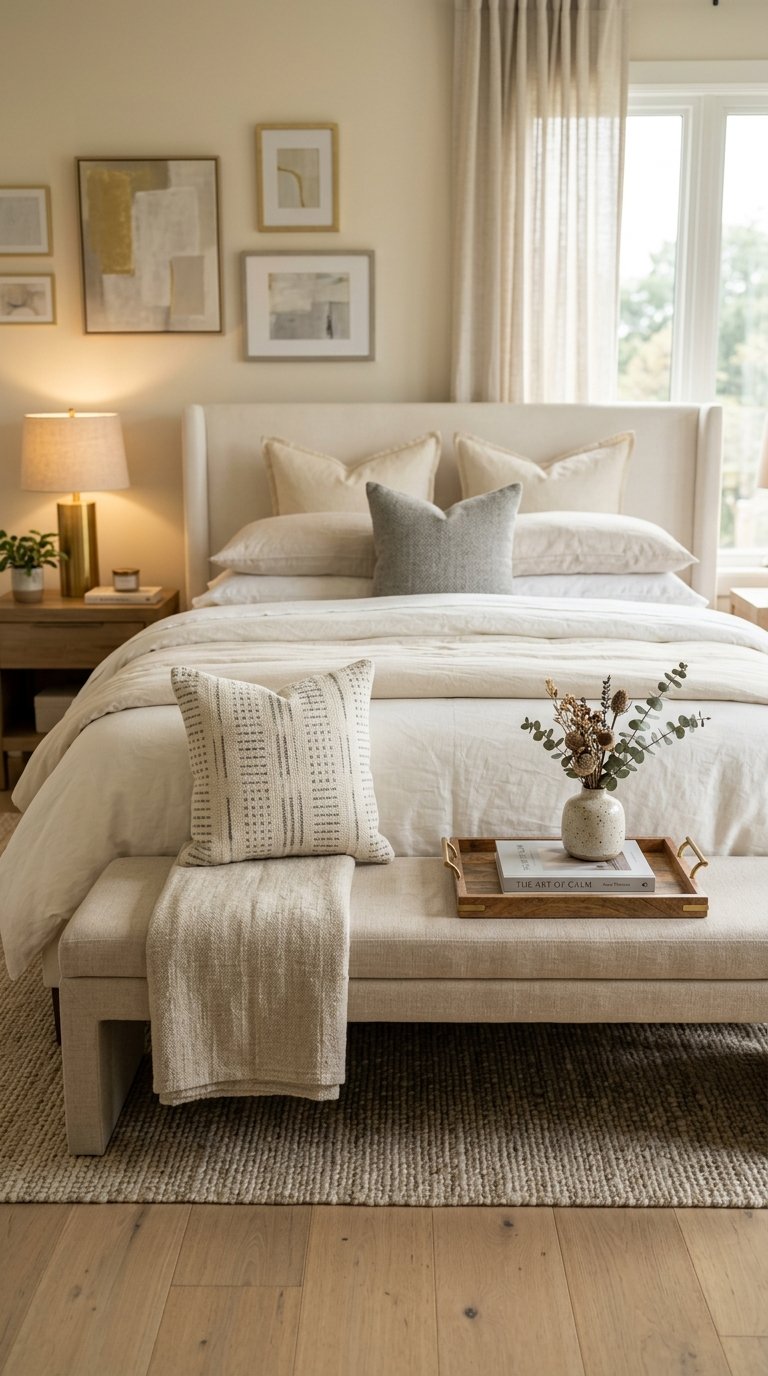
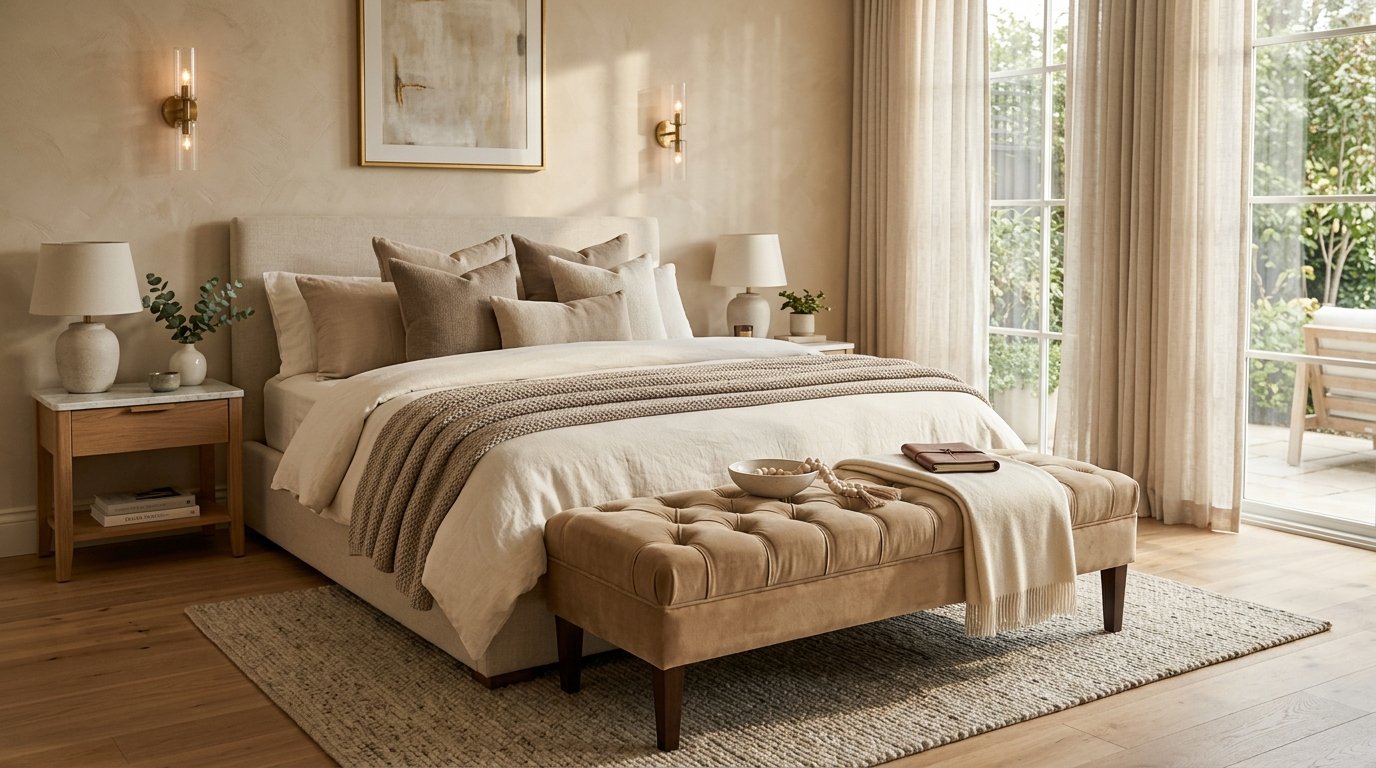
A bench styled with a folded throw, one or two small cushions, and a single object (a tray, a book, a small plant) transforms a functional piece into a styled vignette. The layering takes five minutes and makes the bedroom look like it was prepared for a magazine shoot.
The rule for bench styling is restraint: one folded textile, one cushion maximum, and one object. More than three elements on a bench surface looks crowded rather than styled. The throw should drape at one end rather than covering the full surface, leaving the bench material visible. 🙂
21. Choose a Bench That Matches Your Bed Frame Material
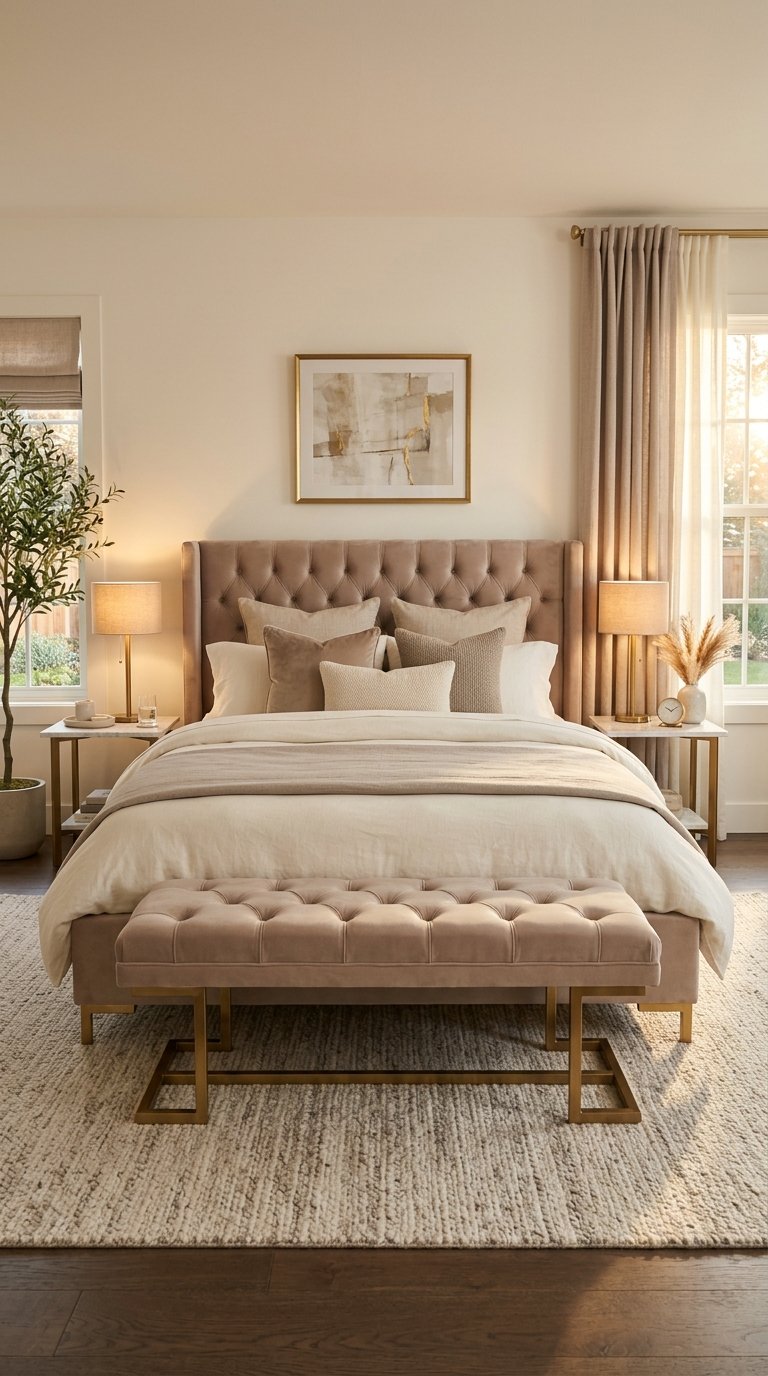
A bedroom bench that shares its material or finish with the bed frame (matching wood species, matching upholstery fabric, or matching metal finish) creates a cohesive furniture grouping that makes the bedroom feel designed as a set rather than assembled from separate purchases.
Matching a walnut bed frame with a walnut-legged bench, or pairing a velvet headboard with a velvet bench in a coordinating colour, costs the same as choosing mismatched pieces but delivers a much more polished result. The matching approach suits bedrooms where the goal is a calm, unified aesthetic without strong pattern or contrast.
Final Thoughts
A bedroom bench is the piece most bedrooms are missing. It finishes the room at the foot of the bed, solves daily practical problems from shoe storage to blanket overflow, and adds a layer of design intentionality that makes the whole space look considered.
Pick the bench that solves your biggest bedroom problem first. Storage issues? Go with the ottoman bench or the vintage trunk. Small room? Try the floating wall-mounted version or the narrow bedside bench. Styling problems? A bold colour or a textured material does the work. Get the right bench in the right spot and the bedroom stops looking like a work in progress.