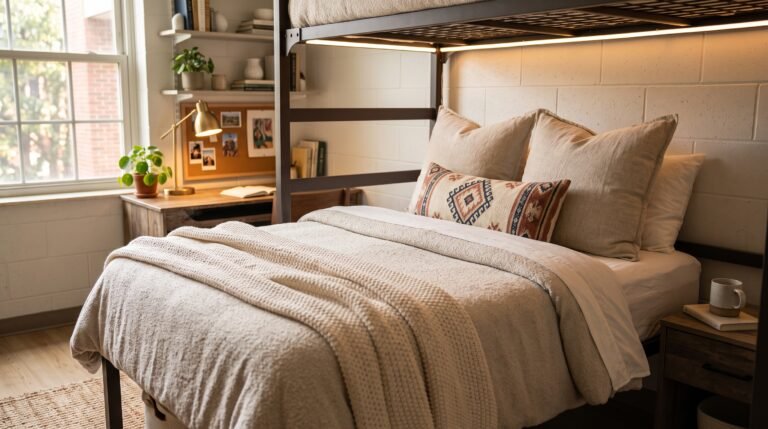
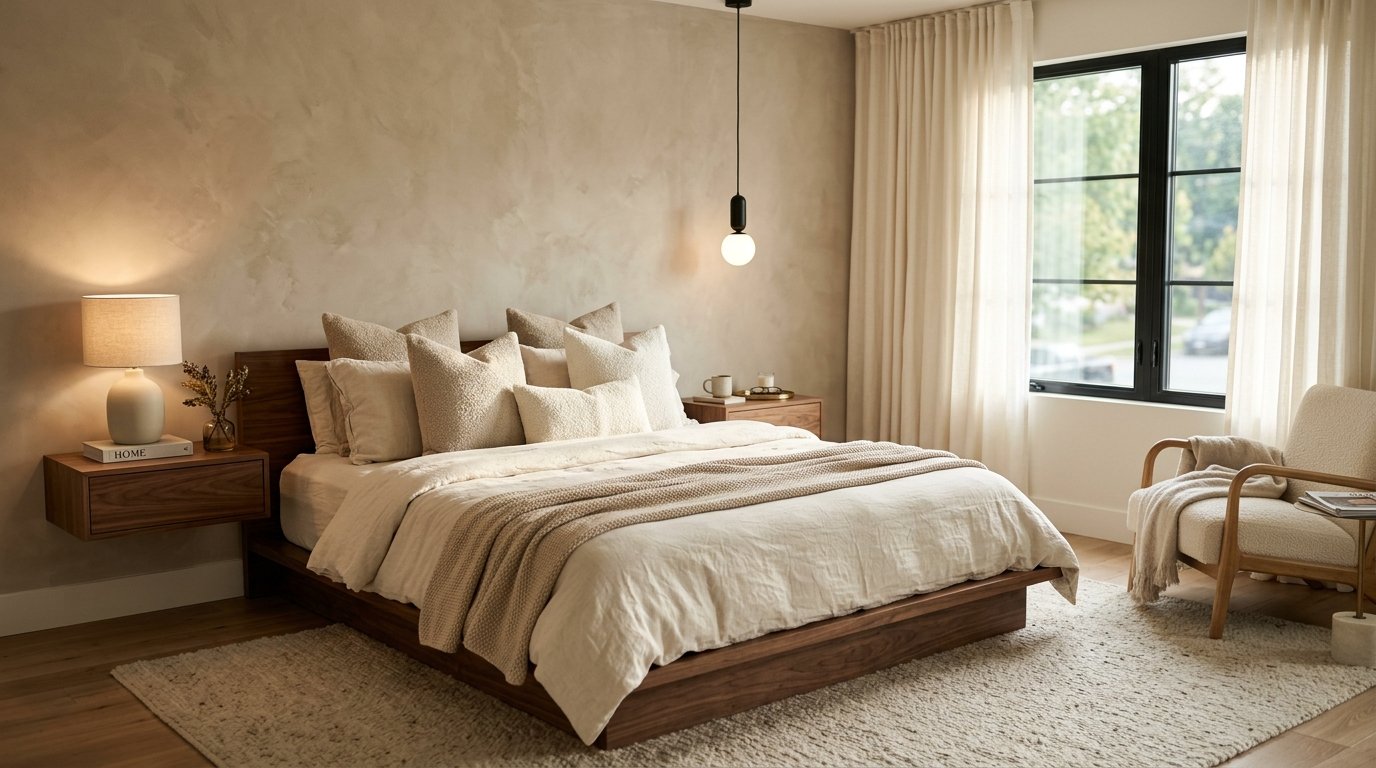
23 Modern Bedroom Ideas That Feel Calm and Luxurious Now
Your bedroom is the one room in your home that exists entirely for you. Not for guests, not for entertaining, not for impressing anyone. And yet most bedrooms sit in a permanent state of almost finished, with mismatched furniture, sad lighting, and a color on the walls that came with the house. You deserve better than that.
These 23 modern bedroom ideas give you specific products, real brand recommendations, accurate price points, and honest reasons why each idea works. No vague mood board inspiration. No luxury hotel fantasy. Practical, modern bedroom upgrades for real homes, real budgets, and real people who want to sleep and wake up in a room that feels intentional.
1. A Platform Bed With a Low-Profile Frame for a Clean, Modern Foundation
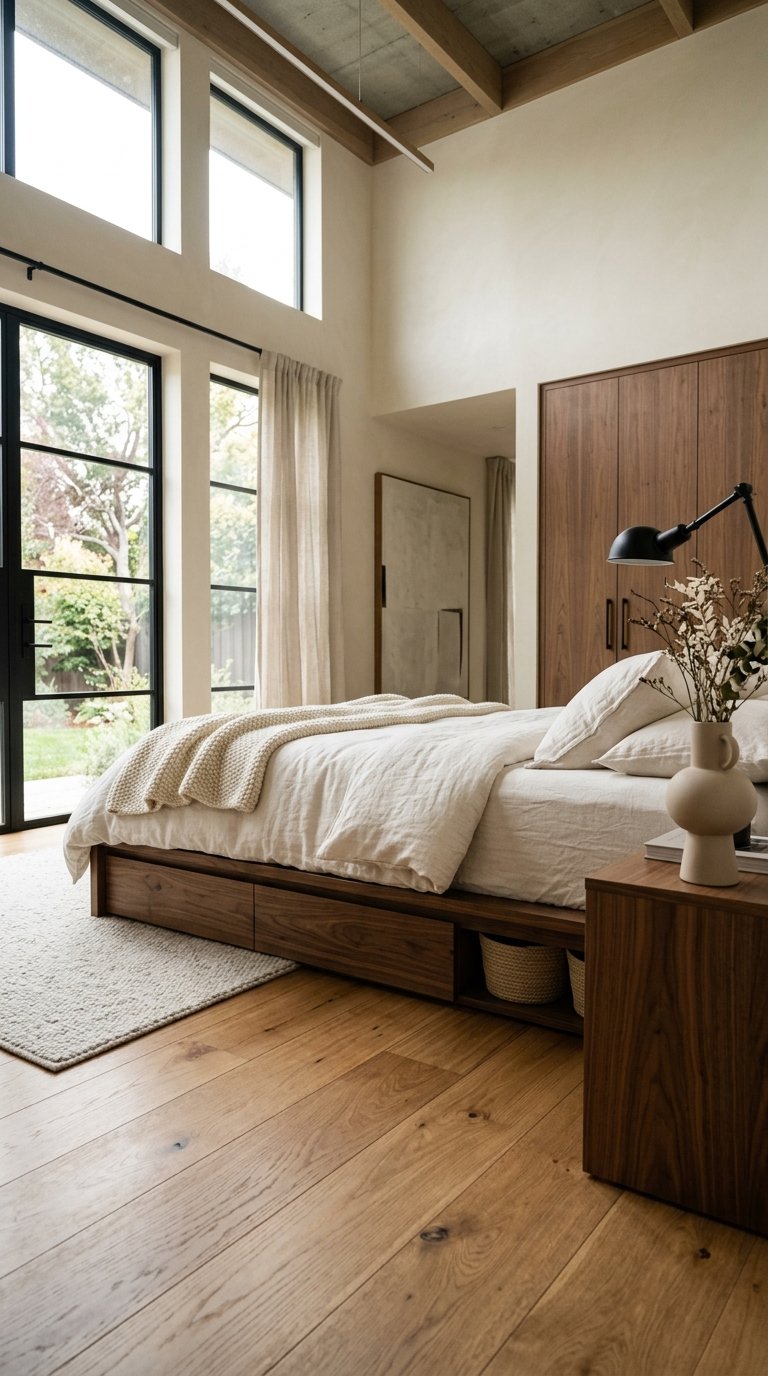
A platform bed sits lower to the ground than a traditional bed frame and eliminates the need for a box spring, which removes visual bulk from the room and makes the ceiling feel higher by comparison. The low, horizontal line of a platform bed is the single furniture choice that does more to modernize a bedroom than any other piece.
Zinus’s Modernist Platform Bed in a Queen size costs $180 to $250 on Amazon and delivers a clean, wood-slatted base with a matte black steel frame that reads as intentional rather than budget. The slats support a standard mattress without a box spring and sit at a 12-inch floor clearance, which keeps the visual profile low without eliminating under-bed storage space. Pair it with IKEA’s Skubb storage boxes at $10 for a set of six to use the clearance zone for out-of-season clothing and bedding.
For a step up in material quality, Article’s Tera Platform Bed in a solid walnut or oak finish costs $799 to $1,099 in a Queen size and delivers a furniture-grade wood frame with a 5-year warranty. The natural wood grain of the Tetra frame adds warmth to a modern bedroom palette without introducing a competing design element. The bed does the architectural work and the warm wood tone prevents the room from reading as cold.
2. A Neutral Wall Color in a Warm White or Warm Gray
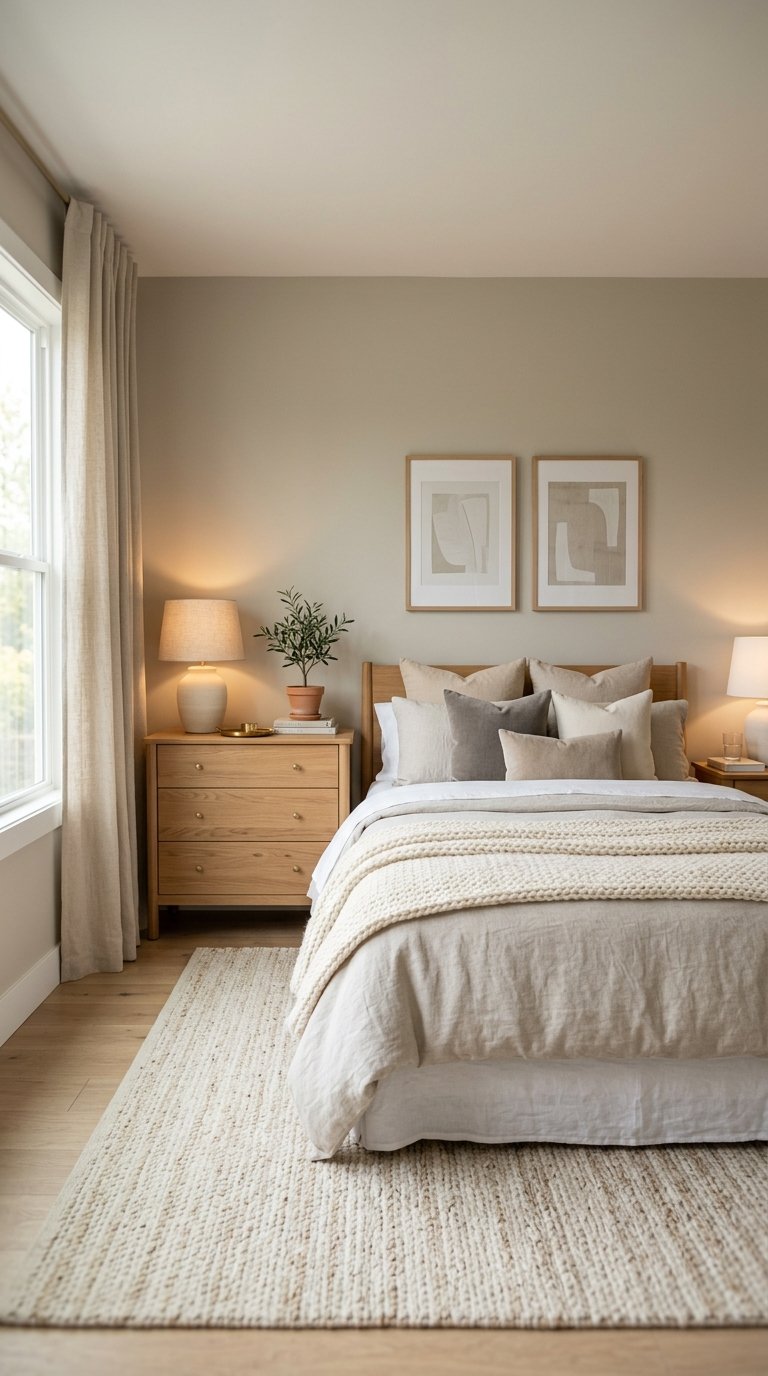
The wrong wall color is the most common reason a modern bedroom feels off without anyone being able to identify why. Cool, blue-toned whites and cold gray walls make a bedroom feel clinical rather than calm. Warm whites and warm grays create the restful, enveloping quality that modern bedroom design actually requires.
Benjamin Moore Pale Oak OC-20 is the warm greige that interior designers specify most consistently for modern bedroom walls. It reads as a warm beige in daylight and a soft gray under incandescent evening light, which gives the room a different quality morning and night without requiring two different paint colors. A gallon of Benjamin Moore Regal Select in Pale Oak costs $55 to $65 and covers a standard 12×14-foot bedroom with two coats.
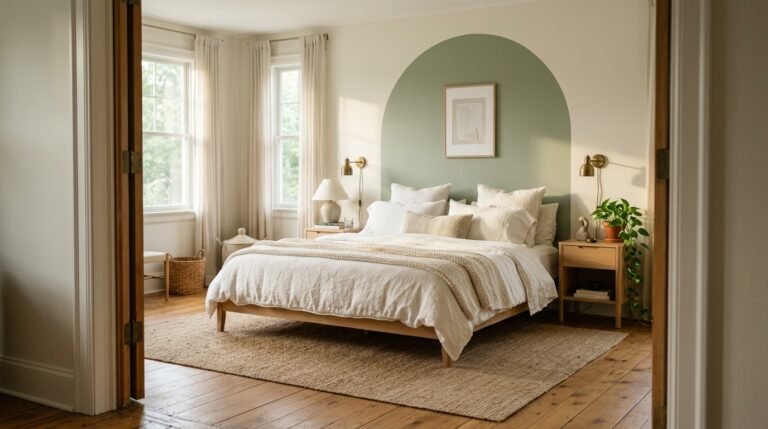
For a warmer white option, Sherwin-Williams Alabaster SW 7008 delivers a creamy white with enough warmth to prevent the clinical quality that pure white walls produce in a bedroom environment. It pairs with every wood tone, every metal finish, and every textile color on the market, which makes it the safest and most versatile modern bedroom wall color at any budget level. A gallon of Sherwin-Williams Emerald interior paint in Alabaster costs $75 to $85.
3. Linen Bedding for a Textured, Relaxed Bed Surface
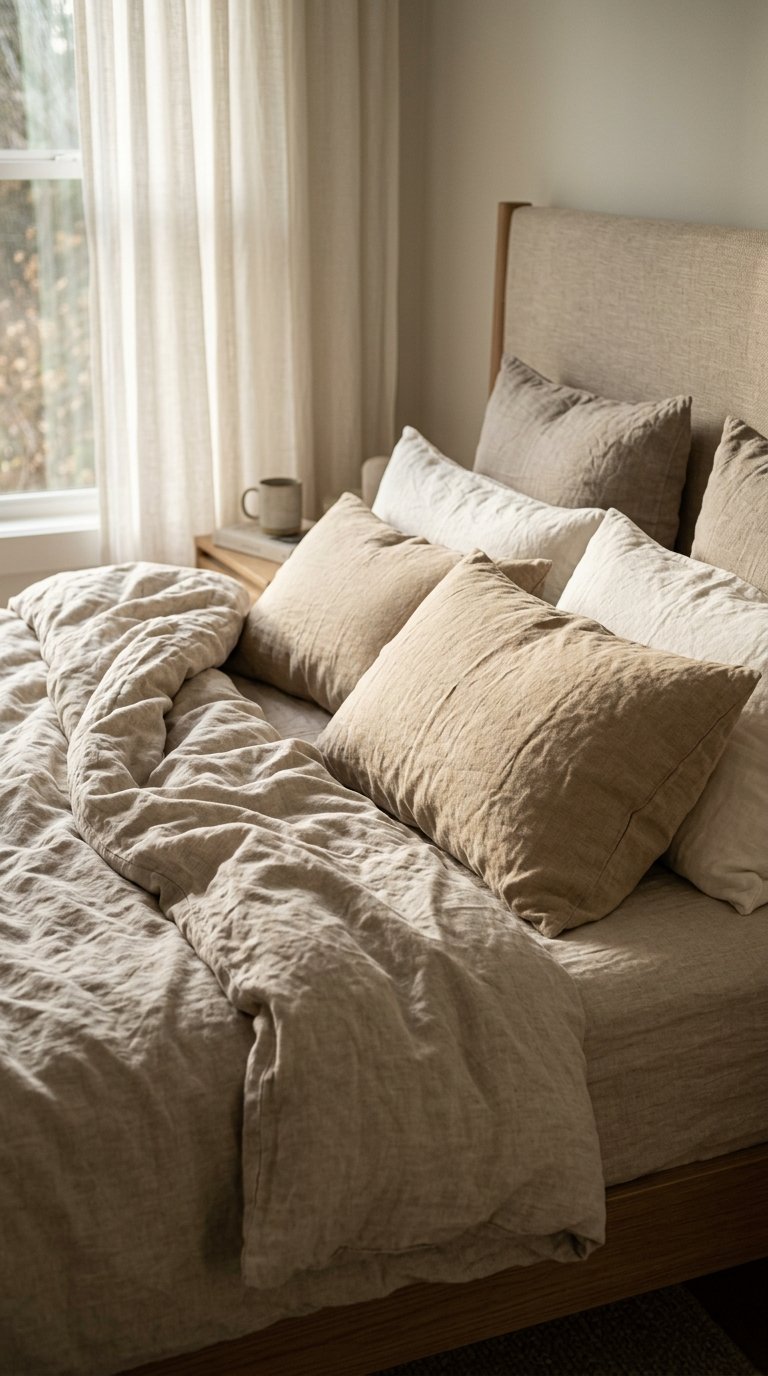
Linen bedding does something cotton bedding does not: it looks better unmade than made. The natural wrinkle and texture of linen fabric reads as intentional and relaxed rather than sloppy, which means the bed looks styled at 7 AM before anyone touches it. That specific quality makes linen the bedding material that modern bedroom design relies on most heavily.
Cultiver’s linen duvet cover in a Queen size costs $235 to $265 in a range of warm neutral tones including Oat, Sand, and Warm White. The stone-washed linen finish arrives pre-softened and continues to soften with each wash without pilling or degrading the way cheaper linen blends do. Pair it with Cultiver’s linen pillowcases at $55 to $75 per pair and a linen flat sheet at $145 to $175 for a complete set that lasts five to ten years with proper washing.
For a more budget-conscious linen option, IKEA’s Puderviva linen duvet cover in a Queen size costs $79.99 and delivers genuine linen fabric at a price point that most premium cotton bedding brands charge for a synthetic blend. The IKEA linen is not as fine or as pre-softened as Cultiver, but it delivers the visual and textural quality of linen bedding at a fraction of the cost. FYI, this is one of the best value-to-aesthetic ratios in any bedroom product category.
4. Pendant Lights on Either Side of the Bed Instead of Table Lamps
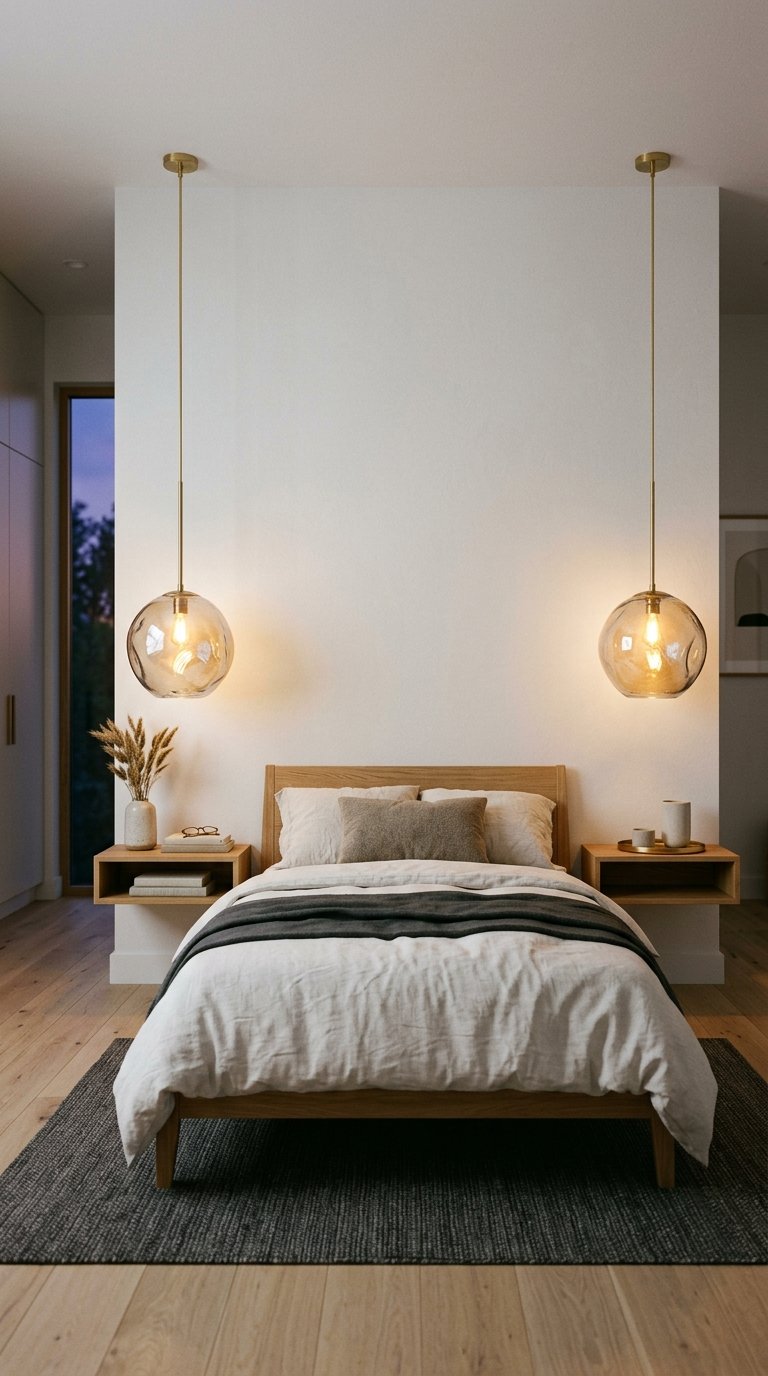
Table lamps on bedside tables take up surface space, limit bedside storage, and require a surface large enough to hold them. Pendant lights hung from the ceiling on either side of the bed free up the entire bedside surface, create a designed, symmetrical look, and put the light source at exactly the right height for reading in bed without illuminating the entire room.
West Elm’s Sculptural Glass Globe pendant in a small size costs $69 to $89 per light and hangs on an adjustable cord that drops to any height between 6 and 72 inches from the ceiling. Order two and hang them at 24 to 30 inches above the mattress surface for ideal reading height. The installation requires a licensed electrician if you are adding new ceiling boxes, which adds $150 to $300 per side to the project budget, but the result eliminates two pieces of furniture and the cords, plugs, and surface clutter that come with them.
For a simpler, no-electrician option, IKEA’s Sunnan plug-in pendant at $29.99 per light runs on a standard wall outlet with a cord that routes up the wall and along the ceiling on adhesive cord clips. It is not the most refined installation, but it costs under $60 for both sides and delivers the pendant aesthetic in a rental bedroom without a single hole in the ceiling.
5. A Statement Headboard as the Room’s Focal Point
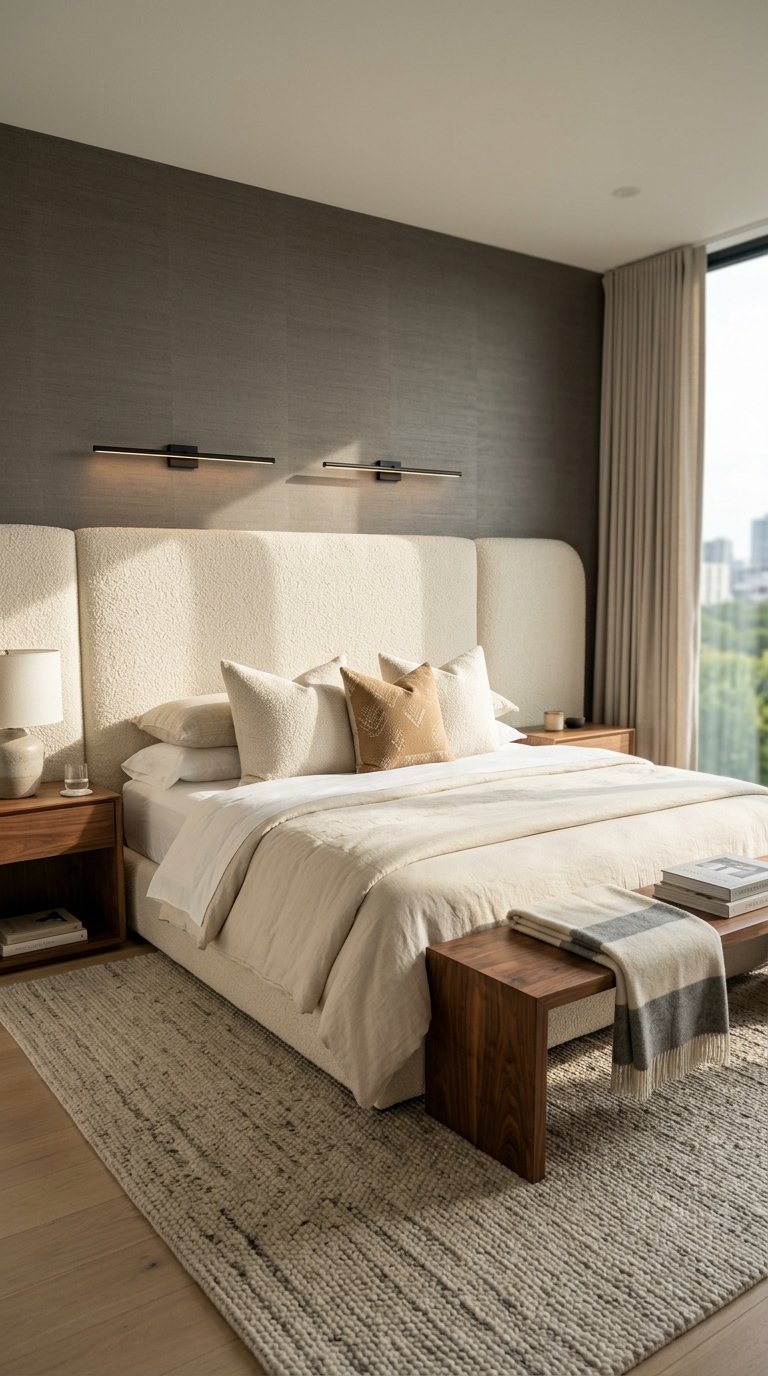
A modern bedroom needs one surface that functions as the room’s visual anchor, and the headboard wall is the natural location for it. A statement headboard in an upholstered, wood slab, or cane format gives the bed the architectural presence it needs to hold the room together as a designed space rather than a collection of furniture.
CB2’s Anthropologie Lennon Upholstered Headboard in a King size costs $899 to $999 in a boucle or performance fabric finish. The wide, low profile of the Lennon headboard extends beyond the mattress width on both sides, which creates a visual anchor that fills the wall behind the bed without requiring any additional wall decor. The upholstered surface adds acoustic softness to the room, which reduces echo in bedrooms with hard floors and minimal textiles.
For a DIY option at a fraction of the cost, a 4×8-foot sheet of 3/4-inch walnut veneer plywood from a local lumber yard at $80 to $120 cut to the bed width and mounted directly to the wall creates a wood slab headboard at a material cost that no furniture store matches. Sand the edges smooth, apply Rubio Monocoat Oil Plus 2C at $30 to $40 for a small kit, and mount it with French cleat hardware at $15 per set. The total project cost sits under $200 and the result reads as custom furniture.
6. Blackout Curtains That Actually Fit the Window Properly
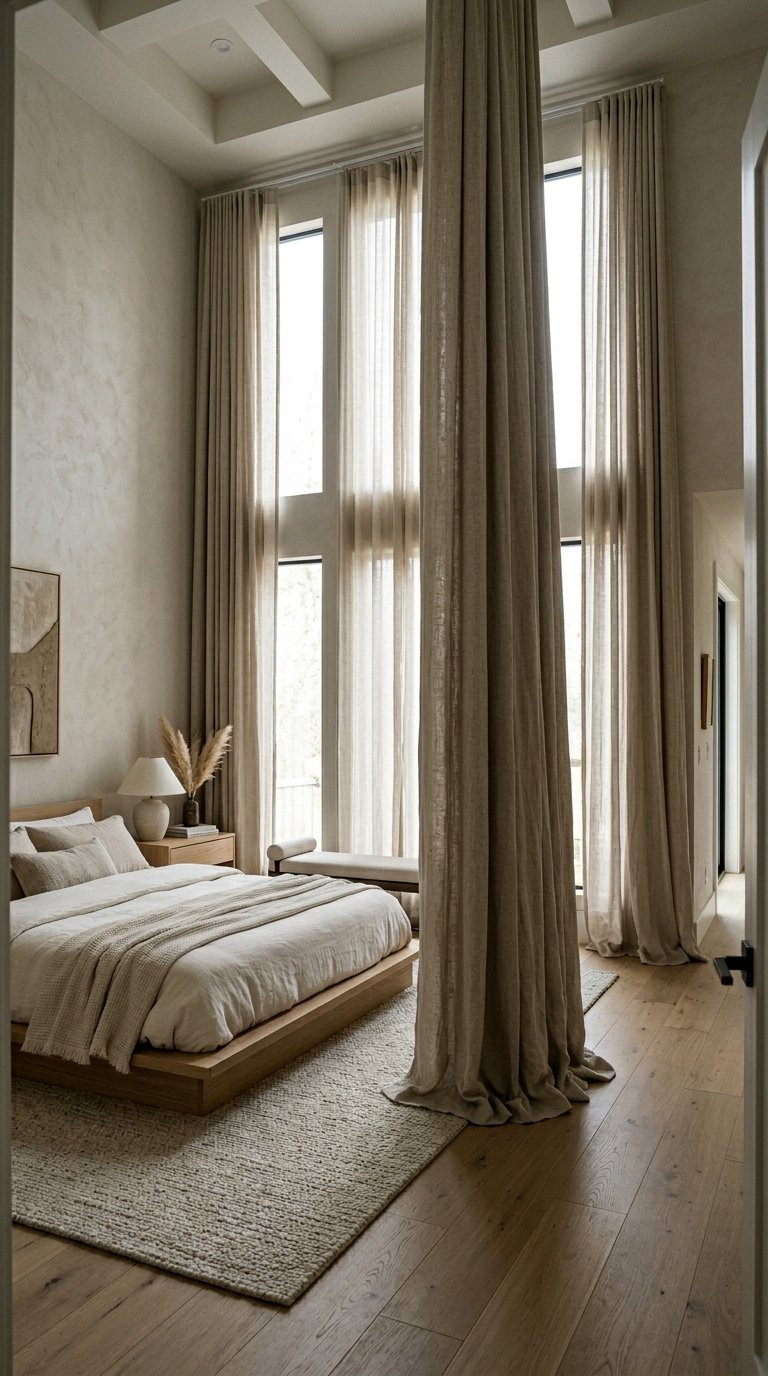
Most bedrooms have curtains that hang too short, too narrow, or too close to the window frame, and every single one of those installation errors makes the room look smaller and the window look cheaper than it is. Hanging curtains correctly is free. It costs nothing beyond the curtain rod placement decision, and it changes how the entire wall reads.
Hang curtain rods 4 to 6 inches above the window frame and extend the rod 8 to 12 inches beyond the window frame on each side. This placement makes windows look taller and wider than they are and allows the curtain panels to stack completely off the glass when open, which maximizes natural light during the day. Most homeowners hang the rod at the window frame and wonder why the room feels small. This is why.
Pottery Barn’s Emery Linen Blackout curtains in a 96-inch drop cost $79 to $109 per panel and deliver a clean, flat-front panel in a linen-weave fabric with a blackout lining that blocks 99 percent of light. Order panels long enough to puddle 1 to 2 inches on the floor or break at the floor surface for a tailored look. For a budget version, H&M Home’s linen-blend blackout curtains at $29 to $49 per panel deliver a comparable aesthetic at a significantly lower cost per panel.
7. A Japandi-Inspired Bedroom With Minimal Furniture and Natural Materials
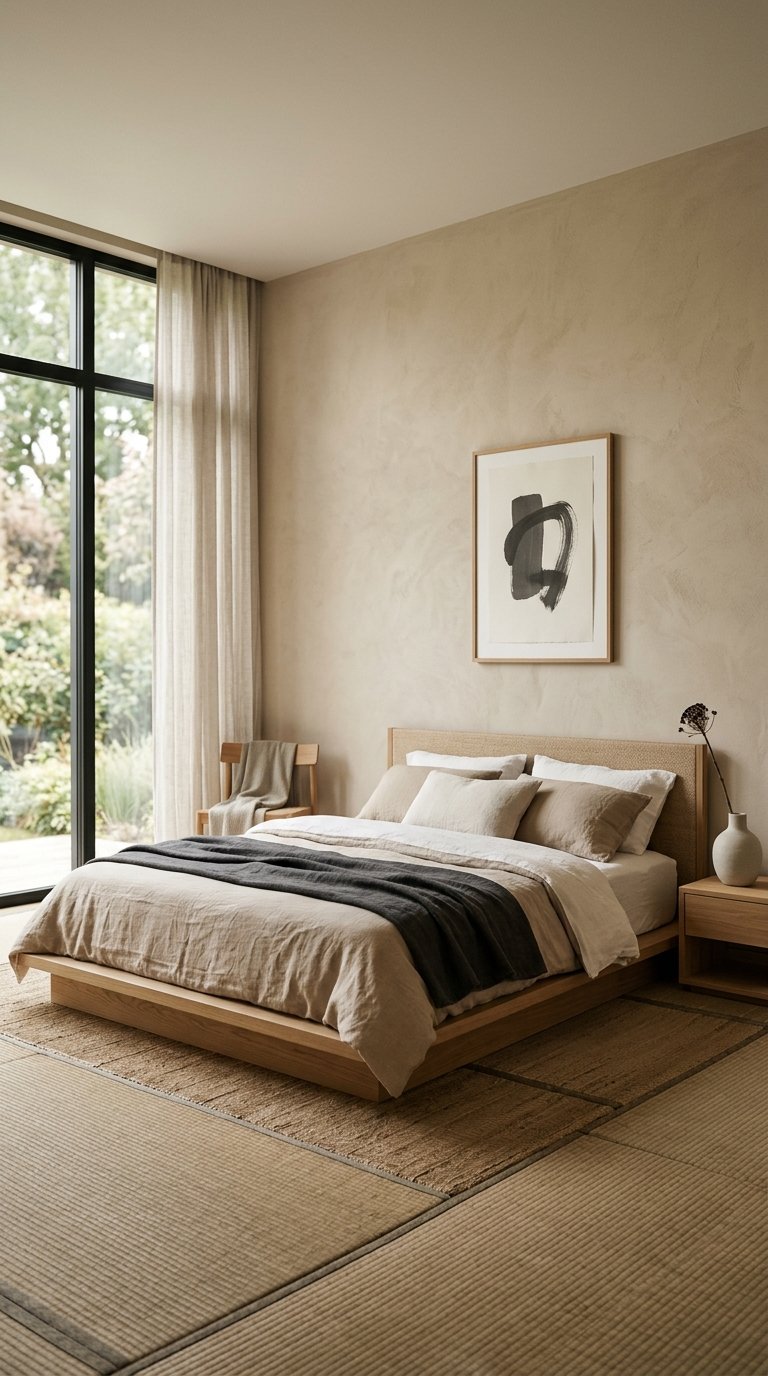
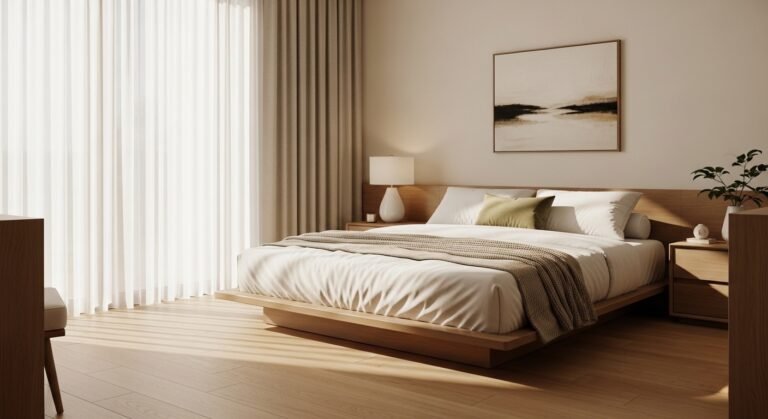
Japandi design combines Japanese minimalism with Scandinavian warmth in a bedroom aesthetic that prioritizes negative space, natural materials, and a quiet palette. The Japandi modern bedroom looks calm because it contains less than most bedrooms, and every piece it contains serves a clear function and carries material quality.
The Japandi bedroom formula is simple:
- One low platform bed in natural wood or upholstered linen
- One bedside surface per side at mattress height or lower
- One piece of textile art or a single framed print above the bed
- No overhead lighting beyond a ceiling-flush fixture or recessed lights
- No visible storage beyond a single wardrobe or built-in closet
Muji’s Solid Wood Bed Frame in a Queen size costs $399 to $499 and delivers the clean, minimal wood aesthetic that Japandi design requires at a price point that no custom furniture maker reaches. Pair it with Muji’s wool duvet at $150 to $200 and a natural cotton or linen throw from Fog Linen Work at $85 to $120 for a complete Japandi textile palette.
8. A Built-In Wardrobe to Eliminate Freestanding Furniture Clutter
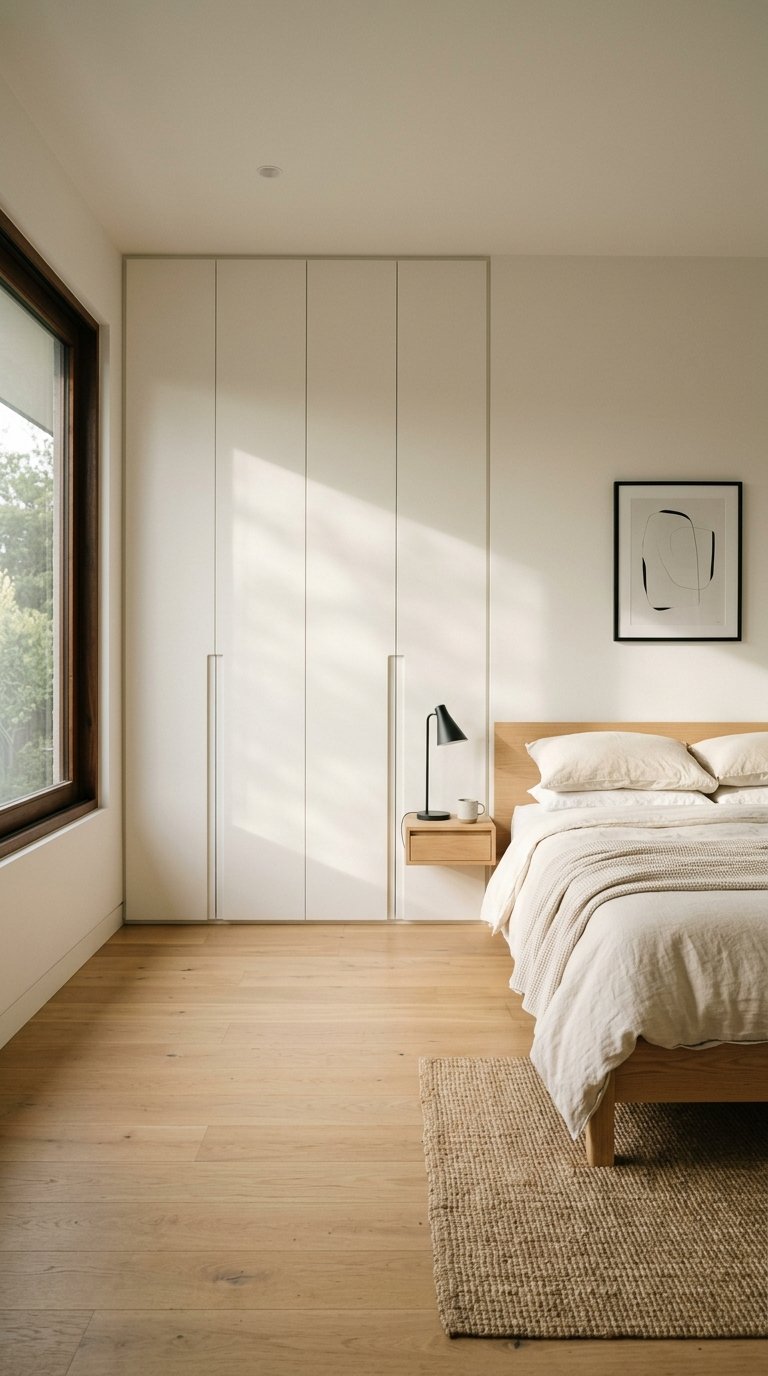
A built-in wardrobe along one full wall of the bedroom replaces the visual chaos of freestanding furniture, mismatched dressers, and exposed clothing storage with a single, floor-to-ceiling architectural element. The built-in reads as part of the room’s structure rather than furniture placed inside it, which makes the room feel larger, calmer, and more intentional.
IKEA’s Pax wardrobe system in a standard 98-inch height configuration costs $400 to $1,200 in cabinet materials depending on width and internal organization. Add Pax’s Grimo or Bergsbo solid door fronts at $50 to $150 per door for a cleaner look than the standard sliding mirror options. A carpenter charges $200 to $600 to add a cornice board, baseboard trim, and ceiling molding to integrate the Pax system into the room as a true built-in rather than a freestanding wardrobe.
The total built-in wardrobe project using Pax components with professional trim integration costs $800 to $2,000 depending on wall width, which is a fraction of the $5,000 to $15,000 that custom cabinetry firms charge for the same built-in result. The visual difference between a trimmed-in Pax wardrobe and a custom-built wardrobe is minimal from the front. The cost difference is not.
9. Layered Lighting With Three Sources for Any Mood
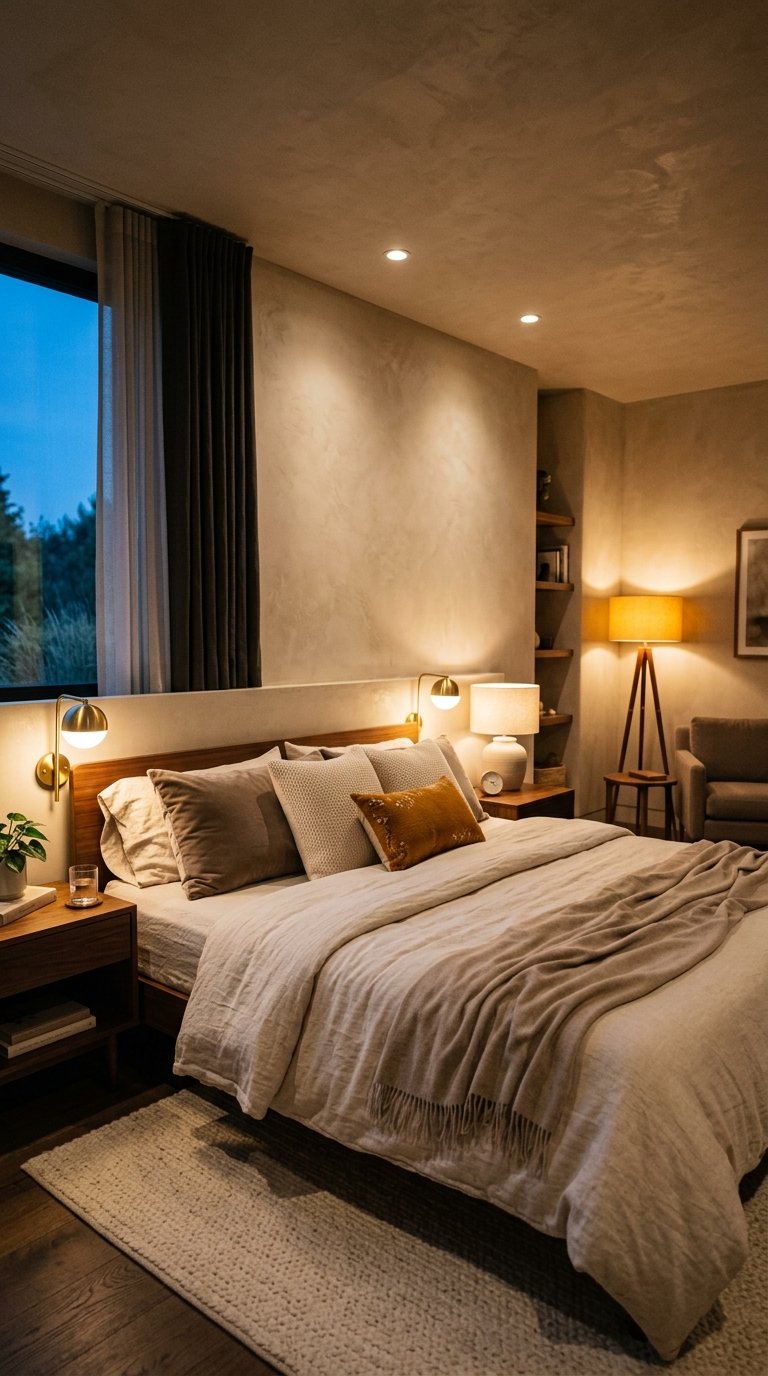
A bedroom with a single overhead light fixture has one light setting: on. A bedroom with three light sources, overhead, ambient, and task, has a full range of lighting conditions from bright and functional at 7 AM to warm and dim at 10 PM. Layered lighting transforms how a bedroom feels at every hour of the day without changing a single piece of furniture.
The three-source lighting formula for a modern bedroom:
- Overhead: A ceiling-flush LED fixture or recessed lights on a dimmer for general illumination
- Ambient: Table lamps, floor lamps, or wall sconces on a separate circuit for soft, warm light
- Task: Directional pendant or clip-on reading lights at the bedside for focused illumination
Lutron’s Caseta wireless dimmer switch at $50 to $60 per switch controls any overhead fixture without rewiring and installs in 15 minutes with a standard screwdriver. Program the dimmer to a preset evening level of 20 to 30 percent for a warm, bedroom-appropriate light level that turns on every night at the same time through the Lutron app. The switch controls up to 150 watts of LED load and integrates with Apple HomeKit and Amazon Alexa for voice control.
10. A Textured Accent Wall Behind the Bed Using Limewash Paint
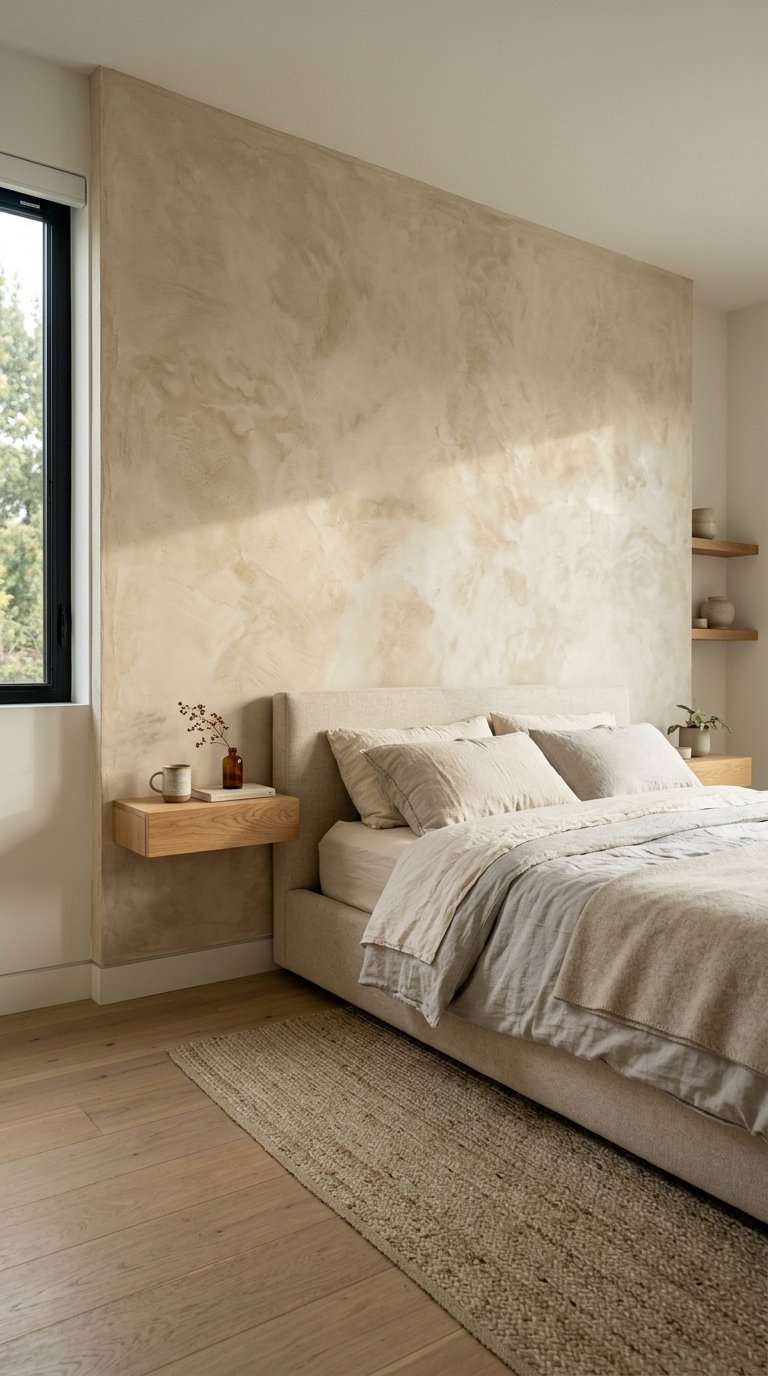
Limewash paint on the wall behind the bed creates a textured, matte surface with visible depth and slight color variation that flat paint never produces. The ancient Italian plaster technique delivers a surface that reads as natural and aged, which adds material character to a modern bedroom without introducing pattern or wallpaper.
Portola Paints Roman Clay in a warm neutral tone such as Fresco, Limestone, or Warm Sand costs $55 per quart and covers approximately 50 square feet with two coats. The application technique involves a wide plaster knife rather than a roller, which creates the characteristic irregular surface that makes Roman Clay look different from standard paint at close range. A full accent wall behind a Queen or King bed typically runs 60 to 80 square feet and costs $120 to $165 in material for the two-quart quantity required.
For a true limewash, Portola Paints Limewash at $55 per quart delivers a more transparent, cloudy surface than Roman Clay with more visible color variation between wet and dry areas. Both products apply to standard drywall without a base coat and are completely water-based, which makes them low-odor and dry to touch within 30 minutes of application. The limewash accent wall behind the bed is IMO the highest-impact, lowest-cost texture upgrade available in modern bedroom design.
11. A Neutral Wool or Jute Rug to Ground the Bed Zone
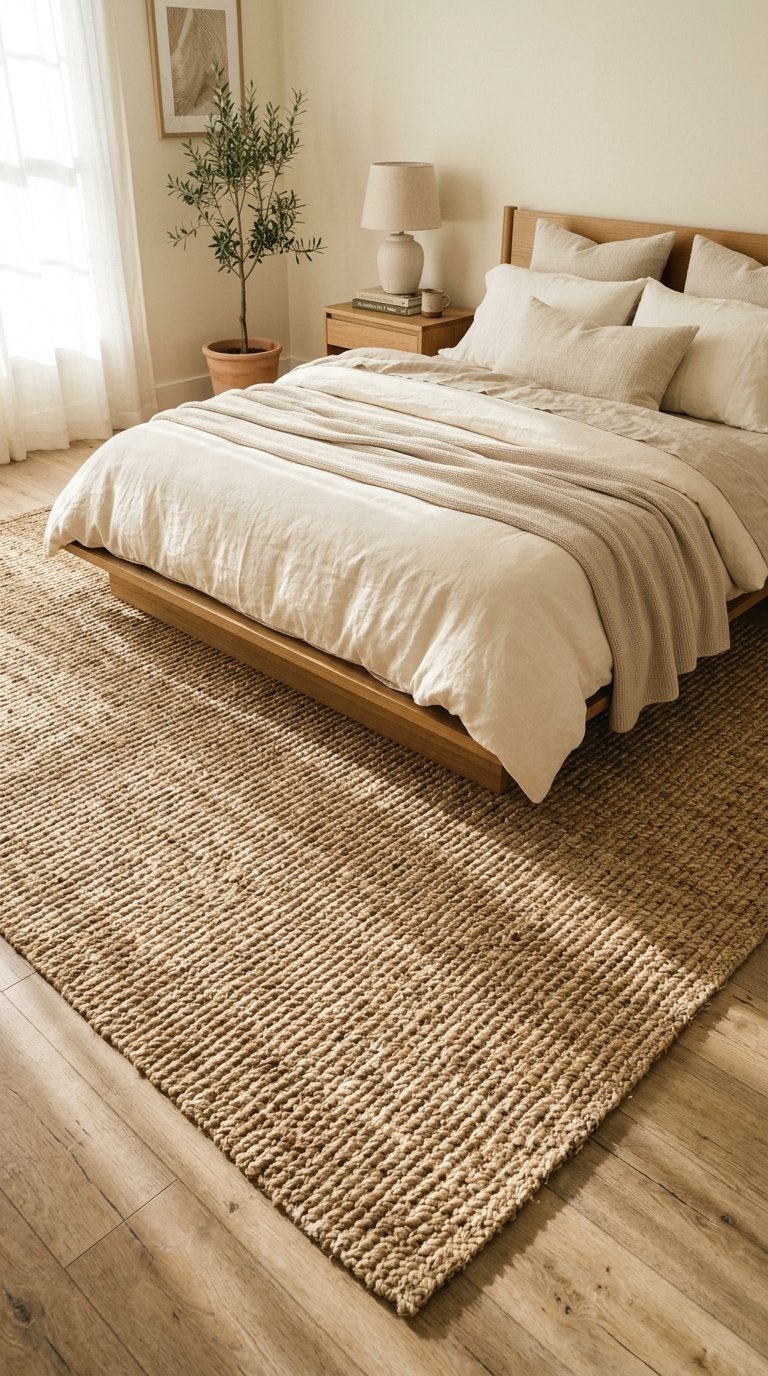
A rug under the bed defines the sleeping zone as a distinct space within the bedroom, which makes the room read as designed rather than furnished. The rug creates a visual border around the bed that no flooring pattern or furniture arrangement replicates, and it adds acoustic softness and underfoot warmth that hard floor surfaces alone do not provide.
Place the rug so it extends 18 to 24 inches beyond the mattress on both sides and at the foot of the bed. For a Queen bed, this requires a minimum 8×10-foot rug. For a King bed, a 9×12-foot rug covers the zone correctly. A rug that only sits under the bed frame and does not extend beyond the mattress edge reads as an afterthought rather than an anchor.
Rugs USA’s Natural Jute rug in a 8×10-foot size costs $120 to $200 and delivers a natural fiber surface with a flat-weave texture that suits modern, Japandi, and farmhouse bedroom styles. For a softer, plusher option, Loloi’s Juliet Plush rug in a warm ivory or oatmeal tone costs $250 to $450 in a 8×10-foot size and provides a high-pile surface that feels noticeably different underfoot on cold mornings. Both options anchor the bed zone effectively. The choice depends on how much you value texture underfoot versus visual flatness.
12. Floating Bedside Shelves Instead of Nightstands
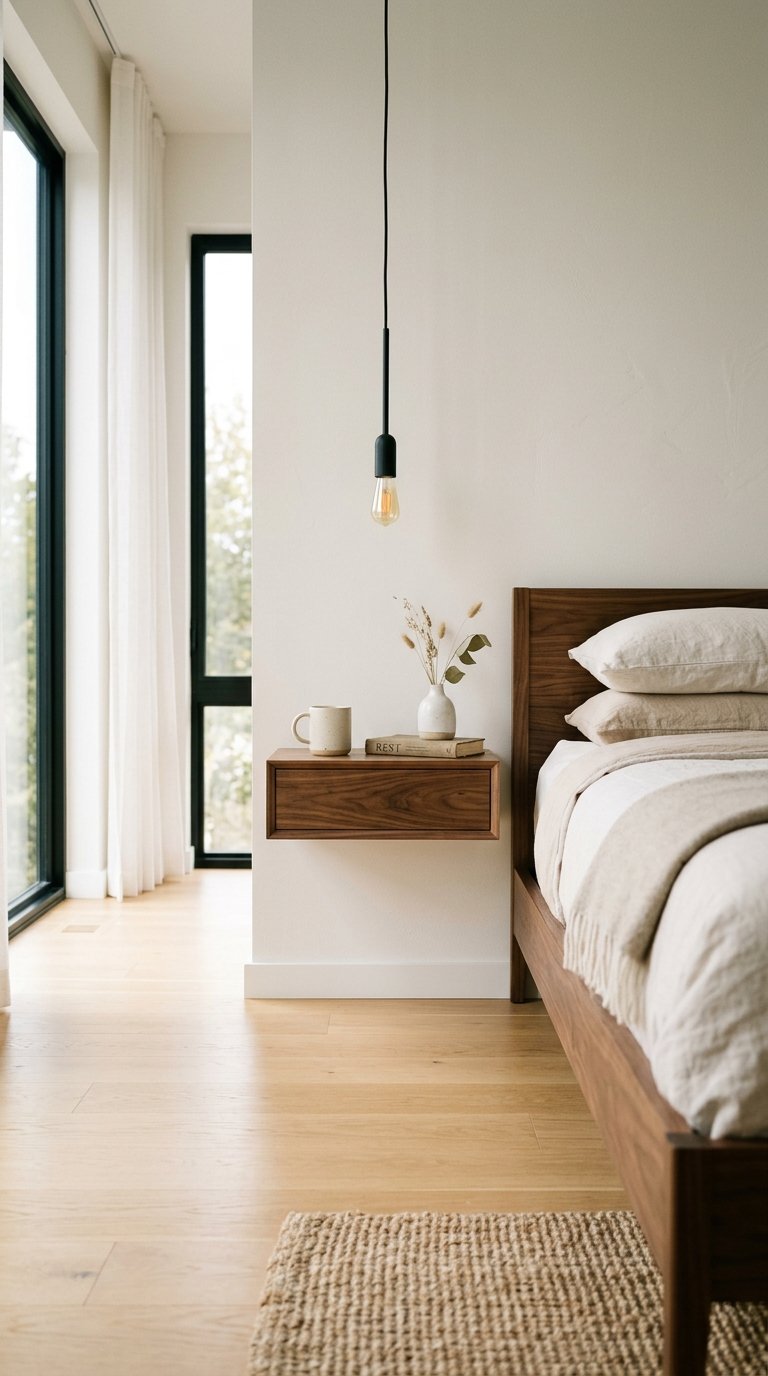
Floating bedside shelves mounted at mattress height replace nightstands, free up floor space, and create a cleaner, lighter visual profile at the side of the bed. In small bedrooms where freestanding nightstands consume valuable floor area and make the room feel cramped, floating shelves solve the storage problem without the spatial cost.
IKEA’s Lack floating wall shelf in a 11×10-inch size costs $14.99 and mounts directly into wall studs with concealed hardware. Install two at mattress height, one on each side of the bed, and the total cost for both bedside surfaces sits at $30. The clean white or black finish options suit modern bedroom palettes without competing with the bed frame or textile colors.
For a more premium floating shelf option, Crate and Barrel’s Acacia Wood floating shelf in a 12-inch depth costs $79 to $99 and delivers a solid wood surface with a natural grain finish that adds warmth at the bedside. Mount it at the same height as the mattress top surface so items on the shelf sit within easy reach from a lying position. The shelf depth of 12 inches holds a lamp, a book, a glass of water, and a phone charger without crowding the surface. That is genuinely everything a bedside surface needs to contain.
13. A Minimalist Gallery Wall Using Identical Frames
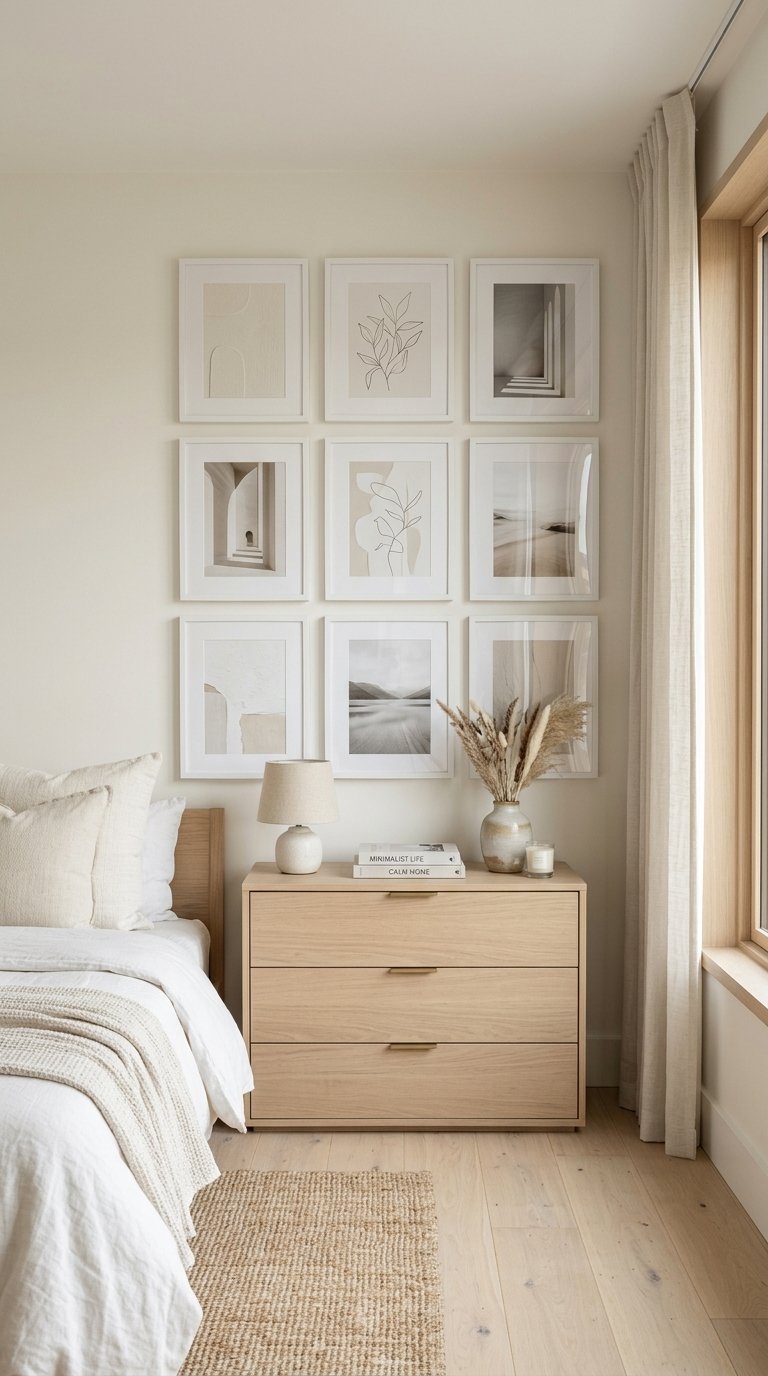
A gallery wall with matching frames in a single color delivers the visual richness of a multi-piece art display without the visual chaos that mixed frame styles and sizes produce. The frame consistency creates order and the art content creates variety, which is the right balance for a modern bedroom wall where calm is the design goal.
IKEA’s Ribba frames in a matte white finish cost $4.99 to $14.99 per frame depending on size and include a white mat that makes any print look gallery-mounted at a fraction of gallery framing prices. Arrange nine to twelve Ribba frames in a 3×3 or 3×4 grid on the wall opposite the bed for a gallery display that reads as intentional and symmetrical. Print art at Artifact Uprising at $15 to $35 per print or download free art from Unsplash or the Public Domain Archive and print locally at $5 to $15 per print.
Use a level, measuring tape, and paper templates cut to each frame size to plan the grid on the wall before driving a single nail. Tape the paper templates to the wall in the planned arrangement and step back from across the room to check the spacing and alignment before committing. Moving a gallery wall after installation is a commitment that most people avoid by measuring once instead.
14. Integrated USB Charging Built Into the Bedside Setup
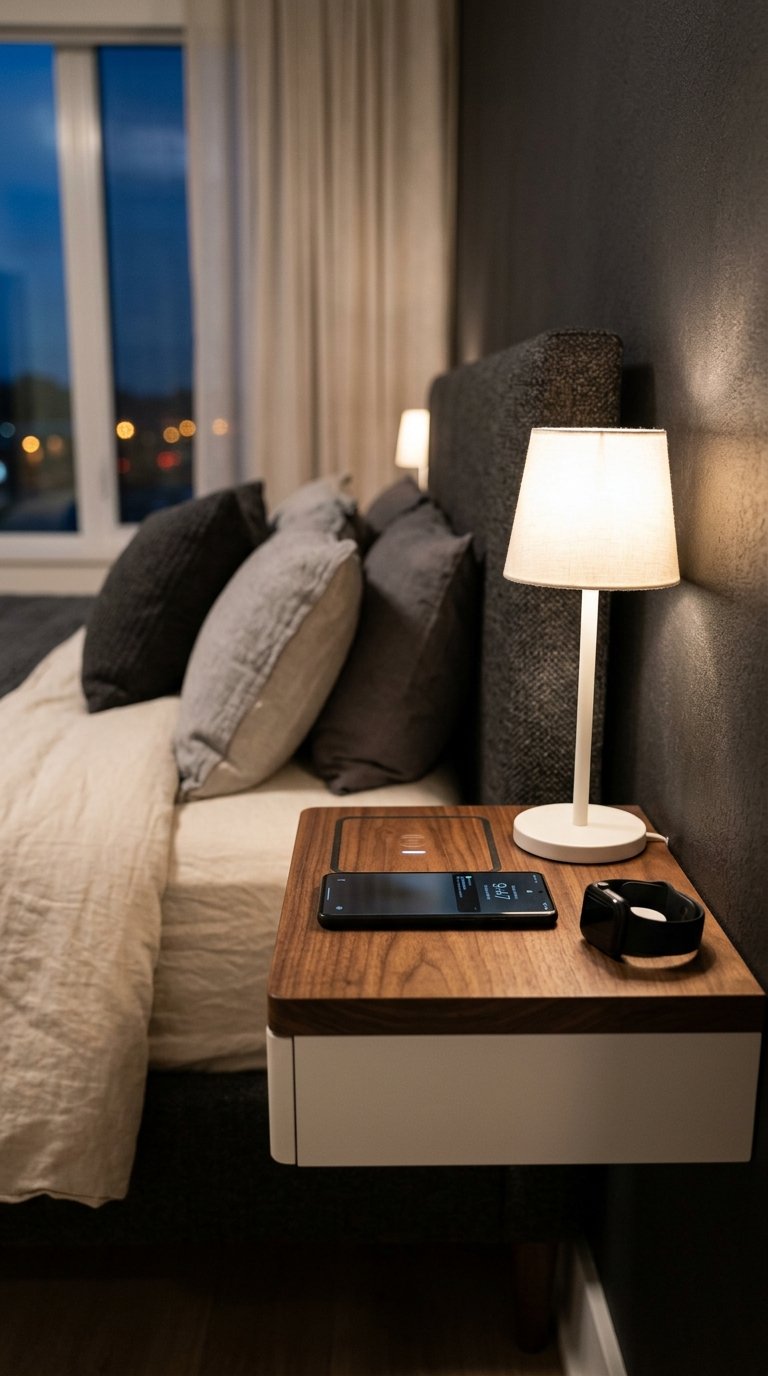
Every modern bedroom has a phone, a tablet, a watch, and sometimes a laptop charging at the bedside, and the cord management of those devices is the detail that most frequently makes a designed bedroom look like an electronics store. Integrating charging into the bedside setup eliminates visible cords and keeps the surface clean.
Bedside tables with built-in USB and wireless charging from Amazon Basics cost $80 to $150 and include a recessed charging pad on the table surface alongside standard USB-A and USB-C ports. No visible cords on the table surface. No adapters plugged into the wall. The charging hardware disappears into the furniture and the bedside surface holds only the items you want to look at.
For floating shelf bedside setups, Anker’s 337 charging station at $35 mounts to the back of the shelf with adhesive strips and routes a single cord down the wall to a baseboard outlet. The charging station provides three USB-A ports, two USB-C ports, and two standard outlets in a single unit that stays hidden behind the shelf surface while charging up to five devices simultaneously.
15. A Warm Wooden Ceiling Fan for Function and Style
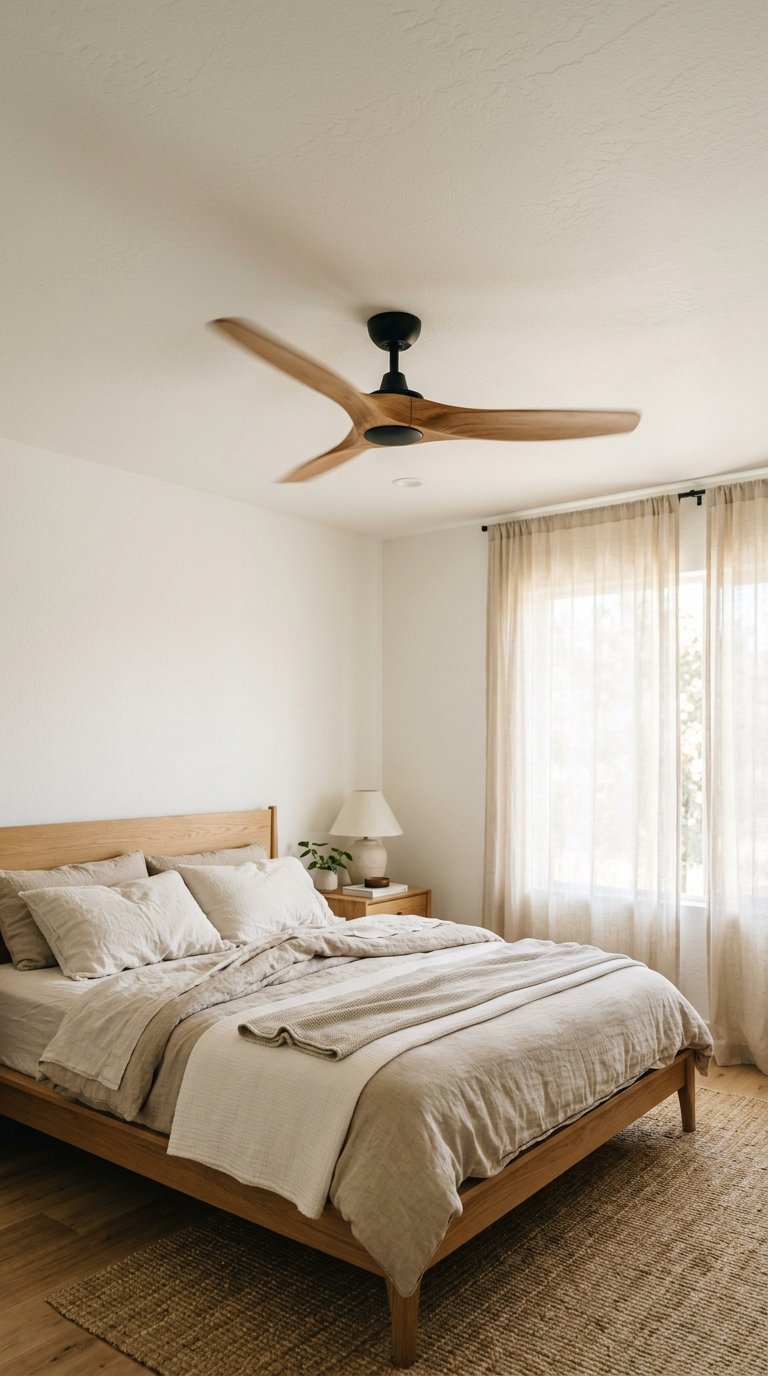
A ceiling fan in the bedroom is one of the most practical investments in sleeping comfort a homeowner makes, and most ceiling fans are design disasters. The right ceiling fan adds material warmth, moves air silently at sleeping speed, and doubles as a light fixture without looking like it came from a 1990s builder catalog.
Hunter Fan’s Dempsey series with a natural light wood finish and matte black accents costs $149 to $199 in a 52-inch blade span and delivers a DC motor that operates at six speeds on a remote control. DC motors use up to 70 percent less energy than AC motors and run noticeably quieter at low speeds, which matters in a bedroom where the fan runs through the night. The wood blade finish reads as a design element in a modern bedroom rather than a functional appliance.
Monte Design’s Haiku ceiling fan in a black or bamboo finish costs $700 to $1,000 and delivers the quietest, most efficient ceiling fan on the residential market. The Haiku’s SenseME technology adjusts fan speed automatically based on the room’s temperature and occupancy, which eliminates the need to adjust settings manually. At seven times the price of the Hunter Dempsey, the Haiku is a premium product for a premium result. Both move air effectively. Only one of them does it automatically. 🙂
16. Dark Painted Walls for a Cocooning, Restful Bedroom
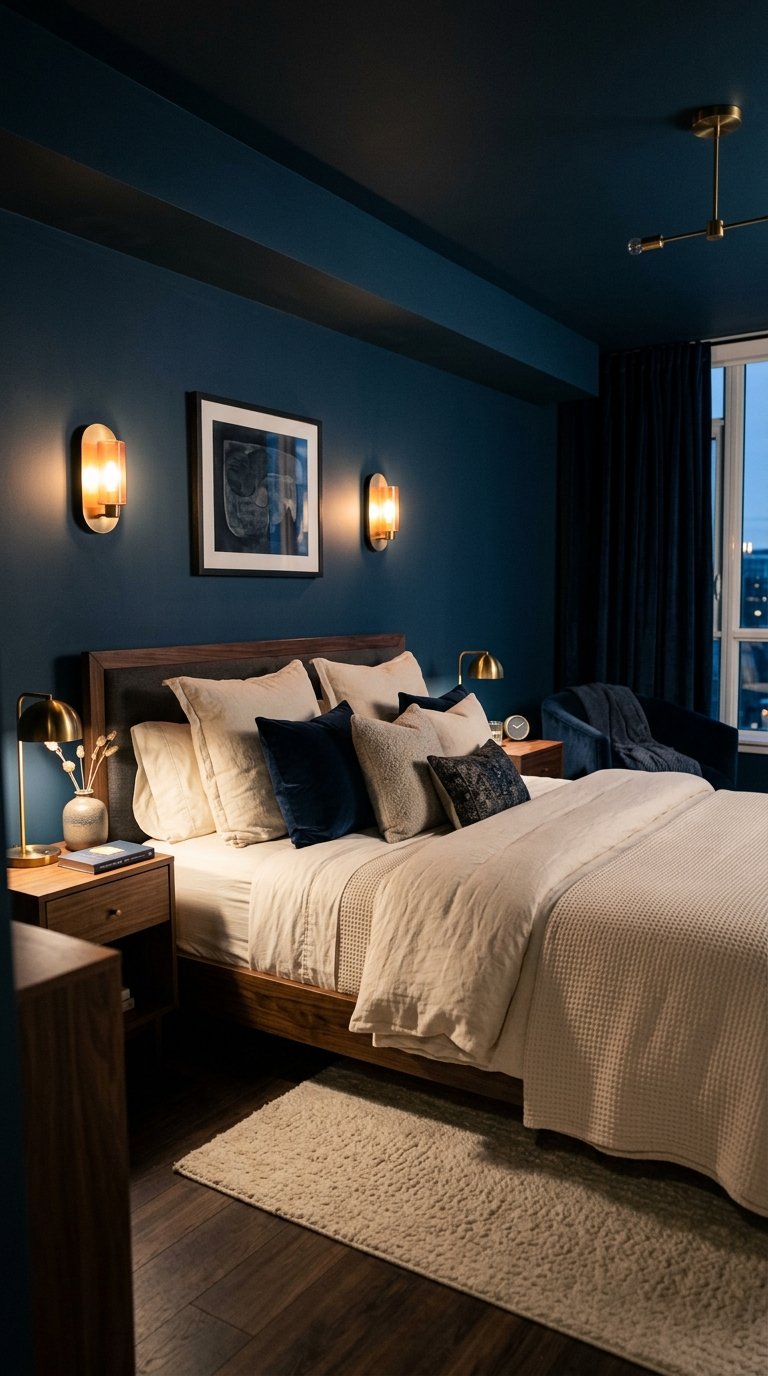
Dark painted walls in a bedroom create a cocooning effect that lighter walls do not produce. The ceiling, floor, and four walls all moving toward the same dark tone wraps the room around you, which is precisely the sensation that promotes rest and sleep in a way that a bright white bedroom never achieves. Done correctly, a dark bedroom reads as sophisticated and restful. Done incorrectly, it reads as depressing.
Farrow and Ball’s Hague Blue No. 30 is the dark blue bedroom color that design publications reference most consistently. It sits in the deep, warm-toned blue range that reads as complex and rich rather than flat and heavy. A 2.5-liter tin of Farrow and Ball estate eggshell in Hague Blue costs $120 to $135 and covers approximately 350 square feet, which covers a standard bedroom’s four walls in a single tin. Paint the ceiling in the same color to complete the cocooning effect.
For a dark green option, Sherwin-Williams Cascades SW 0058 delivers a deep, forest green tone at $55 to $65 per gallon in the Emerald interior line. The rule for dark bedroom walls is consistent: use the same color on the ceiling to prevent the room from reading as a dark box with a bright lid. A dark wall and a white ceiling is a high-contrast combination that defeats the restful, enveloping quality that dark walls provide.
17. A Linen or Boucle Upholstered Bench at the Foot of the Bed
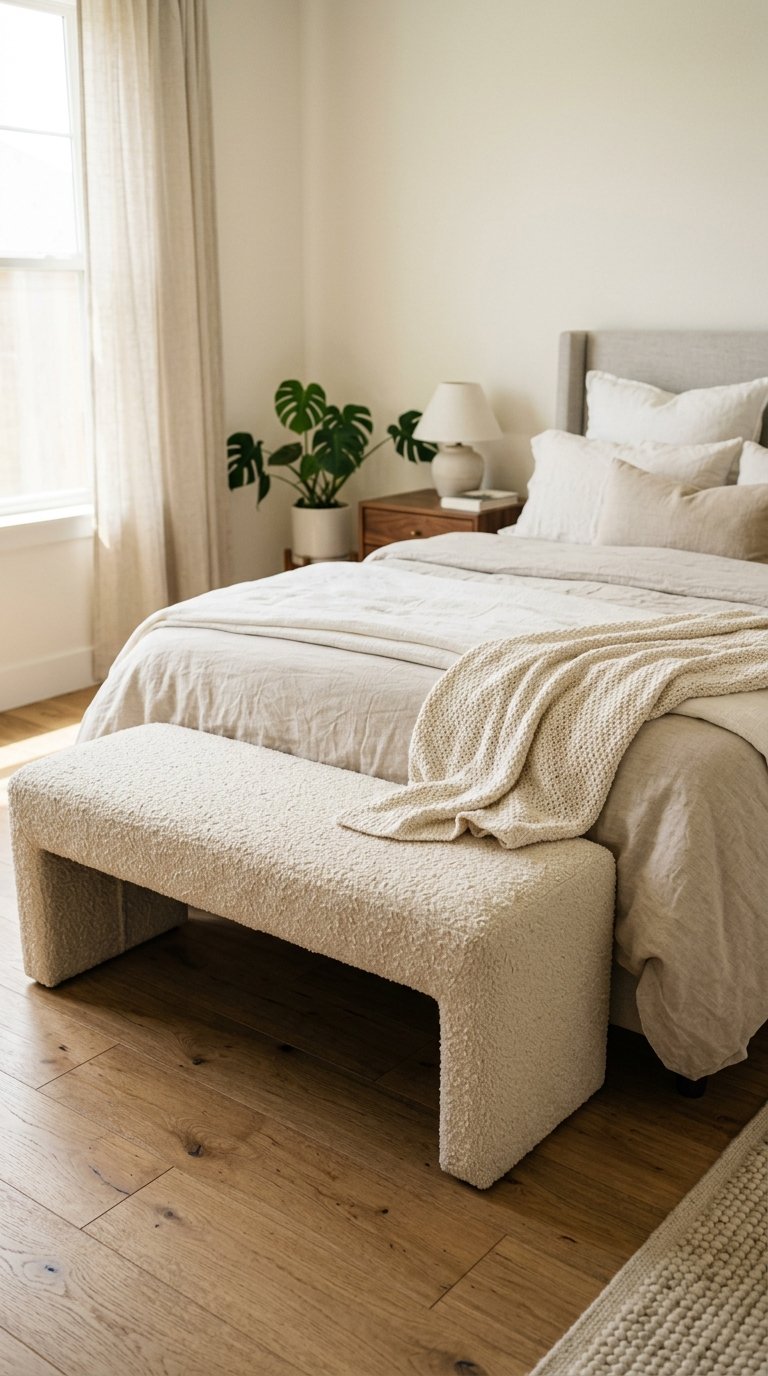
A bench at the foot of the bed serves three functions simultaneously: it provides a surface to lay out tomorrow’s clothes without using the bed, it adds a horizontal furniture element that visually grounds the bed, and it introduces a textile material at the room level that connects the floor zone to the bed zone. No other single piece of bedroom furniture solves three problems at once.
CB2’s Avec Boucle Bench in a cream or warm white boucle costs $299 to $399 in a 60-inch length that fits across the foot of a Queen or King bed without overhanging either side. The boucle fabric adds texture at the foot of the bed that a plain upholstered bench does not provide, and it connects visually to any other boucle or bouclé-adjacent textile in the room. Place it 6 to 8 inches from the foot of the bed rather than tight against the frame to allow circulation around the bed without the bench reading as an obstacle.
For a budget version, IKEA’s Hemnes wooden bench at $99 with a custom cushion from Comfort Works cut to the bench top at $80 to $120 delivers the same functional result at approximately $180 to $220 total. The Hemnes bench also provides under-seat storage in its two-drawer configuration, which adds a practical dimension that the upholstered bench does not provide.
18. Mirrored Wardrobe Doors to Double the Visual Space
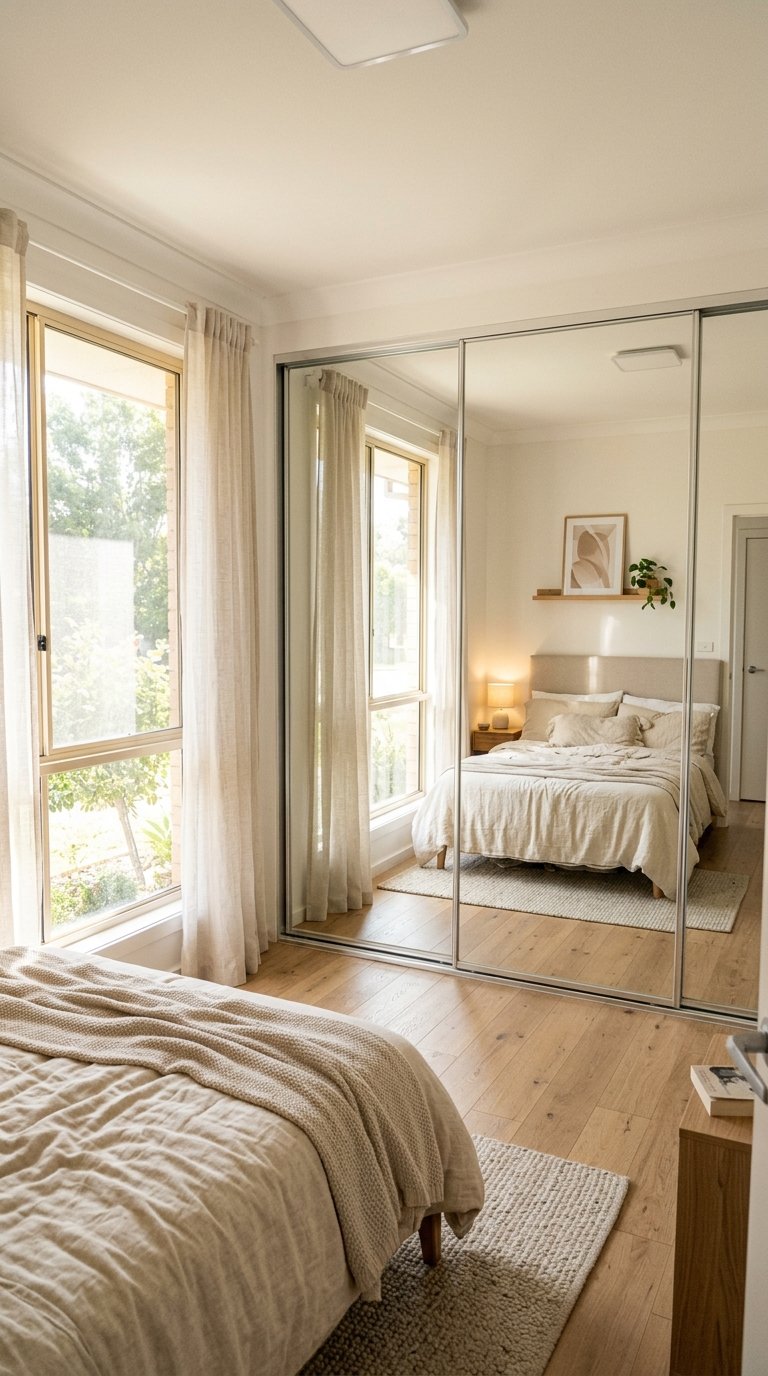
Mirrored wardrobe doors reflect the bedroom back into itself, which doubles the perceived visual depth of the room and multiplies the natural light from windows. In small bedrooms where the wardrobe occupies a full wall, mirrored doors transform that wall from a visual obstacle into a light-multiplying surface.
IKEA’s Pax Auli sliding mirror doors at $150 to $250 per pair fit the standard Pax wardrobe frame and create a full floor-to-ceiling mirrored surface across the wardrobe width. The mirror reflects the opposite wall, the window, and any light sources in the room, creating the visual equivalent of a second window in a bedroom that has only one. Interior designers specify this combination, IKEA Pax frames with Auli mirror doors, as one of the highest-return investment combinations in small bedroom renovation.
Keep the wall opposite the mirrored wardrobe doors intentional. The mirror reflects everything in its field of view, which means a cluttered opposite wall reflects as a cluttered room. A clean wall with a single art piece, the bed with styled bedding, or a simple painted surface opposite the mirror creates a reflected image that amplifies the designed quality of the room rather than exposing its disorder.
19. A Reading Nook in an Unused Corner Using a Single Chair
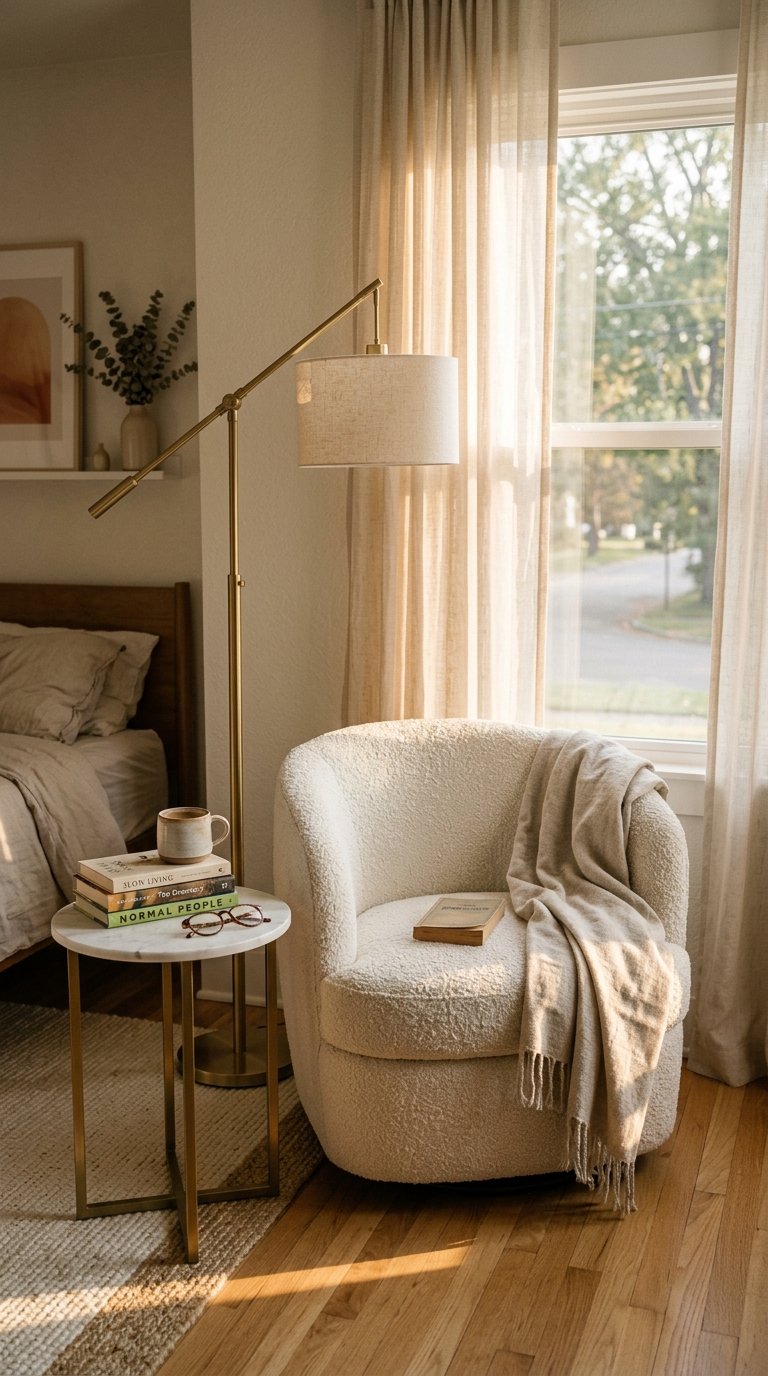
An unused bedroom corner with a comfortable chair, a floor lamp, and a small side table creates a reading nook that gives the bedroom a function beyond sleeping. The second zone transforms the room from a single-purpose sleeping space into a room with two distinct areas, which makes the bedroom feel larger and more purposeful without adding any square footage.
West Elm’s Swivel Base Chair in a boucle or performance fabric costs $599 to $799 and delivers a compact armchair that fits a bedroom corner without dominating the floor plan. The 28-inch width and 30-inch depth of the West Elm Swivel Base fits in a corner with a minimum 4-foot clear zone and leaves enough circulation space around the chair to reach the closet and door without navigating furniture.
Add a HAY Pedestal floor lamp at $249 to $299 positioned at shoulder height behind the chair and a small round side table from CB2’s Trace collection at $79 to $99 within reach of the right arm of the chair. The total reading nook investment sits in the $900 to $1,200 range for all three pieces, which is a high but one-time cost for a corner of the bedroom that currently holds nothing and contributes nothing.
20. Acoustic Panels for a Quieter, Softer Modern Bedroom
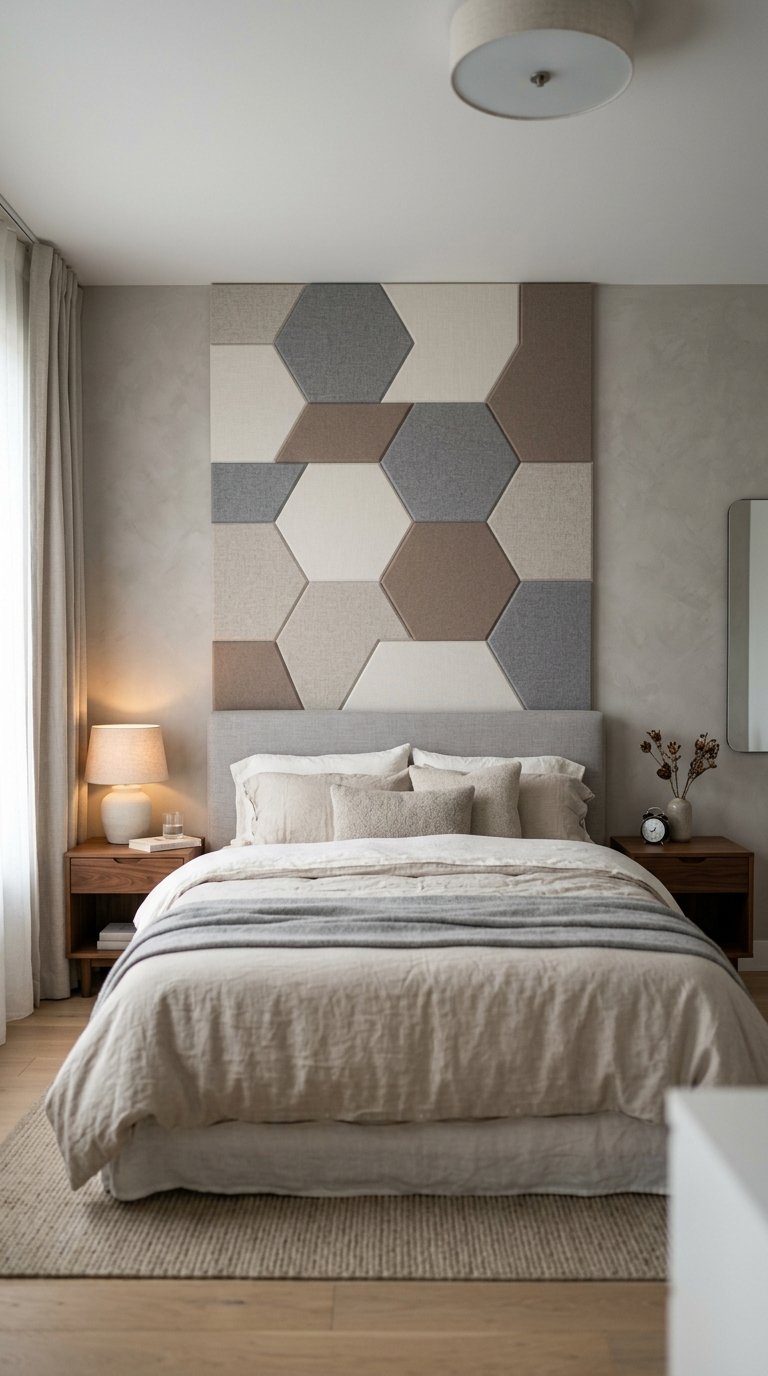
Acoustic panels on bedroom walls reduce echo, soften ambient noise from outside, and create a quieter sleeping environment without any mechanical intervention. In bedrooms with hard floors, high ceilings, or minimal textiles, the room’s natural reverberation time makes every sound in the room louder and more present than it needs to be.
Acoustimac’s Echo Eliminator acoustic panels in a 2×4-foot format cost $18 to $28 per panel in a range of fabric colors. Install four to six panels on the wall behind the bed and on the wall opposite for a total treatment area of 32 to 48 square feet, which reduces the room’s reverberation time measurably. Mount them with adhesive picture hanging strips from 3M Command at $8 per pack for a damage-free installation that works in rental bedrooms.
For a decorative acoustic solution, Etsy sellers including Acoustic Geometry and Wall Panels Co. offer custom fabric-wrapped acoustic panels in bespoke shapes and colors starting at $80 to $150 per panel. The custom panels function identically to the Acoustimac product but read as wall art rather than acoustic treatment, which integrates them into the bedroom design rather than making them visible as a functional installation.
21. A Statement Ceiling Treatment for a Forgotten Surface
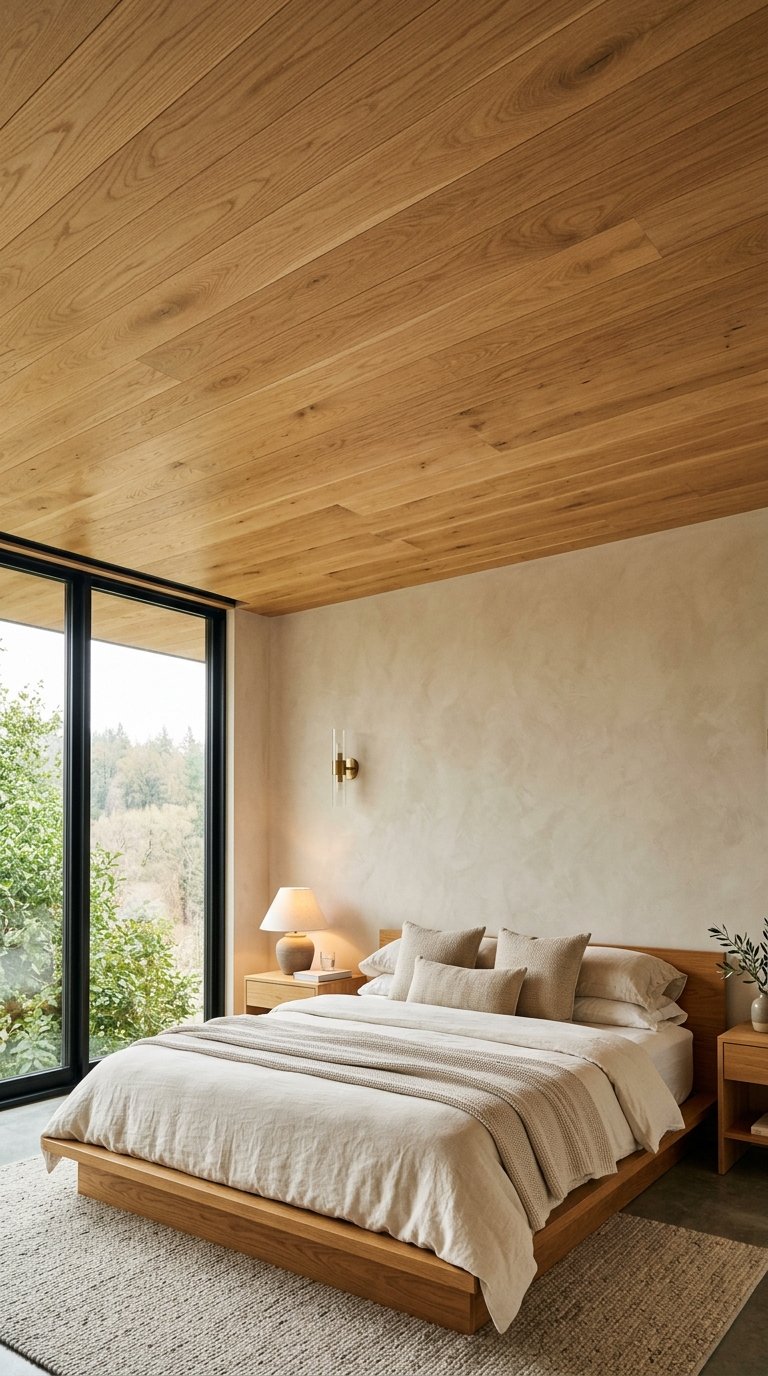
The ceiling in most bedrooms receives one coat of flat white paint and a single light fixture and nothing else for the life of the home. The ceiling represents 20 to 25 percent of the visible surface area of a bedroom and most homeowners ignore it completely. Adding a treatment to the ceiling changes the room’s perceived height, warmth, and character in a way that no wall treatment replicates.
Paint the ceiling the same color as the walls for a cocooning effect that makes the room feel taller, not shorter, because the uninterrupted color removes the visual border between wall and ceiling that draws the eye down. This is the design result that most people get backwards: they keep the ceiling white to make the room feel taller and the white ceiling makes the room feel like a cardboard box.
Remodelaholic’s peel-and-stick ceiling planks from NovaBella in a white oak finish cost $2.50 to $4 per square foot and install with adhesive strips directly to drywall, no nail gun required. A standard 12×14-foot bedroom ceiling runs approximately 168 square feet and costs $420 to $670 in materials for a wood plank ceiling that changes the room’s material quality from standard drywall to a warm, architectural surface.
22. Scented Candles and Diffusers for a Sensory Modern Bedroom
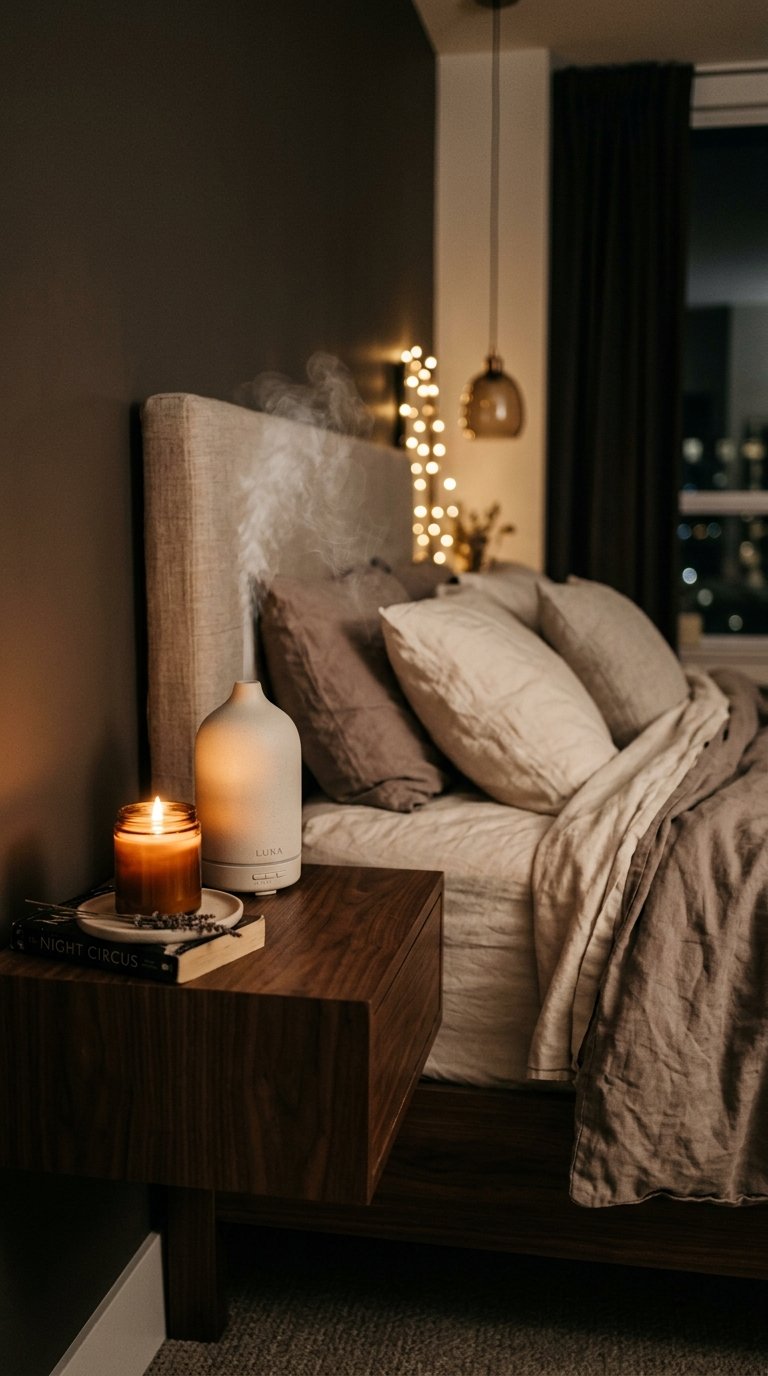
A modern bedroom engages more than just the eyes. Scent is the most direct sensory trigger for relaxation, and a bedroom with a consistent, intentional scent becomes associated with rest and calm in a way that a visually designed but sensory-neutral room does not. This is not a vague wellness suggestion. It is a physiological fact backed by sleep research from the National Sleep Foundation.
Vitruvi’s Stone diffuser at $119 in a matte ceramic finish holds 200ml of water and diffuses essential oil into the air for four to eight hours per fill. Pair it with Vitruvi’s Sleep blend at $30 per bottle containing lavender, cedarwood, and chamomile, the three essential oils with the strongest documented sleep-supporting effects in clinical research. The diffuser operates silently and shuts off automatically when the water runs out.
For a candle option, Otherland’s Teakwood and Tobacco candle at $36 burns for 55 hours in a ceramic vessel with a wood wick that produces a quiet crackling sound alongside the scent. The combination of scent and sound from a wood-wick candle creates a multisensory ambient quality that an oil diffuser alone does not provide. Burn it for 30 minutes before sleep during the bedroom wind-down routine and the association between the scent and sleep onset strengthens over time.
23. A Decluttered Bedroom With One Rule: Nothing on the Floor
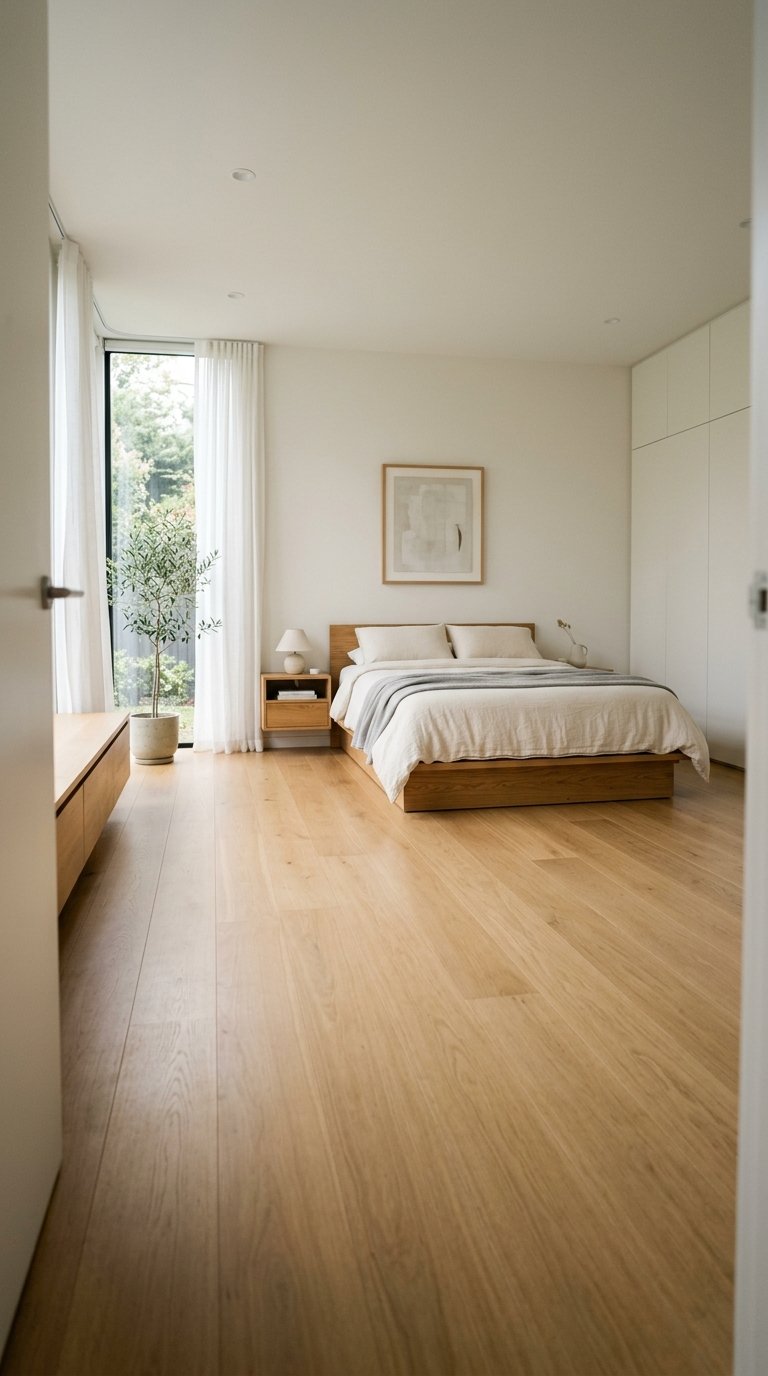
The fastest and cheapest modern bedroom upgrade costs nothing. It removes everything from the bedroom floor that does not belong there permanently. No clothes. No bags. No shoes. No boxes. No exercise equipment. No extra pillows. Nothing on the floor except furniture legs and the rug. This single change, enforced consistently for two weeks, transforms how the bedroom looks and how it feels to enter.
The practical system that makes the empty floor rule work is adequate storage built into the bedroom for every item type that currently lives on the floor. A wall-mounted hook rail from IKEA’s Tjusig series at $20 to $40 holds bags, tomorrow’s outfit, and belts at the door zone of the bedroom. Under-bed storage boxes from The Container Store’s Latch Box collection at $15 to $20 per box hold off-season items, extra bedding, and shoes below the bed frame without requiring additional furniture.
A decluttered bedroom floor makes every other design element in the room more visible and more effective. The rug reads properly. The furniture legs show their profiles. The ceiling height becomes apparent. The natural light reaches the floor surface. Nothing in this article costs zero dollars and delivers as much visual return as removing every object from the bedroom floor and keeping it that way. That is the one modern bedroom idea that works in every budget, every style, and every size of room without exception.
Final Thoughts
A modern bedroom does not require a full renovation. It requires specific, deliberate choices about the surfaces you look at, the light you live under, and the objects you keep in the room.
Start with the changes that cost the least and deliver the most: repaint the walls in a warm neutral, hang the curtains correctly, clear the bedroom floor, and layer the lighting with a dimmer switch. Those four changes cost under $300 combined and transform how the room feels before you spend a dollar on furniture.
Then build upward. A platform bed, linen bedding, floating shelves, and a statement headboard deliver the full modern bedroom aesthetic that design publications photograph. Every product on this list has a price point, a specific reason it works, and a real alternative for tighter budgets.
The bedroom you want already exists. It exists inside the room you have now, underneath the wrong paint color and the clothes on the floor.