21 Cheap Summer Living Room Decor Ideas That Look Expensive
Summer hits, and your living room still looks like it’s stuck in February. Sound familiar? You don’t need a designer budget or a Pinterest-perfect home to make your space feel fresh, bright, and ready for the season. These 21 ideas are practical, budget-aware, and built for real homes.
1. Swap Your Throw Pillows for Light, Breathable Fabrics
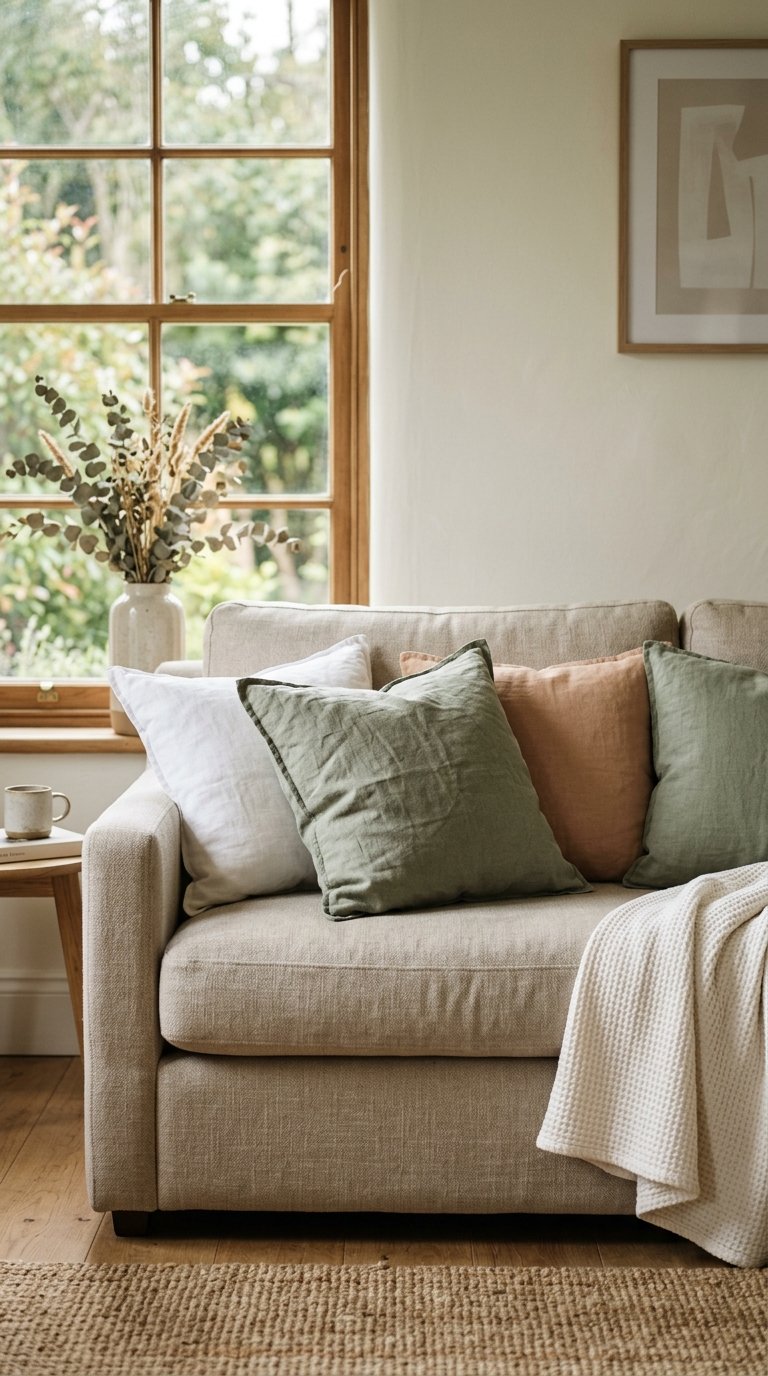
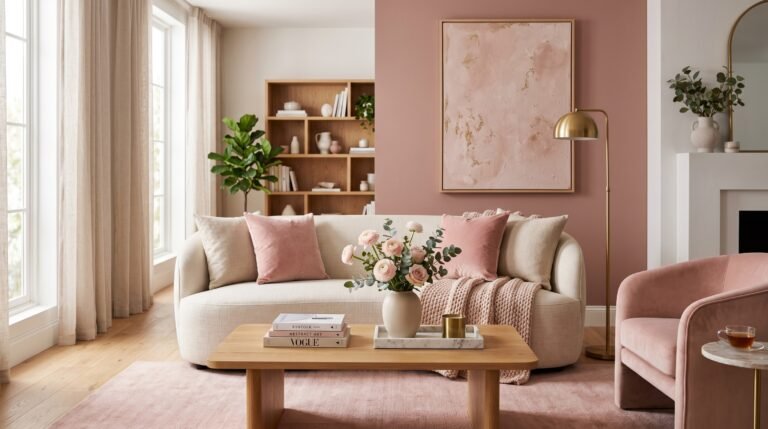
Your throw pillows do more work than you think. Heavy velvet or wool pillows absorb heat and make a room feel stuffy, even with the AC running. Switch to cotton or linen covers in white, sage, or soft terracotta. A set of four linen pillow covers on Amazon costs under $25 and completely shifts the room’s mood. You get a lighter, airier feel without touching a single piece of furniture.
The color swap matters too. Studies in environmental psychology show that cool and neutral tones lower perceived room temperature by up to 4 degrees Fahrenheit. So when you replace deep jewel tones with soft neutrals, your room doesn’t just look cooler, it feels cooler. IMO, this is the highest-return update you make all summer.
2. Bring in One Large Indoor Plant
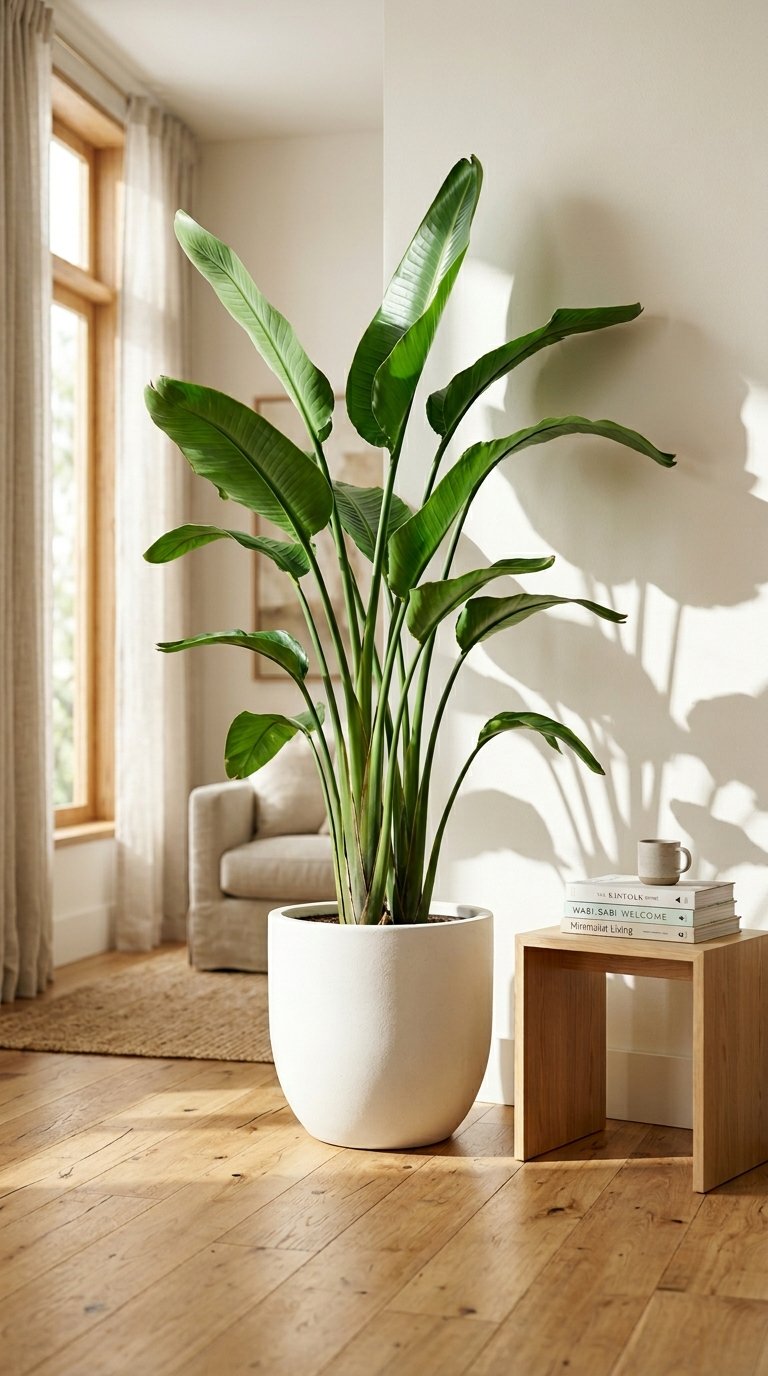
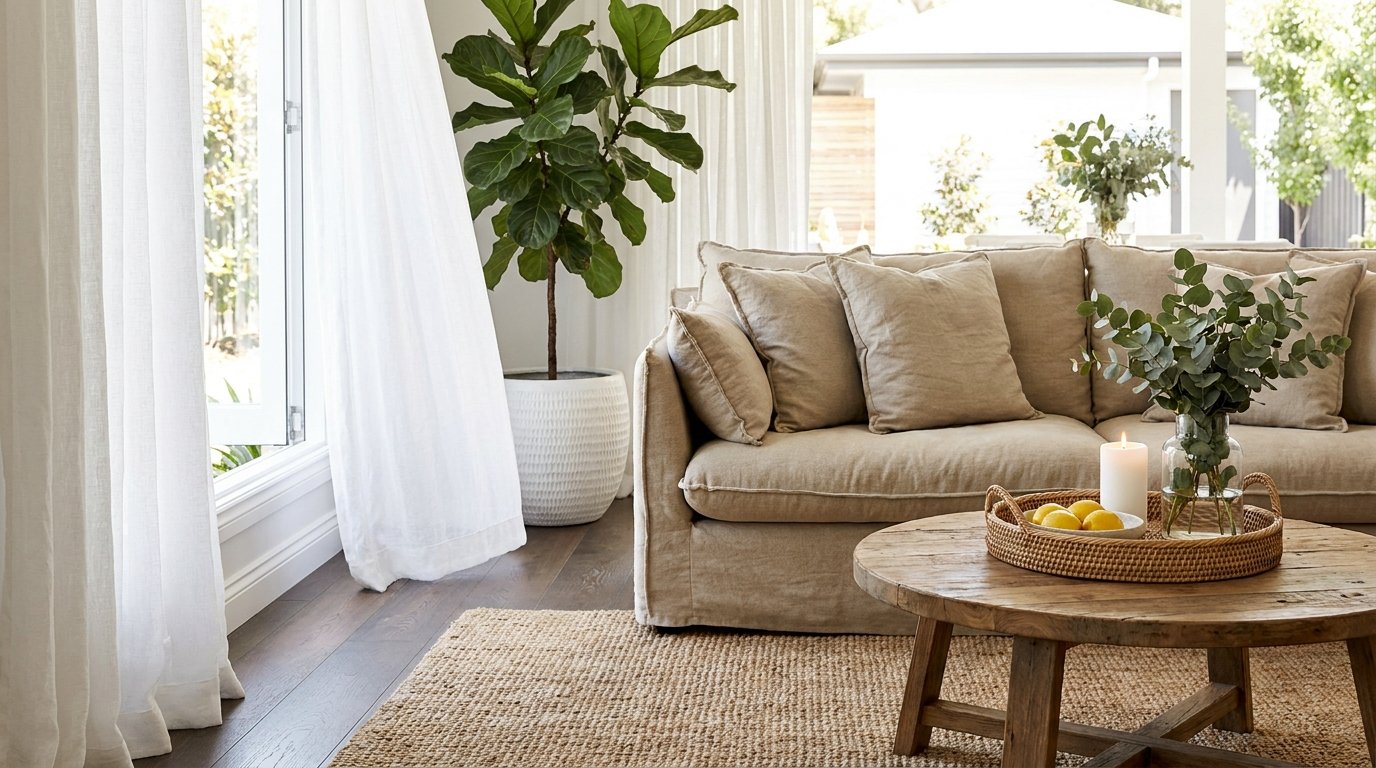
One large plant does what ten small ones struggle to do: it anchors the room and adds life without clutter. A fiddle leaf fig, bird of paradise, or monstera in a simple white pot pulls attention upward and fills dead corners. NASA’s Clean Air Study found that indoor plants reduce airborne toxins like benzene and formaldehyde by up to 87% in 24 hours. Your room looks better and breathes better.
Don’t overthink plant placement. Put it near your brightest window or in a corner that currently holds nothing useful. A 4-foot bird of paradise from a local nursery runs between $40 and $80. That’s a fraction of what a floor lamp or side table costs, and it adds organic texture no piece of furniture replicates.
2. Layer Natural Textures Instead of Adding More Color
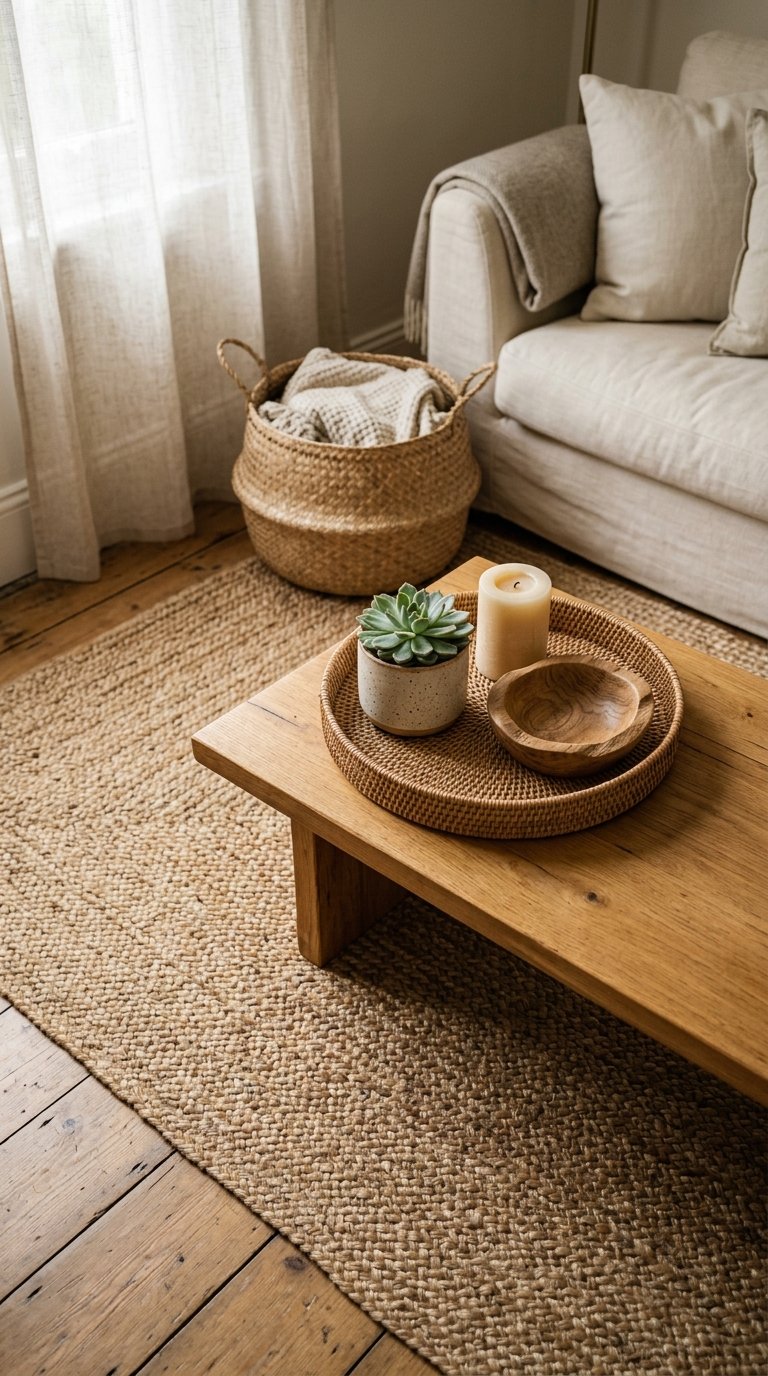
Summer decor works best when you layer textures rather than pile on more color. A jute rug under your coffee table, a rattan tray on your console, and a woven basket in the corner create visual depth without making the room feel heavy. Texture gives the eye something to move across, which makes a space feel intentional rather than sparse.
Rattan and jute are particularly effective in summer because they read as warm-weather materials. West Elm’s rattan collection regularly sells out each June, which tells you something about demand. You get the same effect from HomeGoods or thrift stores at 60 to 70 percent less. Texture doesn’t have to be expensive to work.
4. Swap Heavy Curtains for Sheer Linen Panels
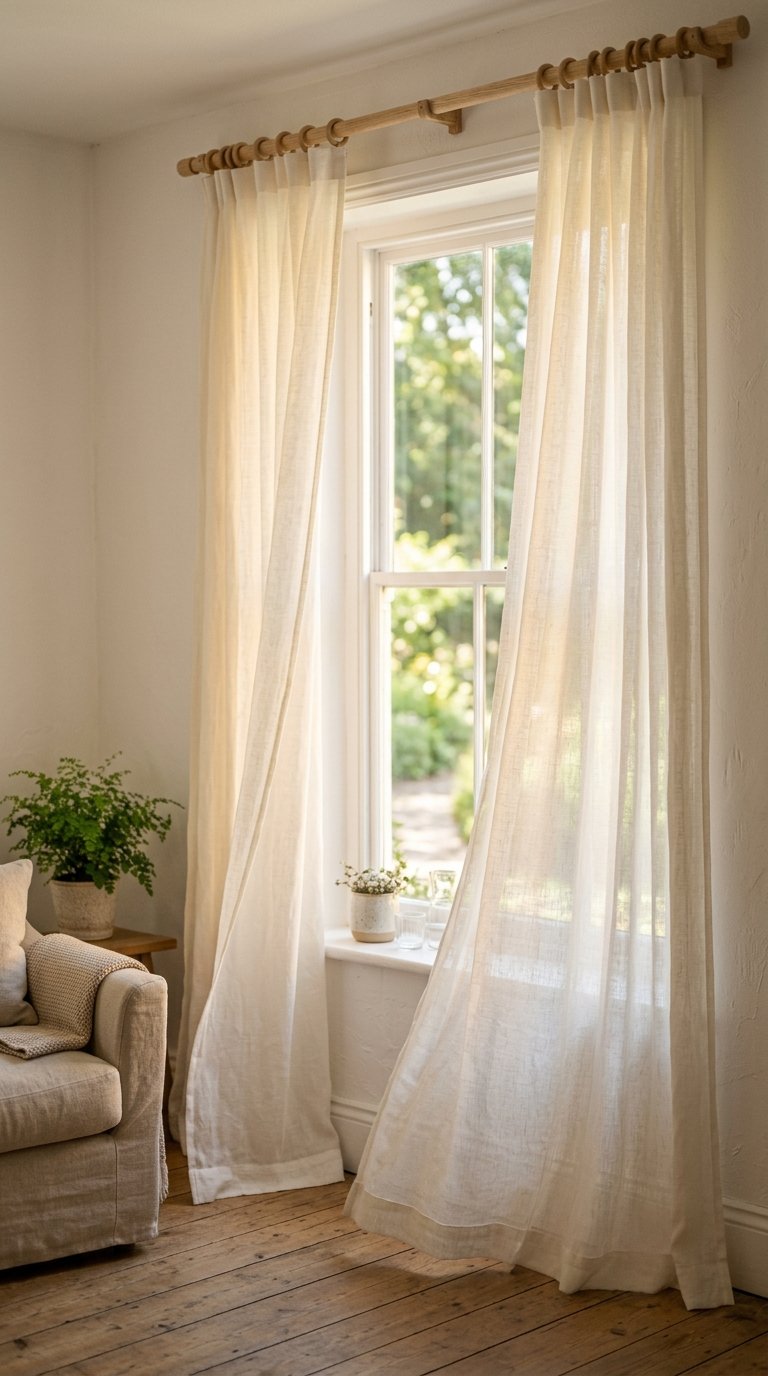
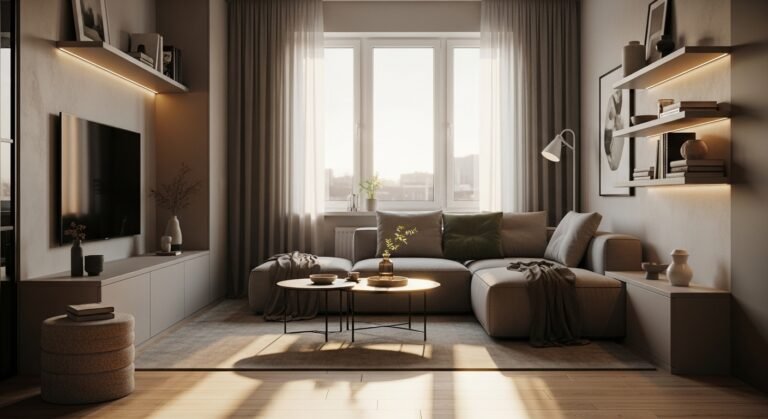
Heavy drapes trap heat and block the natural light your room needs in summer. Sheer linen panels let light filter through while still giving you privacy. The diffused light they create makes walls look brighter and ceilings feel higher. A 2023 report from the American Institute of Architects found that natural light is the top feature homeowners want in living spaces, ranking above storage and open floor plans.
IKEA’s AINA sheer curtains cost around $20 per panel and hang beautifully in any neutral room. If your curtain rod is already up, this swap takes 10 minutes. You get a room that looks twice as large and twice as light without moving a single piece of furniture.
5. Add a Coastal-Inspired Gallery Wall
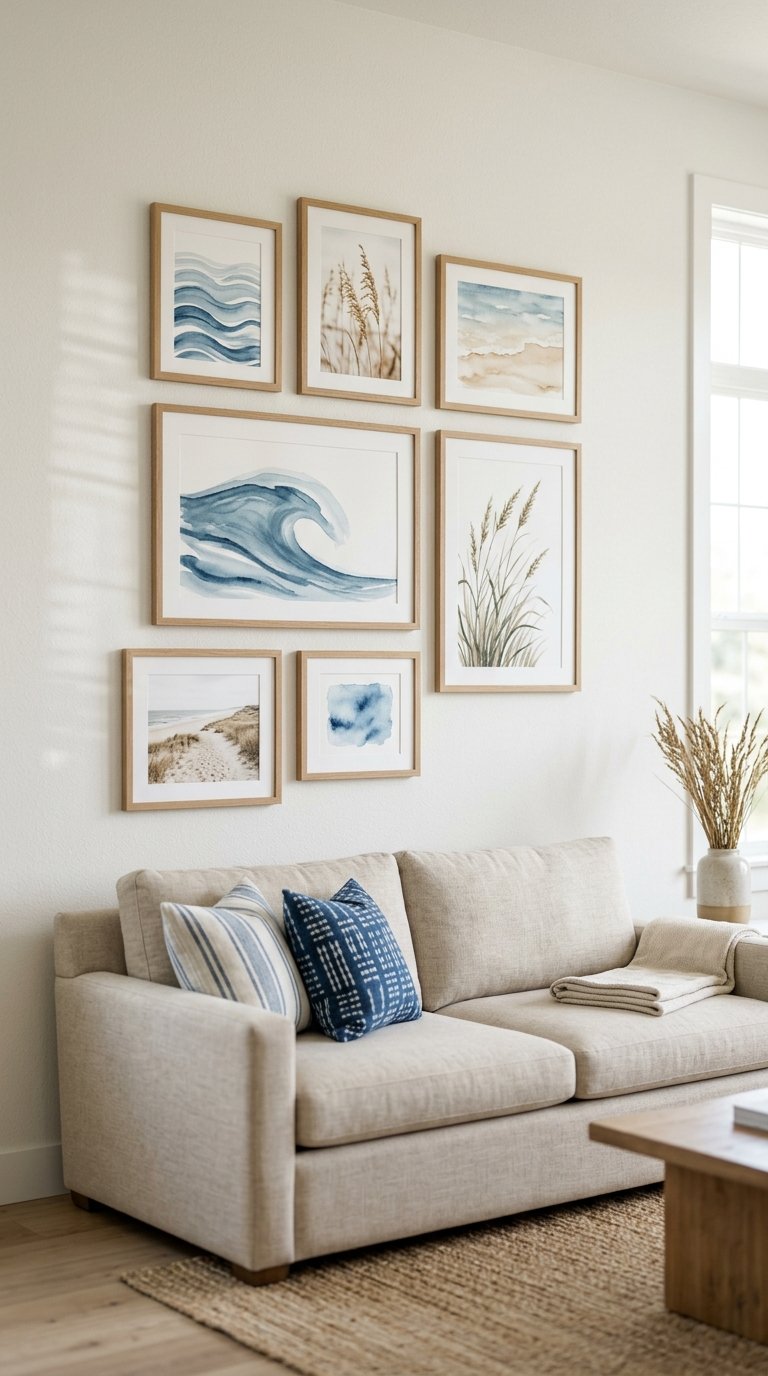
A gallery wall sounds like a big project, but it doesn’t have to be. Five to seven framed prints in a cohesive color story, think ocean blues, sandy beiges, and soft whites, hung in a loose grid transforms a blank wall into a focal point. Desenio and Etsy both offer downloadable prints for under $5 each. You print them at your local shop and frame them yourself for under $50 total.
The key is cohesion, not perfection. Use the same frame finish throughout, whether black, natural wood, or white. A mismatched gallery wall looks accidental; a cohesive one looks curated. Stick to three colors maximum across all prints and your wall will hold together visually even if the images vary widely.
6. Use a Light-Colored Area Rug to Ground the Space
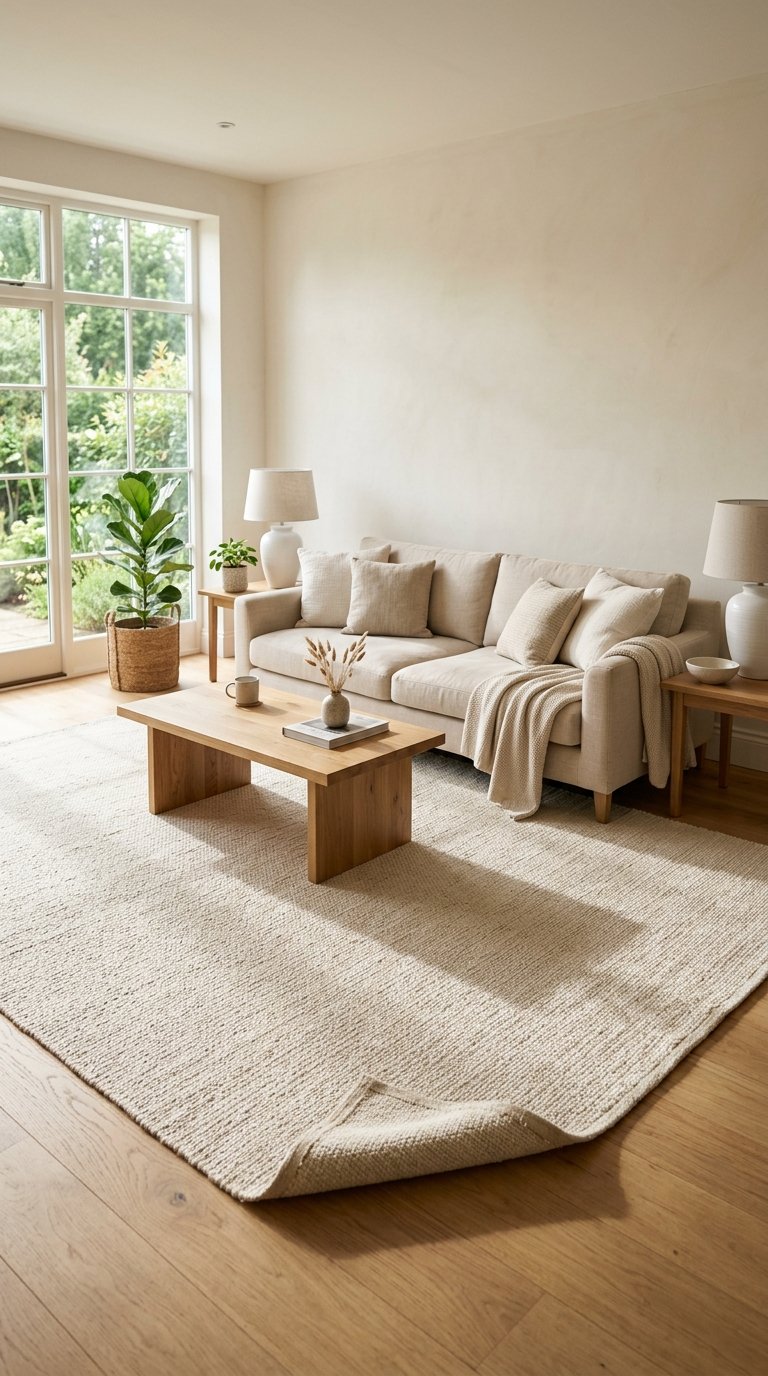
Dark rugs shrink a room visually and absorb summer light. A light-colored area rug in cream, oat, or pale blue opens the floor plan and reflects light upward. Interior designers at Architectural Digest consistently recommend light rugs for small living rooms because they create the illusion of more square footage. For renters, a rug is one of the few tools you have to define zones without drilling walls.
A 5×8 rug from Rugs USA or Wayfair in a neutral tone starts around $80. That’s enough to cover the seating area of most apartment living rooms. If you’re worried about stains, look for flatweave styles, they’re easier to spot-clean and dry faster in humid summer months.
7. Rearrange Your Furniture Toward Natural Light
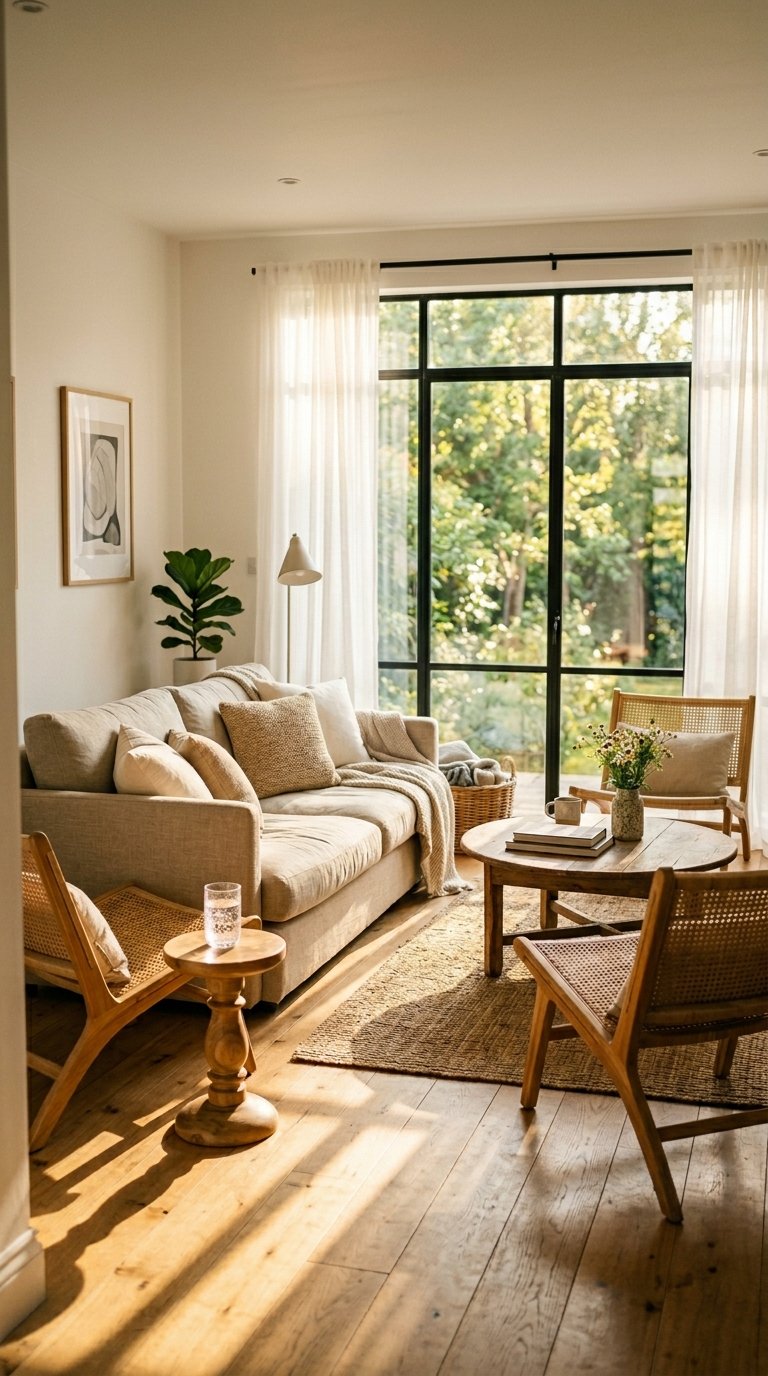
Before you buy anything, move what you already own. Pulling your sofa away from dark walls and angling your seating toward your brightest window costs nothing and changes the entire feel of the room. Sunlight as a design element is free, and most homeowners never use it strategically. Interior stylist Emily Henderson built an entire career around this principle: light placement before product placement.
The furniture arrangement also affects traffic flow. A room where furniture blocks windows feels dark no matter how many lamps you add. Turn your chairs to face the window, push the sofa forward 18 inches from the wall, and watch the room open up. This works in apartments, small homes, and open-plan spaces equally well.
8. Introduce a Statement Summer Candle
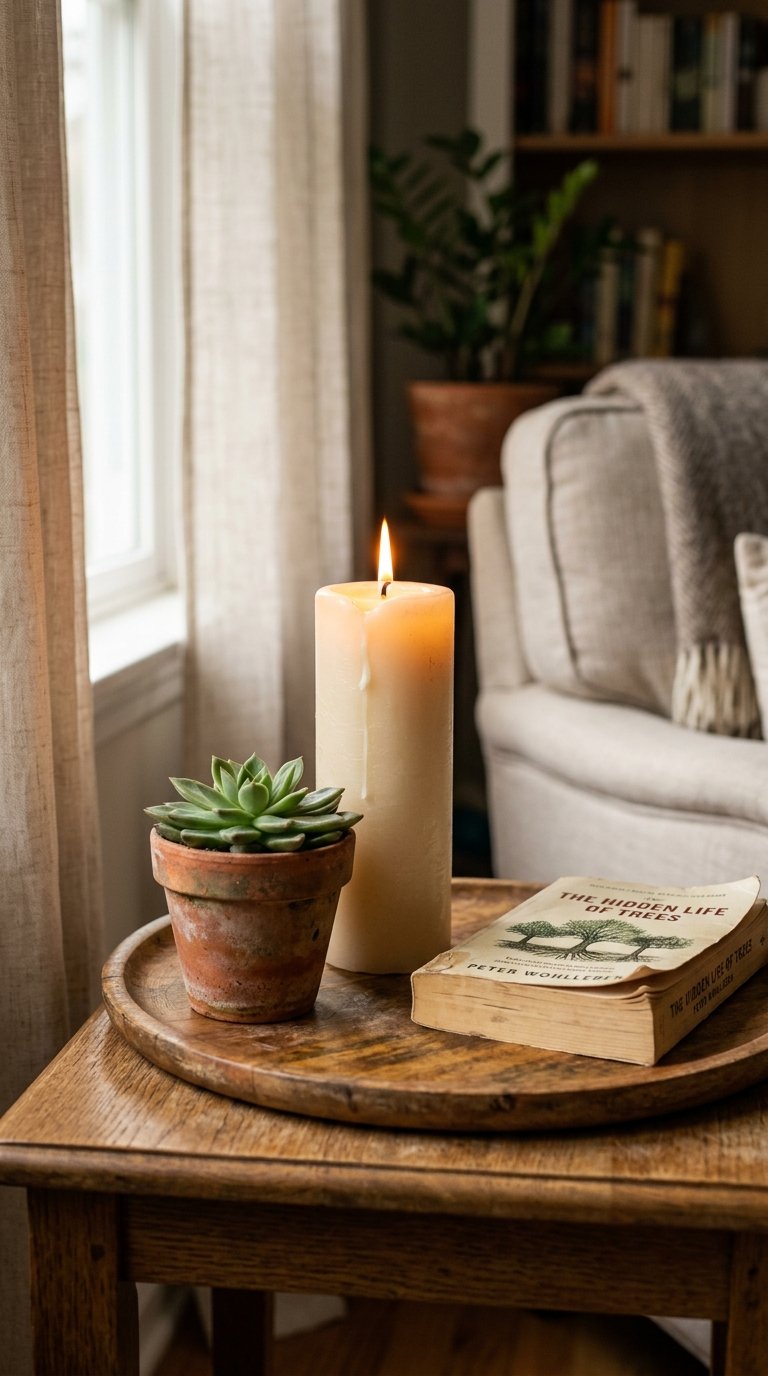
A single large candle in a summer scent, coconut, sea salt, citrus, or fresh linen, does double duty. It adds a decorative object to a surface and changes how your room feels the moment guests walk in. Scent is processed by the limbic system, the part of the brain tied to memory and emotion, which means the right candle scent shifts mood faster than any visual change.
You don’t need a $60 Diptyque candle to get this effect. Homesick Candles’ “Beach” scent runs about $35 and burns for 60 to 80 hours. A tall pillar candle from Target’s Threshold line goes for under $15. Put it on a wooden tray with a small plant and a book, and you have a styled surface in under two minutes.
9. Hang a Large Mirror to Amplify Light
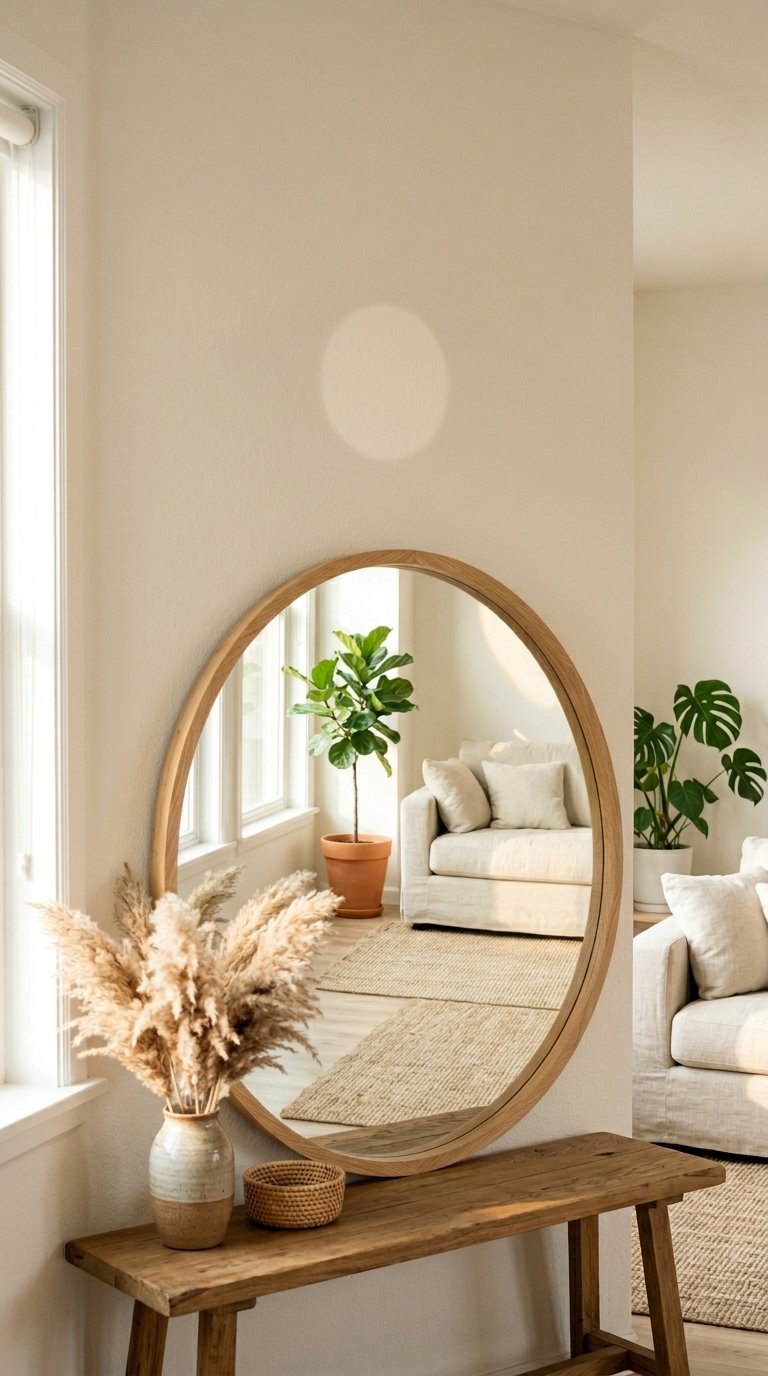
Mirrors are the oldest trick in the interior design book, and they work because physics backs them up. A large mirror placed opposite a window reflects natural light back into the room, effectively doubling the brightness without adding a single fixture. Real estate agents know this well; staged homes with large mirrors sell 15% faster on average, according to a 2022 National Association of Realtors report.
For summer, choose a mirror with a light or natural wood frame rather than a dark metal one. The frame keeps the mirror feeling seasonal and warm rather than industrial. IKEA’s NISSEDAL mirror at $60 works in almost every living room layout. Lean it against the wall if you rent, hang it if you own.
10. Style Your Coffee Table Like a Summer Shelf
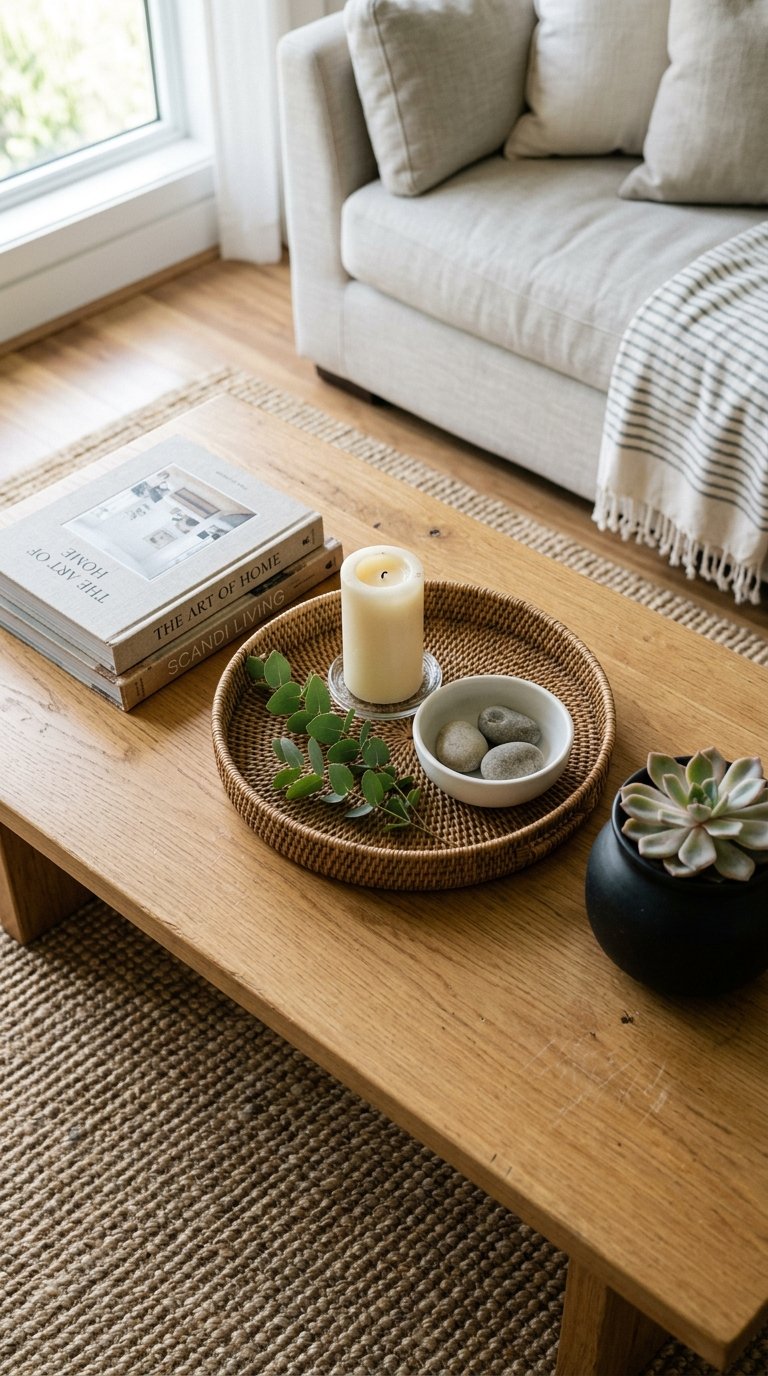
Your coffee table is prime real estate that most people waste. A styled coffee table takes five minutes and makes the entire room look more intentional. Stack two or three books, add a small tray, drop in a candle, and place one small object with texture, a shell, a wooden bowl, or a small plant. That’s it. The rule of three applies here: odd numbers of objects always look more natural than even ones.
Keep the tray as your anchor. Everything inside the tray reads as a group, which means you reduce visual clutter even when you add more objects. H&M Home and TJ Maxx both carry affordable trays in rattan, marble, and wood. Spend $15 to $20 on a tray and your entire coffee table setup costs under $40.
11. Add a Hammock Chair or Swing Seat
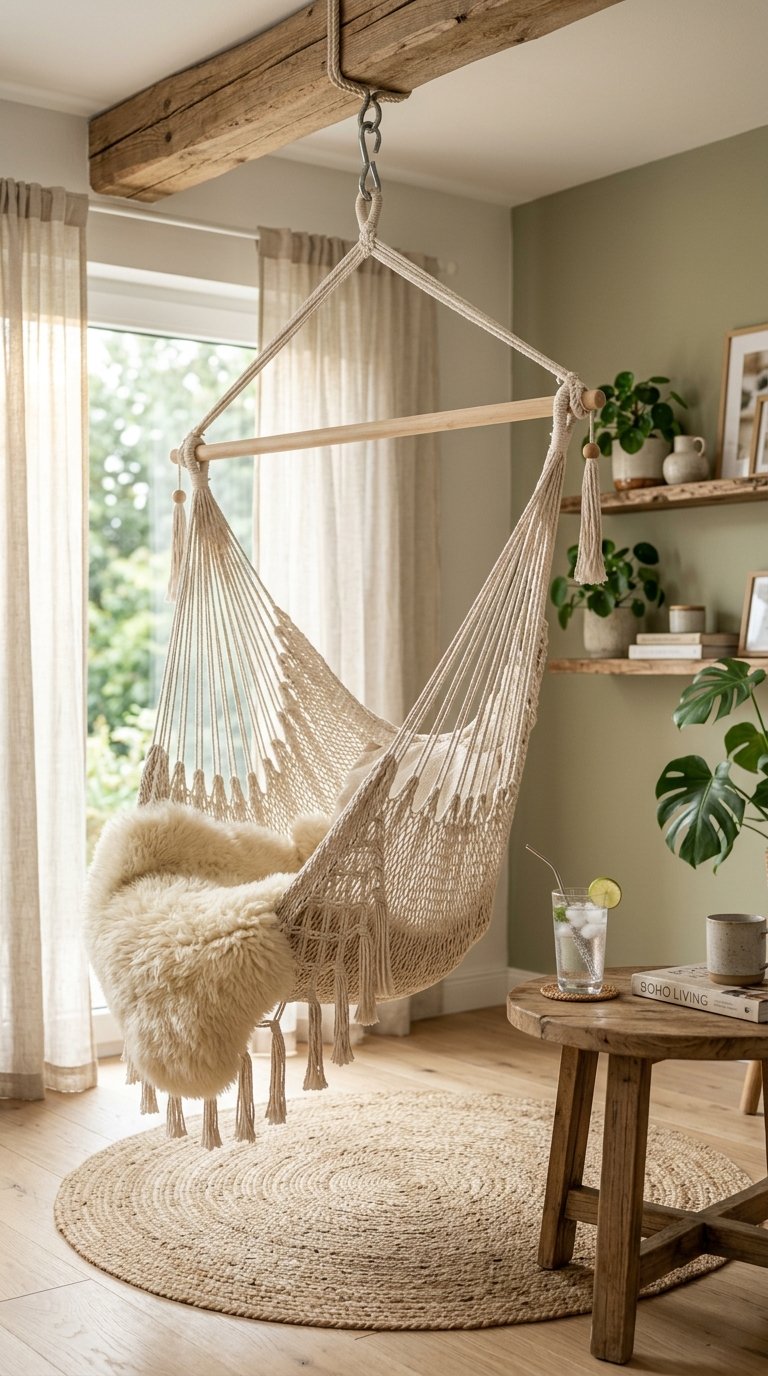
If your living room has a ceiling beam, exposed joist, or a spare corner with vertical clearance, a hanging hammock chair costs $50 to $120 and reads as a bold summer statement. It gives the room a laid-back, resort feel that no standard armchair replicates. Boho Hammock Chair reviews on Amazon consistently mention how much the piece changed the energy of a room, not just as seating but as a visual anchor.
For renters, ceiling-mounted options require a stud and a heavy-duty hook, both renter-friendly if you patch the hole on move-out. Some hammock chairs mount on a freestanding stand, which removes the installation concern entirely. The stands run $30 to $50 extra but give you full flexibility.
12. Go Bold with One Botanical Print
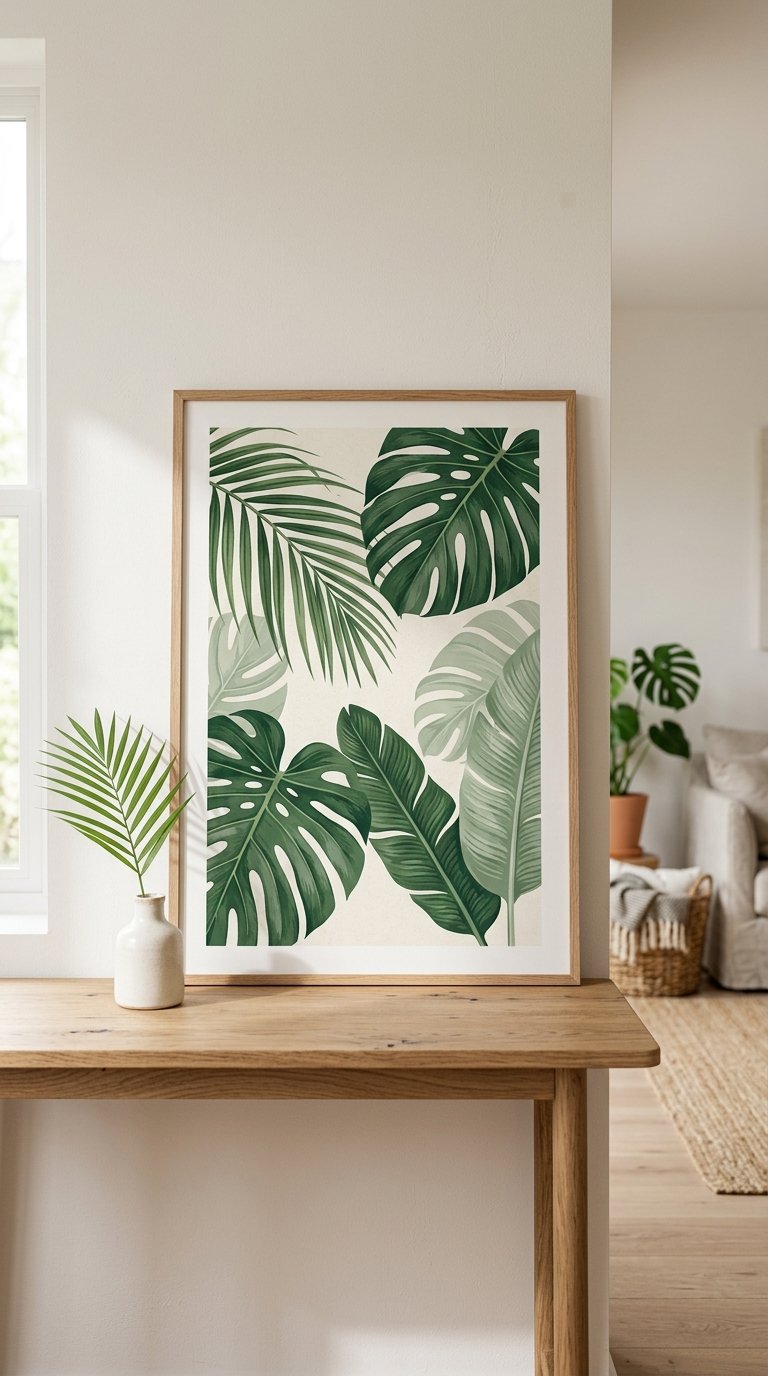
A large botanical print, framed or unframed, leaned against a wall or hung as a single statement piece, gives a room a summer greenhouse feel without the upkeep of real plants. Botanical prints work because they pull green into the space visually, and green is one of three colors interior designers call “psychologically neutral,” meaning it relaxes rather than stimulates.
Desenio’s large botanical prints run $10 to $25 for the digital download. Print it at A1 or A0 size at your local print shop for another $10 to $15. Frame it yourself or lean it unframed for a more casual look. The total cost sits around $30 to $40 for a piece that looks like it costs $200.
13. Declutter Aggressively Before Adding Anything New
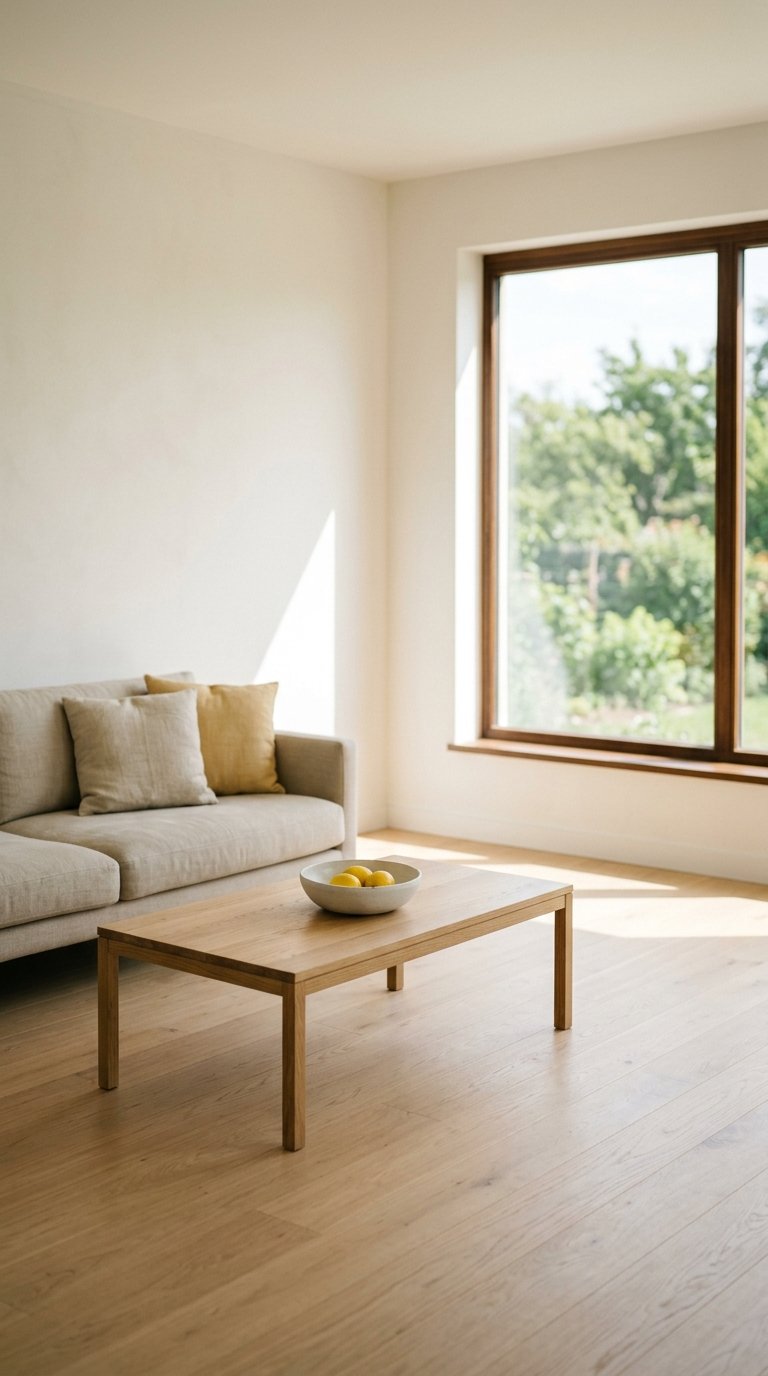
Here’s the honest truth most decor articles skip: adding new things to a cluttered room makes the clutter worse, not better. Before you buy a single pillow or plant, remove everything from your living room surfaces and edit ruthlessly. The Marie Kondo approach works not because of philosophy but because of visual science. Fewer objects on surfaces reduce cognitive load and make a space feel larger and calmer.
A 2011 study from Princeton University’s Neuroscience Institute found that physical clutter competes for your attention and reduces your ability to focus. In a living room, clutter makes the space feel chaotic regardless of how well-decorated it is. Remove first. Decorate second. This order matters more than your budget.
14. Use Blue and White Accents for an Instant Coastal Feel
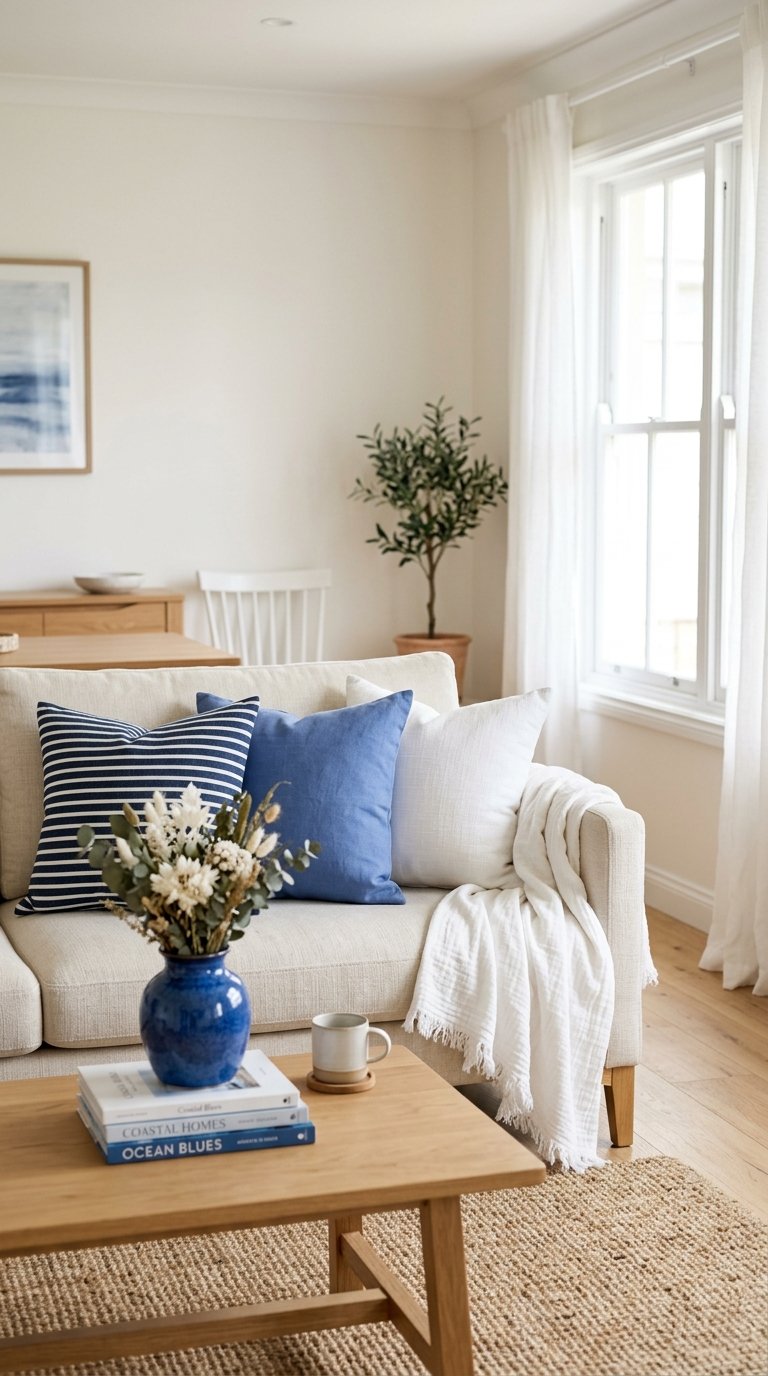
Blue and white is the most reliable summer color combination in residential design. It appears in everything from Greek island architecture to Hamptons beach houses because it works across styles, budgets, and room sizes. You don’t need to repaint. Introduce it through pillows, a throw, a vase, or a bowl on the coffee table. Three to four blue and white accents are enough to shift the room’s entire color story.
For a budget approach, check HomeGoods or TJ Maxx in late spring. Both stock heavily in blue and white coastal accessories between April and July. You get designer-adjacent pieces at 40 to 60 percent below retail. A blue ceramic vase, two throw pillows, and a white cotton throw blanket total around $50 and transform a neutral living room overnight.
15. Upgrade Your Lighting with Edison Bulbs
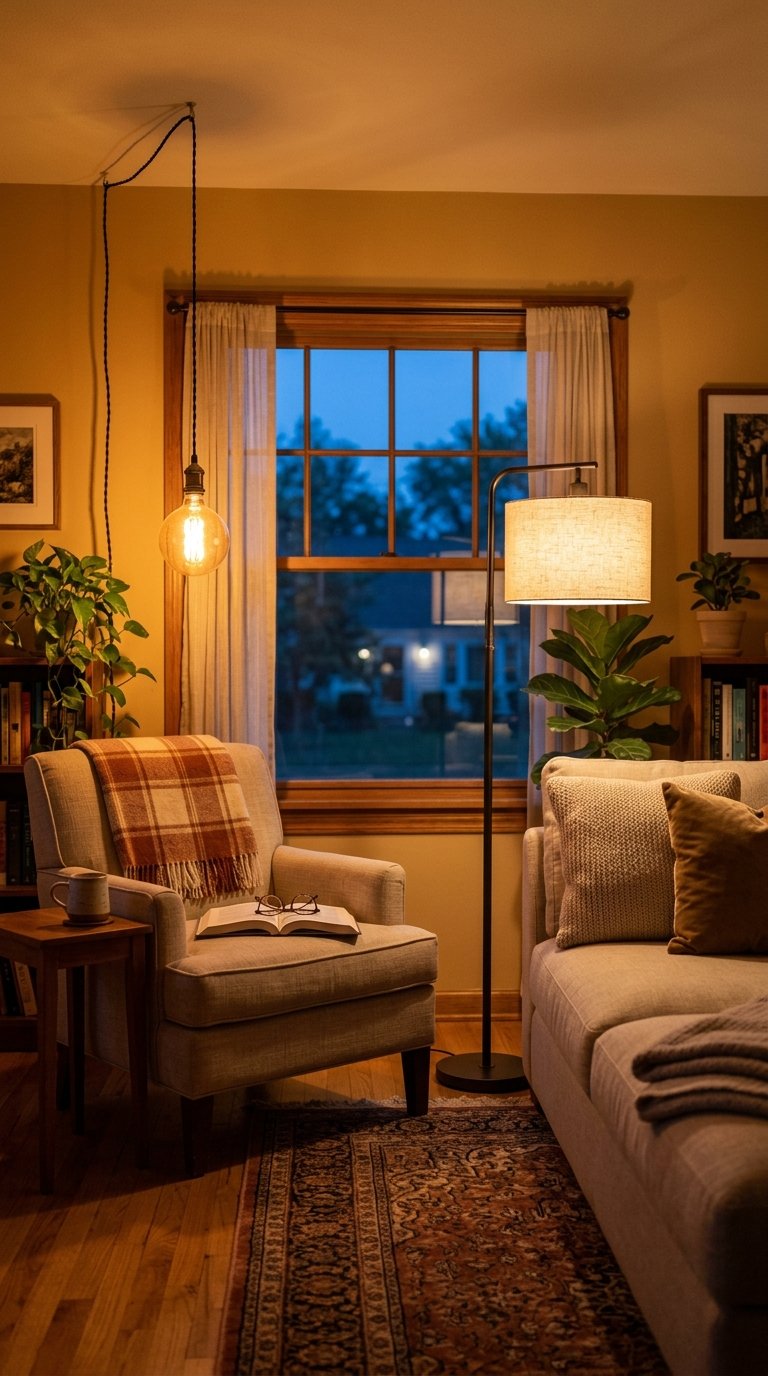
Your overhead lighting does more damage to summer vibes than you realize. Harsh white fluorescent or LED light makes a room feel like an office. Warm Edison bulbs at 2200 to 2700 Kelvin create the golden hour glow that makes every room feel relaxed and inviting. Philips Hue’s warm white bulbs let you adjust color temperature from your phone, which means you shift from daytime bright to evening warm without buying a new fixture.
A four-pack of Edison-style bulbs from Amazon runs about $12 to $18. If your fixtures are old, a clip-on or plug-in Edison bulb pendant from Urban Outfitters or IKEA costs $30 to $50 and requires zero electrician work. This is one of the fastest, cheapest changes you make to a living room’s atmosphere.
16. Layer Two Rugs for Depth and Warmth
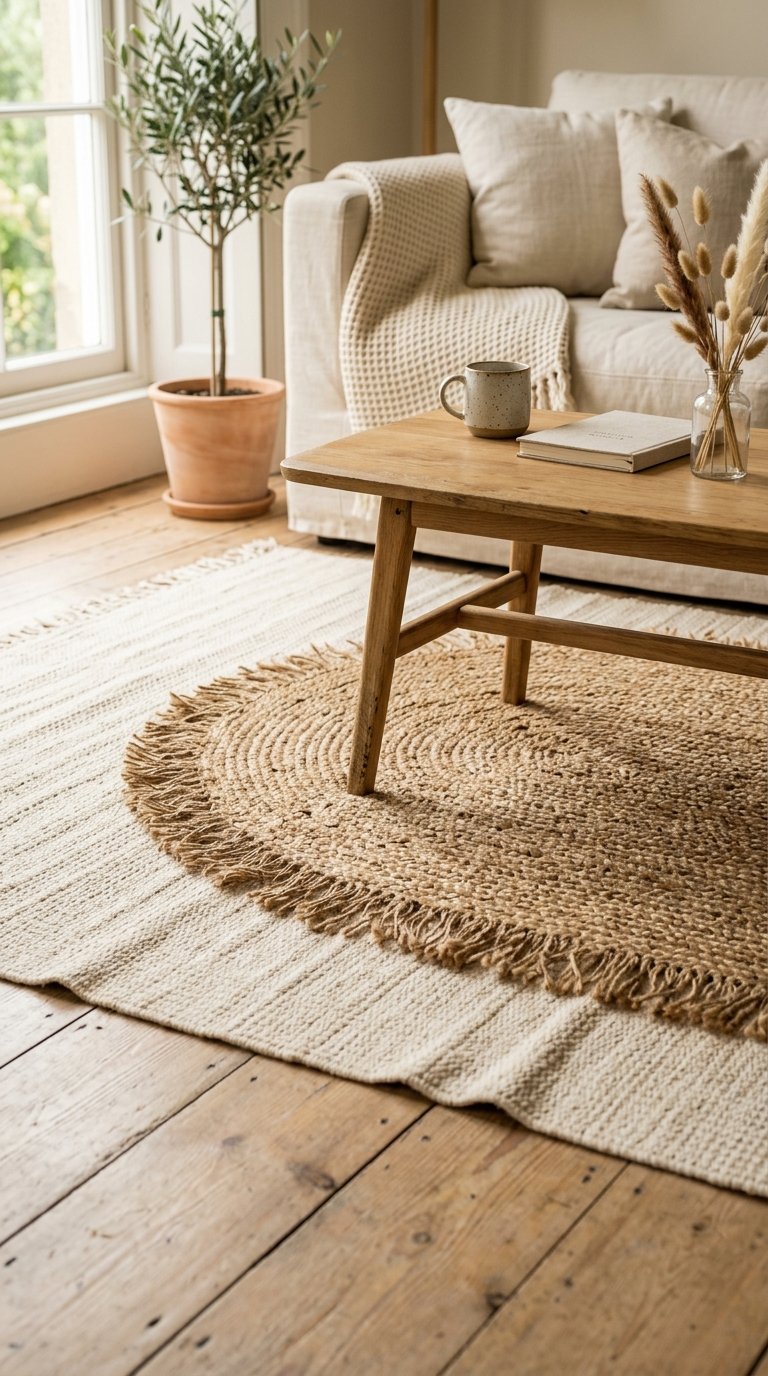
One flat rug looks standard. Two layered rugs look styled. The trick is to use a large neutral flatweave as your base, then layer a smaller jute or sheepskin rug on top at an angle. This technique appears in every high-end interior design spread for a reason: it adds dimension to the floor without requiring expensive furniture. Amber Lewis and Studio McGee both use this approach consistently in their residential projects.
For a budget version, start with a $60 to $80 cotton flatweave from Rugs USA. Add a $30 jute accent rug from Amazon or IKEA on top. The total cost stays under $110 and the floor of your living room looks like a styled editorial shoot. The layered rug also defines the seating zone in open-plan spaces, which solves the floating furniture problem most apartment dwellers face.
17. Style a Summer Bar Cart
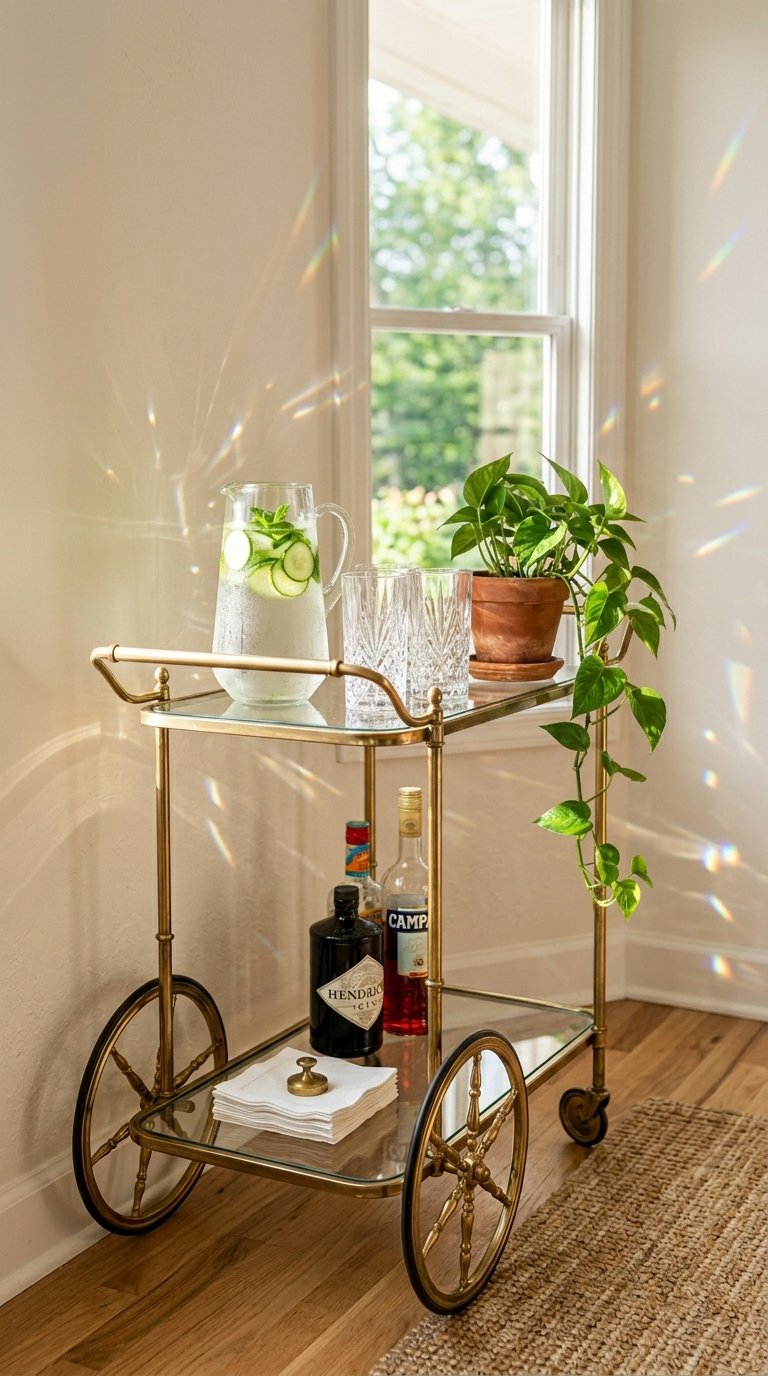
A bar cart is one of the most versatile pieces of furniture you add to a living room. In summer, style it with light glassware, a citrus-infused water jug, a small plant, and two or three bottles with colorful labels. It functions as both storage and decor, and it moves when you need the space. West Elm’s Roar & Rabbit bar cart gets five-star reviews specifically for its dual function as a design object and a practical surface.
You don’t need to spend $300 on a bar cart. IKEA’s RÅSKOG utility cart at $30 works identically when styled correctly. The wheels give you flexibility, the shelves give you storage, and two plant pots plus a glass jar convert it from a kitchen tool into a living room accent piece. FYI, it also works as a plant stand, a book trolley, or a side table.
18. Paint One Accent Wall in a Warm Terracotta or Sage Green
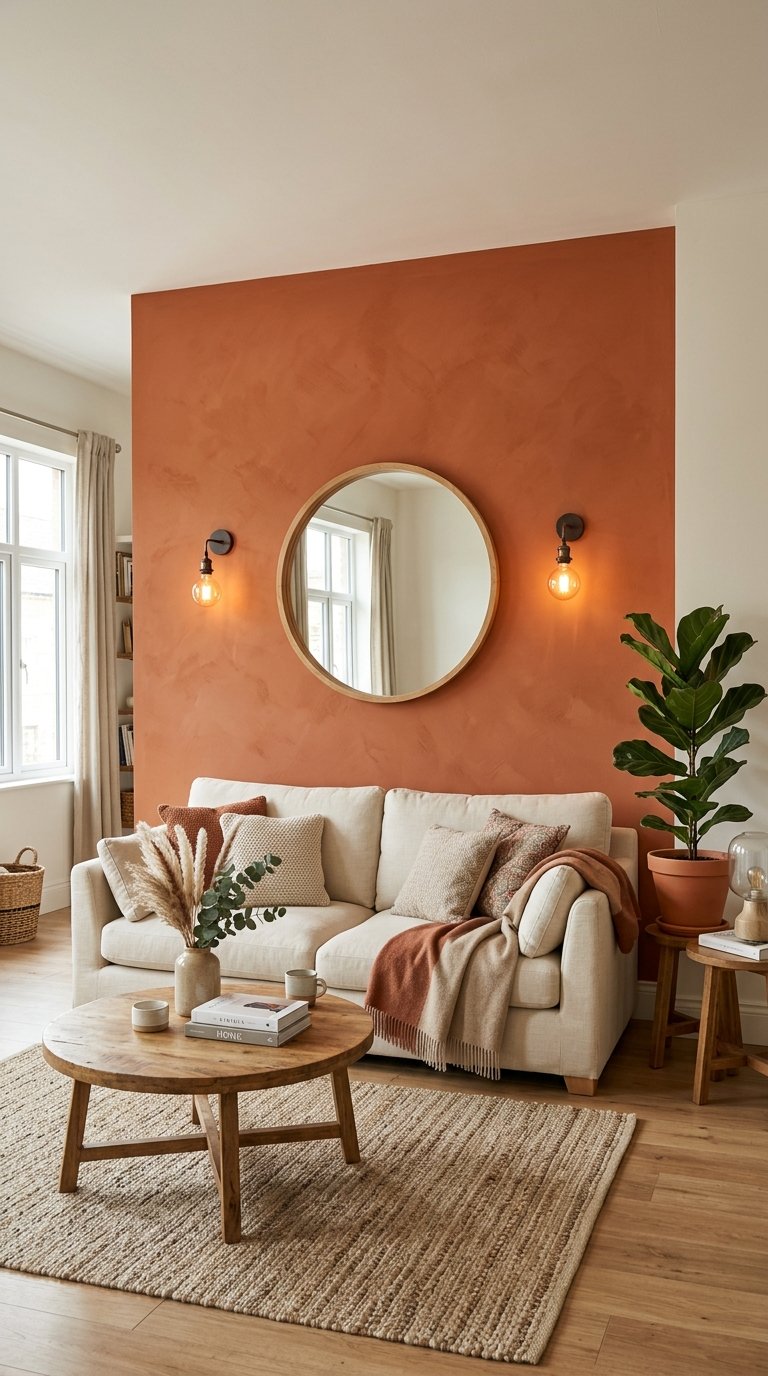
If you own your home, one painted accent wall changes everything. Terracotta and sage green are the two colors that dominated residential interior design between 2022 and 2025 and they remain relevant because they work with almost every neutral base palette. Benjamin Moore’s “Pale Terracotta” and Sherwin-Williams’ “Sage” both earn top placement in designer mood boards year after year. One gallon of paint costs $40 to $55 and covers a standard 10×12 wall with two coats.
For renters, peel-and-stick wallpaper from Tempaper or Chasing Paper gives the same effect. A 20-square-foot roll runs about $45. You apply it yourself in under two hours and remove it with no wall damage on move-out. The effect looks custom and the commitment is zero.
19. Add a Floor Lamp with a Warm Shade
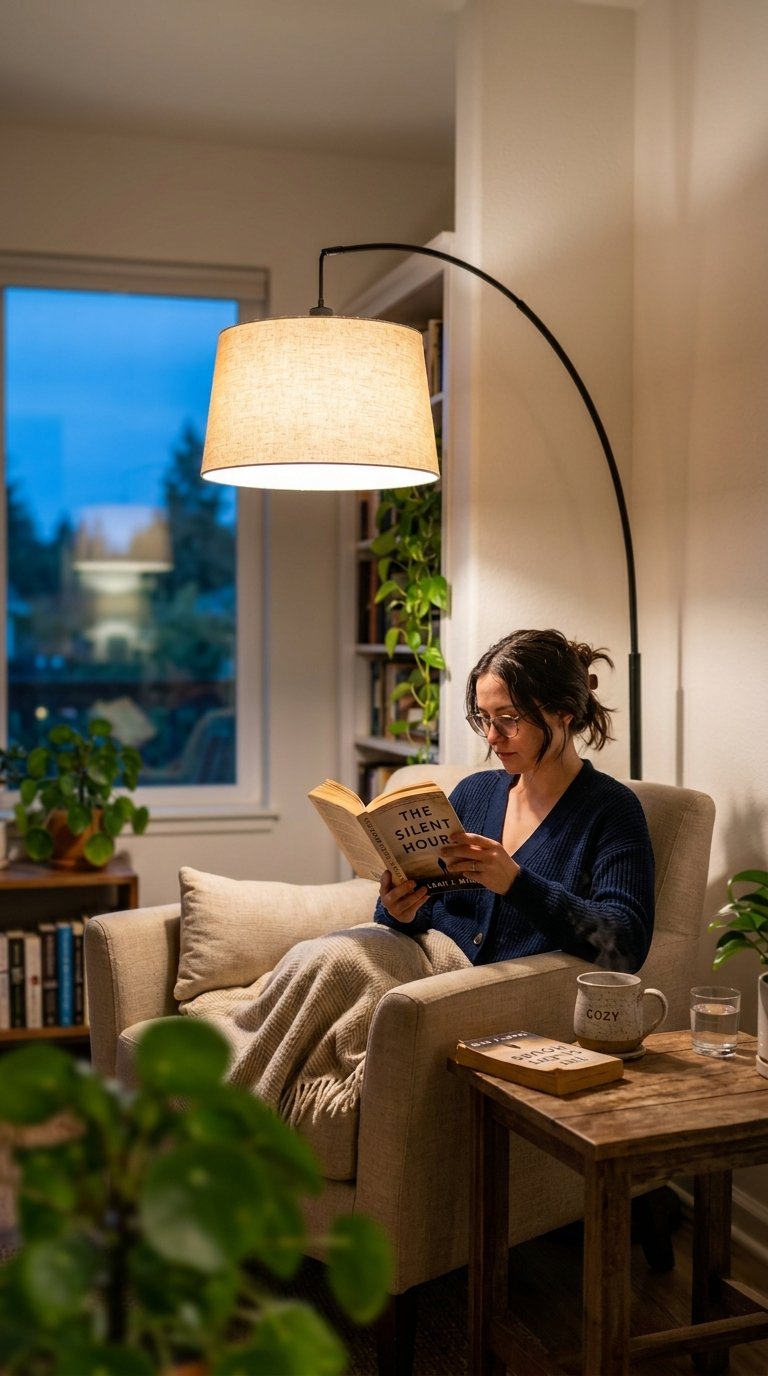
Overhead lighting flattens a room. Floor lamps add vertical light that warms corners and creates depth. A floor lamp with a linen or cream fabric shade softens the light and adds texture simultaneously. Lighting designer Lindsey Adelman has said publicly that the fastest way to make a room feel expensive is to eliminate overhead lighting entirely and rely on layered lamps. You don’t need her price point to use her principle.
Target’s Threshold arc floor lamp at $80 gets consistent five-star reviews for its warm light output and modern silhouette. Pair it with a 2700K bulb and a linen shade and it reads as a $300 piece. Position it behind your sofa or beside your reading chair to fill the corner with warm, directional light that overhead fixtures never provide.
20. Bring Summer Inside with a Fruit Bowl Display
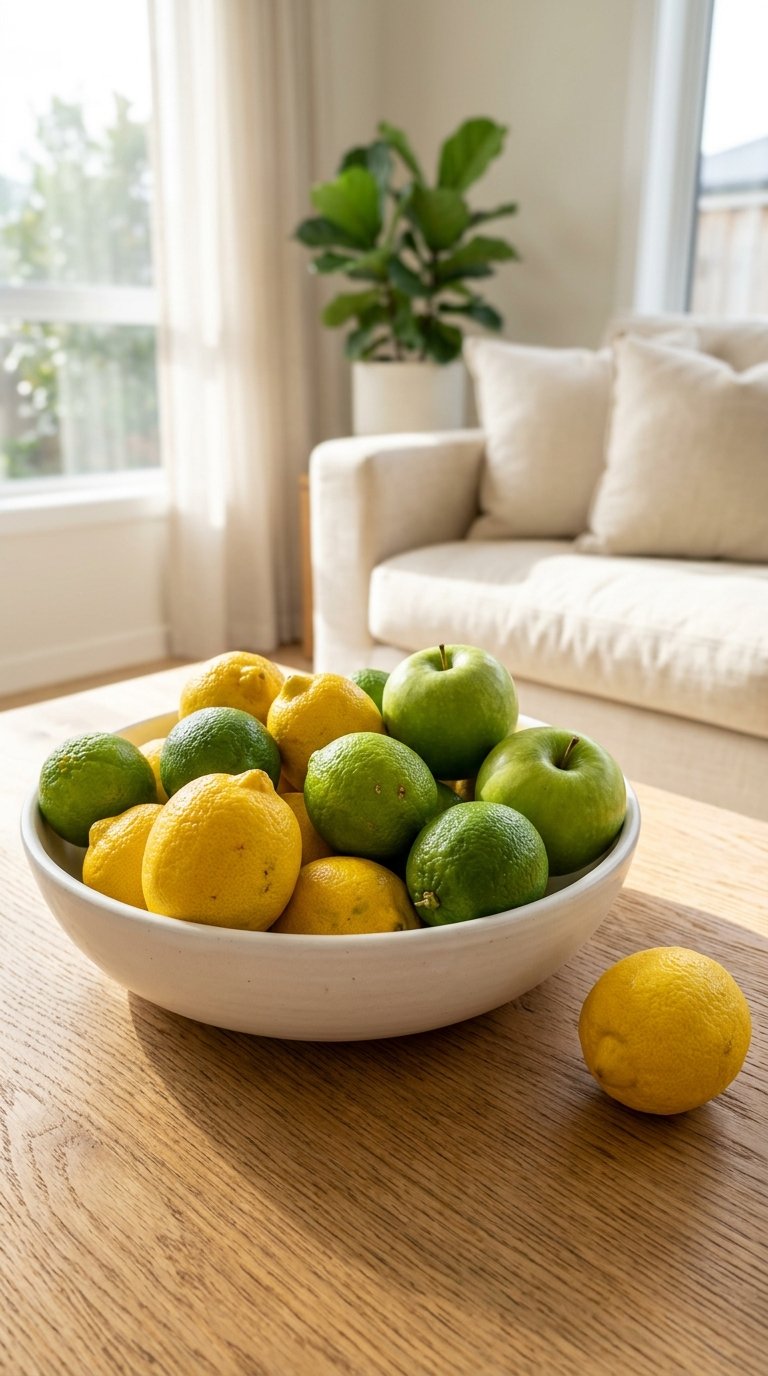
A bowl of fresh fruit on your coffee table or console costs $5 to $10 and functions as both a decor element and a practical household item. Lemons, limes, oranges, and green apples grouped in a wide ceramic or wooden bowl create color, texture, and life on a flat surface. Interior stylists for food and home magazines use this trick constantly because it photographs well and reads as intentional, not accidental.
Replace the fruit weekly so it stays fresh and visually sharp. A simple white ceramic bowl from IKEA at $8 and $6 worth of lemons and limes give you a styled surface object that costs less than a scented candle. The citrus color also reinforces your summer palette without adding another permanent decor piece to manage.
21. Introduce a Lightweight Outdoor Rug Indoors
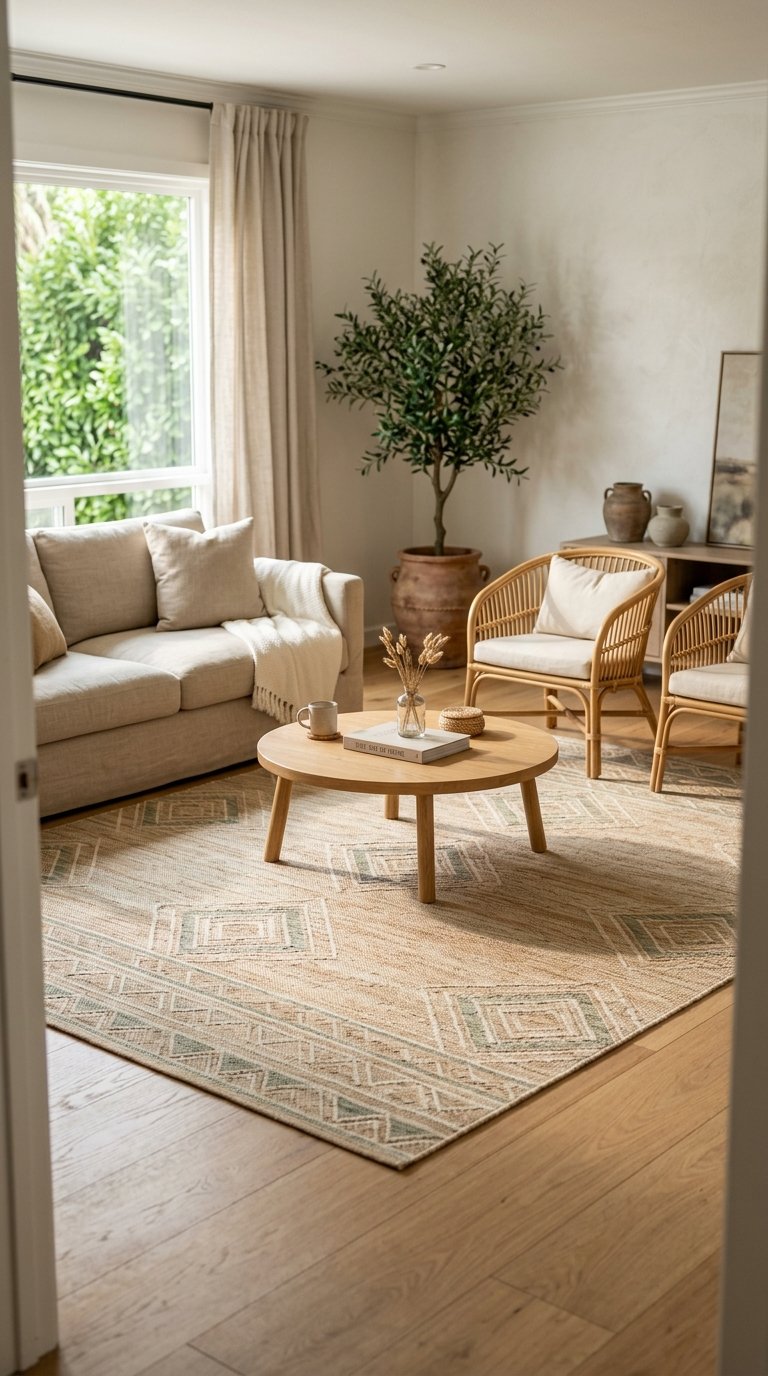
Outdoor rugs have come a long way. Modern outdoor rugs in flatweave or low-pile constructions look identical to indoor versions but cost 30 to 50 percent less and handle high traffic, spills, and humidity far better. In summer, this matters because open windows and active households bring more dirt and moisture into living spaces. Brands like Threshold at Target and Loloi both produce outdoor rugs you comfortably use inside.
A 5×7 outdoor rug from Loloi’s Isle collection runs about $60 to $90 and looks like a $200 indoor piece. It vacuums clean, resists staining, and dries fast if it gets wet. For families with kids or pets, this swap alone solves the rug anxiety problem entirely. You stop worrying about the floor and start enjoying the room.
Final Thoughts
You now have 21 specific, budget-aware, practical ideas you execute this weekend without a contractor or a designer. Start with the three highest-impact changes: lighting, textiles, and one large plant. Those three alone shift the feel of your living room faster than anything else. The rest of the list builds on that foundation. Pick what solves your biggest problem first, whether that’s clutter, darkness, outdated furniture, or a blank wall. Summer doesn’t wait, and neither should your living room. 🙂