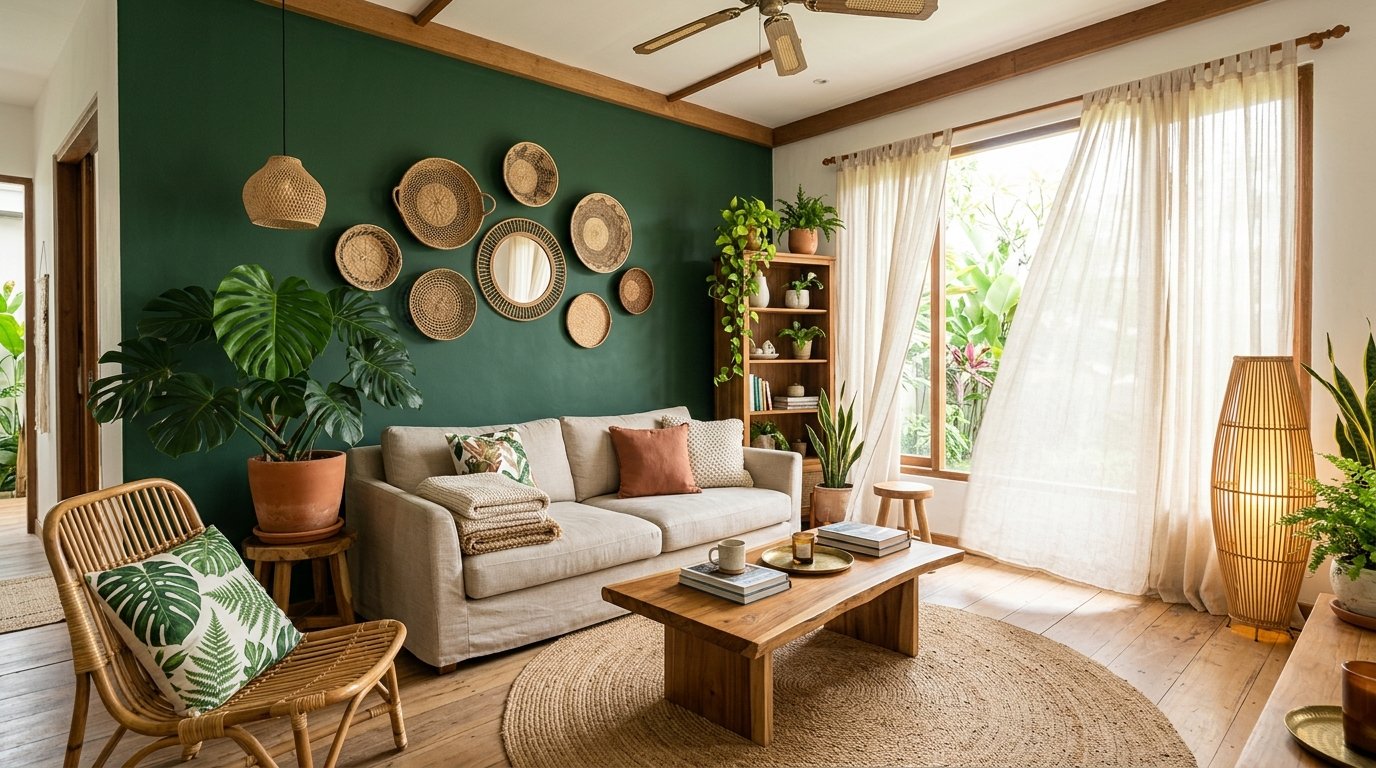
23 Tropical Oasis Living Room Ideas for a Budget Makeover
Why Your Living Room Needs a Tropical Makeover Right Now
You don’t need a vacation budget to feel like you’re sitting in a Bali resort. A few well-placed tropical elements shift a flat, forgettable living room into a space that genuinely resets your mood after a long day, and researchers at the University of Exeter found that adding plants and natural elements to indoor spaces boosts wellbeing by up to 47%. That’s not a small number. Start with what you already own and layer in tropical touches strategically rather than overhauling the entire room at once.
The biggest mistake homeowners make is going all-in on a theme and ending up with something that looks like a hotel lobby gift shop. Tropical design works best when it feels curated, not costumed. Think one statement banana leaf print on a single wall, a genuine rattan chair from a secondhand shop (usually under €40 at Frankfurt’s Flohmarkt), and a cluster of three potted monstera or bird of paradise plants grouped by height. That trio alone transforms a neutral room without touching your lease agreement or maxing out your weekend budget.
1. Anchor the Room With a Large-Scale Leaf Print
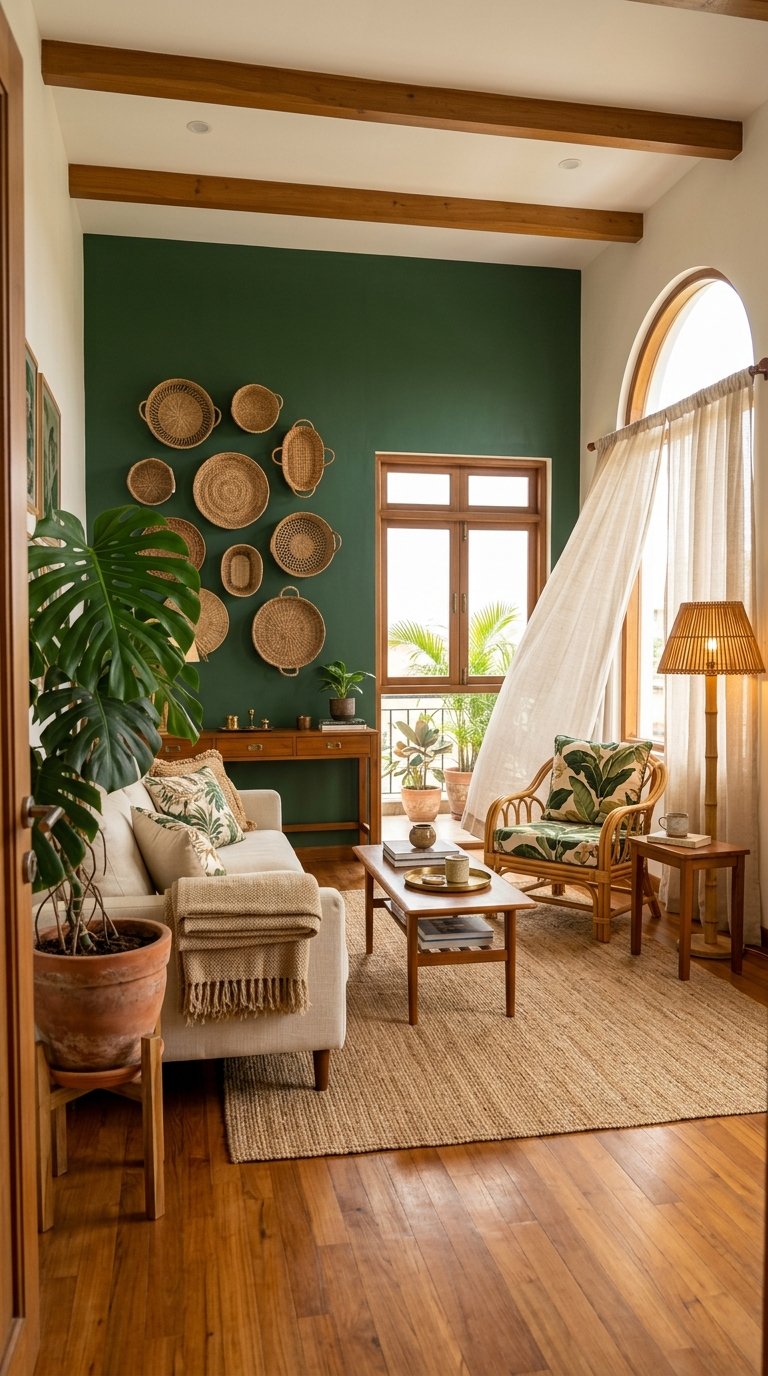
One oversized botanical print does more visual work than a shelf full of small decorations. The reason is simple: scale creates impact, and your eye reads one large element as intentional rather than cluttered. IKEA’s BILD series regularly stocks botanical prints for under €20, and when framed in a thin black or bamboo frame at 70x100cm, the effect looks closer to a €200 gallery piece.
Hang it low, with the center of the image at eye level when seated, not standing. Most people hang art too high, which disconnects it from the furniture below and makes the room feel split. A low-hung palm or monstera leaf print above your sofa ties the seating area together and immediately establishes the tropical direction of the room without you spending another euro.
2. Swap One Sofa Cushion for a Tropical Textile
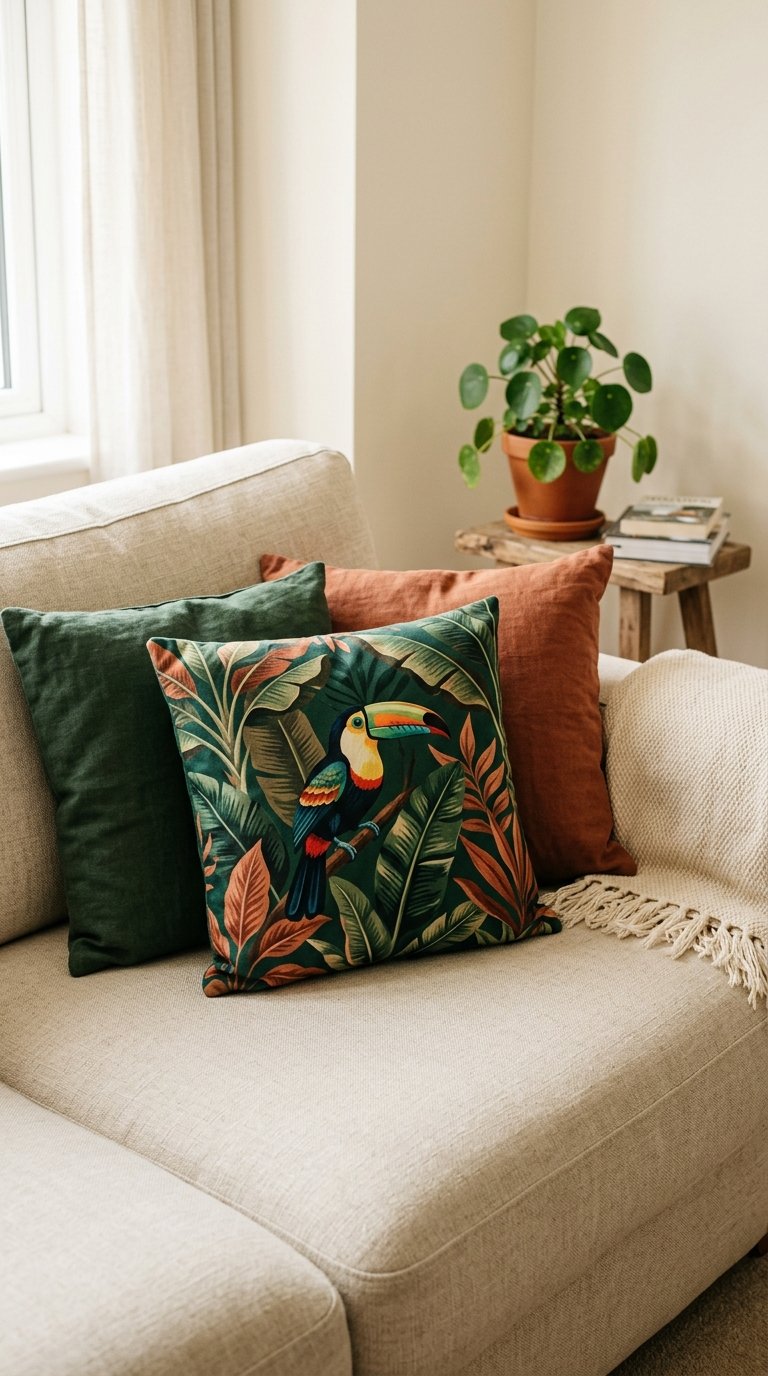
You don’t replace the whole sofa. You replace one cushion. Textiles with banana leaf, toucan, or abstract jungle patterns cost between €12 and €35 at H&M Home or Zara Home, and one is genuinely enough to signal a new direction for the room. Pair it with one plain cushion in a color pulled from the print, such as deep green or terracotta, and the look reads as deliberate.
The practical bonus here is reversibility. Renters especially benefit from this approach because nothing is permanent, and you’re not painting walls or drilling holes. If you get bored of the tropical direction in six months, you swap the cushion again. Low commitment, high payoff.
3. Use Rattan Furniture as Your Hero Piece
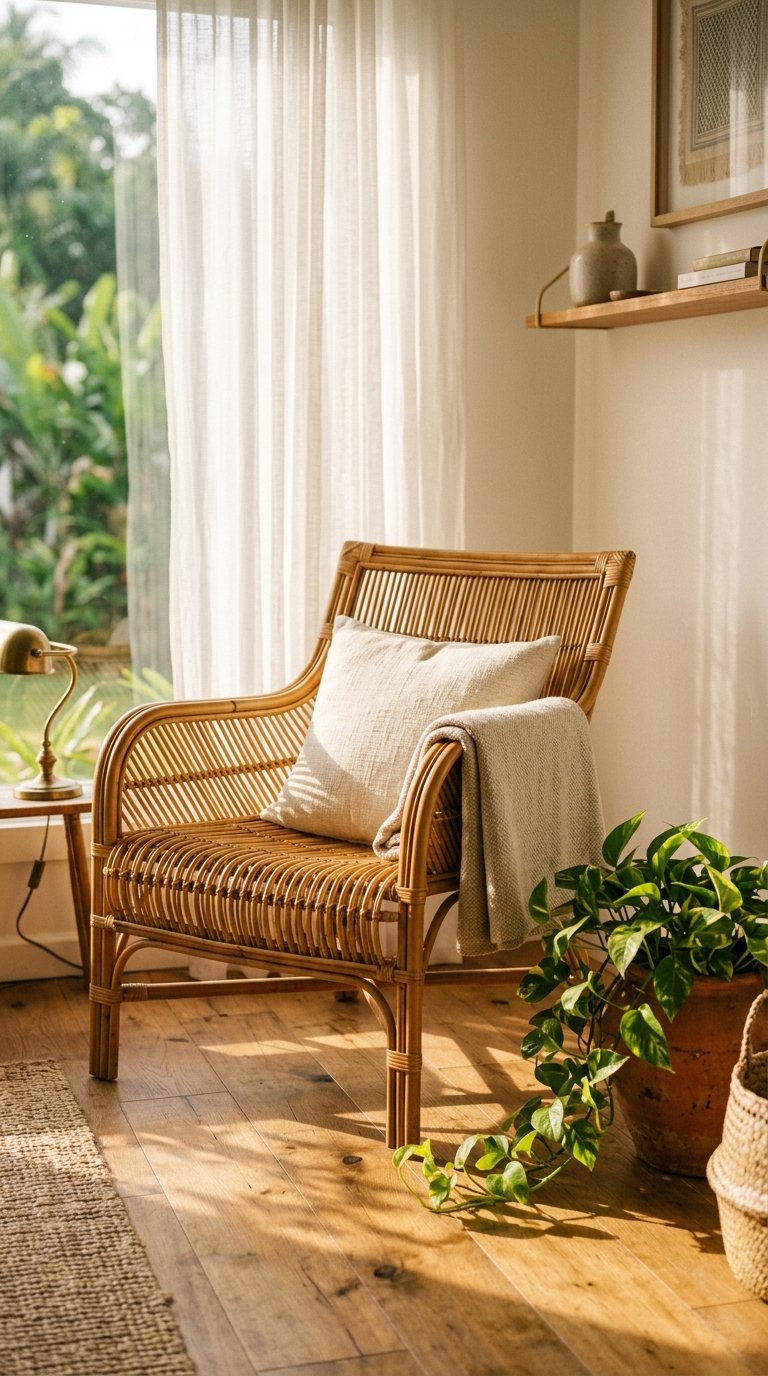
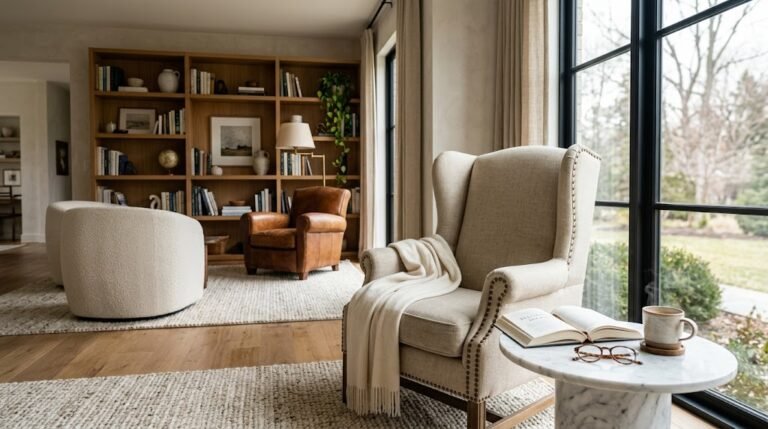
Rattan instantly communicates warmth and natural texture, two things most living rooms desperately lack. A single rattan armchair or side table introduces organic shape and material contrast that neither flat-pack wood nor fabric achieves. In terms of budget, secondhand rattan chairs in good condition are consistently available at German Kleinanzeigen listings for €20 to €60, which is a fraction of new retail prices.
Place the rattan piece near a window if possible, because natural light brings out the warm honey tones in the material and reinforces the outdoor-inspired aesthetic. If you’re working with a small space, a rattan side table takes up almost no floor footprint but adds significant visual texture beside a sofa or reading chair.
4. Group Plants by Height, Not by Species
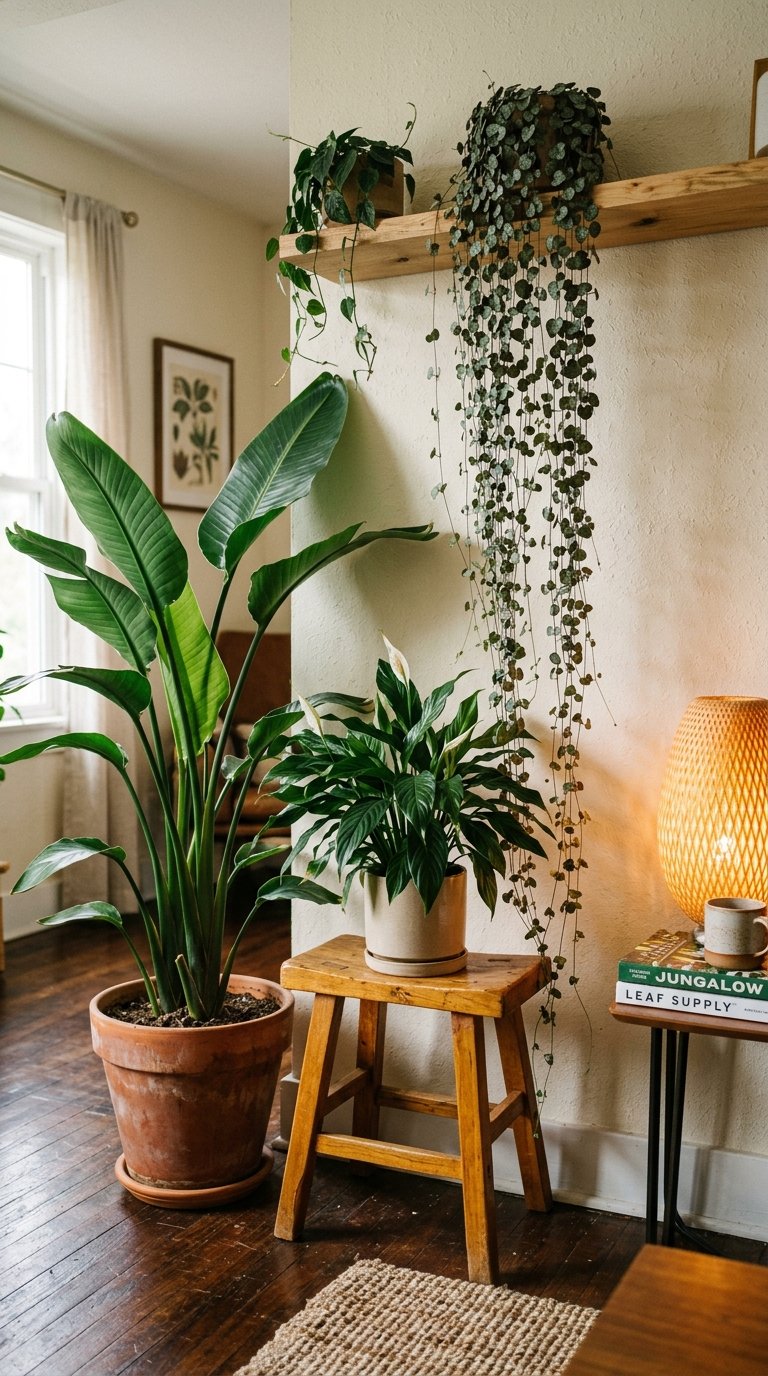
Three plants of the same height look like a garden center display. Three plants at staggered heights look like an intentional interior decision. Place your tallest plant (a fiddle-leaf fig or bird of paradise works well) at floor level, a medium plant like a peace lily on a stool or side table, and a trailing pothos or string of hearts on a shelf above. That vertical layering creates a lush, full effect without crowding the floor space.
The practical reason this works is depth. Varying heights force your eye to move up and down, which makes the corner feel larger and more dynamic than it actually is. For renters and small-space owners, this vertical grouping strategy replaces the need for actual square footage.
5. Paint One Accent Wall in Deep Jungle Green
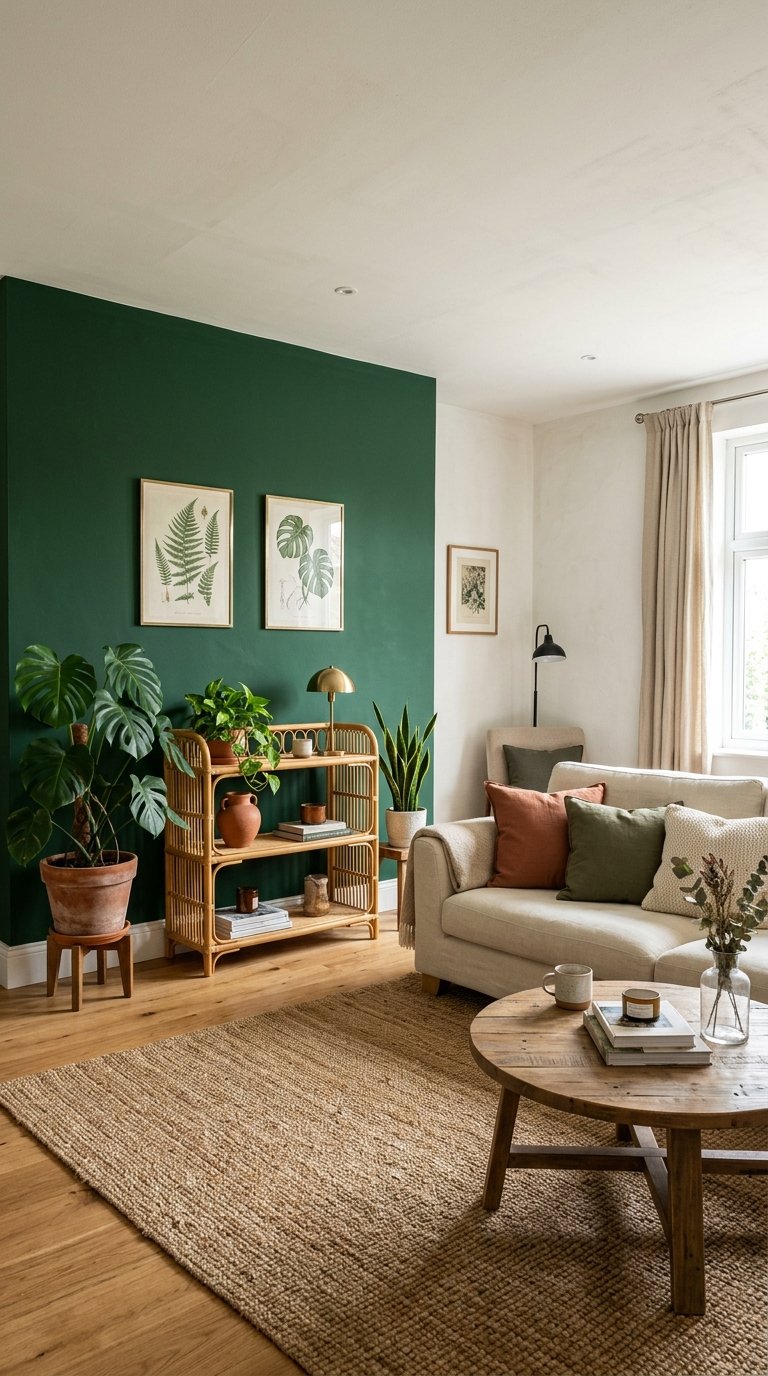
If you own your home or have landlord approval, one wall in a deep botanical green like Farrow and Ball’s Bancha or Dulux’s Amazonian transforms the entire room’s atmosphere. The reason one wall works better than four is contrast: the single green wall makes every other surface feel brighter by comparison, and the plants you add will visually connect with the wall color rather than compete with it.
For renters who want the same effect without paint, peel-and-stick wallpaper with a tropical botanical pattern now comes in high-quality vinyl that removes cleanly. Roommates of mine in Frankfurt used Photowall’s peel-and-stick botanical prints in a rental and recovered their deposit without issue. The key is following the manufacturer’s removal instructions precisely.
6. Layer Natural Fiber Rugs Over Existing Flooring
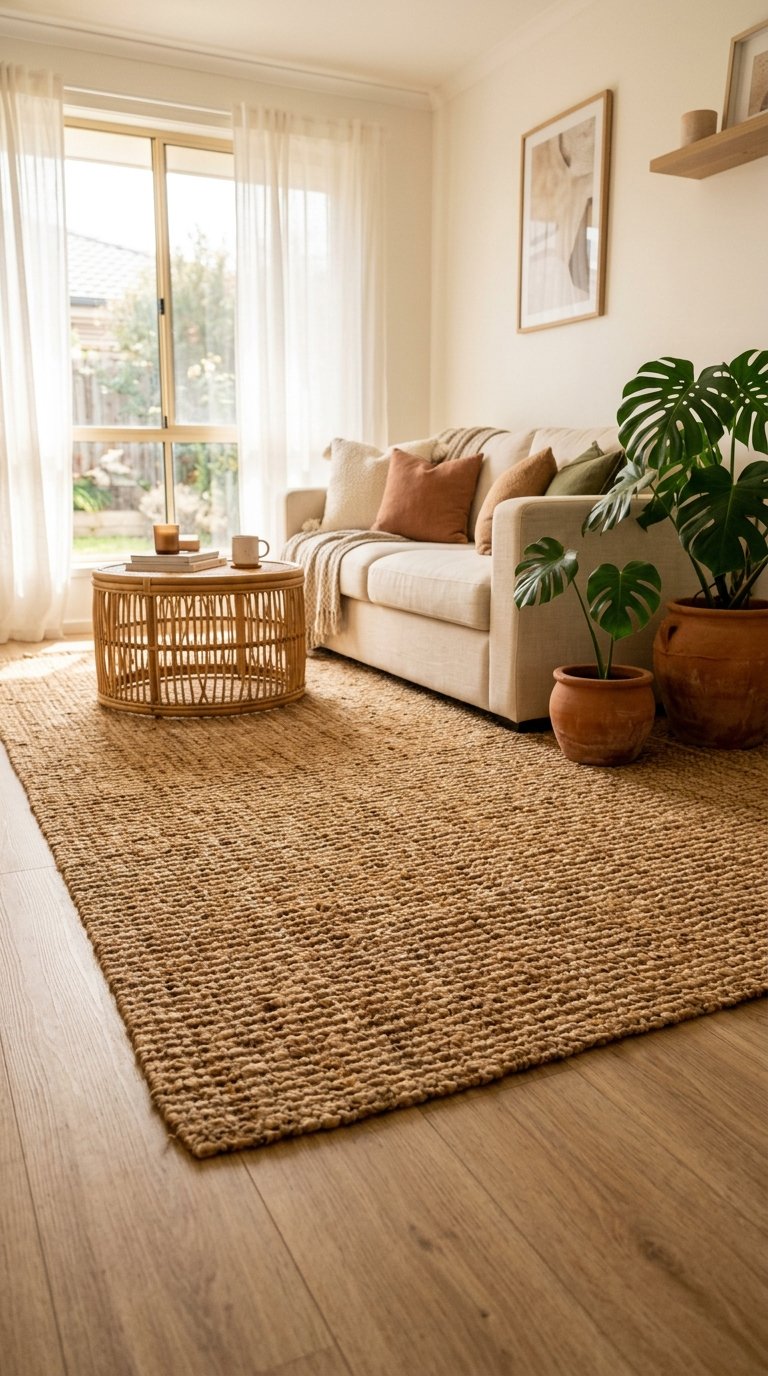
A jute or sisal rug anchors the tropical palette and adds tactile warmth underfoot, which is especially useful if your existing floor is cold laminate or tile. Natural fiber rugs also age beautifully, which means they look better after two years of use, not worse. A 160x230cm jute rug from Wayfair or Westwing runs between €60 and €120, which makes it one of the most cost-effective room transformations available.
The acoustic benefit is worth mentioning too. Hard floors amplify noise, and a natural fiber rug absorbs sound noticeably. If your living room doubles as a workspace or you live in an apartment building, that noise reduction is a functional improvement, not just an aesthetic one.
7. Add Woven Wall Baskets as Art
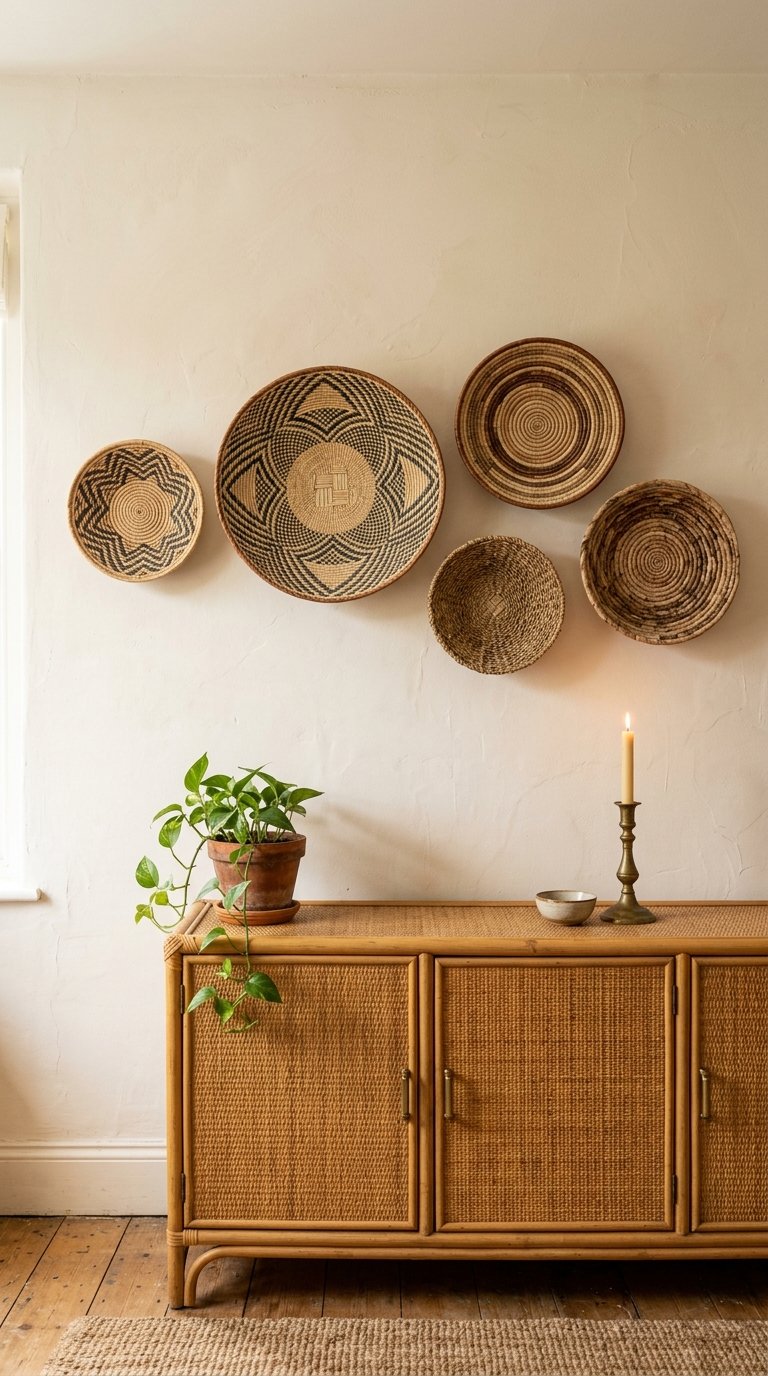
Woven baskets hung on walls are one of the most underused tropical decorating moves available. A grouping of three to five baskets in different sizes and weave patterns creates a textural focal point that costs a fraction of framed art. World Market, Anthropologie, and local African import shops all stock these for between €8 and €30 per basket, and they work on virtually any wall color.
The arrangement principle is simple: keep the largest basket at the center and cluster smaller ones asymmetrically around it. Leave visible gaps between them so the wall itself becomes part of the composition. This avoids the cluttered look and gives the grouping room to breathe.
8. Bring In a Bamboo or Wicker Lamp
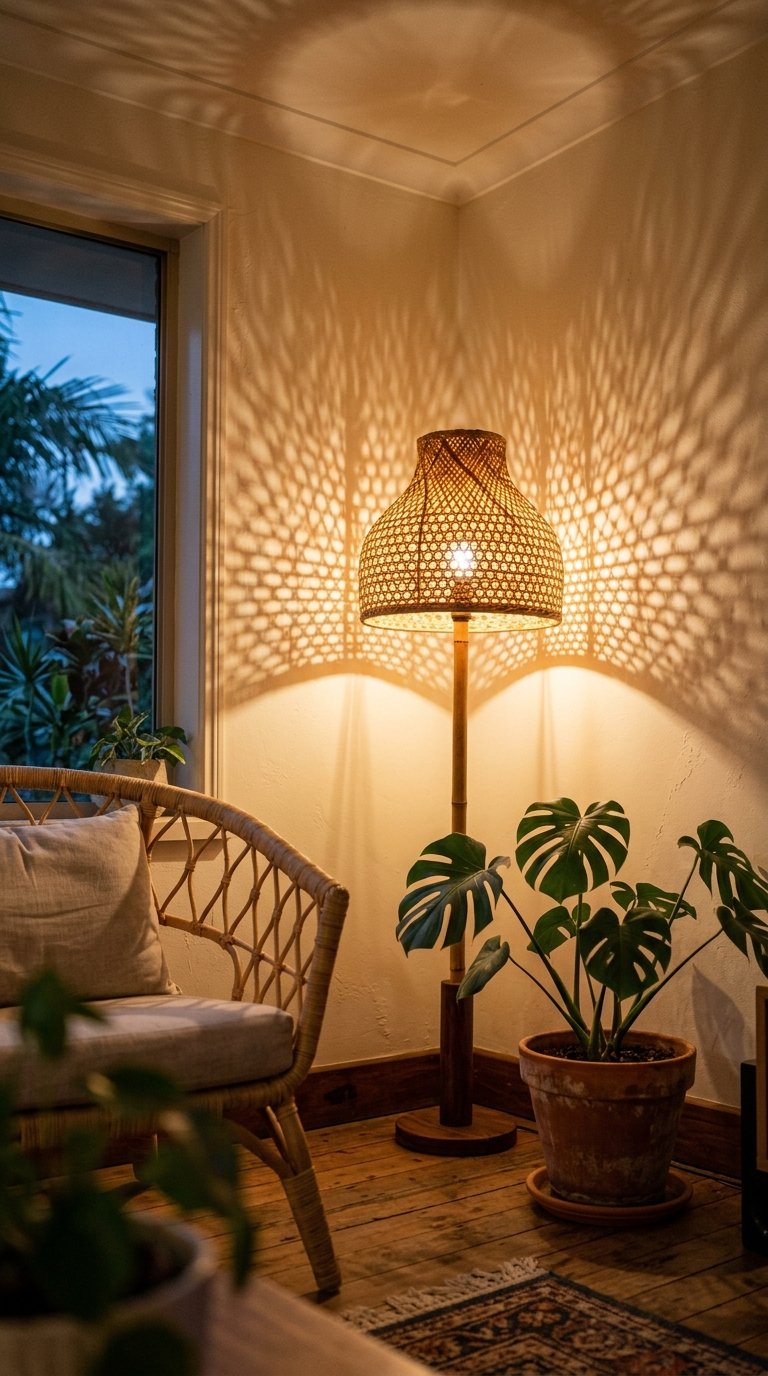
Lighting changes the entire mood of a room, and a bamboo floor lamp or wicker pendant adds both warm light and natural material texture in one move. The woven structure of bamboo or wicker creates dappled shadow patterns on surrounding walls when lit, which mimics the filtered light effect of a tropical canopy. That’s not poetic license; it’s a real visual phenomenon that makes the room feel softer and more immersive after dark.
Look for bamboo floor lamps at IKEA (the KNIXHULT lamp is a reliable option around €30) or check Kleinanzeigen for secondhand wicker pendants. Replace the bulb with a warm 2700K LED and the effect is immediate.
9. Use Terracotta Pots to Ground the Color Palette
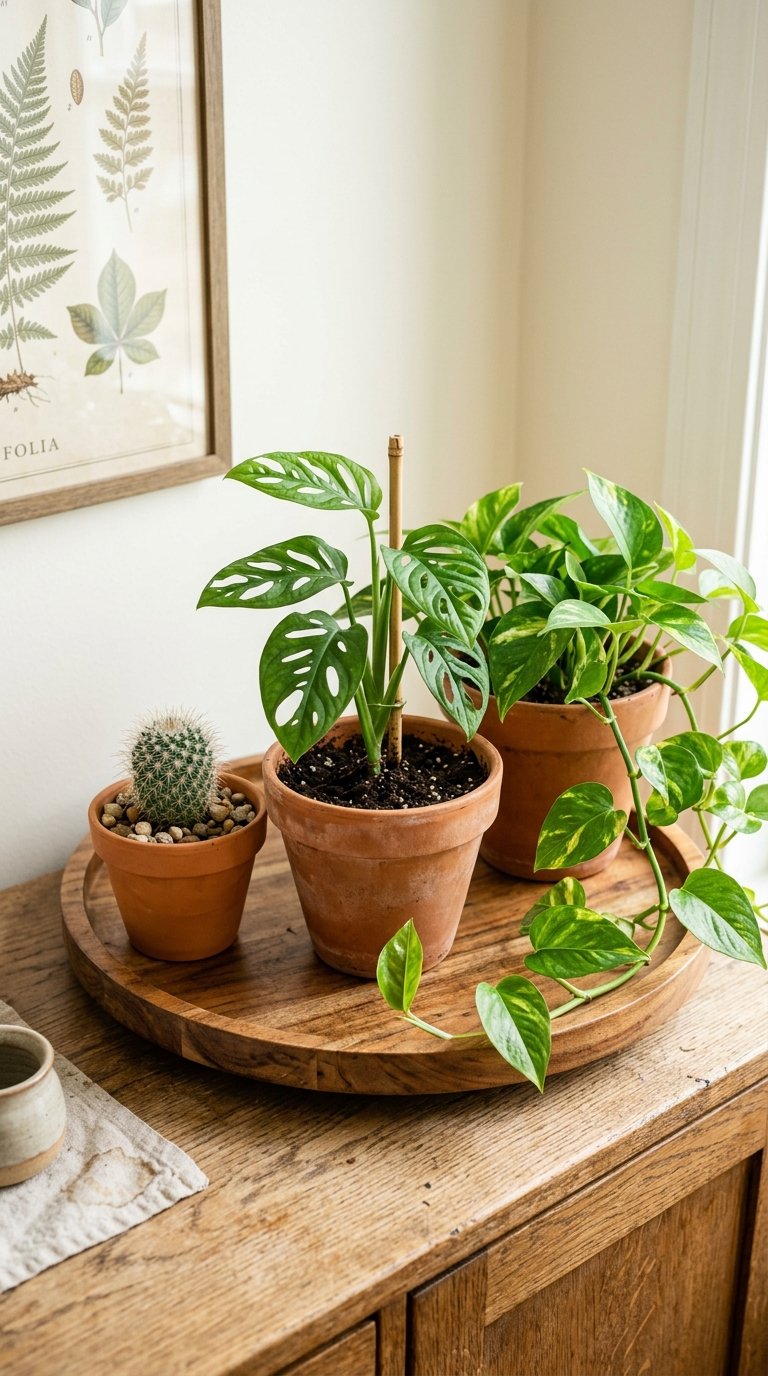
Every strong tropical palette needs a warm earth tone to prevent the greens from reading as cold or clinical. Terracotta pots serve this function while also being genuinely breathable for plant roots, which reduces the risk of root rot compared to glazed ceramic or plastic. A collection of three terracotta pots in graduating sizes costs under €15 at any garden center and looks far more intentional than a mix of random containers.
Cluster them on a tray to contain water drainage and make the group easy to move when you clean. The tray also creates a defined zone, which signals to the eye that the arrangement is purposeful rather than haphazard.
10. Hang Sheer Linen Curtains to Diffuse Light
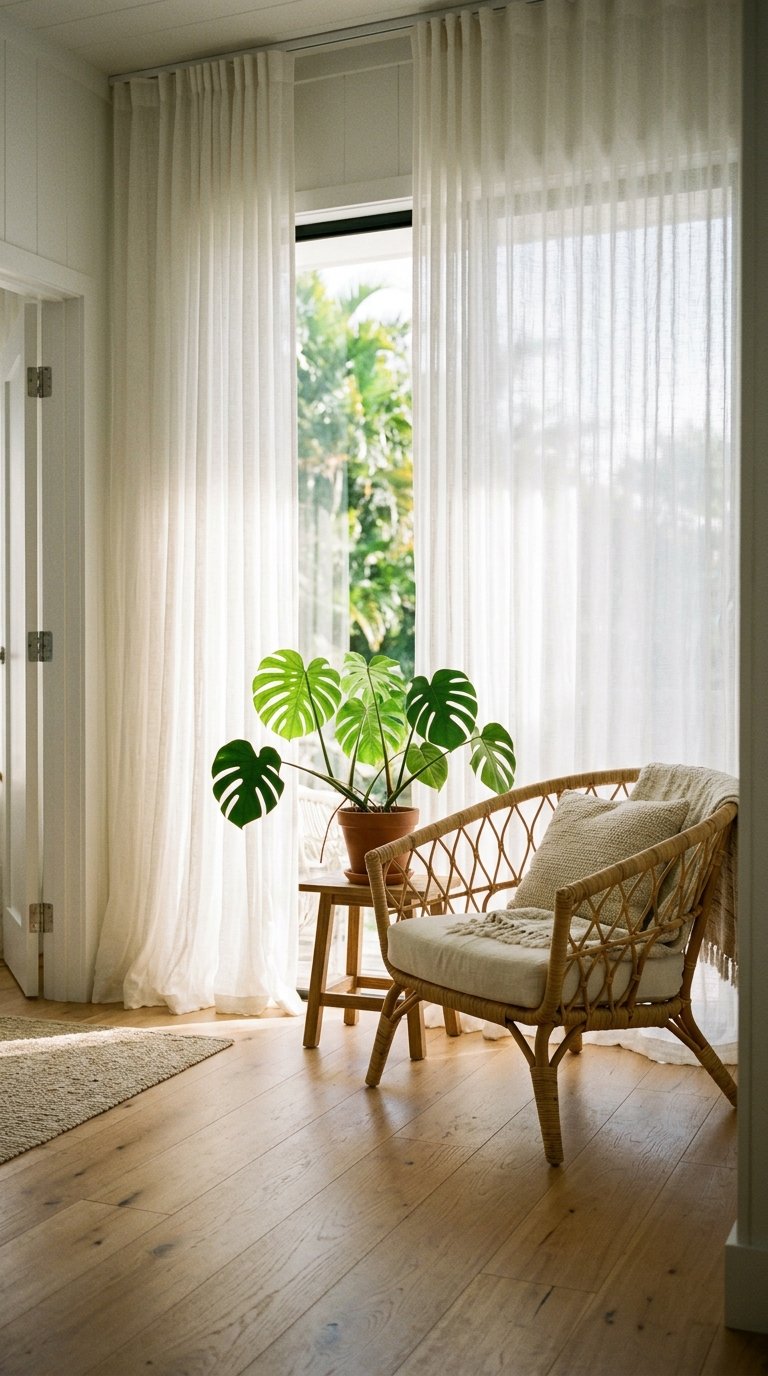
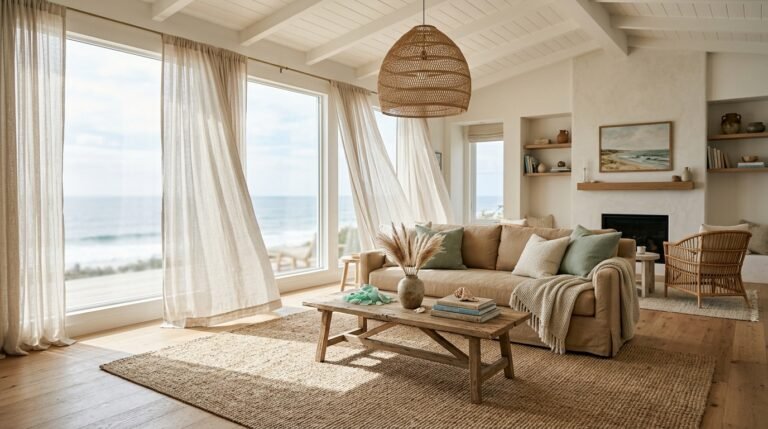
Heavy curtains block light and make a tropical-themed room feel humid and closed rather than airy and open. Sheer white or cream linen panels let natural light filter through in a soft, diffused way that genuinely evokes the brightness of a tropical interior. IKEA’s LILL curtains cost €5 per pair and hang well in double layers for a slightly more substantial look without sacrificing that breezy effect.
The length matters more than most people realize. Curtains that puddle slightly on the floor (roughly 5cm of extra length) look far more expensive and considered than curtains that stop exactly at the sill or hover awkwardly above the floor.
11. Introduce a Statement Monstera Plant
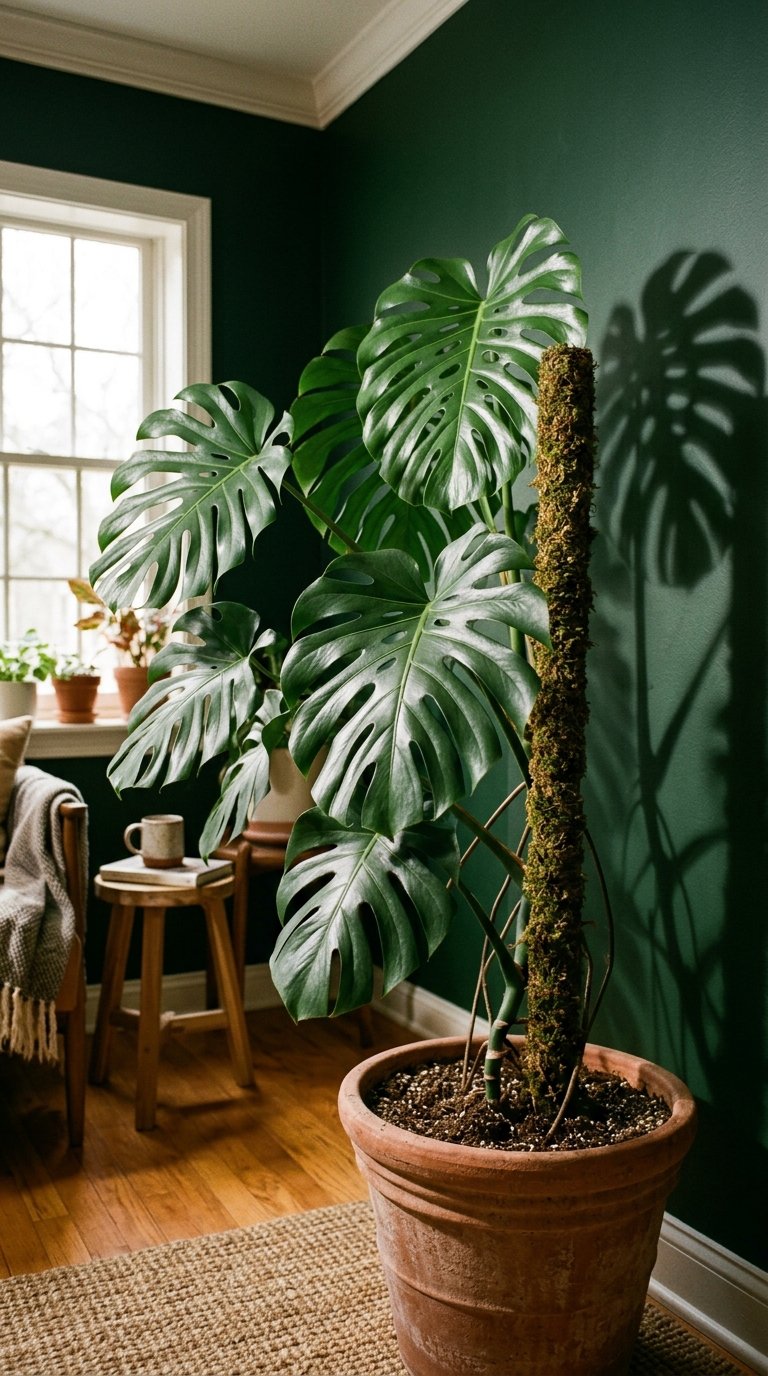
The monstera deliciosa is the single most recognizable tropical plant, and for good reason: its split leaves photograph well, grow quickly with minimal effort, and work in rooms with indirect light. A mature monstera in a decorative terracotta or woven pot becomes a sculptural element, not just a plant. Garden centers in Germany sell healthy monstera specimens starting around €15 for a medium size.
Place it in a corner where it has room to grow outward rather than against a wall where it will lean toward light. Give it a moss pole early so the aerial roots have something to climb, and it will develop into a much more dramatic form over 12 to 18 months.
12. Layer Throw Blankets in Natural Fiber Textures
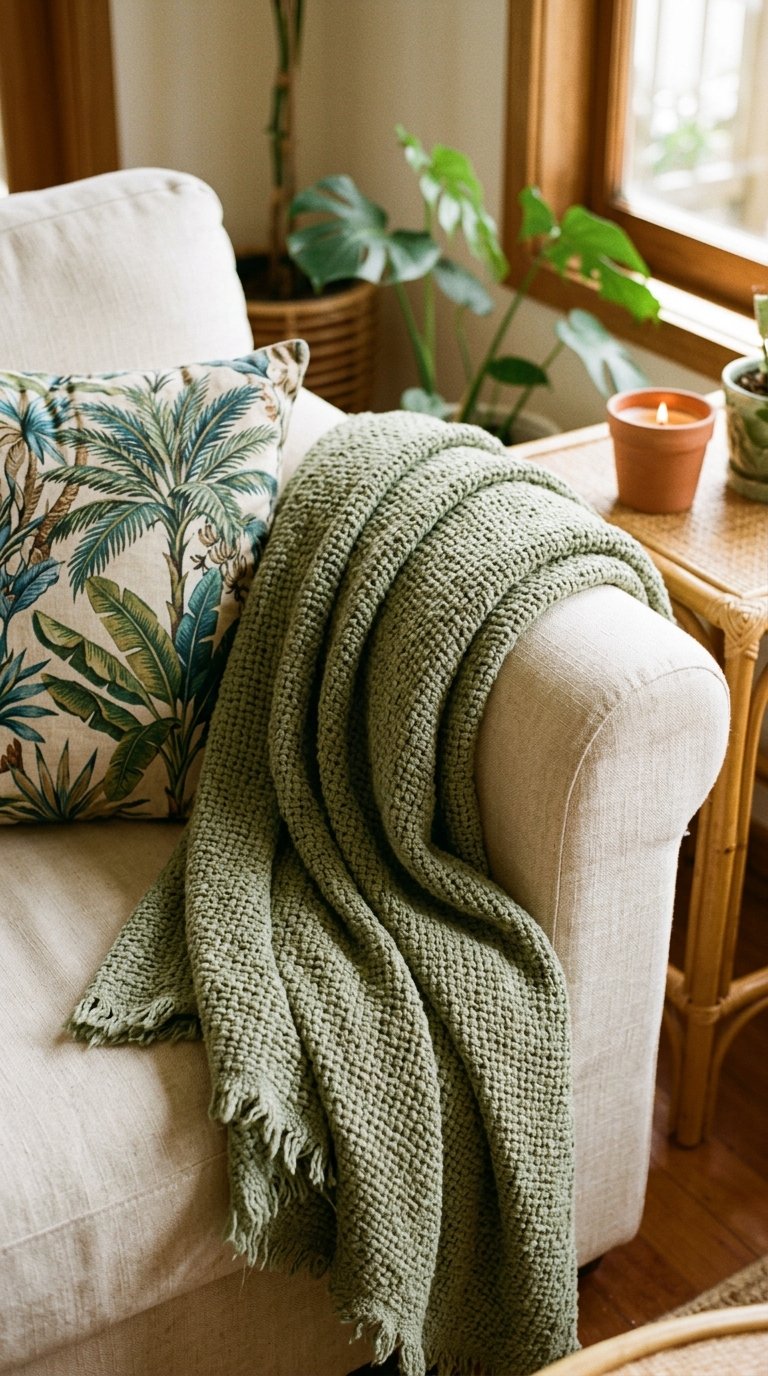
A cotton or linen throw in a warm green, soft yellow, or natural ecru draped over the arm or back of your sofa adds both color and texture in a way that feels lived-in and relaxed. Chunky woven throws from brands like H&M Home or local markets in Frankfurt run €20 to €40 and last years with minimal care. Avoid microfiber throws in tropical schemes; the synthetic sheen reads as cheap against natural materials.
The draping technique matters. A folded throw placed over one arm of the sofa looks intentional. The same throw bunched at one end looks forgotten. Take 20 seconds to fold it in thirds lengthwise before draping it.
13. Style a Tray Table With Tropical Accents
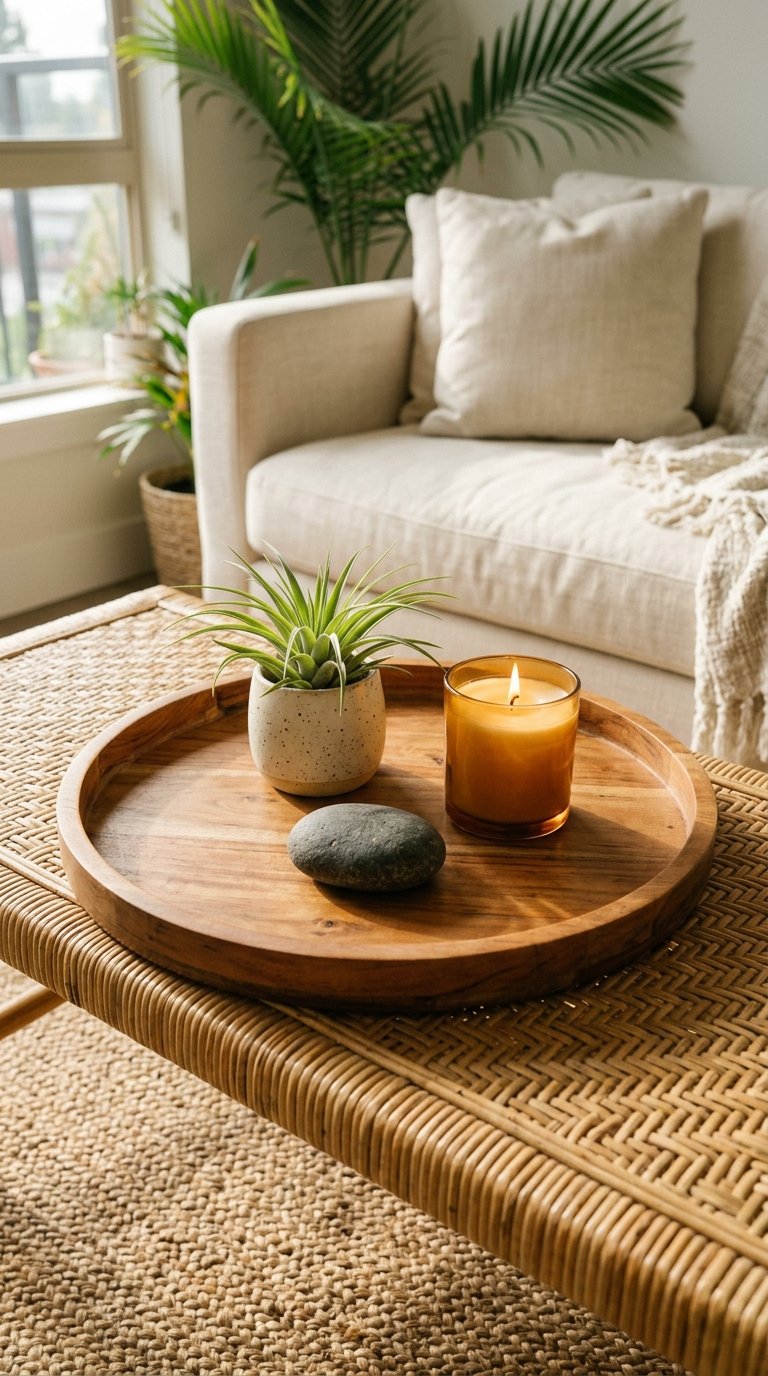
A tray on your coffee table or ottoman gives you a contained, intentional display area that stops the space from looking scattered. Fill it with a small potted succulent or air plant, one decorative object in a natural material like wood or stone, and a candle in a warm tropical scent like coconut, ylang ylang, or sandalwood. Three items maximum per tray; any more and it reads as clutter.
Trays also protect your furniture surface and make cleaning easier since you lift the whole arrangement rather than moving individual objects. That’s a functional win that has nothing to do with aesthetics.
14. Paint Terracotta Pots in Earthy Tones for Cohesion
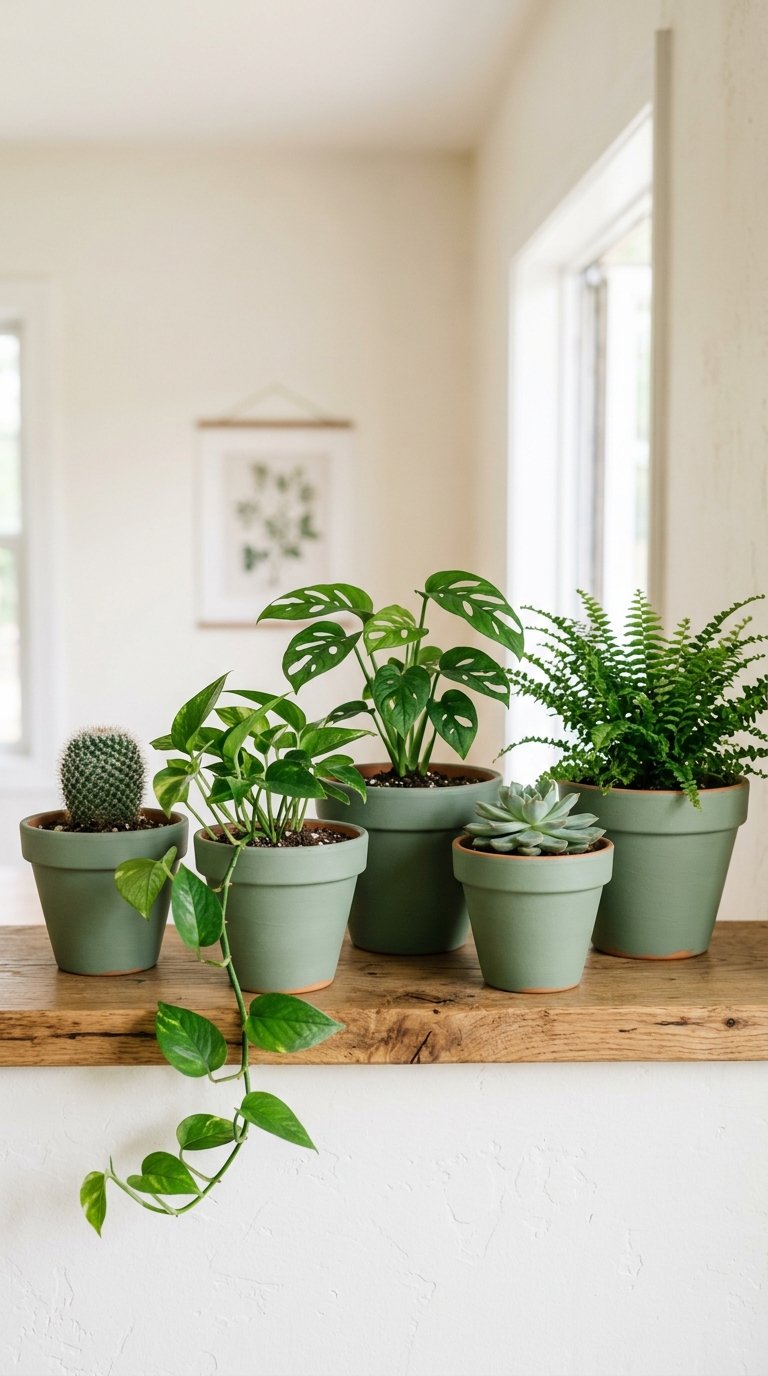
If you have a collection of mismatched pots, a €4 can of matte spray paint in one unified color creates immediate visual cohesion. Choose a terracotta orange, warm white, or sage green and paint all your pots the same shade. The plants inside provide all the variety you need; the pots serve as a neutral container system.
This move costs almost nothing and takes 20 minutes, but the visual impact is significant. A matched set of five pots looks like a deliberate design decision, and a mismatched set of five looks like an accident.
15. Use Mirrors to Amplify Plant Groupings
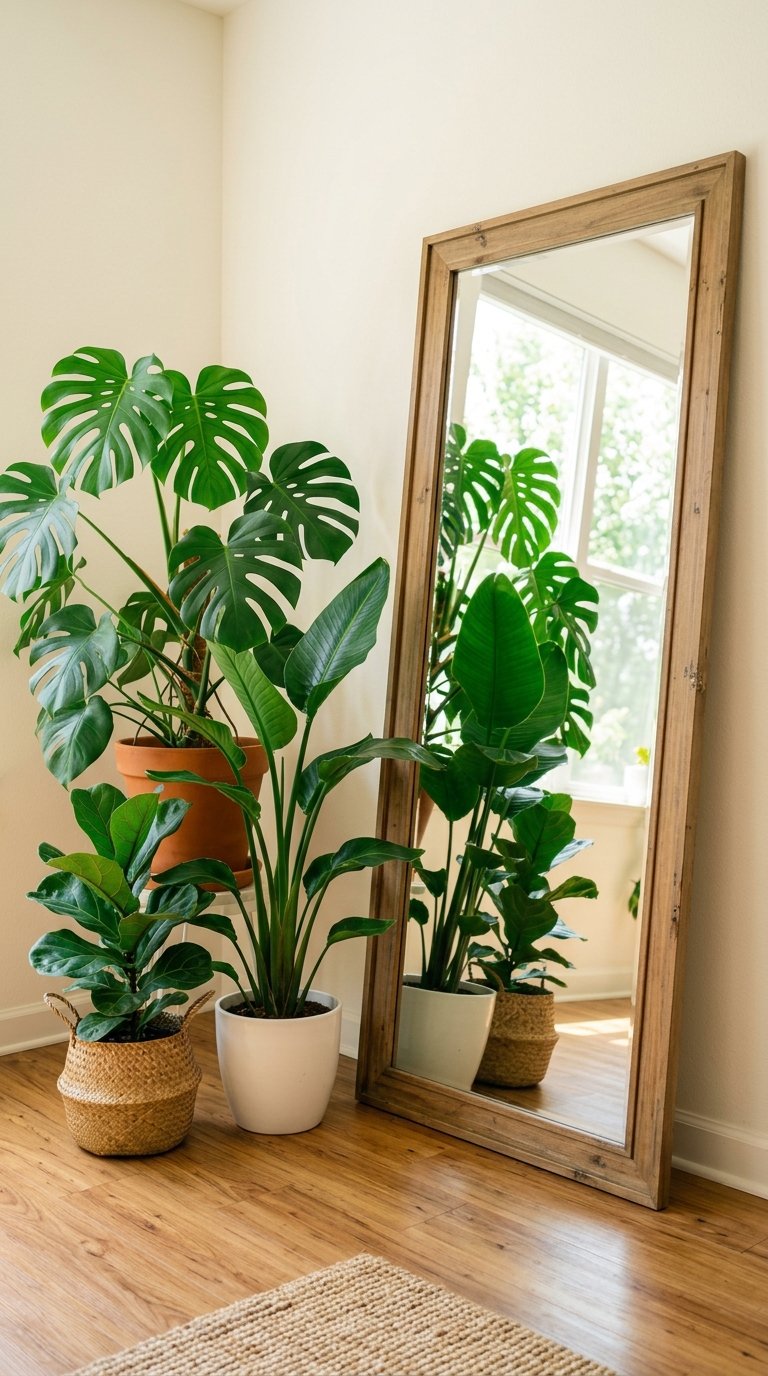
A large mirror placed behind or beside a plant grouping doubles the visual presence of your greenery without adding a single additional plant. It reflects both the plants and the natural light, which makes the corner feel more expansive and lush. IKEA’s NISSEDAL mirror at 65x150cm costs around €80 and leans against a wall without requiring installation, which makes it renter-friendly.
Position the mirror so it reflects the plant group and a window simultaneously. That reflection of daylight is what genuinely opens up a small room.
16. Add a Hammock Chair for Texture and Function
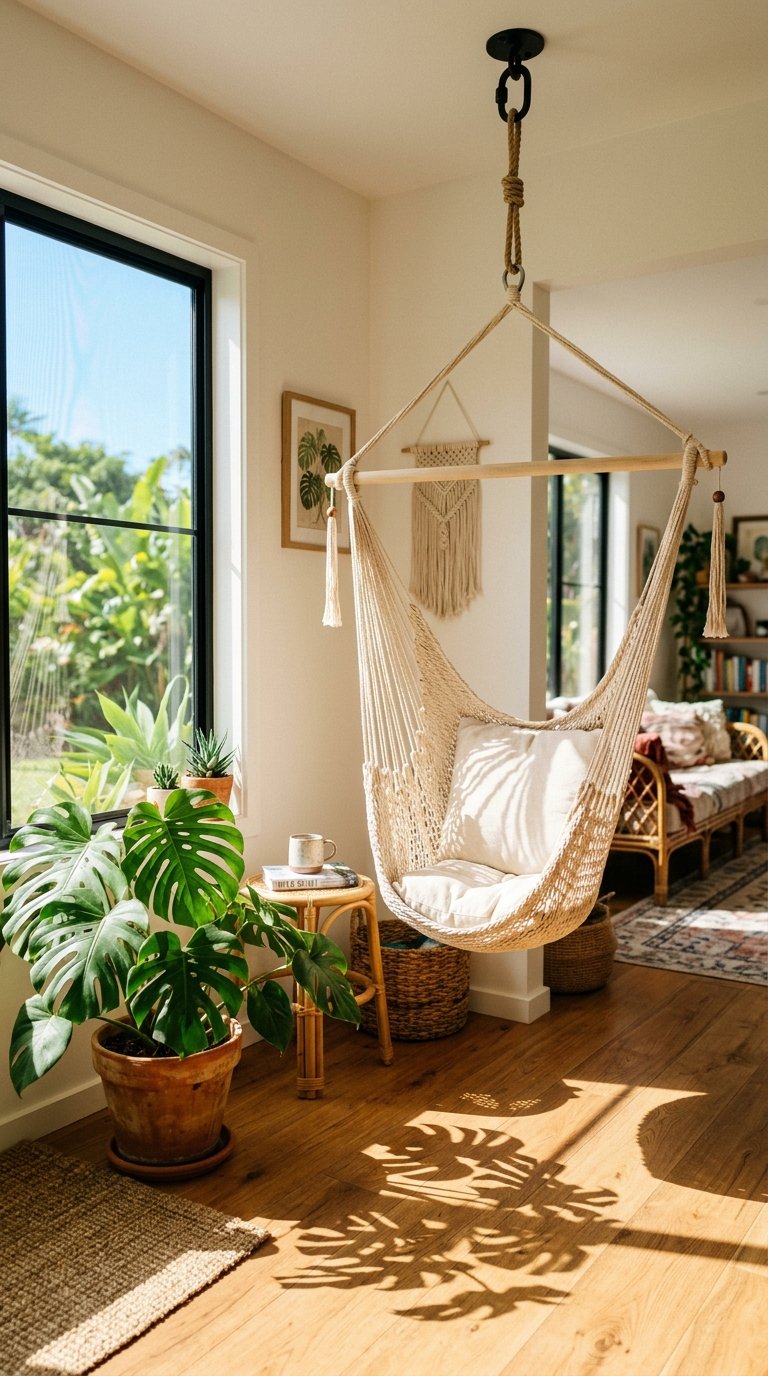
A hanging hammock chair in natural cotton or jute rope adds an unmistakably tropical element while also providing functional seating. If ceiling installation isn’t an option in your rental, freestanding hammock chair stands are available from Amazon or local garden retailers for €40 to €80. One hammock chair in a neutral cream or sage green becomes the visual centerpiece of the room without overwhelming it.
The tactile quality of rope and woven cotton introduces a completely different texture from sofas and rugs, and texture layering is what separates a room that looks designed from one that looks furnished.
17. Choose Wood Accents With Warm Grain
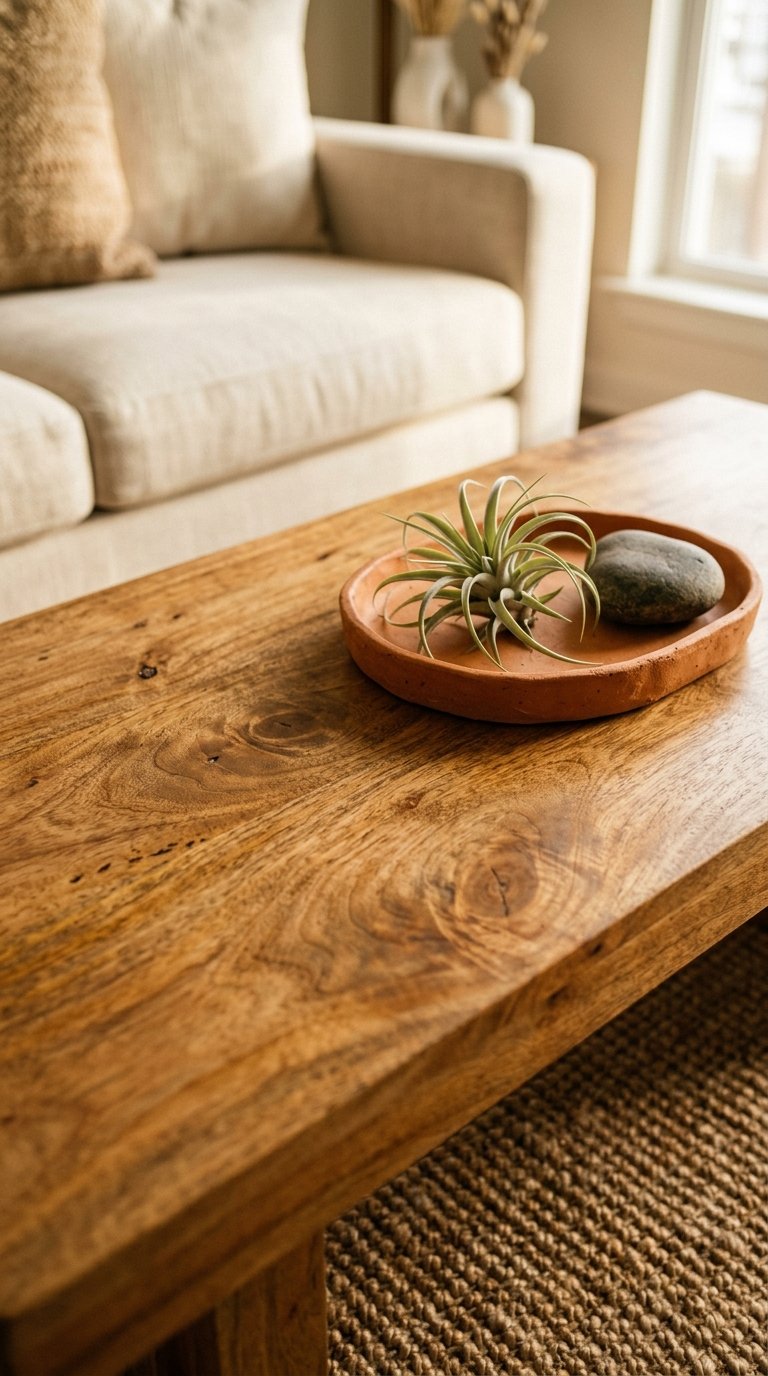
Teak, mango wood, or acacia with visible grain adds the warm, organic quality that tropical interiors rely on. A wooden coffee table, side board, or set of nesting tables with visible knots and grain reads as natural rather than manufactured. JYSK and Westwing both stock solid mango wood furniture at mid-range prices, and secondhand options from Kleinanzeigen often undercut retail by 60 to 70%.
Avoid furniture with cold grey wood finishes in a tropical scheme. Those tones read as Scandinavian minimalism, which is a different and incompatible aesthetic direction.
18. Install Floating Shelves for Plant Display
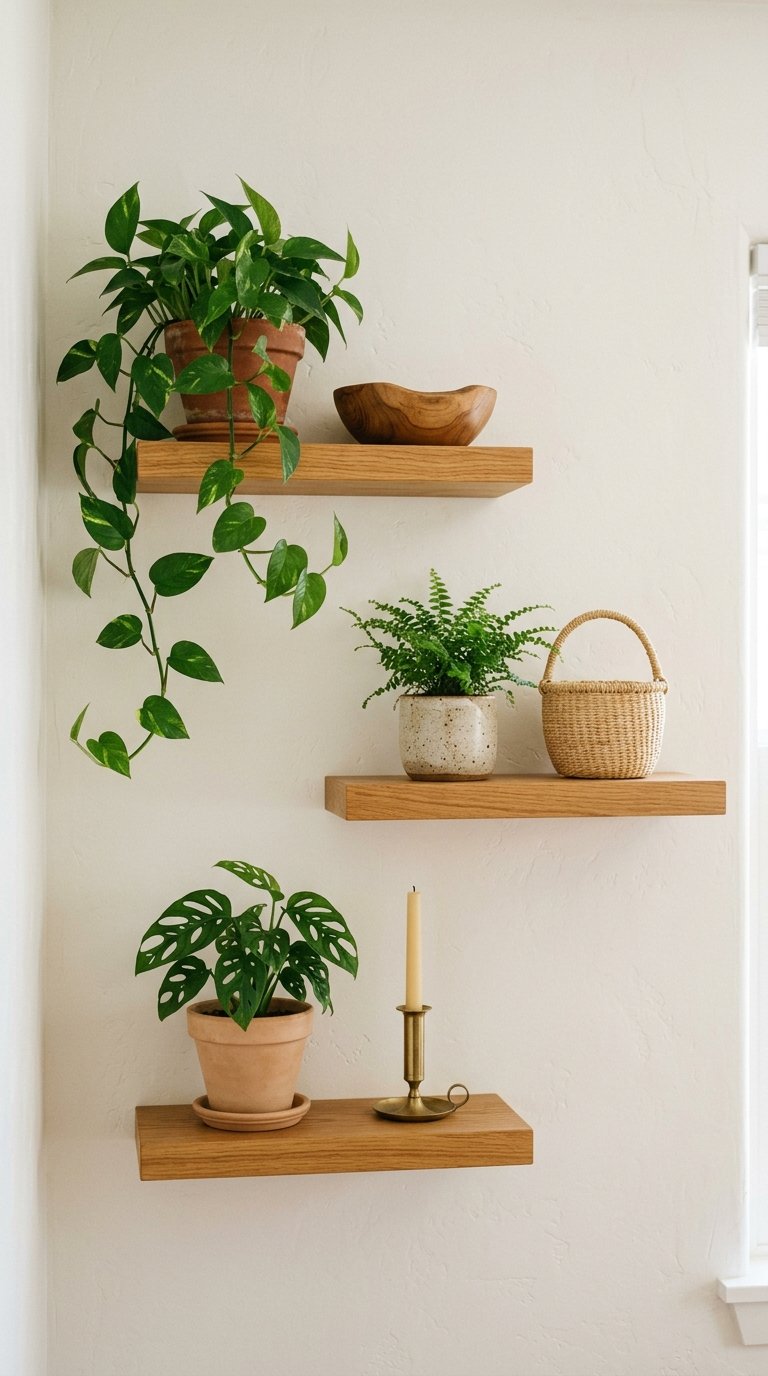
Floating shelves on one wall give you a vertical garden without floor space. Three shelves at different heights staggered across the wall, each holding one or two trailing or compact plants, create a living wall effect that no amount of furniture rearranging achieves. IKEA’s LACK shelves install in under 30 minutes and hold up to 15kg each, more than enough for plants and decorative objects.
Style each shelf with one plant, one non-plant object, and one empty space. That rhythm of plant, object, space prevents the shelves from looking overstuffed and keeps the display readable from across the room.
19. Swap Metal Hardware for Brass or Bamboo
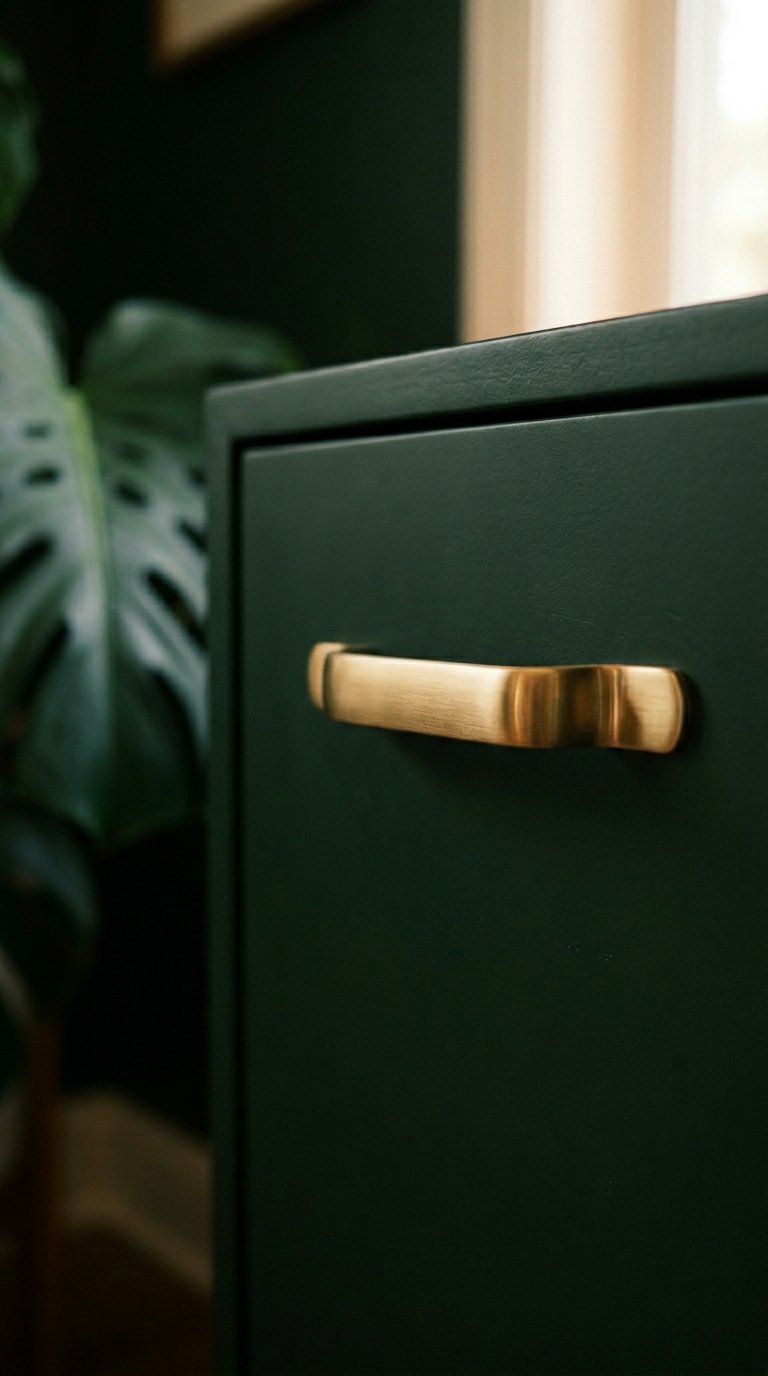
Cabinet handles, curtain rods, and light switch covers are small details that most people never update, but swapping chrome or nickel hardware for brushed brass or bamboo handles immediately warms up a space. Brass reads as tropical and vintage simultaneously, and a full set of replacement handles for a media unit or sideboard costs under €30 from Amazon or local hardware stores.
This is the kind of detail that visitors notice subconsciously. They might not say “your brass handles look great,” but they will say “this room feels warm and intentional,” which is the actual goal.
20. Choose Art With Botanical or Wildlife Subjects
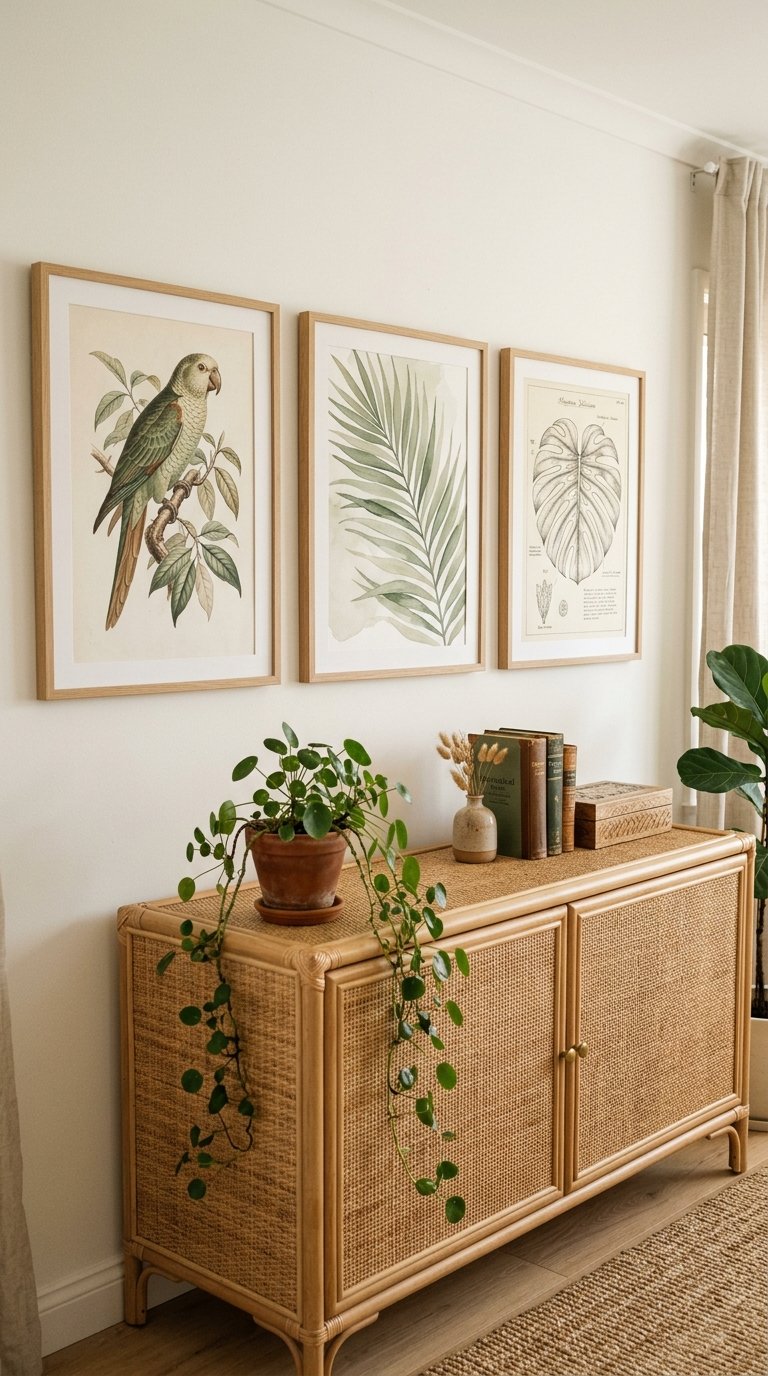
Botanical illustration prints, vintage bird prints, and watercolor tropical landscapes all reinforce the living room theme with visual storytelling rather than decorative objects. Sites like Society6, Desenio, and Posterlounge sell high-quality digital art prints starting at €10, and printing locally at a Frankfurt copy shop for large format often costs less than shipping.
Stick to a cohesive color palette across two or three prints rather than mixing every color in the tropical spectrum. Two botanical prints in muted greens and cream look sophisticated; five prints in five different color families look chaotic.
21. Use Coconut Shell or Teak Wood Bowls as Centerpieces
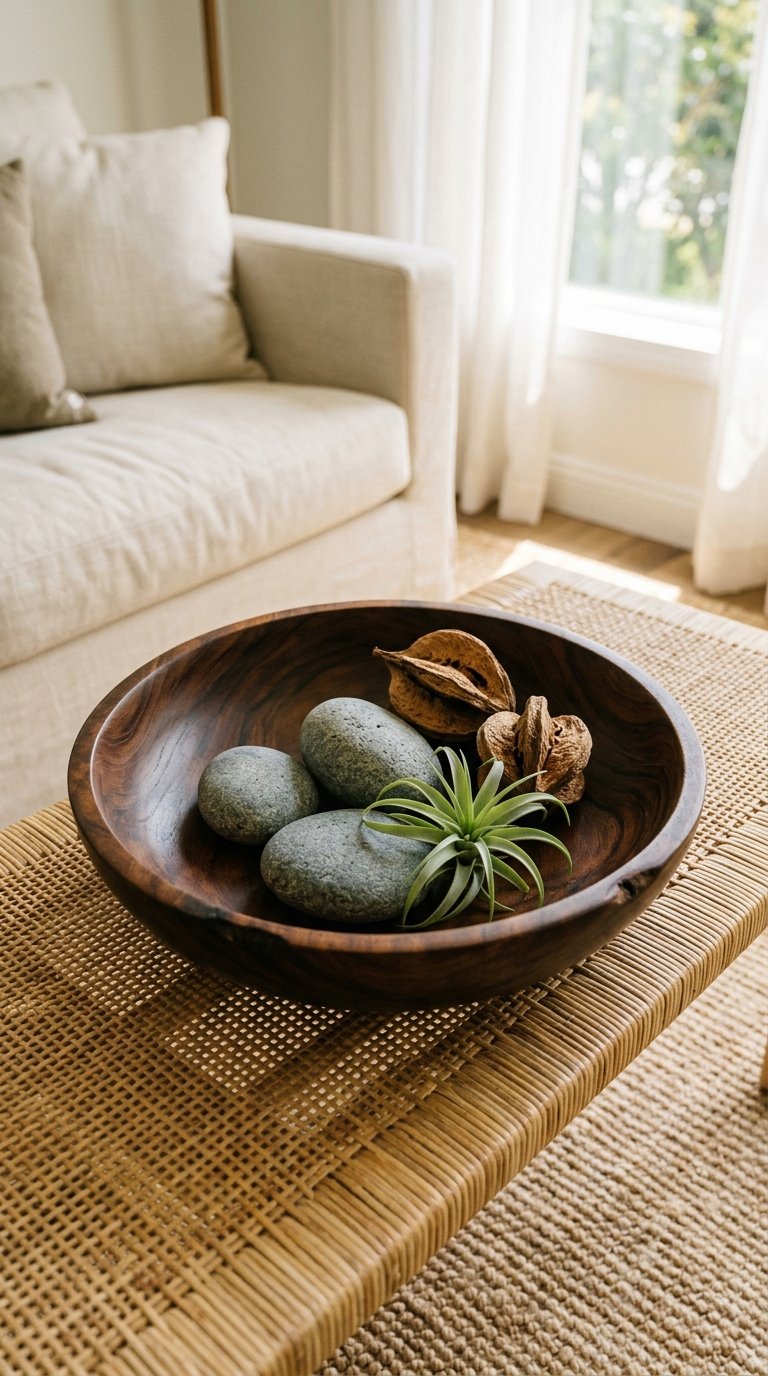
A large coconut shell bowl or teak wood bowl on your coffee table or dining surface serves as a sculptural centerpiece that costs between €10 and €25 at import shops or online. Fill it with smooth river stones, dried tropical seed pods, or air plants rather than fruit or artificial items. This keeps the display low-maintenance and visually consistent through all seasons.
The bowl grounds the table and gives the eye a focal point, which prevents the surface from looking like a random collection of items placed there out of necessity.
22. Layer Outdoor Fabrics for Durability and Style
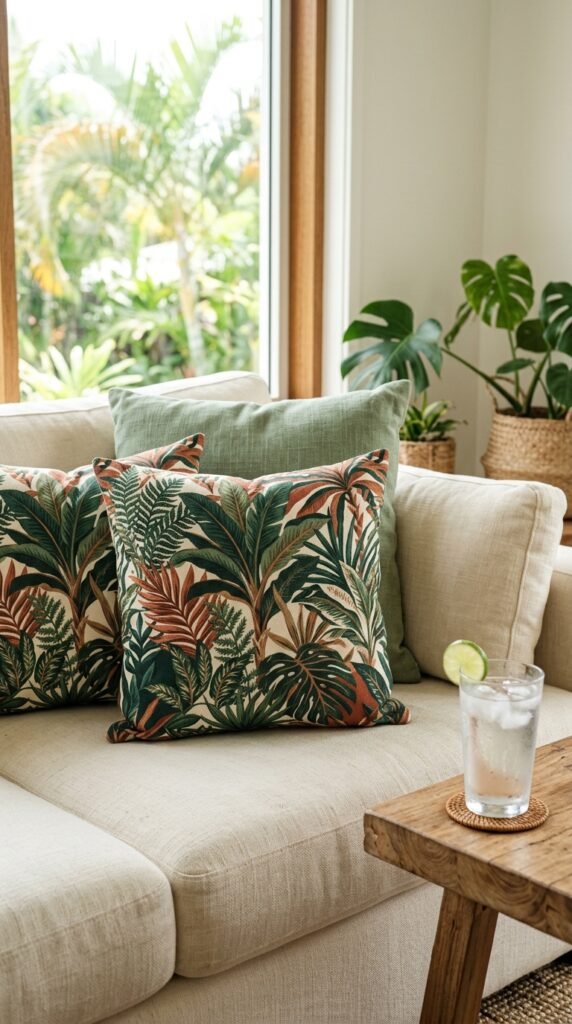
Performance outdoor fabrics in tropical prints are now genuinely stylish, and they’re dramatically more durable than standard upholstery fabric in high-traffic living rooms. Brands like Sunbrella make cushion covers in bold botanical prints that resist spills, fading, and wear far better than cotton or linen equivalents. For families with kids or pets, this is a practical decision that doesn’t require you to sacrifice the aesthetic.
You get the tropical look without the anxiety of a white linen cushion sitting two feet from a toddler with a mango smoothie. FYI, that’s a scenario worth planning for in advance.
23. Create a Corner Vignette With Three Key Elements
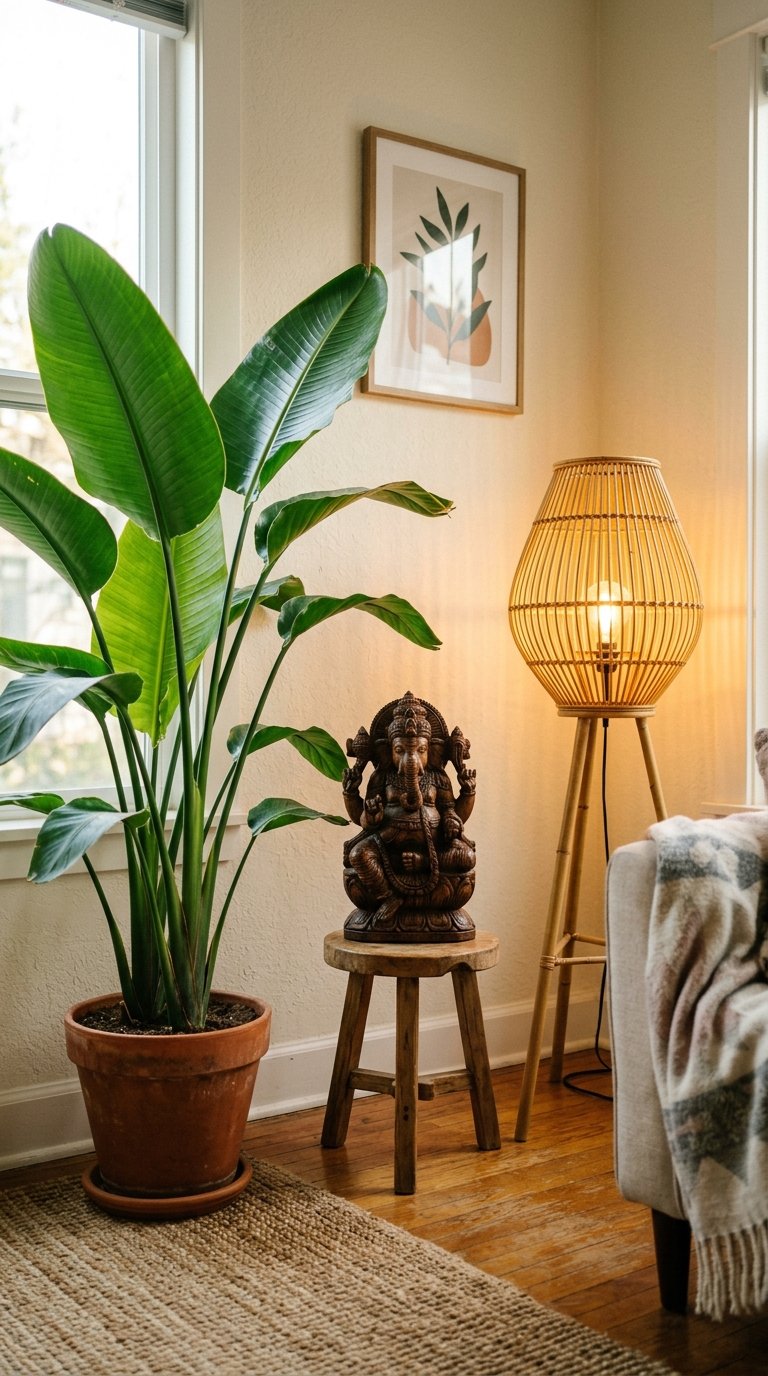
The most reliable finishing move in any tropical living room is a dedicated corner vignette: one tall plant, one natural material lamp, and one decorative object at a third height between the two. This three-point arrangement creates a complete mini-scene that anchors the corner and makes the room feel finished rather than in-progress. It’s the interior design equivalent of punctuation at the end of a sentence.
Every element does a different job: the plant adds life and height, the lamp adds warm light and texture, and the object (a woven basket, carved wooden figure, or ceramic pot) adds personality. Together they make a corner that would otherwise be wasted space into the most photographed part of your living room.
Final Thoughts
Transforming your living room into a tropical oasis doesn’t require a renovation budget or a complete furniture replacement. IMO, the most impactful changes are always the most specific ones: a single oversized botanical print, a secondhand rattan chair, three plants grouped by height, and one natural fiber rug do more than a cart full of random tropical accessories ever will. Each of the 23 ideas above solves a real problem, whether that’s a blank corner, a cold color palette, a rental restriction, or a tight budget. Pick three that match your current situation and start there. Your room doesn’t need to look like every idea at once; it needs to look like a thoughtful version of yours. 🙂