21 Summer Dining Table Ideas to Wow Your Guests Now
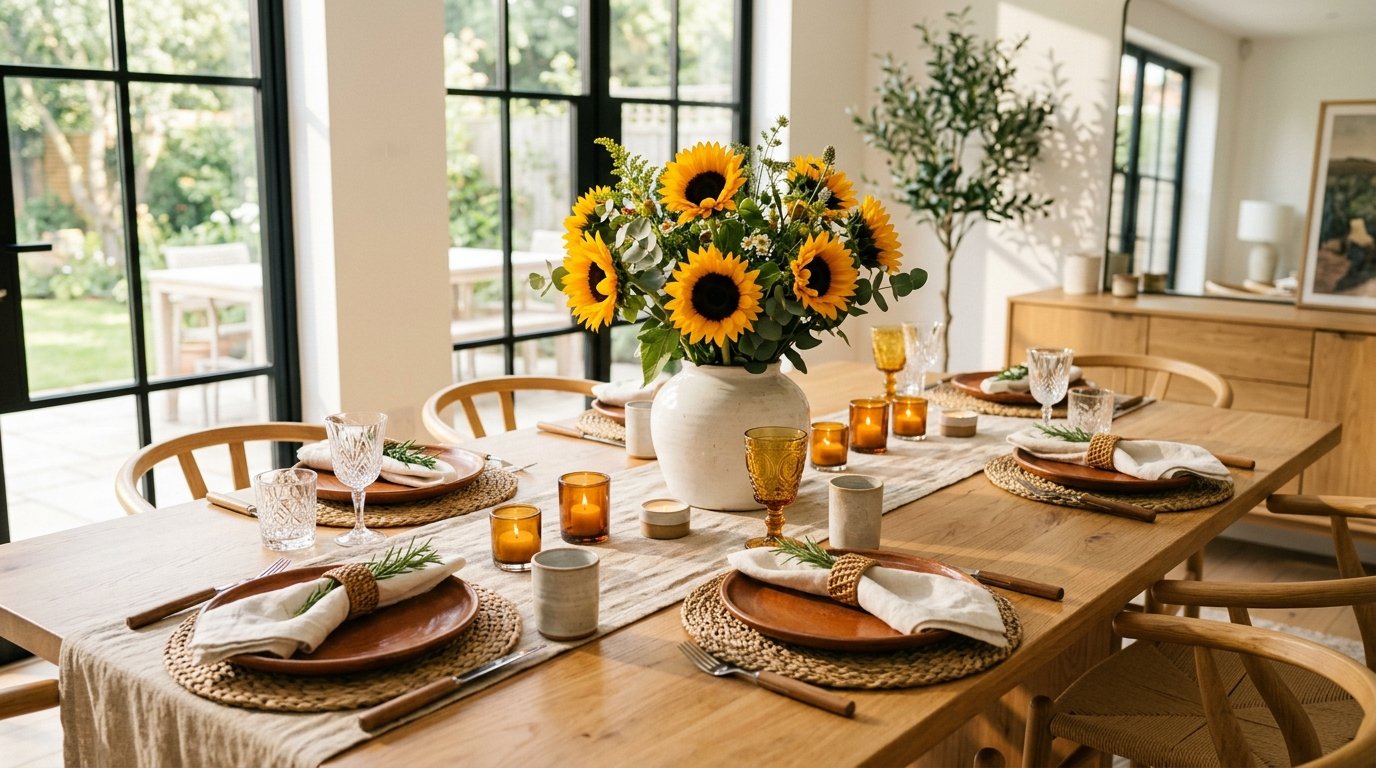
Your dining table sits at the center of every meal, every gathering, and every conversation your home hosts this summer. Most people set it once and forget it exists as a design surface until a guest is coming over, at which point they panic and shove a candle in the middle. You deserve better than that, and so do your guests. These 21 summer dining table decor ideas give you specific products, exact price points, and the decisions that turn an ordinary table into the room’s best feature all season long.
1. Center a Fresh Sunflower Arrangement in a Wide Ceramic Vase
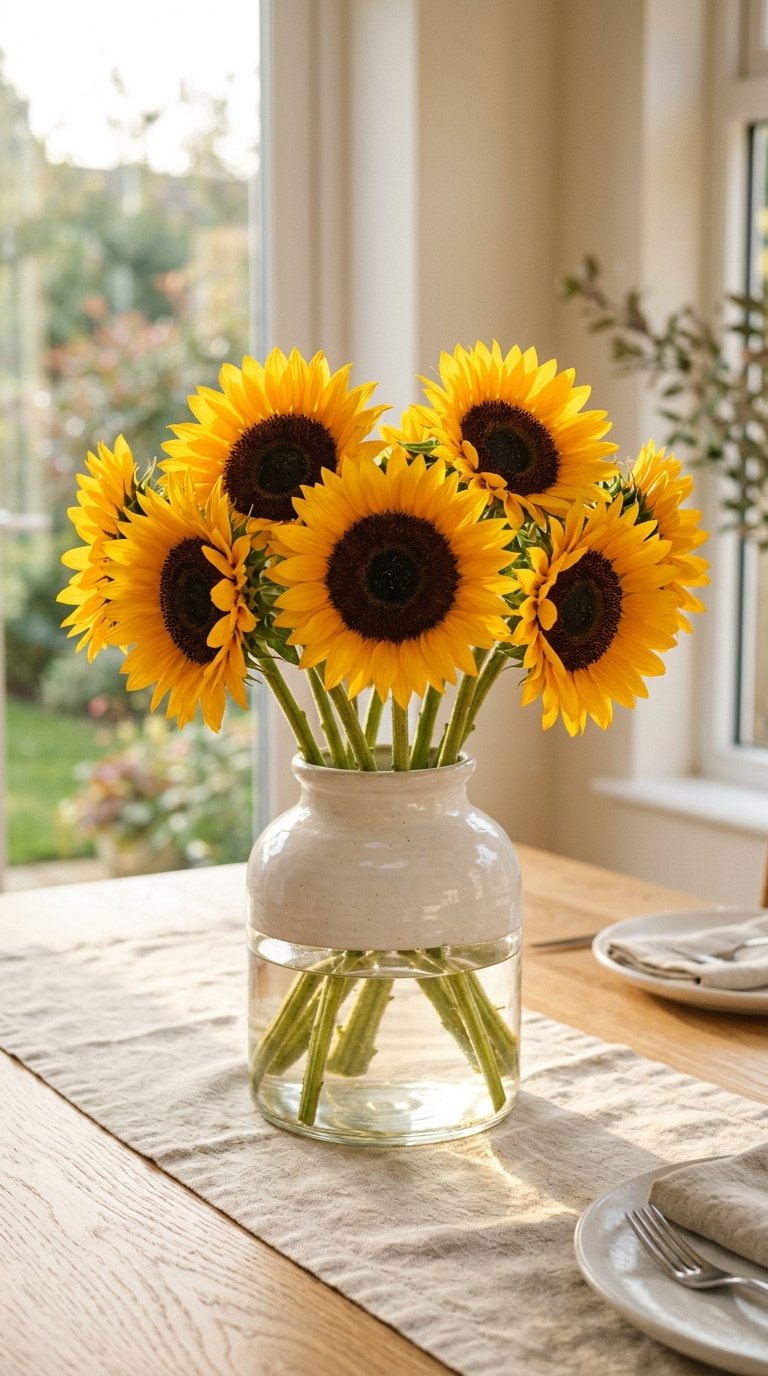
A fresh flower centerpiece on a summer dining table communicates more about a home’s seasonal intention than any other single decor decision. Sunflowers work better than roses or lilies for summer dining tables because their scale, warm yellow tone, and upright stem structure read as confident and season-specific rather than generic. A bunch of five to seven sunflowers from Trader Joe’s or a local farmers market costs $8 to $12 and lasts seven to ten days in a wide-mouth white ceramic vase with fresh water changed every two days.
Choose a vase with a mouth diameter of 4 to 6 inches so the stems cluster naturally without splaying outward past the vase rim. Trim each stem by one inch at a 45-degree angle before placing them in water to maximize water uptake and extend the arrangement’s life by two to three days. A sunflower arrangement on a dining table in July costs less than a single decorative object and does more for the room’s summer atmosphere than anything else at the same price point.
2. Lay a Natural Linen Table Runner Down the Center
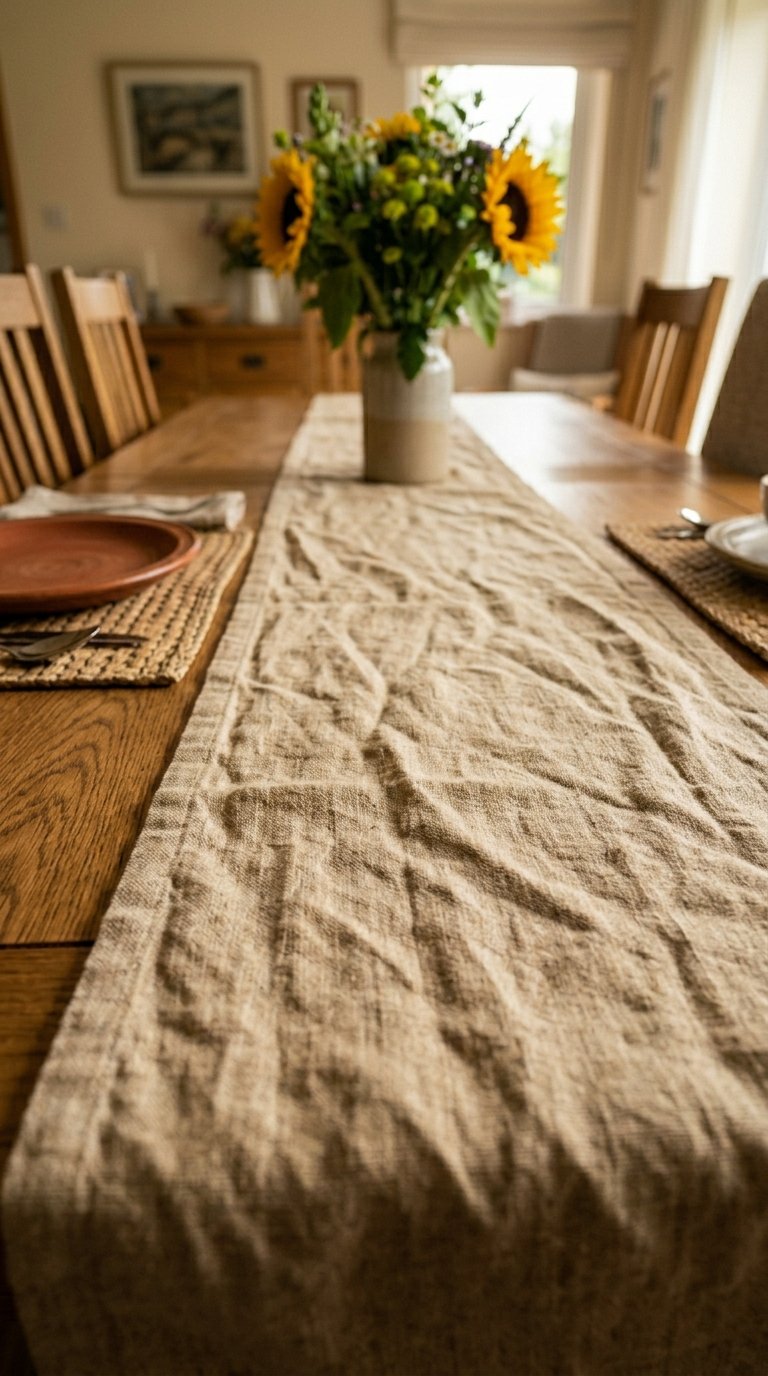
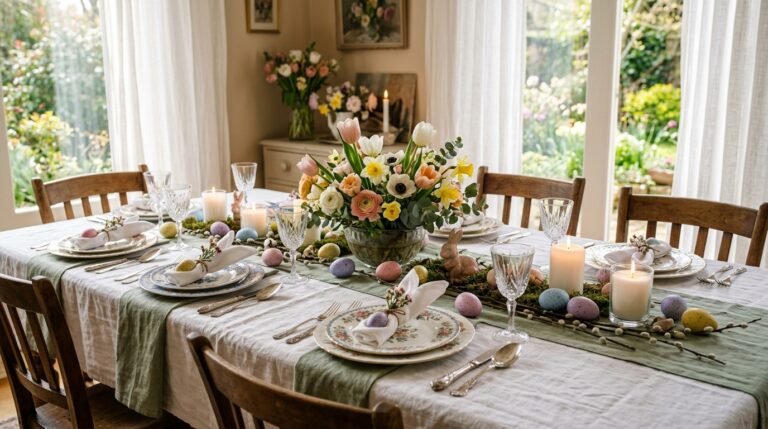
A bare dining table surface reads as unfinished regardless of how well the rest of the room works. A natural linen table runner in warm white, sand, or a subtle coastal stripe adds a textile layer that grounds the centerpiece, protects the table surface, and gives every place setting a visual frame. Amazon’s Solino Home pure linen table runner in natural costs $18.99 to $24.99 in sizes from 72 to 120 inches to suit four-seat to eight-seat dining tables.
Lay the runner off-center by 2 to 3 inches rather than perfectly centered down the table length. The slight asymmetry reads as casually intentional rather than ruler-measured, which is precisely the relaxed quality summer dining table decor requires. A linen runner wrinkles naturally and those wrinkles are a feature, not a flaw. The organic fabric creases communicate genuine material quality in a way a perfectly pressed polyester runner never achieves.
3. Use Mismatched Vintage Glassware for a Casual Summer Table
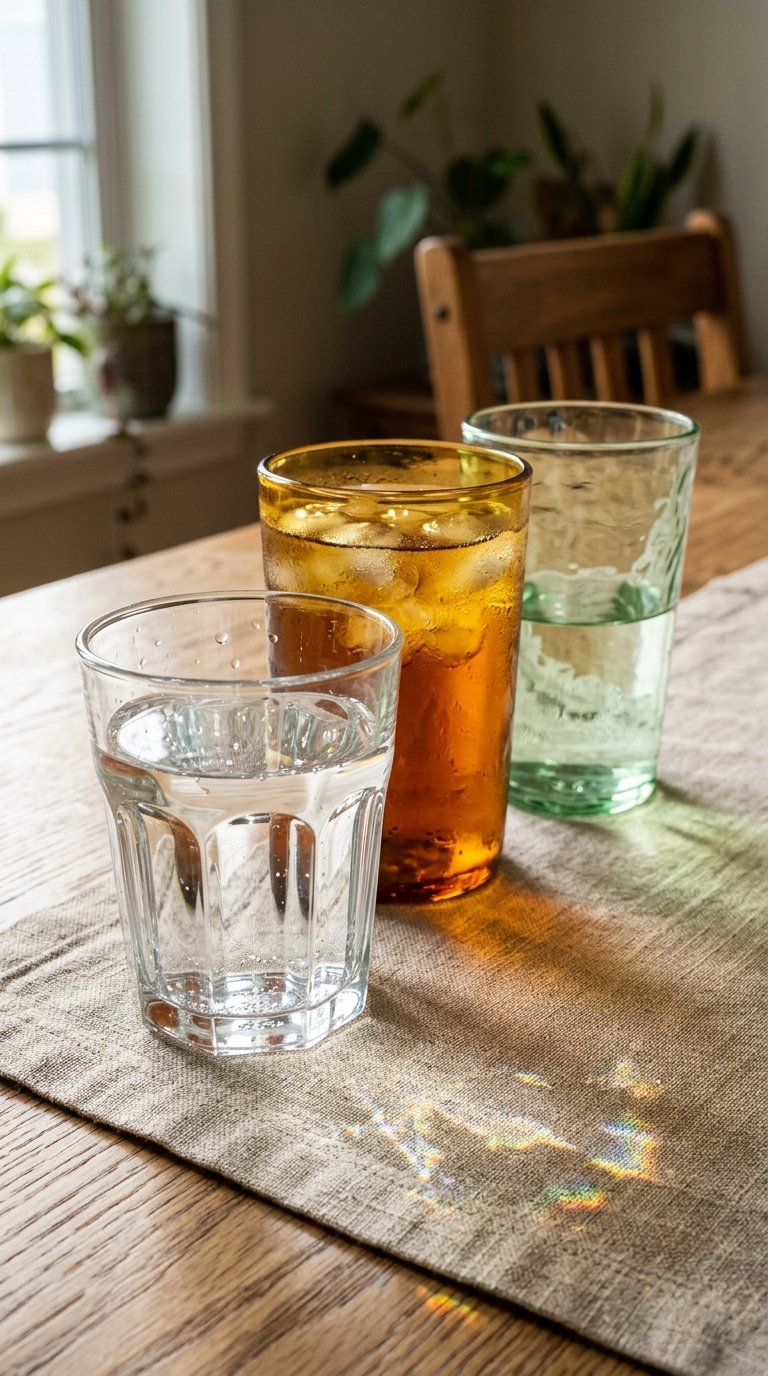
Matching glassware sets read as formal. Mismatched vintage glasses in clear, amber, and green tones read as a curated collection and make a summer dining table feel like a gathering rather than a catered event. eBay, Etsy, and local thrift stores stock vintage drinking glasses in sets of four to six from $12 to $35 total, and the variety of heights, weights, and tones across the set creates an organic, assembled-over-time quality no retail set replicates.
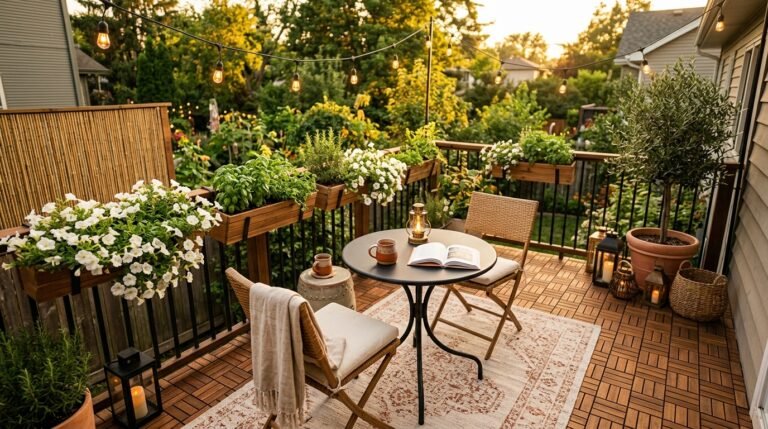
Use clear glasses for water, amber for iced tea or lemonade, and one green or blue glass per setting as the wildcard that ties the table’s color palette together. The rule for mismatched glassware is consistency in one quality: keep all glasses at a similar height so the table reads as a cohesive collection rather than a random assortment. Height consistency with material and color variety reads as curated. Complete randomness reads as a thrift store shelf.
4. Set Out Linen Napkins in a Natural or Coastal Tone
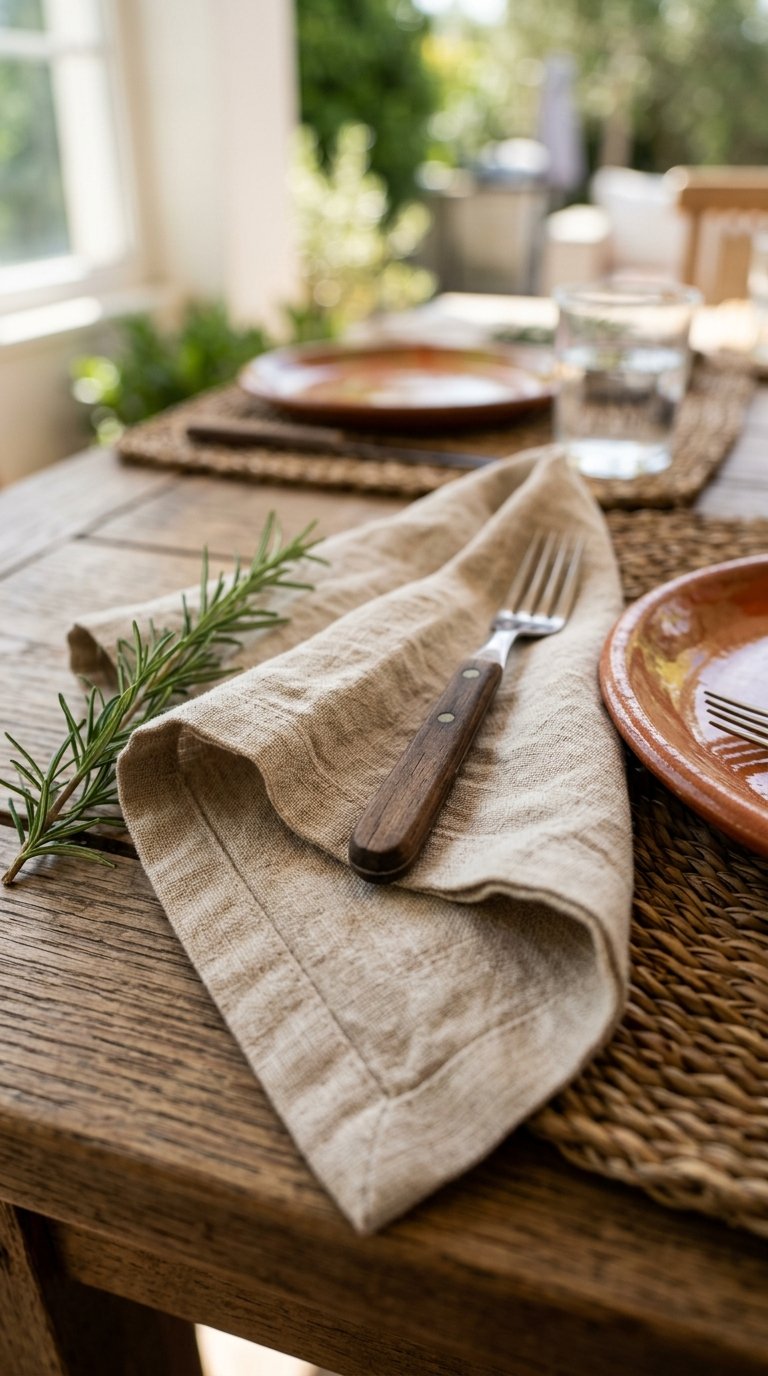
Paper napkins communicate that the meal is temporary and the host did not think the table worth dressing. Linen napkins in a natural, coastal blue, or warm sand tone communicate the opposite at a cost difference of almost nothing. Amazon’s LinenMe pure linen napkins in a set of four cost $22 to $28 in sizes of 16×16 inches that fold into a generous napkin for a full dinner setting without looking undersized.
Fold each napkin into a loose rectangle and place it beneath the fork rather than in a structured fold on the plate. The loose fold reads as relaxed summer hospitality. An elaborate napkin origami fold reads as a hotel banquet, which is the wrong energy for a summer dining table in a real home. Wash linen napkins in cold water and line dry them to preserve the fabric’s natural texture and prevent the stiffness that a hot dryer cycle introduces.
5. Add a Low Pillar Candle Cluster at the Table Center
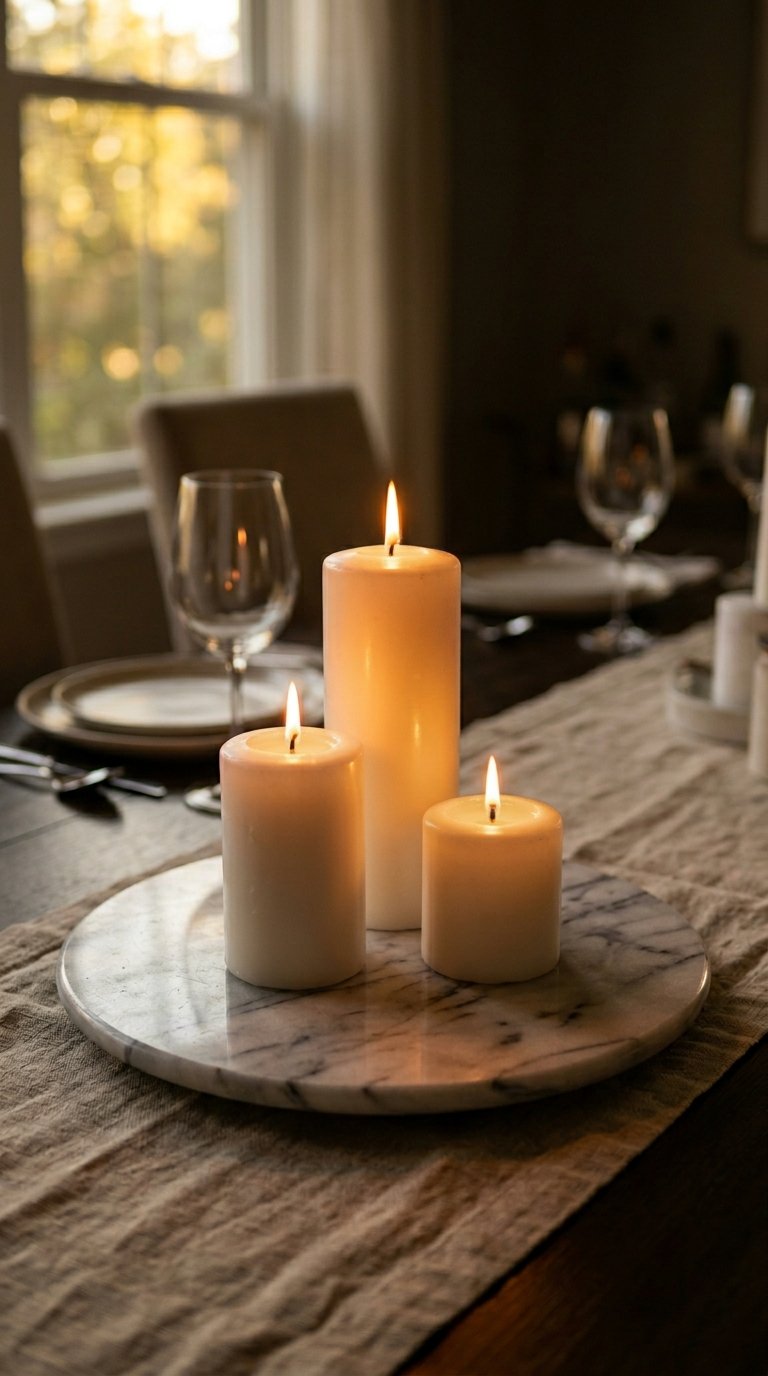
Two or three pillar candles in graduated heights grouped at the table center add warm ambient light to summer evening dining without the formality of a candelabra or the safety concern of tall taper candles near guests reaching across the table. Amazon’s DW Home pillar candles in warm white or sand tone cost $8.99 to $14.99 each in heights of 3, 4, and 6 inches. Group all three on a round marble or natural wood tray at $18 to $28 from Amazon to contain any wax drips and unify the cluster visually.
Keep pillar candles trimmed to a quarter-inch wick before each lighting to prevent smoking and extend burn time. A three-candle cluster at three heights on a 10-inch round tray reads as a designed centerpiece feature. Three candles at identical heights read as product display. The height variation is the single design decision that separates a styled candle cluster from a collection of candles placed on a tray.
6. Place a Wooden or Marble Serving Board as a Table Anchor
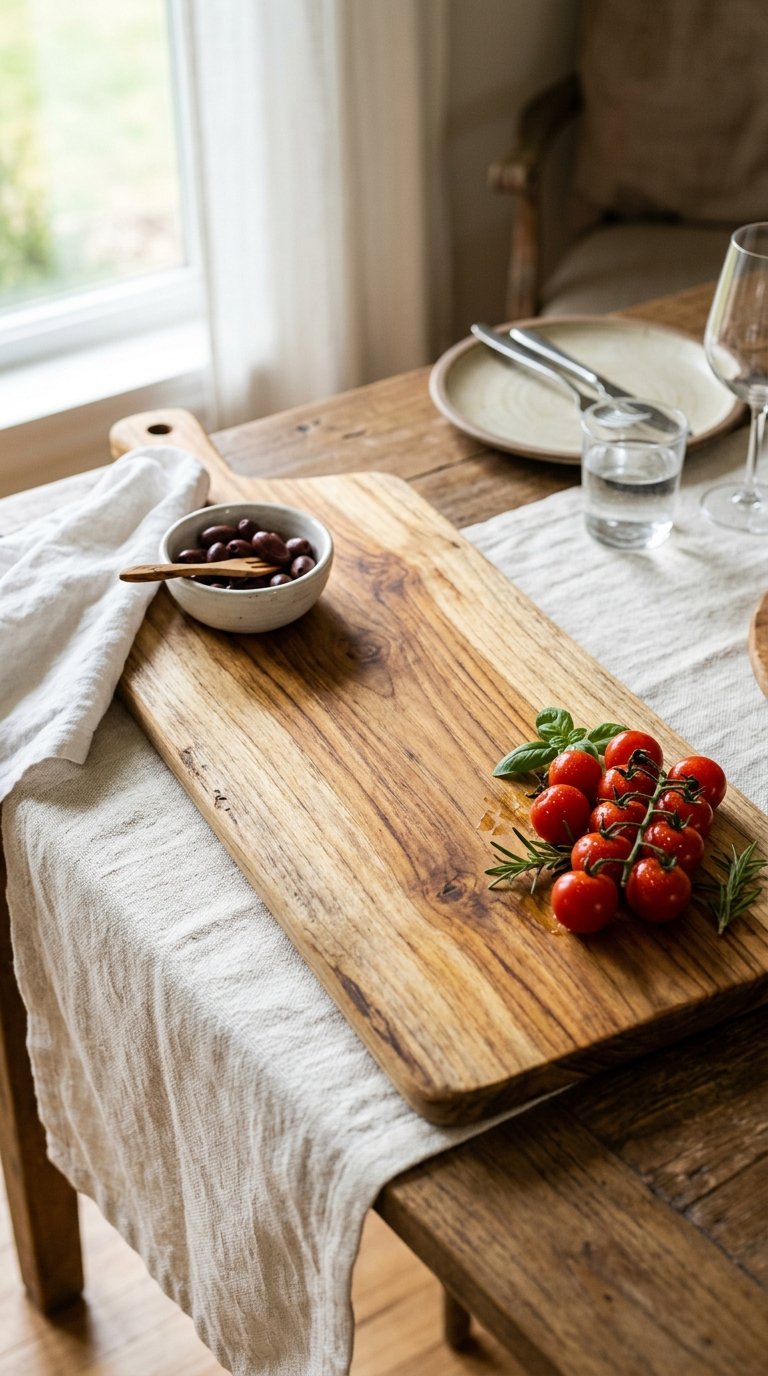
A large natural wood or marble serving board at the center of the dining table serves as both a functional serving surface during the meal and a styled anchor for the table’s decor arrangement before and after. West Elm’s acacia wood serving board at $39 to $59 measures 18 to 24 inches long and develops a natural patina with use that makes it look better in September than it did in June.
Style the board before the meal with a small olive bowl, a cluster of cherry tomatoes, and a folded linen cloth draped over one corner. During the meal, use it as a cheese board, a bread board, or a shared appetizer surface. The wooden board earns its place on the summer dining table because it works as decor and function simultaneously, which is the highest standard any dining table object achieves. A purely decorative object on a dining table always loses to a functional one at the same visual quality.
7. Scatter Fresh Herbs as Natural Table Decor
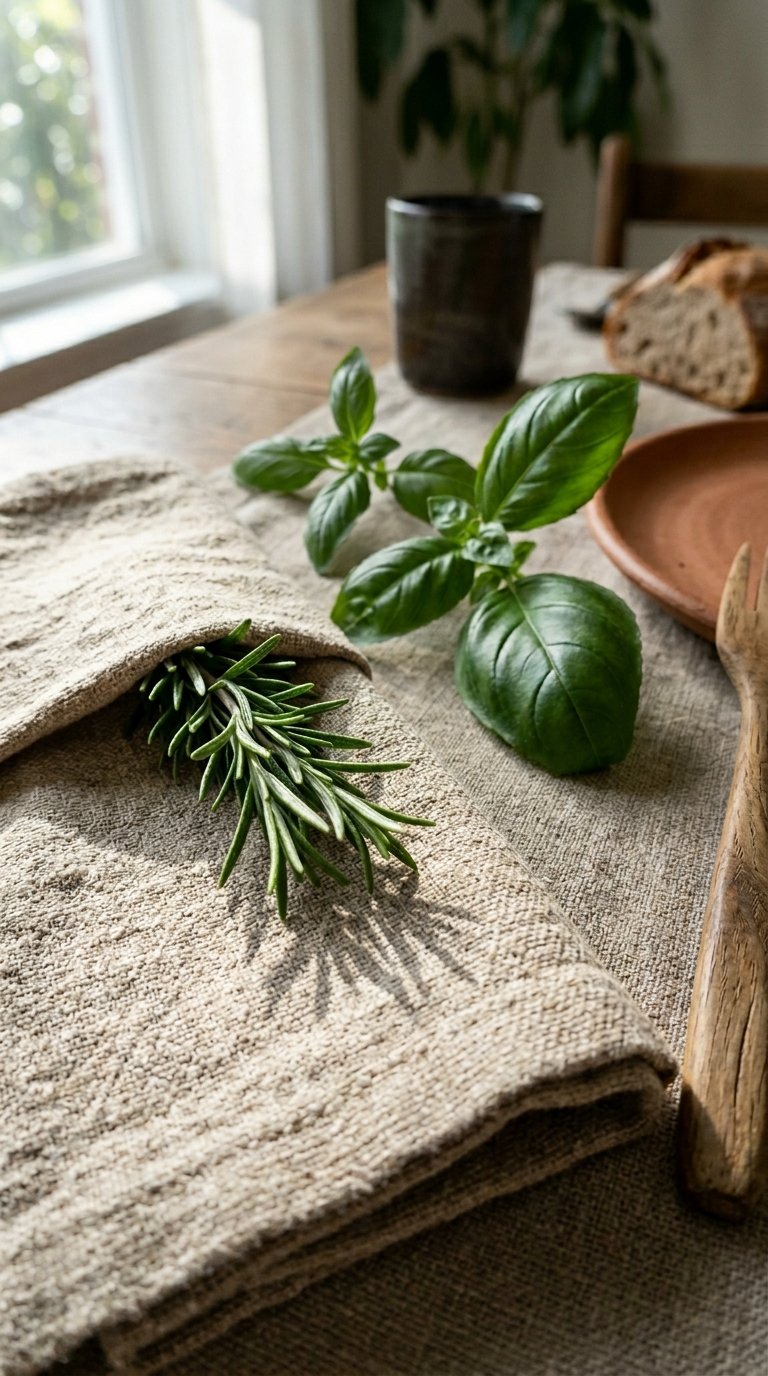
Fresh herb sprigs scattered loosely along the table runner or tucked into napkin folds add a sensory layer to the summer dining table that no decorative object replicates. The scent of fresh rosemary, basil, or mint activates before anyone sits down and communicates summer freshness more directly than any candle fragrance. A bundle of fresh rosemary from the grocery store costs $1.99 to $2.99 and yields enough sprigs to accent six place settings and the centerpiece simultaneously.
Tuck one sprig of rosemary under each napkin so it sits at the place setting’s left edge. Lay three longer basil stems across the table runner between the centerpiece and each end of the table. Replace the herb sprigs at each meal because wilted herbs communicate the opposite of summer freshness. The cost of fresh herb decor per dinner is under $3, making it the lowest-cost highest-sensory-impact table decor decision available.
8. Use Terracotta Plates as Your Summer Dinnerware
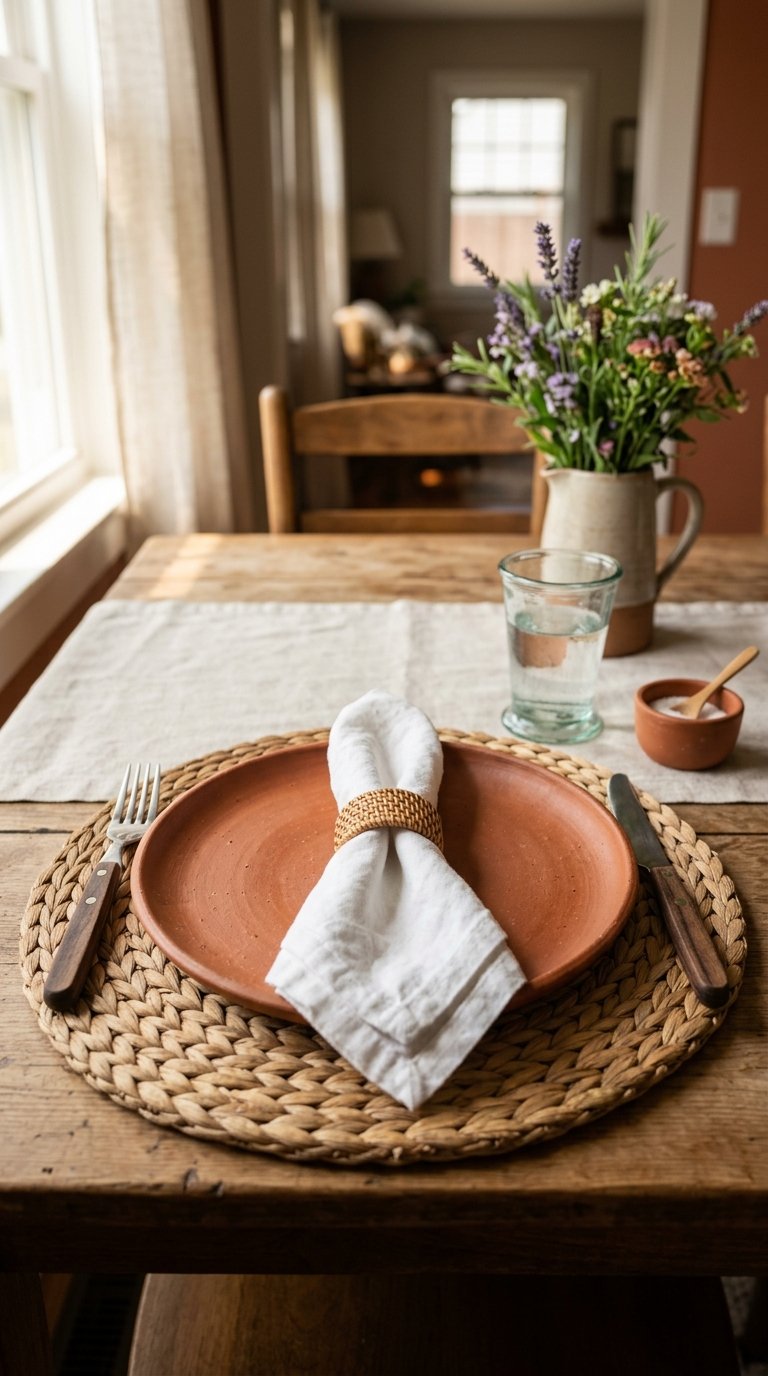
Standard white ceramic dinnerware serves every season equally, which means it serves no season specifically. Terracotta-toned dinnerware in warm clay, rust, and burnt sienna communicates summer and warmth from the moment each plate hits the table. Amazon’s Mora Ceramic matte terracotta dinner plates in a set of four cost $42.99 and use a lead-free glaze in a matte finish that reads as artisan and handmade from across the table.
For a budget option, Target’s Threshold matte terracotta dinner plates cost $4.99 each, so a set of four costs $19.96 and delivers a near-identical visual result at less than half the price. Pair terracotta plates with white linen napkins and natural wood-handled flatware for a summer place setting that reads as effortlessly considered. The warm clay tone of terracotta coordinates naturally with sunflowers, linen, and wooden serving boards without any deliberate color-matching effort.
9. Set Out a Citrus Fruit Bowl as a Centerpiece
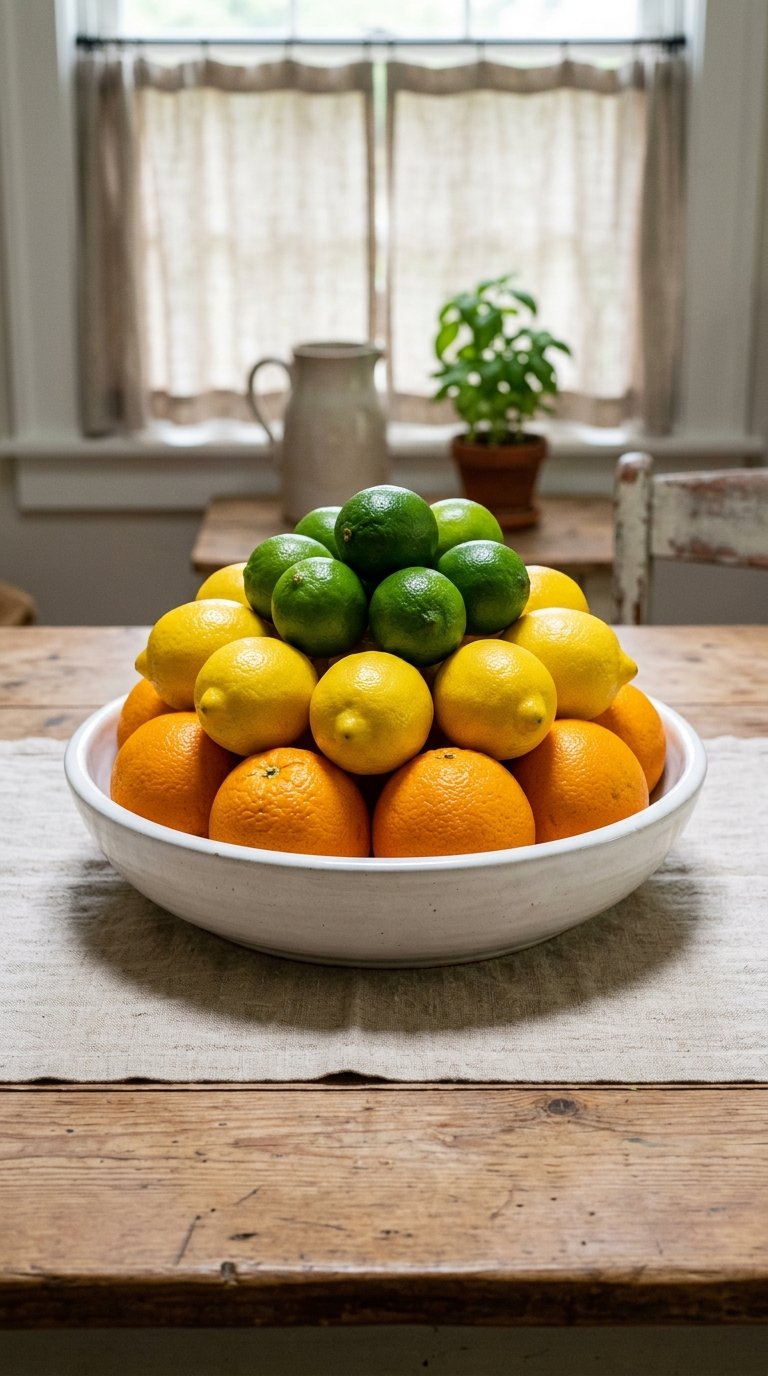
A wide ceramic bowl filled with lemons, limes, and oranges at the dining table center works as a centerpiece, a color statement, and a functional fruit bowl simultaneously. The bright yellow, green, and orange tones of fresh citrus against a white ceramic bowl create one of the strongest summer color moments available at any budget. A bag of lemons from the grocery store costs $3 to $4, a bag of limes costs $2 to $3, and the arrangement lasts two to three weeks before replacement.
Choose a wide shallow bowl with a diameter of 10 to 14 inches so the citrus piles naturally above the rim for visual impact. A bowl too deep hides the fruit below the rim and defeats the visual purpose entirely. Arrange the largest oranges at the base, lemons in the middle layer, and limes at the top for the best color graduation from warm to cool. Change the fruit every two weeks before it softens and the arrangement reads as a grocery store remnant rather than a styled centerpiece.
10. Hang an Outdoor String Light Above an Al Fresco Dining Table
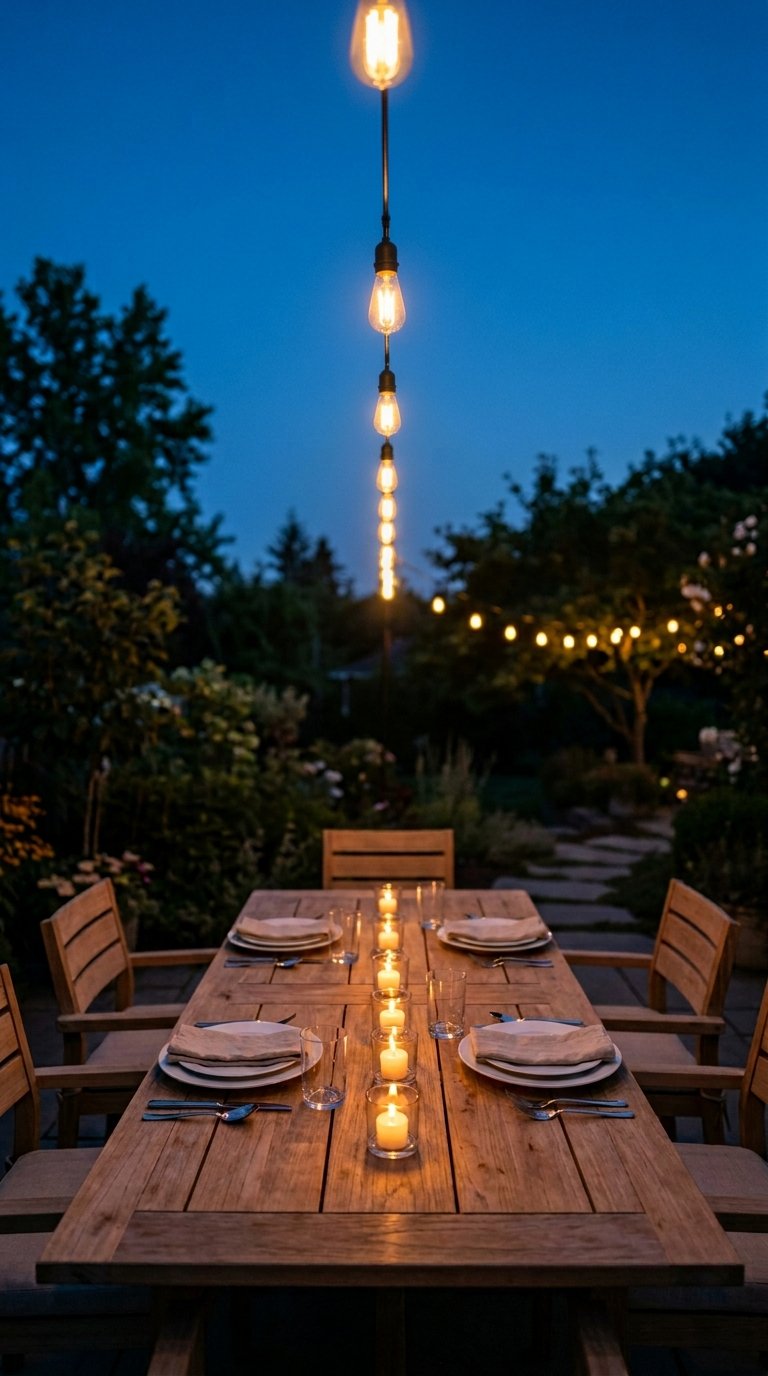
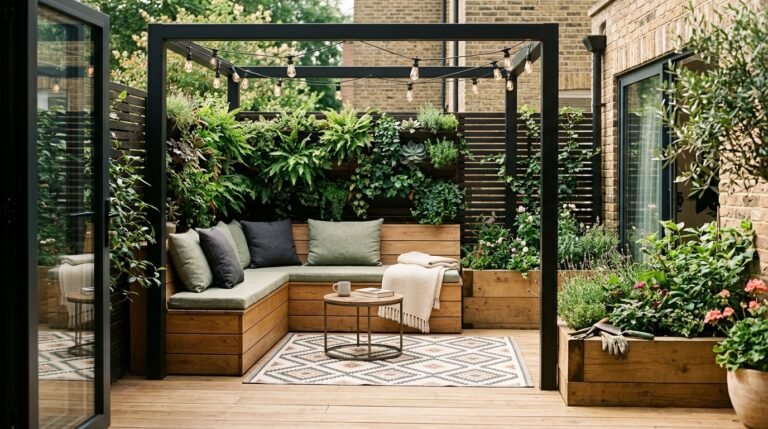
An outdoor summer dining table without overhead lighting empties after sunset. One strand of warm string lights hung 8 to 10 feet above the table changes the outdoor dining experience from a daytime-only event into a summer evening destination. Brightech’s Ambience Pro 48-foot outdoor string lights at $29.99 on Amazon use 2200K Edison-style bulbs that deliver the warmest, most flattering outdoor dining light at any price point.
Hang the strand in a straight line above the table’s length, anchored to two wooden posts at $12 each or between the exterior wall and a garden pergola. The 48-foot strand covers a standard 10 to 12-foot outdoor dining table with enough overhang on each side for the light to read as generous rather than precisely measured. Add four votive candles in clear glass holders on the table surface for a second light layer that makes summer evening outdoor dining feel like a restaurant terrace. FYI, this is the outdoor upgrade guests ask about every single time. 🙂
11. Layer Place Mats Under Each Place Setting
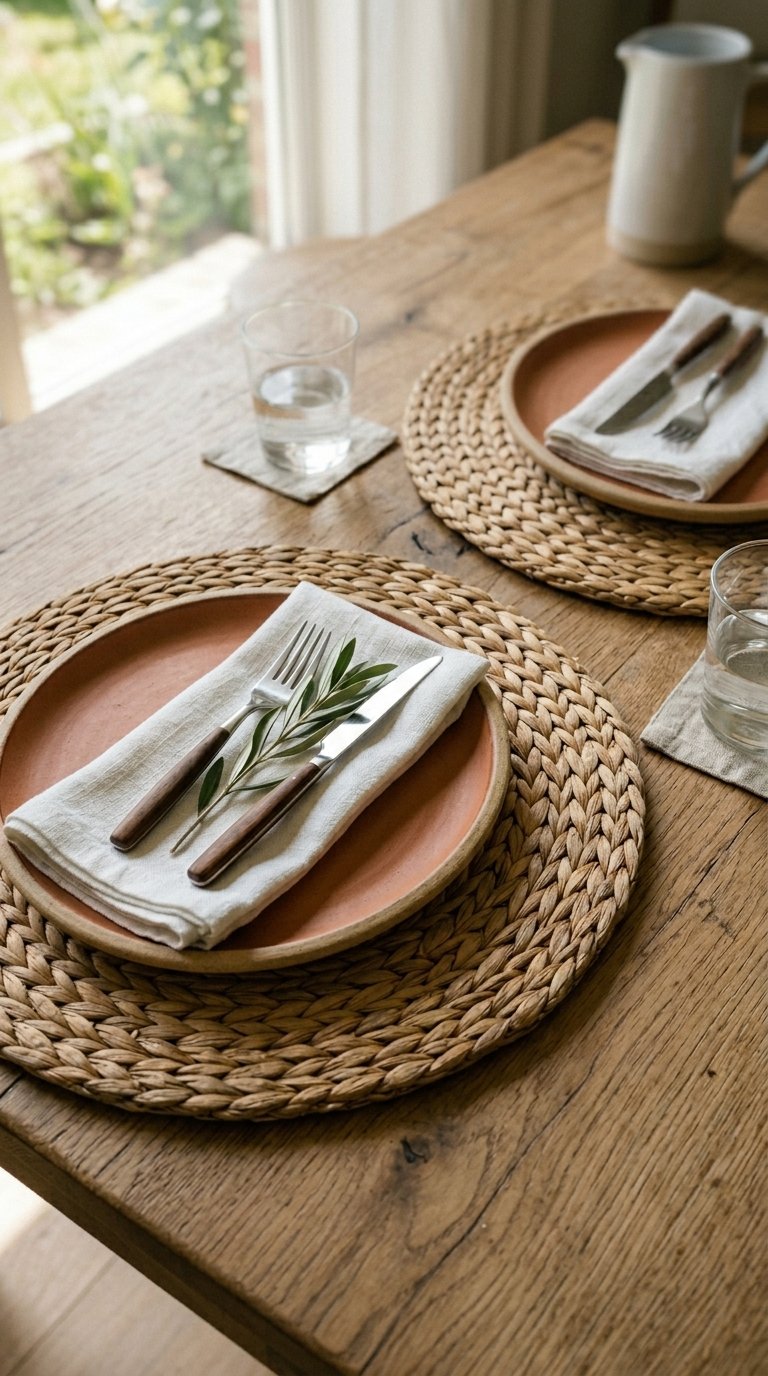
A place mat under each setting adds a material layer that protects the table surface and gives each guest a defined personal zone at the table. Woven seagrass, natural jute, or rattan place mats in a natural tan tone read as summer-specific and coordinate naturally with a linen runner, wooden serving boards, and terracotta plates. Amazon’s AAYU jute braided round place mats in a set of six cost $18.99 in a 15-inch diameter that suits a standard dinner plate with 1 to 2 inches of mat visible around the plate edge.
Use round place mats rather than rectangular ones on a summer dining table because the circular shape breaks the table’s rectangular geometry and introduces the organic, natural shape language the summer decor palette requires. Rectangular place mats on a rectangular table reinforce the table’s existing geometry. Round mats on a rectangular table create visual contrast that makes the setting read as more considered and seasonally intentional.
12. Style a Bud Vase Trio Down the Table Runner
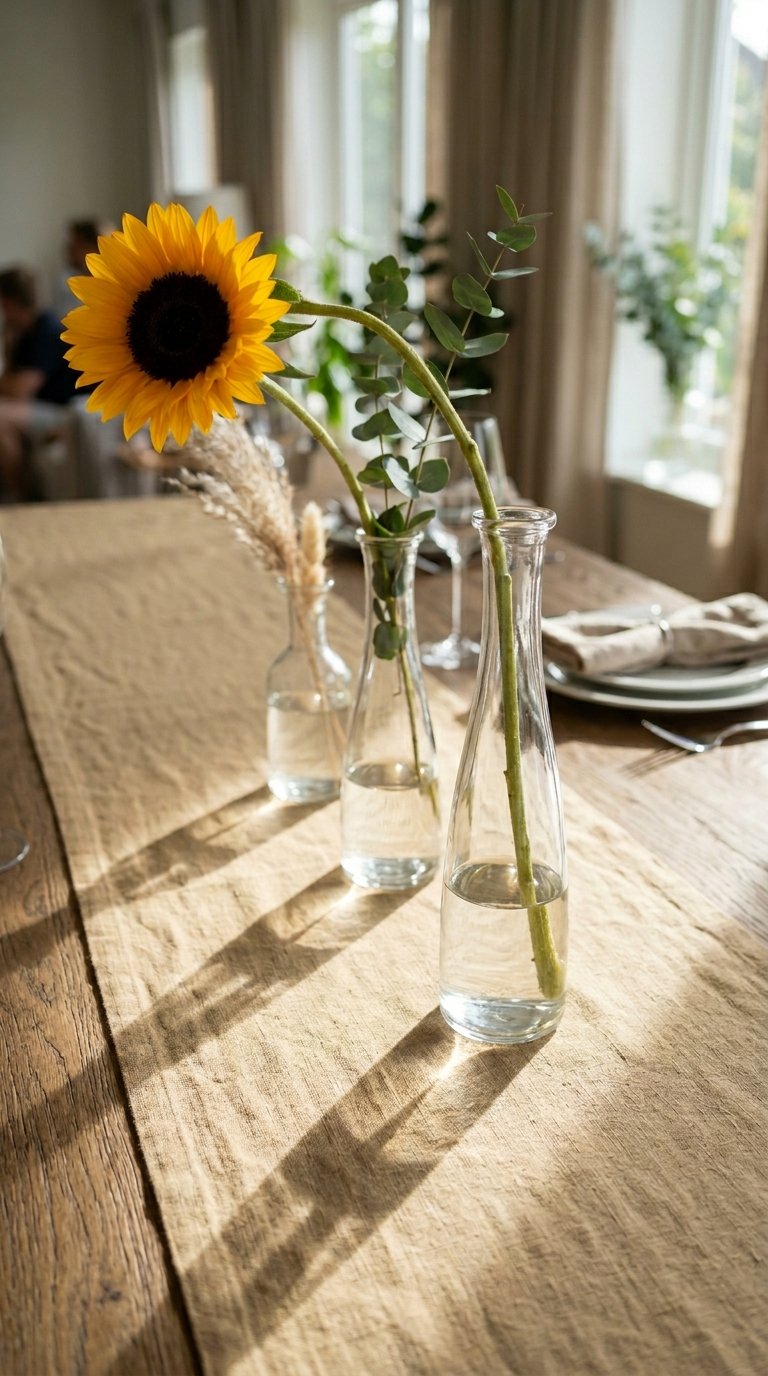
Three small bud vases in graduated heights spaced evenly down the length of the linen table runner create a low, distributed centerpiece arrangement that suits long dining tables where a single central arrangement leaves the table ends feeling bare. IKEA’s BERÄKNA glass vase in clear glass costs $2.99 each, so three bud vases cost $8.97 total and hold a single stem each: one sunflower, one eucalyptus branch, and one sprig of dried pampas grass.
Keep all three stems at different heights so each vase reads as a distinct visual moment rather than three identical arrangements. The tallest stem should reach 14 to 16 inches above the table surface, the middle at 10 to 12 inches, and the shortest at 6 to 8 inches. That height progression creates a visual rhythm down the table length that a uniformly sized centerpiece never achieves on a dining table longer than 6 feet.
13. Add Wooden-Handled Flatware for a Natural Table Setting
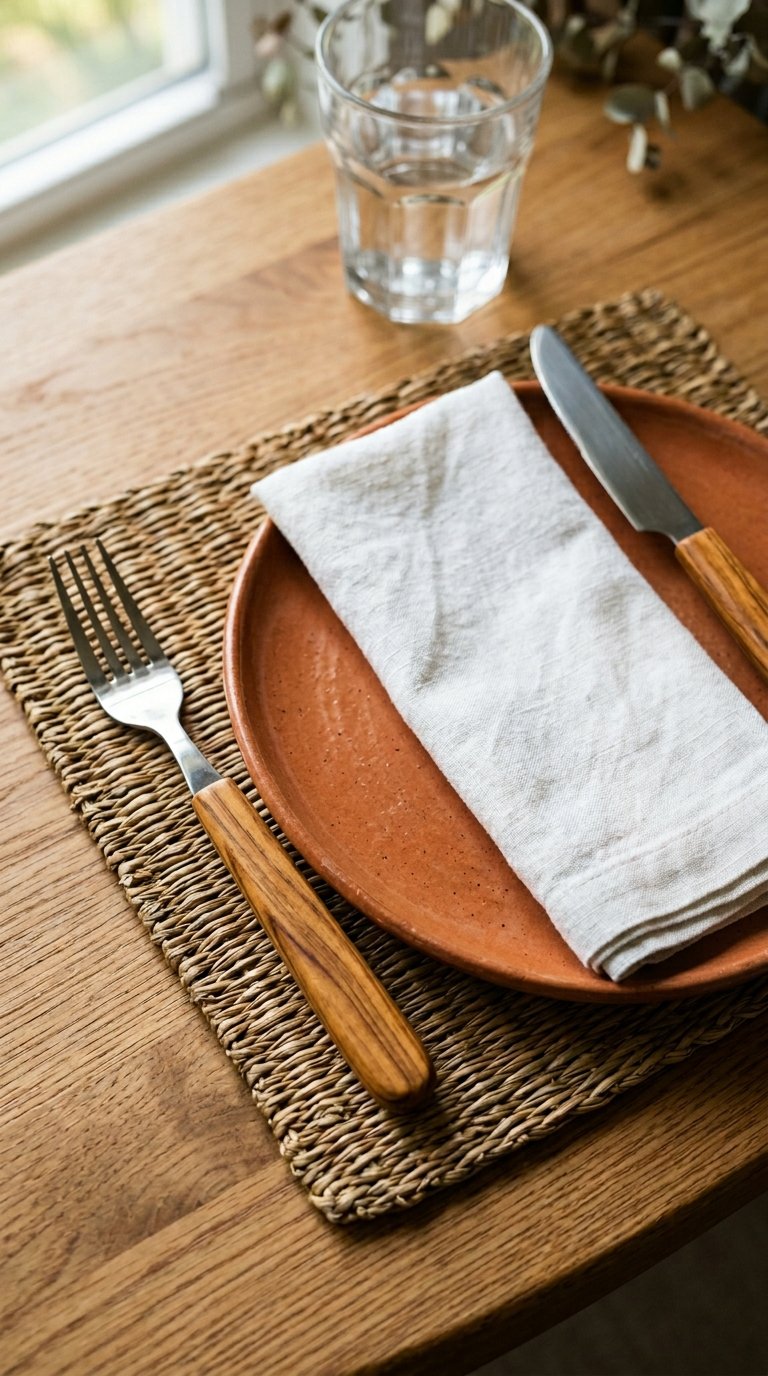
Standard stainless steel flatware reads as neutral and functional. Wooden-handled flatware in a light oak or acacia tone reads as a deliberate summer material choice that connects the place setting to the table’s natural material language of linen, rattan, jute, and wood. Amazon’s Hiware wooden handle flatware set of 20 pieces costs $28.99 and includes four five-piece place settings in a warm acacia handle finish with stainless steel utensil heads.
The acacia handle coordinates directly with a natural wood serving board, terracotta plates, and woven place mats without any deliberate color-matching effort because all four materials share the warm, earthy undertone of natural organic materials. Wash wooden-handled flatware by hand rather than in the dishwasher because the dishwasher’s heat cycle dries and cracks the wood handle finish within three to four wash cycles, reducing the handle’s lifespan from years to weeks.
14. Fold a Striped Cotton Napkin Into Each Place Setting
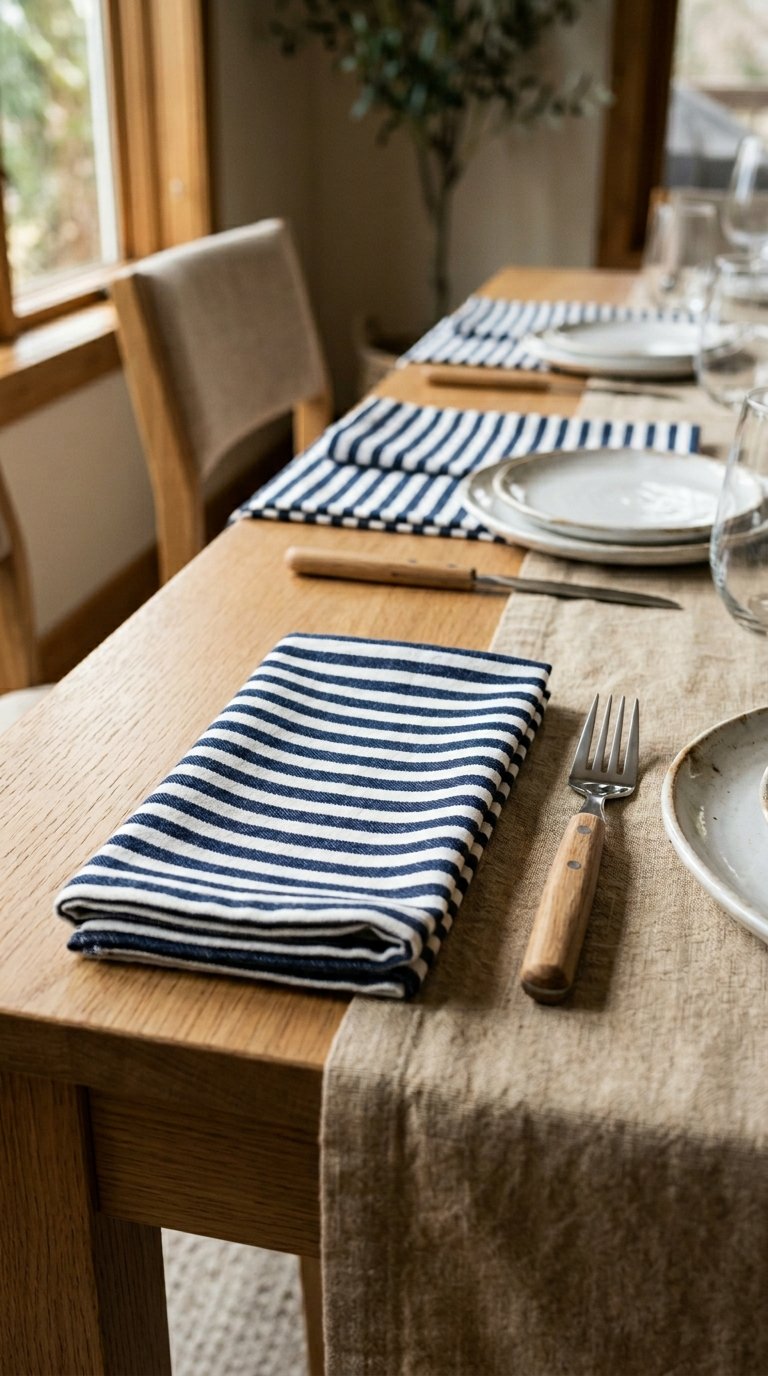
A striped cotton napkin in a navy and white or terracotta and white stripe pattern adds a color-blocked graphic element to the summer dining table place setting that plain linen napkins do not deliver. The stripe communicates summer and coastal intention at the individual place setting level. H&M Home stocks striped cotton napkins in sets of two for $7.99 to $9.99, so a set of four costs $16 to $20 and introduces the summer color story at the most personal scale of the table setting.
Place the folded striped napkin to the left of the fork with the stripe running horizontally so the full stripe pattern reads from across the table rather than vertically where only the guest at that setting sees it. The horizontal stripe at each place setting creates a rhythmic color pattern down the full table length that reads as a designed table composition rather than four individual settings placed independently.
15. Display a Potted Herb Plant as a Living Centerpiece
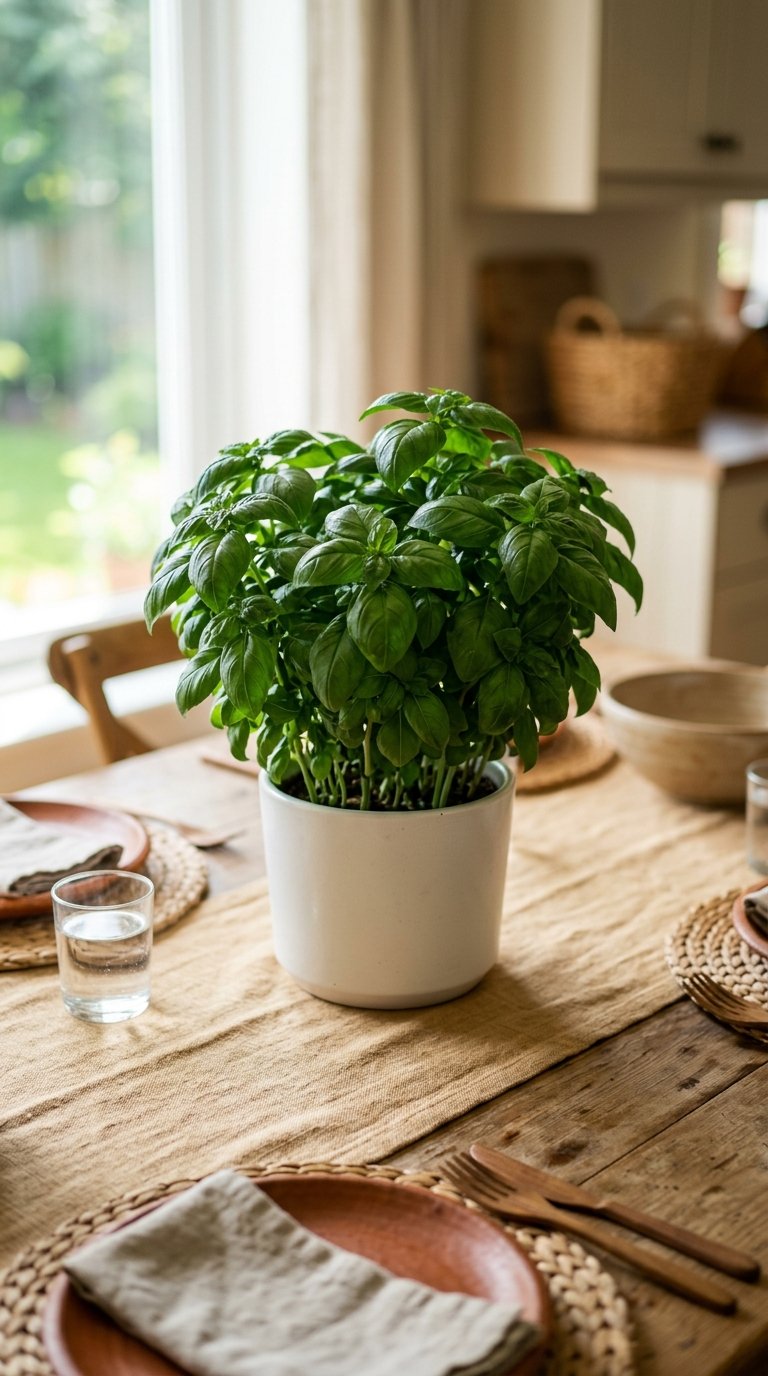
A single potted herb plant at the dining table center serves as a living, growing, scented centerpiece that fresh-cut flowers cannot replicate because it survives the full summer season rather than lasting one week. A full basil plant in a 6-inch white ceramic pot reads as a summer centerpiece and a cooking ingredient simultaneously. A basil plant in a 4 to 6-inch nursery pot from Home Depot costs $3.99 to $5.99 and delivers a dense, lush green mound of leaves that reads as genuinely abundant.
Repot the nursery plant into a white ceramic or terracotta pot before placing it on the table. The nursery black plastic pot reads as a garden center display item, not a dining table centerpiece. A $4.99 white ceramic pot from IKEA transforms the same plant into a designed table feature. Water the basil every two days and pinch off any flower buds immediately to keep the plant full and leafy rather than going to seed and declining mid-summer.
16. Use Amber Glass Votives for Warm Evening Lighting
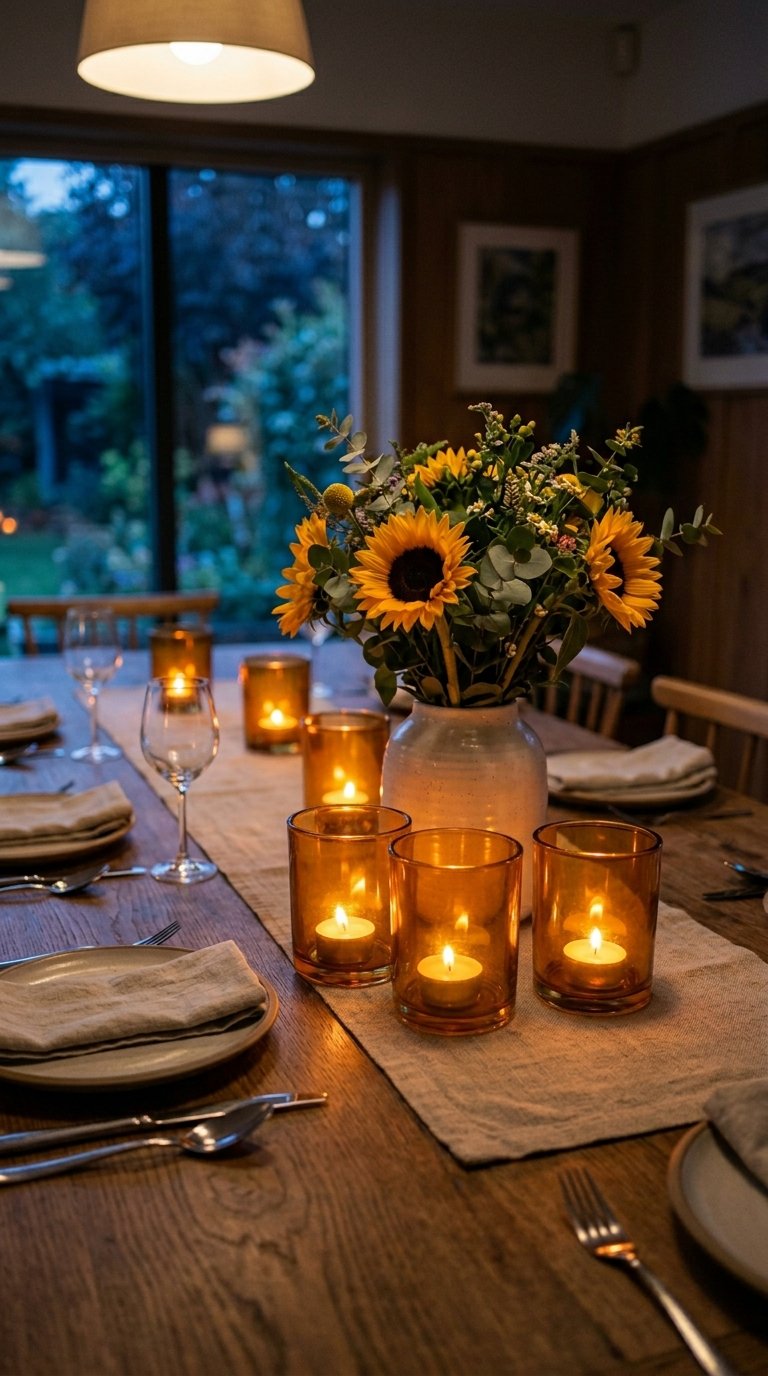
Amber glass votive holders scatter warm, golden light across the dining table surface in a way that clear glass votives never achieve because the amber glass tints the flame’s light output with a warm orange-gold tone that reads as sunset rather than standard candlelight. Amazon’s Whole Housewares amber glass votive holders in a set of twelve cost $19.99, giving you enough holders to place two per place setting and two at the centerpiece zone for a fully lit summer evening table at under $20.
Place one votive at each place setting’s upper right corner and two at the table center flanking the centerpiece for a distributed light arrangement that covers the full table length. Use 4-hour tea light candles inside each holder rather than standard votive candles because the tea light’s contained wax pool eliminates any risk of wax overflow through the votive holder’s base, which standard votive candles produce after the second hour of burning. :/
17. Style a Seasonal Tablescape With a Collected Theme
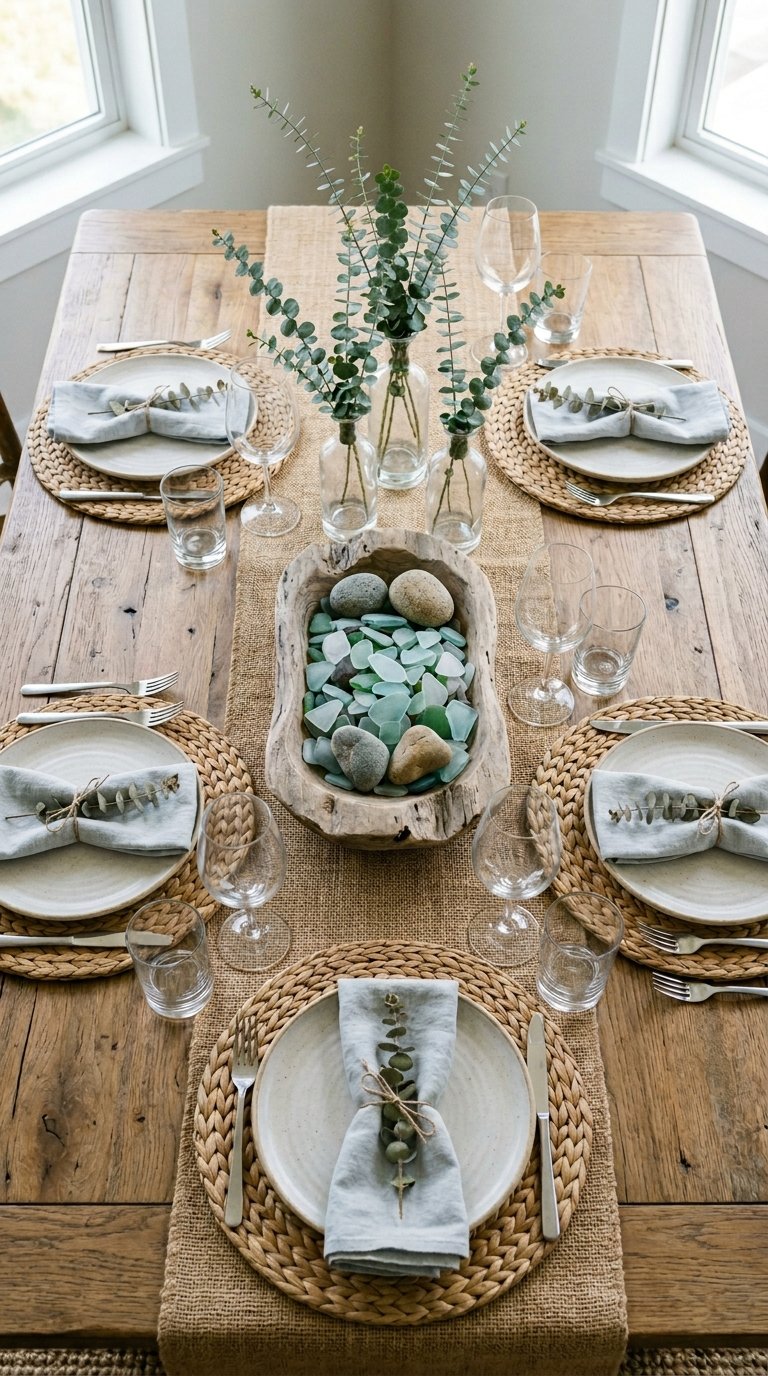
A collected summer tablescape groups every decor element on the dining table around one consistent material or color theme rather than mixing unrelated decorative objects. A seashell and sea glass theme uses a shallow driftwood bowl at the center holding sea glass and smooth stones, three glass bud vases with eucalyptus, and a natural jute runner with woven seagrass place mats. Every object shares the same coastal material language and the table reads as a designed composition rather than a surface where decor accumulated.
Choose your theme before purchasing a single object and test every potential addition against one question: does this object share the material, color, or origin story of the theme? A terracotta bowl does not belong on a sea glass and driftwood table even if it is beautiful on its own. The discipline of a single theme is the decision that separates a styled dining table from a decorated one. Styled tables tell one clear visual story. Decorated tables tell several competing ones.
18. Add a Low Tropical Leaf Arrangement in a Wide Vase
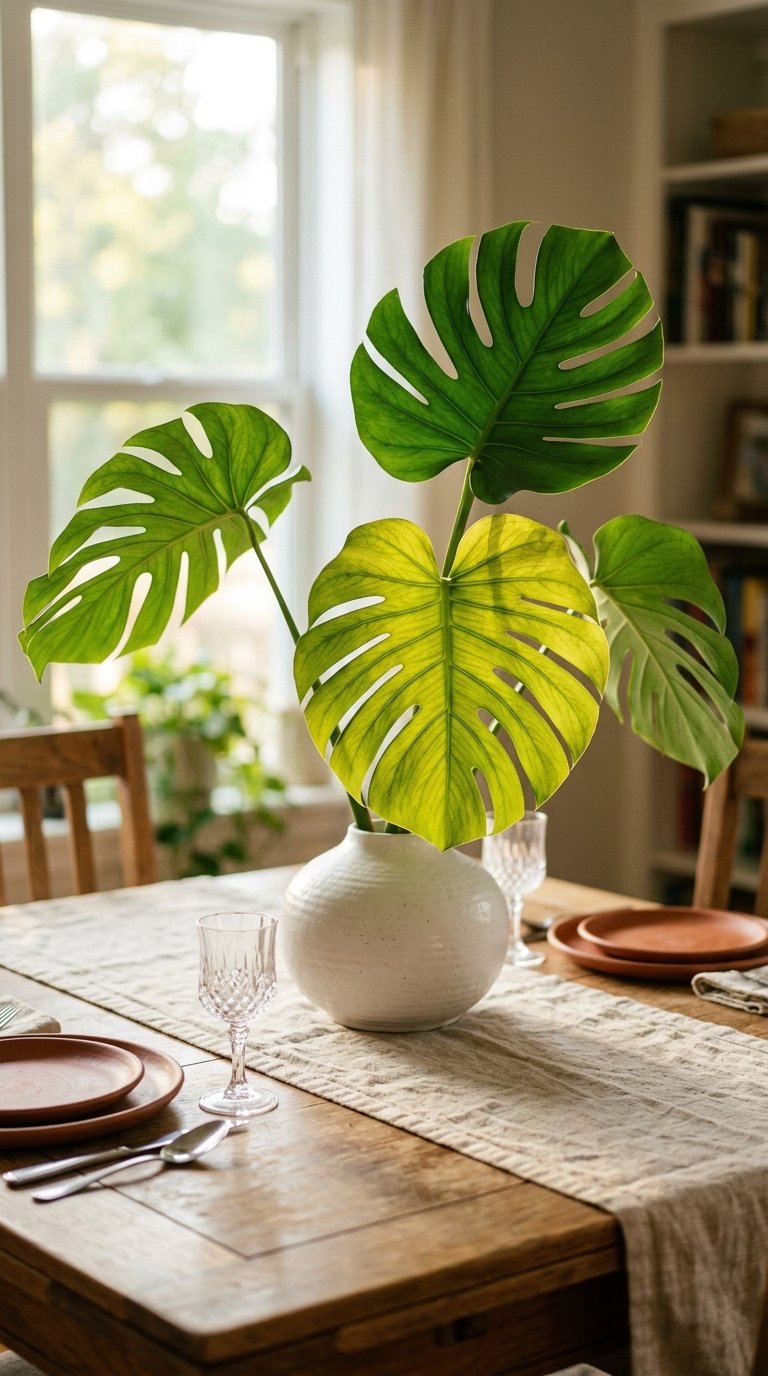
A single large tropical leaf arrangement in a wide-mouth vase delivers the bold, graphic organic shape that sunflower arrangements and herb plants do not. Three to five large monstera or bird of paradise leaves in a 10-inch wide white ceramic vase create a low, dramatic centerpiece that draws the eye from across the room before anyone sits down. A bundle of tropical leaves from a local florist or farmers market costs $10 to $18 and lasts two to three weeks in fresh water changed every three days.
Keep the arrangement low enough for guests to see each other across the table. The tallest leaf should reach no higher than 14 inches above the table surface for a dining table where conversation flows across the centerpiece zone. A centerpiece taller than 14 inches forces guests to lean sideways to make eye contact, which is the fastest way to make a beautiful centerpiece feel like an obstacle.
19. Set Out a Bread Basket Lined With a Linen Cloth
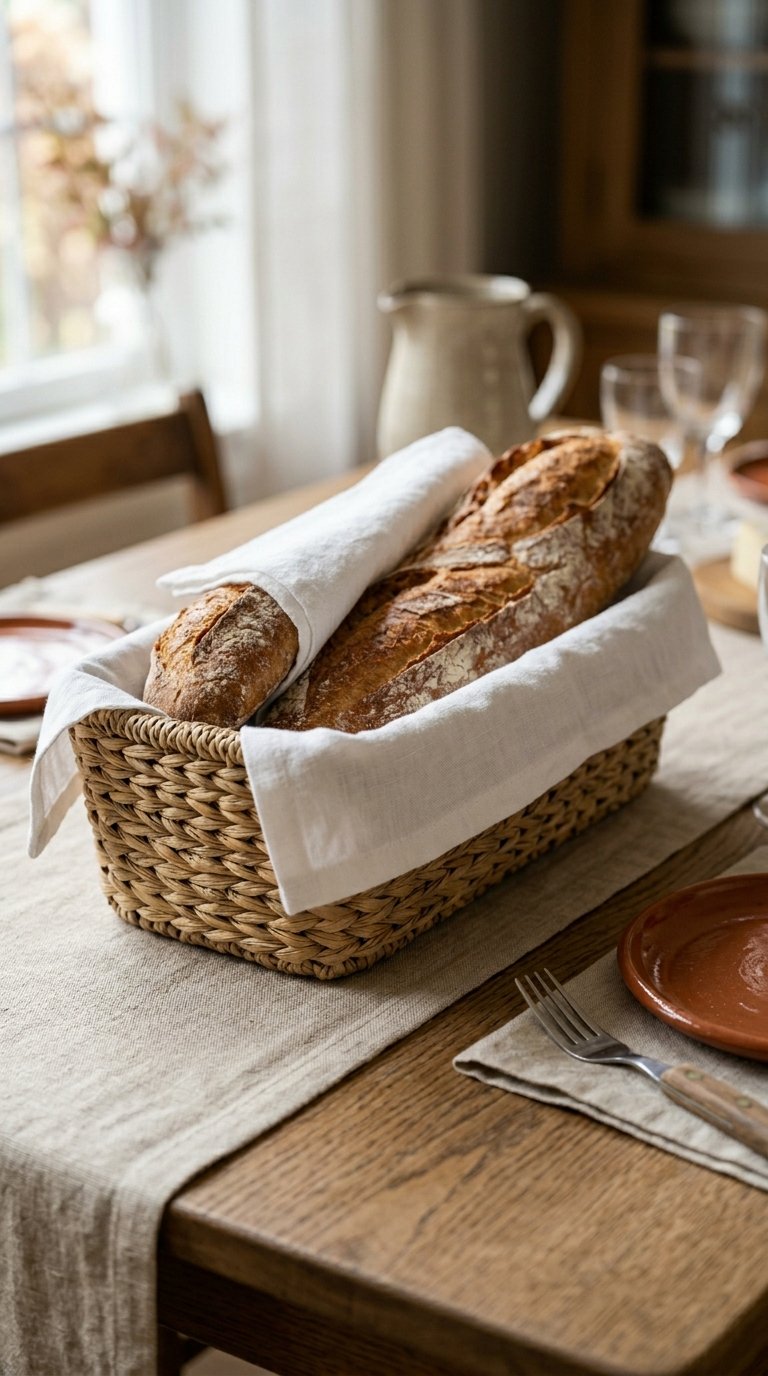
A bread basket at the dining table serves a functional role at every meal and a styling role between meals. A natural woven seagrass or rattan basket in a round or oval format lined with a white linen cloth reads as summer hospitality from across the table. Amazon’s Bolsun woven seagrass bread basket costs $16.99 to $22.99 in a 10-inch oval format that holds a full baguette or dinner rolls for six people.
Line the basket with a white linen cloth folded into a rectangle that overhangs the basket rim by 2 inches on each side. The linen overhang reads as dressed rather than bare and coordinates with the linen table runner for material consistency. Between meals, style the bread basket with one lemon, a small candle, and a folded linen cloth as a display object that earns its table surface space even when no bread occupies it.
20. Create a Condiment Station With a Wooden Tray
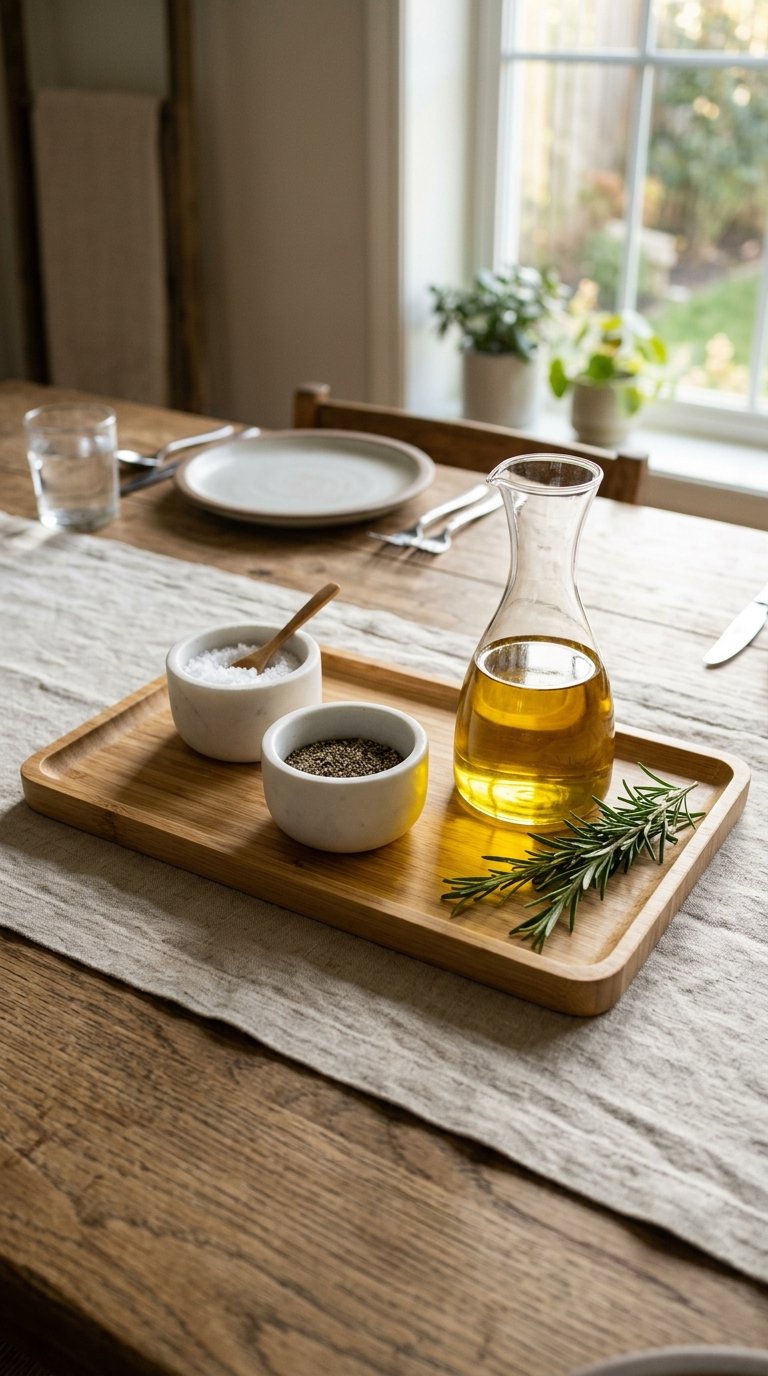
A wooden tray holding the meal’s condiments, salt and pepper, and a small olive oil bottle on the dining table eliminates the scattered, utilitarian look of individual bottles and shakers placed directly on the table surface. The tray groups functional objects into a designed feature that reads as intentional from across the room. Amazon’s Lipper International bamboo serving tray at $22.99 measures 12×18 inches with a raised edge that contains everything within a defined footprint.
Style the tray with a ceramic salt cellar at $12 to $18 from Amazon, a matching ceramic pepper bowl, a small olive oil carafe in clear glass, and one sprig of fresh rosemary lying across the front edge. Every object on the condiment tray should share the same material palette: ceramic, glass, and natural wood. A plastic salt shaker on a wooden tray reads as an object that belongs in a different room regardless of how well everything else on the table works.
21. Finish With a Coordinated Napkin Ring Set
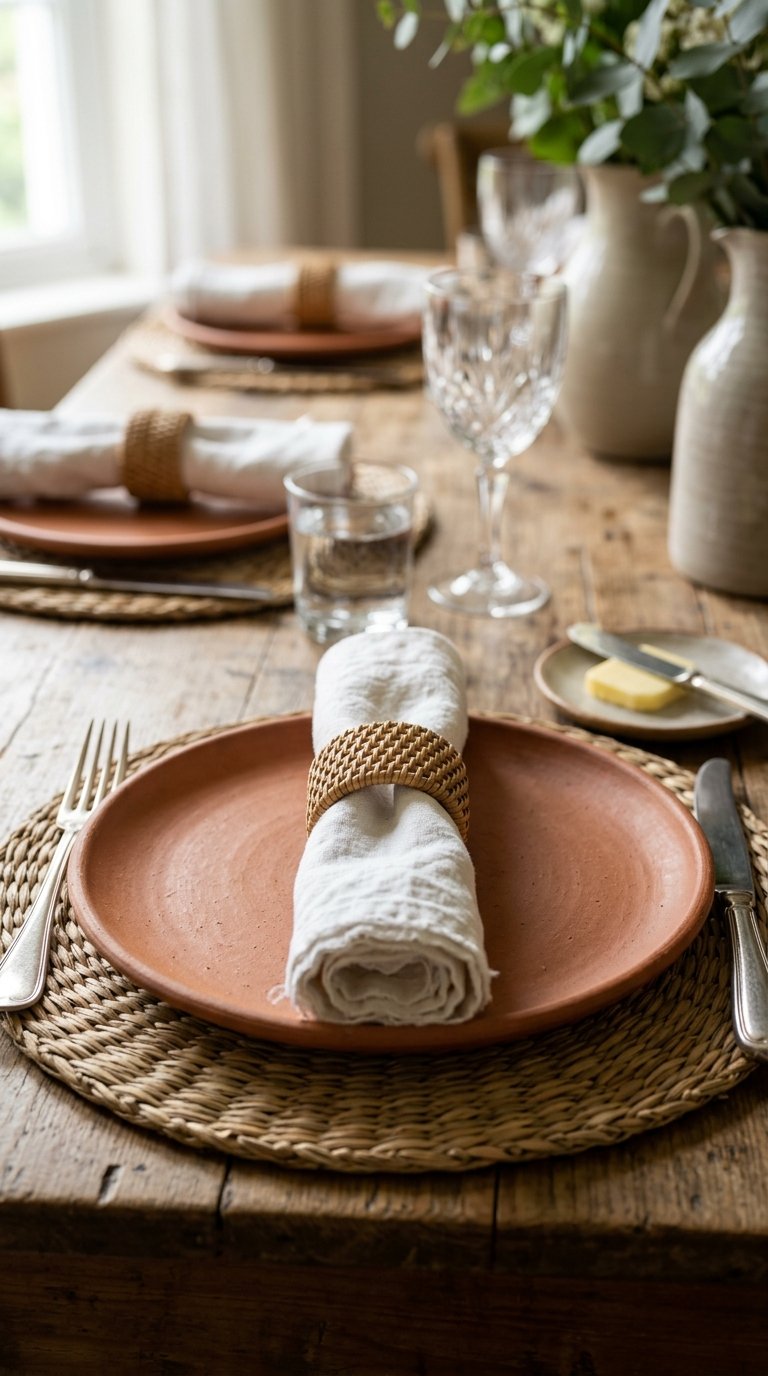
Napkin rings are the smallest detail on the summer dining table and the one most people skip entirely. Skipping them is a missed opportunity because a coordinated napkin ring set ties the full place setting together at the napkin fold and adds a finishing material detail that guests notice without knowing exactly why the table feels so complete. Amazon’s Mkono natural rattan napkin rings in a set of six cost $12.99 and coordinate directly with woven seagrass place mats, natural linen table runners, and wooden serving boards in the same natural material family.
Slide each napkin ring over a loosely rolled linen napkin and place it centered on the dinner plate rather than to the left of the fork. A napkin ring centered on the plate elevates the place setting to a restaurant-quality presentation that a napkin laid flat under the fork never achieves at any table regardless of how expensive the surrounding decor is. The napkin ring costs $2.17 per setting from that set of six and delivers the table’s highest finishing-detail return on investment.
Final Thoughts
A well-dressed summer dining table does not require expensive dinnerware, a florist’s budget, or a full weekend of preparation. The 21 ideas on this list prove that the most impactful summer dining table transformations happen at the textile, plant, candle, and centerpiece level, and most cost under $30 to execute. Start with three decisions that deliver the most atmosphere per dollar: a fresh sunflower arrangement in a white ceramic vase, a natural linen table runner, and a set of woven seagrass place mats. Those three additions alone shift the dining table’s summer identity completely. Build the remaining layers around them and your table will make every summer meal feel worth sitting down for, whether it is a Tuesday dinner or a Saturday gathering with twelve people around it.