25 Balcony Plant Decor Ideas to Green Up Your Outdoor Space
Your balcony holds more plant potential than you’re using right now. I know this because I spent two years treating mine as extra storage before I cleared it out, bought six plants, and turned it into the spot I look forward to every single morning. Plants do something furniture alone never achieves on a balcony: they add life, movement, fragrance, and a layer of privacy that costs a fraction of any structural solution. These 25 balcony plant decor ideas work on every size, every floor, and every budget.
1. Line the Railing With Railing Planter Boxes
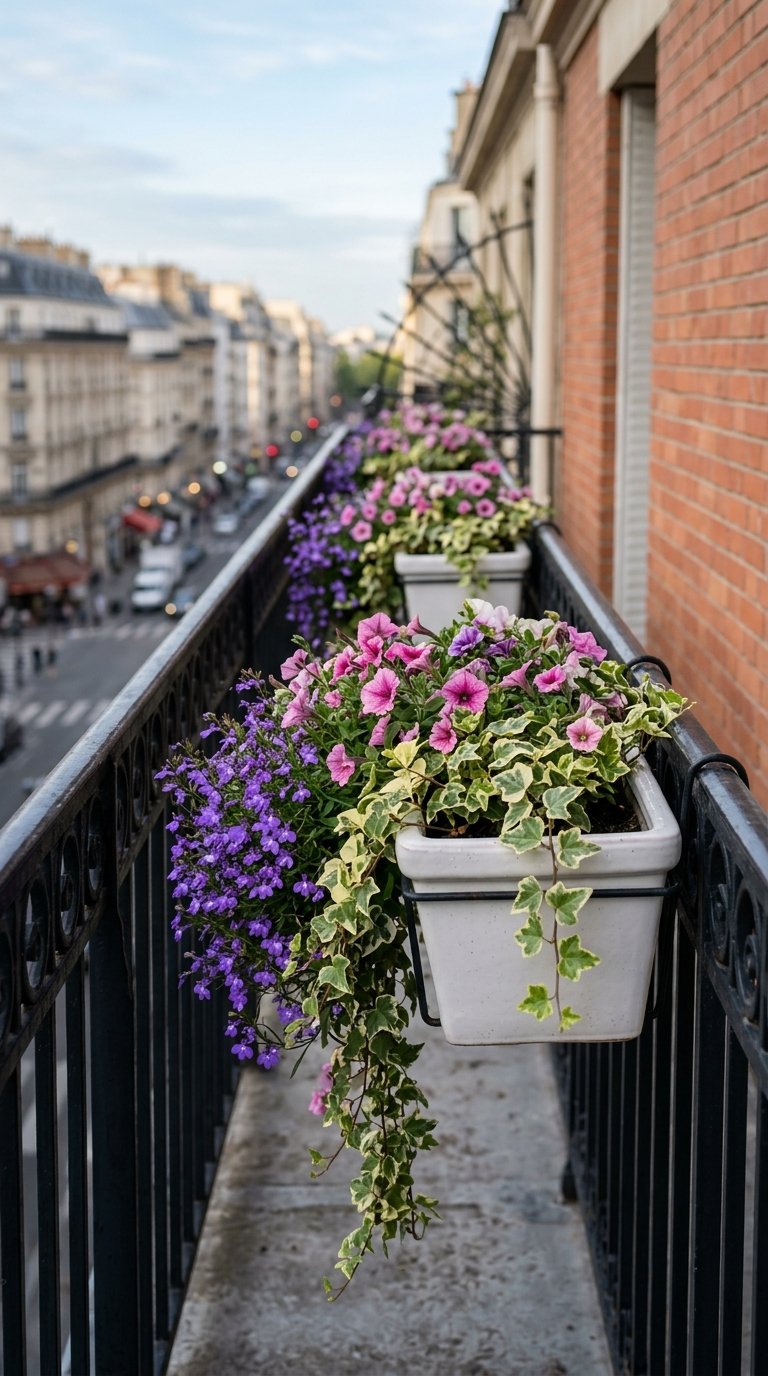
Railing planter boxes hook directly over the balcony rail without drilling, screwing, or asking your landlord for permission. A standard 24-inch railing box holds three to four plants and sits flush against the rail, consuming zero floor space while turning the most prominent edge of your balcony into a living garden border.
Fill them with trailing plants like calibrachoa, lobelia, or trailing petunias and the effect from below street level is a balcony that appears to overflow with color. From above, you get a planted border that screens the rail and softens the hard edge of the balcony structure. Three railing boxes across a standard balcony costs $45 to $90 in boxes and $20 to $40 in plants. That’s a complete railing transformation for under $130.
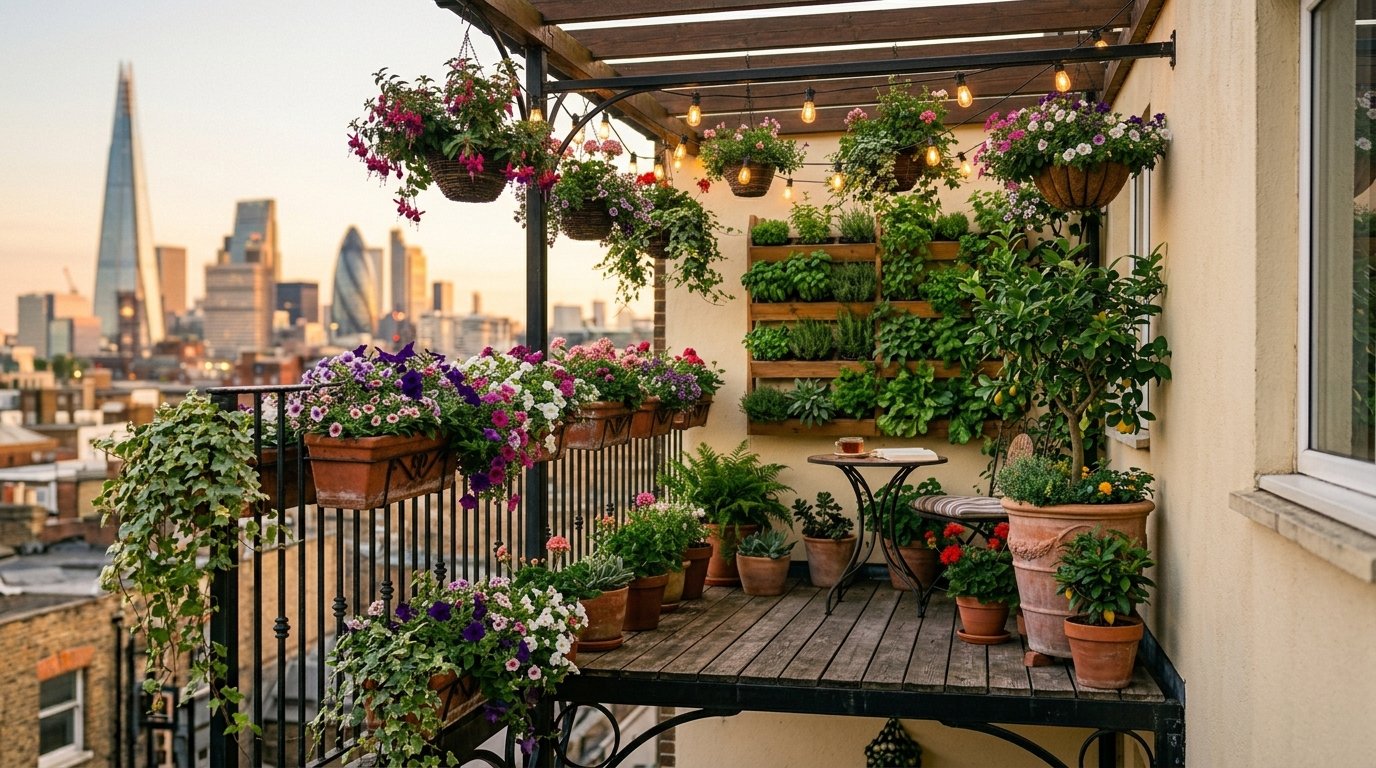
2. Build a Vertical Plant Wall on the Back Wall
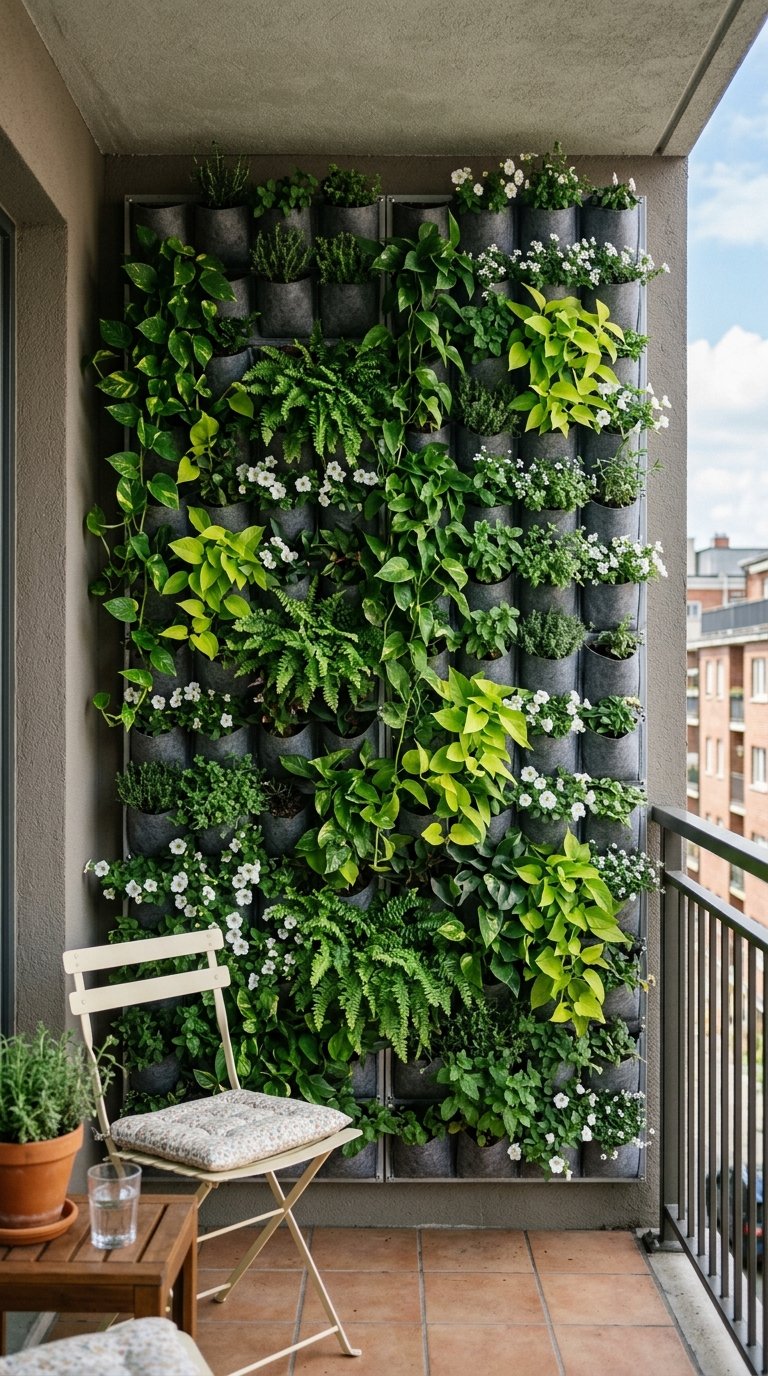
The back wall of your balcony sits there doing nothing while your floor space disappears. A modular vertical planter system mounted to the back wall holds 20 to 30 plants in a 4×4 foot footprint and turns a flat surface into a living feature wall visible from inside the apartment through the balcony door.
Vertical pocket planter systems from brands like Woolly Pocket and Greenstalk cost $60 to $150 for a standard panel. Mount them with four screws or heavy-duty adhesive strips on smooth rendered walls. Fill the top rows with trailing plants so they cascade downward and fill the lower rows with upright herbs or compact flowers. The vertical wall approach delivers more plants per square foot than any floor-based arrangement.
3. Grow a Herb Garden in a Compact Container Cluster
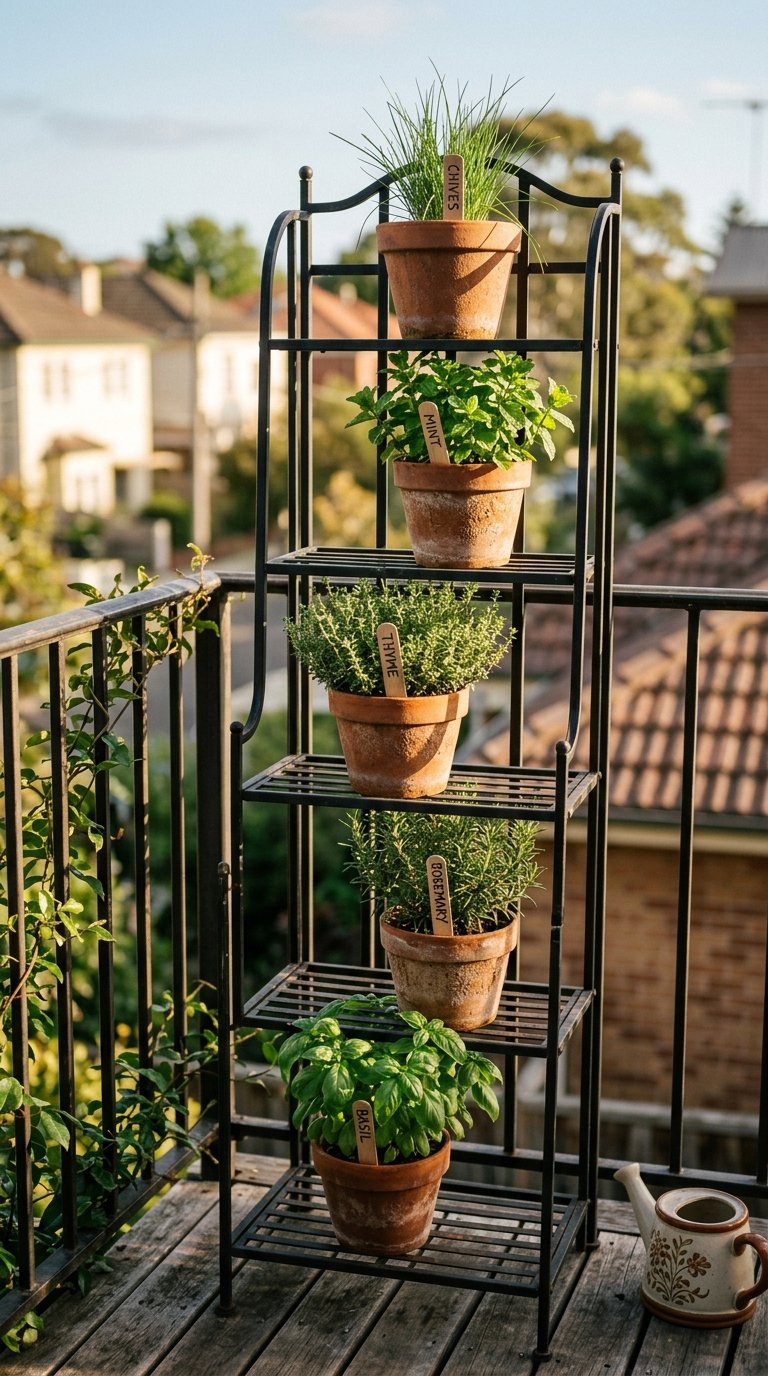
A balcony herb garden pays you back every week in fresh ingredients, which makes it the most financially justifiable plant investment on this entire list. Five herb plants in individual 6 to 8-inch pots grouped together on a tiered plant stand supply basil, rosemary, thyme, mint, and chives for a full cooking season.
Keep mint in its own separate pot because it spreads aggressively and takes over shared containers within weeks. Position the herb cluster in the sunniest spot on your balcony, which for most south or west-facing balconies means the railing end. A basic five-herb setup costs $15 to $25 in plants and $30 to $60 for a compact tiered stand. You recoup that in fresh herb savings by mid-summer.
4. Use a Tall Bamboo Plant for Instant Privacy
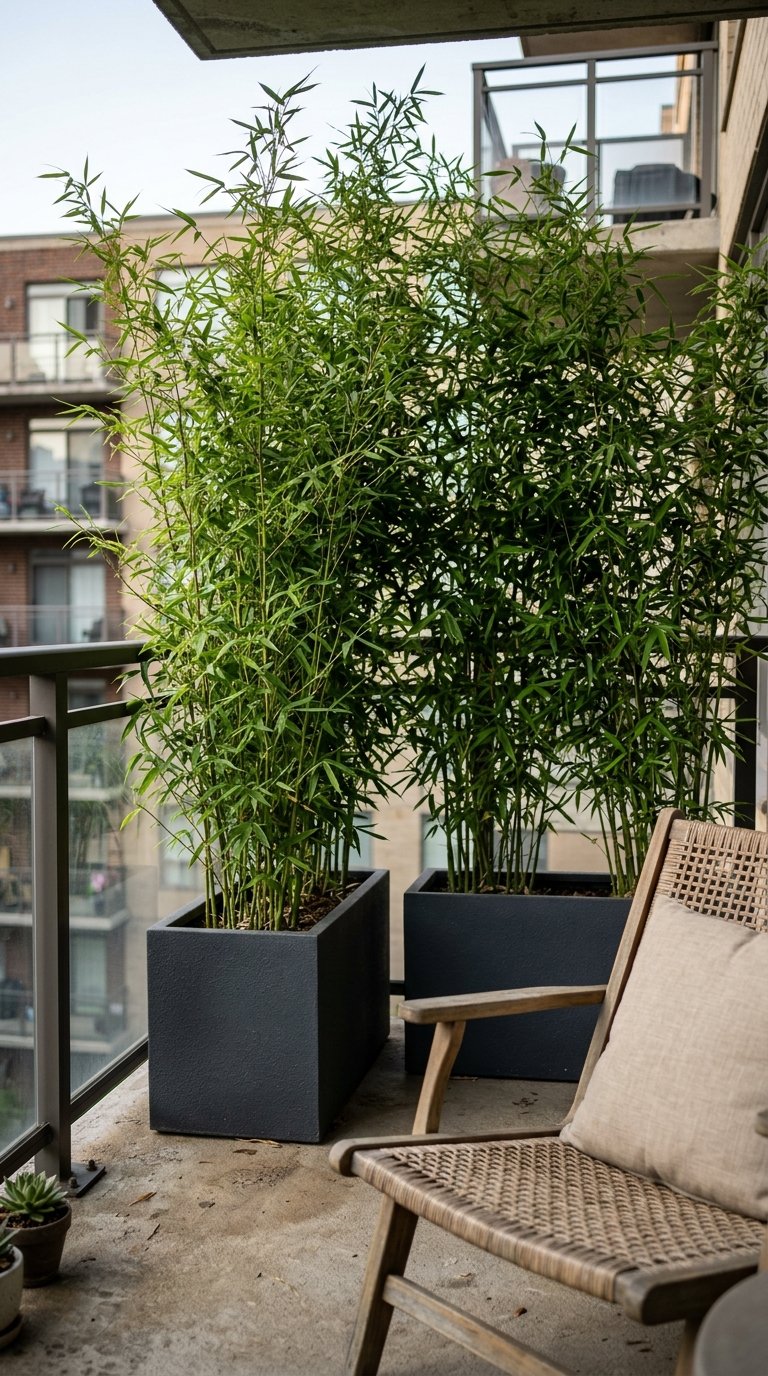
Neighbors looking onto your balcony is one of the most common reasons people avoid spending time on it. A tall bamboo plant in a large container grows to 6 to 8 feet and creates a natural privacy screen on one or two sides without any structural installation, permission requirement, or permanent change.
Use clumping bamboo varieties like Fargesia rather than running bamboo. Clumping bamboo stays contained in a pot and doesn’t spread, which is the problem that gives bamboo its bad reputation. A 5-gallon clumping bamboo plant costs $30 to $60 and reaches full screening height within two growing seasons. Two plants in large planters on the most exposed balcony corner provide solid privacy coverage.
5. Hang Trailing Plants From the Ceiling or Overhead Structure
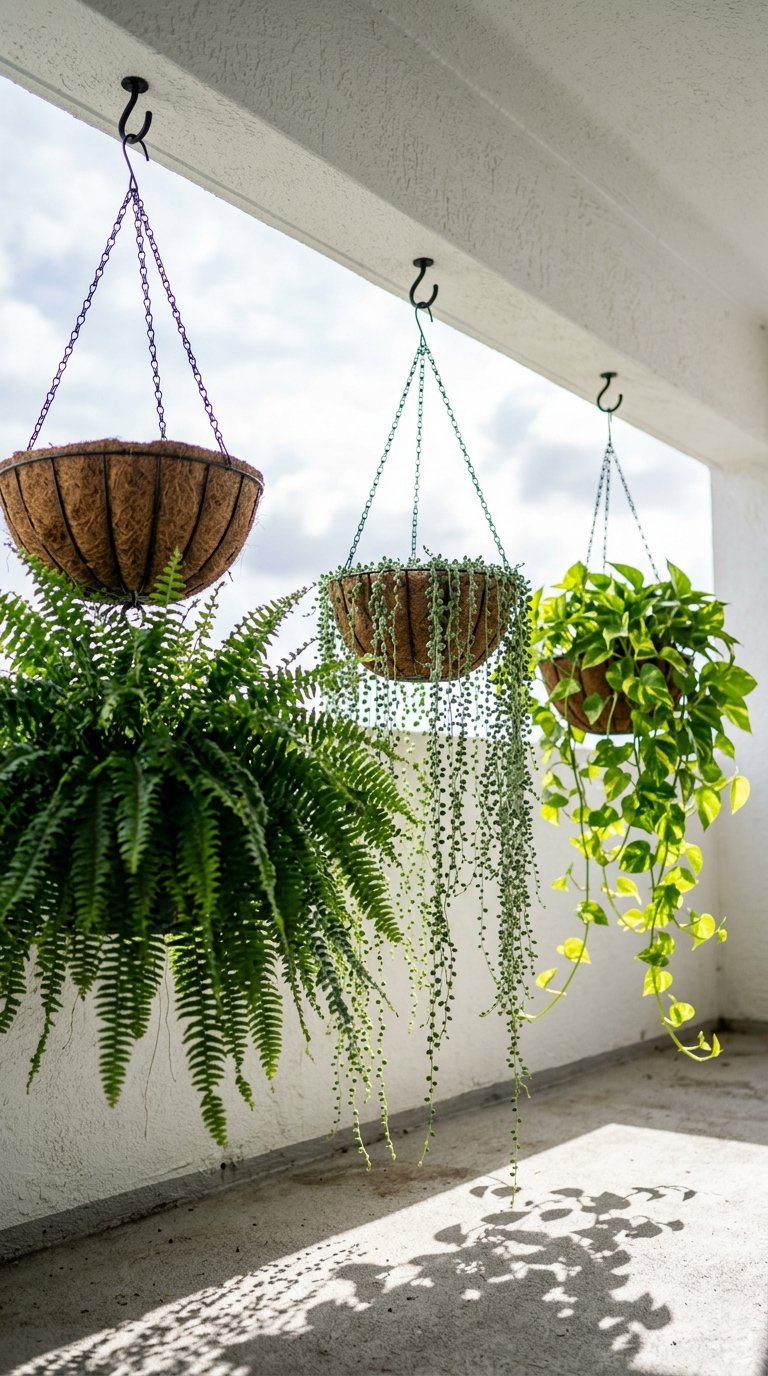
A balcony ceiling with nothing hanging from it misses the vertical dimension completely. Hanging baskets of trailing plants suspended at eye height from ceiling hooks add a layer of greenery above furniture level and create the enclosed, garden-room feeling no floor plant achieves.
String of pearls, Boston ferns, spider plants, and trailing pothos all perform well in hanging baskets in partial to bright indirect light. Use swivel-hook ceiling anchors rated for 15 to 20 pounds on concrete balcony ceilings. Three hanging baskets in staggered positions across the ceiling length cost $30 to $60 total and transform how the balcony feels from below.
6. Plant a Dwarf Citrus Tree in a Large Container
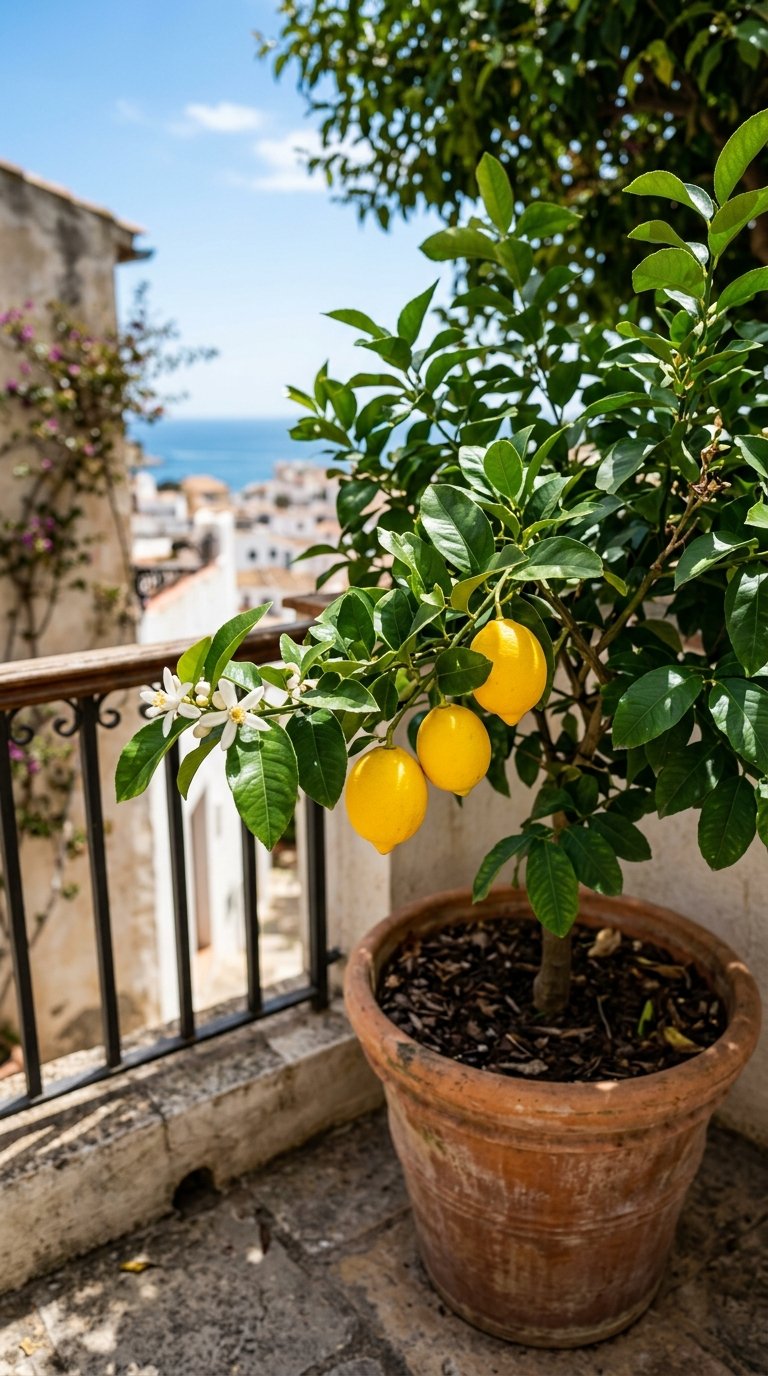
A dwarf Meyer lemon or dwarf lime tree in a 15 to 20-gallon container does more for a balcony than any ornamental plant at the same price point. It provides fragrant white blossoms in spring, glossy evergreen foliage year-round, and edible fruit in summer and autumn in a single plant that sits in one corner and earns that floor space back every season.
Dwarf citrus trees perform best on south or west-facing balconies with at least 6 hours of direct sun daily. They need watering every two to three days in summer and feeding with a citrus-specific fertilizer monthly during the growing season. A 3 to 4-foot dwarf Meyer lemon costs $40 to $80 at most garden centers and lives in a container for 10 to 15 years with correct care.
7. Create a Succulent Display in a Shallow Trough Planter
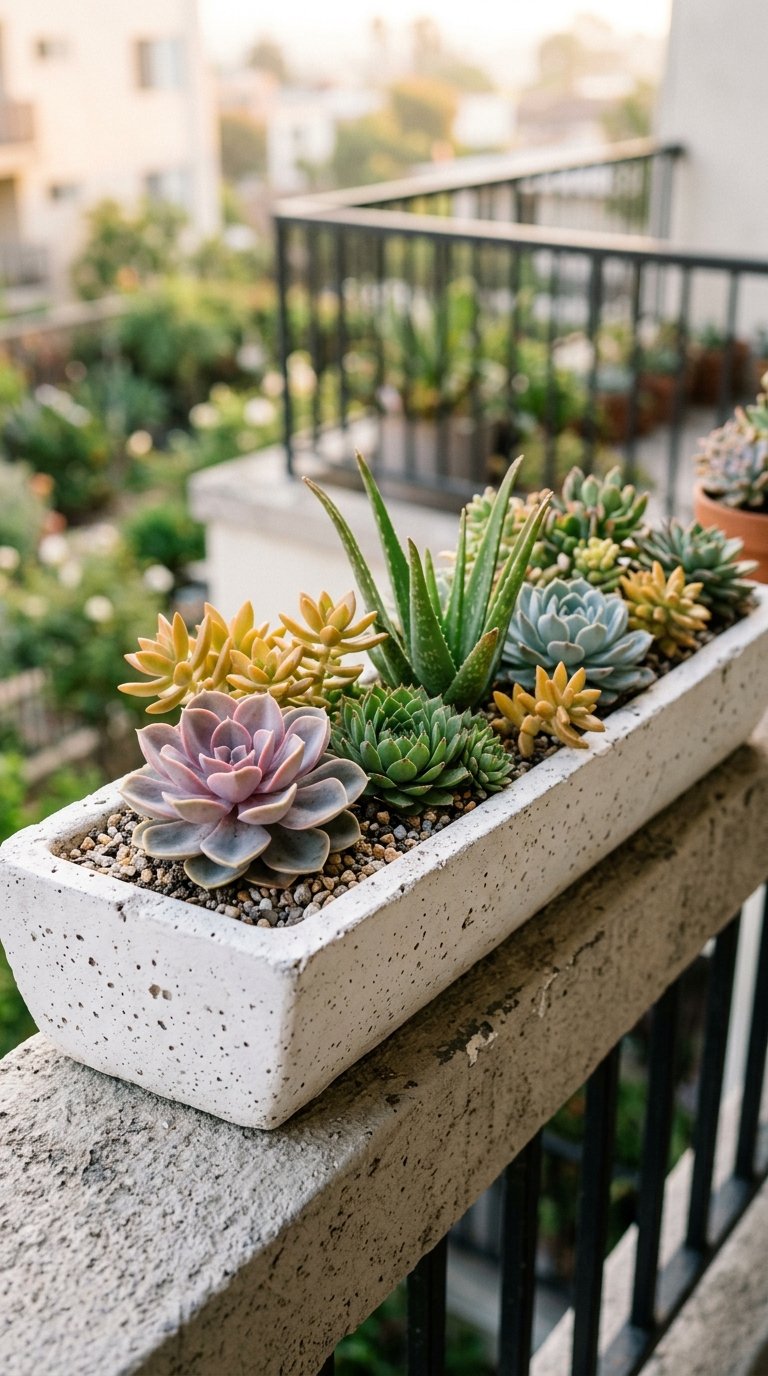
Succulents are the right plant for balconies where watering consistency is a challenge. A 24-inch shallow trough planter filled with six to eight mixed succulents requires watering once every 10 to 14 days in summer and even less in cooler months, making it the most low-maintenance plant display available for a busy balcony gardener.
Best Succulents for Balcony Troughs
- Echeveria: rosette form, wide color range, excellent drought tolerance
- Sedum (stonecrop): spreading habit, autumn color, full sun performer
- Sempervivum (houseleeks): frost-hardy, multiplies freely, year-round interest
- Aloe vera: structural form, medicinal, tolerates full sun and neglect equally well
- Haworthia: tolerates partial shade, ideal for east-facing balconies
Position the trough on the sunniest surface available. A mixed succulent trough costs $15 to $20 in plants and $25 to $40 for the planter. It looks excellent, survives your busiest weeks, and costs almost nothing to maintain.
8. Grow Climbing Plants Up a Trellis Panel
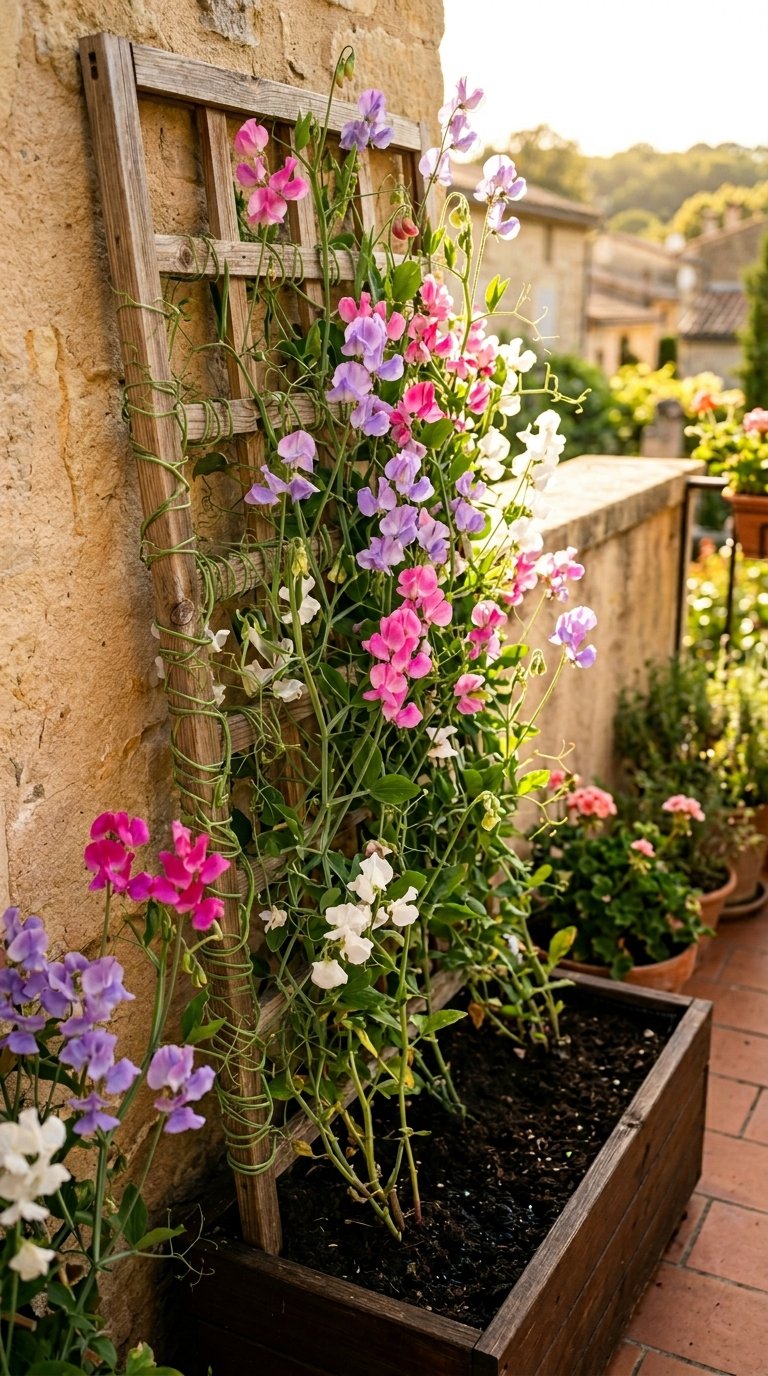
A trellis panel leaned against or fixed to the balcony wall gives climbing plants a structure to work with and creates a living green screen in one season. Sweet peas, black-eyed Susan vine, and morning glory grow to 6 feet of coverage on a 4-foot trellis within eight to ten weeks of planting from seed.
A cedar or galvanized metal trellis panel costs $15 to $40 at most garden centers. Position it in a deep planter filled with quality compost and plant three to four climbing plant seedlings at the base. Train the first few stems onto the trellis manually and the plants handle the rest. By midsummer the trellis becomes a vertical garden feature that covers the full balcony height.
9. Use Self-Watering Planters for Low-Maintenance Plant Care
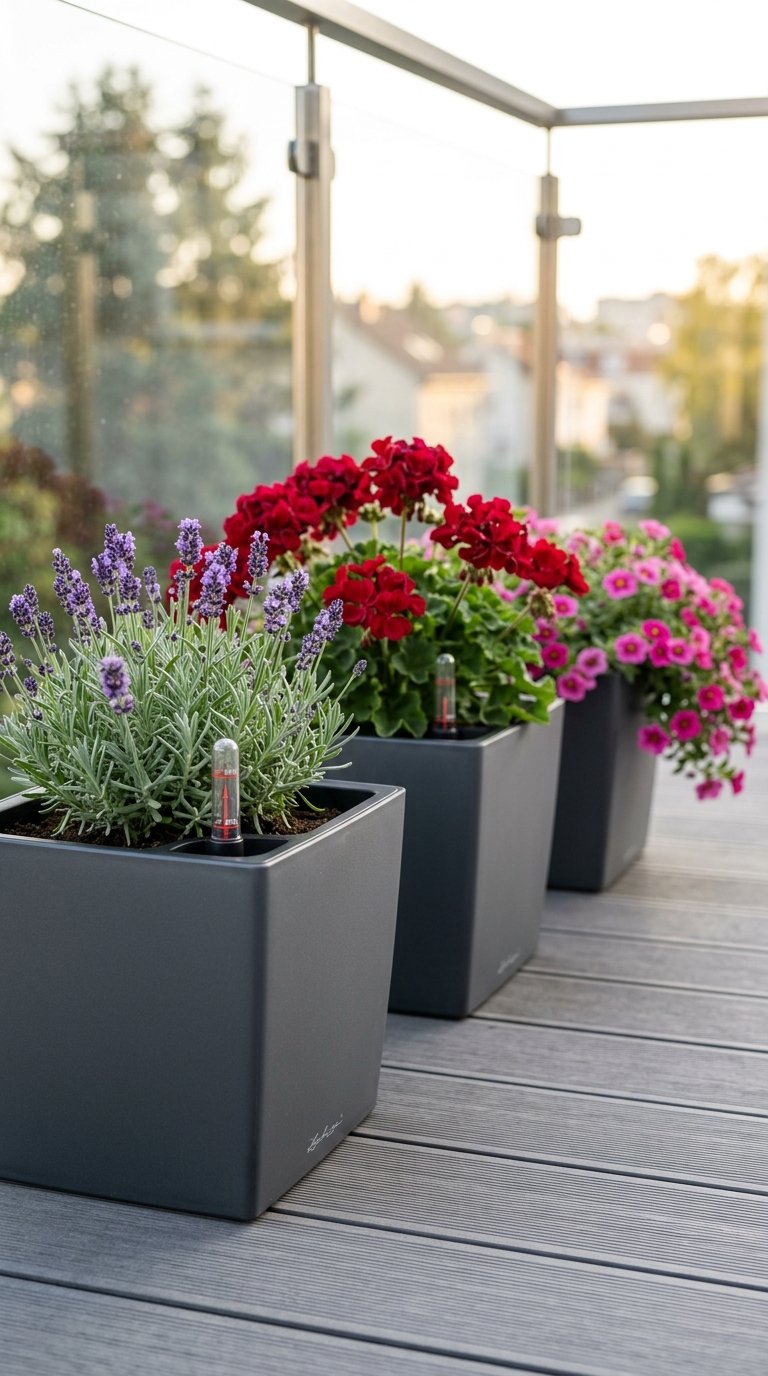
The number one reason balcony plants die is inconsistent watering. Self-watering planters with integrated water reservoirs supply plant roots with moisture from below over 7 to 14 days per fill, eliminating the daily watering routine on south-facing balconies that dry out conventional pots within 24 hours.
Brands like Lechuza and Stewart Garden make high-quality self-watering planters in multiple sizes from $25 to $120. The sub-irrigation system prevents both underwatering and overwatering simultaneously because the plant draws moisture as needed rather than receiving it on your schedule. For balcony gardeners who travel frequently or work long hours, self-watering planters are the difference between a thriving balcony garden and a graveyard of dried-out pots.
10. Plant a Fragrant Jasmine for Scent and Coverage
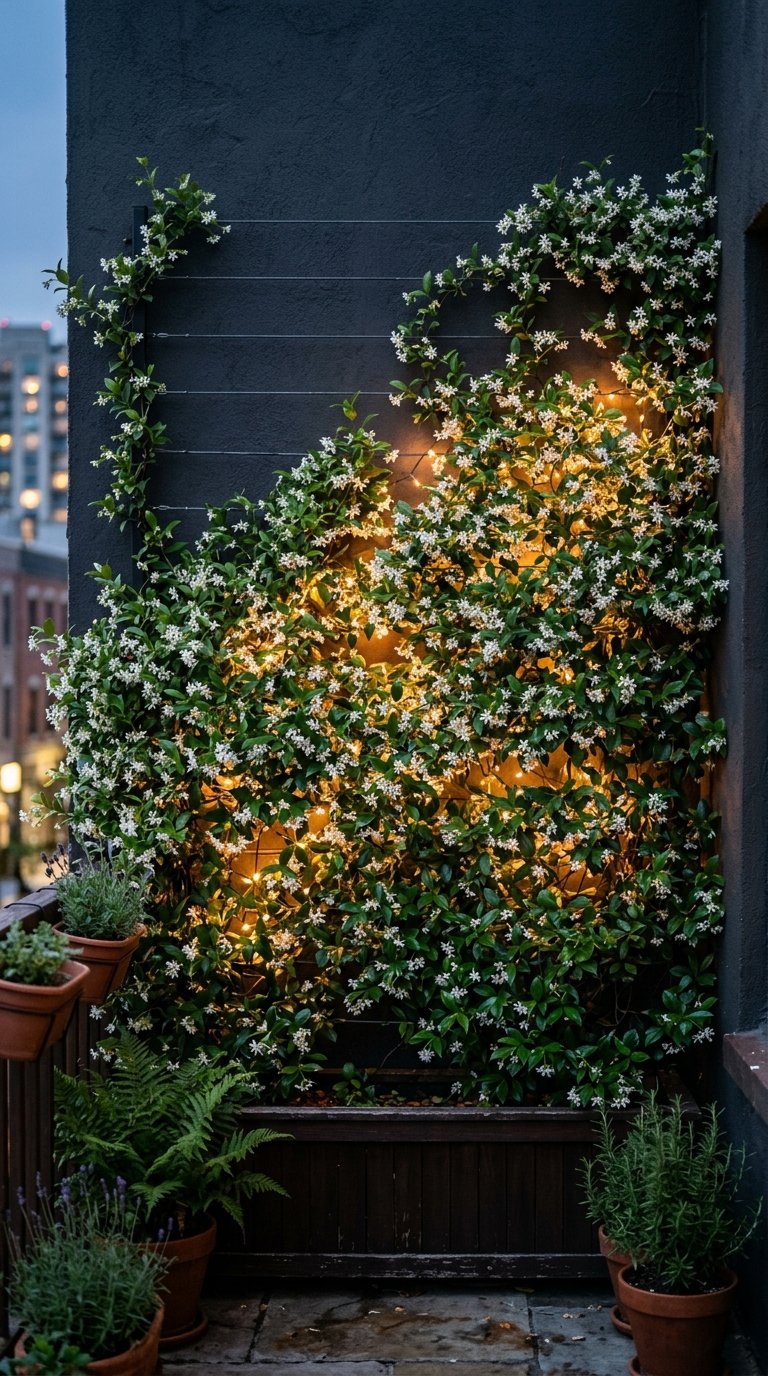
Fragrance on a balcony changes the entire sensory experience of spending time there. Trachelospermum jasminoides (star jasmine) grows as a climbing plant or trailing shrub, produces intensely fragrant white flowers from late spring through summer, and maintains glossy evergreen foliage year-round in mild climates.
Train star jasmine up a wall-mounted wire system or over a trellis panel for maximum coverage. It tolerates partial shade better than most fragrant plants, which makes it suitable for east or north-facing balconies where sun-loving alternatives struggle. A 2-liter star jasmine plant costs $15 to $25 and covers a 4×4 foot structure within two to three growing seasons. IMO, it delivers the best fragrance return per pound of any balcony plant available.
11. Create a Cottage Garden Feel With Mixed Annual Planters
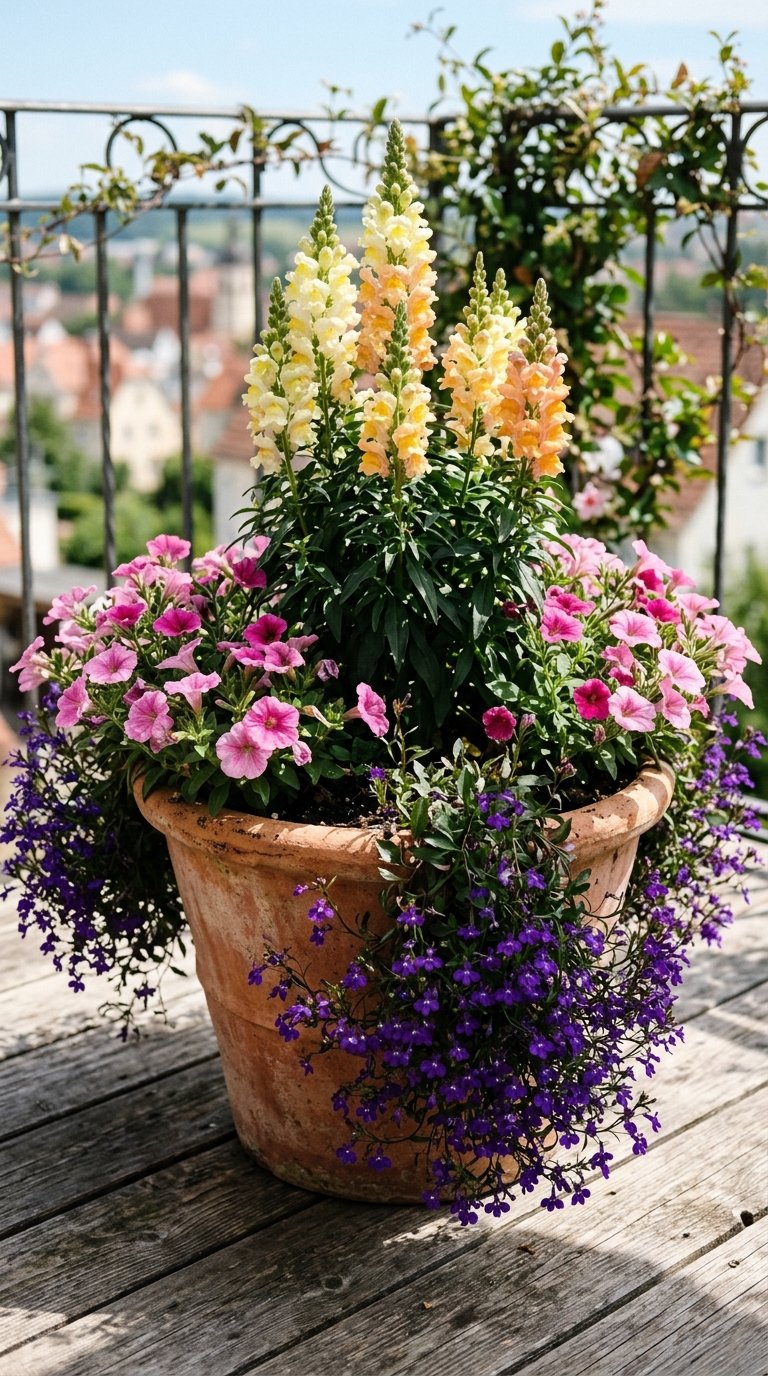
Annual flowers change the balcony visual completely for under $20 per season. A large container filled with a mix of petunias, snapdragons, lobelia, and verbena delivers continuous color from May through first frost with deadheading as the only maintenance required.
Choose a container at least 14 inches in diameter and fill it with three to five plant varieties at different heights. Place the tallest variety (snapdragons or trailing verbena on a small stake) at the center, medium-height plants in the middle ring, and trailing lobelia at the edge to cascade over the container lip. A four-plant annual mix costs $8 to $15 and flowers continuously for five to six months.
12. Build a Tiered Plant Stand for Maximum Plant Density
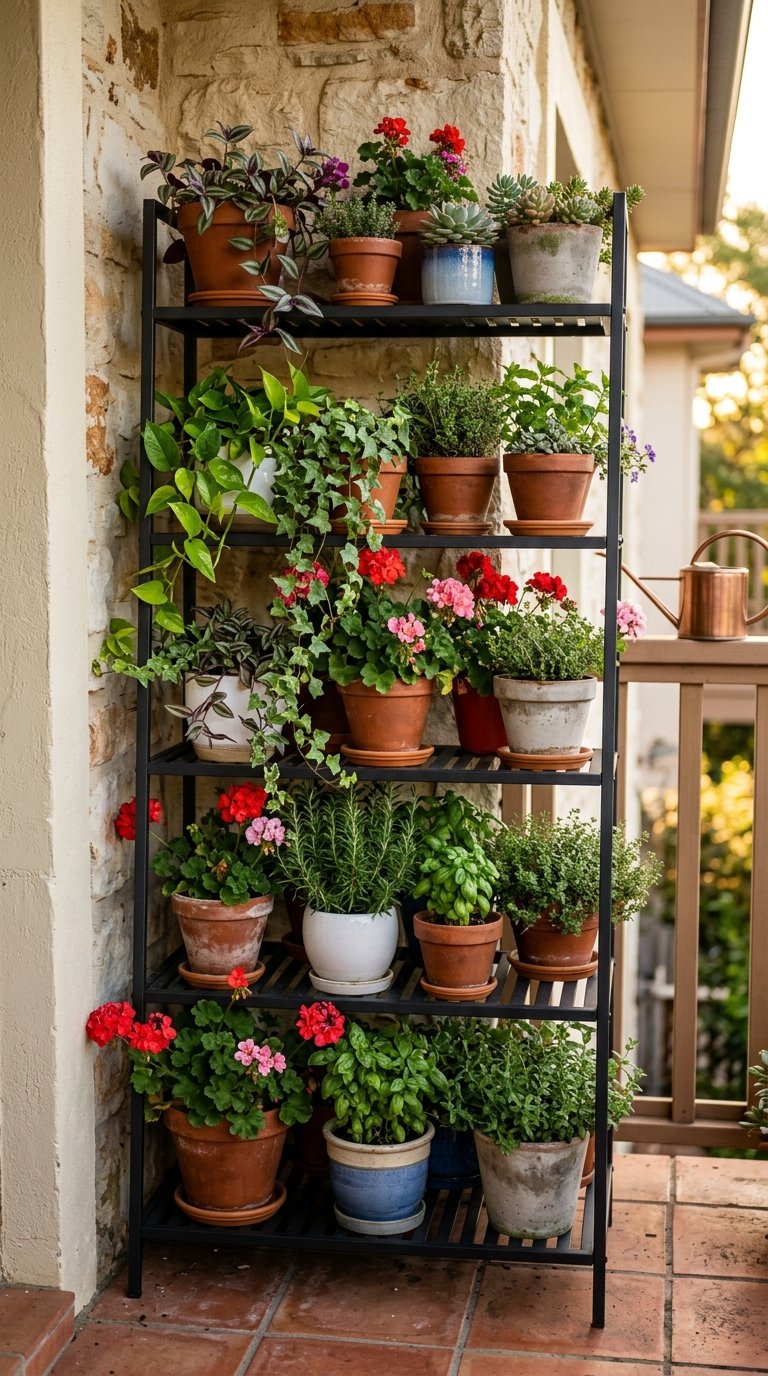
A tiered plant stand multiplies your plant capacity without multiplying the floor footprint. A five-tier plant stand holds 10 to 15 pots in a 24-inch square footprint, which means you fill an entire corner of the balcony with plants while using the same floor space as a single large container.
Position taller plants on the lower tiers and compact or trailing plants on the upper tiers so each plant receives adequate light without blocking the plant below. Metal tiered plant stands with powder-coat finish cost $35 to $80 and handle outdoor conditions for multiple seasons. A fully planted five-tier stand transforms a bare balcony corner into the visual centerpiece of the entire outdoor space.
13. Grow Tomatoes in Containers for a Productive Balcony
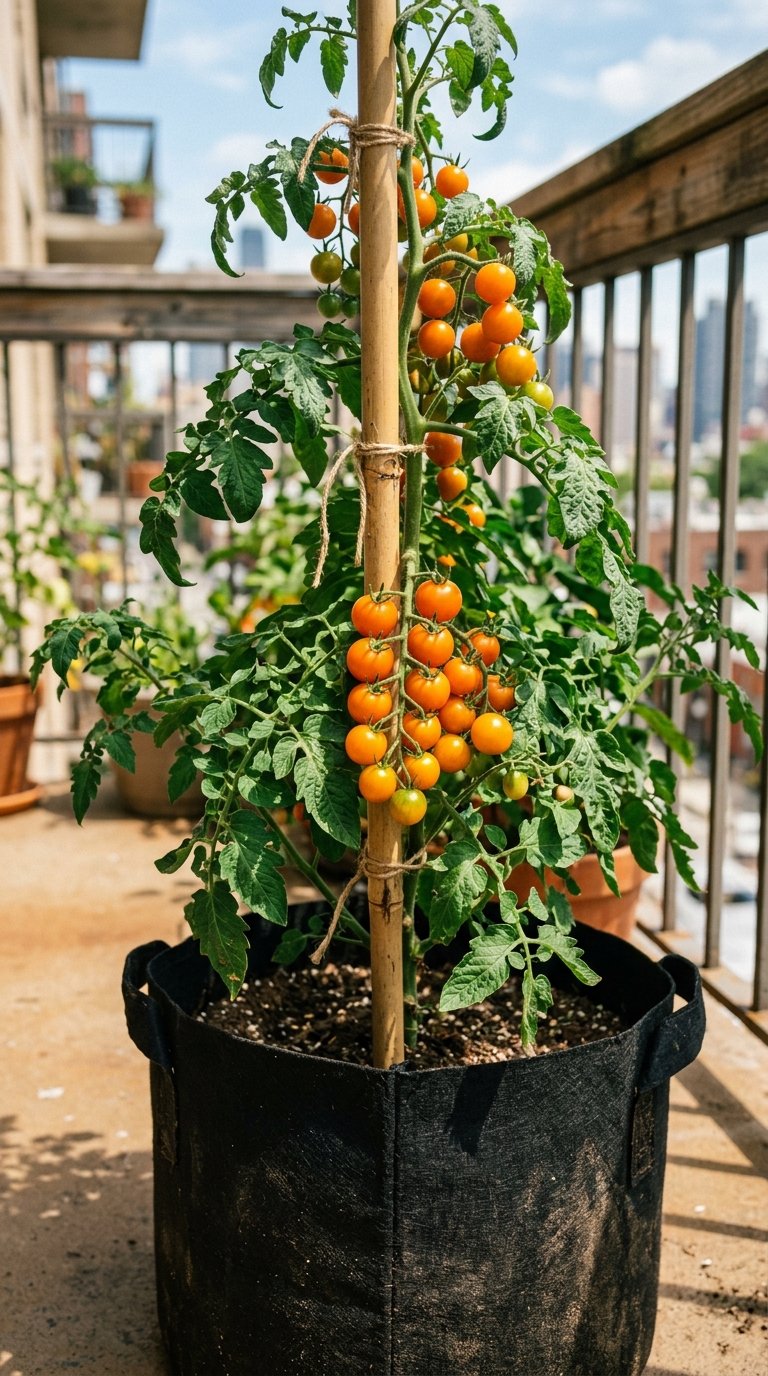
A south or west-facing balcony with 6 or more hours of daily sun grows excellent tomatoes in containers. A single indeterminate tomato plant in a 15-gallon container produces 10 to 15 pounds of tomatoes over a summer growing season, which justifies the container cost within the first harvest.
Best Tomato Varieties for Balcony Containers
- Tumbling Tom: compact trailing variety, no staking required, ideal for railing boxes
- Sungold cherry tomato: extremely productive, sweet flavor, 6-foot vine needing one stake
- Patio F1: specifically bred for container growing, compact 18-inch plant
- Balconi Red: trailing habit, perfect for hanging baskets, continuous cherry production
Feed container tomatoes with a high-potassium liquid fertilizer weekly once flowering begins. Water daily in hot weather. A tomato plant costs $3 to $8. The growing season returns in fresh tomatoes valued at $30 to $60 at supermarket prices.
14. Use Lavender for Color, Fragrance, and Pollinator Appeal
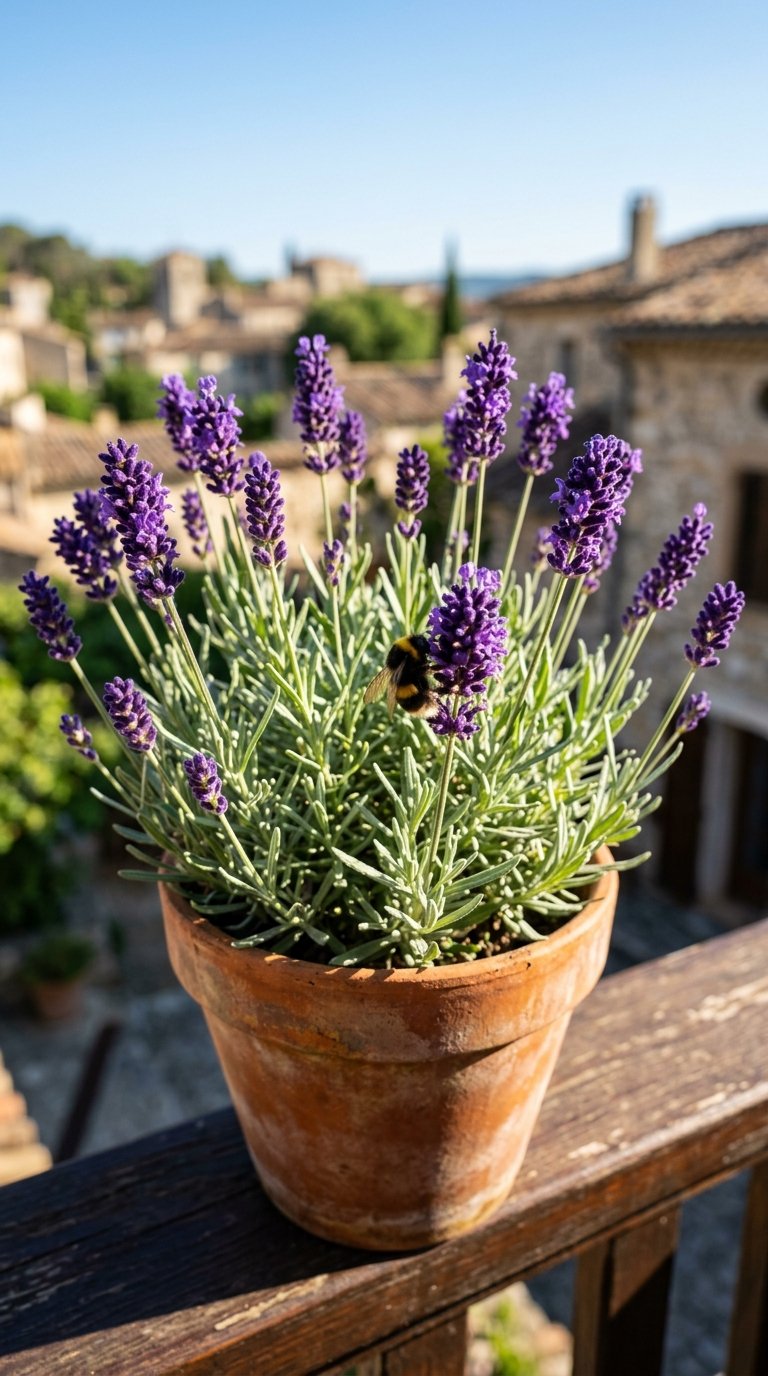
Lavender in a container on a balcony produces fragrance, color, and wildlife interest simultaneously from a single plant. A compact lavender variety like Hidcote or Munstead grows to 18 inches in a 10-inch pot, flowers from June through August, and attracts bees and butterflies to even high-floor urban balconies.
Lavender needs full sun and excellent drainage. Use a peat-free compost mixed with 30 percent horticultural grit to prevent waterlogging, which kills lavender faster than any other condition. Trim lightly after flowering to maintain compact shape and prevent the plant from becoming woody in the center. A lavender plant costs $5 to $12 and performs for three to five years with correct pruning.
15. Plant a Strawberry Tower for a Vertical Edible Garden
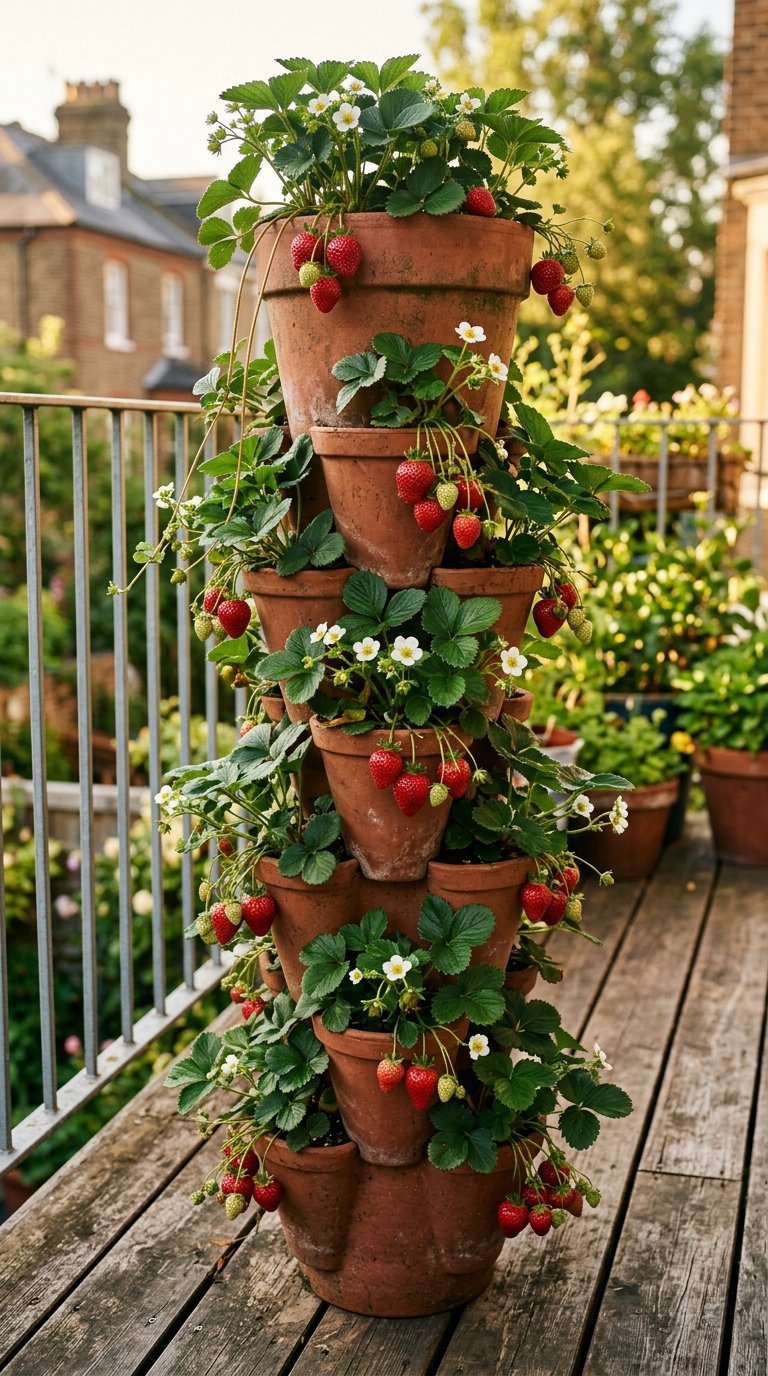
A strawberry tower planter holds 12 to 20 strawberry plants in a 12-inch diameter column that stands 3 feet tall. Each plant produces fruit independently throughout the summer, and the vertical format means fruit hangs at accessible harvest height rather than trailing along a ground surface where slugs find it first.
Strawberry tower planters cost $25 to $50 and come with pre-drilled planting pockets on all sides. Fill the entire column with quality compost, plant one strawberry plant per pocket, and water from the top so moisture distributes downward through all planting levels. A fully planted strawberry tower produces fresh strawberries for six to eight weeks from June onward and looks striking as a balcony feature throughout the entire growing season.
16. Add Ornamental Grasses for Texture and Movement
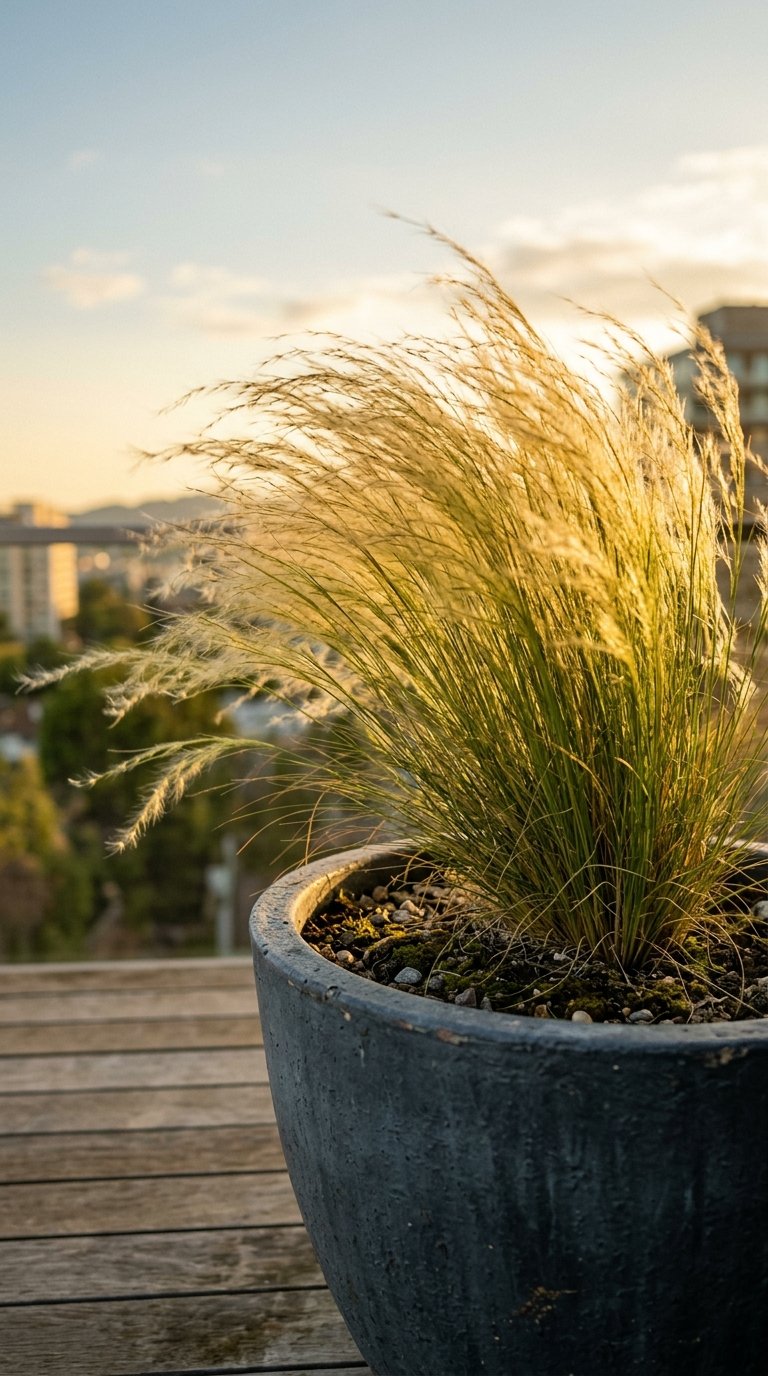
Ornamental grasses bring something no flowering plant delivers: movement. The stems and seed heads of ornamental grasses catch the slightest breeze and create gentle, constant motion that makes the balcony feel alive on days when no other plant moves. That movement quality makes a static balcony arrangement feel dynamic and natural.
Best Ornamental Grasses for Balcony Containers
- Stipa tenuissima (Mexican feather grass): cloud-like texture, golden in summer, self-seeds
- Carex (sedge): wide variety of leaf colors, shade-tolerant, stays compact
- Blue fescue (Festuca glauca): steel blue color, 12-inch mound, full sun
- Hakonechloa (Japanese forest grass): golden-green, elegant arching habit, partial shade
One medium ornamental grass in a 10 to 12-inch pot costs $8 to $20 and provides two to three seasons of interest before needing division. Position it where its movement catches the light for maximum visual effect.
17. Grow a Miniature Rose Bush in a Container
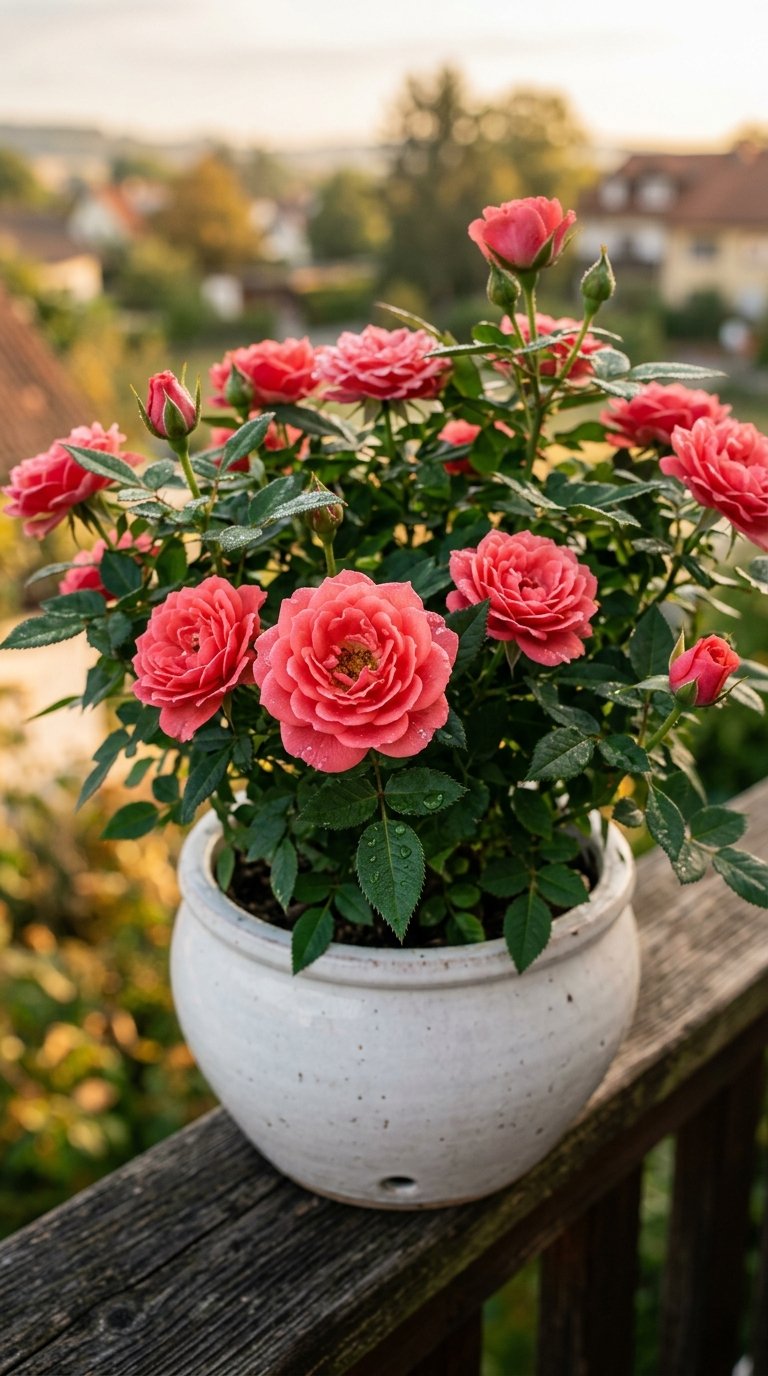
Miniature roses in containers perform better in outdoor balcony conditions than most people expect. A patio rose variety in a 10 to 12-inch pot flowers repeatedly from May through October with deadheading as the only maintenance between bloom cycles. The compact form stays under 24 inches tall and wide, which fits neatly on a balcony railing surface or tiered stand.
Miniature and patio rose varieties produce the same flower form as full-size roses in a fraction of the space. Feed monthly with a rose-specific fertilizer and deadhead blooms every five to seven days to maintain continuous flowering. Patio roses cost $8 to $20 at garden centers and deliver five to six months of flowering for that investment.
18. Plant Ferns for a Lush Look on Shaded Balconies
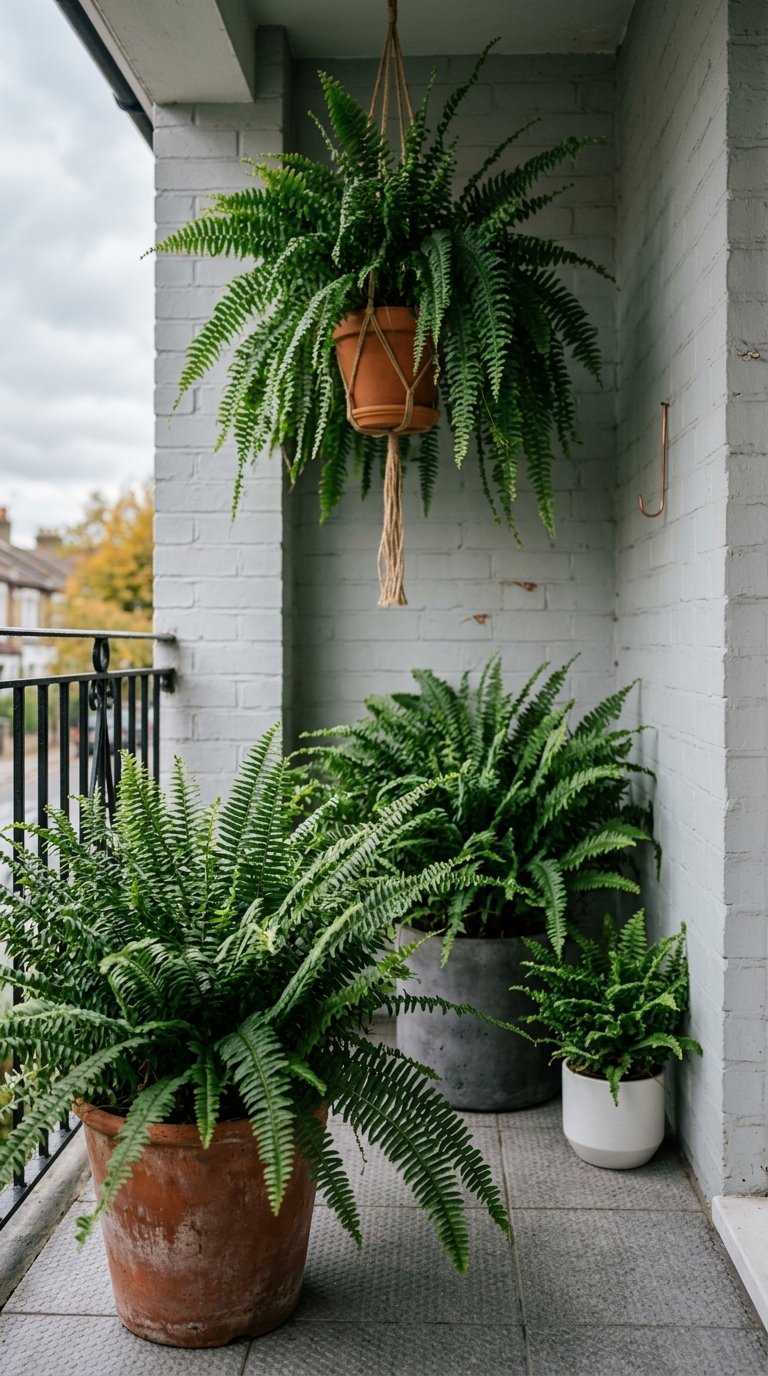
North-facing and heavily shaded balconies exclude most flowering plants and leave gardeners with limited options. Boston ferns, hart’s tongue ferns, and Dryopteris (buckler fern) all thrive in deep shade and produce lush, full foliage that makes a shaded balcony feel like a green retreat rather than a dark overlooked space.
Ferns need consistent moisture and humidity, which shaded balconies typically provide naturally. Mist the fronds in hot dry weather and keep the compost consistently moist rather than letting it dry between waterings. A large Boston fern in a 12-inch hanging basket costs $12 to $20 and grows to a 24-inch spread that fills a shaded corner completely.
19. Create a Color-Themed Planter Display
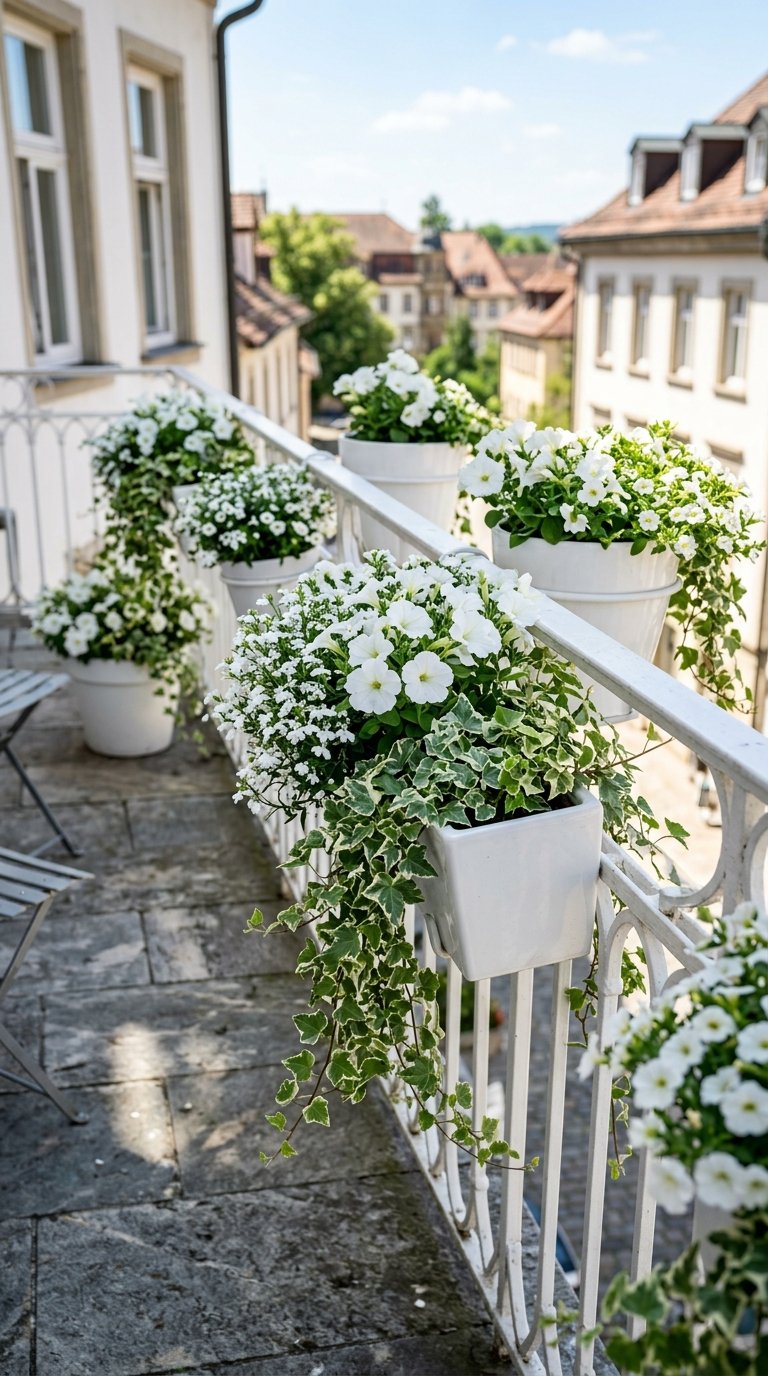
A balcony planted with one flower per pot in every color available looks like a garden center display, not a designed space. Choosing a two or three-color theme and repeating those colors across every container ties the entire balcony together visually and creates a cohesive look that looks planned rather than assembled one impulse purchase at a time.
A white and green scheme (white petunias, white lobelia, variegated ivy, white calibrachoa) delivers a clean, sophisticated look. A warm scheme (orange marigolds, yellow bidens, terracotta gazanias, deep red pelargoniums) creates a vibrant Mediterranean feel. Pick your palette first, then buy plants within it. The discipline costs nothing and the result looks significantly more professional than a mixed-color approach.
20. Use Evergreen Plants for Year-Round Balcony Interest
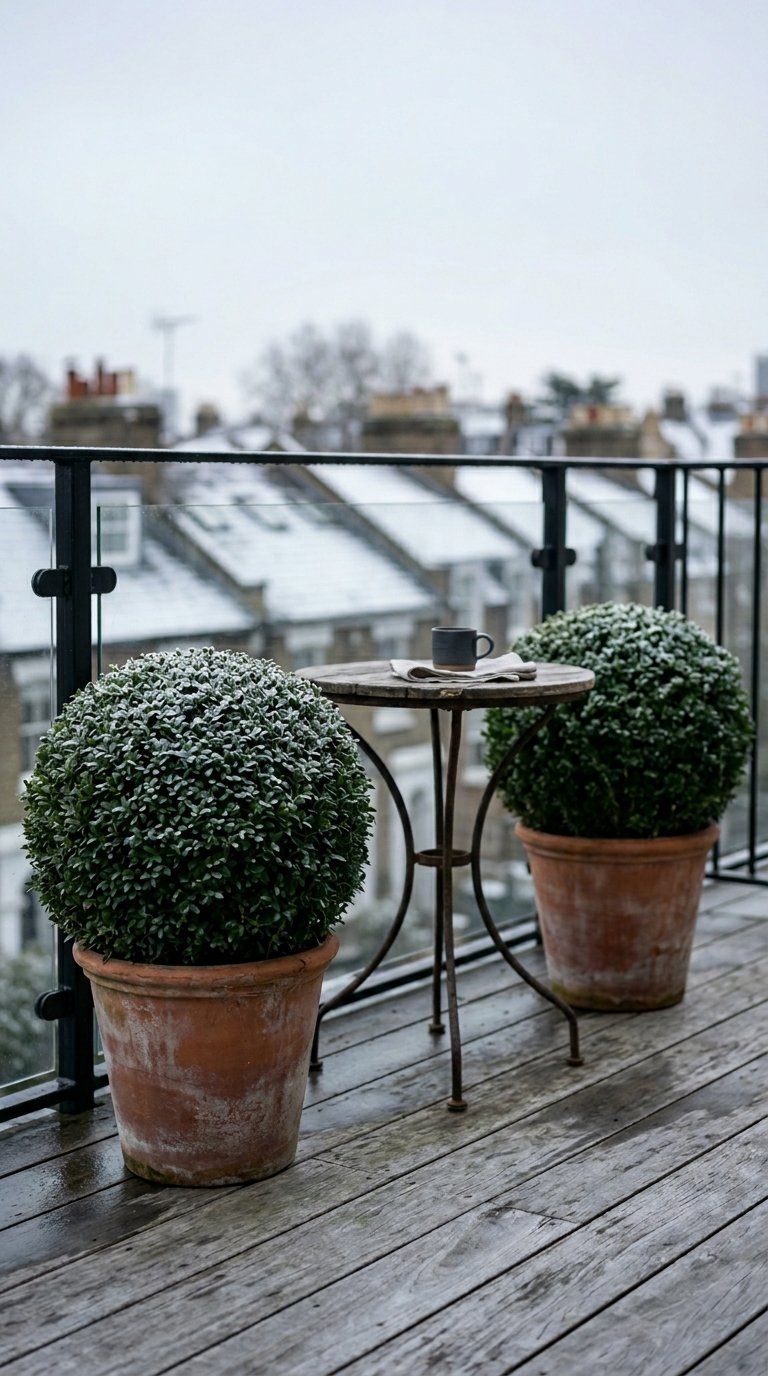
Most balcony plants disappear in winter and leave you with a row of empty pots for five months. Evergreen plants like box (Buxus), Pittosporum, Euonymus, and dwarf conifers maintain their foliage year-round and keep the balcony looking purposeful and alive throughout the dormant season.
Position one or two evergreen structural plants as permanent anchors in the balcony layout and build seasonal planting around them. A clipped box ball in a terracotta pot costs $15 to $30 and holds its form for years with one trim per season. In winter it stands alone as the balcony’s structural feature. In summer it sits among flowering annuals as a green anchor within the full display.
21. Plant Sweet Peas for Fast-Growing Fragrant Coverage
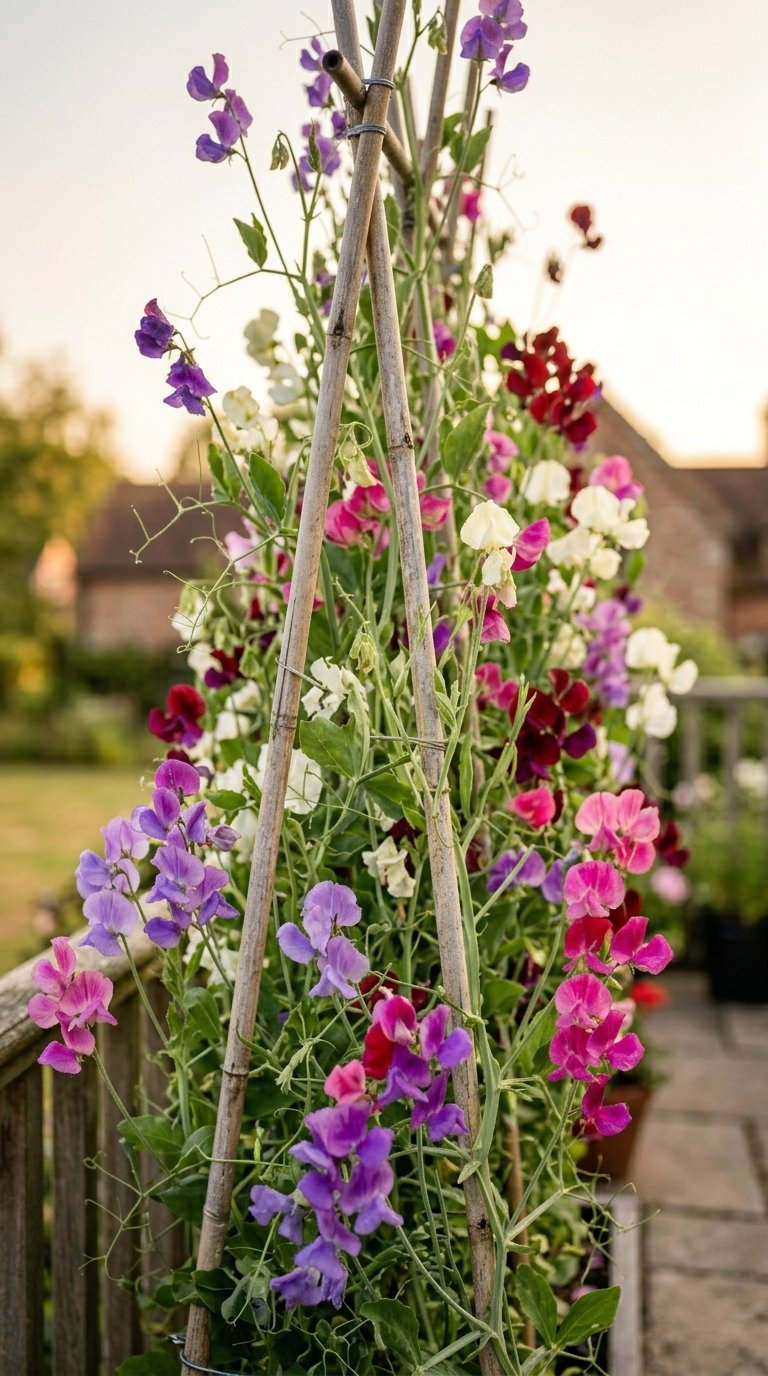
Sweet peas grow faster than any other climbing plant available for balcony use and produce more fragrant flowers per plant than anything in their price bracket. A single sweet pea plant sown in March flowers by May and produces fragrant blooms from May through August on a 4 to 6-foot climb if you cut the flowers regularly to prevent seed set.
Sow sweet pea seeds directly into a 10-inch pot in March or purchase young plants from April onward. Provide cane or trellis support from the first week. Cut flowers every two to three days to encourage continuous production. A packet of sweet pea seeds costs $2 to $4 and produces 15 to 20 plants. That’s an entire balcony season of fragrant cut flowers for the price of a coffee.
22. Add a Dwarf Conifer for Structure and Winter Color
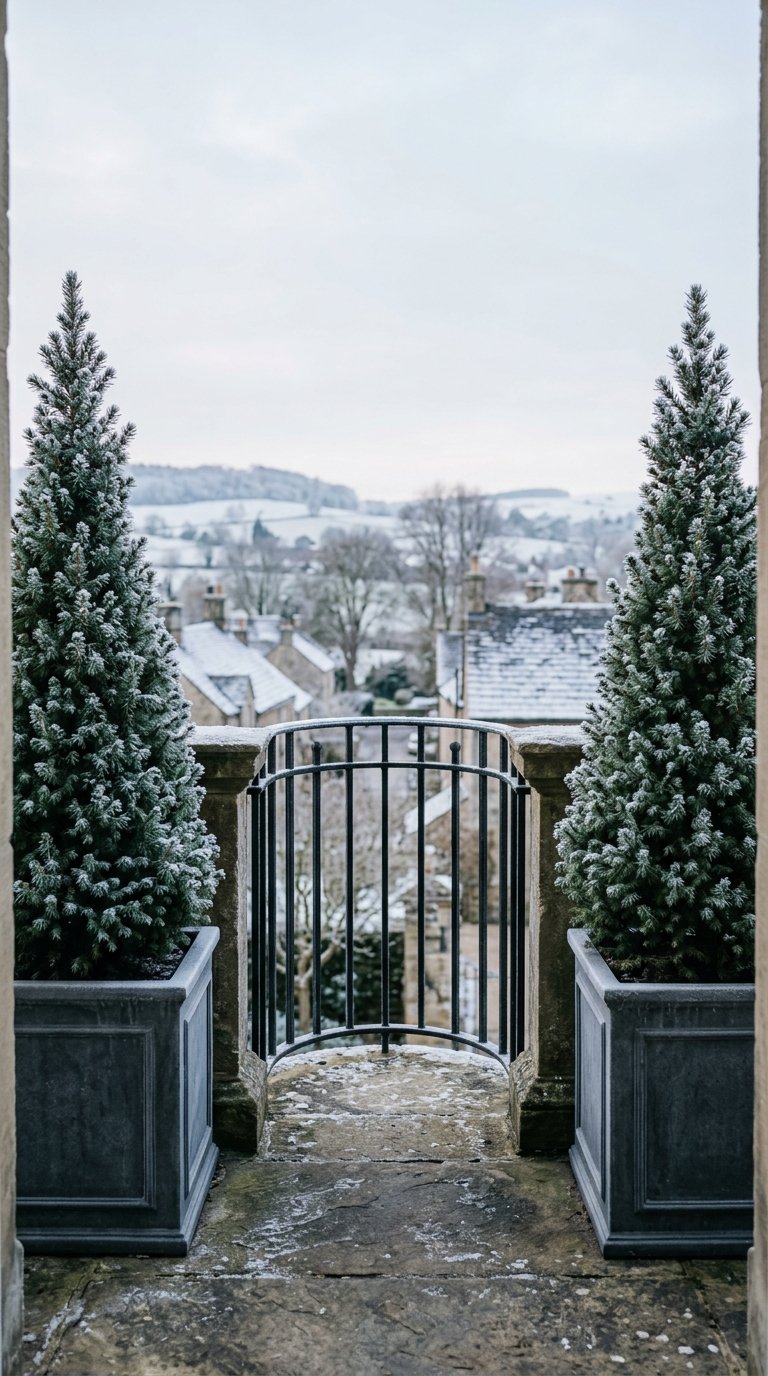
Winter is when most balcony plant collections collapse into bare stems and empty pots. A dwarf conifer like Picea glauca ‘Conica’ or Thuja occidentalis ‘Teddy’ maintains dense evergreen foliage year-round and takes on a naturally conical or globe form that requires no pruning to maintain its shape.
Dwarf conifers grow slowly (2 to 4 inches per year) and stay container-appropriate for 10 to 15 years without outgrowing their pot. Position one at each end of the balcony railing as matching bookend features. They cost $10 to $25 each and provide permanent structural interest in all seasons. In December they accept a strand of fairy lights without any modification, which is either a bonus or an obvious observation depending on your perspective.
23. Grow Geraniums for Season-Long Color With Minimal Care
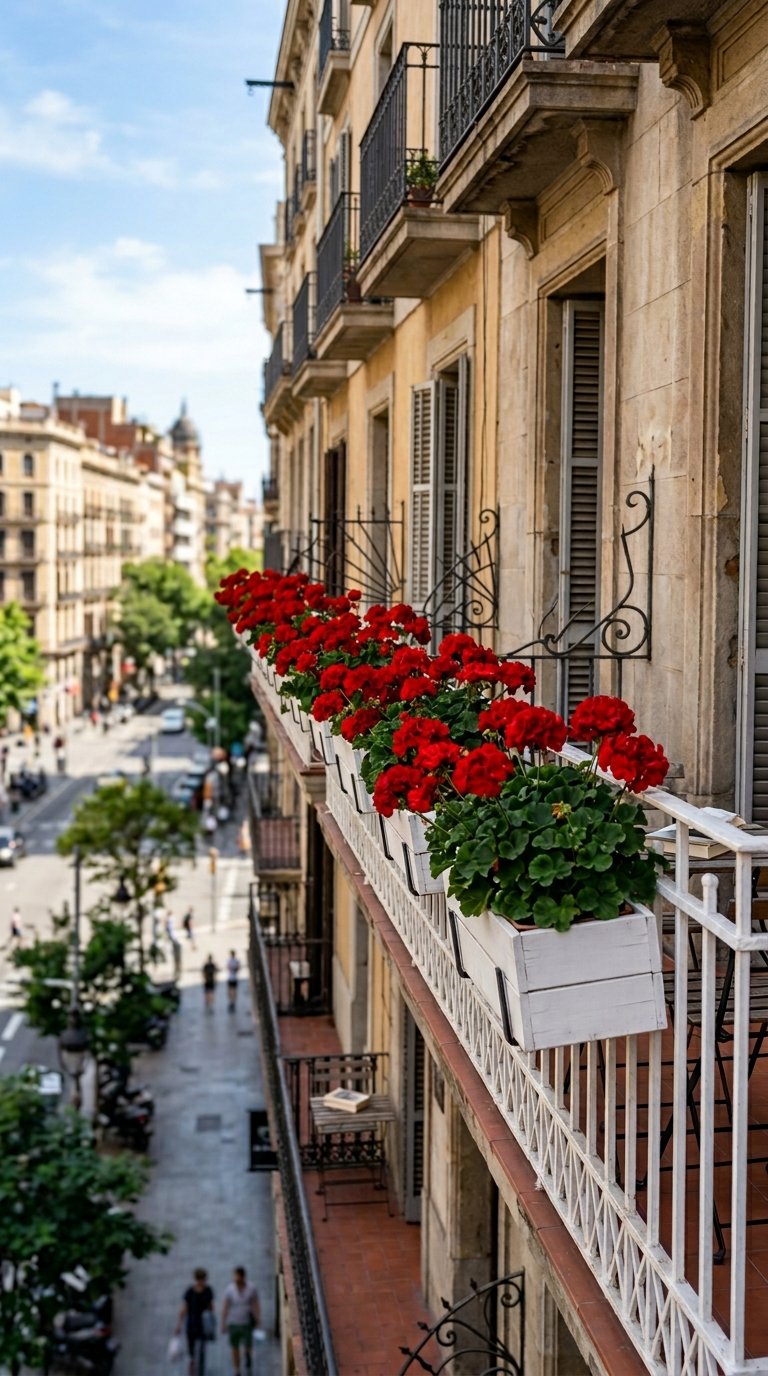
Geraniums (Pelargoniums) are the most reliable balcony flowering plant available and they earn that reputation with continuous color, drought tolerance, and genuine low-maintenance performance. A healthy geranium in a 10-inch pot flowers continuously from May through October with nothing beyond weekly watering, monthly feeding, and regular deadheading of spent flower heads.
Geraniums tolerate the dry conditions of south-facing balconies better than almost any other flowering annual. They grow in full sun, handle heat, and bounce back from accidental drought without lasting damage. A geranium plant costs $3 to $8. Buy six in a complementary color group, put one in each railing box, and the entire balcony railing flowers continuously for five months at a total plant cost of $18 to $48.
24. Plant Night-Scented Stock for Evening Fragrance
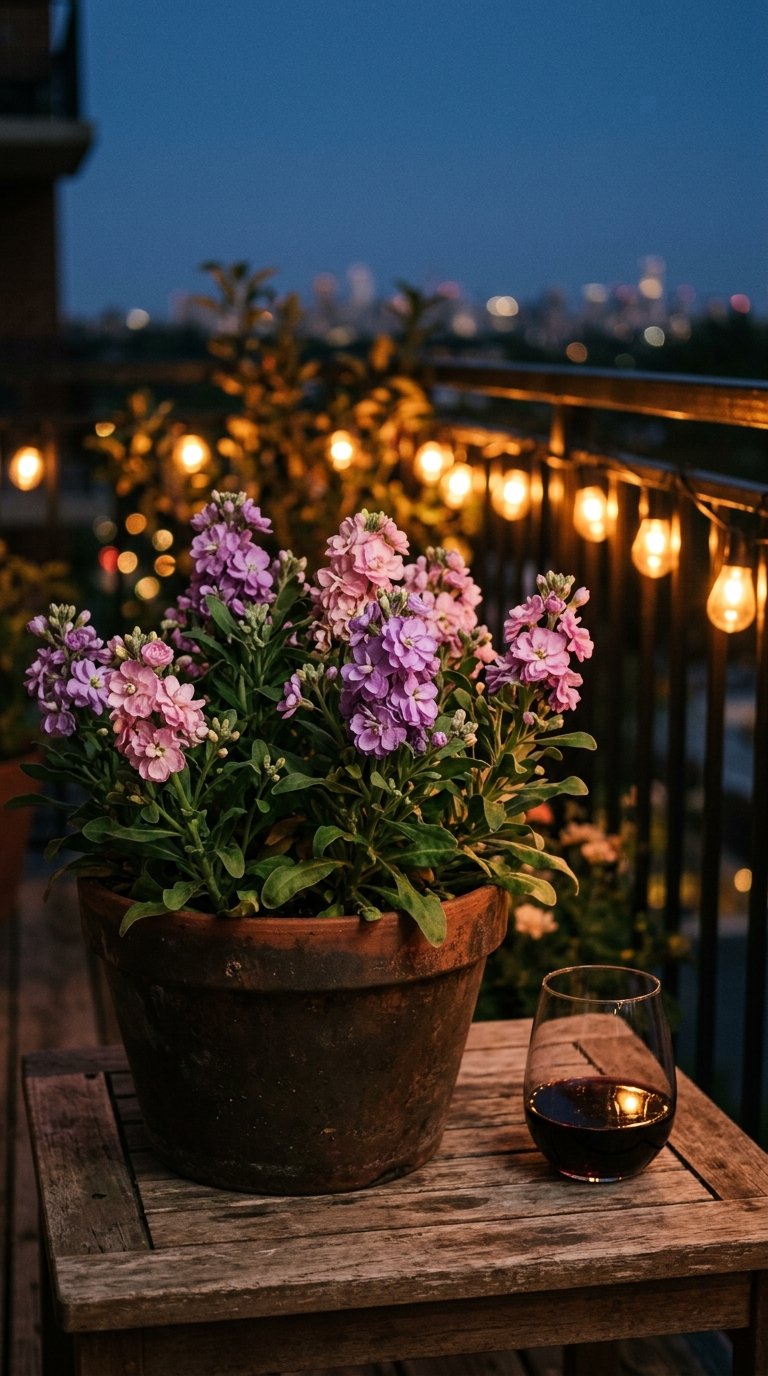
Most fragrant plants release their scent during the day when you’re at work. Night-scented stock (Matthiola longipetala) releases intense fragrance from early evening onward, making it one of the most practical balcony plants for anyone who primarily uses their outdoor space in the evening after work.
Sow night-scented stock seeds directly into a container in April or May. They germinate in 7 to 10 days and flower within 8 to 10 weeks of sowing. The flowers are modest (small purple and pink blooms), but the fragrance is extraordinary and fills the entire balcony as soon as temperatures cool in early evening. A seed packet costs $2 to $3 and fills a 12-inch pot with enough plants for a full season of evening fragrance.
25. Use Decorative Pots as Part of the Plant Display
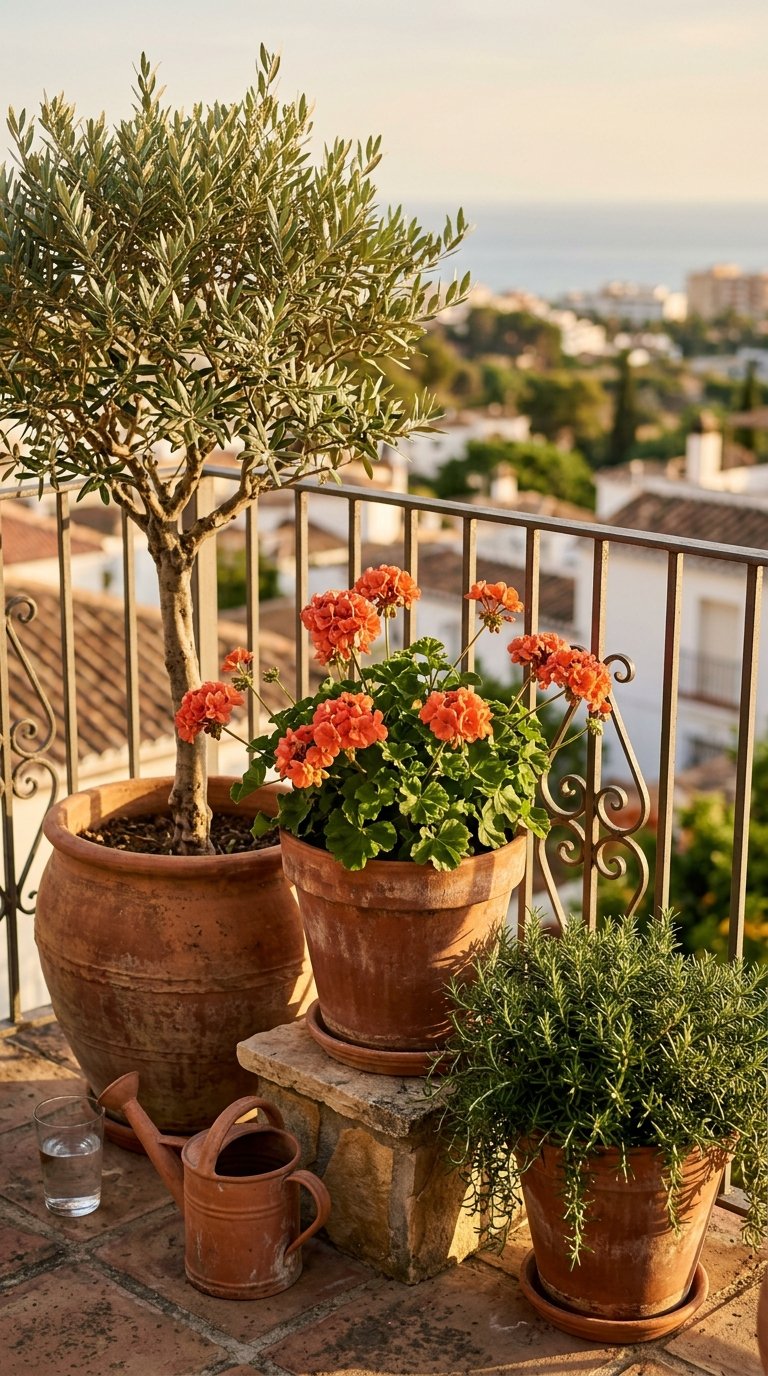
Plants in mismatched, random pots look like an afterthought regardless of how well-chosen the plants are. Grouping plants in containers with a consistent material, color, or finish ties the entire balcony plant display together and elevates the aesthetic from a collection of individual plants into a designed garden scheme.
Choose one pot family and stick to it across your balcony. Terracotta pots in varying sizes create a warm, Mediterranean look. Matte charcoal or slate grey planters suit contemporary balconies. Whitewashed concrete pots work with coastal or Scandinavian aesthetics. Buy pots in three sizes (small, medium, large) within your chosen family and use them at varying heights. The consistency makes the entire plant display look considered rather than accumulated one shopping trip at a time.
Final Thoughts
A well-planted balcony delivers daily use, fresh produce, privacy, fragrance, and visual character from a space most people treat as an afterthought. You don’t need a large budget or a horticulture degree to achieve it. You need the right plants for your light conditions, containers sized appropriately for the plants inside them, and a consistent approach to color and material that ties the whole display together.
Start with three to five ideas from this list suited to your balcony’s sun exposure and your available time for watering. Get those right, enjoy the results, and add more plants from there. A balcony garden grows with you, and the one you build this season looks dramatically better than the bare concrete you’re looking at right now.