23 Outdoor Rug Ideas to Instantly Upgrade Your Patio
An outdoor rug does more design work per square foot than almost anything else you can buy for your patio, deck, or balcony. It defines zones, adds color, hides imperfect flooring, and turns scattered furniture into an actual room. If your outdoor space still feels unfinished even with decent furniture, the rug is probably the missing piece. These 23 outdoor rug ideas show you exactly how to choose and use one.
1. Choose Polypropylene for Maximum Durability
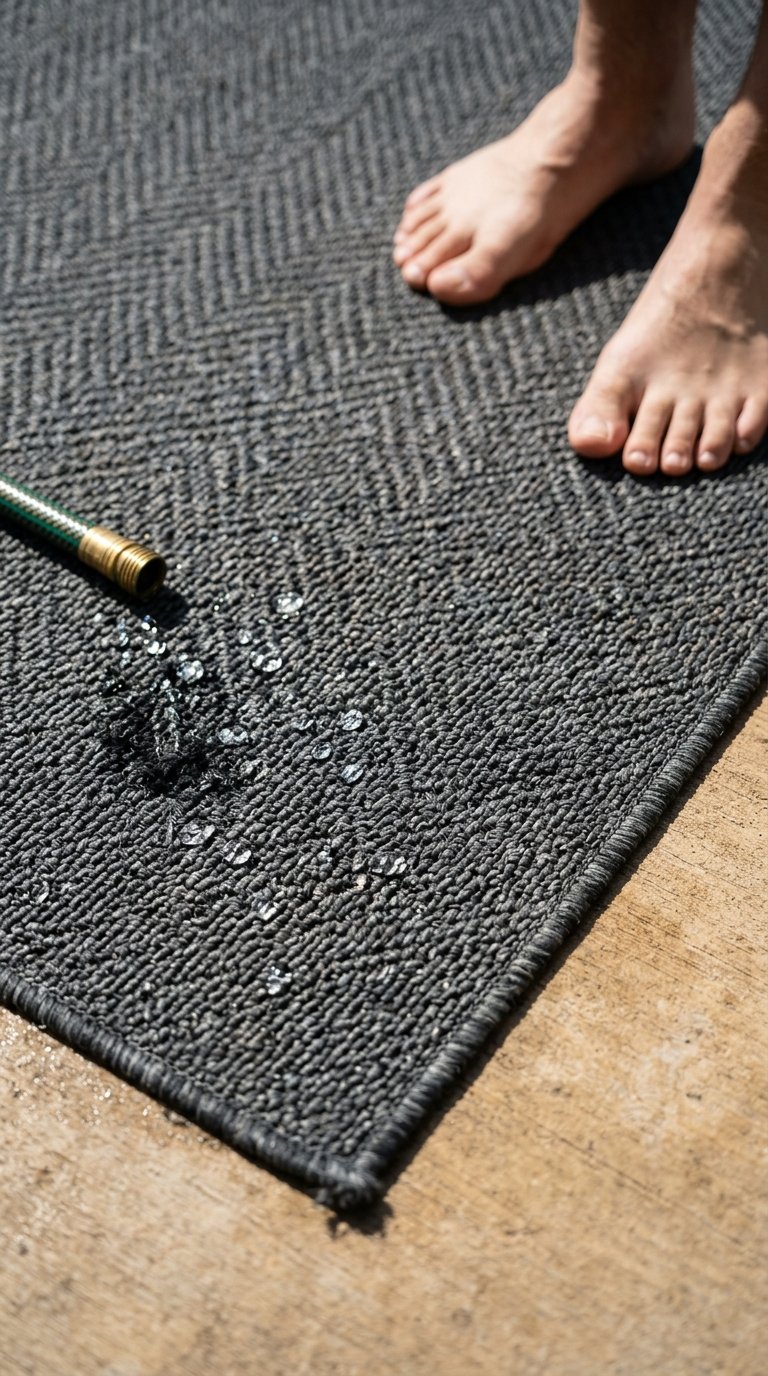
Polypropylene is the workhorse material of outdoor rugs, and for good reason. It resists fading from UV exposure, sheds water instead of absorbing it, and survives mildew exposure that would destroy a natural fiber rug within one rainy season.
An 8×10-foot polypropylene rug runs $45 to $95 at Rugs USA, Home Depot, or Wayfair. It’s machine-washable in many cases or hose-rinseable at minimum, which matters when your patio doubles as a place where kids track in mud and dogs shake off after the sprinkler. IMO, polypropylene is the only material worth considering for a rug that sits directly under furniture in an uncovered space.
2. Layer Two Rugs for a Collected Look
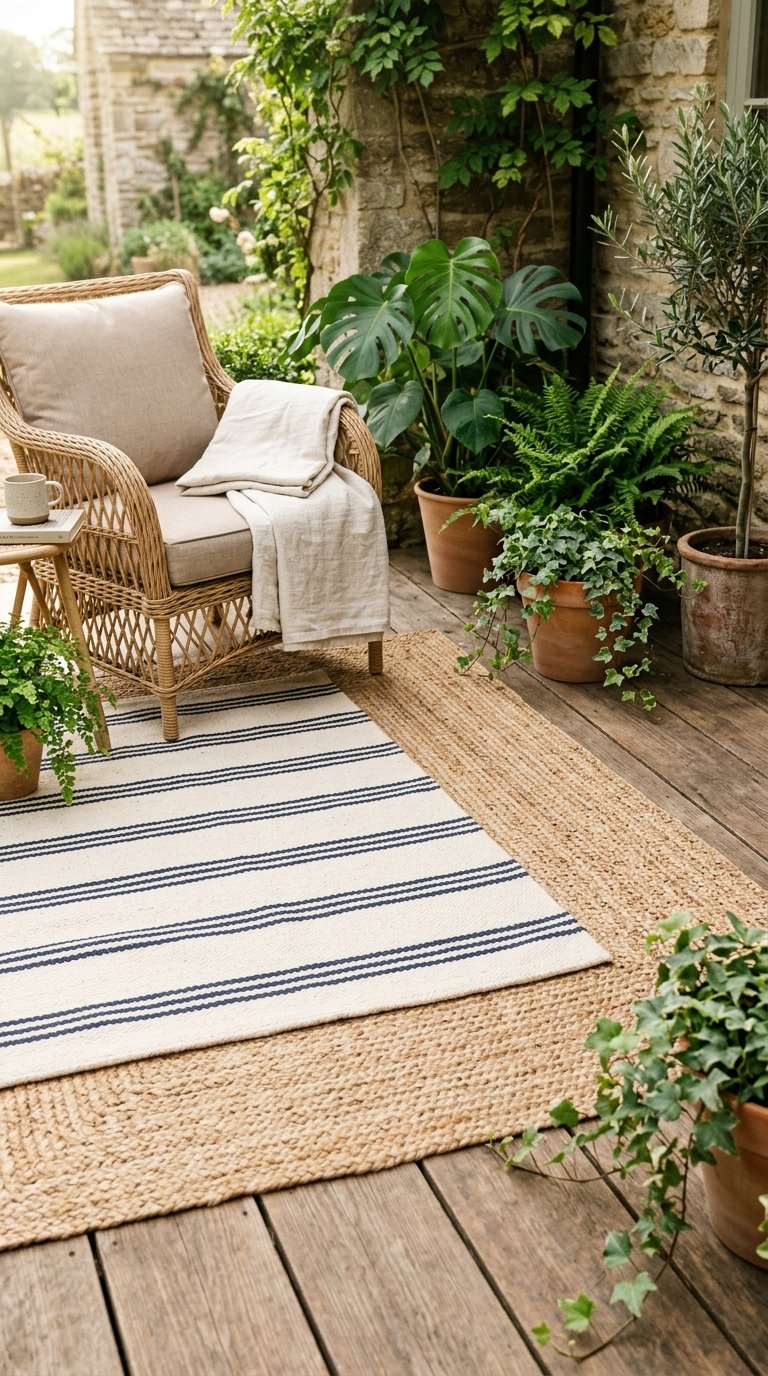
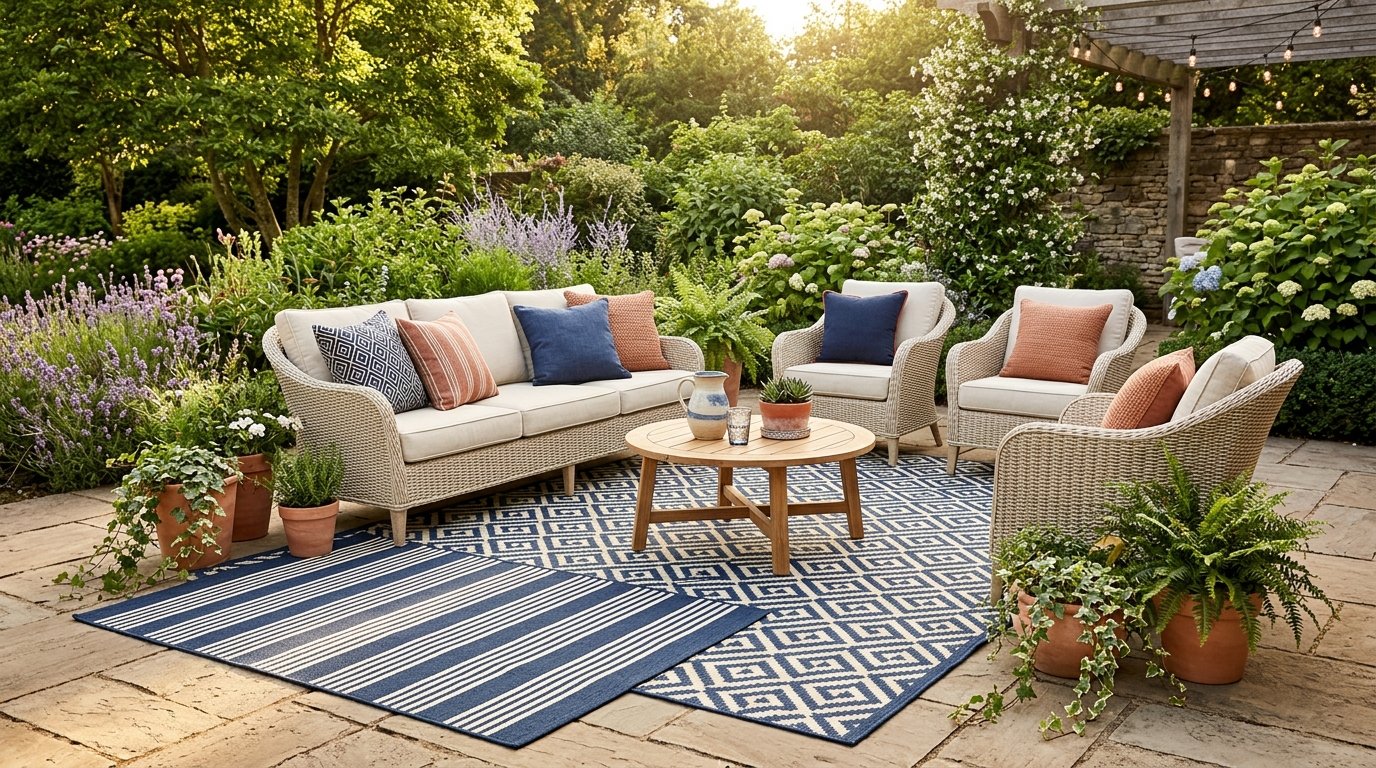
One rug on a patio looks intentional. Two rugs layered, with a larger neutral base and a smaller patterned rug on top offset toward one side, look like a space that’s been curated over time rather than furnished in one trip.
Start with an 8×10 jute-look polypropylene rug as your base and layer a 5×7 striped or geometric rug on top, shifted toward the seating area rather than centered. This approach works especially well if you already own a rug that’s slightly worn. Use it as the hidden base layer and let the top rug do the visual work.
3. Use a Bold Pattern to Anchor a Small Patio
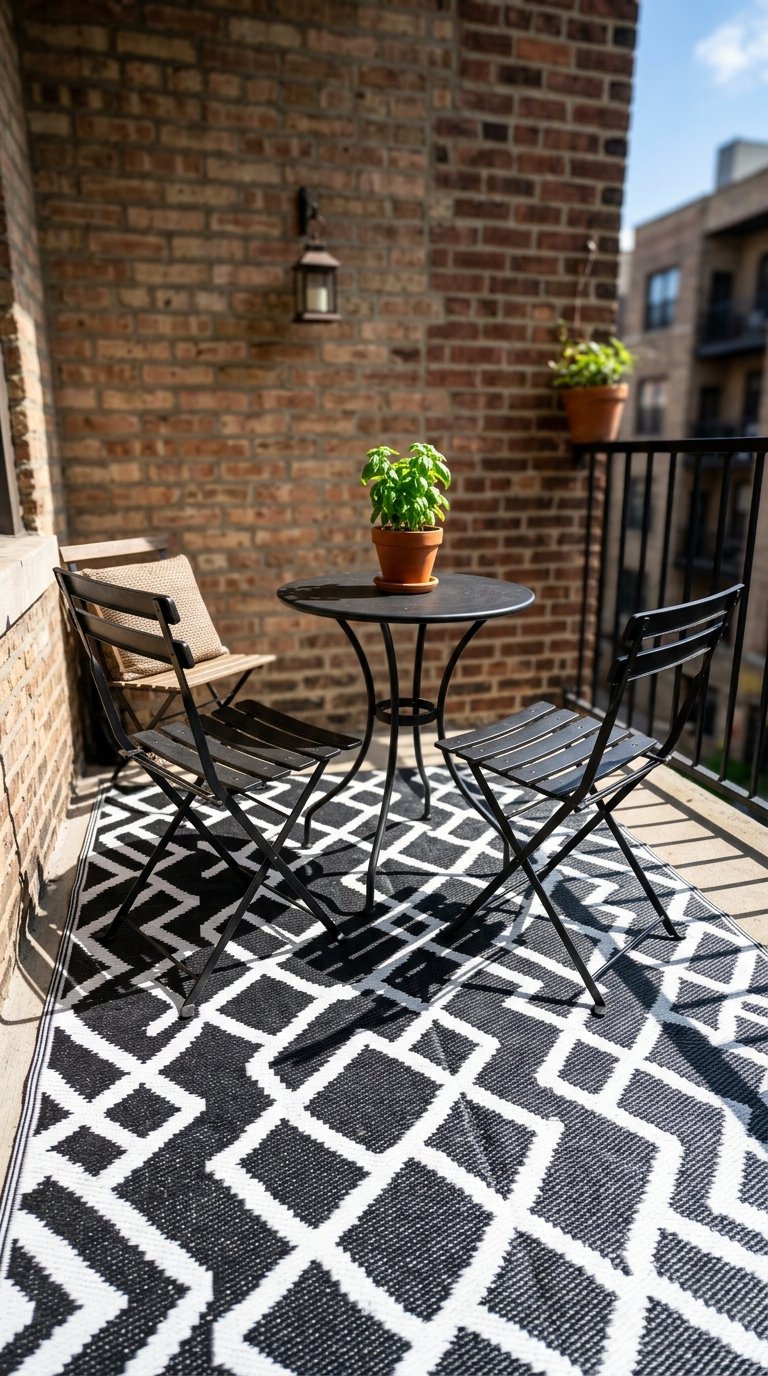
A small patio with plain furniture and a bare concrete floor reads as an afterthought. A bold-patterned rug, think large-scale stripes, Moroccan trellis, or geometric medallions, gives a small space a focal point that pulls the whole area together visually.
Pattern scale matters more than color on a small patio. A rug with a tight, busy pattern makes a small space feel cluttered. A rug with two or three large-scale design elements reads as graphic and intentional even at 5×7 feet. Choose patterns where the largest motif is at least 12 inches across for patios under 100 square feet.
4. Match Your Rug Color to Your Home’s Exterior Trim
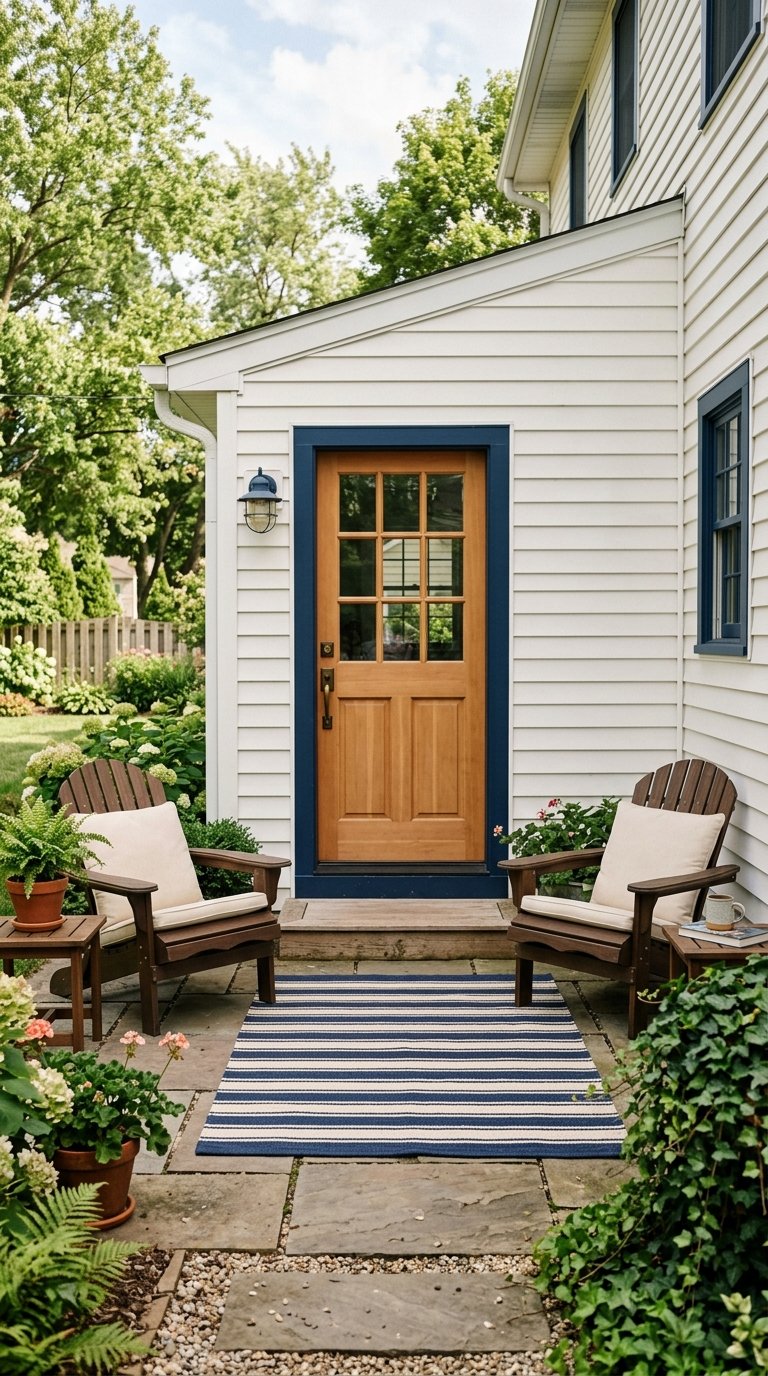
An outdoor rug that pulls one color from your home’s existing exterior palette, trim color, shutters, door color, creates a connection between your house and your outdoor space that random rug colors never achieve. This is the same principle interior designers use when they pull a rug color from existing artwork or furniture.
Stand at your patio door and look at what’s visible: door color, trim, any consistent planter or furniture color. Choose a rug with at least one color band that matches. A navy front door with a navy-striped outdoor rug on the patio creates a visual thread that makes the whole exterior feel designed rather than assembled piece by piece.
5. Size Up: Bigger Than You Think You Need
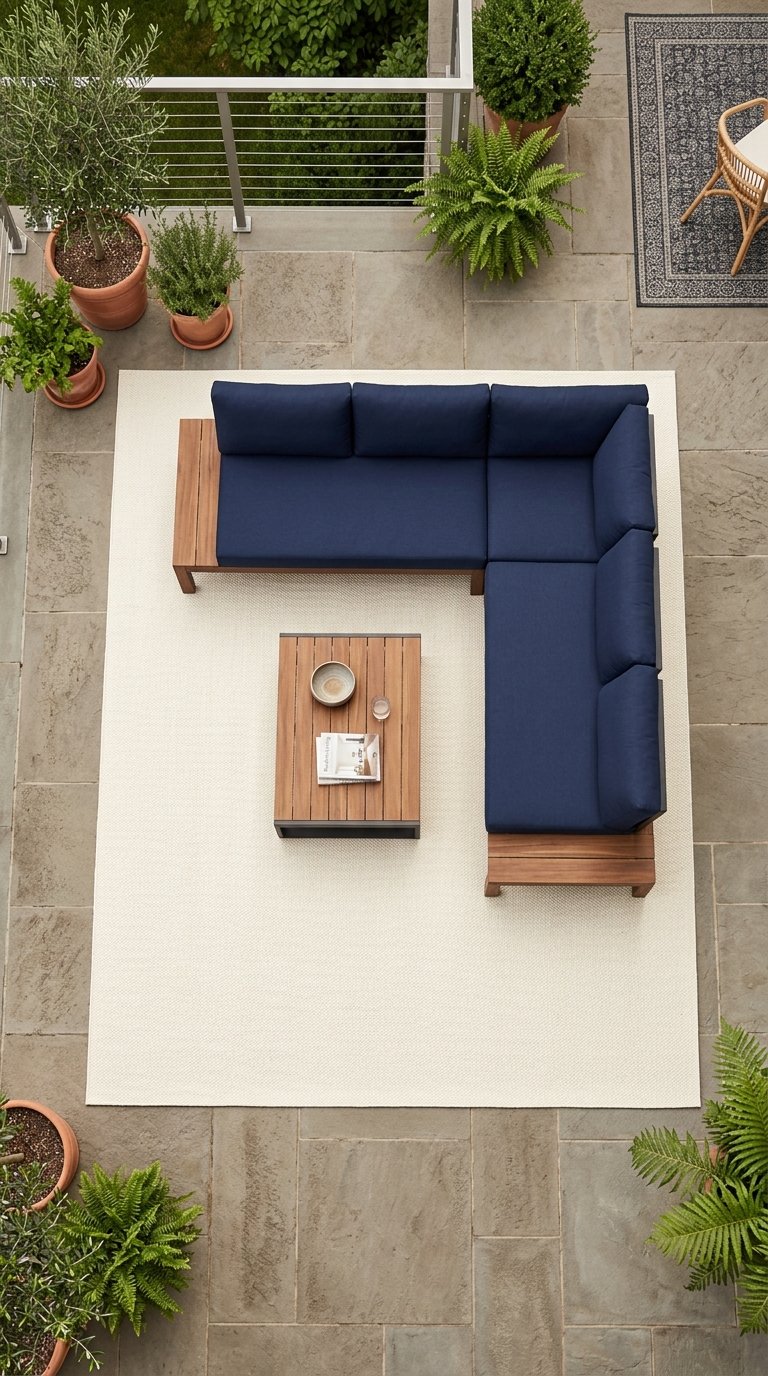
The single most common outdoor rug mistake is buying one too small. A rug that only fits under a coffee table, with furniture legs sitting on bare concrete around it, looks like an afterthought rather than a foundation.
The rug should extend at least 6 inches beyond the front legs of your seating on all sides where furniture sits. For a standard sectional and coffee table arrangement, that usually means an 8×10 or 9×12 rug minimum, even on patios that feel like they should only need a 5×7. When in doubt, size up one increment. A slightly oversized rug looks intentional. A slightly undersized rug looks like a mistake every time.
6. Use a Round Rug to Soften a Rectangular Space
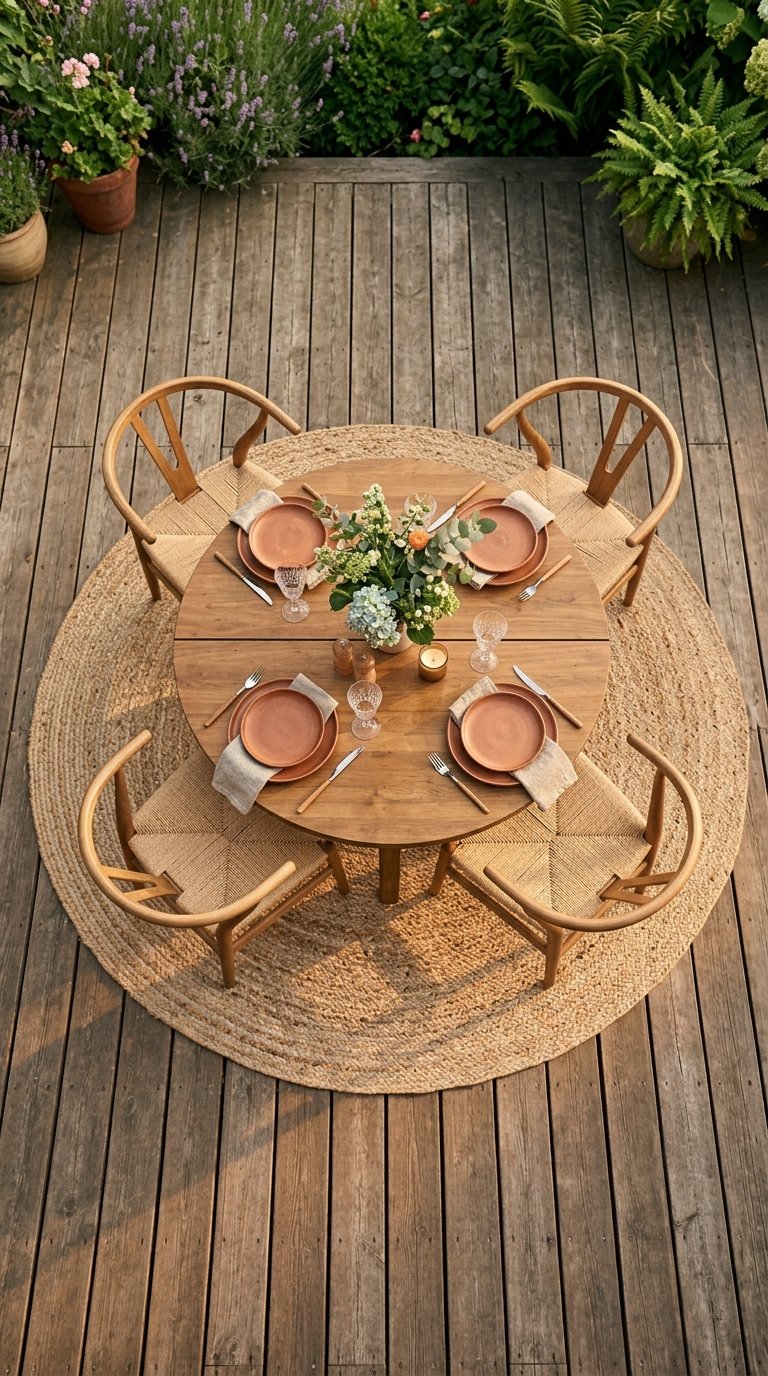
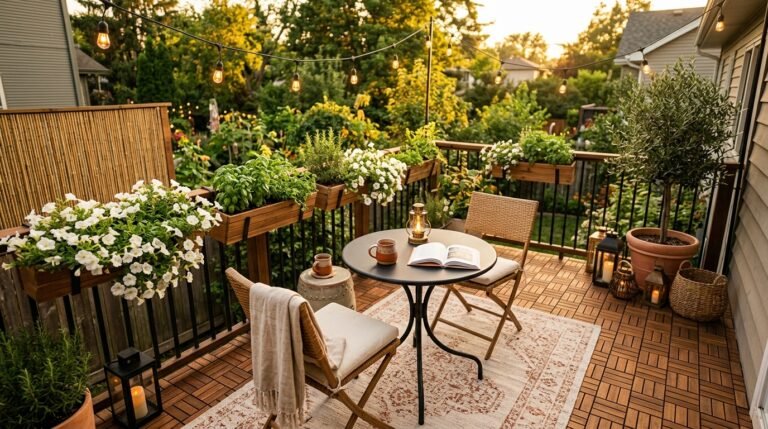
Most patios, decks, and furniture arrangements are rectangular. A round outdoor rug under a round table, a conversation circle of chairs, or a fire pit breaks that rectangular monotony and creates a visual pause that a rectangular rug in the same spot doesn’t achieve.
Round rugs in the 6 to 8-foot diameter range run $50 to $120 and work particularly well under round dining tables or as the base for a circular conversation arrangement of four chairs. The circular shape echoes the circular furniture arrangement above it, reinforcing the gathering quality of the space rather than fighting against it.
7. Choose Stripes to Visually Lengthen a Narrow Balcony
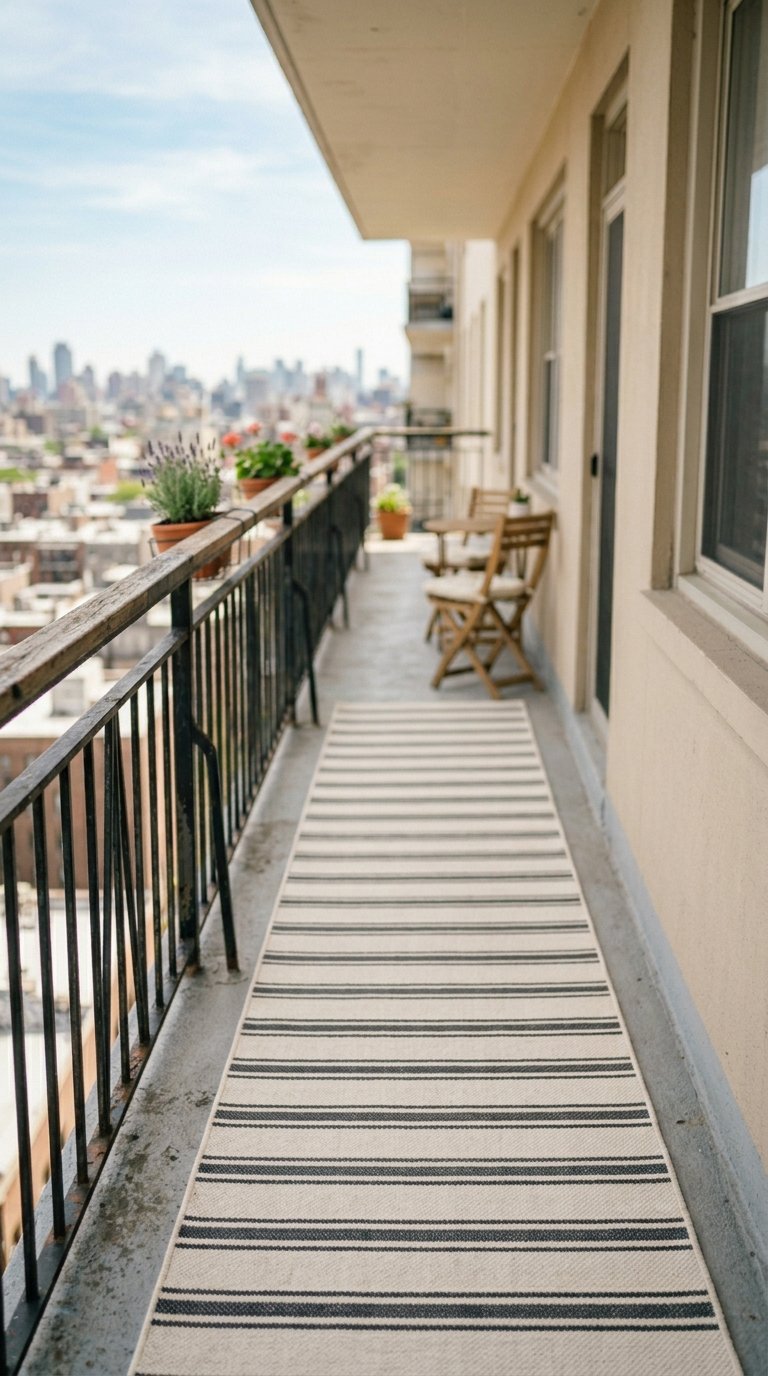
A narrow balcony or deck feels even narrower with the wrong rug orientation. Stripes running the long direction of a narrow space create the same visual lengthening effect that they do on clothing, drawing the eye along the space rather than across it.
Choose a rug with stripes running parallel to the longest dimension of your balcony or narrow deck. A 4×6-foot rug with horizontal stripes oriented along the 6-foot length makes a cramped balcony read as longer and more proportional. Avoid wide stripes on narrow rugs. Thin stripes at 2 to 4 inches wide create more visual movement than wide bands, which can make a small rug feel chopped up.
8. Use Dark Colors to Hide Wear on High-Traffic Areas
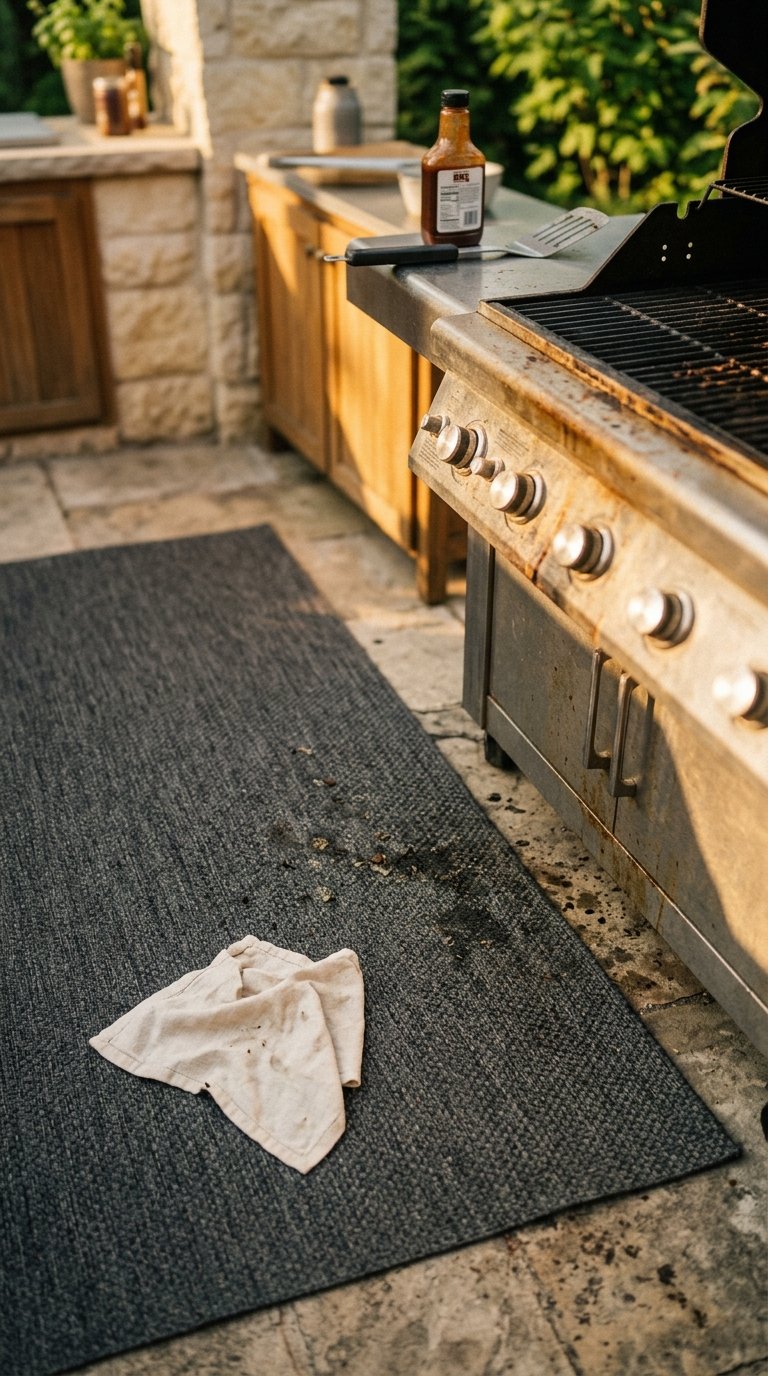
A light-colored rug in a high-traffic outdoor area, near a grill, a door, or a dining table, shows dirt, food spills, and foot traffic wear within weeks. A dark-colored rug in the same location hides the same amount of wear for months longer.
Charcoal, navy, deep green, and espresso brown outdoor rugs handle grill grease splatter, dropped food, and general foot traffic without showing it the way cream or white rugs do. Reserve light-colored rugs for low-traffic zones like a reading nook or a daybed area where spills and heavy foot traffic aren’t a daily concern.
9. Create a Defined Dining Zone With a Rectangular Rug
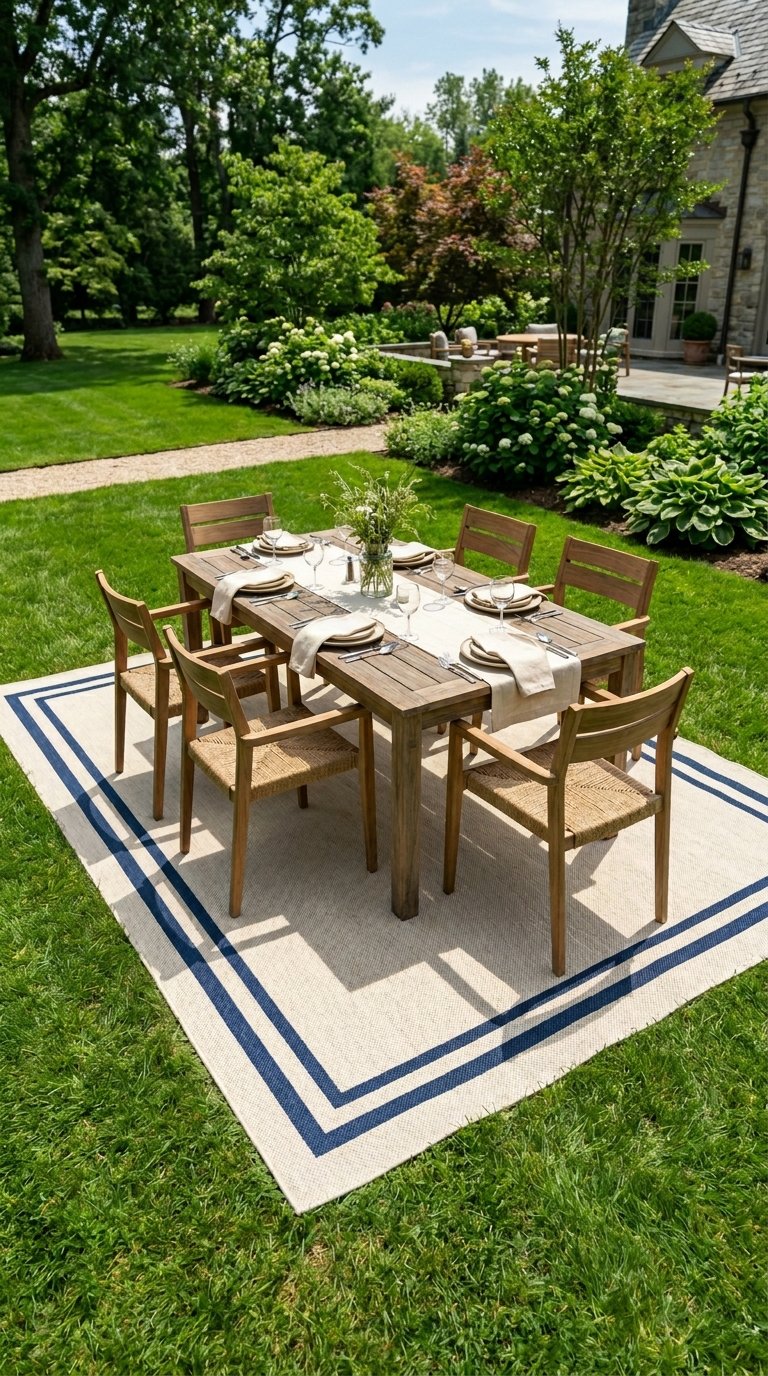
A rectangular outdoor rug under your dining table defines the dining zone as a distinct space within a larger patio, the same way an area rug defines a dining room within an open-concept indoor floor plan. Without it, your outdoor dining table just sits on the same surface as everything else, with no visual separation.
Size your dining rug so chairs remain on the rug even when pulled out from the table. For a standard 6-person rectangular table, that means a rug at least 9×12 feet. Anything smaller results in chair legs catching the rug edge every time someone sits down or stands up, which is a small annoyance that becomes a daily irritation fast.
10. Use Natural Jute-Look Rugs for a Coastal or Cottage Vibe
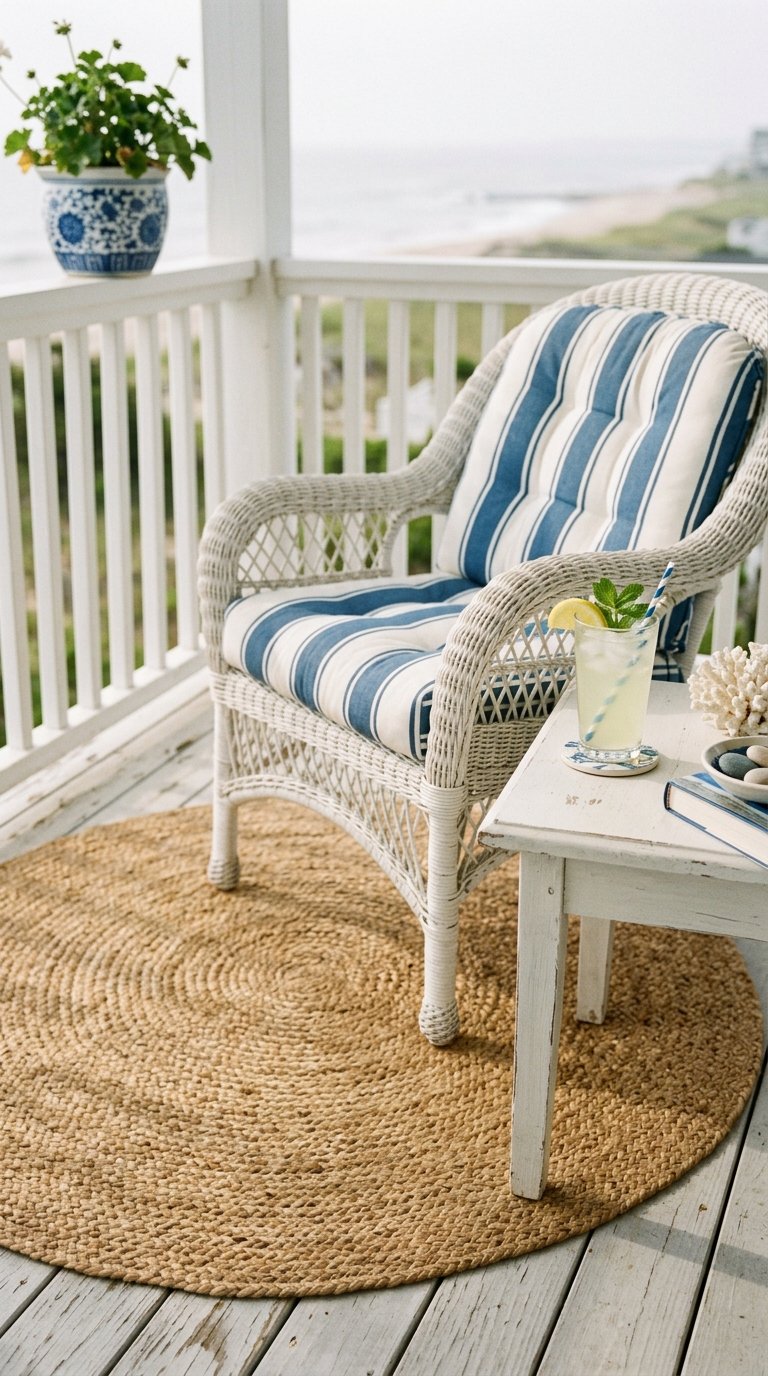
A jute-look outdoor rug in polypropylene gives you the warm, natural aesthetic of real jute without the material’s biggest outdoor weakness: jute absorbs water and develops mold within days of consistent moisture exposure. The synthetic version looks nearly identical from a normal viewing distance.
Natural-look polypropylene rugs in tan, cream, and warm grey tones run $40 to $90 for an 8×10 and work in coastal, cottage, farmhouse, and boho outdoor settings equally well. They photograph beautifully in natural light, which matters if your outdoor space doubles as your most-photographed Instagram backdrop during summer gatherings.
11. Choose a Geometric Print for a Modern Patio
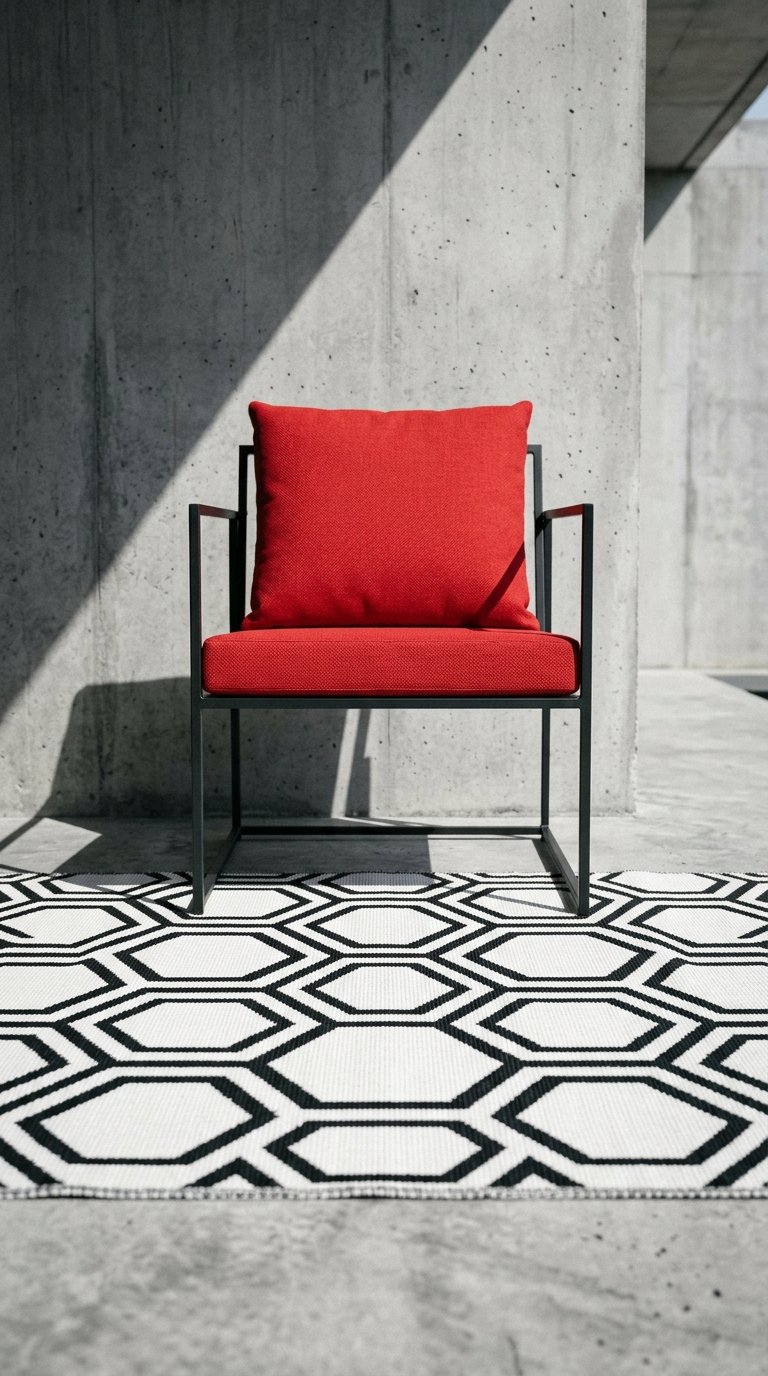
A geometric-print outdoor rug, hexagons, chevrons, or angular line patterns, signals modern design intent more clearly than almost any other rug style. It pairs naturally with clean-lined furniture, metal accents, and a more minimal plant palette.
Black-and-white or charcoal-and-white geometric rugs work as a neutral foundation that lets colorful cushions or planters carry the seasonal color story. Change your throw pillows four times a year and the rug stays as your constant, modern backdrop. This is the rug equivalent of a capsule wardrobe: one strong neutral piece that works with everything you rotate around it.
12. Use a Floral Print Rug to Soften a Hard Hardscape
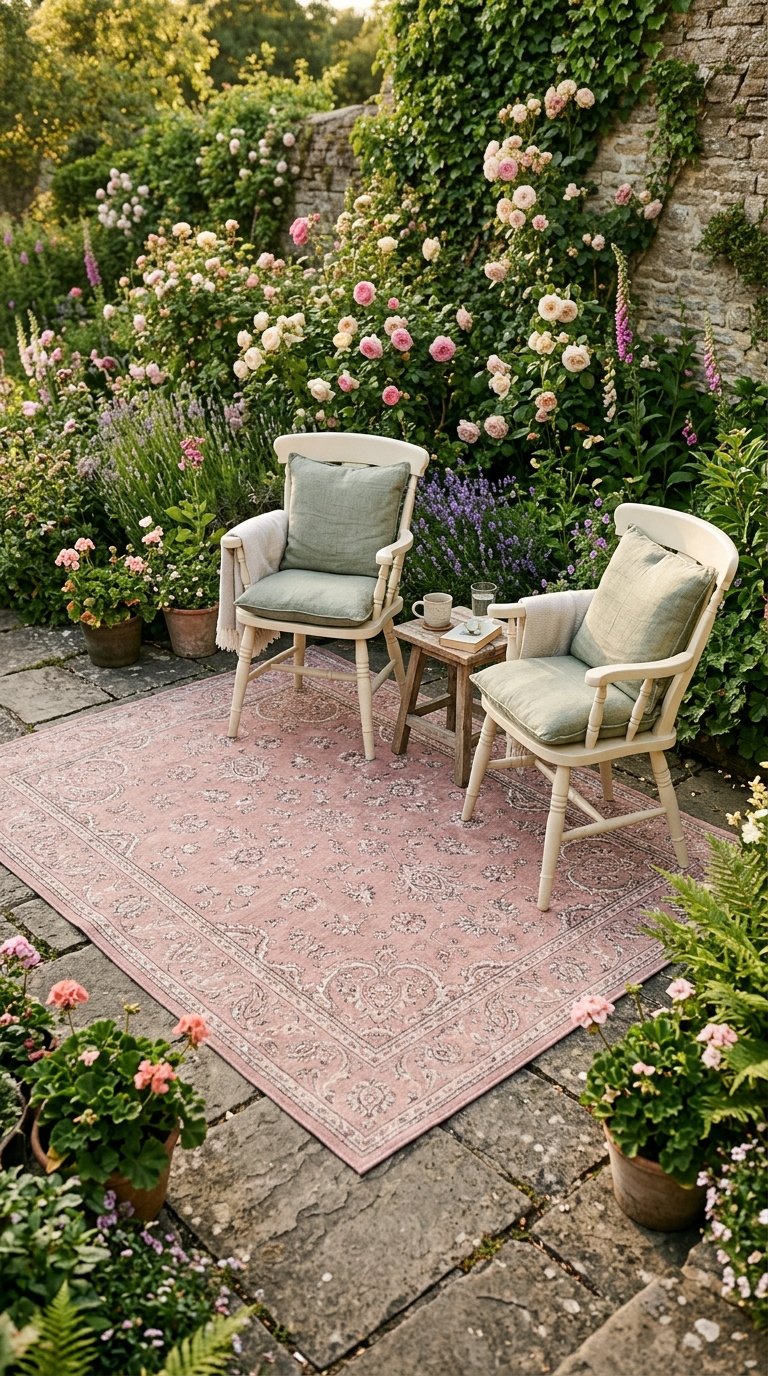
A patio surrounded by concrete, stone, or composite decking can feel cold and hard regardless of how comfortable the furniture is. A floral-print outdoor rug introduces an organic, garden-inspired element that softens all that hard material and visually connects the patio to any surrounding planting.
Look for floral patterns with a muted, vintage color palette rather than bright saturated florals, which tend to look more like a beach towel than a rug. Dusty pink, sage, and cream florals on a cream or grey background work especially well on stone or grey composite surfaces, where the rug becomes the warmest element in the space.
13. Choose a Rug With a Border for a Formal Look
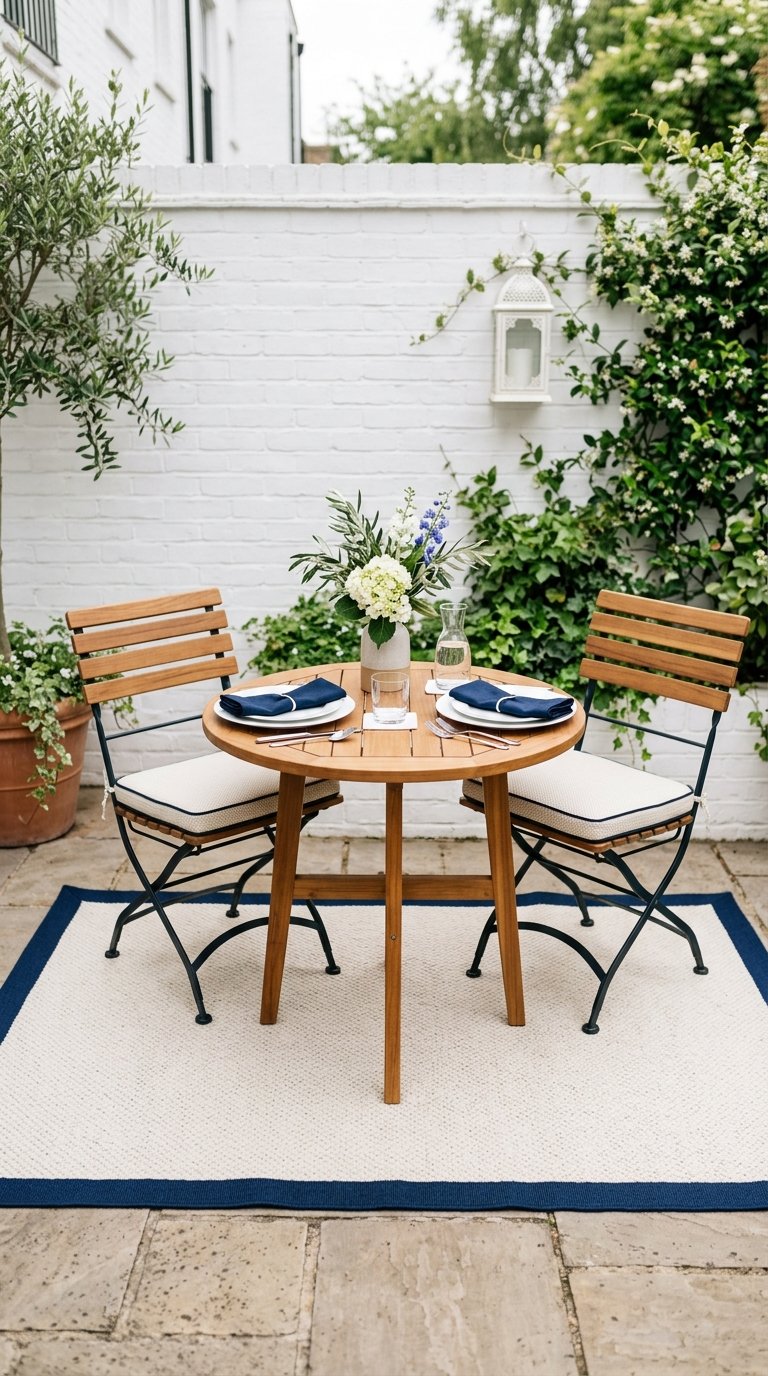
An outdoor rug with a contrasting border, a solid center field with a different-colored band around the perimeter, reads as more formal and finished than an all-over pattern. The border acts like a picture frame for your seating arrangement, giving the whole zone a sense of completion.
Border rugs work particularly well for dining zones and entryway-adjacent patios where a slightly more polished look matters. A cream rug with a navy border, for example, frames a dining table the way a tablecloth frames place settings. This formality doesn’t mean stuffy. It means the difference between “I put a rug down” and “I designed this space.”
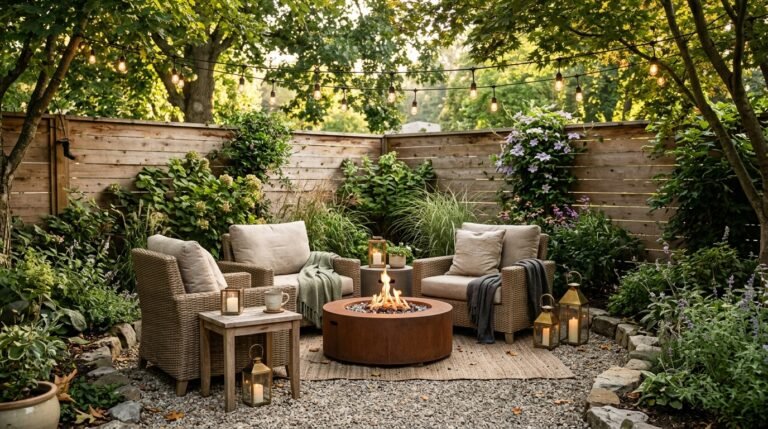
14. Use Multiple Small Rugs to Create Distinct Zones in a Large Yard
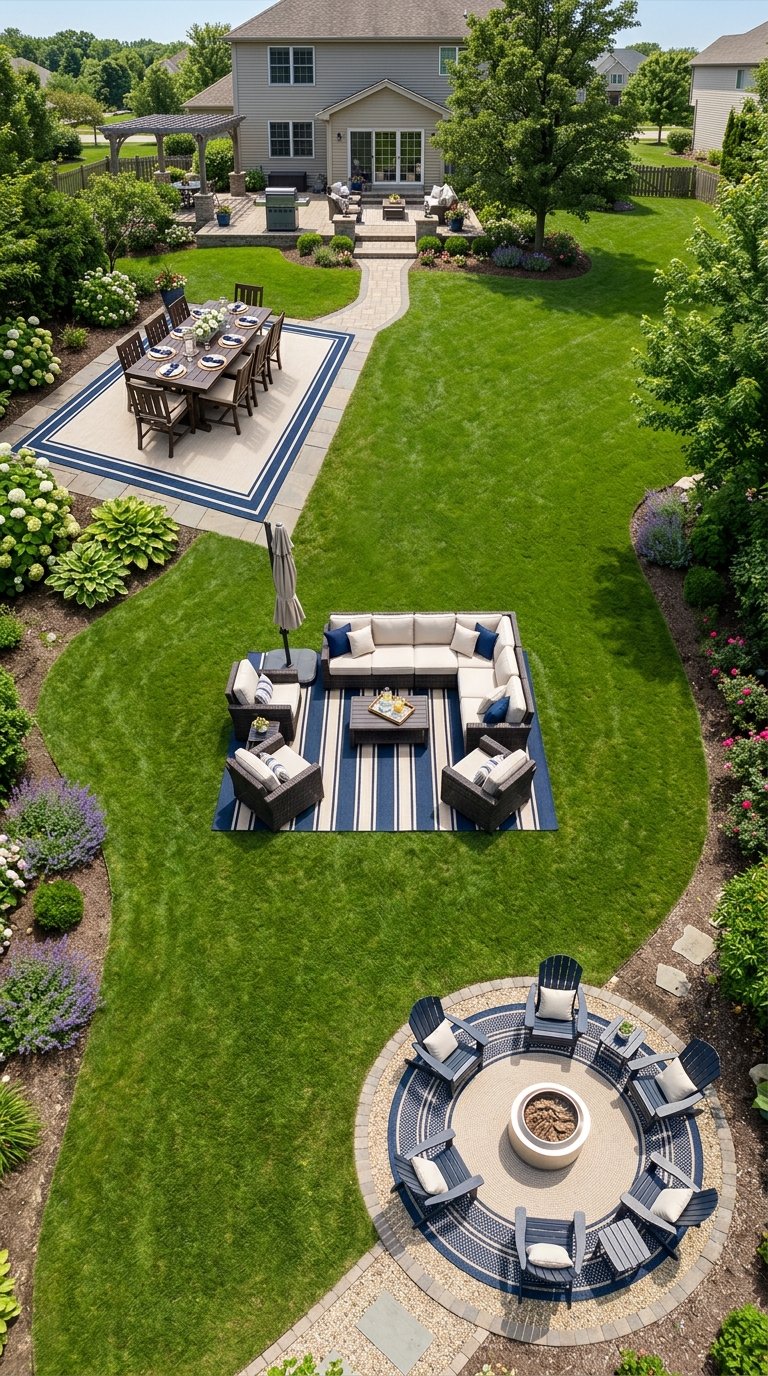
A single large rug in a sprawling backyard can look lost in all that open space. Multiple smaller rugs, one under a dining set, one under a lounge seating area, one under a fire pit grouping, create distinct zones across a large yard the way area rugs define separate rooms in an open-plan house.
Choose a consistent color family across all the rugs even if patterns differ between zones. A navy-and-cream dining rug, a navy-striped lounge rug, and a navy-bordered fire pit rug create visual cohesion across the whole yard while still defining each zone individually. Without that color thread, multiple rugs in a large space can feel like disconnected islands rather than a designed landscape.
15. Choose Vinyl Rugs for Pool Decks and Wet Areas
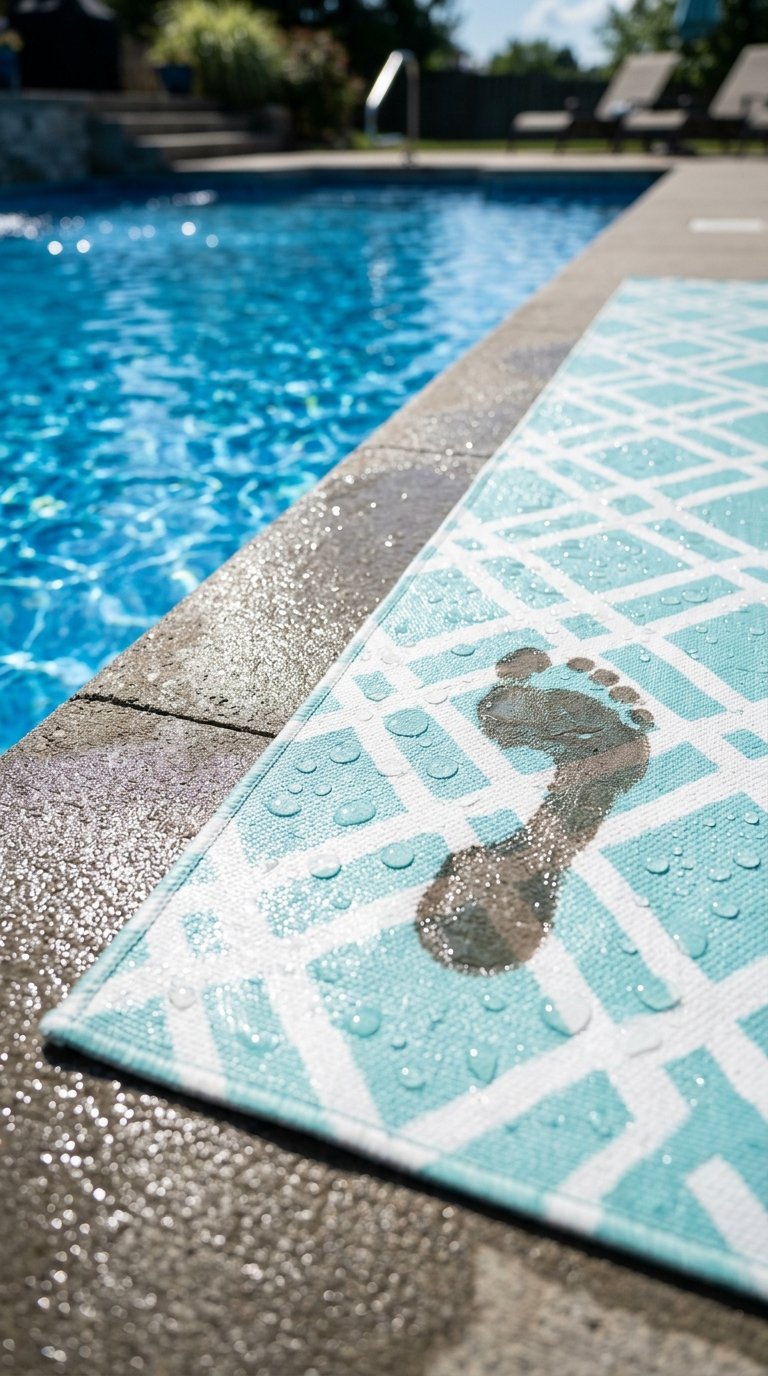
Standard outdoor rugs, even polypropylene ones, eventually develop mildew in areas that stay consistently wet, like directly beside a pool or hot tub. Vinyl rugs, sometimes called “plastic” or PVC rugs, are completely waterproof and wipe clean with a hose in seconds.
Vinyl outdoor rugs run $30 to $70 for a 5×8 and come in printed patterns that mimic woven textiles convincingly from a few feet away. They’re the only rug option I’d put directly on a pool deck where standing water and constant splash exposure are guaranteed. Every other material on this list will eventually mildew in that specific location, no matter how “outdoor-rated” the label claims.
16. Use a Faded or Distressed Pattern for an Aged, Established Look
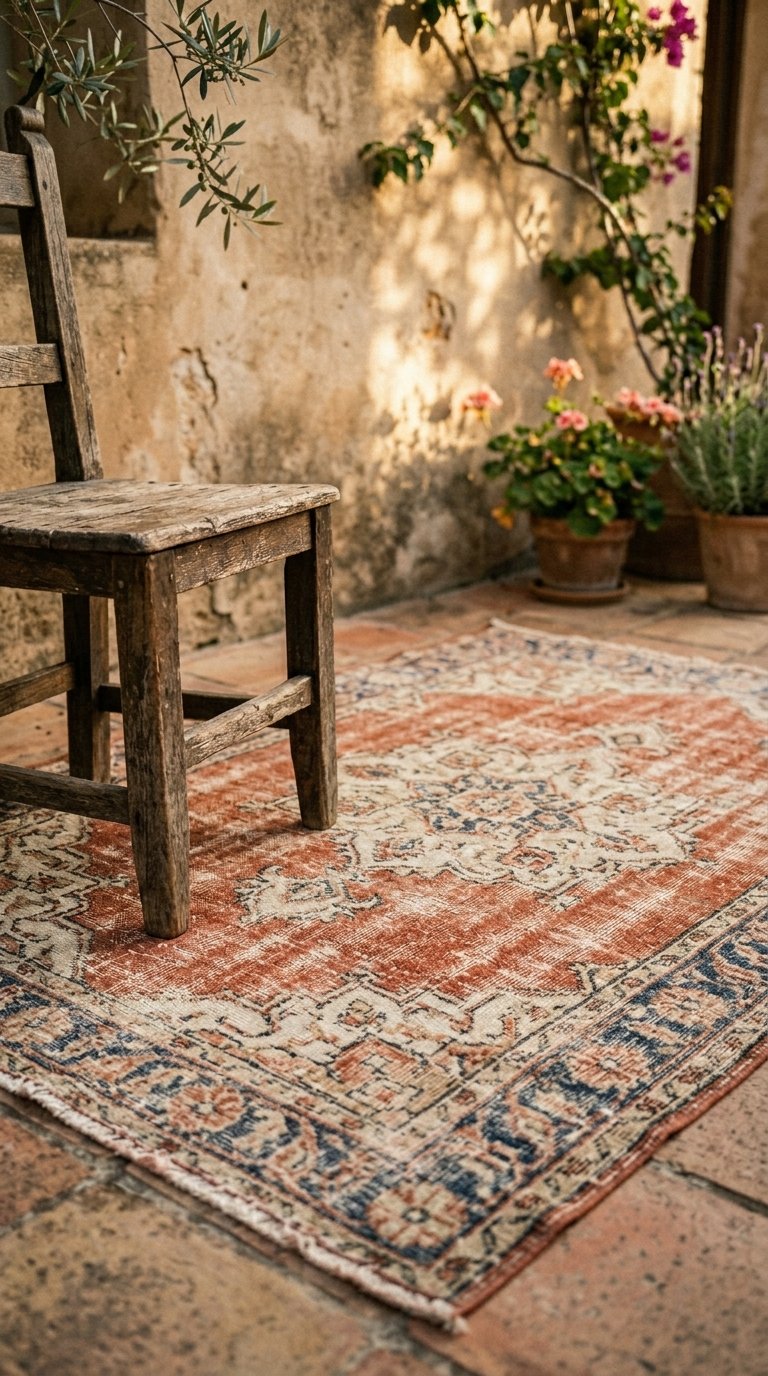
A brand-new rug with crisp, saturated colors can sometimes look like it just arrived, which works against the relaxed, established feel that most outdoor spaces aim for. A rug printed with a faded or distressed pattern, designed to look like a vintage rug that’s been in the sun for years, gives your patio instant character without the actual wait.
Distressed-pattern outdoor rugs in muted terracotta, faded blue, and washed-out cream tones cost about the same as their crisp-pattern counterparts, $50 to $100 for an 8×10, but read as collected rather than purchased. This works especially well in cottage, Mediterranean, or boho-styled outdoor spaces where “new” is the opposite of the goal.
17. Choose a Striped Rug to Visually Connect Indoor and Outdoor Flooring
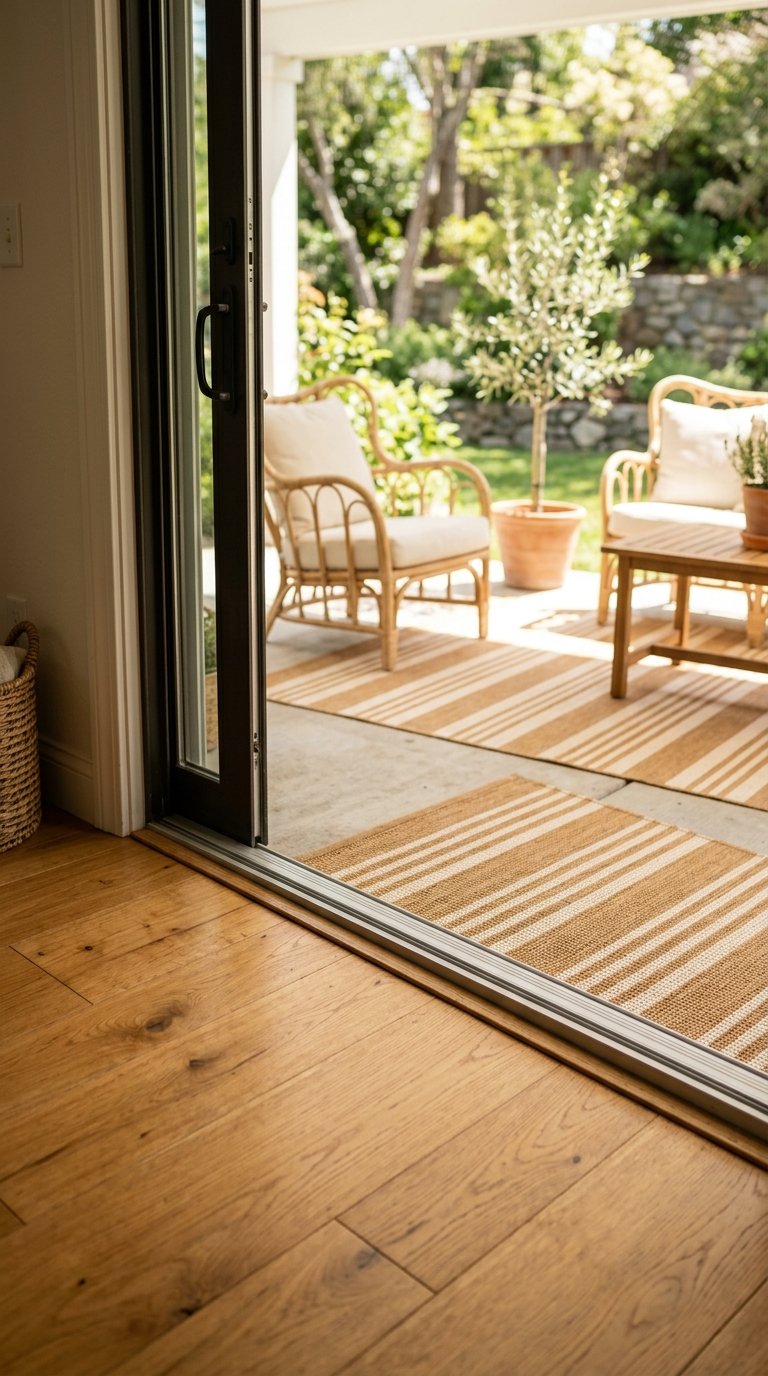
When your indoor flooring near a patio door is a warm wood tone, an outdoor rug that picks up that same warm tone in a striped pattern creates a visual transition between indoor and outdoor flooring that makes the spaces feel like one continuous area rather than two separate zones with a door between them.
Match the warmest tone in your indoor flooring to one of the stripe colors in your outdoor rug. If your indoor floors are a honey-oak tone, choose an outdoor rug with a honey or warm tan stripe alongside its other colors. Walking from inside to outside then feels like a continuation rather than a transition, especially when the door stays open during warm weather gatherings.
18. Use a Rug to Define a Reading Nook Within a Larger Space
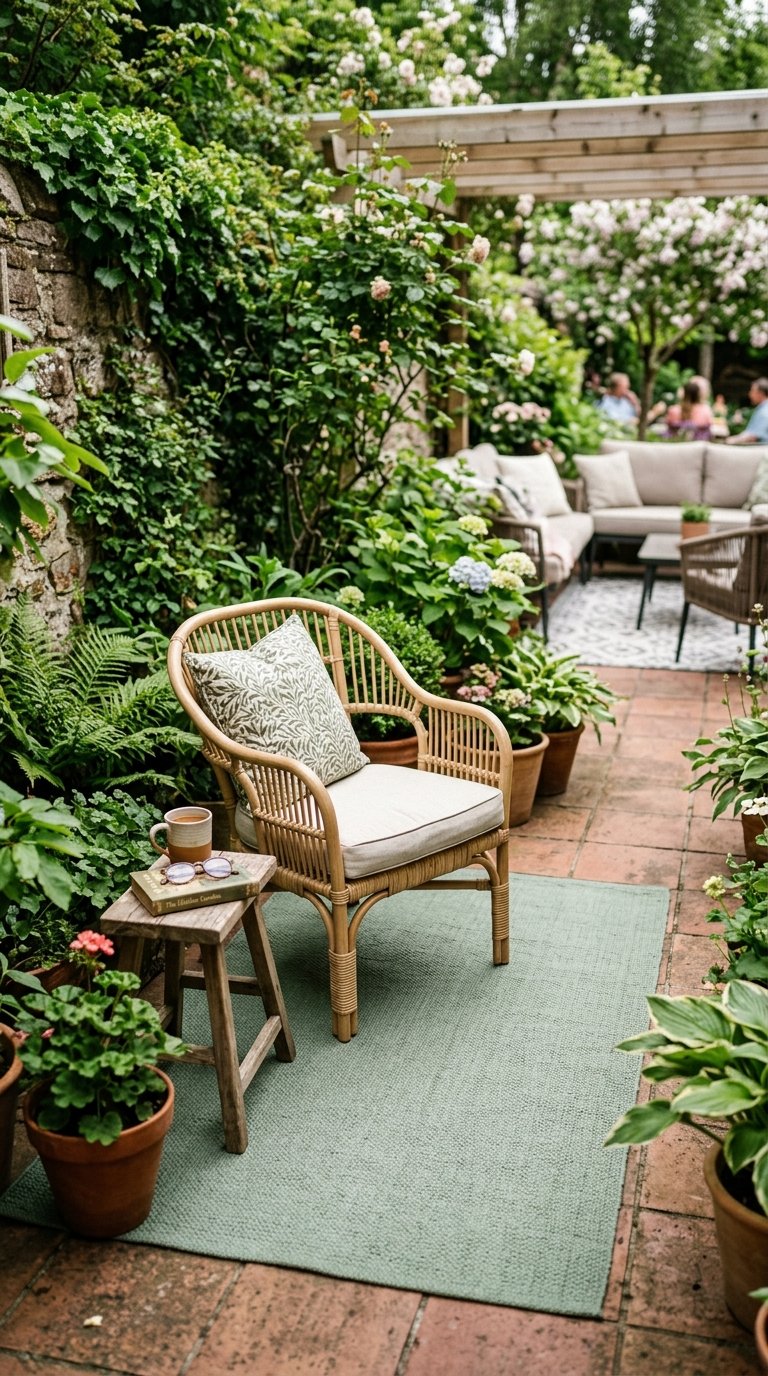
A reading nook, a single chair with a side table in the corner of a larger patio, needs its own small rug to read as a distinct zone rather than just “a chair that happens to be over there.” A 3×5 or 4×6-foot rug under just that chair and table creates a mini-zone within the larger space.
Choose a rug for the reading nook that contrasts slightly with your main seating area rug. If your main lounge rug is a bold geometric, the reading nook rug might be a soft solid or subtle texture. The contrast reinforces that this is a different kind of space, quieter, more personal, within the same outdoor area.
19. Choose Rugs With Drainage-Friendly Weaves for Uncovered Patios
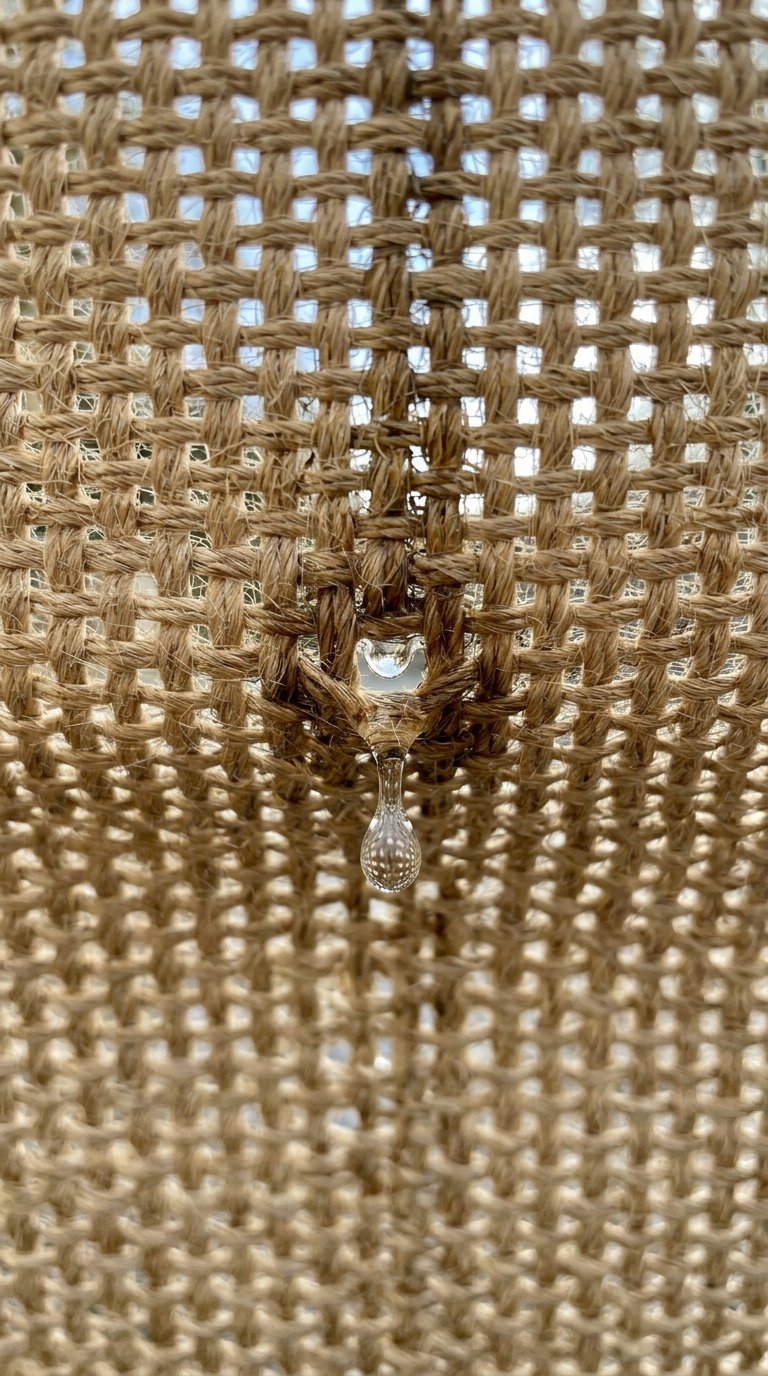
A flat, dense rug on an uncovered patio holds water after rain and takes days to dry underneath, which creates the exact mildew conditions you’re trying to avoid by choosing an “outdoor” rug in the first place. A looser, more open weave allows water to drain through and air to circulate underneath.
Flatweave outdoor rugs with a visible woven texture, rather than dense, carpet-like pile, dry within hours rather than days after rain. If your patio has zero overhead cover, prioritize weave structure over pattern when choosing between two otherwise-similar rugs. A beautiful rug that stays wet for three days after every rainstorm will mildew regardless of what the label says about UV resistance.
20. Use a Runner Rug for a Narrow Walkway or Side Yard
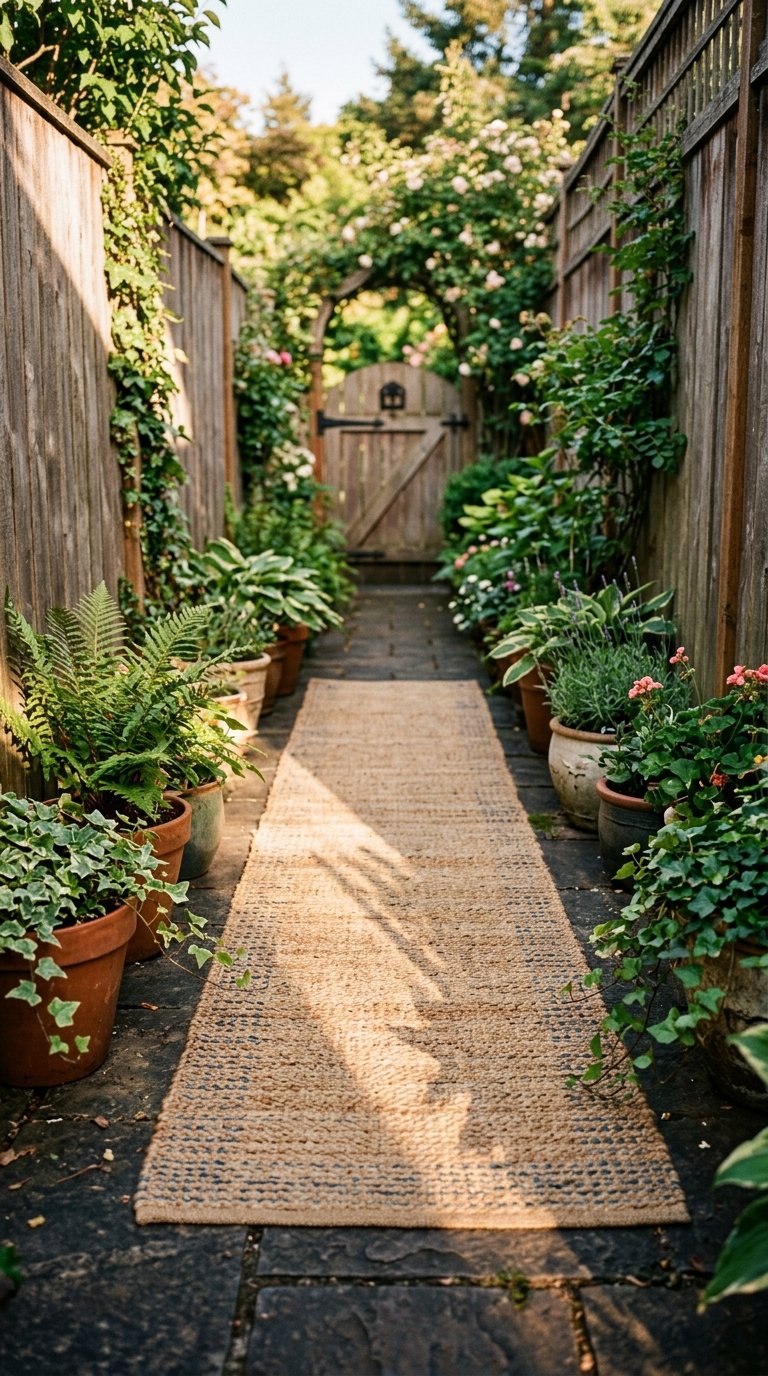
A long, narrow runner rug transforms a side yard path, a narrow balcony walkway, or the approach to a side door from a purely functional strip of concrete into a styled transitional space. Runners are underused outdoors specifically because people associate them with hallways, but the same logic applies perfectly to narrow exterior spaces.
Outdoor runner rugs in 2.5 to 3-foot widths and 6 to 10-foot lengths run $30 to $70. Place one along a side-yard path leading to a garden gate, or down the center of a narrow balcony to add color underfoot in a space too narrow for a standard rectangular rug. The runner format respects the narrow proportions instead of fighting them.
21. Choose Rugs With Cable-Tie Loops for Windy Balconies
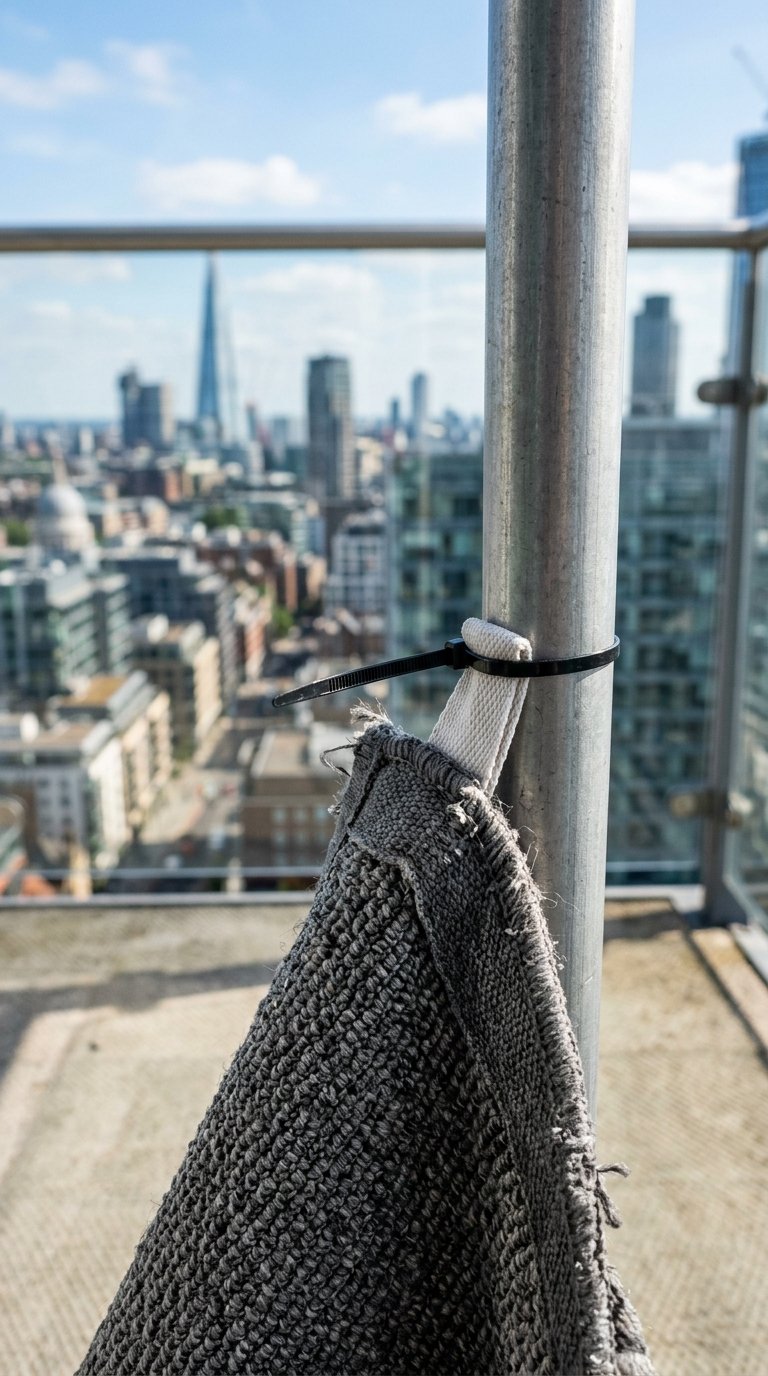
Standard outdoor rugs on high-floor balconies and exposed decks are at genuine risk of becoming projectiles in strong wind, which is a problem nobody mentions until their neighbor’s rug ends up on their balcony three floors down. Rugs designed with reinforced corner grommets or loops let you secure them to railings or furniture.
If your rug doesn’t have built-in loops, sew or grommet small fabric loops onto each corner yourself, then use zip ties to secure each corner to a railing post or a heavy piece of furniture. This takes 10 minutes and costs under $5 in hardware. For balconies above the second floor in wind-exposed locations, this step isn’t optional. It’s the difference between a rug that stays put and a rug that becomes someone else’s problem.
22. Use a Two-Tone Solid Rug for Maximum Furniture Flexibility
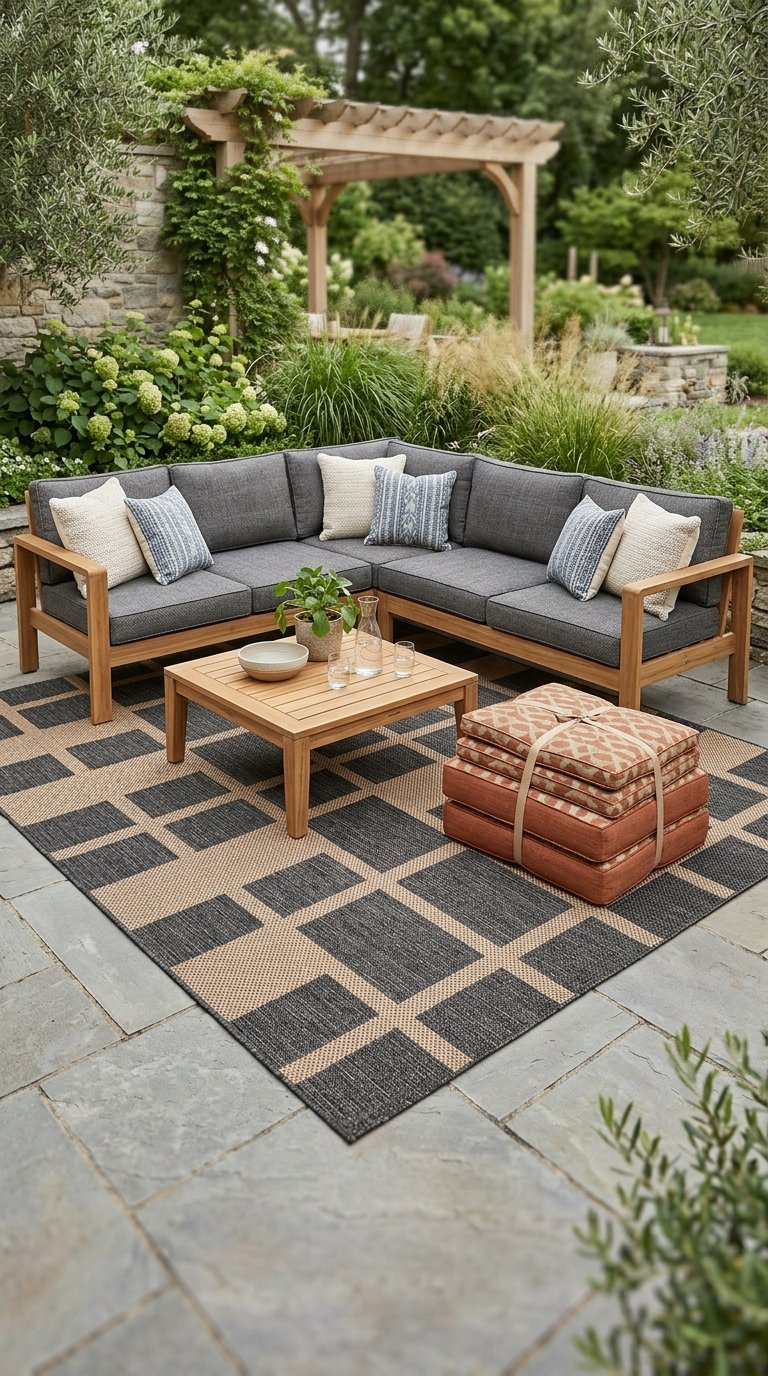
A two-tone solid outdoor rug, two coordinating neutral colors in a simple block or border pattern, gives you the most flexibility for changing your outdoor furniture, cushions, and accessories over time without ever needing to replace the rug itself.
A grey-and-cream or charcoal-and-tan two-tone rug works under wicker, teak, metal, or resin furniture, in any color cushion scheme, across boho, modern, coastal, or traditional styling. If you tend to change your outdoor decor seasonally or get bored with color schemes quickly, a two-tone neutral rug is the one element that doesn’t need to change with everything else. Think of it as your outdoor space’s blank canvas.
23. Layer a Cowhide-Print Rug for an Eclectic Accent
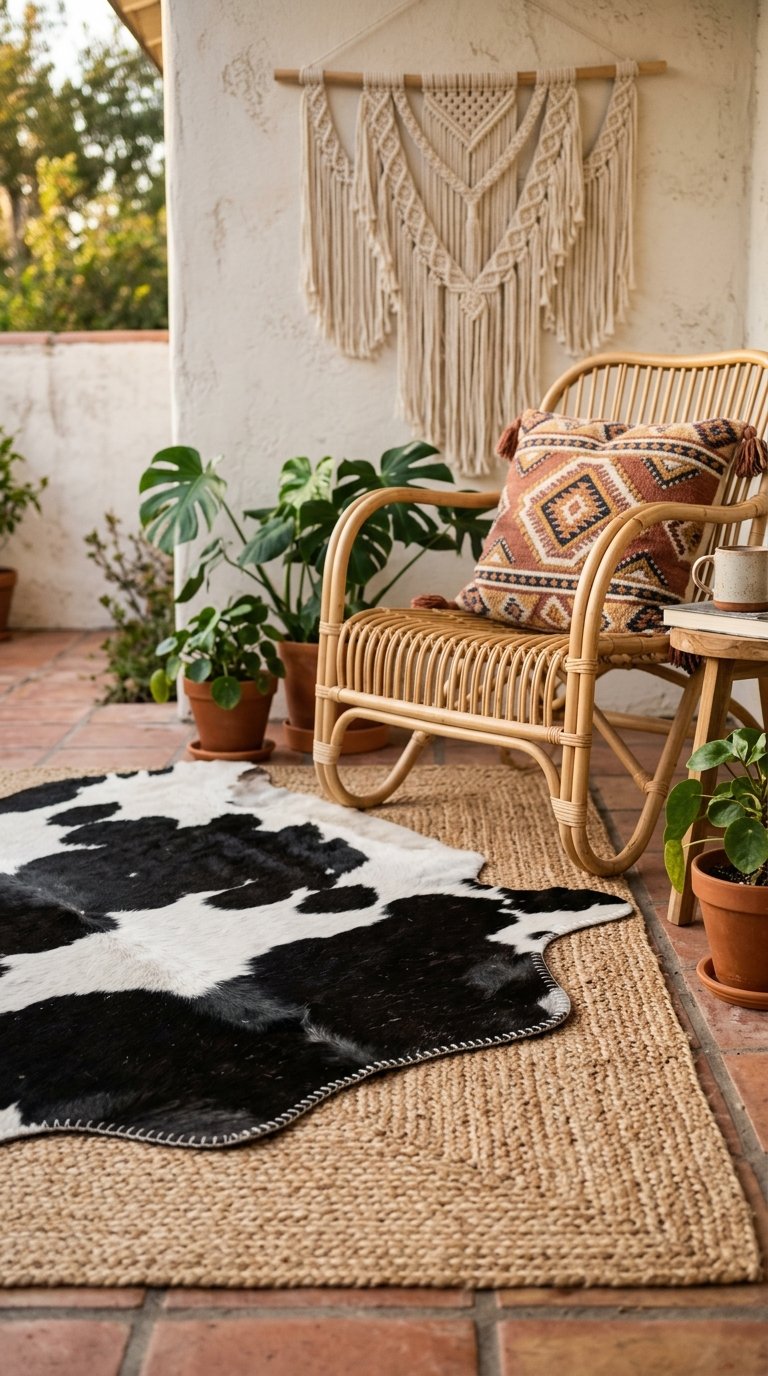
A faux cowhide-print outdoor rug, in standard black-and-white or in dyed colors like blue or grey, adds an unexpected textural and visual element to an outdoor space that otherwise relies entirely on woven patterns and solid colors. It works best as a smaller accent layered over a larger neutral base rug rather than as the primary rug.
A 4×6-foot faux cowhide-print outdoor rug in vinyl or polypropylene runs $40 to $80 and adds an eclectic, collected touch when layered at an angle over a larger jute-look or solid base rug. This combination works particularly well in boho or eclectic-styled spaces where the goal is “gathered over time” rather than “matched as a set.” One unexpected layer like this is often the detail guests remember about a space, even if they can’t say exactly why.
Final Thoughts
The right outdoor rug does three things at once: it defines your zone, it ties your color palette together, and it covers up whatever your actual patio surface looks like underneath. Start with size, since that’s the mistake that ruins more outdoor rugs than any color or pattern choice ever could. Then choose material based on your specific conditions: polypropylene for general use, vinyl for pool decks, flatweave for uncovered spaces with no drainage. Your outdoor space already has the furniture and the plants. The rug is what makes it look like a room instead of a yard with chairs in it, and that’s a transformation worth getting right.