21 Industrial Interior Design Ideas for a Modern Home
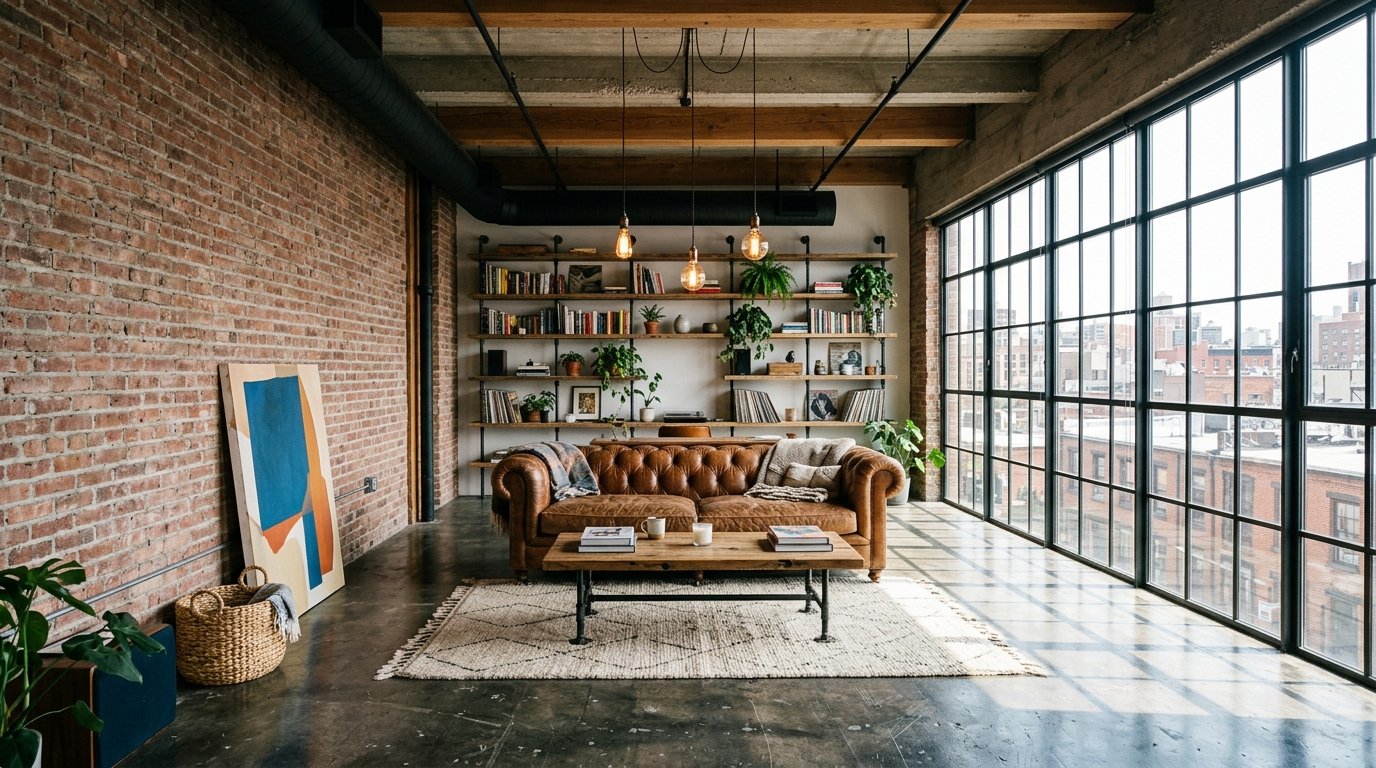
Industrial design is the style that makes other styles look like they’re trying too hard. Exposed brick, raw steel, worn leather, concrete floors, and Edison bulbs hanging from factory-style fixtures. It’s confident, textural, and deeply practical.
The problem most people face isn’t falling in love with industrial design. It’s executing it without the result looking like an unfinished building site or a theme bar from 2012. These 21 ideas give you the specific moves that make industrial design work as a home aesthetic, not a film set.
1. Expose the Brick and Leave It Alone
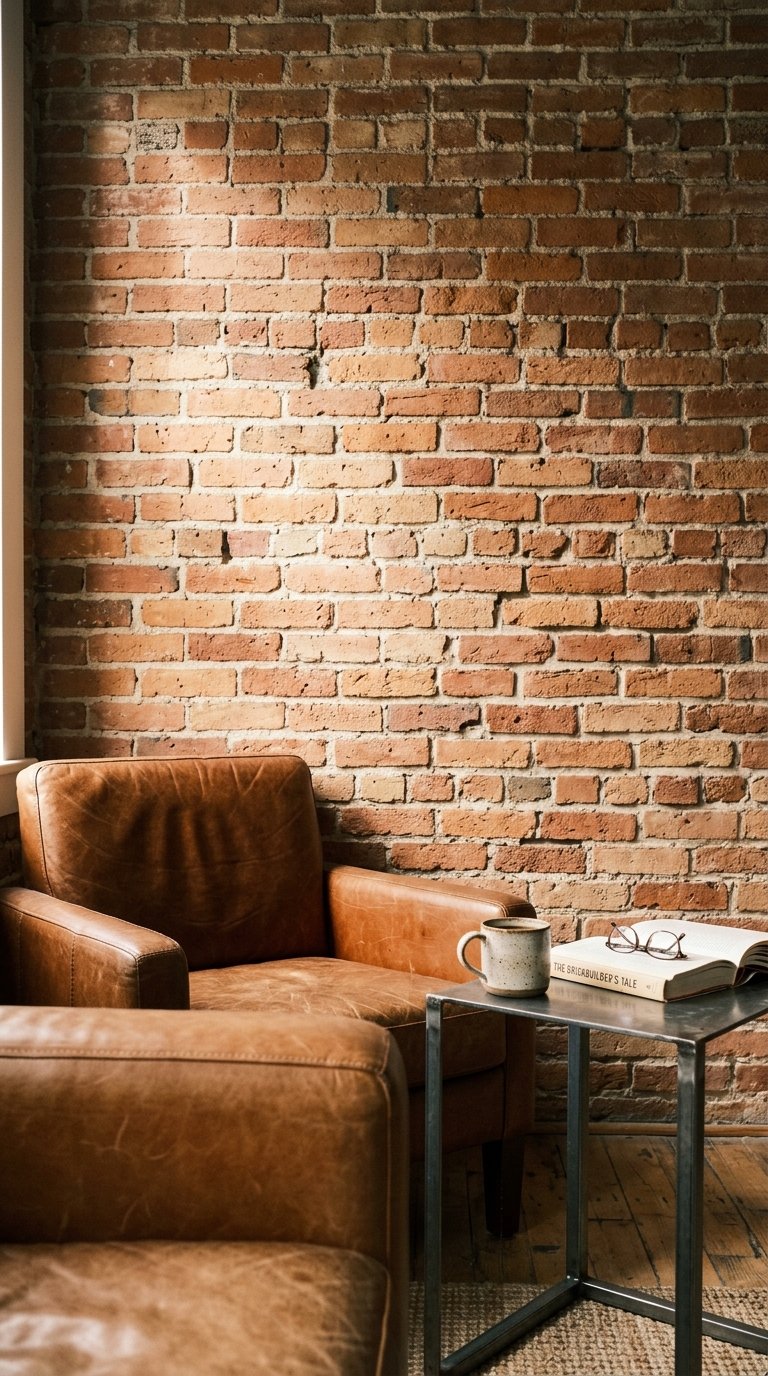
Exposed brick is the foundation of industrial interior design, and the biggest mistake people make with it is overworking it. Sand it, seal it with a clear matte sealer ($15 to $40 per litre), and leave it exactly as it is.
Don’t paint it white. Don’t add a projector screen in front of it. Don’t hang so much art on it that the brick disappears. The brick wall earns its place by being itself, which is a lesson the rest of the room should take note of.
2. Install Concrete Floors or Polished Concrete Overlay
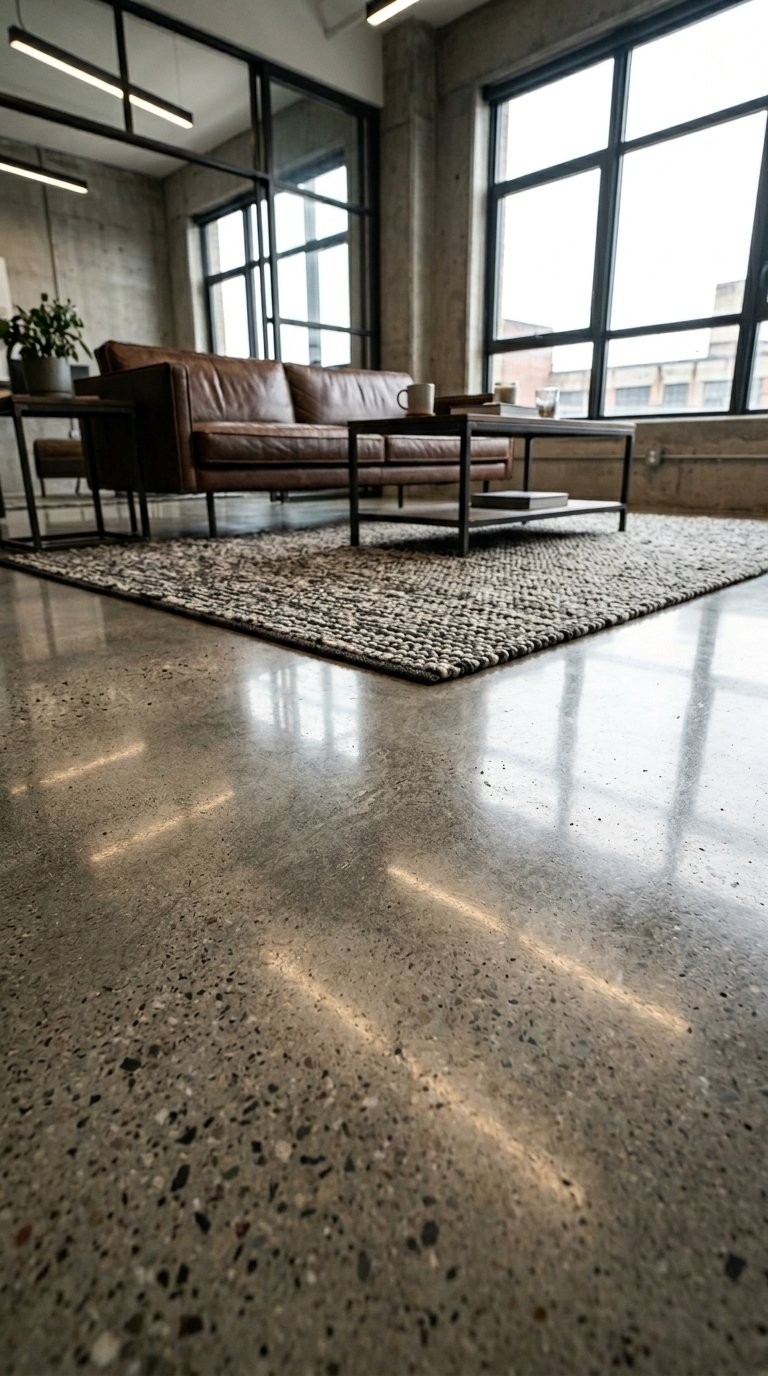
Polished concrete floors are the defining floor material of industrial interior design. They reflect light, show natural variation in colour and texture, and improve with age rather than showing wear the way wood or carpet does.
A polished concrete overlay (applied over existing subfloor) costs $3 to $12 per square foot, significantly less than poured concrete. The overlay brings concrete’s industrial aesthetic to any room without structural work. Seal with a commercial-grade penetrating sealer and buff twice per year to maintain the sheen.
3. Use Steel-Framed Windows and Room Dividers
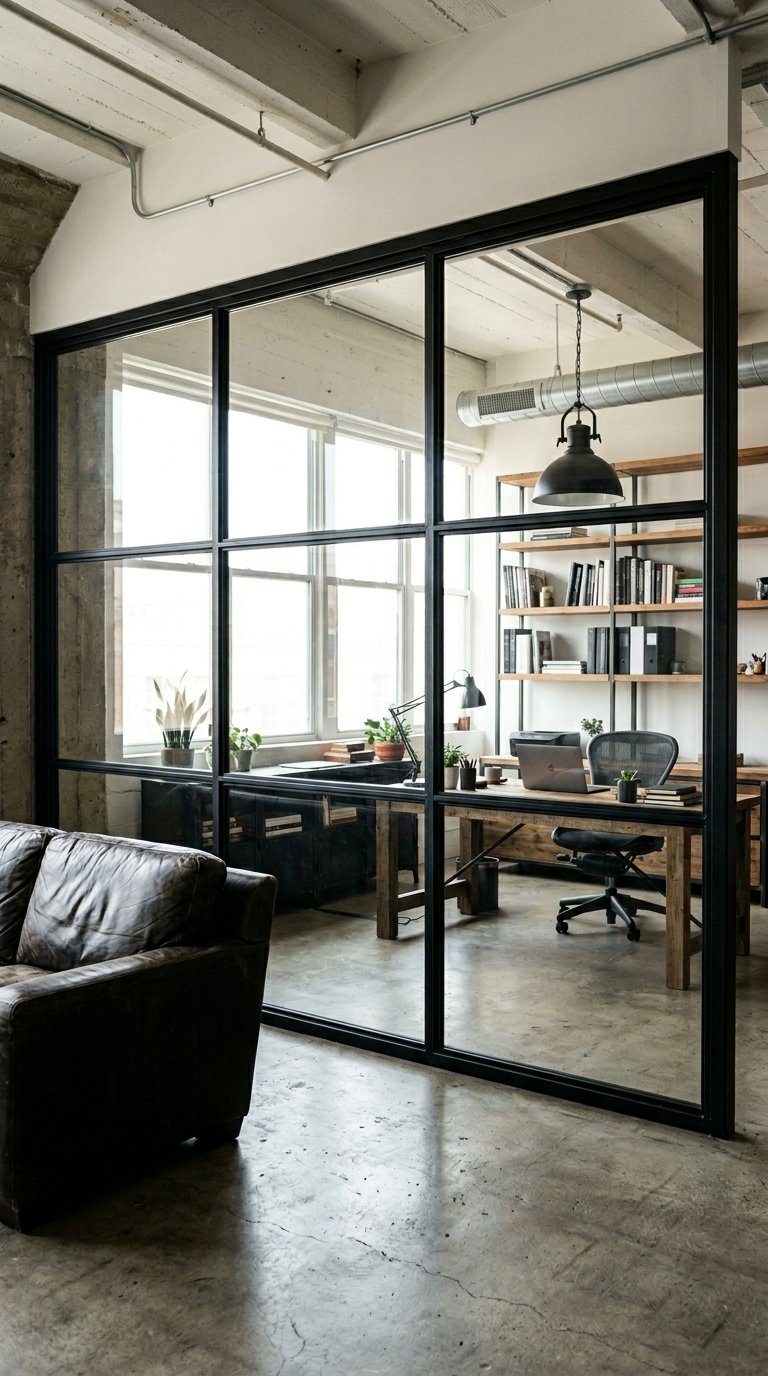
Steel-framed glass windows, doors, and room dividers are one of the most recognisable elements of industrial loft design. The thin black steel frames with large glass panes allow light to travel through a space while creating strong architectural lines that define zones without walls.
Steel-framed partition kits cost $500 to $2,000 for a standard 6-foot-wide panel. Crittal-style steel window frames cost $300 to $800 per window opening. Both deliver the warehouse-converted-to-home aesthetic more efficiently than any other single architectural element.
4. Leave the Ceiling Structure Exposed
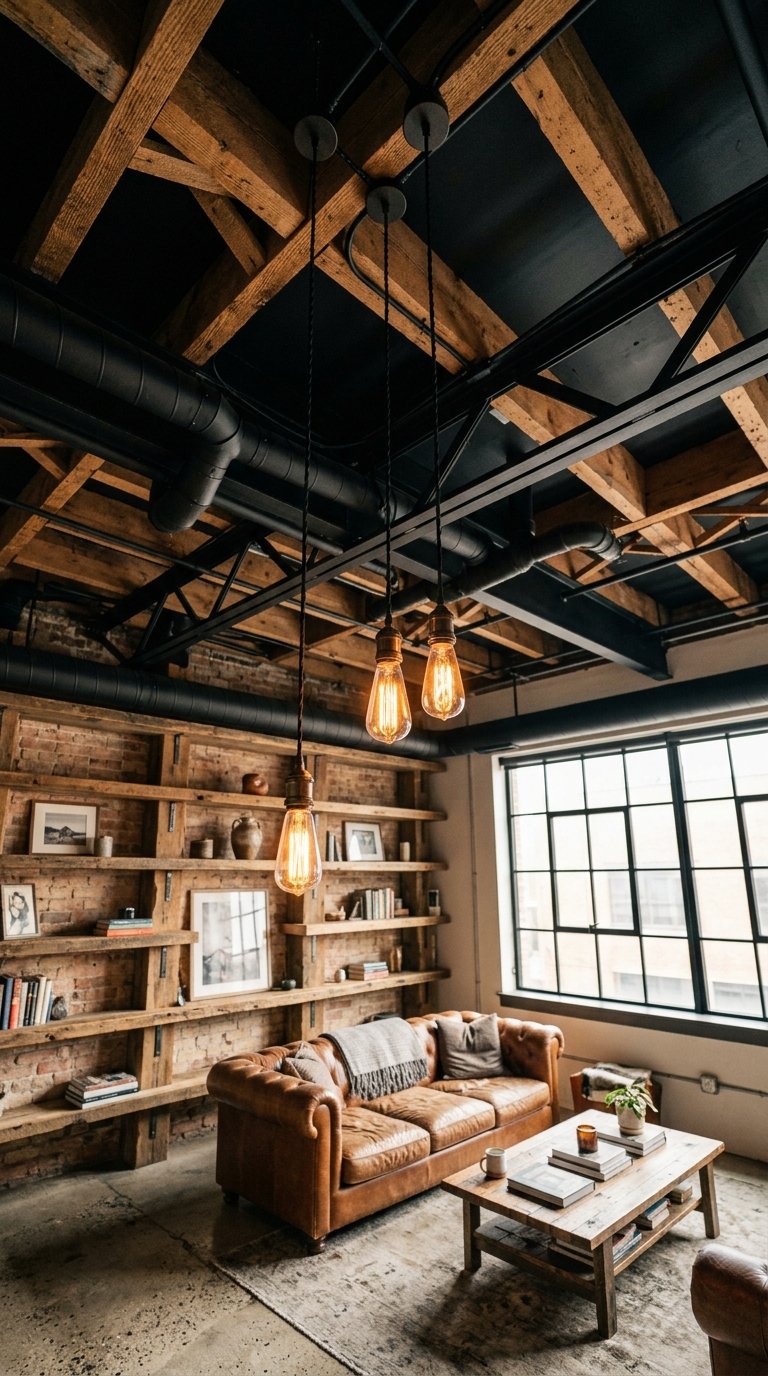
An exposed ceiling showing joists, ductwork, pipes, and structural beams is one of the most distinctive features of industrial interior design. Stripping back a suspended ceiling to reveal the structure above costs $500 to $2,000 in labour depending on ceiling area.
Paint the exposed ceiling structure in flat black or charcoal to unify the various elements (pipes, beams, wiring conduit) into a cohesive overhead composition. A flat black ceiling with exposed structure reads as intentional; an unpainted one reads as unfinished. The difference is one coat of paint.
5. Choose Aged Leather Furniture as the Primary Seating
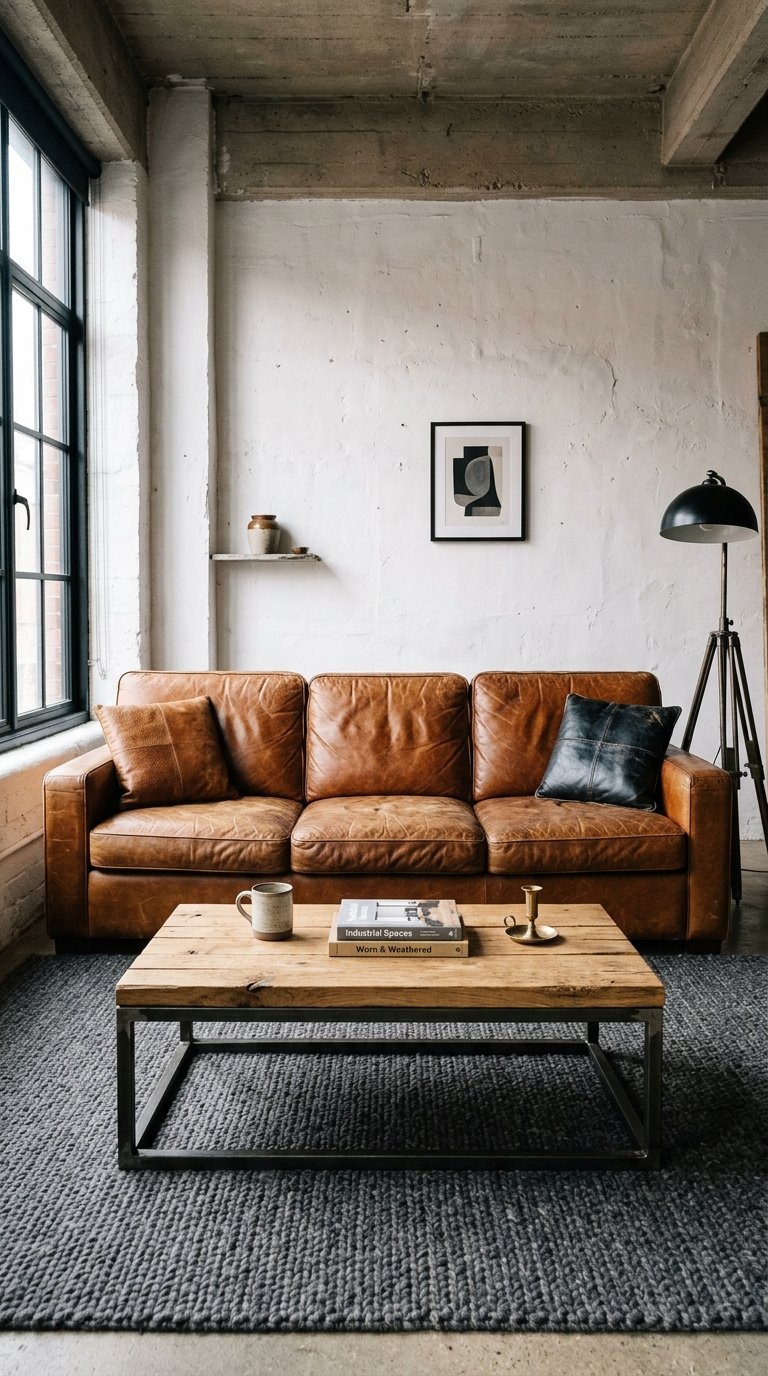
Full-grain leather sofas and chairs are the furniture material of choice for industrial interiors because leather ages into the space rather than against it. Tan, cognac, and dark brown aged leather develops creases, patina, and character over years of use that synthetic materials and fabric never replicate.
A quality full-grain leather sofa costs $1,500 to $5,000 and lasts 20 to 30 years with basic care. In a room with concrete floors and exposed brick, aged leather furniture feels architecturally correct in a way that velvet or linen sofas simply don’t.
6. Install Edison Bulb Pendant Lights on Industrial Pipe Fittings
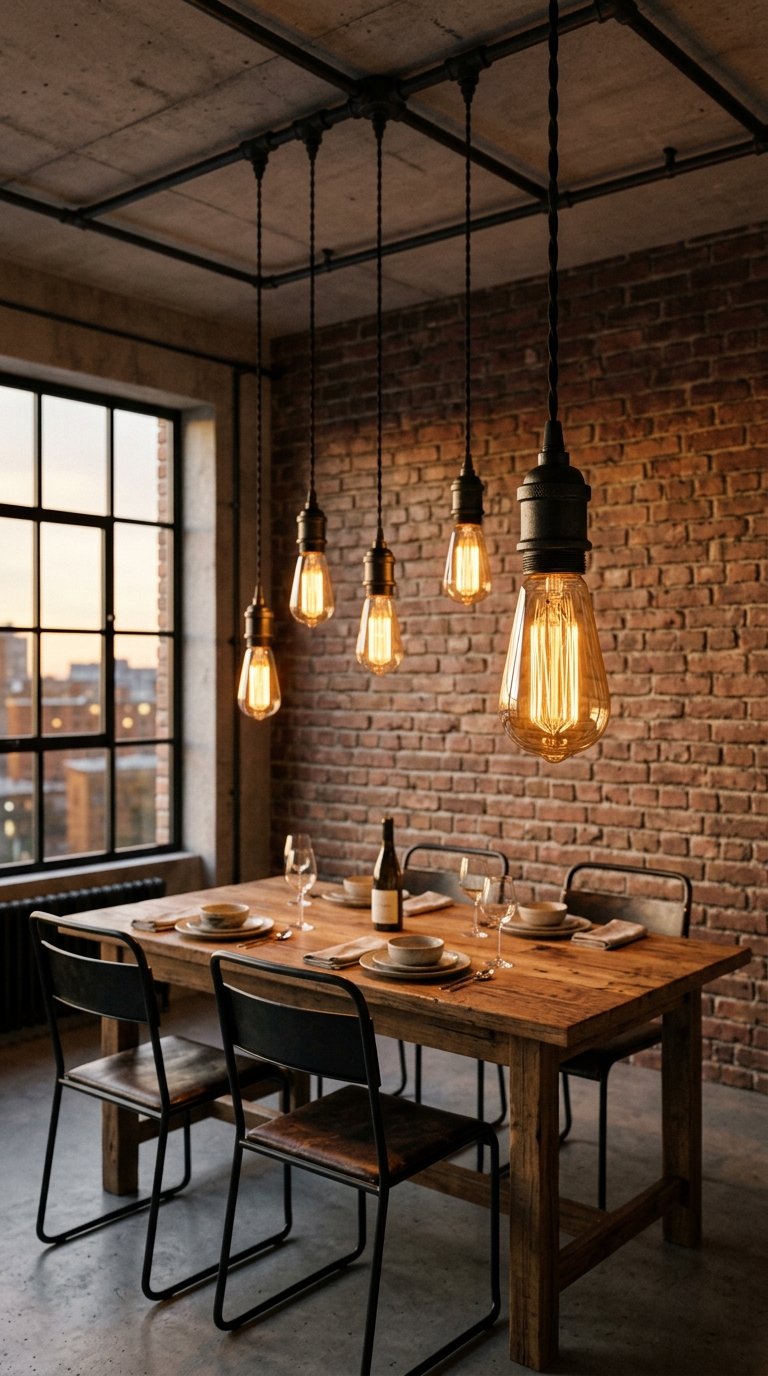
Edison-style filament bulbs hung from black iron pipe fittings are the lighting signature of industrial interior design. Pipe pendant light kits cost $30 to $150 per fitting, and the bulbs cost $5 to $15 each.
Hang them at varying heights in clusters of three to five above dining tables, kitchen islands, and living room seating areas. The warm amber glow of filament bulbs softens the hardness of concrete and steel while the exposed fitting reinforces the industrial material vocabulary. IMO, this is the single lighting choice that most efficiently signals industrial design intent.
7. Build Shelving from Reclaimed Wood and Steel Pipe
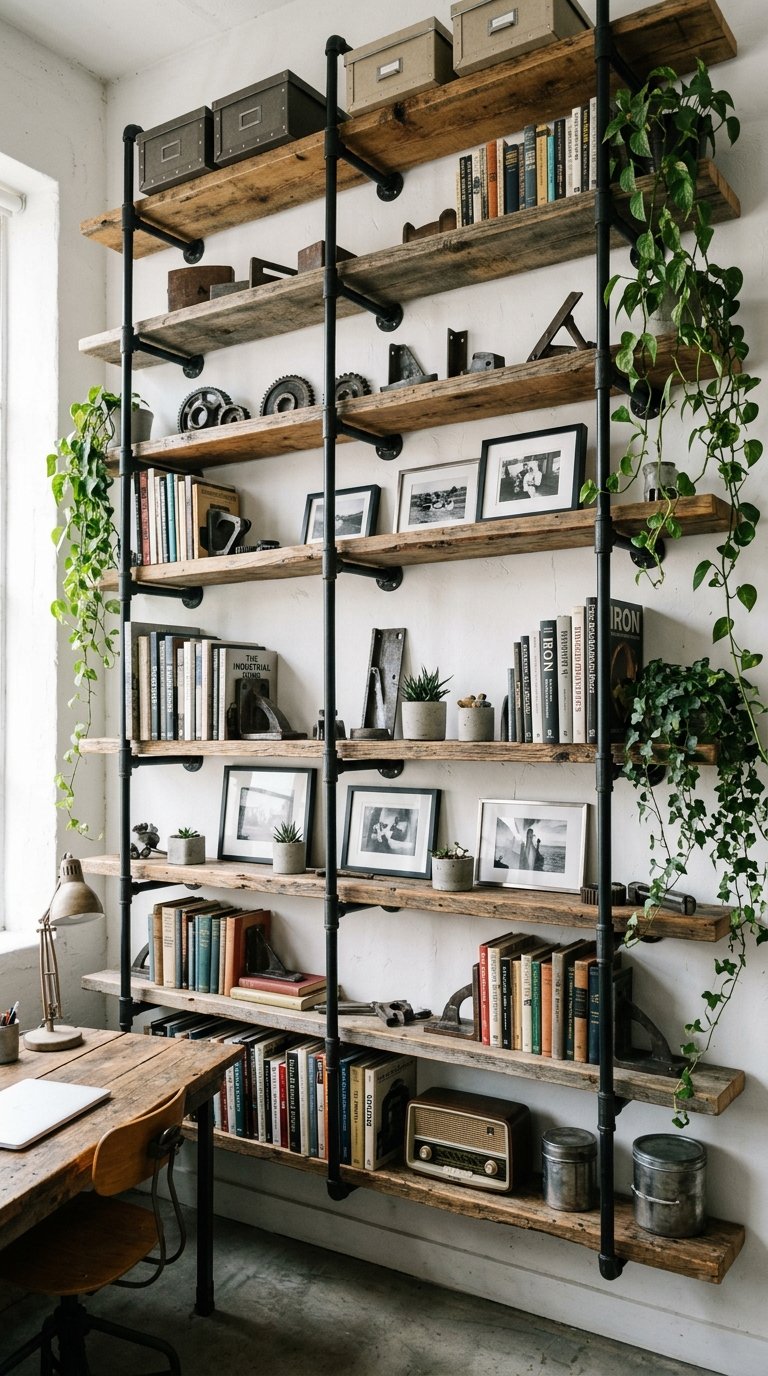
Floating shelves made from reclaimed timber planks supported by steel pipe brackets are both a storage solution and an industrial design statement. The combination of warm aged wood and cool black steel creates the material contrast that defines industrial aesthetics.
Reclaimed timber planks cost $5 to $20 per linear foot depending on species and condition. Steel pipe shelf bracket kits cost $15 to $40 per bracket pair. A full wall of reclaimed wood and pipe shelving costs $200 to $600 in materials and installs over a weekend.
8. Use a Concrete or Steel Kitchen Countertop
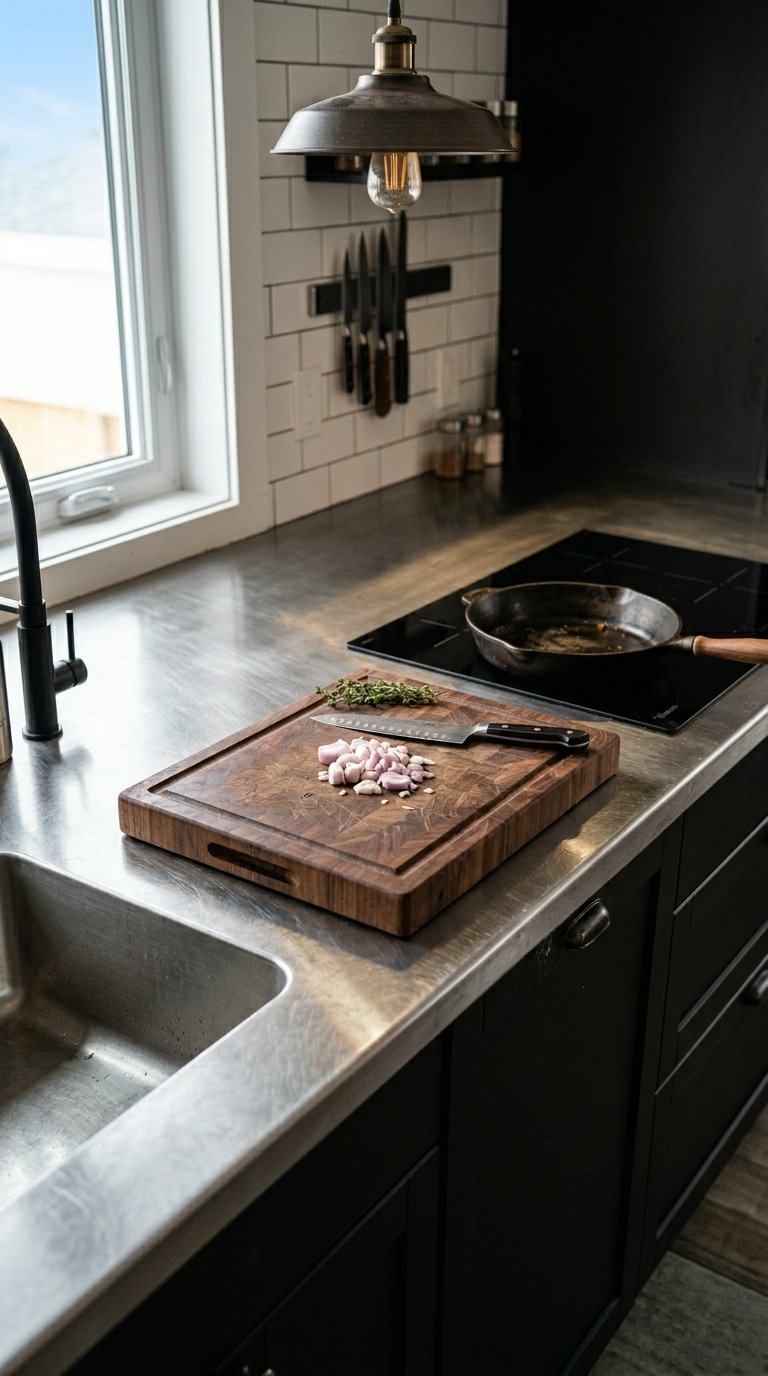
A concrete or brushed steel countertop in the kitchen reinforces the industrial material palette at the room’s most-used horizontal surface. Brushed stainless steel countertops cost $50 to $150 per square foot and suit industrial kitchens with black cabinets, open shelving, and commercial-style fittings.
Concrete countertops cost $70 to $150 per square foot installed and develop a patina that makes them more interesting over time. Both materials suit professional kitchen equipment (cast iron pans, heavy chopping boards, commercial mixers) that looks out of place on standard laminate or marble.
9. Add a Factory-Style Pendant Light Over the Dining Table
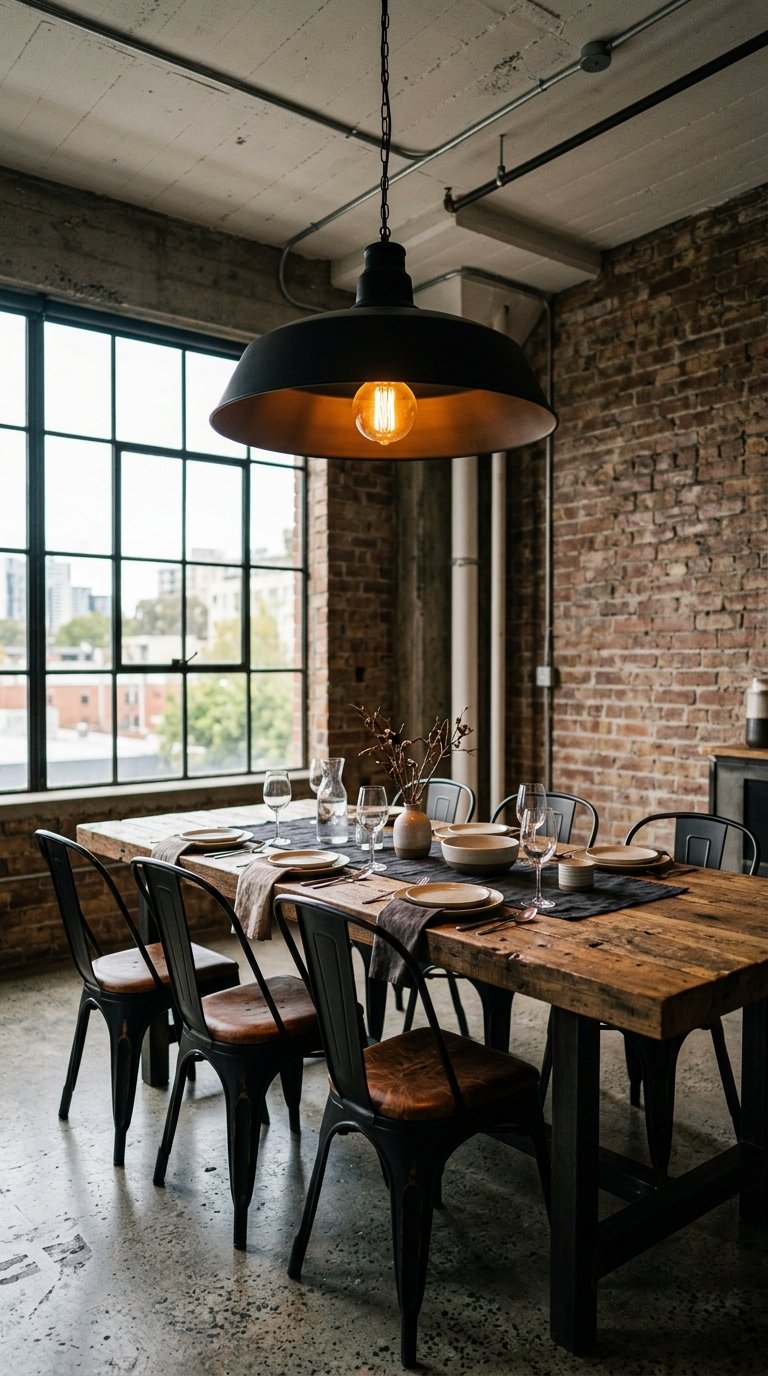
An industrial factory pendant light (a large metal shade in black or galvanised steel, 18 to 24 inches in diameter) hung low over a dining table anchors the room and creates a pool of warm focused light at table level. Large factory pendants cost $100 to $500 and immediately establish the industrial design tone of any room they enter.
Hang the pendant 28 to 32 inches above the table surface for the right proportion and light distribution. A single oversized factory pendant above a reclaimed wood dining table is one of the most recognisable industrial interior design compositions.
10. Install a Mezzanine Level with Steel Railings
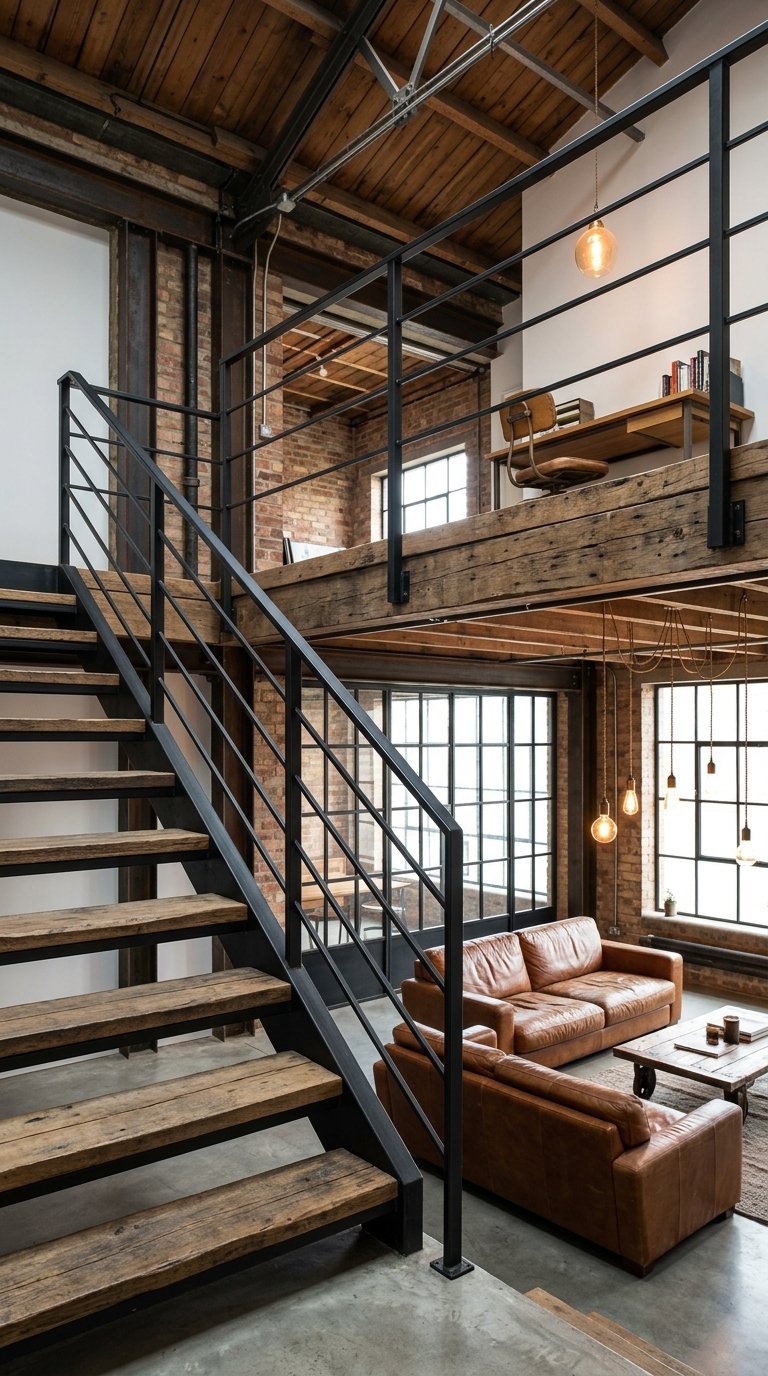
A mezzanine level accessed by an open steel staircase maximises vertical space in a high-ceiling industrial home and adds architectural drama that no amount of furniture or decoration achieves. Steel and timber mezzanine construction costs $8,000 to $30,000 depending on size and complexity.
The mezzanine creates a sleeping or office level above the main living zone, which is the definitive loft apartment configuration. Steel railings with horizontal cable or bar infill cost $150 to $400 per linear foot installed and maintain sightlines through the space while meeting building code requirements.
11. Use Raw Steel or Iron as Decorative Object Material
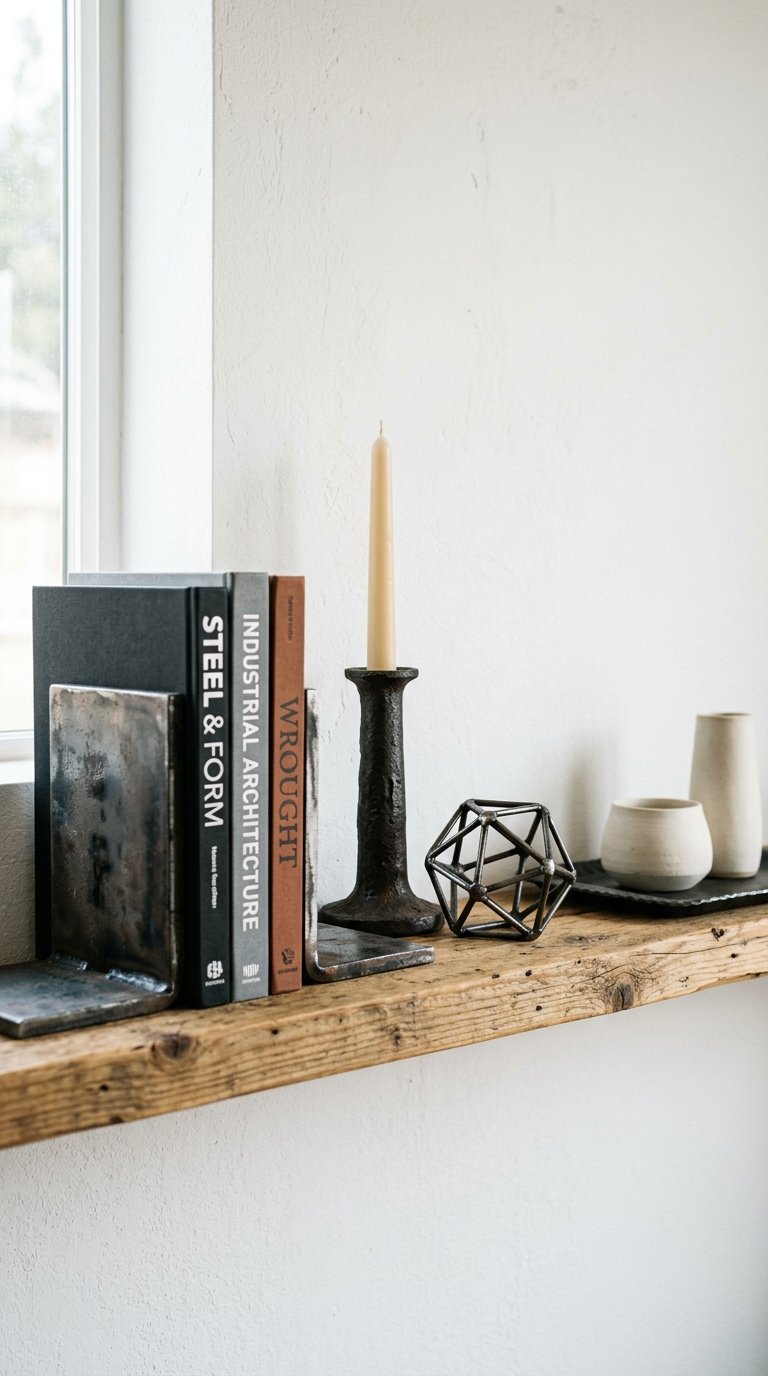
Raw steel and iron objects (bookends, candle holders, wall hooks, coat racks, decorative spheres) reinforce the industrial material palette at the accessory level without any structural work. A set of raw steel bookends costs $20 to $60; a cast iron coat rack costs $40 to $150.
The material carries the design language of the space into every corner and surface. Industrial design relies on material consistency: when the walls, floors, furniture, and objects share the same material vocabulary (steel, iron, concrete, reclaimed wood), the room feels cohesive rather than assembled.
12. Choose a Steel and Wood Dining Table
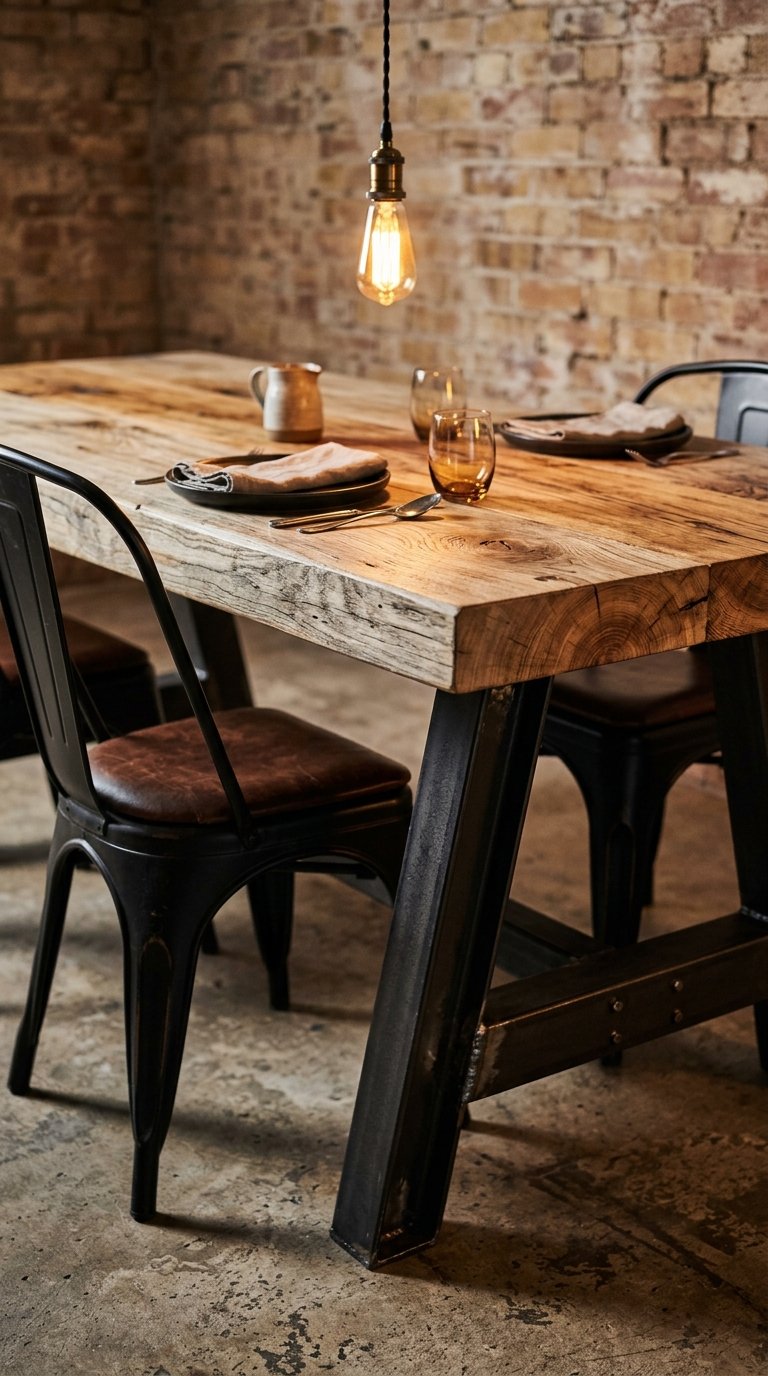
A dining table with a raw steel base and a thick reclaimed timber top sits at the centre of industrial living design. The table combines the two defining materials of the style in one functional piece and works equally well in a loft apartment, a converted warehouse, or a suburban home with industrial aspirations.
Steel and reclaimed timber dining tables cost $500 to $3,000 depending on size and maker. DIY versions using steel trestle legs ($100 to $300 per pair) and a reclaimed timber top ($150 to $400) cost $250 to $700 total and produce a table with more character than most retail options.
13. Install a Sliding Barn Door in Black Steel
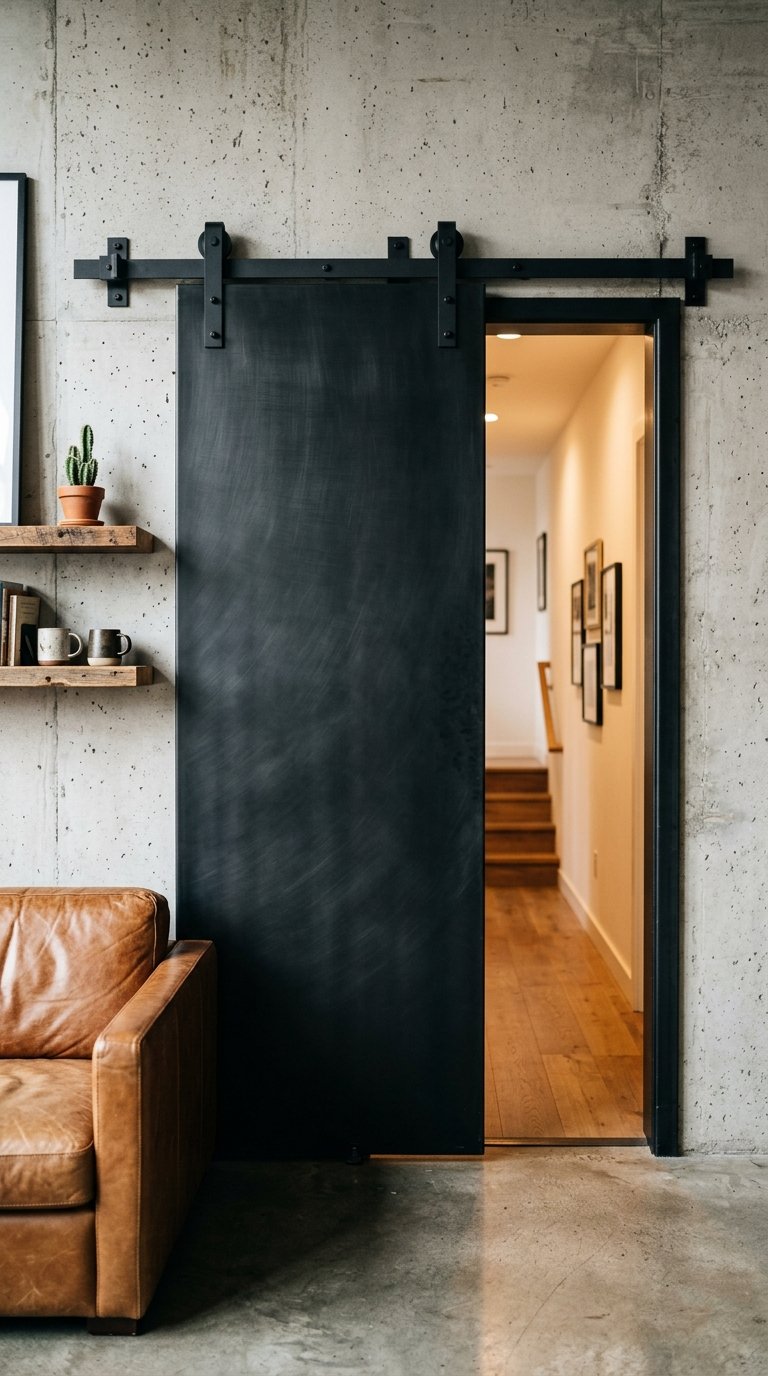
A black steel sliding barn door on an exposed wall-mounted track divides spaces without swinging into either zone and adds an industrial architectural element to any room transition. Black steel barn door kits cost $300 to $800 and install on standard timber stud walls.
The exposed track and hardware are part of the aesthetic, not an afterthought. Choose a solid steel door panel, a steel-framed glass door, or a reclaimed timber door in a black steel frame depending on how much light you want to pass between zones. FYI, the glass panel version is the most visually interesting because it lets you see the steel frame structure clearly.
14. Use a Concrete Feature Wall with Textured Finish
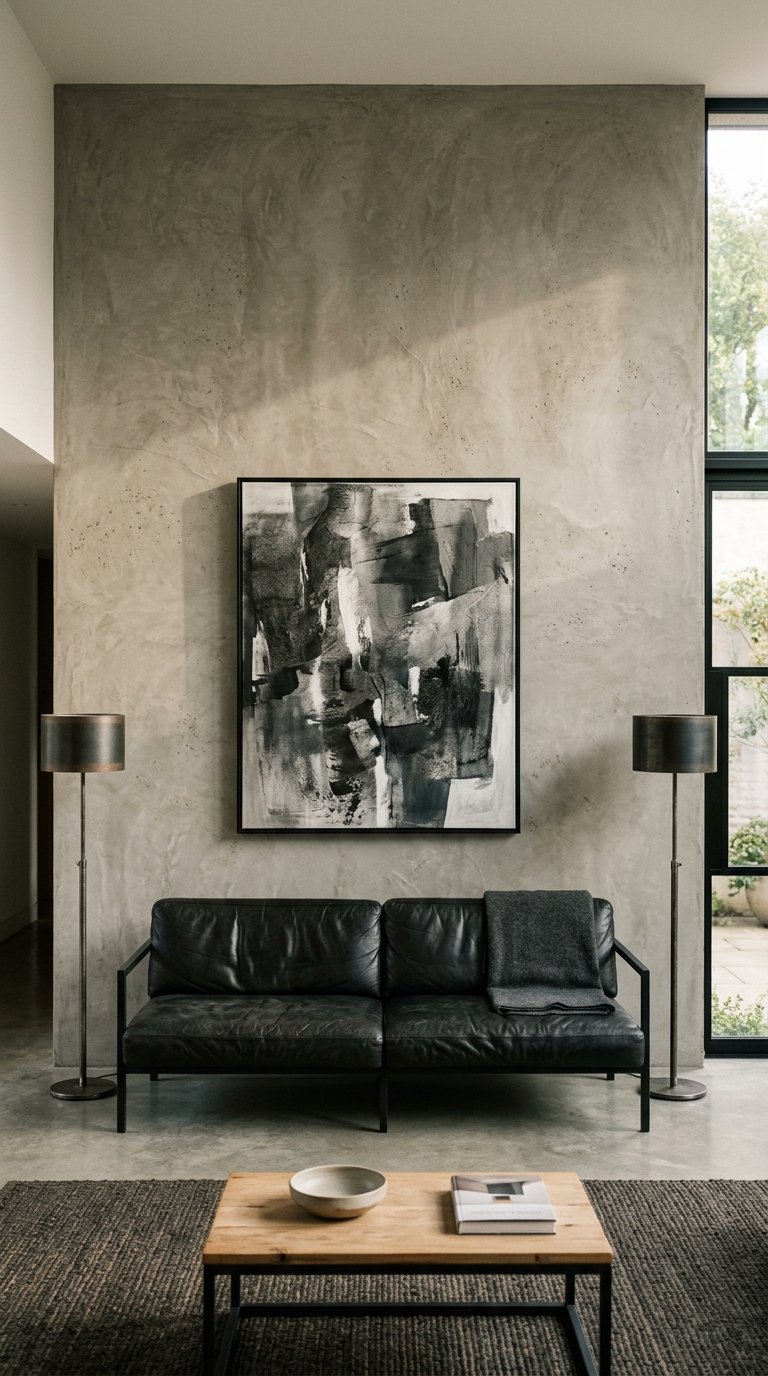
A concrete-look feature wall created with microcement or concrete overlay adds industrial texture to a room without the cost or weight of poured concrete. Microcement wall coatings cost $50 to $150 per square metre applied by a professional and create a seamless, textured surface that reads as authentic poured concrete.
The microcement application technique allows the wall to show variation, aggregate texture, and subtle colour shifts that paint never replicates. Apply it to the wall behind the sofa, the dining room feature wall, or the bathroom wet wall for maximum impact.
15. Add Industrial-Style Metal Shelving Units
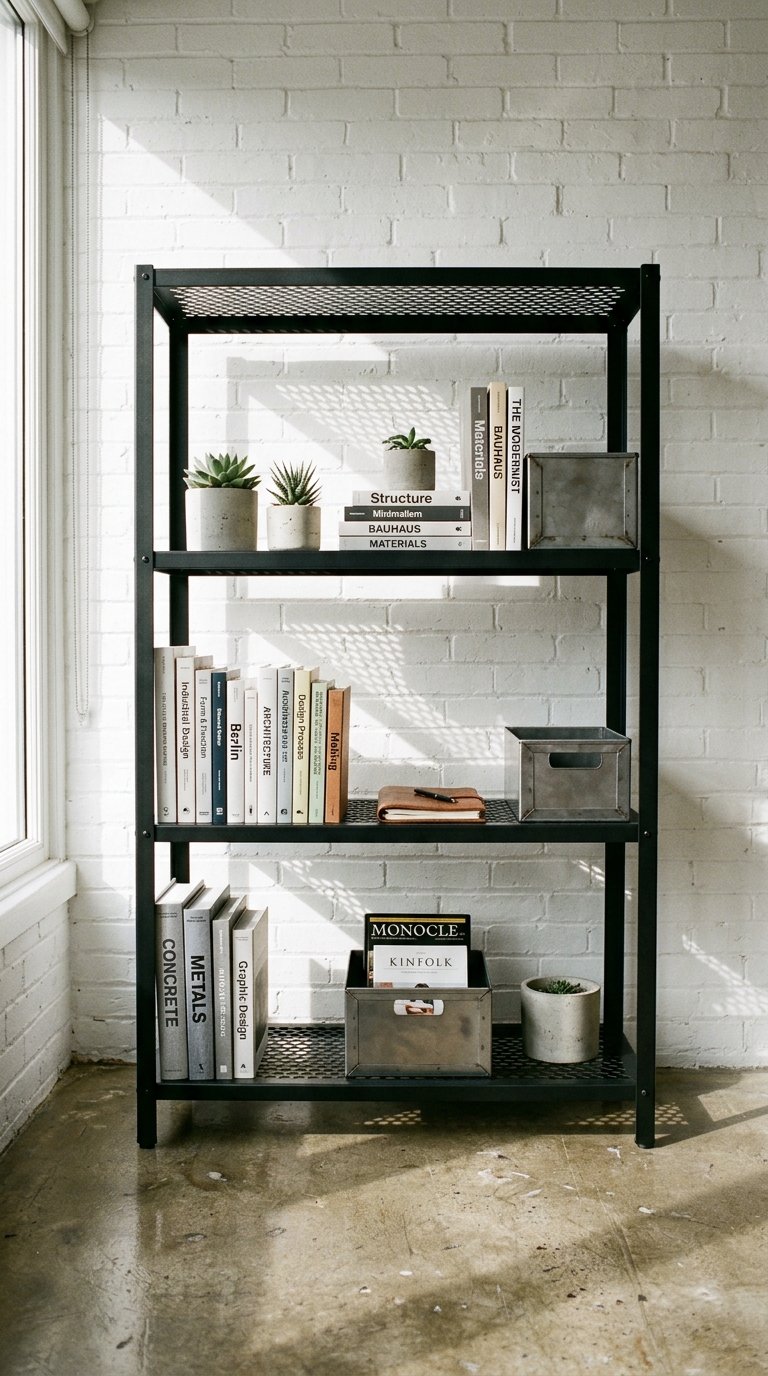
Metal shelving units with open wire or perforated steel shelves bring industrial storage aesthetics to living rooms, bedrooms, and home offices. Modular metal shelving systems cost $100 to $400 for a standard unit and suit the industrial design preference for visible, functional storage over concealed cabinetry.
The open shelf structure displays objects, books, and plants while reinforcing the industrial material palette. Style the shelves with a mix of functional objects (books, plants, baskets) and raw material objects (concrete vessels, steel boxes, leather-bound notebooks) for a cohesive industrial look.
16. Install Oversized Industrial Windows to Maximise Light
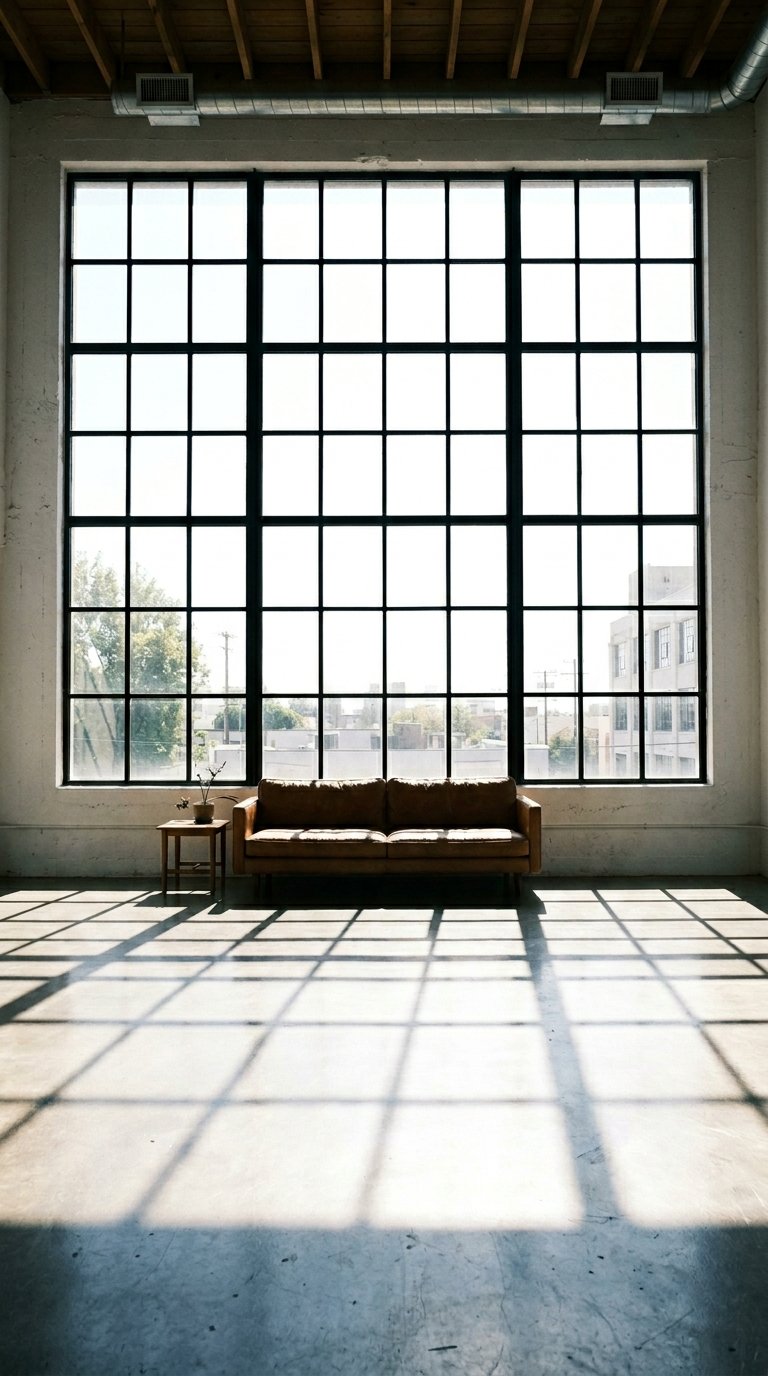
Large factory-style windows with black steel frames and multiple panes are the architectural element that most transforms a standard home into something that reads as industrially designed. Window replacement costs $800 to $3,000 per window including installation, with steel-framed versions at the higher end.
The window scale matters: industrial design relies on generously proportioned openings that let large volumes of light enter the space. A single oversized window changes the entire character of a room more effectively than any interior decoration decision.
17. Choose a Worn Concrete or Stone Fireplace Surround
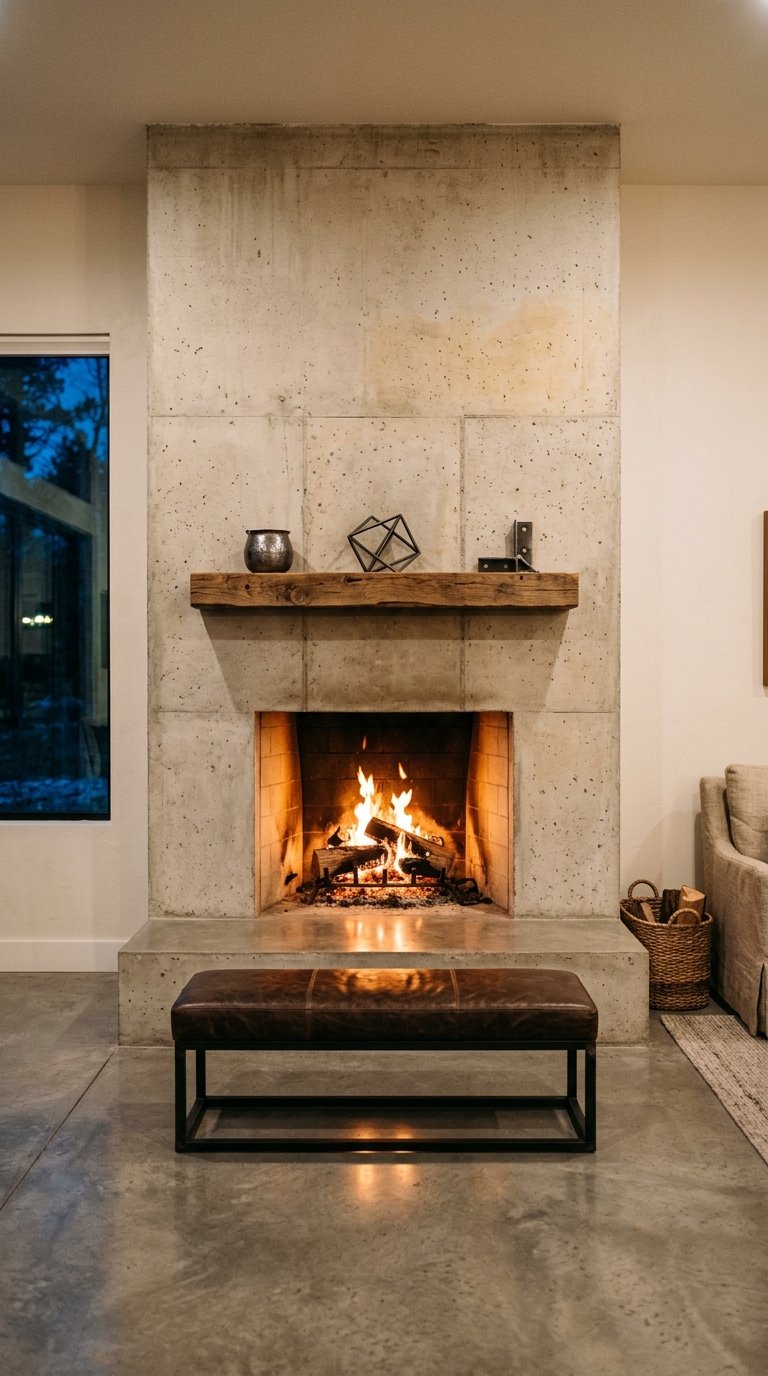
A fireplace surrounded in raw concrete, dark slate, or industrial steel plate grounds the living room’s focal point in industrial materials. A poured concrete fireplace surround costs $500 to $2,000 custom-made; a dark slate tile surround costs $300 to $800 in materials installed.
The rough, heavy quality of concrete and stone against the warmth of the fire creates a material tension that defines industrial design at its best: hard materials, warm atmosphere. A simple rectangular concrete surround with no mantel shelf reads as the most contemporary and architecturally resolved version of this idea.
18. Use Dark Grout with Light Concrete Tiles
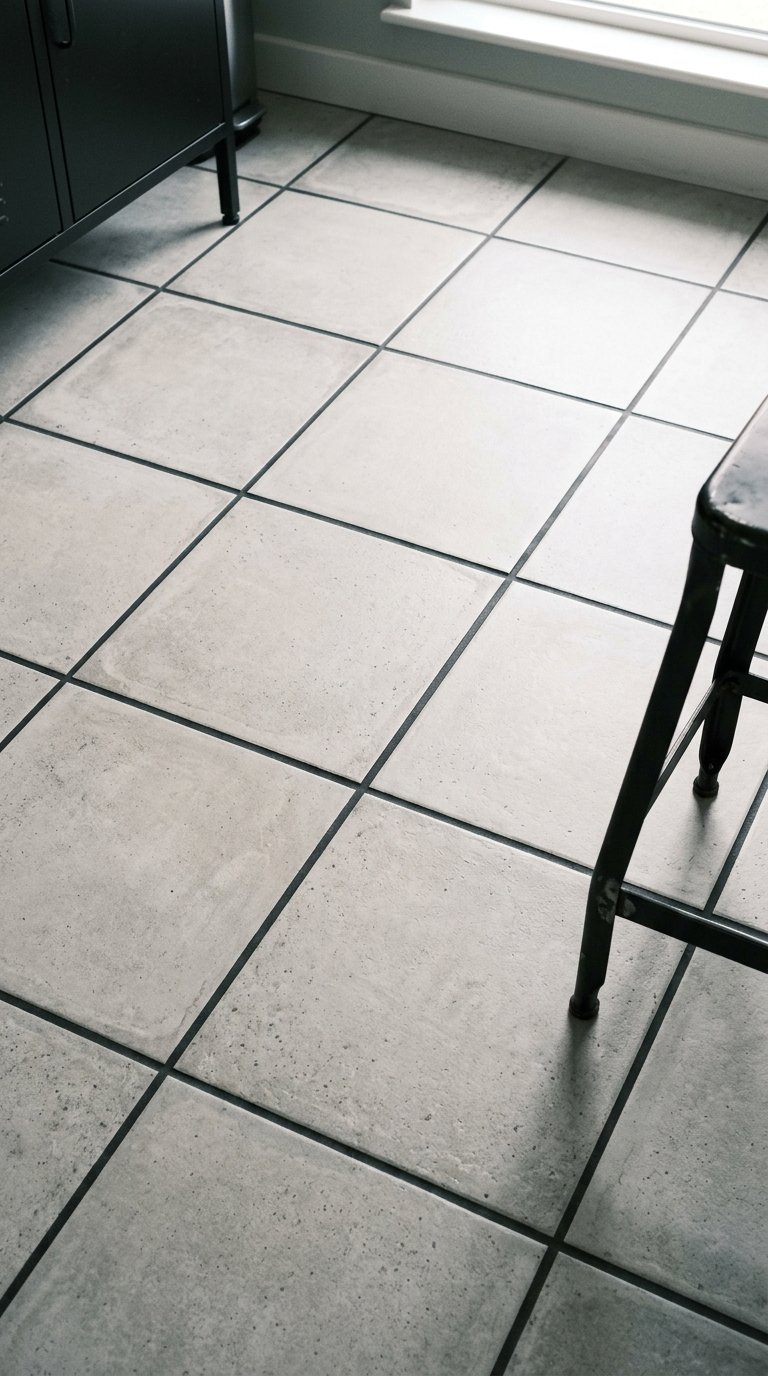
Light grey or white concrete-look tiles with charcoal or dark grey grout lines create a graphic, industrial floor or wall surface at a fraction of the cost of actual concrete. The dark grout lines emphasise the tile grid and create a visible structural pattern that reinforces industrial design language.
Large-format concrete-look porcelain tiles (600 x 600mm or larger) cost $20 to $60 per square metre and install on standard tile adhesive. The combination of pale tile surface and dark grout lines reads as industrial while being far easier to maintain than actual polished concrete.
19. Hang Oversized Abstract Art on Exposed Brick or Concrete Walls
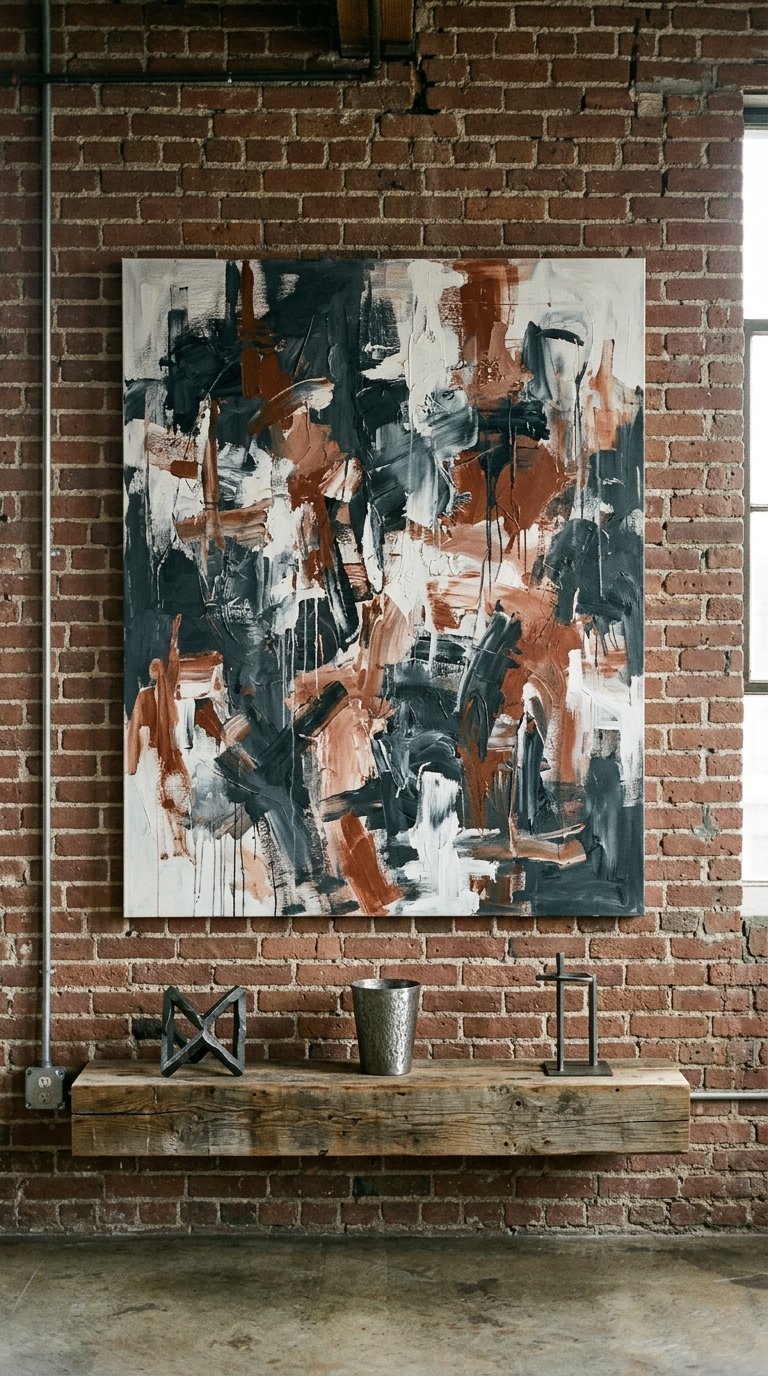
Large-scale abstract art in a limited palette (black, white, grey, rust, aged ochre) stands out against exposed brick or concrete walls while reinforcing the industrial colour vocabulary. A single 48 x 60 inch canvas on an exposed brick wall creates a focal point that makes the room feel like a gallery.
Abstract art prints from independent sellers on Society6 or Saatchi Art cost $80 to $400 for large format sizes. The key is scale: small art on industrial walls looks lost. One large piece or a very tight cluster of medium pieces achieves the right proportion. :/ A row of small frames on a brick wall is the industrial design mistake that’s hardest to recover from.
20. Install Track Lighting on Exposed Ceiling Beams
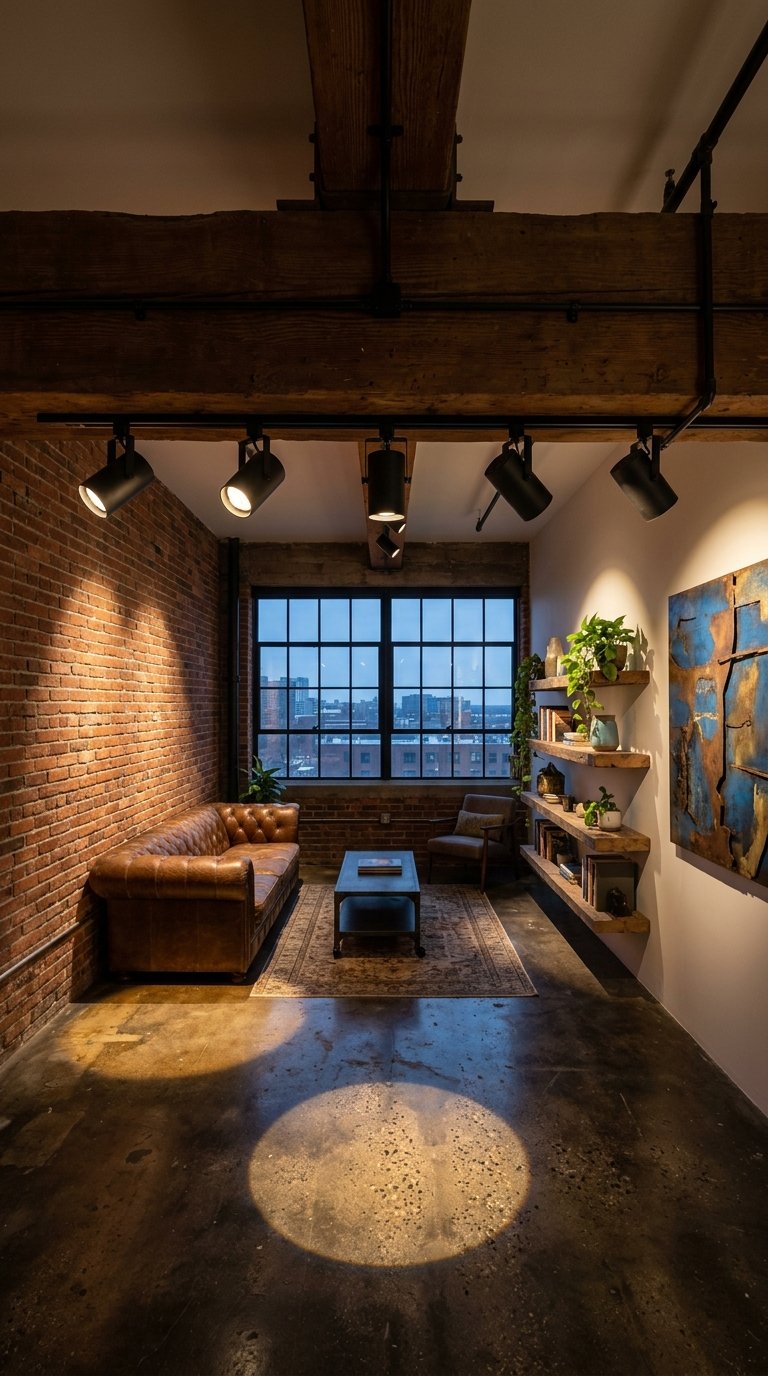
Track lighting mounted on exposed ceiling beams provides directed, adjustable light throughout a high-ceiling industrial space without requiring a traditional ceiling fixture. Black powder-coated track lighting systems cost $150 to $600 for a standard run and allow you to direct individual heads toward art, work surfaces, or seating areas.
The exposed track reinforces the industrial aesthetic of revealed structure and functional hardware. In a loft or warehouse conversion with exposed beams, track lighting on the beam surface reads as architecturally integrated rather than retrofitted.
21. Soften Industrial Design with Layered Textiles
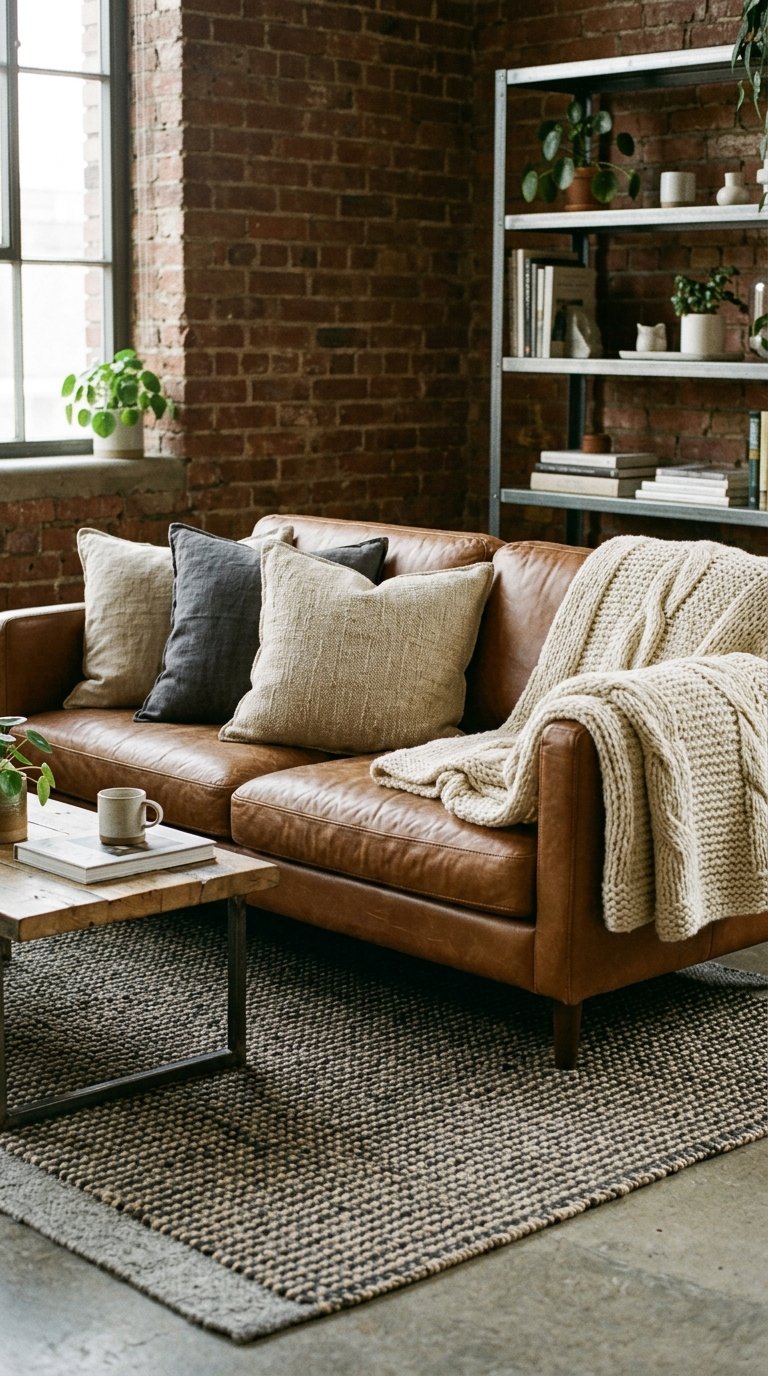
The biggest mistake in industrial interior design is forgetting warmth entirely. Concrete floors, steel frames, and exposed brick create a beautiful backdrop but a cold living environment without layered textiles to balance them.
A large wool or cotton rug on a concrete floor, chunky linen cushions on a leather sofa, and a knit throw draped across an armchair add tactile warmth without softening the industrial aesthetic. The textiles don’t fight the industrial elements; they make them more liveable. The contrast between hard industrial materials and soft human-scale textiles is what makes the style genuinely comfortable to inhabit, not just impressive to photograph.
Final Thoughts
Industrial interior design works because it’s honest. The materials show their nature, the structure reveals itself, and nothing pretends to be something it isn’t. That philosophy applies as much to a suburban living room with a single reclaimed wood shelf as it does to a full warehouse conversion.
Start with the change that delivers the most impact for your specific space. Exposed ceiling? Paint it flat black. Existing brick? Seal it and stop covering it. No industrial bones? Add steel-framed shelving, Edison pendants, and aged leather. The style builds from honest material decisions, and those decisions are available at every budget level.