23 Vintage Bathroom Decor Ideas to Add Old-World Charm
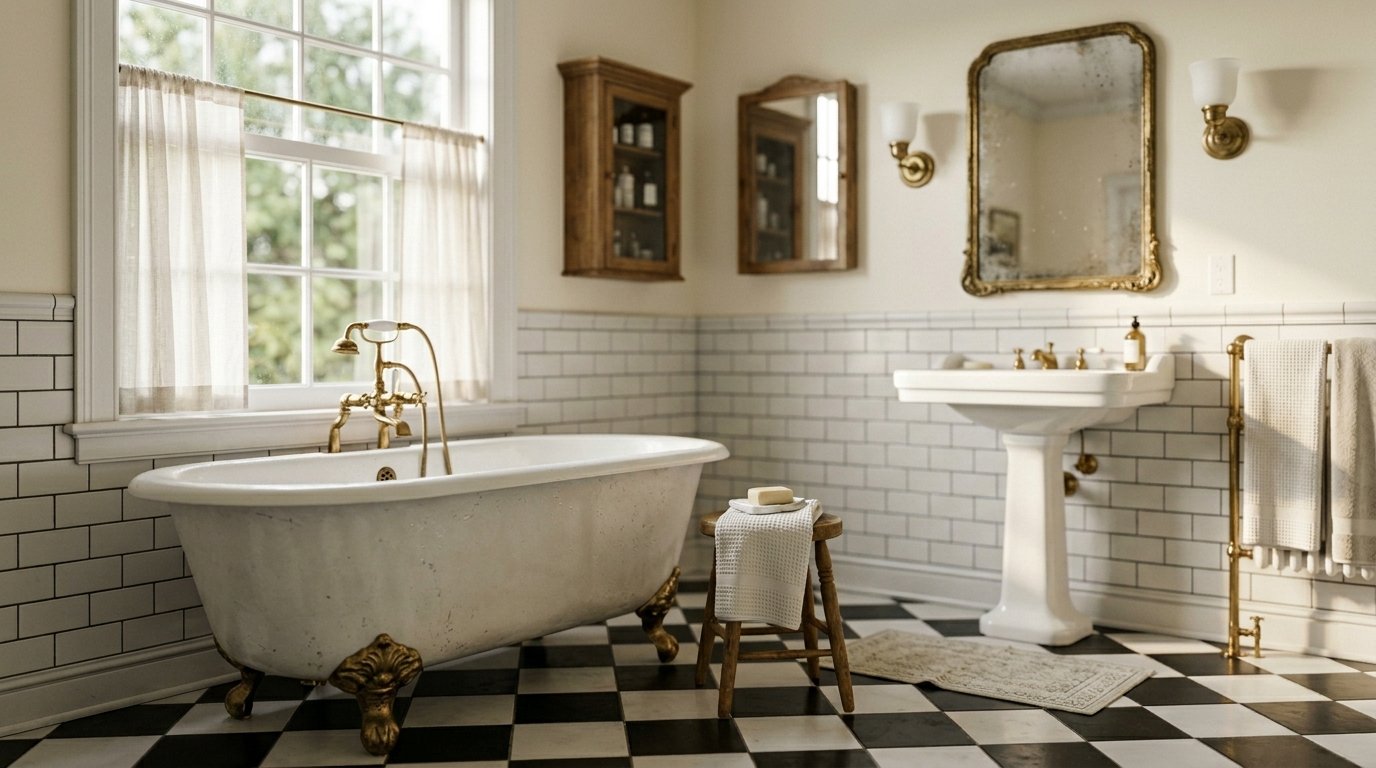
You walk into a bathroom and it feels like a hotel from the 1920s, claw-foot tub, brass fixtures, that specific kind of charm that new construction just can’t fake. Vintage bathroom decor delivers exactly that feeling, and you don’t need to gut your bathroom to get there. I added a handful of vintage touches to my own builder-grade bathroom last year, and the transformation from “generic rental bathroom” to “this has character” cost less than a weekend trip. Whether you’re working with a full renovation budget or just want to swap a few key pieces, these 23 ideas bring genuine old-world charm into any bathroom.
1. Install a Pedestal Sink
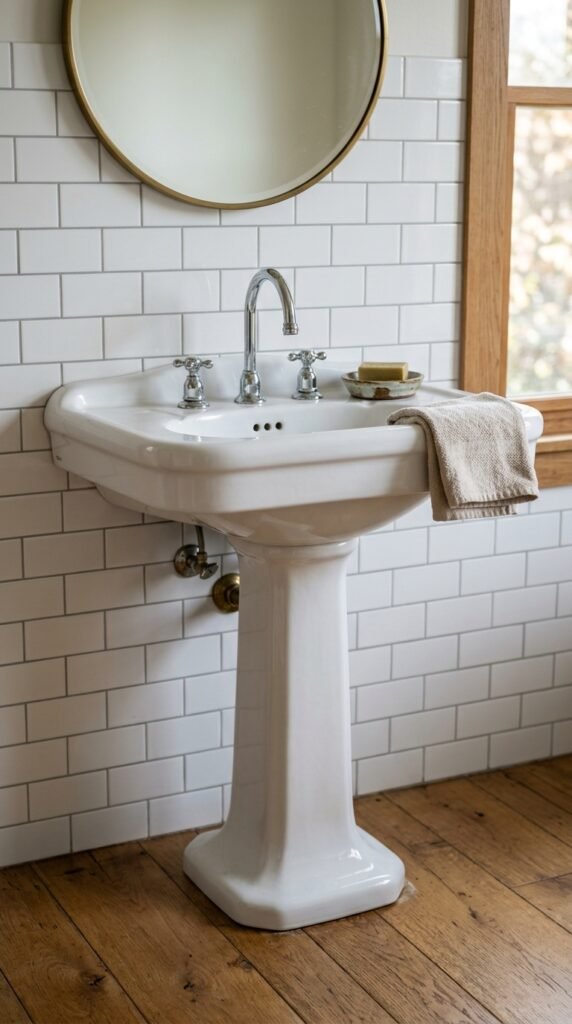
A pedestal sink instantly signals vintage style in a way few other single fixtures can match, since the exposed plumbing and slim silhouette read as classic bathroom design from the early 1900s onward. The open space underneath also makes small bathrooms feel less crowded than a boxy vanity does.
Pedestal sinks cost $150 to $400 depending on material and brand, with cast iron and vitreous china options offering the most authentic vintage look. Kohler and American Standard both make pedestal sinks with classic silhouettes that work in both true vintage and vintage-inspired bathrooms. The tradeoff is storage, since you lose the cabinet space a vanity provides, so plan for a separate shelf or cart nearby.
2. Add Brass or Bronze Fixtures
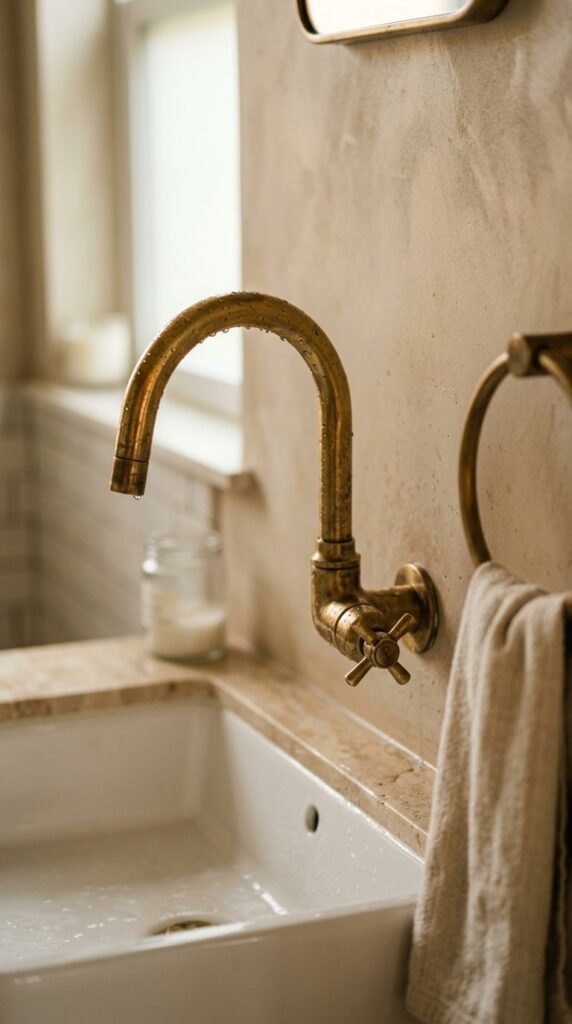
Brass and bronze fixtures replace cold, modern chrome with warm metal tones that instantly age a bathroom in the best possible way. Faucets, towel bars, and cabinet hardware all benefit from this swap, and the warm tone works whether your bathroom leans full vintage or just vintage-inspired.
Where to Swap for Brass First
- Faucets: $80 to $250, the most visible fixture in the room
- Towel bars and rings: $20 to $60 each
- Cabinet and drawer pulls: $5 to $15 per piece
Unlacquered brass develops a natural patina over time, which some people love and others immediately polish away. IMO, letting it age naturally is the more authentically vintage choice, even though it requires letting go of that brand-new shine.
3. Use Subway Tile With Dark Grout
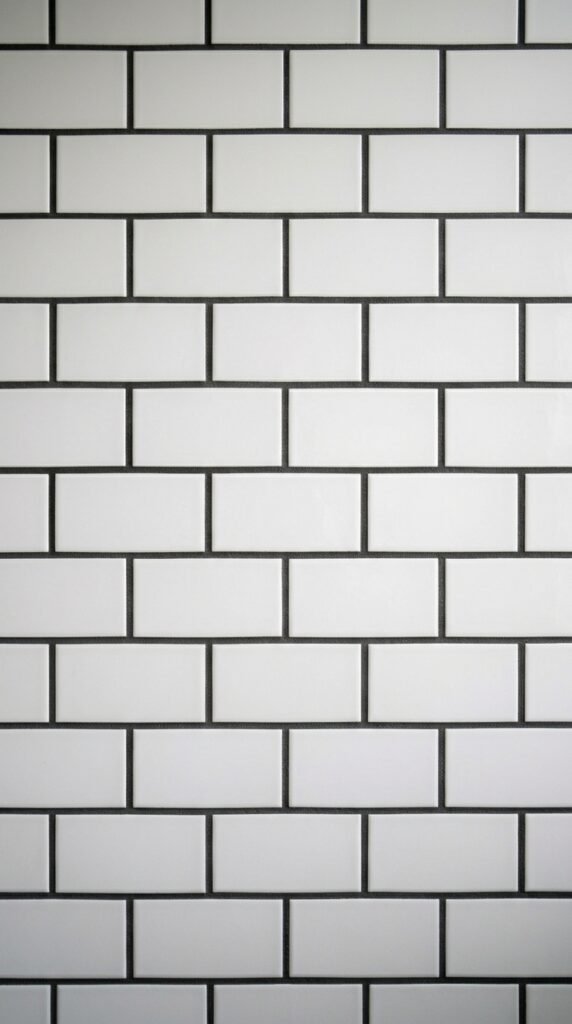
Subway tile with dark grout creates the classic look found in early 20th-century bathrooms, where the contrast between white tile and black or charcoal grout reads as intentional and period-accurate rather than a modern grid pattern. This combination shows up constantly in restored vintage bathrooms for good reason.
White subway tile costs $3 to $8 per square foot, while the labor to install it runs $5 to $10 per square foot depending on your region. Dark grout (charcoal or black rather than standard grey) costs the same as regular grout but completely changes the tile’s visual impact. A herringbone or basketweave pattern instead of a straight grid adds even more vintage authenticity if your budget allows the extra installation complexity.
4. Install a Claw-Foot Tub
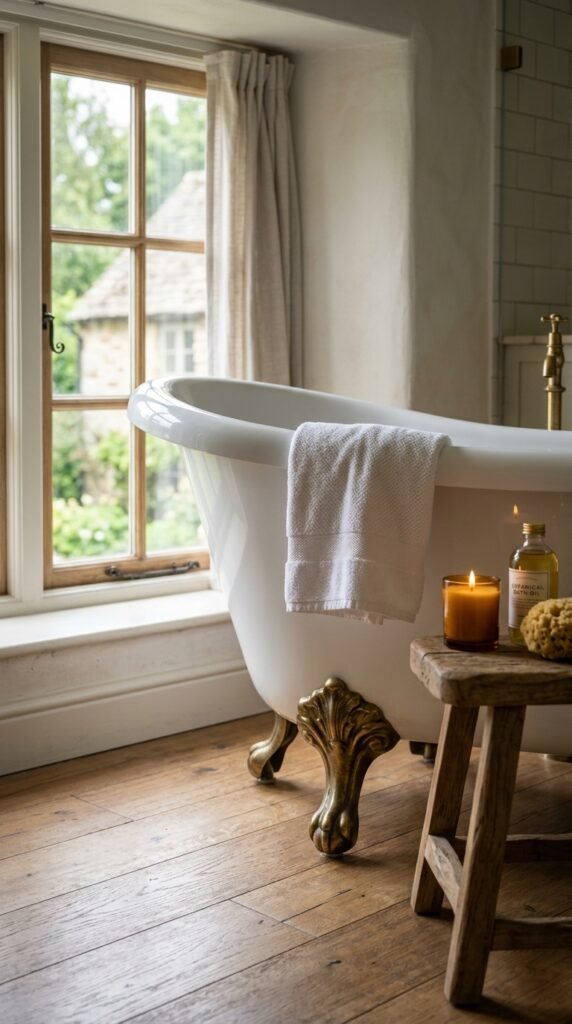
A claw-foot tub is the single most iconic vintage bathroom feature, and it works as a genuine functional bathtub, not just a decorative piece. The freestanding silhouette and raised feet create a sculptural presence that built-in tubs simply can’t replicate.
Claw-foot tubs cost $600 to $2,000 depending on material (cast iron holds heat better but weighs significantly more than acrylic), with vintage salvaged versions sometimes costing less if you find one that needs refinishing. Refinishing an old claw-foot tub runs $300 to $600 professionally, often cheaper than buying new. This is a bigger investment than most ideas on this list, but if your bathroom layout allows for it, nothing else delivers the same visual impact.
5. Add a Vintage-Style Medicine Cabinet
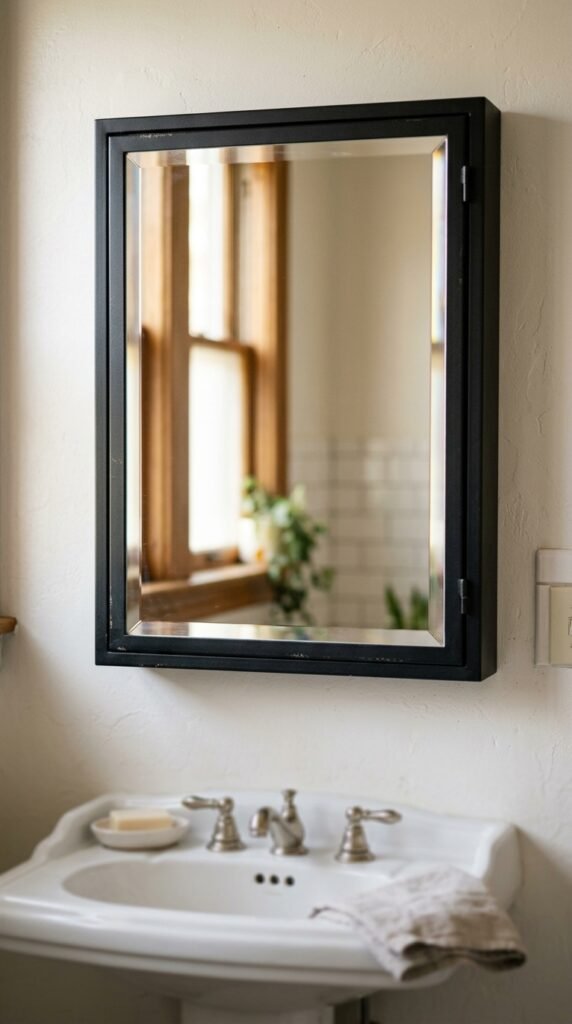
A recessed or surface-mounted medicine cabinet with a vintage frame adds storage and character at the same time, replacing the generic builder-grade mirror most bathrooms come with. Look for cabinets with beveled mirror edges or metal frames in brass or black.
Vintage-style medicine cabinets cost $80 to $250 depending on size and frame material, with surface-mounted versions easier to install than recessed options that require cutting into the wall. A beveled mirror catches light differently than a flat modern mirror, adding subtle dimension to the whole room. This single swap does more to age a bathroom than almost any other single fixture change.
6. Use Black and White Checkerboard Flooring
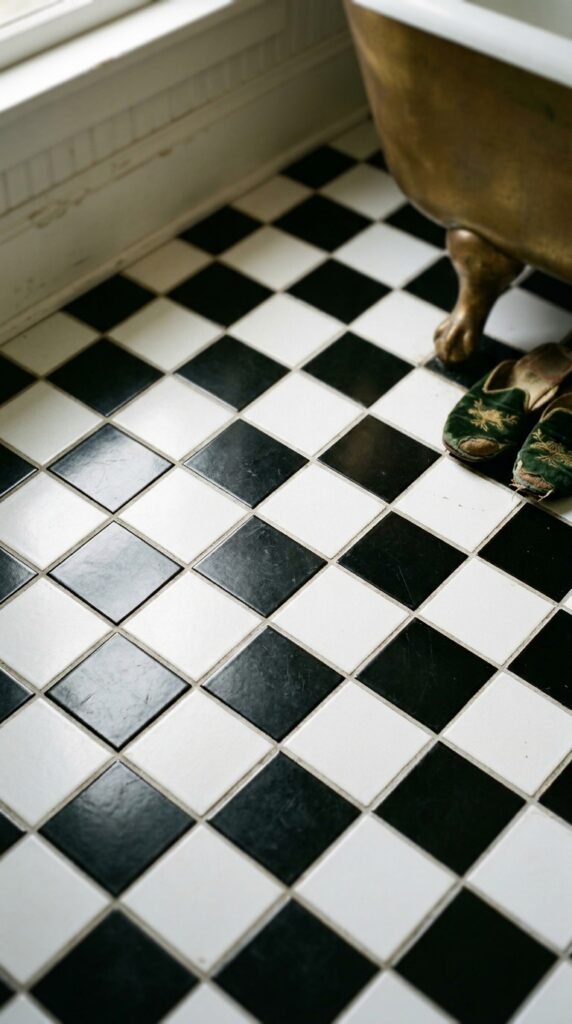
Checkerboard flooring in black and white is vintage bathroom shorthand, appearing in everything from 1920s townhouses to mid-century ranch homes. The pattern works in both small powder rooms and larger full bathrooms.
Checkerboard Flooring Options
- Vinyl checkerboard tile: $2 to $5 per square foot, budget-friendly and DIY-installable
- Ceramic checkerboard tile: $4 to $10 per square foot, more durable for high-traffic bathrooms
- Peel-and-stick checkerboard: $1 to $3 per square foot, renter-friendly and removable
A small bathroom (5×8 feet) needs roughly 40 square feet of flooring, which makes even the ceramic option affordable at under $400 for materials. This is one of those patterns that genuinely never goes out of style, despite trends cycling through every other flooring choice imaginable.
7. Hang a Vintage-Inspired Pendant or Sconce Light
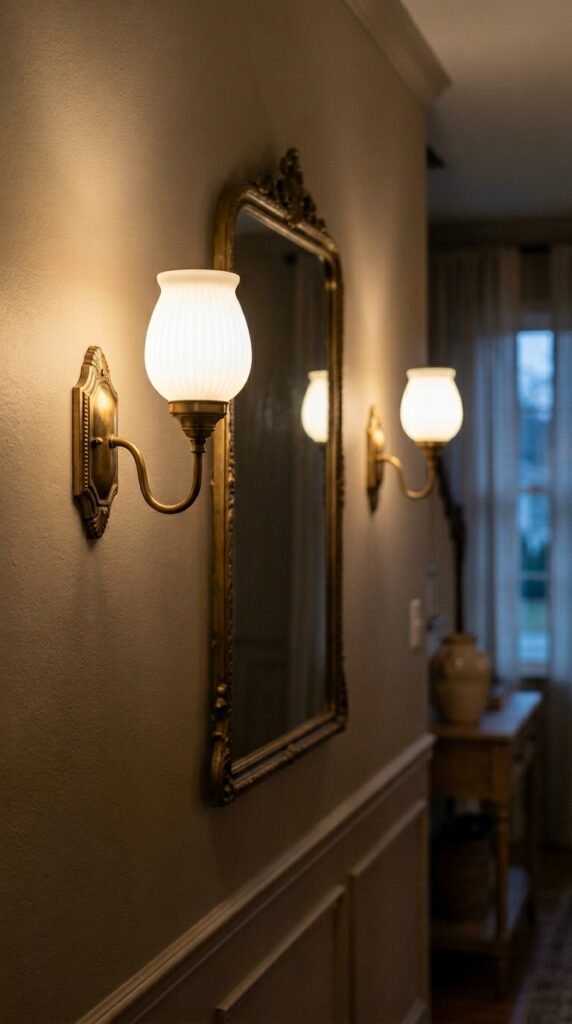
Vintage-style lighting fixtures, schoolhouse pendants, brass sconces, or milk glass globes, replace harsh modern fixtures with warm, period-appropriate glow. Lighting affects a room’s entire mood more than almost any other single element.
Schoolhouse pendant lights cost $40 to $120, while brass wall sconces with milk glass shades run $30 to $80 each. Install sconces on either side of the medicine cabinet rather than a single overhead fixture for more flattering, even light, since this was the standard vintage bathroom lighting layout. Swap to warm white bulbs (2700K) regardless of fixture style, since cool white light fights the vintage aesthetic no matter how period-accurate the fixture itself looks.
8. Add Wallpaper With a Vintage Print
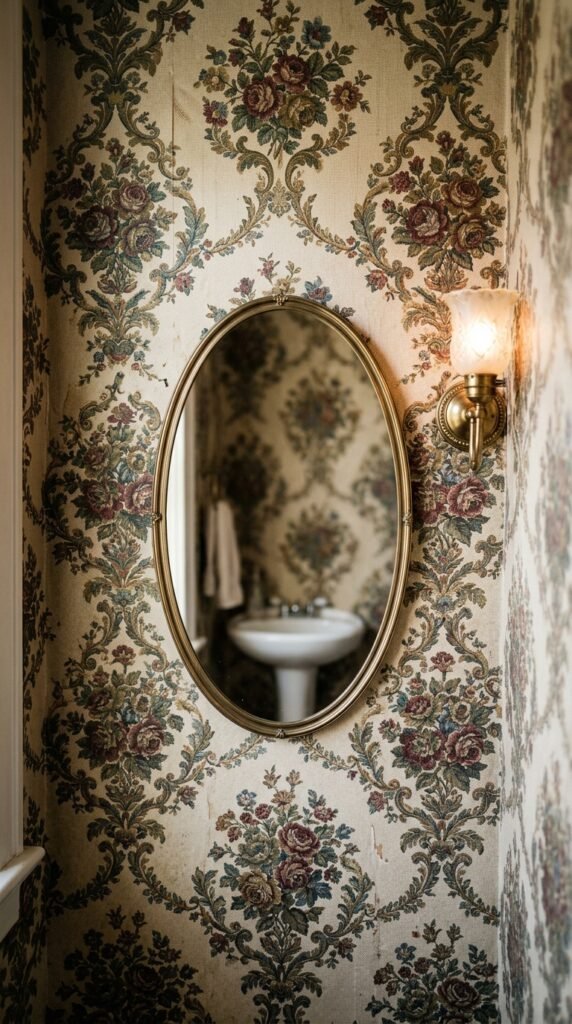
Wallpaper with a vintage-inspired print, florals, damask, toile, or art deco patterns, adds the kind of pattern density that modern bathrooms almost never have. Bathrooms are one of the few rooms where bold wallpaper genuinely works, since the small square footage keeps a busy pattern from feeling overwhelming.
Wallpaper costs $30 to $80 per roll, and most small bathrooms need only 2 to 4 rolls total. Peel-and-stick versions in the $25 to $50 per roll range handle bathroom humidity reasonably well if you choose a vinyl-coated option specifically rated for moisture. A powder room is honestly the best place in your entire house to take a wallpaper risk, since the commitment is small but the payoff is huge.
9. Use a Vintage Vanity or Repurposed Dresser
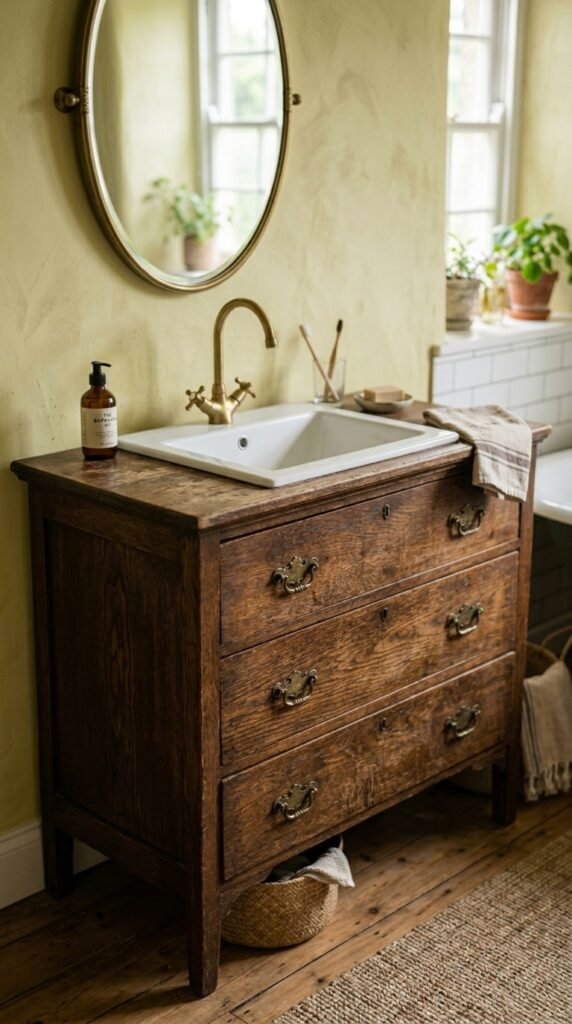
A repurposed antique dresser converted into a vanity brings genuine furniture character that manufactured vanities can’t replicate. Cut a hole for the sink basin and plumbing, seal the wood against moisture, and you’ve got a one-of-a-kind vanity with real drawers and real history.
A vintage dresser suitable for conversion costs $50 to $200 at thrift stores or estate sales, plus $100 to $300 for the conversion work (sink cutout, plumbing access, waterproof sealant) if you hire it out. DIY conversion kits and tutorials bring that cost down significantly if you’re comfortable with basic tools. This is one of the highest-impact vintage bathroom projects on this list, and it’s also one of my personal favorites because no two converted dressers ever look the same.
10. Add Vintage Glass Bottles and Apothecary Jars
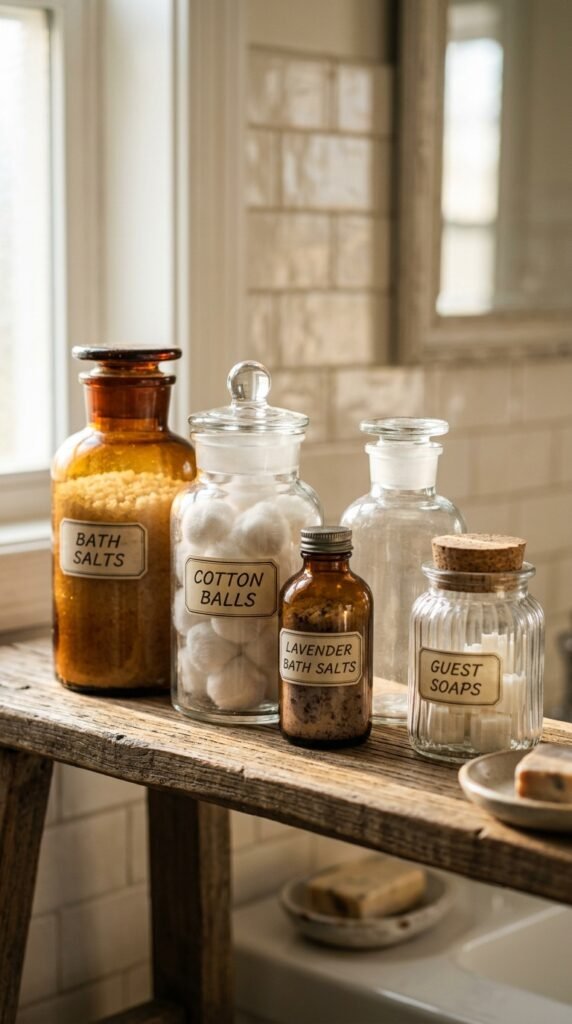
Vintage glass bottles and apothecary jars store bathroom essentials while looking like they belong in an old pharmacy. Use them for cotton balls, bath salts, or even just as empty decorative objects on open shelving.
Vintage glass apothecary jars cost $10 to $40 each at antique stores, while reproduction versions run $15 to $30 at home decor retailers. Group three or four jars of varying heights on a shelf or windowsill, filling some with bath products and leaving one or two empty for visual breathing room. Ever notice how the right glass jar makes even a bottle of cotton swabs look intentional rather than just functional?
11. Install Beadboard or Wainscoting
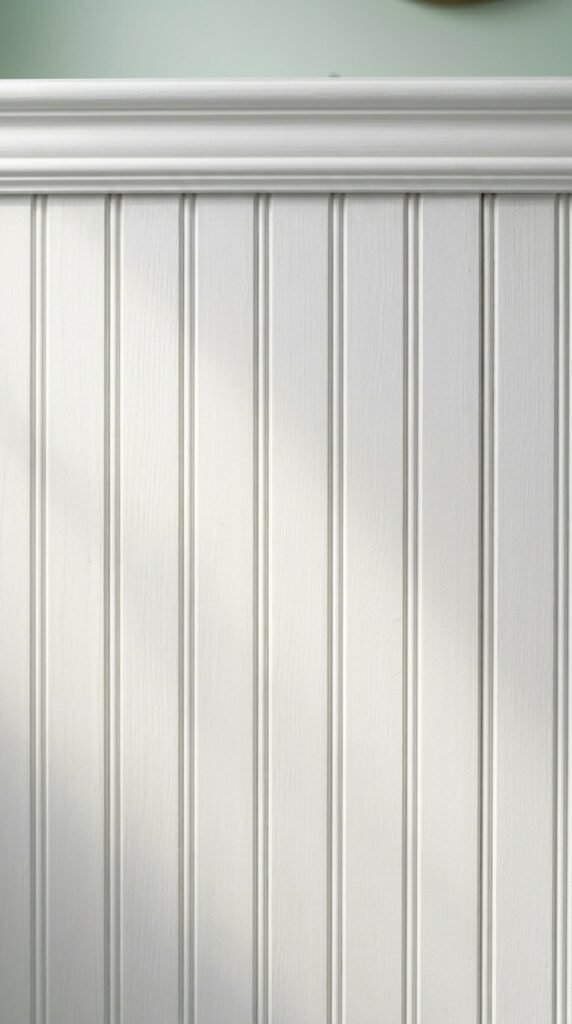
Beadboard paneling on the lower half of bathroom walls is a classic vintage architectural detail that adds texture and a clear visual break between wall sections. Painted white, it brightens a small bathroom while adding dimension flat drywall doesn’t have.
Beadboard paneling costs $2 to $6 per square foot for the material, with installation adding $3 to $7 per square foot if you’re not doing it yourself. Cap the beadboard with a simple chair rail molding for the most authentic period look. This detail works especially well paired with checkerboard flooring and a pedestal sink for a fully cohesive vintage bathroom in one room.
12. Use a Clawfoot Tub Shower Curtain Ring System
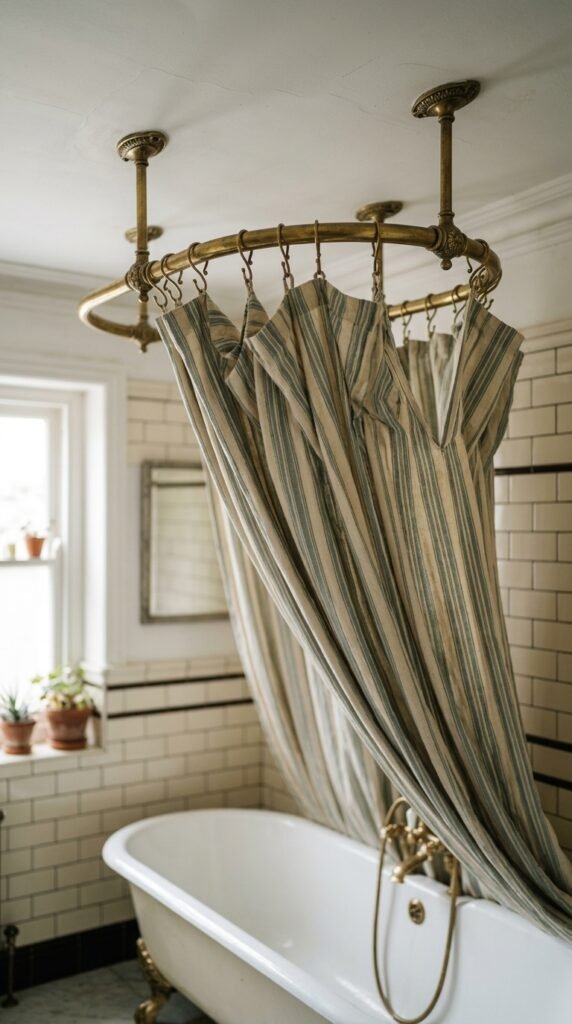
A circular or oval shower curtain ring suspended from the ceiling above a claw-foot tub solves the practical problem of showering in a freestanding tub while keeping the vintage aesthetic intact. This setup avoids the boxy, modern look of a straight shower rod.
Ceiling-mounted oval shower rings cost $60 to $150 depending on size and finish, with brass or oil-rubbed bronze finishes matching other vintage fixtures in the room. Pair the ring with a vintage-style striped or floral shower curtain rather than a plain white one for added period charm. This is a detail people often forget when planning a claw-foot tub bathroom, and then they’re stuck improvising later, so plan for it from the start.
13. Add a Vintage Mirror With an Ornate Frame
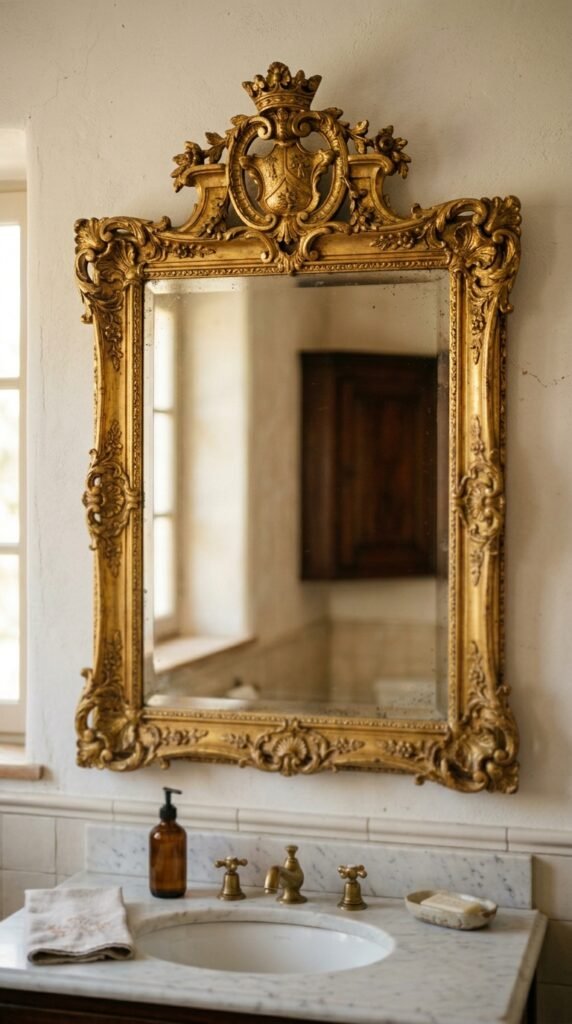
An ornate framed mirror, gold gilt, carved wood, or scalloped edges, adds a decorative focal point beyond just function. Position it above the sink or on an empty wall as a standalone statement piece.
Vintage ornate mirrors cost $40 to $150 at antique stores and estate sales, while reproduction versions with the same gilt or carved detail run $30 to $90 new. A mirror with genuine age shows slight foxing (the cloudy spotting on old mirror glass) which, far from being a flaw, adds to the authentic vintage character. A pristine, perfectly clear mirror in an ornate frame looks slightly fake by comparison, which is a strange but true quirk of this particular decor choice.
14. Use Patterned Encaustic or Cement Tile
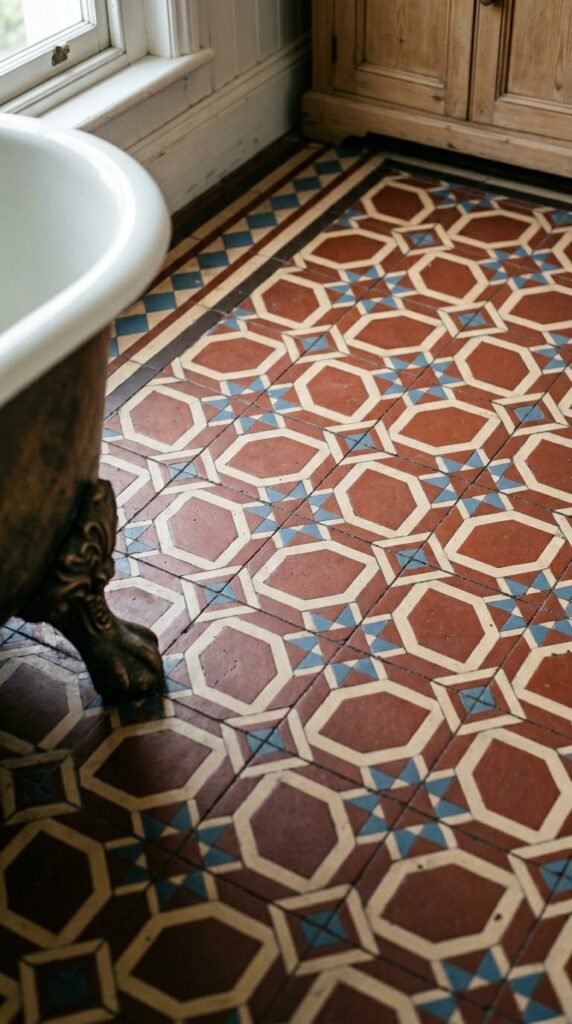
Patterned encaustic or cement tile on the floor brings Mediterranean and Victorian-era pattern complexity that plain tile can’t achieve. These tiles often feature geometric or floral motifs in multiple colors within a single tile.
Cement tile costs $8 to $20 per square foot, significantly more than standard ceramic but dramatically more visually impactful. For a small bathroom floor (40 to 50 square feet), this runs $320 to $1,000 in materials alone. This is a splurge-worthy item on the list, but if your budget allows for one statement purchase in a vintage bathroom remodel, this tile pattern delivers the most visual impact per square foot.
15. Add a Vintage-Style Towel Warmer or Ladder
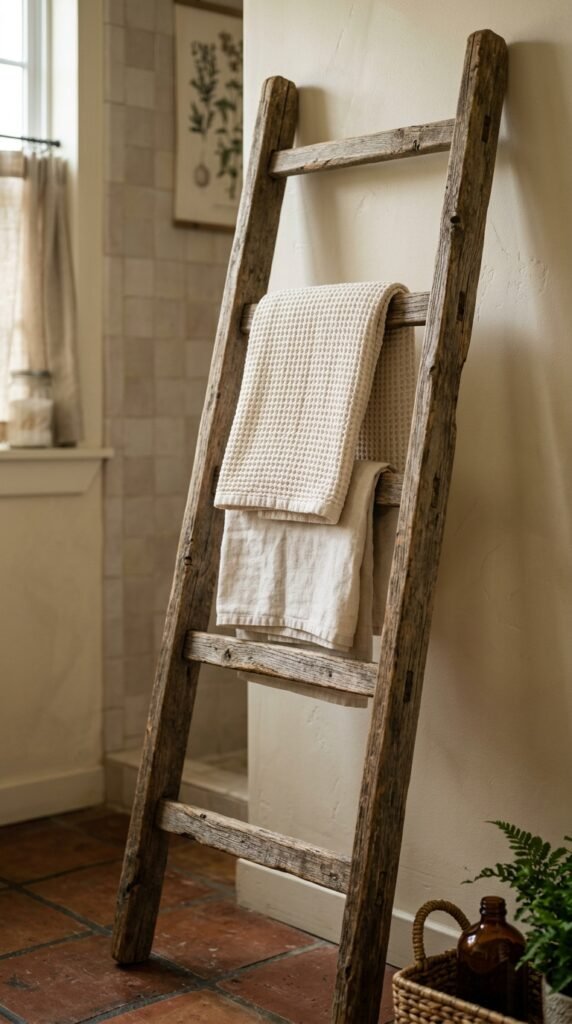
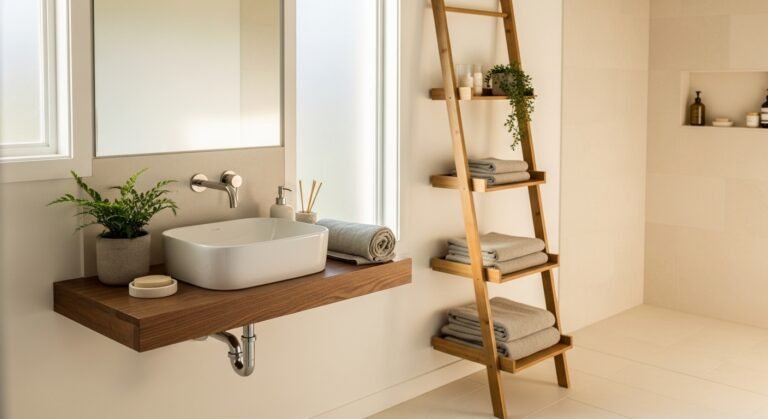
A wall-mounted towel warmer or a simple wood ladder used for towel storage adds both function and texture to bathroom walls. Vintage-style towel warmers in brass or matte black fit period bathrooms, while a distressed wood ladder brings in a more rustic vintage touch.
Vintage-style electric towel warmers cost $100 to $300, while a simple wood ladder for towel storage runs $30 to $80 or costs nothing if you have an old ladder lying around. Drape two or three folded towels over the ladder rungs for a styled, lived-in look rather than stacking them flat. This is a detail that works in nearly any vintage sub-style, whether your bathroom leans farmhouse, art deco, or Victorian.
16. Use Brass or Crystal Drawer Pulls
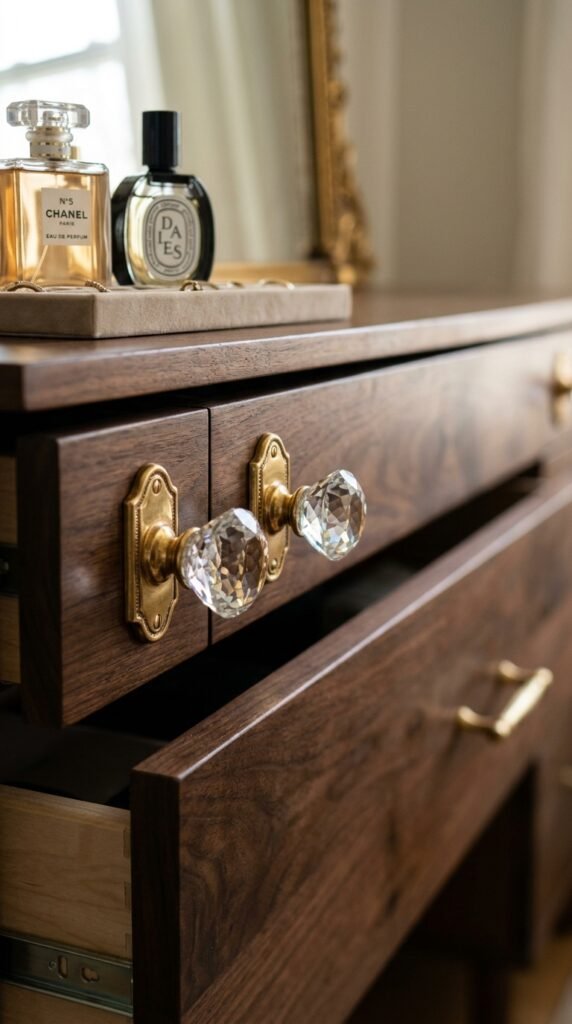
Small details like brass or crystal knobs on vanity drawers add period character that’s easy to overlook but adds up significantly across a whole vanity. Crystal knobs in particular were standard in Victorian and Art Deco-era bathroom furniture.
Crystal drawer knobs cost $5 to $15 each, while brass pulls run $5 to $20 depending on detail and finish. Swapping 6 to 10 pulls on a vanity costs $50 to $150 total but transforms a plain modern vanity into something with real visual interest. FYI, mixing crystal and brass on the same piece (crystal knobs with brass backplates) is a classic combination that reads as intentional rather than mismatched.
17. Add a Vintage Scale or Decorative Object
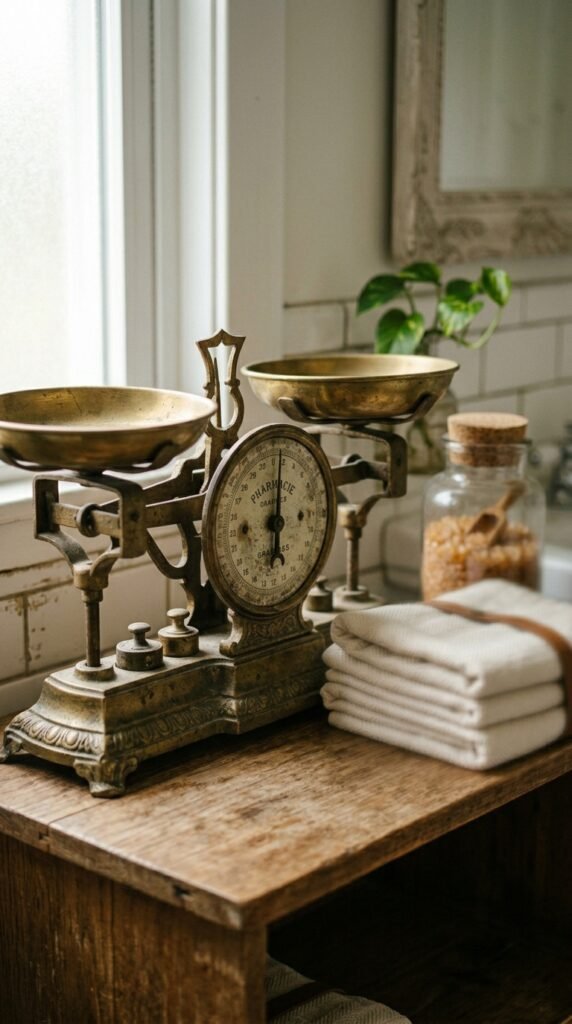
A vintage bathroom scale, an old apothecary scale, or similar decorative object adds an unexpected, slightly quirky touch that most modern bathrooms skip entirely. These objects don’t need to function, they just need to look like they belong in an old pharmacy or barbershop.
Vintage scales cost $20 to $60 at antique stores depending on condition and brand recognition. Place one in an underused corner or on open shelving alongside other vintage objects for a curated, collected look. This is a detail that costs little but adds a surprising amount of personality, the kind of thing guests notice and ask about.
18. Use a Vintage-Inspired Faucet With Cross Handles
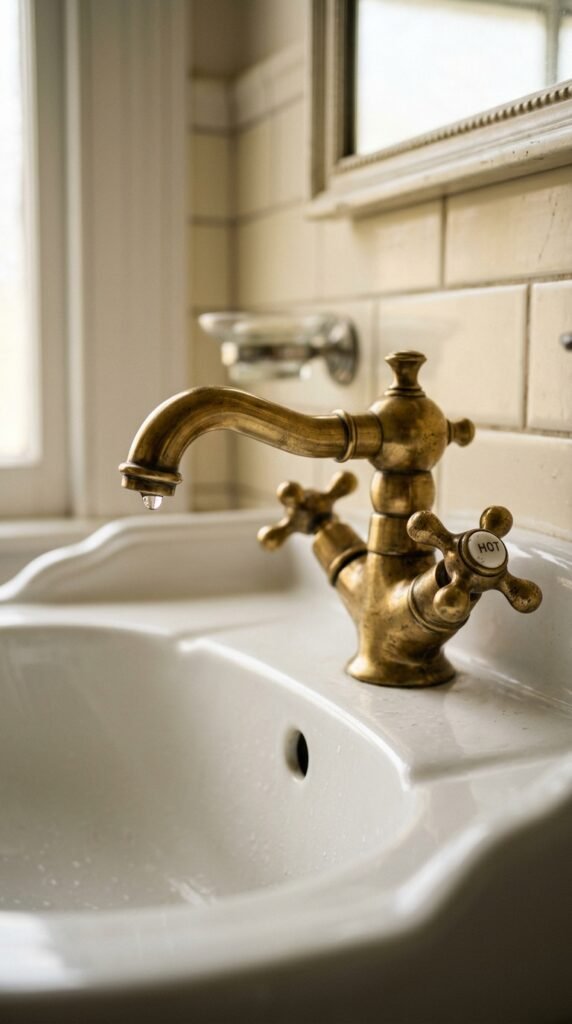
Cross-handle faucets, the kind with an X-shaped handle rather than a modern lever, are a small detail that reads as immediately vintage the moment someone reaches for the tap. This applies to both sink faucets and tub or shower fixtures.
Cross-handle faucet sets cost $100 to $300 depending on brand and finish, with brass or oil-rubbed bronze options matching the broader vintage palette best. Kingston Brass and Signature Hardware both specialize in this exact style at various price points. Ever notice how a single faucet style can make an otherwise plain sink look decades older in the best way?
19. Add Vintage Botanical or Apothecary Prints
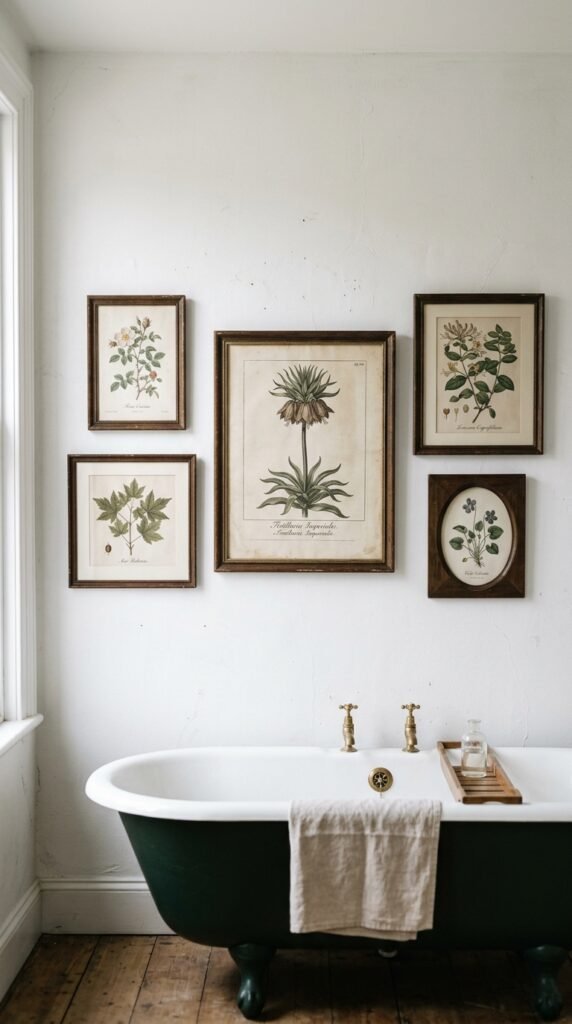
Framed vintage botanical illustrations or old apothecary advertisements fill wall space with period-appropriate art that complements glass jars and brass fixtures. These prints are widely available as reproductions, so you don’t need to track down genuine antiques.
Reproduction vintage botanical or apothecary prints cost $10 to $30 framed, or less if you print and frame them yourself using public domain images. Group two or three in a small cluster on one wall, or use a single larger print as a focal point above the tub. This is one of the most budget-friendly ideas on this entire list, and IMO, one of the most impactful for the price.
20. Use a Vintage Radiator or Radiator-Style Towel Rack
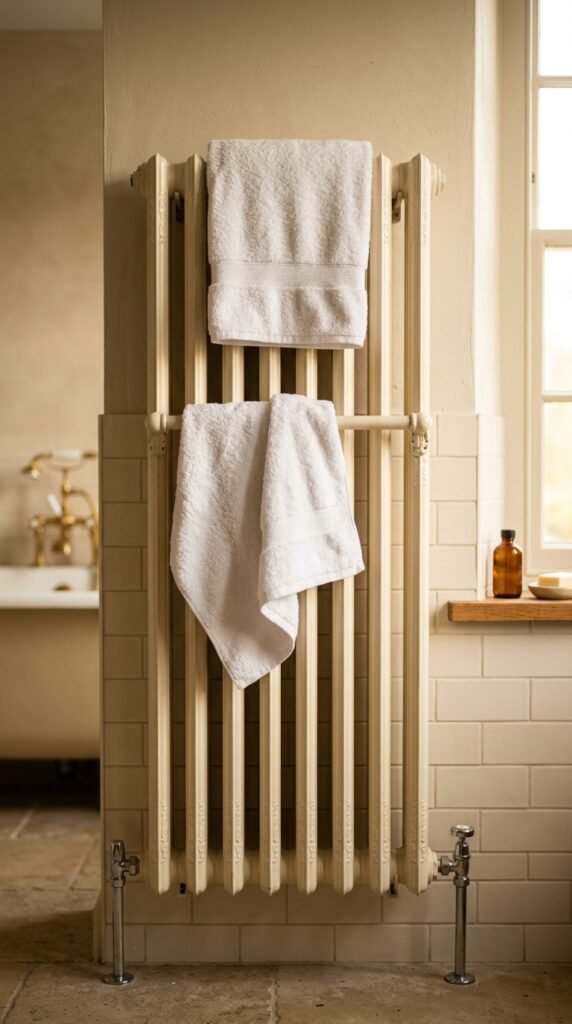
A column-style radiator or a radiator-look towel rack adds an architectural element that reads as distinctly old-building charm, the kind found in pre-war apartments and converted historic homes. Even non-functional decorative versions achieve the visual effect.
Reproduction column radiators that double as towel racks cost $200 to $500, while purely decorative versions run less. This is a bigger investment item, similar to the claw-foot tub, but it works exceptionally well in bathrooms that already lean toward a converted historic building aesthetic. If your budget doesn’t stretch this far, a simple ladder towel rack achieves a similar function for a fraction of the cost.
21. Add a Round or Oval Vintage-Style Mirror Over a Pedestal Sink
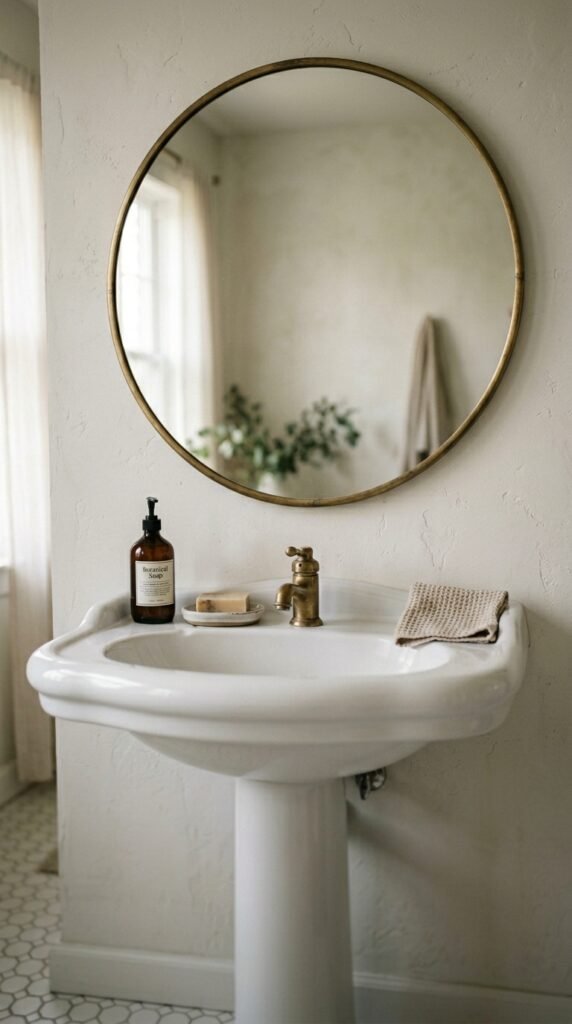
A round or oval mirror specifically (rather than a square or rectangular one) pairs more authentically with a pedestal sink’s curved silhouette, since vintage bathroom design favored rounded shapes throughout. This is a small styling detail that ties two elements together cohesively.
Round vintage-style mirrors cost $30 to $100 depending on size and frame detail. Position the mirror at standard eye height directly above the pedestal sink’s centerline for the most period-accurate placement. This detail seems minor until you see a square modern mirror over a curved pedestal sink and immediately notice something feels slightly off, even if you can’t quite say what.
22. Use Vintage-Style Hexagon Tile
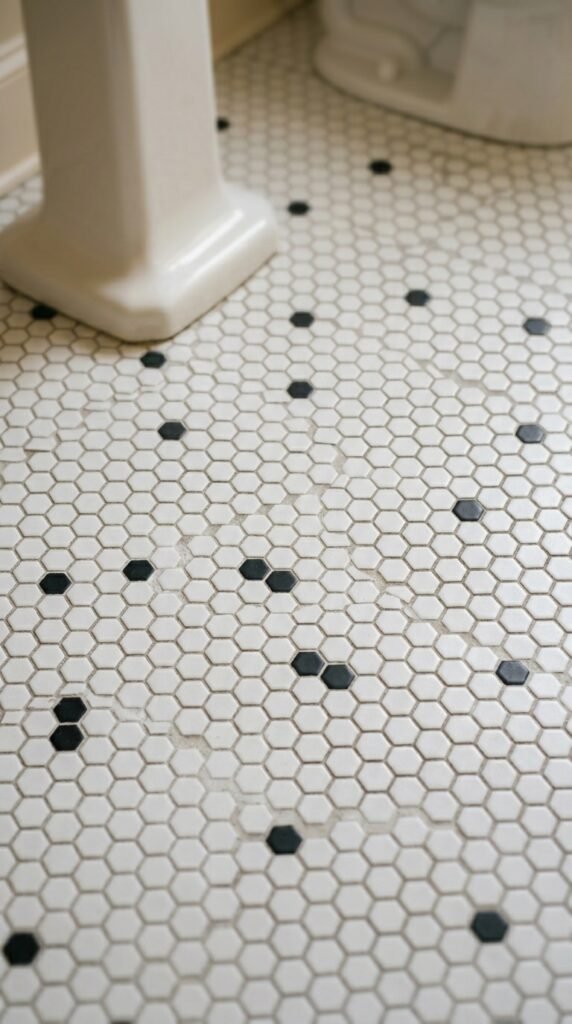
Small hexagon tiles, typically in white with a black hexagon accent scattered throughout, are another classic vintage flooring pattern alongside checkerboard, especially common in 1920s and 1930s bathrooms. The small scale of hexagon tile creates a different texture than the bold checkerboard look.
Hexagon mosaic tile sheets cost $8 to $15 per square foot, slightly more than basic subway tile due to the more complex installation pattern. This flooring choice pairs beautifully with white subway tile walls and brass fixtures for a fully cohesive 1920s bathroom look. The small grout lines throughout hexagon tile do require slightly more maintenance than larger tile formats, which is worth knowing before you commit.
23. Add Fresh Flowers or Dried Botanicals in a Vintage Vase
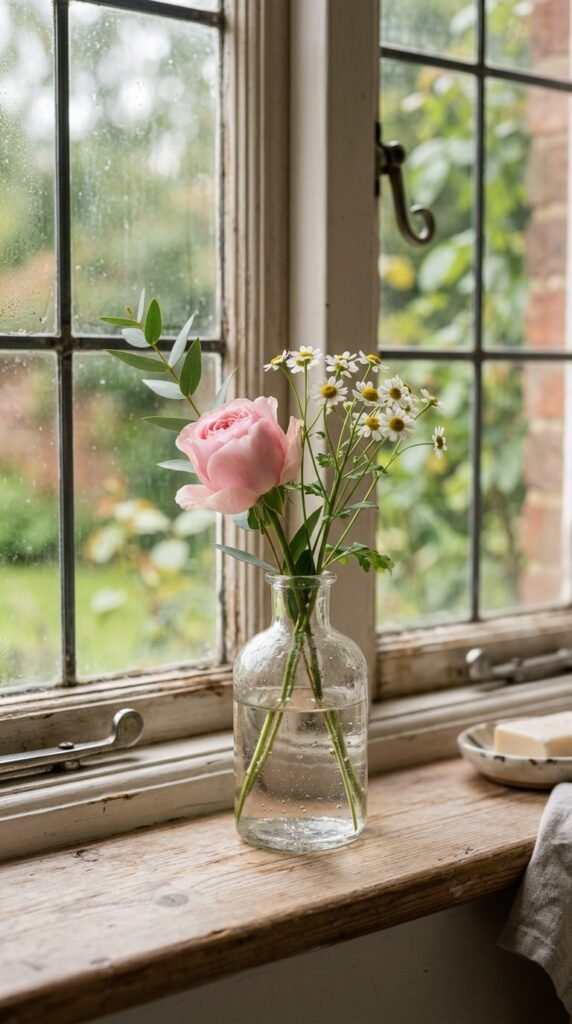
A small vintage vase with fresh flowers or dried botanicals adds a living, changing element to balance all the hard surfaces, tile, porcelain, glass, brass, that dominate most bathrooms. This is the easiest, lowest-cost idea on this entire list.
Vintage glass or ceramic bud vases cost $5 to $20 at thrift stores, and a small bunch of fresh flowers or a bundle of dried eucalyptus runs $5 to $15. Place the vase on the vanity, a windowsill, or a floating shelf where it won’t get knocked into the sink. This tiny, ever-changing detail does more to make a bathroom feel cared for than almost anything else on this list, and it’s the cheapest item here by far.
Final Thoughts
Vintage bathroom decor works because it borrows from an era when bathrooms were designed with genuine craftsmanship and intentional detail, not just functional necessity. You don’t need a full renovation to capture that feeling. Start with one or two high-impact swaps, brass fixtures, a vintage mirror, or a few apothecary jars, and build from there as your budget and patience allow. The best part about this style is how forgiving it is: a slightly mismatched mix of eras and finishes still reads as “collected over time” rather than “didn’t plan well.” Your bathroom has more old-world potential than you think, and most of these ideas cost far less than the charm they deliver.