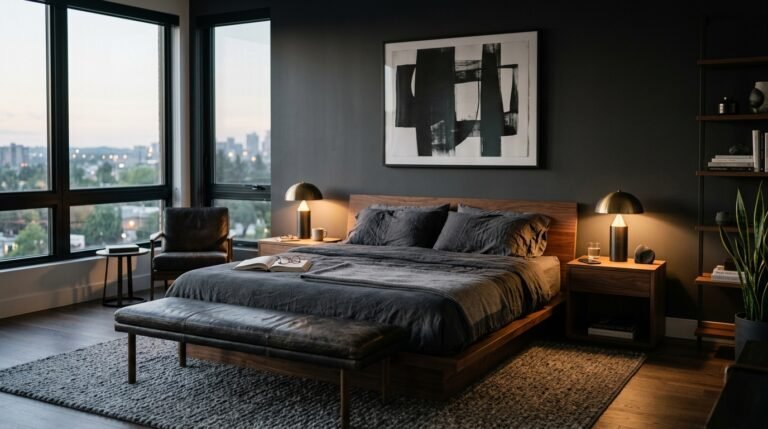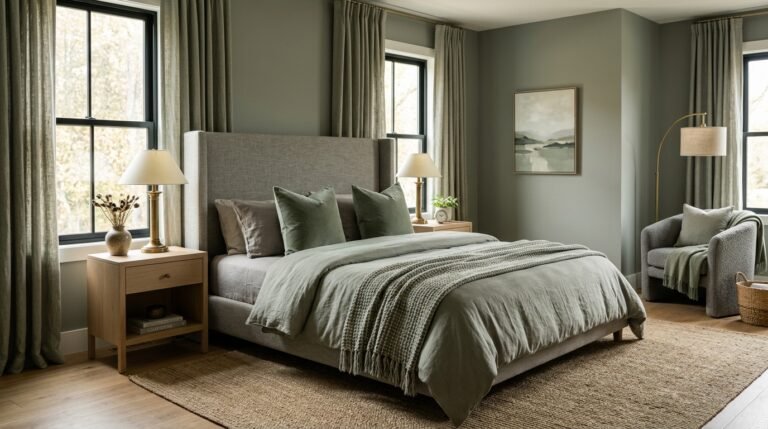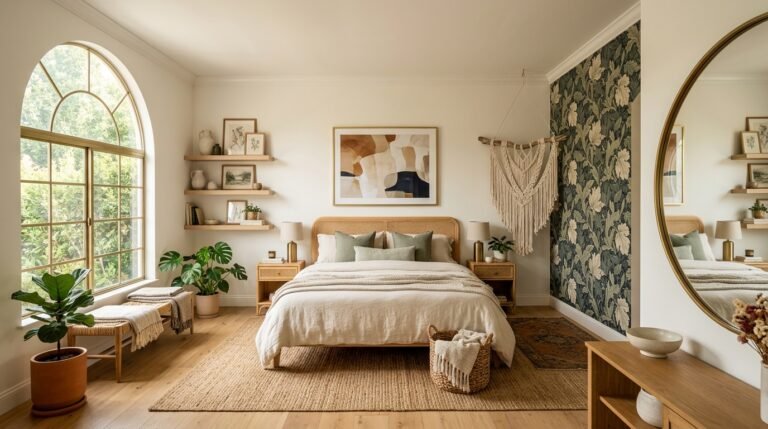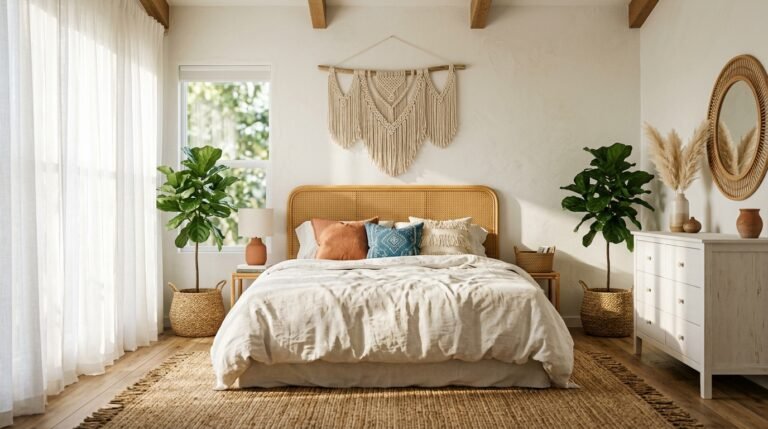
25 Dreamy Bedroom Decor Ideas to Transform Your Space
Your bedroom should feel like somewhere you want to be, not somewhere you end up by default when you’re too tired to sit on the couch anymore. A dreamy bedroom doesn’t require a renovation budget or a decorator on speed dial. It requires the right layering of texture, light, and personal detail that makes the space feel like it was designed for you specifically rather than assembled from a showroom floor. I redesigned my own bedroom twice before I stopped chasing a look and started solving for a feeling, and the second version cost half as much and worked twice as well. These 25 dreamy bedroom decor ideas give you the specific moves that create that feeling in your own space.
1. Hang a Fabric Canopy Above the Bed
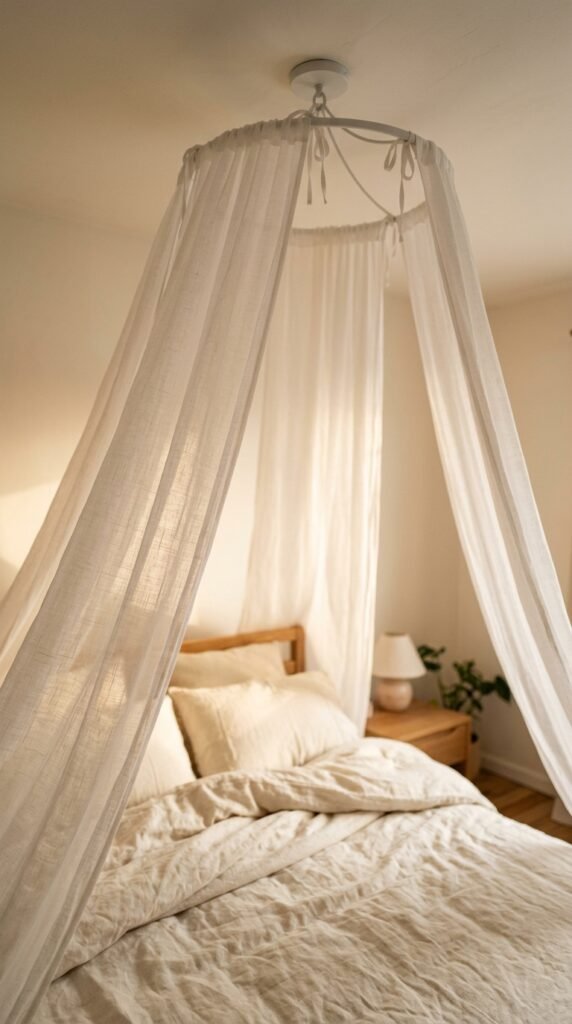
A fabric canopy above the bed creates an enclosed, cocoon-like atmosphere that no headboard or artwork achieves at the same level of visual drama. Sheer linen or white cotton panels hung from a ceiling-mounted ring or two curtain rods flanking the bed transform the sleeping area into a dedicated, architecturally defined space within the larger room. The canopy effect makes the bed feel like a destination rather than a piece of furniture.
A sheer white linen canopy panel costs $20 to $50 per panel from Amazon or IKEA. A ceiling-mounted ring at the center point above the bed holds four panels at $8 to $15 from a hardware store. The total cost runs $50 to $120 and delivers a visual transformation that most guests assume required professional installation. The canopy also softens the overhead light in the room by diffusing whatever ceiling fixture sits above the bed.
2. Layer the Bed With Multiple Textures
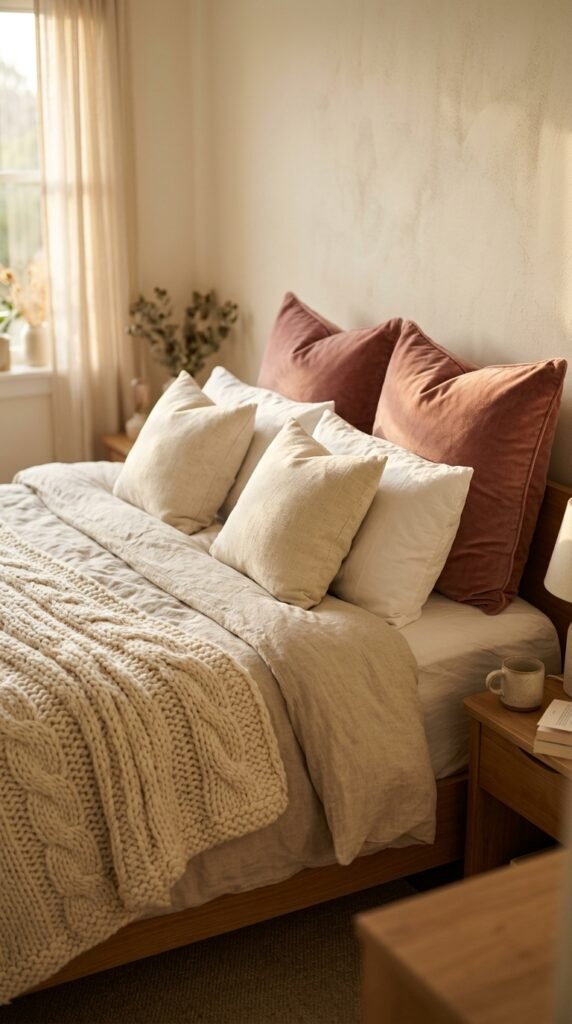
A dreamy bed looks like it holds three to four distinct fabric textures at the same time: a smooth cotton or linen duvet, a chunky knit throw, a velvet euro sham, and a linen scatter cushion. The variety of textures at different scales creates visual depth and tactile richness that a single duvet and two matching pillowcases never achieves. This layering approach costs almost nothing if you already own pieces in varying textures, because it works with what you have rather than requiring new purchases.
Start with a neutral base duvet in linen or sateen cotton. Add a chunky knit throw draped diagonally across the lower third of the bed. Place two euro shams in a velvet or bouclé fabric behind the sleeping pillows. Finish with two scatter cushions in linen or embroidered cotton at the front. The full layered bed takes 90 seconds to make and looks like a styled hotel shoot every single morning.
3. Install a Statement Headboard
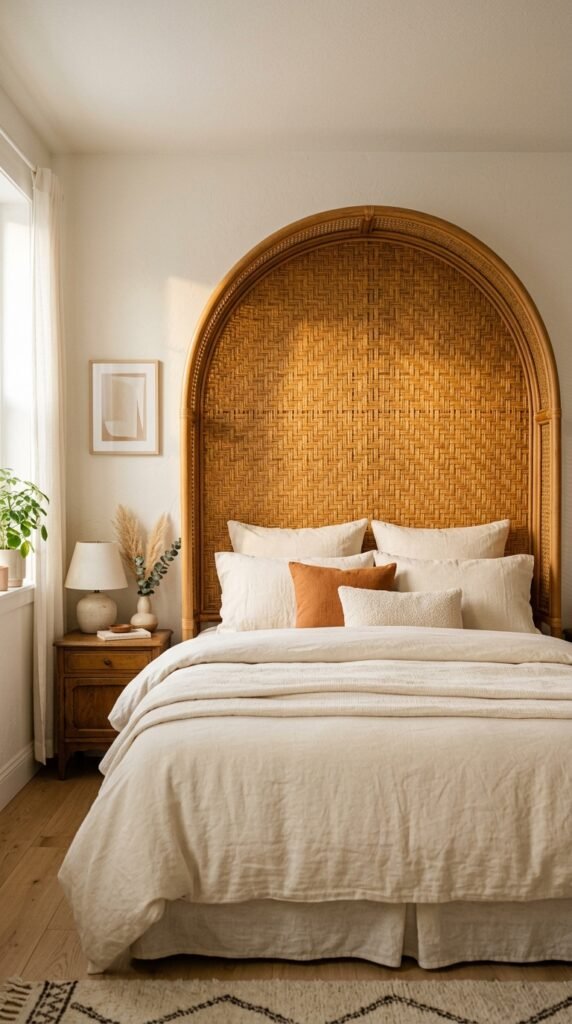
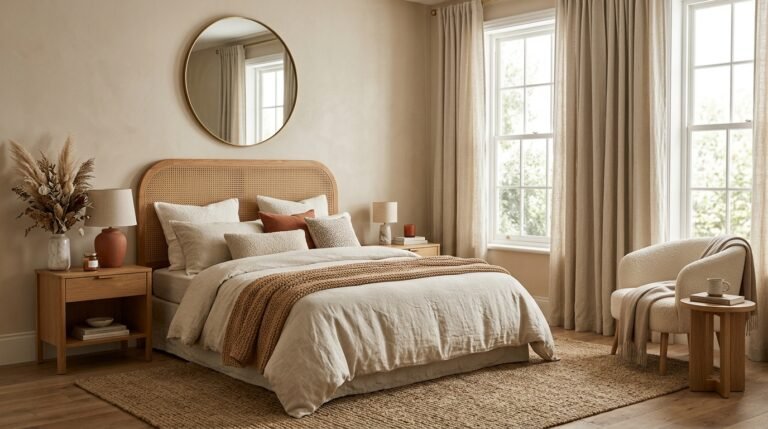
A statement headboard is the single piece that most dramatically changes how a bedroom reads, because it takes up the most prominent wall surface in the room and sets the visual character of the entire space. An arched rattan headboard, a curved upholstered headboard in velvet, or a tall fabric panel headboard all create focal point drama that no other bedroom element matches at the same price point. Wayfair and Amazon carry arched rattan headboards in queen size from $120 to $200. CB2’s curved velvet headboards run $400 to $700.
Choose a headboard that extends at least 12 inches above the top of the pillows when the bed is made. A headboard too short for the bed disappears behind the bedding and loses its architectural function. The visual relationship between the headboard height and the ceiling above it determines how dramatic the effect reads: a taller headboard in a room with standard 8-foot ceilings creates more proportional drama than the same headboard in a 10-foot ceiling room.
4. Add Fairy Lights or Warm String Lights
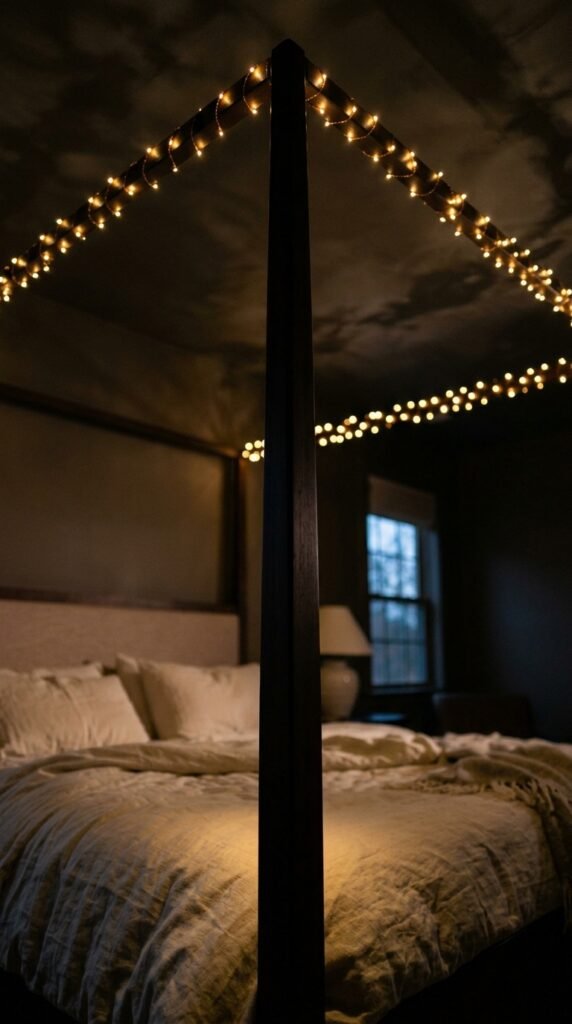
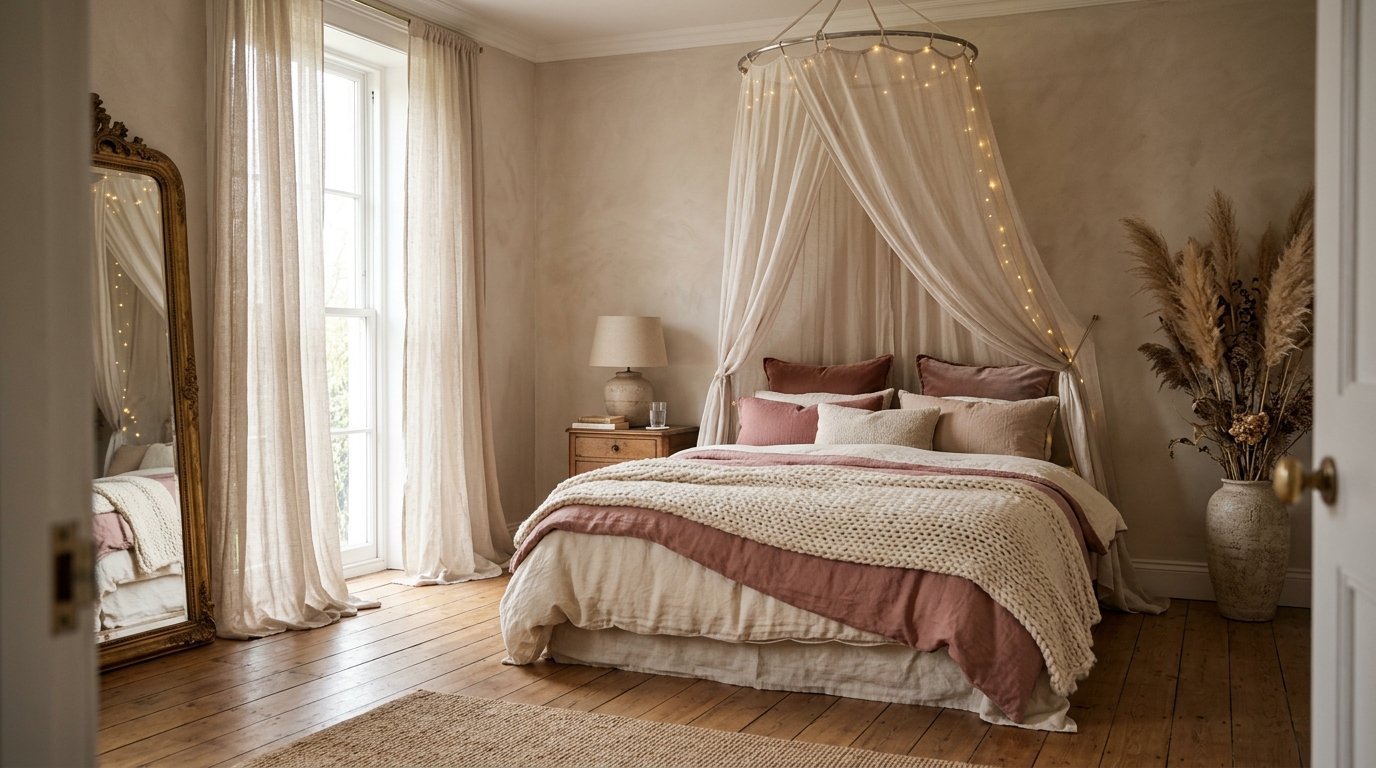
Fairy lights in a bedroom don’t belong exclusively to student dormitories, despite what the interior design world spent 15 years implying. A warm white micro LED fairy light strand draped along a canopy frame, woven through a headboard, or hung in a loose curtain formation on the wall behind the bed creates exactly the soft, warm, glowing atmosphere the word “dreamy” describes. The key is choosing warm white at 2700K or lower, not the cool white that reads as clinical and bright.
A 33-foot micro LED fairy light strand on a copper wire costs $12 to $20 on Amazon and produces enough light to illuminate the bed area softly without serving as the room’s functional lighting. Connect it to a $10 smart plug timer so the lights come on at sunset and turn off at 11pm automatically. The combination costs under $35 and creates an evening atmosphere in the bedroom that no standard lamp replicates.
5. Choose a Soft, Romantic Color Palette
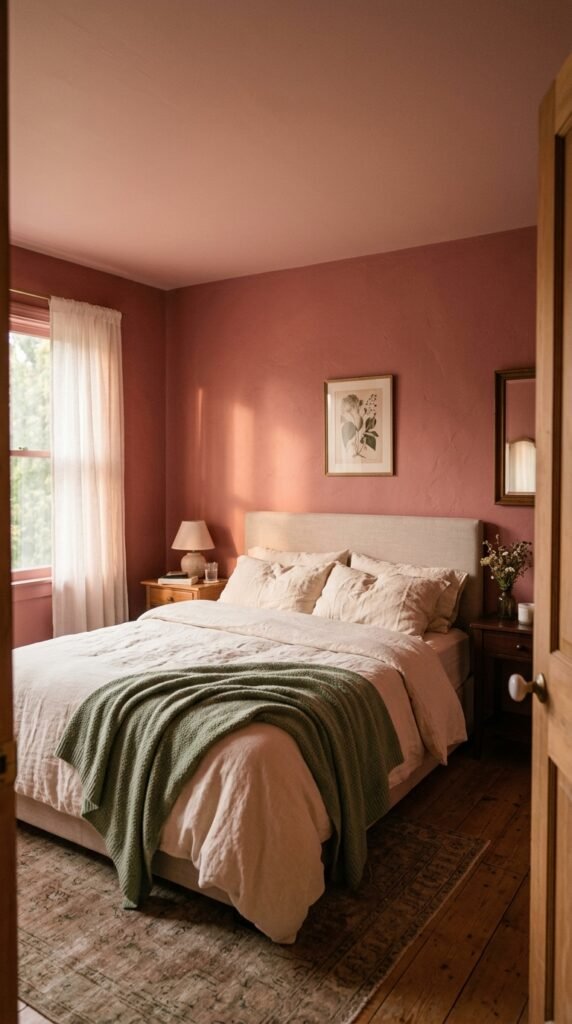
Dreamy bedrooms live in the soft, low-saturation color zone: dusty rose, warm lavender, sage green, powder blue, and warm cream. These colors share one quality: they don’t compete for attention. They settle the room and create a visual calm that high-saturation or bright colors actively prevent. Benjamin Moore’s Pale Rose 2008-60, Sherwin-Williams Dusty Miller SW 9137, and Farrow and Ball’s Mizzle No.266 all produce the soft, enveloping color quality a dreamy bedroom palette requires.
Paint the walls in your chosen soft tone and use the ceiling as the opportunity to go one shade lighter rather than defaulting to white. A ceiling in the same soft tone as the walls but lighter creates a wrapped, enveloping room quality that makes the bedroom feel like you’re sleeping inside a cloud. Which sounds ridiculous until you experience it and refuse to paint your ceiling white again.
6. Hang Floor-to-Ceiling Curtains in a Soft Fabric
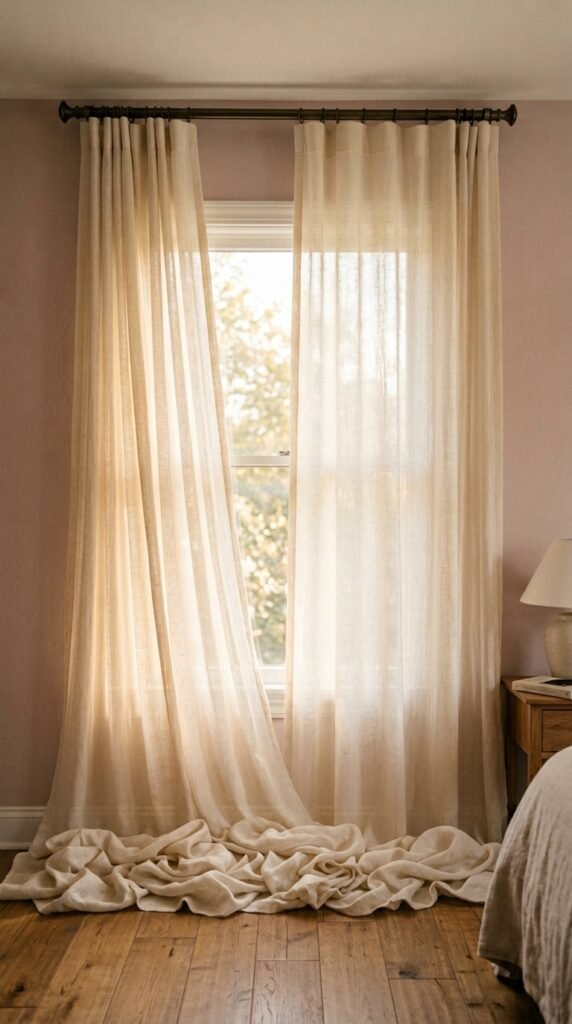
Floor-to-ceiling curtains in sheer linen, soft cotton, or light velvet add the vertical drama and softness that a dreamy bedroom requires at every window. The height of the curtain extends the perceived ceiling, the soft fabric diffuses incoming light, and the pooling fabric at the floor adds a romantic, slightly undone quality that structured blinds never achieve. IKEA’s LILL sheer curtain panels cost $8 per panel and create a soft, dreamy window treatment in any bedroom for under $30 per window.
For a more elevated version, IKEA’s HANNALILL sheer panels in cream or white at $20 to $30 per panel add a slightly heavier fabric with better drape. Hang both options with the rod mounted 4 to 6 inches from the ceiling and let the panels reach the floor with a 2-inch pool for the most romantic visual effect. The pool of fabric at the floor communicates luxurious excess in a way that a panel cut exactly to the baseboard never does.
7. Create a Reading Nook With String Lights and Cushions
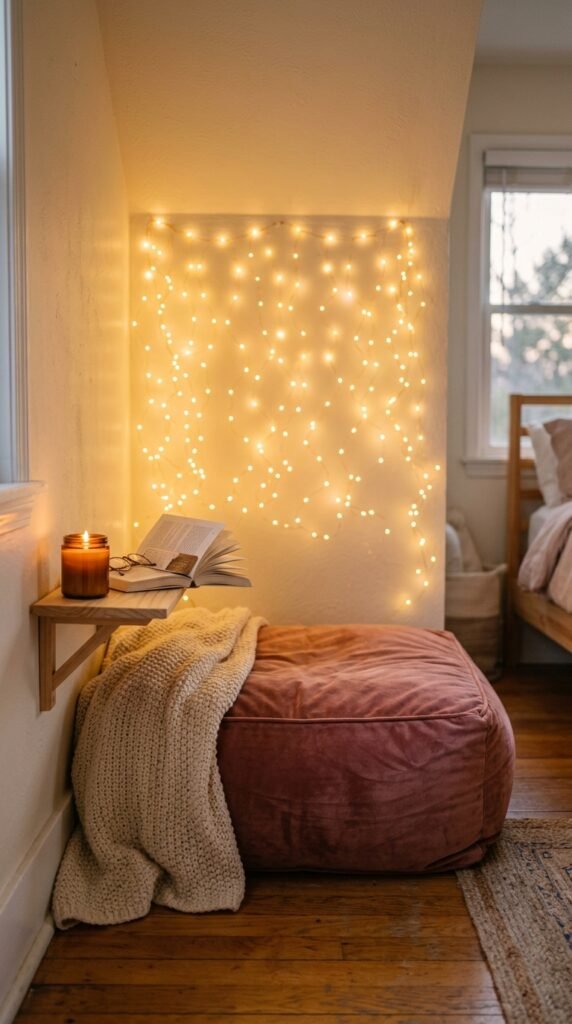
A reading nook in a bedroom corner turns unused space into the most personally valuable square footage in the entire home. An armchair or floor cushion, a small side table, a floor lamp or overhead string lights, and a soft throw blanket create a complete secondary destination within the bedroom that functions independently of the bed. The reading nook gives the bedroom a dual-purpose quality that makes the room feel larger and more thoughtfully designed than a single-use sleeping space.
A floor pouf in velvet or leather at $40 to $80 works as nook seating in tight corners where a full armchair doesn’t fit. A cascading string light arrangement on the wall above the nook at $15 to $30 provides warm ambient light for evening reading without a floor lamp footprint. Add a small floating shelf at arm height for a book and a candle. The complete reading nook comes together for under $100 in most cases.
8. Use a Large Antique or Vintage Mirror
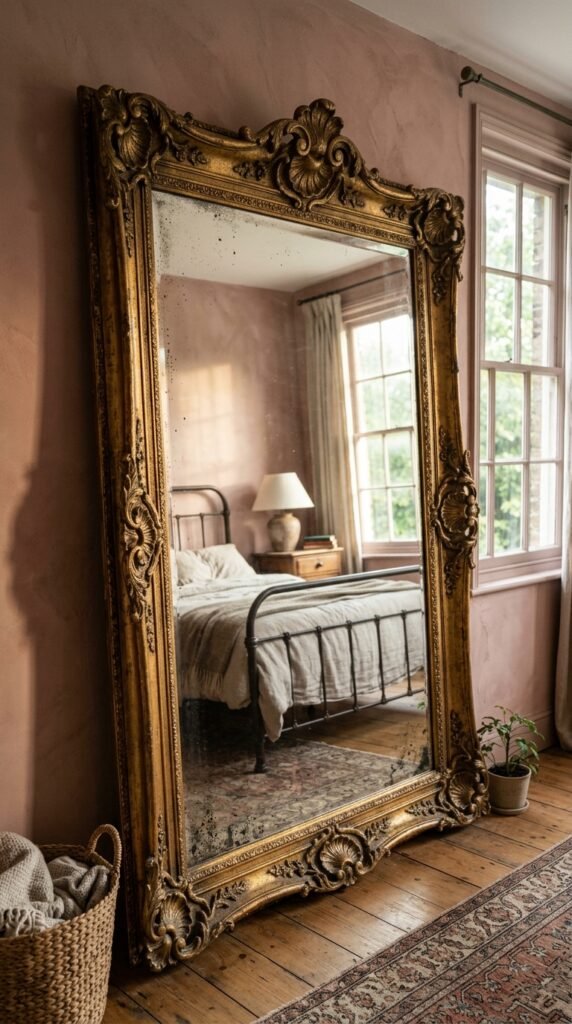
A large vintage or antique-style mirror on the bedroom wall adds the character, warmth, and light-amplifying quality that new mirrors in clean modern frames rarely achieve. The slightly tarnished, foxed, or gilded quality of an antique mirror frame communicates age and authenticity that makes a dreamy bedroom feel collected over time rather than purchased all at once. Thrift stores, Facebook Marketplace, and antique markets consistently produce ornate vintage mirrors for $30 to $150 that retail equivalents price at $400 to $800.
Position the mirror on the wall perpendicular to the primary window rather than opposite it. The perpendicular placement reflects side light across the room which creates a softer, more flattering illumination than a mirror directly opposite the window which reflects the window itself back at you with full brightness. A 30×40 inch antique-style mirror at perpendicular position changes the room’s light quality visibly throughout the day.
9. Add Botanical or Floral Wallpaper on One Wall
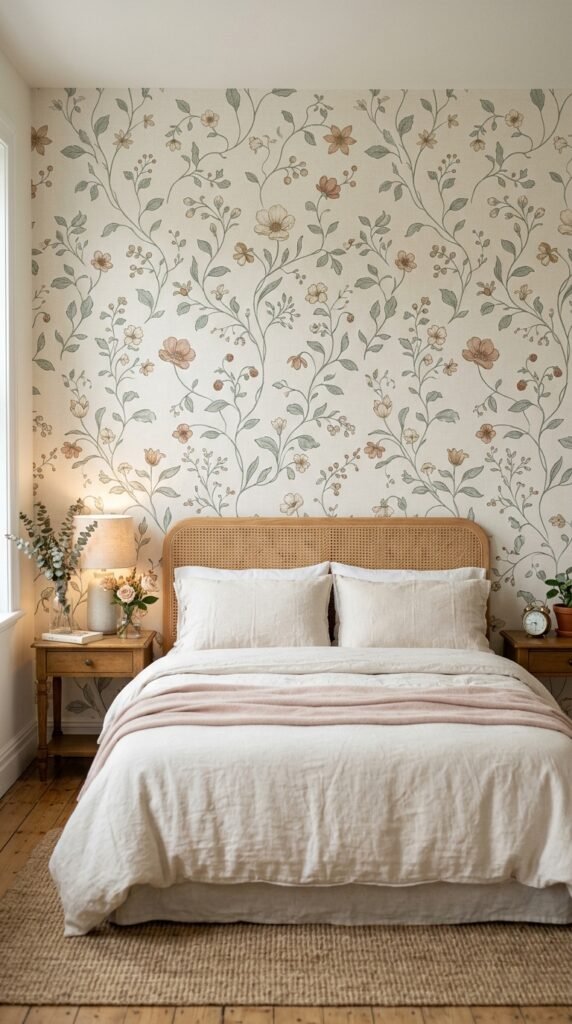
A botanical print or soft floral wallpaper on the wall behind the bed creates immediate visual drama that paint alone never achieves, and one accent wall of wallpaper costs significantly less than a full room application. A peel-and-stick wallpaper option makes the upgrade renter-friendly and reversible, which removes the commitment barrier that stops most people from trying wallpaper at all. Chasing Paper, Rifle Paper Co., and Tempaper all produce peel-and-stick wallpaper in soft botanical and floral prints from $5 to $15 per square foot.
A standard queen bed wall measures approximately 10 feet wide by 8 feet tall, requiring roughly 80 square feet of wallpaper to cover it. At $8 per square foot average for quality peel-and-stick, the accent wall costs $640 in material and two to three hours of installation time. A professional wallpaper installer adds $200 to $400 to that cost. The result reads as a professionally designed room feature that most guests assume was there when you moved in.
10. Install Warm Dimmable Lighting at Two Heights
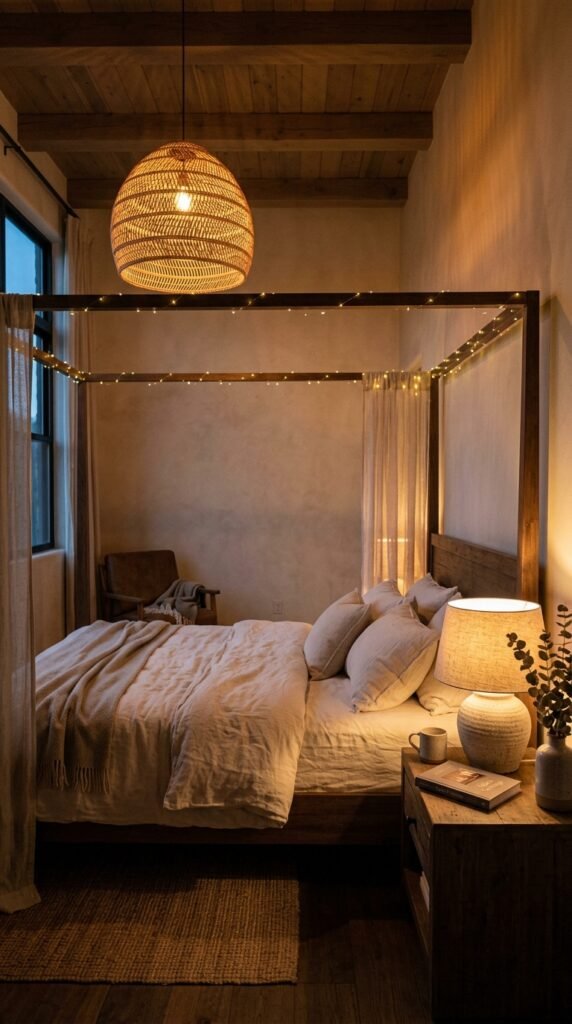
The lighting quality in a dreamy bedroom determines how every other element reads at night, and a single overhead fixture destroys the soft atmosphere every other decision creates. Two lighting levels at 2700K warm white with dimmer control handle everything: the overhead source provides functional light for getting dressed, and the bedside source provides the soft, intimate glow the bedroom needs for evening relaxation. Add a $25 Lutron dimmer switch to each circuit and you control both layers independently.
A rattan or linen pendant above the bed at ceiling height plus one ceramic or concrete table lamp at nightstand height creates the two-layer system. Both on full brightness for functional use. Both dimmed low for the evening atmosphere. The combination of warm light at two heights creates the layered, soft glow that every dreamy bedroom photograph uses to make the space look magical.
11. Bring in Dried Flowers and Botanicals
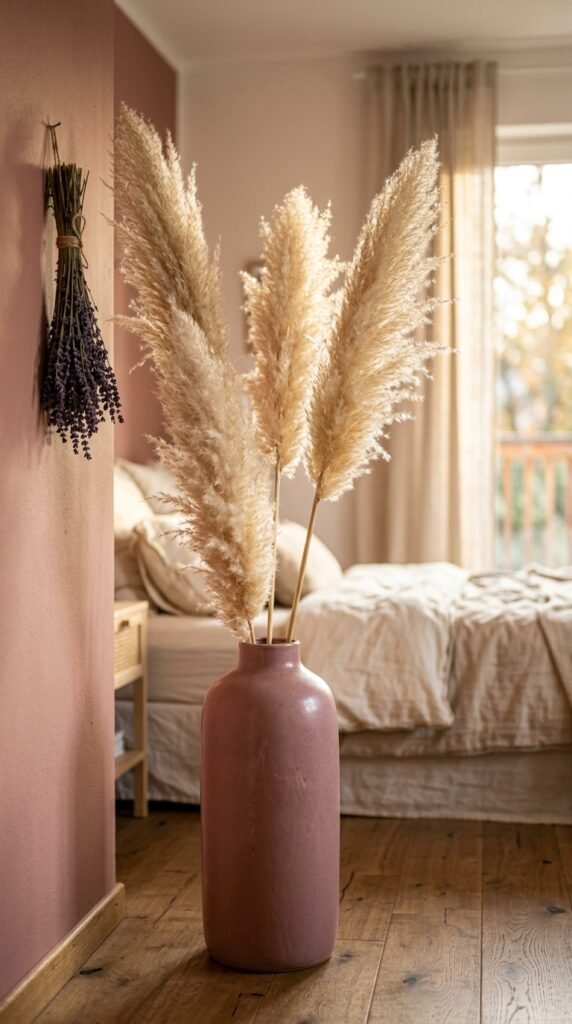
Dried flowers and botanicals add the romantic, organic softness of fresh flowers without the weekly replacement cost or the wilting Tuesday that makes fresh arrangements look sad. A large pampas grass arrangement in a tall ceramic vase, a hanging bundle of dried lavender above the headboard, or dried rose heads in a low ceramic bowl all introduce warm, muted color and organic texture that complements any dreamy bedroom palette. Trader Joe’s and IKEA carry dried botanicals from $4 to $15. A quality pampas stem from Amazon costs $8 to $20.
IMO, dried flowers work better in a dreamy bedroom than fresh ones because their muted, slightly faded tones sit more naturally within the soft color palettes the aesthetic requires. A fresh bright bouquet of yellow sunflowers competes with a dusty rose bedroom palette. Dried cream pampas in the same room reads as if it grew there.
12. Use a Plush Bedroom Bench at the Foot of the Bed
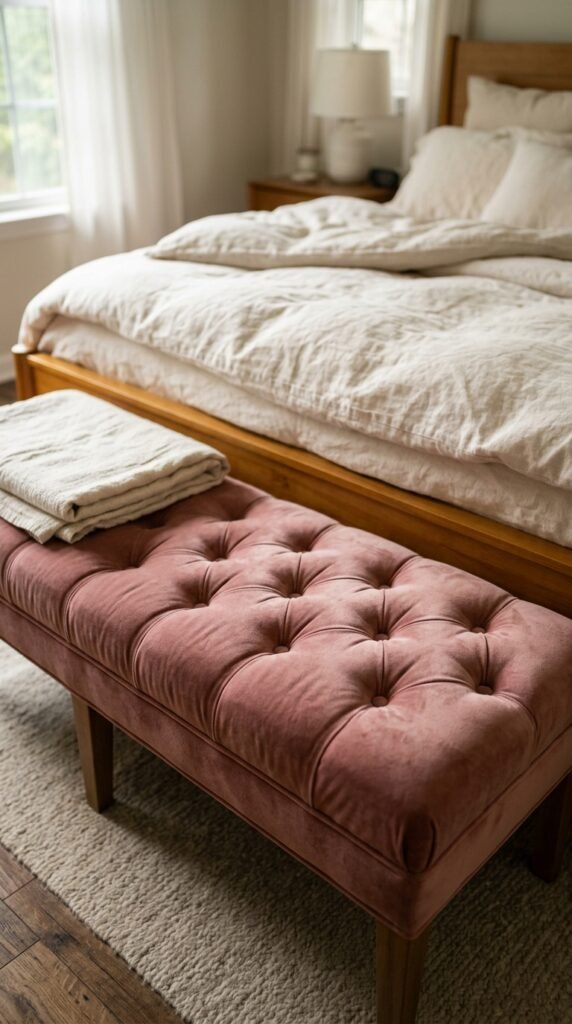
A tufted or upholstered bedroom bench at the foot of the bed adds the finishing layer that most bedrooms skip and every dreamy bedroom requires. The bench provides a functional seating surface for dressing, adds a mid-height visual element between the floor rug and the bed above, and signals that the bedroom is a thoughtfully designed space rather than a room with a bed in it. A velvet tufted bench in dusty pink or warm cream from Wayfair costs $80 to $150 in a 42-inch size.
Choose a bench in a fabric that differs from the bedding to add material variety. A velvet bench against linen bedding. A bouclé bench against a cotton duvet. A leather bench against a chunky knit throw. The material contrast at the bed foot creates visual interest within a cohesive color palette.
13. Style the Nightstand as a Mini Vignette
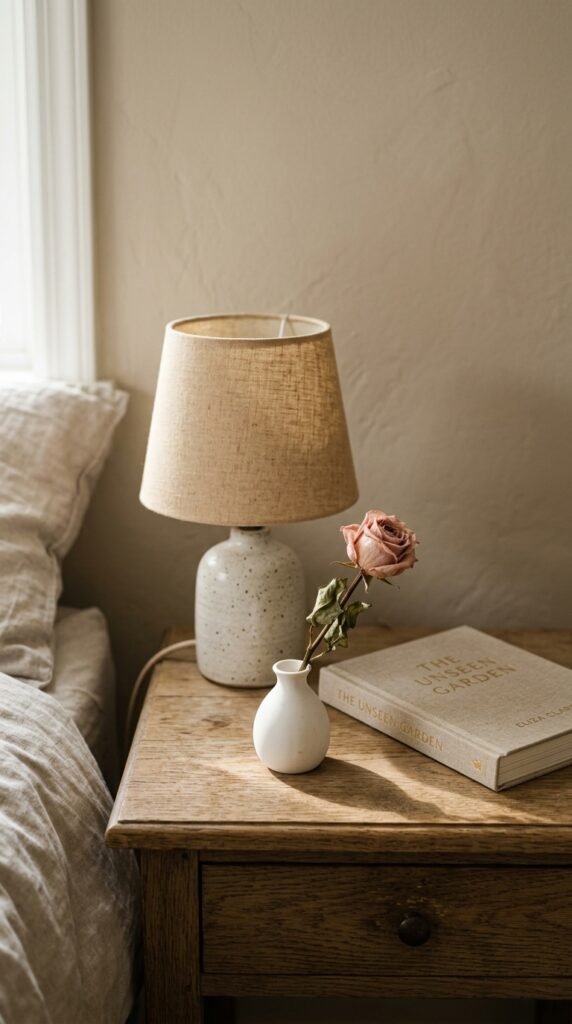
A well-styled nightstand tells a story in three objects: a light source, a personal item, and one organic element. A ceramic lamp, a hardback book with a meaningful title visible, and a small bud vase with one dried stem create a nightstand vignette that reads as personal and intentional in a way that a cluttered surface of products never achieves. The three-object rule applies regardless of nightstand size. A floating nightstand shelf holds the same three items as a full bedside table.
The bud vase on the nightstand is the element most people skip and the one that makes the most visual difference per dollar spent. A 4-inch bud vase costs $5 to $15 from IKEA or HomeGoods. One dried rose stem or one eucalyptus sprig costs $2 to $5 at most grocery stores. The combination costs under $20 and adds organic life to the nightstand that the ceramic lamp and book alone don’t provide.
14. Hang an Arched or Shaped Mirror Above the Dresser
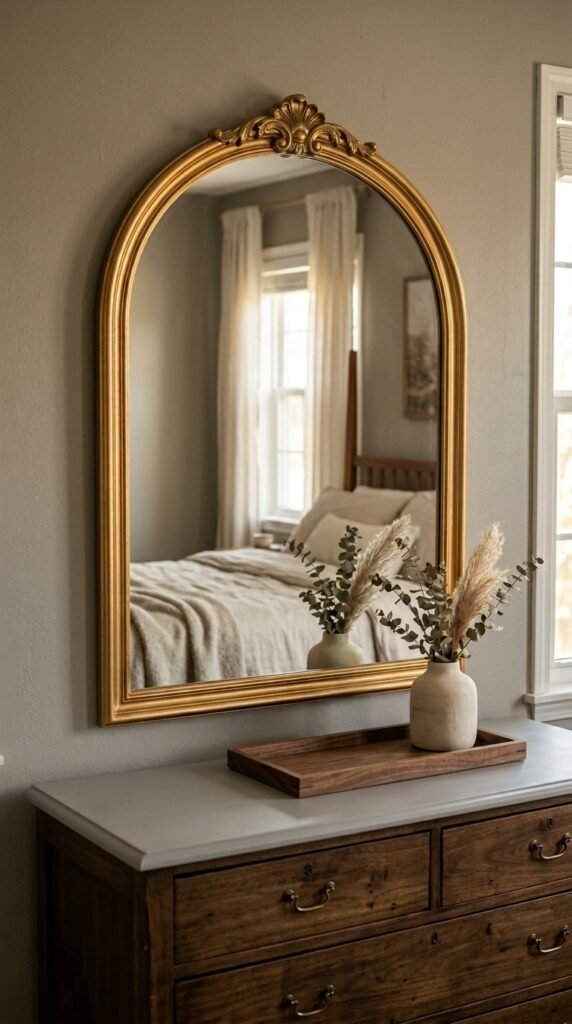
An arched, sunburst, or irregularly shaped mirror above the dresser adds the decorative element that a standard rectangular mirror never achieves in a dreamy bedroom. The shaped frame reads as an intentional design object rather than a functional reflective surface, which elevates the dresser wall from utilitarian to styled. Anthropologie, Urban Outfitters, and Amazon all carry arched mirrors in warm gold or rattan frames from $60 to $200 in sizes appropriate for dresser placement.
Position the mirror 6 to 8 inches above the dresser surface so it relates visually to the dresser below rather than floating disconnected on the wall above it. The arched form mirrors (no pun intended) the curved aesthetic of most dreamy bedroom headboards, which creates a visual conversation between the two room elements that makes the space feel designed rather than assembled.
15. Add a Scented Candle or Reed Diffuser
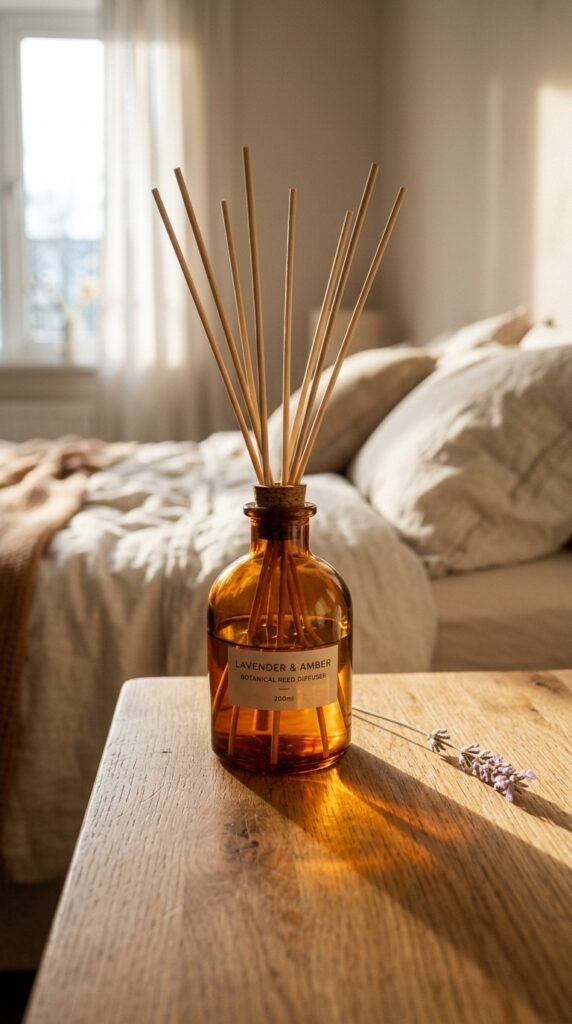
Scent is the sensory layer most bedroom decorating ignores entirely, and a dreamy bedroom without a signature scent feels incomplete in a way you sense before you identify. A single quality reed diffuser or scented candle in a soft floral, warm wood, or clean linen scent creates the olfactory identity that makes guests say the room “feels” a certain way even before they sit down. Maison Margiela’s Replica “Flower Market” reed diffuser costs $50 to $80 and lasts four to six months. A Voluspa “Mokara” candle costs $20 and produces a similar dreamy floral quality.
Position the diffuser near an air vent or doorway where air movement carries the scent into the room rather than concentrating it in one corner. A scented bedroom registers with every visitor immediately and creates a sensory memory of the space that no visual element alone achieves. The bedroom that smells beautiful feels beautiful even with eyes closed, which is arguably the point.
16. Use a Tufted or Upholstered Accent Chair
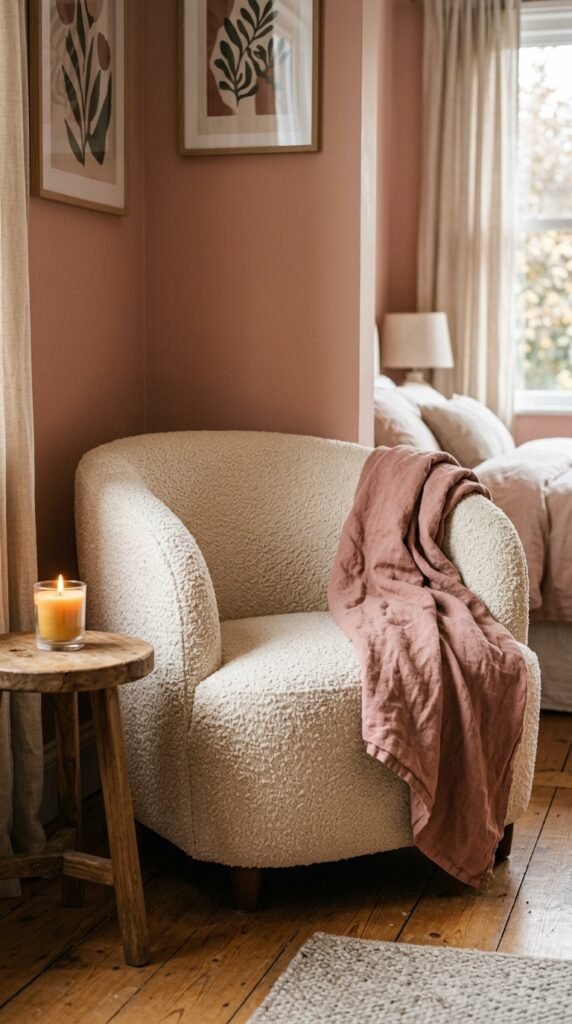
An upholstered accent chair in the bedroom corner gives the room a sitting room quality that makes the space feel more like a personal sanctuary and less like a sleeping facility. A velvet tub chair in dusty rose, a curved bouclé chair in warm cream, or a rattan chair with a thick cushion all work within the dreamy bedroom aesthetic and add a seating destination that invites you into the room rather than directing you straight to the bed. IKEA’s STRANDMON wingback chair costs $299 in various fabric options. A small bouclé tub chair from Amazon runs $150 to $250.
Position the chair at a 45-degree angle to the room’s main axis rather than flat against a wall, which makes it read as placed rather than stored. A small round side table at $30 to $60 beside the chair completes the seating vignette. Add a throw blanket draped over one arm and the corner reads as the room’s invitation zone.
17. Hang Artwork in a Gallery Wall Formation Above the Bed
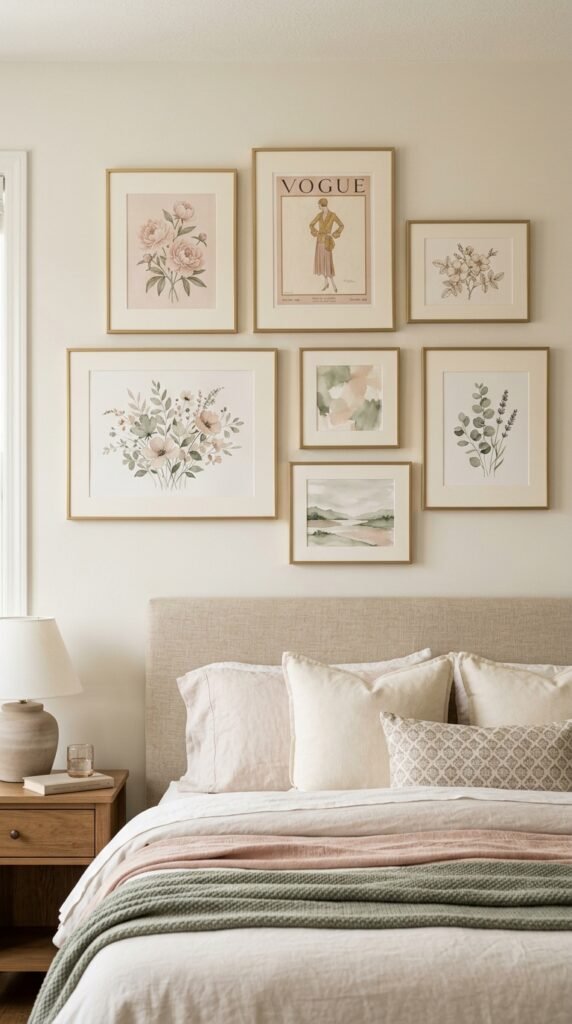
A gallery wall above the bed replaces the standard single artwork approach with a collection of varying-sized frames that communicates personal history, collected taste, and visual richness simultaneously. The dreamy bedroom gallery wall uses a soft, cohesive color story across all frames and prints: botanical illustrations, soft watercolors, vintage fashion prints, and personal photographs all work within the same gallery when they share a tonal family. Gallery walls above a queen bed typically use seven to twelve frames in a horizontal cluster arrangement.
Lay the gallery arrangement on the floor before hanging anything on the wall. Trace each frame on paper, cut out the traced shapes, and tape them to the wall with painter’s tape to finalize the arrangement without nail holes. This planning step takes 20 minutes and prevents the multiple-nail-hole-adjustment situation that makes gallery walls more stressful than they need to be. FYI, IKEA RIBBA frames at $4 to $8 each and consistent frame color across the gallery reduces the visual noise that mismatched frames introduce.
18. Choose Soft, Plush Bedding in a Hotel Quality
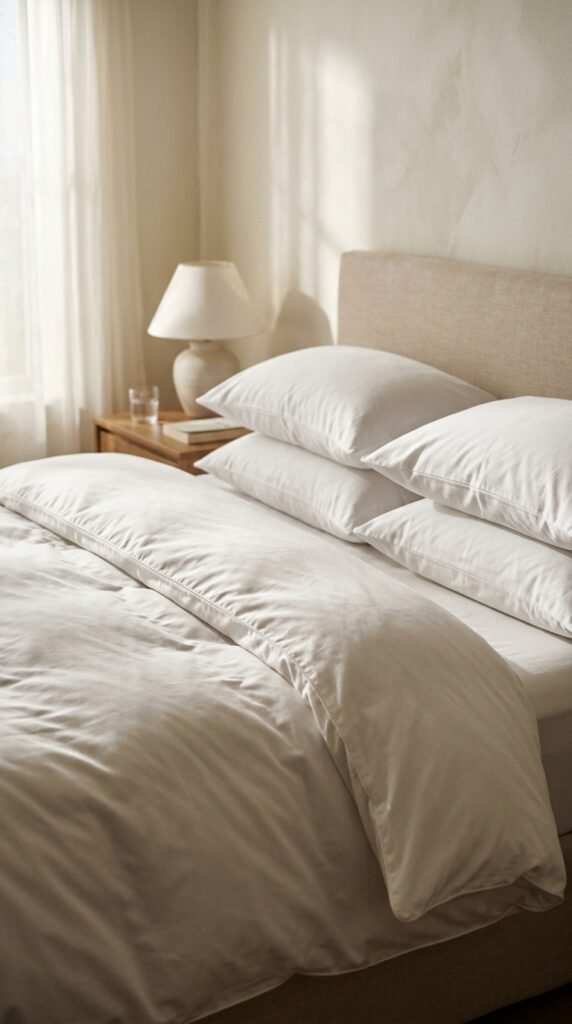
Hotel-quality bedding transforms how you experience your bedroom every single night, not just when you style it for a photograph. A 400 to 600 thread count cotton sateen duvet cover in soft white or warm cream, paired with a down-alternative comforter insert, creates the cloud-like sleeping experience that makes you genuinely look forward to getting into bed. Brooklinen’s Luxe Core Sheet Set costs $110 to $160 and delivers the crisp-yet-soft hand feel that most people associate specifically with high-end hotel rooms.
The insert inside the duvet cover matters as much as the cover itself. A down-alternative comforter with 400 to 600 fill power lofts the duvet cover to the full, pillow-like appearance that makes a dreamy bed look layered and inviting from across the room. A flat, low-fill insert makes even an expensive duvet cover look sad and deflated. The Buffy Comforter at $100 to $130 delivers the fill quality required without actual down for allergy-sensitive sleepers.
19. Add a Woven or Macramé Wall Hanging
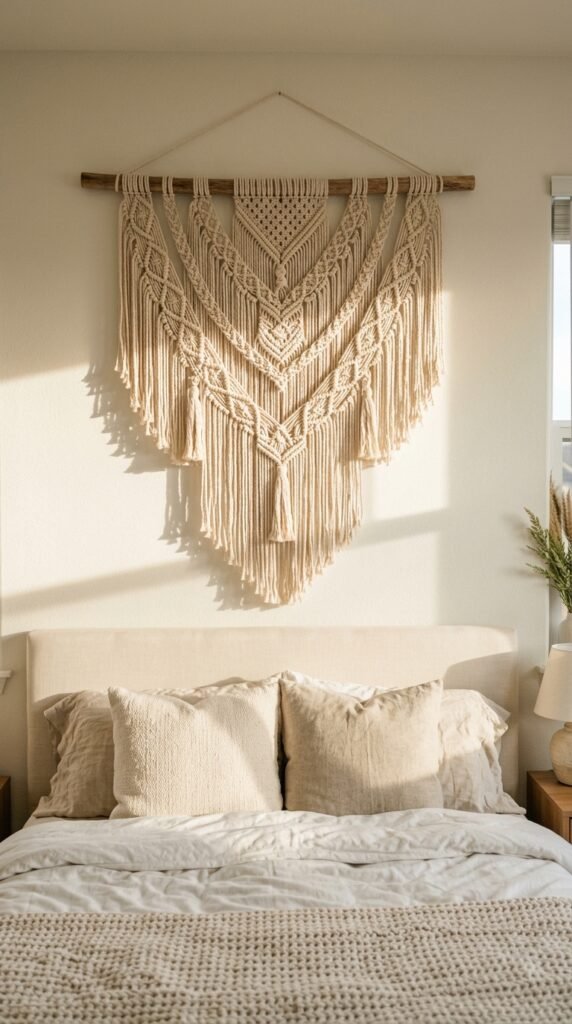
A woven or macramé wall hanging adds organic texture and bohemian warmth to a dreamy bedroom in a way that framed artwork doesn’t because the three-dimensional fiber construction casts shadows and catches light differently throughout the day. A large macramé piece above the bed serves the same focal point function as a headboard in rooms without one, or adds a layered textile dimension above an existing headboard in rooms that have one. Etsy artisans produce handmade macramé wall hangings from $40 to $200 in sizes ranging from 12 to 48 inches wide.
Choose a macramé or woven piece in natural undyed cotton, warm ivory, or a single soft tone that sits within the room’s palette. A multicolored woven piece introduces competing tones that conflict with the soft, cohesive palette a dreamy bedroom requires. The natural cotton tone works in virtually every bedroom palette because warm white sits neutrally against any background color you choose.
20. Place Plants at Different Heights Around the Room
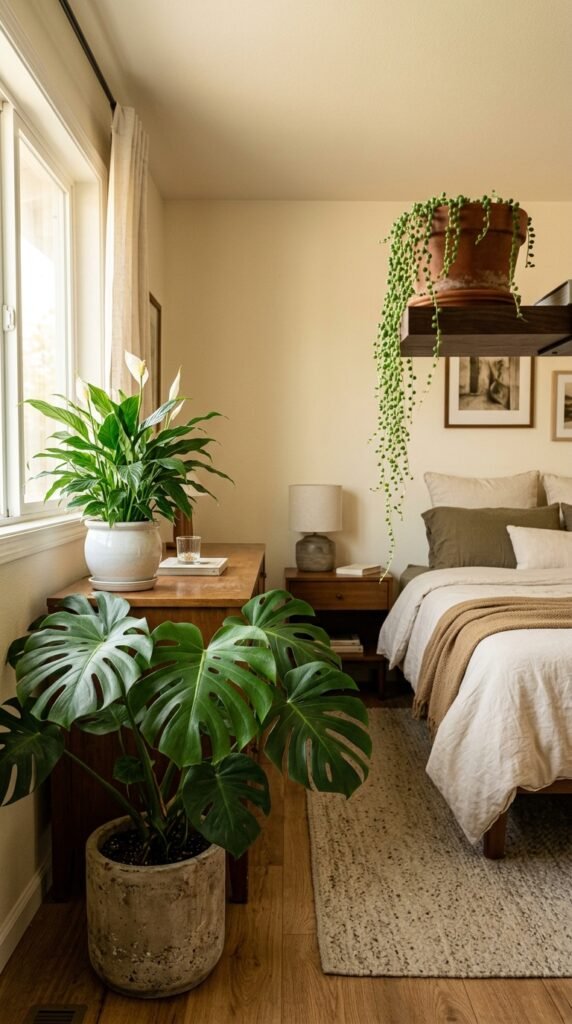
Three plants at three different heights create the lush, botanical quality that makes a dreamy bedroom feel like a private garden retreat rather than a decorated room. A tall floor plant (monstera or fiddle leaf fig) in the corner, a medium plant (pothos or peace lily) on the dresser, and a small trailing plant (string of pearls) on the nightstand creates the three-height arrangement that reads as intentional and abundant without overwhelming the space.
Best Plants for a Dreamy Bedroom
- Monstera deliciosa: sculptural leaves, 4 to 6 feet, floor corner position
- Peace lily: white blooms, air-purifying, medium height for dresser
- Pothos: trailing habit, low light tolerant, dresser or shelf position
- String of pearls: trailing cascades over pot edges, nightstand or floating shelf
- Lavender: fragrant, compact, adds scent layer to the bedroom naturally
Three plants at varying heights costs $30 to $80 total from a local nursery and creates a plant presence that photographs as a professionally styled botanical bedroom.
21. Use a Canopy Bed Frame as the Room’s Centerpiece
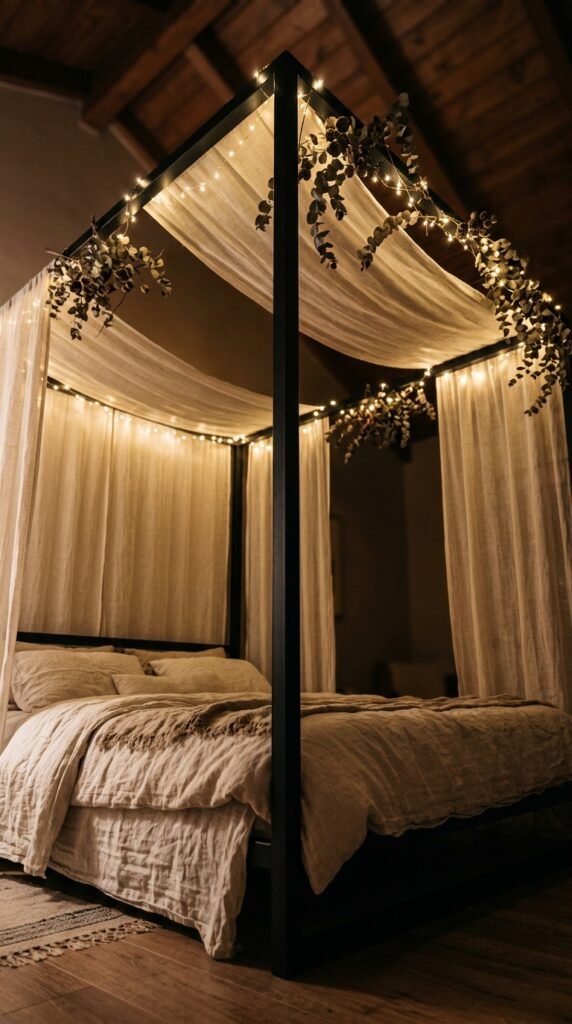
A four-poster or canopy bed frame is the architectural commitment that transforms a bedroom from a room with a bed into a room built around a bed. The vertical posts of a canopy frame draw the eye upward and make the ceiling feel higher, while the enclosed area between the posts creates the intimate, sheltered sleeping zone that the fabric canopy idea in idea one achieves with textiles. IKEA’s HEMNES four-poster extension kit converts their standard bed frames to four-poster configurations for $40. Amazon’s metal canopy frames in queen size run $80 to $200.
Drape sheer fabric between the top posts for the full enclosed effect. Hang fairy lights along the top rail. Weave eucalyptus or dried florals through the frame. The canopy bed becomes a seasonal installation you update throughout the year by changing what hangs from and wraps around the frame structure.
22. Style the Dresser Top as a Personal Altar
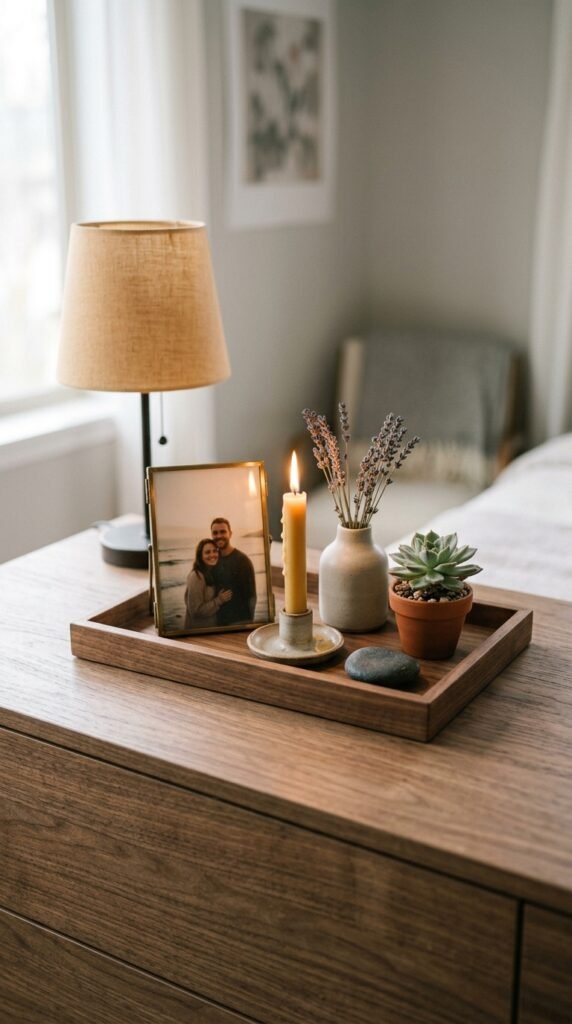
A dresser top styled with personal meaning outperforms a dresser top styled for aesthetics alone because it makes the bedroom feel genuinely yours rather than a showroom setup anyone could live in. A small framed photograph, a meaningful object from a trip, a candle, and one plant together on a wooden tray create a display that communicates personal identity in a way that purely decorative styling never achieves. The tray contains the arrangement and creates a visual boundary that makes the objects within it read as a deliberate collection.
The rule for dresser top styling: everything on the surface lives inside a tray, and the tray holds no more than five items. One lamp outside the tray. Everything else inside or in the dresser drawers. The restraint makes the personal items more visible and more meaningful because they’re not competing with 15 other objects for the same surface space.
23. Paint the Ceiling in a Soft Color
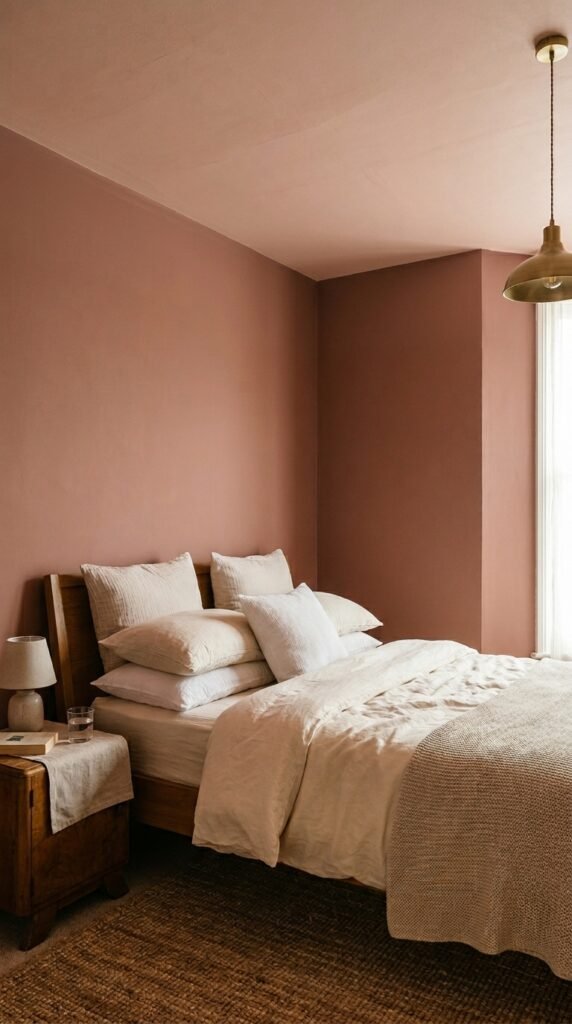
A ceiling painted in the same soft tone as the walls creates a wrapped, enveloping room quality that white ceilings never achieve and that makes the bedroom feel distinctly dreamy rather than just well-decorated. The technique, sometimes called a “paint dip” or “color drenching” in interior design, removes the harsh contrast between wall color and ceiling that standard white ceilings create and replaces it with a continuous tonal envelope that settles the room completely. Benjamin Moore and Sherwin-Williams both offer ceiling paint versions of any wall color in a flat finish for $35 to $55 per gallon.
A ceiling in a soft sage green bedroom reads in the same muted sage but 20 to 30 percent lighter than the walls. A dusty rose ceiling room goes one shade lighter than the rose walls. The lighter ceiling tone prevents the room from feeling oppressively dark while maintaining the continuous color wrap effect that makes the space feel intentionally designed from floor to ceiling.
24. Add a Plush Area Rug That Extends Beyond the Bed
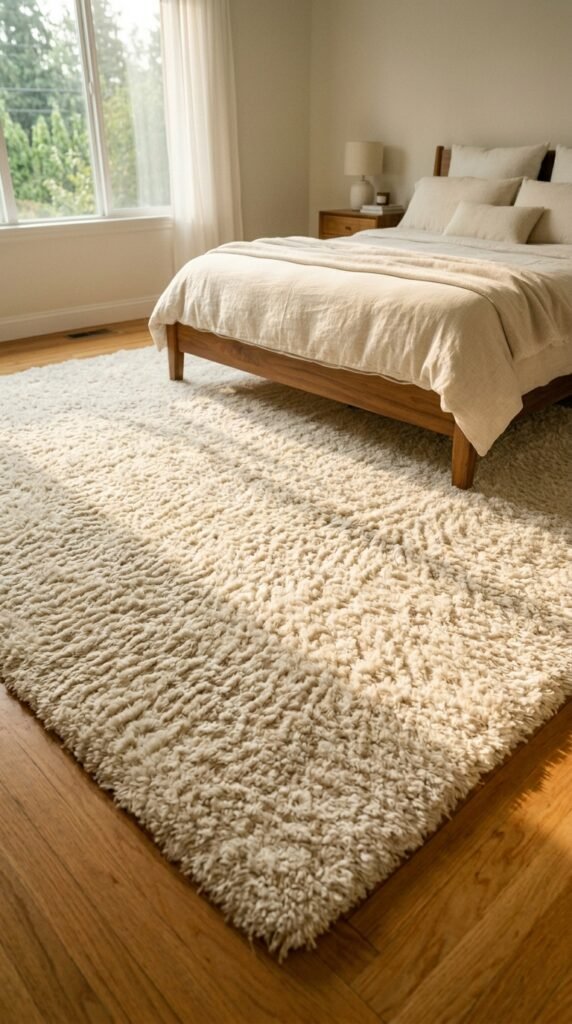
A plush area rug in a dreamy bedroom adds softness underfoot and visual warmth that hard floor surfaces alone never provide. A high-pile shag rug, a soft wool rug, or a plush Moroccan-style rug in a warm cream, soft grey, or muted rose adds the tactile landing zone beside the bed that makes stepping out of bed in the morning a genuinely pleasant experience rather than a cold, hard floor encounter. Rugs USA and Wayfair carry plush area rugs in queen-bed-appropriate 8×10 sizes from $80 to $250.
Choose a rug with pile height of at least 1.5 inches for the plush quality a dreamy bedroom requires. Low-pile flat-weave rugs work in minimalist living rooms. Dreamy bedrooms need the softness that sinks slightly underfoot and catches the light differently from different viewing angles throughout the day. That visual and tactile depth is what separates a dreamy bedroom rug from a practical one.
25. Keep the Bedroom Dedicated to Rest and Beauty
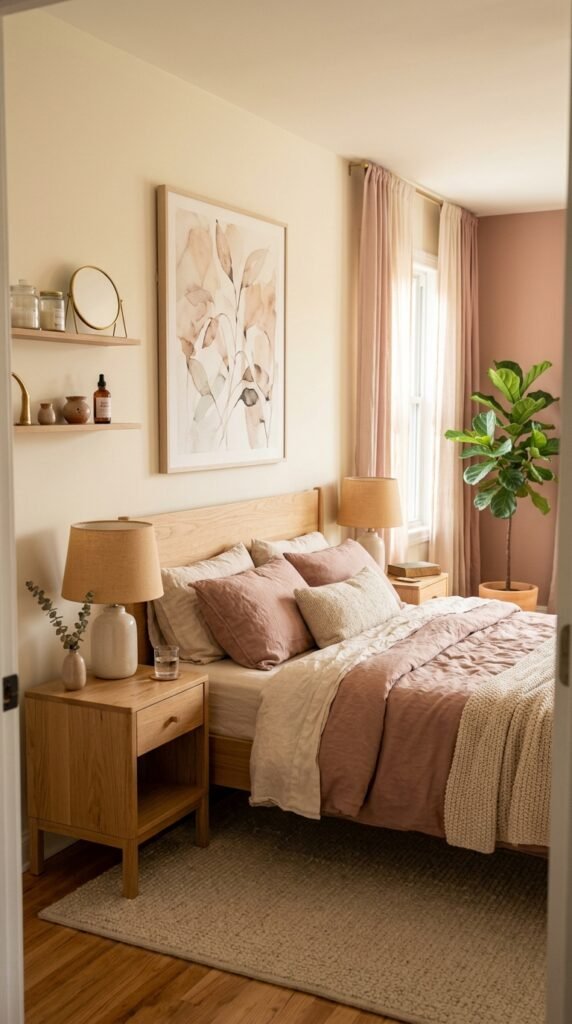
A dreamy bedroom maintains its atmosphere by staying dedicated to rest, beauty, and personal sanctuary rather than doubling as a home office, a television room, or a general-purpose overflow space. Every element that belongs to a different function in a different room actively fights the dreamy bedroom atmosphere you’ve built with every other idea on this list. A desk in the corner reads as a work environment. A television on the wall reads as a media room. Both dilute the sanctuary quality that makes a bedroom genuinely dreamy.
Remove the desk from the bedroom if you have one. Cover the television or move it to another room. Store the exercise equipment in a different space. What remains is a room with one purpose: creating the feeling of stepping into a personal sanctuary every time you walk through the door. That single-purpose discipline is the least expensive and most impactful decision on this entire list, and it costs nothing beyond the willingness to move a few things.
Final Thoughts
A dreamy bedroom comes from the accumulation of sensory details that make the space feel made for you. Start with the three changes that cost the least and deliver the most: layer the bed with multiple textures, install warm 2700K bulbs on a dimmer, and add one large statement botanical. Those three moves change the room’s entire character before you spend another dollar. Every other idea on this list is the next layer, added one decision at a time, until the bedroom stops being the room you sleep in and becomes the room you look forward to entering every evening.