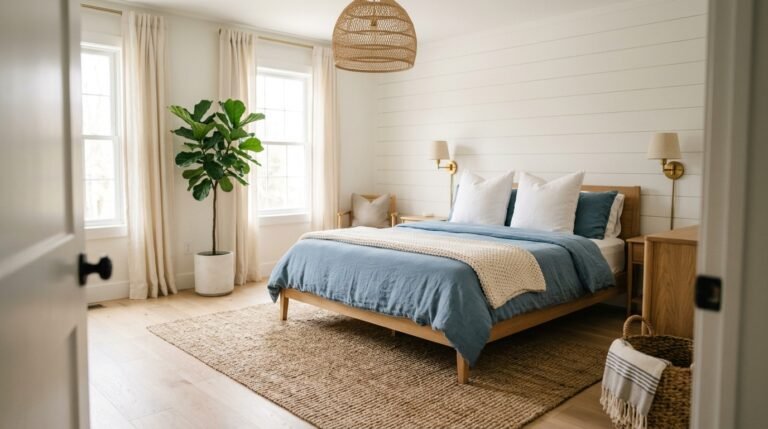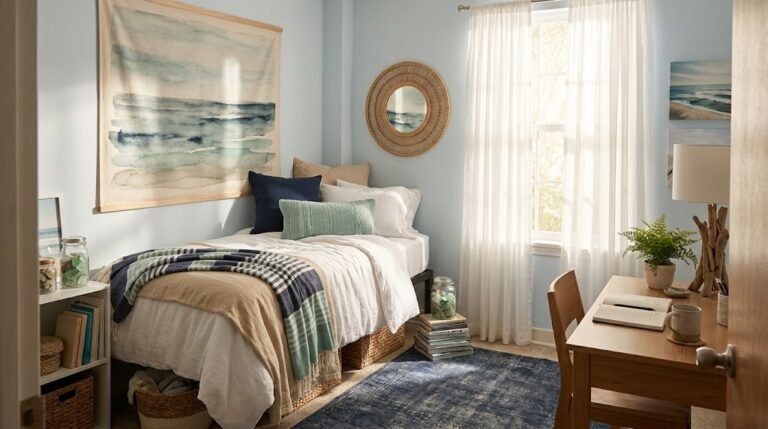
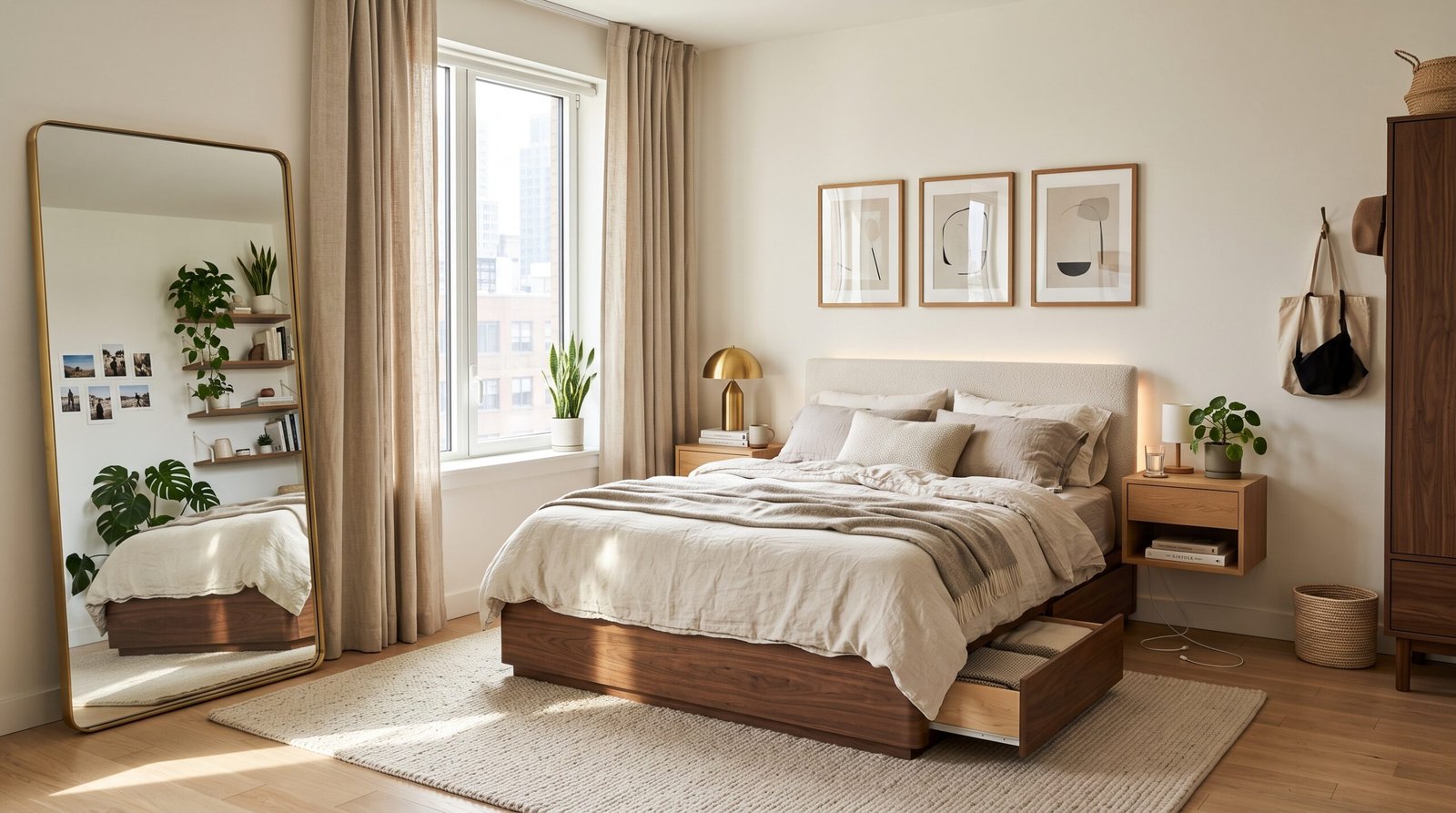
20 Apartment Bedroom Ideas to Make Your Space Feel Bigger
Your apartment bedroom is fighting against you. Low ceilings, no closet space, white walls you’re not allowed to touch, and furniture arrangements forced by whoever decided where the single power outlet should go. I’ve decorated six different apartment bedrooms across four cities, and the consistent lesson is that the room never gives you what you want unless you engineer it. Every idea on this list solves a specific apartment bedroom problem with a specific action and a specific price point, because “add some throw pillows” helps nobody.
1. Choose a Bed Frame With Built-In Storage
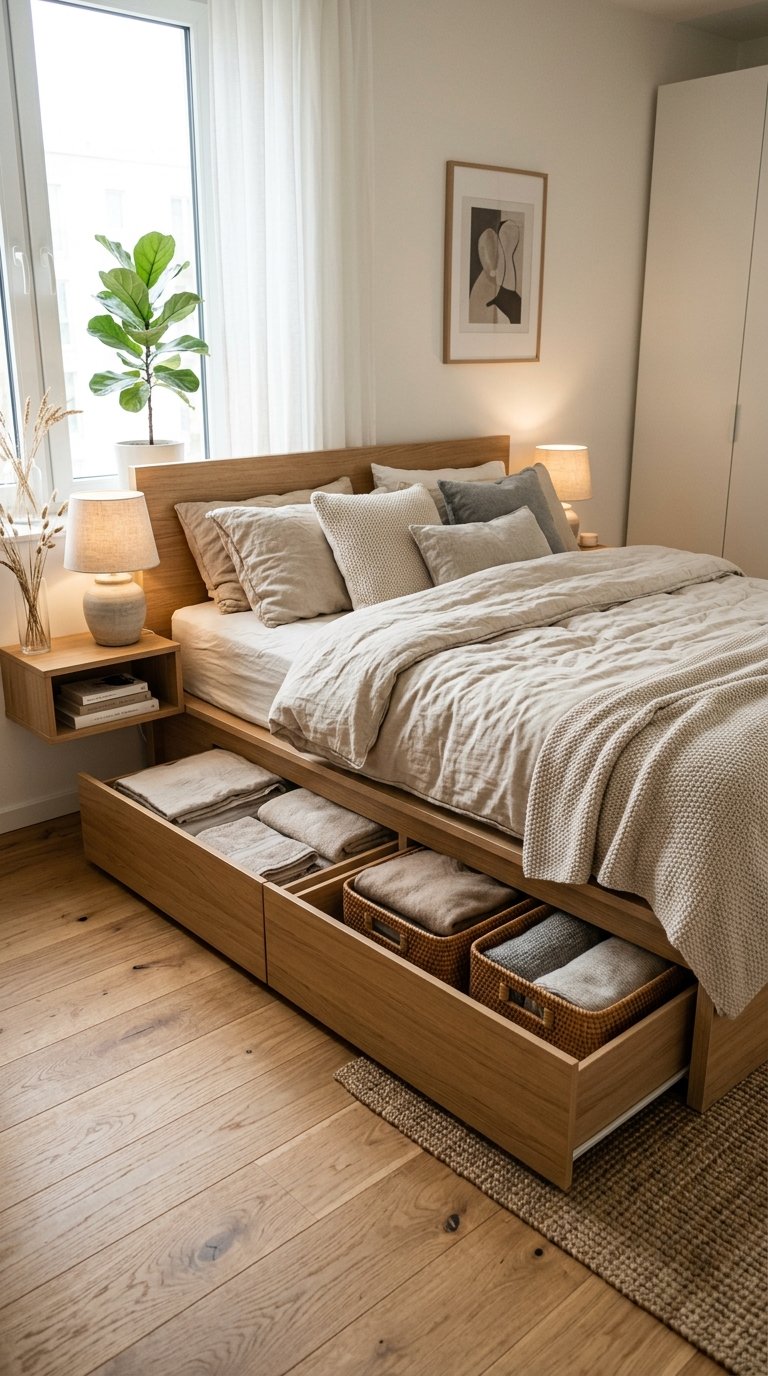
A storage bed frame with drawers or hydraulic lift storage eliminates the need for a separate dresser, which in a small apartment bedroom frees 6 to 10 square feet of floor space for a chair, a desk, or simply breathing room you don’t currently have. The Zinus 14-inch SmartBase Deluxe with under-bed storage runs $180 to $250 in queen size and holds the equivalent of two full dresser drawers worth of clothing, bedding, or off-season items in a footprint your bed already occupies.
A 2021 survey by the National Association of Home Builders found storage ranked as the top concern for apartment dwellers in spaces under 700 square feet, ahead of both kitchen function and natural light. Your bed takes up 40 percent of your bedroom floor by default. Making it store things too turns your largest piece of furniture into a dual-purpose workhorse rather than a single-use slab that contributes nothing beyond sleep.
2. Hang Curtains From the Ceiling, Not the Window Frame
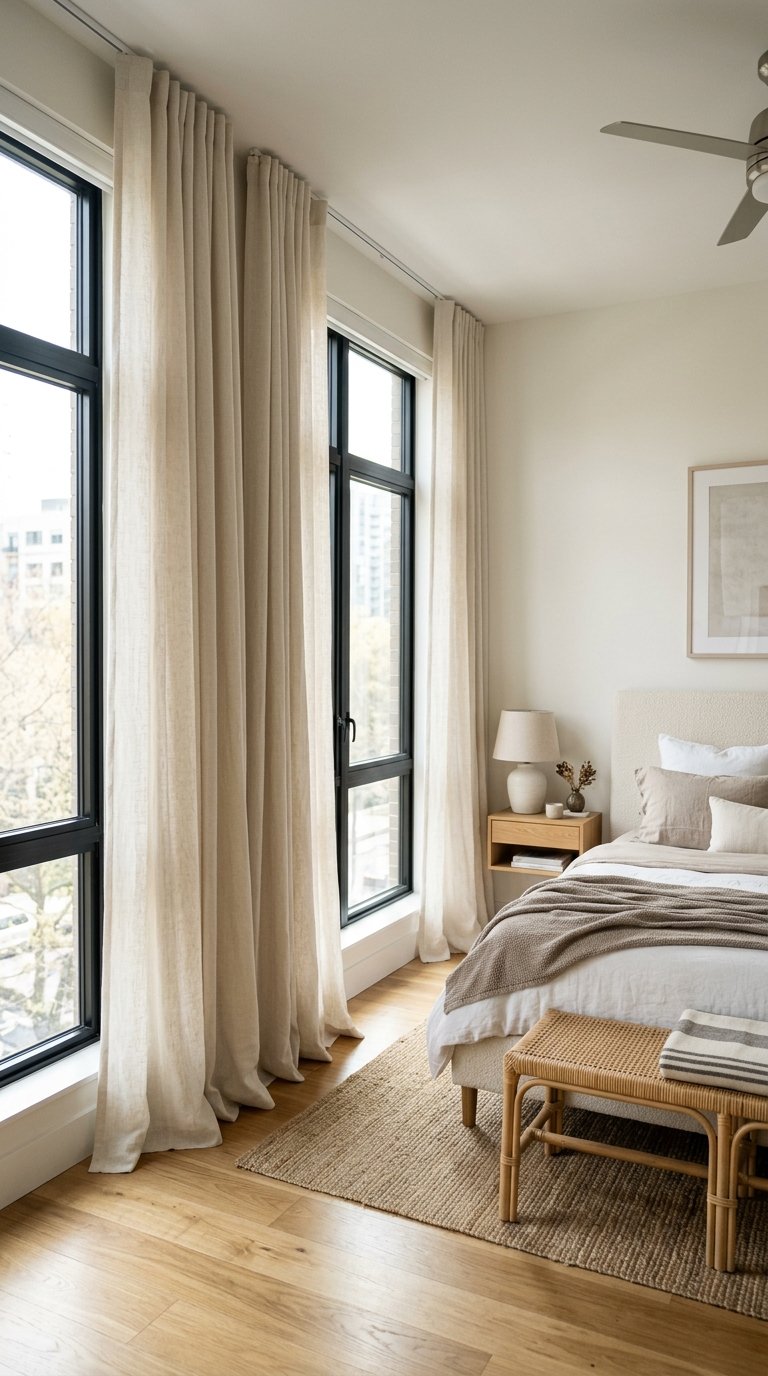
Ceiling-mounted curtain rods make your windows look taller and your ceilings feel higher, because the continuous vertical line from floor to ceiling draws the eye upward and expands the perceived room height without touching a wall. In a standard 8-foot apartment ceiling, hanging curtains at the ceiling line instead of 4 inches above the window frame adds a foot of perceived height to the entire room.
Install a tension rod or use command hook curtain brackets rated for 20 pounds if your lease prohibits drilling. IKEA’s VIDGA ceiling track system works for renters at $30 to $50 and mounts with 3M adhesive strips rated for ceiling drywall. Choose floor-length panels in linen or cotton in a warm neutral tone, since panels with 1-inch puddle on the floor reinforce the ceiling-height illusion at the bottom of the visual line simultaneously.
3. Use a Leaning Mirror to Double Your Light
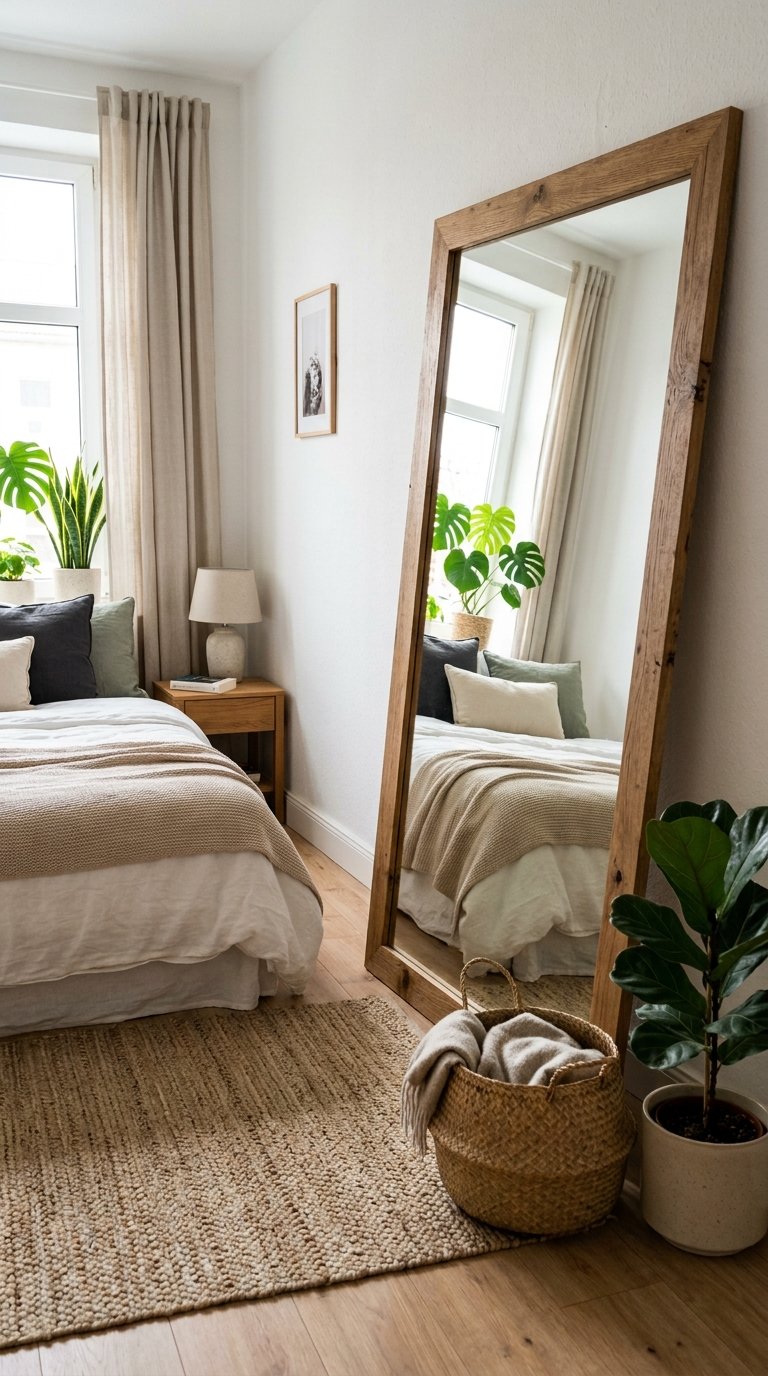
A large leaning floor mirror positioned across from your main light source reflects both natural and artificial light back into the room, creating the optical effect of a second window in a space where adding one isn’t an option. A Mainstays 64-inch full-length leaning mirror from Walmart runs $25 to $35 and leans against any wall without mounting hardware, which keeps your security deposit intact.
Position the mirror to reflect either a window or your brightest lamp rather than a blank wall, since a mirror facing an empty wall doubles the emptiness rather than the light. Interior designers call this “borrowed light,” and it works in bedroom spaces as small as 90 square feet to add measurable brightness without any electrical work. The mirror also serves your daily functional needs while doing design work simultaneously, which makes it the highest-return object per dollar on this entire list.
4. Mount Your Nightstand to the Wall
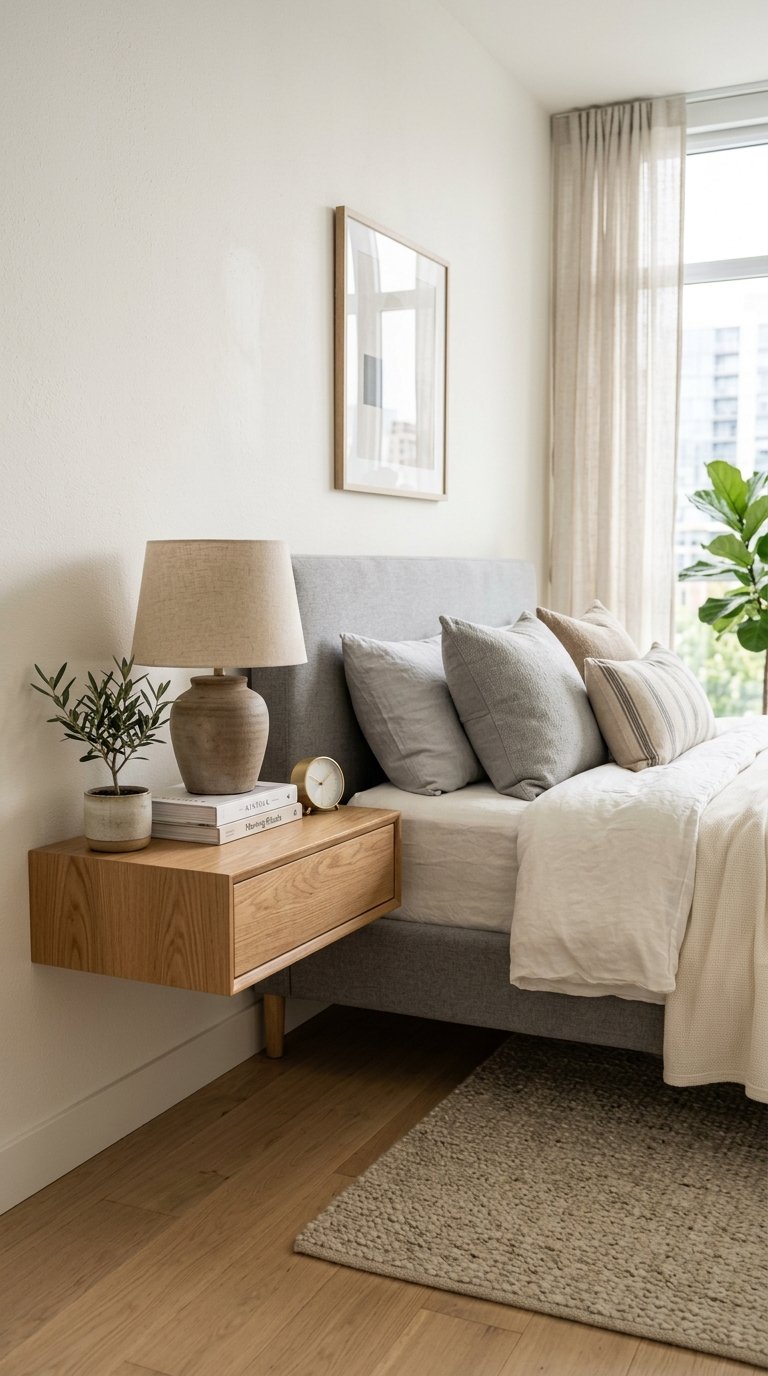
A wall-mounted floating nightstand in a small apartment bedroom recovers 4 to 6 square feet of floor space that a freestanding table occupies, and the visible floor beneath the floating surface makes the room feel more open according to the visual principle that uninterrupted floor area reads as larger space. IKEA’s LACK wall shelf at $14 each works as a nightstand with a single bracket, holds 22 pounds, and mounts with two screws into drywall anchors.
For renters, the hole from two drywall screws fills with spackle in five minutes for under $5 at move-out, making this modification effectively zero-cost to reverse. Mount the shelf at 24 to 26 inches from the floor for the right bedside height relative to a standard mattress. Add a small drawer unit from IKEA’s ALEX range underneath as a freestanding supplement if you need additional storage, since the wall-mount handles the surface and the drawer unit handles the depth.
5. Add a Headboard Without Drilling
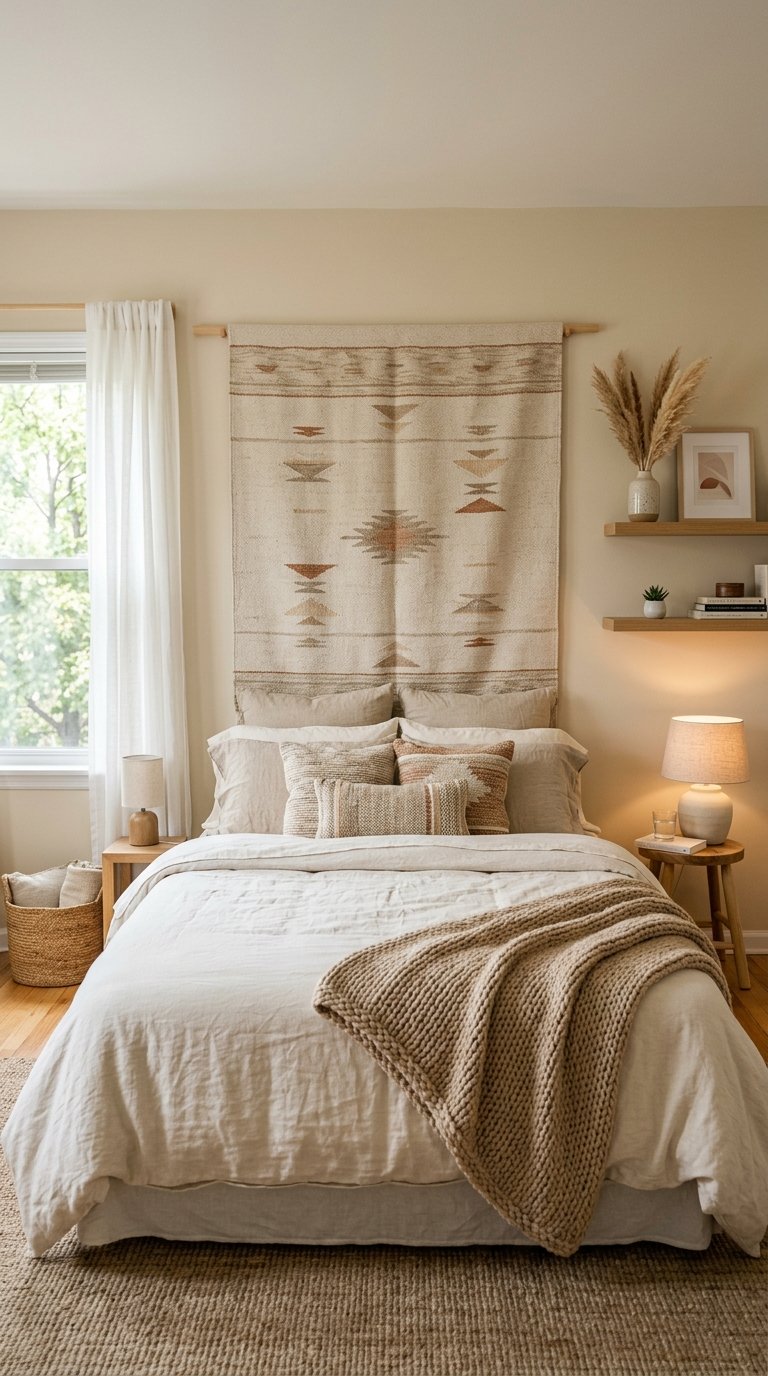
A headboard transforms the bed from a mattress on a frame into a piece of furniture, and it creates the visual anchor the bedroom wall needs to read as intentional design rather than a room someone just moved into. Freestanding headboards that slide between the mattress and bed frame cost $80 to $200 from brands like Zinus and Modway, require zero wall attachment, and move with you to your next apartment without leaving a mark.
If the budget is tighter, a large tapestry from Society6 or Deny Designs mounted behind the bed with two command hooks creates the same visual anchor effect for $35 to $65. Choose a tapestry in a solid deep color or a subtle pattern rather than a busy print, since the headboard zone needs visual weight, not visual noise. A 60×80 inch tapestry behind a queen bed fills the headboard space convincingly and removes cleanly from the wall at move-out.
6. Layer Three Light Sources for Evening Depth
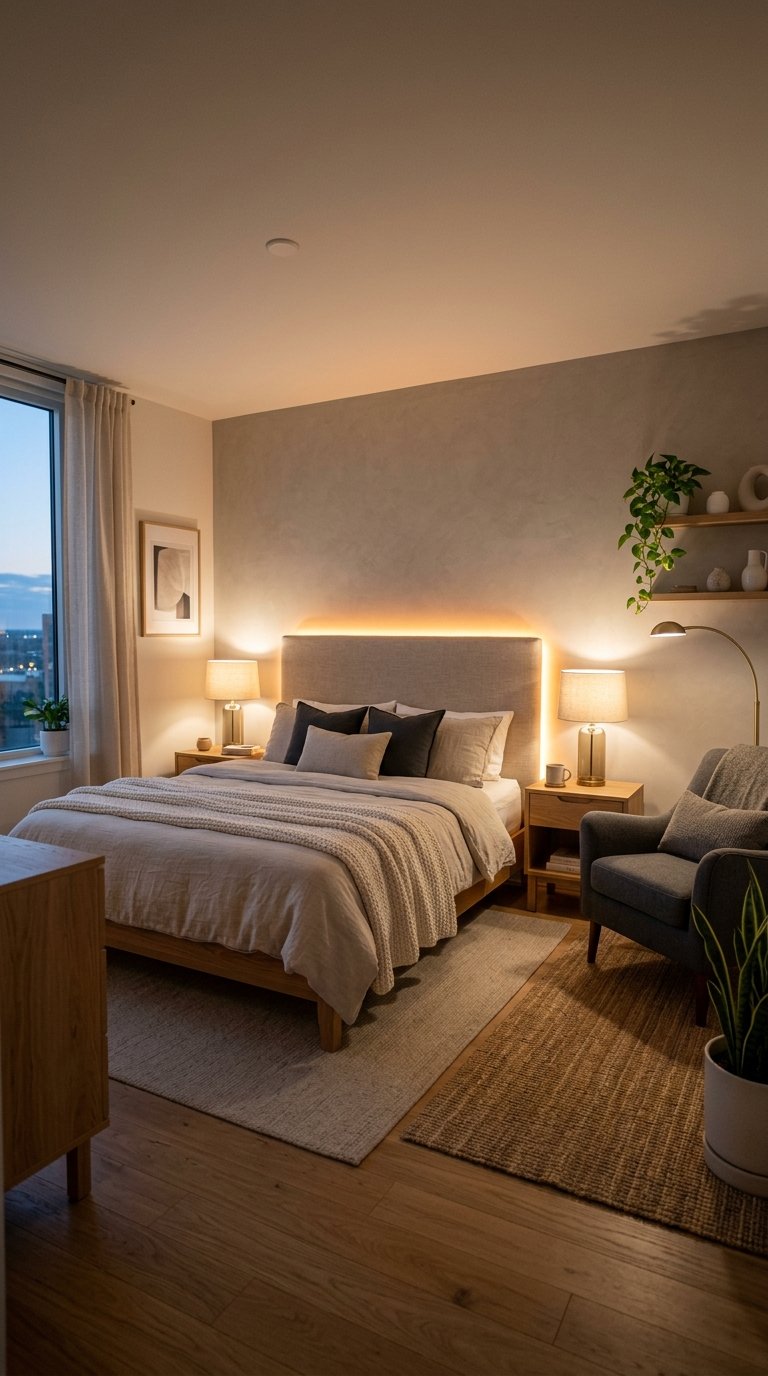
A single overhead light flattens every surface in the room and makes furniture look institutional, while three layered sources at different heights create the depth and shadow variation a bedroom needs to feel like a room you chose to be in rather than a room you’re stuck in. The three-source formula: one table lamp on each nightstand at 28 to 32 inches, one floor lamp in the corner behind the reading chair at 58 to 62 inches, and one LED strip behind the headboard or under the bed frame for ambient base glow.
All three sources should run on warm white bulbs at 2700K, since cool white (4000K and above) suppresses melatonin production and fights your ability to wind down in the same space where you sleep. The Gove LED strip lights at $15 to $25 for a 16-foot reel handle the ambient layer, and the TaoTronics bedside lamp at $25 to $35 handles table lamp duty with adjustable brightness. Total investment for all three layers runs $80 to $120, which delivers more visual impact per dollar than any furniture purchase at twice the price.
7. Create a Fake Walk-In Closet With a Clothing Rack
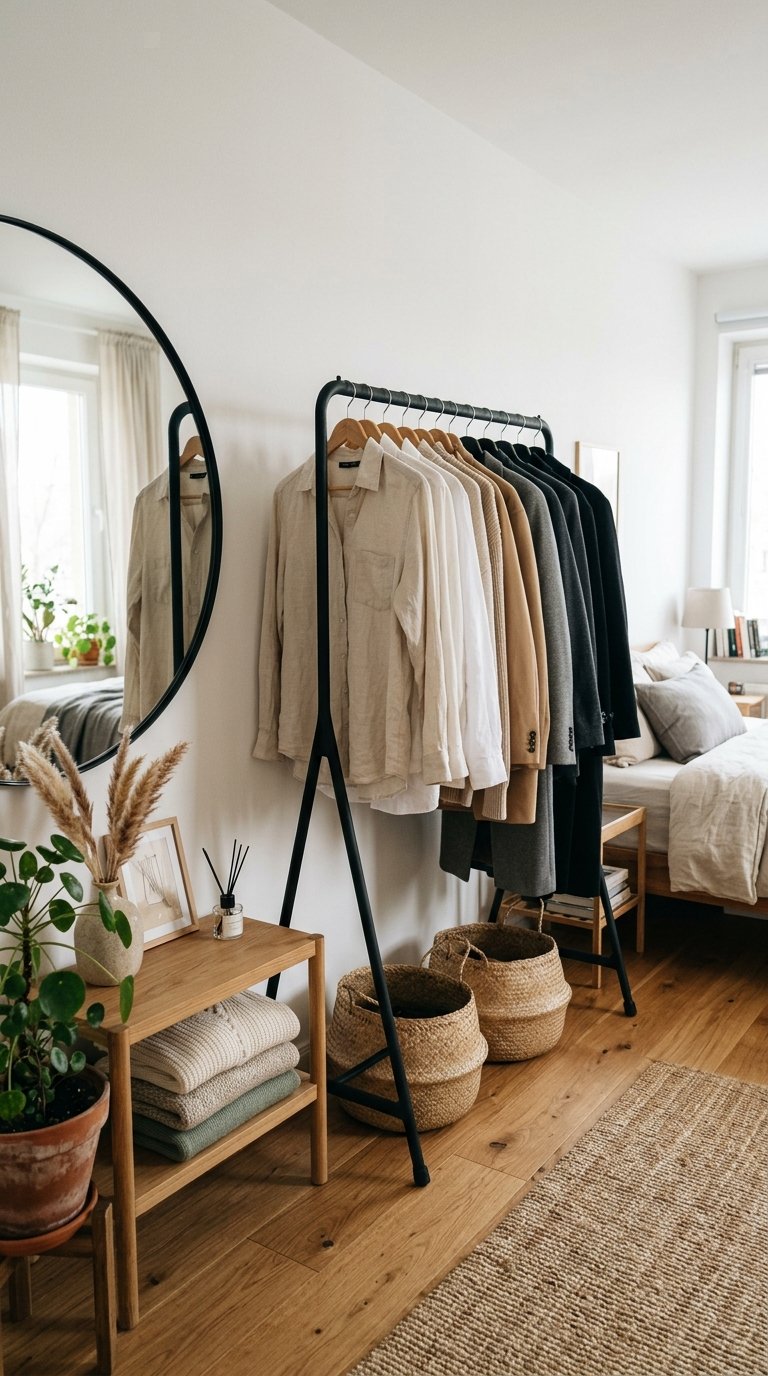
A freestanding clothing rack turns your most-worn items into a display that adds visual texture to a plain wall and eliminates the five-minute search through a packed closet you experience every morning when you’re already running late. The AmazonBasics rolling garment rack at $35 to $45 holds 50 pounds, adjusts in height, and positions against any wall in 10 minutes without tools.
Limit the rack to one curated week’s worth of outfits rather than everything you own, since a rack packed to maximum capacity reads as overflow rather than intentional display. Hang items in a color gradient from light to dark tones, add a small shelf unit beside the rack for folded items, and position a round mirror nearby for a corner styling station a Manhattan boutique would charge $200 to replicate. The overall setup costs $60 to $80 and solves morning friction while adding genuine design character.
8. Install Peel-and-Stick Wallpaper on One Wall
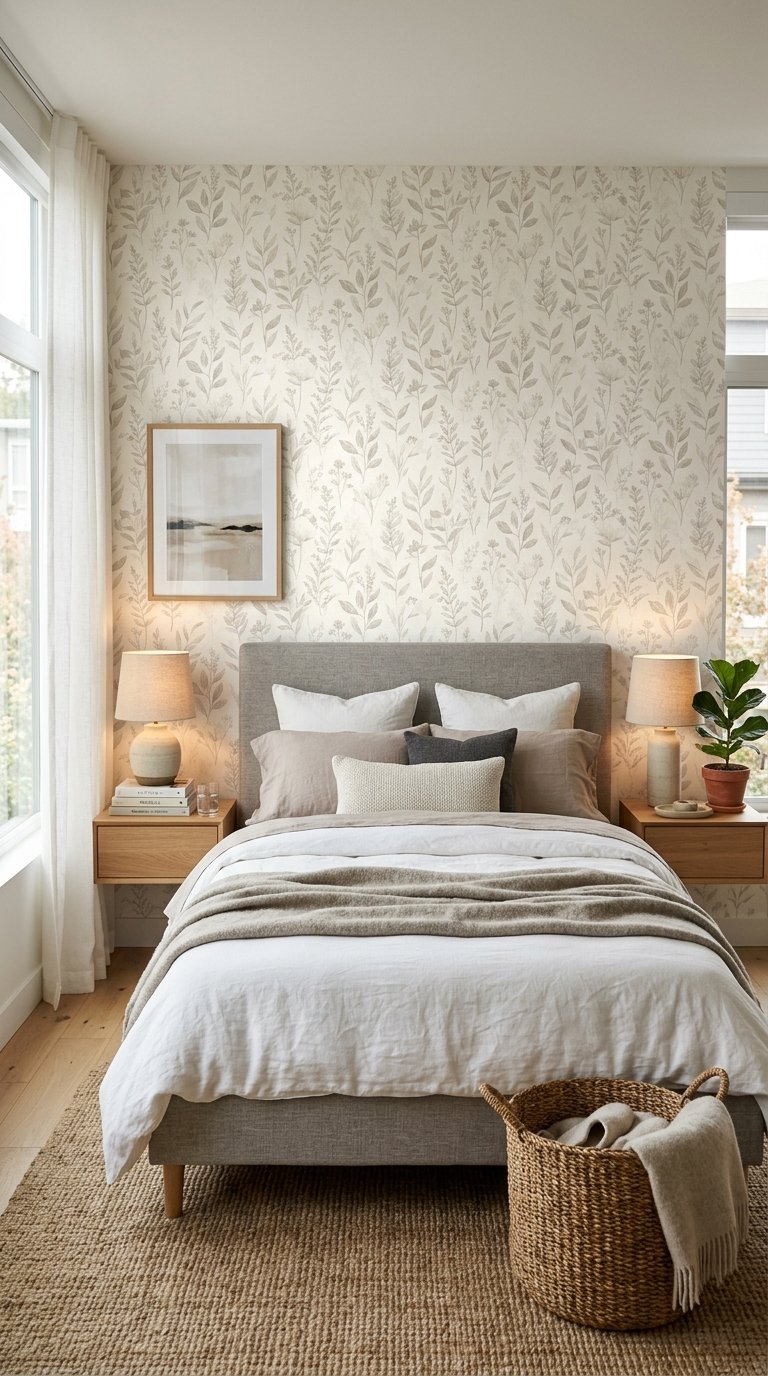
A single accent wall in a peel-and-stick wallpaper pattern transforms the entire room’s mood because your eye uses one strong visual anchor to interpret the rest of the space, and a blank wall offers no anchor at all. RoomMates and Chasing Paper both sell removable wallpaper in neutral, textured, and patterned options for $18 to $35 per panel, and most bedroom accent walls behind the bed need four to six panels.
Apply panels on a clean, dry, flat wall surface and smooth each one from center to edges with a squeegee or credit card to eliminate bubbles. Leave a half-inch gap at ceiling and baseboard edges where temperature and humidity shifts cause the most peeling, since the gap prevents edge lift from spreading across the panel face. Removal leaves no residue on standard painted drywall if you pull slowly at a downward angle, keeping the apartment’s walls rental-ready without the patching job wallpapered rentals normally require.
9. Maximize Closet Space With a Double-Rod System
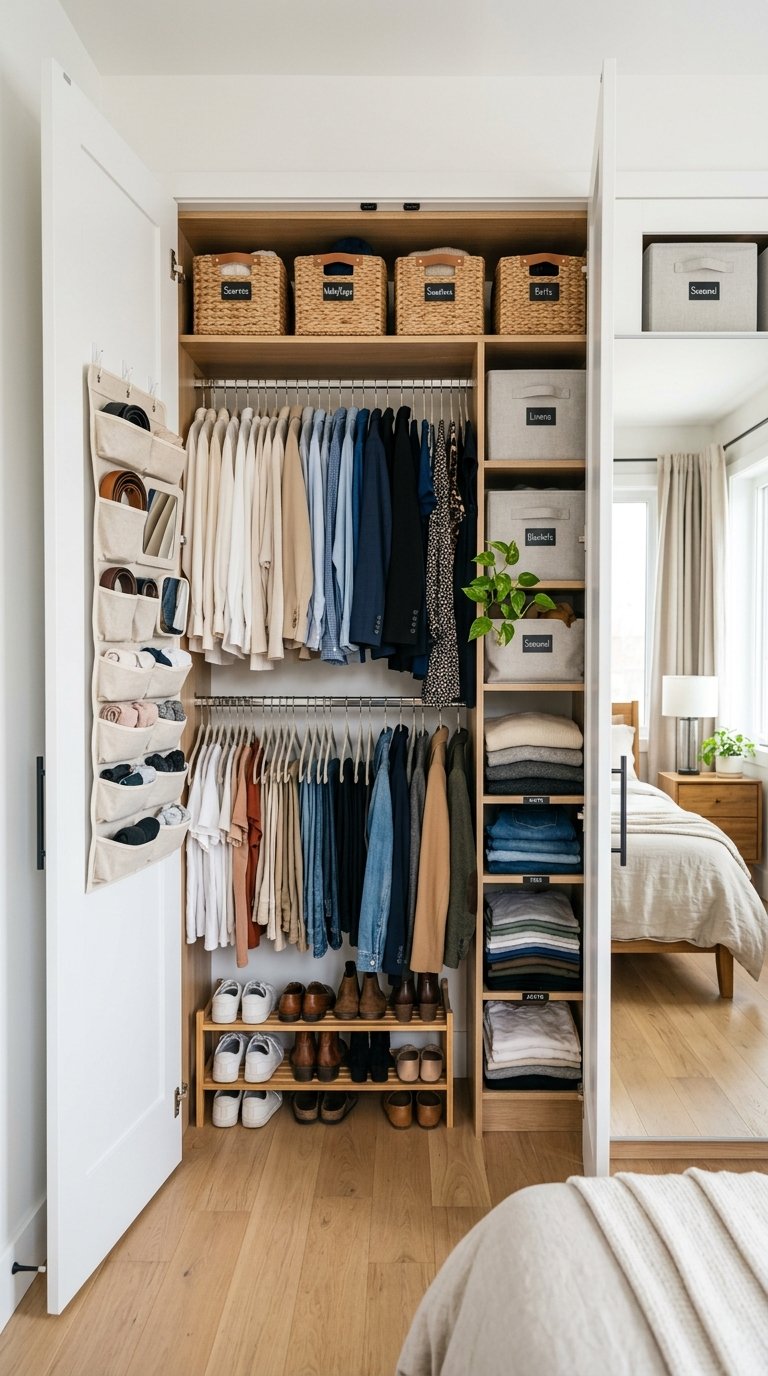
A second tension rod installed 18 to 20 inches below your existing closet rod doubles your hanging capacity without drilling a single hole or spending more than $15 at any home goods store. The lower rod handles shirts, jackets, and blazers at the correct hanging length while the original upper rod takes trousers, dresses, and longer garments, effectively converting one closet rail into two specialized zones.
Add an over-door organizer on the inside closet face for shoes, accessories, and folded items at $15 to $22, and use stackable clear bins on the shelf above the rod for seasonal storage labeled by category. A closet with a double rod plus door organizer plus labeled shelf bins stores 60 to 70 percent more than the same closet with one rod and one empty shelf, according to the Container Store’s organization research published in their 2022 Small Space Report. This system costs under $40 total and takes one afternoon to install.
10. Use a Bookshelf as a Room Divider
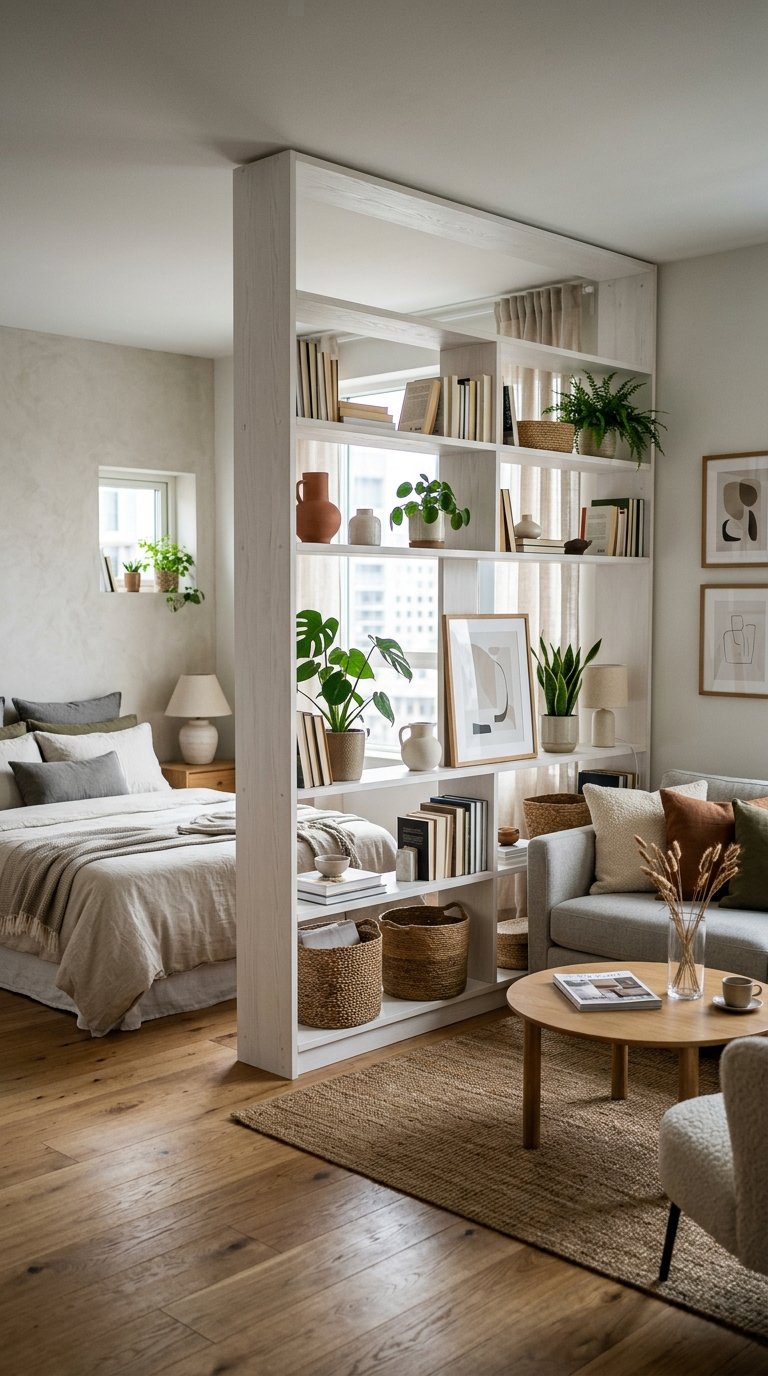
In a studio or open-plan apartment where your bedroom is a zone rather than a room, a bookshelf placed perpendicular to the wall creates a visual divider between your sleep space and the rest of the apartment without a wall, a door, or a lease violation. IKEA’s KALLAX 4×2 unit at $130 stands 57 inches tall, which blocks enough sightline to define the sleep zone while leaving the top open for light and air movement between areas.
Style the divider-facing side of the shelf as a display surface with books, plants, and objects in your bedroom’s palette, and use the room-facing side for storage or additional decor. The shelf also carries the functional benefit of actual storage in a space where every piece of furniture needs to earn its footprint. A bookshelf that divides, stores, and displays is doing the work of three separate items in one 18-inch-deep footprint.
11. Pick a Rug Two Sizes Bigger Than You Think You Need
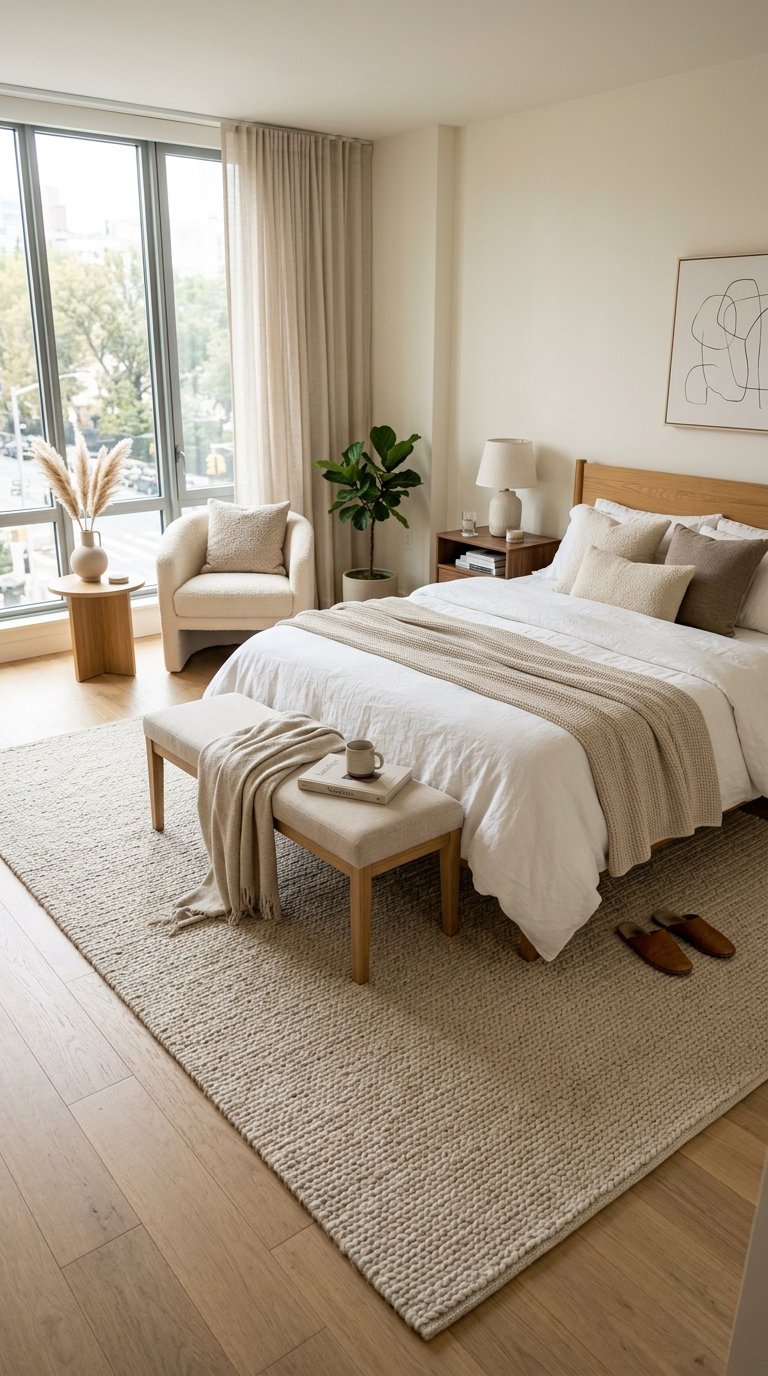
A rug sized to extend 18 to 24 inches past each side of the bed makes the room feel larger because a wider rug pulls the eye outward and visually expands the floor plane, while a rug too small for the bed makes the room feel cramped and the furniture look like it’s floating without a base. In a standard queen bedroom, the minimum rug size is 8×10. In a king bedroom, go 9×12.
A wool rug in an 8×10 from Loloi or Boutique Rugs runs $250 to $450 and lasts a decade with basic maintenance, working out to under $50 per year. If budget requires a lower-cost option, Ruggable’s machine-washable 8×10 polypropylene rugs run $180 to $230 and handle spills and pet traffic without professional cleaning. Avoid rugs under $150 in large sizes, since thin pile and poor dye quality visibly degrade within the first year and undercut every other design decision in the room.
12. Swap Builder-Grade Hardware for Brass or Black Pulls
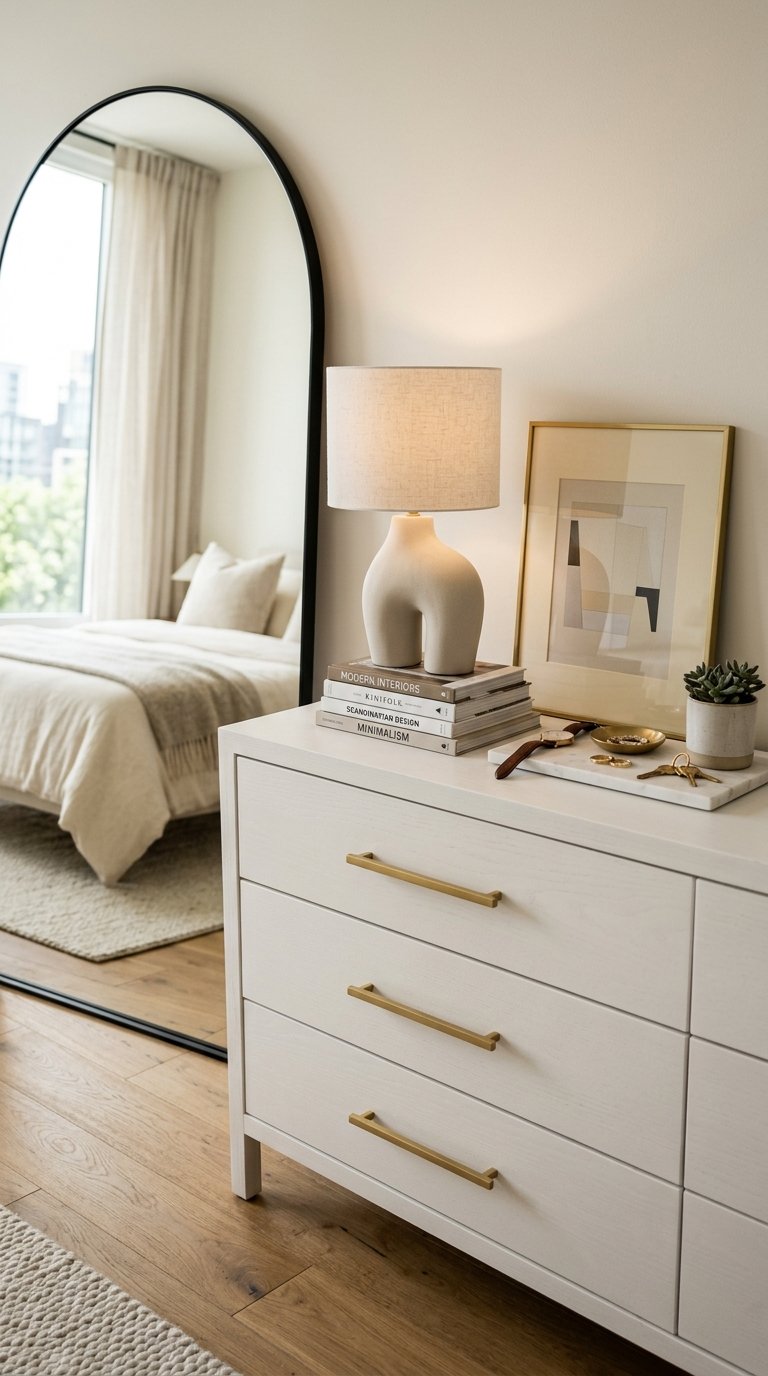
Changing the drawer and cabinet pulls on your bedroom dresser costs $30 to $90 total and produces a visual upgrade disproportionate to the time and money the swap requires, since hardware is what the eye lands on when scanning a furniture piece at close range. Brass or matte black pulls in the $5 to $15 per piece range from Amazon or Anthropologie transform a $100 IKEA dresser into something worth photographing.
Use a pull in a warm metal finish (brass, bronze, unlacquered gold) against warm wood tones, and a cool finish (matte black, brushed nickel) against white or painted furniture. The metal finish you choose at the hardware level should match at least one other metal in the room (lamp base, mirror frame, curtain rod) for the coordinated material story interior designers charge consultation fees to achieve. Swapping 8 pulls on a standard dresser takes 20 minutes with a screwdriver.
13. Add a Reading Chair to Create a Second Zone
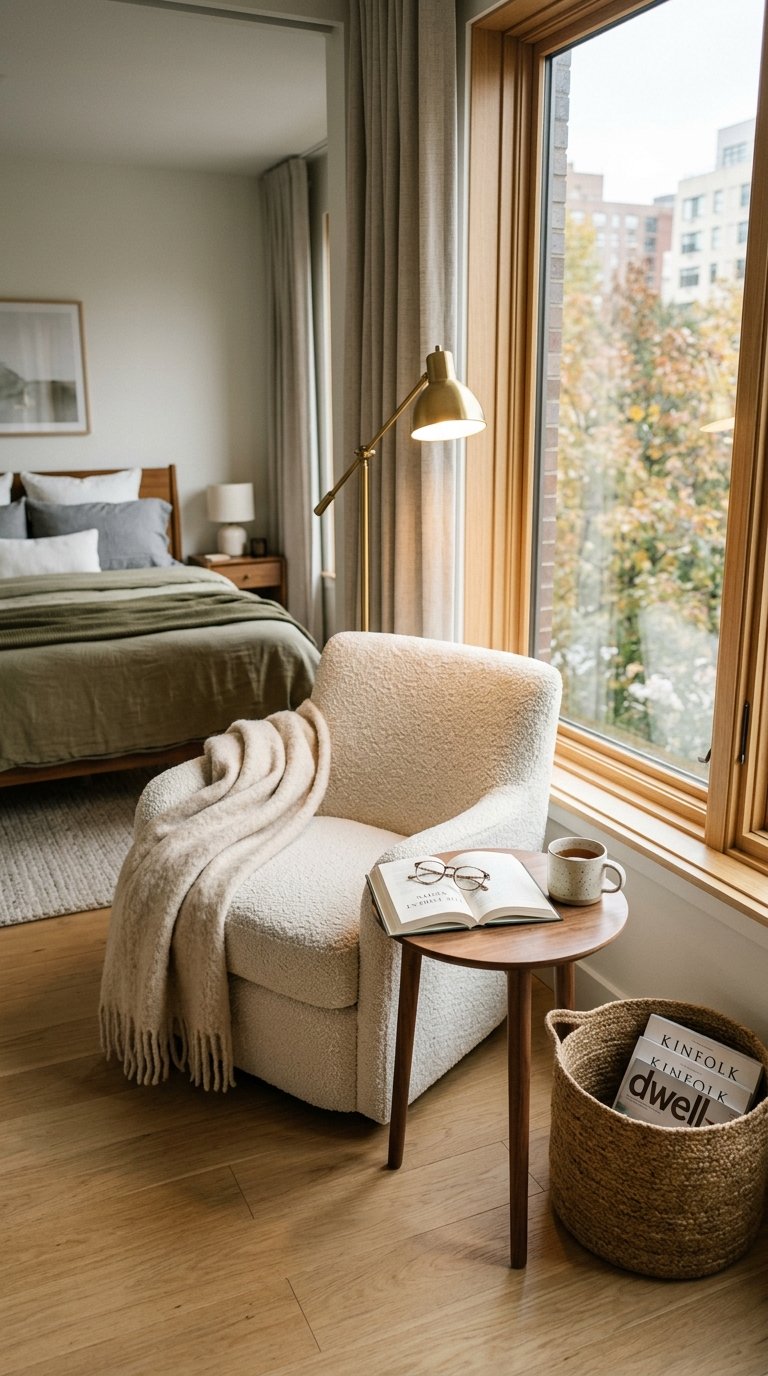
A reading chair in the corner of an apartment bedroom turns one-dimensional sleeping quarters into a multi-use space with a clear purpose for every square foot, which makes small rooms feel intentional rather than crowded. A 28-inch wide armchair fits in most bedroom corners without blocking circulation paths, and the Rivet Revolve modern armchair from Amazon runs $240 to $310 in a range of upholstery options.
Position the chair with a floor lamp behind it at shoulder height and a small side table within reach, since a chair without a surface or light source reads as storage overflow seating rather than a dedicated zone. The distinction between “a chair in my bedroom” and “a reading corner” is a lamp and a table, which together run $30 to $60 and make the corner functional enough to use daily. A bedroom you use beyond sleeping recovers value from square footage your landlord is charging you for whether you use it or not.
14. Mount a TV on the Wall to Reclaim Dresser Space
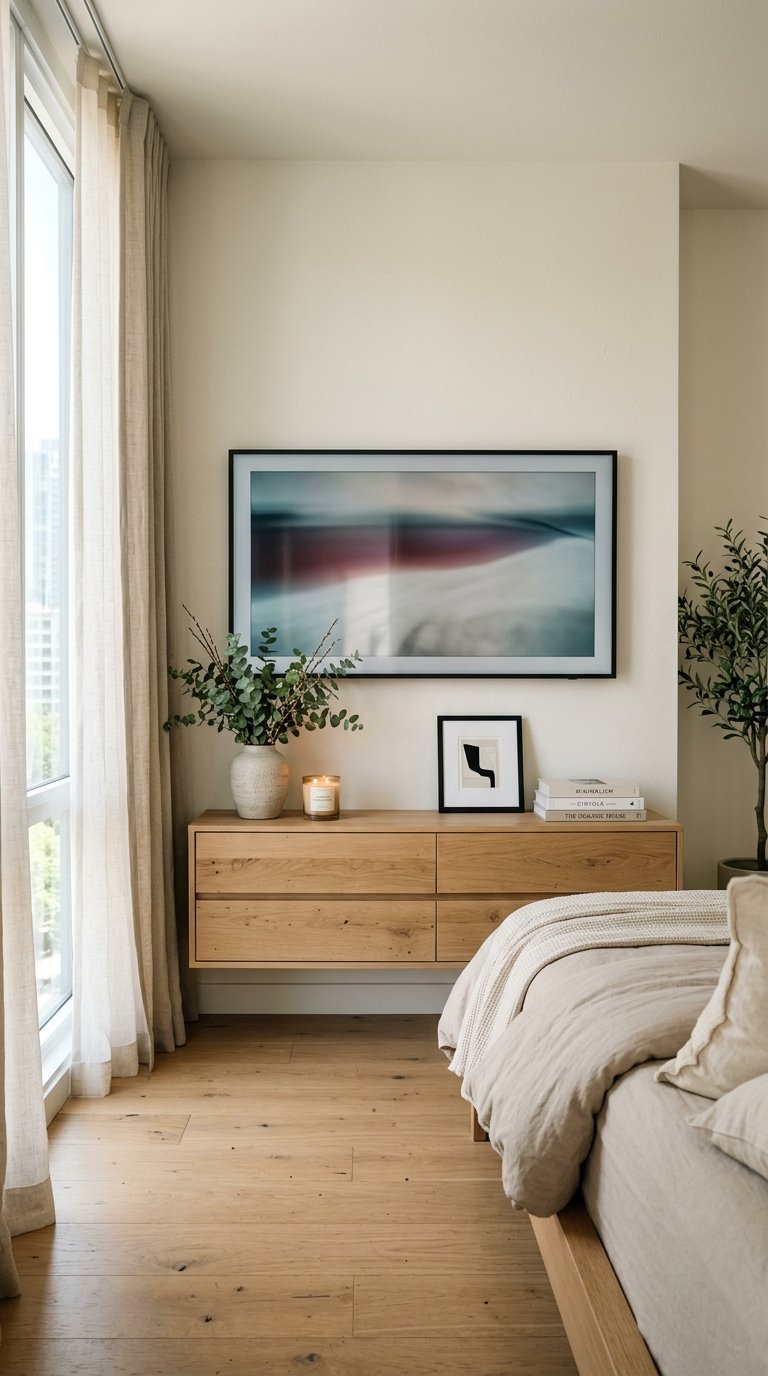
A wall-mounted TV removes the television from your dresser or a separate media stand, which recovers horizontal surface space for a plant, a lamp, or the art piece your room currently lacks because every flat surface holds functional items. A full-motion TV wall mount from Mounting Dream runs $25 to $45 and handles TVs from 26 to 55 inches with a swivel and tilt function that lets you angle the screen from the bed or the chair.
Run cables through a cord cover kit ($10 to $15 at Home Depot) along the wall surface for a flush, finished look without opening the wall for in-wall cable routing, which a rental situation typically prohibits. At move-out, the two to four wall anchor holes from the mount bracket fill with spackling paste in under five minutes. The recovered dresser surface, the cleared floor where the media stand was, and the freed sightlines from the doorway all improve the room’s spatial quality in ways that translate immediately.
15. Use a Tray to Style Your Dresser Top
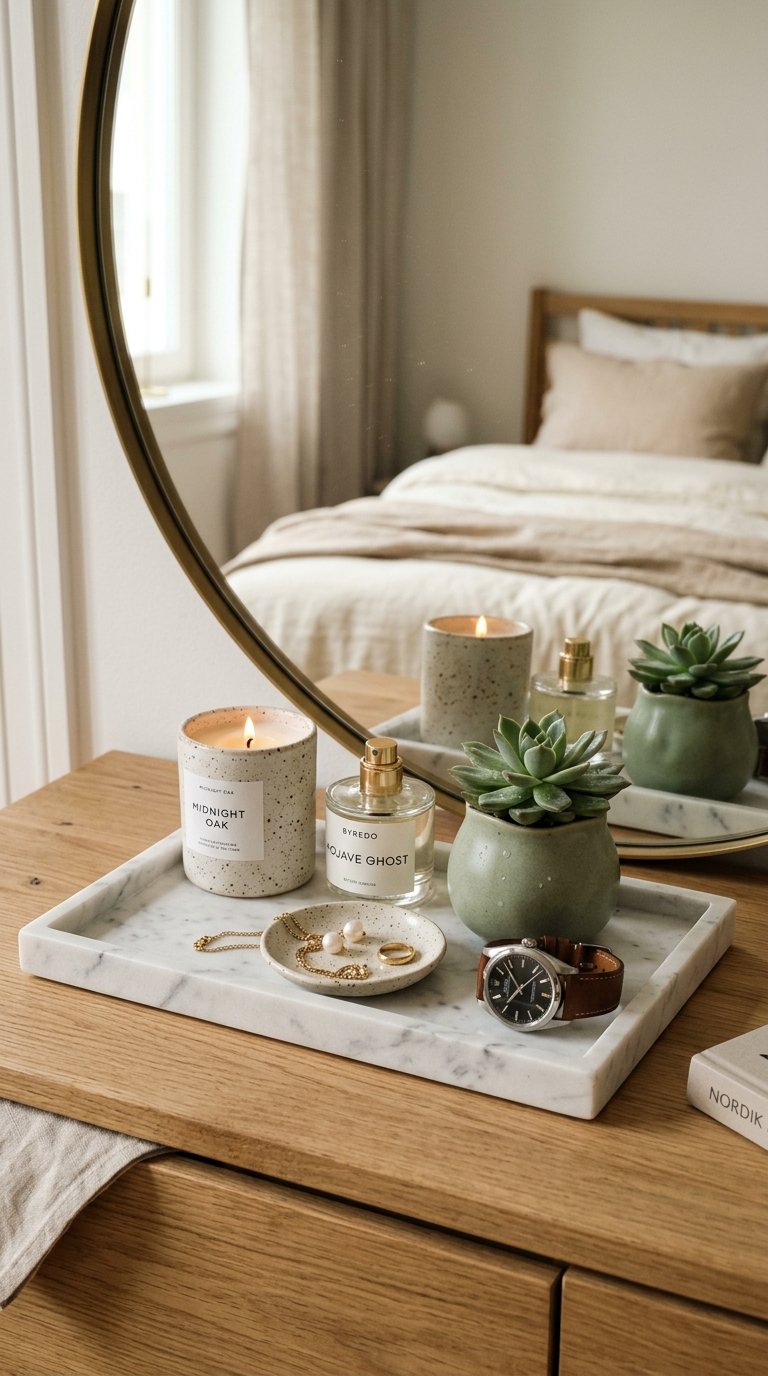
A decorative tray on a dresser surface contains objects and prevents the gradual spread of clutter that turns bedroom surfaces into flat storage by December regardless of how organized your move-in intentions were. A tray with a defined edge tells every object in the room “you belong inside here or you don’t belong on this surface,” which is a psychological boundary as much as a physical one.
A leather catchall tray from Artifact Bag Co. runs $45 to $65, while rattan and ceramic options from Target and TJ Maxx start at $15 to $25. Fill the tray with five objects maximum: a small candle, a watch or jewelry dish, one small plant or succulent, a perfume or cologne bottle, and one personal item. Five items inside a tray read as a styled vignette. Six or more items read as the pile the tray was supposed to prevent. IMO, this is the cheapest high-impact styling move on the entire list.
16. Hang a Gallery Wall Behind the Bed
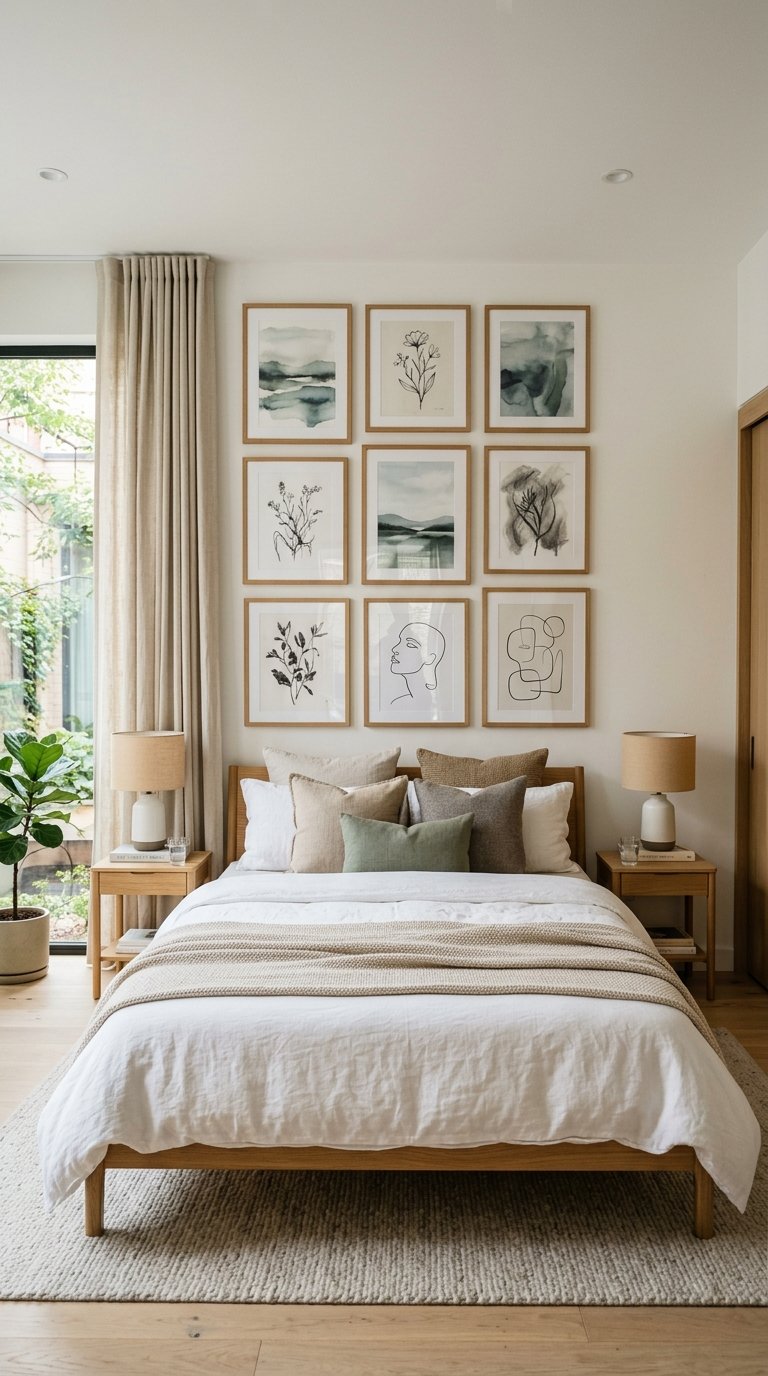
A gallery wall in a coordinated frame finish replaces the need for a headboard while adding the visual depth and personality a single piece of art at the same scale rarely achieves. Choose one frame finish across all pieces (black, natural wood, or brushed gold) and vary the art sizes within that frame system, since consistent frames with varied content reads as curated, while varied frames with varied content reads as eclectic without intention.
Center the arrangement so the visual midpoint of the gallery sits at 57 inches from the floor, which is standard gallery hang height and the natural resting point of most adults’ sightlines. Print art at home using the Art Institute of Chicago’s free public domain collection (download at full resolution directly from their website) and frame in IKEA RIBBA frames at $4 to $8 each. A 9-piece gallery wall behind a queen bed costs $80 to $120 in frames and $0 in art, which delivers the same result a framed art retailer charges $400 to achieve.
17. Use Warm Neutral Paint or Temporary Wallboard Panels
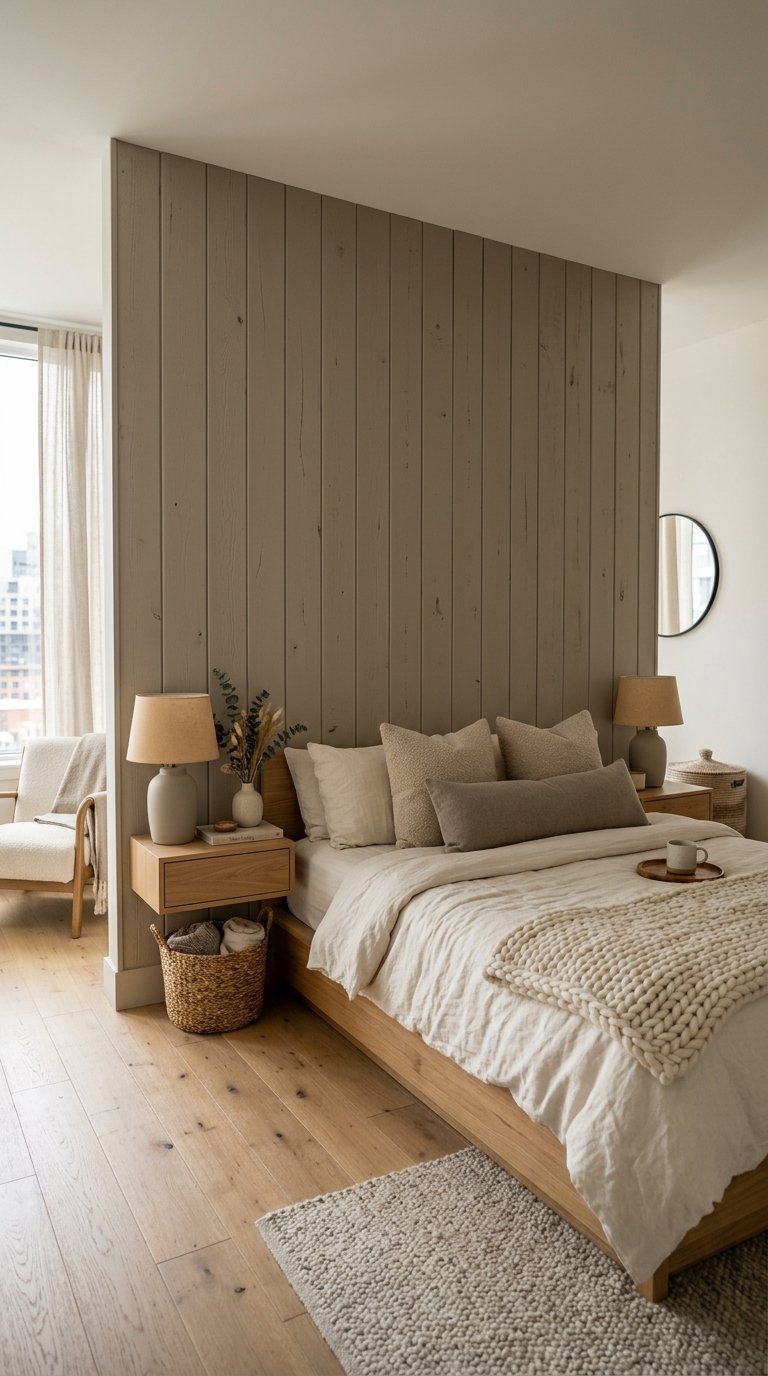
A warm neutral wall color (greige, warm white, or soft clay) makes your bedroom furniture look richer and more expensive because warm tones add a layer of light and depth to surfaces, while cool stark white (the default apartment wall color) reflects the room’s natural light in a way that makes even quality furniture look flat and institutional. If your lease permits painting, Benjamin Moore’s White Dove OC-17 warm white costs $70 to $80 per gallon and covers a standard bedroom in one coat with one gallon.
For renters who can’t paint, removable shiplap or wood panel systems from RoomMates and NuWallpaper apply directly to wall surfaces with peel-and-stick adhesive at $25 to $45 per panel and create the warm texture paint provides without the lease violation. Position the panels on your headboard wall only for the maximum visual return on the fewest panels. A warm textured headboard wall shifts the room’s entire palette perception, making the furniture and textiles in front of it read as warmer even if they haven’t changed.
18. Add a Large Plant in a Corner You’re Ignoring
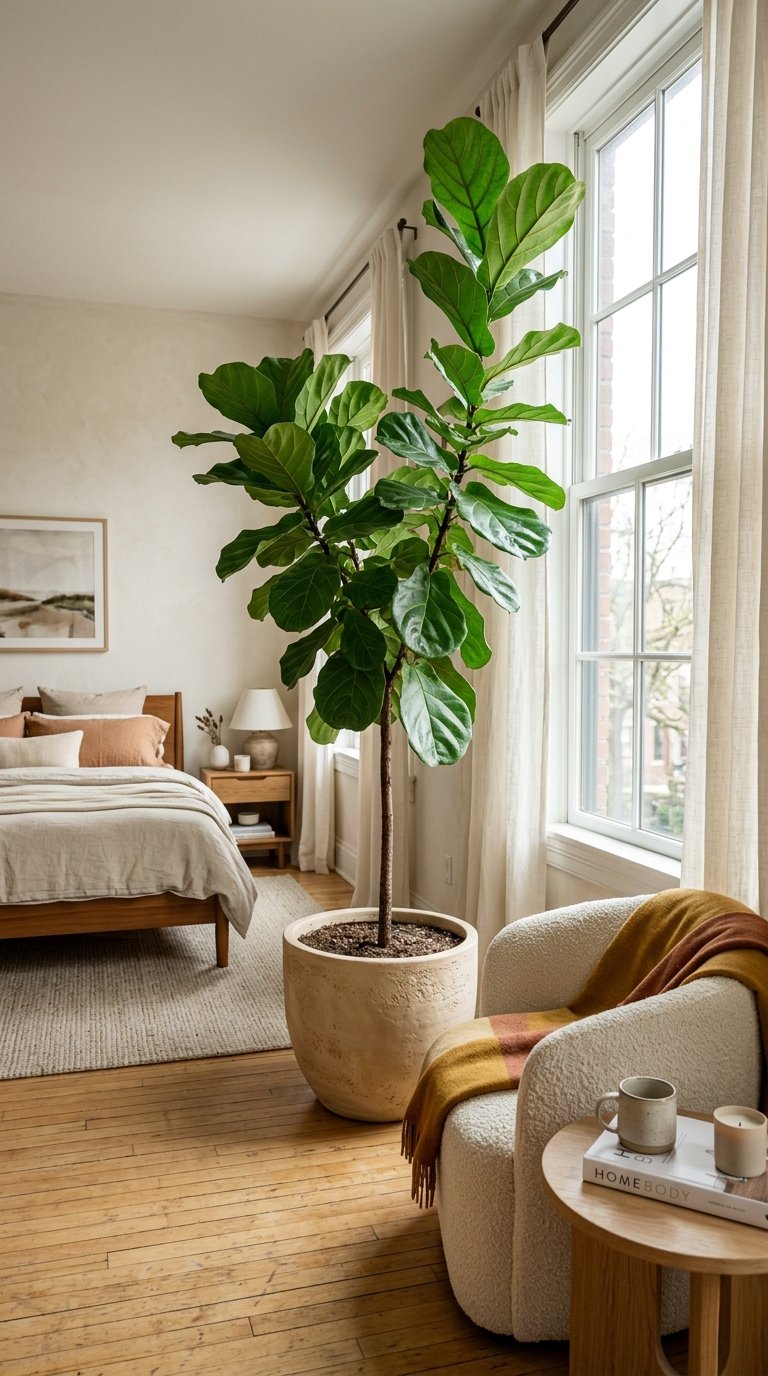
A floor plant in a corner transforms dead architectural space into a living design element while adding the organic color and movement no static decor object replicates. Fiddle leaf figs and monsteras in 4 to 6-foot sizes cost $40 to $90 at most garden centers and local nurseries, and they fill vertical corner space in a way furniture can’t without consuming any usable floor circulation path.
Place the plant in a dark-glazed ceramic or textured terracotta pot at least 2 inches larger than the nursery container, since the pot is the decor piece and the nursery container is a growth vessel. Snake plants and pothos work in low-light bedrooms with minimal natural light, growing consistently with weekly watering and no direct sun requirement. A single large plant in the right corner makes the room feel like someone considered the space from every angle, not just the wall with the bed on it.
19. Install a Tension Shelf in Your Closet’s Top Section
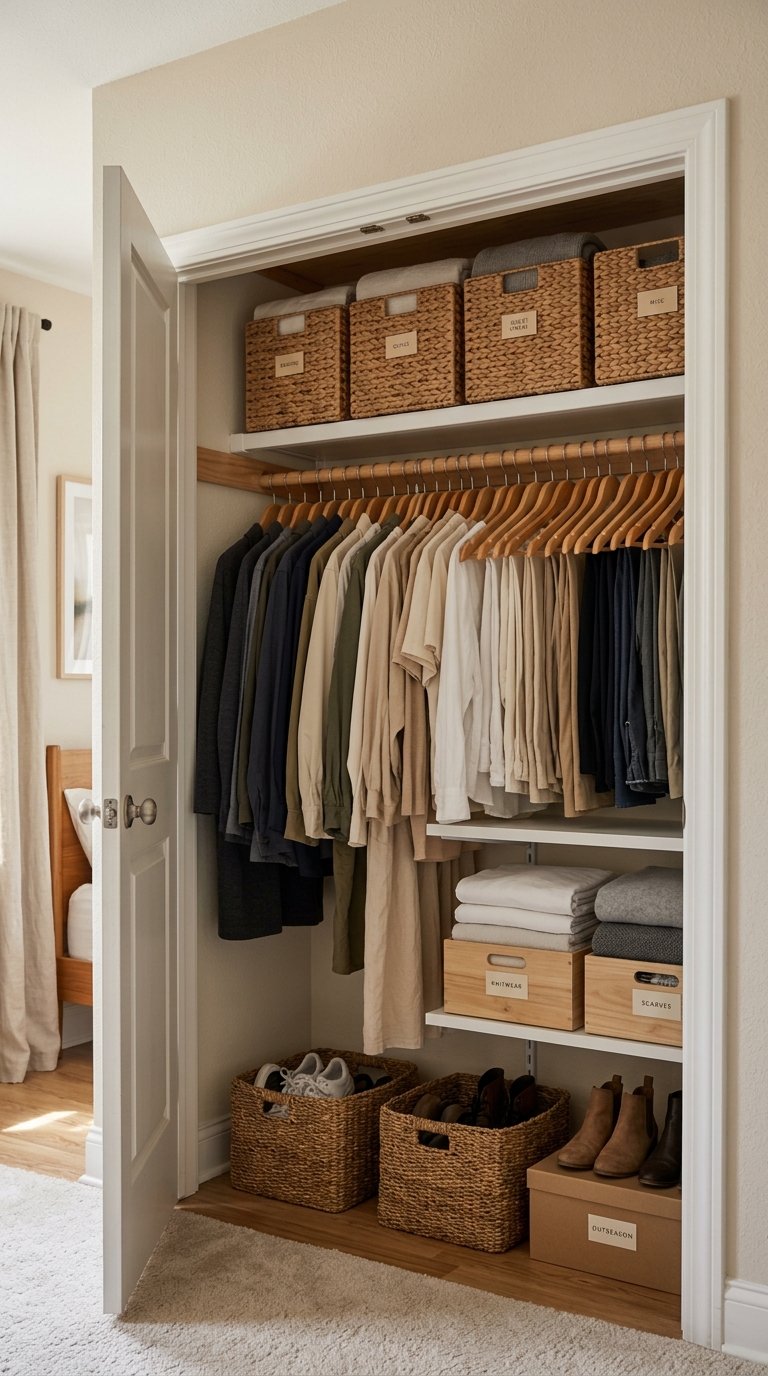
The top shelf of a standard apartment closet sits too high for easy daily access and too low to leave unused, and a tension pole shelf system installed between the back wall and the closet door frame adds a second shelf level in the same vertical space for $20 to $40. The Lynk Professional closet shelf system installs without tools and holds 50 pounds per shelf, creating accessible storage for seasonal items, extra bedding, and the overflow your main shelves don’t accommodate.
Label every bin on the top shelf with a bold label visible from standing height, since out-of-sight-out-of-mind storage becomes a black hole of forgotten items by the second semester of living anywhere. Clear stackable bins from The Container Store in the $8 to $15 range let you see contents without pulling everything down. The investment in organized top-shelf storage takes one afternoon and prevents the avalanche of forgotten items you rediscover every time you move, which is a tax every disorganized closet eventually collects.
20. Create a Scent Layer With a Diffuser or Quality Candle
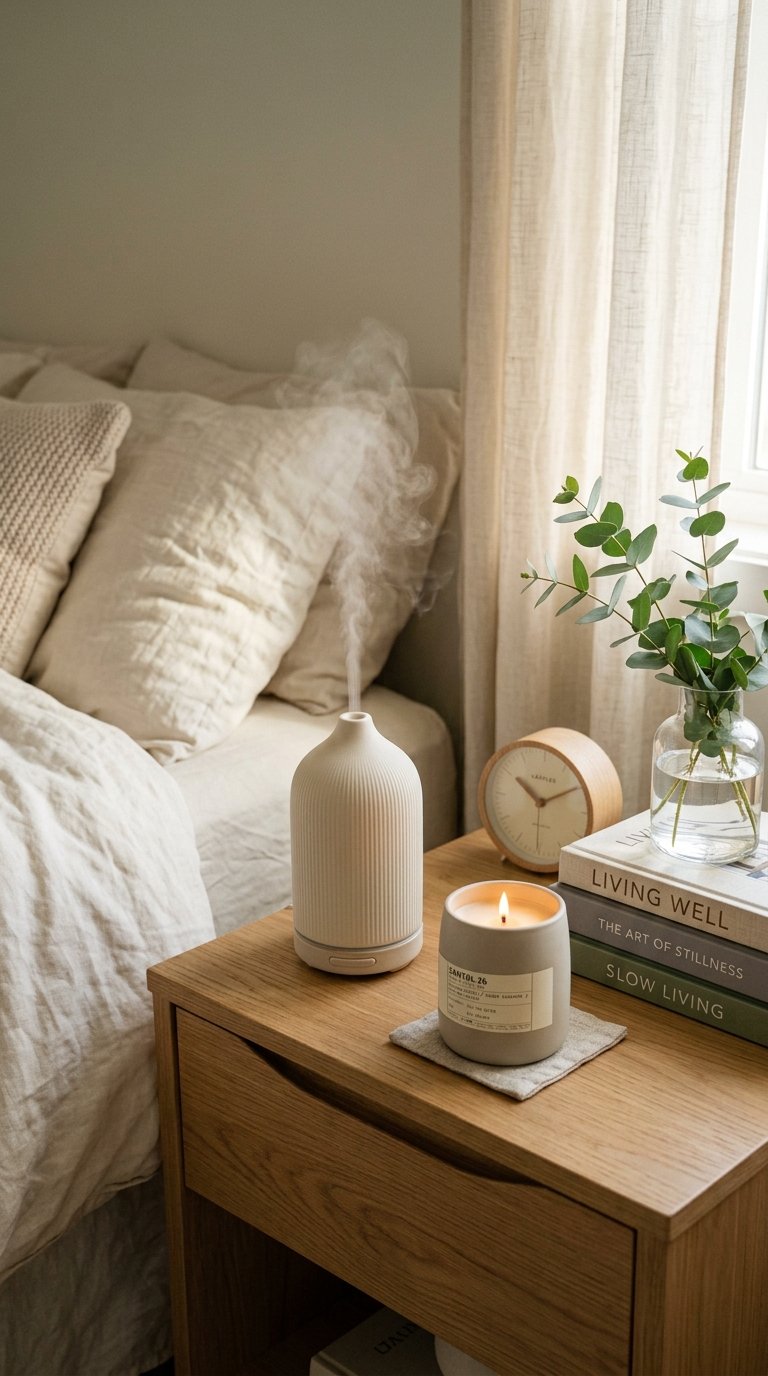
Scent shapes the perceived quality of a space before the eye registers a single design choice, which makes it the most underutilized tool in apartment bedroom decor and the one improvement a guest notices before sitting down. A Vitruvi stone diffuser at $119 or a Pura smart diffuser at $44 fills your bedroom with a consistent scent profile that signals cleanliness, intention, and care in a way no amount of throw pillows achieves through sight alone.
Budget-tier candles in ceramic vessels from Homesick or Boy Smells run $20 to $45 and burn 40 to 65 hours per candle, making the per-hour cost comparable to a streaming subscription for what they deliver to the room’s overall quality. Position your scent source on the dresser or nightstand rather than on a high shelf, since scent diffuses downward and outward from its source and reaches the breathing zone of someone in the room faster from a lower position. FYI, this is the one bedroom upgrade where $20 delivers a result a $200 investment in furniture cannot.
Final Thoughts
Your apartment bedroom works when every piece in it solves a problem and earns its square footage. Start with the storage bed frame and the lighting layers since those two decisions affect how you sleep and how the room looks every single hour you spend in it. Work through this list one idea at a time and your bedroom transforms from the room you sleep into the room you choose to spend time in, which is the actual goal of any bedroom worth designing.