16 Amazing 2000s Teen Bedroom Ideas for the Ultimate Y2K Throwback
You remember the bedroom. The one where every inch of wall space held a magazine cutout, a poster, or a sticky note with lyrics to a song you knew by heart. The 2000s teen bedroom was a full personality statement packed into 10×12 feet, and it hit differently than anything before or since. I grew up in one of these rooms, and revisiting the aesthetic now, whether for a teen’s room, a nostalgic refresh, or a themed space, feels less like decorating and more like time travel. Here are 16 ideas that bring that iconic Y2K teen bedroom energy back without requiring a trip to Limited Too.
1. Cover Every Wall With a Collage of Photos and Magazine Cutouts
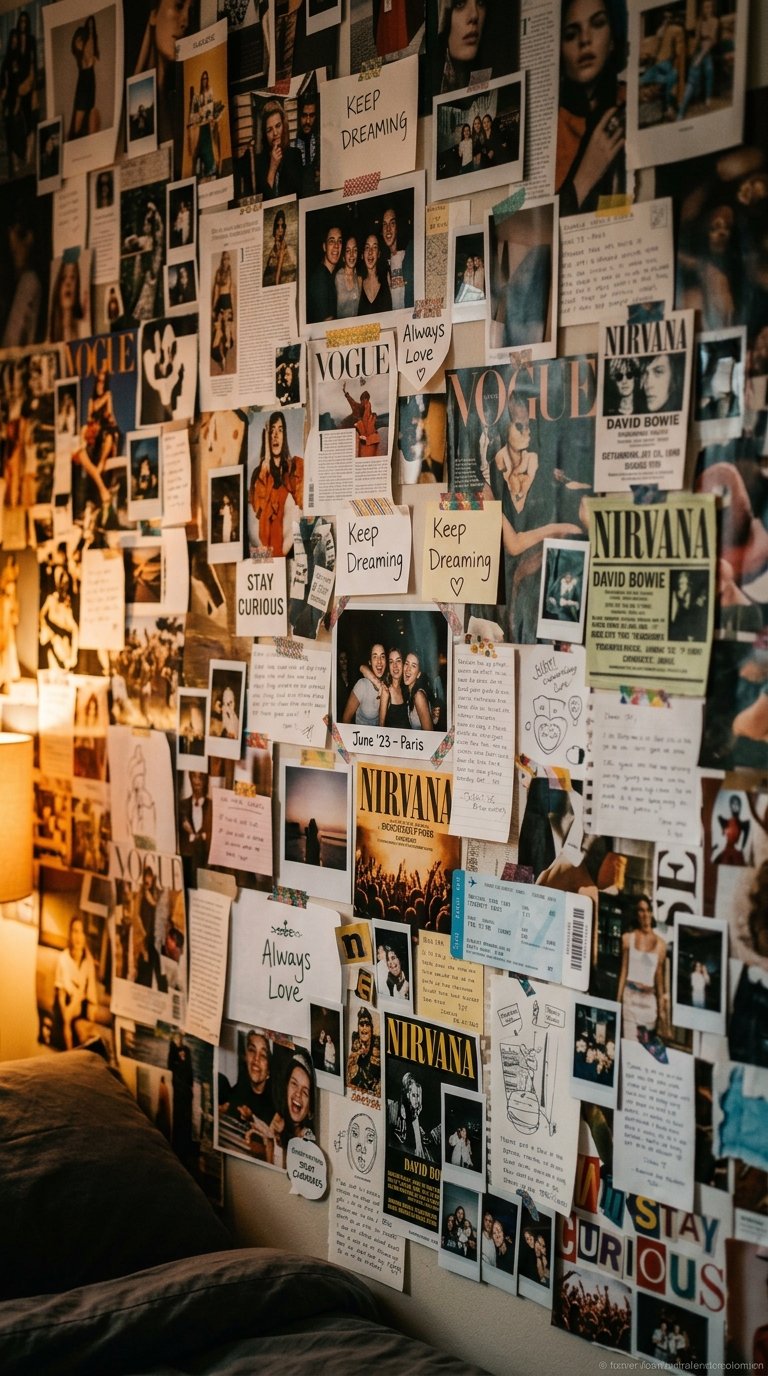
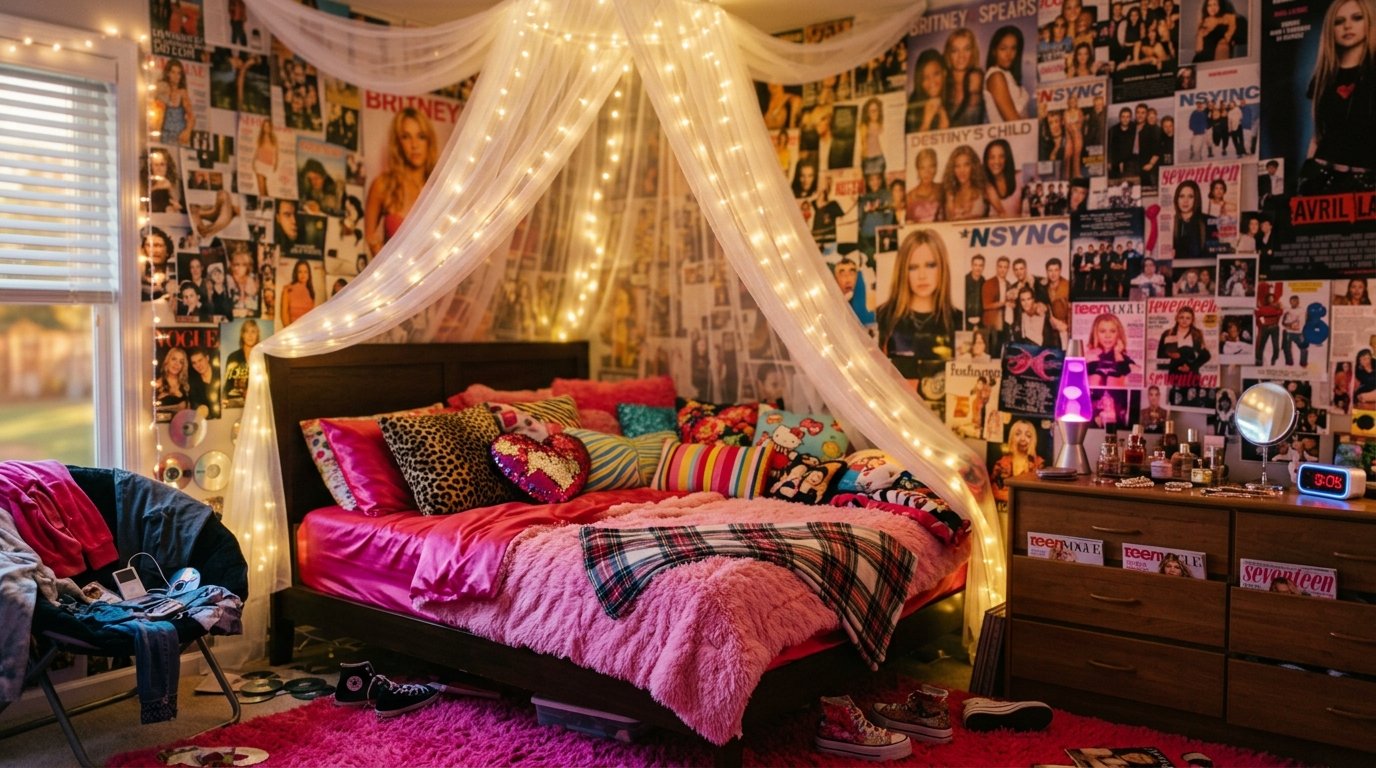
A floor-to-ceiling photo and magazine collage wall was the defining feature of the 2000s teen bedroom, and it’s also the cheapest decorating project on this entire list since the materials cost nothing beyond tape and time. Print photos at home, tear pages from old magazines, and layer everything with zero regard for symmetry or spacing because the density was the whole point.
How to Build a Collage Wall Today
- Print 4×6 photos from services like Walgreens or CVS for $0.15 to $0.25 each
- Mix old magazine tears with printed internet images for a genuine Y2K-era feel
- Use washi tape instead of regular tape to avoid wall damage in rental situations
The key detail is overlapping. College walls from this era never showed a blank wall between images. They went edge to edge and corner to corner, which is exactly what made them feel overwhelming in the best possible way. FYI, this project works for renters too since washi tape removes cleanly without peeling paint.
2. Add a Lava Lamp as a Statement Lighting Piece
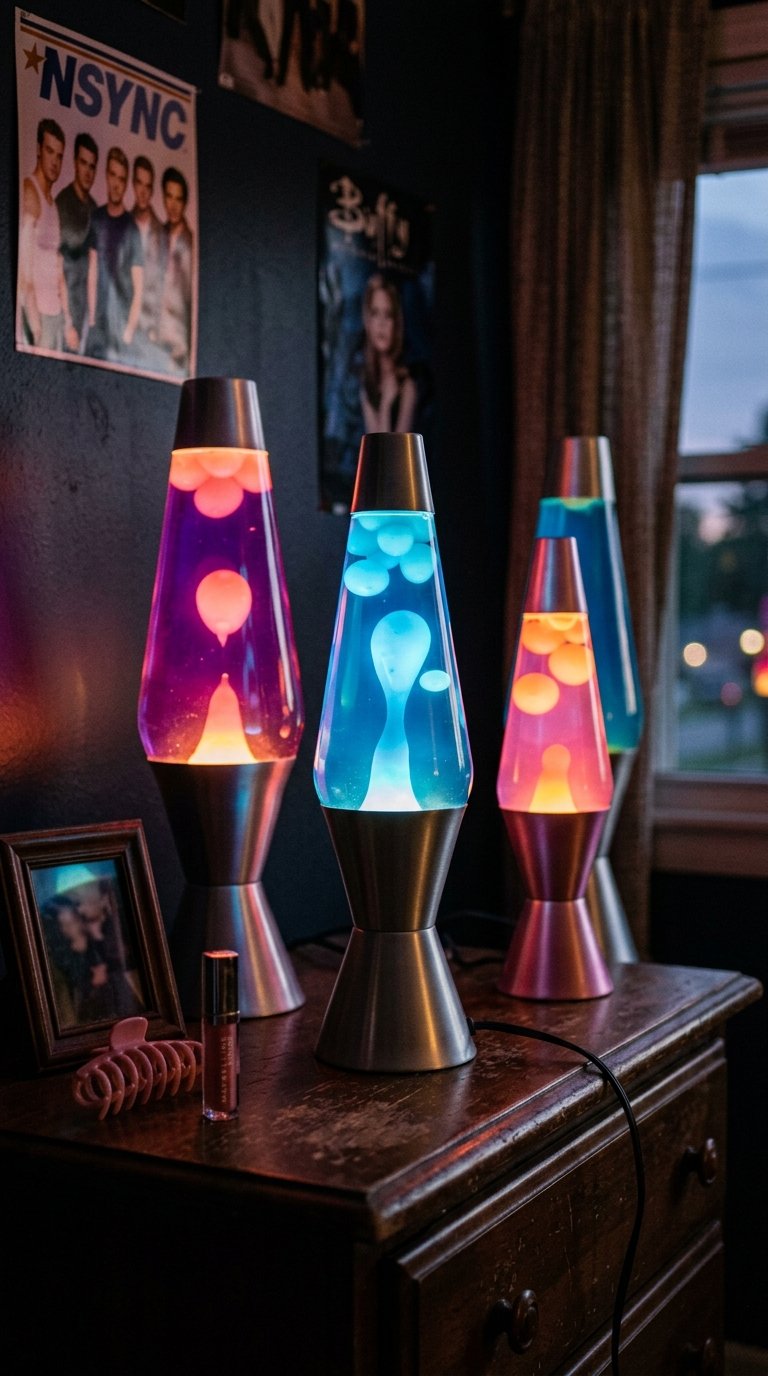
Lava lamps were non-negotiable in a 2000s teen bedroom, sitting on dressers, desks, and windowsills as both a light source and a hypnotic focal point for anyone lying on the bed staring at the ceiling. The slow movement of the wax blobs was basically the 2000s version of a screen saver, just in physical form.
Lava lamps are still widely available today, with classic models from Lava the Original brand running $25 to $50 depending on size. Choose oversized floor-standing versions for maximum impact, or cluster three small ones of different colors on a dresser surface for a 2000s vanity aesthetic that photographs beautifully. Warm up the wax for the first 2 to 3 hours to get the lava moving properly before judging whether the lamp works correctly.
3. Hang Sheer Canopy Curtains Around the Bed
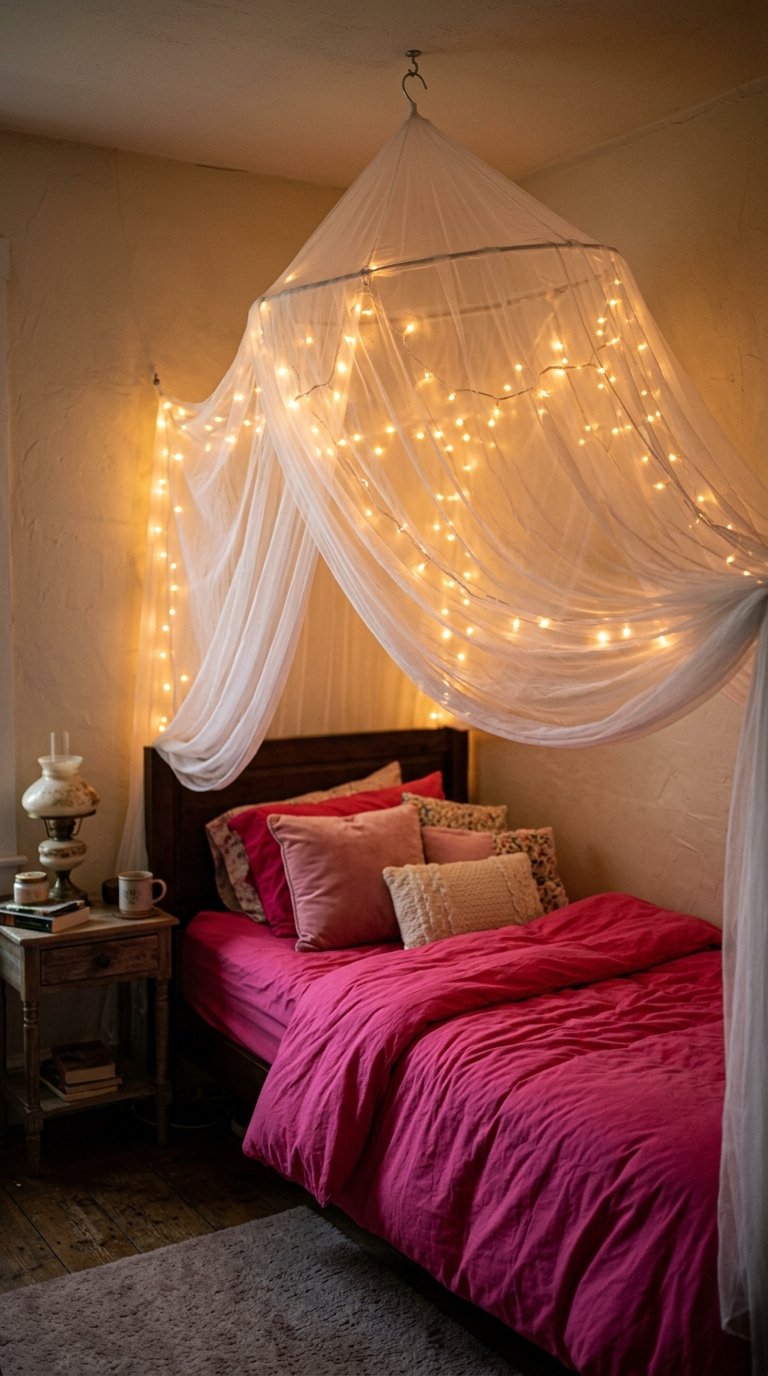
A sheer canopy draped from the ceiling above the bed turned a standard twin mattress into something that felt like a private princess suite, which was very much the goal of every 2000s teen bedroom project. The canopies were usually white or pastel pink, with tiny fairy lights woven through the sheer fabric.
Bed canopy drapes cost $15 to $40 from Amazon or Target and mount from a single ceiling hook above the center of the headboard. Weave a battery-powered strand of warm white or pink fairy lights through the fabric before hanging for an instant glow effect. This single addition transforms the bed from a place to sleep into the room’s main focal point, which is exactly what the 2000s teen aesthetic demands.
4. Use Fairy Lights Everywhere (Not Just One Place)
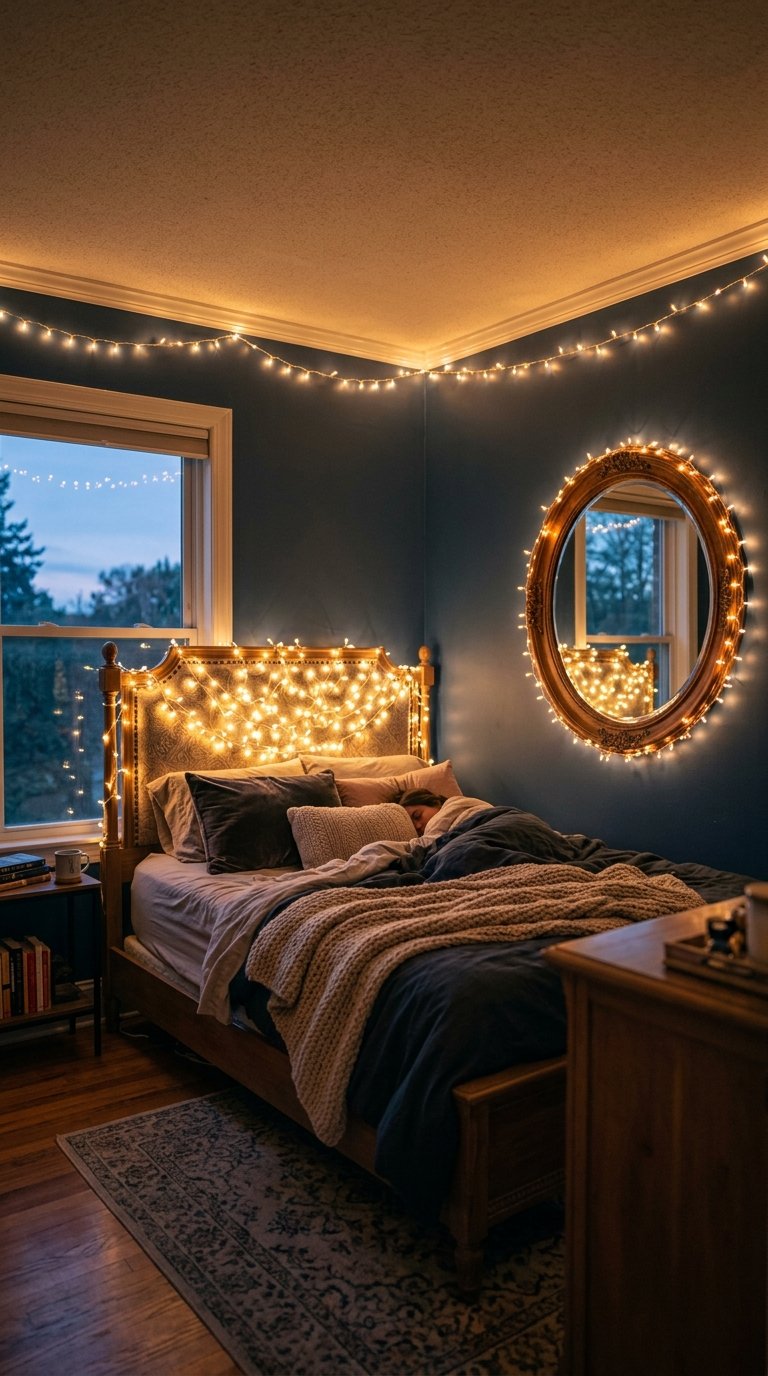
Fairy lights in a 2000s teen bedroom didn’t follow a plan, and that was the point. They hung along the ceiling perimeter, wrapped around the headboard frame, draped over a mirror, and pinned along the wall between posters. The room glowed from every direction.
Warm white or multicolor LED fairy light strands in 33-foot lengths cost $10 to $15 each, and a fully fairy-lit bedroom needs three to five strands to achieve the right coverage. Use adhesive hooks rated for outdoor use to run lights along baseboards, door frames, and window edges without nails. The battery-powered versions give you flexibility that outlet-dependent strands don’t, especially for headboards and shelves far from wall outlets.
5. Install Beaded Curtains in the Doorway
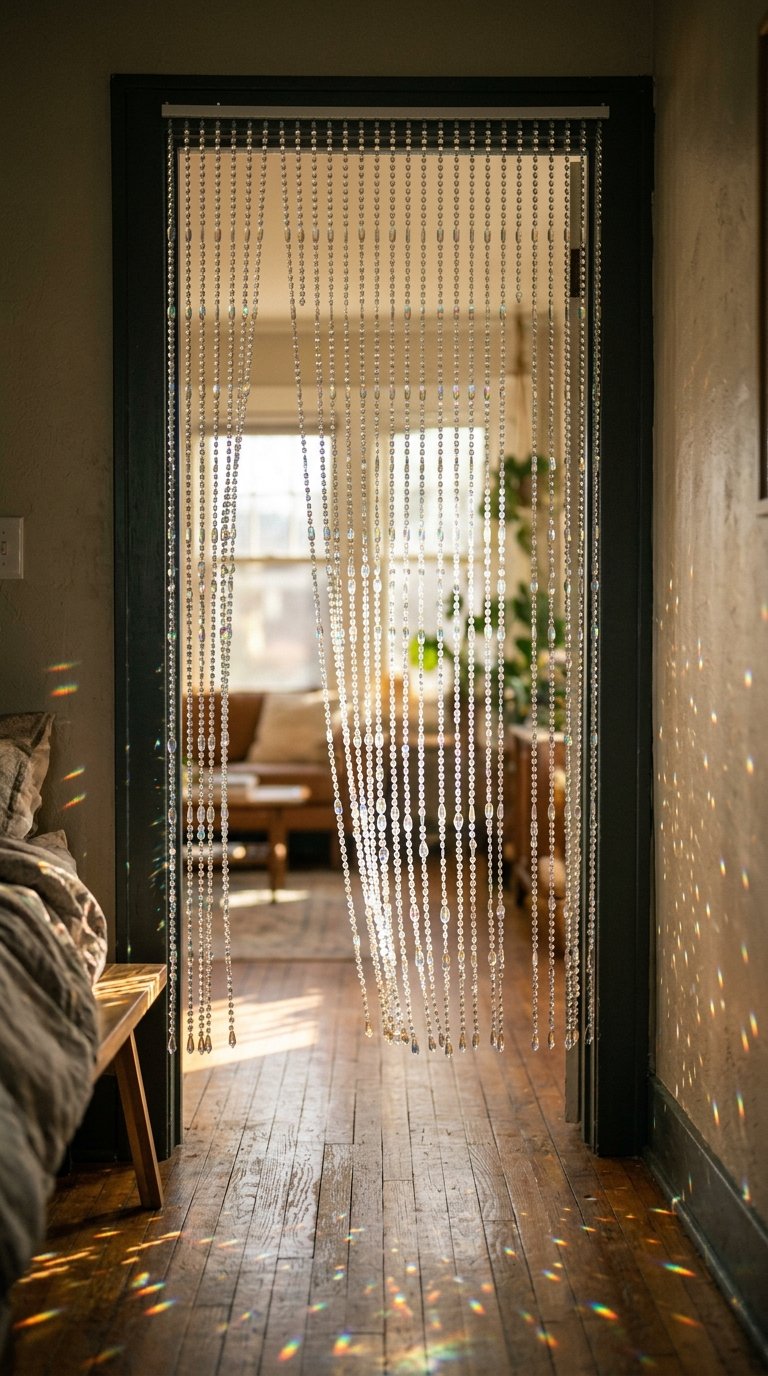
A beaded curtain in the bedroom doorway signaled “this is my space and you knock before entering” with about as much subtlety as a neon sign, which was absolutely the energy. The clicking sound they made when you walked through them was a whole sensory experience.
Beaded doorway curtains cost $15 to $40 depending on length and bead material, with plastic crystal beads giving the most authentic Y2K look over heavier wooden or bamboo versions. Install the mounting rod above the door frame using removable adhesive hooks for a renter-friendly setup. Go for iridescent or frosted beads rather than solid colors for maximum early 2000s butterfly-era drama.
6. Add a Shag or Fluffy Area Rug
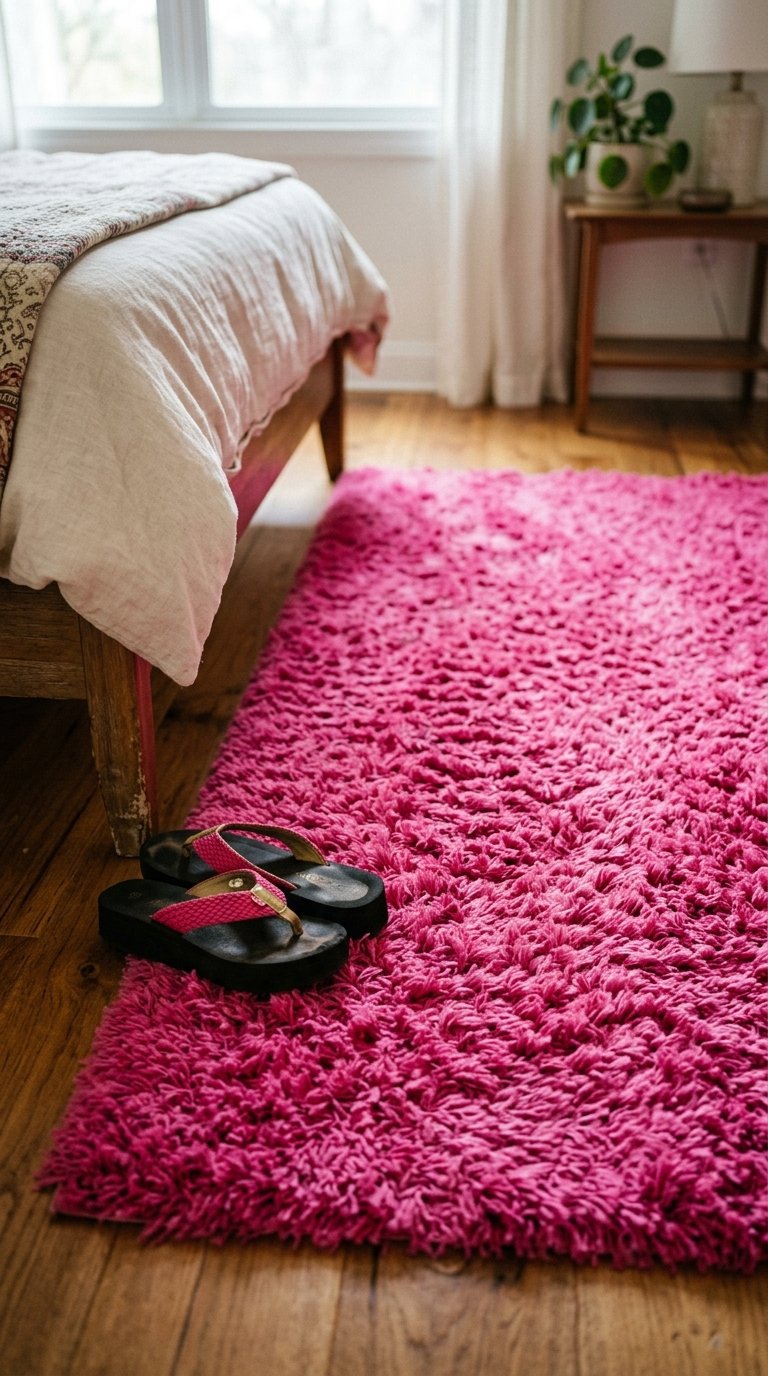
A high-pile shag rug in a bold color, hot pink, electric purple, or lime green, was the floor moment of every early 2000s teen room, because the entire floor needed to feel like something you wanted to sit on with a phone pressed to your ear for three hours. The texture and the color made the floor as much a design decision as the walls.
Shag rugs in bold tones cost $30 to $80 depending on size, and the faux fur versions popular today deliver the same visual effect with better durability than the original 2000s versions that matted flat after a few months of traffic. Position it beside the bed and in front of a vanity mirror area for the two highest-use zones where the texture actually matters underfoot.
7. Create a Pop Star Poster Gallery Above the Bed
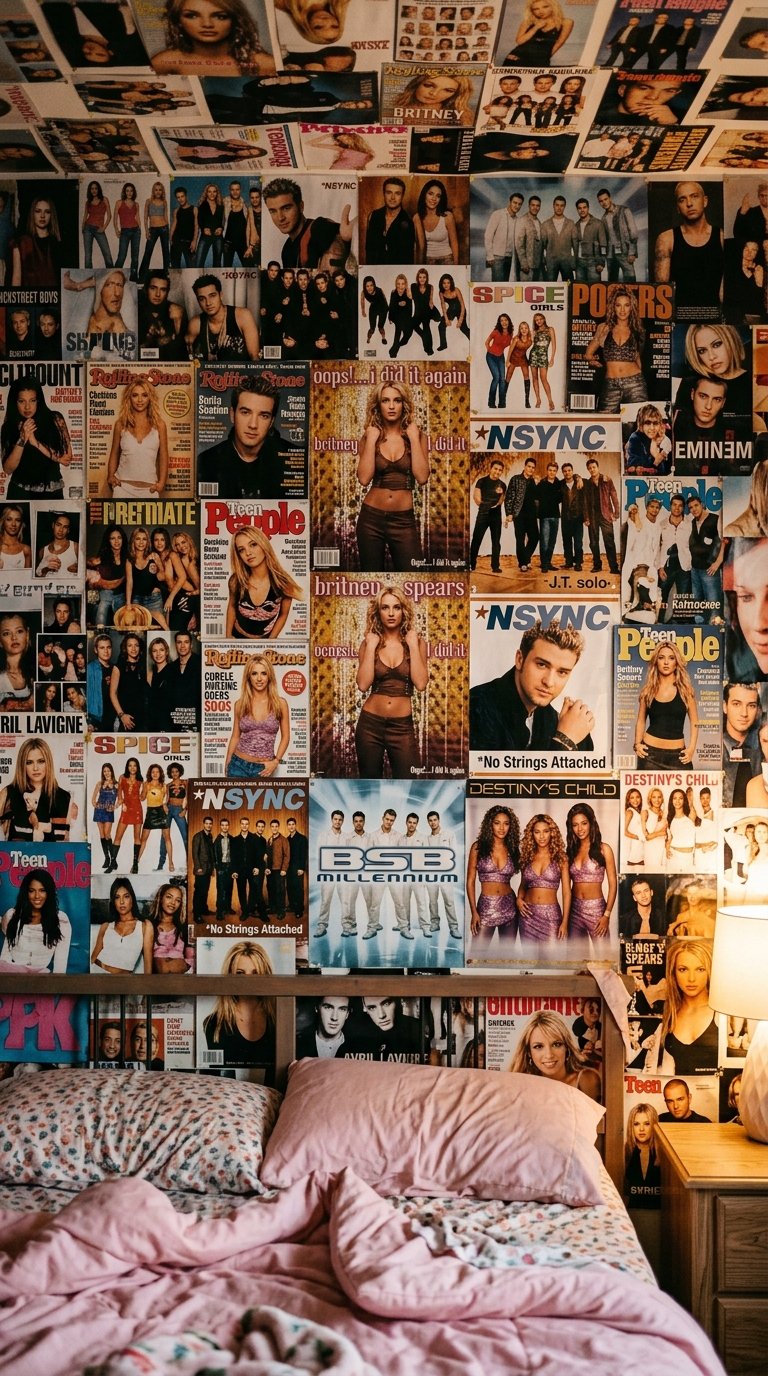
The wall above the bed was the most valuable real estate in the 2000s teen bedroom, and the standard use was a floor-to-ceiling spread of pop star posters, magazine centerfolds, and band photos positioned so they were visible from anywhere in the room. NSYNC, Backstreet Boys, Destiny’s Child, and Britney Spears dominated this space.
Reproduction vintage 2000s posters are widely available online through Etsy sellers specializing in Y2K nostalgia, running $10 to $20 each printed on quality paper. Group them in a dense, overlapping cluster above the headboard rather than spacing them evenly, since the 2000s collage approach was always about maximum coverage rather than careful arrangement. This is the one situation where deliberately covering a poster’s edge with another poster looks more authentic than leaving it exposed.
8. Set Up a Vanity With a Light-Up Mirror
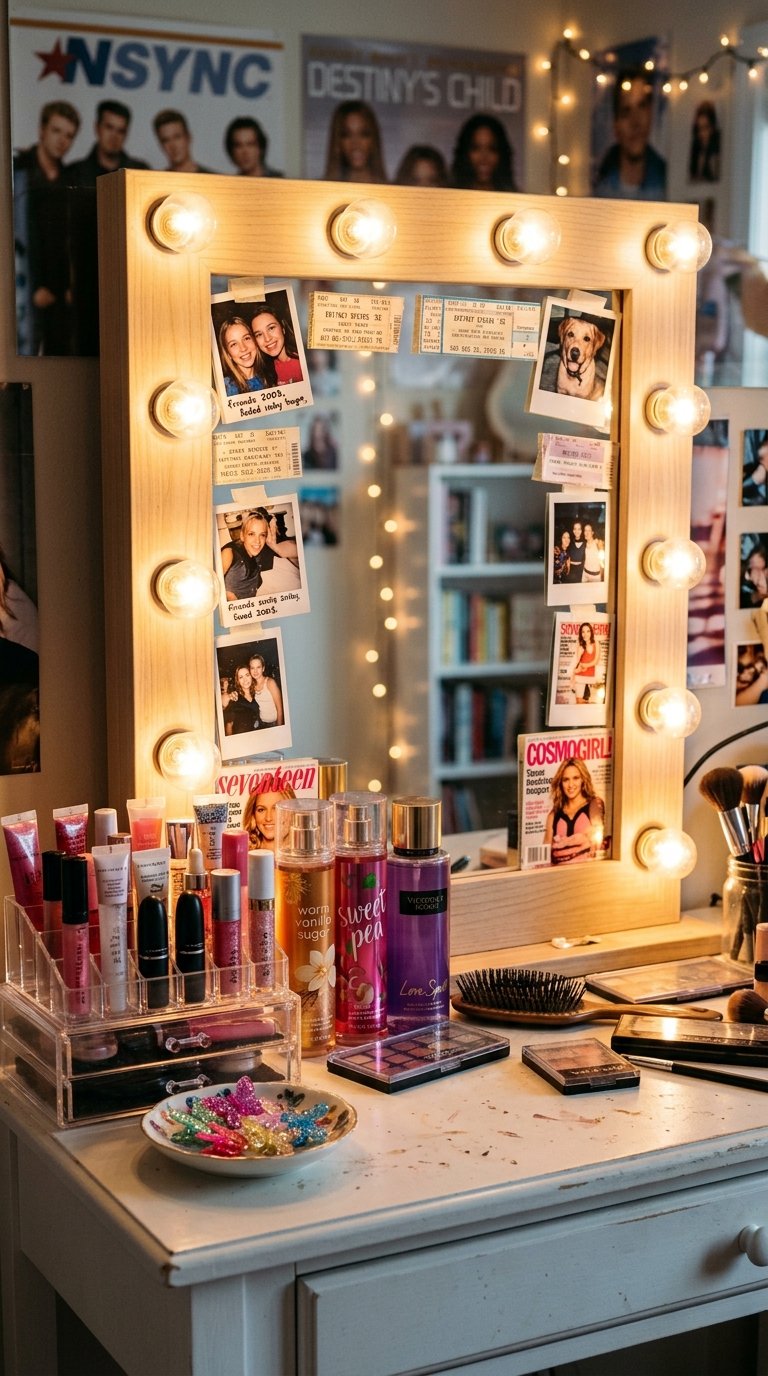
A dedicated vanity area with a light-up mirror was aspirational in 2000s teen rooms, channeling the Hollywood dressing room aesthetic that every teen magazine promoted across its beauty pages. The vanity surface held lip gloss, body spray bottles, and jewelry in tangled piles across every inch of available space.
Vanity tables with built-in lights cost $80 to $200, while a simple desk plus a separate Hollywood-style light-up mirror (available for $30 to $60) achieves the same effect for less total investment. Decorate the mirror frame with clip-on butterfly accessories, small photo prints tucked into the light frame, and a few of the iconic Y2K accessories like mini hair clips and chunky plastic rings displayed in small dishes.
9. Display a CD or DVD Collection Prominently
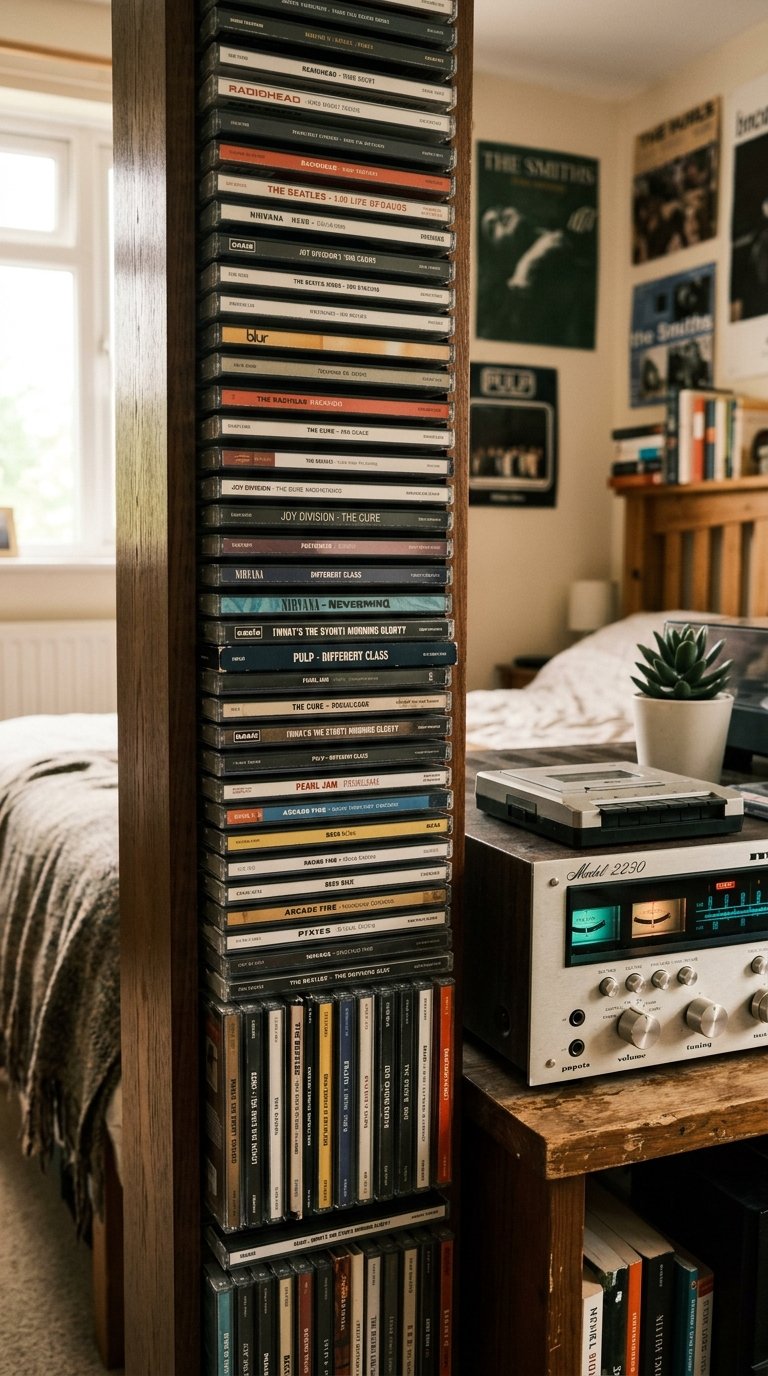
A visible CD or DVD collection on a shelf or wall-mounted tower was a flex in 2000s teen bedrooms, signaling musical identity in the era before streaming erased the concept of owning a physical music collection. The tower rack beside the stereo system was as much decor as function.
Vintage CD tower racks show up regularly at thrift stores for $5 to $20, and filling one with actual CDs sourced from used music shops (usually $1 to $3 each) creates a genuinely period-accurate shelf display. If building a 2000s-themed room for aesthetic rather than functional use, style the tower as a visual prop with a few dozen CDs arranged so the spines face outward for maximum visibility. The physical collection communicates personality in a way a streaming playlist icon on a phone screen simply doesn’t.
10. Use Hot Pink or Bold Two-Tone Color on the Walls
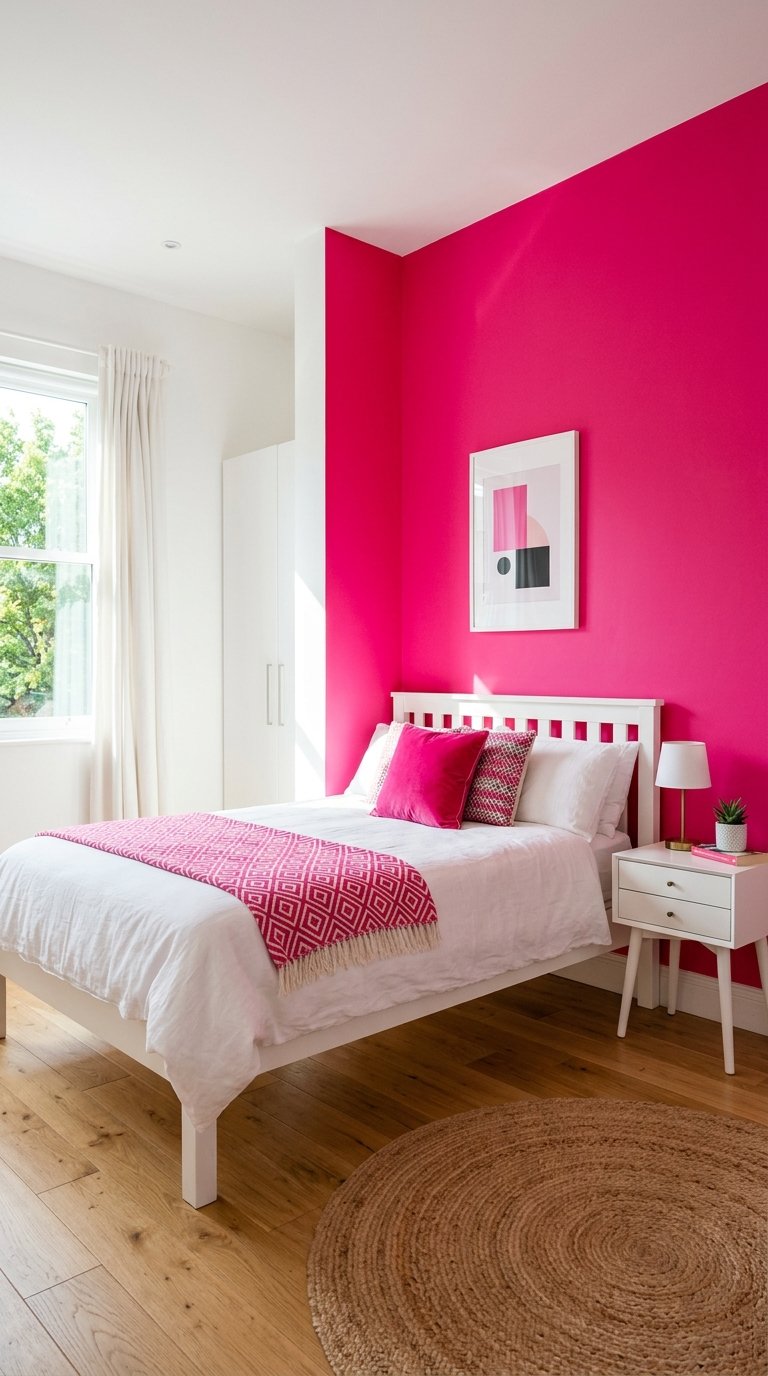
The 2000s teen bedroom color palette rejected subtlety entirely, with hot pink the dominant choice for the era’s most memorable rooms. Accent walls in electric pink, purple, or lime green against a white primary wall captured the era’s high-energy visual language better than any single decor piece.
A single accent wall in hot pink or electric purple using a standard interior paint costs $30 to $50 per gallon and transforms the room’s energy immediately. Benjamin Moore’s Coral Gables or Sherwin Williams’ Exuberant Pink hit the right tone without veering into nursery territory. Pair the bold wall with white or cream on the remaining three walls so the room doesn’t feel like the inside of a highlighter.
11. Add Butterfly and Daisy Motifs Throughout
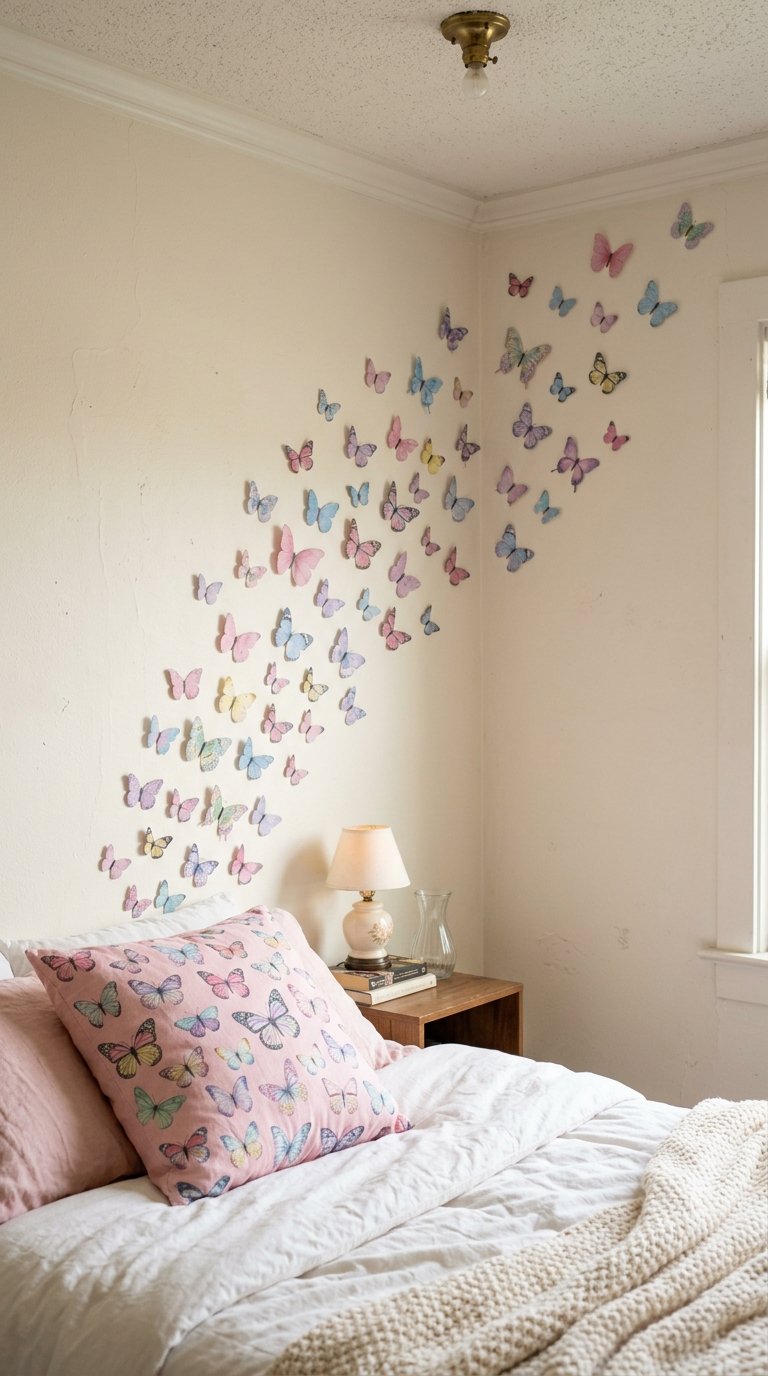
Butterflies and daisies were the 2000s teen bedroom’s signature motif, appearing on bedding, wall stickers, photo frames, lamp shades, and decorative accessories in every possible variation. The butterfly specifically became the visual shorthand for the era’s pop aesthetic.
Butterfly wall decals cost $10 to $20 for a large multi-piece set and apply directly to walls without permanent adhesive damage. Scatter them across one wall in a rising pattern that suggests the butterflies are flying upward toward the ceiling. Combine wall decals with butterfly-print throw pillows ($15 to $25 each) and a daisy-motif picture frame cluster for a coordinated motif story across multiple surfaces.
12. Build a Corkboard for Polaroids, Notes, and Memories
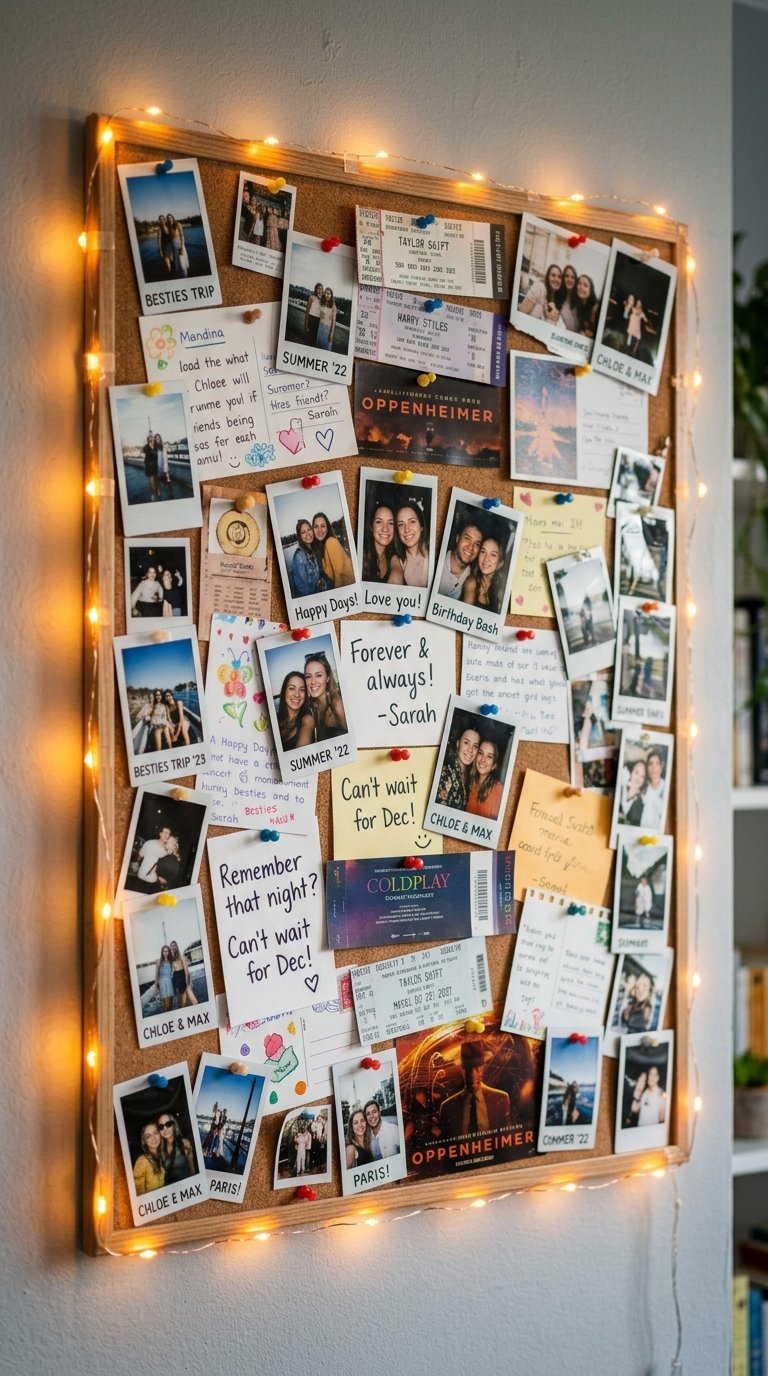
A large corkboard covered in polaroid photos, friendship notes, ticket stubs, and printed AIM away messages was the social media wall of its time, and the visual result of a fully loaded corkboard is as rich and personal as any digital feed. The corkboard was where you processed your life in physical form.
Corkboards in the 24×36 inch size cost $15 to $30 and mount with standard picture hooks. Start filling from the center outward, layering overlapping items rather than pinning things in neat rows. Add a border of fairy lights around the frame using small adhesive clips to give the corkboard a glow that makes it the room’s nighttime focal point when the overhead light goes off.
13. Add Inflatable Furniture as a Seating Option
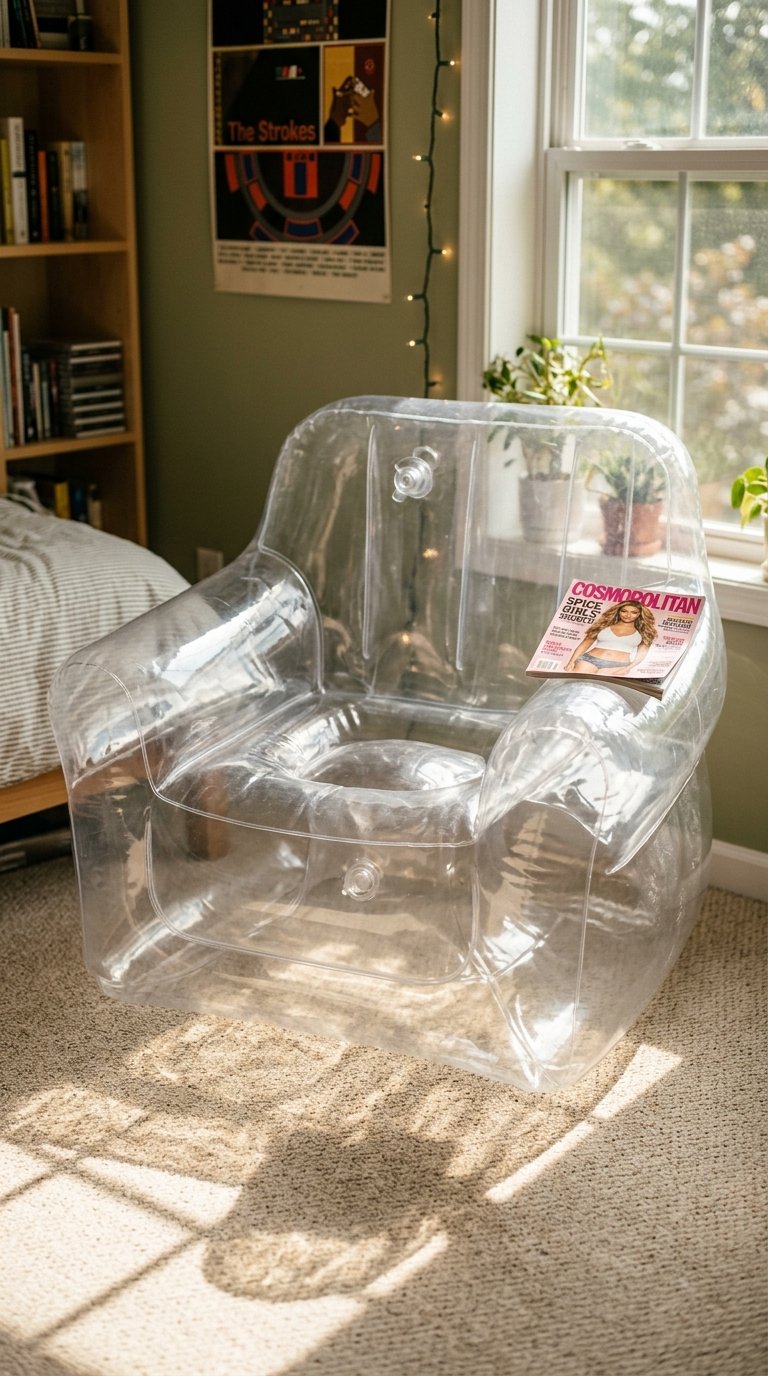
Inflatable chairs and sofas were a staple of early 2000s teen bedrooms, offering extra seating in a small space with the added novelty of furniture you watched expand from a flat bag over the course of 20 minutes. The clear or brightly colored PVC versions were everywhere from Target to mall specialty stores.
Inflatable chairs and loungers are still available today from novelty retailers and Amazon, running $25 to $60. The modern versions use heavier PVC than the originals and hold air longer between fill-ups. Position one in a corner beside a bookshelf or under a window as extra seating for the friend who always ends up sitting on the floor, which was also a very 2000s teen bedroom experience.
14. Create a Dedicated Stereo and Speaker Setup Display
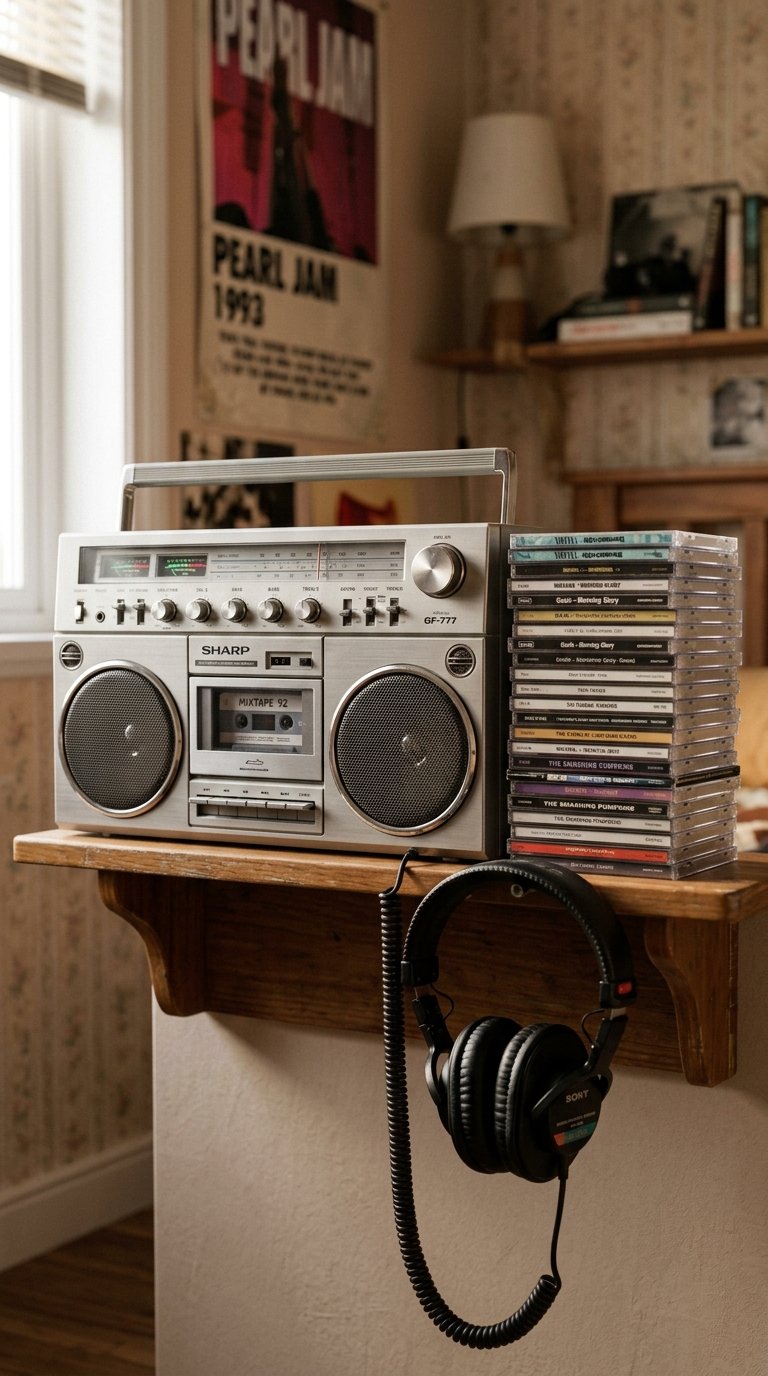
The stereo system in a 2000s teen bedroom wasn’t hidden in a cabinet, it sat on display on a shelf or dresser as a central feature of the room, with speakers angled toward the bed and a CD tray always cracked open. The boombox or component system was the room’s entertainment center before laptops made everything portable.
A vintage boombox sourced from a thrift store ($15 to $50) works as both a functional Bluetooth speaker (with a Bluetooth adapter added in the aux port) and a period-accurate display piece. Position it on a dedicated shelf with a few CDs stacked beside it and a pair of chunky over-ear headphones hanging from the shelf edge. This setup photographs like a museum display of 2000s teen life and does it for under $100 total.
15. Use a Platform or Daybed With Tons of Decorative Pillows
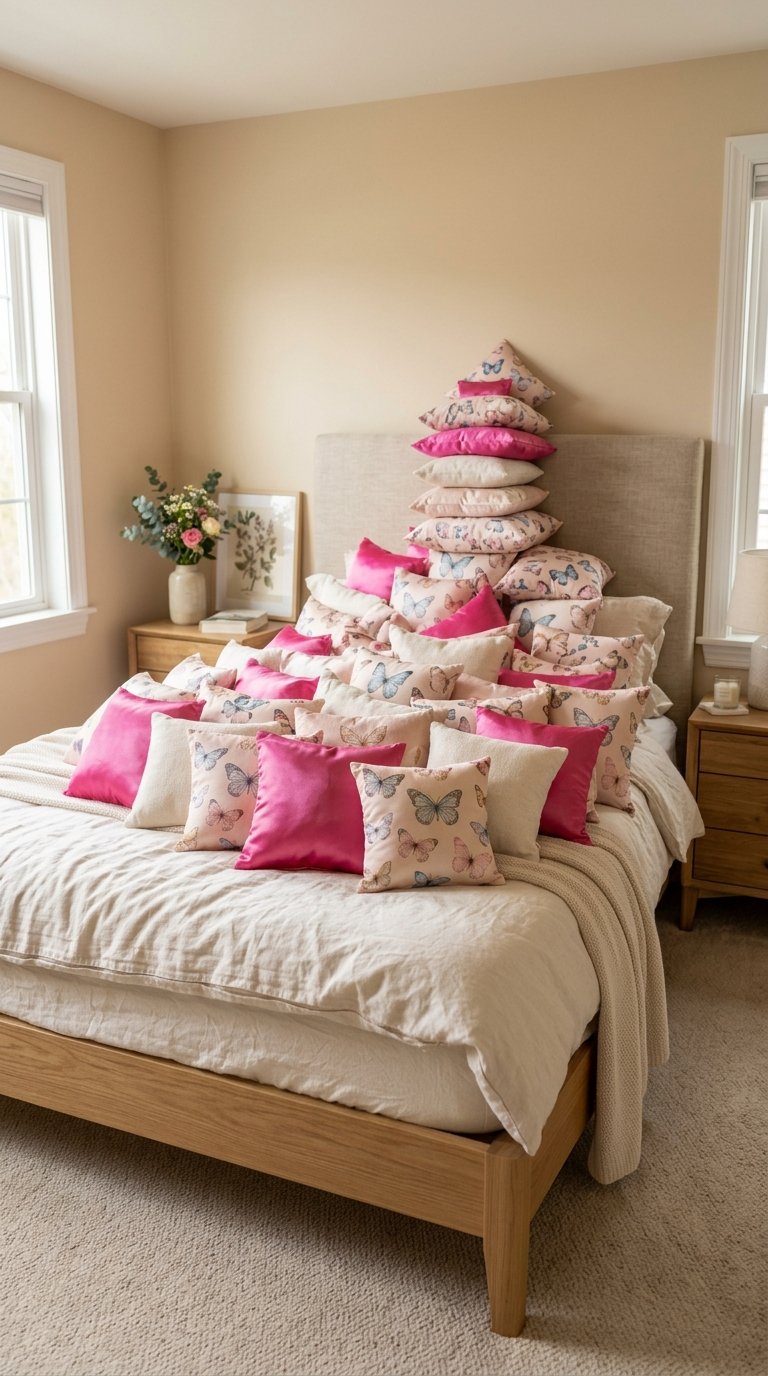
A platform bed or daybed with an upholstered frame and an overwhelming pile of decorative pillows defined the aspirational 2000s teen bedroom look from every magazine spread of the era. The pillows were smaller than modern throw pillows, rounder, and covered in satin or butterfly-print fabric.
Platform beds in twin or full sizes cost $150 to $350, while a simple daybed frame runs $100 to $200. The pillow pile matters more than the specific frame style: use eight to twelve small pillows in a mix of solid bright tones and Y2K patterns, stacking them in a dense pyramid against the headboard. This level of pillow density is genuinely impractical for sleeping but genuinely accurate to the era’s aesthetic.
16. Add a Neon or LED Sign for Atmosphere
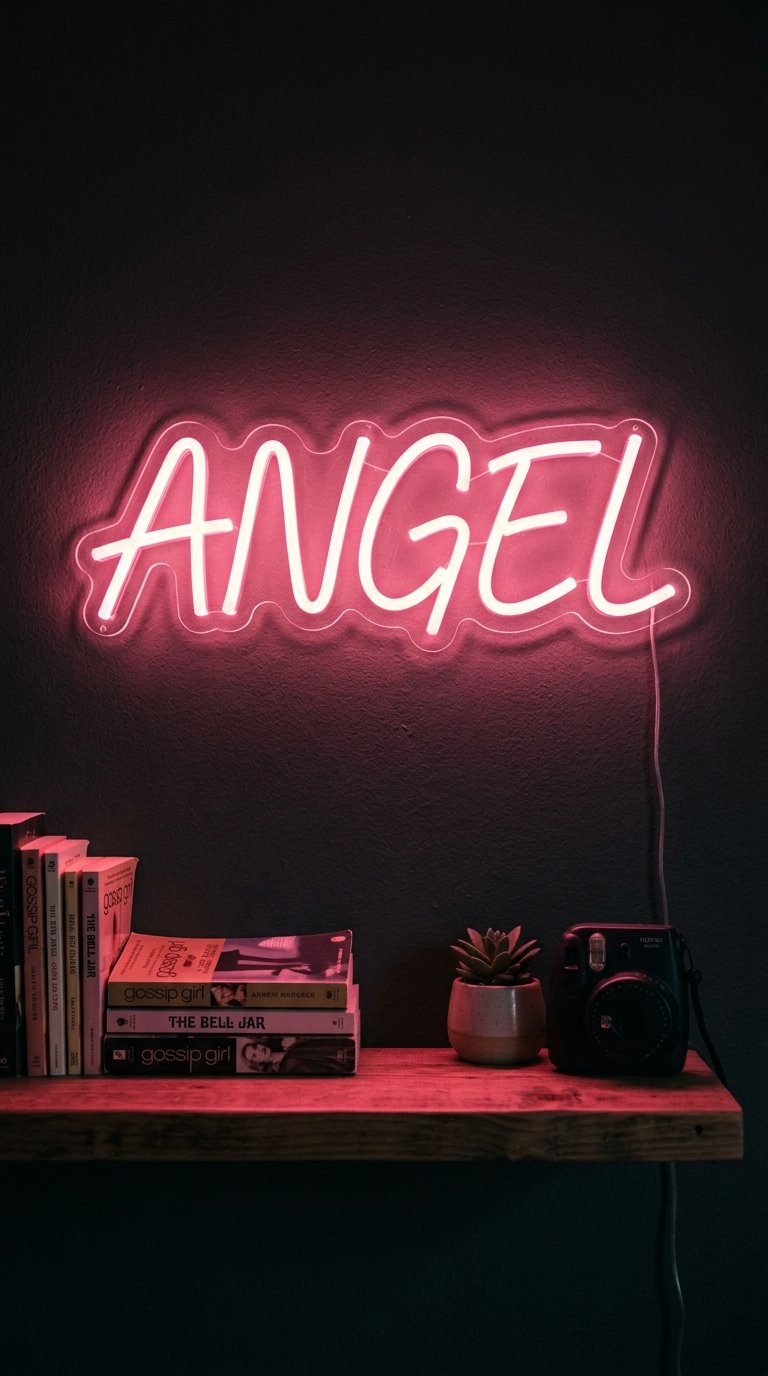
A glowing sign on the bedroom wall was the 2000s equivalent of a neon “OPEN” sign turned personal, with words like “dream,” “love,” or a favorite lyric glowing in pink or purple from a shelf or desk corner. The light added to the layered warm glow the room was always chasing.
LED neon flex signs in custom words cost $30 to $80 depending on size and letter count through retailers like Amazon or Etsy custom shops. Mount them directly on a wall using the included mounting hardware, or lean against the wall on a shelf for a no-holes alternative. Position the sign near the bed where it reads clearly from across the room and contributes to the warm, multi-source glow that made 2000s teen bedrooms feel like the coziest places in the house after dark.
Final Thoughts
The 2000s teen bedroom worked because it treated personal identity as the only decorating principle worth following. Nothing matched on purpose, everything had a story behind it, and the room looked like someone actually lived and felt things inside it. The aesthetic holds up today because it was never really about trends, it was about maximum self-expression in a small space. Pick five or six ideas from this list, commit to the density and the boldness the era demands, and your room will look exactly like the one you spent 2003 in, only without the dial-up connection sound in the background.