18 Dorm Bedding Ideas for a Cozy and Stylish Room
Your dorm bed is a 39×80-inch slab with a plastic mattress cover and the ambiance of a hospital gurney. The bedding you put on it determines whether your room feels like a place you want to spend time or a place you’re counting days to leave. I’ve helped three younger siblings set up dorm rooms over the past eight years, and the difference between the ones who got bedding right from day one and the ones who showed up with whatever was on clearance was visible within the first week. Good dorm bedding solves four problems at once: it fits a weird mattress size, it washes well in shared laundry machines, it adds personality to a blank cinderblock room, and it makes an 8am class feel slightly less catastrophic when you actually slept well.
1. Start With a Twin XL Mattress Topper
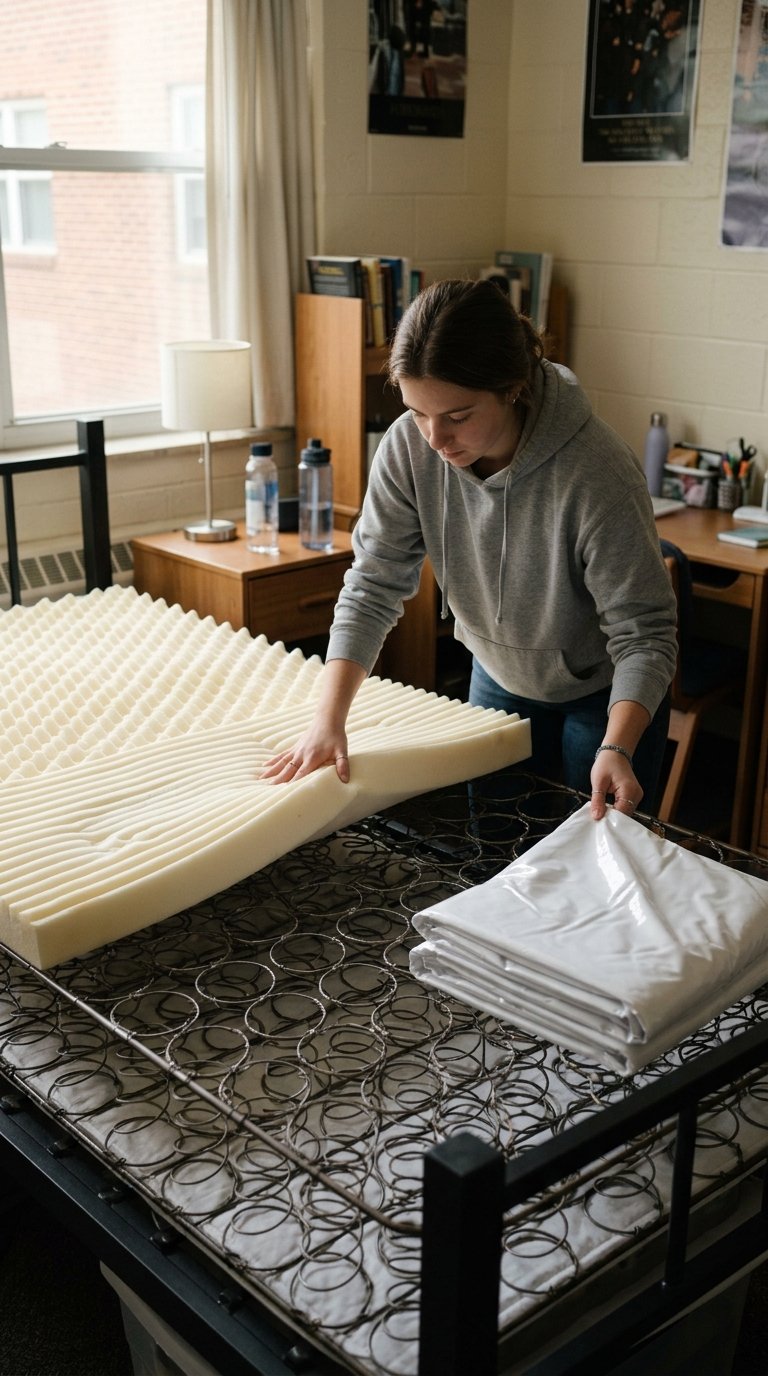
A 2 to 3-inch memory foam mattress topper transforms a dorm mattress from a liability into something you won’t dread lying on, and this matters more than any decorative bedding choice above it. Dorm mattresses compress over years of use and offer almost no pressure relief, which affects sleep quality and by extension your focus, mood, and academic performance in ways most students underestimate until they experience the difference.
A Twin XL memory foam topper from Lucid or Linenspa runs $35 to $60 and fits the standard dorm mattress size without hanging over the edge. Buy a waterproof mattress cover ($15 to $25) to go over the topper since most dorms require it anyway, and you now have a sleep surface worth dressing with actual bedding.
2. Choose Twin XL Sheets in 100% Cotton
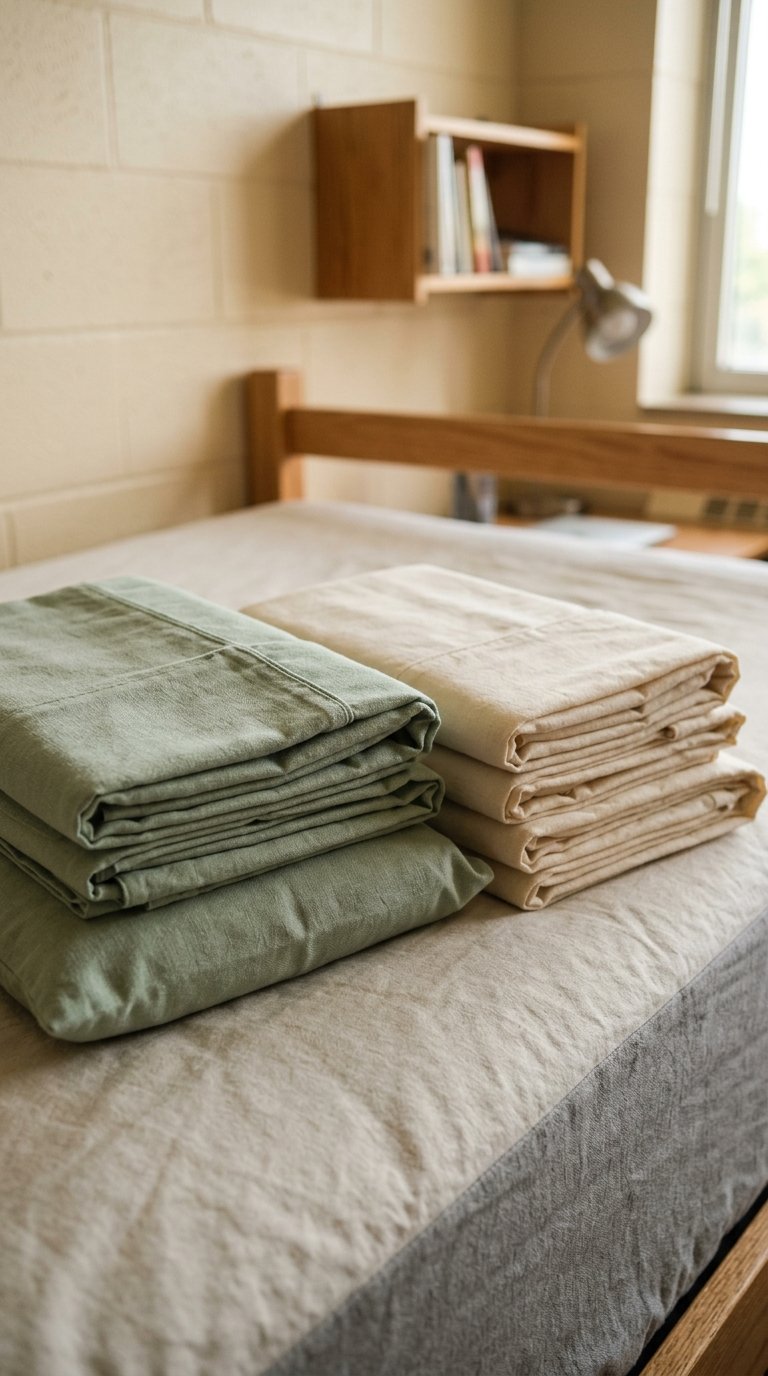
Thread count matters less than fiber content, and 100% cotton sheets in the 300 to 400 thread count range breathe better, wash better, and last longer than microfiber or polyester blends at any thread count. Microfiber traps heat, pills after repeated washing in shared laundry machines, and starts feeling worn within a semester.
Brooklinen, Amazon Basics (their cotton line specifically), and Target’s Threshold cotton sheets all offer Twin XL sizing in the $30 to $60 range per set. Buy two sets so you always have clean sheets during laundry turnaround time, since running out of clean sheets in a dorm is a situational crisis nobody needs.
3. Pick a Comforter With a Duvet Cover System

A duvet insert plus a removable cover is smarter than a traditional comforter because you wash the lightweight cover weekly and the insert only a few times per semester, which saves you from wrestling a full comforter into a dorm laundry machine every week. A standard comforter without a cover absorbs oils, odors, and allergens much faster than a covered duvet.
A Twin XL duvet insert costs $30 to $60, and duvet covers in the same size run $20 to $50 from IKEA, Amazon, or Society6. The cover swap also lets you change the room’s color scheme for under $30 whenever you want a refresh, which is a budget decorating hack most students don’t figure out until junior year.
4. Use a Chunky Knit or Waffle Weave Throw for Texture
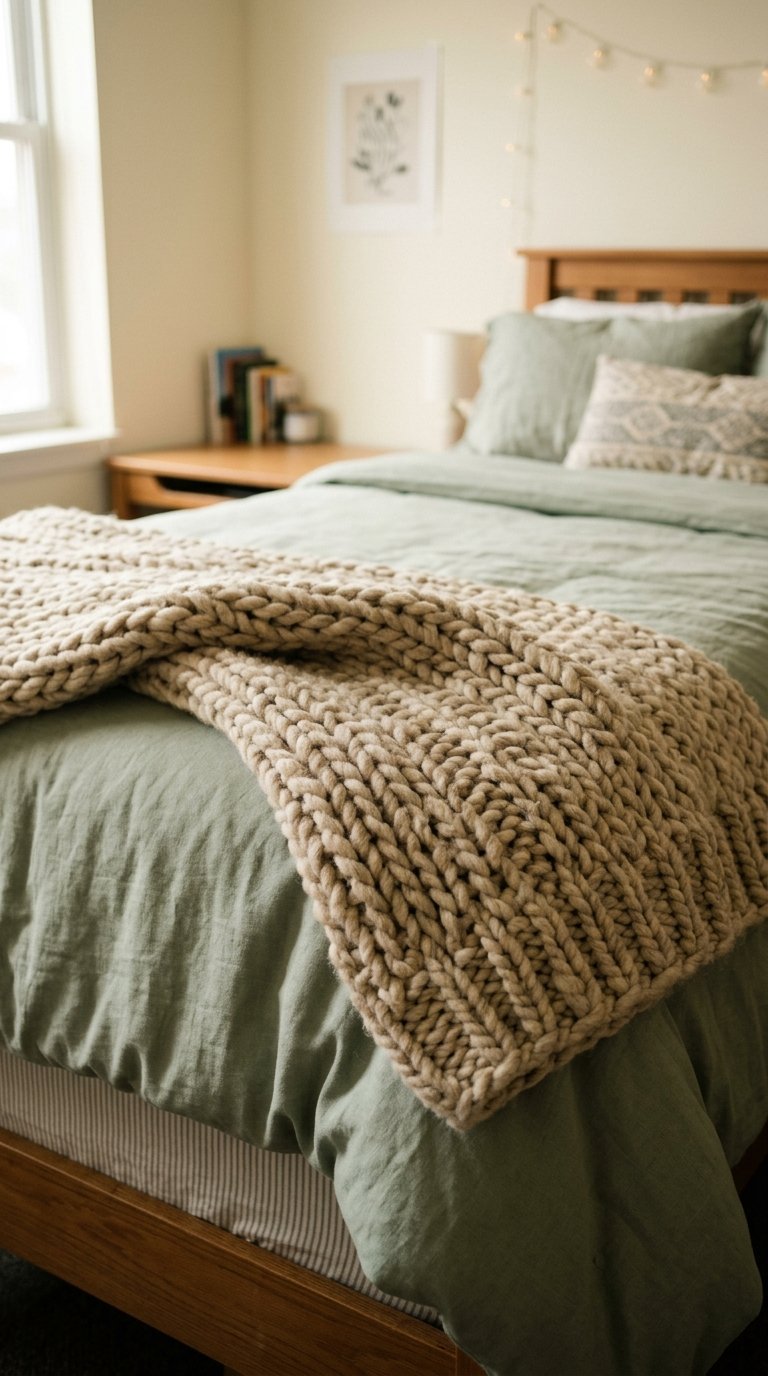
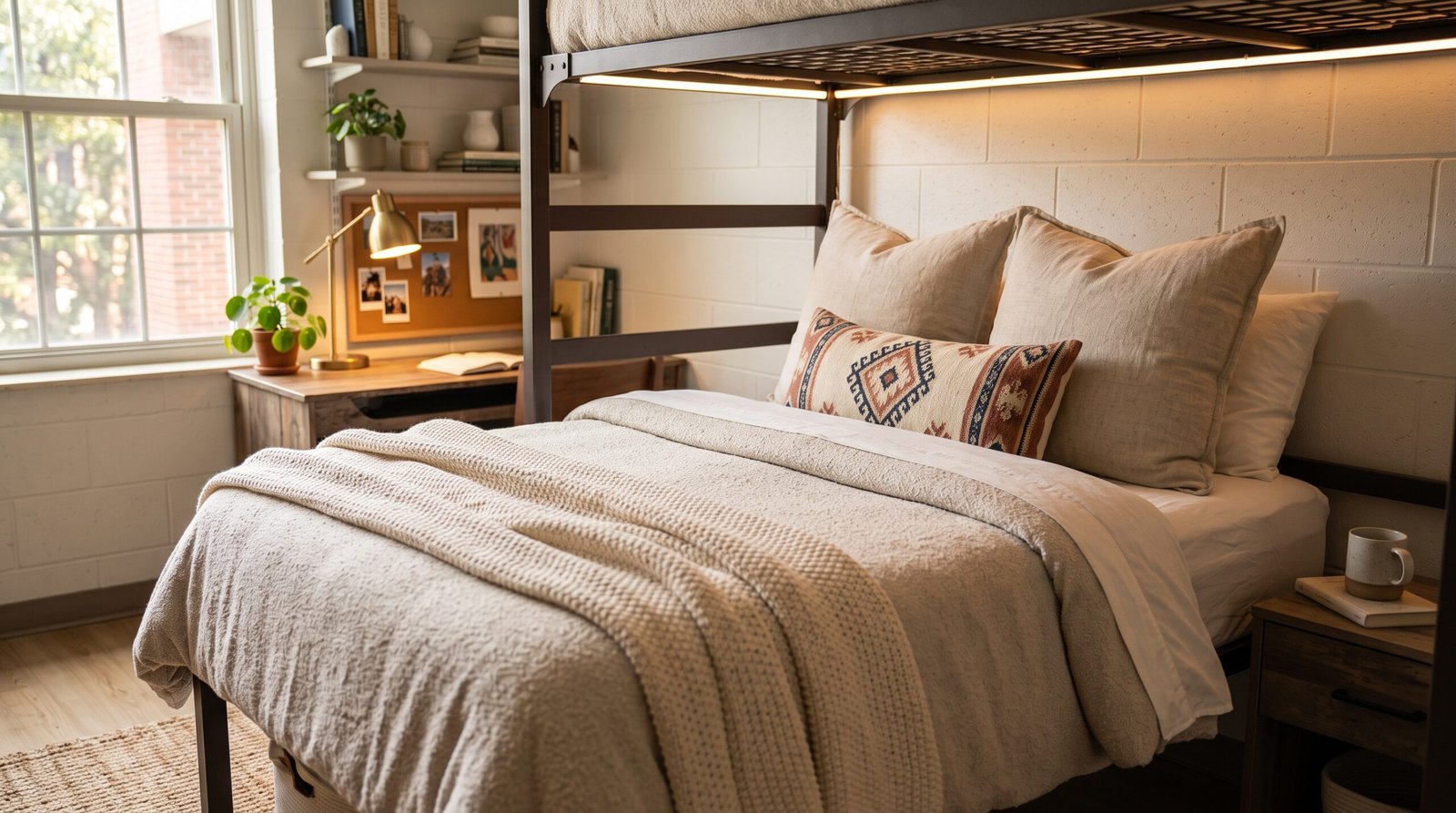
A chunky knit or waffle weave throw layered across the foot of the bed adds visual texture that flat comforters can’t deliver alone, and it serves as the extra layer you reach for during late-night studying without pulling apart your whole bed setup. This single addition is what separates a dorm bed that looks styled from one that looks like it was made in 45 seconds before class.
Chunky knit throws in Twin-compatible widths cost $20 to $45 at Target or H&M Home, and neutral tones like oatmeal, cream, or warm grey work with every comforter color without clashing. Drape it across the bottom third of the bed rather than folding it flat, since the casual drape reads as intentional styling rather than “extra blanket.”
5. Layer Two Pillowcases for a Polished Look
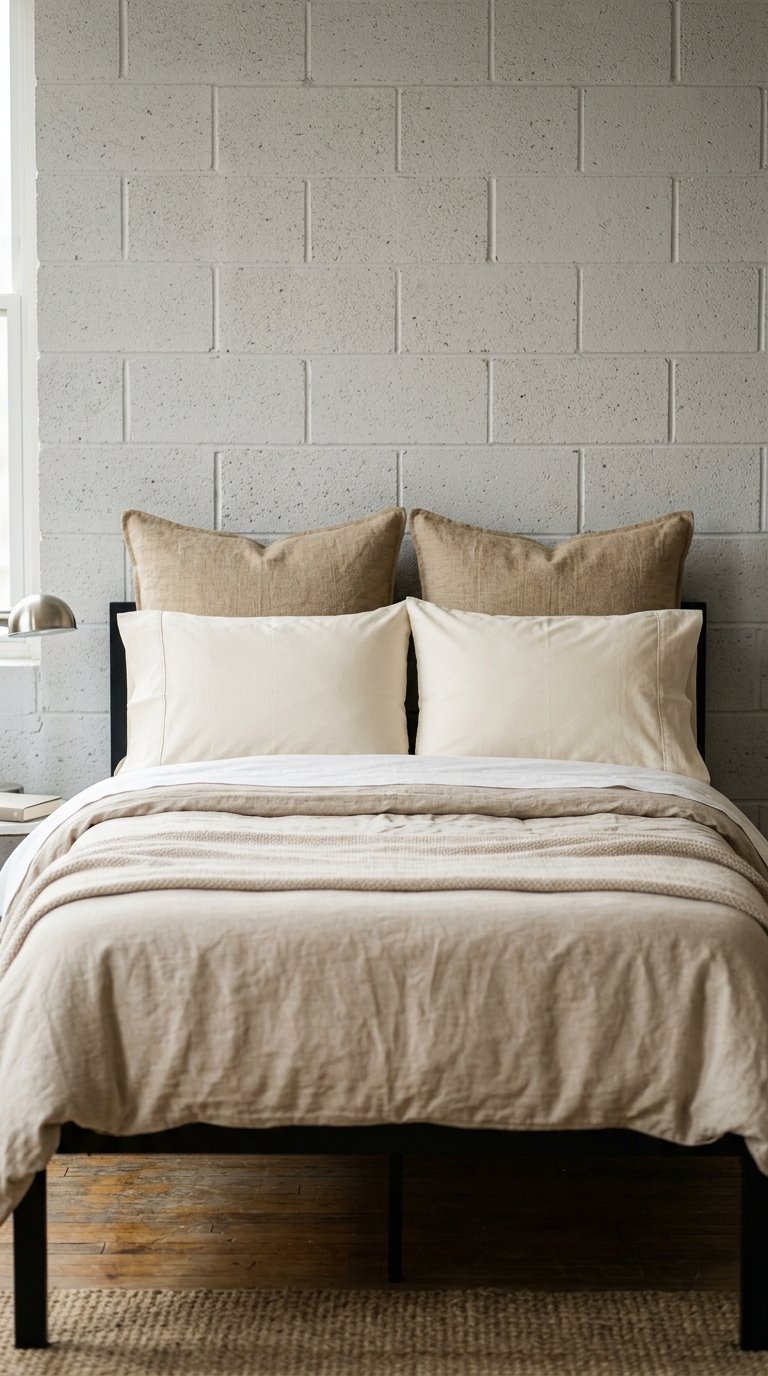
Using two pillowcases on each pillow, one standard and one Euro sham, creates the layered headboard look from hotel rooms and styled bedroom photos without requiring a headboard, which most dorms don’t allow you to install anyway. The height and layering tricks the eye into seeing a more intentional bed setup even in a room where nothing else has changed.
Euro shams in 26×26 inch size cost $15 to $25 each, and two Euro shams plus two standard pillowcases gives you a four-pillow setup on a twin bed. Lean the Euro shams flat against the cinderblock wall as a makeshift headboard substitute and arrange the standard pillows in front, which creates the visual anchor point the bed needs to feel like part of a designed room.
6. Add a Bolster or Lumbar Pillow for Daytime Use

A bolster or lumbar pillow positioned across the front of the bed turns your sleeping space into a daytime study couch, which matters enormously in a dorm where your bed is also your sofa, your desk chair overflow, and your guest seating all at once. Without a front pillow to lean against, sitting up in bed for hours destroys your posture and your mood.
Bolster pillows cost $15 to $30 and store easily beside the bed when you’re sleeping. Choose a fabric that coordinates with your comforter but adds a pattern or texture contrast, since a matching bolster disappears visually while a contrasting one creates definition between the sleeping and lounging setup.
7. Choose Dark or Patterned Sheets to Hide Wear
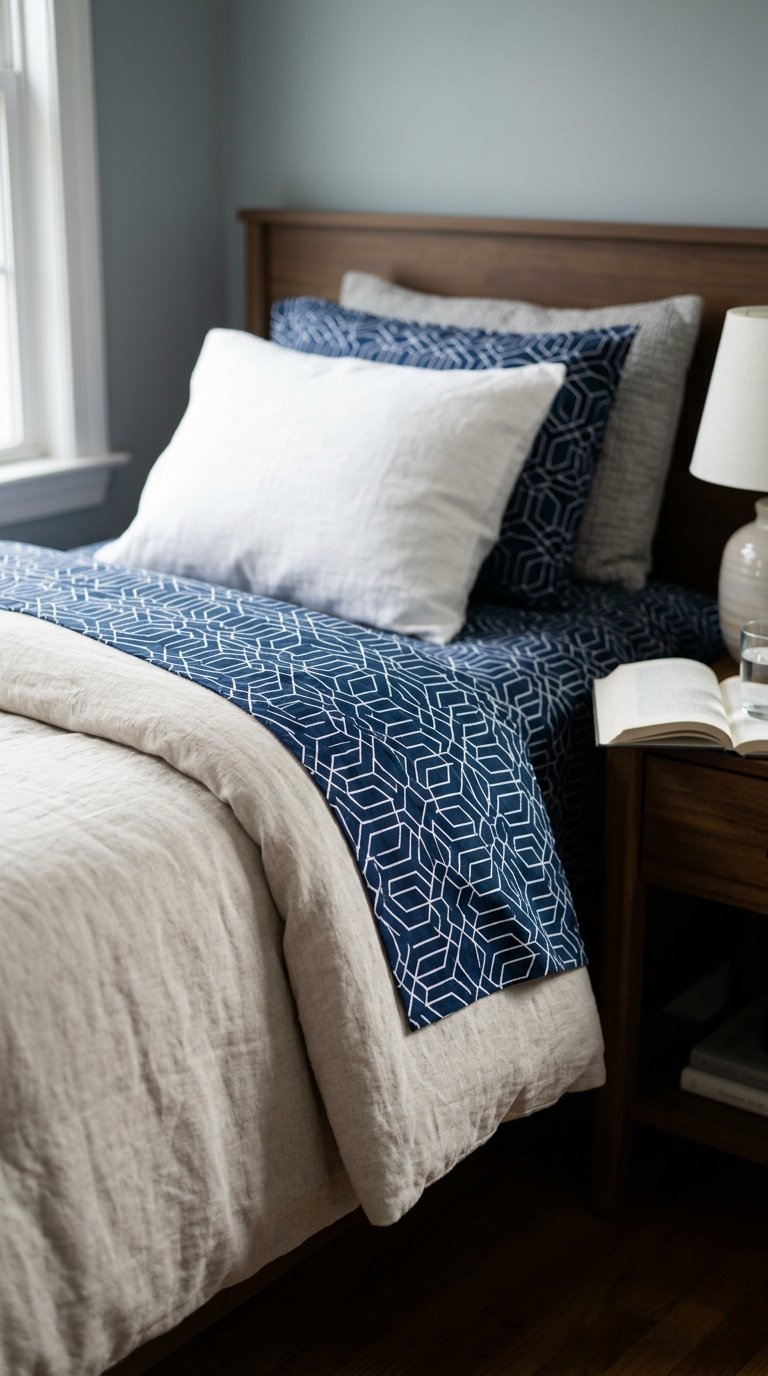
Light-colored solid sheets show stains, pilling, and wear far faster than dark or patterned ones, and in a dorm laundry environment where you share machines with strangers who don’t always separate colors correctly, light sheets are a liability you don’t need. Deep navy, forest green, burgundy, and any print pattern all hide the realities of shared laundry far more gracefully.
Patterned Twin XL sheet sets in bold prints from Urban Outfitters, Society6, or Amazon run $25 to $55 and serve double duty as both practical and decorative. A bold sheet pattern also reduces how much additional decor you need on the bed itself, since the bedding is doing visual work on its own.
8. Use a Bed Skirt or Platform Riser Combination
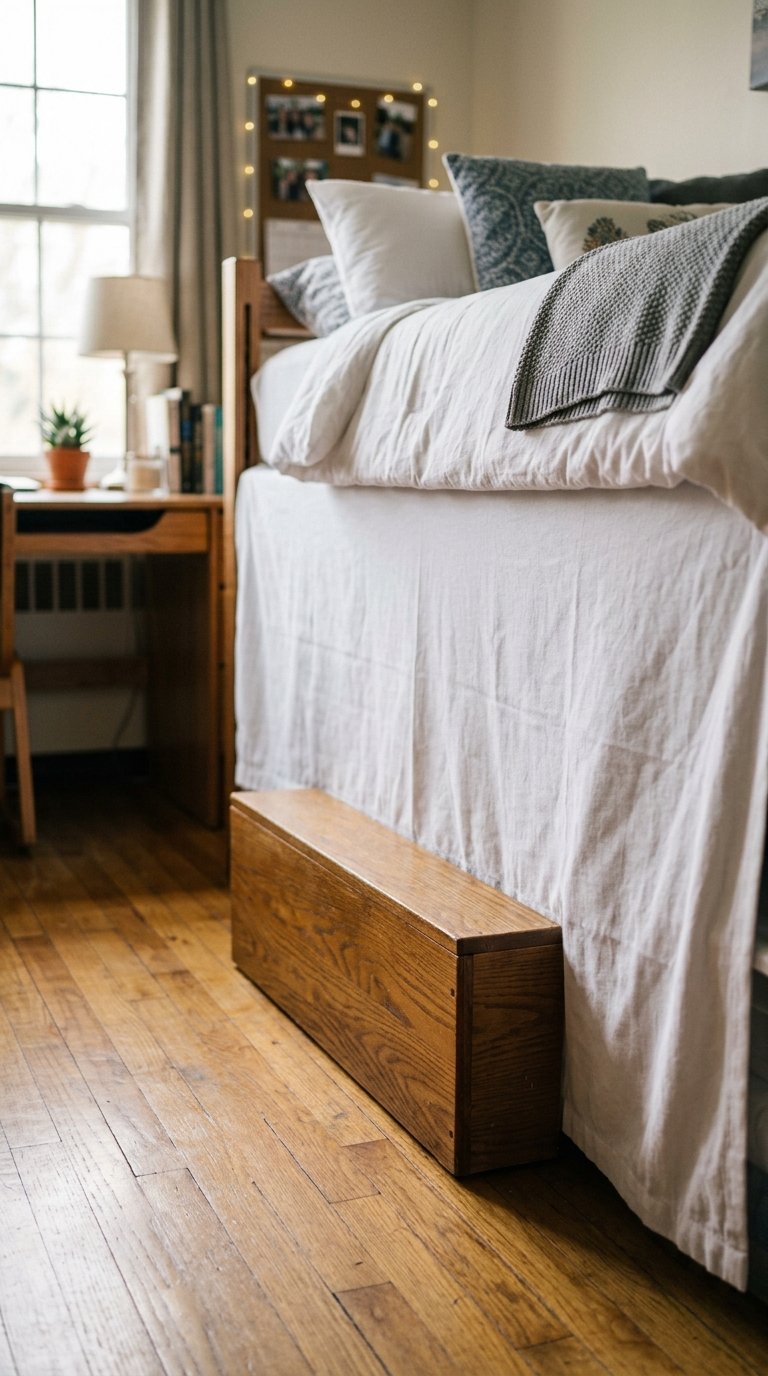
A bed skirt hides the under-bed storage area and makes the bed look like furniture rather than a mattress dropped on a metal frame, which is the default dorm aesthetic nobody wants. Combined with bed risers that lift the frame to its maximum height, you gain serious under-bed storage while the skirt conceals the bins, suitcases, and boxes living under there.
Adjustable bed risers cost $15 to $25 for a set and raise most dorm frames 3 to 5 inches above their standard height. Wrap-around bed skirts in the $15 to $30 range fit over the mattress rather than tucking under it, which makes them easier to install and remove without dismantling the frame.
9. Add a Weighted Blanket as Your Top Layer
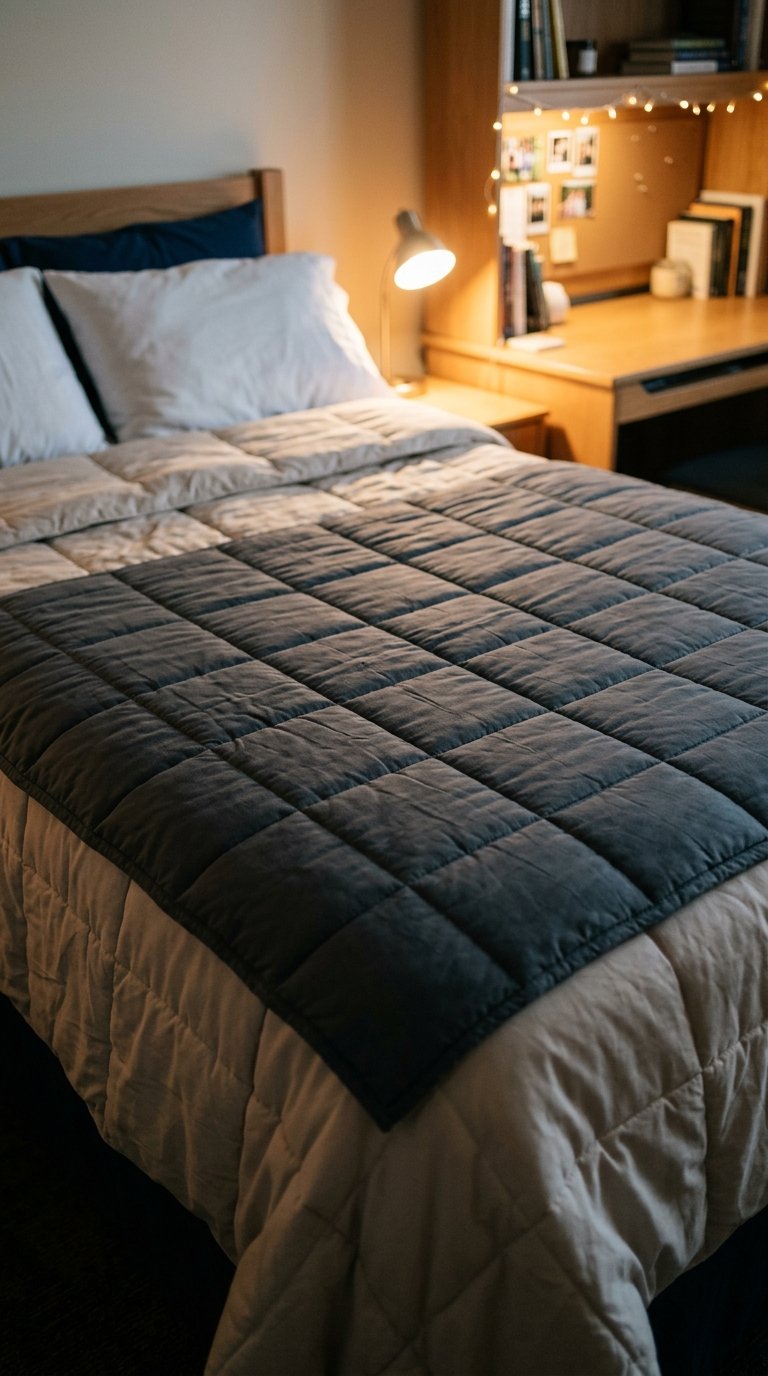
A 10 to 15-pound weighted blanket placed over your comforter reduces anxiety-related sleep disruption, which a 2020 study published in the Journal of Clinical Sleep Medicine found improved sleep onset and duration in participants using weighted blankets versus regular blankets. In a dorm environment where noise, stress, and irregular schedules all fight against good sleep, this is a functional bedding upgrade with documented benefits.
Twin-sized weighted blankets cost $35 to $80 from Bearaby, Gravity, or Amazon basics weighted options. A 10-pound version works for most adults under 150 pounds, while 15 pounds suits those over 150. Keep this as your sleep layer rather than your display layer since weighted blankets don’t drape decoratively the way lighter throws do.
10. Match Your Bedding Color to One Accent You Already Own
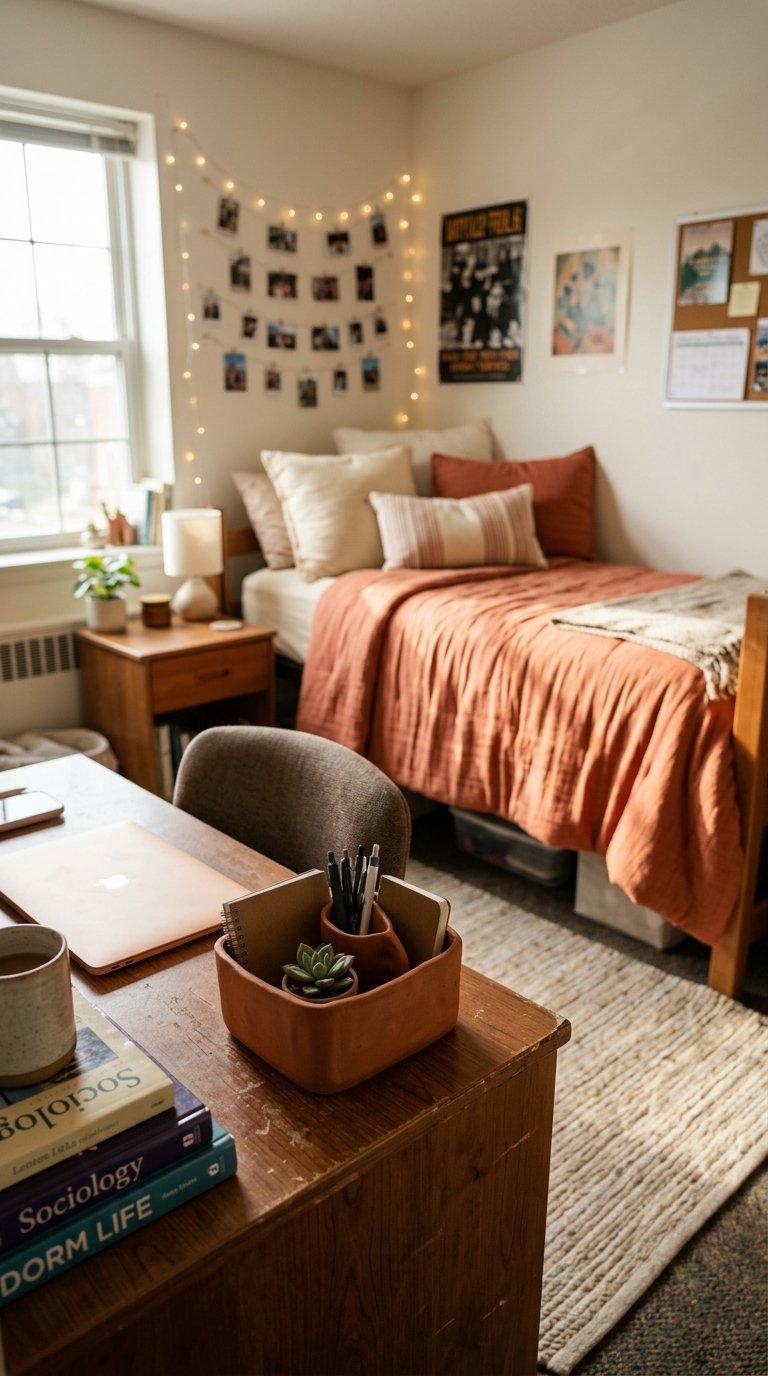
Coordinating your comforter color to one existing item in the room, a rug, a chair, or a storage bin, creates visual cohesion without buying additional decor. This is the single fastest way to make a dorm room look designed rather than assembled from whatever was available, and it costs nothing beyond the intentional choice.
If your desk chair is navy, pull navy into a pillow or sheet set. If your rug is terracotta, look for bedding with warm amber or rust tones. The repetition of a color across two or three objects in a small room is what interior designers call “color anchoring,” and it works in 120 square feet just as effectively as it does in a full apartment.
11. Use a Quilt Instead of a Comforter for Year-Round Temperature Control
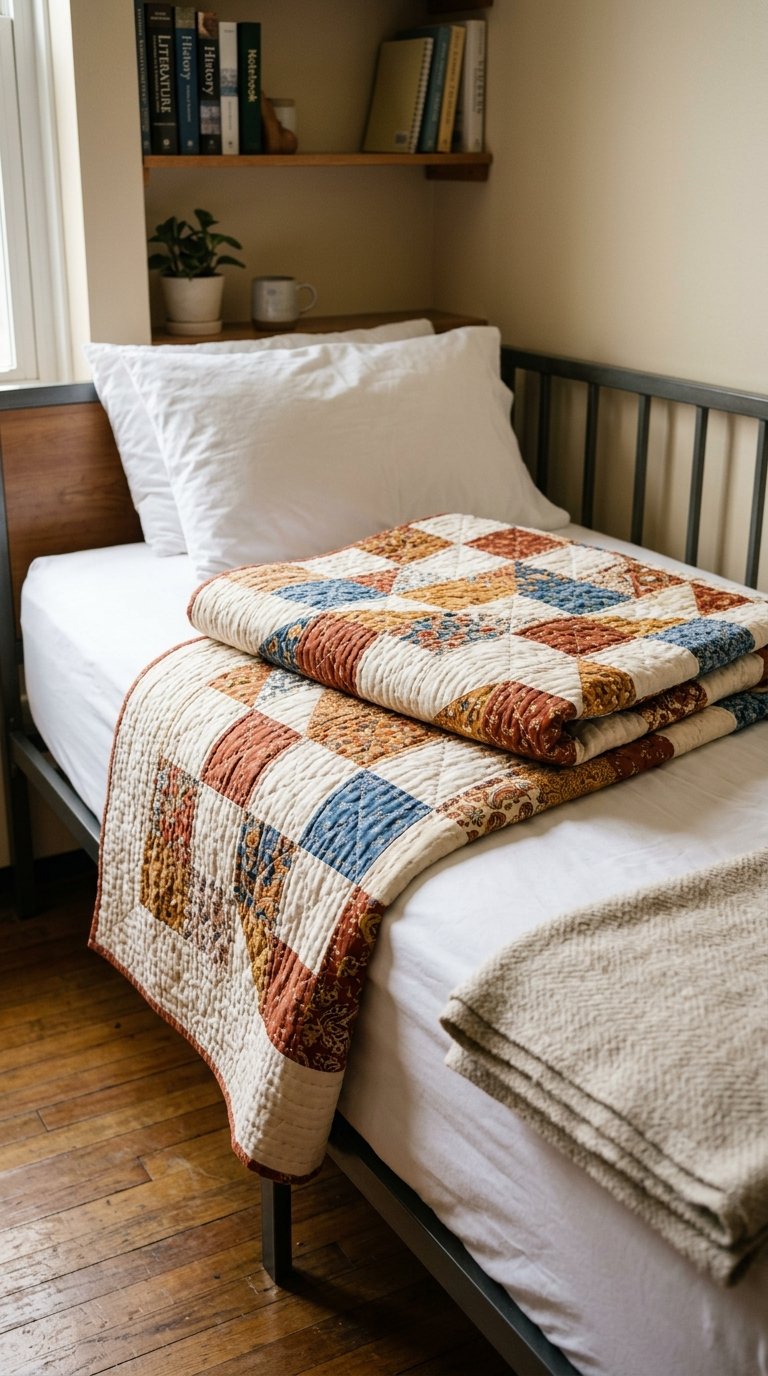
A quilt’s thinner profile makes it appropriate for both air-conditioned September dorm rooms and the overheated February ones where the building heat kicks in at full blast and nobody controls it. Comforters are too warm for roughly half the academic year in most US dorms, which means students end up sleeping on top of them anyway, defeating the purpose of having good bedding.
Cotton quilts in Twin XL sizing cost $40 to $90 from brands like Pottery Barn Teen, Garnet Hill, or Amazon’s Stone Cottage line. Pair the quilt with a wool or flannel throw for the cold months and remove the throw when temperatures rise, giving you an adaptable sleep system without buying multiple comforters.
12. Try a Boucle or Textured Comforter for a Dorm That Looks Like a Studio Apartment
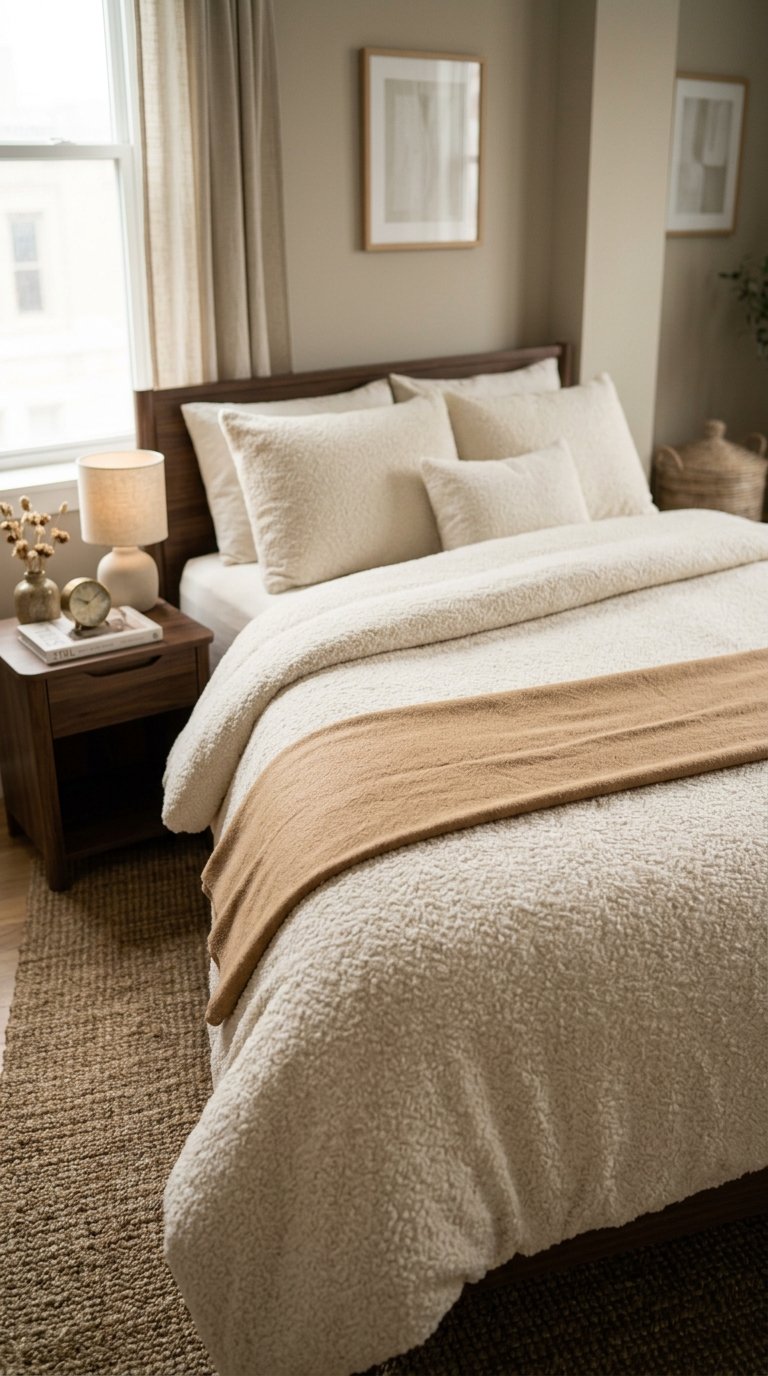
A boucle or textured comforter in a neutral tone makes a dorm bed look like it belongs in an actual apartment, not a residence hall, and this matters if you spend significant time in your room and want it to feel like a genuine living space rather than a temporary holding area. The texture adds visual dimension that flat polyester comforters never achieve regardless of color.
Boucle comforters and duvet covers in Twin XL sizing have become widely available at Target, IKEA, and Amazon in the $40 to $80 range. Pair a cream or oatmeal boucle with wood-toned accessories and a warm-toned throw, and your dorm bed reads as a curated aesthetic choice rather than a beginner setup.
13. Buy a Second Set of Pillowcases Specifically for Netflix Nights
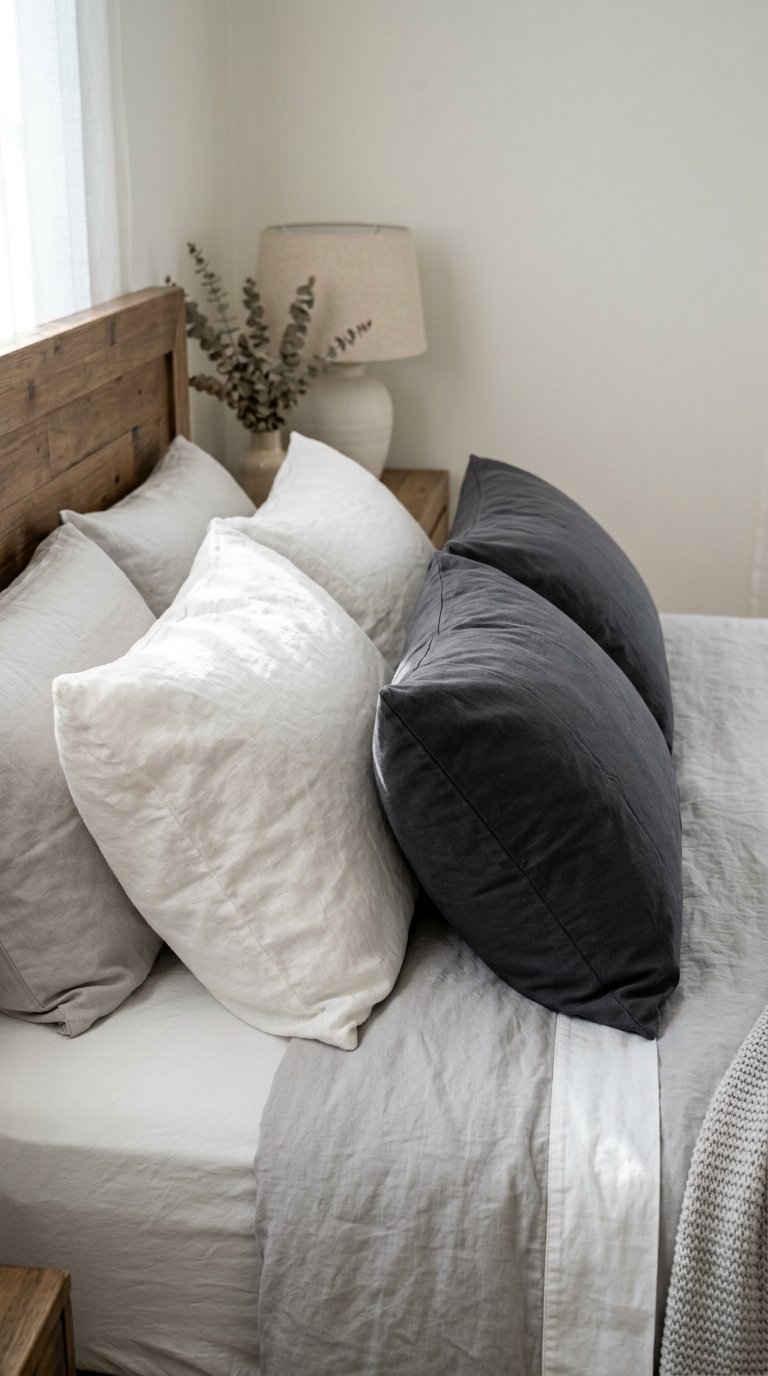
Keeping a second set of dark-colored pillowcases to swap in during movie nights or sick days extends the life of your nice decorative pillowcases significantly, since heavy use and face contact oils degrade light fabric faster than regular sleeping alone. This is the kind of practical split that people figure out after their first set of white pillow covers turns grey by October.
Dark pillowcases cost $10 to $15 for a two-pack and store in a single drawer. The swap takes 30 seconds and means your display pillowcases stay presentable for the full academic year rather than requiring replacement mid-semester.
14. Add a Small Throw Pillow in a Contrasting Pattern
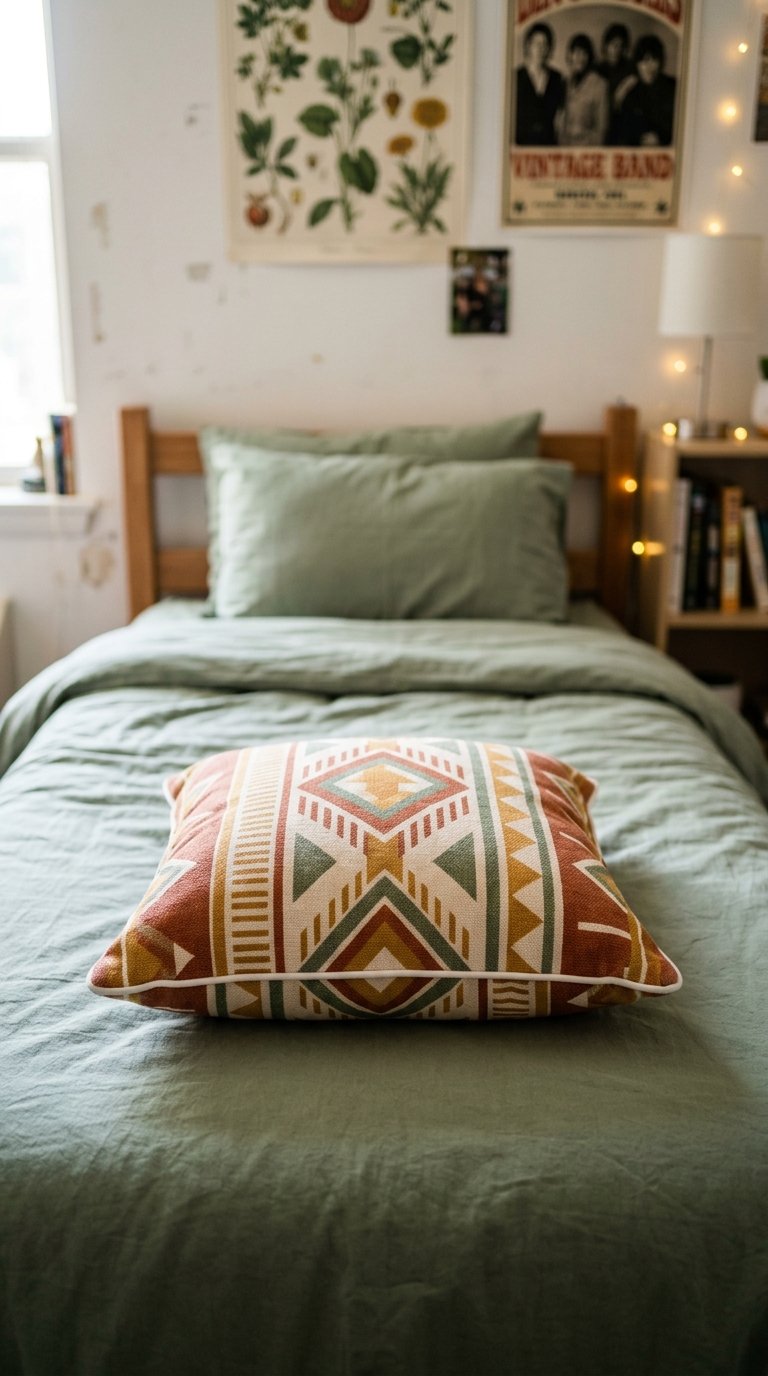
One throw pillow in a contrasting pattern breaks up a solid or minimally patterned bedding set and gives the bed a finished, styled look without the expense or bulk of multiple decorative pillows. This is the “statement earring” principle applied to bed styling: one strong accent does more than five matching ones.
Throw pillows in the 16×16 inch size cost $15 to $30 and work on a twin bed without overwhelming the surface. Choose a pattern in one color already present in your bedding, since pulling from an existing color rather than introducing a new one keeps the overall palette cohesive.
15. Use Organic or OEKO-TEX Certified Bedding
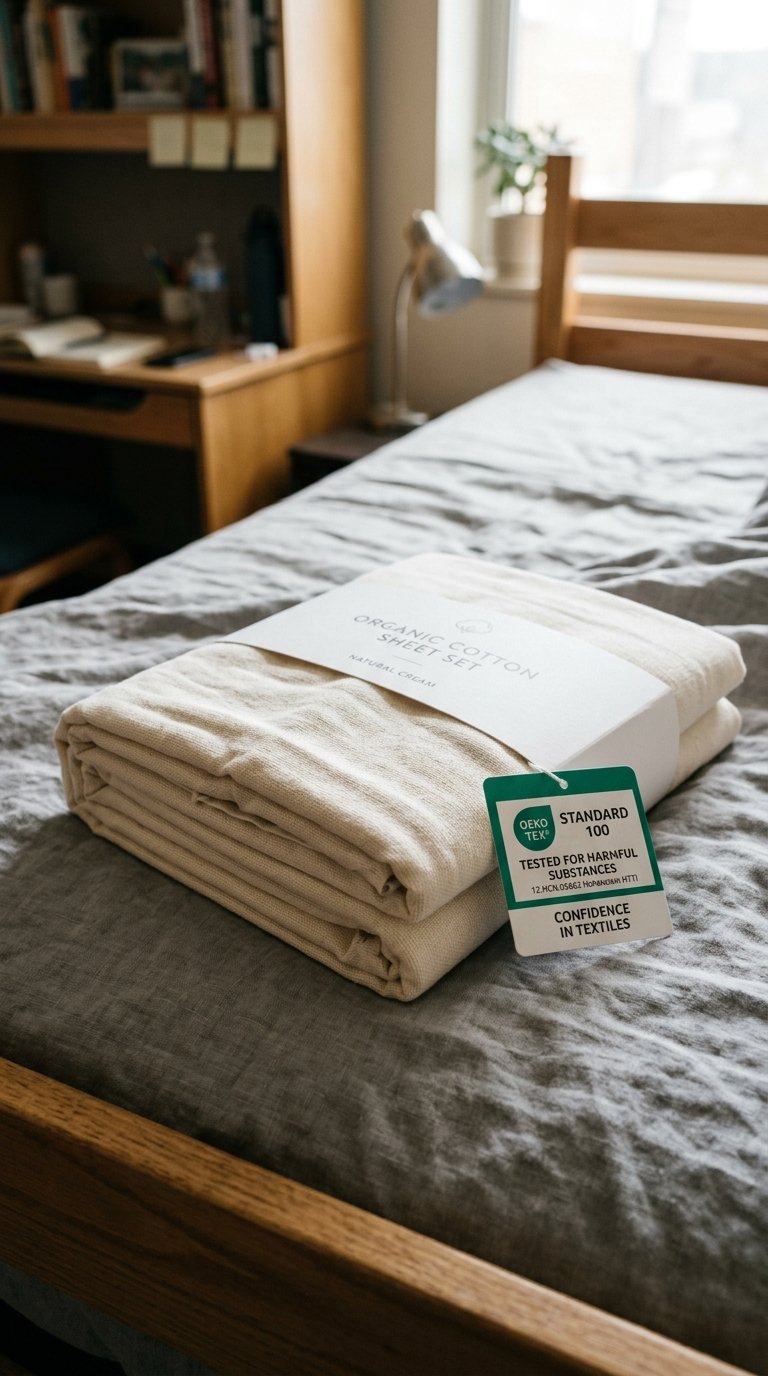
Organic and OEKO-TEX certified bedding avoids the formaldehyde-based wrinkle treatments and synthetic dyes present in conventional bedding, which matters more in a dorm than at home because you spend 7 to 9 hours per night with your face directly against the fabric in a small, often poorly ventilated room. The European OEKO-TEX Standard 100 certification tests for over 100 harmful substances.
Brands like Boll and Branch, Coyuchi, and Parachute offer OEKO-TEX certified options, with Twin XL sets starting around $60 to $90. Target’s Made By Design organic line offers a budget-accessible certified option in the $30 to $50 range that doesn’t require a significant premium over conventional bedding.
16. Choose a Machine-Washable Everything Policy

Every single piece of bedding you bring to a dorm needs to be fully machine washable, including the pillow inserts, the throw, and the mattress topper cover. Hand-wash-only or dry-clean items in a dorm are a hygiene problem waiting to happen, since nobody realistically makes regular trips to a dry cleaner during an academic semester.
Check every label before purchasing and reject anything without clear machine wash instructions, regardless of how good it looks. Pillows specifically need to fit in a standard laundry machine drum, which rules out many oversized Euro pillow inserts unless you verify the drum capacity of your dorm’s specific machines beforehand.
17. Add LED Strip Lights Along the Bed Frame for Ambient Lighting
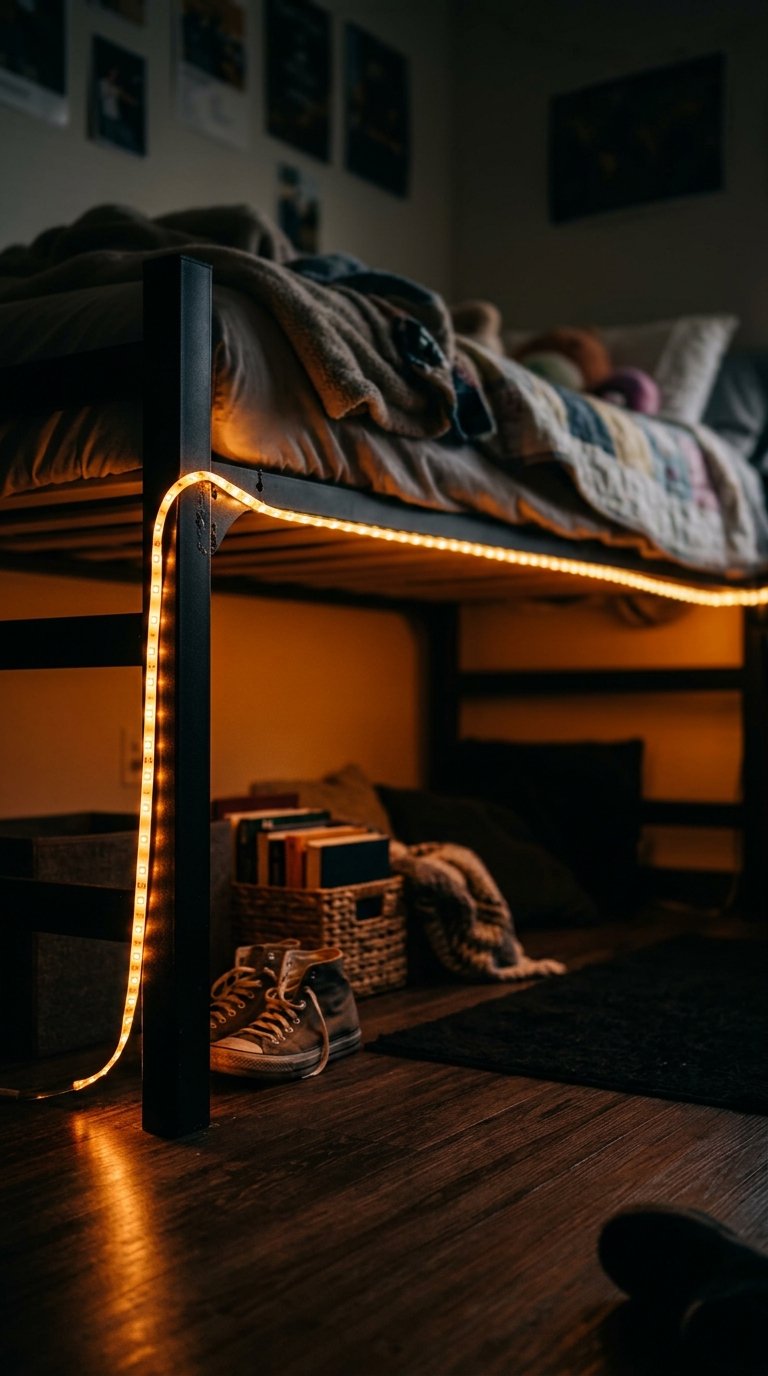
LED strip lights adhered along the underside of a lofted bed frame or behind a headboard wall replace harsh overhead fluorescent lighting with warm ambient glow that makes bedding look richer and the room feel significantly more livable after 9pm. Dorm overhead lighting is one of the single biggest quality-of-life issues students face, and addressing it with $20 in LED strips costs less than one textbook.
USB-powered LED strip lights in warm white (2700K) cost $15 to $25 for a 10-foot reel, long enough to border most dorm bed setups. Pair warm white strips with your bedding color palette and your comforter will photograph twice as well and feel twice as inviting during evening hours.
18. Pack a Laundry Bag That Fits Your Bedding Folded
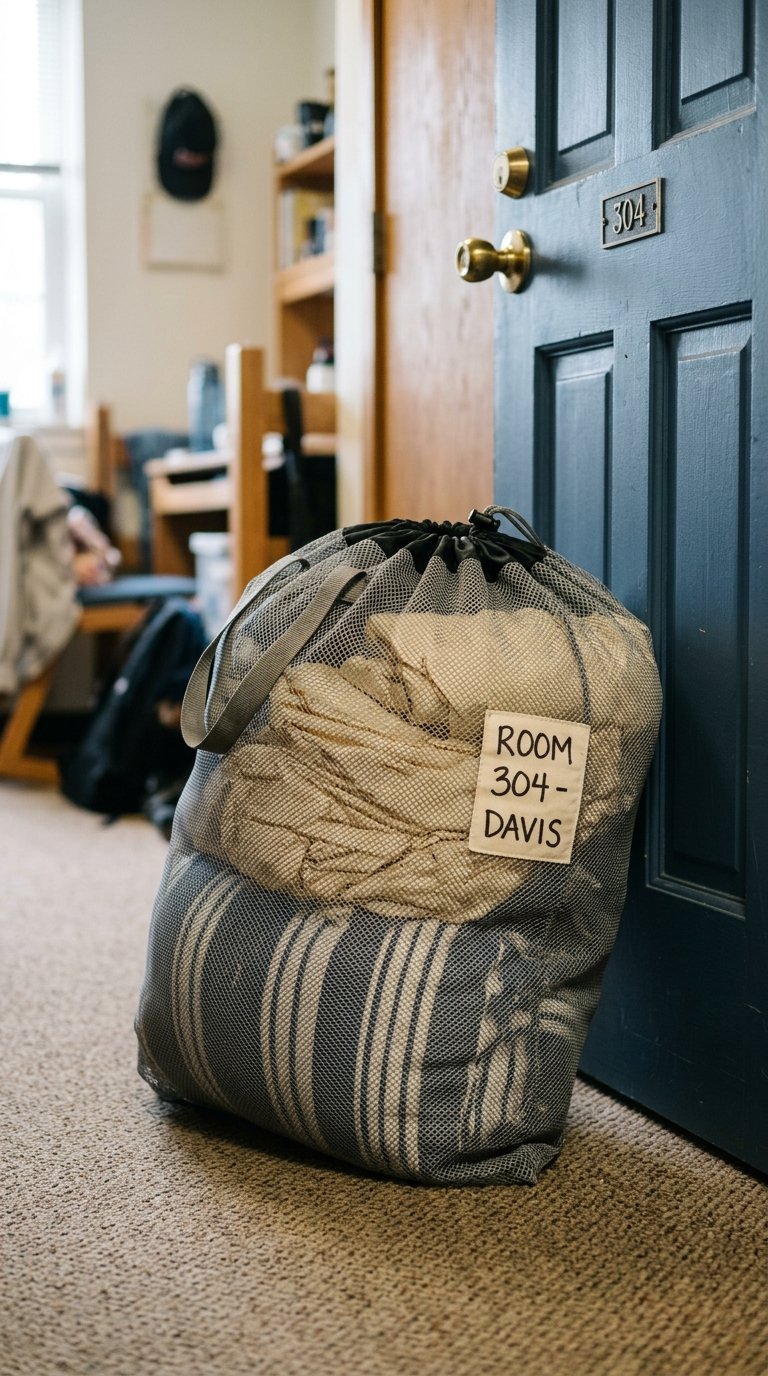
Your bedding transport system matters as much as the bedding itself, because bedding stuffed into a regular-sized laundry bag tears faster, tangles in machines more often, and requires two trips to the laundry room instead of one. A large mesh laundry bag in the 24×36 inch size holds a full set of sheets, a pillowcase, and a duvet cover in one load without overstuffing.
Large mesh laundry bags cost $8 to $15 and last years of weekly washing trips. Label yours with your room number using a permanent marker since laundry rooms are high-theft zones in most residence halls, and a lost duvet cover in week three of the semester is an avoidable frustration with a $1 solution.
Final Thoughts
Dorm bedding works when every piece solves a specific problem: the mattress topper fixes the sleep surface, the duvet system fixes the washing problem, the texture and color choices fix the blank room problem, and the practical extras fix the daily inconveniences nobody warns you about before move-in day. Start with the mattress topper and two sets of cotton sheets since those affect your sleep directly, then build the rest of the setup from there. Your dorm room will never be large, but it absolutely gets to feel like somewhere worth coming back to.