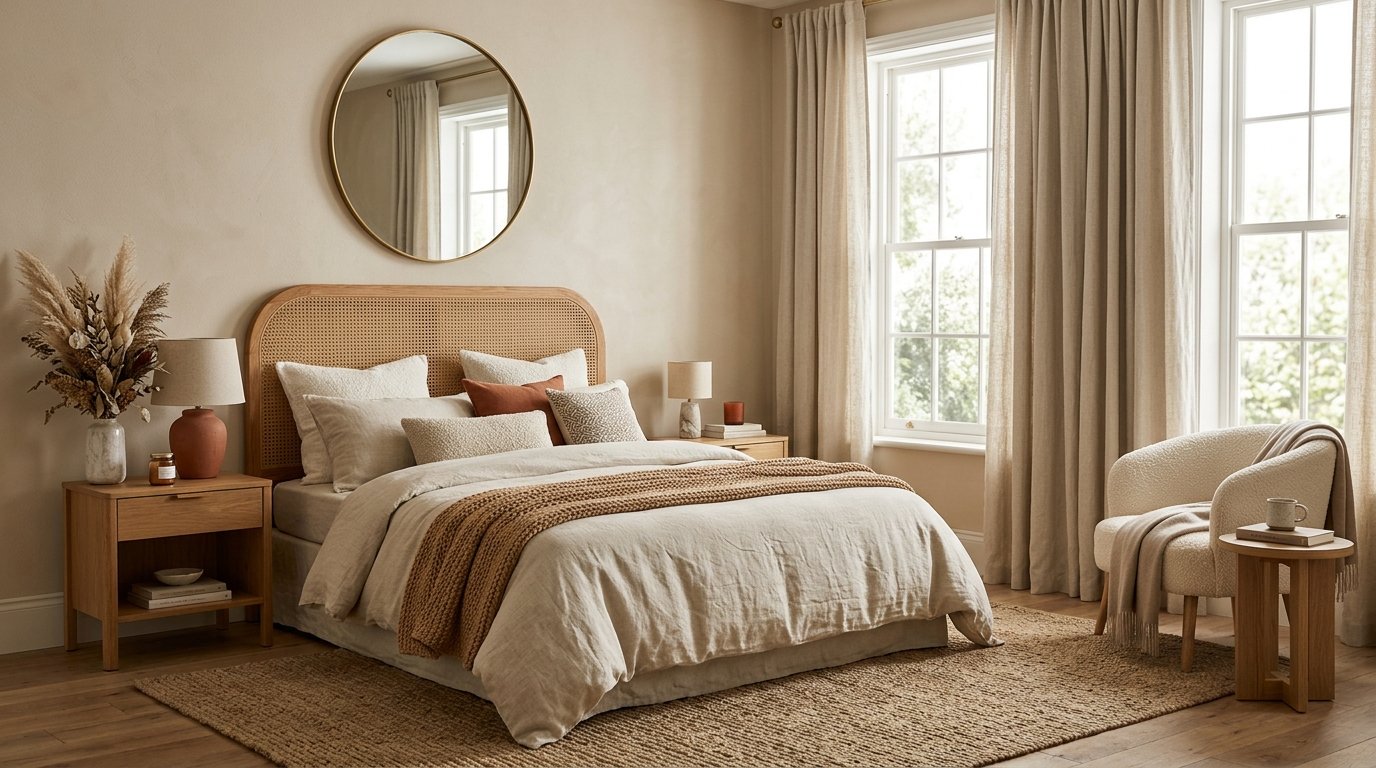
21 Beige Bedroom Ideas That Feel Warm, Cozy & Luxurious
Beige gets a bad reputation it doesn’t deserve. People hear “beige bedroom” and picture a hotel room from 2003 with a floral bedspread and matching curtains. But the beige bedroom done right looks nothing like that. It looks warm, layered, calm, and genuinely expensive without requiring an expensive budget. I overhauled my own bedroom with a beige palette last year and spent under $400 total. The result stopped visitors in their tracks. These 21 beige bedroom ideas give you the specific moves that make beige work in a real bedroom right now.
1. Pick the Right Shade of Beige for Your Light Conditions
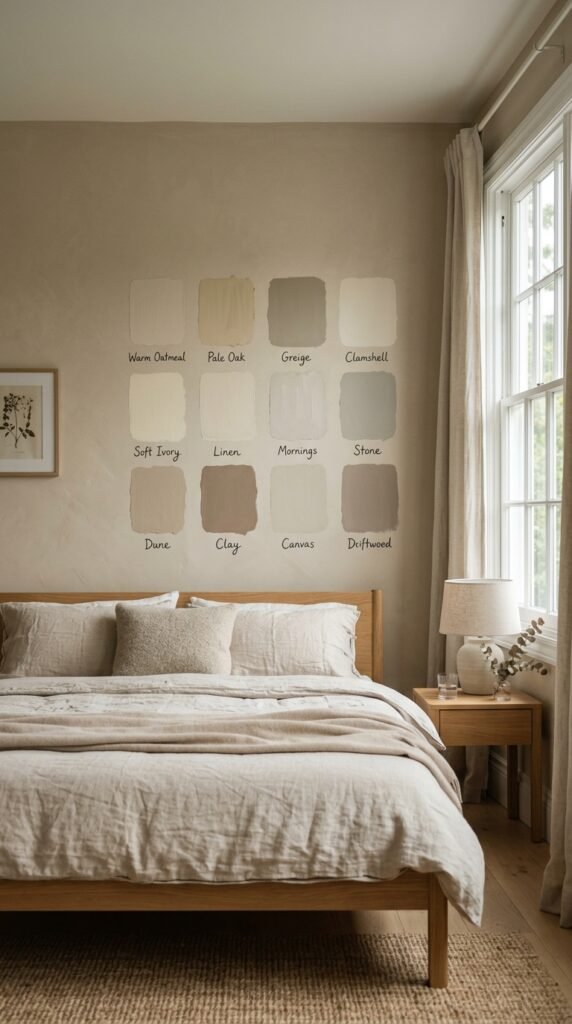
Not all beige reads the same in every room, and choosing the wrong undertone is the number one reason beige bedrooms go wrong. Warm beige tones with yellow or pink undertones (like Benjamin Moore’s Pale Oak OC-20 or Sherwin-Williams Accessible Beige SW 7036) perform best in north-facing rooms because they counteract the cool blue light those rooms receive all day. South-facing rooms handle cooler, greyer beige tones without looking washed out because warm sunlight compensates for the cooler undertone throughout the day.
Paint a 12×12 inch sample patch on the actual bedroom wall and observe it at three different times: 8am, 1pm, and 8pm. The same beige paint reads dramatically differently under morning light, midday sun, and evening lamp light. That three-point observation tells you whether your chosen shade works in your specific room before you commit a full gallon to the walls.
2. Layer Three Beige Tones to Avoid a Flat Look
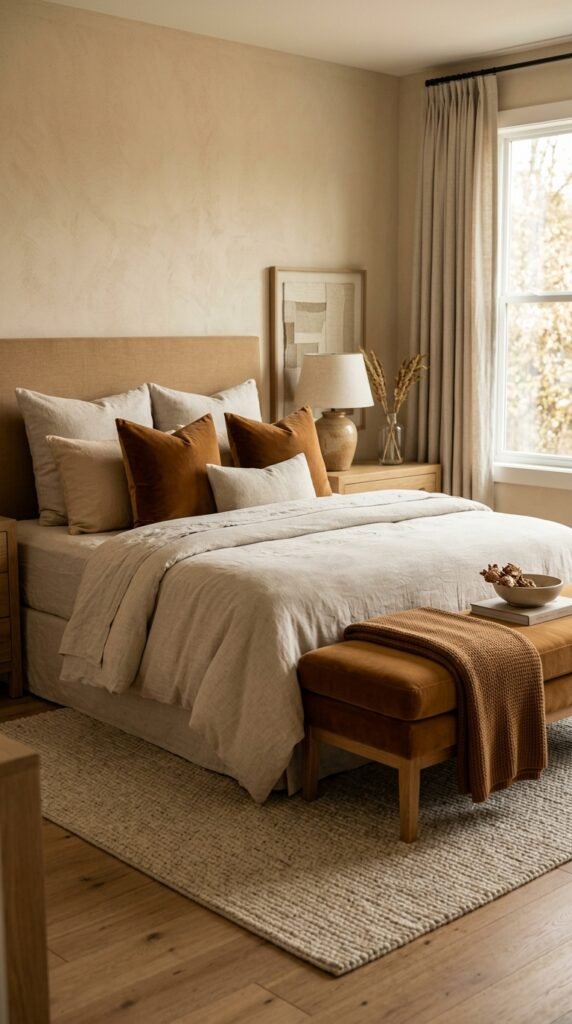
A single beige tone across walls, bedding, and furniture reads as institutional rather than designed, which is why most people give up on the palette before they understand how to work with it. The solution is a three-tone approach: a light beige on the walls, a mid-tone warm caramel or oatmeal on the bedding, and a deeper tan or warm brown on one accent element like a throw pillow set or a low bench at the bed foot. This tonal layering creates depth and visual movement within a single color family.
The Houzz 2022 Interior Design Trends report found that monochromatic layering in warm neutral palettes ranked as the top bedroom design preference across all surveyed age groups. That preference exists because the brain perceives tonal variation as richness and intentional design, even when every tone stays within the same narrow beige family. Three tones cost nothing extra to implement if you already own furniture in varying warm shades.
3. Choose Linen Bedding for Authentic Beige Texture
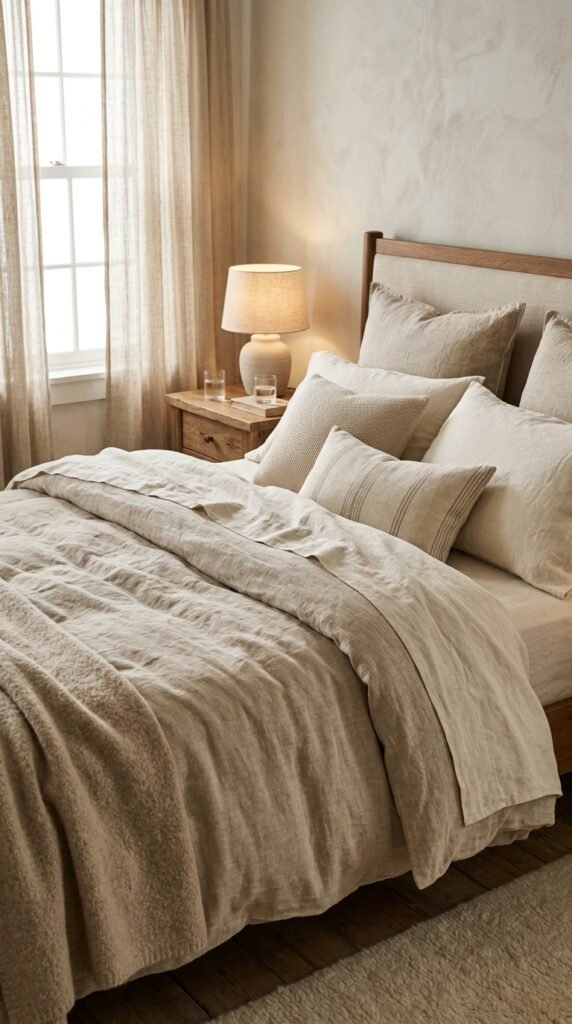
Natural linen bedding in undyed or warm oatmeal tones delivers the texture that makes a beige bedroom feel expensive rather than plain. The natural wrinkle of linen fabric communicates material quality in a way cotton percale never achieves, and it photographs as high-end regardless of the actual purchase price. Quince’s European linen duvet cover starts at $99 and performs identically to boutique versions costing $300 to $400. Parachute’s linen set runs $179 to $229 and lasts years of regular washing without pilling or fading.
The specific reason linen works better than cotton in a beige bedroom is its natural color variation. Even undyed linen contains slight warm and cool tone shifts across the weave, which creates subtle visual complexity against a flat beige wall. That complexity prevents the bed from disappearing into the wall behind it, which is the visual problem most beige bedrooms struggle with when all surfaces share the exact same flat tone.
4. Add Warm Wood Furniture for Grounding
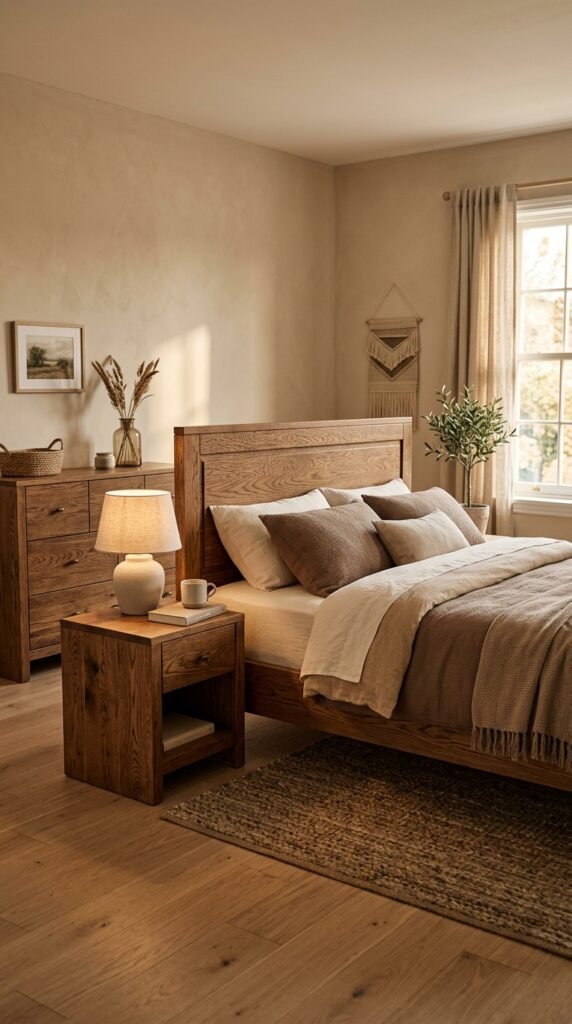
Warm wood in walnut, oak, or acacia tones grounds a beige bedroom by introducing organic contrast that prevents the palette from reading as sterile or unfinished. A solid wood bed frame, dresser, or nightstand in a visible-grain finish gives the eye a material anchor within the neutral palette. IKEA’s HEMNES dresser in light ash stain costs $279 and delivers the warm grain quality the beige palette requires at a price point most budgets handle comfortably.
Choose one wood tone and stay consistent across every wood piece in the room. Mixing dark walnut nightstands with a light oak bed frame creates visual fragmentation that makes a bedroom feel assembled rather than designed. A tube of Rubio Monocoat natural wood oil ($25 for a 20ml sample size) unifies mismatched wood pieces in different stains to a single warm tone in under an hour without sanding or stripping.
5. Use a Terracotta or Rust Accent to Warm the Palette
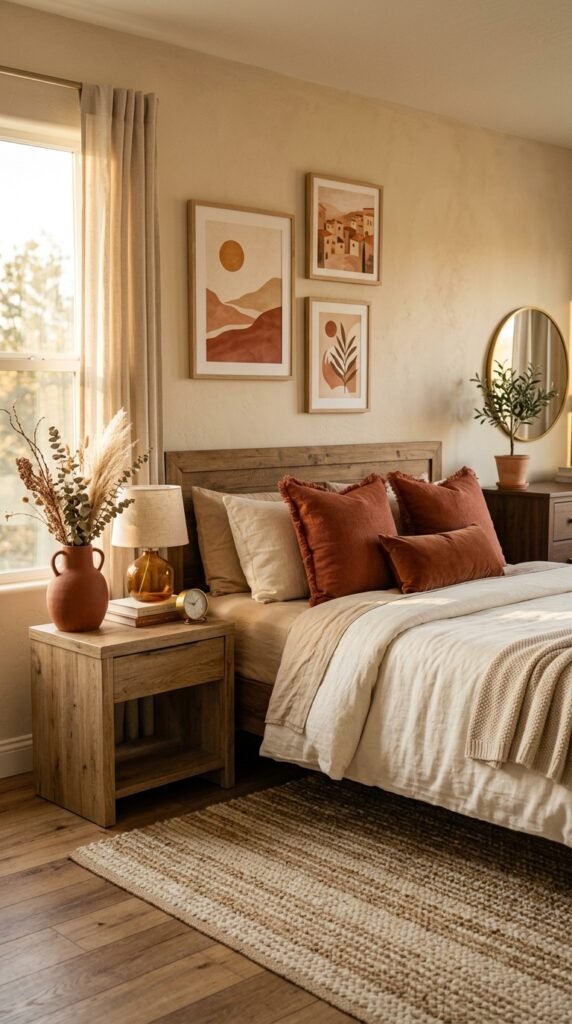
A beige bedroom without any accent color reads as incomplete to most eyes because the brain looks for one point of color differentiation within a neutral room. A terracotta, rust, or burnt orange accent in one throw pillow, a ceramic vase, or a small artwork provides exactly the warm color note the palette needs without competing with the beige base. These earth tones sit naturally within the warm neutral family, which means they enhance the beige rather than clashing with it.
Terracotta throw pillows in a 20×20 inch size cost $15 to $35 each from H&M Home or Amazon’s Stone and Beam line. Two terracotta pillows on a beige linen bed create a color relationship that reads as Mediterranean, organic, and completely intentional for under $70. The specific orange-red undertone of terracotta reflects warmth back into the beige palette, which makes the whole room read as warmer than the beige alone delivers.
6. Hang Floor-to-Ceiling Beige or Linen Curtains
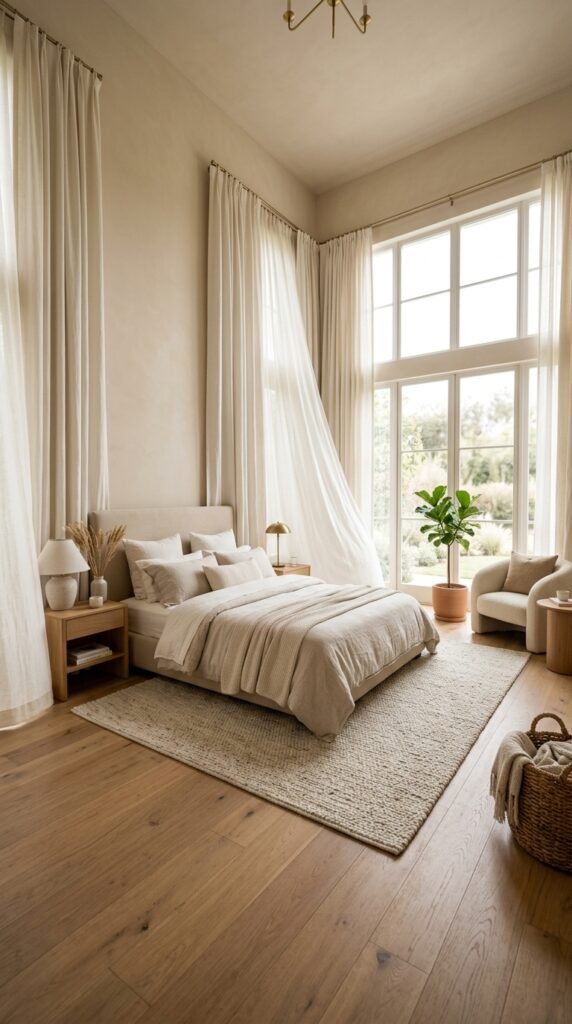
Curtains hung at ceiling height and dropped to the floor make every window appear 40 percent taller and every ceiling appear higher than its actual measurement, which directly increases the perceived quality of the room. This single change makes a standard 8-foot ceiling bedroom read as significantly more spacious without structural modification. IKEA’s DYTAG linen curtain panels in beige cost $40 to $60 per panel and hit floor length in the 98-inch option.
Mount the curtain rod 4 to 6 inches from the ceiling rather than directly above the window frame. At standard 8-foot ceiling height, a rod position 4 inches from the ceiling with 98-inch panels reaches the floor correctly. The panels stay in their natural undyed linen tone, which blends with the beige wall behind them to create a seamless, enveloping effect that makes the room read as larger and calmer simultaneously.
7. Add a Jute or Wool Rug for Tactile Warmth
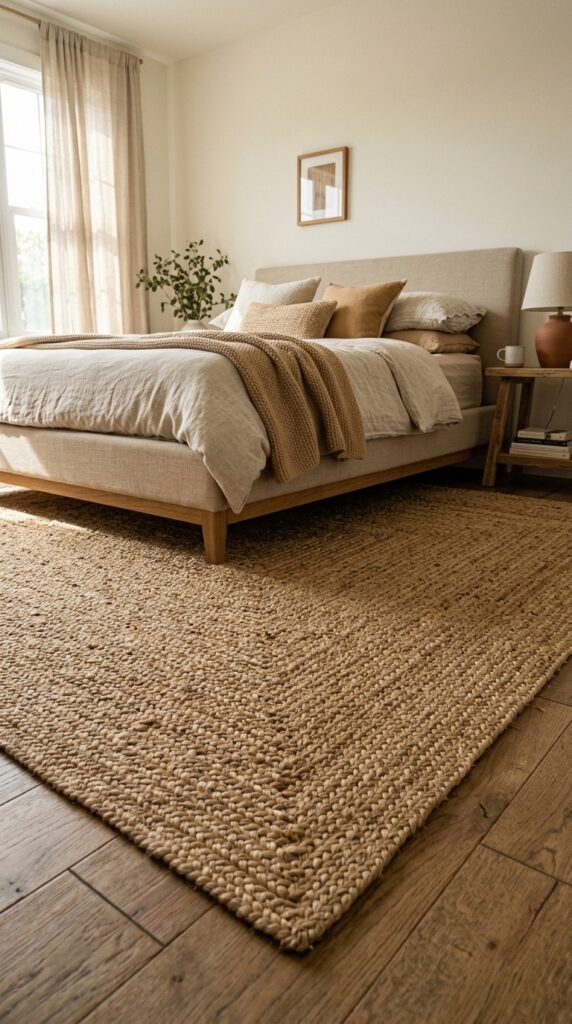
The right rug in a beige bedroom does two things at once: it adds tactile warmth underfoot and visual grounding beneath the bed. A jute rug in a natural undyed tone or a wool rug in warm oatmeal costs $80 to $200 in an 8×10 size from Rugs USA or Loloi’s natural fiber collection. Both materials photograph as expensive and add organic texture to a palette that risks looking flat without natural fiber variation.
Size the rug so it extends at least 24 inches beyond the bed on both sides and at the foot. A correctly sized rug makes the bed look like it belongs in the room rather than floating on a bare floor. A rug too small for the bed, regardless of how beautiful it is, actively makes the bedroom look less finished and smaller than its actual dimensions.
8. Install Warm White Lighting at 2700K
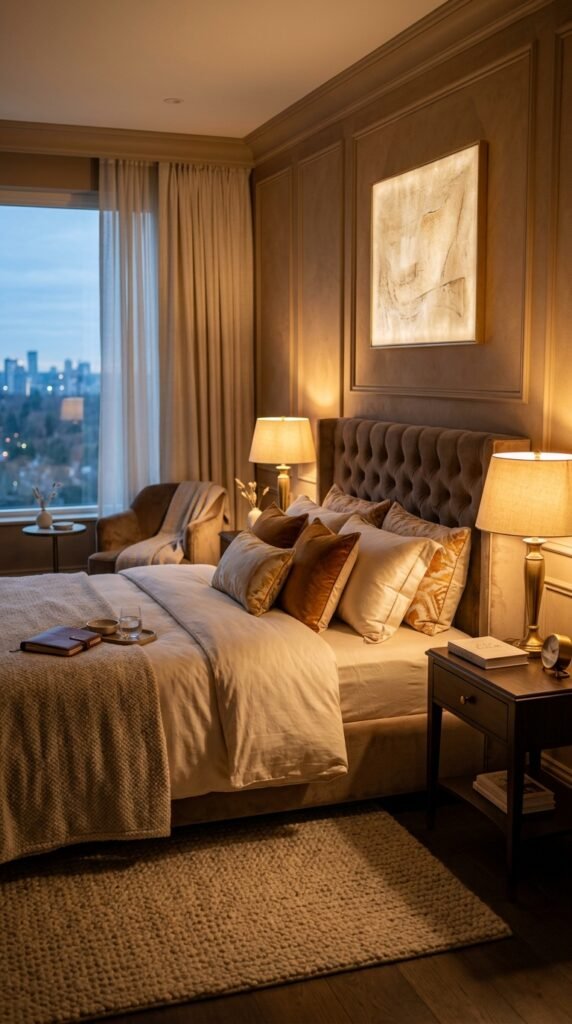
Cool white LED bulbs at 4000K or higher actively destroy the beige bedroom palette by shifting every warm beige tone toward grey and making the room look cold, clinical, and flat. Replacing every bulb in the bedroom with a warm white LED rated at 2700K costs $15 to $30 total and changes how the entire room reads in evening hours. Philips Warm Glow dimmable LEDs cost $8 to $12 for a four-pack and produce the exact warm tone the beige palette requires.
The warm white light at 2700K reflects the yellow and red undertones in beige paint and linen fabric, which makes those tones appear richer and deeper in evening light. This is why hotel rooms always look warmer and more expensive at night: they use warm-toned lighting specifically designed to flatter neutral palettes. Your bedroom produces the same result for under $30 in bulb replacements.
9. Bring in a Bouclé or Velvet Accent Chair
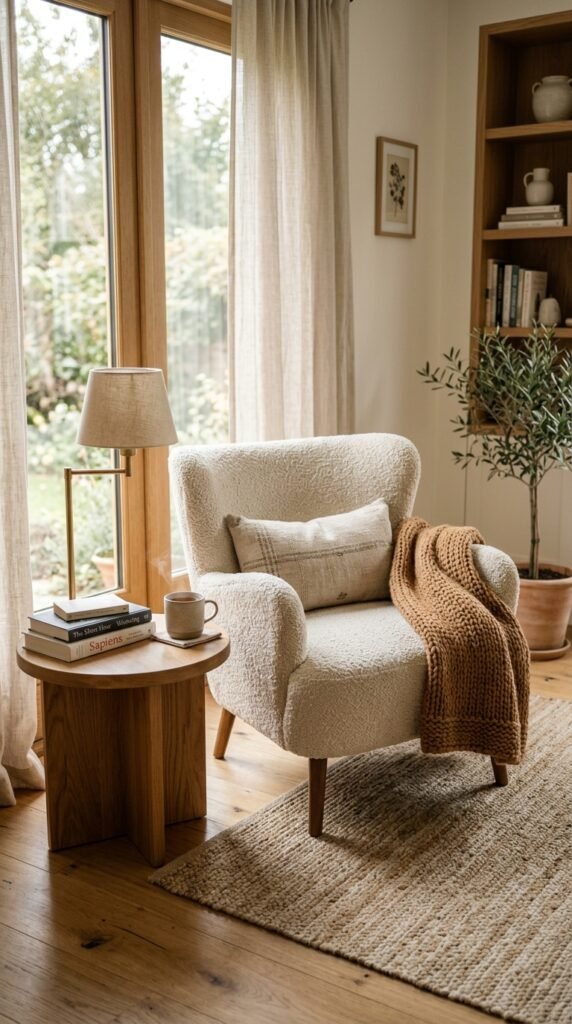
An accent chair in a cream bouclé or warm caramel velvet adds seating, texture, and visual weight to a beige bedroom corner without introducing a competing color. The bouclé texture loop provides the same tactile richness as the linen bedding but at a different scale and height, which creates visual variety within the same material family. The Safavieh Couture Javier Bouclé chair costs $350 to $450 and delivers a result that reads as a $900 purchase in a well-styled beige room.
Position the accent chair at a 45-degree angle to the bed rather than parallel to the wall. The angled placement creates a conversational relationship between the chair and the bed that makes the room feel planned rather than furnished. A small round side table beside the chair at $40 to $80 completes the reading nook configuration that most beige bedrooms miss entirely.
10. Paint an Accent Wall in a Deeper Warm Tone
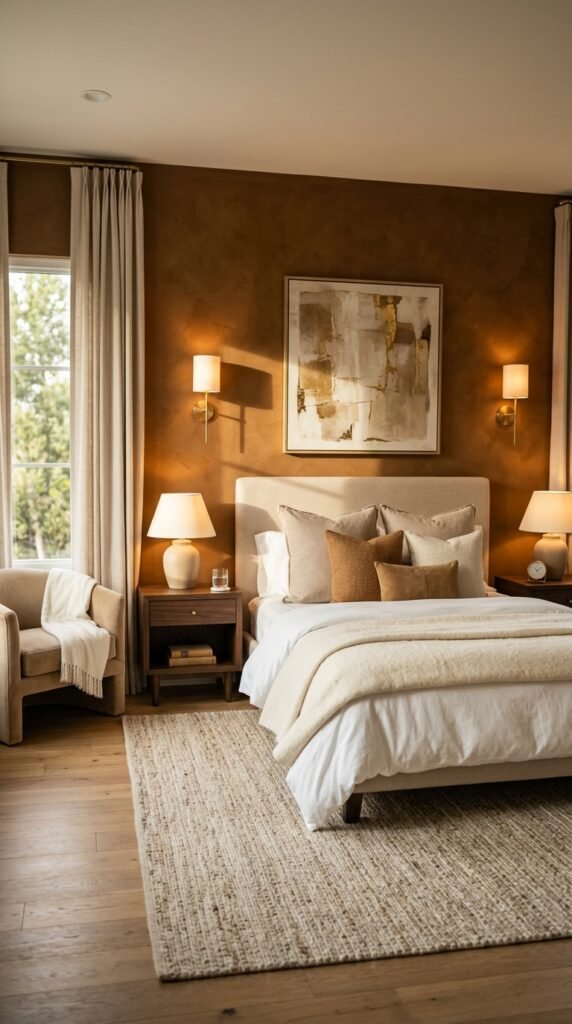
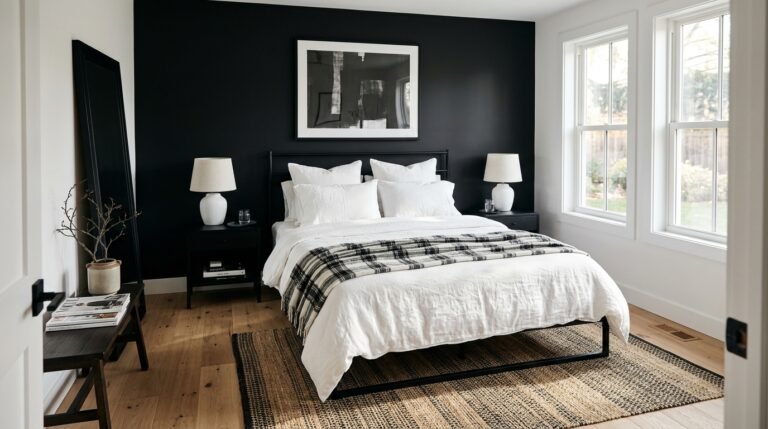
A single accent wall in a warm chocolate brown, deep terracotta, or dark caramel creates dramatic depth in a beige bedroom without requiring a full room repaint or a designer’s budget. The wall behind the bed works best for this treatment because it frames the bed as the room’s focal point and provides a visual anchor the all-beige room lacks. Sherwin-Williams Toasted Coconut SW 6119 or Benjamin Moore’s Tucson Tan HC-100 both deliver the warm depth the accent wall requires.
One gallon of quality interior paint covers a standard 10×10 foot accent wall for $35 to $55. The darker wall tone behind the bed makes the linen bedding pop against it in a way a same-tone wall never achieves. This contrast is the design move most beige bedroom photographs use to prevent the bed from disappearing into the wall behind it, and it costs one gallon of paint to execute in an afternoon.
11. Add a Statement Headboard in Cane or Rattan
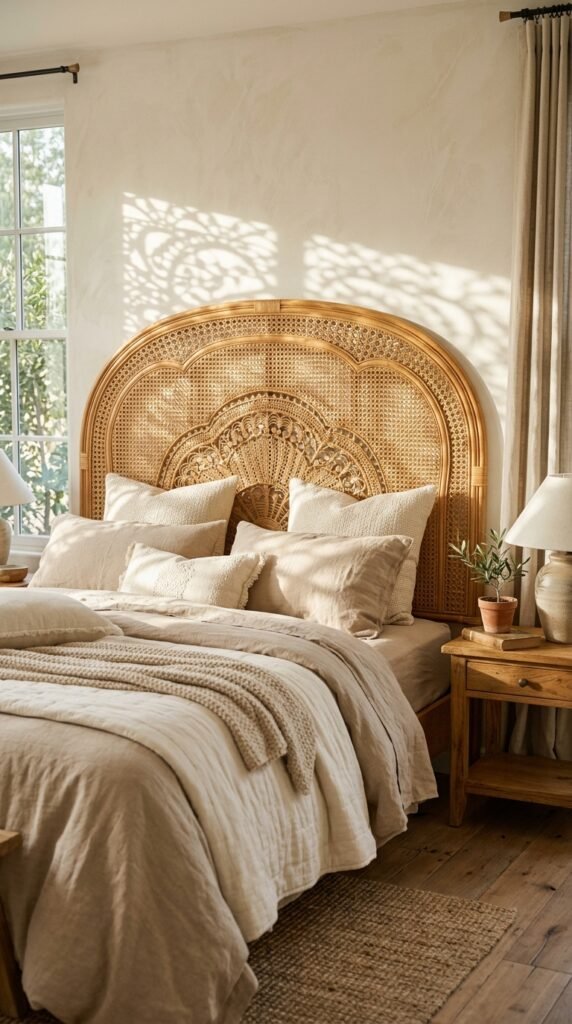
A cane or rattan headboard introduces organic texture and architectural scale to the beige bedroom’s most prominent surface without adding color or visual complexity. The natural fiber weave of cane catches light and shadow throughout the day, which means the headboard reads differently in morning light versus evening lamplight and keeps the room visually interesting as conditions change. A queen-size cane headboard from Wayfair costs $120 to $250 and installs in under 30 minutes with standard hardware.
Cane headboards work in beige bedrooms specifically because their warm honey tone sits naturally within the same warm neutral family as the wall and bedding. Unlike an upholstered headboard in a contrasting color, a cane headboard adds texture without pulling the eye away from the overall palette. The organic material also communicates the handcraft quality that makes a beige bedroom feel considered rather than default.
12. Style the Nightstand With One Object per Surface
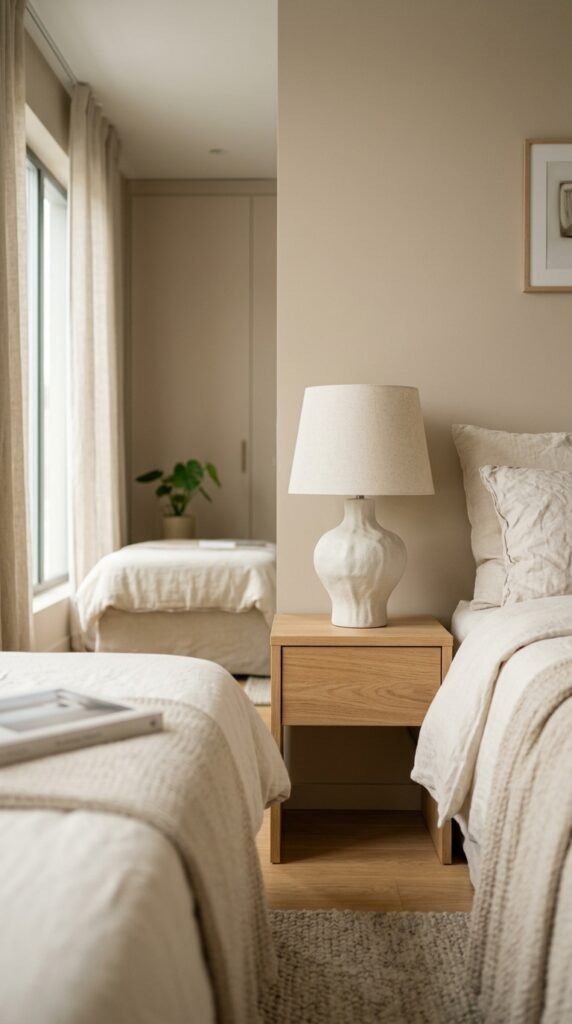
Every nightstand in a beige bedroom holds one object maximum, and that discipline is what separates a beige bedroom looking expensive from one looking cluttered. A single ceramic lamp in warm white or terracotta glaze, one closed hardback book, or one small plant in a matte pot gives the nightstand surface a finished quality that 10 products arranged neatly never achieves. IMO, the single-object nightstand rule is the most impactful zero-cost change in any bedroom redesign.
Remove everything from your nightstand surface and return only the one item earning the most visual and functional return in that spot. For most people, a lamp wins because it provides light and visual height simultaneously. A water glass serves the functional need without earning visual placement; it lives on the lower nightstand shelf or drawer instead. This discipline costs nothing and immediately changes how the room reads from busy to composed.
13. Hang One Large Artwork Above the Bed
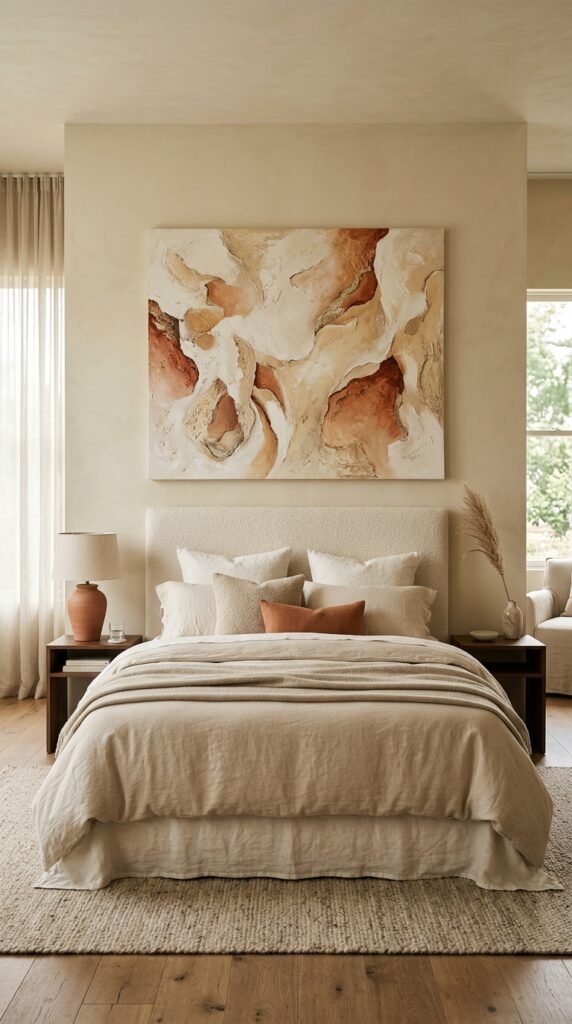
A single artwork sized at least 60 to 70 percent of the headboard width hangs above the bed as the room’s visual focal point, giving the eye a specific destination and preventing the beige wall from reading as an unfinished expanse of empty paint. A warm-toned abstract in cream, terracotta, and sand tones sits naturally within the beige palette while adding artistic depth. Society6 and Desenio carry large-format prints from $30 to $80 that perform identically to gallery-quality pieces in a bedroom setting.
Hang the artwork 6 to 8 inches above the headboard top, centered on the wall behind the bed. This placement creates a visual connection between the artwork and the bed that makes them read as one intentional composition. A print hanging too high on the wall loses its relationship to the furniture below and makes the wall look unresolved regardless of the artwork’s quality.
14. Use Closed Storage to Keep the Palette Clean
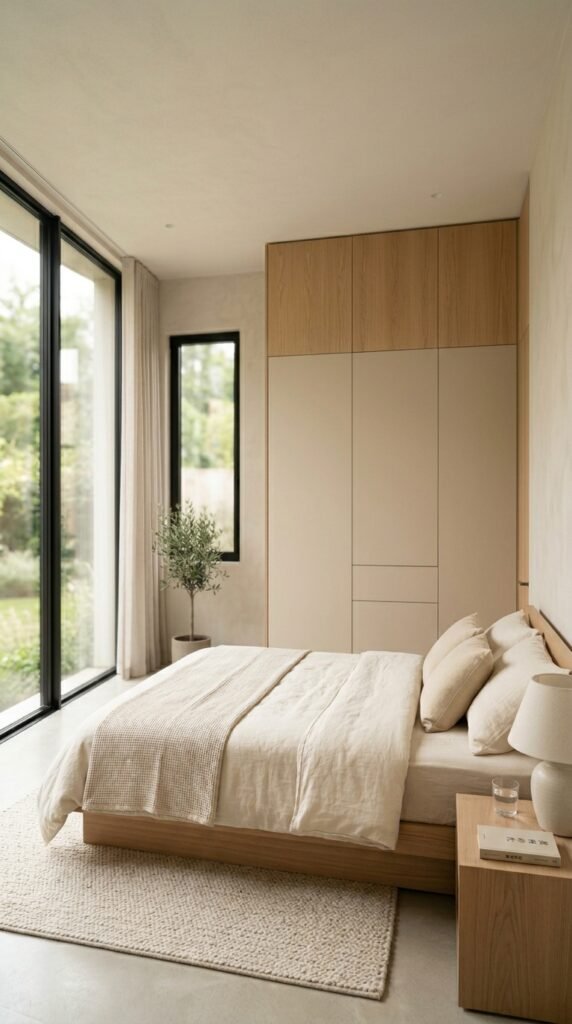
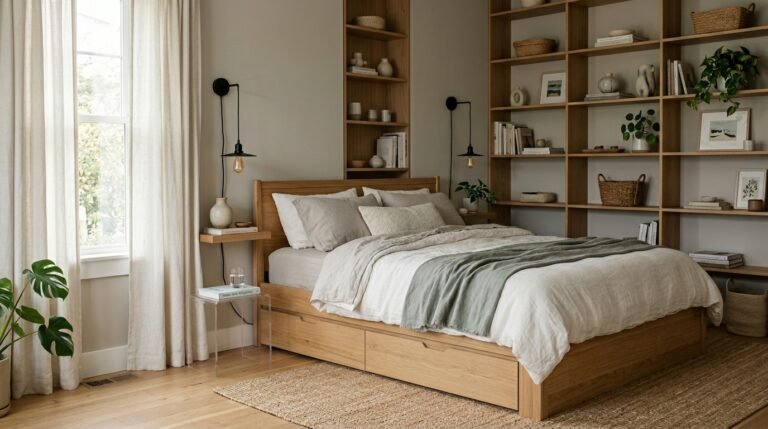
Every item of clutter on an open shelf or exposed surface in a beige bedroom actively fights the palette’s calming effect because the brain processes visual clutter as unresolved tasks rather than decor. A wardrobe with solid panel doors, under-bed storage boxes in natural linen, and a nightstand with one closed drawer handle all the functional storage needs without exposing their contents to the room’s visual field. IKEA PAX wardrobes with solid Bergsbo doors in white cost $250 to $600 depending on size and handle a full wardrobe’s storage invisibly.
Under-bed storage boxes in natural linen from The Container Store cost $20 to $40 each and slide under most platform beds to store seasonal clothing, extra bedding, and shoes completely out of sight. A bedroom where the infrastructure of daily life disappears into closed storage reads as a sanctuary. A bedroom where that infrastructure sits on open shelves and cluttered surfaces reads as a room you sleep in rather than a room you designed.
15. Add Dried Botanicals for Organic Height
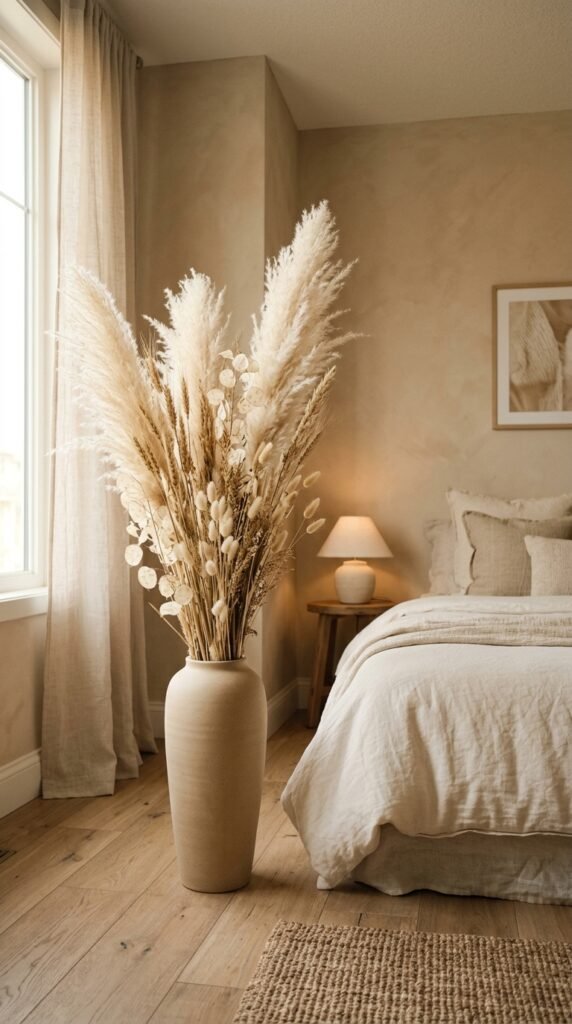
Dried pampas grass, eucalyptus stems, or dried reed bundles in a tall ceramic vase add organic height to a beige bedroom corner that no furniture piece achieves at the same price point. A 60-inch dried pampas plume costs $8 to $20 at Trader Joe’s, IKEA, or Amazon and fills a corner or dresser top with natural texture that reads as a $150 boutique purchase. The muted, warm-cream tone of dried botanicals sits perfectly within the beige palette without introducing a competing color.
Position the botanical arrangement in the room’s most underused corner, typically the corner diagonally opposite the door. A 12-inch diameter ceramic floor vase holds three to five pampas stems at varying heights for a full, architectural arrangement. The corner arrangement adds visual height that draws the eye upward, which increases the perceived ceiling height of any bedroom regardless of its actual dimensions.
16. Layer Throw Blankets at the Bed Foot
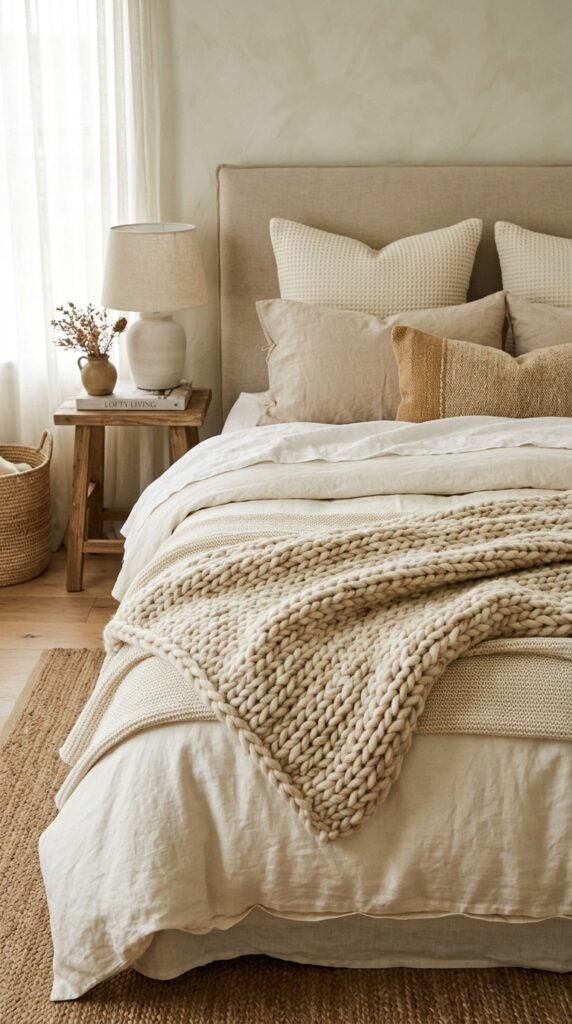
A folded throw blanket at the foot of the bed adds the color and texture layer the beige bedroom needs to prevent the bedding from reading as one flat expanse of neutral fabric. A chunky wool throw in warm ivory, a woven cotton blanket in warm camel, or a velvet throw in deep tan all work within the palette while adding material variety at a different scale than the duvet above. Pendleton wool throws cost $80 to $120 and last decades. H&M Home cotton throw blankets at $25 to $40 perform well for two to three seasons before needing replacement.
Fold the throw in thirds lengthwise and drape it across the lower third of the bed at a slight angle rather than perfectly parallel to the bed foot. The slight angle reads as relaxed and natural rather than hotel-formal, which is exactly the warm, lived-in quality the beige bedroom aesthetic requires. The angle also shows more of the throw’s texture and color against the duvet, which maximizes the visual impact of the layering.
17. Choose Matte Black Hardware Throughout
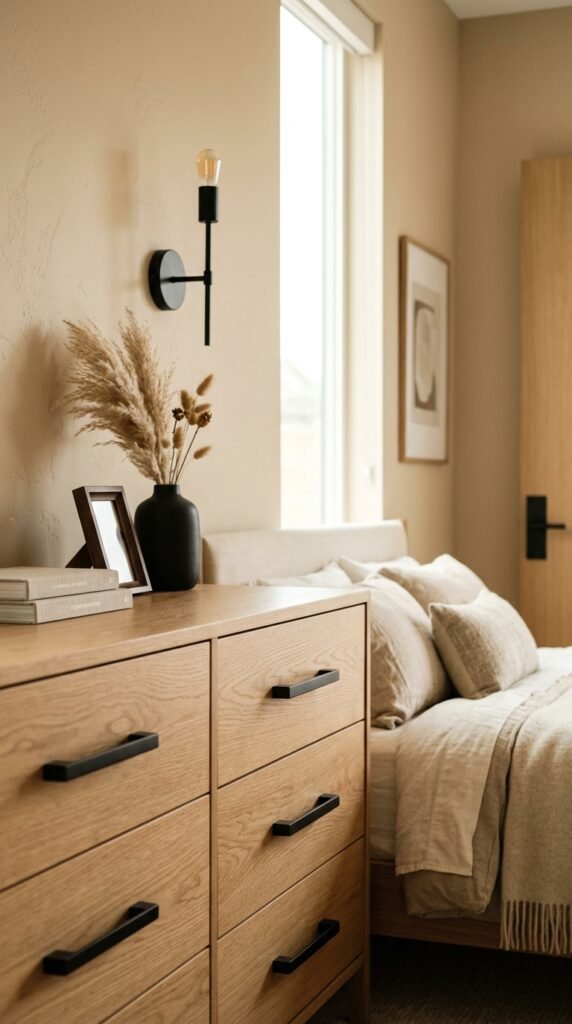
Matte black drawer pulls, door handles, and lamp fixtures unify the beige bedroom’s material story by providing one consistent metal finish across every functional hardware piece in the room. Beige palettes without a defined metal accent read as unfinished because the eye looks for one point of material contrast within the warm neutral sea. Replacing existing brass or chrome hardware with matte black alternatives costs $2 to $8 per pull from Amazon and takes 10 minutes with a screwdriver.
The matte black finish reads as contemporary against the beige palette and prevents the room from sliding into the dated warmth that gave beige its bad reputation in the first place. Matte black light switch plates cost $8 to $15 each from Amazon and sit at eye level on the wall you face daily, making them a higher-impact upgrade than most people realize. Replace them at the same time as the drawer pulls and the entire room’s metal story shifts in one afternoon.
18. Place a Low Bench at the Bed Foot
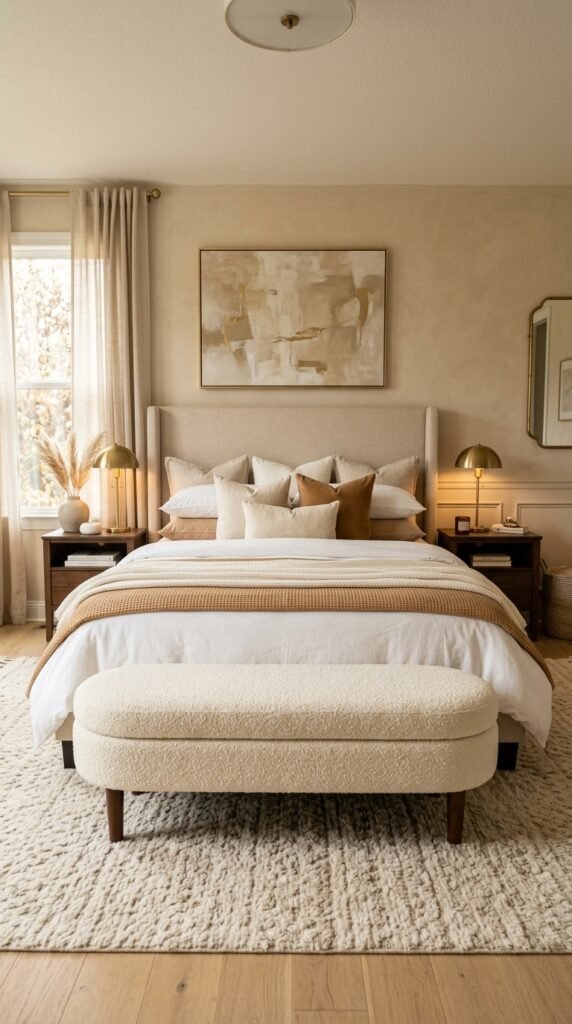
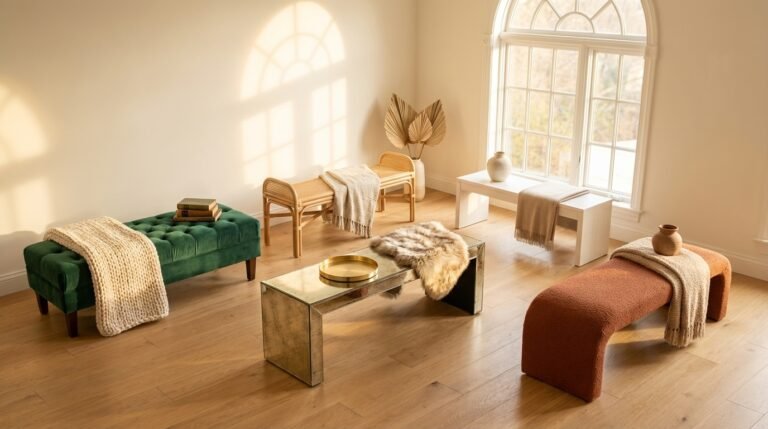
A low upholstered bench at the foot of the bed adds function, scale, and a second seating surface that makes the beige bedroom read as a completely designed space rather than a room with just a bed in it. A bench in warm caramel faux leather, cream bouclé, or natural rattan costs $80 to $200 at CB2, Wayfair, or Article and gives you a surface for dressing, laying out tomorrow’s clothes, and visual anchoring of the bed. The bench also provides the mid-level visual element the beige palette needs between the floor rug and the overhead ceiling.
Choose a bench length at 60 to 70 percent of the bed width for the correct proportion. A queen bed (60 inches wide) pairs best with a 36 to 42-inch bench. A bench too short for the bed looks like an afterthought. A bench the full width of the bed looks institutional. The 60 to 70 percent rule produces the proportion that reads as intentional and well-scaled in every bedroom size.
19. Introduce a Potted Plant in a Matte Ceramic Pot
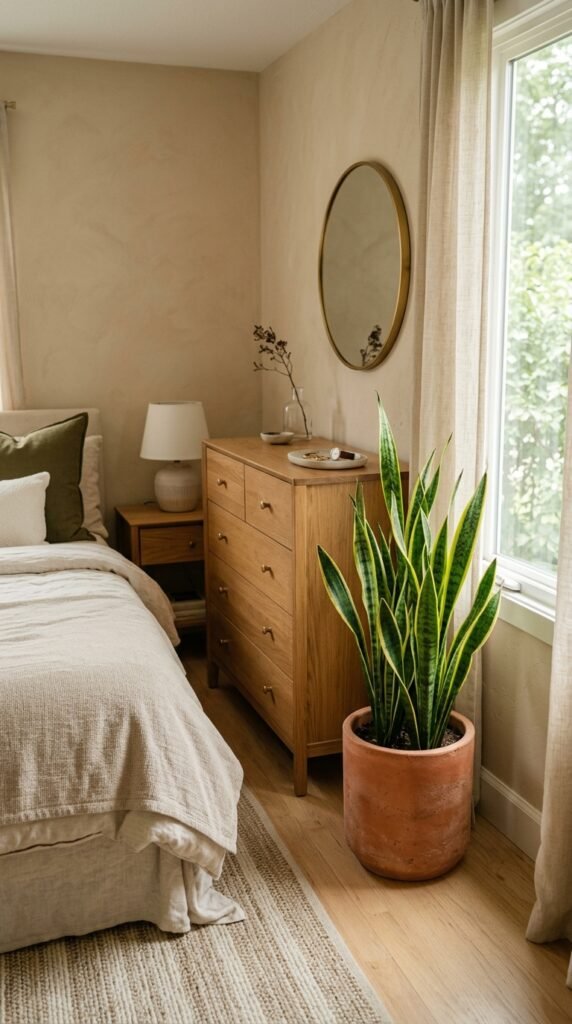
A single living plant in a beige bedroom adds the organic element the neutral palette needs to avoid reading as sterile. A snake plant in a matte terracotta or raw concrete pot sits at dresser or nightstand height and provides architectural leaf structure that photographs beautifully against a beige wall. Snake plants thrive in low bedroom light conditions and grow slowly enough to stay in proportion with the space for years. A 6-inch snake plant from a local nursery costs $8 to $15 and lives on your dresser as the single surface object.
A potted olive tree in a large terracotta floor planter in the bedroom corner costs $80 to $150 and fills vertical corner space with silvery-green foliage that contrasts beautifully against beige walls. The organic form of the olive tree adds the natural irregularity the highly controlled beige palette needs to avoid looking staged. One plant earns its place. A collection of plants competes with the palette and shifts the room from calm to busy.
20. Add Texture to the Walls With Limewash Paint
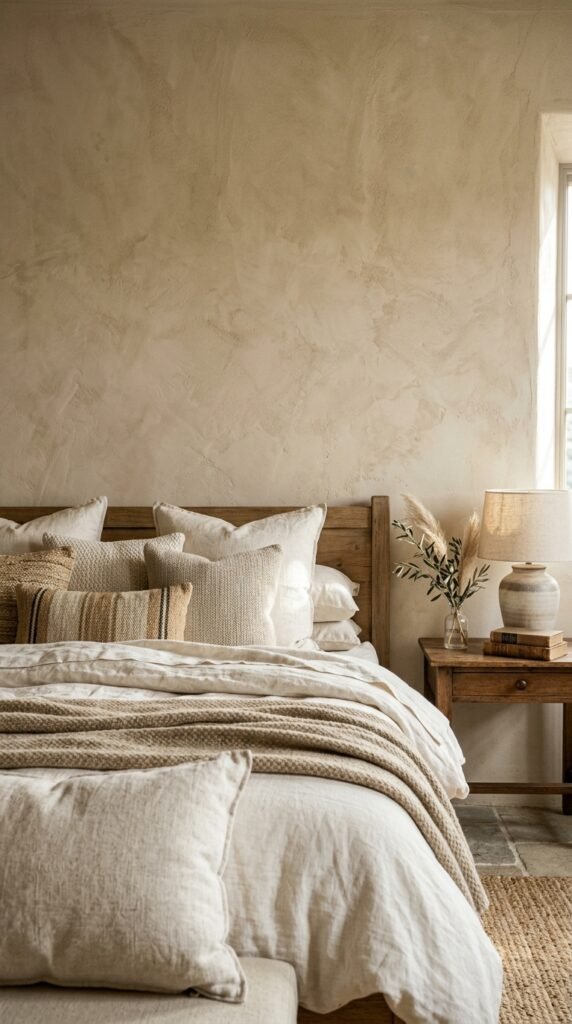
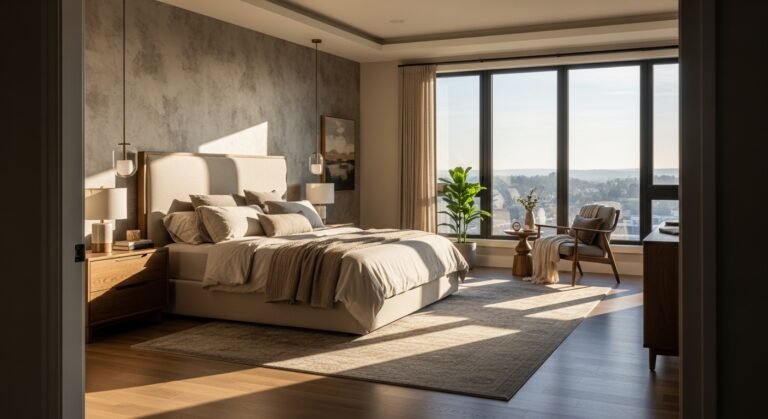
A limewash finish on the bedroom’s most prominent wall adds the architectural depth that flat-painted beige surfaces lack, preventing the room from reading as monotonous regardless of how well you furnish it. Portola Paints Classico Limewash applies directly over existing paint with a brush in two coats and produces an authentic texture for $60 to $100 in product for a standard bedroom wall. The natural depth variation of limewash means the wall reads differently under morning light, afternoon sun, and evening lamplight.
The limewash finish works particularly well in a beige bedroom because the technique originated in Mediterranean architecture where warm, sun-bleached wall surfaces developed natural tonal variation over time. A DIY limewash application takes one afternoon and produces a result that most guests assume required a professional plaster finish. The texture adds the visual complexity the beige palette needs without introducing a new color.
21. Hang a Round Mirror to Amplify Light and Space
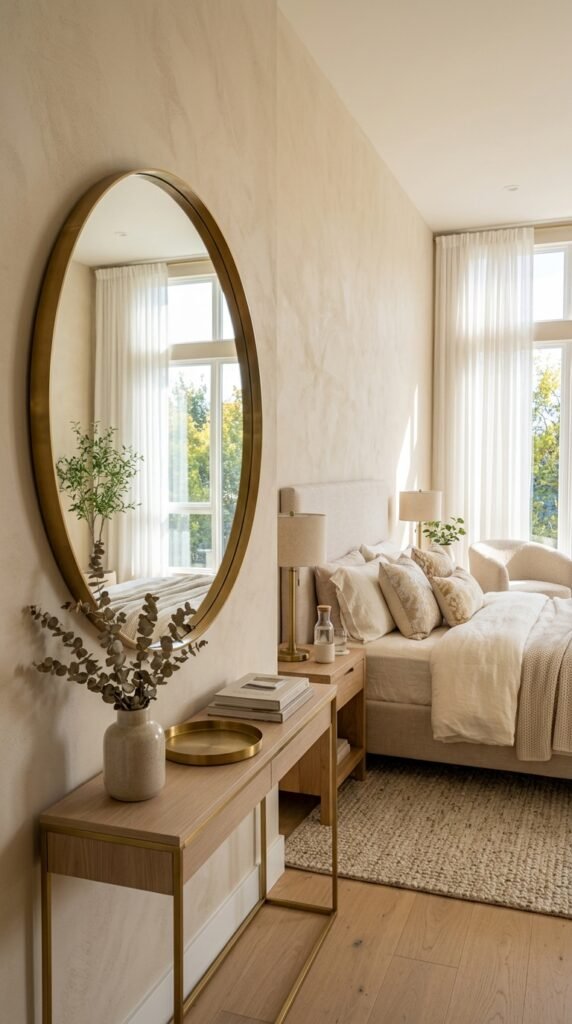
A large round mirror in a warm wood or brushed brass frame on the wall opposite the primary window doubles the natural light in the beige bedroom by reflecting the window source back into the space. A 30 to 36-inch diameter round mirror costs $60 to $150 at IKEA, HomeGoods, or Amazon and produces the same light-doubling effect as installing a second window at a fraction of the cost and zero structural work. The Illuminating Engineering Society estimates mirror placement increases perceived room brightness by 30 to 40 percent in rooms with limited natural light.
The round form of the mirror provides a shape contrast within the predominantly rectangular architecture of a standard bedroom, which prevents the room from reading as visually rigid. A rectangular mirror reads as another wall of flat surface. A round mirror reads as a designed object within the space. Position it at 57 to 60 inches center height on the wall receiving the most bounce light from the bedroom window. FYI, a round mirror in a brushed brass frame becomes one of the most Pinterest-worthy elements in a beige bedroom and one of the most impactful at under $120.
Final Thoughts
A beige bedroom works when you treat it as a layered material palette rather than a single color decision. The paint sets the foundation. The linen bedding adds texture. The warm wood grounds the space. The terracotta accent warms the palette. The lighting makes every other decision look better at night. Start with the three changes that cost the least and deliver the most: replace your bulbs with 2700K warm LEDs, size your rug correctly, and hang curtains at ceiling height. Those three moves alone transform how the beige bedroom reads before you spend another dollar on furniture or decor.