25 Dark Academia Bedroom Ideas for a Cozy, Timeless Look
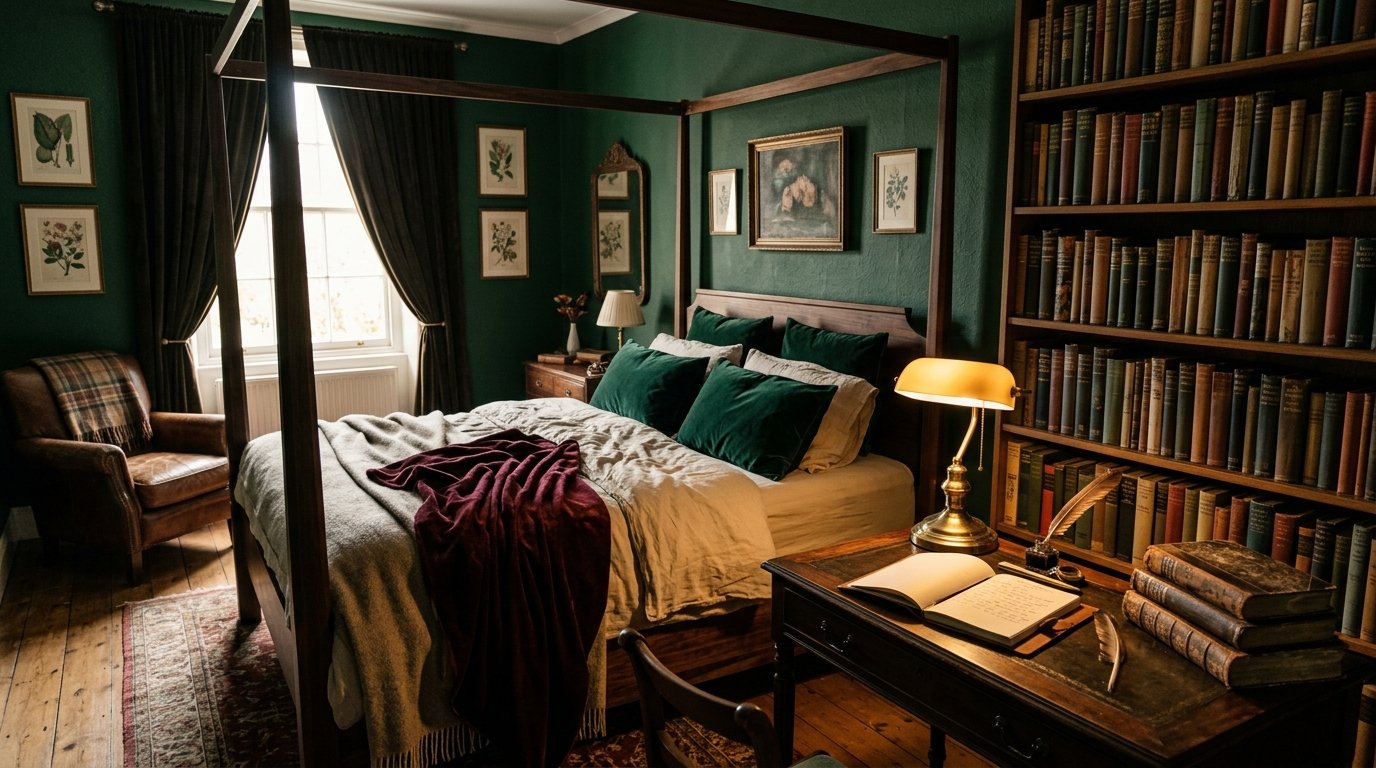
You want your bedroom to feel like a study in an old European university, all dark wood, warm lamplight, and the kind of atmosphere that makes you want to read by candlelight even though you have perfectly good overhead lighting. That’s dark academia, and it’s one of the most satisfying styles to actually live in, not just look at. I redid my own bedroom in this style two winters ago using mostly thrifted finds and a few key pieces, and it remains the coziest room in my house every single year once the temperature drops. Here are 25 ideas that bring that moody, intellectual, slightly gothic library vibe into your own bedroom.
1. Choose a Deep, Moody Wall Color
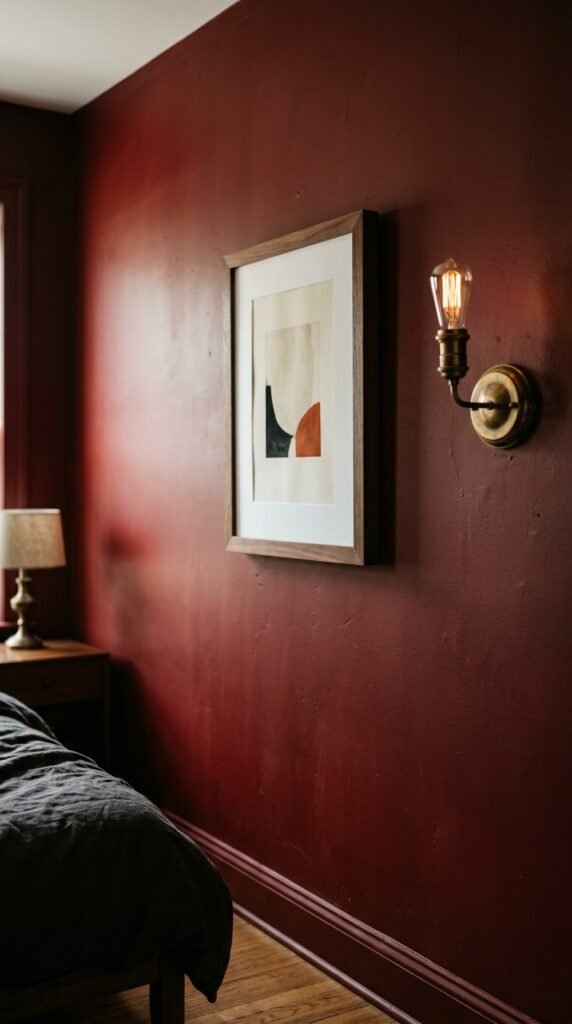
Your wall color sets the entire mood for dark academia, and deep tones like forest green, burgundy, charcoal, or oxblood create the enclosed, library-like feeling the style depends on. Lighter walls work against this aesthetic no matter what else you add to the room.
Best Dark Academia Wall Colors
- Deep forest green (Farrow & Ball Studio Green, Benjamin Moore Hunter Green): classic library wall color
- Oxblood or burgundy (Sherwin Williams Roycroft Maroon): bold, warm, and dramatic
- Charcoal or near-black (Benjamin Moore Wrought Iron): modern take on the same mood
I painted my bedroom in a deep forest green, and the room genuinely feels smaller and cozier in the best possible way. Dark walls absorb light rather than bouncing it around, which is exactly the point.
2. Add a Wall of Bookshelves
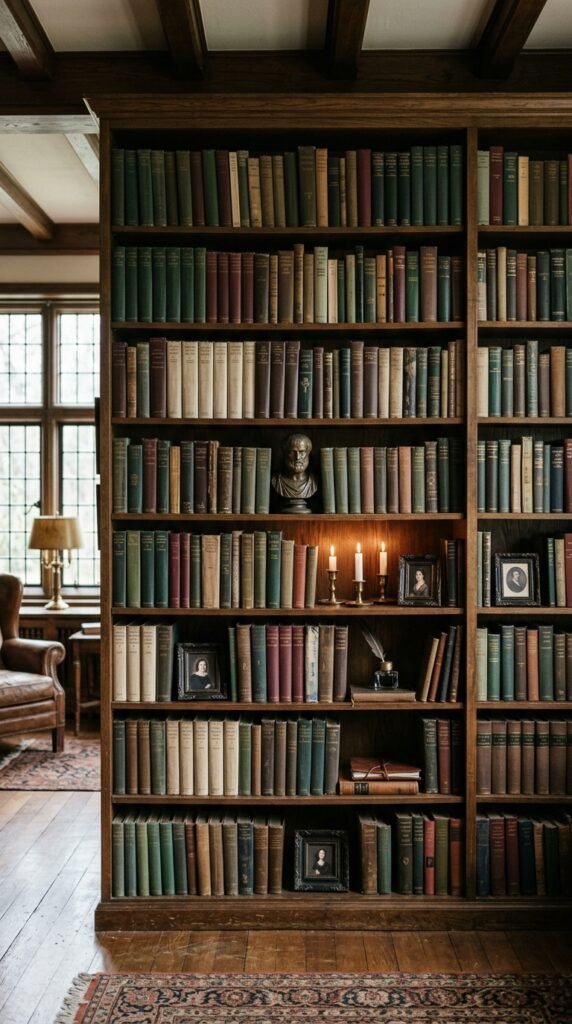
A wall of bookshelves is the single most defining feature of dark academia, and it works whether you fill it with actual books, decorative objects, or both. The visual density of a packed bookshelf creates the layered, lived-in feeling the style is built on.
Floor-to-ceiling bookshelves from IKEA’s Billy series cost $60 to $150 per unit and stack to fill an entire wall for under $400 in most bedrooms. Mix book spines facing out with a few stacked horizontally, and tuck small objects (candles, busts, small frames) into gaps. A half-empty bookshelf looks unfinished, but a slightly overstuffed one looks like a room that’s been lived in for years.
3. Layer in Vintage Brass Lighting
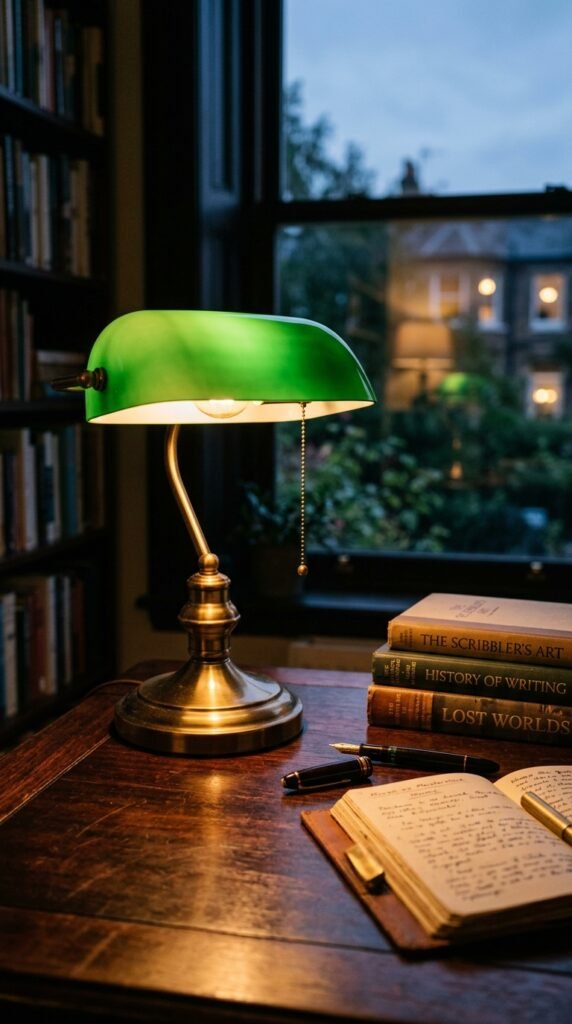
Brass lamps with warm-toned shades replace harsh overhead lighting with the kind of glow that makes a room feel like a study session by candlelight. Dark academia rooms rely heavily on layered, low lighting rather than one bright source.
Lighting Pieces Worth Sourcing
- Brass banker’s lamps: $30 to $80, classic green glass shade option available
- Vintage-style table lamps: $25 to $60 at thrift stores or HomeGoods
- Wall sconces with warm bulbs: $20 to $50 each, install without hardwiring using plug-in versions
Swap every bulb in the room to warm white (2700K), no exceptions. A dark academia room under cool white light looks like an office, not a library, and that’s the difference between the aesthetic working and falling flat.
4. Use a Dark Wood Bed Frame
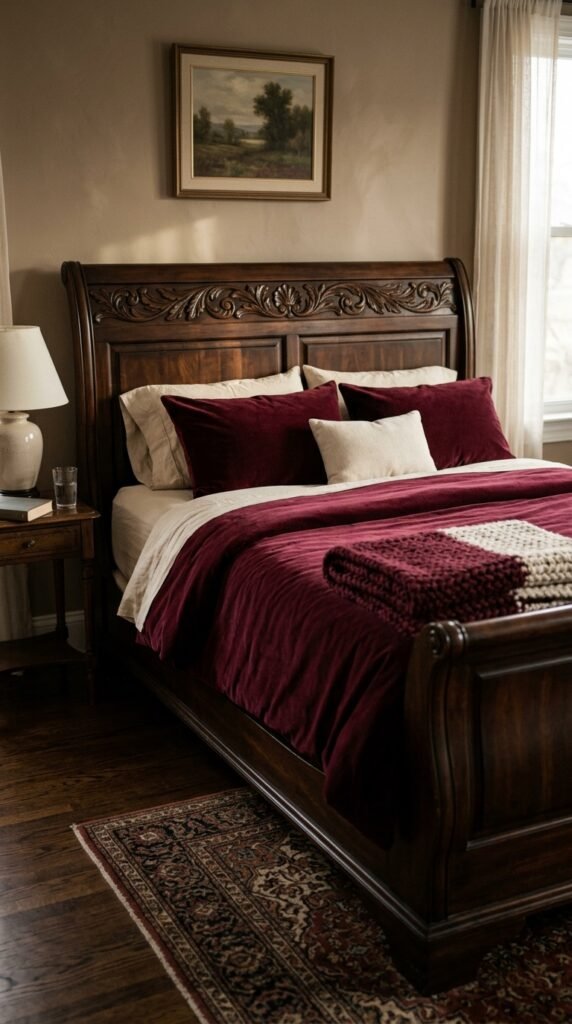
A dark wood bed frame, mahogany, walnut, or ebony-stained oak, anchors the room in the rich, substantial materials the style depends on. Avoid light woods like pine or birch, which read as Scandinavian rather than academic.
A solid dark wood bed frame costs $300 to $900 depending on size and detail, while a budget option involves staining an existing light wood frame in a dark walnut or espresso tone for $20 to $40 in stain and supplies. Sleigh beds, four-poster frames, or frames with carved detail add even more period character if your budget allows. The bed is the largest object in the room, so its tone sets the baseline for everything else.
5. Add Heavy Curtains in Rich Fabrics
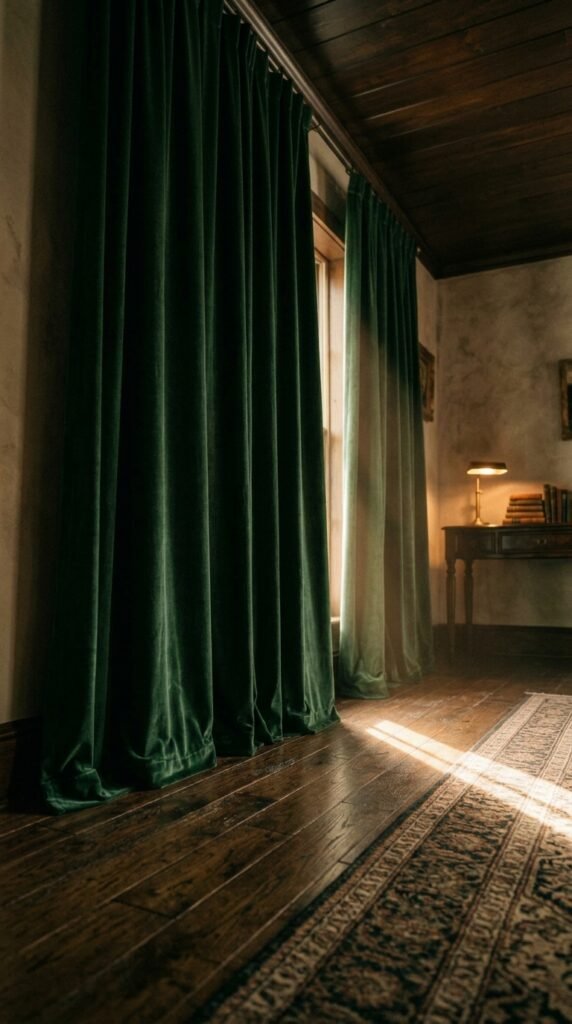
Heavy curtains in velvet, brocade, or thick cotton block light and add drama at window height, which matters because dark academia rooms want controlled, moody light rather than bright daylight flooding in unfiltered. Deep green, burgundy, or charcoal curtains continue the wall color story.
Velvet curtain panels cost $30 to $70 per panel depending on length, and floor-length panels add the dramatic height the style favors. Hang curtains close to the ceiling rather than just above the window frame, since this trick makes ceilings feel taller in any style, but especially this one. Ever notice how heavy curtains alone can make a bright modern room suddenly feel like it belongs in a different century?
6. Incorporate Antique or Vintage Furniture
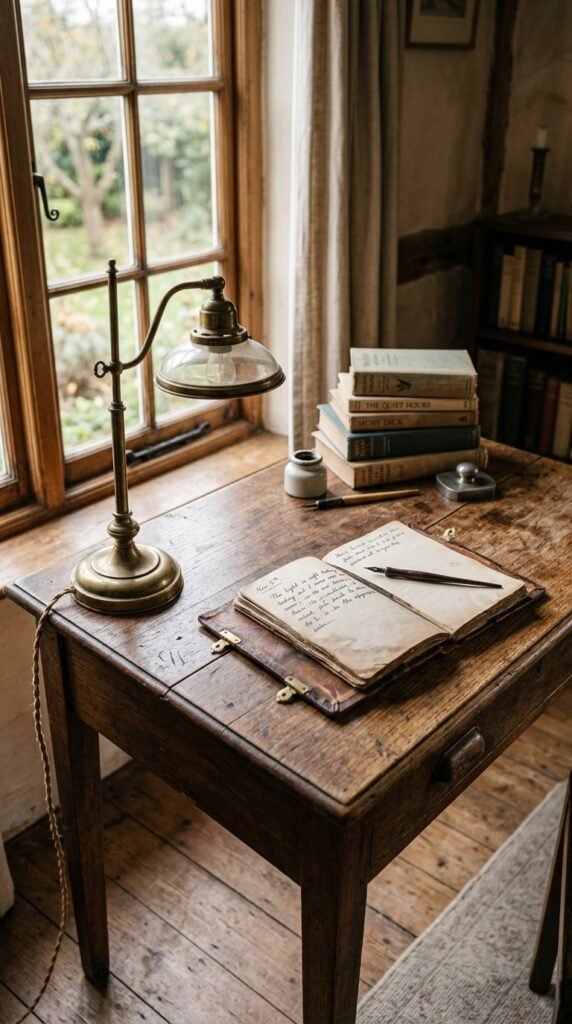
A single antique or vintage furniture piece, a writing desk, a trunk, a wingback chair, adds the “collected over generations” feeling that new furniture can’t replicate no matter how well it’s styled. Estate sales, antique malls, and even Facebook Marketplace are goldmines for this.
A vintage writing desk costs $80 to $300 depending on condition and wood type, while a wingback chair runs $100 to $400 reupholstered. You don’t need to fill the room with antiques. One or two genuinely old pieces mixed with newer furniture does more for the aesthetic than an entire room of reproduction pieces. IMO, the slight wear and patina on real antiques is impossible to fake convincingly.
7. Display Globes, Maps, and Atlases

Vintage globes, framed maps, and stacked atlases are dark academia signatures that signal curiosity and intellect without saying a word. A globe on a desk, a large framed map above a headboard, or a stack of old atlases as a side table base all work.
Vintage globes cost $20 to $80 depending on size and condition, while reproduction antique maps run $15 to $40 framed. A stack of three or four old hardcover atlases makes a surprisingly sturdy side table base, and it costs whatever you pay at a used bookstore, usually under $20 for the whole stack. This is the kind of detail that photographs beautifully and costs almost nothing.
8. Use Leather Accent Pieces
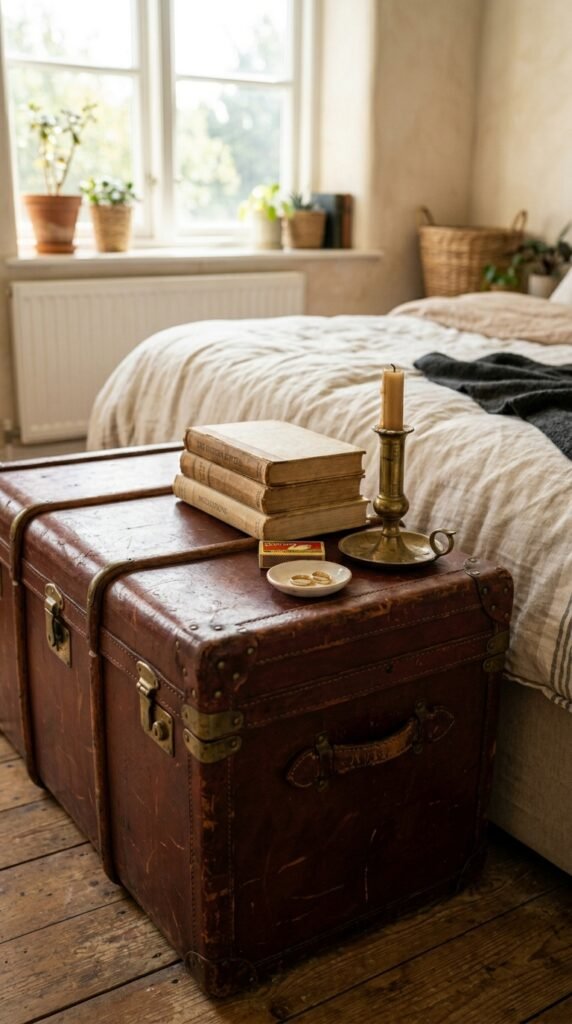
Leather in deep brown, oxblood, or black tones adds richness and durability to a dark academia bedroom, whether through a chair, a trunk, or smaller accents like book covers or a desk pad. Leather develops character with age, which fits the aesthetic perfectly.
A leather Chesterfield-style accent chair costs $400 to $1,200, but a leather desk pad or a small leather storage trunk costs $30 to $100 and adds the same material story in miniature. Faux leather works too if the budget is tight, just look for options with a slight texture or sheen rather than perfectly flat, plastic-looking surfaces. The goal is richness, not just color.
9. Add a Reading Nook With a Wingback Chair
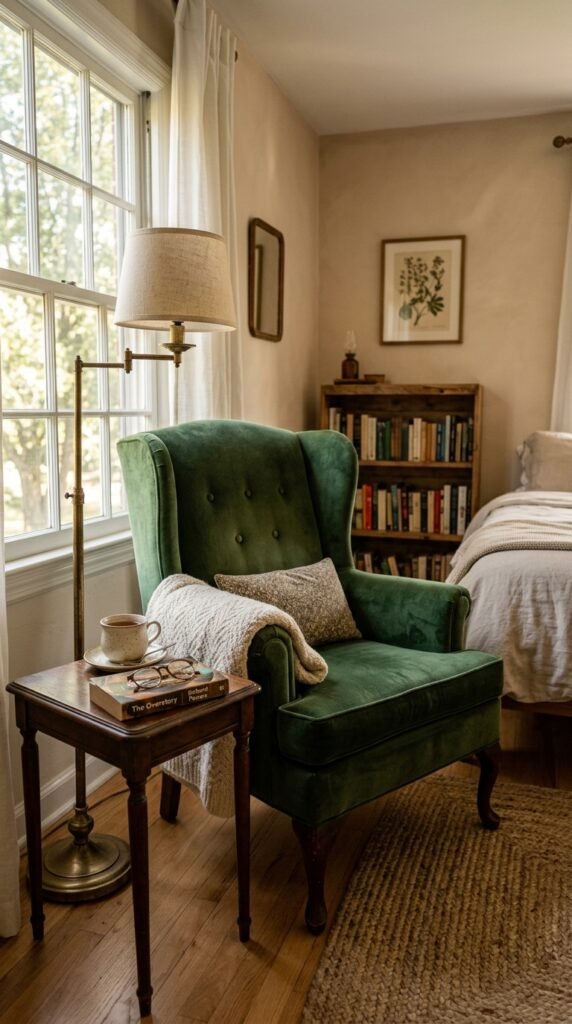
A reading nook built around a wingback or armchair gives the room a dedicated “study” zone, which reinforces the academic part of dark academia in a way that’s also genuinely functional. Position it near a window or a floor lamp for adequate light.
Building a Reading Nook on a Budget
- Thrifted wingback chair: $50 to $150, reupholster later if needed
- Small side table: $20 to $50 for a place to set books, tea, or a candle
- Floor lamp with warm bulb: $25 to $60
A reading nook doesn’t need much square footage. A 4×4 corner with a chair, a side table, and good lighting does the job. This is also the area where a faux fur or wool throw blanket earns its keep on cold mornings.
10. Hang Gallery Walls With Classical Art
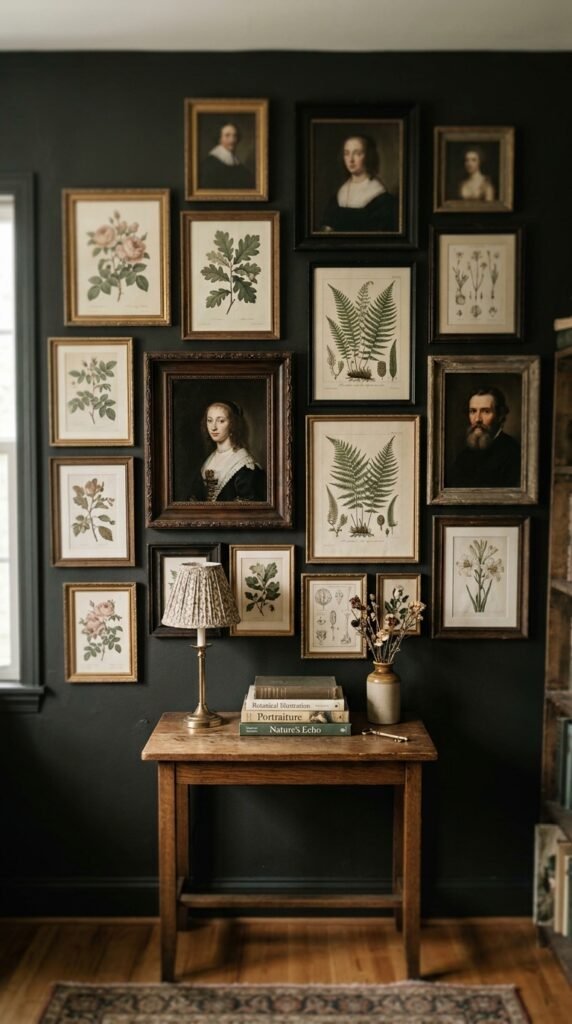
A gallery wall of classical paintings, botanical prints, or portrait reproductions fills wall space with the kind of art you’d expect in an old study or library. Renaissance reproductions, vintage botanical illustrations, and sepia-toned portraits all fit.
Frames in mismatched dark wood tones cost $10 to $30 each at thrift stores, and printable vintage art is widely available for free or low cost online for personal use. Arrange frames in an asymmetrical grid rather than a perfect grid for a more “collected over time” feel. A gallery wall with 8 to 12 pieces in varying sizes fills a wall for under $100 if you’re sourcing frames secondhand.
11. Use Candles (or Candle-Style Lighting) for Ambiance
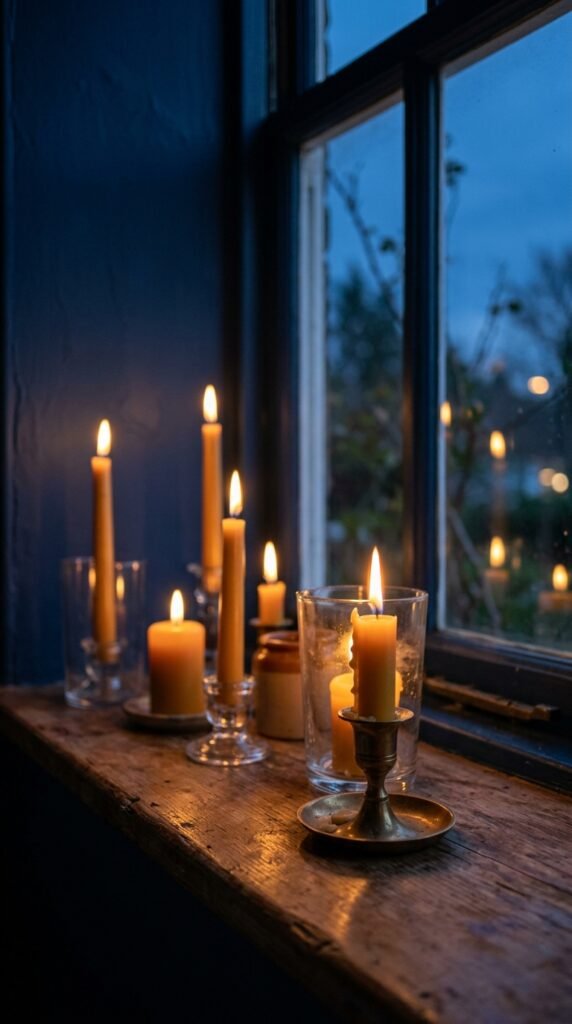
Candles, or flameless candle-style lights, add the warm, flickering glow that overhead lighting simply cannot replicate. Cluster them on a mantel, windowsill, or bookshelf for instant atmosphere.
Flameless LED candles cost $10 to $20 for a multi-pack and avoid the fire risk of real candles in a bedroom, especially useful if you’re prone to falling asleep with lights on. Real beeswax or soy candles in amber or cream tones add scent along with light, running $10 to $25 each. Either way, candlelight (real or simulated) is doing more for the mood of this room than almost any other single element.
12. Add a Velvet Headboard or Bedding
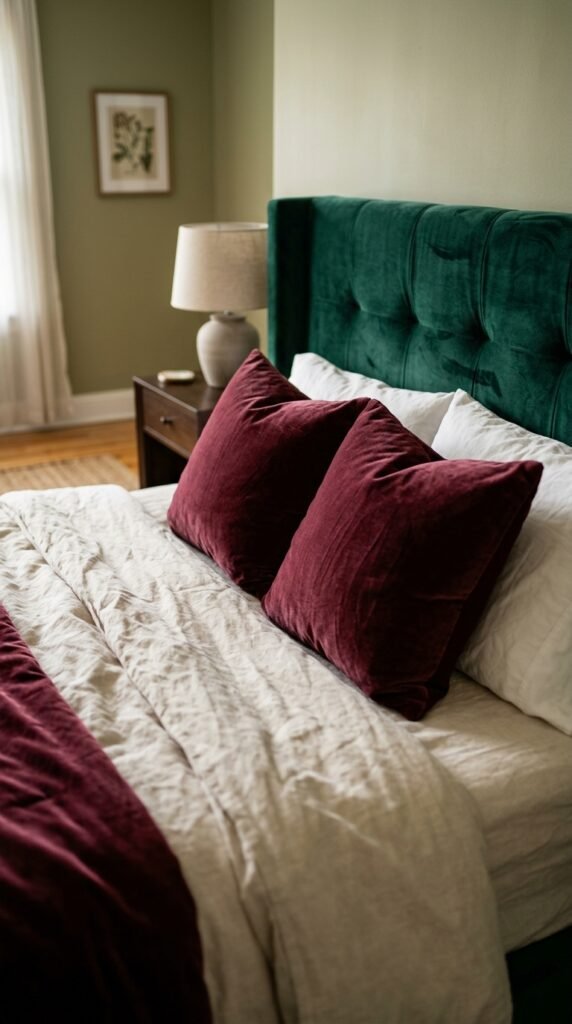
Velvet in deep jewel tones, emerald, burgundy, navy, or charcoal, adds texture and richness to the bed, which is the focal point of any bedroom. A velvet headboard or velvet throw pillows bring this texture in without requiring a full bedding overhaul.
A velvet headboard costs $150 to $400 depending on size, while velvet throw pillows run $20 to $40 each and layer easily onto existing bedding. Combine velvet with linen or cotton sheets underneath for texture contrast, since an all-velvet bed can feel heavy rather than luxurious. Texture variation is what separates “cozy” from “stuffy” in this aesthetic.
13. Incorporate a Library Ladder

A library ladder mounted to a bookshelf is a dramatic, functional statement piece that signals serious bookshelf real estate, even if your shelves don’t quite reach library height. Rolling library ladders attach to a rail system mounted along the top of a bookshelf.
A library ladder kit costs $150 to $400 depending on length and hardware finish, with brass or bronze hardware fitting the dark academia palette best. This is admittedly one of the pricier ideas on this list, and honestly, it’s a “if you’re already doing a big bookshelf wall and want to go all in” addition rather than a starting point. But if your shelves are tall enough to need it, the visual payoff is enormous.
14. Use Dark, Patterned Wallpaper
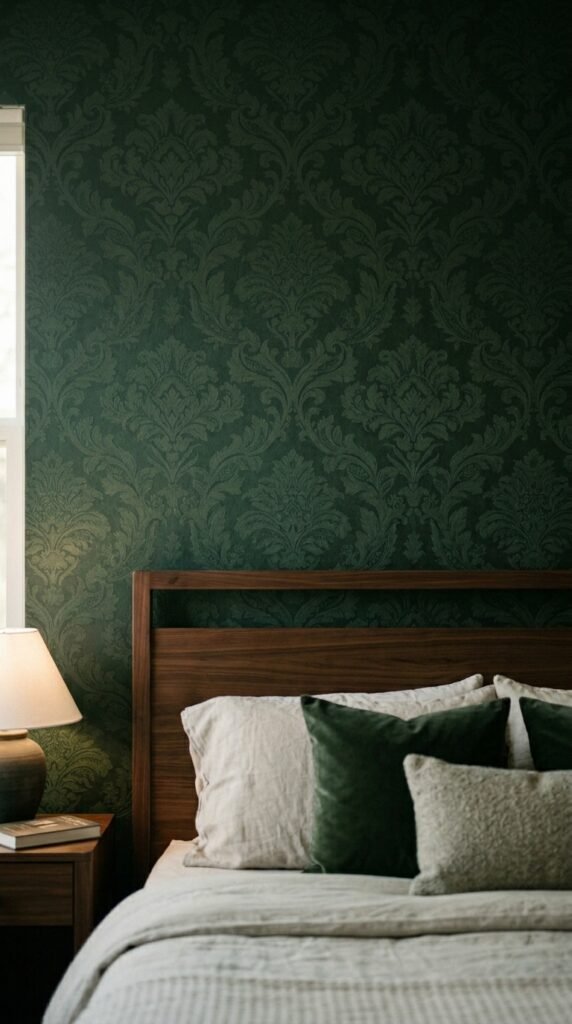
Patterned wallpaper in deep tones, damask, botanical prints, or subtle stripes, adds dimension that flat paint can’t achieve, especially on a single accent wall behind the bed. Look for patterns in tone-on-tone dark colors rather than high-contrast prints.
Wallpaper costs $30 to $80 per roll, and a single accent wall typically needs 3 to 5 rolls depending on room size. Peel-and-stick versions in the $25 to $50 per roll range work for renters and remove cleanly when you move. A dark damask or botanical wallpaper behind a bed does more visual work in one wall than most rooms achieve with five separate decor pieces.
15. Add Brass or Bronze Hardware Throughout
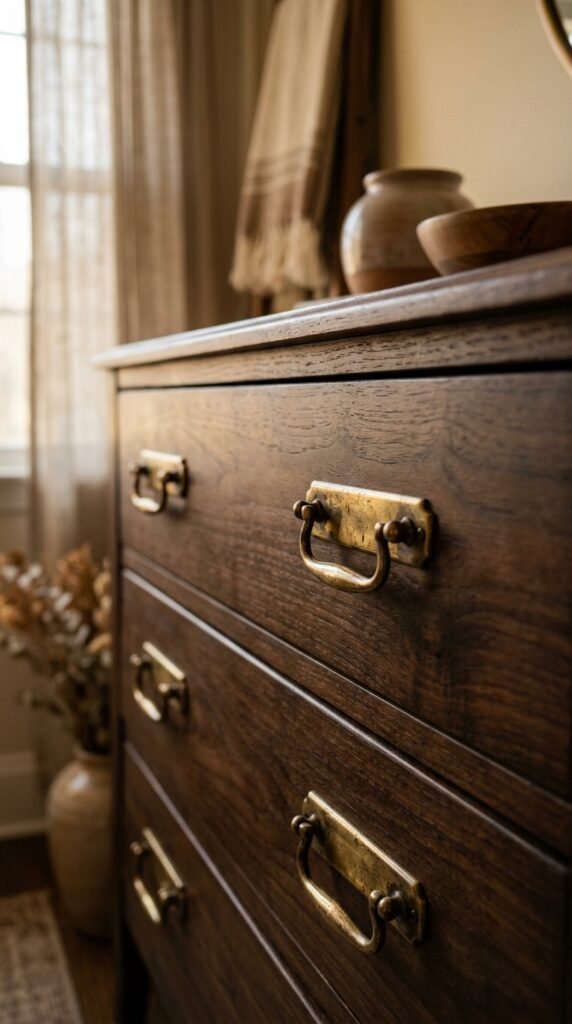
Brass and bronze hardware on drawers, doors, and light fixtures ties the metal tones together across the room, creating a cohesive material story that feels intentional rather than mismatched. Swap out chrome or silver hardware for warm metal tones wherever possible.
Cabinet and drawer pulls in brass or bronze finishes cost $5 to $15 per piece, and swapping 6 to 8 pulls on a dresser runs $30 to $90 total. This is a small, often-overlooked detail, but cool-toned hardware in a room full of warm wood and deep colors looks slightly wrong in a way most people notice without being able to say why. Warm metals just belong here.
16. Display a Typewriter or Vintage Desk Accessories
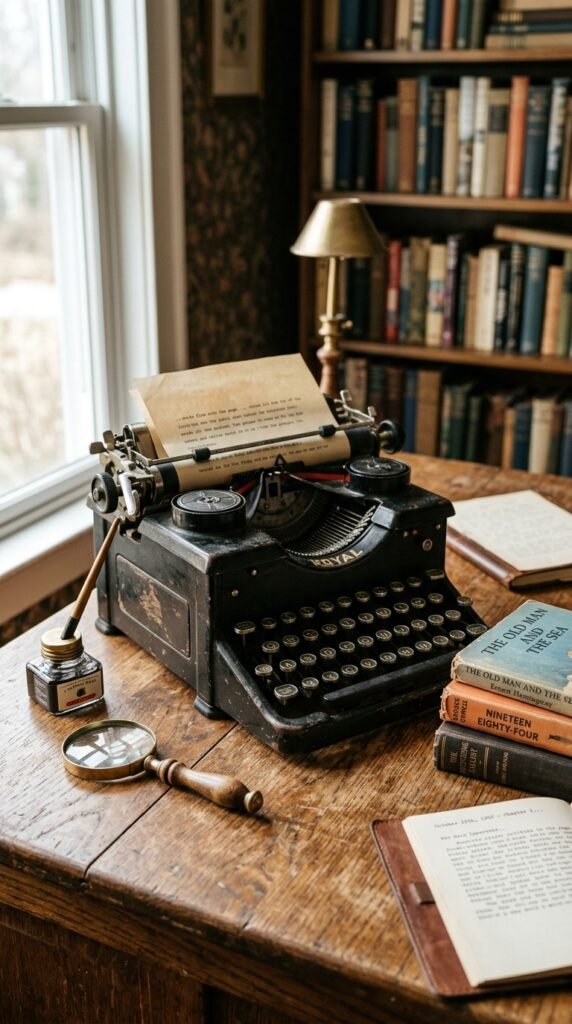
A vintage typewriter, fountain pen set, or old desk accessories add intellectual character to a desk or shelf, even if you never actually type on the typewriter (most people don’t, and that’s fine). These objects are conversation pieces as much as decor.
Vintage typewriters cost $40 to $150 depending on brand and condition, while smaller desk accessories (ink wells, letter openers, magnifying glasses) run $10 to $30 each at antique shops. Style these on a desk alongside a small stack of books and a lamp for an instant “scholar’s desk” vignette. This is one of those details that makes guests stop and ask questions, which, depending on your personality, is either a feature or a bug.
17. Use Plaid or Tartan Textiles
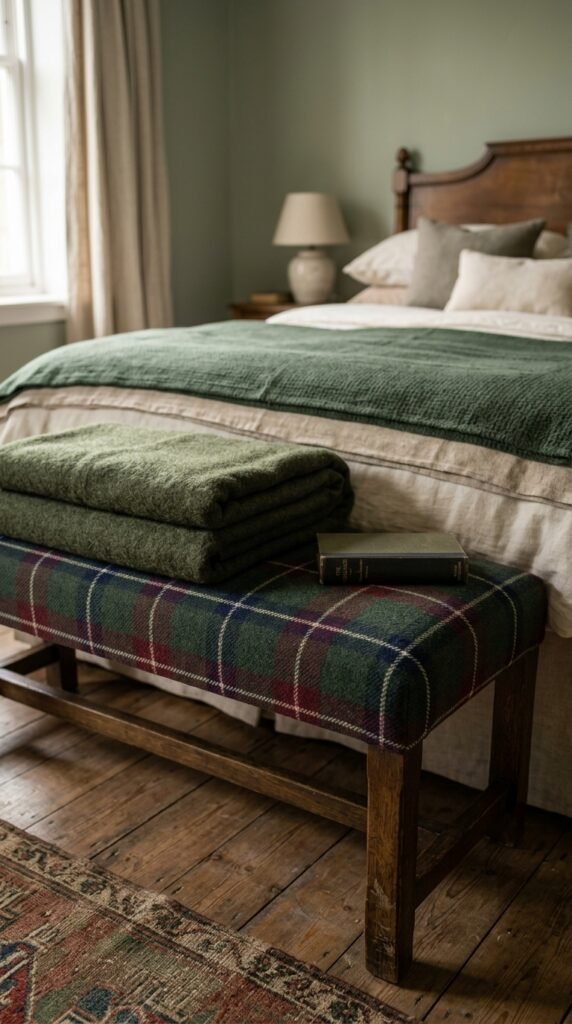
Plaid and tartan patterns in deep, muted colorways (forest green, burgundy, navy, mustard) reinforce the academic, almost preparatory-school feeling dark academia often draws from. Throw blankets, pillow covers, or even a small upholstered bench in tartan all work.
Tartan throw blankets cost $25 to $50, and a tartan-upholstered bench at the foot of the bed runs $80 to $200 depending on size. Keep tartan in muted, deep colorways rather than bright Christmas-red plaids, which read as holiday decor instead of academic moodiness. One or two tartan pieces add pattern without overwhelming the room’s deeper, more solid color base.
18. Add Taxidermy-Style or Botanical Specimens (Real or Faux)
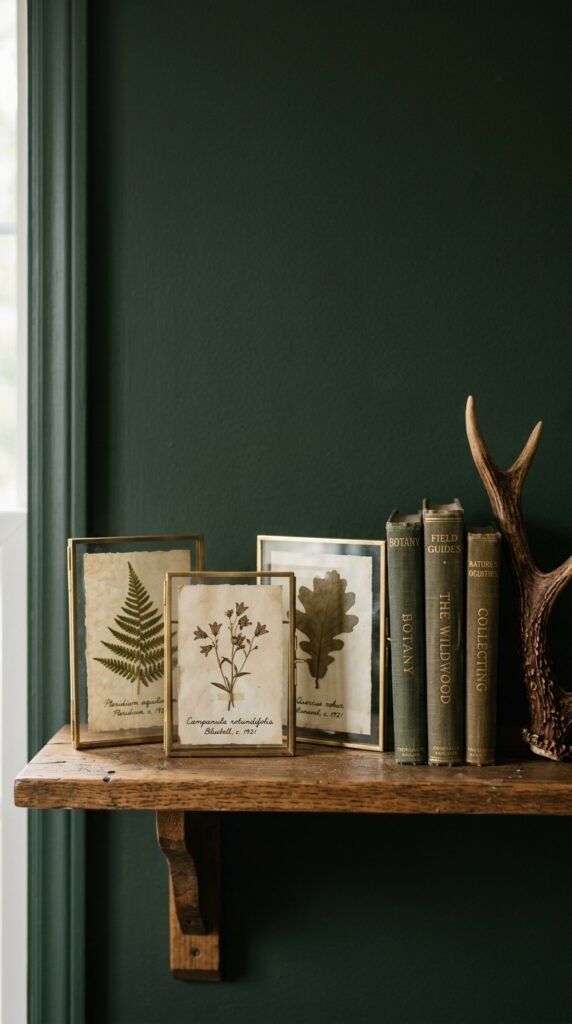
Botanical specimens, pressed flowers, faux taxidermy, or natural history-style prints bring in the “cabinet of curiosities” element that many dark academia spaces lean into. This doesn’t require anything ethically questionable, faux versions and botanical prints work just as well.
Framed pressed botanical specimens or vintage natural history prints cost $15 to $40, while faux taxidermy pieces (resin antlers, faux mounted birds) run $20 to $60. Group a few of these with books and candles for a shelf vignette that feels like a small curiosity cabinet. FYI, real taxidermy can get expensive and ethically complicated fast, so faux is genuinely the better choice here on every front.
19. Use a Large Area Rug in Deep Tones
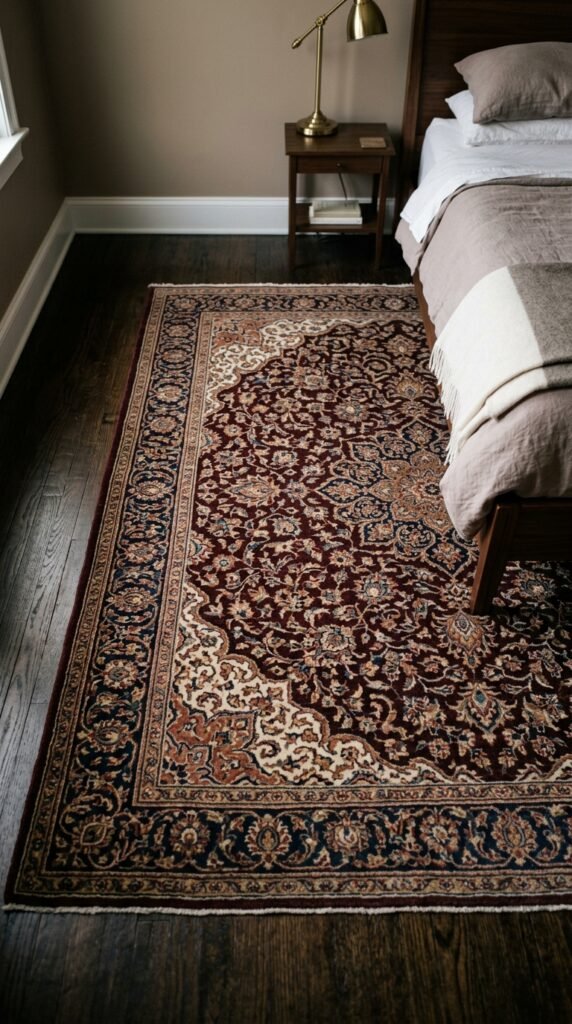
A large area rug in burgundy, deep green, or navy with a subtle pattern grounds the room and adds warmth underfoot, which matters in a style that often features hardwood or dark flooring. Persian-style or oriental-pattern rugs fit this aesthetic particularly well.
Area rugs in the 8×10 size with deep, patterned designs cost $150 to $400 depending on material and origin, with vintage or antique-style rugs (whether genuinely old or new but designed to look aged) reinforcing the “collected” feeling. A rug this size anchors the bed and reading nook into one cohesive floor plan rather than leaving them feeling like separate zones. Cold feet on bare wood floors are not part of the dark academia experience, FYI.
20. Incorporate a Chesterfield or Tufted Furniture Piece
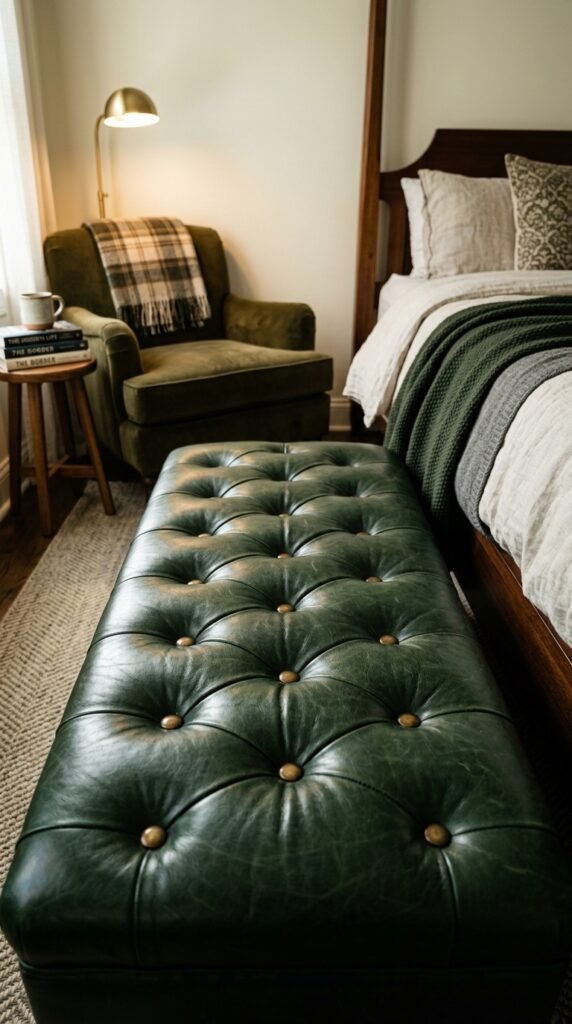
Tufted furniture, a Chesterfield sofa, an ottoman, or even a tufted headboard, adds the structured, formal texture that dark academia borrows from old study and drawing rooms. The button-tufted detail reads as traditional and substantial.
A tufted ottoman costs $80 to $200 and works as both seating and a footrest near a reading nook. A full Chesterfield sofa runs $600 to $1,500 and might be more bedroom than most people want to commit to, but a tufted bench or ottoman brings the same detail in a smaller dose. This is texture doing double duty as both comfort and visual interest.
21. Add Stacked Books as Decor Objects
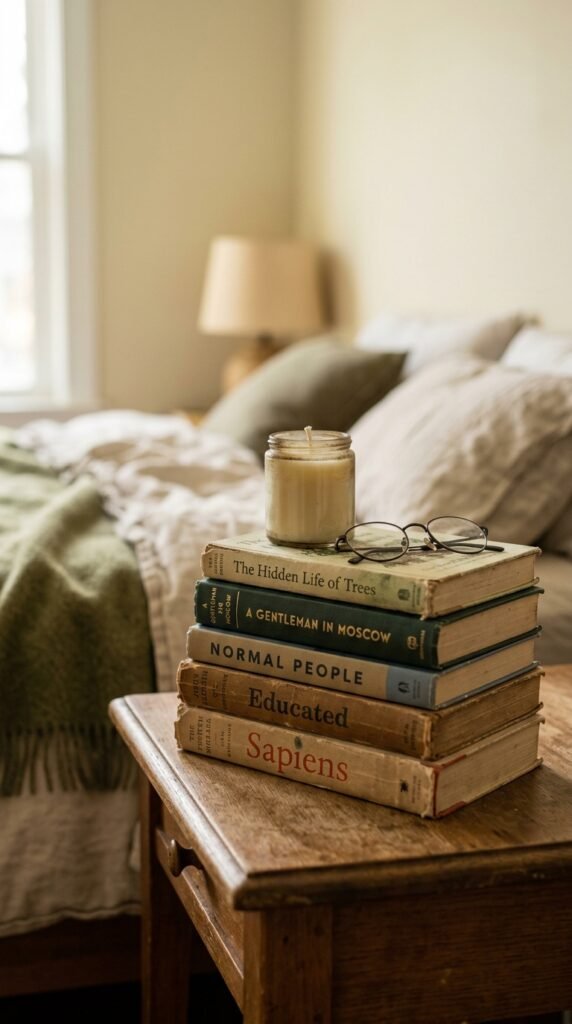
Stacked books aren’t just for shelves, they work as side table risers, shelf styling, and even nightstand decor all on their own. A stack of 3 to 5 hardcover books with a candle or small object on top is one of the most repeated styling tricks in this aesthetic for good reason.
Used hardcover books cost $1 to $5 each at thrift stores or used bookstores, and books with worn, neutral-toned spines (cream, brown, deep green, burgundy) work best for styling versus bright modern dust jackets. Use stacks at varying heights across different surfaces, nightstand, desk, windowsill, rather than concentrating them all in one spot. This is the cheapest, most flexible styling tool on this entire list.
22. Use Stained Glass or Leaded Glass Accents
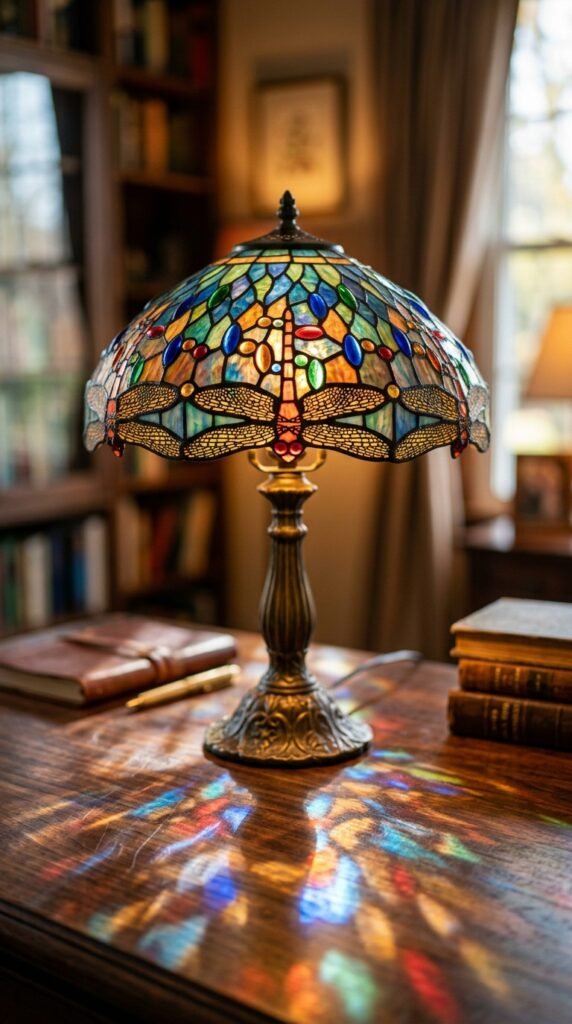
Stained glass lamps, leaded glass cabinet doors, or even a small stained glass panel hung in a window add color and texture that filtered light makes genuinely beautiful. Tiffany-style lamps are the most iconic version of this.
Tiffany-style stained glass lamps cost $60 to $200 depending on size and quality, while smaller hanging stained glass panels run $20 to $50. Position these where afternoon light hits them directly, since the entire point is the way light filters through the colored glass. This is a detail that changes throughout the day, which gives the room a living quality static decor can’t match.
23. Add a Writing Desk as a Functional Focal Point
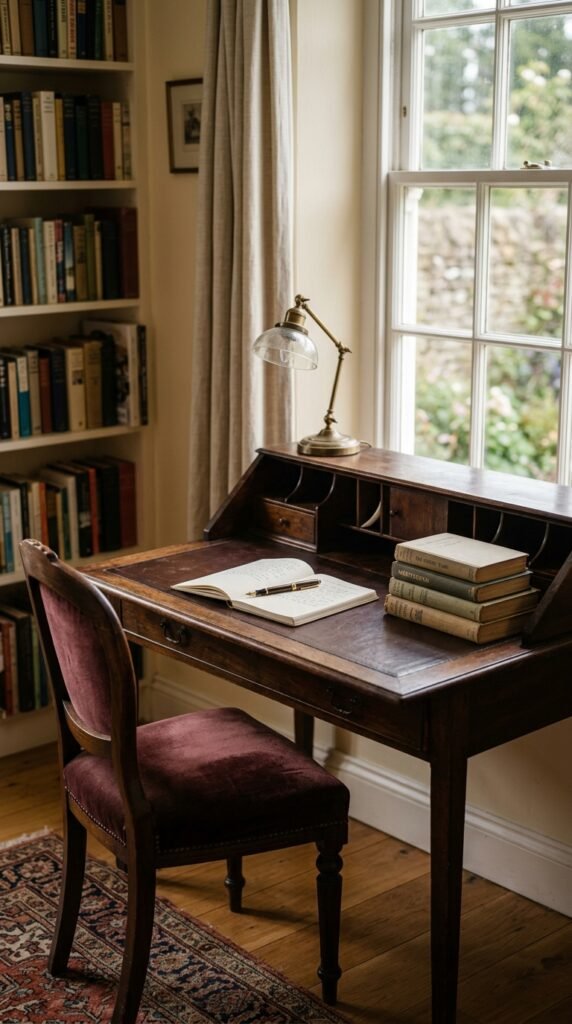
A dedicated writing desk reinforces the “study” half of dark academia while giving you an actual workspace, which most bedrooms desperately need anyway. Position it near a window for natural light during the day and layer in a desk lamp for evening use.
A vintage or vintage-style writing desk costs $100 to $350, and pairing it with a leather or velvet desk chair completes the look for another $80 to $200. Style the desk with a small lamp, a stack of books, and a few writing implements rather than leaving it bare. A bare desk looks unfinished. A desk with a few intentional objects looks like someone actually uses it.
24. Use Dark-Stained Wood Flooring or Rugs to Fake It
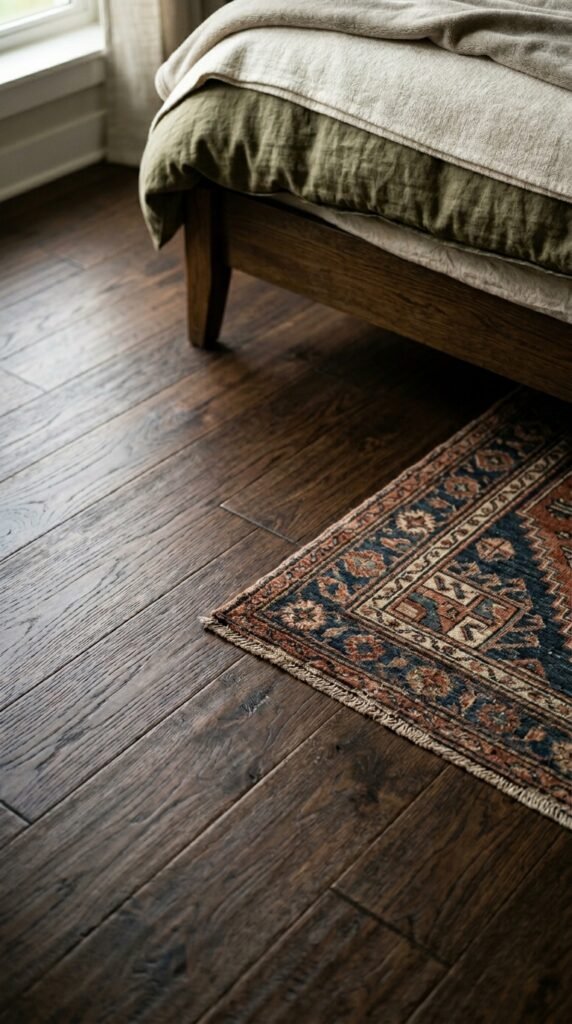
Dark-stained wood flooring completes the room’s foundation, but if refinishing floors isn’t in the cards, large dark rugs cover enough floor area to fake the effect convincingly. Either approach keeps the floor from competing with the room’s deep color palette.
Refinishing existing hardwood floors with a dark walnut or espresso stain costs $3 to $8 per square foot for professional work, a significant investment but one that transforms an entire room. For renters or smaller budgets, an 8×10 or larger dark rug covering most of the visible floor achieves a similar visual effect for $150 to $400. Ever notice how light floors under dark furniture can look slightly mismatched, like the room started one direction and changed its mind? Dark floors (real or rug-faked) solve that.
25. Add Greenery in Dark, Glossy Planters
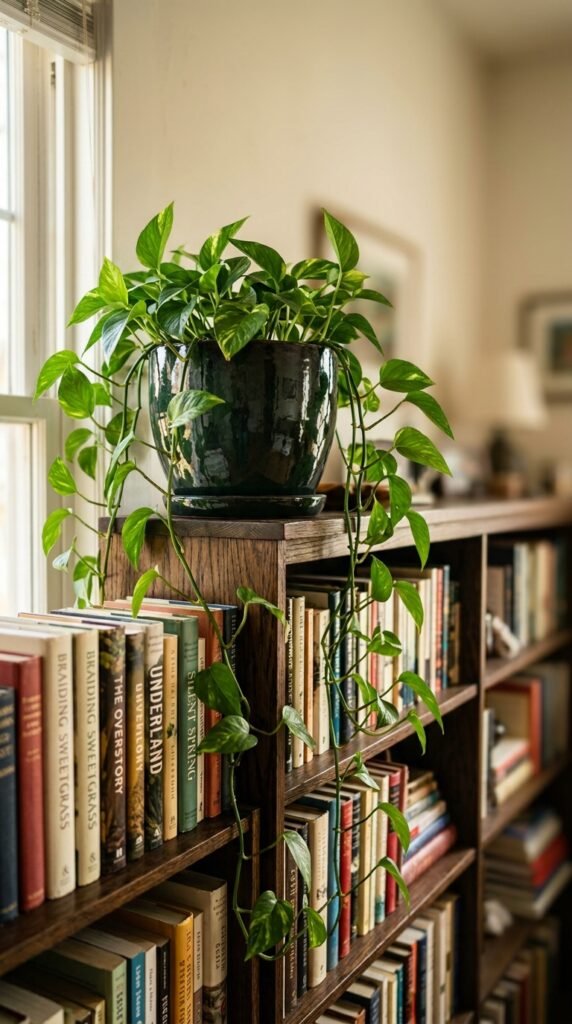
Plants soften dark academia’s heavier elements, and dark, glossy ceramic or metal planters keep the greenery from feeling out of place against deep walls and antique furniture. Trailing plants like pothos or ivy work particularly well, draping over bookshelves or desk edges.
Dark glazed ceramic planters cost $15 to $40, and pothos or ivy plants run $10 to $20 at most garden centers. Position plants on bookshelves, windowsills, or desk corners where they can trail naturally rather than sitting stiffly upright. Even one or two plants prevent the room from feeling like a sealed, airless study, which, despite the aesthetic’s vibe, you don’t actually want in a bedroom you sleep in every night.
Final Thoughts
Dark academia works in a bedroom because it turns a space for sleeping into a space for thinking, reading, and slowing down, which is exactly what a bedroom should feel like once the lights go down. The style rewards patience and secondhand shopping more than almost any other aesthetic, since vintage and antique pieces do more visual work here than anything bought new. Start with your wall color and lighting, since those two changes affect everything else in the room, then build outward with books, textures, and a few meaningful objects. Give your bedroom the mood of a room where important thinking happens, even if most nights that thinking is really just you, deciding whether to read one more chapter or finally turn off the lamp.