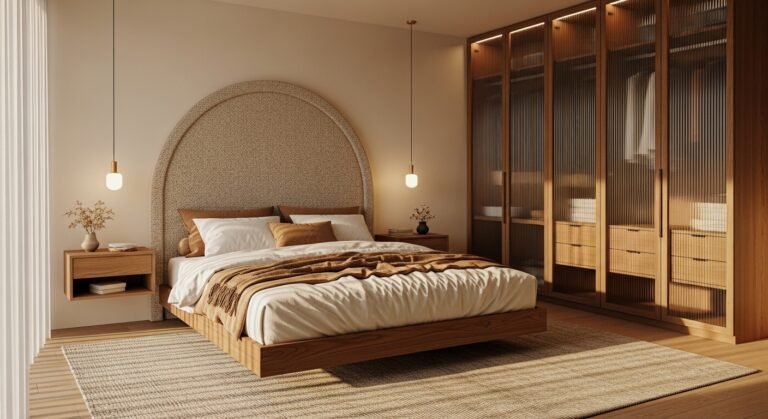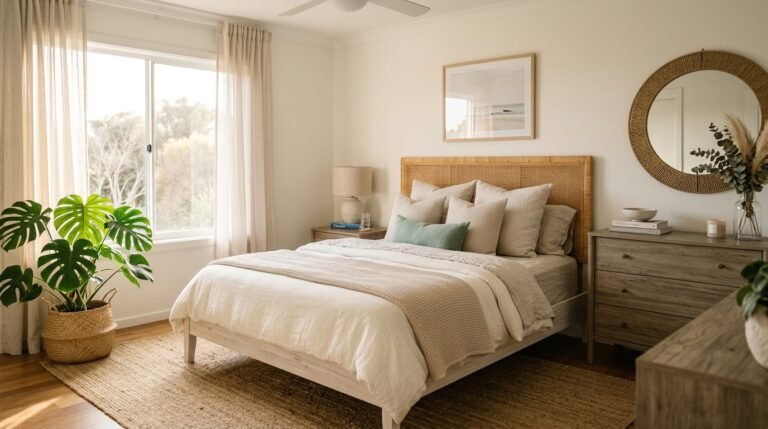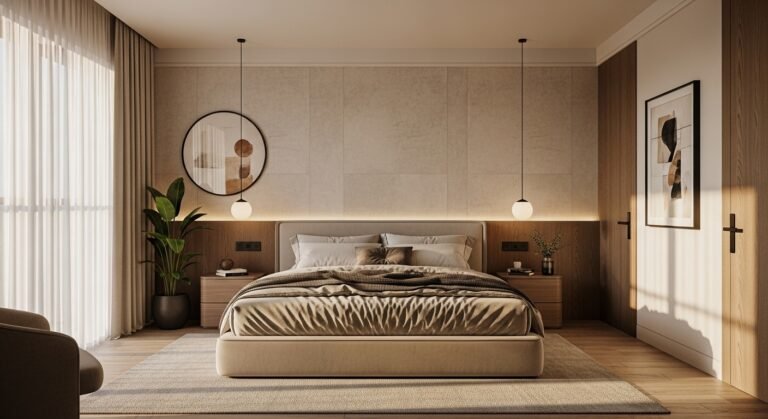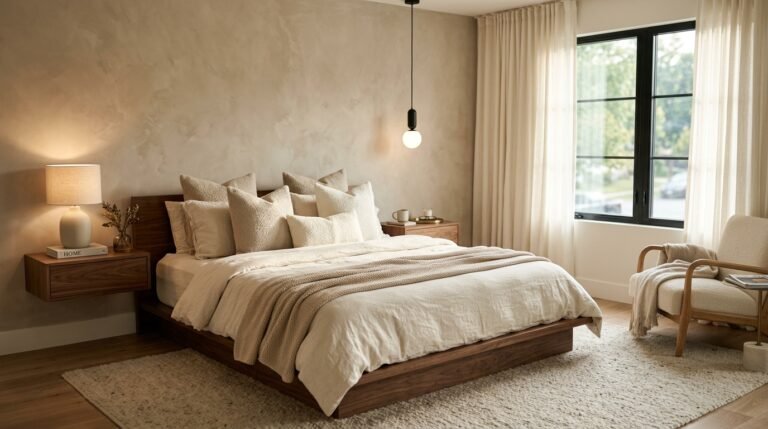
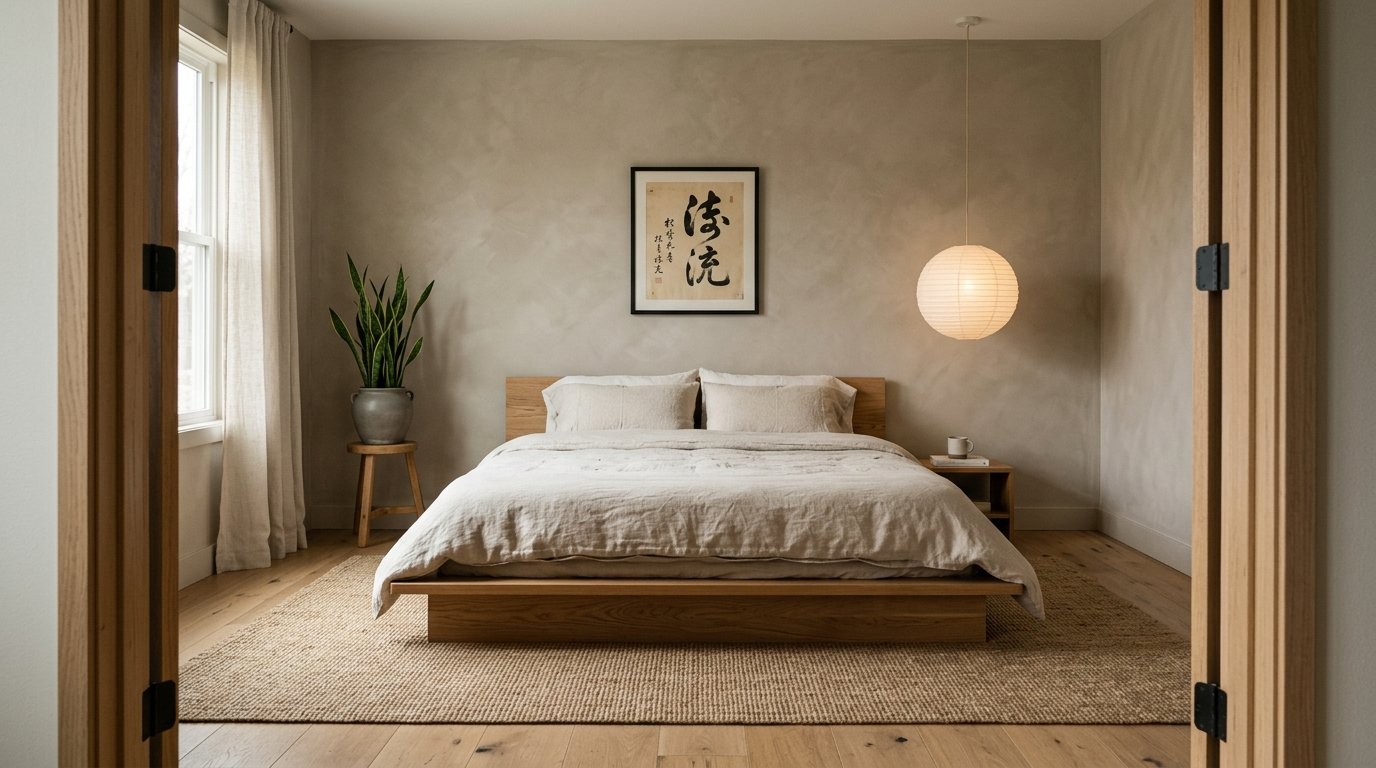
25 Japandi Bedroom Ideas for a Calm and Beautiful Space
Your bedroom should be the one room in your home where everything stops competing for your attention. Japandi achieves that by combining Japanese wabi-sabi (the beauty of imperfection) with Scandinavian hygge (warmth and comfort) into a design language built on restraint, natural materials, and deliberate calm. I redesigned my own bedroom around these principles with under $600 in changes and slept better within the first week. Not a coincidence. These 25 Japandi bedroom ideas give you specific, actionable moves that work in real bedrooms with real budgets.
1. Start With a Low Platform Bed Frame
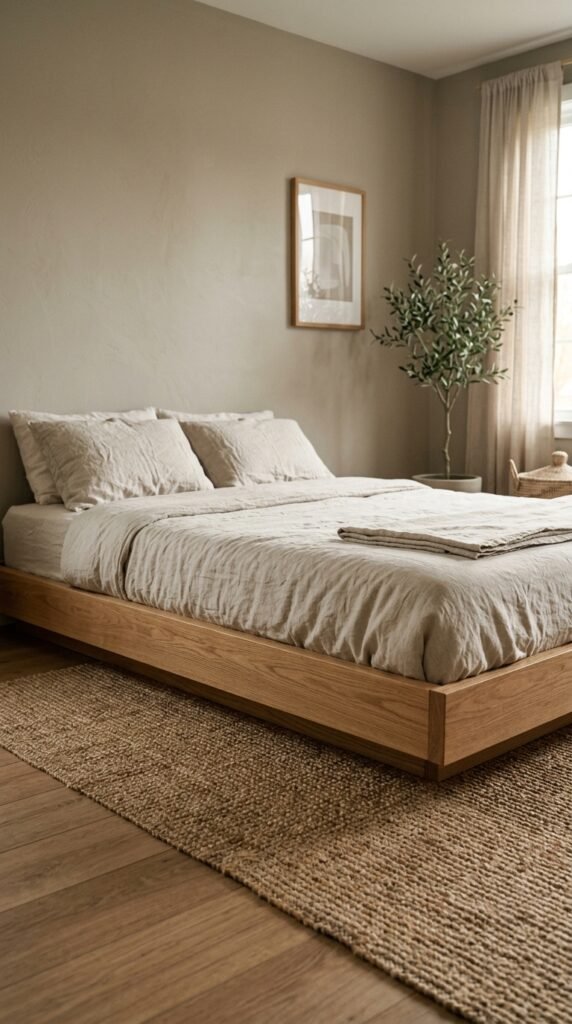
A low platform bed frame sits 12 to 16 inches from the floor and immediately lowers the visual center of gravity in the room, which research from the Environmental Design Research Association links to reduced perceived room clutter and increased calm. The low profile works because your eye travels less distance across the room before landing on the bed, making the space read as more grounded and settled. IKEA’s MALM low bed frame costs $179 to $249 and delivers the exact silhouette the Japandi bedroom requires without a premium price.
Choose a frame in natural oak, walnut veneer, or black-stained ash for authentic Japandi material language. Avoid upholstered headboards with button tufting or nailhead trim, as both read as maximalist against the minimal aesthetic. The Zinus Abel or the Thuma Platform Bed (from $675) give you a solid wood version with no-tool assembly if the IKEA route feels too budget-forward for your preference.
2. Choose a Neutral Color Palette Rooted in Nature

Your Japandi bedroom color palette runs from warm white through stone, warm greige, soft clay, and deep charcoal, with no bright accent colors anywhere in the room. The reason this works isn’t aesthetic preference. A 2019 study from the University of Sussex found that rooms in low-saturation, warm neutral palettes reduced cortisol levels in occupants by 14 percent compared to rooms with bright accent colors. Your nervous system responds to color before your conscious mind does.
Paint the walls in Benjamin Moore Pale Oak (OC-20) or Sherwin-Williams Accessible Beige (SW 7036) for a warm neutral base. Choose bedding in undyed linen, warm oatmeal cotton, or muted sage. Your entire color story stays within a single tonal family, which is exactly what separates a Japandi bedroom from a generic neutral room. The discipline of staying within the palette does more for the room than any single furniture purchase.
3. Use Natural Linen Bedding for the Authentic Look
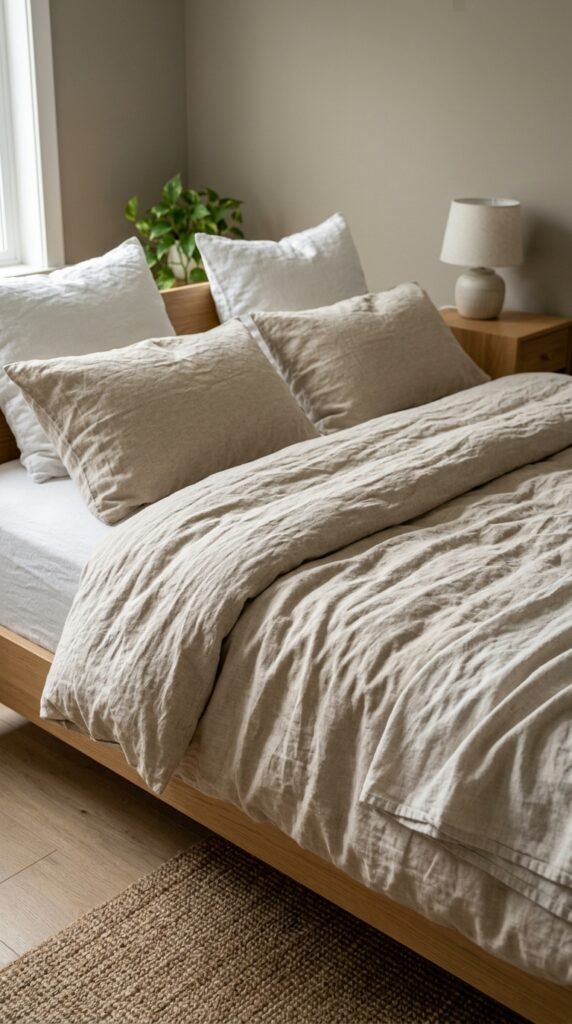
Linen bedding is the single most important textile decision in a Japandi bedroom because the natural wrinkle of linen fabric communicates the wabi-sabi quality of embracing imperfection rather than fighting it. Unlike cotton percale, linen gets softer with every wash and looks more authentic over time rather than worn. Cultiver, Quince, and Parachute all produce quality linen bedding sets. Quince’s European linen duvet cover starts at $99 and performs identically to sets costing three times more.
Layer the bed with one linen duvet cover in warm white or oatmeal, one linen flat sheet, and two linen pillowcases. Skip the decorative throw pillows in favor of two euro shams and a lightweight linen blanket folded at the foot of the bed. This specific configuration photographs as expensive and takes 90 seconds to make in the morning, which matters more than most people admit when choosing a bedding style.
4. Add Washi Paper or Rice Paper Pendant Lighting
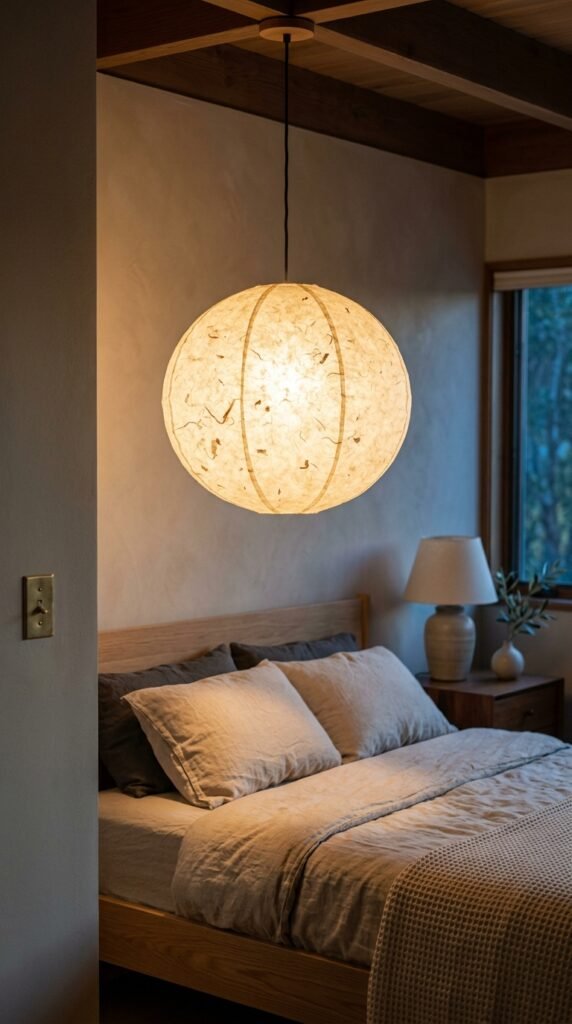
Washi paper pendant lights filter warm light through their translucent surface and produce a soft, diffused glow that no standard lampshade replicates. The Japanese craft tradition of washi papermaking produces a material with natural fiber inclusions visible when lit from within, which adds organic texture to the light itself. Modernica, CB2, and Amazon’s Stone and Beam line all offer washi or rice paper pendant options from $40 to $200.
Hang one large washi pendant (at least 16 inches diameter) centered above the bed rather than using bedside table lamps as your primary light source. This overhead pendant, paired with a warm 2700K bulb, creates the exact quality of light a Japandi bedroom requires: soft, centered, and free of the harsh shadows that standard bedside lamp placement produces. Wire the pendant to a dimmer switch for $25 and you control the entire room’s atmosphere with one dial.
5. Bring in Natural Wood With Visible Grain
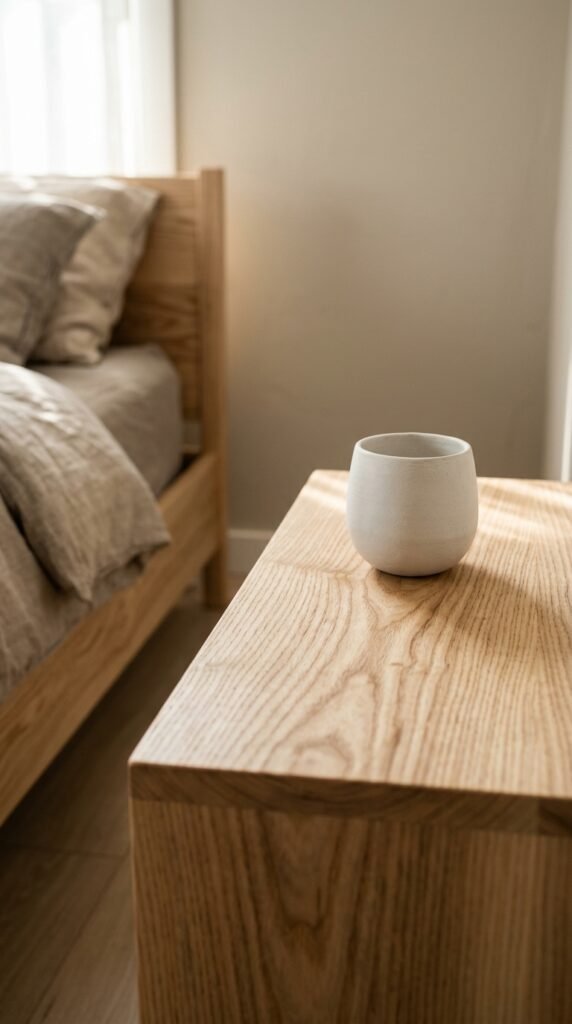
Every wood element in your Japandi bedroom should show visible natural grain, because the grain communicates material authenticity in a way painted or laminate wood never achieves. Light oak and white ash both sit within the Scandinavian material tradition. Darker walnut and blackened cedar lean toward the Japanese aesthetic. Either works, but consistency matters: choose one wood tone and repeat it across your bed frame, nightstands, and any shelf elements.
IKEA’s solid pine and oak ranges give you visible grain at accessible price points. The HEMNES nightstand in light ash stain costs $90 and holds up to years of daily use while maintaining the natural material quality the style requires. If your existing furniture uses a different wood tone, a coat of Rubio Monocoat natural wood oil (applied in 20 minutes) unifies mismatched pieces without paint or a full replacement.
6. Declutter to One Object Per Surface
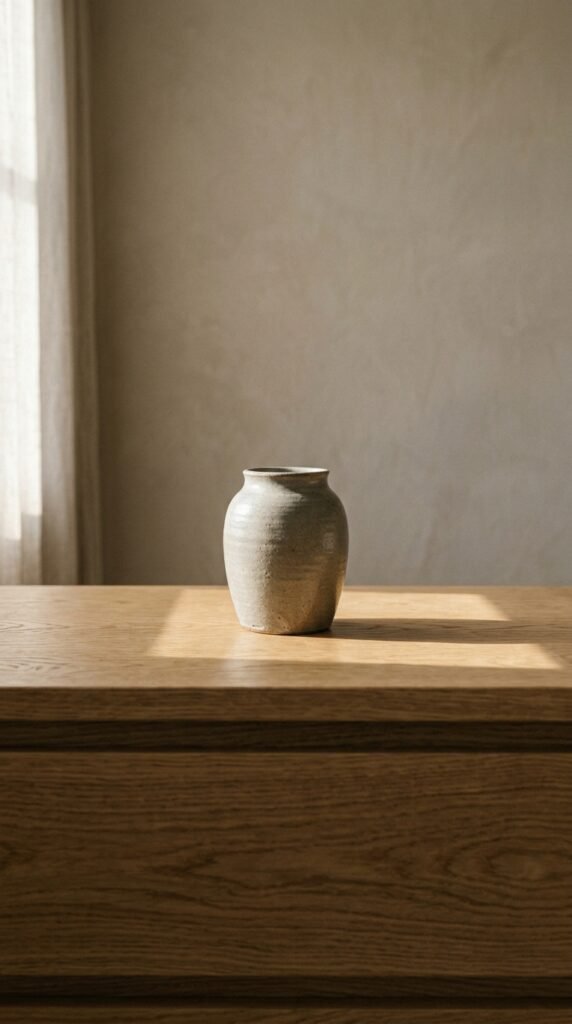
The Japandi principle of “ma” refers to the meaningful use of negative space, and in bedroom terms it means every surface holds one object maximum. Your nightstand holds a lamp or a book, not both. Your dresser top holds one small vessel or plant, not a collection of products. The practice of reducing surface objects to one per surface costs nothing and immediately changes how the room reads from cluttered to composed. A 2021 Princeton Neuroscience study found that visual clutter in a bedroom environment increased cortisol levels and reduced sleep quality measurably.
Walk through your bedroom and remove everything from every surface. Put it all in a box. Return one object per surface based on which single item earns the most functional or visual return in each spot. Everything else stays in the box for two weeks. If you don’t miss it visually, it leaves the room permanently. This editing process is the highest-impact, zero-cost move in Japandi bedroom design.
7. Use Shoji-Inspired Window Treatments
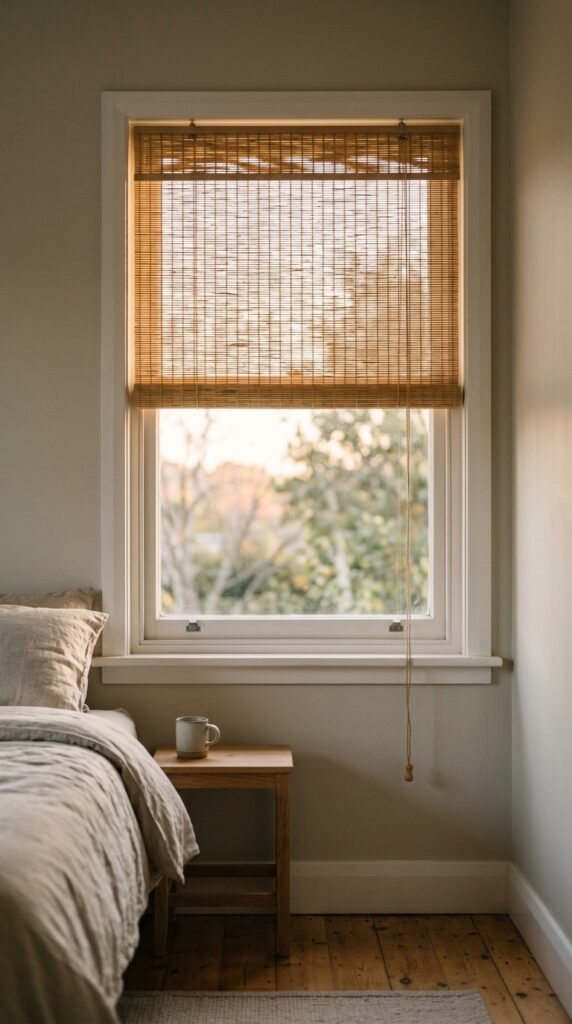
Shoji screens filter light without blocking it, which creates the soft, even illumination Japandi bedrooms depend on. You don’t need actual shoji screens (though they exist at Amazon and Japanese home stores from $80 to $200 per panel). White linen or natural cotton Roman blinds achieve the same diffused light quality for $40 to $100 per window and work in rental apartments without permanent installation. The key is choosing a window treatment in a natural, undyed fiber that glows when backlit rather than blocking light entirely.
IKEA’s ENJE roller blind in translucent white costs $30 per window and filters morning light beautifully while maintaining privacy. For a more authentic shoji look, bamboo roller blinds from Blinds.com cost $45 to $90 per window and add natural fiber texture to the wall while filtering light. Either option replaces heavy drapes or blackout curtains that close the room off from the natural light the Japandi aesthetic specifically prioritizes during daytime hours.
8. Add a Tatami-Style Rug or Natural Fiber Floor Covering
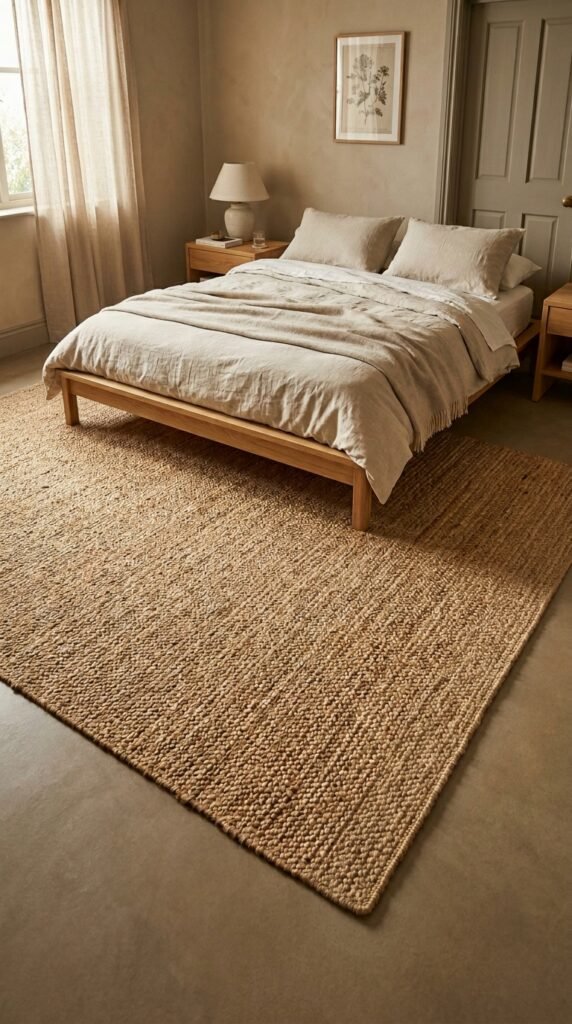
A jute, seagrass, or wool rug in a natural undyed tone grounds the Japandi bedroom with organic texture underfoot and visually anchors the bed as the room’s central element. The material choice matters more than the pattern: Japandi rugs stay plain, in a natural weave, with no motifs or printed designs. Loloi’s Natural Life collection offers jute rugs from $80 to $200 in the 8×10 size range. Rugs USA carries seagrass options from $90 that perform well in bedroom settings.
Size the rug so it extends at least 24 inches beyond the bed on both sides and at the foot. A rug too small for the bed makes the room look unfinished regardless of every other decision you make. An 8×10 rug under a queen bed or a 9×12 under a king hits the correct proportion. Position the rug so the bed sits on the upper two-thirds of the rug, leaving the lower third as a landing zone between the bed and bedroom door.
9. Keep the Nightstand Simple and Functional
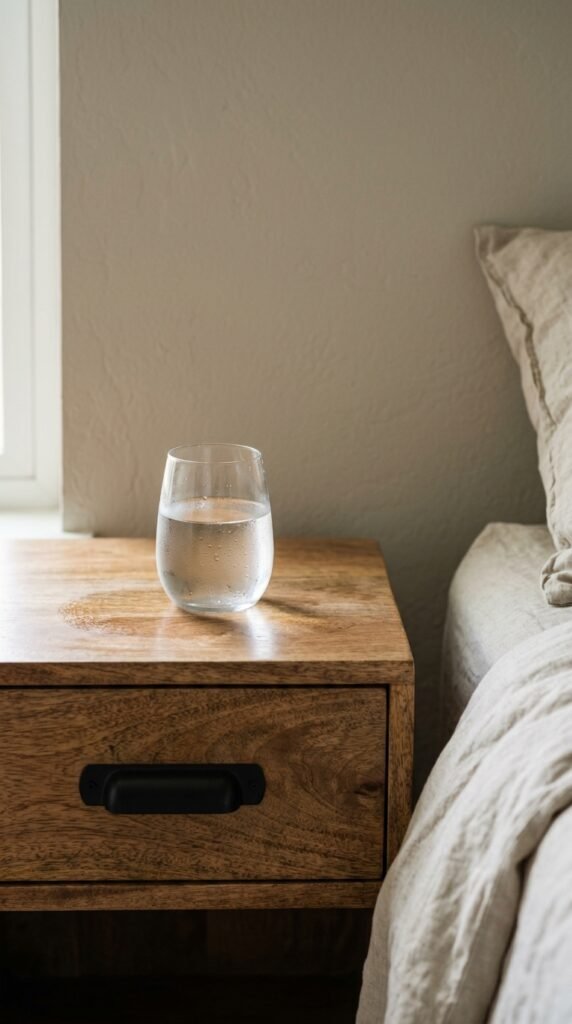
The Japandi nightstand holds one thing and does it well. A solid wood or concrete nightstand with a single shelf or drawer keeps your sleep environment clean while giving you exactly the surface you need for one functional item: a water glass, a book, or a small lamp. The Umbra Trigg shelf mounted directly to the wall ($30) works as a floating nightstand in rental bedrooms where wall anchor points exist. The CB2 Nook nightstand in solid mango wood ($199) gives you a freestanding version with a drawer for hidden storage.
Avoid nightstands with glass surfaces, metallic finishes, or mirrored elements, as all three conflict with the matte, organic material language of the Japandi aesthetic. Solid wood, concrete, rattan, or brushed black steel all work. The nightstand surface holds one item. Everything else goes in the drawer. This discipline separates a Japandi bedroom from a bedroom where someone removed a few decorative pillows and called it minimalist.
10. Introduce One Ceramic or Stone Decorative Object
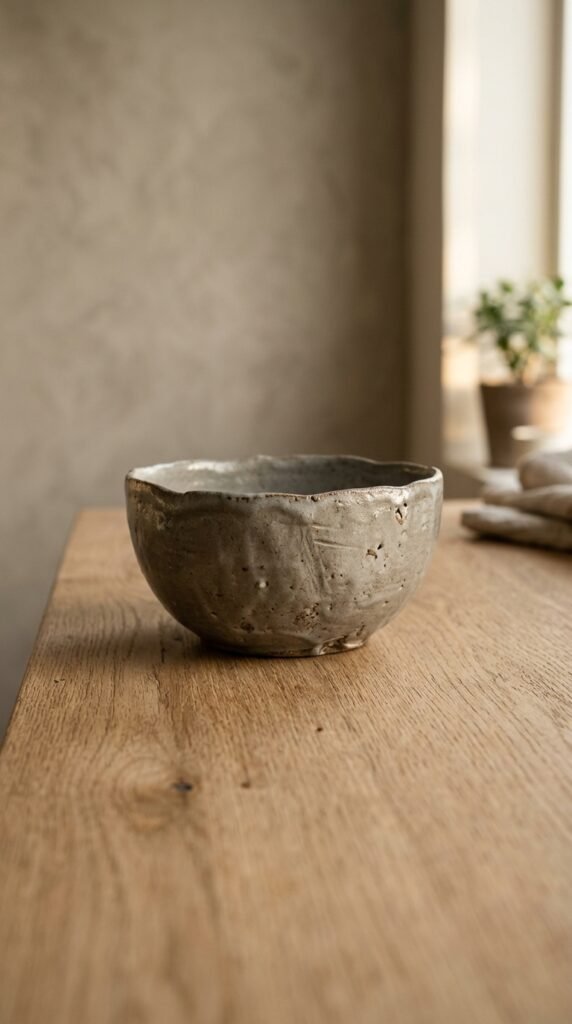
A single handmade ceramic vessel or smooth river stone on the nightstand or dresser introduces the wabi-sabi quality of imperfection without adding visual clutter to the room. The irregular glaze of a wheel-thrown ceramic bowl communicates craft and care in a way a mass-produced decorative object never achieves. Etsy sellers offer handmade ceramic vessels from $15 to $60 in the matte, earth-toned glazes the Japandi aesthetic requires.
Choose a vessel in matte white, warm grey, deep charcoal, or raw clay tone. Place it on the nightstand or dresser as the single object on that surface. The object works best when it has no function beyond existing as a beautiful, imperfect thing. This principle, central to wabi-sabi philosophy, means the absence of function is the point. One well-chosen ceramic object signals more intentional design than 10 decorative objects chosen without specific purpose.
11. Use Closed Storage to Hide Everything
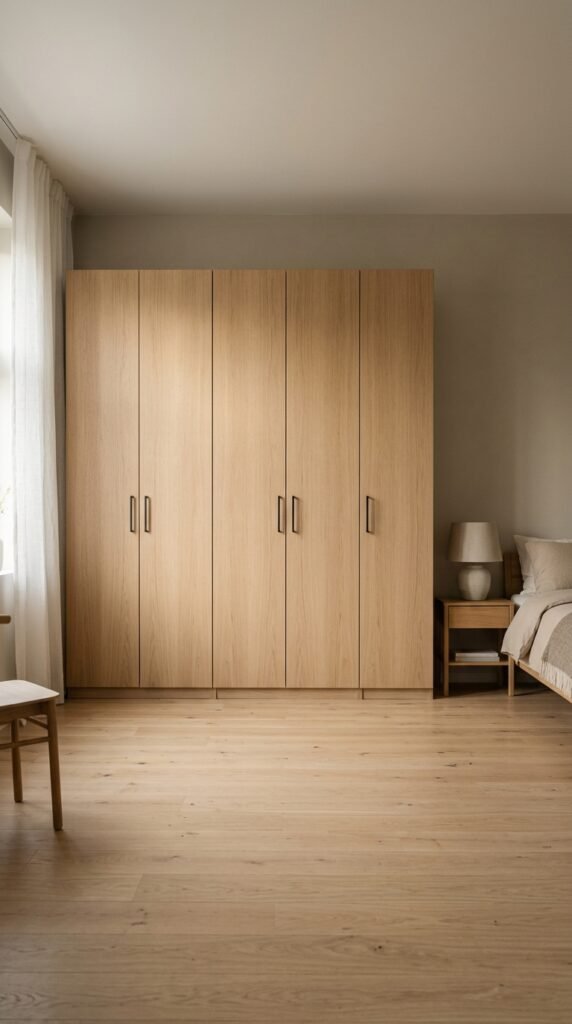
Japandi bedrooms hide clutter rather than organizing it decoratively. Open shelving with neatly folded sweaters reads as maximalist against the Japandi backdrop regardless of how tidy the folding is. Closed wardrobes, drawer chests, and under-bed storage boxes keep every functional item out of sight and let the room breathe. The IKEA PAX wardrobe system with solid panel doors (no glass, no open sections) in white or oak costs $250 to $600 depending on size and handles the full wardrobe storage problem permanently.
Under-bed storage boxes in natural linen fabric from The Container Store cost $20 to $40 each and store seasonal clothing, extra bedding, and shoes completely out of sight. A platform bed with built-in drawers (IKEA MALM with 4 drawers costs $349 to $449) integrates storage directly into the bed frame, eliminating the need for a separate dresser in smaller bedrooms. The room you sleep in should show none of the infrastructure required to run your daily life.
12. Choose Matte Black or Brushed Brass Hardware
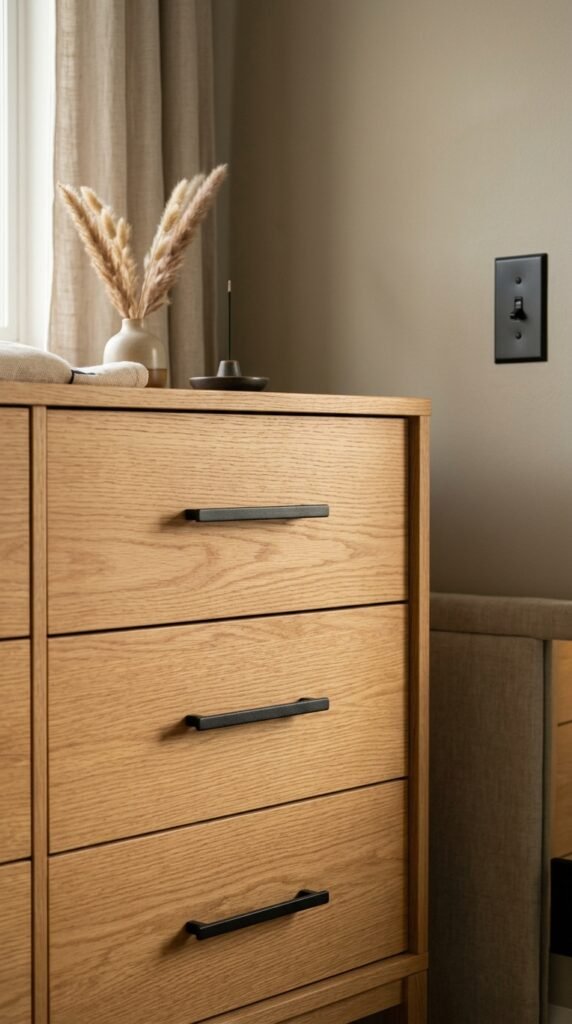
Your door handles, drawer pulls, and lamp fixtures should share one metal finish across the entire bedroom. Japandi interiors use matte black or brushed brass for all metal elements because both finishes read as warm and deliberate rather than the cold, reflective quality of chrome or polished nickel. Replacing existing drawer pulls with matte black alternatives costs $2 to $8 per pull from Amazon or IKEA and takes 10 minutes with a screwdriver. This single change shifts the room’s material story measurably.
Choose matte black for a more contemporary Japanese-influenced aesthetic. Choose brushed brass for a warmer Scandinavian-influenced approach. Whichever you pick, apply it to every metal surface in the room including the light switch plates ($8 to $15 each from Amazon), which most bedroom styling guides ignore entirely despite sitting at eye level on the wall you face every day.
13. Add a Single Indoor Plant in a Simple Pot
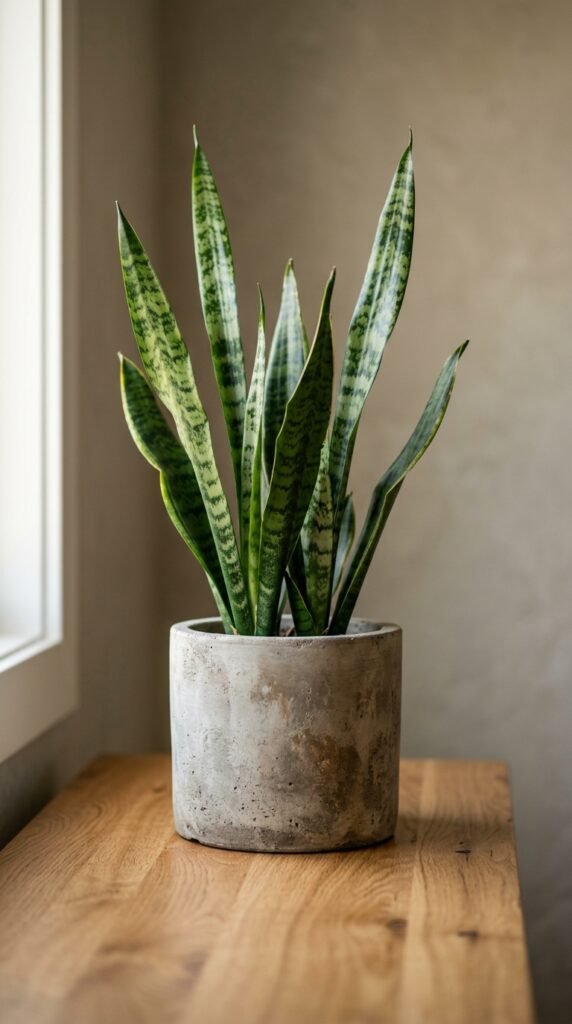
One plant in a Japandi bedroom adds the living element the aesthetic requires without introducing the visual complexity of a plant collection. A snake plant (Sansevieria), a ZZ plant, or a peace lily all thrive in low bedroom light conditions and grow slowly enough to stay in proportion with the space for years. A 6-inch snake plant from a local nursery costs $8 to $15 and lives on your dresser or nightstand for a decade with minimal care. IMO, the snake plant is the perfect Japandi plant because it looks architectural rather than decorative.
Plant it in a matte ceramic or concrete pot with no drainage tray visible, which requires a pot with a sealed bottom or a hidden tray tucked inside a slightly larger outer pot. The pot color stays within the room’s neutral palette. The plant sits alone on its surface as the single object. It earns its place by adding organic form and actual air-purifying function (NASA’s Clean Air Study lists Sansevieria as one of the most effective air-purifying houseplants available).
14. Install Warm Dimmable Lighting at Two Heights
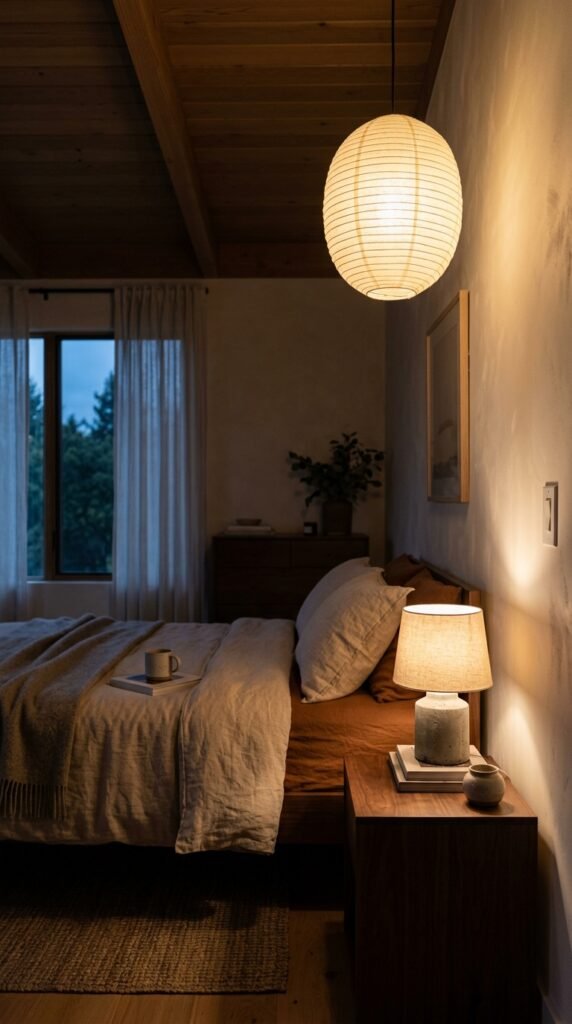
A Japandi bedroom uses warm light at two heights: one overhead source and one low bedside source, never the harsh overhead-only illumination of a standard bedroom setup. The overhead source provides ambient coverage. The low bedside source provides task light for reading without flooding the whole room. A washi paper pendant at ceiling height paired with a small concrete or ceramic table lamp at nightstand level creates the layered warmth the aesthetic requires. Both sources run on 2700K warm white bulbs.
Add a $25 smart dimmer switch to the overhead circuit and you control both the mood and intensity of the room from bed without getting up. Lutron’s Caseta wireless dimmer switch costs $40 and installs in 20 minutes without an electrician. The combination of dimmable warm light at two heights does more for the Japandi bedroom atmosphere than any furniture purchase because light quality determines how every other material in the room reads at night.
15. Remove the Television From the Bedroom
A television in a Japandi bedroom directly contradicts the core philosophy of the aesthetic, which treats the bedroom as a space for rest and sensory calm rather than stimulation. A 2019 meta-analysis in Sleep Medicine Reviews found that screen exposure in the bedroom environment reduced sleep onset speed by an average of 22 minutes and decreased sleep quality scores across all measured demographics. The Japandi bedroom is specifically designed to prepare the nervous system for rest, and a television screen actively fights that purpose.
Mount the television in an adjacent room or cover the existing bedroom TV with a linen or rattan panel when not in use if removal isn’t immediately possible. The absence of the screen changes how the room reads architecturally because a wall without a television hanging on it gives you a full uninterrupted surface for art, texture, or intentional emptiness. That surface choice matters significantly in a Japandi bedroom where negative space serves a deliberate function.
16. Use Rattan or Bamboo as a Texture Accent
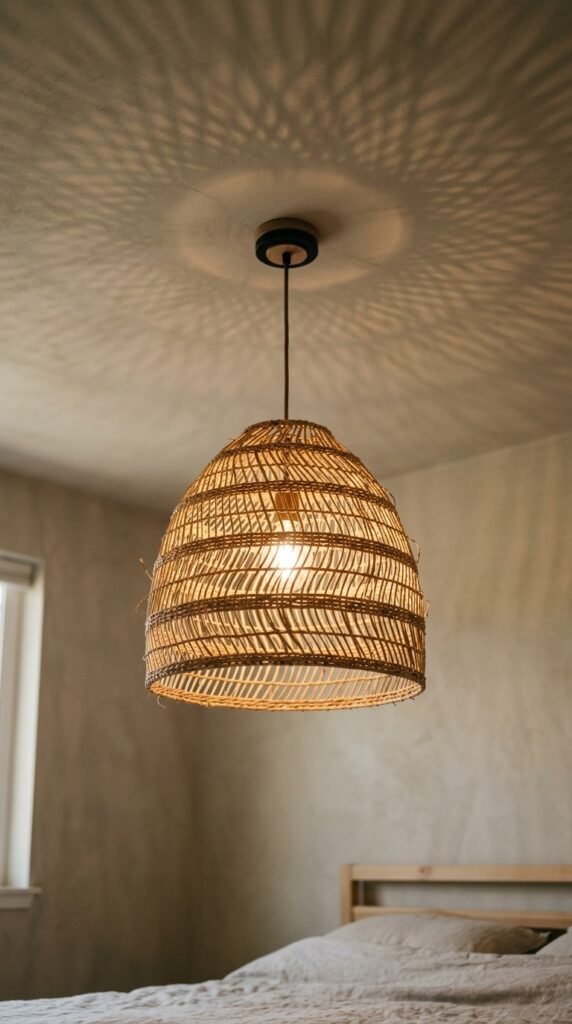
Rattan and bamboo both sit within the natural material language of Japandi design and add organic texture without introducing color or pattern that conflicts with the neutral palette. A rattan bed headboard, a bamboo side table, or a rattan pendant lampshade adds material variety that prevents the neutral Japandi bedroom from reading as sterile or unfinished. IKEA’s KNIXHULT rattan pendant costs $35. A rattan headboard from Wayfair runs $80 to $200 in queen size.
Position rattan or bamboo elements as accent materials rather than the dominant surface. One rattan element per room is the right proportion. Two or more starts reading as a themed room rather than a considered material palette. The organic, hand-woven texture of rattan introduces the warmth and imperfection the wabi-sabi side of Japandi specifically requires against the clean Scandinavian lines of the bed frame and furniture.
17. Keep the Floor Mostly Clear
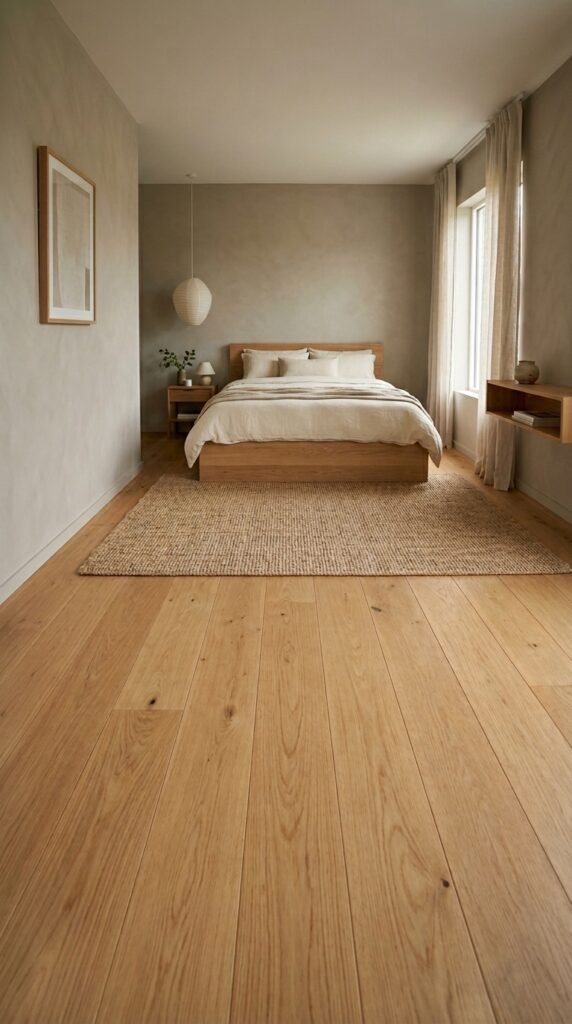
Floor space in a Japandi bedroom stays visible, because clear floor area communicates calm in the same way clear surfaces do. The 2019 Houzz survey on bedroom renovation found that homeowners who removed furniture from bedroom floors reported feeling their room was 35 percent larger on average, without any structural changes. Move the laundry basket to the wardrobe interior. Store shoes in a closed wardrobe. Remove the exercise equipment, the extra chairs, and anything else occupying floor space without earning it.
The only floor items in a Japandi bedroom are the bed (on its frame), the rug beneath the bed, and one small plant or nightstand if the nightstand doesn’t float. Everything else leaves the floor. This discipline costs nothing and changes the room’s spatial quality more dramatically than furniture replacement because floor visibility determines perceived room size more reliably than ceiling height or window count.
18. Hang One Piece of Minimalist Art or Calligraphy
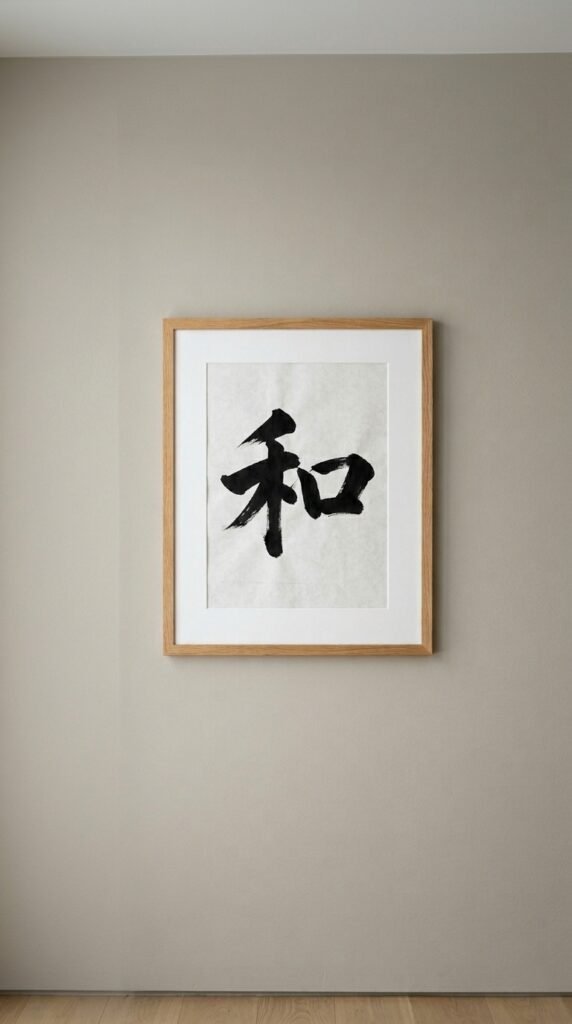
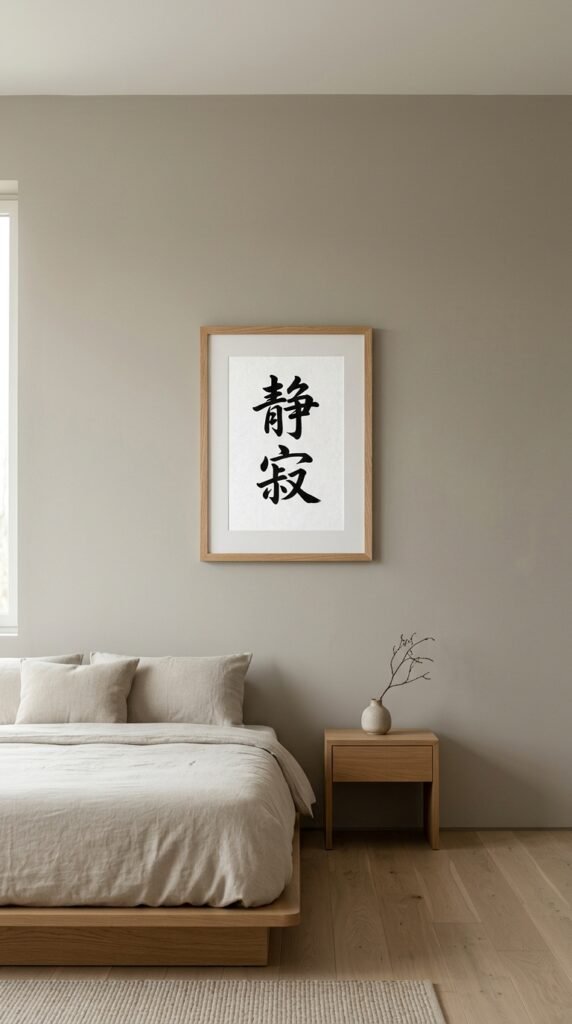
A single artwork in a Japandi bedroom works best when it communicates stillness rather than energy. Japanese ink brush calligraphy, a simple botanical line drawing, or an abstract composition in neutral tones all work within the aesthetic. The artwork hangs alone on the most prominent wall in the room (the wall you face from the bed) at seated eye level with significant empty wall space on all sides. This placement gives the work visual authority and lets the empty wall around it function as part of the composition.
Society6 and Desenio both carry minimalist Japanese-inspired prints from $25 to $60. Frame the print in a simple matte black or natural oak frame with a wide white mat. A 24×30 inch print in a 30×36 inch frame with a 3-inch mat costs $40 to $80 total in print and frame and delivers the same visual impact as a gallery piece costing ten times more. The key is hanging it alone. No gallery walls. No groupings. One piece, one wall, full visual authority.
19. Add a Zazen Meditation Corner or Reading Nook
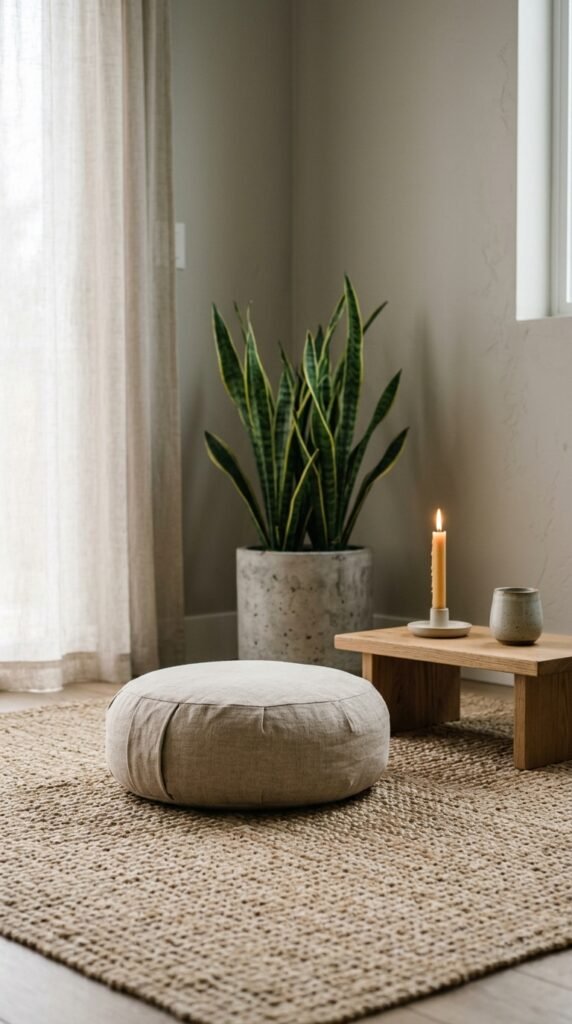
A small floor-level meditation or reading corner signals that the bedroom has a purpose beyond sleep, which research from sleep psychology consistently links to healthier bedroom associations and improved sleep onset. A single floor cushion (zafu) in natural linen, a small low table at 10 to 12 inches height, and one candle or plant create a complete meditation corner in a 3×3 foot footprint. A zafu cushion from Amazon costs $25 to $50 in natural linen or buckwheat fill. The Muji low table costs $40 to $60.
Position this corner in the room’s least trafficked area, typically the corner diagonally opposite the door. Keep it clear of clutter. The floor cushion and table are the only elements. This corner communicates a specific intention for the space, which is exactly what the Japandi philosophy of functional beauty requires: every element earns its place by serving a specific human need rather than filling space.
20. Use a Wooden Tray to Organize the Dresser Top
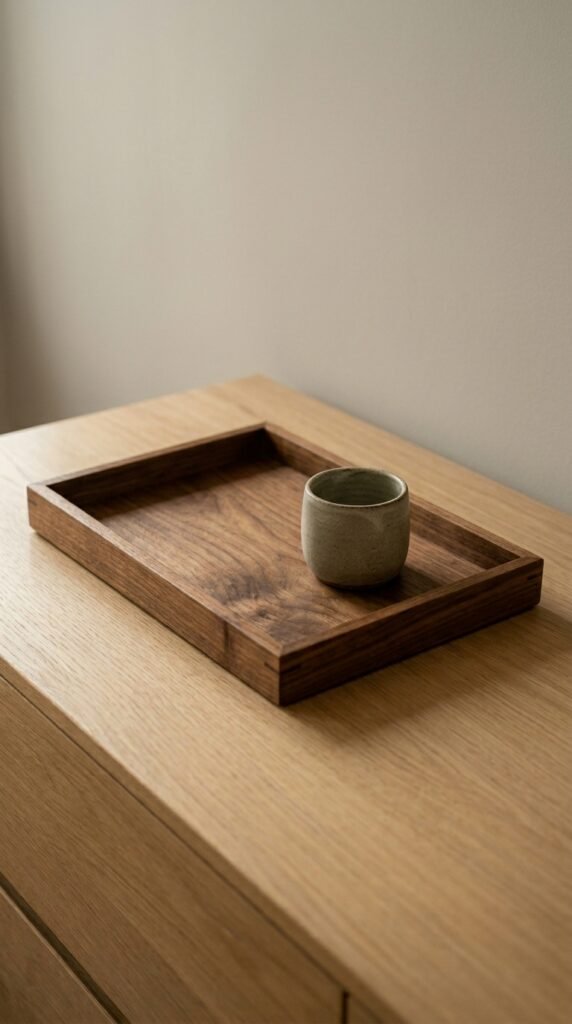
A single wooden tray on the dresser top creates a contained display boundary that makes the objects within it read as a deliberate arrangement rather than accumulated clutter. The tray acts as a visual frame: everything inside it belongs there and everything outside it shouldn’t be on the surface at all. An oak or walnut serving tray from IKEA costs $8 to $25. A handmade wooden catch tray from Etsy costs $15 to $40 and adds the craft quality the Japandi aesthetic values.
Place one item inside the tray and nothing else on the dresser surface outside it. The single item inside the tray (a small ceramic vessel, a folded linen cloth, or one small succulent) gives the entire dresser top a finished quality that a surface covered in products never achieves regardless of how neatly arranged they are. The empty dresser surface outside the tray communicates the same design confidence as a limewash wall with a single artwork: less is doing more.
21. Choose Curtains in Undyed Linen or Natural Cotton
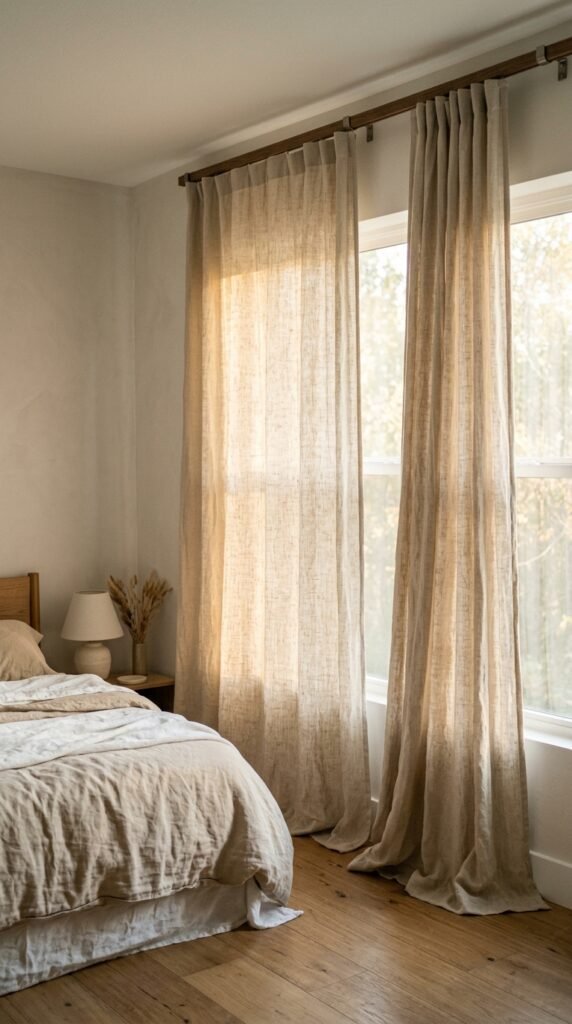
Curtains in undyed natural linen or cotton reinforce the organic material palette and filter light in a way that synthetic fabrics never match because natural fibers glow when backlit rather than transmitting light harshly. IKEA’s DYTAG curtain panels in beige linen blend cost $40 to $60 per panel and hit ceiling height when ordered in the 98-inch length. Two panels per window at ceiling height cost $80 to $120 and create the floor-to-ceiling softness that immediately elevates the room’s perceived quality.
Hang curtains as high as possible, ideally 4 to 6 inches from the ceiling, and let them fall to the floor with a 1-inch pool. This hanging position makes every window appear taller and every ceiling appear higher, which directly increases perceived room calm. The Japandi bedroom curtain stays closed during the evening and open during the day to connect the interior to natural light, which both wabi-sabi and hygge philosophy treat as a fundamental daily wellbeing practice.
22. Build a Low Floating Shelf Instead of a Bookcase
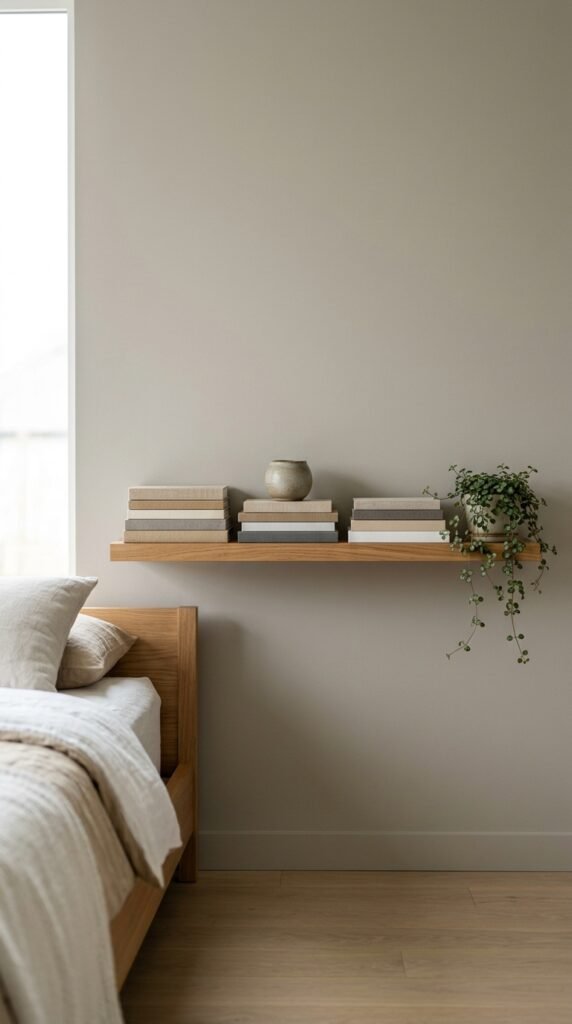
A single low floating shelf at nightstand height or below replaces the visual bulk of a full bookcase while giving you the reading material access a Japandi bedroom requires. Mount one 36-inch shelf at 20 to 24 inches from the floor beside the bed and it holds five to eight books, one small plant, and one lamp in a footprint that consumes zero floor space. IKEA’s LACK shelf costs $8 to $15 and handles 25 pounds per mounting point, which handles everything a bedroom shelf needs to carry.
Stack books horizontally rather than vertically to create a low, architectural display rather than the vertical rhythm of a traditional bookcase. Three to four horizontal stacks of two books each, interspersed with one ceramic object, fills the shelf with the Japandi principle of considered arrangement. Keep the shelf to one row. A second row turns the shelf into a bookcase and changes the visual relationship from minimal accent to storage furniture.
23. Paint the Ceiling in a Tone Slightly Darker Than the Walls
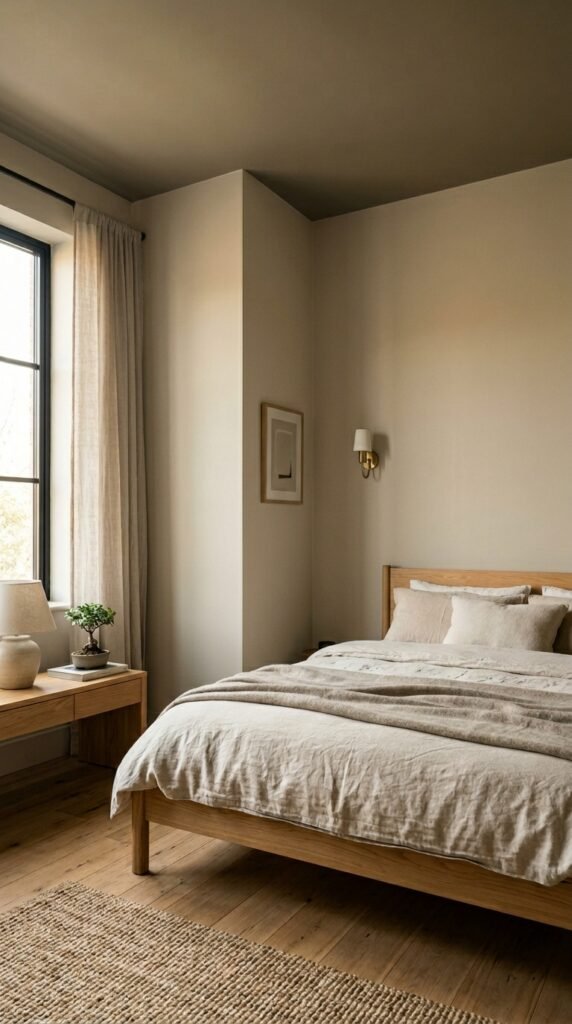
Most bedrooms leave the ceiling white by default, which creates a harsh overhead plane that feels detached from the wall color below it. Painting the ceiling in the same neutral tone as the walls but two to three shades deeper (using the same paint color at 50 percent concentration) wraps the room in a single tonal envelope that feels enclosed and calm rather than exposed. Benjamin Moore’s online color tool generates the 50 percent tint version of any color at no charge. A gallon of ceiling paint costs $35 to $55.
This ceiling technique is standard practice in high-end Japandi interior projects because it completes the room’s color story without introducing a new color family. The ceiling reads as distinct from the walls due to the tone difference while remaining cohesive with the overall palette. The result is a bedroom that wraps around you rather than one where the ceiling sits above the room like a separate white lid.
24. Add a Kinfolk or Design Book Stack as Decor
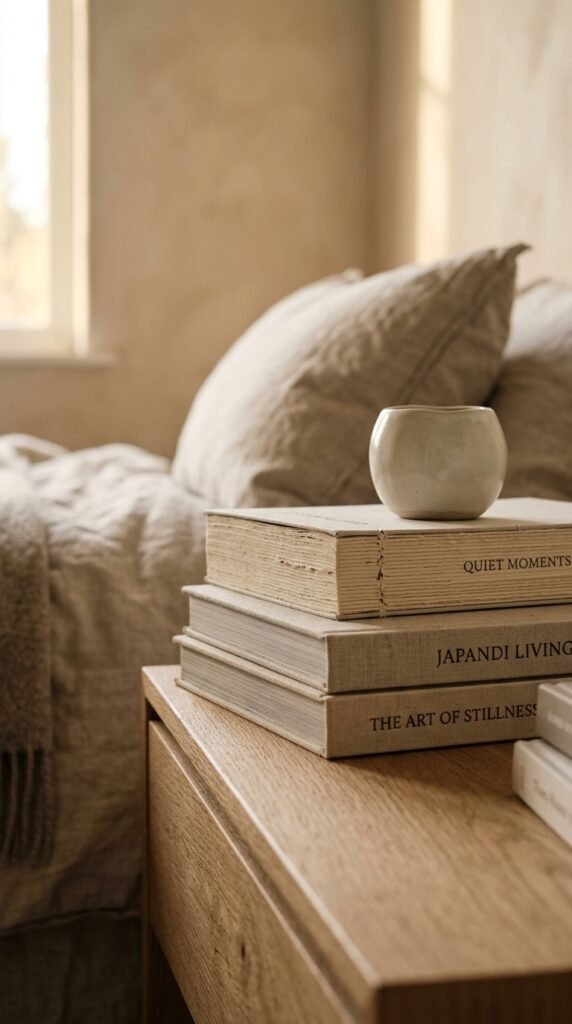
A stack of two to three hardback books in muted neutral covers sits on the nightstand, floor shelf, or tray as a functional decorative object that communicates intellectual and aesthetic identity without adding visual clutter. Kinfolk magazine’s annual volumes, Phaidon design books in neutral covers, and Apartamento magazine all photograph well and align with the Japandi aesthetic in both content and visual presentation. A used copy of any Kinfolk volume costs $8 to $20 on eBay or ThriftBooks.
Turn books with bright or garish covers spine-in (pages outward) so only the natural paper edge shows. The stacked pages create a warm, linen-like texture that reads as designed rather than accidental. Three books stacked horizontally with one ceramic object on top costs under $30 total and creates the exact coffee table book moment the Japandi bedroom nightstand or shelf requires. This is the detail most people overlook and the one most interior stylists always include.
25. Introduce Scent as the Room’s Final Sensory Layer
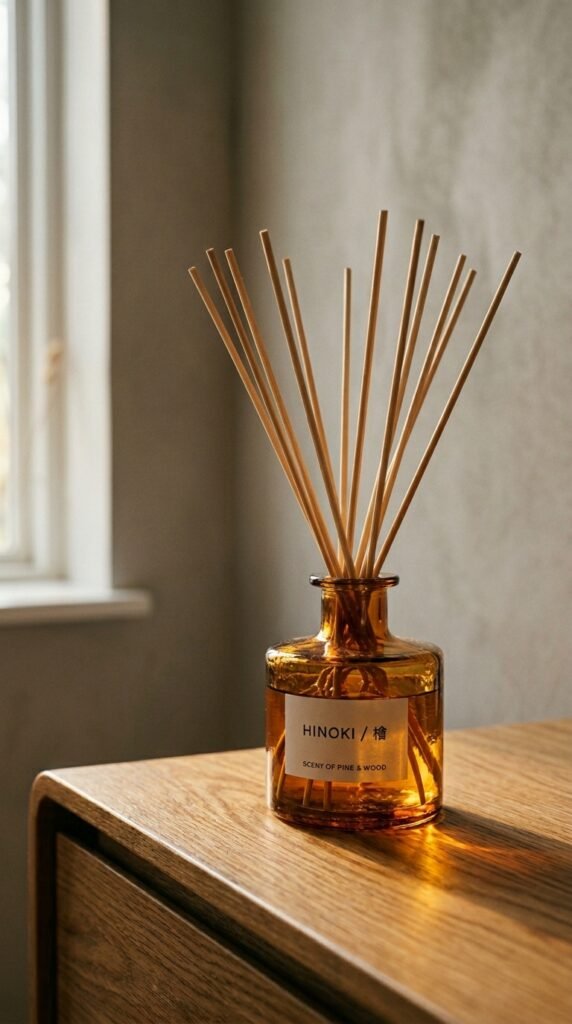
A Japandi bedroom engages all five senses, and scent is the layer most bedroom decorating guides ignore entirely. A white cedar, hinoki wood, or yuzu-scented candle or reed diffuser positioned on the dresser introduces the olfactory signal that tells your nervous system this room has a specific character and purpose. Hinoki cypress (the wood used in Japanese bathhouses) produces a grounding, forest-floor scent associated in Japanese culture specifically with relaxation and mental clarity. Boy Smells, Maison Margiela, and Aesop all produce hinoki or wood-forward scents from $18 to $55.
A reed diffuser lasts three to four months and costs $20 to $50, which works out to $5 to $15 per month for a consistent sensory layer that guests notice within seconds of entering the room. FYI, position the diffuser near a door or air vent where air movement carries the scent into the room rather than concentrating it in one corner. The scented Japandi bedroom creates a sensory memory of the space that the visual elements alone never achieve, and that memory is what makes the room feel genuinely calming rather than simply looking calm in photographs.
Final Thoughts
A Japandi bedroom works because it removes the things competing for your attention, not because it adds the right decorative objects. Every idea on this list either eliminates visual noise, introduces natural material authenticity, or creates deliberate calm through restraint. Start with the three changes that cost nothing: declutter surfaces to one object each, clear the floor, and remove the television. Nail those first and every paid upgrade on this list lands with significantly more impact.