21 Earth Tone Living Room Ideas for a Cozy Warm Glow
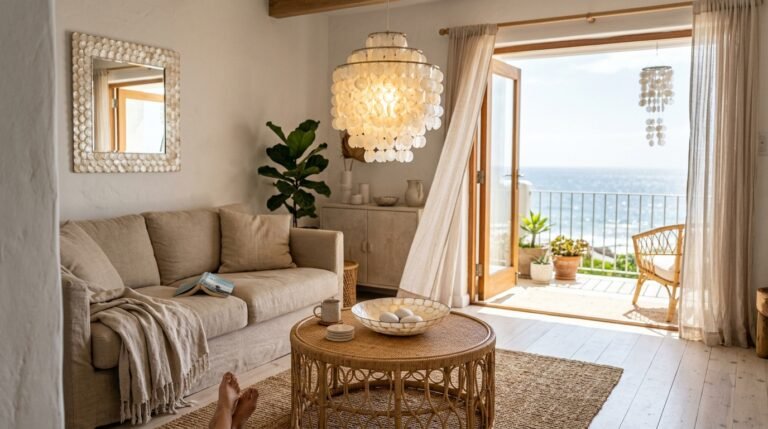
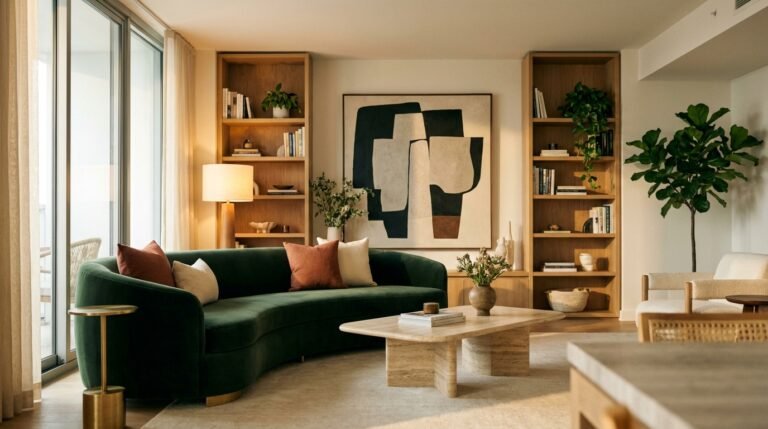
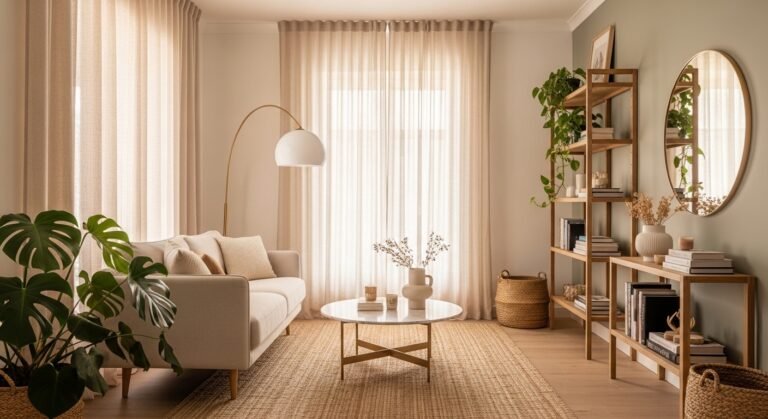
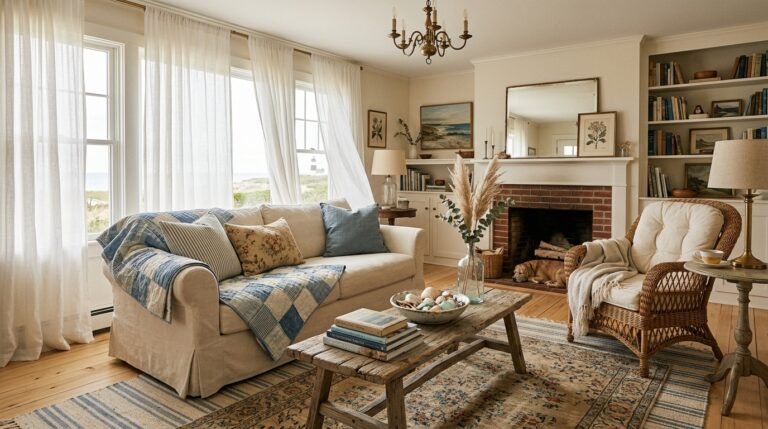
Earth tones get a bad reputation for being safe to the point of forgettable, the design equivalent of beige toast. That reputation is wrong, and it usually comes from rooms that use one earth tone instead of layering several. A living room built around terracotta, olive, rust, sand, and deep brown together feels rich, grounded, and genuinely warm in a way that a single neutral palette never achieves. These 21 earth tone living room ideas show you how to do it without ending up with a room that looks like a 1970s rerun.
1. Build Your Base Around a Warm Terracotta Sofa
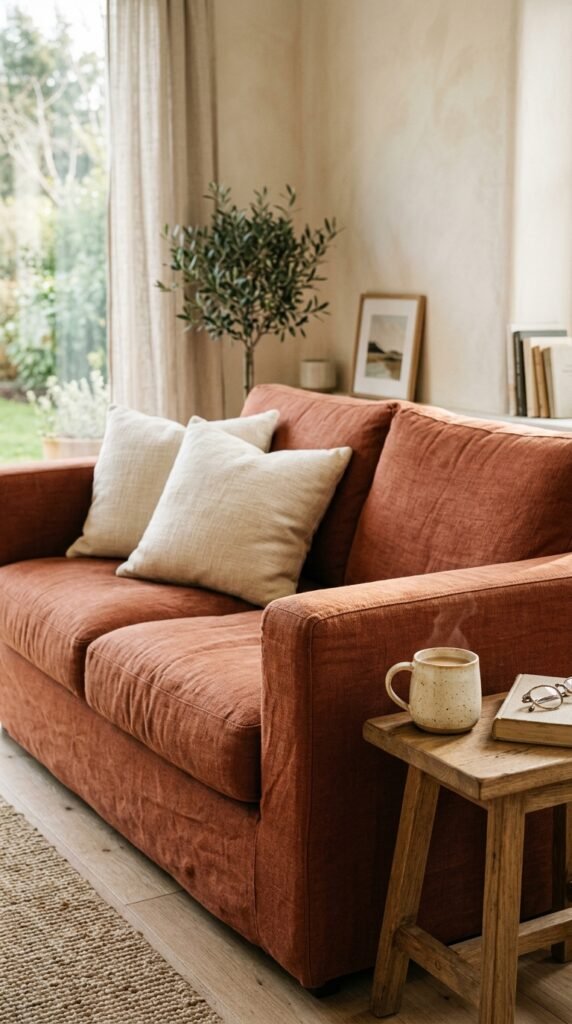
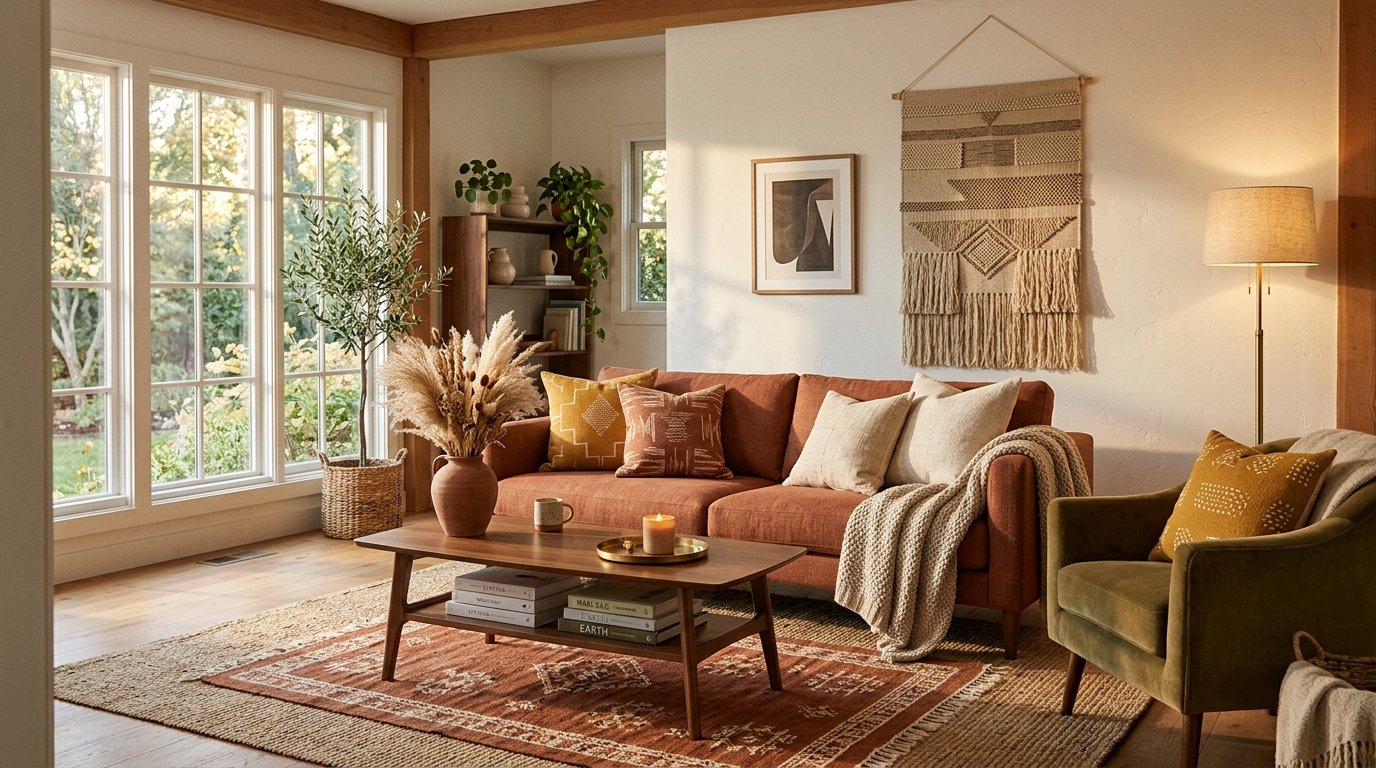
A terracotta sofa anchors an earth tone living room with a color that reads as warm rather than dated, especially compared to the burnt orange and avocado tones earth palettes get unfairly associated with. Terracotta sits between orange and brown, which gives it the warmth of orange without the intensity that makes a room feel loud.
A terracotta linen or velvet sofa from retailers like West Elm or Article runs $1,200 to $2,500. If a full sofa commitment feels risky, start with terracotta as an accent through pillows or a single armchair at $300 to $600, and build toward the full sofa once you’ve lived with the color in smaller doses. IMO, terracotta is the single most versatile earth tone because it pairs with green, blue, cream, and brown without any of them fighting for attention.
2. Layer Three Different Browns in One Room
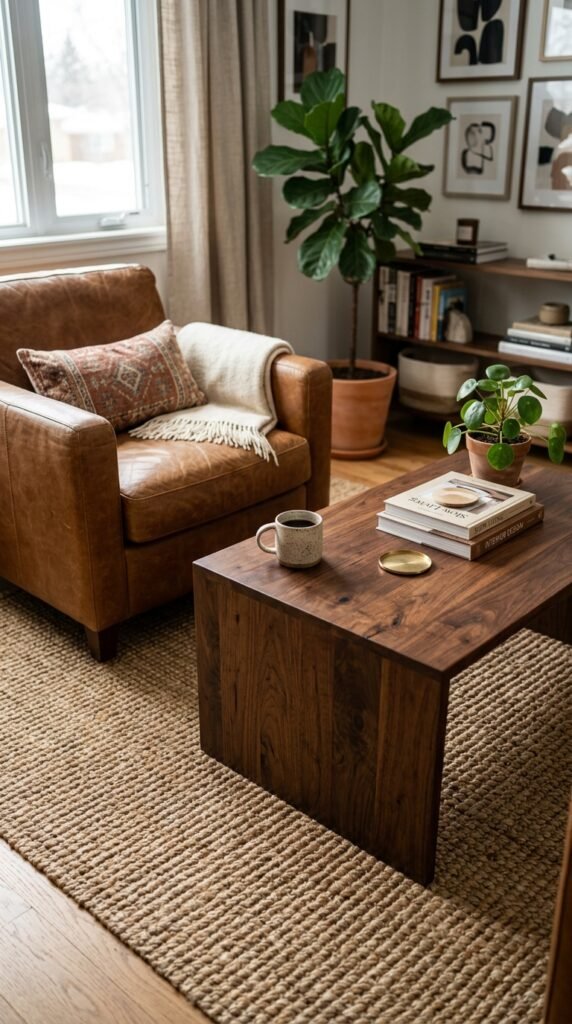
Most people think of brown as one color. It isn’t. Espresso, walnut, caramel, and tan are all brown, and they all read as distinctly different tones when placed near each other. Layering three browns in different materials, a walnut coffee table, a caramel leather chair, and a tan linen rug, creates depth that a single brown tone never achieves.
The key is varying the material alongside the tone. A dark walnut wood surface, a medium caramel leather texture, and a light tan woven fabric all read as different elements even though they’re all technically brown. This layering technique is the difference between a room that looks like one big brown blob and a room that looks intentionally rich.
3. Add Olive Green as Your Secondary Color
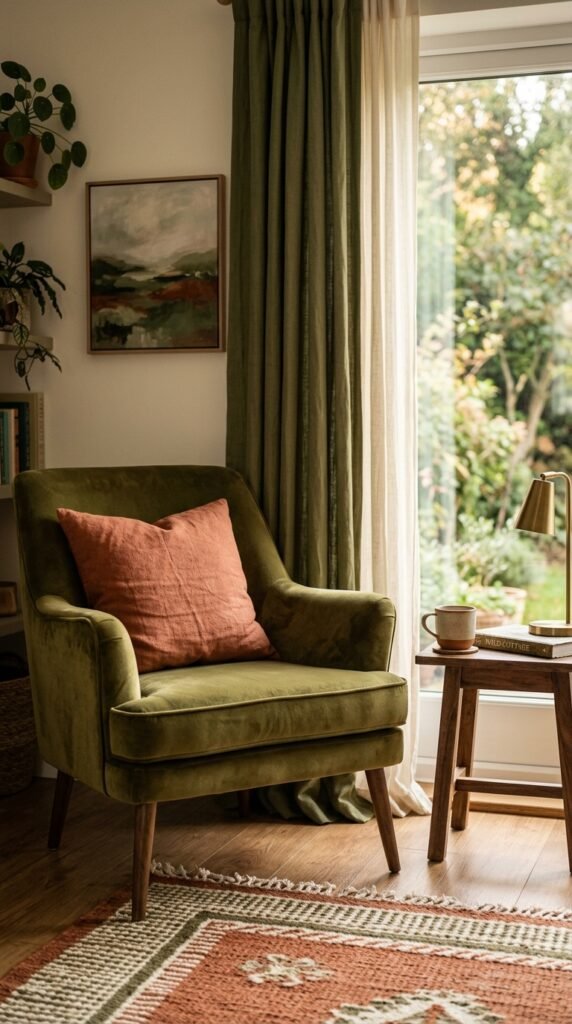
Olive green sits naturally within the earth tone family because it reads as muted and grounded rather than bright or seasonal, the way kelly green or emerald can feel. Olive works as a secondary color against terracotta, brown, and cream because it shares the same muted, desaturated quality as every other earth tone.
Introduce olive through a velvet accent chair, floor-length curtains, or a large area rug. Crate and Barrel and Anthropologie both carry olive velvet upholstered pieces in the $400 to $1,000 range depending on size. Olive green and terracotta together create the exact color combination found in desert landscapes at sunset, which is probably why it feels so instinctively calming in a living room.
4. Use Cream and Ivory as Your Breathing Room
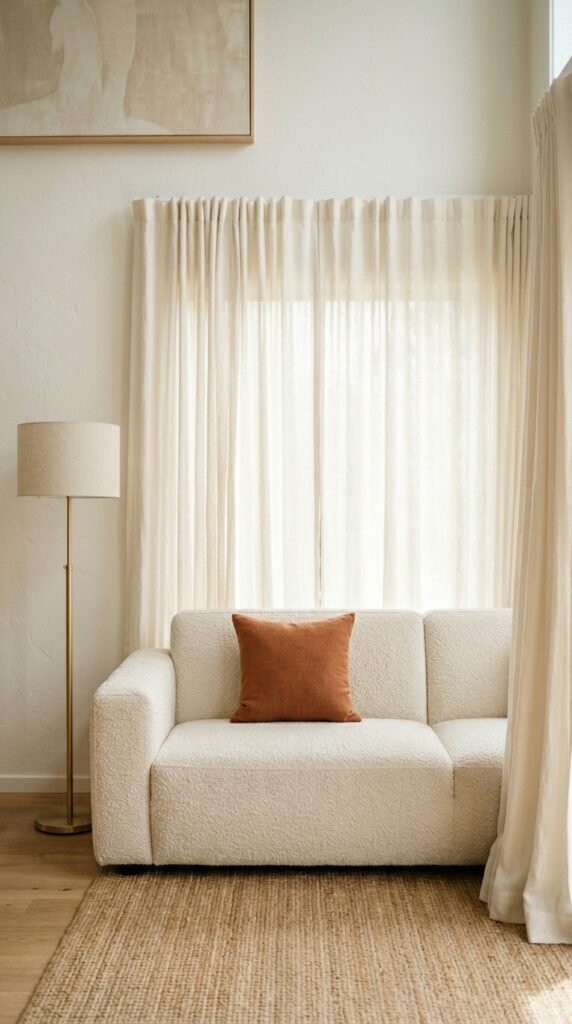
An earth tone living room with no light colors anywhere becomes visually heavy and can feel like a room with low ceilings even when it isn’t. Cream and ivory function as the visual breathing room that lets the deeper earth tones, the browns, rusts, and olives, stand out rather than compete with each other.
A cream boucle sofa or ivory linen curtains create the lightest element in the room against which everything else reads as rich rather than muddy. Walls in a warm white or cream, rather than stark white, keep the overall palette cohesive while still providing the contrast the deeper tones need. Without this lighter layer, even a well-chosen earth tone room can feel like it’s missing oxygen.
5. Incorporate Rust-Colored Textiles for Warmth
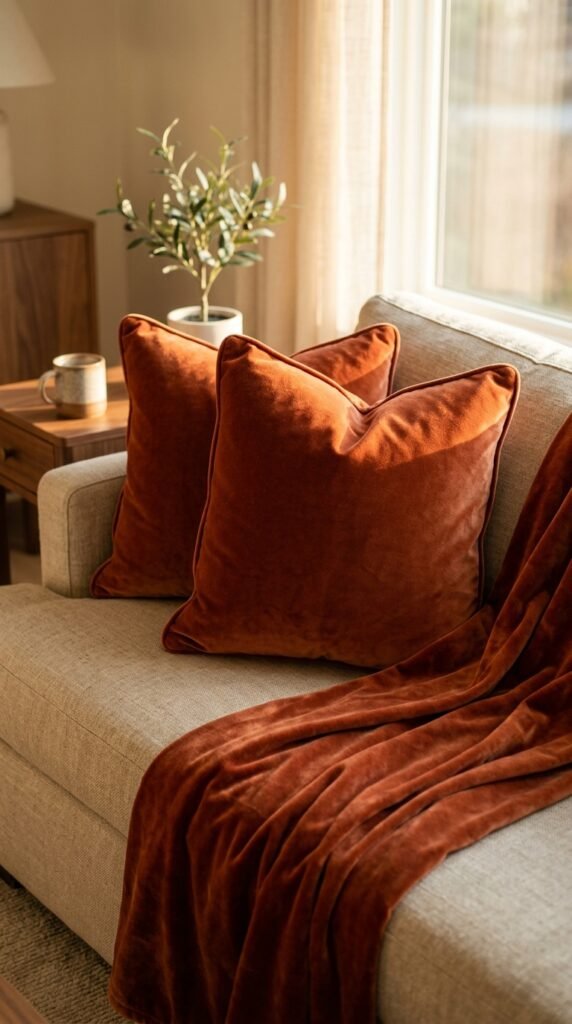
Rust sits deeper and more saturated than terracotta, closer to a burnt sienna, and works as an accent color through textiles rather than large furniture pieces. Rust throw pillows, a rust throw blanket, or rust curtain panels add warmth in concentrated doses that are easy to change if your taste shifts.
A set of two rust velvet throw pillows at $25 to $40 each from H&M Home or Target instantly warms up a room with a neutral sofa. Rust works particularly well in rooms that get a lot of natural light, since the color can look slightly muddy in dim spaces but glows warmly when sunlight hits the velvet texture directly.
6. Choose a Jute or Sisal Rug as Your Foundation
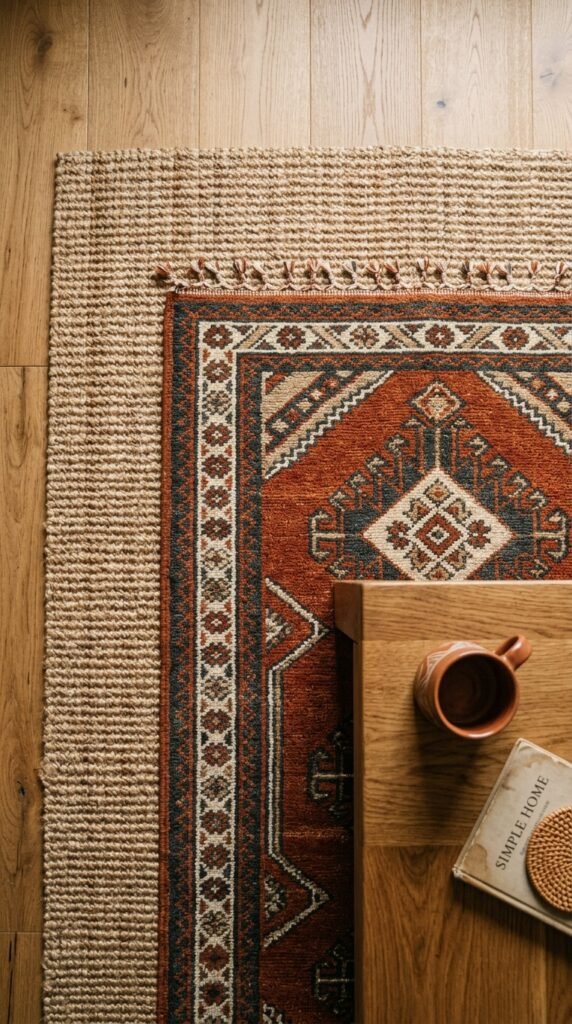
A jute or sisal area rug brings a natural, earthy texture to the floor that synthetic rugs simply can’t replicate, and its neutral tan-to-brown color range works as a foundation for every other earth tone in the room. The texture matters as much as the color here: the visible weave of natural fiber rugs adds tactile warmth that a flat, smooth rug doesn’t.
A jute rug in the 8×10 size runs $150 to $300 at retailers like Pottery Barn or West Elm, with larger sizes scaling up from there. Layer a smaller patterned rug in rust or olive on top of the jute base for a collected look that adds pattern without losing the natural foundation underneath.
7. Add Warmth With Wood Tones That Lean Orange or Red
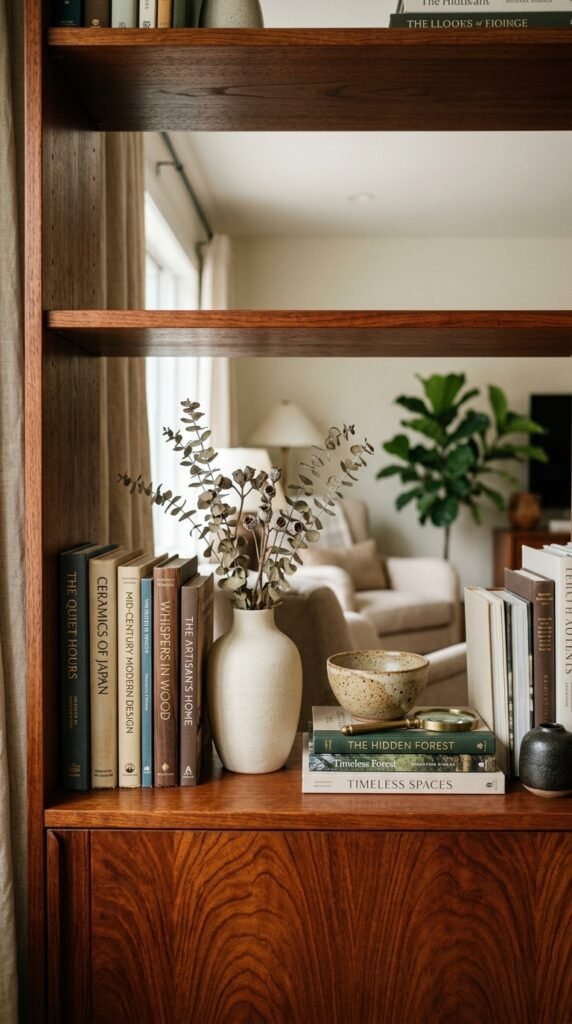
Not all wood tones are earth tones. Cool grey-washed wood and blonde Scandinavian wood both read as more neutral than earthy. Wood with warm orange or reddish undertones, mahogany, cherry, or warm walnut, reinforces the earth tone palette in a way that grey-washed oak doesn’t.
If you already own furniture in a cooler wood tone, you don’t need to replace it. A walnut oil or tinted wood conditioner can warm up the existing tone of a coffee table or bookshelf for under $20, shifting a cool-toned piece just enough to fit the warmer palette without a full refinishing project.
8. Use Mustard Yellow as a Bright Accent
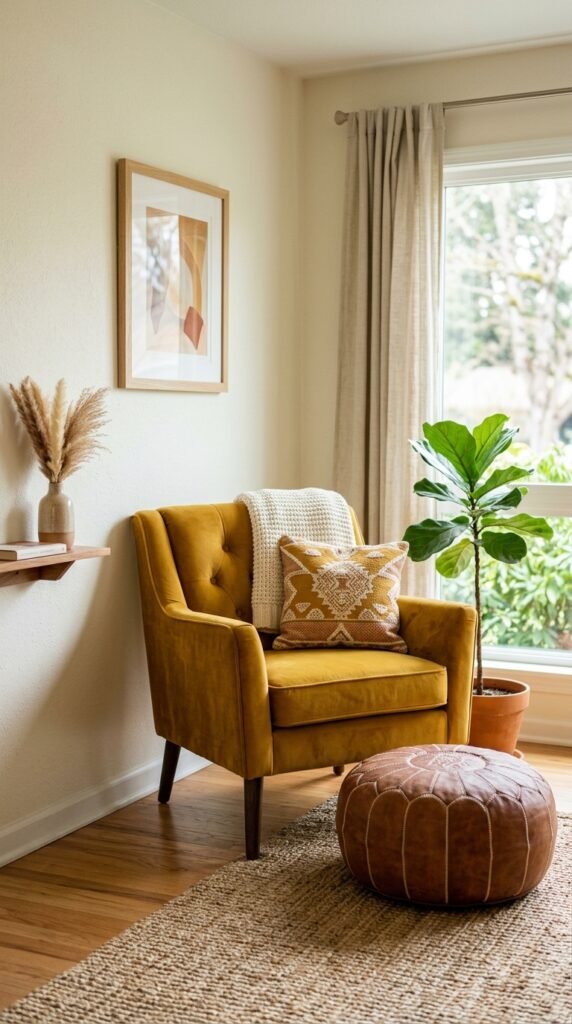
Mustard yellow is the brightest color that still belongs comfortably in an earth tone palette, since its muted, slightly brownish quality keeps it from feeling like a primary color dropped into a neutral room. Mustard works best in small doses: one accent chair, a set of curtains, or a collection of ceramic vases.
A mustard velvet accent chair runs $300 to $700 and creates a focal point against a backdrop of brown, cream, and olive. Too much mustard across multiple large pieces can tip the room from “warm and grounded” into “retro kitchen,” so treat it as a spice rather than a base ingredient.
9. Incorporate Leather Furniture for Texture and Tone
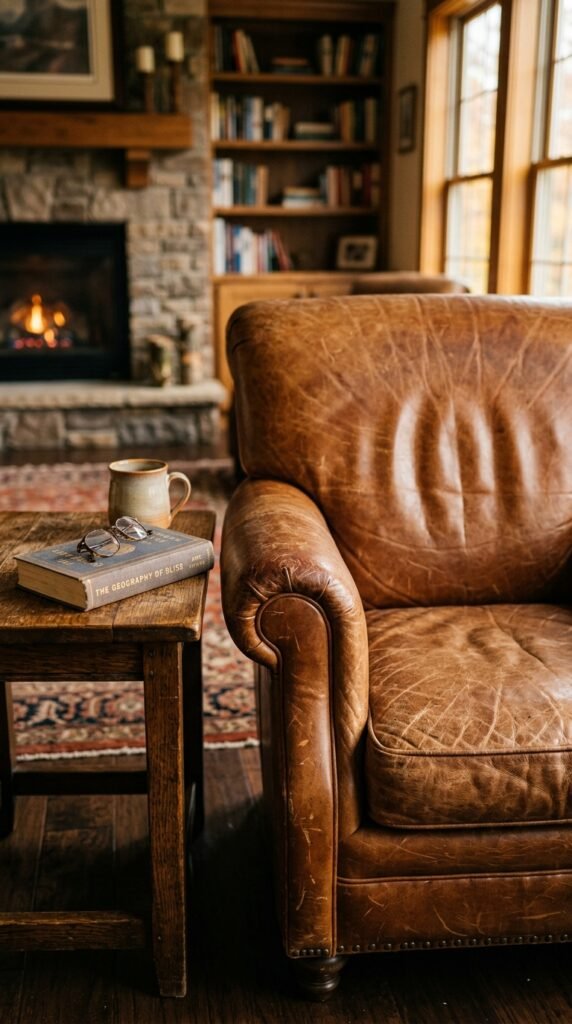
Leather furniture in cognac, caramel, or saddle brown brings both color and texture to an earth tone living room in a way that fabric upholstery can’t match. The natural variation in leather, the way it creases, ages, and develops a patina, adds visual interest that stays interesting over years rather than looking dated the way some fabric trends do.
A genuine leather accent chair in cognac or caramel runs $600 to $1,500 depending on the brand and construction quality. Faux leather alternatives at $200 to $500 deliver a similar visual effect for a fraction of the cost, though they won’t develop the same patina over time. For a single statement chair that gets moderate use, genuine leather is worth the investment. For a piece that takes daily heavy use from kids or pets, faux leather’s easier cleaning might matter more than the patina.
10. Add Greenery With Plants in Terracotta Pots
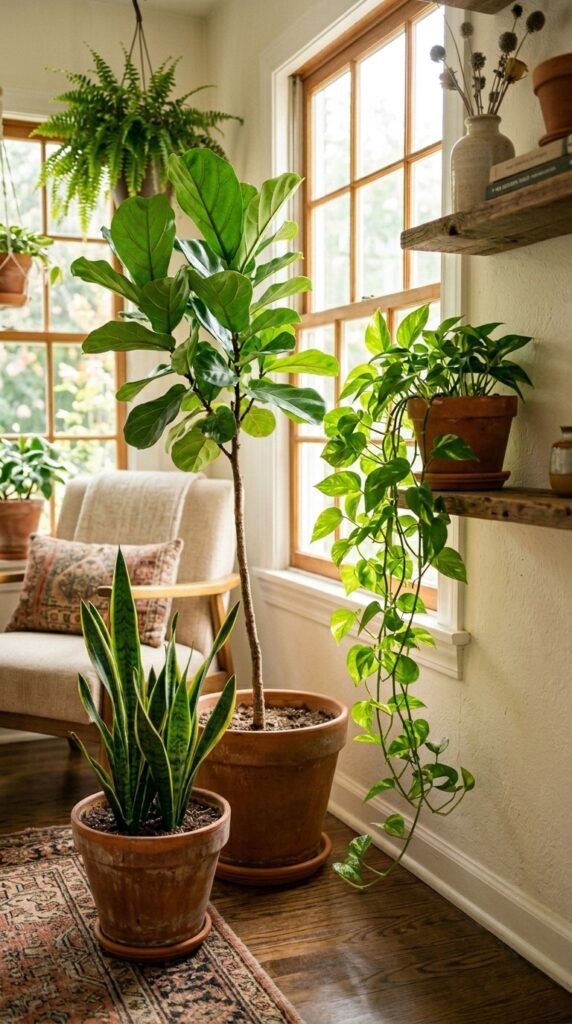
Living plants in terracotta pots reinforce the earth tone palette literally, since terracotta is, after all, baked earth. The combination of green foliage against orange-red terracotta is one of the most naturally occurring color pairings that exists, which is exactly why it works so reliably in earth tone rooms.
Group plants in odd numbers, three or five, at varying heights using plant stands. A large fiddle-leaf fig in an 12-inch terracotta pot, a trailing pothos in an 8-inch pot on a shelf, and a small snake plant in a 6-inch pot on the floor creates the height variation that makes a plant grouping look intentional rather than scattered.
11. Use Woven Wall Art for Texture Without Color
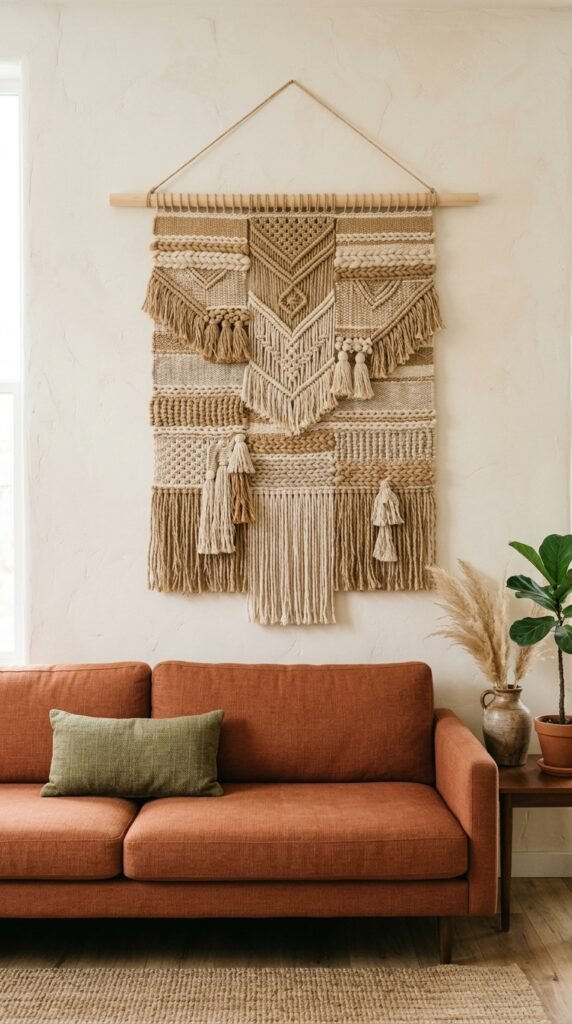
A large woven wall hanging in natural fiber tones, tan, cream, and light brown, adds texture and visual interest to a wall without introducing another color into an already-layered palette. Texture does work that color can’t in an earth tone room: it adds depth and visual complexity while staying within the established tonal range.
A 36-inch woven wall hanging from Etsy or H&M Home runs $40 to $100 depending on size and complexity. Hang it above the sofa as a focal point that complements rather than competes with the terracotta or rust accents elsewhere in the room.
12. Choose Brass or Warm Gold Metal Accents
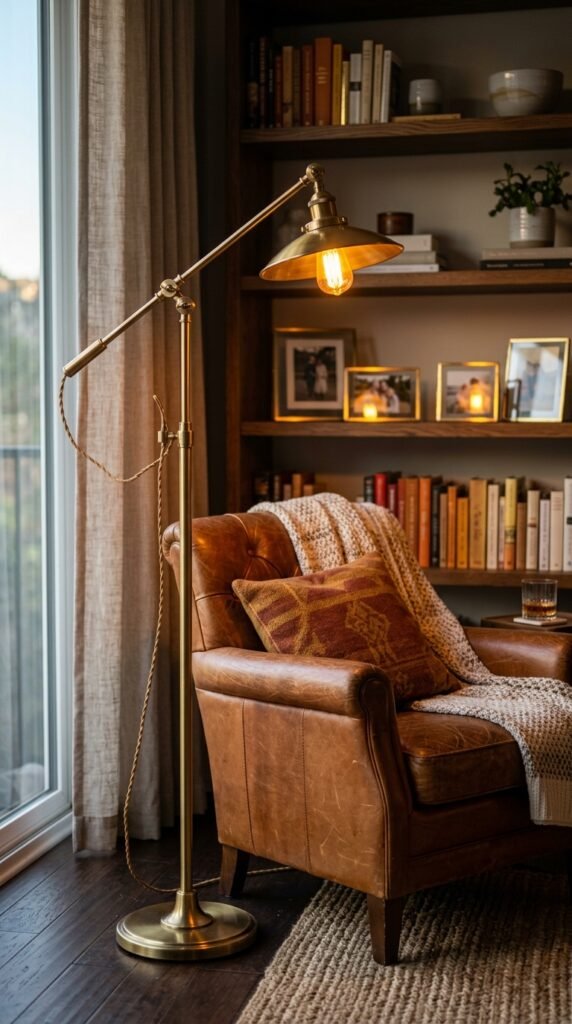
Cool metals, chrome and brushed nickel, work against an earth tone palette because their coolness contrasts sharply with the warmth of every other element in the room. Brass, warm gold, and aged bronze metal finishes on lamps, picture frames, and hardware extend the warm tonal range into the metallic elements of the room.
A brass floor lamp runs $80 to $200 at retailers like Target or World Market and instantly shifts the metallic temperature of a room from cool to warm. If you have existing chrome or nickel fixtures, brass spray paint at $8 to $12 per can can update small items like picture frames, candlesticks, or lamp bases for a fraction of replacement cost.
13. Add a Stone or Concrete Coffee Table for Cool Contrast
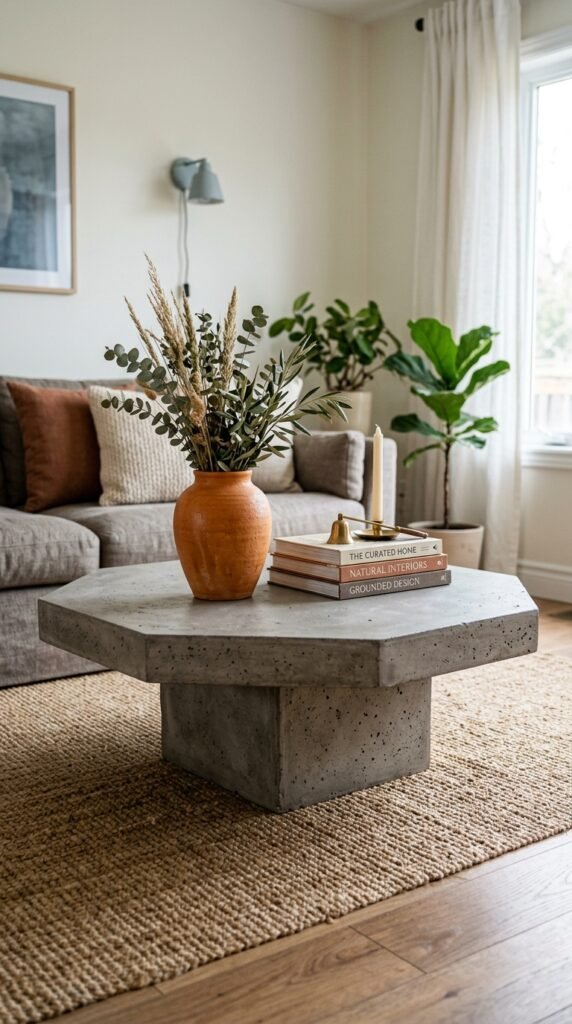
An entirely warm-toned room can start to feel slightly flat without at least one cooler element for contrast. A stone or concrete coffee table introduces a cooler grey tone and a harder material texture that breaks up the softness of fabric, leather, and wood without disrupting the overall earth tone scheme.
A concrete coffee table runs $200 to $500, while natural stone versions run higher at $400 to $1,000 depending on the stone type. The grey undertone of concrete or stone reads as neutral enough to coexist with terracotta and olive while adding the textural contrast that keeps an all-warm room from feeling one-dimensional.
14. Use Linen Curtains in Warm Neutral Tones
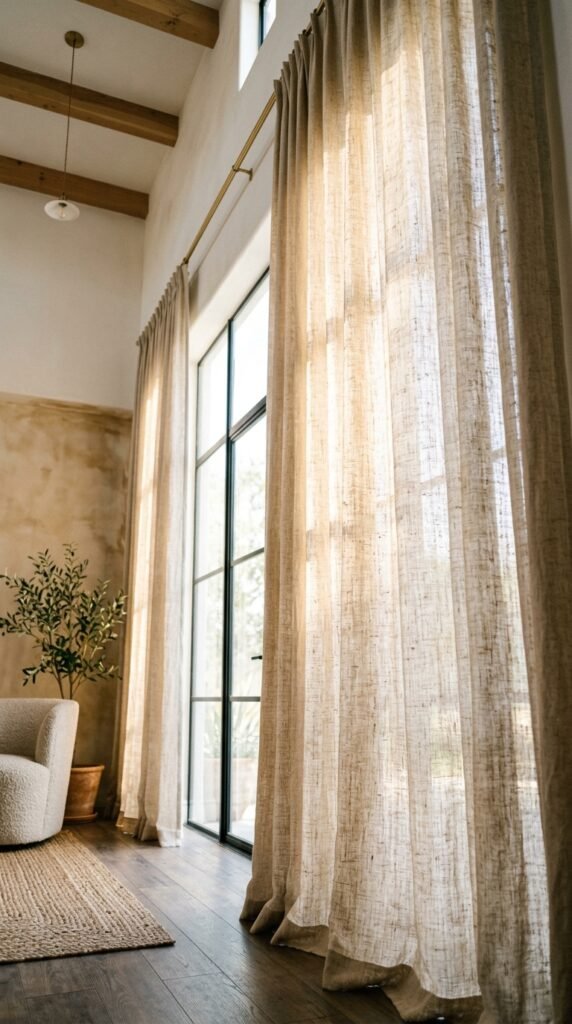
Linen curtains in oatmeal, sand, or warm taupe filter natural light with a soft, textured quality that earth tone rooms benefit from more than crisp white curtains do. Linen’s natural texture and slight color variation within the fabric itself adds the layered, collected feeling that earth tone rooms are going for.
Floor-to-ceiling linen curtains in a warm neutral run $40 to $80 per panel at IKEA or H&M Home. Hang them at ceiling height rather than window-frame height to make the room feel taller, a trick that works in any color scheme but particularly benefits earth tone rooms where height helps prevent the deeper tones from feeling heavy.
15. Incorporate Ceramic Vases in Varied Earthy Glazes
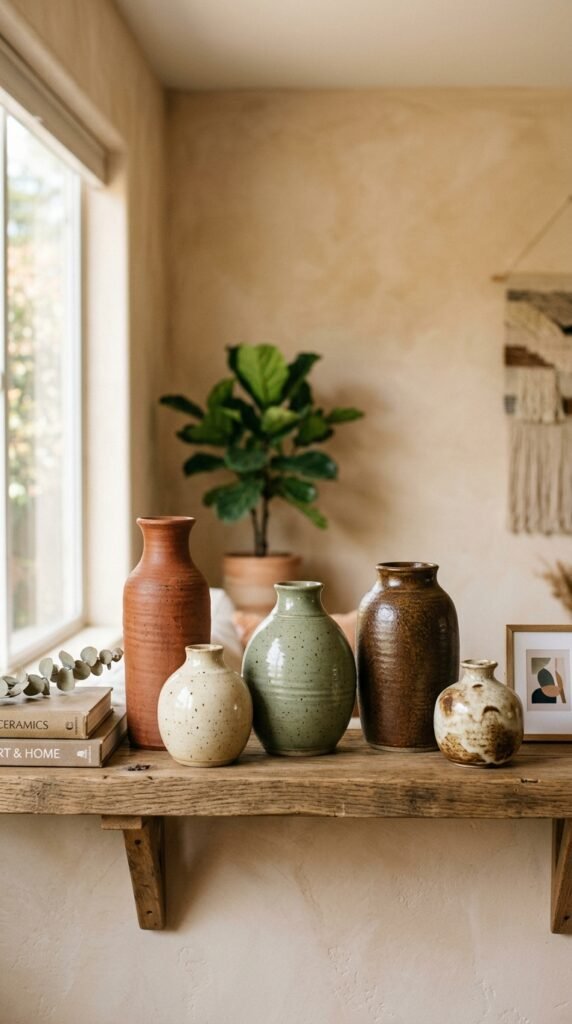
A collection of ceramic vases in varied earthy glazes, terracotta, sage, cream, and brown, displayed together on a shelf or mantel creates a cohesive color story in a small footprint. Varied glazes within the same color family read as a curated collection rather than a matched set, which fits the “collected over time” feeling that makes earth tone rooms feel authentic rather than showroom-staged.
Thrift stores and ceramic studios both work as sources here. A grouping of five vases in different earthy glazes costs $30 to $80 total from secondhand sources, compared to $100 to $200 for a matched set from a retailer. The mismatched approach is both cheaper and more visually interesting.
16. Choose a Woven Leather or Rattan Accent Chair
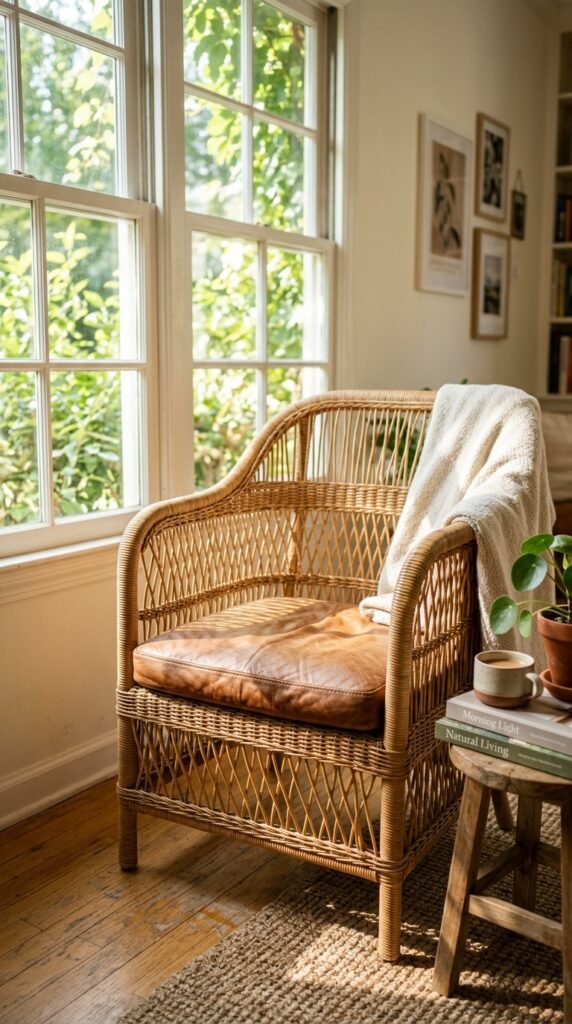
A woven leather or rattan accent chair brings both texture and a natural material element that reinforces the earth tone palette through its construction rather than just its color. The visual weight of a woven chair is lighter than a fully upholstered piece, which helps balance a room where heavier elements like a leather sofa or stone coffee table already carry significant visual weight.
A rattan accent chair with a leather or canvas cushion runs $200 to $450 at retailers like World Market or Anthropologie. Position it near a window where natural light highlights the woven texture, since this kind of detail gets lost in dim corners but becomes a focal point in good light.
17. Add Depth With Textured Throw Blankets
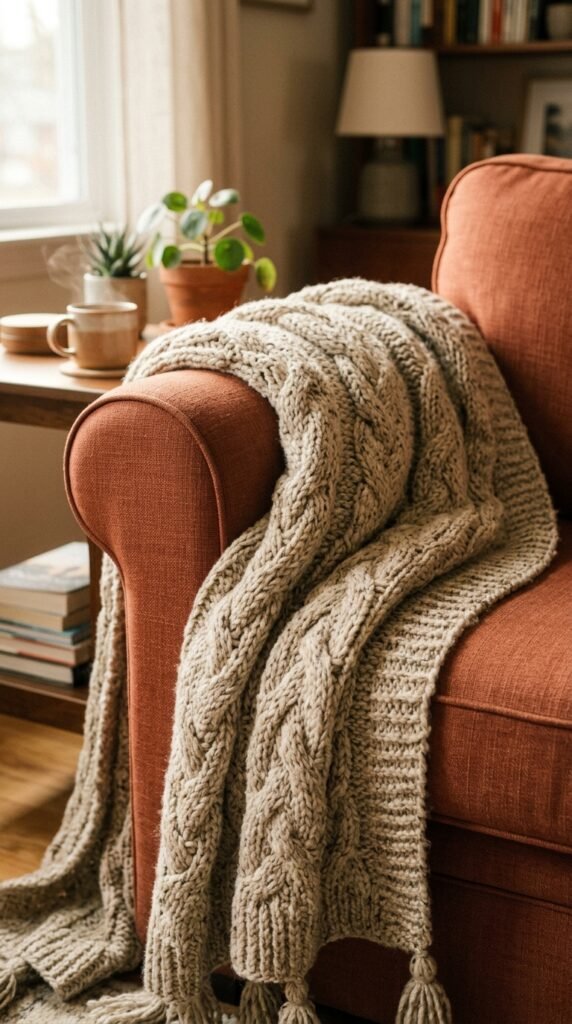
Throw blankets in chunky knit, boucle, or wool textures add tactile depth to an earth tone living room in a way that smooth fabrics can’t. Texture variation matters as much as color variation in earth tone rooms, since the muted color palette means texture carries more of the visual interest than it would in a brightly colored room.
A chunky knit throw blanket in oatmeal or rust runs $30 to $60 at retailers like Target, Anthropologie, or Etsy. Drape it over the arm of a sofa or the back of an accent chair in a relaxed, slightly asymmetric fold rather than perfectly centered, which reads as lived-in rather than staged.
18. Use Warm Dimmable Lighting Throughout
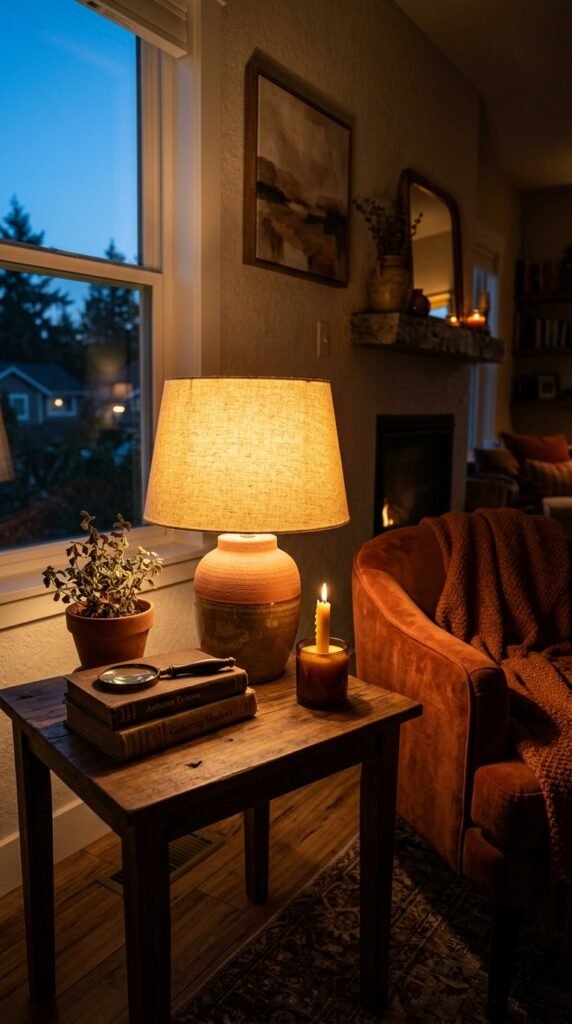
Earth tone palettes depend heavily on warm light to read correctly. Cool white LED bulbs at 5000K wash out the warmth in terracotta, rust, and brown, making them look muddy or grey instead of rich. Warm bulbs at 2700K to 3000K, combined with dimmable fixtures, let the earth tones glow the way they’re meant to.
Swap any cool white bulbs in your living room for warm white 2700K bulbs, which cost about the same as cool white versions at $3 to $8 each. Add dimmer switches or use smart bulbs with app-based dimming for $15 to $25 per bulb. The difference in how your earth tone palette reads under warm versus cool lighting is dramatic enough that I’d consider this step non-negotiable rather than optional.
19. Incorporate Cork or Wood Paneling on an Accent Wall
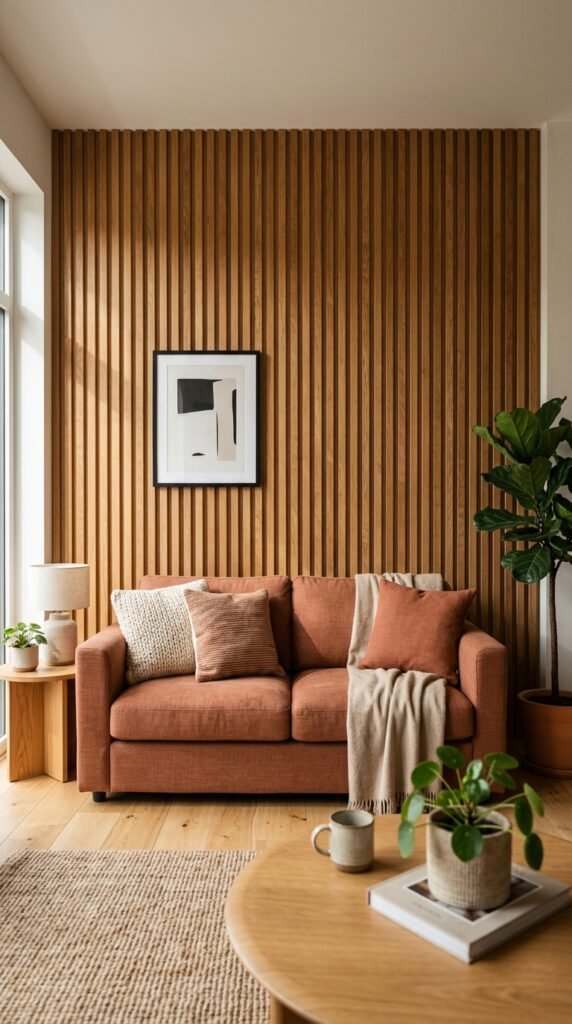
Cork or wood paneling on a single accent wall adds texture, warmth, and an organic material element at a scale that smaller decor accents can’t match. An accent wall in cork or warm wood paneling becomes the backdrop against which furniture and decor sit, rather than competing with them for attention.
Peel-and-stick cork wall panels run $3 to $6 per square foot, making a 10×8-foot accent wall cost $240 to $480 in materials with a weekend DIY installation. Wood slat paneling costs more at $8 to $15 per square foot but delivers a more dramatic textural result. Either option transforms a flat painted wall into a material-rich backdrop that earth tone furniture and decor look genuinely intentional against.
20. Add Patterned Throw Pillows in Tribal or Geometric Prints
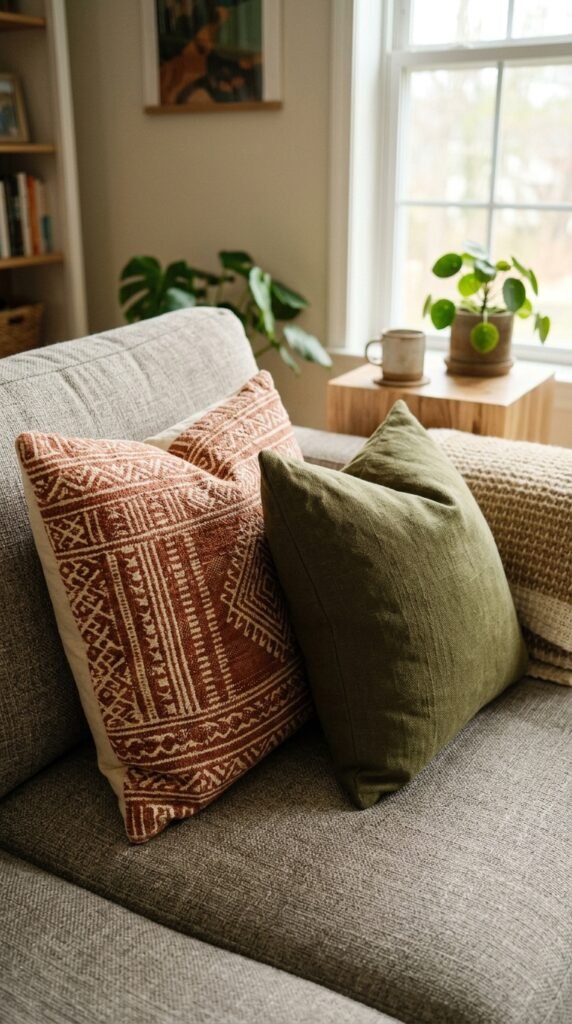
Patterned throw pillows in earth-toned tribal, Aztec, or geometric prints introduce visual interest and movement without adding a new color to the palette, since the patterns use the same earth tone color family in different combinations and proportions. Pattern adds energy to a room that might otherwise feel too uniformly solid across every surface.
A set of two patterned throw pillows in terracotta, cream, and brown tones runs $30 to $60 from retailers like West Elm or Anthropologie. Mix one patterned pillow with one solid pillow on each seat rather than pairs of matching patterns, which creates the same collected, layered look that works throughout an earth tone room.
21. Use Dried Florals and Pampas Grass for Organic Texture
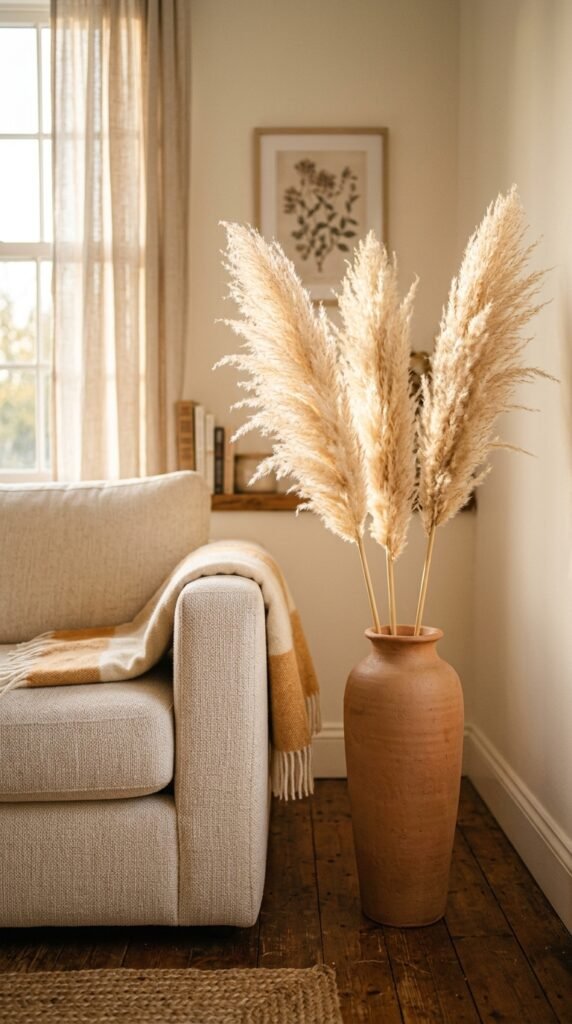
Dried florals, pampas grass, and dried eucalyptus in a ceramic vase add height, movement, and organic texture to an earth tone living room without any ongoing maintenance. Dried elements fit the earth tone aesthetic specifically because their faded, muted colors already sit within the same tonal range as the rest of the palette, unlike fresh flowers in bright colors that can clash.
Three stems of dried pampas grass in a 24-inch ceramic vase cost $15 to $25 from Etsy or a craft store and last two to three years with no water or sunlight requirements. Place the arrangement in a corner or beside a sofa where its height adds a vertical element that grounds the room from floor to a higher visual point.
Final Thoughts
An earth tone living room works when you layer multiple tones, textures, and materials rather than picking one shade of brown and calling it done. Start with your base, a terracotta or brown sofa, a jute rug, warm wood tones, then build up through olive, rust, mustard, and cream in textiles and accents. Swap your lighting to warm bulbs before you do anything else, since that single change determines whether every other color choice actually reads the way you intend. Your living room should feel like it belongs to a specific season, a warm autumn afternoon that never ends, and with these 21 ideas, that’s exactly the feeling you’ll get every time you walk in.