23 Moody Living Room Ideas to Create a Stunning Retreat
A moody living room gets misunderstood constantly. People hear “dark” and picture a cave, or worse, a room that swallows every photo you try to take in it. Done right, a moody living room feels like a warm hug at the end of the day, rich, enveloping, and dramatic in the best way. I switched my own living room from bright white to deep charcoal two winters ago and haven’t looked back once. These 23 ideas show you exactly how to do it without ending up with a room that feels like a basement.
1. Paint Your Walls in Deep Charcoal or Near-Black
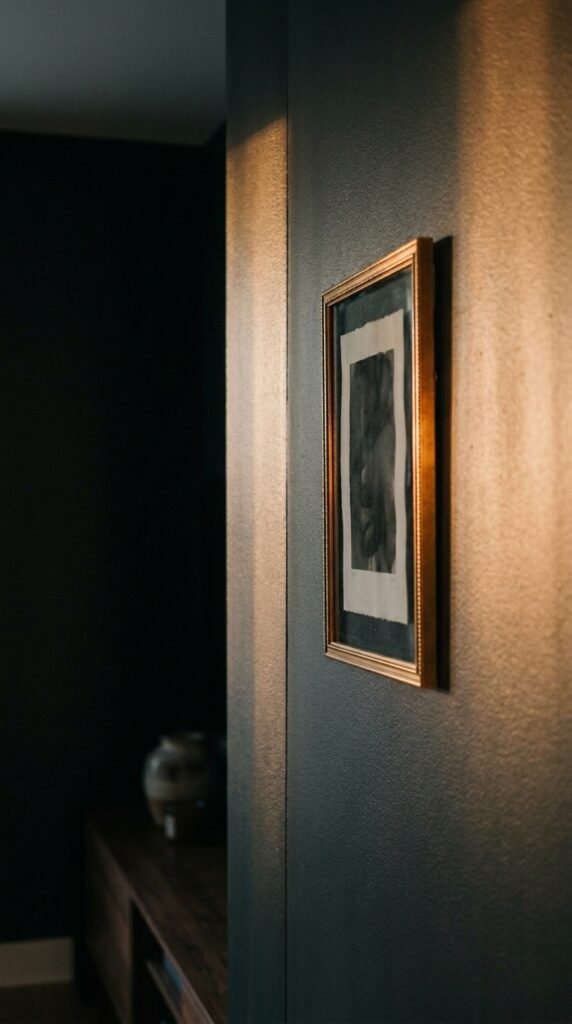
Deep charcoal or near-black walls are the foundation of a moody living room, and they work better than most people expect because dark walls actually make a room’s other elements, art, lighting, plants, pop with more contrast than light walls do. The fear that dark paint shrinks a room is mostly unfounded when the room has decent natural light or a few well-placed lamps; what dark walls actually do is make the edges of the room recede, creating a cocoon-like effect rather than a cramped one.
Farrow & Ball’s “Off-Black” and Benjamin Moore’s “Wrought Iron” are two shades that read as sophisticated rather than flat black. A gallon of premium dark paint runs $50 to $80 and covers about 350 square feet with two coats, which most living rooms need for full coverage and color depth.
2. Layer Multiple Light Sources at Different Heights
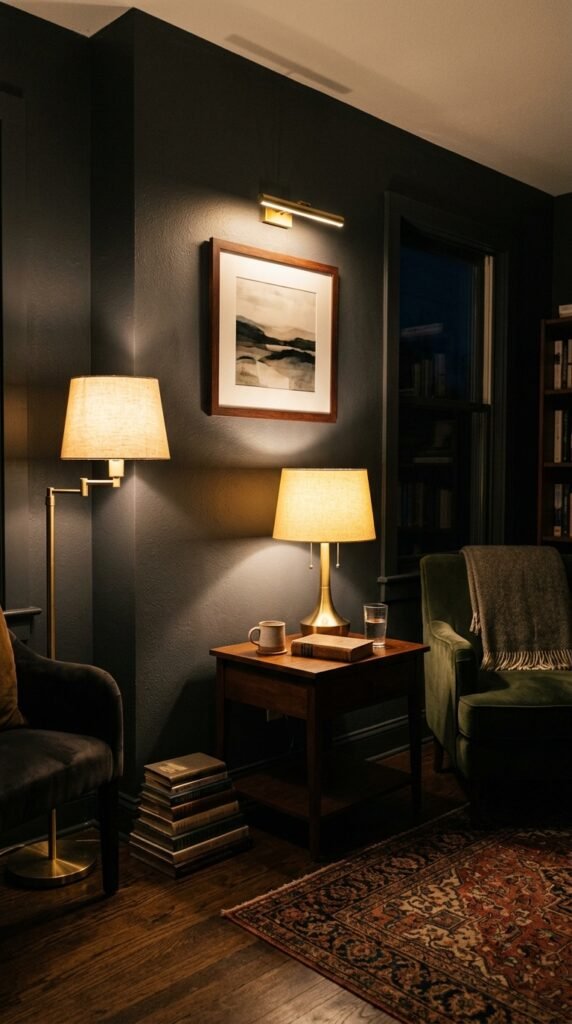
A moody room with only an overhead light looks gloomy in the wrong way. A moody room with light sources at floor, table, and eye level looks intentional and warm. Layering light at different heights creates pools of warm light and soft shadow that make a dark room feel rich rather than flat and underlit.
Combine a floor lamp in one corner, a table lamp on a side table, and a smaller accent light, a picture light over art or a small lamp on a bookshelf, for at least three distinct light sources at three different heights. Each one should use a warm 2700K bulb. This combination does more for a moody room’s atmosphere than any single bright fixture ever could.
3. Add a Velvet Sofa in Deep Emerald or Navy
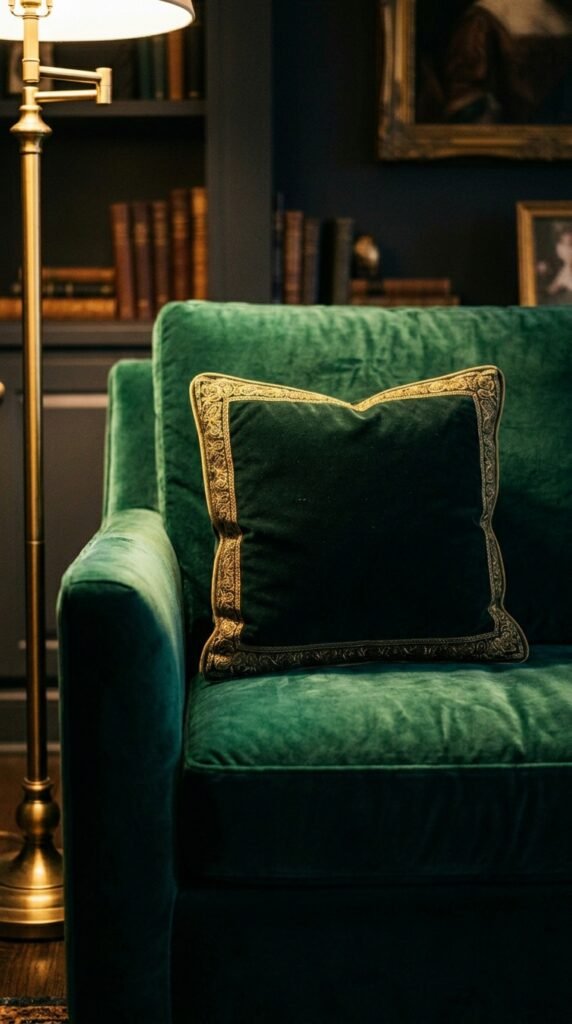
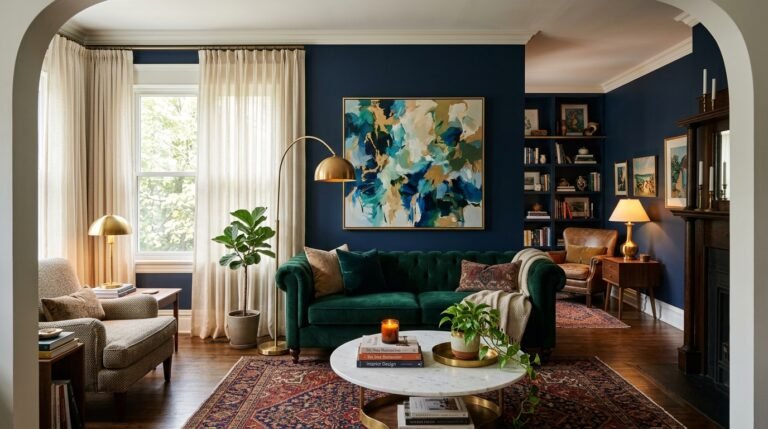
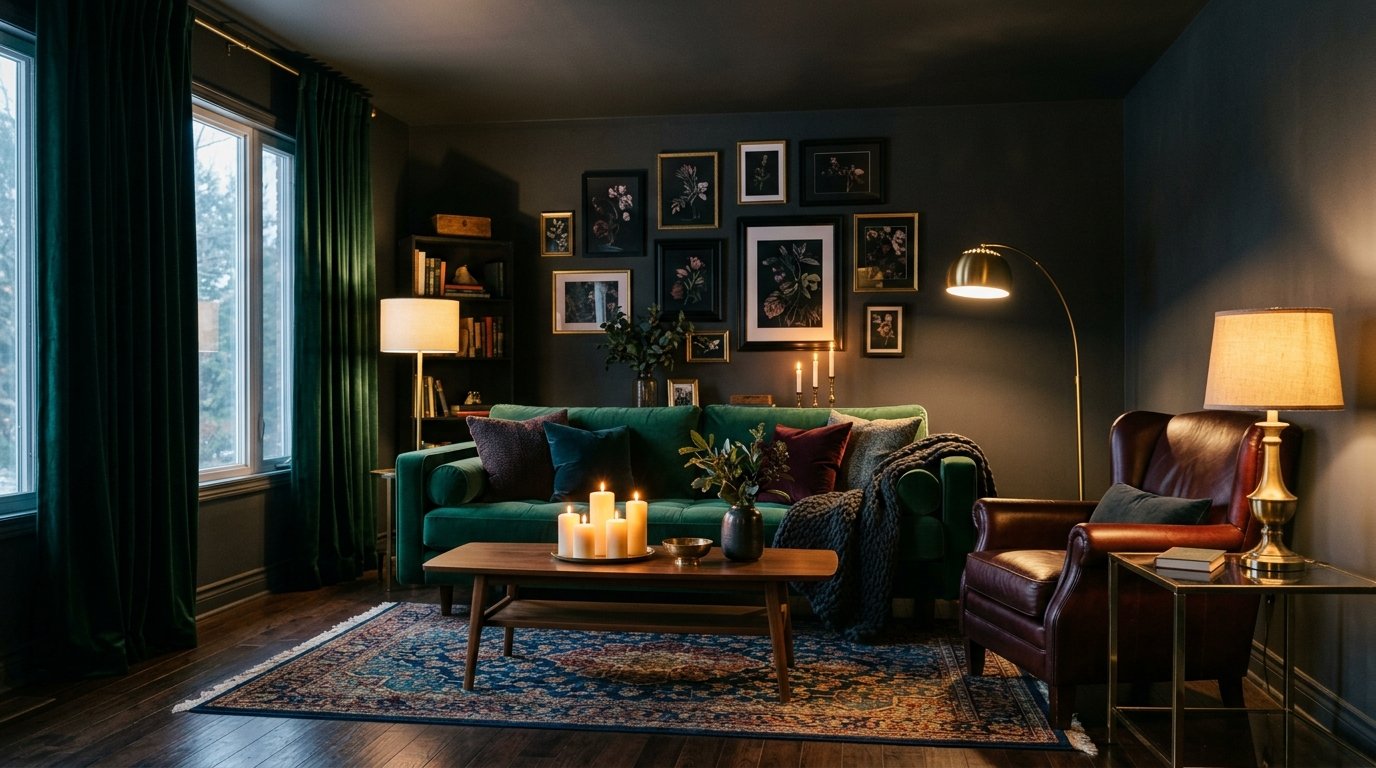
A velvet sofa in deep emerald, navy, or burgundy becomes the room’s anchor piece and brings both color saturation and a light-catching texture that flat fabric can’t match. Velvet’s pile catches light differently depending on the angle, which means the same sofa can look almost black in one light and richly colored in another, exactly the kind of visual depth a moody room thrives on.
A velvet sofa in a deep jewel tone runs $800 to $2,000 at retailers like Article, West Elm, or Anthropologie. Position it where it catches some light from your lamps directly, since velvet’s color and texture come alive most under warm, directional light rather than flat overhead illumination.
4. Use Brass or Aged Bronze Metal Accents
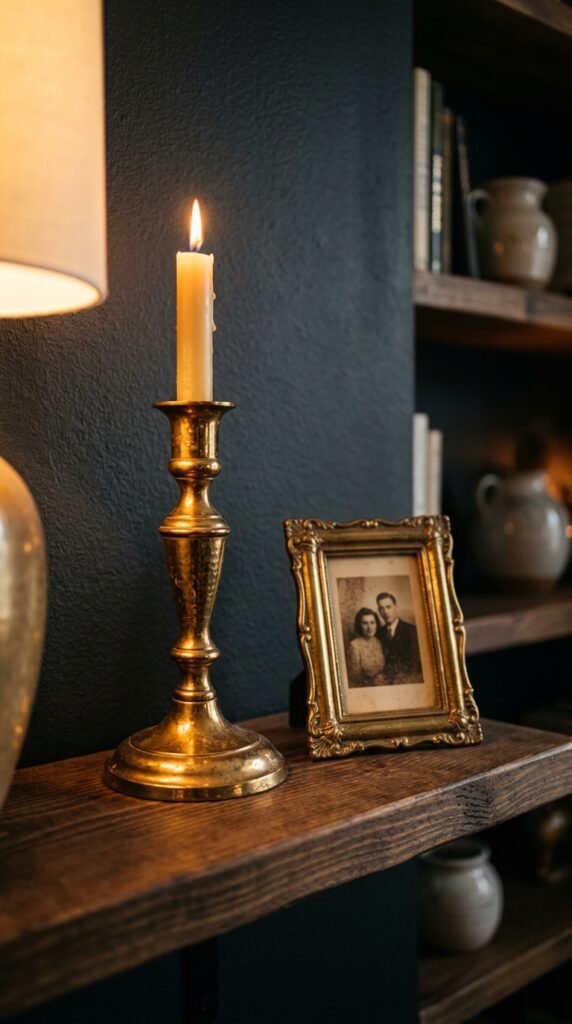
Cool metals like chrome and brushed nickel can make a dark room feel cold and clinical, working against the warmth a moody living room depends on. Brass and aged bronze, on the other hand, catch warm lamp light and reflect it back with a golden glow that reinforces the room’s overall warmth even as the walls and furniture stay dark.
Brass picture frames, candlesticks, lamp bases, and even drawer pulls all contribute to this effect. A set of brass candlesticks runs $20 to $50, and existing chrome or nickel items can be updated with brass spray paint at $8 to $12 per can for a quick, budget-friendly metal-tone shift.
5. Incorporate Floor-to-Ceiling Curtains in Rich Jewel Tones
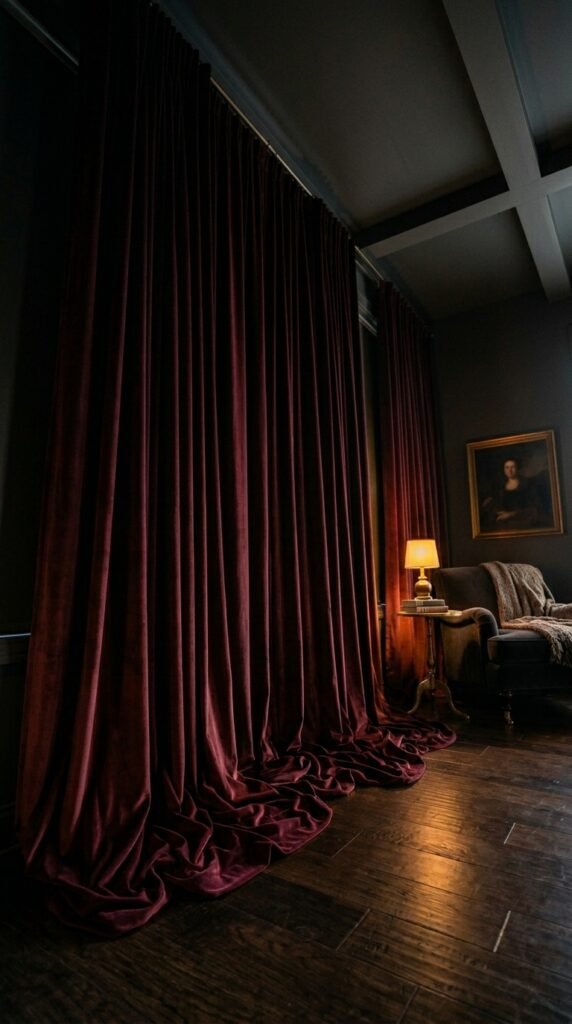
Floor-to-ceiling curtains in deep emerald, burgundy, or navy velvet or heavy linen add height, drama, and another layer of rich color that complements dark walls rather than disappearing into them. Curtains in a moody room do more work than in a bright one: they frame windows as deliberate features rather than just openings, and their fabric texture adds to the room’s overall sense of depth.
Hang curtain rods at ceiling height for maximum drama, and choose a fabric heavy enough to puddle slightly on the floor. Velvet curtain panels run $60 to $120 per panel, while heavy linen in rich tones runs $40 to $80 per panel.
6. Add a Statement Chandelier or Pendant With Warm Bulbs
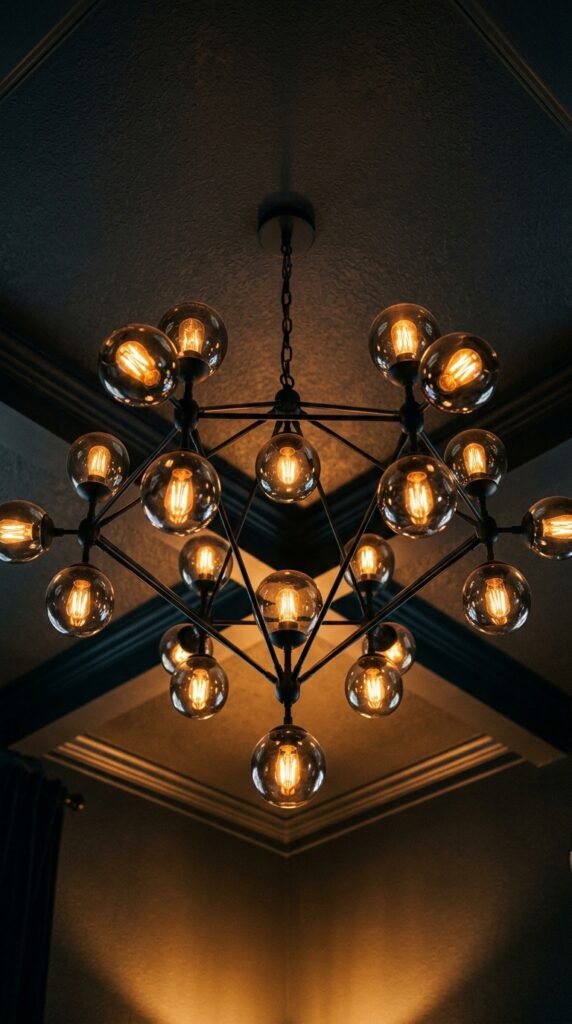
A statement chandelier or pendant light, in black metal, aged brass, or smoked glass, becomes a sculptural focal point in a moody room when fitted with warm bulbs rather than the cool, bright bulbs that ceiling fixtures often come with by default. The fixture itself should read as an object worth looking at, not just a light source, since moody rooms benefit from every element pulling double duty as both function and decor.
A statement pendant or small chandelier in black metal or smoked glass runs $150 to $500 depending on size and style. Always swap in 2700K warm bulbs regardless of what the fixture ships with, since the wrong bulb temperature can undo an otherwise perfect fixture choice instantly.
7. Use Dark Wood Furniture With Rich Grain
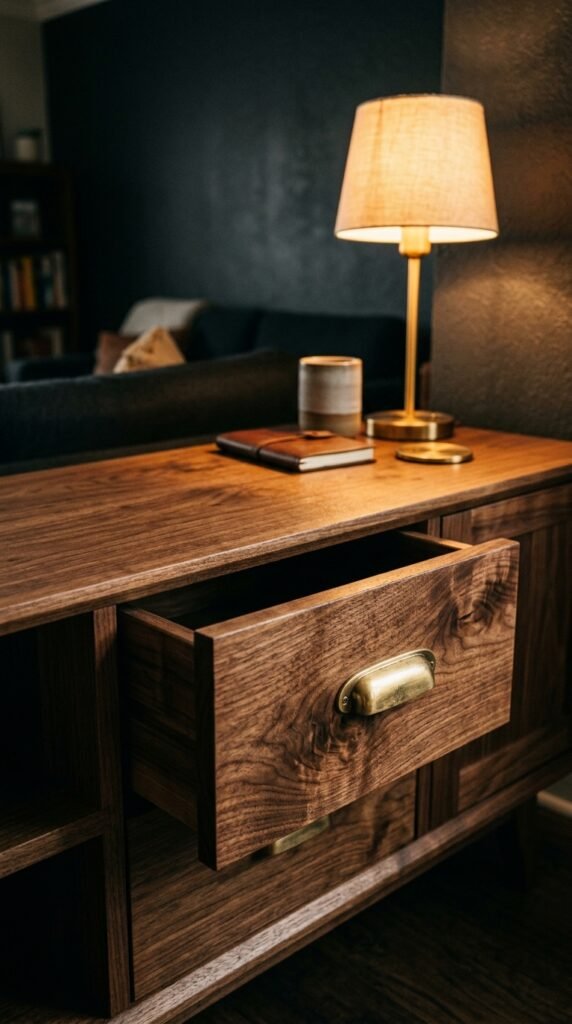
Furniture in dark wood tones, walnut, mahogany, or ebonized oak, reinforces a moody room’s depth while adding the warmth and texture that wood grain provides even in deep, dark finishes. Dark wood doesn’t disappear into dark walls the way you might expect; instead, the grain and sheen create subtle variation that lighter wood against dark walls can’t achieve in the same way.
A walnut coffee table or media console runs $400 to $1,200 depending on size and construction. Position pieces where lamp light can catch the wood’s natural sheen, since a dark wood piece in full shadow loses the textural quality that makes it work in the first place.
8. Add Botanical Prints With Dark, Dramatic Backgrounds
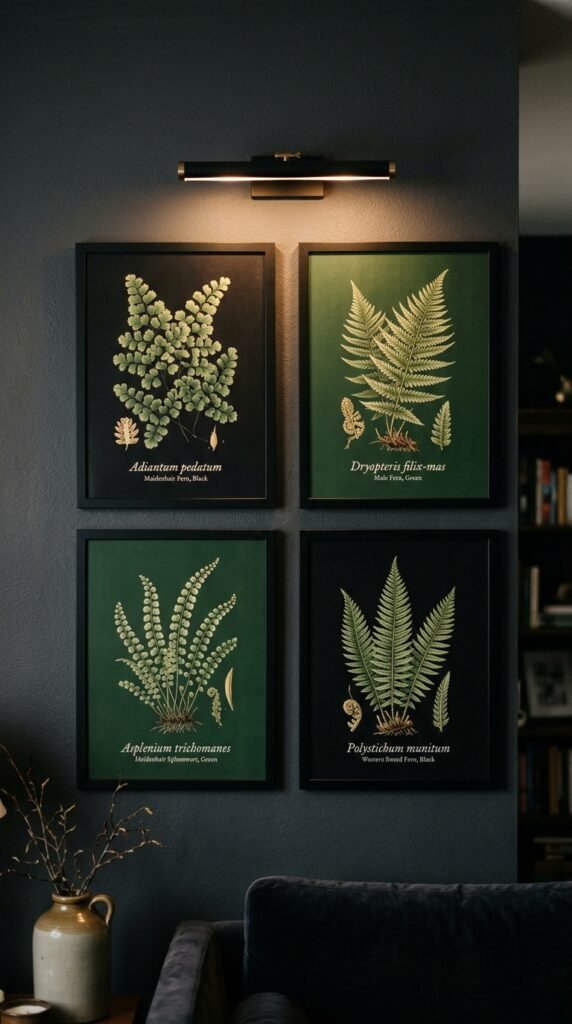
Botanical or nature illustrations with dark backgrounds, deep green, black, or navy, rather than the traditional white or cream backgrounds of vintage botanical prints, integrate into a moody room’s palette instead of creating bright white rectangles on dark walls. Dark-background art disappears into the wall slightly at first glance, then reveals its detail as your eye adjusts, creating the kind of layered viewing experience that bright white-background art can’t replicate in this setting.
Dark botanical or nature prints in simple black or brass frames run $30 to $80 each from retailers like Etsy, Society6, or Desenio. Group three or four in a simple grid arrangement on one wall for impact without overwhelming the room.
9. Use a Patterned Rug With Deep, Saturated Colors

A patterned area rug in deep burgundy, forest green, or navy with intricate detailing adds visual richness at floor level and grounds the room’s color palette from the bottom up. Patterned rugs in moody rooms can be busier than they would work in a bright room, since the dark background colors integrate with dark walls rather than competing with bright white ones.
A Persian-style or vintage-inspired rug in deep, saturated tones runs $200 to $600 depending on size, with overdyed versions from Rugs USA offering similar richness at lower price points. The rug’s pattern becomes part of the room’s overall texture rather than a standalone statement piece.
10. Add Candles in Varying Heights for Ambient Glow
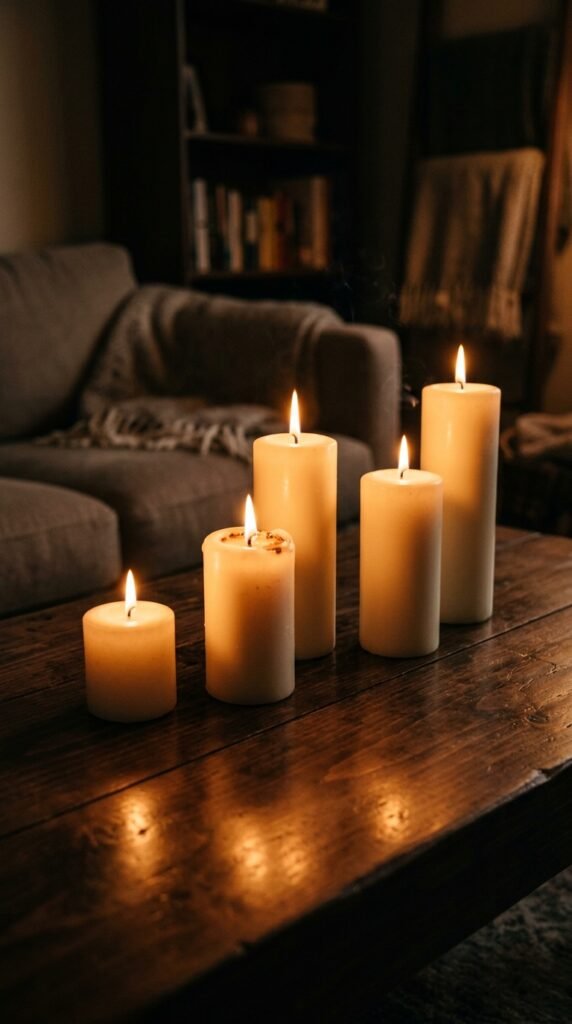
Candles do something that electric lighting, even warm electric lighting, can’t fully replicate: they flicker. That flicker creates movement and shadow play across dark walls and furniture that static light sources don’t, adding a living quality to the room’s atmosphere that’s particularly noticeable in the evening.
Group pillar candles in varying heights on a coffee table, mantel, or console. A grouping of five candles in heights from 4 to 12 inches costs $15 to $30 for a basic set. Use real candles rather than LED versions when you’re actually in the room to enjoy the effect; save the LED versions for when you’re away and want ambient light without fire risk.
11. Incorporate a Dark Stone or Marble Fireplace Surround
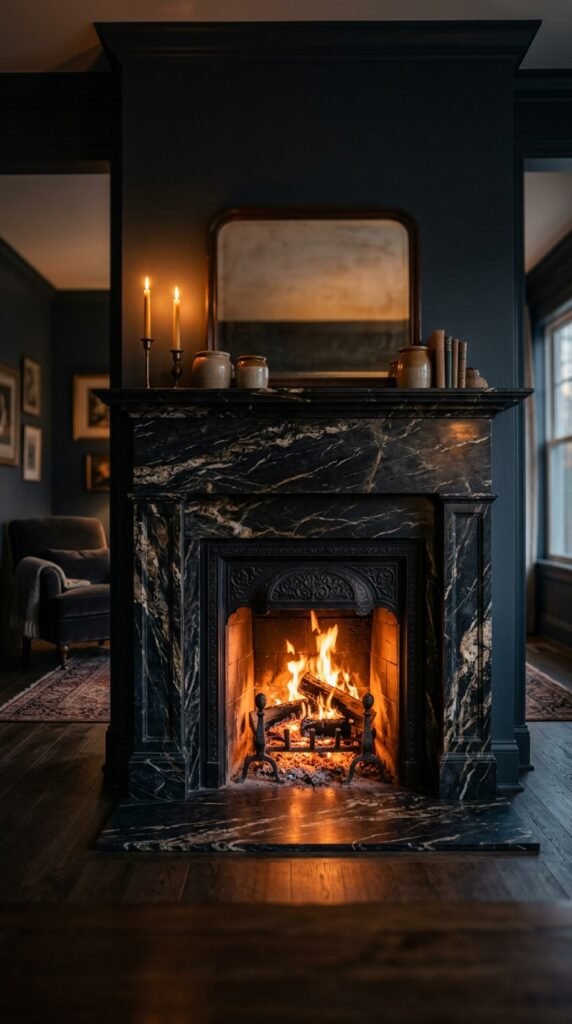
A fireplace surround in dark marble, slate, or soapstone becomes a dramatic focal point that a white or light stone surround simply can’t match in a moody room. The natural veining in dark stone catches light in a way that creates subtle pattern and movement, especially when firelight or nearby lamps hit the surface at an angle.
Dark marble or soapstone surrounds run $1,500 to $4,000 installed depending on stone type and fireplace size, while a faux dark stone veneer panel runs $300 to $800 for a DIY-friendly update to an existing fireplace.
12. Use Dark-Painted Ceilings for Full Enclosure
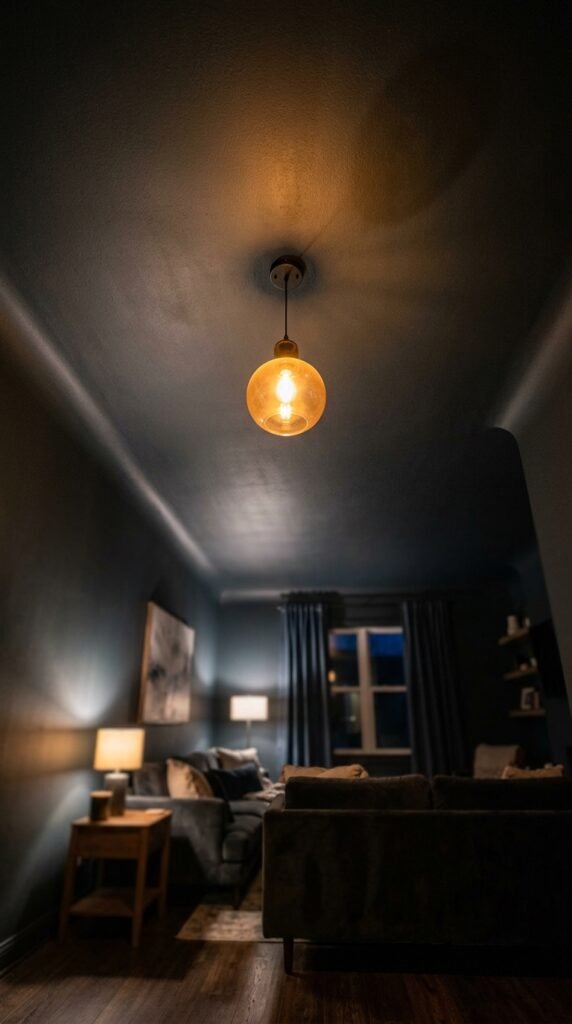
Painting the ceiling the same dark color as the walls, rather than leaving it white, removes the visual “lid” that a white ceiling creates and makes a room feel fully enveloped rather than like a dark box with a bright top. This is the step most people skip, and it’s often the single change that takes a moody room from “dark walls” to “actually moody.”
Use the same paint as your walls for the ceiling, or go one shade darker for additional depth. The cost is just the paint itself, since you’re already painting the walls; budget an extra gallon at $25 to $40 for ceiling coverage in an average-sized room.
13. Add Layered Textiles in Complementary Dark Tones
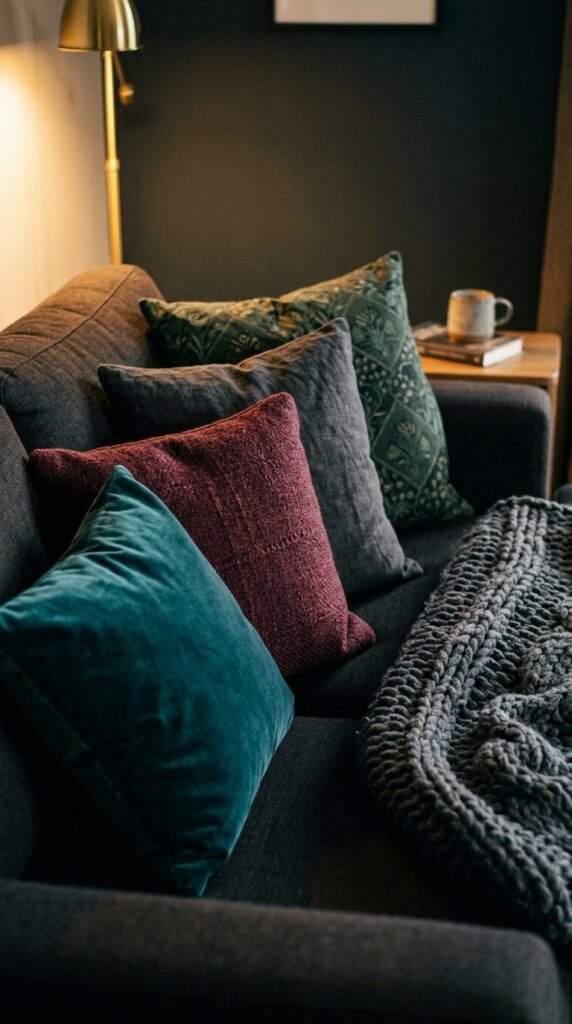
Throw pillows and blankets in complementary dark tones, deep teal with burgundy, charcoal with forest green, create the layered richness that moody rooms depend on without introducing any light colors that would break the room’s cohesive depth. Texture variation matters more than color variation here: velvet, wool, and linen in similar dark tones create visual interest through how they catch light differently rather than through contrasting colors.
A set of three to four throw pillows in coordinating dark jewel tones and textures runs $60 to $120 total. Layer a chunky knit throw in a dark neutral over the sofa arm for an additional texture layer that photographs beautifully in warm lamp light.
14. Use Dark Green as a Sophisticated Alternative to Black
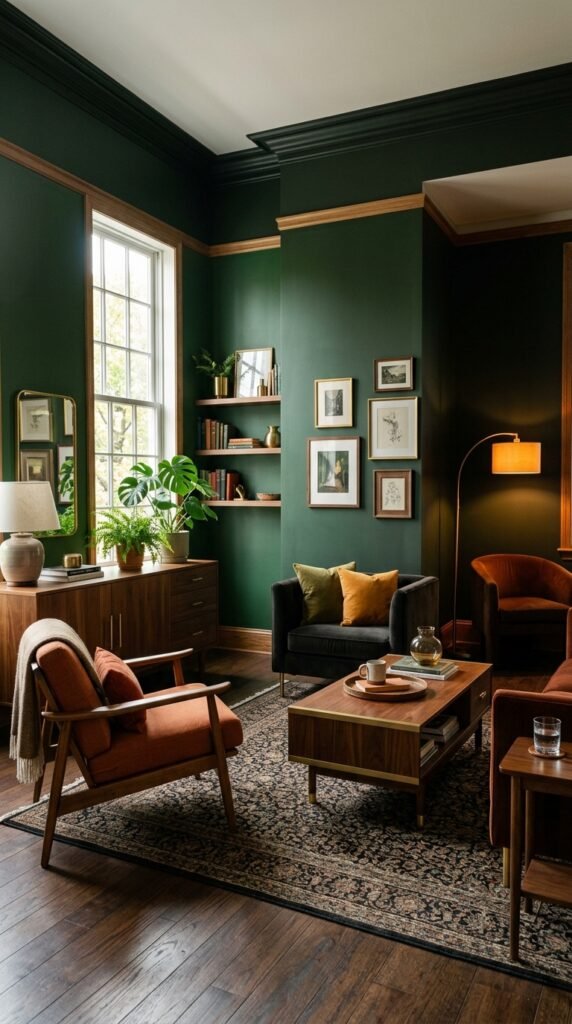
Deep forest or hunter green walls deliver much of the same moody depth as charcoal or black but read as slightly warmer and more organic, which some people find easier to live with long-term. Dark green pairs naturally with brass, wood tones, and botanical elements, making it a particularly cohesive choice if your existing furniture leans toward warm woods and natural materials.
Farrow & Ball’s “Studio Green” and Benjamin Moore’s “Forest Green” are two reliable options. The color shifts noticeably between daytime and evening lighting, appearing almost black in low light and revealing its green undertone in brighter conditions, which adds to the room’s sense of changing atmosphere throughout the day.
15. Add a Gallery Wall With Mixed Dark Frames
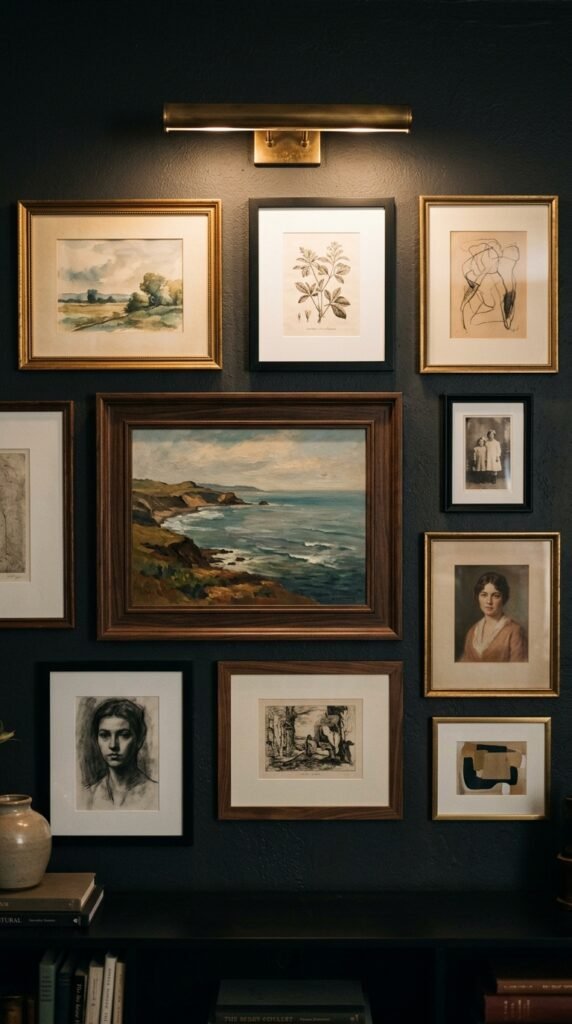
A gallery wall using frames in mixed dark finishes, black, aged brass, dark walnut, rather than matching frames, creates the collected, layered look that moody rooms benefit from while keeping the overall tone cohesive through the shared darkness of the frames themselves. Mixed dark frames read as curated rather than mismatched, since the common thread of darkness ties everything together even when individual frame styles vary.
Source frames from thrift stores, Facebook Marketplace, or budget retailers, mixing finishes deliberately. A gallery wall of eight to ten frames in varied dark finishes costs $40 to $100 total if sourced secondhand, compared to $150 to $300 for a matched set from a single retailer.
16. Incorporate Leather Furniture in Deep Brown or Black
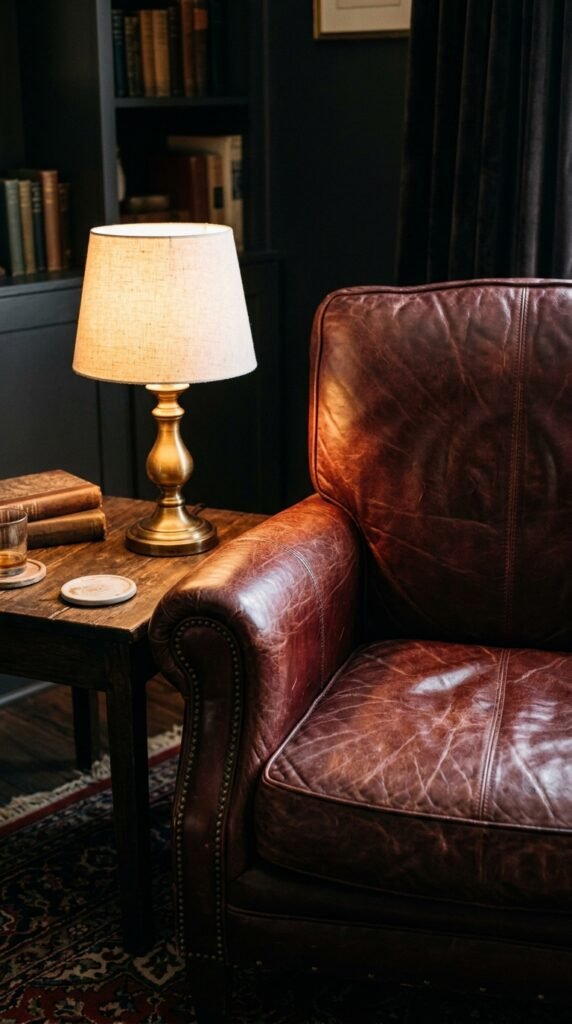
Leather furniture in deep brown, oxblood, or black brings a different texture and sheen than velvet while maintaining the same dark, rich color palette. Leather develops a patina over time that velvet doesn’t, meaning a leather accent chair in a moody room actually looks better after a few years of use, which is the opposite of how most furniture ages.
A leather accent chair in a deep tone runs $500 to $1,500 for genuine leather, or $200 to $500 for quality faux leather. Position leather pieces where they’ll get some natural wear, since the slight creasing and softening that comes with use is part of what makes leather work so well in this aesthetic.
17. Use Smoked or Tinted Glass for Coffee Tables and Shelving
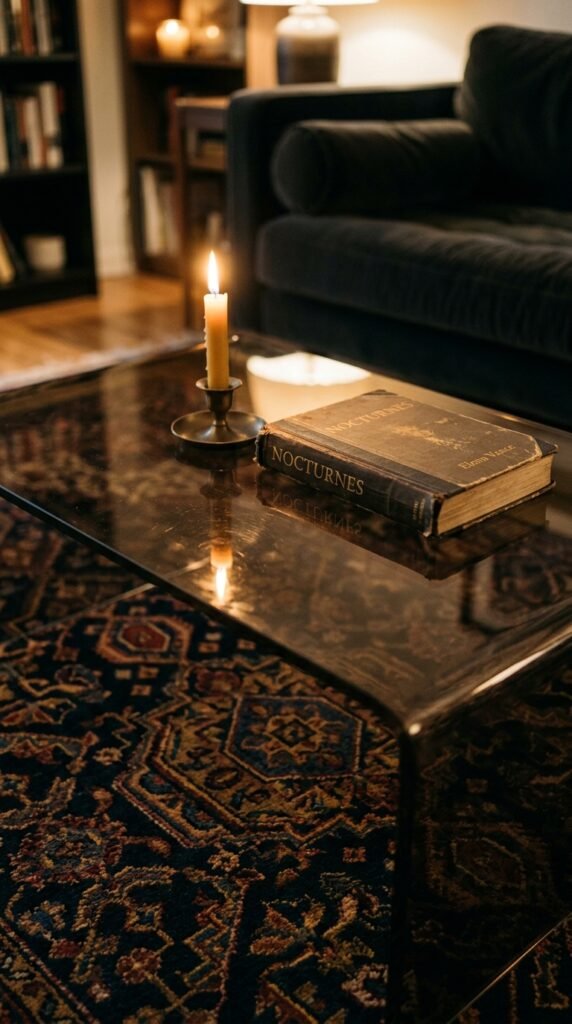
Smoked or bronze-tinted glass for a coffee table or shelving unit adds a translucent dark element that’s visually lighter than solid dark furniture while still fitting the room’s overall tone. Tinted glass lets some light through while still reading as dark, creating a different visual weight than opaque dark materials and preventing a room from feeling too heavy if you’ve already committed to dark walls, dark sofa, and dark wood elsewhere.
A smoked glass coffee table runs $200 to $500 depending on frame material. The slight transparency means you can see the rug or floor beneath it, which adds a layer of depth that an opaque table of the same color wouldn’t provide.
18. Add Black Window Frames or Trim for Architectural Definition
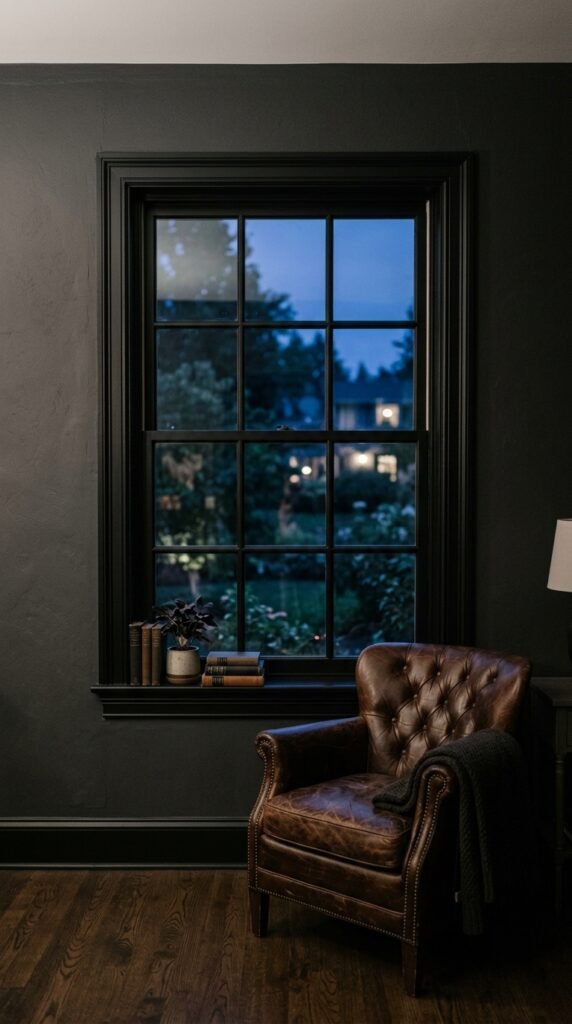
Black-painted window frames, whether your actual window frames or simply the interior trim around them, create a strong architectural line that frames views and natural light dramatically. Black trim against dark walls creates subtle definition rather than stark contrast, while black trim against lighter walls creates a bolder graphic statement; either approach works in a moody room depending on your overall wall color.
Painting existing window trim black costs $30 to $60 in paint and supplies for a typical living room’s worth of windows, making this one of the most cost-effective dramatic changes on this entire list.
19. Use Dark Floors or a Dark Area Rug to Anchor the Palette
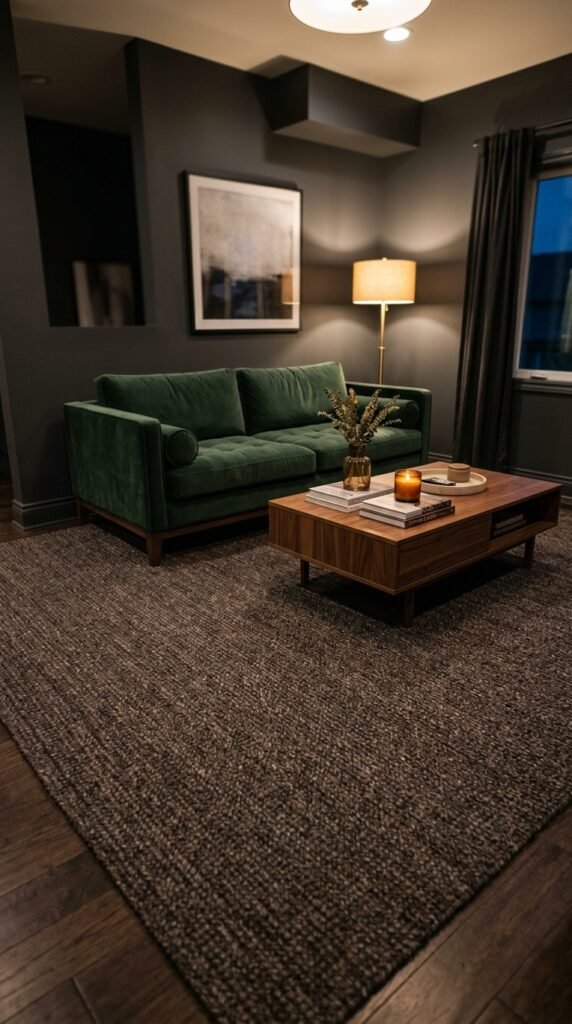
Dark flooring, whether dark-stained hardwood, dark tile, or a large dark area rug covering lighter existing flooring, anchors a moody room’s palette from the ground up and prevents a visual disconnect between dark walls and a light floor. The floor-to-wall color relationship matters more than people realize: light floors under dark walls can create an unintentional “floating” effect where the walls feel disconnected from the ground.
If refinishing floors isn’t practical, a large dark area rug, 9×12 or bigger, in charcoal, espresso, or deep navy covers most of a room’s visible floor and achieves a similar grounding effect for $150 to $400 rather than the $3 to $8 per square foot that floor refinishing costs.
20. Add Dramatic Drapery Behind a Reading Chair
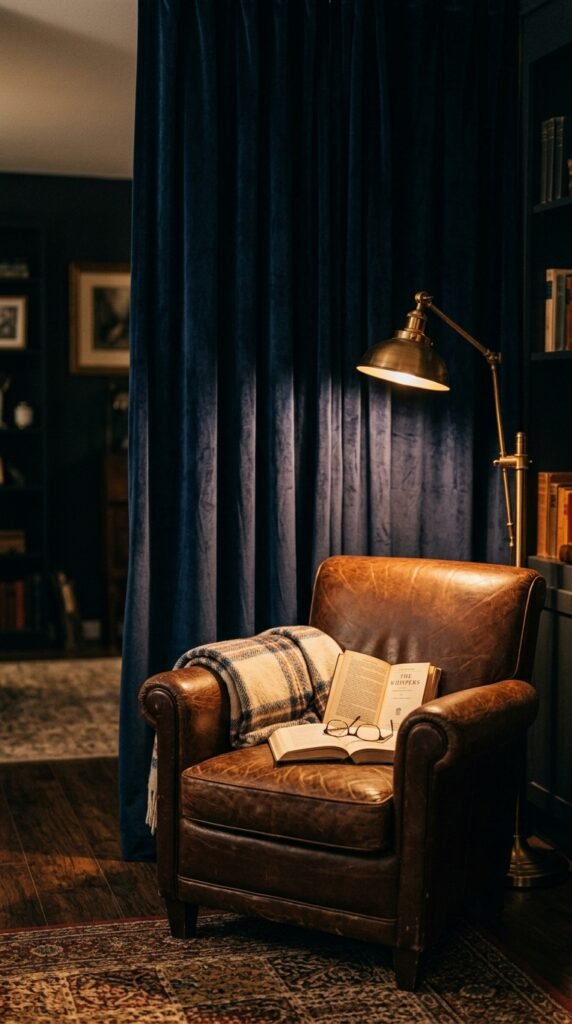
A single dramatic curtain or drapery panel behind a reading chair, even if it doesn’t cover an actual window, creates a theatrical backdrop that elevates one chair into a designed moment within the room. This technique borrows from theater and hospitality design, where a single piece of fabric behind a seat transforms it from “a chair in a room” into “a considered scene.”
Mount a curtain rod on the wall behind a reading chair and hang a single floor-length panel in velvet or heavy linen in a deep jewel tone. This costs $40 to $80 for the panel and hardware and creates a focal point that photographs dramatically, particularly with a reading lamp positioned to one side.
21. Incorporate Black Steel Shelving or Furniture Frames
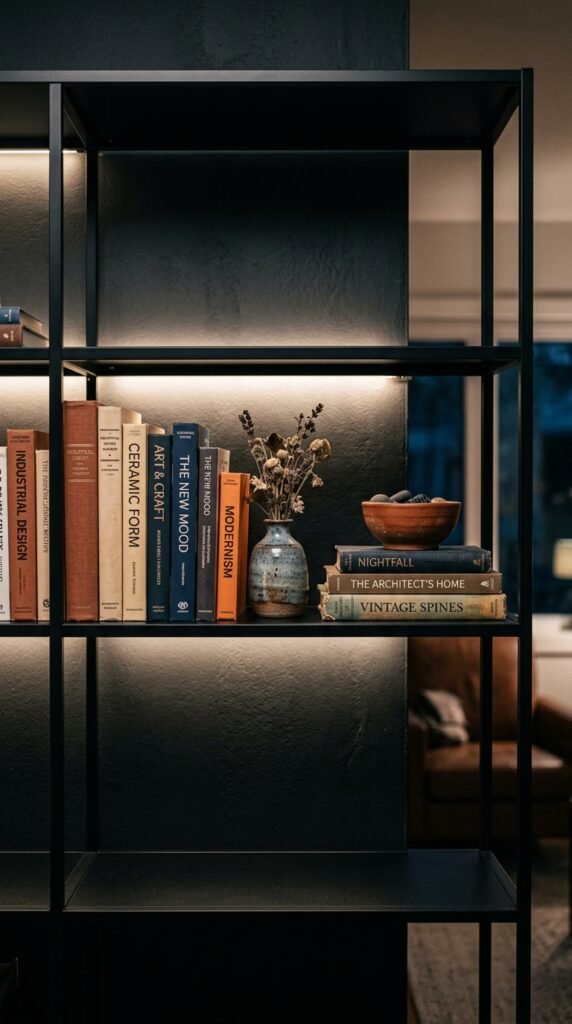
Furniture and shelving with black steel frames, whether a bookshelf, a console table, or accent furniture, add a graphic, industrial-adjacent element that contrasts with softer materials like velvet and wool while staying within the room’s dark palette. The thin profile of steel frames keeps furniture from feeling visually heavy even in a room already carrying a lot of dark color, since the material itself takes up less visual space than a solid wood equivalent.
Black steel-framed shelving units run $100 to $300 depending on size, and work particularly well for displaying books and objects where the dark frame recedes and the displayed items become the visual focus.
22. Use Metallic Wallpaper for a Subtle Shimmer
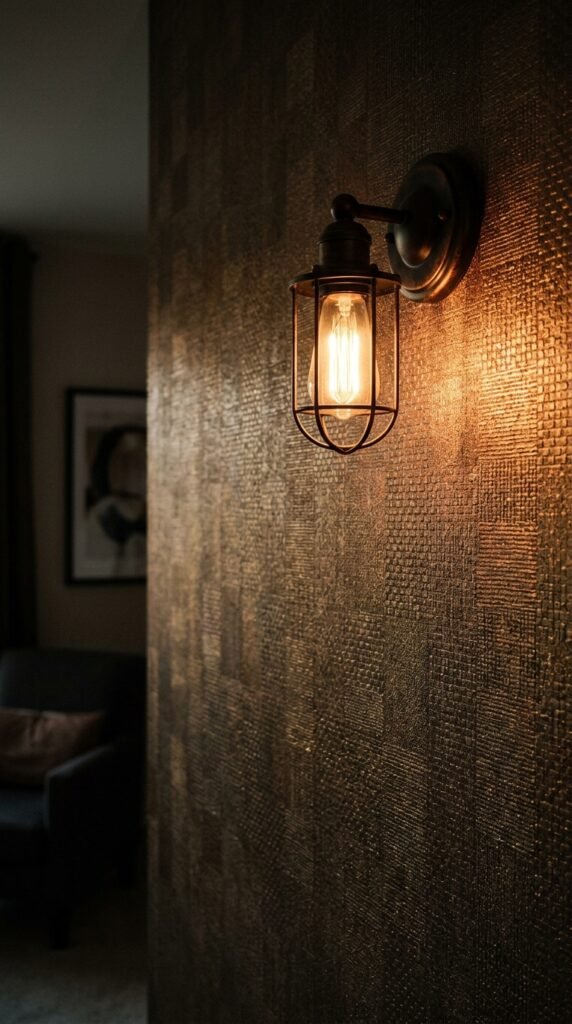
Wallpaper with a subtle metallic finish, in bronze, gunmetal, or deep gold tones, adds shimmer and movement to a wall without the brightness of a fully reflective surface. The shimmer catches light at different angles as you move through the room, creating a sense of depth and movement on what would otherwise be a flat surface, even in low light conditions.
Metallic-finish wallpaper runs $40 to $100 per roll, with a typical accent wall requiring three to five rolls depending on wall size. This works particularly well as a single accent wall behind a sofa or fireplace, where the shimmer becomes a backdrop rather than covering the entire room.
23. Add a Black Ceiling Fan With Wood Blades
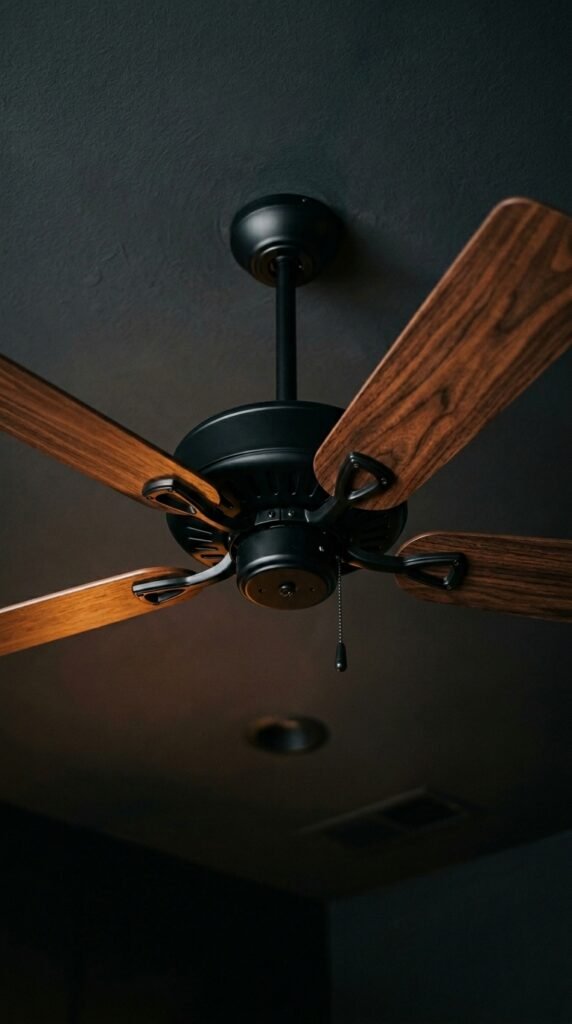
A ceiling fan with a black motor housing and dark wood blades functions practically while contributing to the room’s overall dark, warm material palette, in contrast to the white plastic ceiling fans that work against almost every other design choice in a moody room. This is a detail most people don’t think about until they’ve done everything else right and a white ceiling fan sits in the middle of their dark ceiling like a beacon.
A ceiling fan with a black housing and dark wood or wood-look blades runs $80 to $200 at most home improvement retailers and requires the same installation as any other ceiling fan, making this an easy swap if you’re already updating other elements in the room.
Final Thoughts
A moody living room comes down to layered warm lighting, rich dark colors used consistently across walls and ceiling, and materials, velvet, brass, dark wood, leather, that catch and reflect light rather than absorbing it into nothing. Start with your wall and ceiling color, then build your lighting layers before adding furniture and textiles. Skip the dark ceiling and the room will never feel fully enveloped, no matter what else you do. Get it right, and you’ll have a room that feels like its own little world after dark, the kind of space where everyone naturally lowers their voice and settles in for longer than they planned to stay.