18 Small Room Inspo Ideas That Make Your Space Look Bigger
Small rooms get treated like a problem to apologize for. They’re not. Some of the most beautifully designed spaces in the world measure under 200 square feet, and the people who live in them figured out something the rest of us spend years learning: small rooms reward intentional decisions more generously than large rooms do. I lived in a 140-square-foot studio for two years and came out the other side with opinions about furniture placement that border on religious conviction. These 18 small room inspo ideas give you the specific moves that actually work.
1. Float Your Furniture Away From the Walls
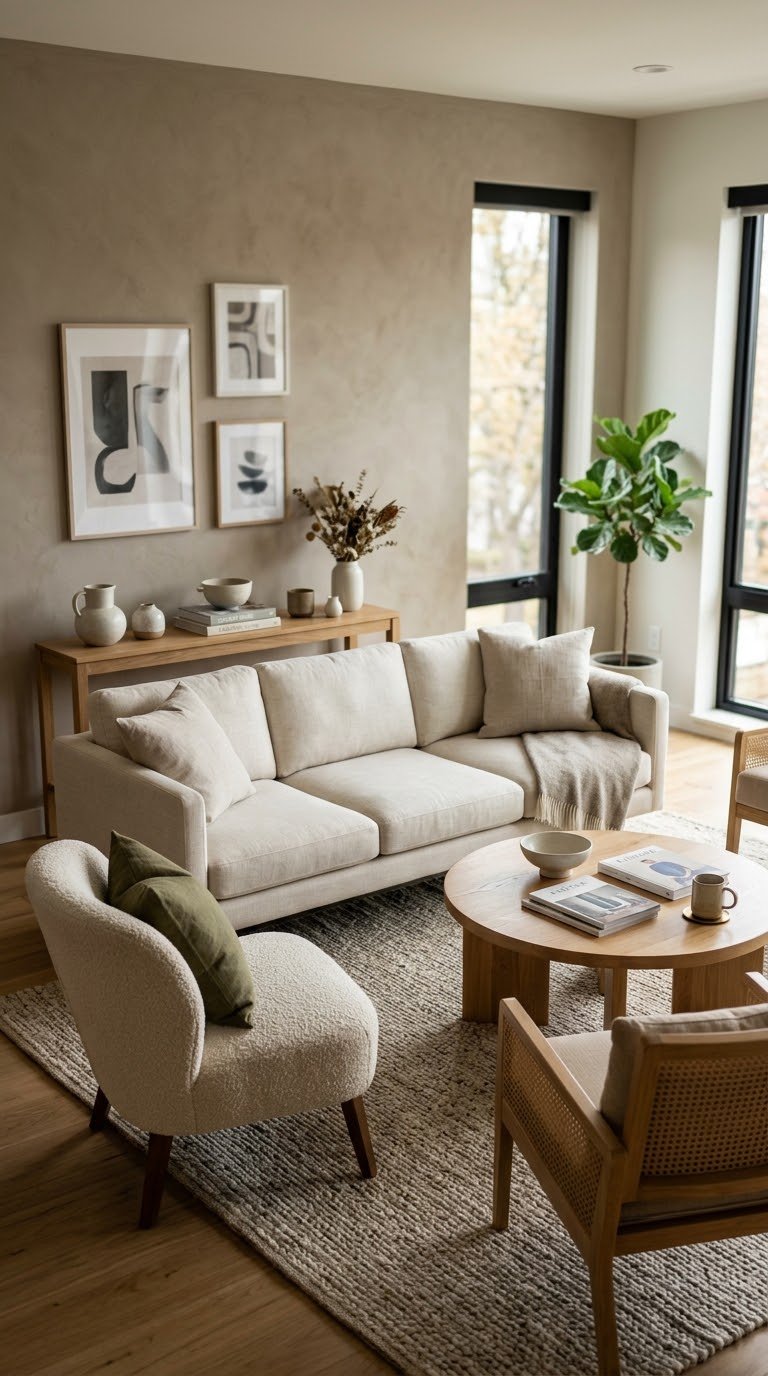
Pushing every piece of furniture flush against the wall is the most common small room mistake, and it produces exactly the opposite effect from what you intend. Furniture pressed against walls makes a room feel like a waiting room rather than a living space, because it creates a dead center void that draws attention to the room’s empty middle rather than its furnished perimeter.
Pull your sofa 12 to 18 inches from the wall and angle your chairs slightly inward, and your room immediately reads as a designed conversation zone rather than furniture stored around the edges. Interior designer Bobby Berk demonstrated this technique in multiple Queer Eye episodes with rooms under 180 square feet, and the before-and-after difference every time comes primarily from floating the furniture rather than replacing it.
2. Use Mirrors Strategically to Double Your Perceived Space
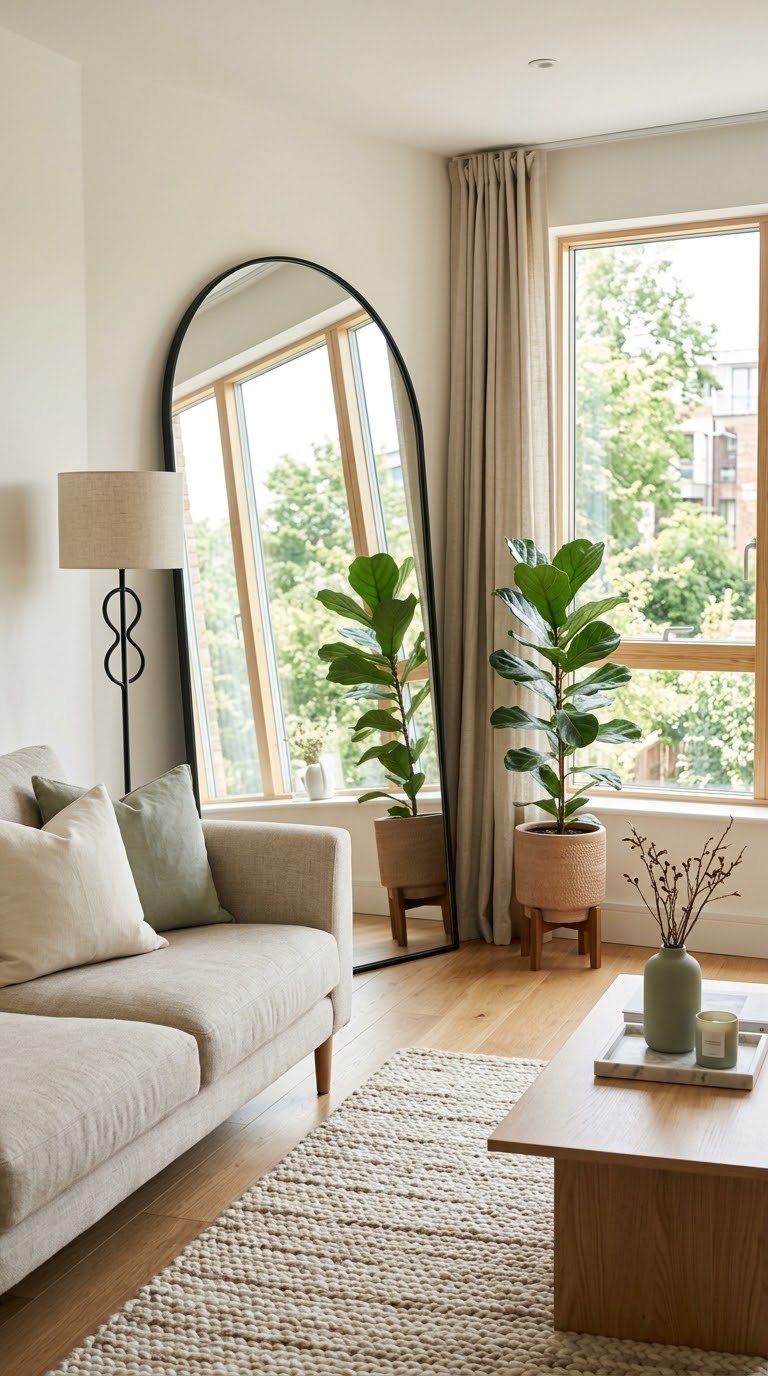
A well-placed mirror in a small room does more for perceived spaciousness than removing a wall would, because it reflects both light and depth back into the space simultaneously. The American Lighting Association confirms that mirrors positioned opposite windows increase perceived brightness by up to 30%, and in a small room, brightness and spaciousness read as the same quality to the human eye.
A large leaning mirror against the wall opposite your main window costs $60 to $120 from Amazon or Target and delivers results that would otherwise require architectural changes. Round mirrors add an organic shape that small rectangular rooms need to break the boxy geometry, while tall rectangular mirrors create the illusion of higher ceilings by drawing the eye vertically rather than stopping it at eye level.
3. Choose Furniture With Legs to Create Visual Breathing Room
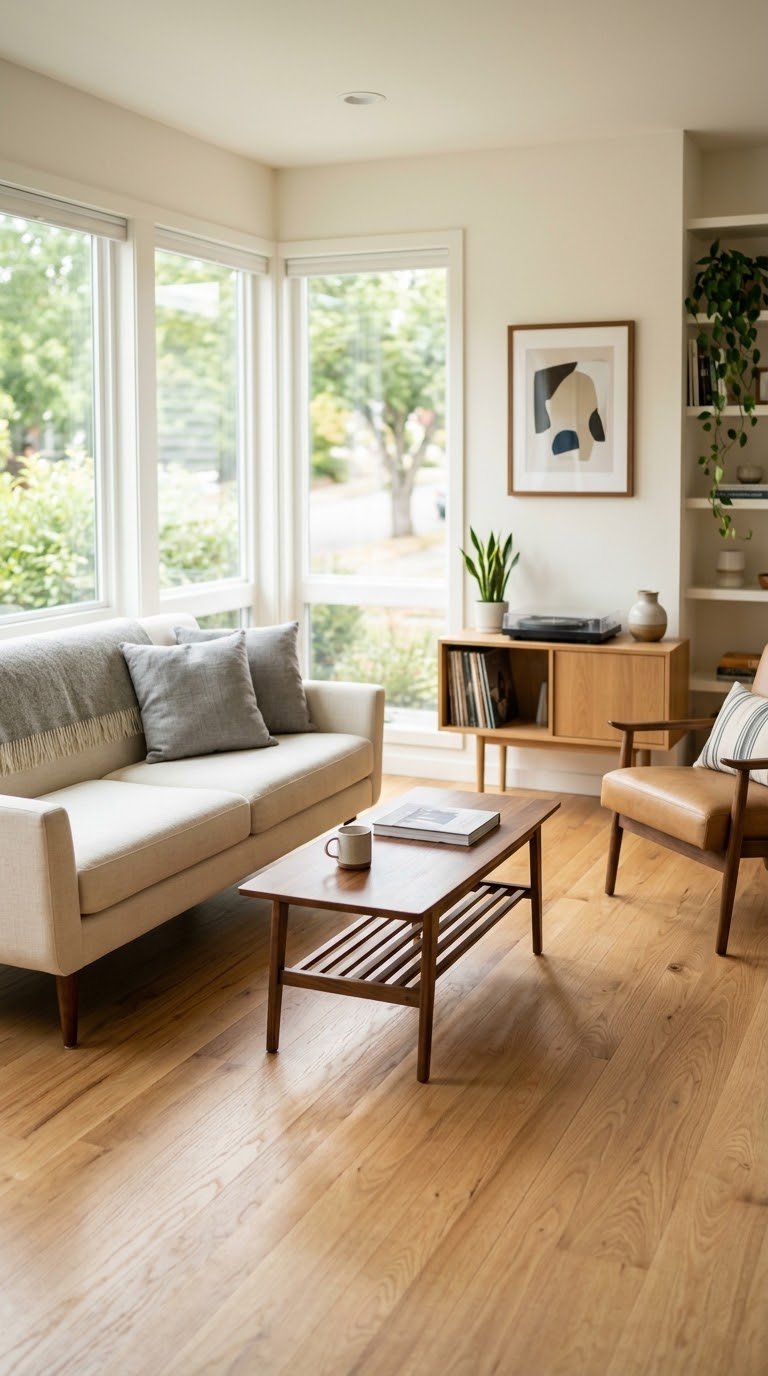
Furniture that sits directly on the floor with no visible leg gap creates a visual heaviness that makes small rooms feel more cluttered than they are. A sofa, bed, or dresser with visible legs allows light and sightlines to pass beneath, which makes each piece look lighter and gives the floor more apparent square footage.
Even a 4-inch leg clearance makes a meaningful visual difference in a room under 150 square feet. IKEA’s EKET and KALLAX shelving units with optional legs, West Elm’s slope-leg furniture collection, and the majority of mid-century modern pieces all share this elevated quality. Swap your current furniture for legged alternatives over time, starting with your largest piece first, since that delivers the most immediate visual shift.
4. Paint Your Walls and Ceiling the Same Color
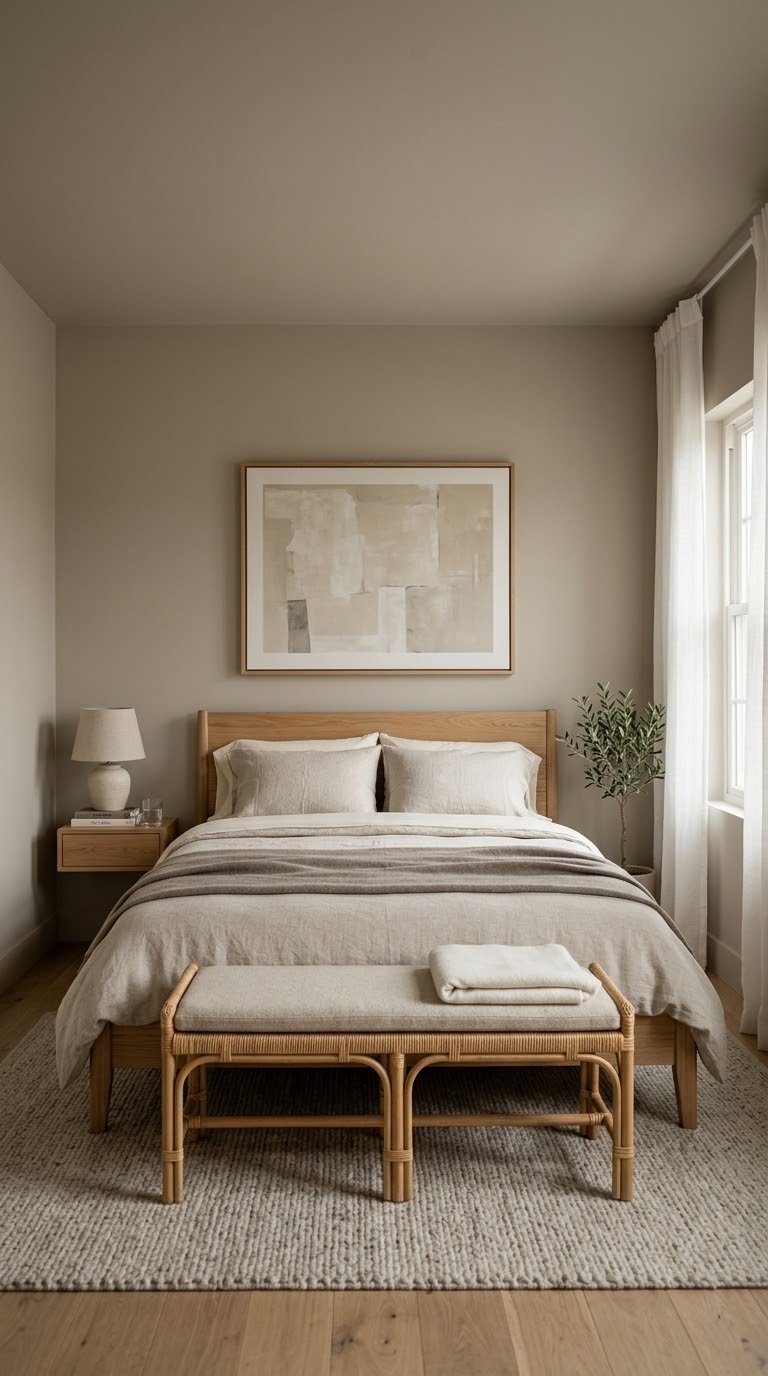
The standard white ceiling against a colored wall creates a visual “lid” that lowers the perceived height of every room it appears in. Painting your ceiling the same tone as your walls removes that horizontal line and allows the eye to read the full height of the room without interruption.
Architect Greg Sherrill’s research on residential color psychology found that monochromatic ceiling-to-wall color treatments increased perceived room height by up to 12% compared to white ceilings in identical spaces. A single gallon of paint covers your ceiling and touches up your walls at $28 to $45, making this the largest-scale room transformation available at the lowest material cost on this list. FYI, this technique works in every color from pale sage to deep charcoal. The color matters less than the continuity.
5. Install Floor-to-Ceiling Shelving for Vertical Storage
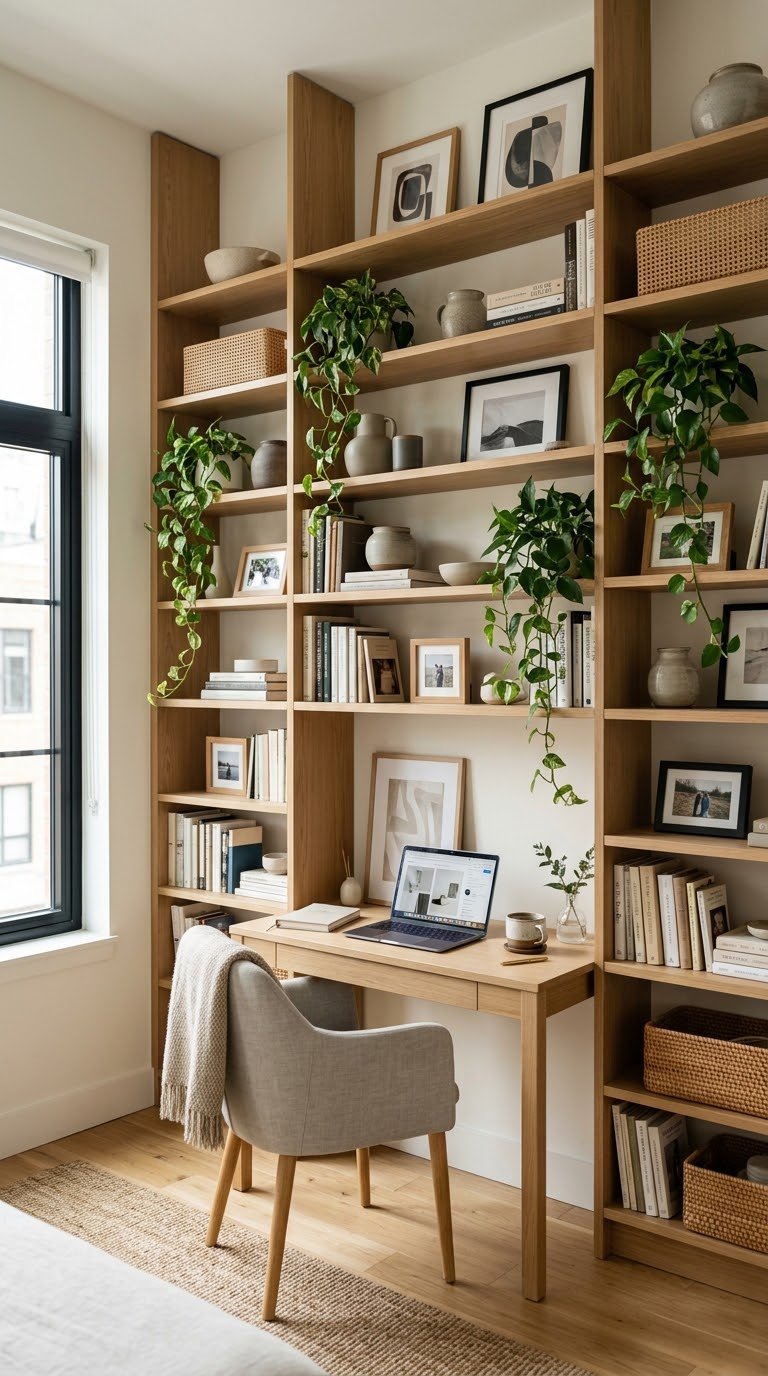
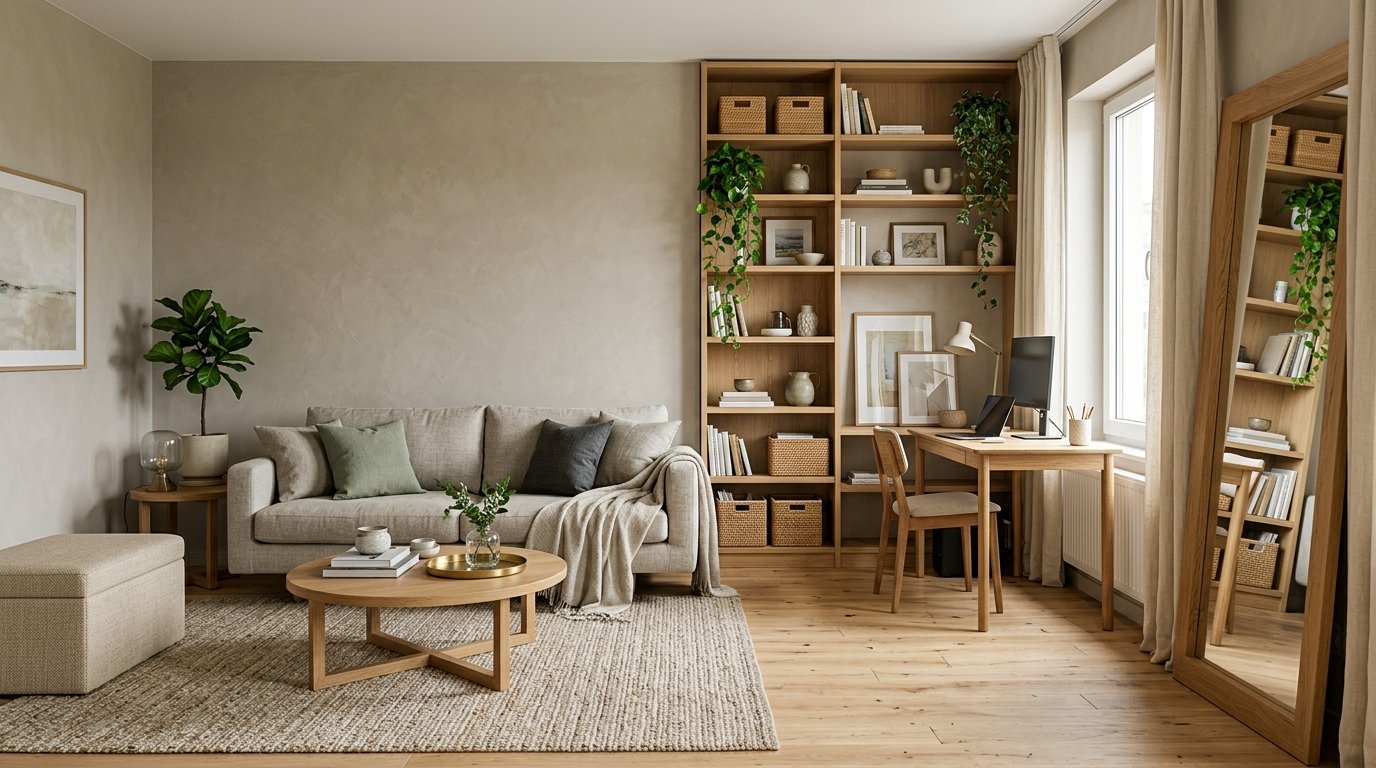
Horizontal storage in a small room eats floor space. Vertical storage uses the one dimension your room has in unlimited supply: height. Floor-to-ceiling shelving from IKEA’s BILLY system at $60 to $120 per unit provides 93 inches of shelf height that extends your storage capacity upward rather than outward.
Mount your shelves with a top rail secured into a ceiling stud to prevent tipping, and use your highest shelves for seasonal or rarely accessed items. The BILLY system’s ceiling height extension panels add 13 inches of additional storage to the top of each unit for $15 per panel. A room with one wall of floor-to-ceiling shelving reads as designed and intentional, not cramped, because vertical volume communicates architectural intent.
6. Use Multi-Function Furniture as Your Primary Investment
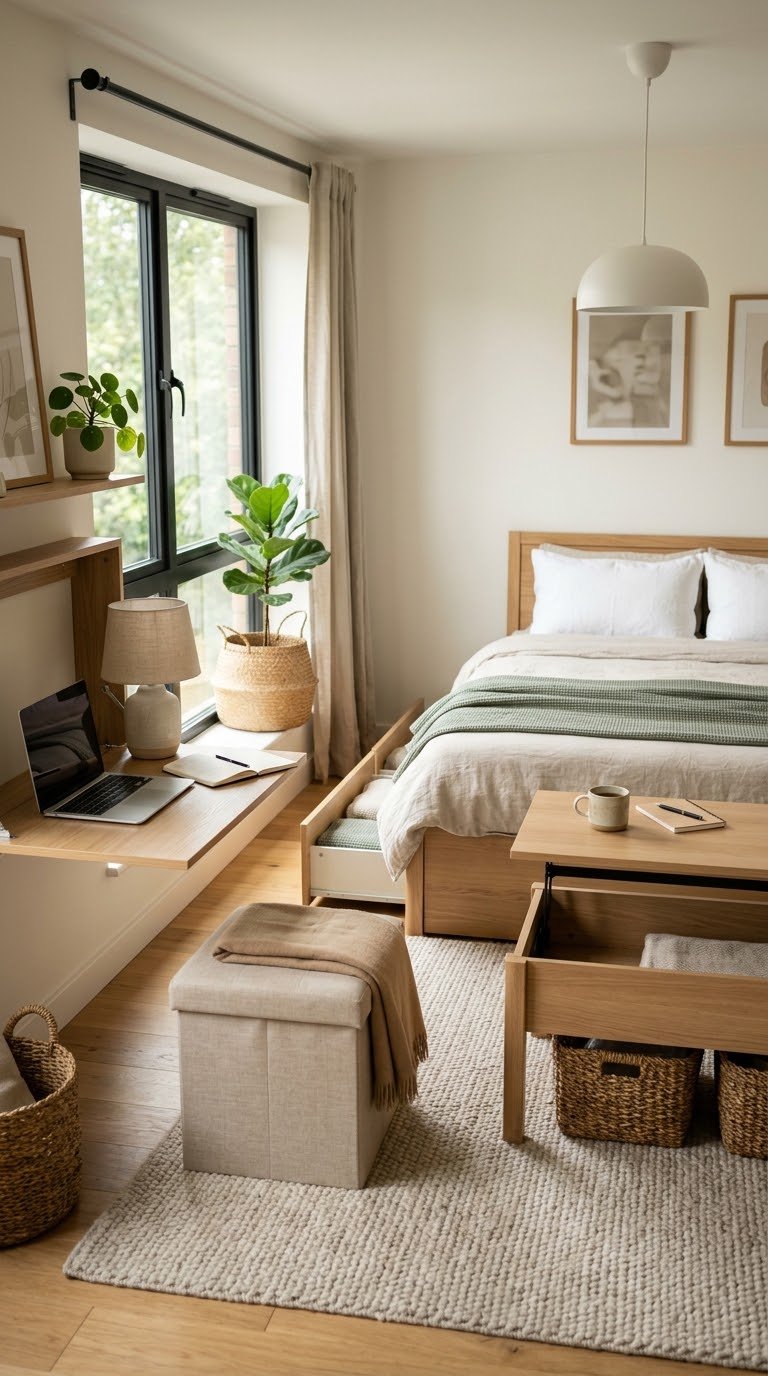
Every piece of furniture in a small room should perform at least two functions, because single-purpose furniture uses square footage inefficiently in a space where every foot counts. A storage ottoman that serves as a coffee table, seating, and blanket storage replaces three separate objects with one.
The most impactful multi-function pieces for small rooms include:
- Storage beds with drawers underneath
- Lift-top coffee tables with interior storage
- Fold-down wall desks that close flat when not in use
- Dining tables with built-in leaf extensions
- Ottomans with removable lids and interior storage
IKEA’s MALM bed frame with built-in storage drawers runs $300 to $400 and eliminates the need for a separate dresser in bedrooms under 120 square feet. That single furniture choice frees 6 to 10 square feet of floor space, which in a small room feels like a room addition.
7. Hang Curtains From Ceiling to Floor for Height Illusion
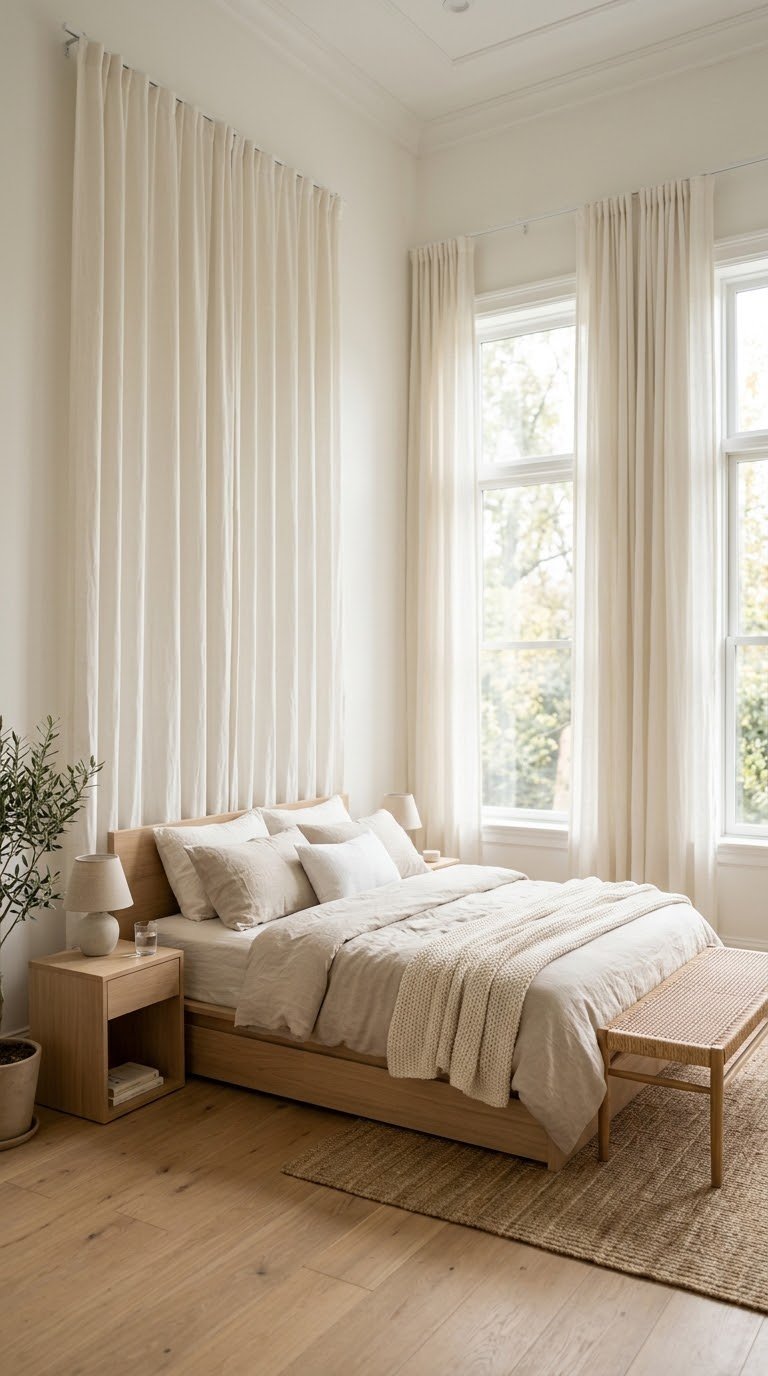
Short curtains that hang only to window-frame height make your ceilings feel lower and your windows feel smaller, both of which work against a small room’s visual expansion goals. Floor-to-ceiling curtains hung at ceiling height create vertical momentum that draws the eye upward and makes your room feel significantly taller than its actual measurements.
Hang your curtain rod 4 to 6 inches below the ceiling and extend it 6 to 8 inches past each side of your window frame. This installation method makes a standard 36-inch window read as a large architectural feature rather than a standard opening. IKEA’s DYTAG linen curtains at $39.99 per panel hit the floor at 98 inches and work in rooms with 8-foot ceilings when hung from ceiling height.
8. Choose a Light Neutral Color Palette With Warm Undertones
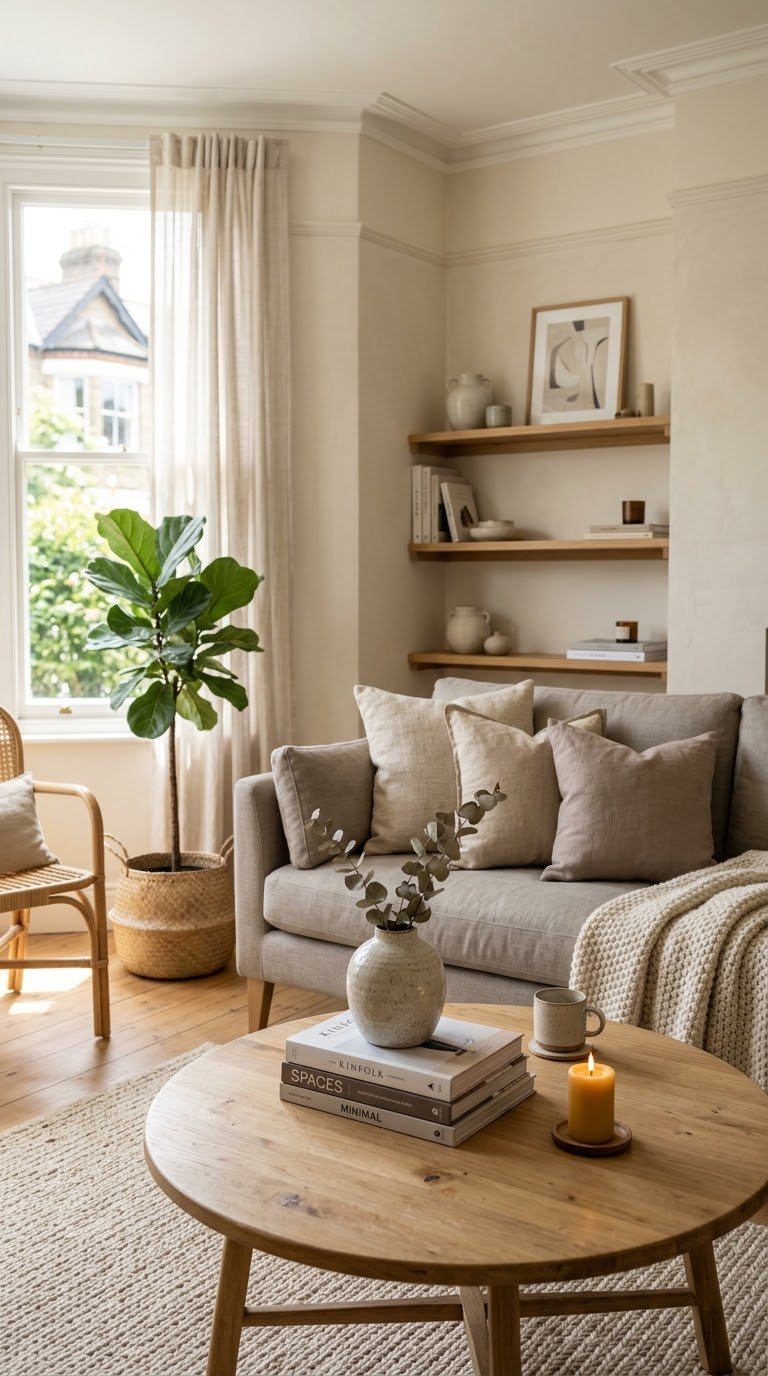
Cool, stark white walls in a small room can read as cold and institutional rather than spacious, particularly in rooms with limited natural light. Warm neutrals, cream, greige, warm beige, and soft putty, reflect light with a golden quality that makes small rooms feel simultaneously brighter and more inviting than cool whites do.
Benjamin Moore’s “White Dove” and Sherwin-Williams’ “Accessible Beige” consistently rank as the two most recommended small room paint colors among interior designers specifically because their warm undertones perform across lighting conditions from morning to evening without shifting toward yellow or pink. A gallon covers 400 square feet at $45 to $65 and transforms your room’s entire sensory quality before you move a single piece of furniture.
9. Add One Statement Piece Rather Than Many Small Ones
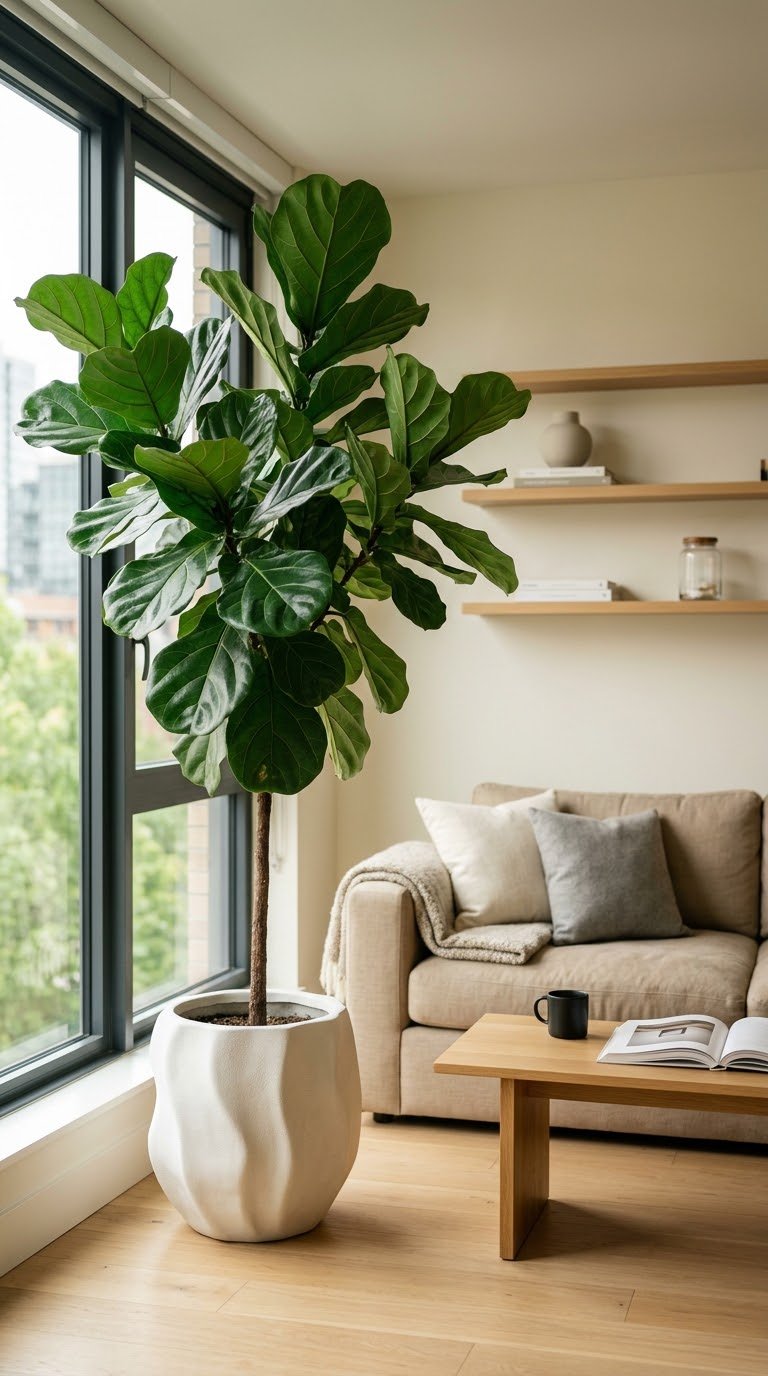
A small room filled with many small decorative objects reads as cluttered regardless of how carefully each item was chosen. One large, confident statement piece, a substantial plant, a large framed print, or a sculptural floor lamp, anchors the room and gives guests somewhere to direct their attention.
Small rooms tolerate bold choices better than large rooms do because a dramatic object in a small space fills the visual field proportionally, while the same object in a large room disappears against competing elements. A large fiddle-leaf fig in a statement pot, an oversized floor mirror, or a substantial chandelier all cost less than the collection of small objects they replace and communicate design confidence rather than decorative indecision. IMO, one well-chosen large piece does more for a small room than ten smaller ones at the same combined cost.
10. Use Rugs Sized Correctly for Your Space
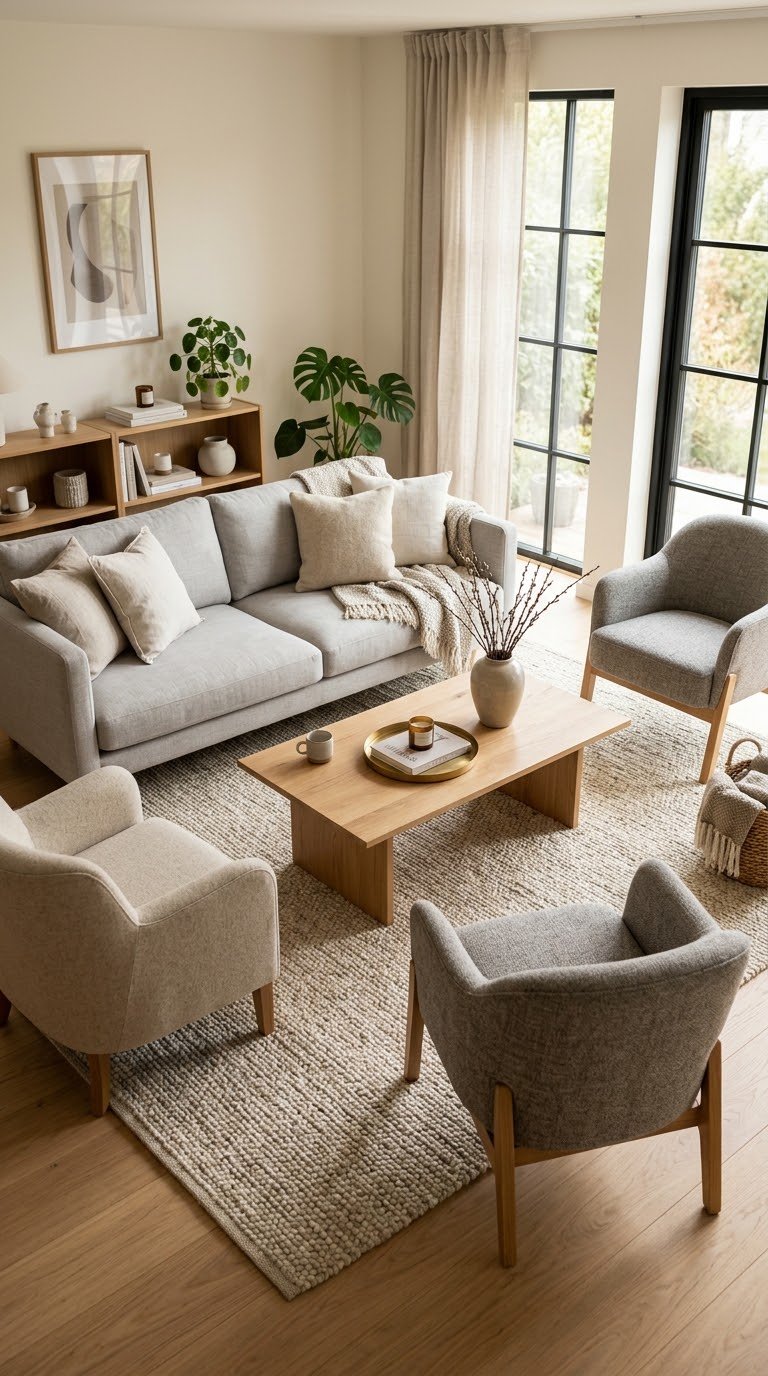
An undersized rug in a small room emphasizes how small the room is by creating a visual island of warmth surrounded by a sea of bare floor. A correctly sized rug, one that extends at least 18 inches beyond each side of your primary furniture, grounds the whole arrangement and makes the room feel like a defined, complete zone.
For small bedrooms, your rug needs to extend 18 to 24 inches past each side of your bed, which for a queen-sized bed in a small room means a 9×12 rug minimum. For living rooms, all front furniture legs should sit on the rug surface. Rugs USA carries correctly sized options at $60 to $120 for the sizes small rooms actually need, and getting the size right costs no more than buying one too small.
11. Install Sconces or Pendants Instead of Floor Lamps
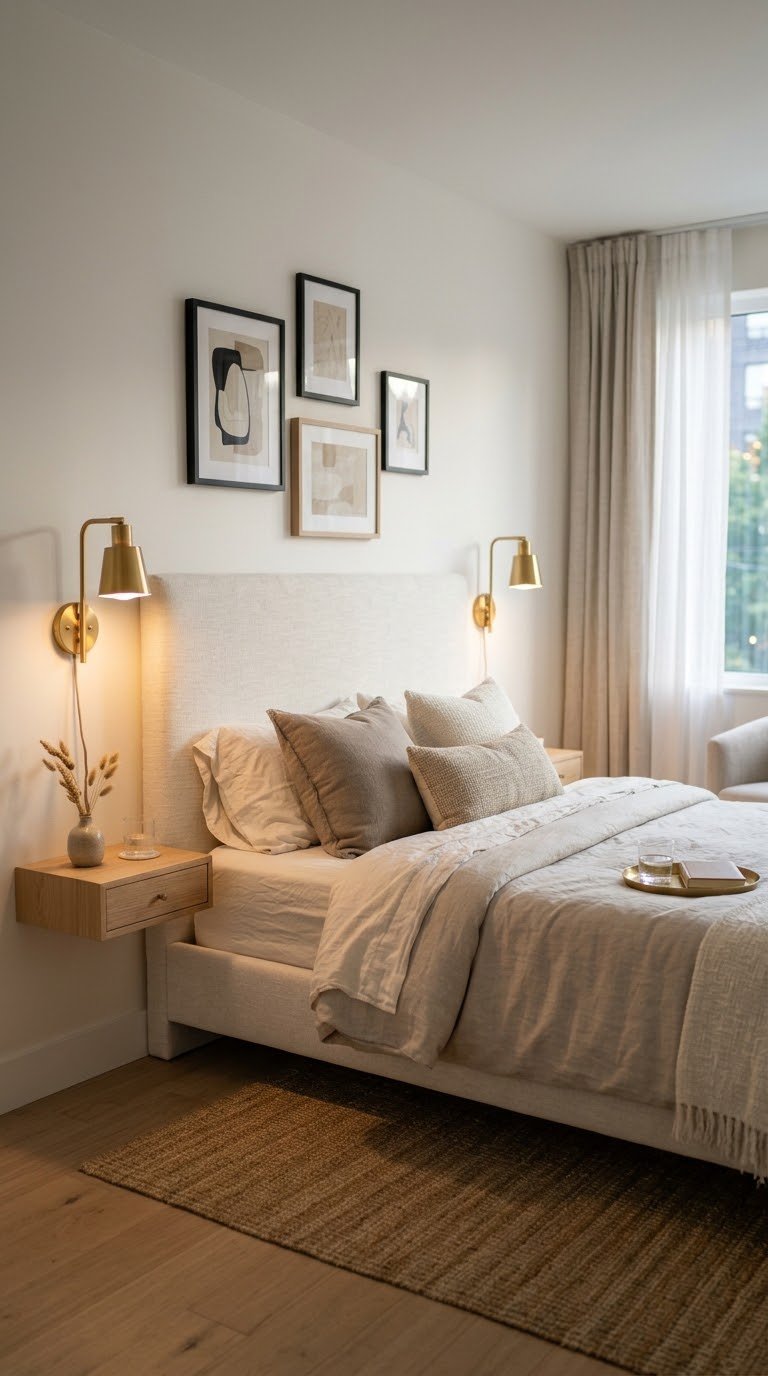
Floor lamps and table lamps occupy floor and surface space that small rooms need for living, not lighting. Wall-mounted sconces and hanging pendants deliver the same light quality at zero floor footprint, which returns 2 to 4 square feet of usable space to your room per fixture you replace.
Plug-in wall sconces at $30 to $60 each require no electrical work, run from a standard outlet, and mount with two screws into wall anchors in under 20 minutes. Hang them on either side of your bed at headboard height as reading lights, or beside your desk as task lights, and your room gains both functional lighting and the architectural quality of wall-mounted fixtures that a floor lamp resting in a corner never produces.
12. Create Zones Within Your Small Room Using Rugs and Lighting
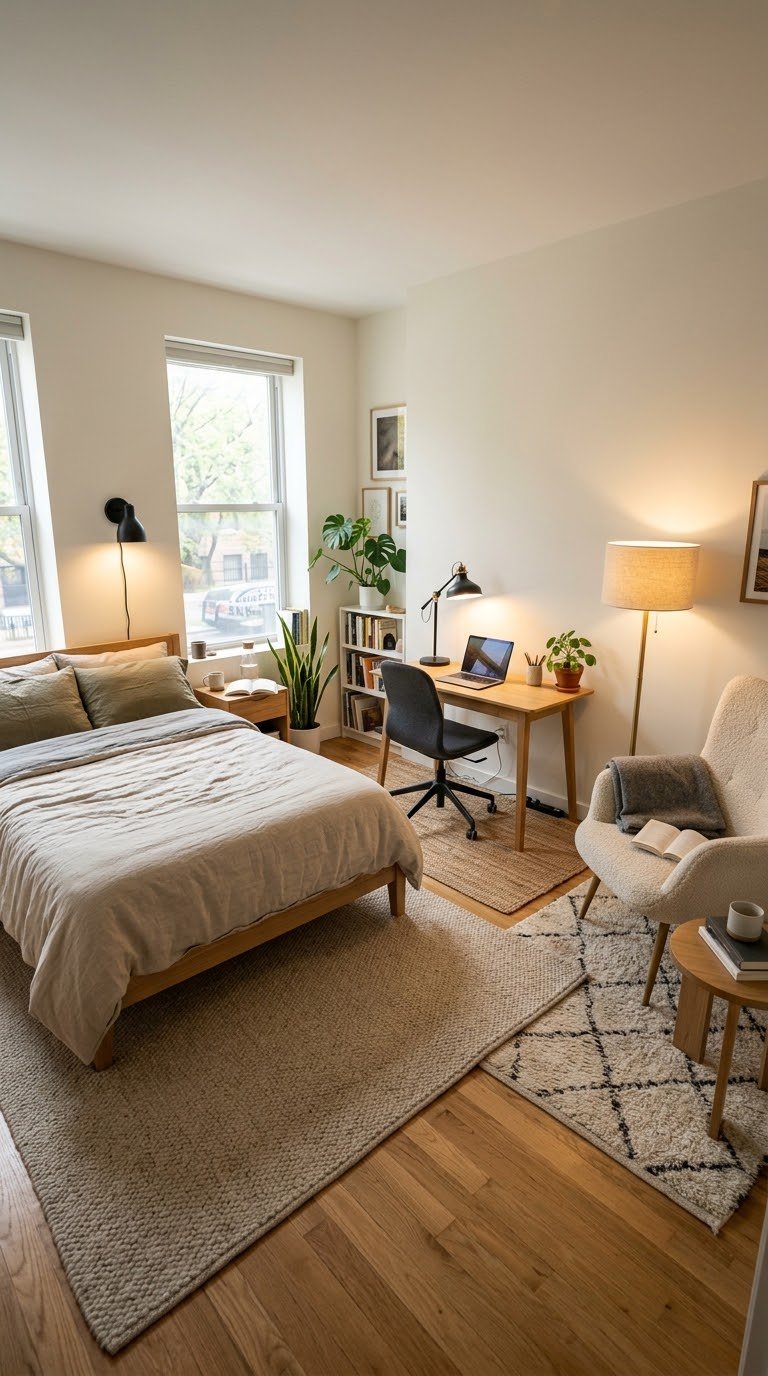
A small room with no zone definition reads as one general-purpose space where everything happens without distinction. A studio apartment or small bedroom functions better psychologically when you define separate zones for sleeping, working, and relaxing using rugs and lighting rather than walls.
Use a rug to define each zone: one rug beneath your bed marks the sleeping zone, a second smaller rug under your desk chair marks the work zone, and a third in front of your sofa or reading chair marks the relaxation zone. A 2020 residential psychology study found that visual zone separation in single-room living situations improved both sleep quality and work productivity by reducing the cognitive ambiguity of a space where all activities share the same environment. The total cost for three coordinating rugs runs $120 to $240, and the psychological benefit begins the first evening.
13. Choose Transparent or Glass Furniture for Visual Lightness
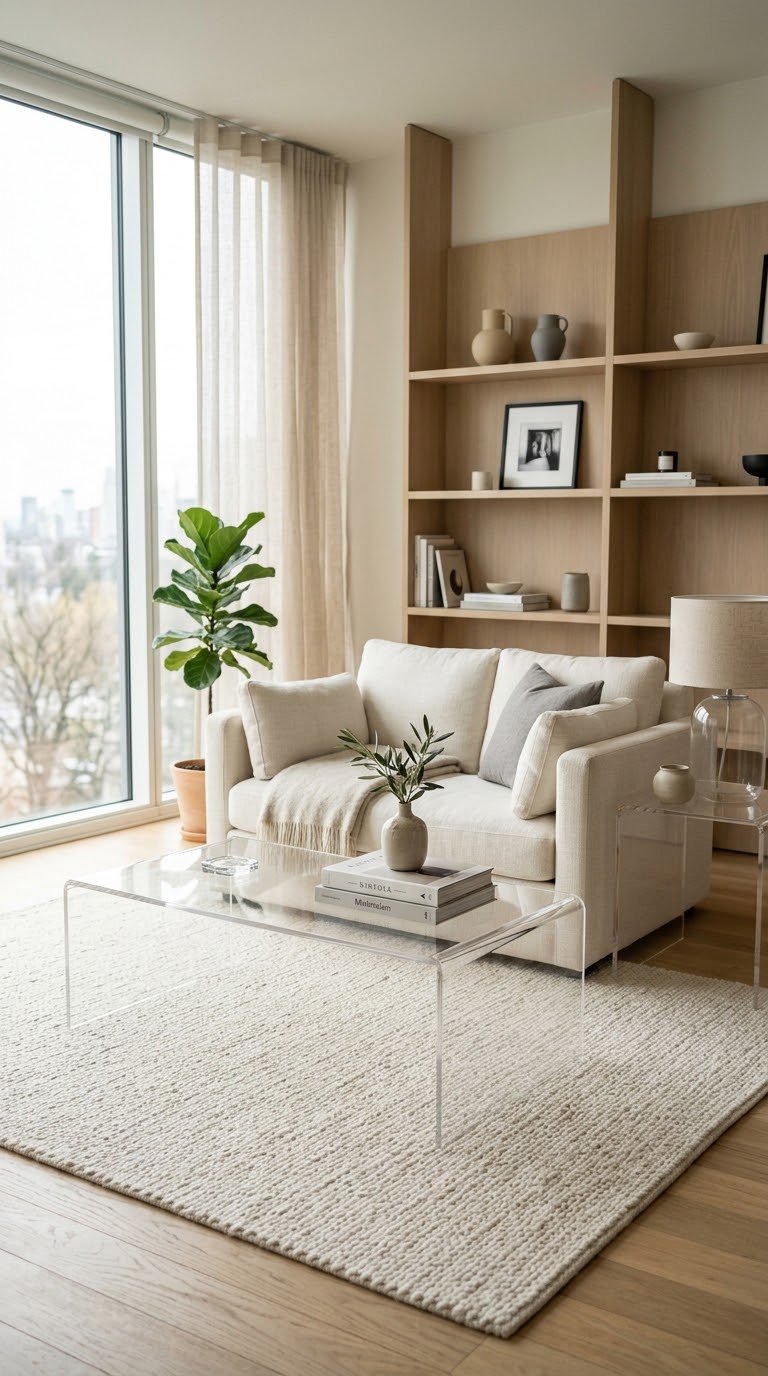
Solid opaque furniture in a small room takes up both physical and visual space simultaneously. Transparent or glass furniture takes up only physical space, since your eye passes through the material to the floor, wall, or objects behind it, which reduces the perceived visual weight of the piece significantly.
A glass or acrylic coffee table, like the Kartell Louis Ghost in polycarbonate at $200 to $300, or a glass-topped dining table at $150 to $350 from CB2 or IKEA, delivers full functionality with half the visual presence of a solid wood equivalent. A clear acrylic nightstand at $40 to $80 beside a bed makes the bedroom feel more open than a solid wood version of the same size because the floor remains visible beneath and around it.
14. Use Vertical Line Patterns to Draw the Eye Upward
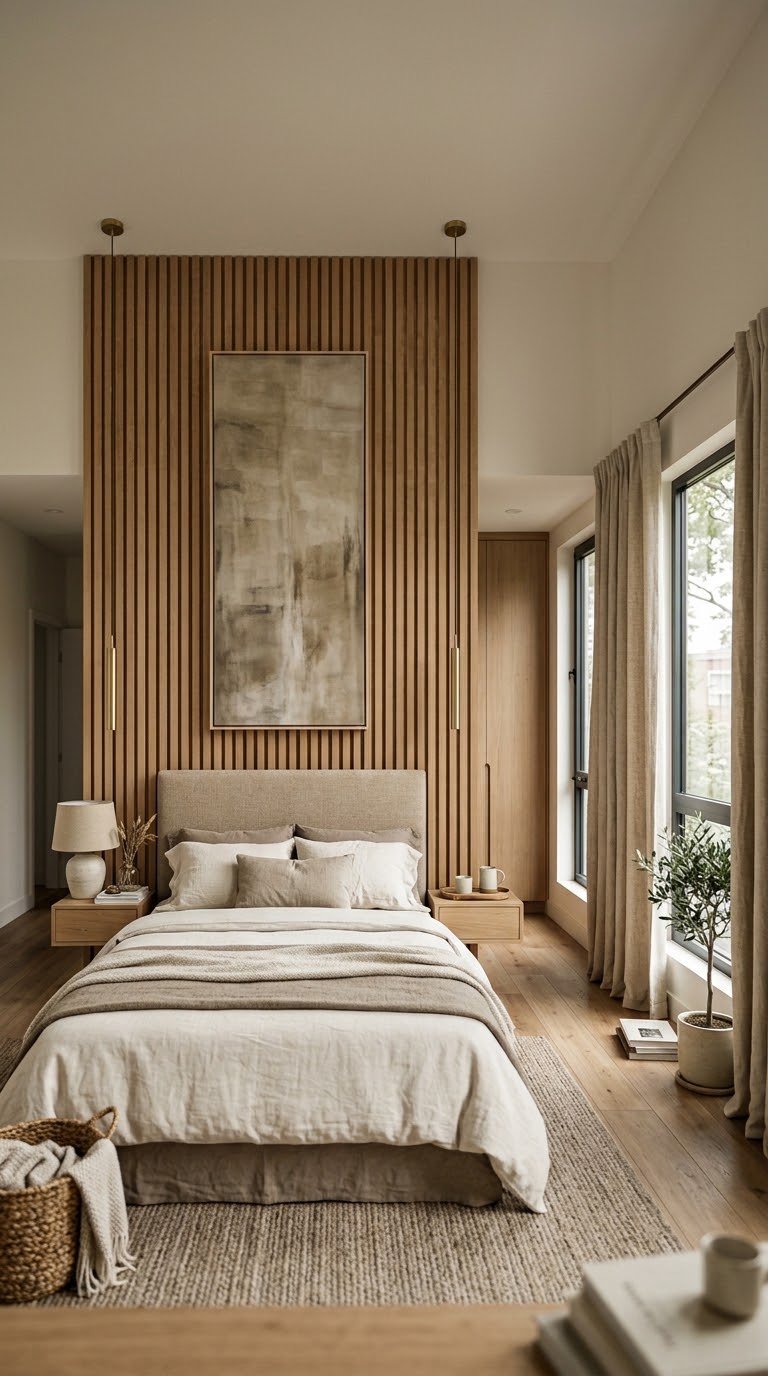
Vertical stripes on your walls, curtains, or textiles create the same elongating effect on a room that they create on clothing: the eye follows the line upward rather than stopping at the horizontal boundary of the floor or furniture line. A room with vertical pattern elements reads as taller than its actual measurements in direct proportion to how consistently the vertical line appears across its surfaces.
A wallpaper with thin vertical stripes or a wood slat accent wall on your room’s shortest wall costs $30 to $80 in materials and produces a ceiling-height effect equivalent to adding 18 to 24 inches of actual height according to a 2019 interior design perception study. Vertical shiplap, vertical peel-and-stick wallpaper, or even a gallery arrangement of tall narrow frames all exploit this same optical principle.
15. Add Plants at Multiple Height Levels Throughout the Room
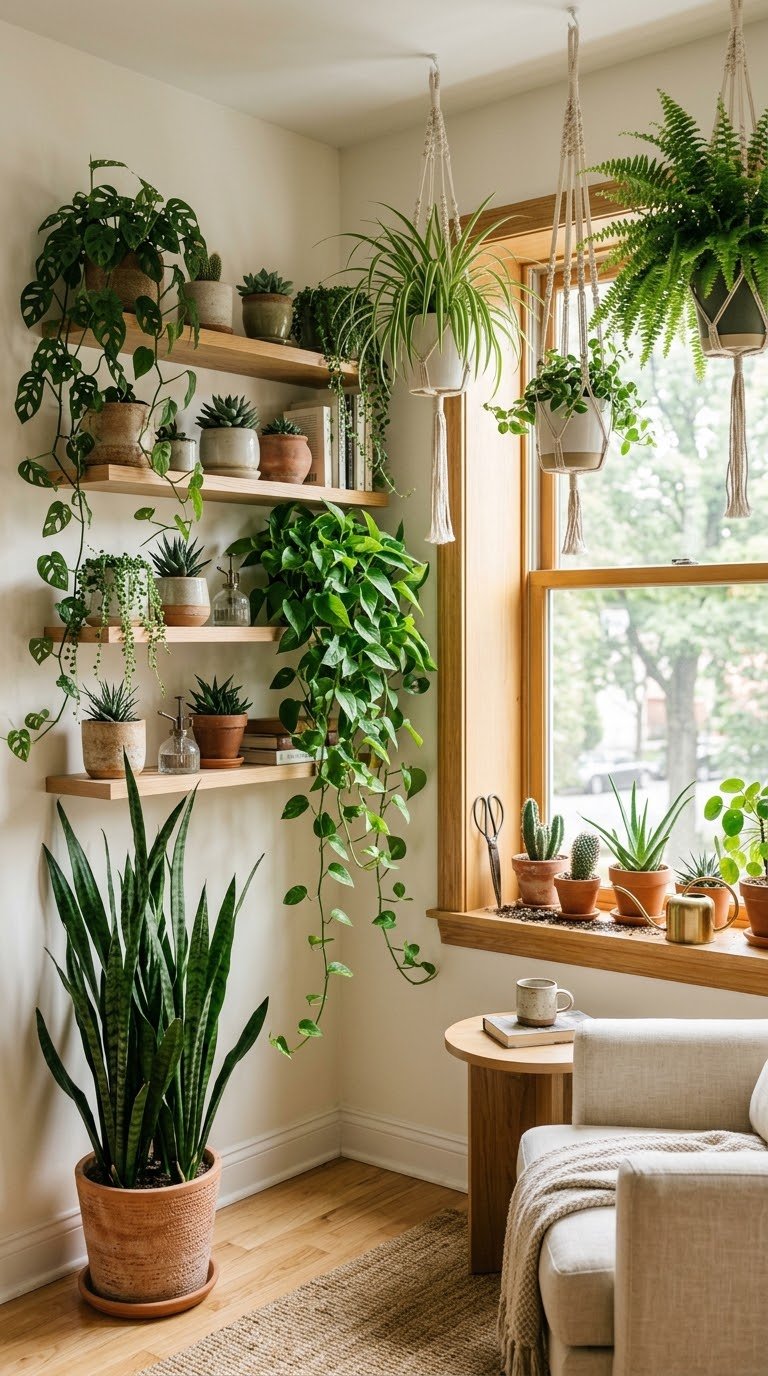
Plants in a small room serve a function beyond decoration: they draw attention to specific points in the room’s three-dimensional space, which distributes visual interest across height levels rather than concentrating everything at furniture level. A plant at floor height, a plant at shelf height, and a hanging plant at ceiling height create a vertical garden effect that makes your eye travel upward through the room.
The specific plants that work best in small rooms:
- Trailing pothos on a high shelf at $8 to $15
- Snake plant on the floor in a statement pot at $20 to $40
- String of pearls in a hanging planter at $12 to $20
- Small succulents on a windowsill at $3 to $6 each
A NASA Clean Air Study confirmed that pothos and snake plants remove airborne toxins in spaces as small as 100 square feet, giving your small room plants a measurable environmental function beyond their visual contribution.
16. Edit Ruthlessly Before Adding Anything New
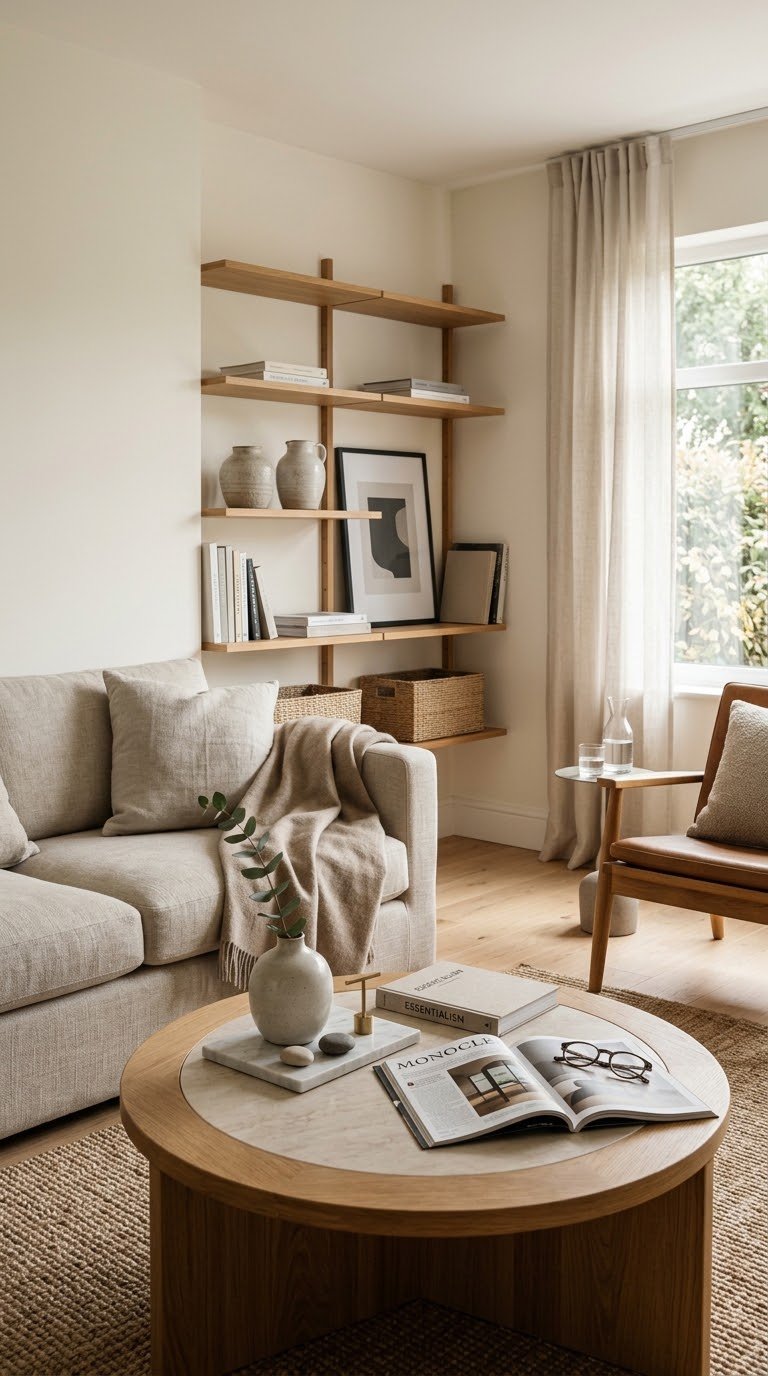
The single most effective small room inspo move requires no shopping, no installation, and no budget: removing half the objects currently in your room before evaluating whether it needs anything new. A 2021 UCLA study found small-space residents consistently owned 40% more objects than their rooms accommodated comfortably, and that the removal of excess objects increased reported satisfaction with the space by an average of 31%.
Apply the rule of two for every new object you bring in: remove two existing objects before adding one new one. This keeps your room’s object density stable while continuously improving the quality of what remains. A small room with 20 well-chosen objects looks designed. The same room with 40 objects, half of them well-chosen, looks cluttered. Your room’s quality ceiling rises every time you reduce its object count.
17. Install Proper Task Lighting in Every Activity Zone
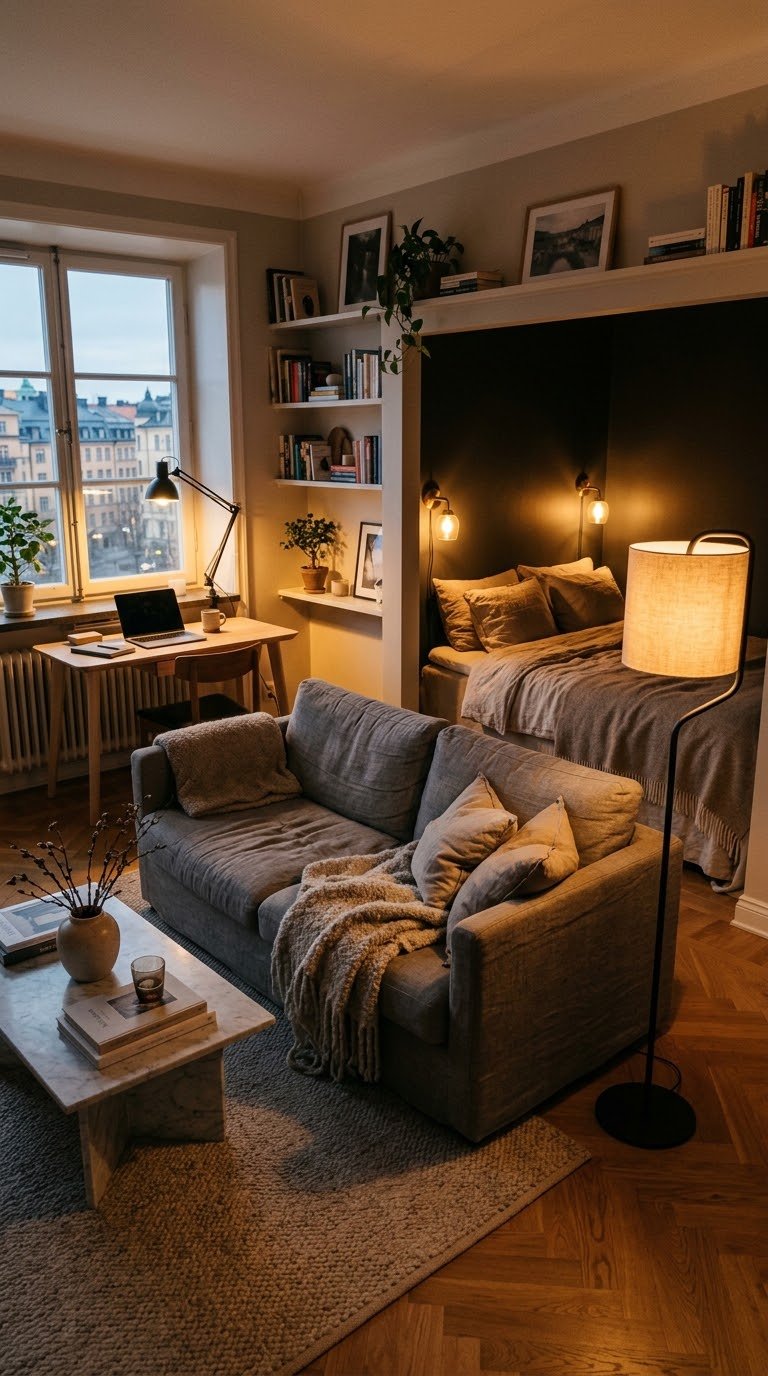
A small room lit by one overhead fixture casts flat, shadowless light that makes every zone feel equally undifferentiated, which prevents your brain from switching between activity modes effectively. Dedicated task lighting in your work zone, ambient lighting in your relaxation zone, and accent lighting in your display zones train your brain to read the room’s different areas as distinct environments.
Budget $80 to $150 for a complete lighting layer overhaul:
- One desk lamp in warm white 2700K at $25 to $35
- Two bedside clip-on reading lights at $15 to $20 each
- One floor lamp or plug-in sconce for ambient corner light at $30 to $50
This investment produces the layered lighting quality that magazine-styled rooms achieve and that single-overhead-fixture rooms never approach regardless of how good the furniture is. Warm bulbs throughout at 2700K create the cohesive evening atmosphere that makes a small room feel like a destination rather than a waiting space.
18. Declutter Your Closet Before Decorating Anything Else
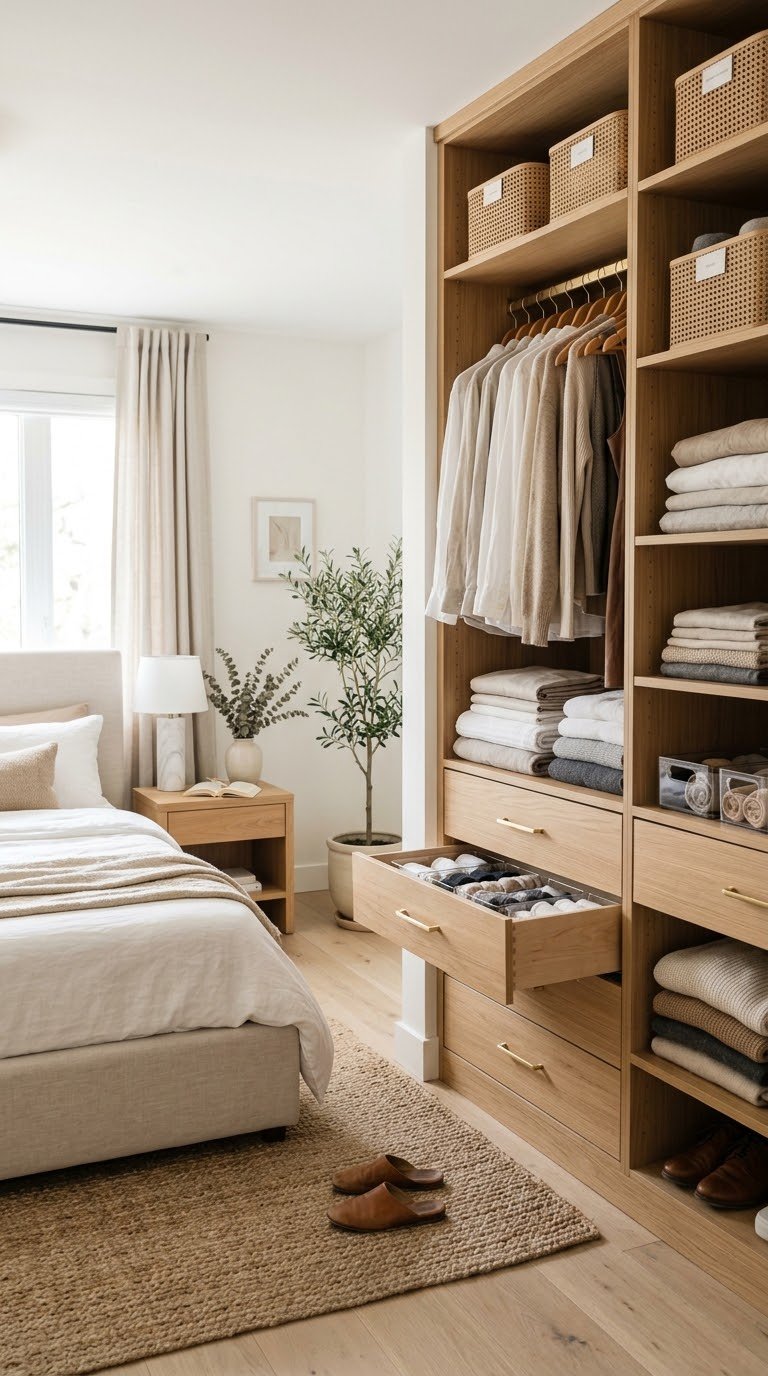
The most honest small room inspo advice nobody wants to hear is this: your room looks small partly because your storage is overflowing into your living space. A closet at 120% capacity pushes its contents onto your floor, your chair, your desk, and every horizontal surface available, and no amount of decorating compensates for the visual noise of homeless belongings.
Spend four hours decluttering your closet before spending a dollar on new decor, and donate or store anything you haven’t touched in 12 months. A condensed, organized closet that closes cleanly returns your floor and surface space to actual living use. The Container Store’s Elfa closet system starts at $200 for a basic configuration and doubles your hanging and folded storage capacity in most standard closets. That $200 closet investment returns more visual floor space to your room than any $200 decorative purchase achieves.
Final Thoughts
Small room inspo works when you treat your room’s square footage as a resource to maximize rather than a limitation to apologize for. Start with the three moves that cost nothing: float your furniture away from the walls, edit your objects down to the best half, and declutter your closet before touching anything else. Add mirrors, ceiling-height curtains, and multi-function furniture in that order as your budget allows. Your small room already has everything it needs. It needs better decisions about what stays in it, how it’s lit, and where each piece earns its place, and with these 18 ideas, you now have the specific decisions to make.