30 Bedroom Aesthetic Ideas for a Room You’ll Actually Love
Your bedroom aesthetic is the visual language your room speaks before you say a word, and most bedrooms speak in a monotone of builder-grade beige and whatever furniture fit in the truck. I’ve redesigned my own bedroom four times in the past six years, and each time the transformation started not with a new furniture purchase but with a clear aesthetic decision that made every other choice easier. These 30 bedroom aesthetic ideas cover every major style direction from dark and moody to light and airy, with specific, actionable details for each one so you leave with a plan rather than an inspiration folder.
1. Dark Academia Bedroom Aesthetic
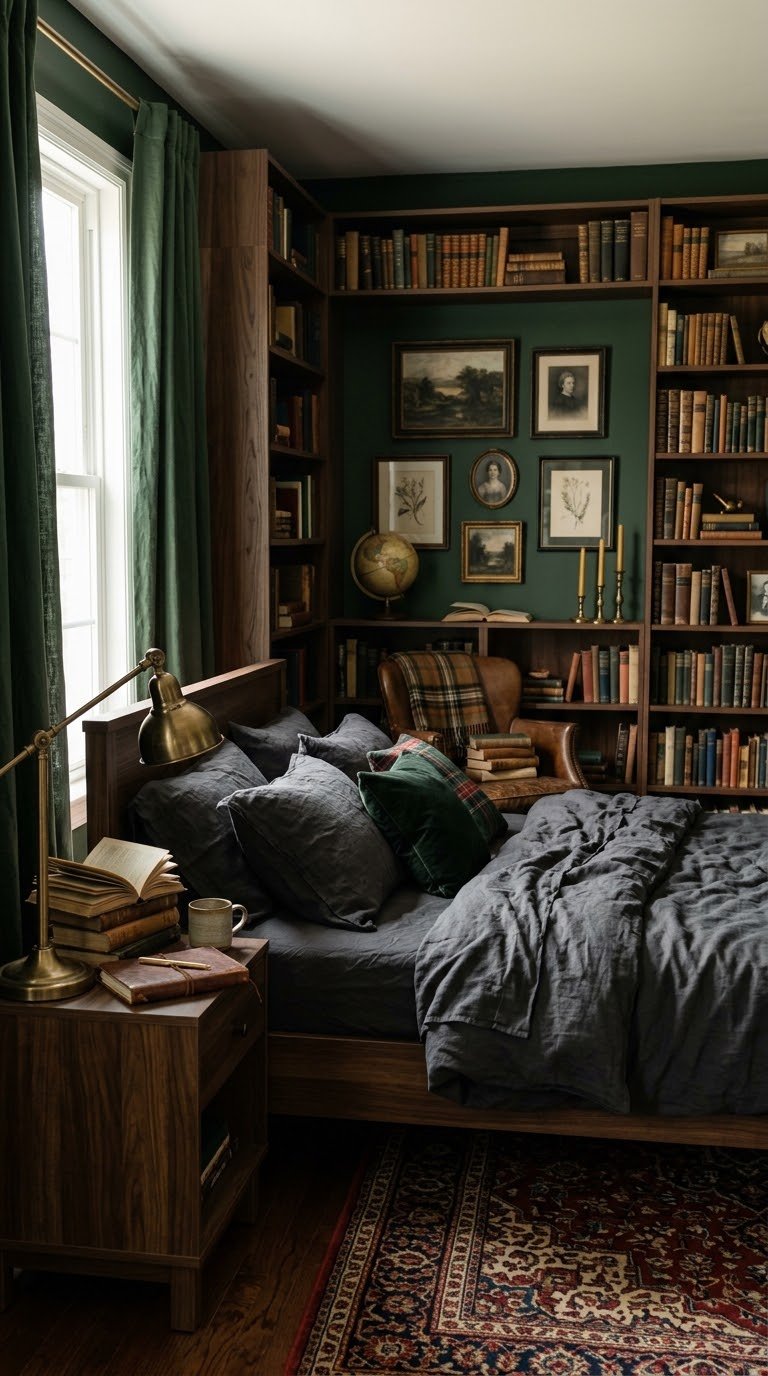
Dark academia bedrooms combine deep wall colors, rich wood furniture, and layered intellectual details like packed bookshelves, brass lighting, and classical art into a room that feels like a private study in an old European university. The aesthetic works for people who want warmth, moody atmosphere, and a space that encourages reading and reflection.
Key Elements
- Wall color: Forest green, oxblood, or charcoal
- Furniture: Dark walnut or mahogany bed frame and desk
- Lighting: Brass banker’s lamp and warm-toned floor lamp
- Accessories: Stacked books, globe, vintage maps, candles
Start with a deep wall color and one dark wood furniture piece, then layer accessories gradually. The aesthetic rewards a collected, over-time approach more than a single-weekend setup.
2. Cottagecore Bedroom Aesthetic
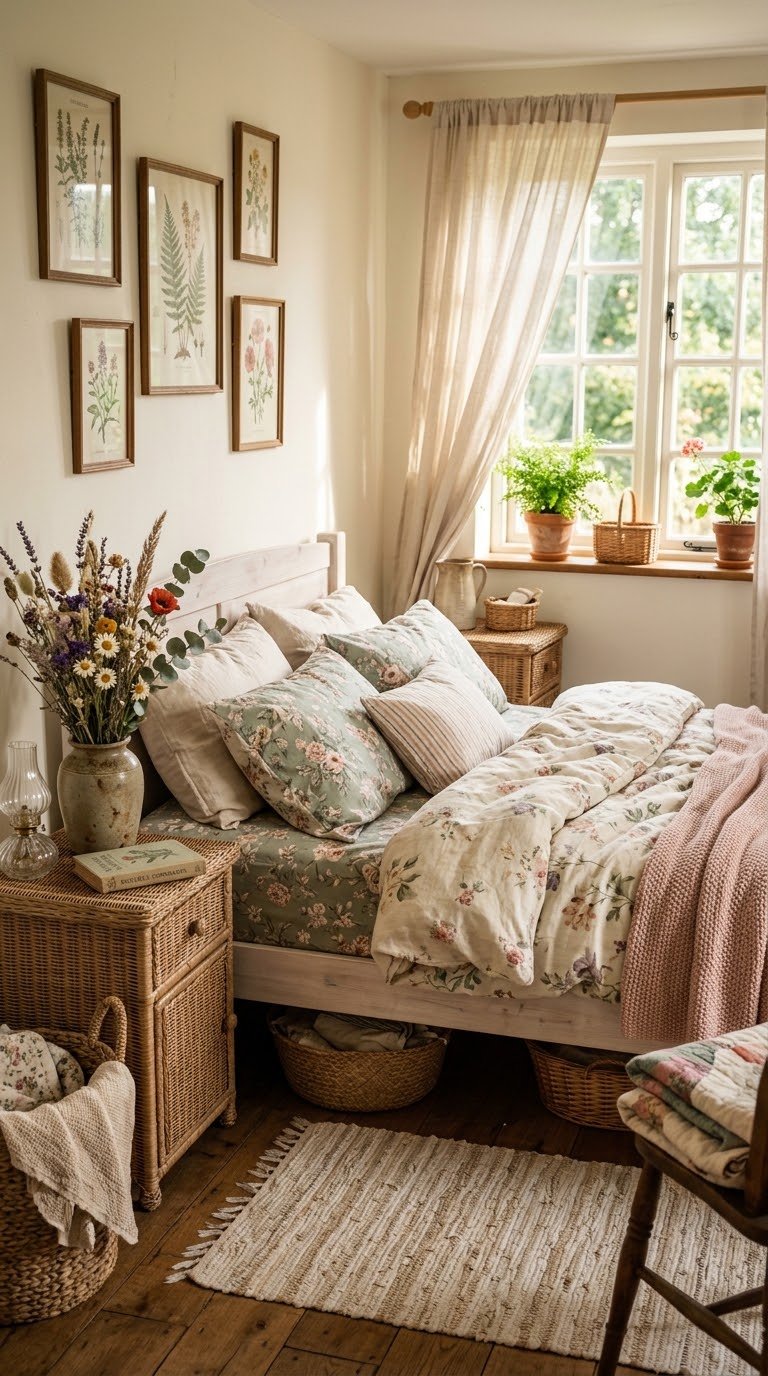
Cottagecore creates the feeling of a countryside cottage bedroom using floral patterns, natural wood, soft pastel tones, and botanical details that make a room feel like it belongs somewhere with a garden outside the window. The aesthetic balances feminine softness with genuine warmth.
A floral duvet cover in soft blush or sage green from H&M Home or Urban Outfitters runs $60 to $100 in Twin XL or full size. Add dried flower bundles in a neutral vase, a wicker nightstand, and sheer white curtains to complete the core aesthetic without a single wall change. Cottagecore works remarkably well in small bedrooms because the softness of the palette makes tight spaces feel cozy rather than cramped.
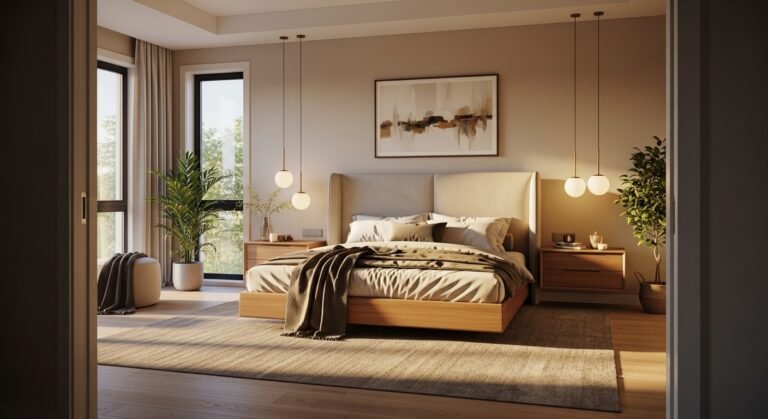
3. Minimalist Bedroom Aesthetic
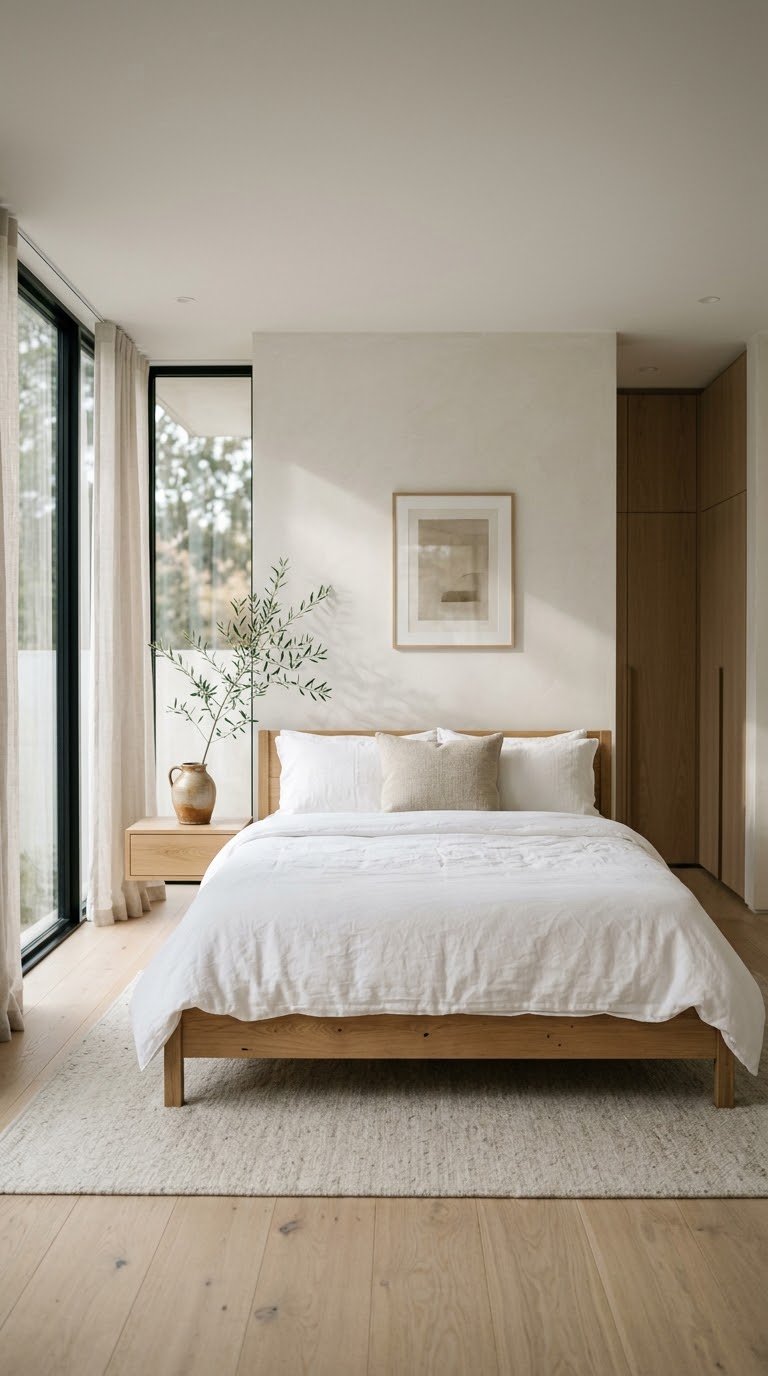
Minimalist bedrooms use negative space as a design element, treating empty surfaces as intentional rather than unfinished. The aesthetic requires restraint rather than expense, since adding nothing costs less than adding something and produces a cleaner result.
White or warm greige walls, a platform bed in natural wood or white linen, and no more than five decor objects in the entire room define the minimalist bedroom. The challenge is not buying things, which turns out to be harder than most people expect. Every object earns its place by serving a clear function or clear aesthetic purpose, and anything that does neither gets removed.
4. Boho Bedroom Aesthetic
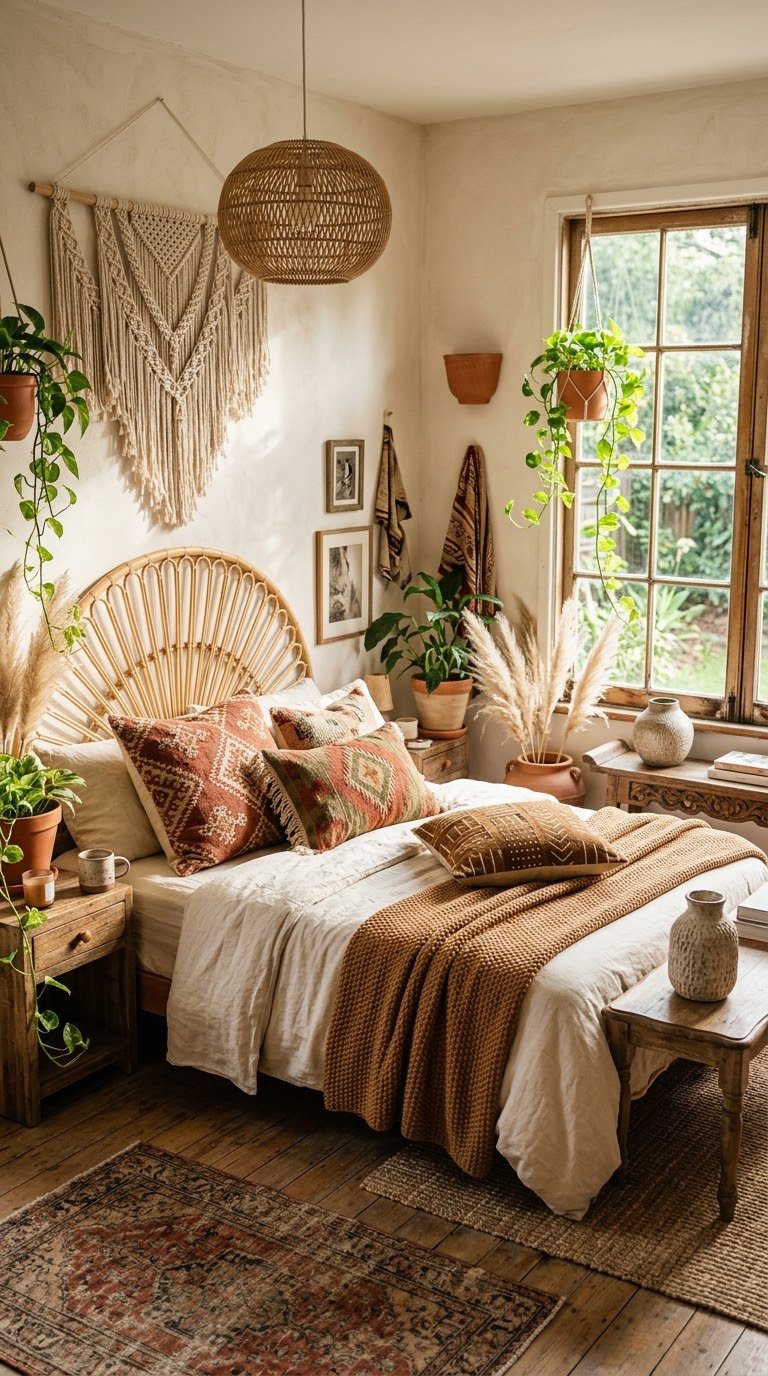
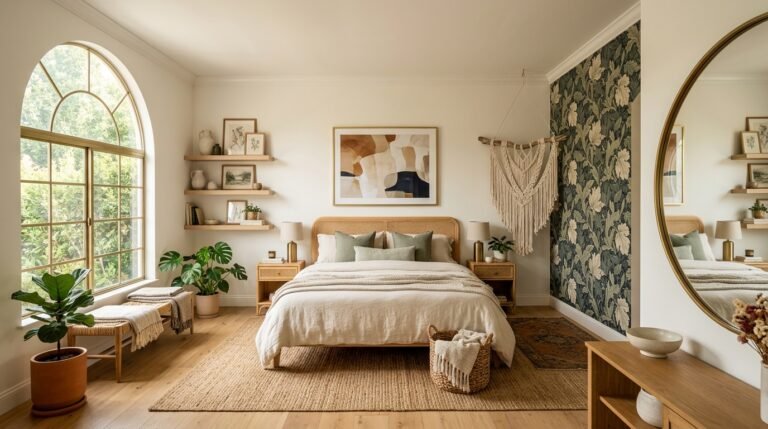
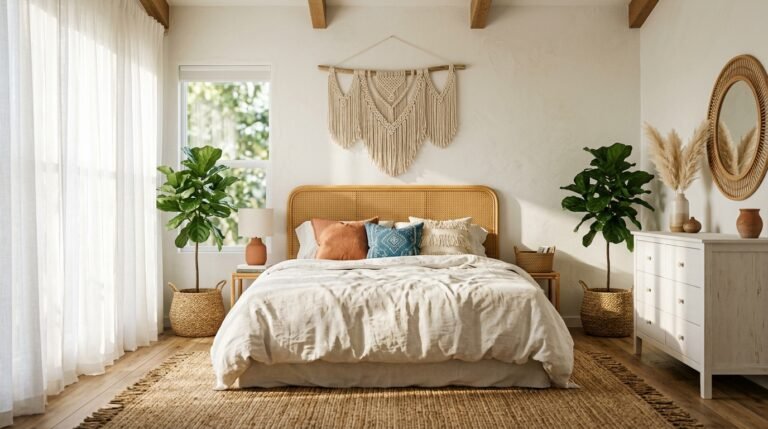
Bohemian bedroom aesthetics layer textures, patterns, and materials from multiple cultural traditions into a room that feels globally collected and warmly personal. Macrame wall hangings, rattan furniture, mixed print textiles, and trailing plants all contribute to the boho bedroom visual language.
Core Boho Bedroom Pieces
- Macrame wall hanging above the bed ($30 to $80 on Etsy)
- Rattan headboard or accent chair ($150 to $400)
- Mixed print throw pillows in warm earth tones ($15 to $25 each)
- Pampas grass in a terracotta vase ($20 to $40 total)
- Layered area rugs in varying patterns ($80 to $200 combined)
The boho aesthetic is one of the most forgiving bedroom styles because its defining quality is accumulation rather than precision, meaning every new addition makes the room more itself rather than risking imbalance.
5. Coastal Bedroom Aesthetic
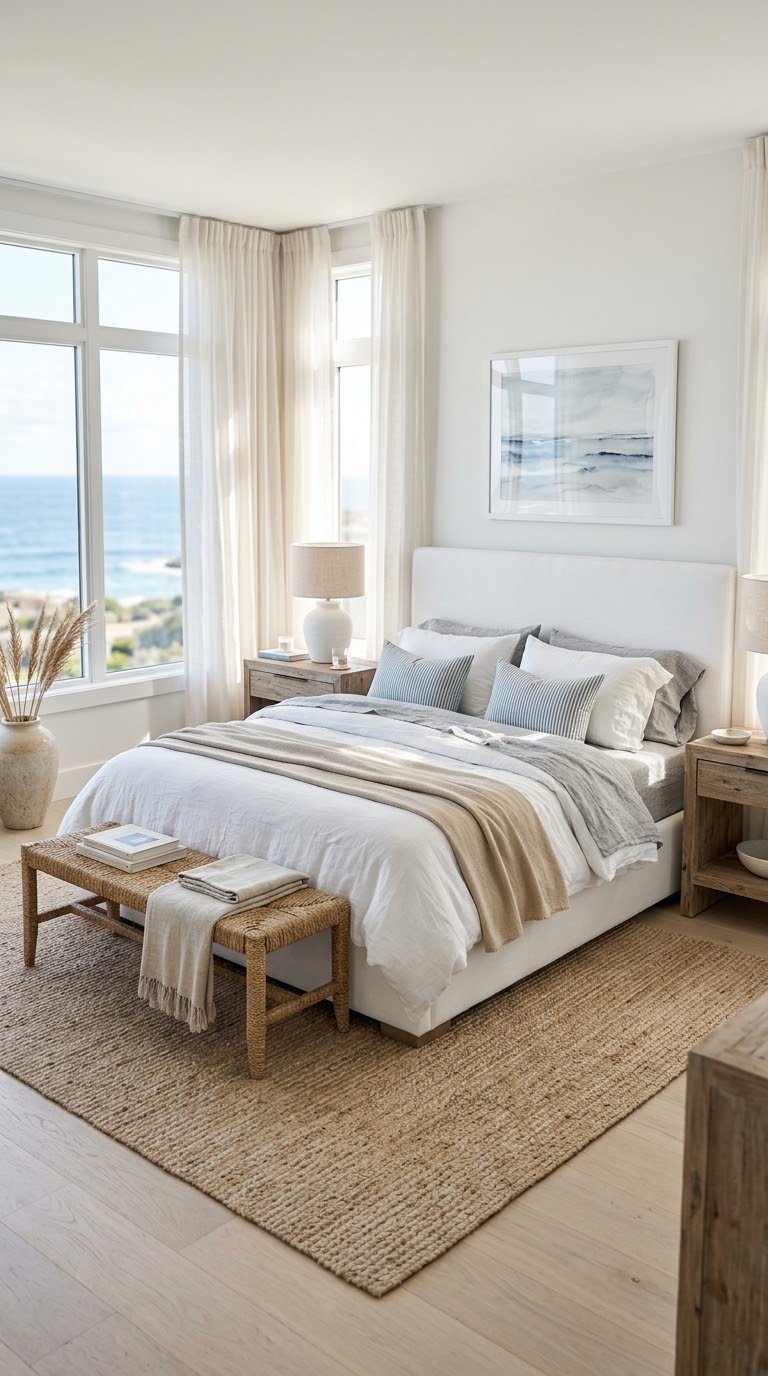
Coastal bedroom aesthetics draw from the beach without becoming a nautical themed room with anchors and rope everywhere, and this distinction matters. True coastal aesthetic uses soft blues, sandy neutrals, natural linen, driftwood tones, and plenty of natural light for a room that feels breezy and calm rather than nautically decorated.
Swap current bedding for white linen duvet covers ($60 to $120) and add two throw pillows in soft ocean blue. Change window treatments to sheer white panels that allow maximum natural light, and add one piece of natural driftwood or a white ceramic coastal object as a single accent detail. The coastal aesthetic requires less than most people think and delivers a consistent sense of calm in return.
6. Japandi Bedroom Aesthetic
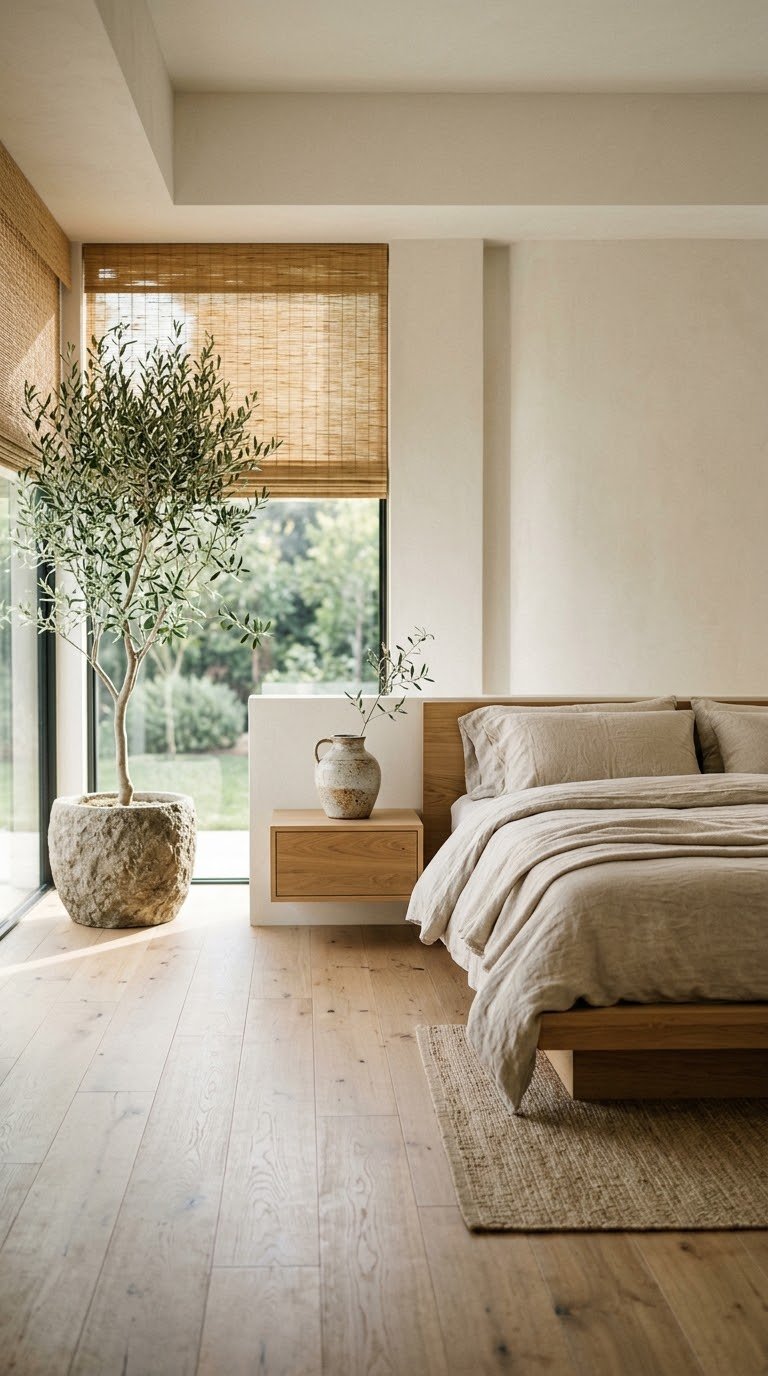
Japandi combines Japanese minimalism and Scandinavian hygge into a bedroom aesthetic that values simplicity, natural materials, and functional beauty over decoration for its own sake. The resulting aesthetic feels quieter and more intentional than either style alone.
Low platform beds in light oak or natural bamboo, neutral bedding in warm white or oatmeal linen, and a single large floor plant as the room’s only organic accent define Japandi bedroom spaces. Keep the palette to three tones maximum (warm white, natural wood, and one muted earth accent) and avoid any object without a clear function or clear aesthetic purpose. Japandi rewards the decision to buy one quality piece rather than three cheaper ones.
7. Vintage Bedroom Aesthetic
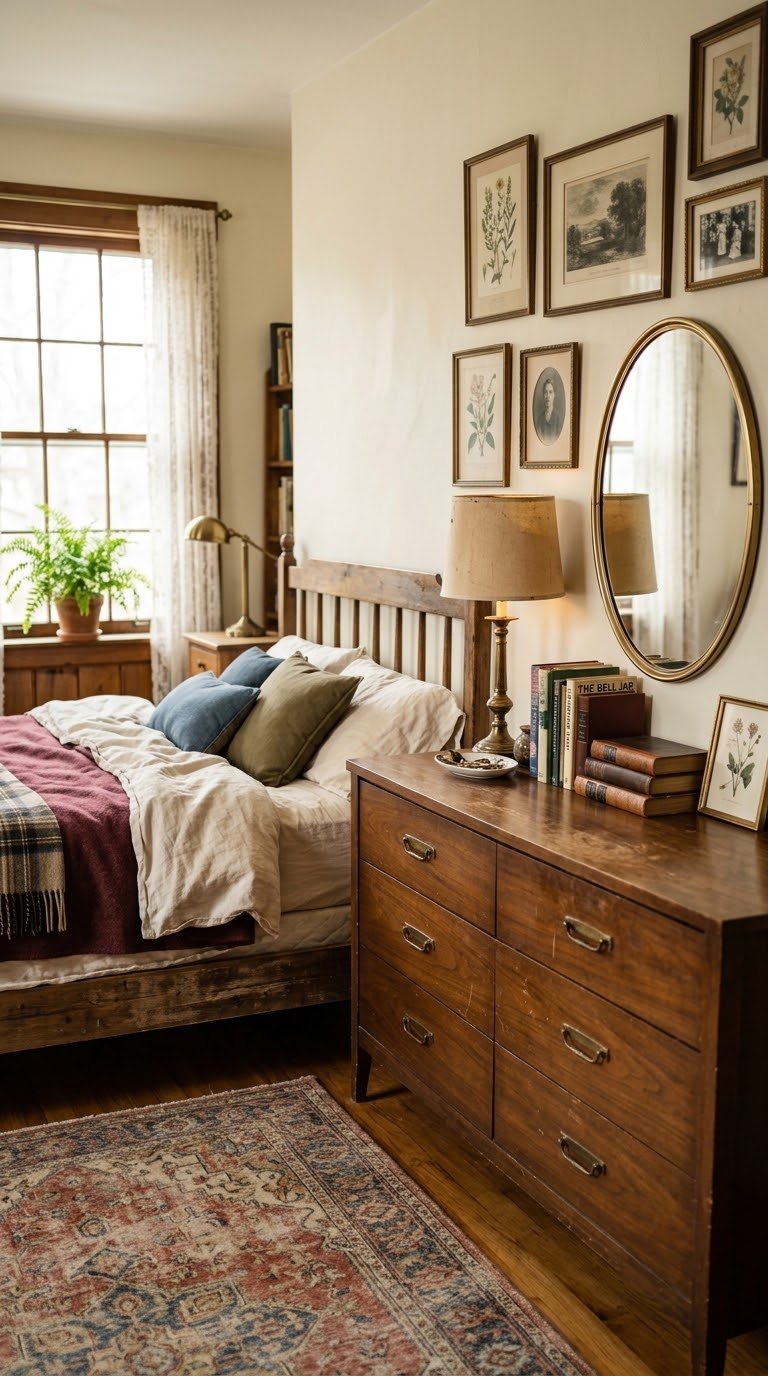
A vintage bedroom aesthetic draws from mid-century modern, Victorian, art deco, or 1970s design depending on which era you find most compelling, but all versions share the common quality of sourcing pieces with actual history rather than reproductions. Estate sales, antique markets, and Facebook Marketplace are the right sourcing channels.
An authentic mid-century modern dresser costs $100 to $400 at an antique market depending on condition, while a reproduction of the same form costs $300 to $600 new. The original develops patina and character the reproduction never achieves. Pick one vintage era and commit to it rather than mixing multiple periods, since a unified vintage aesthetic reads as intentional while a mixed vintage aesthetic reads as thrift store.
8. Romantic Bedroom Aesthetic
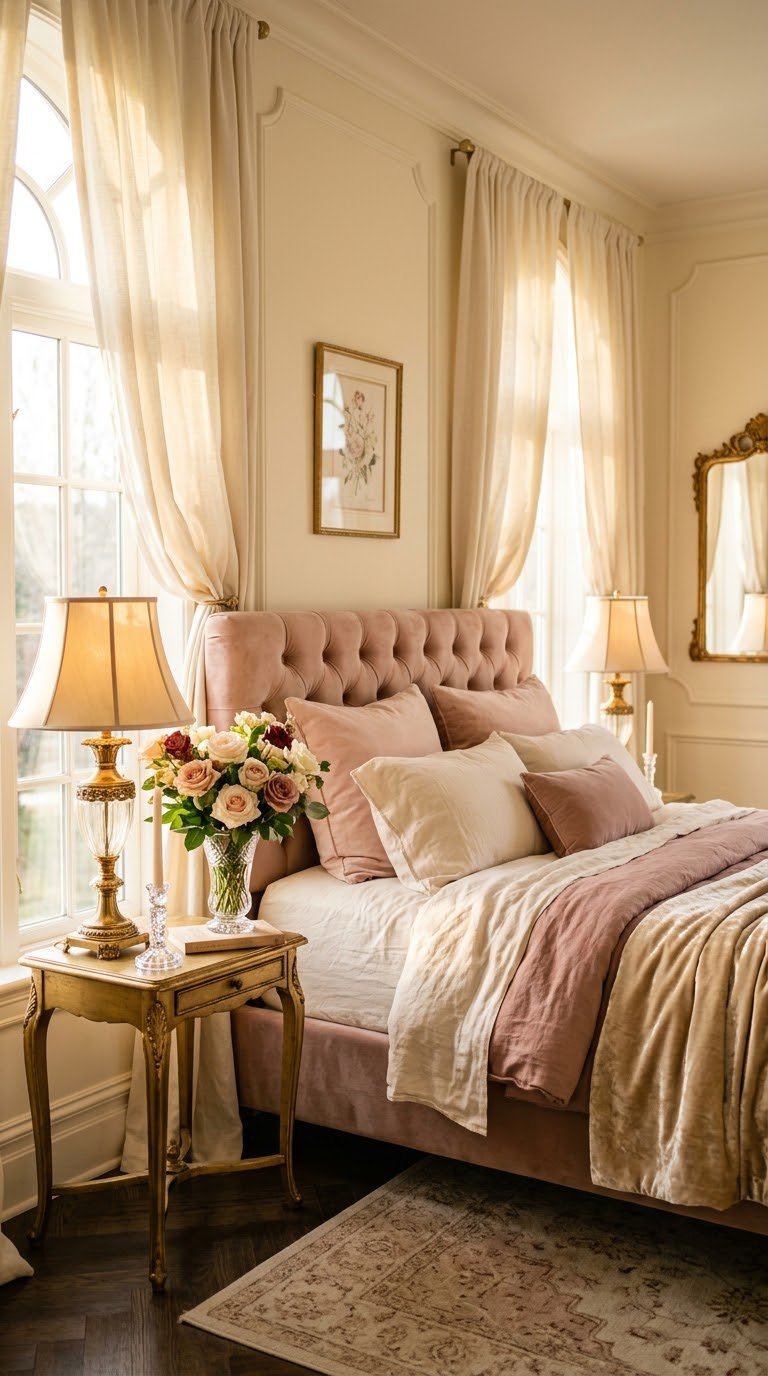
A romantic bedroom aesthetic prioritizes softness, warmth, and sensory richness through velvet upholstery, candlelight, floral accents, draped fabrics, and a color palette built from blush, ivory, burgundy, and gold. The aesthetic makes the bedroom feel like a deliberately luxurious space rather than just a place to sleep.
A velvet headboard in blush or dusty rose costs $150 to $400 depending on size and fabric quality. Add heavy curtains in a complementary deep rose or burgundy tone, a cluster of flameless candles on the dresser, and fresh or dried florals on the nightstand. The romantic bedroom aesthetic is about layering warmth at every surface level from the rug to the ceiling.
9. Industrial Bedroom Aesthetic
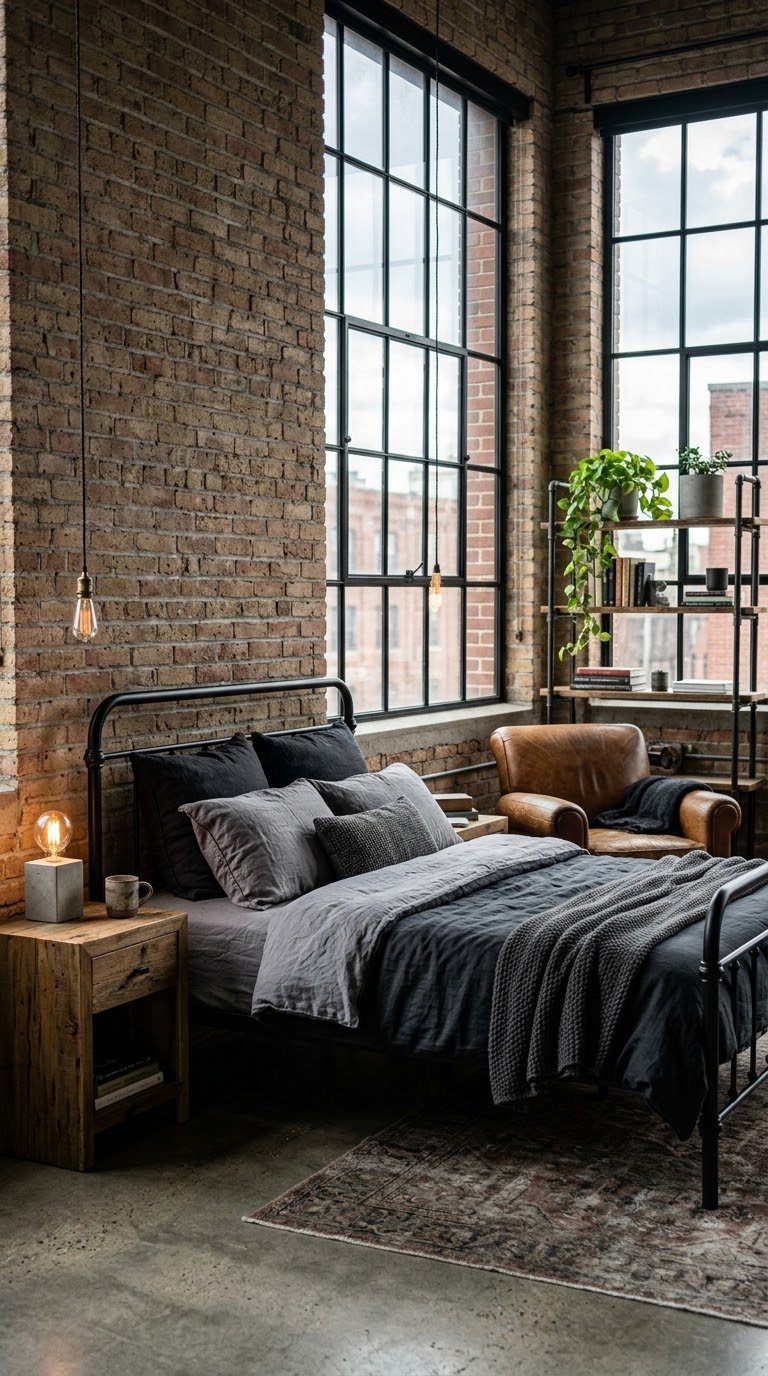
Industrial bedrooms use exposed materials, dark metals, reclaimed wood, and utilitarian fixtures in a way that celebrates the manufacturing aesthetic borrowed from converted warehouse apartments. Brick wall textures (real or faux), Edison bulb lighting, and black metal pipe shelving all contribute to the industrial bedroom visual.
A black metal pipe shelf system from Home Depot costs $80 to $150 in materials for a full wall installation using flanged pipe fittings and reclaimed wood planks. Pair with a black metal bed frame ($150 to $300 in queen size), Edison bulb string lights ($20 to $30), and a concrete-look flooring or nightstand for a complete industrial bedroom aesthetic that doesn’t require a loft apartment to work.
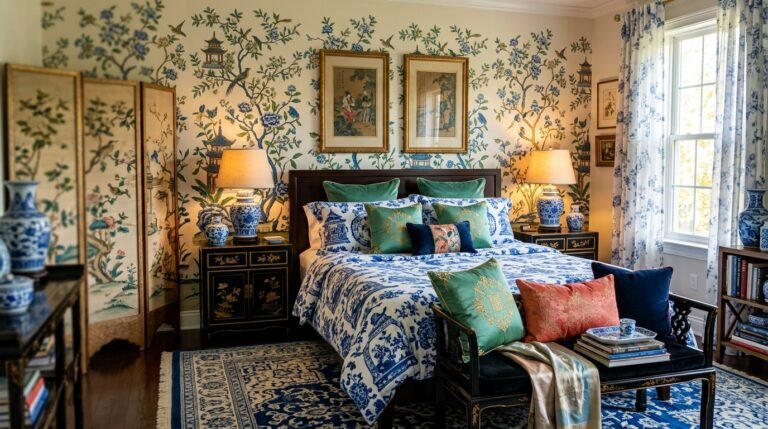
10. Grand Millennium Bedroom Aesthetic
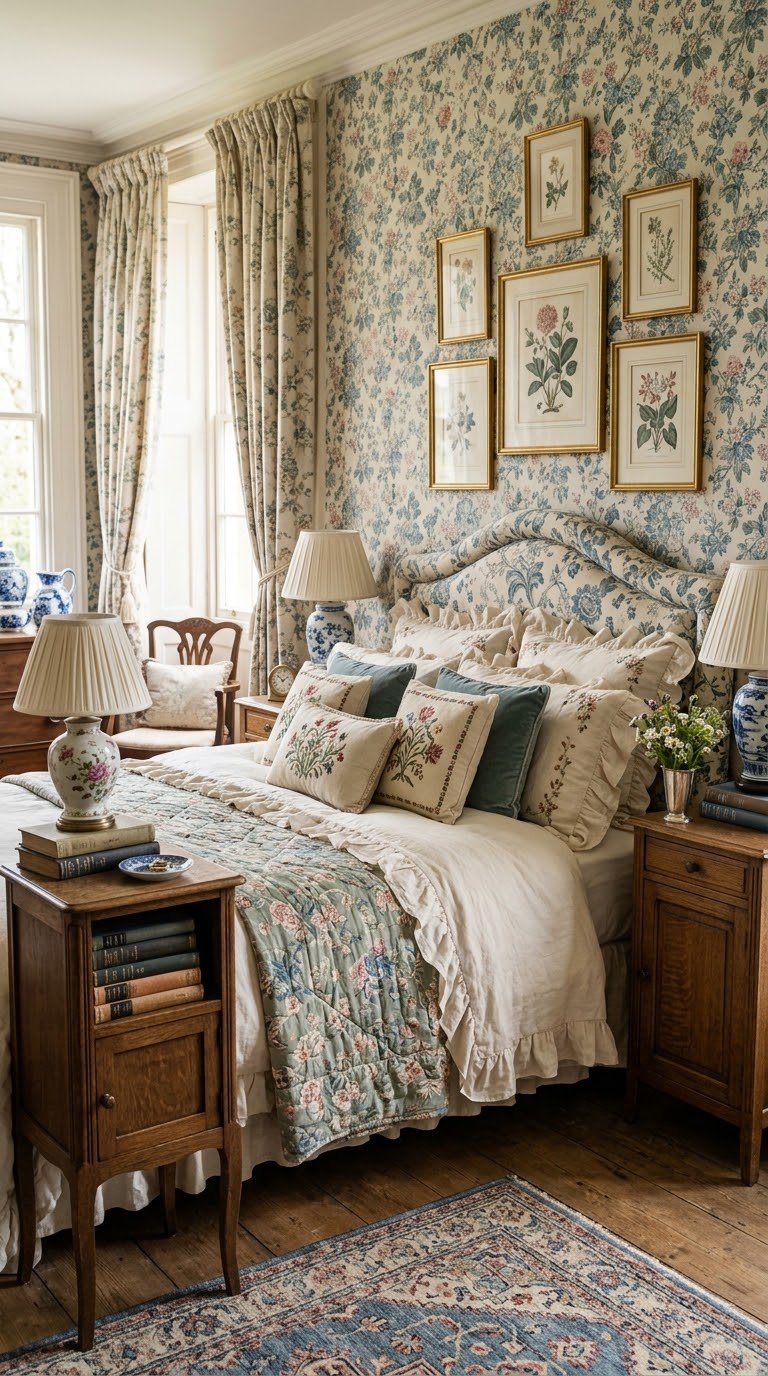
Grand Millennial bedrooms embrace the traditional, chintz-and-floral decorating aesthetic of an earlier era with genuine enthusiasm rather than ironic distance, resulting in a room that feels comfortably traditional, pattern-rich, and completely confident in its own unfashionable charm. Toile wallpaper, ruffled shams, antique prints, and needlepoint pillows all qualify.
This is the aesthetic that finally gives you permission to use the chintz fabric your grandmother would have loved, and the result is a bedroom that looks like it belongs in a British countryside home rather than a contemporary design magazine. Which, depending on your preferences, is either the entire appeal or a complete dealbreaker. For those it appeals to, it’s the most fully realized personal statement on this list.
11. Modern Farmhouse Bedroom Aesthetic
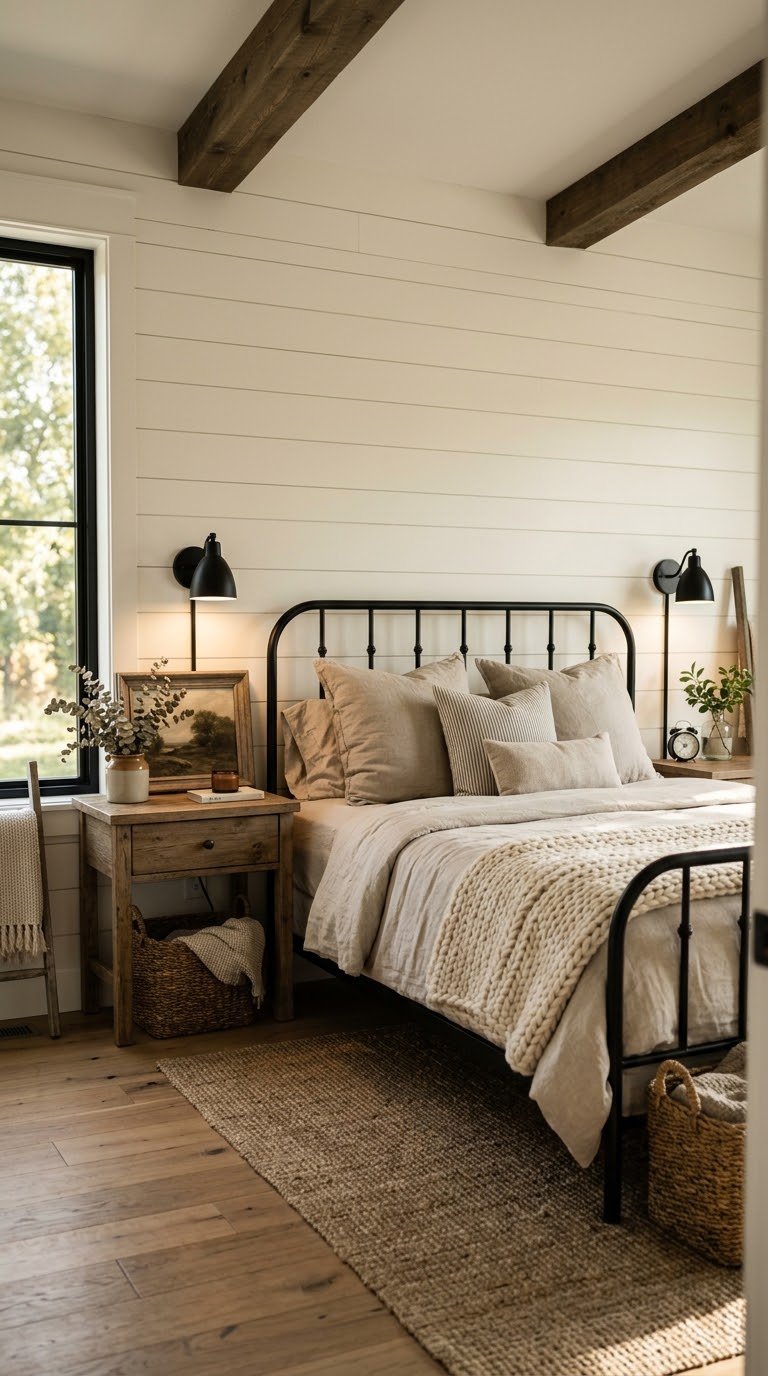
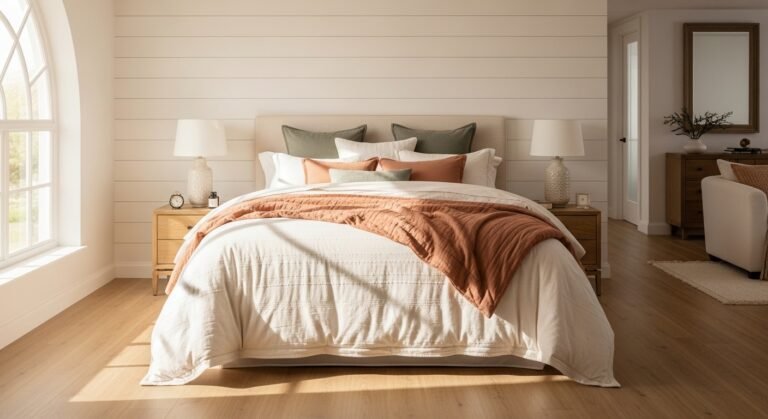
Modern farmhouse bedrooms balance the warmth of traditional farmhouse materials with the cleaner lines and neutral palette of contemporary design, resulting in a style that feels both cozy and current. Shiplap accent walls, warm wood tones, neutral linen bedding, and black metal fixtures define the aesthetic.
A shiplap accent wall behind the bed using tongue-and-groove pine boards costs $200 to $400 in materials for a standard bedroom wall size. Paint it in a warm white rather than stark white to maintain warmth, and pair with a simple black metal bed frame, neutral linen bedding, and one or two woven baskets for storage. The modern farmhouse aesthetic photographs extremely well in natural light, which is why it dominates real estate listings and home renovation shows.
12. Maximalist Bedroom Aesthetic
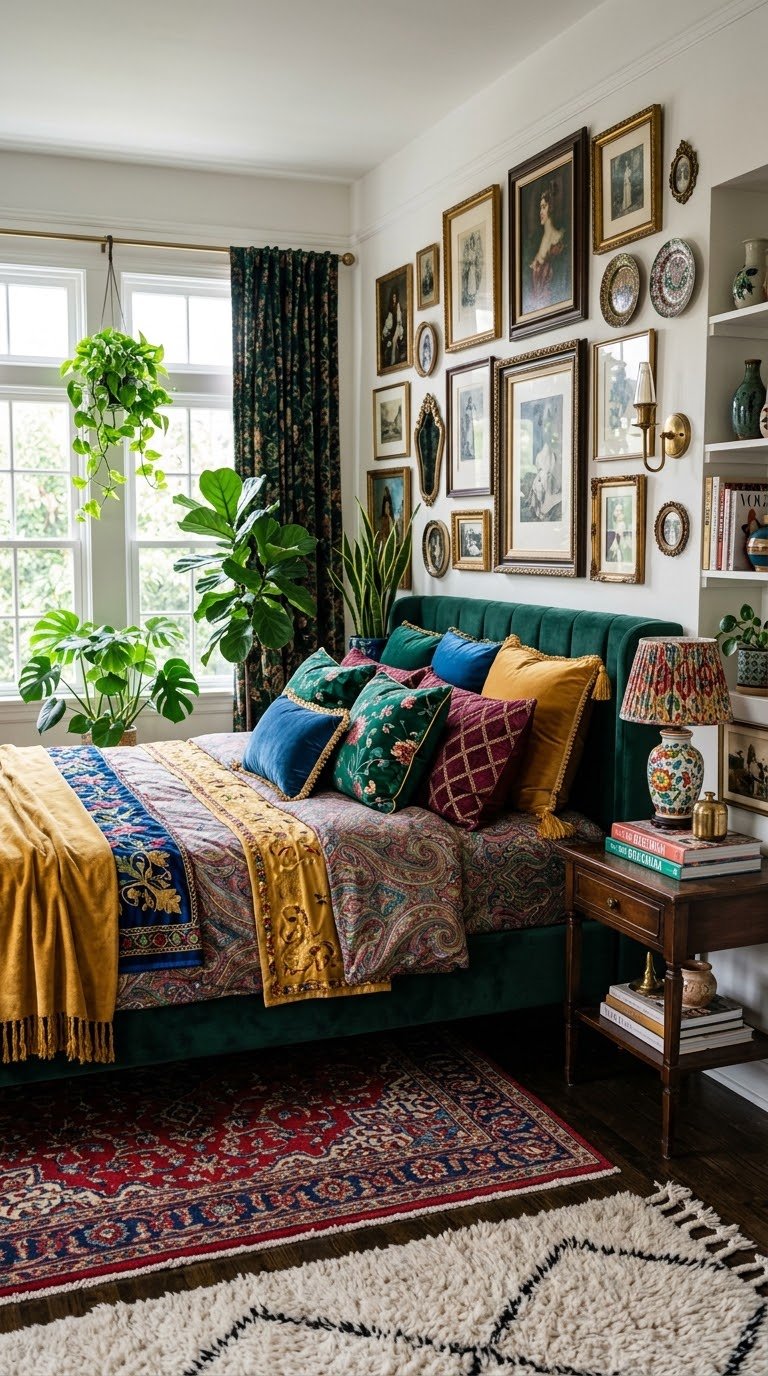
Maximalist bedrooms operate on the principle that more is more, layering pattern on pattern, color on color, and object on object until the room communicates abundance rather than restraint. The key distinction between maximalism done well and maximalism gone wrong is color cohesion: the patterns and objects multiply, but the color palette stays controlled.
Choose two to three main colors and let every pattern in the room draw from those same colors. A maximalist bedroom in deep jewel tones (emerald, sapphire, gold) feels richly layered and intentional. The same number of patterns in unrelated colors feels chaotic. The palette does the work of holding maximalism together.
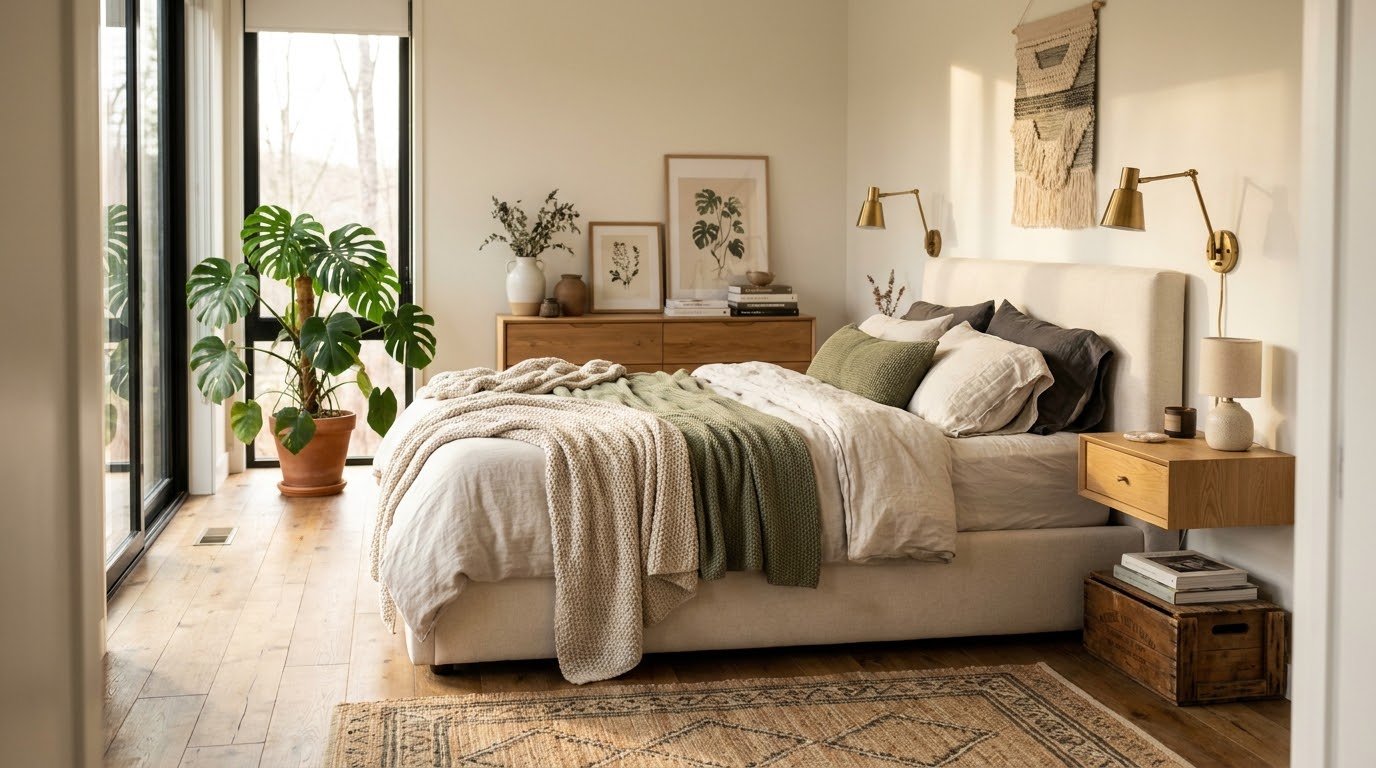
13. Sage Green Bedroom Aesthetic
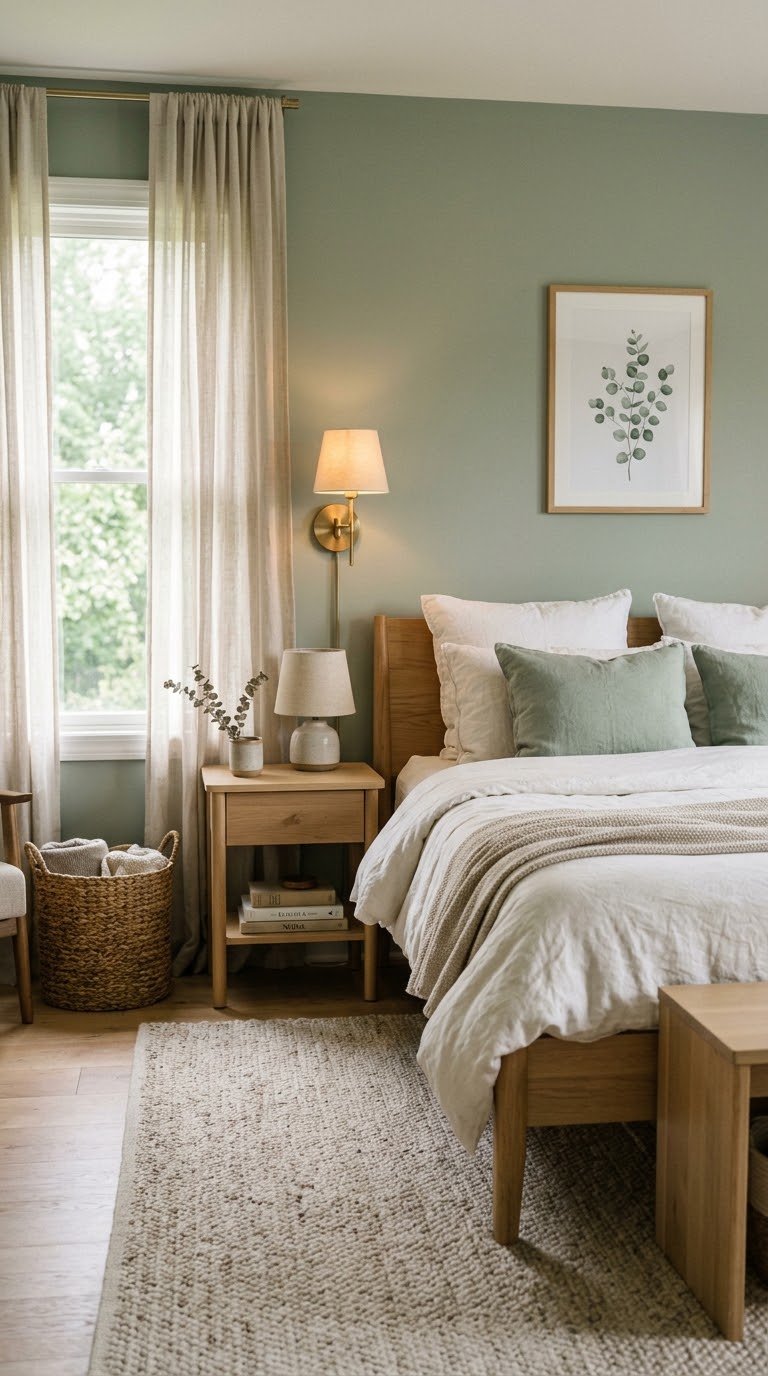
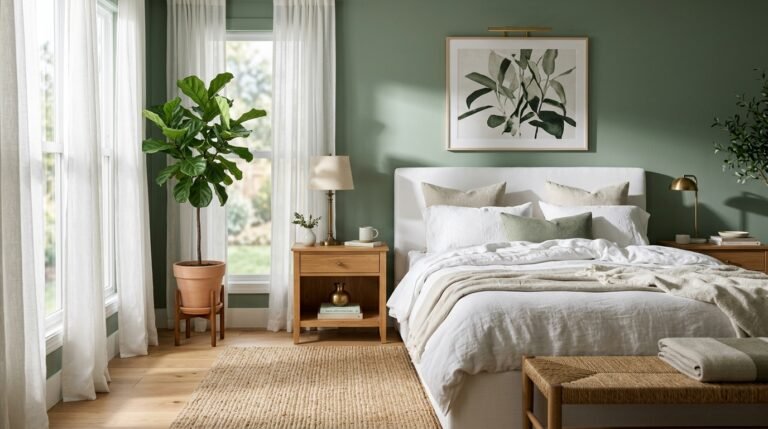
Sage green has become the dominant bedroom aesthetic color of the past three years for good reason: the muted, grey-green tone works as both a wall color and a textile color, pairs naturally with warm wood and brass, and creates a calm, nature-adjacent atmosphere without requiring any structural changes. It’s also one of those rare colors that looks good in both morning and evening light.
Paint the walls in Sherwin Williams’ Retreat or Benjamin Moore’s Aganthus Green, add warm white bedding, and bring in two or three sage green throw pillows as accents. The full sage green bedroom aesthetic comes together with a single paint change and two textile swaps. IMO, no other single color delivers this level of universal calm in a bedroom context.
14. Pink Bedroom Aesthetic
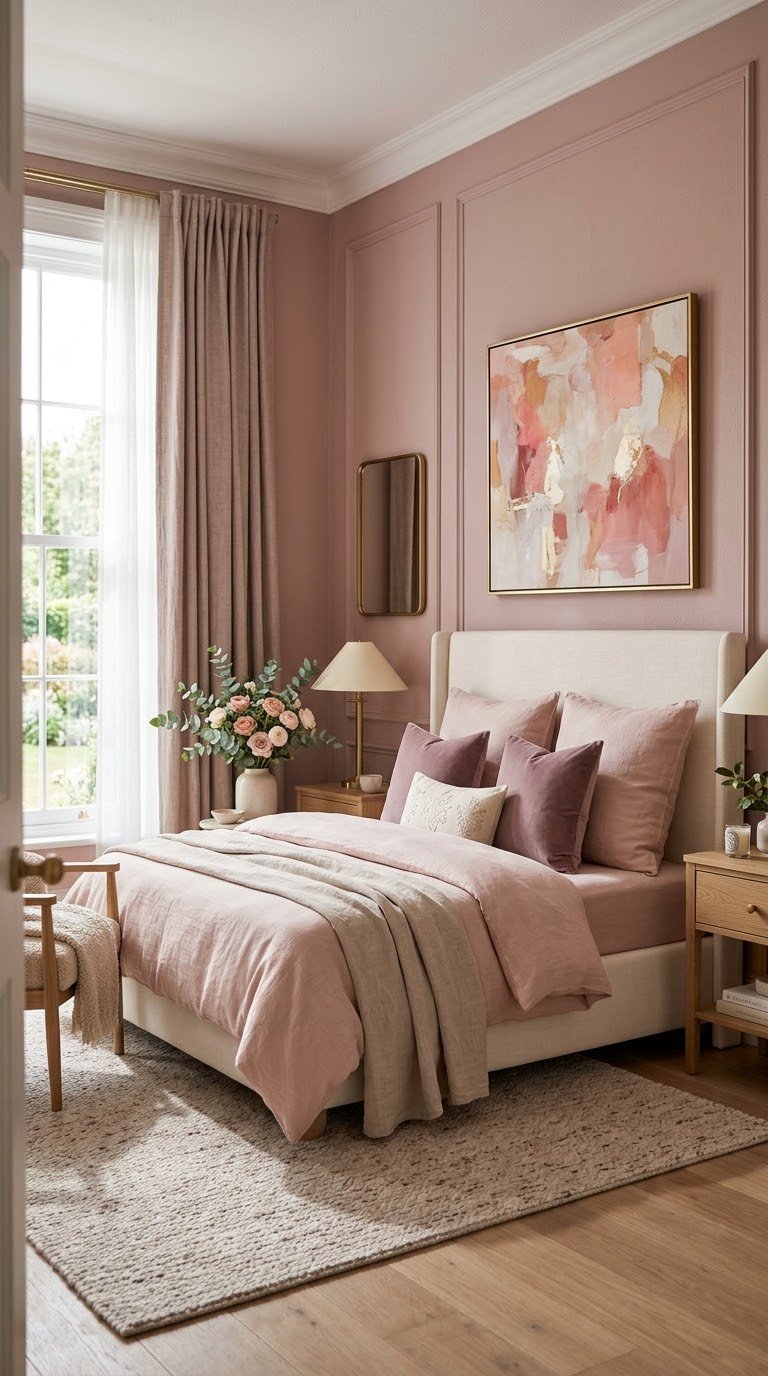
A pink bedroom aesthetic works across a wider range of pink tones than most people expect, from barely-there blush that reads as warm neutral to saturated hot pink that reads as bold statement, with dusty rose and mauve occupying the most sophisticated middle ground. The tone you choose dictates the entire personality of the room.
Dusty rose or mauve walls (Farrow & Ball’s Setting Plaster, Sherwin Williams’ Mellow Coral) create a sophisticated adult pink bedroom that bears no resemblance to a children’s room. Pair with warm brass hardware, natural wood furniture, and cream or oatmeal textiles for a palette that feels considered rather than themed. Hot pink works as an accent rather than a dominant tone in most adult bedroom contexts.
15. Black Bedroom Aesthetic
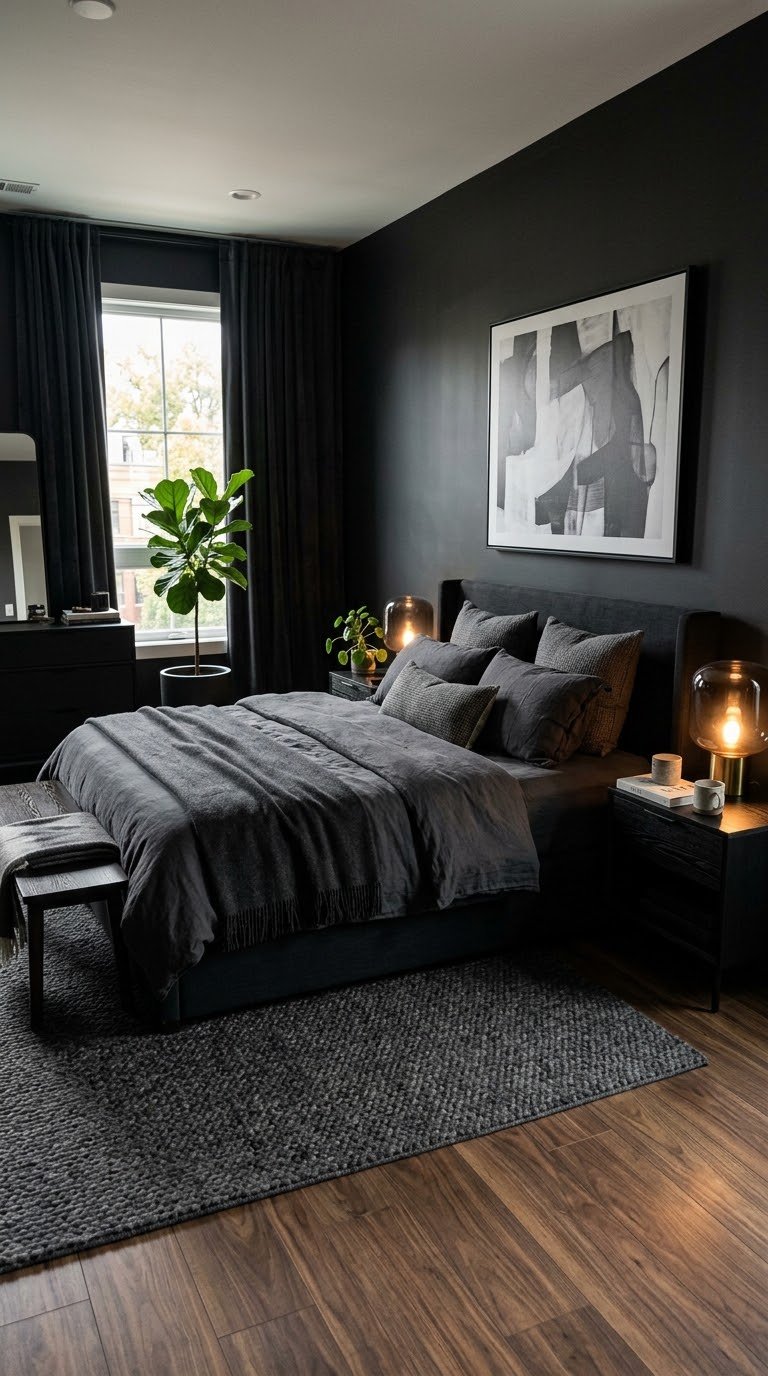
A full black bedroom aesthetic uses dark walls, dark bedding, and dark furniture to create a room that feels like a sealed, private sanctuary rather than a domestic space. The aesthetic works because darkness creates enclosure, and enclosure creates intimacy, and intimacy is exactly what a bedroom should feel like.
Paint walls in Farrow & Ball’s Railings or Benjamin Moore’s Black Ink rather than a pure cool black, since the warm undertone in these specific colors prevents the room from feeling cold or oppressive. Add warm lighting from multiple sources (table lamps, floor lamp, LED strips) to create light variation that gives the dark room depth and dimension rather than flatness.
16. Neutral Bedroom Aesthetic
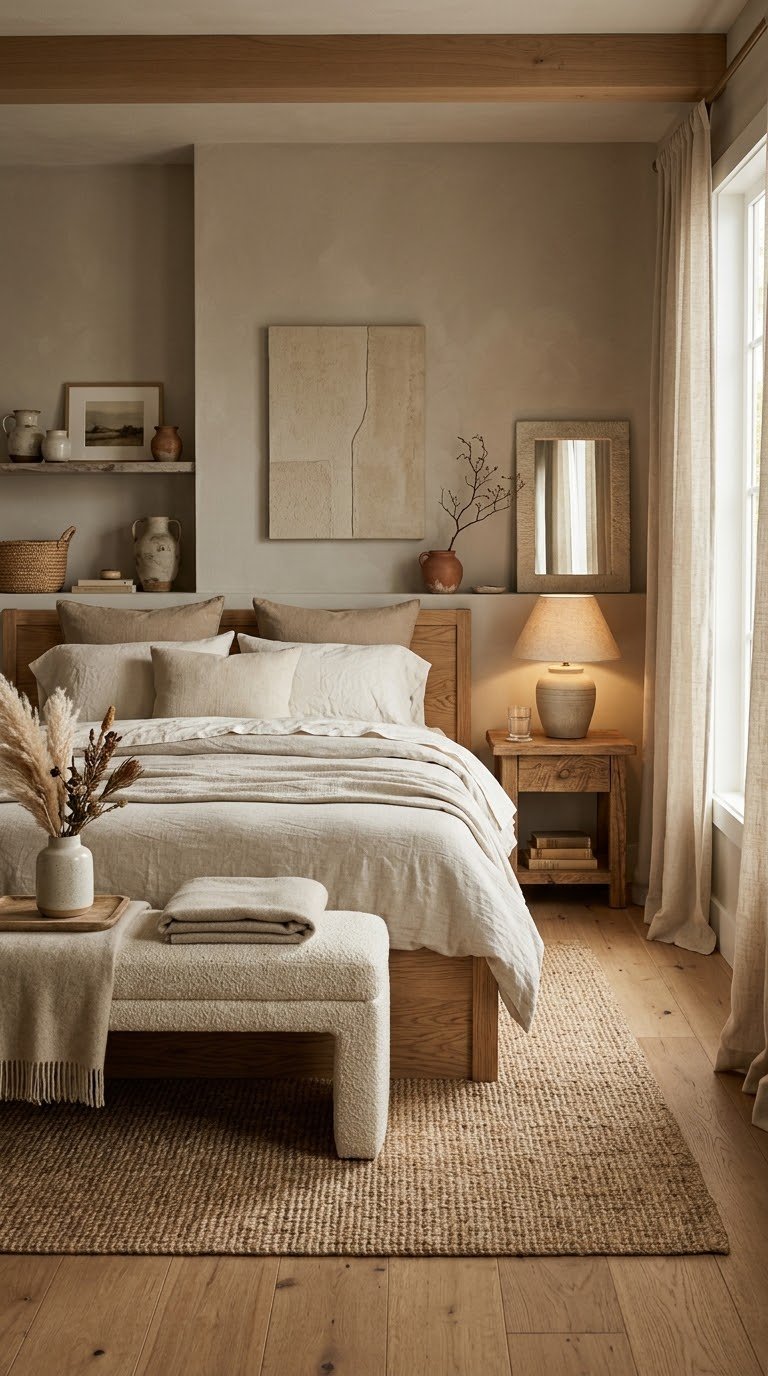
Neutral bedrooms build from a single warm neutral tone applied consistently across walls, bedding, and accessories, creating a room that feels calm, cohesive, and genuinely restful rather than decoratively ambitious. The neutral bedroom is the one aesthetic that rewards obsessive consistency: every warm white should share the same undertone, every natural material should share the same warm brown family.
Warm greige walls (Sherwin Williams Accessible Beige, BM Revere Pewter), natural linen bedding, warm wood furniture, and jute or sisal flooring create a complete neutral bedroom aesthetic with zero competing visual elements. The result photographs beautifully in natural light and ages better than any color-specific aesthetic because it responds to light changes through the day rather than against them.
17. Colorful Bedroom Aesthetic
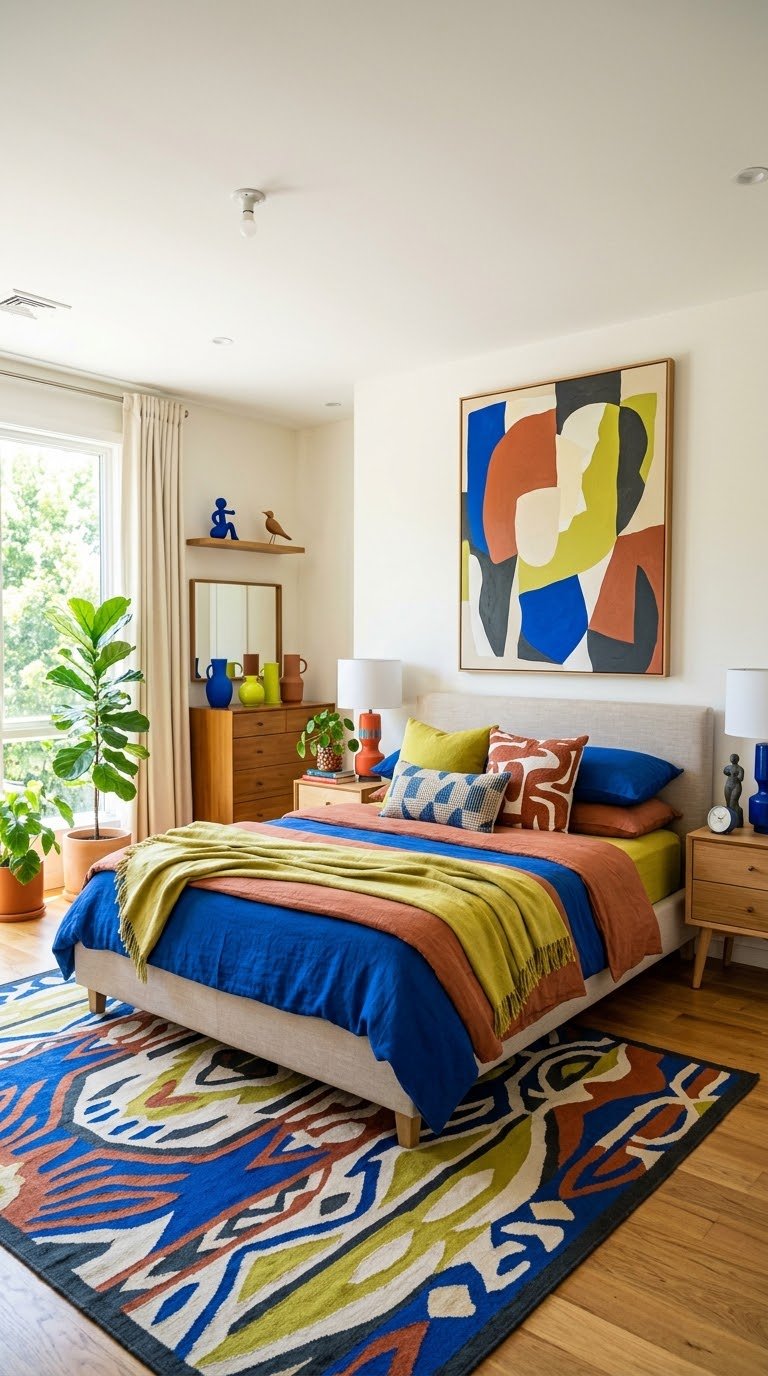
A colorful bedroom aesthetic uses a full saturated color palette rather than the muted tones most bedroom design retreats to, celebrating bold hues in bedding, art, accessories, and occasionally walls without apology or restraint. The key is building the color story from two or three compatible colors rather than introducing every color simultaneously.
A bedroom built from cobalt blue, terracotta, and chartreuse reads as boldly colorful and intentionally designed. The same bedroom with six unrelated colors reads as chaotic. Choose a primary bold color, one complementary bold color, and one neutral to anchor them both, then let those three tones appear across every surface in the room at varying intensities.
18. Eclectic Bedroom Aesthetic
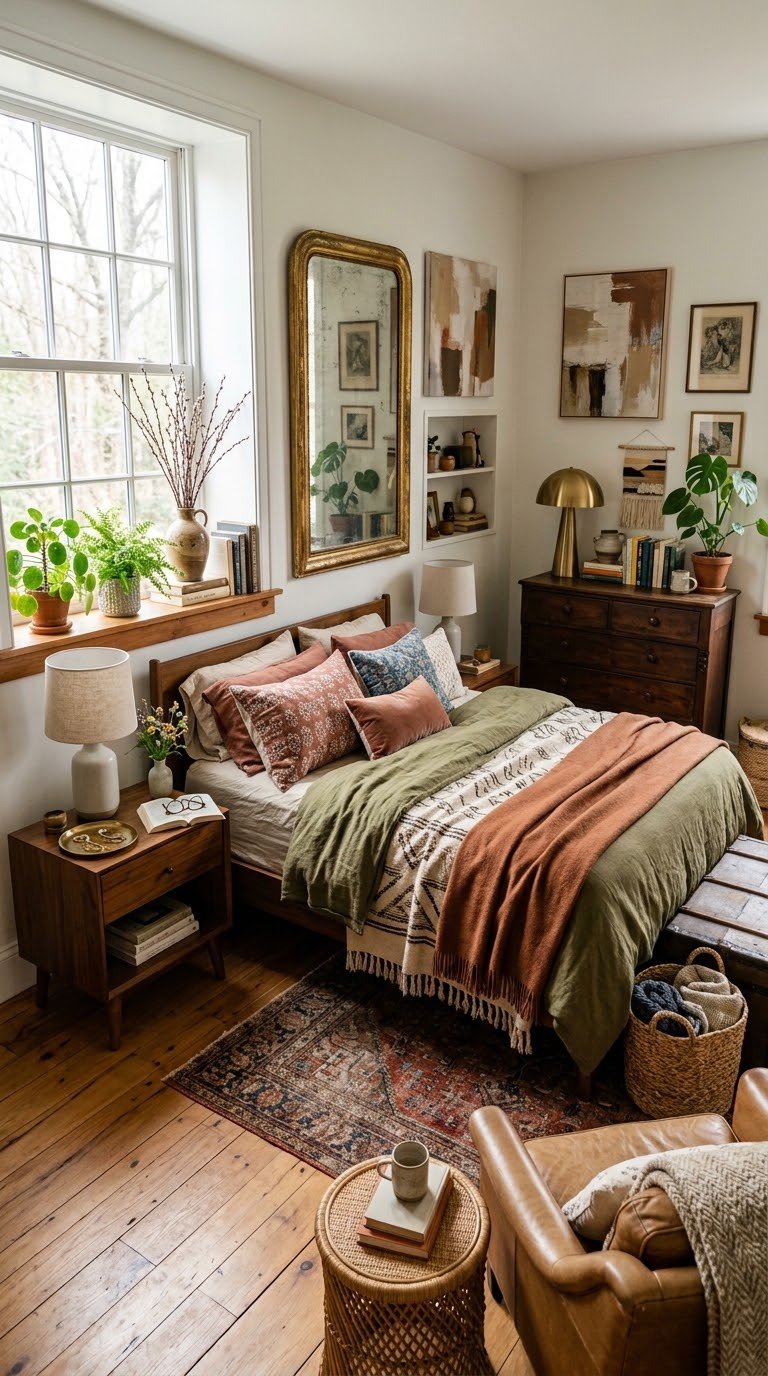
An eclectic bedroom mixes periods, styles, and cultural references in a way that reflects a genuinely diverse taste rather than one aesthetic decision made at one point in time. The resulting room looks impossible to reproduce exactly, which is the aesthetic’s defining quality.
The risk with eclectic bedrooms is mistaking randomness for eclecticism: a room with no visual logic reads as disorganized rather than adventurous. Establish one common thread across the mixed elements, whether color, material, scale, or period, and use it to connect what would otherwise be disparate choices. The common thread doesn’t need to be visible as a rule, but it needs to be consistent as a result.
19. Scandi Bedroom Aesthetic
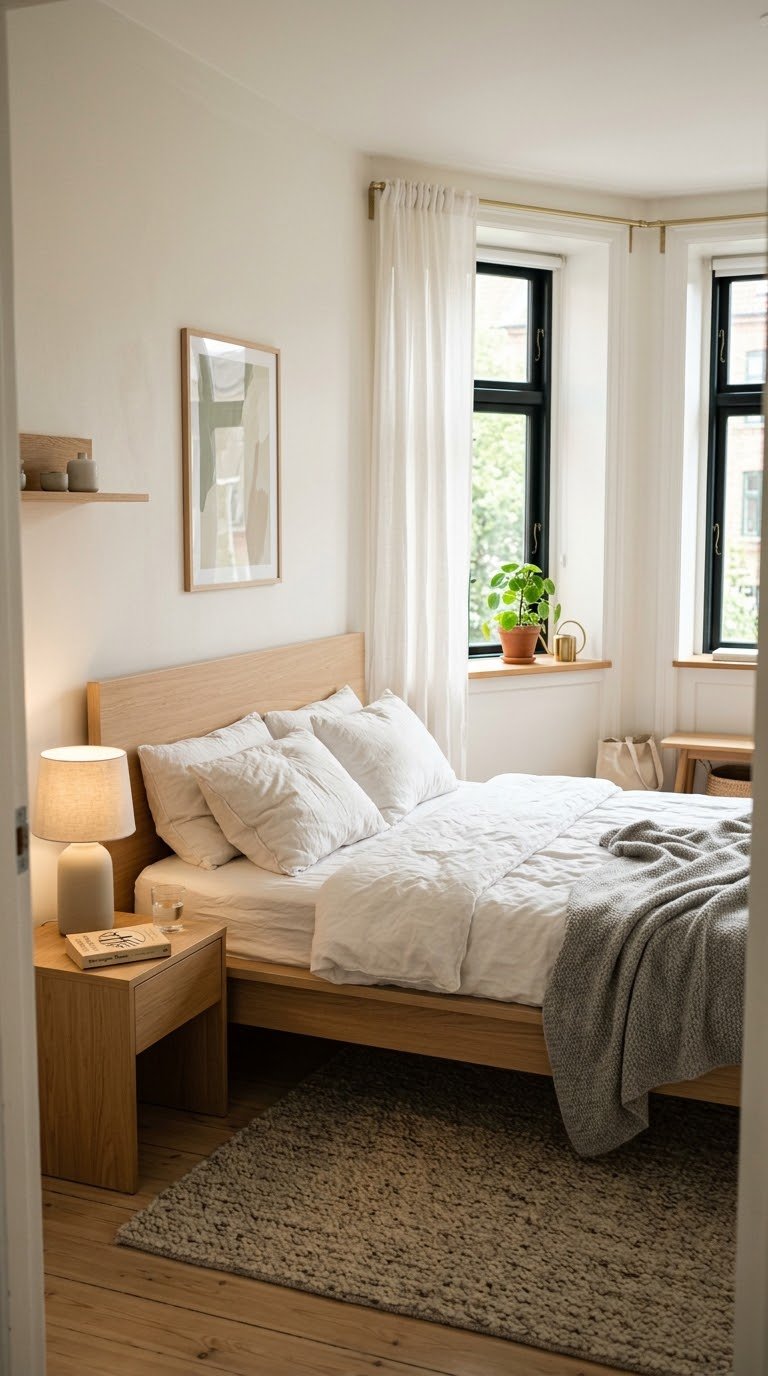
Scandinavian bedroom aesthetics prioritize function, natural light, clean lines, and the hygge quality of warmth and coziness in a palette built almost entirely from whites, greys, and natural wood tones with occasional muted color accents. The aesthetic creates genuinely restful bedrooms through the deliberate reduction of visual complexity.
White walls, light oak furniture (IKEA’s HEMNES collection works well at $150 to $400 per piece), and white or light grey bedding establish the Scandi bedroom foundation. Add a single knit throw in a muted tone, a small potted plant on the windowsill, and warm white lighting throughout for the complete aesthetic. The minimalism feels warm rather than cold in Scandi bedrooms because of the wood tones and textile quality.
20. Tropical Bedroom Aesthetic
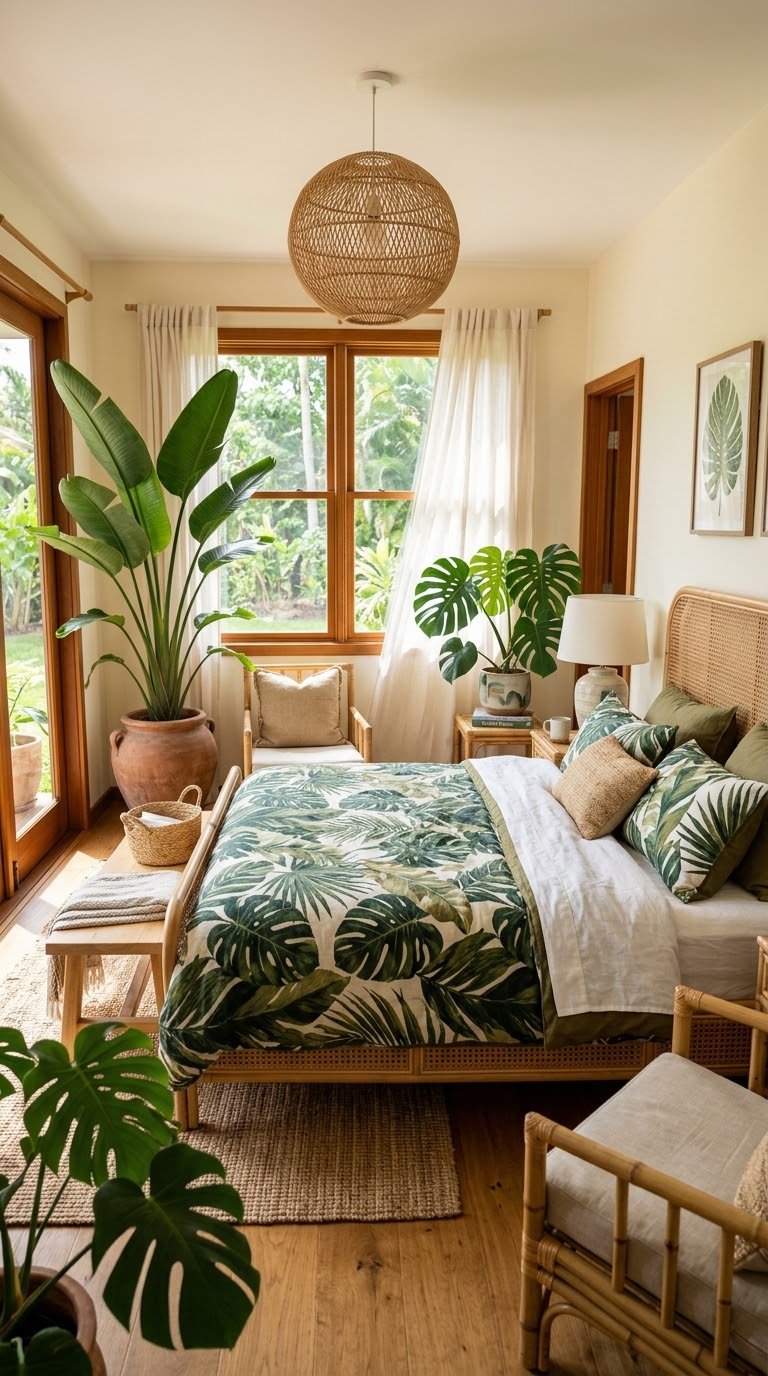
Tropical bedrooms bring the lush, saturated color and textural density of tropical environments indoors through large-leaf plants, bold botanical prints, natural rattan and bamboo furniture, and a palette drawn from deep greens, warm terracotta, and vivid accent tones. The aesthetic works best in rooms with significant natural light.
A large monstera or bird of paradise plant as the room’s dominant decorative element (cost: $40 to $100 depending on size) establishes the tropical atmosphere before any other change. Add a rattan headboard, botanical print bedding, and a natural fiber rug for the full aesthetic. The tropical bedroom is the most forgiving outdoor-inspired interior style because the plants do most of the visual work and improve rather than age with time.
21. Zen Bedroom Aesthetic
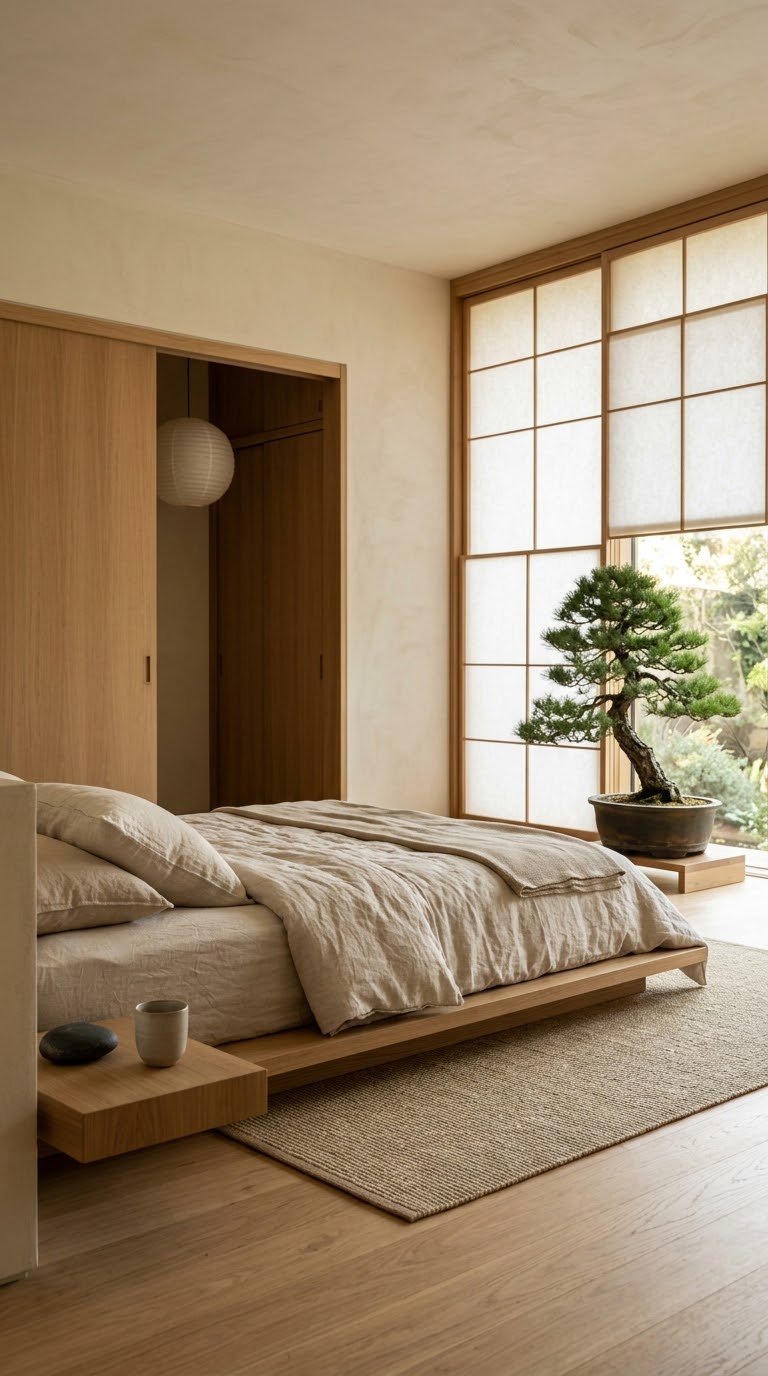
A zen bedroom reduces the room to its most essential elements to create a space for genuine mental rest rather than visual stimulation. The aesthetic uses natural materials, low furniture, controlled lighting, and negative space to create a room that actively reduces stress response rather than adding to it.
Research from the Journal of Environmental Psychology consistently links visual simplicity in sleep environments with faster sleep onset and higher reported sleep quality. A zen bedroom applies this research as a design principle: low platform bed, neutral bedding, blackout curtains, a single plant, and no visible clutter. The aesthetic is as much about what you remove as what you keep.
22. Mediterranean Bedroom Aesthetic
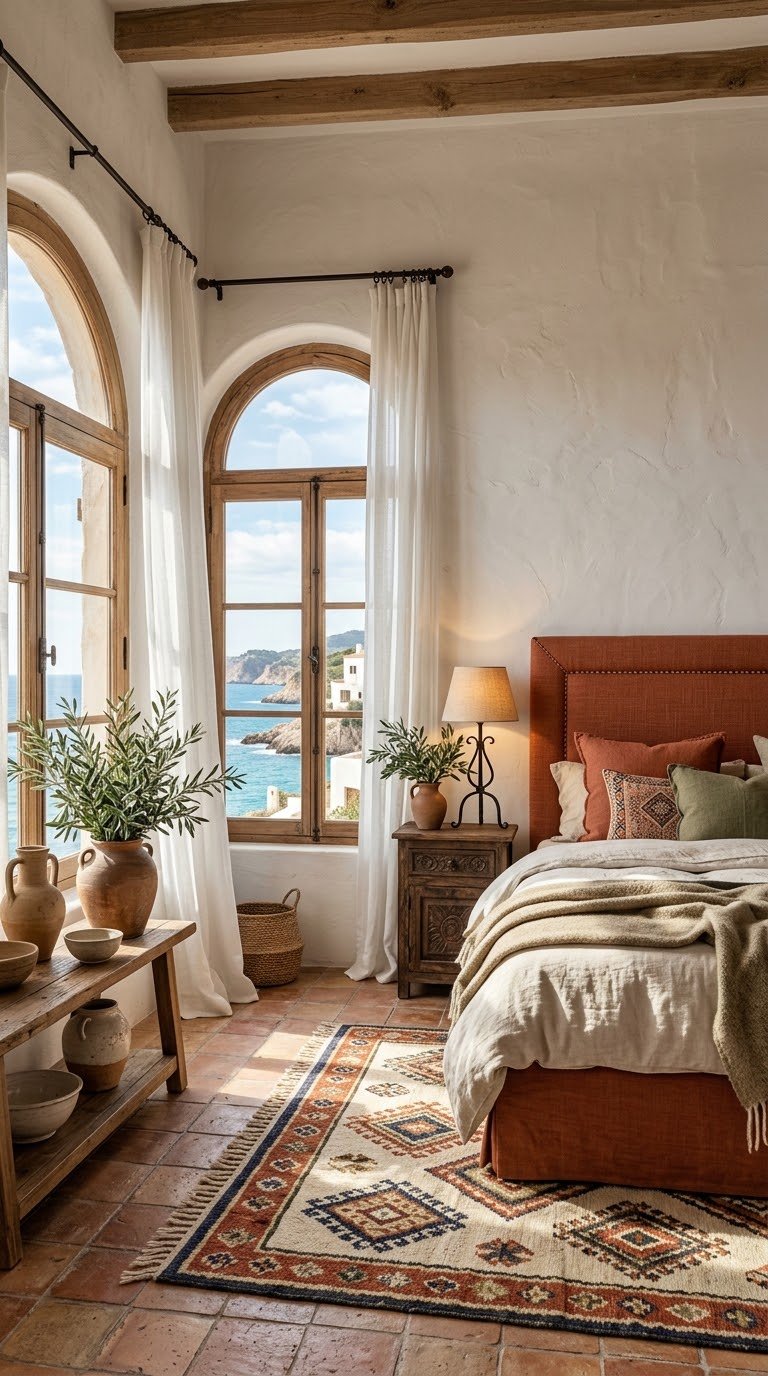
Mediterranean bedroom aesthetics draw from Spanish, Italian, Greek, and Moroccan design traditions through terracotta tones, whitewashed walls, ornate tile details, wrought iron accents, and warm textiles in jewel tones and geometric patterns. The aesthetic creates sun-warmed, textured bedrooms that feel genuinely grounded.
Terracotta walls or terracotta tile accents paired with whitewashed or cream furniture and Moroccan-influenced textile patterns create the full Mediterranean bedroom atmosphere. Add wrought iron candle holders, a geometric area rug, and white gauze curtains that move in a breeze for the complete sensory experience the aesthetic promises.
23. French Country Bedroom Aesthetic
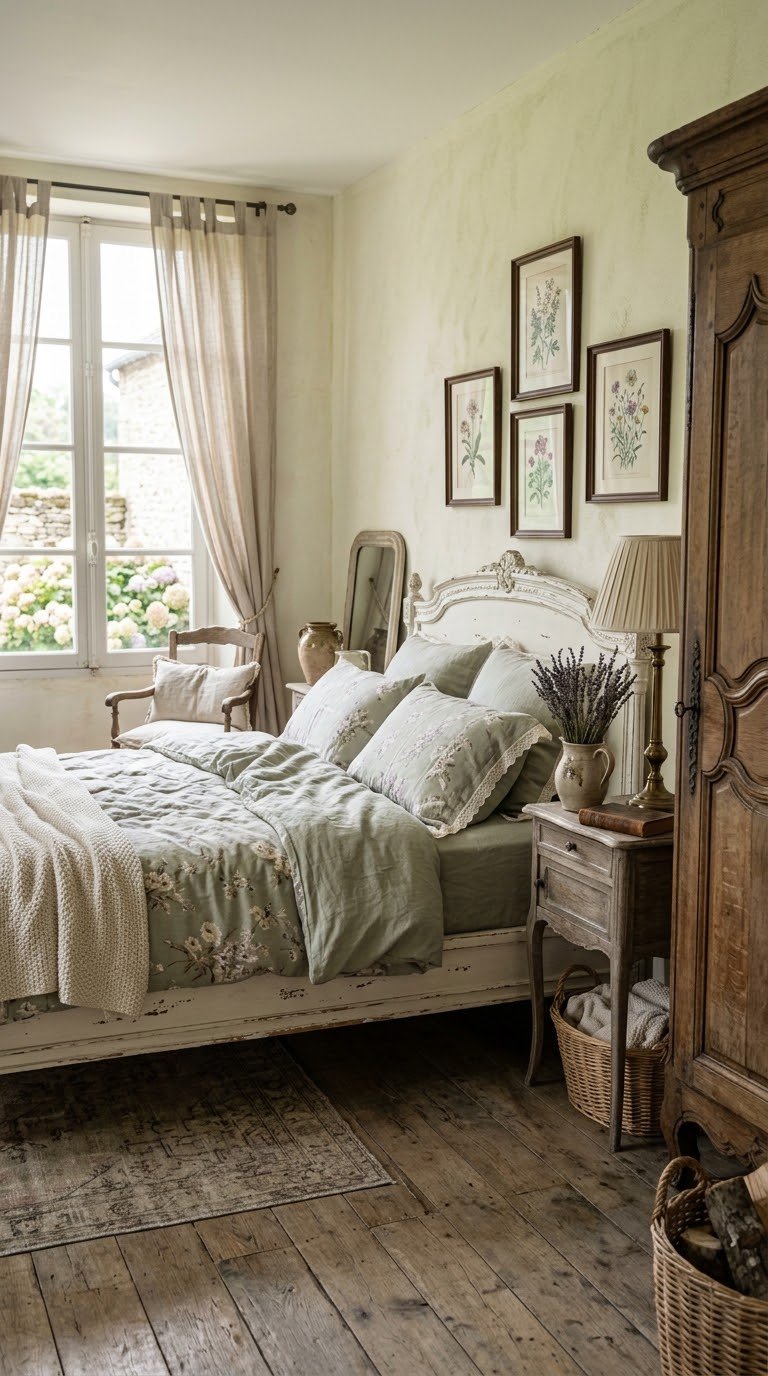
French country bedrooms combine the elegance of French provincial furniture with the relaxed warmth of countryside living, creating a style that feels both refined and genuinely comfortable. The aesthetic uses distressed painted furniture in grey-white or soft blue, floral and toile textiles, and warm antique accents.
A distressed white armoire ($200 to $500 at vintage markets), floral duvet cover in soft lavender or sage, and antique brass bedside lamp create the core French country bedroom. Add simple linen curtains, a wreath above the headboard, and one or two antique prints in simple frames. The aesthetic rewards authentic vintage pieces over reproductions more than almost any other style on this list.
24. Fairycore Bedroom Aesthetic
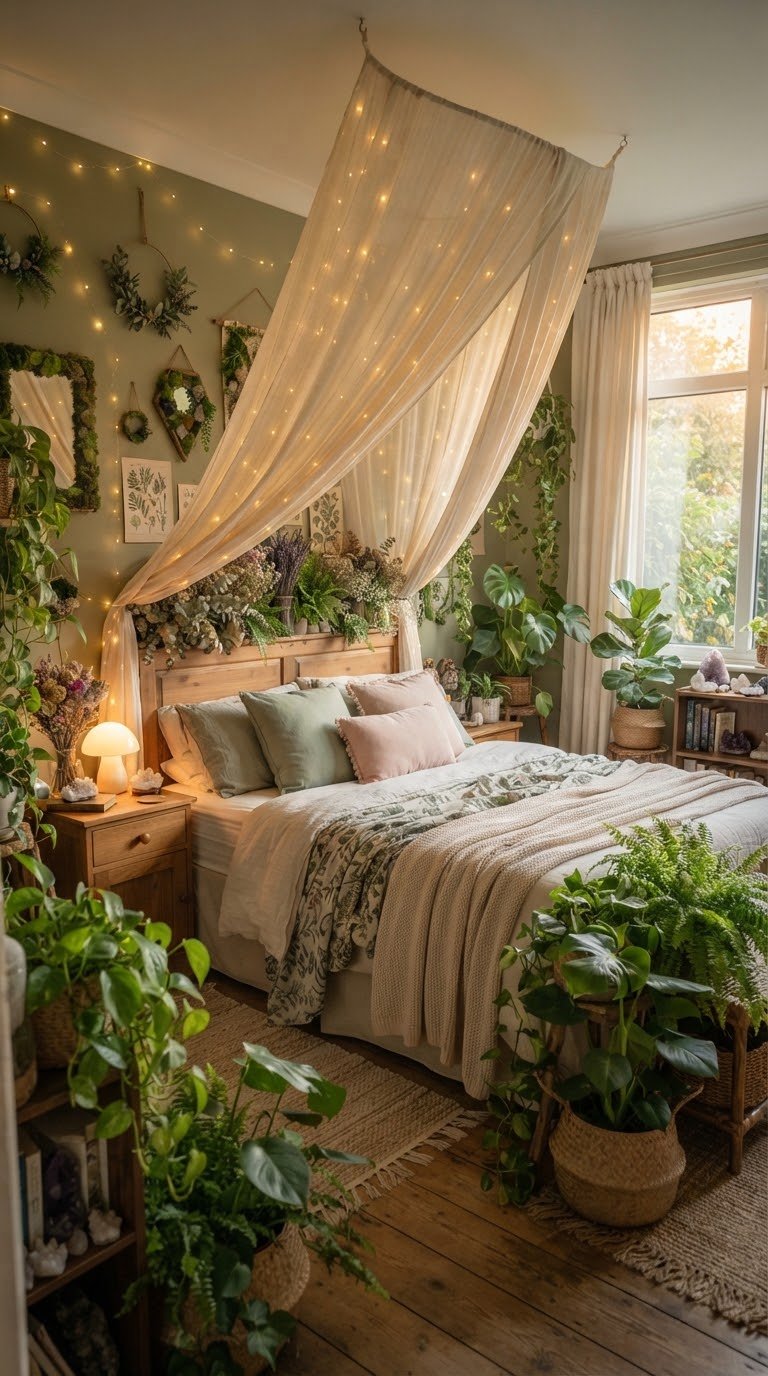
Fairycore bedrooms create an otherworldly, enchanted atmosphere through soft lighting, flowing fabrics, botanical details, mushroom motifs, and a palette of soft greens, blush, and cream. The aesthetic is whimsical without being childish when executed with quality materials and restraint.
Sheer bed canopies with fairy lights woven through the fabric (combined cost: $30 to $60), dried flower wall arrangements, mushroom-print textiles, and a collection of crystals and small natural objects create the core fairycore bedroom aesthetic. The lighting does the most work: warm, soft, multi-source lighting at low intensity creates the enchanted atmosphere that harsher lighting destroys regardless of how correct every other element is.
25. Aesthetic Bedroom for Teenagers
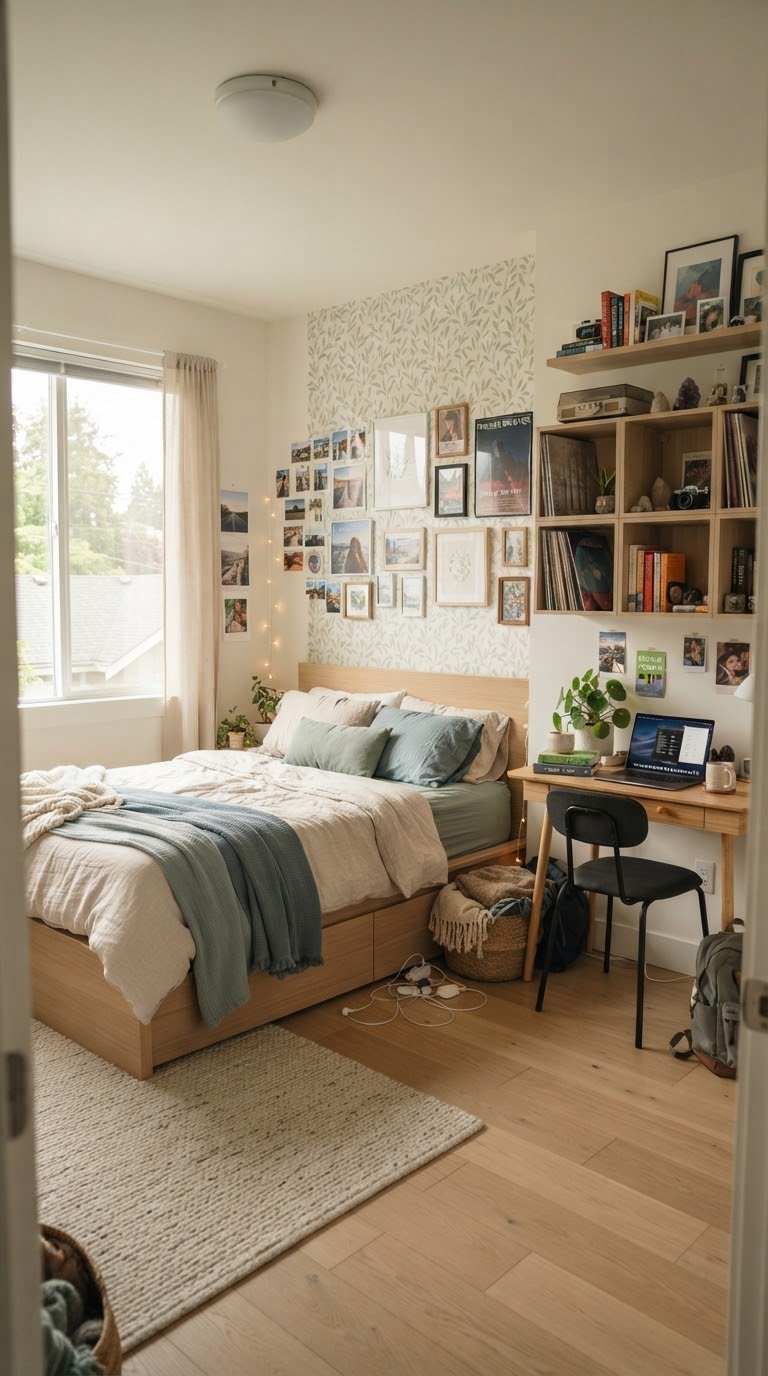
Teenage bedroom aesthetics change faster than any other room design category, since the occupant’s identity evolves rapidly and the room should evolve with it rather than being locked into one aesthetic too permanently. The best approach for a teenage bedroom aesthetic is building flexibility into the framework.
Neutral walls with removable wallpaper accents, modular furniture that reconfigures easily, and a gallery wall using command strips that changes as interests change create a bedroom framework that supports multiple aesthetic phases without requiring a renovation each time. The neutral base accommodates the dark academia phase, the cottagecore phase, the K-pop phase, and whatever comes next without resistance. FYI, this approach also prevents the “we need to repaint again” conversation every eighteen months.
26. Aesthetic Bedroom on a Budget
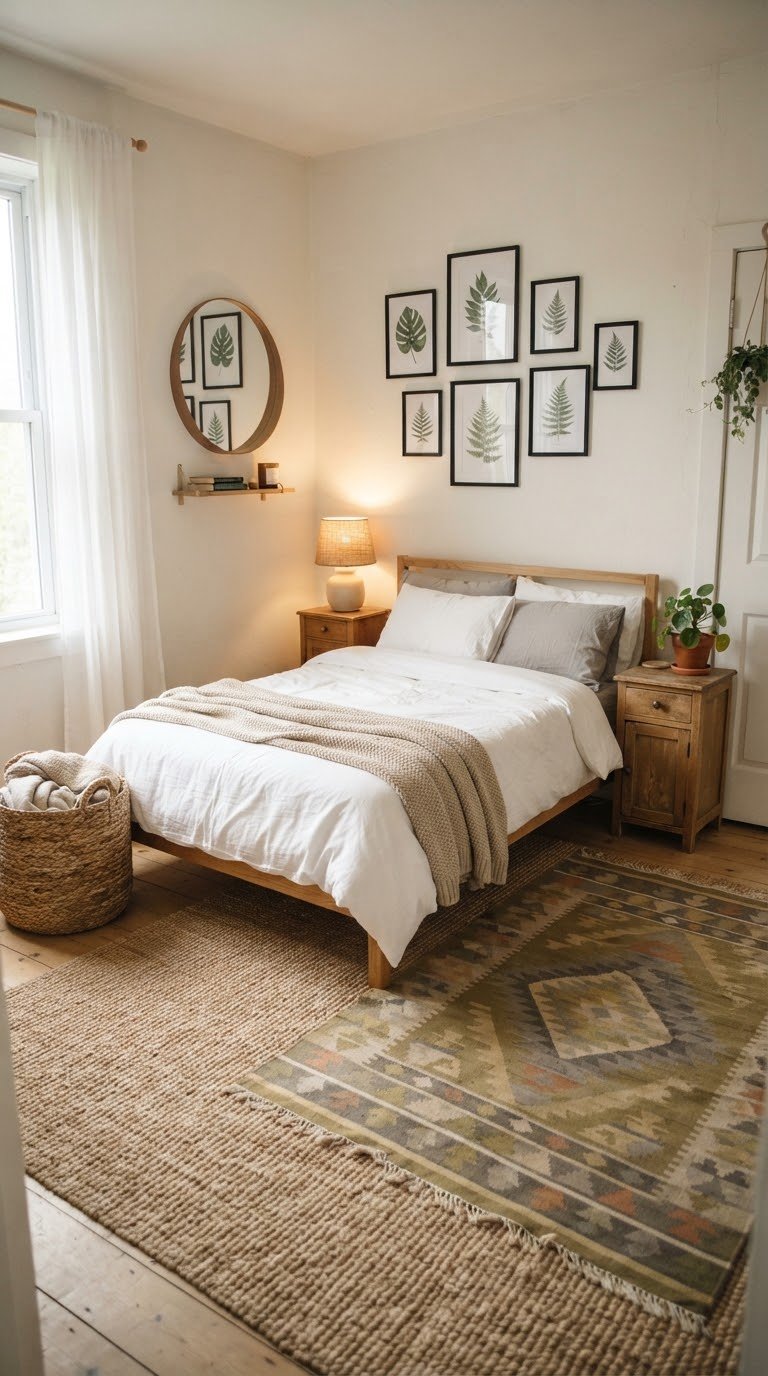
A bedroom aesthetic transformation costs under $200 when you prioritize the three changes with the highest visual return: new bedding, warm lighting, and one wall change (paint, wallpaper, or a gallery wall). These three changes affect the room from every angle and at every hour of the day.
A new duvet cover in your chosen aesthetic’s color palette costs $30 to $60. Warm white string lights or a new table lamp run $15 to $35. A gallery wall built from free public domain prints and thrifted frames costs $30 to $60 total. The full transformation costs $75 to $155 and changes the room more dramatically than a new piece of furniture at five times that price.
27. Aesthetic Bedroom With Fairy Lights
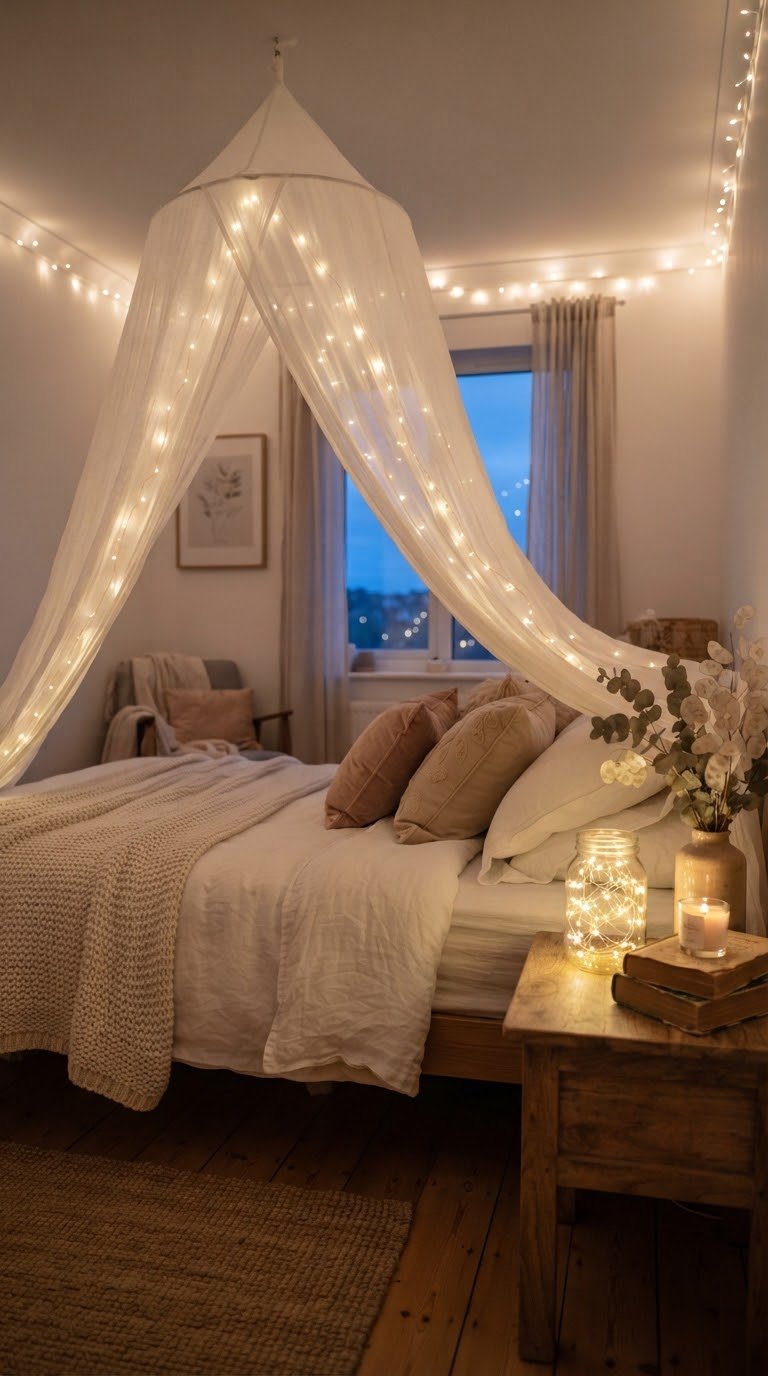
Fairy lights as the primary bedroom aesthetic element work because they add warm, ambient, multi-source lighting that transforms every other element in the room by the quality of light they produce. The same bedding, the same walls, and the same furniture look completely different under warm fairy light glow versus harsh overhead fluorescent.
Run a 33-foot strand of warm white fairy lights along the ceiling perimeter for ambient overhead glow. Add a shorter strand draped behind a sheer headboard canopy for bed-level warmth. A third strand in a glass vessel on the nightstand adds the table-level light point that completes the three-tier lighting setup. Total cost: $30 to $50 in lights plus $5 to $15 in command clip hooks. Total impact: the room looks genuinely different after sundown.
28. Aesthetic Bedroom With Plants
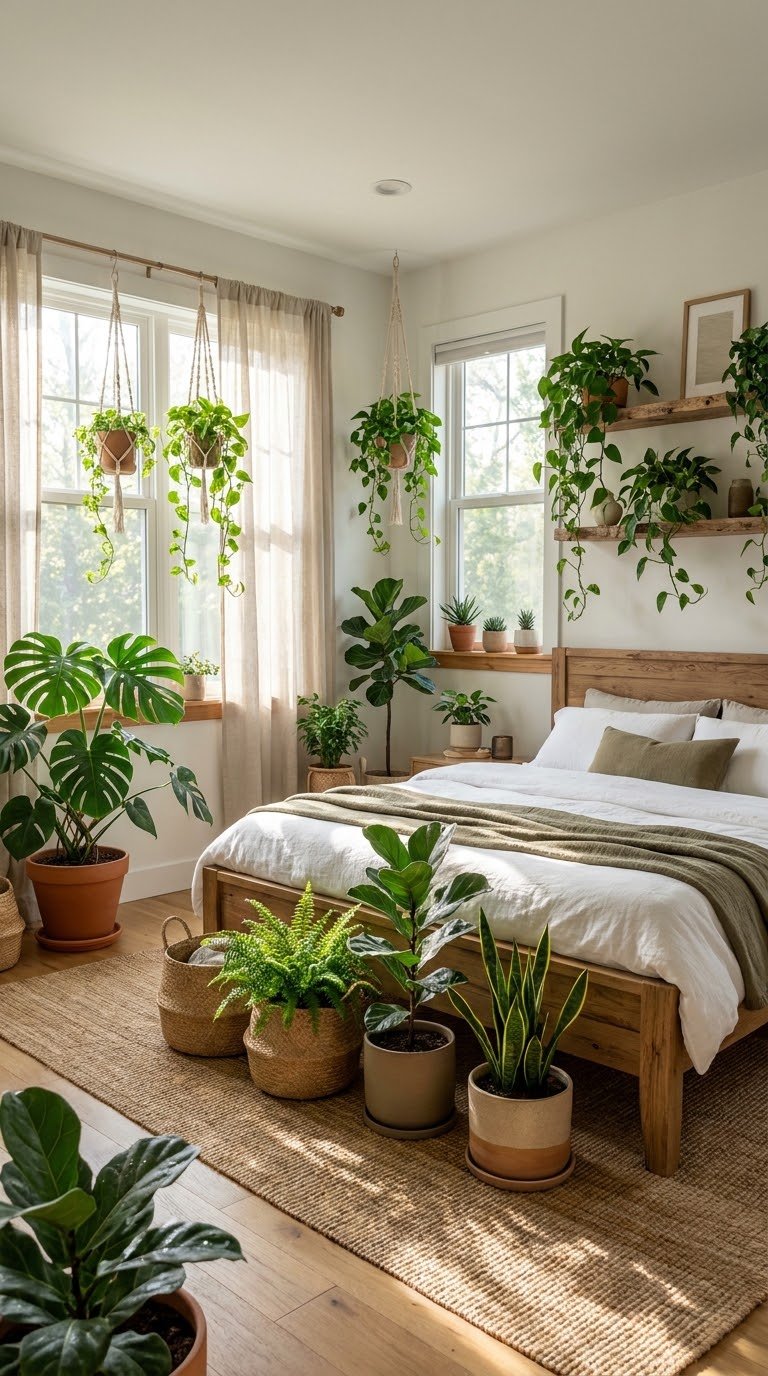
A plant-forward bedroom aesthetic uses plants as the primary design element rather than conventional decor objects, building the room’s visual character from living, changing greenery at every height level: hanging plants at ceiling height, shelf plants at mid-level, and floor plants grounding the corners.
The plant aesthetic works in any bedroom color palette because green reads as neutral against warm tones and as complementary against cool tones. A monstera in the corner ($40 to $80), two pothos hanging from ceiling hooks ($15 to $30 combined), and three small succulents on the windowsill ($5 to $8 each) create the plant-forward bedroom aesthetic for under $150 in total plant investment.
29. Aesthetic Bedroom With LED Lights
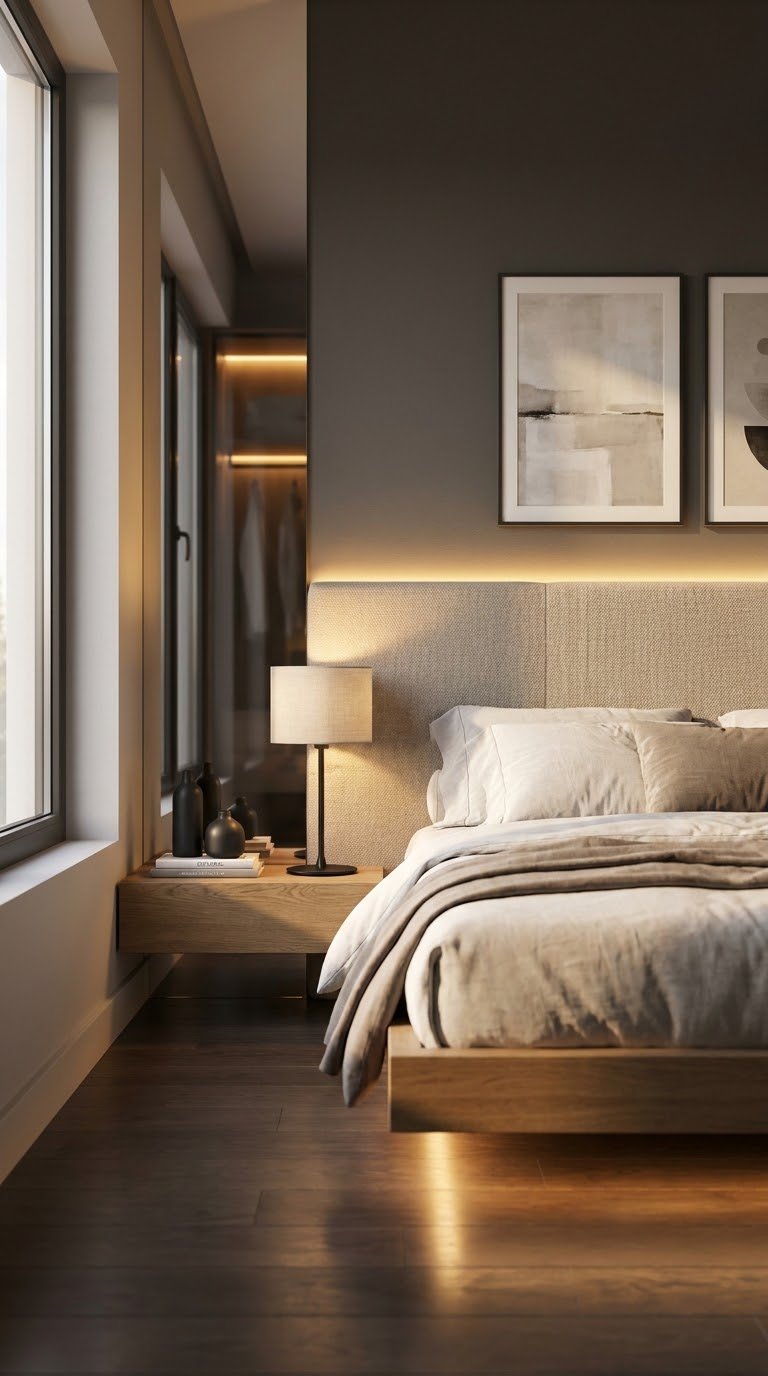
LED lights as a bedroom aesthetic element work best when used as bias lighting and ambient accents rather than the primary light source for the whole room, since LED strips used as the only light source creates an even, flat glow that makes the room feel like a gaming setup rather than a bedroom aesthetic. The goal is layers.
LED strips behind the headboard ($15 to $25 for a 16-foot reel) create a halo glow at the room’s focal point. LED strips under the bed frame add ambient base-level light. App-controlled LED strips from Govee allow color and brightness adjustment from your phone. Set the LED color to a warm white or soft rose tone that complements your bedroom’s palette rather than the saturated colors that dominate LED strip marketing.
30. Personalized Bedroom Aesthetic
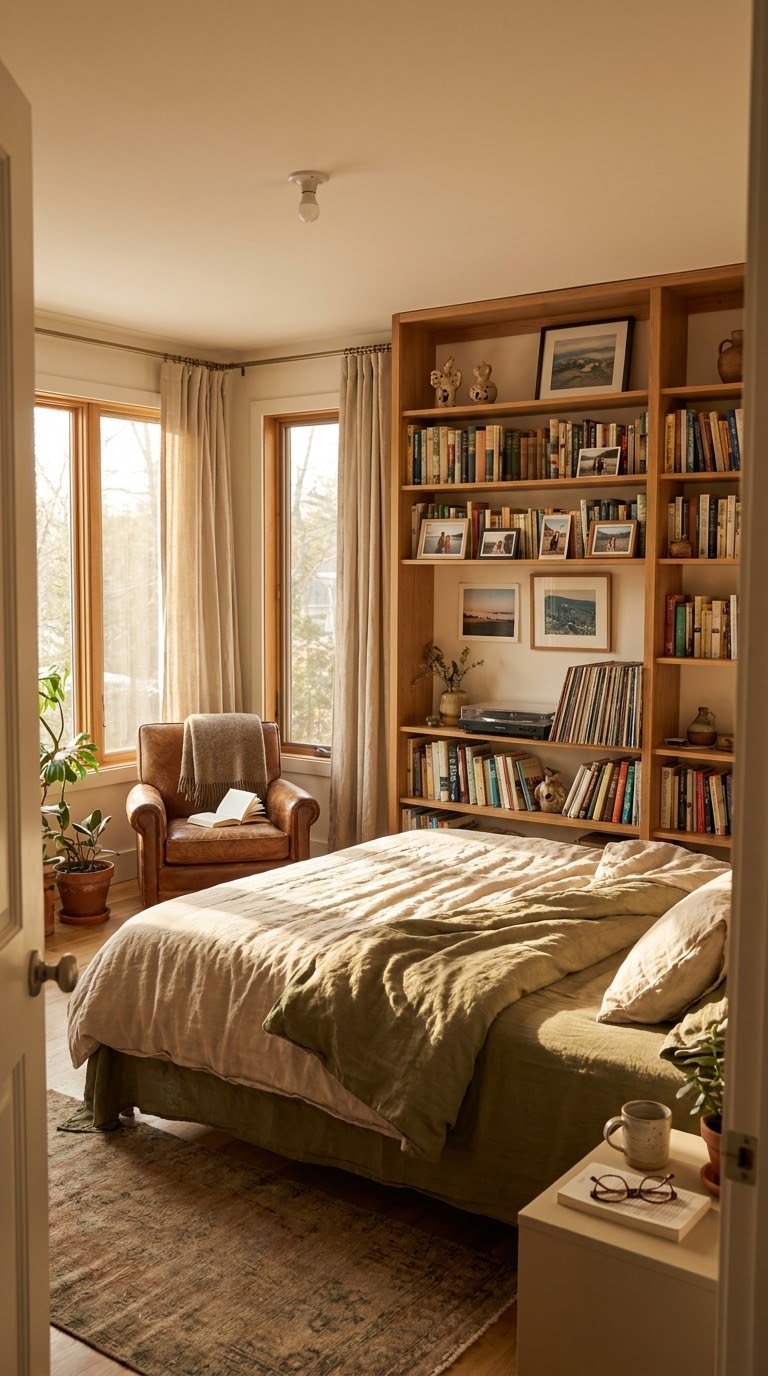
The most successful bedroom aesthetic is a personalized version of any style on this list that incorporates specific objects, images, and details meaningful to the person sleeping in the room rather than a perfect recreation of a reference photo. A bedroom that reflects your actual life always reads as more interesting than one that perfectly executes someone else’s aesthetic vision.
Display items that represent your real interests on the shelves and walls alongside the aesthetic pieces. The dark academia bedroom is better when the books on the shelf are ones you’ve actually read. The boho bedroom is better when the textile was bought on a specific trip rather than ordered from a set. The personalized detail makes the aesthetic feel inhabited rather than staged, and inhabited is always more compelling. IMO, it’s the difference between a bedroom you’d want to live in and a bedroom you’d want to photograph.
Final Thoughts
A bedroom aesthetic works when it reflects how you want to feel in the room rather than how you want the room to look in a photo. Start with the mood first: do you want warmth, calm, drama, whimsy, or clarity? Then pick the aesthetic on this list that delivers that mood through materials you genuinely like. From there, prioritize bedding, lighting, and one wall change, since those three decisions shape the room at every hour and every angle. Build the rest gradually, one intentional piece at a time, and your bedroom becomes the kind of space you look forward to returning to rather than the space you just happen to sleep in.