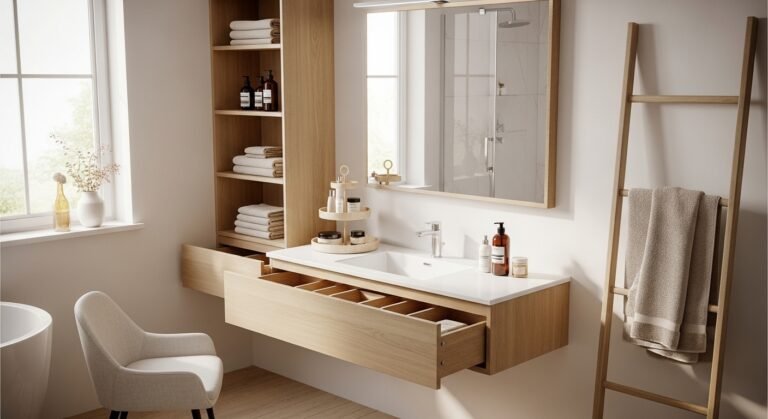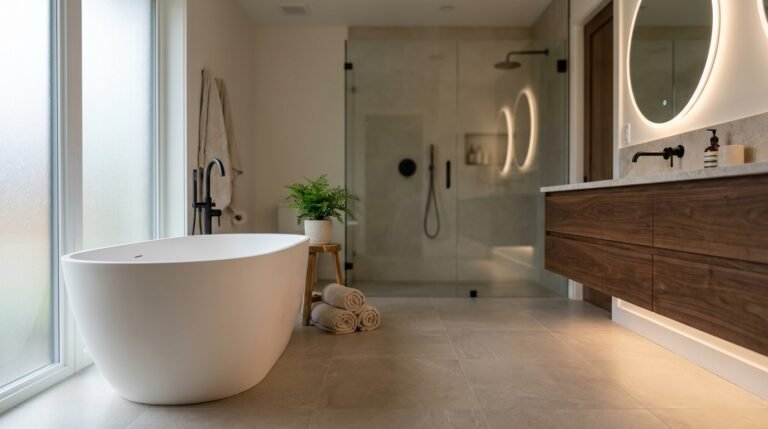
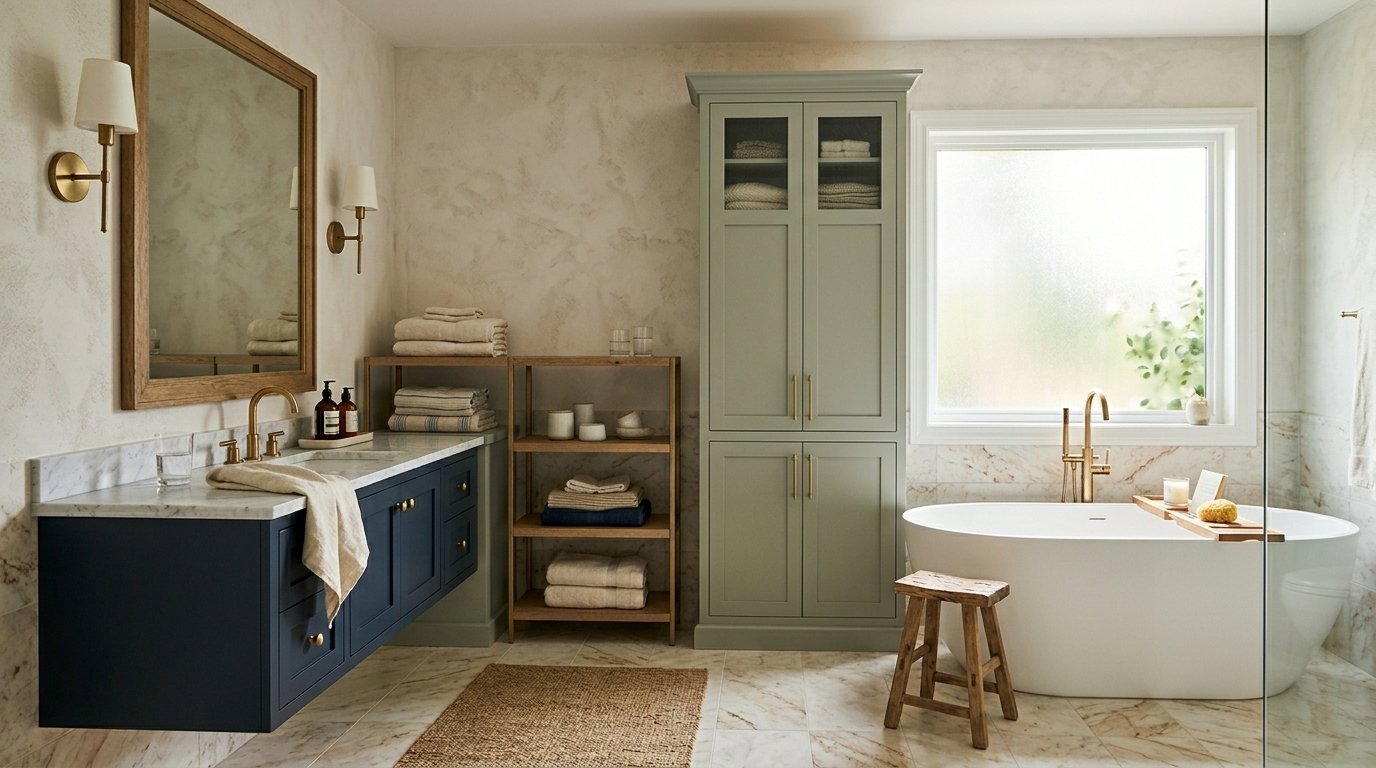
23 Bathroom Cabinets Ideas That Combine Style and Storage
Your bathroom cabinet is doing more heavy lifting than any other piece of furniture in your home. It stores everything from spare toilet paper to prescription medication, it sets the visual tone for the whole room, and it has to survive years of steam, splashing, and the occasional angry door slam. And most people pick one based on a two-second scroll and a decent price tag.
I made that mistake once. Bought a flat-pack vanity cabinet that looked great in the product photo and started swelling at the hinges inside eight months. Never again. Now I look at bathroom cabinets the way other people look at cars with genuine criteria, real opinions, and zero tolerance for things that look good but fall apart under pressure.
Here are 23 bathroom cabinet ideas worth your actual attention.
1. Floating Vanity Cabinet
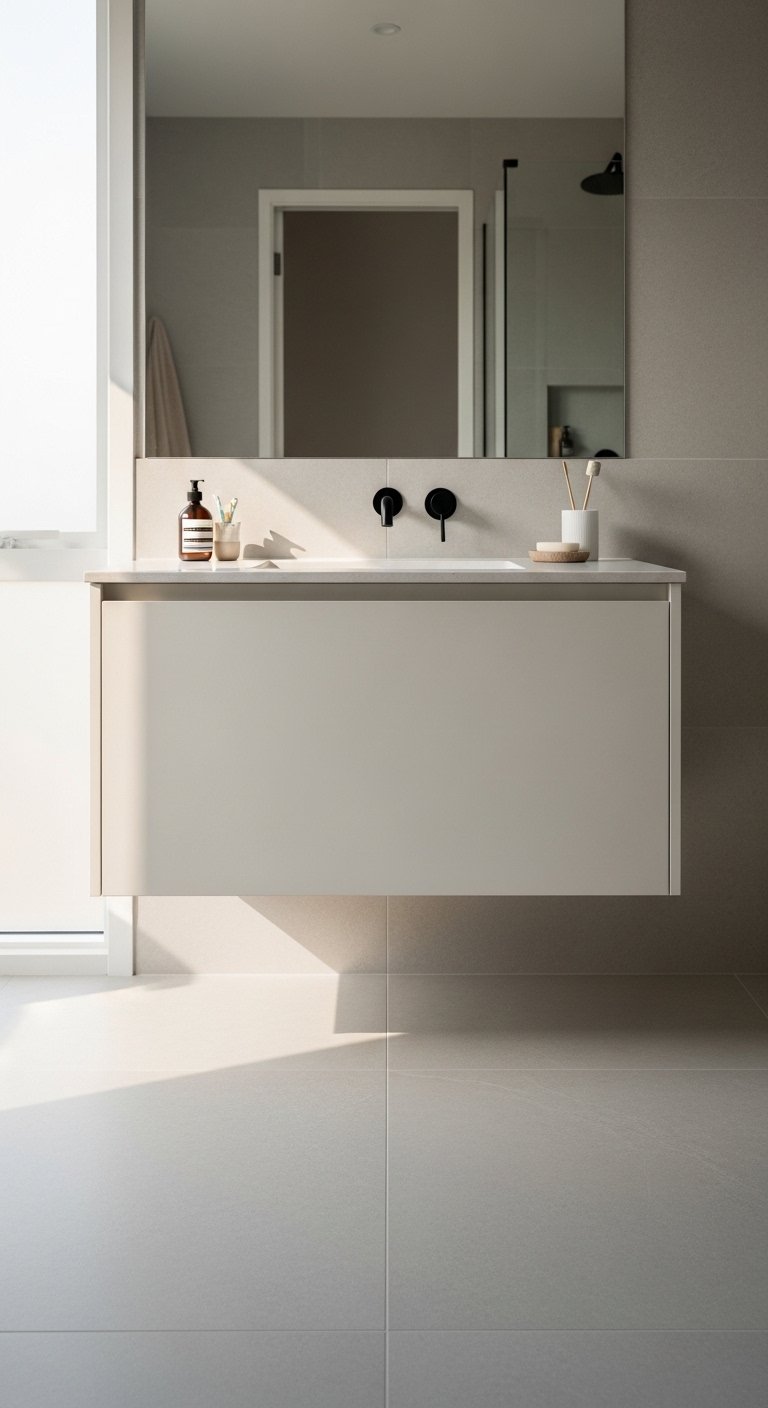
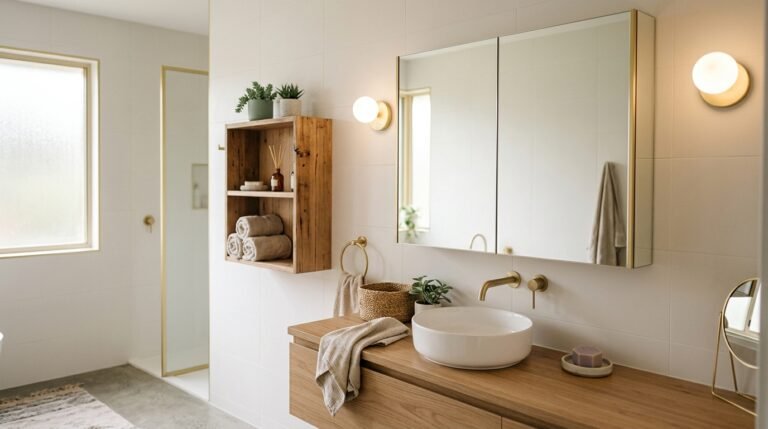
A floating vanity cabinet is wall-mounted rather than floor-standing, leaving a gap between the base and the floor. That gap does something clever it makes the entire bathroom feel larger by exposing more floor area to the eye.
Floating vanities suit contemporary and minimalist bathrooms best, but they work in almost any space where the wall structure can support the mounting hardware. They also make cleaning the floor dramatically easier, which sounds minor until you’re mopping around cabinet legs for the hundredth time.
The one real requirement: the wall behind it needs solid blocking or a stud to anchor into. A floating vanity holding a stone countertop puts a serious load on those fixings. Get a professional to install it if you’re not confident with the structural side.
2. Freestanding Vanity Cabinet
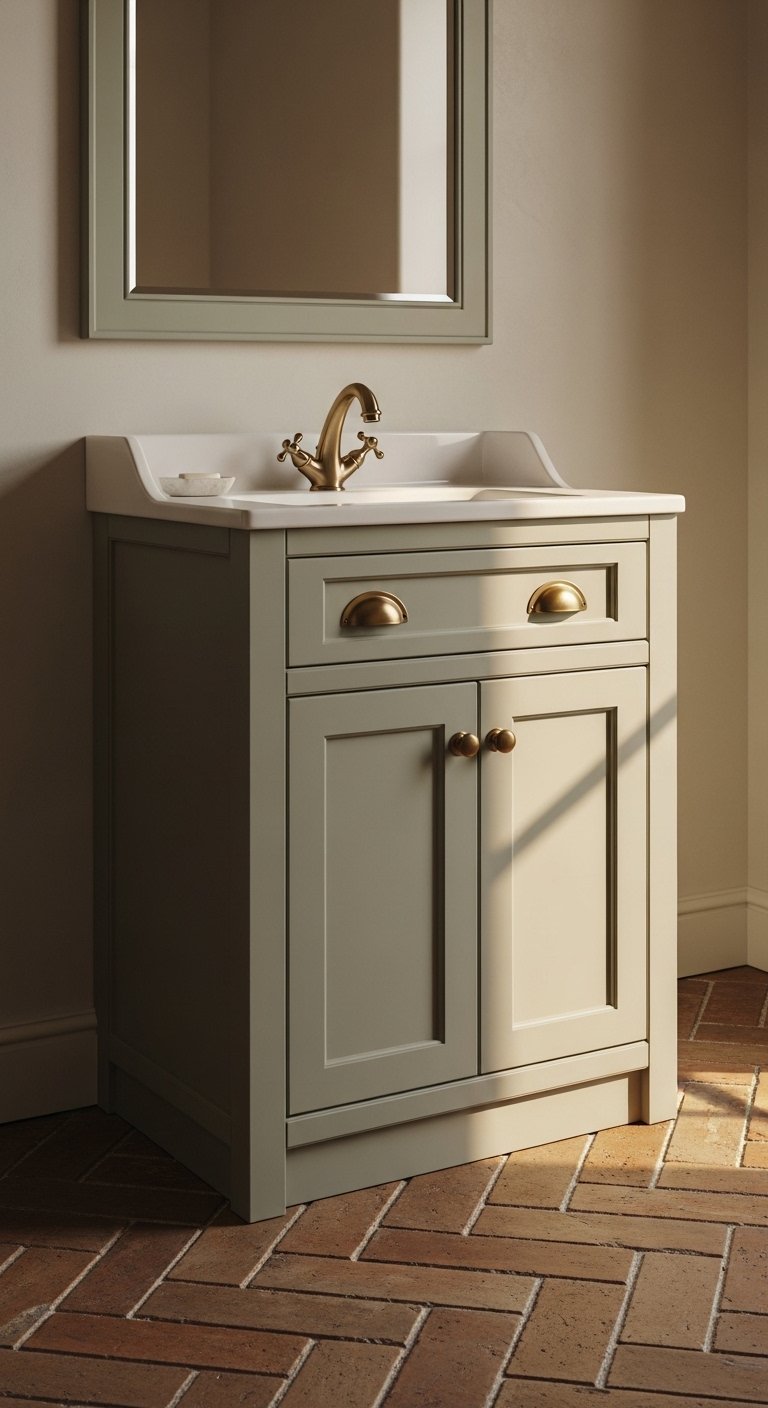
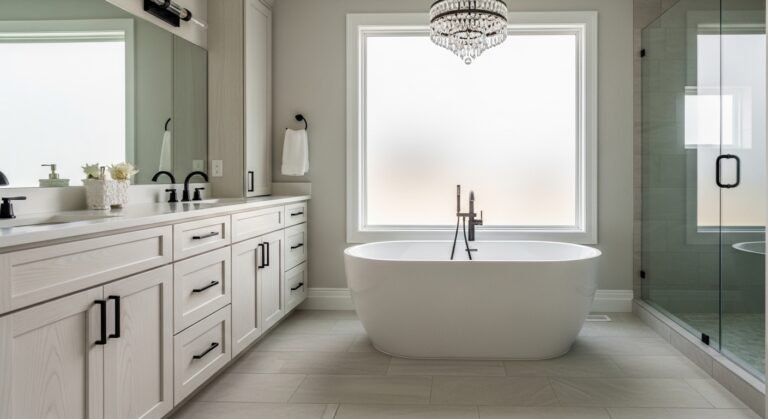
A freestanding vanity sits directly on the floor and requires no wall fixings beyond a plumbing connection. This makes it easier to install, easier to replace, and more flexible if you ever want to reconfigure the room.
Freestanding units come in every size from compact 40cm models for cloakrooms to wide double-sink units for master bathrooms. The downside compared to floating vanities is that the floor underneath collects moisture, hair, and general bathroom debris that you can’t easily reach. It’s a trade-off worth knowing about before you commit.
3. Recessed Medicine Cabinet
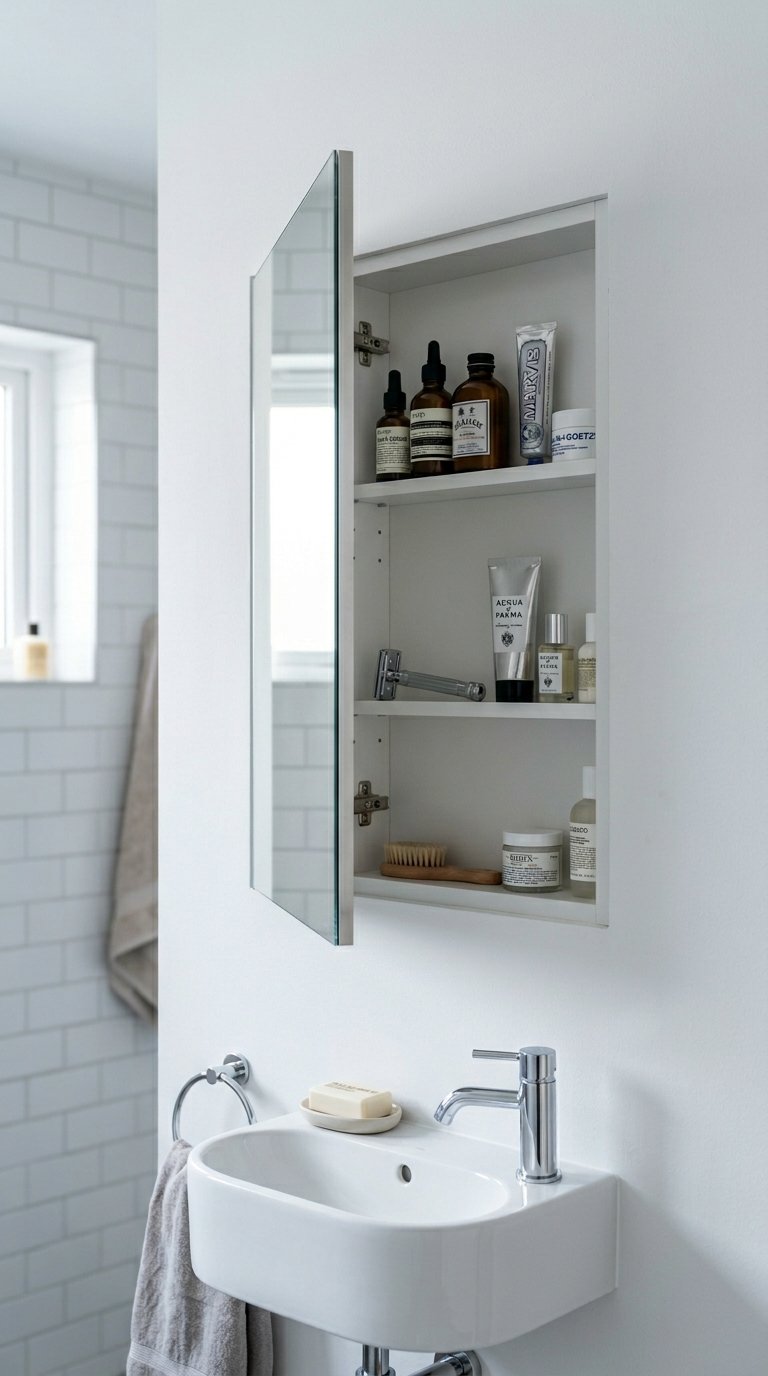
A recessed medicine cabinet sits inside the wall rather than protruding from it. The front sits flush with the wall surface, the mirrored door opens to reveal a shallow storage compartment, and the whole thing takes up zero floor space or wall projection.
This is one of the smartest storage solutions available for small bathrooms. The mirror doubles as bathroom lighting when fitted with integrated LED surrounds, and the cabinet holds everything from razors to spare toothbrushes without claiming any visible real estate in the room.
The catch is installation. You need to cut into the wall cavity, work around any electrical wiring, and finish the surround neatly. It’s not a weekend beginner project, but the result is genuinely worth the effort.
4. Mirrored Bathroom Cabinet
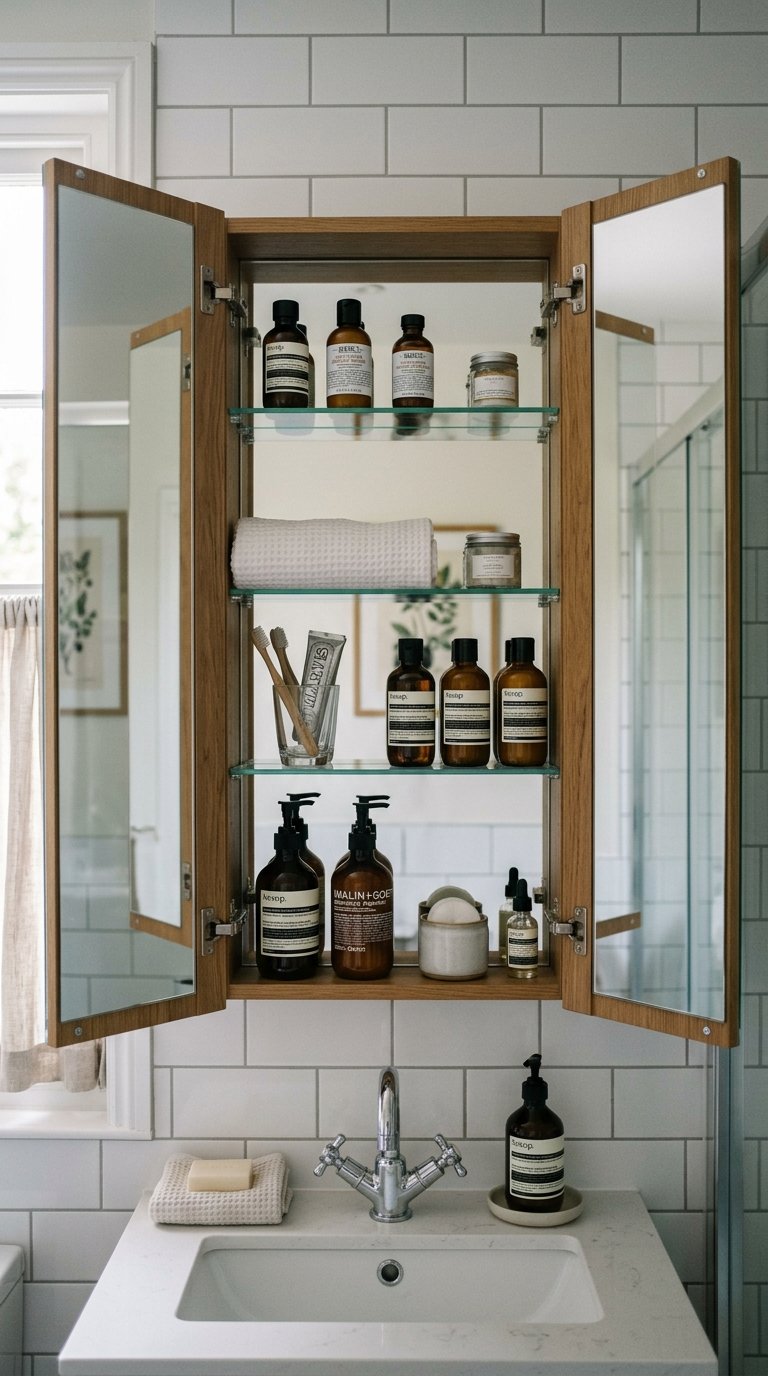
A mirrored cabinet with doors that open to reveal shelving is the bathroom storage classic for good reason. It gives you a mirror you actually need, hides everything behind it, and keeps the wall looking clean when the doors are closed.
The key spec to check is the internal shelf depth. Many budget mirrored cabinets have shelves so shallow they won’t hold a standard shampoo bottle upright. Look for at least 10cm of internal depth, adjustable shelves, and soft-close hinges the difference between a cabinet that feels well-made and one that feels like a prop.
5. Under-Sink Cabinet
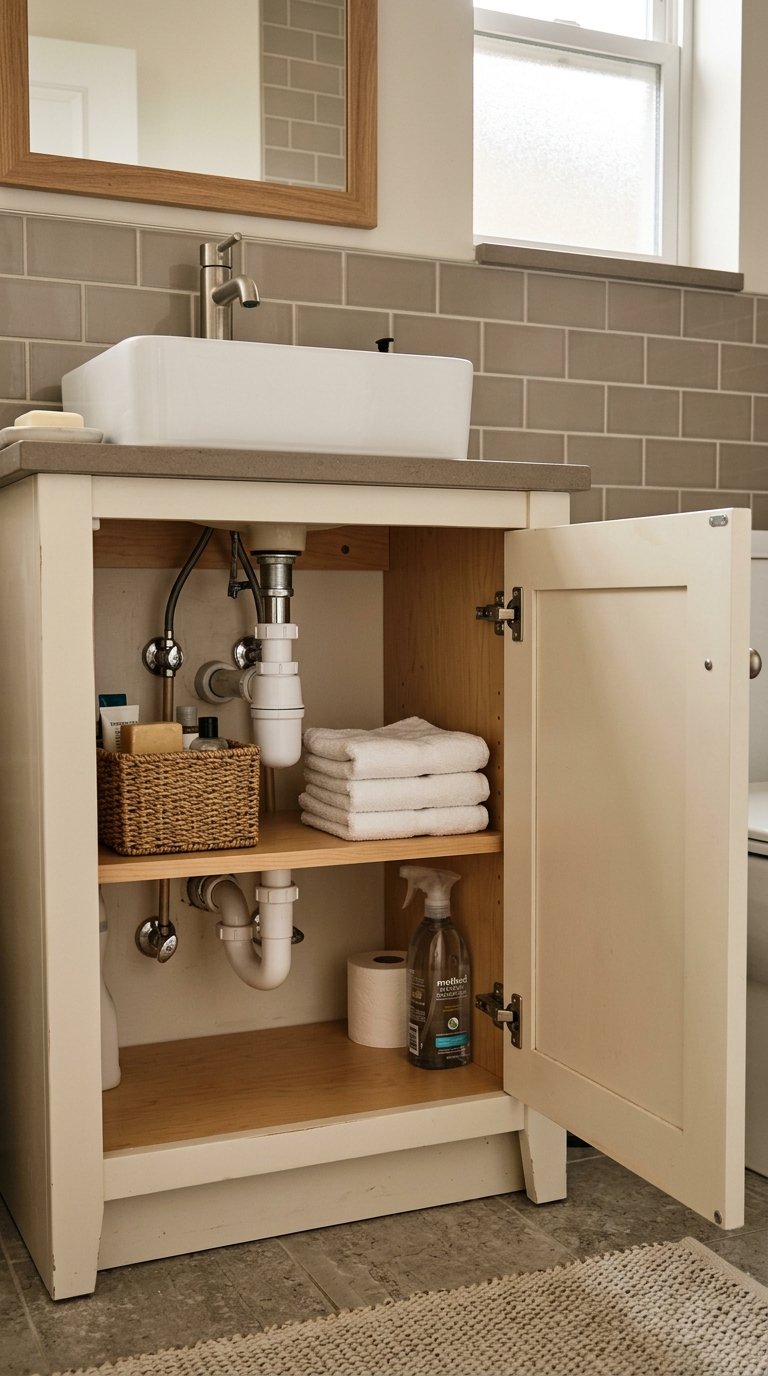
If your basin sits on a pedestal, you’re losing storage space that an under-sink cabinet would give you for free. Replacing a pedestal basin with a vanity unit that incorporates an enclosed cabinet below gives you significant storage without changing the footprint of the room at all.
Under-sink cabinets need to accommodate the plumbing, which means the interior layout has to work around the waste pipe and supply lines. Good units are designed with this in mind: adjustable shelves, cut-out backs, or open interiors that leave the plumbing accessible. Check this before you buy rather than after.
6. Tall Bathroom Storage Cabinet
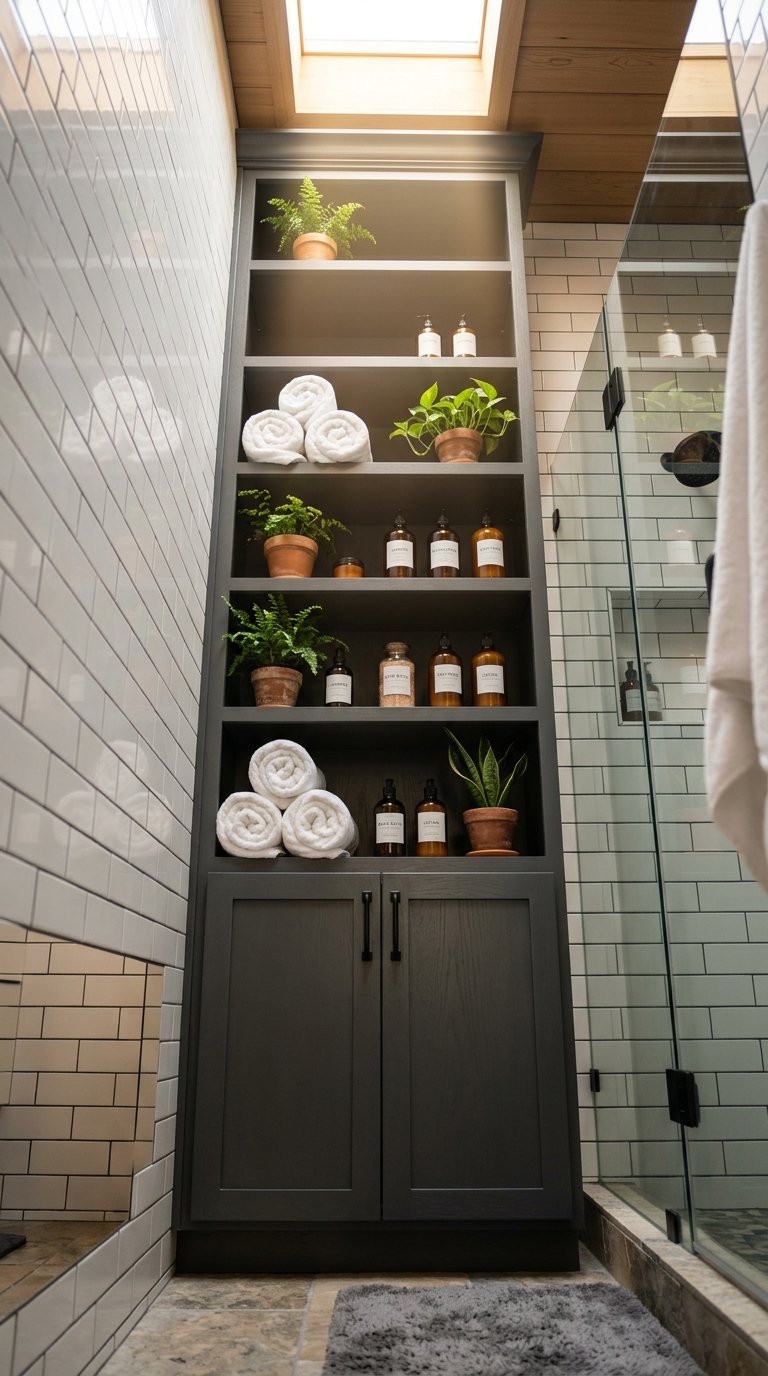
A tall floor-standing cabinet makes use of vertical space that most bathrooms completely waste. Running floor to ceiling or close to it, a tall cabinet stores towels, toiletries, cleaning products, and spare supplies in a single piece of furniture without occupying more floor area than a bedside table.
These work particularly well in bathrooms with one available wall beside the shower or toilet. The visual height they add to the room is a bonus tall vertical elements make a bathroom feel more spacious, not more cramped.
7. Corner Cabinet
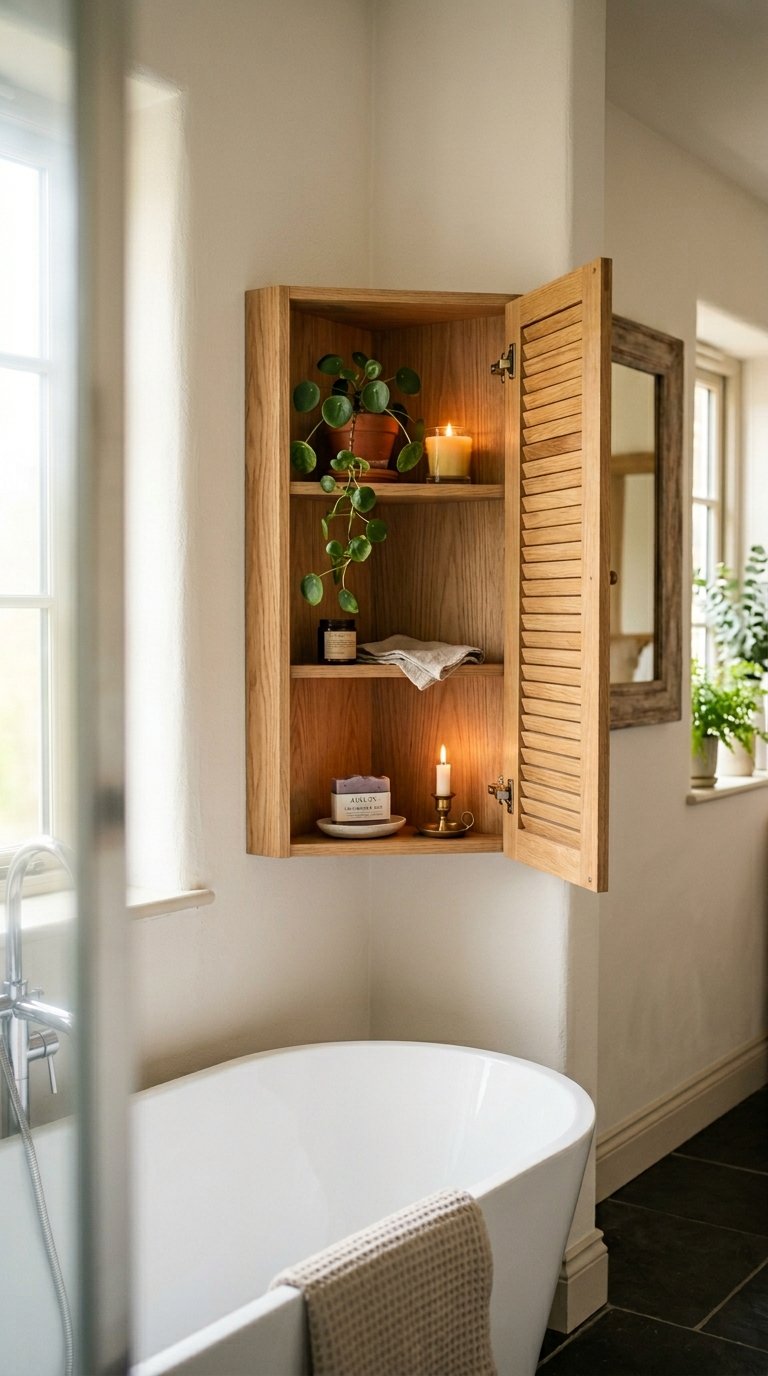
The corner of a bathroom is almost always wasted space. A corner cabinet designed to fit neatly into a 90-degree angle claims that space and turns it into useful storage without blocking any natural traffic routes through the room.
Corner cabinets come in floor-standing, wall-mounted, and recessed varieties. The wall-mounted versions suit bathrooms where the corner is near the basin or mirror. The floor-standing versions work well in shower corners or alcoves where a full-height unit makes sense.
8. Open Shelf Vanity Unit
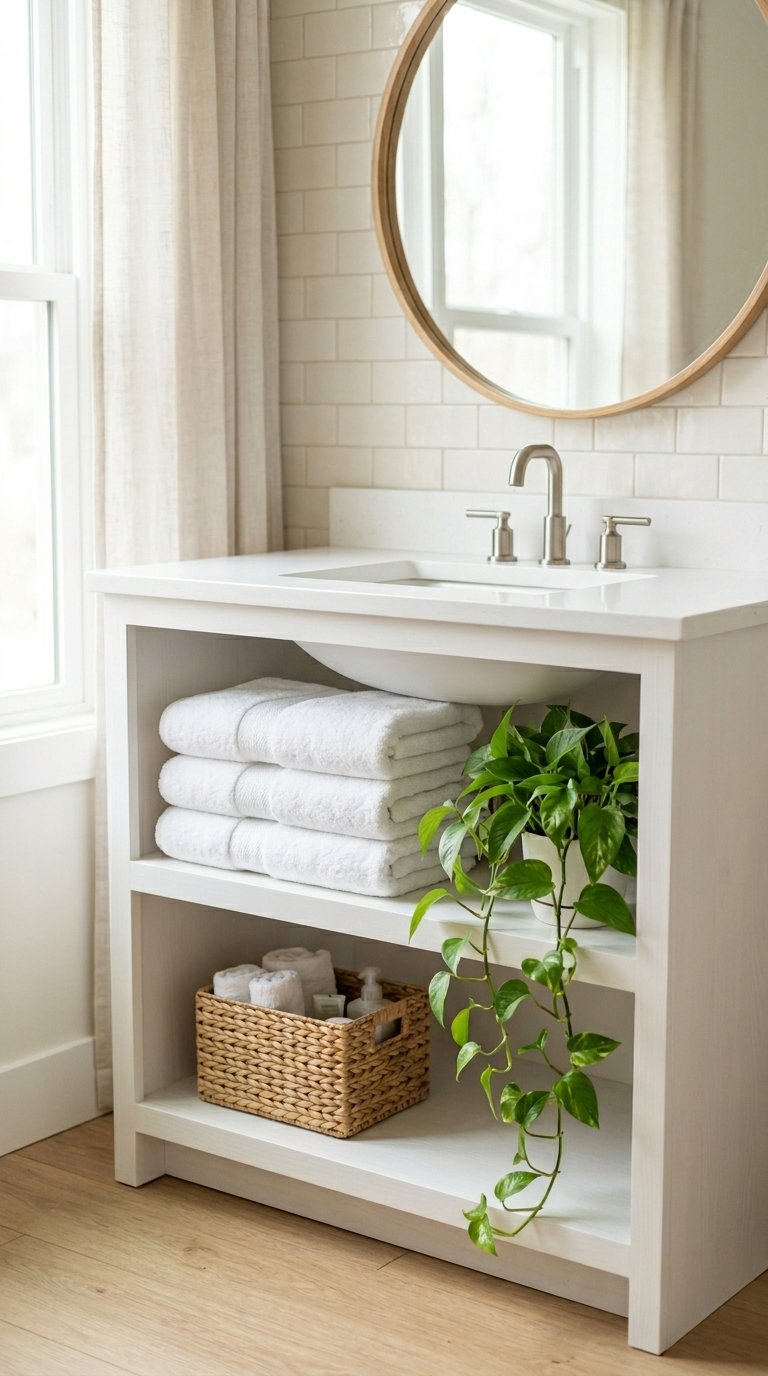
An open shelf vanity replaces cabinet doors with open shelving below the basin. This looks effortlessly relaxed and works well in bathrooms where the under-sink area holds attractive items folded towels, baskets, plants, and neatly stored toiletries.
The honest warning: open shelving requires discipline. If the space under your sink currently holds a collection of near-empty bottles, cleaning products, and things you keep meaning to throw away, open shelving will display all of that to anyone who walks in. It rewards organisation and punishes chaos.
9. Shaker-Style Cabinet
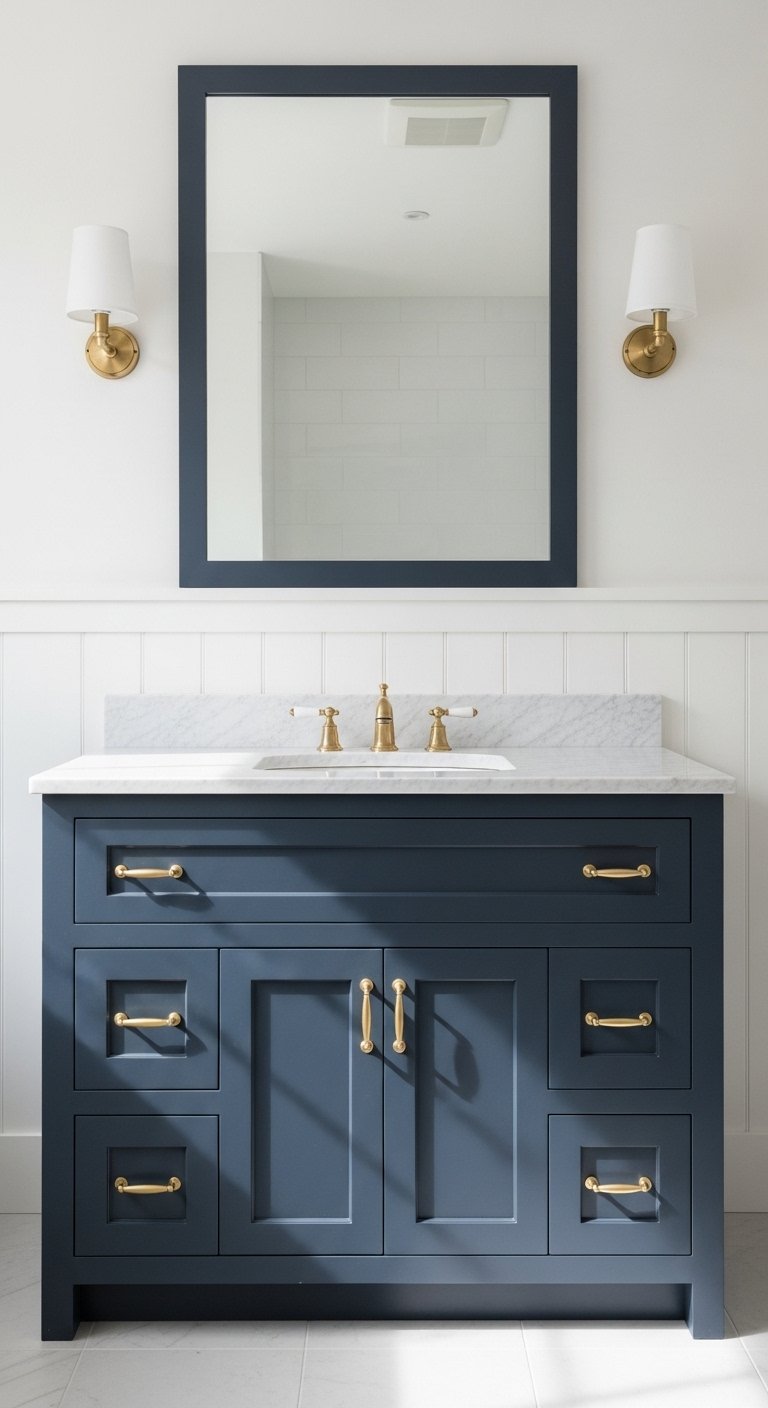
A Shaker-style bathroom cabinet uses the simple recessed-panel door design that has been a staple of quality furniture making for over two centuries. The style sits somewhere between traditional and contemporary formal enough for period bathrooms, clean enough for modern ones.
Shaker cabinets work with almost any colour. Painted in navy, sage green, or soft white, they look purposeful and considered rather than trend-dependent. If you want a cabinet that still looks appropriate in fifteen years, Shaker is a reliable choice.
10. Handleless Push-To-Open Cabinet
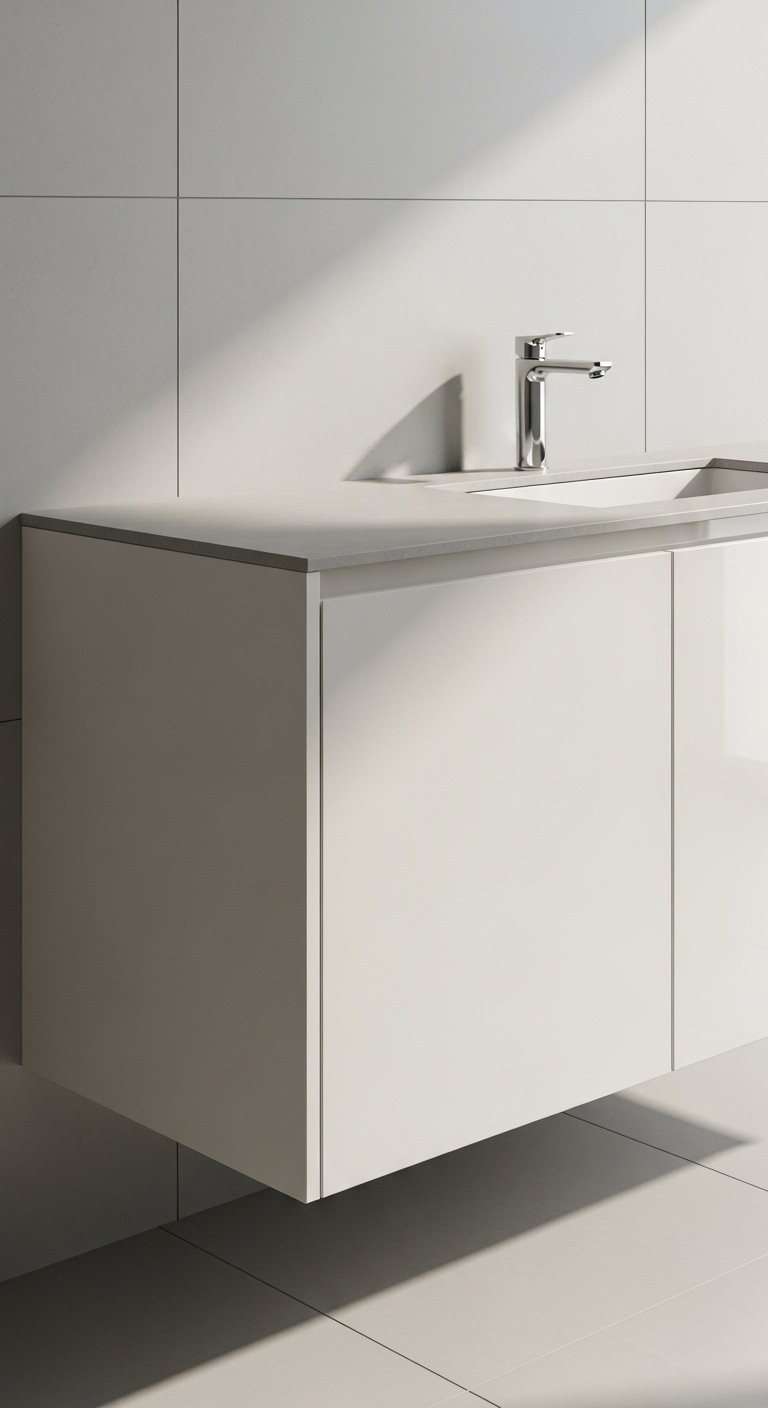
Handleless cabinets with push-to-open mechanisms give a bathroom a seamless, minimal look that suits contemporary design direction. There are no protruding handles to catch towels on, clean around, or replace when they corrode.
The mechanism works by pressing the door itself to release a spring catch. The quality of that mechanism matters cheap push-to-open hardware becomes unreliable quickly, especially on heavier doors. Check the weight rating before buying and choose units where the mechanism is replaceable if it eventually fails.
11. Two-Tone Vanity Cabinet
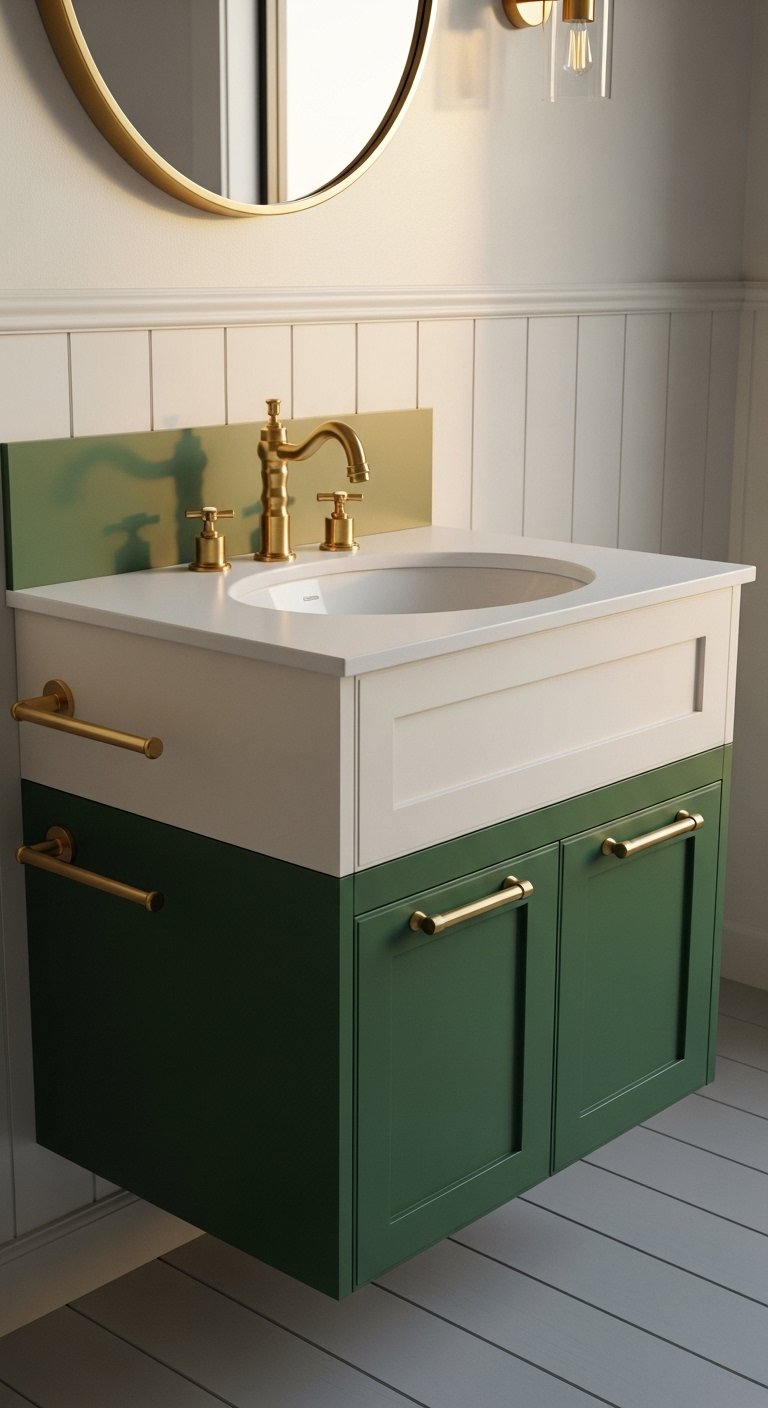
A two-tone vanity pairs two different colours or finishes typically a darker base cabinet with a lighter countertop or upper section, or a coloured cabinet against a contrasting wall treatment. It adds visual complexity without requiring any additional furniture.
The most successful two-tone combinations tend to follow a simple rule: one neutral and one accent colour, with the accent used on the larger surface and the neutral on the smaller. Dark green cabinet with a white countertop. Warm white upper section with a slate-grey base. The contrast does the design work without needing anything else.
12. Vintage Freestanding Cabinet
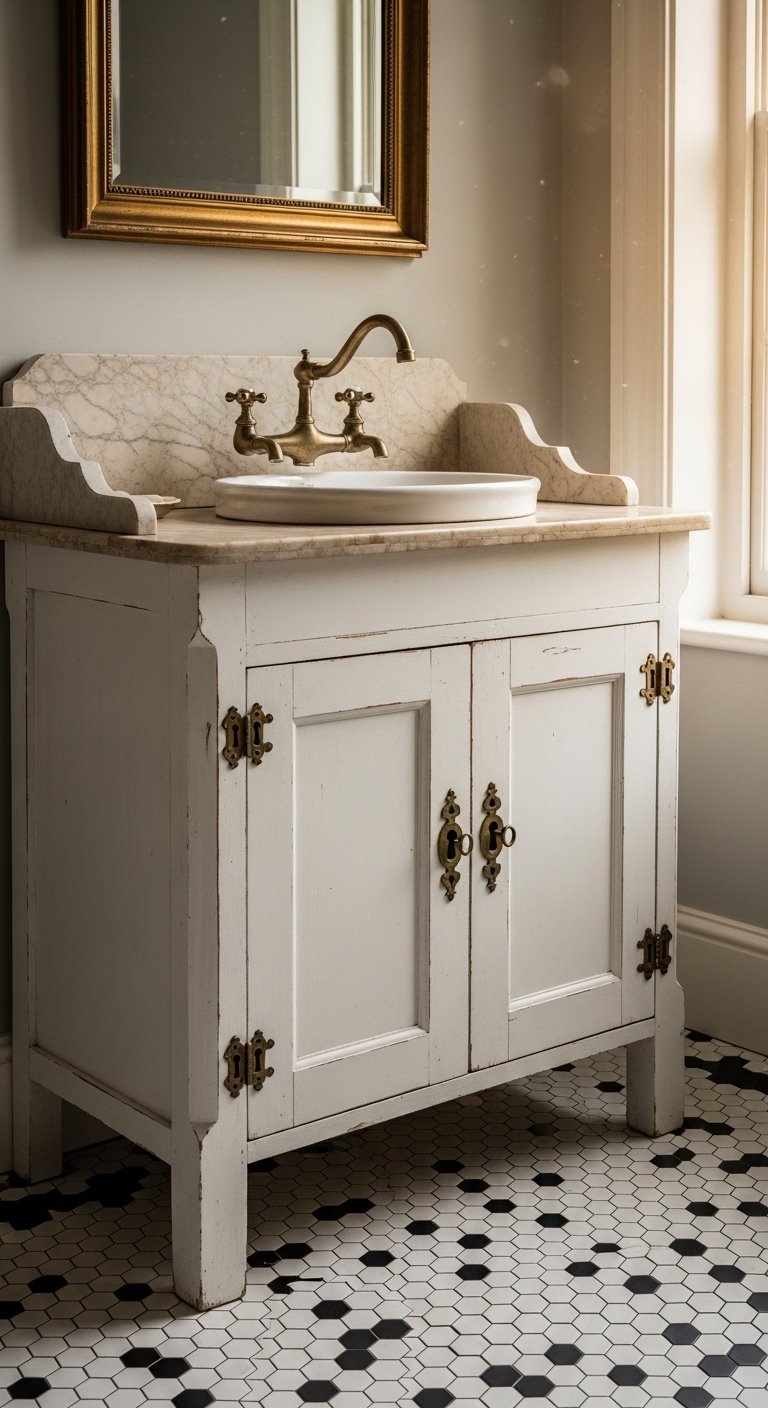
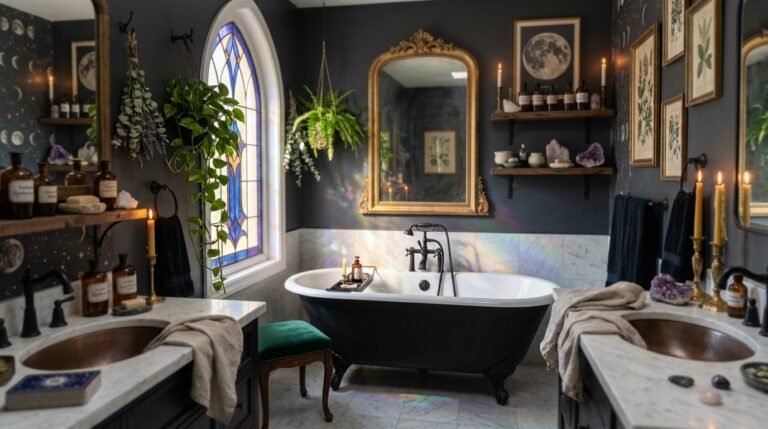
A vintage or antique-style freestanding cabinet brings character to a bathroom that no flat-pack unit can replicate. Whether it’s a genuine reclaimed piece converted for bathroom use or a purpose-made reproduction, it gives the room a sense of history and individuality.
The practical consideration is moisture resistance. Original antique furniture was not built for bathroom humidity. If you use a genuine vintage piece, seal the wood properly, ensure adequate ventilation, and check it regularly for early signs of swelling or warping. A converted piece that’s been properly prepared will last; one that hasn’t will deteriorate quickly.
13. Slim-Profile Wall Cabinet
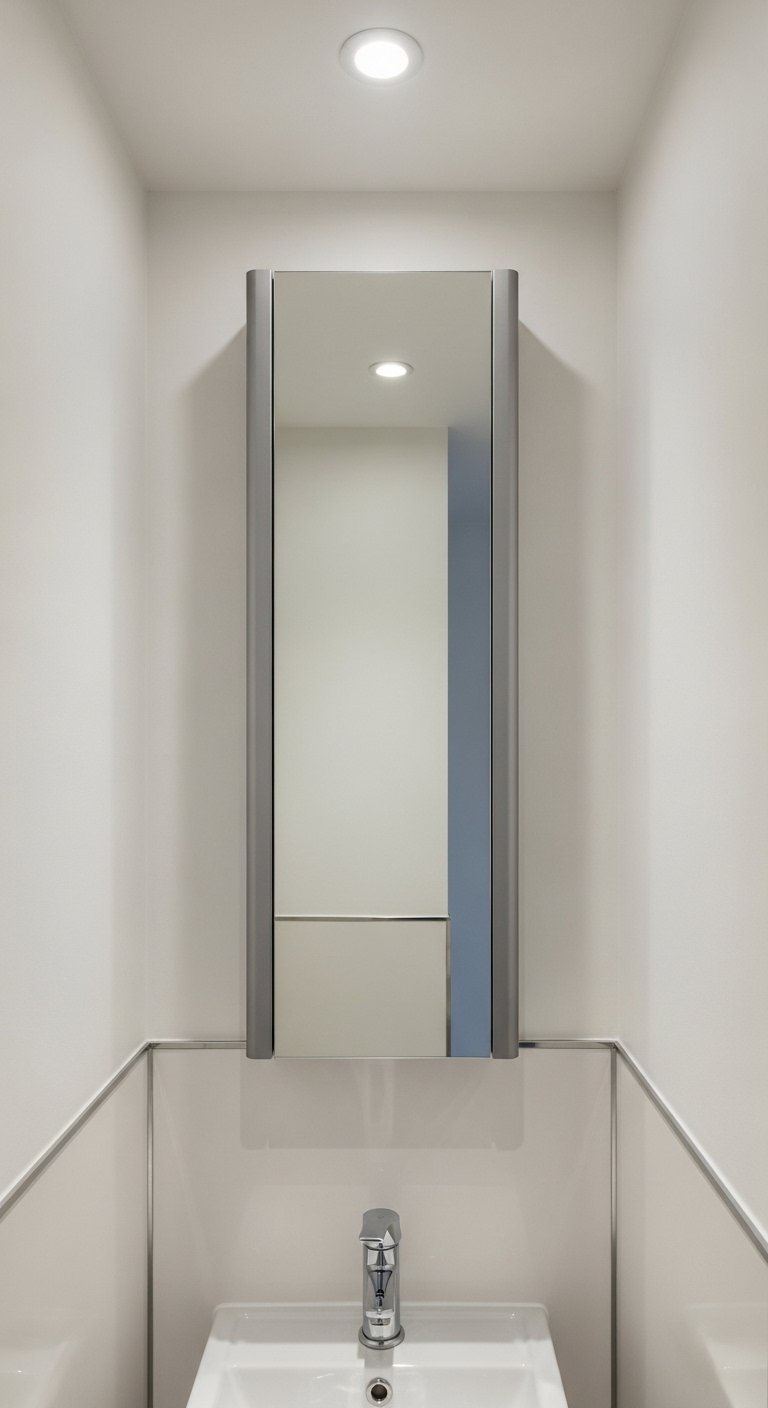
In a narrow bathroom where standard-depth wall cabinets would project too far from the wall, a slim-profile wall cabinet at 10–12cm deep gives you storage without encroaching on the available space. These are specifically designed for cloakrooms, en suites, and galley-style bathrooms.
The storage capacity is obviously more limited than a standard-depth cabinet. But for the things you need most accessible, face wash, toothbrush, daily medication a slim cabinet on the wall is exactly right. Keep the bulk storage elsewhere and let this handle daily essentials.
14. Double Vanity Cabinet
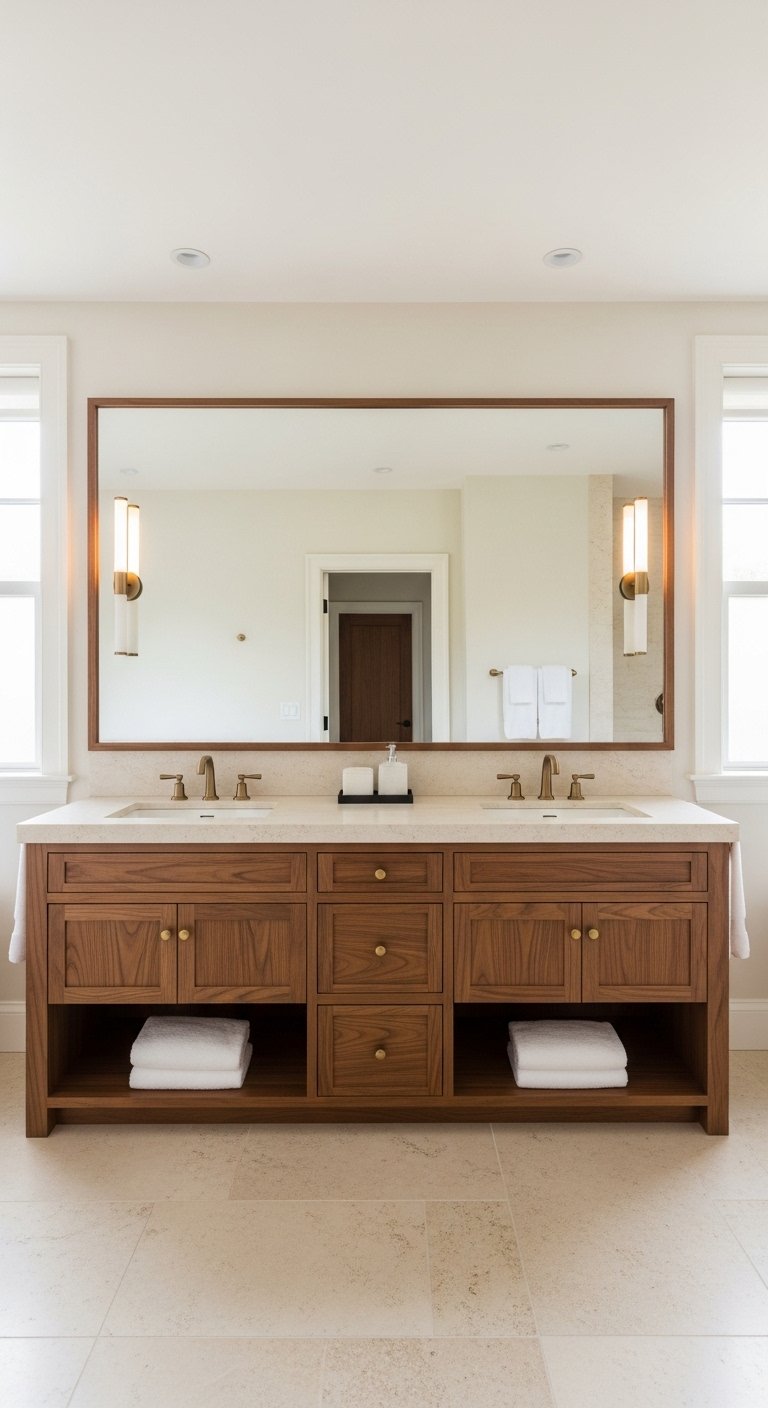
A double vanity provides two sinks and two sets of storage in a single wide unit. In a shared bathroom, this is one of the most effective upgrades possible, it eliminates the morning bottleneck that happens when two people need the same mirror and the same counter space simultaneously.
Double vanities typically run 120–180cm wide. They require a bathroom with enough wall space to accommodate this comfortably without the room feeling dominated by the unit. The storage is generous typically four to six drawers or cabinet sections and the look is proportionally impressive.
15. Waterfall Edge Vanity with Cabinet Below
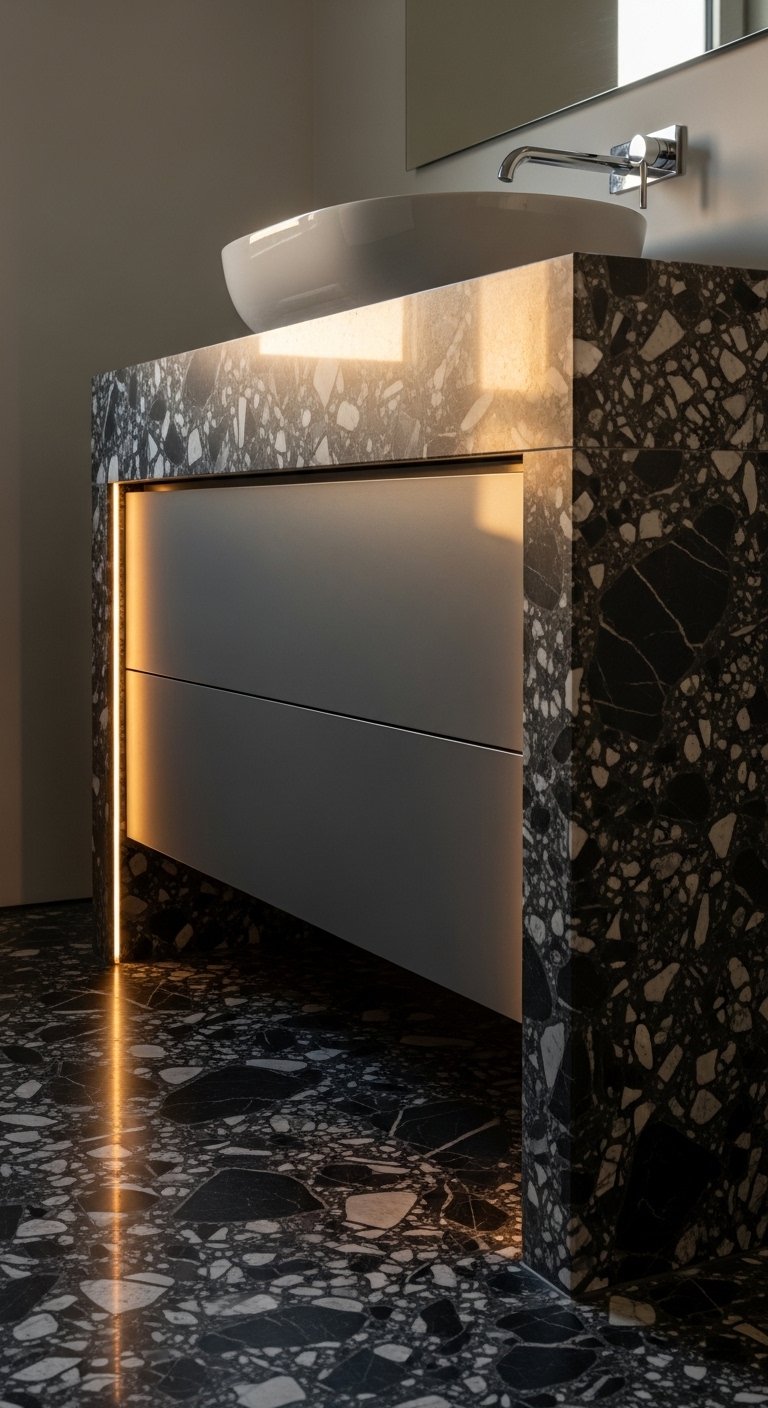
A waterfall edge countertop extends the countertop material down the sides of the vanity cabinet, creating a continuous surface that wraps from the top down to the floor. The effect is clean, architectural, and expensive-looking.
It works best with solid stone, engineered stone, or thick laminate materials that can carry the continuous visual without looking flimsy. Pair it with simple cabinet doors below and nothing else competing for attention. The waterfall is the statement, everything else should support it.
16. Built-In Alcove Cabinet
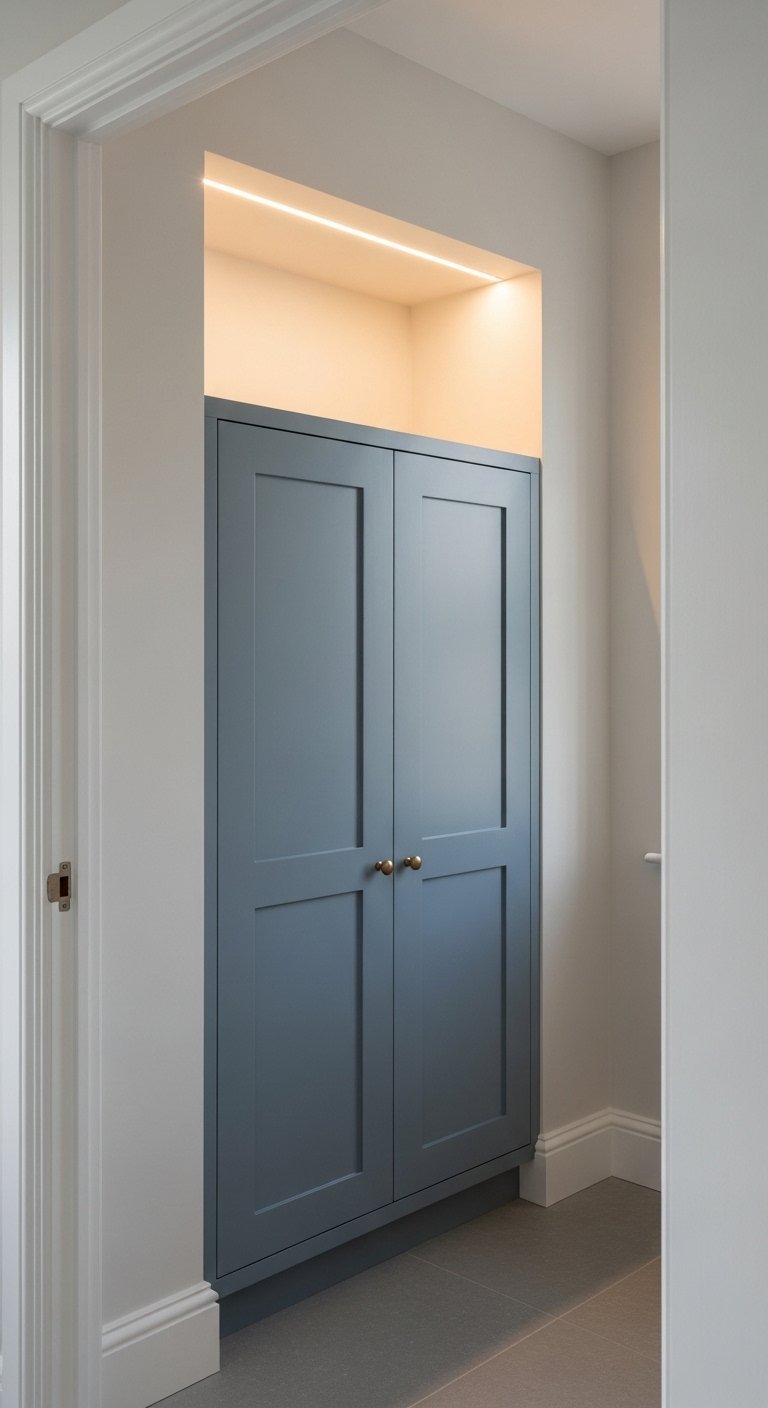
If your bathroom has an alcove, a recessed area between walls or beside a chimney breast, fitting a built-in cabinet that fills it exactly gives you bespoke storage that looks intentional rather than added-on.
Built-in alcove cabinets can be made to measure by a joiner or assembled from modular units cut to fit. The made-to-measure version looks better and lasts longer. It also adds more value to the property because it reads as part of the architecture rather than a piece of furniture.
17. Mirror Cabinet with Integrated Lighting and Demister
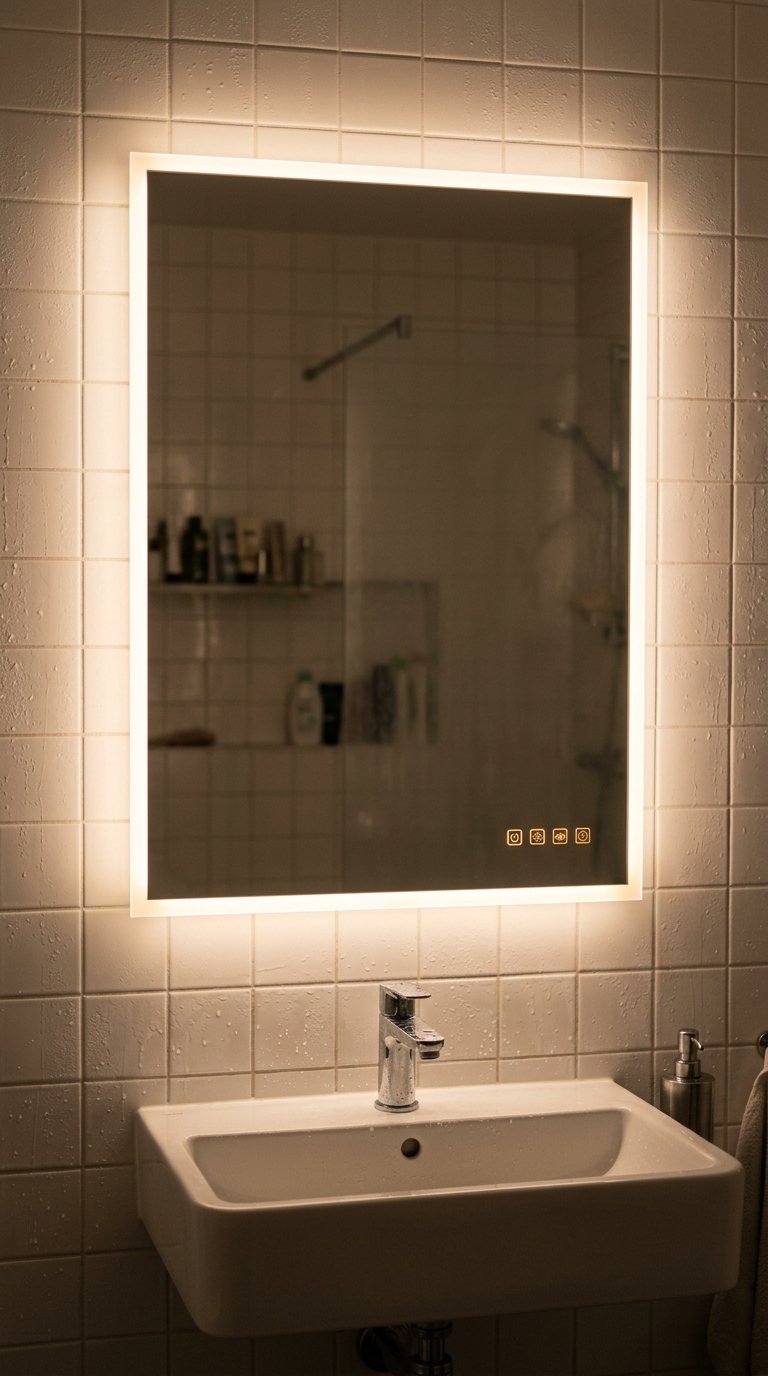
A mirror cabinet with built-in LED lighting and a demister pad solves three problems in one unit: storage, task lighting, and a clear mirror in a steamy bathroom. The demister prevents condensation forming on the mirror surface so it stays clear immediately after a shower.
These units typically include touch controls, adjustable colour temperature, and sometimes Bluetooth speakers. They cost more than a basic mirrored cabinet but they replace several items you’d otherwise buy separately. The net cost difference is usually smaller than it looks.
18. Painted Solid Wood Cabinet
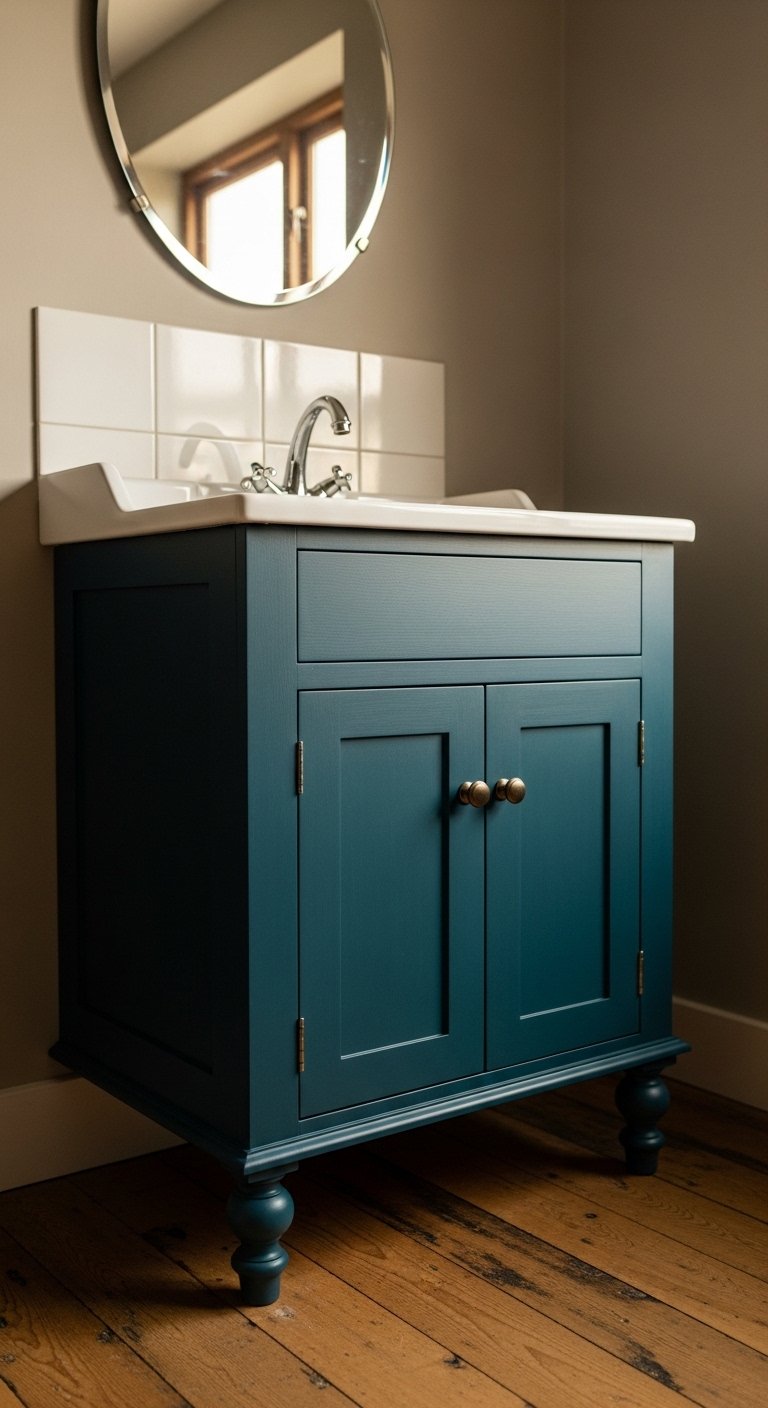
A painted solid wood vanity cabinet is the most durable option available for a bathroom that sees heavy daily use. Solid wood takes paint better than MDF, handles knocks and humidity better over time, and can be repainted when the colour feels dated.
The finish quality matters. A properly primed and painted solid wood cabinet with a hardwearing topcoat will outlast almost anything else in the bathroom. A poorly finished one will chip and peel within two years. Spend money on the preparation and the paint rather than on visual details that won’t matter if the surface fails.
19. Grey Vanity Cabinet
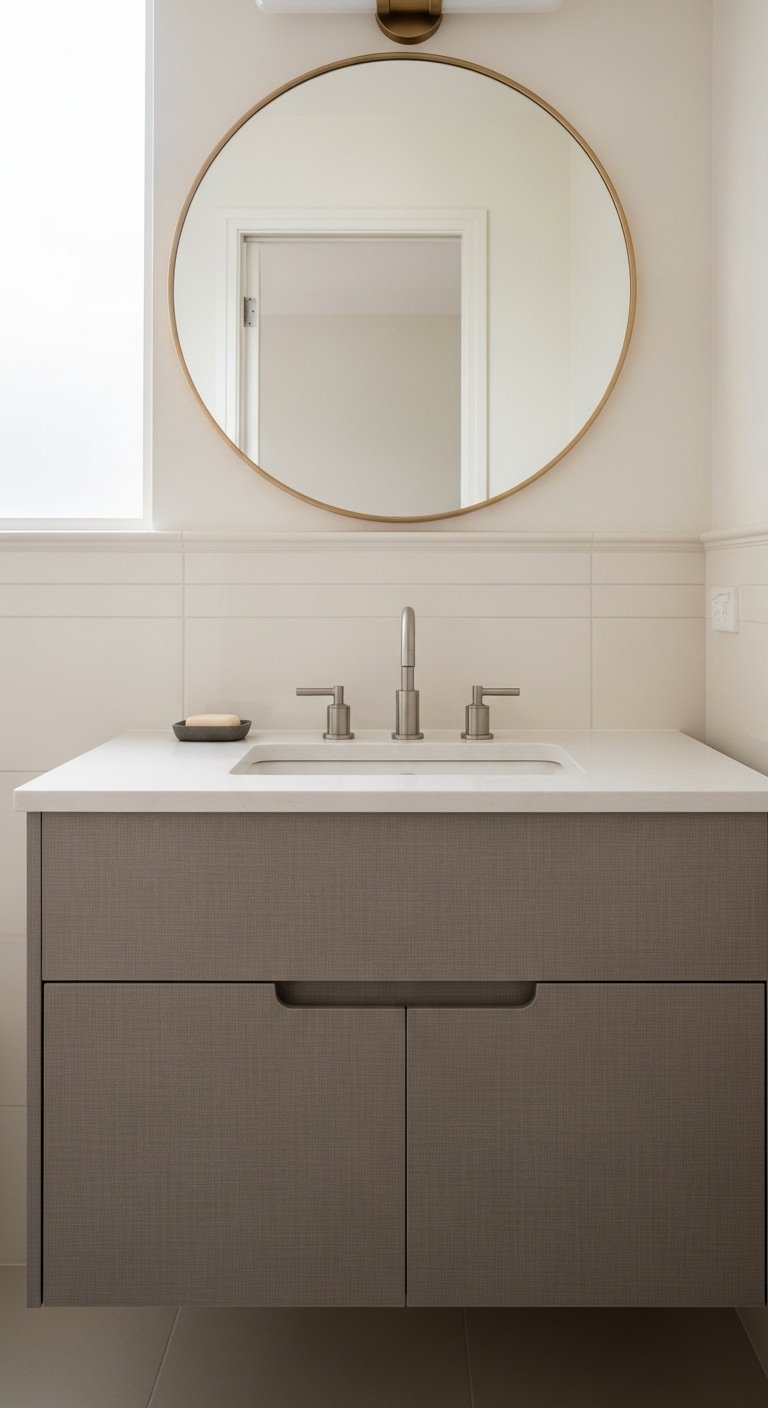
Grey bathroom cabinets have dominated bathroom design for the past decade for a simple reason: grey works with almost everything. It sits comfortably with white sanitaryware, chrome fittings, brass hardware, and black accents without competing with any of them.
Warm grey, greys with a slight brown or green undertone, suits bathrooms with natural materials like wood and stone. Cool grey, greys with blue or purple undertones suit contemporary bathrooms with clean white and chrome. The distinction matters more than people realise. A cool grey cabinet in a warm bathroom looks slightly off without it being obvious why.
20. Navy or Dark Blue Cabinet
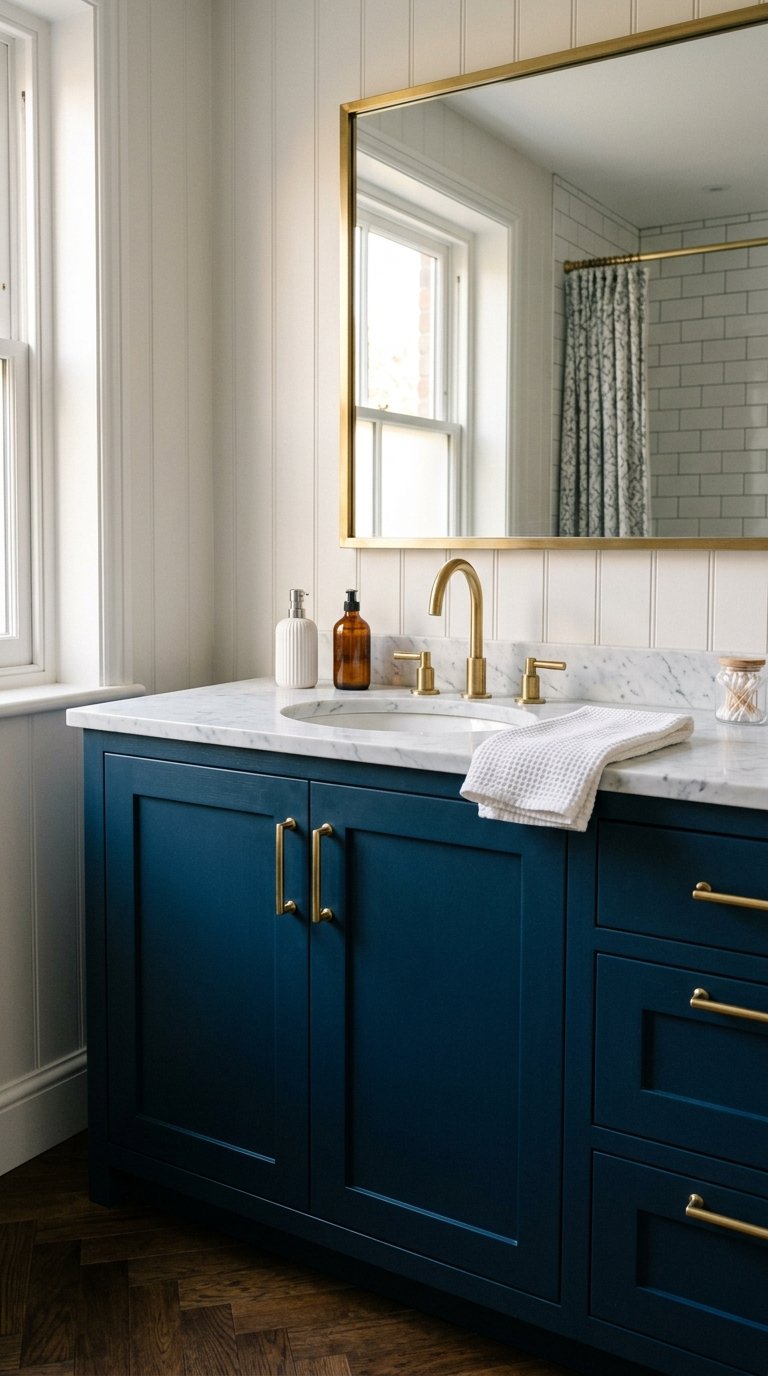
A navy or dark blue cabinet is the colour choice for a bathroom that wants to make a statement without going black. Navy reads as sophisticated, not dark, especially when paired with brass hardware, white walls, and natural stone.
Navy vanities have moved from trend to established preference over the past few years. They photograph well, they suit both traditional and contemporary bathrooms, and they hide everyday marks and splashes far better than lighter colours. If you’re hesitating between white and navy, navy is usually the braver and more interesting choice.
21. Black Matte Cabinet
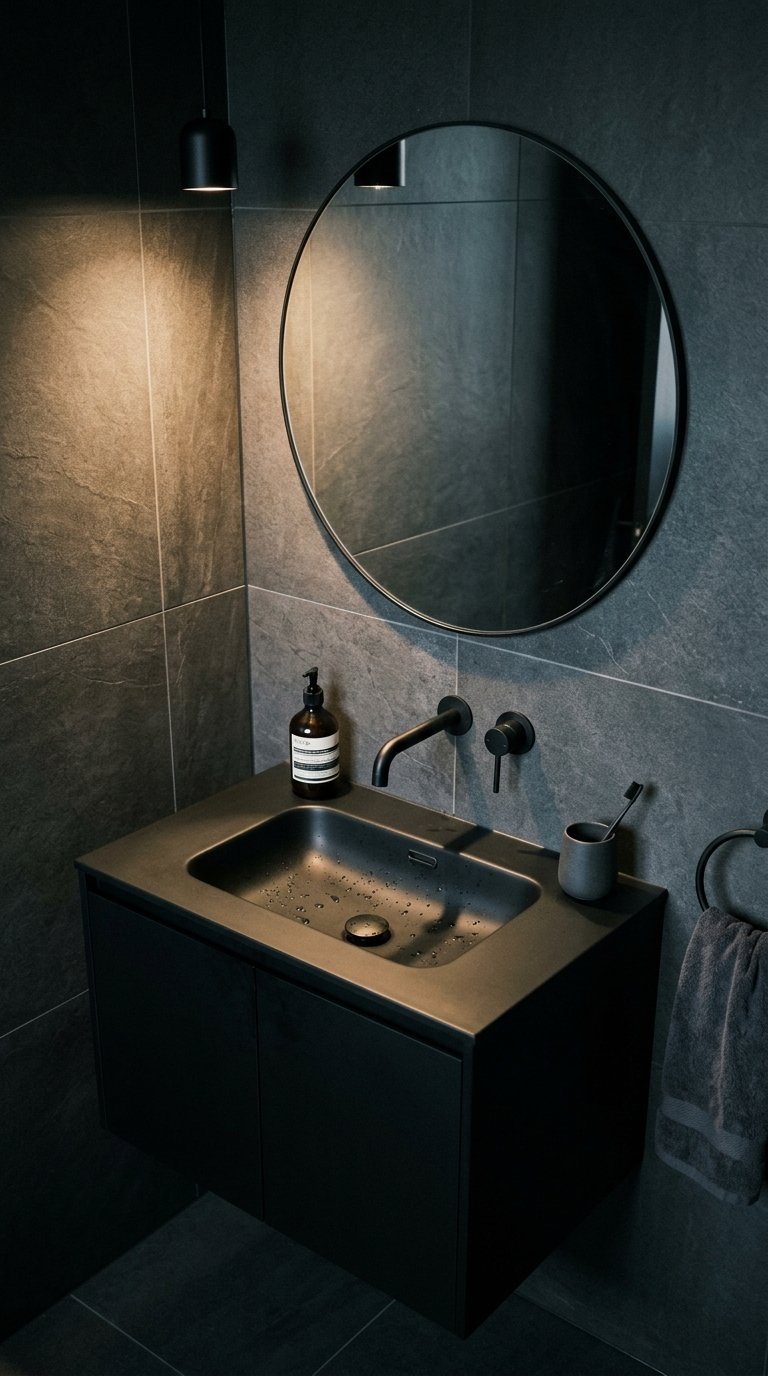
A matte black cabinet brings a level of dramatic, intentional design to a bathroom that almost no other colour achieves. It suits bathrooms with strong architectural bones good tile choices, interesting floor patterns, quality fixtures.
The practical note: matte black surfaces show water marks, fingerprints, and dust more obviously than you might expect. They require more frequent wiping down than gloss or mid-tone finishes. That’s a reasonable trade-off if you love the look, but worth knowing going in rather than discovering three months after installation.
22. Green Bathroom Cabinet
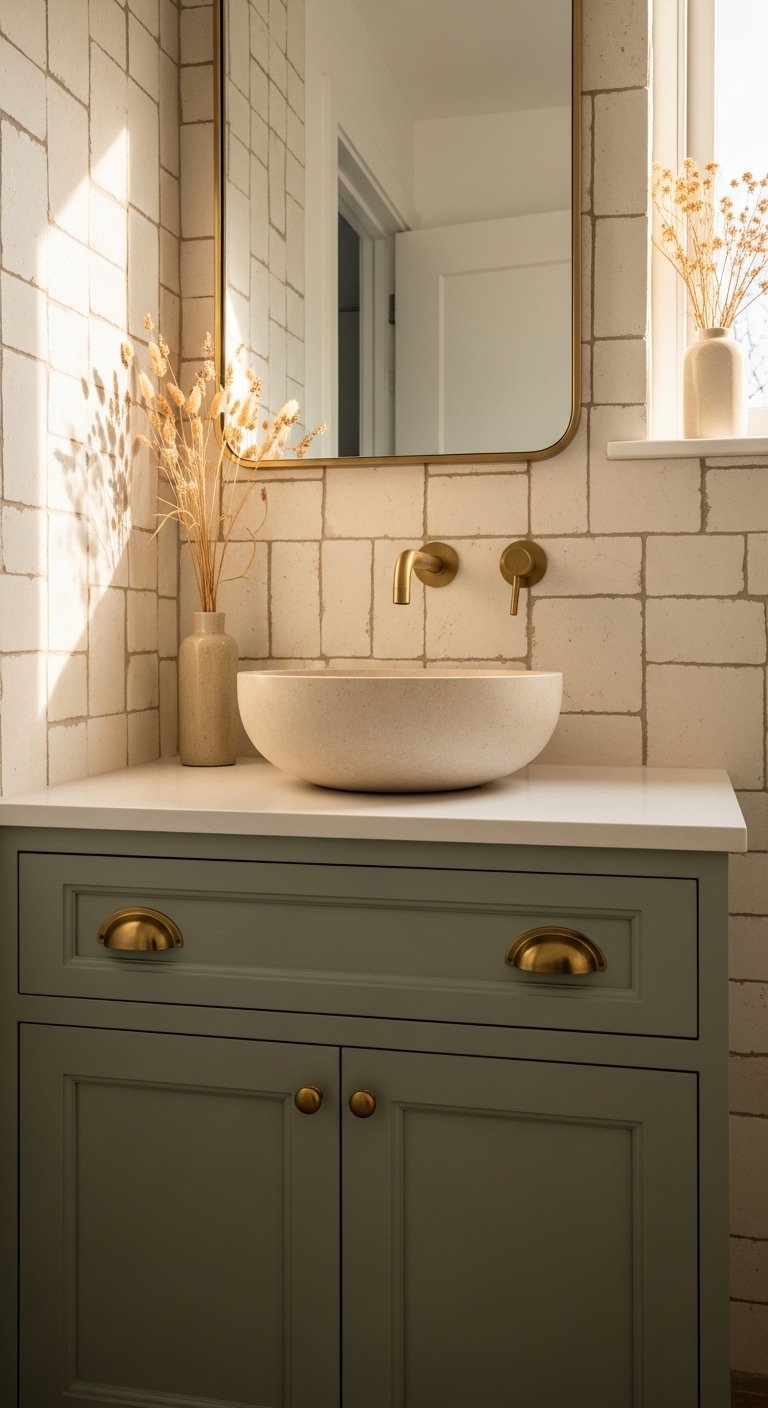
Sage, forest, and olive green cabinets bring a quality of calm and connection to natural materials that almost no other colour delivers in a bathroom. Green works exceptionally well beside natural stone, warm timber, and terracotta tile.
Green is also a relatively forgiving colour to live with long-term. Unlike some statement colours that feel dated quickly, greens with grey or yellow undertones tend to age gracefully. They look considered rather than trendy, which means they stay relevant through multiple rounds of bathroom accessory updates.
23. Modular Storage System
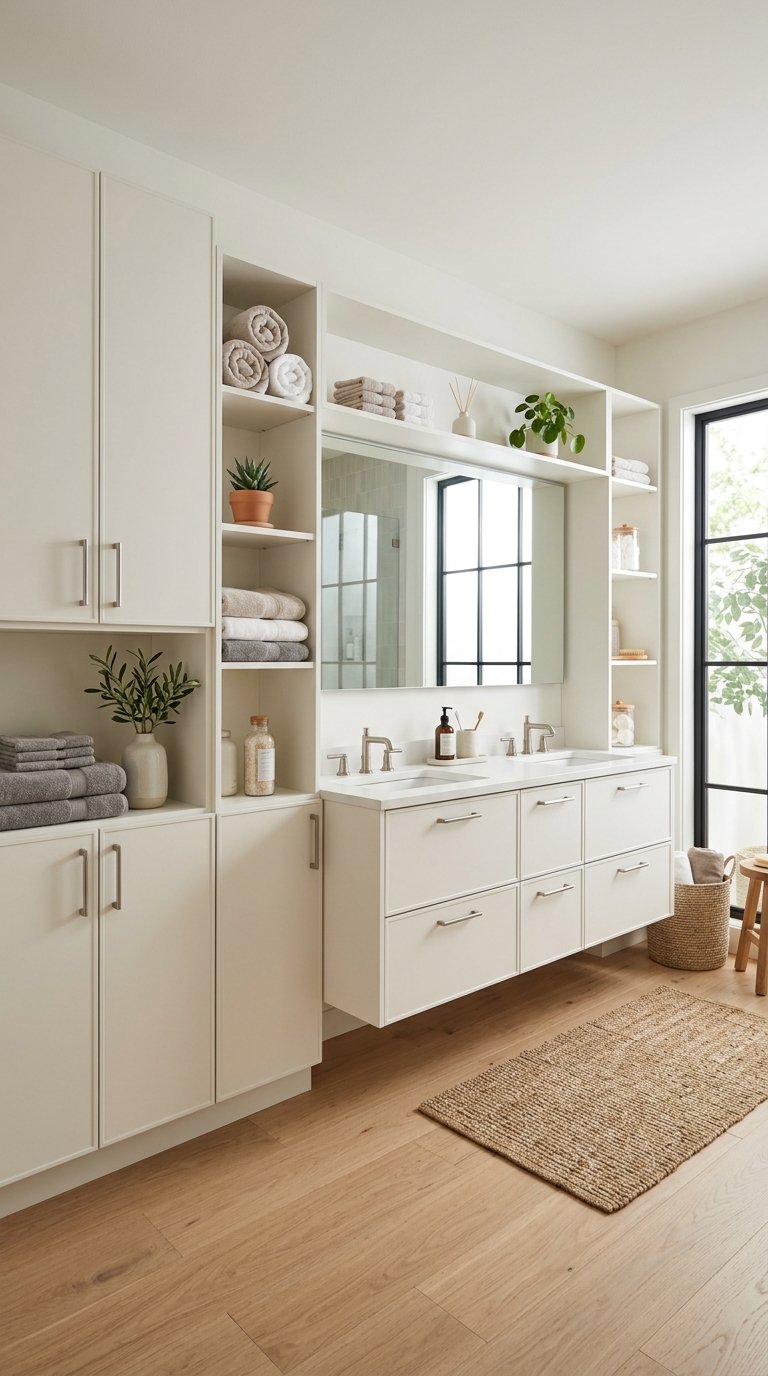
A modular bathroom storage system lets you combine individual units, base cabinets, tall towers, open shelves, mirror cabinets, into a layout that fits your specific wall configuration. Rather than buying a single piece that may or may not fit perfectly, you build the storage around the space you actually have.
The best modular systems use consistent heights, depths, and finishes across the entire range so every combination looks intentional. IKEA’s GODMORGON range is the accessible example. Higher-end versions from specialist bathroom brands offer better material quality and more configuration options. Either way, the principle is the same: fit the storage to the room rather than the room to the storage.
Final Thoughts
A bathroom cabinet is not a small decision. It affects how the room looks, how it functions every single day, and how long it holds up against the specific punishment that bathroom environments dish out humidity, temperature fluctuations, daily use, and the occasional water splash that nobody accounts for until it’s too late.
Start with the practical constraints: the wall space available, the plumbing configuration, the ceiling height, and the budget. Then choose the style that fits what you’re building. Whether that’s a floating handleless unit in matte black or a vintage freestanding piece painted in sage green, the right cabinet is the one that does its job reliably for years and makes you slightly happy every time you walk past it.
Get the storage right first. The beautiful part follows naturally.