23 Bathroom Floor Tile Ideas for Every Style and Budget
Your bathroom floor takes more abuse than almost any other surface in your home. Water, foot traffic, cleaning products, humidity, and the occasional dropped shampoo bottle. It needs to be practical. But that doesn’t mean it has to be boring.
The floor tile you choose sets the tone for the entire bathroom. Get it right and everything else falls into place. Get it wrong and even expensive fixtures look off.
I’ve spent a lot of time looking at what actually works in real bathrooms, not just staged showrooms. Here are 23 bathroom floor tile ideas worth your serious consideration.
1. Classic White Subway Tile on the Floor
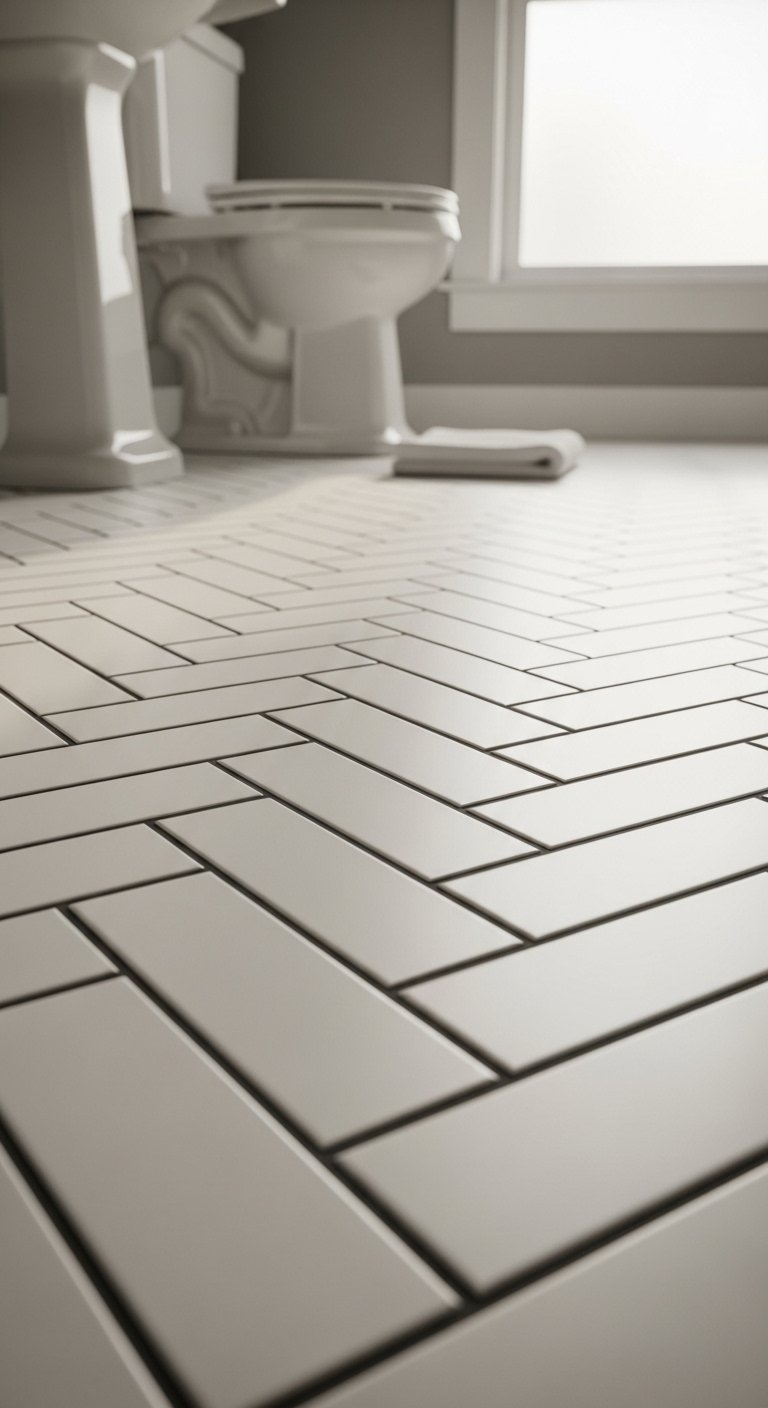
Most people put subway tiles on walls. Fewer put it on the floor, which is exactly why it works well there.
White subway tile on the bathroom floor reads as clean, timeless, and slightly unexpected. The grout lines create a subtle grid pattern that adds texture without visual noise.
What to keep in mind:
- Use a darker grout to make the pattern visible and to hide dirt between cleanings.
- A matte or satin finish works better on floors than high-gloss, which shows every water mark.
- Lay them in a classic brick offset pattern or a herringbone for more visual interest.
This tile never goes out of style. That alone makes it worth considering.
2. Large Format Porcelain Tiles
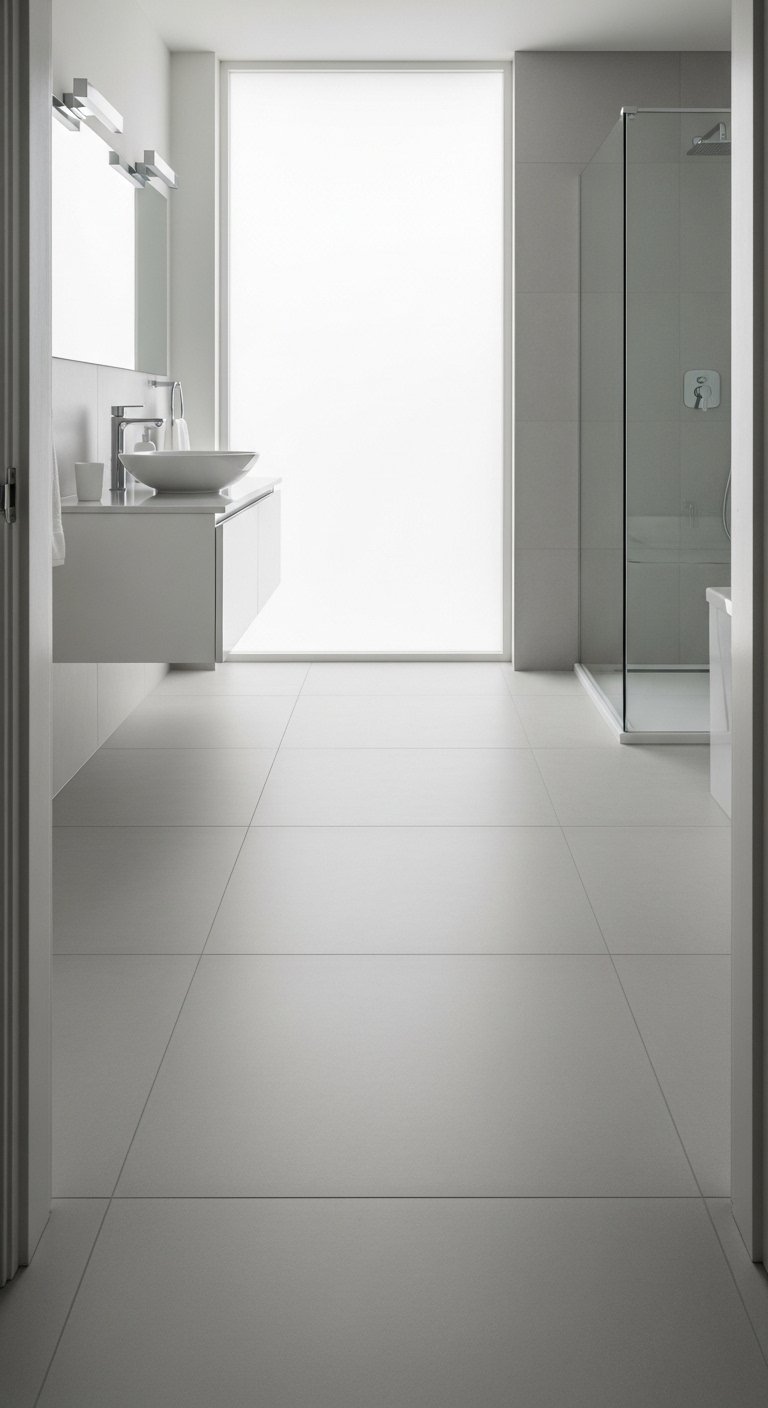
Large format tiles, typically 24×24 inches or bigger, create a clean, seamless look with fewer grout lines interrupting the surface.
Fewer grout lines mean less cleaning. If you’ve ever scrubbed bathroom grout on your hands and knees, you understand why this matters. IMO, large format tile is one of the most practical choices for a bathroom floor.
Benefits:
- Visually expands smaller bathrooms by reducing visual interruption.
- Easier to clean and maintain long-term.
- Works in both modern and transitional bathroom styles.
- Available in stone-look, concrete-look, and solid color finishes.
The main consideration: large tiles require a very flat subfloor. Any unevenness shows.
3. Hexagon Tiles
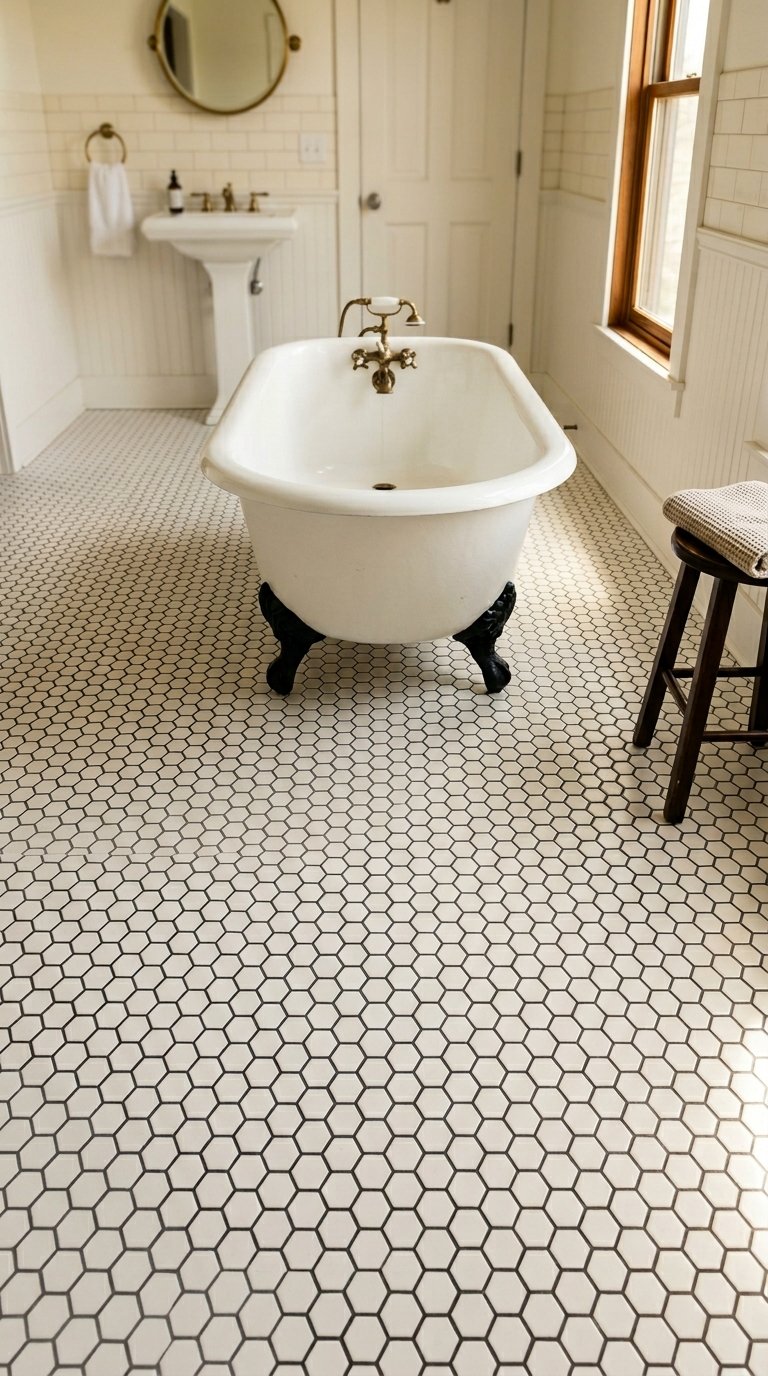
Hexagon tiles have been around for over a century and they keep coming back because they genuinely work.
The hexagonal shape creates a honeycomb pattern that adds geometric interest without feeling trendy or temporary. A small white hex tile in a bathroom floor is a design choice that will look good in twenty years the same way it looked good in 1920.
Popular hexagon variations:
- Small white hex with dark grout for a classic bathroom look.
- Large format hex in matte gray for a modern, minimal feel.
- Black and white hex combination for a bold graphic floor.
- Colored hex in sage, blush, or navy for a more contemporary personality.
Scale matters. Small hex tiles suit smaller bathrooms. Large hex tiles suit larger floors.
4. Penny Tiles
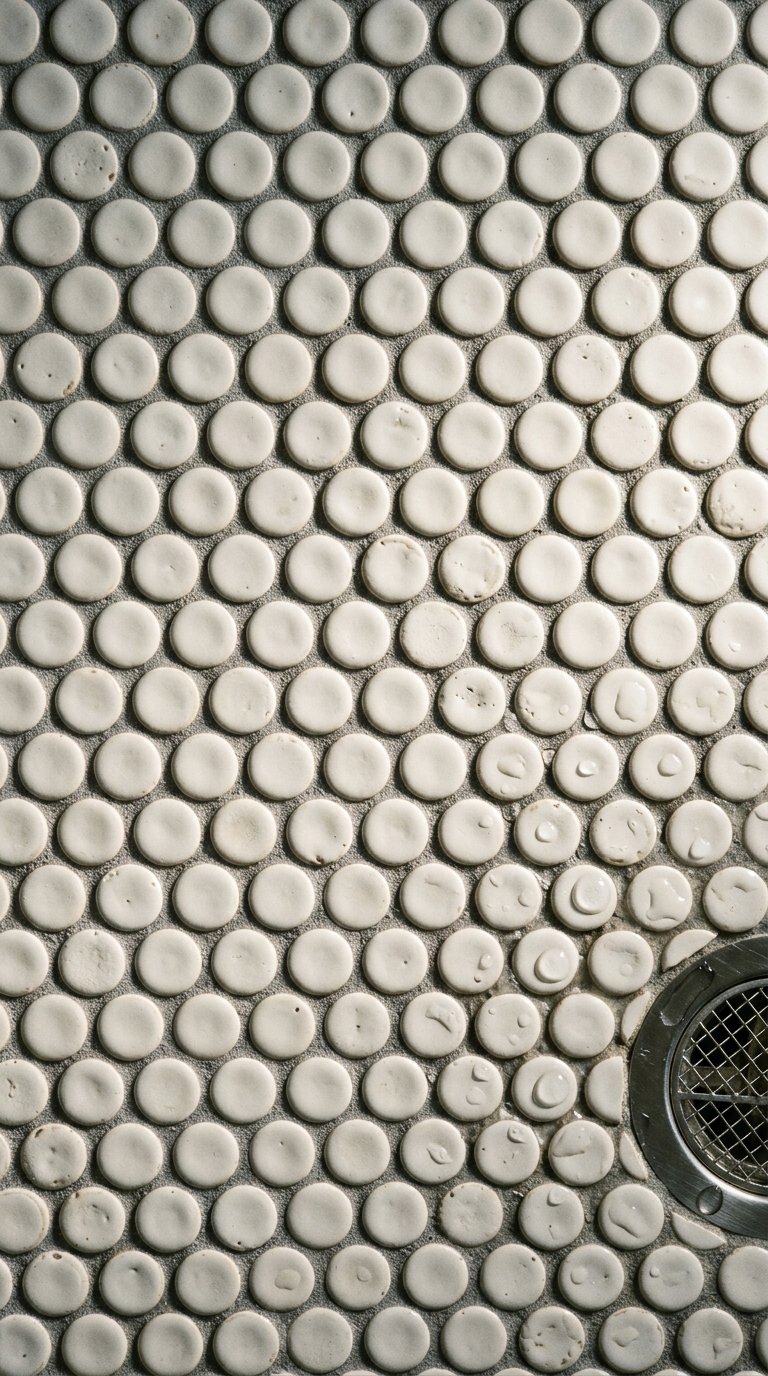
Penny tiles are small round tiles, typically one inch in diameter, arranged in a sheet format for easier installation.
They look intricate but install faster than you’d expect because they come pre-mounted on mesh backing. The result is a floor with enormous visual texture and a handcrafted quality that larger tiles don’t deliver.
Where penny tiles work best:
- Small bathroom floors where the detail reads well at close range.
- Wet areas like shower floors where the high number of grout lines actually improves grip.
- As an accent band between larger tiles.
The grout lines in penny tile are extensive. Use an epoxy grout for durability and resistance to moisture and staining.
5. Black and White Checkerboard Tile
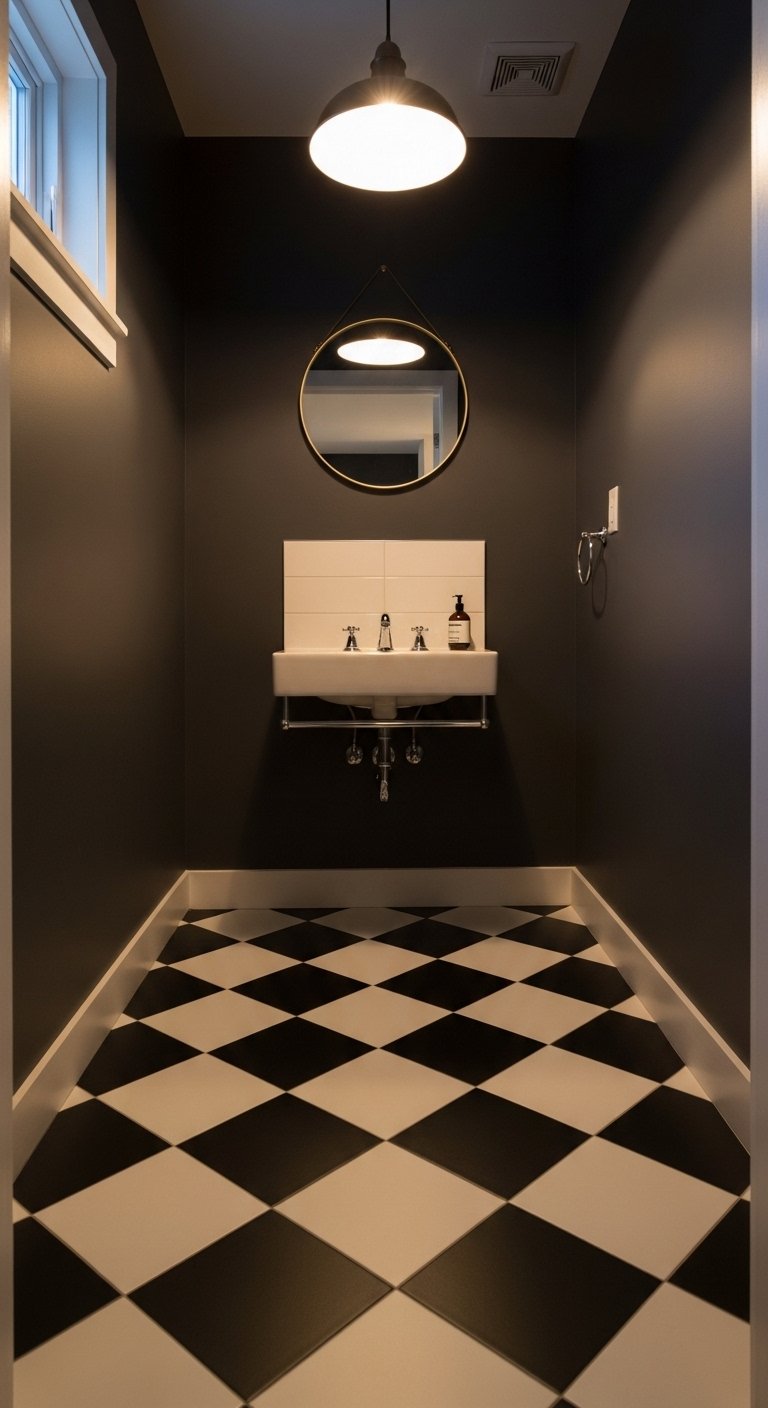
Few floor patterns carry as much visual confidence as a black and white checkerboard. It works in traditional, eclectic, and even modern bathrooms when executed at the right scale.
The key variable is tile size. A two-inch checkerboard reads as vintage and playful. A twelve-inch checkerboard reads as bold and contemporary. Same pattern, completely different result depending on scale.
Tips for getting it right:
- Use matte black and matte white to avoid a surface that shows every footprint.
- Diagonal installation makes the pattern more dynamic and the room feel wider.
- Keep wall colors and fixtures simple; the floor does the work here.
This pattern gets copied constantly because it genuinely never looks wrong in the right bathroom.
6. Terrazzo Tile
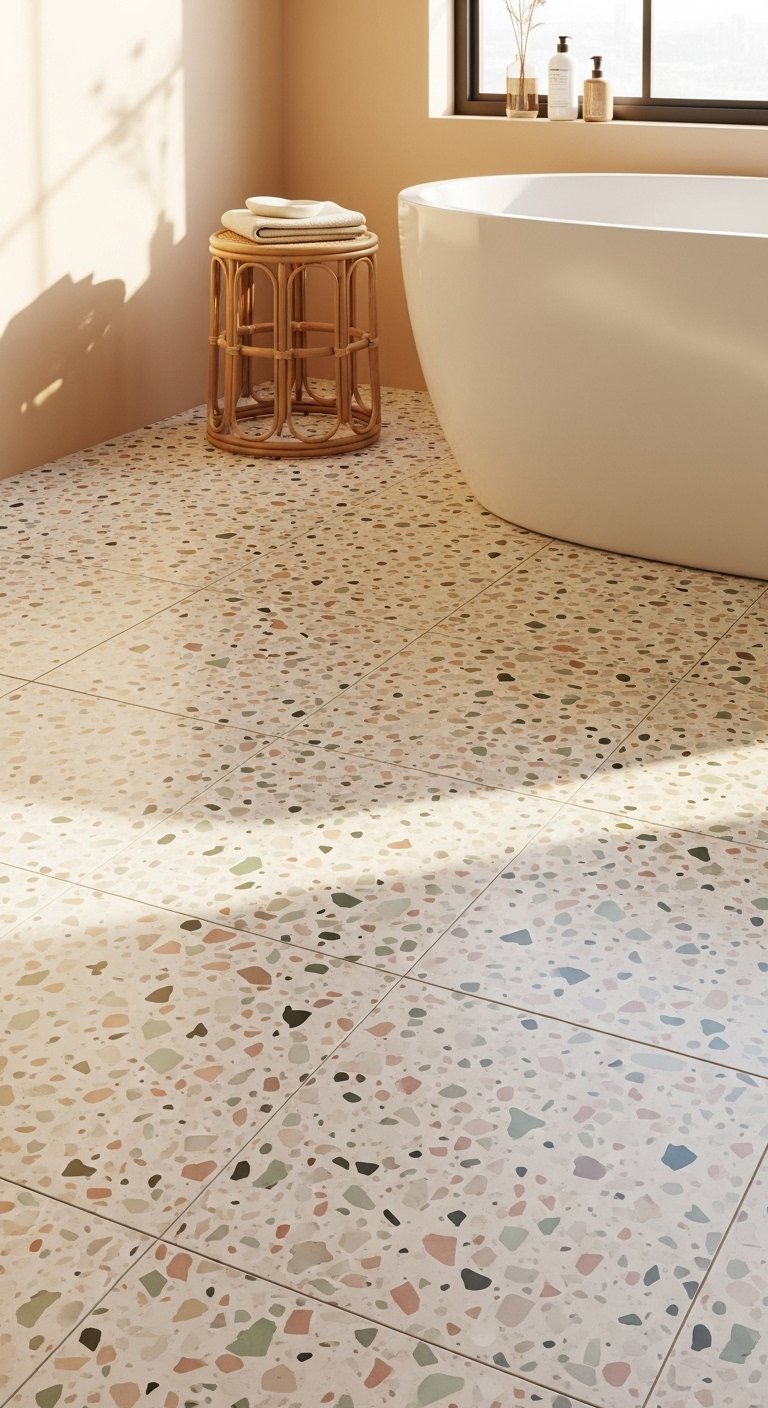
Terrazzo is a composite material made from chips of marble, quartz, granite, and glass set in cement or resin. The result is a speckled, multi-tonal surface that looks expensive because it is.
The good news: terrazzo-look porcelain tiles exist at a fraction of the cost of genuine poured terrazzo. They deliver the same visual effect without the price tag or the installation complexity.
What makes terrazzo work on a bathroom floor:
- The multi-tonal speckle pattern hides water spots, minor dirt, and surface variation naturally.
- It works with warm and cool color palettes equally.
- It adds personality without a loud pattern.
If your bathroom feels too plain and you want texture without committing to something aggressive, terrazzo is the answer.
7. Wood-Look Porcelain Tile
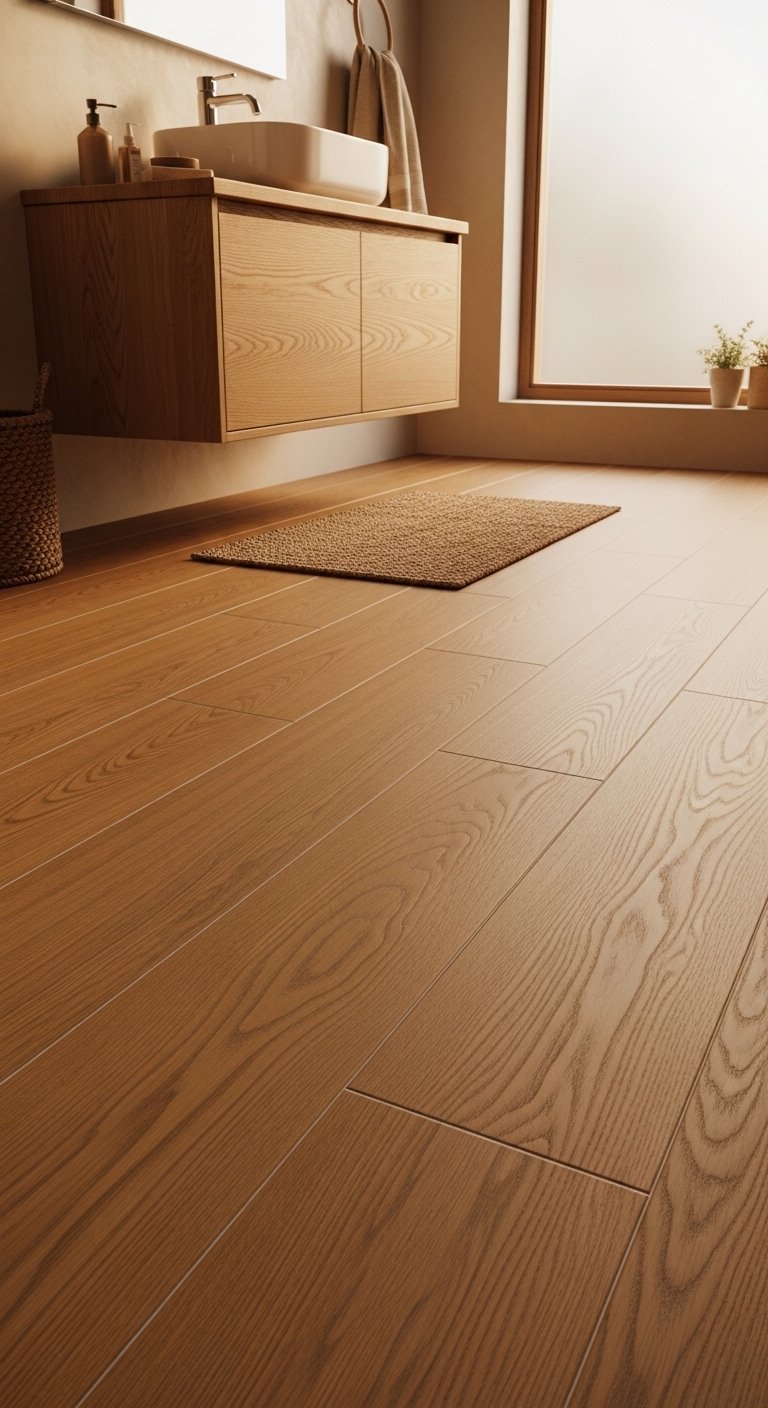
You want the warmth of wood in a bathroom but wood and moisture are not friends. Wood-look porcelain solves this entirely.
Modern porcelain tile technology produces wood-look tiles that are genuinely difficult to distinguish from real wood at a glance. The texture, grain variation, and color depth have improved significantly over the past decade.
What to look for in wood-look porcelain:
- A matte or satin finish rather than high-gloss for authenticity.
- Varied plank widths for a more realistic appearance.
- Rectified edges so grout lines stay thin and the wood illusion holds.
- A slip-resistance rating of R10 or higher for wet areas.
Lay them in a staggered plank pattern, not a brick offset, for the most realistic wood floor effect.
8. Cement Encaustic Tiles
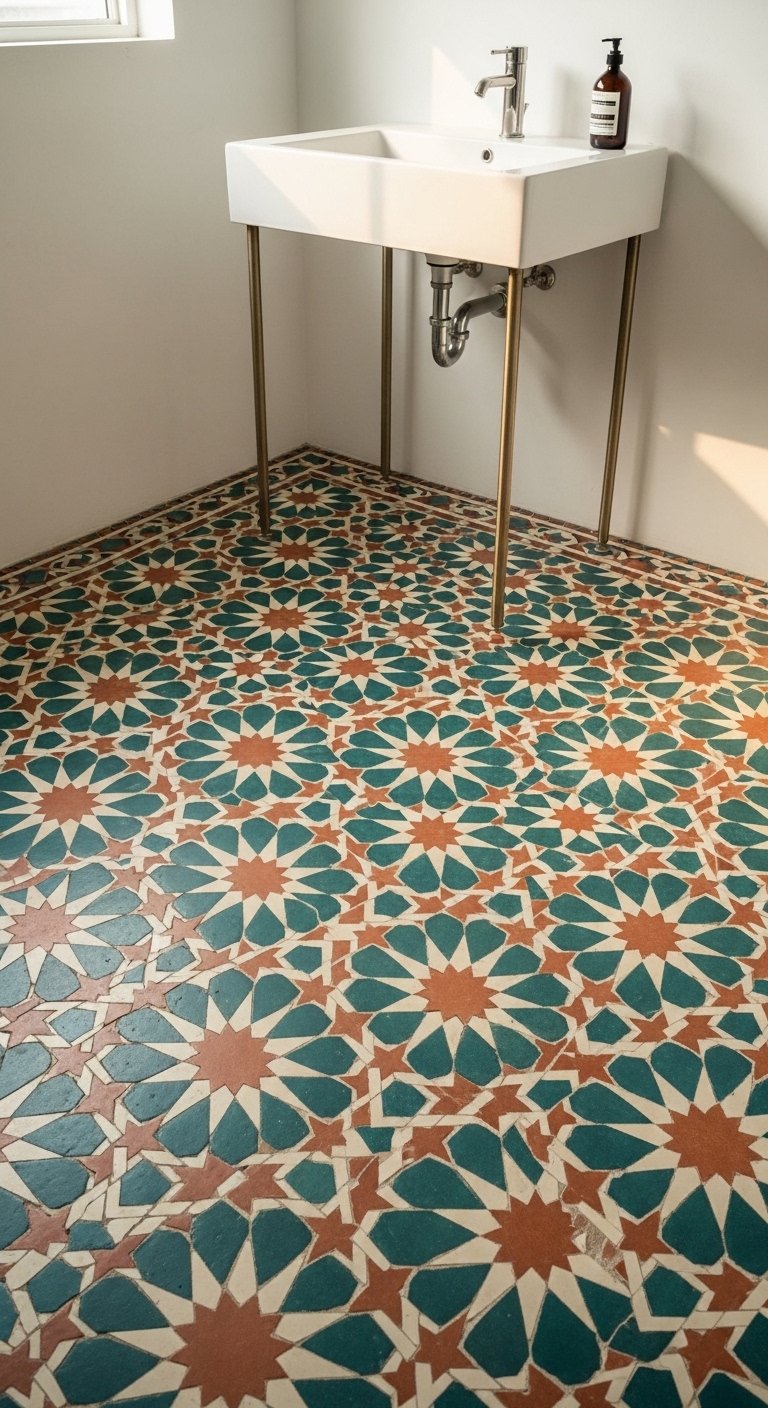
Cement encaustic tiles are handmade tiles with colored patterns pressed into the surface during manufacturing. Each tile is slightly unique, which is entirely the point.
The patterns range from simple geometric shapes to intricate Moroccan-inspired designs. A bathroom floor in encaustic tile looks like a decision was made, which is a compliment in design terms.
Practical considerations:
- Cement tiles are porous and require sealing before grouting and again after installation.
- They show wear over time, which adds character rather than looking damaged.
- Avoid harsh cleaning chemicals that strip the sealer.
The maintenance requirement is real. The visual payoff is also real.
9. Slate Tile
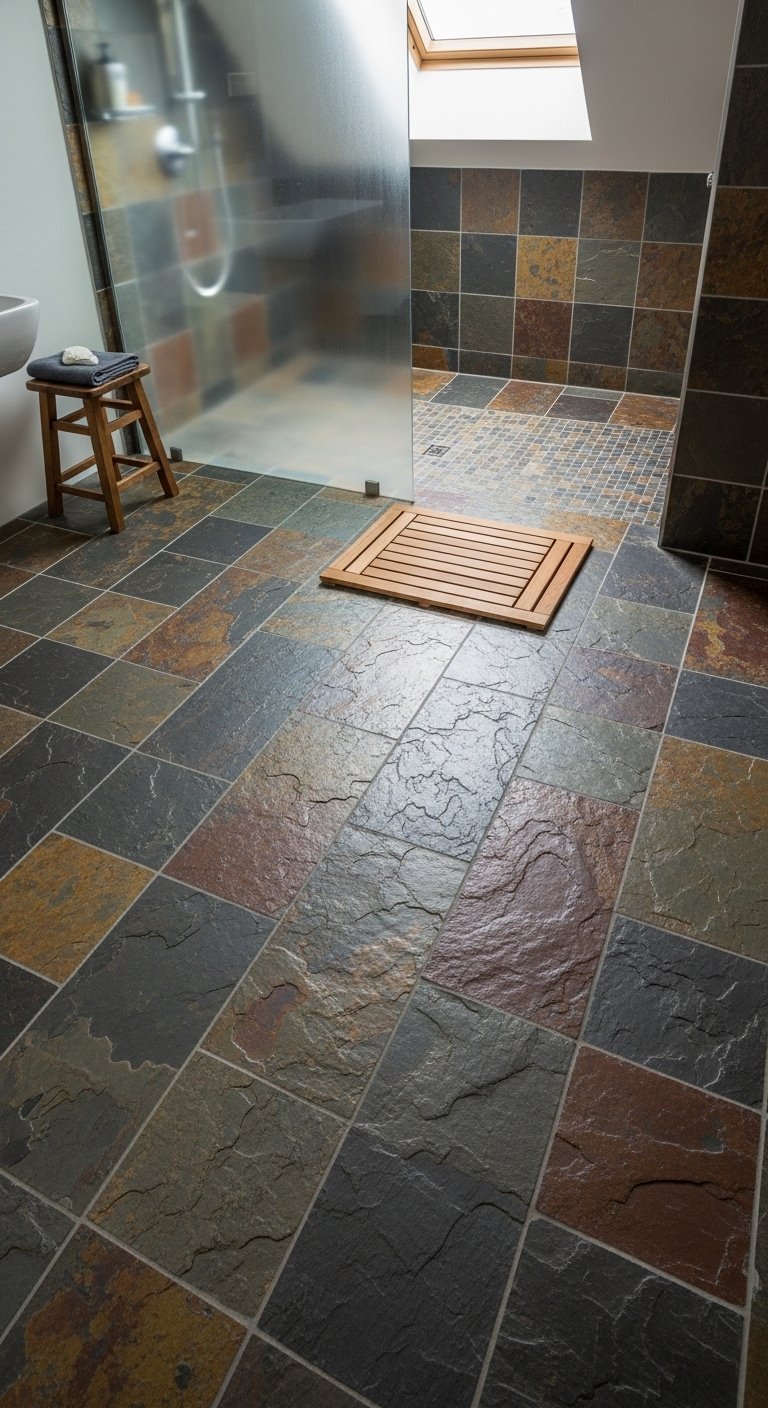
Slate is a natural stone with a distinctly textured, layered surface that no manufactured tile fully replicates. It brings an organic, earthy quality to a bathroom floor that feels genuinely different from polished stone or porcelain.
The natural cleft surface of slate provides grip, which makes it practical for wet areas. The color variation within each tile, ranging from charcoal to rust to green depending on the source, gives the floor depth that solid-color tiles lack.
Slate considerations:
- Requires sealing to prevent moisture absorption and staining.
- The uneven surface makes cleaning slightly more effort than smooth tile.
- Works best in bathrooms with natural materials, warm woods, and earthy tones.
10. Marble Tile
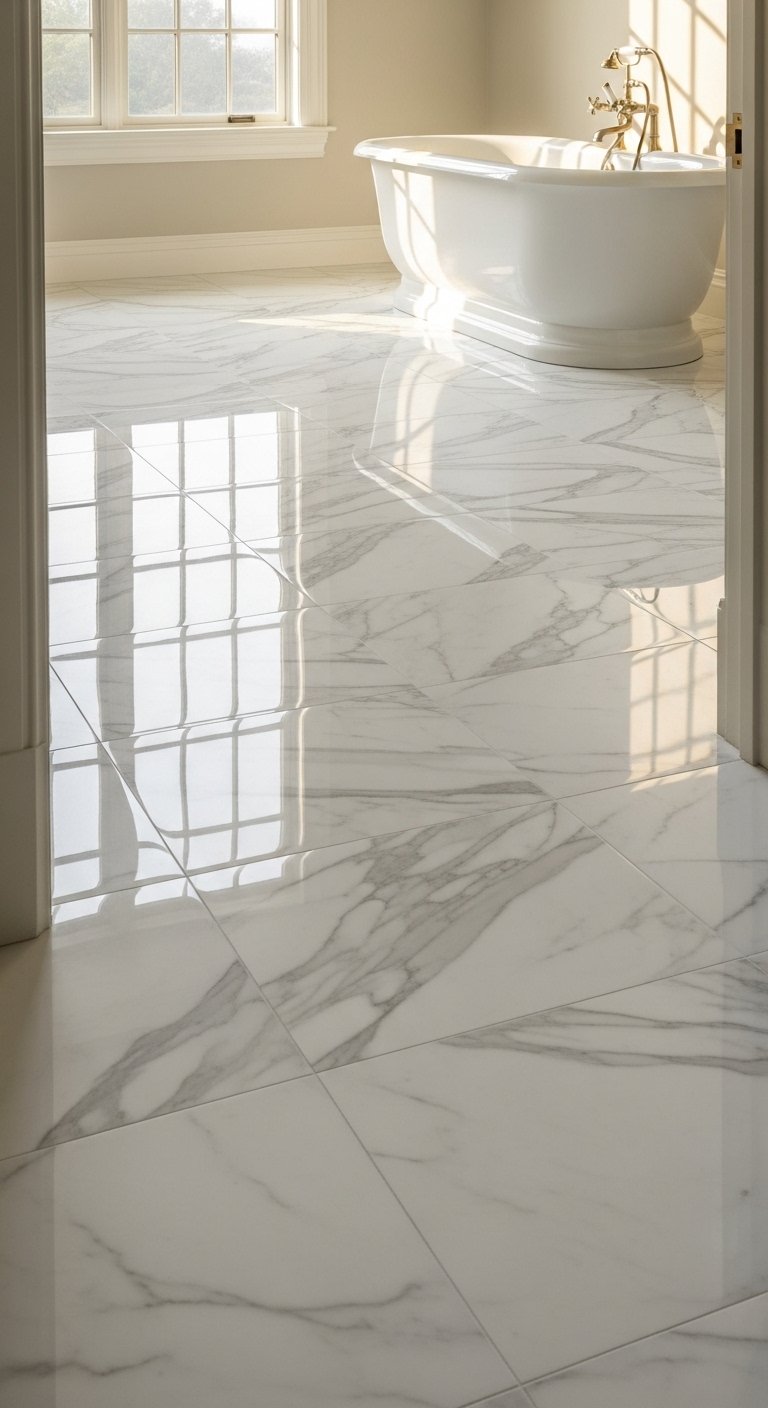
Marble is the benchmark against which most bathroom flooring gets compared. The veining, the depth, the way it catches light; nothing else fully reproduces it.
White Carrara marble on a bathroom floor is a classic for a reason. It photographs well, it ages well, and it adds genuine value to a home. The tradeoff is cost and maintenance.
Marble maintenance reality:
- Marble is porous and etches with acidic cleaners. Use pH-neutral products only.
- Seal it on installation and reseal annually.
- Polished marble shows scratches over time; honed marble hides them better.
If the budget exists and you’re willing to maintain it properly, marble delivers a result no other material matches.
11. Travertine Tile
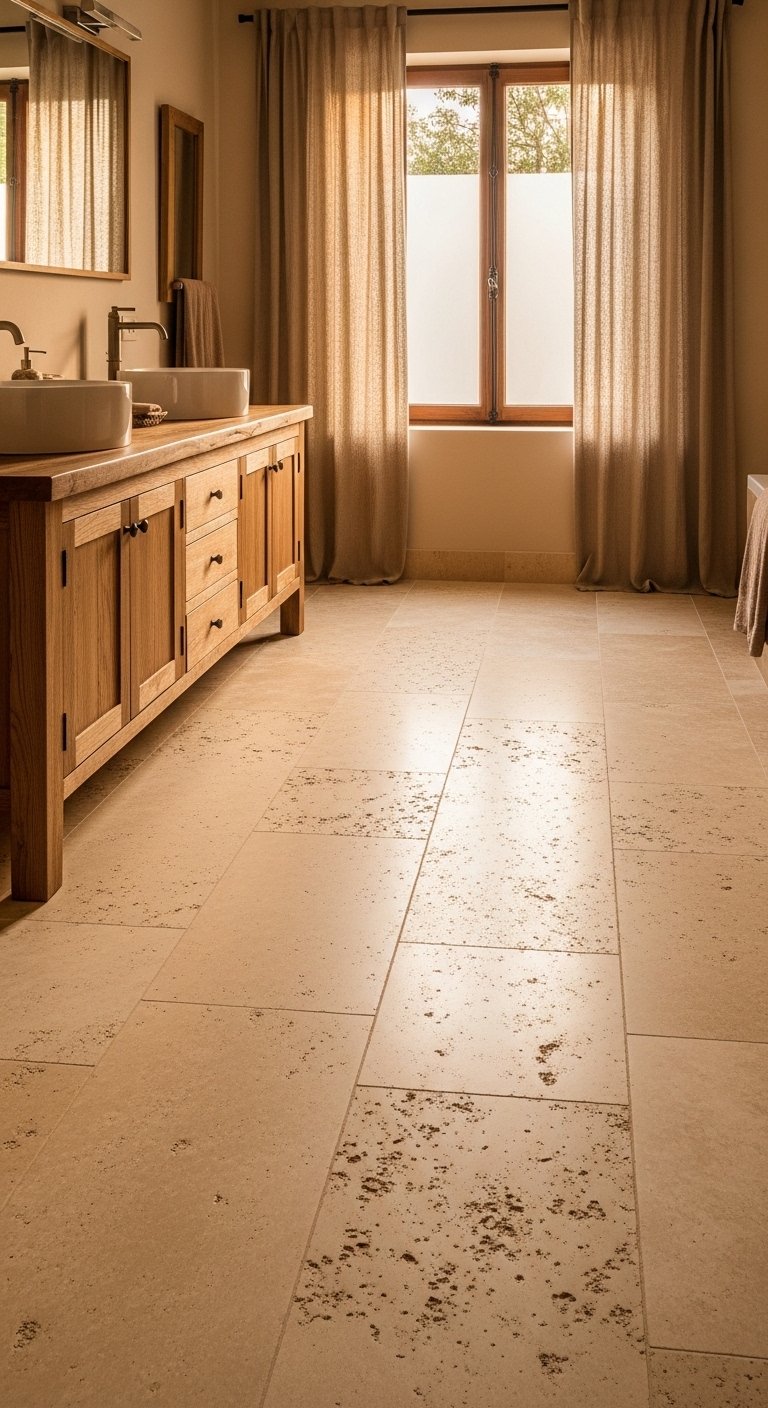
Travertine is a natural limestone with a distinctive pitted surface and warm, creamy tones. It creates a bathroom floor that feels Mediterranean, warm, and unhurried.
The natural holes in travertine get filled with grout or left open depending on the finish. Filled and honed travertine gives a smoother, more refined look. Unfilled travertine has more texture and a more rustic character.
Travertine works well in:
- Bathrooms with warm color palettes and natural wood accents.
- Spa-inspired bathroom designs where the goal is calm and warmth.
- Large format applications where the natural variation reads across a wide surface.
12. Mosaic Tile Patterns
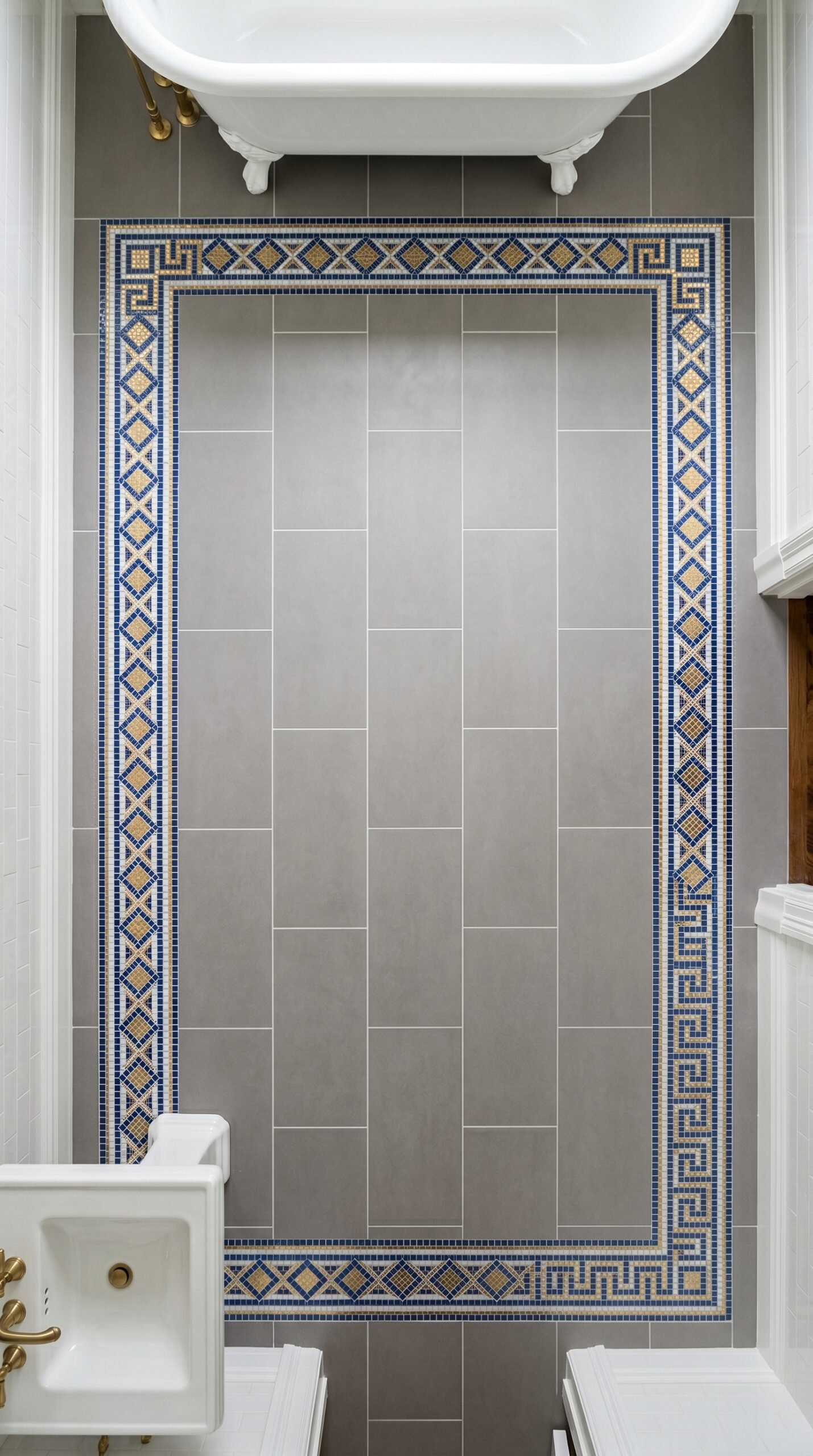
Mosaic tiles are small tiles, typically under two inches, arranged in patterns or left as a random mix. They bring a level of detail and artistry to a bathroom floor that larger tiles cannot achieve.
A custom mosaic border around the perimeter of a bathroom floor, a mosaic medallion at the center, or a full mosaic floor in a small powder room all deliver results that feel genuinely designed.
Mosaic options by material:
- Glass mosaic for reflectivity and color depth.
- Stone mosaic for natural texture and earthiness.
- Porcelain mosaic for durability and consistent color.
- Mixed material mosaic combining stone, glass, and metal for maximum visual complexity.
The installation requires more labor and patience. The result justifies it in the right bathroom.
13. Zellige Tile
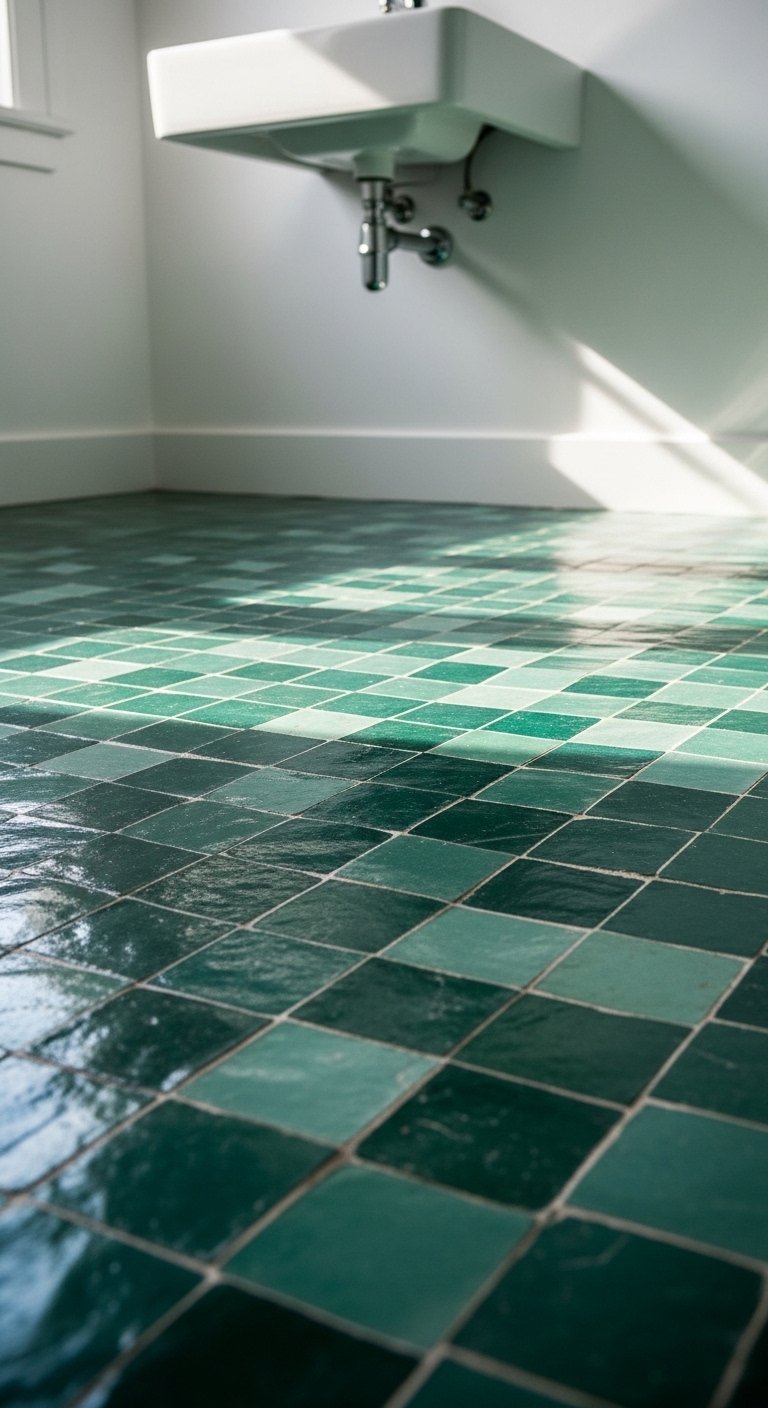
Zellige is a traditional Moroccan handmade tile with an irregular surface, slight color variation, and a reflective quality that no machine-made tile reproduces. Each tile catches light differently because no two tiles are identical.
A zellige bathroom floor in a warm white, soft clay, or deep teal creates a surface that looks alive. The imperfections are intentional and they’re what makes it beautiful.
What to know before buying zellige:
- It is more expensive than standard tile due to the handmade process.
- Installation requires an experienced tile setter; the irregular thickness demands skill.
- Grouting zellige requires care to avoid filling the intentional surface texture.
FYI, zellige is one of those materials that looks significantly better in person than in photographs. If you have access to a sample, get one before deciding.
14. Patterned Cement Look Porcelain
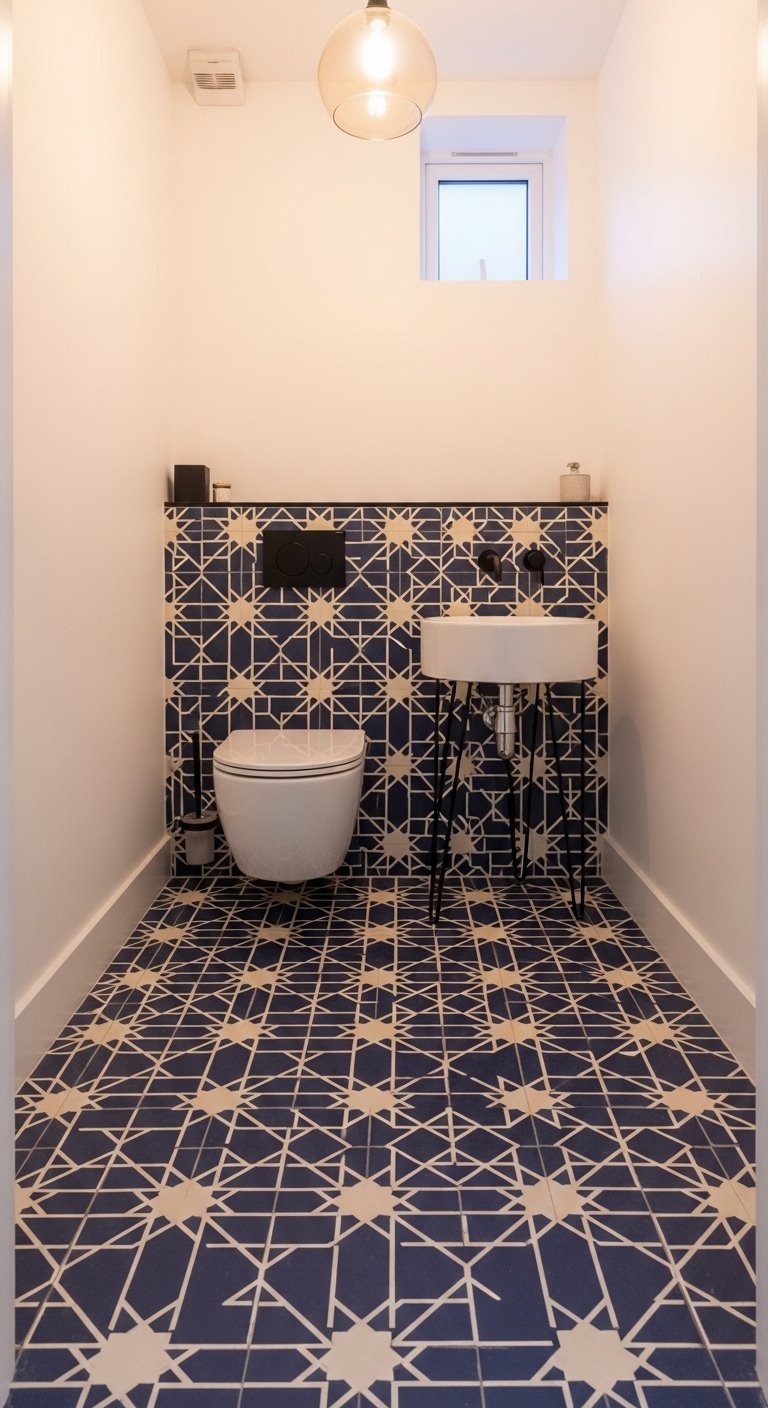
Porcelain tiles with printed geometric or Moroccan-style patterns give you the visual impact of encaustic cement tile with the durability and low maintenance of porcelain.
These tiles work particularly well in small bathrooms or powder rooms where the patterned floor becomes the main design statement. One bold patterned floor tile can make a simple bathroom feel designed from the ground up.
Pattern types that work on bathroom floors:
- Geometric star patterns in blue and white.
- Diamond grid patterns in black and terracotta.
- Floral repeat patterns in muted, earthy tones.
- Abstract brushstroke patterns for a more contemporary feel.
Keep walls and fixtures neutral when using a bold patterned floor. Let the floor lead.
15. Concrete Look Tile
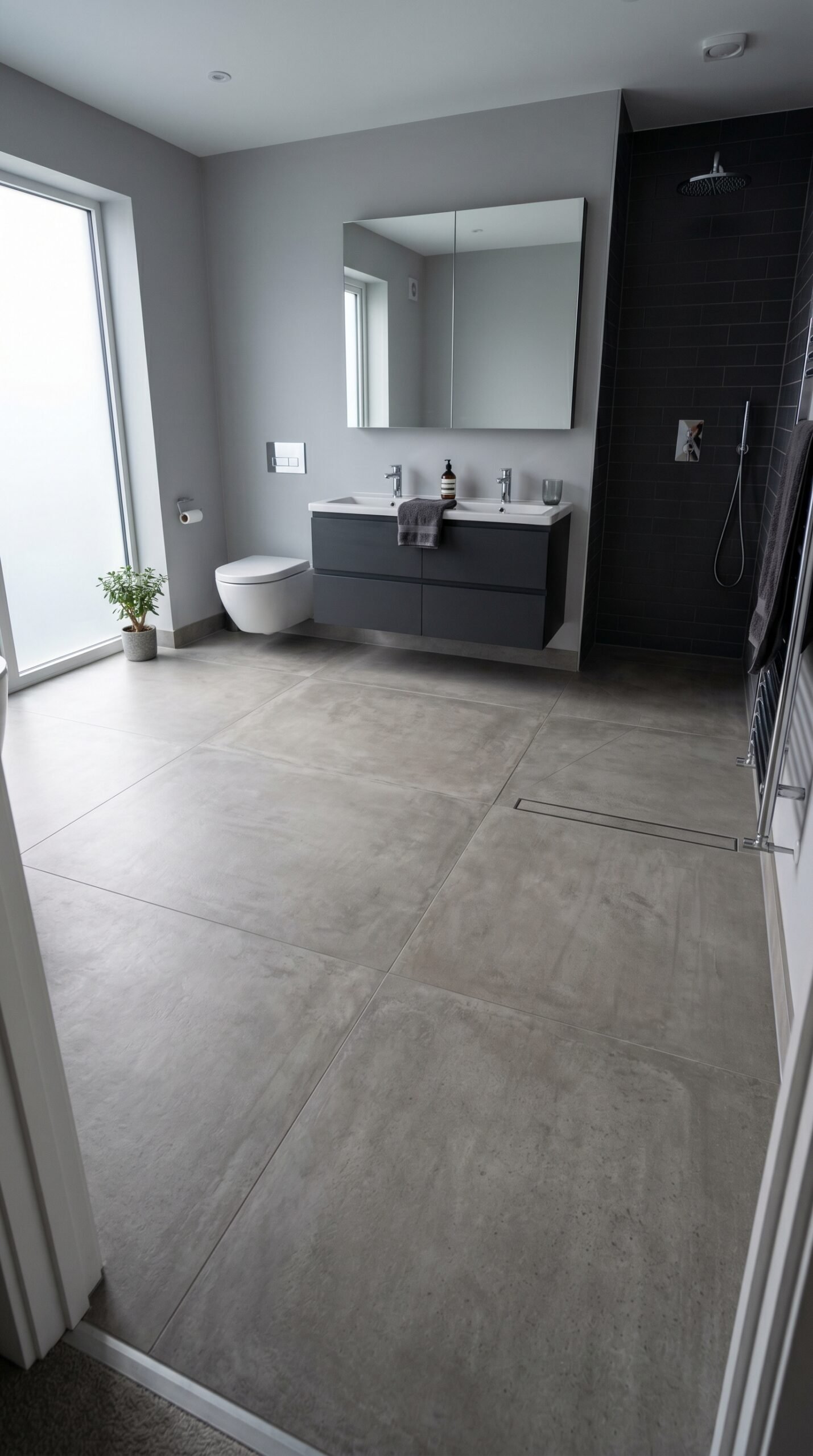
Concrete look porcelain tile delivers an industrial, minimal aesthetic that suits contemporary and urban bathroom designs without the structural requirements or maintenance of actual concrete.
The appeal of concrete is its flatness, its texture, and its neutrality. It works with almost any color palette and any fixture finish. It recedes visually, letting other design elements in the bathroom take the lead.
Why porcelain beats actual concrete for bathroom floors:
- Porcelain doesn’t crack as concrete does when a subfloor flexes.
- Porcelain doesn’t require sealing against moisture.
- Porcelain delivers consistent color without the variation that real concrete develops over time.
Available in warm gray, cool gray, off-white, and dark charcoal, depending on the look you want.
16. Terracotta Tile
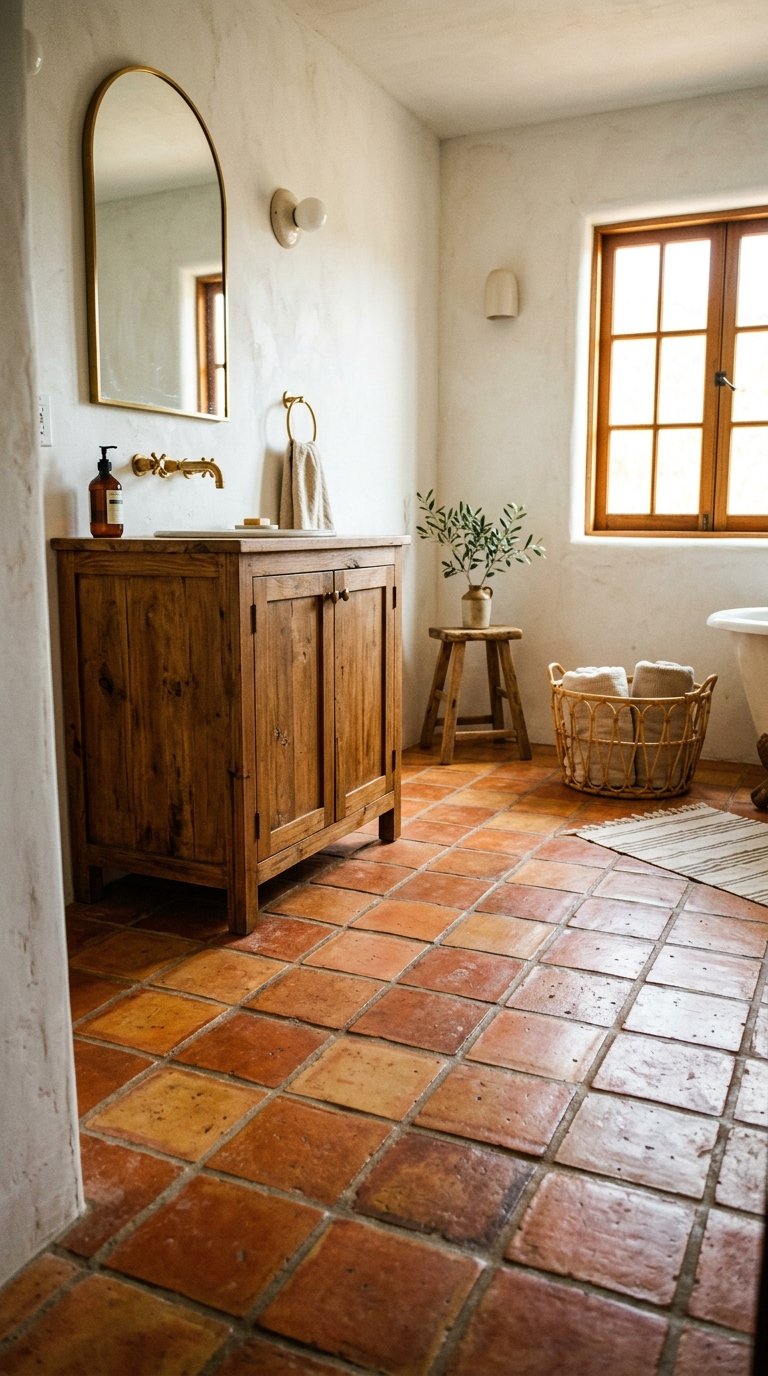
Terracotta is clay tile fired at low temperatures, producing a warm, earthy, reddish-orange surface with natural variation between tiles. It brings warmth to a bathroom that no other material quite replicates.
Traditional terracotta requires sealing and regular maintenance. Modern sealed terracotta and porcelain terracotta-look tiles reduce the maintenance burden while keeping the aesthetic.
Terracotta works best with:
- Warm white or limewash walls.
- Natural wood vanity and shelving.
- Brass or unlacquered brass fixtures.
- Woven textiles and natural fiber mats.
It does not work well with cool gray, chrome, or stark modern fixtures. The warmth of terracotta needs warmth elsewhere in the room to land properly.
17. Striped Tile Layout
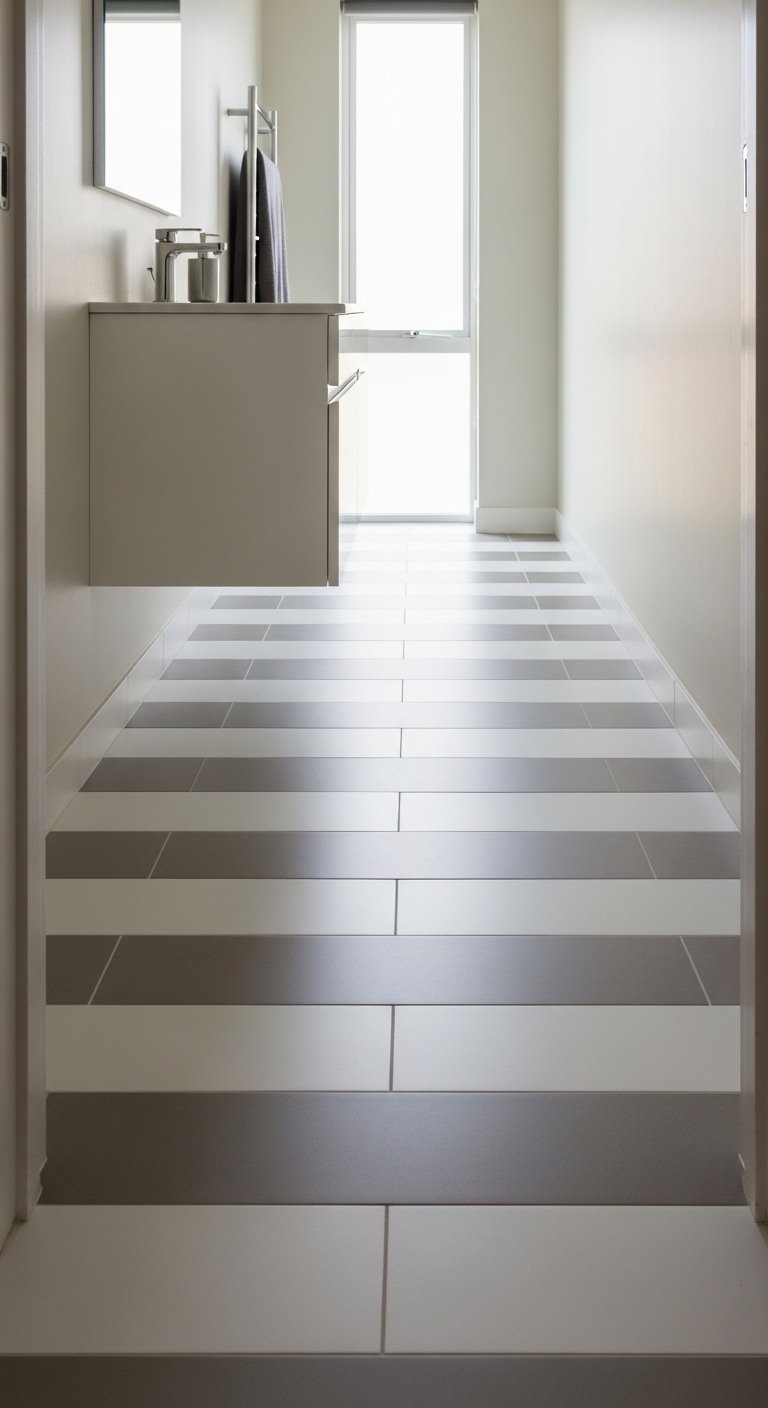
A striped floor layout uses standard rectangular tiles arranged to create horizontal or vertical stripe patterns across the bathroom floor. The direction of the stripes controls how the room reads spatially.
Horizontal stripes make a narrow bathroom feel wider. Vertical stripes make a short bathroom feel longer. This is one of the few tile layout tricks that actually delivers a measurable spatial effect.
How to execute stripes effectively:
- Use two complementary tile colors in the same size and format.
- Alternate single tiles or groups of two to three tiles per stripe.
- Keep the grout color close to the lighter tile to reduce visual interruption.
A striped tile floor reads as designed and intentional without requiring a complicated or expensive tile.
18. Herringbone Pattern
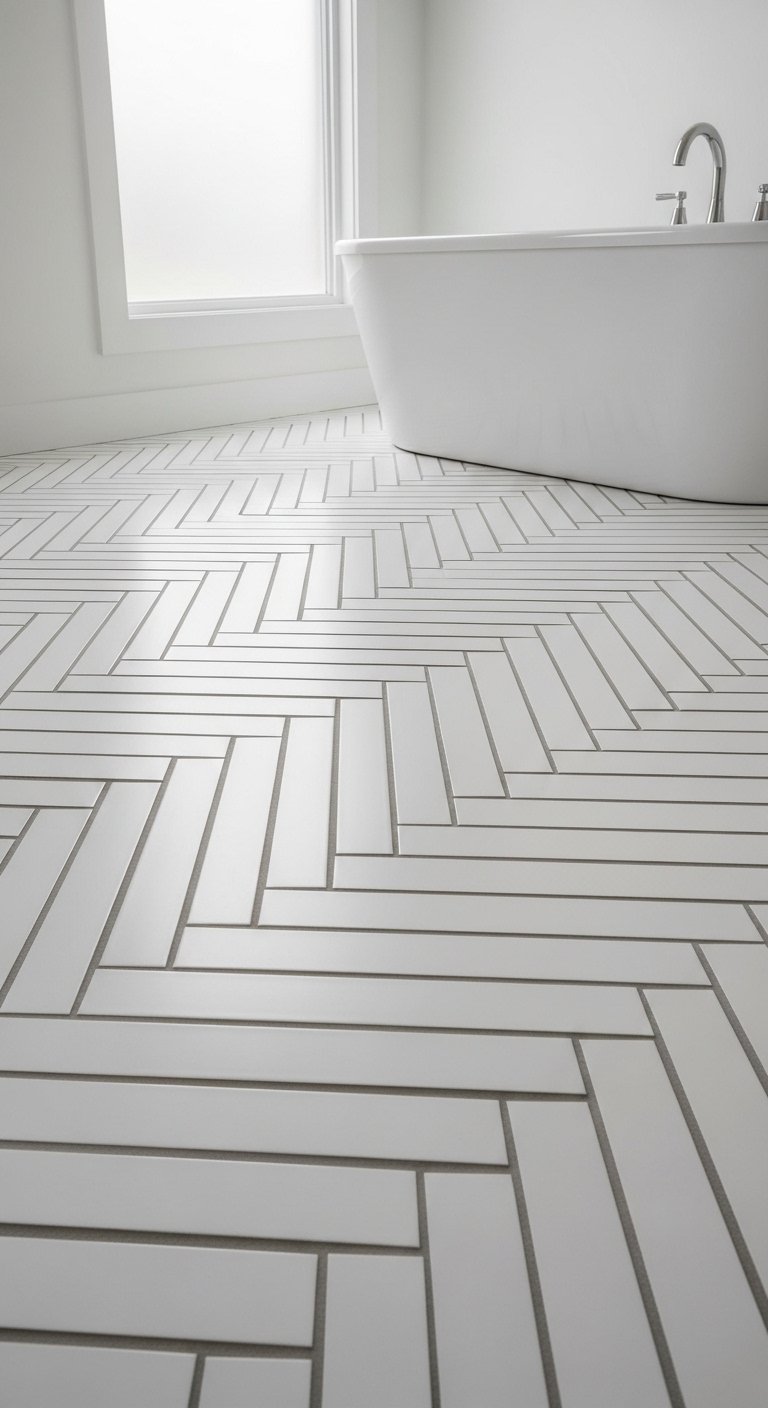
The herringbone pattern arranges rectangular tiles at 45-degree angles to each other in a zigzag formation. It adds movement and visual energy to a floor without using a patterned tile.
A plain white rectangular tile laid in herringbone looks significantly more interesting than the same tile laid in a standard grid. The pattern does the work, not the tile itself.
Herringbone variations:
- Classic herringbone at 45 degrees for maximum visual energy.
- Double herringbone using two tiles per arm of the V for a larger-scale version.
- Micro herringbone using very small tiles for an intricate, detailed result.
The installation requires more cuts and more time than a standard layout. Budget accordingly for labor.
19. Basketweave Pattern
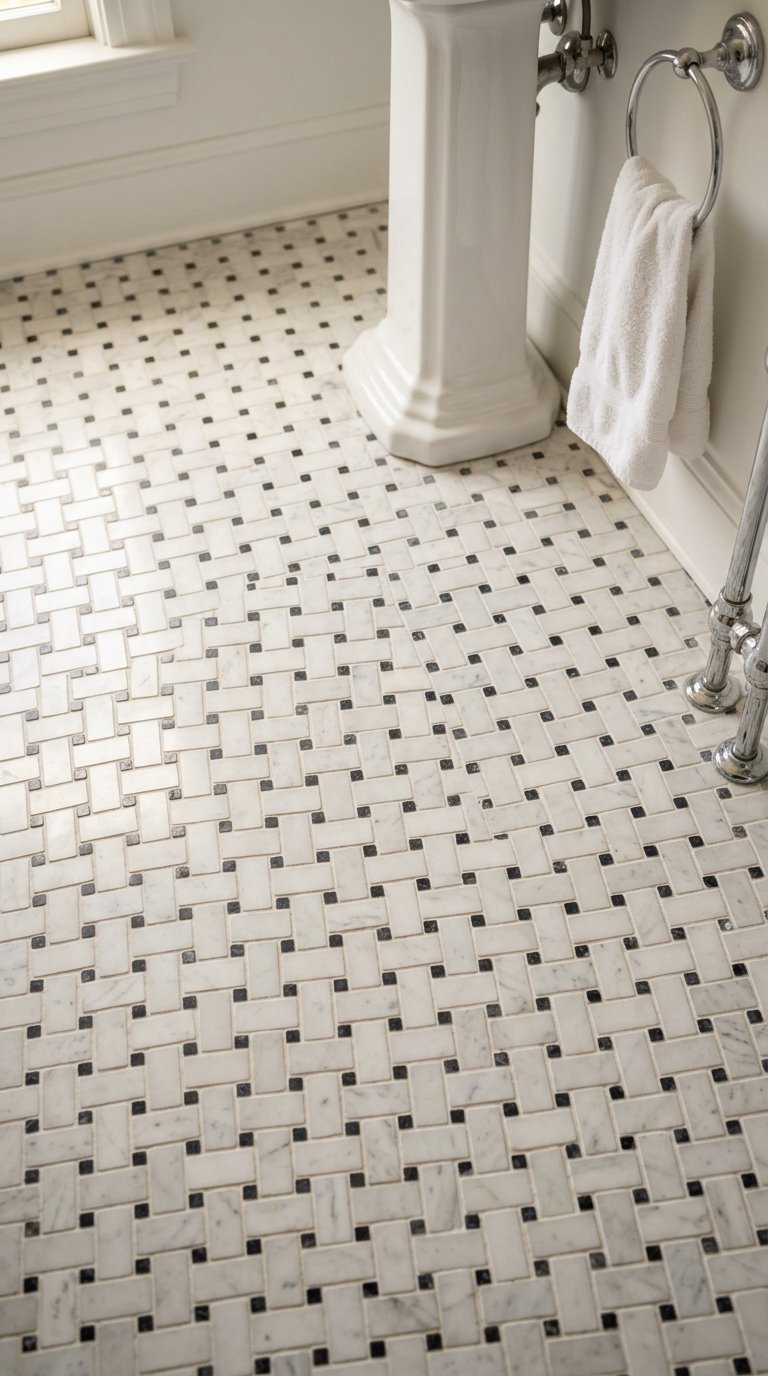
The basketweave pattern combines small rectangular tiles arranged in alternating horizontal and vertical pairs around a central square tile. The result looks like woven fabric translated into tile.
This pattern has a classic, handcrafted quality that suits traditional, transitional, and eclectic bathrooms. A white basketweave floor in a period home or a vintage-inspired bathroom feels entirely appropriate and timeless.
Material options for basketweave:
- White marble with gray dot accents for a traditional look.
- All-white porcelain for a clean, modern take.
- Black and white combination for maximum graphic contrast.
20. Dark Grout on Light Tile
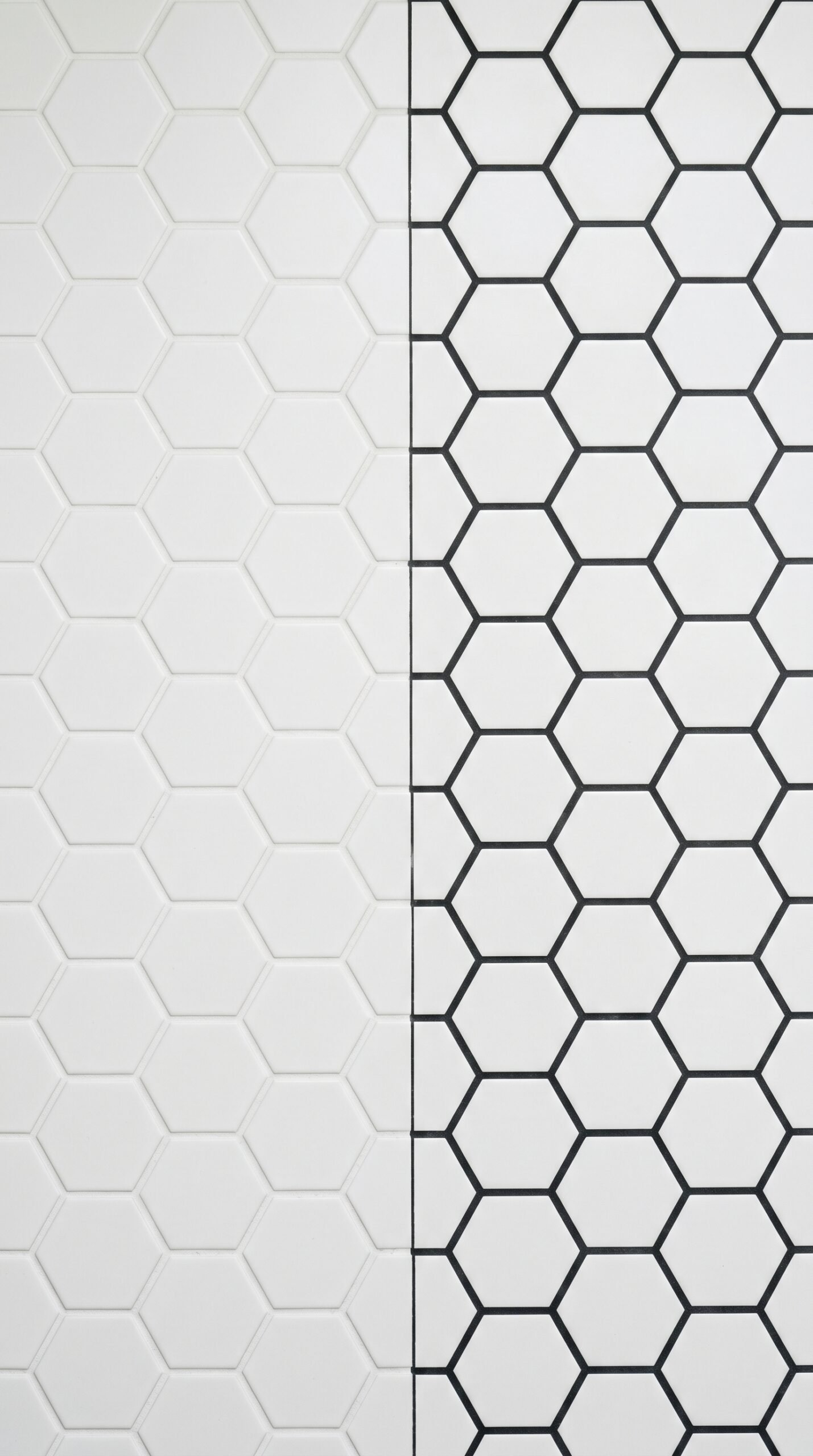
The choice of grout color changes a floor as much as the tile itself. Dark grout on light tile makes every individual tile visible, turning the grout lines into a deliberate part of the pattern.
A white hex tile with charcoal grout looks completely different from the same tile with white grout. One reads as a graphic pattern. The other reads as a solid surface. Both are valid, but they produce entirely different results.
Grout color principles:
- Matching grout minimizes the tile pattern and reads as a more seamless surface.
- Contrasting grout emphasizes the tile shape and pattern.
- Mid-tone grout on a light tile hides dirt better than white grout without the boldness of dark grout.
Choose your grout color before you finalize your tile order. Test them together.
21. Two-Tile Border Design
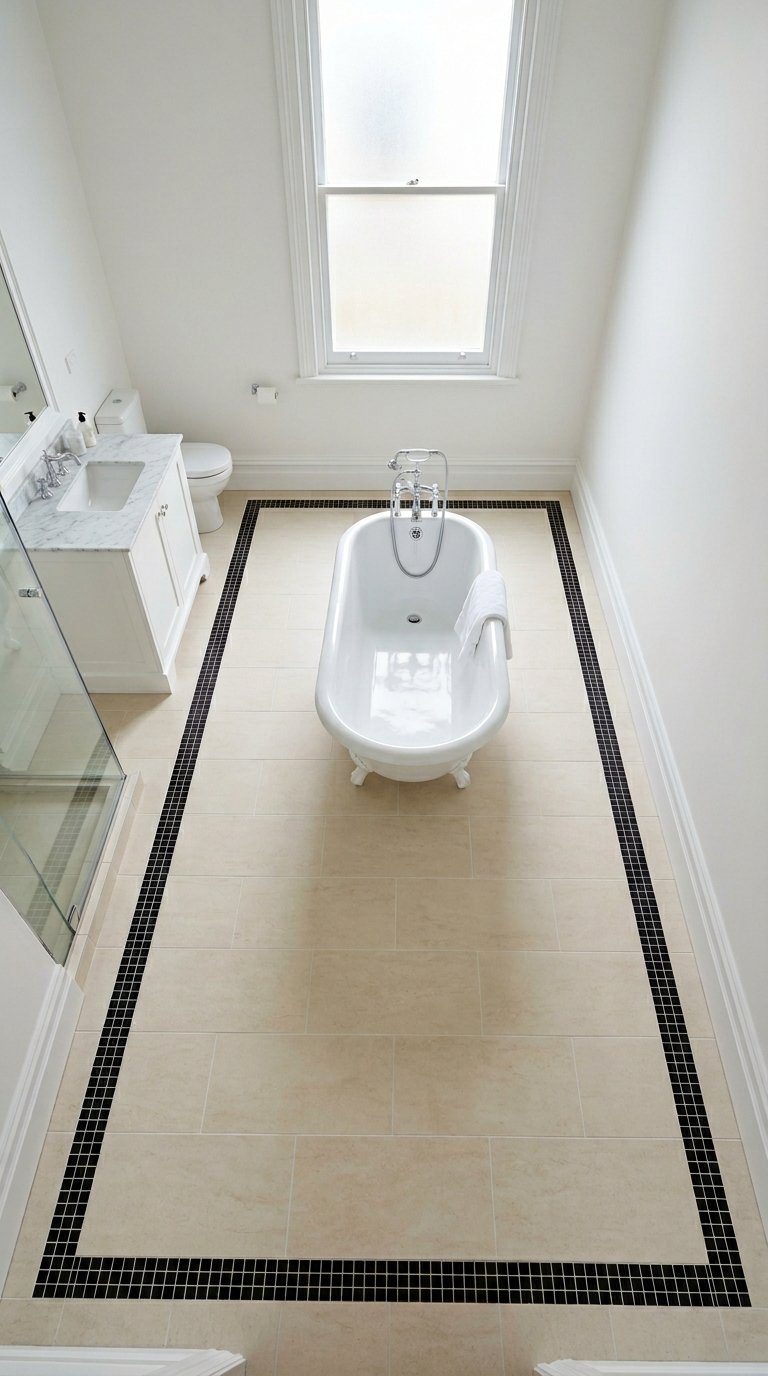
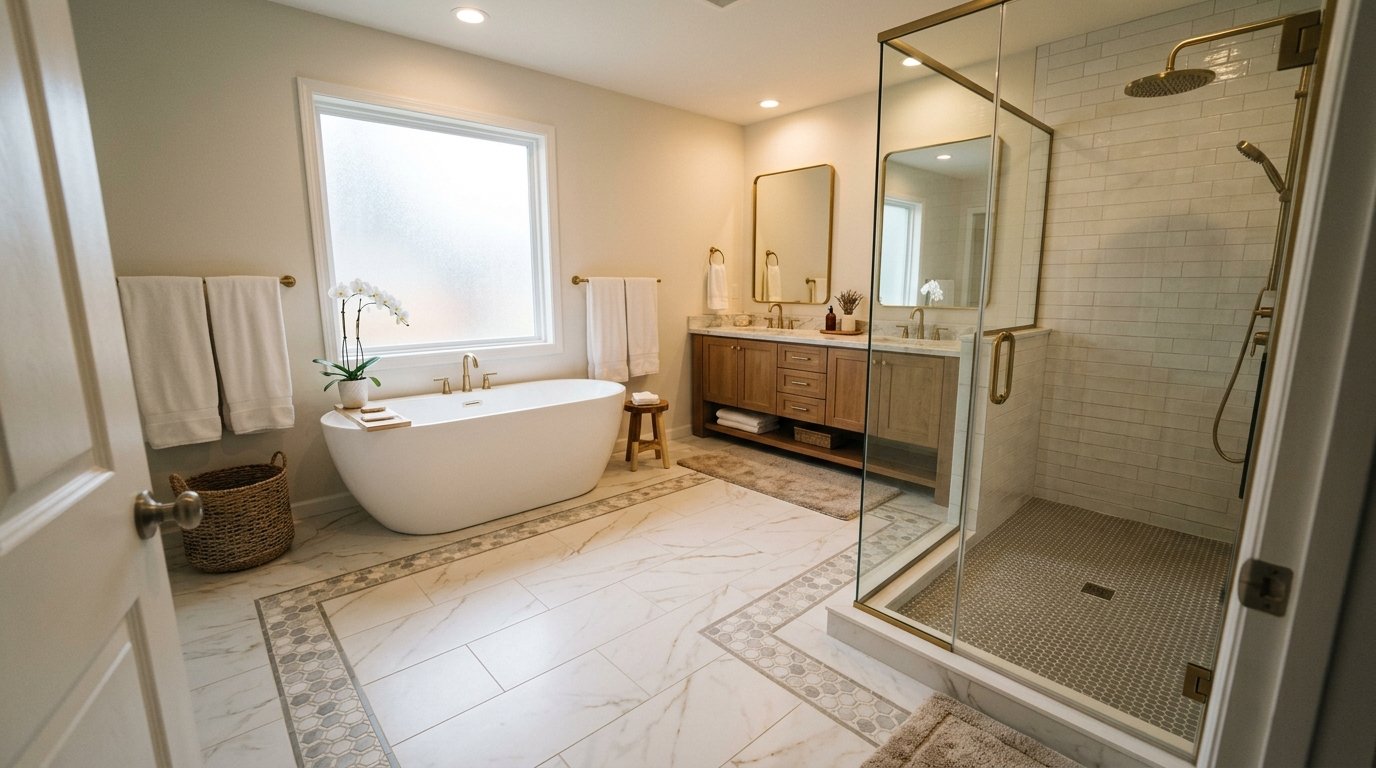
A two-tile border uses one tile for the main field and a contrasting tile as a border running around the perimeter of the floor. This gives a bathroom floor a finished, considered quality without requiring a complicated installation.
The border frames the floor the way a mat frames a photograph. It makes the floor look intentional and complete rather than a surface that simply stops at the wall.
Border combinations that work:
- White field tile with a narrow black border strip.
- Large format stone with a mosaic border in a complementary material.
- Neutral porcelain field with a contrasting encaustic border tile.
Keep the border tile width proportional to the room size. A wide border in a small bathroom overwhelms the floor.
22. Stone-Look Porcelain in Large Slabs
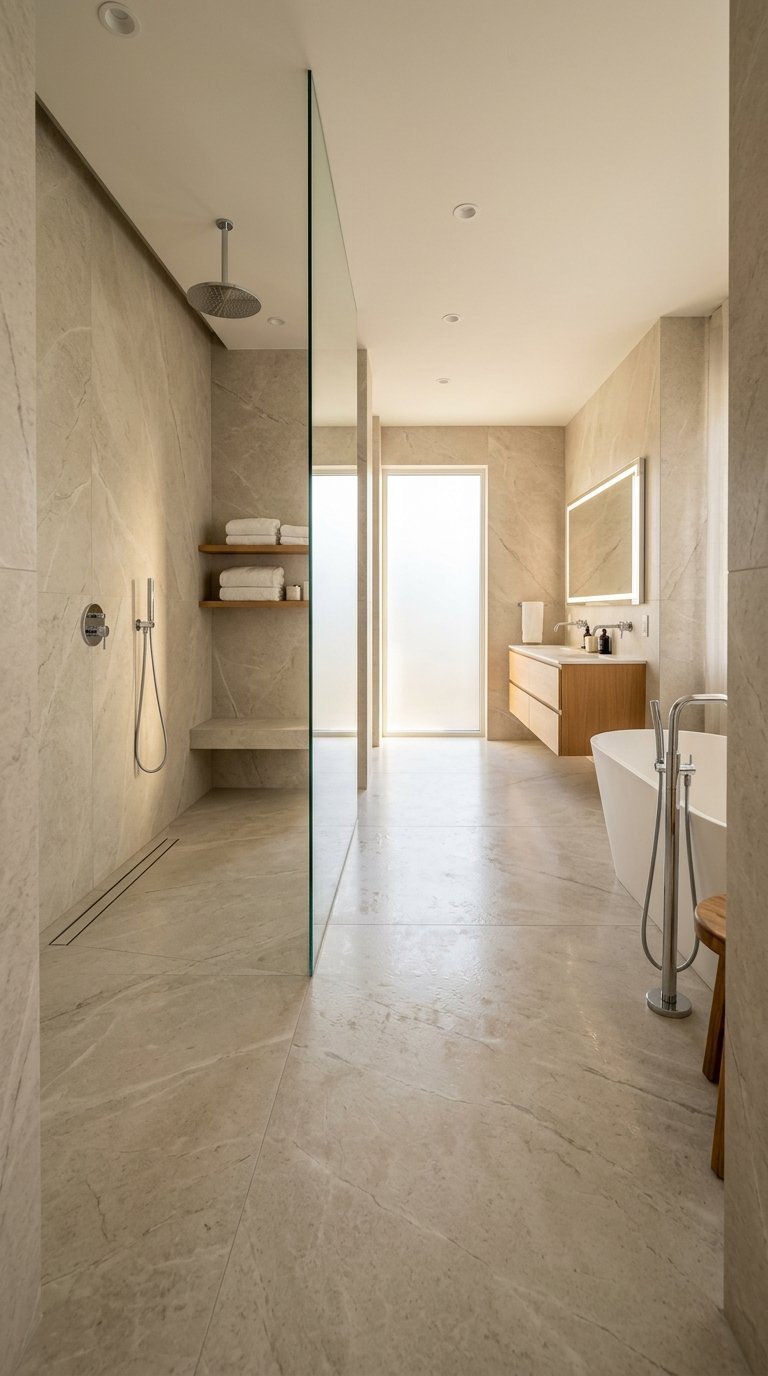
Stone-look porcelain in large slab format, 48×48 inches or larger, creates a bathroom floor that reads like natural stone without the weight, cost, or maintenance requirements of genuine stone.
The large slab format eliminates almost all grout lines, creating a near-seamless surface. In a bathroom with a similarly finished wall treatment, the floor and walls read as one continuous material, which makes the space feel significantly larger.
This approach works best in:
- Master bathrooms with generous floor area.
- Wet rooms where the seamless surface simplifies waterproofing.
- Spa-style bathrooms where visual calm and continuity are the primary goals.
23. Mix Two Different Tiles
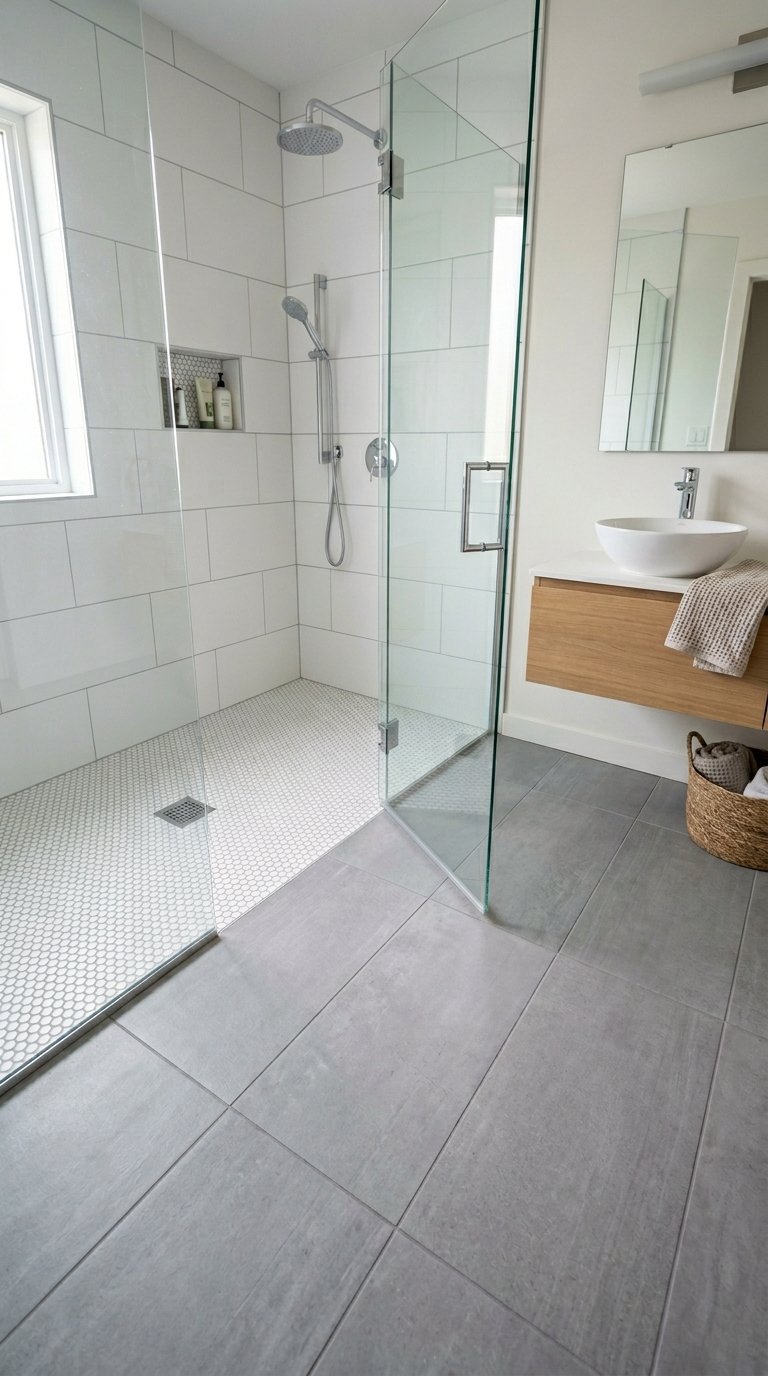
Using two different tile types or formats in one bathroom floor creates zones, adds visual interest, and lets you use a more expensive tile selectively where it has the most impact.
A common approach: large format neutral tile in the main floor area with a decorative mosaic or patterned tile in the shower floor only. The contrast defines the shower zone without requiring any physical barrier.
Rules for mixing tiles successfully:
- Keep the same grout color across both tile types for visual continuity.
- Use the bolder or more expensive tile in the smaller area.
- Ensure both tiles are the same thickness or account for the difference in the installation.
- Stick to a consistent color family between the two tiles so they relate to each other.
The mix works when both tiles share something in common, whether color, tone, material, or finish. When they share nothing, the floor looks like an accident.
Final Thoughts
Your bathroom floor is not a background detail. It sets the material tone, the color temperature, and the visual character of the entire room.
The 23 ideas above cover a wide range of styles, budgets, and practical requirements. Some are low-maintenance and timeless. Others require more care but deliver a result you can’t get any other way.
Start by identifying what you need most: durability, low maintenance, visual impact, warmth, or spatial expansion. Let that answer narrow your choices down to three or four options. Then pick the one that fits your bathroom’s existing character or the character you want it to have.
One good floor tile decision outperforms ten mediocre design choices elsewhere in the room. Take your time with it.