22 Boys Dorm Room Ideas to Create a Cool, Cozy Space
Most guys show up to their first dorm room with a laundry basket and zero plan. The result is a space where the desk chair is also the nightstand and the floor is also the closet. I’ve seen enough dorm rooms to know the difference between a room where someone sleeps and a room where someone lives, and the gap between the two costs under $200 to close if you know which problems to solve first. These 22 boys’ dorm room ideas address the actual issues: no storage, bad lighting, zero personality, and a setup that makes studying feel like punishment.
1. Commit to a Dark, Masculine Color Palette
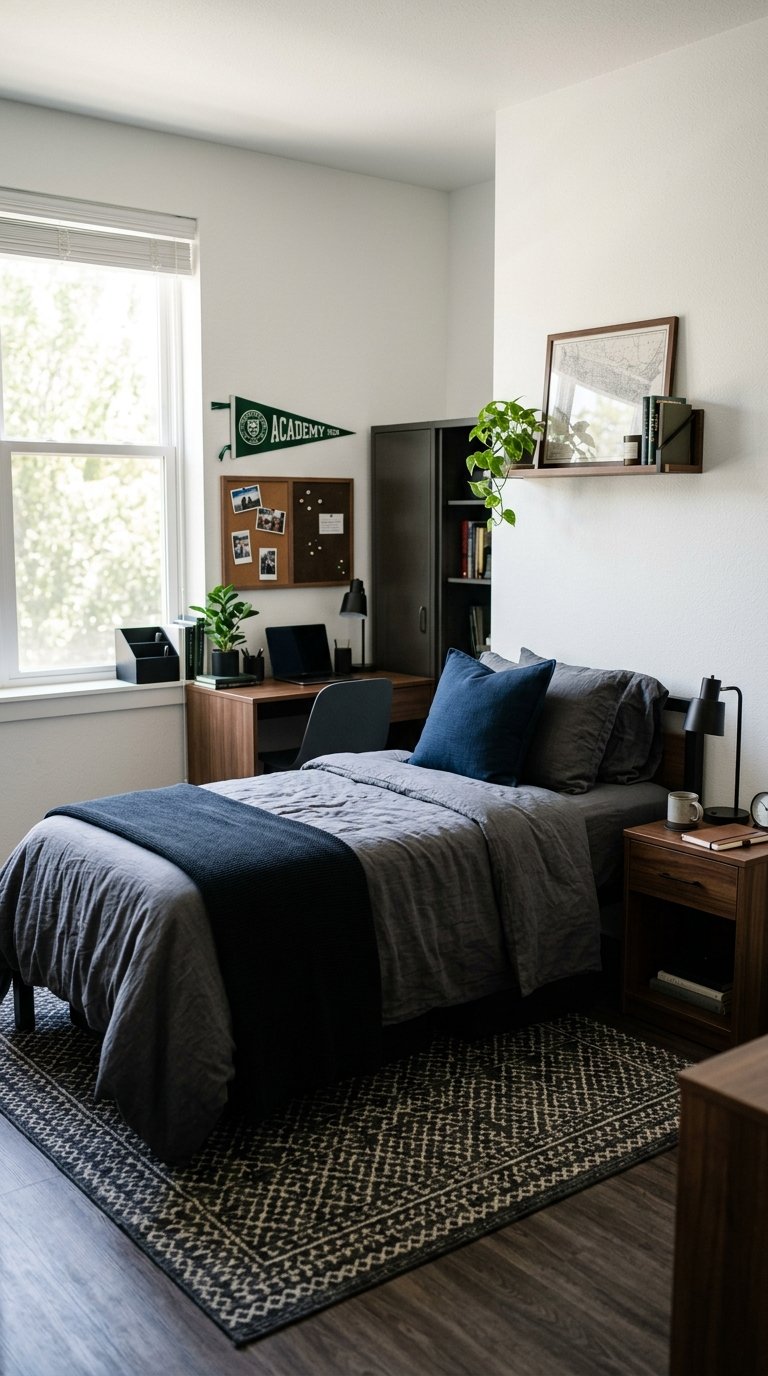
Navy, charcoal, forest green, and deep burgundy work harder in a small dorm room than lighter tones because they visually absorb the clutter a small room inevitably accumulates. A dark comforter set in navy or slate grey from Target’s Threshold line runs $40 to $60 in Twin XL and immediately makes the bed look intentional rather than an afterthought. Pair it with one or two matching dark-toned pillows and the whole room reads as a coordinated space rather than a furniture dump.
Keep your walls lighter (most dorms are white or cream already) and let the dark tones live in your bedding, rug, and accessories. The contrast between dark textiles and light walls adds depth without making the room feel like a cave, which matters when your study space and your sleep space occupy the same 150 square feet.
2. Invest in a Proper Desk Chair
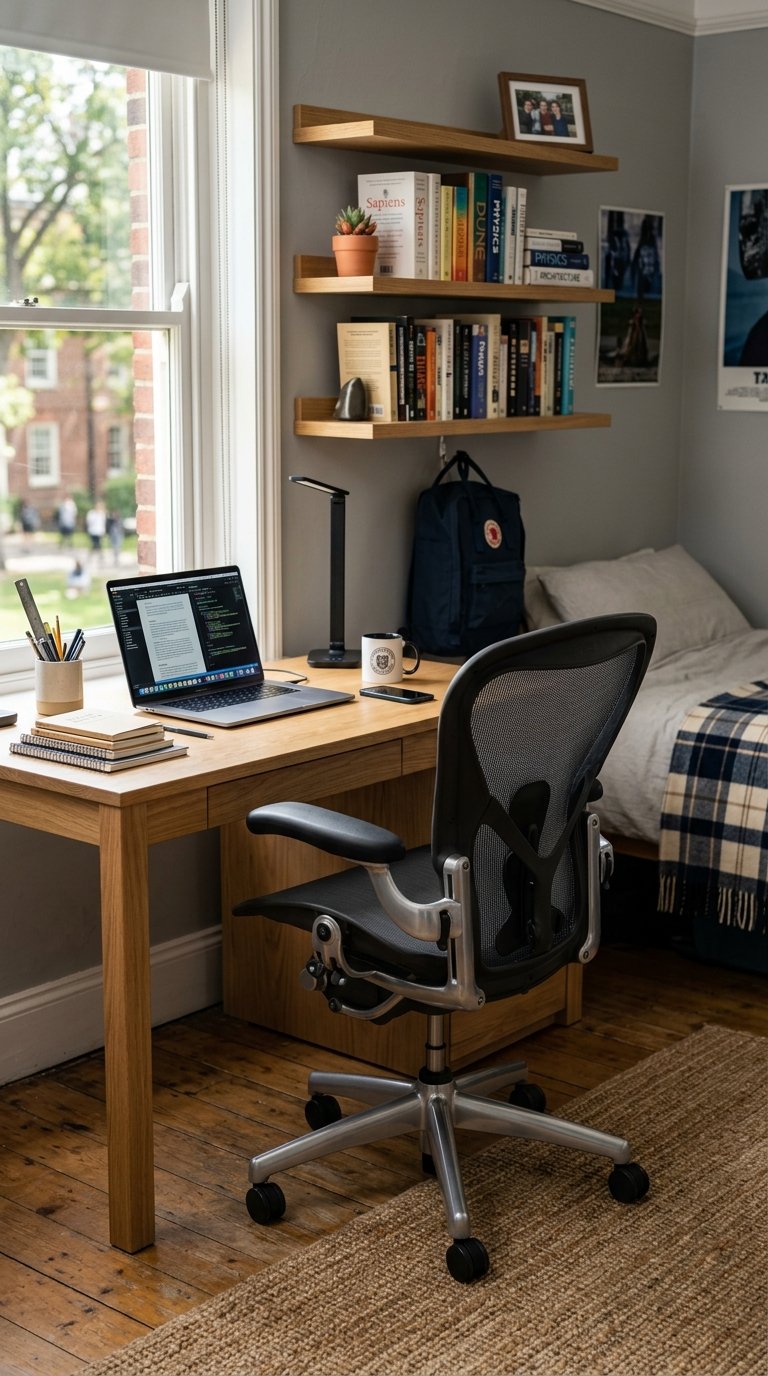
The chair you spend six to eight hours a day in deserves more than a $30 plastic folding seat, and a mid-range ergonomic chair from Amazon or IKEA in the $80 to $150 range pays dividends in focus, posture, and lower back health across a full academic year. IKEA’s MARKUS chair at $229 is the gold standard for dorm desk chairs, but the Hbada ergonomic chair at $120 on Amazon delivers comparable lumbar support at a lower price.
A bad chair sends you to the bed to study, and the bed sends you to sleep, and suddenly it’s 11pm and nothing got done. This is not a productivity problem. It’s a furniture problem, and fixing it with one purchase solves a semester’s worth of lost study hours.
3. Build a Clean Gaming Setup
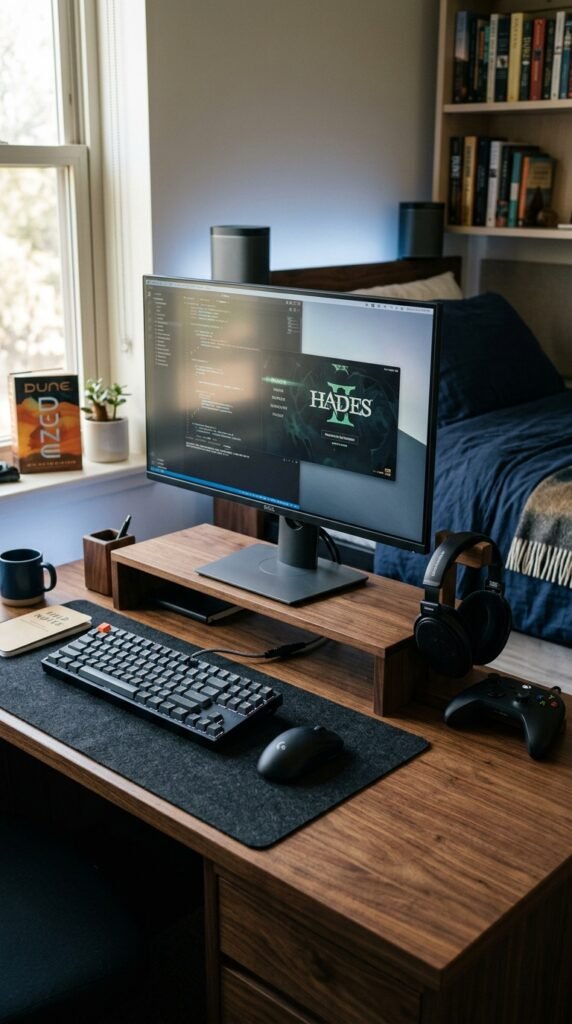
Position your monitor or TV on a riser to free up desk surface, run your cables through a cable management box ($10 to $15 on Amazon), and mount a headphone hook to the desk edge for $8 to $12. These three moves take a messy gaming desk from “disaster” to “intentional setup” in under an hour and cost under $35 total.
A monitor riser with built-in USB ports (the VIVO brand on Amazon runs $25 to $35) gives you a clean surface beneath the screen for a keyboard tray or controller storage, which frees up the rest of your desk for actual coursework. The separation between gaming zone and study zone on the same desk matters more than most guys think when finals hit.
Cable Management Essentials
- Cable management box: hides power strips and adapters, $10 to $15
- Velcro cable ties: keeps desk cables bundled, $6 to $8 for a 50-pack
- Cable clips with adhesive backing: routes cables along desk edges, $8 for 20 pieces
4. Use Floating Shelves for Display and Gear Storage
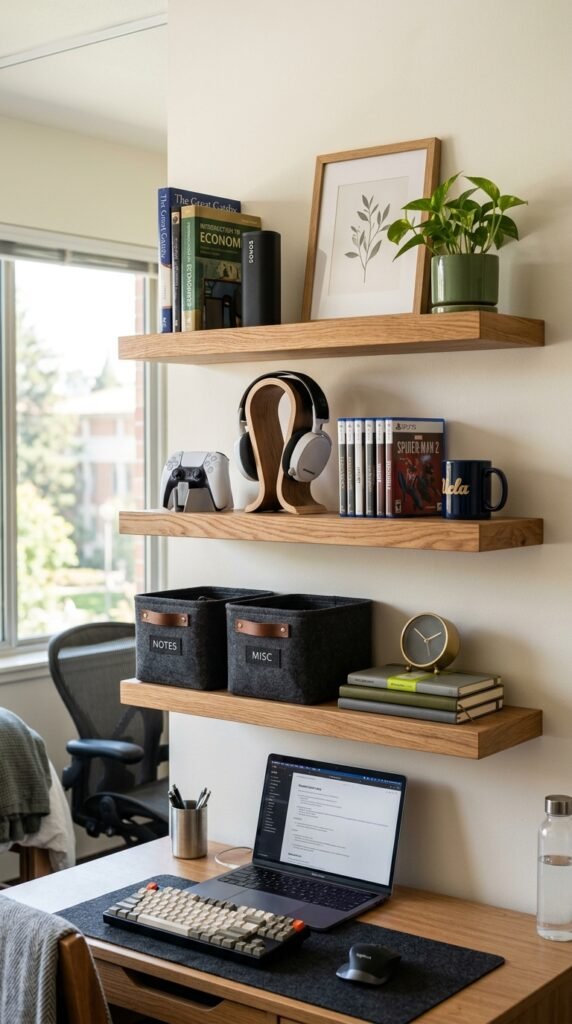
Three floating shelves in a vertical stack above the desk add significant storage without touching your floor space, which is the single most valuable resource in a dorm room. IKEA LACK shelves at $15 each hold up to 25 pounds per bracket and install with standard wall anchors or heavy-duty command strips rated for their weight.
Use the top shelf for display (a speaker, a plant, a few books), the middle shelf for daily-access items (chargers, headphones, a water bottle), and the bottom shelf for course binders or textbooks you reach for regularly. This vertical organization system frees your desk surface for the actual work you need to do.
5. Set Up a Mini Fridge and Microwave Station
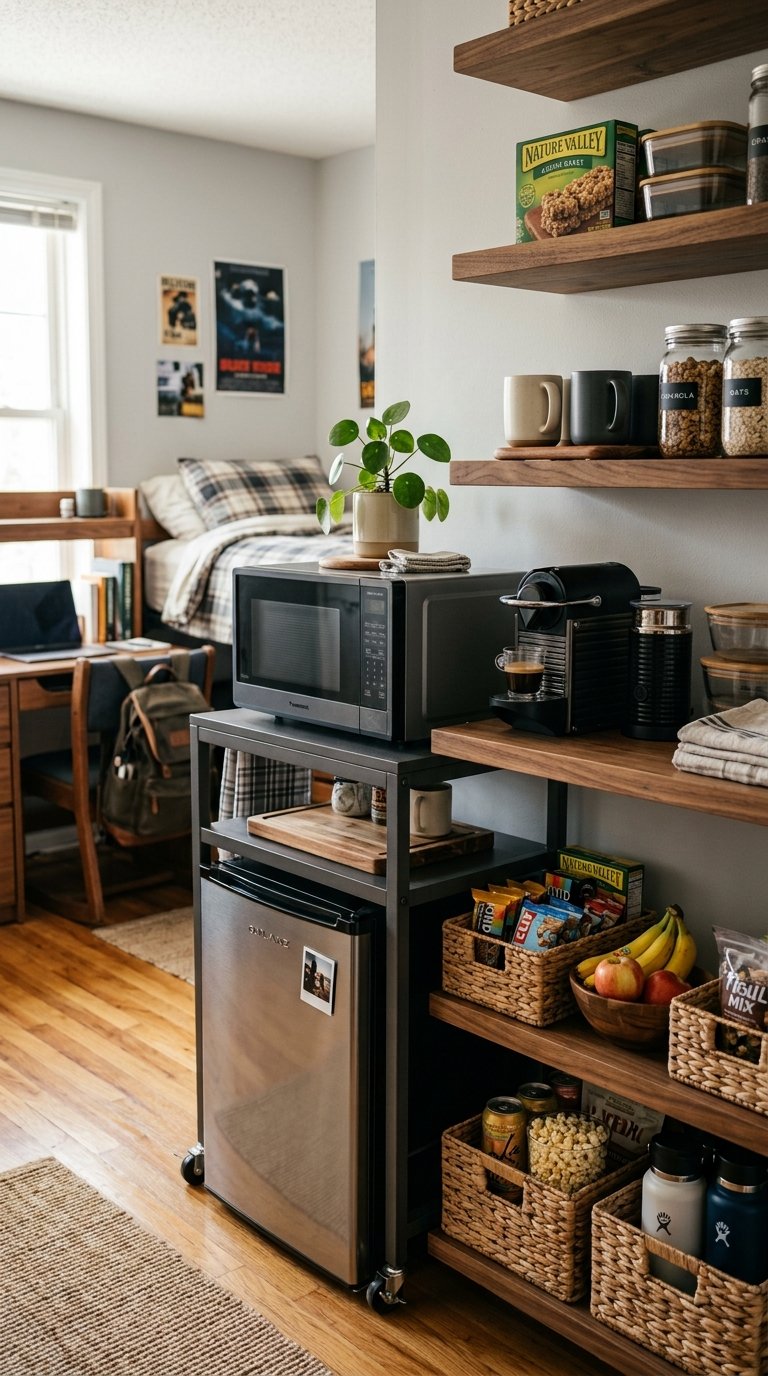
A mini fridge and microwave on a small rolling cart keeps both appliances off your desk and gives you a dedicated food station that makes late-night studying significantly more sustainable. The Frigidaire EFRF696 mini fridge at $170 to $200 holds a solid week of snacks, drinks, and meal prep containers without taking more floor space than a small suitcase.
A rolling kitchen cart from Amazon in the $40 to $60 range positions the microwave at counter height above the fridge, creating a self-contained food station in one 18-inch floor footprint. Check your school’s approved appliance list before buying, since wattage limits vary by school and affect which microwave models comply.
6. Maximize Under-Bed Storage With Bed Risers
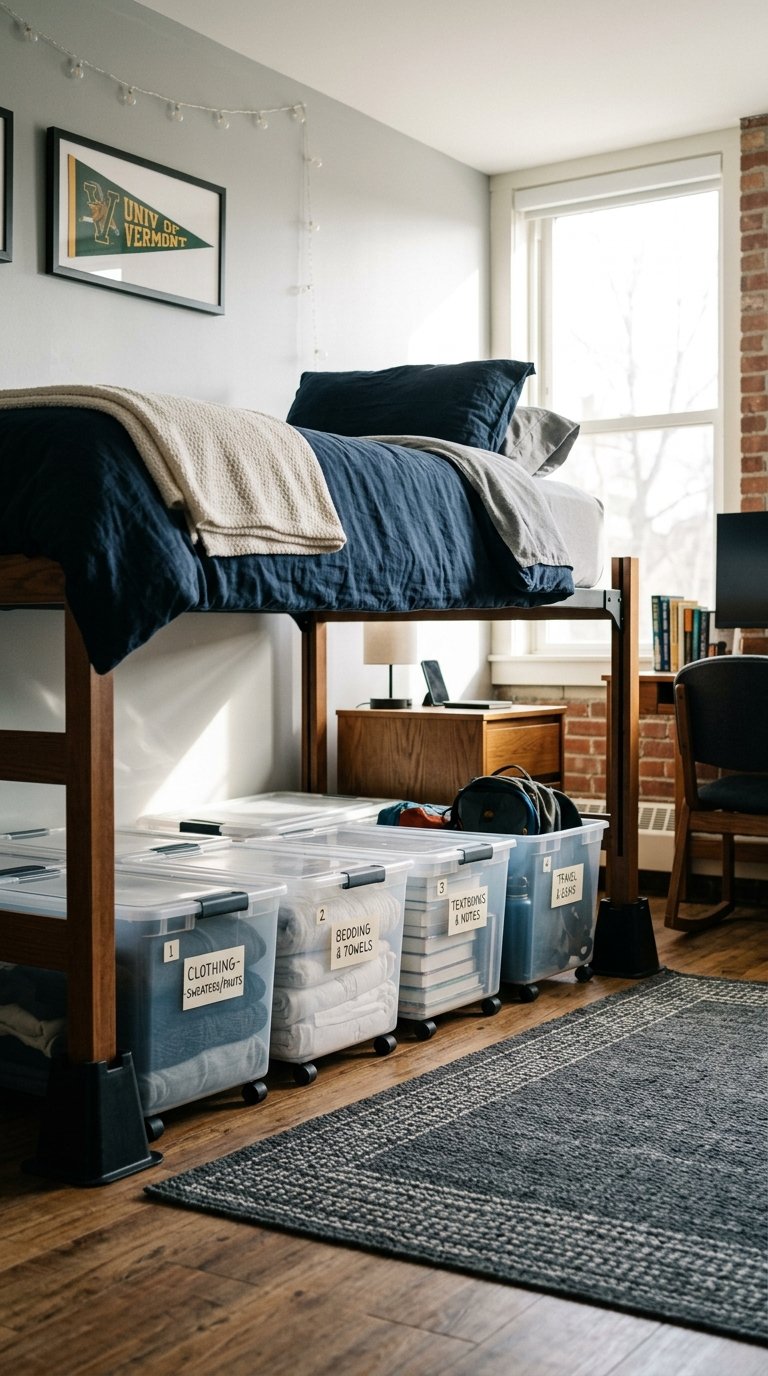
Standard dorm beds sit 12 to 15 inches from the floor, which stores almost nothing useful. Bed risers raise the frame to 18 to 22 inches, creating enough clearance for flat storage bins, a mini fridge, a shoe rack, or a suitcase. AmazonBasics adjustable bed risers cost $18 to $25 for a set of four and handle 1,300 pounds total load.
Fill the space with flat rolling bins from Target or IKEA in the $8 to $15 range each, labeled by category: one for off-season clothes, one for extra bedding, one for textbooks not in current rotation. Organized under-bed storage means your closet and your floor stay clear, which makes a small room feel twice as large.
7. Build a Poster and Sports Gallery Wall
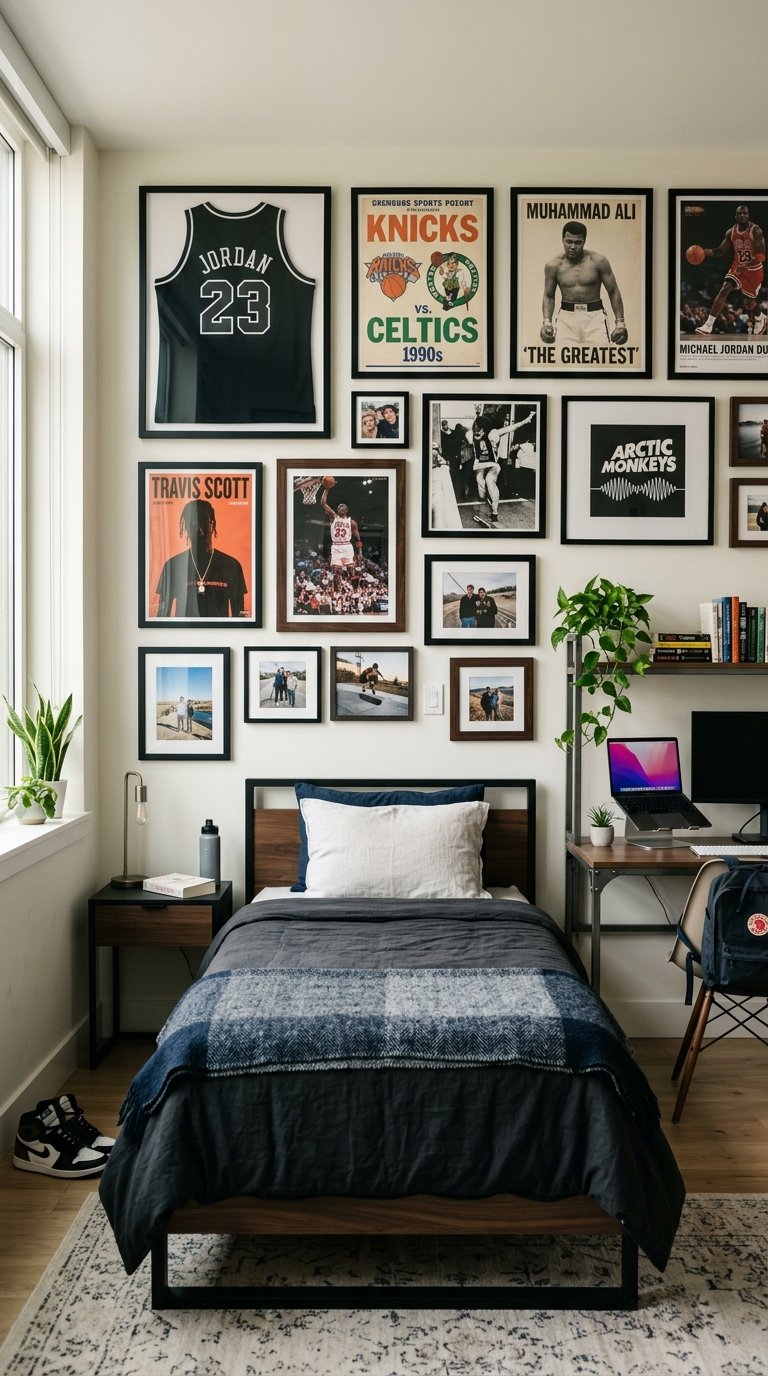
A gallery wall of sports jerseys, team posters, concert prints, and framed photos turns a blank cinder block wall into a room’s personality statement without spending more than $50 total if you source frames from thrift stores and prints from online retailers. Society6 and Etsy sell high-quality prints in sports, music, and pop culture themes starting at $8 to $20 each.
Use command strips (specifically the poster-hanging strips, not tape) rated for the weight of each piece. A standard 18×24 poster on a cinderblock wall needs four to six strips to hold through a full year of temperature changes and minor wall vibration from neighboring rooms. Leave deliberate space between pieces for a curated look rather than a completely covered wall.
8. Add a Desk Lamp With Adjustable Color Temperature
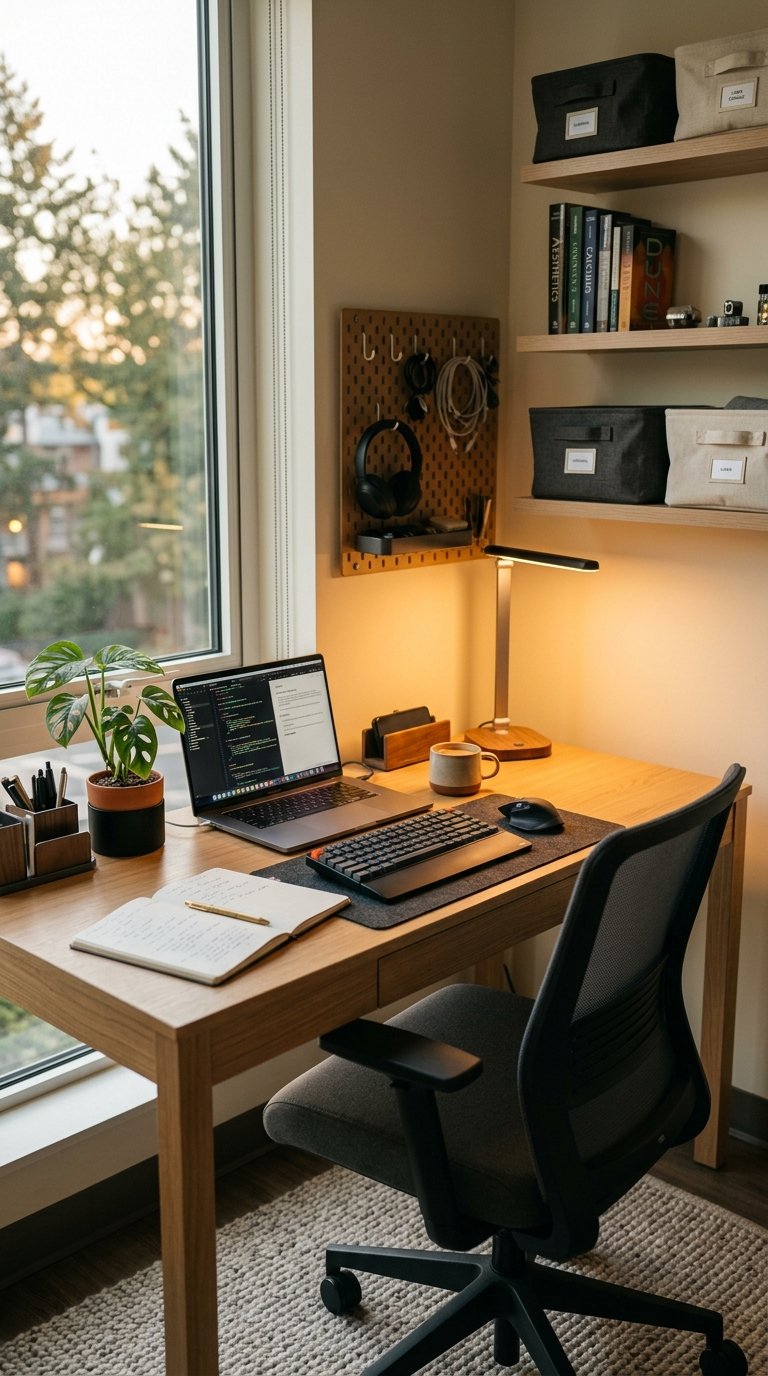
A lamp with adjustable color temperature (warm for evenings, cool daylight for studying) changes your ability to focus and wind down in a room where the overhead lighting does neither well. The BenQ e-Reading LED lamp at $70 is the best performing desk lamp for study spaces, but the TaoTronics TT-DL13 at $25 to $30 delivers adjustable color temperature and brightness at a price point that makes it a no-brainer for any dorm budget.
Cool white light (5000K to 6500K) increases alertness during study sessions by suppressing melatonin production, according to a 2019 study published in the Journal of Biological Rhythms. Warm light (2700K to 3000K) in the evening helps signal your brain to wind down, which matters when you sleep eight feet from your desk.
9. Use LED Strip Lights for Ambient Lighting
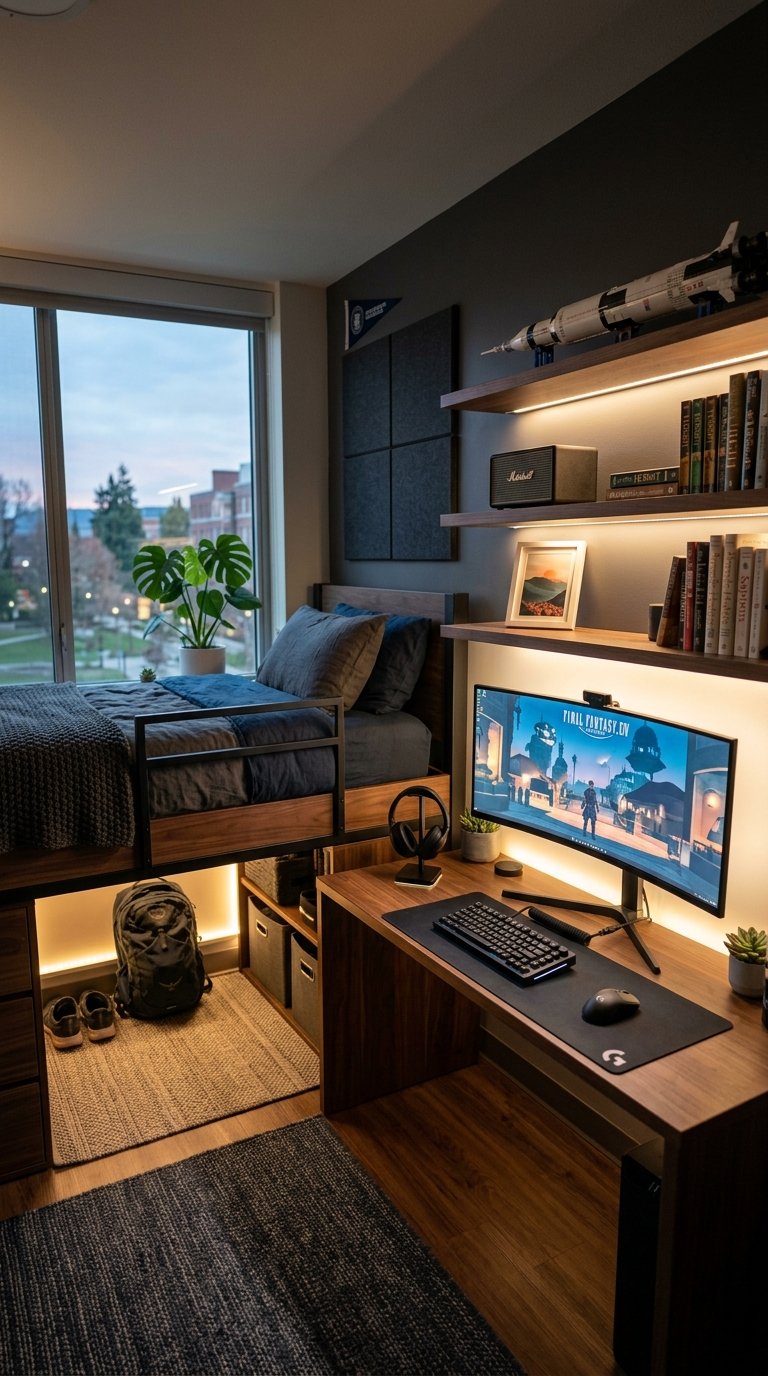
LED strips behind your monitor, under your bed frame, or along a shelf edge add ambient light that overhead fluorescents completely fail to provide. Gobee LED strips with app control run $15 to $25 for a 16-foot reel, which covers a full desk setup and a bed frame perimeter with material left over.
Set the strips to a warm amber or soft white tone for evening studying and switch to a brighter, cooler tone during daytime use. The app control means you adjust everything from bed without standing up, which is genuinely useful at 11pm when the overhead light is off and you’re reading one more chapter before sleep.
10. Add a Quality Bluetooth Speaker
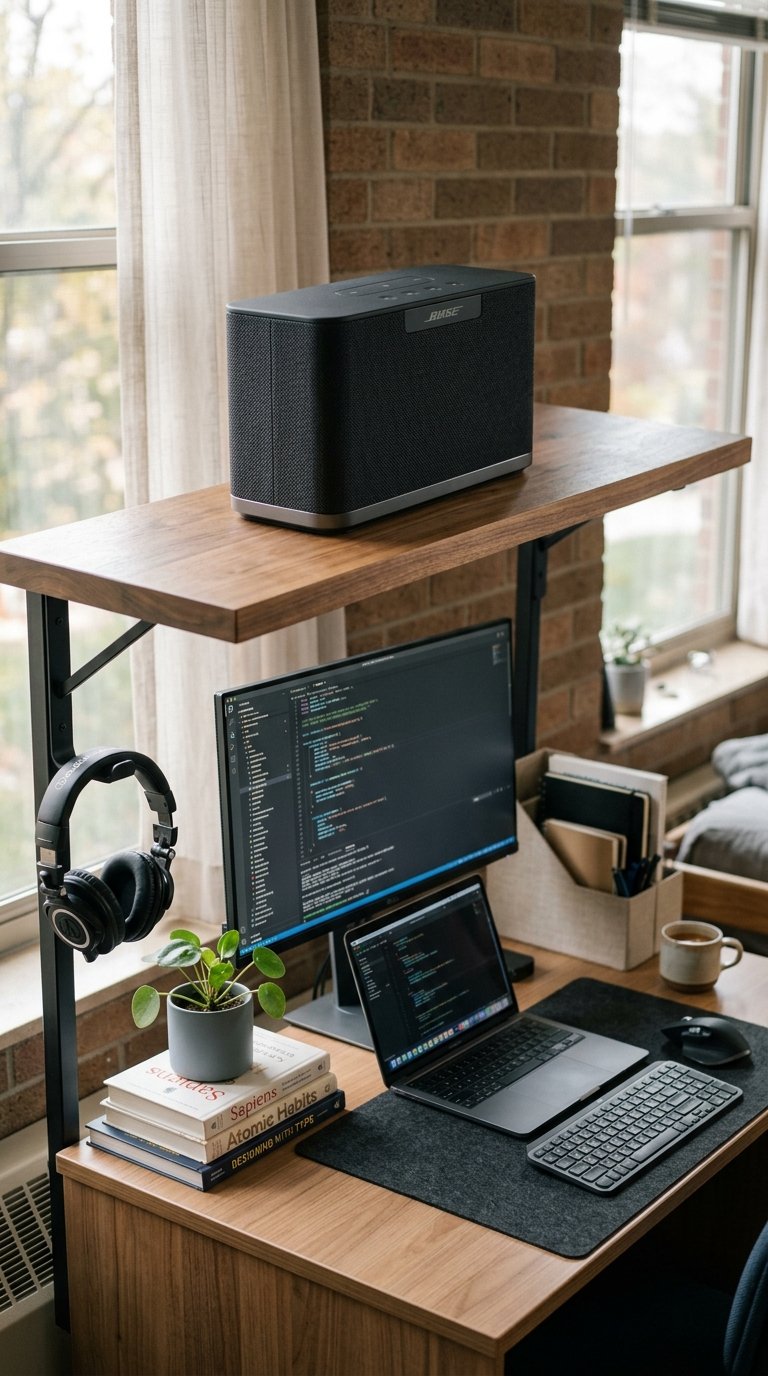
A speaker positioned on a floating shelf or a desk riser rather than on the floor delivers significantly better audio because it projects at ear level rather than bouncing sound off the floor and losing clarity. The Anker Soundcore 3 at $35 to $40 delivers 24-hour battery life, an IPX5 water resistance rating, and sound quality that outperforms anything at twice its price point in its size category.
Position the speaker on the highest shelf above the desk and angle it slightly toward the seating area. This placement keeps your desk surface clear, protects the speaker from accidental liquid spills at desk level, and puts the sound right where you actually hear it.
11. Get a Multi-Functional Ottoman
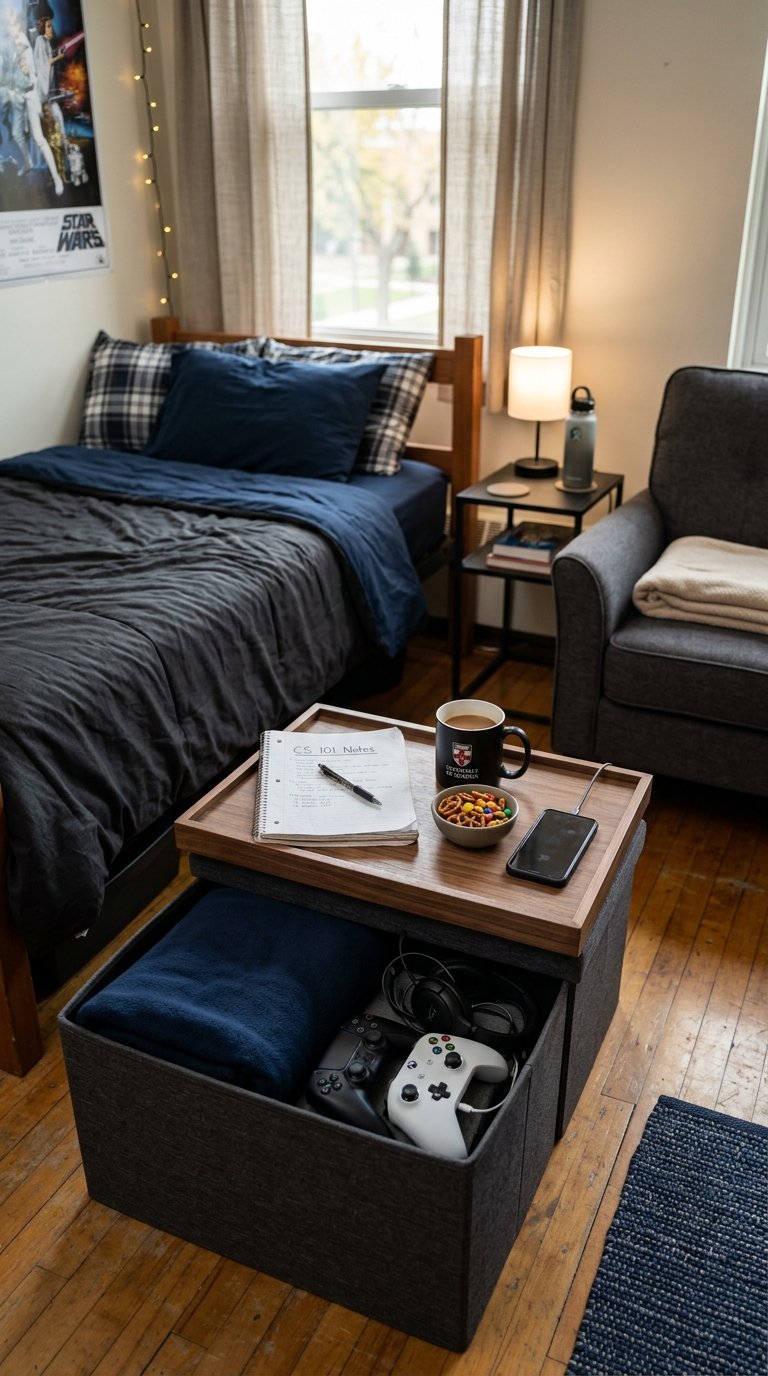
An ottoman with a removable tray top and internal storage serves as extra seating, a footrest, a coffee table surface, and a storage container in one piece of furniture. The Linon Home Cora storage ottoman from Target runs $45 to $60 and handles 250 pounds per the manufacturer’s specifications, which means it works as actual seating for a roommate or guest.
Store extra blankets, gaming accessories, or off-season items inside and use the tray top for drinks and snacks when you’re using the room as a hangout space. This single piece does more functional work per square foot than almost anything else you bring into a dorm room.
12. Use Command Strips for Everything
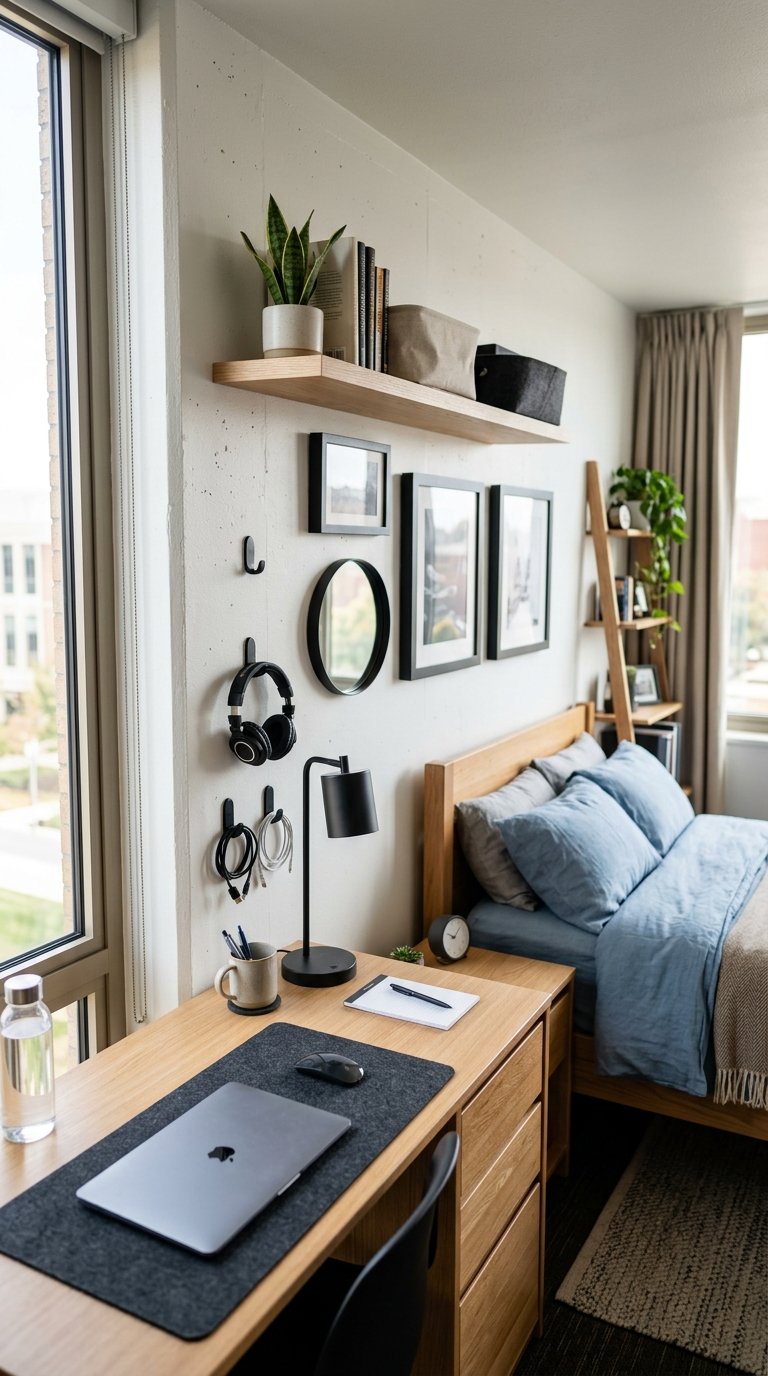
Command strips in the appropriate weight rating hold nearly everything a dorm room needs mounted, from shelves and mirrors to cable hooks and poster frames, without leaving the wall damage housing policies prohibit. The large picture-hanging strips (four pairs per pack, $6 to $8) hold up to 16 pounds per pair on smooth, painted walls.
On cinderblock walls (the rougher dorm wall surface), use the adhesive poster strips specifically designed for textured surfaces rather than the smooth wall versions. The textured-surface versions grip the irregular block surface rather than failing to adhere, which is the number one reason command strips fall overnight and take everything with them.
13. Install a Whiteboard for Visual Organization
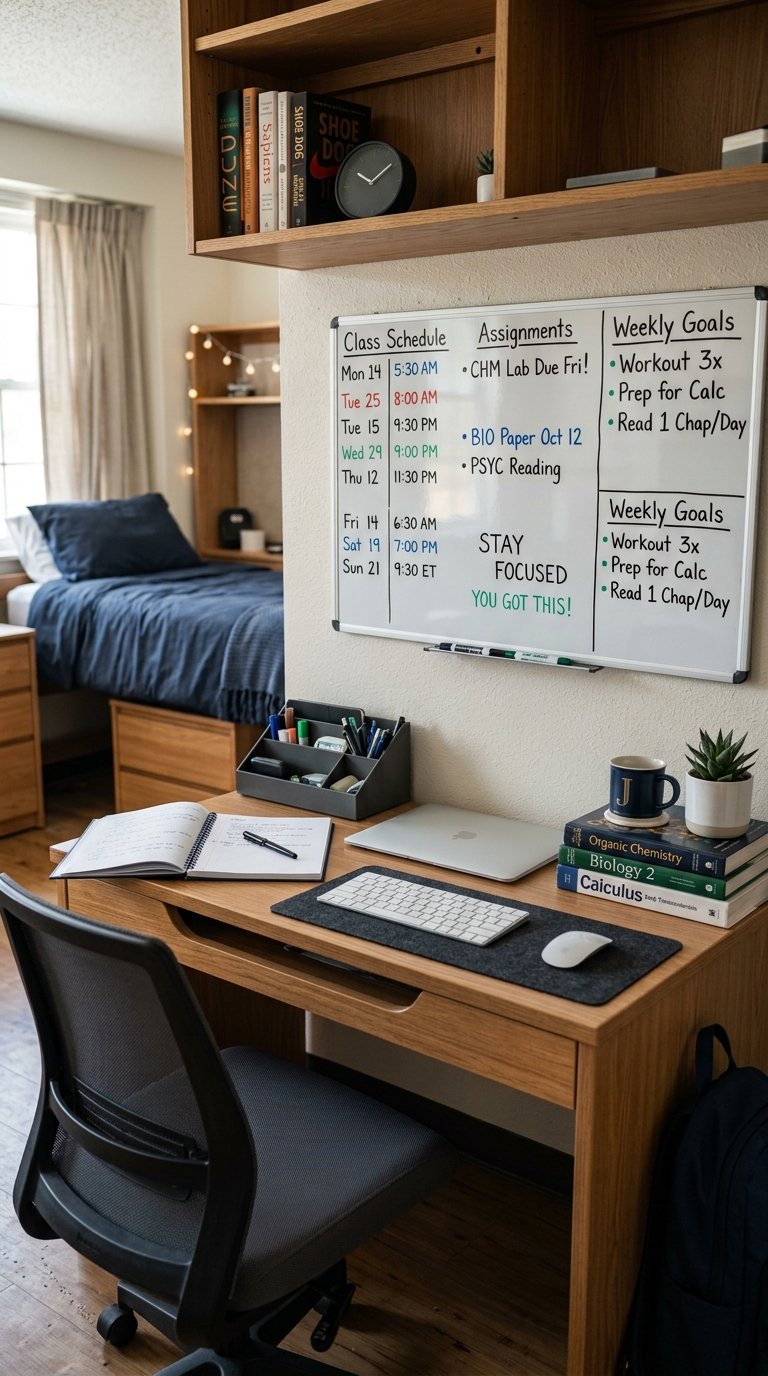
A whiteboard mounted above the desk handles class schedules, assignment deadlines, and daily to-do lists in a format you see every time you sit down, which reduces the mental overhead of tracking obligations across multiple apps and notebooks. A 17×23 inch self-adhesive whiteboard from Amazon runs $12 to $18 and applies directly to a flat wall without drilling.
Write the current week’s deadlines in red, upcoming events in blue, and completed items you haven’t erased yet in green. The color system takes 30 seconds to learn and eliminates the missed assignment situation every dorm student experiences at least once per semester when relying only on a phone calendar.
14. Set Up Proper Monitor Positioning
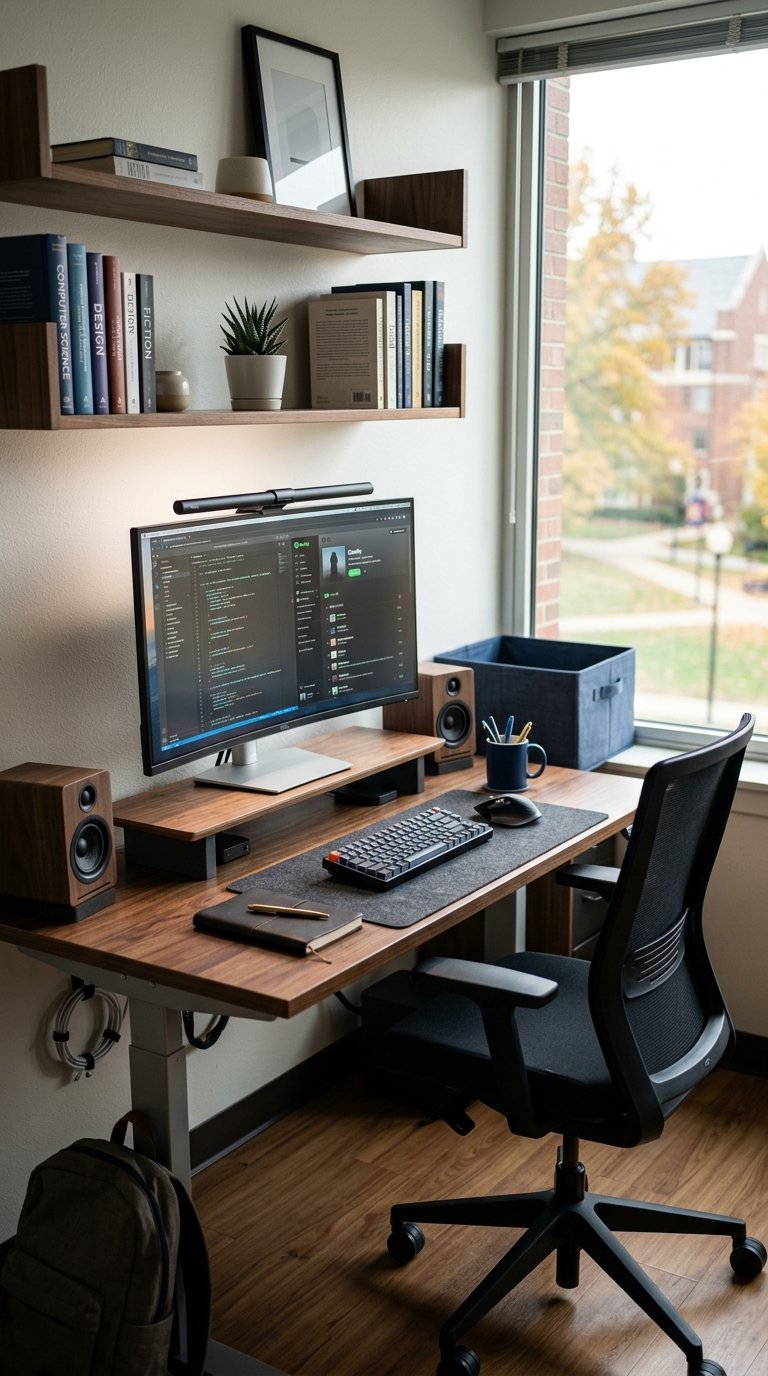
Your monitor top edge should sit at eye level when seated, which for most standard dorm desks requires a riser of 3 to 6 inches. Looking down at a screen for extended periods creates neck flexion strain, and a 2018 study from Harvard Medical School found that forward head posture from screen positioning increases neck muscle strain by up to 60 pounds of effective load.
A simple wooden monitor riser built from a 2×4 and some sandpaper costs under $5 if you have access to a basic tool setup, or a commercial version from Amazon runs $20 to $35 with built-in USB ports for convenience. Either option fixes a posture problem before it becomes a chronic pain problem by February.
15. Add a Bulletin Board for Memory and Organization
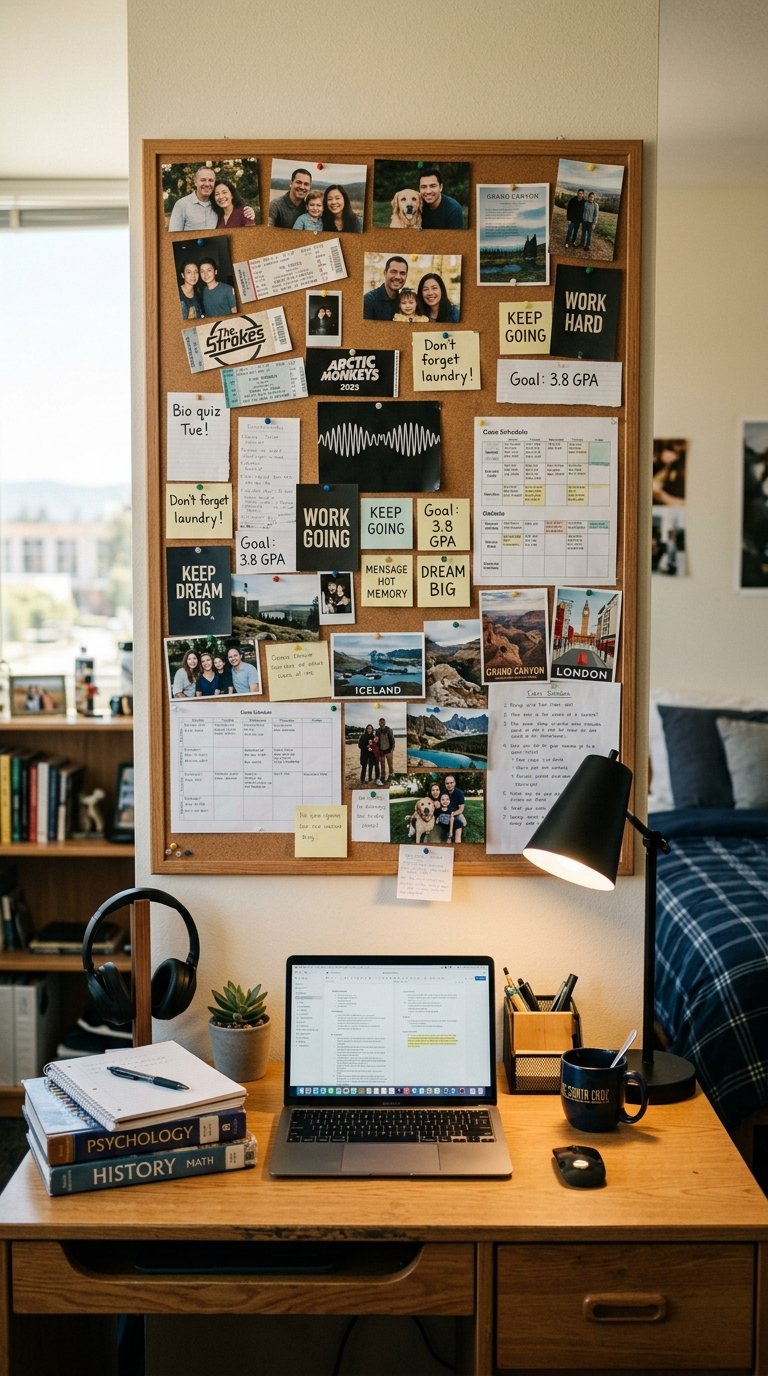
A large cork board above the desk collects tickets, photos, notes, and reminders in one visible spot without requiring you to pin things directly into the wall. The Quartet natural cork bulletin board in 24×36 inches costs $18 to $25 and holds several months of accumulated mementos without filling.
Pin things in loose groupings rather than organized rows for a collected, personal look rather than an office aesthetic. A few photos from home, a concert stub, a handwritten note, and a class schedule together tell the story of your life at college in a way a bare wall never does and a phone screen never shows.
16. Organize Your Closet With a Second Rod
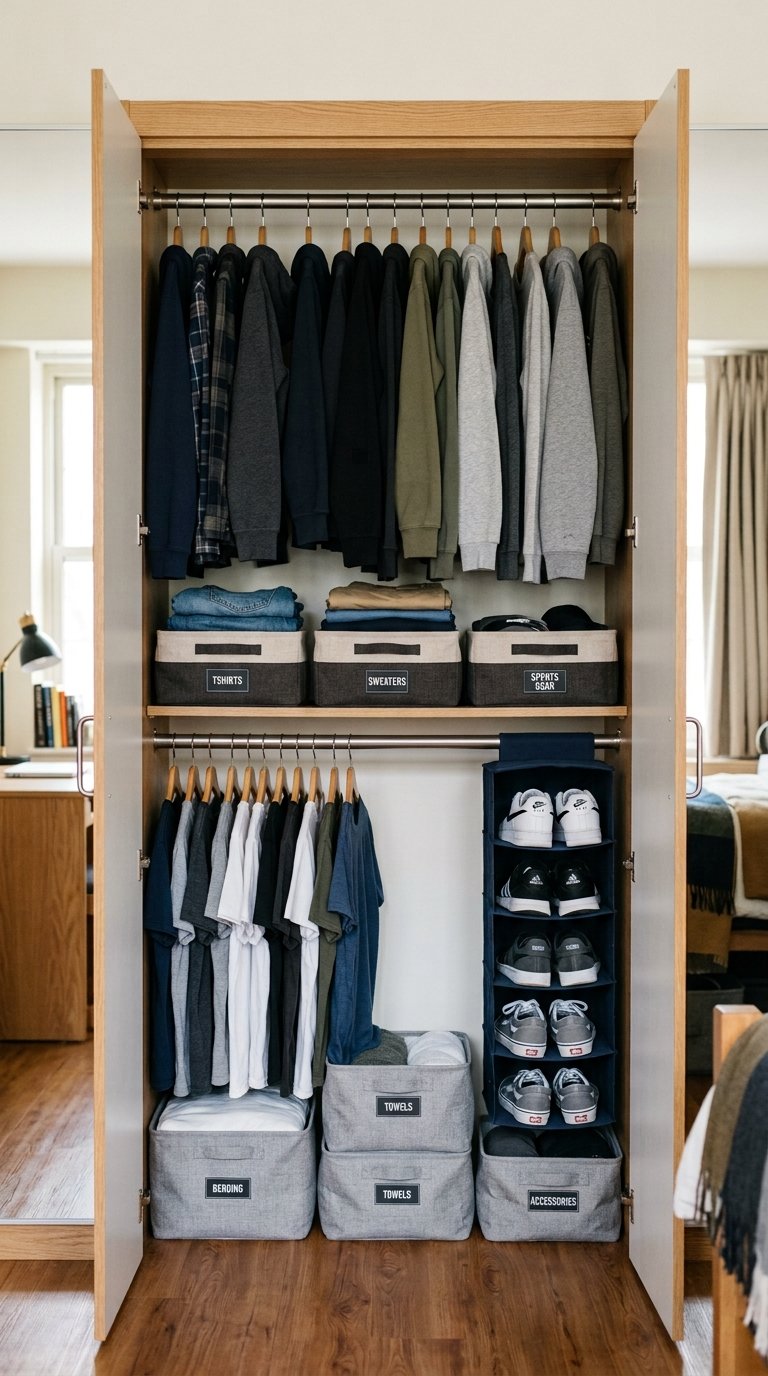
Most dorm closets include one hanging rod positioned for long garments, which wastes the bottom half of the closet for hanging shirts and jackets. A second tension-mounted closet rod ($8 to $15 at any home goods store) installed 18 to 20 inches below the first doubles your hanging capacity with zero modification to the closet structure.
Hang shirts, jackets, and shorter items on the lower rod and keep your full-length items (if any) on the original upper rod. Add a hanging shoe organizer on the inside closet door for footwear, freeing your floor from the shoe pile that migrates toward the center of every dorm room by October.
17. Get a Bedside Caddy
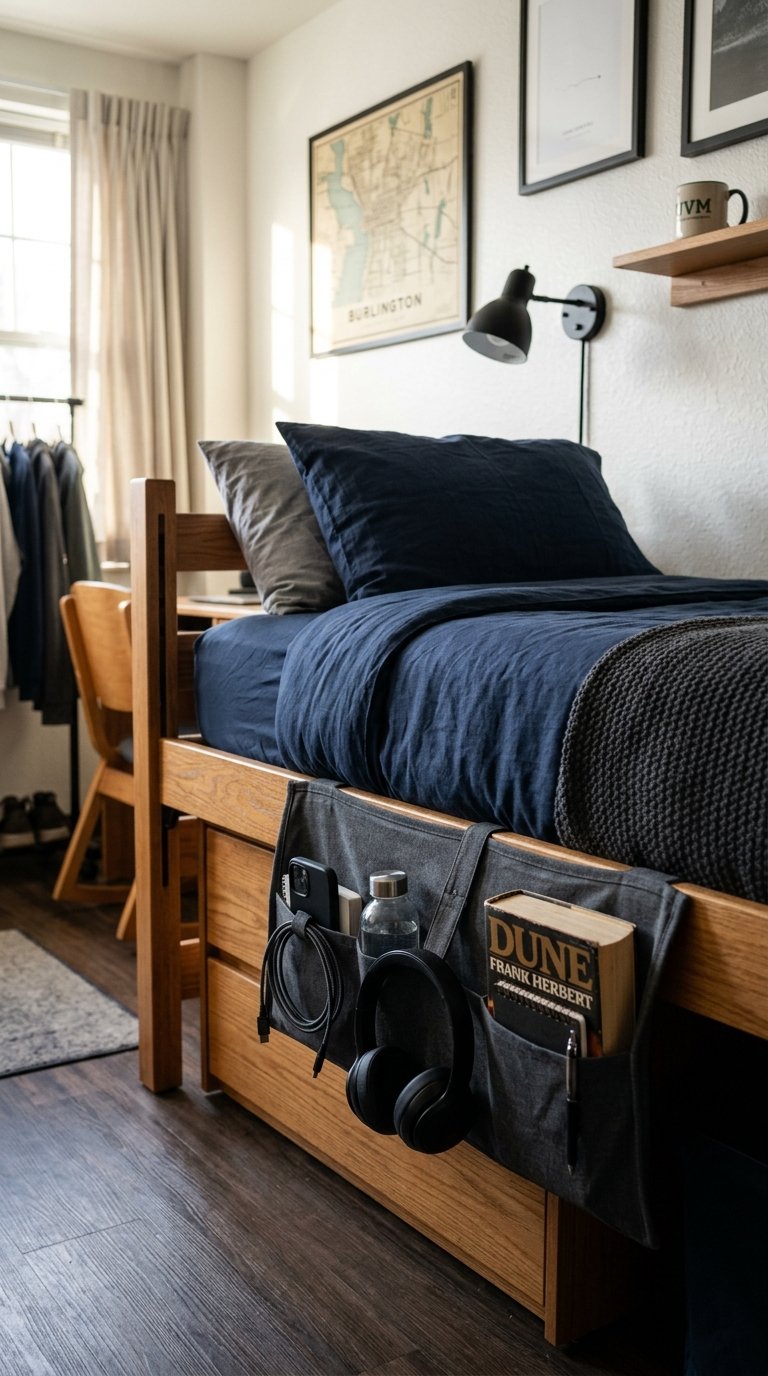
A bedside caddy that hooks over the mattress edge holds your phone, charger, TV remote, water bottle, and a book in arm’s reach from bed without requiring a nightstand you don’t have floor space for. The BAGAIL bedside caddy on Amazon runs $12 to $18 and holds up to 11 pounds across its pockets.
The most common dorm nightstand solution is a stack of books beside the bed, which works for zero purposes. A bedside caddy costs the same as two drinks on campus and permanently solves the problem of your phone charging on the floor six feet from where you’re sleeping.
18. Use a Room Divider for Privacy
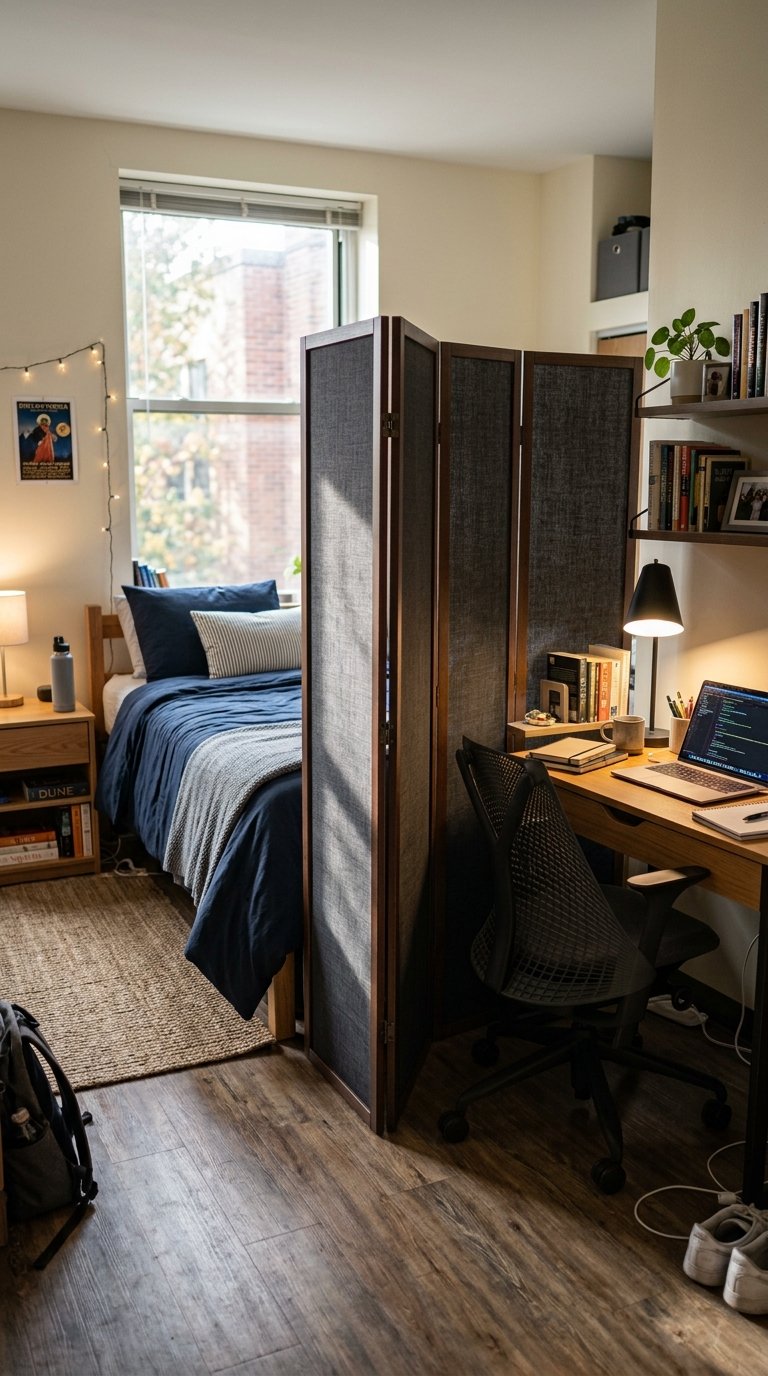
A folding room divider between your bed and your roommate’s space creates a privacy boundary that makes a genuine difference to sleep quality when one person needs to be up at 7am and the other has a night class until 10pm. A three-panel folding divider from Amazon runs $45 to $80 depending on height and material.
Fabric-paneled dividers in dark canvas or neutral linen block light more effectively than slatted wooden versions, which matter when one person needs darkness to sleep while the other has a desk lamp on. This investment makes shared living significantly more functional and significantly less of an ongoing negotiation.
19. Add a Floor Rug to Define Your Space
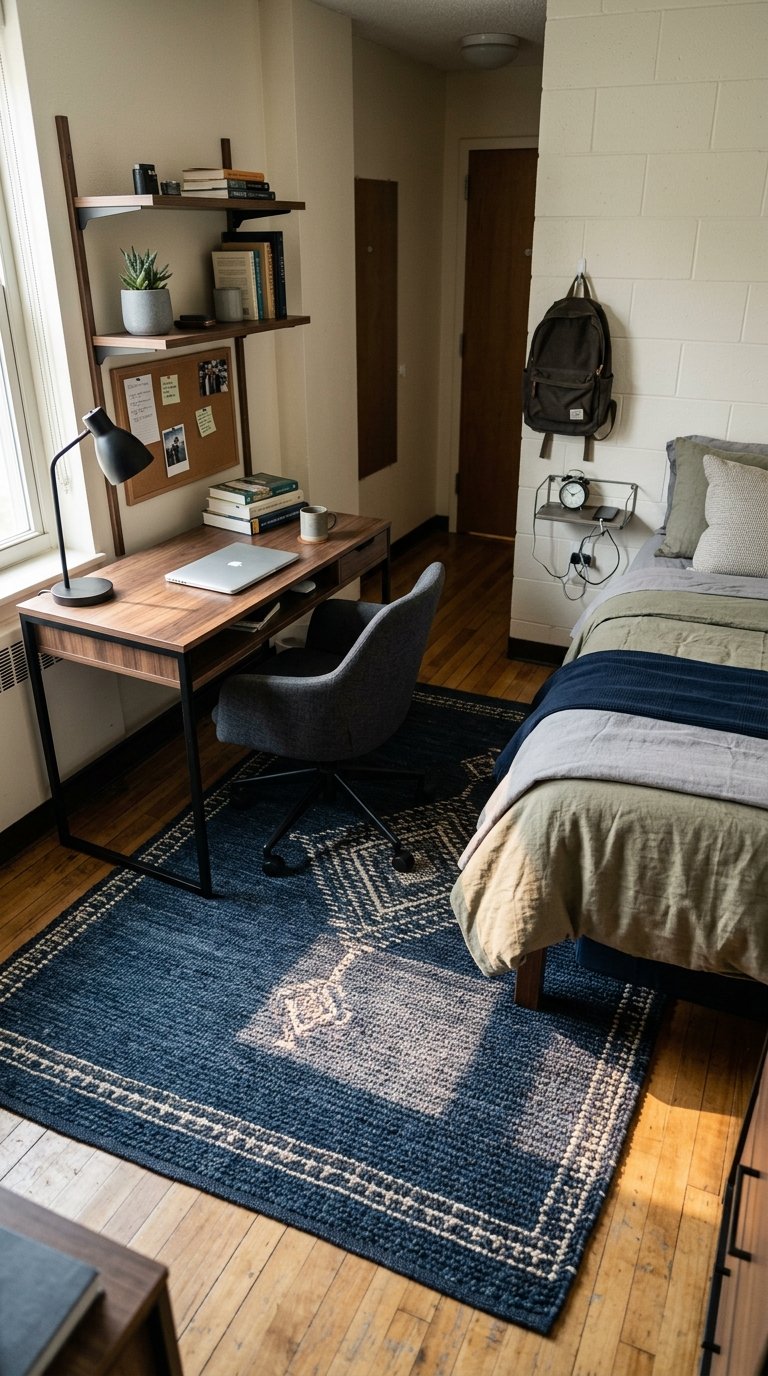
A 5×7 rug positioned under your desk chair and extending to the bed creates a visual zone that makes your half of the room feel like a designed space rather than half of a larger shared problem. A flat-weave polypropylene rug in a dark tone or subtle pattern from Ruggable runs $89 to $129 in a 5×7 size, and the machine-washable version handles the inevitable spills of a year in a dorm.
A dark geometric pattern or a solid deep navy hides wear and staining better than anything light-colored, and at a price under $100 it remains one of the best-value transformation pieces on this entire list. The rug also reduces impact noise transmitted to the floor below, which makes you the thoughtful neighbor in a building full of people who aren’t.
20. Set Up a Foldable Desk Organizer
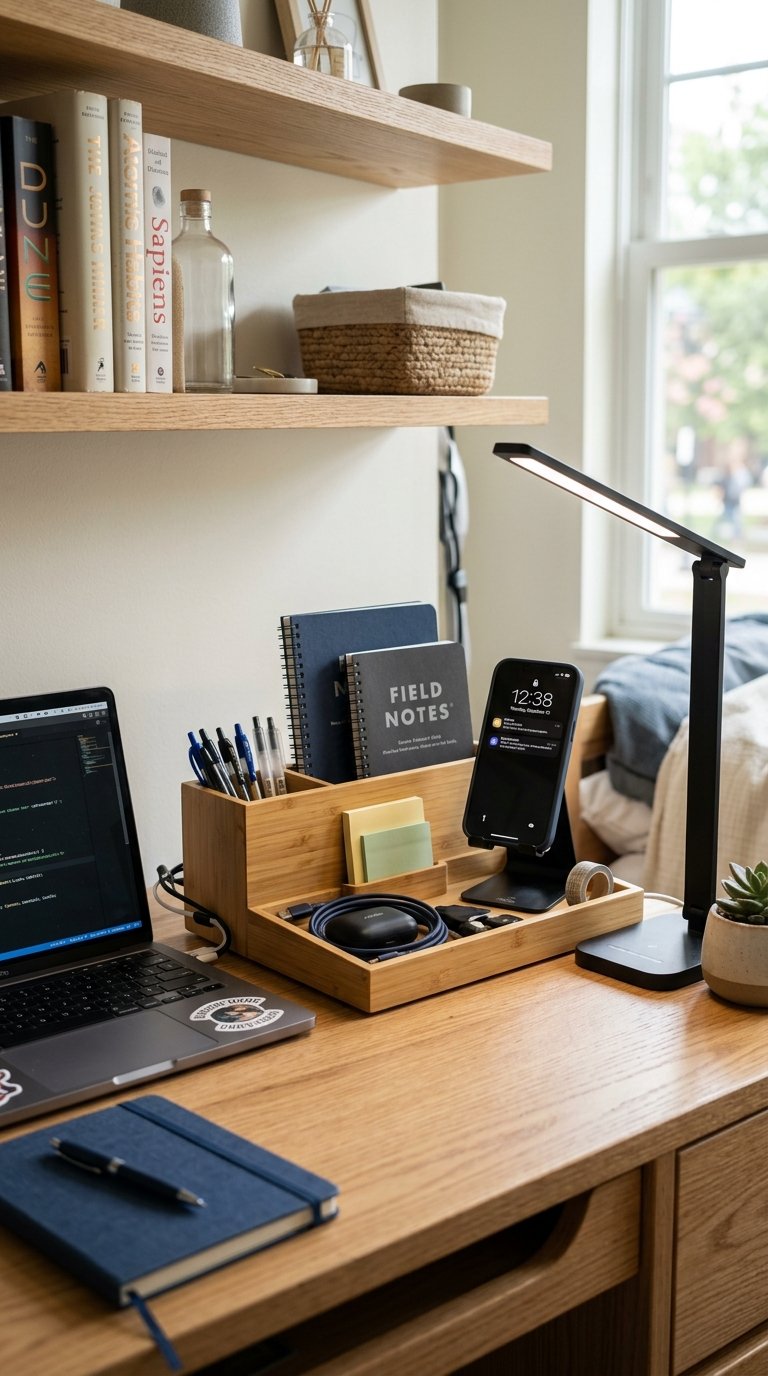
A desk organizer with compartments for pens, chargers, a phone stand, and small accessories keeps your work surface functional when you’re studying and styled when you’re not. The VEVOR bamboo desk organizer at $25 to $35 has five compartments and a built-in phone stand, handling every desk-level organizational need in a single 12-inch footprint.
Keep only what you use daily on the desk surface. Everything else goes in a drawer, a bin, or a shelf. A clean desk surface reduces the cognitive load of sitting down to work, a concept backed by a 2011 Princeton University Neuroscience Institute study that found visual clutter competes directly for attention with the task in front of you.
21. Add a Full-Length Mirror
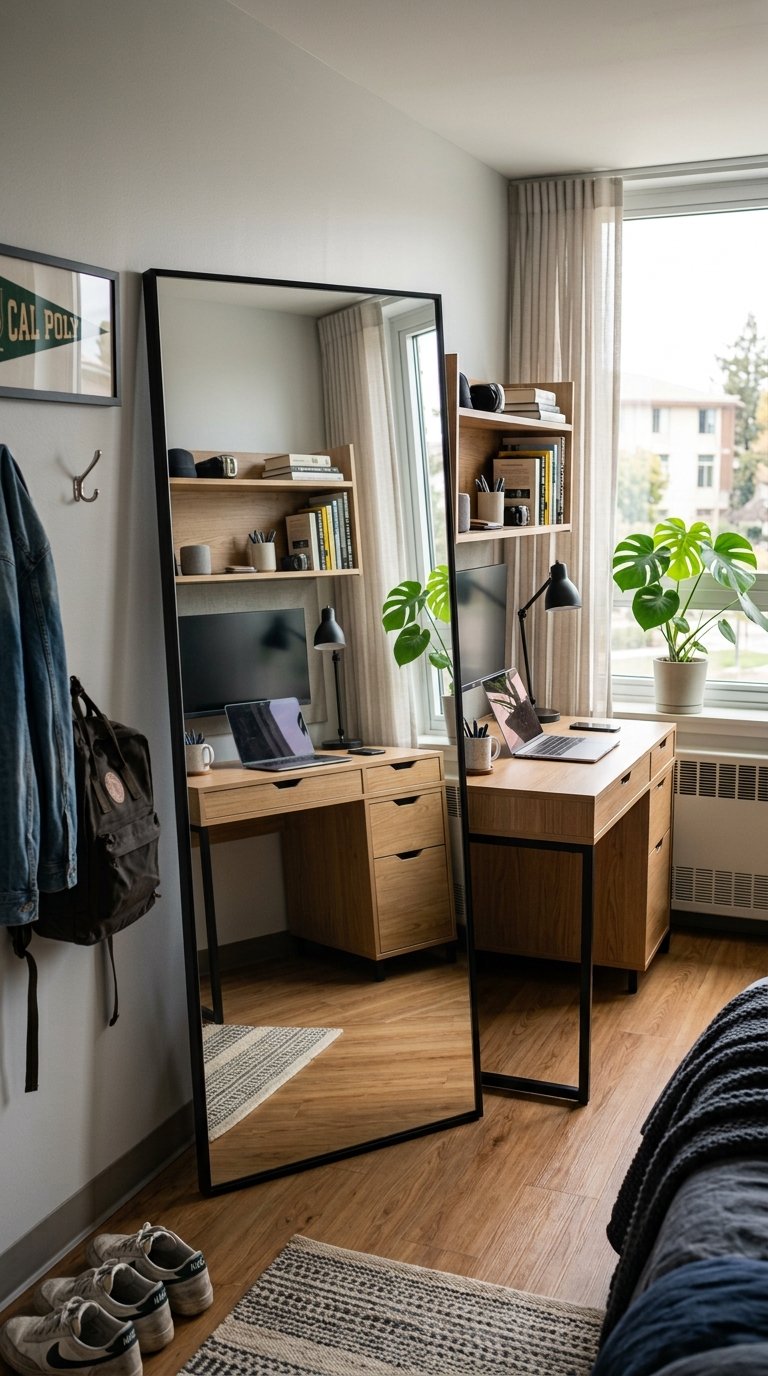
A full-length mirror on the back of your closet door or leaned against a wall serves a daily functional need while making your room feel larger by reflecting light and the appearance of more floor space. The Mainstays Full Length Mirror from Walmart runs $15 to $25 and leans against any wall without mounting hardware.
Position it across from your main light source (your desk lamp or a window) to maximize the reflected light effect. A mirror leaned against the wall at a very slight backward angle (2 to 3 degrees) reflects a taller slice of the room and makes ceilings appear higher, which is a useful optical trick in a room where the ceiling is already low enough to feel like it’s watching you.
22. Create a Dedicated Charging Station
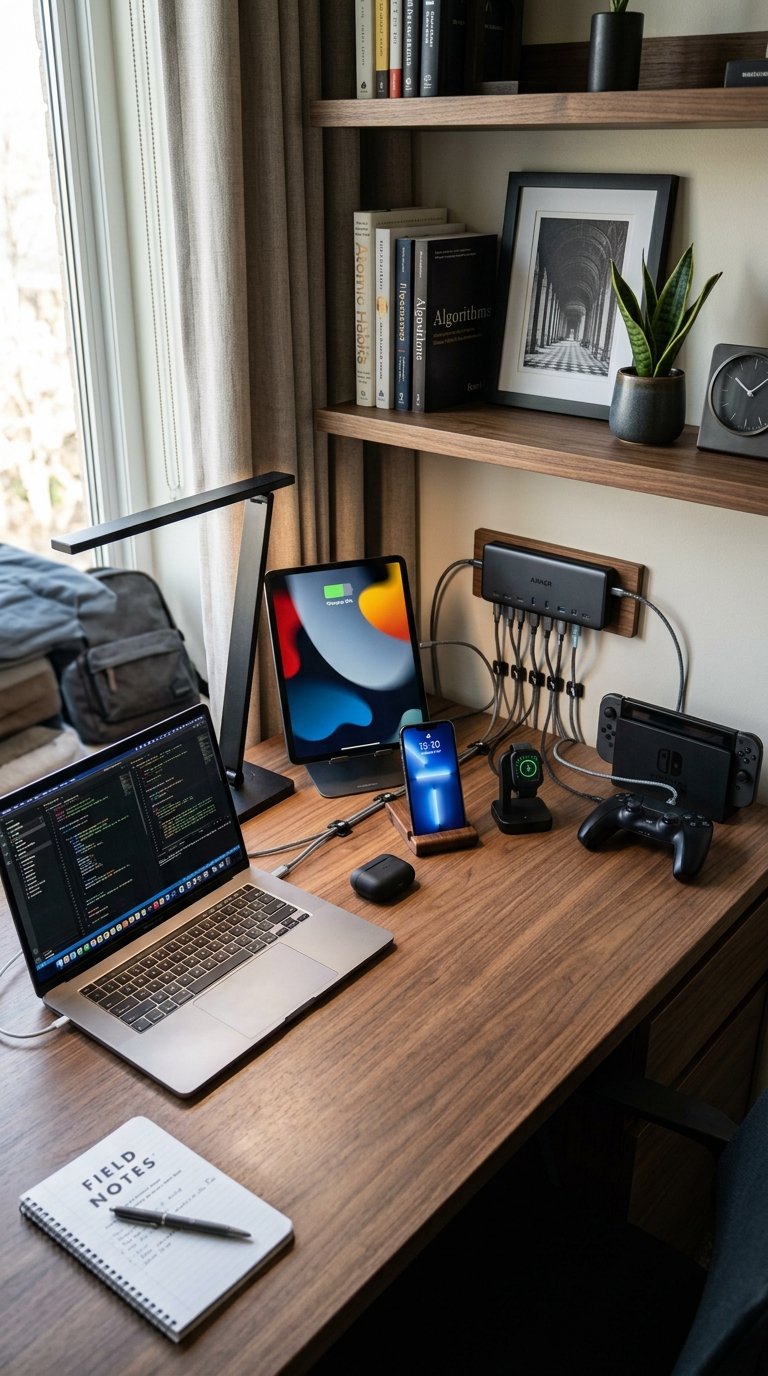
A charging station with a multi-port USB hub and a cable box keeps every device charged without cords running across your desk or bed. The Anker 60W 10-port USB desktop charger at $35 to $45 handles a phone, tablet, laptop, earbuds case, and two gaming controllers simultaneously from a single power strip outlet.
Position the hub at the back corner of your desk and run device cables forward in organized channels using adhesive cable clips. FYI, a multi-port USB hub charging station also means you occupy exactly one outlet from your dorm room’s limited power strip, leaving the other outlets available for your desk lamp, monitor, and speaker without running extension cords across the floor.
Final Thoughts
A boys dorm room works when every decision solves a real problem: no storage, bad light, zero desk space, or a setup where sleeping and studying fight each other for the same square footage. Start with the bed risers and the desk chair since those two changes affect every hour you spend in the room. Add lighting, cable management, and a rug, and your dorm room becomes a space worth spending time in rather than a space you’re just sleeping in between classes.