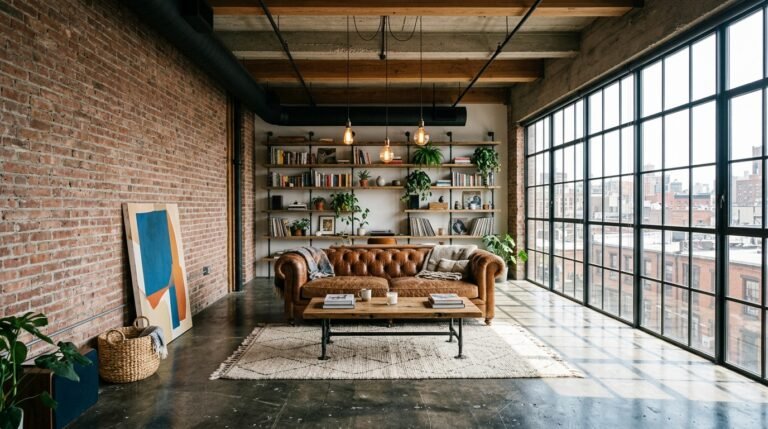
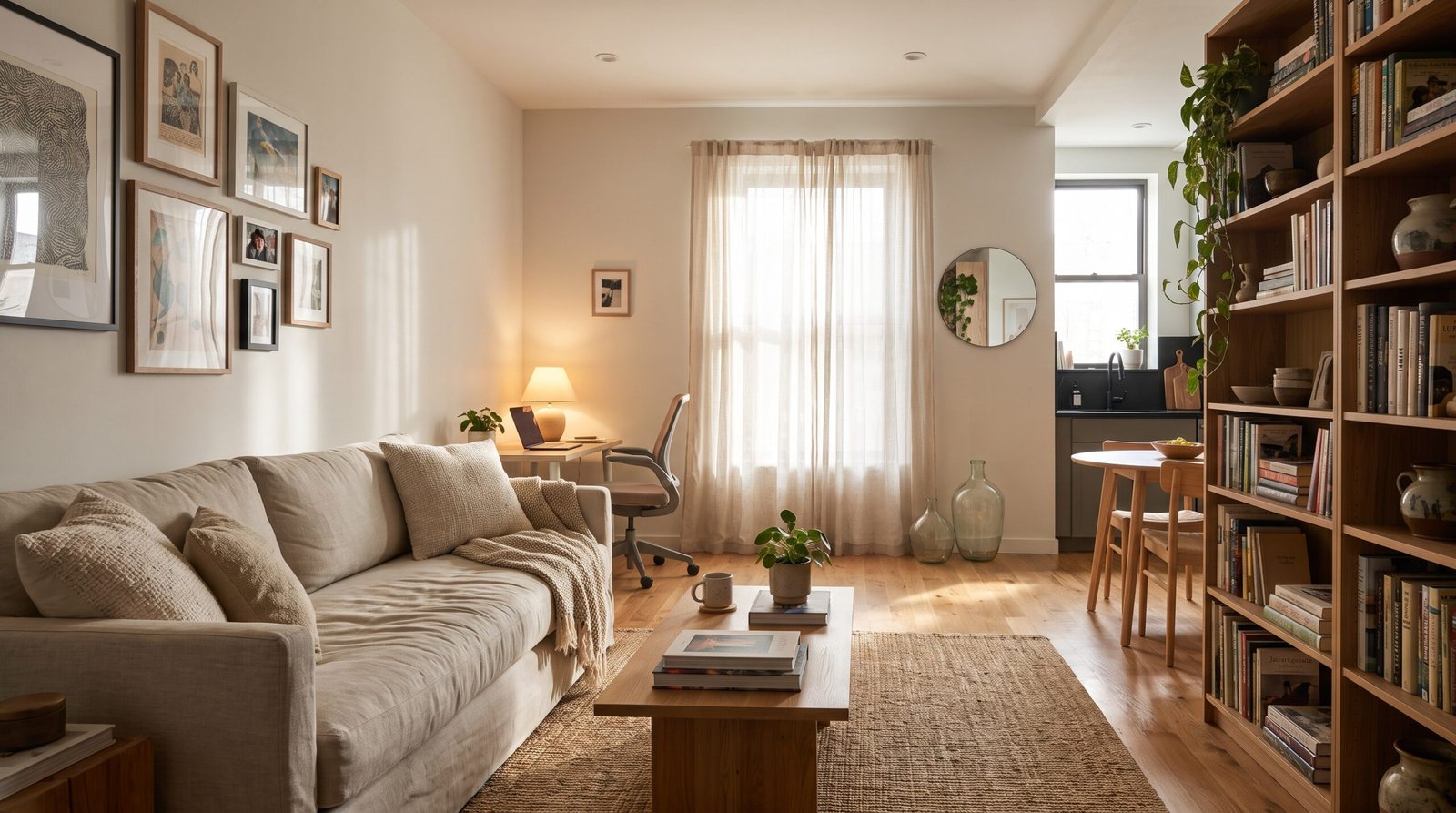
30 College Apartment Ideas to Make Your Space Feel Like Home
Your first college apartment is the first space you fully control, which sounds exciting until you’re standing in an empty 600-square-foot box with white walls, a single overhead light, and furniture held together by optimism and hex keys. I’ve furnished three different college apartments across four years, and the difference between a space that felt like a home and one that felt like a waiting room always came down to the same practical decisions applied consistently. These 30 college apartment ideas solve real problems with real budgets and real square footage constraints, because you need ideas that work on a Tuesday afternoon with $50 and a car, not a weekend Pinterest session that ends in overwhelm.
1. Buy a Sofa Bed for Your Living Room
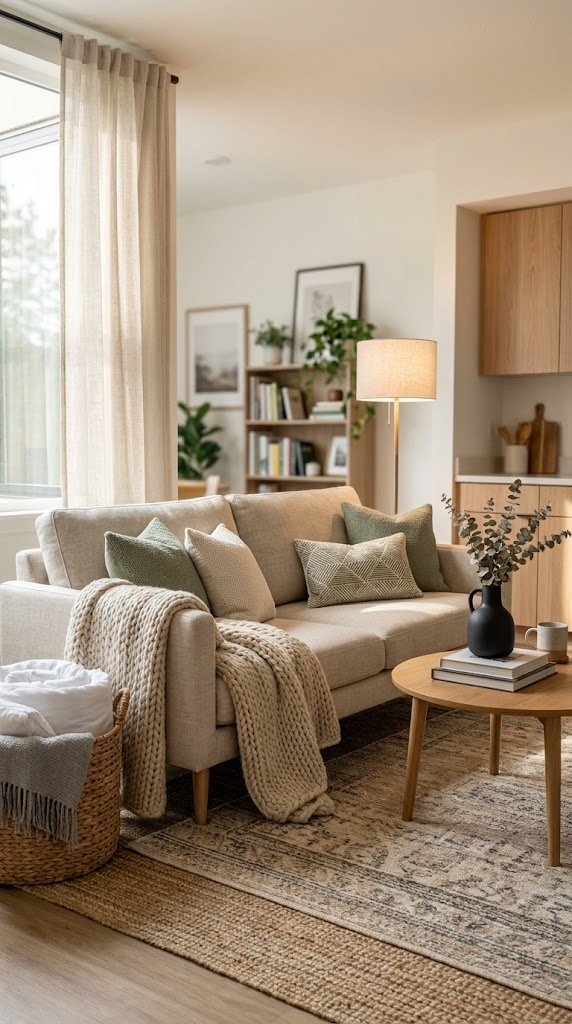
A sofa bed solves two problems simultaneously: it gives you a proper living room sofa and a guest sleeping surface without requiring a dedicated guest bedroom you definitely don’t have. The Serta Corey click-clack sofa bed from Amazon runs $250 to $350 and converts from sofa to sleeping surface in under 30 seconds.
Avoid the fold-out mattress versions where the mattress pulls out from the sofa base, since those require 8 feet of clearance in front of the sofa and most college living rooms don’t have 8 feet of clearance available. The click-clack style folds the back down flat without clearing floor space in front, which fits realistically in small apartment layouts.
2. Use Command Strips for Everything on the Walls
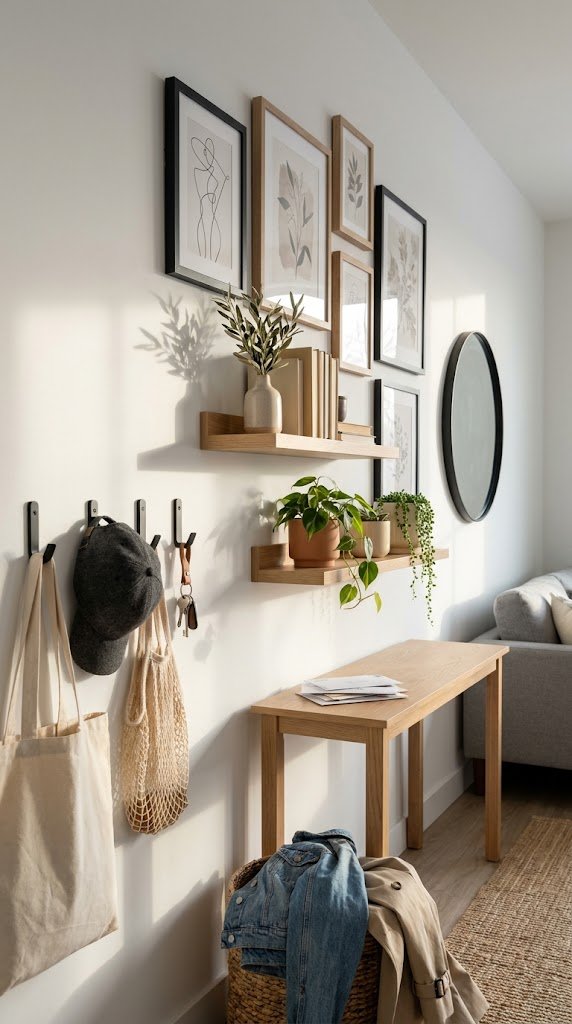
Command strips eliminate the security deposit conversation at move-out while still letting you hang art, shelves, mirrors, and hooks across every wall in the apartment. The heavy-duty picture-hanging strips hold up to 16 pounds per pair and remove cleanly from standard painted drywall without pulling paint.
Buy two multi-pack assortments from Amazon at $12 to $18 each: one pack of small command hooks for cables, small items, and kitchen tools, and one pack of large picture-hanging strips for art, shelves, and mirrors. Keep the remaining strips in a drawer for the inevitable “I want to hang one more thing” moment that happens in every apartment three weeks after move-in.
3. Add String Lights as Ambient Lighting
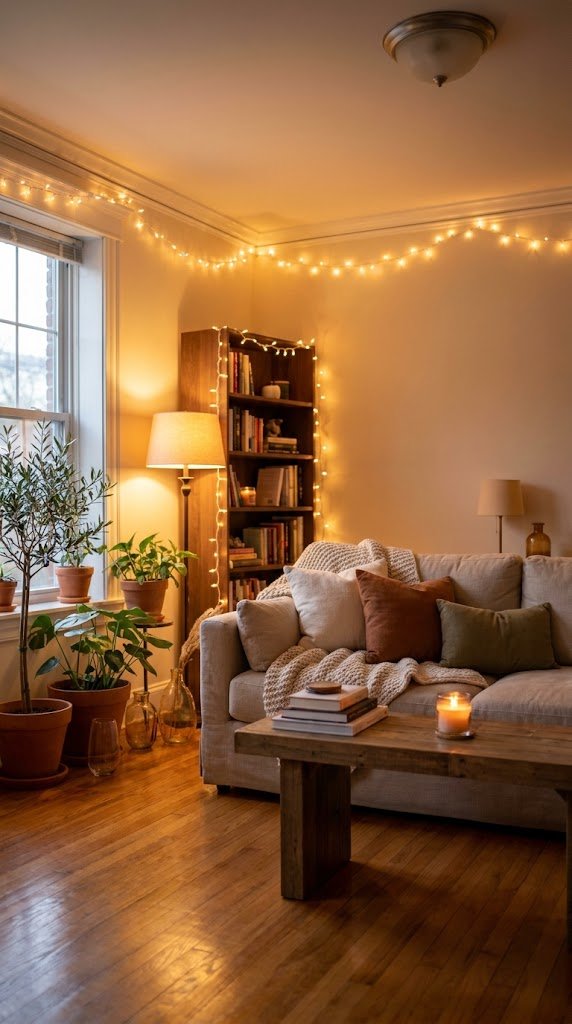
Overhead lights in college apartments are almost universally harsh, flat, and completely wrong for any activity other than finding something you dropped, and string lights fix this for $15 to $25 per strand without touching the existing wiring. Run warm white string lights along the ceiling perimeter, behind furniture, or across an empty wall for ambient glow that makes the apartment feel lived-in after 6pm.
The Gove smart string lights with app control cost $20 to $30 and let you adjust brightness and color from your phone, which means you switch from study-mode bright to movie-mode warm without getting up. Warm white (2700K) is the only temperature worth buying for ambient bedroom and living room use, since cool white defeats the entire purpose of adding softer lighting.
4. Invest in a Quality Desk Chair Early
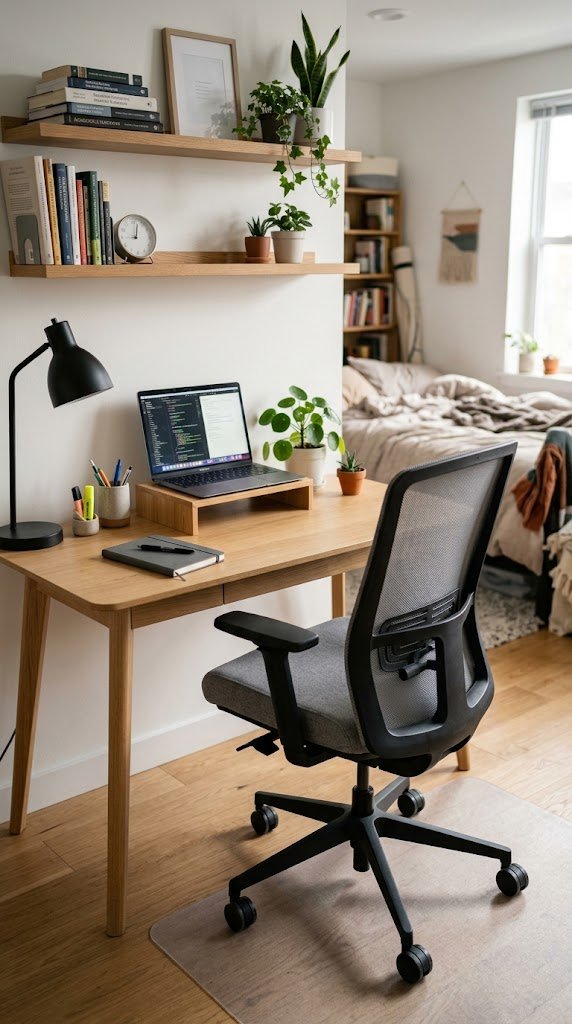
The desk chair in a college apartment determines your academic productivity more than almost any other single purchase, and spending $100 to $150 on an ergonomic option from the start prevents the posture problems and lower back pain that develop from a full semester in the wrong chair. The Hbada ergonomic office chair on Amazon at $120 to $140 provides adjustable lumbar support, height adjustment, and a breathable mesh back.
A bad desk chair sends you to the couch to work, the couch sends you to sleep, and suddenly three hours have passed and nothing happened. Buy the good chair before you buy the decorative throw pillows.
5. Create a Gallery Wall With Free Art
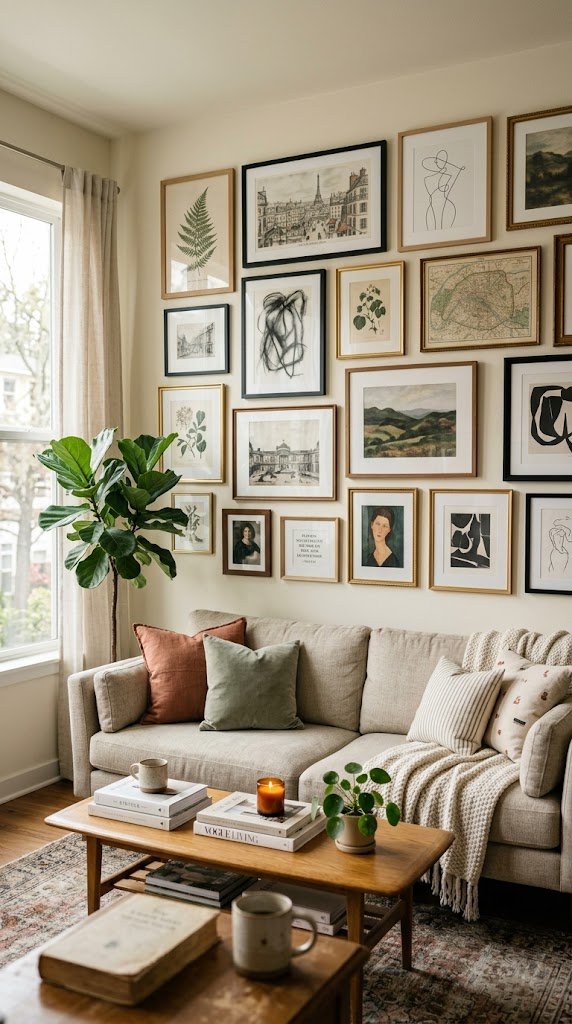
A gallery wall covering an empty living room wall creates the personality a blank apartment lacks, and it costs nothing beyond frames if you source art from free public domain libraries. The Art Institute of Chicago, the Rijksmuseum, and the Biodiversity Heritage Library all offer high-resolution image downloads at no cost for personal use.
Print at a local pharmacy (Walgreens, CVS, Costco) for $0.15 to $2.50 per print depending on size. Buy matching frames from IKEA’s RIBBA line at $4 to $8 each for a cohesive gallery look, or mix thrifted frames in coordinating tones for an eclectic version of the same idea. A 10-piece gallery wall costs $50 to $80 total and creates the room’s primary design statement.
6. Use an Area Rug to Define Each Zone
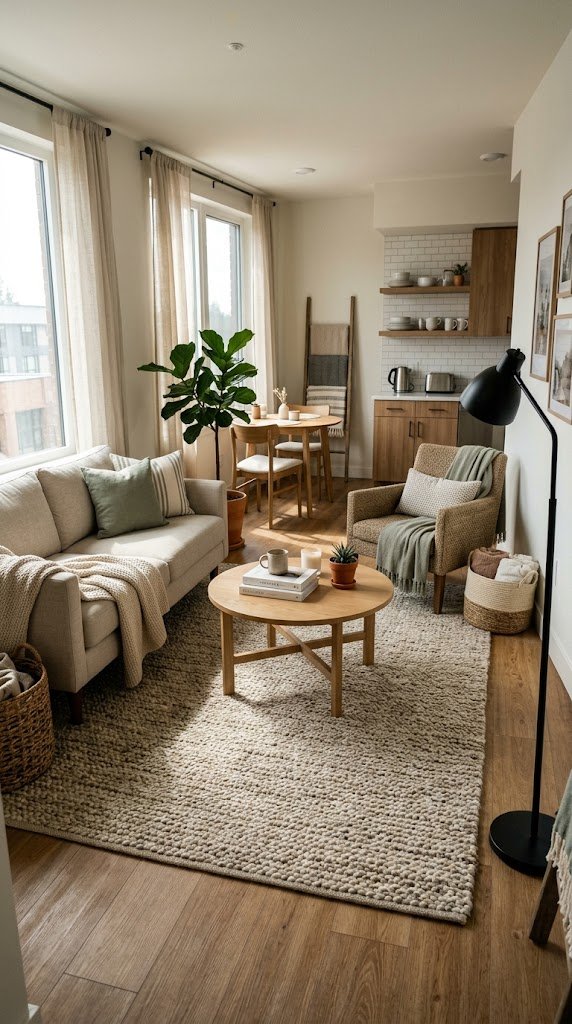
An area rug defines the living room seating zone, the dining area, and the bedroom as separate spaces within an open-plan college apartment where all three zones occupy the same visual field. Without rugs, furniture placed in an open layout looks like it landed randomly rather than being arranged intentionally.
A 5×7 polypropylene rug from Ruggable or Amazon in a pattern or solid tone costs $60 to $130, and the machine-washable versions handle spills and the general realities of apartment living better than natural fiber options. The minimum size rule: every front leg of the living room furniture should sit on the rug surface, since a rug too small for the furniture makes the room look mismatched rather than styled.
7. Build a Bookshelf Wall for Storage and Personality
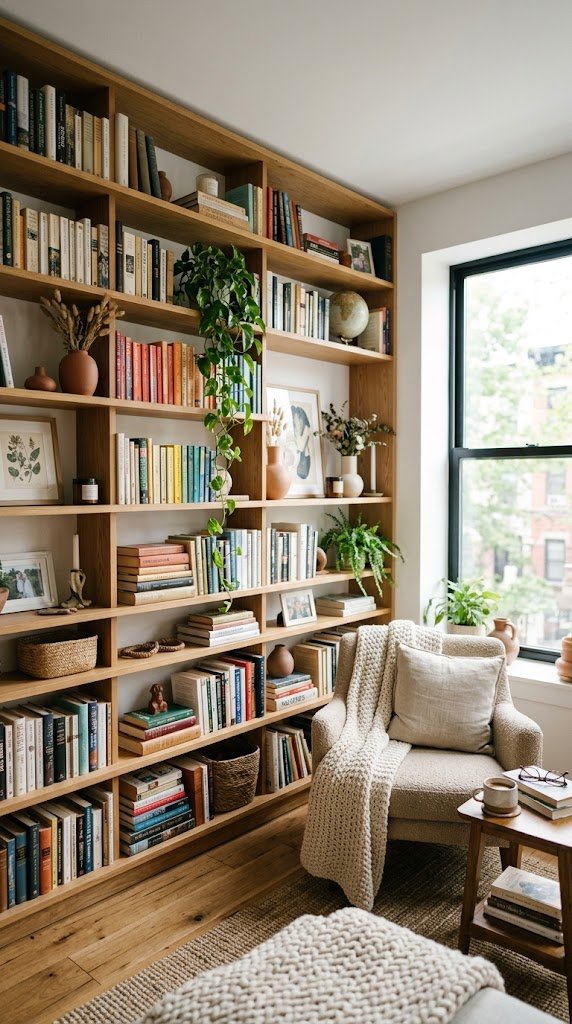
Three IKEA BILLY bookcases side by side at $60 to $80 each create a full wall of shelving that stores books, holds a TV, organizes small objects, and gives the apartment’s blank wall the most character any single furniture addition achieves. The BILLY system in the 31x11x79 inch size fits most standard 8-foot ceilings with room for a crown molding detail above if you’re feeling ambitious.
Style the shelves with a mix of books, a few plants, some small decorative objects, and leave deliberate negative space between groups. A shelf styled to 70 percent capacity reads as curated. A shelf at 100 percent capacity reads as storage.
8. Add a Floor Lamp to Every Dark Corner
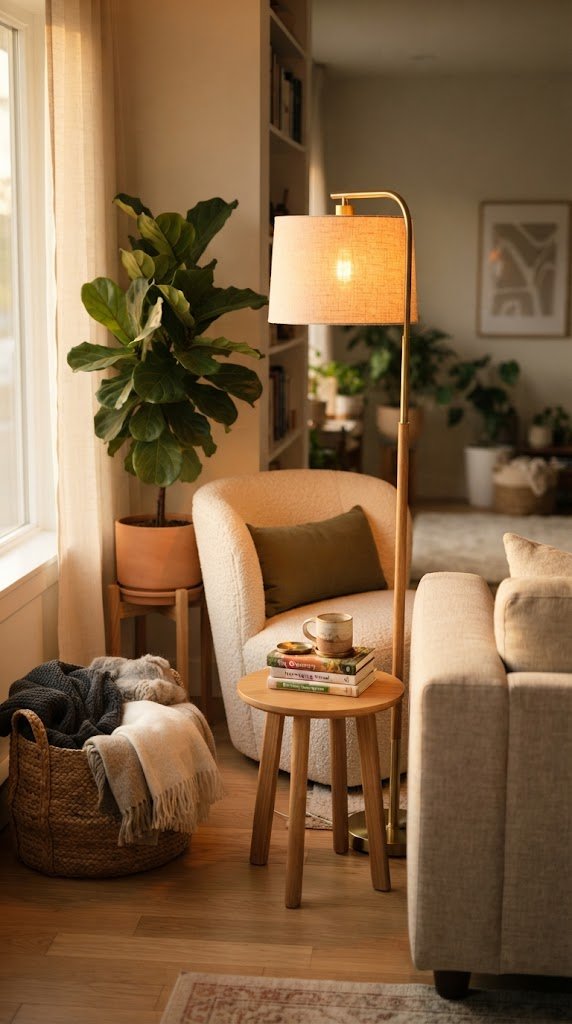
Dark corners in a college apartment age the room the same way overhead lighting flattens it: both are fixable with targeted lamp placement rather than a lighting renovation. A floor lamp in the corner behind the sofa, another beside the reading chair or desk, and a table lamp on a nightstand cover every practical lighting need in the apartment without touching a single wall socket.
The TaoTronics arc floor lamp at $45 to $65 arcs over the sofa and provides overhead-adjacent light at a position overhead lighting can’t reach. Warm bulbs at 2700K in every lamp establish a cohesive warm tone throughout the apartment that makes every room feel consistent after dark.
9. Use Curtains to Make Your Space Feel Like an Adult Lives There
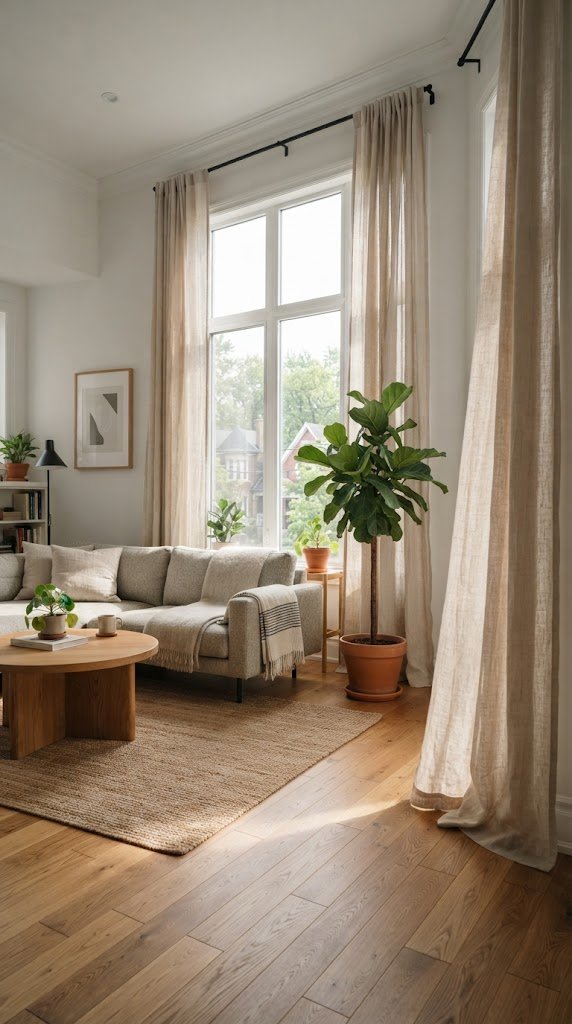
Curtains hung at ceiling height instead of above the window frame are the single most impactful apartment upgrade that costs under $100 and requires zero renovation. Short curtains that hover above the floor make ceilings feel lower and rooms feel smaller. Floor-length curtains hung close to the ceiling make the same room feel taller and more finished.
IKEA’s DYTÅG linen blend curtain panels in natural or warm white run $20 to $35 per panel and look significantly more expensive than their price suggests. Two panels per window hung from ceiling-height curtain rods transform the window from a feature the room ignores to the feature the room centers on.
10. Set Up a Dedicated Study Zone
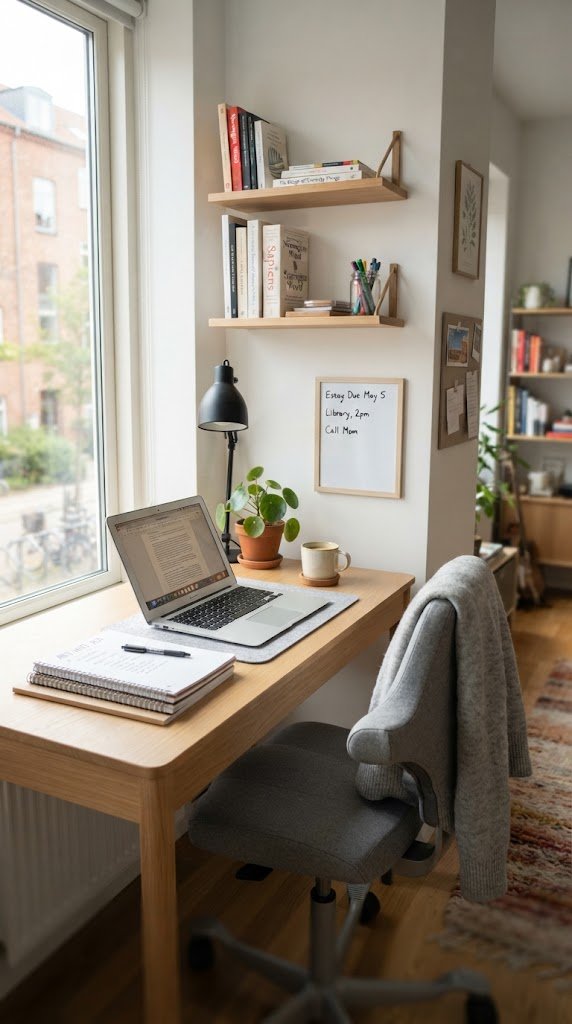
A dedicated study zone in a college apartment prevents the bed-studying habit that research from the American Academy of Sleep Medicine consistently links to poorer sleep quality and longer sleep onset times. The study zone needs three things: a surface large enough for a laptop and notebook side by side, a chair with back support, and a light source at desk level.
Position the desk facing a wall rather than the TV, since visual proximity to entertainment competes directly with sustained focus. A $15 stick-on whiteboard above the desk handles deadline tracking without a separate bulletin board or planner system.
11. Add Indoor Plants Throughout
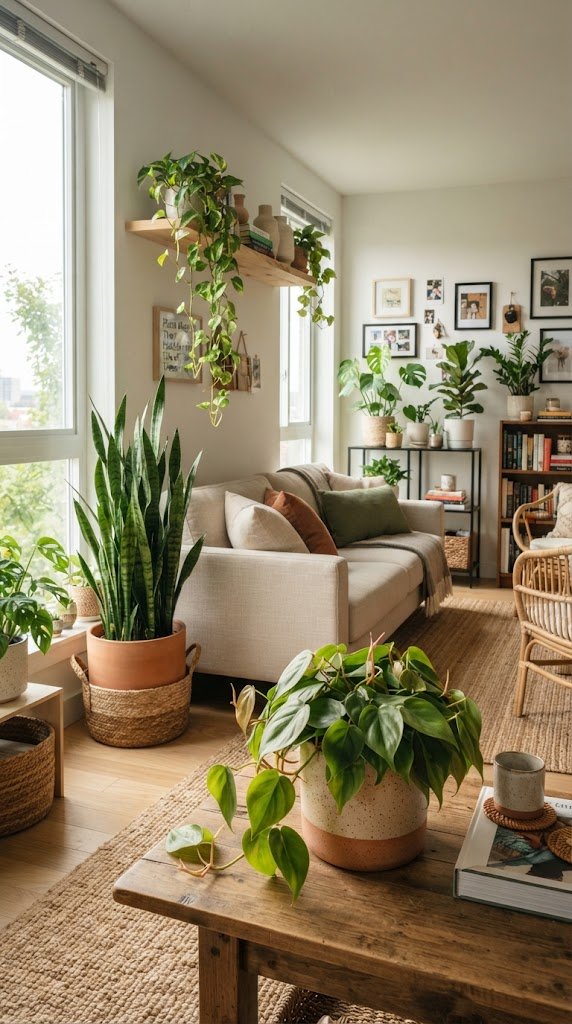
Plants in a college apartment add color, texture, and oxygen without requiring any landlord approval, and they photograph significantly better than the absence of plants in the same space. Pothos, snake plants, and heartleaf philodendron handle low light, inconsistent watering, and the neglect of a busy academic schedule better than almost any other species.
A 4-inch pothos from a grocery store or garden center costs $5 to $8, and a 6-inch snake plant runs $10 to $15. Start with three plants in three different locations, since one plant per room makes a statement while one plant per apartment makes a footnote.
12. Use a Rolling Kitchen Cart for Counter Space
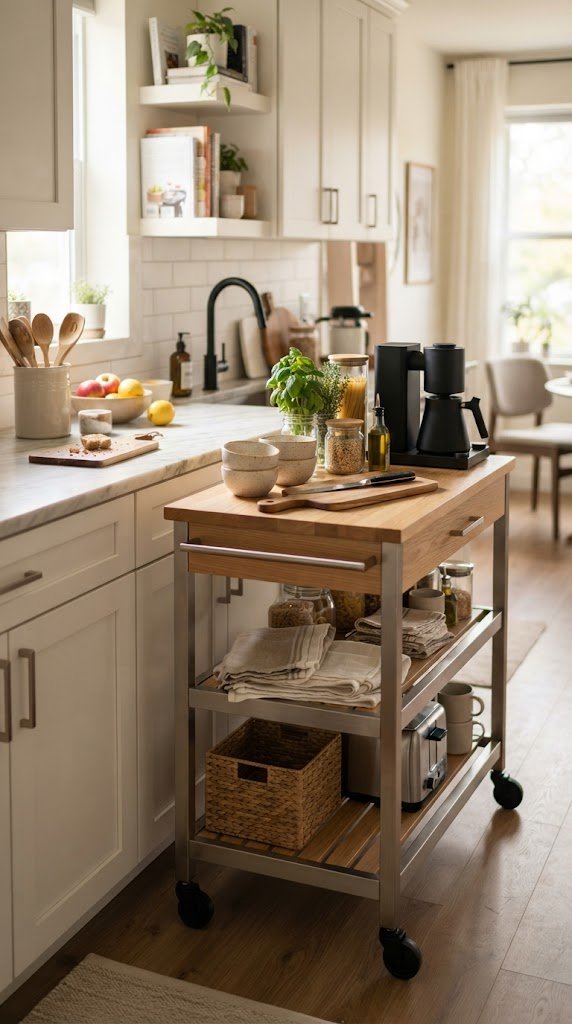
Most college apartment kitchens have fewer than 6 linear feet of counter space, which makes the rolling kitchen cart from Amazon or IKEA ($60 to $120 depending on size) the most functionally important kitchen purchase in the first week. A rolling cart adds a cutting surface, a small appliance station, a knife block location, and additional storage in a footprint that rolls against a wall when not needed.
Choose a cart with a lower shelf for small appliance storage, since the counter surface clears faster when the toaster, coffee maker, and blender have somewhere designated to live. The rolling function matters because college apartment kitchen layouts often require reconfiguring the workspace depending on whether you’re cooking, cleaning, or hosting.
13. Install a Tension Rod Under the Sink for Cleaning Supplies
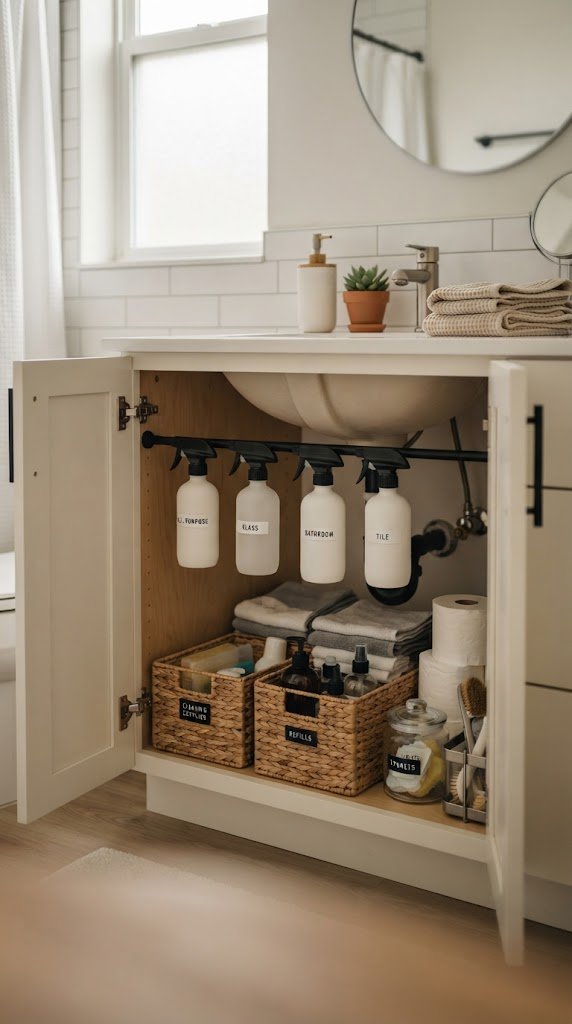
A tension rod installed horizontally under the bathroom or kitchen sink at mid-cabinet height doubles the usable storage inside the cabinet by creating a second tier for spray bottles, leaving the floor of the cabinet for taller items. A standard tension rod from Amazon costs $8 to $12 and installs in under two minutes.
Hang spray cleaner bottles from their spray triggers over the rod, and use the cabinet floor for trash bags, a toilet brush holder, or cleaning supply refills. This organization change costs under $15 and recovers 50 percent more functional cabinet space with no modification to the cabinet structure.
14. Add a Full-Length Mirror to Your Bedroom or Entryway
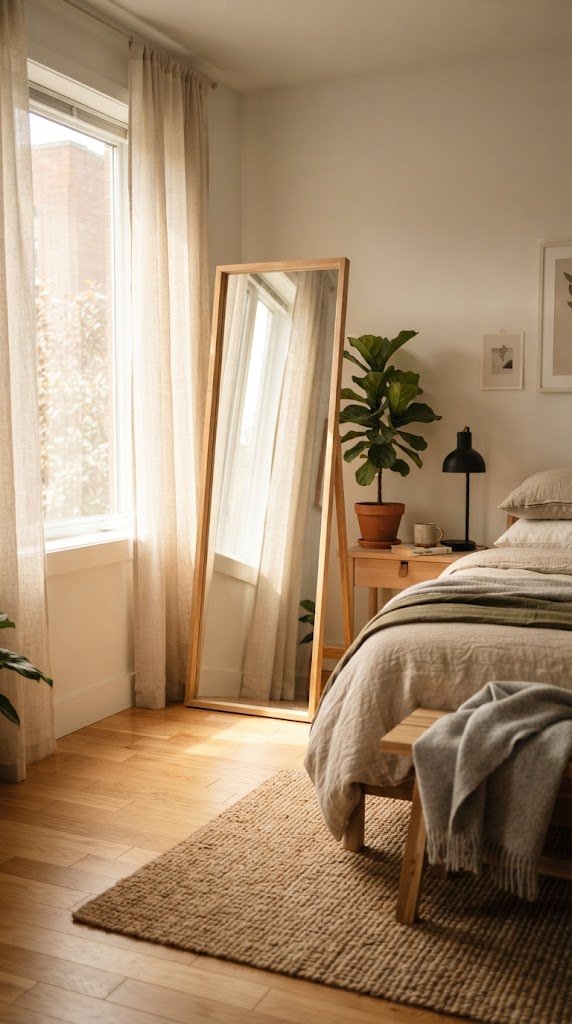
A full-length mirror in the bedroom or near the front door serves three purposes simultaneously: it checks your appearance before leaving, it reflects light and creates the perception of more space, and it functions as a design element that adds visual depth to a plain wall. A Mainstays 64-inch leaning mirror from Walmart costs $25 to $35.
Lean it at a very slight backward angle (2 to 3 degrees) rather than perfectly vertical, since a slightly angled mirror reflects a taller slice of the room and makes ceilings appear higher. Position it across from the main light source (a window or a lamp) to maximize its light-reflecting function throughout the day.
15. Use a Floating Shelf as a Nightstand Alternative
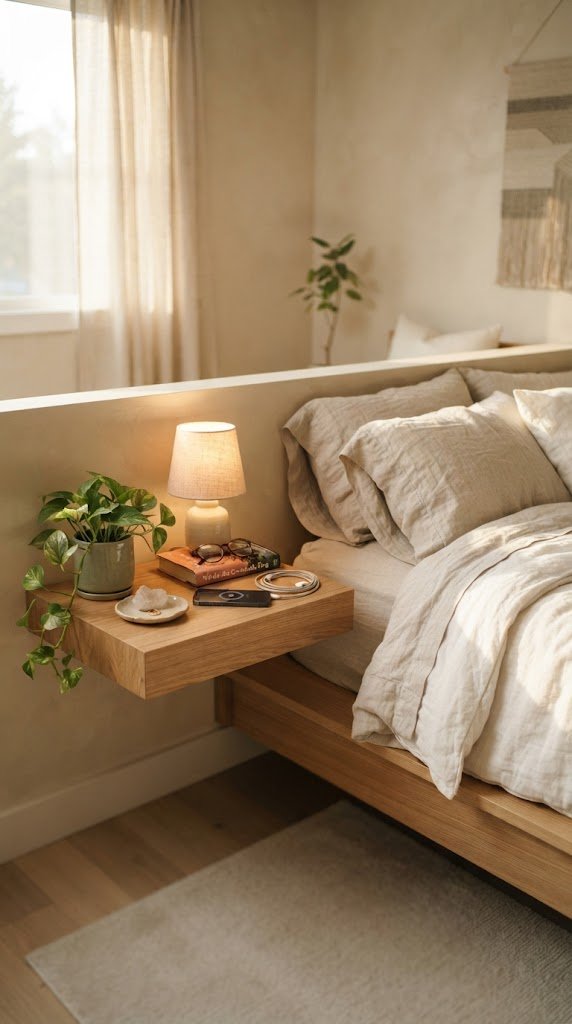
A floating shelf mounted at 24 to 26 inches from the bedroom floor serves as a nightstand without the floor footprint that a freestanding table requires in a bedroom that barely fits the bed. IKEA’s LACK wall shelf at $14 holds 22 pounds, mounts with two drywall screws, and patches cleanly at move-out with spackle from a $4 tube.
Mount one shelf on each side of the bed for a symmetrical setup, or one on your primary side if the other side sits against a wall. Add a small lamp, your phone charger, and one small plant or book per shelf, since nightstand surfaces work best with three to five items maximum.
16. Create a Coffee Station in the Kitchen
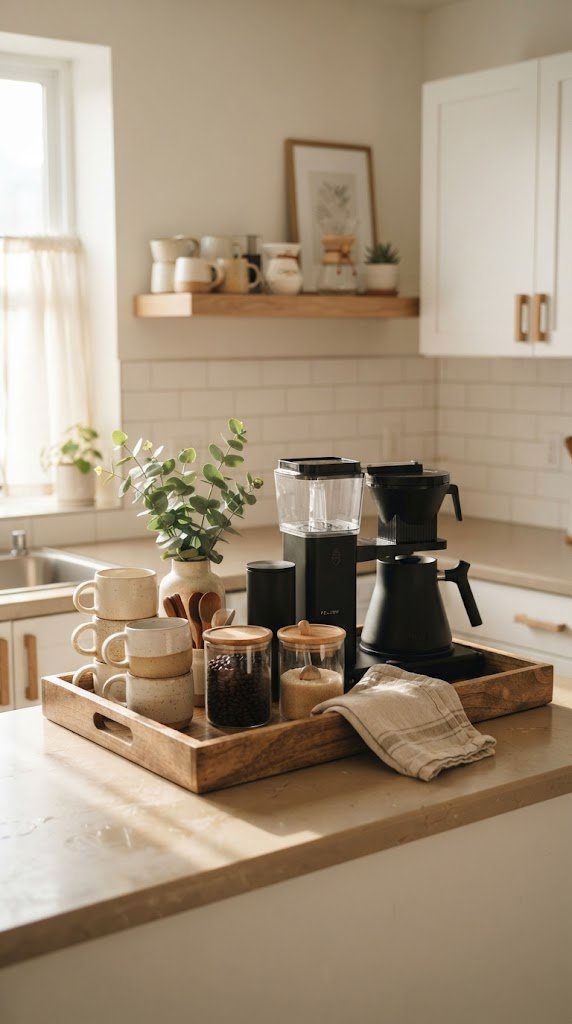
A dedicated coffee station consolidates everything coffee-related into one corner of the counter and eliminates the morning search for filters, a clean mug, and the coffee bag you definitely put somewhere near the coffee maker. Use a small tray ($15 to $20) as the base, group the coffee maker, mugs, and supplies within the tray’s boundary, and hang a small wall hook above for a reusable travel cup.
A coffee station makes the kitchen look organized rather than functioning, which is a meaningful distinction in a small space where organization reads as a design quality. It also gives you a consistent place to go every morning, which matters more than it sounds after a 9am class on four hours of sleep.
17. Buy a Foldable Dining Table
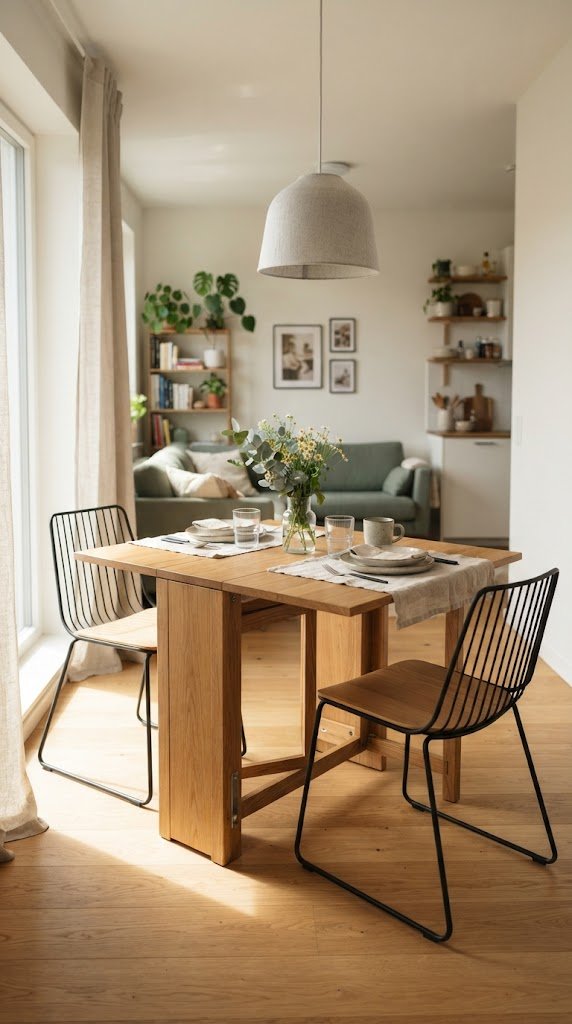
A foldable or drop-leaf dining table gives you full dining surface when you need it and floor space back when you don’t, which is the right trade-off for a college apartment where the dining table spends most of its time as a secondary study surface rather than an actual dining location. IKEA’s NORDEN gate-leg table at $179 expands to seat four or folds down to 10 inches wide against a wall.
A folded gate-leg table against a wall also functions as a console table with one leaf up, which adds surface area for a lamp or plant in the space it would otherwise simply occupy as a wall. This flexibility makes the foldable table the best furniture investment in a small apartment dining area.
18. Use Peel-and-Stick Tiles on a Backsplash
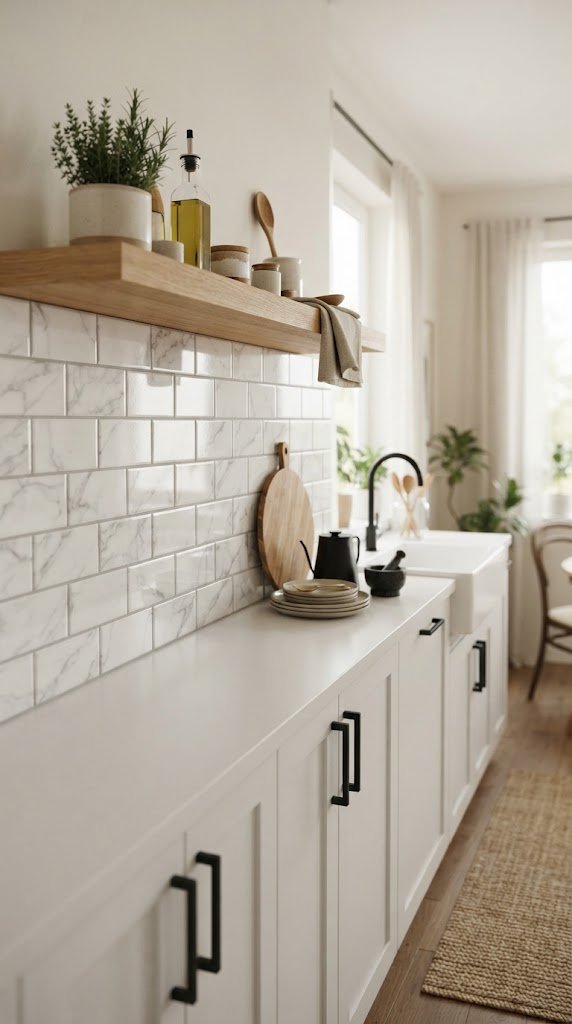
Peel-and-stick backsplash tiles in the kitchen or bathroom add pattern and personality to the one area most landlords never bothered to decorate, and they remove cleanly at move-out without adhesive residue on most standard wall surfaces. Smart Tiles and Art3d both sell peel-and-stick backsplash panels for $15 to $30 per panel.
A standard kitchen backsplash behind the stove and counter needs four to six panels for full coverage, putting the total material cost at $60 to $180 for a transformation that makes the kitchen look renovated rather than rentable. Apply over a clean, dry surface and trim with scissors along the counter edge for a professional-looking finished edge.
19. Add a Pegboard to the Kitchen or Office Wall
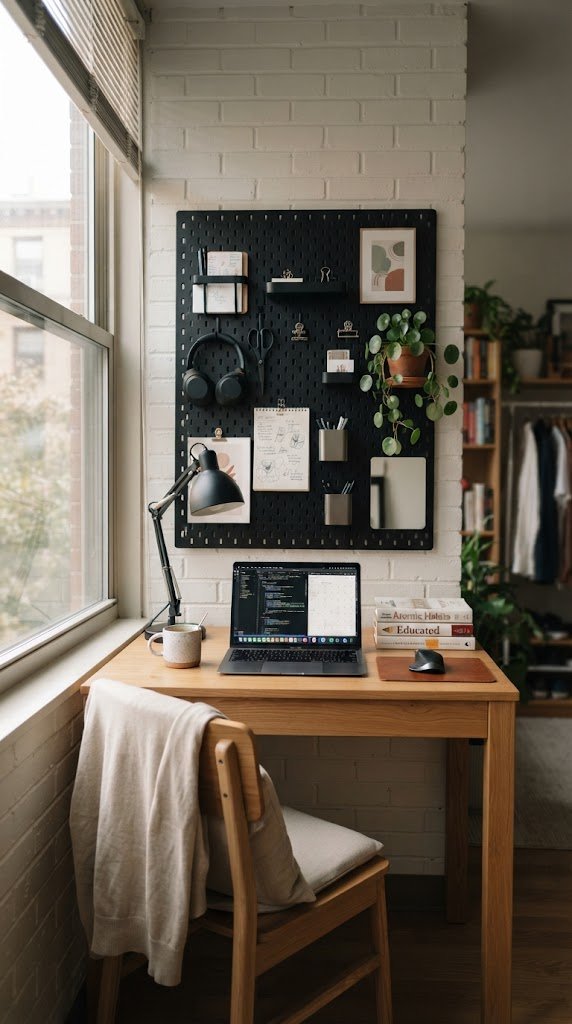
A pegboard system on a kitchen wall or beside a desk organizes tools, accessories, and frequently used items at wall level rather than consuming counter or desk surface for the same items. A 24×24-inch pegboard from a hardware store costs $10 to $20, and the hook system that populates it runs $15 to $30 for a starter set.
Paint the pegboard in a contrasting color before mounting (deep green, matte black, or terracotta all look deliberately chosen) so the board reads as a design element rather than a hardware store fixture someone left up. Mount on command strips rated for the board’s weight for a renter-safe installation.
20. Maximize Closet Space With a Second Rod and Organizers
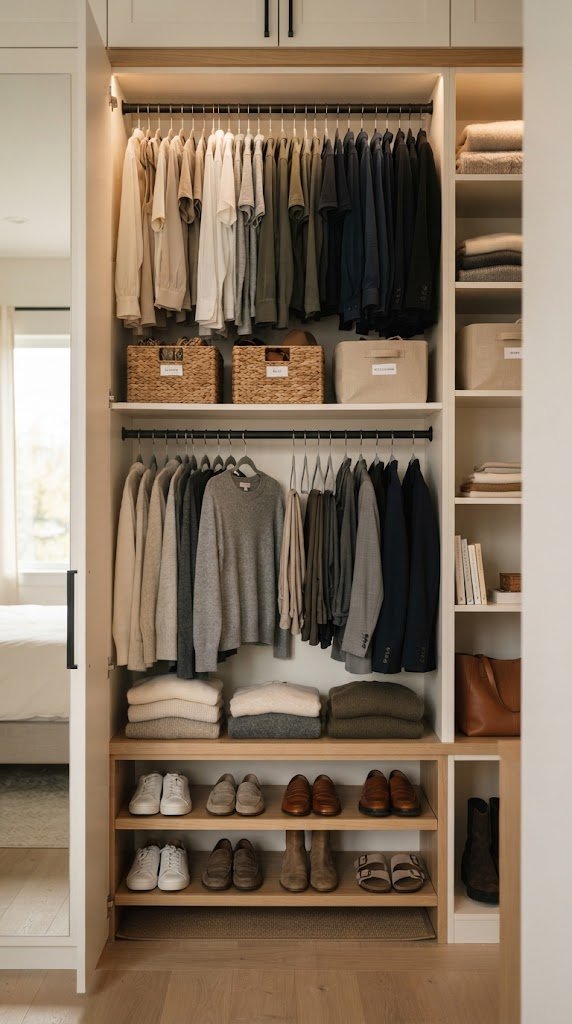
A second tension rod below your existing closet rod doubles hanging capacity for shorter items like shirts and jackets at a cost of $8 to $15 in hardware. The original rod handles full-length garments while the new lower rod handles half-length items, effectively converting a single-tier closet into a two-tier system in under 10 minutes.
Add an over-door shoe organizer on the inside closet face for footwear at $15 to $22, and use labeled bins on the top shelf for off-season storage. The full closet organization system costs under $50 and clears the bedroom floor of the clothing pile that accumulates within two weeks in any college bedroom without a specific system.
21. Use Woven Baskets for Visible Storage
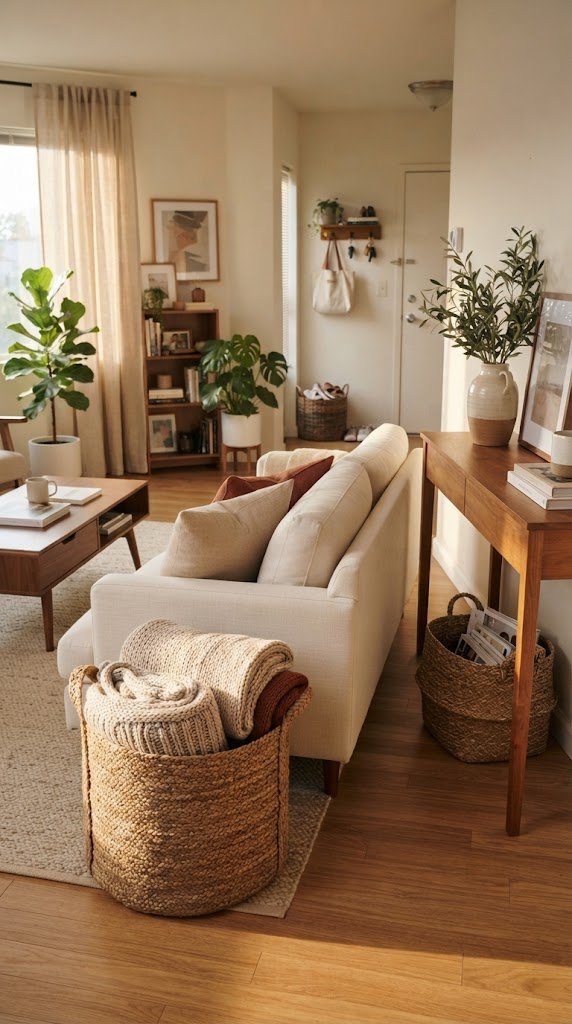
Woven baskets solve visible storage problems in living rooms, bedrooms, and bathrooms by making what’s inside them irrelevant from a visual standpoint, since the basket itself becomes the decor element. A basket of extra blankets beside the sofa, a basket of bathroom products under the vanity, and a basket of mail and keys near the front door all solve real problems while looking styled rather than cluttered.
Large woven storage baskets cost $20 to $50 at World Market, HomeGoods, or Target. Label the inside back edge of each basket rather than the front face so you know what’s inside without making the storage visible from across the room. IMO, four well-placed baskets do more for apartment organization than most furniture purchases at ten times the price.
22. Add a Shower Curtain That Makes the Bathroom Feel Intentional
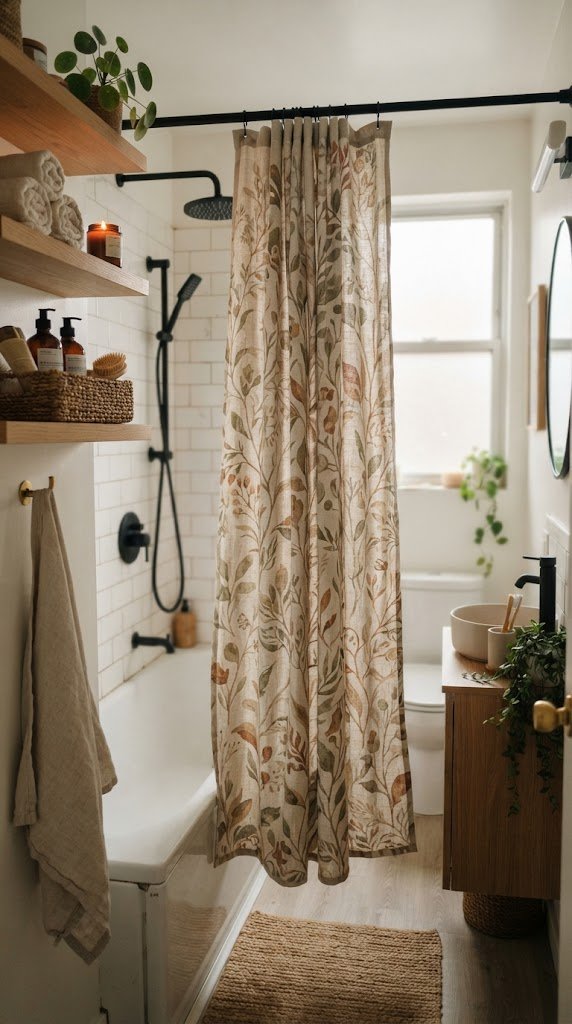
A shower curtain in a bold color, an interesting pattern, or an unusual textile transforms the bathroom’s largest visual surface from a functional necessity into a design decision. Society6 and Deny Designs sell artist-designed shower curtains in genuinely unusual patterns for $40 to $65 that no other apartment in your building will have.
A standard white shower curtain signals “I haven’t gotten to the bathroom yet.” A botanical print, a geometric pattern, or a solid deep tone signals “I thought about this room the same way I thought about the others.” The swap takes three minutes and costs the same as a dinner out.
23. Create a Functional Entryway From Nothing
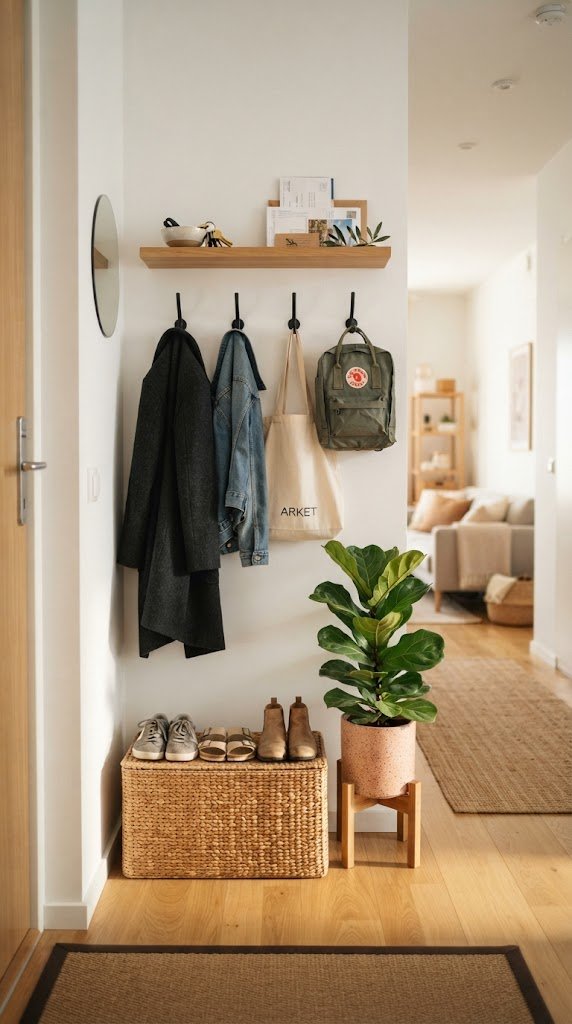
Most college apartments have no dedicated entryway, which means the front door opens directly into the living room and creates the coat-and-bag pile that takes over the nearest surface within 48 hours of moving in. A narrow floating shelf at 60 inches height for keys and mail, two command hooks below it for bags and jackets, and a small basket on the floor for shoes creates a functional entryway from 6 inches of wall beside the door.
The whole setup costs $20 to $40 in a shelf, two command hooks, and a basket, and it prevents the daily “where are my keys” situation that adds two minutes of stress to every departure from the apartment for the full duration of the lease.
24. Use Matching Hangers Across the Full Closet
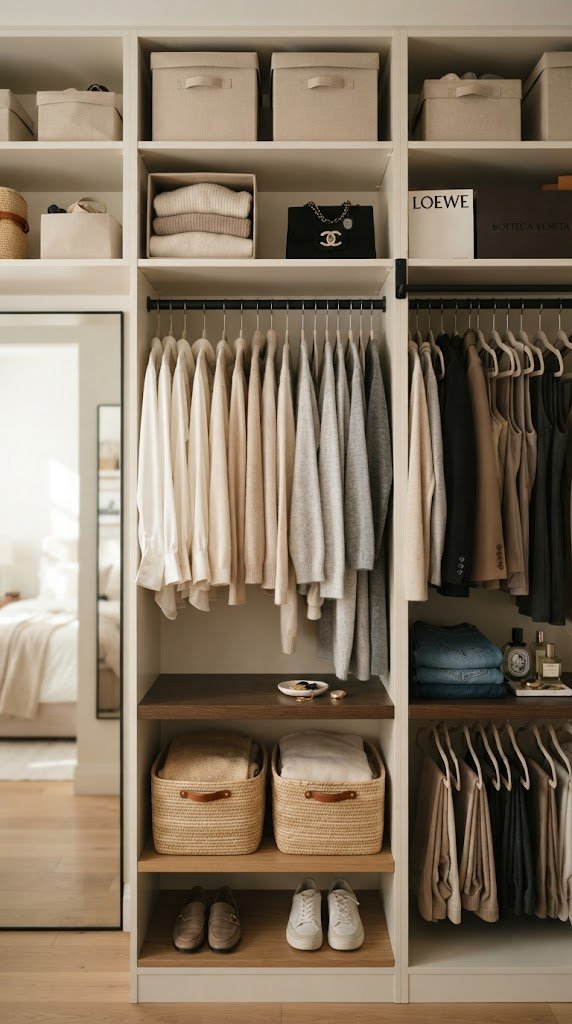
Switching to uniform velvet hangers across the entire closet removes 80 percent of the visual chaos a closet generates when wire, plastic, and wooden hangers in various sizes coexist on the same rod. Amazon velvet hangers in a 50-pack cost $12 to $16 and handle a full closet with extras.
The velvet surface also keeps clothes from slipping, which eliminates the floor pile that develops when smooth plastic hangers drop items every time the closet door closes. This is the organization change that costs almost nothing and produces a result disproportionate to the effort.
25. Add a TV Above a Console or Media Unit
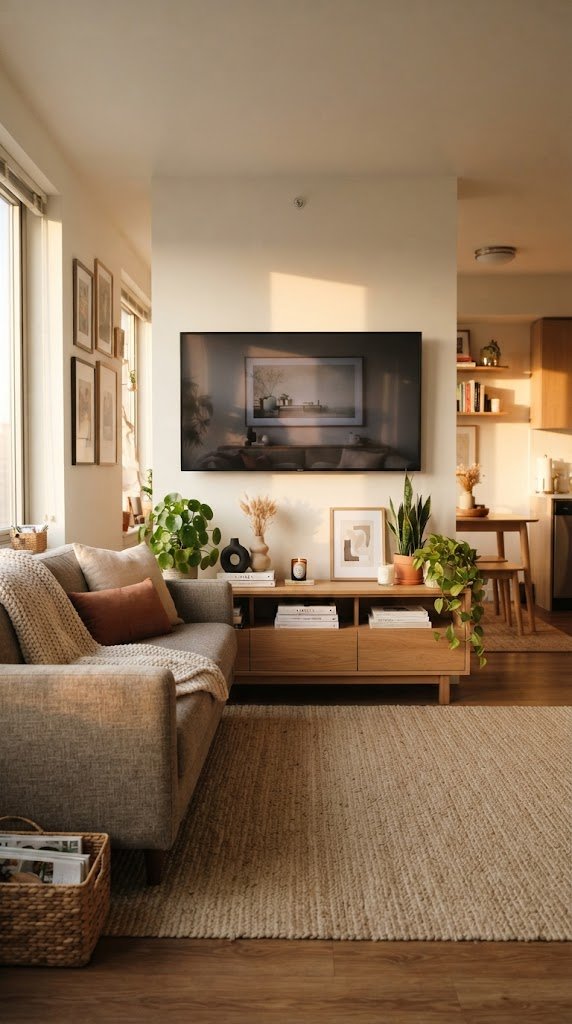
Mounting the TV on the wall above a console table recovers the surface area a TV stand consumes and makes the living room’s main wall feel more designed than a TV on a stand in the same position. A wall mount for TVs up to 55 inches from Mounting Dream costs $25 to $45 and includes all necessary hardware.
Position the center of the TV at 42 to 48 inches from the floor for the most comfortable seated viewing height, since most people mount TVs too high and strain their necks as a result. Patch the two to four anchor holes at move-out with spackle for under $5 in material and ten minutes of effort.
26. Style a Tray on Every Flat Surface
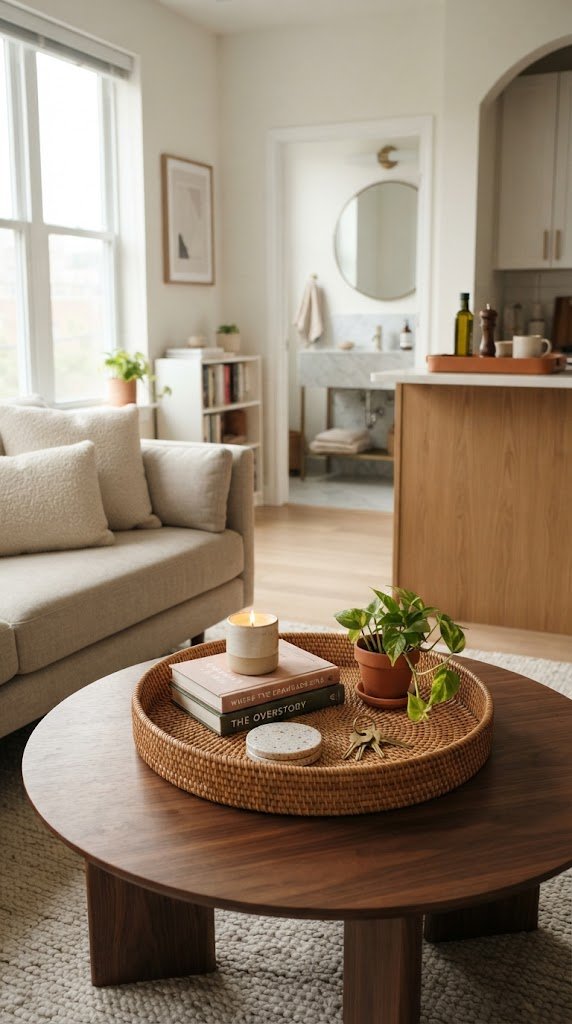
A decorative tray on the coffee table, the kitchen counter, and the bathroom vanity contains the objects on those surfaces and prevents them from spreading across the full area in the gradual drift that happens to every horizontal surface in every apartment. A tray with a defined edge sends every object in the room a clear message: you belong in here, or you don’t belong on this surface.
A leather catchall tray costs $20 to $40, rattan and ceramic versions run $15 to $25 at Target and TJ Maxx, and the organizational principle is the same regardless of material. Five objects inside a tray read as a styled vignette. Six or more read as the pile the tray was supposed to prevent.
27. Use Removable Wallpaper on One Feature Wall
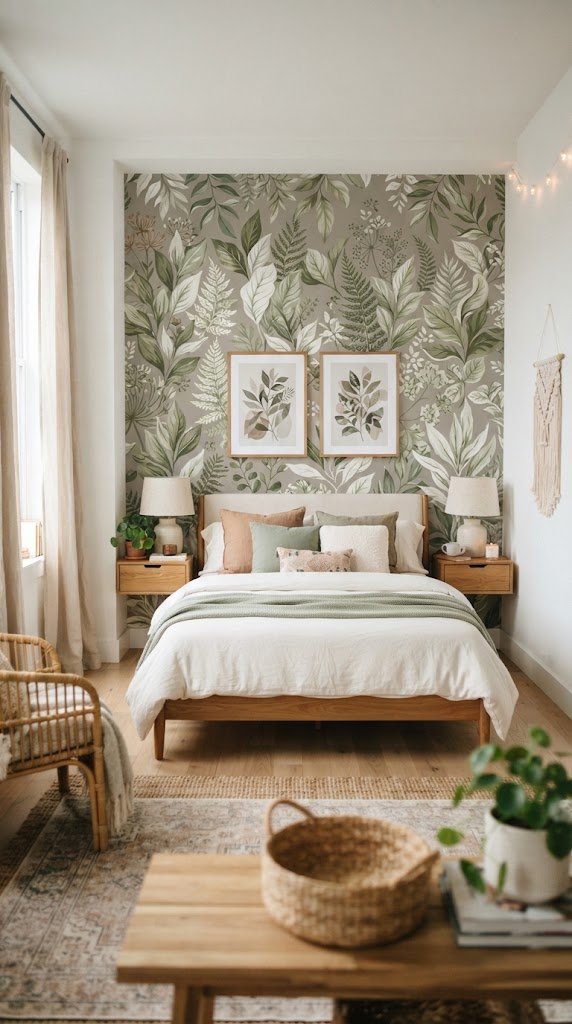
A peel-and-stick wallpaper accent wall behind the sofa, behind the bed, or in the bathroom transforms the apartment’s most visible blank surface into the room’s primary design statement without a single drop of permanent adhesive. RoomMates and Chasing Paper both sell patterns in every aesthetic from botanical to geometric to abstract for $18 to $35 per panel.
Most bedroom feature walls behind a queen bed need four to six panels, putting the total material cost at $72 to $210 for a transformation that makes the apartment look like someone considered the space seriously. Apply on a clean, dry wall and leave a half-inch gap at ceiling and baseboard edges where temperature changes cause the most peeling.
28. Add Scent as a Consistent Apartment Element
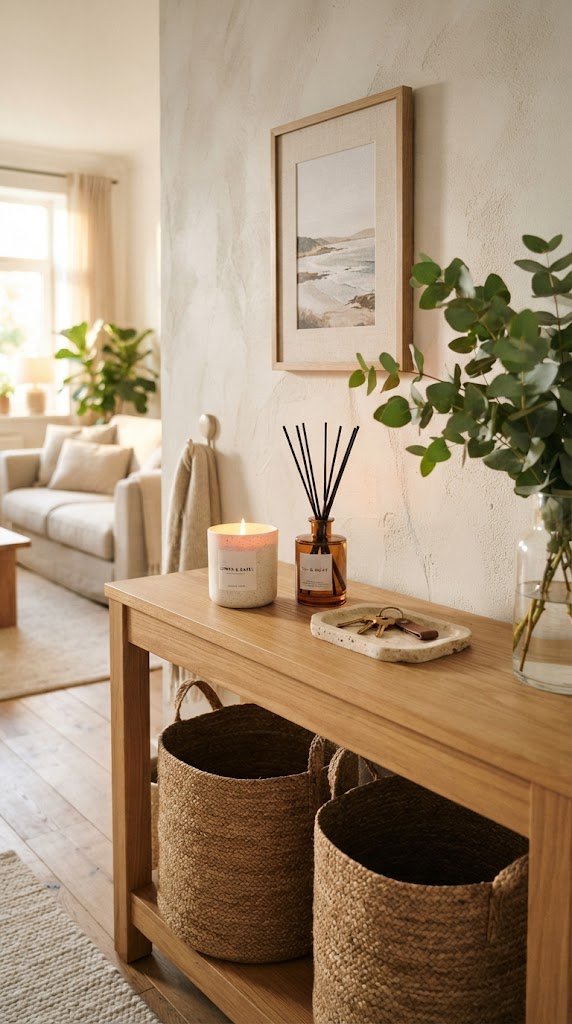
The right scent makes an apartment feel like a home before anyone looks at a single design choice, since scent registers before sight in a new environment and shapes the entire first impression of a space. A quality soy candle in a ceramic vessel from a brand like Homesick, Boy Smells, or Otherland costs $20 to $45 and burns 40 to 60 hours.
Position candles or a reed diffuser near the apartment door so the scent activates the moment you and your guests enter. Avoid synthetic air fresheners, which signal “covering something up” to anyone’s nose rather than “this space is well maintained.” The scent layer is the detail that makes people say your apartment feels different from every other college apartment they’ve visited, usually without knowing why.
29. Buy Multi-Functional Furniture Only
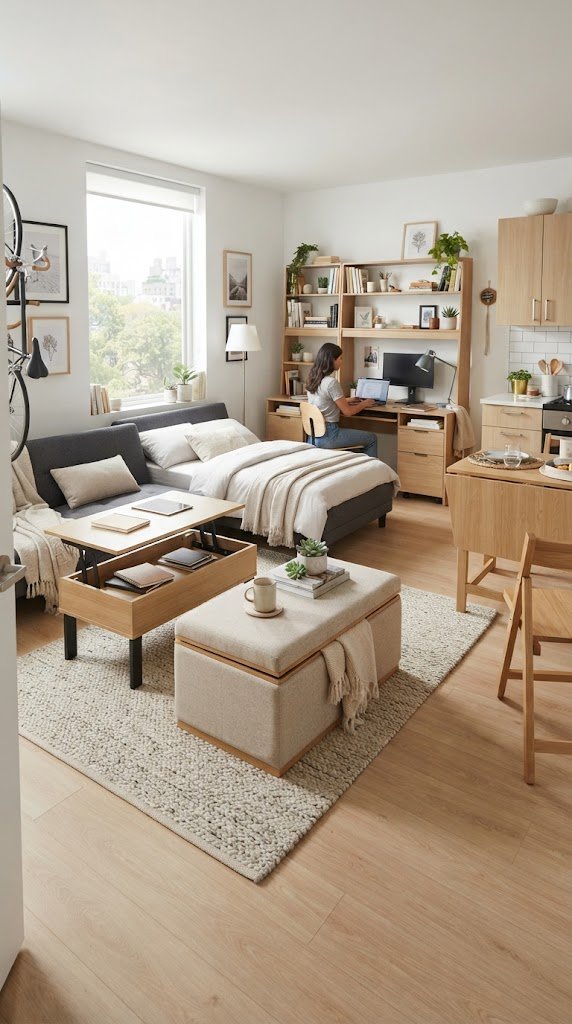
Every piece of furniture in a college apartment should do at least two jobs, since the square footage cost per piece is too high for single-function objects. An ottoman with storage replaces a coffee table and a storage bin. A daybed or sofa bed replaces a sofa and a guest bed. A desk with a hutch replaces a desk and a bookshelf.
Apply the two-job test before buying any new piece: does this do something beyond what it looks like? If the answer is no, find a version of the same piece that stores, converts, folds, or doubles. The test eliminates every decorative-only purchase that sounds good in a store and collects floor space in an apartment. FYI, this single rule cut my college apartment spending by about 30 percent and improved the functional quality of every room simultaneously.
30. Take Your Time Decorating Instead of Finishing Everything on Move-In Day
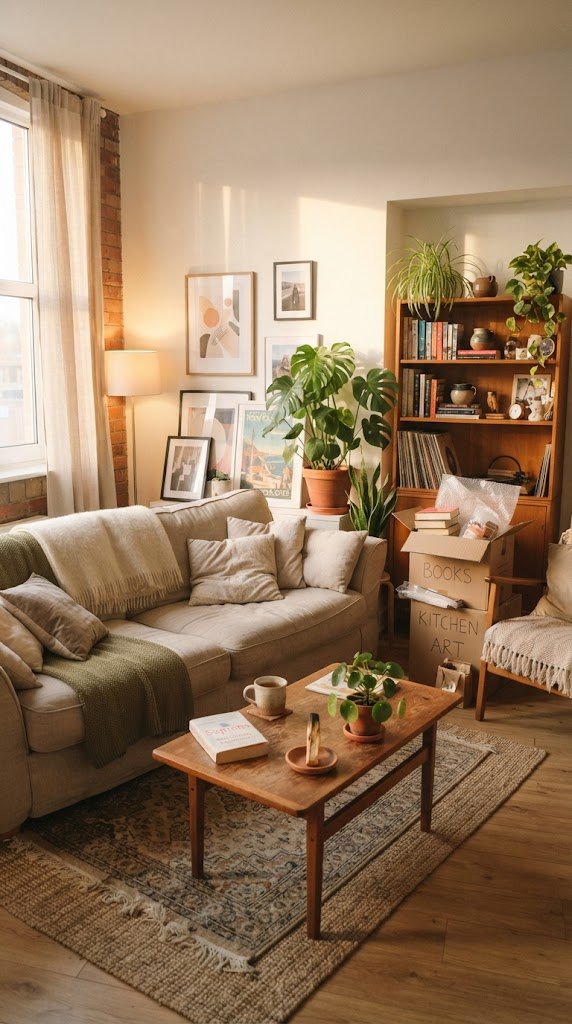
The best college apartments develop over a semester, not a weekend, because the right pieces show up gradually at thrift stores, in a friend’s discards, and in the spaces you didn’t plan for on move-in day. Leave one wall intentionally empty for the first month and see what naturally belongs there based on how you use the room before buying something to fill it.
The decorating trap in a new apartment is treating every blank surface as a problem to solve on the first Saturday, which produces a room full of placeholder decisions rather than considered ones. Give the apartment time to tell you what it needs, and spend your first $200 on functional basics (lamps, rugs, command strips) before spending it on personality.
Final Thoughts
A college apartment becomes a home when it solves the problems you actually have, not the ones a staged photo suggests. Start with the four decisions that affect your daily life most directly: a quality desk chair, proper lighting, a rug that fits the furniture, and a functional entryway. Build outward from there, one practical idea at a time, and your apartment becomes a space worth coming home to across a full academic year rather than a place you’re just sleeping in between campus commitments.