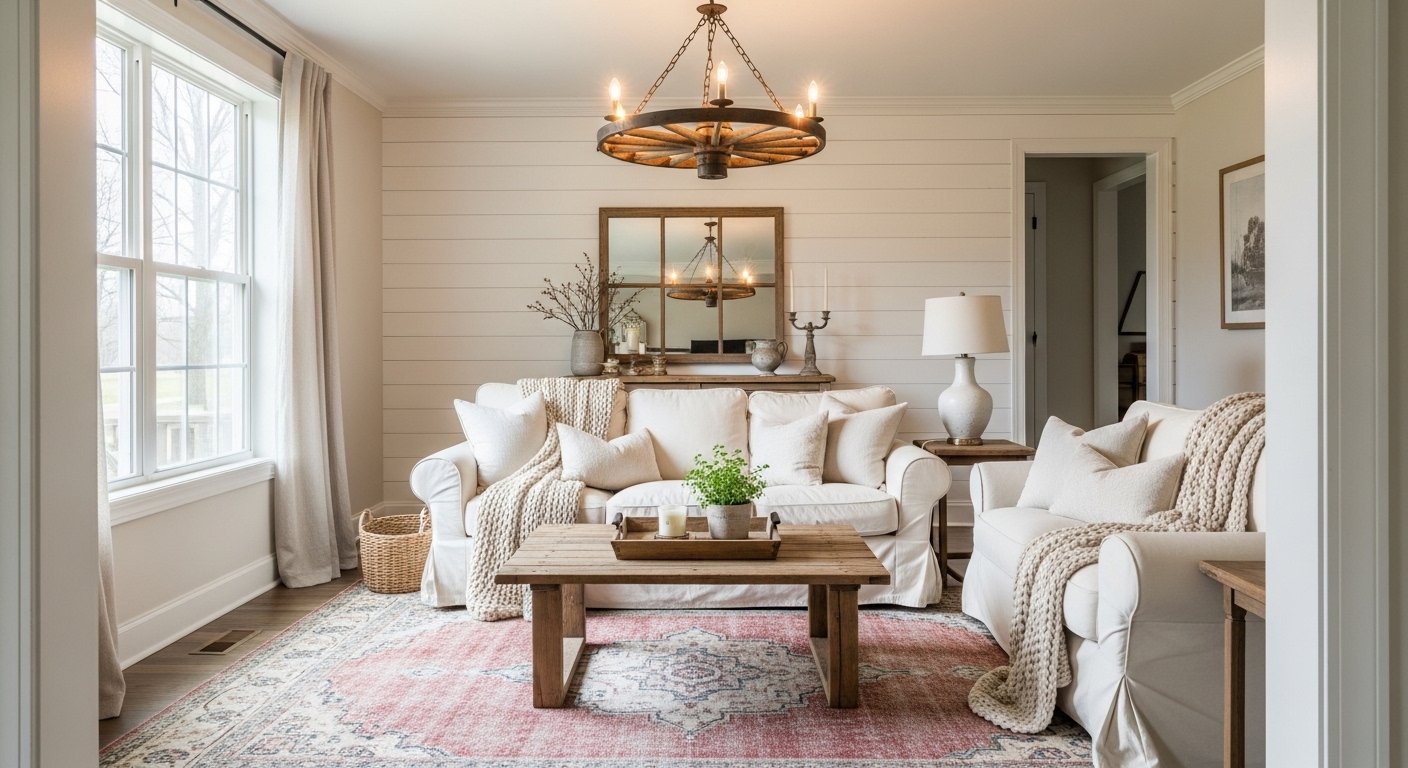
23 Farmhouse Living Room Ideas That Feel Warm & Stylish
You know that feeling when you walk into a room and instantly want to kick off your shoes, grab a blanket, and stay forever? That’s farmhouse style doing exactly what it’s supposed to do. And yet somehow, so many people get it wrong. They end up with a living room full of shiplap and mason jars that looks more like a Pinterest board exploded than an actual home.
I’ve been obsessed with farmhouse interiors for years, and I’ll be honest, I’ve made plenty of mistakes along the way. Too much white. Not enough texture. One too many “GATHER” signs (we’ve all been there). But I’ve also figured out what genuinely works, and that’s exactly what this list is about.
Here are 23 farmhouse living room ideas that feel warm, real, and completely livable.
1. Anchor the Room With Shiplap (But Do It Selectively)
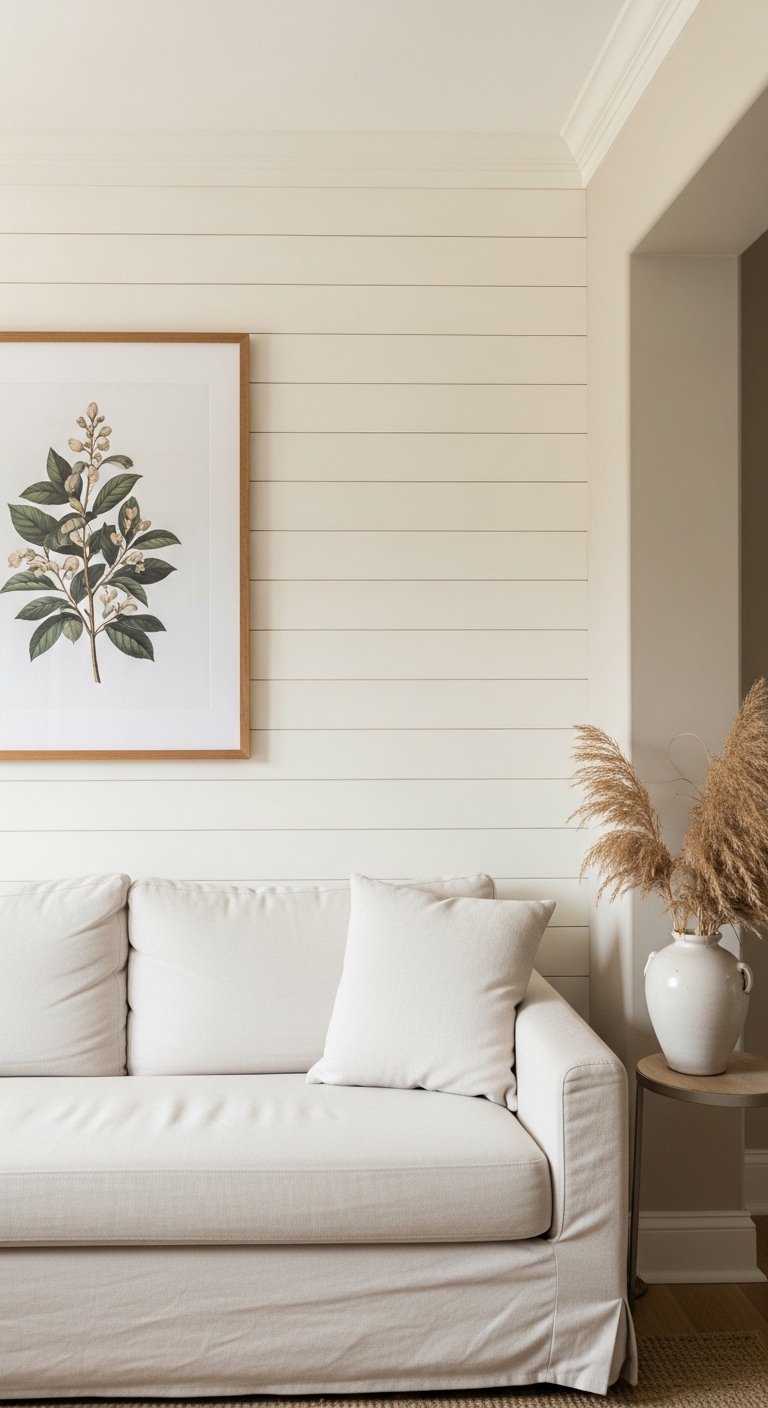
Shiplap gets a bad reputation because people go overboard with it. One shiplap wall is a farmhouse statement. Four shiplap walls is a barn.
Pick your most important wall, usually the one behind the sofa or the fireplace wall, and give it the shiplap treatment. Paint it in a warm white or soft greige and let it breathe. The rest of your walls can stay smooth and painted, which actually makes the shiplap wall pop even harder.
The texture contrast is the whole point. Don’t cover it up by surrounding it with more texture.
2. Choose a Neutral Base Palette With Warm Undertones
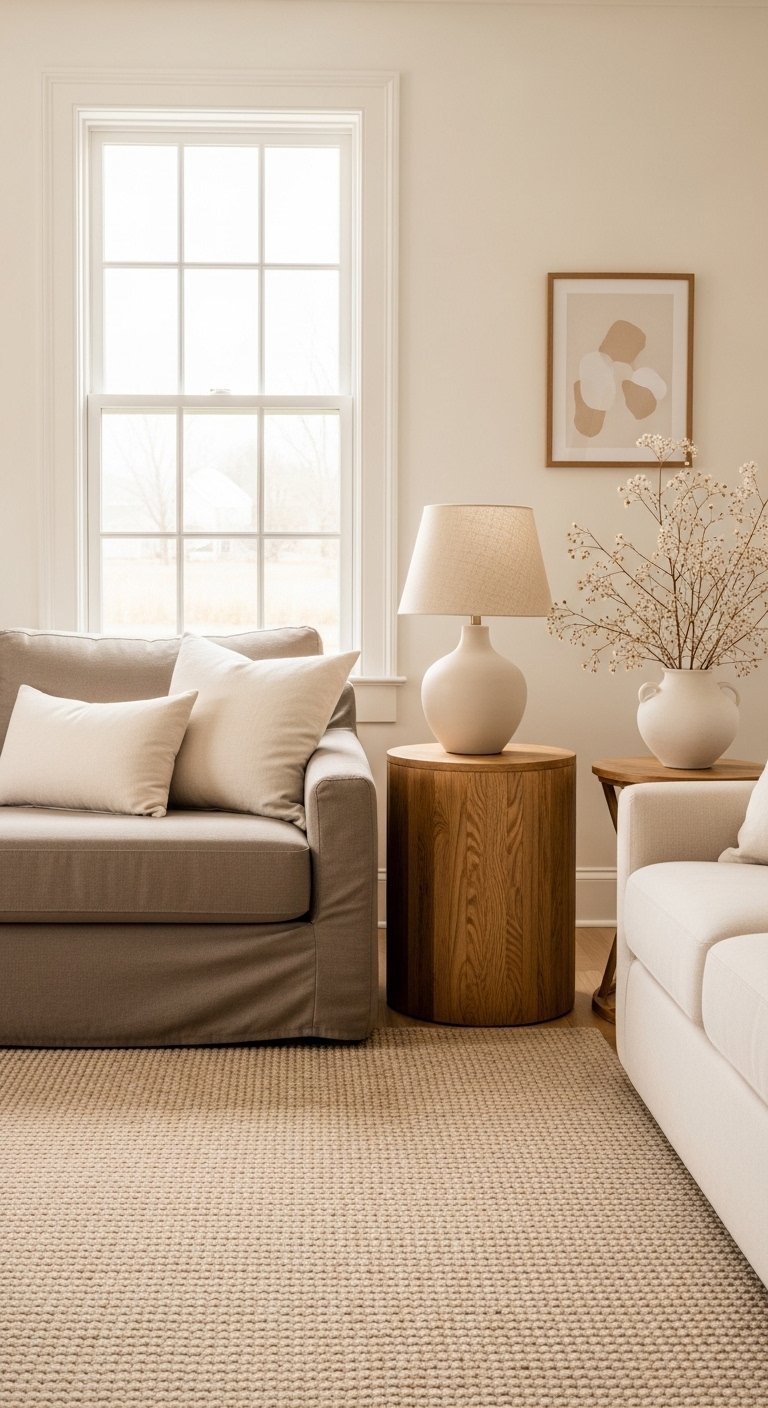
Farmhouse style lives and dies by its color palette. The key is warm neutrals, not cold ones. Cool greys and stark whites make a farmhouse room feel clinical. Warm whites, creamy ivories, soft taupes, and sandy beiges make it feel like a home.
Think of colors like:
- Benjamin Moore White Dove for a classic warm white
- Sherwin-Williams Accessible Beige for a soft, grounded neutral
- Behr Antique White for a creamier, cozy base
Start with your walls and pull the rest of your palette from there. When the base is right, everything else falls into place.
3. Bring In a Reclaimed Wood Coffee Table
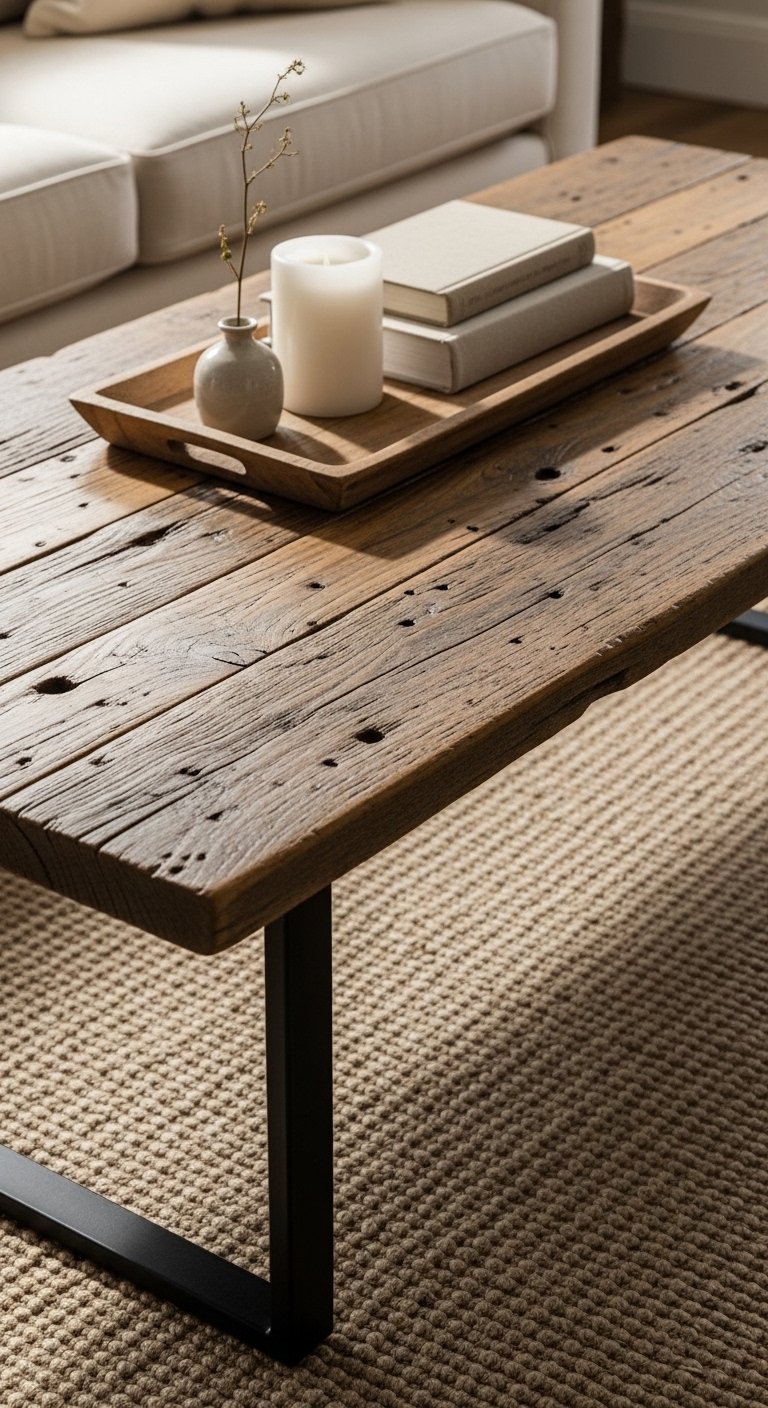
Nothing says a farmhouse like a piece of furniture with actual history. A reclaimed wood coffee table adds age, texture, and character that no brand-new piece can replicate, no matter how well it’s distressed at the factory.
Look for tables with visible knots, grain variation, and even old nail holes. Those aren’t flaws. Those are the whole point. Pair it with a simple metal base or trestle legs for that classic farmhouse look that works in both traditional and modern farmhouse settings.
If you can’t find a genuine reclaimed piece, look for solid wood tables with a hand-scraped or wire-brushed finish. The effect is close enough.
4. Layer in Natural Textures
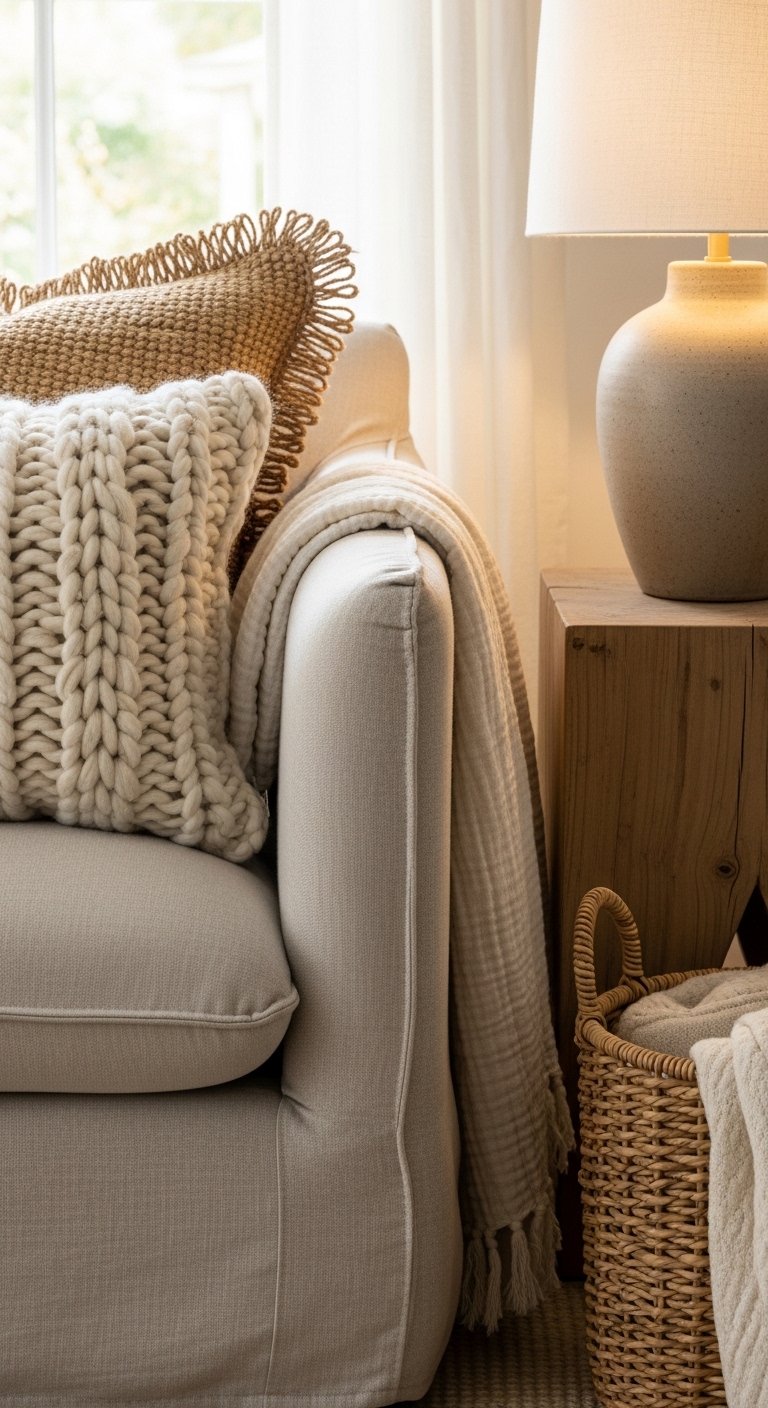
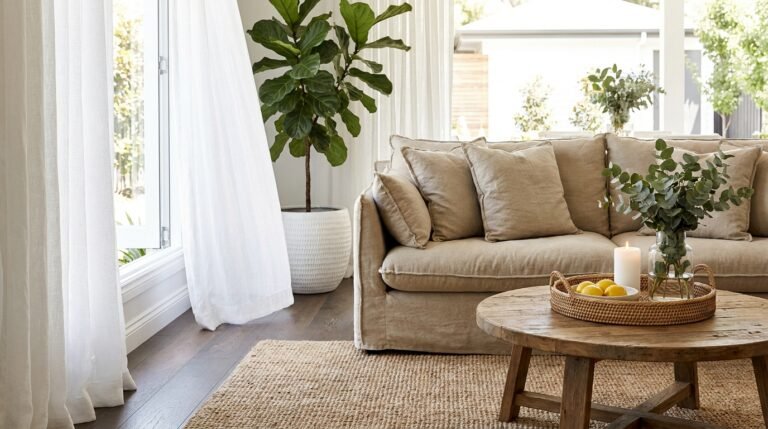
Farmhouse rooms feel cozy because they pile on the natural textures in a way that feels organic rather than overdone. Linen, cotton, jute, wool, and raw wood should all share space in your living room.
A jute rug on the floor. Linen cushions on the sofa. A chunky knit throw draped over the armchair. A raw wood side table next to a ceramic lamp. The variety of natural materials creates depth and warmth that synthetic alternatives simply can’t deliver. IMO, getting the texture mix right matters more than any single furniture piece you choose.
5. Pick a Slipcovered Sofa in Cream or White
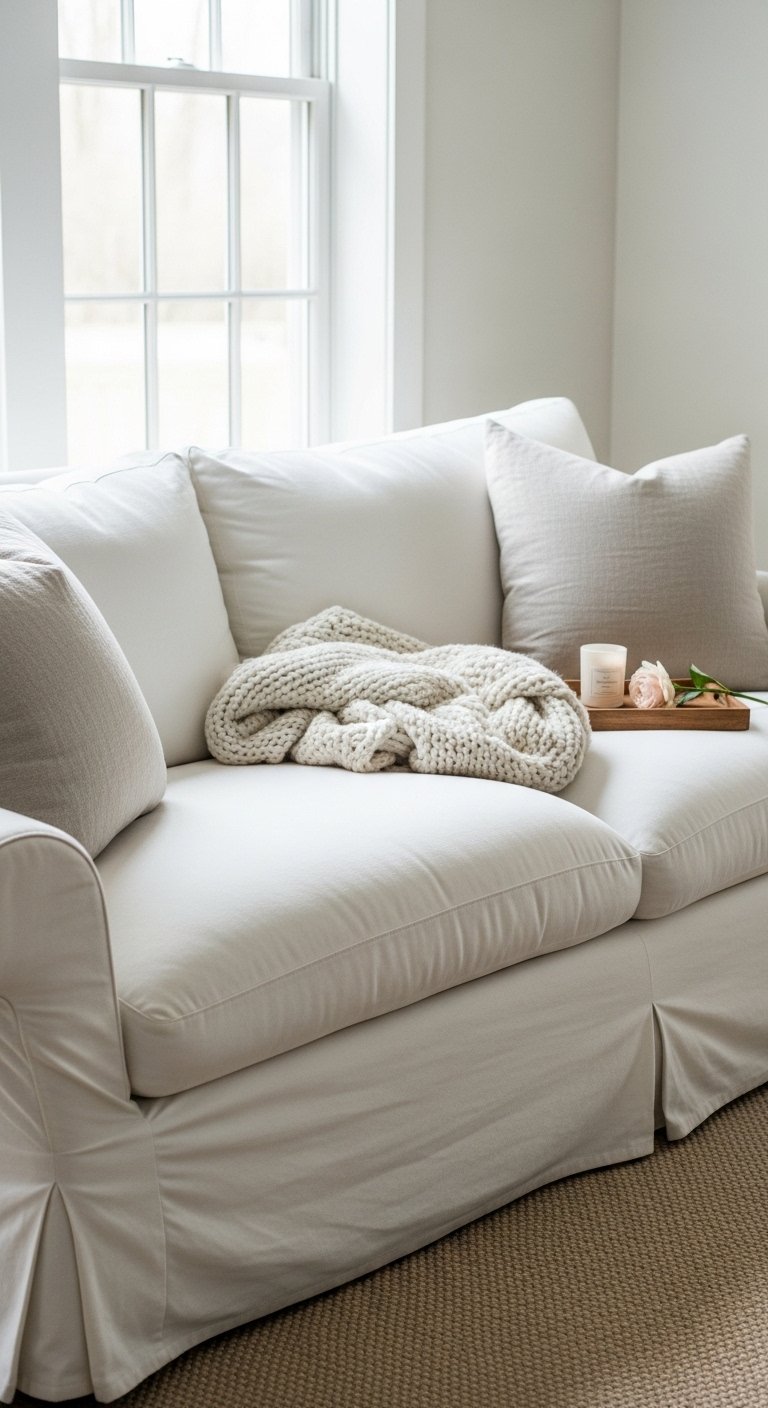
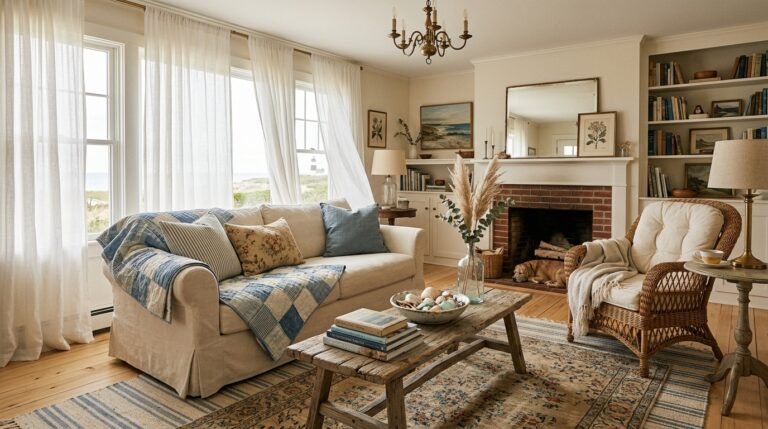
The slipcovered sofa is a farmhouse icon for good reason. It’s relaxed, washable, and perfectly imperfect in the best way. A slightly rumpled slipcover in cream or natural linen looks more authentic than a stiff, showroom-perfect sofa ever could in a farmhouse setting.
Go for a sofa with a generous, slightly oversized silhouette. Deep seats, rolled arms, and a loose, lived-in drape on the slipcover. Brands like Pottery Barn, IKEA’s Ektorp range, and Ballard Designs all offer solid options at different price points.
Pro tip: buy two slipcovers. Wash one while the other is on the sofa. Your future self will thank you.
6. Add a Vintage or Antique Rug
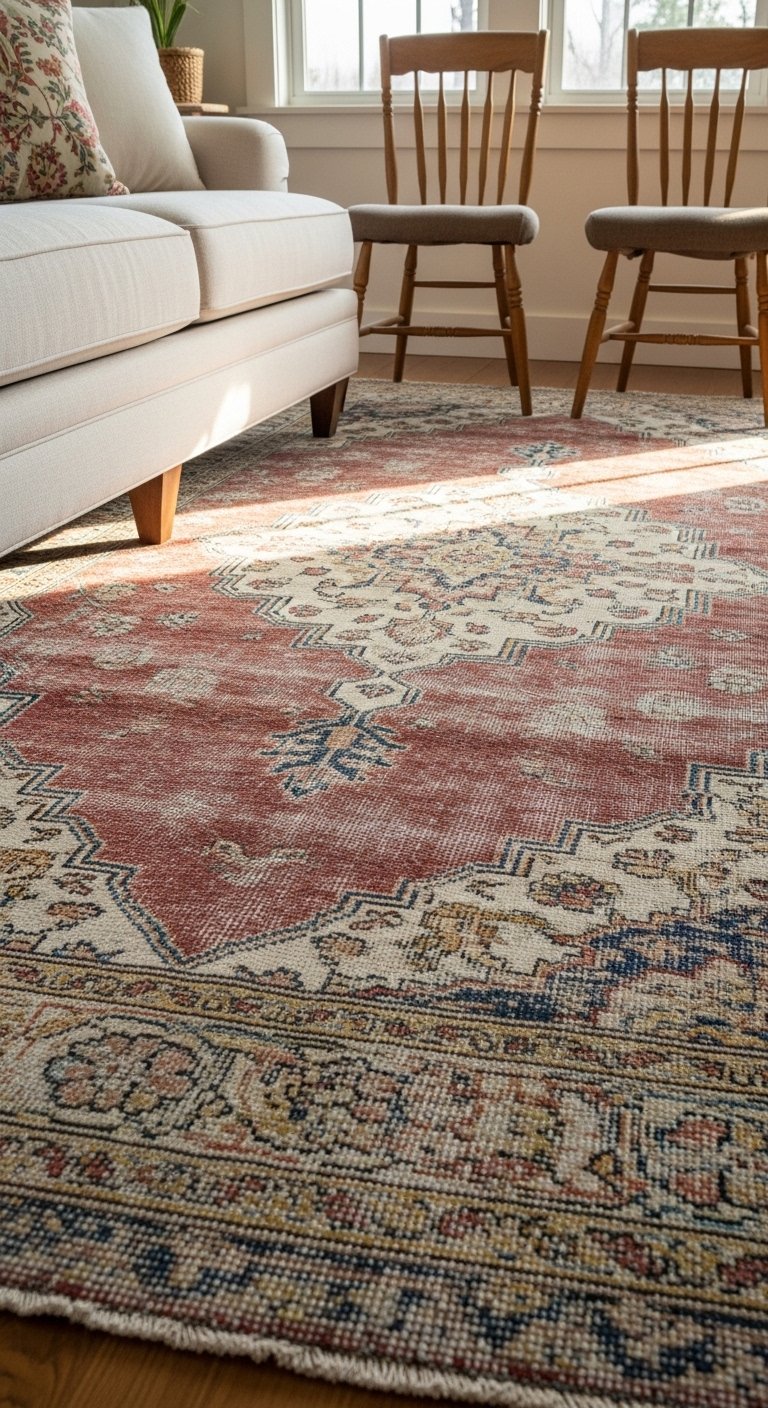
A brand-new rug in a farmhouse living room always looks a little too fresh. A worn, faded vintage or antique rug brings the kind of patina that grounds the whole room and makes everything around it feel more authentic.
Persian rugs, Oushak rugs, and kilim-style flatweaves all work beautifully in farmhouse spaces. Look for faded, muted tones in dusty red, soft navy, worn ivory, and aged gold. Sites like Etsy, eBay, and Chairish are goldmines for affordable vintage rugs. And if a real vintage piece is outside your budget, several brands now make convincing vintage-look reproductions.
7. Use Barn Doors as a Design Feature
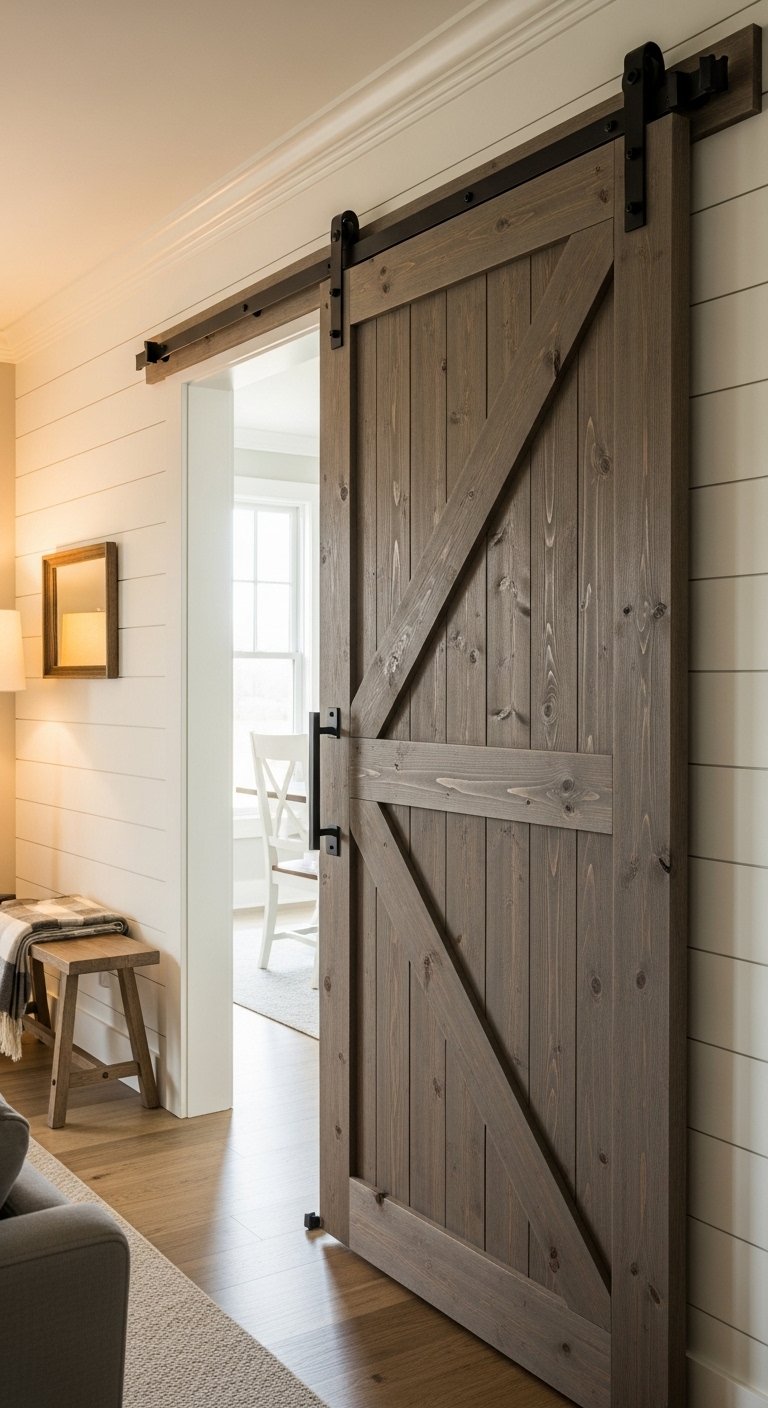
A sliding barn door is one of those farmhouse elements that earns its place because it looks good AND solves a real problem. It saves floor space, adds instant farmhouse character, and works as a divider between the living room and an adjacent dining room or hallway.
Go with a classic Z-brace design in weathered wood for a traditional farmhouse look, or a sleeker flat panel in painted wood if you lean to a more modern farmhouse. The black steel hardware is non-negotiable. It provides the perfect contrast against the wood and keeps the look sharp.
8. Style a Fireplace as the Room’s Focal Point
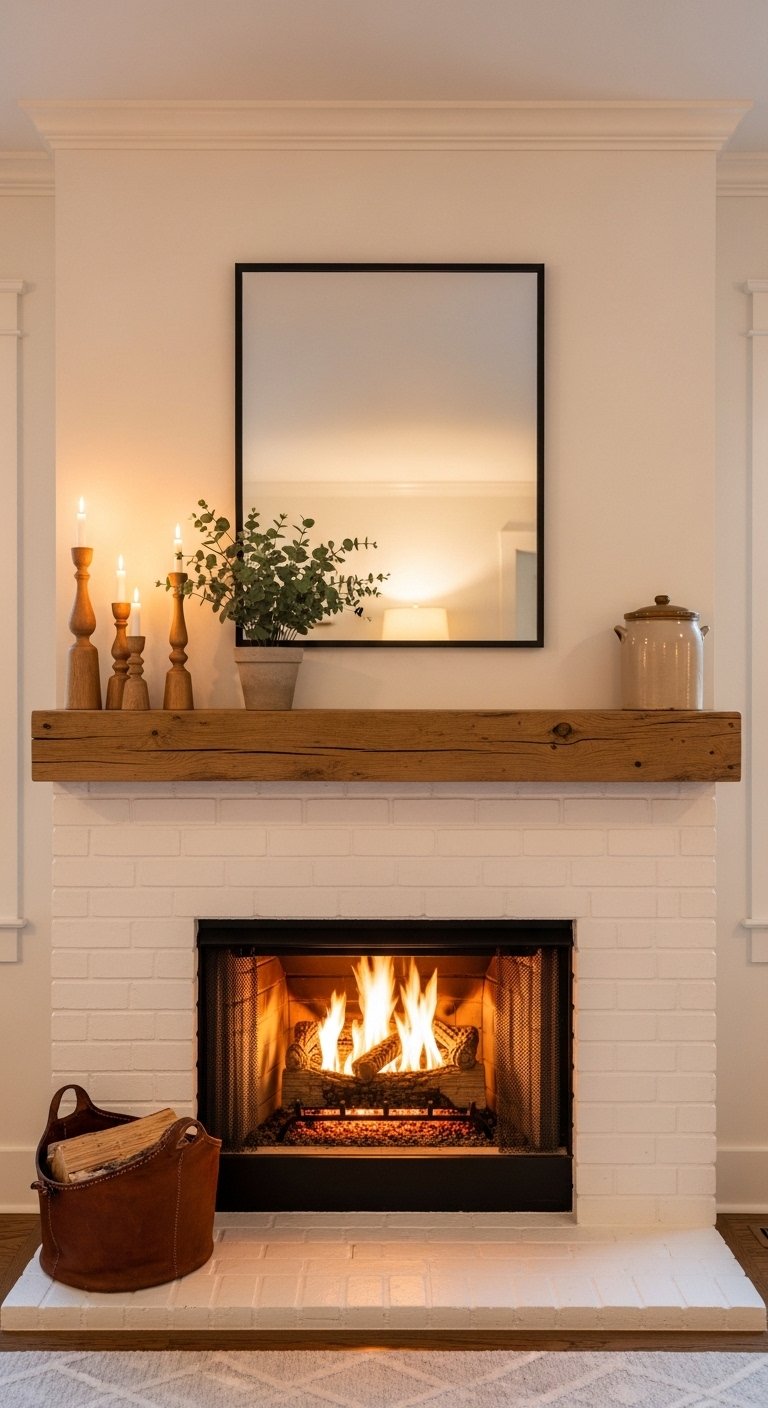
In a farmhouse living room, the fireplace should be the undisputed star of the room. Everything else should orient toward it and support it, not compete with it.
Style your mantel with a mix of:
- A large, simply framed mirror or a piece of vintage art
- Wooden candlesticks at varying heights
- A small potted plant or a bundle of dried eucalyptus
- One or two meaningful objects with a personal story
Keep it asymmetrical. Perfectly symmetrical mantel styling looks staged. A slightly off-balance arrangement looks curated and real.
9. Incorporate Open Shelving With Collected Objects
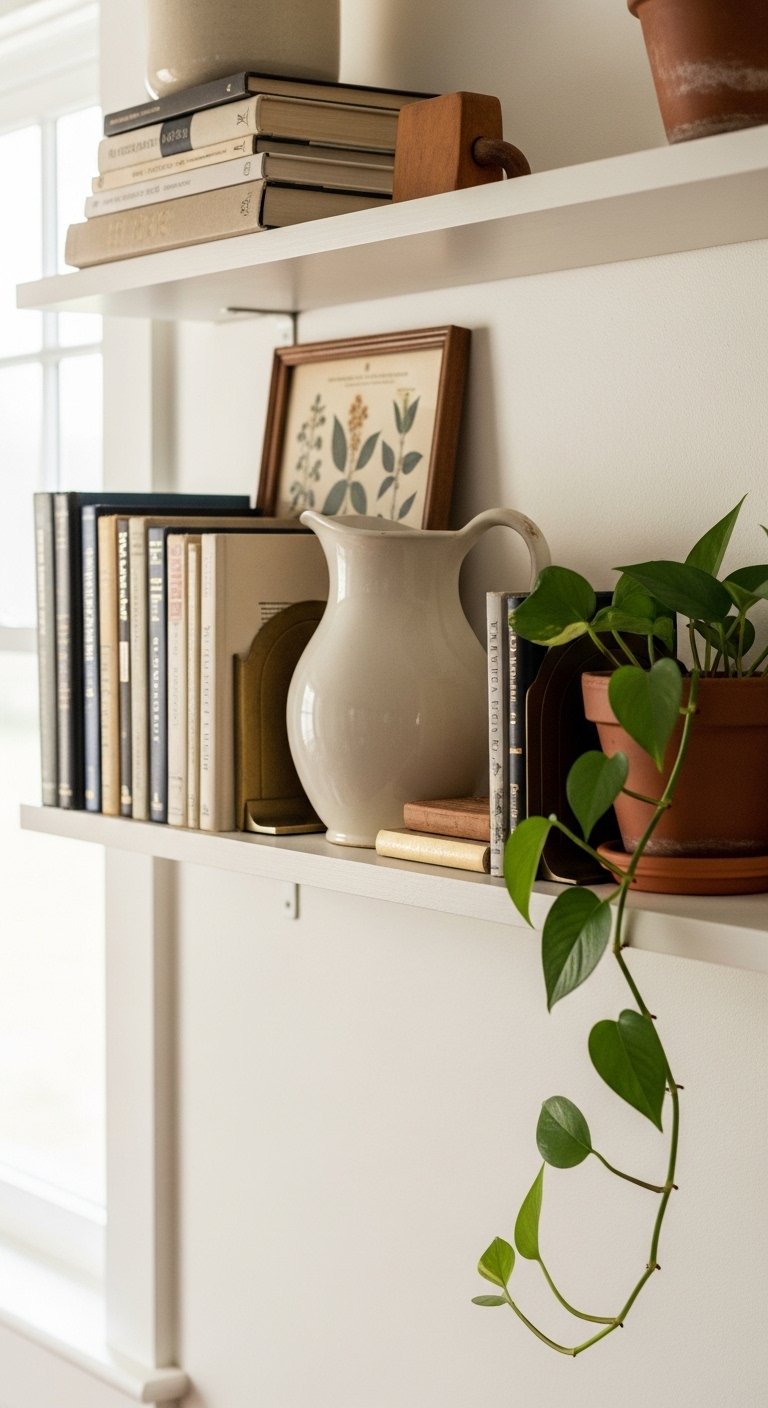
Open shelving in a farmhouse living room gives you the chance to display things that tell your story. The best farmhouse shelves look collected over time, not purchased all at once from the same store on the same afternoon.
Mix old books with new ones. Add a vintage ceramic pitcher next to a modern plant pot. Lean a small framed print against the back of the shelf rather than hanging it. The visual variety is what makes farmhouse shelving feel personal rather than like a store display.
10. Choose Wooden Beam Ceiling Details
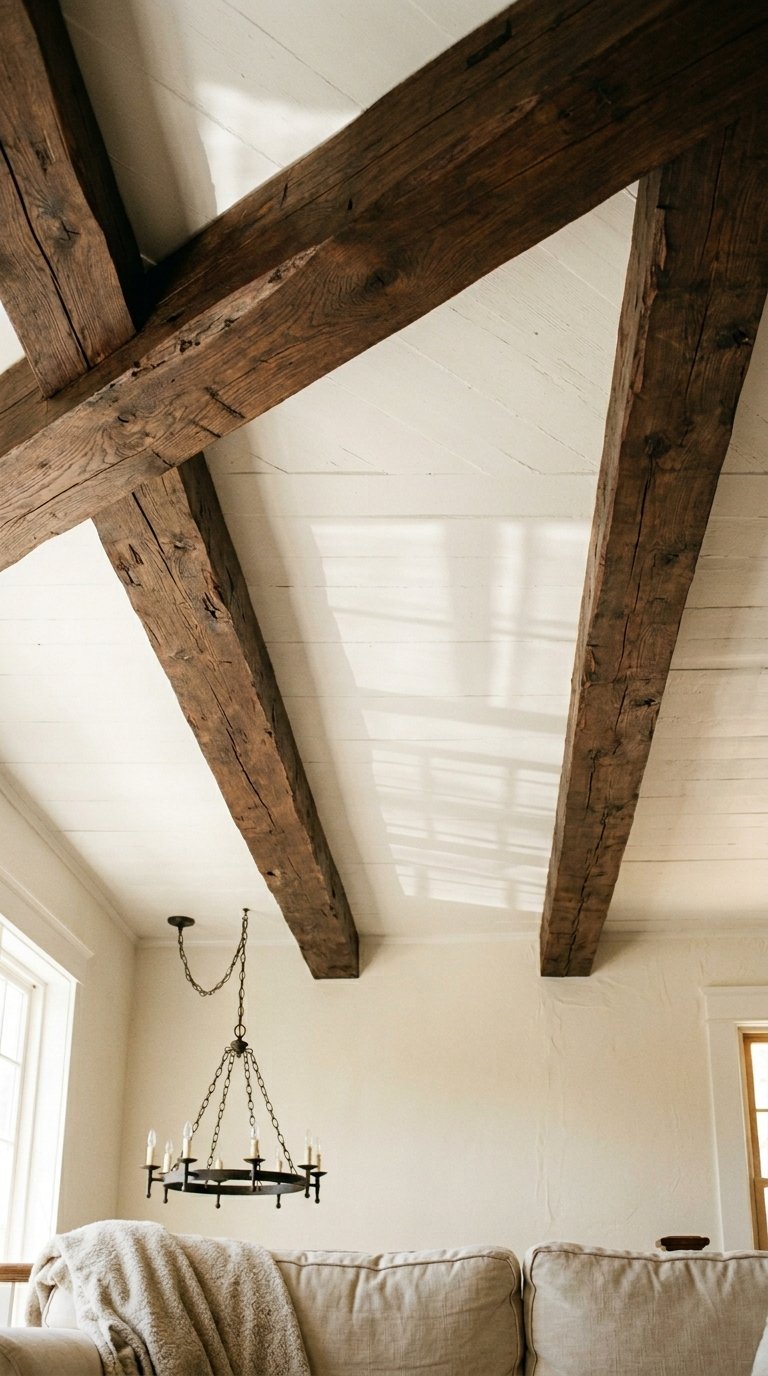
If you have an older home with actual exposed beams, consider yourself extremely lucky. Exposed wooden ceiling beams instantly add architectural interest and farmhouse authenticity that most new builds simply don’t have.
If your ceiling is flat and beamless, you can add faux wood beams made from lightweight polyurethane or hollow wood box beams. When done well, they’re nearly indistinguishable from the real thing. Space them evenly and finish them in a warm stained or whitewashed tone to match the rest of your wood elements in the room.
11. Hang Oversized Vintage-Style Art
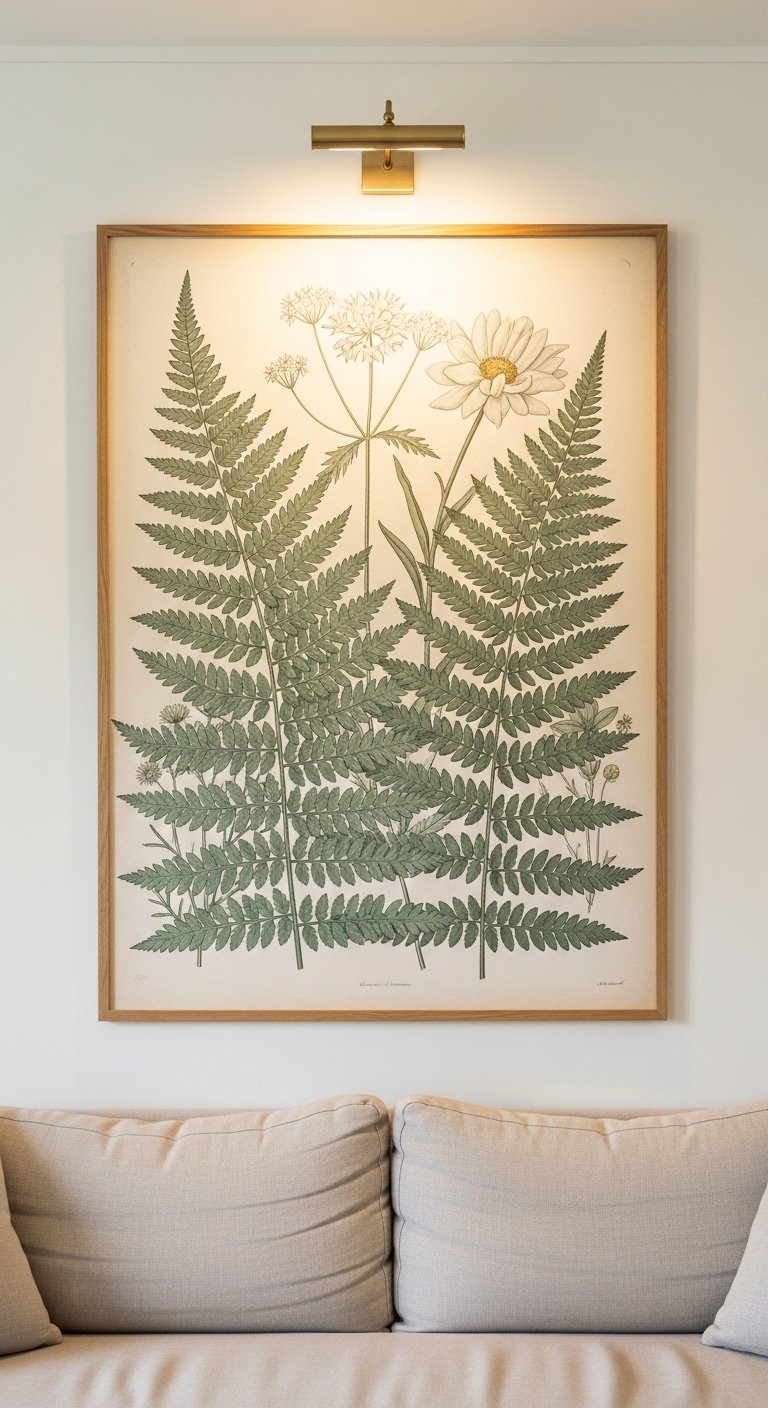
Scale matters enormously in a farmhouse living room, and wall art is where most people play it too small. One large, oversized piece does infinitely more for a room than a dozen small prints scattered randomly.
Farmhouse art that works particularly well includes:
- Large botanical or floral prints in muted tones
- Black and white landscape photography
- Vintage map reproductions
- Simple abstract art in earthy, neutral tones
Go for simple frames in black, natural wood, or aged gold. Skip the ornate frames unless you’re going for a more traditional farmhouse feel.
12. Add Wrought Iron or Black Metal Accents
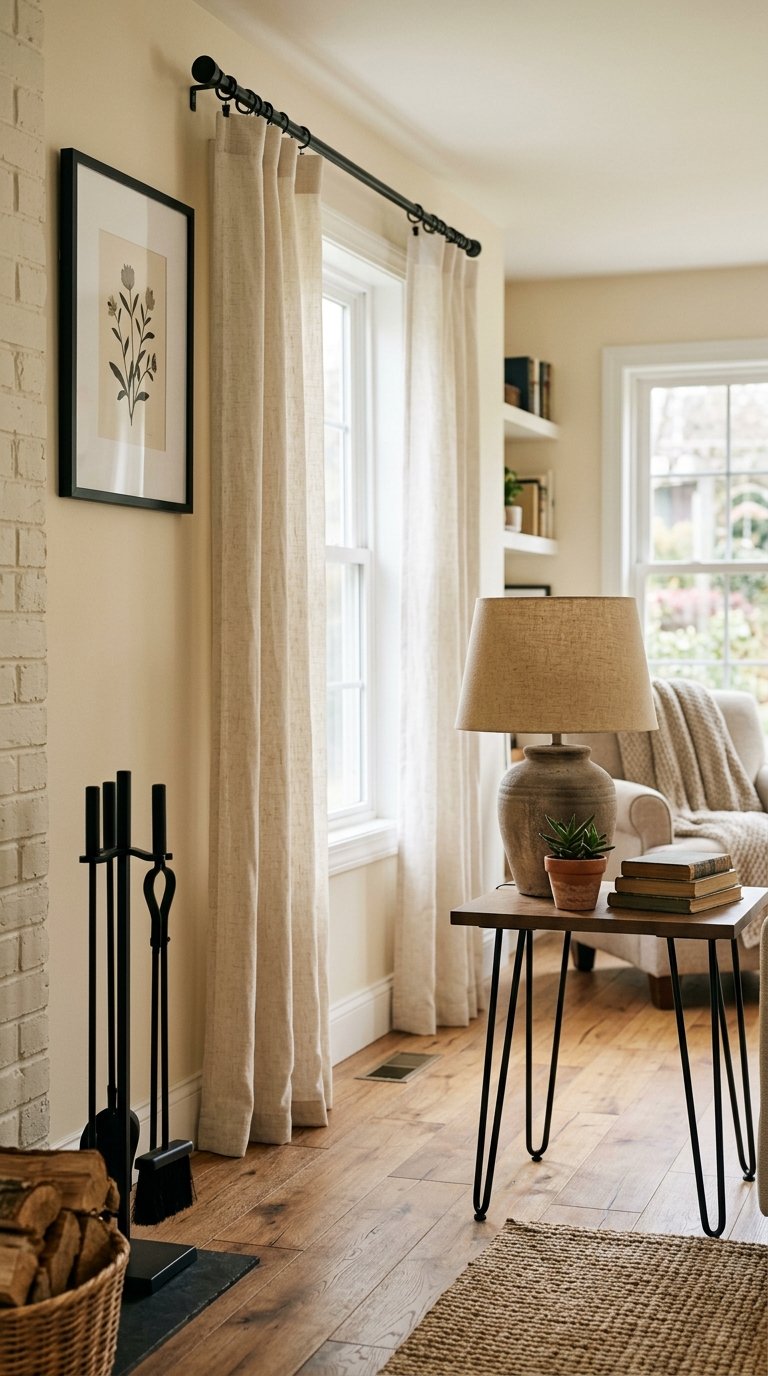
Farmhouse style balances soft, organic textures with harder, more industrial elements. Wrought iron and matte black metal accents provide that necessary contrast and keep the room from feeling too soft or precious.
Look for black metal in your light fixtures, curtain rod hardware, fireplace tools, picture frames, and side table legs. You don’t need a lot of it. A few well-placed metal accents throughout the space create a cohesive thread that ties the whole room together without making it feel industrial.
13. Use Plank Flooring in a Wide Format
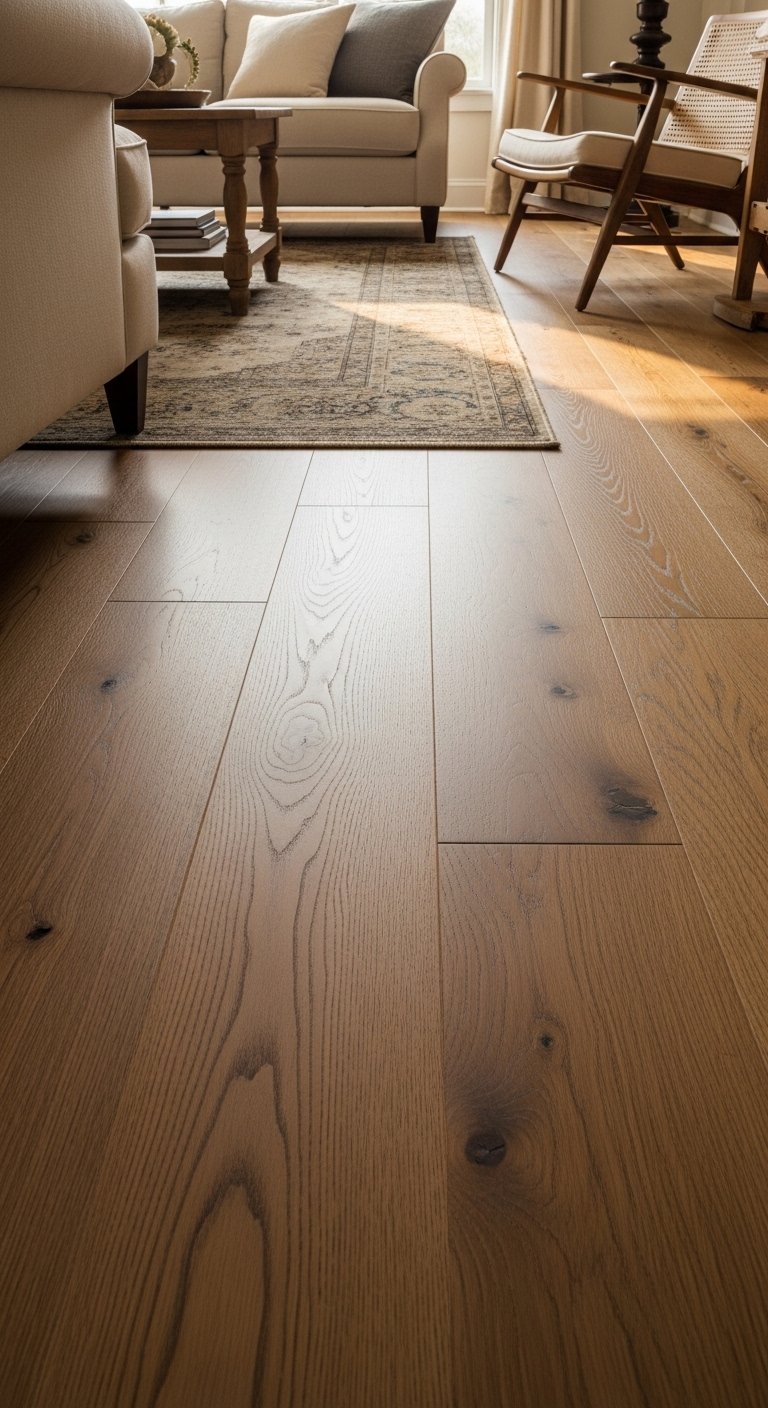
The floor you choose sets the entire tone for a farmhouse living room. Wide plank wood flooring, ideally in a warm honey, natural oak, or slightly grey-washed tone, is the gold standard for farmhouse spaces. Narrow strip flooring feels too formal and contemporary.
If you’re working with existing flooring you can’t replace, a large area rug can do most of the heavy lifting. Choose one that covers the majority of the floor in the seating area and you’ll barely notice what’s underneath.
14. Layer Your Lighting Like a Pro
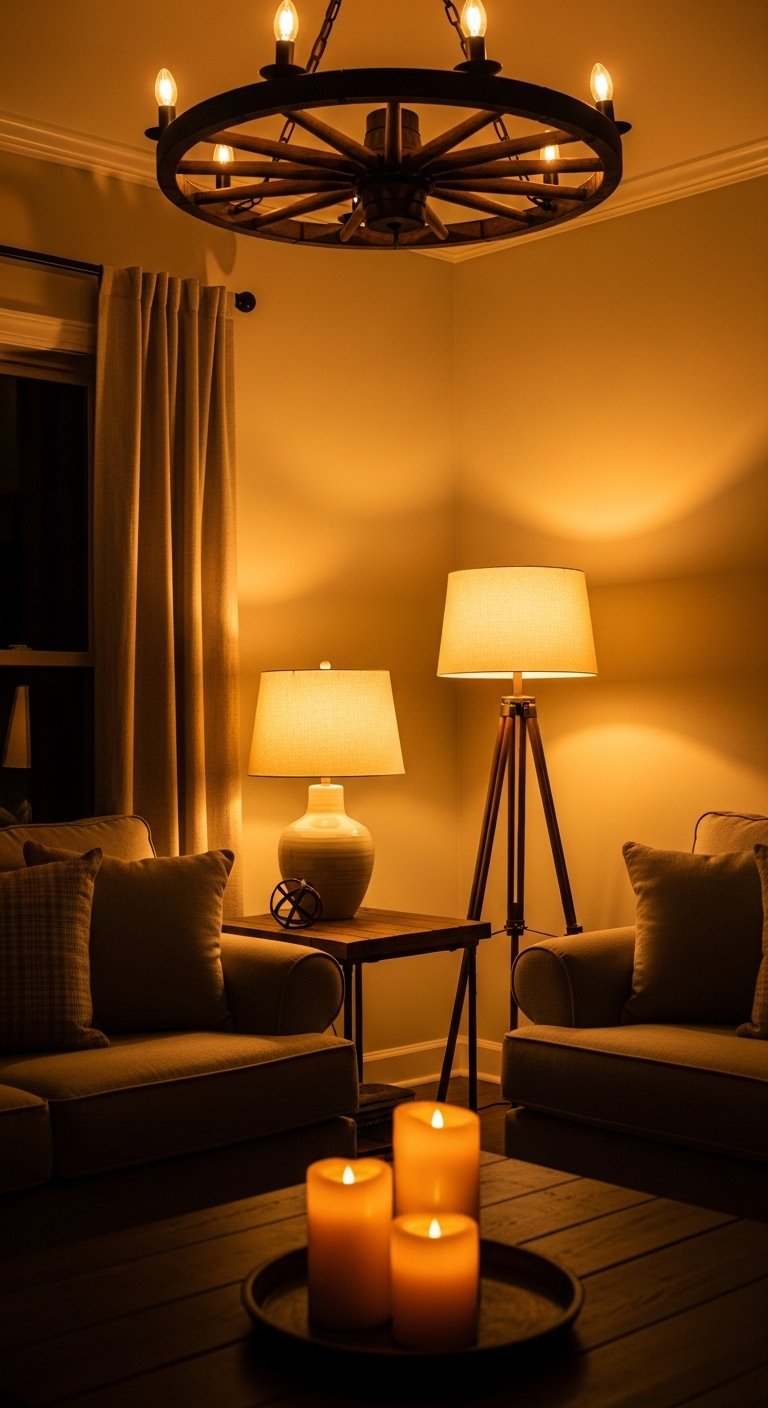
A single overhead light in a farmhouse living room is a crime, honestly. Layered lighting transforms the atmosphere of the whole space and is one of the most impactful changes you can make without touching a single piece of furniture.
Build your layers:
- Overhead: A rustic wagon wheel chandelier, a woven rattan pendant, or an aged iron fixture
- Floor lamps: A simple arc lamp or a tripod-style floor lamp with a linen shade
- Table lamps: Ceramic bases with natural linen shades on side tables
- Candles: Real or LED, clustered on the coffee table or mantel
Each layer adds warmth and dimension that no single fixture can deliver alone.
15. Add Sheer Linen Curtains From Ceiling to Floor
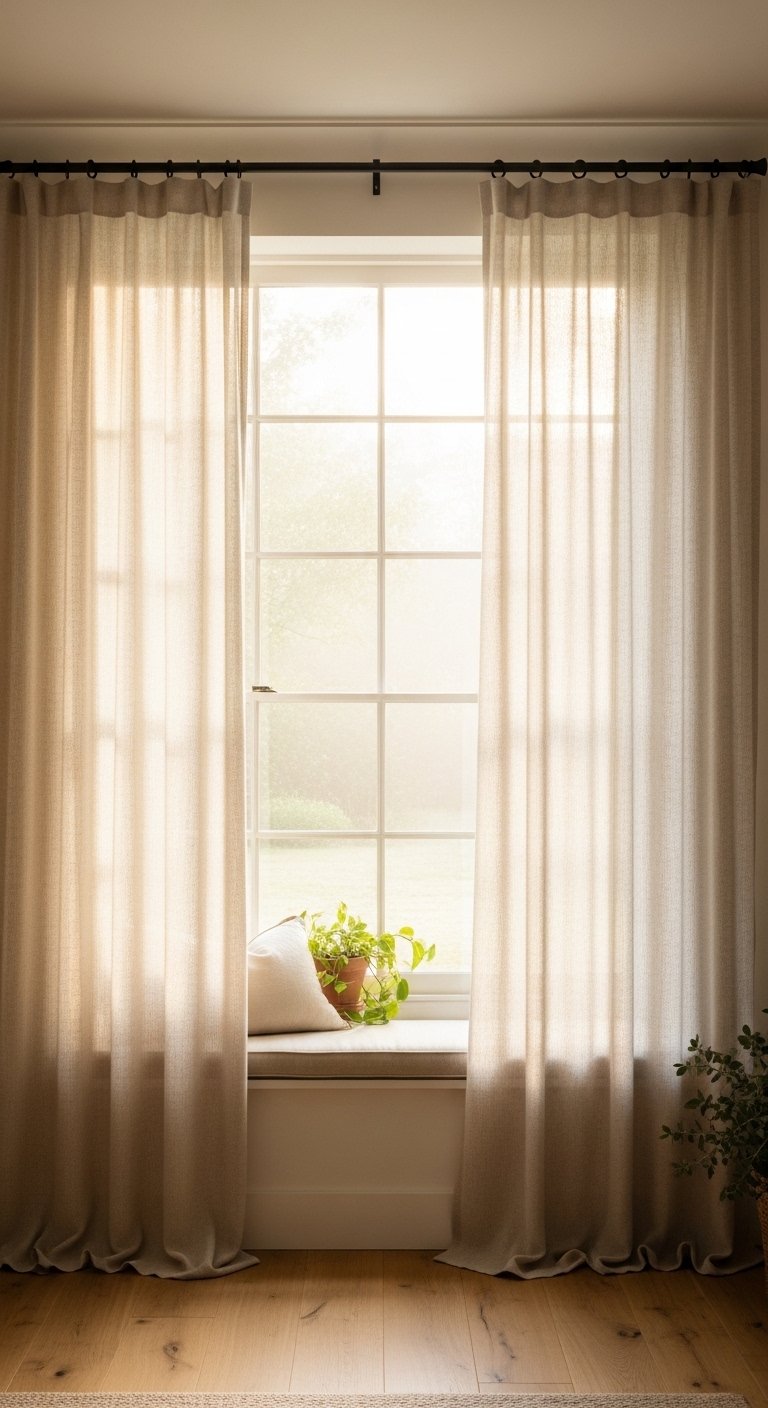
Curtains in a farmhouse living room should be simple, natural, and generously sized. Sheer or semi-sheer linen panels hung from ceiling to floor let light filter through softly while adding height and elegance to the space.
Skip the heavy drapes and the elaborate valances. Farmhouse window treatments are effortless by design. A simple rod with ring clips and panels that pool very slightly on the floor is all you need. Stick to natural linen, cream cotton, or a soft white muslin fabric for the most authentic look.
16. Incorporate a Vintage Wooden Ladder as Decor
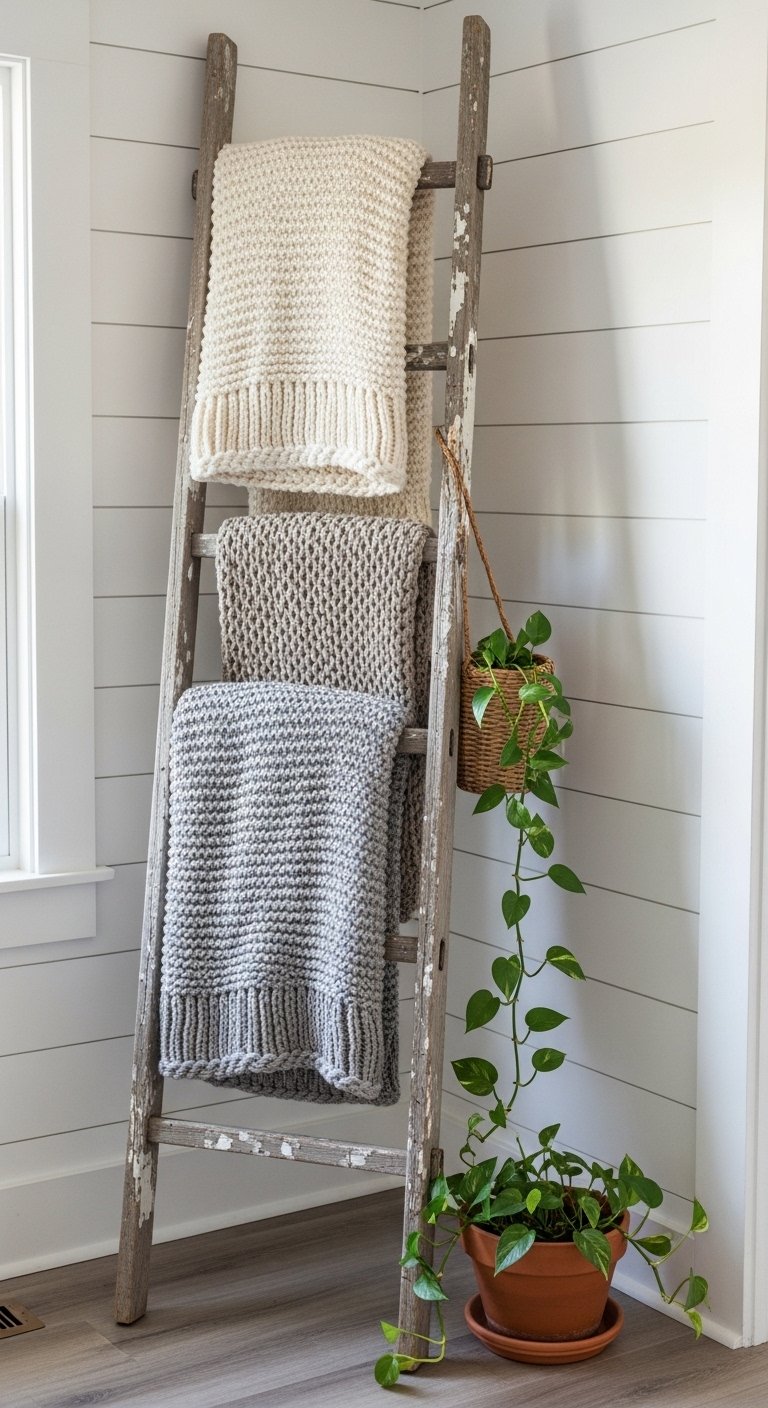
This one sounds quirky until you see it done well. A tall, weathered wooden ladder leaning against a wall serves as both decor and functional storage for throw blankets, magazines, or even small plants.
It takes up almost no floor space, adds vertical interest, and feels completely at home in a farmhouse room. You can find genuine vintage ladders at antique markets and flea markets for very little money. Or you can buy a new decorative ladder and distress it yourself if you’re feeling crafty.
17. Create a Cozy Reading Corner
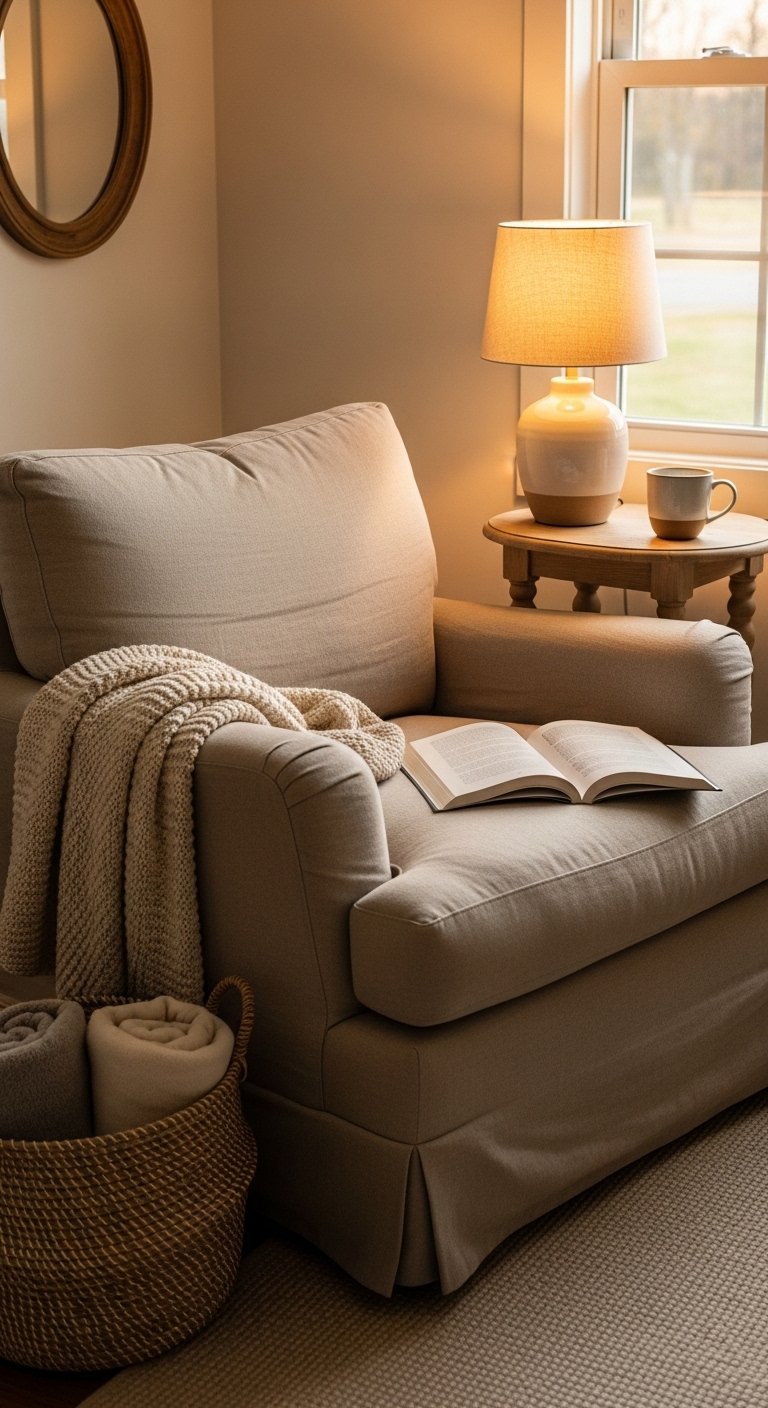
Every good farmhouse living room needs at least one spot that practically begs you to sit and stay. A dedicated reading corner with an oversized armchair, a floor lamp, and a side table becomes the most used spot in the room almost immediately.
Choose a chair with generous proportions, a linen or cotton slipcover or upholstery, and wide arms that can hold a book or a cup of tea. Add a small woven basket beside it for extra blankets. A simple wooden side table with room for a lamp and a drink completes the picture.
18. Display Ironstone or Vintage Pottery Collections
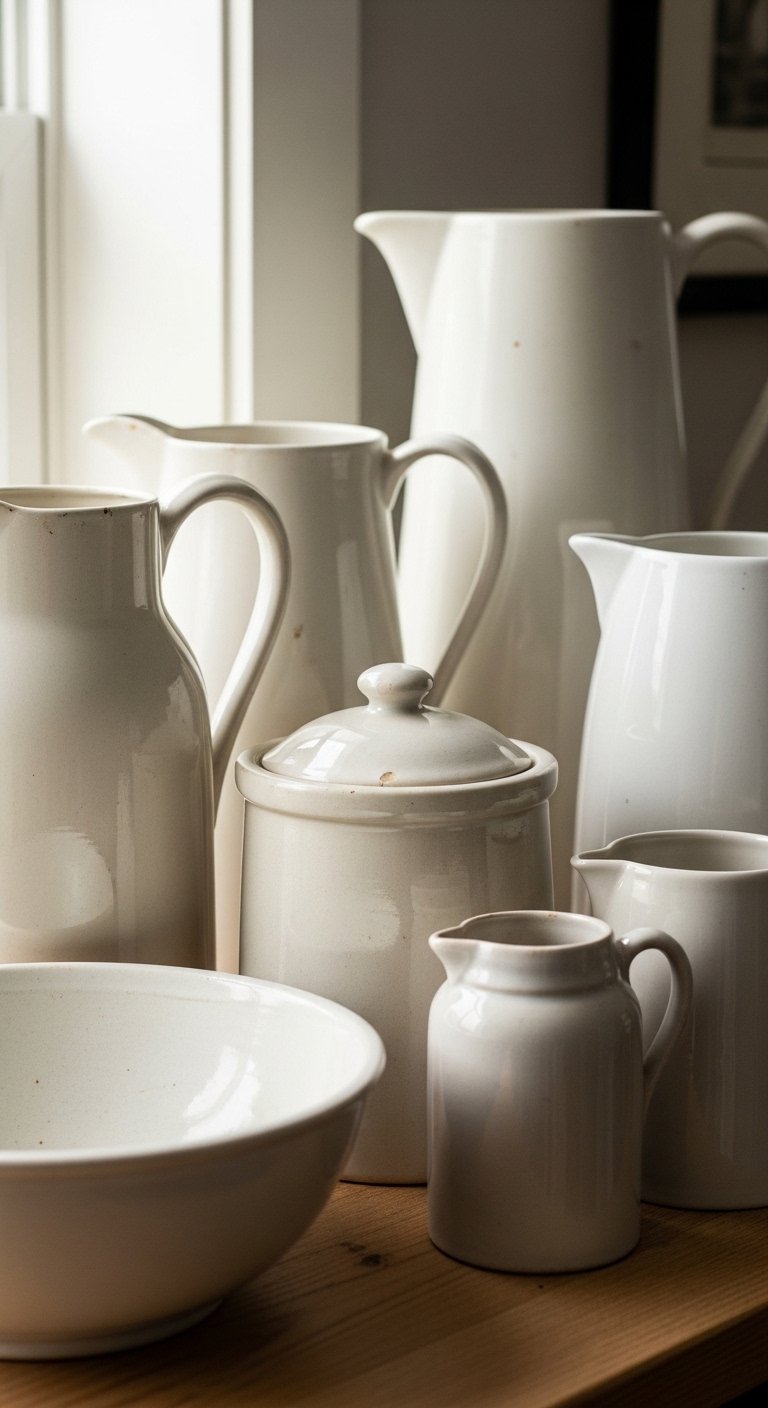
Collections give a farmhouse living room personality and story. A grouping of white ironstone pitchers, antique crocks, or vintage stoneware on a shelf or sideboard adds genuine farmhouse authenticity in a way that no mass-produced decor piece can match.
Start collecting pieces individually from antique stores, estate sales, and flea markets. The fact that each piece came from a different place is exactly what makes the collection feel real. Mix sizes and shapes but keep a consistent material or color family for visual cohesion.
19. Use Shiplap or Beadboard on the Lower Half of Walls
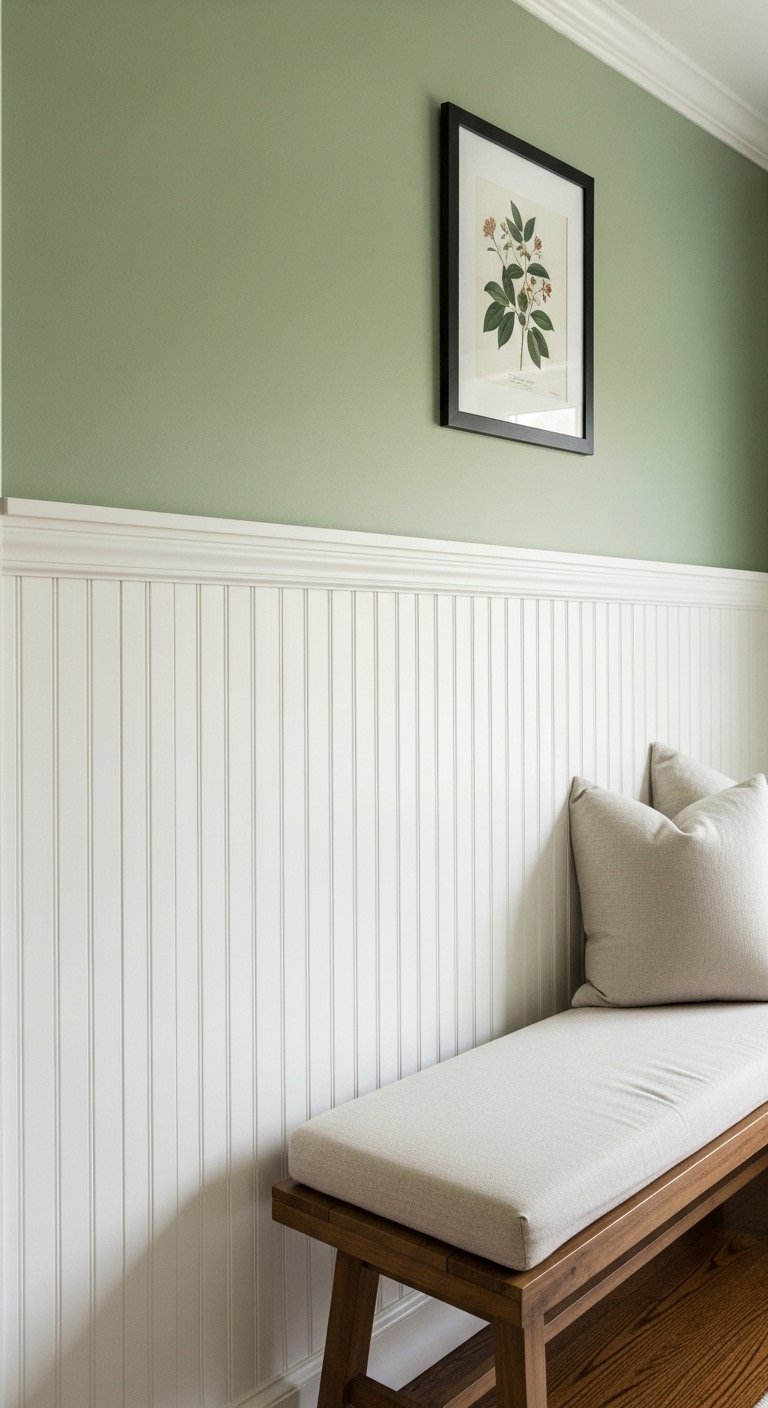
Can’t commit to a full shiplap wall? Start with the lower half. Installing shiplap or beadboard as a wainscoting treatment on the lower portion of your walls adds architectural character and farmhouse charm without overwhelming the room.
Paint it crisp white or soft cream and cap it with a simple chair rail. The upper wall can stay in your main wall color or go to a slightly deeper shade for contrast. This technique works beautifully in both traditional farmhouse and modern farmhouse living rooms.
20. Bring in Galvanized Metal Accents
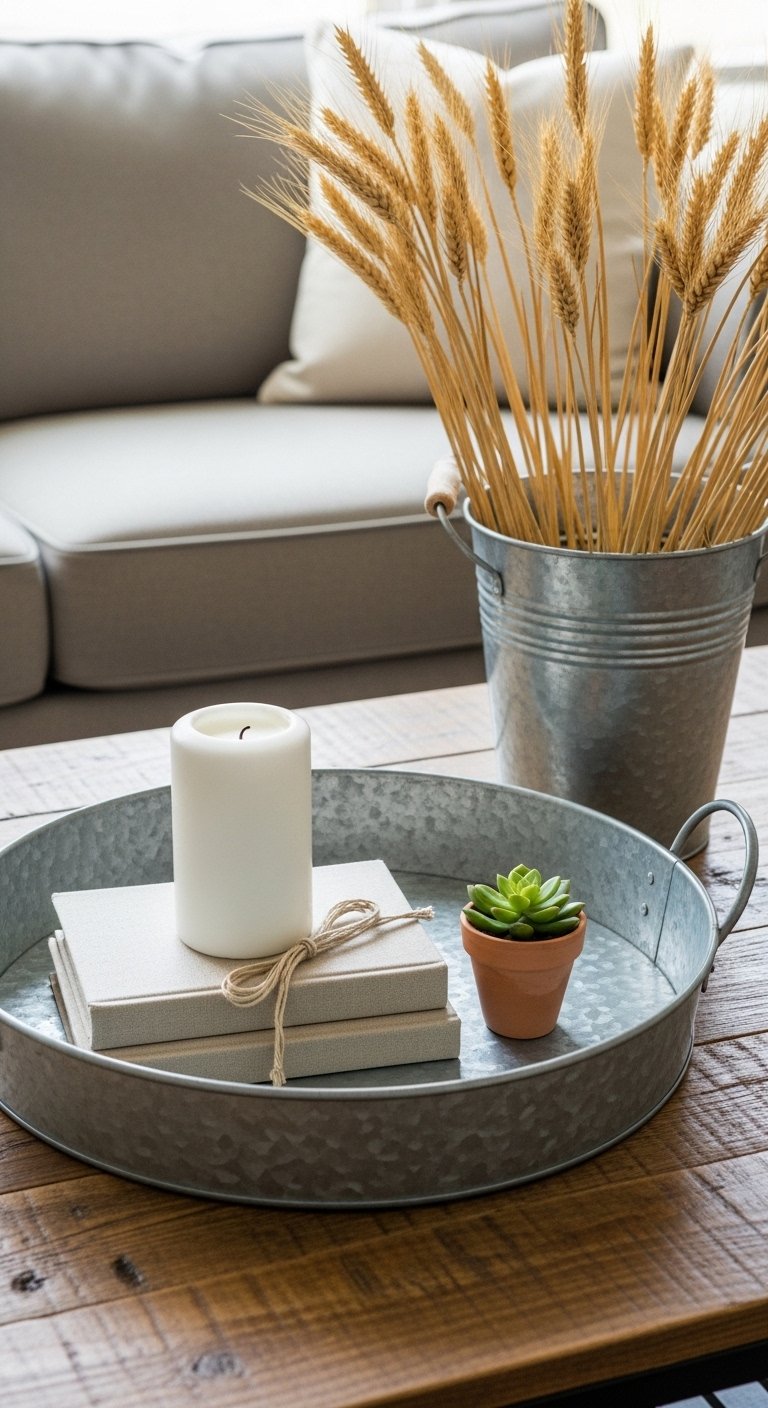
Galvanized metal is a farmhouse classic that adds a subtle industrial touch without going full factory floor. Galvanized buckets, trays, planters, and decorative bins all work as both functional and decorative elements in a farmhouse living room.
Use a galvanized tray on the coffee table to corral remotes and candles. Fill a galvanized bucket with tall dried stems or wheat grass for a corner arrangement. The silvery, matte finish of galvanized metal works beautifully against warm wood tones and soft linen fabrics.
21. Add a Chunky Knit or Woven Blanket to Every Seat
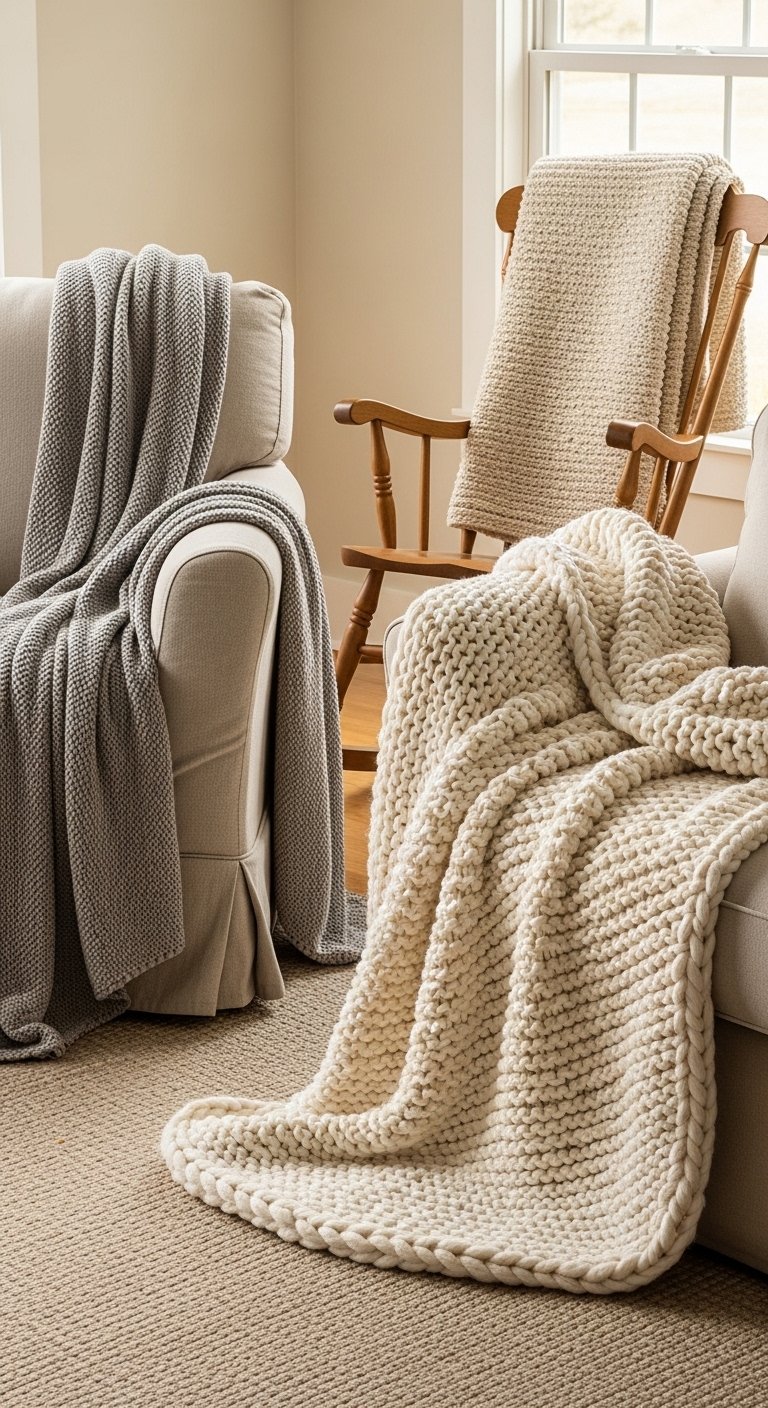
This is one of those ridiculously simple ideas that makes a disproportionately big difference. A chunky knit or loosely woven throw draped over every major seating piece instantly makes a farmhouse living room feel warmer, more layered, and more inviting.
Don’t fold them perfectly. Drape them casually. Bunch them slightly. Let them look like someone just used them and tossed them back. That slightly imperfect, lived-in quality is everything in farmhouse design. 🙂
22. Include a Farmhouse-Style Clock as a Focal Accent
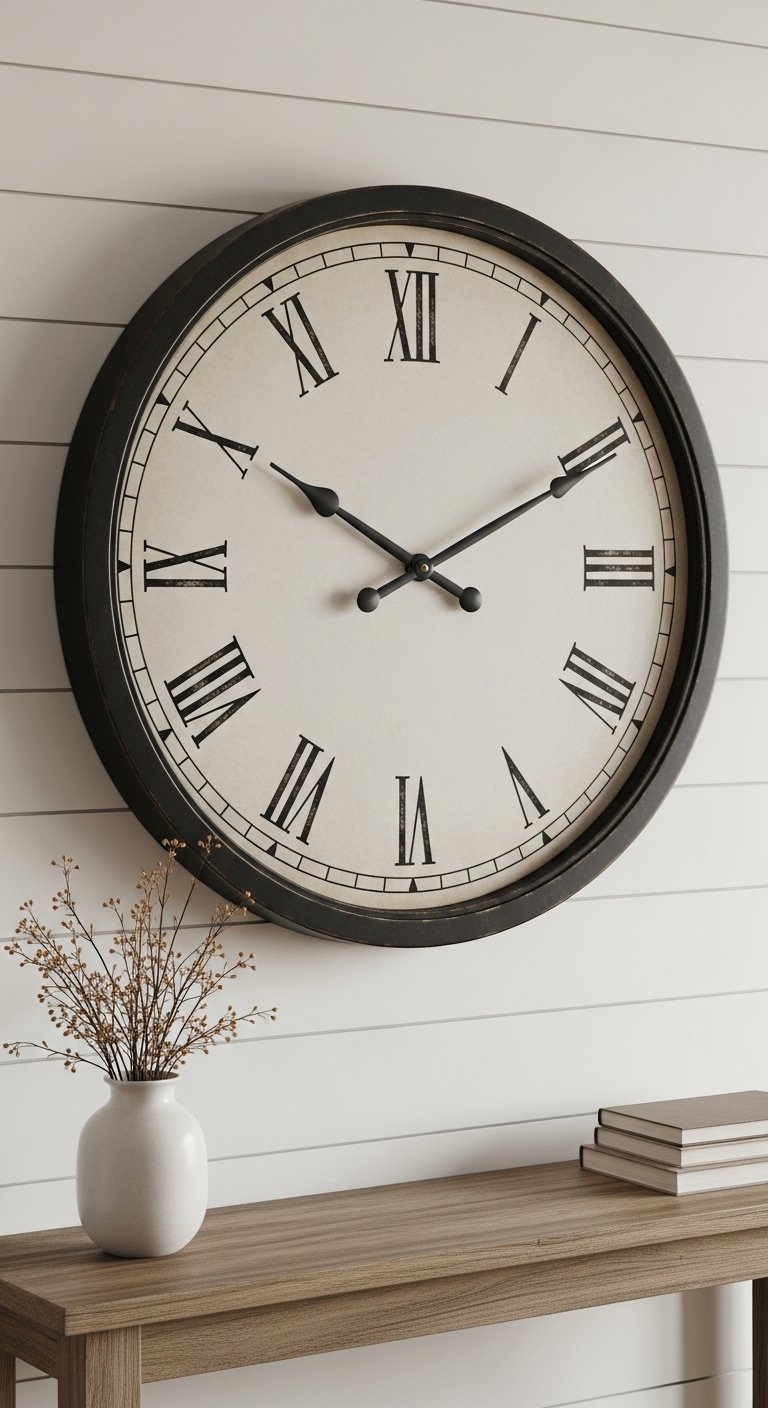
A large, simple clock on a wall or mantel is a classic farmhouse touch that adds both function and visual interest. An oversized round clock in black metal, aged wood, or an antique Roman numeral face works as both art and timepiece.
Keep the design clean and simple. You want something that looks like it could have been hanging in the same spot for a hundred years. Overly ornate or modern clock designs will feel out of place. Scale up on this one. A clock that feels slightly too big is usually exactly right.
23. Edit Your Space Ruthlessly and Let It Breathe
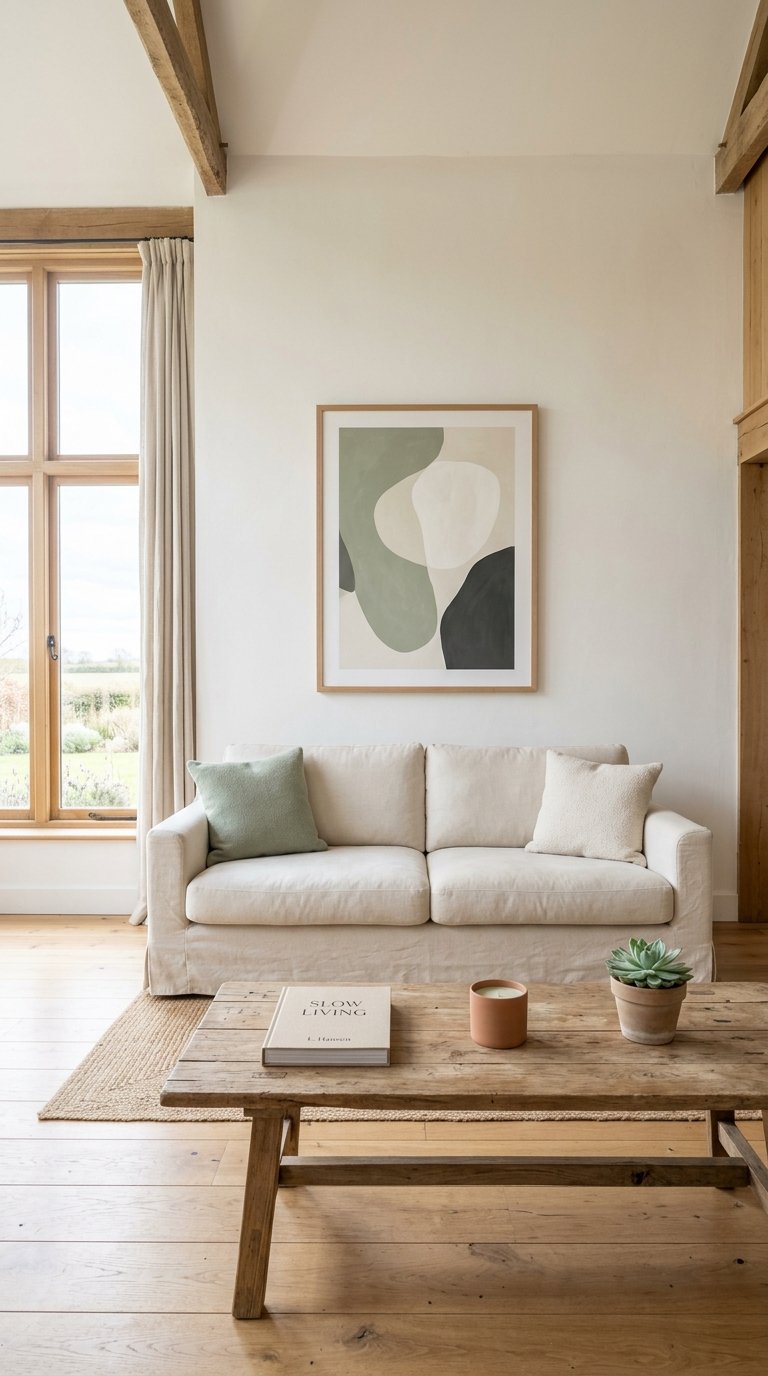
Here’s the thing about farmhouse style that trips people up most often. They fill every surface, hang something on every wall, and stack every shelf until the room feels exhausting. True farmhouse style has breathing room. It has negative space. It has surfaces where nothing sits.
Go through your living room with a critical eye and ask yourself whether each object earns its spot. Does it add texture, story, or function? If the answer is no, put it somewhere else or let it go entirely. A well-edited farmhouse living room with twenty thoughtful objects will always feel better than an overcrowded one with fifty.
Final Thoughts
Farmhouse living rooms work because they feel genuinely human. They celebrate imperfection, natural materials, and the beauty of things that have been used and loved over time. You don’t need to spend a fortune or gut your entire space to get there.
Pick five or six ideas from this list that feel most like you and start there. Maybe it’s the slipcovered sofa and the vintage rug. Maybe it’s the reclaimed wood coffee table and a proper lighting overhaul. Whatever your starting point is, commit to it and build from there.
The best farmhouse living rooms don’t look like they came from a catalog. They look like real people with good taste actually live there. That’s the goal, and honestly, it’s more achievable than you think. Now go make your living room somewhere you never want to leave.