23 Tiny Living Room Design Ideas for a Bigger-Looking Space
You have a small living room. You want it to look good. You also want to sit down without knocking something over. Totally reasonable goals.
The good news? Small spaces force smart design. Every choice counts, which means when you get it right, the room feels intentional. When you get it wrong, it feels like a storage unit with a couch. Let’s make sure it’s the former.
1. Use a Light Color Palette on Your Walls
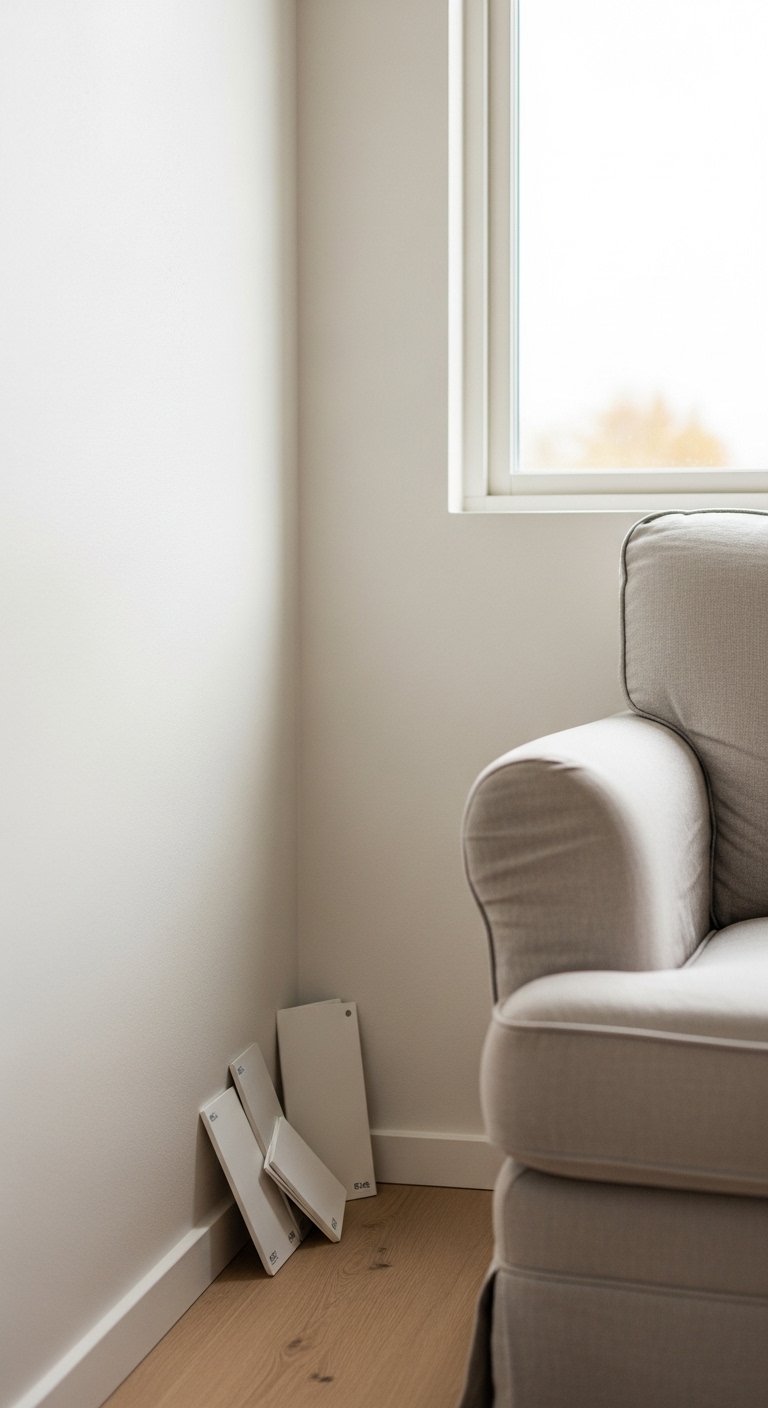
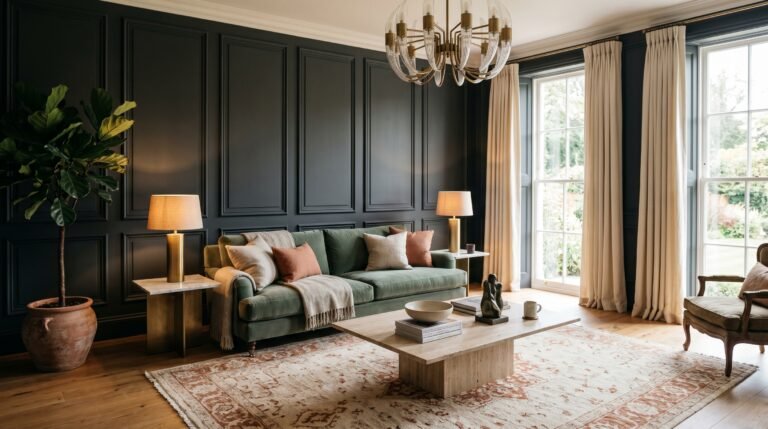
Dark walls shrink a room. Light walls push them back.
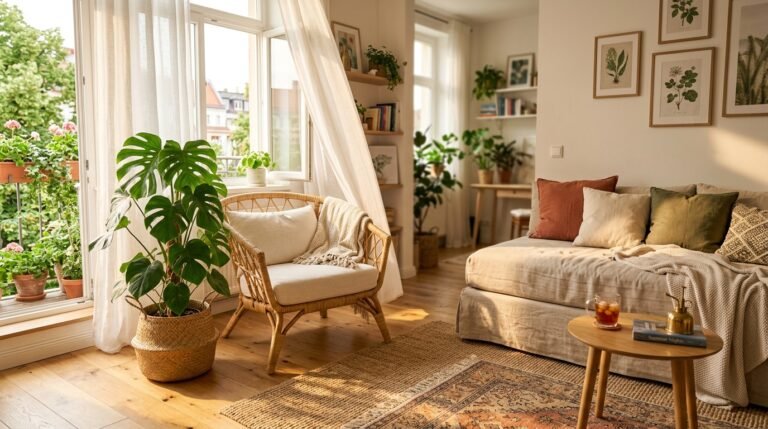
Whites, soft grays, warm creams, and pale blues reflect light and make a space feel larger than it is. This is not magic; it’s physics.
- Warm whites (like off-white or linen) keep the room from feeling clinical.
- Cool grays work well in rooms with good natural light.
- Pale sage or dusty blue adds personality without adding visual weight.
Pick one and commit. Accent walls in tiny rooms often just make one wall feel closer.
2. Match Your Furniture Color to Your Walls
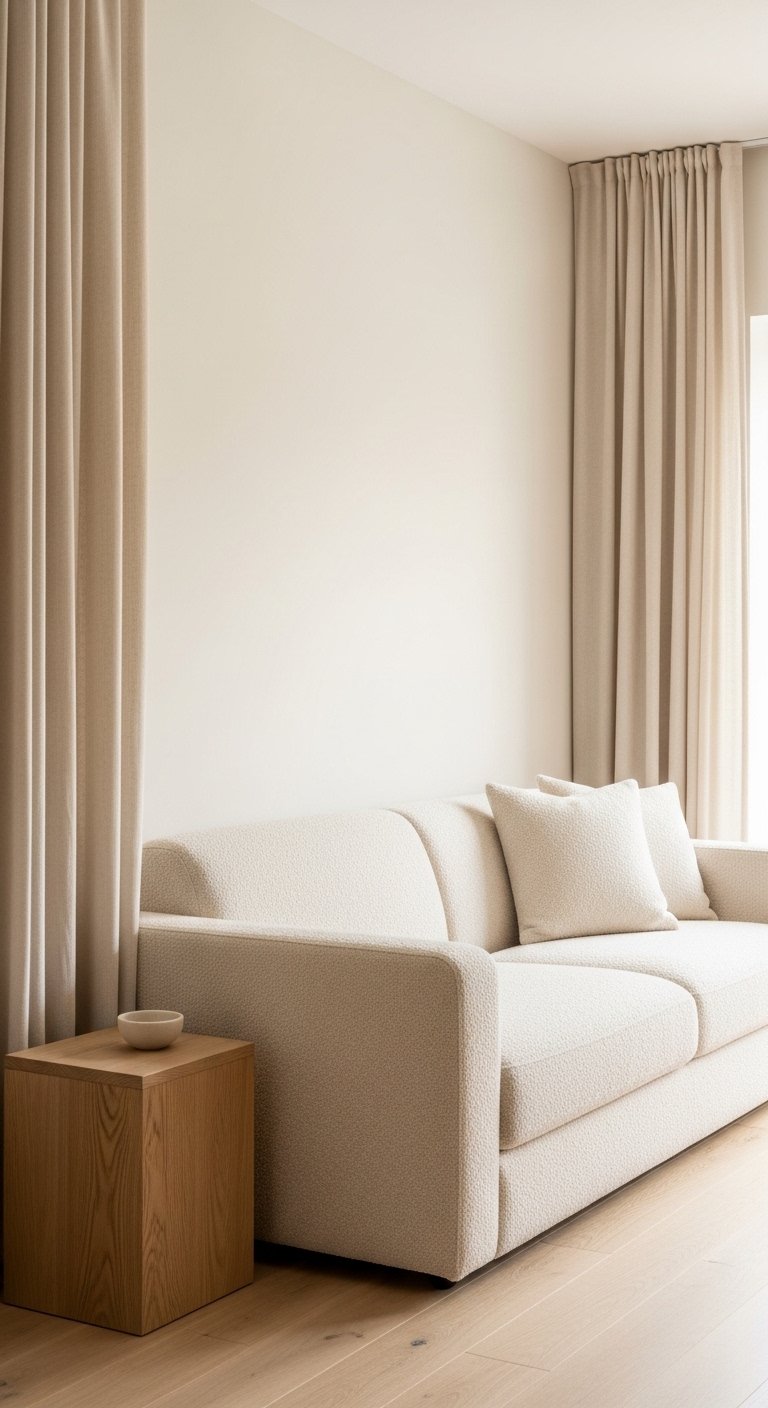
This trick gets ignored constantly, and it shouldn’t.
When your sofa, shelving, or curtains sit in the same color family as your walls, the eye reads them as one continuous surface. The room feels bigger because there are fewer visual interruptions.
A cream sofa against cream walls disappears in the best possible way. Try it before you dismiss it.
3. Choose Furniture with Exposed Legs
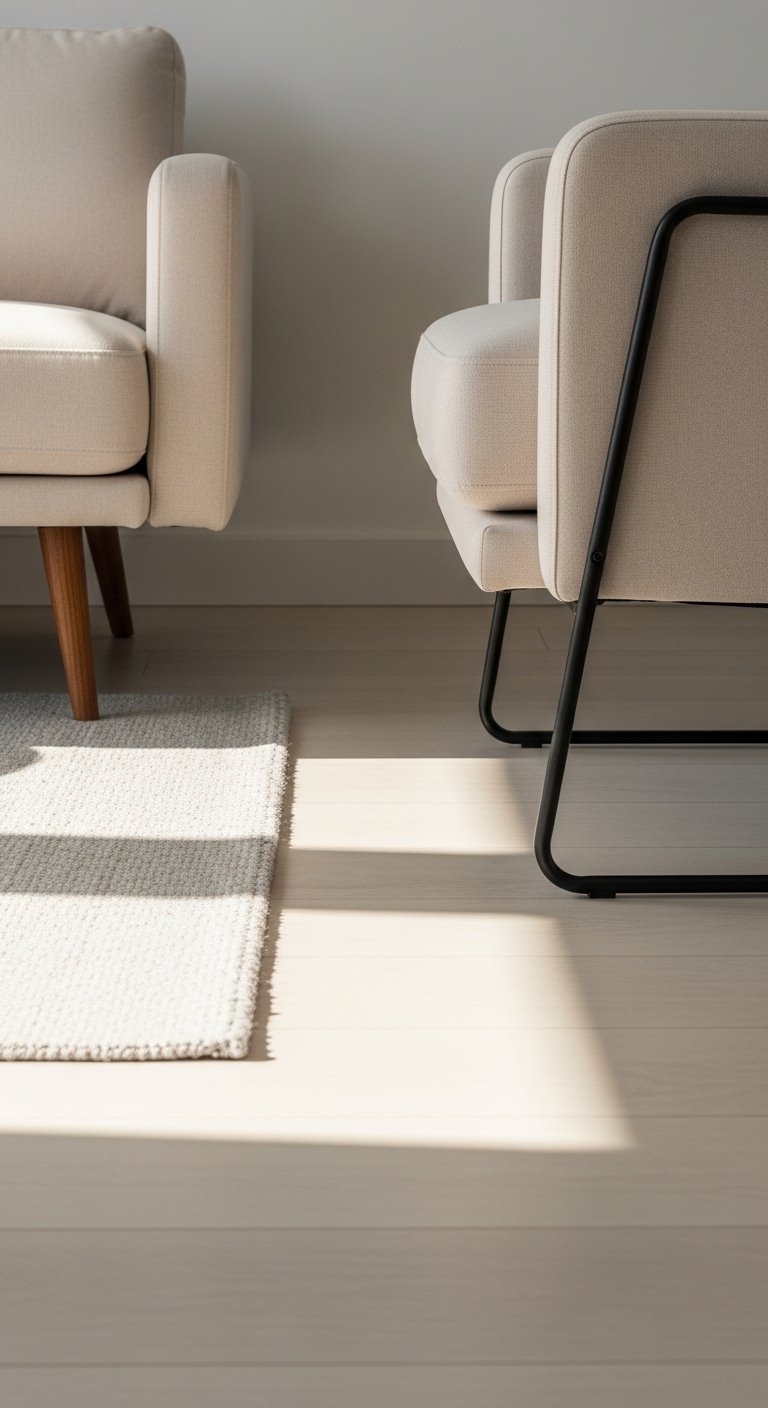
Furniture that sits directly on the floor blocks the sightline at ground level. This makes a room feel heavier and lower.
Sofas, chairs, and coffee tables with visible legs show floor underneath them. Your eye travels further. The room breathes.
- Look for legs that are at least 4-6 inches tall.
- Tapered wooden legs add warmth; metal legs add a cleaner, modern look.
4. Buy a Sofa That Fits the Room, Not Your Ambitions
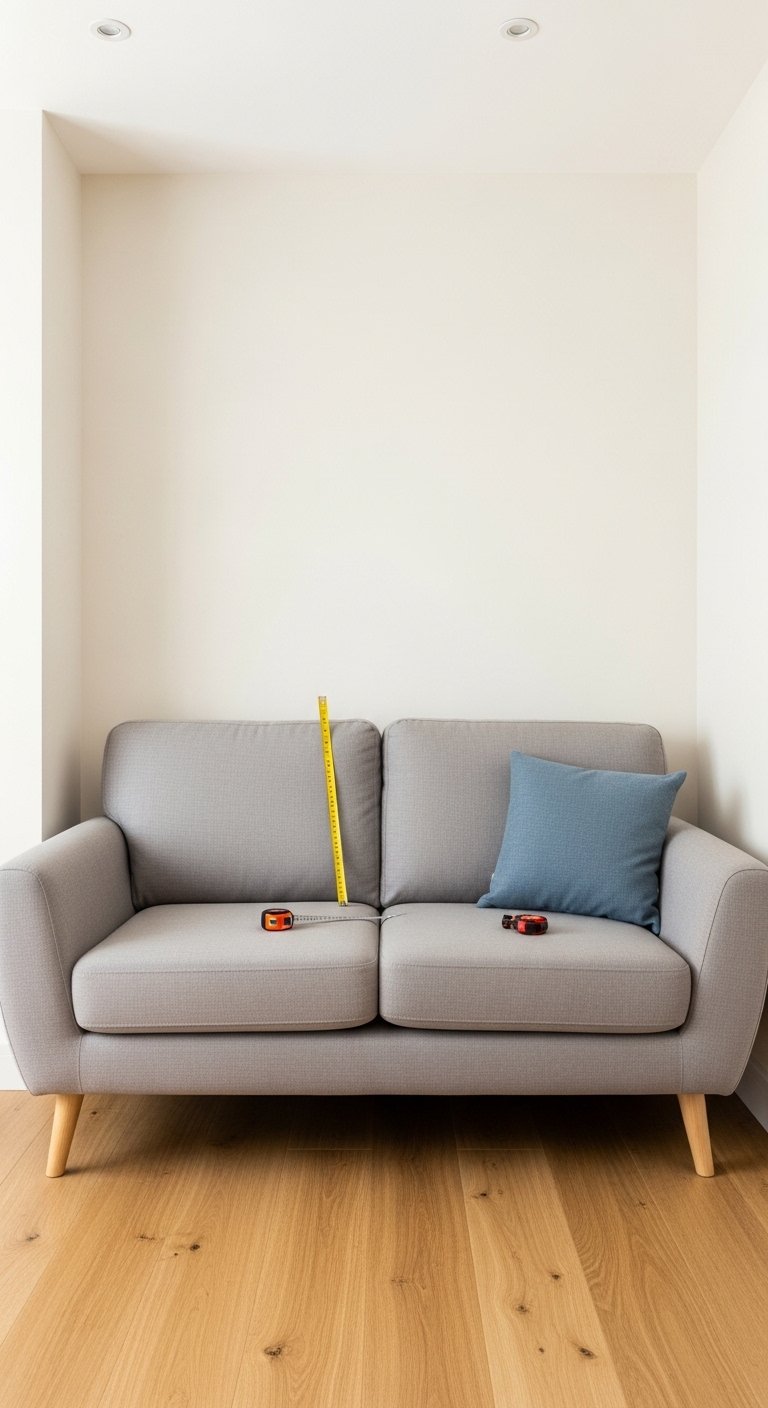
A massive sectional in a tiny room is not a design choice. It’s a decision you will regret by week three.
Measure your room. Then measure again. A sofa that leaves at least 18 inches of walkway on each side feels comfortable. One that doesn’t leave you squeezing past it every time you walk to the kitchen.
A two-seater or a compact three-seater works better than you think. You adjust. The sofa does not.
5. Use Mirrors Strategically
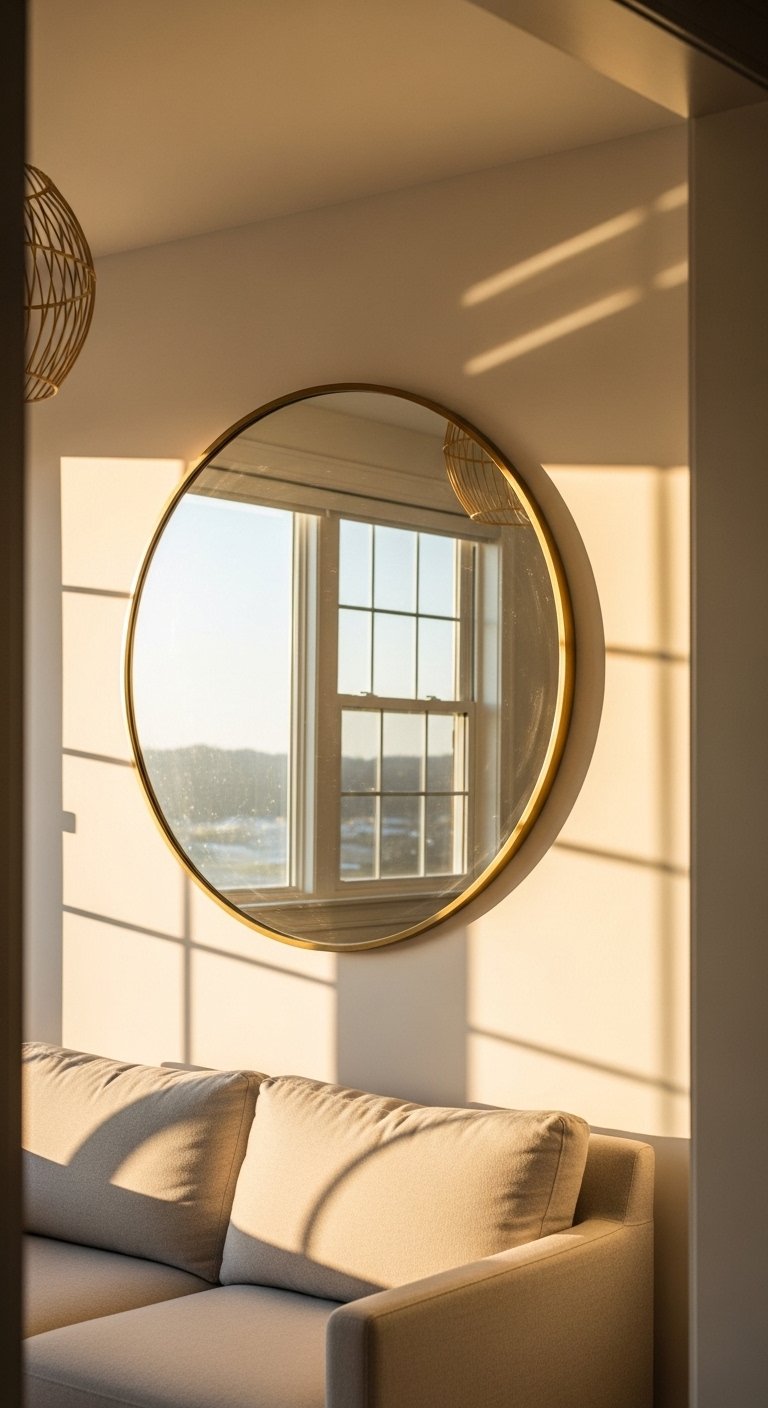
A large mirror reflects light and the opposite side of the room. This creates the perception of depth.
Where to place it:
- Opposite a window to bounce natural light.
- On a narrow wall to make it feel wider.
- Behind a light source to double the effect.
One large mirror beats three small decorative ones. The small ones just look cluttered. IMO, a full-length floor mirror leaning against a wall is one of the best moves in small-room design.
6. Go Vertical With Storage
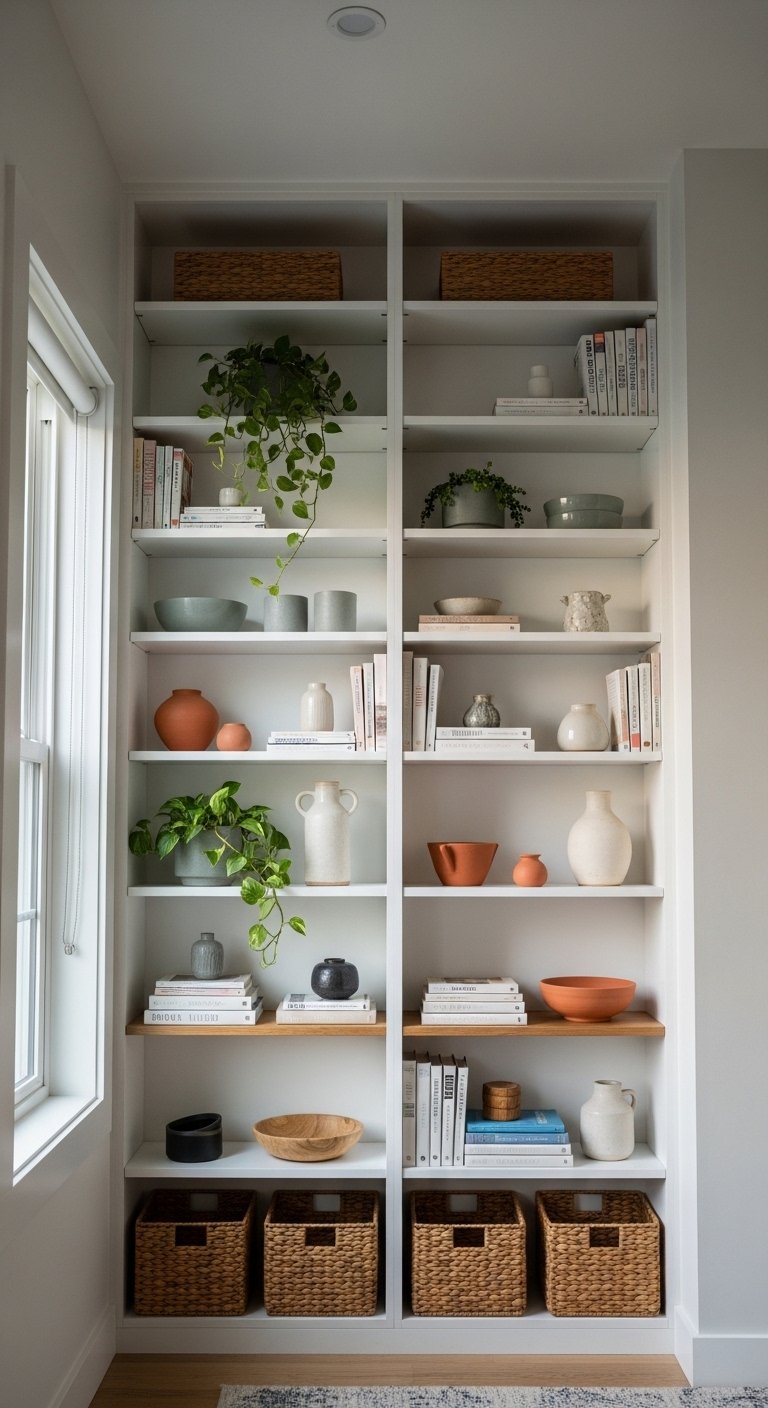
Floor space is limited. Wall space is not.
Install shelving from floor to ceiling. This draws the eye upward, which makes the ceiling feel higher, and it moves storage off the floor entirely.
- Use the top shelves for books or objects you rarely touch.
- Keep the lower shelves accessible for daily use.
- Mix open and closed storage to avoid visual chaos.
7. Choose a Sofa With Built-In Storage
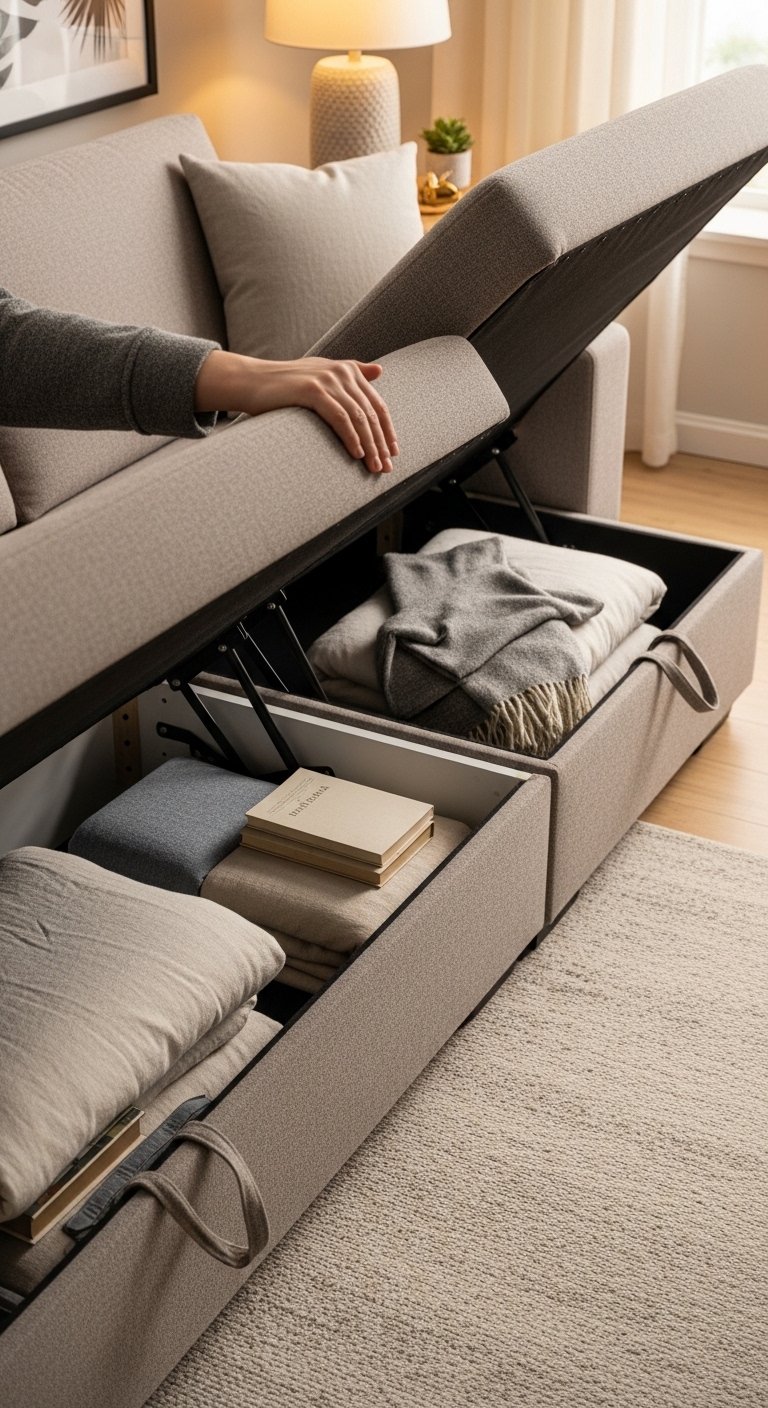
A sofa with storage in the base or arms does two jobs at once. You get seating and a place to put things that would otherwise pile up on every surface.
Look for ottomans with lift-top storage too. They work as coffee tables, extra seating, and hidden storage simultaneously.
8. Float Your Furniture Away From the Walls
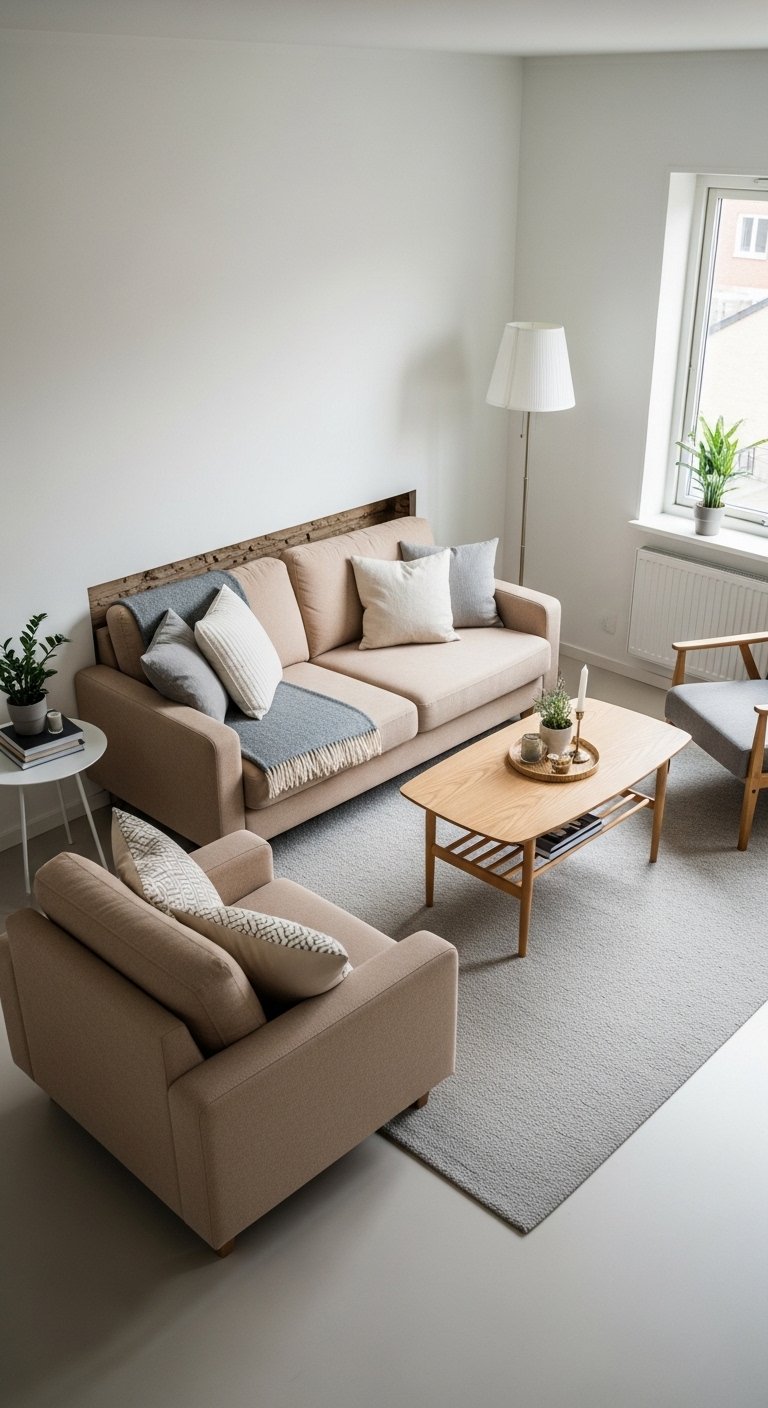
This sounds counterintuitive. Pushing everything against the wall feels like it creates more space, but it actually makes the room feel like a waiting room.
Pull your sofa a few inches away from the wall. Arrange chairs around a central point like a coffee table or rug. This creates a defined conversation zone, and the room feels more intentional.
The small gap between furniture and wall also makes the room look larger, not smaller.
9. Use One Large Rug Instead of Multiple Small Ones
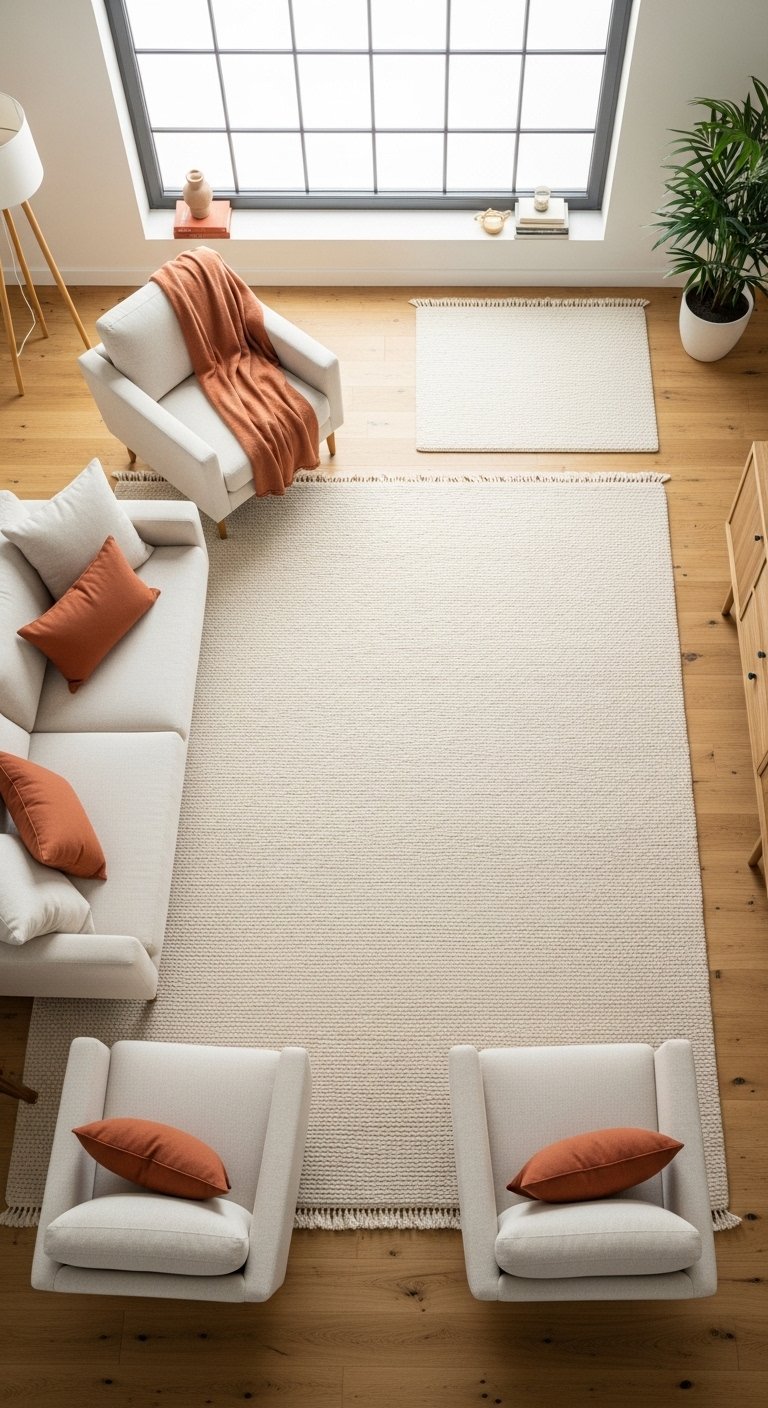
A rug that is too small makes your furniture look like it’s floating disconnected in a void. It draws attention to how little space you have.
A rug that fits under at least the front legs of all your main seating ties the room together. It creates one unified zone.
Rule of thumb: Your rug should be large enough that when you sit on the sofa, your feet touch it.
10. Prioritize Multi-Functional Furniture
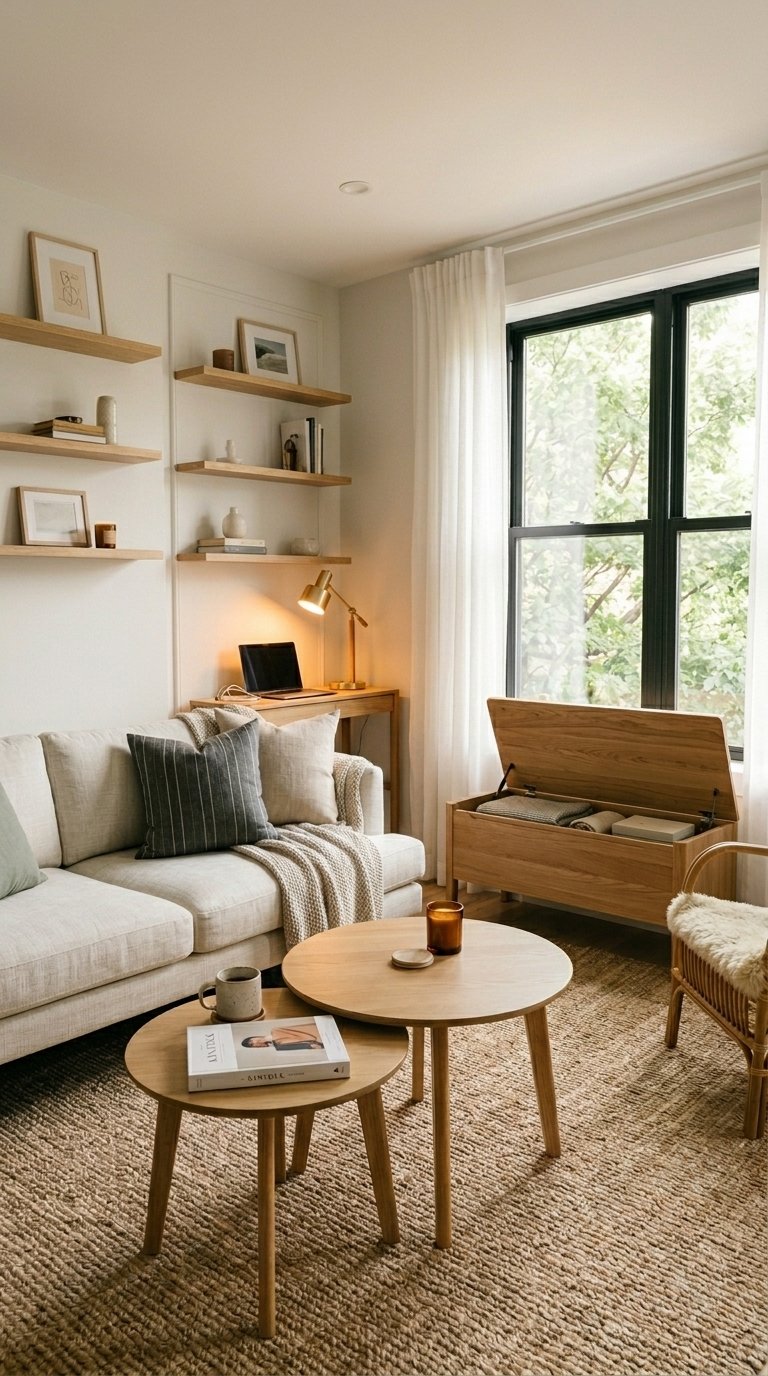
Every piece of furniture in a small room should ideally do more than one thing.
- A bench at the end of the room doubles as seating and storage.
- A nesting table set replaces a bulky coffee table and adjusts when you need more surface space.
- A console table behind the sofa works as a desk or a bar cart.
FYI, nesting tables are genuinely underrated. They disappear when not in use and reappear when you have guests. Buy them.
11. Keep Your Coffee Table Low and Light
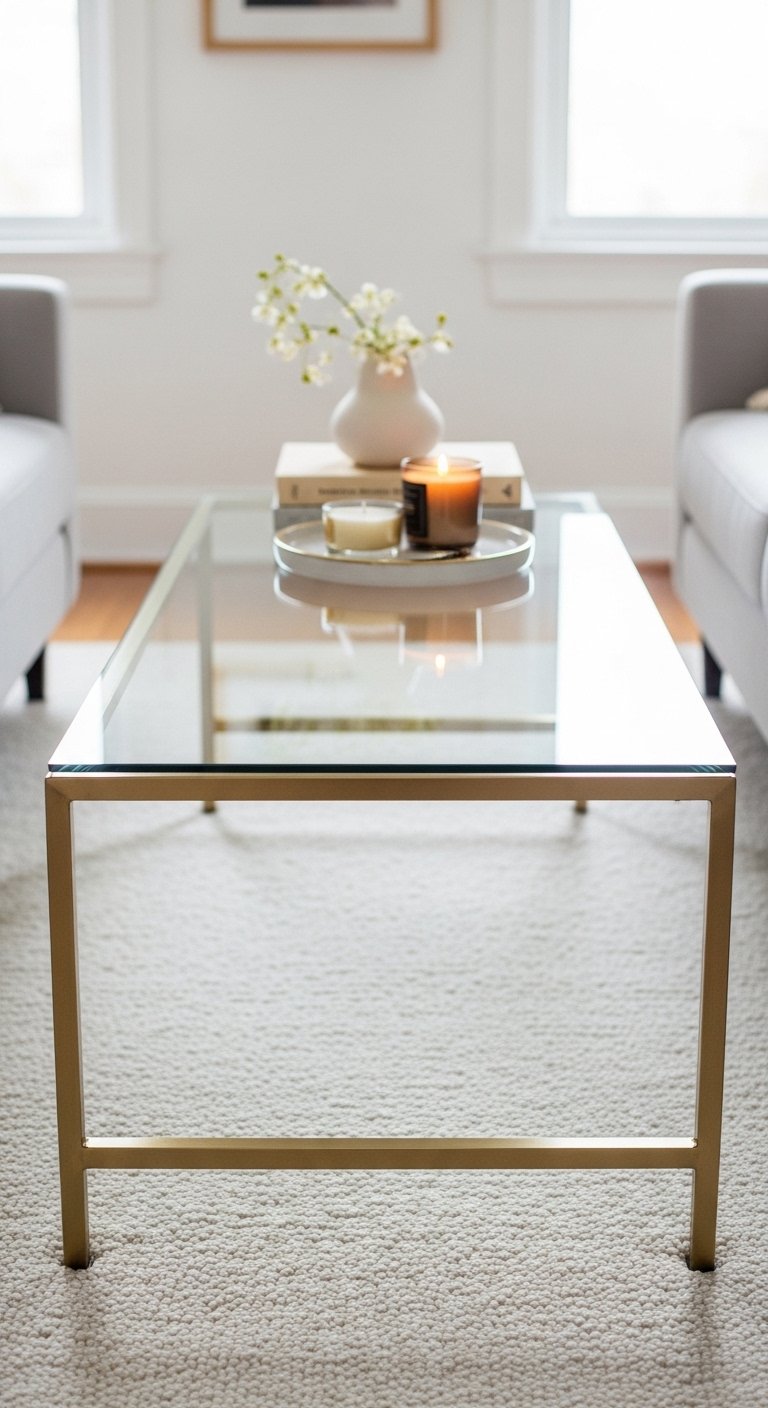
A heavy, solid coffee table sits in the middle of the room and dominates it. A glass-top table or an open wire-frame table takes up visual space without blocking sightlines.
Low tables also keep the center of the room open and airy.
12. Use Curtains That Go Floor to Ceiling
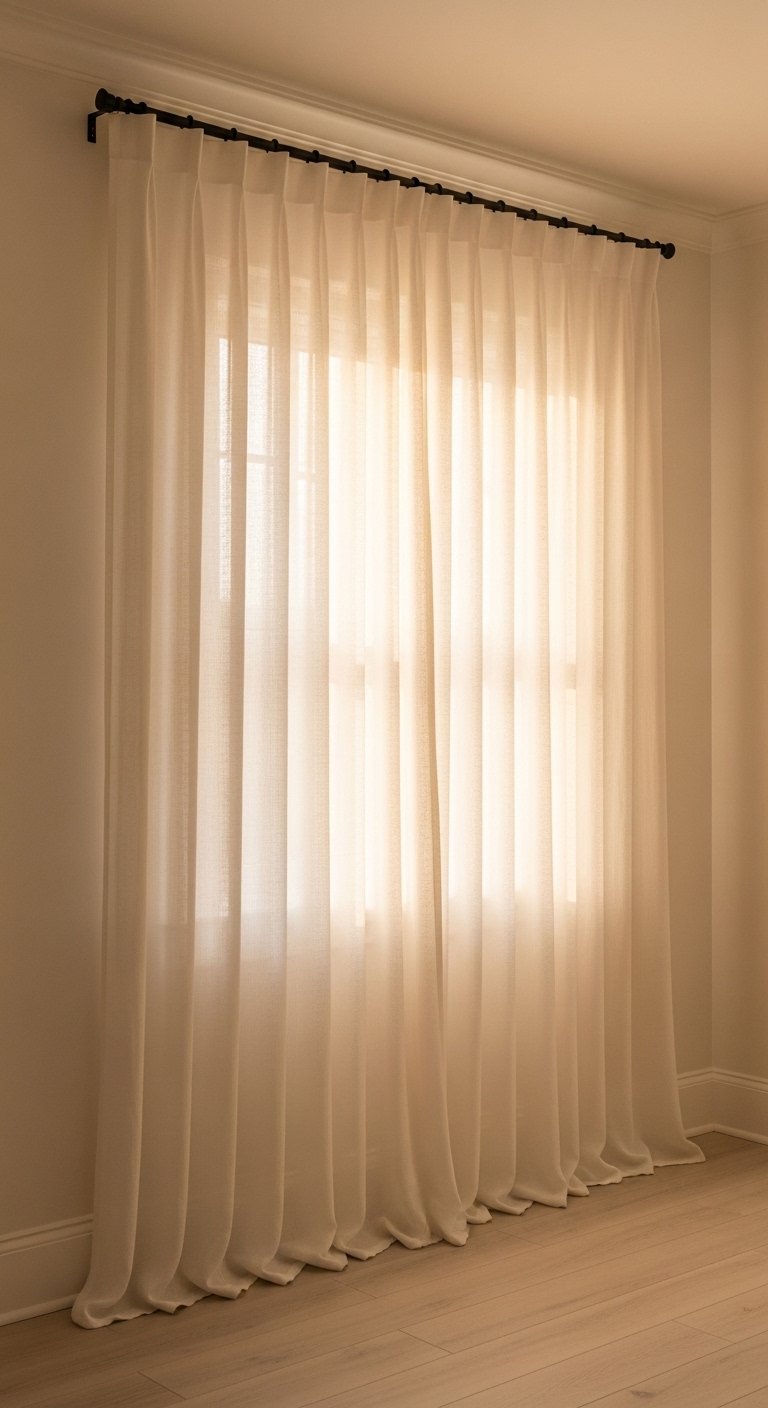
Most people hang curtains just above the window frame. This is a mistake in a small room.
Hang your curtain rod as close to the ceiling as possible. Let the curtains drop all the way to the floor. This makes your windows look taller and your ceilings higher.
Wide curtains that extend past the window frame also let in maximum light when open, because the fabric doesn’t block the glass.
13. Reduce the Number of Colors in the Room
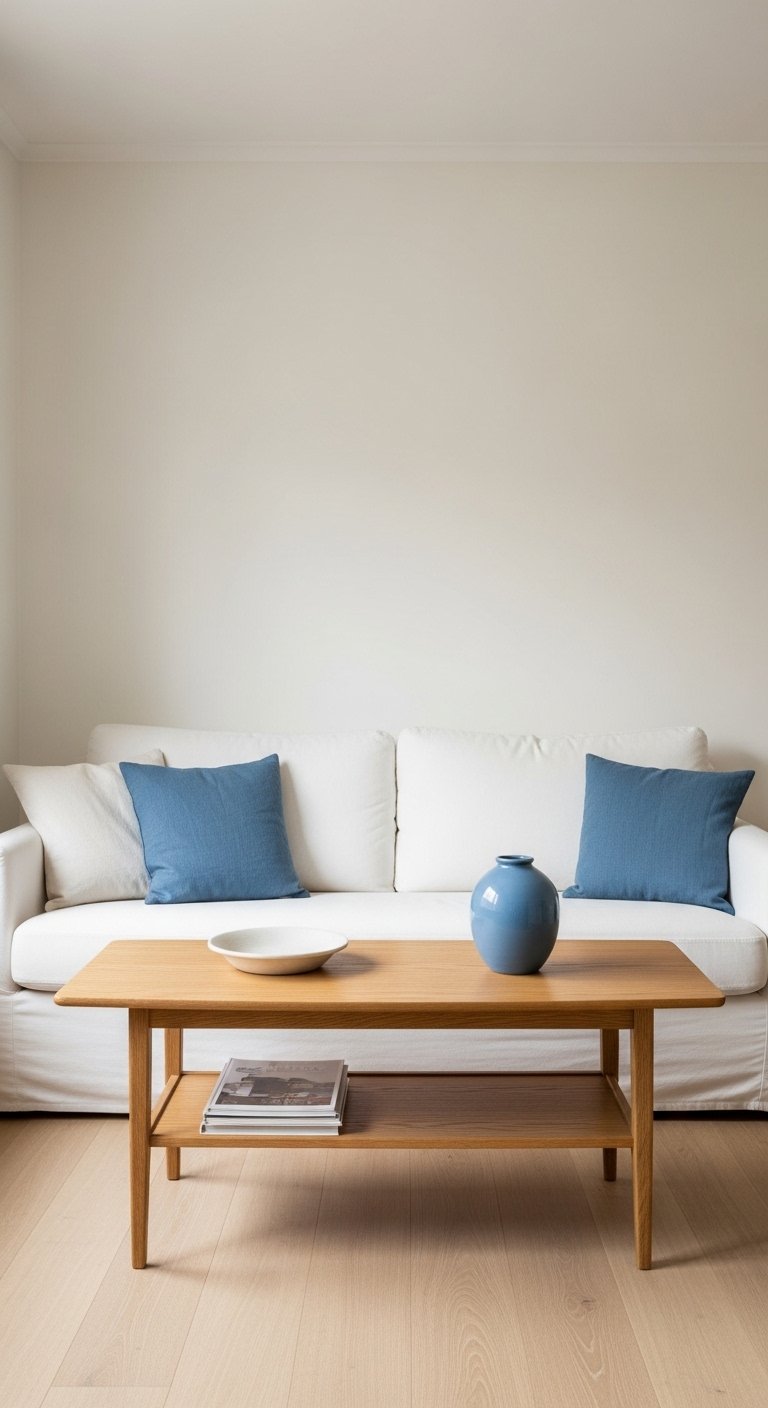
Every new color you introduce is a visual stop. The more stops, the more fragmented and smaller the room feels.
Stick to a palette of two to three colors maximum. Use texture and material variation to add interest instead of color.
- A cream sofa, natural wood tones, and one muted accent color works consistently.
- Add depth through matte vs. glossy surfaces, not through new colors.
14. Use Recessed or Wall-Mounted Lighting
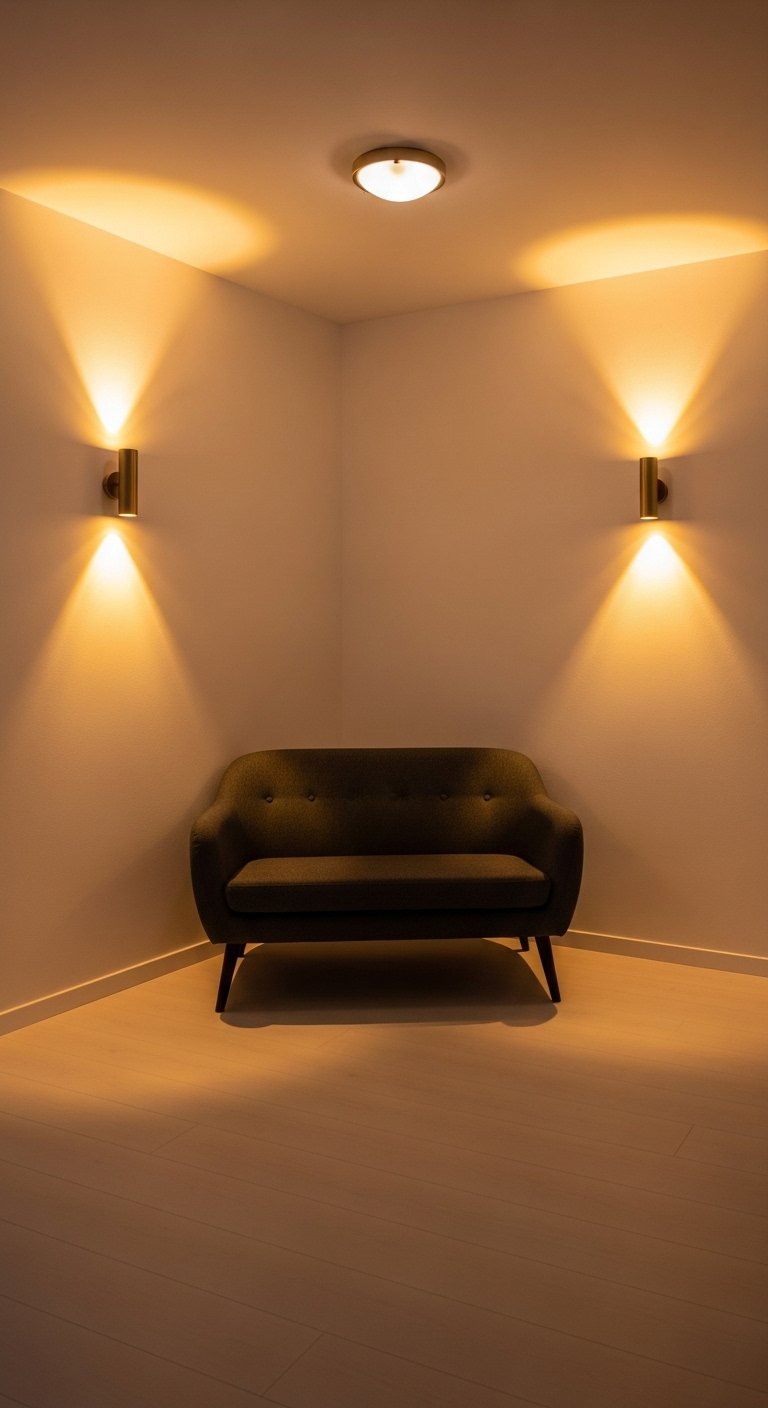
Floor lamps take up floor space. Table lamps take up surface space. Both require surface area you don’t have.
Wall sconces, picture lights, and recessed ceiling fixtures give you light without occupying any physical footprint. They also free up your tables and corners for other uses.
15. Install Floating Shelves Instead of Bookshelves
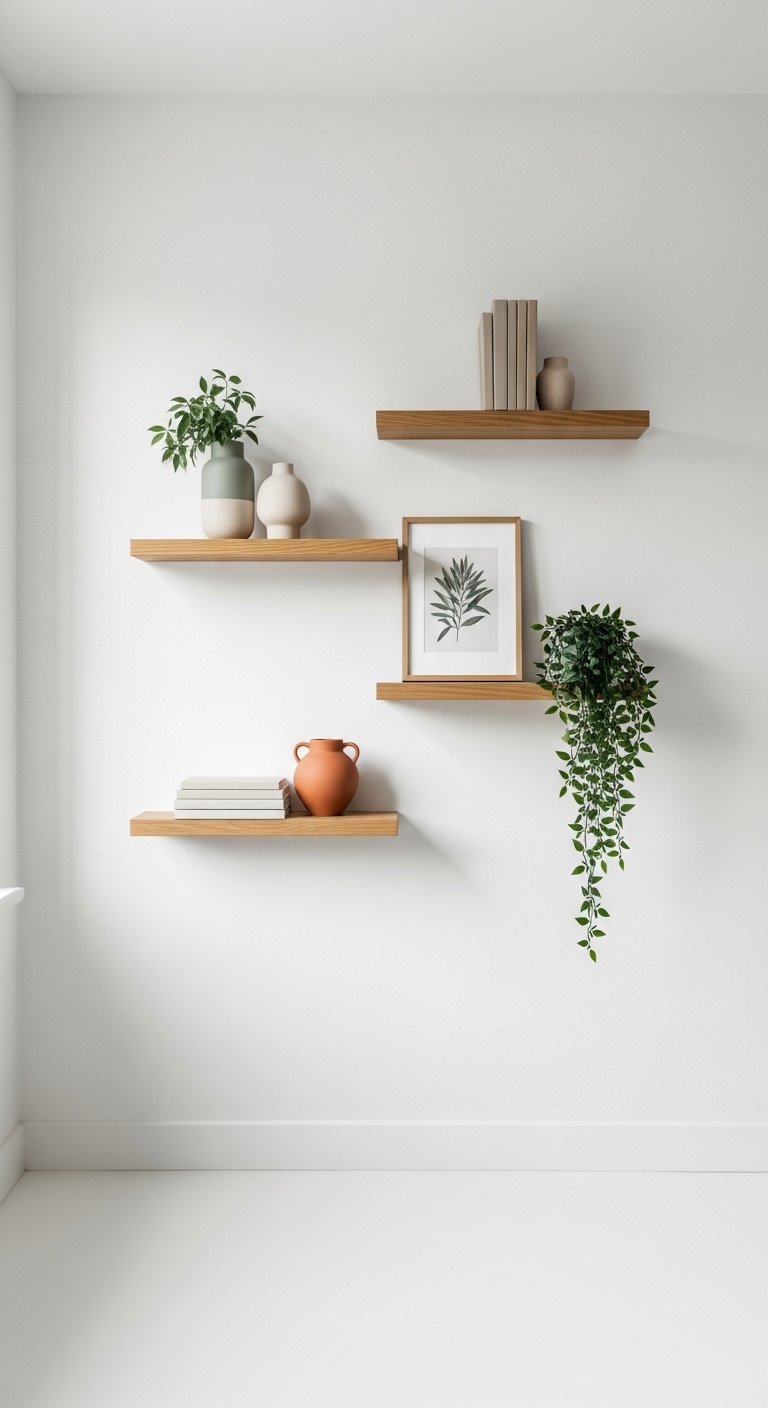
A traditional bookshelf is a large box. It takes up floor space, wall space, and visual space simultaneously.
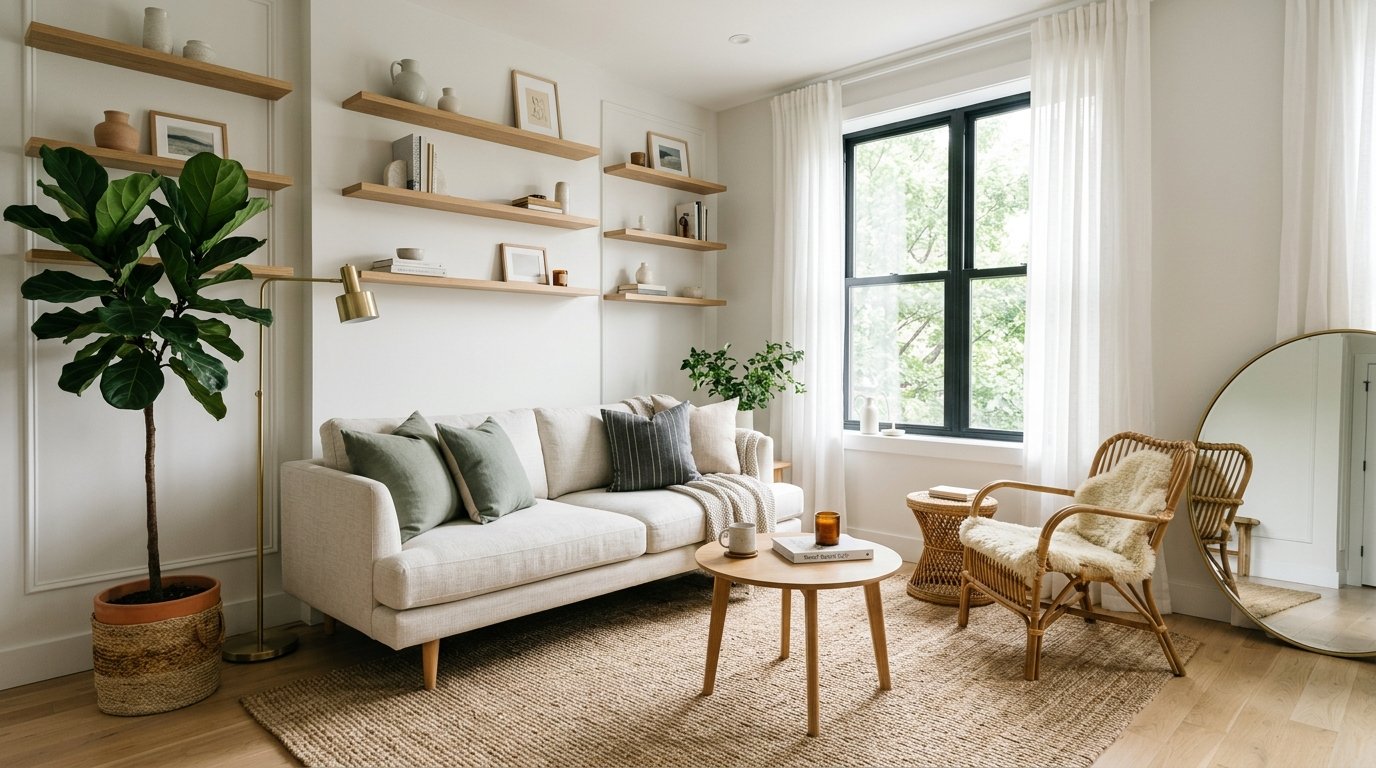
Floating shelves only take up wall space. They hold the same objects, create the same visual interest, and leave your floor entirely free.
Arrange them asymmetrically for a more collected, intentional look.
16. Choose One Statement Piece and Keep Everything Else Simple
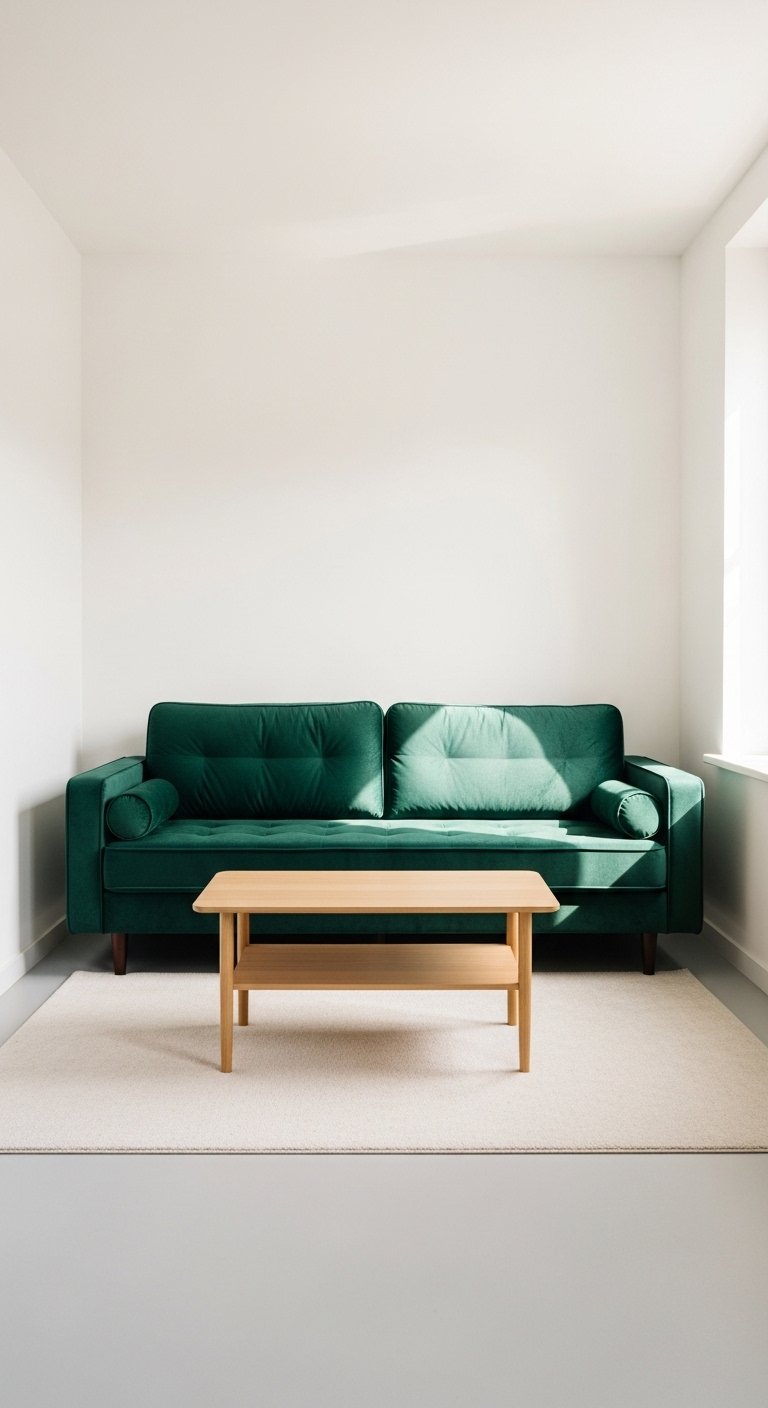
A small room with too many focal points feels noisy and cramped. Pick one thing to be the hero: a bold sofa, a piece of art, a unique light fixture.
Everything else should support it quietly. Neutral supporting pieces make the statement piece look better and the room feel calmer.
17. Use Vertical Stripes to Add Height
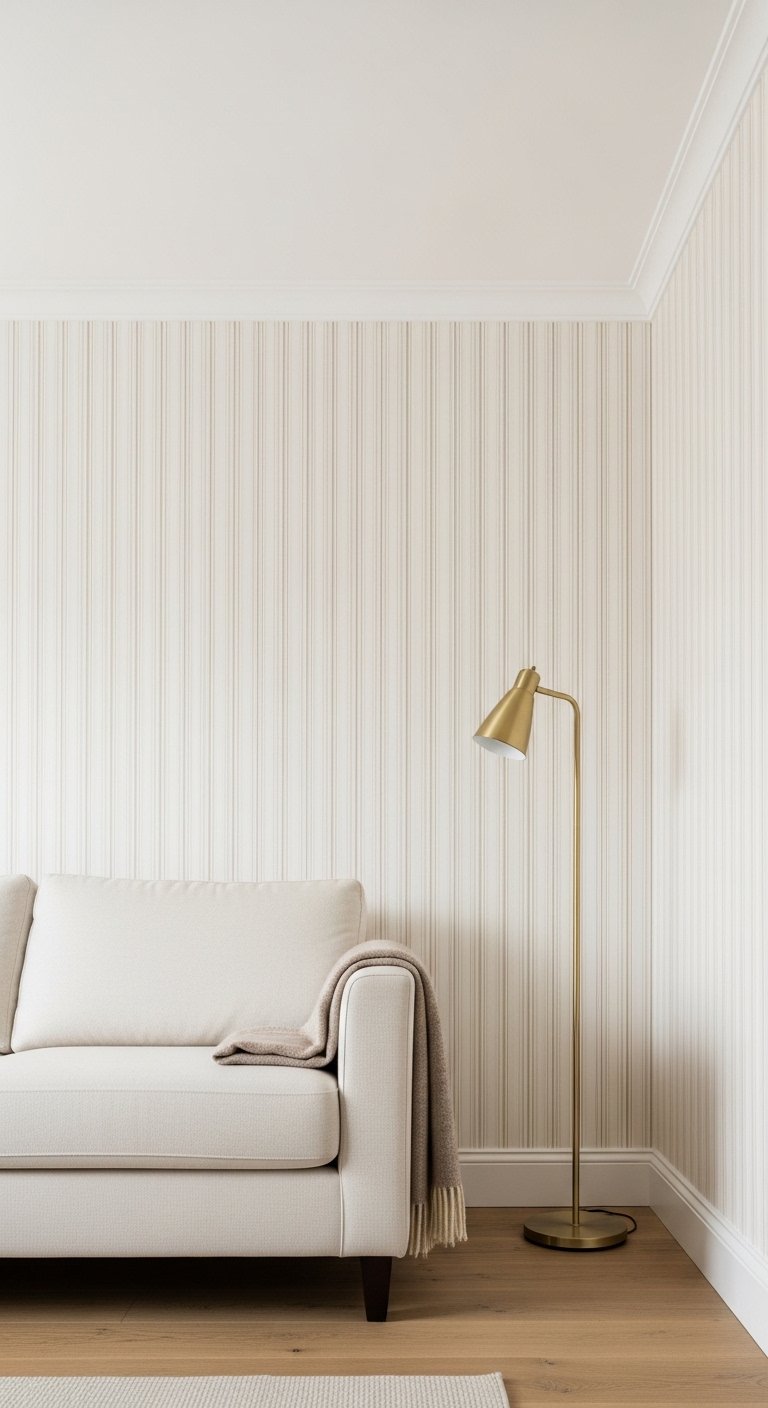
Horizontal lines make a room feel wider. Vertical lines make it feel taller.
A wallpaper with a subtle vertical stripe, tall thin shelving, or vertical panel details on walls all push the eye upward. In a room with low ceilings, this matters.
18. Keep Your Windowsill Clear
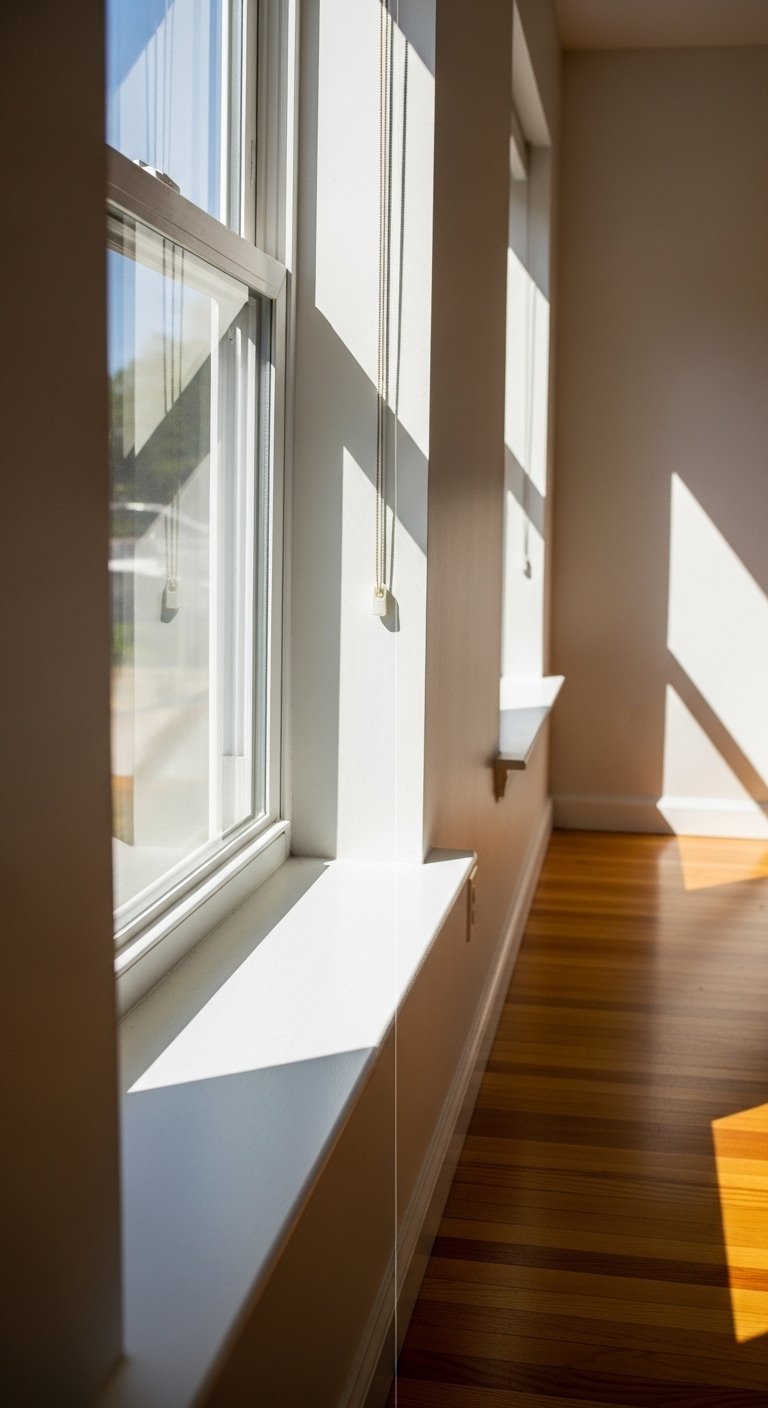
A windowsill covered in plants, candles, and objects blocks light from entering the room. Light is your most valuable asset in a small space.
Keep sills clear or use only one small, low object. Let the light come in unobstructed.
19. Use Built-Ins If You Have the Budget
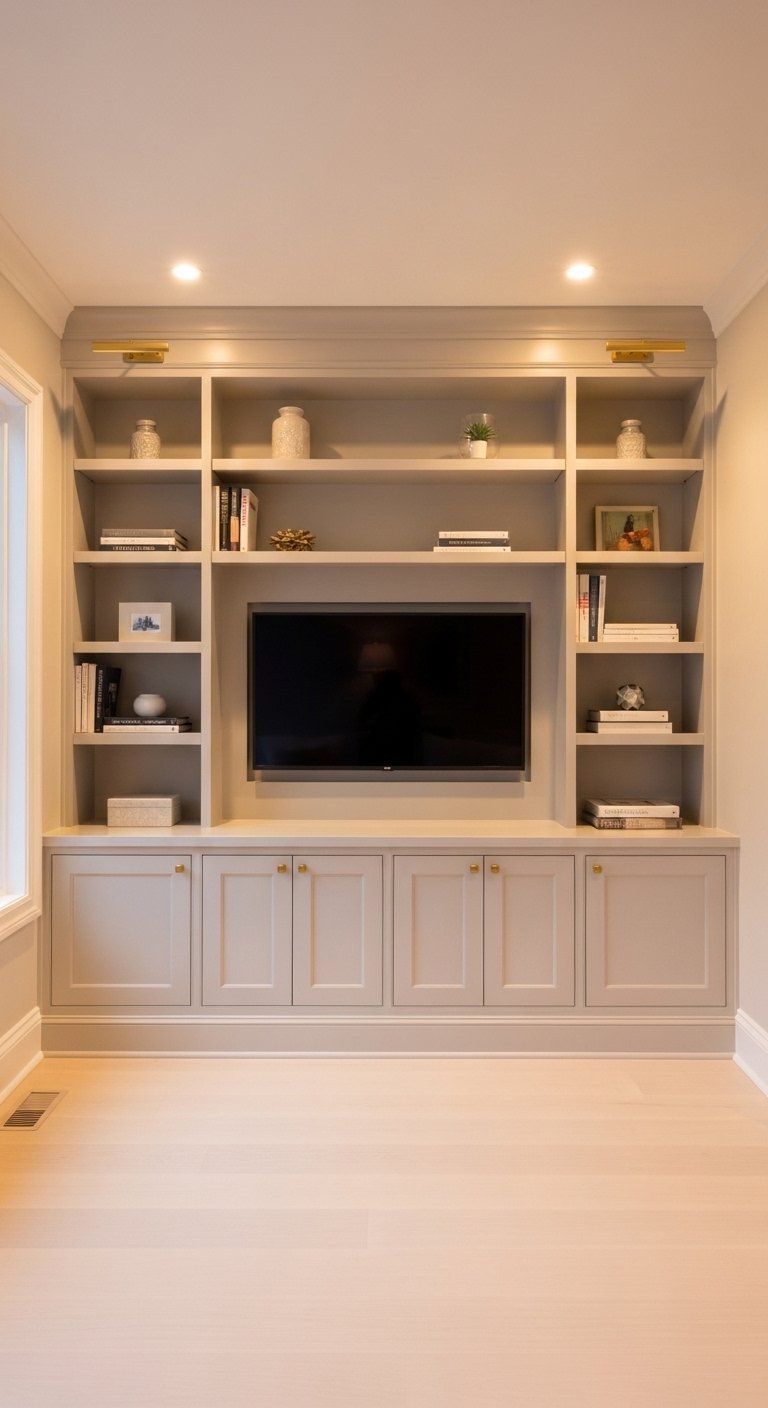
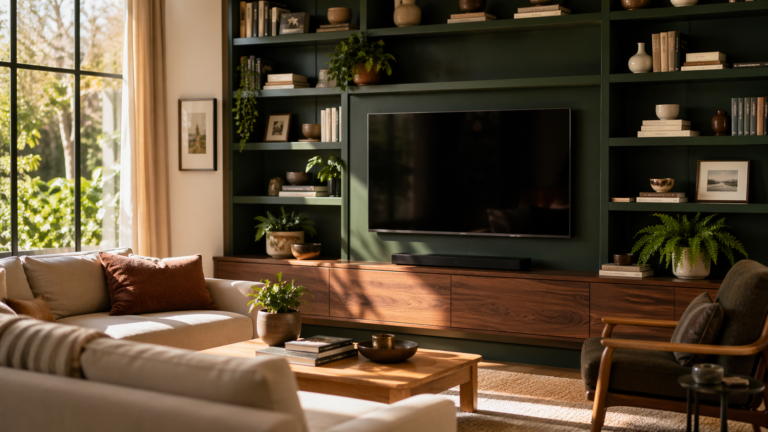
Built-in shelving and cabinets look like they belong to the room rather than sitting in it. They use wall space more efficiently than freestanding furniture.
A built-in around a TV, for example, removes the need for a separate media console, side tables, and freestanding shelves. Three pieces of furniture become one architectural feature.
The upfront cost is higher. The long-term space gain is significant.
20. Edit Ruthlessly
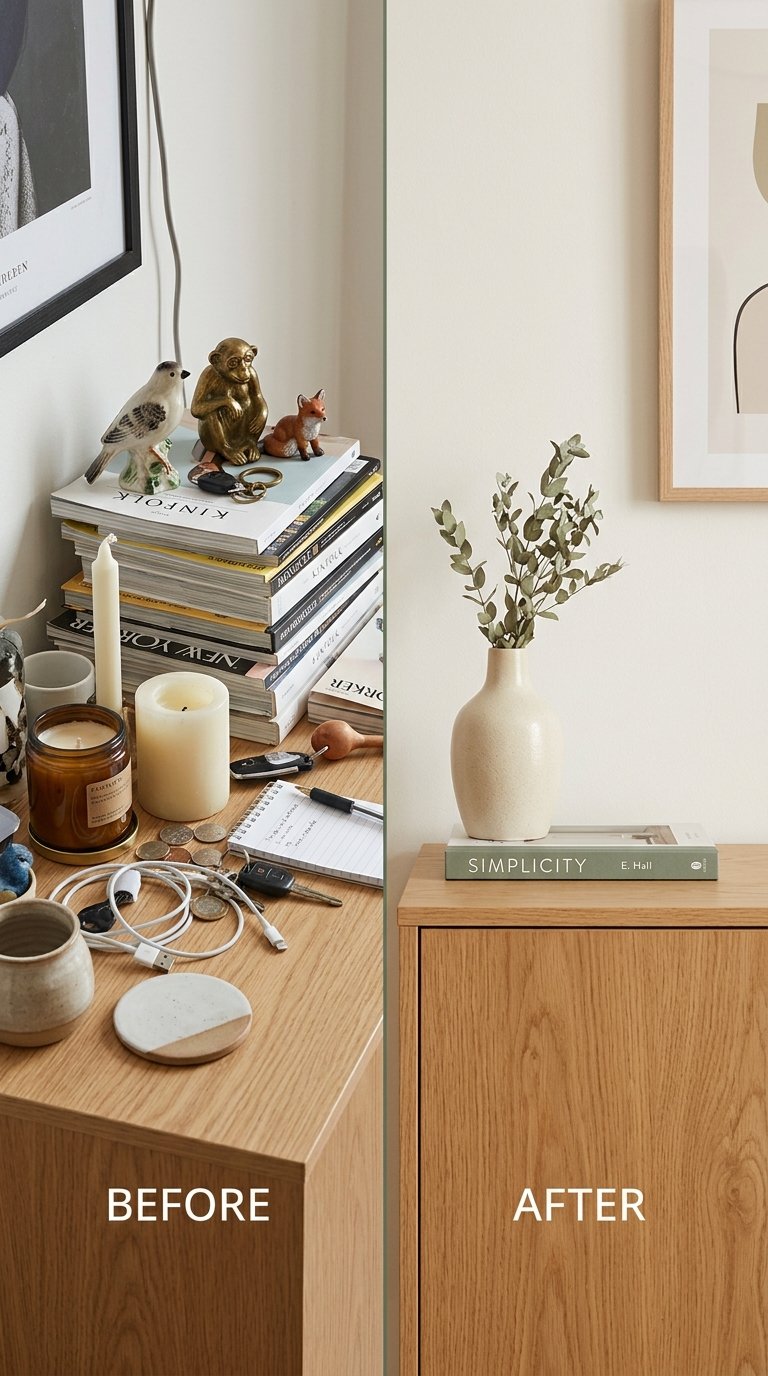
This is where most small rooms fail.
You fill them. Every surface has an object. Every corner has something. The room slowly becomes a collection of things rather than a space to live in.
Small rooms require editing. Every object you remove creates space. Ask this about every decorative item: does it add something specific, or is it just there? If it’s just there, remove it.
A room with fewer, better objects always feels bigger than a room full of clutter, no matter the actual square footage.
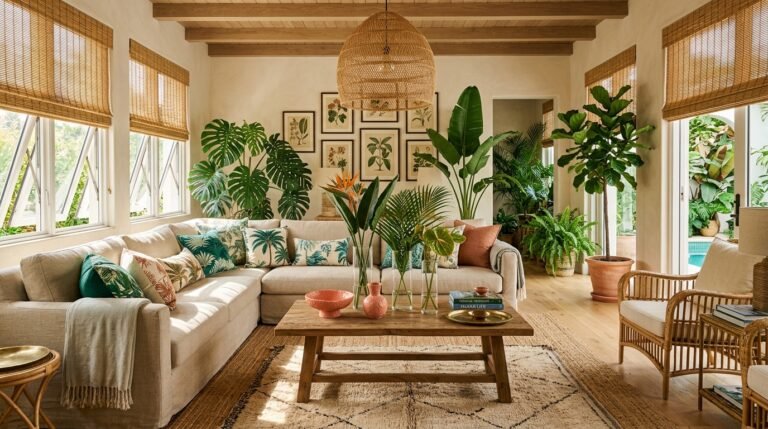
21. Add a Plant, But Only One or Two
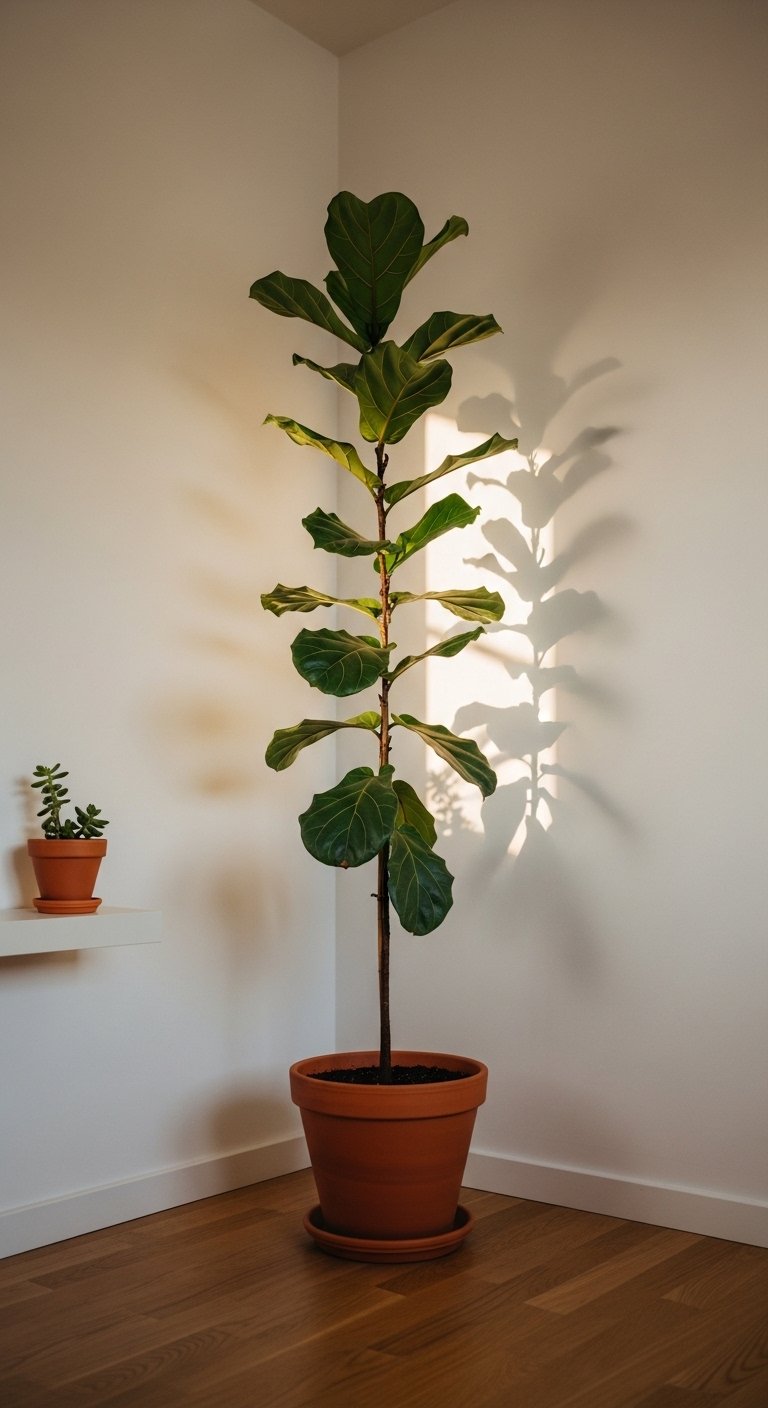
Plants add life and texture to a room. Twelve plants in a small room make it feel like a greenhouse with a sofa in it.
One or two plants, well-placed, do the job. A tall floor plant in a corner adds vertical interest. A small plant on a shelf adds texture. Beyond that, you’re filling space, not designing it.
22. Use a TV Mount Instead of a TV Stand
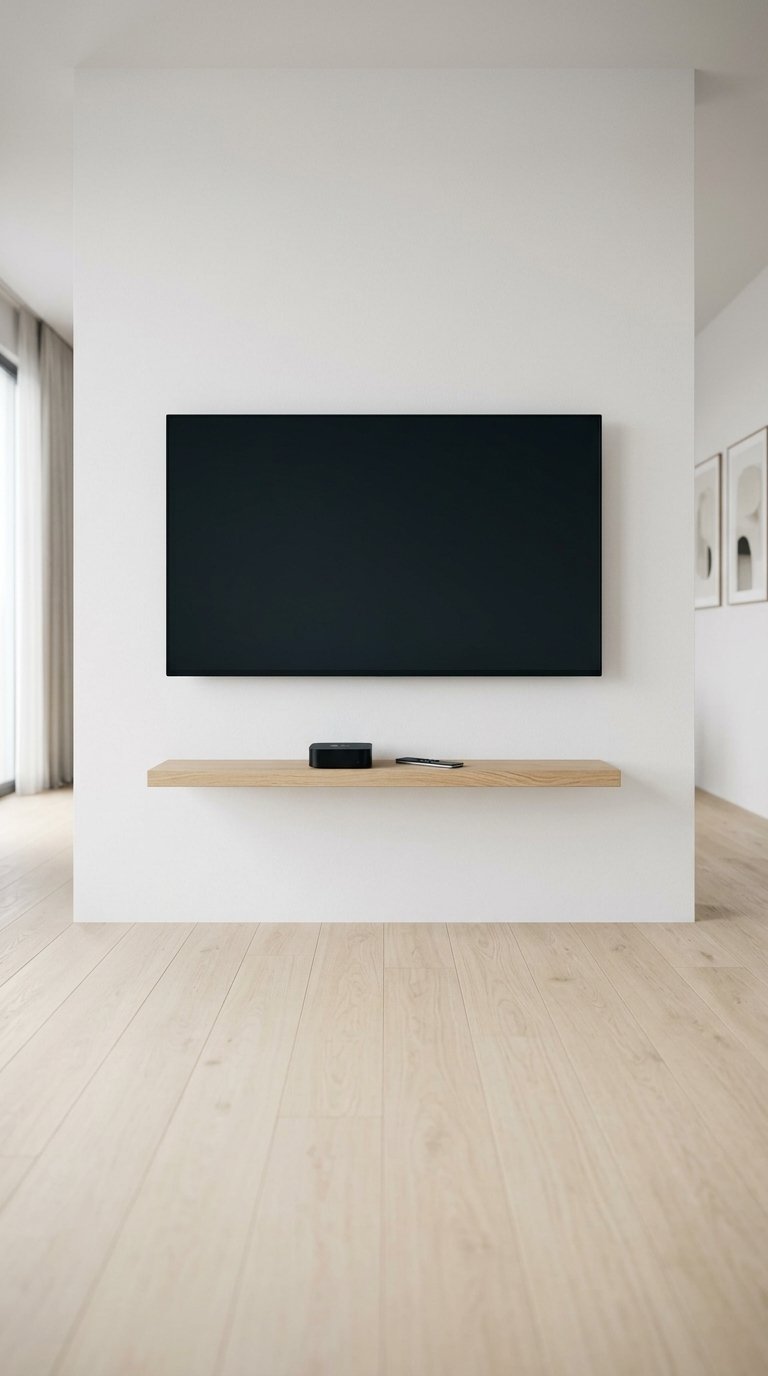
A TV stand takes up floor space and usually has empty space around it that collects visual clutter.
A wall-mounted TV frees up the floor entirely and looks cleaner. Pair it with a thin floating shelf below for devices and remotes. You keep the function and lose the bulk.
23. Define Zones With Furniture Placement, Not Walls
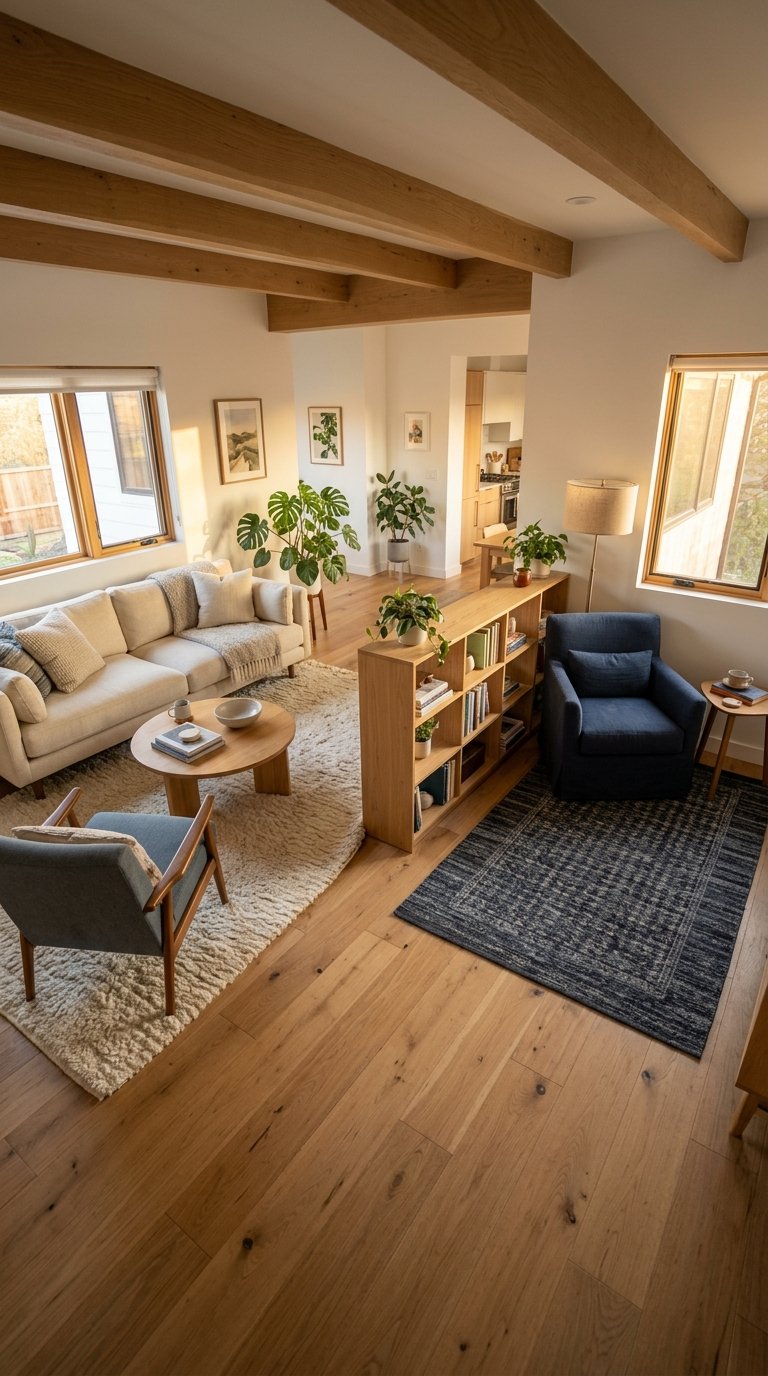
In a tiny living room, you sometimes need to separate the sitting area from a reading corner or a work spot. You don’t have walls to do it.
Use furniture placement and rugs to define separate zones within the same room.
- A sofa facing away from a desk area signals a visual boundary.
- A rug under the seating area and a different rug under a reading chair creates two distinct zones.
- A low open shelving unit placed perpendicular to a wall acts as a soft room divider.
This gives the room structure without boxing it in further.
Final Thoughts
Small rooms don’t need more things. They need better decisions.
The ideas above follow a few consistent principles: reduce visual clutter, use vertical space, let in more light, and make every piece of furniture earn its spot.
You don’t need to apply all 23 at once. Pick the five that address your biggest frustrations and start there. See what changes. Then keep going.
The room you have is workable. Most small spaces look the way they do because of accumulation, not because of size.