21 Living Room Sectional Ideas for Style and Comfort
A sectional sofa is the biggest furniture decision you’ll make in a living room. Get it right and the entire room clicks into place. Get it wrong and you spend the next five years navigating around a couch that owns your floor plan instead of serving it.
I’ve made both mistakes. Here’s what actually works.
1. The Classic L-Shape Sectional
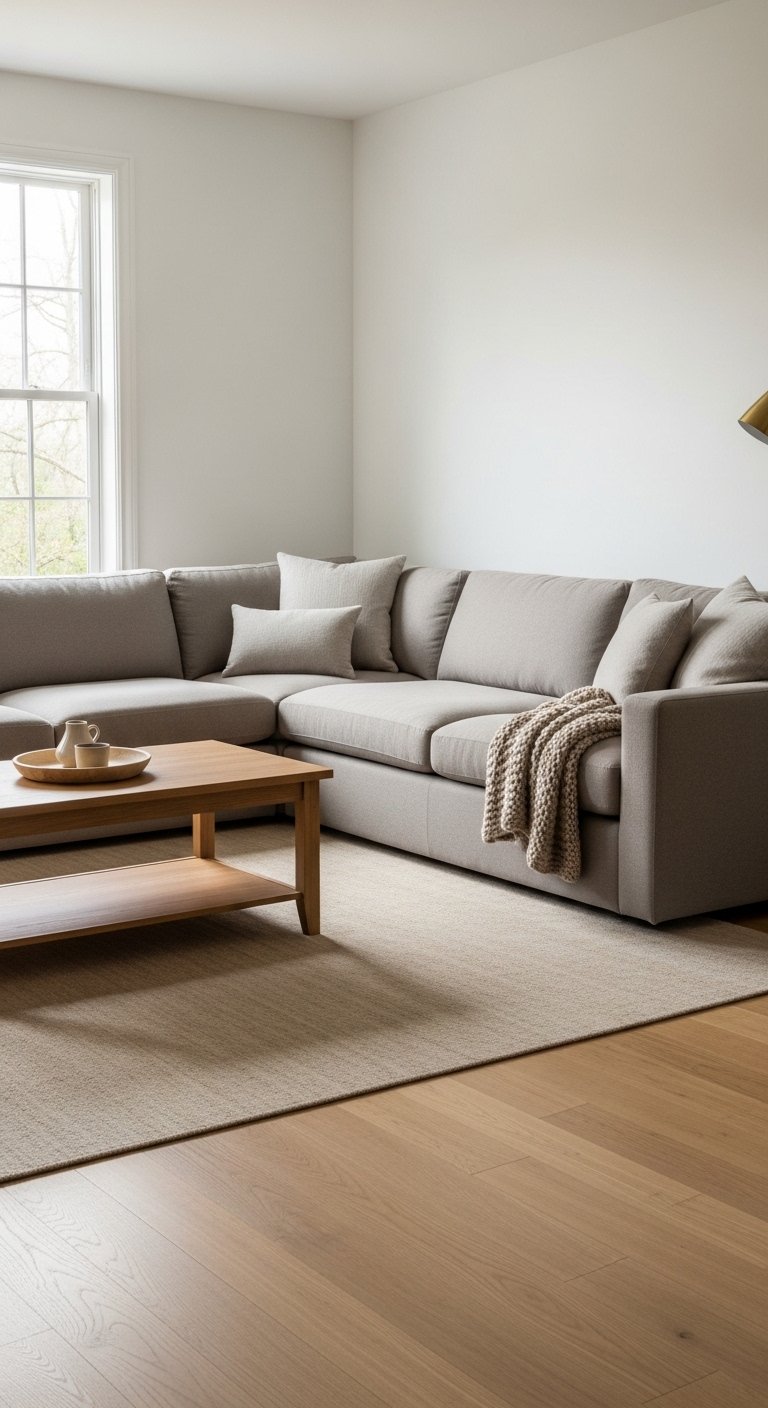
The L-shape sectional is the most popular configuration for good reason. It defines a seating zone, anchors the room, and fits comfortably against a corner wall without wasting floor space.
Position the longer section against the longest wall and the shorter chaise section toward the center of the room. This creates a natural boundary between the living area and adjacent spaces in an open-plan layout. Add a large area rug underneath to ground the entire arrangement.
Best rooms for L-shape sectionals:
- Open-plan living and dining spaces
- Rooms wider than 4.5 meters
- Corner-heavy living room layouts
2. U-Shape Sectional for Large Rooms
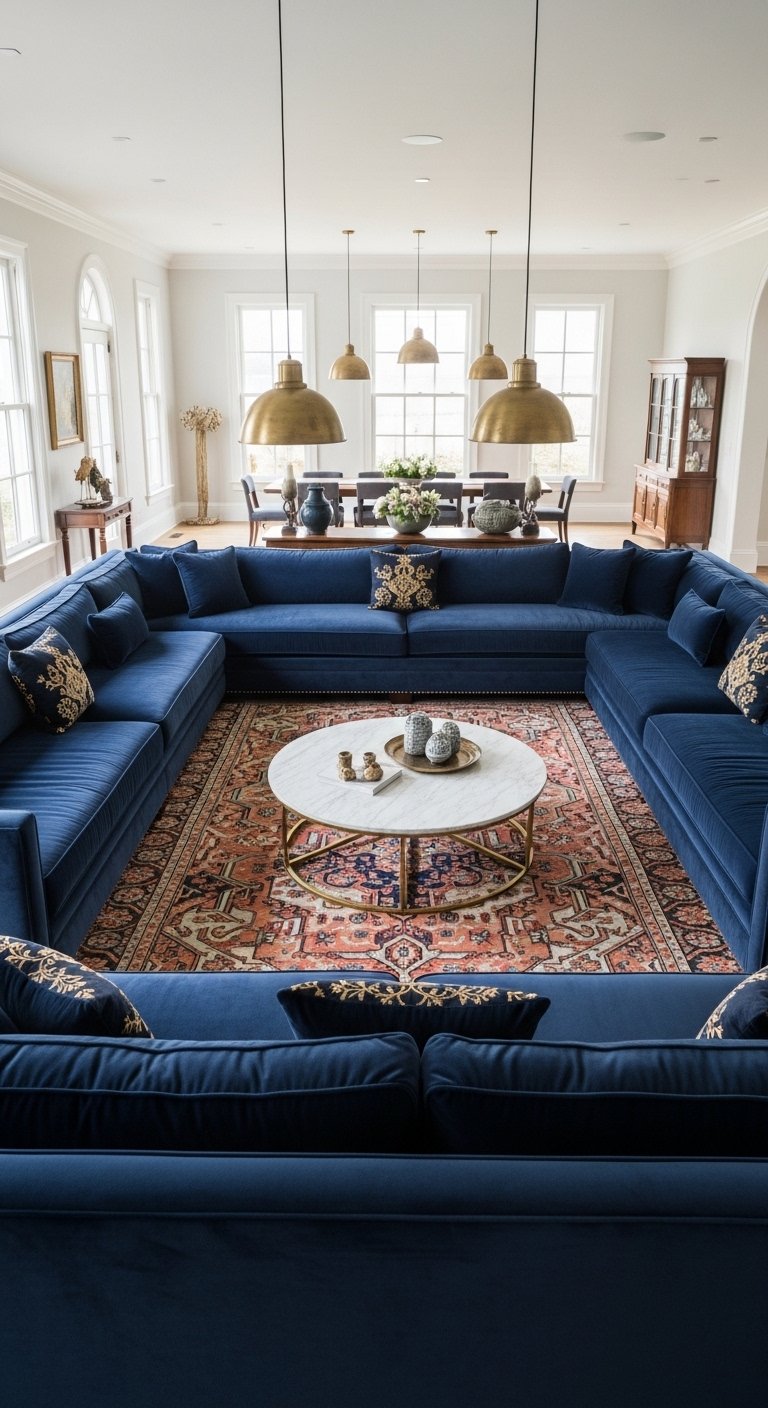
A U-shape sectional wraps seating around three sides of a central coffee table. It seats the most people, creates the strongest conversation zone, and looks genuinely impressive in a large room.
The problem is scale. A U-shape sectional needs a room of at least 5 by 6 meters to breathe properly. Put one in a small room and it dominates every surface. Done right, it’s one of the most functional and social seating arrangements available.
Minimum room size: 5 meters by 6 meters for a comfortable U-shape layout.
3. Modular Sectional for Flexible Living
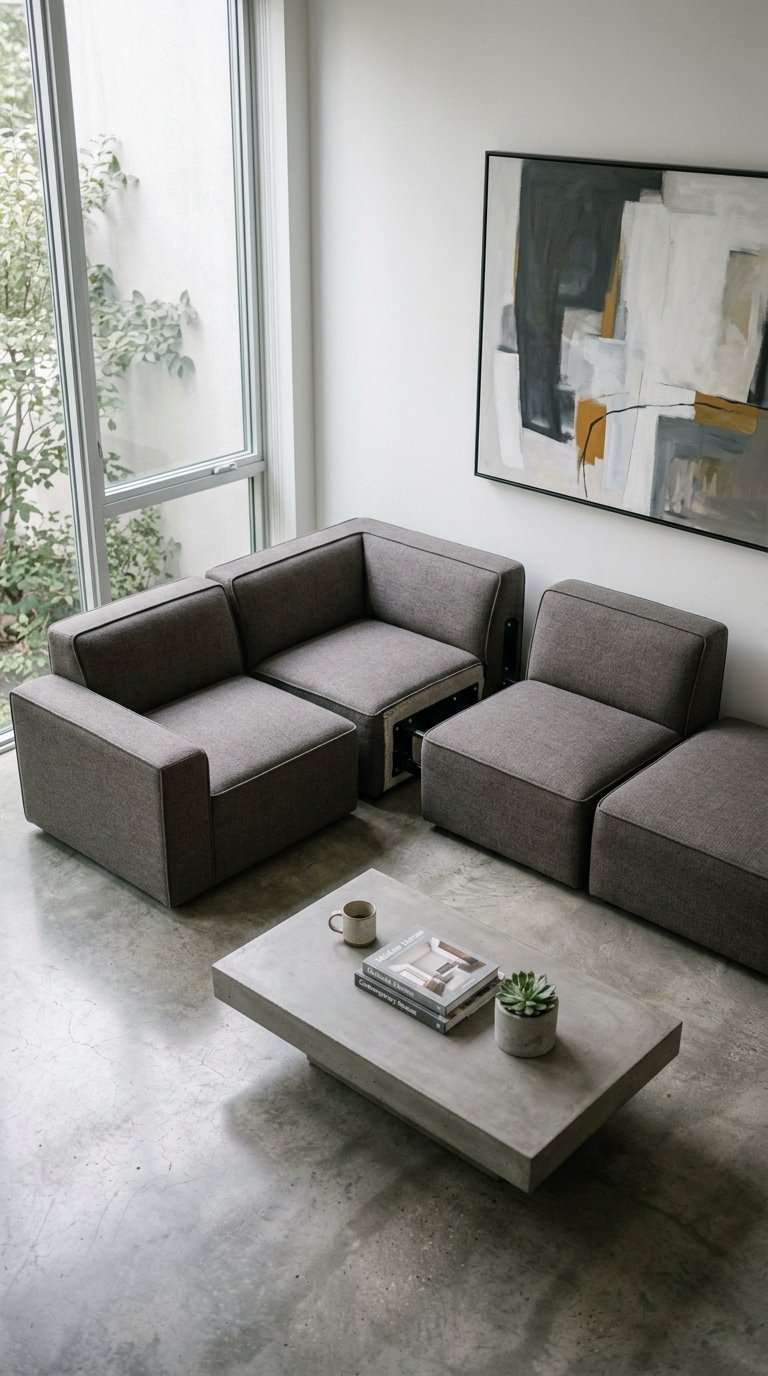
A modular sectional consists of individual pieces that connect together and reconfigure as needed. Move a piece to create more floor space. Add a piece when you need more seating. Separate the modules entirely for a different furniture arrangement.
This is the most future-proof sectional investment you’ll make. Households change. The furniture that adapts to those changes is worth the extra cost. Most major furniture brands now offer quality modular sectional systems with consistent fabrics across all pieces.
Key modular pieces to look for:
- Corner unit
- Armless middle sections
- Chaise end unit
- Ottoman or pouf to complete the set
4. Chaise Sectional for Smaller Spaces
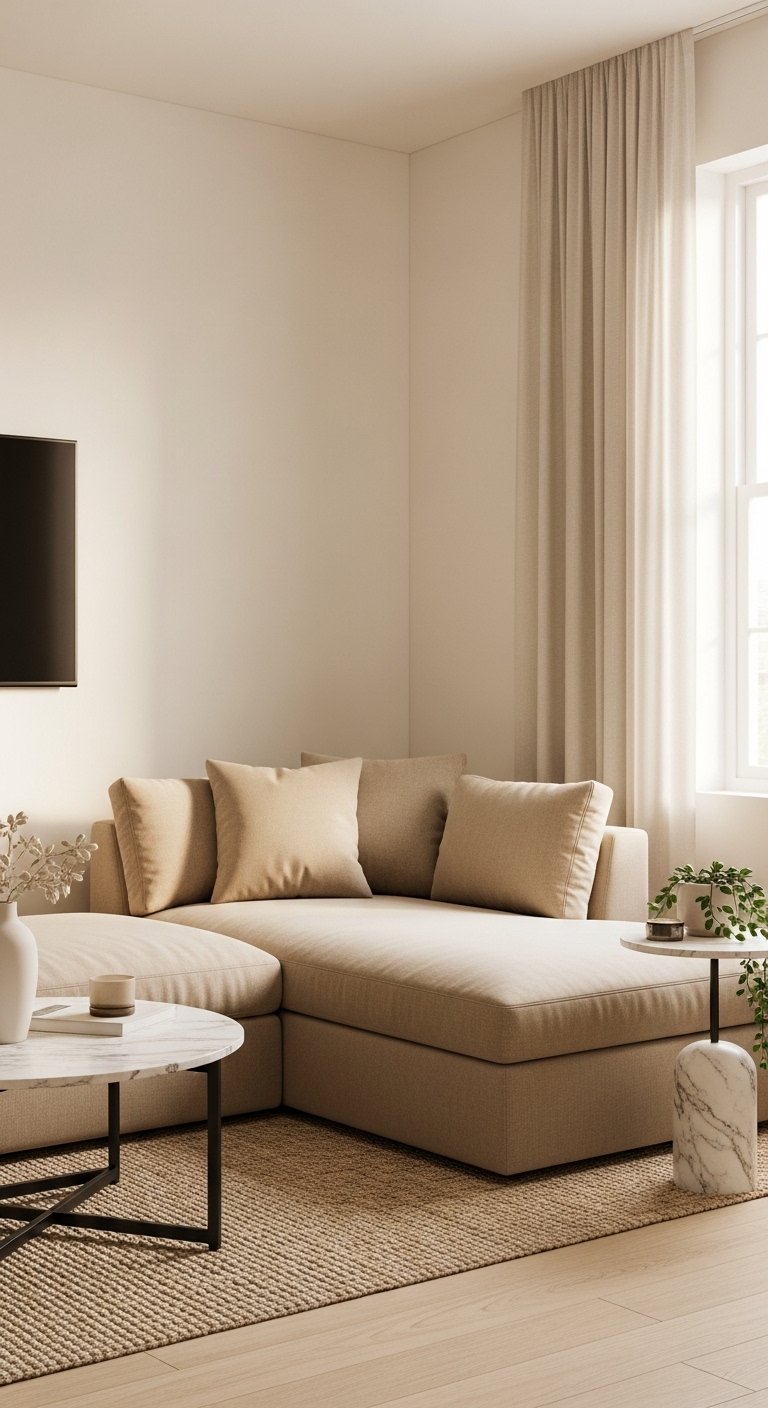
A chaise sectional is essentially a sofa with an extended chaise lounge on one end. It provides the relaxed reclining comfort of a sectional without the floor space commitment of an L-shape or U-shape.
Choose left-hand or right-hand facing based on your room layout and the direction of traffic flow. The chaise should face toward the TV or focal point, not toward a wall. A chaise sectional typically fits comfortably in rooms from 3.5 meters wide upward.
5. Velvet Sectional for Luxury Texture
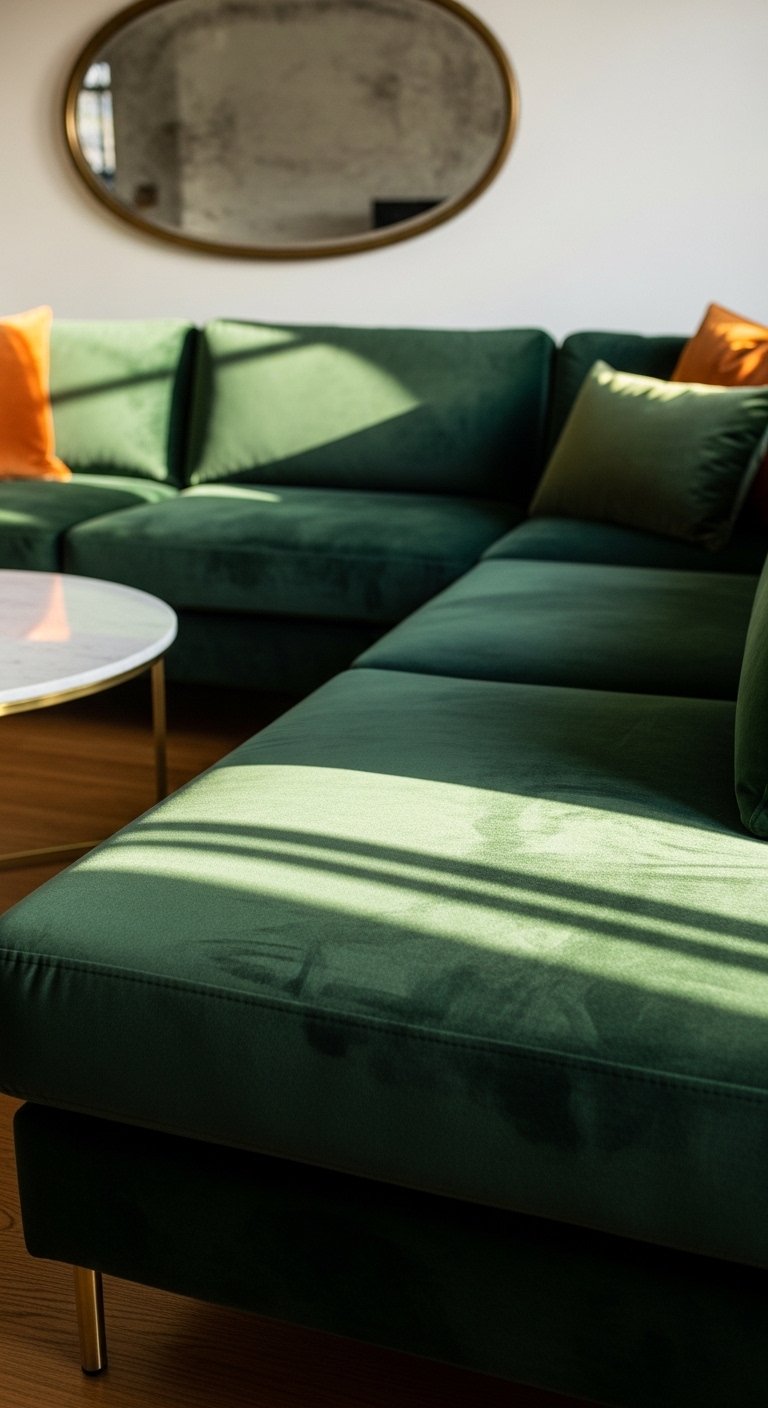
Velvet sectionals add immediate luxury and depth to a living room. The pile of velvet catches light differently from different angles, creating a rich, layered appearance that flat-woven fabrics never match.
Deep jewel tones work particularly well in velvet: emerald green, sapphire blue, deep burgundy, and rich ochre. Pair with brass hardware, a marble coffee table, and warm lighting. The combination looks far more expensive than its actual cost. 🙂
Velvet care reality check:
- Velvet crushes with heavy use and recovers with light brushing
- Avoid direct sunlight which fades velvet faster than most fabrics
- Not ideal for households with pets that shed heavily
6. Neutral Linen Sectional
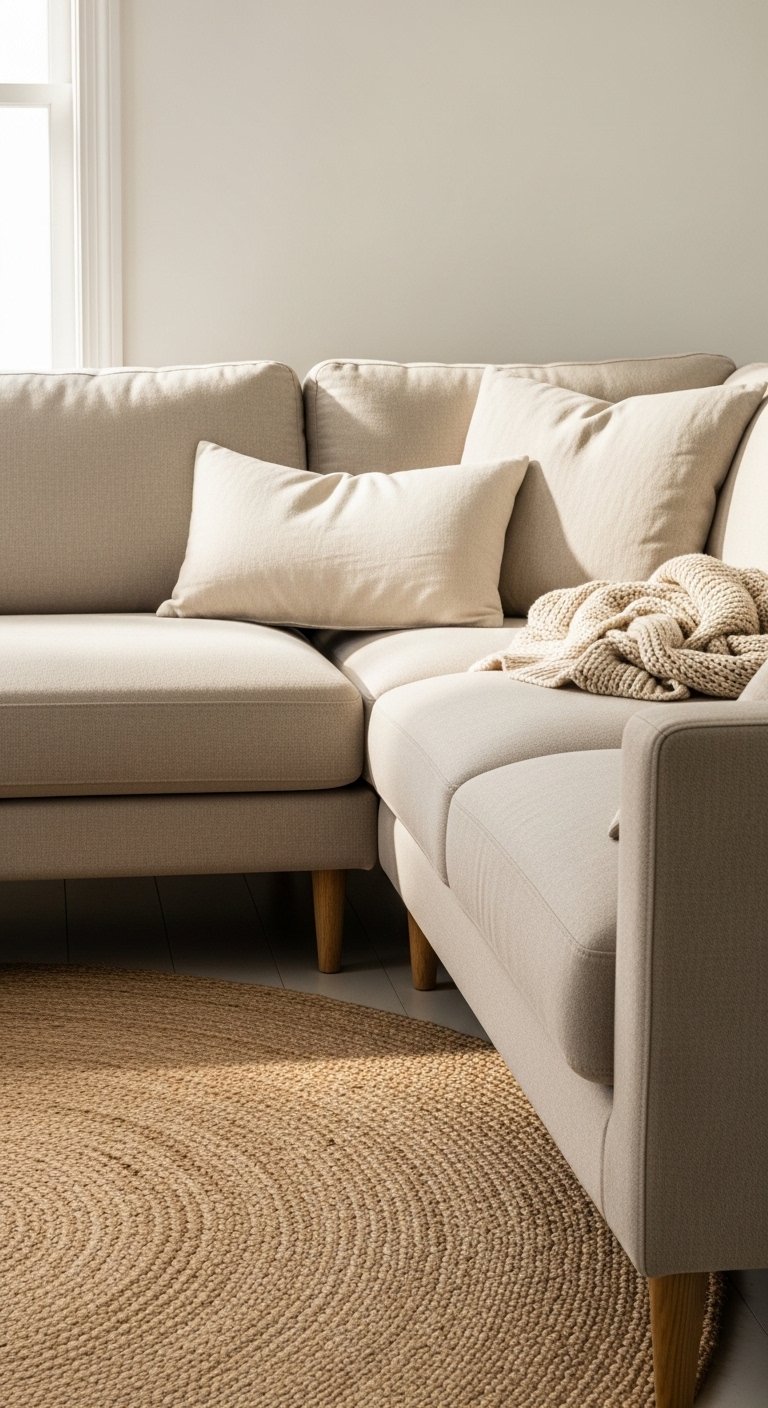
A neutral linen sectional in warm white, oatmeal, or soft grey is the most versatile sectional choice you’ll make. It works with virtually every color palette and interior style, and it won’t date.
Linen is breathable, gets softer with use, and ages gracefully. It also wrinkles and shows marks more readily than performance fabrics. For a family home or high-traffic living room, consider a performance linen weave that offers the look of natural linen with significantly better stain resistance.
7. Dark Sectional as a Room Anchor
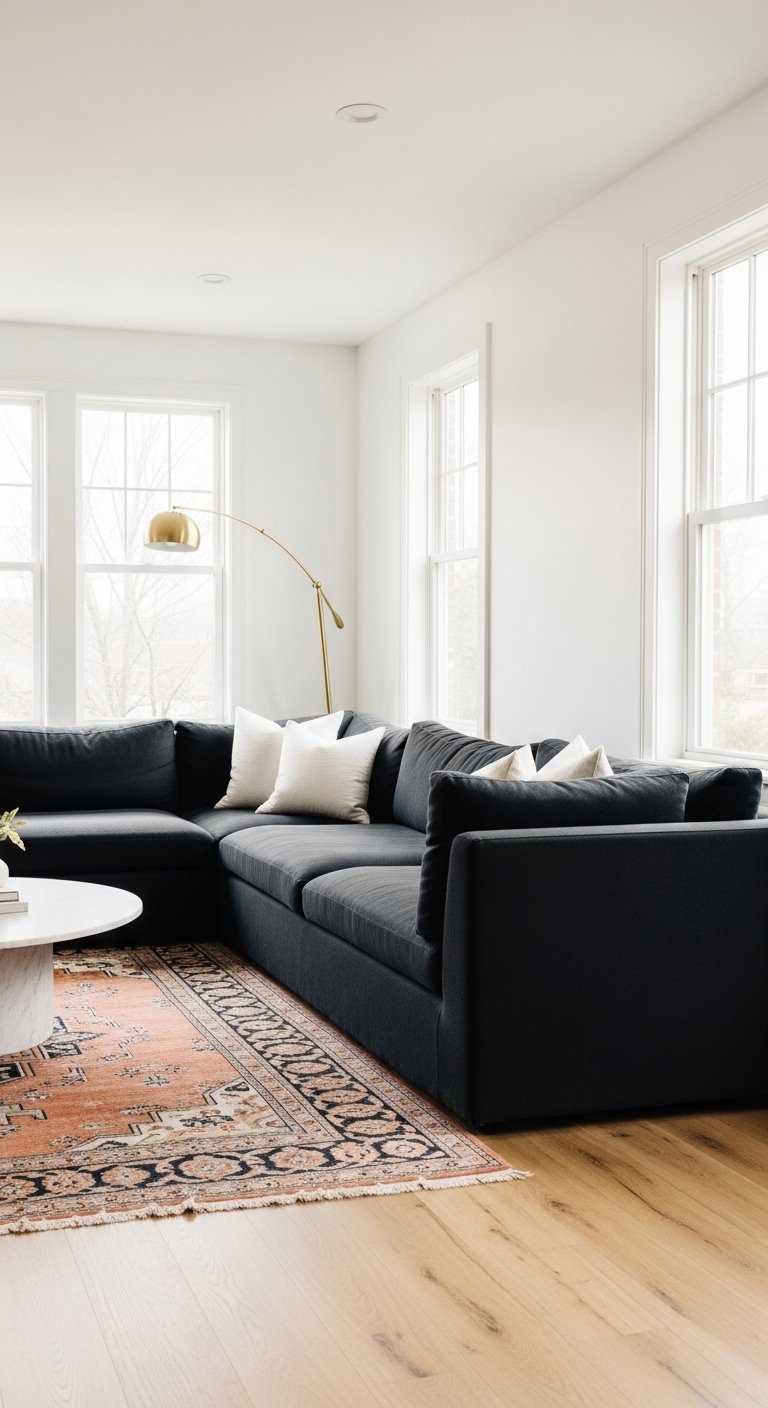
A dark sectional in charcoal, navy, or forest green anchors a room visually in a way that light sofas simply don’t. It grounds the seating zone and creates a strong focal point.
Dark sectionals also hide everyday marks and wear far better than light ones. FYI, a charcoal linen sectional in a room with warm wood floors and white walls is one of the most consistently beautiful and practical combinations in living room design.
Dark sectional color options:
- Charcoal grey: suits modern, Scandinavian, and industrial styles
- Navy blue: suits traditional, coastal, and preppy aesthetics
- Forest green: suits natural, botanical, and maximalist spaces
- Deep burgundy: suits eclectic, moody, and maximalist rooms
8. Sectional with Built-In Storage
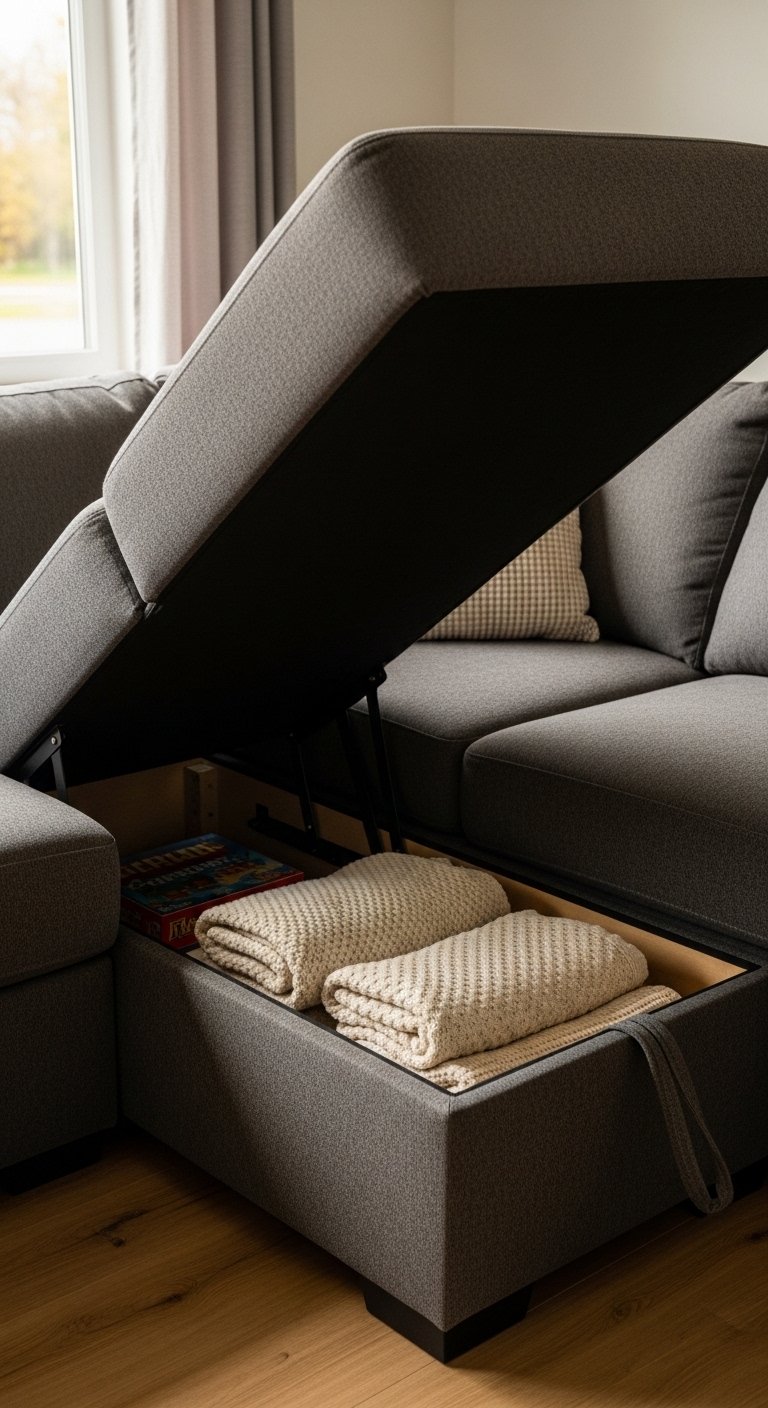
Sectionals with built-in storage hide blankets, remote controls, board games, and other living room essentials inside the chaise or base of the sofa. The lift-up chaise section is the most common storage configuration.
This is the most practical sectional feature for family homes. Every item that lives on your coffee table or in a separate storage basket finds a home inside the sofa. The room looks cleaner and stays that way more easily.
9. Curved Sectional
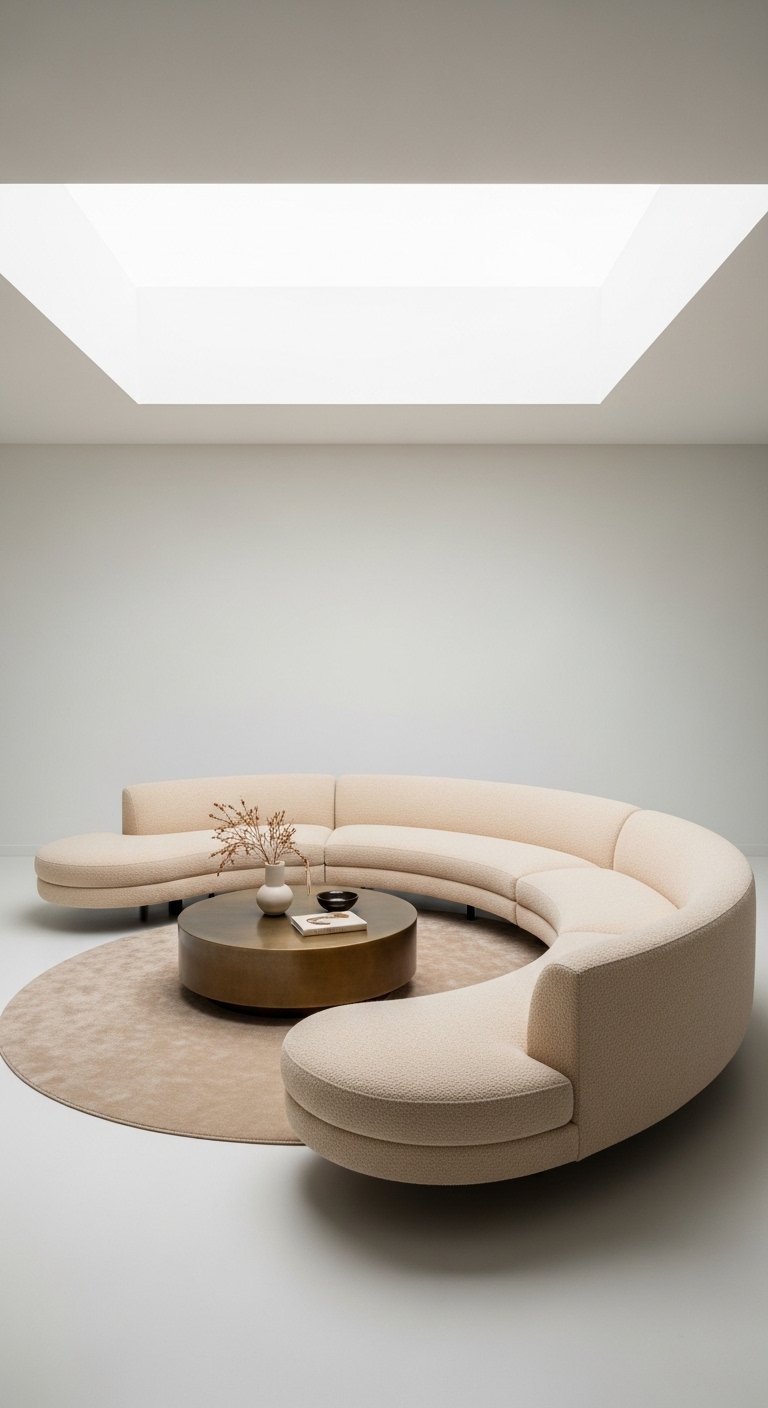
A curved sectional breaks from the right-angle dominance of most living room furniture. The rounded profile creates a softer, more organic shape that suits contemporary and eclectic interiors particularly well.
Curved sectionals work best as a floating arrangement in the center of a room rather than pushed against a wall. The curve invites conversation by naturally turning people toward each other. Pair with a round coffee table to continue the soft geometric theme.
Best interior styles for curved sectionals:
- Contemporary and modern
- Retro and 70s-inspired
- Eclectic and maximalist
- Art Deco influenced spaces
10. Sectional with Chaise and Ottoman
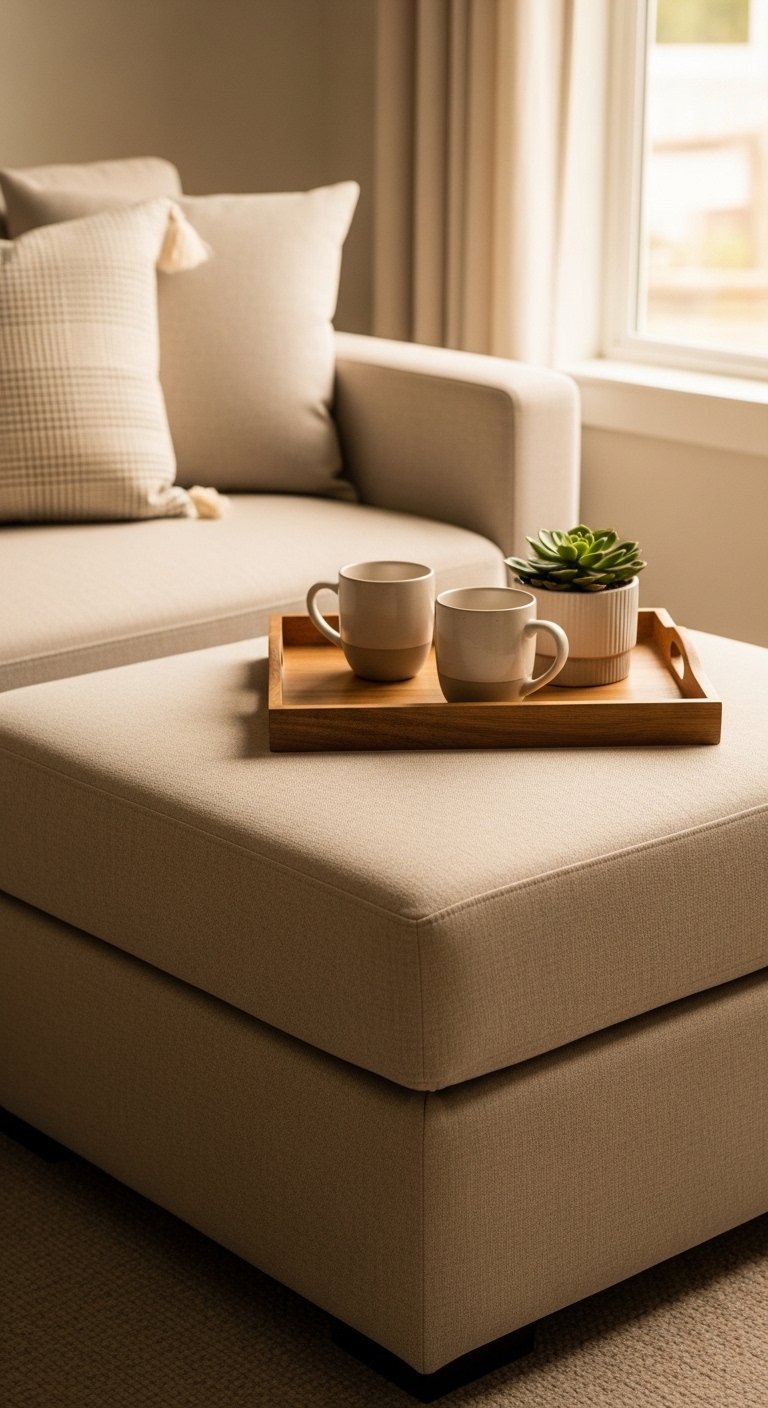
Adding a separate ottoman to a chaise sectional creates a complete seating system. The ottoman provides an additional surface for feet, a tray for drinks, or an extra seat when needed.
Choose an ottoman in the same fabric as the sectional for a cohesive look, or choose a contrasting material like leather or boucle for visual interest. An upholstered ottoman with a removable tray top serves both as a footrest and a functional coffee table surface.
11. Boucle Sectional
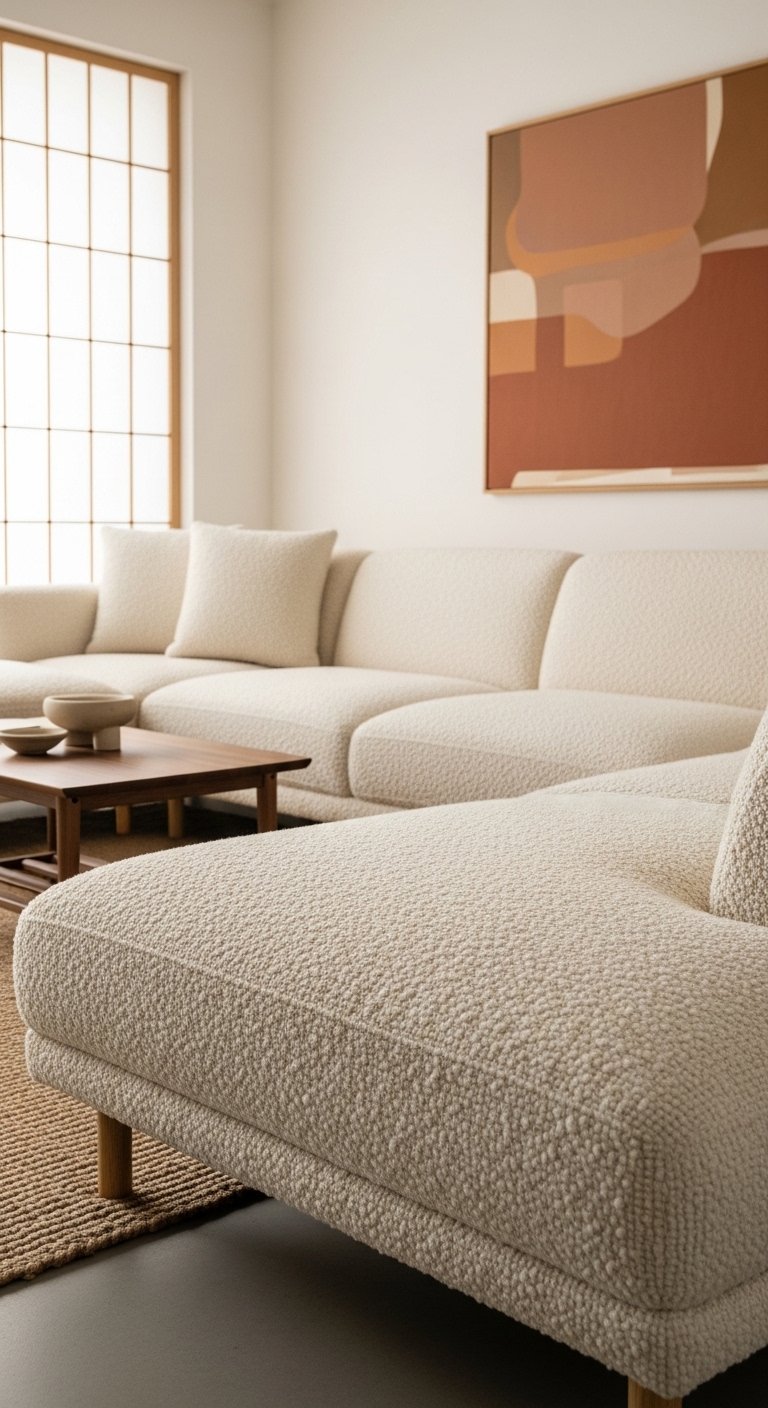
Boucle is a looped, textured fabric that creates a warm, tactile surface with a slightly lumpy, organic appearance. Boucle sectionals in cream, off-white, or warm grey suit minimalist, Japandi, and contemporary Scandinavian interiors perfectly.
Boucle is surprisingly durable for its delicate appearance. It hides minor marks well due to its textured surface. The texture also adds visual depth to a neutral color palette without introducing pattern or additional color.
12. Leather Sectional
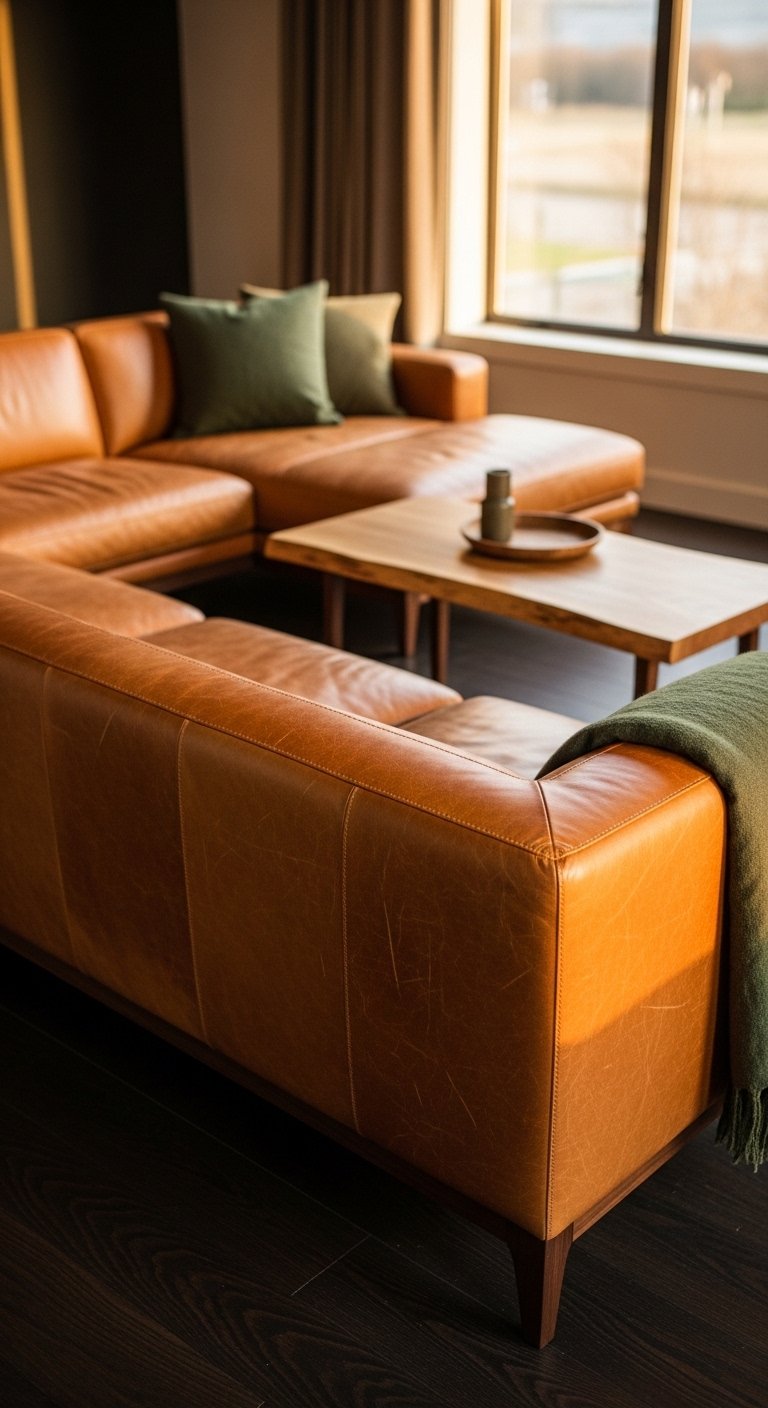
A leather sectional is the most durable and lowest-maintenance sectional fabric choice. Quality leather develops a patina over time that improves the look rather than degrading it. It wipes clean easily, resists most stains, and lasts decades with basic maintenance.
The trade-off is comfort in temperature extremes. Leather feels cold in winter until it warms to body temperature and can feel sticky in high heat. Full-grain leather is the most durable grade. Bonded leather deteriorates and peels within a few years and should be avoided.
Leather grades from best to avoid:
- Full-grain leather: most durable, develops patina, ages best
- Top-grain leather: slightly corrected surface, very durable, good appearance
- Genuine leather: lower quality cuts, less durable
- Bonded leather: avoid entirely
13. Sectional in a Small Living Room
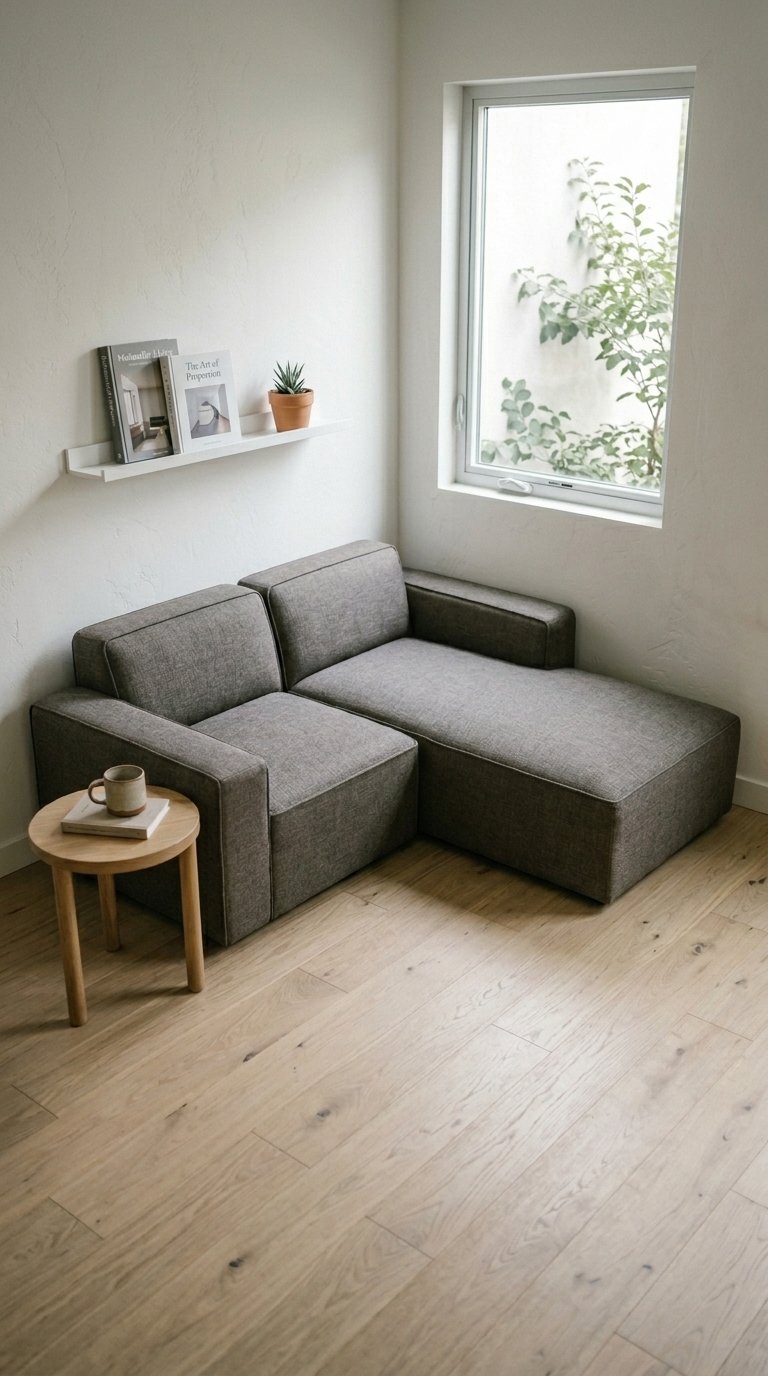
Conventional wisdom says sectionals don’t belong in small rooms. Conventional wisdom is sometimes wrong. A properly scaled sectional in a small living room replaces two separate pieces of furniture, which saves both space and money.
Choose a compact chaise sectional under 280cm in total length. Position it to float away from the wall rather than pushed into a corner. Keep every other furniture piece minimal. One well-chosen compact sectional in a small room beats two mismatched sofas every time.
Compact sectional sizing for small rooms:
- Room under 3.5m wide: chaise sectional maximum 250cm total
- Room 3.5 to 4.5m wide: chaise or small L-shape up to 300cm total
14. Sectional Facing the Fireplace
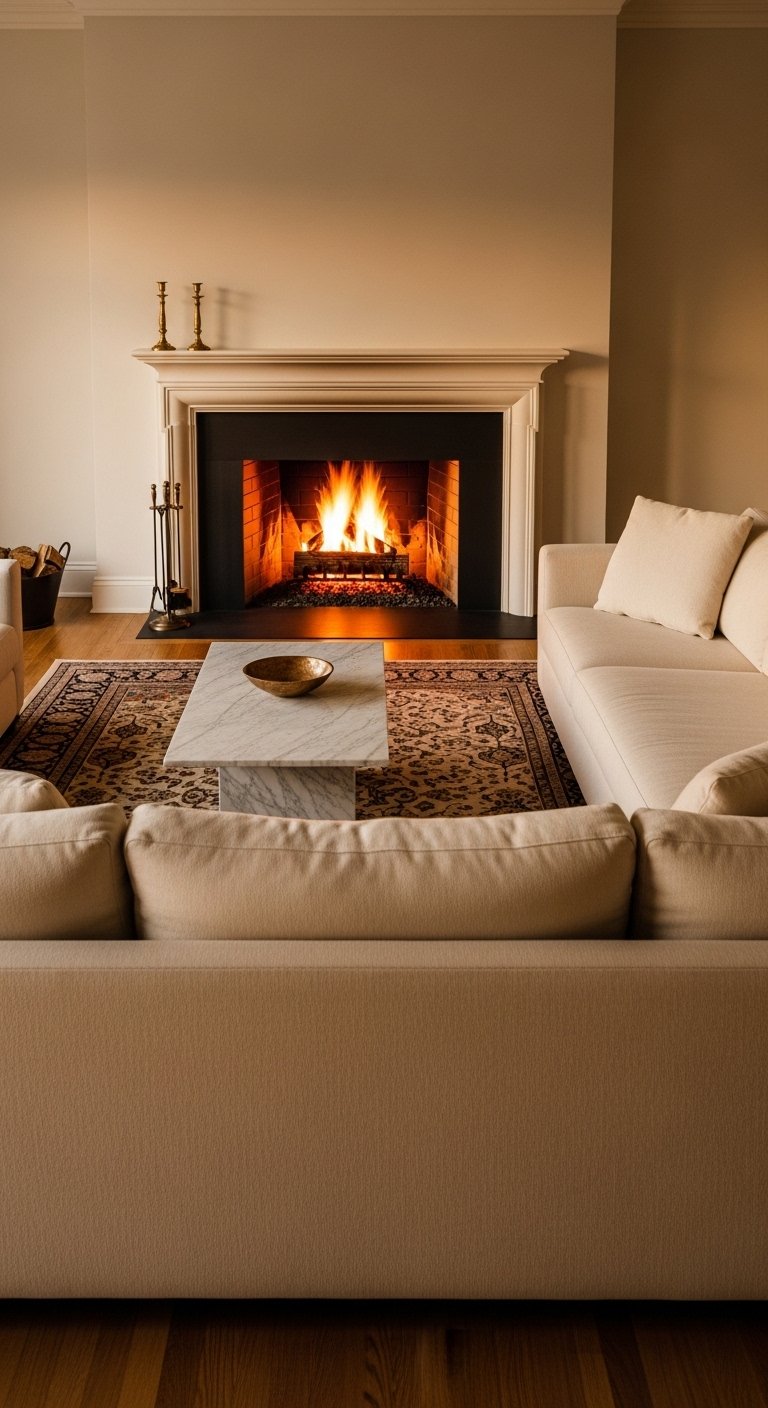
Positioning a sectional to face a fireplace creates the most natural and comfortable seating arrangement in a room with a chimney breast. The fireplace becomes the focal point and the sectional wraps around it.
Use the L-shape with the longer section parallel to the fireplace wall and the shorter section extending into the room on one side. This keeps the fireplace fully visible from all seats on the sectional. Add a large rug to define the zone between sofa and hearth.
15. Two-Tone Sectional
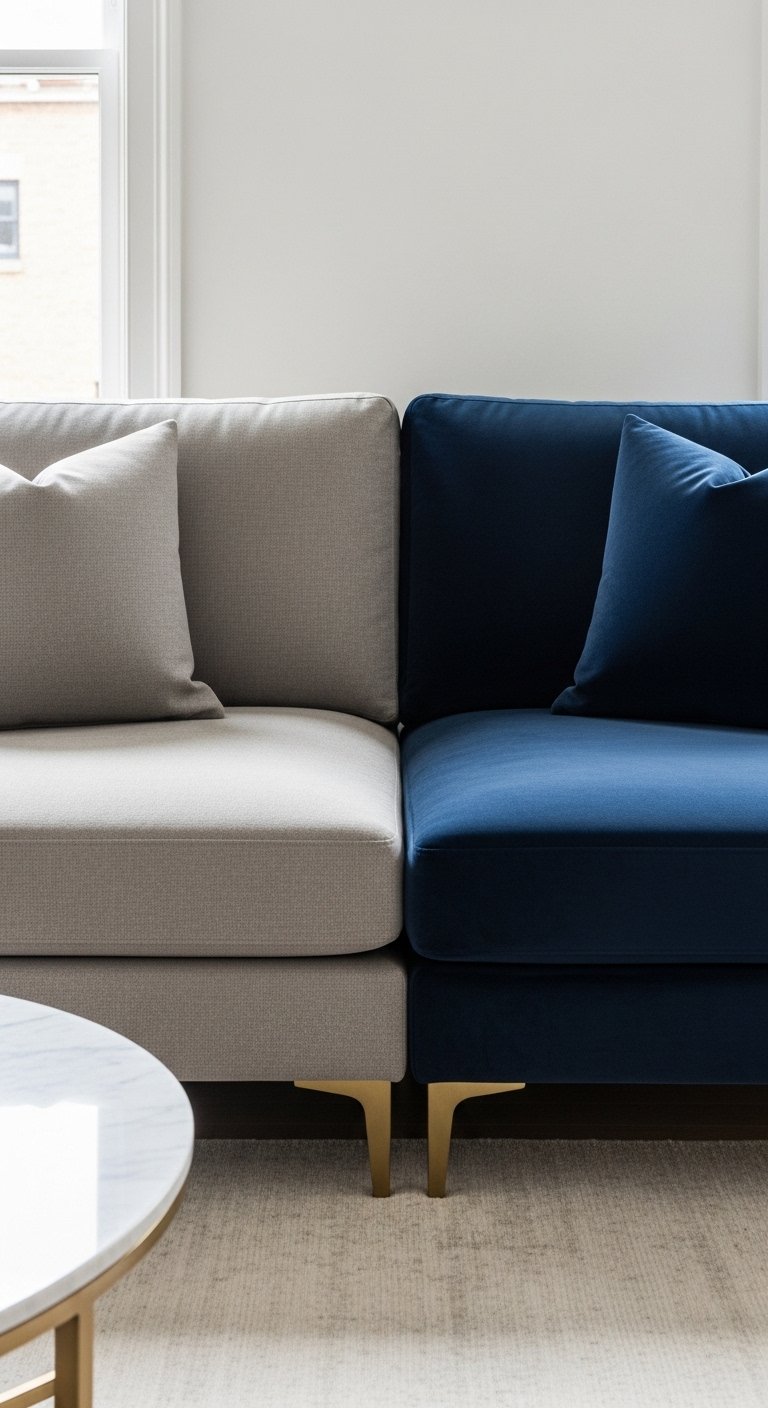
A two-tone sectional uses two different but coordinated fabrics or colors across the sectional sections. One chaise in a contrasting fabric to the main body, for example, creates a deliberate, designed look.
This works particularly well with a natural linen body and a velvet chaise, or a grey main section with a navy chaise end. The contrast reads as intentional rather than mismatched when the tones are clearly coordinated. It also allows you to introduce a second color to the room through the sofa itself.
16. Sectional with High Back
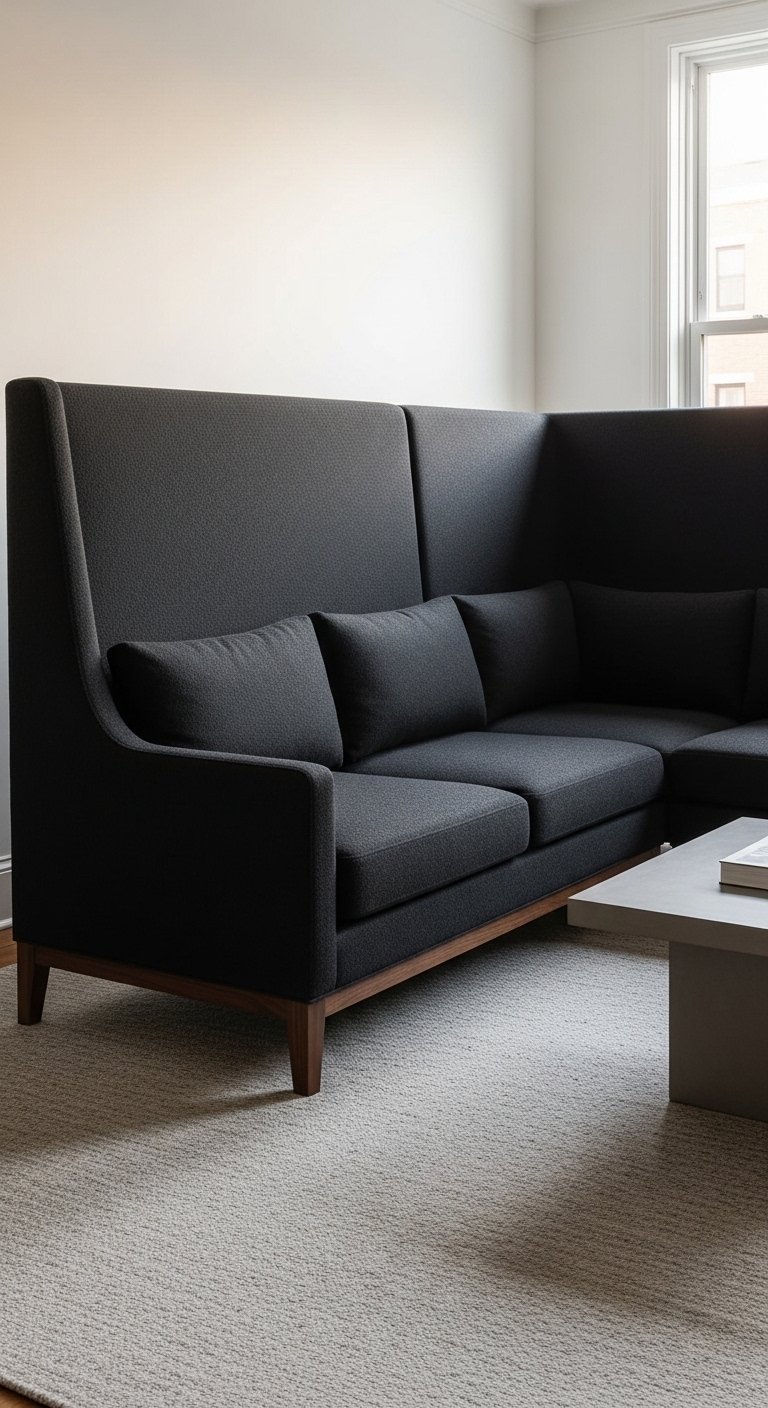
A high-back sectional provides genuine head and neck support that low-profile sectionals never offer. For households that spend significant time on the sofa, this is a practical comfort upgrade.
High-back sectionals also create a stronger visual presence in a room. They define the seating zone more emphatically and work particularly well in rooms with high ceilings where a low-profile sofa can look lost beneath a tall wall.
17. Floating Sectional as a Room Divider
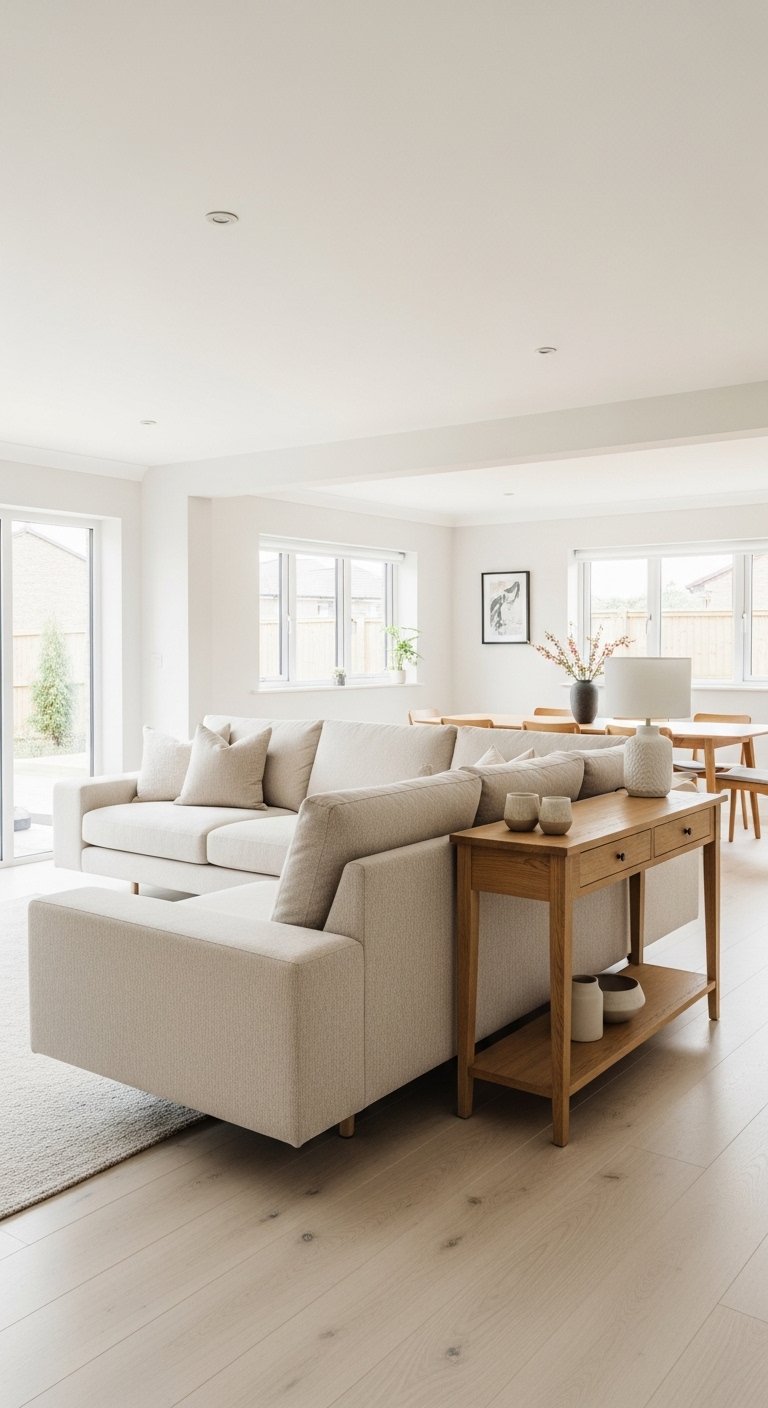
In an open-plan space, a floating sectional placed with its back toward the dining or kitchen area acts as a natural room divider without a physical wall. The back of the sectional creates a visual and psychological boundary between zones.
Add a slim console table behind the sofa back to create a surface that faces the dining area. Style it with a lamp and a few objects. The back of the sectional becomes a feature rather than a forgotten surface.
18. Sectional with Sleeper Function
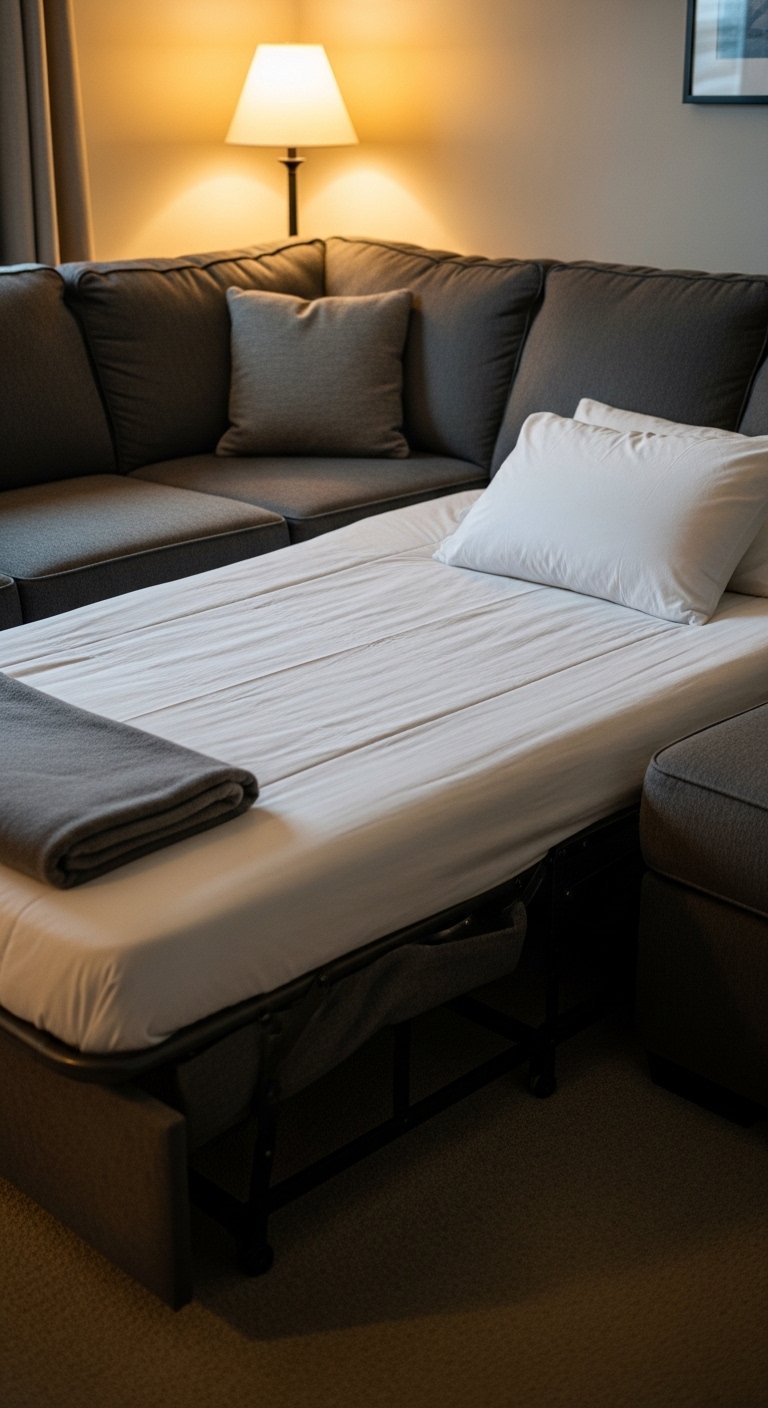
A sleeper section conceals a pull-out bed within the chaise or main body of the sofa. It eliminates the need for a separate guest bed in homes without a dedicated guest room.
The quality of the mattress varies significantly between models. A thin foam mattress in a budget sleeper sectional will not provide comfortable sleep for more than one night. Invest in a model with a proper innerspring or memory foam mattress if guests stay regularly.
19. Sectional in an Earthy Color Palette
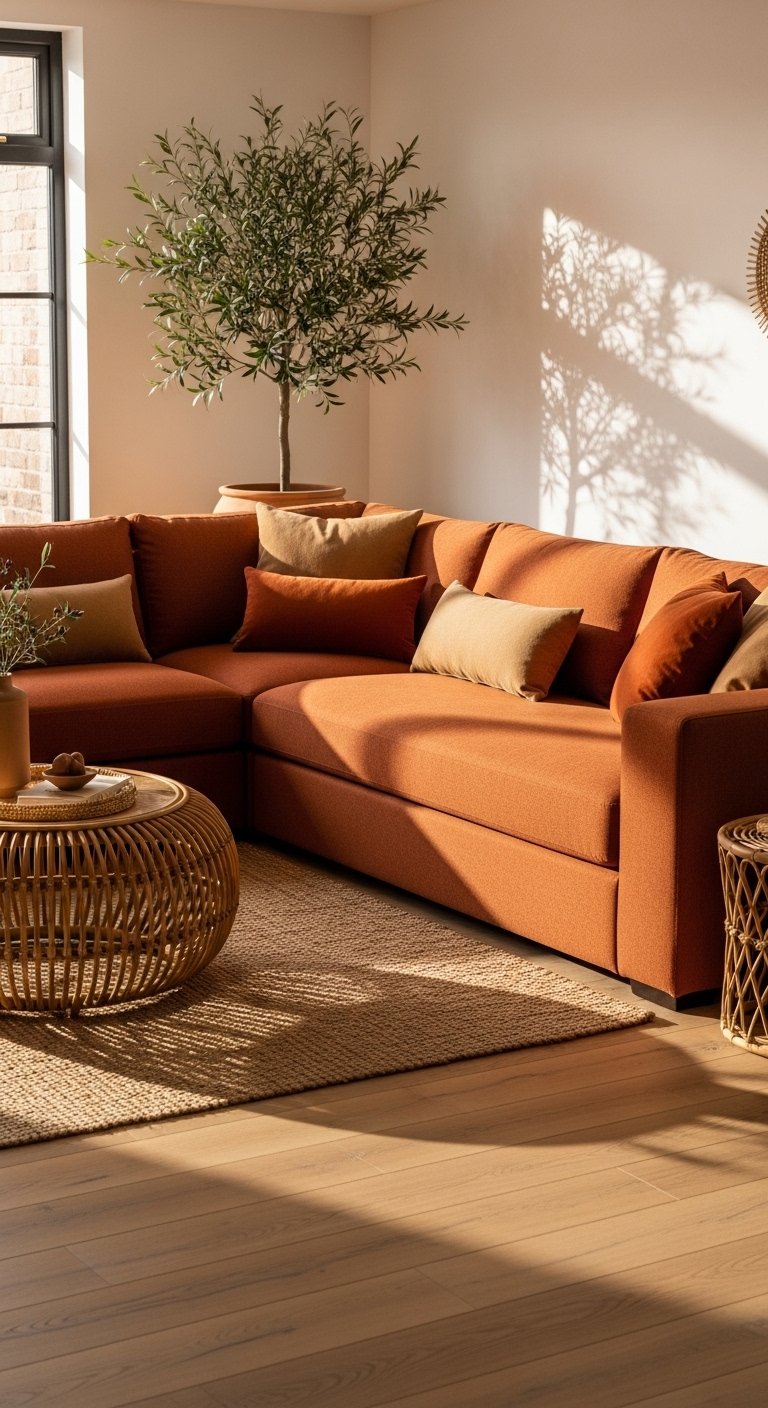
Earthy tones on a sectional, terracotta, warm camel, rust, clay, and burnt orange, bring warmth and groundedness to a living room without the commitment of a dark color.
These tones pair beautifully with natural materials: wood, rattan, jute, linen, and terracotta ceramics. An earthy camel or terracotta sectional in a room with white walls and warm wood floors creates one of the most inviting living room combinations available right now.
Earthy sectional colors that work:
- Camel and warm tan
- Terracotta and rust
- Clay and warm taupe
- Burnt orange and ochre
20. Sectional with Throw Pillows and Layered Textiles
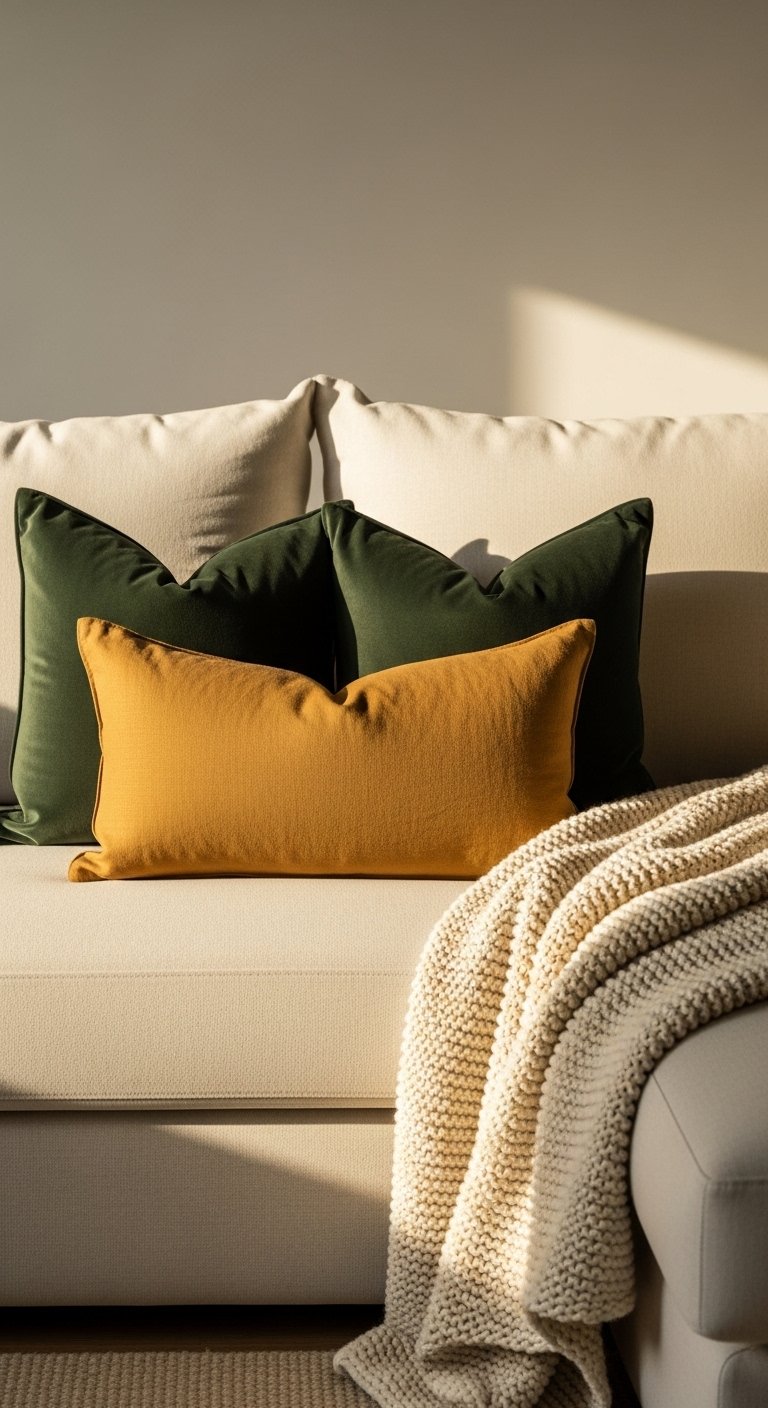
The right throw pillows and layered textiles transform a plain sectional into a fully styled living room anchor. The sectional provides the structure. The textiles provide the personality.
Use an odd number of cushions. Three or five works better than two or four visually. Mix sizes: two large square cushions, two standard cushions, one lumbar cushion. Mix textures: linen with velvet, boucle with cotton. Keep colors within the same palette. A chunky knit throw draped asymmetrically over the chaise end completes the arrangement.
Cushion formula for a sectional:
- Two large 60x60cm cushions at each end
- Two standard 45x45cm cushions beside them
- One 30x50cm lumbar cushion in the center
- One throw draped over the chaise arm
21. Sectional Styled with a Statement Rug
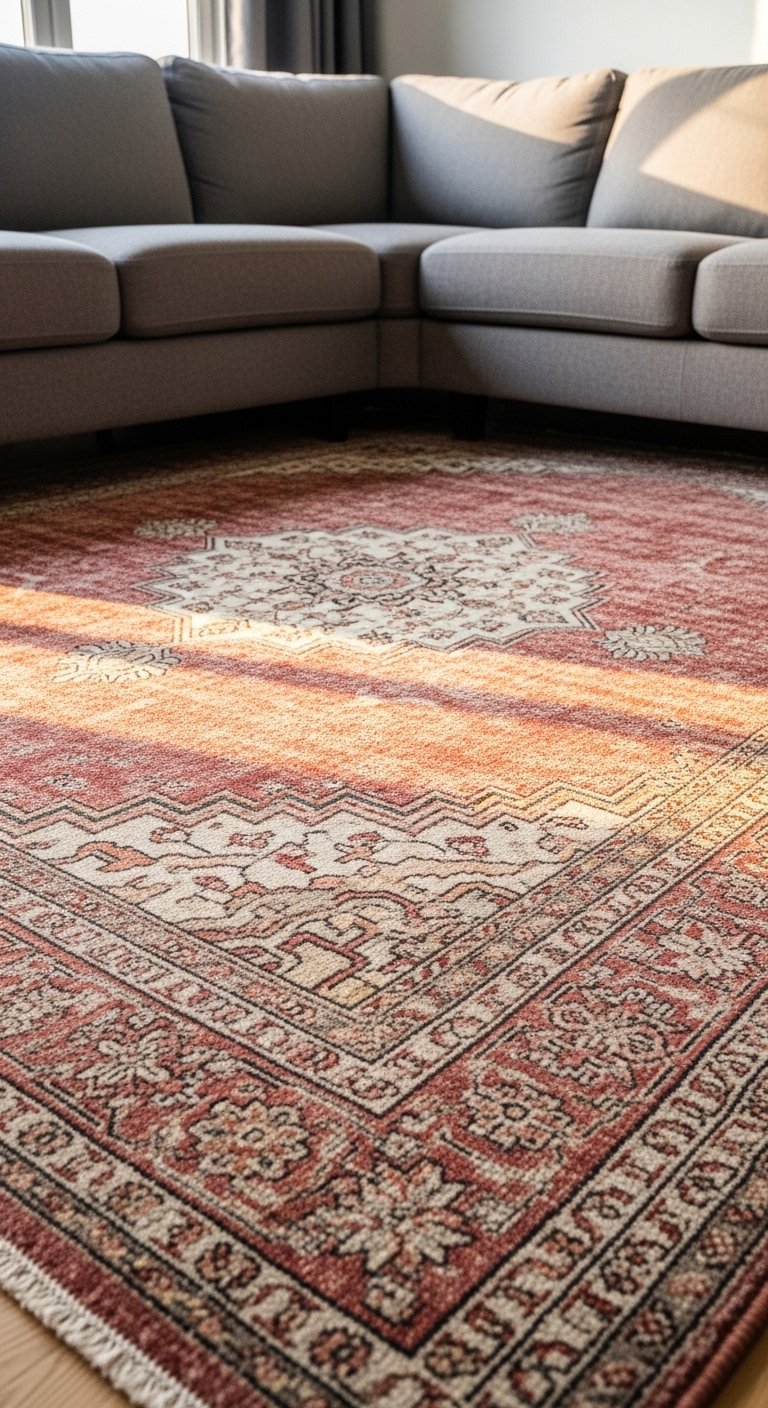
A sectional without a rug beneath it looks unfinished. A statement rug under a sectional grounds the entire seating arrangement and ties the room together.
The rug should extend at least 30cm beyond the sectional on the open sides. All front legs of the sectional should sit on the rug. A rug too small for the sectional looks like an afterthought. Size up consistently. For a large L-shape sectional, a 300x400cm rug is the minimum that works proportionally. IMO, the rug is the second most important purchase after the sectional itself.
Rug styles that suit sectionals:
- Large geometric low-pile in neutral tones
- Vintage or overdyed Persian style
- Jute or natural fiber for a relaxed aesthetic
- Solid color in a contrasting tone to the sectional
Final Thoughts
A sectional sofa is a long-term commitment. The right one makes your living room the most comfortable room in the house. The wrong one makes it an obstacle course you navigate around for years.
The 21 ideas above cover every style, size, fabric, and configuration. The right answer for your specific room exists in that list. Measure your space, map your traffic flow, and choose fabric based on how you actually live, not how you wish you lived.
Get the rug right at the same time. Those two decisions together define the entire room. Everything else is styling.