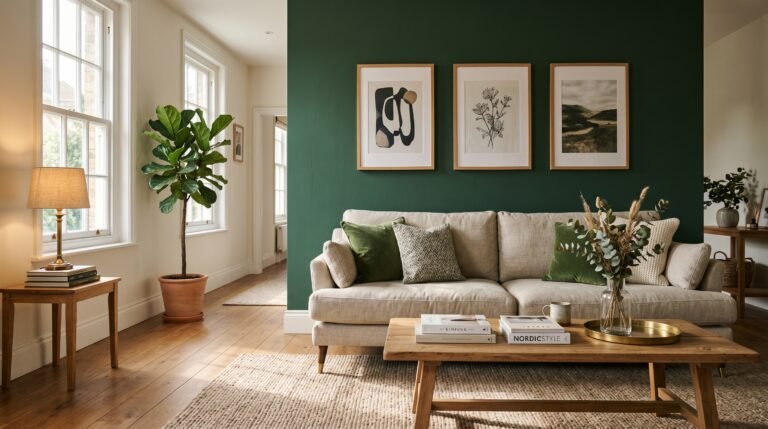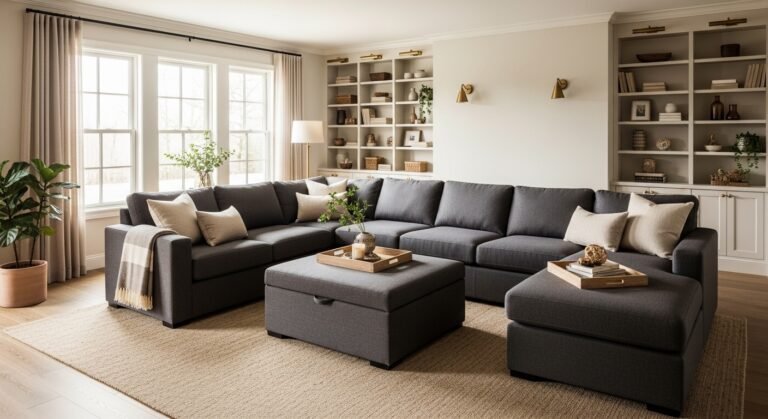
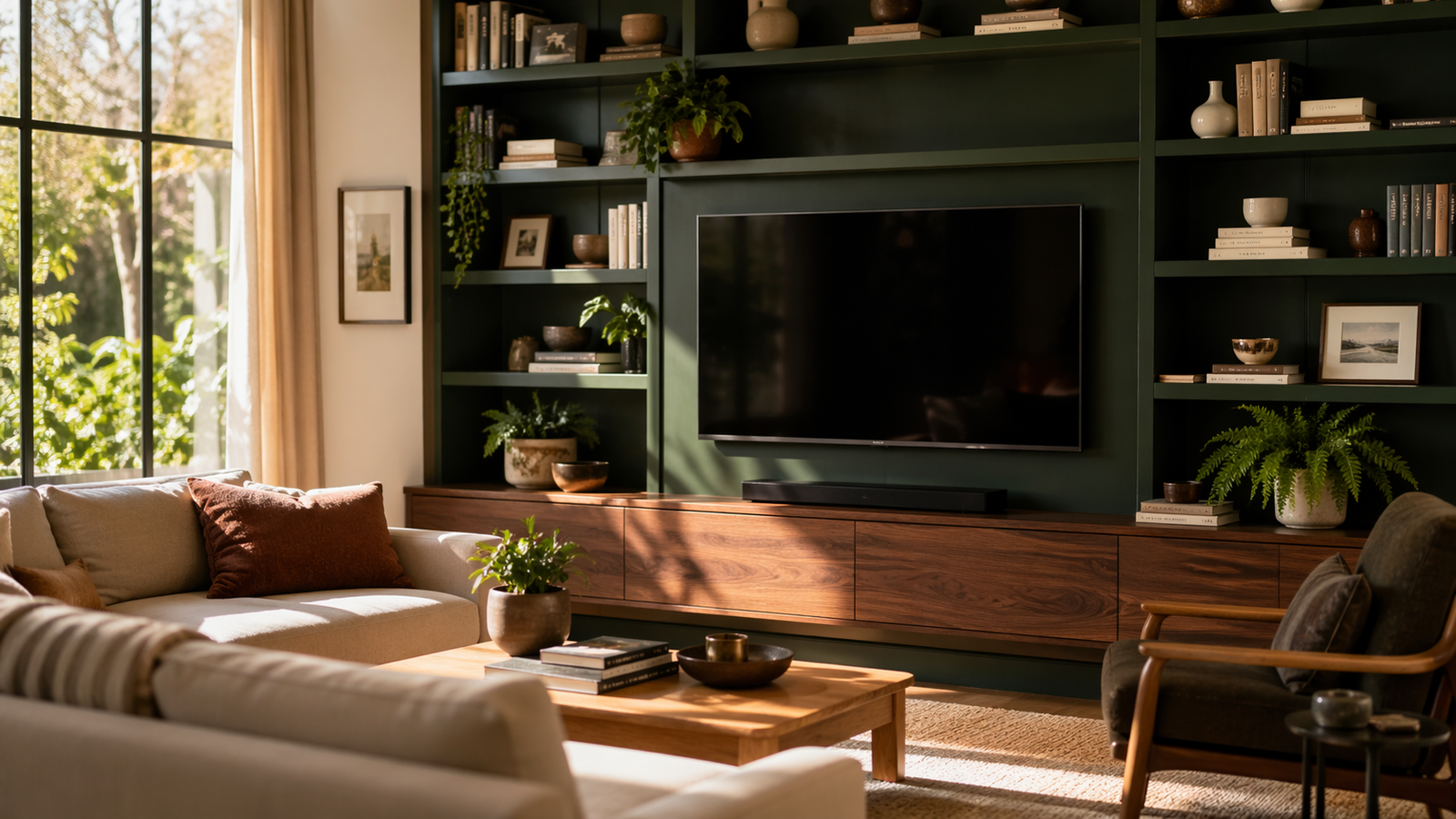
25 Living Room TV Wall Ideas to Transform Your Space
Most living room TV walls look like an afterthought. A flat screen screwed into a plain wall with a tangle of cables visible underneath. Job done, apparently. The TV wall is actually one of the most looked-at surfaces in your entire home. It deserves better than that.
I’ve rearranged my own living room TV wall three times before getting it right. Here’s everything that works.
1. Full-Length Built-In Shelving Unit
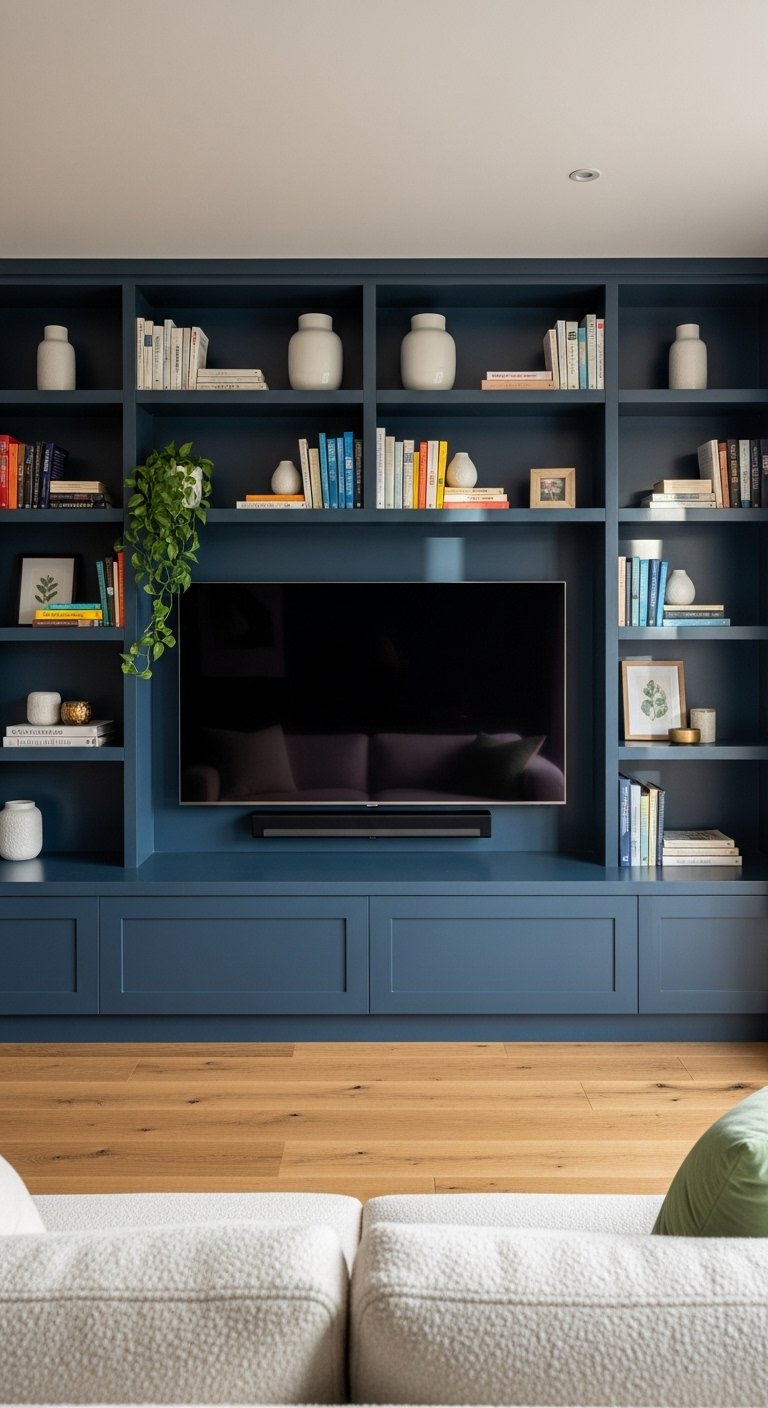
A full-length built-in shelving unit that frames the TV creates a wall of storage, display space, and visual structure simultaneously. The TV sits in the center and the shelving extends to either side and above.
Built-in units look custom and considered. Flat-pack alternatives like IKEA Billy bookcases with added trim and paint achieve a near-identical look at a fraction of the cost. Paint everything the same color as the wall behind for a seamless, architectural effect.
Best paint colors for built-in units:
- White on white walls for a clean minimal look
- Navy or forest green for a bold, library feel
- Charcoal for a dramatic, contemporary result
- Warm off-white on cream walls for a soft traditional look
2. Floating Media Console
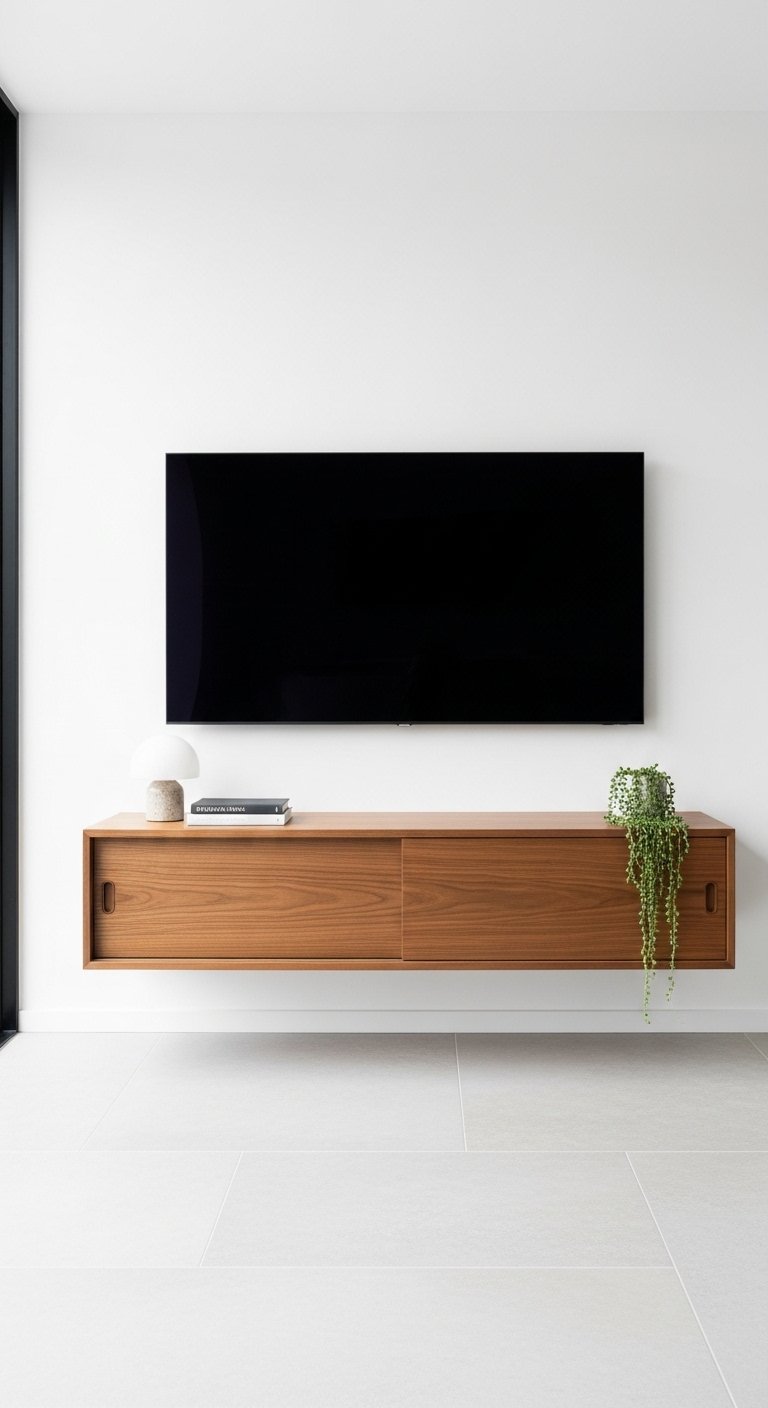
A floating wall-mounted media console replaces a floor-standing TV unit and clears the floor completely. The visual effect is immediate. The room feels larger and the TV wall feels more intentional.
Choose a console at least as wide as the TV above it. A console narrower than the TV looks unbalanced. Mount both the console and the TV at the correct height: screen center at seated eye level, approximately 100 to 110cm from the floor.
3. Stone or Brick Feature Wall
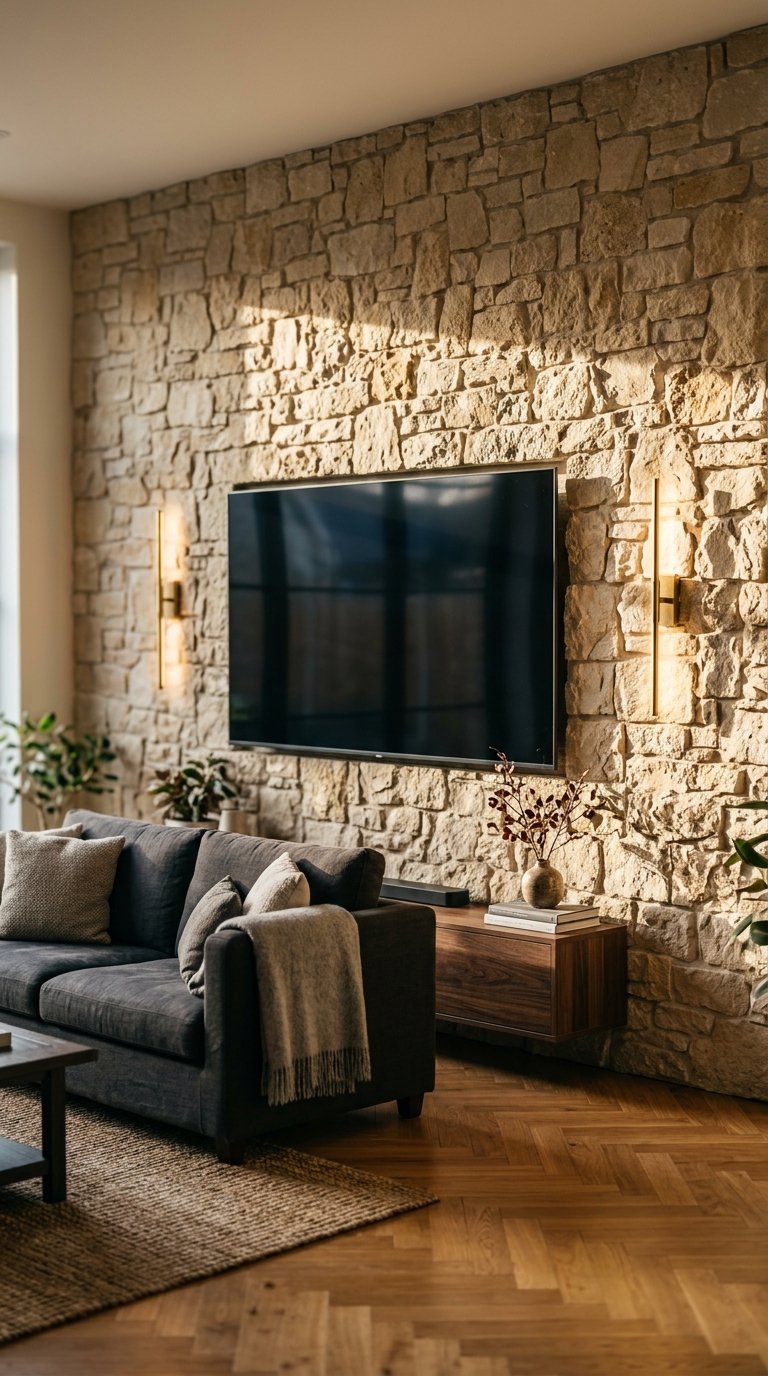
Mounting a TV on a stone or brick feature wall creates a strong textural contrast between the flat screen and the raw material behind it. Real stone, brick slips, or stone-effect panels all work.
The wall does the design work. The TV becomes part of a larger textural composition rather than a lone black rectangle on a plain surface. Add warm wall sconces on either side and the wall becomes genuinely dramatic.
4. Fluted Panel TV Wall
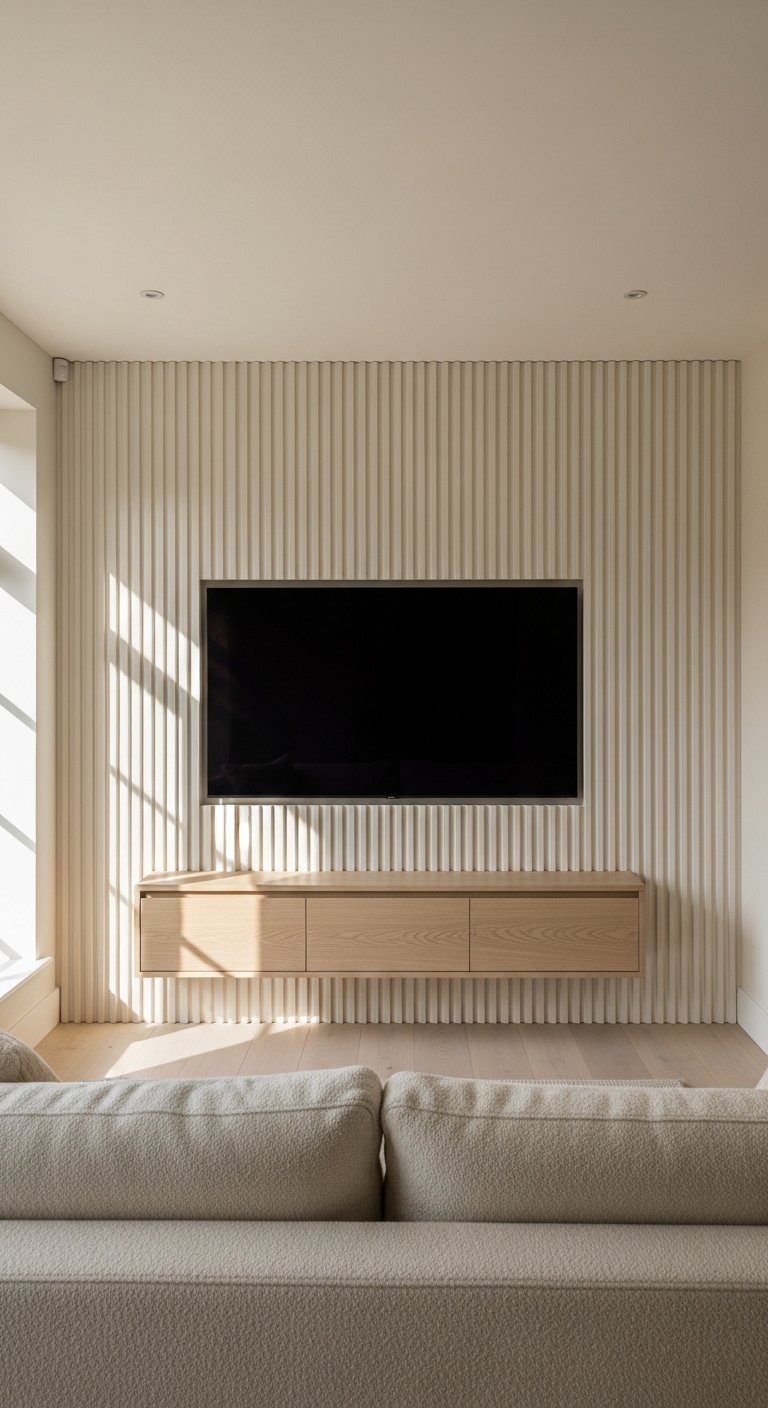
Fluted wall panels feature vertical grooves running the full height of the panel, creating a ribbed texture that adds depth and shadow to any wall. They work beautifully as a TV wall backdrop.
Install fluted MDF panels floor to ceiling or from skirting to cornice on the TV wall. Paint in a single color. Mount the TV flush against the panel surface. The ribbed texture catches light throughout the day and makes the wall feel architectural and considered.
5. Gallery Wall Around the TV
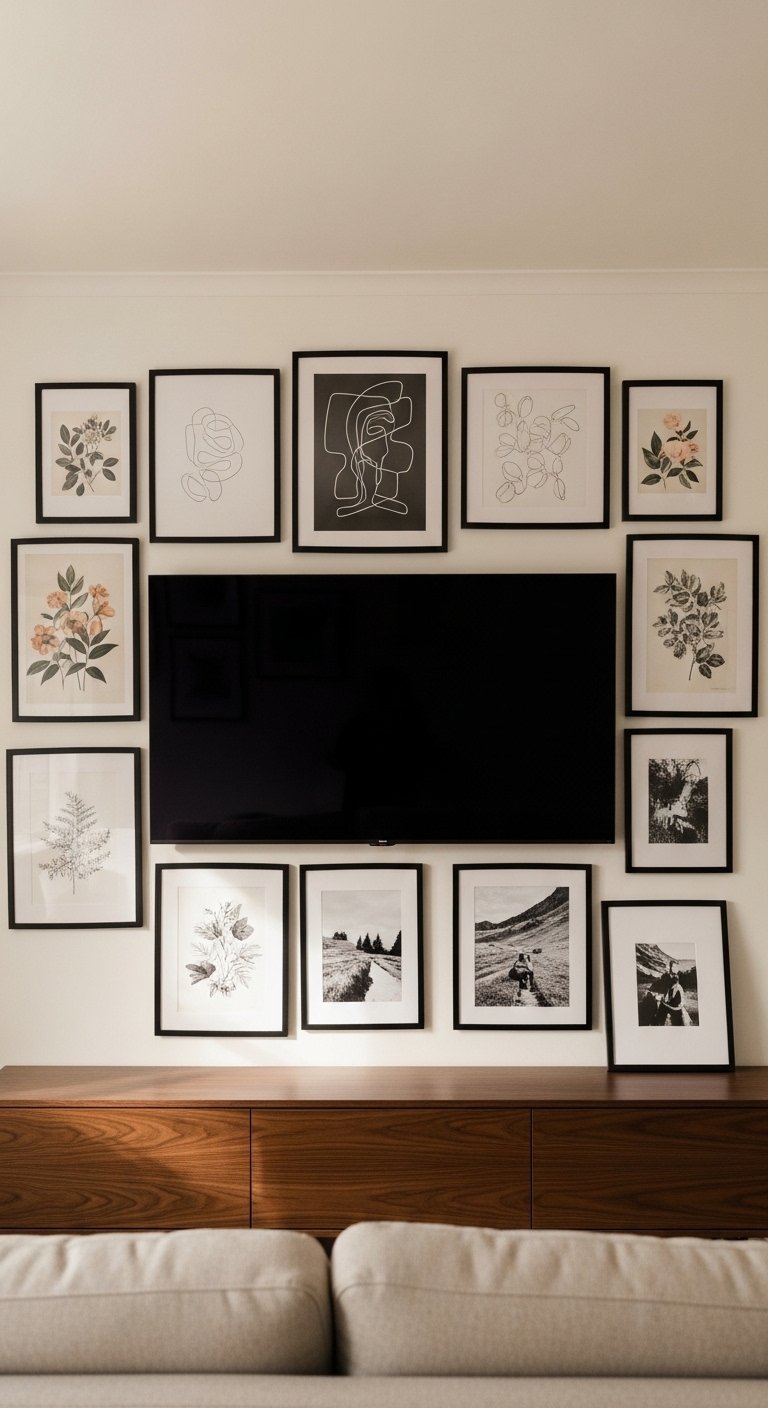
A gallery wall built around the TV treats the screen as one element within a larger curated wall composition. Framed artwork, prints, and photographs surround the TV on all sides.
The key is treating the TV as just another rectangle in the gallery rather than the dominant focal point. Keep frame finishes consistent. Use similar mat colors. Size the surrounding frames so the TV doesn’t overwhelm everything around it. When the TV is off, the wall looks like a pure gallery.
6. Dark Accent Wall
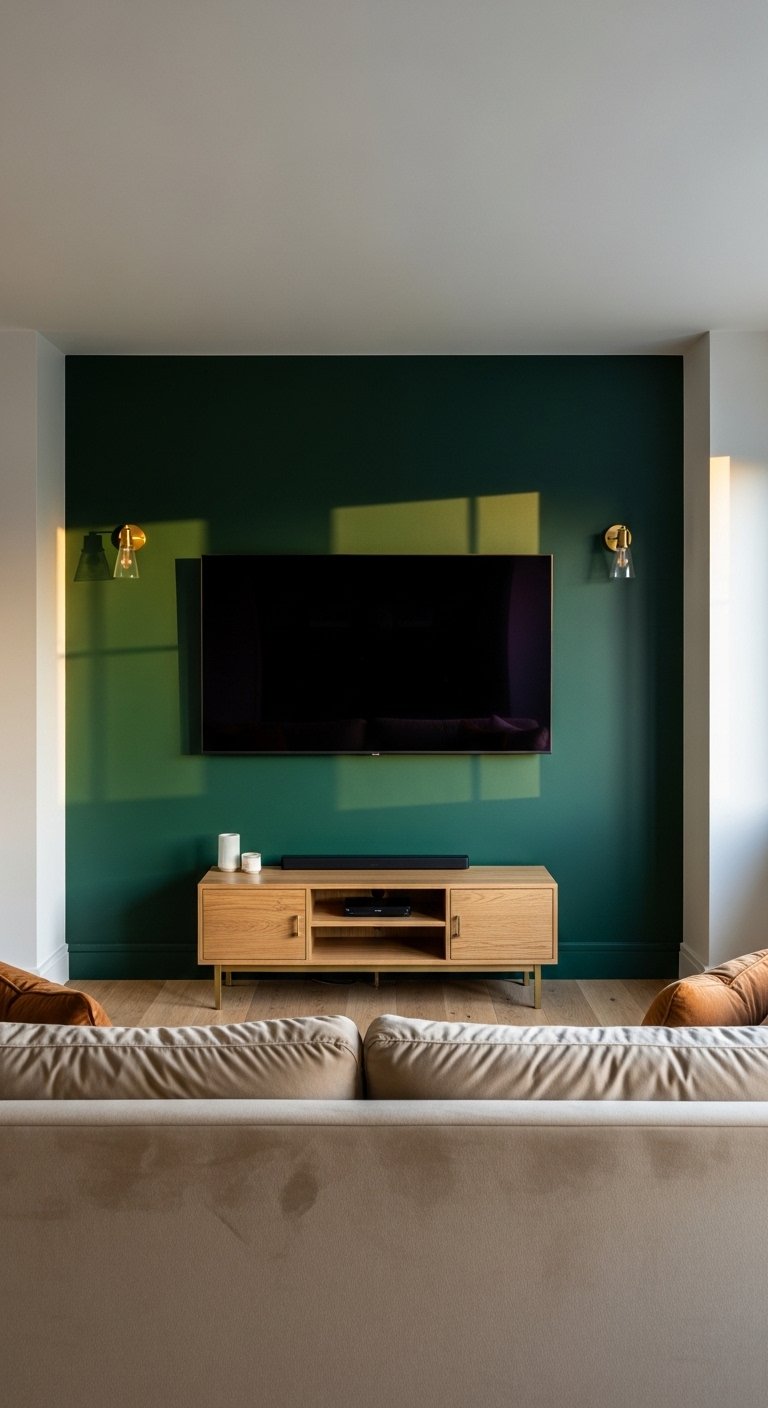
Painting the TV wall in a deep, dark accent color immediately separates it from the rest of the room and creates a strong backdrop that makes the TV disappear when switched off.
Deep navy, forest green, charcoal, or terracotta all work well. The TV blends into a dark wall far better than a light one. Dark walls also create a more immersive viewing experience by reducing ambient light contrast around the screen. This is one of the cheapest and most effective TV wall ideas on this list.
7. Wallpaper Feature Wall
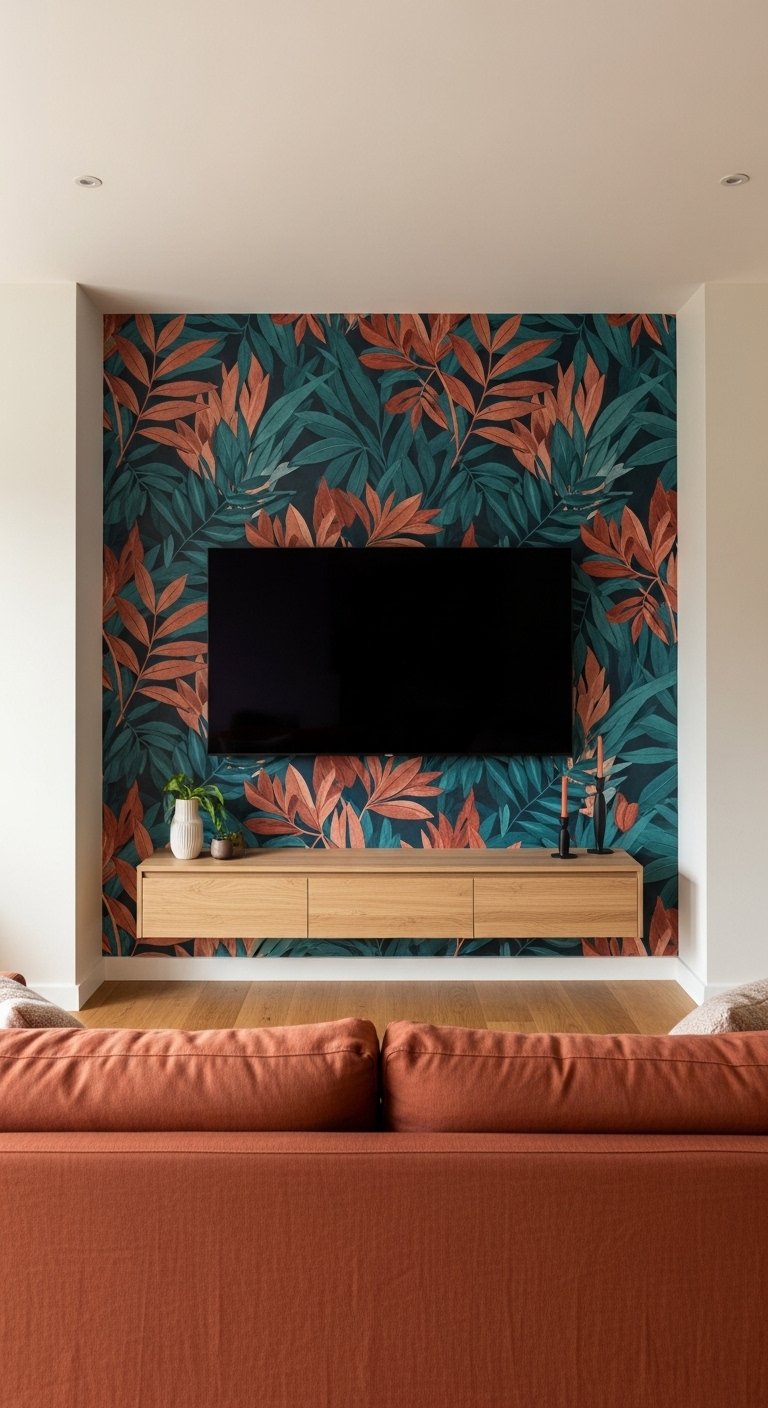
A bold wallpaper on the TV wall creates instant pattern, texture, and personality. Geometric patterns, botanical prints, abstract designs, and textured grasscloth wallpapers all work as TV wall backdrops.
Choose a pattern scale proportional to the wall size. Large patterns on small walls overwhelm. Small patterns on large walls disappear. A mid-scale geometric or botanical in a muted color palette creates the strongest result. Mount the TV centrally within the pattern.
8. Recessed TV Niche
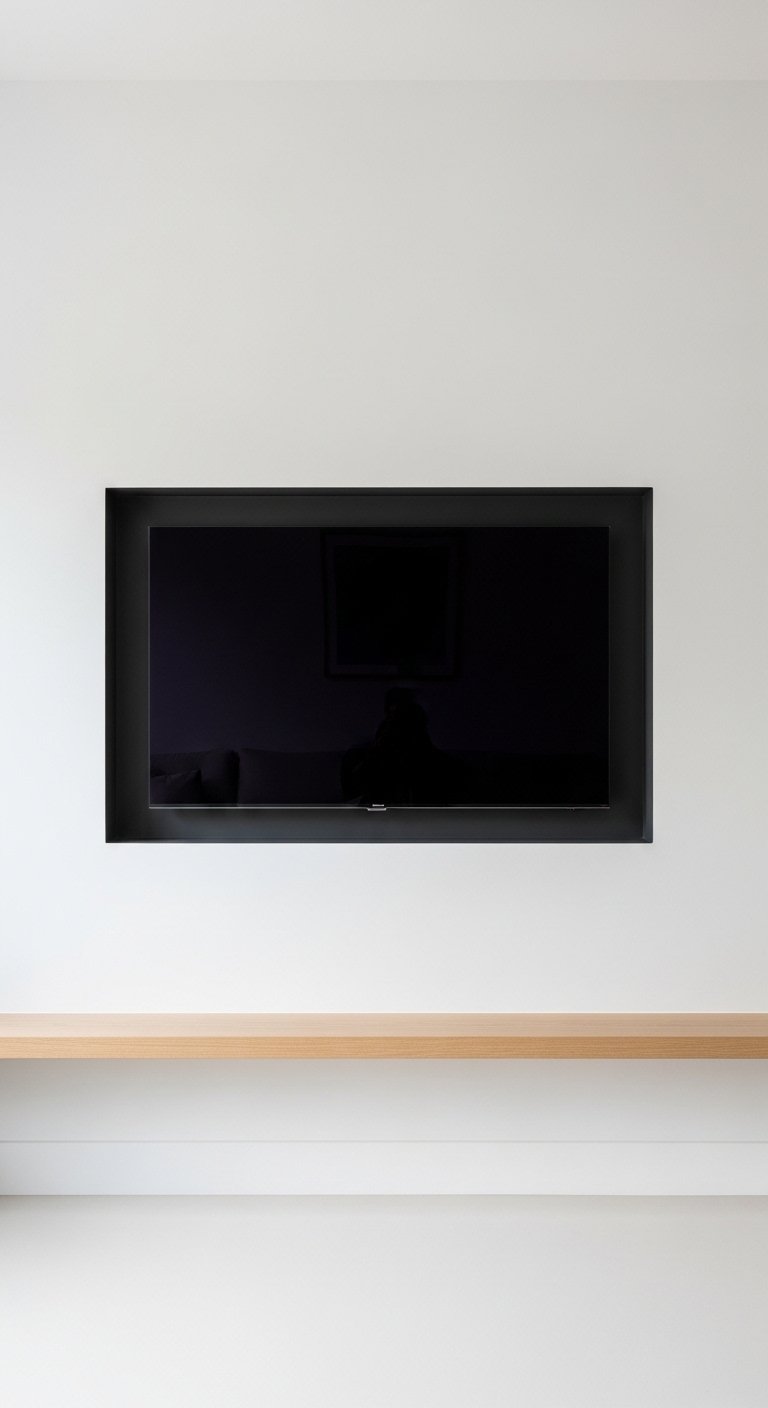
A recessed TV niche involves building or utilizing a wall recess where the TV sits pushed back into the wall rather than projecting from its surface. The TV sits flush or near-flush with the wall plane.
This hides cables completely, reduces the TV’s visual projection into the room, and creates a clean, architectural look. If your wall has the depth for it, or if you’re renovating, a recessed niche is one of the most considered TV wall solutions available.
9. Fireplace TV Wall Combination
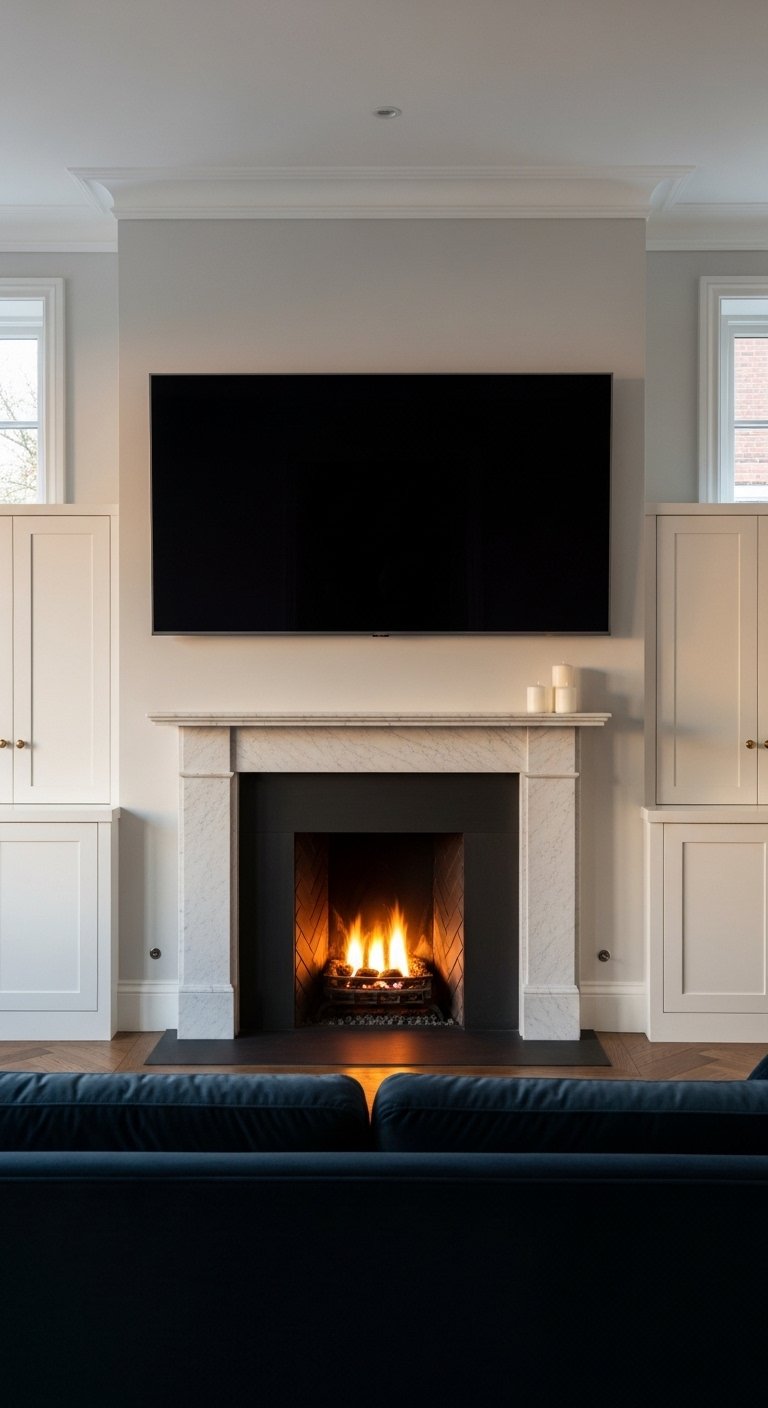
Placing a TV above or beside a fireplace creates the most used focal point combination in living room design. When done right, both elements complement each other. When done wrong, the TV hangs uncomfortably high and everyone gets a neck ache.
The TV should sit above the fireplace only if the fireplace mantel height places the screen center at approximately seated eye level. If the mantel is too high, mount the TV beside the fireplace on the same wall instead. Side placement looks equally strong and works better ergonomically.
Fireplace and TV wall options:
- TV above fireplace with built-in cabinetry flanking both
- TV to the side of the fireplace on the same feature wall
- TV recessed into a niche beside a freestanding fireplace
10. Vertical Shiplap Wall
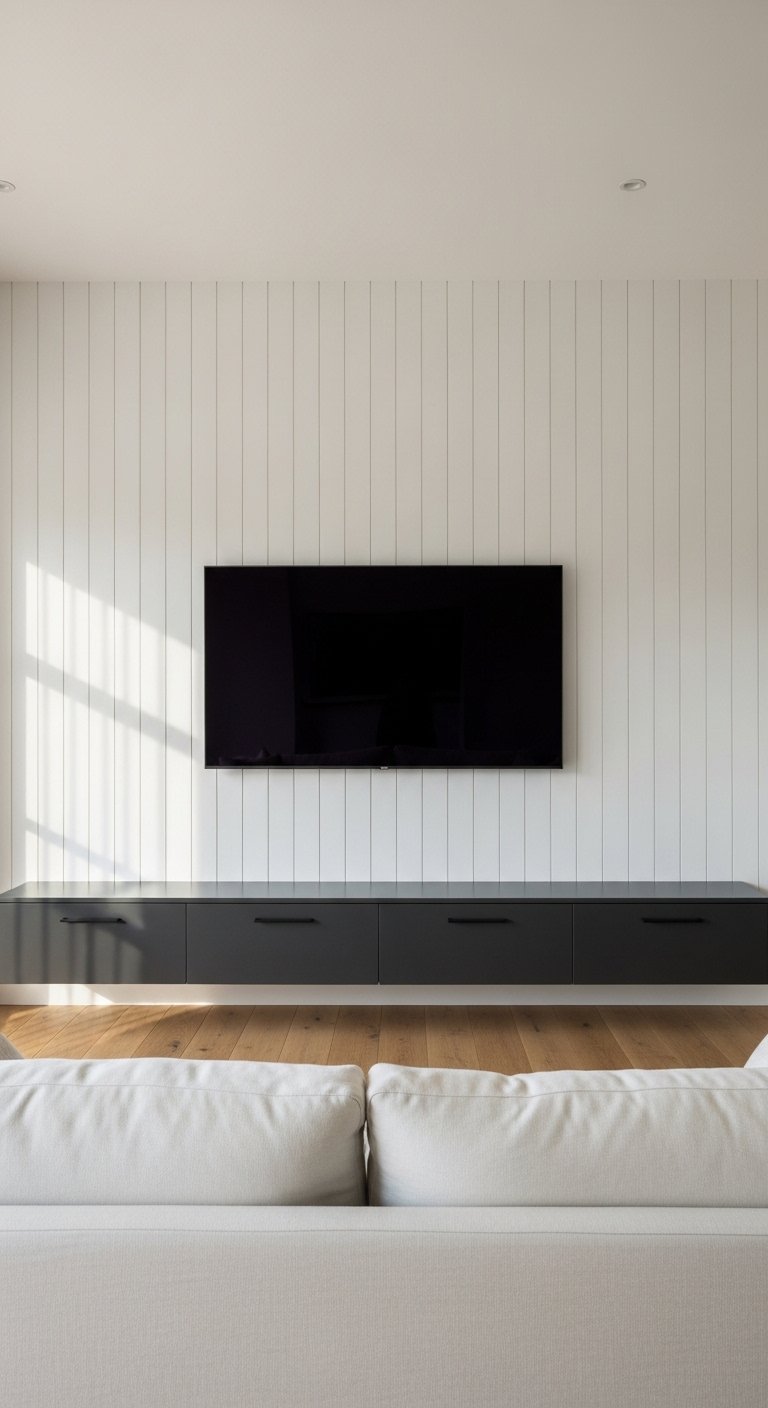
Vertical shiplap planks on the TV wall create a strong directional texture that draws the eye upward and makes ceilings feel taller. Paint the shiplap in the same color as the surrounding walls for a subtle textural effect, or in a contrasting color for a bolder statement.
White shiplap on a white wall with a floating dark wood media console creates a clean farmhouse aesthetic. Charcoal shiplap on a lighter room wall creates a bold, graphic contemporary feature. The vertical plank direction is what separates this from standard horizontal shiplap.
11. Pegboard TV Wall
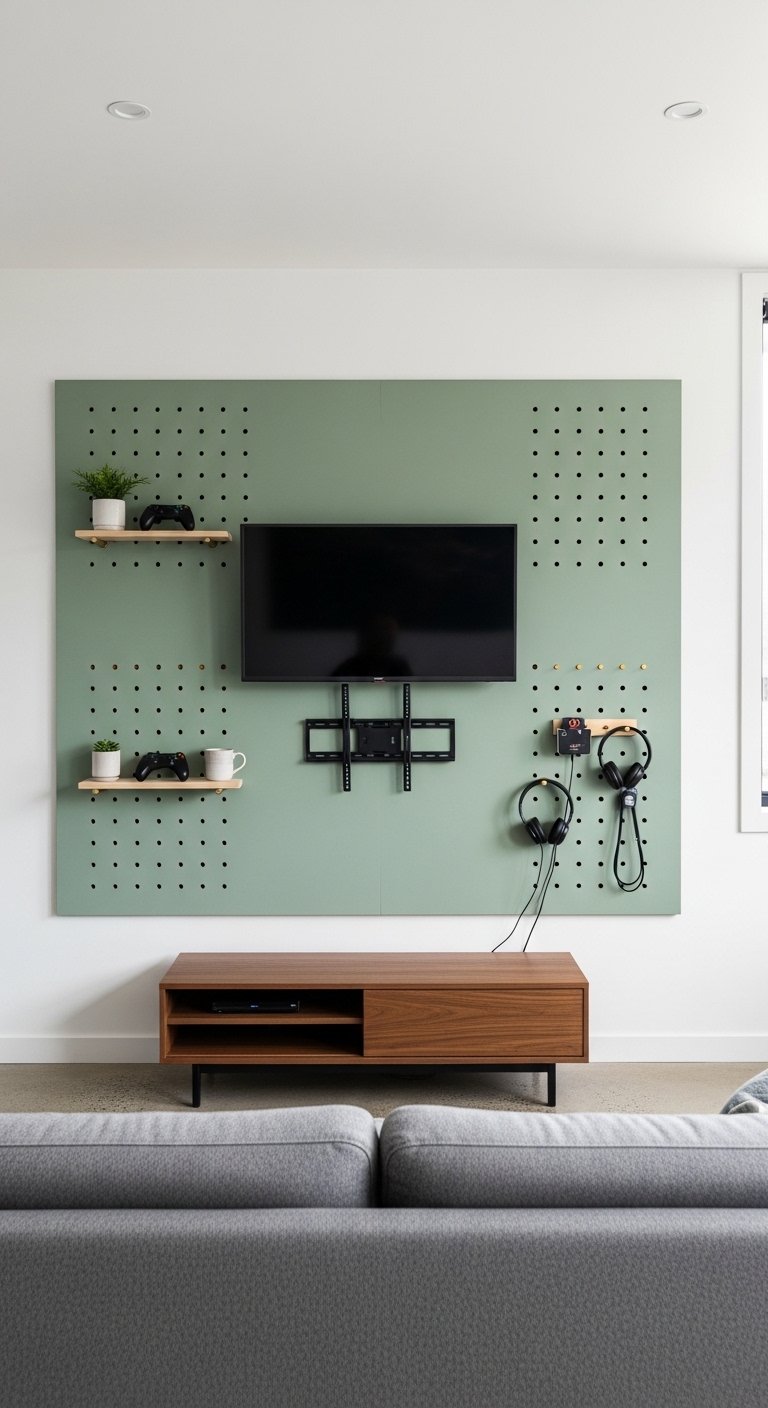
A large pegboard panel behind the TV creates a functional and flexible backdrop. Configure hooks, shelves, and holders to store remote controls, gaming accessories, and media items within the pegboard surface.
Paint the pegboard the same color as the wall for a seamless look. The TV mounts directly on the pegboard surface using a compatible bracket. This works particularly well in informal living rooms, game rooms, and apartments where flexibility matters.
12. Mirror Panel TV Wall
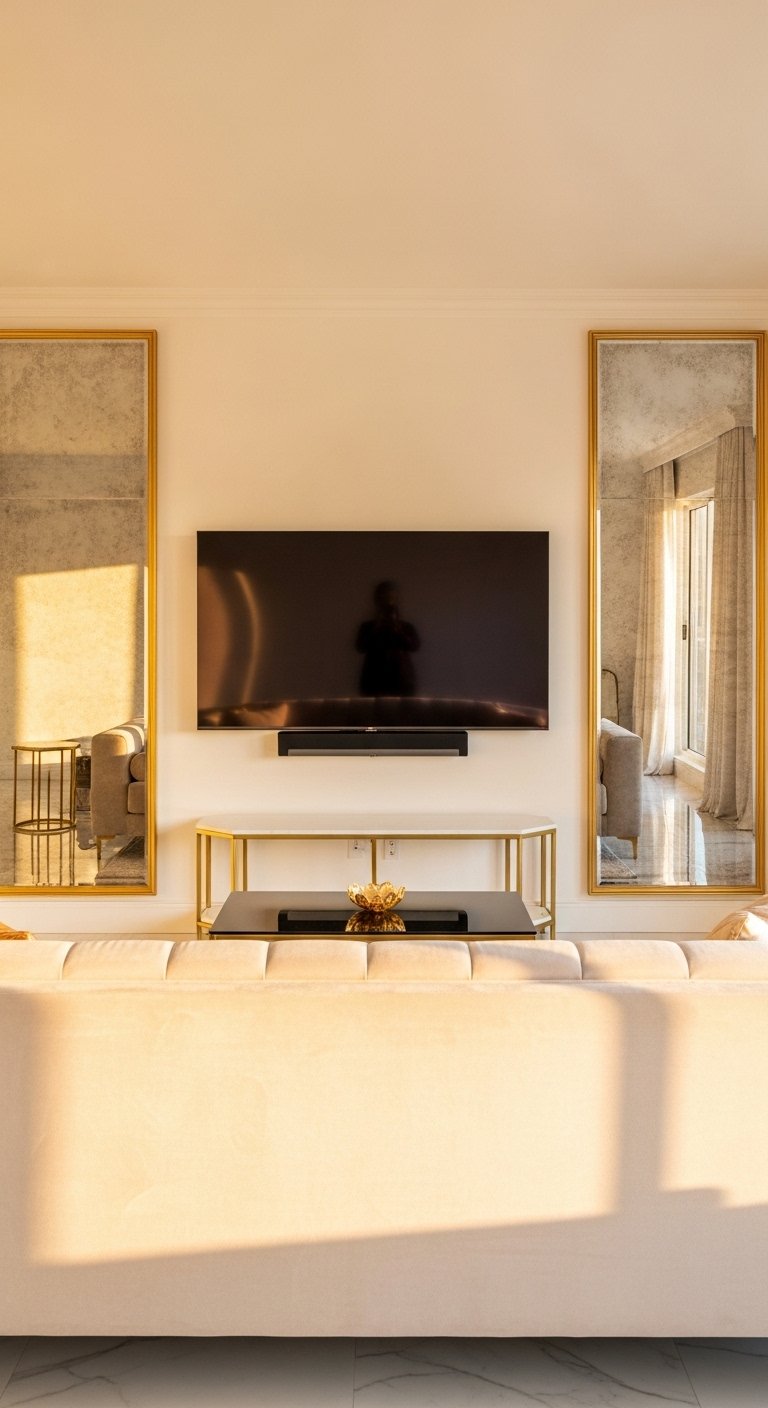
Mirrored panels flanking the TV on either side of the screen reflect light and create a sense of depth that makes the living room feel larger. The mirrors also reduce the TV’s visual dominance by competing for attention with reflected light.
Use large rectangular mirror panels in simple frames that match the TV’s proportions. Full-length mirrors on either side of a centrally mounted TV create a strong, glamorous effect. Avoid positioning mirrors where they reflect windows directly, as the glare during daytime viewing becomes problematic quickly.
13. Floating Shelves Around the TV
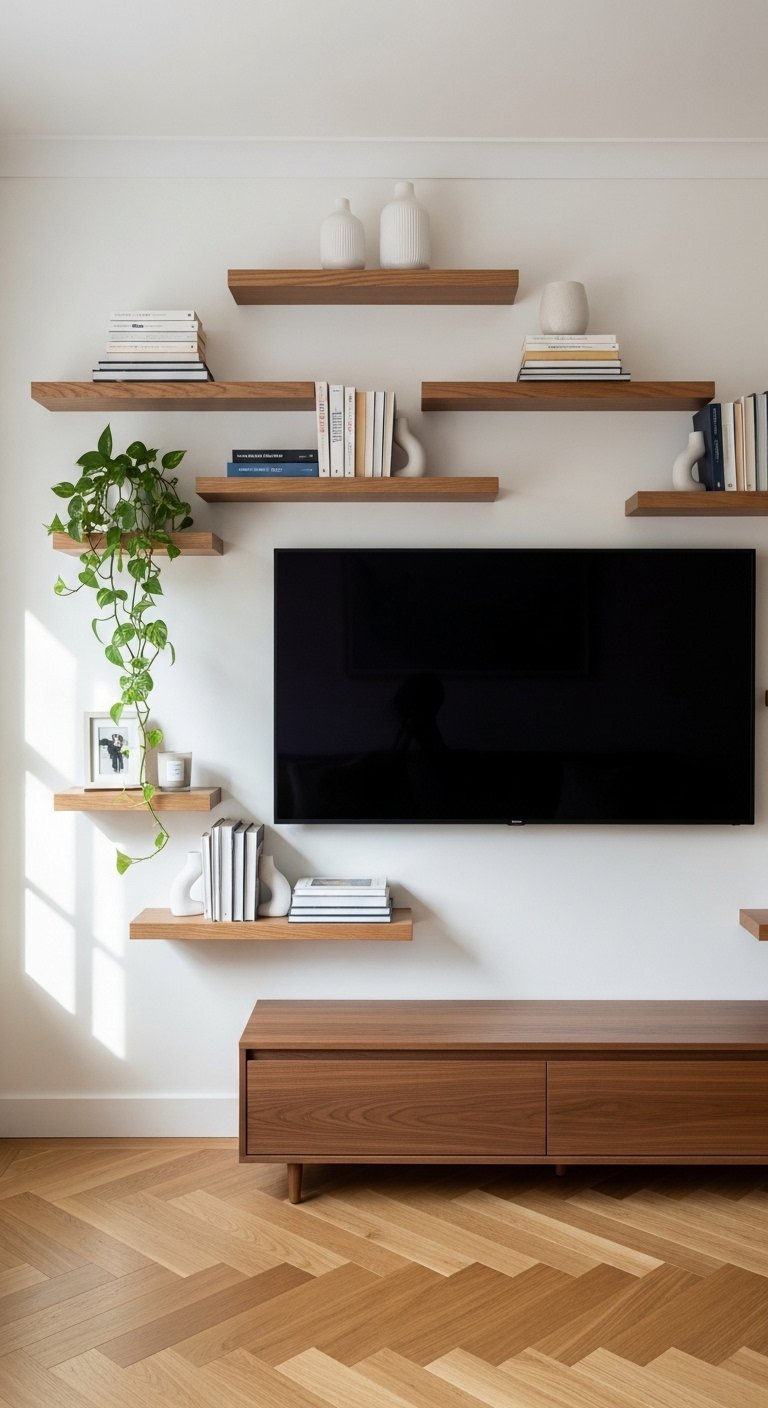
Floating shelves arranged asymmetrically around the TV create a display wall that frames the screen with personal items. Books, plants, candles, framed photos, and decorative objects all work on the shelves.
Arrange shelves at varying heights and widths rather than perfectly symmetrically. An asymmetric arrangement looks designed and organic. A perfectly symmetrical arrangement looks like a showroom display. The TV sits at the center and the shelves radiate around it in a considered but casual composition.
14. LED Backlight Behind the TV
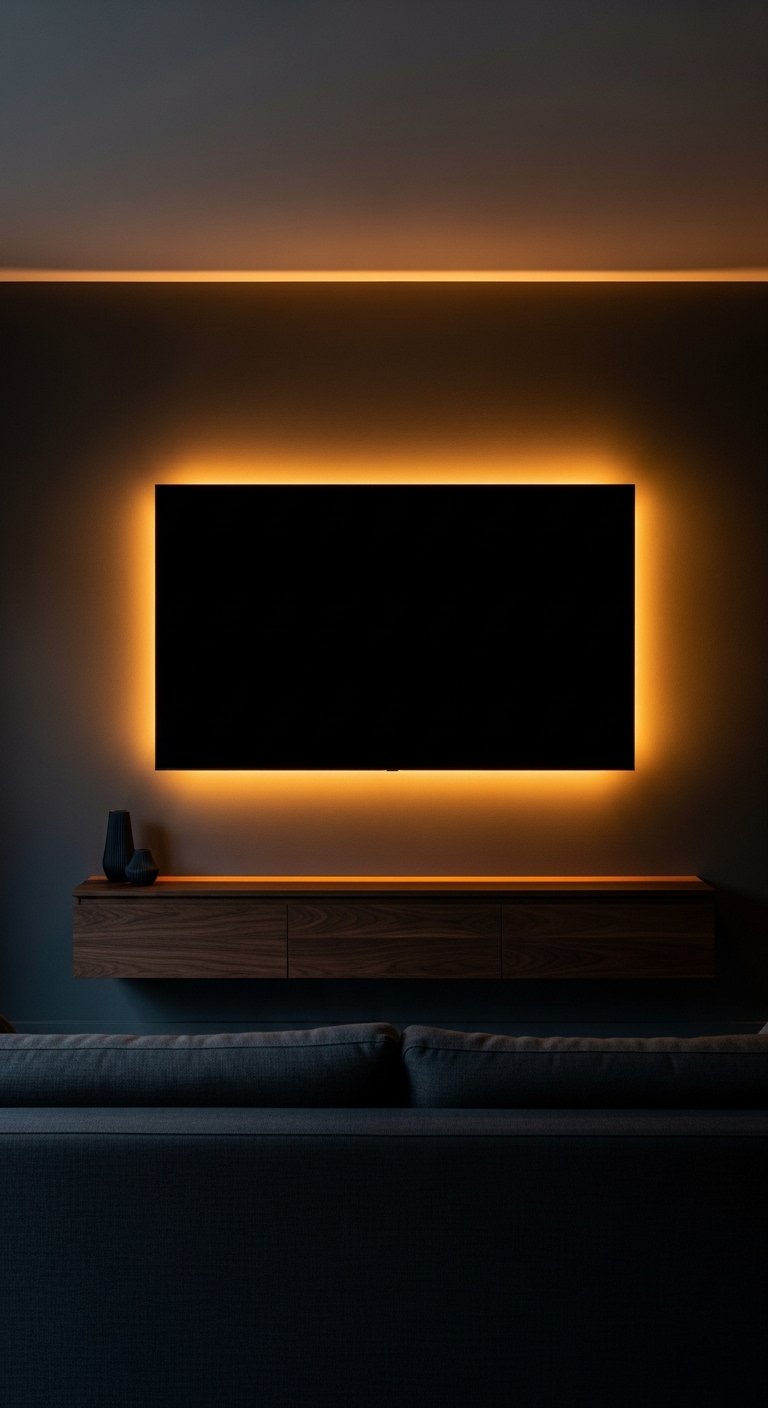
LED strip lighting behind the TV creates a halo effect that reduces eye strain during viewing and adds ambient atmosphere to the room. This is called bias lighting and it genuinely improves the viewing experience by reducing contrast between the bright screen and the dark room behind it.
Mount LED strips on the back perimeter of the TV frame pointing toward the wall. Smart LED strips allow color adjustment to match content. Warm white for general evening viewing. Cooler tones or colors for gaming or movie nights. FYI, this upgrade costs under 30 euros and makes a visible difference every single evening.
15. Curtain Panel TV Wall
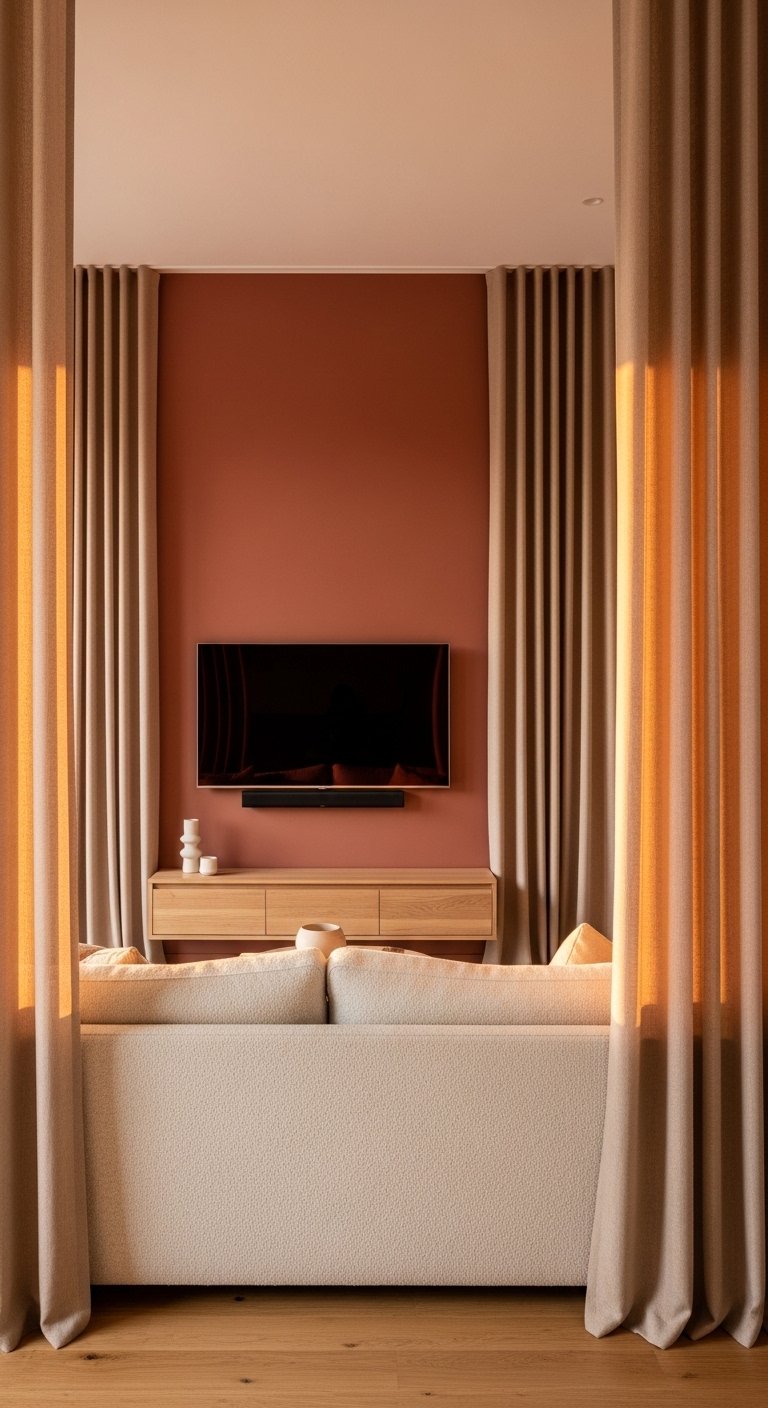
Full-length curtain panels on either side of the TV wall create a soft, layered backdrop that adds warmth and texture to what is usually a hard, flat surface. Floor-to-ceiling curtains flanking the TV wall make the ceiling feel taller and the wall feel wider.
Use linen, velvet, or heavyweight cotton in a color that complements the room. The curtains don’t need to cover windows. They function purely as architectural softness on the TV wall. Pull them slightly toward the center when watching for a more enclosed, cinema-like atmosphere.
16. Artwork Above the TV
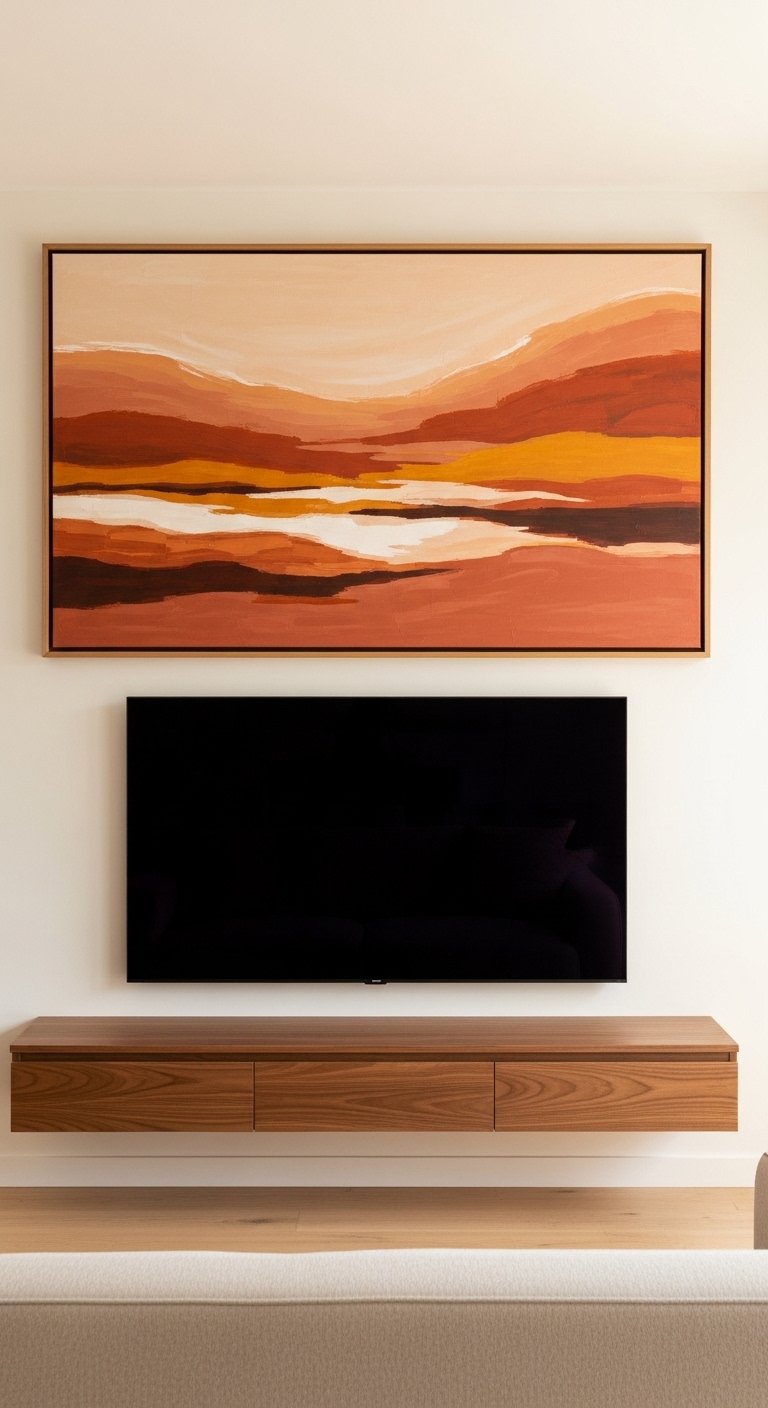
Hanging a large piece of artwork directly above the TV turns the screen zone into a proper art wall rather than a technology display. The artwork draws the eye upward and gives the TV wall a purpose beyond function.
Choose artwork at least as wide as the TV below it. The bottom edge of the artwork should sit approximately 15 to 20cm above the top of the TV. Any closer and the two elements compete. Any further and they read as unrelated. The combination of art above and screen below creates a proper focal wall composition.
17. TV Inside a Bookcase
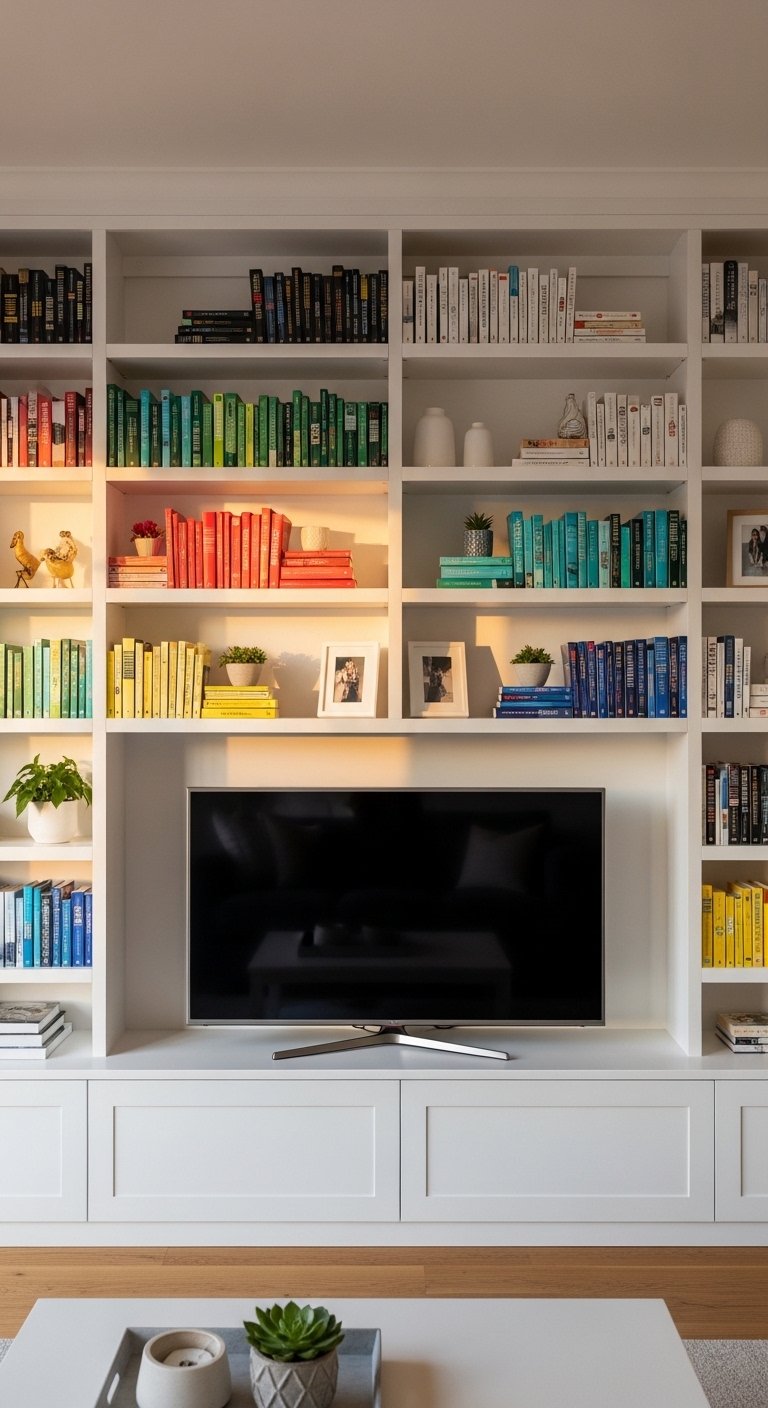
Building the TV into the center bay of a bookcase is one of the most visually integrated solutions for a living room TV wall. The screen sits within the shelving architecture and becomes one element among many rather than the dominant feature.
This works with custom built-ins and with modular shelving systems like IKEA Kallax or Billy with the center section left open for the TV. Surround the TV bay with books, plants, and objects. When the TV is off, the bookcase reads as a pure library wall.
18. Paneled Wainscoting TV Wall
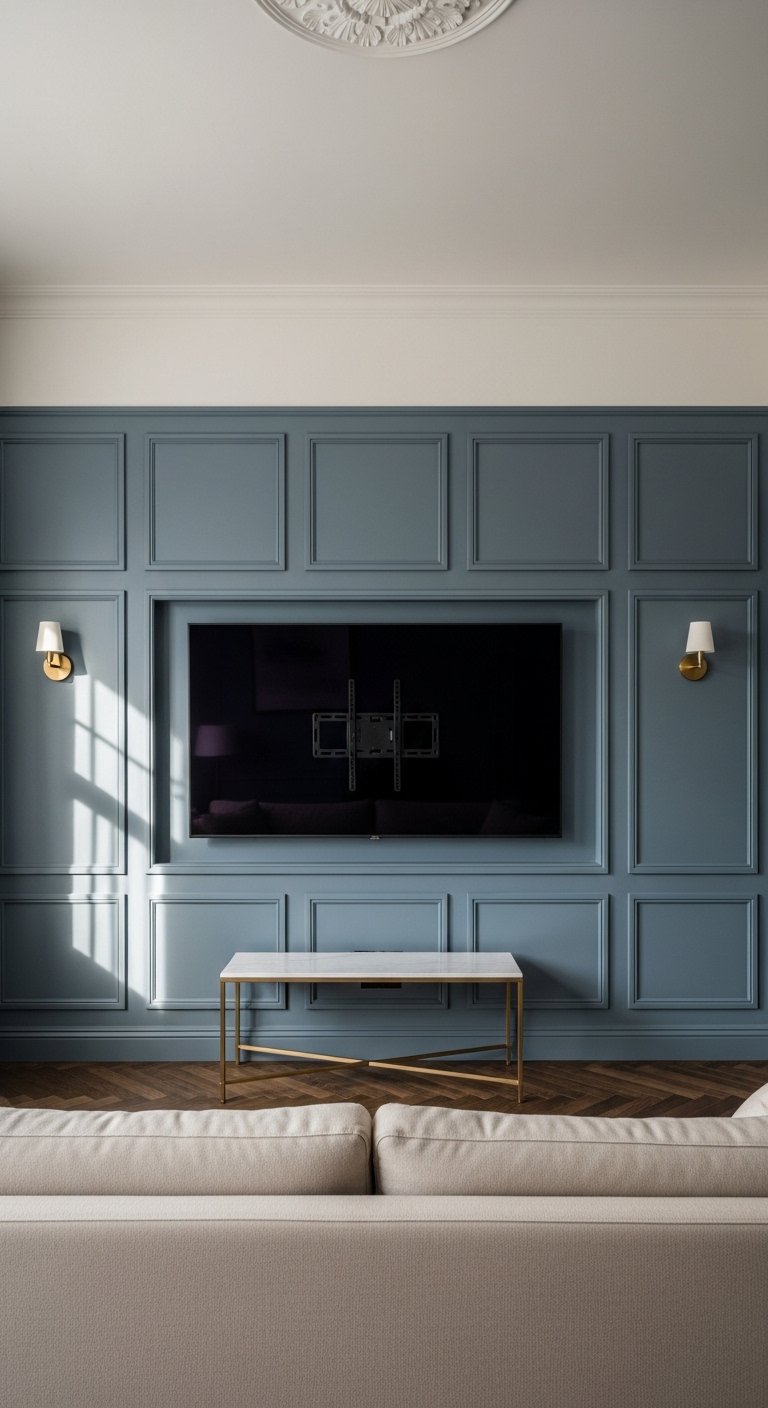
Wall paneling or wainscoting on the TV wall adds architectural detail that elevates the entire room. Classic rectangular panel molding, shaker-style paneling, or geometric panel arrangements all create a strong backdrop for the TV.
Paint the paneling in a contrasting color to the upper wall for maximum impact. Deep green panels below with warm white above. Navy panels with white above. Or paint everything the same color for a more contemporary seamless look. Mount the TV centrally within the largest panel section.
19. Concrete Effect TV Wall
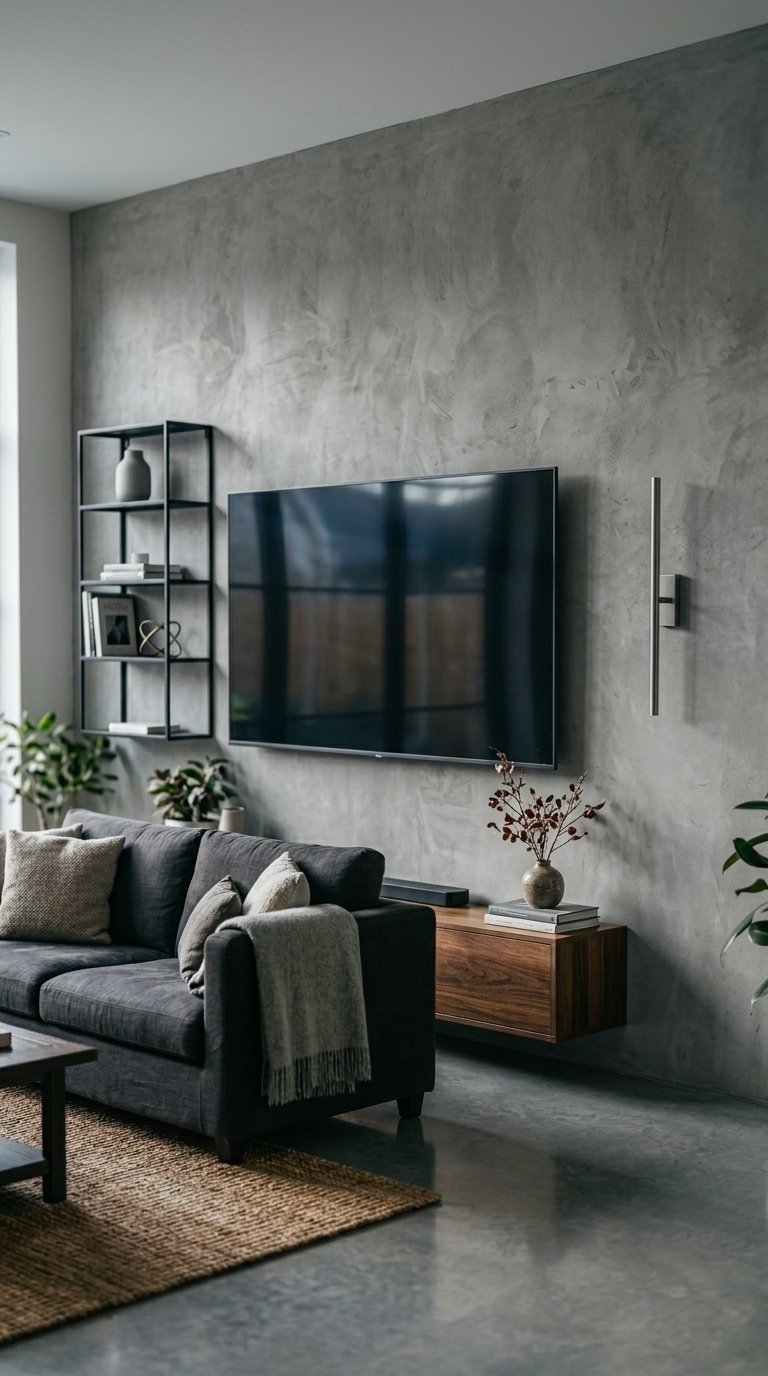
A concrete effect wall behind the TV creates an industrial, contemporary backdrop that makes the TV look intentionally placed rather than just hung. Real concrete plaster, concrete-effect paint, or large format concrete-look porcelain panels all achieve the effect.
The matte grey texture of concrete contrasts well with the gloss black of a TV screen. Add warm wood furniture and warm lighting to prevent the concrete wall from feeling cold. A floating walnut media console beneath the TV against a concrete wall is one of the strongest contemporary TV wall combinations.
20. Fabric Panel TV Wall
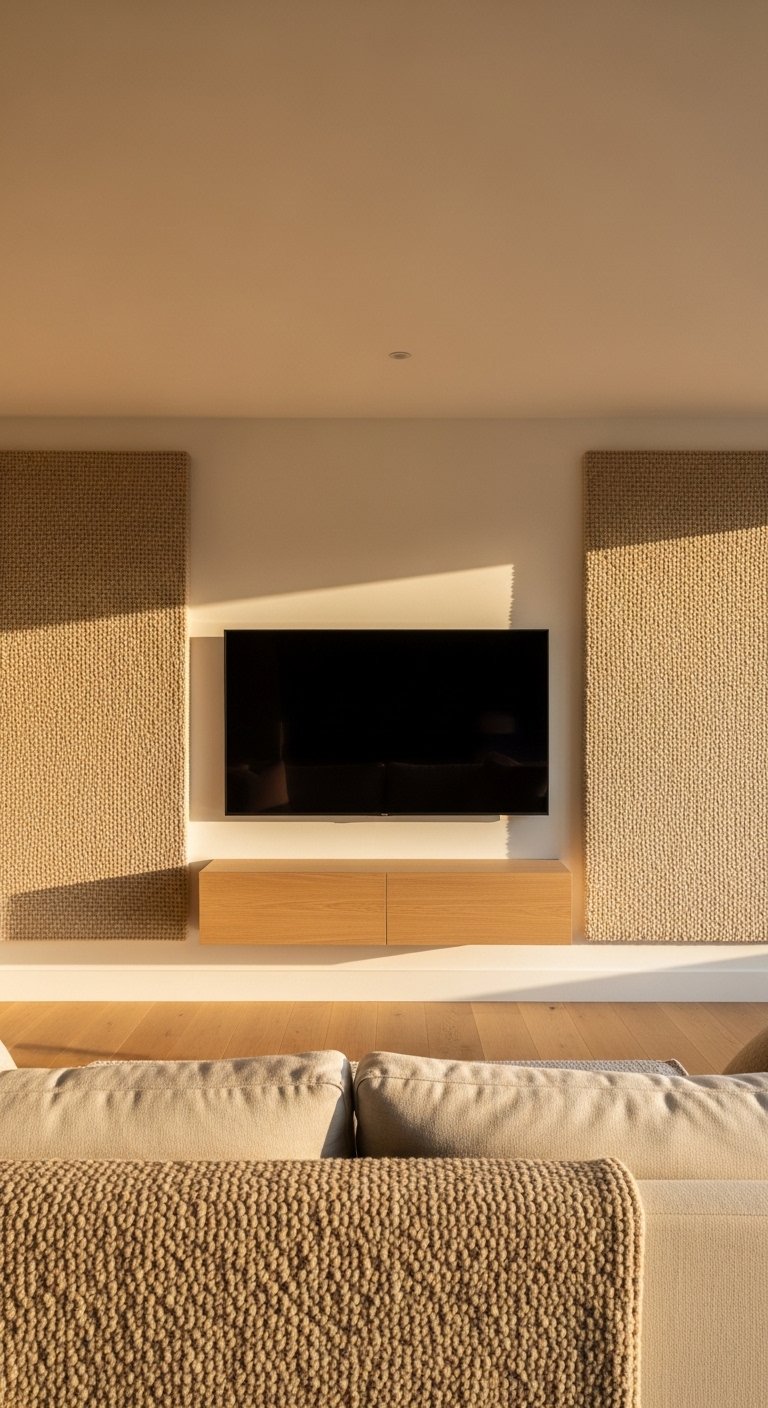
Large fabric wall panels create a soft, acoustic backdrop for the TV wall. Stretched fabric over a timber frame and mounted on the wall absorbs sound, adds texture, and brings color or pattern to the TV zone.
This works well in living rooms where hard surfaces create echo problems. The fabric panel also hides wall imperfections completely. Choose a heavyweight woven fabric in a neutral tone for a sophisticated result. Linen, bouclé, or wool weave all work well as panel materials.
21. Neon Sign TV Wall
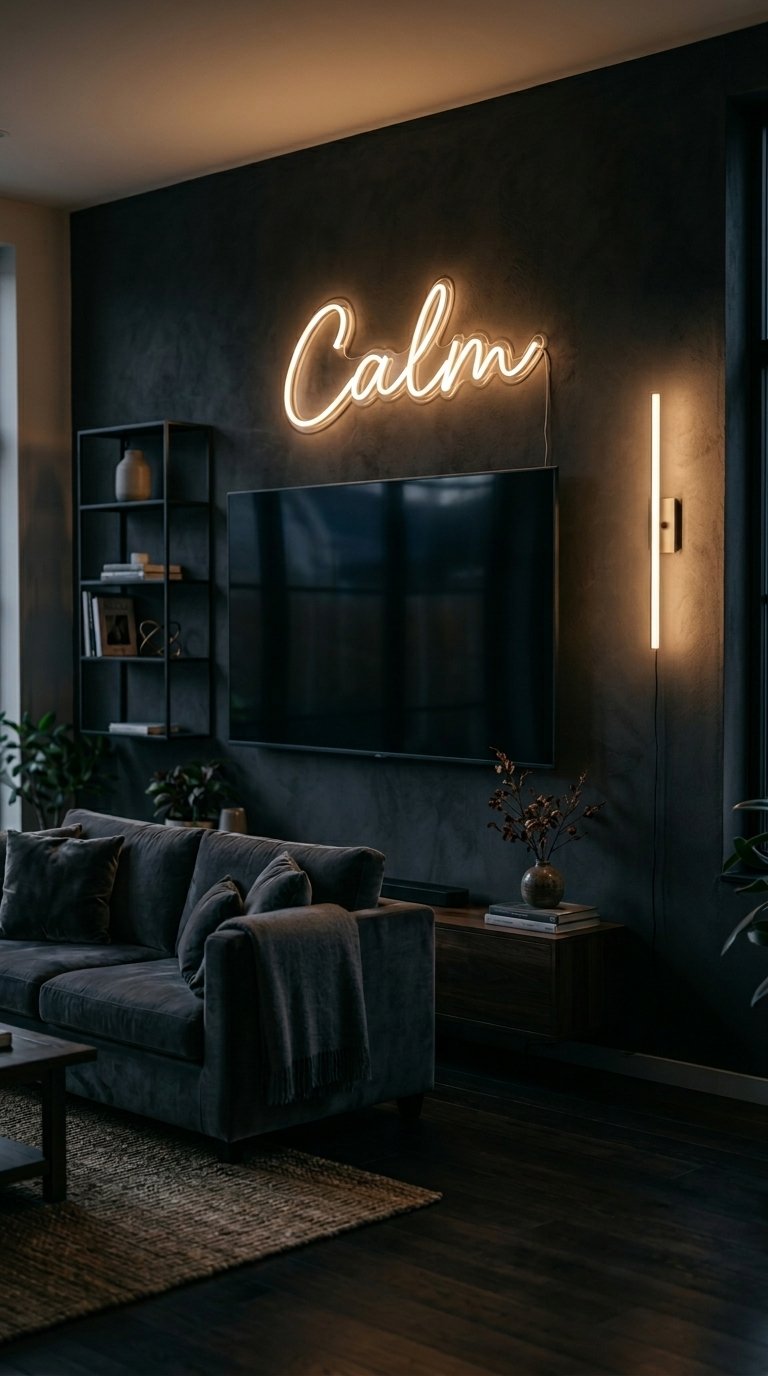
A custom neon sign mounted on the TV wall adds personality and ambient light to the space. A meaningful word, phrase, or simple shape in warm white or amber neon creates a strong visual element that works both when the TV is on and off.
Keep the neon sign positioned above or to the side of the TV rather than directly behind it to avoid screen glare interference. On a dark accent wall the neon creates a striking combination. This works particularly well in informal, personality-driven living rooms.
22. Plant Wall Around the TV
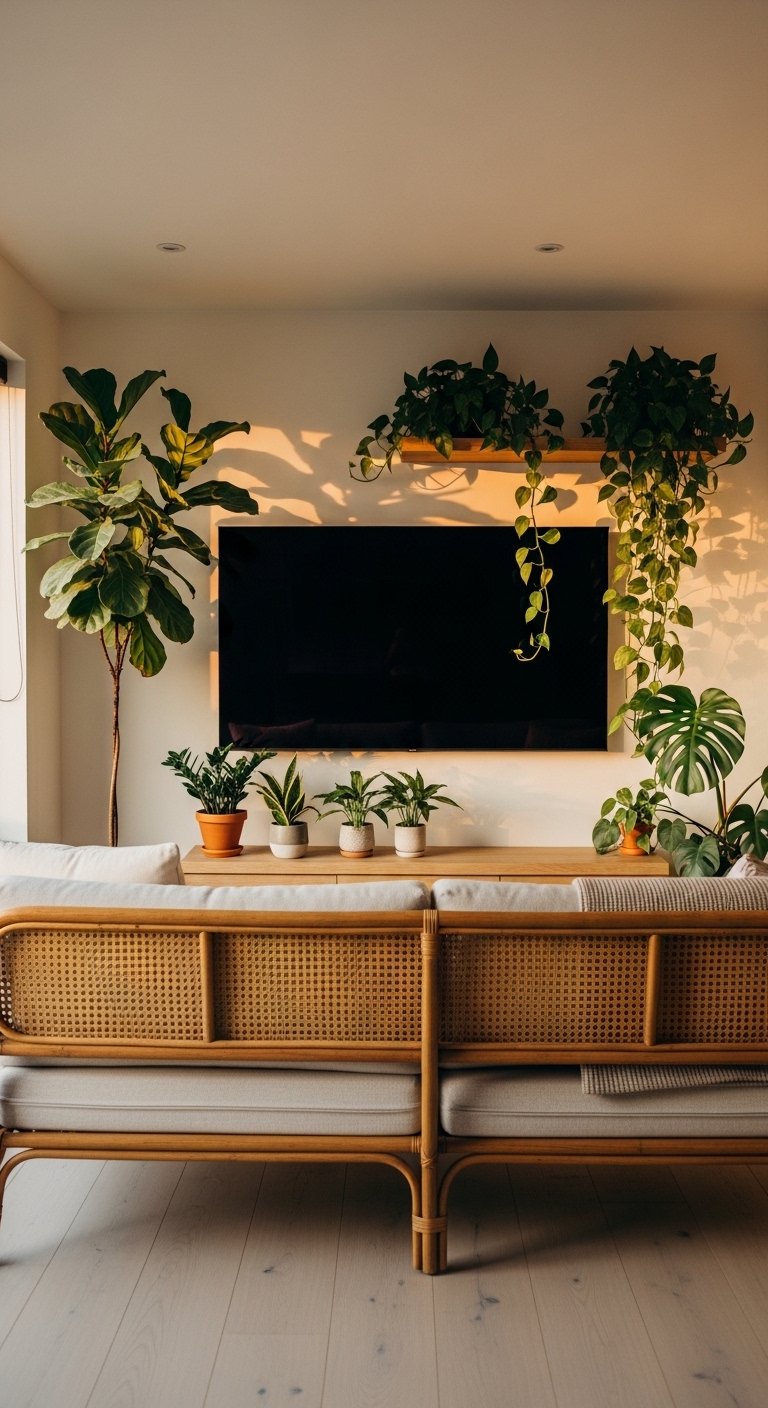
Live plants arranged around the TV wall bring an organic, natural element to what is normally a technology-dominated surface. Trailing plants on floating shelves, a large floor plant beside the TV, and small potted plants on the media console all contribute.
The green foliage creates a strong contrast against the black TV screen. More plants create more impact. A TV wall surrounded by genuine greenery photographs beautifully and feels genuinely different from a standard screen-on-wall setup. Choose low-light tolerant plants since TV walls rarely get strong direct natural light.
Best plants for TV walls:
- Pothos: trailing, low light, fast growing
- ZZ plant: upright, architectural, very low maintenance
- Snake plant: tall and structural beside the TV
- Philodendron: large leaves, dramatic scale
23. Two-Tone Paint TV Wall
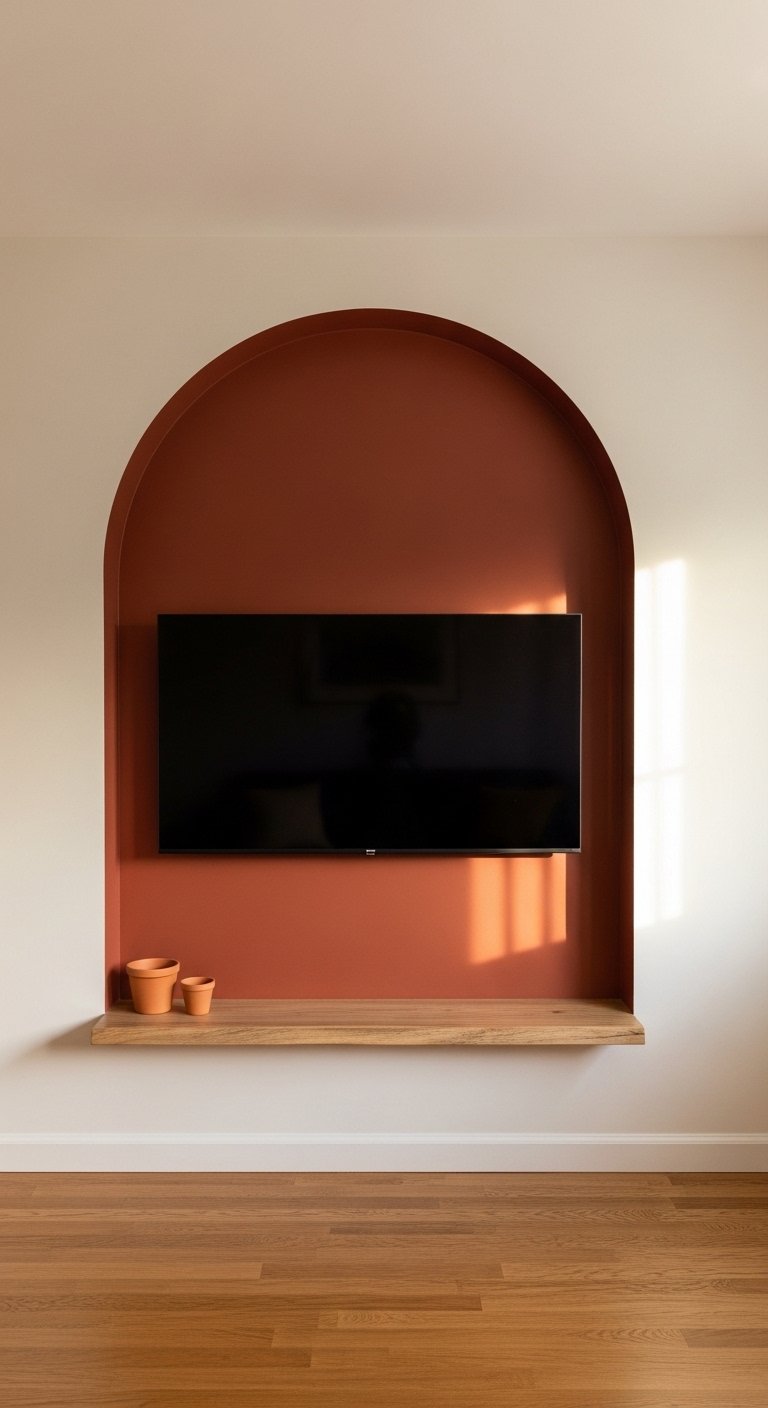
A two-tone painted TV wall uses two colors to create a visual division that frames the TV without requiring paneling or wallpaper. Paint the lower section in a deeper tone and the upper section in a lighter tone, or create a painted arch or rectangular frame directly behind the TV position.
A painted arch in a contrasting color behind the TV creates the look of a built-in niche without any construction work. This is the most budget-friendly architectural effect on this list. Tape off the arch shape, paint it, remove the tape. The effect is immediate and strong.
24. Integrated Cable Management Wall
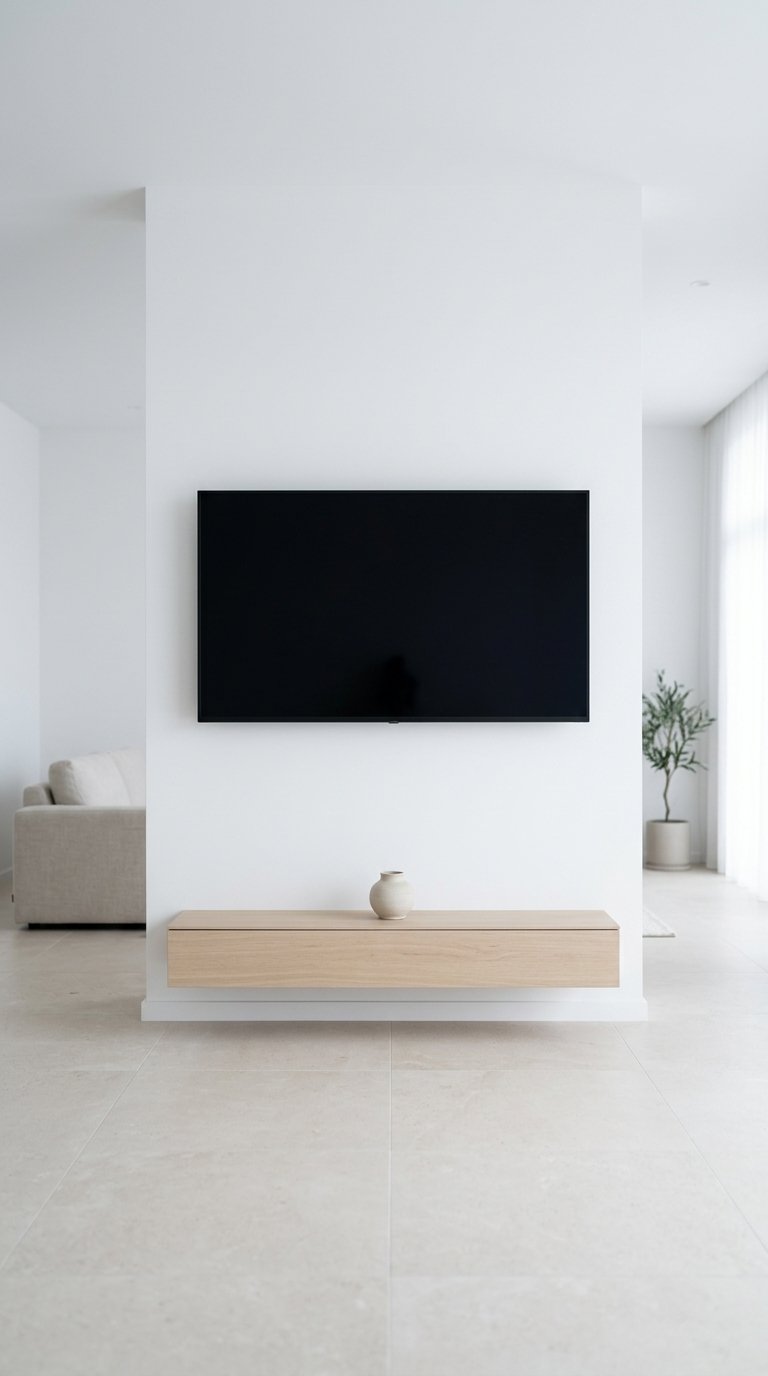
The most underrated TV wall idea is not decorative at all. Proper cable management transforms even a basic TV wall setup into something that looks intentional and clean.
Run all cables through the wall using an in-wall cable management kit. These cost between 20 and 60 euros and require a single afternoon to install. The result is a TV that appears to float on the wall with zero visible cables. Everything else you add to the TV wall looks better when no cables interrupt the composition. IMO, this should be done before anything else on this list.
25. Limewash Paint TV Wall
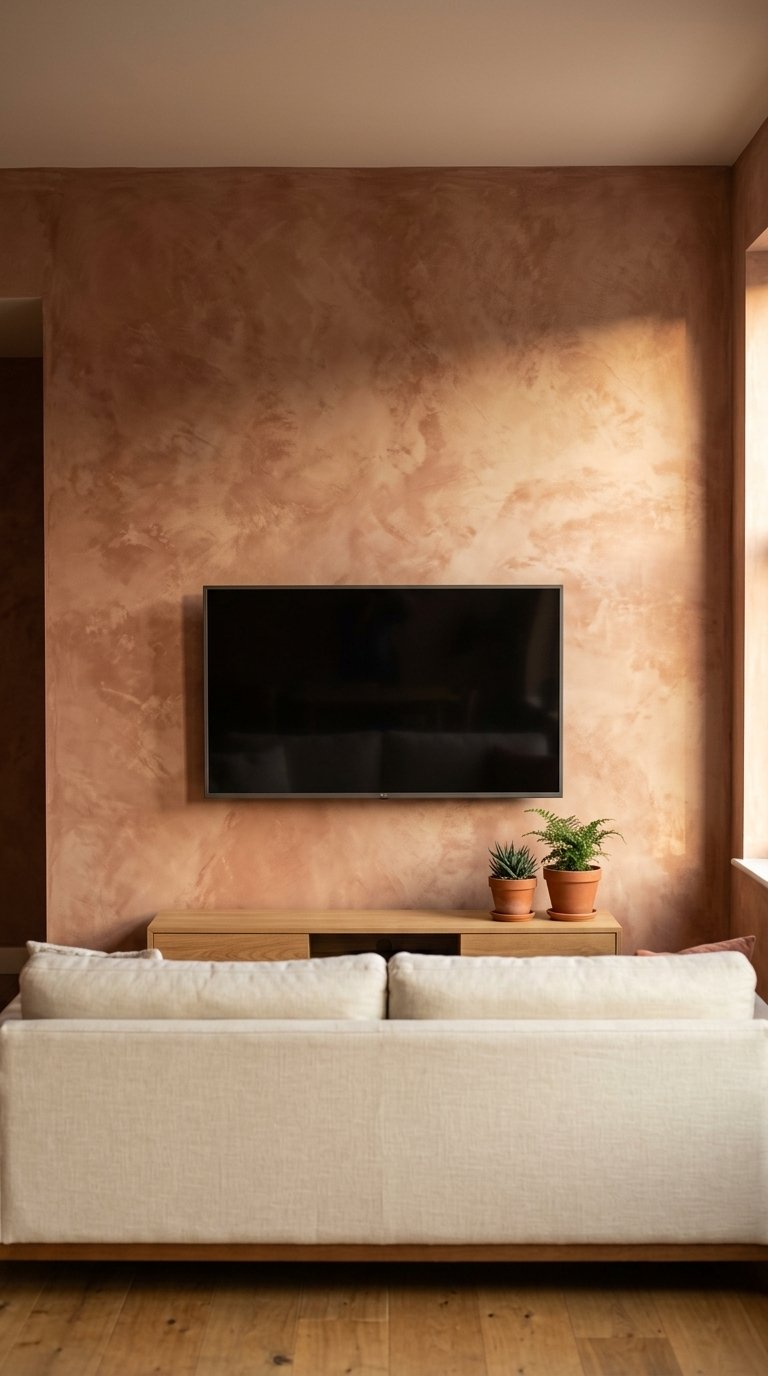
Limewash paint creates a soft, mottled, aged texture on the wall surface that adds depth and character without pattern or paneling. It suits both traditional and contemporary rooms and creates a beautiful organic backdrop for a TV.
Apply limewash in two to three layers using a wide brush in a cross-hatch motion. Each layer adds depth and variation. The finished surface catches light differently at different times of day, creating a living, textural wall that changes subtly from morning to evening. 🙂
Best limewash colors for a TV wall:
- Warm white for a soft, aged plaster look
- Dusty terracotta for warmth and earthiness
- Sage green for a calm, organic feel
- Pale grey-blue for a cool, contemporary result
Final Thoughts
A TV wall works when every element earns its place. The screen, the storage, the lighting, the wall treatment, and the surrounding decor all need to work together as one composition.
The 25 ideas above range from a 25-euro LED strip to a full custom built-in unit. The right solution for your living room sits somewhere in that range based on your budget, your style, and the specific problems you need to solve.
Fix the cables first. Everything else builds on that foundation.